

How reliable is the labeling of a commercial phytosteroid product? A 12-week randomized double-blind training study
Open accessThe DOI matches its Crossref record; 84 of the 84 references it cites were found in a registry or an index; 37 of the 81 sources its claims cite were checked for support.
Abstract
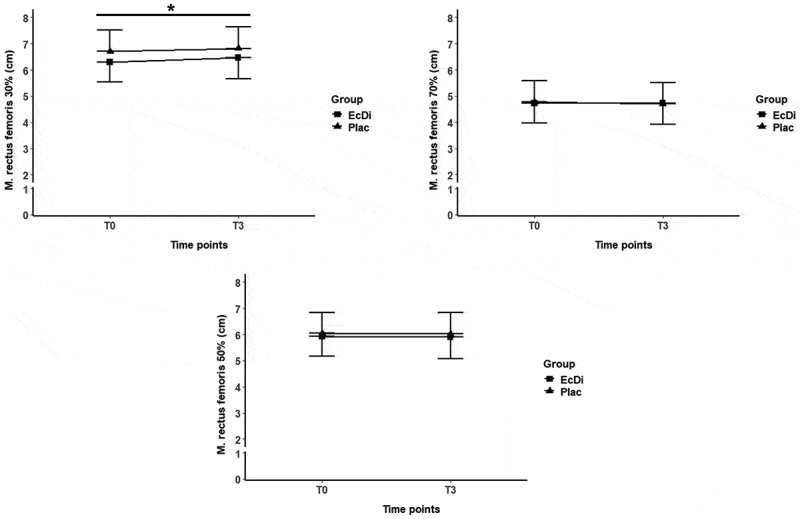
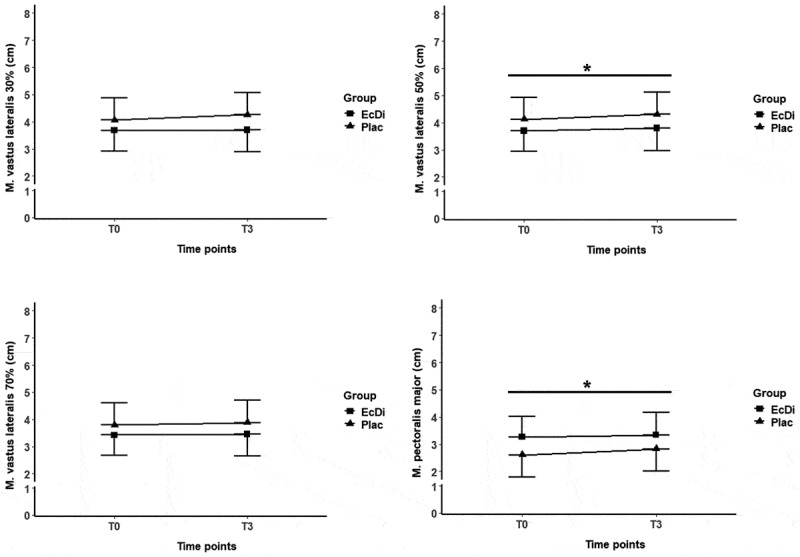
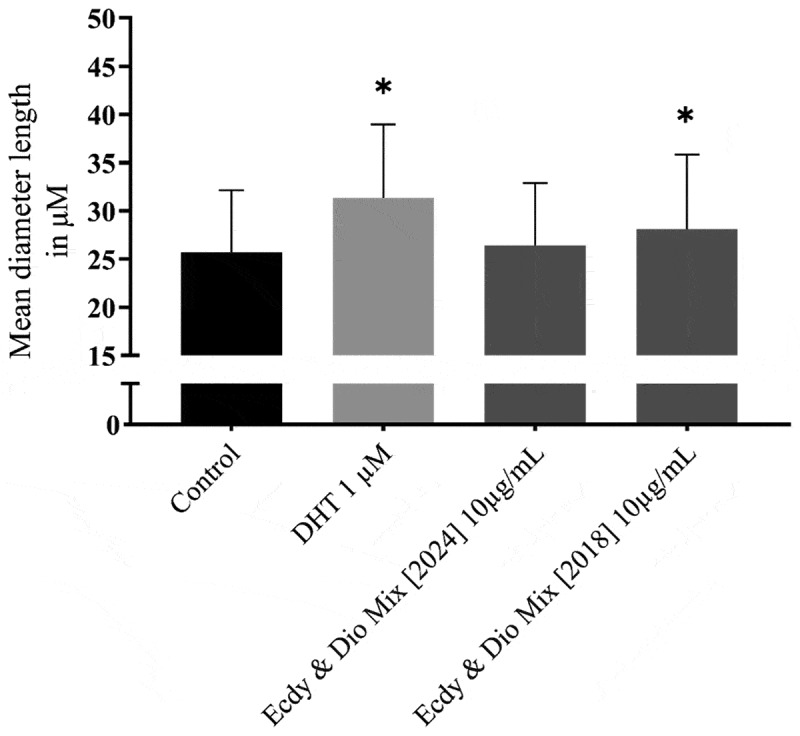
Introduction Phytosteroids like 20-hydroxyecdysone (20E) and diosgenin (DSG) have shown promising anabolic and performance-enhancing effects in in vitro, animal, and human studies. Combining phytosteroids is common in supplements, with early in vitro research suggesting additive effects via distinct signaling pathways. However, human studies on the combined effects of 20E and DSG are lacking. This study aimed to evaluate the anabolic and performance-enhancing potential of a commercially available 20E and DSG supplement. Methods Twenty-eight resistance-trained young men were recruited for this study. Participants were randomized into two groups: a 20E and DSG (EcDi) group, and a placebo (Plac) group. Both groups performed free-weight resistance training three times per week for 12 weeks. The EcDi group received a commercially available phytosteroid product three times a day (as recommended on the label), while the Plac group received a placebo product. Assessments were conducted at four time points (T0, T1 [4 weeks], T2 [8 weeks], T3 [12 weeks]) and included measurements of one-repetition maximum (1-RM) for the squat (SQ) and bench press (BP) exercises, as well as body weight (BW), fat-free mass (FFM), muscle mass (MM), fat mass (FM), and muscle thickness of the pectoralis major (PM) and the proximal, middle and distal regions of the anterior (i.e. M. rectus femoris and M. vastus intermedius) and lateral quadriceps femoris (i.e. M. vastus lateralis and M. vastus intermedius). Liver and kidney function, along with endocrine parameters, were measured via blood samples pre- and post-intervention. Additionally, the concentration of 20E and DSG in the product was measured by LC-MS/MS, and its biological activity was evaluated using C2C12 cells after the intervention. Data were analyzed using a linear mixed model (LMM). Results Twenty-four participants completed the study successfully. Significant improvements in 1-RM SQ and BP were observed across both groups, indicating a time but no specific group effect. Similarly, significant time effects without group effects were found for FFM, MM, FM and muscle thickness (anterior quadriceps femoris at 30%, lateral quadriceps femoris at 50% and PM). Subsequent analyses of the supplement revealed that less than 1% of the claimed 20E concentration and 10.4% of the claimed DSG concentration were present in the capsules. In addition, no biological activity or hypertrophic effects were detected in the C2C12 cells. Conclusion This study demonstrated that the prescribed resistance training protocol resulted in significant anabolic and performance-enhancing effects that did not differ between groups. The lack of group-specific differences suggests that the tested phytosteroid supplement did not provide additional benefits. The significant discrepancy between the claimed and actual 20E and DSG concentration resulted in the lack of biological activity in C2C12 cells and likely contributed to the absence of measurable group-specific effects. To enhance the reliability of future phytosteroid research, we strongly recommend: (1) verification of active compound concentrations in supplements, its actual content and absence of potential contamination with prohibited substances, (2) confirmation of their biological activity using in vitro models. Implementing these measures will help to minimize inconsistencies and enhance the reliability of future studies on phytosteroids.
Overview
CoChat Summary
## TL;DR
This 12-week randomized double-blind study found that resistance training improved strength, body composition, and some muscle-thickness measures in both groups, but the commercial phytosteroid supplement did not add measurable benefit. Post-study analysis showed the capsules contained far less active ingredient than the label claimed: less than 0.1% of the claimed 20E and 10.4% of the claimed DSG.
## Key findings
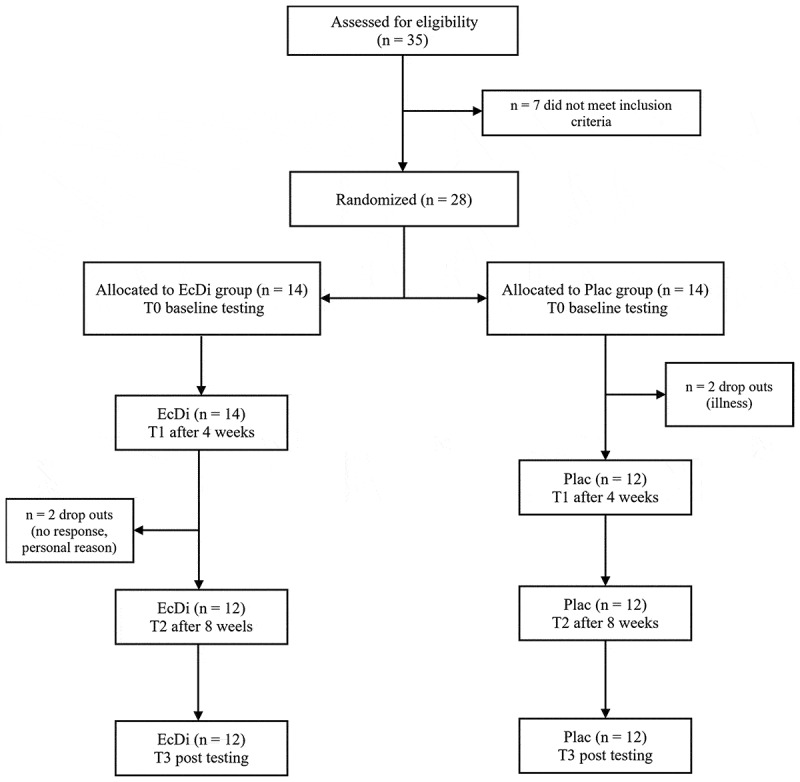
- Twenty-four participants completed the study (EcDi n = 12; placebo n = 12) after recruitment of 35 men, and there were no significant baseline differences between groups.
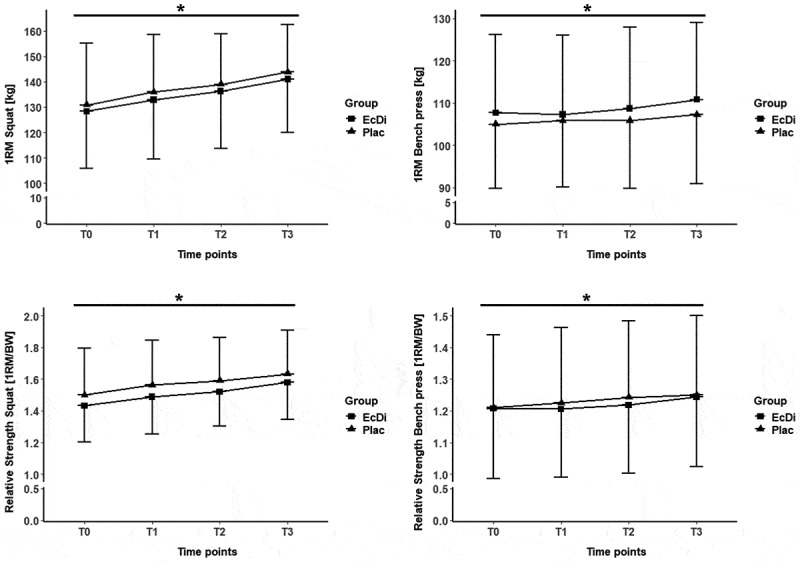
- The resistance-training program produced significant time effects in both groups for 1-RM squat and bench press, with no significant group or time × group effects; the paper reports a moderate effect size for squat strength (d = 0.60) and a trivial effect size for bench press (d = 0.16).
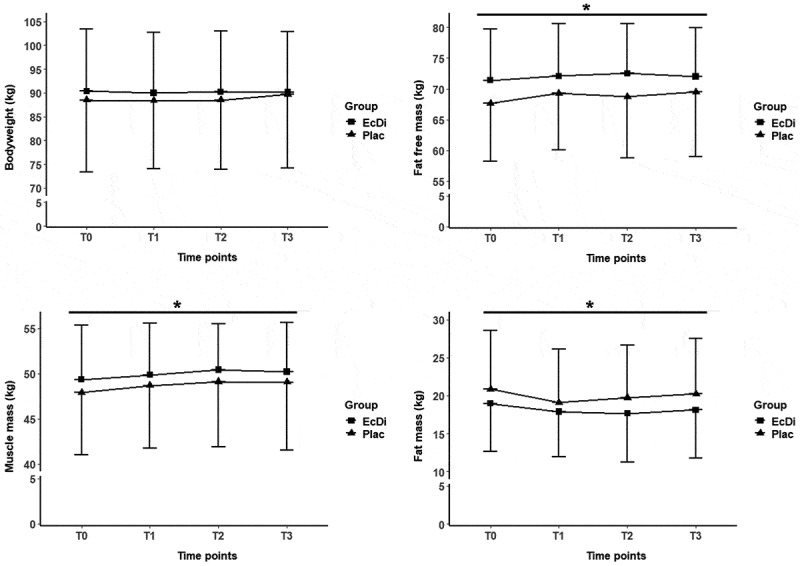
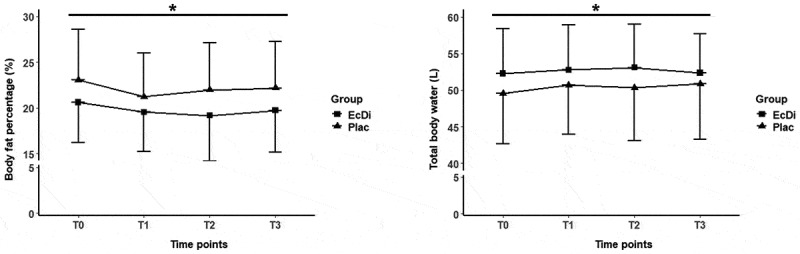
- Body composition changed over time: fat-free mass, muscle mass, and total body water increased significantly, while fat mass and body fat percentage decreased; the paper reports trivial effect sizes for these time effects (FFM d = 0.13, FM d = 0.10, MM d = 0.15, BF% d = 0.18, TBW d = 0.10).
- Supplement analysis found less than 10 µg 20E and 15.6 mg DSG per capsule in the new batch, equivalent to less than 0.1% of the claimed 20E and 31.2% of the packaging’s claim for DSG; the Results section also states less than 1% of claimed 20E and 10.4% of claimed DSG were present.
## Methods
- Randomized, placebo-controlled, double-blind trial with 28 resistance-trained young men randomized to a commercially available 20E + DSG supplement or placebo; 24 completed the 12-week intervention.
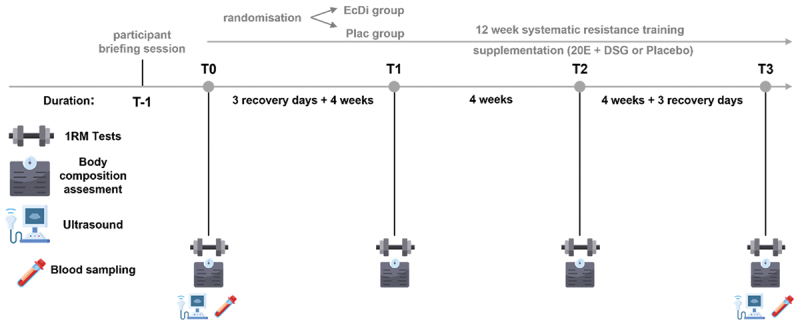
- Both groups performed free-weight resistance training three times per week for 12 weeks, with assessments at T0, T1 (4 weeks), T2 (8 weeks), and T3 (12 weeks).
- Outcomes included 1-RM squat and bench press, body weight, body composition, muscle thickness, liver and kidney biomarkers, endocrine parameters, LC-MS/MS quantification of supplement content, and C2C12 cell assays; the main analysis used linear mixed models.
## Limitations
- The paper explicitly states that the supplement was not analyzed before the study began to confirm sufficient 20E and DSG content; it also notes that relying on an older batch analysis is insufficient and each batch should be independently tested.
- The study included only a small sample of male participants, so the authors state that no conclusions can be drawn about female responses.
- The paper notes that body composition was assessed by BIA rather than DXA; this is a limitation stated in the paper, although it also says BIA is considered valid and DXA is the gold standard.
Model-written summary. Check it against the paper before relying on it.
Integrity signals
Registry
Cites
Statistics
Figures
Verification
Claims the paper makes
16 Valid · 8 Not valid · 23 Not checked · 76 Own results and interpretations
Some cited sources support this claim and some don’t — read each source’s verdict below.
In the paper
“only 1–3% of 20E and its metabolites are absorbed.”
§ How reliable is the labeling of a commercial phytosteroid product? A 12-week randomized double-blind training study > Introduction
What the sources say
- Partly supportedcites [39] Isenmann E, Yuliandra T, Touvleliou K, et al. Quinoa as phytopharmaceutical? Urinary elimination of ecdysterone after consumption of quinoa alone and in combination with spinach. Archiv der Pharmazie. 2024; 357(6): e2300689. doi: 10.1002/ardp.202300689 38400693 sourceExperimental — accuracy not yet measured
Section 2.2 reports that 2.60% of the ingested ecdysterone dose was recovered in urine as ecdysterone and two metabolites after quinoa, and 1.71% after quinoa with spinach. Those figures support the approximate 1–3% range, but they measure urinary excretion, not the proportion absorbed; the paper does not establish that only 1–3% was absorbed. (LLM, conf=0.88)
- Disputedcites [40] Ambrosio G, Yuliandra T, Wuest B, et al. Urinary elimination of ecdysterone and its metabolites following a single-dose administration in humans. Metabolites. 2021; 11(6): 366. doi: 10.3390/metabo11060366 34207569 PMC8227119 sourceExperimental — accuracy not yet measured
The Results (§2.3) report mean urinary excretion of 18% of the administered ecdysterone dose, plus 2.3% and 1.5% as two metabolites. The Discussion (§3) reports a mean of 21.1% recovered in urine overall, contrary to the claim that only 1–3% of the compound and its metabolites were absorbed. The study administered pure ecdysterone, not spinach or quinoa; it did not directly measure absorption. (LLM, conf=0.88)
Checked by a reasoning model — may be wrong.
- Partly supportedcites [41] Yuliandra T, Touvleliou K, de La Torre X, et al. Urinary excretion of ecdysterone and its metabolites following spinach consumption. Mol Nutr Food Res. 2023; 67(14): e2200518. doi: 10.1002/mnfr.202200518 37161586 sourceExperimental — accuracy not yet measured
Section 3.3 (page not provided) reports that a mean of 1.4% of ingested ecdysterone was recovered in urine as ecdysterone and its metabolites after spinach consumption, and suggests absorption from spinach is poor. Urinary recovery is not a direct measurement of the percentage absorbed, and the study did not test quinoa. (LLM, conf=0.88)
plainstates a cause- Asserted: passes — The authors put it forward as true.
- Checkable: passes — It can be checked against evidence.
- Load-bearing: passes — The paper’s conclusions depend on it.
- Based: passes — The paper gives a reason why it holds.
- Partly supported
Every source the paper cites for this claim was checked and supports it.
In the paper
“recent studies have shown that nearly 20% of tested 20E supplements contained impurities, including prohibited anabolic substances [34].”
§ How reliable is the labeling of a commercial phytosteroid product? A 12-week randomized double-blind training study > Introduction
What the sources say
- Supportedcites [34] Pálinkás Z, Békési D, Utczás M. Quantitation of ecdysterone and targeted analysis of WADA-Prohibited anabolic androgen steroids, hormones, and metabolic modulators in ecdysterone-containing dietary supplements. Separations. 2023; 10(4): 242. doi: 10.3390/separations10040242 source
The Abstract reports that 20% of the 21 tested ecdysterone-containing supplements contained a prohibited substance. Section 3.5 identifies detected WADA S1 substances, including androstene-diones, although it gives the proportion as 25% rather than 20%. (LLM, conf=0.90)
plain- Asserted: passes — The authors put it forward as true.
- Checkable: passes — It can be checked against evidence.
- Load-bearing: passes — The paper’s conclusions depend on it.
- Based: passes — The paper gives a reason why it holds.
- Supported
The cited sources support only part of this claim — read each source’s verdict below.
In the paper
“Therefore, if 20E and contaminations are not specifically analyzed, any observed effects could potentially be related to contamination rather than the compound itself.”
§ How reliable is the labeling of a commercial phytosteroid product? A 12-week randomized double-blind training study > Introduction
What the sources say
- Partly supportedcites [34] Pálinkás Z, Békési D, Utczás M. Quantitation of ecdysterone and targeted analysis of WADA-Prohibited anabolic androgen steroids, hormones, and metabolic modulators in ecdysterone-containing dietary supplements. Separations. 2023; 10(4): 242. doi: 10.3390/separations10040242 sourceExperimental — accuracy not yet measured
Section 3.5 (page not available in our copy) reports that some ecdysterone-containing supplements contained prohibited steroids and that ecdysterone content varied substantially between batches. This supports the need to analyze both the compound and contaminants, but the paper does not say that contaminants could account for observed effects rather than 20-hydroxyecdysone. (LLM, conf=0.83)
hedgedstates a possible cause- Asserted: passes — The authors put it forward as true.
- Checkable: passes — It can be checked against evidence.
- Load-bearing: passes — The paper’s conclusions depend on it.
- Based: passes — The paper gives a reason why it holds.
- Partly supported
Every source the paper cites for this claim was checked and supports it.
In the paper
“In contrast, the total daily dose in the study by Pérez-Piñero et al. was only 3.2 mg (22.4 mg/week) [24].”
§ How reliable is the labeling of a commercial phytosteroid product? A 12-week randomized double-blind training study > Introduction
What the sources say
- Supportedcites [24] Pérez-Piñero S, Ávila-Gandía V, Rubio Arias JA, et al. A 12-week randomized double-blind placebo-controlled clinical trial, evaluating the effect of supplementation with a spinach extract on skeletal muscle Fitness in adults older than 50 years of age. Nutrients. 2021; 13(12): 4373. doi: 10.3390/nu13124373 34959924 PMC8706266 source
The Intervention and Study Procedures section reports 1600 ppm of 20-hydroxyecdysone in the extract and four 500 mg capsules per day. That is 2 g of extract daily, yielding 3.2 mg of 20-hydroxyecdysone per day, or 22.4 mg per week. No page number is available in our copy. (LLM, conf=0.93)
plain- Asserted: passes — The authors put it forward as true.
- Checkable: passes — It can be checked against evidence.
- Load-bearing: unclear — It is unclear whether the paper’s conclusions depend on it.
- Based: passes — The paper gives a reason why it holds.
- Supported
The cited sources support only part of this claim — read each source’s verdict below.
In the paper
“According to Santos et al. [49] and McKay et al. [50], the inclusion criteria for 1-RM and RT experience ensure that all subjects are at least advanced, well-trained athletes.”
§ How reliable is the labeling of a commercial phytosteroid product? A 12-week randomized double-blind training study > Material and methods > Participants and ethical approval
What the sources say
- Not checked — no full text of the sourcecites [49] Santos Junior ERT, Salles BFD, Dias I, et al. Classification and determination model of resistance training status. Strength Cond J. 2021; 43(5): 77– 86. doi: 10.1519/SSC.0000000000000627 source
- Partly supportedcites [50] McKay AKA, Stellingwerff T, Smith ES, et al. Defining training and performance caliber: a participant classification framework. Int J Sports Physiol Perform. 2022; 17(2): 317– 331. doi: 10.1123/ijspp.2021-0451 34965513 sourceExperimental — accuracy not yet measured
In “How to Use the Participant Classification Framework” (page unavailable), training volume is a classification factor, so resistance-training experience is relevant. But “A New Paradigm for Participant Training and Performance Classification” distinguishes trained/developmental athletes from highly trained athletes using sport-specific performance standards. The paper does not say that 1-RM and resistance-training experience criteria ensure every subject is an advanced, highly trained athlete. (LLM, conf=0.83)
plainstates a cause- Asserted: passes — The authors put it forward as true.
- Checkable: passes — It can be checked against evidence.
- Load-bearing: unclear — It is unclear whether the paper’s conclusions depend on it.
- Based: passes — The paper gives a reason why it holds.
44 more claims · 1 with their cited sources checked
Create a free account to see all 123 claims and to verify the 1 reference still open.
- Probably not a substantial claim. 38
- It may state two separate claims as one. 49
Self-check
Percentages, sums and reported differences re-computed from the paper’s own numbers.
Each contradiction between two passages listed here was confirmed by an independent check.
Rated major: it would touch a result — a value a result rests on, reported and recomputed p-values on opposite sides of the significance level, two passages that conflict with no sign which is right, or a cited work retracted before this paper was published.
In the paper
§ How reliable is the labeling of a commercial phytosteroid product? A 12-week randomized double-blind training study > Abstract > Results
“Subsequent analyses of the supplement revealed that less than 1% of the claimed 20E concentration and 10.4% of the claimed DSG concentration were present in the capsules.”
§ How reliable is the labeling of a commercial phytosteroid product? A 12-week randomized double-blind training study > Results > Supplement analysis
“For the new batch, less than 10 µg 20E and 15.6 mg DSG per capsule were detected, equivalent to less than 0.1% and 31.2% of the packaging’s claim.”
Citations
Cites
Fitting Linear Mixed-Effects Models Using lme4
Bates, D., Mächler, M., Bolker, B., & Walker, S. (2015) · Journal of Statistical Software · doi:10.18637/jss.v067.i01 · Cited by 86,835 · cited 1×
“All dependent variables from the blood samples, body composition, muscle thickness and 1-RM tests were analyzed using linear mixed model (LMM) with the lme4 and the lmerTest packages [70,71].”
A guideline of selecting and reporting intraclass correlation coefficients for reliability research
Koo, T. K., & Li, M. Y. (2016) · Journal of Chiropractic Medicine · doi:10.1016/j.jcm.2016.02.012 · Cited by 31,709 · cited 1×
“ICC(3,1) was chosen as it represents test-retest reliability using a two-way mixed-effects model with absolute agreement, based on a single measurement per test session [60].”
Statistical Power Analysis for the Behavioral Sciences
Cohen, J. (2013) · doi:10.4324/9780203771587 · Cited by 25,373
Defining Training and Performance Caliber: A Participant Classification Framework
McKay, A. K. A., Stellingwerff, T., Smith, E. S., Martin, D. T., Mujika, I., Goosey-Tolfrey, V. L., Sheppard, J., & Burke, L. M. (2022) · International Journal of Sports Physiology and Performance · doi:10.1123/ijspp.2021-0451 · Cited by 3,093 · cited 1×
“According to Santos et al. [49] and McKay et al. [50], the inclusion criteria for 1-RM and RT experience ensure that all subjects are at least advanced, well-trained athletes.”
Validation of tetrapolar bioelectrical impedance method to assess human body composition
Lukaski, H. C., Bolonchuk, W. W., Hall, C. B., & Siders, W. A. (1986) · Journal of Applied Physiology · doi:10.1152/jappl.1986.60.4.1327 · Cited by 1,370
Morton, R. W., Murphy, K. T., McKellar, S. R., Schoenfeld, B. J., Henselmans, M., Helms, E., Aragon, A. A., Devries, M. C., Banfield, L., Krieger, J. W., et al. (2018) · British Journal of Sports Medicine · doi:10.1136/bjsports-2017-097608 · Cited by 1,269 · cited 1×
“Furthermore, subjects were required to consume 1.6–2.0 g of protein per kilogram of BW to ensure adequate recovery from the RT program [65].”
InfluentialEffects of Androgenic-Anabolic Steroids in Athletes
Hartgens, F., & Kuipers, H. (2004) · Sports Medicine · doi:10.2165/00007256-200434080-00003 · Cited by 873 · cited 1×
“Furthermore, the actual concentrations used per week (low dose: 72 mg/week, high dose: 336 mg/week) by Isenmann et al. were within the range of classic anabolic substances [91].”
Essentials of strength training and conditioning
Haff, G. G., & Triplett, N. T. (2016) · Edith Cowan University Research Online (Edith Cowan University) · Cited by 566
Abe, T., DeHoyos, D. V., Pollock, M. L., & Garzarella, L. (2000) · European Journal of Applied Physiology and Occupational Physiology · doi:10.1007/s004210050027 · Cited by 523
Liver injury from herbal and dietary supplements
Navarro, V. J., Khan, I., Björnsson, E., Seeff, L. B., Serrano, J., & Hoofnagle, J. H. (2017) · Hepatology · doi:10.1002/hep.28813 · Cited by 462
Prevalence of dietary supplement use by athletes: Systematic review and meta-analysis
Knapik, J. J., Steelman, R. A., Hoedebecke, S. S., Austin, K. G., Farina, E. K., & Lieberman, H. R. (2016) · Sports Medicine · doi:10.1007/s40279-015-0387-7 · Cited by 452
Athletes and Supplements: Prevalence and Perspectives
Garthe, I., & Maughan, R. J. (2018) · International Journal of Sport Nutrition and Exercise Metabolism · doi:10.1123/ijsnem.2017-0429 · Cited by 383 · cited 1×
“One of the main reasons for athletes to take nutritional supplements is to enhance their athletic performance, as even minor differences in performance can be decisive for success [3–6].”
Nutritional supplements cross-contaminated and faked with doping substances
Geyer, H., Parr, M. K., Koehler, K., Mareck, U., Schänzer, W., & Thevis, M. (2008) · Journal of Mass Spectrometry · doi:10.1002/jms.1452 · Cited by 375 · cited 1×
“Several studies of the accuracy of dietary supplement labeling have found that many of the products analyzed contained significantly lower amounts of the specific ingredient or additional, possibly risky, ingredients that were not declared on the supplement label [29,32,33,76–81].”
Self-citation(2004) · International Journal of Sports Medicine · doi:10.1055/s-2004-819955 · Cited by 344 · cited 3×
“This is supported by previous investigations [33].”
InfluentialSelf-citationDiosgenin: Recent Highlights on Pharmacology and Analytical Methodology
Jesus, M., Martins, A. P. J., Gallardo, E., & Silvestre, S. (2016) · Journal of Analytical Methods in Chemistry · doi:10.1155/2016/4156293 · Cited by 273 · cited 2×
“Following the promising effects of 20E, the phytosteroid DSG, found in fenugreek and yams, has also attracted considerable attention for its potential therapeutic and performance-enhancing properties [42].”
InfluentialYasuda, T., Fujita, S., Ogasawara, R., Sato, Y., & Abe, T. (2010) · Clinical Physiology and Functional Imaging · doi:10.1111/j.1475-097x.2010.00949.x · Cited by 212 · cited 1×
“Muscle thickness was determined using the borders of the subcutaneous adipose tissue and the muscle-bone interface as reference points [56].”
Diosgenin: An Updated Pharmacological Review and Therapeutic Perspectives
Semwal, P., Painuli, S., Abu-Izneid, T., Rauf, A., Sharma, A., Daştan, S. D., Kumar, M., Alshehri, M. M., Taheri, Y., Das, R., et al. (2022) · Oxidative Medicine and Cellular Longevity · doi:10.1155/2022/1035441 · Cited by 195 · cited 1×
“DSG is of high interest for scientific research due to its postulated pharmacological properties against certain diseases such as diabetes, hyperlipidemia, cancer, cardiovascular diseases, metabolic syndrome, oxidative stress and inflammation [42–46].”
Advances in the pharmacological activities and mechanisms of diosgenin
CHEN, Y., TANG, Y.-M., YU, S.-L., HAN, Y.-W., KOU, J.-P., LIU, B.-L., & YU, B.-Y. (2015) · Chinese Journal of Natural Medicines · doi:10.1016/s1875-5364(15)30053-4 · Cited by 190
Parama, D., Boruah, M., Yachna, K., Rana, V., Banik, K., Harsha, C., Thakur, K. K., Dutta, U., Arya, A., Mao, X., et al. (2020) · Life Sciences · doi:10.1016/j.lfs.2020.118182 · Cited by 155 · cited 1×
“Like 20E, DSG reportedly interacts with several signaling pathways, including NF-κB, JAK/STAT, and PI3K/AKT/mTOR as well as MAPK and several others [45].”
Fuller, S. E., & Stephens, J. M. (2015) · Advances in Nutrition · doi:10.3945/an.114.007807 · Cited by 154
Isenmann, E., Ambrosio, G., Joseph, J. F., Mazzarino, M., de la Torre, X., Zimmer, P., Kazlauskas, R., Goebel, C., Botrè, F., Diel, P., et al. (2019) · Archives of Toxicology · doi:10.1007/s00204-019-02490-x · Cited by 127 · cited 10×
“This laboratory has been used in previous studies [7,51].”
InfluentialSelf-citationOn the distribution of phytoecdysteroids in plants
Dinan, L., Savchenko, T., & Whiting, P. (2001) · Cellular and Molecular Life Sciences · doi:10.1007/pl00000926 · Cited by 126
Dietary supplements as source of unintentional doping
Kozhuharov, V. R., Ivanov, K., & Ivanova, S. (2022) · BioMed Research International · doi:10.1155/2022/8387271 · Cited by 108 · cited 1×
“Kozhuharov et al. [84] conducted a systematic review and showed that more than 28% of the analyzed dietary supplements posed a potential risk of unintentional doping.”
Parr, M. K., Zhao, P., Haupt, O., Ngueu, S. T., Hengevoss, J., Fritzemeier, K. H., Piechotta, M., Schlörer, N., Muhn, P., Zheng, W., et al. (2014) · Molecular Nutrition & Food Research · doi:10.1002/mnfr.201300806 · Cited by 106 · cited 1×
“While anabolic effects have been unequivocally demonstrated in vitro and in animal models [14,16,18–21], and partially observed in humans [7], current data remain insufficient to define precise dose – response relationships.”
Self-citationDoping Through Supplement Use: A Review of the Available Empirical Data
Outram, S., & Stewart, B. (2015) · International Journal of Sport Nutrition and Exercise Metabolism · doi:10.1123/ijsnem.2013-0174 · Cited by 100 · cited 1×
“It is estimated that 6.4–8.8% of positive doping cases can be attributed to the use of contaminated dietary supplements [31–33].”
InfluentialClassification and Determination Model of Resistance Training Status
Santos Junior, E. R. T., de Salles, B. F., Dias, I., Ribeiro, A. S., Simão, R., & Willardson, J. M. (2021) · Strength & Conditioning Journal · doi:10.1519/ssc.0000000000000627 · Cited by 100 · cited 1×
“According to Santos et al. [49] and McKay et al. [50], the inclusion criteria for 1-RM and RT experience ensure that all subjects are at least advanced, well-trained athletes.”
RPE vs. percentage 1RM loading in periodized programs matched for sets and repetitions.
Helms, E. R., Byrnes, R. K., Cooke, D. M., Haischer, M. H., Carzoli, J. P., Johnson, T. K., Cross, M. R., Cronin, J. B., Storey, A. G., & Zourdos, M. C. (2018) · Frontiers in Physiology · doi:10.3389/fphys.2018.00247 · Cited by 99 · cited 1×
“With the exception of the SQ and BP, the load for all other exercises was determined by trial and error and standardized using the RPE scale to ensure appropriate intensity [61,62].”
Dinan, L., Dioh, W., Veillet, S., & Lafont, R. (2021) · Biomedicines · doi:10.3390/biomedicines9050492 · Cited by 99 · cited 2×
“Research on the effects of 20E in mammals shows promising results, indicating anabolic, fat-reducing, anti-diabetic, anti-inflammatory, and cardio-, bone, and cartilage-protective properties [11].”
ten Haaf, T., & Weijs, P. J. M. (2014) · PLoS ONE · doi:10.1371/journal.pone.0108460 · Cited by 98 · cited 1×
“After the baseline assessment, the subjects’ energy requirements were calculated using the Cunningham formula for resting energy expenditure (REE), and the physical activity level (PAL) was applied to determine total energy expenditure (TEE) [64].”
Gorelick-Feldman, J., Cohick, W., & Raskin, I. (2010) · Steroids · doi:10.1016/j.steroids.2010.03.008 · Cited by 96
Ecdysteroids: A novel class of anabolic agents?
Parr, M., Botrè, F., Naß, A., Hengevoss, J., Diel, P., & Wolber, G. (2014) · Biology of Sport · doi:10.5604/20831862.1144420 · Cited by 95 · cited 2×
“…in vitro studies suggest it may operate through various pathways, including a membrane G-protein coupled receptor (GPCR) and nuclear estrogen receptor-β (ERβ), with recent research proposing a combined interaction involving the GPCR Mas receptor and a membrane-bound estrogen receptor [10–15].”
Self-citationInsect hormones in vertebrates: Anabolic effects of 20-hydroxyecdysone in Japanese quail
Sláma, K., Koudela, K., Tenora, J., & Maťhová, A. (1996) · Cellular and Molecular Life Sciences · doi:10.1007/bf01925578 · Cited by 85 · cited 3×
“While anabolic effects have been unequivocally demonstrated in vitro and in animal models [14,16,18–21], and partially observed in humans [7], current data remain insufficient to define precise dose – response relationships.”
20-Hydroxyecdysone Increases Fiber Size in a Muscle-Specific Fashion in Rat
Tóth, N., Szabó, A., Kacsala, P., Héger, J., & Zádor, E. (2008) · Phytomedicine · doi:10.1016/j.phymed.2008.04.015 · Cited by 85
Wilborn, C. D., Taylor, L. W., Campbell, B. I., Kerksick, C., Rasmussen, C. J., Greenwood, M., & Kreider, R. B. (2006) · Journal of the International Society of Sports Nutrition · doi:10.1186/1550-2783-3-2-19 · Cited by 73 · cited 4×
“Similar to this study, the extract used in the investigations by Wilborn et al. at that time may not have contained any significant biologically active concentrations of 20E [25].”
InfluentialBenito, P. J., Cupeiro, R., Ramos-Campo, D. J., Alcaraz, P. E., & Rubio-Arias, J. Á. (2020) · International Journal of Environmental Research and Public Health · doi:10.3390/ijerph17041285 · Cited by 71 · cited 1×
“Results align with the meta-analysis by Benito et al. [75], who reported mean increases of 1.6 kg in FFM and 1.1 kg in MM in response to RT programs, further supporting the findings of the present study.”
InfluentialMethods for Regulating and Monitoring Resistance Training
Helms, E. R., Kwan, K., Sousa, C. A., Cronin, J. B., Storey, A. G., & Zourdos, M. C. (2020) · Journal of Human Kinetics · doi:10.2478/hukin-2020-0011 · Cited by 66 · cited 1×
“With the exception of the SQ and BP, the load for all other exercises was determined by trial and error and standardized using the RPE scale to ensure appropriate intensity [61,62].”
Ecdysteroids in Spinach (Spinacia oleracea L.): Biosynthesis, Transport and Regulation of Levels
Bakrim, A., Maria, A., Sayah, F., Lafont, R., & Takvorian, N. (2008) · Plant Physiology and Biochemistry · doi:10.1016/j.plaphy.2008.06.002 · Cited by 63
Isenmann, E., Kaluza, D., Havers, T., Elbeshausen, A., Geisler, S., Hofmann, K., Flenker, U., Diel, P. R., & Gavanda, S. (2023) · BMC Women s Health · doi:10.1186/s12905-023-02671-y · Cited by 58 · cited 1×
“A B-mode ultrasound device (Mindray DP-50, Mindray Medical International Ltd, Shenzhen, China) with an 8.5-MHz linear probe (Mindray 75L53EA, Mindray Medical International Ltd, Shenzhen, China) was used, following established procedures from previous studies [55–58].”
InfluentialSelf-citationComparative Experimental Investigation of the Anabolic Activity of Phytoecdysteroids and Steranabols
Syrov, V. N. (2000) · Pharmaceutical Chemistry Journal · doi:10.1007/bf02524596 · Cited by 53
A Survey on Dietary Supplement Consumption in Amateur and Professional Rugby Players
Sánchez-Oliver, A. J., Domínguez, R., López-Tapia, P., Tobal, F. M., Jodra, P., Montoya, J. J., Guerra-Hernández, E. J., & Ramos-Álvarez, J. J. (2020) · Foods · doi:10.3390/foods10010007 · Cited by 52 · cited 1×
“One of the main reasons for athletes to take nutritional supplements is to enhance their athletic performance, as even minor differences in performance can be decisive for success [3–6].”
Ecdysteroid distribution during development of spinach
Grebenok, R. J., & Adler, J. H. (1991) · Phytochemistry · doi:10.1016/s0031-9422(00)98222-0 · Cited by 51 · cited 3×
“However, the concentrations in food varies, depending on variety, genetics and environmental conditions [36,37].”
20-Hydroxyecdysone activates the protective arm of the RAAS via the MAS receptor
Lafont, R., Serova, M., Didry-Barca, B., Raynal, S., Guibout, L., Dinan, L., Veillet, S., Latil, M., Dioh, W., & Dilda, P. J. (2022) · Journal of Molecular Endocrinology · doi:10.1530/jme-21-0033 · Cited by 50 · cited 1×
“…in vitro studies suggest it may operate through various pathways, including a membrane G-protein coupled receptor (GPCR) and nuclear estrogen receptor-β (ERβ), with recent research proposing a combined interaction involving the GPCR Mas receptor and a membrane-bound estrogen receptor [10–15].”
Lafont, R., Balducci, C., & Dinan, L. (2021) · Encyclopedia · doi:10.3390/encyclopedia1040096 · Cited by 49 · cited 1×
“Ecdysteroids are a class of polyhydroxylated steroids found in plants and other organisms, with 20E being the most abundant and biologically active form of ecdysteroids in insects [11,12].”
Ecdysteroid biosynthesis during the ontogeny of spinach leaves
Grebenok, R. J., & Adler, J. H. (1993) · Phytochemistry · doi:10.1016/0031-9422(93)85514-r · Cited by 48 · cited 2×
“Studies on foods such as spinach or quinoa, which generally contain 20E, show that the concentration is highly dependent on various factors such as origin, genetics and environmental conditions [38,85–90].”
Graf, B. L., Rojo, L. E., Delatorre‐Herrera, J., Poulev, A., Calfio, C., & Raskin, I. (2016) · Journal of the Science of Food and Agriculture · doi:10.1002/jsfa.7134 · Cited by 46 · cited 1×
“However, the concentrations in food varies, depending on variety, genetics and environmental conditions [36,37].”
Kumpun, S., Girault, J.-P., Dinan, L., Blais, C., Maria, A., Dauphin-Villemant, C., Yingyongnarongkul, B., Suksamrarn, A., & Lafont, R. (2011) · The Journal of Steroid Biochemistry and Molecular Biology · doi:10.1016/j.jsbmb.2011.03.016 · Cited by 45 · cited 3×
“Furthermore investigations in mice and rats aimed to identify metabolites to better understand the pharmacological effects of 20E [22,23].”
Analysis of Select Dietary Supplement Products Marketed to Support or Boost the Immune System
Crawford, C., Avula, B., Lindsey, A. T., Walter, A., Katragunta, K., Khan, I. A., & Deuster, P. A. (2022) · JAMA Network Open · doi:10.1001/jamanetworkopen.2022.26040 · Cited by 45
(2024) · doi:10.32614/cran.packages · Cited by 41
Dioh, W., Tourette, C., Del Signore, S., Daudigny, L., Dupont, P., Balducci, C., Dilda, P. J., Lafont, R., & Veillet, S. (2023) · Journal of Cachexia, Sarcopenia and Muscle · doi:10.1002/jcsm.13195 · Cited by 40 · cited 2×
“In contrast, analysis of the old batch confirmed the previous findings of Ambrosio et al. [26] for 20E and revealed a content of 40.4 mg DSG per capsule, accounting for 80.8% of packaging’s claim.”
InfluentialMoreno-Heredero, B., Veiga, S., Sánchez-Oliver, A. J., Domínguez, R., & Morencos, E. (2022) · Nutrients · doi:10.3390/nu14153218 · Cited by 39
Gavanda, S., Geisler, S., Quittmann, O. J., & Schiffer, T. (2019) · International Journal of Sports Physiology and Performance · doi:10.1123/ijspp.2018-0609 · Cited by 34 · cited 2×
“When compared with similar muscle thickness measurements by Gavanda et al. [54] over a 12-week period, the absolute increases in M. rectus femoris (Block: 0.11 cm; DUP: 0.20 cm) and M. vastus lateralis (Block: 0.13 cm; DUP: 0.10 cm) thickness are similar.”
InfluentialSelf-citationBajkacz, S., Rusin, K., Wolny, A., Adamek, J., Erfurt, K., & Chrobok, A. (2020) · Molecules · doi:10.3390/molecules25204736 · Cited by 34 · cited 1×
“Studies on foods such as spinach or quinoa, which generally contain 20E, show that the concentration is highly dependent on various factors such as origin, genetics and environmental conditions [38,85–90].”
Cohen, P. A., Sharfstein, J., Kamugisha, A., & Vanhee, C. (2020) · JAMA Network Open · doi:10.1001/jamanetworkopen.2020.2818 · Cited by 29 · cited 1×
“Several studies of the accuracy of dietary supplement labeling have found that many of the products analyzed contained significantly lower amounts of the specific ingredient or additional, possibly risky, ingredients that were not declared on the supplement label [29,32,33,76–81].”
Fenugreek and Its Effects on Muscle Performance: A Systematic Review
Albaker, W. I. (2023) · Journal of Personalized Medicine · doi:10.3390/jpm13030427 · Cited by 29 · cited 1×
“The described RT program was previously used by Isenmann et al. [9], showing significant improvements in 1-RM for SQ and BP, as well as gains in muscle mass, with only minor adjustments made to the RT program for the current intervention.”
High doses of the anabolic steroid metandienone found in dietary supplements
Geyer, H., Bredehöft, M., Mareck, U., Parr, M., & Schänzer, W. (2003) · European Journal of Sport Science · doi:10.1080/17461390300073102 · Cited by 28
Self-citationLobo, S. M., Plantefève, G., Nair, G., Joaquim Cavalcante, A., Franzin de Moraes, N., Nunes, E., Barnum, O., Berdun Stadnik, C. M., Lima, M. P., Lins, M., et al. (2024) · eClinicalMedicine · doi:10.1016/j.eclinm.2023.102383 · Cited by 27 · cited 1×
“Furthermore, emerging data indicate that 20E can significantly enhance muscle function in geriatric populations and may reduce the risk of mortality and respiratory failure following COVID-19 infection [27,28].”
InfluentialAmbrosio, G., Wirth, D., Joseph, J. F., Mazzarino, M., de la Torre, X., Botrè, F., & Parr, M. K. (2020) · Journal of Pharmaceutical and Biomedical Analysis · doi:10.1016/j.jpba.2019.112877 · Cited by 25 · cited 10×
“The supplement batch used in this trial (L:903176) was tested as well as the previous batch (L: 402305) already analyzed by Ambrosio et al. [29].”
InfluentialSelf-citationRelative safety and quality of various dietary supplement products U.S. Service Members ask about
Crawford, C., Walter, A. R., Avula, B., Lindsey, A. T., Hunter, A. M., Ikhlas, A. K., & Deuster, P. A. (2022) · Clinical Toxicology · doi:10.1080/15563650.2022.2036751 · Cited by 24
Anabolic Activity of a Soy Extract and Three Major Isoflavones in C2C12 Myotubes
Zheng, W., Hemker, M., Xie, M., Soukup, S., & Diel, P. (2018) · Planta Medica · doi:10.1055/a-0598-4812 · Cited by 23 · cited 1×
“Following the training intervention, the commercially available supplement used in this study (Ecdy & Dio Mix 2024) was analyzed for its biological activity and potential anabolic effects in a well-established C2C12 cell line-based assay, that has been used in numerous other studies [7,21,66–68].”
Self-citationEcdysteroid metabolism in mammals: The fate of ingested 20-hydroxyecdysone in mice and rats
Dinan, L., Balducci, C., Guibout, L., Foucault, A.-S., Bakrim, A., Kumpun, S., Girault, J.-P., Tourette, C., Dioh, W., Dilda, P. J., et al. (2021) · The Journal of Steroid Biochemistry and Molecular Biology · doi:10.1016/j.jsbmb.2021.105896 · Cited by 23 · cited 1×
“Furthermore investigations in mice and rats aimed to identify metabolites to better understand the pharmacological effects of 20E [22,23].”
Pérez-Piñero, S., Ávila-Gandía, V., Rubio Arias, J. A., Muñoz-Carrillo, J. C., Losada-Zafrilla, P., & López-Román, F. J. (2021) · Nutrients · doi:10.3390/nu13124373 · Cited by 21 · cited 5×
“In comparison to the study by Wilborn et al., the actual 20E content was examined in the two other studies, but only Isenmann et al. also reported testing for the presence or absence of other prohibited substances and for anabolic effects in cell culture [7,24].”
InfluentialEffect of 20-hydroxyecdysone of the protein synthesis of pigs
Krátký, F., Hejhálek, J., & Opletal, L. (1997) · Book of Abstracts of the 48th Annual Meeting of the European Association for Animal Production · doi:10.1163/9789004684034_180 · Cited by 20
Efficient Extraction and Sensitive HPLC-MS/MS Quantification of Selected Ecdysteroids in Plants
Fang, X., Szołtysik, R., Tang, J., & Bajkacz, S. (2022) · Journal of Food Composition and Analysis · doi:10.1016/j.jfca.2022.104580 · Cited by 20
Ecdysteroid Content and Therapeutic Activity in Elicited Spinach Accessions
Gorelick, J., Iraqi, R. H., & Bernstein, N. (2020) · Plants · doi:10.3390/plants9060727 · Cited by 19 · cited 1×
“Studies on foods such as spinach or quinoa, which generally contain 20E, show that the concentration is highly dependent on various factors such as origin, genetics and environmental conditions [38,85–90].”
Baum Martinez, I., Peters, B., Schwarz, J., Schuppelius, B., Steckhan, N., Koppold-Liebscher, D. A., Michalsen, A., & Pivovarova-Ramich, O. (2022) · Nutrients · doi:10.3390/nu14183697 · Cited by 19
Variation in phytoecdysteroid accumulation in seeds and shoots of Spinacia oleracea L. accessions
Cheng, D. M., Yousef, G. G., & Lila, M. A. (2010) · HortScience · doi:10.21273/hortsci.45.11.1634 · Cited by 18
Isenmann, E., Tolle, P., Geisler, S., Flenker, U., & Diel, P. R. (2024) · Nutrients · doi:10.3390/nu16030374 · Cited by 18 · cited 1×
“The use of dietary supplements is common in sports and varies depending on the specific sports discipline [1,2].”
Self-citationIoannidou, P., Dóró, Z., Schalla, J., Wätjen, W., Diel, P. R., & Isenmann, E. (2024) · The journal of nutrition health & aging · doi:10.1016/j.jnha.2024.100349 · Cited by 18 · cited 1×
“This laboratory has been used in previous studies [7,51].”
Self-citationFielding, R. A., Dao, M. M., Cannon, K., Desvarieux, M., Miller, S. S., Gimness, M. P., Brandon, D. M., Villareal, D. T., Bruyere, O., Bautmans, I., et al. (2025) · Journal of Cachexia, Sarcopenia and Muscle · doi:10.1002/jcsm.13750 · Cited by 16 · cited 1×
“Furthermore, emerging data indicate that 20E can significantly enhance muscle function in geriatric populations and may reduce the risk of mortality and respiratory failure following COVID-19 infection [27,28].”
InfluentialAmbrosio, G., Yuliandra, T., Wuest, B., Mazzarino, M., Torre, X. D. L., Botrè, F., Diel, P., Isenmann, E., & Parr, M. K. (2021) · doi:10.20944/preprints202105.0106.v1 · Cited by 14
Self-citationRao, A. J., Mallard, A. R., & Grant, R. (2020) · Translational Sports Medicine · doi:10.1002/tsm2.153 · Cited by 12 · cited 2×
“Comparing the DSG data of the product used here, however, they are lower than those reported in previous studies [47,92].”
Prevalence of Supplement Consumption in Iranian Athletes: A Systematic Review and Meta-Analysis
Halabchi, F., Shab‐Bidar, S., & Selk-Ghaffari, M. (2021) · International Journal of Preventive Medicine · doi:10.4103/ijpvm.ijpvm_189_20 · Cited by 12
Urinary Excretion of Ecdysterone and Its Metabolites Following Spinach Consumption
Yuliandra, T., Touvleliou, K., de la Torre, X., Botrè, F., Loke, S., Isenmann, E., Valder, S., Diel, P., & Parr, M. K. (2023) · Molecular Nutrition & Food Research · doi:10.1002/mnfr.202200518 · Cited by 12 · cited 2×
“%) was absorbed, rendering significant biological activity unlikely [39,41].”
Self-citationEnes, A. A. N., Oneda, G., Leonel, D. F., Lemos, L., Alves, F., Ferreira, L. H. B., Escalante, G., Schoenfeld, B. J., & de Souza, T. P. (2024) · European Journal of Sport Science · doi:10.1002/ejsc.12042 · Cited by 12
Pálinkás, Z., Békési, D., & Utczás, M. (2023) · Separations · doi:10.3390/separations10040242 · Cited by 11 · cited 1×
“Even worse, recent studies have shown that nearly 20% of tested 20E supplements contained impurities, including prohibited anabolic substances [34].”
The Anabolic Effect of Fenugreek: A Systematic Review with Meta-analysis
Isenmann, E., Alisauskas, P., Flenker, U., Schalla, J., & Diel, P. (2023) · International Journal of Sports Medicine · doi:10.1055/a-2048-5925 · Cited by 11 · cited 2×
“These effects were dose-dependent and similar to previous findings in male participants [8].”
Self-citationLabel Accuracy of Weight Loss Dietary Supplements Marketed Online With Military Discounts
Crawford, C., Avula, B., Lindsey, A. T., Katragunta, K., Khan, I. A., & Deuster, P. A. (2024) · JAMA Network Open · doi:10.1001/jamanetworkopen.2024.9131 · Cited by 11
Combinatory in vitro effects of the β2-agonists salbutamol and formoterol in skeletal muscle cells
Piribauer, M., Jiang, L., Kostov, T., Parr, M., Steidel, S., Bizjak, D. A., Steinacker, J. M., & Diel, P. (2023) · Toxicology Letters · doi:10.1016/j.toxlet.2023.02.007 · Cited by 10
Self-citationJiang, L., Piribauer, M., Kostov, T., Steidel, S., Bizjak, D., Steinacker, J., Parr, M., & Diel, P. (2023) · Toxicology Letters · doi:10.1016/j.toxlet.2023.08.007 · Cited by 8 · cited 1×
“Following the training intervention, the commercially available supplement used in this study (Ecdy & Dio Mix 2024) was analyzed for its biological activity and potential anabolic effects in a well-established C2C12 cell line-based assay, that has been used in numerous other studies [7,21,66–68].”
Self-citationKostov, T., Diel, P., & Isenmann, E. (2024) · Toxicology Letters · doi:10.1016/j.toxlet.2024.10.005 · Cited by 7
Self-citationIsenmann, E., Yuliandra, T., Touvleliou, K., Broekmann, M., de la Torre, X., Botrè, F., Diel, P., & Parr, M. K. (2024) · Archiv der Pharmazie · doi:10.1002/ardp.202300689 · Cited by 5 · cited 2×
“%) was absorbed, rendering significant biological activity unlikely [39,41].”
Self-citation(2020) · International Journal of Exercise Science · doi:10.70252/luxa7451 · Cited by 2 · cited 1×
“The BIA 101 Akern is a valid and reliable alternative to dual-energy X-ray absorptio-metry (DXA) for the assessment of body composition and has been used in various other studies [7,52–54].”
Self-citationRao, A., Clayton, P., & Briskey, D. (2023) · Frontiers in Sports and Active Living · doi:10.3389/fspor.2023.1207013 · Cited by 2 · cited 3×
“Comparing the DSG data of the product used here, however, they are lower than those reported in previous studies [47,92].”
Isenmann, E., Yuliandra, T., Touvleliou, K., Broekmann, M., Torre, X. D. L., Botrè, F., Diel, P., & Parr, M. K. (2023) · doi:10.1101/2023.10.10.560427 · Cited by 2
Self-citation
Research works printed but not linked: 4
- Stopka P, Stancl J, Slama K. Effect of insect hormone, 20-hydroxyecdysone on growth and reproduction in mice. Acta Societatis Zoologicae Bohemicae. 63(1999): 367– 378.
- Fahey TD. The steroid alternative handbook: understanding anabolic steroids and drug-free scientific natural alternatives/by Thomas D. Fahey with Bob Fritz;. San Jose, CA: Sport Science Publications; 1991. ISBN 1878920006.
- Kuznetsova A, Bruun Brockhoff P, Haubo Bojesen Christensen R. CRAN: Contributed Packages. 2013.
- Schänzer W, Thevis M, Geyer H, Mareck U, editors. Proceedings of the Manfred Donike workshop, 35th Cologne workshop on dope analysis: 5th to 10th March 2017. 1 Auflage ed. Köln: Sportverlag Strauß; 2018. ISBN 3868840435.
Cited by
Gavanda, S., Arnet, L., Löffel, D., Dissemond, J., Havers, T., Wiewelhove, T., Geisler, S., Held, S., Brinkmann, C. K., & Isenmann, E. (2026) · Journal of Nutrition · doi:10.1016/j.tjnut.2026.101722 · Cited by 1
Self-citationLautner, C., Dietzsch, J., Bulla, V., Goshteliani, K., Wiewelhove, T., Geisler, S., Diel, P. R., Parr, M. K., & Isenmann, E. (2026) · Performance Enhancement & Health · doi:10.1016/j.peh.2026.100457
Self-citation
Metadata
- Authors
- Dissemond, J., Havers, T., Held, S., Geisler, S., Kostov, T., Diel, P., Türschmann, S., Parr, M. K., & Isenmann, E.
- Affiliations
- IST University of Applied Sciences
- Technical University of Munich (DE)
- IST-Hochschule für Management (DE)
- German Sport University Cologne (DE)
- Freie Universität Berlin (DE)
- Corresponding author
- Isenmann, Eduard
- ORCID
- Venue
- Journal of the International Society of Sports Nutrition
- Publisher
- Informa UK Limited
- Published
- 2025-08-08
- Volume
- 22
- Issue
- 1
- Pages
- 2540408-2540408
- ISSN
- 1550-2783 (ISSN-L)
- PMC
- PMC12337734
- OpenAlex
- W4413054120
- Semantic Scholar
- 9a8e77fb262a74e454969d4d571be2a7a587f898
- Cited by
- 2
- References
- 84
- Citations by year
- 2026: 2
- FWCI
- 3.43
- Type
- journal article
- Language
- en
- Open access
- gold
- doi.org
- Licence
- Locations
- Journal of the International Society of Sports Nutrition (publishedVersion, cc-by)
- PubMed Central (publishedVersion, cc-by)
- PubMed (publishedVersion)
- Refubium (Universitätsbibliothek der Freien Universität Berlin) (submittedVersion, cc-by)
- DOAJ (DOAJ: Directory of Open Access Journals) (submittedVersion, cc-by-sa)
- Universitätsbibliothek der FU Berlin Hochschulschriftenstelle u. Dokumentenserver (cc-by)
- Topics
- Social Sciences › Sociology and Political Science › Doping in Sports
- Health Sciences › Medicine › Orthopedics and Sports Medicine › Sports Performance and Training
- Life Sciences › Agricultural and Biological Sciences › Animal Science and Zoology › Pharmacological Effects and Assays
- Keywords
- phytosteroids, 20-hydroxyecdysone, diosgenin, supplement labeling accuracy, supplement quality control, anabolic effects, muscle hypertrophy, resistance training, one-repetition maximum, fat-free mass, muscle thickness, liver and kidney function, supplement safety and efficacy, ergogenic aids
- MeSH terms
- Adult, Double-Blind Method, Ecdysterone, Humans, Male, Phytosterols, Muscle, Skeletal, Dietary Supplements, Muscle Strength, Resistance Training, Young Adult, Performance-Enhancing Substances
About these checks
Registry, retraction, Cites and statistics results are computed, not judged, with one exception: a printed reference that no index lists is read once by a model before it counts as a citation error. Claims are extracted by a model and kept only when their quote appears verbatim in the text; each cited source is then checked, with a model’s help, for whether it says what the claim relies on. Those verdicts can be wrong — read the claim’s quote and the cited source before relying on one.
The claim verdicts this report counts are experimental: their accuracy is not yet measured.
A language model drew the claims from the paper on 2026-10-10, under version 3 of the claim definition (model deepseek-v4.1-flash, prompt extract-v3).
A second model labelled each claim on 2026-10-10 (model jev-1.13-20260917, definition revision gold-guideline-v0.2).
Cited sources are checked with a language model’s help (gpt-6-sol).
Statistics and arithmetic are recomputed, not judged.
Confidence bands are shown only for fields calibrated on our annotated test set. None is calibrated yet, so no band is shown.
What counts as a claim ›How we measure confidence ›How we check this ›
Are you an author, or do you see a problem with this page? Request a review
Data sources
Bibliographic data: Semantic Scholar, OpenAlex, Crossref.
Contains information from the Semantic Scholar Academic Graph Datasets, made available under the ODC Attribution License (ODC-BY 1.0).
Semantic Scholar’s data is described in: Kinney, R., et al. (2023). The Semantic Scholar Open Data Platform. arXiv:2301.10140.
