

Current and emerging concepts for systemic treatment of metastatic colorectal cancer
Open accessThe DOI matches its Crossref record; 168 of the 168 references it cites were found in a registry or an index; 27 of the 135 sources its claims cite were checked for support.
Abstract
Colorectal cancer (CRC) is one of the most common malignant cancers and its incidence is steadily rising particularly in young patients. While screening measures and the widespread availability of surgical treatment have led to an impressive improvement of prognosis within the overall CRC population, patients with metastatic CRC still face 5-year survival rates of around 10–25%. Despite continuous development of new systemic treatment strategies that include cytotoxic chemotherapy and targeted therapy, most patients with metastatic CRC eventually progress. However, a small proportion of patients with mismatch repair-deficient or microsatellite unstable CRC responds exceptionally well to treatment with immune checkpoint inhibitors, thereby proving that CRC is in principle amenable to immunotherapy and showing that long-term disease stabilisation can be achieved even in metastasised stages. However, the reasons for the lack of response to immunotherapy in the vast majority of CRC cases remain to be elucidated. Yet, recent evidence suggests that the tumour stroma, which includes non-immune cells in the colorectal tumour microenvironment, mediates immunosuppressive mechanisms that prevent effective immunotherapy. These findings open new avenues for the development of advanced immunotherapies for CRC. In this review, we summarise major developments in the systemic therapy of CRC within the last couple of decades, provide an overview of emerging and soon-to-be implemented therapeutic strategies and present concepts from clinical and preclinical research to manipulate tumour cells and the tumour stroma to sensitise microsatellite stable colorectal tumours to immunotherapy.
Overview
CoChat Summary
TL;DR
This review summarizes systemic treatment of metastatic colorectal cancer (mCRC), emphasizing that pMMR/MSS tumors remain largely resistant to immunotherapy while dMMR/MSI-H tumors can achieve durable responses to immune checkpoint blockade (ICB). It highlights emerging biomarker-driven targeted therapies, antibody-drug conjugates, and tumor microenvironment/stroma-directed strategies to sensitize MSS/pMMR mCRC to immunotherapy.
Key findings
- mCRC prognosis remains poor: 5-year survival is around 10–25%; about 20–25% of CRC cases are metastatic at diagnosis; half of patients with mCRC die within approximately 30 months; global CRC-related deaths are projected to rise from around 915,000 in 2020 to over 1.5 million in 2040. Chemotherapy improved overall survival from approximately 6 months in untreated historical cohorts to 16–20 months for FOLFOX or FOLFIRI, while surgical resection of metastases is feasible in only 10–30% of patients.
- dMMR/MSI-H CRC, around 3–15% of cases, is highly immunogenic and responds to ICB; a 2015 phase II trial showed durable responses in more than 50% of dMMR/MSI-H patients, and Keynote-177 established pembrolizumab as first-line standard of care. CheckMate 8HW confirmed strong efficacy of dual ipilimumab plus nivolumab, but up to 50% of patients on single-agent ICB and up to 25% on double-agent ICB progress within the first 6 months.
- pMMR/MSS tumors, approximately 90% of CRC, are immune-cold and do not respond to ICB; the tumor stroma, including cancer-associated fibroblasts, TGF-β, immune exclusion, and MHC-I loss, mediates immunosuppression. TME-based biomarkers such as the immunoscore and IS-IC may select responders; in the FFCD 1703-POCHI trial, preliminary 10-month PFS was almost 70% in patients with high tumorous leucocyte infiltration.
- Emerging targeted and antibody-drug conjugate data include KRAS p.G12C in approximately 3% of CRC, with sotorasib plus panitumumab showing median PFS of 5.6 vs 2.2 months, and adagrasib plus cetuximab showing ORR 34%, DCR 85.1%, mPFS 6.9 months, and mOS 15.9 months. ERBB2 amplification is about 3% overall and 5–7% in left-sided RAS/BRAF wild-type tumors; MOUNTAINEER reported tucatinib plus trastuzumab ORR 38.1%, mPFS 8.2 months, and mOS 24.1 months, while DESTINY-CRC02 reported T-DXd ORR 37.8% at 5.4 mg/kg and 27.5% at 6.4 mg/kg.
Methods
- Narrative review of clinical and preclinical literature on systemic therapy for mCRC, covering current standard of care, emerging biomarker-driven therapies, ICB, antibody-drug conjugates, bispecific antibodies, and TME/stroma-targeted strategies.
- Synthesizes published trial results and ongoing clinical trials, with tables listing NCT numbers, phases, patient populations, biomarker stratification, treatments, and outcomes.
- No systematic review methodology, search strategy, or meta-analysis is reported.
Limitations
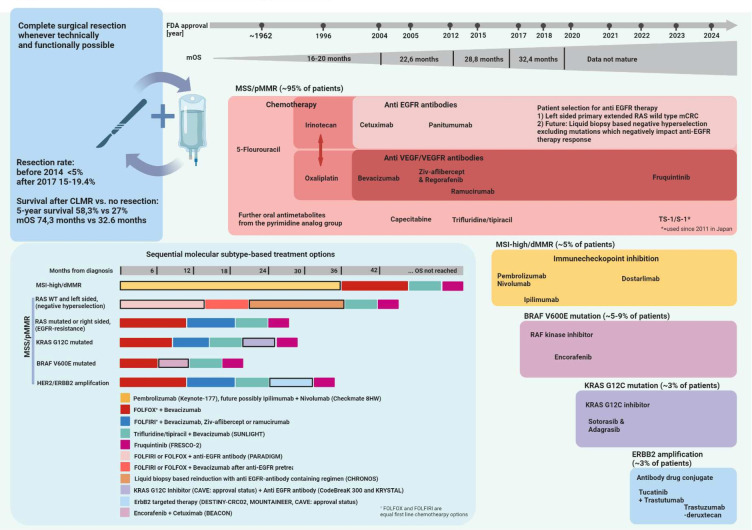
- Stated: treatment standards are region- and country-specific; survival data in Figure 1 derive from selected trial-eligible patients and should not be used for general population prediction; trials mostly include CRC liver metastasis and underrepresent peritoneal metastasis.
- Stated: clinical translation of TGF-β inhibition plus immunotherapy has largely failed despite preclinical promise; IS-IC needs further validation in different cohorts; CAR-T and adoptive cell therapies have so far been unsuccessful in solid malignancies like CRC.
- Evident: as a narrative review, it lacks a formal systematic search and quality appraisal and relies on selected literature and ongoing trial registrations; many cited emerging approaches are early-phase or ongoing without mature overall survival data.
Model-written summary. Check it against the paper before relying on it.
Integrity signals
Registry
Cites
Statistics
Figures
Verification
Claims the paper makes
19 Valid · 3 Not valid · 92 Not checked · 16 Own results and interpretations
Some cited sources support this claim and some don’t — read each source’s verdict below.
In the paper
“Preclinical and clinical data suggest that resistance to KRAS p.G12C inhibition is dependent on receptor tyrosine kinase activity, especially epidermal growth factor receptor (EGFR)-signalling.29 31 32”
§ Current and emerging concepts for systemic treatment of metastatic colorectal cancer > Introduction > Emerging biomarker-driven therapeutic concepts for mCRC
What the sources say
- Partly supportedcites [29] Awad M Liu S Rybkin II et al Acquired Resistance to KRAS G12C Inhibition in Cancer N Engl J Med 2021 384 2382 93 10.1056/NEJMoa2105281 34161704 PMC8864540 sourceExperimental — accuracy not yet measured
The Results (Mechanisms of Acquired Resistance to Adagrasib; page unavailable) identify alterations in the RTK–RAS–MAPK pathway among patients with acquired resistance, including one EGFR mutation. The Discussion reports such alterations in 14 of 38 patients, but also describes KRAS mutations and histologic transformation as resistance mechanisms. This supports an RTK-pathway role in some cases, not a general dependence on RTK activity or a special predominance of EGFR signaling. (LLM, conf=0.88)
- Partly supportedcites [31] Amodio V Yaeger R Arcella P et al EGFR Blockade Reverts Resistance to KRASG12C Inhibition in Colorectal Cancer Cancer Discov 2020 10 1129 39 10.1158/2159-8290.CD-20-0187 32430388 PMC7416460 sourceExperimental — accuracy not yet measured
The Introduction (p. 4) says EGFR reactivation restricts KRAS G12C inhibitor efficacy in colorectal cancer models, and the Discussion (p. 7) links those findings to lower clinical response rates in colorectal cancer. The paper does not show clinically that EGFR signalling causes resistance, and it distinguishes colorectal from lung cancer rather than establishing EGFR dependence across all KRAS G12C cancers. (LLM, conf=0.86)
- Disputedcites [32] Tanaka N Lin JJ Li C et al Clinical Acquired Resistance to KRASG12C Inhibition through a Novel KRAS Switch-II Pocket Mutation and Polyclonal Alterations Converging on RAS-MAPK Reactivation Cancer Discov 2021 11 1913 22 10.1158/2159-8290.CD-21-0365 33824136 PMC8338755 sourceExperimental — accuracy not yet measured
The Discussion (page unavailable) says that mutations downstream of RAS suggest MAPK reactivation alone may be sufficient to drive resistance in some KRASG12C cancers. It also describes resistance through a KRAS mutation that alters inhibitor binding. These mechanisms contradict the claim that resistance depends on receptor tyrosine kinase activity, particularly EGFR signalling. (LLM, conf=0.86)
Checked by a reasoning model — may be wrong.
hedgedstates a possible cause- Asserted: passes — The authors put it forward as true.
- Checkable: passes — It can be checked against evidence.
- Load-bearing: passes — The paper’s conclusions depend on it.
- Based: passes — The paper gives a reason why it holds.
- Partly supported
The cited sources support only part of this claim — read each source’s verdict below.
In the paper
“The first biological agents targeting the epidermal growth factor receptor (EGFR) and VEGF (receptor) (VEGF(R)) further improved systemic treatment;21 22”
§ Current and emerging concepts for systemic treatment of metastatic colorectal cancer > Introduction > Current standard of care for treatment of metastasised colorectal cancer
What the sources say
- Partly supportedcites [21] Cunningham D Humblet Y Siena S et al Cetuximab monotherapy and cetuximab plus irinotecan in irinotecan-refractory metastatic colorectal cancer N Engl J Med 2004 351 337 45 10.1056/NEJMoa033025 15269313 sourceExperimental — accuracy not yet measured
Our copy supports only the EGFR half of the claim: the Background and Results sections state that cetuximab, a monoclonal antibody that specifically blocks EGFR, had clinical activity in irinotecan-refractory metastatic colorectal cancer, with a higher response rate (22.9% vs 10.8%, P=0.007) and longer time to progression (4.1 vs 1.5 months, P<0.001) than cetuximab alone. The VEGF(Receptor)-targeted agent half is not supported: searches for VEGF, vascular endothelial growth factor, bevacizumab and angiogenesis returned no passage in which this paper addresses anti-VEGF therapy (angiogenesis appears only as one process downstream of EGFR signaling, and in the title of a cited radiation-biology reference). The paper also does not make the broader historical framing ('the first biological agents ... further improved systemic treatment'); its benefit claims are bounded to heavily pretreated, EGFR-expressing, irinotecan-refractory disease. (LLM, conf=0.78)
- Not checked yetcites [22] Saltz LB Meropol NJ Loehrer PJ Sr et al Phase II Trial of Cetuximab in Patients With Refractory Colorectal Cancer That Expresses the Epidermal Growth Factor Receptor JCO 2004 22 1201 8 10.1200/JCO.2004.10.182 14993230 source
plainstates a cause- Asserted: passes — The authors put it forward as true.
- Checkable: passes — It can be checked against evidence.
- Load-bearing: unclear — It is unclear whether the paper’s conclusions depend on it.
- Based: passes — The paper gives a reason why it holds.
- Partly supported
The cited sources support only part of this claim — read each source’s verdict below.
In the paper
“the prognostic relevance of ERBB2 amplification itself in mCRC remains controversial.42 43 45”
§ Current and emerging concepts for systemic treatment of metastatic colorectal cancer > Introduction > Emerging biomarker-driven therapeutic concepts for mCRC
What the sources say
- Not checked yetcites [42] Sawada K Nakamura Y Yamanaka T et al Prognostic and Predictive Value of HER2 Amplification in Patients With Metastatic Colorectal Cancer Clin Colorectal Cancer 2018 17 198 205 10.1016/j.clcc.2018.05.006 29866615
- Not checked yetcites [43] Raghav K Loree JM Morris JS et al Validation of HER2 Amplification as a Predictive Biomarker for Anti-Epidermal Growth Factor Receptor Antibody Therapy in Metastatic Colorectal Cancer JCO Precis Oncol 2019 3 1 13 10.1200/PO.18.00226 35100667 source
- Partly supportedcites [45] Richman SD Southward K Chambers P et al HER2 overexpression and amplification as a potential therapeutic target in colorectal cancer: analysis of 3256 patients enrolled in the QUASAR, FOCUS and PICCOLO colorectal cancer trials J Pathol 2016 238 562 70 10.1002/path.4679 26690310 PMC4785607 sourceExperimental — accuracy not yet measured
Richman et al. (2016) do supply material consistent with unsettled prognostic significance in stage IV disease — the Discussion states that in FOCUS/PICCOLO 'we did not find an association between HER2 expression and PFS or OS... Due to the rarity of HER2 overexpression, the power to detect a modest effect on outcome is low, but we can exclude a strong effect,' and the Discussion reports Martin et al.'s (ref 30) finding of inferior PFS/OS in HER2-amplified KRAS WT patients while noting 'the small sample size limits interpretation of this result.' However, the paper does not characterise the issue as controversial: its stated conclusion is that 'HER2 overexpression is not a prognostic biomarker' and that its negative survival result 'agrees with two previous studies, which failed to detect a prognostic biomarker effect for HER2 10, 13.' A further specificity gap: the outcome analyses (Results, 'HER2 and recurrence rate, PFS and OS analysis'; Abstract) contrasted IHC-defined strong HER2 overexpression with no overexpression, not FISH/microarray-defined ERBB2 amplification per se, so the 'amplification itself' part of the claim is not what this source tested. (LLM, conf=0.70)
plain- Asserted: passes — The authors put it forward as true.
- Checkable: passes — It can be checked against evidence.
- Load-bearing: unclear — It is unclear whether the paper’s conclusions depend on it.
- Based: passes — The paper gives a reason why it holds.
Every source the paper cites for this claim was checked and supports it.
In the paper
“A novel interesting approach was recently published, identifying local enrichment of cytotoxic lymphocytes with an interferon-high immunophenotype that induces antigen-presentation in adjacent macrophages and tumour cells as a positive response predictor in subsets of dMMR/MSI-H but also pMMR/MSS CRC.108”
§ Current and emerging concepts for systemic treatment of metastatic colorectal cancer > Introduction > Immune checkpoint blockade in MSI-H/dMMR metastatic colorectal cancer
What the sources say
- Supportedcites [108] Acha-Sagredo A Andrei P Clayton K et al A constitutive interferon-high immunophenotype defines response to immunotherapy in colorectal cancer Cancer Cell 2025 43 292 307 10.1016/j.ccell.2024.12.008 39824178 source
The SUMMARY (p. 2) states that an interferon-high immunophenotype locally enriched in cytotoxic lymphocytes and antigen-presenting macrophages is required for response, that it is not exclusive to dMMR CRC but comprises a subset of pMMR CRCs, and that interferon-producing cytotoxic T cells induce overexpression of antigen presentation (including CD74) in adjacent macrophages and tumor cells. The mechanism is directly evidenced in 'T cell proximity induces CD74 upregulation in TAMs and tumor cells' (pp. 6-7), and the clinical claim in both subtypes is carried by 'High CD74 expression is associated with response to anti-PD-1 ICI in dMMR CRC' (p. 9) and 'High CD74 SPS predicts clinical benefit in ICI-treated pMMR CRC patients' (p. 11), where the pMMR benefit is measured as progression-free survival in ICI-combination trials (CAMILLA, AtezoTRIBE). The Article Cell discussion (p. 13) additionally notes ~20% of pMMR CRCs carry the IFN-high IP. (LLM, conf=0.90)
plainstates a cause- Asserted: passes — The authors put it forward as true.
- Checkable: passes — It can be checked against evidence.
- Load-bearing: unclear — It is unclear whether the paper’s conclusions depend on it.
- Based: passes — The paper gives a reason why it holds.
- Supported
Every source the paper cites for this claim was checked and supports it.
In the paper
“Two of these subtypes, CMS1 and CMS4, are characterised by a pronounced activation of the TME.”
§ Current and emerging concepts for systemic treatment of metastatic colorectal cancer > Introduction > Strategies to overcome resistance of pMMR/MSS colorectal cancer to immunotherapy
What the sources say
- Supportedcites [121] Guinney J Dienstmann R Wang X et al The consensus molecular subtypes of colorectal cancer Nat Med 2015 21 1350 6 10.1038/nm.3967 26457759 PMC4636487 source
In Results, under “Biological characterization of the consensus molecular subtypes,” CMS1 is described as having a diffuse immune infiltrate and strong immune-evasion activity. The same section describes CMS4 as having stromal infiltration and activation of angiogenesis, matrix-remodeling, and inflammatory pathways. These findings support the characterization of both subtypes as having pronounced tumour-microenvironment activity. (LLM, conf=0.90)
plainstates an association- Asserted: passes — The authors put it forward as true.
- Checkable: passes — It can be checked against evidence.
- Load-bearing: passes — The paper’s conclusions depend on it.
- Based: passes — The paper gives a reason why it holds.
- Supported
64 more claims · 5 with their cited sources checked
Create a free account to see all 130 claims and to verify the 108 references still open.
- Probably not a substantial claim. 10
- It may state two separate claims as one. 53
Self-check
Percentages, sums and reported differences re-computed from the paper’s own numbers.
Each contradiction between two passages listed here was confirmed by an independent check.
Rated minor: it would not touch a result — a value no result rests on, a p-value that stays on the same side of the significance level, or a conflict that is clerical, resolved elsewhere in the paper, or outside its own findings.
In the paper
§ Current and emerging concepts for systemic treatment of metastatic colorectal cancer > Introduction > Emerging biomarker-driven therapeutic concepts for mCRC
“NCT06105021 | I/II | Advanced or metastatic solid tumours (n=100) | KRAS G12C mutation and positive for HLA-A*11:01”
§ Current and emerging concepts for systemic treatment of metastatic colorectal cancer > Introduction > Emerging biomarker-driven therapeutic concepts for mCRC
“The cells are engineered and grown to recognise the KRAS G12V protein on the cell surface of cancer cells.”
Rated minor: it would not touch a result — a value no result rests on, a p-value that stays on the same side of the significance level, or a conflict that is clerical, resolved elsewhere in the paper, or outside its own findings.
In the paper
§ Current and emerging concepts for systemic treatment of metastatic colorectal cancer > Introduction > Antibody-drug conjugates
“Table 5 Ongoing clinical trials on antibody drug conjugates and peptide drug conjugates excluding ERBB2/HER2 targeted approaches”
§ Current and emerging concepts for systemic treatment of metastatic colorectal cancer > Introduction > Antibody-drug conjugates
“NCT05493683 | II | Advanced or metastatic CRC (n=29) | Her2 overexpression | Disitamab vedotin+tislelizumab (anti-PD-1) | Her2”
Rated minor: it would not touch a result — a value no result rests on, a p-value that stays on the same side of the significance level, or a conflict that is clerical, resolved elsewhere in the paper, or outside its own findings.
In the paper
§ Current and emerging concepts for systemic treatment of metastatic colorectal cancer > Introduction > Emerging biomarker-driven therapeutic concepts for mCRC
“MOUNTAINEER-03 (NCT0525365)”
§ Current and emerging concepts for systemic treatment of metastatic colorectal cancer > Introduction > Emerging biomarker-driven therapeutic concepts for mCRC
“NCT05253651 | III | Advanced or metastatic CRC (n=400) | Her2 positive,RAS wild-type | Tucatinib+trastuzumab + mFOLFOX vs mFOLFOX+bevacizumab”
Rated minor: it would not touch a result — a value no result rests on, a p-value that stays on the same side of the significance level, or a conflict that is clerical, resolved elsewhere in the paper, or outside its own findings.
In the paper
§ Current and emerging concepts for systemic treatment of metastatic colorectal cancer > Introduction > Antibody-drug conjugates
“actinium-255”
§ Current and emerging concepts for systemic treatment of metastatic colorectal cancer > Introduction > Antibody-drug conjugates
“(225Ac)”
Citations
Cites
PD-1 Blockade in Tumors with Mismatch-Repair Deficiency
Le, D. T., Uram, J. N., Wang, H., Bartlett, B. R., Kemberling, H., Eyring, A. D., Skora, A. D., Luber, B. S., Azad, N. S., Laheru, D., et al. (2015) · New England Journal of Medicine · doi:10.1056/nejmoa1500596 · Cited by 9,377
TGFβ attenuates tumour response to PD-L1 blockade by contributing to exclusion of T cells
Mariathasan, S., Turley, S. J., Nickles, D., Castiglioni, A., Yuen, K., Wang, Y., Kadel III, E. E., Koeppen, H., Astarita, J. L., Cubas, R., et al. (2018) · Nature · doi:10.1038/nature25501 · Cited by 5,400
The consensus molecular subtypes of colorectal cancer
Guinney, J., Dienstmann, R., Wang, X., de Reyniès, A., Schlicker, A., Soneson, C., Marisa, L., Roepman, P., Nyamundanda, G., Angelino, P., et al. (2015) · Nature Medicine · doi:10.1038/nm.3967 · Cited by 5,170 · cited 2×
“121 122 In colorectal liver metastases, transcriptomic classification using a modified CMS classifier resulted in an enrichment of the CMS2 and CMS4 subtypes compared with primary tumours, 123 suggesting that the tumour stroma represents an attractive therapeutic target in mCRC to revert…”
Cunningham, D., Humblet, Y., Siena, S., Khayat, D., Bleiberg, H., Santoro, A., Bets, D., Mueser, M., Harstrick, A., Verslype, C., et al. (2004) · New England Journal of Medicine · doi:10.1056/nejmoa033025 · Cited by 5,035
de Gramont, A., Figer, A., Seymour, M., Homerin, M., Hmissi, A., Cassidy, J., Boni, C., Cortes-Funes, H., Cervantes, A., Freyer, G., et al. (2000) · Journal of Clinical Oncology · doi:10.1200/jco.2000.18.16.2938 · Cited by 3,815
Douillard, J., Cunningham, D., Roth, A., Navarro, M., James, R., Karasek, P., Jandik, P., Iveson, T., Carmichael, J., Alakl, M., et al. (2000) · The Lancet · doi:10.1016/s0140-6736(00)02034-1 · Cited by 3,256
Pembrolizumab in Microsatellite-Instability-High Advanced Colorectal Cancer
André, T., Shiu, K.-K., Kim, T. W., Jensen, B. V., Jensen, L. H., Punt, C., Smith, D., Garcia-Carbonero, R., Benavides, M., Gibbs, P., et al. (2020) · New England Journal of Medicine · doi:10.1056/nejmoa2017699 · Cited by 3,099
Trastuzumab Deruxtecan in Previously Treated HER2-Low Advanced Breast Cancer
Modi, S., Jacot, W., Yamashita, T., Sohn, J., Vidal, M., Tokunaga, E., Tsurutani, J., Ueno, N. T., Prat, A., Chae, Y. S., et al. (2022) · New England Journal of Medicine · doi:10.1056/nejmoa2203690 · Cited by 2,664
Chimeric Antigen Receptor Therapy
June, C. H., & Sadelain, M. (2018) · New England Journal of Medicine · doi:10.1056/nejmra1706169 · Cited by 2,331
Strategies and challenges for the next generation of antibody–drug conjugates
Beck, A., Goetsch, L., Dumontet, C., & Corvaïa, N. (2017) · Nature Reviews Drug Discovery · doi:10.1038/nrd.2016.268 · Cited by 2,271 · cited 3×
“79 Further, patient stratification and biomarker identification are crucial to select patients who would benefit from ADC treatment 59 as antigens are expressed differently in human tumours compared with preclinical animal models with respect to orientation, polarity and cell surface expression.”
Pagès, F., Mlecnik, B., Marliot, F., Bindea, G., Ou, F.-S., Bifulco, C., Lugli, A., Zlobec, I., Rau, T. T., Berger, M. D., et al. (2018) · The Lancet · doi:10.1016/s0140-6736(18)30789-x · Cited by 2,075 · cited 1×
“117 118 It is important to note that the IS was originally developed for localised stage I–III CRC but since then has been further adapted for mCRC. 118 A modification of the IS, termed “Immunoscore-Immune Checkpoint” (IS-IC), a systematic analysis of the density and vicinity of PD-L1 positive…”
TGFβ drives immune evasion in genetically reconstituted colon cancer metastasis
Tauriello, D. V. F., Palomo-Ponce, S., Stork, D., Berenguer-Llergo, A., Badia-Ramentol, J., Iglesias, M., Sevillano, M., Ibiza, S., Cañellas, A., Hernando-Momblona, X., et al. (2018) · Nature · doi:10.1038/nature25492 · Cited by 1,851
Cervantes, A., Adam, R., Roselló, S., Arnold, D., Normanno, N., Taïeb, J., Seligmann, J., De Baere, T., Osterlund, P., Yoshino, T., et al. (2023) · Annals of Oncology · doi:10.1016/j.annonc.2022.10.003 · Cited by 1,796
KRAS G12C Inhibition with Sotorasib in Advanced Solid Tumors
Hong, D. S., Fakih, M. G., Strickler, J. H., Desai, J., Durm, G. A., Shapiro, G. I., Falchook, G. S., Price, T. J., Sacher, A., Denlinger, C. S., et al. (2020) · New England Journal of Medicine · doi:10.1056/nejmoa1917239 · Cited by 1,733
Sacituzumab Govitecan in Metastatic Triple-Negative Breast Cancer
Bardia, A., Hurvitz, S. A., Tolaney, S. M., Loirat, D., Punie, K., Oliveira, M., Brufsky, A., Sardesai, S. D., Kalinsky, K., Zelnak, A. B., et al. (2021) · New England Journal of Medicine · doi:10.1056/nejmoa2028485 · Cited by 1,711 · cited 1×
“…(SG) and datopotamab deruxtecan (Dato-DXd) showed promising clinical efficacy in several cancer entities, including locally advanced or metastatic triple-negative breast cancer, 84 hormone receptor-positive and HER2-negative breast cancer 85 and locally advanced or metastatic urothelial carcinoma.”
Saltz, L. B., Meropol, N. J., Loehrer, P. J., Needle, M. N., Kopit, J., & Mayer, R. J. (2004) · Journal of Clinical Oncology · doi:10.1200/jco.2004.10.182 · Cited by 1,694
Engineering strategies to overcome the current roadblocks in CAR T cell therapy
Rafiq, S., Hackett, C. S., & Brentjens, R. J. (2020) · Nature Reviews Clinical Oncology · doi:10.1038/s41571-019-0297-y · Cited by 1,472 · cited 1×
“161 166 Overcoming immunosuppression Lastly, stromal populations are critical in establishing and maintaining an immunosuppressive niche that impairs the function of infiltrating endogenous or adoptively transferred T cells.”
Personalized RNA neoantigen vaccines stimulate T cells in pancreatic cancer
Rojas, L. A., Sethna, Z., Soares, K. C., Olcese, C., Pang, N., Patterson, E., Lihm, J., Ceglia, N., Guasp, P., Chu, A., et al. (2023) · Nature · doi:10.1038/s41586-023-06063-y · Cited by 1,432 · cited 1×
“135 Autogene cevumeran is currently being tested in a global phase II trial for the adjuvant treatment of high-risk stage 2 and stage 3 colorectal cancer (NCT04486378).”
Chalabi, M., Fanchi, L. F., Dijkstra, K. K., Van den Berg, J. G., Aalbers, A. G., Sikorska, K., Lopez-Yurda, M., Grootscholten, C., Beets, G. L., Snaebjornsson, P., et al. (2020) · Nature Medicine · doi:10.1038/s41591-020-0805-8 · Cited by 1,417
Gennari, A., André, F., Barrios, C. H., Cortés, J., de Azambuja, E., DeMichele, A., Dent, R., Fenlon, D., Gligorov, J., Hurvitz, S. A., et al. (2021) · Annals of Oncology · doi:10.1016/j.annonc.2021.09.019 · Cited by 1,417
Immunogenic cell stress and death
Kroemer, G., Galassi, C., Zitvogel, L., & Galluzzi, L. (2022) · Nature Immunology · doi:10.1038/s41590-022-01132-2 · Cited by 1,353 · cited 1×
“138 Indeed, several studies suggest that successful cytotoxic and targeted therapies correlate with the susceptibility to ICB.”
Angiogenic signaling pathways and anti-angiogenic therapy for cancer
Liu, Z.-L., Chen, H.-H., Zheng, L.-L., Sun, L.-P., & Shi, L. (2023) · Signal Transduction and Targeted Therapy · doi:10.1038/s41392-023-01460-1 · Cited by 1,300
Acquired Resistance to KRAS G12C Inhibition in Cancer
Awad, M. M., Liu, S., Rybkin, I. I., Arbour, K. C., Dilly, J., Zhu, V. W., Johnson, M. L., Heist, R. S., Patil, T., Riely, G. J., et al. (2021) · New England Journal of Medicine · doi:10.1056/nejmoa2105281 · Cited by 1,247
Sartore-Bianchi, A., Trusolino, L., Martino, C., Bencardino, K., Lonardi, S., Bergamo, F., Zagonel, V., Leone, F., Depetris, I., Martinelli, E., et al. (2016) · The Lancet Oncology · doi:10.1016/s1470-2045(16)00150-9 · Cited by 1,016
Bertotti, A., Migliardi, G., Galimi, F., Sassi, F., Torti, D., Isella, C., Corà, D., Di Nicolantonio, F., Buscarino, M., Petti, C., et al. (2011) · Cancer Discovery · doi:10.1158/2159-8290.cd-11-0109 · Cited by 939 · cited 1×
“…epidermal growth factor receptor 2 (HER2) therapy for ERBB2 - positive tumours in patients with chemorefractory mCRC. Strong preclinical evidence suggests that dual inhibition of ERBB2 is superior to monotherapy due to enhanced efficacy and reduced therapy resistance 46–48 and therefore the”
Brenner, H., Stock, C., & Hoffmeister, M. (2014) · BMJ · doi:10.1136/bmj.g2467 · Cited by 866
Antibody–drug conjugates come of age in oncology
Dumontet, C., Reichert, J. M., Senter, P. D., Lambert, J. M., & Beck, A. (2023) · Nature Reviews Drug Discovery · doi:10.1038/s41573-023-00709-2 · Cited by 842 · cited 2×
“62 This design ensures high target specificity while providing the long circulation half-life of an antibody.”
Identification of MRTX1133, a Noncovalent, Potent, and Selective KRAS G12D Inhibitor
Wang, X., Allen, S., Blake, J. F., Bowcut, V., Briere, D. M., Calinisan, A., Dahlke, J. R., Fell, J. B., Fischer, J. P., Gunn, R. J., et al. (2022) · Journal of Medicinal Chemistry · doi:10.1021/acs.jmedchem.1c01688 · Cited by 769
Lenz, H.-J., Van Cutsem, E., Luisa Limon, M., Wong, K. Y. M., Hendlisz, A., Aglietta, M., García-Alfonso, P., Neyns, B., Luppi, G., Cardin, D. B., et al. (2022) · Journal of Clinical Oncology · doi:10.1200/jco.21.01015 · Cited by 728
Lee, W. S., Yang, H., Chon, H. J., & Kim, C. (2020) · Experimental & Molecular Medicine · doi:10.1038/s12276-020-00500-y · Cited by 688
Wolff, A. C., Somerfield, M. R., Dowsett, M., Hammond, M. E. H., Hayes, D. F., McShane, L. M., Saphner, T. J., Spears, P. A., & Allison, K. H. (2023) · Journal of Clinical Oncology · doi:10.1200/jco.22.02864 · Cited by 684
Treatment of Metastatic Colorectal Cancer: ASCO Guideline
Morris, V. K., Kennedy, E. B., Baxter, N. N., Benson, A. B., Cercek, A., Cho, M., Ciombor, K. K., Cremolini, C., Davis, A., Deming, D. A., et al. (2023) · Journal of Clinical Oncology · doi:10.1200/jco.22.01690 · Cited by 682
Palliative chemotherapy for advanced colorectal cancer: systematic review and meta-analysis
Colorectal Cancer Collaborative Group (2000) · BMJ · doi:10.1136/bmj.321.7260.531 · Cited by 662
Exploring the next generation of antibody–drug conjugates
Tsuchikama, K., Anami, Y., Ha, S. Y. Y., & Yamazaki, C. M. (2024) · Nature Reviews Clinical Oncology · doi:10.1038/s41571-023-00850-2 · Cited by 659 · cited 2×
“79 Further, patient stratification and biomarker identification are crucial to select patients who would benefit from ADC treatment 59 as antigens are expressed differently in human tumours compared with preclinical animal models with respect to orientation, polarity and cell surface expression.”
CAR immune cells: design principles, resistance and the next generation
Labanieh, L., & Mackall, C. L. (2023) · Nature · doi:10.1038/s41586-023-05707-3 · Cited by 658
Clinical lessons learned from the first leg of the CAR T cell journey
Majzner, R. G., & Mackall, C. L. (2019) · Nature Medicine · doi:10.1038/s41591-019-0564-6 · Cited by 636
Antibody–drug conjugates for cancer therapy
Thomas, A., Teicher, B. A., & Hassan, R. (2016) · The Lancet Oncology · doi:10.1016/s1470-2045(16)30030-4 · Cited by 606
Yoshino, T., Arnold, D., Taniguchi, H., Pentheroudakis, G., Yamazaki, K., Xu, R.-H., Kim, T. W., Ismail, F., Tan, I. B., Yeh, K.-H., et al. (2018) · Annals of Oncology · doi:10.1093/annonc/mdx738 · Cited by 573
Meric-Bernstam, F., Hurwitz, H., Raghav, K. P. S., McWilliams, R. R., Fakih, M., VanderWalde, A., Swanton, C., Kurzrock, R., Burris, H., Sweeney, C., et al. (2019) · The Lancet Oncology · doi:10.1016/s1470-2045(18)30904-5 · Cited by 573
Intravenous delivery of a multi-mechanistic cancer-targeted oncolytic poxvirus in humans
Breitbach, C. J., Burke, J., Jonker, D., Stephenson, J., Haas, A. R., Chow, L. Q. M., Nieva, J., Hwang, T.-H., Moon, A., Patt, R., et al. (2011) · Nature · doi:10.1038/nature10358 · Cited by 551
Signaling pathways involved in colorectal cancer: pathogenesis and targeted therapy
Li, Q., Geng, S., Luo, H., Wang, W., Mo, Y.-Q., Luo, Q., Wang, L., Song, G.-B., Sheng, J.-P., & Xu, B. (2024) · Signal Transduction and Targeted Therapy · doi:10.1038/s41392-024-01953-7 · Cited by 546 · cited 1×
“116 Consequently, one of the major current challenges is to identify biomarkers such as the immunoscore (IS) that could help to select those patients with pMMR/MSS mCRC who will respond.”
Tagawa, S. T., Balar, A. V., Petrylak, D. P., Kalebasty, A. R., Loriot, Y., Fléchon, A., Jain, R. K., Agarwal, N., Bupathi, M., Barthelemy, P., et al. (2021) · Journal of Clinical Oncology · doi:10.1200/jco.20.03489 · Cited by 543
Pan-KRAS Inhibitor Disables Oncogenic Signalling and Tumour Growth
Kim, D., Herdeis, L., Rudolph, D., Zhao, Y., Böttcher, J., Vides, A., Ayala-Santos, C. I., Pourfarjam, Y., Cuevas-Navarro, A., Xue, J. Y., et al. (2023) · Nature · doi:10.1038/s41586-023-06123-3 · Cited by 534 · cited 1×
“36 In addition, several other drugs targeting KRAS mutations, including the most frequent p.G12D mutation 37 and pan-RAS (rat sarcoma) inhibitors, 38 are being investigated in clinical studies (table 3).”
Increasing Incidence of Early-Onset Colorectal Cancer
Sinicrope, F. A. (2022) · New England Journal of Medicine · doi:10.1056/nejmra2200869 · Cited by 534
Adagrasib with or without Cetuximab in Colorectal Cancer with Mutated KRAS G12C
Yaeger, R., Weiss, J., Pelster, M. S., Spira, A. I., Barve, M., Ou, S.-H. I., Leal, T. A., Bekaii-Saab, T. S., Paweletz, C. P., Heavey, G. A., et al. (2023) · New England Journal of Medicine · doi:10.1056/nejmoa2212419 · Cited by 527 · cited 2×
“34 Again, the combination of adagrasib plus cetuximab was more effective than adagrasib monotherapy.”
InfluentialTanaka, N., Lin, J. J., Li, C., Ryan, M. B., Zhang, J., Kiedrowski, L. A., Michel, A. G., Syed, M. U., Fella, K. A., Sakhi, M., et al. (2021) · Cancer Discovery · doi:10.1158/2159-8290.cd-21-0365 · Cited by 527
EGFR Blockade Reverts Resistance to KRASG12C Inhibition in Colorectal Cancer.
Amodio, V., Yaeger, R., Arcella, P., Cancelliere, C., Lamba, S., Lorenzato, A., Arena, S., Montone, M., Mussolin, B., Bian, Y., et al. (2020) · Cancer Discovery · doi:10.1158/2159-8290.cd-20-0187 · Cited by 504
Rugo, H. S., Bardia, A., Marmé, F., Cortés, J., Schmid, P., Loirat, D., Trédan, O., Ciruelos, E., Dalenc, F., Gómez Pardo, P., et al. (2023) · The Lancet · doi:10.1016/s0140-6736(23)01245-x · Cited by 496 · cited 1×
“…(SG) and datopotamab deruxtecan (Dato-DXd) showed promising clinical efficacy in several cancer entities, including locally advanced or metastatic triple-negative breast cancer, 84 hormone receptor-positive and HER2-negative breast cancer 85 and locally advanced or metastatic urothelial carcinoma.”
Goldenberg, D. M., Cardillo, T. M., Govindan, S. V., Rossi, E. A., & Sharkey, R. M. (2015) · Oncotarget · doi:10.18632/oncotarget.4318 · Cited by 495 · cited 1×
“87 In June 2024, the phase 2/3 multicentre randomised clinical trial TROPHI1 (NCT0624339310) 88 started recruitment investigating SG in the third-line therapy of metastatic CRC.”
Neoadjuvant Immunotherapy in Locally Advanced Mismatch Repair–Deficient Colon Cancer
Chalabi, M., Verschoor, Y. L., Tan, P. B., Balduzzi, S., Van Lent, A. U., Grootscholten, C., Dokter, S., Büller, N. V., Grotenhuis, B. A., Kuhlmann, K., et al. (2024) · New England Journal of Medicine · doi:10.1056/nejmoa2400634 · Cited by 486
Mechanisms of ADC Toxicity and Strategies to Increase ADC Tolerability
Nguyen, T. D., Bordeau, B. M., & Balthasar, J. P. (2023) · Cancers · doi:10.3390/cancers15030713 · Cited by 441 · cited 1×
“69 70 Notably, ERBB2-targeted ADCs have also been frequently associated with life-threatening cases of pneumonitis and interstitial lung disease.”
LRRC15(+) myofibroblasts dictate the stromal setpoint to suppress tumour immunity
Krishnamurty, A. T., Shyer, J. A., Thai, M., Gandham, V., Buechler, M. B., Yang, Y. A., Pradhan, R. N., Wang, A. W., Sanchez, P. L., Qu, Y., et al. (2022) · Nature · doi:10.1038/s41586-022-05272-1 · Cited by 436
Joanito, I., Wirapati, P., Zhao, N., Nawaz, Z., Yeo, G., Lee, F., Eng, C. L. P., Macalinao, D. C., Kahraman, M., Srinivasan, H., et al. (2022) · Nature Genetics · doi:10.1038/s41588-022-01100-4 · Cited by 434 · cited 1×
“…mCRC to revert immunosuppression and immune exclusion not only in primary but also in metastatic CRC. Interestingly, the newer intrinsic CMS (iCMS), 124 which is based on single cell RNA sequencing data from the epithelial fraction of primary human colorectal cancers, revealed that the majority…”
Siena, S., Di Bartolomeo, M., Raghav, K., Masuishi, T., Loupakis, F., Kawakami, H., Yamaguchi, K., Nishina, T., Fakih, M., Elez, E., et al. (2021) · The Lancet Oncology · doi:10.1016/s1470-2045(21)00086-3 · Cited by 422
Ford, K., Hanley, C. J., Mellone, M., Szyndralewiez, C., Heitz, F., Wiesel, P., Wood, O., Machado, M., Lopez, M.-A., Ganesan, A.-P., et al. (2020) · Cancer Research · doi:10.1158/0008-5472.can-19-3158 · Cited by 411 · cited 2×
“137 This effect could be reversed by pharmacological NOX4 inhibition.”
Antibody–drug conjugates: Recent advances in linker chemistry
Su, Z., Xiao, D., Xie, F., Liu, L., Wang, Y., Fan, S., Zhou, X., & Li, S. (2021) · Acta Pharmaceutica Sinica B · doi:10.1016/j.apsb.2021.03.042 · Cited by 403 · cited 1×
“…technologies such as linkers that are exclusively cleaved by tumour-specific proteases to increase the therapeutic index 90 (reviewed in 59 79 91 ), new, diverse and perhaps even dual payloads 92 selection of patients without an intrinsic resistance towards the cytotoxic payload and higher…”
Targeted and armed oncolytic poxviruses: a novel multi-mechanistic therapeutic class for cancer
Kirn, D. H., & Thorne, S. H. (2009) · Nature Reviews Cancer · doi:10.1038/nrc2545 · Cited by 402
Bardia, A., Messersmith, W. A., Kio, E. A., Berlin, J. D., Vahdat, L., Masters, G. A., Moroose, R., Santin, A. D., Kalinsky, K., Picozzi, V., et al. (2021) · Annals of Oncology · doi:10.1016/j.annonc.2021.03.005 · Cited by 400
Sotorasib plus Panitumumab in Refractory Colorectal Cancer with Mutated KRAS G12C
Fakih, M. G., Salvatore, L., Esaki, T., Modest, D. P., Lopez-Bravo, D. P., Taieb, J., Karamouzis, M. V., Ruiz-Garcia, E., Kim, T.-W., Kuboki, Y., et al. (2023) · New England Journal of Medicine · doi:10.1056/nejmoa2308795 · Cited by 398
Inflammatory fibroblasts mediate resistance to neoadjuvant therapy in rectal cancer
Nicolas, A. M., Pesic, M., Engel, E., Ziegler, P. K., Diefenhardt, M., Kennel, K. B., Buettner, F., Conche, C., Petrocelli, V., Elwakeel, E., et al. (2022) · Cancer Cell · doi:10.1016/j.ccell.2022.01.004 · Cited by 349 · cited 1×
“145 Intriguingly, this effect could be reverted by administration of the recombinant interleukin 1 receptor antagonist anakinra, 145 which led to the initiation of a phase I study of anakinra together with neo-adjuvant radiotherapy in the treatment of locally advanced rectal cancer.”
Self-citationShen, Y., Wang, X., Lu, J., Salfenmoser, M., Wirsik, N. M., Schleussner, N., Imle, A., Freire Valls, A., Radhakrishnan, P., Liang, J., et al. (2020) · Cancer Cell · doi:10.1016/j.ccell.2020.05.005 · Cited by 339 · cited 1×
“139 147 One common mechanism by which CAFs confer resistance to chemotherapy and other antimitotic drugs is the induction of a revival colonic stem cell (revCSC) phenotype in tumour cells.”
Fakih, M. G., Kopetz, S., Kuboki, Y., Kim, T. W., Munster, P. N., Krauss, J. C., Falchook, G. S., Han, S.-W., Heinemann, V., Muro, K., et al. (2022) · The Lancet Oncology · doi:10.1016/s1470-2045(21)00605-7 · Cited by 320 · cited 1×
“…the KRAS p.G12C inhibitor sotorasib in patients with advanced solid tumours harbouring a KRAS p.G12C mutation, including 42 participants with mCRC. 28 An overall response rate (ORR) of only 7.1% and median progression-free survival (mPFS) of 4.0 months were observed in the group of patients with…”
Influentialγδ T cells are effectors of immunotherapy in cancers with HLA class I defects
de Vries, N. L., van de Haar, J., Veninga, V., Chalabi, M., Ijsselsteijn, M. E., van der Ploeg, M., van den Bulk, J., Ruano, D., van den Berg, J. G., Haanen, J. B., et al. (2023) · Nature · doi:10.1038/s41586-022-05593-1 · Cited by 311
Yamazaki, C. M., Yamaguchi, A., Anami, Y., Xiong, W., Otani, Y., Lee, J., Ueno, N. T., Zhang, N., An, Z., & Tsuchikama, K. (2021) · Nature Communications · doi:10.1038/s41467-021-23793-7 · Cited by 309
The Hippo Pathway Component TAZ Promotes Immune Evasion in Human Cancer through PD-L1
Janse van Rensburg, H. J., Azad, T., Ling, M., Hao, Y., Snetsinger, B., Khanal, P., Minassian, L. M., Graham, C. H., Rauh, M. J., & Yang, X. (2018) · Cancer Research · doi:10.1158/0008-5472.can-17-3139 · Cited by 306
Human trophoblast cell-surface antigens defined by monoclonal antibodies.
Lipinski, M., Parks, D. R., Rouse, R. V., & Herzenberg, L. A. (1981) · Proceedings of the National Academy of Sciences · doi:10.1073/pnas.78.8.5147 · Cited by 306 · cited 1×
“80 For example, the glycoprotein TROP2, 81 originally described as a surface marker of the embryonal trophoblast, 82 is frequently upregulated in CRC and serves as a negative prognostic marker.”
Van den Eynde, M., Mlecnik, B., Bindea, G., Fredriksen, T., Church, S. E., Lafontaine, L., Haicheur, N., Marliot, F., Angelova, M., Vasaturo, A., et al. (2018) · Cancer Cell · doi:10.1016/j.ccell.2018.11.003 · Cited by 281
Tumor-Specific Activation of an EGFR-Targeting Probody Enhances Therapeutic Index
Desnoyers, L. R., Vasiljeva, O., Richardson, J. H., Yang, A., Menendez, E. E. M., Liang, T. W., Wong, C., Bessette, P. H., Kamath, K., Moore, S. J., et al. (2013) · Science Translational Medicine · doi:10.1126/scitranslmed.3006682 · Cited by 281 · cited 1×
“…and CEA) with novel linker technologies such as linkers that are exclusively cleaved by tumour-specific proteases to increase the therapeutic index 90 (reviewed in 59 79 91 ), new, diverse and perhaps even dual payloads 92 selection of patients without an intrinsic resistance towards the…”
Antoniotti, C., Rossini, D., Pietrantonio, F., Catteau, A., Salvatore, L., Lonardi, S., Boquet, I., Tamberi, S., Marmorino, F., Moretto, R., et al. (2022) · The Lancet Oncology · doi:10.1016/s1470-2045(22)00274-1 · Cited by 280 · cited 2×
“110 This upcoming clinical evidence on IS-IC needs further validation in different cohorts.”
Optimizing the safety of antibody–drug conjugates for patients with solid tumours
Tarantino, P., Ricciuti, B., Pradhan, S. M., & Tolaney, S. M. (2023) · Nature Reviews Clinical Oncology · doi:10.1038/s41571-023-00783-w · Cited by 269 · cited 1×
“69 70 Notably, ERBB2-targeted ADCs have also been frequently associated with life-threatening cases of pneumonitis and interstitial lung disease.”
Pant, S., Wainberg, Z. A., Weekes, C. D., Furqan, M., Kasi, P. M., Devoe, C. E., Leal, A. D., Chung, V., Basturk, O., VanWyk, H., et al. (2024) · Nature Medicine · doi:10.1038/s41591-023-02760-3 · Cited by 267 · cited 1×
“136 Preclinical data suggests that the ROS-producing enzyme NOX4 in CAFs impedes successful tumour vaccination by exclusion of T cells in several CRC mouse models.”
André, T., Elez, E., Lenz, H.-J., Jensen, L. H., Touchefeu, Y., Van Cutsem, E., Garcia-Carbonero, R., Tougeron, D., Mendez, G. A., Schenker, M., et al. (2025) · The Lancet · doi:10.1016/s0140-6736(24)02848-4 · Cited by 256
Metastatic recurrence in colorectal cancer arises from residual EMP1+ cells
Cañellas-Socias, A., Cortina, C., Hernando-Momblona, X., Palomo-Ponce, S., Mulholland, E. J., Turon, G., Mateo, L., Conti, S., Roman, O., Sevillano, M., et al. (2022) · Nature · doi:10.1038/s41586-022-05402-9 · Cited by 256 · cited 2×
“174 This argues for the use of ICB in the neo-adjuvant setting and, indeed, perioperative ICB enabled eradication of micrometastases after resection of the primary tumour in a mouse model of pMMR/MSS CRC. 174 In contrast, in human stage IV metastatic CRC, mechanisms of immunosuppression and…”
Woolston, A., Khan, K., Spain, G., Barber, L. J., Griffiths, B., Gonzalez-Exposito, R., Hornsteiner, L., Punta, M., Patil, Y., Newey, A., et al. (2019) · Cancer Cell · doi:10.1016/j.ccell.2019.05.013 · Cited by 254 · cited 2×
“139 147 One common mechanism by which CAFs confer resistance to chemotherapy and other antimitotic drugs is the induction of a revival colonic stem cell (revCSC) phenotype in tumour cells.”
Richman, S. D., Southward, K., Chambers, P., Cross, D., Barrett, J., Hemmings, G., Taylor, M., Wood, H., Hutchins, G., Foster, J. M., et al. (2016) · The Journal of Pathology · doi:10.1002/path.4679 · Cited by 241
Nakamura, Y., Okamoto, W., Kato, T., Esaki, T., Kato, K., Komatsu, Y., Yuki, S., Masuishi, T., Nishina, T., Ebi, H., et al. (2021) · Nature Medicine · doi:10.1038/s41591-021-01553-w · Cited by 231
YAP Is Essential for Treg-Mediated Suppression of Antitumor Immunity
Ni, X., Tao, J., Barbi, J., Chen, Q., Park, B. V., Li, Z., Zhang, N., Lebid, A., Ramaswamy, A., Wei, P., et al. (2018) · Cancer Discovery · doi:10.1158/2159-8290.cd-17-1124 · Cited by 231
Progressive plasticity during colorectal cancer metastasis
Moorman, A., Benitez, E. K., Cambuli, F., Jiang, Q., Mahmoud, A., Lumish, M., Hartner, S., Balkaran, S., Bermeo, J., Asawa, S., et al. (2025) · Nature · doi:10.1038/s41586-024-08150-0 · Cited by 229
Kulukian, A., Lee, P., Taylor, J., Rosler, R., de Vries, P., Watson, D., Forero-Torres, A., & Peterson, S. (2020) · Molecular Cancer Therapeutics · doi:10.1158/1535-7163.mct-19-0873 · Cited by 222 · cited 1×
“…epidermal growth factor receptor 2 (HER2) therapy for ERBB2 - positive tumours in patients with chemorefractory mCRC. Strong preclinical evidence suggests that dual inhibition of ERBB2 is superior to monotherapy due to enhanced efficacy and reduced therapy resistance 46–48 and therefore the”
Grauel, A. L., Nguyen, B., Ruddy, D., Laszewski, T., Schwartz, S., Chang, J., Chen, J., Piquet, M., Pelletier, M., Yan, Z., et al. (2020) · Nature Communications · doi:10.1038/s41467-020-19920-5 · Cited by 211
Gong, J., Wang, C., Lee, P. P., Chu, P., & Fakih, M. (2017) · Journal of the National Comprehensive Cancer Network · doi:10.6004/jnccn.2017.0016 · Cited by 207
Tolcher, A. W., Ochoa, L., Hammond, L. A., Patnaik, A., Edwards, T., Takimoto, C., Smith, L., de Bono, J., Schwartz, G., Mays, T., et al. (2003) · Journal of Clinical Oncology · doi:10.1200/jco.2003.05.137 · Cited by 206 · cited 1×
“78 Theoretically, the ideal target surface antigen for an ADC would be expressed exclusively on tumour cells at a sufficient density and would be rapidly internalised on ADC binding.”
New immune cell engagers for cancer immunotherapy
Fenis, A., Demaria, O., Gauthier, L., Vivier, E., & Narni-Mancinelli, E. (2024) · Nature Reviews Immunology · doi:10.1038/s41577-023-00982-7 · Cited by 203 · cited 1×
“These antibodies include bispecific T cell engagers (reviewed in 96–98 ) that provide a potential additional tool to direct immune cells into immune-cold tumours and could be combined with other forms of immunotherapies.”
Trop2: A possible therapeutic target for late stage epithelial carcinomas
Cubas, R., Li, M., Chen, C., & Yao, Q. (2009) · Biochimica et Biophysica Acta (BBA) - Reviews on Cancer · doi:10.1016/j.bbcan.2009.08.001 · Cited by 192 · cited 1×
“80 For example, the glycoprotein TROP2, 81 originally described as a surface marker of the embryonal trophoblast, 82 is frequently upregulated in CRC and serves as a negative prognostic marker.”
Survival improvement for patients with metastatic colorectal cancer over twenty years
Zeineddine, F. A., Zeineddine, M. A., Yousef, A., Gu, Y., Chowdhury, S., Dasari, A., Huey, R. W., Johnson, B., Kee, B., Lee, M. S., et al. (2023) · npj Precision Oncology · doi:10.1038/s41698-023-00353-4 · Cited by 192 · cited 3×
“These patients were usually young, fit, had favourable biomarkers or had access to immunotherapeutic approaches 10 .”
InfluentialCAF-induced physical constraints controlling T cell state and localization in solid tumours
Arpinati, L., Carradori, G., & Scherz‐Shouval, R. (2024) · Nature reviews. Cancer · doi:10.1038/s41568-024-00740-4 · Cited by 183 · cited 1×
“157 160 A landmark study from 2018 demonstrated that TGF-β contributes to immune exclusion in colorectal liver metastasis and that inhibition of the TGF-β receptor 1 using the drug galunisertib enhanced tumorous infiltration with T cells, inhibited outgrowth of liver metastases and synergised with…”
Geiser, A. G., Letterio, J. J., Kulkarni, A. B., Karlsson, S., Roberts, A. B., & Sporn, M. B. (1993) · Proceedings of the National Academy of Sciences · doi:10.1073/pnas.90.21.9944 · Cited by 179 · cited 1×
“167 TGF-β is capable of downregulating MHC-I, suggesting that CAFs can promote MHC-I loss in CRC. 168 Given that MHC- I-defective tumour cells can still be killed by natural killer cells and gamma delta ( γ δ ) T cells, 169 it is interesting to note that γ δ T cells can be skewed towards an IL-…”
Yoshino, T., Di Bartolomeo, M., Raghav, K., Masuishi, T., Loupakis, F., Kawakami, H., Yamaguchi, K., Nishina, T., Wainberg, Z., Elez, E., et al. (2023) · Nature Communications · doi:10.1038/s41467-023-38032-4 · Cited by 178
HER2 Positivity Predicts Unresponsiveness to EGFR-Targeted Treatment in Metastatic Colorectal Cancer
Sartore-Bianchi, A., Amatu, A., Porcu, L., Ghezzi, S., Lonardi, S., Leone, F., Bergamo, F., Fenocchio, E., Martinelli, E., Borelli, B., et al. (2019) · The Oncologist · doi:10.1634/theoncologist.2018-0785 · Cited by 171
Freedman, J. D., Duffy, M. R., Lei-Rossmann, J., Muntzer, A., Scott, E. M., Hagel, J., Campo, L., Bryant, R. J., Verrill, C., Lambert, A., et al. (2018) · Cancer Research · doi:10.1158/0008-5472.can-18-1750 · Cited by 170 · cited 1×
“…activation protein (FAP) led to depletion of FAP-positive cells from the TME, increased tumorous T cell accumulation and showed superior activity compared with the unarmed parental virus, 133 134 insinuating that depletion of specific stromal subsets might synergise with oncolytic viral therapy.”
Eriksson, B. K., Skogseid, B. M., Lundqvist, G., Wide, L., Wilander, E., & Öberg, K. (1990) · Cancer · doi:10.1002/1097-0142(19900501)65:9<2014::aid-cncr2820650922>3.0.co;2-s · Cited by 167
Reciprocal cellular cross-talk within the tumor microenvironment promotes oncolytic virus activity
Ilkow, C. S., Marguerie, M., Batenchuk, C., Mayer, J., Ben Neriah, D., Cousineau, S., Falls, T., Jennings, V. A., Boileau, M., Bellamy, D., et al. (2015) · Nature Medicine · doi:10.1038/nm.3848 · Cited by 165 · cited 1×
“131 Conversely, CAFs can undermine oncolytic viral therapy by upregulating type I interferons and increasing an antiviral response in tumour cells.”
Nors, J., Iversen, L. H., Erichsen, R., Gotschalck, K. A., & Andersen, C. L. (2024) · JAMA Oncology · doi:10.1001/jamaoncol.2023.5098 · Cited by 164 · cited 1×
“6 Molecu-larly, CRCs can be subdivided into mismatch repair-proficient (pMMR)/microsatellite stable (MSS) and mismatch repair-deficient (dMMR)/microsatellite instability high (MSI-H) tumours.”
de Sostoa, J., Fajardo, C. A., Moreno, R., Ramos, M. D., Farrera-Sal, M., & Alemany, R. (2019) · Journal for ImmunoTherapy of Cancer · doi:10.1186/s40425-019-0505-4 · Cited by 156
Jhaveri, K. L., Wang, X. V., Makker, V., Luoh, S.-W., Mitchell, E. P., Zwiebel, J. A., Sharon, E., Gray, R. J., Li, S., McShane, L. M., et al. (2019) · Annals of Oncology · doi:10.1093/annonc/mdz291 · Cited by 151
Väyrynen, V, Wirta, E.-V., Seppälä, T., Sihvo, E., Mecklin, J.-P., Vasala, K., & Kellokumpu, I. (2020) · BJS Open · doi:10.1002/bjs5.50299 · Cited by 148
Yamazaki, T., Gunderson, A. J., Gilchrist, M., Whiteford, M., Kiely, M. X., Hayman, A., O'Brien, D., Ahmad, R., Manchio, J. V., Fox, N., et al. (2022) · The Lancet Oncology · doi:10.1016/s1470-2045(22)00446-6 · Cited by 147 · cited 1×
“173 Furthermore, ICB particularly facilitates the destruction of small tumours and micrometastases, in which PD-L1 positivity and T cell infiltration are higher compared with larger metastases.”
Crisafulli, G., Bianchi, A. S., Lazzari, L., Pietrantonio, F., Amatu, A., Macagno, M., Barault, L., Cassingena, A., Bartolini, A., Luraghi, P., et al. (2022) · Cancer Discovery · doi:10.1158/2159-8290.cd-21-1434 · Cited by 147
Yaeger, R., Uboha, N. V., Pelster, M. S., Bekaii-Saab, T. S., Barve, M., Saltzman, J., Sabari, J. K., Peguero, J. A., Paulson, A. S., Jänne, P. A., et al. (2024) · Cancer Discovery · doi:10.1158/2159-8290.cd-24-0217 · Cited by 139 · cited 1×
“35 The phase III KRYSTAL-10 trial is currently recruiting, comparing adagrasib plus cetuximab to FOLFOX or FOLFIRI in the second-line treatment of KRAS p.G12C -mutated mCRC (NCT04793958).”
Morano, F., Raimondi, A., Pagani, F., Lonardi, S., Salvatore, L., Cremolini, C., Murgioni, S., Randon, G., Palermo, F., Antonuzzo, L., et al. (2022) · Journal of Clinical Oncology · doi:10.1200/jco.21.02583 · Cited by 134
Oncolytic virotherapy as immunotherapy
Melcher, A., Harrington, K., & Vile, R. (2021) · Science · doi:10.1126/science.abk3436 · Cited by 133
Raghav, K., Loree, J. M., Morris, J. S., Overman, M. J., Yu, R., Meric-Bernstam, F., Menter, D., Korphaisarn, K., Kee, B., Muranyi, A., et al. (2019) · JCO Precision Oncology · doi:10.1200/po.18.00226 · Cited by 132 · cited 1×
“43 Additionally, the prevalence of erb-b2 receptor tyrosine kinase 2 (ERBB2)- low disease 7, 16 (2023).”
Incidence and Survival in Synchronous and Metachronous Liver Metastases From Colorectal Cancer
Reboux, N., Jooste, V., Goungounga, J. A., Robaszkiewicz, M., Nousbaum, J., & Bouvier, A. (2022) · JAMA Network Open · doi:10.1001/jamanetworkopen.2022.36666 · Cited by 130
Overcoming the challenges associated with CD3+ T-cell redirection in cancer
Singh, A. K., Dees, S., & Grewal, I. S. (2021) · British Journal of Cancer · doi:10.1038/s41416-020-01225-5 · Cited by 129 · cited 1×
“These antibodies include bispecific T cell engagers (reviewed in 96–98 ) that provide a potential additional tool to direct immune cells into immune-cold tumours and could be combined with other forms of immunotherapies.”
Huang, M., Liu, T., Ma, P., Mitteer, R. A., Zhang, Z., Kim, H. J., Yeo, E., Zhang, D., Cai, P., Li, C., et al. (2016) · Journal of Clinical Investigation · doi:10.1172/jci84876 · Cited by 128 · cited 1×
“with TMZ treatment in a mouse model, 156 suggesting that pharmacologic c-Met inhibition might synergise with TMZ treatment and subsequent ICB in CRC.”
Yi, Y., He, H.-W., Wang, J., Cai, X., Li, Y.-W., Zhou, J., Cheng, Y., Jin, J., Fan, J., & Qiu, S. (2012) · Journal of Hepatology · doi:10.1016/j.jhep.2012.12.015 · Cited by 126
Molecular characterization of colorectal cancer related peritoneal metastatic disease
Lenos, K. J., Bach, S., Ferreira Moreno, L., ten Hoorn, S., Sluiter, N. R., Bootsma, S., Vieira Braga, F. A., Nijman, L. E., van den Bosch, T., Miedema, D. M., et al. (2022) · Nature Communications · doi:10.1038/s41467-022-32198-z · Cited by 125 · cited 1×
“17 In conclusion, for the vast majority of patients who are elderly or unfit, biomarker negative and with MSS/pMMR mCRC, new treatment options and especially access to immunotherapy are urgently needed to improve outcomes and enable long-term survivorship.”
Optimizing immunotherapy for colorectal cancer
Ganesh, K. (2022) · Nature Reviews Gastroenterology & Hepatology · doi:10.1038/s41575-021-00569-4 · Cited by 120 · cited 1×
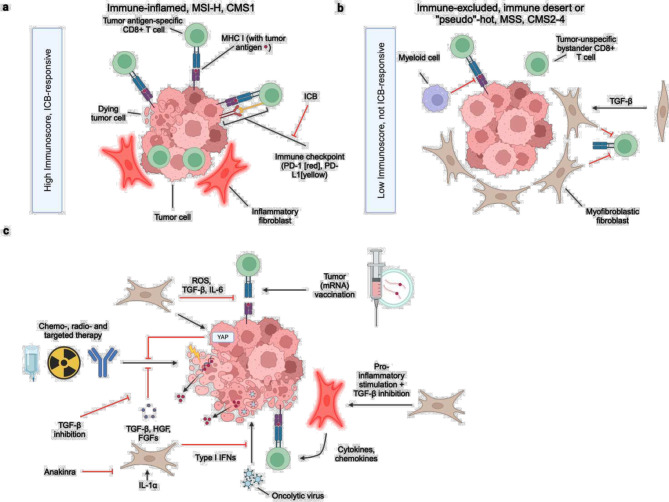
“In contrast, approximately 90% of patients with pMMR/MSS CRC have a low tumour mutational burden, are immune-cold and do not respond to ICB 109 (figure 2).”
Dotan, E., Cohen, S. J., Starodub, A. N., Lieu, C. H., Messersmith, W. A., Simpson, P. S., Guarino, M. J., Marshall, J. L., Goldberg, R. M., Hecht, J. R., et al. (2017) · Journal of Clinical Oncology · doi:10.1200/jco.2017.73.9011 · Cited by 114
Expected and unexpected effects after systemic inhibition of Hippo transcriptional output in cancer
Baroja, I., Kyriakidis, N. C., Halder, G. A., & Moya, I. M. (2024) · Nature Communications · doi:10.1038/s41467-024-46531-1 · Cited by 111
Linares, J., Sallent-Aragay, A., Badia-Ramentol, J., Recort-Bascuas, A., Méndez, A., Manero-Rupérez, N., Re, D. L., Rivas, E. I., Guiu, M., Zwick, M., et al. (2023) · Nature Communications · doi:10.1038/s41467-023-36334-1 · Cited by 109 · cited 1×
“For example, CAFs form reservoirs for oxaliplatin in the CRC TME which increases tumour aggressiveness and therapy resistance 144 and inflammatory CAFs that undergo senescence on radiotherapy promote therapy resistance of rectal cancers, partly through exclusion of cytotoxic T cells from irradiated…”
HLA class I loss in colorectal cancer: implications for immune escape and immunotherapy
Anderson, P., Aptsiauri, N., Ruiz-Cabello, F., & Garrido, F. (2021) · Cellular & Molecular Immunology · doi:10.1038/s41423-021-00634-7 · Cited by 107 · cited 1×
“167 TGF-β is capable of downregulating MHC-I, suggesting that CAFs can promote MHC-I loss in CRC. 168 Given that MHC- I-defective tumour cells can still be killed by natural killer cells and gamma delta ( γ δ ) T cells, 169 it is interesting to note that γ δ T cells can be skewed towards an IL-…”
Leto, S. M., Sassi, F., Catalano, I., Torri, V., Migliardi, G., Zanella, E. R., Throsby, M., Bertotti, A., & Trusolino, L. (2015) · Clinical Cancer Research · doi:10.1158/1078-0432.ccr-14-3066 · Cited by 104
Tosi, F., Sartore-Bianchi, A., Lonardi, S., Amatu, A., Leone, F., Ghezzi, S., Martino, C., Bencardino, K., Bonazzina, E., Bergamo, F., et al. (2020) · Clinical Colorectal Cancer · doi:10.1016/j.clcc.2020.06.009 · Cited by 101
Salem, M. E., El-Refai, S. M., Sha, W., Puccini, A., Grothey, A., George, T. J., Hwang, J. J., O'Neil, B., Barrett, A. S., Kadakia, K. C., et al. (2022) · JCO Precision Oncology · doi:10.1200/po.21.00245 · Cited by 101
Ibrahim, A., Abdalsalam, N. M. F., Liang, Z., Tariq, H. K., Li, R., Afolabi, L. O., Rabiu, L., Chen, X., Xu, S., Xu, Z., et al. (2025) · Cancer Gene Therapy · doi:10.1038/s41417-025-00886-9 · Cited by 101 · cited 1×
“177”
Verschoor, Y. L., van den Berg, J. G., Beets, G. L., Sikorska, K., Aalbers, A. G. J., van Lent, A. U., Grootscholten, C., Huibregtse, I. L., Marsman, H. A., Oosterling, S. J., et al. (2022) · Journal of Clinical Oncology · doi:10.1200/jco.2022.40.16_suppl.3511 · Cited by 101 · cited 1×
“However, subgroup analyses of several clinical studies 110–113 suggest that some patients with pMMR/MSS CRC can successfully be treated with ICB, especially when combined with additional cytotoxic and targeted agents, proving that at least a subset of these tumours in principle is ICB-responsive.”
High Turnover of Tissue Factor Enables Efficient Intracellular Delivery of Antibody–Drug Conjugates
de Goeij, B. E. C. G., Satijn, D., Freitag, C. M., Wubbolts, R., Bleeker, W. K., Khasanov, A., Zhu, T., Chen, G., Miao, D., van Berkel, P. H. C., et al. (2015) · Molecular Cancer Therapeutics · doi:10.1158/1535-7163.mct-14-0798 · Cited by 98 · cited 1×
“63 Furthermore, due to paracrine release of the cytotoxic payload, surrounding (cancer) cells are likewise attacked, which is called the cytotoxic bystander effect.”
Arwert, E. N., Milford, E. L., Rullan, A., Derzsi, S., Hooper, S., Kato, T., Mansfield, D., Melcher, A., Harrington, K. J., & Sahai, E. (2020) · Nature Cell Biology · doi:10.1038/s41556-020-0527-7 · Cited by 90 · cited 1×
“132 In line with that, oncolytic viruses armed with a bispecific T cell engager against the CAF surface marker fibroblast activation protein (FAP) led to depletion of FAP-positive cells from the TME, increased tumorous T cell accumulation and showed superior activity compared with the unarmed…”
Prognostic and Predictive Value of HER2 Amplification in Patients With Metastatic Colorectal Cancer
Sawada, K., Nakamura, Y., Yamanaka, T., Kuboki, Y., Yamaguchi, D., Yuki, S., Yoshino, T., Komatsu, Y., Sakamoto, N., Okamoto, W., et al. (2018) · Clinical Colorectal Cancer · doi:10.1016/j.clcc.2018.05.006 · Cited by 85
Segal, N. H., Cercek, A., Ku, G., Wu, A. J., Rimner, A., Khalil, D. N., Reidy-Lagunes, D., Cuaron, J., Yang, T. J., Weiser, M. R., et al. (2021) · Clinical Cancer Research · doi:10.1158/1078-0432.ccr-20-2474 · Cited by 84 · cited 1×
“…most clinical trials that evaluate the efficacy of ICB in pMMR/MSS CRC combine cytotoxic and/or other targeted therapies together with ICB, 141–143 and it seems plausible that strategies that increase the susceptibility of tumour towards conventional therapies will be beneficial for…”
Metropulos, A. E., Munshi, H. G., & Principe, D. R. (2022) · eBioMedicine · doi:10.1016/j.ebiom.2022.104380 · Cited by 81
Kim, S., Meric‐Bernstam, F., Kalyan, A., Babich, A., Liu, R., Tanigawa, T., Sommer, A., Osada, M., Reetz, F., Laurent, D., et al. (2019) · Targeted Oncology · doi:10.1007/s11523-019-00670-4 · Cited by 81
Segal, N. H., Melero, I., Moreno, V., Steeghs, N., Marabelle, A., Rohrberg, K., Rodriguez-Ruiz, M. E., Eder, J. P., Eng, C., Manji, G. A., et al. (2024) · Nature Communications · doi:10.1038/s41467-024-48479-8 · Cited by 80
Qiu, M., Zhang, Y., Guo, Y., Guo, W., Nian, W., Liao, W., Xu, Z., Zhang, W., Zhao, H., Wei, X., et al. (2022) · JAMA Oncology · doi:10.1001/jamaoncol.2022.0503 · Cited by 80
Segal, N. H., Kemeny, N. E., Cercek, A., Reidy‐Lagunes, D. L., Raasch, P. J., Warren, P., Hrabovsky, A. E., Campbell, N. M., Shia, J., Goodman, K. A., et al. (2016) · Journal of Clinical Oncology · doi:10.1200/jco.2016.34.15_suppl.3539 · Cited by 79
Bridging the gap with multispecific immune cell engagers in cancer and infectious diseases
Rolin, C., Zimmer, J., & Seguin‐Devaux, C. (2024) · Cellular and Molecular Immunology · doi:10.1038/s41423-024-01176-4 · Cited by 78
Hu, G., Cheng, P., Pan, J., Wang, S., Ding, Q., Jiang, Z., Cheng, L., Shao, X., Huang, L., & Huang, J. (2020) · Cancer Immunology Research · doi:10.1158/2326-6066.cir-19-0923 · Cited by 76 · cited 1×
“170 171 In contrast to the strong preclinical evidence for the synergism of TGF-β and immunotherapies, several clinical studies that subsequently investigated this combinatorial approach in mCRC and other tumour entities failed, highlighting the complexity of translating results from mice to humans.”
Raghav, K. P. S., Siena, S., Takashima, A., Kato, T., Van Den Eynde, M., Di Bartolomeo, M., Komatsu, Y., Kawakami, H., Peeters, M., Andre, T., et al. (2023) · Journal of Clinical Oncology · doi:10.1200/jco.2023.41.16_suppl.3501 · Cited by 75
Monge, C., Xie, C., Myojin, Y., Coffman, K., Hrones, D. M., Wang, S., Hernandez, J. M., Wood, B. J., Levy, E. B., Juburi, I., et al. (2023) · Journal for ImmunoTherapy of Cancer · doi:10.1136/jitc-2022-005640 · Cited by 75
Prevalence of Mismatch-Repair Deficiency in Rectal Adenocarcinomas
Papke, D. J., Yurgelun, M. B., Noffsinger, A. E., Turner, K. O., Genta, R. M., & Redston, M. (2022) · New England Journal of Medicine · doi:10.1056/nejmc2210175 · Cited by 72
Trellis tree-based analysis reveals stromal regulation of patient-derived organoid drug responses
Ramos Zapatero, M., Tong, A., Opzoomer, J. W., O’Sullivan, R., Cardoso Rodriguez, F., Sufi, J., Vlckova, P., Nattress, C., Qin, X., Claus, J., et al. (2023) · Cell · doi:10.1016/j.cell.2023.11.005 · Cited by 72
Acha-Sagredo, A., Andrei, P., Clayton, K., Taggart, E., Antoniotti, C., Woodman, C. A., Afrache, H., Fourny, C., Armero, M., Moinudeen, H. K., et al. (2025) · Cancer Cell · doi:10.1016/j.ccell.2024.12.008 · Cited by 71
Metastatic heterogeneity of the consensus molecular subtypes of colorectal cancer
Eide, P. W., Moosavi, S. H., Eilertsen, I. A., Brunsell, T. H., Langerud, J., Berg, K. C. G., Røsok, B. I., Bjørnbeth, B. A., Nesbakken, A., Lothe, R. A., et al. (2021) · npj Genomic Medicine · doi:10.1038/s41525-021-00223-7 · Cited by 70 · cited 1×
“…transcriptomic classification using a modified CMS classifier resulted in an enrichment of the CMS2 and CMS4 subtypes compared with primary tumours, 123 suggesting that the tumour stroma represents an attractive therapeutic target in mCRC to revert immunosuppression and immune exclusion not only…”
Gomez-Roca, C., Yanez, E., Im, S.-A., Castanon Alvarez, E., Senellart, H., Doherty, M., García-Corbacho, J., Lopez, J. S., Basu, B., Maurice-Dror, C., et al. (2021) · Journal of Clinical Oncology · doi:10.1200/jco.2021.39.3_suppl.94 · Cited by 68
Borràs, D. M., Verbandt, S., Ausserhofer, M., Sturm, G., Lim, J., Verge, G. A., Vanmeerbeek, I., Laureano, R. S., Govaerts, J., Sprooten, J., et al. (2023) · Cell Discovery · doi:10.1038/s41421-023-00605-4 · Cited by 67
Cellular-Resolution Imaging of Bystander Payload Tissue Penetration from Antibody-Drug Conjugates
Khera, E., Dong, S., Huang, H., de Bever, L., van Delft, F. L., & Thurber, G. M. (2022) · Molecular Cancer Therapeutics · doi:10.1158/1535-7163.mct-21-0580 · Cited by 65 · cited 1×
“64 Recently, the first promising clinical results for ADCs in mCRC have been presented.”
Generalisability of Common Oncology Clinical Trial Eligibility Criteria in the Real World
Karim, S., Xu, Y., Kong, S., Abdel-Rahman, O., Quan, M. L., & Cheung, W. Y. (2019) · Clinical Oncology · doi:10.1016/j.clon.2019.05.003 · Cited by 64
Andre, T., Elez, E., Van Cutsem, E., Jensen, L. H., Bennouna, J., Mendez, G., Schenker, M., De La Fouchardiere, C., Limon, M. L., Yoshino, T., et al. (2024) · Journal of Clinical Oncology · doi:10.1200/jco.2024.42.3_suppl.lba768 · Cited by 63
van den Bulk, J., Verdegaal, E. M. E., Ruano, D., Ijsselsteijn, M. E., Visser, M., van der Breggen, R., Duhen, T., van der Ploeg, M., de Vries, N. L., Oosting, J., et al. (2019) · Genome Medicine · doi:10.1186/s13073-019-0697-8 · Cited by 63
Saeed, A., Park, R., Pathak, H. B., Al-Bzour, A. N., Dai, J., Phadnis, M. A., Al-Rajabi, R. M. T., Kasi, A., Baranda, J. C., Sun, W., et al. (2024) · Nature Communications · doi:10.1038/s41467-024-45960-2 · Cited by 62
Update on Emerging Therapies for Advanced Colorectal Cancer
Alese, O. B., Wu, C. S.-Y., Chapin, W. J., Ulanja, M. B., Zheng-Lin, B., Amankwah, M., & Eads, J. R. (2023) · American Society of Clinical Oncology Educational Book · doi:10.1200/edbk_389574 · Cited by 55 · cited 1×
“…including phosphoinositide 3-kinase (PI3K) family, rearranged during transfection (RET) receptor tyrosine kinase and proteins involved in DNA damage control are currently being investigated but shall not be discussed in detail here, as clinical evidence is currently very limited (reviewed in 93 ).”
Almhanna, K., Kalebic, T., Cruz, C., Faris, J. E., Ryan, D. P., Jung, J., Wyant, T. L., Fasanmade, A. A., Messersmith, W. A., & Rodon, J. A. (2016) · Clinical Cancer Research · doi:10.1158/1078-0432.ccr-15-2474 · Cited by 51
Chida, K., Kotani, D., Masuishi, T., Kawakami, T., Kawamoto, Y., Kato, K., Fushiki, K., Sawada, K., Kumanishi, R., Shirasu, H., et al. (2021) · The Oncologist · doi:10.1002/onco.13870 · Cited by 50
Li, K., Liu, W., Yu, H., Chen, J., Tang, W., Wang, J., Qi, M., Sun, Y., Xu, X., Zhang, J., et al. (2024) · Journal of Clinical Investigation · doi:10.1172/jci170490 · Cited by 49
Mouillet-Richard, S., Cazelles, A., Sroussi, M., Gallois, C., Taieb, J., & Laurent-Puig, P. (2024) · Clinical Cancer Research · doi:10.1158/1078-0432.ccr-23-3964 · Cited by 43 · cited 2×
“122 Importantly, the stroma-rich CMS4 tumours are associated with immunosuppression and a significantly worse survival compared with the other three subtypes.”
Gupta, R., Garrett-Mayer, E., Halabi, S., Mangat, P. K., D'Andre, S. D., Meiri, E., Shrestha, S., Warren, S. L., Ranasinghe, S., & Schilsky, R. L. (2020) · Journal of Clinical Oncology · doi:10.1200/jco.2020.38.4_suppl.132 · Cited by 41 · cited 1×
“51 and the ctDNA-guided TRIUMPH 52 study (ORR 30%).”
Moosavi, S. H., Eide, P. W., Eilertsen, I. A., Brunsell, T. H., Berg, K. C. G., Røsok, B. I., Brudvik, K. W., Bjørnbeth, B. A., Guren, M. G., Nesbakken, A., et al. (2021) · Genome Medicine · doi:10.1186/s13073-021-00956-1 · Cited by 40 · cited 1×
“139 140 Based on these insights, most clinical trials that evaluate the efficacy of ICB in pMMR/MSS CRC combine cytotoxic and/or other targeted therapies together with ICB, 141–143 and it seems plausible that strategies that increase the susceptibility of tumour towards conventional therapies will…”
Amodio, V., Lamba, S., Chilà, R., Cattaneo, C. M., Mussolin, B., Corti, G., Rospo, G., Berrino, E., Tripodo, C., Pisati, F., et al. (2023) · Cancer Cell · doi:10.1016/j.ccell.2022.12.003 · Cited by 39 · cited 1×
“153”
Mitry, E., Rollot, F., Jooste, V., Guiu, B., Lepage, C., Ghiringhelli, F., Faivre, J., & Bouvier, A. (2013) · European Journal of Cancer · doi:10.1016/j.ejca.2013.04.001 · Cited by 39
Strating, E., Wassenaar, E., Verhagen, M., Rauwerdink, P., van Schelven, S., de Hingh, I., Rinkes, I. B., Boerma, D., Witkamp, A., Lacle, M., et al. (2022) · British Journal of Cancer · doi:10.1038/s41416-022-01748-z · Cited by 36
Fleischmann, M., Diefenhardt, M., Nicolas, A. M., Rödel, F., Ghadimi, M. B., Hofheinz, R., Greten, F. R., Rödel, C. M., & Fokas, E. (2022) · Clinical and Translational Radiation Oncology · doi:10.1016/j.ctro.2022.04.003 · Cited by 35 · cited 1×
“146 Additionally, CAFs subvert anti-VEGF and anti-EGFR therapy in CRC liver metastases by promoting tumour angiogenesis and resistance to cetuximab-induced cell death, respectively.”
Self-citationDark force rising: Reawakening and targeting of fetal-like stem cells in colorectal cancer
Fey, S. K., Vaquero-Siguero, N., & Jackstadt, R. (2024) · Cell Reports · doi:10.1016/j.celrep.2024.114270 · Cited by 32 · cited 2×
“80 For example, the glycoprotein TROP2, 81 originally described as a surface marker of the embryonal trophoblast, 82 is frequently upregulated in CRC and serves as a negative prognostic marker.”
Role of Real-World Evidence in Informing Cancer Care: Lessons from Colorectal Cancer
Batra, A., & Cheung, W. Y. (2019) · Current Oncology · doi:10.3747/co.26.5625 · Cited by 31 · cited 1×
“16 Therefore, the indicated survival times in figure 1 should be carefully considered for patients without therapy restrictions who can be treated according to clinical trial protocols and sequences and cannot be used for patient prediction for a general population.”
ZHAO, P., YU, H.-Z., & CAI, J.-H. (2015) · Molecular Medicine Reports · doi:10.3892/mmr.2015.3900 · Cited by 24
Lemech, C., Woodward, N. E., Chan, N., Mortimer, J. E., Naumovski, L., Nuthalapati, S., Tong, B., Jiang, F., Ansell, P. J., Ratajczak, C. K., et al. (2020) · Investigational New Drugs · doi:10.1007/s10637-020-00960-z · Cited by 24
Hippo Signaling Pathway Regulates Cancer Cell–Intrinsic MHC-II Expression
Zeng, Z., Gu, S. S., Ouardaoui, N., Tymm, C. C., Yang, L., Wong, C. J., Li, D., Zhang, W., Wang, X., Weirather, J. L., et al. (2022) · Cancer Immunology Research · doi:10.1158/2326-6066.cir-22-0227 · Cited by 24 · cited 1×
“148 152 Finally, enrichment of dMMR clones within MMR heterogeneous tumours represents an interesting strategy to foster immunogenicity of CRC. Enrichment of dMMR clones can be achieved by treatment with chemotherapeutics such as temozolomide (TMZ) and 6-Thioguanine, to which dMMR tumour cells show…”
Osterlund, E., Ristimäki, A., Kytölä, S., Kuopio, T., Heervä, E., Muhonen, T., Halonen, P., Kallio, R., Soveri, L.-M., Sundström, J., et al. (2022) · Frontiers in Oncology · doi:10.3389/fonc.2022.826073 · Cited by 23
An overview of CAR T-cell clinical trial activity to 2021
Adami, A. A., & Maher, J. F. (2021) · Immunotherapy Advances · doi:10.1093/immadv/ltab004 · Cited by 23
Strickler, J., Cercek, A., Siena, S., André, T., Ng, K., Van Cutsem, E., Wu, C., Paulson, A., Hubbard, J., Coveler, A., et al. (2022) · Annals of Oncology · doi:10.1016/j.annonc.2022.04.440 · Cited by 21 · cited 2×
“Recently, the phase II MOUNTAINEER study 53 provided evidence in the largest cohort of patients in comparing ERBB2-specific tyrosine kinase inhibitor tucatinib with or without trastuzumab in RAS wild-type and ERBB2-positive mCRC (ORR 38.1%, mPFS 8.2 months, mOS 24.1 months).”
InfluentialCorry, S. M., McCorry, A. M., Lannagan, T. R., Leonard, N. A., Fisher, N. C., Byrne, R. M., Tsantoulis, P., Cortes-Lavaud, X., Amirkhah, R., Redmond, K. L., et al. (2022) · Gut · doi:10.1136/gutjnl-2021-326183 · Cited by 18 · cited 1×
“…of stroma-rich metastatic CRC and a TLR3-related gene expression signature associated with a better prognosis of patients with stroma-rich CRC. 175 It is important to stress that pMMR/MSS CRCs, including CMS4 tumours, do harbour neoantigen-reactive T cells, 176 suggesting that combinatorial…”
Li, K., Liu, W., Yu, H., Chen, J., Tang, W., Wang, J., Qi, M., Sun, Y., Xu, X., Zhang, J., et al. (2024) · Journal of Clinical Investigation · doi:10.1172/jci181374 · Cited by 16
Babkoff, A., Zick, A., Hubert, A., Tarantino, P., & Grinshpun, A. (2024) · ESMO Gastrointestinal Oncology · doi:10.1016/j.esmogo.2023.100032 · Cited by 14
Andre, T., Elez, E., Lenz, H.-J., Jensen, L. H., Touchefeu, Y., Van Cutsem, E., Garcia-Carbonero, R., Tougeron, D., Mendez, G., Schenker, M., et al. (2025) · Journal of Clinical Oncology · doi:10.1200/jco.2025.43.4_suppl.lba143 · Cited by 9 · cited 1×
“…and the anti- PD-1 antibody nivolumab in the first-line treatment of metastatic dMMR/MSI-H mCRC, 103 also in comparison to nivolumab monotherapy, 104 in addition to the already established effectiveness of this combination in primary dMMR/MSI-H and second or later line treatment of dMMR/MSI-H…”
Fujii, S., Magliocco, A. M., Valtorta, E., Kim, J., Okamoto, W., Kim, J. E., Sawada, K., Nakamura, Y., Torri, V., Kopetz, S., et al. (2018) · Journal of Clinical Oncology · doi:10.1200/jco.2018.36.15_suppl.3594 · Cited by 8
Recent changes in overall survival of real-life stage IV colorectal cancer patients
Hamers, P., Bos, A. C. R. K., May, A. M., Punt, C. J. A., Koopman, M., & Vink, G. R. (2019) · Journal of Clinical Oncology · doi:10.1200/jco.2019.37.15_suppl.3522 · Cited by 7
Tougeron, D., Emile, J. F., Bodere, A., Barbier, E., Bez, J., Dourthe, L. M., Perrier, H., Corbinais, S., Le Brun-Ly, V., Bideau, K., et al. (2024) · Annals of Oncology · doi:10.1016/j.annonc.2024.06.005 · Cited by 6 · cited 2×
“119 While CD8 + T cell-based biomarkers such as the IS and its derivatives hold great potential as predictive and prognostic biomarkers in CRC therapy, it is important to state that the sole presence of activated CD8 + T cells does not necessarily go along with productive T cell-mediated killing of…”
Marschner, N. W., Seufferlein, T., Potthoff, K., Zahn, M., Uhlig, J., Dörfel, S., Karcher, A., Sauer, A., Maintz, C., Fruehauf, S., et al. (2024) · ESMO Real World Data and Digital Oncology · doi:10.1016/j.esmorw.2024.100040 · Cited by 5
Research works printed but not linked: 3
- 10.1002/1097-0142(19900501)65:9&2091::aid-cncr2820650934 · doi:10.1002/1097-0142(19900501)65:9&2091::aid-cncr2820650934
- Alese OB Wu C Chapin WJ et al Update on Emerging Therapies for Advanced Colorectal Cancer Am Soc Clin Oncol Educ Book 2023 43 e389574 10.1200/EDBK_389574 37155942 · DOI
- Morris VK Kennedy EB Baxter NN et al Treatment of Metastatic Colorectal Cancer: ASCO Guideline J Clin Oncol 2023 41 678 700 10.1200/JCO.22.01690 36252154 PMC10506310 · DOI · Paper page
Cited by
Agüera-Sánchez, A., Ros, E. P., Martínez‐Martínez, I., & García-Molina, F. (2026) · Journal of Personalized Medicine · doi:10.3390/jpm16010048 · Cited by 11
“Ongoing trials are exploring whether certain immunoscore or tumor microenvironment features in MSS CRC could predict benefit from emerging immunotherapy combinations—e.g., adding VEGF inhibitors or novel immunomodulators to overcome resistance—[128,129], but such biomarkers remain exploratory.”
Marafini, I., Frascatani, R., Colella, M., Cristofaro, E. D., & Monteleone, G. (2025) · Frontiers in Pharmacology · doi:10.3389/fphar.2025.1682223 · Cited by 8
Nardone, V., Patanè, V., Marinelli, L., D’Ambrosio, L., Tufo, S. D., Chiara, M. D., Brunese, M. C., Rubini, D., Grassi, R., Russo, A., et al. (2025) · Diagnostics · doi:10.3390/diagnostics15222914 · Cited by 5
Yang, F., Wang, M., Hu, S., Guan, X., Zhao, K., Zhou, Y., Yao, H., Zhang, T., Li, L., Jing-yuan, G., et al. (2026) · Signal Transduction and Targeted Therapy · doi:10.1038/s41392-026-02675-8 · Cited by 5
“4 Therefore, elucidating the underlying mechanisms by which CRC cells inhibit the immune microenvironment and evade immune surveillance, along with developing these novel target-based strategies, represents a critical focus for enhancing progression-free survival in patients with various types of…”
The dawn of immunotherapy in mismatch repair proficient colorectal cancer
Rasschaert, G., & Tejpar, S. (2025) · The Lancet · doi:10.1016/s0140-6736(25)02113-0 · Cited by 4
Metadata
- Authors
- Steup, C., Kennel, K. B., Neurath, M. F., Fichtner-Feigl, S., & Greten, F. R.
- Affiliations
- Goethe University Frankfurt (DE)
- Friedrich-Alexander-Universität Erlangen-Nürnberg (DE)
- Department of Surgery, University Medical Center Regensburg, Regensburg, Germany
- Corresponding author
- Greten, Florian R
- Venue
- Gut
- Publisher
- BMJ
- Published
- 2025-10-05
- Volume
- 74
- Issue
- 12
- Pages
- 2070-2095
- ISSN
- 0017-5749 (ISSN-L)
- 1468-3288
- PMC
- PMC12703343
- OpenAlex
- W4414833677
- Semantic Scholar
- 5de38dc074c66ec05aeca1da51cb78c1725d9acc
- Cited by
- 39
- References
- 167
- Citations by year
- 2026: 34 · 2025: 5
- FWCI
- 4.58
- Type
- journal article
- Language
- en
- Open access
- hybrid
- doi.org
- Licence
- Locations
- Gut (publishedVersion, cc-by-nc)
- PubMed (publishedVersion)
- PubMed Central (publishedVersion, cc-by-nc)
- Funders
- H2020 European Research Council (101021078)
- Topics
- Health Sciences › Medicine › Oncology › Colorectal Cancer Treatments and Studies
- Health Sciences › Medicine › Oncology › Cancer Immunotherapy and Biomarkers
- Health Sciences › Medicine › Oncology › Colorectal Cancer Surgical Treatments
- Keywords
- metastatic colorectal cancer, systemic therapy, immunotherapy, immune checkpoint inhibitors, mismatch repair deficiency, microsatellite instability, tumor microenvironment, tumor stroma, immunosuppression, chemotherapy, targeted therapy, immunotherapy resistance
- MeSH terms
- Immune Checkpoint Inhibitors, Humans, Immunotherapy, Neoplasm Metastasis, Colorectal Neoplasms, Microsatellite Instability, Tumor Microenvironment
About these checks
Registry, retraction, Cites and statistics results are computed, not judged, with one exception: a printed reference that no index lists is read once by a model before it counts as a citation error. Claims are extracted by a model and kept only when their quote appears verbatim in the text; each cited source is then checked, with a model’s help, for whether it says what the claim relies on. Those verdicts can be wrong — read the claim’s quote and the cited source before relying on one.
The claim verdicts this report counts are experimental: their accuracy is not yet measured.
A language model drew the claims from the paper on 2026-10-06, under version 3 of the claim definition (model deepseek-v4.1-flash, prompt extract-v3).
A second model labelled each claim on 2026-10-06 (model jev-1.13-20260917, definition revision gold-guideline-v0.2).
Cited sources are checked with a language model’s help (gpt-6-sol and qwen3.8-omni-flash).
Statistics and arithmetic are recomputed, not judged.
Confidence bands are shown only for fields calibrated on our annotated test set. None is calibrated yet, so no band is shown.
What counts as a claim ›How we measure confidence ›How we check this ›
Are you an author, or do you see a problem with this page? Request a review
Data sources
Bibliographic data: Semantic Scholar, OpenAlex, Crossref.
Contains information from the Semantic Scholar Academic Graph Datasets, made available under the ODC Attribution License (ODC-BY 1.0).
Semantic Scholar’s data is described in: Kinney, R., et al. (2023). The Semantic Scholar Open Data Platform. arXiv:2301.10140.
