

The DOI matches its Crossref record; 39 of the 39 references it cites were found in a registry or an index.
RSEM: accurate transcript quantification from RNA-Seq data with or without a reference genome
Open accessAbstract
Background: RNA-Seq is revolutionizing the way transcript abundances are measured. A key challenge in transcript quantification from RNA-Seq data is the handling of reads that map to multiple genes or isoforms. This issue is particularly important for quantification with de novo transcriptome assemblies in the absence of sequenced genomes, as it is difficult to determine which transcripts are isoforms of the same gene. A second significant issue is the design of RNA-Seq experiments, in terms of the number of reads, read length, and whether reads come from one or both ends of cDNA fragments. Results: We present RSEM, an user-friendly software package for quantifying gene and isoform abundances from single-end or paired-end RNA-Seq data. RSEM outputs abundance estimates, 95% credibility intervals, and visualization files and can also simulate RNA-Seq data. In contrast to other existing tools, the software does not require a reference genome. Thus, in combination with a de novo transcriptome assembler, RSEM enables accurate transcript quantification for species without sequenced genomes. On simulated and real data sets, RSEM has superior or comparable performance to quantification methods that rely on a reference genome. Taking advantage of RSEM's ability to effectively use ambiguously-mapping reads, we show that accurate gene-level abundance estimates are best obtained with large numbers of short single-end reads. On the other hand, estimates of the relative frequencies of isoforms within single genes may be improved through the use of paired-end reads, depending on the number of possible splice forms for each gene. Conclusions: RSEM is an accurate and user-friendly software tool for quantifying transcript abundances from RNA-Seq data. As it does not rely on the existence of a reference genome, it is particularly useful for quantification with de novo transcriptome assemblies. In addition, RSEM has enabled valuable guidance for cost-efficient design of quantification experiments with RNA-Seq, which is currently relatively expensive.
Overview
The claims and statistics of this paper haven’t been checked yet.
Run the check — free, no account needed. It reads the open-access text and checks the sources it cites.
Integrity signals
Registry
Cites
Statistics
Figures
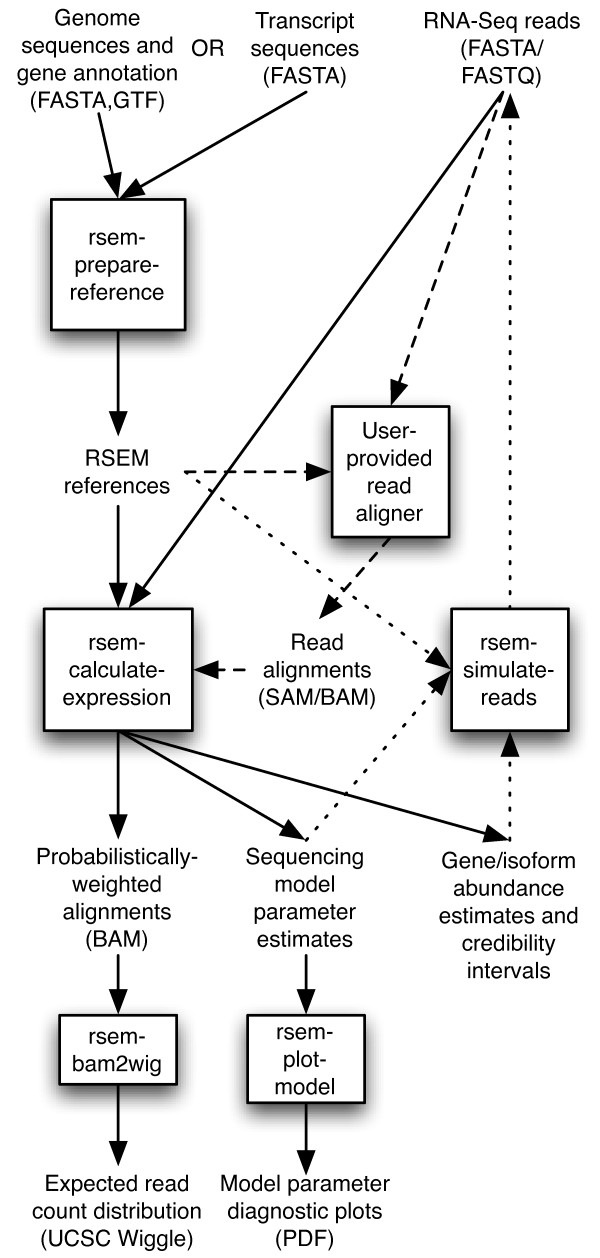
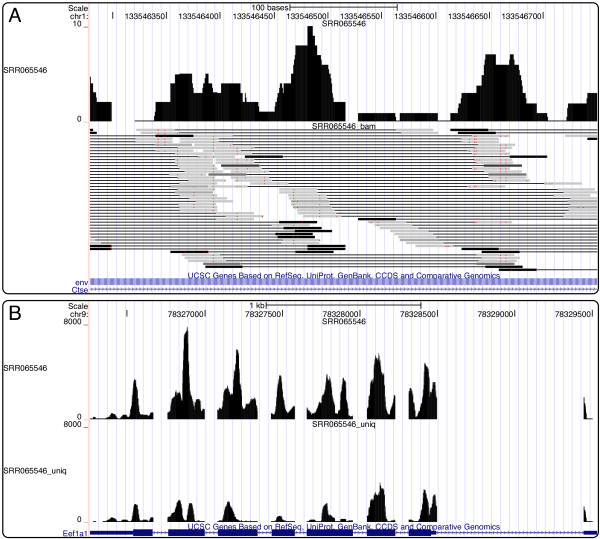
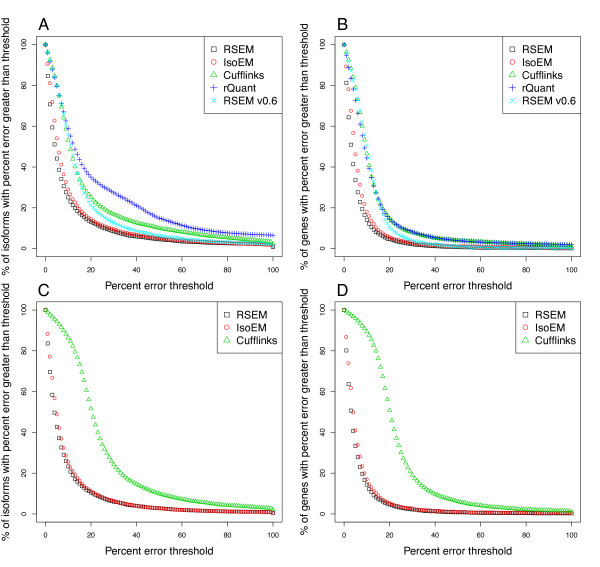
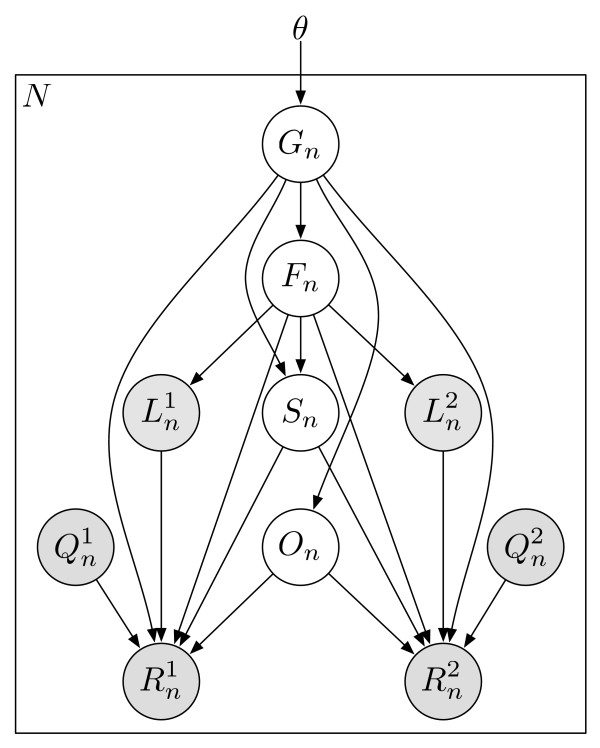
Verification
Claims the paper makes
The claims and statistics of this paper haven’t been checked yet.
Run the check — free, no account needed. It reads the open-access text and checks the sources it cites.
Claims other papers make about this one
Each is checked against this paper’s own text: does it say what the citing paper says it does?
The source backs part of the claim, not all of it — or backs it for a different population, condition or comparison.
In the citing paper
“Raw read counts are assembled outside limma using tools such as featureCounts (29), HTSeq-counts (30) or RSEM (31).”
From limma powers differential expression analyses for RNA-sequencing and microarray studies (2015) · cites this paper as [31]
Experimental — accuracy not yet measuredThe source backs part of the claim, not all of it — or backs it for a different population, condition or comparison.
In the citing paper
“Transcriptome alignment substantially reduces target complexity by limiting it to known transcripts, including all possible splice isoforms (Li and Dewey 2011).”
From RNA-Seq Alignment to Individualized Genomes Improves Transcript Abundance Estimates in Multiparent Populations (2014) · cites this paper as Li and Dewey 2011
Experimental — accuracy not yet measuredThe source backs part of the claim, not all of it — or backs it for a different population, condition or comparison.
In the citing paper
“our results confirm published reports that relative gene abundance estimates based solely on unique read counts are biased—genes composed primarily of unique sequence are overestimated while genes with closely related pseudogenes or family members are underestimated (Mortazavi et al. 2008; Li and Dewey 2011).”
From RNA-Seq Alignment to Individualized Genomes Improves Transcript Abundance Estimates in Multiparent Populations (2014) · cites this paper as Li and Dewey 2011
Experimental — accuracy not yet measuredThe cited source says what the claim attributes to it.
In the citing paper
“Additionally, the RSEM algorithm uses an expectation maximization approach that returns TPM values [40].”
From A survey of best practices for RNA-seq data analysis (2016) · cites this paper as [40]
The cited source says what the claim attributes to it.
In the citing paper
“The inclusion of multireads adds complexity to the abundance estimation problem but EM algorithms are well suited to this task (Li and Dewey 2011; Nicolae et al. 2011; Turro et al. 2011; Roberts and Pachter 2013).”
From RNA-Seq Alignment to Individualized Genomes Improves Transcript Abundance Estimates in Multiparent Populations (2014) · cites this paper as Li and Dewey 2011
Self-check
Percentages, sums and reported differences re-computed from the paper’s own numbers.
The self-check needs the paper’s full text.
Citations
Cites
The Sequence Alignment/Map format and SAMtools
Li, H., Handsaker, B., Wysoker, A., Fennell, T., Ruan, J., Homer, N., Marth, G., Abecasis, G., Durbin, R., & 1000 Genome Project Data Processing Subgroup (2009) · Bioinformatics · doi:10.1093/bioinformatics/btp352 · Cited by 62,041
Robinson, M. D., McCarthy, D. J., & Smyth, G. K. (2010) · Bioinformatics · doi:10.1093/bioinformatics/btp616 · Cited by 41,364
Ultrafast and memory-efficient alignment of short DNA sequences to the human genome.
Langmead, B., Trapnell, C., Pop, M., & Salzberg, S. L. (2009) · Genome Biology · doi:10.1186/gb-2009-10-3-r25 · Cited by 21,849
Full-length transcriptome assembly from RNA-Seq data without a reference genome
Grabherr, M. G., Haas, B. J., Yassour, M., Levin, J. Z., Thompson, D. A., Amit, I., Adiconis, X., Fan, L., Raychowdhury, R., Zeng, Q., et al. (2011) · Nature Biotechnology · doi:10.1038/nbt.1883 · Cited by 21,201
Differential expression analysis for sequence count data
Anders, S., & Huber, W. (2010) · Genome Biology · doi:10.1186/gb-2010-11-10-r106 · Cited by 15,581
Trapnell, C., Williams, B. A., Pertea, G., Mortazavi, A., Kwan, G., van Baren, M. J., Salzberg, S. L., Wold, B. J., & Pachter, L. (2010) · Nature Biotechnology · doi:10.1038/nbt.1621 · Cited by 15,556
Mapping and quantifying mammalian transcriptomes by RNA-Seq
Mortazavi, A., Williams, B. A., McCue, K., Schaeffer, L., & Wold, B. (2008) · Nature Methods · doi:10.1038/nmeth.1226 · Cited by 13,696
RNA-Seq: a revolutionary tool for transcriptomics
Wang, Z., Gerstein, M., & Snyder, M. (2009) · Nature Reviews Genetics · doi:10.1038/nrg2484 · Cited by 13,174
TopHat: discovering splice junctions with RNA-Seq
Trapnell, C., Pachter, L. S., & Salzberg, S. L. (2009) · Bioinformatics · doi:10.1093/bioinformatics/btp120 · Cited by 11,682
The Human Genome Browser at UCSC
Kent, W. J., Sugnet, C. W., Furey, T. S., Roskin, K. M., Pringle, T. H., Zahler, A. M., & Haussler, A. D. (2002) · Genome Research · doi:10.1101/gr.229102 · Cited by 10,400
Research works printed but not linked: 2
- Nicolae M, Mangul S, Măndoiu I, Zelikovsky A: Estimation of alternative splicing isoform frequencies from RNA-Seq data. In Algorithms in Bioinformatics, Lecture Notes in Computer Science. Edited by: Moulton V, Singh M. Liverpool, UK: Springer Berlin/Heidelberg; 2010:202–214. · DOI
- Taub M, Lipson D, Speed TP: Methods for allocating ambiguous short-reads. Communications in Information and Systems 2010, 10(2):69–82. · DOI
Cited by
Sorted by citations
Items 101–200 of 337
Organoid Models of Human Liver Cancers Derived from Tumor Needle Biopsies
Nuciforo, S., Fofana, I., Matter, M. S., Blumer, T., Calabrese, D., Boldanova, T., Piscuoglio, S., Wieland, S., Ringnalda, F., Schwank, G., et al. (2018) · Cell Reports · doi:10.1016/j.celrep.2018.07.001 · Cited by 473
Mixed-precision in-memory computing
Le Gallo, M., Sebastian, A., Mathis, R., Manica, M., Giefers, H., Tuma, T., Bekas, C., Curioni, A., & Eleftheriou, E. (2018) · Nature Electronics · doi:10.1038/s41928-018-0054-8 · Cited by 485
TBK1 Suppresses RIPK1-Driven Apoptosis and Inflammation during Development and in Aging
Xu, D., Jin, T., Zhu, H., Chen, H., Ofengeim, D., Zou, C., Mifflin, L., Pan, L., Amin, P., Li, W., et al. (2018) · Cell · doi:10.1016/j.cell.2018.07.041 · Cited by 461
Non-classical Immunity Controls Microbiota Impact on Skin Immunity and Tissue Repair
Linehan, J. L., Harrison, O. J., Han, S.-J., Byrd, A. L., Vujkovic-Cvijin, I., Villarino, A. V., Sen, S. K., Shaik, J., Smelkinson, M., Tamoutounour, S., et al. (2018) · Cell · doi:10.1016/j.cell.2017.12.033 · Cited by 456
“The quality filtered reads were aligned to mouse genome GRCM38 using RSEM package (Li and Dewey, 2011) with default parameters and STAR aligner (Dobin et al.”
MethodInfluentialInduction and transcriptional regulation of the co-inhibitory gene module in T cells
Chihara, N., Madi, A., Kondo, T., Zhang, H., Acharya, N., Singer, M., Nyman, J., Marjanovic, N. D., Kowalczyk, M. S., Wang, C., et al. (2018) · Nature · doi:10.1038/s41586-018-0206-z · Cited by 438
Adaptive mutability of colorectal cancers in response to targeted therapies
Russo, M., Crisafulli, G., Sogari, A., Reilly, N. M., Arena, S., Lamba, S., Bartolini, A., Amodio, V., Magrì, A., Novara, L., et al. (2019) · Science · doi:10.1126/science.aav4474 · Cited by 433
Perspective on Oncogenic Processes at the End of the Beginning of Cancer Genomics
Ding, L., Bailey, M. H., Porta-Pardo, E., Thorsson, V., Colaprico, A., Bertrand, D., Gibbs, D. L., Weerasinghe, A., Huang, K.-L., Tokheim, C., et al. (2018) · Cell · doi:10.1016/j.cell.2018.03.033 · Cited by 399
Hwang, W. L., Jagadeesh, K. A., Guo, J. A., Hoffman, H. I., Yadollahpour, P., Reeves, J. W., Mohan, R., Drokhlyansky, E., Van Wittenberghe, N., Ashenberg, O., et al. (2022) · Nature Genetics · doi:10.1038/s41588-022-01134-8 · Cited by 426
A dominant-negative effect drives selection of TP53 missense mutations in myeloid malignancies
Boettcher, S., Miller, P. G., Sharma, R., McConkey, M., Leventhal, M., Krivtsov, A. V., Giacomelli, A. O., Wong, W., Kim, J., Chao, S., et al. (2019) · Science · doi:10.1126/science.aax3649 · Cited by 441
Osteoclasts recycle via osteomorphs during RANKL-stimulated bone resorption
McDonald, M. M., Khoo, W. H., Ng, P. Y., Xiao, Y., Zamerli, J., Thatcher, P., Kyaw, W., Pathmanandavel, K., Grootveld, A. K., Moran, I., et al. (2021) · Cell · doi:10.1016/j.cell.2021.02.002 · Cited by 433
MOLI: multi-omics late integration with deep neural networks for drug response prediction
Sharifi-Noghabi, H., Zolotareva, O., Collins, C. C., & Ester, M. (2019) · Bioinformatics · doi:10.1093/bioinformatics/btz318 · Cited by 421
Thirst-associated preoptic neurons encode an aversive motivational drive.
Allen, W. E., DeNardo, L. A., Chen, M. Z., Liu, C. D., Loh, K. M., Fenno, L. E., Ramakrishnan, C., Deisseroth, K., & Luo, L. (2017) · Science · doi:10.1126/science.aan6747 · Cited by 390
IRE1α–XBP1 controls T cell function in ovarian cancer by regulating mitochondrial activity
Song, M., Sandoval, T. A., Chae, C.-S., Chopra, S., Tan, C., Rutkowski, M. R., Raundhal, M., Chaurio, R. A., Payne, K. K., Konrad, C., et al. (2018) · Nature · doi:10.1038/s41586-018-0597-x · Cited by 413
Sharma, P., Pachynski, R. K., Narayan, V., Fléchon, A., Gravis, G., Galsky, M. D., Mahammedi, H., Patnaik, A., Subudhi, S. K., Ciprotti, M., et al. (2020) · Cancer Cell · doi:10.1016/j.ccell.2020.08.007 · Cited by 406
Community characteristics of the gut microbiomes of competitive cyclists
Petersen, L. M., Bautista, E. J., Nguyen, H., Hanson, B. M., Chen, L., Lek, S. H., Sodergren, E., & Weinstock, G. M. (2017) · Microbiome · doi:10.1186/s40168-017-0320-4 · Cited by 377
Crespo, M., Vilar, E., Tsai, S.-Y., Chang, K., Amin, S., Srinivasan, T., Zhang, T., Pipalia, N. H., Chen, H. J., Witherspoon, M., et al. (2017) · Nature Medicine · doi:10.1038/nm.4355 · Cited by 399
NAD+ metabolism governs the proinflammatory senescence-associated secretome
Nacarelli, T., Lau, L., Fukumoto, T., Zundell, J., Fatkhutdinov, N., Wu, S., Aird, K. M., Iwasaki, O., Kossenkov, A. V., Schultz, D., et al. (2019) · Nature Cell Biology · doi:10.1038/s41556-019-0287-4 · Cited by 402
Aged skeletal stem cells generate an inflammatory degenerative niche
Ambrosi, T. H., Marecic, O., McArdle, A., Sinha, R., Gulati, G. S., Tong, X., Wang, Y., Steininger, H. M., Hoover, M. Y., Koepke, L. S., et al. (2021) · Nature · doi:10.1038/s41586-021-03795-7 · Cited by 392
Robustly detecting differential expression in RNA sequencing data using observation weights
Zhou, X., Lindsay, H., & Robinson, M. D. (2014) · Nucleic Acids Research · doi:10.1093/nar/gku310 · Cited by 387
McBrayer, S. K., Mayers, J. R., DiNatale, G. J., Shi, D. D., Khanal, J., Chakraborty, A. A., Sarosiek, K. A., Briggs, K. J., Robbins, A. K., Sewastianik, T., et al. (2018) · Cell · doi:10.1016/j.cell.2018.08.038 · Cited by 368
Sahraeian, S. M. E., Mohiyuddin, M., Sebra, R., Tilgner, H., Afshar, P. T., Au, K. F., Bani Asadi, N., Gerstein, M. B., Wong, W. H., Snyder, M. P., et al. (2017) · Nature Communications · doi:10.1038/s41467-017-00050-4 · Cited by 376
Mitochondrial Reprogramming Underlies Resistance to BCL-2 Inhibition in Lymphoid Malignancies
Guièze, R., Liu, V. M., Rosebrock, D., Jourdain, A. A., Hernández-Sánchez, M., Martinez Zurita, A., Sun, J., Ten Hacken, E., Baranowski, K., Thompson, P. A., et al. (2019) · Cancer Cell · doi:10.1016/j.ccell.2019.08.005 · Cited by 361
Deconstructing transcriptional heterogeneity in pluripotent stem cells
Kumar, R. M., Cahan, P., Shalek, A. K., Satija, R., Jay DaleyKeyser, A., Li, H., Zhang, J., Pardee, K., Gennert, D., Trombetta, J. J., et al. (2014) · Nature · doi:10.1038/nature13920 · Cited by 356
Microglial NF-κB drives tau spreading and toxicity in a mouse model of tauopathy
Wang, C., Fan, L., Khawaja, R. R., Liu, B., Zhan, L., Kodama, L., Chin, M., Li, Y., Le, D., Zhou, Y., et al. (2022) · Nature Communications · doi:10.1038/s41467-022-29552-6 · Cited by 333
Human pluripotent stem cell-derived neural constructs for predicting neural toxicity
Schwartz, M. P., Hou, Z., Propson, N. E., Zhang, J., Engstrom, C. J., Costa, V. S., Jiang, P., Nguyen, B. K., Bolin, J. M., Daly, W., et al. (2015) · Proceedings of the National Academy of Sciences · doi:10.1073/pnas.1516645112 · Cited by 325
Fructose stimulated de novo lipogenesis is promoted by inflammation
Todoric, J., Di Caro, G., Reibe, S., Henstridge, D. C., Green, C. R., Vrbanac, A., Ceteci, F., Conche, C., McNulty, R., Shalapour, S., et al. (2020) · Nature Metabolism · doi:10.1038/s42255-020-0261-2 · Cited by 328
Transcriptomic and morphophysiological evidence for a specialized human cortical GABAergic cell type
Boldog, E., Bakken, T. E., Hodge, R. D., Novotny, M., Aevermann, B. D., Baka, J., Bordé, S., Close, J. L., Diez-Fuertes, F., Ding, S.-L., et al. (2018) · Nature Neuroscience · doi:10.1038/s41593-018-0205-2 · Cited by 291
Cloud computing for genomic data analysis and collaboration
Langmead, B., & Nellore, A. (2018) · Nature Reviews Genetics · doi:10.1038/nrg.2017.113 · Cited by 310
“After a total of approximately 1.3 million core hours of ana lysis using Spliced Transcripts Alignment to a Reference (STAR) 64 , RNA-seq by Expectation Maximization (RSEM) 65 and Kallisto 66 , the estimated cost for using discounted ‘pre-emptible’ (that is, excess) instances was about US$1.30 per sample, but a much l…”
MethodInfluentialThe Intestine Harbors Functionally Distinct Homeostatic Tissue-Resident and Inflammatory Th17 Cells
Omenetti, S., Bussi, C., Metidji, A., Iseppon, A., Lee, S., Tolaini, M., Li, Y., Kelly, G., Chakravarty, P., Shoaie, S., et al. (2019) · Immunity · doi:10.1016/j.immuni.2019.05.004 · Cited by 317
Mirji, G., Worth, A., Bhat, S. A., El Sayed, M., Kannan, T., Goldman, A. R., Tang, H.-Y., Liu, Q., Auslander, N., Dang, C. V., et al. (2022) · Science Immunology · doi:10.1126/sciimmunol.abn0704 · Cited by 327
Caloric restriction in humans reveals immunometabolic regulators of health span
Spadaro, O., Youm, Y., Shchukina, I., Ryu, S., Sidorov, S., Ravussin, A., Nguyen, K., Aladyeva, E., Predeus, A. N., Smith, S. R., et al. (2022) · Science · doi:10.1126/science.abg7292 · Cited by 317
Dream: powerful differential expression analysis for repeated measures designs
Hoffman, G. E., & Roussos, P. (2021) · Bioinformatics · doi:10.1093/bioinformatics/btaa687 · Cited by 319
CDK12 regulates DNA repair genes by suppressing intronic polyadenylation
Dubbury, S. J., Boutz, P. L., & Sharp, P. A. (2018) · Nature · doi:10.1038/s41586-018-0758-y · Cited by 318
Polyester : simulating RNA-seq datasets with differential transcript expression
Frazee, A. C., Jaffe, A. E., Langmead, B., & Leek, J. T. (2015) · Bioinformatics · doi:10.1093/bioinformatics/btv272 · Cited by 313
Oncogenic PIK3CA mutations reprogram glutamine metabolism in colorectal cancer
Hao, Y., Samuels, Y., Li, Q., Krokowski, D., Guan, B.-J., Wang, C., Jin, Z., Dong, B., Cao, B., Feng, X., et al. (2016) · Nature Communications · doi:10.1038/ncomms11971 · Cited by 290
Proteogenomic Characterization of Human Early-Onset Gastric Cancer
Mun, D.-G., Bhin, J., Kim, S., Kim, H., Jung, J. H., Jung, Y., Jang, Y. E., Park, J. M., Kim, H., Jung, Y., et al. (2019) · Cancer Cell · doi:10.1016/j.ccell.2018.12.003 · Cited by 294
Spiller, K. J., Restrepo, C. R., Khan, T., Dominique, M. A., Fang, T. C., Canter, R. G., Roberts, C. J., Miller, K. R., Ransohoff, R. M., Trojanowski, J. Q., et al. (2018) · Nature Neuroscience · doi:10.1038/s41593-018-0083-7 · Cited by 301
Adaptive Immune Resistance Emerges from Tumor-Initiating Stem Cells
Miao, Y., Yang, H., Levorse, J., Yuan, S., Polak, L., Sribour, M., Singh, B., Rosenblum, M. D., & Fuchs, E. (2019) · Cell · doi:10.1016/j.cell.2019.03.025 · Cited by 299
Neurons release serine to support mRNA translation in pancreatic cancer
Banh, R. S., Biancur, D. E., Yamamoto, K., Sohn, A. S. W., Walters, B., Kuljanin, M., Gikandi, A., Wang, H., Mancias, J. D., Schneider, R. J., et al. (2020) · Cell · doi:10.1016/j.cell.2020.10.016 · Cited by 292
Genomic insights into the evolutionary origin of Myxozoa within Cnidaria
Chang, E. S., Neuhof, M., Rubinstein, N. D., Diamant, A., Philippe, H., Huchon, D., & Cartwright, P. (2015) · Proceedings of the National Academy of Sciences · doi:10.1073/pnas.1511468112 · Cited by 262
Predicting RNA splicing from DNA sequence using Pangolin
Zeng, T., & Li, Y. I. (2022) · Genome Biology · doi:10.1186/s13059-022-02664-4 · Cited by 283
Three-dimensional human alveolar stem cell culture models reveal infection response to SARS-CoV-2
Youk, J., Kim, T., Evans, K. V., Jeong, Y.-I., Hur, Y., Hong, S. P., Kim, J. H., Yi, K., Kim, S. Y., Na, K. J., et al. (2020) · Cell Stem Cell · doi:10.1016/j.stem.2020.10.004 · Cited by 266
SCnorm: robust normalization of single-cell RNA-seq data
Bacher, R., Chu, L.-F., Leng, N., Gasch, A. P., Thomson, J. A., Stewart, R. M., Newton, M., & Kendziorski, C. (2017) · Nature Methods · doi:10.1038/nmeth.4263 · Cited by 282
Parallel analysis of transcription, integration, and sequence of single HIV-1 proviruses
Einkauf, K. B., Osborn, M. R., Gao, C., Sun, W., Sun, X., Lian, X., Parsons, E. M., Gladkov, G. T., Seiger, K. W., Blackmer, J. E., et al. (2022) · Cell · doi:10.1016/j.cell.2021.12.011 · Cited by 260
Xu, H., Ding, J., Porter, C. B. M., Wallrapp, A., Tabaka, M., Ma, S., Fu, S., Guo, X., Riesenfeld, S. J., Su, C., et al. (2019) · Immunity · doi:10.1016/j.immuni.2019.09.004 · Cited by 273
Lopes, K. D. P., Snijders, G. J. L., Humphrey, J., Allan, A., Sneeboer, M. A. M., Navarro, E., Schilder, B. M., Vialle, R. A., Parks, M., Missall, R., et al. (2022) · Nature Genetics · doi:10.1038/s41588-021-00976-y · Cited by 273
A statistical approach for identifying differential distributions in single-cell RNA-seq experiments
Korthauer, K. D., Chu, L.-F., Newton, M. A., Li, Y., Thomson, J., Stewart, R., & Kendziorski, C. (2016) · Genome Biology · doi:10.1186/s13059-016-1077-y · Cited by 273
Transcriptional and epigenomic landscapes of CNS and non-CNS vascular endothelial cells
Sabbagh, M. F., Heng, J. S., Luo, C., Castanon, R. G., Nery, J. R., Rattner, A., Goff, L. A., Ecker, J. R., & Nathans, J. (2018) · eLife · doi:10.7554/elife.36187 · Cited by 245
Detection of early pancreatic ductal adenocarcinoma with thrombospondin-2 and CA19-9 blood markers
Kim, J., Bamlet, W. R., Oberg, A. L., Chaffee, K. G., Donahue, G., Cao, X.-J., Chari, S., Garcia, B. A., Petersen, G. M., & Zaret, K. S. (2017) · Science Translational Medicine · doi:10.1126/scitranslmed.aah5583 · Cited by 269
Translation control of the immune checkpoint in cancer and its therapeutic targeting
Xu, Y., Poggio, M., Jin, H. Y., Shi, Z., Forester, C. M., Wang, Y., Stumpf, C. R., Xue, L., Devericks, E., So, L., et al. (2019) · Nature Medicine · doi:10.1038/s41591-018-0321-2 · Cited by 261
The genetic basis of parental care evolution in monogamous mice
Bendesky, A., Kwon, Y.-M., Lassance, J.-M., Lewarch, C. L., Yao, S., Peterson, B. K., He, M. X., Dulac, C., & Hoekstra, H. E. (2017) · Nature · doi:10.1038/nature22074 · Cited by 268
Stem-like intestinal Th17 cells give rise to pathogenic effector T cells during autoimmunity
Schnell, A., Huang, L., Singer, M., Singaraju, A., Barilla, R. M., Regan, B. M. L., Bollhagen, A., Thakore, P. I., Dionne, D., Delorey, T. M., et al. (2021) · Cell · doi:10.1016/j.cell.2021.11.018 · Cited by 268
The Genetic Landscape of Diamond-Blackfan Anemia
Ulirsch, J. C., Verboon, J. M., Kazerounian, S., Guo, M. H., Yuan, D., Ludwig, L. S., Handsaker, R. E., Abdulhay, N. J., Fiorini, C., Genovese, G., et al. (2018) · The American Journal of Human Genetics · doi:10.1016/j.ajhg.2018.10.027 · Cited by 272
Maintaining Iron Homeostasis Is the Key Role of Lysosomal Acidity for Cell Proliferation
Weber, R. A., Yen, F. S., Nicholson, S. P. V., Alwaseem, H., Bayraktar, E. C., Alam, M., Timson, R. C., La, K., Abu-Remaileh, M., Molina, H., et al. (2020) · Molecular Cell · doi:10.1016/j.molcel.2020.01.003 · Cited by 236
Chd8 Mutation Leads to Autistic-like Behaviors and Impaired Striatal Circuits
Platt, R. J., Zhou, Y., Slaymaker, I. M., Shetty, A. S., Weisbach, N. R., Kim, J.-A., Sharma, J., Desai, M., Sood, S., Kempton, H. R., et al. (2017) · Cell Reports · doi:10.1016/j.celrep.2017.03.052 · Cited by 240
Metastatic recurrence in colorectal cancer arises from residual EMP1+ cells
Cañellas-Socias, A., Cortina, C., Hernando-Momblona, X., Palomo-Ponce, S., Mulholland, E. J., Turon, G., Mateo, L., Conti, S., Roman, O., Sevillano, M., et al. (2022) · Nature · doi:10.1038/s41586-022-05402-9 · Cited by 256
Kelmer Sacramento, E., Kirkpatrick, J. M., Mazzetto, M., Baumgart, M., Bartolome, A., Di Sanzo, S., Caterino, C., Sanguanini, M., Papaevgeniou, N., Lefaki, M., et al. (2020) · Molecular Systems Biology · doi:10.15252/msb.20209596 · Cited by 236
Niraparib activates interferon signaling and potentiates anti-PD-1 antibody efficacy in tumor models
Wang, Z., Sun, K., Xiao, Y., Feng, B., Mikule, K., Ma, X., Feng, N., Vellano, C. P., Federico, L., Marszalek, J. R., et al. (2019) · Scientific Reports · doi:10.1038/s41598-019-38534-6 · Cited by 253
YAP-Induced PD-L1 Expression Drives Immune Evasion in BRAFi-Resistant Melanoma
Kim, M. H., Kim, C. G., Kim, S.-K., Shin, S. J., Choe, E. A., Park, S.-H., Shin, E.-C., & Kim, J. (2018) · Cancer Immunology Research · doi:10.1158/2326-6066.cir-17-0320 · Cited by 241
Barutcu, A. R., Lajoie, B. R., McCord, R. P., Tye, C. E., Hong, D., Messier, T. L., Browne, G., van Wijnen, A. J., Lian, J. B., Stein, J. L., et al. (2015) · Genome Biology · doi:10.1186/s13059-015-0768-0 · Cited by 250
Guidance for RNA-seq co-expression network construction and analysis: safety in numbers
Ballouz, S., Verleyen, W., & Gillis, J. (2015) · Bioinformatics · doi:10.1093/bioinformatics/btv118 · Cited by 215
A subset of Kupffer cells regulates metabolism through the expression of CD36
Blériot, C., Barreby, E., Dunsmore, G., Ballaire, R., Chakarov, S., Ficht, X., De Simone, G., Andreata, F., Fumagalli, V., Guo, W., et al. (2021) · Immunity · doi:10.1016/j.immuni.2021.08.006 · Cited by 236
Higher brain BDNF gene expression is associated with slower cognitive decline in older adults
Buchman, A. S., Yu, L., Boyle, P. A., Schneider, J. A., De Jager, P. L., & Bennett, D. A. (2016) · Neurology · doi:10.1212/wnl.0000000000002387 · Cited by 239
Inhibition of prostaglandin-degrading enzyme 15-PGDH rejuvenates aged muscle mass and strength
Palla, A. R., Ravichandran, M., Wang, Y. X., Alexandrova, L., Yang, A. V., Kraft, P., Holbrook, C. A., Schürch, C. M., Ho, A. T. V., & Blau, H. M. (2021) · Science · doi:10.1126/science.abc8059 · Cited by 232
Xist ribonucleoproteins promote female sex-biased autoimmunity
Dou, D. R., Zhao, Y., Belk, J. A., Zhao, Y., Casey, K. M., Chen, D. C., Li, R., Yu, B., Srinivasan, S., Abe, B. T., et al. (2024) · Cell · doi:10.1016/j.cell.2023.12.037 · Cited by 233
Truncated stathmin-2 is a marker of TDP-43 pathology in frontotemporal dementia
Prudencio, M., Humphrey, J., Pickles, S., Brown, A.-L., Hill, S. E., Kachergus, J. M., Shi, J., Heckman, M. G., Spiegel, M. R., Cook, C., et al. (2020) · Journal of Clinical Investigation · doi:10.1172/jci139741 · Cited by 231
Cancer proteogenomics: current impact and future prospects
Mani, D. R., Krug, K., Zhang, B., Satpathy, S., Clauser, K. R., Ding, L., Ellis, M., Gillette, M. A., & Carr, S. A. (2022) · Nature Reviews Cancer · doi:10.1038/s41568-022-00446-5 · Cited by 229
Slide-tags enables single-nucleus barcoding for multimodal spatial genomics
Russell, A. J. C., Weir, J. A., Nadaf, N. M., Shabet, M., Kumar, V., Kambhampati, S., Raichur, R., Marrero, G. J., Liu, S., Balderrama, K. S., et al. (2024) · Nature · doi:10.1038/s41586-023-06837-4 · Cited by 225
Metabolic, Epigenetic, and Transgenerational Effects of Gut Bacterial Choline Consumption
Romano, K. A., Martinez-del Campo, A., Kasahara, K., Chittim, C. L., Vivas, E. I., Amador-Noguez, D., Balskus, E. P., & Rey, F. E. (2017) · Cell Host & Microbe · doi:10.1016/j.chom.2017.07.021 · Cited by 224
DRUG-seq for miniaturized high-throughput transcriptome profiling in drug discovery
Ye, C., Ho, D. J., Neri, M., Yang, C., Kulkarni, T., Randhawa, R., Henault, M., Mostacci, N., Farmer, P., Renner, S., et al. (2018) · Nature Communications · doi:10.1038/s41467-018-06500-x · Cited by 222
Tutorial: guidelines for the experimental design of single-cell RNA sequencing studies
Lafzi, A., Moutinho, C., Picelli, S., & Heyn, H. (2018) · Nature Protocols · doi:10.1038/s41596-018-0073-y · Cited by 218
Genetic determinants of co-accessible chromatin regions in activated T cells across humans
Gate, R. E., Cheng, C. S., Aiden, A. P., Siba, A., Tabaka, M., Lituiev, D., Machol, I., Gordon, M. G., Subramaniam, M., Shamim, M., et al. (2018) · Nature Genetics · doi:10.1038/s41588-018-0156-2 · Cited by 181
Targeting the CBM complex causes Treg cells to prime tumours for immune checkpoint therapy
Di Pilato, M., Kim, E. Y., Cadilha, B. L., Prüßmann, J. N., Nasrallah, M. N., Seruggia, D., Usmani, S. M., Misale, S., Zappulli, V., Carrizosa, E., et al. (2019) · Nature · doi:10.1038/s41586-019-1215-2 · Cited by 210
Hong, X., Isern, J., Campanario, S., Perdiguero, E., Ramírez-Pardo, I., Segalés, J., Hernansanz-Agustín, P., Curtabbi, A., Deryagin, O., Pollán, A., et al. (2022) · Cell stem cell · doi:10.1016/j.stem.2022.07.009 · Cited by 213
Subtype-specific 3D genome alteration in acute myeloid leukaemia
Xu, J., Song, F., Lyu, H., Kobayashi, M., Zhang, B., Zhao, Z., Hou, Y., Wang, X., Luan, Y., Jia, B., et al. (2022) · Nature · doi:10.1038/s41586-022-05365-x · Cited by 208
Ramachandran, A., Vizán, P., Das, D., Chakravarty, P., Vogt, J., Rogers, K. W., Müller, P., Hinck, A. P., Sapkota, G. P., & Hill, C. S. (2018) · eLife · doi:10.7554/elife.31756 · Cited by 204
Blakely, C. M., Pazarentzos, E., Olivas, V., Asthana, S., Yan, J. J., Tan, I., Hrustanovic, G., Chan, E., Lin, L., Neel, D. S., et al. (2015) · Cell Reports · doi:10.1016/j.celrep.2015.03.012 · Cited by 204
Zhang, J., Tao, R., Campbell, K. F., Carvalho, J. L., Ruiz, E. C., Kim, G. C., Schmuck, E. G., Raval, A. N., da Rocha, A. M., Herron, T. J., et al. (2019) · Nature Communications · doi:10.1038/s41467-019-09831-5 · Cited by 201
The chromatin accessibility signature of human immune aging stems from CD8+ T cells
Ucar, D., Márquez, E. J., Chung, C.-H., Marches, R., Rossi, R. J., Uyar, A., Wu, T.-C., George, J., Stitzel, M. L., Palucka, A. K., et al. (2017) · Journal of Experimental Medicine · doi:10.1084/jem.20170416 · Cited by 200
Robles, J. A., Qureshi, S. E., Stephen, S. J., Wilson, S. R., Burden, C. J., & Taylor, J. M. (2012) · BMC Genomics · doi:10.1186/1471-2164-13-484 · Cited by 198
Kim, K.-T., Lee, H. W., Lee, H.-O., Song, H. J., Jeong, D. E., Shin, S., Kim, H., Shin, Y., Nam, D.-H., Jeong, B. C., et al. (2016) · Genome Biology · doi:10.1186/s13059-016-0945-9 · Cited by 198
Single-Cell RNA-Sequencing Reveals a Continuous Spectrum of Differentiation in Hematopoietic Cells
Macaulay, I. C., Svensson, V., Labalette, C., Ferreira, L., Hamey, F., Voet, T., Teichmann, S. A., & Cvejic, A. (2016) · Cell Reports · doi:10.1016/j.celrep.2015.12.082 · Cited by 191
Zawistowski, J. S., Bevill, S. M., Goulet, D. R., Stuhlmiller, T. J., Beltran, A. S., Olivares-Quintero, J. F., Singh, D., Sciaky, N., Parker, J. S., Rashid, N. U., et al. (2017) · Cancer Discovery · doi:10.1158/2159-8290.cd-16-0653 · Cited by 180
Love, M. I., Hogenesch, J. B., & Irizarry, R. A. (2016) · Nature Biotechnology · doi:10.1038/nbt.3682 · Cited by 186
Heterogeneous Responses of Hematopoietic Stem Cells to Inflammatory Stimuli Are Altered with Age
Mann, M., Mehta, A., de Boer, C. G., Kowalczyk, M. S., Lee, K., Haldeman, P., Rogel, N., Knecht, A. R., Farouq, D., Regev, A., et al. (2018) · Cell Reports · doi:10.1016/j.celrep.2018.11.056 · Cited by 188
Neuronal defects in a human cellular model of 22q11.2 deletion syndrome
Khan, T. A., Revah, O., Gordon, A., Yoon, S.-J., Krawisz, A. K., Goold, C., Sun, Y., Kim, C. H., Tian, Y., Li, M.-Y., et al. (2020) · Nature Medicine · doi:10.1038/s41591-020-1043-9 · Cited by 186
The Neuroanatomical Ultrastructure and Function of a Biological Ring Attractor
Turner-Evans, D. B., Jensen, K. T., Ali, S., Paterson, T., Sheridan, A., Ray, R. P., Wolff, T., Lauritzen, J. S., Rubin, G. M., Bock, D. D., et al. (2020) · Neuron · doi:10.1016/j.neuron.2020.08.006 · Cited by 168
Johnson, D. B., McDonnell, W. J., Gonzalez-Ericsson, P. I., Al-Rohil, R. N., Mobley, B. C., Salem, J.-E., Wang, D. Y., Sanchez, V., Wang, Y., Chastain, C. A., et al. (2019) · Nature Medicine · doi:10.1038/s41591-019-0523-2 · Cited by 176
Deep conservation of the enhancer regulatory code in animals
Wong, E. S., Zheng, D., Tan, S. Z., Bower, N. I., Garside, V., Vanwalleghem, G., Gaiti, F., Scott, E., Hogan, B. M., Kikuchi, K., et al. (2020) · Science · doi:10.1126/science.aax8137 · Cited by 176
Genetics of the human microglia regulome refines Alzheimer’s disease risk loci
Kosoy, R., Fullard, J. F., Zeng, B., Bendl, J., Dong, P., Rahman, S., Kleopoulos, S. P., Shao, Z., Girdhar, K., Humphrey, J., et al. (2022) · Nature Genetics · doi:10.1038/s41588-022-01149-1 · Cited by 168
Novikov, O., Wang, Z., Stanford, E. A., Parks, A. J., Ramirez-Cardenas, A., Landesman, E., Laklouk, I., Sarita-Reyes, C., Gusenleitner, D., Li, A., et al. (2016) · Molecular Pharmacology · doi:10.1124/mol.116.105361 · Cited by 167
The neuroanatomical ultrastructure and function of a biological ring attractor
Turner-Evans, D. B., Jensen, K. T., Ali, S., Paterson, T., Sheridan, A., Ray, R. P., Wolff, T., Lauritzen, S., Rubin, G. M., Bock, D., et al. (2019) · doi:10.1101/847152 · Cited by 166
Integrative proteogenomic characterization of hepatocellular carcinoma across etiologies and stages
Ng, C. K. Y., Dazert, E., Boldanova, T., Coto-Llerena, M., Nuciforo, S., Ercan, C., Suslov, A., Meier, M.-A., Bock, T., Schmidt, A., et al. (2022) · Nature Communications · doi:10.1038/s41467-022-29960-8 · Cited by 165
Zhan, L., Krabbe, G., Du, F., Jones, I., Reichert, M. C., Telpoukhovskaia, M., Kodama, L., Wang, C., Cho, S.-H., Sayed, F., et al. (2019) · PLOS Biology · doi:10.1371/journal.pbio.3000134 · Cited by 163
“The read count table was generated with the RSEM program [45].”
MethodT cells genetically engineered to overcome death signaling enhance adoptive cancer immunotherapy
Yamamoto, T. N., Lee, P.-H., Vodnala, S. K., Gurusamy, D., Kishton, R. J., Yu, Z., Eidizadeh, A., Eil, R., Fioravanti, J., Gattinoni, L., et al. (2019) · Journal of Clinical Investigation · doi:10.1172/jci121491 · Cited by 156
Yucel, N., Wang, Y. X., Mai, T., Porpiglia, E., Lund, P. J., Markov, G., Garcia, B. A., Bendall, S. C., Angelo, M., & Blau, H. M. (2019) · Cell Reports · doi:10.1016/j.celrep.2019.05.092 · Cited by 159
Simultaneous cross-evaluation of heterogeneous E. coli datasets via mechanistic simulation
Macklin, D. N., Ahn-Horst, T. A., Choi, H., Ruggero, N. A., Carrera, J., Mason, J. C., Sun, G., Agmon, E., DeFelice, M. M., Maayan, I., et al. (2020) · Science · doi:10.1126/science.aav3751 · Cited by 151
Molecular hallmarks of heterochronic parabiosis at single-cell resolution
Pálovics, R., Keller, A., Schaum, N., Tan, W., Fehlmann, T., Borja, M., Kern, F., Bonanno, L., Calcuttawala, K., Webber, J., et al. (2022) · Nature · doi:10.1038/s41586-022-04461-2 · Cited by 153
Vitamin D regulates microbiome-dependent cancer immunity
Giampazolias, E., Pereira da Costa, M., Lam, K. C., Lim, K. H. J., Cardoso, A., Piot, C., Chakravarty, P., Blasche, S., Patel, S., Biram, A., et al. (2024) · Science · doi:10.1126/science.adh7954 · Cited by 151
Guo, W., Li, H., Zhu, Y., Lan, L., Yang, S., Drukker, K., Morris, E. A., Burnside, E. S., Whitman, G. J., Giger, M. L., et al. (2015) · Journal of Medical Imaging · doi:10.1117/1.jmi.2.4.041007 · Cited by 148
Metadata
- Authors
- Li, B., & Dewey, C. N.
- Affiliations
- University of Wisconsin–Madison (US)
- Corresponding author
- Dewey, Colin N
- ORCID
- Venue
- BMC Bioinformatics
- Published
- 2011-08-04
- Volume
- 12
- Issue
- 1
- Pages
- 323-323
- ISSN
- 1471-2105 (ISSN-L)
- PMC
- PMC3163565
- OpenAlex
- W1999574084
- Cited by
- 22,179
- References
- 39
- Citations by year
- 2026: 1650 · 2025: 2387 · 2024: 2647 · 2023: 2517 · 2022: 2448 · 2021: 2588 · 2020: 2146 · 2019: 1674 · 2018: 1311 · 2017: 1062 · 2016: 794 · 2015: 487 · 2014: 279 · 2013: 134 · 2012: 28
- FWCI
- 57.58
- Type
- journal article
- Language
- en
- Open access
- gold
- doi.org
- Locations
- BMC Bioinformatics (publishedVersion, cc-by)
- Europe PMC (PubMed Central) (publishedVersion, cc-by)
- PubMed Central (publishedVersion, cc-by)
- PubMed (publishedVersion)
- DOAJ (DOAJ: Directory of Open Access Journals) (submittedVersion, cc-by-sa)
- Funders
- National Institutes of Health
- National Human Genome Research Institute (R01HG005232)
- Topics
- Life Sciences › Biochemistry, Genetics and Molecular Biology › Molecular Biology › Genomics and Phylogenetic Studies
- Life Sciences › Biochemistry, Genetics and Molecular Biology › Molecular Biology › Single-cell and spatial transcriptomics
- Life Sciences › Biochemistry, Genetics and Molecular Biology › Molecular Biology › Gene expression and cancer classification
- Keywords
- RSEM, transcript quantification, RNA-seq, isoform abundance, gene expression, de novo transcriptome assembly, paired-end reads, single-end reads, credibility intervals
- MeSH terms
- Animals, Computer Simulation, Humans, RNA, Software, Sequence Analysis, RNA, Protein Isoforms, Gene Expression Profiling, Mice
About these checks
Registry, retraction, Cites and statistics results are computed, not judged, with one exception: a printed reference that no index lists is read once by a model before it counts as a citation error. Claims are extracted by a model and kept only when their quote appears verbatim in the text; each cited source is then checked, with a model’s help, for whether it says what the claim relies on. Those verdicts can be wrong — read the claim’s quote and the cited source before relying on one.
Statistics and arithmetic are recomputed, not judged.
Confidence bands are shown only for fields calibrated on our annotated test set. None is calibrated yet, so no band is shown.
What counts as a claim ›How we measure confidence ›How we check this ›
Are you an author, or do you see a problem with this page? Request a review
