

Perceived barriers and facilitators to mental health help-seeking in young people: a systematic review
Open accessThe DOI matches its Crossref record; 50 of the 51 references it cites were found in a registry or an index, and 1 are not checked yet.
Abstract
BACKGROUND: Adolescents and young adults frequently experience mental disorders, yet tend not to seek help. This systematic review aims to summarise reported barriers and facilitators of help-seeking in young people using both qualitative research from surveys, focus groups, and interviews and quantitative data from published surveys. It extends previous reviews through its systematic research methodology and by the inclusion of published studies describing what young people themselves perceive are the barriers and facilitators to help-seeking for common mental health problems. METHODS: Twenty two published studies of perceived barriers or facilitators in adolescents or young adults were identified through searches of PubMed, PsycInfo, and the Cochrane database. A thematic analysis was undertaken on the results reported in the qualitative literature and quantitative literature. RESULTS: Fifteen qualitative and seven quantitative studies were identified. Young people perceived stigma and embarrassment, problems recognising symptoms (poor mental health literacy), and a preference for self-reliance as the most important barriers to help-seeking. Facilitators were comparatively under-researched. However, there was evidence that young people perceived positive past experiences, and social support and encouragement from others as aids to the help-seeking process. CONCLUSIONS: Strategies for improving help-seeking by adolescents and young adults should focus on improving mental health literacy, reducing stigma, and taking into account the desire of young people for self-reliance.
Overview
The claims and statistics of this paper haven’t been checked yet.
Free: it reads the open-access text and checks the first 5 claims that cite a source we can check. Create a free account to check every claim.
Integrity signals
Registry
Cites
Statistics
Figures
Verification
Claims the paper makes
The claims and statistics of this paper haven’t been checked yet.
Free: it reads the open-access text and checks the first 5 claims that cite a source we can check. Create a free account to check every claim.
Claims other papers make about this one
Each is checked against this paper’s own text: does it say what the citing paper says it does?
The cited source doesn’t support the claim as written.
In the citing paper
“A previous systematic review demonstrated that a low level of MHL is the main barrier to seeking assistance [11].”
From Mental health literacy intervention on help-seeking in athletes: a systematic review (2020) · cites this paper as [11]
Checked by a reasoning model — may be wrong.
Experimental — accuracy not yet measuredThe source backs part of the claim, not all of it — or backs it for a different population, condition or comparison.
In the citing paper
“Despite this, the extant literature has extensively examined many barriers and facilitators impacting young people seeking help and has increased understanding on a range of personal, social, cultural, and service factors (Doan et al. 2020; Gulliver et al. 2010; Goodwin et al. 2016; Michelmore and Hindley 2012; Nam et al. 2010; Radez et al. 2021; Roth ì and Leavey 2006; Rowe et al. 2014).”
From "You Have the Choice of Whether You're Going to Get Help or Attempt Suicide": Exploring the Process and Impact of Mental Health Help-Seeking with Young People (16–25 Years) (2025) · cites this paper as Gulliver et al. 2010
Experimental — accuracy not yet measuredThe source backs part of the claim, not all of it — or backs it for a different population, condition or comparison.
In the citing paper
“In addition to the issue of low levels of MHL, high levels of stigma are recognised as another barrier influencing help-seeking in elite sport [11].”
From Mental health literacy intervention on help-seeking in athletes: a systematic review (2020) · cites this paper as [11]
Experimental — accuracy not yet measuredThe source backs part of the claim, not all of it — or backs it for a different population, condition or comparison.
In the citing paper
“In addition, existing face-to-face services pose significant barriers for young people [10-16] largely due to access, availability, and high costs of these services [17], as well as the reluctance of young people to seek professional help due to stigma and embarrassment [18-20].”
From Do online mental health services improve help-seeking for young people? A systematic review (2014) · cites this paper as [13]
Experimental — accuracy not yet measuredThe source backs part of the claim, not all of it — or backs it for a different population, condition or comparison.
In the citing paper
“Meeting these needs is challenging, as men (particularly younger men) tend not to seek professional help for distress (Gulliver, Griffiths, & Christensen, 2010;Oliver et al., 2005;Rickwood, Deane, & Wilson, 2007).”
From e-TC: Development and pilot testing of a web-based intervention to reduce anxiety and depression in survivors of testicular cancer (2017) · cites this paper as Gulliver, Griffiths, & Christensen, 2010
Experimental — accuracy not yet measured
19 more claims about this paper
Create a free account to see every claim other papers make about this one.
Self-check
Percentages, sums and reported differences re-computed from the paper’s own numbers.
The self-check needs the paper’s full text.
Citations
Cites
Preferred Reporting Items for Systematic Reviews and Meta-Analyses: the PRISMA statement
Moher, D., Liberati, A., Tetzlaff, J., Altman, D. G., & for the PRISMA Group (2009) · BMJ · doi:10.1136/bmj.b2535 · Cited by 83,823
Preferred reporting items for systematic reviews and meta-analyses: the PRISMA Statement.
(2009) · PubMed Central · Cited by 44,859
Kessler, R. C., Chiu, W. T., Demler, O., & Walters, E. E. (2005) · Archives of General Psychiatry · doi:10.1001/archpsyc.62.6.617 · Cited by 12,052
(2021) · Handbook of Research Methods for Marketing Management · doi:10.4337/9781788976954.00014 · Cited by 4,009
Young People’s Help-Seeking for Mental Health Problems
Rickwood, D., Deane, F. P., Wilson, C. J., & Ciarrochi, J. (2005) · Australian e-Journal for the Advancement of Mental Health · doi:10.5172/jamh.4.3.218 · Cited by 1,619
When and how do young people seek professional help for mental health problems?
Rickwood, D. J., Deane, F. P., & Wilson, C. J. (2007) · Medical Journal of Australia · doi:10.5694/j.1326-5377.2007.tb01334.x · Cited by 1,195
Help-Seeking and Access to Mental Health Care in a University Student Population
Eisenberg, D., Golberstein, E., & Gollust, S. E. (2007) · Medical Care · doi:10.1097/mlr.0b013e31803bb4c1 · Cited by 1,131 · cited 1×
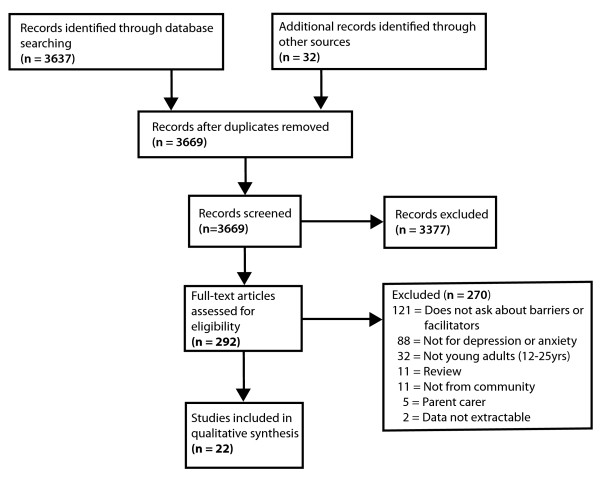
“This process resulted in a total of 22 relevant studies [20-41] for inclusion into the review.”
Background(2006) · Why Science Matters · doi:10.1002/9780470773994.ch8 · Cited by 1,014
Sawyer, M. G., Arney, F. M., Baghurst, P. A., Clark, J. J., Graetz, B. W., Kosky, R. J., Nurcombe, B., Patton, G. C., Prior, M. R., Raphael, B., et al. (2001) · Australian & New Zealand Journal of Psychiatry · doi:10.1046/j.1440-1614.2001.00964.x · Cited by 826
International Journal of Adolescent Medicine and Health
(2011) · International Journal of Adolescent Medicine and Health · doi:10.1515/ijamh · Cited by 686
Research works printed but not linked: 1
- Australian Bureau of Statistics Australian Bureau of Statistics. Canberra 2004-05 National Health Survey: Summary of Results 2006
Cited by
Clement, S., Schauman, O., Graham, T., Maggioni, F., Evans-Lacko, S., Bezborodovs, N., Morgan, C., Rüsch, N., Brown, J. S. L., & Thornicroft, G. (2015) · Psychological Medicine · doi:10.1017/s0033291714000129 · Cited by 3,152
Mental health literacy: empowering the community to take action for better mental health
Jorm, A. F. (2012) · American Psychologist · doi:10.1037/a0025957 · Cited by 1,783
Evidence for effective interventions to reduce mental-health-related stigma and discrimination
Thornicroft, G., Mehta, N., Clement, S., Evans-Lacko, S., Doherty, M., Rose, D., Koschorke, M., Shidhaye, R., O'Reilly, C., & Henderson, C. (2016) · The Lancet · doi:10.1016/s0140-6736(15)00298-6 · Cited by 1,338
Radez, J., Reardon, T., Creswell, C., Lawrence, P. J., Evdoka-Burton, G., & Waite, P. (2021) · European Child & Adolescent Psychiatry · doi:10.1007/s00787-019-01469-4 · Cited by 1,119
Firth, J., Torous, J., Nicholas, J., Carney, R., Pratap, A., Rosenbaum, S., & Sarris, J. (2017) · World Psychiatry · doi:10.1002/wps.20472 · Cited by 1,097
Borghouts, J., Eikey, E., Mark, G., De Leon, C., Schueller, S. M., Schneider, M., Stadnick, N., Zheng, K., Mukamel, D., & Sorkin, D. H. (2021) · Journal of Medical Internet Research · doi:10.2196/24387 · Cited by 1,069
“In line with previous work [2], this again indicates that privacy can be important for people who experience stigma for or reluctance to help-seeking.”
BackgroundMental Health Smartphone Apps: Review and Evidence-Based Recommendations for Future Developments
Bakker, D., Kazantzis, N., Rickwood, D., & Rickard, N. (2016) · JMIR Mental Health · doi:10.2196/mental.4984 · Cited by 886
“Emotional disorders are also the most treatable [76], but help seeking for sufferers is very low [77].”
InfluentialLei, L., Huang, X., Zhang, S., Yang, J., Yang, L., & Xu, M. (2020) · Medical Science Monitor · doi:10.12659/msm.924609 · Cited by 871
Werner-Seidler, A., Perry, Y., Calear, A. L., Newby, J. M., & Christensen, H. (2017) · Clinical Psychology Review · doi:10.1016/j.cpr.2016.10.005 · Cited by 773
Self-citationAguirre Velasco, A., Cruz, I. S. S., Billings, J., Jimenez, M., & Rowe, S. (2020) · BMC Psychiatry · doi:10.1186/s12888-020-02659-0 · Cited by 736
“This is in line with previous studies suggesting that teens who are most in need are less likely to seek help [1, 11, 15].”
InfluentialWathelet, M., Duhem, S., Vaiva, G., Baubet, T., Habran, E., Veerapa, E., Debien, C., Molenda, S., Horn, M., Grandgenèvre, P., et al. (2020) · JAMA Network Open · doi:10.1001/jamanetworkopen.2020.25591 · Cited by 747
“2) PSS-10 score Median (IQR) 20 (14-26) 17 (11-23) 22 (16-27) 26 (20-31) <.”
BackgroundInfluentialSchnyder, N., Panczak, R., Groth, N., & Schultze-Lutter, F. (2017) · British Journal of Psychiatry · doi:10.1192/bjp.bp.116.189464 · Cited by 716
Reardon, T., Harvey, K., Baranowska, M., O’Brien, D., Smith, L., & Creswell, C. (2017) · European Child & Adolescent Psychiatry · doi:10.1007/s00787-016-0930-6 · Cited by 653
“A recent systematic review synthesised findings across studies that reported young people’s perceptions of barriers and facilitators to accessing mental health treatment [32].”
Gulliver, A., Griffiths, K. M., & Christensen, H. (2012) · BMC Psychiatry · doi:10.1186/1471-244x-12-157 · Cited by 611
Self-citationEbert, D. D., Zarski, A.-C., Christensen, H., Stikkelbroek, Y., Cuijpers, P., Berking, M., & Riper, H. (2015) · PLOS ONE · doi:10.1371/journal.pone.0119895 · Cited by 533
Self-citationMental Health Mobile Apps for Preadolescents and Adolescents: A Systematic Review.
Grist, R., Porter, J., & Stallard, P. (2017) · Journal of Medical Internet Research · doi:10.2196/jmir.7332 · Cited by 518
“Apps may reduce barriers to face-to-face help-seeking, such as the stigma or discomfort about discussing one’s own mental health [15].”
BackgroundYoung People’s Online Help-Seeking and Mental Health Difficulties: Systematic Narrative Review
Pretorius, C., Chambers, D., & Coyle, D. (2019) · Journal of Medical Internet Research · doi:10.2196/13873 · Cited by 506
“Yet, most young people are reluctant to seek help from formal mental health services [3-5].”
Mental health literacy measures evaluating knowledge, attitudes and help-seeking: a scoping review
Wei, Y., McGrath, P. J., Hayden, J., & Kutcher, S. (2015) · BMC Psychiatry · doi:10.1186/s12888-015-0681-9 · Cited by 500
Davies, E. B., Morriss, R., & Glazebrook, C. (2014) · Journal of Medical Internet Research · doi:10.2196/jmir.3142 · Cited by 499
“Young people do not seek out help for several reasons, including personal preferences for self-reliance in managing their mental health [9].”
BackgroundHom, M. A., Stanley, I. H., & Joiner, T. E. (2015) · Clinical Psychology Review · doi:10.1016/j.cpr.2015.05.006 · Cited by 462
Artificially intelligent chatbots in digital mental health interventions: a review
Boucher, E. M., Harake, N. R., Ward, H. E., Stoeckl, S. E., Vargas, J., Minkel, J., Parks, A. C., & Zilca, R. (2021) · Expert Review of Medical Devices · doi:10.1080/17434440.2021.2013200 · Cited by 440
“For example, research suggests that young people are hesitant to access mental health care due to perceived stigma [123].”
BackgroundStandalone smartphone apps for mental health—a systematic review and meta-analysis
Weisel, K. K., Fuhrmann, L. M., Berking, M., Baumeister, H., Cuijpers, P., & Ebert, D. D. (2019) · npj Digital Medicine · doi:10.1038/s41746-019-0188-8 · Cited by 447
Investing in the Health and Well-Being of Young Adults
Stroud, C., Walker, L. R., Davis, M., & Irwin, C. E. (2015) · Journal of Adolescent Health · doi:10.1016/j.jadohealth.2014.11.012 · Cited by 435
Perceived barriers and facilitators towards help‐seeking for eating disorders: A systematic review
Ali, K., Farrer, L., Fassnacht, D. B., Gulliver, A., Bauer, S., & Griffiths, K. M. (2017) · International Journal of Eating Disorders · doi:10.1002/eat.22598 · Cited by 421
Self-citationUnderstanding Stigma in Autism: A Narrative Review and Theoretical Model
Turnock, A., Langley, K., & Jones, C. R. G. (2022) · Autism in Adulthood · doi:10.1089/aut.2021.0005 · Cited by 407
Liverpool, S., Mota, C. P., Sales, C. M. D., Čuš, A., Carletto, S., Hancheva, C., Sousa, S., Cerón, S. C., Moreno-Peral, P., Pietrabissa, G., et al. (2020) · Journal of Medical Internet Research · doi:10.2196/16317 · Cited by 408
The Handbook of Behavior Change
(2020) · Cambridge University Press eBooks · doi:10.1017/9781108677318 · Cited by 407
Ebert, D. D., Mortier, P., Kaehlke, F., Bruffaerts, R., Baumeister, H., Auerbach, R. P., Alonso, J., Vilagut, G., Martínez, K. U., Lochner, C., et al. (2019) · International Journal of Methods in Psychiatric Research · doi:10.1002/mpr.1782 · Cited by 407
‘Something needs to change’: Mental health experiences of young autistic adults in England
Crane, L., Adams, F., Harper, G., Welch, J., & Pellicano, E. (2019) · Autism · doi:10.1177/1362361318757048 · Cited by 397
“…problems are disproportionately high in young people generally (McGorry et al., 2013), and that young adults display poor help-seeking behaviours (Gulliver et al., 2010), there is particular need to focus on young autistic adults, who may be especially vulnerable when it comes to mental health.”
BackgroundInfluentialCzyz, E. K., Horwitz, A. G., Eisenberg, D., Kramer, A., & King, C. A. (2013) · Journal of American College Health · doi:10.1080/07448481.2013.820731 · Cited by 388
Ma, J., Batterham, P. J., Calear, A. L., & Han, J. (2016) · Clinical Psychology Review · doi:10.1016/j.cpr.2016.04.008 · Cited by 384
Gulliver, A., Griffiths, K. M., Christensen, H., & Brewer, J. L. (2012) · BMC Psychiatry · doi:10.1186/1471-244x-12-81 · Cited by 342
“In the case of help-seeking for mental illness, behaviour may be more difficult to change than beliefs as it is external and thus potentially more vulnerable to the stigmatising of others, which in turn has been linked to help-seeking avoidance [49].”
BackgroundSelf-citationChristensen, H., Batterham, P. J., Gosling, J. A., Ritterband, L. M., Griffiths, K. M., Thorndike, F. P., Glozier, N., O'Dea, B., Hickie, I. B., & Mackinnon, A. J. (2016) · The Lancet Psychiatry · doi:10.1016/s2215-0366(15)00536-2 · Cited by 365
Self-citationMental Health and Well-Being of University Students: A Bibliometric Mapping of the Literature
Hernández-Torrano, D., Ibrayeva, L., Sparks, J., Lim, N., Clementi, A., Almukhambetova, A., Nurtayev, Y., & Muratkyzy, A. (2020) · Frontiers in Psychology · doi:10.3389/fpsyg.2020.01226 · Cited by 356
Do online mental health services improve help-seeking for young people? A systematic review
Kauer, S. D., Mangan, C., & Sanci, L. (2014) · Journal of Medical Internet Research · doi:10.2196/jmir.3103 · Cited by 339
Salaheddin, K., & Mason, B. (2016) · British Journal of General Practice · doi:10.3399/bjgp16x687313 · Cited by 329
Young Men, Help-Seeking, and Mental Health Services: Exploring Barriers and Solutions
Lynch, L., Long, M., & Moorhead, A. (2018) · American Journal of Men's Health · doi:10.1177/1557988315619469 · Cited by 318
Clement, S., Brohan, E., Jeffery, D., Henderson, C., Hatch, S. L., & Thornicroft, G. (2012) · BMC Psychiatry · doi:10.1186/1471-244x-12-36 · Cited by 314
“This attests to the importance of stigma as a key factor limiting access to mental health care [11-14,60].”
Bonabi, H., Müller, M., Ajdacic-Gross, V., Eisele, J., Rodgers, S., Seifritz, E., Rössler, W., & Rüsch, N. (2016) · Journal of Nervous & Mental Disease · doi:10.1097/nmd.0000000000000488 · Cited by 308
“Our results are consistent with previous work on the role of mental health literacy (Gulliver et al., 2010; Jorm 2012), perceived need for treatment (Codony et al.”
ResultMasculinity, Social Connectedness, and Mental Health: Men’s Diverse Patterns of Practice
McKenzie, S. K., Collings, S., Jenkin, G., & River, J. (2018) · American Journal of Men's Health · doi:10.1177/1557988318772732 · Cited by 305
Perceptions and opinions of patients about mental health chatbots: scoping review
Abd-Alrazaq, A. A., Alajlani, M., Ali, N., Denecke, K., Bewick, B. M., & Househ, M. (2021) · Journal of Medical Internet Research · doi:10.2196/17828 · Cited by 301
“For many, accessing mental health care services is challenging because of the shortage of mental health care providers [4-7], lack of health care insurance coverage [8], and perceived stigma [9-11].”
Help-Seeking Behaviour and Adolescent Self-Harm: A Systematic Review
Rowe, S. L., French, R. S., Henderson, C., Ougrin, D., Slade, M., & Moran, P. (2014) · Australian & New Zealand Journal of Psychiatry · doi:10.1177/0004867414555718 · Cited by 299
“We identified a paucity of research into the facilitators of help-seeking behaviour among young people who selfharm and this finding is consistent with a general lack of research into facilitators of help-seeking behaviour among young people (Gulliver et al., 2010).”
BackgroundKantor, V., Knefel, M., & Lueger-Schuster, B. (2017) · Clinical Psychology Review · doi:10.1016/j.cpr.2016.12.001 · Cited by 294
Evidence-Based Psychosocial Treatments for Self-Injurious Thoughts and Behaviors in Youth
Glenn, C. R., Franklin, J. C., & Nock, M. K. (2015) · Journal of Clinical Child & Adolescent Psychology · doi:10.1080/15374416.2014.945211 · Cited by 288
Sacco, R., Camilleri, N., Eberhardt, J., Umla-Runge, K., & Newbury-Birch, D. (2024) · European Child & Adolescent Psychiatry · doi:10.1007/s00787-022-02131-2 · Cited by 264
Sagar-Ouriaghli, I., Godfrey, E., Bridge, L., Meade, L., & Brown, J. S. L. (2019) · American Journal of Men’s Health · doi:10.1177/1557988319857009 · Cited by 274
Reavley, N. J., & Jorm, A. F. (2011) · Australian & New Zealand Journal of Psychiatry · doi:10.3109/00048674.2011.621060 · Cited by 271
Kretzschmar, K., Tyroll, H., Pavarini, G., Manzini, A., Singh, I., & NeurOx Young People’s Advisory Group (2019) · Biomedical Informatics Insights · doi:10.1177/1178222619829083 · Cited by 270
“29 Many report a desire for self-reliance when coping with emotional difficulties, or a preference for obtaining support from close others such as family members or friends rather than professional support.”
BackgroundChanging Behavior Using the Theory of Planned Behavior
Ajzen, I., & Schmidt, P. (2020) · The Handbook of Behavior Change · doi:10.1017/9781108677318.002 · Cited by 266
Proudfoot, J., Clarke, J., Birch, M.-R., Whitton, A. E., Parker, G., Manicavasagar, V., Harrison, V., Christensen, H., & Hadzi-Pavlovic, D. (2013) · BMC Psychiatry · doi:10.1186/1471-244x-13-312 · Cited by 264
Self-citationXu, Z., Huang, F., Kösters, M., Staiger, T., Becker, T., Thornicroft, G., & Rüsch, N. (2018) · Psychological Medicine · doi:10.1017/s0033291718001265 · Cited by 252
“Although many mental disorders begin early in life, overall rates of treatment seeking in this age group are low (Gulliver et al., 2010; de Girolamo et al., 2012) and interventions to improve help-seeking among children and adolescents are needed.”
BackgroundInfluentialVan Ameringen, M., Turna, J., Khalesi, Z., Pullia, K., & Patterson, B. (2017) · Depression and Anxiety · doi:10.1002/da.22657 · Cited by 234
“Limited access to specialized mental health care is often cited as a primary barrier to treatment (Gulliver et al., 2010).”
BackgroundPlaney, A. M., Smith, S. M., Moore, S., & Walker, T. D. (2019) · Children and Youth Services Review · doi:10.1016/j.childyouth.2019.04.001 · Cited by 254
Gulliver, A., Griffiths, K. M., Christensen, H., Mackinnon, A., Calear, A. L., Parsons, A., Bennett, K., Batterham, P. J., & Stanimirovic, R. (2012) · Journal of Medical Internet Research · doi:10.2196/jmir.1864 · Cited by 243
Self-citationAustralia’s Innovation in Youth Mental Health Care: The Headspace Centre Model
Rickwood, D., Paraskakis, M., Quin, D., Hobbs, N., Ryall, V., Trethowan, J., & McGorry, P. (2019) · Early Intervention in Psychiatry · doi:10.1111/eip.12740 · Cited by 237
Internet-based mindfulness treatment for anxiety disorders: a randomized controlled trial
Boettcher, J., Åström, V., Påhlsson, D., Schenström, O., Andersson, G., & Carlbring, P. (2014) · Behavior Therapy · doi:10.1016/j.beth.2013.11.003 · Cited by 245
Gorczynski, P., Sims-schouten, W., Hill, D., & Wilson, J. C. (2017) · The Journal of Mental Health Training, Education and Practice · doi:10.1108/jmhtep-05-2016-0027 · Cited by 238
“…people, mental health services must help young people improve their mental health literacy by helping them recognize different mental health symptoms, reduce mental health stigma by improving attitudes toward mental health and treatment, and incorporate self-help techniques (Gulliver et al., 2010).”
BackgroundOtto, C., Reiss, F., Voss, C., Wüstner, A., Meyrose, A.-K., Hölling, H., & Ravens-Sieberer, U. (2021) · European Child & Adolescent Psychiatry · doi:10.1007/s00787-020-01630-4 · Cited by 235
Evidence Base Update of Psychosocial Treatments for Self-Injurious Thoughts and Behaviors in Youth
Glenn, C. R., Esposito, E. C., Porter, A. C., & Robinson, D. J. (2019) · Journal of Clinical Child & Adolescent Psychology · doi:10.1080/15374416.2019.1591281 · Cited by 219
Martinez, A. B., Co, M., Lau, J., & Brown, J. S. L. (2020) · Social Psychiatry and Psychiatric Epidemiology · doi:10.1007/s00127-020-01937-2 · Cited by 221
To chat or bot to chat: Ethical issues with using chatbots in mental health
Coghlan, S., Leins, K., Sheldrick, S., Cheong, M., Gooding, P., & D'Alfonso, S. (2023) · DIGITAL HEALTH · doi:10.1177/20552076231183542 · Cited by 215
Schomerus, G., Stolzenburg, S., Freitag, S., Speerforck, S., Janowitz, D., Evans-Lacko, S., Muehlan, H., & Schmidt, S. (2019) · European Archives of Psychiatry and Clinical Neuroscience · doi:10.1007/s00406-018-0896-0 · Cited by 214
Rickwood, D. J., Telford, N. R., Parker, A. G., Tanti, C. J., & McGorry, P. D. (2014) · Medical Journal of Australia · doi:10.5694/mja13.11235 · Cited by 207
Pathways to mental health services for young people: a systematic review
MacDonald, K., Fainman-Adelman, N., Anderson, K. K., & Iyer, S. N. (2018) · Social Psychiatry and Psychiatric Epidemiology · doi:10.1007/s00127-018-1578-y · Cited by 212
Hammer, J. H., Parent, M. C., & Spiker, D. A. (2018) · Journal of Counseling Psychology · doi:10.1037/cou0000248 · Cited by 207
Jennings, K. S., Cheung, J. H., Britt, T. W., Goguen, K. N., Jeffirs, S. M., Peasley, A. L., & Lee, A. C. (2015) · Psychiatric Rehabilitation Journal · doi:10.1037/prj0000138 · Cited by 207
Rickwood, D. J., Mazzer, K. R., & Telford, N. R. (2015) · BMC Psychiatry · doi:10.1186/s12888-015-0429-6 · Cited by 206
“symptoms, a preference for self-reliance, and perceived stigma and embarrassment [9,10].”
BackgroundMasculinity and suicidal thinking
Pirkis, J., Spittal, M. J., Keogh, L., Mousaferiadis, T., & Currier, D. (2017) · Social Psychiatry and Psychiatric Epidemiology · doi:10.1007/s00127-016-1324-2 · Cited by 205
Worsley, J. D., Pennington, A., & Corcoran, R. (2022) · PLOS ONE · doi:10.1371/journal.pone.0266725 · Cited by 205
Ibrahim, N., Amit, N., Shahar, S., Wee, L.-H., Ismail, R., Khairuddin, R., Siau, C. S., & Safien, A. M. (2019) · BMC Public Health · doi:10.1186/s12889-019-6862-6 · Cited by 199
Assessing the Psychological Impact of COVID-19 among College Students: An Evidence of 15 Countries
Batra, K., Sharma, M., Batra, R., Singh, T. P., & Schvaneveldt, N. (2021) · Healthcare · doi:10.3390/healthcare9020222 · Cited by 198
Barriers to Professional Mental Health Help-Seeking Among Chinese Adults: A Systematic Review
Shi, W., Shen, Z., Wang, S., & Hall, B. J. (2020) · Frontiers in Psychiatry · doi:10.3389/fpsyt.2020.00442 · Cited by 196
Anderson, J. K., Howarth, E., Vainre, M., Jones, P. B., & Humphrey, A. (2017) · Children and Youth Services Review · doi:10.1016/j.childyouth.2017.04.017 · Cited by 195
“Ample evidence suggest that service-level barriers are only one of the key factors hampering timely connection of children and young people experiencing MH difficulties with appropriate supportive services [10-14].”
BackgroundEnhancing mental health literacy in young people
Kutcher, S., Wei, Y., Costa, S., Gusmão, R., Skokauskas, N., & Sourander, A. (2016) · European Child & Adolescent Psychiatry · doi:10.1007/s00787-016-0867-9 · Cited by 190
“Recent evidence further demonstrates that improved mental health knowledge and decreased stigma are two essential components to facilitate help-seeking behaviors and early identification of mental disorders [10, 11].”
BackgroundHeerde, J. A., & Hemphill, S. A. (2018) · Developmental Review · doi:10.1016/j.dr.2017.10.001 · Cited by 190
Public mental health: required actions to address implementation failure in the context of COVID-19
Campion, J., Javed, A., Lund, C., Sartorius, N., Saxena, S., Marmot, M., Allan, J., & Udomratn, P. (2022) · The Lancet Psychiatry · doi:10.1016/s2215-0366(21)00199-1 · Cited by 177
Ma, P. H. X., Chan, Z. C. Y., & Loke, A. Y. (2017) · AIDS and Behavior · doi:10.1007/s10461-017-1818-2 · Cited by 180
“Other factors are relating to the reliance on family and friends [16, 18] at the interpersonal micro-level; and social stigma [16, 18, 19] at the community meso-level.”
BackgroundInfluentialPicco, L., Abdin, E., Chong, S. A., Pang, S., Shafie, S., Chua, B. Y., Vaingankar, J. A., Ong, L. P., Tay, J., & Subramaniam, M. (2016) · Frontiers in Psychology · doi:10.3389/fpsyg.2016.00547 · Cited by 175
“ORIGINAL RESEARCH published: 25 April 2016 doi: 10.3389/fpsyg.2016.00547 Frontiers in Psychology | www.frontiersin.org 1 April 2016 | Volume 7 | Article 547 Edited by: Pietro Cipresso, IRCCS Istituto Auxologico Italiano, Italy Reviewed by: Carol Van Hulle, University of Wisconsin-Madison, USA Ioannis Tsaousis, Univers…”
BackgroundInfluentialGaiha, S. M., Taylor Salisbury, T., Koschorke, M., Raman, U., & Petticrew, M. (2020) · BMC Psychiatry · doi:10.1186/s12888-020-02937-x · Cited by 172
“Additionally, compared to adults, young people do not seek help for mental health problems due to characteristic fears about lack of confidentiality, peer pressure, a desire to be self-reliant, [17] and lack of knowledge to recognize mental health problems [18] or lack of awareness about mental-healthrelated services…”
BackgroundO'Connor, P. J., Martin, B., Weeks, C. S., & Ong, L. (2014) · Journal of Advanced Nursing · doi:10.1111/jan.12423 · Cited by 172
Missing clinical and behavioral health data in a large electronic health record (EHR) system
Madden, J. M., Lakoma, M. D., Rusinak, D., Lu, C. Y., & Soumerai, S. B. (2016) · Journal of the American Medical Informatics Association · doi:10.1093/jamia/ocw021 · Cited by 172
Potrebny, T., Wiium, N., & Lundegård, M. M.-I. (2017) · PLOS ONE · doi:10.1371/journal.pone.0188374 · Cited by 172
Swift, J. K., Greenberg, R. P., Tompkins, K. A., & Parkin, S. R. (2017) · Psychotherapy · doi:10.1037/pst0000104 · Cited by 167
Kim, J. E., & Zane, N. (2016) · Cultural Diversity & Ethnic Minority Psychology · doi:10.1037/cdp0000056 · Cited by 168
Perry, Y., Petrie, K., Buckley, H., Cavanagh, L., Clarke, D., Winslade, M., Hadzi‐Pavlovic, D., Manicavasagar, V., & Christensen, H. (2014) · Journal of Adolescence · doi:10.1016/j.adolescence.2014.08.001 · Cited by 167
Self-citationLillevoll, K. R., Vangberg, H. C. B., Griffiths, K. M., Waterloo, K., & Eisemann, M. R. (2014) · BMC Psychiatry · doi:10.1186/1471-244x-14-14 · Cited by 150
“Several barriers to help-seeking for common mental health problems have been identified [7-9].”
BackgroundSelf-citationWasil, A. R., Venturo-Conerly, K. E., Shingleton, R. M., & Weisz, J. R. (2019) · Behaviour Research and Therapy · doi:10.1016/j.brat.2019.103498 · Cited by 160
Taylor-Rodgers, E., & Batterham, P. J. (2014) · Journal of Affective Disorders · doi:10.1016/j.jad.2014.06.047 · Cited by 165
Reynders, A., Kerkhof, A. J. F. M., Molenberghs, G., & Van Audenhove, C. (2014) · Social Psychiatry and Psychiatric Epidemiology · doi:10.1007/s00127-013-0745-4 · Cited by 164
“A review of studies among young people found a relation between perceived stigma and a weaker intention to seek help [13].”
BackgroundPatias, N. D., Machado, W. D. L., Bandeira, D. R., & Dell'Aglio, D. D. (2016) · Psico-USF · doi:10.1590/1413-82712016210302 · Cited by 161
Help seeking for mental health problems in an adolescent population: the effect of gender
Haavik, L., Joa, I., Hatloy, K., Stain, H. J., & Langeveld, J. (2019) · Journal of Mental Health · doi:10.1080/09638237.2017.1340630 · Cited by 163
Christ, C., Schouten, M. J., Blankers, M., van Schaik, D. J., Beekman, A. T., Wisman, M. A., Stikkelbroek, Y. A., & Dekker, J. J. (2020) · Journal of Medical Internet Research · doi:10.2196/17831 · Cited by 148
“Among their reasons for low treatment utilization are limited availability of youth mental health services, perceived stigma associated with mental illness, perceived lack of time or resources, and preference for self-help [24,26,27].”
BackgroundBarriers to older adults’ uptake of mobile-based mental health interventions
Pywell, J., Vijaykumar, S., Dodd, A., & Coventry, L. (2020) · DIGITAL HEALTH · doi:10.1177/2055207620905422 · Cited by 152
Jung, H., von Sternberg, K. L., & Davis, K. E. (2017) · International Journal of Mental Health Promotion · doi:10.1080/14623730.2017.1345687 · Cited by 220
Janoušková, M., Tušková, E., Weissová, A., Trančík, P., Pasz, J., Evans-Lacko, S., & Winkler, P. (2017) · European Psychiatry · doi:10.1016/j.eurpsy.2016.09.008 · Cited by 153
Bussing, R., Koro-Ljungberg, M., Noguchi, K., Mason, D., Mayerson, G., & Garvan, C. W. (2012) · Social Science & Medicine · doi:10.1016/j.socscimed.2011.10.009 · Cited by 151
“Our qualitative results are supported by recent reviews of barriers to adolescents’mental health help-seeking (Gulliver et al., 2010), which identified stigma/embarrassment as a main barrier.”
ResultMeasurement properties of tools measuring mental health knowledge: a systematic review
Wei, Y., McGrath, P. J., Hayden, J. A., & Kutcher, S. (2016) · BMC Psychiatry · doi:10.1186/s12888-016-1012-5 · Cited by 191
Mansfield, R., Patalay, P., & Humphrey, N. (2020) · BMC Public Health · doi:10.1186/s12889-020-08734-1 · Cited by 149
Stephens, T. N., Joerin, A., Rauws, M., & Werk, L. N. (2019) · Translational Behavioral Medicine · doi:10.1093/tbm/ibz043 · Cited by 150
The influence of psychological symptoms on mental health literacy of college students.
Kim, J. E., Saw, A., & Zane, N. (2015) · American Journal of Orthopsychiatry · doi:10.1037/ort0000074 · Cited by 147
Metadata
- Authors
- Gulliver, A., Griffiths, K. M., & Christensen, H.
- Affiliations
- Australian National University (AU)
- Corresponding author
- Gulliver, Amelia
- Venue
- BMC Psychiatry
- Published
- 2010-12
- Volume
- 10
- Issue
- 1
- Pages
- 113-113
- ISSN
- 1471-244X (ISSN-L)
- PMC
- PMC3022639
- OpenAlex
- W2107750653
- Semantic Scholar
- f95edcc0bd6116b085c3f189a000be87dd3d6115
- Cited by
- 3,292
- References
- 51
- Citations by year
- 2026: 301 · 2025: 323 · 2024: 301 · 2023: 299 · 2022: 306 · 2021: 318 · 2020: 363 · 2019: 238 · 2018: 221 · 2017: 170 · 2016: 147 · 2015: 111 · 2014: 90 · 2013: 48 · 2012: 42
- FWCI
- 4.00
- Type
- journal article
- Language
- en
- Open access
- gold
- doi.org
- Licence
- cc-by
- creativecommons.org/licenses/by/2.0 (tdm)
- Locations
- BMC Psychiatry (publishedVersion, cc-by)
- Europe PMC (PubMed Central) (publishedVersion, cc-by)
- PubMed Central (publishedVersion, cc-by)
- PubMed (publishedVersion)
- DOAJ (DOAJ: Directory of Open Access Journals) (submittedVersion)
- ANU Open Research (Australian National University) (submittedVersion, cc-by)
- Funders
- Australian National University
- Australian Institute of Sport
- National Health and Medical Research Council (525413, 525411)
- Topics
- Health Sciences › Medicine › Psychiatry and Mental health › Mental Health Treatment and Access
- Social Sciences › Psychology › Clinical Psychology › Suicide and Self-Harm Studies
- Social Sciences › Psychology › Clinical Psychology › Psychology and Mental Health
- Keywords
- help-seeking, mental health help-seeking, adolescents, young adults, perceived barriers, perceived facilitators, mental health literacy, stigma, self-reliance, social support, common mental disorders
- MeSH terms
- Adolescent, Adult, Mental Disorders, Data Collection, Female, Health Services Accessibility, Humans, Male, Mental Health Services, Patient Acceptance of Health Care, Qualitative Research, Young Adult
About these checks
Registry, retraction, Cites and statistics results are computed, not judged, with one exception: a printed reference that no index lists is read once by a model before it counts as a citation error. Claims are extracted by a model and kept only when their quote appears verbatim in the text; each cited source is then checked, with a model’s help, for whether it says what the claim relies on. Those verdicts can be wrong — read the claim’s quote and the cited source before relying on one.
Statistics and arithmetic are recomputed, not judged.
Confidence bands are shown only for fields calibrated on our annotated test set. None is calibrated yet, so no band is shown.
What counts as a claim ›How we measure confidence ›How we check this ›
Are you an author, or do you see a problem with this page? Request a review
Data sources
Bibliographic data: Semantic Scholar, OpenAlex, Crossref.
Contains information from the Semantic Scholar Academic Graph Datasets, made available under the ODC Attribution License (ODC-BY 1.0).
Semantic Scholar’s data is described in: Kinney, R., et al. (2023). The Semantic Scholar Open Data Platform. arXiv:2301.10140.
