

Pharmacological treatment in autism: a proposal for guidelines on common co-occurring psychiatric symptoms
Open accessThe DOI matches its Crossref record; 142 of the 143 references it cites were found in a registry or an index; 63 of the 190 sources its claims cite were checked for support.
Abstract
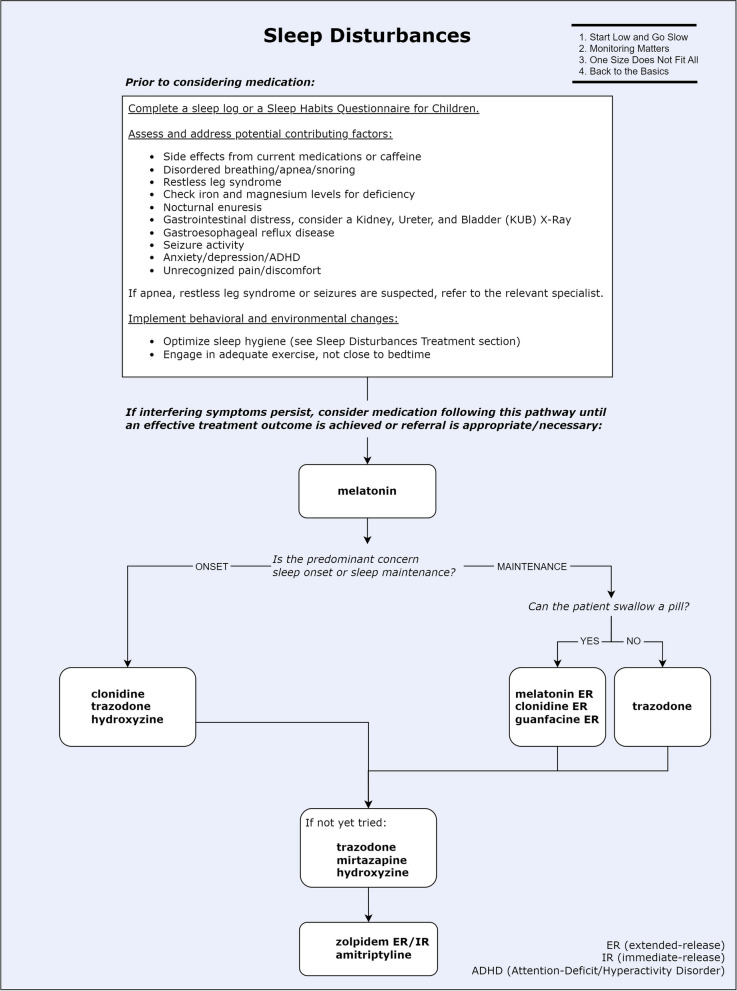
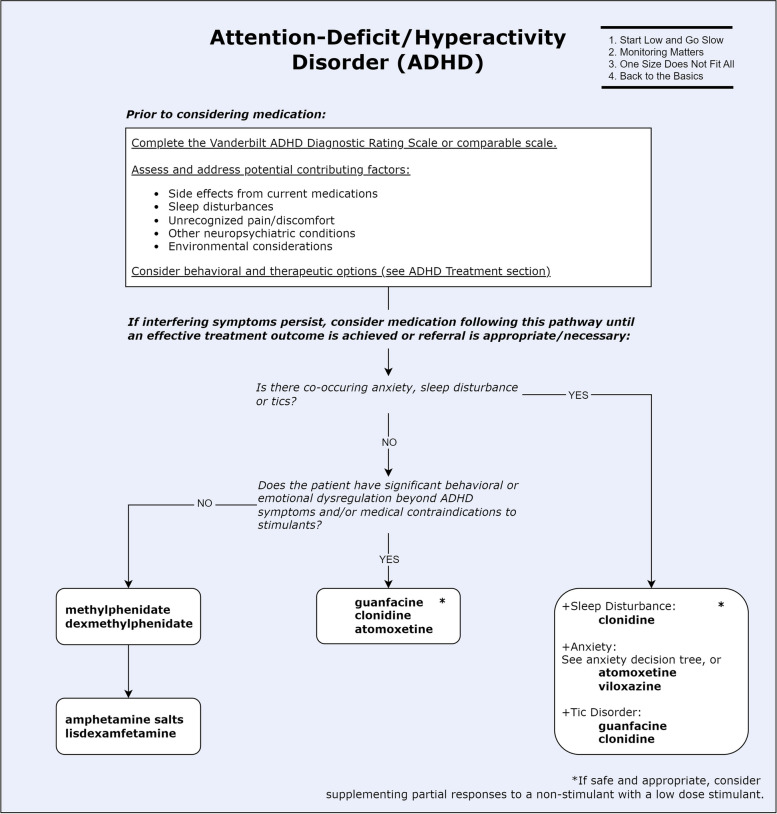
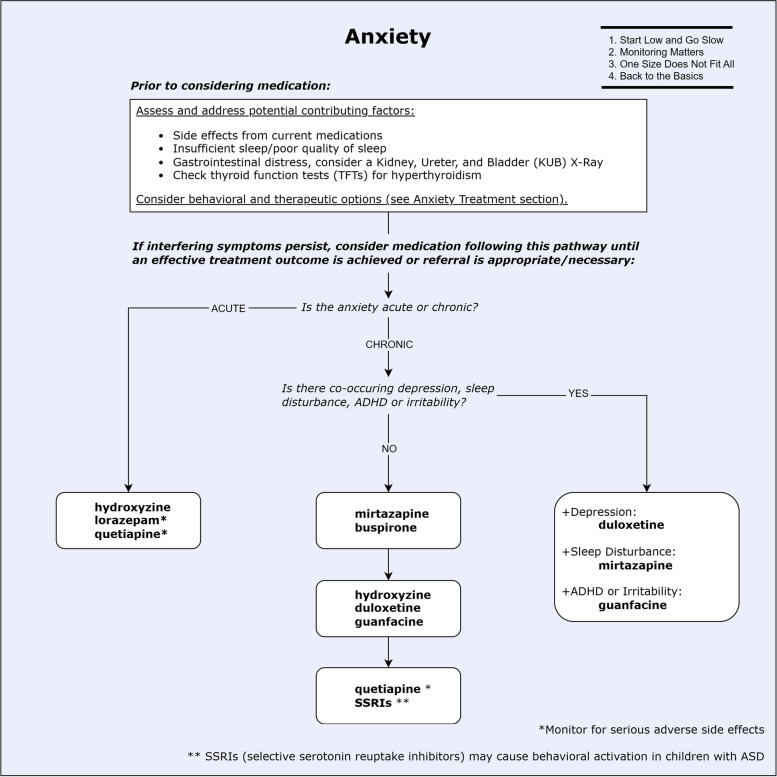
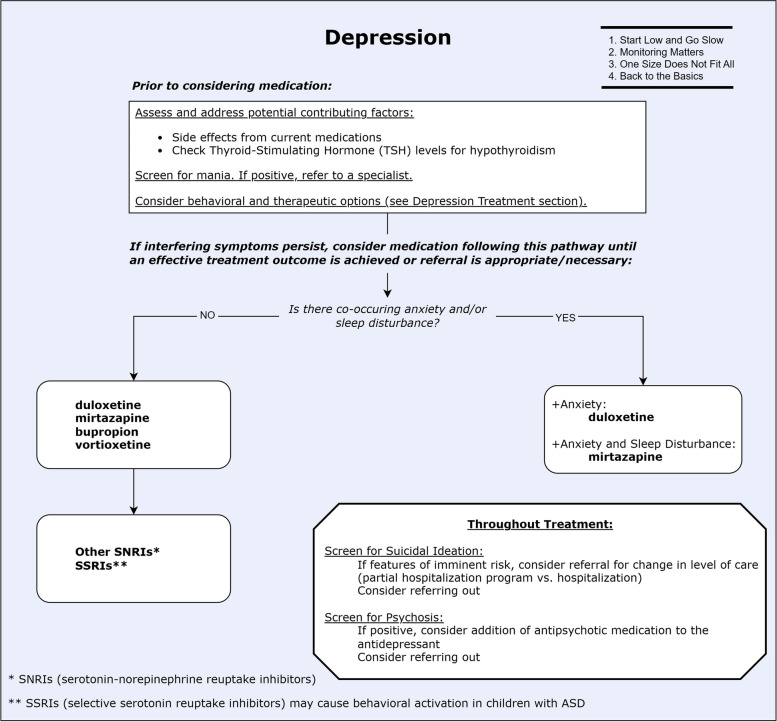
BACKGROUND: The prevalence of autism spectrum disorder (ASD) has surged, with an estimated 1 in 36 eight-year-olds in the United States meeting criteria for ASD in 2020. Autistic individuals face elevated rates of co-occurring medical, psychiatric, and behavioral conditions compared to non-autistic individuals. The rising ASD-patient demand is increasingly outpacing the capacity of ASD-specialty clinics, resulting in urgent need for autism-competent providers in general practice settings. This work aims to empower healthcare providers, especially primary care providers (PCPs), with guidelines for the recognition and safe pharmacologic management of common co-occurring psychiatric and behavioral conditions in ASD. METHODS: Lurie Center for Autism medical providers, who have extensive experience in ASD care, delineated approaches for recognition and pharmacological treatment of sleep disturbances, attention-deficit/hyperactivity disorder (ADHD), anxiety, depression, and irritability tailored to ASD patients. Pharmacological guidelines were iteratively refined until consensus was reached. Treatment differences relative to standard of care (SOC) of non-autistic individuals are noted. Key literature and clinical trial results were reviewed to supplement clinical experience. RESULTS: -adrenergic agonists are more suitable than stimulants for some ASD-ADHD patients, buspirone and mirtazapine are preferred to selective serotonin reuptake inhibitors (SSRIs) for anxiety, and duloxetine, mirtazapine, bupropion, and vortioxetine are recommended ahead of SSRIs for depression. Addressing irritability in ASD requires interdisciplinary evaluation of contributing factors, and guanfacine, risperidone, or aripiprazole may be appropriate, depending on severity. CONCLUSIONS: Recognition and treatment of co-occurring psychiatric and behavioral conditions in autistic patients must account for differences in clinical presentation and medication effectiveness and tolerability. Drawing on evidence-based clinical insights, these guidelines seek to support PCPs in making informed decisions when prescribing medications for ASD patients with co-occurring psychiatric and behavioral conditions, ultimately enhancing access to timely, comprehensive care for all individuals with ASD.
Overview
CoChat Summary
## TL;DR
This paper is an expert-consensus proposal for ASD-specific prescribing guidance for five common co-occurring symptom domains: sleep disturbances, ADHD, anxiety, depression, and irritability. It argues that medication choices, dosing, and monitoring in autism often differ from non-autistic standard of care and are especially relevant for primary care providers.
## Key findings
- The authors state that in ASD, first-line approaches for sleep disturbance still align with non-autistic care: sleep hygiene and melatonin; they report melatonin had an average overall improvement rate of over 84% across 18 studies and recommend 1–3 mg about 30 min before sleep, titrating up to 10 mg.
- For ADHD in ASD, they report a 4-week crossover RCT of methylphenidate in 72 children aged 5–14 years where 35/72 (49%) were responders, but 18% discontinued due to adverse events; they also report an 8-week RCT of guanfacine ER in 62 children aged 5–14 years where ABC-Hyperactivity fell 43.6% vs 13.2% on placebo and response was 50% vs 9.4%.
- For anxiety in ASD, they cite a 10-week RCT of mirtazapine in 30 youth aged 5–17 years: 47% on mirtazapine were “much improved” or “very much improved” vs 20% on placebo, with a non-significant PARS trend (effect size 0.63); they recommend buspirone and mirtazapine ahead of SSRIs.
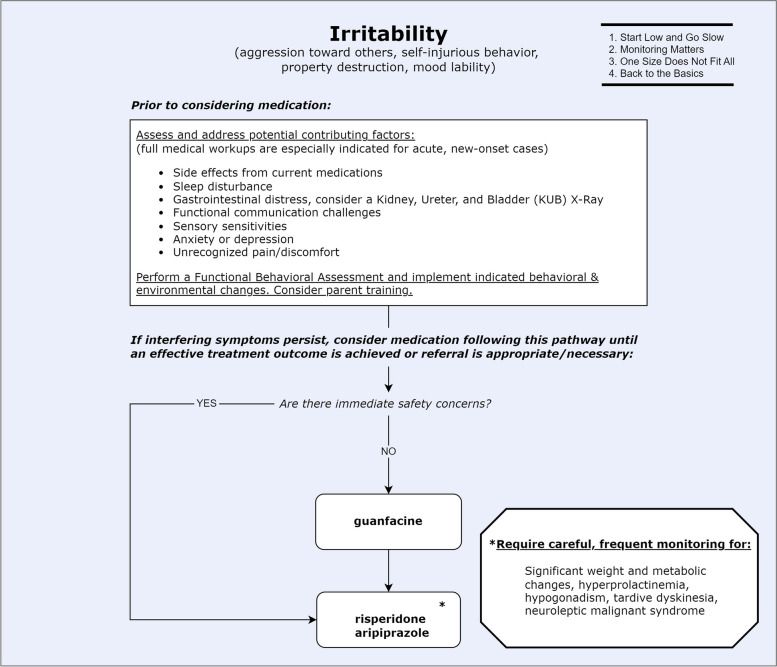
- For depression in ASD, the paper reports there are no RCTs of antidepressant treatment specifically for depression in ASD, and recommends duloxetine, mirtazapine, bupropion, and vortioxetine ahead of SSRIs; for irritability, it notes guanfacine may be used first, with risperidone or aripiprazole for more severe cases.
## Methods
- Expert-consensus guideline development by clinicians and researchers from the Lurie Center for Autism, based on their clinical experience treating ASD across the lifespan.
- The team iteratively drafted pharmacologic pathways for sleep, ADHD, anxiety, depression, and irritability, then revised them through interviews, feedback, and cross-checking until consensus was reached.
- They supplemented clinical expertise with a targeted literature search using PubMed and Google Scholar, emphasizing seminal and recent studies and current recommendations.
## Limitations
- The paper explicitly says the guidance is based on consensus from a single site, with many prescribers sharing similar training or mentoring backgrounds, which limits the breadth of perspectives.
- The authors state their clinic is highly specialized, so their experience may be biased toward a particular patient population; they also note the manuscript focuses mainly on psychopharmacology and does not cover the full range of behavioral/therapeutic approaches or the needs of people with co-occurring genetic syndromes.
- Evident from the text: much of the evidence base is limited; the paper repeatedly notes few RCTs, no RCTs for several medications/indications in ASD, and a lack of validated diagnostic and outcome measures for co-occurring conditions in ASD.
Model-written summary. Check it against the paper before relying on it.
Integrity signals
Registry
Cites
Statistics
Figures
Verification
Claims the paper makes
47 Valid · 6 Not valid · 86 Not checked · 38 Own results and interpretations
At least one cited source doesn’t support this claim or points to a different paper, and none confirmed it — see the verdicts below.
In the paper
“Since the long-term use of these medications in young children has yet to be studied, they are not recommended for long-term use for young children [67].”
§ Pharmacological treatment in autism: a proposal for guidelines on common co-occurring psychiatric symptoms > Results and discussion > Sleep disturbances
What the sources say
- Disputedcites [67] Gober HJ, Li KH, Yan K, Bailey AJ, Carleton BC. Hydroxyzine use in preschool children and its effect on neurodevelopment: A population-based longitudinal study. Front Psychiatry. 2021;12:721875. 35153845 PMC8832122 sourceExperimental — accuracy not yet measured
The Introduction describes a prospective long-term safety study of cetirizine in children aged 1–2 years, with developmental outcomes assessed up to 18 months after treatment stopped. The paper also investigates repetitive hydroxyzine use in children under five. Thus, the blanket claim that long-term antihistamine use in young children has yet to be studied is contrary to this source, although the source says evidence for hydroxyzine specifically was limited. (LLM, conf=0.88)
Checked by a reasoning model — may be wrong.
plain- Asserted: passes — The authors put it forward as true.
- Checkable: passes — It can be checked against evidence.
- Load-bearing: passes — The paper’s conclusions depend on it.
- Based: passes — The paper gives a reason why it holds.
- Disputed
The cited sources support only part of this claim — read each source’s verdict below.
In the paper
“Sleep disorders have been correlated with daytime sleepiness, cognitive, attentional, behavioral, and emotional challenges, as well as poorer health-related quality of life for children with ASD [12, 13, 46].”
§ Pharmacological treatment in autism: a proposal for guidelines on common co-occurring psychiatric symptoms > Results and discussion > Sleep disturbances
What the sources say
- Not checked — no full text of the sourcecites [12] Limoges É, Bolduc C, Berthiaume C, Mottron L, Godbout R. Relationship between poor sleep and daytime cognitive performance in young adults with autism. Res Dev Disabil. 2013;34(4):1322–35. 23417137 source
- Not checked — no full text of the sourcecites [13] Sadikova E, Dovgan K, Mazurek MO. Longitudinal examination of sleep problems and symptom severity in children with autism spectrum disorder. J Autism Dev Disord. 2023;53(4):1673–81. 35384626 source
- Partly supportedcites [46] Fadini CC, Lamônica DA, Fett-Conte AC, Osório E, Zuculo GM, Giacheti CM, et al. Influence of sleep disorders on the behavior of individuals with autism spectrum disorder. Front Hum Neurosci. 2015;9(JUNE):347. 26150777 PMC4471742 sourceExperimental — accuracy not yet measured
The Introduction links sleep problems with attention deficits, anxiety, depression, and behavioral difficulties. The Discussion and Conclusions report correlations between sleep disorders and thought or behavioral problems in the ASD group, and document excessive daytime sleepiness. The paper does not report a correlation with poorer health-related quality of life. (LLM, conf=0.87)
plainstates an association- Asserted: passes — The authors put it forward as true.
- Checkable: passes — It can be checked against evidence.
- Load-bearing: unclear — It is unclear whether the paper’s conclusions depend on it.
- Based: passes — The paper gives a reason why it holds.
Every source the paper cites for this claim was checked and supports it.
In the paper
“Melatonin has been shown to reduce sleep latency (the amount of time it takes to fall asleep) [61].”
§ Pharmacological treatment in autism: a proposal for guidelines on common co-occurring psychiatric symptoms > Results and discussion > Sleep disturbances
What the sources say
- Supportedcites [61] Malow B, Adkins KW, McGrew SG, Wang L, Goldman SE, Fawkes D, et al. Melatonin for sleep in children with autism: a controlled trial examining dose, tolerability, and outcomes. J Autism Dev Disord. 2012;42(8):1729–37 (author reply 1738). 22160300 PMC3368078 source
The Results (Actigraphy section; page not provided) report that sleep latency decreased significantly with melatonin treatment (p < 0.0001). The study concerned children with autism, which is the population in which this source directly demonstrates the claim. (LLM, conf=0.93)
plainstates a cause- Asserted: passes — The authors put it forward as true.
- Checkable: passes — It can be checked against evidence.
- Load-bearing: passes — The paper’s conclusions depend on it.
- Based: passes — The paper gives a reason why it holds.
- Supported
Every source the paper cites for this claim was checked and supports it.
In the paper
“A recent non-randomized, prospective observational cohort study evaluated 323 children with ADHD who were initiating pharmacotherapy and who also demonstrated either high or low ASD symptoms [82].”
§ Pharmacological treatment in autism: a proposal for guidelines on common co-occurring psychiatric symptoms > Results and discussion > Attention-Deficit/Hyperactivity Disorder
What the sources say
- Supportedcites [82] Lilja MM, Sandblom E, Lichtenstein P, Serlachius E, Hellner C, Bhagia J, et al. The effect of autistic traits on response to and side-effects of pharmacological ADHD treatment in children with ADHD: results from a prospective clinical cohort. J Neurodev Disord. 2022;14(1):17. 35249540 PMC8903657 source
The Abstract’s Methods section identifies the study as a non-randomized, observational, prospective cohort. It reports 323 children aged 6–17 with ADHD who were starting pharmacological treatment, divided into groups with high or low levels of ASD symptoms. (LLM, conf=0.95)
plainn = 323- Asserted: passes — The authors put it forward as true.
- Checkable: passes — It can be checked against evidence.
- Load-bearing: passes — The paper’s conclusions depend on it.
- Based: passes — The paper gives a reason why it holds.
- Supported
Every source the paper cites for this claim was checked and supports it.
In the paper
“PedPRM has been shown to be efficacious and safe for the long-term treatment of insomnia in children with ASD in initial research [63].”
§ Pharmacological treatment in autism: a proposal for guidelines on common co-occurring psychiatric symptoms > Results and discussion > Sleep disturbances
What the sources say
- Supportedcites [63] Maras A, Schroder CM, Malow BA, Findling RL, Breddy J, Nir T, et al. Long-term efficacy and safety of pediatric prolonged-release melatonin for insomnia in children with autism spectrum disorder. J Child Adolesc Psychopharmacol. 2018;28(10):699–710. 30132686 PMC6306655 source
The Conclusions state that PedPRM was a safe and effective long-term treatment for insomnia in children with ASD or neurogenetic disorders, with effects maintained through 52 weeks. The Discussion describes the one-year efficacy and safety findings; although the follow-up was open-label, the claim does not assert that long-term efficacy was established against placebo. (LLM, conf=0.94)
plainstates a cause- Asserted: passes — The authors put it forward as true.
- Checkable: passes — It can be checked against evidence.
- Load-bearing: passes — The paper’s conclusions depend on it.
- Based: passes — The paper gives a reason why it holds.
- Supported
73 more claims · 15 with their cited sources checked
Create a free account to see all 177 claims and to verify the 18 references still open.
- Probably not a substantial claim. 53
- It may state two separate claims as one. 67
Citations
Cites
Diagnostic and Statistical Manual of Mental Disorders
American Psychiatric Association (2013) · doi:10.1176/appi.books.9780890425596 · Cited by 116,369
Diagnostic and Statistical Manual of Mental Disorders.
Widiger, T. A. (2000) · Encyclopedia of Psychology, Vol. 3. · doi:10.1037/10518-009 · Cited by 19,744
(1999) · Archives of General Psychiatry · doi:10.1001/archpsyc.56.12.1073 · Cited by 3,372
Global prevalence of autism: A systematic review update
Zeidan, J., Fombonne, E., Scorah, J., Ibrahim, A., Durkin, M. S., Saxena, S., Yusuf, A., Shih, A., & Elsabbagh, M. (2022) · Autism Research · doi:10.1002/aur.2696 · Cited by 3,117 · cited 2×
“Current ASD prevalence estimates are now 1 in 36 for children in the U.S. [1] and in the last decade the global median prevalence of ASD children and adults is 10 per 1000 [3].”
Maenner, M. J., Warren, Z., Williams, A. R., Amoakohene, E., Bakian, A. V., Bilder, D. A., Durkin, M. S., Fitzgerald, R. T., Furnier, S. M., Hughes, M. M., et al. (2023) · MMWR. Surveillance Summaries · doi:10.15585/mmwr.ss7202a1 · Cited by 2,706 · cited 2×
“The escalating prevalence of autism spectrum disorder (ASD) in recent years [1–4] has created an urgent need for additional medical providers capable of delivering autism-competent care [5–7].”
Global Prevalence of Autism and Other Pervasive Developmental Disorders
Elsabbagh, M., Divan, G., Koh, Y., Kim, Y. S., Kauchali, S., Marcín, C., Montiel‐Nava, C., Patel, V., Paula, C. S., Wang, C., et al. (2012) · Autism Research · doi:10.1002/aur.239 · Cited by 2,636 · cited 1×
“1, 2, 3, 4 and 5 involve a degree of context-dependent decision making due to the limited knowledge base in the literature.”
Owens, J. A., Spirito, A., & McGuinn, M. (2000) · Sleep · doi:10.1093/sleep/23.8.1d · Cited by 2,535 · cited 1×
“…examiner can ask some key questions such as how long it takes to fall asleep, when the patient wakes up in the morning, when and how many times the patient wakes up during the night, how many hours the patient sleeps, is the patient well rested in the morning, and where does the patient sleep [49].”
Maenner, M. J., Shaw, K. A., Bakian, A. V., Bilder, D. A., Durkin, M. S., Esler, A., Furnier, S. M., Hallas, L., Hall-Lande, J., Hudson, A., et al. (2021) · MMWR. Surveillance Summaries · doi:10.15585/mmwr.ss7011a1 · Cited by 1,818
Risperidone in Children with Autism and Serious Behavioral Problems
McCracken, J. T., McGough, J., Shah, B., Cronin, P., Hong, D., Aman, M. G., Arnold, L. E., Lindsay, R., Nash, P., Hollway, J., et al. (2002) · New England Journal of Medicine · doi:10.1056/nejmoa013171 · Cited by 1,574 · cited 3×
“Currently, only two drugs have been approved by the United States (U.S.) Food and Drug Administration (FDA) for use in the ASD population: risperidone [23] and aripiprazole [24].”
InfluentialSelf-citationAnxiety Disorders in Children and Adolescents with Autistic Spectrum Disorders: A Meta-Analysis
van Steensel, F. J. A., Bögels, S. M., & Perrin, S. (2011) · Clinical Child and Family Psychology Review · doi:10.1007/s10567-011-0097-0 · Cited by 1,463
(1985) · PubMed · Cited by 1,427
Metabolic and cardiovascular adverse effects associated with antipsychotic drugs.
De Hert, M., Detraux, J., van Winkel, R., Yu, W., & Correll, C. U. (2012) · Nature Reviews Endocrinology · doi:10.1038/nrendo.2011.156 · Cited by 1,145
Volkmar, F., Siegel, M., Woodbury-Smith, M., King, B., McCracken, J., & State, M. (2014) · Journal of the American Academy of Child & Adolescent Psychiatry · doi:10.1016/j.jaac.2013.10.013 · Cited by 848 · cited 2×
“The ABC-Irritability subscale is important to obtain at baseline and throughout the course of treatment of irritability in ASD [133].”
Richdale, A. L., & Schreck, K. A. (2009) · Sleep Medicine Reviews · doi:10.1016/j.smrv.2009.02.003 · Cited by 708 · cited 2×
“…onset, sleep maintenance, parasomnias (e.g., nightmares, night terrors, enuresis), hypersomnia (excessive sleeping or sleepiness), sleep-related breathing or movement disorders, isolated symptoms like short sleep or early waking, abnormal sleep patterns, and circadian rhythm sleep disorders [36].”
Salari, N., Rasoulpoor, S., Rasoulpoor, S., Shohaimi, S., Jafarpour, S., Abdoli, N., Khaledi-Paveh, B., & Mohammadi, M. (2022) · Italian Journal of Pediatrics · doi:10.1186/s13052-022-01310-w · Cited by 571 · cited 2×
“The escalating prevalence of autism spectrum disorder (ASD) in recent years [1–4] has created an urgent need for additional medical providers capable of delivering autism-competent care [5–7].”
Aggression in Children and Adolescents with ASD: Prevalence and Risk Factors
Kanne, S. M., & Mazurek, M. O. (2011) · Journal of Autism and Developmental Disorders · doi:10.1007/s10803-010-1118-4 · Cited by 533 · cited 1×
“Parent reports of physical aggression in a cohort of 1,380 children and adolescents with ASD showed that 35% were currently exhibiting significant aggression towards a caregiver or another person and that 49% had demonstrated some form of aggression towards others in the past [120].”
(2005) · Archives of General Psychiatry · doi:10.1001/archpsyc.62.11.1266 · Cited by 521
King, B. H., Hollander, E., Sikich, L., McCracken, J. T., Scahill, L., Bregman, J. D., Donnelly, C. L., Anagnostou, E., Dukes, K., Sullivan, L., et al. (2009) · Archives of General Psychiatry · doi:10.1001/archgenpsychiatry.2009.30 · Cited by 482 · cited 1×
“For example, King et al. 2009 completed a 12-week RCT of the SSRI citalopram in 149 youth with ASD (mean age = 9.4 years, range 5–17 years) [100].”
InfluentialMelatonin in autism spectrum disorders: a systematic review and meta-analysis
ROSSIGNOL, D. A., & FRYE, R. E. (2011) · Developmental Medicine & Child Neurology · doi:10.1111/j.1469-8749.2011.03980.x · Cited by 468 · cited 2×
“Out of 18 studies, the average overall improvement rate from melatonin for sleep disturbances in individuals with ASD was over 84% [58].”
Antshel, K. M., & Russo, N. (2019) · Current Psychiatry Reports · doi:10.1007/s11920-019-1020-5 · Cited by 450
Prevalence of Depressive Disorders in Individuals with Autism Spectrum Disorder: A Meta-Analysis
Hudson, C. C., Hall, L., & Harkness, K. L. (2019) · Journal of Abnormal Child Psychology · doi:10.1007/s10802-018-0402-1 · Cited by 411 · cited 1×
“Compared to their typically developing peers, individuals with ASD are four times more likely to experience depression in their lifetime [109].”
Time trends in autism diagnosis over 20 years: a UK population‐based cohort study
Russell, G., Stapley, S., Newlove‐Delgado, T., Salmon, A., White, R., Warren, F., Pearson, A., & Ford, T. (2022) · Journal of Child Psychology and Psychiatry · doi:10.1111/jcpp.13505 · Cited by 399 · cited 1×
“This jump in ASD rates is partly attributable to increased reporting and diagnosis [143], especially with the expanded Autism Spectrum Disorder diagnosis of the DSM-5 [103, 144].”
Salazar, F., Baird, G., Chandler, S., Tseng, E., O’sullivan, T., Howlin, P., Pickles, A., & Simonoff, E. (2015) · Journal of Autism and Developmental Disorders · doi:10.1007/s10803-015-2361-5 · Cited by 364 · cited 1×
“ADHD is one of the most common co-occurring diagnoses in individuals with ASD, with prevalence estimates ranging from 40–70% [72, 73].”
Emotion regulation in autism spectrum disorder: Where we are and where we need to go
Cai, R. Y., Richdale, A. L., Uljarević, M., Dissanayake, C., & Samson, A. C. (2018) · Autism Research · doi:10.1002/aur.1968 · Cited by 347
Howes, O. D., Rogdaki, M., Findon, J. L., Wichers, R. H., Charman, T., King, B. H., Loth, E., McAlonan, G. M., McCracken, J. T., Parr, J. R., et al. (2018) · Journal of Psychopharmacology · doi:10.1177/0269881117741766 · Cited by 342
THE EFFECTS OF SEVERE BEHAVIOR PROBLEMS IN CHILDREN ON THE TEACHING BEHAVIOR OF ADULTS
Carr, E. G., Taylor, J. C., & Robinson, S. (1991) · Journal of Applied Behavior Analysis · doi:10.1901/jaba.1991.24-523 · Cited by 328 · cited 1×
“Severe irritability can impact relationships, access to educational programming and therapeutic/behavioral services, and work opportunities and can lead to stress and reduced quality of life for individuals, family members, and caregivers [18, 19, 122–124].”
Clonidine Treatment of Hyperactive and Impulsive Children with Autistic Disorder
JASELSKIS, C. A., COOK, E. H., FLETCHER, K. E., & LEVENTHAL, B. L. (1992) · Journal of Clinical Psychopharmacology · doi:10.1097/00004714-199210000-00005 · Cited by 328 · cited 1×
“A small, placebo-controlled study of oral clonidine in children with ASD had mixed findings [86].”
(1996) · PubMed · Cited by 328
Rong, Y., Yang, C.-J., Jin, Y., & Wang, Y. (2021) · Research in Autism Spectrum Disorders · doi:10.1016/j.rasd.2021.101759 · Cited by 316 · cited 1×
“In a 2021 meta-analysis, the pooled current and lifetime prevalence rates of ADHD among those with ASD were 38.5% (95% CI 34.0–43.2) and 40.2% (95% CI 34.9–45.7), respectively [74].”
InfluentialTackling healthcare access barriers for individuals with autism from diagnosis to adulthood
Malik-Soni, N., Shaker, A., Luck, H., Mullin, A. E., Wiley, R. E., Lewis, M. E. S., Fuentes, J., & Frazier, T. W. (2022) · Pediatric Research · doi:10.1038/s41390-021-01465-y · Cited by 309 · cited 2×
“The escalating prevalence of autism spectrum disorder (ASD) in recent years [1–4] has created an urgent need for additional medical providers capable of delivering autism-competent care [5–7].”
Fung, L. K., Mahajan, R., Nozzolillo, A., Bernal, P., Krasner, A., Jo, B., Coury, D., Whitaker, A., Veenstra-Vanderweele, J., & Hardan, A. Y. (2016) · Pediatrics · doi:10.1542/peds.2015-2851k · Cited by 294 · cited 1×
“…and aripiprazole have shown similar efficacy and safety profiles in comparison clinical trials [136, 137], though one meta-analysis on pharmacological treat-ment of irritability and problem behaviors in ASD did report that the number of subjects needed to treat was lower for risperidone [138].”
Evidence-based pharmacological treatment options for ADHD in children and adolescents
Mechler, K., Banaschewski, T., Hohmann, S., & Häge, A. (2022) · Pharmacology & Therapeutics · doi:10.1016/j.pharmthera.2021.107940 · Cited by 293 · cited 1×
“Their effects on noradrenergic transmission in the locus coeruleus and the prefrontal cortex are postulated to underlie their benefits on cognition and behavior [83, 84].”
Henderson, D. C., Vincenzi, B., Andrea, N. V., Ulloa, M., & Copeland, P. M. (2015) · The Lancet Psychiatry · doi:10.1016/s2215-0366(15)00115-7 · Cited by 288
Malow, B., Adkins, K. W., McGrew, S. G., Wang, L., Goldman, S. E., Fawkes, D., & Burnette, C. (2012) · Journal of Autism and Developmental Disorders · doi:10.1007/s10803-011-1418-3 · Cited by 274 · cited 1×
“Melatonin has been shown to reduce sleep latency (the amount of time it takes to fall asleep) [61].”
Sterling, L., Dawson, G., Estes, A., & Greenson, J. (2008) · Journal of Autism and Developmental Disorders · doi:10.1007/s10803-007-0477-y · Cited by 263 · cited 1×
“The prevalence of depression in adults with ASD is higher in populations without co-occurring ID [110], and depression rates among youth with ASD increase with age and intelligence quotient (IQ) [111].”
Variables Associated with Anxiety and Depression in Children with Autism
Mayes, S. D., Calhoun, S. L., Murray, M. J., & Zahid, J. (2011) · Journal of Developmental and Physical Disabilities · doi:10.1007/s10882-011-9231-7 · Cited by 246 · cited 1×
“The prevalence of depression in adults with ASD is higher in populations without co-occurring ID [110], and depression rates among youth with ASD increase with age and intelligence quotient (IQ) [111].”
Lugo-Marín, J., Magán-Maganto, M., Rivero-Santana, A., Cuellar-Pompa, L., Alviani, M., Jenaro-Rio, C., Díez, E., & Canal-Bedia, R. (2019) · Research in Autism Spectrum Disorders · doi:10.1016/j.rasd.2018.12.004 · Cited by 243 · cited 1×
“Individuals with ASD have a high prevalence of co-occurring neuropsychiatric conditions, with attention-deficit/ hyperactivity disorder (ADHD), depression, and anxiety disorders being among the most common [11].”
Projected workforce of psychiatrists in the United States: a population analysis
Satiani, A., Niedermier, J., Satiani, B., & Svendsen, D. P. (2018) · Psychiatric Services · doi:10.1176/appi.ps.201700344 · Cited by 235
GPs’ confidence in caring for their patients on the autism spectrum: an online self-report study
Unigwe, S., Buckley, C., Crane, L., Kenny, L., Remington, A., & Pellicano, E. (2017) · British Journal of General Practice · doi:10.3399/bjgp17x690449 · Cited by 226 · cited 1×
“A 2017 study of 304 general practitioners in the United Kingdom found that nearly 40% had never received formal training in ASD and found a widespread lack of confidence in identifying and managing ASD patients [28].”
Hollander, E., Soorya, L., Chaplin, W., Anagnostou, E., Taylor, B. P., Ferretti, C. J., Wasserman, S., Swanson, E., & Settipani, C. (2012) · American Journal of Psychiatry · doi:10.1176/appi.ajp.2011.10050764 · Cited by 224 · cited 2×
“Some trials of SSRIs evaluated depression as a secondary outcome measure, but they did not recruit for clinically significant depression in their participant cohort [118].”
Shaw, K. A., Bilder, D. A., McArthur, D., Williams, A. R., Amoakohene, E., Bakian, A. V., Durkin, M. S., Fitzgerald, R. T., Furnier, S. M., Hughes, M. M., et al. (2023) · MMWR. Surveillance Summaries · doi:10.15585/mmwr.ss7201a1 · Cited by 223
(1992) · PubMed · Cited by 207
Extended-Release Guanfacine for Hyperactivity in Children With Autism Spectrum Disorder
Scahill, L., McCracken, J. T., King, B. H., Rockhill, C., Shah, B., Politte, L., Sanders, R., Minjarez, M., Cowen, J., Mullett, J., et al. (2015) · American Journal of Psychiatry · doi:10.1176/appi.ajp.2015.15010055 · Cited by 201 · cited 3×
“Sixty-two subjects, ages 5–14 years, diagnosed with autistic disorder, Asperger’s disorder, or PDD-NOS, participated in an 8-week RCT of guanfacine ER to target symptoms of hyperactivity, impulsiveness, and distract-ibility [83].”
Self-citationCharacterization of depression in children with autism spectrum disorders
Magnuson, K. M., & Constantino, J. N. (2011) · Journal of Developmental & Behavioral Pediatrics · doi:10.1097/dbp.0b013e318213f56c · Cited by 193 · cited 1×
“A co-occurring diagnosis may be further complicated by the ways in which the symptoms and features overlap (e.g., social withdrawal) and by the atypical manifestation of depression symptoms in ASD [115].”
The association between self-injurious behaviors and autism spectrum disorders
Minshawi, N., Hurwitz, S., Fodstad, J., Biebl, S., Morris, D., & McDougle, C. (2014) · Psychology Research and Behavior Management · doi:10.2147/prbm.s44635 · Cited by 188
Self-citationMcIntyre, L. L., Blacher, J., & Baker, B. L. (2002) · Journal of Intellectual Disability Research · doi:10.1046/j.1365-2788.2002.00371.x · Cited by 186 · cited 1×
“Severe irritability can impact relationships, access to educational programming and therapeutic/behavioral services, and work opportunities and can lead to stress and reduced quality of life for individuals, family members, and caregivers [18, 19, 122–124].”
Use of clonidine in children with autism spectrum disorders
Ming, X., Gordon, E., Kang, N., & Wagner, G. C. (2008) · Brain and Development · doi:10.1016/j.braindev.2007.12.007 · Cited by 183 · cited 2×
“Clonidine, an α 2 -adrenergic agonist, has been studied for sleep onset, and the long-acting preparation can be used for sleep maintenance [66].”
Maras, A., Schroder, C. M., Malow, B. A., Findling, R. L., Breddy, J., Nir, T., Shahmoon, S., Zisapel, N., & Gringras, P. (2018) · Journal of Child and Adolescent Psychopharmacology · doi:10.1089/cap.2018.0020 · Cited by 176 · cited 2×
“This limitation has led to the development of pediatric-appropriate prolonged-release melatonin (PedPRM), which is a mini-tablet (diameter ≤ 3 mm) designed for children with neurodevelopmental disorders who have difficulty swallowing pills [63].”
Harfterkamp, M., van de Loo-Neus, G., Minderaa, R. B., van der Gaag, R.-J., Escobar, R., Schacht, A., Pamulapati, S., Buitelaar, J. K., & Hoekstra, P. J. (2012) · Journal of the American Academy of Child & Adolescent Psychiatry · doi:10.1016/j.jaac.2012.04.011 · Cited by 171 · cited 2×
“A RCT in 97 children, ages 6–17 years, with ASD and ADHD found that atomoxetine improved ADHD symptoms [89].”
What Do We Know About Suicidality in Autism Spectrum Disorders? A Systematic Review
Segers, M., & Rawana, J. (2014) · Autism Research · doi:10.1002/aur.1375 · Cited by 168
Bishop, T. F., Seirup, J. K., Pincus, H. A., & Ross, J. S. (2016) · Health Affairs · doi:10.1377/hlthaff.2015.1643 · Cited by 167 · cited 1×
“While the call for more medical providers could be justified across medical specialties, nowhere is the need greater than in managing co-occurring neuropsychiatric conditions [8–10].”
Young, S., Hollingdale, J., Absoud, M., Bolton, P., Branney, P., Colley, W., Craze, E., Dave, M., Deeley, Q., Farrag, E., et al. (2020) · BMC Medicine · doi:10.1186/s12916-020-01585-y · Cited by 162 · cited 5×
“A 2020 BMC Medicine publication from Young et al. focused on co-occuring ASD and ADHD offers thorough guidance on identifying and treating ADHD in the ASD population [31].”
InfluentialHirvikoski, T., Boman, M., Chen, Q., D'Onofrio, B. M., Mittendorfer-Rutz, E., Lichtenstein, P., Bölte, S., & Larsson, H. (2020) · Psychological Medicine · doi:10.1017/s0033291719001405 · Cited by 157 · cited 1×
“…samples from individuals who are transgender or gender non-conforming, and meta-regression results showed that as the proportion of male participants decreased, suicide plan prevalence increased [112], partially supporting previous research that suicidality is more prevalent in ASD females [113].”
Kerns, C. M., Winder-Patel, B., Iosif, A. M., Nordahl, C. W., Heath, B., Solomon, M., & Amaral, D. G. (2021) · Journal of Clinical Child & Adolescent Psychology · doi:10.1080/15374416.2019.1703712 · Cited by 156 · cited 2×
“The anxiety signs and symptoms observed among children with ASD were highly varied, both corresponding and contrasting with the specified anxiety disorders of the DSM [68, 70, 92].”
Joshi, G., Faraone, S. V., Wozniak, J., Tarko, L., Fried, R., Galdo, M., Furtak, S. L., & Biederman, J. (2017) · Journal of Attention Disorders · doi:10.1177/1087054714543368 · Cited by 155 · cited 1×
“ADHD is one of the most common co-occurring diagnoses in individuals with ASD, with prevalence estimates ranging from 40–70% [72, 73].”
Course and Predictors of Sleep and Co-occurring Problems in Children with Autism Spectrum Disorder
Mazurek, M. O., Dovgan, K., Neumeyer, A. M., & Malow, B. A. (2019) · Journal of Autism and Developmental Disorders · doi:10.1007/s10803-019-03894-5 · Cited by 152 · cited 1×
“Children with ASD between the ages of 2–5 years, experience sleep problems twice as often as their peers in the general population, and sleep difficulties in children of all ages tend to persist compared to typically developing peers [37–39].”
Self-citationADHD Diagnosis and Treatment Guidelines: A Historical Perspective
Wolraich, M. L., Chan, E., Froehlich, T., Lynch, R. L., Bax, A., Redwine, S. T., Ihyembe, D., & Hagan, J. F. (2019) · Pediatrics · doi:10.1542/peds.2019-1682 · Cited by 152 · cited 2×
“…Practice Guideline on ADHD in the general population identifies parent-training behavior management (PTBM) as the first-line approach for preschool-aged children and medication management in conjunction with PTBM and behavioral classroom interventions for youth ages six years or older [77].”
The Prevalence of Self-injurious Behaviour in Autism: A Meta-analytic Study
Steenfeldt-Kristensen, C., Jones, C. A., & Richards, C. (2020) · Journal of Autism and Developmental Disorders · doi:10.1007/s10803-020-04443-1 · Cited by 150 · cited 1×
“A recent meta-study reported that prevalence rates of SIB in the ASD population may be as high as 42% [121].”
Lack of appropriate formulations of medicines for children in the community
Schirm, E., Tobi, H., de Vries, T., Choonara, I., & den Berg, L. D. J.-V. (2003) · Acta Paediatrica · doi:10.1080/08035250310006728 · Cited by 145 · cited 1×
“Clinicians should be aware of available dosage forms, such as liquids, sprinkles, crushable or chewable formulations, and consider the patient’s ability to swallow pills [35].”
Newell, V., Phillips, L., Jones, C., Townsend, E., Richards, C., & Cassidy, S. (2023) · Molecular Autism · doi:10.1186/s13229-023-00544-7 · Cited by 143 · cited 2×
“A recent meta-analysis of data from over 48,000 autistic and possibly autistic individuals without co-occurring ID reported pooled prevalence rates of suicidal ideation to be 34% and suicidal attempts and behaviors to be 24% [112].”
Depression and its measurement in verbal adolescents and adults with autism spectrum disorder
Gotham, K., Unruh, K., & Lord, C. (2015) · Autism · doi:10.1177/1362361314536625 · Cited by 142 · cited 2×
“First, traditional measures of depression are not well-validated in the ASD population [114].”
Association of Comorbid Mood and Anxiety Disorders With Autism Spectrum Disorder
Kirsch, A. C., Huebner, A. R. S., Mehta, S. Q., Howie, F. R., Weaver, A. L., Myers, S. M., Voigt, R. G., & Katusic, S. K. (2020) · JAMA Pediatrics · doi:10.1001/jamapediatrics.2019.4368 · Cited by 139 · cited 1×
“Psychosocial factors that lead to challenges in relationship development and academic and vocational success may play a role in anxiety disorders among individuals with ASD [93].”
van Steensel, F. J. A., Bögels, S. M., & Dirksen, C. D. (2012) · Journal of Clinical Child & Adolescent Psychology · doi:10.1080/15374416.2012.698725 · Cited by 137
Ghanizadeh, A., Sahraeizadeh, A., & Berk, M. (2014) · Child Psychiatry & Human Development · doi:10.1007/s10578-013-0390-x · Cited by 134 · cited 1×
“Risperidone and aripiprazole have shown similar efficacy and safety profiles in comparison clinical trials [136, 137], though one meta-analysis on pharmacological treat-ment of irritability and problem behaviors in ASD did report that the number of subjects needed to treat was lower for risperidone…”
Reichow, B., Volkmar, F. R., & Bloch, M. H. (2013) · Journal of Autism and Developmental Disorders · doi:10.1007/s10803-013-1793-z · Cited by 134 · cited 1×
“Earlier research suggested that stimulants had lower efficacy and were less well tolerated in children with ASD and ADHD compared to children with ADHD alone [81].”
Goldman, S. E., Adkins, K. W., Calcutt, M. W., Carter, M. D., Goodpaster, R. L., Wang, L., Shi, Y., Burgess, H. J., Hachey, D. L., & Malow, B. A. (2014) · Journal of Autism and Developmental Disorders · doi:10.1007/s10803-014-2123-9 · Cited by 133 · cited 1×
“Children with ASD have lower urinary melatonin secretion than typical children, suggesting possibly lower production levels [57, 58].”
Sleep Difficulties and Medications in Children With Autism Spectrum Disorders: A Registry Study
Malow, B. A., Katz, T., Reynolds, A. M., Shui, A., Carno, M., Connolly, H. V., Coury, D., & Bennett, A. E. (2016) · Pediatrics · doi:10.1542/peds.2015-2851h · Cited by 131 · cited 1×
“Children with ASD between the ages of 2–5 years, experience sleep problems twice as often as their peers in the general population, and sleep difficulties in children of all ages tend to persist compared to typically developing peers [37–39].”
Sleep disturbances in adolescents and young adults with autism and Asperger syndrome
Øyane, N. M. F., & Bjorvatn, B. (2005) · Autism · doi:10.1177/1362361305049031 · Cited by 124
Disruptive Mood Dysregulation Disorder: A New Diagnostic Approach to Chronic Irritability in Youth
Roy, A. K., Lopes, V., & Klein, R. G. (2014) · American Journal of Psychiatry · doi:10.1176/appi.ajp.2014.13101301 · Cited by 117 · cited 2×
“There are many terms and concepts related to irritability that have been used in clinical and research applications through the years, such as aggression, problem behaviors, maladaptive behaviors, and mood/emotional dysregulation [124–127].”
McGuire, K., Fung, L. K., Hagopian, L., Vasa, R. A., Mahajan, R., Bernal, P., Silberman, A. E., Wolfe, A., Coury, D. L., Hardan, A. Y., et al. (2016) · Pediatrics · doi:10.1542/peds.2015-2851l · Cited by 114 · cited 2×
“…practice pathway for irritability was described by McGuire et al. 2016, which includes comments on potential contributors such as medical problems, functional communication challenges, psycho-social stressors, maladaptive reinforcement patterns, and co-occurring psychiatric disorders [125].”
Buitelaar, J. K., van der Gaag, R. J., & van der Hoeven, J. (1998) · The Journal of Clinical Psychiatry · doi:10.4088/jcp.v59n0203 · Cited by 113 · cited 2×
“In an open-label trial, 22 children and adolescents with ASD (ages 6–17 years) received buspirone (15–45 mg/day) for 6–8 weeks [105].”
Prenatal environmental risk factors for autism spectrum disorder and their potential mechanisms
Love, C., Sominsky, L., O’Hely, M., Berk, M., Vuillermin, P., & Dawson, S. L. (2024) · BMC Medicine · doi:10.1186/s12916-024-03617-3 · Cited by 110 · cited 1×
“A compelling recent BMC Medicine review outlines evidence for an array of prenatal environmental risk factors that are contributing to ASD prevalence [148].”
Children With Autism: Sleep Problems and Mothers' Stress
Hoffman, C. D., Sweeney, D. P., Lopez-Wagner, M. C., Hodge, D., Nam, C. Y., & Botts, B. H. (2008) · Focus on Autism and Other Developmental Disabilities · doi:10.1177/1088357608316271 · Cited by 108
Cohen, S. C., Mulqueen, J. M., Ferracioli-Oda, E., Stuckelman, Z. D., Coughlin, C. G., Leckman, J. F., & Bloch, M. H. (2015) · Journal of the American Academy of Child & Adolescent Psychiatry · doi:10.1016/j.jaac.2015.06.011 · Cited by 105
Yu, C., Garcia-Olivares, J., Candler, S., Schwabe, S., & Maletic, V. (2020) · Journal of Experimental Pharmacology · doi:10.2147/jep.s256586 · Cited by 96 · cited 1×
“Atomoxetine raises synaptic norepinephrine and dopamine concentrations in the pre-frontal cortex [87], while viloxazine modulates serotonin and norepinephrine [88].”
Parent Perceptions of Care Received by Children With an Autism Spectrum Disorder
Russell, S., & McCloskey, C. R. (2016) · Journal of Pediatric Nursing · doi:10.1016/j.pedn.2015.11.002 · Cited by 93 · cited 1×
“Relatedly, parents of children with ASD generally do not expect recommendations regarding ASD treatment from their PCP and consistently report that accessible, ASD-specific care is limited [29, 30].”
Morgan, B., Nageye, F., Masi, G., & Cortese, S. (2020) · Sleep Medicine · doi:10.1016/j.sleep.2019.07.019 · Cited by 92 · cited 1×
“A systematic review and meta-analysis of sleep parameters found that adults with ASD also demonstrate significantly impaired sleep compared to controls in most subjective and objective measures of sleep [40].”
Carbone, P. S., Murphy, N. A., Norlin, C., Azor, V., Sheng, X., & Young, P. C. (2013) · Journal of Autism and Developmental Disorders · doi:10.1007/s10803-012-1640-7 · Cited by 91 · cited 2×
“Relatedly, parents of children with ASD generally do not expect recommendations regarding ASD treatment from their PCP and consistently report that accessible, ASD-specific care is limited [29, 30].”
Relationship between poor sleep and daytime cognitive performance in young adults with autism
Limoges, É., Bolduc, C., Berthiaume, C., Mottron, L., & Godbout, R. (2013) · Research in Developmental Disabilities · doi:10.1016/j.ridd.2013.01.013 · Cited by 90
Kerns, C. M., Roux, A. M., Connell, J. E., & Shattuck, P. T. (2016) · Cognitive and Behavioral Practice · doi:10.1016/j.cbpra.2016.06.002 · Cited by 90 · cited 1×
“Therapeutic approaches that have been tailored to meet the unique needs of individuals with ASD, such as modified CBT, are options for depression treatment in ASD [116].”
Melatonin: From Pharmacokinetics to Clinical Use in Autism Spectrum Disorder
Lalanne, S., Fougerou-Leurent, C., Anderson, G. M., Schroder, C. M., Nir, T., Chokron, S., Delorme, R., Claustrat, B., Bellissant, E., Kermarrec, S., et al. (2021) · International Journal of Molecular Sciences · doi:10.3390/ijms22031490 · Cited by 90 · cited 1×
“Long-acting melatonin has been shown to increase total sleep time in individuals with ASD across multiple studies [62], but many long-acting formulations require swallowing a pill that is not sized for children.”
Influence of sleep disorders on the behavior of individuals with autism spectrum disorder
Fadini, C. C., Lamônica, D. A., Fett-Conte, A. C., Osório, E., Zuculo, G. M., Giacheti, C. M., & Pinato, L. (2015) · Frontiers in Human Neuroscience · doi:10.3389/fnhum.2015.00347 · Cited by 82 · cited 1×
“Sleep disorders have been correlated with daytime sleepiness, cognitive, attentional, behavioral, and emotional challenges, as well as poorer health-related quality of life for children with ASD [12, 13, 46].”
Shared Decision Making and Treatment Decisions for Young Children With Autism Spectrum Disorder
Levy, S. E., Frasso, R., Colantonio, S., Reed, H., Stein, G., Barg, F. K., Mandell, D. S., & Fiks, A. G. (2016) · Academic Pediatrics · doi:10.1016/j.acap.2016.04.007 · Cited by 80 · cited 1×
“In similar interviews with pediatricians and parents from 2016, Levy and colleagues reported ambiguity about the pediatrician’s role in ASD management and that pediatricians feel that they lack specific knowledge about diagnosis and treatment [26].”
Linden, A., Best, L., Elise, F., Roberts, D., Branagan, A., Tay, Y. B. E., Crane, L., Cusack, J., Davidson, B., Davidson, I., et al. (2023) · Autism · doi:10.1177/13623613221117931 · Cited by 78 · cited 2×
“Non-pharmacological treatment options for anxiety can include modified CBT [98], psychosocial education, parent training, social recreational programs, and mind-fulness techniques, either alone or in combination, that have been tailored to meet the needs and strengths of the patient [95, 98, 99].”
Maneeton, N., Maneeton, B., Woottiluk, P., Likhitsathian, S., Suttajit, S., Boonyanaruthee, V., & Srisurapanont, M. (2016) · Drug Design, Development and Therapy · doi:10.2147/dddt.s89485 · Cited by 77 · cited 2×
“…can be increased by 25 mg every 5–7 days until an effective treatment response is reached or a maximum dose of 300 mg per day for chronic dosing is reached [107], though doses as high as 800 mg have been studied for the treatment of psychosis and some patients may be able to tolerate higher doses.”
Blankenship, K., Erickson, C. A., Stigler, K. A., Posey, D. J., & McDougle, C. J. (2010) · Pediatric Health · doi:10.2217/phe.10.45 · Cited by 75
Self-citationKatzman, M. A., Brawman-Mintzer, O., Reyes, E. B., Olausson, B., Liu, S., & Eriksson, H. (2011) · International Clinical Psychopharmacology · doi:10.1097/yic.0b013e32833e34d9 · Cited by 75 · cited 1×
“It is thought that quetiapine provides relief from anxiety through its actions on dopaminergic, serotonergic, and noradrenergic systems [108].”
Quantity of Melatonin and CBD in Melatonin Gummies Sold in the US
Cohen, P. A., Avula, B., Wang, Y.-H., Katragunta, K., & Khan, I. (2023) · JAMA · doi:10.1001/jama.2023.2296 · Cited by 72 · cited 1×
“Studies have found considerable variation in product concentrations and ingredients [64, 65].”
Shrestha, M., Lautenschleger, J., & Soares, N. (2020) · Translational Pediatrics · doi:10.21037/tp.2019.10.01 · Cited by 71 · cited 1×
“There are differences of opinion as to whether to first initiate pharmacologic or non-pharmacologic interventions in the treatment of ADHD [76].”
Schiltz, H. K., McVey, A. J., Dolan, B. K., Willar, K. S., Pleiss, S., Karst, J. S., Carson, A. M., Caiozzo, C., Vogt, E. M., Yund, B. D., et al. (2018) · Journal of Autism and Developmental Disorders · doi:10.1007/s10803-017-3396-6 · Cited by 69
Systematic Review: United States Workforce for Autism-Related Child Healthcare Services
McBain, R. K., Kareddy, V., Cantor, J. H., Stein, B. D., & Yu, H. (2020) · Journal of the American Academy of Child & Adolescent Psychiatry · doi:10.1016/j.jaac.2019.04.027 · Cited by 68 · cited 1×
“As we experience a rising number of new ASD patients entering the healthcare system and a growing cohort of young adults and aging adults, the limited availability of ASD specialists in the U.S. and significant disparities in access to care [149] are raising systemic alarms.”
Fu, D., Wu, D.-D., Guo, H.-L., Hu, Y.-H., Xia, Y., Ji, X., Fang, W.-R., Li, Y.-M., Xu, J., Chen, F., et al. (2022) · Frontiers in Psychiatry · doi:10.3389/fpsyt.2021.780921 · Cited by 66 · cited 1×
“Atomoxetine raises synaptic norepinephrine and dopamine concentrations in the pre-frontal cortex [87], while viloxazine modulates serotonin and norepinephrine [88].”
Symeonides, C., Vacy, K., Thomson, S., Tanner, S., Chua, H. K., Dixit, S., Mansell, T., O’Hely, M., Novakovic, B., Herbstman, J. B., et al. (2024) · Nature Communications · doi:10.1038/s41467-024-48897-8 · Cited by 66
Herscu, P., Handen, B. L., Arnold, L. E., Snape, M. F., Bregman, J. D., Ginsberg, L., Hendren, R., Kolevzon, A., Melmed, R., Mintz, M., et al. (2020) · Journal of Autism and Developmental Disorders · doi:10.1007/s10803-019-04120-y · Cited by 62 · cited 2×
“High rates of behavioral activation were reported in both groups [101].”
Selective serotonin reuptake inhibitors and suicidal behaviour: a population-based cohort study
Lagerberg, T., Fazel, S., Sjölander, A., Hellner, C., Lichtenstein, P., & Chang, Z. (2022) · Neuropsychopharmacology · doi:10.1038/s41386-021-01179-z · Cited by 61 · cited 1×
“However, recent research has suggested that SSRI treat-ment may actually reduce the risk of suicidal behavior [119].”
Pharmacotherapy of Autism Spectrum Disorder: Results from the Randomized BAART Clinical Trial
DeVane, C. L., Charles, J. M., Abramson, R. K., Williams, J. E., Carpenter, L. A., Raven, S., Gwynette, F., Stuck, C. A., Geesey, M. E., Bradley, C., et al. (2019) · Pharmacotherapy: The Journal of Human Pharmacology and Drug Therapy · doi:10.1002/phar.2271 · Cited by 60 · cited 1×
“Risperidone and aripiprazole have shown similar efficacy and safety profiles in comparison clinical trials [136, 137], though one meta-analysis on pharmacological treat-ment of irritability and problem behaviors in ASD did report that the number of subjects needed to treat was lower for risperidone…”
Clinical practice guidelines for autism spectrum disorders
Subramanyam, A., Mukherjee, A., Dave, M., & Chavda, K. (2019) · Indian Journal of Psychiatry · doi:10.4103/psychiatry.indianjpsychiatry_542_18 · Cited by 59 · cited 1×
“…symptom domains, present which drugs may be used in ASD without walking through the nuanced decision-making process of choosing and prescribing a drug to match the unique needs of individual patients, or do not specifically discuss the ASD landscape and health-care system in the U.S. [31–34].”
Kurtz, P. F., Leoni, M., & Hagopian, L. P. (2020) · Pediatric Clinics of North America · doi:10.1016/j.pcl.2020.02.005 · Cited by 59
Yuge, K., Nagamitsu, S., Ishikawa, Y., Hamada, I., Takahashi, H., Sugioka, H., Yotsuya, O., Mishima, K., Hayashi, M., & Yamashita, Y. (2020) · BMC Psychiatry · doi:10.1186/s12888-020-02847-y · Cited by 57 · cited 1×
“There are numerous randomized controlled trials (RCTs) of melatonin in people with ASD, including children, showing that melatonin can help with sleep onset and is generally well tolerated with minimal side effects [59, 60].”
Treatment of Aggression in Adults with Autism Spectrum Disorder: A Review
Im, D. S. (2021) · Harvard Review of Psychiatry · doi:10.1097/hrp.0000000000000282 · Cited by 57 · cited 1×
“There are many terms and concepts related to irritability that have been used in clinical and research applications through the years, such as aggression, problem behaviors, maladaptive behaviors, and mood/emotional dysregulation [124–127].”
Contemporary Trainee Knowledge of Autism: How Prepared Are Our Future Providers?
Austriaco, K., Aban, I., Willig, J., & Kong, M. (2019) · Frontiers in Pediatrics · doi:10.3389/fped.2019.00165 · Cited by 55 · cited 1×
“In a 2019 study, medical students and pediatric trainees reported knowledge gaps and discomfort regarding providing basic care to sick children with ASD and expressed a need for increased education and training [27].”
Sleep Disturbances in Adults with Autism Spectrum Disorders and Severe Intellectual Impairments
Matson, J. L., Ancona, M. N., & Wilkins, J. (2008) · Journal of Mental Health Research in Intellectual Disabilities · doi:10.1080/19315860801988210 · Cited by 54 · cited 1×
“In one study of adults with ASD, 85% had sleep problems [41] and in adults with ASD and intellectual disability (ID) about 45% were reported to have sleep problems [42].”
Melatonin in children with autistic spectrum disorders: recent and practical data
Doyen, C., Mighiu, D., Kaye, K., Colineaux, C., Beaumanoir, C., Mouraeff, Y., Rieu, C., Paubel, P., & Contejean, Y. (2011) · European Child & Adolescent Psychiatry · doi:10.1007/s00787-011-0162-8 · Cited by 54 · cited 1×
“Studies have found considerable variation in product concentrations and ingredients [64, 65].”
On Behalf of the ISACA Guideline Working Group, D’Alò, G. L., De Crescenzo, F., Amato, L., Cruciani, F., Davoli, M., Fulceri, F., Minozzi, S., Mitrova, Z., Morgano, G. P., et al. (2021) · Health and Quality of Life Outcomes · doi:10.1186/s12955-021-01669-0 · Cited by 54 · cited 1×
“While antipsychotic medications show efficacy and general tolerability [134], they can lead to serious physiological effects such as changes in bodyweight, body mass index, triglycerides, cholesterol, prolactin and heart rate [135], and thus require careful, frequent monitoring.”
Rotella, F., Cassioli, E., Calderani, E., Lazzeretti, L., Ragghianti, B., Ricca, V., & Mannucci, E. (2020) · European Neuropsychopharmacology · doi:10.1016/j.euroneuro.2019.12.118 · Cited by 48 · cited 1×
“Profound metabolic side effects, including weight gain, increased chance of diabetes, hyperlipidemia, and high blood pressure, are also common with risperidone and aripiprazole [139–141].”
Trends In Mental Health Care Delivery By Psychiatrists And Nurse Practitioners In Medicare, 2011–19
Cai, A., Mehrotra, A., Germack, H. D., Busch, A. B., Huskamp, H. A., & Barnett, M. L. (2022) · Health Affairs · doi:10.1377/hlthaff.2022.00289 · Cited by 47 · cited 1×
“While the call for more medical providers could be justified across medical specialties, nowhere is the need greater than in managing co-occurring neuropsychiatric conditions [8–10].”
Benson, S., Bender, A. M., Wickenheiser, H., Naylor, A., Clarke, M., Samuels, C. H., & Werthner, P. (2019) · Developmental Neurorehabilitation · doi:10.1080/17518423.2018.1501777 · Cited by 44 · cited 1×
“Then, sleep hygiene should be reviewed, including day-time habits, level of physical activity [52], consumption of food and beverages containing caffeine, sleep environment, and screen/device use close to bedtime.”
Obsessions, Compulsions, and Repetitive Behavior: Autism and/or OCD
Wu, M. S., Rudy, B. M., & Storch, E. A. (2014) · Autism and Child Psychopathology Series · doi:10.1007/978-3-319-06796-4_8 · Cited by 43 · cited 2×
“Obsessions in OCD are typically intrusive and distressing, contrasting with fixated interests in ASD, which may be enjoyed by the individual and/or may serve a self-soothing purpose but can cause distress when disrupted [96, 97].”
Baker, E. K., Richdale, A. L., & Hazi, A. (2019) · Autism · doi:10.1177/1362361317745857 · Cited by 42 · cited 1×
“In adults with ASD, sleep problems are associated with unemployment [47].”
Rogdaki, M., McCutcheon, R. A., D'Ambrosio, E., Mancini, V., Watson, C. J., Fanshawe, J. B., Carr, R., Telesia, L., Martini, M. G., Philip, A., et al. (2024) · The Lancet Child & Adolescent Health · doi:10.1016/s2352-4642(24)00098-1 · Cited by 41 · cited 1×
“While antipsychotic medications show efficacy and general tolerability [134], they can lead to serious physiological effects such as changes in bodyweight, body mass index, triglycerides, cholesterol, prolactin and heart rate [135], and thus require careful, frequent monitoring.”
Khoodoruth, M. A. S., Ouanes, S., & Khan, Y. S. (2022) · Research in Developmental Disabilities · doi:10.1016/j.ridd.2022.104275 · Cited by 39
Malow, B., & Maxwell-Horn, A. (2017) · Seminars in Neurology · doi:10.1055/s-0037-1604353 · Cited by 37
Burrell, T. L., Postorino, V., Scahill, L., Rea, H. M., Gillespie, S., Evans, A. N., & Bearss, K. (2020) · Journal of Autism and Developmental Disorders · doi:10.1007/s10803-020-04427-1 · Cited by 37
Choi, H., Kim, J. H., Yang, H. S., Kim, J. Y., Cortese, S., Smith, L., Koyanagi, A., Dragioti, E., Radua, J., Fusar-Poli, P., et al. (2024) · Molecular Autism · doi:10.1186/s13229-024-00585-6 · Cited by 37 · cited 1×
“Parent training, namely targeted skill development for caregivers in addressing maladaptive behavior, has shown potential to reduce irritability [129–131].”
Ceranoglu, T. A., Wozniak, J., Fried, R., Galdo, M., Hoskova, B., DeLeon Fong, M., Biederman, J., & Joshi, G. (2019) · Journal of Child and Adolescent Psychopharmacology · doi:10.1089/cap.2018.0021 · Cited by 35 · cited 2×
“%) rated as “much improved” or “very much improved” on the CGI-I [106].”
Gilmore, D., Longo, A., Krantz, M., Radford, D., & Hand, B. N. (2022) · Current Psychiatry Reports · doi:10.1007/s11920-022-01362-z · Cited by 35
Evaluating sleep quality using the CSHQ-Autism
Shui, A. M., Richdale, A. L., & Katz, T. (2021) · Sleep Medicine · doi:10.1016/j.sleep.2021.08.022 · Cited by 34 · cited 1×
“To help tease out behavior differences between sleep onset insomnia and sleep maintenance insomnia, the Sleep Habits Questionnaire for Children with ASD (CSHQ-Autism) [48] can be very useful.”
Autism Spectrum Disorder Symptoms and Comorbidity in Emerging Adults
Gadke, D. L., McKinney, C., & Oliveros, A. (2016) · Child Psychiatry & Human Development · doi:10.1007/s10578-015-0556-9 · Cited by 33 · cited 1×
“Without accurate intervention, depression symptoms often worsen over time [17].”
McDougle, C. J., Thom, R. P., Ravichandran, C. T., Palumbo, M. L., Politte, L. C., Mullett, J. E., Keary, C. J., Erickson, C. A., Stigler, K. A., Mathieu-Frasier, L., et al. (2022) · Neuropsychopharmacology · doi:10.1038/s41386-022-01295-4 · Cited by 31 · cited 4×
“The study was a 10-week RCT comparing mirtazapine (mean dosage = 41.8 ± 5.2 mg/day) with placebo in youth with ASD ages 5–17 years [102].”
InfluentialSelf-citationReview of interventions for the management of anxiety symptoms in children with ASD
Delli, C. K. S., Polychronopoulou, S. A., Kolaitis, G. A., & Antoniou, A. S. G. (2018) · Neuroscience & Biobehavioral Reviews · doi:10.1016/j.neubiorev.2018.10.023 · Cited by 30
Viloxazine: Pediatric First Approval
Lamb, Y. N. (2021) · Pediatric Drugs · doi:10.1007/s40272-021-00453-3 · Cited by 29 · cited 1×
“Viloxazine received FDA approval for ADHD in children and adolescents in the general population in 2021 [91].”
Chahboun, S., Stenseng, F., & Page, A. G. (2022) · Frontiers in Psychiatry · doi:10.3389/fpsyt.2022.787893 · Cited by 29 · cited 1×
“This jump in ASD rates is partly attributable to increased reporting and diagnosis [143], especially with the expanded Autism Spectrum Disorder diagnosis of the DSM-5 [103, 144].”
Parr, J. R., Brice, S., Welsh, P., Ingham, B., Le Couteur, A., Evans, G., Monaco, A., Freeston, M., & Rodgers, J. (2020) · Trials · doi:10.1186/s13063-020-4161-2 · Cited by 28 · cited 1×
“Non-pharmacological treatment options for anxiety can include modified CBT [98], psychosocial education, parent training, social recreational programs, and mind-fulness techniques, either alone or in combination, that have been tailored to meet the needs and strengths of the patient [95, 98, 99].”
Considering Toxic Chemicals in the Etiology of Autism
Volk, H. E., Ames, J. L., Chen, A., Fallin, M. D., Hertz-Picciotto, I., Halladay, A., Hirtz, D., Lavin, A., Ritz, B., Zoeller, T., et al. (2022) · Pediatrics · doi:10.1542/peds.2021-053012 · Cited by 24 · cited 1×
“There is also evidence to suggest a true increase in global ASD occurrence, potentially relating to environmental exposures [145, 146] or reproductive health factors [147].”
Primary Care Pediatricians’ Perspectives on Autism Care
Hamp, N., DeHaan, S. L., Cerf, C. M., & Radesky, J. S. (2023) · Pediatrics · doi:10.1542/peds.2022-057712 · Cited by 23 · cited 2×
“Another theme of note was a lack of knowledge and general confusion about how systems of care work for patients with ASD, such as navigating the autism evaluation referral network and insurance considerations [25].”
Pharmacogenomic Medicine in Autism: Challenges and Opportunities
Bowers, K., Lin, P.-I., & Erickson, C. (2015) · Pediatric Drugs · doi:10.1007/s40272-014-0106-0 · Cited by 22 · cited 1×
“…cases, the standard of care (SOC) for managing these conditions in an individual with ASD is comparable to the SOC for a non-autistic individual, treatment paths can differ significantly due to complex medical and behavioral profiles and differences in medication efficacy and tolerability [22].”
Leader, G., Glynn, C., Kirkpatrick, B., Chen, J. L., O’Súilleabháin, P. S., & Mannion, A. (2022) · Irish Journal of Psychological Medicine · doi:10.1017/ipm.2021.24 · Cited by 21 · cited 1×
“Parents of children with ASD and sleep difficulties suffer a lower quality of life with heightened parent stress, anxiety, and depressive symptoms than average [14, 15].”
Vázquez-Bourgon, J., Ortiz-García de la Foz, V., Gómez-Revuelta, M., Mayoral-van Son, J., Juncal-Ruiz, M., Garrido-Torres, N., & Crespo-Facorro, B. (2022) · International Journal of Neuropsychopharmacology · doi:10.1093/ijnp/pyac033 · Cited by 18 · cited 1×
“Data from drug naïve patients with psychosis showed significant weight and metabolic changes after one year of treatment with either risperidone or aripiprazole [142].”
Predictors of sleep quality for autistic people across adulthood
Charlton, R. A., McQuaid, G. A., Bishop, L., Lee, N. R., & Wallace, G. L. (2023) · Autism Research · doi:10.1002/aur.2891 · Cited by 18 · cited 1×
“In one study of adults with ASD, 85% had sleep problems [41] and in adults with ASD and intellectual disability (ID) about 45% were reported to have sleep problems [42].”
Shanok, N. A., Lozott, E. B., Sotelo, M., & Bearss, K. (2021) · Research in Autism Spectrum Disorders · doi:10.1016/j.rasd.2021.101861 · Cited by 17
Gober, H. J., Li, K. H., Yan, K., Bailey, A. J., & Carleton, B. C. (2022) · Frontiers in Psychiatry · doi:10.3389/fpsyt.2021.721875 · Cited by 15 · cited 2×
“As noted previously, the safety of long-term use of antihistamines in young children has yet to be studied, and thus, hydrox-yzine is not recommended for long-term use for young children [67].”
A Practice Pathway for the Treatment of Night Wakings in Children with Autism Spectrum Disorder
Galion, A. W., Farmer, J. G., Connolly, H. V., Allhusen, V. D., Bennett, A., Coury, D. L., Lam, J., Neumeyer, A. M., Sohl, K., Witmans, M., et al. (2024) · Journal of Autism and Developmental Disorders · doi:10.1007/s10803-023-06026-2 · Cited by 15 · cited 1×
“The effects of melatonin typically last 4–6 h, so while it is helpful for sleep onset, its effect on sleep maintenance is variable [38].”
Self-citationUnderstanding and Addressing Restricted and Repetitive Behaviors in Children with Autism
Turner-Brown, L., & Frisch, M. (2020) · Best Practices in Child and Adolescent Behavioral Health Care · doi:10.1007/978-3-030-41160-2_4 · Cited by 14 · cited 1×
“Obsessions in OCD are typically intrusive and distressing, contrasting with fixated interests in ASD, which may be enjoyed by the individual and/or may serve a self-soothing purpose but can cause distress when disrupted [96, 97].”
Lilja, M. M., Sandblom, E., Lichtenstein, P., Serlachius, E., Hellner, C., Bhagia, J., & Halldner, L. (2022) · Journal of Neurodevelopmental Disorders · doi:10.1186/s11689-022-09424-2 · Cited by 14 · cited 2×
“The majority of these children were started on MPH, and the data showed no difference in treatment effect or rates of adverse events between the groups with high and low ASD symptoms [82].”
Henry, C. A., Nowinski, L., Koesterer, K., Ferrone, C., Spybrook, J., & Bauman, M. (2014) · Journal of Child and Adolescent Psychopharmacology · doi:10.1089/cap.2014.0024 · Cited by 12 · cited 2×
“Due to overlapping symptomology and difficulties of diagnosis in this population, depression may be under-diagnosed in ASD [20].”
Feasibility study of a parent‐driven intervention for youth with Down syndrome
Stone‐Heaberlin, M., Blackburn, A., Hoffman, E. K., & Esbensen, A. J. (2024) · Journal of Intellectual Disability Research · doi:10.1111/jir.13171 · Cited by 12 · cited 1×
“Parent training, namely targeted skill development for caregivers in addressing maladaptive behavior, has shown potential to reduce irritability [129–131].”
Sadikova, E., Dovgan, K., & Mazurek, M. O. (2023) · Journal of Autism and Developmental Disorders · doi:10.1007/s10803-021-05401-1 · Cited by 10 · cited 1×
“Sleep disorders have been correlated with daytime sleepiness, cognitive, attentional, behavioral, and emotional challenges, as well as poorer health-related quality of life for children with ASD [12, 13, 46].”
Practical Aspects of ASD Management—What Pediatricians Should Know
Juneja, M., Sairam, S., Jain, R., & Gupta, A. (2023) · Indian Journal of Pediatrics · doi:10.1007/s12098-023-04476-1 · Cited by 7
Manual of Clinical Psychopharmacology, 5th ed
Salzman, C. (2006) · The Journal of Clinical Psychiatry · doi:10.4088/jcp.v67n0421a · Cited by 5 · cited 3×
“Irritability in the DSM-5 is defined as “persistent anger, a tendency to respond to events with angry outbursts or blaming others, an exaggerated sense of frustration over minor matters” [103].”
Al-Salihy, A. A.-R. S. (2024) · Frontiers in Reproductive Health · doi:10.3389/frph.2024.1438049 · Cited by 5
631 Sleep SMART in Adolescents with Neurodevelopmental Disorders
Hanish, A., Jo Klein, A., Mathews, T., Berger, A., Kupzyk, K., Ellis, C., & Kuhn, B. (2021) · Sleep · doi:10.1093/sleep/zsab072.629 · Cited by 1 · cited 1×
“There are numerous randomized controlled trials (RCTs) of melatonin in people with ASD, including children, showing that melatonin can help with sleep onset and is generally well tolerated with minimal side effects [59, 60].”
Medical Issues Affecting Sleep in Children with Autism Spectrum Disorder
Reynolds, A., & Katz, T. (2020) · Sleep Difficulties and Disorders in Autism Spectrum Disorder · doi:10.1108/978-1-64802-096-420251006
Research works printed but not linked: 2
- American Psychiatric Association. Diagnostic and statistical manual of mental disorders, fifth edition, text revision (DSM-5-TR®): Test questions for the diagnostic criteria. Muskin PR, Dickerman AL, Drysdale A, Holderness CC, editors. Arlington, TX: American Psychiatric Association Publishing; 2023. 1120 p.
- American Psychiatric Association. Diagnostic and Statistical Manual of Mental Disorders, Fourth Edition, 4th Ed. Washington, DC; 1994.
Cited by
Sclabassi, E., Peret, S., Qian, C., & Gao, Y. (2025) · Biomedicines · doi:10.3390/biomedicines13123025 · Cited by 15
“Manter et al. proposed guideline-oriented recommendations for managing common co-occurring psychiatric symptoms in ASD, underscoring the importance of individualized treatment plans, therapeutic drug monitoring, and structured follow-up [96].”
Aljead, M., Qashta, A., Jalal, Z., & Jones, A. M. (2025) · Pharmaceuticals · doi:10.3390/ph18111644 · Cited by 15
“The most frequently prescribed SSRIs for these associated comorbidities include citalopram, fluoxetine, sertraline, and escitalopram [102].”
InfluentialHe, J., Lin, Z., Lin, X., Wang, C., Cao, M., Xia, R., & Hong, W. (2025) · Brain Behavior and Immunity · doi:10.1016/j.bbi.2025.106162 · Cited by 7
Wang, Y., & Zhang, Y. (2025) · Neuropharmacology and Therapy · doi:10.15212/npt-2025-0008 · Cited by 10
“ASD comprises a group of neurodevelopmental conditions characterized by impairments in social communication and repetitive behaviors, with etiologies involving genetic factors, abnormal neurodevelopment, environmental influences, and imbalances in neurotransmitters [138].”
Applying biologically anchored subtypes to advance precision medicine in autism spectrum disorder
Choi, T.-Y., Gunawan, A., Seo, D., Park, J., Ahn, E. H., Suh, S. W., Fuccillo, M. V., & Choi, K. (2025) · Neurobiology of Disease · doi:10.1016/j.nbd.2025.107219 · Cited by 5
Metadata
- Authors
- Manter, M. A., Birtwell, K. B., Bath, J., Friedman, N. D. B., Keary, C. J., Neumeyer, A. M., Palumbo, M. L., Thom, R. P., Stonestreet, E., Brooks, H., Dakin, K., Hooker, J. M., & McDougle, C. J.
- Affiliations
- Massachusetts General Hospital (US)
- Harvard University (US)
- Beth Israel Deaconess Medical Center (US)
- Corresponding author
- McDougle, Christopher J.
- ORCID
- Venue
- BMC Medicine
- Published
- 2025-01-07
- Volume
- 23
- Issue
- 1
- Pages
- 11-11
- ISSN
- 1741-7015 (ISSN-L)
- PMC
- PMC11705908
- OpenAlex
- W4406116750
- Cited by
- 51
- References
- 143
- Citations by year
- 2026: 34 · 2025: 17
- FWCI
- 8.47
- Type
- journal article
- Language
- en
- Open access
- gold
- doi.org
- Licence
- cc-by-nc-nd
- creativecommons.org/licenses/by-nc-nd/4.0 (tdm)
- creativecommons.org/licenses/by-nc-nd/4.0 (vor)
- Locations
- BMC Medicine (publishedVersion, cc-by-nc-nd)
- PubMed Central (publishedVersion, cc-by-nc-nd)
- PubMed (publishedVersion)
- DOAJ (DOAJ: Directory of Open Access Journals) (submittedVersion, cc-by-sa)
- Topics
- Life Sciences › Neuroscience › Cognitive Neuroscience › Autism Spectrum Disorder Research
- Health Sciences › Medicine › Psychiatry and Mental health › Attention Deficit Hyperactivity Disorder
- Health Sciences › Medicine › Psychiatry and Mental health › Child Nutrition and Feeding Issues
- Keywords
- autism spectrum disorder, pharmacotherapy, primary care, sleep disorders, attention deficit hyperactivity disorder, anxiety, depression, irritability, sympathomimetic drugs, buspirone, mirtazapine, duloxetine, guanfacine, risperidone, aripiprazole, drug tolerability
- MeSH terms
- Autism Spectrum Disorder, Anxiety, Attention Deficit Disorder with Hyperactivity, Depression, Humans, Sleep Wake Disorders, Comorbidity, Practice Guidelines as Topic
About these checks
Registry, retraction, Cites and statistics results are computed, not judged, with one exception: a printed reference that no index lists is read once by a model before it counts as a citation error. Claims are extracted by a model and kept only when their quote appears verbatim in the text; each cited source is then checked, with a model’s help, for whether it says what the claim relies on. Those verdicts can be wrong — read the claim’s quote and the cited source before relying on one.
The claim verdicts this report counts are experimental: their accuracy is not yet measured.
A language model drew the claims from the paper on 2026-10-10, under version 3 of the claim definition (model deepseek-v4.1-flash, prompt extract-v3).
A second model labelled each claim on 2026-10-10 (model jev-1.13-20260917, definition revision gold-guideline-v0.2).
Cited sources are checked with a language model’s help (gpt-6-sol).
Statistics and arithmetic are recomputed, not judged.
Confidence bands are shown only for fields calibrated on our annotated test set. None is calibrated yet, so no band is shown.
What counts as a claim ›How we measure confidence ›How we check this ›
Are you an author, or do you see a problem with this page? Request a review
Data sources
Bibliographic data: Semantic Scholar, OpenAlex, Crossref.
Contains information from the Semantic Scholar Academic Graph Datasets, made available under the ODC Attribution License (ODC-BY 1.0).
Semantic Scholar’s data is described in: Kinney, R., et al. (2023). The Semantic Scholar Open Data Platform. arXiv:2301.10140.
