

Unified theory of Alzheimer’s disease (UTAD): implications for prevention and curative therapy
Open accessThe DOI matches its Crossref record; 644 of the 644 references it cites were found in a registry or an index.
Abstract
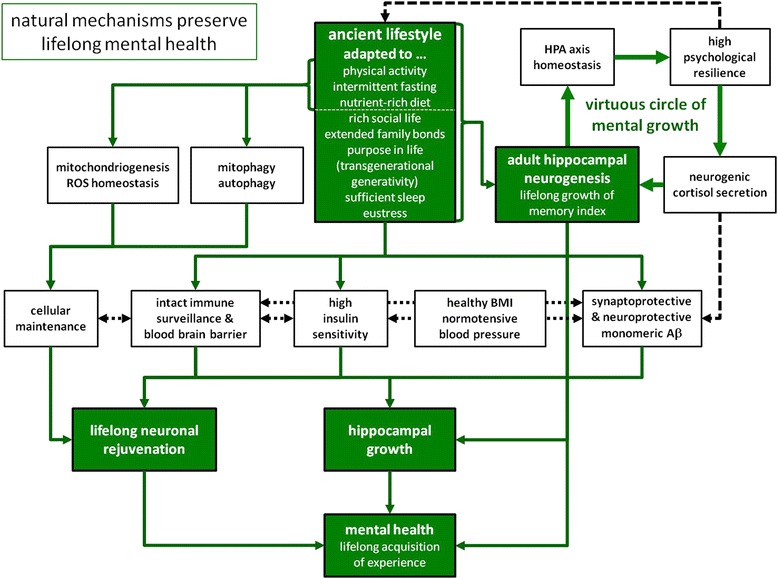
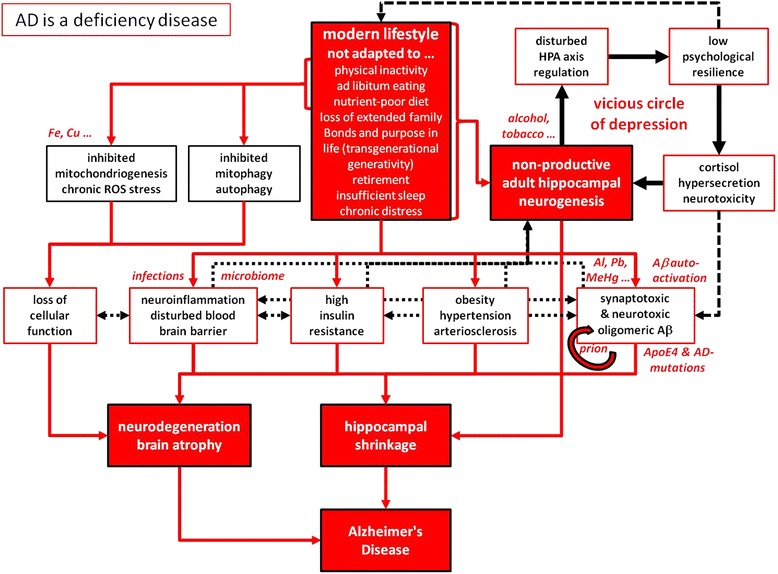
The aim of this review is to propose a Unified Theory of Alzheimer's disease (UTAD) that integrates all key behavioural, genetic and environmental risk factors in a causal chain of etiological and pathogenetic events. It is based on three concepts that emanate from human's evolutionary history: (1) The grandmother-hypothesis (GMH), which explains human longevity due to an evolutionary advantage in reproduction by trans-generational transfer of acquired knowledge. Consequently it is argued that mental health at old-age must be the default pathway of humans' genetic program and not development of AD. (2) Therefore, mechanism like neuronal rejuvenation (NRJ) and adult hippocampal neurogenesis (AHN) that still function efficiently even at old age provide the required lifelong ability to memorize personal experiences important for survival. Cumulative evidence from a multitude of experimental and epidemiological studies indicate that behavioural and environmental risk factors, which impair productive AHN, result in reduced episodic memory performance and in reduced psychological resilience. This leads to avoidance of novelty, dysregulation of the hypothalamic-pituitary-adrenal (HPA)-axis and cortisol hypersecretion, which drives key pathogenic mechanisms of AD like the accumulation and oligomerization of synaptotoxic amyloid beta, chronic neuroinflammation and neuronal insulin resistance. (3) By applying to AHN the law of the minimum (LOM), which defines the basic requirements of biological growth processes, the UTAD explains why and how different lifestyle deficiencies initiate the AD process by impairing AHN and causing dysregulation of the HPA-axis, and how environmental and genetic risk factors such as toxins or ApoE4, respectively, turn into disease accelerators under these unnatural conditions. Consequently, the UTAD provides a rational strategy for the prevention of mental decline and a system-biological approach for the causal treatment of AD, which might even be curative if the systemic intervention is initiated early enough in the disease process. Hence an individualized system-biological treatment of patients with early AD is proposed as a test for the validity of UTAD and outlined in this review.
Overview
The claims and statistics of this paper haven’t been checked yet.
Free: it reads the open-access text and checks the first 5 claims that cite a source we can check. Create a free account to check every claim.
Integrity signals
Registry
Cites
Statistics
Figures
Verification
Claims the paper makes
The claims and statistics of this paper haven’t been checked yet.
Free: it reads the open-access text and checks the first 5 claims that cite a source we can check. Create a free account to check every claim.
Claims other papers make about this one
Each is checked against this paper’s own text: does it say what the citing paper says it does?
The source backs part of the claim, not all of it — or backs it for a different population, condition or comparison.
In the citing paper
“Decades of intensive research on a relatively narrow set of pathogenic processes occurring in the brain and body have produced few effective new drugs or other significant advances in the prevention and treatment of Alzheimer’s disease and related dementias (ADRD).1–3”
From Why the cognitive ‘fountain of youth’ may be upstream: pathways to dementia risk and resilience through social connectedness (2022) · cites this paper as [2]
Experimental — accuracy not yet measuredIn the citing paper
“Neurologists have argued that any successful intervention for ADRD must target multiple pathophysiological processes simultaneously.2”
From Why the cognitive ‘fountain of youth’ may be upstream: pathways to dementia risk and resilience through social connectedness (2022) · cites this paper as [2]
Self-check
Percentages, sums and reported differences re-computed from the paper’s own numbers.
The self-check needs the paper’s full text.
Citations
Cites
4 retracted
Items 201–400 of 644
Screen for Chemical Modulators of Autophagy Reveals Novel Therapeutic Inhibitors of mTORC1 Signaling
Balgi, A. D., Fonseca, B. D., Donohue, E., Tsang, T. C. F., Lajoie, P., Proud, C. G., Nabi, I. R., & Roberge, M. (2009) · PLoS ONE · doi:10.1371/journal.pone.0007124 · Cited by 344 · cited 1×
“Rapamycin treatment was found to activate autophagy by inhibiting mTOR [80], thereby slowing down both aging and cognitive decline of caged mice [81], suggesting that inefficient autophagy as part of the NRJ-program might be a central element of both processes.”
BackgroundMediterranean Diet: From a Healthy Diet to a Sustainable Dietary Pattern
Dernini, S., & Berry, E. M. (2015) · Frontiers in Nutrition · doi:10.3389/fnut.2015.00015 · Cited by 331 · cited 1×
“sumption of olive oil, legumes, unrefined cereals, fruits and nuts, and vegetables, moderate to high consumption of fish, restrained consumption of dairy products, modest red wine consumption, and low consumption of non-fish meat and non-fish meat products [311].”
BackgroundStranahan, A. M., Lee, K., Martin, B., Maudsley, S., Golden, E., Cutler, R. G., & Mattson, M. P. (2009) · Hippocampus · doi:10.1002/hipo.20577 · Cited by 331 · cited 1×
“In this regard it is obvious that exercise and energy restriction show additive effects on AHN [404] as well as neuroplasticity: Both running wheel exercise and daily energy restriction resulted in increased dendritic spine density in hippocampal DG neurons when compared to mice that only run or are only energy restri…”
BackgroundNeuroprotective effects of physical activity on the brain: a closer look at trophic factor signaling
Phillips, C., Baktir, M. A., Srivatsan, M., & Salehi, A. (2014) · Frontiers in Cellular Neuroscience · doi:10.3389/fncel.2014.00170 · Cited by 330 · cited 1×
“trition, a sedentary lifestyle [478], poor sleep quality [479], visceral obesity [480], poor dental hygiene (for review see”
BackgroundHeavy Smoking in Midlife and Long-term Risk of Alzheimer Disease and Vascular Dementia
Rusanen, M., Kivipelto, M., Quesenberry, C. P., Zhou, J., & Whitmer, R. A. (2011) · Archives of Internal Medicine · doi:10.1001/archinternmed.2010.393 · Cited by 329 · cited 1×
“6 fold increased AD risk [500].”
Alzheimer's Aβ42 and Aβ40 peptides form interlaced amyloid fibrils
Gu, L., & Guo, Z. (2013) · Journal of Neurochemistry · doi:10.1111/jnc.12202 · Cited by 327 · cited 1×
“aggregates represent the main form of Aβ contained in AD brain plaques [112].”
BackgroundDepression, antidepressants, and the shrinking hippocampus
Sapolsky, R. M. (2001) · Proceedings of the National Academy of Sciences · doi:10.1073/pnas.231475998 · Cited by 327 · cited 1×
“The proposed model reconciles the three conflicting models originally suggested by Sapolsky to explain the physiological link between hippocampal shrinking and depression [471], and it provides a logical basis for the many different causes of depression besides chronic or severe psychosocial stress.”
MethodAyton, S., Faux, N. G., Bush, A. I., Initiative, A. D. N., Weiner, M. W., Aisen, P., Petersen, R., Jack, C. R., Jagust, W., Trojanowki, J. Q., et al. (2015) · Nature Communications · doi:10.1038/ncomms7760 · Cited by 327
Yau, S. Y., Li, A., Hoo, R. L. C., Ching, Y. P., Christie, B. R., Lee, T. M. C., Xu, A., & So, K.-F. (2014) · Proceedings of the National Academy of Sciences · doi:10.1073/pnas.1415219111 · Cited by 326
Cholinesterase Inhibitors in Mild Cognitive Impairment: A Systematic Review of Randomised Trials
Raschetti, R., Albanese, E., Vanacore, N., & Maggini, M. (2007) · PLoS Medicine · doi:10.1371/journal.pmed.0040338 · Cited by 321 · cited 1×
“[583].”
Fat intake at midlife and cognitive impairment later in life: a population‐based CAIDE study
Eskelinen, M. H., Ngandu, T., Helkala, E., Tuomilehto, J., Nissinen, A., Soininen, H., & Kivipelto, M. (2008) · International Journal of Geriatric Psychiatry · doi:10.1002/gps.1969 · Cited by 321 · cited 1×
“TFAs drive the mortality risk from cardiovascular diseases [509] and increase the rates of cognitive decline in the elderly, again, irrespective of the source [510, 511].”
BackgroundLuchtman, D. W., & Song, C. (2013) · Neuropharmacology · doi:10.1016/j.neuropharm.2012.07.019 · Cited by 319 · cited 1×
“In addition, PUFAs like AA and DHA are essential building blocks for all neuronal tissue, making up roughly 30 % of our brains membrane lipids [300].”
BackgroundMitochondrial alterations in Alzheimer's disease
Baloyannis, S. J. (2006) · Journal of Alzheimer s Disease · doi:10.3233/jad-2006-9204 · Cited by 318 · cited 1×
“Accordingly, accelerated aging [74], memory decline and AD [75] might be caused by a lack of these cues.”
BackgroundGlucocorticoid-Related Molecular Signaling Pathways Regulating Hippocampal Neurogenesis
Anacker, C., Cattaneo, A., Luoni, A., Musaelyan, K., Zunszain, P. A., Milanesi, E., Rybka, J., Berry, A., Cirulli, F., Thuret, S., et al. (2013) · Neuropsychopharmacology · doi:10.1038/npp.2012.253 · Cited by 317
Alavi Naini, S. M., & Soussi-Yanicostas, N. (2015) · Oxidative Medicine and Cellular Longevity · doi:10.1155/2015/151979 · Cited by 316
Connecting Mitochondria, Metabolism, and Stem Cell Fate
Wanet, A., Arnould, T., Najimi, M., & Renard, P. (2015) · Stem Cells and Development · doi:10.1089/scd.2015.0117 · Cited by 313 · cited 1×
“This metabolic adaptation process appears to be common for all types of stem cell systems [347].”
BackgroundShort-term fasting induces profound neuronal autophagy
Alirezaei, M., Kemball, C. C., Flynn, C. T., Wood, M. R., Whitton, J. L., & Kiosses, W. B. (2010) · Autophagy · doi:10.4161/auto.6.6.12376 · Cited by 312
Kreutzmann, J. C., Havekes, R., Abel, T., & Meerlo, P. (2015) · Neuroscience · doi:10.1016/j.neuroscience.2015.04.053 · Cited by 309 · cited 1×
“As outlined above, AHN is particularly sensitive to the consequences of sleep loss [454].”
BackgroundBattista, D., Ferrari, C. C., Gage, F. H., & Pitossi, F. J. (2006) · European Journal of Neuroscience · doi:10.1111/j.1460-9568.2005.04539.x · Cited by 306 · cited 1×
“enhances AHN [628], primarily by upregulating the”
The interplay of neurotransmitters in Alzheimer's disease
Francis, P. T. (2005) · CNS Spectrums · doi:10.1017/s1092852900014164 · Cited by 302 · cited 1×
“Last but not least, (10) ALA increases acetylcholine (ACh) production, known to be reduced in AD brains [578].”
BackgroundThe Hippocampus Plays a Selective Role in the Retrieval of Detailed Contextual Memories
Wiltgen, B. J., Zhou, M., Cai, Y., Balaji, J., Karlsson, M. G., Parivash, S. N., Li, W., & Silva, A. J. (2010) · Current Biology · doi:10.1016/j.cub.2010.06.068 · Cited by 300 · cited 17×
“This is of particular interest, as a recent study elucidated that endogenous ACh-signalling through α7containing nicotinic receptors (α7-nAChRs) promotes maturation and integration of adult-born DG-neurons in the hippocampus.”
BackgroundInfluentialCohen, H., Liu, T., Kozlovsky, N., Kaplan, Z., Zohar, J., & Mathé, A. A. (2012) · Neuropsychopharmacology · doi:10.1038/npp.2011.230 · Cited by 299
Chronic peripheral inflammation, hippocampal neurogenesis, and behavior
Chesnokova, V., Pechnick, R. N., & Wawrowsky, K. (2016) · Brain, Behavior, and Immunity · doi:10.1016/j.bbi.2016.01.017 · Cited by 299 · cited 1×
“[481]) or other causes of chronic infections [482, 483].”
BackgroundWu, A., Ying, Z., & Gomez-Pinilla, F. (2008) · Neuroscience · doi:10.1016/j.neuroscience.2008.05.061 · Cited by 298 · cited 25×
“Aluminium enhances pro-apoptotic signalling, reduces BDNF in the hippocampus and negatively affects spatial learning in animal models.”
BackgroundInfluentialA Manual of Diseases of the Nervous System
Gowers, W. R. (1887) · The Journal of Nervous and Mental Disease · doi:10.1097/00005053-188702000-00011 · Cited by 295
Wiskott, L., Rasch, M. J., & Kempermann, G. (2006) · Hippocampus · doi:10.1002/hipo.20167 · Cited by 294
Western diet is associated with a smaller hippocampus: a longitudinal investigation
Jacka, F. N., Cherbuin, N., Anstey, K. J., Sachdev, P., & Butterworth, P. (2015) · BMC Medicine · doi:10.1186/s12916-015-0461-x · Cited by 293 · cited 1×
“Supporting these observations is the recent finding, that lower intakes of nutrient-dense foods and higher intakes of unhealthy foods, typical for a WeDi, were each found to independently being associated with smaller left hippocampal volume in humans [302].”
ResultPhysical exercise induces FGF-2 and its mRNA in the hippocampus
Gómez-Pinilla, F., Dao, L., & So, V. (1997) · Brain Research · doi:10.1016/s0006-8993(97)00375-2 · Cited by 292 · cited 1×
“duced by physical exercise directly in the hippocampus [243] and was shown to restoring hippocampal function”
BackgroundLipoic acid as a novel treatment for Alzheimer's disease and related dementias
Holmquist, L., Stuchbury, G., Berbaum, K., Muscat, S., Young, S., Hager, K., Engel, J., & Münch, G. (2007) · Pharmacology & Therapeutics · doi:10.1016/j.pharmthera.2006.07.001 · Cited by 288 · cited 2×
“[566]: ALA provides a prime rationale for symptomatic improvement of cholinergic cognitive dysfunction via stimulation of the ACh synthesis pathway.”
BackgroundBDNF promotes differentiation and maturation of adult-born neurons through GABAergic transmission
Waterhouse, E. G., An, J. J., Orefice, L. L., Baydyuk, M., Liao, G.-Y., Zheng, K., Lu, B., & Xu, B. (2012) · The Journal of Neuroscience · doi:10.1523/jneurosci.0709-12.2012 · Cited by 287 · cited 18×
“This is of particular interest, as a recent study elucidated that endogenous ACh-signalling through α7containing nicotinic receptors (α7-nAChRs) promotes maturation and integration of adult-born DG-neurons in the hippocampus.”
InfluentialIncidence of Alzheimer’s disease in a rural community in India: The Indo–US Study
Chandra, V., Pandav, R., Dodge, H. H., Johnston, J. M., Belle, S. H., DeKosky, S. T., & Ganguli, M. (2001) · Neurology · doi:10.1212/wnl.57.6.985 · Cited by 284 · cited 5×
“For instance, it averages in the USA at about 41.6 %, with the highest rate seen in blacks (82.1 %), followed by Hispanics (69.2 %), according to a recent study [333].”
BackgroundInfluentialRyan, L., Nadel, L., Keil, K., Putnam, K., Schnyer, D., Trouard, T., & Moscovitch, M. (2001) · Hippocampus · doi:10.1002/hipo.1086 · Cited by 282 · cited 1×
“the archecortical hippocampus and entorhinal cortex, is the central organ for remembering personal life experiences [108].”
BackgroundEvidence of health benefits of canola oil
Lin, L., Allemekinders, H., Dansby, A., Campbell, L., Durance-Tod, S., Berger, A., & Jones, P. J. (2013) · Nutrition Reviews · doi:10.1111/nure.12033 · Cited by 282 · cited 1×
“moderate use of organically grown canola [284] or flaxseed oil [285], with healthier n-6 PUFA to n-3 PUFA”
BackgroundAge and energy intake interact to modify cell stress pathways and stroke outcome
Arumugam, T. V., Phillips, T. M., Cheng, A., Morrell, C. H., Mattson, M. P., & Wan, R. (2010) · Annals of Neurology · doi:10.1002/ana.21798 · Cited by 281 · cited 1×
“tion of protein chaperones, antioxidant enzymes and by the suppression of neuroinflammation [372–374] or by”
BackgroundFrodl, T., Jäger, M., Smajstrlova, I., Born, C., Bottlender, R., Palladino, T., Reiser, M., Möller, H.-J., & Meisenzahl, E. M. (2008) · Journal of Psychiatry and Neuroscience · doi:10.1139/jpn.0840 · Cited by 279 · cited 1×
“Similarly, a recent human study reported a significant increase in hippocampal volume due to antidepressant treatment [174].”
BackgroundHarris, S. A., & Harris, E. A. (2015) · Journal of Alzheimer's Disease · doi:10.3233/jad-142853 · Cited by 279 · cited 1×
“a breakdown of this critical barrier both a consequence as well as an intermediate link in the causal chain of the pathogenic process [462], for instance by allowing bacterial or viral infections to enter the brain and accelerate disease progression [494, 495].”
BackgroundReduced hippocampal volume correlates with executive dysfunctioning in major depression
Frodl, T., Schaub, A., Banac, S., Charypar, M., Jäger, M., Kümmler, P., Bottlender, R., Zetzsche, T., Born, C., Leinsinger, G., et al. (2006) · Journal of Psychiatry and Neuroscience · doi:10.1139/jpn.0636 · Cited by 278 · cited 1×
“Correspondingly, a chronically distressful life, like chronic problems at work or a chronic disabling disease, divorce, or death of a close family member, was shown to be inversely correlated with hippocampal size, which was linked to cognitive deficits in depressed patients [439].”
BackgroundAmyloid β-protein oligomers and Alzheimer’s disease
Hayden, E. Y., & Teplow, D. B. (2013) · Alzheimer's Research & Therapy · doi:10.1186/alzrt226 · Cited by 276 · cited 1×
“However, a certain degree of oligomerization is likely to occur even at low Aβ concentrations, hence the native state characteristics of the peptide and in which it exerts its multiple functions are difficult to elucidate [114], particularly, as the oligomeric states of Aβ vary [115].”
BackgroundRole of Environmental Contaminants in the Etiology of Alzheimer’s Disease: A Review
Yegambaram, M., Manivannan, B., Beach, T., & Halden, R. (2015) · Current Alzheimer Research · doi:10.2174/1567205012666150204121719 · Cited by 273 · cited 1×
“These neurotoxic effect of widely used chemicals in conventional agriculture argues for the use of organic produced products for the prevention and the treatment of AD [4].”
BackgroundInhibition of GSK3 by lithium, from single molecules to signaling networks
Freland, L., & Beaulieu, J.-M. (2012) · Frontiers in Molecular Neuroscience · doi:10.3389/fnmol.2012.00014 · Cited by 269
Gomes, M. B., & Negrato, C. A. (2014) · Diabetology & Metabolic Syndrome · doi:10.1186/1758-5996-6-80 · Cited by 269 · cited 1×
“As mentioned above, (6) ALA sensitizes the insulin receptor pathway [571], which leads”
BackgroundLiu, J. (2008) · Neurochemical Research · doi:10.1007/s11064-007-9403-0 · Cited by 268 · cited 1×
“AD [574].”
Better Memory and Neural Efficiency in Young Apolipoprotein E 4 Carriers
Mondadori, C. R. A., de Quervain, D. J. F., Buchmann, A., Mustovic, H., Wollmer, M. A., Schmidt, C. F., Boesiger, P., Hock, C., Nitsch, R. M., Papassotiropoulos, A., et al. (2007) · Cerebral Cortex · doi:10.1093/cercor/bhl103 · Cited by 267
The cardiovascular effects of flaxseed and its omega-3 fatty acid, alpha-linolenic acid
Rodriguez-Leyva, D., Bassett, C. M. C., McCullough, R., & Pierce, G. N. (2010) · Canadian Journal of Cardiology · doi:10.1016/s0828-282x(10)70455-4 · Cited by 262 · cited 1×
“moderate use of organically grown canola [284] or flaxseed oil [285], with healthier n-6 PUFA to n-3 PUFA”
BackgroundCattani, D., de Liz Oliveira Cavalli, V. L., Heinz Rieg, C. E., Domingues, J. T., Dal-Cim, T., Tasca, C. I., Mena Barreto Silva, F. R., & Zamoner, A. (2014) · Toxicology · doi:10.1016/j.tox.2014.03.001 · Cited by 262 · cited 1×
“Pesticides: Roundup (a glyphosate-based herbicide) was recently shown to increase the lipidperoxidation, glutamate excitotoxicity and oxidative damage in the hippocampus [520].”
BackgroundMeijer, W. H., van der Klei, I. J., Veenhuis, M., & Kiel, J. A. K. W. (2007) · Autophagy · doi:10.4161/auto.3595 · Cited by 262
Chowanadisai, W., Bauerly, K. A., Tchaparian, E., Wong, A., Cortopassi, G. A., & Rucker, R. B. (2010) · Journal of Biological Chemistry · doi:10.1074/jbc.m109.030130 · Cited by 259 · cited 1×
“Since diseases like AD are associated with mitochondrial dysfunction, PQQ supplementation may be of additional benefit since it efficiently stimulates mitochondrogenesis via activation of both, cAMP response element-binding protein (CREB) and PGC-1α [615].”
BackgroundExercise induces autophagy in peripheral tissues and in the brain
He, C., Sumpter, Jr., & Levine, B. (2012) · Autophagy · doi:10.4161/auto.21327 · Cited by 258 · cited 1×
“Other behavioural cues that inactivate mTOR are, besides physical exercise, which was shown to promote autophagy of defunct organelles and macromolecules in the brain [85], chronic caloric restriction (CCR), which”
BackgroundNokia, M. S., Lensu, S., Ahtiainen, J. P., Johansson, P. P., Koch, L. G., Britton, S. L., & Kainulainen, H. (2016) · The Journal of Physiology · doi:10.1113/jp271552 · Cited by 255 · cited 1×
“In fact, short bouts of even intense physical activity had no positive effect on AHN [214].”
BackgroundTan, M.-S., Yu, J.-T., Tan, C.-C., Wang, H.-F., Meng, X.-F., Wang, C., Jiang, T., Zhu, X.-C., & Tan, L. (2014) · Journal of Alzheimer's Disease · doi:10.3233/jad-140837 · Cited by 253 · cited 1×
“Two recent meta-analyses concluded that treatment with EGb-761 at 240 mg/day over half a year stabilizes or slows decline in cognition, function, behaviour, and global change in cognitive impairment and dementia [601, 602].”
BackgroundMediterranean diet and brain structure in a multiethnic elderly cohort
Gu, Y., Brickman, A. M., Stern, Y., Habeck, C. G., Razlighi, Q. R., Luchsinger, J. A., Manly, J. J., Schupf, N., Mayeux, R., & Scarmeas, N. (2015) · Neurology · doi:10.1212/wnl.0000000000002121 · Cited by 249
Tong, M., Neusner, A., Longato, L., Lawton, M., Wands, J. R., & de la Monte, S. M. (2009) · Journal of Alzheimer’s Disease · doi:10.3233/jad-2009-1115 · Cited by 249
A computational principle for hippocampal learning and neurogenesis
Becker, S. (2005) · Hippocampus · doi:10.1002/hipo.20095 · Cited by 248
Gibson, R. A., Muhlhausler, B., & Makrides, M. (2011) · Maternal & Child Nutrition · doi:10.1111/j.1740-8709.2011.00299.x · Cited by 246 · cited 16×
“Dyall SC. Long-chain omega-3 fatty acids and the brain: a review of the independent and shared effects of EPA, DPA and DHA.”
BackgroundInfluentialPerera, T. D., Dwork, A. J., Keegan, K. A., Thirumangalakudi, L., Lipira, C. M., Joyce, N., Lange, C., Higley, J. D., Rosoklija, G., Hen, R., et al. (2011) · PLoS ONE · doi:10.1371/journal.pone.0017600 · Cited by 244 · cited 1×
“This antidepressant mechanism was identified in rodents and confirmed in non-human primates [173].”
BackgroundZhao, Y., Calon, F., Julien, C., Winkler, J. W., Petasis, N. A., Lukiw, W. J., & Bazan, N. G. (2011) · PLoS ONE · doi:10.1371/journal.pone.0015816 · Cited by 243 · cited 1×
“For example, DHA-derived neuroprotectin D1 (NPD1) induces signalling for homeostatic maintenance of cellular integrity, and is neuroprotective due to its ability to inactivate pro-apoptotic and pro-inflammatory signalling pathways [294, 295].”
BackgroundAutophagy in neurons: a review.
Larsen, K. E., & Sulzer, D. L. (2002) · PubMed · doi:10.14670/hh-17.897 · Cited by 241 · cited 1×
“To this end, the exchange of damaged macromolecules and cellular organelles including mitochondria evolved as an active and highly regulated process [73], requiring behavioural cues to initiate.”
BackgroundSignaling pathways in mitochondrial dysfunction and aging
Mammucari, C., & Rizzuto, R. (2010) · Mechanisms of Ageing and Development · doi:10.1016/j.mad.2010.07.003 · Cited by 239 · cited 1×
“Accordingly, accelerated aging [74], memory decline and AD [75] might be caused by a lack of these cues.”
BackgroundProtein Folding and Aggregation into Amyloid: The Interference by Natural Phenolic Compounds
Stefani, M., & Rigacci, S. (2013) · International Journal of Molecular Sciences · doi:10.3390/ijms140612411 · Cited by 238 · cited 1×
“properties [267, 268].”
Oxytocin stimulates adult neurogenesis even under conditions of stress and elevated glucocorticoids
Leuner, B., Caponiti, J. M., & Gould, E. (2012) · Hippocampus · doi:10.1002/hipo.20947 · Cited by 237 · cited 1×
“Particularly oxytocin is a potent activator of AHN even under stressful situations marked by high cortisol levels [444], and was found to positively modulate the behavioural and physiological responses to stressors [445].”
BackgroundLiu, J. J., Green, P., John Mann, J., Rapoport, S. I., & Sublette, M. E. (2015) · Brain Research · doi:10.1016/j.brainres.2014.11.059 · Cited by 235 · cited 1×
“The resulting serious imbalance of n-6 to n-3 PUFAs drives premature aging, neuroinflammatory processes, depression and AD [289, 290].”
BackgroundSerotonin is required for exercise-induced adult hippocampal neurogenesis
Klempin, F., Beis, D., Mosienko, V., Kempermann, G., Bader, M., & Alenina, N. (2013) · The Journal of Neuroscience · doi:10.1523/jneurosci.5855-12.2013 · Cited by 235 · cited 1×
“direct and acute regulatory role in young adult as well as in aged mice [246].”
BackgroundMc Donald, J. M., Savva, G. M., Brayne, C., Welzel, A. T., Forster, G., Shankar, G. M., Selkoe, D. J., Ince, P. G., & Walsh, D. M. (2010) · Brain · doi:10.1093/brain/awq065 · Cited by 234 · cited 1×
“With the realization that soluble Aβ oligomere distribution correlates better with cognitive decline in AD than the prototypical amyloid plaques [123], the former amyloid cascade hypotheses was replaced by the oligomeric cascade hypothesis [124].”
BackgroundFailure of Neuronal Maturation in Alzheimer Disease Dentate Gyrus
Li, B., Yamamori, H., Tatebayashi, Y., Shafit-Zagardo, B., Tanimukai, H., Chen, S., Iqbal, K., & Grundke-Iqbal, I. (2008) · Journal of Neuropathology & Experimental Neurology · doi:10.1097/nen.0b013e318160c5db · Cited by 234 · cited 1×
“But is this a valid objection? There is general consensus in the field that the generation of fully mature and functional neurons is impaired in AD [623], although both increases, decreases, no changes, and changes dependent on the stage of the disease have been described in AD patients and animal models”
BackgroundYates, L. B., Djoussé, L., Kurth, T., Buring, J. E., & Gaziano, J. M. (2008) · Archives of Internal Medicine · doi:10.1001/archinternmed.2007.77 · Cited by 234
Knight, E. M., Martins, I. V. A., Gümüsgöz, S., Allan, S. M., & Lawrence, C. B. (2014) · Neurobiology of Aging · doi:10.1016/j.neurobiolaging.2014.02.010 · Cited by 232
Age, Alzheimer disease, and brain structure
Raji, C. A., Lopez, O. L., Kuller, L. H., Carmichael, O. T., & Becker, J. T. (2009) · Neurology · doi:10.1212/wnl.0b013e3181c3f293 · Cited by 230
Stress-induced neuroinflammation: mechanisms and new pharmacological targets
Munhoz, C. D., García-Bueno, B., Madrigal, J. L. M., Lepsch, L. B., Scavone, C., & Leza, J. C. (2008) · Brazilian Journal of Medical and Biological Research · doi:10.1590/s0100-879x2008001200001 · Cited by 230 · cited 1×
“chronic stress [476], an amyloid-producing microbiome that might act as seeds for Aβ-oligomerization in the brain”
BackgroundFuture directions in Alzheimer's disease from risk factors to prevention
Imtiaz, B., Tolppanen, A.-M., Kivipelto, M., & Soininen, H. (2014) · Biochemical Pharmacology · doi:10.1016/j.bcp.2014.01.003 · Cited by 229 · cited 1×
“In addition, prevention trials, which rather base their regimen on the correction of more or less arbitrarily selected risk factors than on a complete theory of AD, were so far also limited in their overall success [17, 18].”
BackgroundGowda, U., Mutowo, M. P., Smith, B. J., Wluka, A. E., & Renzaho, A. M. N. (2015) · Nutrition · doi:10.1016/j.nut.2014.06.017 · Cited by 229
Adult Hippocampal Neurogenesis, Fear Generalization, and Stress
Besnard, A., & Sahay, A. (2016) · Neuropsychopharmacology · doi:10.1038/npp.2015.167 · Cited by 228 · cited 1×
“This explains, why a disturbed AHN not only causes the hippocampal archive of indexes that link to episodic neocortical engrams running out of storage capacity, but also, why it causes discrimination errors (interferences) between former and new experiences which leads to an overgeneralization of fear and sustained po…”
BackgroundReversal of cognitive decline: A novel therapeutic program
Bredesen, D. E. (2014) · Aging · doi:10.18632/aging.100690 · Cited by 227 · cited 1×
“This assumption is in line with the results from a recent study conducted by Dale Bredesen where 8 of the 10 patients that represented with stage 1 (3 patients), stage 2 (2 patients) and stage 3 (3 patients) recovered their episodic memory after adhering to a similar therapeutic scheme as it results from the UTAD (see…”
ResultSleep disturbance induces neuroinflammation and impairment of learning and memory
Zhu, B., Dong, Y., Xu, Z., Gompf, H. S., Ward, S. A. P., Xue, Z., Miao, C., Zhang, Y., Chamberlin, N. L., & Xie, Z. (2012) · Neurobiology of Disease · doi:10.1016/j.nbd.2012.06.022 · Cited by 226 · cited 1×
“trition, a sedentary lifestyle [478], poor sleep quality [479], visceral obesity [480], poor dental hygiene (for review see”
BackgroundAge and neuroinflammation: a lifetime of psychoneuroimmune consequences
Godbout, J. P., & Johnson, R. W. (2009) · Immunology and Allergy Clinics of North America · doi:10.1016/j.iac.2009.02.007 · Cited by 224
Obesity and dementia: Adipokines interact with the brain
Arnoldussen, I. A. C., Kiliaan, A. J., & Gustafson, D. R. (2014) · European Neuropsychopharmacology · doi:10.1016/j.euroneuro.2014.03.002 · Cited by 224 · cited 1×
“Taken together, adipokines impact directly and indirectly on key brain functions, which adds central obesity in midlife to the large list of causal risk factors for AD [extensively reviewed in [424] and [425].”
BackgroundAn Antidepressant Decreases CSF Aβ Production in Healthy Individuals and in Transgenic AD Mice
Sheline, Y. I., West, T., Yarasheski, K., Swarm, R., Jasielec, M. S., Fisher, J. R., Ficker, W. D., Yan, P., Xiong, C., Frederiksen, C., et al. (2014) · Science Translational Medicine · doi:10.1126/scitranslmed.3008169 · Cited by 223 · cited 1×
“In another study, an SSRI-type antidepressant significantly reduced Aβ production in transgenic AD mice as well as in healthy humans [550].”
BackgroundLeptin Reduces Pathology and Improves Memory in a Transgenic Mouse Model of Alzheimer's Disease
Greco, S. J., Bryan, K. J., Sarkar, S., Zhu, X., Smith, M. A., Ashford, J. W., Johnston, J. M., Tezapsidis, N., & Casadesus, G. (2010) · Journal of Alzheimer's Disease · doi:10.3233/jad-2010-1308 · Cited by 222 · cited 1×
“brain pathology and to improve memory in transgenic mouse models of AD [420].”
BackgroundRole of Fructose-Containing Sugars in the Epidemics of Obesity and Metabolic Syndrome
Stanhope, K. L. (2012) · Annual Review of Medicine · doi:10.1146/annurev-med-042010-113026 · Cited by 220 · cited 1×
“rarely occurs [406, 407].”
Schrauzer, G. N., & Shrestha, K. P. (1990) · Biological Trace Element Research · doi:10.1007/bf02990271 · Cited by 217 · cited 1×
“In humans, epidemiological studies indicate an inverse correlation between lithium concentration in drinking water and mood, depression and suicide rates [354], amongst other psychiatric conditions [355].”
BackgroundDocosahexaenoic Acid and Adult Memory: A Systematic Review and Meta-Analysis
Yurko-Mauro, K., Alexander, D. D., & Van Elswyk, M. E. (2015) · PLOS ONE · doi:10.1371/journal.pone.0120391 · Cited by 216 · cited 1×
“In contrast, supplementation of about 1 g per day of a mixture with n-3 PUFAs DHA and EPA significantly improved episodic memory outcomes in older adults with mild memory complaints [303].”
BackgroundLabrousse, V. F., Nadjar, A., Joffre, C., Costes, L., Aubert, A., Grégoire, S., Bretillon, L., & Layé, S. (2012) · PLoS ONE · doi:10.1371/journal.pone.0036861 · Cited by 215
Yucel, K., Taylor, V. H., McKinnon, M. C., MacDonald, K., Alda, M., Young, L. T., & MacQueen, G. M. (2008) · Neuropsychopharmacology · doi:10.1038/sj.npp.1301405 · Cited by 213 · cited 1×
“apparent even after a brief treatment period of about 4 weeks on average [357].”
BackgroundMicrodose Lithium Treatment Stabilized Cognitive Impairment in Patients with Alzheimer’s Disease
Andrade Nunes, M., Araujo Viel, T., & Sousa Buck, H. (2013) · Current Alzheimer Research · doi:10.2174/1567205011310010014 · Cited by 212 · cited 1×
“At a more advanced stage of AD, microdose treatment with only 300 μg lithium administered once daily stabilized the AD patients during the complete evaluation phase of 15 months [365].”
BackgroundCalorie restriction: Decelerating mTOR-driven aging from cells to organisms (including humans)
Blagosklonny, M. V. (2010) · Cell Cycle · doi:10.4161/cc.9.4.10766 · Cited by 211 · cited 1×
“and even to rhesus monkeys [87], thereby decelerating mTOR-driven aging [88].”
BackgroundCunningham, C., & Hennessy, E. (2015) · Alzheimer's Research & Therapy · doi:10.1186/s13195-015-0117-2 · Cited by 211 · cited 1×
“Starting with age as the main cause and primary risk factor, AD is being explained by the oligomeric amyloid beta (Aβ) cascade hypothesis, which includes hyperphosphorylated and dysregulated tau [1], the intoxication hypothesis [2–4], chronic infections [5–7], microbiome composition [8], neuronal insulin resistance [9…”
BackgroundKotiadis, V. N., Duchen, M. R., & Osellame, L. D. (2014) · Biochimica et Biophysica Acta (BBA) - General Subjects · doi:10.1016/j.bbagen.2013.10.041 · Cited by 210 · cited 1×
“Mitochondria sustain cellular bioenergetic homeostasis by playing key roles in a broad range of core cellular functions, including energy production, metabolic and calcium signalling, and in a number of biosynthetic pathways [69].”
BackgroundIntermittent fasting attenuates lipopolysaccharide-induced neuroinflammation and memory impairment.
Vasconcelos, A. R., Yshii, L. M., Viel, T. A., Buck, H. S., Mattson, M. P., Scavone, C., & Kawamoto, E. M. (2014) · Journal of Neuroinflammation · doi:10.1186/1742-2094-11-85 · Cited by 210 · cited 1×
“tion of protein chaperones, antioxidant enzymes and by the suppression of neuroinflammation [372–374] or by”
BackgroundSleep Restriction Impairs Blood–Brain Barrier Function
He, J., Hsuchou, H., He, Y., Kastin, A. J., Wang, Y., & Pan, W. (2014) · The Journal of Neuroscience · doi:10.1523/jneurosci.2111-14.2014 · Cited by 208 · cited 1×
“Indeed, sleep restriction in general [463] and REM sleep restriction in particular was found to increase BBB permeability, but even brief periods of deep sleep rapidly and effectively restored even severe alterations of BBB function [464].”
BackgroundDu, X., & Pang, T. Y. (2015) · Frontiers in Psychiatry · doi:10.3389/fpsyt.2015.00032 · Cited by 205
Motard-Bélanger, A., Charest, A., Grenier, G., Paquin, P., Chouinard, Y., Lemieux, S., Couture, P., & Lamarche, B. (2008) · The American Journal of Clinical Nutrition · doi:10.1093/ajcn/87.3.593 · Cited by 204 · cited 1×
“Both sources were shown to equally efficiently increase low density lipoprotein (LDL)-cholesterol [507] and cause negative health effects [508].”
BackgroundD-beta-hydroxybutyrate extends lifespan in C. elegans
Edwards, C., Canfield, J., Copes, N., Rehan, M., Lipps, D., & Bradshaw, P. C. (2014) · Aging · doi:10.18632/aging.100683 · Cited by 203
Østergaard, S. D., Mukherjee, S., Sharp, S. J., Proitsi, P., Lotta, L. A., Day, F., Perry, J. R. B., Boehme, K. L., Walter, S., Kauwe, J. S., et al. (2015) · PLOS Medicine · doi:10.1371/journal.pmed.1001841 · Cited by 203 · cited 1×
“for developing AD [261].”
Moon, H.-S., Dincer, F., & Mantzoros, C. S. (2013) · Metabolism · doi:10.1016/j.metabol.2013.04.007 · Cited by 203
Delaying Brain Mitochondrial Decay and Aging with Mitochondrial Antioxidants and Metabolites
LIU, J., ATAMNA, H., KURATSUNE, H., & AMES, B. N. (2002) · Annals of the New York Academy of Sciences · doi:10.1111/j.1749-6632.2002.tb02090.x · Cited by 203 · cited 1×
“For instance, ALA was shown to reduce glutamate- and oxidant-induced cell death by decreasing oxidative damage, increasing antioxidant defence and improving mitochondrial function [569].”
BackgroundPharmacogenetic analysis of lithium-induced delayed aging in Caenorhabditis elegans
McColl, G., Killilea, D. W., Hubbard, A. E., Vantipalli, M. C., Melov, S., & Lithgow, G. J. (2008) · Journal of Biological Chemistry · doi:10.1074/jbc.m705028200 · Cited by 202 · cited 1×
“elegans [367], possibly by means of mitochondrial reju-”
BackgroundNutritional Importance of Pyrroloquinoline Quinone
Killgore, J., Smidt, C., Duich, L., Romero-Chapman, N., Tinker, D., Reiser, K., Melko, M., Hyde, D., & Rucker, R. B. (1989) · Science · doi:10.1126/science.2549636 · Cited by 202 · cited 1×
“For instance, mice deprived of PQQ by a chemically defined diet show functional defects in connective tissue metabolism, are growth retarded and infertile [607], which suggests that PQQ plays a fundamental role as a growth factor.”
BackgroundA new redox-cofactor vitamin for mammals
Kasahara, T., & Kato, T. (2003) · Nature · doi:10.1038/422832a · Cited by 201 · cited 2×
“Due to its nutritional importance, its inherent free-radical scavenging and redox modulator properties, and its coenzyme function in mammalian tissue [609], PQQ was proposed as a potential new B-vitamin [610].”
BackgroundFreire, C., Ramos, R., Lopez-Espinosa, M.-J., Díez, S., Vioque, J., Ballester, F., & Fernández, M.-F. (2010) · Environmental Research · doi:10.1016/j.envres.2009.10.005 · Cited by 201 · cited 1×
“associated with delay in cognitive development [528] and AD [529].”
BackgroundAnnweiler, C., Rolland, Y., Schott, A. M., Blain, H., Vellas, B., Herrmann, F. R., & Beauchet, O. (2012) · The Journals of Gerontology Series A: Biological Sciences and Medical Sciences · doi:10.1093/gerona/gls107 · Cited by 200
Joo, E. Y., Kim, H., Suh, S., & Hong, S. B. (2014) · Sleep · doi:10.5665/sleep.3836 · Cited by 199
Fernando, W. M. A. D. B., Martins, I. J., Goozee, K. G., Brennan, C. S., Jayasena, V., & Martins, R. N. (2015) · British Journal of Nutrition · doi:10.1017/s0007114515001452 · Cited by 198 · cited 1×
“The intake of coconut oil as a healthy source of MCTGs has additional positive effects on neuronal insulin resistance, neuroinflammation as well as Aβ-toxicity, improves the LDL/HDL-cholesterol quotient by increasing HDL, and ameliorates several others key progression factors of AD [408].”
BackgroundHippocampal Head Size Associated with Verbal Memory Performance in Nondemented Elderly
Hackert, V. H., den Heijer, T., Oudkerk, M., Koudstaal, P. J., Hofman, A., & Breteler, M. M. B. (2002) · NeuroImage · doi:10.1006/nimg.2002.1248 · Cited by 198 · cited 1×
“This is a significant finding as cells in the anterior hippocampus mediates acquisition of spatial memory as well as verbal memory performance [215] and is more prone to age-related atrophy compared with the posterior hippocampus [216].”
BackgroundAndrogen Deprivation Therapy and Future Alzheimer’s Disease Risk
Nead, K. T., Gaskin, G., Chester, C., Swisher-McClure, S., Dudley, J. T., Leeper, N. J., & Shah, N. H. (2016) · Journal of Clinical Oncology · doi:10.1200/jco.2015.63.6266 · Cited by 198 · cited 1×
“bled the risk of developing AD [240].”
α-Lipoic acid as a new treatment option for Alzheimer’s disease — a 48 months follow-up analysis
Häger, K., Kenklies, M., McAfoose, J., Engel, J., & Münch, G. W. (2007) · Springer eBooks · doi:10.1007/978-3-211-73574-9_24 · Cited by 198 · cited 1×
“6 points/year) [586].”
Impact of the Baltimore Experience Corps Trial on cortical and hippocampal volumes
Carlson, M. C., Kuo, J. H., Chuang, Y., Varma, V. R., Harris, G., Albert, M. S., Erickson, K. I., Kramer, A. F., Parisi, J. M., Xue, Q., et al. (2015) · Alzheimer's & Dementia · doi:10.1016/j.jalz.2014.12.005 · Cited by 197 · cited 1×
“6 % increase in brain volumes [434].”
Dietary niacin and the risk of incident Alzheimer’s disease and of cognitive decline
Morris, M. C. (2004) · Journal of Neurology, Neurosurgery & Psychiatry · doi:10.1136/jnnp.2003.025858 · Cited by 196 · cited 1×
“complex vitamins [315], vitamin B1 [316, 317], B3 [318, 319], B6, B9 and B12 (see below), C (for a comprehen-”
18F-FDG PET and Perfusion SPECT in the Diagnosis of Alzheimer and Lewy Body Dementias
O’Brien, J. T., Firbank, M. J., Davison, C., Barnett, N., Bamford, C., Donaldson, C., Olsen, K., Herholz, K., Williams, D., & Lloyd, J. (2014) · Journal of Nuclear Medicine · doi:10.2967/jnumed.114.143347 · Cited by 192
Adult neurogenesis modifies excitability of the dentate gyrus
Ikrar, T., Guo, N., He, K., Besnard, A., Levinson, S., Hill, A., Lee, H.-K., Hen, R., Xu, X., & Sahay, A. (2013) · Frontiers in Neural Circuits · doi:10.3389/fncir.2013.00204 · Cited by 192 · cited 1×
“cuitry [156].”
Reduced Hippocampal Volume in Healthy Young ApoE4 Carriers: An MRI Study
O'Dwyer, L., Lamberton, F., Matura, S., Tanner, C., Scheibe, M., Miller, J., Rujescu, D., Prvulovic, D., & Hampel, H. (2012) · PLoS ONE · doi:10.1371/journal.pone.0048895 · Cited by 192 · cited 1×
“young, healthy humans [53], albeit other studies failed to provide evidence for such a benefit [54].”
ResultThe cortisol awakening response and major depression: examining the evidence
Dedovic, K., & Ngiam, J. (2015) · Neuropsychiatric Disease and Treatment · doi:10.2147/ndt.s62289 · Cited by 191 · cited 1×
““neuroticism” and introversion, are associated with HPA axis dysregulation [442, 443].”
BackgroundChew, E. Y., Clemons, T. E., Agrón, E., Launer, L. J., Grodstein, F., & Bernstein, P. S. (2015) · JAMA · doi:10.1001/jama.2015.9677 · Cited by 191 · cited 20×
“Another reason for the increase of n-6 PUFAs in our modern diet results from the intense consumption of meat and high fat milk products.”
BackgroundInfluentialThe use of melatonin in Alzheimer's disease.
Cardinali, D. P., Brusco, L. I., Liberczuk, C., & Furio, A. M. (2002) · PubMed · Cited by 189
Neuroprotection in Diet-Induced Ketotic Rat Brain after Focal Ischemia
Puchowicz, M. A., Zechel, J. L., Valerio, J., Emancipator, D. S., Xu, K., Pundik, S., LaManna, J. C., & Lust, W. D. (2008) · Journal of Cerebral Blood Flow & Metabolism · doi:10.1038/jcbfm.2008.79 · Cited by 188 · cited 1×
“Furthermore, βOHBinduced upregulation of hypoxia inducible factor-1α, a primary constituent associated with hypoxia-induced angiogenesis and a regulator of neuroprotective responses, leads to a reduction in neuronal loss in stroke models [392].”
BackgroundGlucose Dehydrogenase of Bacterium anitratum: an Enzyme with a Novel Prosthetic Group
Hauge, J. G. (1964) · Journal of Biological Chemistry · doi:10.1016/s0021-9258(18)91183-x · Cited by 186
Brain‐derived neurotrophic factor mediates an excitoprotective effect of dietary restriction in mice
Duan, W., Guo, Z., & Mattson, M. P. (2001) · Journal of Neurochemistry · doi:10.1046/j.1471-4159.2001.00071.x · Cited by 186 · cited 1×
“BDNF also protects DG-neurons against excitotoxicity, energy deprivation and oxidative stress [380, 381].”
BackgroundGinkgo biloba Extract in Alzheimer’s Disease: From Action Mechanisms to Medical Practice
Shi, C., Liu, J., Wu, F., & Yew, D. (2010) · International Journal of Molecular Sciences · doi:10.3390/ijms11010107 · Cited by 186 · cited 1×
“Each of its constituents has different effects on the pathological mechanisms of AD (for review see [591]): In addition to the two effects mentioned above, (3) EGb-761 is able to reduce Aβ42-induced cell apoptosis [592], (4) Aβtoxicity [593] and even (5) Aβ-production [594]; (6) EGbs positively modulate tau-metabolism…”
BackgroundSelenium and Alzheimer's Disease: A Systematic Review
Loef, M., Schrauzer, G. N., & Walach, H. (2011) · Journal of Alzheimer's Disease · doi:10.3233/jad-2011-110414 · Cited by 181 · cited 1×
“Selenium deficiency plays an important role in AD [342, 343], because selenium-dependent enzymes (sele-”
BackgroundMelatonin and brain inflammaging
Hardeland, R., Cardinali, D. P., Brown, G. M., & Pandi-Perumal, S. R. (2015) · Progress in Neurobiology · doi:10.1016/j.pneurobio.2015.02.001 · Cited by 181 · cited 1×
“Melatonin was found to be a potent inhibitor of neuroinflammation [457].”
BackgroundIncreased Neurofibrillary Tangles in Patients With Alzheimer Disease With Comorbid Depression
Rapp, M. A., Schnaider-Beeri, M., Purohit, D. P., Perl, D. P., Haroutunian, V., & Sano, M. (2008) · The American Journal of Geriatric Psychiatry · doi:10.1097/jgp.0b013e31816029ec · Cited by 178 · cited 1×
“pathology, such as increased neurofibrillary tangle load [185] and faster rate of cognitive decline [186].”
BackgroundPosttraining Ablation of Adult-Generated Neurons Degrades Previously Acquired Memories
Arruda-Carvalho, M., Sakaguchi, M., Akers, K. G., Josselyn, S. A., & Frankland, P. W. (2011) · The Journal of Neuroscience · doi:10.1523/jneurosci.3432-11.2011 · Cited by 178 · cited 1×
“Hence, we remember episodes of our life by the spatiotemporal context stored by the new neurons generated by AHN [144].”
BackgroundBeef lipids in relation to animal breed and nutrition in Argentina
García, P. T., Pensel, N. A., Sancho, A. M., Latimori, N. J., Kloster, A. M., Amigone, M. A., & Casal, J. J. (2007) · Meat Science · doi:10.1016/j.meatsci.2007.10.019 · Cited by 177 · cited 1×
“impacts the n-6 PUFA to n-3 PUFA ratio in their products [286, 287].”
BackgroundLi, S., Jin, M., Zhang, D., Yang, T., Koeglsperger, T., Fu, H., & Selkoe, D. J. (2013) · Neuron · doi:10.1016/j.neuron.2012.12.040 · Cited by 177 · cited 3×
“Prolonged enrichment was even found to prevent LTP inhibition by synaptotoxic Aβ-oligomers [153].”
BackgroundInfluentialThe role of zinc in neurodegenerative inflammatory pathways in depression
Szewczyk, B., Kubera, M., & Nowak, G. (2011) · Progress in Neuro-Psychopharmacology and Biological Psychiatry · doi:10.1016/j.pnpbp.2010.02.010 · Cited by 176 · cited 1×
“In preclinical research, the antidepressant activity of zinc was observed in the majority of rodent models of depression and revealed a causative role for zinc deficiency in the induction of depressivelike symptoms, the reduction of neurogenesis and neuronal survival or impaired learning and memory ability (for review…”
BackgroundAdult neurogenesis: mechanisms and functional significance
Braun, S. M. G., & Jessberger, S. (2014) · Development · doi:10.1242/dev.104596 · Cited by 176 · cited 1×
“Since its discovery in animals and particularly in humans, numerous studies revealed that AHN is a highly regulated phenomenon, which is under the control of local factors (the neurogenic niche), cytokines, growth factors and many hormones [198, 199], most of which are directly or indirectly controlled by behavioural…”
BackgroundMicrobiome-generated amyloid and potential impact on amyloidogenesis in Alzheimer's disease (AD).
Zhao, Y., & Lukiw, W. J. (2015) · PubMed · Cited by 175
Selenium Health Benefit Values as Seafood Safety Criteria
Ralston, N. V. C. (2008) · EcoHealth · doi:10.1007/s10393-008-0202-0 · Cited by 175 · cited 2×
“Dietary selenium intake is inversely related to vulnerability to methylmercury (MeHg) toxicity, which explains why maternal ingestion of foods that contain MeHg in molar excess of Se has adverse child outcomes, whereas eating MeHg-containing but selenium-rich ocean fish results in improved child IQs [526].”
BackgroundLongevity, aging and rapamycin
Ehninger, D., Neff, F., & Xie, K. (2014) · Cellular and Molecular Life Sciences · doi:10.1007/s00018-014-1677-1 · Cited by 175 · cited 1×
“Rapamycin treatment was found to activate autophagy by inhibiting mTOR [80], thereby slowing down both aging and cognitive decline of caged mice [81], suggesting that inefficient autophagy as part of the NRJ-program might be a central element of both processes.”
BackgroundChakrabarti, P., Kim, J. Y., Singh, M., Shin, Y.-K., Kim, J., Kumbrink, J., Wu, Y., Lee, M.-J., Kirsch, K. H., Fried, S. K., et al. (2013) · Molecular and Cellular Biology · doi:10.1128/mcb.01584-12 · Cited by 175
Lithium Improves Hippocampal Neurogenesis, Neuropathology and Cognitive Functions in APP Mutant Mice
Fiorentini, A., Rosi, M. C., Grossi, C., Luccarini, I., & Casamenti, F. (2010) · PLoS ONE · doi:10.1371/journal.pone.0014382 · Cited by 175 · cited 1×
“Likewise, lithium treatment was shown to improve AHN, neuropathology and cognitive functions in a mouse model of AD [362].”
BackgroundSuccessful brain aging: plasticity, environmental enrichment, and lifestyle
Mora, F. (2013) · Dialogues in Clinical Neuroscience · doi:10.31887/dcns.2013.15.1/fmora · Cited by 174 · cited 1×
“This is an indication that the principles of long-term brain health as they developed during evolution still are valid today [396].”
BackgroundThomas, J., Thomas, C. J., Radcliffe, J., & Itsiopoulos, C. (2015) · BioMed Research International · doi:10.1155/2015/172801 · Cited by 173 · cited 2×
“DHA depletion has been shown to result in decreased BDNF levels [513], in impeded productive AHN [514] and in neuroinflammation [308].”
BackgroundMicrobial-generated amyloids and Alzheimer's disease (AD)
Hill, J. M., & Lukiw, W. J. (2015) · Frontiers in Aging Neuroscience · doi:10.3389/fnagi.2015.00009 · Cited by 173 · cited 1×
“Starting with age as the main cause and primary risk factor, AD is being explained by the oligomeric amyloid beta (Aβ) cascade hypothesis, which includes hyperphosphorylated and dysregulated tau [1], the intoxication hypothesis [2–4], chronic infections [5–7], microbiome composition [8], neuronal insulin resistance [9…”
BackgroundRequirement of adult-born neurons for hippocampus-dependent learning
Marín-Burgin, A., & Schinder, A. F. (2012) · Behavioural Brain Research · doi:10.1016/j.bbr.2011.07.001 · Cited by 172 · cited 1×
“learning and memory retrieval [168], new neurons generated by AHN also regulate mood and in particular psychological resilience (resistance to stress) by con-”
BackgroundPerry, E. K., Johnson, M., Ekonomou, A., Perry, R. H., Ballard, C., & Attems, J. (2012) · Neurobiology of Disease · doi:10.1016/j.nbd.2012.03.033 · Cited by 169 · cited 1×
“As was shown, the resulting increase in proliferation of neural progenitor cells (NPCs) does neither increase the number of migratory neuroblasts nor that of differentiated neurons [626].”
BackgroundAmyloid-β signals through tau to drive ectopic neuronal cell cycle re-entry in Alzheimer's disease
Seward, M. E., Swanson, E., Norambuena, A., Reimann, A., Cochran, J. N., Li, R., Roberson, E. D., & Bloom, G. S. (2013) · Journal of Cell Science · doi:10.1242/jcs.1125880 · Cited by 169
Popp, J., Wolfsgruber, S., Heuser, I., Peters, O., Hüll, M., Schröder, J., Möller, H.-J., Lewczuk, P., Schneider, A., Jahn, H., et al. (2015) · Neurobiology of Aging · doi:10.1016/j.neurobiolaging.2014.10.031 · Cited by 169 · cited 2×
“2, HPA-activation and therefore cortisol hypersecretion, a biomarker of MCI and early AD [178], leads to Aβ overproduction.”
BackgroundHu, Y., Xu, P., Pigino, G., Brady, S. T., Larson, J., & Lazarov, O. (2010) · The FASEB Journal · doi:10.1096/fj.09-136945 · Cited by 168 · cited 1×
“(natural) environment rescues impaired AHN in transgenic mice harbouring a familial AD-linked transgene [428].”
BackgroundObesity, adipokines and neuroinflammation
Aguilar-Valles, A., Inoue, W., Rummel, C., & Luheshi, G. N. (2015) · Neuropharmacology · doi:10.1016/j.neuropharm.2014.12.023 · Cited by 168 · cited 1×
“trition, a sedentary lifestyle [478], poor sleep quality [479], visceral obesity [480], poor dental hygiene (for review see”
BackgroundShi, C., Zhao, L., Zhu, B., Li, Q., Yew, D. T. W., Yao, Z., & Xu, J. (2009) · Chemico-Biological Interactions · doi:10.1016/j.cbi.2009.05.010 · Cited by 168 · cited 1×
“Each of its constituents has different effects on the pathological mechanisms of AD (for review see [591]): In addition to the two effects mentioned above, (3) EGb-761 is able to reduce Aβ42-induced cell apoptosis [592], (4) Aβtoxicity [593] and even (5) Aβ-production [594]; (6) EGbs positively modulate tau-metabolism…”
BackgroundSchreibelt, G., Musters, R. J. P., Reijerkerk, A., de Groot, L. R., van der Pol, S. M. A., Hendrikx, E. M. L., Döpp, E. D., Dijkstra, C. D., Drukarch, B., & de Vries, H. E. (2006) · The Journal of Immunology · doi:10.4049/jimmunol.177.4.2630 · Cited by 167 · cited 17×
“Indeed, sleep restriction in general [463] and REM sleep restriction in particular was found to increase BBB permeability, but even brief periods of deep sleep rapidly and effectively restored even severe alterations of BBB function [464].”
BackgroundInfluentialErythropoietin enhances hippocampal long-term potentiation and memory
Adamcio, B., Sargin, D., Stradomska, A., Medrihan, L., Gertler, C., Theis, F., Zhang, M., Müller, M., Hassouna, I., Hannke, K., et al. (2008) · BMC Biology · doi:10.1186/1741-7007-6-37 · Cited by 167 · cited 1×
“EPO was found to enhance hippocampusdependent memory by modulating plasticity, synaptic connectivity and activity of memory-related neuronal networks [232].”
BackgroundDurup, D., Jørgensen, H. L., Christensen, J., Tjønneland, A., Olsen, A., Halkjær, J., Lind, B., Heegaard, A.-M., & Schwarz, P. (2015) · The Journal of Clinical Endocrinology & Metabolism · doi:10.1210/jc.2014-4551 · Cited by 167 · cited 1×
“Furthermore, a recent study provided evidence that serum 25-Hydroxyvitamin D levels of 70 nmol/L were associated with the lowest cardiovascular disease mortality risk [341], close to the values that showed an over two-fold reduced brain atrophy (>50 nmol/L), when compared to insufficient vitamin D levels [339].”
BackgroundThe Apolipoprotein E Antagonistic Pleiotropy Hypothesis: Review and Recommendations
Tuminello, E. R., & Han, S. D. (2011) · International Journal of Alzheimer’s Disease · doi:10.4061/2011/726197 · Cited by 166 · cited 1×
“For instance it is assumed that alleles that are detrimental to health in older age might persist in populations because they confer, by means of antagonistic pleiotropy, some benefit to younger individuals [51].”
BackgroundEffects of Environmental Enrichment on Spatial Memory and Neurochemistry in Middle-Aged Mice
Frick, K. M., Stearns, N. A., Pan, J.-Y., & Berger-Sweeney, J. (2003) · Learning & Memory · doi:10.1101/lm.50703 · Cited by 166 · cited 1×
“iety and depression-like behaviours [40], and show improved memory performance compared to animals maintained under standard housing condition [41].”
Backgroundvan der Knaap, L. J., Riese, H., Hudziak, J. J., Verbiest, M. M. P. J., Verhulst, F. C., Oldehinkel, A. J., & van Oort, F. V. A. (2014) · Translational Psychiatry · doi:10.1038/tp.2014.22 · Cited by 165 · cited 1×
“) [437].”
Zhou, Y.-H., Yu, J.-P., Liu, Y.-F., Teng, X.-J., Ming, M., Lv, P., An, P., Liu, S.-Q., & Yu, H.-G. (2006) · Mediators of Inflammation · doi:10.1155/mi/2006/92642 · Cited by 165
Viviani, B., Bartesaghi, S., Corsini, E., Villa, P., Ghezzi, P., Garau, A., Galli, C. L., & Marinovich, M. (2005) · Journal of Neurochemistry · doi:10.1111/j.1471-4159.2005.03033.x · Cited by 163
Mutter, J., Curth, A., Naumann, J., Deth, R., & Walach, H. (2010) · Journal of Alzheimer's Disease · doi:10.3233/jad-2010-100705 · Cited by 162 · cited 1×
“associated with delay in cognitive development [528] and AD [529].”
Neurogenesis in Alzheimer’s disease: Neurogenesis in AD
Rodríguez, J. J., & Verkhratsky, A. (2011) · Journal of Anatomy · doi:10.1111/j.1469-7580.2011.01343.x · Cited by 161 · cited 2×
“Both mechanisms, NRJ [67] and AHN [68] appear to be efficiently functioning even at high age, which is in line with GMH (see below), but require certain environmental cues and depend on our lifestyle choices, and if defunct, both are also closely and causally linked to the aetiology of AD, as I will also show below.”
BackgroundHarris, C., Chowanadisai, W., Mishchuk, D. O., Satre, M. A., Slupsky, C. M., & Rucker, R. B. (2013) · The Journal of Nutritional Biochemistry · doi:10.1016/j.jnutbio.2013.07.008 · Cited by 161 · cited 1×
“human subjects [616].”
Intermittent fasting attenuates inflammasome activity in ischemic stroke
Fann, D. Y., Santro, T., Manzanero, S., Widiapradja, A., Cheng, Y., Lee, S.-Y., Chunduri, P., Jo, D., Stranahan, A. M., Mattson, M. P., et al. (2014) · Experimental Neurology · doi:10.1016/j.expneurol.2014.04.017 · Cited by 161 · cited 1×
“tion of protein chaperones, antioxidant enzymes and by the suppression of neuroinflammation [372–374] or by”
BackgroundTaffe, M. A., Kotzebue, R. W., Crean, R. D., Crawford, E. F., Edwards, S., & Mandyam, C. D. (2010) · Proceedings of the National Academy of Sciences · doi:10.1073/pnas.0912810107 · Cited by 159 · cited 1×
“discontinuation [503].”
Relationship Between Tau Pathology and Neuroinflammation in Alzheimer's Disease
Metcalfe, M. J., & Figueiredo‐Pereira, M. E. (2010) · Mount Sinai Journal of Medicine: A Journal of Translational and Personalized Medicine · doi:10.1002/msj.20163 · Cited by 158 · cited 1×
“Neuronal damage and prionic aggregates aggravate neuroinflammation, which in turn enhances neurodegeneration [498].”
BackgroundZinc and Neurogenesis: Making New Neurons from Development to Adulthood
Levenson, C. W., & Morris, D. (2011) · Advances in Nutrition · doi:10.3945/an.110.000174 · Cited by 158 · cited 1×
“Zinc is another main trace element required for AHN [348, 349].”
BackgroundDecreased amyloid-β and increased neuronal hyperactivity by immunotherapy in Alzheimer's models
Busche, M. A., Grienberger, C., Keskin, A. D., Song, B., Neumann, U., Staufenbiel, M., Förstl, H., & Konnerth, A. (2015) · Nature Neuroscience · doi:10.1038/nn.4163 · Cited by 158 · cited 1×
“This caveat might explain why in experimental animal models for AD, the removal of Aβ by different antibodies against Aβ, which have also used in study settings for human treatment, was not only ineffective at repairing neuronal dysfunction, but also caused detrimental cortical hyperactivity [134].”
BackgroundImpaired Aβ clearance: a potential link between atherosclerosis and Alzheimer’s disease
Gupta, A., & Iadecola, C. (2015) · Frontiers in Aging Neuroscience · doi:10.3389/fnagi.2015.00115 · Cited by 157 · cited 1×
“the brain [492], whereas Aβ tends to accumulate in the blood vessel walls, leading to oxidative stress,”
BackgroundOkamoto, M., Hojo, Y., Inoue, K., Matsui, T., Kawato, S., McEwen, B. S., & Soya, H. (2012) · Proceedings of the National Academy of Sciences · doi:10.1073/pnas.1210023109 · Cited by 157 · cited 1×
“In addition to BDNF, NGF, GDNF, EPO and VEGF, mentioned above, physical exercise was found to stimulate AHN through dihydrotestosterone [238], which, not surprisingly, mediates the well-known antidepressant effects of physical activity [239].”
BackgroundTrans unsaturated fatty acids in natural products and processed foods
Sommerfeld, M. (1983) · Progress in Lipid Research · doi:10.1016/0163-7827(83)90010-3 · Cited by 155 · cited 1×
“Trans fatty acids (TFAs), either from processed food (fried products and many fast-food sources) or from whole-fat dairy and ruminant meat products are implicated in AD [506].”
BackgroundPhysical activity and the elderly
Hollmann, W., Strüder, H. K., Tagarakis, C. V. M., & King, G. (2007) · European Journal of Cardiovascular Prevention & Rehabilitation · doi:10.1097/hjr.0b013e32828622f9 · Cited by 155 · cited 1×
“Rather, all these hormonal factors are positively regulated by exercise, explaining the accelerated brain aging is rather caused by a sedentary lifestyle in the elderly [222], and therefore appears to have little to do with aging per se.”
BackgroundHölscher, C. (2011) · Biochemical Society Transactions · doi:10.1042/bst0390891 · Cited by 154 · cited 1×
“Starting with age as the main cause and primary risk factor, AD is being explained by the oligomeric amyloid beta (Aβ) cascade hypothesis, which includes hyperphosphorylated and dysregulated tau [1], the intoxication hypothesis [2–4], chronic infections [5–7], microbiome composition [8], neuronal insulin resistance [9…”
BackgroundLin, T.-W., Shih, Y.-H., Chen, S.-J., Lien, C.-H., Chang, C.-Y., Huang, T.-Y., Chen, S.-H., Jen, C. J., & Kuo, Y.-M. (2015) · Neurobiology of Learning and Memory · doi:10.1016/j.nlm.2014.12.005 · Cited by 153 · cited 18×
“Indeed, sleep restriction in general [463] and REM sleep restriction in particular was found to increase BBB permeability, but even brief periods of deep sleep rapidly and effectively restored even severe alterations of BBB function [464].”
BackgroundInfluentialLifelong brain health is a lifelong challenge: From evolutionary principles to empirical evidence
Mattson, M. P. (2015) · Ageing Research Reviews · doi:10.1016/j.arr.2014.12.011 · Cited by 153 · cited 4×
“But whereas the need to acquire food was a major day-to-day challenge during much of hominid evolutionary history, for people in modern societies a constant supply of food became the norm [66].”
BackgroundInfluentialDias, G. P., Cavegn, N., Nix, A., do Nascimento Bevilaqua, M. C., Stangl, D., Zainuddin, M. S. A., Nardi, A. E., Gardino, P. F., & Thuret, S. (2012) · Oxidative Medicine and Cellular Longevity · doi:10.1155/2012/541971 · Cited by 153 · cited 1×
“In addition, they reduce oxidative stress and down-regulate pro-inflammatory processes (for review, see [266]); some even have potent anti-amyloidogenic”
BackgroundPotential physiological importance of pyrroloquinoline quinone.
Rucker, R. B., Chowanadisai, W., & Nakano, M. (2009) · PubMed · Cited by 153
Natural Space-Use Patterns and Hippocampal Size in Kangaroo Rats
Jacobs, L. F., & Spencer, W. D. (2008) · Brain, Behavior and Evolution · doi:10.1159/000113584 · Cited by 152 · cited 1×
“This type of research has been extended to mammals, in which it was shown that the hippocampal size for example in kangaroo rats (Dipodomys) tightly depends on their natural space-use pattern [203], or that photoperiodic organisms like white-footed mice (Peromyscus leucopus) monitor environmental day length to engage…”
BackgroundHuman growth hormone response to repeated bouts of aerobic exercise
Kanaley, J. A., Weltman, J. Y., Veldhuis, J. D., Rogol, A. D., Hartman, M. L., & Weltman, A. (1997) · Journal of Applied Physiology · doi:10.1152/jappl.1997.83.5.1756 · Cited by 151 · cited 1×
“GH [241] and IGF-1 [242] also respond to repeated bouts of aerobic exercise, stimulate AHN and are neuro-”
BackgroundFunctional circuits of new neurons in the dentate gyrus
Vivar, C., & van Praag, H. (2013) · Frontiers in Neural Circuits · doi:10.3389/fncir.2013.00015 · Cited by 150 · cited 1×
““what is happening”) to the newborn DG-neurons via the perforant pathway projections (for review see [162]).”
BackgroundInoue, K., Okamoto, M., Shibato, J., Lee, M. C., Matsui, T., Rakwal, R., & Soya, H. (2015) · PLOS ONE · doi:10.1371/journal.pone.0128720 · Cited by 149 · cited 1×
“That longterm mild aerobic exercise is superior in enhancing AHN has also been shown in rodents [213].”
BackgroundRole of TGFβ signaling in the pathogenesis of Alzheimer’s disease
von Bernhardi, R., Cornejo, F., Parada, G. E., & Eugenín, J. (2015) · Frontiers in Cellular Neuroscience · doi:10.3389/fncel.2015.00426 · Cited by 149 · cited 1×
“sion [630, 631].”
The Role of Zinc in Alzheimer′s Disease
Watt, N. T., Whitehouse, I. J., & Hooper, N. M. (2011) · International Journal of Alzheimer’s Disease · doi:10.4061/2011/971021 · Cited by 148 · cited 1×
“In addition, zinc is critical for the enzymatic non-amyloidogenic processing pathway of the amyloid precursor protein (APP) and for enzymatic degradation of the Aβ [351].”
BackgroundChronic Intermittent Fasting Improves Cognitive Functions and Brain Structures in Mice
Li, L., Wang, Z., & Zuo, Z. (2013) · PLoS ONE · doi:10.1371/journal.pone.0066069 · Cited by 147 · cited 1×
“In contrast, keeping such mice under a more natural IMF-diet improved cognitive functions and brain structures not only in wild-type mice [371].”
BackgroundLeft behind: widening disparities for males and females in US county life expectancy, 1985–2010
Wang, H., Schumacher, A. E., Levitz, C. E., Mokdad, A. H., & Murray, C. J. (2013) · Population Health Metrics · doi:10.1186/1478-7954-11-8 · Cited by 147
Why Pleiotropic Interventions are Needed for Alzheimer's Disease
Frautschy, S. A., & Cole, G. M. (2010) · Molecular Neurobiology · doi:10.1007/s12035-010-8137-1 · Cited by 146 · cited 1×
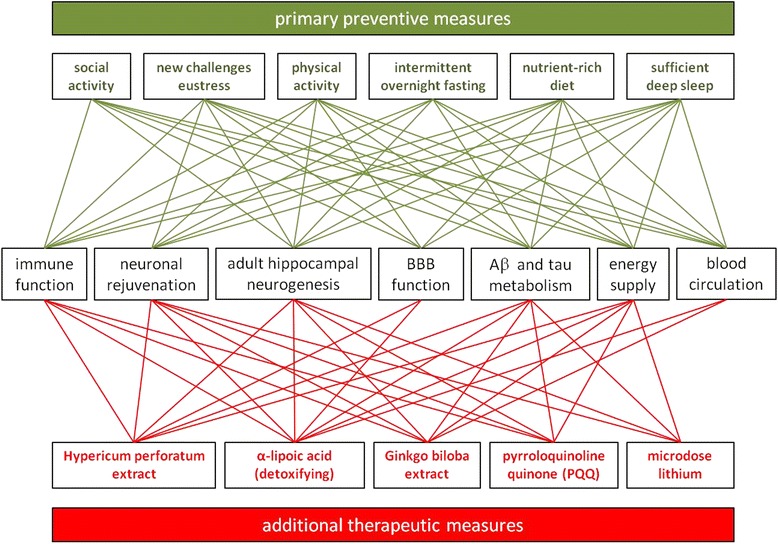
“Meanwhile, more and more experts in the field demand pleiotropic interventions to prevent or even cure AD [636, 637].”
BackgroundKiyota, T., Ingraham, K. L., Jacobsen, M. T., Xiong, H., & Ikezu, T. (2011) · Proceedings of the National Academy of Sciences · doi:10.1073/pnas.1102349108 · Cited by 145 · cited 1×
“in murine models of AD [244].”
Lane, K., Derbyshire, E., Li, W., & Brennan, C. (2014) · Critical Reviews in Food Science and Nutrition · doi:10.1080/10408398.2011.596292 · Cited by 145 · cited 1×
“[310].”
Role of Neuroinflammation in Adult Neurogenesis and Alzheimer Disease: Therapeutic Approaches
Fuster-Matanzo, A., Llorens-Martín, M., Hernández, F., & Avila, J. (2013) · Mediators of Inflammation · doi:10.1155/2013/260925 · Cited by 145 · cited 1×
“Neuroinflammation is rather multi-causal, with the same behavioural deficits and environmental factors contributing, which were found to disturb productive AHN (for review see [475]).”
BackgroundAmyloid-β diurnal pattern: possible role of sleep in Alzheimer's disease pathogenesis
Lucey, B. P., & Bateman, R. J. (2014) · Neurobiology of Aging · doi:10.1016/j.neurobiolaging.2014.03.035 · Cited by 144 · cited 1×
“If this Aβ diurnal pattern is compromised by inadequate sleep, accumulation and oligomerization of toxic Aβ occur [459].”
BackgroundMild cognitive impairment with suspected nonamyloid pathology (SNAP): Prediction of progression
Caroli, A., Prestia, A., Galluzzi, S., Ferrari, C., van der Flier, W. M., Ossenkoppele, R., Van Berckel, B., Barkhof, F., Teunissen, C., Wall, A. E., et al. (2015) · Neurology · doi:10.1212/wnl.0000000000001209 · Cited by 142
Decreased Brain Zinc Availability Reduces Hippocampal Neurogenesis in Mice and Rats
Suh, S. W., Won, S. J., Hamby, A. M., Yoo, B. H., Fan, Y., Sheline, C. T., Tamano, H., Takeda, A., & Liu, J. (2009) · Journal of Cerebral Blood Flow & Metabolism · doi:10.1038/jcbfm.2009.80 · Cited by 142 · cited 1×
“Zinc is another main trace element required for AHN [348, 349].”
BackgroundAdult neurogenesis in the mammalian hippocampus: Why the dentate gyrus?
Drew, L. J., Fusi, S., & Hen, R. (2013) · Learning & Memory · doi:10.1101/lm.026542.112 · Cited by 142
Maesako, M., Uemura, K., Kubota, M., Kuzuya, A., Sasaki, K., Hayashida, N., Asada-Utsugi, M., Watanabe, K., Uemura, M., Kihara, T., et al. (2012) · Journal of Biological Chemistry · doi:10.1074/jbc.m112.367011 · Cited by 141
Holthoff, V. A., Marschner, K., Scharf, M., Steding, J., Meyer, S., Koch, R., & Donix, M. (2015) · PLOS ONE · doi:10.1371/journal.pone.0121478 · Cited by 141 · cited 1×
“A recent pilot study investigated the effect of a home-based physical activity intervention program on AD-patients on the development of clinical symptoms and functional abilities and the effects on family caregiver burden after 12 and 24 weeks [262].”
BackgroundMosconi, L., Murray, J., Tsui, W. H., Li, Y., Davies, M., Williams, S., Pirraglia, E., Spector, N., Osorio, R. S., Glodzik, L., et al. (2014) · The Journal Of Prevention of Alzheimer's Disease · doi:10.14283/jpad.2014.17 · Cited by 140 · cited 2×
“In another study, which will be detailed below, ApoE4subjects adhering to a healthy Mediterranean diet (MeDi) had the greatest benefit regarding brain health when compared to other genotypes [57].”
BackgroundResultCampbell, N. R., Fernandes, C. C., Halff, A. W., & Berg, D. K. (2010) · Journal of Neuroscience · doi:10.1523/jneurosci.0931-10.2010 · Cited by 140 · cited 1×
“It indicates a profound role for the ACH/alpha7-nAChRs-system in AHN and conversely shows that α7-nAChR loss will cause progressive impairment in hippocampal circuitry and function over time as fewer neurons are added to the DG and those that are added integrate to a lesser extent [579].”
BackgroundRevilla, S., Sunol, C. E., García‐Mesa, Y., Giménez‐Llort, L., Sanfeliu, C., & Cristòfol, R. M. (2014) · Neuropharmacology · doi:10.1016/j.neuropharm.2014.01.037 · Cited by 140
Nimmrich, V., & Ebert, U. (2009) · Reviews in the Neurosciences · doi:10.1515/revneuro.2009.20.1.1 · Cited by 139 · cited 1×
“With the realization that soluble Aβ oligomere distribution correlates better with cognitive decline in AD than the prototypical amyloid plaques [123], the former amyloid cascade hypotheses was replaced by the oligomeric cascade hypothesis [124].”
BackgroundRamirez‐Rodriguez, G., Ortíz‐López, L., Domínguez‐Alonso, A., Benítez‐King, G. A., & Kempermann, G. (2011) · Journal of Pineal Research · doi:10.1111/j.1600-079x.2010.00802.x · Cited by 138 · cited 1×
“In addition, it promotes dendritic maturation of newly generated DG-neurons and supports their survival [458].”
BackgroundExtra Virgin Olive Oil Improves Learning and Memory in SAMP8 Mice
Farr, S. A., Price, T. O., Dominguez, L. J., Motisi, A., Saiano, F., Niehoff, M. L., Morley, J. E., Banks, W. A., Ercal, N., & Barbagallo, M. (2012) · Journal of Alzheimer's Disease · doi:10.3233/jad-2011-110662 · Cited by 136 · cited 1×
“A healthy alternative would be the use of extra-virgin olive oil [281–283], as well as the Nehls Journal of Molecular Psychiatry (2016) 4:3 Page 17 of 52”
BackgroundZhang, L., Xing, G. Q., Barker, J. L., Chang, Y. H., Maric, D., Ma, W., Li, B., & Rubinow, D. R. (2001) · Neuroscience Letters · doi:10.1016/s0304-3940(01)02205-4 · Cited by 136
Low-dose lithium uptake promotes longevity in humans and metazoans
Zarse, K., Terao, T., Tian, J., Iwata, N., Ishii, N., & Ristow, M. (2011) · European Journal of Nutrition · doi:10.1007/s00394-011-0171-x · Cited by 135 · cited 1×
“For instance, long-term low-dose exposure to lithium exerts anti-aging capabilities and unambiguously decreases mortality in animal models [353].”
BackgroundPlasma homocysteine, Alzheimer and cerebrovascular pathology: a population-based autopsy study
Hooshmand, B., Polvikoski, T. M., Kivipelto, M., Tanskanen, M., Myllykangas, L., Erkinjuntti, T., Mäkelä, M., Oinas, M., Paetau, A. E., Scheltens, P., et al. (2013) · Brain · doi:10.1093/brain/awt206 · Cited by 135
Amyloid-β Toxicity and Tau Hyperphosphorylation are Linked Via RCAN1 in Alzheimer's Disease
Lloret, A., Badia, M.-C., Giraldo, E., Ermak, G., Alonso, M.-D., Pallardó, F. V., Davies, K. J. A., & Viña, J. (2011) · Journal of Alzheimer’s Disease · doi:10.3233/jad-2011-110890 · Cited by 133 · cited 1×
“sphorylated non-functioning state (p-tau) [128].”
Koeslag, J. H., Noakes, T. D., & Sloan, A. W. (1980) · The Journal of Physiology · doi:10.1113/jphysiol.1980.sp013190 · Cited by 133
Morris, M. C., Brockman, J., Schneider, J. A., Wang, Y., Bennett, D. A., Tangney, C. C., & van de Rest, O. (2016) · JAMA · doi:10.1001/jama.2015.19451 · Cited by 133 · cited 1×
“This tendency was confirmed by the finding, that particularly carriers of the ApoE4 allele profited from nutritional consumption of fish, as their AD risk dropped by a factor of two, whereas non-ApoE4-carriers had no such advantage [58].”
ResultEnvironmental enrichment of laboratory rodents: the answer depends on the question.
Toth, L. A., Kregel, K. C., Leon, L., & Musch, T. I. (2011) · PubMed Central · Cited by 132
Barnea, A., & Pravosudov, V. (2011) · European Journal of Neuroscience · doi:10.1111/j.1460-9568.2011.07851.x · Cited by 132 · cited 1×
“food-storing or song-learning) are dynamically interrelated [202].”
Hsiao, Y.-H., Hung, H.-C., Chen, S.-H., & Gean, P.-W. (2014) · The Journal of Neuroscience · doi:10.1523/jneurosci.0747-14.2014 · Cited by 130
Glycogen synthase kinase‐3β, or a link between amyloid and tau pathology?
Muyllaert, D., Kremer, A., Jaworski, T., Borghgraef, P., Devijver, H., Croes, S., Dewachter, I., & Van Leuven, F. (2008) · Genes, Brain and Behavior · doi:10.1111/j.1601-183x.2007.00376.x · Cited by 130 · cited 1×
“The build-up of high amounts of oligomeric Aβ induces neuroinflammation, causes oxidative damage and negatively influences multiple signal transduction events including the activation of glycogen synthase kinase-3β (GSK-3β) [125], a pivotal kinase in AD but also for”
BackgroundWu, K.-Y., Hsiao, I., Chen, C., Chen, C., Hsieh, C., Wai, Y., Chang, C., Tseng, H., Yen, T.-C., Liu, C.-Y., et al. (2013) · European Journal of Nuclear Medicine and Molecular Imaging · doi:10.1007/s00259-013-2627-0 · Cited by 130 · cited 1×
“In support of this idea, chronic hypersecretion of cortisol in patients with lifetime major depression results in significant accumulation of Aβ in the brain, even in the absence of MCI or AD symptoms [197].”
BackgroundKandasamy, M., Lehner, B., Kraus, S., Sander, P. R., Marschallinger, J., Rivera, F. J., Trümbach, D., Ueberham, U., Reitsamer, H. A., Strauss, O., et al. (2014) · Journal of Cellular and Molecular Medicine · doi:10.1111/jcmm.12298 · Cited by 129 · cited 1×
“neurogenic stem cells (NSC) in a quiescent stage [629].”
Background
Research works printed but not linked: 5
- Boyd W A textbook of pathology: an introduction to medicine, Lea and febiger 1938
- Sprengel PC Von der Substanz der Ackerkrume und des Untergrundes 1828 Leipzig Journal für Technische und Ökonomische Chemie
- Jørgensen JR Fjord-Larsen L Wahlberg LU Andrade NGM Johansen TE Therapeutic use of a growth factor METRNL. US-patent 2012 8334264 B2
- Miklossy J.J. Neuroinflammation. Alzheimer’s disease - a neurospirochetosis. Analysis of the evidence following Koch’s and Hill’s criteria. 2011;8:90. doi: 10.1186/1742-2094-8-90. PMC3171359 21816039 · DOI · Paper page
- Nakano M Effect of pyrroloquinoline quinone (PQQ) on mental status of middle-aged and elderly persons Food Style 2009 13 50 53
Cited by
Alzheimer’s Disease: An Updated Overview of Its Genetics
Andrade-Guerrero, J., Santiago-Balmaseda, A., Jeronimo-Aguilar, P., Vargas-Rodríguez, I., Cadena-Suárez, A. R., Sánchez-Garibay, C., Pozo-Molina, G., Méndez-Catalá, C. F., Cardenas-Aguayo, M.-D.-C., Diaz-Cintra, S., et al. (2023) · International Journal of Molecular Sciences · doi:10.3390/ijms24043754 · Cited by 336
Advancements in nanotherapeutics for Alzheimer’s disease: current perspectives
Harilal, S., Jose, J., Parambi, D. G. T., Kumar, R., Mathew, G. E., Uddin, M. S., Kim, H., & Mathew, B. (2019) · Journal of Pharmacy and Pharmacology · doi:10.1111/jphp.13132 · Cited by 154
Neuroinflammation—A Crucial Factor in the Pathophysiology of Depression—A Comprehensive Review
Sălcudean, A., Bodo, C.-R., Popovici, R. A., Lica, M. M., Păcurar, M., Crăciun, R.-E., Crișan, A., ENĂTESCU, V. R., Marinescu, I. P., Cîmpian, D. M., et al. (2025) · Biomolecules · doi:10.3390/biom15040502 · Cited by 202
“Elevated cortisol levels have been linked to increased neuroin fl ammation in conditions such as Alzheimer’s disease, in which in fl ammation is considered a feature of the disease process [312].”
The Immunopathogenesis of Alzheimer’s Disease Is Related to the Composition of Gut Microbiota
Leblhuber, F., Ehrlich, D., Steiner, K., Geisler, S., Fuchs, D., Lanser, L., & Kurz, K. (2021) · Nutrients · doi:10.3390/nu13020361 · Cited by 159
Nanomedicine: A Promising Way to Manage Alzheimer’s Disease
Khan, N. H., Mir, M., Ngowi, E. E., Zafar, U., Khakwani, M. M. A. K., Khattak, S., Zhai, Y., Jiang, E., Zheng, M., Duan, S., et al. (2021) · Frontiers in Bioengineering and Biotechnology · doi:10.3389/fbioe.2021.630055 · Cited by 88
“Although the mechanisms of this association are complex, it is considered that hypertension can influence AD through the association of cerebrovascular pathology (Diaz-Ruiz et al., 2009; Nehls, 2016).”
Background
Metadata
- Authors
- Nehls, M.
- Corresponding author
- Nehls, Michael
- ORCID
- Nehls, Michael
- Venue
- Journal of Molecular Psychiatry
- Published
- 2016-07-15
- Volume
- 4
- Issue
- 1
- Pages
- 3-3
- ISSN
- 2049-9256 (ISSN-L)
- PMC
- PMC4947325
- OpenAlex
- W2463416598
- Cited by
- 41
- References
- 644
- Citations by year
- 2025: 3 · 2024: 4 · 2023: 3 · 2022: 4 · 2021: 8 · 2020: 5 · 2019: 4 · 2018: 4 · 2017: 4 · 2016: 1
- FWCI
- 0.51
- Type
- journal article
- Language
- en
- Open access
- hybrid
- doi.org
- Licence
- cc-by
- Locations
- Journal of Molecular Psychiatry (publishedVersion, cc-by)
- Europe PMC (PubMed Central) (publishedVersion, cc-by)
- PubMed Central (publishedVersion, cc-by)
- PubMed (publishedVersion)
- Funders
- Not applicable (Not applicable, independent researcher)
- Topics
- Life Sciences › Neuroscience › Cellular and Molecular Neuroscience › Alzheimer's disease research and treatments
- Health Sciences › Medicine › Psychiatry and Mental health › Dementia and Cognitive Impairment Research
- Life Sciences › Neuroscience › Developmental Neuroscience › Neurogenesis and neuroplasticity mechanisms
- Keywords
- Alzheimer's disease, grandmother hypothesis, adult hippocampal neurogenesis, HPA axis dysregulation, cortisol hypersecretion, amyloid-beta oligomerization, neuroinflammation, insulin resistance, APOE ε4, law of the minimum, behavioral risk factors, environmental risk factors, episodic memory, psychological resilience, early intervention, curative treatment
About these checks
Registry, retraction, Cites and statistics results are computed, not judged, with one exception: a printed reference that no index lists is read once by a model before it counts as a citation error. Claims are extracted by a model and kept only when their quote appears verbatim in the text; each cited source is then checked, with a model’s help, for whether it says what the claim relies on. Those verdicts can be wrong — read the claim’s quote and the cited source before relying on one.
Statistics and arithmetic are recomputed, not judged.
Confidence bands are shown only for fields calibrated on our annotated test set. None is calibrated yet, so no band is shown.
What counts as a claim ›How we measure confidence ›How we check this ›
Are you an author, or do you see a problem with this page? Request a review
Data sources
Bibliographic data: Semantic Scholar, OpenAlex, Crossref.
Contains information from the Semantic Scholar Academic Graph Datasets, made available under the ODC Attribution License (ODC-BY 1.0).
Semantic Scholar’s data is described in: Kinney, R., et al. (2023). The Semantic Scholar Open Data Platform. arXiv:2301.10140.
