

Putative neural consequences of captivity for elephants and cetaceans
Open accessThe DOI matches its Crossref record; 288 of the 296 references it cites were found in a registry or an index.
Abstract
The present review assesses the potential neural impact of impoverished, captive environments on large-brained mammals, with a focus on elephants and cetaceans. These species share several characteristics, including being large, wide-ranging, long-lived, cognitively sophisticated, highly social, and large-brained mammals. Although the impact of the captive environment on physical and behavioral health has been well-documented, relatively little attention has been paid to the brain itself. Here, we explore the potential neural consequences of living in captive environments, with a focus on three levels: (1) The effects of environmental impoverishment/enrichment on the brain, emphasizing the negative neural consequences of the captive/impoverished environment; (2) the neural consequences of stress on the brain, with an emphasis on corticolimbic structures; and (3) the neural underpinnings of stereotypies, often observed in captive animals, underscoring dysregulation of the basal ganglia and associated circuitry. To this end, we provide a substantive hypothesis about the negative impact of captivity on the brains of large mammals (e.g., cetaceans and elephants) and how these neural consequences are related to documented evidence for compromised physical and psychological well-being.
Overview
The claims and statistics of this paper haven’t been checked yet.
Free: it reads the open-access text and checks the first 5 claims that cite a source we can check. Create a free account to check every claim.
Integrity signals
Registry
Cites
Statistics
Figures
Verification
Claims the paper makes
The claims and statistics of this paper haven’t been checked yet.
Free: it reads the open-access text and checks the first 5 claims that cite a source we can check. Create a free account to check every claim.
Claims other papers make about this one
Each is checked against this paper’s own text: does it say what the citing paper says it does?
The cited source says what the claim attributes to it.
In the citing paper
“The exercise elephants obtain by walking is also a crucial component of an enriched environment because it supplies the brain with oxygenated blood, increases the effectiveness of the immune system, and enhances an animal's cognitive abilities (Jacobs et al., 2021), while also providing metabolic benefits (Morfeld & Brown, 2017).”
From Continuing challenges of elephant captivity: the captive environment, health issues, and welfare implications (2024) · cites this paper as Jacobs et al., 2021
Self-check
Percentages, sums and reported differences re-computed from the paper’s own numbers.
The self-check needs the paper’s full text.
Citations
Cites
Sapolsky, R. M., Romero, L. M., & Munck, A. U. (2000) · Endocrine Reviews · doi:10.1210/edrv.21.1.0389 · Cited by 7,541 · cited 1×
“The exquisitely sensitive stress response system promotes quick activation of the body in the face of acute stress and then a return to homeostasis once the threat has abated (Sapolsky et al. 2000).”
BackgroundEffects of stress throughout the lifespan on the brain, behaviour and cognition
Lupien, S. J., McEwen, B. S., Gunnar, M. R., & Heim, C. (2009) · Nature Reviews Neuroscience · doi:10.1038/nrn2639 · Cited by 6,256 · cited 3×
“Moreover, substantial evidence suggests that mammalian brains employ very similar mechanisms for interacting with their environment (Lupien et al. 2009).”
BackgroundInfluentialMore hippocampal neurons in adult mice living in an enriched environment
Kempermann, G., Kuhn, H. G., & Gage, F. H. (1997) · Nature · doi:10.1038/386493a0 · Cited by 3,511
Neural consequences of enviromental enrichment
van Praag, H., Kempermann, G., & Gage, F. H. (2000) · Nature Reviews Neuroscience · doi:10.1038/35044558 · Cited by 2,468 · cited 2×
“Finally, as reviewed by van Praag et al. (2000), exercise appears to enhance the activity of several neurotransmitter systems in rats: (1) cholinergic functioning in the hippocampus, which improves spatial learning (Fordyce and Farrar 1991), (2) opioid activity, which modulates pain (Sforzo et al.…”
BackgroundChanges in grey matter induced by training
Draganski, B., Gaser, C., Busch, V., Schuierer, G., Bogdahn, U., & May, A. (2004) · Nature · doi:10.1038/427311a · Cited by 2,373
The Neurocircuitry of Fear, Stress, and Anxiety Disorders
Shin, L. M., & Liberzon, I. (2010) · Neuropsychopharmacology · doi:10.1038/npp.2009.83 · Cited by 2,083 · cited 1×
“In humans, such dysfunctions have been associated with a variety of anxiety disorders, including PTSD, generalized anxiety disorder, phobias, panic disorders, and obsessive-compulsive disorders (Koenigs and Grafman 2009; Shin and Liberzon 2010).”
BackgroundExperience-dependent structural synaptic plasticity in the mammalian brain
Holtmaat, A., & Svoboda, K. (2009) · Nature Reviews Neuroscience · doi:10.1038/nrn2699 · Cited by 1,934 · cited 1×
“…to its environment is a hallmark of plasticity, for better or worse, and has been demonstrated across all species examined, from insects (e.g., honeybees; Groh and Rössler 2020), to invertebrates (e.g., aplysia; Antonov et al. 2001), to a variety of mammals (Holtmaat and Svoboda 2009).”
BackgroundThe human brain in numbers: a linearly scaled-up primate brain
Herculano-Houzel, S. (2009) · Frontiers in Human Neuroscience · doi:10.3389/neuro.09.031.2009 · Cited by 1,778
Enriched environments, experience-dependent plasticity and disorders of the nervous system
Nithianantharajah, J., & Hannan, A. J. (2006) · Nature Reviews Neuroscience · doi:10.1038/nrn1970 · Cited by 1,771 · cited 1×
“…(mice: Arai and Feig 2011; fish,Gadusmorhua: Strand et al. 2010), protect against lead toxicity (mice: Schneider et al. 2001), treat developmental disorders (humans: Ball et al. 2019), and ameliorate several psychiatric and neurogenerative disorders in humans (Nithianantharajah and Hannan 2006).”
BackgroundKelly, J. R., Borre, Y., O' Brien, C., Patterson, E., El Aidy, S., Deane, J., Kennedy, P. J., Beers, S., Scott, K., Moloney, G., et al. (2016) · Journal of Psychiatric Research · doi:10.1016/j.jpsychires.2016.07.019 · Cited by 1,683 · cited 2×
“, neural, hormonal, and immune) between gut microbiota and the brain, with alterations in the gut microbiome associated with chronic stress and depression (Kelly et al. 2016).”
BackgroundVyas, A., Mitra, R., Shankaranarayana Rao, B. S., & Chattarji, S. (2002) · The Journal of Neuroscience · doi:10.1523/jneurosci.22-15-06810.2002 · Cited by 1,662 · cited 1×
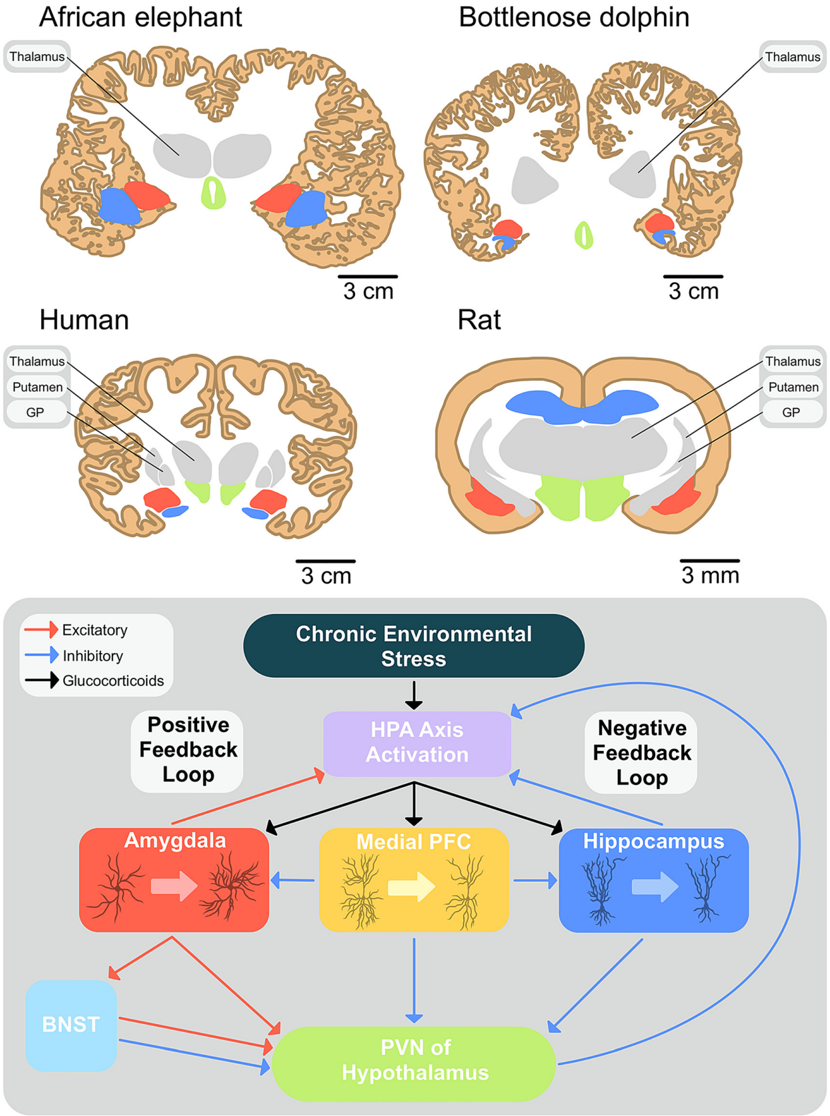
“Specifically, both stellate and pyramidal neurons in the basolateral amygdala (a putative locus for the storage of fear memories) exhibit increased dendritic complexity and greater spine density in response to chronic stress (Mitra et al. 2005; rats: Vyas et al. 2002; Figure 3).”
BackgroundBrain Structures Differ between Musicians and Non-Musicians
Gaser, C., & Schlaug, G. (2003) · The Journal of Neuroscience · doi:10.1523/jneurosci.23-27-09240.2003 · Cited by 1,633 · cited 1×
“For example, as with the environmental complexity studies (Kleim et al. 1998), specific training (e.g., formal music practice) causes structural changes (e.g., volumetric increases in somatosensory and motor cortices) in the human brain (Gaser and Schlaug 2003).”
BackgroundStress Effects on Neuronal Structure: Hippocampus, Amygdala, and Prefrontal Cortex
McEwen, B. S., Nasca, C., & Gray, J. D. (2016) · Neuropsychopharmacology · doi:10.1038/npp.2015.171 · Cited by 1,574 · cited 7×
“In the orbitofrontal cortex, chronic stress has been associated with increased dendritic complexity, as would be expected in captivity due to increased vigilance (McEwen et al. 2015).”
BackgroundInfluentialImmune-neuro-endocrine interactions: facts and hypotheses.
BESEDOVSKY, H. O., & REY, A. D. (1996) · Endocrine Reviews · doi:10.1210/edrv-17-1-64 · Cited by 1,564
The Role of the Dorsal Striatum in Reward and Decision-Making: Figure 1.
Balleine, B. W., Delgado, M. R., & Hikosaka, O. (2007) · The Journal of Neuroscience · doi:10.1523/jneurosci.1554-07.2007 · Cited by 1,390 · cited 1×
“The striatum and associated circuitry are thus tasked with evaluating the processed information received from diverse cortical areas and determining the context appropriate motor output for the given situation (Balleine et al. 2007).”
BackgroundBrain-Derived Neurotrophic Factor and Neuropsychiatric Disorders
Autry, A. E., & Monteggia, L. M. (2012) · Pharmacological Reviews · doi:10.1124/pr.111.005108 · Cited by 1,390 · cited 2×
“…al. 2006), which is associated with increased anxiety-like symptoms in rats (Murínová et al. 2017) and several neuropsychiatric disorders in humans (Autry and Monteggia 2012); (2) reduced levels of serotonin in both hippocampus and frontal cortex, which is associated with increased aggression and…”
BackgroundMechanisms of stress in the brain
McEwen, B. S., Bowles, N. P., Gray, J. D., Hill, M. N., Hunter, R. G., Karatsoreos, I. N., & Nasca, C. (2015) · Nature Neuroscience · doi:10.1038/nn.4086 · Cited by 1,386 · cited 5×
“In the orbitofrontal cortex, chronic stress has been associated with increased dendritic complexity, as would be expected in captivity due to increased vigilance (McEwen et al. 2015).”
BackgroundInfluentialThurmond, V. A. (2001) · Journal of Nursing Scholarship · doi:10.1111/j.1547-5069.2001.00253.x · Cited by 1,335 · cited 1×
“We argue that neural inferences from other mammals to elephant and cetacean brains are strongly supported using the logic of triangulation (Thurmond 2001),which is employed in other animal welfare assessments (Clegg and Delfour 2018).”
MethodAllostatic load and its impact on health: A systematic review
Guidi, J., Lucente, M., Sonino, N., & Fava, G. A. (2021) · Psychotherapy and Psychosomatics · doi:10.1159/000510696 · Cited by 1,266 · cited 1×
“Here, we provide a simplified overview of the neural consequences when the HPA axis is chronically activated, resulting in an allostatic overload that is generally associated with poorer physical and mental health outcomes (Guidi et al. 2021).”
BackgroundLinked Regularities in the Development and Evolution of Mammalian Brains
Finlay, B. L., & Darlington, R. B. (1995) · Science · doi:10.1126/science.7777856 · Cited by 1,217 · cited 3×
“Size differences aside, all eutherian mammals share the same brain components (Finlay and Darlington 1995), with many parts of elephant and cetacean brains appearing to be highly conserved in terms of neuroanatomy and chemoarchitecture, including the limbic system (Butti et al.”
BackgroundInfluentialImmune system to brain signaling: Neuropsychopharmacological implications
Capuron, L., & Miller, A. H. (2011) · Pharmacology & Therapeutics · doi:10.1016/j.pharmthera.2011.01.014 · Cited by 1,195 · cited 1×
“…can interact with multiple corticolimbic brain structures, dysregulatingdifferent growth factors (e.g., BDNF) and neurogenesis (especially in the hippocampus), several neurotransmitter systems (e.g., glutamate, serotonin, and dopamine), and neuroendocrine communication (Capuron and Miller 2011).”
BackgroundNeurobiological and Systemic Effects of Chronic Stress
McEwen, B. S. (2017) · Chronic Stress · doi:10.1177/2470547017692328 · Cited by 1,059 · cited 4×
“Stress-induced graymatter reductions have also been documented (Nikolova et al. 2018) as well as N-methylD-aspartate (NMDA)-dependent decreases in apical dendritic complexity and spine density in themedial prefrontal cortex (McEwen 2016, 2017; Radley et al. 2015; Figure 3).”
BackgroundInfluentialLearned helplessness at fifty: Insights from neuroscience.
Maier, S. F., & Seligman, M. E. P. (2016) · Psychological Review · doi:10.1037/rev0000033 · Cited by 1,031 · cited 1×
“Moreover, under inescapably stressful conditions, the amygdala and the BNST, modulated by serotonergic input from the dorsal raphe nucleus, may mediate learned helplessness and conditioned defeat (Maier and Seligman 2016).”
BackgroundBasso, J. C., & Suzuki, W. A. (2016) · Brain Plasticity · doi:10.3233/bpl-160040 · Cited by 911 · cited 2×
“A crucial component to an enriched environment is exercise (Basso and Suzuki 2017), which is severely lacking for captive elephants and cetaceans (Clubb et al.”
BackgroundEvolution of the brain and intelligence
ROTH, G., & DICKE, U. (2005) · Trends in Cognitive Sciences · doi:10.1016/j.tics.2005.03.005 · Cited by 890 · cited 1×
“The elephant brain is slightly larger than expected for its body size (Roth and Dicke 2005) and the brains of many odontocete cetacean species are significantly larger than predicted by their body size (Marino 2009).”
BackgroundPlasticity of the Hippocampus: Adaptation to Chronic Stress and Allostatic Load
McEwen, B. S. (2001) · Annals of the New York Academy of Sciences · doi:10.1111/j.1749-6632.2001.tb05830.x · Cited by 873 · cited 2×
“…mobilizes free cytosolic calcium to toxic levels, subsequently resulting in hypoxia-ischemia, excitotoxic seizures, soma shrinkage, nuclear pyknosis, and loss of dendritic spines along with apical dendritic atrophy (Figure 3), particularly in CA3 pyramidal neurons (McEwen 2001; McEwen et al. 2016).”
BackgroundChronic Stress Causes Frontostriatal Reorganization and Affects Decision-Making
Dias-Ferreira, E., Sousa, J. C., Melo, I., Morgado, P., Mesquita, A. R., Cerqueira, J. J., Costa, R. M., & Sousa, N. (2009) · Science · doi:10.1126/science.1171203 · Cited by 858 · cited 1×
“Finally, prolonged stress also results in structural changes to cortico-striatal circuitry involved in decision making (Dias-Ferreira et al. 2009).”
BackgroundDirect and indirect pathways of basal ganglia: a critical reappraisal
Calabresi, P., Picconi, B., Tozzi, A., Ghiglieri, V., & Di Filippo, M. (2014) · Nature Neuroscience · doi:10.1038/nn.3743 · Cited by 828 · cited 2×
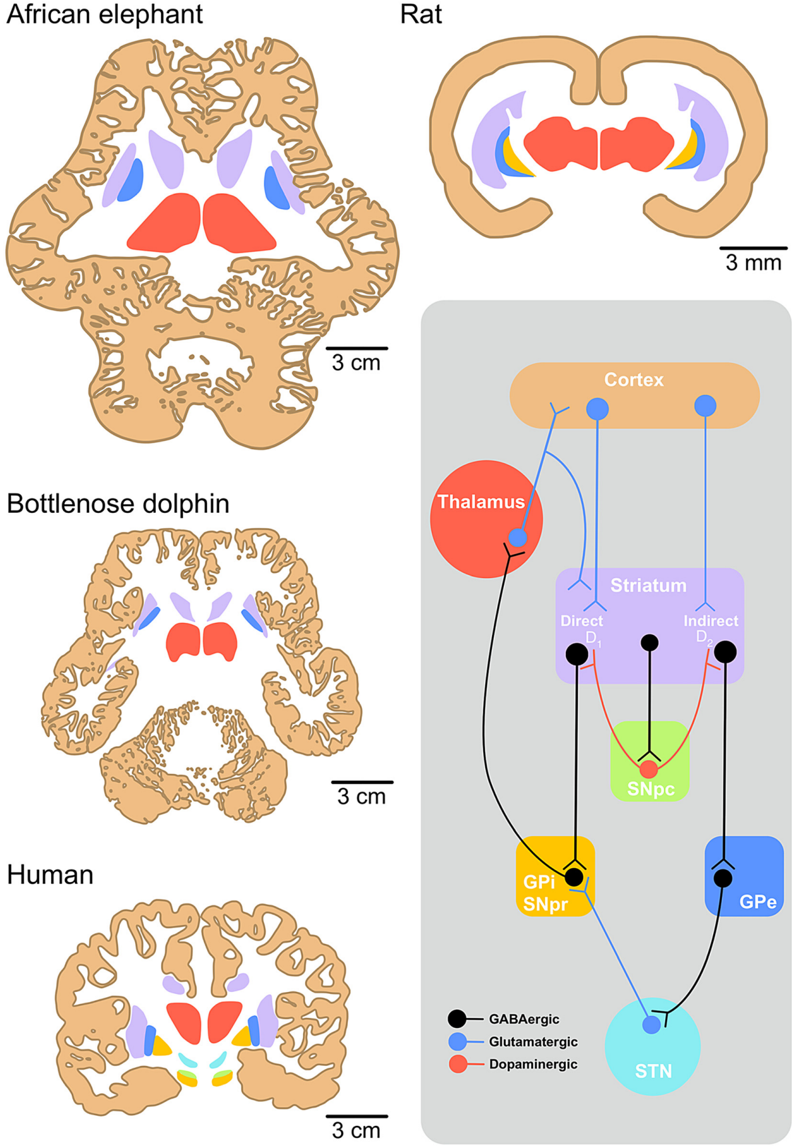
“subthalamic nucleus: motor cortical areas → striatum → globus pallidus (externa) → subthalamic nucleus→ globus pallidus (interna)/ substantia nigra (pars reticulata)→ ventral anterior and ventral lateral nuclei of the thalamus→ motor cortical areas (Calabresi et al. 2014; Langen et al. 2011b; Lewis et al. 2006).”
BackgroundStereotypic animal behaviour: fundamentals and applications to welfare
(2006) · doi:10.1079/9780851990040.0000 · Cited by 734 · cited 1×
“In terms of behavior, a prevalent abnormality is stereotypic behavior (Mason and Rushen 2008), which consists of aberrant, repetitive movements (e.g., limb swaying, and rocking) induced by the frustration of natural impulses (Clegg et al. 2017).”
BackgroundStress duration modulates the spatiotemporal patterns of spine formation in the basolateral amygdala
Mitra, R., Jadhav, S., McEwen, B. S., Vyas, A., & Chattarji, S. (2005) · Proceedings of the National Academy of Sciences · doi:10.1073/pnas.0504011102 · Cited by 663 · cited 1×
“Specifically, both stellate and pyramidal neurons in the basolateral amygdala (a putative locus for the storage of fear memories) exhibit increased dendritic complexity and greater spine density in response to chronic stress (Mitra et al. 2005; rats: Vyas et al. 2002; Figure 3).”
BackgroundEffects of environmental enrichment on gene expression in the brain
Rampon, C., Jiang, C. H., Dong, H., Tang, Y.-P., Lockhart, D. J., Schultz, P. G., Tsien, J. Z., & Hu, Y. (2000) · Proceedings of the National Academy of Sciences · doi:10.1073/pnas.97.23.12880 · Cited by 615 · cited 1×
“…or even a single exposure to enrichment (Ali et al. 2009), has on the expression of a large number of genes linked to neuronal structure, synaptic plasticity, and neural transmission (Rampon et al. 2000) and, by extension, an animal’s emotional and cognitive functioning (Neidl et al. 2016).”
BackgroundThe effects of an enriched environment on the histology of the rat cerebral cortex
Diamond, M. C., Krech, D., & Rosenzweig, M. R. (1964) · Journal of Comparative Neurology · doi:10.1002/cne.901230110 · Cited by 584 · cited 1×
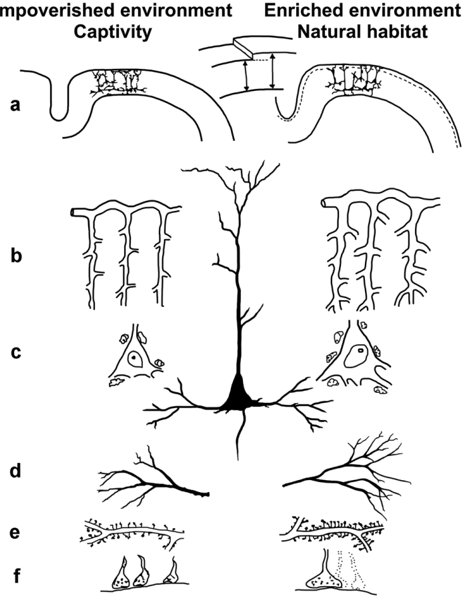
“Within the cortex, capillary volume, and hence cortical blood supply, tends to be lower in impoverished rats than enriched rats (Diamond et al. 1964; Figure 2).”
BackgroundChugani, H. T., Behen, M. E., Muzik, O., Juhász, C., Nagy, F., & Chugani, D. C. (2001) · NeuroImage · doi:10.1006/nimg.2001.0917 · Cited by 584 · cited 2×
“…to early socioemotional deprivation in Romanian orphanages exhibited several neural deficits, including glucose hypometabolism and white matter abnormalities in limbic and paralimbic structures (including prefrontal cortex, amygdala, and hippocampus; Chugani et al. 2001; Eluvathingal et al. 2006).”
BackgroundFrodl, T., & O'Keane, V. (2013) · Neurobiology of Disease · doi:10.1016/j.nbd.2012.03.012 · Cited by 555 · cited 1×
“Human findings of this nature underscore the importance of the early environment for shaping corticolimbic systems and the potential long-term consequences to chronic stress (Frodl and O’Keane 2013).”
BackgroundTynan, R. J., Naicker, S., Hinwood, M., Nalivaiko, E., Buller, K. M., Pow, D. V., Day, T. A., & Walker, F. R. (2010) · Brain, Behavior, and Immunity · doi:10.1016/j.bbi.2010.02.001 · Cited by 531 · cited 2×
“, BDNF), microglial activation, detrimental epigenetic changes, induction of neuroinflammatory processes, and apoptosis (McEwen et al. 2015; Tynan et al. 2010; Vyas et al. 2016).”
BackgroundRearing complexity affects branching of dendrites in the visual cortex of the rat
Volkmar, F. R., & Greenough, W. T. (1972) · Science · doi:10.1126/science.176.4042.1445 · Cited by 513 · cited 1×
“…dendritic systems for both pyramidal and stellate neurons that are less complex in terms of number and length, especially for more distal branches (Volkmar and Greenough 1972; Figure 2) in occipital (Sirevaag and Greenough 1985), parietal (Leggio et al. 2005), and temporal (Greenough et al. 1973)…”
BackgroundLeggio, M. G., Mandolesi, L., Federico, F., Spirito, F., Ricci, B., Gelfo, F., & Petrosini, L. (2005) · Behavioural Brain Research · doi:10.1016/j.bbr.2005.04.009 · Cited by 502 · cited 4×
“…in terms of number and length, especially for more distal branches (Volkmar and Greenough 1972; Figure 2) in occipital (Sirevaag and Greenough 1985), parietal (Leggio et al. 2005), and temporal (Greenough et al. 1973) cortices for rats, and in motor cortex for deer mice (Turner et al. 2003).”
BackgroundInfluentialHorowitz, A. M., Fan, X., Bieri, G., Smith, L. K., Sanchez-Diaz, C. I., Schroer, A. B., Gontier, G., Casaletto, K. B., Kramer, J. H., Williams, K. E., et al. (2020) · Science · doi:10.1126/science.aaw2622 · Cited by 496 · cited 2×
“2021) which, in turn, contribute to potential neurogenesis and enhanced cognitive abilities through a series of complex biochemical cascades (Horowitz et al. 2020).”
BackgroundSpecies differences in responses to captivity: stress, welfare and the comparative method
Mason, G. J. (2010) · Trends in Ecology & Evolution · doi:10.1016/j.tree.2010.08.011 · Cited by 470 · cited 3×
“Although some large mammals fare relatively well in captive environments (i.e., zoos and marine parks), those with extensive home ranges do not (Clubb and Mason 2003, 2007; Mason 2010).”
BackgroundEluvathingal, T. J., Chugani, H. T., Behen, M. E., Juhász, C., Muzik, O., Maqbool, M., Chugani, D. C., & Makki, M. (2006) · Pediatrics · doi:10.1542/peds.2005-1727 · Cited by 451 · cited 1×
“Humans subjected to early socioemotional deprivation in Romanian orphanages exhibited several neural deficits, including glucose hypometabolism and white matter abnormalities in limbic and paralimbic structures (including prefrontal cortex, amygdala, and hippocampus; Chugani et al. 2001; Eluvathingal et al. 2006).”
BackgroundEffects of differential experience on dendritic spine counts in rat cerebral cortex
Globus, A., Rosenzweig, M. R., Bennett, E. L., & Diamond, M. C. (1973) · Journal of Comparative and Physiological Psychology · doi:10.1037/h0033910 · Cited by 436 · cited 4×
“and section weight (Globus et al. 1973), even though impoverished rats tend to have greater body weight than enriched rats (Walsh 1981), a finding that parallels the obesity problem identified in many captive animals (Clubb et al.”
BackgroundInfluentialCaptivity effects on wide-ranging carnivores
Clubb, R., & Mason, G. (2003) · Nature · doi:10.1038/425473a · Cited by 430 · cited 1×
“Although some large mammals fare relatively well in captive environments (i.e., zoos and marine parks), those with extensive home ranges do not (Clubb and Mason 2003, 2007; Mason 2010).”
BackgroundRegional Dendritic and Spine Variation in Human Cerebral Cortex: a Quantitative Golgi Study
Jacobs, B. (2001) · Cerebral Cortex · doi:10.1093/cercor/11.6.558 · Cited by 423
Self-citationThe effects of early experience on problem-solving at maturity
Hebb, D. O. (1947) · American Psychologist · Cited by 421
Nair, A., & Bonneau, R. H. (2006) · Journal of Neuroimmunology · doi:10.1016/j.jneuroim.2005.09.012 · Cited by 392
Differential rearing effects on rat visual cortex synapses.
Sirevaag, A. M., & Greenough, W. T. (1987) · Brain Research · doi:10.1016/0006-8993(87)91477-6 · Cited by 370
Effects of rearing complexity on dendritic branching in frontolateral and temporal cortex of the rat
Greenough, W. T., Volkmar, F. R., & Juraska, J. M. (1973) · Experimental Neurology · doi:10.1016/0014-4886(73)90278-1 · Cited by 370 · cited 2×
“…in terms of number and length, especially for more distal branches (Volkmar and Greenough 1972; Figure 2) in occipital (Sirevaag and Greenough 1985), parietal (Leggio et al. 2005), and temporal (Greenough et al. 1973) cortices for rats, and in motor cortex for deer mice (Turner et al. 2003).”
BackgroundMizoguchi, K., Ishige, A., Aburada, M., & Tabira, T. (2003) · Neuroscience · doi:10.1016/s0306-4522(03)00105-2 · Cited by 369 · cited 2×
“During chronic stress, this negative feedback system is disrupted, resulting in downregulation of glucocorticoid receptors (Mizoguchi et al. 2003), which then results in decreased corticosteroid receptor density throughout the limbic forebrain (Radley et al.”
BackgroundNeurobiology and consequences of social isolation stress in animal model—A comprehensive review
Mumtaz, F., Khan, M. I., Zubair, M., & Dehpour, A. R. (2018) · Biomedicine & Pharmacotherapy · doi:10.1016/j.biopha.2018.05.086 · Cited by 369 · cited 1×
“Because of the complex social world of elephants and many cetaceans, an issue of special relevance to the present review is the effect that social isolation has on corticolimbic structures (Mumtaz et al. 2018).”
BackgroundPosttraumatic stress disorder: the role of medial prefrontal cortex and amygdala.
Koenigs, M., & Grafman, J. (2009) · The Neuroscientist · doi:10.1177/1073858409333072 · Cited by 368 · cited 1×
“In humans, such dysfunctions have been associated with a variety of anxiety disorders, including PTSD, generalized anxiety disorder, phobias, panic disorders, and obsessive-compulsive disorders (Koenigs and Grafman 2009; Shin and Liberzon 2010).”
BackgroundRadley, J., Morilak, D., Viau, V., & Campeau, S. (2015) · Neuroscience & Biobehavioral Reviews · doi:10.1016/j.neubiorev.2015.06.018 · Cited by 339 · cited 5×
“In particular, the medial prefrontal cortex is part of a negative feedback system to regulate stress-induced HPA activation andamygdala-mediated arousal (Radley et al. 2015).”
BackgroundInfluentialStructural and synaptic plasticity in stress-related disorders
Christoffel, D. J., Golden, S. A., & Russo, S. J. (2011) · Reviews in the Neurosciences · doi:10.1515/rns.2011.044 · Cited by 334 · cited 2×
“2015) with functional and structural consequences (Christoffel et al. 2011).”
BackgroundThe human BNST: functional role in anxiety and addiction
Avery, S. N., Clauss, J. A., & Blackford, J. U. (2016) · Neuropsychopharmacology · doi:10.1038/npp.2015.185 · Cited by 331 · cited 1×
“Functionally, there isan increased fear response,prolongedHPAandsympathetic activation, increased aggression and, because of the amygdala’s strong reciprocal connections with the bed nucleus of the stria terminalis (BNST), excessive anxiety (Avery et al. 2016).”
BackgroundWrona, D. (2006) · Journal of Neuroimmunology · doi:10.1016/j.jneuroim.2005.10.017 · Cited by 323 · cited 2×
“Neuroendocrine-immune interactions are dynamic (Wrona 2006).”
BackgroundPhysical exercise and brain monoamines: a review.
CHAOULOFF, F. (1989) · Acta Physiologica Scandinavica · doi:10.1111/j.1748-1716.1989.tb08715.x · Cited by 316 · cited 2×
“…cholinergic functioning in the hippocampus, which improves spatial learning (Fordyce and Farrar 1991), (2) opioid activity, which modulates pain (Sforzo et al. 1986), and (3) monoamine functioning (noradrenaline and serotonin), which contributes to learning and synaptic plasticity (Chaouloff 1989).”
BackgroundCerebellar Plasticity: Modification of Purkinje Cell Structure by Differential Rearing in Monkeys
Floeter, M. K., & Greenough, W. T. (1979) · Science · doi:10.1126/science.113873 · Cited by 303 · cited 1×
“Similarly, in monkeys (Macaca fasciularis), impoverished animals do not exhibit the same dendritic growth that characterizes the Purkinje neurons of their enriched counterparts (Floeter and Greenough 1979).”
BackgroundClubb, R., & Mason, G. J. (2007) · Applied Animal Behaviour Science · doi:10.1016/j.applanim.2006.05.033 · Cited by 303 · cited 1×
“Although some large mammals fare relatively well in captive environments (i.e., zoos and marine parks), those with extensive home ranges do not (Clubb and Mason 2003, 2007; Mason 2010).”
BackgroundJacobs, B., Schall, M., & Scheibel, A. B. (1993) · Journal of Comparative Neurology · doi:10.1002/cne.903270108 · Cited by 303 · cited 1×
“A subsequent study in Wernicke’s area found a positive correlation between education level (seen as a form of enrichment) and dendritic extent, with university educated individuals having more complex basilar dendritic systems than those who did not complete high school (Jacobs et al. 1993).”
BackgroundSelf-citationChronic stress and glucocorticoids: From neuronal plasticity to neurodegeneration
Vyas, S., Rodrigues, A. J., Silva, J. M., Tronche, F., Almeida, O. F. X., Sousa, N., & Sotiropoulos, I. (2016) · Neural Plasticity · doi:10.1155/2016/6391686 · Cited by 297 · cited 4×
“Three corticolimbic brain structures—the prefrontal cortex, the hippocampus, and the amygdala (Figure 3)—are particularly affected by these stress responses (Chattarji et al. 2015; McEwen et al. 2016; Vyas et al. 2016), in part because they express a high density of corticosteroid (e.”
BackgroundInfluentialLutz, C., Well, A., & Novak, M. (2003) · American Journal of Primatology · doi:10.1002/ajp.10075 · Cited by 285
Structural and functional evolution of vertebrate neuroendocrine stress systems
Denver, R. J. (2009) · Annals of the New York Academy of Sciences · doi:10.1111/j.1749-6632.2009.04433.x · Cited by 273 · cited 4×
“…(Finlay and Darlington 1995), with many parts of elephant and cetacean brains appearing to be highly conserved in terms of neuroanatomy and chemoarchitecture, including the limbic system (Butti et al. 2015; Denver 2009; Jacobs et al. 2011, 2015; Limacher-Burrell et al. 2018; Patzke et al. 2014).”
BackgroundInfluentialThe neurobiology of repetitive behavior: …and men
Langen, M., Durston, S., Kas, M. J. H., van Engeland, H., & Staal, W. G. (2011) · Neuroscience & Biobehavioral Reviews · doi:10.1016/j.neubiorev.2010.02.005 · Cited by 263 · cited 4×
“Moreover, the dopaminergic system itself appears to be modulated by serotonin, especially when stereotypies are stress induced (Langen et al. 2011b).”
BackgroundInfluentialEffects of social isolation on glucocorticoid regulation in social mammals
Hawkley, L. C., Cole, S. W., Capitanio, J. P., Norman, G. J., & Cacioppo, J. T. (2012) · Hormones and Behavior · doi:10.1016/j.yhbeh.2012.05.011 · Cited by 262 · cited 2×
“2007) and increase basal cortisol levels (Hawkley et al. 2012).”
BackgroundIsolation rearing in rats: pre- and postsynaptic changes in striatal dopaminergic systems
Hall, F. S., Wilkinson, L. S., Humby, T., Inglis, W., Kendall, D. A., Marsden, C. A., & Robbins, T. W. (1998) · Pharmacology Biochemistry and Behavior · doi:10.1016/s0091-3057(97)00510-8 · Cited by 261 · cited 1×
“Environmental deprivation and social isolation have repeatedly been shown to dysregulate these motor control pathways in several species, resulting in stereotypies (rats: Hall et al. 1998; primates: Martin et al. 1991; horses: McBride and Hemmings 2005; and pigs: Sharman et al. 1982).”
BackgroundDiamond, M. C., Lindner, B., & Raymond, A. (1967) · Journal of Comparative Neurology · doi:10.1002/cne.901310305 · Cited by 260 · cited 3×
“Both nuclear and perikaryon diameters in supragranular neurons are smaller in impoverished rats (Diamond et al. 1967).”
BackgroundCRC Handbook of Marine Mammal Medicine, Third Edition
(2018) · CRC Press eBooks · doi:10.1201/9781315144931 · Cited by 256 · cited 1×
“Nutrition/ metabolism disorders (e.g., insulin resistance, fatty liver disease, hemochromatosis, and hypocitraturia; Mazzaro et al. 2012; Venn-Watson et al. 2012, 2013; Zuckerman and Assimos 2009) are often linked to the captive diet (Rosen and Worthy 2018).”
BackgroundChanges in the Development of Striatum Are Involved in Repetitive Behavior in Autism
Langen, M., Bos, D., Noordermeer, S. D. S., Nederveen, H., van Engeland, H., & Durston, S. (2014) · Biological Psychiatry · doi:10.1016/j.biopsych.2013.08.013 · Cited by 256 · cited 2×
“…studies in humans implicate nucleus size, connectivity, and structural variation with restricted repetitive behaviors (Wilkes and Lewis 2018), and have revealed positive correlations between enlargement of the caudate and putamen with the severity of stereotypic behaviors (Langen et al. 2014).”
BackgroundEnvironmental enrichment for zoo bears
Carlstead, K., Seidensticker, J., & Baldwin, R. (1991) · Zoo Biology · doi:10.1002/zoo.1430100103 · Cited by 255
Glucocorticoid and mineralocorticoid receptor mRNA expression in squirrel monkey brain
Patel, P. D., Lopez, J. F., Lyons, D. M., Burke, S., Wallace, M., & Schatzberg, A. F. (2000) · Journal of Psychiatric Research · doi:10.1016/s0022-3956(00)00035-2 · Cited by 252 · cited 1×
“Because mineralocorticoid receptors are more highly expressed in the hippocampus than in the prefrontal cortex (Patel et al. 2000), their activation leads to excess release of glutamate (Olijslagers et al. 2008).”
BackgroundStructure and function of a neocortical synapse
Holler, S., Köstinger, G., Martin, K. A. C., Schuhknecht, G. F. P., & Stratford, K. J. (2021) · Nature · doi:10.1038/s41586-020-03134-2 · Cited by 249 · cited 2×
“The experimental evidence indicates that impoverished environments have wide-reaching and damaging effects on the cerebral cortex by contributing to thinner cortical laminae, a decreased blood supply, smaller neuronal cells bodies with fewer glial cells to provide metabolic and structural support, decreased dendritic…”
BackgroundNeighborhood matters: divergent patterns of stress-induced plasticity across the brain
Chattarji, S., Tomar, A., Suvrathan, A., Ghosh, S., & Rahman, M. M. (2015) · Nature Neuroscience · doi:10.1038/nn.4115 · Cited by 248 · cited 5×
“…brain structures—the prefrontal cortex, the hippocampus, and the amygdala (Figure 3)—are particularly affected by these stress responses (Chattarji et al. 2015; McEwen et al. 2016; Vyas et al. 2016), in part because they express a high density of corticosteroid (e.g.,…”
BackgroundInfluentialReynolds, S. M., & Berridge, K. C. (2008) · Nature Neuroscience · doi:10.1038/nn2061 · Cited by 244 · cited 1×
“Volumetric changes in several corticolimbic regions (e.g., the nucleus accumbens, Reynolds and Berridge 2008), including the amygdala, also appear to positively correlate with chronic stress (Nikolova et al. 2018).”
BackgroundDominance rank relationships among wild female African elephants, Loxodonta africana
Archie, E. A., Morrison, T. A., Foley, C. A. H., Moss, C. J., & Alberts, S. C. (2006) · Animal Behaviour · doi:10.1016/j.anbehav.2005.03.023 · Cited by 236 · cited 2×
“Captive elephants also exhibit hyperaggression (Harvey et al. 2018), in part because there is no opportunity for physical distancing during heighted intragroup stress (Archie et al. 2006).”
BackgroundBehavioral Enrichment in the Zoo
Markowitz, H. (1981) · Cited by 228
Biology, Medicine, and Surgery of Elephants
(2006) · Wiley eBooks · doi:10.1002/9780470344484 · Cited by 228
The neurobiology of repetitive behavior: Of mice…
Langen, M., Kas, M. J. H., Staal, W. G., van Engeland, H., & Durston, S. (2011) · Neuroscience & Biobehavioral Reviews · doi:10.1016/j.neubiorev.2010.02.004 · Cited by 224 · cited 4×
“Moreover, the dopaminergic system itself appears to be modulated by serotonin, especially when stereotypies are stress induced (Langen et al. 2011b).”
BackgroundInfluentialALTMAN, J., & DAS, G. D. (1964) · Nature · doi:10.1038/2041161a0 · Cited by 223 · cited 4×
“As brain weight decreases with impoverishment, so does cortical volume (Altman and Das 1964) Table : Environment-brain interactions across species.”
BackgroundInfluentialEnriching heredity: the impact of the environment on the anatomy of the brain
(1989) · Choice Reviews Online · doi:10.5860/choice.26-3265 · Cited by 220 · cited 2×
“the epigenetic sensitivity of neural tissue (Diamond 1988).”
BackgroundSelective Synaptic Plasticity within the Cerebellar Cortex Following Complex Motor Skill Learning
Kleim, J. A., Swain, R. A., Armstrong, K. A., Napper, R. M. A., Jones, T. A., & Greenough, W. T. (1998) · Neurobiology of Learning and Memory · doi:10.1006/nlme.1998.3827 · Cited by 219 · cited 2×
“For example, as with the environmental complexity studies (Kleim et al. 1998), specific training (e.g., formal music practice) causes structural changes (e.g., volumetric increases in somatosensory and motor cortices) in the human brain (Gaser and Schlaug 2003).”
BackgroundElston, G. N., & Rosa, M. G. (1997) · Cerebral Cortex · doi:10.1093/cercor/7.5.432 · Cited by 219 · cited 1×
“…level, Scheibel et al. (1990) found a positive relationship between the basilar dendritic extent in cortical pyramidal neurons and the complexity of the computational task performed by that area, a finding confirmed in subsequent studies (monkey: Elston and Rosa 1997; human: Jacobs et al. 2001).”
ResultFunctional Connectivity of the Cognitive Cerebellum
Habas, C. (2021) · Frontiers in Systems Neuroscience · doi:10.3389/fnsys.2021.642225 · Cited by 208 · cited 1×
“It remains unclear to what extent the cerebellum also contributes to cognitive and emotional functions in elephants and cetaceans, although such functions have been demonstrated in other species (primates: Habas 2021; rats: Shipman and Green 2020).”
BackgroundLeszek, J., E. Barreto, G., G|siorowski, K., Koutsouraki, E., Ávila-Rodrigues, M., & Aliev, G. (2016) · CNS & Neurological Disorders - Drug Targets · doi:10.2174/1871527315666160202125914 · Cited by 206 · cited 1×
“One neural consequence under such conditions is microglia activation and a sustained release of inflammatory mediators (Leszek et al. 2016).”
BackgroundHypocitraturia: pathophysiology and medical management.
Zuckerman, J. M., & Assimos, D. G. (2009) · Europe PMC (PubMed Central) · Cited by 204
Manger, P. R. (2006) · Biological Reviews · doi:10.1017/s1464793106007019 · Cited by 203 · cited 1×
“Across the ∼86 species of odontocete and mysticete cetaceans, brain mass ranges from 164 g (Indus River dolphin,Platanistaminor) to 8030 g (sperm whale, Physeter macrocephalus) (Manger 2006; Marino 2009).”
BackgroundExperience induces structural and biochemical changes in the adult primate brain
Kozorovitskiy, Y., Gross, C. G., Kopil, C., Battaglia, L., McBreen, M., Stranahan, A. M., & Gould, E. (2005) · Proceedings of the National Academy of Sciences · doi:10.1073/pnas.0508817102 · Cited by 202 · cited 3×
“Lower spine density along the basilar dendrites of pyramidal neurons has also been observed in the prefrontal cortex of marmoset monkeys (Kozorovitskiy et al. 2005).”
BackgroundInfluentialde Pablos, R. M., Herrera, A. J., Espinosa-Oliva, A. M., Sarmiento, M., Muñoz, M. F., Machado, A., & Venero, J. L. (2014) · Journal of Neuroinflammation · doi:10.1186/1742-2094-11-34 · Cited by 201 · cited 1×
“…of activated microglia in several corticolimbic regions, which can lead to neurodegeneration (mice:Nair andBonneau2006; rats: Tynanet al. 2010) as well as neuroinflammation that contributes to physiological, behavioral, affective, and cognitive disorders (de Pablos et al. 2014; McLeod et al. 2001).”
BackgroundOlijslagers, J. E., De Kloet, E. R., Elgersma, Y., Van Woerden, G. M., Joëls, M., & Karst, H. (2008) · European Journal of Neuroscience · doi:10.1111/j.1460-9568.2008.06220.x · Cited by 194 · cited 2×
“Because mineralocorticoid receptors are more highly expressed in the hippocampus than in the prefrontal cortex (Patel et al. 2000), their activation leads to excess release of glutamate (Olijslagers et al. 2008).”
BackgroundQuantitative Synaptic Changes With Differential Experience In Rat Brain
Møllgaard, K., Diamond, M. C., Bennett, E. L., Rosenzweig, M. R., & Lindner, B. (1971) · International Journal of Neuroscience · doi:10.3109/00207457109148764 · Cited by 193 · cited 3×
“Consistent across environmental complexity studies is a significant decrease in cortical thickness with impoverishment (Diamond et al. 1967), especially in occipital cortex (Katz and Davies 1984; Møllgaard et al. 1971; Figure 2), reflecting several changes in underlying cortical neuropil.”
BackgroundEnvironmental influences on brain neurotrophins in rats
Pham, T. M., Winblad, B., Granholm, A.-C., & Mohammed, A. H. (2002) · Pharmacology Biochemistry and Behavior · doi:10.1016/s0091-3057(02)00783-9 · Cited by 186
Martin, L., Spicer, D., Lewis, M., Gluck, J., & Cork, L. (1991) · The Journal of Neuroscience · doi:10.1523/jneurosci.11-11-03344.1991 · Cited by 186 · cited 1×
“Environmental deprivation and social isolation have repeatedly been shown to dysregulate these motor control pathways in several species, resulting in stereotypies (rats: Hall et al. 1998; primates: Martin et al. 1991; horses: McBride and Hemmings 2005; and pigs: Sharman et al. 1982).”
BackgroundStereotypies in caged parrots, schizophrenia and autism: evidence for a common mechanism
Garner, J. P., Meehan, C. L., & Mench, J. A. (2003) · Behavioural Brain Research · doi:10.1016/s0166-4328(03)00115-3 · Cited by 185 · cited 1×
“These effects have been documented in both human and nonhuman animals, underscoring common neural mechanisms (Garner et al. 2003).”
BackgroundRosenzweig, M. R., & Bennett, E. L. (1969) · Developmental Psychobiology · doi:10.1002/dev.420020208 · Cited by 184 · cited 1×
“Impoverished rats (Katz and Davies 1984), mice (Henderson 1970), and gerbils (Rosenzweig and Bennett 1969) tend to exhibit lower overall brain weight than enriched cohorts.”
BackgroundAlt, S. R., Turner, J. D., Klok, M. D., Meijer, O. C., Lakke, E. A. J. F., DeRijk, R. H., & Muller, C. P. (2010) · Psychoneuroendocrinology · doi:10.1016/j.psyneuen.2009.09.001 · Cited by 184 · cited 1×
“Such disruptions are associated with the pathogenesis of stress-induced neuropsychiatric disorders (e.g., depression, post traumatic stress disorder, and PTSD; Alt et al. 2010; Lecorps et al. 2021; Radley et al. 2015).”
BackgroundPatzke, N., Spocter, M. A., Karlsson, K. Æ., Bertelsen, M. F., Haagensen, M., Chawana, R., Streicher, S., Kaswera, C., Gilissen, E., Alagaili, A. N., et al. (2015) · Brain Structure and Function · doi:10.1007/s00429-013-0660-1 · Cited by 175 · cited 2×
“Although the hippocampus in cetaceans is smaller than onewould expect (Oelschläger and Oelschläger 2009; Patzke et al. 2015), perhaps because of a greatly reduced olfactory system (Kishida et al. 2015), it exhibits typical mammalian subregions (e.g., dentate gyrus, hippocampus proper, and…”
BackgroundStress physiology in marine mammals: how well do they fit the terrestrial model?
Atkinson, S., Crocker, D. E., Houser, D. S., & Mashburn, K. L. (2015) · Journal of Comparative Physiology B · doi:10.1007/s00360-015-0901-0 · Cited by 173 · cited 2×
“At the core of this tripartite schema is the hypothalamic–pituitary–adrenal (HPA) axis which, despite small heterospecific specializations (Atkinson et al. 2015), is highly conserved across mammals (Denver 2009; Nikolova et al.”
BackgroundPathobiology of obesity and osteoarthritis: integrating biomechanics and inflammation
Issa, R., & Griffin, T. (2012) · Pathobiology of Aging & Age-related Diseases · doi:10.3402/pba.v2i0.17470 · Cited by 172 · cited 1×
“Osteoarthritis in the feet, exacerbated by locomotor stereotypies and obesity, occurs prematurely in captive elephants and can lead to euthanasia (Issa and Griffin 2012).”
BackgroundCompromised survivorship in zoo elephants
Clubb, R., Rowcliffe, M., Lee, P., Mar, K. U., Moss, C., & Mason, G. J. (2008) · Science · doi:10.1126/science.1164298 · Cited by 171 · cited 5×
“These factors appear to be associated with reproductive issues (Clubb and Mason 2002; Perrin et al. 2021) and a reduced lifespan for both Asian and African elephants in captivity (Clubb et al. 2008, 2009).”
BackgroundInfluentialEnvironmental enrichment, prefrontal cortex, stress, and aging of the brain
Segovia, G., Arco, A. D., & Mora, F. (2009) · Journal of Neural Transmission · doi:10.1007/s00702-009-0214-0 · Cited by 167
Latham, N., & Mason, G. J. (2010) · Behavioural Brain Research · doi:10.1016/j.bbr.2010.03.018 · Cited by 165 · cited 1×
“Moreover, transient, inconsistent enrichment can create more stress and frustration for the animal than no enrichment at all (Latham and Mason 2010).”
BackgroundLarge and fast human pyramidal neurons associate with intelligence
Goriounova, N. A., Heyer, D. B., Wilbers, R., Verhoog, M. B., Giugliano, M., Verbist, C., Obermayer, J., Kerkhofs, A., Smeding, H., Verberne, M., et al. (2018) · eLife · doi:10.7554/elife.41714 · Cited by 162
Rasmuson, S., Olsson, T., Henriksson, B. G., Kelly, P. A. T., Holmes, M. C., Seckl, J. R., & Mohammed, A. H. S. (1998) · Molecular Brain Research · doi:10.1016/s0169-328x(97)00317-3 · Cited by 160
The dynamics of social networks among female Asian elephants
de Silva, S., Ranjeewa, A. D., & Kryazhimskiy, S. (2011) · BMC Ecology · doi:10.1186/1472-6785-11-17 · Cited by 159 · cited 1×
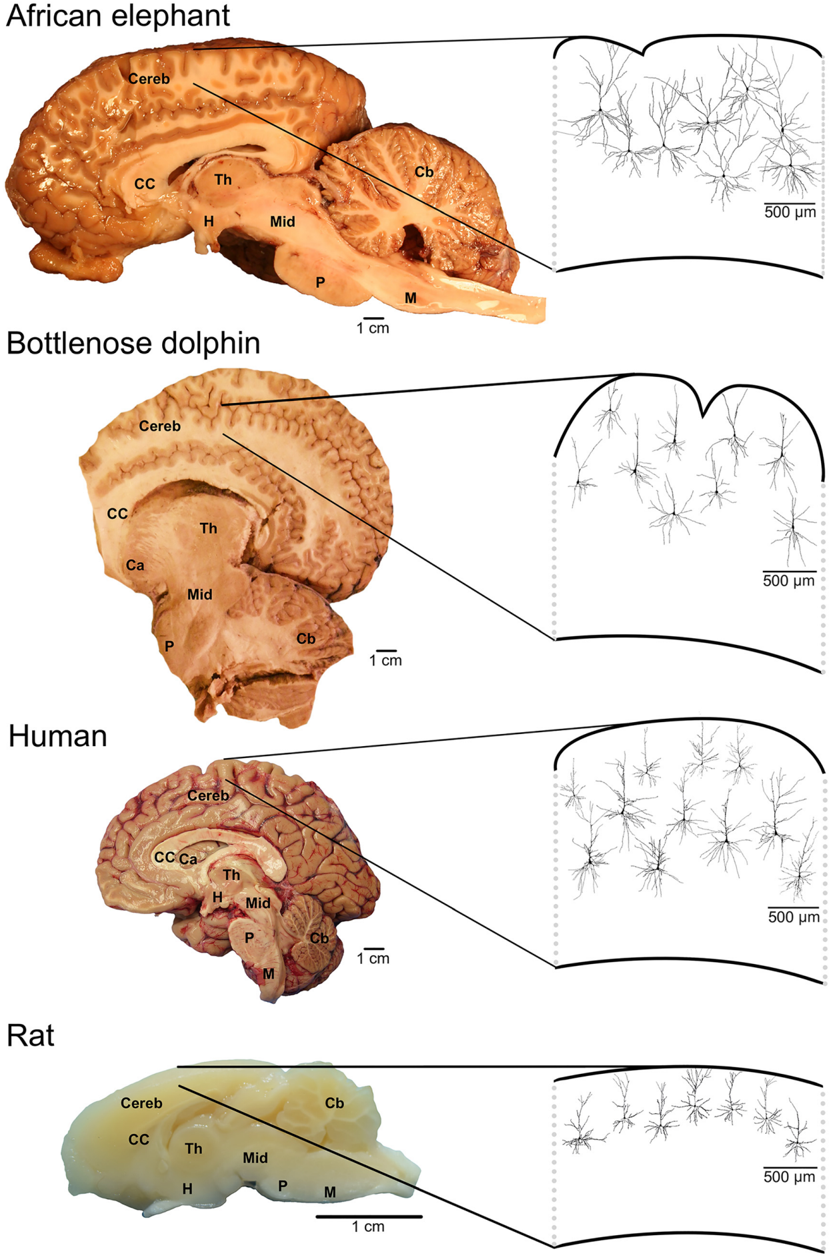
“…Ca, caudate; Cb, cerebellum; CC, corpus callosum; Cereb, cerebral cortex; H, hypothalamus; M, medulla; Mid, midbrain; P, pons; Th, thalamus. in matriarchal, multigenerational family groups of two to 10 adult females and their immature offspring (de Silva et al. 2011; Vance et al. 2009).”
BackgroundCerebral changes in rats exposed individually to an enriched environment.
Rosenzweig, M. R., & Bennett, E. L. (1972) · Journal of Comparative and Physiological Psychology · doi:10.1037/h0032978 · Cited by 157
Herculano-Houzel, S., Avelino-de-Souza, K., Neves, K., PorfÃrio, J., Messeder, D., Mattos Feijó, L., Maldonado, J., & Manger, P. R. (2014) · Frontiers in Neuroanatomy · doi:10.3389/fnana.2014.00046 · Cited by 153
Veena, J., Srikumar, B. N., Mahati, K., Bhagya, V., Raju, T. R., & Shankaranarayana Rao, B. S. (2009) · Journal of Neuroscience Research · doi:10.1002/jnr.21907 · Cited by 151 · cited 2×
“…complex (or hippocampus), which is particularly sensitive to environmental influences, exhibits a lower volume in impoverished animals compared to enriched animals largely because of decreased neurogenesis (mice: Kemperman et al. 1977; pigeons: Melleu et al. 2016; rats: Veena et al. 2009).”
BackgroundAquatic adaptation and the evolution of smell and taste in whales
Kishida, T., Thewissen, J. G. M., Hayakawa, T., Imai, H., & Agata, K. (2015) · Zoological Letters · doi:10.1186/s40851-014-0002-z · Cited by 149 · cited 2×
“…cetaceans is smaller than onewould expect (Oelschläger and Oelschläger 2009; Patzke et al. 2015), perhaps because of a greatly reduced olfactory system (Kishida et al. 2015), it exhibits typical mammalian subregions (e.g., dentate gyrus, hippocampus proper, and subiculum; Oelschläger et al. 2008).”
BackgroundA quantitative assessment of the efficacy of an environmental enrichment programme for giant pandas
Swaisgood, R. R., White, A. M., Zhou, X., Zhang, H., Zhang, G., Wei, R., Hare, V. J., Tepper, E. M., & Lindburg, D. G. (2001) · Animal Behaviour · doi:10.1006/anbe.2000.1610 · Cited by 148
The effects of physical exercise and cognitive training on memory and neurotrophic factors.
Heisz, J. J., Clark, I. B., Bonin, K., Paolucci, E. M., Michalski, B., Becker, S., & Fahnestock, M. (2017) · Journal of Cognitive Neuroscience · doi:10.1162/jocn_a_01164 · Cited by 144 · cited 2×
“Exercise not only increases the supply of oxygenated blood to a metabolically expensive brain, but also increases serumneurotrophic factors andBDNF (Heisz et al. 2017; Liang et al. 2021) which, in turn, contribute to potential neurogenesis and enhanced cognitive abilities through a series of complex biochemical cascad…”
BackgroundScaccianoce, S., Bianco, P. D., Paolone, G., Caprioli, D., Modafferi, A. M. E., Nencini, P., & Badiani, A. (2006) · Behavioural Brain Research · doi:10.1016/j.bbr.2005.04.024 · Cited by 143 · cited 1×
“Stress from social isolation induces alterations in several neurochemical systems, including (1) decreases in BDNF in the hippocampus (rats: Scaccianoce et al. 2006), which is associated with increased anxiety-like symptoms in rats (Murínová et al. 2017) and several neuropsychiatric disorders in…”
BackgroundBrains in the city: Neurobiological effects of urbanization
Lambert, K. G., Nelson, R. J., Jovanovic, T., & Cerdá, M. (2015) · Neuroscience & Biobehavioral Reviews · doi:10.1016/j.neubiorev.2015.04.007 · Cited by 142 · cited 2×
“…is worth noting a couple of additional points: natural environments appear to be better for the emotional health of rats (as measured by c-Fos activation in the nucleus accumbens) than artificially enriched environments (Lambert et al. 2016), with similar findings in humans (Lambert et al. 2015).”
ResultDirect contact with enriched environment is required to alter cerebral weights in rats.
Ferchmin, P. A., Bennett, E. L., & Rosenzweig, M. R. (1975) · Journal of Comparative and Physiological Psychology · doi:10.1037/h0076175 · Cited by 140 · cited 1×
“Moreover, active, direct contact with conspecifics and objects in the environment is crucial; merely observing an enriched environment is not enough to promote neural changes (Ferchmin et al. 1975).”
BackgroundMeehan, C. L., Garner, J. P., & Mench, J. A. (2004) · Developmental Psychobiology · doi:10.1002/dev.20007 · Cited by 139
To hunt or not to hunt? A feeding enrichment experiment with captive large felids
Bashaw, M. J., Bloomsmith, M. A., Marr, M. J., & Maple, T. L. (2003) · Zoo Biology · doi:10.1002/zoo.10065 · Cited by 138
Enriched Environments as a Potential Treatment for Developmental Disorders: A Critical Assessment
Ball, N. J., Mercado, E., & Orduña, I. (2019) · Frontiers in Psychology · doi:10.3389/fpsyg.2019.00466 · Cited by 137 · cited 1×
“…(mice: Arai and Feig 2011; fish,Gadusmorhua: Strand et al. 2010), protect against lead toxicity (mice: Schneider et al. 2001), treat developmental disorders (humans: Ball et al. 2019), and ameliorate several psychiatric and neurogenerative disorders in humans (Nithianantharajah and Hannan 2006).”
BackgroundLyashchenko, K. P., Greenwald, R., Esfandiari, J., Olsen, J. H., Ball, R., Dumonceaux, G., Dunker, F., Buckley, C., Richard, M., Murray, S., et al. (2006) · Clinical and Vaccine Immunology · doi:10.1128/cvi.00133-06 · Cited by 132 · cited 1×
“TB is deadly in elephants and treatment is often unsuccessful (Lyashchenko et al. 2006).”
BackgroundStereotypical movements and frontotemporal dementia
Mendez, M. F., Shapira, J. S., & Miller, B. L. (2005) · Movement Disorders · doi:10.1002/mds.20465 · Cited by 125 · cited 2×
“…in several conditions: Autism spectrum disorder (Langenet al. 2014), primary complexmotor stereotypies (Singer 2013), frontotemporal dementia (Mendez et al. 2005), neurodevelopmental disorders (Wilkes and Lewis 2018), Rett syndrome (Temudo et al. 2007), and schizophrenia (Morrens et al.…”
BackgroundFordyce, D. E., & Farrar, R. P. (1991) · Behavioural Brain Research · doi:10.1016/s0166-4328(05)80061-0 · Cited by 125 · cited 2×
“(2000), exercise appears to enhance the activity of several neurotransmitter systems in rats: (1) cholinergic functioning in the hippocampus, which improves spatial learning (Fordyce and Farrar 1991), (2) opioid activity, which modulates pain (Sforzo et al.”
BackgroundA Neurologic Perspective of Equine Stereotypy
McBride, S. D., & Hemmings, A. (2009) · Journal of Equine Veterinary Science · doi:10.1016/j.jevs.2008.11.008 · Cited by 124
Cortical complexity in cetacean brains
Hof, P. R., Chanis, R., & Marino, L. (2005) · The Anatomical Record Part A: Discoveries in Molecular, Cellular, and Evolutionary Biology · doi:10.1002/ar.a.20258 · Cited by 124 · cited 1×
“Although the neocortex of elephants and cetaceans is largely agranular (Hof et al. 2005; Jacobs et al. 2011), it is logical to expect that an impoverished environment would affect their neocortex similarly to theway that it affects that of othermammals.”
BackgroundSelf-citationStereotypies: A critical appraisal and suggestion of a clinically useful definition
Edwards, M. J., Lang, A. E., & Bhatia, K. P. (2012) · Movement Disorders · doi:10.1002/mds.23994 · Cited by 123 · cited 1×
“In humans, although clinical definitions of stereotypy vary (Edwards et al. 2012), repetitive motor dysfunctions (e.”
BackgroundEnrichment promotes learning in fish
Strand, D., Utne-Palm, A. C., Jakobsen, P., Braithwaite, V., Jensen, K., & Salvanes, A. G. V. (2010) · Marine Ecology Progress Series · doi:10.3354/meps08682 · Cited by 121 · cited 1×
“…2009), enhance memory (mice: van Praag et al. 2000), increase cognitive functions and neural plasticity (mice: Arai and Feig 2011; fish,Gadusmorhua: Strand et al. 2010), protect against lead toxicity (mice: Schneider et al. 2001), treat developmental disorders (humans: Ball et al. 2019), and…”
BackgroundEnvironmental enrichment: effects on stereotyped behavior and neurotrophin levels
Turner, C. A., & Lewis, M. H. (2003) · Physiology & Behavior · doi:10.1016/j.physbeh.2003.07.008 · Cited by 121 · cited 1×
“The prevention of stereotypies has also been linked to increased BDNF in the striatum resulting from enrichment (mice: Turner and Lewis 2003).”
BackgroundEnriched environment during development is protective against lead-induced neurotoxicity
Schneider, J. S., Lee, M. H., Anderson, D. W., Zuck, L., & Lidsky, T. I. (2001) · Brain Research · doi:10.1016/s0006-8993(00)03249-2 · Cited by 120 · cited 1×
“…cognitive functions and neural plasticity (mice: Arai and Feig 2011; fish,Gadusmorhua: Strand et al. 2010), protect against lead toxicity (mice: Schneider et al. 2001), treat developmental disorders (humans: Ball et al. 2019), and ameliorate several psychiatric and neurogenerative disorders…”
BackgroundSchubert, M. I., Porkess, V., Dashdorj, N., Fone, K. C. F., & Auer, D. P. (2008) · Neuroscience · doi:10.1016/j.neuroscience.2008.12.019 · Cited by 120 · cited 1×
“…neurons in themedial PFC,which show reductions in apical dendritic extent; and (3) CA3 pyramidal neurons in the hippocampus, which undergo degeneration of the apical dendrite. isolation have also been observed, including selective loss of prefrontal cortex volume (rats: Schubert et al. 2009).”
BackgroundMotor Stereotypies: A Pathophysiological Review
Péter, Z., Oliphant, M. E., & Fernandez, T. V. (2017) · Frontiers in Neuroscience · doi:10.3389/fnins.2017.00171 · Cited by 120 · cited 1×
“However, the fundamental neural synapomorphy across eutherians allows for much more detailed (e.g., pharmacological, surgical, genetic) explorations in animal models (Langen et al. 2011b; Péter et al. 2017).”
BackgroundDifferential rearing effects on rat visual cortex synapses. II. Synaptic morphometry
Sirevaag, A. M., & Greenough, W. T. (1985) · Developmental Brain Research · doi:10.1016/0165-3806(85)90193-2 · Cited by 116 · cited 3×
“Carlstead et al. () smaller synapses than enriched cohorts (Møllgaard et al. 1971), with significantly shorter postsynaptic opaque regions in asymmetrical synapses (Sirevaag and Greenough 1985; Figure 2).”
BackgroundAn enriched environment increases noradrenaline concentration in the mouse brain
Naka, F., Shiga, T., Yaguchi, M., & Okado, N. (2002) · Brain Research · doi:10.1016/s0006-8993(01)03257-7 · Cited by 116
Nitric Oxide, Stress, and Depression
McLeod, T. M., BS, López-Figueroa, A. L., MD, López-Figueroa, A. M. O., & PhD (2025) · Psychopharmacology Bulletin · doi:10.64719/pb.4268 · Cited by 115 · cited 3×
“2010) as well as neuroinflammation that contributes to physiological, behavioral, affective, and cognitive disorders (de Pablos et al. 2014; McLeod et al. 2001).”
BackgroundMorfeld, K. A., Meehan, C. L., Hogan, J. N., & Brown, J. L. (2016) · PLOS ONE · doi:10.1371/journal.pone.0155146 · Cited by 114 · cited 3×
“Across North American zoos, 74% of elephants were found to be overweight with 34% believed to be clinically obese (Morfeld et al. 2016).”
BackgroundMcBride, S. D., & Hemmings, A. (2004) · Behavioural Brain Research · doi:10.1016/j.bbr.2004.10.014 · Cited by 112 · cited 2×
“Overactivation of striatal D2 receptors, for example, tends to suppress the indirect pathway, allowing stereotypical behaviors to emerge (McBride and Hemmings 2005).”
BackgroundThe intersection of stress and reward: BNST modulation of aversive and appetitive states
Ch'ng, S., Fu, J., Brown, R. M., McDougall, S. J., & Lawrence, A. J. (2018) · Progress in Neuro-Psychopharmacology and Biological Psychiatry · doi:10.1016/j.pnpbp.2018.01.005 · Cited by 112 · cited 1×
“Although not shown in the schematic, the anterior BNST tends to increase HPA axis activity whereas the posterior division tends to inhibit it (Ch’ng et al. 2018).”
BackgroundThe amygdala: contributions to fear and stress
LeDoux, J. E. (1994) · Seminars in Neuroscience · doi:10.1006/smns.1994.1030 · Cited by 110 · cited 1×
“The amygdala, in conjunction with interconnected structures involved in autonomic, neuroendocrine, and behavioral arousal, is crucially involved in emotional processing of sensory information and regulation of emotional responsiveness, especially as related to fear (LeDoux 1994).”
BackgroundBryant, C. E., Rupniak, N. M. J., & Iversen, S. D. (1988) · Journal of Medical Primatology · doi:10.1111/j.1600-0684.1988.tb00388.x · Cited by 110
Murínová, J., Hlaváčová, N., Chmelová, M., & Riečanský, I. (2017) · Frontiers in Behavioral Neuroscience · doi:10.3389/fnbeh.2017.00101 · Cited by 110 · cited 2×
“2006), which is associated with increased anxiety-like symptoms in rats (Murínová et al. 2017) and several neuropsychiatric disorders in humans (Autry and Monteggia 2012); (2) reduced levels of serotonin in both hippocampus and frontal cortex, which is associated with increased aggression and depression-like symptoms…”
BackgroundPlasticity in the 904-day-old male rat cerebral cortex
Diamond, M. C., Johnson, R. E., Protti, A. M., Ott, C. E., & Kajisa, L. (1985) · Experimental Neurology · doi:10.1016/0014-4886(85)90221-3 · Cited by 108 · cited 1×
“The CNS appears particularly sensitive during early development (Bogart et al. 2013), but environmentally induced changes occur across the lifespan, including in very old animals (Diamond et al. 1985), and transgenerationally (Arai and Feig 2011).”
BackgroundManger, P. R., Pillay, P., Maseko, B. C., Bhagwandin, A., Gravett, N., Moon, D.-J., Jillani, N., & Hemingway, J. (2009) · Journal of Neuroscience Methods · doi:10.1016/j.jneumeth.2009.01.001 · Cited by 107 · cited 2×
“To date, only three African elephant brains have been perfused to allow detailed histological investigations (Manger et al. 2009).”
BackgroundStress-induced remodeling of hippocampal CA3 pyramidal neurons
McEwen, B. S. (2016) · Brain Research · doi:10.1016/j.brainres.2015.12.043 · Cited by 105 · cited 4×
“, reduction of hippocampal volume) have been documented in humans and associatedwith clinical depression, bipolar disorders, PTSD, and other stress-related illnesses (McEwen 2016; McEwen et al. 2016).”
BackgroundInfluentialMelendez, R. I., Lee Gregory, M., Bardo, M. T., & Kalivas, P. W. (2004) · Neuropsychopharmacology · doi:10.1038/sj.npp.1300507 · Cited by 104
The Contribution of Activity-Dependent Synaptic Plasticity to Classical Conditioning in Aplysia
Antonov, I., Antonova, I., Kandel, E. R., & Hawkins, R. D. (2001) · The Journal of Neuroscience · doi:10.1523/jneurosci.21-16-06413.2001 · Cited by 103 · cited 2×
“, honeybees; Groh and Rössler 2020), to invertebrates (e.g., aplysia; Antonov et al. 2001), to a variety of mammals (Holtmaat and Svoboda 2009).”
BackgroundCalretinin-immunoreactive neurons in the primary visual cortex of dolphin and human brains
Glezer, I. I., Hof, P. R., & Morgane, P. J. (1992) · Brain Research · doi:10.1016/0006-8993(92)91047-i · Cited by 102 · cited 1×
“In primary visual cortex, the general typology of GABA-ergic neurons immunoreactive to calretinin (CR) is similar for bottlenose dolphins (Tursiops truncatus) and humans (Glezer et al. 1992).”
BackgroundBDNF increases with behavioral enrichment and an antioxidant diet in the aged dog
Fahnestock, M., Marchese, M., Head, E., Pop, V., Michalski, B., Milgram, W. N., & Cotman, C. W. (2012) · Neurobiology of Aging · doi:10.1016/j.neurobiolaging.2010.03.019 · Cited by 101
Environmental enrichment: Effects on stereotyped behavior and dendritic morphology
Turner, C. A., Lewis, M. H., & King, M. A. (2003) · Developmental Psychobiology · doi:10.1002/dev.10116 · Cited by 101 · cited 2×
“1973) cortices for rats, and in motor cortex for deer mice (Turner et al. 2003).”
BackgroundRosen, D. A. S., & Worthy, G. A. J. (2001) · doi:10.1201/9781315144931-29 · Cited by 97 · cited 2×
“2012, 2013; Zuckerman and Assimos 2009) are often linked to the captive diet (Rosen and Worthy 2018).”
BackgroundGlezer, I. I., Hof, P. R., & Morgane, P. J. (1998) · Journal of Chemical Neuroanatomy · doi:10.1016/s0891-0618(98)00022-2 · Cited by 97 · cited 1×
“As with neuroanatomy, differences in distribution, density, and typology in neurochemical systems typically reflect specialized sensorimotor and ecological adaptations (Glezer et al. 1998; Manger et al. 2021), but they do not diminish the fundamental similarities across all mammalian brains.”
BackgroundMatthews, C. J. D., Luque, S. P., Petersen, S. D., Andrews, R. D., & Ferguson, S. H. (2011) · Polar Biology · doi:10.1007/s00300-010-0958-x · Cited by 97 · cited 1×
“Similar issues obtain for captive cetaceans who, despite routinely swimming tens of kilometers a day in the ocean (Matthews et al. 2011), are typically held in concrete tanks that are too small and too shallow to allow for any natural ranging or diving behaviors (McPhee and Carlstead 2010).”
BackgroundWall, J., Wittemyer, G., Klinkenberg, B., LeMay, V., & Douglas-Hamilton, I. (2013) · Biological Conservation · doi:10.1016/j.biocon.2012.07.019 · Cited by 96 · cited 2×
“2017), in which they typically travel ∼8–12 km/day,withmuch greater distances common (up to ∼50 km/day; Miller et al. 2016; Wall et al. 2013).”
BackgroundSocial isolation stress and neuroactive steroids
Serra, M., Sanna, E., Mostallino, M. C., & Biggio, G. (2006) · European Neuropsychopharmacology · doi:10.1016/j.euroneuro.2006.03.004 · Cited by 94 · cited 2×
“In rats and nonhuman primates, chronic isolation appears to enhance HPA responsiveness to stressors (Serra et al. 2007) and increase basal cortisol levels (Hawkley et al.”
BackgroundGreco, B. J., Meehan, C. L., Hogan, J. N., Leighty, K. A., Mellen, J., Mason, G. J., & Mench, J. A. (2016) · PLoS ONE · doi:10.1371/journal.pone.0144276 · Cited by 94 · cited 1×
“It is estimated that 47–85% of elephants in zoos and 100% of those in circuses exhibit stereotypies (Greco et al. 2016; Mason and Veasey 2010; Schmid 1995).”
BackgroundMorrens, M., Hulstijn, W., Lewi, P. J., Binder, M. D., & Sabbe, B. (2006) · Schizophrenia Research · doi:10.1016/j.schres.2006.01.024 · Cited by 89 · cited 1×
“…in several conditions: Autism spectrum disorder (Langenet al. 2014), primary complexmotor stereotypies (Singer 2013), frontotemporal dementia (Mendez et al. 2005), neurodevelopmental disorders (Wilkes and Lewis 2018), Rett syndrome (Temudo et al. 2007), and schizophrenia (Morrens et al. 2006).”
BackgroundArco, A. D., Segovia, G., Canales, J. J., GARRIDO, P., de Blas, M., García‐Verdugo, J. M., & Mora, F. (2006) · Journal of Neural Transmission · doi:10.1007/s00702-006-0565-8 · Cited by 89
A quantitative study of dendrite complexity in selected areas of the human cerebral cortex
Scheibel, A. B., Conrad, T., Perdue, S. T., Tomiyasu, U., & Wechsler, A. F. (1990) · Brain and Cognition · doi:10.1016/0278-2626(90)90006-a · Cited by 87 · cited 1×
“At the morphological level, Scheibel et al. (1990) found a positive relationship between the basilar dendritic extent in cortical pyramidal neurons and the complexity of the computational task performed by that area, a finding confirmed in subsequent studies (monkey: Elston and Rosa 1997; human:…”
ResultAnalysis of Synaptic Microcircuits in the Mushroom Bodies of the Honeybee
Groh, C., & Rößler, W. (2020) · Insects · doi:10.3390/insects11010043 · Cited by 87 · cited 2×
“The brain’s exquisite responsiveness to its environment is a hallmark of plasticity, for better or worse, and has been demonstrated across all species examined, from insects (e.g., honeybees; Groh and Rössler 2020), to invertebrates (e.”
BackgroundKellar, N. M., Catelani, K. N., Robbins, M. N., Trego, M. L., Allen, C. D., Danil, K., & Chivers, S. J. (2015) · PLoS ONE · doi:10.1371/journal.pone.0115257 · Cited by 86 · cited 2×
“Biomarkers such as cortisol have also been examined to a limited degree, with acute measures indicating expected elevations in cortisol levels associated with events such as beach strandings in dolphins (Kellar et al. 2015) or transportation/relocation in elephants (Laws et al.”
BackgroundMotor control, habits, complex motor stereotypies, and Tourette syndrome
Singer, H. S. (2013) · Annals of the New York Academy of Sciences · doi:10.1111/nyas.12281 · Cited by 85 · cited 4×
“…and head nodding) have been documented in several conditions: Autism spectrum disorder (Langenet al. 2014), primary complexmotor stereotypies (Singer 2013), frontotemporal dementia (Mendez et al. 2005), neurodevelopmental disorders (Wilkes and Lewis 2018), Rett syndrome (Temudo et al. 2007),…”
BackgroundMethodInfluentialBrain Weight Increases Resulting from Environmental Enrichment: A Directional Dominance in Mice
Henderson, N. D. (1970) · Science · doi:10.1126/science.169.3947.776 · Cited by 84 · cited 1×
“Impoverished rats (Katz and Davies 1984), mice (Henderson 1970), and gerbils (Rosenzweig and Bennett 1969) tend to exhibit lower overall brain weight than enriched cohorts.”
BackgroundLong-lasting and transgenerational effects of an environmental enrichment on memory formation
Arai, J. A., & Feig, L. A. (2011) · Brain Research Bulletin · doi:10.1016/j.brainresbull.2010.11.003 · Cited by 84 · cited 2×
“The CNS appears particularly sensitive during early development (Bogart et al. 2013), but environmentally induced changes occur across the lifespan, including in very old animals (Diamond et al. 1985), and transgenerationally (Arai and Feig 2011).”
BackgroundStereotypies in Rett syndrome: Analysis of 83 patients with and without detected MECP2 mutations
Temudo, T., Oliveira, P., Santos, M., Dias, K., Vieira, J., Moreira, A., Calado, E., Carrilho, I., Oliveira, G., Levy, A., et al. (2007) · Neurology · doi:10.1212/01.wnl.0000259086.34769.78 · Cited by 83 · cited 2×
“…in several conditions: Autism spectrum disorder (Langenet al. 2014), primary complexmotor stereotypies (Singer 2013), frontotemporal dementia (Mendez et al. 2005), neurodevelopmental disorders (Wilkes and Lewis 2018), Rett syndrome (Temudo et al. 2007), and schizophrenia (Morrens et al. 2006).”
BackgroundSeasonal variation in stereotypic pacing in an American black bear Ursus americanus
Carlstead, K., & Seidensticker, J. C., IV (1991) · Behavioural Processes · doi:10.1016/0376-6357(91)90017-t · Cited by 82
The neurobiology of stereotypy II: the role of stress.
Cabib, S. (2006) · CABI eBooks · doi:10.1079/9780851990040.0227 · Cited by 82 · cited 3×
“What remains unclear is whether the observed stereotypies are the result of temporary pharmacological dysregulation or permanent structural damage (Cabib 2006).”
BackgroundMiura, H., Qiao, H., & Ohta, T. (2002) · Brain Research · doi:10.1016/s0006-8993(01)03201-2 · Cited by 81 · cited 1×
“…levels of serotonin in both hippocampus and frontal cortex, which is associated with increased aggression and depression-like symptoms (rats: Miura et al. 2002); and (3) overproduction of nitric oxide, a retrograde messenger, in the hippocampus, which is involved in excitotoxicity (mice:…”
BackgroundGroup structure and kinship in beluga whale societies
O’Corry-Crowe, G., Suydam, R., Quakenbush, L., Smith, T. G., Lydersen, C., Kovacs, K. M., Orr, J., Harwood, L., Litovka, D., & Ferrer, T. (2020) · Scientific Reports · doi:10.1038/s41598-020-67314-w · Cited by 81 · cited 1×
“As with elephants, cetaceans naturally have long juvenile periods and depend heavily on cultural learning as well as life-long support from a complex social network (O’Corry-Crowe et al. 2020).”
BackgroundLiang, J., Wang, H., Zeng, Y., Qu, Y., Liu, Q., Zhao, F., Duan, J., Jiang, Y., Li, S., Ying, J., et al. (2021) · Reviews in the Neurosciences · doi:10.1515/revneuro-2020-0099 · Cited by 81 · cited 2×
“Exercise not only increases the supply of oxygenated blood to a metabolically expensive brain, but also increases serumneurotrophic factors andBDNF (Heisz et al. 2017; Liang et al. 2021) which, in turn, contribute to potential neurogenesis and enhanced cognitive abilities through a series of complex biochemical cascad…”
BackgroundNeidl, R., Schneider, A., Bousiges, O., Majchrzak, M., Barbelivien, A., de Vasconcelos, A. P., Dorgans, K., Doussau, F., Loeffler, J.-P., Cassel, J.-C., et al. (2016) · The Journal of Neuroscience · doi:10.1523/jneurosci.3239-15.2016 · Cited by 80 · cited 2×
“emotional and cognitive functioning (Neidl et al. 2016).”
BackgroundFecundity and population viability in female zoo elephants: problems and possible solutions
Clubb, R., Rowcliffe, M., Lee, P., Mar, K., Moss, C., & Mason, G. (2009) · Animal Welfare · doi:10.1017/s0962728600000488 · Cited by 75 · cited 1×
“These factors appear to be associated with reproductive issues (Clubb and Mason 2002; Perrin et al. 2021) and a reduced lifespan for both Asian and African elephants in captivity (Clubb et al. 2008, 2009).”
BackgroundEffects of Environmental Complexity and Deprivation on Brain Anatomy and Histology: A Review
WALSH, R. N. (1981) · International Journal of Neuroscience · doi:10.3109/00207458108990671 · Cited by 74 · cited 2×
“1973), even though impoverished rats tend to have greater body weight than enriched rats (Walsh 1981), a finding that parallels the obesity problem identified in many captive animals (Clubb et al.”
BackgroundTuberculosis at the human-animal interface: an emerging disease of elephants
Mikota, S. K., & Maslow, J. N. (2011) · Tuberculosis · doi:10.1016/j.tube.2011.02.007 · Cited by 74 · cited 1×
“Finally, captive elephants are particularly susceptible to several infectious diseases (e.g., Mycobacterium tuberculosis, TB, the endotheliotropic herpesvirus, EEHV), which are highly contagious (Fuery et al. 2018; Mikota and Maslow 2011).”
BackgroundMcBride, S. D., & Parker, M. O. (2014) · Behavioural Brain Research · doi:10.1016/j.bbr.2014.05.057 · Cited by 73 · cited 2×
“The direct (striatonigral) pathway is a double inhibitory system (McBride and Parker 2015) that ultimately activates motor programs (Figure 4).”
BackgroundArchitectural Organization of the African Elephant Diencephalon and Brainstem
Maseko, B. C., Patzke, N., Fuxe, K., & Manger, P. R. (2013) · Brain, Behavior and Evolution · doi:10.1159/000352004 · Cited by 71 · cited 1×
“For example, the primary antibodies used in African elephant research (Maseko et al. 2013; Ngwenya et al. 2011; Patzke et al. 2014) were developed in the rabbit andwork in several species (e.g., bats, drosophila, felines, ferrets, humans, mice, mollusks, pigs, rats, and squid), suggesting…”
BackgroundHe, S., Ma, J., Liu, N., & Yu, X. (2010) · Journal of Neuroscience · doi:10.1523/jneurosci.6375-09.2010 · Cited by 70
Lambert, K. G., Hyer, M. M., Bardi, M., Rzucidlo, A., Scott, S. N., Terhune‐Cotter, B., Hazelgrove, A., Silva, I., & Kinsley, C. H. (2016) · Neuroscience · doi:10.1016/j.neuroscience.2016.05.037 · Cited by 70 · cited 2×
“Here it is worth noting a couple of additional points: natural environments appear to be better for the emotional health of rats (as measured by c-Fos activation in the nucleus accumbens) than artificially enriched environments (Lambert et al. 2016), with similar findings in humans (Lambert et al.”
ResultEnvironmental enrichment: effects on stereotyped behavior and regional neuronal metabolic activity
Turner, C. A., Yang, M. C. K., & Lewis, M. H. (2002) · Brain Research · doi:10.1016/s0006-8993(02)02472-1 · Cited by 66 · cited 1×
“Environmental enrichment appears to prevent stereotyped behaviors by increasing metabolic activity (asmeasuredby cytochromeoxidase) in the motor cortex, the striatum, and the nucleus accumbens (mice: Turner et al. 2002).”
BackgroundUgaz, C., Valdez, R. A., Romano, M. C., & Galindo, F. (2012) · Journal of Veterinary Behavior · doi:10.1016/j.jveb.2012.10.006 · Cited by 66 · cited 3×
“Notably, captive bottlenose dolphins kept in sea pen facilities that allow for ocean water flow and entry of small fish had significantly lower salivary cortisol levels than their cohorts in tanks (Ugaz et al. 2013).”
BackgroundOelschläger, H. H. A., Haas-Rioth, M., Fung, C., Ridgway, S. H., & Knauth, M. (2008) · Brain, Behavior and Evolution · doi:10.1159/000110495 · Cited by 66 · cited 3×
“, caudate, putamen, and globus pallidus) as this is a highly conserved system crucial for integrative functions (Oelschläger et al. 2008).”
BackgroundResultNeuronal morphology in the African elephant (Loxodonta africana) neocortex
Jacobs, B., Lubs, J. L., Hannan, M., Anderson, K., Butti, C., Sherwood, C. C., Hof, P. R., & Manger, P. R. (2010) · Brain Structure and Function · doi:10.1007/s00429-010-0288-3 · Cited by 66 · cited 4×
“Although the neocortex of elephants and cetaceans is largely agranular (Hof et al. 2005; Jacobs et al. 2011), it is logical to expect that an impoverished environment would affect their neocortex similarly to theway that it affects that of othermammals.”
BackgroundMethodResultInfluentialSelf-citationThe harmful effects of captivity and chronic stress on the well-being of orcas (Orcinus orca)
Marino, L., Rose, N. A., Visser, I. N., Rally, H., Ferdowsian, H. R., & Slootsky, V. (2019) · Journal of Veterinary Behavior · doi:10.1016/j.jveb.2019.05.005 · Cited by 66
Self-citationMarino, L., Butti, C., Connor, R. C., Fordyce, R. E., Herman, L. M., Hof, P. R., Lefebvre, L., Lusseau, D., McCowan, B., Nimchinsky, E. A., et al. (2008) · Biological Reviews · doi:10.1111/j.1469-185x.2008.00049.x · Cited by 65 · cited 1×
“Although this hypothesis has yet to be tested, it comports with the behavioral evidence for sophisticated cognitive functions in dolphins and many other cetaceans (Deecke 2018; Marino et al. 2008).”
BackgroundSelf-citationTotal neocortical cell number in the mysticete brain
Eriksen, N., & Pakkenberg, B. (2007) · The Anatomical Record · doi:10.1002/ar.20404 · Cited by 65 · cited 1×
“Whole brain neuron counts in cetaceans are not available, but an unbiased stereological estimate suggests ∼13 billion neurons in the minke whale cerebral cortex (Eriksen and Pakkenberg 2007).”
BackgroundLaws, N., Ganswindt, A., Heistermann, M., Harris, M., Harris, S., & Sherwin, C. (2007) · Journal of Applied Animal Welfare Science · doi:10.1080/10888700701555600 · Cited by 65 · cited 2×
“…examined to a limited degree, with acute measures indicating expected elevations in cortisol levels associated with events such as beach strandings in dolphins (Kellar et al. 2015) or transportation/relocation in elephants (Laws et al. 2007) and cetaceans (Noda et al. 2007; Spoon and Romano 2012).”
BackgroundBogart, S. L., Bennett, A. J., Schapiro, S. J., Reamer, L. A., & Hopkins, W. D. (2013) · Developmental Science · doi:10.1111/desc.12106 · Cited by 65 · cited 1×
“The CNS appears particularly sensitive during early development (Bogart et al. 2013), but environmentally induced changes occur across the lifespan, including in very old animals (Diamond et al. 1985), and transgenerationally (Arai and Feig 2011).”
BackgroundA cerebellar substrate for cognition evolved multiple times independently in mammals
Smaers, J. B., Turner, A. H., Gómez-Robles, A., & Sherwood, C. C. (2018) · eLife · doi:10.7554/elife.35696 · Cited by 65 · cited 2×
“The disproportionate size of the cerebellum in elephants and cetaceans, particularly in the lateral hemispheres (Smaers et al. 2018), appears to be related to its sensory acquisition and processing role and the importance of infrasound in elephants and echolocation in cetaceans for exploring…”
BackgroundWilkes, B. J., & Lewis, M. H. (2018) · Neuroscience & Biobehavioral Reviews · doi:10.1016/j.neubiorev.2018.05.022 · Cited by 64 · cited 4×
“Imaging studies in humans implicate nucleus size, connectivity, and structural variation with restricted repetitive behaviors (Wilkes and Lewis 2018), and have revealed positive correlations between enlargement of the caudate and putamen with the severity of stereotypic behaviors (Langen et al.”
BackgroundInfluentialThe Evolutions of Large Brain Size in Mammals: The ‘Over-700-Gram Club Quartet'
Manger, P. R., Spocter, M. A., & Patzke, N. (2013) · Brain, Behavior and Evolution · doi:10.1159/000352056 · Cited by 63 · cited 1×
“Elephants and ∼75% of cetacean species, along with humans and three pinniped species, belong to a small subset of species with brain masses >700 g (Manger et al. 2013).”
BackgroundRelative Volume of the Cerebellum in Dolphins and Comparison with Anthropoid Primates
Marino, L., Rilling, J. K., Lin, S. K., & Ridgway, S. H. (2000) · Brain, Behavior and Evolution · doi:10.1159/000047205 · Cited by 63 · cited 1×
“Although the cerebellum in most cetaceans and in elephants is much larger in both relative and absolute size compared to other eutherians (Marino et al. 2000; Maseko et al. 2012), the neuronal morphology of the elephant and cetacean cerebellum is very consistent with what has been observed in other…”
ResultSelf-citationStereotypies in children with a history of early institutional care
Bos, K. J., Zeanah, C. H., Smyke, A. T., Fox, N. A., & Nelson, C. A. (2010) · Archives of Pediatrics & Adolescent Medicine · doi:10.1001/archpediatrics.2010.47 · Cited by 63 · cited 1×
“Children with a history of early institutional care are more likely to exhibit stereotypies, underscoring the influential role of the environment during early development (Bos et al. 2010).”
BackgroundReducing Equine Stereotypies Using an Equiball™
Henderson, J. V., & Waran, N. K. (2001) · Animal Welfare · doi:10.1017/s0962728600023277 · Cited by 63
Nikolaev, E., Kaczmarek, L., Zhu, S. W., Winblad, B. G., & Mohammed, A. H. S. (2002) · Brain Research · doi:10.1016/s0006-8993(02)03606-5 · Cited by 61 · cited 2×
“In the amygdala, impoverished rats show greater c-Fos (a gene involved in cell proliferation/differentiation following extracellular stimulation) expression in the medial nucleus following aversive training than enriched animals, suggesting they experience greater levels of stress (Nikolaev et al. 2002).”
BackgroundShadrack, N., Moses, M. O., Joseph, M., Shadrack, M., Steve, N., & James, I. (2017) · International Journal of Biodiversity and Conservation · doi:10.5897/ijbc2016.1033 · Cited by 61 · cited 2×
“In their natural habitat, elephants have expansive home ranges that extend from tens to 10,000 km(2) (Bahar et al. 2018; Ngene et al. 2017), in which they typically travel ∼8–12 km/day,withmuch greater distances common (up to ∼50 km/day; Miller et al.”
BackgroundOelschläger, H., Ridgway, S. H., & Knauth, M. (2010) · Brain Behavior and Evolution · doi:10.1159/000293601 · Cited by 59 · cited 4×
“The cetacean amygdaloid complex resembles that of other mammals (Oelschläger et al. 2010) but is smaller in relative size (Patzke et al. 2015).”
BackgroundInfluentialTorre, J. C. L. (1968) · Experimental Neurology · doi:10.1016/0014-4886(68)90144-1 · Cited by 59
Venn-Watson, S. K., Smith, C. R., Stevenson, S., Parry, C. B., Daniels, R., Jensen, E. D., Cendejas, V., Balmer, B. C., Janech, M. G., Neely, B. A., et al. (2013) · Frontiers in Endocrinology · doi:10.3389/fendo.2013.00136 · Cited by 59 · cited 1×
“Nutrition/ metabolism disorders (e.g., insulin resistance, fatty liver disease, hemochromatosis, and hypocitraturia; Mazzaro et al. 2012; Venn-Watson et al. 2012, 2013; Zuckerman and Assimos 2009) are often linked to the captive diet (Rosen and Worthy 2018).”
BackgroundEarly impoverished environment delays the maturation of cerebral cortex
Narducci, R., Baroncelli, L., Sansevero, G., Begenisic, T., Prontera, C., Sale, A., Cenni, M. C., Berardi, N., & Maffei, L. (2018) · Scientific Reports · doi:10.1038/s41598-018-19459-y · Cited by 59 · cited 2×
“Finally, insofar as the developing brain is particularly susceptible to impoverishment induced alterations (Narducci et al. 2018), the greatest challenge is for those animals born into a captive environment, which applies to most mammals in zoos (Hosey et al. 2020).”
BackgroundDifferences in age-specific mortality between wild-caught and captive-born Asian elephants
Lahdenperä, M., Mar, K. U., Courtiol, A., & Lummaa, V. (2018) · Nature Communications · doi:10.1038/s41467-018-05515-8 · Cited by 59 · cited 2×
“2018), they suffer from high rates of behavioral and physical pathology (Lahdenperä et al. 2018).”
BackgroundSchulkin, J. A. (2011) · Brain Research · doi:10.1016/j.brainres.2011.03.055 · Cited by 58 · cited 1×
“neural consequences of stress In response to environmental stressors, all animals attempt to maintain dynamic homeostasis (Schulkin 2011).”
BackgroundWhat do population-level welfare indices suggest about the well-being of zoo elephants?
Mason, G. J., & Veasey, J. S. (2010) · Zoo Biology · doi:10.1002/zoo.20303 · Cited by 58
Baxter, E., & Plowman, A. B. (2001) · Animal Welfare · doi:10.1017/s0962728600024052 · Cited by 57
Cozzi, B., Spagnoli, S., & Bruno, L. (2001) · Brain Research Bulletin · doi:10.1016/s0361-9230(00)00456-1 · Cited by 56 · cited 1×
“These structures also show the typical mammalian topographic relationships to each other and to adjacent structures (Cozzi et al. 2001; Oelschläger and Oelschläger 2009).”
BackgroundBechard, A. R., Cacodcar, N., King, M. A., & Lewis, M. H. (2016) · Behavioural Brain Research · doi:10.1016/j.bbr.2015.11.029 · Cited by 56 · cited 1×
“In the subthalamicnucleus andglobuspallidus, bothpart of the indirect pathway, significant enrichment-related increases inneuronal activity and dendritic spine densities appear to attenuate stereotypies (mice: Bechard et al. 2016).”
BackgroundGreco, B. J., Meehan, C. L., Heinsius, J. L., & Mench, J. A. (2017) · Applied Animal Behaviour Science · doi:10.1016/j.applanim.2017.05.003 · Cited by 56
Applying welfare science to bottlenose dolphins (Tursiops truncatus)
Clegg, I. L. K., van Elk, C., & Delfour, F. (2017) · Animal Welfare · doi:10.7120/09627286.26.2.165 · Cited by 55 · cited 2×
“In terms of behavior, a prevalent abnormality is stereotypic behavior (Mason and Rushen 2008), which consists of aberrant, repetitive movements (e.g., limb swaying, and rocking) induced by the frustration of natural impulses (Clegg et al. 2017).”
BackgroundPoirier, C., & Bateson, M. (2017) · Neuroscience & Biobehavioral Reviews · doi:10.1016/j.neubiorev.2017.09.010 · Cited by 54 · cited 2×
“…are not immediately obvious, the presence of stereotypies in captive animals, including elephants and cetaceans, reflects the neural attempt to cope with an impoverished environment and the resulting detrimental effects of chronic psychosocial stress (Cabib 2006; Poirier and Bateson 2017).”
Background
Research works printed but not linked: 12
- 30. Buckley, C. (2009). Sanctuary: a fundamental requirement of wildlife management. In: Forthman, D.L., Kane, L.F., and Waldau, P. (Eds.), An elephant in the room: the science and well being of elephants in captivity. (Tufts University Cummings School of Veterinary Medicine's Center for Animals and Public Policy), Medford, MA, pp. 191-197.
- 46. Clubb, R. and Mason, G. (2002). A review of the welfare of zoo elephants in Europe. RSPCA, Horsham, West Sussex, UK.
- 57. Derby, P. (2009). Changes in social and biophysical environment yield improved physical and psychological health for captive elephants. An elephant in the room: the science and well-being of elephants in captivity. In: Forthman, D.L., Kane, L.F., and Waldau, P. (Eds.), An elephant in the room: the science and well being of elephants in captivity. Tufts University Cummings School of Veterinary Medicine's Center for Animals and Public Policy, Medford, MA, pp. 198-207.
- 82. Frohoff, T. (2018). Cetaceans and elephants: similar lives, treatment, and needs in captivity. In: Paper presented at the PAWS international captive wildlife conference. Los Angeles, CA, USA.
- 84. Gage, L.J. (2010). Cetacean medicine. In: Paper presented at the wild west veterinary conference. Reno, NV, USA.
- 168. Marino, L. (2015). The brain-structure and function. In: Johnson, C., and Herzing, D. (Eds.), Dolphin communication and cognition. MIT Press, Cambridge, MA, pp. 3-18.
- 193. Kleiman, D.G., Thompson, K.V., and Baer, C.K. (Eds.), Wild mammals in captivity: principles and techniques for zoo management, 2nd ed. University of Chicago Press, Chicago, IL, pp. 303-313.
- 234. Poole, J.H., and Granli, P. (2009). Mind and movement: meeting the interests of elephants. In: Forthman, D.L., Kane, L.F., and Waldau, P. (Eds.), An elephant in the room: the science and well being of elephants in captivity. Tufts University Cummings School of Veterinary Medicine's Center for Animals and Public Policy, Medford, MA, pp. 2-21.
- 238. Reidarson, T.H., García-Párraga, D., and Wiederhold, N.P. (2018). Marine mammal mycoses. In: Gulland, F.M.D., Dierauf, L.A., and Whitman, K.L. (Eds.), CRC handbook of marine mammal medicine. CRC Press, Boca Raton, FL, pp. 389-423.
- 241. Robeck, T.R., O'Brien, J.K., and Atkinson, S. (2018). Reproduction. In: Dierauf, L.A., and Gulland, F.M.D. (Eds.), CRC handbook of marine mammal medicine. CRC Press, Boca Raton, FL, pp. 169-207.
- 253. Schmid, J. (1995). Behavioural effects of keeping Circus elephants in Paddocks. In: Spooner, N.G., and Whitear, J.A. (Eds.), Proceedings of the eighth UK elephant workshop. North of England Zoological Society, Chester, UK, pp. 19-27.
- 273. Stoskopf, M.K. (2015). Environmental diseases of marine mammals. In: Line, S. and Moses, M.A. (Eds.). Merck veterinary manual online. Kenilworth Merck and Co, New Jersey, Available at: https://www.merckvetmanual.com/exotic-and-laboratory- animals/marine-mammals/environmental-diseases-of-marine- mammals# (Accessed 31 March 2021).
Cited by
de Azevedo, C. S., Cipreste, C. F., Pizzutto, C. S., & Young, R. J. (2023) · Animals · doi:10.3390/ani13081277 · Cited by 98
“Since an enclosure’s complexity can decrease captive stress [32], it can reduce the deleterious effects of DNA methylation [134], increasing the role of the captive population in conservation efforts [135].”
BackgroundOne health implications of fur farming
Warwick, C., Pilny, A. A., Steedman, C., & Grant, R. (2023) · Frontiers in Animal Science · doi:10.3389/fanim.2023.1249901 · Cited by 21
Doyle, C., Rally, H., O’Brien, L., Tennison, M., Marino, L., & Jacobs, B. (2024) · PeerJ · doi:10.7717/peerj.18161 · Cited by 14
Self-citationCetacean Brain, Cognition, and Social Complexity
Marino, L. (2022) · Ethology and behavioral ecology of marine mammals · doi:10.1007/978-3-030-98100-6_4 · Cited by 11
Self-citationElephant tourism: An analysis and recommendations for public health, safety, and animal welfare
Warwick, C., Pilny, A. A., Steedman, C., & Grant, R. (2023) · International Journal of One Health · doi:10.14202/ijoh.2023.49-66 · Cited by 12
Metadata
- Authors
- Jacobs, B., Rally, H., Doyle, C., O’Brien, L., Tennison, M., & Marino, L.
- Affiliations
- Colorado College (US)
- Foundation to Support Animal Protection , Norfolk , VA , 23510 , USA
- Performing Animal Welfare Society , P.O. Box 849 , Galt , CA , 95632 , USA
- Palladium Elephant Consulting Inc. , 2408 Pinewood Dr. SE , Calgary , AB , T2B1S4 , Canada
- University of Washington (US)
- Whale Sanctuary Project , Kanab , UT , 84741 , USA
- Corresponding author
- Jacobs, Bob
- Venue
- Reviews in the Neurosciences
- Publisher
- Walter de Gruyter GmbH
- Published
- 2021-09-16
- Volume
- 33
- Issue
- 4
- Pages
- 439-465
- ISSN
- 0334-1763 (ISSN-L)
- 2191-0200
- OpenAlex
- W3200857005
- Cited by
- 25
- References
- 296
- Citations by year
- 2026: 2 · 2025: 6 · 2024: 9 · 2023: 7 · 2022: 1
- FWCI
- 0.84
- Type
- journal article
- Language
- en
- Open access
- hybrid
- doi.org
- Locations
- Reviews in the Neurosciences (publishedVersion, cc-by)
- PubMed (publishedVersion)
- Topics
- Life Sciences › Agricultural and Biological Sciences › Animal Science and Zoology › Animal Behavior and Welfare Studies
- Life Sciences › Agricultural and Biological Sciences › Ecology, Evolution, Behavior and Systematics › Primate Behavior and Ecology
- Physical Sciences › Environmental Science › Ecology › Marine animal studies overview
- Keywords
- captivity, elephants, cetaceans, environmental enrichment, stress, corticolimbic system, stereotypy, basal ganglia, animal welfare
- MeSH terms
- Animals, Attention, Brain, Elephants, Humans
About these checks
Registry, retraction, Cites and statistics results are computed, not judged, with one exception: a printed reference that no index lists is read once by a model before it counts as a citation error. Claims are extracted by a model and kept only when their quote appears verbatim in the text; each cited source is then checked, with a model’s help, for whether it says what the claim relies on. Those verdicts can be wrong — read the claim’s quote and the cited source before relying on one.
Statistics and arithmetic are recomputed, not judged.
Confidence bands are shown only for fields calibrated on our annotated test set. None is calibrated yet, so no band is shown.
What counts as a claim ›How we measure confidence ›How we check this ›
Are you an author, or do you see a problem with this page? Request a review
Data sources
Bibliographic data: Semantic Scholar, OpenAlex, Crossref.
Contains information from the Semantic Scholar Academic Graph Datasets, made available under the ODC Attribution License (ODC-BY 1.0).
Semantic Scholar’s data is described in: Kinney, R., et al. (2023). The Semantic Scholar Open Data Platform. arXiv:2301.10140.
