

The DOI matches its Crossref record; 170 of the 175 references it cites were found in a registry or an index; 11 of the 208 sources its claims cite were checked for support.
Role of Oxidative Damage in Alzheimer’s Disease and Neurodegeneration: From Pathogenic Mechanisms to Biomarker Discovery
Open accessAbstract
Alzheimer’s disease (AD) is a neurodegenerative disorder accounting for over 50% of all dementia patients and representing a leading cause of death worldwide for the global ageing population. The lack of effective treatments for overt AD urges the discovery of biomarkers for early diagnosis, i.e., in subjects with mild cognitive impairment (MCI) or prodromal AD. The brain is exposed to oxidative stress as levels of reactive oxygen species (ROS) are increased, whereas cellular antioxidant defenses are decreased. Increased ROS levels can damage cellular structures or molecules, leading to protein, lipid, DNA, or RNA oxidation. Oxidative damage is involved in the molecular mechanisms which link the accumulation of amyloid-β and neurofibrillary tangles, containing hyperphosphorylated tau, to microglia response. In this scenario, microglia are thought to play a crucial role not only in the early events of AD pathogenesis but also in the progression of the disease. This review will focus on oxidative damage products as possible peripheral biomarkers in AD and in the preclinical phases of the disease. Particular attention will be paid to biological fluids such as blood, CSF, urine, and saliva, and potential future use of molecules contained in such body fluids for early differential diagnosis and monitoring the disease course. We will also review the role of oxidative damage and microglia in the pathogenesis of AD and, more broadly, in neurodegeneration.
Overview
AI snapshot
Written from the paper’s full text.
TL;DR
This review synthesizes evidence that oxidative damage from reactive oxygen/nitrogen species, mitochondrial dysfunction, and microglial/astrocytic activation is an early and progressive contributor to Alzheimer’s disease pathogenesis. It evaluates oxidative-damage products in blood, CSF, urine, and saliva as candidate early biomarkers and discusses antioxidant/oxidative-stress-targeted therapies, concluding that no reliable peripheral marker has yet been established.
Key findings
- AD accounts for over 50% of dementia patients and affects over 50 million people worldwide; about 2–3% of cases are due to autosomal dominant mutations, while the rest are sporadic and prevalent in aging populations.
- Oxidative damage products—including 3-nitrotyrosine, protein carbonyls, 4-hydroxy-2-trans-nonenal (HNE), F2-/F3-/F4-isoprostanes, advanced glycation end products (AGEs), 8-OHdG, 8-oxoGua, and 8-oxoGuo—are described in AD and MCI brain and in body fluids such as blood, CSF, urine, and saliva.
- Mitochondria are both sources and targets of oxidative damage in AD; mtDNA is preferentially affected, and mitochondrial abnormalities marked by 8-OHdG and nitrotyrosine are found in neurons lacking neurofibrillary tangles, suggesting early pathological change.
- Microglia and astrocytes contribute to ROS production via mechanisms including NOX2, NOX4, NLRP3 inflammasome, and TREM2-related pathways; TREM2 mutation is associated with a three-fold higher risk of developing AD.
- In the 2021 AD drug pipeline, of 18 phase 3 agents classified as disease-modifying treatments, three had oxidative stress as mechanism of action, two had metabolism/bioenergetic mechanisms, and two had antioxidant properties; Azeliragon was among three agents acting on synaptic plasticity/neuroprotection and also meant to ameliorate oxidative stress.
Methods
- Design: narrative review of oxidative damage in AD and neurodegeneration, covering pathogenic mechanisms, biomarker discovery, experimental models, and therapeutic approaches.
- Data/sample: no primary cohort or systematic dataset; the review draws on cited human studies, animal models, in vitro models, metabolomic/proteomic studies, and clinical trial reports, with attention to blood, CSF, urine, and saliva.
- Main analysis: qualitative synthesis of literature on ROS/RNS, oxidative damage products, mitochondrial dysfunction, microglial/astrocytic responses, and antioxidant or oxidative-stress-targeted interventions; tables referenced include oxidative stress markers and phase 3 trials.
Limitations
- The paper states that studies on oxidative damage products in AD have failed “till now” to reveal one or more reliable markers, and that it is unlikely to find a peripheral specific marker because oxidative-damage pathways occur in other neurodegenerative conditions as well.
- The paper notes that antioxidant supplementation cannot be considered curative, though it may help limit pathogenic events in a multifactorial disease.
- Evident from the text: as a narrative review, no systematic search strategy, inclusion criteria, or risk-of-bias assessment is described; evidence is heterogeneous across human fluids, animal models, and in vitro systems.
Model-written summary. Check it against the paper before relying on it.
Integrity signals
Registry
Cites
Statistics
Figures
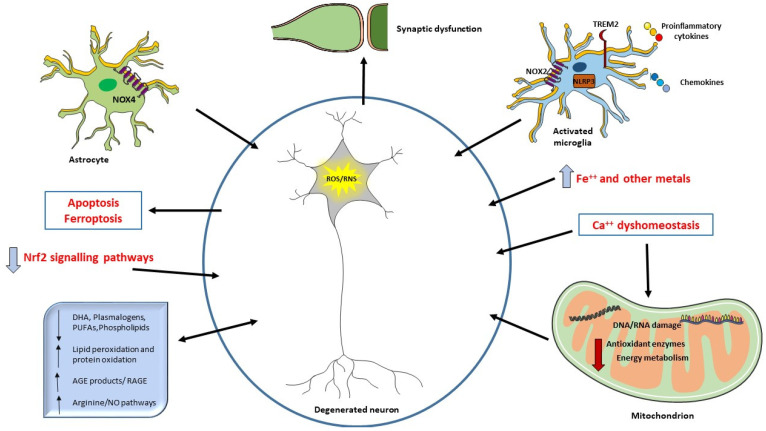
Verification
Claims the paper makes
139 Not checked yet · 8 Own interpretation · 3 Supported · 3 Partly supported · 2 No basis given · accuracy not yet measured
The cited sources support only part of this claim — read each source’s verdict below.
In the paper
“AGEs and the receptor for advanced glycation end-products (RAGE) can play an important role in AD pathogenesis as higher levels of RAGE expression in neuronal, microglial, and endothelial cells in patients with AD compared with age-matched, non- demented controls are found [43,44,45,46].”
§ Role of Oxidative Damage in Alzheimer’s Disease and Neurodegeneration: From Pathogenic Mechanisms to Biomarker Discovery > 2. Products of Oxidative Damage in AD
What the sources say
- Supportedcites [43] Fang, 2018, RAGE mediates Aβ accumulation in a mouse model of Alzheimer’s disease via modulation of β- and γ-secretase activity, Hum. Mol. Genet. source
The Introduction states that investigations of human brains found higher RAGE expression in neuronal, microglial, and endothelial cells of patients with AD than in age-matched, nondemented controls. It reports this as prior evidence, which supports the citing sentence. (LLM, conf=0.95)
- Partly supportedcites [44] Origlia, 2010, Microglial Receptor for Advanced Glycation End Product-Dependent Signal Pathway Drives-Amyloid-Induced Synaptic Depression and Long-Term Depression Impairment in Entorhinal Cortex, J. Neurosci. sourceExperimental — accuracy not yet measured
The Introduction and the section on microglial RAGE (page unavailable) state that RAGE is present in neurons, glial cells, and endothelial cells, and discuss its role in amyloid-induced dysfunction. They do not report higher RAGE expression in those cells in patients with Alzheimer’s disease than in age-matched non-demented controls. (LLM, conf=0.84)
- Partly supportedcites [45] Miller, 2008, Hippocampal RAGE immunoreactivity in early and advanced Alzheimer’s disease, Brain Res. sourceExperimental — accuracy not yet measured
The Results (Distribution of RAGE immunoreactivity; page unavailable) report higher microvascular endothelial RAGE in advanced AD than in aged controls. They describe neuronal RAGE expression as unremarkable across groups, and the cited passages do not report higher microglial RAGE. Thus, this paper supports the endothelial part of the claim, but not the neuronal or microglial parts. (LLM, conf=0.91)
- Not checked yetcites [46] Sasaki, 2001, Immunohistochemical distribution of the receptor for advanced glycation end products in neurons and astrocytes in Alzheimer’s disease, Brain Res. source
plaincorrelational- Asserted: passes — The authors put it forward as true.
- Checkable: passes — It can be checked against evidence.
- Load-bearing: passes — The paper’s conclusions depend on it.
- Based: passes — The paper gives a reason why it holds.
- Supported
Every source the paper cites for this claim was checked and supports it.
In the paper
“Decreased levels of ethanolamine plasmalogens (PlsEtns) have been found to correlate with the severity of AD.”
§ Role of Oxidative Damage in Alzheimer’s Disease and Neurodegeneration: From Pathogenic Mechanisms to Biomarker Discovery > 7. Products of Oxidative Damage in Blood, CSF and Other Body Fluids of AD Patients
What the sources say
- Supportedcites [146] Su, 2019, Plasmalogens and Alzheimer’s disease: A review, Lipids Heal. Dis. source
The section ‘Association of PlsEtns with Alzheimer’s disease and their potential use as a biomarker’ states that decreased PlsEtns levels in AD patients correlate with disease severity. It also specifically reports a correlation between gray-matter PlsEtns deficiency and disease severity; the claim does not assert causation. (LLM, conf=0.94)
plaincorrelational- Asserted: passes — The authors put it forward as true.
- Checkable: passes — It can be checked against evidence.
- Load-bearing: unclear — It is unclear whether the paper’s conclusions depend on it.
- Based: passes — The paper gives a reason why it holds.
- Rests on an assumption: Oxidative damage markers measured in peripheral fluids reflect oxidative damage in the brain.
- Supported
None of the sources cited for this claim have been checked yet.
In the paper
“Oxidative damage products, as the ones deriving from oxidation of lipid, DNA, RNA, or glycation ends products, are extensively studied, and are suggested as biomarkers in neurodegeneration and AD [22,23,24].”
§ Role of Oxidative Damage in Alzheimer’s Disease and Neurodegeneration: From Pathogenic Mechanisms to Biomarker Discovery > 1. Introduction
What the sources say
- Not checked yetcites [22] Peeters, 2017, Blood-based metabolic signatures in Alzheimer’s disease, Alzheimer’s Dementia: Diagn. Assess. Dis. Monit.
- Not checked yetcites [23] 2008, Oxidative stress hypothesis in Alzheimer’s disease: A reappraisal, Trends Pharmacol. Sci. source
- Not checked yetcites [24] Barone, 2017, The Triangle of Death in Alzheimer’s Disease Brain: The Aberrant Cross-Talk Among Energy Metabolism, Mammalian Target of Rapamycin Signaling, and Protein Homeostasis Revealed by Redox Proteomics, Antioxid. Redox Signal. source
hedgedcorrelational- Asserted: passes — The authors put it forward as true.
- Checkable: passes — It can be checked against evidence.
- Load-bearing: passes — The paper’s conclusions depend on it.
- Based: passes — The paper gives a reason why it holds.
In the paper
“Microglia can respond to Aβ, or to other danger-associated molecules released by damaged cells, by producing reactive oxygen species (ROS) [16].”
§ Role of Oxidative Damage in Alzheimer’s Disease and Neurodegeneration: From Pathogenic Mechanisms to Biomarker Discovery > 1. Introduction
What the sources say
- Not checked yetcites [16] Schilling, 2011, Amyloid-β-induced reactive oxygen species production and priming are differentially regulated by ion channels in microglia, J. Cell. Physiol. source
plaindirect- Asserted: passes — The authors put it forward as true.
- Checkable: passes — It can be checked against evidence.
- Load-bearing: passes — The paper’s conclusions depend on it.
- Based: passes — The paper gives a reason why it holds.
None of the sources cited for this claim have been checked yet.
In the paper
“They are detected in body fluids such as blood, plasma, serum, cerebrospinal fluid (CSF), urine, and saliva [25,26,27].”
§ Role of Oxidative Damage in Alzheimer’s Disease and Neurodegeneration: From Pathogenic Mechanisms to Biomarker Discovery > 1. Introduction
What the sources say
- Not checked yetcites [25] Vigor, 2019, New screening approach for Alzheimer’s disease risk assessment from urine lipid peroxidation compounds, Sci. Rep. source
- Not checked yetcites [26] Choromańska, M., Klimiuk, A., Kostecka-Sochoń, P., Wilczyńska, K., Kwiatkowski, M., Okuniewska, N., Waszkiewicz, N., Zalewska, A., and Maciejczyk, M. (2017). Antioxidant Defence, Oxidative Stress and Oxidative Damage in Saliva, Plasma and Erythrocytes of Dementia Patients. Can Salivary AGE be a Marker of Dementia?. Int. J. Mol. Sci., 18. source
- Not checked yetcites [27] Johnson, 2020, Large-scale proteomic analysis of Alzheimer’s disease brain and cerebrospinal fluid reveals early changes in energy metabolism associated with microglia and astrocyte activation, Nat. Med. source
plain- Asserted: passes — The authors put it forward as true.
- Checkable: passes — It can be checked against evidence.
- Load-bearing: passes — The paper’s conclusions depend on it.
- Based: passes — The paper gives a reason why it holds.
In the paper
“The oxidative stress hypothesis can be applied to other neurodegenerative diseases, such as Parkinson’s Disease (PD) and Amyotrophic Lateral Sclerosis (ALS) where the accumulation of oxidative damage over time leads to the late life onset and to the progressive nature of these diseases [29].”
§ Role of Oxidative Damage in Alzheimer’s Disease and Neurodegeneration: From Pathogenic Mechanisms to Biomarker Discovery > 2. Products of Oxidative Damage in AD
What the sources say
- Not checked yetcites [29] Markesbery, 1997, Oxidative Stress Hypothesis in Alzheimer’s Disease, Free. Radic. Biol. Med. source
plaindirect- Asserted: passes — The authors put it forward as true.
- Checkable: passes — It can be checked against evidence.
- Load-bearing: unclear — It is unclear whether the paper’s conclusions depend on it.
- Based: passes — The paper gives a reason why it holds.
In the paper
“Activated microglia are also observed close to tau protein in neurofibrillary tangles [12].”
§ Role of Oxidative Damage in Alzheimer’s Disease and Neurodegeneration: From Pathogenic Mechanisms to Biomarker Discovery > 1. Introduction
What the sources say
- Not checked yetcites [12] Mielke, 2011, Reactive Glia not only Associates with Plaques but also Parallels Tangles in Alzheimer’s Disease, Am. J. Pathol. source
plaincorrelational- Asserted: passes — The authors put it forward as true.
- Checkable: passes — It can be checked against evidence.
- Load-bearing: unclear — It is unclear whether the paper’s conclusions depend on it.
- Based: passes — The paper gives a reason why it holds.
In the paper
“Thus, the overproduction of ROS and a decrease in antioxidant defenses can lead to oxidative stress (OS) [17].”
§ Role of Oxidative Damage in Alzheimer’s Disease and Neurodegeneration: From Pathogenic Mechanisms to Biomarker Discovery > 1. Introduction
What the sources say
- Not checked yetcites [17] Butterfield, 1997, β-Amyloid-Associated Free Radical Oxidative Stress and Neurotoxicity: Implications for Alzheimer’s Disease, Chem. Res. Toxicol. source
plaindirect- Asserted: passes — The authors put it forward as true.
- Checkable: passes — It can be checked against evidence.
- Load-bearing: passes — The paper’s conclusions depend on it.
- Based: passes — The paper gives a reason why it holds.
None of the sources cited for this claim have been checked yet.
In the paper
“Further, HNE have been detected in Aβ plaques and in the cerebrospinal fluid in AD patients [39,40].”
§ Role of Oxidative Damage in Alzheimer’s Disease and Neurodegeneration: From Pathogenic Mechanisms to Biomarker Discovery > 2. Products of Oxidative Damage in AD
What the sources say
- Not checked yetcites [39] Butterfield, 2013, Amyloid beta-peptide (1-42)-induced oxidative stress in Alzheimer disease: Importance in disease pathogenesis and progression, Antioxid. Redox Signal source
- Not checked yetcites [40] Pupo, 2016, Oxidative signature of cerebrospinal fluid from mild cognitive impairment and Alzheimer disease patients, Free. Radic. Biol. Med. source
plaincorrelational- Asserted: passes — The authors put it forward as true.
- Checkable: passes — It can be checked against evidence.
- Load-bearing: unclear — It is unclear whether the paper’s conclusions depend on it.
- Based: passes — The paper gives a reason why it holds.
None of the sources cited for this claim have been checked yet.
In the paper
“Untargeted and targeted metabolomics studies have indicated that L-arginine/nitric oxide (NO) pathway is altered in AD [35,36].”
§ Role of Oxidative Damage in Alzheimer’s Disease and Neurodegeneration: From Pathogenic Mechanisms to Biomarker Discovery > 2. Products of Oxidative Damage in AD
What the sources say
- Not checked yetcites [35] Fleszar, 2019, Targeted metabolomic analysis of nitric oxide/L-arginine pathway metabolites in dementia: Association with pathology, severity, and structural brain changes, Sci. Rep. source
- Not checked yetcites [36] Hurtado, 2018, Next-generation biomarker discovery in Alzheimer’s disease using metabolomics–from animal to human studies, Bioanalysis source
hedgedcorrelational- Asserted: passes — The authors put it forward as true.
- Checkable: passes — It can be checked against evidence.
- Load-bearing: unclear — It is unclear whether the paper’s conclusions depend on it.
- Based: passes — The paper gives a reason why it holds.
- It may state two separate claims as one. 77
- Probably not a substantial claim. 13
- The quote only partly states this claim. 1
The cited sources support only part of this claim — read each source’s verdict below.
In the paper
“All of these markers of OS have been described as an early alteration in the AD brain, and this concept has been used in the past to support the ‘oxidative stress hypothesis’ in the pathogenesis of AD [20,28,29,30].”
§ Role of Oxidative Damage in Alzheimer’s Disease and Neurodegeneration: From Pathogenic Mechanisms to Biomarker Discovery > 2. Products of Oxidative Damage in AD
What the sources say
- Partly supportedcites [20] Uryu, 2001, Increased Lipid Peroxidation Precedes Amyloid Plaque Formation in an Animal Model of Alzheimer Amyloidosis, J. Neurosci. sourceExperimental — accuracy not yet measured
The Discussion reports that lipid peroxidation increased before substantial amyloid deposition in Tg2576 mice, supporting an early role for oxidative stress in this AD model. The paper also notes increased lipid-peroxidation markers in human AD brain regions, but our copy does not describe protein or nucleic acid oxidation as early alterations in the AD brain. Its early-timing finding is from mice, not human AD brains. (LLM, conf=0.87)
- Not checked yetcites [28] Jellinger, 1990, Brain iron and ferritin in Parkinson’s and Alzheimer’s diseases, J. Neural Transm. source
- Not checked yetcites [29] Markesbery, 1997, Oxidative Stress Hypothesis in Alzheimer’s Disease, Free. Radic. Biol. Med. source
- Partly supportedcites [30] Smith, 2000, Oxidative stress in Alzheimer’s disease, Biochim. et Biophys. Acta (BBA) Mol. Basis Dis. sourceExperimental — accuracy not yet measured
Section 2 identifies protein damage and lipid-peroxidation products in AD, and §2.1 identifies increased 8OHG, a nucleic-acid oxidation marker. Section 2.1 also says oxidative damage can precede other abnormalities, supporting the broader early-oxidative-stress account. It does not establish that each listed marker is itself an early alteration; it distinguishes protein crosslinking as a record of past damage from 8OHG as a marker of more immediate damage. (LLM, conf=0.84)
plaincorrelational- Asserted: passes — The authors put it forward as true.
- Checkable: passes — It can be checked against evidence.
- Load-bearing: passes — The paper’s conclusions depend on it.
- Based: passes — The paper gives a reason why it holds.
It may state two separate claims as one.
- Partly supported
The cited sources support only part of this claim — read each source’s verdict below.
In the paper
“Excessive Ca2+ accumulation into mitochondria leads to decreased mitochondrial membrane potential and increased ROS production in the same AD mouse model [67,68,70].”
§ Role of Oxidative Damage in Alzheimer’s Disease and Neurodegeneration: From Pathogenic Mechanisms to Biomarker Discovery > 3. Mitochondria as Sources of ROS and Target of Oxidative Damage
What the sources say
- Partly supportedcites [67] Oka, 2016, Human mitochondrial transcriptional factor A breaks the mitochondria-mediated vicious cycle in Alzheimer’s disease, Sci. Rep. sourceExperimental — accuracy not yet measured
The Results report lowered mitochondrial membrane potential and higher mitochondrial superoxide in human iPSC-derived PS1P117L AD neurons. They do not establish that excessive mitochondrial Ca2+ accumulation caused those changes, and the neurons are not the APP/PS1 mouse model named in the claim. The paper’s mouse experiments use a 3xTg-AD model. (LLM, conf=0.88)
- Partly supportedcites [68] Mattson, 2007, Calcium and neurodegeneration, Aging Cell sourceExperimental — accuracy not yet measured
The “Aging and perturbed neuronal calcium homeostasis” section links mitochondrial Ca2+ overload, membrane depolarization, and ROS to neurodegeneration, including AD. It does not report these outcomes in APP/PS1 mice or establish that mitochondrial Ca2+ accumulation caused both reduced membrane potential and increased ROS in that model. No page number is available in our copy. (LLM, conf=0.84)
- Partly supportedcites [70] Xie, 2013, Mitochondrial alterations near amyloid plaques in an Alzheimer’s disease mouse model, J. Neurosci. sourceExperimental — accuracy not yet measured
The Results (Figure 6, p. 17049) show decreased mitochondrial membrane potential in oxidized neurons and neurites of APP/PS1 mice. The Discussion says calcium dysregulation, oxidative stress, and mitochondrial dysfunction may be linked, but that their sequence remains to be determined. It does not establish excessive calcium accumulation in mitochondria or show that calcium causes the membrane-potential decrease and increased ROS production. (LLM, conf=0.88)
plaindirect- Asserted: passes — The authors put it forward as true.
- Checkable: passes — It can be checked against evidence.
- Load-bearing: passes — The paper’s conclusions depend on it.
- Based: passes — The paper gives a reason why it holds.
It may state two separate claims as one.
- Partly supported
Every source the paper cites for this claim was checked and supports it.
In the paper
“In AD, Aβ can act as DAMP and its interaction with microglia creates an oxidative and neuroinflammatory environment through an increased production of ROS and release of proinflammatory cytokines [107].”
§ Role of Oxidative Damage in Alzheimer’s Disease and Neurodegeneration: From Pathogenic Mechanisms to Biomarker Discovery > 5. Microglia and Astrocytes as Sources of ROS in AD
What the sources say
- Supportedcites [107] Venegas, 2016, Danger-associated molecular patterns in Alzheimer’s disease, J. Leukoc. Biol. source
Split into 2 atoms — 2 confirmed, 0 partially supported, 0 disputed, 0 misattributed, 0 unverifiable. Expand the claim to see per-atom verdicts.
plaindirect- Asserted: passes — The authors put it forward as true.
- Checkable: passes — It can be checked against evidence.
- Load-bearing: passes — The paper’s conclusions depend on it.
- Based: passes — The paper gives a reason why it holds.
It may state two separate claims as one.
- Supported
Every source the paper cites for this claim was checked and supports it.
In the paper
“uncovering important roles for HDAC1 in 8-oxoG repair and highlights the therapeutic potential of HDAC1 activation to counteract the functional decline in brain aging and neurodegeneration [126].”
§ Role of Oxidative Damage in Alzheimer’s Disease and Neurodegeneration: From Pathogenic Mechanisms to Biomarker Discovery > 6. Focus on Experimental Models of AD and Potential Antioxidant Therapeutic Targets
What the sources say
- Supportedcites [126] Pao, 2020, HDAC1 modulates OGG1-initiated oxidative DNA damage repair in the aging brain and Alzheimer’s disease, Nat. Commun. source
The Abstract explicitly says HDAC1 has important roles in 8-oxoG repair and highlights the therapeutic potential of HDAC1 activation to counter functional decline in brain aging and neurodegeneration. The Introduction also reports that pharmacological activation reduced 8-oxoG lesions in aged and Alzheimer’s-model mice and alleviated cognitive deficits in the latter. (LLM, conf=0.95)
plaindirect- Asserted: passes — The authors put it forward as true.
- Checkable: passes — It can be checked against evidence.
- Load-bearing: passes — The paper’s conclusions depend on it.
- Based: passes — The paper gives a reason why it holds.
It may state two separate claims as one.
- Supported
In the paper
“The most common cause of dementia is Alzheimer’s disease (AD), a progressive neurodegenerative disorder, affecting over 50 million people worldwide [4].”
§ Role of Oxidative Damage in Alzheimer’s Disease and Neurodegeneration: From Pathogenic Mechanisms to Biomarker Discovery > 1. Introduction
What the sources say
- Not checked yetcites [4] Prince, 2016, Recent global trends in the prevalence and incidence of dementia, and survival with dementia, Alzheimer’s Res. Ther. source
plaindirect- Asserted: passes — The authors put it forward as true.
- Checkable: passes — It can be checked against evidence.
- Load-bearing: fails — The paper’s conclusions may not depend on it.
- Based: passes — The paper gives a reason why it holds.
Probably not a substantial claim. The paper’s conclusions may not depend on it. It may state two separate claims as one.
In the paper
“the most studied pathogenic mechanism has been the “amyloid cascade hypothesis” proposed in 1991 by Hardy and Allsop, who suggested that inappropriate processing of amyloid-β (Aβ) precursor leads to the build-up of amyloid plaques, the formation of tau tangles, and ultimately to neuronal death [7].”
§ Role of Oxidative Damage in Alzheimer’s Disease and Neurodegeneration: From Pathogenic Mechanisms to Biomarker Discovery > 1. Introduction
What the sources say
- Not checked yetcites [7] Hardy, 1991, Amyloid deposition as the central event in the aetiology of Alzheimer’s disease, Trends Pharmacol. Sci. source
plaindirect- Asserted: passes — The authors put it forward as true.
- Checkable: passes — It can be checked against evidence.
- Load-bearing: fails — The paper’s conclusions may not depend on it.
- Based: passes — The paper gives a reason why it holds.
Probably not a substantial claim. The paper’s conclusions may not depend on it.
In the paper
“The disease is irreversible and presents with neurodegeneration caused by toxic aggregation of extracellular amyloid plaques, and intracellular neurofibrillary tangles of hyperphosphorylated tau protein [5].”
§ Role of Oxidative Damage in Alzheimer’s Disease and Neurodegeneration: From Pathogenic Mechanisms to Biomarker Discovery > 1. Introduction
What the sources say
- Not checked yetcites [5] Stelzmann, 1995, An english translation of alzheimer’s 1907 paper, “über eine eigenartige erkankung der hirnrinde”, Clin. Anat. source
plaindirect- Asserted: passes — The authors put it forward as true.
- Checkable: passes — It can be checked against evidence.
- Load-bearing: unclear — It is unclear whether the paper’s conclusions depend on it.
- Based: passes — The paper gives a reason why it holds.
It may state two separate claims as one.
None of the sources cited for this claim have been checked yet.
In the paper
“Past and recent studies have demonstrated that oxidative damage is not only an early event in the pathogenesis of AD, occurring before the onset of clinical symptoms but also a factor contributing to the disease progression [17,18,19,20,21].”
§ Role of Oxidative Damage in Alzheimer’s Disease and Neurodegeneration: From Pathogenic Mechanisms to Biomarker Discovery > 1. Introduction
What the sources say
- Not checked yetcites [17] Butterfield, 1997, β-Amyloid-Associated Free Radical Oxidative Stress and Neurotoxicity: Implications for Alzheimer’s Disease, Chem. Res. Toxicol. source
- Not checked yetcites [18] Butterfield, 2019, Oxidative stress, dysfunctional glucose metabolism and Alzheimer disease, Nat. Rev. Neurosci. source
- Not checked yetcites [19] Nunomura, 2001, Oxidative Damage Is the Earliest Event in Alzheimer Disease, J. Neuropathol. Exp. Neurol. source
- Not checked yetcites [20] Uryu, 2001, Increased Lipid Peroxidation Precedes Amyloid Plaque Formation in an Animal Model of Alzheimer Amyloidosis, J. Neurosci. source
- Not checked yetcites [21] Ansari, 2011, NADPH-oxidase activation and cognition in Alzheimer disease progression, Free. Radic. Biol. Med. source
boosteddirect- Asserted: passes — The authors put it forward as true.
- Checkable: passes — It can be checked against evidence.
- Load-bearing: passes — The paper’s conclusions depend on it.
- Based: passes — The paper gives a reason why it holds.
It may state two separate claims as one.
- Rests on an assumption: Alzheimer’s disease pathogenesis starts decades before symptoms appear.
In the paper
“The brain is very susceptible to OS because it is rich in polyunsaturated fatty acids, has a high oxygen consumption and a high content of metals in particular, iron, that can catalyze oxidative reactions, in contrast, it has less antioxidant enzymes in comparison with other organs [28].”
§ Role of Oxidative Damage in Alzheimer’s Disease and Neurodegeneration: From Pathogenic Mechanisms to Biomarker Discovery > 2. Products of Oxidative Damage in AD
What the sources say
- Not checked yetcites [28] Jellinger, 1990, Brain iron and ferritin in Parkinson’s and Alzheimer’s diseases, J. Neural Transm. source
plaindirect- Asserted: passes — The authors put it forward as true.
- Checkable: passes — It can be checked against evidence.
- Load-bearing: passes — The paper’s conclusions depend on it.
- Based: passes — The paper gives a reason why it holds.
It may state two separate claims as one.
In the paper
“Redox proteomic studies confirm previous results that carbonylated proteins are present in CSF of amnestic MCI patients compared with controls, and these proteins remain oxidized in the progression towards AD [40].”
§ Role of Oxidative Damage in Alzheimer’s Disease and Neurodegeneration: From Pathogenic Mechanisms to Biomarker Discovery > 2. Products of Oxidative Damage in AD
What the sources say
- Not checked yetcites [40] Pupo, 2016, Oxidative signature of cerebrospinal fluid from mild cognitive impairment and Alzheimer disease patients, Free. Radic. Biol. Med. source
boostedcorrelational- Asserted: passes — The authors put it forward as true.
- Checkable: passes — It can be checked against evidence.
- Load-bearing: unclear — It is unclear whether the paper’s conclusions depend on it.
- Based: passes — The paper gives a reason why it holds.
It may state two separate claims as one.
None of the sources cited for this claim have been checked yet.
In the paper
“In AD, reactive microglia and astrocytes are associated with the amyloid plaques and respond to Aβ with the expression of pro-inflammatory cytokines [12,13,14].”
§ Role of Oxidative Damage in Alzheimer’s Disease and Neurodegeneration: From Pathogenic Mechanisms to Biomarker Discovery > 1. Introduction
What the sources say
- Not checked yetcites [12] Mielke, 2011, Reactive Glia not only Associates with Plaques but also Parallels Tangles in Alzheimer’s Disease, Am. J. Pathol. source
- Not checked yetcites [13] Hanisch, 2007, Microglia: Active sensor and versatile effector cells in the normal and pathologic brain, Nat. Neurosci. source
- Not checked yetcites [14] Galimberti, 1999, α-MSH Peptides Inhibit Production of Nitric Oxide and Tumor Necrosis Factor-α by Microglial Cells Activated with β-Amyloid and Interferon γ, Biochem. Biophys. Res. Commun. source
plaincorrelational- Asserted: passes — The authors put it forward as true.
- Checkable: passes — It can be checked against evidence.
- Load-bearing: passes — The paper’s conclusions depend on it.
- Based: passes — The paper gives a reason why it holds.
It may state two separate claims as one.
In the paper
“In 2021, new recommendations for the clinical diagnosis of AD were proposed by the International working group, highlighting that the diagnosis of AD should be restricted to people who have positive biomarkers together with specific AD phenotypes. Cognitively unimpaired individuals who are only positive to biomarkers should be considered at-risk for progression to AD [10].”
§ Role of Oxidative Damage in Alzheimer’s Disease and Neurodegeneration: From Pathogenic Mechanisms to Biomarker Discovery > 1. Introduction
What the sources say
- Not checked yetcites [10] Dubois, 2021, Clinical diagnosis of Alzheimer’s disease: Recommendations of the International Working Group, Lancet Neurol. source
plain- Asserted: passes — The authors put it forward as true.
- Checkable: passes — It can be checked against evidence.
- Load-bearing: fails — The paper’s conclusions may not depend on it.
- Based: passes — The paper gives a reason why it holds.
Probably not a substantial claim. The paper’s conclusions may not depend on it. It may state two separate claims as one.
In the paper
“Decreased levels of phosphatidylcholine, phosphatidylethanolamine and the phospholipid precursors, choline and ethanolamine, have been described in AD and are considered specific for the pathogenic mechanism of AD. The depletion of phospholipids in AD has been referred to an increase of ROS-mediated lipid peroxidation [29].”
§ Role of Oxidative Damage in Alzheimer’s Disease and Neurodegeneration: From Pathogenic Mechanisms to Biomarker Discovery > 2. Products of Oxidative Damage in AD
What the sources say
- Not checked yetcites [29] Markesbery, 1997, Oxidative Stress Hypothesis in Alzheimer’s Disease, Free. Radic. Biol. Med. source
plaindirect- Asserted: passes — The authors put it forward as true.
- Checkable: passes — It can be checked against evidence.
- Load-bearing: unclear — It is unclear whether the paper’s conclusions depend on it.
- Based: passes — The paper gives a reason why it holds.
It may state two separate claims as one.
None of the sources cited for this claim have been checked yet.
In the paper
“In the brains of individuals with AD and preclinical AD (i.e., evidence of Aβ and tau deposition in the brain without any clinical manifestation of the disease), as well as patients with MCI (a mild clinical impairment with no proof of underlying pathology with biomarkers), many oxidative damage products are measured, and numerous investigations have pointed to OS as a key and early player in the”
§ Role of Oxidative Damage in Alzheimer’s Disease and Neurodegeneration: From Pathogenic Mechanisms to Biomarker Discovery > 2. Products of Oxidative Damage in AD
What the sources say
boosteddirect- Asserted: passes — The authors put it forward as true.
- Checkable: passes — It can be checked against evidence.
- Load-bearing: passes — The paper’s conclusions depend on it.
- Based: passes — The paper gives a reason why it holds.
It may state two separate claims as one.
In the paper
“Following the new research framework (2018-NIA-AA-RF), AD is not defined by its clinical consequences but by its underlying pathology measured by lifetime biomarkers. Regardless of the presence of clinical symptoms, both Aβ and phosphorylated tau pathology are required for classification as AD, whereas Aβ deposition alone is an early sign, labelling the pathologic change towards AD [9].”
§ Role of Oxidative Damage in Alzheimer’s Disease and Neurodegeneration: From Pathogenic Mechanisms to Biomarker Discovery > 1. Introduction
What the sources say
- Not checked yetcites [9] Carandini, 2019, Testing the 2018 NIA-AA research framework in a retrospective large cohort of patients with cognitive impairment: From biological biomarkers to clinical syndromes, Alzheimer’s Res. Ther. source
plain- Asserted: passes — The authors put it forward as true.
- Checkable: passes — It can be checked against evidence.
- Load-bearing: fails — The paper’s conclusions may not depend on it.
- Based: passes — The paper gives a reason why it holds.
Probably not a substantial claim. The paper’s conclusions may not depend on it. It may state two separate claims as one.
In the paper
“Further, activated microglia can respond to injured neurons in a neuroprotective manner and, afterwards, become toxic, contributing to neuroinflammation and neurodegeneration [15].”
§ Role of Oxidative Damage in Alzheimer’s Disease and Neurodegeneration: From Pathogenic Mechanisms to Biomarker Discovery > 1. Introduction
What the sources say
- Not checked yetcites [15] Clark, 2015, Amyloid β: One of three danger-associated molecules that are secondary inducers of the proinflammatory cytokines that mediate A lzheimer’s disease, Br. J. Pharmacol. source
plaindirect- Asserted: passes — The authors put it forward as true.
- Checkable: passes — It can be checked against evidence.
- Load-bearing: unclear — It is unclear whether the paper’s conclusions depend on it.
- Based: passes — The paper gives a reason why it holds.
It may state two separate claims as one.
In the paper
“About 2–3% of AD cases are due to autosomal dominant mutations. The rest are sporadic cases and are prevalent in the aging population [8].”
§ Role of Oxidative Damage in Alzheimer’s Disease and Neurodegeneration: From Pathogenic Mechanisms to Biomarker Discovery > 1. Introduction
What the sources say
- Not checked yetcites [8] Galimberti, 2010, Treatment of Alzheimers Disease: Symptomatic and Disease-Modifying Approaches, Curr. Aging Sci. source
plaindirect- Asserted: passes — The authors put it forward as true.
- Checkable: passes — It can be checked against evidence.
- Load-bearing: fails — The paper’s conclusions may not depend on it.
- Based: passes — The paper gives a reason why it holds.
Probably not a substantial claim. The paper’s conclusions may not depend on it. It may state two separate claims as one.
In the paper
“Aβ oligomers can target and activate NMDAR leading to a rapid increase in neuronal calcium levels and ROS production in mature hippocampal neurons in culture [75].”
§ Role of Oxidative Damage in Alzheimer’s Disease and Neurodegeneration: From Pathogenic Mechanisms to Biomarker Discovery > 3. Mitochondria as Sources of ROS and Target of Oxidative Damage
What the sources say
- Not checked yetcites [75] Velasco, 2007, Aβ Oligomers Induce Neuronal Oxidative Stress through an N-Methyl-D-aspartate Receptor-dependent Mechanism That Is Blocked by the Alzheimer Drug Memantine, J. Biol. Chem. source
plaindirect- Asserted: passes — The authors put it forward as true.
- Checkable: passes — It can be checked against evidence.
- Load-bearing: unclear — It is unclear whether the paper’s conclusions depend on it.
- Based: passes — The paper gives a reason why it holds.
It may state two separate claims as one.
None of the sources cited for this claim have been checked yet.
In the paper
“During pathological activation of the NMDAR, memantine blocks excessive calcium entry through the channel and Aβ-induced OS, providing a specific biological mechanism for the therapeutic action of memantine.”
§ Role of Oxidative Damage in Alzheimer’s Disease and Neurodegeneration: From Pathogenic Mechanisms to Biomarker Discovery > 3. Mitochondria as Sources of ROS and Target of Oxidative Damage
What the sources say
- Not checked yetcites [74] Robinson, 2006, Memantine: A Review of Its Use in Alzheimer’s Disease, Drugs source
- Not checked yetcites [75] Velasco, 2007, Aβ Oligomers Induce Neuronal Oxidative Stress through an N-Methyl-D-aspartate Receptor-dependent Mechanism That Is Blocked by the Alzheimer Drug Memantine, J. Biol. Chem. source
plaindirect- Asserted: passes — The authors put it forward as true.
- Checkable: passes — It can be checked against evidence.
- Load-bearing: unclear — It is unclear whether the paper’s conclusions depend on it.
- Based: passes — The paper gives a reason why it holds.
It may state two separate claims as one.
In the paper
“Besides, amyloid oligomers can access mitochondria, contributing to compromise their function and triggering a vicious circle in which it is not defined if the accumulation of Aβ came before mitochondrial declined function or after [67].”
§ Role of Oxidative Damage in Alzheimer’s Disease and Neurodegeneration: From Pathogenic Mechanisms to Biomarker Discovery > 3. Mitochondria as Sources of ROS and Target of Oxidative Damage
What the sources say
- Not checked yetcites [67] Oka, 2016, Human mitochondrial transcriptional factor A breaks the mitochondria-mediated vicious cycle in Alzheimer’s disease, Sci. Rep. source
plaindirect- Asserted: passes — The authors put it forward as true.
- Checkable: passes — It can be checked against evidence.
- Load-bearing: unclear — It is unclear whether the paper’s conclusions depend on it.
- Based: passes — The paper gives a reason why it holds.
It may state two separate claims as one.
None of the sources cited for this claim have been checked yet.
In the paper
“In this explanation, the mitochondrial function declines with age and leads to increased production of ROS [65,66].”
§ Role of Oxidative Damage in Alzheimer’s Disease and Neurodegeneration: From Pathogenic Mechanisms to Biomarker Discovery > 3. Mitochondria as Sources of ROS and Target of Oxidative Damage
What the sources say
plaindirect- Asserted: passes — The authors put it forward as true.
- Checkable: passes — It can be checked against evidence.
- Load-bearing: passes — The paper’s conclusions depend on it.
- Based: passes — The paper gives a reason why it holds.
It may state two separate claims as one.
None of the sources cited for this claim have been checked yet.
In the paper
“In the AD brain, mitochondria can be sources of ROS and also the target of OS, especially mitochondrial DNA (mtDNA) is susceptible to oxidative damage [19,53,63].”
§ Role of Oxidative Damage in Alzheimer’s Disease and Neurodegeneration: From Pathogenic Mechanisms to Biomarker Discovery > 3. Mitochondria as Sources of ROS and Target of Oxidative Damage
What the sources say
- Not checked yetcites [19] Nunomura, 2001, Oxidative Damage Is the Earliest Event in Alzheimer Disease, J. Neuropathol. Exp. Neurol. source
- Not checked yetcites [53] Hirai, 2001, Mitochondrial Abnormalities in Alzheimer’s Disease, J. Neurosci. source
- Not checked yetcites [63] Lin, 2006, Mitochondrial dysfunction and oxidative stress in neurodegenerative diseases, Nat. Cell Biol.
plaindirect- Asserted: passes — The authors put it forward as true.
- Checkable: passes — It can be checked against evidence.
- Load-bearing: passes — The paper’s conclusions depend on it.
- Based: passes — The paper gives a reason why it holds.
It may state two separate claims as one.
In the paper
“Aβ can be toxic on neuronal mitochondria and causes Ca2+ elevation, changes in mitochondrial size and shape in APP/PS1 AD mouse model [70].”
§ Role of Oxidative Damage in Alzheimer’s Disease and Neurodegeneration: From Pathogenic Mechanisms to Biomarker Discovery > 3. Mitochondria as Sources of ROS and Target of Oxidative Damage
What the sources say
- Not checked yetcites [70] Xie, 2013, Mitochondrial alterations near amyloid plaques in an Alzheimer’s disease mouse model, J. Neurosci. source
plaindirect- Asserted: passes — The authors put it forward as true.
- Checkable: passes — It can be checked against evidence.
- Load-bearing: passes — The paper’s conclusions depend on it.
- Based: passes — The paper gives a reason why it holds.
It may state two separate claims as one.
In the paper
“These abnormalities are found in neurons lacking neurofibrillary tangles, suggesting that mitochondrial abnormalities are one of the earliest pathological changes in AD.”
§ Role of Oxidative Damage in Alzheimer’s Disease and Neurodegeneration: From Pathogenic Mechanisms to Biomarker Discovery > 3. Mitochondria as Sources of ROS and Target of Oxidative Damage
What the sources say
- Not checked yetcites [53] Hirai, 2001, Mitochondrial Abnormalities in Alzheimer’s Disease, J. Neurosci. source
hedgedcorrelational- Asserted: passes — The authors put it forward as true.
- Checkable: passes — It can be checked against evidence.
- Load-bearing: passes — The paper’s conclusions depend on it.
- Based: passes — The paper gives a reason why it holds.
It may state two separate claims as one.
In the paper
“Glucose metabolism is dysregulated in AD and MCI and the metabolic rate of glucose is decreased in the brain of patients with senile dementia [18].”
§ Role of Oxidative Damage in Alzheimer’s Disease and Neurodegeneration: From Pathogenic Mechanisms to Biomarker Discovery > 3. Mitochondria as Sources of ROS and Target of Oxidative Damage
What the sources say
- Not checked yetcites [18] Butterfield, 2019, Oxidative stress, dysfunctional glucose metabolism and Alzheimer disease, Nat. Rev. Neurosci. source
plaincorrelational- Asserted: passes — The authors put it forward as true.
- Checkable: passes — It can be checked against evidence.
- Load-bearing: unclear — It is unclear whether the paper’s conclusions depend on it.
- Based: passes — The paper gives a reason why it holds.
It may state two separate claims as one.
None of the sources cited for this claim have been checked yet.
In the paper
“It is demonstrated that there is a progressive age-related accumulation of oxidative damage to DNA in the human brain and that mtDNA is preferentially affected. The increased amount of 8-OHdG in mtDNA and nuclear DNA is demonstrated in the aging human brain and in AD [50,51,64].”
§ Role of Oxidative Damage in Alzheimer’s Disease and Neurodegeneration: From Pathogenic Mechanisms to Biomarker Discovery > 3. Mitochondria as Sources of ROS and Target of Oxidative Damage
What the sources say
- Not checked yetcites [50] Mecocci, 1993, Oxidative damage to mitochondrial DNA shows marked age-dependent increases in human brain, Ann. Neurol. source
- Not checked yetcites [51] Mecocci, 1994, Oxidative damage to mitochondrial DNA is increased in Alzheimer’s disease, Ann. Neurol. source
- Not checked yetcites [64] Mecocci, 1997, Mitochondrial membrane fluidity and oxidative damage to mitochondrial DNA in aged and AD human brain, Mol. Chem. Neuropathol. source
boostedcorrelational- Asserted: passes — The authors put it forward as true.
- Checkable: passes — It can be checked against evidence.
- Load-bearing: passes — The paper’s conclusions depend on it.
- Based: passes — The paper gives a reason why it holds.
It may state two separate claims as one.
In the paper
“Hirai et al. have demonstrated that oxidative damage marked by 8-OHdG and nitrotyrosine occurs in the neurons of AD patients. Morphometric analysis showed a reduction of mitochondria in these same neurons and an accumulation of mtDNA and mitochondrial proteins [53].”
§ Role of Oxidative Damage in Alzheimer’s Disease and Neurodegeneration: From Pathogenic Mechanisms to Biomarker Discovery > 3. Mitochondria as Sources of ROS and Target of Oxidative Damage
What the sources say
- Not checked yetcites [53] Hirai, 2001, Mitochondrial Abnormalities in Alzheimer’s Disease, J. Neurosci. source
boostedcorrelational- Asserted: passes — The authors put it forward as true.
- Checkable: passes — It can be checked against evidence.
- Load-bearing: passes — The paper’s conclusions depend on it.
- Based: passes — The paper gives a reason why it holds.
It may state two separate claims as one.
None of the sources cited for this claim have been checked yet.
In the paper
“These results confirmed that mtDNA is a target of oxidative damage and that the increased damage to DNA contributes to AD and the neurodegenerative process [51,53].”
§ Role of Oxidative Damage in Alzheimer’s Disease and Neurodegeneration: From Pathogenic Mechanisms to Biomarker Discovery > 3. Mitochondria as Sources of ROS and Target of Oxidative Damage
What the sources say
boosteddirect- Asserted: passes — The authors put it forward as true.
- Checkable: passes — It can be checked against evidence.
- Load-bearing: passes — The paper’s conclusions depend on it.
- Based: passes — The paper gives a reason why it holds.
It may state two separate claims as one.
None of the sources cited for this claim have been checked yet.
In the paper
“Recently, sirtuin 3 (SIRT3) defects have been considered to contribute to OS in AD mitochondria. Indeed, SIRT3 has been linked to dysregulation of mitochondrial DNA expression, ROS accumulation and neuronal damage in AD [76,77].”
§ Role of Oxidative Damage in Alzheimer’s Disease and Neurodegeneration: From Pathogenic Mechanisms to Biomarker Discovery > 3. Mitochondria as Sources of ROS and Target of Oxidative Damage
What the sources say
plaincorrelational- Asserted: passes — The authors put it forward as true.
- Checkable: passes — It can be checked against evidence.
- Load-bearing: unclear — It is unclear whether the paper’s conclusions depend on it.
- Based: passes — The paper gives a reason why it holds.
It may state two separate claims as one.
The paper states this without a source or data behind it here, so there is nothing to check it against. The quote shows it is in the paper.
In the paper
“To counterbalance the increase of OS that is characteristic in age-related neurodegenerative diseases antioxidant treatment are studied in experimental models and in human trials.”
§ Role of Oxidative Damage in Alzheimer’s Disease and Neurodegeneration: From Pathogenic Mechanisms to Biomarker Discovery > 6. Focus on Experimental Models of AD and Potential Antioxidant Therapeutic Targets
plain- Asserted: passes — The authors put it forward as true.
- Checkable: passes — It can be checked against evidence.
- Load-bearing: fails — The paper’s conclusions may not depend on it.
- Based: passes — The paper gives a reason why it holds.
Probably not a substantial claim. The paper’s conclusions may not depend on it.
In the paper
“NO X4 is the astrocytes isoform, and its levels are reported significantly elevated in astrocytes of patients with AD and APP/PS1 double-transgenic mouse model of AD [101].”
§ Role of Oxidative Damage in Alzheimer’s Disease and Neurodegeneration: From Pathogenic Mechanisms to Biomarker Discovery > 5. Microglia and Astrocytes as Sources of ROS in AD
What the sources say
- Not checked yetcites [101] Park, 2021, NOX4 promotes ferroptosis of astrocytes by oxidative stress-induced lipid peroxidation via the impairment of mitochondrial metabolism in Alzheimer’s diseases, Redox Biol. source
plaincorrelational- Asserted: passes — The authors put it forward as true.
- Checkable: passes — It can be checked against evidence.
- Load-bearing: passes — The paper’s conclusions depend on it.
- Based: passes — The paper gives a reason why it holds.
It may state two separate claims as one.
None of the sources cited for this claim have been checked yet.
In the paper
“Colocalization of reactive microglia with Aβ deposits is a hallmark of AD pathology and has been reported also in brains from AD mouse models [102,103].”
§ Role of Oxidative Damage in Alzheimer’s Disease and Neurodegeneration: From Pathogenic Mechanisms to Biomarker Discovery > 5. Microglia and Astrocytes as Sources of ROS in AD
What the sources say
plaincorrelational- Asserted: passes — The authors put it forward as true.
- Checkable: passes — It can be checked against evidence.
- Load-bearing: unclear — It is unclear whether the paper’s conclusions depend on it.
- Based: passes — The paper gives a reason why it holds.
It may state two separate claims as one.
In the paper
“The levels of two products of oxidative damage, 4-HNE and MDA, were also significantly elevated, suggesting that the elevation of NOX4 promotes the impairment of mitochondrial metabolism, mitochondrial ROS production and fragmentation in human astrocytes [101].”
§ Role of Oxidative Damage in Alzheimer’s Disease and Neurodegeneration: From Pathogenic Mechanisms to Biomarker Discovery > 5. Microglia and Astrocytes as Sources of ROS in AD
What the sources say
- Not checked yetcites [101] Park, 2021, NOX4 promotes ferroptosis of astrocytes by oxidative stress-induced lipid peroxidation via the impairment of mitochondrial metabolism in Alzheimer’s diseases, Redox Biol. source
hedgeddirect- Asserted: passes — The authors put it forward as true.
- Checkable: passes — It can be checked against evidence.
- Load-bearing: passes — The paper’s conclusions depend on it.
- Based: passes — The paper gives a reason why it holds.
It may state two separate claims as one.
None of the sources cited for this claim have been checked yet.
In the paper
“Another Nrf2 activating compound is Centella asiatica extracts, which can activate Nrf2 in neuroblastoma cells, isolated primary neurons and in the brains of AD and aging mouse models. This activation improved mitochondrial and cognitive function, and enhanced synaptic density [113,114,115].”
§ Role of Oxidative Damage in Alzheimer’s Disease and Neurodegeneration: From Pathogenic Mechanisms to Biomarker Discovery > 5. Microglia and Astrocytes as Sources of ROS in AD
What the sources say
- Not checked yetcites [113] Brandes, M.S., and Gray, N.E. (2020). NRF2 as a Therapeutic Target in Neurodegenerative Diseases. ASN Neuro, 12. source
- Not checked yetcites [114] Gray, 2018, Centella asiatica attenuates hippocampal mitochondrial dysfunction and improves memory and executive function in β-amyloid overexpressing mice, Mol. Cell. Neurosci. source
- Not checked yetcites [115] Matthews, D.G., Caruso, M., Murchison, C.F., Zhu, J.Y., Wright, K.M., Harris, C.J., Gray, N.E., Quinn, J.F., and Soumyanath, A. (2019). Centella Asiatica Improves Memory and Promotes Antioxidative Signaling in 5XFAD Mice. Antioxidants, 8. source
plaindirect- Asserted: passes — The authors put it forward as true.
- Checkable: passes — It can be checked against evidence.
- Load-bearing: unclear — It is unclear whether the paper’s conclusions depend on it.
- Based: passes — The paper gives a reason why it holds.
It may state two separate claims as one.
None of the sources cited for this claim have been checked yet.
In the paper
“NOX activation is evident in the AD brain, in addition NOX2 is highly expressed in microglia [108,109].”
§ Role of Oxidative Damage in Alzheimer’s Disease and Neurodegeneration: From Pathogenic Mechanisms to Biomarker Discovery > 5. Microglia and Astrocytes as Sources of ROS in AD
What the sources say
- Not checked yetcites [108] Shimohamaa, 2000, Activation of NADPH Oxidase in Alzheimer’s Disease Brains, Biochem. Biophys. Res. Commun. source
- Not checked yetcites [109] Geng, 2020, Nox2 dependent redox-regulation of microglial response to amyloid-β stimulation and microgliosis in aging, Sci. Rep. source
plaincorrelational- Asserted: passes — The authors put it forward as true.
- Checkable: passes — It can be checked against evidence.
- Load-bearing: passes — The paper’s conclusions depend on it.
- Based: passes — The paper gives a reason why it holds.
It may state two separate claims as one.
In the paper
“Regarding the relation of TREM2 with OS, it has been supposed that a down-regulation of microglial TREM2 expression and signaling might be one of the major pathogenetic mechanisms in sporadic cases of AD in which advanced age, OS, neuroinflammation contribute to the suppression of wild-type TREM2, considering that TREM2 mutation is rare in humans [123].”
§ Role of Oxidative Damage in Alzheimer’s Disease and Neurodegeneration: From Pathogenic Mechanisms to Biomarker Discovery > 5. Microglia and Astrocytes as Sources of ROS in AD
What the sources say
- Not checked yetcites [123] Liu, 2020, Trem2 promotes anti-inflammatory responses in microglia and is suppressed under pro-inflammatory conditions, Hum. Mol. Genet. source
hedgedconditional- Asserted: passes — The authors put it forward as true.
- Checkable: passes — It can be checked against evidence.
- Load-bearing: unclear — It is unclear whether the paper’s conclusions depend on it.
- Based: passes — The paper gives a reason why it holds.
It may state two separate claims as one.
In the paper
“Oxidative damage to RNA in EC, hippocampus, subiculum, and temporal neocortex of subjects with AD has been described. The levels of 8-OHdG increase early before pathological changes occur, and this can explain that the selective vulnerability of neurons in the EC during AD may be related to the vulnerability of these particular neurons to oxidative damage [19].”
§ Role of Oxidative Damage in Alzheimer’s Disease and Neurodegeneration: From Pathogenic Mechanisms to Biomarker Discovery > 4. Neurodegeneration and OS
What the sources say
- Not checked yetcites [19] Nunomura, 2001, Oxidative Damage Is the Earliest Event in Alzheimer Disease, J. Neuropathol. Exp. Neurol. source
plainconditional- Asserted: passes — The authors put it forward as true.
- Checkable: passes — It can be checked against evidence.
- Load-bearing: passes — The paper’s conclusions depend on it.
- Based: passes — The paper gives a reason why it holds.
It may state two separate claims as one.
None of the sources cited for this claim have been checked yet.
In the paper
“The pioneering studies, conducted to validate the early changes of products of oxidative damage, found in specimens of AD patients, in a transgenic mouse model (Tg2576) of AD amyloidosis, dated back more than 20 years [20,124].”
§ Role of Oxidative Damage in Alzheimer’s Disease and Neurodegeneration: From Pathogenic Mechanisms to Biomarker Discovery > 6. Focus on Experimental Models of AD and Potential Antioxidant Therapeutic Targets
What the sources say
- Not checked yetcites [20] Uryu, 2001, Increased Lipid Peroxidation Precedes Amyloid Plaque Formation in an Animal Model of Alzheimer Amyloidosis, J. Neurosci. source
- Not checked yetcites [124] Pratico, 1998, Increased F 2 -isoprostanes in Alzheimer’s disease: Evidence for enhanced lipid peroxidation in vivo, FASEB J. source
plain- Asserted: passes — The authors put it forward as true.
- Checkable: passes — It can be checked against evidence.
- Load-bearing: fails — The paper’s conclusions may not depend on it.
- Based: passes — The paper gives a reason why it holds.
Probably not a substantial claim. The paper’s conclusions may not depend on it.
None of the sources cited for this claim have been checked yet.
In the paper
“Abnormalities in iron homeostasis in brain tissue can increase ROS production, causing noxious oxidative damage to sensitive cellular structures, and trigger a new cell death process called ferroptosis [98,99].”
§ Role of Oxidative Damage in Alzheimer’s Disease and Neurodegeneration: From Pathogenic Mechanisms to Biomarker Discovery > 4. Neurodegeneration and OS
What the sources say
plaindirect- Asserted: passes — The authors put it forward as true.
- Checkable: passes — It can be checked against evidence.
- Load-bearing: passes — The paper’s conclusions depend on it.
- Based: passes — The paper gives a reason why it holds.
It may state two separate claims as one.
In the paper
“γ-GC may also lower inflammation and enhance Aβ plaque clearance in vivo as suggested by cytokines and matrix metalloproteinase levels in the brain.”
§ Role of Oxidative Damage in Alzheimer’s Disease and Neurodegeneration: From Pathogenic Mechanisms to Biomarker Discovery > 6. Focus on Experimental Models of AD and Potential Antioxidant Therapeutic Targets
What the sources say
- Not checked yetcites [134] Liu, 2020, Supplementation with γ-glutamylcysteine (γ-GC) lessens oxidative stress, brain inflammation and amyloid pathology and improves spatial memory in a murine model of AD, Neurochem. Int. source
hedgedconditional- Asserted: passes — The authors put it forward as true.
- Checkable: passes — It can be checked against evidence.
- Load-bearing: unclear — It is unclear whether the paper’s conclusions depend on it.
- Based: passes — The paper gives a reason why it holds.
It may state two separate claims as one.
- Rests on an assumption: Animal models used in cited studies (3xTg-AD, APP/PS1, 5XFAD) adequately model human AD pathology.
In the paper
“MITOL is an integral mitochondrial outer membrane protein which regulates mitochondrial functions and morphology [131].”
§ Role of Oxidative Damage in Alzheimer’s Disease and Neurodegeneration: From Pathogenic Mechanisms to Biomarker Discovery > 6. Focus on Experimental Models of AD and Potential Antioxidant Therapeutic Targets
What the sources say
- Not checked yetcites [131] Takeda, 2021, Mitochondrial ubiquitin ligase alleviates Alzheimer’s disease pathology via blocking the toxic amyloid-β oligomer generation, Commun. Biol. source
plaindirect- Asserted: passes — The authors put it forward as true.
- Checkable: passes — It can be checked against evidence.
- Load-bearing: passes — The paper’s conclusions depend on it.
- Based: passes — The paper gives a reason why it holds.
It may state two separate claims as one.
In the paper
“Glutathione (GSH) is a cellular antioxidant, and its depletion has been observed in AD [133].”
§ Role of Oxidative Damage in Alzheimer’s Disease and Neurodegeneration: From Pathogenic Mechanisms to Biomarker Discovery > 6. Focus on Experimental Models of AD and Potential Antioxidant Therapeutic Targets
What the sources say
- Not checked yetcites [133] Haddad, M., Hervé, V., Ben Khedher, M.R., Rabanel, J.-M., and Ramassamy, C. (2021). Glutathione: An Old and Small Molecule with Great Functions and New Applications in the Brain and in Alzheimer’s Disease. Antioxid. Redox Signal., 35. source
plaincorrelational- Asserted: passes — The authors put it forward as true.
- Checkable: passes — It can be checked against evidence.
- Load-bearing: passes — The paper’s conclusions depend on it.
- Based: passes — The paper gives a reason why it holds.
It may state two separate claims as one.
In the paper
“Aβ pathology was reduced, and AChE activity was improved in APP/S1 mice on the γ-GC diet compared to APP/PS1 mice fed a standard chow diet.”
§ Role of Oxidative Damage in Alzheimer’s Disease and Neurodegeneration: From Pathogenic Mechanisms to Biomarker Discovery > 6. Focus on Experimental Models of AD and Potential Antioxidant Therapeutic Targets
What the sources say
- Not checked yetcites [134] Liu, 2020, Supplementation with γ-glutamylcysteine (γ-GC) lessens oxidative stress, brain inflammation and amyloid pathology and improves spatial memory in a murine model of AD, Neurochem. Int. source
plaindirect- Asserted: passes — The authors put it forward as true.
- Checkable: passes — It can be checked against evidence.
- Load-bearing: passes — The paper’s conclusions depend on it.
- Based: passes — The paper gives a reason why it holds.
It may state two separate claims as one.
- Rests on an assumption: Animal models used in cited studies (3xTg-AD, APP/PS1, 5XFAD) adequately model human AD pathology.
In the paper
“The authors report that the diet with γ-GC lowered the levels of brain lipid peroxidation, protein carbonyls and apoptosis, and maintain antioxidant status in APP/PS1 mice.”
§ Role of Oxidative Damage in Alzheimer’s Disease and Neurodegeneration: From Pathogenic Mechanisms to Biomarker Discovery > 6. Focus on Experimental Models of AD and Potential Antioxidant Therapeutic Targets
What the sources say
- Not checked yetcites [134] Liu, 2020, Supplementation with γ-glutamylcysteine (γ-GC) lessens oxidative stress, brain inflammation and amyloid pathology and improves spatial memory in a murine model of AD, Neurochem. Int. source
plaindirect- Asserted: passes — The authors put it forward as true.
- Checkable: passes — It can be checked against evidence.
- Load-bearing: passes — The paper’s conclusions depend on it.
- Based: passes — The paper gives a reason why it holds.
It may state two separate claims as one.
- Rests on an assumption: Animal models used in cited studies (3xTg-AD, APP/PS1, 5XFAD) adequately model human AD pathology.
In the paper
“sirtuin (SIRT) 1 can also bind the class I histone deacetylase HDAC1, deacetylate HDAC1 and stimulate its enzymatic activity [128].”
§ Role of Oxidative Damage in Alzheimer’s Disease and Neurodegeneration: From Pathogenic Mechanisms to Biomarker Discovery > 6. Focus on Experimental Models of AD and Potential Antioxidant Therapeutic Targets
What the sources say
- Not checked yetcites [128] Dobbin, 2013, SIRT1 collaborates with ATM and HDAC1 to maintain genomic stability in neurons, Nat. Neurosci. source
plaindirect- Asserted: passes — The authors put it forward as true.
- Checkable: passes — It can be checked against evidence.
- Load-bearing: unclear — It is unclear whether the paper’s conclusions depend on it.
- Based: passes — The paper gives a reason why it holds.
It may state two separate claims as one.
In the paper
“Stojakovic et al. observed that mitochondrial respiratory chain complex I might be a therapeutic target in AD [129].”
§ Role of Oxidative Damage in Alzheimer’s Disease and Neurodegeneration: From Pathogenic Mechanisms to Biomarker Discovery > 6. Focus on Experimental Models of AD and Potential Antioxidant Therapeutic Targets
What the sources say
- Not checked yetcites [129] Stojakovic, 2021, Partial inhibition of mitochondrial complex I ameliorates Alzheimer’s disease pathology and cognition in APP/PS1 female mice, Commun. Biol. source
hedgedconditional- Asserted: passes — The authors put it forward as true.
- Checkable: passes — It can be checked against evidence.
- Load-bearing: passes — The paper’s conclusions depend on it.
- Based: passes — The paper gives a reason why it holds.
Probably not a substantial claim.
- Rests on an assumption: Mitochondrial health is essential for maintaining energy homeostasis and preventing neuronal dysfunction in AD.
In the paper
“HDAC1-deficient mice show DNA damage accumulation and cognitive impairment during aging [126].”
§ Role of Oxidative Damage in Alzheimer’s Disease and Neurodegeneration: From Pathogenic Mechanisms to Biomarker Discovery > 6. Focus on Experimental Models of AD and Potential Antioxidant Therapeutic Targets
What the sources say
- Not checked yetcites [126] Pao, 2020, HDAC1 modulates OGG1-initiated oxidative DNA damage repair in the aging brain and Alzheimer’s disease, Nat. Commun. source
plaincorrelational- Asserted: passes — The authors put it forward as true.
- Checkable: passes — It can be checked against evidence.
- Load-bearing: passes — The paper’s conclusions depend on it.
- Based: passes — The paper gives a reason why it holds.
It may state two separate claims as one.
- Rests on an assumption: Animal models used in cited studies (3xTg-AD, APP/PS1, 5XFAD) adequately model human AD pathology.
In the paper
“Blood-based biomarkers are not available for AD and the potential ones are derived from Aβ and Tau [137].”
§ Role of Oxidative Damage in Alzheimer’s Disease and Neurodegeneration: From Pathogenic Mechanisms to Biomarker Discovery > 7. Products of Oxidative Damage in Blood, CSF and Other Body Fluids of AD Patients
What the sources say
- Not checked yetcites [137] Nakamura, 2018, High performance plasma amyloid-β biomarkers for Alzheimer’s disease, Nat. Cell Biol.
plain- Asserted: passes — The authors put it forward as true.
- Checkable: passes — It can be checked against evidence.
- Load-bearing: passes — The paper’s conclusions depend on it.
- Based: passes — The paper gives a reason why it holds.
It may state two separate claims as one.
- Rests on an assumption: Oxidative damage markers measured in peripheral fluids reflect oxidative damage in the brain.
In the paper
“this work showed elevated 8-oxoG along with reduced HDAC1 activity and downregulation of a gene set critical for brain function in the 5XFAD mouse model of AD”
§ Role of Oxidative Damage in Alzheimer’s Disease and Neurodegeneration: From Pathogenic Mechanisms to Biomarker Discovery > 6. Focus on Experimental Models of AD and Potential Antioxidant Therapeutic Targets
What the sources say
- Not checked yetcites [126] Pao, 2020, HDAC1 modulates OGG1-initiated oxidative DNA damage repair in the aging brain and Alzheimer’s disease, Nat. Commun. source
plaincorrelational- Asserted: passes — The authors put it forward as true.
- Checkable: passes — It can be checked against evidence.
- Load-bearing: passes — The paper’s conclusions depend on it.
- Based: passes — The paper gives a reason why it holds.
It may state two separate claims as one.
- Rests on an assumption: Animal models used in cited studies (3xTg-AD, APP/PS1, 5XFAD) adequately model human AD pathology.
In the paper
“Taken together, the data suggest that CP2 treatment induces multiple protective mechanisms including autophagy, anti-inflammatory, and antioxidant responses, which contribute to reduce Aβ pathology [129].”
§ Role of Oxidative Damage in Alzheimer’s Disease and Neurodegeneration: From Pathogenic Mechanisms to Biomarker Discovery > 6. Focus on Experimental Models of AD and Potential Antioxidant Therapeutic Targets
What the sources say
- Not checked yetcites [129] Stojakovic, 2021, Partial inhibition of mitochondrial complex I ameliorates Alzheimer’s disease pathology and cognition in APP/PS1 female mice, Commun. Biol. source
hedgeddirect- Asserted: passes — The authors put it forward as true.
- Checkable: passes — It can be checked against evidence.
- Load-bearing: passes — The paper’s conclusions depend on it.
- Based: passes — The paper gives a reason why it holds.
It may state two separate claims as one.
In the paper
“This report highlights also the potential of non-invasive drug delivery system based on nanoparticles that can pass the BBB and reach the brain [135].”
§ Role of Oxidative Damage in Alzheimer’s Disease and Neurodegeneration: From Pathogenic Mechanisms to Biomarker Discovery > 6. Focus on Experimental Models of AD and Potential Antioxidant Therapeutic Targets
What the sources say
- Not checked yetcites [135] Wang, 2021, Intranasal administration of dauricine loaded on graphene oxide: Multi-target therapy for Alzheimer’s disease, Drug Deliv. source
plainconditional- Asserted: passes — The authors put it forward as true.
- Checkable: passes — It can be checked against evidence.
- Load-bearing: passes — The paper’s conclusions depend on it.
- Based: passes — The paper gives a reason why it holds.
It may state two separate claims as one. The quote only partly states this claim.
- Rests on an assumption: Oxidative damage markers measured in peripheral fluids reflect oxidative damage in the brain.
In the paper
“It is possible to affirm that MITOL deletion triggers mitochondrial impairments and exacerbates cognitive decline in APP/PS1 mouse model with AD [131].”
§ Role of Oxidative Damage in Alzheimer’s Disease and Neurodegeneration: From Pathogenic Mechanisms to Biomarker Discovery > 6. Focus on Experimental Models of AD and Potential Antioxidant Therapeutic Targets
What the sources say
- Not checked yetcites [131] Takeda, 2021, Mitochondrial ubiquitin ligase alleviates Alzheimer’s disease pathology via blocking the toxic amyloid-β oligomer generation, Commun. Biol. source
hedgeddirect- Asserted: passes — The authors put it forward as true.
- Checkable: passes — It can be checked against evidence.
- Load-bearing: passes — The paper’s conclusions depend on it.
- Based: passes — The paper gives a reason why it holds.
It may state two separate claims as one.
In the paper
“MITOL-deleted APP/PS1 mice show severe cognitive impairment, synapse alteration, and neuroinflammation mediated by excessive generation of toxic and dispersible Aβ oligomers.”
§ Role of Oxidative Damage in Alzheimer’s Disease and Neurodegeneration: From Pathogenic Mechanisms to Biomarker Discovery > 6. Focus on Experimental Models of AD and Potential Antioxidant Therapeutic Targets
What the sources say
- Not checked yetcites [131] Takeda, 2021, Mitochondrial ubiquitin ligase alleviates Alzheimer’s disease pathology via blocking the toxic amyloid-β oligomer generation, Commun. Biol. source
plaindirect- Asserted: passes — The authors put it forward as true.
- Checkable: passes — It can be checked against evidence.
- Load-bearing: unclear — It is unclear whether the paper’s conclusions depend on it.
- Based: passes — The paper gives a reason why it holds.
It may state two separate claims as one.
- Rests on an assumption: Animal models used in cited studies (3xTg-AD, APP/PS1, 5XFAD) adequately model human AD pathology.
In the paper
“Further, this treatment can reduce total Aβ levels triggering autophagy, one of the neuroprotective pathways essential for Aβ clearance.”
§ Role of Oxidative Damage in Alzheimer’s Disease and Neurodegeneration: From Pathogenic Mechanisms to Biomarker Discovery > 6. Focus on Experimental Models of AD and Potential Antioxidant Therapeutic Targets
What the sources say
- Not checked yetcites [129] Stojakovic, 2021, Partial inhibition of mitochondrial complex I ameliorates Alzheimer’s disease pathology and cognition in APP/PS1 female mice, Commun. Biol. source
plaindirect- Asserted: passes — The authors put it forward as true.
- Checkable: passes — It can be checked against evidence.
- Load-bearing: passes — The paper’s conclusions depend on it.
- Based: passes — The paper gives a reason why it holds.
It may state two separate claims as one.
- Rests on an assumption: Animal models used in cited studies (3xTg-AD, APP/PS1, 5XFAD) adequately model human AD pathology.
In the paper
“Taken together these results pointed at TUFM involvement in AD pathology by regulating BACE1 translation, apoptosis, and Tau phosphorylation, in which ROS plays an important role [130].”
§ Role of Oxidative Damage in Alzheimer’s Disease and Neurodegeneration: From Pathogenic Mechanisms to Biomarker Discovery > 6. Focus on Experimental Models of AD and Potential Antioxidant Therapeutic Targets
What the sources say
- Not checked yetcites [130] Zhong, 2021, TUFM is involved in Alzheimer’s disease-like pathologies that are associated with ROS, FASEB J. source
hedgeddirect- Asserted: passes — The authors put it forward as true.
- Checkable: passes — It can be checked against evidence.
- Load-bearing: passes — The paper’s conclusions depend on it.
- Based: passes — The paper gives a reason why it holds.
It may state two separate claims as one.
In the paper
“Further, cellular ROS levels were affected by TUFM expression, and TUFM-mediated regulation of apoptosis and Tau phosphorylation is counteracted by the treatment with TEMPO, a potent antioxidant drug.”
§ Role of Oxidative Damage in Alzheimer’s Disease and Neurodegeneration: From Pathogenic Mechanisms to Biomarker Discovery > 6. Focus on Experimental Models of AD and Potential Antioxidant Therapeutic Targets
What the sources say
- Not checked yetcites [130] Zhong, 2021, TUFM is involved in Alzheimer’s disease-like pathologies that are associated with ROS, FASEB J. source
plaindirect- Asserted: passes — The authors put it forward as true.
- Checkable: passes — It can be checked against evidence.
- Load-bearing: passes — The paper’s conclusions depend on it.
- Based: passes — The paper gives a reason why it holds.
It may state two separate claims as one.
- Rests on an assumption: Animal models used in cited studies (3xTg-AD, APP/PS1, 5XFAD) adequately model human AD pathology.
In the paper
“Mitochondrial Tu translation elongation factor (TUFM or EF-Tu) can maintain mitochondrial respiratory chain activity and protect cell against OS.”
§ Role of Oxidative Damage in Alzheimer’s Disease and Neurodegeneration: From Pathogenic Mechanisms to Biomarker Discovery > 6. Focus on Experimental Models of AD and Potential Antioxidant Therapeutic Targets
What the sources say
- Not checked yetcites [130] Zhong, 2021, TUFM is involved in Alzheimer’s disease-like pathologies that are associated with ROS, FASEB J. source
plaindirect- Asserted: passes — The authors put it forward as true.
- Checkable: passes — It can be checked against evidence.
- Load-bearing: passes — The paper’s conclusions depend on it.
- Based: passes — The paper gives a reason why it holds.
It may state two separate claims as one.
- Rests on an assumption: Mitochondrial health is essential for maintaining energy homeostasis and preventing neuronal dysfunction in AD.
In the paper
“The use of minocycline, an inhibitor of microglial activation and neuroinflammation, in this model decreased the nuclear accumulation of 8-oxoG in microglial cells, and inhibited microgliosis and neuronal loss.”
§ Role of Oxidative Damage in Alzheimer’s Disease and Neurodegeneration: From Pathogenic Mechanisms to Biomarker Discovery > 6. Focus on Experimental Models of AD and Potential Antioxidant Therapeutic Targets
What the sources say
- Not checked yetcites [125] Oka, 2021, MTH1 and OGG1 maintain a low level of 8-oxoguanine in Alzheimer’s brain, and prevent the progression of Alzheimer’s pathogenesis, Sci. Rep. source
plaindirect- Asserted: passes — The authors put it forward as true.
- Checkable: passes — It can be checked against evidence.
- Load-bearing: passes — The paper’s conclusions depend on it.
- Based: passes — The paper gives a reason why it holds.
It may state two separate claims as one.
- Rests on an assumption: Animal models used in cited studies (3xTg-AD, APP/PS1, 5XFAD) adequately model human AD pathology.
In the paper
“They demonstrated that MTH1 and OGG1 deficiency increased 8-oxoG accumulation in nuclear and mitochondrial genomes, causing microglial activation and neuronal loss with impaired cognitive function at 4–5 months of age.”
§ Role of Oxidative Damage in Alzheimer’s Disease and Neurodegeneration: From Pathogenic Mechanisms to Biomarker Discovery > 6. Focus on Experimental Models of AD and Potential Antioxidant Therapeutic Targets
What the sources say
- Not checked yetcites [125] Oka, 2021, MTH1 and OGG1 maintain a low level of 8-oxoguanine in Alzheimer’s brain, and prevent the progression of Alzheimer’s pathogenesis, Sci. Rep. source
boosteddirect- Asserted: passes — The authors put it forward as true.
- Checkable: passes — It can be checked against evidence.
- Load-bearing: passes — The paper’s conclusions depend on it.
- Based: passes — The paper gives a reason why it holds.
It may state two separate claims as one.
- Rests on an assumption: Animal models used in cited studies (3xTg-AD, APP/PS1, 5XFAD) adequately model human AD pathology.
In the paper
“OS and inflammation can perturbate the high-density lipoprotein (HDL) proteome, possibly playing a role in AD pathogenesis.”
§ Role of Oxidative Damage in Alzheimer’s Disease and Neurodegeneration: From Pathogenic Mechanisms to Biomarker Discovery > 7. Products of Oxidative Damage in Blood, CSF and Other Body Fluids of AD Patients
What the sources say
- Not checked yetcites [147] Zimetti, 2021, Connection between the Altered HDL Antioxidant and Anti-Inflammatory Properties and the Risk to Develop Alzheimer’s Disease: A Narrative Review, Oxidative Med. Cell. Longev. source
hedgedconditional- Asserted: passes — The authors put it forward as true.
- Checkable: passes — It can be checked against evidence.
- Load-bearing: unclear — It is unclear whether the paper’s conclusions depend on it.
- Based: passes — The paper gives a reason why it holds.
It may state two separate claims as one.
- Rests on an assumption: Oxidative damage markers measured in peripheral fluids reflect oxidative damage in the brain.
In the paper
“NDAN patients display amyloid and tau pathology, but they resist to dementia [154].”
§ Role of Oxidative Damage in Alzheimer’s Disease and Neurodegeneration: From Pathogenic Mechanisms to Biomarker Discovery > 8. Antioxidants and Other OS Counteracting Drugs as Potential Therapy in AD
What the sources say
- Not checked yetcites [154] Fracassi, 2020, Oxidative Damage and Antioxidant Response in Frontal Cortex of Demented and Nondemented Individuals with Alzheimer’s Neuropathology, J. Neurosci. source
plaincorrelational- Asserted: passes — The authors put it forward as true.
- Checkable: passes — It can be checked against evidence.
- Load-bearing: passes — The paper’s conclusions depend on it.
- Based: passes — The paper gives a reason why it holds.
It may state two separate claims as one.
In the paper
“Salivary levels of AGE have been described to correlate with the deterioration in mini mental state examination (MMSE) score and have been suggested as potentially useful in the diagnosis of dementia [26].”
§ Role of Oxidative Damage in Alzheimer’s Disease and Neurodegeneration: From Pathogenic Mechanisms to Biomarker Discovery > 7. Products of Oxidative Damage in Blood, CSF and Other Body Fluids of AD Patients
What the sources say
- Not checked yetcites [26] Choromańska, M., Klimiuk, A., Kostecka-Sochoń, P., Wilczyńska, K., Kwiatkowski, M., Okuniewska, N., Waszkiewicz, N., Zalewska, A., and Maciejczyk, M. (2017). Antioxidant Defence, Oxidative Stress and Oxidative Damage in Saliva, Plasma and Erythrocytes of Dementia Patients. Can Salivary AGE be a Marker of Dementia?. Int. J. Mol. Sci., 18. source
hedgedcorrelational- Asserted: passes — The authors put it forward as true.
- Checkable: passes — It can be checked against evidence.
- Load-bearing: unclear — It is unclear whether the paper’s conclusions depend on it.
- Based: passes — The paper gives a reason why it holds.
It may state two separate claims as one.
- Rests on an assumption: Oxidative damage markers measured in peripheral fluids reflect oxidative damage in the brain.
In the paper
“Urine contains metabolites that reflect a response to injury, including OS, occurring at high distance or carry information originated from the gut microbiome, a novel area of research in neurodegeneration and AD [138].”
§ Role of Oxidative Damage in Alzheimer’s Disease and Neurodegeneration: From Pathogenic Mechanisms to Biomarker Discovery > 7. Products of Oxidative Damage in Blood, CSF and Other Body Fluids of AD Patients
What the sources say
- Not checked yetcites [138] Kurbatova, 2020, Urinary metabolic phenotyping for Alzheimer’s disease, Sci. Rep. source
plaincorrelational- Asserted: passes — The authors put it forward as true.
- Checkable: passes — It can be checked against evidence.
- Load-bearing: unclear — It is unclear whether the paper’s conclusions depend on it.
- Based: passes — The paper gives a reason why it holds.
It may state two separate claims as one.
- Rests on an assumption: Oxidative damage markers measured in peripheral fluids reflect oxidative damage in the brain.
In the paper
“Several redox markers were found altered in whole blood cells from AD patients, some of them (GR, GSH, GSSG, and GSSG/GSH) are already altered in MCI patients, suggesting their potential use as markers of prodromal AD.”
§ Role of Oxidative Damage in Alzheimer’s Disease and Neurodegeneration: From Pathogenic Mechanisms to Biomarker Discovery > 7. Products of Oxidative Damage in Blood, CSF and Other Body Fluids of AD Patients
What the sources say
- Not checked yetcites [153] Vida, 2019, Altered Redox State in Whole Blood Cells from Patients with Mild Cognitive Impairment and Alzheimer’s Disease, J. Alzheimer’s Dis. source
hedgedcorrelational- Asserted: passes — The authors put it forward as true.
- Checkable: passes — It can be checked against evidence.
- Load-bearing: passes — The paper’s conclusions depend on it.
- Based: passes — The paper gives a reason why it holds.
It may state two separate claims as one.
- Rests on an assumption: Oxidative damage markers measured in peripheral fluids reflect oxidative damage in the brain.
In the paper
“Blood metabolic signature revealed decreased levels of specific amino acids and lipids levels in AD, and three markers of oxidative potentially predictive in demarcating AD patients from control subjects: the isoprostane-pathway derivatives 8,12-iPF-2a IV, and PGD2, and the nitro-fatty acid NO2-aLA (C18:3) [22].”
§ Role of Oxidative Damage in Alzheimer’s Disease and Neurodegeneration: From Pathogenic Mechanisms to Biomarker Discovery > 7. Products of Oxidative Damage in Blood, CSF and Other Body Fluids of AD Patients
What the sources say
- Not checked yetcites [22] Peeters, 2017, Blood-based metabolic signatures in Alzheimer’s disease, Alzheimer’s Dementia: Diagn. Assess. Dis. Monit.
hedgedcorrelational- Asserted: passes — The authors put it forward as true.
- Checkable: passes — It can be checked against evidence.
- Load-bearing: passes — The paper’s conclusions depend on it.
- Based: passes — The paper gives a reason why it holds.
It may state two separate claims as one.
- Rests on an assumption: Oxidative damage markers measured in peripheral fluids reflect oxidative damage in the brain.
None of the sources cited for this claim have been checked yet.
In the paper
“Synaptic dysfunction and synapse loss are key hallmarks of AD, present in the early stages of the disease before clinical symptoms appear [79,86,156].”
§ Role of Oxidative Damage in Alzheimer’s Disease and Neurodegeneration: From Pathogenic Mechanisms to Biomarker Discovery > 8. Antioxidants and Other OS Counteracting Drugs as Potential Therapy in AD
What the sources say
- Not checked yetcites [79] Selkoe, 2016, The Amyloid Hypothesis of Alzheimer’s Disease at 25 Years, EMBO Mol. Med. source
- Not checked yetcites [86] Terry, 1991, Physical basis of cognitive alterations in alzheimer’s disease: Synapse loss is the major correlate of cognitive impairment, Ann. Neurol. source
- Not checked yetcites [156] Scheff, 2014, Is synaptic loss a unique hallmark of Alzheimer’s disease?, Biochem. Pharmacol. source
plaincorrelational- Asserted: passes — The authors put it forward as true.
- Checkable: passes — It can be checked against evidence.
- Load-bearing: unclear — It is unclear whether the paper’s conclusions depend on it.
- Based: passes — The paper gives a reason why it holds.
It may state two separate claims as one.
In the paper
“PGC1α expression, as a key regulator of antioxidant response, was lower in AD and similar to control levels in NDAN individuals, while expression of miRNA-485, a PGC1α upstream regulator, was significantly increased in AD cortex as compared to the control and NDAN subjects [154].”
§ Role of Oxidative Damage in Alzheimer’s Disease and Neurodegeneration: From Pathogenic Mechanisms to Biomarker Discovery > 8. Antioxidants and Other OS Counteracting Drugs as Potential Therapy in AD
What the sources say
- Not checked yetcites [154] Fracassi, 2020, Oxidative Damage and Antioxidant Response in Frontal Cortex of Demented and Nondemented Individuals with Alzheimer’s Neuropathology, J. Neurosci. source
plaincorrelational- Asserted: passes — The authors put it forward as true.
- Checkable: passes — It can be checked against evidence.
- Load-bearing: passes — The paper’s conclusions depend on it.
- Based: passes — The paper gives a reason why it holds.
It may state two separate claims as one.
In the paper
“Further, they are associated with MMSE scores and seem to be useful to monitor cognitive decline in AD progression [153].”
§ Role of Oxidative Damage in Alzheimer’s Disease and Neurodegeneration: From Pathogenic Mechanisms to Biomarker Discovery > 7. Products of Oxidative Damage in Blood, CSF and Other Body Fluids of AD Patients
What the sources say
- Not checked yetcites [153] Vida, 2019, Altered Redox State in Whole Blood Cells from Patients with Mild Cognitive Impairment and Alzheimer’s Disease, J. Alzheimer’s Dis. source
hedgedcorrelational- Asserted: passes — The authors put it forward as true.
- Checkable: passes — It can be checked against evidence.
- Load-bearing: passes — The paper’s conclusions depend on it.
- Based: passes — The paper gives a reason why it holds.
It may state two separate claims as one.
- Rests on an assumption: Oxidative damage markers measured in peripheral fluids reflect oxidative damage in the brain.
In the paper
“In addition, several nonenzymatic antioxidants such as vitamin C, vitamin A, vitamin E, and carotenoids were lower in the plasma of patients with AD compared with controls and are associated to increased levels of oxidative damage markers [155].”
§ Role of Oxidative Damage in Alzheimer’s Disease and Neurodegeneration: From Pathogenic Mechanisms to Biomarker Discovery > 8. Antioxidants and Other OS Counteracting Drugs as Potential Therapy in AD
What the sources say
- Not checked yetcites [155] Mecocci, 2002, Lymphocyte oxidative DNA damage and plasma antioxidants in Alzheimer disease, Arch. Neurol. source
plaincorrelational- Asserted: passes — The authors put it forward as true.
- Checkable: passes — It can be checked against evidence.
- Load-bearing: unclear — It is unclear whether the paper’s conclusions depend on it.
- Based: passes — The paper gives a reason why it holds.
It may state two separate claims as one.
In the paper
“DHA exerts its indirect antioxidant action modulating thioredoxin and glutathione pathways, and DHA supplementation is beneficial in improving cognitive function in mild AD [165].”
§ Role of Oxidative Damage in Alzheimer’s Disease and Neurodegeneration: From Pathogenic Mechanisms to Biomarker Discovery > 8. Antioxidants and Other OS Counteracting Drugs as Potential Therapy in AD
What the sources say
- Not checked yetcites [165] Díaz, M., Mesa-Herrera, F., and Marín, R. (2021). DHA and Its Elaborated Modulation of Antioxidant Defenses of the Brain: Implications in Aging and AD Neurodegeneration. Antioxidants, 10. source
plaindirect- Asserted: passes — The authors put it forward as true.
- Checkable: passes — It can be checked against evidence.
- Load-bearing: unclear — It is unclear whether the paper’s conclusions depend on it.
- Based: passes — The paper gives a reason why it holds.
It may state two separate claims as one.
In the paper
“Ginkgo Biloba (NCT03090516) extracts are supposed to improve mitochondrial function and brain blood flow, acting as a cognitive enhancer [163].”
§ Role of Oxidative Damage in Alzheimer’s Disease and Neurodegeneration: From Pathogenic Mechanisms to Biomarker Discovery > 8. Antioxidants and Other OS Counteracting Drugs as Potential Therapy in AD
What the sources say
- Not checked yetcites [163] Cummings, 2021, Alzheimer’s disease drug development pipeline: 2021, Alzheimer’s Dement Transl. Res. Clin. Interv. source
hedgedconditional- Asserted: passes — The authors put it forward as true.
- Checkable: passes — It can be checked against evidence.
- Load-bearing: fails — The paper’s conclusions may not depend on it.
- Based: passes — The paper gives a reason why it holds.
Probably not a substantial claim. The paper’s conclusions may not depend on it. It may state two separate claims as one.
In the paper
“Of the 18 agents in phase 3 classified as disease-modifying treatments, three have OS as mechanism of action, two have metabolism/bioenergetic, two have antioxidant properties, and among the three agents acting on synaptic plasticity/neuroprotection, Azeliragon is also meant to ameliorate OS (Table 2).”
§ Role of Oxidative Damage in Alzheimer’s Disease and Neurodegeneration: From Pathogenic Mechanisms to Biomarker Discovery > 8. Antioxidants and Other OS Counteracting Drugs as Potential Therapy in AD
What the sources say
- Not checked yetcites [163] Cummings, 2021, Alzheimer’s disease drug development pipeline: 2021, Alzheimer’s Dement Transl. Res. Clin. Interv. source
plaindirect- Asserted: passes — The authors put it forward as true.
- Checkable: passes — It can be checked against evidence.
- Load-bearing: unclear — It is unclear whether the paper’s conclusions depend on it.
- Based: passes — The paper gives a reason why it holds.
It may state two separate claims as one.
In the paper
“RAGE can also bind amyloid and is upregulated in astrocytes and microglia of AD patients [47].”
§ Role of Oxidative Damage in Alzheimer’s Disease and Neurodegeneration: From Pathogenic Mechanisms to Biomarker Discovery > 8. Antioxidants and Other OS Counteracting Drugs as Potential Therapy in AD
What the sources say
- Not checked yetcites [47] Lue, 2001, Involvement of Microglial Receptor for Advanced Glycation Endproducts (RAGE) in Alzheimer’s Disease: Identification of a Cellular Activation Mechanism, Exp. Neurol. source
plaincorrelational- Asserted: passes — The authors put it forward as true.
- Checkable: passes — It can be checked against evidence.
- Load-bearing: unclear — It is unclear whether the paper’s conclusions depend on it.
- Based: passes — The paper gives a reason why it holds.
It may state two separate claims as one.
In the paper
“The therapeutic purpose of the treatment with this compound is its potential to correct a number of metabolic and synaptic abnormalities, as this receptor has been shown to restore cellular homeostasis and synaptic plasticity when activated by targeting mitochondrial dysfunction and associated OS, protein misfolding, proteostasis, and associated autophagy, and neuroinflammation [164].”
§ Role of Oxidative Damage in Alzheimer’s Disease and Neurodegeneration: From Pathogenic Mechanisms to Biomarker Discovery > 8. Antioxidants and Other OS Counteracting Drugs as Potential Therapy in AD
What the sources say
- Not checked yetcites [164] Kaufmann, 2019, ANAVEX®2-73 (blarcamesine), a Sigma-1 receptor agonist, ameliorates neurologic impairments in a mouse model of Rett syndrome, Pharmacol. Biochem. Behav. source
plaindirect- Asserted: passes — The authors put it forward as true.
- Checkable: passes — It can be checked against evidence.
- Load-bearing: unclear — It is unclear whether the paper’s conclusions depend on it.
- Based: passes — The paper gives a reason why it holds.
It may state two separate claims as one.
In the paper
“Besides, oxidative damage may be linked to the genetic risk of AD, and in this view more relevant in patients carrying the APOE ε4 allele [169].”
§ Role of Oxidative Damage in Alzheimer’s Disease and Neurodegeneration: From Pathogenic Mechanisms to Biomarker Discovery > 9. Conclusions and Future Perspectives
What the sources say
- Not checked yetcites [169] Zabel, 2017, Markers of oxidative damage to lipids, nucleic acids and proteins and antioxidant enzymes activities in Alzheimer’s disease brain: A meta-analysis in human pathological specimens, Free. Radic. Biol. Med. source
hedgedcorrelational- Asserted: passes — The authors put it forward as true.
- Checkable: passes — It can be checked against evidence.
- Load-bearing: unclear — It is unclear whether the paper’s conclusions depend on it.
- Based: passes — The paper gives a reason why it holds.
It may state two separate claims as one.
A conclusion the paper draws from its own results — it cites no other source for it, so there is none to check. The quote shows it is in the paper.
In the paper
“Concerning the treatment of patients with antioxidative compounds, clearly any supplementation can be considered curative, but, in the context of a multifactorial disease, it may help to reduce or limit pathogenic events eventually leading to neurodegeneration.”
§ Role of Oxidative Damage in Alzheimer’s Disease and Neurodegeneration: From Pathogenic Mechanisms to Biomarker Discovery > 9. Conclusions and Future Perspectives
hedgedconditional- Asserted: passes — The authors put it forward as true.
- Checkable: passes — It can be checked against evidence.
- Load-bearing: passes — The paper’s conclusions depend on it.
- Based: fails — The paper may give no reason why it holds.
Probably not a substantial claim. The paper may give no reason why it holds.
A conclusion the paper draws from its own results — it cites no other source for it, so there is none to check. The quote shows it is in the paper.
In the paper
“The study of accumulation of the products of oxidative damage in the brain and specimens has surely shed light on the early events of AD pathology and has contributed to the knowledge of AD pathogenesis.”
§ Role of Oxidative Damage in Alzheimer’s Disease and Neurodegeneration: From Pathogenic Mechanisms to Biomarker Discovery > 9. Conclusions and Future Perspectives
boosteddirect- Asserted: passes — The authors put it forward as true.
- Checkable: passes — It can be checked against evidence.
- Load-bearing: passes — The paper’s conclusions depend on it.
- Based: passes — The paper gives a reason why it holds.
It may state two separate claims as one.
None of the sources cited for this claim have been checked yet.
In the paper
“Glucose metabolism amelioration in CNS is supposed to improve the cognitive decline of aMCI patients or prevent the cognitive decline in obese people [163,167].”
§ Role of Oxidative Damage in Alzheimer’s Disease and Neurodegeneration: From Pathogenic Mechanisms to Biomarker Discovery > 8. Antioxidants and Other OS Counteracting Drugs as Potential Therapy in AD
What the sources say
hedgedconditional- Asserted: passes — The authors put it forward as true.
- Checkable: passes — It can be checked against evidence.
- Load-bearing: fails — The paper’s conclusions may not depend on it.
- Based: passes — The paper gives a reason why it holds.
Probably not a substantial claim. The paper’s conclusions may not depend on it. It may state two separate claims as one.
- Rests on an assumption: Energy metabolism dysregulation is linked to OS in AD.
A conclusion the paper draws from its own results — it cites no other source for it, so there is none to check. The quote shows it is in the paper.
In the paper
“On the other hand, OS is a state which can be determined by aging and other comorbidities, representing a risk factor for AD in health people or a progression factor for the MCI patients.”
§ Role of Oxidative Damage in Alzheimer’s Disease and Neurodegeneration: From Pathogenic Mechanisms to Biomarker Discovery > 9. Conclusions and Future Perspectives
plaindirect- Asserted: passes — The authors put it forward as true.
- Checkable: passes — It can be checked against evidence.
- Load-bearing: passes — The paper’s conclusions depend on it.
- Based: fails — The paper may give no reason why it holds.
Probably not a substantial claim. The paper may give no reason why it holds. It may state two separate claims as one.
In the paper
“Another molecule in Phase 3 is Azeliragon (NTC03980730), an inhibitor of RAGE that can be administered orally [163].”
§ Role of Oxidative Damage in Alzheimer’s Disease and Neurodegeneration: From Pathogenic Mechanisms to Biomarker Discovery > 8. Antioxidants and Other OS Counteracting Drugs as Potential Therapy in AD
What the sources say
- Not checked yetcites [163] Cummings, 2021, Alzheimer’s disease drug development pipeline: 2021, Alzheimer’s Dement Transl. Res. Clin. Interv. source
plaindirect- Asserted: passes — The authors put it forward as true.
- Checkable: passes — It can be checked against evidence.
- Load-bearing: unclear — It is unclear whether the paper’s conclusions depend on it.
- Based: passes — The paper gives a reason why it holds.
It may state two separate claims as one.
In the paper
“As previously discussed in this review, AGEs through the binding to the receptor, can produce ROS and be involved in neurodegeneration [42].”
§ Role of Oxidative Damage in Alzheimer’s Disease and Neurodegeneration: From Pathogenic Mechanisms to Biomarker Discovery > 8. Antioxidants and Other OS Counteracting Drugs as Potential Therapy in AD
What the sources say
- Not checked yetcites [42] Rungratanawanich, 2021, Advanced glycation end products (AGEs) and other adducts in aging-related diseases and alcohol-mediated tissue injury, Exp. Mol. Med. source
plainconditional- Asserted: passes — The authors put it forward as true.
- Checkable: passes — It can be checked against evidence.
- Load-bearing: unclear — It is unclear whether the paper’s conclusions depend on it.
- Based: passes — The paper gives a reason why it holds.
It may state two separate claims as one.
- Rests on an assumption: RAGE binds AGEs, products of the glycosylation of proteins.
In the paper
“Blarcamesine or ANAVEX2-73 (NTC03790709) is a chemical compound known as an agonist of the sigma 1 receptor [164].”
§ Role of Oxidative Damage in Alzheimer’s Disease and Neurodegeneration: From Pathogenic Mechanisms to Biomarker Discovery > 8. Antioxidants and Other OS Counteracting Drugs as Potential Therapy in AD
What the sources say
- Not checked yetcites [164] Kaufmann, 2019, ANAVEX®2-73 (blarcamesine), a Sigma-1 receptor agonist, ameliorates neurologic impairments in a mouse model of Rett syndrome, Pharmacol. Biochem. Behav. source
plain- Asserted: passes — The authors put it forward as true.
- Checkable: passes — It can be checked against evidence.
- Load-bearing: fails — The paper’s conclusions may not depend on it.
- Based: passes — The paper gives a reason why it holds.
Probably not a substantial claim. The paper’s conclusions may not depend on it.
In the paper
“Despite the failure of studies on oxidative damage products in AD to reveal, till now, one or more reliable marker, oxidative damage can be localized to mitochondria in AD brain and ROS may act as second messenger, initiating a downstream signaling pathway to face up the alteration in the redox balance [169].”
§ Role of Oxidative Damage in Alzheimer’s Disease and Neurodegeneration: From Pathogenic Mechanisms to Biomarker Discovery > 9. Conclusions and Future Perspectives
What the sources say
- Not checked yetcites [169] Zabel, 2017, Markers of oxidative damage to lipids, nucleic acids and proteins and antioxidant enzymes activities in Alzheimer’s disease brain: A meta-analysis in human pathological specimens, Free. Radic. Biol. Med. source
hedgedconditional- Asserted: passes — The authors put it forward as true.
- Checkable: passes — It can be checked against evidence.
- Load-bearing: passes — The paper’s conclusions depend on it.
- Based: passes — The paper gives a reason why it holds.
It may state two separate claims as one.
The paper relies on this without support.
Effective treatments for overt Alzheimer’s disease are lacking.
“The lack of effective treatments for overt AD urges the discovery of biomarkers for early diagnosis, i.e., in subjects with mild cognitive impairment (MCI) or prodromal AD.”
The paper relies on this without support.
Alzheimer’s disease pathogenesis starts decades before symptoms appear.
“Independently of genetic aspects, it is well known that AD pathogenesis starts decades before the symptoms appear.”
The paper relies on this without support.
Mitochondrial health is essential for maintaining energy homeostasis and preventing neuronal dysfunction in AD.
“AD pathogenesis has been linked to mitochondria as their health is essential in maintaining energy homeostasis and in preventing neuronal dysfunction.”
The paper relies on this without support.
Circulating levels of phospholipid synthesis-promoting nutrients are lower in AD compared with healthy controls.
“This background plus the notion that circulating levels of these nutrients are lower in AD compared with healthy controls led to one of the first multicenter clinical trial to test the hypothesis that a diet supplement containing antioxidants and a combination of phospholipid synthesis-promoting nutrients could improve the synaptic function and the cognitive symptoms [160].”
The paper relies on this without support.
Energy metabolism dysregulation is linked to OS in AD.
“Energy metabolism is also implicated in AD pathogenesis, and its dysregulation can be linked to OS, as discussed previously.”
The paper relies on this without support.
Animal models used in cited studies (3xTg-AD, APP/PS1, 5XFAD) adequately model human AD pathology.
“utilizing a knockout of Mth1 and Ogg1 genes in a 3xTg-AD background”
The paper relies on this without support.
Oxidative damage markers measured in peripheral fluids reflect oxidative damage in the brain.
“Although the brain is the most affected in AD the search for markers of OS on peripheral fluids has been always active (Table 1).”
The paper relies on this without support.
RAGE binds AGEs, products of the glycosylation of proteins.
“RAGE binds AGEs, products of the glycosylation of proteins.”
The paper relies on this without support.
Hyperglycemic conditions as in diabetes can cause nonenzymatic glycation of proteins and formation of AGEs.
“Hyperglicemic conditions as the ones observed in diabetes can also cause the nonenzymatic glycation of proteins and the formation of AGEs.”
Claims other papers make about this one
Each is checked against this paper’s own text: does it say what the citing paper says it does?
The cited source says what the claim attributes to it.
In the citing paper
“Mitochondrial dysfunction is a significant feature of AD and may play a fundamental role in its pathogenesis [82].”
From Treatment of Alzheimer’s Disease: Beyond Symptomatic Therapies (2023) · cites this paper as [82]
The cited source says what the claim attributes to it.
In the citing paper
“Although the genetic susceptibility, numerous findings support the involvement in AD pathogenesis of other mechanisms such as inflammation [95], imbalance among production and removal of ROS [96], mitochondrial dysfunction [82], in addition to the β-amyloid cascade [97] and the deficiency of central cholinergic neurotransmitters [98] on which are based most of anti-AD drugs so far approved.”
From Treatment of Alzheimer’s Disease: Beyond Symptomatic Therapies (2023) · cites this paper as [82]
Self-check
Percentages, sums and reported differences re-computed from the paper’s own numbers.
Each contradiction between two passages listed here was confirmed by an independent check.
Rated minor: it would not touch a result — a value no result rests on, a p-value that stays on the same side of the significance level, or a conflict that is clerical, resolved elsewhere in the paper, or outside its own findings.
In the paper
§ Role of Oxidative Damage in Alzheimer’s Disease and Neurodegeneration: From Pathogenic Mechanisms to Biomarker Discovery > 6. Focus on Experimental Models of AD and Potential Antioxidant Therapeutic Targets
“On the same tune, the report of Pao et al. 2021 shows that histone deacetylase (HDAC)1 modulates OGG1-initated 8-oxoguanine (8-oxoG) repair in the brain [126].”
§ Role of Oxidative Damage in Alzheimer’s Disease and Neurodegeneration: From Pathogenic Mechanisms to Biomarker Discovery > References
“126. Pao P.-C. Patnaik D. Watson L.A. Gao F. Pan L. Wang J. Adaikkan C. Penney J. Cam H.P. Huang W.-C. HDAC1 modulates OGG1-initiated oxidative DNA damage repair in the aging brain and Alzheimer’s disease Nat. Commun. 2020 11 2484”
Citations
Cites
Neuropathological stageing of Alzheimer-related changes.
Braak, H., & Braak, E. (1991) · Acta Neuropathologica · doi:10.1007/bf00308809 · Cited by 16,123
NIA‐AA Research Framework: Toward a biological definition of Alzheimer's disease
Jack, C. R., Bennett, D. A., Blennow, K., Carrillo, M. C., Dunn, B., Haeberlein, S. B., Holtzman, D. M., Jagust, W., Jessen, F., Karlawish, J., et al. (2018) · Alzheimer's & Dementia · doi:10.1016/j.jalz.2018.02.018 · Cited by 10,537
Mitochondrial Dysfunction and Oxidative Stress in Neurodegenerative Diseases
Lin, M. T., & Beal, M. F. (2006) · Nature · doi:10.1038/nature05292 · Cited by 6,455
The amyloid hypothesis of Alzheimer's disease at 25 years
Selkoe, D. J., & Hardy, J. (2016) · EMBO Molecular Medicine · doi:10.15252/emmm.201606210 · Cited by 6,164
Alzheimer's Disease Is a Synaptic Failure
Selkoe, D. J. (2002) · Science · doi:10.1126/science.1074069 · Cited by 4,420
Terry, R. D., Masliah, E., Salmon, D. P., Butters, N., DeTeresa, R., Hill, R., Hansen, L. A., & Katzman, R. (1991) · Annals of Neurology · doi:10.1002/ana.410300410 · Cited by 4,397
Ferroptosis: past, present and future
Li, J., Cao, F., Yin, H.-L., Huang, Z.-J., Lin, Z.-T., Mao, N., Sun, B., & Wang, G. (2020) · Cell Death & Disease · doi:10.1038/s41419-020-2298-2 · Cited by 4,171
Microglia: Active sensor and versatile effector cells in the normal and pathologic brain
Hanisch, U.-K., & Kettenmann, H. (2007) · Nature Neuroscience · doi:10.1038/nn1997 · Cited by 3,676
Ageing as a risk factor for neurodegenerative disease
Hou, Y., Dan, X., Babbar, M., Wei, Y., Hasselbalch, S. G., Croteau, D. L., & Bohr, V. A. (2019) · Nature Reviews Neurology · doi:10.1038/s41582-019-0244-7 · Cited by 3,310
TREM2 Variants in Alzheimer's Disease
Guerreiro, R., Wojtas, A., Bras, J., Carrasquillo, M., Rogaeva, E., Majounie, E., Cruchaga, C., Sassi, C., Kauwe, J. S. K., Younkin, S., et al. (2013) · New England Journal of Medicine · doi:10.1056/nejmoa1211851 · Cited by 3,020
Cited by
Sorted by citations
Exploring Therapeutic Potential of Catalase: Strategies in Disease Prevention and Management
Anwar, S., Alrumaihi, F., Sarwar, T., Babiker, A. Y., Khan, A. A., Prabhu, S. V., & Rahmani, A. H. (2024) · Biomolecules · doi:10.3390/biom14060697 · Cited by 278
Blood-Based Biomarkers for Alzheimer’s Disease Diagnosis and Progression: An Overview
Varesi, A., Carrara, A., Pires, V. G., Floris, V., Pierella, E., Savioli, G., Prasad, S., Esposito, C., Ricevuti, G., Chirumbolo, S., et al. (2022) · Cells · doi:10.3390/cells11081367 · Cited by 150
“Overall, when considering the potential use of oxidative-stress-related molecules as possible biomarkers, it should be noted that oxidative damage is a common hallmark of all neurodegenerative diseases, and is found in several other conditions, thus making it difficult to find a specific AD marker [161].”
BackgroundTreatment of Alzheimer’s Disease: Beyond Symptomatic Therapies
Buccellato, F. R., D’Anca, M., Tartaglia, G. M., Del Fabbro, M., Scarpini, E., & Galimberti, D. (2023) · International Journal of Molecular Sciences · doi:10.3390/ijms241813900 · Cited by 94
“This association may in part be due to systemic mitochondrial dysfunction that is common to these pathologies [82].”
BackgroundInfluentialSelf-citationDar, N. J., John, U., Bano, N., Khan, S., & Bhat, S. A. (2023) · Molecular Neurobiology · doi:10.1007/s12035-023-03646-8 · Cited by 99
“Dimethyl fumarate, an FDA-approved drug for treating multiple sclerosis, due to its strong antioxidant properties, is also being tested and is under clinical trials for the treatment of Friedrich’s ataxia [80].”
Naturally Occurring Antioxidant Therapy in Alzheimer’s Disease
Collins, A. E., Saleh, T. M., & Kalisch, B. E. (2022) · Antioxidants · doi:10.3390/antiox11020213 · Cited by 93
“The oxidation of lipids such as cholesterol within neuronal membranes obstructs membrane integrity [313,314].”
BackgroundOxidative stress–mediated neuroinflammation in Alzheimer’s disease
Firdous, S. M., Khan, S. A., & Maity, A. (2024) · Naunyn-Schmiedeberg s Archives of Pharmacology · doi:10.1007/s00210-024-03188-3 · Cited by 90
“Meanwhile, early biomarker investigations were primarily centered on extensive proteomic assessments, seeking to unearth a potent and precise oxidative stress (OS) marker within human biological fluids (Buccellato et al. 2021a, b).”
Tadijan, A., Vlašić, I., Vlainić, J., Đikić, D., Oršolić, N., & Jembrek, M. J. (2022) · Antioxidants · doi:10.3390/antiox11102049 · Cited by 68
“In a vicious loop of neuroinflammatory response predominantly mediated by activated microglia, the stimulation of inflammatory signaling cascades further promotes ROS production, oxidative and nitrosative stress, protein oxidation and aggregation, and mitochondrial impairment together with ATP deficiency and bioenerge…”
BackgroundFluid-based biomarkers for neurodegenerative diseases
Cao, Y., Xu, Y., Cao, M., Chen, N., Zeng, Q., Lai, M. K. P., Fan, D., Sethi, G., & Cao, Y. (2025) · Ageing Research Reviews · doi:10.1016/j.arr.2025.102739 · Cited by 67
Nanotechnology in Fire Protection—Application and Requirements
Rabajczyk, A., Zielecka, M., Popielarczyk, T., & Sowa, T. (2021) · Materials · doi:10.3390/ma14247849 · Cited by 38
Soriano, S., Curry, K. D., Wang, Q., Chow, E., Treangen, T. J., & Villapol, S. (2022) · International Journal of Molecular Sciences · doi:10.3390/ijms23094476 · Cited by 42
“Many processes, such as dysregulated protein clearance and lipid metabolism, mitochondria and peroxisome dysfunction, oxidative damage and neuroinflammation processes, have proven causative of the cellular pathology that ultimately results in cell death [3-6].”
BackgroundThe promising role of natural products in Alzheimer's disease
da Rosa, M. M., de Amorim, L. C., Alves, J. V. D. O., Aguiar, I. F. D. S., Oliveira, F. G. D. S., da Silva, M. V., & dos Santos, M. T. C. (2022) · Brain Disorders · doi:10.1016/j.dscb.2022.100049 · Cited by 53
Circular RNAs: Emblematic Players of Neurogenesis and Neurodegeneration
D’Anca, M., Buccellato, F. R., Fenoglio, C., & Galimberti, D. (2022) · International Journal of Molecular Sciences · doi:10.3390/ijms23084134 · Cited by 44
Self-citationNon-Enzymatic Antioxidants against Alzheimer’s Disease: Prevention, Diagnosis and Therapy
Varesi, A., Campagnoli, L. I. M., Carrara, A., Pola, I., Floris, E., Ricevuti, G., Chirumbolo, S., & Pascale, A. (2023) · Antioxidants · doi:10.3390/antiox12010180 · Cited by 51
The epigenetic modification of DNA methylation in neurological diseases
Li, L., Chen, R., Zhang, H., Li, J., Huang, H., Weng, J., Tan, H., Guo, T., Wang, M., & Xie, J. (2024) · Frontiers in Immunology · doi:10.3389/fimmu.2024.1401962 · Cited by 54
Katsenos, A. P., Davri, A. S., Simos, Y. V., Nikas, I. P., Bekiari, C., Paschou, S. Α., Peschos, D., Konitsiotis, S., Vezyraki, P., & Tsamis, K. I. (2021) · Expert Opinion on Investigational Drugs · doi:10.1080/13543784.2022.2022122 · Cited by 41
“(2021) [71] Humans (NCT04098666) Metformin In progress”
BackgroundChiang, M., & Nicol, C. J. B. (2022) · Free Radical Biology and Medicine · doi:10.1016/j.freeradbiomed.2022.05.025 · Cited by 41
Therapeutic Potential of Targeting Mitochondria for Alzheimer’s Disease Treatment
Atlante, A., Amadoro, G., Latina, V., & Valenti, D. (2022) · Journal of Clinical Medicine · doi:10.3390/jcm11226742 · Cited by 40
Physical Activity vs. Redox Balance in the Brain: Brain Health, Aging and Diseases
Sutkowy, P., Woźniak, A., Mila-Kierzenkowska, C., Szewczyk‐Golec, K., Wesołowski, R., Pawłowska, M., & Nuszkiewicz, J. (2021) · Antioxidants · doi:10.3390/antiox11010095 · Cited by 39
“Enhanced lipid peroxidation in the brain of AD patients results in decreased levels of membrane phospholipids, including phosphatidylcholine (PC), phosphatidylethanolamine (PE) and their precursors, participating in the pathogenic mechanisms of AD [30].”
BackgroundInfluentialMarine Sources of DHA-Rich Phospholipids with Anti-Alzheimer Effect
Ferreira, I., Rauter, A. P., & Bandarra, N. M. (2022) · Marine Drugs · doi:10.3390/md20110662 · Cited by 42
Angelova, V. T., GEORGIEV, B., Pencheva, T., Pajeva, I. K., Rangelov, M. A., Todorova, N. H., Zheleva‐Dimitrova, D., Kalcheva-Yovkova, E., Valkova, I., Vassilev, N. G., et al. (2023) · Pharmaceuticals · doi:10.3390/ph16091194 · Cited by 33
Boccardi, V., Mancinetti, F., & Mecocci, P. (2025) · Antioxidants · doi:10.3390/antiox14091044 · Cited by 40
Next-Generation Drug Delivery for Neurotherapeutics: The Promise of Stimuli-Triggered Nanocarriers
Boyuklieva, R., Zahariev, N., Simeonov, P., Penkov, D., & Katsarov, P. (2025) · Biomedicines · doi:10.3390/biomedicines13061464 · Cited by 36
“This vulnerability can damage lipids, proteins, and DNA, eventually leading to cell death [10–12].”
Aktary, N., Jeong, Y., Oh, S., Shin, Y., Sung, Y., Rahman, M., Santiago, L. R., Choi, J., Song, H. G., Nurkolis, F., et al. (2025) · Frontiers in Pharmacology · doi:10.3389/fphar.2025.1601712 · Cited by 42
Liu, Z., Kumar, M., & Kabra, A. (2022) · Frontiers in Bioscience-Landmark · doi:10.31083/j.fbl2702071 · Cited by 30
“In previous studies, findings indicated an increase in 8-OHdG (a biomarker of oxidative mutilation of DNA) in the cerebrospinal fluid (CSF), brain, and plasma of subjects suffering from AD type dementia [32].”
BackgroundYang, K., Cao, F., Qiu, S., et al. (2022) · Frontiers in Pharmacology · doi:10.3389/fphar.2022.829830 · Cited by 29
“And the decline in body function related to aging is caused by oxidative damage with the accumulation of reactive oxygen species (ROS) (Buccellato et al., 2021).”
BackgroundDorey, C. K., Gierhart, D. L., Fitch, K. A., Crandell, I., & Craft, N. E. (2022) · Journal of Alzheimer s Disease · doi:10.3233/jad-220460 · Cited by 31
“[12–14] and end with neuroinflammation and neuronal death [14, 15].”
BackgroundRahman, M. A., Khatun, M. T., Mim, A. K., Khandocar, M. P., Rahman, A., Hasan, M. H., Shimki, A. I., Hossain, M. S., Shoily, M. S. A., Faraque, A., et al. (2025) · Cell Biochemistry and Biophysics · doi:10.1007/s12013-025-01845-9 · Cited by 27
“The widely accepted amyloid cascade hypothesis suggests that improper amyloid-β (A β ) processing leads to plaque formation, tau tangles, and neuronal death [82].”
Cammisuli, D. M., Franzoni, F., Scarfò, G., Fusi, J., Gesi, M., Bonuccelli, U., Daniele, S., Martini, C., & Castelnuovo, G. (2022) · Biology · doi:10.3390/biology11050650 · Cited by 27
“In turn, the reactive microglia generates free-radical maintaining redox-imbalance, thus promoting neurodegenerative process [28].”
BackgroundWiens, K. R., Brooks, N. A. H., Riar, I., Greuel, B. K., Lindhout, I. A., & Klegeris, A. (2024) · Molecules · doi:10.3390/molecules29215084 · Cited by 30
Aran, K. R., Porel, P., Hunjan, G., Singh, S., Gupta, G. D., & Rohit (2025) · Ageing Research Reviews · doi:10.1016/j.arr.2025.102685 · Cited by 25
Navalon-Monllor, V., Soriano-Romaní, L., Silva, M., Hazas, M. L. D. L., Hernando-Quintana, N., Suárez-Diéguez, T., Morell, P., & Nieto, J. A. (2023) · Food & Function · doi:10.1039/d3fo01257c · Cited by 25
Guzmán‐López, E. G., Reina, M., Pérez‐González, A., Francisco‐Márquez, M., Hernández‐Ayala, L. F., Castañeda‐Arriaga, R., & Galano, A. (2022) · International Journal of Molecular Sciences · doi:10.3390/ijms232113246 · Cited by 24
Flavonoids as Potential Therapeutics Against Neurodegenerative Disorders: Unlocking the Prospects
Faysal, M. F., Dehbia, Z., Zehravi, M., Sweilam, S. H., Haque, M. A., Kumar, K. P., Chakole, R. D., Shelke, S. P., Sirikonda, S., Nafady, M. H., et al. (2024) · Neurochemical Research · doi:10.1007/s11064-024-04177-x · Cited by 26
Yang, K., Wang, X., Zhang, C., Liu, D., & Tao, L. (2024) · Cell Death and Disease · doi:10.1038/s41419-024-07177-5 · Cited by 22
Statins for vascular dementia: A hype or hope
Raja, H. G., Al-Kuraishy, H. M., Shokr, M. M., Al-Gareeb, A. I., Al‐Harchan, N. A., Alruwaili, M., Papadakis, M., Alexiou, A. T., & Batiha, G. E. (2024) · Neuroscience · doi:10.1016/j.neuroscience.2024.12.059 · Cited by 21
Okon, G. A., Ogungbemiro, F. O., Louis, H., et al. (2023) · Computational and Theoretical Chemistry · doi:10.1016/j.comptc.2023.114250 · Cited by 19
Yerraguravagari, B., Penchikala, N. P., Kolusu, A. S., Ganesh, G. S., Konduri, P., Nemmani, K. V. S., & Samudrala, P. K. (2023) · CNS & Neurological Disorders - Drug Targets · doi:10.2174/0118715273258337230925040049 · Cited by 19
Porous Materials for Early Diagnosis of Neurodegenerative Diseases
Arghavani, P., Daneshgar, H., Sojdeh, S., Edrisi, M., Moosavi‐Movahedi, A. A., & Rabiee, N. (2025) · Advanced Healthcare Materials · doi:10.1002/adhm.202404685 · Cited by 19
Papadakis, K. A., Doufexi, A., Kalamaki, M. S., Bourazanas, E., & Lymperaki, E. (2025) · Journal of Personalized Medicine · doi:10.3390/jpm15080384 · Cited by 21
Xiao, X., Yan, X., Liang, C., & Yang, Y. (2026) · Frontiers in Neurology · doi:10.3389/fneur.2026.1772036 · Cited by 25
Li, Q., Li, X., Tian, B., & Chen, L. (2022) · Journal of Applied Toxicology · doi:10.1002/jat.4355 · Cited by 19
“2022;42:1777–1786. wileyonlinelibrary.com/journal/jat © 2022 John Wiley & Sons, Ltd. 1777 with AD development (Buccellato et al., 2021; Fricker et al., 2018; Hansson, 2021; Leng & Edison, 2021).”
Fernandes, T., Melo, T., Conde, T., Neves, B., Domingues, P. M., Resende, R., Pereira, C., Moreira, P. I., & Domingues, M. R. (2024) · Journal of Neurochemistry · doi:10.1111/jnc.16072 · Cited by 17
“The decrease in PC with PUFA in AD cells could result from its oxidation as result of the enhanced oxidative stress (Al-Orf, 2011; Buccellato et al., 2021), and mitochondrial dysfunction observed in AD cells, as previously demonstrated by us (Fernandes et al., 2021), increases ROS levels that can…”
BackgroundTrajectory of Cardiogenic Dementia: A New Perspective
Alrawili, N. F., Al-Kuraishy, H. M., Al-Gareeb, A. I., Abdel‐Fattah, M. M., Al‐Harchan, N. A., Alruwaili, M., Papadakis, M., Alexiou, A. T., & Batiha, G. E. (2025) · Journal of Cellular and Molecular Medicine · doi:10.1111/jcmm.70345 · Cited by 17
Is liquid biopsy mature enough for the diagnosis of Alzheimer’s disease?
Gong, X., Zhang, H., Liu, X., Liu, Y., Liu, J., Fapohunda, F. O., Lü, P., Wang, K., & Tang, M. (2022) · Frontiers in Aging Neuroscience · doi:10.3389/fnagi.2022.977999 · Cited by 17
“At the same time, the relatively low compositional complexity means that fewer proteins capable of interfering with measurements are present in the urine (Bǎlaşa et al., 2020; Buccellato et al., 2021).”
BackgroundClimate Stressors and Physiological Dysregulations: Mechanistic Connections to Pathologies
Heidari, H., & Lawrence, D. A. (2023) · International Journal of Environmental Research and Public Health · doi:10.3390/ijerph21010028 · Cited by 18
“…disease presents a compelling illustration of the profound genetic influence on the progression of this debilitating neurodegenerative disorder due to their critical roles in amyloid-beta metabolism, neuronal function, and their impact on the brain’s response to oxidative stress [116,117].”
BackgroundPhytonutrients in Neuroprotection and Neurodegenerative Disorders
Kumar, R., Pal, O. P., Kamboj, N., & Jaiswal, A. (2025) · Current Research in Nutrition and Food Science Journal · doi:10.12944/crnfsj.13.special-issue-july.05 · Cited by 16
American Ginseng for the Treatment of Alzheimer’s Disease: A Review
Shan, M., Bai, Y., Fang, X., Lan, X., Zhang, Y., Cao, Y., Zhu, D., & Luo, H. (2023) · Molecules · doi:10.3390/molecules28155716 · Cited by 15
The association of serum uric acid with cognitive impairment and ATN biomarkers
Huang, S., Wang, J., Fan, D., Luo, T., Li, Y., Tu, Y., Shen, Y., Zeng, G., Chen, D., Wang, Y., et al. (2022) · Frontiers in Aging Neuroscience · doi:10.3389/fnagi.2022.943380 · Cited by 17
“For examples, oxidative damage could lead to the accumulation of amyloid-abeta (Aβ), neurofibrillary tangles, synaptic damage and microglia response (Cheignon et al., 2018; Buccellato et al., 2021).”
BackgroundTargeting the molecular web of Alzheimer’s disease: unveiling pathways for effective pharmacotherapy
Jadhav, D., Saraswat, N., Vyawahare, N. S., & Shirode, D. S. (2024) · The Egyptian Journal of Neurology Psychiatry and Neurosurgery · doi:10.1186/s41983-023-00775-8 · Cited by 17
“Lower levels of glutathione in neurons, which can work with reactive oxygen species (ROS) to cause molecular apoptosis and lipid peroxidation [67].”
BackgroundGuo, Q., Wang, T., Qian, C., & Wang, X. (2024) · Small · doi:10.1002/smll.202403980 · Cited by 15
Kiss, É., Kins, S., Gorgas, K., Szakács, K. H. V., Kirsch, J., & Kuhse, J. (2024) · International Journal of Molecular Sciences · doi:10.3390/ijms25084165 · Cited by 14
“Moreover, in AD, the levels of antioxidant enzymes were also altered [97].”
BackgroundAbou-Taleb, B. A., El-Hadidy, W. F., Masoud, I. M., Matar, N. A., & Hussein, H. S. (2024) · International Journal of Pharmaceutics · doi:10.1016/j.ijpharm.2024.124814 · Cited by 14
Xu, Y., Luo, L., & Chen, J. (2022) · Ecotoxicology and Environmental Safety · doi:10.1016/j.ecoenv.2022.113620 · Cited by 13
Interlacing the relevance of caspase activation in the onset and progression of Alzheimer’s disease
Dhage, P. A., Sharbidre, A. A., & Magdum, S. M. (2022) · Brain Research Bulletin · doi:10.1016/j.brainresbull.2022.11.008 · Cited by 12
Gomaa, A. A., Abdel-Wadood, Y. A., & Gomaa, M. A. (2022) · Inflammopharmacology · doi:10.1007/s10787-022-01062-3 · Cited by 11
Multifaceted role of oxidative stress in neurological disorders
Singh, A., Tiwari, V., & Roy, S. (2025) · Molecular Biology Reports · doi:10.1007/s11033-025-10760-4 · Cited by 12
“In the central nervous system (CNS), the generation of reactive oxygen species (ROS) is triggered by multiple factors, including elevated intracellular calcium levels, dysregulated autophagy, excitatory amino acid release, apoptotic processes, and protein aggregate accumulation [ 9, 10].”
Biomarkers of Oxidative Stress in Acute and Chronic Diseases
Massaccesi, L., & Balistreri, C. R. (2022) · Antioxidants · doi:10.3390/antiox11091766 · Cited by 11
“[15] summarized the key role of OS in Alzheimer disease (AD) and underlined how oxidative damage products may be used as possible peripheral biomarkers in AD, and in the preclinical phases of the disease.”
BackgroundPang, Y., Wei, Y., Wei, K., Huang, R., Peng, L., Zhu, Y., & Wei, X. (2024) · ACS Food Science & Technology · doi:10.1021/acsfoodscitech.3c00630 · Cited by 11
Ngah, W. Z. W., Ahmad, H. F., Ankasha, S. J., Makpol, S., & Tooyama, I. (2024) · Antioxidants · doi:10.3390/antiox13121504 · Cited by 12
Development of a Microfluidic System for Mitochondrial Extraction, Purification, and Analysis
Ajmal, R., Zhang, W., Liu, H., et al. (2025) · ACS Applied Materials & Interfaces · doi:10.1021/acsami.4c18415 · Cited by 11
Rahman, M. H., Bajgai, J., Sharma, S., Jeong, E., Goh, S. H., Jang, Y.-G., Kim, C.-S., & Lee, K. (2023) · Antioxidants · doi:10.3390/antiox12061241 · Cited by 11
“Oxidative stress is involved in the progression of aging and AD [25]; it is one of the main mechanisms underlying cognitive aging and neurodegenerative diseases.”
BackgroundAkefe, I. O., Adegoke, V. A., Lamidi, I. Y., Ameh, M. P., Idoga, E. S., Ubah, S. A., & Ajayi, I. E. (2022) · Current Research in Pharmacology and Drug Discovery · doi:10.1016/j.crphar.2022.100106 · Cited by 11
Oxidative Stress and the Central Nervous System
D’Ascenzo, M., & Colussi, C. (2025) · Antioxidants · doi:10.3390/antiox14010110 · Cited by 10
Ioannidou, S., Tsolaki, M., Ginoudis, A., Tamvakis, Α., Tsolaki, A., Makedou, K., & Lymperaki, E. (2025) · Journal of Personalized Medicine · doi:10.3390/jpm15050171 · Cited by 13
“Research studies support and suggest the involvement of oxidative stress markers in the early diagnosis of the disease [19–21].”
Small-molecules against Oxidative stress mediated Neurodegenerative diseases
Pal, C. (2023) · Chemical Biology Letters · doi:10.62110/sciencein.cbl.2023.v10.626 · Cited by 11
Zareen, W., Ahmed, N., Tokalı, F. S., et al. (2026) · RSC Advances · doi:10.1039/d5ra10080a · Cited by 9
“26 As such, oxidative stress is considered not only a contributing factor to neurodegeneration, but also a possible early driver of pathological changes in AD.”
A toxicological perspective on climate change and the exposome
Barouki, R. (2024) · Frontiers in Public Health · doi:10.3389/fpubh.2024.1361274 · Cited by 12
Hall, T. K., Paim, M. P., da Costa, P., de Azevedo, A. R., Nascimento, V., Neto, J. S. S., Sousa, F. S. S., Collares, T. V., Seixas, F. K., Brüning, C. A., et al. (2025) · ACS Chemical Neuroscience · doi:10.1021/acschemneuro.5c00139 · Cited by 9
Zamanian, M. Y., Khachatryan, L., Heidari, M., Darabi, R., Golmohammadi, M., Al-Aouadi, R. F. A., & Akkol, E. K. (2025) · BioFactors · doi:10.1002/biof.70047 · Cited by 14
“These ROS can cause oxidative damage to surrounding bio-molecules and contribute to neuronal dysfunction and death [70].”
Chang, Y., Wu, Y., Jiang, X., Zhu, J., Wang, C., Ma, R., & Li, G. (2022) · Oxidative Medicine and Cellular Longevity · doi:10.1155/2022/9251835 · Cited by 9
“Oxidative stress (OS) plays a crucial role in the pathogenesis of various neurodegenerative diseases [29, 30].”
BackgroundTherapeutic roles of plants for 15 hypothesised causal bases of Alzheimer’s disease
Tyler, S. E. B., & Tyler, L. D. K. (2022) · Natural Products and Bioprospecting · doi:10.1007/s13659-022-00354-z · Cited by 10
Potential Role of Oxidative Stress in the Pathophysiology of Neurodegenerative Disorders
Singh, S. K., Ahuja, A., & Pathak, S. (2024) · Combinatorial Chemistry & High Throughput Screening · doi:10.2174/0113862073280680240101065732 · Cited by 10
Kim, J., Choi, J. W., Kim, H. J., Kim, B., Kim, Y., Lee, E. H., Kim, R., Kim, J., Park, J., Jeong, Y., et al. (2024) · ChemMedChem · doi:10.1002/cmdc.202400056 · Cited by 11
Kehinde, S. A., Lin, W. P., Lay, B. B., Phyo, K. Y., San, M. M., Pattanayaiying, R., & Chusri, S. (2025) · International Journal of Molecular Sciences · doi:10.3390/ijms26147026 · Cited by 10
“Oxidative stress biomarkers—including MDA, GSH, SOD, and CAT— are increasingly used in both clinical and preclinical studies to monitor redox imbalance, a contributor to neurodegeneration in dementia [19].”
Zhao, R., Bai, W., Tian, Z., Li, X., Sun, R., Wang, Z., Yan, X., & Jia, J. (2025) · Journal of Alzheimer s Disease · doi:10.1177/13872877251361053 · Cited by 8
Safari, S., Mirazi, N., Ahmadi, N., Asadbegi, M., Nourian, A., Rashno, M., & Komaki, A. (2023) · Psychopharmacology · doi:10.1007/s00213-023-06317-7 · Cited by 10
“On the other hand, oxidative stress exerts multiple effects that may contribute to synaptic dysfunction, cognitive decline, and cell death in AD (Buccellato et al. 2021).”
BackgroundAkefe, I. O., Nyan, S. E., Adegoke, V. A., et al. (2023) · Heliyon · doi:10.1016/j.heliyon.2023.e15321 · Cited by 8
Effect of Vitamin E on Transcriptomic Alterations in Alzheimer’s Disease
Ekeuku, S. O., Murshid, N. M., Shukri, S. N., Sahardi, N. F. N. M., & Makpol, S. (2023) · International Journal of Molecular Sciences · doi:10.3390/ijms241512372 · Cited by 9
“All these markers of OS have been described as an early alteration in the AD brain, and this concept has previously been used to support the ‘oxidative stress hypothesis’ in the pathogenesis of AD [30].”
ResultReconsidering red blood cells as the diagnostic potential for neurodegenerative disorders
Yadav, S., Deepika, Moar, K., Kumar, A., Khola, N., Pant, A., Kakde, G. S., & Maurya, P. K. (2024) · Biology of the Cell · doi:10.1111/boc.202400019 · Cited by 7
“…brain is particularly vulnerable to oxidative stress due to the presence of an excess polyunsaturated fatty acids, high oxygen use rate, and the presence of free iron that can catalyze oxidative reactions; nonethe-less, it has fewer antioxidant enzymes than other organs (Buccellato et al., 2021).”
Adedayo, B. C., Akinniyi, S. T., Ogunsuyi, O. B., et al. (2023) · Aging Brain · doi:10.1016/j.nbas.2023.100090 · Cited by 6
“Previous studies have shown a direct link between free radical-mediated oxidative stress and the pathogens and progression of AD [9,10].”
BackgroundAli, A., Emad, N. A., Sultana, N., Waheed, A., Aqil, M., Sultana, Y., & Mujeeb, M. (2024) · CNS & Neurological Disorders - Drug Targets · doi:10.2174/0118715273319597240927044906 · Cited by 6
Aspartame consumption causes cognitive impairment in streptozotocin-induced diabetic Wistar rats
Ediga, M. G., Annapureddy, S., Salikineedy, K., & Nimgampalle, M. (2023) · Biologia · doi:10.1007/s11756-023-01363-0 · Cited by 6
“Increased oxidative stress causes to decrease the membrane fluidity and has been linked with calcium metabolism abnormalities (Buccellato et al. 2021).”
BackgroundMa, S., Xia, T., Wang, X., & Wang, H. (2023) · Frontiers in Aging Neuroscience · doi:10.3389/fnagi.2023.1139789 · Cited by 6
Oleuropein: a narrative review on its role in neurodegenerative diseases
Riquelme, C. V., & Pando, M. E. (2025) · Aging advances. · doi:10.4103/agingadv.agingadv-d-25-00002 · Cited by 5
Firdous, S. M., Chakrabortty, S., Undale, V., Mallik, S., & Gouda, M. (2026) · Inflammopharmacology · doi:10.1007/s10787-026-02169-7 · Cited by 7
Tyler, S. E. B., & Tyler, L. D. K. (2023) · Brain Disorders · doi:10.1016/j.dscb.2023.100094 · Cited by 6
Doke, R. R., Kallur, S., Suryawanshi, A. P., Utarade, A., Kandalkar, P., Morde, R., & Bhagwat, A. A. (2023) · IP International Journal of Comprehensive and Advanced Pharmacology · doi:10.18231/j.ijcaap.2023.026 · Cited by 8
Thakuri, L. S., Kim, J. E., Choi, J. Y., et al. (2023) · Fisheries and aquatic sciences · doi:10.47853/fas.2023.e2 · Cited by 5
Cardiovascular risk and obesity impact loss of grey matter volume earlier in males than females
Nowell, J., Gentleman, S., & Edison, P. (2024) · Journal of Neurology Neurosurgery & Psychiatry · doi:10.1136/jnnp-2024-333675 · Cited by 6
Editorial: Metabolic Alterations in Neurodegenerative Disorders
Freude, K., Moreno‐González, I., Rodríguez‐Ortiz, C. J., & Baglietto‐Vargas, D. (2022) · Frontiers in Aging Neuroscience · doi:10.3389/fnagi.2022.833109 · Cited by 5
“Mitochondrial dysfunction and the formation of reactive oxygen species (ROS) are both common pathological mechanisms that trigger neurodegeneration in several dementiaassociated diseases, including AD and PD (Buccellato et al., 2021).”
BackgroundNasr, E. E., Tawfik, S. S., Massoud, M. A. M., et al. (2024) · Archiv der Pharmazie · doi:10.1002/ardp.202400044 · Cited by 4
Sidhu, R. K., Mittal, Y., & Aran, K. R. (2025) · Metabolic Brain Disease · doi:10.1007/s11011-025-01653-3 · Cited by 4
“Bilirubin is an important antioxidant that scavenges ROS and protects neurons from oxidative injury (Buccellato et al. 2021 ).”
Mesa-Herrera, F., Marín, R., Torrealba, E., & Díaz, M. (2022) · Journal of Alzheimer s Disease · doi:10.3233/jad-215437 · Cited by 4
“Thesefindingsoccur inparallelwithreducedactivityofantioxidantand detoxifyingsystemswhichareessentialforreducing excessofoxidativeandnitrosativeby-products[14, 20,22,29–31].”
Thomas, R., Williams, M. M. A., Aldous, J. W. F., & Wyld, K. (2023) · Nutraceuticals · doi:10.3390/nutraceuticals3030027 · Cited by 4
Wang, T., Huang, X., Zhang, X., Li, N., Lu, K., & Zeng, Y. (2025) · Genes & Nutrition · doi:10.1186/s12263-025-00769-6 · Cited by 4
“Its role is especially prominent in neurodegenerative diseases such as Parkinson’s and Alzheimer’s, where it has been associated with reduced inflammation and slower cognitive decline [42, 43].”
Ferroptosis and cancer: interlinkages and potential applications
Hu, X., & Jiang, J. (2023) · Clinical and translational reports · doi:10.58832/ctr.2023.7.6.2 · Cited by 4
Abdulwahab, U. F., Usman, Z. U., Buhari, A., & Iyabo, A. M. (2025) · Brain Disorders · doi:10.1016/j.dscb.2025.100246 · Cited by 4
Prabha, S., & Rajput, S. S. (2025) · Synlett · doi:10.1055/a-2690-9342 · Cited by 4
Naserramezani, Z., Palizvan, M. R., Ganji, A., Ghazavi, A., & Mosayebi, G. (2025) · Journal of Alzheimer s Disease · doi:10.1177/13872877251379420 · Cited by 3
“33,34 Treatment with CS-CBD nanoparticles signi fi cantly reduced NO levels and partially restored FRAP levels, suggesting potent anti-oxidative effects.”
From Molecular Networks to Medicines: Targeting Complexity in Alzheimer’s Disease (AD) Therapy
Kumar, D. R. P., Patel, S., Mishra, P. S., Srivastava, S., Sridhar, S. B., Shareef, J., Sahu, R., Tariq, M., Uddin, J., & Muhsinah, A. B. (2026) · Molecular Neurobiology · doi:10.1007/s12035-026-05909-6 · Cited by 3
“To begin with, we provide an overview of the pathophysiological processes implicated in Alzheimer’s disease (AD), including amyloid processing, tau pathology, neuroinflammation, mitochondrial dysfunction, and synaptic degeneration [12].”
Metadata
- Authors
- Buccellato, F. R., D’Anca, M., Fenoglio, C., Scarpini, E., & Galimberti, D.
- Affiliations
- University of Milan (IT)
- Fondazione IRCCS Ca' Granda Ospedale Maggiore Policlinico (IT)
- Corresponding author
- Buccellato, Francesca Romana
- Venue
- Antioxidants
- Publisher
- MDPI AG
- Published
- 2021-08-26
- Volume
- 10
- Issue
- 9
- Pages
- 1353
- ISSN
- 2076-3921 (ISSN-L)
- PMC
- PMC8471953
- OpenAlex
- W3195006074
- Semantic Scholar
- 279428f00de222807821a6060bb53ef0ce6d39a5
- Cited by
- 179
- References
- 175
- Citations by year
- 2026: 37 · 2025: 51 · 2024: 30 · 2023: 26 · 2022: 30 · 2021: 4
- FWCI
- 3.00
- Type
- journal article
- Language
- en
- Open access
- gold
- doi.org
- Licence
- Locations
- Antioxidants (publishedVersion, cc-by)
- Europe PMC (PubMed Central) (publishedVersion, other-oa)
- PubMed Central (publishedVersion, cc-by)
- PubMed (publishedVersion)
- Archivio Istituzionale della Ricerca (Universita Degli Studi Di Milano) (submittedVersion, other-oa)
- DOAJ (DOAJ: Directory of Open Access Journals) (submittedVersion, cc-by-sa)
- Funders
- Ministero della Salute (2018-, RF-2018-12365333, RF-2018, 12365333)
- Topics
- Life Sciences › Neuroscience › Cellular and Molecular Neuroscience › Alzheimer's disease research and treatments
- Health Sciences › Medicine › Psychiatry and Mental health › Dementia and Cognitive Impairment Research
- Health Sciences › Medicine › Biochemistry (medical) › Antioxidant Activity and Oxidative Stress
- Keywords
- Alzheimer's disease, oxidative stress, reactive oxygen species, oxidative damage, biomarkers, early diagnosis, mild cognitive impairment, prodromal Alzheimer's disease, amyloid-beta, tau hyperphosphorylation, neurofibrillary tangles, microglia, neurodegeneration, peripheral biomarkers, blood biomarkers, cerebrospinal fluid, saliva, urine, disease surveillance
About these checks
Registry, retraction, Cites and statistics results are computed, not judged, with one exception: a printed reference that no index lists is read once by a model before it counts as a citation error. Claims are extracted by a model and kept only when their quote appears verbatim in the text; each cited source is then checked, with a model’s help, for whether it says what the claim relies on. Those verdicts can be wrong — read the claim’s quote and the cited source before relying on one.
A language model drew the claims from the paper on 2026-10-10, under version 3 of the claim definition (model deepseek-v4.1-flash, prompt extract-v3).
A second model labelled each claim on 2026-10-10 (model jev-1.13-20260917, definition revision gold-guideline-v0.2).
Cited sources are checked with a language model’s help (gpt-6-sol).
Statistics and arithmetic are recomputed, not judged.
Confidence bands are shown only for fields calibrated on our annotated test set. None is calibrated yet, so no band is shown.
What counts as a claim ›How we measure confidence ›How we check this ›
Are you an author, or do you see a problem with this page? Request a review
