

Inhibition of Microglial GSK3β Activity Is Common to Different Kinds of Antidepressants: A Proposal for an In Vitro Screen to Detect Novel Antidepressant Principles
Open accessThe DOI matches its Crossref record; 241 of the 244 references it cites were found in a registry or an index.
Abstract
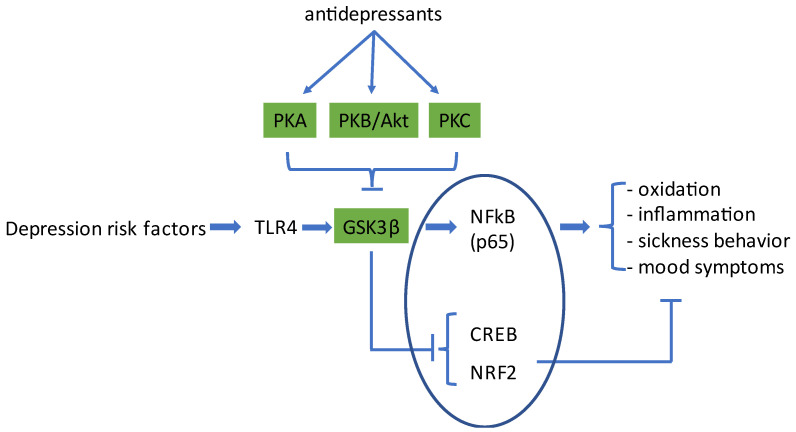
Depression is a major public health concern. Unfortunately, the present antidepressants often are insufficiently effective, whilst the discovery of more effective antidepressants has been extremely sluggish. The objective of this review was to combine the literature on depression with the pharmacology of antidepressant compounds, in order to formulate a conceivable pathophysiological process, allowing proposals how to accelerate the discovery process. Risk factors for depression initiate an infection-like inflammation in the brain that involves activation microglial Toll-like receptors and glycogen synthase kinase-3β (GSK3β). GSK3β activity alters the balance between two competing transcription factors, the pro-inflammatory/pro-oxidative transcription factor NFκB and the neuroprotective, anti-inflammatory and anti-oxidative transcription factor NRF2. The antidepressant activity of tricyclic antidepressants is assumed to involve activation of GS-coupled microglial receptors, raising intracellular cAMP levels and activation of protein kinase A (PKA). PKA and similar kinases inhibit the enzyme activity of GSK3β. Experimental antidepressant principles, including cannabinoid receptor-2 activation, opioid μ receptor agonists, 5HT2 agonists, valproate, ketamine and electrical stimulation of the Vagus nerve, all activate microglial pathways that result in GSK3β-inhibition. An in vitro screen for NRF2-activation in microglial cells with TLR-activated GSK3β activity, might therefore lead to the detection of totally novel antidepressant principles with, hopefully, an improved therapeutic efficacy.
Overview
The claims and statistics of this paper haven’t been checked yet.
Free: it reads the open-access text and checks the first 5 claims that cite a source we can check. Create a free account to check every claim.
Integrity signals
Registry
Cites
Statistics
Figures
Verification
Claims the paper makes
The claims and statistics of this paper haven’t been checked yet.
Free: it reads the open-access text and checks the first 5 claims that cite a source we can check. Create a free account to check every claim.
Claims other papers make about this one
Each is checked against this paper’s own text: does it say what the citing paper says it does?
The source backs part of the claim, not all of it — or backs it for a different population, condition or comparison.
In the citing paper
“Homodimerization of TLR-4 receptors leads to the activation of the enzyme glycogen synthase kinase (GSK-3) and the transcription factor NF-κB, which induce the production of the pro-inflammatory cytokines IL-1β, TNF-α, IL-6, and CXCL10 (56).”
From Chronic stress, neuroinflammation, and depression: an overview of pathophysiological mechanisms and emerging anti-inflammatories (2023) · cites this paper as [56]
Experimental — accuracy not yet measured
Self-check
Percentages, sums and reported differences re-computed from the paper’s own numbers.
The self-check needs the paper’s full text.
Citations
Cites
Molecular Mechanisms of Depression: Perspectives on New Treatment Strategies
Lang, U. E., & Borgwardt, S. (2013) · Cellular Physiology and Biochemistry · doi:10.1159/000350094 · Cited by 8,475
From inflammation to sickness and depression: when the immune system subjugates the brain
Dantzer, R., O'Connor, J. C., Freund, G. G., Johnson, R. W., & Kelley, K. W. (2008) · Nature Reviews Neuroscience · doi:10.1038/nrn2297 · Cited by 7,395
Santomauro, D. F., Mantilla Herrera, A. M., Shadid, J., Zheng, P., Ashbaugh, C., Pigott, D. M., Abbafati, C., Adolph, C., Amlag, J. O., Aravkin, A. Y., et al. (2021) · The Lancet · doi:10.1016/s0140-6736(21)02143-7 · Cited by 5,444
Vagus nerve stimulation attenuates the systemic inflammatory response to endotoxin
Borovikova, L. V., Ivanova, S., Zhang, M., Yang, H., Botchkina, G. I., Watkins, L. R., Wang, H., Abumrad, N., Eaton, J. W., & Tracey, K. J. (2000) · Nature · doi:10.1038/35013070 · Cited by 4,211
Malhi, G. S., & Mann, J. J. (2018) · The Lancet · doi:10.1016/s0140-6736(18)31948-2 · Cited by 4,099
Kettenmann, H., Hanisch, U.-K., Noda, M., & Verkhratsky, A. (2011) · Physiological Reviews · doi:10.1152/physrev.00011.2010 · Cited by 3,547 · cited 3×
“Extensive reviews have been published that report on the types of G-protein-coupled receptors (GPCRs) expressed by microglia [101,103,104].”
BackgroundTHE CATECHOLAMINE HYPOTHESIS OF AFFECTIVE DISORDERS: A REVIEW OF SUPPORTING EVIDENCE
SCHILDKRAUT, J. J. (1965) · American Journal of Psychiatry · doi:10.1176/ajp.122.5.509 · Cited by 3,492
Inflammasomes: mechanism of action, role in disease, and therapeutics
Guo, H., Callaway, J. B., & Ting, J. P.-Y. (2015) · Nature Medicine · doi:10.1038/nm.3893 · Cited by 3,340
Pathogen Recognition and Inflammatory Signaling in Innate Immune Defenses
Mogensen, T. H. (2009) · Clinical Microbiology Reviews · doi:10.1128/cmr.00046-08 · Cited by 3,111
The molecular neurobiology of depression
Krishnan, V., & Nestler, E. J. (2008) · Nature · doi:10.1038/nature07455 · Cited by 2,889
Microglia promote learning-dependent synapse formation through brain-derived neurotrophic factor
Parkhurst, C. N., Yang, G., Ninan, I., Savas, J. N., Yates, J. R., Lafaille, J. J., Hempstead, B. L., Littman, D. R., & Gan, W.-B. (2013) · Cell · doi:10.1016/j.cell.2013.11.030 · Cited by 2,599
The Bidirectional Relationship of Depression and Inflammation: Double Trouble
Beurel, E., Toups, M., & Nemeroff, C. B. (2020) · Neuron · doi:10.1016/j.neuron.2020.06.002 · Cited by 2,136
Nrf2-Keap1 signaling in oxidative and reductive stress
Bellezza, I., Giambanco, I., Minelli, A., & Donato, R. (2018) · Biochimica et Biophysica Acta (BBA) - Molecular Cell Research · doi:10.1016/j.bbamcr.2018.02.010 · Cited by 2,053
Neuroinflammation and M2 Microglia: The Good, the Bad, and the Inflamed
Cherry, J. D., Olschowka, J. A., & O’Banion, M. K. (2014) · Journal of Neuroinflammation · doi:10.1186/1742-2094-11-98 · Cited by 1,748 · cited 1×
“BDNF is produced by neurons [120–122], astrocytes [123,124], endothelial cells [93], as well as by reparative microglia cells [125,126].”
BackgroundPark, J. S., Svetkauskaite, D., He, Q., Kim, J.-Y., Strassheim, D., Ishizaka, A., & Abraham, E. (2004) · Journal of Biological Chemistry · doi:10.1074/jbc.m306793200 · Cited by 1,562
Ca2+ Influx Regulates BDNF Transcription by a CREB Family Transcription Factor-Dependent Mechanism
Tao, X., Finkbeiner, S., Arnold, D. B., Shaywitz, A. J., & Greenberg, M. E. (1998) · Neuron · doi:10.1016/s0896-6273(00)81010-7 · Cited by 1,561
Carhart-Harris, R. L., Bolstridge, M., Rucker, J., Day, C. M. J., Erritzoe, D., Kaelen, M., Bloomfield, M., Rickard, J. A., Forbes, B., Feilding, A., et al. (2016) · The Lancet Psychiatry · doi:10.1016/s2215-0366(16)30065-7 · Cited by 1,540
Phosphorylation of NF-κB and IκB proteins: implications in cancer and inflammation
Viatour, P., Merville, M.-P., Bours, V., & Chariot, A. (2005) · Trends in Biochemical Sciences · doi:10.1016/j.tibs.2004.11.009 · Cited by 1,496
So depression is an inflammatory disease, but where does the inflammation come from?
Berk, M., Williams, L. J., Jacka, F. N., O’Neil, A., Pasco, J. A., Moylan, S., Allen, N. B., Stuart, A. L., Hayley, A. C., Byrne, M. L., et al. (2013) · BMC Medicine · doi:10.1186/1741-7015-11-200 · Cited by 1,423 · cited 2×
“Risk factors for depression (see below) activate the immune system in the brain [4,9,12].”
BackgroundTrial of Psilocybin versus Escitalopram for Depression
Carhart-Harris, R., Giribaldi, B., Watts, R., Baker-Jones, M., Murphy-Beiner, A., Murphy, R., Martell, J., Blemings, A., Erritzoe, D., & Nutt, D. J. (2021) · New England Journal of Medicine · doi:10.1056/nejmoa2032994 · Cited by 1,391
The nuts and bolts of AGC protein kinases
Pearce, L. R., Komander, D., & Alessi, D. R. (2010) · Nature Reviews Molecular Cell Biology · doi:10.1038/nrm2822 · Cited by 1,294 · cited 1×
“AGC-kinases include the protein kinases PKA, PKB/Akt, PKC, PKG, S6K, and others [15,78,79].”
BackgroundImmune system to brain signaling: Neuropsychopharmacological implications
Capuron, L., & Miller, A. H. (2011) · Pharmacology & Therapeutics · doi:10.1016/j.pharmthera.2011.01.014 · Cited by 1,195
Mechanisms of ketamine action as an antidepressant
Zanos, P., & Gould, T. D. (2018) · Molecular Psychiatry · doi:10.1038/mp.2017.255 · Cited by 1,127 · cited 2×
“The mechanism by which ketamine exerts its antidepressant effects is still a matter of debate [208,209].”
BackgroundAnti-inflammatory Agents: Present and Future
Dinarello, C. A. (2010) · Cell · doi:10.1016/j.cell.2010.02.043 · Cited by 1,095
Martin, M., Rehani, K., Jope, R. S., & Michalek, S. M. (2005) · Nature Immunology · doi:10.1038/ni1221 · Cited by 1,080
de Jonge, W. J., van der Zanden, E. P., The, F. O., Bijlsma, M. F., van Westerloo, D. J., Bennink, R. J., Berthoud, H.-R., Uematsu, S., Akira, S., van den Wijngaard, R. M., et al. (2005) · Nature Immunology · doi:10.1038/ni1229 · Cited by 1,074
Kerschensteiner, M., Gallmeier, E., Behrens, L., Leal, V. V., Misgeld, T., Klinkert, W. E. F., Kolbeck, R., Hoppe, E., Oropeza-Wekerle, R.-L., Bartke, I., et al. (1999) · The Journal of Experimental Medicine · doi:10.1084/jem.189.5.865 · Cited by 1,019
Dopamine controls systemic inflammation through inhibition of NLRP3 inflammasome
Yan, Y., Jiang, W., Liu, L., Wang, X., Ding, C., Tian, Z., & Zhou, R. (2015) · Cell · doi:10.1016/j.cell.2014.11.047 · Cited by 1,014
Haroon, E., Raison, C. L., & Miller, A. H. (2012) · Neuropsychopharmacology · doi:10.1038/npp.2011.205 · Cited by 1,000 · cited 2×
“Risk factors for depression (see below) activate the immune system in the brain [4,9,12].”
BackgroundKendler, K. S., Hettema, J. M., Butera, F., Gardner, C. O., & Prescott, C. A. (2003) · Archives of General Psychiatry · doi:10.1001/archpsyc.60.8.789 · Cited by 966
The chronic mild stress (CMS) model of depression: History, evaluation and usage
Willner, P. (2017) · Neurobiology of Stress · doi:10.1016/j.ynstr.2016.08.002 · Cited by 959
BDNF - a key transducer of antidepressant effects
Björkholm, C., & Monteggia, L. M. (2016) · Neuropharmacology · doi:10.1016/j.neuropharm.2015.10.034 · Cited by 958
Depression as a Microglial Disease
Yirmiya, R., Rimmerman, N., & Reshef, R. (2015) · Trends in Neurosciences · doi:10.1016/j.tins.2015.08.001 · Cited by 944 · cited 3×
“It is conceivable that microglial cells are the targets for these effects [41,229,230].”
BackgroundA mechanism converting psychosocial stress into mononuclear cell activation
Bierhaus, A., Wolf, J., Andrassy, M., Rohleder, N., Humpert, P. M., Petrov, D., Ferstl, R., von Eynatten, M., Wendt, T., Rudofsky, G., et al. (2003) · Proceedings of the National Academy of Sciences · doi:10.1073/pnas.0438019100 · Cited by 927
The role of the transcription factor CREB in immune function
Wen, A. Y., Sakamoto, K. M., & Miller, L. S. (2010) · The Journal of Immunology · doi:10.4049/jimmunol.1001829 · Cited by 790
Rada, P., Rojo, A. I., Chowdhry, S., McMahon, M., Hayes, J. D., & Cuadrado, A. (2011) · Molecular and Cellular Biology · doi:10.1128/mcb.01204-10 · Cited by 759 · cited 6×
“Both CREB and NRF2 are stabilized when the pro-inflammatory kinase GSK3β is inhibited.”
BackgroundInfluentialKapur, S., Zipursky, R. B., & Remington, G. (1999) · American Journal of Psychiatry · doi:10.1176/ajp.156.2.286 · Cited by 712
Calcia, M. A., Bonsall, D. R., Bloomfield, P. S., Selvaraj, S., Barichello, T., & Howes, O. D. (2016) · Psychopharmacology · doi:10.1007/s00213-016-4218-9 · Cited by 709
Inflammation and clinical response to treatment in depression: A meta-analysis
Strawbridge, R., Arnone, D., Danese, A., Papadopoulos, A., Herane Vives, A., & Cleare, A. J. (2015) · European Neuropsychopharmacology · doi:10.1016/j.euroneuro.2015.06.007 · Cited by 666 · cited 1×
“The evidence that inflammation plays a subtle role in the pathophysiology of major depressive disorder (MDD) comes from three observations: (1) one-third of those with major depression show elevated peripheral inflammatory biomarkers, even in the absence of an additional medical illness; (2) inflammatory illnesses are…”
BackgroundKreisel, T., Frank, M. G., Licht, T., Reshef, R., Ben-Menachem-Zidon, O., Baratta, M. V., Maier, S. F., & Yirmiya, R. (2014) · Molecular Psychiatry · doi:10.1038/mp.2013.155 · Cited by 663 · cited 4×
“Importantly, chronic antidepressants also ameliorate the behavioral effects of stress [42,52].”
BackgroundInfluentialWohleb, E. S., Hanke, M. L., Corona, A. W., Powell, N. D., Stiner, L. M., Bailey, M. T., Nelson, R. J., Godbout, J. P., & Sheridan, J. F. (2011) · The Journal of Neuroscience · doi:10.1523/jneurosci.0450-11.2011 · Cited by 638
Depression and sickness behavior are Janus-faced responses to shared inflammatory pathways
Maes, M., Berk, M., Goehler, L., Song, C., Anderson, G., Gałecki, P., & Leonard, B. (2012) · BMC Medicine · doi:10.1186/1741-7015-10-66 · Cited by 629 · cited 1×
“It is conceptualized as an adaptive response that enhances recovery by conserving energy to combat acute inflammation [35,36].”
BackgroundNuclear factor-κB is a critical mediator of stress-impaired neurogenesis and depressive behavior
Koo, J. W., Russo, S. J., Ferguson, D., Nestler, E. J., & Duman, R. S. (2010) · Proceedings of the National Academy of Sciences · doi:10.1073/pnas.0910658107 · Cited by 607
The CB2 receptor and its role as a regulator of inflammation
Turcotte, C., Blanchet, M.-R., Laviolette, M., & Flamand, N. (2016) · Cellular and Molecular Life Sciences · doi:10.1007/s00018-016-2300-4 · Cited by 588
Pivotal role of TLR4 receptors in alcohol-induced neuroinflammation and brain damage
Alfonso-Loeches, S., Pascual-Lucas, M., Blanco, A. M., Sanchez-Vera, I., & Guerri, C. (2010) · Journal of Neuroscience · doi:10.1523/jneurosci.0976-10.2010 · Cited by 579
Autoimmune Diseases and Severe Infections as Risk Factors for Mood Disorders: A Nationwide Study
Benros, M. E., Waltoft, B. L., Nordentoft, M., Østergaard, S. D., Eaton, W. W., Krogh, J., & Mortensen, P. B. (2013) · JAMA Psychiatry · doi:10.1001/jamapsychiatry.2013.1111 · Cited by 572 · cited 1×
“Infection [18] and inflammatory disorders such as IBD (inflammatory bowel disease) [19], metabolic disorders [19,20], cardiovascular disorders [21], neurological disorders [22–26], autoimmune diseases [18], and even alcohol abuse [27,28] are among the likely causes of immune dysfunction that contribute to the pathogen…”
BackgroundMicroglia in depression: an overview of microglia in the pathogenesis and treatment of depression
Wang, H., He, Y., Sun, Z., Ren, S., Liu, M., Wang, G., & Yang, J. (2022) · Journal of Neuroinflammation · doi:10.1186/s12974-022-02492-0 · Cited by 571
Opioid receptors: Distinct roles in mood disorders
Lutz, P.-E., & Kieffer, B. L. (2013) · Trends in Neurosciences · doi:10.1016/j.tins.2012.11.002 · Cited by 542
Qin, L., He, J., Hanes, R. N., Pluzarev, O., Hong, J.-S., & Crews, F. T. (2008) · Journal of Neuroinflammation · doi:10.1186/1742-2094-5-10 · Cited by 532
Microglia during development and aging
Harry, G. J. (2013) · Pharmacology & Therapeutics · doi:10.1016/j.pharmthera.2013.04.013 · Cited by 524
Attenuation of Antidepressant Effects of Ketamine by Opioid Receptor Antagonism
Williams, N. R., Heifets, B. D., Blasey, C., Sudheimer, K., Pannu, J., Pankow, H., Hawkins, J., Birnbaum, J., Lyons, D. M., Rodriguez, C. I., et al. (2018) · American Journal of Psychiatry · doi:10.1176/appi.ajp.2018.18020138 · Cited by 519 · cited 1×
“In a pilot study in humans with major depression, the antidepressant but not the dissociative effects of ketamine were blocked by naltrexone [212].”
BackgroundMorphine activates neuroinflammation in a manner parallel to endotoxin
Wang, X., Loram, L. C., Ramos, K., de Jesus, A. J., Thomas, J., Cheng, K., Reddy, A., Somogyi, A. A., Hutchinson, M. R., Watkins, L. R., et al. (2012) · Proceedings of the National Academy of Sciences · doi:10.1073/pnas.1200130109 · Cited by 517
Stimulation of systemic low-grade inflammation by psychosocial stress.
Rohleder, N. (2014) · Psychosomatic Medicine · doi:10.1097/psy.0000000000000049 · Cited by 497
Chronic vagus nerve stimulation in Crohn's disease: a 6‐month follow‐up pilot study
Bonaz, B., Sinniger, V., Hoffmann, D., Clarençon, D., Mathieu, N., Dantzer, C., Vercueil, L., Picq, C., Trocmé, C., Faure, P., et al. (2016) · Neurogastroenterology & Motility · doi:10.1111/nmo.12792 · Cited by 492
The prevalence and impact of alcohol problems in major depression: A systematic review
Sullivan, L. E., Fiellin, D. A., & O’Connor, P. G. (2005) · The American Journal of Medicine · doi:10.1016/j.amjmed.2005.01.007 · Cited by 489 · cited 1×
“Infection [18] and inflammatory disorders such as IBD (inflammatory bowel disease) [19], metabolic disorders [19,20], cardiovascular disorders [21], neurological disorders [22–26], autoimmune diseases [18], and even alcohol abuse [27,28] are among the likely causes of immune dysfunction that contribute to the pathogen…”
BackgroundTests of Causal Links Between Alcohol Abuse or Dependence and Major Depression
Fergusson, D. M., Boden, J. M., & Horwood, L. J. (2009) · Archives of General Psychiatry · doi:10.1001/archgenpsychiatry.2008.543 · Cited by 475
Functional Biomarkers of Depression: Diagnosis, Treatment, and Pathophysiology
Schmidt, H. D., Shelton, R. C., & Duman, R. S. (2011) · Neuropsychopharmacology · doi:10.1038/npp.2011.151 · Cited by 474
Oxidative stress, inflammation and treatment response in major depression
Lindqvist, D., Dhabhar, F. S., James, S. J., Hough, C. M., Jain, F. A., Bersani, F. S., Reus, V. I., Verhoeven, J. E., Epel, E. S., Mahan, L., et al. (2017) · Psychoneuroendocrinology · doi:10.1016/j.psyneuen.2016.11.031 · Cited by 473
Wang, Y.-L., Han, Q.-Q., Gong, W.-Q., Pan, D.-H., Wang, L.-Z., Hu, W., Yang, M., Li, B., Yu, J., & Liu, Q. (2018) · Journal of Neuroinflammation · doi:10.1186/s12974-018-1054-3 · Cited by 438
Walker, A. K., Budac, D. P., Bisulco, S., Lee, A. W., Smith, R. A., Beenders, B., Kelley, K. W., & Dantzer, R. (2013) · Neuropsychopharmacology · doi:10.1038/npp.2013.71 · Cited by 432 · cited 1×
“Consistent with this activity, ketamine increased the expression of BDNF [216,217], increased the expression of the NRF2-target gene heme oxygenase-1 [218], suppressed chronic stress-induced depressive behaviors and proinflammatory cytokine levels [219–221], as well as LPS-induced depressive behaviors [222].”
BackgroundVascular endothelial cells synthesize and secrete brain‐derived neurotrophic factor
Nakahashi, T., Fujimura, H., Altar, C. A., Li, J., Kambayashi, J.-I., Tandon, N. N., & Sun, B. (2000) · FEBS Letters · doi:10.1016/s0014-5793(00)01302-8 · Cited by 430 · cited 6×
“Biomedicines 2023, 11, 806 10 of 19 Abbreviations 5HT (5-hydroxytryptamine); ATP (adenosine triphosphate); BDNF (brain-derived neurotrophic factor); cAMP (cyclic adenosine monophosphate); CCL2 (CC-chemokine ligand-2); CNS (central nervous system); CBP (CREB-binding protein); COX2 (cyclooxygenase-2); CREB (cyclic-AMP r…”
BackgroundInfluentialGukasyan, N., Davis, A. K., Barrett, F. S., Cosimano, M. P., Sepeda, N. D., Johnson, M. W., & Griffiths, R. R. (2022) · Journal of Psychopharmacology · doi:10.1177/02698811211073759 · Cited by 425
Hinwood, M., Morandini, J., Day, T. A., & Walker, F. R. (2012) · Cerebral Cortex · doi:10.1093/cercor/bhr229 · Cited by 420
Multiple receptors contribute to the behavioral effects of indoleamine hallucinogens
Halberstadt, A. L., & Geyer, M. A. (2011) · Neuropharmacology · doi:10.1016/j.neuropharm.2011.01.017 · Cited by 411
McEwen, B. S., Chattarji, S., Diamond, D. M., Jay, T. M., Reagan, L. P., Svenningsson, P., & Fuchs, E. (2010) · Molecular Psychiatry · doi:10.1038/mp.2009.80 · Cited by 406
Howland, R. H. (2014) · Current Behavioral Neuroscience Reports · doi:10.1007/s40473-014-0010-5 · Cited by 405
Rush, A. J., Sackeim, H. A., Marangell, L. B., George, M. S., Brannan, S. K., Davis, S. M., Lavori, P., Howland, R., Kling, M. A., Rittberg, B., et al. (2005) · Biological Psychiatry · doi:10.1016/j.biopsych.2005.05.024 · Cited by 400
Depression: an inflammatory illness?: Figure 1
Krishnadas, R., & Cavanagh, J. (2012) · Journal of Neurology, Neurosurgery & Psychiatry · doi:10.1136/jnnp-2011-301779 · Cited by 392 · cited 2×
“It is conceivable that a continuing peripheral inflammation will hinder full recovery and might represent a precipitating factor for relapses [16].”
BackgroundNRF2-regulation in brain health and disease: Implication of cerebral inflammation
Sandberg, M., Patil, J., D'Angelo, B., Weber, S. G., & Mallard, C. (2014) · Neuropharmacology · doi:10.1016/j.neuropharm.2013.11.004 · Cited by 390
Tynan, R. J., Weidenhofer, J., Hinwood, M., Cairns, M. J., Day, T. A., & Walker, F. R. (2012) · Brain, Behavior, and Immunity · doi:10.1016/j.bbi.2011.12.011 · Cited by 386
Identification of resolvin D2 receptor mediating resolution of infections and organ protection
Chiang, N., Dalli, J., Colas, R. A., & Serhan, C. N. (2015) · Journal of Experimental Medicine · doi:10.1084/jem.20150225 · Cited by 383
Innate and adaptive immune responses regulated by glycogen synthase kinase-3 (GSK3)
Beurel, E., Michalek, S. M., & Jope, R. S. (2010) · Trends in Immunology · doi:10.1016/j.it.2009.09.007 · Cited by 378
Effects of antidepressants on the production of cytokines
Kenis, G., & Maes, M. (2002) · The International Journal of Neuropsychopharmacology · doi:10.1017/s1461145702003164 · Cited by 370 · cited 15×
“Biomedicines 2023, 11, 806 10 of 19 Abbreviations 5HT (5-hydroxytryptamine); ATP (adenosine triphosphate); BDNF (brain-derived neurotrophic factor); cAMP (cyclic adenosine monophosphate); CCL2 (CC-chemokine ligand-2); CNS (central nervous system); CBP (CREB-binding protein); COX2 (cyclooxygenase-2); CREB (cyclic-AMP r…”
BackgroundInfluentialNLRP3 inflammasome-driven pathways in depression: clinical and preclinical findings
Kaufmann, F. N., Costa, A. P., Ghisleni, G., Diaz, A. P., Rodrigues, A. L. S., Peluffo, H., & Kaster, M. P. (2017) · Brain, Behavior, and Immunity · doi:10.1016/j.bbi.2017.03.002 · Cited by 370
Yasuda, S., Liang, M.-H., Marinova, Z., Yahyavi, A., & Chuang, D.-M. (2009) · Molecular Psychiatry · doi:10.1038/sj.mp.4002099 · Cited by 358 · cited 13×
“Biomedicines 2023, 11, 806 10 of 19 Abbreviations 5HT (5-hydroxytryptamine); ATP (adenosine triphosphate); BDNF (brain-derived neurotrophic factor); cAMP (cyclic adenosine monophosphate); CCL2 (CC-chemokine ligand-2); CNS (central nervous system); CBP (CREB-binding protein); COX2 (cyclooxygenase-2); CREB (cyclic-AMP r…”
BackgroundInfluentialChen, P.-S., Peng, G.-S., Li, G., Yang, S., Wu, X., Wang, C.-C., Wilson, B., Lu, R.-B., Gean, P.-W., Chuang, D.-M., et al. (2006) · Molecular Psychiatry · doi:10.1038/sj.mp.4001893 · Cited by 351
Beumer, W., Gibney, S. M., Drexhage, R. C., Pont-Lezica, L., Doorduin, J., Klein, H. C., Steiner, J., Connor, T. J., Harkin, A., Versnel, M. A., et al. (2012) · Journal of Leukocyte Biology · doi:10.1189/jlb.0212100 · Cited by 347
The role of Nrf2 signaling in counteracting neurodegenerative diseases
Dinkova‐Kostova, A. T., Kostov, R. V., & Kazantsev, A. G. (2018) · The FEBS Journal · doi:10.1111/febs.14379 · Cited by 342
Núñez, E., Benito, C., Pazos, M. R., Barbachano, A., Fajardo, O., González, S., Tolón, R. M., & Romero, J. (2004) · Synapse · doi:10.1002/syn.20050 · Cited by 333
Maes, M., Fišar, Z., Medina, M., Scapagnini, G., Nowak, G., & Berk, M. (2012) · Inflammopharmacology · doi:10.1007/s10787-011-0111-7 · Cited by 325
Meltzer, H. Y., Matsubara, S., & Lee, J. C. (1989) · PubMed · Cited by 322
Yovell, Y., Bar, G., Mashiah, M., Baruch, Y., Briskman, I., Asherov, J., Lotan, A., Rigbi, A., & Panksepp, J. (2016) · American Journal of Psychiatry · doi:10.1176/appi.ajp.2015.15040535 · Cited by 311
Increased Serum Levels of 8-Hydroxy-2′-Deoxyguanosine in Clinical Depression
Forlenza, M. J., & Miller, G. E. (2006) · Psychosomatic Medicine · doi:10.1097/01.psy.0000195780.37277.2a · Cited by 308
Neurobiological and clinical effects of the antidepressant tianeptine
Kasper, S., & McEwen, B. S. (2008) · CNS Drugs · doi:10.2165/00023210-200822010-00002 · Cited by 302 · cited 1×
“Tianeptine reduces the depression symptoms in patients with mild to moderate-to-severe major depression [167], but given its inherent abuse liability, the risk-benefit ratio of tianeptine remains uncertain [182].”
BackgroundIn Vivo Regulation of Glycogen Synthase Kinase-3β (GSK3β) by Serotonergic Activity in Mouse Brain
Li, X., Zhu, W., Roh, M.-S., Friedman, A. B., Rosborough, K., & Jope, R. S. (2004) · Neuropsychopharmacology · doi:10.1038/sj.npp.1300439 · Cited by 300 · cited 1×
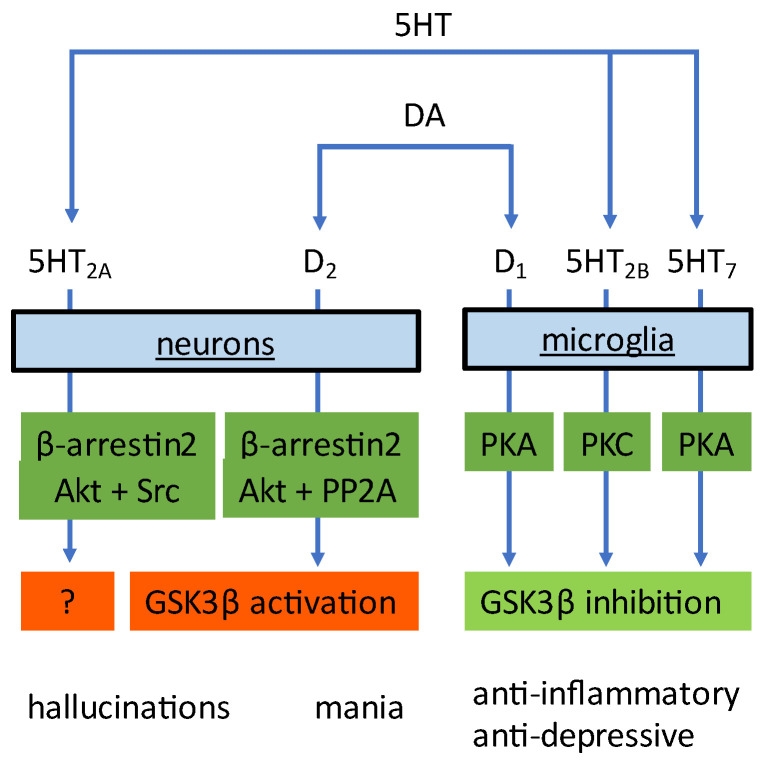
“Similar to dopamine, activation of neuronal 5HT2A receptors involves the formation of a molecular complex, here consisting of βArr2, PKB, and Src [237] and ultimately results in activation of GSK3 [238].”
BackgroundAnti-inflammatory role of microglial alpha7 nAChRs and its role in neuroprotection
Egea, J., Buendia, I., Parada, E., Navarro, E., León, R., & Lopez, M. G. (2015) · Biochemical Pharmacology · doi:10.1016/j.bcp.2015.07.032 · Cited by 298
Beurel, E., Song, L., & Jope, R. S. (2011) · Molecular Psychiatry · doi:10.1038/mp.2011.47 · Cited by 288
The Behavioral Effects of the Antidepressant Tianeptine Require the Mu-Opioid Receptor
Samuels, B. A., Nautiyal, K. M., Kruegel, A. C., Levinstein, M. R., Magalong, V. M., Gassaway, M. M., Grinnell, S. G., Han, J., Ansonoff, M. A., Pintar, J. E., et al. (2017) · Neuropsychopharmacology · doi:10.1038/npp.2017.60 · Cited by 274
Regulation of MAP kinases by MAP kinase phosphatases
Kondoh, K., & Nishida, E. (2007) · Biochimica et Biophysica Acta (BBA) - Molecular Cell Research · doi:10.1016/j.bbamcr.2006.12.002 · Cited by 268
Astrocytes as a Source for Extracellular Matrix Molecules and Cytokines
Wiese, S., Karus, M., & Faissner, A. (2012) · Frontiers in Pharmacology · doi:10.3389/fphar.2012.00120 · Cited by 262
Engel, T., Hernández, F., Avila, J., & Lucas, J. J. (2006) · The Journal of Neuroscience · doi:10.1523/jneurosci.0604-06.2006 · Cited by 260
Serotonin Skews Human Macrophage Polarization through HTR2B and HTR7
de las Casas-Engel, M., Domínguez-Soto, A., Sierra-Filardi, E., Bragado, R., Nieto, C., Puig-Kroger, A., Samaniego, R., Loza, M., Corcuera, M. T., Gómez-Aguado, F., et al. (2013) · The Journal of Immunology · doi:10.4049/jimmunol.1201133 · Cited by 251
Yuskaitis, C. J., & Jope, R. S. (2009) · Cellular Signalling · doi:10.1016/j.cellsig.2008.10.014 · Cited by 240 · cited 1×
“It is conceivable that microglial cells are the targets for these effects [41,229,230].”
BackgroundBeaulieu, J.-M. (2012) · Journal of Psychiatry and Neuroscience · doi:10.1503/jpn.110011 · Cited by 238
Gomes, C., Ferreira, R., George, J., Sanches, R., Rodrigues, D. I., Gonçalves, N., & Cunha, R. A. (2013) · Journal of Neuroinflammation · doi:10.1186/1742-2094-10-16 · Cited by 233
Diz-Chaves, Y., Pernía, O., Carrero, P., & Garcia-Segura, L. M. (2012) · Journal of Neuroinflammation · doi:10.1186/1742-2094-9-71 · Cited by 230
Suh, H.-S., Zhao, M.-L., Derico, L., Choi, N., & Lee, S. C. (2013) · Journal of Neuroinflammation · doi:10.1186/1742-2094-10-37 · Cited by 226 · cited 1×
“However, a simple screen in mouse BV-2 microglial cells would already detect α-lipoic acid [197], 9-cis-retinoic acid [198], stable cAMP analogues [94,199], PDE4 inhibitors [200,201], agonists of the fatty acid receptor FFAR1/GPR40 [202], the ‘specialized pro-resolving mediators’ lipoxin A4, resolvin D1 and resolvin E…”
BackgroundAbdallah, C. G., Sanacora, G., Duman, R. S., & Krystal, J. H. (2018) · Pharmacology & Therapeutics · doi:10.1016/j.pharmthera.2018.05.010 · Cited by 219 · cited 1×
“The mechanism by which ketamine exerts its antidepressant effects is still a matter of debate [208,209].”
BackgroundWeber, M. D., Frank, M. G., Tracey, K. J., Watkins, L. R., & Maier, S. F. (2015) · The Journal of Neuroscience · doi:10.1523/jneurosci.3561-14.2015 · Cited by 215 · cited 10×
“Like LPS [30], DAMPs activate TLR2 and, in particular, TLR4 [32,33].”
BackgroundInfluentialHait, N. C., Wise, L. E., Allegood, J. C., O'Brien, M., Avni, D., Reeves, T. M., Knapp, P. E., Lu, J., Luo, C., Miles, M. F., et al. (2014) · Nature Neuroscience · doi:10.1038/nn.3728 · Cited by 209
Neuroinflammation in the living brain of Parkinson's disease
Ouchi, Y., Yagi, S., Yokokura, M., & Sakamoto, M. (2009) · Parkinsonism & Related Disorders · doi:10.1016/s1353-8020(09)70814-4 · Cited by 209
Epilepsy and Inflammation in the Brain: Overview and Pathophysiology
Vezzani, A. (2014) · Epilepsy Currents · doi:10.5698/1535-7511-14.s2.3 · Cited by 208
An overview of the cannabinoid type 2 receptor system and its therapeutic potential
Bie, B., Wu, J., Foss, J. F., & Naguib, M. (2018) · Current Opinion in Anaesthesiology · doi:10.1097/aco.0000000000000616 · Cited by 206
Neuroinflammatory Dynamics Underlie Memory Impairments after Repeated Social Defeat
McKim, D. B., Niraula, A., Tarr, A. J., Wohleb, E. S., Sheridan, J. F., & Godbout, J. P. (2016) · The Journal of Neuroscience · doi:10.1523/jneurosci.2394-15.2016 · Cited by 204
Alpha7 nicotinic receptors as novel therapeutic targets for inflammation-based diseases
Bencherif, M., Lippiello, P. M., Lucas, R., & Marrero, M. B. (2011) · Cellular and Molecular Life Sciences · doi:10.1007/s00018-010-0525-1 · Cited by 202
Yang, J.-J., Wang, N., Yang, C., Shi, J.-Y., Yu, H.-Y., & Hashimoto, K. (2015) · Biological Psychiatry · doi:10.1016/j.biopsych.2014.06.021 · Cited by 202
Antidepressants inhibit interferon-γ-induced microglial production of IL-6 and nitric oxide
Hashioka, S., Klegeris, A., Monji, A., Kato, T., Sawada, M., McGeer, P. L., & Kanba, S. (2007) · Experimental Neurology · doi:10.1016/j.expneurol.2007.03.022 · Cited by 198
Parada, E., Egea, J., Buendia, I., Negredo, P., Cunha, A. C., Cardoso, S., Soares, M. P., & López, M. G. (2013) · Antioxidants & Redox Signaling · doi:10.1089/ars.2012.4671 · Cited by 198
Role of the mu-opioid receptor in opioid modulation of immune function
Ninković, J., & Roy, S. (2013) · Amino Acids · doi:10.1007/s00726-011-1163-0 · Cited by 196
Depression‐resistant endophenotype in mice overexpressing cannabinoid CB 2 receptors
García‐Gutiérrez, M., Pérez‐Ortiz, J., Gutiérrez‐Adán, A., & Manzanares, J. (2010) · British Journal of Pharmacology · doi:10.1111/j.1476-5381.2010.00819.x · Cited by 196
The atypical antidepressant and neurorestorative agent tianeptine is a μ-opioid receptor agonist
Gassaway, M. M., Rives, M.-L., Kruegel, A. C., Javitch, J. A., & Sames, D. (2014) · Translational Psychiatry · doi:10.1038/tp.2014.30 · Cited by 195
Regulation of mouse brain glycogen synthase kinase-3 by atypical antipsychotics
Li, X., Rosborough, K. M., Friedman, A. B., Zhu, W., & Roth, K. A. (2007) · The International Journal of Neuropsychopharmacology · doi:10.1017/s1461145706006547 · Cited by 191
Endogenous opioid system dysregulation in depression: implications for new therapeutic approaches
Peciña, M., Karp, J. F., Mathew, S., Todtenkopf, M. S., Ehrich, E. W., & Zubieta, J.-K. (2019) · Molecular Psychiatry · doi:10.1038/s41380-018-0117-2 · Cited by 190
Alimohamad, H., Rajakumar, N., Seah, Y.-H., & Rushlow, W. (2005) · Biological Psychiatry · doi:10.1016/j.biopsych.2004.11.036 · Cited by 187
Wang, L., Wang, R., Liu, L., Qiao, D., Baldwin, D. S., & Hou, R. (2019) · Brain, Behavior, and Immunity · doi:10.1016/j.bbi.2019.02.021 · Cited by 185
Ghosh, M., Xu, Y., & Pearse, D. D. (2016) · Journal of Neuroinflammation · doi:10.1186/s12974-015-0463-9 · Cited by 183
Dionisie, V., Filip, G. A., Manea, M. C., Manea, M., & Riga, S. (2020) · Inflammopharmacology · doi:10.1007/s10787-020-00777-5 · Cited by 182
Two-year outcome of vagus nerve stimulation in treatment-resistant depression
Bajbouj, M., Merkl, A., Schlaepfer, T. E., Frick, C., Zobel, A., Maier, W., O'Keane, V., Corcoran, C., Adolfsson, R., Trimble, M., et al. (2010) · Journal of Clinical Psychopharmacology · doi:10.1097/jcp.0b013e3181db8831 · Cited by 178
Hippocampal-dependent antidepressant-like activity of histone deacetylase inhibition
Covington, H. E., Vialou, V. F., LaPlant, Q., Ohnishi, Y. N., & Nestler, E. J. (2011) · Neuroscience Letters · doi:10.1016/j.neulet.2011.02.022 · Cited by 178
Resolvin D1 and E1 promote resolution of inflammation in microglial cells in vitro
Rey, C., Nadjar, A., Buaud, B., Vaysse, C., Aubert, A., Pallet, V., Layé, S., & Joffre, C. (2015) · Brain Behavior and Immunity · doi:10.1016/j.bbi.2015.12.013 · Cited by 176
Schmid, C. L., & Bohn, L. M. (2010) · The Journal of Neuroscience · doi:10.1523/jneurosci.1665-10.2010 · Cited by 175
Krabbe, G., Matyash, V., Pannasch, U., Mamer, L., Boddeke, H. W. G. M., & Kettenmann, H. (2012) · Brain, Behavior, and Immunity · doi:10.1016/j.bbi.2011.12.002 · Cited by 174
Microglia in neuronal plasticity: Influence of stress
Delpech, J.-C., Madore, C., Nadjar, A., Joffre, C., Wohleb, E. S., & Layé, S. (2015) · Neuropharmacology · doi:10.1016/j.neuropharm.2014.12.034 · Cited by 174
Cheng, Y., Pardo, M., Armini, R. D. S., Martinez, A., Mouhsine, H., Zagury, J.-F., Jope, R. S., & Beurel, E. (2016) · Brain, Behavior, and Immunity · doi:10.1016/j.bbi.2015.12.012 · Cited by 174 · cited 2×
“The serine/threonine kinase glycogen-synthase kinase 3 (GSK3) acts as a master switch between, on the one hand, a pro-inflammatory/pro-oxidative and, on the other hand, a proliferative, protective, and restorative biological program [14,15].”
BackgroundAnti-inflammatory ω-3 endocannabinoid epoxides
McDougle, D. R., Watson, J. E., Abdeen, A. A., Adili, R., Caputo, M. P., Krapf, J. E., Johnson, R. W., Kilian, K. A., Holinstat, M., & Das, A. (2017) · Proceedings of the National Academy of Sciences · doi:10.1073/pnas.1610325114 · Cited by 172
Zhang, C., Zhang, Y.-P., Li, Y.-Y., Liu, B.-P., Wang, H.-Y., Li, K.-W., Zhao, S., & Song, C. (2019) · Behavioural Brain Research · doi:10.1016/j.bbr.2018.07.001 · Cited by 172 · cited 3×
“In further studies in chronic stress models, it was noted that stress increased inflammation markers (CD14, CD86, and TLR4) on microglia and macrophages [53,54].”
BackgroundDepression research: where are we now?
Lee, S., Jeong, J., Kwak, Y., & Park, S. K. (2010) · Molecular Brain · doi:10.1186/1756-6606-3-8 · Cited by 170
Serafini, G., Adavastro, G., Canepa, G., De Berardis, D., Valchera, A., Pompili, M., Nasrallah, H., & Amore, M. (2018) · International Journal of Molecular Sciences · doi:10.3390/ijms19082410 · Cited by 162
Lee, J.-W., Huang, B. X., Kwon, H., Rashid, M. A., Kharebava, G., Desai, A., Patnaik, S., Marugan, J., & Kim, H.-Y. (2016) · Nature Communications · doi:10.1038/ncomms13123 · Cited by 161
Novel Resolvin D2 Receptor Axis in Infectious Inflammation
Chiang, N., de la Rosa, X., Libreros, S., & Serhan, C. N. (2017) · The Journal of Immunology · doi:10.4049/jimmunol.1601650 · Cited by 161
Sanacora, G., & Schatzberg, A. F. (2015) · Neuropsychopharmacology · doi:10.1038/npp.2014.261 · Cited by 160
Lumsden, E. W., Troppoli, T. A., Myers, S. J., Zanos, P., Aracava, Y., Kehr, J., Lovett, J., Kim, S., Wang, F.-H., Schmidt, S., et al. (2019) · Proceedings of the National Academy of Sciences · doi:10.1073/pnas.1816071116 · Cited by 158 · cited 1×
“The issue with NMDA-blockade is that other NMDA blockers do not induce a rapid antidepressant effect (for instance, memantine [210]), whereas the ketamine-metabolite 2R,6R-HNK provoked rapid antidepressant-like activity in preclinical models that was independent of NMDA-blockade [211].”
BackgroundLow-dose ketamine affects immune responses in humans during the early postoperative period
Beilin, B., Rusabrov, Y., Shapira, Y., Roytblat, L., Greemberg, L., Yardeni, I. Z., & Bessler, H. (2007) · British Journal of Anaesthesia · doi:10.1093/bja/aem218 · Cited by 155
Therapeutic Potential of α7 Nicotinic Acetylcholine Receptors
Bertrand, D., Lee, C., Flood, D. G., Marger, F., & Donnelly‐Roberts, D. L. (2015) · Pharmacological Reviews · doi:10.1124/pr.113.008581 · Cited by 154
Possible antidepressive effects of opioids: Action of buprenorphine
Emrich, H. M., Vogt, P., & Herz, A. (1982) · Annals of the New York Academy of Sciences · doi:10.1111/j.1749-6632.1982.tb39483.x · Cited by 152 · cited 1×
“The mixed μ-receptor agonist/κ-antagonist buprenorphine is antidepressant too, and similar to tianeptine, it remains a therapeutic option for patients with treatment-resistant major depression [166,168].”
BackgroundRusso, C. D., Boullerne, A. I., Gavrilyuk, V., & Feinstein, D. L. (2004) · Journal of Neuroinflammation · doi:10.1186/1742-2094-1-9 · Cited by 152
Review of Pharmacological Treatment in Mood Disorders and Future Directions for Drug Development
Li, X., Frye, M. A., & Shelton, R. C. (2011) · Neuropsychopharmacology · doi:10.1038/npp.2011.198 · Cited by 148
The role of neuroinflammation on the pathogenesis of Parkinson's disease
Chung, Y.-C., Ko, H.-W., Bok, E.-G., Park, E.-S., Huh, S.-H., Nam, J.-H., & Jin, B.-K. (2010) · BMB Reports · doi:10.5483/bmbrep.2010.43.4.225 · Cited by 148
Nrf2: An all-rounder in depression
Zuo, C., Cao, H., Song, Y., Gu, Z., Huang, Y., Yang, Y., Miao, J., Zhu, L., Chen, J., Jiang, Y., et al. (2022) · Redox Biology · doi:10.1016/j.redox.2022.102522 · Cited by 145
Tan, S., Wang, Y., Chen, K., Long, Z., & Zou, J. (2017) · Biological & Pharmaceutical Bulletin · doi:10.1248/bpb.b17-00131 · Cited by 142
Role of Dual-Specificity Phosphatase 1 in Glucocorticoid-Driven Anti-inflammatory Responses
Hoppstädter, J., & Ammit, A. J. (2019) · Frontiers in Immunology · doi:10.3389/fimmu.2019.01446 · Cited by 141
Kim, S.-W., Lee, H., Shin, J., & Lee, J.-K. (2013) · Free Radical Biology and Medicine · doi:10.1016/j.freeradbiomed.2013.07.028 · Cited by 139
Lehmann, M. L., Weigel, T. K., Poffenberger, C. N., & Herkenham, M. (2019) · The Journal of Neuroscience · doi:10.1523/jneurosci.0184-19.2019 · Cited by 138
9-Cis-retinoic acid suppresses inflammatory responses of microglia and astrocytes
Xu, J., & Drew, P. D. (2005) · Journal of Neuroimmunology · doi:10.1016/j.jneuroim.2005.10.004 · Cited by 136
Ślusarczyk, J., Trojan, E., Głombik, K., Budziszewska, B., Kubera, M., Lasoń, W., Popiołek-Barczyk, K., Mika, J., Wędzony, K., & Basta-Kaim, A. (2015) · Frontiers in Cellular Neuroscience · doi:10.3389/fncel.2015.00082 · Cited by 135
Microglia antioxidant systems and redox signalling
Vilhardt, F., Haslund‐Vinding, J., Jaquet, V, & McBean, G. (2017) · British Journal of Pharmacology · doi:10.1111/bph.13426 · Cited by 135
Lehmann, M. L., Cooper, H. A., Maric, D., & Herkenham, M. (2016) · Journal of Neuroinflammation · doi:10.1186/s12974-016-0672-x · Cited by 134
Park, T., Chen, H., Kevala, K., Lee, J.-W., & Kim, H.-Y. (2016) · Journal of Neuroinflammation · doi:10.1186/s12974-016-0751-z · Cited by 131
Molecular Mechanisms of Psilocybin and Implications for the Treatment of Depression
Ling, S., Ceban, F., Lui, L. M. W., Lee, Y., Teopiz, K. M., Rodrigues, N. B., Lipsitz, O., Gill, H., Subramaniapillai, M., Mansur, R. B., et al. (2022) · CNS Drugs · doi:10.1007/s40263-021-00877-y · Cited by 127 · cited 1×
“The hallucinogenic activity is ascribed to stimulation of central 5HT2A receptors [183,184], and in the neuron-centric view on depression, 5HT2A receptor stimulation is considered the likely mechanism for the improvement of mood [173,185].”
BackgroundBailey, M. T., Engler, H., Powell, N. D., Padgett, D. A., & Sheridan, J. F. (2007) · American Journal of Physiology-Regulatory, Integrative and Comparative Physiology · doi:10.1152/ajpregu.00307.2007 · Cited by 124
Wang, Y.-P., Wu, Y., Li, L.-Y., Zheng, J., Liu, R.-G., Zhou, J.-P., Yuan, S.-Y., Shang, Y., & Yao, S.-L. (2011) · Journal of Neuroinflammation · doi:10.1186/1742-2094-8-95 · Cited by 124
Neurotrophins regulate the function of cultured microglia
Nakajima, K., Kikuchi, Y., Ikoma, E., Honda, S., Ishikawa, M., Liu, Y., & Kohsaka, S. (1998) · Glia · doi:10.1002/(sici)1098-1136(199811)24:3<352::aid-glia10>3.0.co;2-y · Cited by 123
NMDAR-independent, cAMP-dependent antidepressant actions of ketamine
Wray, N. H., Schappi, J. M., Singh, H., Senese, N. B., & Rasenick, M. M. (2019) · Molecular Psychiatry · doi:10.1038/s41380-018-0083-8 · Cited by 123
Neurotrophins regulate the function of cultured microglia
Nakajima, K., Kikuchi, Y., Ikoma, E., Honda, S., Ishikawa, M., Liu, Y., & Kohsaka, S. (1998) · Glia · doi:10.1002/(sici)1098-1136(199811)24:3<272::aid-glia2>3.0.co;2-4 · Cited by 122
Tao, Y., Li, L., Jiang, B., Feng, Z., Yang, L., Tang, J., Chen, Q., Zhang, J., Tan, Q., Feng, H., et al. (2016) · Brain Behavior and Immunity · doi:10.1016/j.bbi.2016.05.020 · Cited by 121
Stressed and Inflamed, Can GSK3 Be Blamed?
Jope, R. S., Cheng, Y., Lowell, J. A., Worthen, R. J., Sitbon, Y. H., & Beurel, E. (2017) · Trends in Biochemical Sciences · doi:10.1016/j.tibs.2016.10.009 · Cited by 121
Microglia: A Central Player in Depression
Deng, S.-L., Chen, J.-G., & Wang, F. (2020) · Current Medical Science · doi:10.1007/s11596-020-2193-1 · Cited by 119
Neurotrophins regulate proliferation and survival of two microglial cell lines in vitro
Zhang, J., Geula, C., Lu, C., Koziel, H., Hatcher, L. M., & Roisen, F. J. (2003) · Experimental Neurology · doi:10.1016/s0014-4886(03)00222-x · Cited by 114
Wu, G.-J., Chen, T.-L., Ueng, Y., & Chen, R. (2007) · Toxicology and Applied Pharmacology · doi:10.1016/j.taap.2007.11.027 · Cited by 112
Ślusarczyk, J., Trojan, E., Głombik, K., Piotrowska, A., Budziszewska, B., Kubera, M., Popiołek-Barczyk, K., Lasoń, W., Mika, J., & Basta-Kaim, A. (2018) · International Journal of Molecular Sciences · doi:10.3390/ijms19071965 · Cited by 112
Ghosal, S., Bang, E., Yue, W., Hare, B. D., Lepack, A. E., Girgenti, M. J., & Duman, R. S. (2018) · Biological Psychiatry · doi:10.1016/j.biopsych.2017.06.017 · Cited by 111
Effects of Brain-Derived Neurotrophic Factor on Local Inflammation in Experimental Stroke of Rat
Jiang, Y., Wei, N., Zhu, J., Lu, T., Chen, Z., Xu, G., & Liu, X. (2010) · Mediators of Inflammation · doi:10.1155/2010/372423 · Cited by 110
Ramirez, K., & Sheridan, J. F. (2016) · Brain, Behavior, and Immunity · doi:10.1016/j.bbi.2016.05.008 · Cited by 110
Zunszain, P. A., Horowitz, M. A., Cattaneo, A., Lupi, M. M., & Pariante, C. M. (2013) · Molecular Psychiatry · doi:10.1038/mp.2013.87 · Cited by 108
Forlenza, O. V., Spink, J. M., Dayanandan, R., Anderton, B. H., Olesen, O. F., & Lovestone, S. (2000) · Journal of Neural Transmission · doi:10.1007/s007020070034 · Cited by 104
Tang, J., Yu, W., Chen, S., Gao, Z., & Xiao, B. (2018) · Neurochemical Research · doi:10.1007/s11064-018-2504-0 · Cited by 104
Karege, F., Perroud, N. A., Burkhardt, S., Fernandez, R. J., Ballmann, E., Harpe, R. L., & Malafosse, A. (2011) · Journal of Affective Disorders · doi:10.1016/j.jad.2011.09.024 · Cited by 103
Brain CB2 Receptors: Implications for Neuropsychiatric Disorders
Roche, M., & Finn, D. P. (2010) · Pharmaceuticals · doi:10.3390/ph3082517 · Cited by 102
Mechanism of BDNF Modulation in GABAergic Synaptic Transmission in Healthy and Disease Brains
Porcher, C., Medina, I., & Gaiarsa, J.-L. (2018) · Frontiers in Cellular Neuroscience · doi:10.3389/fncel.2018.00273 · Cited by 101
Wang, N., Yu, H.-Y., Shen, X.-F., Gao, Z.-Q., Yang, C., Yang, J.-J., & Zhang, G.-F. (2015) · Upsala Journal of Medical Sciences · doi:10.3109/03009734.2015.1060281 · Cited by 100
Essential Role of Keap1-Nrf2 Signaling in Mood Disorders: Overview and Future Perspective
Hashimoto, K. (2018) · Frontiers in Pharmacology · doi:10.3389/fphar.2018.01182 · Cited by 98 · cited 13×
“Biomedicines 2023, 11, 806 10 of 19 Abbreviations 5HT (5-hydroxytryptamine); ATP (adenosine triphosphate); BDNF (brain-derived neurotrophic factor); cAMP (cyclic adenosine monophosphate); CCL2 (CC-chemokine ligand-2); CNS (central nervous system); CBP (CREB-binding protein); COX2 (cyclooxygenase-2); CREB (cyclic-AMP r…”
BackgroundInfluentialEndocannabinoids in cerebrovascular regulation
Benyó, Z., Ruisanchez, É., Leszl-Ishiguro, M., Sándor, P., & Pacher, P. (2016) · American Journal of Physiology-Heart and Circulatory Physiology · doi:10.1152/ajpheart.00571.2015 · Cited by 95
Fujita, M., Richards, E. M., Niciu, M. J., Ionescu, D. F., Zoghbi, S. S., Hong, J., Telu, S., Hines, C. S., Pike, V. W., Zarate, C. A., et al. (2017) · Molecular Psychiatry · doi:10.1038/mp.2016.171 · Cited by 95
Lowered endogenous mu-opioid receptor availability in subclinical depression and anxiety
Nummenmaa, L., Karjalainen, T., Isojärvi, J., Kantonen, T., Tuisku, J., Kaasinen, V., Joutsa, J., Nuutila, P., Kalliokoski, K. K., Hirvonen, J., et al. (2020) · Neuropsychopharmacology · doi:10.1038/s41386-020-0725-9 · Cited by 95
Meijerink, J., Balvers, M., & Witkamp, R. (2013) · British Journal of Pharmacology · doi:10.1111/bph.12030 · Cited by 94
Activation of murine microglial N9 cells is attenuated through cannabinoid receptor CB2 signaling
Ma, L., Jia, J., Liu, X., Bai, F., Wang, Q., & Xiong, L. (2015) · Biochemical and Biophysical Research Communications · doi:10.1016/j.bbrc.2015.01.073 · Cited by 93
Inflammation and lithium: clues to mechanisms contributing to suicide-linked traits
Beurel, E., & Jope, R. S. (2014) · Translational Psychiatry · doi:10.1038/tp.2014.129 · Cited by 92 · cited 1×
“Infection [18] and inflammatory disorders such as IBD (inflammatory bowel disease) [19], metabolic disorders [19,20], cardiovascular disorders [21], neurological disorders [22–26], autoimmune diseases [18], and even alcohol abuse [27,28] are among the likely causes of immune dysfunction that contribute to the pathogen…”
BackgroundLee, J. W. M., Joshi, S. A., Chan, J. S. C., & Wong, Y. H. (1998) · Journal of Neurochemistry · doi:10.1046/j.1471-4159.1998.70052203.x · Cited by 92
Dwivedi, Y. (2008) · Neuropsychiatric Disease and Treatment · doi:10.2147/ndt.s2380 · Cited by 91
Urs, N. M., Snyder, J. C., Jacobsen, J. P. R., Peterson, S. M., & Caron, M. G. (2012) · Proceedings of the National Academy of Sciences · doi:10.1073/pnas.1215489109 · Cited by 91
Gu, Z., Lamont, G. J., Lamont, R. J., Uriarte, S. M., Wang, H., & Scott, D. A. (2016) · Innate Immunity · doi:10.1177/1753425916628618 · Cited by 91
Prospects for Improved Antidepressants
Broekkamp, C. L. E., Leysen, D. C., Peeters, B. W. M. M., & Pinder, R. M. (1995) · Journal of Medicinal Chemistry · doi:10.1021/jm00023a001 · Cited by 91
TNF-α from hippocampal microglia induces working memory deficits by acute stress in mice
Ohgidani, M., Kato, T. A., Sagata, N., Hayakawa, K., Shimokawa, N., Sato‐Kasai, M., & Kanba, S. (2015) · Brain Behavior and Immunity · doi:10.1016/j.bbi.2015.08.022 · Cited by 90
Zhang, B., Yang, L., Konishi, Y., Maeda, N., Sakanaka, M., & Tanaka, J. (2002) · Neuropharmacology · doi:10.1016/s0028-3908(01)00174-5 · Cited by 89
Rahimian, R., Belliveau, C., Chen, R., & Mechawar, N. (2022) · Frontiers in Psychiatry · doi:10.3389/fpsyt.2022.871997 · Cited by 88
Serotonin 5-HT7 receptors coupled to induction of interleukin-6 in human microglial MC-3 cells
Mahé, C., Loetscher, E., Dev, K. K., Bobirnac, I., Otten, U., & Schoeffter, P. (2005) · Neuropharmacology · doi:10.1016/j.neuropharm.2005.01.025 · Cited by 87
Zhao, D., Xu, X., Pan, L., Zhu, W., Fu, X., Guo, L., Lu, Q., & Wang, J. (2017) · Journal of Neuroinflammation · doi:10.1186/s12974-017-1007-2 · Cited by 86
Immunomodulatory capacity of the serotonin receptor 5-HT2B in a subset of human dendritic cells
Szabo, A., Gogolak, P., Koncz, G., Foldvari, Z., Pazmandi, K., Miltner, N., Poliska, S., Bacsi, A., Djurovic, S., & Rajnavolgyi, E. (2018) · Scientific Reports · doi:10.1038/s41598-018-20173-y · Cited by 85
Cotinine Reduces Amyloid-β Aggregation and Improves Memory in Alzheimer's Disease Mice
Echeverria, V., Zeitlin, R., Burgess, S., Patel, S., Barman, A., Thakur, G., Mamcarz, M., Wang, L., Sattelle, D. B., Kirschner, D. A., et al. (2011) · Journal of Alzheimer's Disease · doi:10.3233/jad-2011-102136 · Cited by 84
Rehani, K., Scott, D. A., Renaud, D. E., Hamza, H., Williams, L., Wang, H., & Martin, M. (2008) · Biochimica et Biophysica Acta (BBA) - Molecular Cell Research · doi:10.1016/j.bbamcr.2007.12.003 · Cited by 84
GSK3β: a master player in depressive disorder pathogenesis and treatment responsiveness
Duda, P., Hajka, D., Wójcicka, O., Rakus, D., & Gizak, A. (2020) · Cells · doi:10.3390/cells9030727 · Cited by 84 · cited 2×
“The serine/threonine kinase glycogen-synthase kinase 3 (GSK3) acts as a master switch between, on the one hand, a pro-inflammatory/pro-oxidative and, on the other hand, a proliferative, protective, and restorative biological program [14,15].”
BackgroundNavarro, E., Gonzalez-Lafuente, L., Pérez-Liébana, I., Buendia, I., López-Bernardo, E., Sánchez-Ramos, C., Prieto, I., Cuadrado, A., Satrustegui, J., Cadenas, S., et al. (2017) · Antioxidants & Redox Signaling · doi:10.1089/ars.2016.6698 · Cited by 82
GPR110 (ADGRF1) mediates anti-inflammatory effects of N-docosahexaenoylethanolamine
Park, T., Chen, H., & Kim, H. (2019) · Journal of Neuroinflammation · doi:10.1186/s12974-019-1621-2 · Cited by 81
Zhan, Y., Zhou, Y., Zheng, W., Liu, W., Wang, C., Lan, X., Deng, X., Xu, Y., Zhang, B., & Ning, Y. (2020) · Translational Psychiatry · doi:10.1038/s41398-020-00933-z · Cited by 81
Dimethyl Fumarate Modulation of Immune and Antioxidant Responses: Application to HIV Therapy
Gill, A. J., & Kolson, D. L. (2013) · Critical Reviews in Immunology · doi:10.1615/critrevimmunol.2013007247 · Cited by 80
Martín-Hernández, D., Caso, J. R., Javier Meana, J., Callado, L. F., Madrigal, J. L. M., García-Bueno, B., & Leza, J. C. (2018) · Journal of Neuroinflammation · doi:10.1186/s12974-018-1294-2 · Cited by 80
Bitner, R. S., Nikkel, A. L., Markosyan, S., Otte, S. L., Puttfarcken, P. S., & Gopalakrishnan, M. (2009) · Brain Research · doi:10.1016/j.brainres.2009.01.069 · Cited by 75
High-Mobility Group Box 1-Induced Complement Activation Causes Sterile Inflammation
Kim, S. Y., Son, M., Lee, S. E., Park, I. H., Kwak, M. S., Han, M., Lee, H. S., Kim, E. S., Kim, J., Lee, J. E., et al. (2018) · Frontiers in Immunology · doi:10.3389/fimmu.2018.00705 · Cited by 75
Increasing Nrf2 Activity as a Treatment Approach in Neuropsychiatry
Morris, G., Walker, A. J., Walder, K., Berk, M., Marx, W., Carvalho, A. F., Maes, M., & Puri, B. K. (2021) · Molecular Neurobiology · doi:10.1007/s12035-020-02212-w · Cited by 72
Cited by
Hassamal, S. (2023) · Frontiers in Psychiatry · doi:10.3389/fpsyt.2023.1130989 · Cited by 578
Krystal, J. H., Kaye, A. P., Jefferson, S., Girgenti, M. J., Wilkinson, S. T., Sanacora, G., & Esterlis, I. (2023) · Proceedings of the National Academy of Sciences · doi:10.1073/pnas.2305772120 · Cited by 91
Innovation at the Intersection: Emerging Translational Research in Neurology and Psychiatry
Tanaka, M., Battaglia, S., Giménez-Llort, L., Chen, C., Hepsomali, P., Avenanti, A., & Vécsei, L. (2024) · Cells · doi:10.3390/cells13100790 · Cited by 44
cAMP-PKA signaling pathway and anxiety: Where do we go next?
Chen, D., Wang, J., Cao, J., & Zhu, G. (2024) · Cellular Signalling · doi:10.1016/j.cellsig.2024.111311 · Cited by 49
The Antinociceptive Role of Nrf2 in Neuropathic Pain: From Mechanisms to Clinical Perspectives
Petrikonis, K., Bernatonienė, J., Kopustinskienė, D. M., Casale, R., Davinelli, S., & Saso, L. (2024) · Pharmaceutics · doi:10.3390/pharmaceutics16081068 · Cited by 39
Metadata
- Authors
- Kalkman, H. O.
- Affiliations
- University of Zurich (CH)
- Corresponding author
- Kalkman, Hans O.
- Venue
- Biomedicines
- Publisher
- MDPI AG
- Published
- 2023-03-07
- Volume
- 11
- Issue
- 3
- Pages
- 806
- ISSN
- 2227-9059 (ISSN-L)
- PMC
- PMC10045655
- OpenAlex
- W4323361230
- Semantic Scholar
- 47eaf07751ea4376e5f13dbb088fa58697828cc2
- Cited by
- 18
- References
- 244
- Citations by year
- 2026: 5 · 2025: 1 · 2024: 6 · 2023: 6
- FWCI
- 0.65
- Type
- journal article
- Language
- en
- Open access
- gold
- doi.org
- Licence
- Locations
- Biomedicines (publishedVersion, cc-by)
- PubMed Central (publishedVersion, cc-by)
- PubMed (publishedVersion)
- Zurich Open Repository and Archive (University of Zurich) (acceptedVersion, cc-by-nc-nd)
- DOAJ (DOAJ: Directory of Open Access Journals) (submittedVersion, cc-by-sa)
- Zurich Open Repository and Archive (University of Zurich) (submittedVersion, cc-by)
- Zurich Open Repository and Archive (University of Zurich)
- Topics
- Health Sciences › Medicine › Pharmacology (medical) › Treatment of Major Depression
- Life Sciences › Neuroscience › Biological Psychiatry › Tryptophan and brain disorders
- Life Sciences › Neuroscience › Neurology › Neuroinflammation and Neurodegeneration Mechanisms
- Keywords
- depression, antidepressants, microglia, glycogen synthase kinase-3β, GSK-3β inhibition, Toll-like receptors, neuroinflammation, NF-κB, Nrf2, protein kinase A, cAMP signaling, tricyclic antidepressants, CB2 receptor, valproic acid, ketamine, vagus nerve stimulation, in vitro screening
About these checks
Registry, retraction, Cites and statistics results are computed, not judged, with one exception: a printed reference that no index lists is read once by a model before it counts as a citation error. Claims are extracted by a model and kept only when their quote appears verbatim in the text; each cited source is then checked, with a model’s help, for whether it says what the claim relies on. Those verdicts can be wrong — read the claim’s quote and the cited source before relying on one.
Statistics and arithmetic are recomputed, not judged.
Confidence bands are shown only for fields calibrated on our annotated test set. None is calibrated yet, so no band is shown.
What counts as a claim ›How we measure confidence ›How we check this ›
Are you an author, or do you see a problem with this page? Request a review
Data sources
Bibliographic data: Semantic Scholar, OpenAlex, Crossref.
Contains information from the Semantic Scholar Academic Graph Datasets, made available under the ODC Attribution License (ODC-BY 1.0).
Semantic Scholar’s data is described in: Kinney, R., et al. (2023). The Semantic Scholar Open Data Platform. arXiv:2301.10140.
