

The DOI matches its Crossref record; 242 of the 277 references it cites were found in a registry or an index; none of the 242 sources its claims cite is checked for support yet.
Indian Medicinal Herbs and Formulations for Alzheimer’s Disease, from Traditional Knowledge to Scientific Assessment
Open accessAbstract
Cognitive impairment, associated with ageing, stress, hypertension and various neurodegenerative disorders including Parkinson’s disease and epilepsy, is a major health issue. The present review focuses on Alzheimer’s disease (AD), since it is the most important cause of cognitive impairment. It is characterized by progressive memory loss, language deficits, depression, agitation, mood disturbances and psychosis. Although the hallmarks of AD are cholinergic dysfunction, β-amyloid plaques and neurofibrillary tangle formation, it is also associated with derangement of other neurotransmitters, elevated levels of advanced glycation end products, oxidative damage, neuroinflammation, genetic and environmental factors. On one hand, this complex etiopathology makes a response to commonly used drugs such as donepezil, rivastigmine, galantamine and memantine less predictable and often unsatisfactory. On the other hand, it supports the use of herbal medicines due to their nonspecific antioxidant and anti-inflammatory activity and specific cholinesterase inhibitory activity. The popularity of herbal medicines is also increasing due to their perceived effectiveness, safety and affordability. In the present article, the experimental and clinical evidence have been reviewed for various Indian herbal medicines such as Centella asiatica, Bacopa monnieri, Curcuma longa, Clitoria ternatea, Withania somnifera, Celastrus paniculatus, Evolvulus alsinoides, Desmodium gangeticum, Eclipta alba, Moringa oleifera and Convolvulus pluricaulis, which have shown potential in cognitive impairment. Some commonly available herbal formulations for memory impairment in India have also been reviewed.
Overview
AI snapshot
Written from the paper’s full text.
TL;DR
This narrative review summarizes experimental and clinical evidence for Indian medicinal herbs and polyherbal formulations in Alzheimer’s disease and cognitive impairment. It concludes that many herbs show preclinical promise via antioxidant, anti-inflammatory, cholinergic, and anti-amyloid mechanisms, but clinical validation, standardization, and safety data remain limited for most.
Key findings
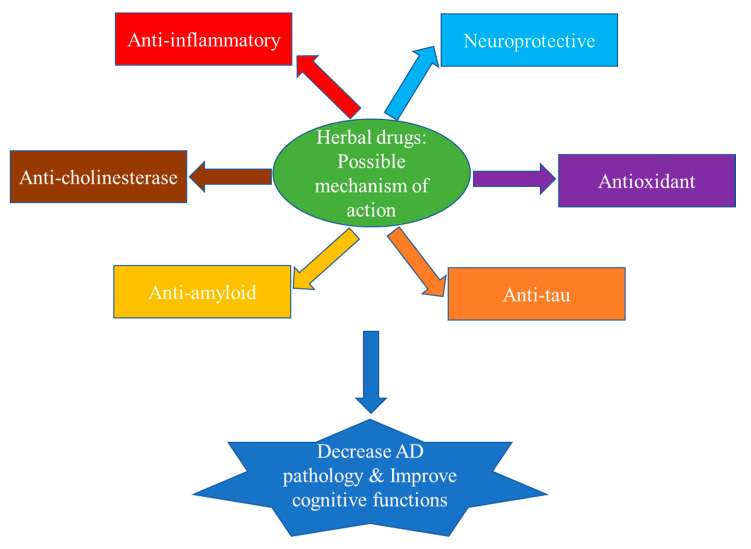
- The review covers 11 Indian herbs—*Centella asiatica*, *Bacopa monnieri*, *Curcuma longa*, *Clitoria ternatea*, *Withania somnifera*, *Celastrus paniculatus*, *Evolvulus alsinoides*, *Desmodium gangeticum*, *Eclipta alba*, *Moringa oleifera*, and *Convolvulus pluricaulis*—plus formulations including Mentat, Trasina, Memorin, Bramhi Ghrita, and Abana. Herbal medicines are proposed to act through nonspecific antioxidant/anti-inflammatory effects and specific actions on AChE, β-amyloid fibril formation, and tau aggregation.
- Clinical evidence cited includes *Centella asiatica* extract 250–750 mg once daily for 2 months in healthy volunteers, where the high dose enhanced working memory and improved self-rated mood; *Bacopa monnieri* 300 mg daily for 12 weeks improved verbal learning, memory consolidation, and speed of early information processing in healthy volunteers (n = 46), while 125 mg twice daily for 12 weeks improved mental control, logical memory, and paired associate learning in subjects above 55 years with memory impairment; and *Withania somnifera* root extract 300 mg twice daily for 8 weeks improved immediate and general memory, executive function, attention, and information processing speed in adults with mild cognitive impairment.
- Preclinical findings include curcumin lowering soluble Aβ, insoluble amyloid, and plaque burden by nearly 40% in a transgenic mouse study, inhibiting Aβ aggregation/disaggregation at IC50 = 0.81–1 μM, and showing no toxicity up to 8000 mg/day for 3 months in a phase I trial with 25 healthy subjects. *Centella asiatica* at 2.5 mg/kg for 8 months decreased amyloid beta 1–40 and 1–42 in the hippocampus of PSAPP mice, and 5.0 mg/kg reduced Congo red-stained fibrillar amyloid plaques.
- Toxicity data reported include *Centella asiatica* extract up to 10 g/kg with no acute toxicity signs, no significant toxicity at 10–1000 mg/kg in subacute studies, and no significant toxicity up to 1200 mg/kg/day for six months in Wistar rats, but one study found 1000 mg/kg/day dried *C. asiatica* for 30 days caused hepatotoxicity in albino rats. *Bacopa* oral LD50 was 5 g/kg for aqueous extract and 17 g/kg for alcoholic extract in rats.
Methods
- This is a narrative review. Database searches were conducted on PUBMED and GOOGLE SCHOLAR using keywords: dementia, herbal products/drugs/medicine, Alzheimer’s disease, and complementary and alternative medicines.
- Inclusion criteria were preclinical studies (in-vitro and in-vivo), clinical studies, and herbal medicines identified with their regional or Hindi name. Exclusion criteria were herbal drugs of non-Indian origin, articles in languages other than English, and full text not available.
- The review summarizes plant descriptions, chemical constituents, pharmacological activities, preclinical studies, clinical evidence, and toxicity for selected herbs, followed by sections on Indian herbal formulations, regulatory status, and issues/challenges with herbal drugs.
Limitations
- The paper states that clinical evidence is limited or absent for several herbs: *C. asiatica* use for AD “remains to be evaluated”; curcumin lacks clinical data on efficacy in AD; *C. paniculatus* has not undergone clinical trials for safety and efficacy and animal toxicology data are lacking; *E. alsinoides* has not been studied systematically for clinical efficacy and toxicological effects; *D. gangeticum* has little clinical evidence and requires toxicity studies; *E. alba* needs clinical evaluation; *M. oleifera* mechanism, composition, and extract differences need to be established before clinical trials; and *C. pluricaulis* has not been evaluated clinically.
- The paper also states broader challenges: quality control of herbal drugs, herb–drug interactions, adulteration, labeling, and pharmacovigilance. It calls standardization of plant extracts “an urgent need,” says phytoconstituents should be isolated, identified, and systematically tested, and recommends multicenter clinical trials.
- Evident from the text: as a narrative review, it does not report a systematic quality assessment, risk-of-bias appraisal, or meta-analysis; findings rely heavily on preclinical models and heterogeneous extracts, doses, and formulations, which limits direct comparability and clinical generalizability.
Model-written summary. Check it against the paper before relying on it.
Integrity signals
Registry
Cites
Statistics
Figures
Verification
Claims the paper makes
193 Not checked yet · 17 Own interpretation · 5 No basis given
The paper states this without a source or data behind it here, so there is nothing to check it against. The quote shows it is in the paper.
In the paper
“Despite detailed experimental studies, the herb has not been evaluated clinically.”
§ Indian Medicinal Herbs and Formulations for Alzheimer’s Disease, from Traditional Knowledge to Scientific Assessment > 3. Herbal Medicines for Alzheimer’s Disease, Experimental and Clinical Evidence > 3.11. Convolvulus pluricaulis
plain- Asserted: passes — The authors put it forward as true.
- Checkable: passes — It can be checked against evidence.
- Load-bearing: unclear — It is unclear whether the paper’s conclusions depend on it.
- Based: passes — The paper gives a reason why it holds.
A conclusion the paper draws from its own results — it cites no other source for it, so there is none to check. The quote shows it is in the paper.
In the paper
“These adverse effects are often dose limiting and disabling in nature.”
§ Indian Medicinal Herbs and Formulations for Alzheimer’s Disease, from Traditional Knowledge to Scientific Assessment > 2. Limitations of Currently Approved Cognition Enhancers
plain- Asserted: passes — The authors put it forward as true.
- Checkable: passes — It can be checked against evidence.
- Load-bearing: passes — The paper’s conclusions depend on it.
- Based: passes — The paper gives a reason why it holds.
In the paper
“The leaves of mandukparni have been used as a memory enhancer in the Ayurvedic system of medicine [51].”
§ Indian Medicinal Herbs and Formulations for Alzheimer’s Disease, from Traditional Knowledge to Scientific Assessment > 3. Herbal Medicines for Alzheimer’s Disease, Experimental and Clinical Evidence > 3.1. Centella asiatica
What the sources say
- Not checked yetcites [51] Rao, 2006, Centella asiatica (L.) Leaf Extract Treatment during the Growth Spurt Period Enhances Hippocampal CA3 Neuronal Dendritic Arborization in Rats, Evid. Based Complement. Altern. Med. source
plain- Asserted: passes — The authors put it forward as true.
- Checkable: passes — It can be checked against evidence.
- Load-bearing: unclear — It is unclear whether the paper’s conclusions depend on it.
- Based: passes — The paper gives a reason why it holds.
In the paper
“The rate of decline in behavioral and functional impairment in patients with moderate to severe AD is reduced by memantine [34].”
§ Indian Medicinal Herbs and Formulations for Alzheimer’s Disease, from Traditional Knowledge to Scientific Assessment > 2. Limitations of Currently Approved Cognition Enhancers
What the sources say
- Not checked yetcites [34] Bullock, 2006, Efficacy and Safety of Memantine in Moderate-to-Severe Alzheimer Disease: The Evidence to Date, Alzheimer Dis. Assoc. Disord. source
plaindirect- Asserted: passes — The authors put it forward as true.
- Checkable: passes — It can be checked against evidence.
- Load-bearing: unclear — It is unclear whether the paper’s conclusions depend on it.
- Based: passes — The paper gives a reason why it holds.
None of the sources cited for this claim have been checked yet.
In the paper
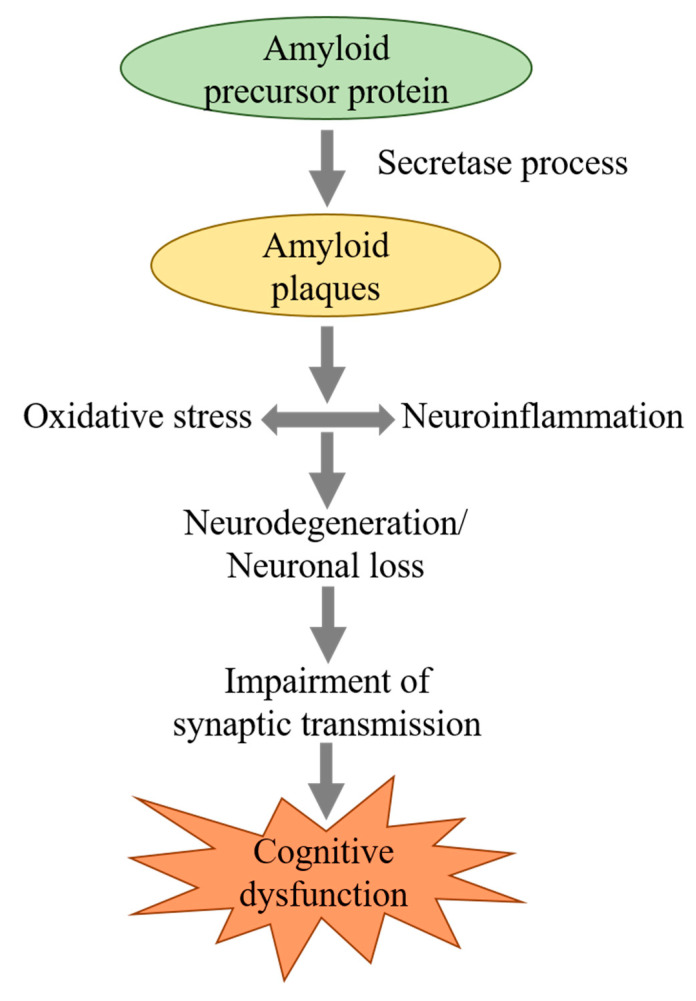
“Studies have also reported that antioxidants protect against Aβ induced neuronal toxicity [16,17].”
§ Indian Medicinal Herbs and Formulations for Alzheimer’s Disease, from Traditional Knowledge to Scientific Assessment > 1. Introduction
What the sources say
- Not checked yetcites [16] Bruce, 1996, beta-Amyloid toxicity in organotypic hippocampal cultures: Protection by EUK-8, a synthetic catalytic free radical scavenger, Proc. Natl. Acad. Sci. USA source
- Not checked yetcites [17] Pappolla, 1997, Melatonin Prevents Death of Neuroblastoma Cells Exposed to the Alzheimer Amyloid Peptide, J. Neurosci. source
plaindirect- Asserted: passes — The authors put it forward as true.
- Checkable: passes — It can be checked against evidence.
- Load-bearing: passes — The paper’s conclusions depend on it.
- Based: passes — The paper gives a reason why it holds.
None of the sources cited for this claim have been checked yet.
In the paper
“Various CNS active Indian herbal medicines like Withania somnifera, Centella asiatica, Celastrus paniculatus and Bacopa monnieri have shown cognitive improvement in experimental models of AD when given as prophylactic treatment [43,44,45,46,47,48].”
§ Indian Medicinal Herbs and Formulations for Alzheimer’s Disease, from Traditional Knowledge to Scientific Assessment > 3. Herbal Medicines for Alzheimer’s Disease, Experimental and Clinical Evidence
What the sources say
- Not checked yetcites [43] Holcomb, 2006, Bacopa monniera extract reduces amyloid levels in PSAPP mice, J. Alzheimer’s Dis. source
- Not checked yetcites [44] Kuboyama, 2006, Withanoside IV and its active metabolite, sominone, attenuate Ab (25–35)-induced neurodegeneration, Eur. J. Neurosci. source
- Not checked yetcites [45] Kumar, 2002, Antioxidant property of Celastrus paniculatus Willd: A possible mechanism in enhancing cognition, Phytomedicine source
- Not checked yetcites [46] Shinomol, 2011, Exploring the Role of “Brahmi” (Bacopa monnieri and Centella asiatica) in Brain Function and Therapy, Recent Pat. Endocr. Metab. Immune Drug Discov. source
- Not checked yetcites [47] Uabundit, 2010, Cognitive enhancement and neuroprotective effects of Bacopa monnieri in Alzheimer’s disease model, J. Ethnopharmacol. source
- Not checked yetcites [48] Kumar, 2003, Effect of Centella asiatica on cognition and oxidative stress in an intracerebroventricular streptozotocin model of Alzheimer’s disease in rats, Clin. Exp. Pharm. Physiol. source
plaindirect- Asserted: passes — The authors put it forward as true.
- Checkable: passes — It can be checked against evidence.
- Load-bearing: passes — The paper’s conclusions depend on it.
- Based: passes — The paper gives a reason why it holds.
A conclusion the paper draws from its own results — it cites no other source for it, so there is none to check. The quote shows it is in the paper.
In the paper
“Further, AChE inhibitors do not address neuronal degeneration and associated changes in the brain.”
§ Indian Medicinal Herbs and Formulations for Alzheimer’s Disease, from Traditional Knowledge to Scientific Assessment > 2. Limitations of Currently Approved Cognition Enhancers
plain- Asserted: passes — The authors put it forward as true.
- Checkable: passes — It can be checked against evidence.
- Load-bearing: passes — The paper’s conclusions depend on it.
- Based: passes — The paper gives a reason why it holds.
In the paper
“Another study showed improved cognitive outcome in elderly subjects following prescribed dose of 500 mg/b.i.d dried C. asiatica for a 6-month period [54].”
§ Indian Medicinal Herbs and Formulations for Alzheimer’s Disease, from Traditional Knowledge to Scientific Assessment > 3. Herbal Medicines for Alzheimer’s Disease, Experimental and Clinical Evidence > 3.1. Centella asiatica
What the sources say
- Not checked yetcites [54] Tiwari, 2008, Effect of Centella asiatica on mild cognitive impairment (MCI) and other common age-related clinical problems, Dig. J. Nanomat. Biostruct.
plaindirect- Asserted: passes — The authors put it forward as true.
- Checkable: passes — It can be checked against evidence.
- Load-bearing: unclear — It is unclear whether the paper’s conclusions depend on it.
- Based: passes — The paper gives a reason why it holds.
In the paper
“Aqueous extract of C. asiatica in 100, 200 and 300 mg/kg doses given orally for 14 days has been reported to dose-dependently improve cognitive functions in normal rats [52].”
§ Indian Medicinal Herbs and Formulations for Alzheimer’s Disease, from Traditional Knowledge to Scientific Assessment > 3. Herbal Medicines for Alzheimer’s Disease, Experimental and Clinical Evidence > 3.1. Centella asiatica
What the sources say
- Not checked yetcites [52] Kumar, 2002, Effect of different extracts of Centella asiatica on cognition and markers of oxidative stress in rats, J. Ethnopharmacol. source
hedgeddirect- Asserted: passes — The authors put it forward as true.
- Checkable: passes — It can be checked against evidence.
- Load-bearing: unclear — It is unclear whether the paper’s conclusions depend on it.
- Based: passes — The paper gives a reason why it holds.
In the paper
“AD patients receiving cholinesterase inhibitors experience adverse effects like nausea, vomiting, diarrhea, dizziness, etc. [21].”
§ Indian Medicinal Herbs and Formulations for Alzheimer’s Disease, from Traditional Knowledge to Scientific Assessment > 2. Limitations of Currently Approved Cognition Enhancers
What the sources say
- Not checked yetcites [21] Kobayashi, 2016, The comparative efficacy and safety of cholinesterase inhibitors in patients with mild-to-moderate Alzheimer’s disease: A Bayesian network meta-analysis, Int. J. Geriatr. Psychiatry source
plaindirect- Asserted: passes — The authors put it forward as true.
- Checkable: passes — It can be checked against evidence.
- Load-bearing: passes — The paper’s conclusions depend on it.
- Based: passes — The paper gives a reason why it holds.
- It may state two separate claims as one. 71
- Probably not a substantial claim. 13
- The quote only partly states this claim. 2
The paper states this without a source or data behind it here, so there is nothing to check it against. The quote shows it is in the paper.
In the paper
“C. paniculatus has not undergone clinical trials for safety and efficacy. Animal toxicology data is also lacking to date.”
§ Indian Medicinal Herbs and Formulations for Alzheimer’s Disease, from Traditional Knowledge to Scientific Assessment > 3. Herbal Medicines for Alzheimer’s Disease, Experimental and Clinical Evidence > 3.6. Celastrus paniculatus
plain- Asserted: passes — The authors put it forward as true.
- Checkable: passes — It can be checked against evidence.
- Load-bearing: unclear — It is unclear whether the paper’s conclusions depend on it.
- Based: passes — The paper gives a reason why it holds.
It may state two separate claims as one.
The paper states this without a source or data behind it here, so there is nothing to check it against. The quote shows it is in the paper.
In the paper
“E. alsionoides has not been studied systematically for clinical efficacy and toxicological effects.”
§ Indian Medicinal Herbs and Formulations for Alzheimer’s Disease, from Traditional Knowledge to Scientific Assessment > 3. Herbal Medicines for Alzheimer’s Disease, Experimental and Clinical Evidence > 3.7. Evolvulus alsinoides
plain- Asserted: passes — The authors put it forward as true.
- Checkable: passes — It can be checked against evidence.
- Load-bearing: fails — The paper’s conclusions may not depend on it.
- Based: passes — The paper gives a reason why it holds.
Probably not a substantial claim. The paper’s conclusions may not depend on it.
The paper states this without a source or data behind it here, so there is nothing to check it against. The quote shows it is in the paper.
In the paper
“C. pluricaulis has not been studied for toxicity.”
§ Indian Medicinal Herbs and Formulations for Alzheimer’s Disease, from Traditional Knowledge to Scientific Assessment > 3. Herbal Medicines for Alzheimer’s Disease, Experimental and Clinical Evidence > 3.11. Convolvulus pluricaulis
plain- Asserted: passes — The authors put it forward as true.
- Checkable: passes — It can be checked against evidence.
- Load-bearing: fails — The paper’s conclusions may not depend on it.
- Based: passes — The paper gives a reason why it holds.
Probably not a substantial claim. The paper’s conclusions may not depend on it.
In the paper
“Currently available therapies for AD management are based on this hypothesis [8].”
§ Indian Medicinal Herbs and Formulations for Alzheimer’s Disease, from Traditional Knowledge to Scientific Assessment > 1. Introduction
What the sources say
- Not checked yetcites [8] Anand, 2013, A review on cholinesterase inhibitors for Alzheimer’s disease, Arch. Pharmacal Res. source
plaindirect- Asserted: passes — The authors put it forward as true.
- Checkable: passes — It can be checked against evidence.
- Load-bearing: fails — The paper’s conclusions may not depend on it.
- Based: passes — The paper gives a reason why it holds.
Probably not a substantial claim. The paper’s conclusions may not depend on it.
None of the sources cited for this claim have been checked yet.
In the paper
“The β-amyloid hypothesis, most cogent hypothesis [9,10,11,12] provides the basis for development of new therapeutic strategies for AD treatment [13].”
§ Indian Medicinal Herbs and Formulations for Alzheimer’s Disease, from Traditional Knowledge to Scientific Assessment > 1. Introduction
What the sources say
- Not checked yetcites [9] Beyreuther, 1991, Amyloid precursor protein (APP) and beta A4 amyloid in the etiology of Alzheimer’s disease, precursor-product relationships in the derangement of neuronal function, Brain Pathol. source
- Not checked yetcites [10] Hardy, 1991, Amyloid deposition as the central event in the aetiology of Alzheimer’s disease, Trends Pharmacol Sci. source
- Not checked yetcites [11] Hardy, 1992, Alzheimer’s disease, the amyloid cascade hypothesis, Science source
- Not checked yetcites [12] Selkoe, 1991, The molecular pathology of Alzheimer’s disease, Neuron source
- Not checked yetcites [13] Selkoe, 2016, The amyloid hypothesis of Alzheimer’s disease at 25 years, EMBO Mol. Med. source
plaindirect- Asserted: passes — The authors put it forward as true.
- Checkable: passes — It can be checked against evidence.
- Load-bearing: fails — The paper’s conclusions may not depend on it.
- Based: passes — The paper gives a reason why it holds.
Probably not a substantial claim. The paper’s conclusions may not depend on it. It may state two separate claims as one.
In the paper
“The histopathological hallmarks of AD are neuritic plaque and neurofibrillary tangle (NFT) formation in the brain [14].”
§ Indian Medicinal Herbs and Formulations for Alzheimer’s Disease, from Traditional Knowledge to Scientific Assessment > 1. Introduction
What the sources say
- Not checked yetcites [14] Calabrese, 2008, Effects of a Standardized Bacopa monnieri Extract on Cognitive Performance, Anxiety, and Depression in the Elderly: A Randomized, Double-Blind, Placebo-Controlled Trial, J. Altern. Complement. Med. source
plain- Asserted: passes — The authors put it forward as true.
- Checkable: passes — It can be checked against evidence.
- Load-bearing: fails — The paper’s conclusions may not depend on it.
- Based: passes — The paper gives a reason why it holds.
Probably not a substantial claim. The paper’s conclusions may not depend on it.
None of the sources cited for this claim have been checked yet.
In the paper
“This review is focused on the potential of herbal medicine in AD since it is responsible for more than two-thirds of all dementia cases [5,6].”
§ Indian Medicinal Herbs and Formulations for Alzheimer’s Disease, from Traditional Knowledge to Scientific Assessment > 1. Introduction
What the sources say
- Not checked yetcites [5] Kumar, A., Sidhu, J., Goyal, A., Goyal, A., and Tsao, J.W. (2020, November 25). Alzheimer Disease, StatPearls [Internet], Available online: https://www.ncbi.nlm.nih.gov/books/NBK499922/.
- Not checked yetcites [6] Nussbaum, 2003, Alzheimer’s disease and Parkinson’s disease, N. Engl. J. Med. source
plain- Asserted: passes — The authors put it forward as true.
- Checkable: passes — It can be checked against evidence.
- Load-bearing: fails — The paper’s conclusions may not depend on it.
- Based: passes — The paper gives a reason why it holds.
Probably not a substantial claim. The paper’s conclusions may not depend on it.
In the paper
“Cholinergic hypothesis, which is the oldest theory, describes acetylcholine (ACh) deficiency as the causative factor [7].”
§ Indian Medicinal Herbs and Formulations for Alzheimer’s Disease, from Traditional Knowledge to Scientific Assessment > 1. Introduction
What the sources say
- Not checked yetcites [7] Davies, 1976, Selective Loss of Central Cholinergic Neurons in Alzheimer’s Disease, Lancet source
plaindirect- Asserted: passes — The authors put it forward as true.
- Checkable: passes — It can be checked against evidence.
- Load-bearing: passes — The paper’s conclusions depend on it.
- Based: passes — The paper gives a reason why it holds.
Probably not a substantial claim.
In the paper
“The leaf extract also had sedative, antidepressant and cholinomimetic activities [57] suggesting its suitability for treatment of AD associated cognitive dysfunction and depression and anxiety.”
§ Indian Medicinal Herbs and Formulations for Alzheimer’s Disease, from Traditional Knowledge to Scientific Assessment > 3. Herbal Medicines for Alzheimer’s Disease, Experimental and Clinical Evidence > 3.1. Centella asiatica
What the sources say
- Not checked yetcites [57] Sakina, 1990, A psycho-neuropharmacological profile of Centella asiatica extract, Fitoterapia
plaindirect- Asserted: passes — The authors put it forward as true.
- Checkable: passes — It can be checked against evidence.
- Load-bearing: passes — The paper’s conclusions depend on it.
- Based: passes — The paper gives a reason why it holds.
It may state two separate claims as one.
In the paper
“Memantine showed promising anti-Alzheimer effects in preclinical experimental models, however, in clinical studies, it has not shown clear therapeutic efficacy in AD [33].”
§ Indian Medicinal Herbs and Formulations for Alzheimer’s Disease, from Traditional Knowledge to Scientific Assessment > 2. Limitations of Currently Approved Cognition Enhancers
What the sources say
- Not checked yetcites [33] Folch, 2018, Memantine for the Treatment of Dementia: A Review on its Current and Future Applications, J. Alzheimers Dis. source
plain- Asserted: passes — The authors put it forward as true.
- Checkable: passes — It can be checked against evidence.
- Load-bearing: passes — The paper’s conclusions depend on it.
- Based: passes — The paper gives a reason why it holds.
It may state two separate claims as one.
In the paper
“Other adverse effects of AChE inhibitors such as extrapyramidal symptoms, sleep disorder and cardiorespiratory adverse effects, are associated with central cholinergic over-activity whereas muscle cramps, weakness and urinary incontinence, are associated with peripheral cholinergic over-activity [22].”
§ Indian Medicinal Herbs and Formulations for Alzheimer’s Disease, from Traditional Knowledge to Scientific Assessment > 2. Limitations of Currently Approved Cognition Enhancers
What the sources say
- Not checked yetcites [22] Inglis, 2002, The tolerability and safety of cholinesterase inhibitors in the treatment of dementia, Int. J. Clin. Pract. Suppl.
plaincorrelational- Asserted: passes — The authors put it forward as true.
- Checkable: passes — It can be checked against evidence.
- Load-bearing: unclear — It is unclear whether the paper’s conclusions depend on it.
- Based: passes — The paper gives a reason why it holds.
It may state two separate claims as one.
In the paper
“C. asiatica aqueous leaf extract showed improvement in learning and memory in rats, and modulated dopamine, 5-hydroxytryptamine (5-HT) and noradrenaline systems in the rat brain in-vivo [56].”
§ Indian Medicinal Herbs and Formulations for Alzheimer’s Disease, from Traditional Knowledge to Scientific Assessment > 3. Herbal Medicines for Alzheimer’s Disease, Experimental and Clinical Evidence > 3.1. Centella asiatica
What the sources say
- Not checked yetcites [56] Nalini, 1995, Effects of Celastrus paniculatus on passive avoidance performance and biogenic amine turnover in albino rats, J. Ethnopharmacol. source
plaindirect- Asserted: passes — The authors put it forward as true.
- Checkable: passes — It can be checked against evidence.
- Load-bearing: passes — The paper’s conclusions depend on it.
- Based: passes — The paper gives a reason why it holds.
It may state two separate claims as one.
In the paper
“Though it performed better than tacrine [31], it is no longer recommended, as it may increase the risk of adverse cardiovascular events and breast cancer [32].”
§ Indian Medicinal Herbs and Formulations for Alzheimer’s Disease, from Traditional Knowledge to Scientific Assessment > 2. Limitations of Currently Approved Cognition Enhancers
What the sources say
- Not checked yetcites [32] Cummings, 2004, Alzheimer’s disease, N. Engl. J. Med. source
hedgedconditional- Asserted: passes — The authors put it forward as true.
- Checkable: passes — It can be checked against evidence.
- Load-bearing: unclear — It is unclear whether the paper’s conclusions depend on it.
- Based: passes — The paper gives a reason why it holds.
It may state two separate claims as one.
In the paper
“A study by Rao et al. [53] demonstrated that 15 days treatment with C. asiatica at a dose of 200 mg/kg from day 15 to 30 postpartum stimulated learning and memory in rats, which lasted for at least 6 months postpartum.”
§ Indian Medicinal Herbs and Formulations for Alzheimer’s Disease, from Traditional Knowledge to Scientific Assessment > 3. Herbal Medicines for Alzheimer’s Disease, Experimental and Clinical Evidence > 3.1. Centella asiatica
What the sources say
- Not checked yetcites [53] Rao, 2005, Centella asiatica treatment during postnatal period enhances learning and memory in mice, Physiol. Behav. source
boosteddirect- Asserted: passes — The authors put it forward as true.
- Checkable: passes — It can be checked against evidence.
- Load-bearing: unclear — It is unclear whether the paper’s conclusions depend on it.
- Based: passes — The paper gives a reason why it holds.
It may state two separate claims as one.
In the paper
“The leaf extract also had sedative, antidepressant and cholinomimetic activities [57] suggesting its suitability for treatment of AD associated cognitive dysfunction and depression and anxiety.”
§ Indian Medicinal Herbs and Formulations for Alzheimer’s Disease, from Traditional Knowledge to Scientific Assessment > 3. Herbal Medicines for Alzheimer’s Disease, Experimental and Clinical Evidence > 3.1. Centella asiatica
What the sources say
- Not checked yetcites [57] Sakina, 1990, A psycho-neuropharmacological profile of Centella asiatica extract, Fitoterapia
hedgeddirect- Asserted: passes — The authors put it forward as true.
- Checkable: passes — It can be checked against evidence.
- Load-bearing: passes — The paper’s conclusions depend on it.
- Based: passes — The paper gives a reason why it holds.
It may state two separate claims as one.
- Rests on an assumption: Findings from animal models of Alzheimer's disease and cognitive impairment predict clinical efficacy in human Alzheimer's disease patients.
None of the sources cited for this claim have been checked yet.
In the paper
“Studies indicate that antioxidants (vitamins E and C) and non-steroidal anti-inflammatory drugs slow the progression of AD [25,26,27,28,29,30].”
§ Indian Medicinal Herbs and Formulations for Alzheimer’s Disease, from Traditional Knowledge to Scientific Assessment > 2. Limitations of Currently Approved Cognition Enhancers
What the sources say
- Not checked yetcites [25] Bagi, 2003, Oxidative stress-induced dysregulation of arteriolar wall shear stress and blood pressure in hyperhomocysteinemia is prevented by chronic vitamin C treatment, Am. J. Physiol. Circ. Physiol. source
- Not checked yetcites [26] Cole, 2004, NSAID and antioxidant prevention of Alzheimer’s disease, lessons from in vitro and animal models, Ann. N. Y. Acad. Sci. source
- Not checked yetcites [27] Engelhart, 2002, Dietary intake of antioxidants and risk of Alzheimer disease, JAMA source
- Not checked yetcites [28] Esposito, 2002, A review of specific dietary antioxidants and the effects on biochemical mechanisms related to neurodegenerative processes, Neurobiol. Aging source
- Not checked yetcites [29] Moore, 2002, Neuroinflammation and anti-inflammatory therapy for Alzheimer’s disease, Adv. Drug Deliv. Rev. source
- Not checked yetcites [30] Pavlik, 2009, Vitamin E use is associated with improved survival in an Alzheimer’s disease cohort, Dement. Geriatr. Cogn. Disord. source
hedgeddirect- Asserted: passes — The authors put it forward as true.
- Checkable: passes — It can be checked against evidence.
- Load-bearing: unclear — It is unclear whether the paper’s conclusions depend on it.
- Based: passes — The paper gives a reason why it holds.
It may state two separate claims as one.
In the paper
“The combination was reported to be superior to donepezil monotherapy in terms of both safety and efficacy [49].”
§ Indian Medicinal Herbs and Formulations for Alzheimer’s Disease, from Traditional Knowledge to Scientific Assessment > 3. Herbal Medicines for Alzheimer’s Disease, Experimental and Clinical Evidence
What the sources say
- Not checked yetcites [49] Yancheva, 2009, GINDON Study Group. Ginkgo biloba extract EGb 761®, donepezil or both combined in the treatment of Alzheimer’s disease with neuropsychiatric features: A randomised, double-blind, exploratory trial, Aging Ment. Health source
plaindirect- Asserted: passes — The authors put it forward as true.
- Checkable: passes — It can be checked against evidence.
- Load-bearing: unclear — It is unclear whether the paper’s conclusions depend on it.
- Based: passes — The paper gives a reason why it holds.
It may state two separate claims as one.
In the paper
“They also observed an increase in dendritic arborization of hippocampal CA3 neurons, which may be one reason for improvement in brain function.”
§ Indian Medicinal Herbs and Formulations for Alzheimer’s Disease, from Traditional Knowledge to Scientific Assessment > 3. Herbal Medicines for Alzheimer’s Disease, Experimental and Clinical Evidence > 3.1. Centella asiatica
What the sources say
- Not checked yetcites [53] Rao, 2005, Centella asiatica treatment during postnatal period enhances learning and memory in mice, Physiol. Behav. source
hedgedconditional- Asserted: passes — The authors put it forward as true.
- Checkable: passes — It can be checked against evidence.
- Load-bearing: unclear — It is unclear whether the paper’s conclusions depend on it.
- Based: passes — The paper gives a reason why it holds.
It may state two separate claims as one.
None of the sources cited for this claim have been checked yet.
In the paper
“The effect of alcoholic extract of Bacopa has been evaluated at the dose of 20, 40 and 80 mg/kg on cognitive functions and neurodegeneration in the animal model of AD induced by bilateral intracerebroventricular administration of AF64A. They found that Bacopa improved the escape latency in the Morris water maze test and prevented the reduction in cholinergic neuron density [47,82].”
§ Indian Medicinal Herbs and Formulations for Alzheimer’s Disease, from Traditional Knowledge to Scientific Assessment > 3. Herbal Medicines for Alzheimer’s Disease, Experimental and Clinical Evidence > 3.2. Bacopa monnieri
What the sources say
- Not checked yetcites [47] Uabundit, 2010, Cognitive enhancement and neuroprotective effects of Bacopa monnieri in Alzheimer’s disease model, J. Ethnopharmacol. source
- Not checked yetcites [82] Pandey, S.P., Singh, H.K., and Prasad, S.B. (2015). Alterations in Hippocampal Oxidative Stress, Expression of AMPA Receptor GluR2 Subunit and Associated Spatial Memory Loss by Bacopa monnieri Extract (CDRI-08) in Streptozotocin-Induced Diabetes Mellitus Type 2 Mice. PLoS ONE, 10. source
plaindirect- Asserted: passes — The authors put it forward as true.
- Checkable: passes — It can be checked against evidence.
- Load-bearing: passes — The paper’s conclusions depend on it.
- Based: passes — The paper gives a reason why it holds.
It may state two separate claims as one.
None of the sources cited for this claim have been checked yet.
In the paper
“Asiatic acid and its derivatives have shown a promising memory improving effect [65] by improving ACh synthesis [66,67].”
§ Indian Medicinal Herbs and Formulations for Alzheimer’s Disease, from Traditional Knowledge to Scientific Assessment > 3. Herbal Medicines for Alzheimer’s Disease, Experimental and Clinical Evidence > 3.1. Centella asiatica
What the sources say
- Not checked yetcites [65] Lee, 2000, Asiatic acid derivatives protect cultured cortical neurons from glutamate-induced excitotoxicity, Res. Commun. Mol. Pathol. Pharmacol.
- Not checked yetcites [66] Kim, 2004, Asiatic acid derivatives enhance cognitive performance partly by improving acetylcholine synthesis, J. Pharm. Pharm. source
- Not checked yetcites [67] Orhan, 2012, Centella asiatica (L.) Urban: From Traditional Medicine to Modern Medicine with Neuroprotective Potential, Evid. Based Complement. Altern. Med. source
plaindirect- Asserted: passes — The authors put it forward as true.
- Checkable: passes — It can be checked against evidence.
- Load-bearing: passes — The paper’s conclusions depend on it.
- Based: passes — The paper gives a reason why it holds.
It may state two separate claims as one.
None of the sources cited for this claim have been checked yet.
In the paper
“The leaf extract stimulated dendrites of neuronal cells in the rat brain [51] and induced neurite elongation in human SH-SY-5Y cells and accelerated axonal regenerate in rats [58].”
§ Indian Medicinal Herbs and Formulations for Alzheimer’s Disease, from Traditional Knowledge to Scientific Assessment > 3. Herbal Medicines for Alzheimer’s Disease, Experimental and Clinical Evidence > 3.1. Centella asiatica
What the sources say
- Not checked yetcites [51] Rao, 2006, Centella asiatica (L.) Leaf Extract Treatment during the Growth Spurt Period Enhances Hippocampal CA3 Neuronal Dendritic Arborization in Rats, Evid. Based Complement. Altern. Med. source
- Not checked yetcites [58] Soumyanath, 2005, Centella asiatica accelerates nerve regeneration upon oral administration and contains multiple active fractions increasing neurite elongation in vitro, J. Pharm. Pharmacol. source
plaindirect- Asserted: passes — The authors put it forward as true.
- Checkable: passes — It can be checked against evidence.
- Load-bearing: passes — The paper’s conclusions depend on it.
- Based: passes — The paper gives a reason why it holds.
It may state two separate claims as one.
In the paper
“Besides, bacosides has been proven for its antioxidant and anti-inflammatory effects [75] bacosides also attenuated the retrograde amnesia produced by immobilization induced stress, electroconvulsive shock and scopolamine [76].”
§ Indian Medicinal Herbs and Formulations for Alzheimer’s Disease, from Traditional Knowledge to Scientific Assessment > 3. Herbal Medicines for Alzheimer’s Disease, Experimental and Clinical Evidence > 3.2. Bacopa monnieri
What the sources say
- Not checked yetcites [75] Singh, 2010, Modulation of Hydrogen Peroxide and Acrolein-Induced Oxidative Stress, Mitochondrial Dysfunctions and Redox Regulated Pathways by the Bacopa Monniera Extract: Potential Implication in Alzheimer’s Disease, J. Alzheimer’s Dis. source
boosteddirect- Asserted: passes — The authors put it forward as true.
- Checkable: passes — It can be checked against evidence.
- Load-bearing: unclear — It is unclear whether the paper’s conclusions depend on it.
- Based: passes — The paper gives a reason why it holds.
It may state two separate claims as one.
In the paper
“Bacopa has been used for the treatment of various ailments for thousands of years by the practitioners of the traditional system of medicine of India [72].”
§ Indian Medicinal Herbs and Formulations for Alzheimer’s Disease, from Traditional Knowledge to Scientific Assessment > 3. Herbal Medicines for Alzheimer’s Disease, Experimental and Clinical Evidence > 3.2. Bacopa monnieri
What the sources say
- Not checked yetcites [72] Aguiar, 2013, Neuropharmacological Review of the Nootropic Herb Bacopa monnieri, Rejuvenation Res. source
plain- Asserted: passes — The authors put it forward as true.
- Checkable: passes — It can be checked against evidence.
- Load-bearing: fails — The paper’s conclusions may not depend on it.
- Based: passes — The paper gives a reason why it holds.
Probably not a substantial claim. The paper’s conclusions may not depend on it.
In the paper
“In acute toxicity study, C. asiatica extract up to 10 g/kg did not shown any sign of toxicity whereas in the subacute toxicity study, no toxicity was observed when the extract was administered at the doses of 10–1000 mg/kg. In the chronic toxicity study, doses up to 1200 mg/kg/day for six months did not result in significant toxicity in Wistar rats [70].”
§ Indian Medicinal Herbs and Formulations for Alzheimer’s Disease, from Traditional Knowledge to Scientific Assessment > 3. Herbal Medicines for Alzheimer’s Disease, Experimental and Clinical Evidence > 3.1. Centella asiatica
What the sources say
- Not checked yetcites [70] Chivapat, 2004, Toxicity study of Centella asiatica (L) urban, J. Thai Trad Alt Med.
plain- Asserted: passes — The authors put it forward as true.
- Checkable: passes — It can be checked against evidence.
- Load-bearing: unclear — It is unclear whether the paper’s conclusions depend on it.
- Based: passes — The paper gives a reason why it holds.
It may state two separate claims as one.
In the paper
“In children (age 6–8 years), Bacopa syrup (350 mg Bacopa powder), when administered three times a day for three months, resulted in significant improvement as compared to the placebo [92]. However, this study was not blinded.”
§ Indian Medicinal Herbs and Formulations for Alzheimer’s Disease, from Traditional Knowledge to Scientific Assessment > 3. Herbal Medicines for Alzheimer’s Disease, Experimental and Clinical Evidence > 3.2. Bacopa monnieri
What the sources say
- Not checked yetcites [92] Sharma, 1987, Efficacy of Bacopa monnieri in revitalizing intellectual functions in children, J. Res. Educ. Indian Med.
plaindirect- Asserted: passes — The authors put it forward as true.
- Checkable: passes — It can be checked against evidence.
- Load-bearing: unclear — It is unclear whether the paper’s conclusions depend on it.
- Based: passes — The paper gives a reason why it holds.
It may state two separate claims as one.
In the paper
“The LD50 of orally administered Bacopa extracts in rats was 5 g/kg for aqueous extract and 17 g/kg of the alcoholic extract [77].”
§ Indian Medicinal Herbs and Formulations for Alzheimer’s Disease, from Traditional Knowledge to Scientific Assessment > 3. Herbal Medicines for Alzheimer’s Disease, Experimental and Clinical Evidence > 3.2. Bacopa monnieri
What the sources say
- Not checked yetcites [77] Singh, 1997, Neuropsychopharmacological effects of the Ayurvedic nootropic Bacopa monniera Linn. (Brahmi), Indian J. Pharmacol.
plain- Asserted: passes — The authors put it forward as true.
- Checkable: passes — It can be checked against evidence.
- Load-bearing: unclear — It is unclear whether the paper’s conclusions depend on it.
- Based: passes — The paper gives a reason why it holds.
It may state two separate claims as one.
In the paper
“In a randomized, double-blind placebo-controlled, study, C. asiatica extract was administered to healthy volunteers as 250–750 mg once daily dose for 2 months. The high dose enhanced working memory and improved self-rated mood [68].”
§ Indian Medicinal Herbs and Formulations for Alzheimer’s Disease, from Traditional Knowledge to Scientific Assessment > 3. Herbal Medicines for Alzheimer’s Disease, Experimental and Clinical Evidence > 3.1. Centella asiatica
What the sources say
- Not checked yetcites [68] Wattanathorn, 2008, Positive modulation of cognition and mood in the healthy elderly volunteer following the administration of Centella asiatica, J. Ethnopharmacol. source
plaindirect- Asserted: passes — The authors put it forward as true.
- Checkable: passes — It can be checked against evidence.
- Load-bearing: passes — The paper’s conclusions depend on it.
- Based: passes — The paper gives a reason why it holds.
It may state two separate claims as one.
In the paper
“Bacopa, at the dose of 50 mg/kg, demonstrated the neuroprotective effect in the colchicine model of dementia through its antioxidant effect and restored the activity of Na+K+ATPase and AChE [85].”
§ Indian Medicinal Herbs and Formulations for Alzheimer’s Disease, from Traditional Knowledge to Scientific Assessment > 3. Herbal Medicines for Alzheimer’s Disease, Experimental and Clinical Evidence > 3.2. Bacopa monnieri
What the sources say
- Not checked yetcites [85] Saini, 2012, Neuroprotective Effects of Bacopa monnieri in Experimental Model of Dementia, Neurochem. Res. source
boosteddirect- Asserted: passes — The authors put it forward as true.
- Checkable: passes — It can be checked against evidence.
- Load-bearing: unclear — It is unclear whether the paper’s conclusions depend on it.
- Based: passes — The paper gives a reason why it holds.
It may state two separate claims as one.
In the paper
“It also suppressed IL-1 and glial fibrillary acidic protein, reduced oxidative damage and plaque burden and decreased the amount of insoluble amyloid [26].”
§ Indian Medicinal Herbs and Formulations for Alzheimer’s Disease, from Traditional Knowledge to Scientific Assessment > 3. Herbal Medicines for Alzheimer’s Disease, Experimental and Clinical Evidence > 3.3. Curcuma longa
What the sources say
- Not checked yetcites [26] Cole, 2004, NSAID and antioxidant prevention of Alzheimer’s disease, lessons from in vitro and animal models, Ann. N. Y. Acad. Sci. source
plaindirect- Asserted: passes — The authors put it forward as true.
- Checkable: passes — It can be checked against evidence.
- Load-bearing: passes — The paper’s conclusions depend on it.
- Based: passes — The paper gives a reason why it holds.
It may state two separate claims as one.
None of the sources cited for this claim have been checked yet.
In the paper
“Curcumin has been shown to reduce both in-vivo and in-vitro Aβ plaque deposition [106,107].”
§ Indian Medicinal Herbs and Formulations for Alzheimer’s Disease, from Traditional Knowledge to Scientific Assessment > 3. Herbal Medicines for Alzheimer’s Disease, Experimental and Clinical Evidence > 3.3. Curcuma longa
What the sources say
- Not checked yetcites [106] Lim, 2001, The Curry Spice Curcumin Reduces Oxidative Damage and Amyloid Pathology in an Alzheimer Transgenic Mouse, J. Neurosci. source
- Not checked yetcites [107] Yang, 2005, Curcumin inhibits formation of amyloid beta oligomers and fibrils, binds plaques, and reduces amyloid in vivo, J. Biol. Chem. source
plaindirect- Asserted: passes — The authors put it forward as true.
- Checkable: passes — It can be checked against evidence.
- Load-bearing: passes — The paper’s conclusions depend on it.
- Based: passes — The paper gives a reason why it holds.
It may state two separate claims as one.
In the paper
“Additionally, curcumin treatment for 7 days caused reduction in plaques burden and reversed structural changes in dystrophic dendrites in APPswe/PS1dE9 mouse model of AD [112].”
§ Indian Medicinal Herbs and Formulations for Alzheimer’s Disease, from Traditional Knowledge to Scientific Assessment > 3. Herbal Medicines for Alzheimer’s Disease, Experimental and Clinical Evidence > 3.3. Curcuma longa
What the sources say
- Not checked yetcites [112] Ramassamy, 2008, Faculty Opinions recommendation of Curcumin labels amyloid pathology in vivo, disrupts existing plaques, and partially restores distorted neurites in an Alzheimer mouse model, Fac. Opin. Post-Publ. Peer Rev. Biomed. Lit.
plaindirect- Asserted: passes — The authors put it forward as true.
- Checkable: passes — It can be checked against evidence.
- Load-bearing: unclear — It is unclear whether the paper’s conclusions depend on it.
- Based: passes — The paper gives a reason why it holds.
It may state two separate claims as one.
None of the sources cited for this claim have been checked yet.
In the paper
“It has been reported in various experimental studies to possess wide variety of biological and pharmacological activities including antioxidant, anti-inflammatory and cholesterol-lowering properties, all three of which are key processes involved in the pathogenesis of AD.”
§ Indian Medicinal Herbs and Formulations for Alzheimer’s Disease, from Traditional Knowledge to Scientific Assessment > 3. Herbal Medicines for Alzheimer’s Disease, Experimental and Clinical Evidence > 3.3. Curcuma longa
plaindirect- Asserted: passes — The authors put it forward as true.
- Checkable: passes — It can be checked against evidence.
- Load-bearing: passes — The paper’s conclusions depend on it.
- Based: passes — The paper gives a reason why it holds.
It may state two separate claims as one.
None of the sources cited for this claim have been checked yet.
In the paper
“Another experimental study showed that curcumin treatment restored learning and memory functions in the STZ model of AD by reducing the oxidative stress, enhancing ChAT activity and restoring insulin receptor protein [117,118].”
§ Indian Medicinal Herbs and Formulations for Alzheimer’s Disease, from Traditional Knowledge to Scientific Assessment > 3. Herbal Medicines for Alzheimer’s Disease, Experimental and Clinical Evidence > 3.3. Curcuma longa
What the sources say
- Not checked yetcites [117] Agrawal, 2010, Effect of curcumin on brain insulin receptors and memory functions in STZ (ICV) induced dementia model of rat, Pharm. Res. source
- Not checked yetcites [118] Ishrat, 2009, Amelioration of cognitive deficits and neurodegeneration by curcumin in rat model of sporadic dementia of Alzheimer’s type (SDAT), Eur. Neuropsychopharmacol. source
plaindirect- Asserted: passes — The authors put it forward as true.
- Checkable: passes — It can be checked against evidence.
- Load-bearing: unclear — It is unclear whether the paper’s conclusions depend on it.
- Based: passes — The paper gives a reason why it holds.
It may state two separate claims as one.
None of the sources cited for this claim have been checked yet.
In the paper
“Curcumin can also reduce two other proamyloidogenic factors, oxidative damage [125,126] and raised cholesterol levels [127].”
§ Indian Medicinal Herbs and Formulations for Alzheimer’s Disease, from Traditional Knowledge to Scientific Assessment > 3. Herbal Medicines for Alzheimer’s Disease, Experimental and Clinical Evidence > 3.3. Curcuma longa
What the sources say
- Not checked yetcites [125] Friedlich, 1994, Involvement of free oxygen radicals in beta-amyloidosis, an hypothesis, Neurobiol. Aging source
- Not checked yetcites [126] Hensley, 1994, A model for beta-amyloid aggregation and neurotoxicity based on free radical generation by the peptide: Relevance to Alzheimer disease, Proc. Natl. Acad. Sci. USA source
- Not checked yetcites [127] Soudamini, 1992, Inhibition of lipid peroxidation and cholesterol levels in mice by curcumin, Indian J. Physiol. Pharmacol.
plaindirect- Asserted: passes — The authors put it forward as true.
- Checkable: passes — It can be checked against evidence.
- Load-bearing: unclear — It is unclear whether the paper’s conclusions depend on it.
- Based: passes — The paper gives a reason why it holds.
It may state two separate claims as one.
None of the sources cited for this claim have been checked yet.
In the paper
“These nanoparticles were found to be able to destroy amyloid aggregation and exhibit antioxidative activity without a cytotoxic effect [99,100].”
§ Indian Medicinal Herbs and Formulations for Alzheimer’s Disease, from Traditional Knowledge to Scientific Assessment > 3. Herbal Medicines for Alzheimer’s Disease, Experimental and Clinical Evidence > 3.3. Curcuma longa
What the sources say
- Not checked yetcites [99] Mathew, A., Fukuda, T., Nagaoka, Y., Hasumura, T., Morimoto, H., Yoshida, Y., Maekawa, T., Venugopal, K., and Kumar, D.S. (2012). Curcumin loaded-PLGA nanoparticles conjugated with Tet-1 peptide for potential use in Alzheimer’s disease. PLoS ONE, 7. source
- Not checked yetcites [100] Tiwari, 2013, Correction to Curcumin-Loaded Nanoparticles Potently Induce Adult Neurogenesis and Reverse Cognitive Deficits in Alzheimer’s Disease Model via Canonical Wnt/β-Catenin Pathway, ACS Nano source
plaindirect- Asserted: passes — The authors put it forward as true.
- Checkable: passes — It can be checked against evidence.
- Load-bearing: unclear — It is unclear whether the paper’s conclusions depend on it.
- Based: passes — The paper gives a reason why it holds.
It may state two separate claims as one.
None of the sources cited for this claim have been checked yet.
In the paper
“Nanoliposomes of curcumin have high affinity for Aβ1-42 fibrils and were found to inhibit the formation of fibrillar and oligomeric Aβ in-vitro [101,102].”
§ Indian Medicinal Herbs and Formulations for Alzheimer’s Disease, from Traditional Knowledge to Scientific Assessment > 3. Herbal Medicines for Alzheimer’s Disease, Experimental and Clinical Evidence > 3.3. Curcuma longa
What the sources say
- Not checked yetcites [101] Mourtas, 2011, Curcumin-decorated nanoliposomes with very high affinity for amyloid-β1-42 peptide, Biomaterials source
- Not checked yetcites [102] Taylor, 2011, Effect of curcumin-associated and lipid ligand-functionalized nanoliposomes on aggregation of the Alzheimer’s Aβ peptide, Nanomedicine source
plaindirect- Asserted: passes — The authors put it forward as true.
- Checkable: passes — It can be checked against evidence.
- Load-bearing: unclear — It is unclear whether the paper’s conclusions depend on it.
- Based: passes — The paper gives a reason why it holds.
It may state two separate claims as one.
The paper states this without a source or data behind it here, so there is nothing to check it against. The quote shows it is in the paper.
In the paper
“Curcumin can inhibit Aβ aggregation or promote its disaggregation at low concentrations (IC50 = 0.81–1 μM).”
§ Indian Medicinal Herbs and Formulations for Alzheimer’s Disease, from Traditional Knowledge to Scientific Assessment > 3. Herbal Medicines for Alzheimer’s Disease, Experimental and Clinical Evidence > 3.3. Curcuma longa
plaindirect- Asserted: passes — The authors put it forward as true.
- Checkable: passes — It can be checked against evidence.
- Load-bearing: unclear — It is unclear whether the paper’s conclusions depend on it.
- Based: passes — The paper gives a reason why it holds.
It may state two separate claims as one.
In the paper
“A randomized, double-blind, placebo-controlled trial reported that Bacopa treatment (300 mg/kg, daily) for 12 weeks caused increased stool frequency, abdominal cramps and nausea, which may be due to either an upregulation of ACh level or saponin-mediated gastrointestinal tract irritation, or both [91].”
§ Indian Medicinal Herbs and Formulations for Alzheimer’s Disease, from Traditional Knowledge to Scientific Assessment > 3. Herbal Medicines for Alzheimer’s Disease, Experimental and Clinical Evidence > 3.2. Bacopa monnieri
What the sources say
- Not checked yetcites [91] Morgan, 2010, Does Bacopa monnieri Improve Memory Performance in Older Persons? Results of a Randomized, Placebo-Controlled, Double-Blind Trial, J. Altern. Complement. Med. source
hedgeddirect- Asserted: passes — The authors put it forward as true.
- Checkable: passes — It can be checked against evidence.
- Load-bearing: unclear — It is unclear whether the paper’s conclusions depend on it.
- Based: passes — The paper gives a reason why it holds.
It may state two separate claims as one.
None of the sources cited for this claim have been checked yet.
In the paper
“Curcumin also demonstrated a protective effect against Aβ neurotoxicity by decreasing Aβ production through downregulation of presenilin 1 (PS1) and GSK-3-β expression and accelerating Aβ fibril conversion [104,105].”
§ Indian Medicinal Herbs and Formulations for Alzheimer’s Disease, from Traditional Knowledge to Scientific Assessment > 3. Herbal Medicines for Alzheimer’s Disease, Experimental and Clinical Evidence > 3.3. Curcuma longa
What the sources say
- Not checked yetcites [104] Caesar, I., Jonson, M., Nilsson, K.P.R., Thor, S., and Hammarström, P. (2012). Curcumin Promotes A-beta Fibrillation and Reduces Neurotoxicity in Transgenic Drosophila. PLoS ONE, 7. source
- Not checked yetcites [105] Xiong, 2011, Curcumin mediates presenilin-1 activity to reduce β-amyloid production in a model of Alzheimer’s disease, Pharm. Rep. source
boosteddirect- Asserted: passes — The authors put it forward as true.
- Checkable: passes — It can be checked against evidence.
- Load-bearing: unclear — It is unclear whether the paper’s conclusions depend on it.
- Based: passes — The paper gives a reason why it holds.
It may state two separate claims as one.
In the paper
“Apolipoprotein E3 mediated poly(butyl) cyanoacrylate nanoparticles containing curcumin (ApoE3-C-PBCA) provided photostability, enhanced the cellular uptake of curcumin and increased its efficacy against Aβ induced cytotoxicity [103].”
§ Indian Medicinal Herbs and Formulations for Alzheimer’s Disease, from Traditional Knowledge to Scientific Assessment > 3. Herbal Medicines for Alzheimer’s Disease, Experimental and Clinical Evidence > 3.3. Curcuma longa
What the sources say
- Not checked yetcites [103] Mulik, 2010, ApoE3 Mediated Poly(butyl) Cyanoacrylate Nanoparticles Containing Curcumin: Study of Enhanced Activity of Curcumin against Beta Amyloid Induced Cytotoxicity Using In Vitro Cell Culture Model, Mol. Pharm. source
plaindirect- Asserted: passes — The authors put it forward as true.
- Checkable: passes — It can be checked against evidence.
- Load-bearing: unclear — It is unclear whether the paper’s conclusions depend on it.
- Based: passes — The paper gives a reason why it holds.
It may state two separate claims as one.
In the paper
“The intraperitoneal LD50 was 1000 mg/kg for aqueous extract and 15 g/kg for alcoholic extract [94].”
§ Indian Medicinal Herbs and Formulations for Alzheimer’s Disease, from Traditional Knowledge to Scientific Assessment > 3. Herbal Medicines for Alzheimer’s Disease, Experimental and Clinical Evidence > 3.2. Bacopa monnieri
What the sources say
- Not checked yetcites [94] Martis, 1992, Neuropharmacological activity of Herpestis monniera, Fitoterapia
plain- Asserted: passes — The authors put it forward as true.
- Checkable: passes — It can be checked against evidence.
- Load-bearing: unclear — It is unclear whether the paper’s conclusions depend on it.
- Based: passes — The paper gives a reason why it holds.
It may state two separate claims as one.
In the paper
“Low dose curcumin significantly lowered the soluble Aβ levels, insoluble amyloid and plaque burden by nearly 40% [106].”
§ Indian Medicinal Herbs and Formulations for Alzheimer’s Disease, from Traditional Knowledge to Scientific Assessment > 3. Herbal Medicines for Alzheimer’s Disease, Experimental and Clinical Evidence > 3.3. Curcuma longa
What the sources say
- Not checked yetcites [106] Lim, 2001, The Curry Spice Curcumin Reduces Oxidative Damage and Amyloid Pathology in an Alzheimer Transgenic Mouse, J. Neurosci. source
plaindirect- Asserted: passes — The authors put it forward as true.
- Checkable: passes — It can be checked against evidence.
- Load-bearing: unclear — It is unclear whether the paper’s conclusions depend on it.
- Based: passes — The paper gives a reason why it holds.
It may state two separate claims as one.
None of the sources cited for this claim have been checked yet.
In the paper
“Impaired insulin or insulin-like growth factor-1 (IGF-1) signaling is associated with AD. It leads to hyperphosphorylation of the tau protein, mitochondrial dysfunction, oxidative stress and necrosis, and contributes to cognitive impairment [113,114,115].”
§ Indian Medicinal Herbs and Formulations for Alzheimer’s Disease, from Traditional Knowledge to Scientific Assessment > 3. Herbal Medicines for Alzheimer’s Disease, Experimental and Clinical Evidence > 3.3. Curcuma longa
What the sources say
- Not checked yetcites [113] Wands, 2005, Review of insulin and insulin-like growth factor expression, signaling, and malfunction in the central nervous system, relevance to Alzheimer’s disease, J. Alzheimers Dis. source
- Not checked yetcites [114] Schubert, 2003, Insulin Receptor Substrate-2 Deficiency Impairs Brain Growth and Promotes Tau Phosphorylation, J. Neurosci. source
- Not checked yetcites [115] Schubert, 2004, Role for neuronal insulin resistance in neurodegenerative diseases, Proc. Natl. Acad. Sci. USA source
plaindirect- Asserted: passes — The authors put it forward as true.
- Checkable: passes — It can be checked against evidence.
- Load-bearing: passes — The paper’s conclusions depend on it.
- Based: passes — The paper gives a reason why it holds.
It may state two separate claims as one.
In the paper
“W. somnifera exhibits a broad range of biological activities like anti-inflammatory, antioxidant, neuroprotective, antischemic, anti-Parkinson’s, antiepileptic, anxiolytic, antidepression, antiarthritic, cardioprotective, antidiabetic, anticancer, antistress, nephroprotective, heptoprotective, antihypoxic, immunomodulatory, hypolipidaemic and antimicrobial [152].”
§ Indian Medicinal Herbs and Formulations for Alzheimer’s Disease, from Traditional Knowledge to Scientific Assessment > 3. Herbal Medicines for Alzheimer’s Disease, Experimental and Clinical Evidence > 3.5. Withania somnifera
What the sources say
- Not checked yetcites [152] Kumar, 2015, Chemistry and pharmacology of Withania somnifera: An update, Tang (Humanit. Med.)
plaindirect- Asserted: passes — The authors put it forward as true.
- Checkable: passes — It can be checked against evidence.
- Load-bearing: unclear — It is unclear whether the paper’s conclusions depend on it.
- Based: passes — The paper gives a reason why it holds.
It may state two separate claims as one.
In the paper
“Evidence also suggests that metals are concentrated in the AD brain and curcumin chelates iron and copper (but not zinc) bound to beta amyloid potentially contributing to amyloid reduction [134].”
§ Indian Medicinal Herbs and Formulations for Alzheimer’s Disease, from Traditional Knowledge to Scientific Assessment > 3. Herbal Medicines for Alzheimer’s Disease, Experimental and Clinical Evidence > 3.3. Curcuma longa
What the sources say
- Not checked yetcites [134] Baum, 2004, Curcumin interaction with copper and iron suggests one possible mechanism of action in Alzheimer’s disease animal models, J. Alzheimers Dis. source
hedgedconditional- Asserted: passes — The authors put it forward as true.
- Checkable: passes — It can be checked against evidence.
- Load-bearing: unclear — It is unclear whether the paper’s conclusions depend on it.
- Based: passes — The paper gives a reason why it holds.
It may state two separate claims as one.
In the paper
“Ethanolic extract of aerials parts and root of C. ternatea have been studied at 200–3000 mg/kg, p.o in mice. A cathartic effect of root extract was observed.”
§ Indian Medicinal Herbs and Formulations for Alzheimer’s Disease, from Traditional Knowledge to Scientific Assessment > 3. Herbal Medicines for Alzheimer’s Disease, Experimental and Clinical Evidence > 3.4. Clitoria ternatea
What the sources say
- Not checked yetcites [140] Taranalli, 2000, Influence of Clitoria ternatea extracts on memory and central cholinergic activity in rats, Pharm Biol. source
plaindirect- Asserted: passes — The authors put it forward as true.
- Checkable: passes — It can be checked against evidence.
- Load-bearing: unclear — It is unclear whether the paper’s conclusions depend on it.
- Based: passes — The paper gives a reason why it holds.
The quote only partly states this claim.
In the paper
“The extract was not lethal orally but resulted in severe CNS depression and death when used intraperitoneally at dose of 2900 mg/kg and above [140].”
§ Indian Medicinal Herbs and Formulations for Alzheimer’s Disease, from Traditional Knowledge to Scientific Assessment > 3. Herbal Medicines for Alzheimer’s Disease, Experimental and Clinical Evidence > 3.4. Clitoria ternatea
What the sources say
- Not checked yetcites [140] Taranalli, 2000, Influence of Clitoria ternatea extracts on memory and central cholinergic activity in rats, Pharm Biol. source
plaindirect- Asserted: passes — The authors put it forward as true.
- Checkable: passes — It can be checked against evidence.
- Load-bearing: unclear — It is unclear whether the paper’s conclusions depend on it.
- Based: passes — The paper gives a reason why it holds.
It may state two separate claims as one.
In the paper
“In an acute toxicity study, ethanolic extract of rhizome of C. longa at the doses of 0.5, 1.0 and 3.0 mg/kg did not cause any sign of toxicity in mice. Moreover, no toxicity was found at 100 mg/kg/day in the 90-day toxicity study in mice [137].”
§ Indian Medicinal Herbs and Formulations for Alzheimer’s Disease, from Traditional Knowledge to Scientific Assessment > 3. Herbal Medicines for Alzheimer’s Disease, Experimental and Clinical Evidence > 3.3. Curcuma longa
What the sources say
- Not checked yetcites [137] Qadri, 2001, Acute toxicological evaluation of the aqueous extract of Eclipta alba Hassk, Pak. J. Sci. Ind. Res.
plain- Asserted: passes — The authors put it forward as true.
- Checkable: passes — It can be checked against evidence.
- Load-bearing: unclear — It is unclear whether the paper’s conclusions depend on it.
- Based: passes — The paper gives a reason why it holds.
It may state two separate claims as one.
In the paper
“The extract improved retention in the passive avoidance task and spatial performance in the T-maze test.”
§ Indian Medicinal Herbs and Formulations for Alzheimer’s Disease, from Traditional Knowledge to Scientific Assessment > 3. Herbal Medicines for Alzheimer’s Disease, Experimental and Clinical Evidence > 3.4. Clitoria ternatea
What the sources say
- Not checked yetcites [141] Rai, 2001, Clitoria ternatea (Linn) root extract treatment during growth spurt period enhances learning and memory in rats, Indian J. Physiol. Pharmacol.
plaindirect- Asserted: passes — The authors put it forward as true.
- Checkable: passes — It can be checked against evidence.
- Load-bearing: unclear — It is unclear whether the paper’s conclusions depend on it.
- Based: passes — The paper gives a reason why it holds.
It may state two separate claims as one. The quote only partly states this claim.
In the paper
“Mice treated with a dose above 2000 mg/kg had ptosis and were lethargic.”
§ Indian Medicinal Herbs and Formulations for Alzheimer’s Disease, from Traditional Knowledge to Scientific Assessment > 3. Herbal Medicines for Alzheimer’s Disease, Experimental and Clinical Evidence > 3.4. Clitoria ternatea
What the sources say
- Not checked yetcites [140] Taranalli, 2000, Influence of Clitoria ternatea extracts on memory and central cholinergic activity in rats, Pharm Biol. source
plaindirect- Asserted: passes — The authors put it forward as true.
- Checkable: passes — It can be checked against evidence.
- Load-bearing: unclear — It is unclear whether the paper’s conclusions depend on it.
- Based: passes — The paper gives a reason why it holds.
It may state two separate claims as one.
In the paper
“Sitoindosides VII-X and withaferin differentially (40 mg/kg for 7 days) but favorably altered the AChE activity and enhanced M1- and M2-muscarinic receptor-binding in various brain regions [157].”
§ Indian Medicinal Herbs and Formulations for Alzheimer’s Disease, from Traditional Knowledge to Scientific Assessment > 3. Herbal Medicines for Alzheimer’s Disease, Experimental and Clinical Evidence > 3.5. Withania somnifera
What the sources say
- Not checked yetcites [157] Schliebs, 1997, Systemic administration of defined extracts from Withania somnifera (Indian ginseng) and Shilajit differentially affects cholinergic but not glutamatergic and GABAergic markers in rat brain, Neurochem. Int. source
plaindirect- Asserted: passes — The authors put it forward as true.
- Checkable: passes — It can be checked against evidence.
- Load-bearing: unclear — It is unclear whether the paper’s conclusions depend on it.
- Based: passes — The paper gives a reason why it holds.
It may state two separate claims as one.
In the paper
“In the same study, β-amyloid fibril formation was prevented, possibly due to the presence of a serotonin moiety in both withanamide compounds.”
§ Indian Medicinal Herbs and Formulations for Alzheimer’s Disease, from Traditional Knowledge to Scientific Assessment > 3. Herbal Medicines for Alzheimer’s Disease, Experimental and Clinical Evidence > 3.5. Withania somnifera
What the sources say
- Not checked yetcites [160] Jayaprakasam, 2010, Withanamides in Withania somnifera fruit protect PC-12 cells from beta-amyloid responsible for Alzheimer’s disease, Phytother Res. source
hedgedconditional- Asserted: passes — The authors put it forward as true.
- Checkable: passes — It can be checked against evidence.
- Load-bearing: unclear — It is unclear whether the paper’s conclusions depend on it.
- Based: passes — The paper gives a reason why it holds.
It may state two separate claims as one.
In the paper
“Treatment with Withania root extract (1 g/kg, p.o for 30 days) reversed the AD pathology by upregulating the low-density lipoprotein receptor-related protein, which enhanced the Aβ clearance and ameliorated the cognitive deficit in middle-aged and old APP/PS1 mice [161].”
§ Indian Medicinal Herbs and Formulations for Alzheimer’s Disease, from Traditional Knowledge to Scientific Assessment > 3. Herbal Medicines for Alzheimer’s Disease, Experimental and Clinical Evidence > 3.5. Withania somnifera
What the sources say
- Not checked yetcites [161] Sehgal, 2012, Withania somnifera reverses Alzheimer’s disease pathology by enhancing low-density lipoprotein receptor-related protein in liver, Proc. Natl. Acad. Sci. USA source
plaindirect- Asserted: passes — The authors put it forward as true.
- Checkable: passes — It can be checked against evidence.
- Load-bearing: passes — The paper’s conclusions depend on it.
- Based: passes — The paper gives a reason why it holds.
It may state two separate claims as one.
In the paper
“In a systematic review, Ng and colleagues mentioned that W. somnifera extract ameliorated cognitive impairment and improved executive functions in adults with mild cognitive impairment [169].”
§ Indian Medicinal Herbs and Formulations for Alzheimer’s Disease, from Traditional Knowledge to Scientific Assessment > 3. Herbal Medicines for Alzheimer’s Disease, Experimental and Clinical Evidence > 3.5. Withania somnifera
What the sources say
- Not checked yetcites [169] Ng, 2019, A systematic review of the clinical use of Withania somnifera (Ashwagandha) to ameliorate cognitive dysfunction, Phytother. Res. source
plaindirect- Asserted: passes — The authors put it forward as true.
- Checkable: passes — It can be checked against evidence.
- Load-bearing: passes — The paper’s conclusions depend on it.
- Based: passes — The paper gives a reason why it holds.
It may state two separate claims as one.
In the paper
“In-vitro, aqueous and hydroalcoholic extracts of E. alsinoides showed free radicals scavenging, anti-inflammatory and enzymes (cholinesterase, glycogen synthase kinase-3-β, Rho kinase (ROCKI I), prolyl endopeptidase, catechol-o-methyl transferase and monoglycerol lipase) inhibitory activity, all of which are involved in the pathophysiology of AD [15].”
§ Indian Medicinal Herbs and Formulations for Alzheimer’s Disease, from Traditional Knowledge to Scientific Assessment > 3. Herbal Medicines for Alzheimer’s Disease, Experimental and Clinical Evidence > 3.7. Evolvulus alsinoides
What the sources say
- Not checked yetcites [15] Mehla, 2012, Amelioration of intracerebroventricular streptozotocin induced cognitive impairment by Evolvulus alsinoides in rats: In vitro and in vivo evidence, Neurochem. Int. source
plaindirect- Asserted: passes — The authors put it forward as true.
- Checkable: passes — It can be checked against evidence.
- Load-bearing: unclear — It is unclear whether the paper’s conclusions depend on it.
- Based: passes — The paper gives a reason why it holds.
It may state two separate claims as one.
In the paper
“The oil of C. paniculatus seeds when given for 14 days to Wistar rats at a dose of 400 mg/kg resulted in enhanced learning and memory in radial arm maze and decreased the AChE enzyme activity in hypothalamus, frontal cortex and hippocampus [178].”
§ Indian Medicinal Herbs and Formulations for Alzheimer’s Disease, from Traditional Knowledge to Scientific Assessment > 3. Herbal Medicines for Alzheimer’s Disease, Experimental and Clinical Evidence > 3.6. Celastrus paniculatus
What the sources say
- Not checked yetcites [178] Lekha, 2010, Cognitive enhancement and Neuroprotective effect of Celastrus paniculatus Willd. seed oil (Jyothismati oil) on male Wistar rats, J. Pharma. Sci. Tech.
plaindirect- Asserted: passes — The authors put it forward as true.
- Checkable: passes — It can be checked against evidence.
- Load-bearing: unclear — It is unclear whether the paper’s conclusions depend on it.
- Based: passes — The paper gives a reason why it holds.
It may state two separate claims as one.
In the paper
“W. somnifera (20 mg/mL) treatment mitigated the Aβ toxicity and mediated longevity in the AD model of Drosophila melanogaster [167].”
§ Indian Medicinal Herbs and Formulations for Alzheimer’s Disease, from Traditional Knowledge to Scientific Assessment > 3. Herbal Medicines for Alzheimer’s Disease, Experimental and Clinical Evidence > 3.5. Withania somnifera
What the sources say
- Not checked yetcites [167] Halim, M.A., Rosli, I.M., Jaafar, S.S.M., Ooi, H., Leong, P., Shamsuddin, S., Najimudin, N., and Azzam, G. (2020). Withania somnifera showed neuroprotective effect and increase longevity in Drosophila Alzheimer’s disease model. bioRxiv. source
plaindirect- Asserted: passes — The authors put it forward as true.
- Checkable: passes — It can be checked against evidence.
- Load-bearing: unclear — It is unclear whether the paper’s conclusions depend on it.
- Based: passes — The paper gives a reason why it holds.
It may state two separate claims as one.
In the paper
“The methanol and water extract of E. alsinoides documented to exhibit acetylcholinesterase activity, supporting its potential in reverting neuronal dysfunctions and thus in management of AD [193].”
§ Indian Medicinal Herbs and Formulations for Alzheimer’s Disease, from Traditional Knowledge to Scientific Assessment > 3. Herbal Medicines for Alzheimer’s Disease, Experimental and Clinical Evidence > 3.7. Evolvulus alsinoides
What the sources say
- Not checked yetcites [193] Patel, 2018, Medicinal plants with acetylcholinesterase inhibitory activity, Rev. Neurosci. source
plainconditional- Asserted: passes — The authors put it forward as true.
- Checkable: passes — It can be checked against evidence.
- Load-bearing: unclear — It is unclear whether the paper’s conclusions depend on it.
- Based: passes — The paper gives a reason why it holds.
It may state two separate claims as one.
- Rests on an assumption: Animal models of cognitive impairment (e.g., scopolamine, ICV-STZ, ibotenic acid) are predictive of human AD and cognitive impairment.
- Rests on an assumption: In vitro findings (e.g., AChE inhibition, antioxidant activity) translate to in vivo cognitive benefits.
In the paper
“The seed oil treatment for 14 days at the doses of 50, 200 and 400 mg/kg, p.o reversed scopolamine induced spatial memory impairment in the Morris water maze and increased locomotor activity without affecting AChE activity in rats [180].”
§ Indian Medicinal Herbs and Formulations for Alzheimer’s Disease, from Traditional Knowledge to Scientific Assessment > 3. Herbal Medicines for Alzheimer’s Disease, Experimental and Clinical Evidence > 3.6. Celastrus paniculatus
What the sources say
- Not checked yetcites [180] Gattu, 1997, Reversal of Scopolamine-Induced Deficits in Navigational Memory Performance by the Seed Oil of Celastrus paniculatus, Pharm. Biochem. Behav. source
plaindirect- Asserted: passes — The authors put it forward as true.
- Checkable: passes — It can be checked against evidence.
- Load-bearing: unclear — It is unclear whether the paper’s conclusions depend on it.
- Based: passes — The paper gives a reason why it holds.
It may state two separate claims as one.
In the paper
“Kim et al. [209] also reported that butanol fraction increased ACh content, decreased MAO-B activity and reduced oxidative stress in the rat brain.”
§ Indian Medicinal Herbs and Formulations for Alzheimer’s Disease, from Traditional Knowledge to Scientific Assessment > 3. Herbal Medicines for Alzheimer’s Disease, Experimental and Clinical Evidence > 3.9. Eclipta Species
What the sources say
- Not checked yetcites [209] Kim, 2010, The butanol fraction of Eclipta prostrata (Linn) increases the formation of brain acetylcholine and decreases oxidative stress in the brain and serum of cesarean-derived rats, Nutr. Res. source
plaindirect- Asserted: passes — The authors put it forward as true.
- Checkable: passes — It can be checked against evidence.
- Load-bearing: unclear — It is unclear whether the paper’s conclusions depend on it.
- Based: passes — The paper gives a reason why it holds.
It may state two separate claims as one.
None of the sources cited for this claim have been checked yet.
In the paper
“The root extract and their chemical constituents such as glycowithanolides also possess anxiolytic, antidepressant, anti-inflammatory and antioxidant activities, which may be relevant in AD treatment [164,165].”
§ Indian Medicinal Herbs and Formulations for Alzheimer’s Disease, from Traditional Knowledge to Scientific Assessment > 3. Herbal Medicines for Alzheimer’s Disease, Experimental and Clinical Evidence > 3.5. Withania somnifera
What the sources say
- Not checked yetcites [164] Dhuley, 1998, Effect of ashwagandha on lipid peroxidation in stress-induced animals, J. Ethnopharmacol. source
- Not checked yetcites [165] Panda, 1997, Evidence for free radical scavenging activity of Ashwagandha root powder in mice, Indian J. Physiol. Pharmacol.
hedgedconditional- Asserted: passes — The authors put it forward as true.
- Checkable: passes — It can be checked against evidence.
- Load-bearing: unclear — It is unclear whether the paper’s conclusions depend on it.
- Based: passes — The paper gives a reason why it holds.
It may state two separate claims as one.
In the paper
“A prospective, randomized, double-blind, placebo-controlled study reported that treatment with ashwagandha-root extract (300 mg twice daily for eight weeks) improved immediate and general memory functions and enhanced executive function, attention and information processing speed in adults with a mild cognitive impairment [168].”
§ Indian Medicinal Herbs and Formulations for Alzheimer’s Disease, from Traditional Knowledge to Scientific Assessment > 3. Herbal Medicines for Alzheimer’s Disease, Experimental and Clinical Evidence > 3.5. Withania somnifera
What the sources say
- Not checked yetcites [168] Choudhary, 2017, Efficacy and Safety of Ashwagandha (Withania somnifera (L.) Dunal) Root Extract in Improving Memory and Cognitive Functions, J. Diet. Suppl. source
plaindirect- Asserted: passes — The authors put it forward as true.
- Checkable: passes — It can be checked against evidence.
- Load-bearing: passes — The paper’s conclusions depend on it.
- Based: passes — The paper gives a reason why it holds.
It may state two separate claims as one.
In the paper
“The aqueous seed extract improved memory performance in elevated plus maze and in sodium nitrite induced amnesia by reducing the AChE activity [181].”
§ Indian Medicinal Herbs and Formulations for Alzheimer’s Disease, from Traditional Knowledge to Scientific Assessment > 3. Herbal Medicines for Alzheimer’s Disease, Experimental and Clinical Evidence > 3.6. Celastrus paniculatus
What the sources say
- Not checked yetcites [181] Bhanumathy, 2010, Nootropic activity of Celastrus paniculatus seed, Pharm. Biol. source
plaindirect- Asserted: passes — The authors put it forward as true.
- Checkable: passes — It can be checked against evidence.
- Load-bearing: unclear — It is unclear whether the paper’s conclusions depend on it.
- Based: passes — The paper gives a reason why it holds.
It may state two separate claims as one.
In the paper
“Furthermore, withanone, a chemical constituent from root extract of W. somnifera showed improvement in cognitive functions by inhibiting amyloid processing and reducing the elevated levels of proinflammatory cytokines and oxidative stress markers [166].”
§ Indian Medicinal Herbs and Formulations for Alzheimer’s Disease, from Traditional Knowledge to Scientific Assessment > 3. Herbal Medicines for Alzheimer’s Disease, Experimental and Clinical Evidence > 3.5. Withania somnifera
What the sources say
- Not checked yetcites [166] Pandey, 2018, Multifunctional neuroprotective effect of Withanone, a compound from Withania somnifera roots in alleviating cognitive dysfunction, Cytokine source
plaindirect- Asserted: passes — The authors put it forward as true.
- Checkable: passes — It can be checked against evidence.
- Load-bearing: passes — The paper’s conclusions depend on it.
- Based: passes — The paper gives a reason why it holds.
It may state two separate claims as one.
None of the sources cited for this claim have been checked yet.
In the paper
“C. pluricaulis also possesses antioxidant and hypolipidemic effects, which may be partially responsible for improvement in cognitive function [190,241].”
§ Indian Medicinal Herbs and Formulations for Alzheimer’s Disease, from Traditional Knowledge to Scientific Assessment > 3. Herbal Medicines for Alzheimer’s Disease, Experimental and Clinical Evidence > 3.11. Convolvulus pluricaulis
What the sources say
- Not checked yetcites [190] Nahata, 2009, Anxiolytic activity of Evolvulus alsinoides and Convulvulus pluricaulis in rodents, Pharm Biol. source
- Not checked yetcites [241] Chaturvedi, 1997, Hypolipidaemic effect of Convolvulus microphyllus on cholesterol fed gerbils, J. Phytol. Res.
hedgedconditional- Asserted: passes — The authors put it forward as true.
- Checkable: passes — It can be checked against evidence.
- Load-bearing: unclear — It is unclear whether the paper’s conclusions depend on it.
- Based: passes — The paper gives a reason why it holds.
It may state two separate claims as one.
In the paper
“C. pluricaulis administration for 3 months at the dose of 150 mg/kg prevented aluminum chloride induced neurotoxicity by decreasing AChE activity, reducing oxidative stress and preserving the activity of ChAT and Nerve Growth Factor-Tyrosine kinase A receptor (NGF-TrkA) [242].”
§ Indian Medicinal Herbs and Formulations for Alzheimer’s Disease, from Traditional Knowledge to Scientific Assessment > 3. Herbal Medicines for Alzheimer’s Disease, Experimental and Clinical Evidence > 3.11. Convolvulus pluricaulis
What the sources say
- Not checked yetcites [242] Bihaqi, 2009, Neuroprotective role of Convolvulus pluricaulis on aluminium induced neurotoxicity in rat brain, J. Ethnopharmacol. source
plaindirect- Asserted: passes — The authors put it forward as true.
- Checkable: passes — It can be checked against evidence.
- Load-bearing: unclear — It is unclear whether the paper’s conclusions depend on it.
- Based: passes — The paper gives a reason why it holds.
It may state two separate claims as one.
In the paper
“Administration for 20 days at a dose of 100 mg/kg/day significantly prolonged the shortened step-through latency induced by aluminum administration and also significantly improved retention of learning in aged rats [248].”
§ Indian Medicinal Herbs and Formulations for Alzheimer’s Disease, from Traditional Knowledge to Scientific Assessment > 6. Indian Herbal Formulations Studied in Alzheimer’s Disease > 6.1. Mentat
What the sources say
- Not checked yetcites [248] Handa, 1997, Effect of BR-16A (MentatR) on cognitive deficits in aluminium-treated and aged rats, Indian J. Pharmacol.
plaindirect- Asserted: passes — The authors put it forward as true.
- Checkable: passes — It can be checked against evidence.
- Load-bearing: unclear — It is unclear whether the paper’s conclusions depend on it.
- Based: passes — The paper gives a reason why it holds.
It may state two separate claims as one.
In the paper
“Sharma et al. [240] also reported that the ethanolic extract at 100 and 200 mg/kg oral dose significantly improved memory in young and aged mice but the retention was better in young mice.”
§ Indian Medicinal Herbs and Formulations for Alzheimer’s Disease, from Traditional Knowledge to Scientific Assessment > 3. Herbal Medicines for Alzheimer’s Disease, Experimental and Clinical Evidence > 3.11. Convolvulus pluricaulis
What the sources say
- Not checked yetcites [240] Sharma, 2010, Effect of Convolvulus pluricaulis Choisy and Asparagus racemosus Willd on learning and memory in young and old mice: A comparative evaluation, Indian J. Exp. Boil.
plaindirect- Asserted: passes — The authors put it forward as true.
- Checkable: passes — It can be checked against evidence.
- Load-bearing: unclear — It is unclear whether the paper’s conclusions depend on it.
- Based: passes — The paper gives a reason why it holds.
It may state two separate claims as one.
None of the sources cited for this claim have been checked yet.
In the paper
“The LD50 was found to be 1.75 g/kg after intraperitoneal injection [254] and 2400 mg/kg after oral administration [250].”
§ Indian Medicinal Herbs and Formulations for Alzheimer’s Disease, from Traditional Knowledge to Scientific Assessment > 6. Indian Herbal Formulations Studied in Alzheimer’s Disease > 6.1. Mentat
What the sources say
- Not checked yetcites [254] Jagetia, 2003, Treatment of mice with a herbal preparation (Mentat) protects against radiation-induced mortality, Phytother. Res. source
- Not checked yetcites [250] Verma, 1991, Effect of a herbal psychotropic preparation, BR-16A (Mentat), on performance of mice on elevated plus-maze, Indian J. Exp. Boil.
plain- Asserted: passes — The authors put it forward as true.
- Checkable: passes — It can be checked against evidence.
- Load-bearing: unclear — It is unclear whether the paper’s conclusions depend on it.
- Based: passes — The paper gives a reason why it holds.
It may state two separate claims as one.
In the paper
“BR-16A (Mentat) is a polyherbal formulation used as Medhya Rasayana in Ayurveda and is used to improve memory and cognitive deficits associated with chronic illness and aging [156].”
§ Indian Medicinal Herbs and Formulations for Alzheimer’s Disease, from Traditional Knowledge to Scientific Assessment > 6. Indian Herbal Formulations Studied in Alzheimer’s Disease > 6.1. Mentat
What the sources say
- Not checked yetcites [156] Bhattacharya, 1995, Effects of glycowithanolides from Withania somnifera on an animal model of Alzheimer’s disease and perturbed central cholinergic markers of cognition in rats, Phytother. Res. source
plaincorrelational- Asserted: passes — The authors put it forward as true.
- Checkable: passes — It can be checked against evidence.
- Load-bearing: unclear — It is unclear whether the paper’s conclusions depend on it.
- Based: passes — The paper gives a reason why it holds.
It may state two separate claims as one.
None of the sources cited for this claim have been checked yet.
In the paper
“Convolvine, a chemical constituent of C. pluricaulis potentiated the effect of arecoline (memory enhancer) and improved cognitive dysfunction in AD [238,239].”
§ Indian Medicinal Herbs and Formulations for Alzheimer’s Disease, from Traditional Knowledge to Scientific Assessment > 3. Herbal Medicines for Alzheimer’s Disease, Experimental and Clinical Evidence > 3.11. Convolvulus pluricaulis
What the sources say
- Not checked yetcites [238] Asthana, 1996, Clinical pharmacokinetics of arecoline in subjects with Alzheimer’s disease, Clin. Pharm.
- Not checked yetcites [239] Mirzaev, 1998, Neuro- and psychopharmacological investigation of the alkaloids convolvine and atropine, Chem. Nat. Compd. source
plaindirect- Asserted: passes — The authors put it forward as true.
- Checkable: passes — It can be checked against evidence.
- Load-bearing: unclear — It is unclear whether the paper’s conclusions depend on it.
- Based: passes — The paper gives a reason why it holds.
It may state two separate claims as one.
None of the sources cited for this claim have been checked yet.
In the paper
“It improved memory quotient of normal subjects in different age groups [252], increased memory span and attenuated fluctuations of attention in normal adults and improved learning ability in children with behavioral problems or minimal brain damage [253].”
§ Indian Medicinal Herbs and Formulations for Alzheimer’s Disease, from Traditional Knowledge to Scientific Assessment > 6. Indian Herbal Formulations Studied in Alzheimer’s Disease > 6.1. Mentat
What the sources say
- Not checked yetcites [252] Agarwal, 1991, Effect of Mentat on memory, anxiety scores and neuroticism index in normal subjectsin three age groups, Probe
- Not checked yetcites [253] Koti, 1991, Effect of Mentat on school students performance, Probe
plaindirect- Asserted: passes — The authors put it forward as true.
- Checkable: passes — It can be checked against evidence.
- Load-bearing: unclear — It is unclear whether the paper’s conclusions depend on it.
- Based: passes — The paper gives a reason why it holds.
It may state two separate claims as one.
None of the sources cited for this claim have been checked yet.
In the paper
“E. alba also possesses antiviral, antinociceptive, anti-inflammatory, bronchodilator, antibacterial, antipyretic, tonic, expectorant and hepatoprotective activity [211,212].”
§ Indian Medicinal Herbs and Formulations for Alzheimer’s Disease, from Traditional Knowledge to Scientific Assessment > 3. Herbal Medicines for Alzheimer’s Disease, Experimental and Clinical Evidence > 3.9. Eclipta Species
What the sources say
- Not checked yetcites [211] Kirtikar, K.R., and Basu, B.D. (1975). Indian Medicinal Plants, Jayyed Press. [2nd ed.].
- Not checked yetcites [212] Rajagopal, V. (2002). Standardization of Botanicals, Eastern Publishers.
plaindirect- Asserted: passes — The authors put it forward as true.
- Checkable: passes — It can be checked against evidence.
- Load-bearing: fails — The paper’s conclusions may not depend on it.
- Based: passes — The paper gives a reason why it holds.
Probably not a substantial claim. The paper’s conclusions may not depend on it. It may state two separate claims as one.
None of the sources cited for this claim have been checked yet.
In the paper
“Mentat has been shown to augment acquisition and retention of learning in rats and prevented cognitive deficits induced by variety of insults including prenatal undernutrition, postnatal environmental impoverishment, sodium nitrite hypoxia, aluminum, increasing age and electroconvulsive shock induced antero-grade and retro-grade amnesia [246,247,248].”
§ Indian Medicinal Herbs and Formulations for Alzheimer’s Disease, from Traditional Knowledge to Scientific Assessment > 6. Indian Herbal Formulations Studied in Alzheimer’s Disease > 6.1. Mentat
What the sources say
- Not checked yetcites [246] Bhattacharya, 1994, Nootropic effect of BR-16A (Mentat), a psychotropic herbal formulation, on cognitive deficits induced by prenatal undernutrition, postnatal environmental impoverishment and hypoxia in rats, Indian J. Exp. Boil.
- Not checked yetcites [247] Faruqi, 1995, Herbal pharmacotherapy for the attenuation of electroconvulsive shock-induced anterograde and retrograde amnestic deficits, Convuls. Ther.
- Not checked yetcites [248] Handa, 1997, Effect of BR-16A (MentatR) on cognitive deficits in aluminium-treated and aged rats, Indian J. Pharmacol.
plaindirect- Asserted: passes — The authors put it forward as true.
- Checkable: passes — It can be checked against evidence.
- Load-bearing: unclear — It is unclear whether the paper’s conclusions depend on it.
- Based: passes — The paper gives a reason why it holds.
It may state two separate claims as one.
In the paper
“The alcoholic extract did not show any toxicity in rats and mice and the minimum lethal dose was found to be greater than 2.0 g/kg when given orally and intraperitonially in mice [214].”
§ Indian Medicinal Herbs and Formulations for Alzheimer’s Disease, from Traditional Knowledge to Scientific Assessment > 3. Herbal Medicines for Alzheimer’s Disease, Experimental and Clinical Evidence > 3.9. Eclipta Species
What the sources say
- Not checked yetcites [214] Singh, 1993, Hepatoprotective effect of ethanolic extract ofEclipta alba on experimental liver damage in rats and mice, Phytother. Res. source
plain- Asserted: passes — The authors put it forward as true.
- Checkable: passes — It can be checked against evidence.
- Load-bearing: unclear — It is unclear whether the paper’s conclusions depend on it.
- Based: passes — The paper gives a reason why it holds.
It may state two separate claims as one.
In the paper
“Lipid lowering and antioxidant activities of Eclipta plants have also been reported [210].”
§ Indian Medicinal Herbs and Formulations for Alzheimer’s Disease, from Traditional Knowledge to Scientific Assessment > 3. Herbal Medicines for Alzheimer’s Disease, Experimental and Clinical Evidence > 3.9. Eclipta Species
What the sources say
- Not checked yetcites [210] Kim, 2008, The butanol fraction of Eclipta prostrata (Linn) effectively reduces serum lipid levels and improves antioxidant activities in CD rats, Nutr. Res. source
plain- Asserted: passes — The authors put it forward as true.
- Checkable: passes — It can be checked against evidence.
- Load-bearing: fails — The paper’s conclusions may not depend on it.
- Based: passes — The paper gives a reason why it holds.
Probably not a substantial claim. The paper’s conclusions may not depend on it. It may state two separate claims as one.
In the paper
“The ethanolic leaf extract at a dose of 250 mg/kg, p.o for 14 days provided protection against cognitive impairment induced by ICV–colchicine. It restored colchicine induced changes in the brain norepinephrine, serotonin and dopamine levels [224].”
§ Indian Medicinal Herbs and Formulations for Alzheimer’s Disease, from Traditional Knowledge to Scientific Assessment > 3. Herbal Medicines for Alzheimer’s Disease, Experimental and Clinical Evidence > 3.10. Moringa oleifera
What the sources say
- Not checked yetcites [224] Ganguly, 2008, Alteration of brain monoamines & EEG wave pattern in rat model of Alzheimer’s disease & protection by Moringa oleifera, Indian J. Med Res.
plaindirect- Asserted: passes — The authors put it forward as true.
- Checkable: passes — It can be checked against evidence.
- Load-bearing: unclear — It is unclear whether the paper’s conclusions depend on it.
- Based: passes — The paper gives a reason why it holds.
It may state two separate claims as one.
A conclusion the paper draws from its own results — it cites no other source for it, so there is none to check. The quote shows it is in the paper.
In the paper
“Apart from these inherent risks of herbal medicines, several adverse effects associated with them may be due to improper labeling, unknown composition, a lack of standardization, inferior quality, contamination, adulteration, improper use and even quackery.”
§ Indian Medicinal Herbs and Formulations for Alzheimer’s Disease, from Traditional Knowledge to Scientific Assessment > 8. Issues and Challenges with Herbal Drugs
hedgedcorrelational- Asserted: passes — The authors put it forward as true.
- Checkable: passes — It can be checked against evidence.
- Load-bearing: fails — The paper’s conclusions may not depend on it.
- Based: passes — The paper gives a reason why it holds.
Probably not a substantial claim. The paper’s conclusions may not depend on it.
A conclusion the paper draws from its own results — it cites no other source for it, so there is none to check. The quote shows it is in the paper.
In the paper
“However, much work remains to be done to translate this potential into actual medicine.”
§ Indian Medicinal Herbs and Formulations for Alzheimer’s Disease, from Traditional Knowledge to Scientific Assessment > 9. Conclusions and Future Prospectus
plain- Asserted: passes — The authors put it forward as true.
- Checkable: fails — It may be too vague to check against evidence.
- Load-bearing: passes — The paper’s conclusions depend on it.
- Based: passes — The paper gives a reason why it holds.
Probably not a substantial claim. It may be too vague to check against evidence.
In the paper
“The results of these studies indicate that Abana improves memory, which may be due to reduction in brain AChE activity.”
§ Indian Medicinal Herbs and Formulations for Alzheimer’s Disease, from Traditional Knowledge to Scientific Assessment > 6. Indian Herbal Formulations Studied in Alzheimer’s Disease > 6.5. Abana
What the sources say
- Not checked yetcites [261] Parle, 2007, Memory Enhancing Activity of Abana®: An Indian Ayurvedic Poly-Herbal Formulation, J. Health Sci. source
hedgedconditional- Asserted: passes — The authors put it forward as true.
- Checkable: passes — It can be checked against evidence.
- Load-bearing: passes — The paper’s conclusions depend on it.
- Based: passes — The paper gives a reason why it holds.
It may state two separate claims as one.
- Rests on an assumption: Animal models of cognitive impairment (e.g., scopolamine, ICV-STZ, ibotenic acid) are predictive of human AD and cognitive impairment.
A conclusion the paper draws from its own results — it cites no other source for it, so there is none to check. The quote shows it is in the paper.
In the paper
“Medicinal plants provide a fertile ground for new drug discovery because of the presence of various chemical constituents and their ability to act on different biological targets.”
§ Indian Medicinal Herbs and Formulations for Alzheimer’s Disease, from Traditional Knowledge to Scientific Assessment > 9. Conclusions and Future Prospectus
plaindirect- Asserted: passes — The authors put it forward as true.
- Checkable: fails — It may be too vague to check against evidence.
- Load-bearing: passes — The paper’s conclusions depend on it.
- Based: fails — The paper may give no reason why it holds.
Probably not a substantial claim. It may be too vague to check against evidence. The paper may give no reason why it holds.
In the paper
“The effect of memorin was evaluated by Andrade, 1998 in an age related memory disorder and reported beneficial effects in elderly persons who experienced age related memory decline [256].”
§ Indian Medicinal Herbs and Formulations for Alzheimer’s Disease, from Traditional Knowledge to Scientific Assessment > 6. Indian Herbal Formulations Studied in Alzheimer’s Disease > 6.3. Memorin
What the sources say
- Not checked yetcites [256] Andrade, 1998, Treatment of Age-Related Cognitive Decline with a Herbal Formulation: A Double-Blind Study, Indian J. Psychiatry
plaindirect- Asserted: passes — The authors put it forward as true.
- Checkable: passes — It can be checked against evidence.
- Load-bearing: unclear — It is unclear whether the paper’s conclusions depend on it.
- Based: passes — The paper gives a reason why it holds.
It may state two separate claims as one.
The paper relies on this without support.
Findings from animal models of Alzheimer's disease and cognitive impairment predict clinical efficacy in human Alzheimer's disease patients.
“Various CNS active Indian herbal medicines like Withania somnifera, Centella asiatica, Celastrus paniculatus and Bacopa monnieri have shown cognitive improvement in experimental models of AD when given as prophylactic treatment [43,44,45,46,47,48].”
“Thus, this multitarget compound is a promising therapeutic agent for AD and associated cognitive decline.”
The paper relies on this without support.
The pathological mechanisms targeted by herbal medicines in preclinical models correspond to those in human Alzheimer's disease.
“Herbal medicines, supported by a wealth of traditional knowledge, may serve the purpose as they can target AD pathophysiology at multiple sites, both at cellular and molecular levels.”
The paper relies on this without support.
Animal models of cognitive impairment (e.g., scopolamine, ICV-STZ, ibotenic acid) are predictive of human AD and cognitive impairment.
“These observations suggest that C. ternatea extract exerts its beneficial effect by preventing the progression of cognitive deterioration in AD.”
The paper relies on this without support.
Traditional Ayurvedic use of these herbs for memory enhancement provides a valid rationale for investigating them in AD.
“It is traditionally used as a memory enhancer in children and elderly and for neurological disorders like epilepsy [184].”
The paper relies on this without support.
In vitro findings (e.g., AChE inhibition, antioxidant activity) translate to in vivo cognitive benefits.
“The methanol and water extract of E. alsinoides documented to exhibit acetylcholinesterase activity, supporting its potential in reverting neuronal dysfunctions and thus in management of AD [193].”
The paper relies on this without support.
Extraction technique and processing step may cause variation in the concentration of active constituents in herbal medicines.
“Extraction technique and processing step may cause variation in the concentration of active constituents, which necessitates quality control of herbal medicines.”
The paper relies on this without support.
Herbal drugs contain numerous unidentified constituents, which make it difficult to assess the nature of interactions.
“Herbal drugs contain numerous unidentified constituents, which make it difficult to assess the nature of interactions.”
The paper relies on this without support.
Heterogeneity in doses and frequency of use obstructs precise assessment of drug interactions.
“Heterogeneity in doses and frequency of use also obstruct precise assessment of drug interactions.”
The paper relies on this without support.
Ginkgo biloba when given with donepezil causes an increased effect in Alzheimer's disease due to additive cholinergic activity.
“Ginkgo biloba when given with donepezil cause an increased effect in AD due to additive cholinergic activity.”
The paper relies on this without support.
Ginkgo biloba when given with phenytoin causes breakthrough seizures due to induction of CYP2C19.
“However, when it was given with phenytoin, it causes breakthrough seizures due to the induction of CYP2C19.”
The paper relies on this without support.
In the elderly population, the absorption, metabolism and elimination of drugs are already impaired.
“In the elderly population, the absorption, metabolism and elimination of drugs are already impaired.”
The paper relies on this without support.
Herbal drugs are many times substituted or adulterated with other inferior products with morphological resemblance of the authentic herb.
“Herbal drugs are many times substituted or adulterated with other inferior products with morphological resemblance of authentic herb.”
The paper relies on this without support.
This type of adulteration is more common for herbs with volatile components.
“This type of adulteration is more common for herbs with volatile components.”
The paper relies on this without support.
The adulterants may not have a therapeutic benefit or may even cause adverse effects.
“The adulterants may not have a therapeutic benefit or may even cause adverse effects.”
The paper relies on this without support.
Proper labeling can reduce the risk of inappropriate use and adverse effects.
“Proper labeling can reduce the risk of inappropriate use and adverse effects.”
The paper relies on this without support.
Traditional systems of medicine suffer from a lack of or inadequate regulatory guidelines.
“traditional systems of medicine suffer from a lack of or inadequate regulatory guidelines.”
The paper relies on this without support.
Herbal medicines are widely perceived to be safe due to their natural origins.
“herbal medicines are widely perceived to be safe due to their natural origins.”
The paper relies on this without support.
Patients with Alzheimer's disease constitute a special subgroup due to their vulnerability and their inability to communicate adverse events in later stages of the disease.
“Patients with Alzheimer’s disease constitute a special subgroup due to their vulnerability and their inability to communicate adverse events, in later stages of the disease.”
Claims other papers make about this one
Each is checked against this paper’s own text: does it say what the citing paper says it does?
In the citing paper
“Moreover, several neuroprotective triterpenoidal saponins such as bacoside-A, bacoside-B, bacosaponins, and betulinic acid play a major role in ameliorating memory and cognitive functions [124,126].”
From Unlocking the Therapeutic Potential of Medicinal Plants for Alzheimer’s Disease: Preclinical to Clinical Trial Insights (2023) · cites this paper as [126]
Self-check
Percentages, sums and reported differences re-computed from the paper’s own numbers.
Each contradiction between two passages listed here was confirmed by an independent check.
Rated minor: it would not touch a result — a value no result rests on, a p-value that stays on the same side of the significance level, or a conflict that is clerical, resolved elsewhere in the paper, or outside its own findings.
In the paper
§ Indian Medicinal Herbs and Formulations for Alzheimer’s Disease, from Traditional Knowledge to Scientific Assessment > 3. Herbal Medicines for Alzheimer’s Disease, Experimental and Clinical Evidence > 3.1. Centella asiatica
“A study by Rao et al. [53] demonstrated that 15 days treatment with C. asiatica at a dose of 200 mg/kg from day 15 to 30 postpartum stimulated learning and memory in rats, which lasted for at least 6 months postpartum.”
§ Indian Medicinal Herbs and Formulations for Alzheimer’s Disease, from Traditional Knowledge to Scientific Assessment > References
“53. Rao S.B. Chetana M. Devi P.U. Centella asiatica treatment during postnatal period enhances learning and memory in mice”
Rated minor: it would not touch a result — a value no result rests on, a p-value that stays on the same side of the significance level, or a conflict that is clerical, resolved elsewhere in the paper, or outside its own findings.
In the paper
§ Indian Medicinal Herbs and Formulations for Alzheimer’s Disease, from Traditional Knowledge to Scientific Assessment > 3. Herbal Medicines for Alzheimer’s Disease, Experimental and Clinical Evidence > 3.9. Eclipta Species
“Saponins, the main chemical constituent of butanol fraction of E. prostrate, prevented ethanol induced memory impairment in rats [208].”
§ Indian Medicinal Herbs and Formulations for Alzheimer’s Disease, from Traditional Knowledge to Scientific Assessment > References
“208. Choi Y.H. Kim Y.S. Yeo S.J. Roh S.H. Jeong Y.C. Kang J.S. Ryu S.Y. Ameliorating effect of balloon flower saponin on the ethanol-induced memory impairment in ice”
Rated minor: it would not touch a result — a value no result rests on, a p-value that stays on the same side of the significance level, or a conflict that is clerical, resolved elsewhere in the paper, or outside its own findings.
In the paper
§ Indian Medicinal Herbs and Formulations for Alzheimer’s Disease, from Traditional Knowledge to Scientific Assessment > 3. Herbal Medicines for Alzheimer’s Disease, Experimental and Clinical Evidence > 3.3. Curcuma longa
“In an acute toxicity study, ethanolic extract of rhizome of C. longa at the doses of 0.5, 1.0 and 3.0 mg/kg did not cause any sign of toxicity in mice. Moreover, no toxicity was found at 100 mg/kg/day in the 90-day toxicity study in mice [137].”
§ Indian Medicinal Herbs and Formulations for Alzheimer’s Disease, from Traditional Knowledge to Scientific Assessment > References
“137. Qadri N.M. Ahmad S. Qureshi S. Badar Y. Acute toxicological evaluation of the aqueous extract of Eclipta alba Hassk”
Citations
Cites
1 retracted
Zhang, Z., Zhao, R., Tang, Y., Wen, S., Wang, D., & Qi, J. (2011) · Neurochemical Research · doi:10.1007/s11064-011-0405-6 · Cited by 11
RetractedAlzheimer's disease: the amyloid cascade hypothesis
Hardy, J. A., & Higgins, G. A. (1992) · Science · doi:10.1126/science.1566067 · Cited by 7,484
The amyloid hypothesis of Alzheimer's disease at 25 years
Selkoe, D. J., & Hardy, J. (2016) · EMBO Molecular Medicine · doi:10.15252/emmm.201606210 · Cited by 6,164
The molecular biology of memory storage: a dialogue between genes and synapses
Kandel, E. R. (2001) · Science · doi:10.1126/science.1067020 · Cited by 3,917 · cited 1×
“Cyclic AMP response element binding property (CREB) and its phosphorylated form are involved in memory formation [59].”
BackgroundSELECTIVE LOSS OF CENTRAL CHOLINERGIC NEURONS IN ALZHEIMER'S DISEASE
DAVIES, P. (1976) · The Lancet · doi:10.1016/s0140-6736(76)91936-x · Cited by 3,565 · cited 1×
“Cholinergic hypothesis, which is the oldest theory, describes acetylcholine (ACh) deficiency as the causative factor [7].”
BackgroundThe molecular pathology of Alzheimer's disease
Selkoe, D. J. (1991) · Neuron · doi:10.1016/0896-6273(91)90052-2 · Cited by 2,708
Amyloid deposition as the central event in the aetiology of Alzheimer’s disease
Hardy, J., & Allsop, D. (1991) · Trends in Pharmacological Sciences · doi:10.1016/0165-6147(91)90609-v · Cited by 2,538
2020 Alzheimer's disease facts and figures
(2020) · Alzheimer's & Dementia · doi:10.1002/alz.12068 · Cited by 2,353
Yang, F., Lim, G. P., Begum, A. N., Ubeda, O. J., Simmons, M. R., Ambegaokar, S. S., Chen, P. P., Kayed, R., Glabe, C. G., Frautschy, S. A., et al. (2005) · Journal of Biological Chemistry · doi:10.1074/jbc.m404751200 · Cited by 2,336 · cited 1×
“Curcumin has been shown to reduce both in-vivo and in-vitro Aβ plaque deposition [106,107].”
BackgroundLim, G. P., Chu, T., Yang, F., Beech, W., Frautschy, S. A., & Cole, G. M. (2001) · The Journal of Neuroscience · doi:10.1523/jneurosci.21-21-08370.2001 · Cited by 1,530 · cited 3×
“Low dose curcumin significantly lowered the soluble Aβ levels, insoluble amyloid and plaque burden by nearly 40% [106].”
Background
Research works printed but not linked: 20
- Kumar, A., Sidhu, J., Goyal, A., Goyal, A., and Tsao, J.W. (2020, November 25). Alzheimer Disease, StatPearls [Internet], Available online: https://www.ncbi.nlm.nih.gov/books/NBK499922/.
- Cracker, L.E., and Simon, J.E. (1998). Herbs, Spices and Medicinal Plants, Oryx Press.
- Chivapat, 2004, Toxicity study of Centella asiatica (L) urban, J. Thai Trad Alt Med., 2, 3
- Srinath, 2014, Memory enhancing medicinal herbs, J. Pharm. Sci. Res., 6, 331
- Sharma, 1987, Efficacy of Bacopa monnieri in revitalizing intellectual functions in children, J. Res. Educ. Indian Med., 1, 12
- Negi, 2000, Clinical evaluation of memory enhancing properties of Memory Plus in children with attention deficit hyperactivity disorder, Indian J. Psychiatry., 42, 42
- Qadri, 2001, Acute toxicological evaluation of the aqueous extract of Eclipta alba Hassk, Pak. J. Sci. Ind. Res., 44, 38
- Bone, K. (1996). Clinical Applications of Ayurvedic and Chinese Herbs. Monographs for the Western Herbal Practitioner, Phytotherapy Press.
- Ramaiah, 2018, Traditional, Ethnomedical, and Pharmacological uses of Celastrus paniculatus, Asian J. Pharm., 12, S1119
- Lekha, 2010, Cognitive enhancement and Neuroprotective effect of Celastrus paniculatus Willd. seed oil (Jyothismati oil) on male Wistar rats, J. Pharma. Sci. Tech., 2, 130
- Karanth, 1980, Effect of Celastrus paniculatus on learning process, Arogya, 6, 137
- Rajani, 2007, Prasad KVSRG. Effect of Eclipta alba Linn on learning and memory in rats, Indian J. Pharm. Educ. Res., 41, 369
- Kirtikar, K.R., and Basu, B.D. (1975). Indian Medicinal Plants, Jayyed Press. [2nd ed.].
- Singh, 1996, Ethnomedicinal uses of plants of Gonda district forests of Uttar Pradesh, India, Fitoterapia., 2, 129
- Dubey, 1994, Combined effect of Brahmi (Bacopa monniera) and Shankhpushpi (Convolvulus pluricaulis) on cognitive functions, Pharmacopsychoecol, 3, 249
- Sharma, 2009, Anxiolytic effect of Convolvulus pluricaulis petals on elevated plus maze model of anxiety in mice, J. Herb. Med. Toxicol., 1, 41
- Chaturvedi, 1997, Hypolipidaemic effect of Convolvulus microphyllus on cholesterol fed gerbils, J. Phytol. Res., 2, 153
- Bhattacharya, 1995, Effect of Mentat, a Herbal Formulation, on Experimental Models of Alzheimer’s Disease and Central Cholinergic Markers in Rats, Fitoterapia, 3, 216
- Agarwal, 1991, Effect of Mentat on memory, anxiety scores and neuroticism index in normal subjectsin three age groups, Probe, 3, 257
- Koti, 1991, Effect of Mentat on school students performance, Probe, 3, 250
Cited by
Sorted by citations
Items 101–108 of 108
Natural anti-AChE compounds for Alzheimer's disease therapy
Kim, C. (2026) · Elsevier eBooks · doi:10.1016/b978-0-443-45844-6.00013-5
Gogoi, H., & Dey, P. (2026) · Pharmacological Research - Natural Products · doi:10.1016/j.prenap.2026.100795
Muralidhara, M., Vismaya, & Kumar, V. L. (2026) · Neurochemistry International · doi:10.1016/j.neuint.2026.106204
Yadav, S., Mahajan, S., Koka, S. S., & N, D. G. (2026) · BENTHAM SCIENCE PUBLISHERS eBooks · doi:10.2174/9798898815523126010012
Wani, O. H., Dhaka, P., Pinky, Chaudhary, S. S., Wani, A. A., Iqbal, A., Parvez, S., & Dar, T. A. (2026) · Metabolic Brain Disease · doi:10.1007/s11011-026-01952-3
“This effect aligns with existing evidence suggesting that bolstering endogenous antioxidant defences can alleviate oxidative damage and improve neuronal resilience in AD (Ansari et al. 2024; Imran et al. 2024 ; Mehla et al. 2020 ).”
Neuroprotective potential of natural products in dementia: Mechanisms and clinical evidence
Sajeev, A., Reshma, T. P., Shilpa, O., & Joseph, A. (2026) · Pharmacological Research - Natural Products · doi:10.1016/j.prenap.2026.100857
Adedayo, L. D., Michael, O. S., Ayilara, G. O., Olumoroti, M. E., Bamidele, O., Samaila, S., Dhaya, I., Akorede, N. D., Abolarin, P. O., & Ofodile, L. N. (2026) · Frontiers in Behavioral Neuroscience · doi:10.3389/fnbeh.2026.1803200
“Given the limitations of current pharmacological therapies, there is increasing interest in medicinal plants that have traditionally been used to enhance memory and manage metabolic disorders (Mehla et al., 2020; Sankar et al., 2025).”
Fitriana, L. A., Ufamy, N., Mahmudah, R., Rahmi, U., Rohaedi, S., & Adnyana, I. K. (2026) · Malaysian Journal of Medicine and Health Sciences · doi:10.47836/mjmhs.22.s9.40
Metadata
- Authors
- Mehla, J., Gupta, P., Pahuja, M., Diwan, D., & Diksha, D.
- Affiliations
- Washington University in St. Louis (US)
- All India Institute of Medical Sciences (IN)
- Government of India (IN)
- Corresponding author
- Mehla, Jogender
- Gupta, Pooja
- Venue
- Brain Sciences
- Publisher
- MDPI AG
- Published
- 2020-12-10
- Volume
- 10
- Issue
- 12
- Pages
- 964
- ISSN
- 2076-3425 (ISSN-L)
- PMC
- PMC7764187
- OpenAlex
- W3113093720
- Semantic Scholar
- ad3dedf5b6c715584af2085293f9be9955fdc2f2
- Cited by
- 108
- References
- 277
- Citations by year
- 2026: 16 · 2025: 31 · 2024: 18 · 2023: 20 · 2022: 10 · 2021: 13
- FWCI
- 2.19
- Type
- journal article
- Language
- en
- Open access
- gold
- doi.org
- Licence
- Locations
- Brain Sciences (publishedVersion, cc-by)
- PubMed Central (publishedVersion, cc-by)
- PubMed (publishedVersion)
- Digital Commons@Becker (Washington University School of Medicine) (submittedVersion)
- DOAJ (DOAJ: Directory of Open Access Journals) (submittedVersion, cc-by-sa)
- Topics
- Health Sciences › Medicine › Complementary and alternative medicine › Medicinal Plants and Neuroprotection
- Life Sciences › Neuroscience › Cellular and Molecular Neuroscience › Alzheimer's disease research and treatments
- Health Sciences › Medicine › Complementary and alternative medicine › Phytochemicals and Medicinal Plants
- Keywords
- Alzheimer's disease, herbal formula, cognitive impairment, cholinesterase inhibition, neuroinflammation, oxidative stress, Centella asiatica, Bacopa monnieri, turmeric, Clitoria ternatea, Withania somnifera, Celastrus paniculatus, Evolvulus alsinoides, Desmodium gangeticum, Eclipta prostrata, Moringa oleifera, Convolvulus pluricaulis, memory impairment, traditional knowledge
About these checks
Registry, retraction, Cites and statistics results are computed, not judged, with one exception: a printed reference that no index lists is read once by a model before it counts as a citation error. Claims are extracted by a model and kept only when their quote appears verbatim in the text; each cited source is then checked, with a model’s help, for whether it says what the claim relies on. Those verdicts can be wrong — read the claim’s quote and the cited source before relying on one.
A language model drew the claims from the paper on 2026-10-10, under version 3 of the claim definition (model deepseek-v4.1-flash, prompt extract-v3).
A second model labelled each claim on 2026-10-10 (model jev-1.13-20260917, definition revision gold-guideline-v0.2).
Statistics and arithmetic are recomputed, not judged.
Confidence bands are shown only for fields calibrated on our annotated test set. None is calibrated yet, so no band is shown.
What counts as a claim ›How we measure confidence ›How we check this ›
Are you an author, or do you see a problem with this page? Request a review
