

2022 Roadmap on integrated quantum photonics
Open accessThe DOI matches its Crossref record; 288 of the 288 references it cites were found in a registry or an index; 2 of the 3 sources its claims cite were checked for support.
Abstract
Abstract Integrated photonics will play a key role in quantum systems as they grow from few-qubit prototypes to tens of thousands of qubits. The underlying optical quantum technologies can only be realized through the integration of these components onto quantum photonic integrated circuits (QPICs) with accompanying electronics. In the last decade, remarkable advances in quantum photonic integration have enabled table-top experiments to be scaled down to prototype chips with improvements in efficiency, robustness, and key performance metrics. These advances have enabled integrated quantum photonic technologies combining up to 650 optical and electrical components onto a single chip that are capable of programmable quantum information processing, chip-to-chip networking, hybrid quantum system integration, and high-speed communications. In this roadmap article, we highlight the status, current and future challenges, and emerging technologies in several key research areas in integrated quantum photonics, including photonic platforms, quantum and classical light sources, quantum frequency conversion, integrated detectors, and applications in computing, communications, and sensing. With advances in materials, photonic design architectures, fabrication and integration processes, packaging, and testing and benchmarking, in the next decade we can expect a transition from single- and few-function prototypes to large-scale integration of multi-functional and reconfigurable devices that will have a transformative impact on quantum information science and engineering.
Overview
CoChat Summary
TL;DR
This roadmap surveys integrated quantum photonics, arguing that heterogeneous quantum photonic integrated circuits (QPICs) are needed to scale quantum systems from few-qubit prototypes to tens of thousands of qubits. It reviews platforms, light sources, frequency conversion, detectors, and applications, while identifying loss, integration, packaging, and foundry maturity as key challenges.
Key findings
- Integrated quantum photonics has progressed from two-photon quantum interference in 2008 to devices combining more than 650 optical and electrical components capable of programmable two-qubit operations; conventional PICs today comprise ∼5 × 10³ components, so QPIC complexity still lags.
- Heterogeneous integration is central: silicon photonics is the workhorse, but III-V, lithium niobate (LN/TFLN), SiC, diamond, Ta₂O₅, and AlGaAsOI platforms extend capabilities. Examples include AlGaAsOI entangled-pair generation >20 × 10⁹ pairs s⁻¹ mW⁻² near 1550 nm with heralded single-photon purity >99%, entanglement visibility >97%, and CAR >4300; TFLN waveguides with <3 dB m⁻¹ loss and 1.7 dB/facet coupling; and Ta₂O₅ waveguides with loss as low as 3 dB m⁻¹ and Q factors of several million.
- Waveguide-integrated superconducting nanowire single-photon detectors (SNSPDs) achieve on-chip detection efficiencies >90%, <20 ps timing jitter, mHz dark counts, and maximum count rates exceeding 1 GHz; room-temperature APDs/SPADs are attractive but require improved dark counts and efficiency.
- Applications span quantum computing, communications, sensing, quantum frequency conversion, and transduction, but require advances in low-loss switches, high-extinction modulation, integrated electronics, packaging, and foundry-compatible process design kits.
Methods
- This is a multi-author roadmap article, not an original experimental study; it organizes status, current and future challenges, and advances across photonic platforms, quantum/classical light sources, quantum frequency conversion, integrated detectors, and applications.
- The paper states: “No new data were created or analysed in this study.”
- The main analysis is a qualitative synthesis of literature and expert perspectives, with figures and tables comparing platform and device performance metrics.
Limitations
- The paper explicitly states that no new data were created or analysed.
- As a roadmap, it is not a systematic review or meta-analysis; coverage is organized by invited sections and reflects the contributing authors’ perspectives.
- The text makes evident that many field-level limitations remain, including QPIC complexity lagging conventional PICs, limited foundry maturity and PDKs for emerging platforms, and unresolved challenges in loss, noise, yield, packaging, and cryogenic operation.
Model-written summary. Check it against the paper before relying on it.
Integrity signals
Registry
Cites
Statistics
Figures














Verification
Claims the paper makes
2 Valid · 6 Not valid · 1 Not checked · 3 Own results and interpretations
Every source the paper cites for this claim was checked and supports it.
In the paper
“QC implementations typically use photons as carriers of information and optical fiber or free space (including satellite) links as communication channels.This makes integrated photonics a key player in the development of these systems, where it can facilitate scalability, reproducibility, interconnectivity and reliability, as well as a reduction in price and physical footprint [256], speeding up the adoption of these technologies at the user level in emerging global-scale QC infrastructures.”
§ ROADMAP 2022 Roadmap on integrated quantum photonics > Status
What the sources say
- Supportedcites [256] Orieux, 2016, Recent advances on integrated quantum communications, J. Opt. source
Section 4.1 (p. 13) describes QKD information encoded in optical states transmitted over fiber or free space. The Introduction (p. 2) identifies photons as information carriers and says integrated photonics offers scalability and cost benefits; section 4.1 (p. 12) links chip-scale QKD to compact, low-cost devices and wider adoption. (LLM, conf=0.91)
- Supported
Every source the paper cites for this claim was checked and supports it.
In the paper
“Integrated photonics is being developed in a wide range of materials of relevance to quantum photonics [180].This section identifies several important aspects of this technology as it pertains to QFC.”
§ ROADMAP 2022 Roadmap on integrated quantum photonics > Advances in science and technology to meet challenges
What the sources say
- Supportedcites [180] Awschalom, 2021, Development of quantum interconnects (QuICs) for next-generation information technologies, PRX Quantum source
The cited paper’s “Photonic-photonic interconnects” section says several nonlinear nanophotonic platforms are being developed for quantum frequency conversion and discusses materials including lithium niobate, aluminum nitride, silicon nitride, and diamond (page unavailable). The citation is attached to the first sentence; the following sentence describes what the citing document’s own section will cover. (LLM, conf=0.94)
- Supported
A result the paper reports from its own data — it cites no other source for it, so there is none to check. The quote shows it is in the paper.
In the paper
“Waveguide-integrated SNSPDs are central to quantum photonics as they enable scalable measurements of quantum states and their interference directly on-chip.”
§ ROADMAP 2022 Roadmap on integrated quantum photonics > Concluding remarks
A result the paper reports from its own data — it cites no other source for it, so there is none to check. The quote shows it is in the paper.
In the paper
“In the last decade, remarkable advances in quantum photonic integration have enabled table-top experiments to be scaled down to prototype chips with improvements in efficiency, robustness, and key performance metrics.”
§ ROADMAP 2022 Roadmap on integrated quantum photonics > Abstract
A result the paper reports from its own data — it cites no other source for it, so there is none to check. The quote shows it is in the paper.
In the paper
“They offer clear advantages with respect to control of nonlinear processes, size, weight, and power consumption, integration with pump lasers and other photonic components, and scalability of the underlying manufacturing processes.”
§ ROADMAP 2022 Roadmap on integrated quantum photonics > Concluding remarks
7 more claims
Create a free account to see all 12 claims and every source verdict.
Citations
Cites
Quantum Computing in the NISQ era and beyond
Preskill, J. (2018) · Quantum · doi:10.22331/q-2018-08-06-79 · Cited by 8,830
Quantum supremacy using a programmable superconducting processor
Arute, F., Arya, K., Babbush, R., Bacon, D., Bardin, J. C., Barends, R., Biswas, R., Boixo, S., Brandao, F. G. S. L., Buell, D. A., et al. (2019) · Nature · doi:10.1038/s41586-019-1666-5 · Cited by 7,720
The nitrogen-vacancy colour centre in diamond
Doherty, M. W., Manson, N. B., Delaney, P., Jelezko, F., Wrachtrup, J., & Hollenberg, L. C. L. (2013) · Physics Reports · doi:10.1016/j.physrep.2013.02.001 · Cited by 2,866 · cited 1×
“In this context, diamond’s ability to host paramagnetic, optically active atomic defects [55], such as the nitrogen-vacancy (NV) colour centre [56], has led to its widespread recognition as a promising material for QIP [57].”
BackgroundLoophole-free Bell inequality violation using electron spins separated by 1.3 kilometres
Hensen, B., Bernien, H., Dréau, A. E., Reiserer, A., Kalb, N., Blok, M. S., Ruitenberg, J., Vermeulen, R. F. L., Schouten, R. N., Abellán, C., et al. (2015) · Nature · doi:10.1038/nature15759 · Cited by 2,852
Integrated lithium niobate electro-optic modulators operating at CMOS-compatible voltages
Wang, C., Zhang, M., Chen, X., Bertrand, M., Shams-Ansari, A., Chandrasekhar, S., Winzer, P., & Lončar, M. (2018) · Nature · doi:10.1038/s41586-018-0551-y · Cited by 2,593
Quantum internet: a vision for the road ahead
Wehner, S., Elkouss, D., & Hanson, R. (2018) · Science · doi:10.1126/science.aam9288 · Cited by 2,467
Machine learning and the physical sciences
Carleo, G., Cirac, I., Cranmer, K., Daudet, L., Schuld, M., Tishby, N., Vogt-Maranto, L., & Zdeborová, L. (2019) · Reviews of Modern Physics · doi:10.1103/revmodphys.91.045002 · Cited by 2,417 · cited 1×
“Among the most popular class of machine learning algorithms are discriminative artificial neural networks, which specify nonlinear mappings between input and output variables using matrix multiplication, neuron-based processing, and nonlinear activation functions [267].”
BackgroundQuantum computational advantage using photons
Zhong, H.-S., Wang, H., Deng, Y.-H., Chen, M.-C., Peng, L.-C., Luo, Y.-H., Qin, J., Wu, D., Ding, X., Hu, Y., et al. (2020) · Science · doi:10.1126/science.abe8770 · Cited by 2,405
O'Brien, J. L., Furusawa, A., & Vučković, J. (2009) · Nature Photonics · doi:10.1038/nphoton.2009.229 · Cited by 2,388
New CMOS-compatible platforms based on silicon nitride and Hydex for nonlinear optics
Moss, D. J., Morandotti, R., Gaeta, A. L., & Lipson, M. (2013) · Nature Photonics · doi:10.1038/nphoton.2013.183 · Cited by 1,792
Solid-state single-photon emitters
Aharonovich, I., Englund, D., & Toth, M. (2016) · Nature Photonics · doi:10.1038/nphoton.2016.186 · Cited by 1,786 · cited 2×
“In contrast to this, solid-state quantum emitters can generate individual photons in principle on demand [135].”
BackgroundIntegrated photonic quantum technologies
Wang, J., Sciarrino, F., Laing, A., & Thompson, M. G. (2020) · Nature Photonics · doi:10.1038/s41566-019-0532-1 · Cited by 1,576 · cited 4×
“As an example, the timeline in figure 1 illustrates this rapid progression from few-component circuits enabling two-photon quantum interference in 2008 [5] to a decade later with devices combining more than 650 components capable of arbitrary and programmable two-qubit operations [6], enabling advances in foundational…”
BackgroundMethodInfluentialSelf-citationTrapped-ion quantum computing: Progress and challenges
Bruzewicz, C. D., Chiaverini, J., McConnell, R., & Sage, J. M. (2019) · Applied Physics Reviews · doi:10.1063/1.5088164 · Cited by 1,483
Self-citationMid-infrared photonics in silicon and germanium
Soref, R. (2010) · Nature Photonics · doi:10.1038/nphoton.2010.171 · Cited by 1,460
Quantum register based on individual electronic and nuclear spin qubits in diamond
Dutt, M. V. G., Childress, L., Jiang, L., Togan, E., Maze, J., Jelezko, F., Zibrov, A. S., Hemmer, P. R., & Lukin, M. D. (2007) · Science · doi:10.1126/science.1139831 · Cited by 1,287
Lasing in direct-bandgap GeSn alloy grown on Si
Wirths, S., Geiger, R., von den Driesch, N., Mussler, G., Stoica, T., Mantl, S., Ikonic, Z., Luysberg, M., Chiussi, S., Hartmann, J. M., et al. (2015) · Nature Photonics · doi:10.1038/nphoton.2014.321 · Cited by 1,255
He, M., Xu, M., Ren, Y., Jian, J., Ruan, Z., Xu, Y., Gao, S., Sun, S., Wen, X., Zhou, L., et al. (2019) · Nature Photonics · doi:10.1038/s41566-019-0378-6 · Cited by 1,204
On-chip generation of high-dimensional entangled quantum states and their coherent control
Kues, M., Reimer, C., Roztocki, P., Cortés, L. R., Sciara, S., Wetzel, B., Zhang, Y., Cino, A., Chu, S. T., Little, B. E., et al. (2017) · Nature · doi:10.1038/nature22986 · Cited by 1,177 · cited 4×
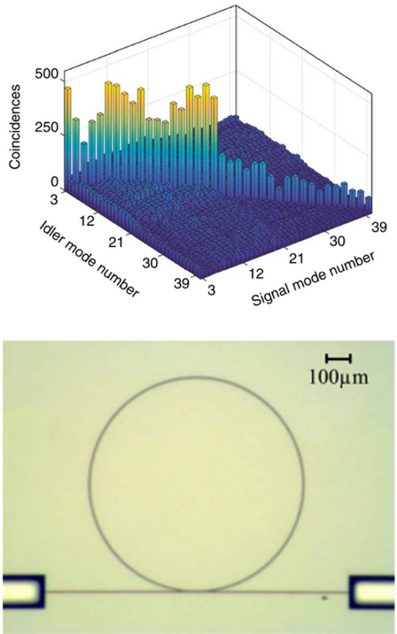
“Using time and frequency encodings (Figure 1), both Imany et al. [4] and Kues et al. [5] demonstrated two-qudit gates acting on photons generated via spontaneous fourwave mixing (SFWM) in a microring resonator.”
BackgroundMethodInfluentialSilica-on-silicon waveguide quantum circuits
Politi, A., Cryan, M. J., Rarity, J. G., Yu, S., & O'Brien, J. L. (2008) · Science · doi:10.1126/science.1155441 · Cited by 1,084
Quantum technologies with optically interfaced solid-state spins
Awschalom, D. D., Hanson, R., Wrachtrup, J., & Zhou, B. B. (2018) · Nature Photonics · doi:10.1038/s41566-018-0232-2 · Cited by 1,059
Machine learning & artificial intelligence in the quantum domain: a review of recent progress
Dunjko, V., & Briegel, H. J. (2018) · Reports on Progress in Physics · doi:10.1088/1361-6633/aab406 · Cited by 1,055
Vahlbruch, H., Mehmet, M., Danzmann, K., & Schnabel, R. (2016) · Physical Review Letters · doi:10.1103/physrevlett.117.110801 · Cited by 901 · cited 1×
“To date the largest level of squeezing reported is 15 dB, obtained from a semi-monolithic OPO operating in the continuous-wave regime [254].”
BackgroundMonolithic ultra-high-Q lithium niobate microring resonator
Zhang, M., Wang, C., Cheng, R., Shams-Ansari, A., & Lončar, M. (2017) · Optica · doi:10.1364/optica.4.001536 · Cited by 878
An integrated diamond nanophotonics platform for quantum-optical networks
Sipahigil, A., Evans, R. E., Sukachev, D. D., Burek, M. J., Borregaard, J., Bhaskar, M. K., Nguyen, C. T., Pacheco, J. L., Atikian, H. A., Meuwly, C., et al. (2016) · Science · doi:10.1126/science.aah6875 · Cited by 844
Self-citationBoson Sampling on a Photonic Chip
Spring, J. B., Metcalf, B. J., Humphreys, P. C., Kolthammer, W. S., Jin, X.-M., Barbieri, M., Datta, A., Thomas-Peter, N., Langford, N. K., Kundys, D., et al. (2013) · Science · doi:10.1126/science.1231692 · Cited by 837
Multidimensional quantum entanglement with large-scale integrated optics
Wang, J., Paesani, S., Ding, Y., Santagati, R., Skrzypczyk, P., Salavrakos, A., Tura, J., Augusiak, R., Mančinska, L., Bacco, D., et al. (2018) · Science · doi:10.1126/science.aar7053 · Cited by 816
Self-citationHybrid integrated quantum photonic circuits
Elshaari, A. W., Pernice, W., Srinivasan, K., Benson, O., & Zwiller, V. (2020) · Nature Photonics · doi:10.1038/s41566-020-0609-x · Cited by 805 · cited 12×
“Along with combining the QFC element(s) with linear components such as filters and couplers, integration with pump lasers and other quantum photonic elements, such as SPSs and solid-state spins, is feasible, particularly in the context of hybrid photonic platforms that combine the advantageous characteristics of dissi…”
BackgroundInfluentialSelf-citationMaterial platforms for spin-based photonic quantum technologies
Atatüre, M., Englund, D., Vamivakas, N., Lee, S.-Y., & Wrachtrup, J. (2018) · Nature Reviews Materials · doi:10.1038/s41578-018-0008-9 · Cited by 766 · cited 5×
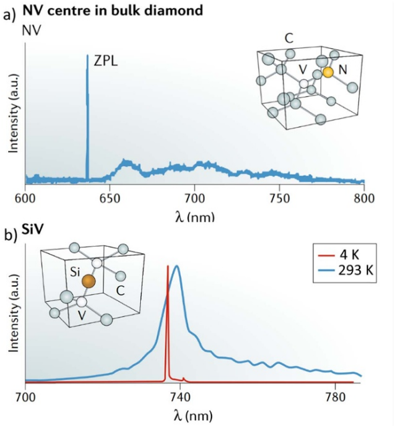
“Several breakthroughs towards this goal have already been achieved utilizing two primary color centers, the negatively charged NV center (see figure 20(a)) and the negatively charged SiV center [58] (see figure 20(b)).”
BackgroundInfluentialPractical challenges in quantum key distribution
Diamanti, E., Lo, H.-K., Qi, B., & Yuan, Z. (2016) · npj Quantum Information · doi:10.1038/npjqi.2016.25 · Cited by 737
Self-citationKues, M., Reimer, C., Lukens, J. M., Munro, W. J., Weiner, A. M., Moss, D. J., & Morandotti, R. (2019) · Nature Photonics · doi:10.1038/s41566-019-0363-0 · Cited by 697
Self-citationWang, C., Langrock, C., Marandi, A., Jankowski, M., Zhang, M., Desiatov, B., Fejer, M. M., & Lončar, M. (2018) · Optica · doi:10.1364/optica.5.001438 · Cited by 673
Self-citationPhotonic quantum information processing: a concise review
Slussarenko, S., & Pryde, G. J. (2019) · Applied Physics Reviews · doi:10.1063/1.5115814 · Cited by 644 · cited 1×
“Photon number resolution (PNR) is another important capability required for many quantum protocols and linear optical quantum computing [206], which is typically not offered by SNSPDs.”
BackgroundSilicon nitride in silicon photonics
Blumenthal, D. J., Heideman, R., Geuzebroek, D., Leinse, A., & Roeloffzen, C. (2018) · Proceedings of the IEEE · doi:10.1109/jproc.2018.2861576 · Cited by 641 · cited 1×
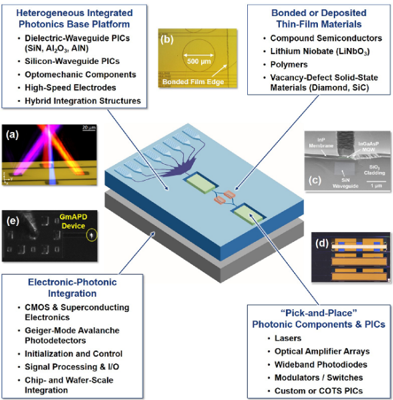
“(a) PIC platforms:While silicon-based photonics has been the workhorse for QPICs owing to the low waveguide loss and the existing foundry infrastructure, other material platforms have been developed to further extend the capabilities beyond what silicon can offer [13], including III–V semiconductors, lithium niobate (…”
BackgroundSelf-citationHigh-dimensional one-way quantum processing implemented on d-level cluster states
Reimer, C., Sciara, S., Roztocki, P., Islam, M., Romero Cortés, L., Zhang, Y., Fischer, B., Loranger, S., Kashyap, R., Cino, A., et al. (2019) · Nature Physics · doi:10.1038/s41567-018-0347-x · Cited by 617
A bright and fast source of coherent single photons
Tomm, N., Javadi, A., Antoniadis, N. O., Najer, D., Löbl, M. C., Korsch, A. R., Schott, R., Valentin, S. R., Wieck, A. D., Ludwig, A., et al. (2021) · Nature Nanotechnology · doi:10.1038/s41565-020-00831-x · Cited by 608 · cited 1×
“The heralding efficiency of spontaneously-pumped integrated sources is low (typically < 10%) whereas an on-demand single-photon probability >50% has been achieved using a QD [109].”
BackgroundExperimental demonstration of memory-enhanced quantum communication
Bhaskar, M. K., Riedinger, R., Machielse, B., Levonian, D. S., Nguyen, C. T., Knall, E. N., Park, H., Englund, D., Lončar, M., Sukachev, D. D., et al. (2020) · Nature · doi:10.1038/s41586-020-2103-5 · Cited by 587 · cited 1×
“This property has enabled the realization of an integrated, SiV-controlled single photon switch [60], coherent interaction of two SiV spins through the optical mode of a photonic cavity [149], and memory-enhanced photonic Bell-state measurements [150] (see figures 21(a) and (b)).”
BackgroundThe optical properties of luminescence centres in silicon
Davies, G. (1989) · Physics Reports · doi:10.1016/0370-1573(89)90064-1 · Cited by 558 · cited 7×
“, silicon nitride (SiN), alumina (Al2O3)) and silicon waveguides that are used to implement passive (Fig 1(a)) [1] and active components, and to create optimized interfaces for heterogeneous integration.”
BackgroundInfluentialDeep neural networks for the evaluation and design of photonic devices
Jiang, J., Chen, M., & Fan, J. A. (2020) · Nature Reviews Materials · doi:10.1038/s41578-020-00260-1 · Cited by 551
A ten-qubit solid-state spin register with quantum memory up to one minute
Bradley, C. E., Randall, J., Abobeih, M. H., Berrevoets, R. C., Degen, M. J., Bakker, M. A., Markham, M., Twitchen, D. J., & Taminiau, T. H. (2019) · Physical Review X · doi:10.1103/physrevx.9.031045 · Cited by 546
Deterministic delivery of remote entanglement on a quantum network
Humphreys, P. C., Kalb, N., Morits, J. P. J., Schouten, R. N., Vermeulen, R. F. L., Twitchen, D. J., Markham, M., & Hanson, R. (2018) · Nature · doi:10.1038/s41586-018-0200-5 · Cited by 546
Quantum transport simulations in a programmable nanophotonic processor
Harris, N. C., Steinbrecher, G. R., Prabhu, M., Lahini, Y., Mower, J., Bunandar, D., Chen, C., Wong, F. N. C., Baehr-Jones, T., Hochberg, M., et al. (2017) · Nature Photonics · doi:10.1038/nphoton.2017.95 · Cited by 519
4H-silicon-carbide-on-insulator for integrated quantum and nonlinear photonics
Lukin, D. M., Dory, C., Guidry, M. A., Yang, K. Y., Mishra, S. D., Trivedi, R., Radulaski, M., Sun, S., Vercruysse, D., Ahn, G. H., et al. (2020) · Nature Photonics · doi:10.1038/s41566-019-0556-6 · Cited by 493
Self-citationSuperconducting qubit to optical photon transduction
Mirhosseini, M., Sipahigil, A., Kalaee, M., & Painter, O. (2020) · Nature · doi:10.1038/s41586-020-3038-6 · Cited by 486 · cited 3×
“Recent focus of development has been shifted towards heterogeneous integration of different materials such as LN on silicon and aluminum nitride on silicon [199, 202], as the two steps involved in the conversion process favors different material properties.”
BackgroundPernice, W. H. P., Schuck, C., Minaeva, O., Li, M., Goltsman, G. N., Sergienko, A. V., & Tang, H. X. (2012) · Nature Communications · doi:10.1038/ncomms2307 · Cited by 477
Generation of time-domain-multiplexed two-dimensional cluster state
Asavanant, W., Shiozawa, Y., Yokoyama, S., Charoensombutamon, B., Emura, H., Alexander, R. N., Takeda, S., Yoshikawa, J.-I., Menicucci, N. C., Yonezawa, H., et al. (2019) · Science · doi:10.1126/science.aay2645 · Cited by 476
Stokes, J., Izaac, J., Killoran, N., & Carleo, G. (2020) · Quantum · doi:10.22331/q-2020-05-25-269 · Cited by 473
Lu, J., Surya, J. B., Liu, X., Bruch, A. W., Gong, Z., Xu, Y., & Tang, H. X. (2019) · Optica · doi:10.1364/optica.6.001455 · Cited by 445
Deterministic generation of a two-dimensional cluster state
Larsen, M. V., Guo, X., Breum, C. R., Neergaard-Nielsen, J. S., & Andersen, U. L. (2019) · Science · doi:10.1126/science.aay4354 · Cited by 433
Integrated lithium niobate photonics
Qi, Y., & Li, Y. (2020) · Nanophotonics · doi:10.1515/nanoph-2020-0013 · Cited by 422
Machine learning and applications in ultrafast photonics
Genty, G., Salmela, L., Dudley, J. M., Brunner, D., Kokhanovskiy, A., Kobtsev, S., & Turitsyn, S. K. (2021) · Nature Photonics · doi:10.1038/s41566-020-00716-4 · Cited by 418 · cited 1×
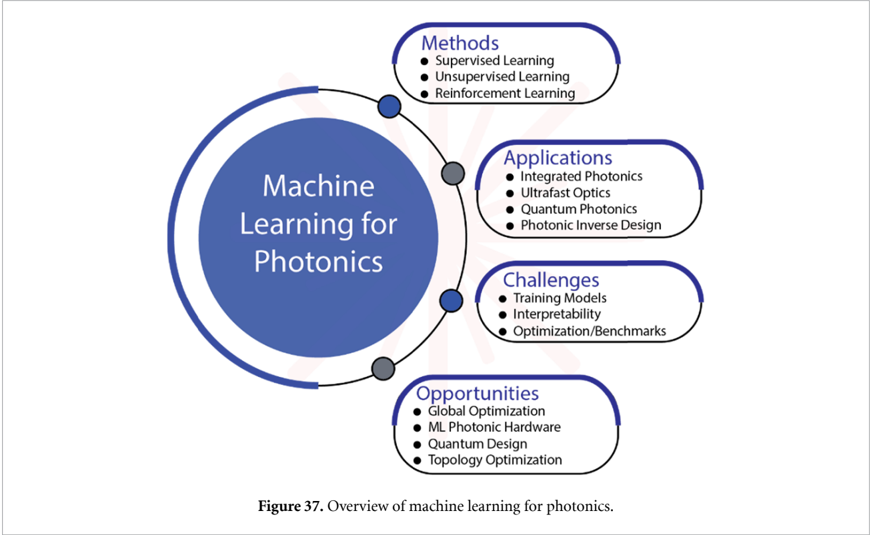
“An ever-increasing range of photonic devices and systems have now be successfully modelled using machine learning, ranging from integrated photonic devices [268] to ultrafast photonic systems [270] and many more.”
BackgroundLarge-scale integration of artificial atoms in hybrid photonic circuits
Wan, N. H., Lu, T.-J., Chen, K. C., Walsh, M. P., Trusheim, M. E., De Santis, L., Bersin, E. A., Harris, I. B., Mouradian, S. L., Christen, I. R., et al. (2020) · Nature · doi:10.1038/s41586-020-2441-3 · Cited by 406
Development of quantum interconnects (QuICs) for next-generation information technologies
Awschalom, D., Berggren, K. K., Bernien, H., Bhave, S., Carr, L. D., Davids, P., Economou, S. E., Englund, D., Faraon, A., Fejer, M., et al. (2021) · PRX Quantum · doi:10.1103/prxquantum.2.017002 · Cited by 392 · cited 1×
“Integrated photonics is being developed in a wide range of materials of relevance to quantum photonics [180].”
BackgroundSelf-citationKumar, P. (1990) · Optics Letters · doi:10.1364/ol.15.001476 · Cited by 382
An integrated silicon photonic chip platform for continuous-variable quantum key distribution
Zhang, G., Haw, J. Y., Cai, H., Xu, F., Assad, S. M., Fitzsimons, J. F., Zhou, X., Zhang, Y., Yu, S., Wu, J., et al. (2019) · Nature Photonics · doi:10.1038/s41566-019-0504-5 · Cited by 381
Zhao, J., Ma, C., Rüsing, M., & Mookherjea, S. (2020) · Physical Review Letters · doi:10.1103/physrevlett.124.163603 · Cited by 362
Balram, K. C., Davanço, M. I., Song, J. D., & Srinivasan, K. (2016) · Nature Photonics · doi:10.1038/nphoton.2016.46 · Cited by 360
Self-citationAharonovich, I., & Neu, E. (2014) · Advanced Optical Materials · doi:10.1002/adom.201400189 · Cited by 359
Self-citationIntegrated sources of photon quantum states based on nonlinear optics
Caspani, L., Xiong, C., Eggleton, B. J., Bajoni, D., Liscidini, M., Galli, M., Morandotti, R., & Moss, D. J. (2017) · Light: Science & Applications · doi:10.1038/lsa.2017.100 · Cited by 358
Ultra-efficient frequency comb generation in AlGaAs-on-insulator microresonators
Chang, L., Xie, W., Shu, H., Yang, Q.-F., Shen, B., Boes, A., Peters, J. D., Jin, W., Xiang, C., Liu, S., et al. (2020) · Nature Communications · doi:10.1038/s41467-020-15005-5 · Cited by 354 · cited 3×
“Along with its recent advance in high-Qmicroring fabrication, ultra-low threshold optical parametric oscillator (OPO) and efficient second-harmonic generation have been obtained in (Al)GaAs on insulator platform, showing its great potential for strong nonlinearity at the single-photon level [45].”
BackgroundInfluentialSelf-citationEntanglement of two quantum memories via fibres over dozens of kilometres
Yu, Y., Ma, F., Luo, X.-Y., Jing, B., Sun, P.-F., Fang, R.-Z., Yang, C.-W., Liu, H., Zheng, M.-Y., Xie, X.-P., et al. (2020) · Nature · doi:10.1038/s41586-020-1976-7 · Cited by 348
A quantum memory with telecom-wavelength conversion
Radnaev, A. G., Dudin, Y. O., Zhao, R., Jen, H. H., Jenkins, S. D., Kuzmich, A., & Kennedy, T. A. B. (2010) · Nature Physics · doi:10.1038/nphys1773 · Cited by 347 · cited 1×
“In the 30+ years since QFC was first discussed explicitly in the literature [170], efficient and low-noise QFC demonstrations have been powered by advances in nonlinear optical technology, in particular based on sum- and difference-frequency generation in quasi-phase-matched nonlinear crystals [171] and four-wave mixi…”
BackgroundChip-to-chip quantum teleportation and multi-photon entanglement in silicon
Llewellyn, D., Ding, Y., Faruque, I. I., Paesani, S., Bacco, D., Santagati, R., Qian, Y.-J., Li, Y., Xiao, Y.-F., Huber, M., et al. (2020) · Nature Physics · doi:10.1038/s41567-019-0727-x · Cited by 331 · cited 5×
“Transmission of quantum information between silicon chips has been demonstrated using optical fibre and sophisticated locking mechanisms for stability [34].”
BackgroundMethodInfluentialIntegrated multi-wavelength control of an ion qubit
Niffenegger, R. J., Stuart, J., Sorace-Agaskar, C., Kharas, D., Bramhavar, S., Bruzewicz, C. D., Loh, W., Maxson, R. T., McConnell, R., Reens, D., et al. (2020) · Nature · doi:10.1038/s41586-020-2811-x · Cited by 330
Self-citationOn-chip detection of non-classical light by scalable integration of single-photon detectors
Najafi, F., Mower, J., Harris, N. C., Bellei, F., Dane, A., Lee, C., Hu, X., Kharel, P., Marsili, F., Assefa, S., et al. (2015) · Nature Communications · doi:10.1038/ncomms6873 · Cited by 330 · cited 1×
“via pick-and-place approaches [204] or by photonic circuit fabrication on top of pre-selected nanowire devices [205].”
MethodEfficient frequency comb generation in AlGaAs-on-insulator
Pu, M., Ottaviano, L., Semenova, E., & Yvind, K. (2016) · Optica · doi:10.1364/optica.3.000823 · Cited by 330
Jin, H., Liu, F. M., Xu, P., Xia, J. L., Zhong, M. L., Yuan, Y., Zhou, J. W., Gong, Y. X., Wang, W., & Zhu, S. N. (2014) · Physical Review Letters · doi:10.1103/physrevlett.113.103601 · Cited by 323
Integrated optical multi-ion quantum logic
Mehta, K. K., Zhang, C., Malinowski, M., Nguyen, T.-L., Stadler, M., & Home, J. P. (2020) · Nature · doi:10.1038/s41586-020-2823-6 · Cited by 318
Self-citationFrequency-encoded photonic qubits for scalable quantum information processing
Lukens, J. M., & Lougovski, P. (2017) · Optica · doi:10.1364/optica.4.000008 · Cited by 312
Photon-mediated interactions between quantum emitters in a diamond nanocavity
Evans, R. E., Bhaskar, M. K., Sukachev, D. D., Nguyen, C. T., Sipahigil, A., Burek, M. J., Machielse, B., Zhang, G. H., Zibrov, A. S., Bielejec, E., et al. (2018) · Science · doi:10.1126/science.aau4691 · Cited by 311
Heterogeneous integration for on-chip quantum photonic circuits with single quantum dot devices
Davanco, M., Liu, J., Sapienza, L., Zhang, C.-Z., De Miranda Cardoso, J. V., Verma, V., Mirin, R., Nam, S. W., Liu, L., & Srinivasan, K. (2017) · Nature Communications · doi:10.1038/s41467-017-00987-6 · Cited by 306 · cited 3×
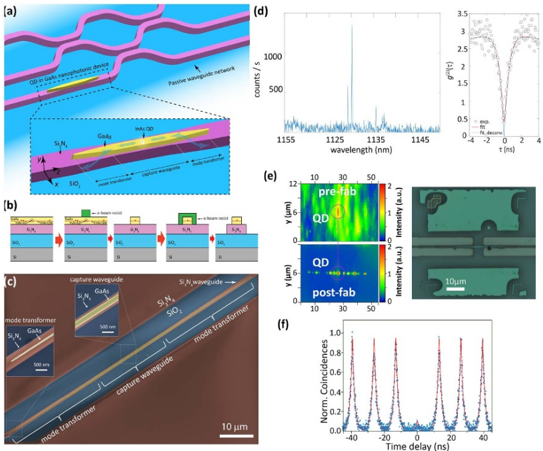
“Panels (a)–(d) reprinted with permission from [40].”
BackgroundMethodInfluentialTutorial on narrow linewidth tunable semiconductor lasers using Si/III-V heterogeneous integration
Tran, M. A., Huang, D., & Bowers, J. E. (2019) · APL Photonics · doi:10.1063/1.5124254 · Cited by 303 · cited 1×
“In both cases low-loss silicon waveguides reduce phase noise by 40 dB and enable linewidths in the range of 100 Hz while providing >100 nm of tuning range [84].”
BackgroundSelf-citationOne-second coherence for a single electron spin coupled to a multi-qubit nuclear-spin environment
Abobeih, M. H., Cramer, J., Bakker, M. A., Kalb, N., Markham, M., Twitchen, D. J., & Taminiau, T. H. (2018) · Nature Communications · doi:10.1038/s41467-018-04916-z · Cited by 302
Shadbolt, P. J., Verde, M. R., Peruzzo, A., Politi, A., Laing, A., Lobino, M., Matthews, J. C. F., Thompson, M. G., & O'Brien, J. L. (2012) · Nature Photonics · doi:10.1038/nphoton.2011.283 · Cited by 297
Self-citationHigh-Rate, High-Fidelity Entanglement of Qubits Across an Elementary Quantum Network
Stephenson, L. J., Nadlinger, D. P., Nichol, B. C., An, S., Drmota, P., Ballance, T. G., Thirumalai, K., Goodwin, J. F., Lucas, D. M., & Ballance, C. J. (2020) · Physical Review Letters · doi:10.1103/physrevlett.124.110501 · Cited by 291
Overcoming noise in entanglement distribution
Ecker, S., Bouchard, F., Bulla, L., Brandt, F., Kohout, O., Steinlechner, F., Fickler, R., Malik, M., Guryanova, Y., Ursin, R., et al. (2019) · Physical Review X · doi:10.1103/physrevx.9.041042 · Cited by 288 · cited 1×
“More importantly, qudit entanglement has been shown to overcome noise in entanglement distribution, which is important for any future QC network [232].”
BackgroundEfficient bidirectional piezo-optomechanical transduction between microwave and optical frequency
Jiang, W., Sarabalis, C. J., Dahmani, Y. D., Patel, R. N., Mayor, F. M., McKenna, T. P., Van Laer, R., & Safavi-Naeini, A. H. (2020) · Nature Communications · doi:10.1038/s41467-020-14863-3 · Cited by 283 · cited 2×
“Piezo-optomechanical frequency converters have been demonstrated with different piezoelectric materials, including GaAs [200], AlN [197, 201, 202], and LN [198].”
BackgroundSelf-citationLi, Q., Davanço, M., & Srinivasan, K. (2016) · Nature Photonics · doi:10.1038/nphoton.2016.64 · Cited by 276 · cited 41×
“This section identifies several important aspects of this technology as it pertains to QFC. Materials for QFC —”
BackgroundMethodInfluentialSelf-citationChip-integrated visible-telecom entangled photon pair source for quantum communication
Lu, X., Li, Q., Westly, D. A., Moille, G., Singh, A., Anant, V., & Srinivasan, K. (2019) · Nature Physics · doi:10.1038/s41567-018-0394-3 · Cited by 272 · cited 1×
“Recent advances in device fabrication techniques have led to the ability to lithographically create highly-confined waveguides and compact micro-resonators, which enables precise dispersion engineering [97].”
BackgroundSelf-citationHybrid integration methods for on-chip quantum photonics
Kim, J.-H., Aghaeimeibodi, S., Carolan, J., Englund, D., & Waks, E. (2020) · Optica · doi:10.1364/optica.384118 · Cited by 272
Puckett, M. W., Liu, K., Chauhan, N., Zhao, Q., Jin, N., Cheng, H., Wu, J., Behunin, R. O., Rakich, P. T., Nelson, K. D., et al. (2021) · Nature Communications · doi:10.1038/s41467-021-21205-4 · Cited by 271
Self-citationContinuous wave photon pair generation in silicon-on-insulator waveguides and ring resonators
Clemmen, S., Huy, K. P., Bogaerts, W., Baets, R. G., Emplit, P., & Massar, S. (2009) · Optics Express · doi:10.1364/oe.17.016558 · Cited by 265
Electronically programmable photonic molecule
Zhang, M., Wang, C., Hu, Y., Shams-Ansari, A., Ren, T., Fan, S., & Lončar, M. (2019) · Nature Photonics · doi:10.1038/s41566-018-0317-y · Cited by 255 · cited 1×
“The latter could be realized using an EO photonic molecule [77, 78], formed by coupling two electrically-driven resonators.”
BackgroundSelf-citationQuantum frequency translation of single-photon states in a photonic crystal fiber
McGuinness, H. J., Raymer, M. G., McKinstrie, C. J., & Radic, S. (2010) · Physical Review Letters · doi:10.1103/physrevlett.105.093604 · Cited by 254 · cited 2×
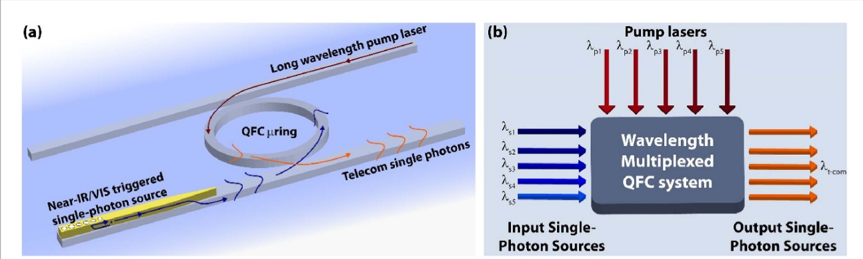
“Here, a nanophotonic QFC interface such as that from [177] is depicted.”
MethodHigh-speed detection at two micrometres with monolithic silicon photodiodes
Ackert, J. J., Thomson, D. J., Shen, L., Peacock, A. C., Jessop, P. E., Reed, G. T., Mashanovich, G. Z., & Knights, A. P. (2015) · Nature Photonics · doi:10.1038/nphoton.2015.81 · Cited by 254
Spontaneous emission of a cesium atom near a nanofiber: efficient coupling of light to guided modes
Le Kien, F., Dutta Gupta, S., Balykin, V. I., & Hakuta, K. (2005) · Physical Review A · doi:10.1103/physreva.72.032509 · Cited by 251 · cited 2×
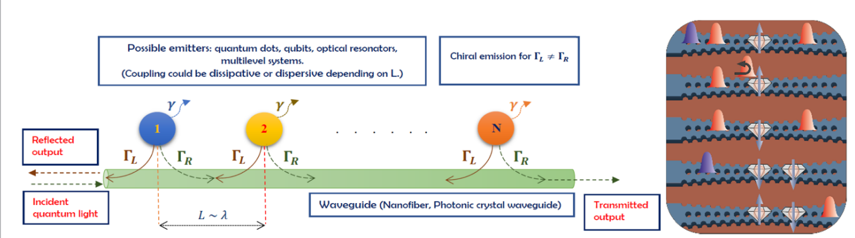
“Nanofibrecontrolled fluorescence from an evanescently coupled atom was first demonstrated by Le Kien et al [1].”
MethodIntegrated optical addressing of an ion qubit
Mehta, K. K., Bruzewicz, C. D., McConnell, R., Ram, R. J., Sage, J. M., & Chiaverini, J. (2016) · Nature Nanotechnology · doi:10.1038/nnano.2016.139 · Cited by 242
Self-citationPelc, J. S., Ma, L., Phillips, C. R., Zhang, Q., Langrock, C., Slattery, O., Tang, X., & Fejer, M. M. (2011) · Optics Express · doi:10.1364/oe.19.021445 · Cited by 242
Atom-atom interactions around the band edge of a photonic crystal waveguide
Hood, J. D., Goban, A., Asenjo-Garcia, A., Lu, M., Yu, S.-P., Chang, D. E., & Kimble, H. J. (2016) · Proceedings of the National Academy of Sciences · doi:10.1073/pnas.1603788113 · Cited by 242
Heterogeneously Integrated InP\/Silicon Photonics: Fabricating Fully Functional Transceivers
Jones, R., Doussiere, P., Driscoll, J. B., Lin, W., Yu, H., Akulova, Y., Komljenovic, T., & Bowers, J. E. (2019) · IEEE Nanotechnology Magazine · doi:10.1109/mnano.2019.2891369 · Cited by 236
Self-citationOpen foundry platform for high-performance electronic-photonic integration
Orcutt, J. S., Moss, B., Sun, C., Leu, J., Georgas, M., Shainline, J., Zgraggen, E., Li, H., Sun, J., Weaver, M., et al. (2012) · Optics Express · doi:10.1364/oe.20.012222 · Cited by 235
Low-loss fiber-to-chip interface for lithium niobate photonic integrated circuits
He, L., Zhang, M., Shams-Ansari, A., Zhu, R., Wang, C., & Marko, L. (2019) · Optics Letters · doi:10.1364/ol.44.002314 · Cited by 230 · cited 1×
“7 dB/facet using TFLN waveguide tapering [80].”
Fan, L., Zou, C.-L., Cheng, R., Guo, X., Han, X., Gong, Z., Wang, S., & Tang, H. X. (2018) · Science Advances · doi:10.1126/sciadv.aar4994 · Cited by 228
Self-citationHigh-Speed Measurement-Device-Independent Quantum Key Distribution with Integrated Silicon Photonics
Wei, K., Li, W., Tan, H., Li, Y., Min, H., Zhang, W.-J., Li, H., You, L., Wang, Z., Jiang, X., et al. (2020) · Physical Review X · doi:10.1103/physrevx.10.031030 · Cited by 227
Toward 1% single-photon anharmonicity with periodically poled lithium niobate microring resonators
Lu, J., Li, M., Zou, C.-L., Al Sayem, A., & Tang, H. X. (2020) · Optica · doi:10.1364/optica.403931 · Cited by 221
Generation and sampling of quantum states of light in a silicon chip
Paesani, S., Ding, Y., Santagati, R., Chakhmakhchyan, L., Vigliar, C., Rottwitt, K., Oxenløwe, L. K., Wang, J., Thompson, M. G., & Laing, A. (2019) · Nature Physics · doi:10.1038/s41567-019-0567-8 · Cited by 214
Self-citationTackling Photonic Inverse Design with Machine Learning
Liu, Z., Zhu, D., Raju, L., & Cai, W. (2021) · Advanced Science · doi:10.1002/advs.202002923 · Cited by 211 · cited 1×
“In such cases, many forward simulations are required along with an optimization strategy to find the optimal solution [266].”
BackgroundNonlinear optical frequency conversion
Fejer, M. M. (1994) · Physics Today · doi:10.1063/1.881430 · Cited by 210
Single-photon sources: approaching the ideal through multiplexing
Meyer-Scott, E., Silberhorn, C., & Migdall, A. (2020) · Review of Scientific Instruments · doi:10.1063/5.0003320 · Cited by 204 · cited 1×
“Since the heralding efficiency of a spontaneous source is fundamentally limited to 25%, multiplexing is essential to improving the heralded single-photon generation probability (per pump pulse) [110].”
BackgroundScalable quantum photonics with single color centers in silicon carbide
Radulaski, M., Widmann, M., Niethammer, M., Zhang, J. L., Lee, S.-Y., Rendler, T., Lagoudakis, K. G., Son, N. T., Janzén, E., Ohshima, T., et al. (2017) · Nano Letters · doi:10.1021/acs.nanolett.6b05102 · Cited by 202 · cited 2×
“Integrated qubits subfigure was adapted with permission from [123], © 2020 American Chemical Society.”
BackgroundMethodSelf-citationReconfigurable electro-optic frequency shifter
Hu, Y., Yu, M., Zhu, D., Sinclair, N., Shams-Ansari, A., Shao, L., Holzgrafe, J., Puma, E., Zhang, M., & Loncar, M. (2020) · arXiv · doi:10.48550/arxiv.2005.09621 · Cited by 202
Self-citationRiedel, D., Söllner, I., Shields, B. J., Starosielec, S., Appel, P., Neu, E., Maletinsky, P., & Warburton, R. J. (2017) · Physical Review X · doi:10.1103/physrevx.7.031040 · Cited by 200
Transform-Limited Photons From a Coherent Tin-Vacancy Spin in Diamond
Trusheim, M. E., Pingault, B., Wan, N. H., Gündoğan, M., De Santis, L., Debroux, R., Gangloff, D., Purser, C., Chen, K. C., Walsh, M., et al. (2020) · Physical Review Letters · doi:10.1103/physrevlett.124.023602 · Cited by 199
Self-citationOn-chip electro-optic frequency shifters and beam splitters
Hu, Y., Yu, M., Zhu, D., Sinclair, N., Shams-Ansari, A., Shao, L., Holzgrafe, J., Puma, E., Zhang, M., & Lončar, M. (2021) · Nature · doi:10.1038/s41586-021-03999-x · Cited by 198
Self-citationHigh performance planar germanium-on-silicon single-photon avalanche diode detectors
Vines, P., Kuzmenko, K., Kirdoda, J., Dumas, D. C. S., Mirza, M. M., Millar, R. W., Paul, D. J., & Buller, G. S. (2019) · Nature Communications · doi:10.1038/s41467-019-08830-w · Cited by 195 · cited 1×
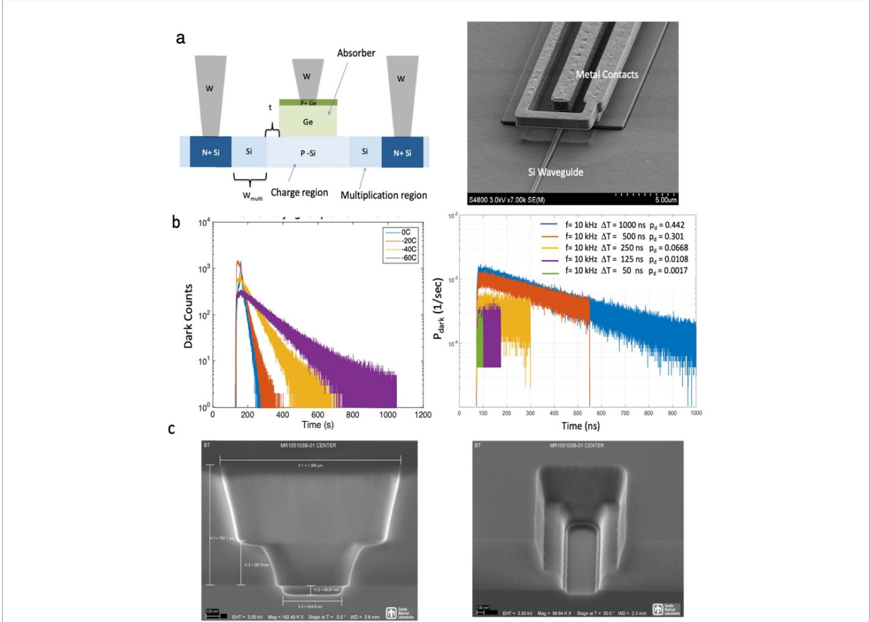
“intrinsic silicon, combined with narrow band absorption of germanium [212, 213].”
BackgroundHigh-efficiency broadband light coupling between optical fibers and photonic integrated circuits
Son, G., Han, S., Park, J., Kwon, K., & Yu, K. (2017) · Nanophotonics · doi:10.1515/nanoph-2018-0075 · Cited by 192
Single artificial atoms in silicon emitting at telecom wavelengths
Redjem, W., Durand, A., Herzig, T., Benali, A., Pezzagna, S., Meijer, J., Kuznetsov, A. Y., Nguyen, H. S., Cueff, S., Gérard, J., et al. (2020) · Nature Electronics · doi:10.1038/s41928-020-00499-0 · Cited by 190 · cited 7×
“Moreover, Ta2O5 can host rare-earth ions, including erbium [5], which enables use as a gain medium, thus providing optical signal amplification and lasing capabilities on-chip.”
BackgroundInfluentialUltrabright quantum photon sources on chip
Ma, Z., Chen, J.-Y., Li, Z., Tang, C., Sua, Y. M., Fan, H., & Huang, Y.-P. (2020) · Physical Review Letters · doi:10.1103/physrevlett.125.263602 · Cited by 190 · cited 1×
“dispersion engineering over wide wavelength spans is challenging, TFLN and other χ(2) materials can also be used in the micro-resonator configuration, achieving very high nonlinear efficiencies [108].”
BackgroundImany, P., Jaramillo-Villegas, J. A., Odele, O. D., Han, K., Leaird, D. E., Lukens, J. M., Lougovski, P., Qi, M., & Weiner, A. M. (2018) · Optics Express · doi:10.1364/oe.26.001825 · Cited by 185 · cited 1×
“More recent interest in the field was spurred by the generation of two-photon quantum frequency combs in CMOS-compatible optical microresonators [234, 240].”
BackgroundSelf-citationTantala Kerr-nonlinear integrated photonics
Jung, H., Yu, S.-P., Carlson, D. R., Drake, T. E., Briles, T. C., & Papp, S. B. (2021) · Optica · doi:10.1364/optica.411968 · Cited by 184
Reconfigurable radio-frequency arbitrary waveforms synthesized in a silicon photonic chip
Wang, J., Shen, H., Fan, L., Wu, R., Niu, B., Varghese, L. T., Xuan, Y., Leaird, D. E., Wang, X., Gan, F., et al. (2015) · Nature Communications · doi:10.1038/ncomms6957 · Cited by 184 · cited 1×
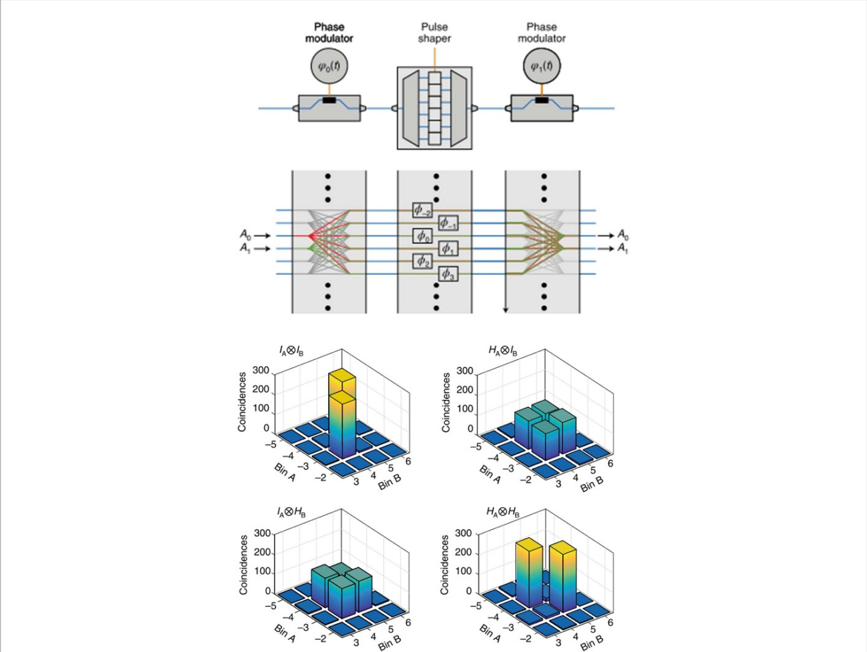
“Pulse shapers can be realized using banks of tunable ring resonators [243] and are not tied to any one material system.”
Self-citationOptical addressing of an individual erbium ion in silicon
Yin, C., Rancic, M., de Boo, G. G., Stavrias, N., McCallum, J. C., Sellars, M. J., & Rogge, S. (2013) · Nature · doi:10.1038/nature12081 · Cited by 183 · cited 7×
“photonic molecule [7, 8], formed by coupling two electrically-driven resonators”
BackgroundInfluentialEfficient InGaN-based yellow-light-emitting diodes
Jiang, F., Zhang, J., Xu, L., Ding, J., Wang, G., Wu, X., Wang, X., Mo, C., Quan, Z., Guo, X., et al. (2019) · Photonics Research · doi:10.1364/prj.7.000144 · Cited by 182 · cited 1×
“There is a partial gap for direct generation between wavelengths supported by GaN and GaAs based active devices, that is currently an active area of research with recent demonstrations showing up to 33% wall-plug efficiency LEDs at 565 nm [86].”
BackgroundAn integrated optical modulator operating at cryogenic temperatures
Eltes, F., Villarreal-Garcia, G. E., Caimi, D., Siegwart, H., Gentile, A. A., Hart, A., Stark, P., Marshall, G. D., Thompson, M. G., Barreto, J., et al. (2020) · Nature Materials · doi:10.1038/s41563-020-0725-5 · Cited by 182 · cited 1×
“An alternative approach is to integrate materials capable of supporting fast electro-optic (EO) switching such as LN or barium titanate, and engineer high efficiency coupling to silicon [31, 32].”
BackgroundNanophotonics for quantum optics using nitrogen-vacancy centers in diamond
Santori, C., Barclay, P. E., Fu, K.-M. C., Beausoleil, R. G., Spillane, S., & Fisch, M. (2010) · Nanotechnology · doi:10.1088/0957-4484/21/27/274008 · Cited by 182
Kilopixel array of superconducting nanowire single-photon detectors
Wollman, E. E., Verma, V. B., Lita, A. E., Farr, W. H., Shaw, M. D., Mirin, R. P., & Woo Nam, S. (2019) · Optics Express · doi:10.1364/oe.27.035279 · Cited by 181
Cavity-enhanced second-harmonic generation via nonlinear-overlap optimization
Lin, Z., Liang, X., Lončar, M., Johnson, S. G., & Rodriguez, A. W. (2016) · Optica · doi:10.1364/optica.3.000233 · Cited by 179
Self-citationA quantum logic gate between a solid-state quantum bit and a photon
Kim, H., Bose, R., Shen, T. C., Solomon, G. S., & Waks, E. (2013) · Nature Photonics · doi:10.1038/nphoton.2013.48 · Cited by 179 · cited 1×
“Single QDs strongly coupled to on-chip cavities furthermore offer a path towards single-photon nonlinearities, which could enable deterministic quantum gates on chip [42].”
BackgroundCoherent control of nitrogen-vacancy center spins in silicon carbide at room temperature
Wang, J.-F., Yan, F.-F., Li, Q., Liu, Z.-H., Liu, H., Guo, G.-P., Guo, L.-P., Zhou, X., Cui, J.-M., Wang, J., et al. (2020) · Physical Review Letters · doi:10.1103/physrevlett.124.223601 · Cited by 178 · cited 1×
“While Si vacancy and divacancy in 4H-SiC provide longer operating wavelengths than diamond defects and QDs, emerging SiC color centers, such as the NV [128, 129] and the vanadium center [130], are currently explored in the range 1300–1550 nm.”
BackgroundMaterial platforms for integrated quantum photonics
Bogdanov, S., Shalaginov, M. Y., Boltasseva, A., & Shalaev, V. M. (2017) · Optical Materials Express · doi:10.1364/ome.7.000111 · Cited by 176 · cited 1×
“In the last decade, remarkable advances in quantum photonic integration and a dramatic reduction in optical losses [2] have enabled benchtop experiments to be scaled down to prototype chips with improvements in efficiency, robustness, and key performance metrics [3, 4].”
BackgroundAll-Gaussian universality and fault tolerance with the Gottesman-Kitaev-Preskill code
Baragiola, B. Q., Pantaleoni, G., Alexander, R. N., Karanjai, A., & Menicucci, N. C. (2019) · Physical Review Letters · doi:10.1103/physrevlett.123.200502 · Cited by 173 · cited 1×
“Furthermore, proposals based on the Gottesman–Kitaev–Preskill (GKP) state encoding [249] recently established a fault tolerance threshold for CV-MBQC.”
MethodHigh-dimensional optical quantum logic in large operational spaces
Imany, P., Jaramillo-Villegas, J. A., Alshaykh, M. S., Lukens, J. M., Odele, O. D., Moore, A. J., Leaird, D. E., Qi, M., & Weiner, A. M. (2019) · npj Quantum Information · doi:10.1038/s41534-019-0173-8 · Cited by 169
Inverse-designed diamond photonics
Dory, C., Vercruysse, D., Yang, K. Y., Sapra, N. V., Rugar, A. E., Sun, S., Lukin, D. M., Piggott, A. Y., Zhang, J. L., Radulaski, M., et al. (2019) · Nature Communications · doi:10.1038/s41467-019-11343-1 · Cited by 168 · cited 1×
“Larger mode volume cavities could be coupled to NV centers, overcoupled or ultrasmall mode volume cavities could enable higher cooperativity or more efficient spin–photon gates, and inverse design techniques could be used to enable more sophisticated device properties [153, 156].”
MethodSelf-citationFull daylight quantum-key-distribution at 1550 nm enabled by integrated silicon photonics
Avesani, M., Calderaro, L., Schiavon, M., Stanco, A., Agnesi, C., Santamato, A., Zahidy, M., Scriminich, A., Foletto, G., Contestabile, G., et al. (2021) · npj Quantum Information · doi:10.1038/s41534-021-00421-2 · Cited by 168
Waveguide-integrated superconducting nanowire single-photon detectors
Ferrari, S., Schuck, C., & Pernice, W. (2017) · Nanophotonics · doi:10.1515/nanoph-2018-0059 · Cited by 167 · cited 20×
“For resonator-based modulators, this bandwidth is restricted to tens of GHz by the width of the optical resonance and resistance-capacitance limit of the electrode.”
BackgroundInfluentialSemiconductor devices for entangled photon pair generation: a review
Orieux, A., Versteegh, M. A. M., Jöns, K. D., & Ducci, S. (2017) · Reports on Progress in Physics · doi:10.1088/1361-6633/aa6955 · Cited by 162
Quantum optics: Science and technology in a new light
Walmsley, I. A. (2015) · Science · doi:10.1126/science.aab0097 · Cited by 160
Recent advances on integrated quantum communications
Orieux, A., & Diamanti, E. (2016) · Journal of Optics · doi:10.1088/2040-8978/18/8/083002 · Cited by 160 · cited 1×
“This makes integrated photonics a key player in the development of these systems, where it can facilitate scalability, reproducibility, interconnectivity and reliability, as well as a reduction in price and physical footprint [256], speeding up the adoption of these technologies at the user level in emerging global-sc…”
BackgroundIntegrated photonic platform for quantum information with continuous variables
Lenzini, F., Janousek, J., Thearle, O., Villa, M., Haylock, B., Kasture, S., Cui, L., Phan, H.-P., Dao, D. V., Yonezawa, H., et al. (2018) · Science Advances · doi:10.1126/sciadv.aat9331 · Cited by 159
Self-citationProgress towards practical qubit computation using approximate Gottesman-Kitaev-Preskill codes
Tzitrin, I., Bourassa, J. E., Menicucci, N. C., & Sabapathy, K. K. (2020) · Physical Review A · doi:10.1103/physreva.101.032315 · Cited by 157 · cited 2×
“The error correction threshold for CV 2D cluster based on GKP encoding requires∼15–17 dB of squeezing, independent on the level of anti-squeezing [253].”
BackgroundFrequency multiplexing for quasi-deterministic heralded single-photon sources
Joshi, C., Farsi, A., Clemmen, S., Ramelow, S., & Gaeta, A. L. (2018) · Nature Communications · doi:10.1038/s41467-018-03254-4 · Cited by 157 · cited 1×
“A variety of multiplexing experiments have been demonstrated on a breadboard or optical tabletop, including frequency multiplexing schemes which require nonlinear wavelength-shifting operations [111].”
BackgroundUltrabright Entangled-Photon-Pair Generation from anAlGaAs-On-Insulator Microring Resonator
Steiner, T. J., Castro, J. E., Chang, L., Dang, Q., Xie, W., Norman, J., Bowers, J. E., & Moody, G. (2021) · PRX Quantum · doi:10.1103/prxquantum.2.010337 · Cited by 156
Photonic quantum state transfer between a cold atomic gas and a crystal
Maring, N., Farrera, P., Kutluer, K., Mazzera, M., Heinze, G., & de Riedmatten, H. (2017) · Nature · doi:10.1038/nature24468 · Cited by 154
Coherent backscattering of light off one-dimensional atomic strings
Sørensen, H. L., Béguin, J.-B., Kluge, K. W., Iakoupov, I., Sørensen, A. S., Müller, J. H., Polzik, E. S., & Appel, J. (2016) · Physical Review Letters · doi:10.1103/physrevlett.117.133604 · Cited by 152
Vainsencher, A., Satzinger, K. J., Peairs, G. A., & Cleland, A. N. (2016) · Applied Physics Letters · doi:10.1063/1.4955408 · Cited by 151
Integrated optomechanical single-photon frequency shifter
Fan, L., Zou, C., Poot, M., Cheng, R., Guo, X., Han, X., & Tang, H. X. (2016) · Nature Photonics · doi:10.1038/nphoton.2016.206 · Cited by 151
Self-citationPurcell enhancement of a single silicon carbide color center with coherent spin control
Crook, A. L., Anderson, C. P., Miao, K. C., Bourassa, A., Lee, H., Bayliss, S. L., Bracher, D. O., Zhang, X., Abe, H., Ohshima, T., et al. (2020) · Nano Letters · doi:10.1021/acs.nanolett.0c00339 · Cited by 149 · cited 6×
“This rate is limited by the 4% probability that the NV emits photons into its zero phonon line (ZPL) (see Fig.”
BackgroundInfluentialContinuous-wave 6-dB-squeezed light with 2.5-THz-bandwidth from single-mode PPLN waveguide
Kashiwazaki, T., Takanashi, N., Yamashima, T., Kazama, T., Enbutsu, K., Kasahara, R., Umeki, T., & Furusawa, A. (2020) · APL Photonics · doi:10.1063/1.5142437 · Cited by 149
Two-photon interference from a bright single-photon source at telecom wavelengths
Kim, J.-H., Cai, T., Richardson, C. J. K., Leavitt, R. P., & Waks, E. (2016) · Optica · doi:10.1364/optica.3.000577 · Cited by 144
Low-loss integrated photonics for the blue and ultraviolet regime
West, G. N., Loh, W., Kharas, D., Sorace-Agaskar, C., Mehta, K. K., Sage, J., Chiaverini, J., & Ram, R. J. (2019) · APL Photonics · doi:10.1063/1.5052502 · Cited by 141
Ma, C., Wang, X., Anant, V., Beyer, A. D., Shaw, M. D., & Mookherjea, S. (2017) · Optics Express · doi:10.1364/oe.25.032995 · Cited by 137
Self-citationCavity electro-optics in thin-film lithium niobate for efficient microwave-to-optical transduction
Holzgrafe, J., Sinclair, N., Zhu, D., Shams-Ansari, A., Colangelo, M., Hu, Y., Zhang, M., Berggren, K. K., & Lončar, M. (2020) · Optica · doi:10.1364/optica.397513 · Cited by 136
Integrated photon-pair sources with nonlinear optics
Wang, Y., Jöns, K. D., & Sun, Z. (2021) · Applied Physics Reviews · doi:10.1063/5.0030258 · Cited by 136
Doubly resonant χ (2) nonlinear photonic crystal cavity based on a bound state in the continuum
Minkov, M., Gerace, D., & Fan, S. (2019) · Optica · doi:10.1364/optica.6.001039 · Cited by 134
Broad Diversity of Near-Infrared Single-Photon Emitters in Silicon
Durand, A., Baron, Y., Redjem, W., Herzig, T., Benali, A., Pezzagna, S., Meijer, J., Kuznetsov, A. Y., Gérard, J., Robert-Philip, I., et al. (2021) · Physical Review Letters · doi:10.1103/physrevlett.126.083602 · Cited by 133 · cited 13×
“To date, an impressive collection of experiments has been realized at the individual component level [9].”
BackgroundInfluentialRaffaelli, F., Ferranti, G., Mahler, D. H., Sibson, P., Kennard, J. E., Santamato, A., Sinclair, G., Bonneau, D., Thompson, M. G., & Matthews, J. C. F. (2018) · Quantum Science and Technology · doi:10.1088/2058-9565/aaa38f · Cited by 133
Self-citationTwo-dimensional optomechanical crystal cavity with high quantum cooperativity
Ren, H., Matheny, M. H., MacCabe, G. S., Luo, J., Pfeifer, H., Mirhosseini, M., & Painter, O. (2020) · Nature Communications · doi:10.1038/s41467-020-17182-9 · Cited by 131 · cited 1×
“Better thermalization has been achieved with 3He buffer gas and 2D OMCs [203], the latter has shown an effective quantum cooperativity above unity.”
BackgroundMcKenna, T. P., Witmer, J. D., Patel, R. N., Jiang, W., Van Laer, R., Arrangoiz-Arriola, P., Wollack, E. A., Herrmann, J. F., & Safavi-Naeini, A. H. (2020) · Optica · doi:10.1364/optica.397235 · Cited by 130
Self-citationUltra-low-loss Ta_2O_5-core/SiO_2-clad planar waveguides on Si substrates
Belt, M., Davenport, M. L., Bowers, J. E., & Blumenthal, D. J. (2017) · Optica · doi:10.1364/optica.4.000532 · Cited by 130
Self-citationMetropolitan Quantum Key Distribution with Silicon Photonics
Bunandar, D., Lentine, A., Lee, C., Cai, H., Long, C. M., Boynton, N., Martinez, N., DeRose, C., Chen, C., Grein, M., et al. (2018) · Physical Review X · doi:10.1103/physrevx.8.021009 · Cited by 129 · cited 1×
“These SPDs work in the telecom bands and operate with moderate cooling near room-temperature and can be deployed in QKD chip-based transceivers that do not rely on high SPD efficiency [214].”
BackgroundSelf-citationPaul, M., Olbrich, F., Höschele, J., Schreier, S., Kettler, J., Portalupi, S. L., Jetter, M., & Michler, P. (2017) · Applied Physics Letters · doi:10.1063/1.4993935 · Cited by 128
Limits on the deterministic creation of pure single-photon states using parametric down-conversion
Christ, A., & Silberhorn, C. (2012) · Physical Review A · doi:10.1103/physreva.85.023829 · Cited by 127 · cited 1×
“Several hundred multiplexed sources might be required, depending on the level of loss and detection efficiency [112].”
BackgroundOn-chip coherent microwave-to-optical transduction mediated by ytterbium in YVO4
Bartholomew, J. G., Rochman, J., Xie, T., Kindem, J. M., Ruskuc, A., Craiciu, I., Lei, M., & Faraon, A. (2020) · Nature Communications · doi:10.1038/s41467-020-16996-x · Cited by 124
Cavity piezo-mechanics for superconducting-nanophotonic quantum interface
Han, X., Fu, W., Zhong, C., Zou, C.-L., Xu, Y., Sayem, A. A., Xu, M., Wang, S., Cheng, R., Jiang, L., et al. (2020) · Nature Communications · doi:10.1038/s41467-020-17053-3 · Cited by 123
Self-citationPhotonic integration for UV to IR applications
Blumenthal, D. J. (2020) · APL Photonics · doi:10.1063/1.5131683 · Cited by 121
Self-citationOperation of an optical atomic clock with a Brillouin laser subsystem
Loh, W., Stuart, J., Reens, D., Bruzewicz, C., Braje, D., Chiaverini, J., Juodawlkis, P., Sage, J., & McConnell, R. (2020) · Nature · doi:10.1038/s41586-020-2981-6 · Cited by 121 · cited 1×
“Transitioning from the lab to the field will require low-cost, environmentally robust subsystems such as ultra-narrow-linewidth lasers based on stimulated Brillouin scattering (SBS) in optical fibers [22, 23] or ultralow-loss on-chip waveguides.”
BackgroundSelf-citation80-GHz Bandwidth and 1.5-V Vπ InP-Based IQ Modulator
Ogiso, Y., Hashizume, Y., Tanobe, H., Nunoya, N., Ida, M., Miyamoto, Y., Ishikawa, M., Ozaki, J., Ueda, Y., Wakita, H., et al. (2020) · Journal of Lightwave Technology · doi:10.1109/jlt.2019.2924671 · Cited by 120 · cited 3×
“A better prism through which to view modulator performance is the voltage-loss product expressed in VdB.”
BackgroundInfluentialAsymptotic improvements to quantum circuits via qutrits
Gokhale, P., Baker, J. M., Duckering, C., Brown, N. C., Brown, K. R., & Chong, F. T. (2019) · Proceedings of the 46th International Symposium on Computer Architecture · doi:10.1145/3307650.3322253 · Cited by 120 · cited 2×
“Qudit Path [6] Frequency [233] Transverse mode [234] Time-frequency [236]”
BackgroundChip-based measurement-device-independent quantum key distribution
Semenenko, H., Sibson, P., Hart, A., Thompson, M. G., Rarity, J. G., & Erven, C. (2020) · Optica · doi:10.1364/optica.379679 · Cited by 119
Error-protected qubits in a silicon photonic chip
Vigliar, C., Paesani, S., Ding, Y., Adcock, J. C., Wang, J., Morley-Short, S., Bacco, D., Oxenløwe, L. K., Thompson, M. G., Rarity, J. G., et al. (2021) · Nature Physics · doi:10.1038/s41567-021-01333-w · Cited by 118
Truly unentangled photon pairs without spectral filtering
Vernon, Z., Menotti, M., Tison, C. C., Steidle, J. A., Fanto, M. L., Thomas, P. M., Preble, S. F., Smith, A. M., Alsing, P. M., Liscidini, M., et al. (2017) · Optics Letters · doi:10.1364/ol.42.003638 · Cited by 117 · cited 1×
“Since the wavelengths are similar in SFWM, a more sophisticated coupling structure may be useful, such as the two-point interferometric couplers [105].”
BackgroundChip-scale nonlinear photonics for quantum light generation
Moody, G., Chang, L., Steiner, T. J., & Bowers, J. E. (2020) · AVS Quantum Science · doi:10.1116/5.0020684 · Cited by 117
Silicon photonics interfaced with integrated electronics for 9 GHz measurement of squeezed light
Tasker, J. F., Frazer, J., Ferranti, G., Allen, E. J., Brunel, L. F., Tanzilli, S., D’Auria, V., & Matthews, J. C. F. (2021) · Nature Photonics · doi:10.1038/s41566-020-00715-5 · Cited by 116 · cited 3×
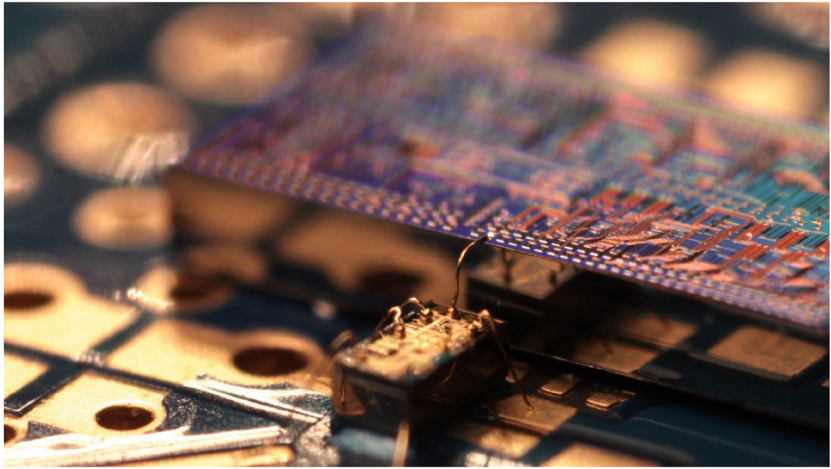
“An integrated electronics die directly wire-bonded with a silicon photonics integrated circuit reduces total device capacitance, thereby enabling in this instance [33] a high bandwidth homodyne detection for squeezed light detection on-chip (Photo credit: Joel Tasker, University of Bristol).”
BackgroundMethodInfluentialSelf-citationHeterogeneously integrated gaas waveguides on insulator for efficient frequency conversion
Chang, L., Boes, A., Guo, X., Spencer, D. T., Kennedy, M. J., Peters, J. D., Volet, N., Chiles, J., Kowligy, A., Nader, N., et al. (2018) · Laser & Photonics Reviews · doi:10.1002/lpor.201800149 · Cited by 114 · cited 3×
“Traditionally, III–V photonic platforms suffered from high waveguide loss and low optical confinement because all of the devices were processed on a native III–V substrate [46].”
BackgroundInfluentialManipulating the color and shape of single photons
Raymer, M. G., & Srinivasan, K. (2012) · Physics Today · doi:10.1063/pt.3.1786 · Cited by 113
Bassett, L. C., Alkauskas, A., Exarhos, A. L., & Fu, K. C. (2018) · Nanophotonics · doi:10.1515/nanoph-2019-0211 · Cited by 112
Silicon vacancy center in4H-SiC: Electronic structure and spin-photon interfaces
Soykal, Ö. O., Dev, P., & Economou, S. E. (2016) · Physical Review B · doi:10.1103/physrevb.93.081207 · Cited by 109
Xue, G.-T., Niu, Y.-F., Liu, X., Duan, J.-C., Chen, W., Pan, Y., Jia, K., Wang, X., Liu, H.-Y., Zhang, Y., et al. (2021) · Physical Review Applied · doi:10.1103/physrevapplied.15.064059 · Cited by 109
Morioka, N., Babin, C., Nagy, R., Gediz, I., Hesselmeier, E., Liu, D., Joliffe, M., Niethammer, M., Dasari, D., Vorobyov, V., et al. (2020) · Nature Communications · doi:10.1038/s41467-020-16330-5 · Cited by 108 · cited 15×
“Other group IV color centers such as the germanium- (GeV) and tin- (SnV) vacancy centers share the structure of the SiV, making them promising candidates for further study [10]. a) and b) are reproduced with permission from [1]. unity quantum efficiency, long spin coherence times with optical addressability at elevate…”
BackgroundInfluentialQuantum optical waveform conversion
Kielpinski, D., Corney, J. F., & Wiseman, H. M. (2011) · Physical Review Letters · doi:10.1103/physrevlett.106.130501 · Cited by 105 · cited 1×
“Nonlinear optics provides some mechanisms by which such temporal shaping can be realized [179], though this issue can also be addressed by other quantum network components (e.”
BackgroundA photonic platform for donor spin qubits in silicon
Morse, K. J., Abraham, R. J. S., DeAbreu, A., Bowness, C., Richards, T. S., Riemann, H., Abrosimov, N. V., Becker, P., Pohl, H.-J., Thewalt, M. L. W., et al. (2017) · Science Advances · doi:10.1126/sciadv.1700930 · Cited by 105 · cited 6×
“In this context, diamond’s ability to host paramagnetic, optically active atomic defects [4], such as the nitrogen-vacancy colour centre [5], has led to its widespread recognition as a promising material for quantum information processing [6].”
BackgroundInfluentialA modulator-free quantum key distribution transmitter chip
Paraïso, T. K., Marco, I. D., Roger, T., Marangon, D. G., Dynes, J. F., Lucamarini, M., Yuan, Z. L., & Shields, A. J. (2019) · npj Quantum Information · doi:10.1038/s41534-019-0158-7 · Cited by 104
Quantum interference between transverse spatial waveguide modes
Mohanty, A., Zhang, M., Dutt, A., Ramelow, S., Nussenzveig, P., & Lipson, M. (2017) · Nature Communications · doi:10.1038/ncomms14010 · Cited by 103 · cited 1×
“Exploiting the transverse spatial modes, an on-chip source of polarisation and OAMmodes have been demonstrated on a silicon platform, and quantum interference has been demonstrated using photons generated from SPDC and SiN waveguides that act as mode multiplexer and mode beamsplitter [235] (figure 31).”
MethodResolving photon numbers using a superconducting nanowire with impedance-matching taper
Zhu, D., Colangelo, M., Chen, C., Korzh, B. A., Wong, F. N. C., Shaw, M. D., & Berggren, K. K. (2020) · Nano Letters · doi:10.1021/acs.nanolett.0c00985 · Cited by 103 · cited 1×
“Another example is the demonstration of PNR capabilities of a single SNSPD enabled by tapered transmission lines for measuring Hong–Ou–Mandel interference [210].”
BackgroundEngineering telecom single-photon emitters in silicon for scalable quantum photonics
Hollenbach, M., Berencén, Y., Kentsch, U., Helm, M., & Astakhov, G. V. (2020) · Optics Express · doi:10.1364/oe.397377 · Cited by 103 · cited 1×
“In the past year, first measurements of single-photon emission from G centers have been reported [116, 117], and single SECs across the telecom wavelength range have also been observed in”
BackgroundUltrahigh-Q AlGaAs-on-insulator microresonators for integrated nonlinear photonics
Xie, W., Chang, L., Shu, H., Norman, J. C., Peters, J. D., Wang, X., & Bowers, J. E. (2020) · Optics Express · doi:10.1364/oe.405343 · Cited by 102 · cited 3×
“For χ(3)-based nonlinear processes, a record-low threshold around 20 μW for Kerr comb generation is achieved in a high-Q AlGaAsOI resonator (figure 6(e)) [47], where the AlGaAs material bandgap is engineered to avoid two photon absorption at the telecom band.”
BackgroundResultInfluentialSorace-Agaskar, C., Kharas, D., Yegnanarayanan, S., Maxson, R. T., West, G. N., Loh, W., Bramhavar, S., Ram, R. J., Chiaverini, J., Sage, J., et al. (2019) · IEEE Journal of Selected Topics in Quantum Electronics · doi:10.1109/jstqe.2019.2904443 · Cited by 102 · cited 2×
“As requirements and constraints become more clear, a CMOS-based photonics platform with some custom layers and steps is likely to be of interest in this regard [16, 229, 230].”
BackgroundSelf-citationSingle photon detection in a waveguide-coupled Ge-on-Si lateral avalanche photodiode
Martinez, N. J. D., Gehl, M., Derose, C. T., Starbuck, A. L., Pomerene, A. T., Lentine, A. L., Trotter, D. C., & Davids, P. S. (2017) · Optics Express · doi:10.1364/oe.25.016130 · Cited by 102
Self-citationQuantum frequency conversion of a quantum dot single-photon source on a nanophotonic chip
Singh, A., Li, Q., Liu, S., Yu, Y., Lu, X., Schneider, C., Höfling, S., Lawall, J., Verma, V., Mirin, R., et al. (2019) · Optica · doi:10.1364/optica.6.000563 · Cited by 99
Quantum Interference of Electromechanically Stabilized Emitters in Nanophotonic Devices
Machielse, B., Bogdanovic, S., Meesala, S., Gauthier, S., Burek, M. J., Joe, G., Chalupnik, M., Sohn, Y. I., Holzgrafe, J., Evans, R. E., et al. (2019) · Physical Review X · doi:10.1103/physrevx.9.031022 · Cited by 98 · cited 3×
“Integration of nanophotonic devices comprising SiV color centers with mechanical devices [151] and nonlinear optics platforms has also been demonstrated [9].”
BackgroundSelf-citationState readout of a trapped ion qubit using a trap-integrated superconducting photon detector
Todaro, S. L., Verma, V. B., McCormick, K. C., Allcock, D. T. C., Mirin, R. P., Wineland, D. J., Nam, S. W., Wilson, A. C., Leibfried, D., & Slichter, D. H. (2021) · Physical Review Letters · doi:10.1103/physrevlett.126.010501 · Cited by 98 · cited 1×
“While impressive performance for single-ion readout has been achieved with integrated superconducting single-photon detectors [224], implementing high-quality detectors in a platform capable of appropriate shielding to minimize unwanted coupling to the ion qubits has not been addressed.”
BackgroundNonlinear integrated quantum electro-optic circuits
Luo, K.-H., Brauner, S., Eigner, C., Sharapova, P. R., Ricken, R., Meier, T., Herrmann, H., & Silberhorn, C. (2019) · Science Advances · doi:10.1126/sciadv.aat1451 · Cited by 98 · cited 1×
“LN will possibly be a valuable material for future photonic chips at is has a strong χ(2) nonlinearity and can be used to provide precise timing control via EO modulation [238].”
MethodNair, J. M. P., Mukhopadhyay, D., & Agarwal, G. S. (2021) · Physical Review Letters · doi:10.1103/physrevlett.126.180401 · Cited by 97
Self-citationUltra-narrow linewidth Brillouin laser with nanokelvin temperature self-referencing
Loh, W., Yegnanarayanan, S., O’Donnell, F., & Juodawlkis, P. W. (2019) · Optica · doi:10.1364/optica.6.000152 · Cited by 96 · cited 1×
“Transitioning from the lab to the field will require low-cost, environmentally robust subsystems such as ultra-narrow-linewidth lasers based on stimulated Brillouin scattering (SBS) in optical fibers [22, 23] or ultralow-loss on-chip waveguides.”
BackgroundSelf-citationTanabe, K., Guimard, D., Bordel, D., Iwamoto, S., & Arakawa, Y. (2010) · Optics Express · doi:10.1364/oe.18.010604 · Cited by 92
Kieninger, C., Füllner, C., Zwickel, H., Kutuvantavida, Y., Kemal, J. N., Eschenbaum, C., Elder, D. L., Dalton, L. R., Freude, W., Randel, S., et al. (2020) · Optics Express · doi:10.1364/oe.390315 · Cited by 92 · cited 4×
“A better prism through which to view modulator performance is the voltage-loss product expressed in VdB.”
BackgroundInfluentialExperimental access to higher-dimensional entangled quantum systems using integrated optics
Schaeff, C., Polster, R., Huber, M., Ramelow, S., & Zeilinger, A. (2015) · Optica · doi:10.1364/optica.2.000523 · Cited by 89
All-silicon light-emitting diodes waveguide-integrated with superconducting single-photon detectors
Buckley, S., Chiles, J., McCaughan, A. N., Moody, G., Silverman, K. L., Stevens, M. J., Mirin, R. P., Nam, S. W., & Shainline, J. M. (2017) · Applied Physics Letters · doi:10.1063/1.4994692 · Cited by 89 · cited 6×
“Among the diverse photonic platforms, (aluminium) gallium arsenide [(Al)GaAs] on insulator has attracted significant interest recently [3], [4] due to its direct”
BackgroundInfluentialSelf-citationSchnauber, P., Singh, A., Schall, J., Park, S. I., Song, J. D., Rodt, S., Srinivasan, K., Reitzenstein, S., & Davanco, M. (2019) · Nano Letters · doi:10.1021/acs.nanolett.9b02758 · Cited by 87 · cited 4×
“(e) While in (c) the QDs were randomly located within the GaAs waveguides, in [41] cathodoluminescence (CL) images were used to identify single QDs before fabrication (top left).”
BackgroundMethodInfluentialSelf-citationComputer-inspired quantum experiments
Krenn, M., Erhard, M., & Zeilinger, A. (2020) · Nature Reviews Physics · doi:10.1038/s42254-020-0230-4 · Cited by 86
A scalable multi-photon coincidence detector based on superconducting nanowires
Zhu, D., Zhao, Q.-Y., Choi, H., Lu, T.-J., Dane, A. E., Englund, D., & Berggren, K. K. (2018) · Nature Nanotechnology · doi:10.1038/s41565-018-0160-9 · Cited by 85 · cited 1×
“Multi-photon coincidence detectors based on two-terminal devices consisting of 16 detector elements were accomplished by slow-wave transmission lines for time-domain multiplexing via signal delays [209].”
MethodRickert, L., Kupko, T., Rodt, S., Reitzenstein, S., & Heindel, T. (2019) · Optics Express · doi:10.1364/oe.27.036824 · Cited by 83
Converting microwave and telecom photons with a silicon photonic nanomechanical interface
Arnold, G., Wulf, M., Barzanjeh, S., Redchenko, E. S., Rueda, A., Hease, W. J., Hassani, F., & Fink, J. M. (2020) · Nature Communications · doi:10.1038/s41467-020-18269-z · Cited by 83 · cited 2×
“The first step is enabled either by piezoelectric coupling between the electric field from the microwave resonance and mechanical deformation or using a parametric coupling between the two [193], while the second step relies on optomechanical interaction where mechanical deformation introduces a frequency shift of an…”
BackgroundEfficient second harmonic generation in nanophotonic GaAs-on-insulator waveguides
Stanton, E. J., Chiles, J., Nader, N., Moody, G., Volet, N., Chang, L., Bowers, J. E., Woo Nam, S., & Mirin, R. P. (2020) · Optics Express · doi:10.1364/oe.389423 · Cited by 82
Optical Properties of Vanadium in 4 H Silicon Carbide for Quantum Technology
Spindlberger, L., Csóré, A., Thiering, G., Putz, S., Karhu, R., Hassan, J. U., Son, N. T., Fromherz, T., Gali, A., & Trupke, M. (2019) · Physical Review Applied · doi:10.1103/physrevapplied.12.014015 · Cited by 82 · cited 1×
“While Si vacancy and divacancy in 4H-SiC provide longer operating wavelengths than diamond defects and QDs, emerging SiC color centers, such as the NV [128, 129] and the vanadium center [130], are currently explored in the range 1300–1550 nm.”
BackgroundMu, Z., Zargaleh, S. A., von Bardeleben, H. J., Fröch, J. E., Nonahal, M., Cai, H., Yang, X., Yang, J., Li, X., Aharonovich, I., et al. (2020) · Nano Letters · doi:10.1021/acs.nanolett.0c02342 · Cited by 81 · cited 1×
“Promising experimental results on NV center generation and coherent manipulation [132], as well as theoretical proposals for their spin–photon interfaces have been demonstrated in SiC [127].”
BackgroundSelf-citationDesigning integrated photonic devices using artificial neural networks
Hammond, A. M., & Camacho, R. M. (2019) · Optics Express · doi:10.1364/oe.27.029620 · Cited by 80 · cited 2×
“Compared with traditional electromagnetic solvers, discriminative neural networks can evaluate forward problems orders of magnitude faster [268].”
BackgroundSelf-citationNanodiamond integration with photonic devices
Radulaski, M., Zhang, J. L., Tzeng, Y., Lagoudakis, K. G., Ishiwata, H., Dory, C., Fischer, K. A., Kelaita, Y. A., Sun, S., Maurer, P. C., et al. (2019) · Laser & Photonics Reviews · doi:10.1002/lpor.201800316 · Cited by 76 · cited 1×
“There has been a number of advances in positioning and even fabrication of the nanocrystals themselves, which has created potential for these systems to compete with pure diamond cavities or silicon-carbide cavities [169].”
BackgroundSelf-citationTime-Domain-Multiplexed Measurement-Based Quantum Operations with 25-MHz Clock Frequency
Asavanant, W., Charoensombutamon, B., Yokoyama, S., Ebihara, T., Nakamura, T., Alexander, R. N., Endo, M., Yoshikawa, J.-I., Menicucci, N. C., Yonezawa, H., et al. (2021) · Physical Review Applied · doi:10.1103/physrevapplied.16.034005 · Cited by 76 · cited 2×
“(a) Schematic for the generation of a 1D cluster state [250], where p and q squeezed vacua are interfered creating a series of EPR states every time constant ∆t.”
BackgroundMultifunctional on-chip storage at telecommunication wavelength for quantum networks
Craiciu, I., Lei, M., Rochman, J., Bartholomew, J. G., & Faraon, A. (2020) · Optica · doi:10.1364/optica.412211 · Cited by 76
Efficient Single-Photon Frequency Conversion Using a Sagnac Interferometer
Bradford, M., Obi, K. C., & Shen, J.-T. (2012) · Physical Review Letters · doi:10.1103/physrevlett.108.103902 · Cited by 75 · cited 1×
“To that end, we also note that QFC approaches involving multi-level single quantum emitters coupled to nanophotonic elements have also been proposed [181].”
Background
Research works printed but not linked: 1
- Juanjuan, 2020, Towards 1% single photon nonlinearity with periodically-poled lithium niobate microring resonators, Optica, 7, 1654, 10.1364/OPTICA.403931 · DOI · Paper page
Cited by
Applications of optical microcombs
Sun, Y., Wu, J., Tan, M., Xu, X., Li, Y., Morandotti, R., Mitchell, A., & Moss, D. J. (2023) · Advances in Optics and Photonics · doi:10.1364/aop.470264 · Cited by 302
Corato-Zanarella, M., Gil-Molina, A., Ji, X., Shin, M. C., Mohanty, A., & Lipson, M. (2023) · Nature Photonics · doi:10.1038/s41566-022-01120-w · Cited by 233
Integrated Electro-Optics on Thin-Film Lithium Niobate
Hu, Y., Zhu, D., Lu, S., Zhu, X., Song, Y., Renaud, D., Assumpcao, D., Cheng, R., Xin, C. J., Yeh, M., et al. (2025) · Nature Reviews Physics · doi:10.1038/s42254-025-00825-5 · Cited by 162
“The properties of TFLN, including low-loss, possibility of large scale integration, possibility for photon-photon interactions through EO and/or optical 𝜒 (2) , render it an attractive platform for generating and manipulating quantum states of light 175 .”
Self-citationSingle-photon detection and cryogenic reconfigurability in lithium niobate nanophotonic circuits
Lomonte, E., Wolff, M. A., Beutel, F., Ferrari, S., Schuck, C., Pernice, W. H. P., & Lenzini, F. (2021) · Nature Communications · doi:10.1038/s41467-021-27205-8 · Cited by 163
Self-citationChip-based laser with 1-hertz integrated linewidth
Guo, J., McLemore, C. A., Xiang, C., Lee, D., Wu, L., Jin, W., Kelleher, M., Jin, N., Mason, D., Chang, L., et al. (2022) · Science Advances · doi:10.1126/sciadv.abp9006 · Cited by 112
Metadata
- Authors
- Moody, G., Sorger, V. J., Blumenthal, D. J., Juodawlkis, P. W., Loh, W., Sorace-Agaskar, C., Jones, A. E., Balram, K. C., Matthews, J. C. F., Laing, A., Davanco, M., Chang, L., Bowers, J. E., Quack, N., Galland, C., Aharonovich, I., Wolff, M. A., Schuck, C., Sinclair, N., Lončar, M., Komljenovic, T., Weld, D., Mookherjea, S., Buckley, S., Radulaski, M., Reitzenstein, S., Pingault, B., Machielse, B., Mukhopadhyay, D., Akimov, A., Zheltikov, A., Agarwal, G. S., Srinivasan, K., Lu, J., Tang, H. X., Jiang, W., McKenna, T. P., Safavi-Naeini, A. H., Steinhauer, S., Elshaari, A. W., Zwiller, V., Davids, P. S., Martinez, N., Gehl, M., Chiaverini, J., Mehta, K. K., Romero, J., Lingaraju, N. B., Weiner, A. M., Peace, D., Cernansky, R., Lobino, M., Diamanti, E., Vidarte, L. T., & Camacho, R. M.
- Affiliations
- University of California, Santa Barbara (US)
- George Washington University (US)
- MIT Lincoln Laboratory (US)
- University of Bristol (GB)
- École Polytechnique Fédérale de Lausanne (CH)
- University of Technology Sydney (AU)
- University of Münster (DE)
- Harvard University (US)
- University of California San Diego (US)
- National Institute of Standards and Technology (US)
- University of California, Davis (US)
- Technische Universität Berlin (DE)
- Texas A&M University (US)
- P.N. Lebedev Physical Institute of the Russian Academy of Sciences (RU)
- Yale University (US)
- Stanford University (US)
- KTH Royal Institute of Technology (SE)
- Sandia National Laboratories (US)
- ETH Zurich (CH)
- Australian Research Council (AU)
- Purdue University West Lafayette (US)
- Griffith University (AU)
- Centre National de la Recherche Scientifique (FR)
- Brigham Young University (US)
- Corresponding author
- Moody, Galan
- ORCID
- Moody, Galan
- Sorger, Volker J
- Blumenthal, Daniel J
- Juodawlkis, Paul W
- Loh, William
- Sorace-Agaskar, Cheryl
- Balram, Krishna C
- Matthews, Jonathan C F
- Chang, Lin
- Bowers, John E
- Quack, Niels
- Galland, Christophe
- Aharonovich, Igor
- Wolff, Martin A
- Schuck, Carsten
- Sinclair, Neil
- Lončar, Marko
- Weld, David
- Mookherjea, Shayan
- Buckley, Sonia
- Radulaski, Marina
- Reitzenstein, Stephan
- Pingault, Benjamin
- Machielse, Bartholomeus
- Mukhopadhyay, Debsuvra
- Akimov, Alexey
- Zheltikov, Aleksei
- Agarwal, Girish S
- Srinivasan, Kartik
- Lu, Juanjuan
- Tang, Hong X
- Jiang, Wentao
- McKenna, Timothy P
- Safavi-Naeini, Amir H
- Steinhauer, Stephan
- Elshaari, Ali W
- Zwiller, Val
- Davids, Paul S
- Martinez, Nicholas
- Gehl, Michael
- Chiaverini, John
- Mehta, Karan K
- Romero, Jacquiline
- Lingaraju, Navin B
- Weiner, Andrew M
- Peace, Daniel
- Lobino, Mirko
- Diamanti, Eleni
- Vidarte, Luis Trigo
- Camacho, Ryan M
- Venue
- Journal of Physics: Photonics
- Publisher
- IOP Publishing
- Published
- 2022-01-01
- Volume
- 4
- Issue
- 1
- Pages
- 012501
- ISSN
- 2515-7647 (ISSN-L)
- OpenAlex
- W3128101795
- Cited by
- 6
- References
- 274
- Citations by year
- 2024: 2 · 2022: 2
- FWCI
- 0.44
- Type
- journal article
- Language
- en
- Open access
- gold
- doi.org
- Licence
- cc-by
- creativecommons.org/licenses/by/4.0 (vor, 30 d)
- iopscience.iop.org/info/page/text-and-data-mining (tdm, 30 d)
- Locations
- Journal of Physics Photonics (publishedVersion, cc-by)
- Explore Bristol Research (publishedVersion, cc-by)
- arXiv (Cornell University) (submittedVersion)
- HAL (submittedVersion)
- DepositOnce (submittedVersion, cc-by)
- eScholarship (California Digital Library) (submittedVersion)
- Infoscience (Ecole Polytechnique Fédérale de Lausanne) (submittedVersion, cc-by-nc-nd)
- Bristol Research (University of Bristol) (submittedVersion, cc-by)
- Griffith Research Online (submittedVersion, cc-by)
- Research Repository (Delft University of Technology) (submittedVersion)
- Repository for Publications and Research Data (ETH Zurich) (submittedVersion, cc-by)
- Data Archiving and Networked Services (DANS) (submittedVersion, cc-by)
- arXiv (Cornell University) (cc-by)
- Technische Universität Berlin – Universitätsbibliothek (cc-by)
- ETH Zürich Research Collection
- Funders
- National Science Foundation (1640968, FA8702-15-D-0001, 1941583, 1820930)
- U.S. Department of Defense (FA8702-15-D-0001)
- U.S. Department of Energy (FA8702-15-D-0001)
- National Aeronautics and Space Administration (FA8702-15-D-0001)
- Texas A and M University
- Westpac Bicentennial Foundation
- Keysight Technologies
- European Commission
- Deutsche Forschungsgemeinschaft
- Schweizerischer Nationalfonds zur Förderung der Wissenschaftlichen Forschung
- Russian Foundation for Basic Research
- Vetenskapsrådet
- Russian Science Foundation
- Ministry of Science and Higher Education of the Russian Federation
- National Institute of Standards and Technology
- Defense Advanced Research Projects Agency (FA8702-15-D-0001)
- National Nuclear Security Administration
- University of California, Santa Barbara
- Advanced Research Projects Agency
- Natural Sciences and Engineering Research Council of Canada
- Engineering and Physical Sciences Research Council (EP/T001062/1, EP/N003470/1)
- European Regional Development Fund
- Office of Naval Research (FA8702-15-D-0001, -0001)
- Basic Energy Sciences
- Air Force Office of Scientific Research (FA8702-15-D-0001)
- Army Research Office (FA8702-15-D-0001)
- Sandia National Laboratories
- Air Force Research Laboratory (FA8702‐15‐D‐0001)
- H2020 Marie Skłodowska-Curie Actions
- Division of Materials Sciences and Engineering
- Topics
- Physical Sciences › Engineering › Electrical and Electronic Engineering › Photonic and Optical Devices
- Physical Sciences › Physics and Astronomy › Atomic and Molecular Physics, and Optics › Quantum Information and Cryptography
- Physical Sciences › Computer Science › Artificial Intelligence › Quantum Computing Algorithms and Architecture
- Keywords
- integrated quantum photonics, quantum photonic integrated circuits, photonic platform, quantum light sources, quantum frequency conversion, quantum computing, quantum communication, quantum sensing
About these checks
Registry, retraction, Cites and statistics results are computed, not judged, with one exception: a printed reference that no index lists is read once by a model before it counts as a citation error. Claims are extracted by a model and kept only when their quote appears verbatim in the text; each cited source is then checked, with a model’s help, for whether it says what the claim relies on. Those verdicts can be wrong — read the claim’s quote and the cited source before relying on one.
A language model drew the claims from the paper on 2026-09-26 (prompt extract-v2).
Cited sources are checked with a language model’s help (gpt-6-sol).
Statistics and arithmetic are recomputed, not judged.
Confidence bands are shown only for fields calibrated on our annotated test set. None is calibrated yet, so no band is shown.
What counts as a claim ›How we measure confidence ›How we check this ›
Are you an author, or do you see a problem with this page? Request a review
Data sources
Bibliographic data: Semantic Scholar, OpenAlex, Crossref.
Contains information from the Semantic Scholar Academic Graph Datasets, made available under the ODC Attribution License (ODC-BY 1.0).
Semantic Scholar’s data is described in: Kinney, R., et al. (2023). The Semantic Scholar Open Data Platform. arXiv:2301.10140.
