

Stories in Action.
Open accessThe DOI matches its Crossref record; 322 of the 338 references it cites were found in a registry or an index, and 13 are not checked yet; 39 of the 223 sources its claims cite were checked for support.
Abstract
Stories have played a central role in human social and political life for thousands of years. Despite their ubiquity in culture and custom, however, they feature only peripherally in formal government policymaking. Government policy has tended to rely on tools with more predictable responses-incentives, transfers, and prohibitions. We argue that stories can and should feature more centrally in government policymaking. We lay out how stories can make policy more effective, specifying how they complement established policy tools. We provide a working definition of stories' key characteristics, contrasting them with other forms of communication. We trace the evolution of stories from their ancient origins to their role in mediating the impact of modern technologies on society. We then provide an account of the mechanisms underlying stories' impacts on their audiences. We conclude by describing three functions of stories-learning, persuasion, and collective action.
Verified 2026-11-22 · 13 references not checked yet
Overview
CoChat Summary
## TL;DR
This paper argues that stories should be treated as a central policy tool, not just entertainment or persuasion, because they shape learning, attitudes, and collective action. It synthesizes psychological and social-science evidence to show how stories work through transportation, identification, and meaning making, and how they can improve incentives, information provision, and coordination.
## Key findings
- Stories can make standard policy instruments more effective: they can improve incentives by communicating their meaning and reifying costs, and improve information provision by making complex information easier to digest and more scalable.
- The paper defines stories by three core features: they depict temporal events, include goal-directed agents, and organize events into causal sequences.
- It identifies three mechanisms of narrative impact: transportation/engagement, identification, and meaning making; these are said to update beliefs, attitudes, and behaviors in story-consistent ways.
- It highlights multiple reported effects from prior studies, including: a narrative video that made low-income African American women 2x as likely to get a mammography exam after 6 months; a Nigerian soap-opera intervention in which participants were 2x as likely to get tested for HIV and women’s chlamydia positivity fell by 55%; and Brazilian telenovela exposure associated with a fertility drop of approximately 7%.
## Methods
- This is a conceptual review, not a single empirical study.
- It synthesizes findings from psychology, behavioral economics, communication, and policy research, drawing on prior experiments, randomized trials, meta-analyses, natural experiments, and computational analyses cited throughout the paper.
- The main analysis is argumentative and integrative: the authors organize the literature into sections on policy design, story structure, narrative mechanisms, and social functions.
## Limitations
- The paper itself states that many claims about the role of stories in society remain underexplored or only partially understood by government policymakers, and that the evidence base for some applications is still “in the early stages” or “in need of empirical grounding.”
- It notes that several effects discussed are hard to pin down causally even when there is precise covariation; this is a limitation of the broader evidence base, not a limitation of one specific study.
- Evident from the text: this is a narrative review, so it does not present a new unified dataset or a single new empirical estimate of its own.
Model-written summary. Check it against the paper before relying on it.
Integrity signals
Registry
Cites
Statistics
Figures
Verification
Claims the paper makes
37 Valid · 6 Not valid · 141 Not checked · 101 Own results and interpretations
The cited sources support only part of this claim — read each source’s verdict below.
In the paper
“When information is presented to people in the form of a story, they are less likely to feel that they are being manipulated and to counterargue (Kreuter et al., 2010).”
§ Stories in Action > Stories and Public Policy > Information provision
What the sources say
- Partly supportedcites Kreuter et al., 2010 matched to “Comparing narrative and informational videos to increase mammography in low-income African American women” (2010) sourceExperimental — accuracy not yet measured
The Introduction says audiences absorbed in a narrative are less likely to counterargue, and the Results report less counterarguing after the narrative video. The Measures section does not assess whether viewers felt manipulated, and the cited passages do not establish that part of the claim. (LLM, conf=0.86)
hedgedstates a cause- Asserted: passes — The authors put it forward as true.
- Checkable: passes — It can be checked against evidence.
- Load-bearing: passes — The paper’s conclusions depend on it.
- Based: passes — The paper gives a reason why it holds.
- Partly supported
Every source the paper cites for this claim was checked and supports it.
In the paper
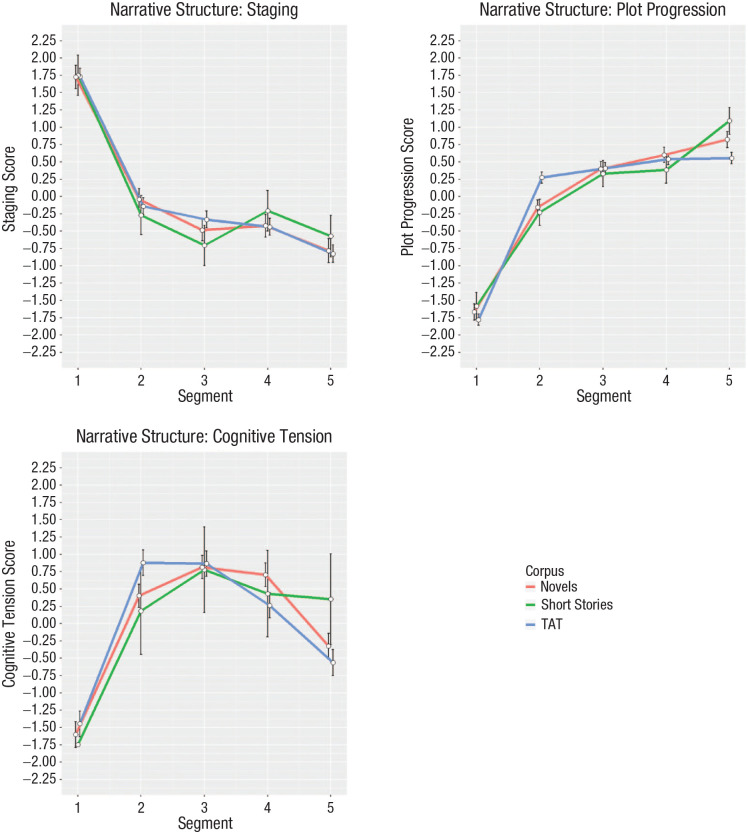
“The analysis shows that stories generally establish concreteness early on in the text as they stage events and scenes—laying out the backdrop and establishing locations, characters, and their relationships to one another.”
§ Stories in Action > The Definition and Structure of Stories > The structure of stories
What the sources say
- Supportedcites R. L. Boyd et al., 2020 matched to “The narrative arc: Revealing core narrative structures through text analysis” (2020) source
The Introduction describes staging as establishing names, locations, and relationships among characters and places at the beginning of a story. Results and Discussion (RQ1) reports that staging-related words are highest at the beginning and decline as stories unfold. The Summary and Conclusions explains that those words mark the labeling and connecting of people, objects, and events in time and space. Page numbers are unavailable in our copy. (LLM, conf=0.93)
plainstates a cause- Asserted: passes — The authors put it forward as true.
- Checkable: passes — It can be checked against evidence.
- Load-bearing: passes — The paper’s conclusions depend on it.
- Based: passes — The paper gives a reason why it holds.
- Supported
The cited sources support only part of this claim — read each source’s verdict below.
In the paper
“Humans have had the ability to control fire for 1 to 2 million years (Berna et al., 2012)”
§ Stories in Action > The Evolution of Stories > Origins of storytelling
What the sources say
- Partly supportedcites Berna et al., 2012 matched to “Microstratigraphic evidence of in situ fire in the Acheulean strata of Wonderwerk Cave, Northern Cape province, South Africa” (2012) sourceExperimental — accuracy not yet measured
The paper’s opening section reports secure evidence of burning in an archaeological context at Wonderwerk Cave approximately 1.0 million years ago. It also says there is no consensus on when hominins first controlled fire and describes evidence associated with Homo erectus around 1.9 million years ago as scant and inconclusive. The claim therefore overstates what the paper establishes, particularly at the older end of the range. (LLM, conf=0.88)
plain- Asserted: passes — The authors put it forward as true.
- Checkable: passes — It can be checked against evidence.
- Load-bearing: unclear — It is unclear whether the paper’s conclusions depend on it.
- Based: passes — The paper gives a reason why it holds.
- Partly supported
Every source the paper cites for this claim was checked and supports it.
In the paper
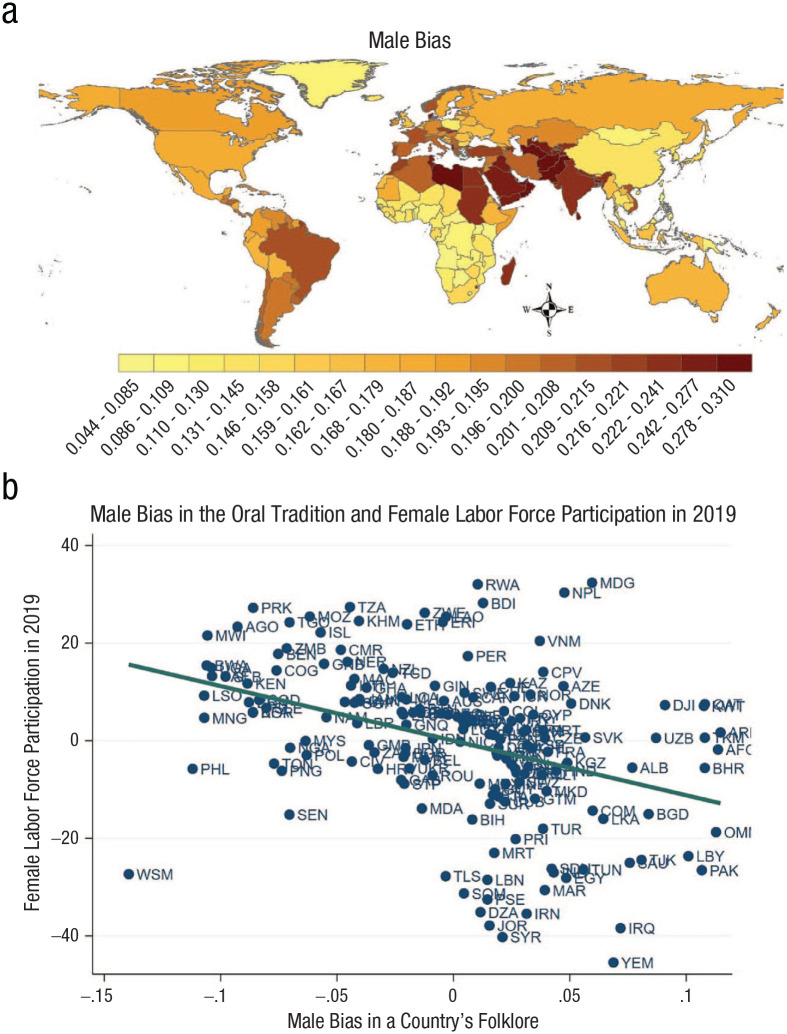
“They found that women are systematically less integrated into the labor market in societies with more gender bias in their folklore (i.e., they feature more images of dominant and physical men and domestic women).”
§ Stories in Action > The Evolution of Stories
What the sources say
- Supportedcites Michalopoulos & Xue, 2021 matched to “Folklore” (2021) source
The discussion of Table VII (p. 24) states that women are systematically less integrated into the labor market in societies whose oral traditions feature more dominant, physically active men and dependent, home-bound women. It also reports a negative association between male dominance bias and female labor-force participation. (LLM, conf=0.95)
plainstates an association- Asserted: passes — The authors put it forward as true.
- Checkable: passes — It can be checked against evidence.
- Load-bearing: passes — The paper’s conclusions depend on it.
- Based: passes — The paper gives a reason why it holds.
- Supported
Every source the paper cites for this claim was checked and supports it.
In the paper
“Michalopoulos and Xue (2021) examined a catalog of folklore developed by the Russian folklorist Yuri Berezkin that contains more than 2,500 motifs from 958 groups around the world.”
§ Stories in Action > The Evolution of Stories
What the sources say
- Supportedcites Michalopoulos & Xue, 2021 matched to “Folklore” (2021) source
Section 2, “Berezkin’s Folklore and Mythology Catalogue” (p. 3), says the authors use Berezkin’s catalogue and reports 2,564 motifs from 958 groups worldwide. This supports the attributed counts and scope. (LLM, conf=0.95)
plain- Asserted: passes — The authors put it forward as true.
- Checkable: passes — It can be checked against evidence.
- Load-bearing: passes — The paper’s conclusions depend on it.
- Based: passes — The paper gives a reason why it holds.
- Supported
141 more claims · 15 with their cited sources checked
Create a free account to see all 285 claims and to verify the 15 references still open.
- It may state two separate claims as one. 89
- Probably not a substantial claim. 64
- The quote only partly states this claim. 2
Citations
Cites
Items 201–338 of 338
Reading fiction and reading minds: the role of simulation in the default network
Tamir, D. I., Bricker, A. B., Dodell-Feder, D., & Mitchell, J. P. (2016) · Social Cognitive and Affective Neuroscience · doi:10.1093/scan/nsv114 · Cited by 212 · cited 2×
“Fictional stories simulate interactive experiences, activating parts of the brain used for social cognition (Tamir et al., 2015) and providing models of coordination (Mar & Oatley, 2008).”
BackgroundDarwin's unfinished symphony: How culture made the human mind
Fernandes, H. B. F., & Woodley of Menie, M. A. (2017) · Animal Behaviour · doi:10.1016/j.anbehav.2017.08.025 · Cited by 212
Food, foragers, and folklore: the role of narrative in human subsistence
Scalise Sugiyama, M. (2001) · Evolution and Human Behavior · doi:10.1016/s1090-5138(01)00063-0 · Cited by 209 · cited 1×
“…play in collective action—driving the formation and dynamics of nations (Tilly, 2002), religions (Dunbar, 2022), hunter-gatherer communities (D. Smith et al., 2017; Sugiyama, 2001), organizations (Boje, 2008), cultural groups (Michalopoulos & Xue, 2021), and even financial markets (Shiller, 2017).”
BackgroundHow the Grapevine Keeps You in Line: Gossip Increases Contributions to the Group
Beersma, B., & Van Kleef, G. A. (2011) · Social Psychological and Personality Science · doi:10.1177/1948550611405073 · Cited by 205 · cited 1×
“They find the mere possibility that others may gossip and spoil their reputations leads people to behave more generously in dictator games and more prosocially in one-shot public-goods games (Beersma & Van Kleef, 2011; Piazza & Bering, 2008).”
BackgroundThe Phylogeny of Little Red Riding Hood
Tehrani, J. J. (2013) · PLoS ONE · doi:10.1371/journal.pone.0078871 · Cited by 204 · cited 1×
“To this effect, age-old fairy tales, such as Cinderella and Little Red Riding Hood, have recognizable emotional arcs that have persisted despite variation in population histories and geographical distances across hundreds of years (Graça da Silva & Tehrani, 2016; Tehrani, 2013).”
BackgroundMorgan, S. E., Movius, L., & Cody, M. J. (2009) · Journal of Communication · doi:10.1111/j.1460-2466.2008.01408.x · Cited by 202 · cited 1×
“Evidence for the mediating role of emotion in narrative can be seen in a study by Morgan et al. (2009), which found that emotional involvement predicted beliefs about organ donation.”
ResultComparative phylogenetic analyses uncover the ancient roots of Indo-European folktales
da Silva, S. G., & Tehrani, J. J. (2016) · Royal Society Open Science · doi:10.1098/rsos.150645 · Cited by 202 · cited 1×
“To this effect, age-old fairy tales, such as Cinderella and Little Red Riding Hood, have recognizable emotional arcs that have persisted despite variation in population histories and geographical distances across hundreds of years (Graça da Silva & Tehrani, 2016; Tehrani, 2013).”
BackgroundCarvalho, J. (2012) · The Quarterly Journal of Economics · doi:10.1093/qje/qjs045 · Cited by 193
Hoeken, H., & van Vliet, M. (2000) · Poetics · doi:10.1016/s0304-422x(99)00021-2 · Cited by 192
Schwartzstein, J., & Sunderam, A. (2020) · American Economic Review · doi:10.1257/aer.20191074 · Cited by 192 · cited 1×
“The persuasive feature of the story in this pathway is not the information contained within the story but the mental model that offers a new way to organize existing information (Schwartzstein & Sunderam, 2021; Trabasso & van den Broek, 1985).”
BackgroundHow Nations Remember: A Narrative Approach
Wertsch, J. V. (2021) · doi:10.1093/oso/9780197551462.001.0001 · Cited by 192 · cited 1×
“Psychologists, political scientists, and historians have addressed the role that origin stories play in the formation of national identities (Roediger, 2021; R. M. Smith, 2003; Tilly, 2002; Wertsch, 2021).”
BackgroundHoeken, H., Kolthoff, M., & Sanders, J. (2016) · Human Communication Research · doi:10.1111/hcre.12076 · Cited by 190 · cited 1×
“The best-documented ways to elicit identification appear to be based on characters’ perceived likeability (Robinson & Knobloch-Westerwick, 2017), similarity (Cohen et al., 2018; Hoeken et al., 2016), and point of view—that is, whose perspective guides the storytelling (de Graaf et al., 2012).”
BackgroundWhite, H. (1990) · doi:10.1353/book.98234 · Cited by 188
The evolution of stories: from mimesis to language, from fact to fiction
Boyd, B. (2018) · WIREs Cognitive Science · doi:10.1002/wcs.1444 · Cited by 187 · cited 1×
“(B. Boyd, 2018, abstract) According to one recent hypothesis, elaborate forms of storytelling emerged through conversations around the campfire (Dunbar, 2014).”
BackgroundPerceived reality in television effects research
Potter, W. J. (1988) · Journal of Broadcasting & Electronic Media · doi:10.1080/08838158809386682 · Cited by 186 · cited 1×
“Narrative often deals with the vicissitudes of human life (for reviews, see Busselle & Greenberg, 2000; Potter, 1988).”
BackgroundThe narrative arc: Revealing core narrative structures through text analysis
Boyd, R. L., Blackburn, K. G., & Pennebaker, J. W. (2020) · Science Advances · doi:10.1126/sciadv.aba2196 · Cited by 185 · cited 3×
“( Source: R. L. Boyd et al., 2020.) takes place narratively, though this is surely wrong (W. F. Brewer, 2014).”
BackgroundBad Boys: How Criminal Identity Salience Affects Rule Violation
Cohn, A., Maréchal, M. A., & Noll, T. (2015) · The Review of Economic Studies · doi:10.1093/restud/rdv025 · Cited by 182 · cited 1×
“One indicator of this is that when prisoners and finance professionals are primed with their identity, they behave more dishonestly (Cohn et al., 2010, 2014).”
BackgroundConcerns about reputation via gossip promote generous allocations in an economic game
Piazza, J., & Bering, J. M. (2008) · Evolution and Human Behavior · doi:10.1016/j.evolhumbehav.2007.12.002 · Cited by 180 · cited 1×
“They find the mere possibility that others may gossip and spoil their reputations leads people to behave more generously in dictator games and more prosocially in one-shot public-goods games (Beersma & Van Kleef, 2011; Piazza & Bering, 2008).”
BackgroundWhen Good Characters Do Bad Things: Examining the Effect of Moral Ambiguity on Enjoyment
Krakowiak, K. M., & Oliver, M. B. (2012) · Journal of Communication · doi:10.1111/j.1460-2466.2011.01618.x · Cited by 177 · cited 2×
“One way to increase the likeability of characters is to provide recognizable features that cue schemas suggesting the characters’ morality (Krakowiak & Oliver, 2012; Tamborini et al., 2010).”
BackgroundA Model of Competing Narratives
Eliaz, K., & Spiegler, R. (2020) · American Economic Review · doi:10.1257/aer.20191099 · Cited by 176 · cited 1×
“Second, stories represent causal relations that people then use to make sense of the world (Dahlstrom, 2010; Eliaz & Spiegler, 2020; Kendall & Charles, 2022).”
BackgroundMemory and comprehension of narrative versus expository texts: A meta-analysis
Mar, R. A., Li, J., Nguyen, A. T. P., & Ta, C. P. (2021) · Psychonomic Bulletin & Review · doi:10.3758/s13423-020-01853-1 · Cited by 175
Can You Feel It? Negative Emotion, Risk, and Narrative in Health Communication
Dunlop, S., Wakefield, M., & Kashima, Y. (2008) · Media Psychology · doi:10.1080/15213260701853112 · Cited by 174 · cited 1×
“Such self-referent emotions are among the most direct means by which stories impact comprehension and motivation (Dunlop et al., 2008).”
BackgroundLiterary Darwinism: Evolution, Human Nature, and Literature
Carroll, J. (2004) · Routledge eBooks · doi:10.4324/9780203505274 · Cited by 172
The effect of social categorization on cooperation in three types of social dilemmas
Wit, A. P., & Wilke, H. (1992) · Journal of Economic Psychology · doi:10.1016/0167-4870(92)90056-d · Cited by 171 · cited 1×
“Group membership makes collective action easier because shared identity fosters prosociality and trust (M. B. Brewer, 1999; Y. Chen & Li, 2009; Wit & Wilke, 1992).”
BackgroundCausal coherence and memory for events in narratives
Black, J. B., & Bern, H. (1981) · Journal of Verbal Learning and Verbal Behavior · doi:10.1016/s0022-5371(81)90417-5 · Cited by 170 · cited 4×
“To illustrate, in one experiment, participants read narratives, then saw sentences from those narratives and tried to recall the sentences that came immediately after (Black & Bern, 1981).”
BackgroundMethodInfluentialOvercoming Resistance Through Narratives: Findings from a Meta-Analytic Review
Ratcliff, C. L., & Sun, Y. (2020) · Human Communication Research · doi:10.1093/hcr/hqz017 · Cited by 170 · cited 1×
“A recent meta-analysis found that narratives were more effective than nonnarrative persuasion at reducing counterarguing and that story engagement (discussed in an earlier section) predicted the degree of counterarguing (Ratcliff & Sun, 2020).”
BackgroundThe Widening Education Gap in Developmental Child Care Activities in the United States, 1965–2013
Altintas, E. (2015) · Journal of Marriage and the Family · doi:10.1111/jomf.12254 · Cited by 169
Laland, K. N. (2018) · doi:10.23943/princeton/9780691182810.001.0001 · Cited by 168
Michalopoulos, S., & Xue, M. M. (2021) · The Quarterly Journal of Economics · doi:10.1093/qje/qjab003 · Cited by 165
Stein, N. L. (1982) · Journal of Pragmatics · doi:10.1016/0378-2166(82)90022-4 · Cited by 164
`I'm Out of the Loop': Ostracism Through Information Exclusion
Jones, E. E., Carter‐Sowell, A. R., Kelly, J. R., & Williams, K. D. (2009) · Group Processes & Intergroup Relations · doi:10.1177/1368430208101054 · Cited by 159
Kramnick, J. B. (2010) · Critical Inquiry · doi:10.1086/657295 · Cited by 154 · cited 1×
“The field has stirred debate within both the sciences and the humanities (Bloom, 2012; Kramnick, 2011), though this is beyond the scope of this article.”
BackgroundPrince, G. J. (1974) · De Gruyter eBooks · doi:10.1515/9783110815900 · Cited by 147
Gossip, Reputation and Knowledge in Zinacantan.
Rosaldo, R., & Haviland, J. B. (1978) · Man · doi:10.2307/2801274 · Cited by 145
Busselle, R. W., & Greenberg, B. S. (2000) · Mass Communication and Society · doi:10.1207/s15327825mcs0323_05 · Cited by 145 · cited 1×
“Narrative often deals with the vicissitudes of human life (for reviews, see Busselle & Greenberg, 2000; Potter, 1988).”
BackgroundDoes Character Similarity Increase Identification and Persuasion?
Cohen, J., Weimann-Saks, D., & Mazor-Tregerman, M. (2018) · Media Psychology · doi:10.1080/15213269.2017.1302344 · Cited by 142 · cited 5×
“For a general discussion of the identification construct, see Cohen (2001); Cohen et al. (2018, p. 507); de Graaf et al. (2012, pp. 805–806); and Tal-Or and Cohen (2010, pp. 403–405).”
BackgroundInfluentialSamur, D., Tops, M., & Koole, S. L. (2018) · Cognition and Emotion · doi:10.1080/02699931.2017.1279591 · Cited by 142
Gentzkow, M., Glaeser, E. L., & Goldin, C. (2006) · Corruption and Reform · doi:10.7208/chicago/9780226299594.003.0007 · Cited by 141
Mnemonic convergence in social networks: The emergent properties of cognition at a collective level
Coman, A., Momennejad, I., Drach, R. D., & Geana, A. (2016) · Proceedings of the National Academy of Sciences · doi:10.1073/pnas.1525569113 · Cited by 141 · cited 2×
“And third, synchronization among individuals at a local level leads to the emergence of collective memories and beliefs at a community level (Coman et al., 2016).”
BackgroundSelf-citationThe Role of Causality in Information Acceptance in Narratives: An Example From Science Communication
Dahlstrom, M. F. (2010) · Communication Research · doi:10.1177/0093650210362683 · Cited by 135 · cited 3×
“Causal junctures aid meaning making because they leverage the causal logic of the story to convey which information is valuable and show possible ways to make sense of the story world (Dahlstrom, 2010).”
BackgroundComan, A., Manier, D., & Hirst, W. (2009) · Psychological Science · doi:10.1111/j.1467-9280.2009.02343.x · Cited by 131 · cited 1×
“This is what allows, under certain circumstances, alignment to occur following social interactions (Coman et al., 2009).”
BackgroundSelf-citationConviction Narrative Theory: A theory of choice under radical uncertainty
Johnson, S. G. B., Bilovich, A., & Tuckett, D. (2023) · Behavioral and Brain Sciences · doi:10.1017/s0140525x22001157 · Cited by 131
Perceived Similarity of Exemplar Traits and Behavior: Effects on Message Evaluation
Andsager, J. L., Bemker, V., Choi, H.-L., & Torwel, V. (2006) · Communication Research · doi:10.1177/0093650205283099 · Cited by 126 · cited 1×
“Similarity may also mediate romantic attraction to fictional characters, termed parasocial attraction (Andsager et al., 2006; Pinkleton et al., 2010).”
BackgroundMedia, Pulpit, and Populist Persuasion: Evidence from Father Coughlin
Wang, T. (2021) · American Economic Review · doi:10.1257/aer.20200513 · Cited by 126
The Use of “Literary Fiction” to Promote Mentalizing Ability
Pino, M. C., & Mazza, M. (2016) · PLOS ONE · doi:10.1371/journal.pone.0160254 · Cited by 123 · cited 1×
“Some studies have found that reading fiction improves sociocognitive abilities (Kidd & Castano, 2013; Pino & Mazza, 2016).”
Backgroundde Graaf, A. (2014) · Human Communication Research · doi:10.1111/hcre.12015 · Cited by 120 · cited 1×
“For example, in one study (de Graaf, 2014), participants read a story in which the protagonist had either the same living arrangements as themselves or different arrangements (living with parents vs. in student housing).”
BackgroundBerg, G., & Zia, B. (2017) · Journal of the European Economic Association · doi:10.1093/jeea/jvw021 · Cited by 120
Johnson, D. R., Jasper, D. M., Griffin, S., & Huffman, B. L. (2013) · Social Cognition · doi:10.1521/soco.2013.31.5.578 · Cited by 119 · cited 3×
“The study reduced intergroup anxiety as well as explicit and implicit prejudice (D. R. Johnson et al., 2013).”
BackgroundInfluentialChen, M., Bell, R. A., & Taylor, L. D. (2016) · Journal of Health Communication · doi:10.1080/10810730.2016.1177147 · Cited by 118 · cited 1×
“Equally, young participants who read a health testimonial identified more strongly with a young protagonist of the same gender than with an older protagonist of the opposite gender, but only when self-referencing mediated the effect (M. Chen et al., 2016).”
BackgroundKnobloch, S., Patzig, G., Mende, A.-M., & Hastall, M. (2004) · Communication Research · doi:10.1177/0093650203261517 · Cited by 117 · cited 1×
“To investigate how the presentation of causal junctures affects the audience’s experience of stories, Knobloch et al. (2004) varied the attributes of stories that participants read, including the story’s causal chain (i.e., linear vs. reversed [out of order] vs. inverted [outcomes featured first])…”
BackgroundRole Models in Movies: The Impact of Queen of Katwe on Students’ Educational Attainment
Riley, E. (2024) · Review of Economics and Statistics · doi:10.1162/rest_a_01153 · Cited by 117 · cited 1×
“For example, one study tested whether watching the movie Queen of Katwe led Ugandan school children to perform better on their national exams (Riley, 2022).”
BackgroundA Tear in the Iron Curtain: The Impact of Western Television on Consumption Behavior
Bursztyn, L., & Cantoni, D. (2016) · Review of Economics and Statistics · doi:10.1162/rest_a_00522 · Cited by 116 · cited 1×
“Outside of the United States, exposure to West German television resulted in people in East Germany reducing their fertility rate, developing higher aspirations, and developing preferences for Western goods (Bönisch & Hyll, 2023; Bursztyn & Cantoni, 2016; Hyll & Schneider, 2013).”
BackgroundSocial status as a cue for tacit coordination
Kwaadsteniet, E. W. D., & Dijk, E. V. (2010) · Journal of Experimental Social Psychology · doi:10.1016/j.jesp.2010.01.005 · Cited by 113 · cited 1×
“Roles affect groups’ capacity for coordination by signaling who will undertake what action (de Kwaadsteniet & van Dijk, 2010).”
BackgroundFemale genital cutting is not a social coordination norm
Efferson, C., Vogt, S., Elhadi, A., Ahmed, H. E. F., & Fehr, E. (2015) · Science · doi:10.1126/science.aaa7978 · Cited by 106 · cited 1×
“In Sudan, female genital cutting is prevalent, but social attitudes vary within communities (Efferson et al., 2015).”
BackgroundOrozco-Olvera, V., Shen, F., & Cluver, L. D. (2019) · PLoS ONE · doi:10.1371/journal.pone.0209969 · Cited by 101
Price, J., & Kalil, A. (2019) · Child Development · doi:10.1111/cdev.13137 · Cited by 100 · cited 2×
“17 People use stories to teach children how to read (Price & Kalil, 2019), as scaffolding to impart lessons on norms and morality (Baumeister et al., 2004; Walker & Lombrozo, 2017), and to explain how the natural world works (Dahlstrom, 2014).”
BackgroundNarratives About the Macroeconomy
Andre, P., Haaland, I., Roth, C., & Wohlfart, J. (2023) · doi:10.2139/ssrn.4506321 · Cited by 100
Social identity and socially shared retrieval-induced forgetting: The effects of group membership.
Coman, A., & Hirst, W. (2015) · Journal of Experimental Psychology: General · doi:10.1037/xge0000077 · Cited by 99 · cited 2×
“Furthermore, increasing people’s motivation to relate to one another during conversational interactions further accelerates convergence processes, as do people’s perceived similarity with one another (Coman & Hirst, 2015).”
BackgroundSelf-citationChanging cultural attitudes towards female genital cutting
Vogt, S., Mohmmed Zaid, N. A., El Fadil Ahmed, H., Fehr, E., & Efferson, C. (2016) · Nature · doi:10.1038/nature20100 · Cited by 97 · cited 1×
“In one study (Vogt et al., 2016), a series of movies portrayed the local variation in views on cutting.”
BackgroundEntertainment-Education: A Communication Strategy for Social Change
Singhal, A., & Rogers, E. (2012) · Routledge eBooks · doi:10.4324/9781410607119 · Cited by 94
Narratives imagined in response to instrumental music reveal culture-bounded intersubjectivity
Margulis, E. H., Wong, P. C. M., Turnbull, C., Kubit, B. M., & McAuley, J. D. (2022) · Proceedings of the National Academy of Sciences · doi:10.1073/pnas.2110406119 · Cited by 94
Motivating the adoption of new community-minded behaviors: An empirical test in Nigeria
Blair, G., Littman, R., & Paluck, E. L. (2019) · Science Advances · doi:10.1126/sciadv.aau5175 · Cited by 93 · cited 1×
“For example, government agencies may seek to discourage racist or sexist attitudes, or they may seek to encourage people to act prosocially within their community (Blair et al., 2019).”
BackgroundThe Long-Term Effects of the Printing Press in sub-Saharan Africa
Cagé, J., & Rueda, V. (2016) · American Economic Journal: Applied Economics · doi:10.1257/app.20140379 · Cited by 90
Gottschall, J., Wilson, D. S., Wilson, E. O., & Crews, F. C. (2005) · Northwestern University Press eBooks · doi:10.2307/j.ctvw1d5h1 · Cited by 90
(2013) · doi:10.23943/princeton/9780691150703.001.0001 · Cited by 87
Some uses and abuses of a story grammar∗
Mandler, J. M. (1982) · Discourse Processes · doi:10.1080/01638538209544547 · Cited by 85 · cited 1×
“Cognitive psychologists have studied how stories are represented in the mind since the 1970s and 1980s (Black & Wilensky, 1979; Mandler, 1982; Mandler & Johnson, 1977; Rumelhart, 1975; Stein, 1982; Stein & Trabasso, 1981; Trabasso & van den Broek, 1985).”
BackgroundBezdek, M. A., & Gerrig, R. J. (2017) · Media Psychology · doi:10.1080/15213269.2015.1121830 · Cited by 84 · cited 1×
“In one study, participants viewed film excerpts with multiple emotional shifts, wherein negative outcomes were emphasized (Bezdek & Gerrig, 2017).”
BackgroundLehne, M., Engel, P., Rohrmeier, M., Menninghaus, W., Jacobs, A. M., & Koelsch, S. (2015) · PLOS ONE · doi:10.1371/journal.pone.0124550 · Cited by 84 · cited 1×
“Indeed, the findings correspond with neural work showing that even the emotional experience of suspense depends on brain areas associated with predictive inference: Order helps people anticipate causal junctures at future event points (Lehne et al., 2015).”
BackgroundSensing Heroes and Villains: Character-Schema and the Disposition Formation Process
Grizzard, M., Huang, J., Fitzgerald, K. S., Ahn, C., & Chu, H. (2017) · Communication Research · doi:10.1177/0093650217699934 · Cited by 82 · cited 1×
“For instance, in one experiment (Grizzard et al., 2018), people interpreted visual cues about characters on the basis of schemas about heroes and villains (e.g., “ugly” villains dressed in dark clothes vs. “handsome” heroes dressed in pale clothes).”
BackgroundJoseph, H. S. S. L., Liversedge, S. P., Blythe, H. I., White, S. J., Gathercole, S. E., & Rayner, K. (2008) · Quarterly Journal of Experimental Psychology · doi:10.1080/17470210701400657 · Cited by 80 · cited 2×
“…passages (e.g., “Robert used a radio to play the horrible mouse”) tended to be more difficult to comprehend than implausible passages (e.g., “Robert used a hook to catch the horrible mouse”) and control passages (e.g., “Robert used a trap to catch the horrible mouse”; Joseph et al., 2008).”
BackgroundHow conversations around campfires came to be
Dunbar, R. I. M. (2014) · Proceedings of the National Academy of Sciences · doi:10.1073/pnas.1416382111 · Cited by 79 · cited 2×
“According to one recent hypothesis, elaborate forms of storytelling emerged through conversations around the campfire (Dunbar, 2014).”
BackgroundShiller, R. J. (2017) · National Bureau of Economic Research · doi:10.3386/w23075 · Cited by 77
Harnessing the Power of Reputation: Strengths and Limits for Promoting Cooperative Behaviors
Barclay, P. (2012) · Evolutionary Psychology · doi:10.1177/147470491201000509 · Cited by 76 · cited 1×
“People, as it turns out, are highly sensitive to the reputational consequences of their actions (Barclay, 2010; Haley & Fessler, 2005).”
BackgroundBrooks, S. K. (2021) · Current Psychology · doi:10.1007/s12144-018-9978-4 · Cited by 75 · cited 1×
“The cultlike status of celebrities (Brooks, 2021; McCutcheon et al., 2002) may rest on virtually all of them being in the business of storytelling.”
BackgroundMind Is Flat: The Remarkable Shallowness of the Improvising Brain
Chater, N. (2019) · Yale University Press eBooks · doi:10.12987/9780300240610 · Cited by 75
The Development and Meaning of the Epic of Gilgamesh: An Interpretive Essay
Abusch, T. (2001) · Journal of the American Oriental Society · doi:10.2307/606502 · Cited by 73 · cited 2×
“A large body of psychology has explored how people use narratives to construct the self (McAdams, 1993, 2001).”
BackgroundExplaining the moral of the story
Walker, C. M., & Lombrozo, T. (2017) · Cognition · doi:10.1016/j.cognition.2016.11.007 · Cited by 71 · cited 2×
“17 People use stories to teach children how to read (Price & Kalil, 2019), as scaffolding to impart lessons on norms and morality (Baumeister et al., 2004; Walker & Lombrozo, 2017), and to explain how the natural world works (Dahlstrom, 2014).”
BackgroundDahlstrom, M. F. (2012) · Media Psychology · doi:10.1080/15213269.2012.702604 · Cited by 70 · cited 1×
“In a related finding, causally related events had greater impact when located at the beginning of the story, possibly because people dedicate more intense cognitive processing to anticipate the plot (Dahlstrom, 2012).”
BackgroundAmerican origins: Political and religious divides in US collective memory
Yamashiro, J. K., Engen, A. V., & Roediger, H. L., III (2019) · Memory Studies · doi:10.1177/1750698019856065 · Cited by 70 · cited 5×
“Closer to a narrative instantiation of these differences, American participants segmented visual scenes of routine activities in more fine-grained ways, compared with Indian counterparts, providing evidence of Americans’ preference for analytic processing (Swallow & Wang, 2020).”
BackgroundInfluentialRepeated Exposure to Daytime Soap Opera and Shifts in Moral Judgment Toward Social Convention
Tamborini, R., Weber, R., Eden, A., Bowman, N. D., & Grizzard, M. (2010) · Journal of Broadcasting & Electronic Media · doi:10.1080/08838151.2010.519806 · Cited by 69
Cognition in a Social Context: A Social-Interactionist Approach to Emergent Phenomena
Vlasceanu, M., Enz, K., & Coman, A. (2018) · Current Directions in Psychological Science · doi:10.1177/0963721418769898 · Cited by 67 · cited 1×
“One reason for this is that when stories propagate extensively among individuals, for example, through conversations, the communities converge on the conveyed beliefs and intentions (Vlasceanu et al., 2018).”
BackgroundSelf-citationThe Political Economy of Ideas: On Ideas Versus Interests in Policymaking
Mukand, S., & Rodrik, D. (2018) · doi:10.3386/w24467 · Cited by 63
The causal effect of watching TV on material aspirations: Evidence from the “valley of the innocent”
Hyll, W., & Schneider, L. (2013) · Journal of Economic Behavior & Organization · doi:10.1016/j.jebo.2012.12.030 · Cited by 60 · cited 1×
“Outside of the United States, exposure to West German television resulted in people in East Germany reducing their fertility rate, developing higher aspirations, and developing preferences for Western goods (Bönisch & Hyll, 2023; Bursztyn & Cantoni, 2016; Hyll & Schneider, 2013).”
Herculano‐Houzel, S. (2018) · The Journal of Comparative Neurology · doi:10.1002/cne.24564 · Cited by 50
Early Childhood Education by Television: Lessons from Sesame Street
Kearney, M. S., & Levine, P. B. (2019) · American Economic Journal: Applied Economics · doi:10.1257/app.20170300 · Cited by 48 · cited 5×
“The effects were comparable with those found in early Head Start evaluations (summarized by Kearney & Levine, 2019).”
BackgroundResultInfluentialHoppitt, W., & Laland, K. N. (2013) · Social Learning · doi:10.23943/princeton/9780691150703.003.0008 · Cited by 46
The Buried Book: The Loss and Rediscovery of the Great Epic of Gilgamesh
Damrosch, D. (2007) · Cited by 45
Bridge ties bind collective memories
Momennejad, I., Duker, A., & Coman, A. (2019) · Nature Communications · doi:10.1038/s41467-019-09452-y · Cited by 45 · cited 1×
“A burgeoning literature shows that communities composed of more interconnected subgroups converge faster on the same information if they interact soon after exposure to a public event, compared with communities of less interconnected subgroups (Momennejad et al., 2019).”
BackgroundSelf-citationWar of the Waves: Radio and Resistance during World War II
Gagliarducci, S., Onorato, M. G., Sobbrio, F., & Tabellini, G. (2020) · American Economic Journal Applied Economics · doi:10.1257/app.20190410 · Cited by 45
The narrative quality of action.
Sarbin, T. R. (1990) · Theoretical & Philosophical Psychology · doi:10.1037/h0091497 · Cited by 43 · cited 2×
“The literatures in psychology and social science emphasize the narrative quality of human action (Ostrom et al., 2002; Sarbin, 1990; Schank & Abelson, 1977).”
BackgroundMass media and public education: The effects of access to community radio in Benin
Keefer, P., & Khemani, S. (2014) · Journal of Development Economics · doi:10.1016/j.jdeveco.2014.03.010 · Cited by 42 · cited 1×
“In Benin, for example, evidence from a natural experiment suggests that access to radio increased children’s literacy rates (Keefer & Khemani, 2014).”
BackgroundWeber, P., & Wirth, W. (2013) · Journal of Communication · doi:10.1111/jcom.12068 · Cited by 42 · cited 1×
“This can be seen in the results from a study that examined the effect of a biographical film on attitudes toward a political candidate (Weber & Wirth, 2014).”
BackgroundThe Entertaining Way to Behavioral Change: Fighting HIV with MTV
Banerjee, A., La Ferrara, E., & Orozco-Olvera, V. H. (2019) · doi:10.1596/1813-9450-8998 · Cited by 42 · cited 3×
“The researchers presented the movies in 80 sites across southwest Nigeria.”
BackgroundInfluentialThe Effect of Suspense on Enjoyment Following a Desirable Outcome: The Mediating Role of Relief
Madrigal, R., Bee, C. C., Chen, J., & LaBarge, M. (2011) · Media Psychology · doi:10.1080/15213269.2011.596469 · Cited by 38 · cited 1×
“Emotional flow can be so effective that even when a story outcome is unambiguously favorable, relief (negative to positive) mediates the effect of suspense on enjoyment (Madrigal et al., 2011).”
BackgroundMoyer-Gusé, E., Dale, K. R., & Ortiz, M. (2019) · Journal of Media Psychology · doi:10.1027/1864-1105/a000249 · Cited by 38 · cited 2×
“One study (Moyer-Gusé et al., 2019) exposed mostly White and Asian samples of American participants from a midwestern university to a television show about a Christian man who lives with a Muslim family for 30 days and follows their customs.”
BackgroundThe impact of social norms on health‐related belief update
Vlasceanu, M., & Coman, A. (2022) · Applied Psychology: Health and Well-Being · doi:10.1111/aphw.12313 · Cited by 38 · cited 1×
“When people know that others have seen and approved of particular viewpoints, they are more likely to adopt those viewpoints themselves (Vlasceanu & Coman, 2022).”
BackgroundSelf-citationCulture influences how people divide continuous sensory experience into events
Swallow, K. M., & Wang, Q. (2020) · Cognition · doi:10.1016/j.cognition.2020.104450 · Cited by 37
The Mind and its Stories: Narrative Universals and Human Emotion
Hogan, P. C. (2003) · doi:10.1017/cbo9780511499951 · Cited by 37
Pinkleton, B. E., Austin, E. W., & de Vord, R. V. (2010) · Health Communication · doi:10.1080/10410231003698937 · Cited by 35 · cited 1×
“Similarity may also mediate romantic attraction to fictional characters, termed parasocial attraction (Andsager et al., 2006; Pinkleton et al., 2010).”
BackgroundThe comparative psychology of social learning.
Galef, B. G., & Whiten, A. (2017) · American Psychological Association eBooks · doi:10.1037/0000012-019 · Cited by 32 · cited 1×
“Teaching describes how a knowledgeable person intentionally facilitates the acquisition of information by a naive pupil (Galef & Whiten, 2017).”
BackgroundJohnson, P. J., & Aboud, F. E. (2017) · Early Childhood Research Quarterly · doi:10.1016/j.ecresq.2017.02.003 · Cited by 32 · cited 1×
“…have also been used to understand policy challenges such as intergroup conflict (Paluck, 2009; Tal-Or & Tsfati, 2016), outgroup prejudice (P. J. Johnson & Aboud, 2017; D. R. Johnson et al., 2013; Martinez et al., 2021; Moyer-Gusé et al., 2019), climate action (Morris et al., 2019), and trust…”
BackgroundNarratives Shape Cognitive Representations of Immigrants and Immigration-Policy Preferences
Martinez, J. E., Feldman, L. A., Feldman, M. J., & Cikara, M. (2021) · Psychological Science · doi:10.1177/0956797620963610 · Cited by 30 · cited 1×
“…policy challenges such as intergroup conflict (Paluck, 2009; Tal-Or & Tsfati, 2016), outgroup prejudice (P. J. Johnson & Aboud, 2017; D. R. Johnson et al., 2013; Martinez et al., 2021; Moyer-Gusé et al., 2019), climate action (Morris et al., 2019), and trust in government (Trujillo & Paluck, 2012).”
BackgroundTrujillo, M. D., & Paluck, E. L. (2011) · Analyses of Social Issues and Public Policy · doi:10.1111/j.1530-2415.2011.01249.x · Cited by 29
Exposure to television and individual beliefs: Evidence from a natural experiment
Hennighausen, T. (2015) · Journal of Comparative Economics · doi:10.1016/j.jce.2015.03.005 · Cited by 29
Bedtime Stories that Work: The Effect of Protagonist Liking on Narrative Persuasion
Robinson, M. J., & Knobloch‐Westerwick, S. (2016) · Health Communication · doi:10.1080/10410236.2016.1138381 · Cited by 27
Zhou, S., Shapiro, M. A., & Wansink, B. (2017) · Appetite · doi:10.1016/j.appet.2016.10.028 · Cited by 27 · cited 1×
“People may mimic behaviors without ever consciously realizing that they do so (Zhou et al., 2017).”
BackgroundTal‐Or, N., & Tsfati, Y. (2016) · Journal of Communication · doi:10.1111/jcom.12242 · Cited by 27 · cited 1×
“Narratives have also been used to understand policy challenges such as intergroup conflict (Paluck, 2009; Tal-Or & Tsfati, 2016), outgroup prejudice (P. J. Johnson & Aboud, 2017; D. R. Johnson et al., 2013; Martinez et al., 2021; Moyer-Gusé et al., 2019), climate action (Morris et al., 2019), and…”
BackgroundThe scene in the Shaft at Lascaux
Davenport, D., & Jochim, M. A. (1988) · Antiquity · doi:10.1017/s0003598x00074718 · Cited by 26 · cited 1×
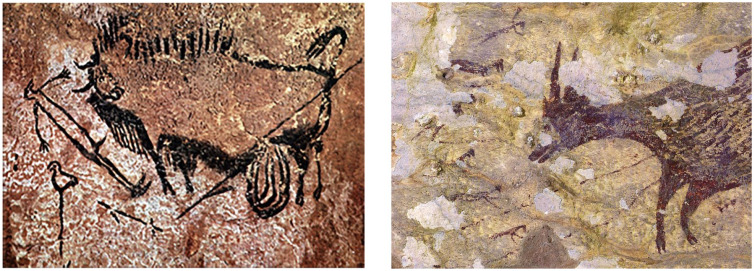
“3, left) that seems to depict a wounded bison charging down a bird-headed shaman (Davenport & Jochim, 1988).”
BackgroundPhilosophy and theatre: an introduction
(2014) · Choice Reviews Online · doi:10.5860/choice.51-6112 · Cited by 25
Three facets of collective memory.
Roediger, H. L., III (2021) · American Psychologist · doi:10.1037/amp0000938 · Cited by 24 · cited 1×
“Psychologists, political scientists, and historians have addressed the role that origin stories play in the formation of national identities (Roediger, 2021; R. M. Smith, 2003; Tilly, 2002; Wertsch, 2021).”
BackgroundRational Ritual: Culture, Coordination, and Common Knowledge
Chwe, M. S.-Y. (2013) · doi:10.1515/9781400846436 · Cited by 24
Stories, Identities, and Political Change
Tilly, C. (2002) · doi:10.5040/9798216401612 · Cited by 24
Coordination and Status Influence
Clark, C. R., Clark, S., & Polborn, M. K. (2006) · Rationality and Society · doi:10.1177/1043463106066379 · Cited by 22 · cited 1×
“People know what is expected of a father, a lawyer, and a waiter (Biddle, 2013) and often accept the status and privileges associated with others’ role allocations because of their function in solving coordination challenges for the group (Clark et al., 2006; Keltner et al., 2008).”
BackgroundProcessing real-world violations embedded within a fantasy-world narrative
Walsh, E. K., Cook, A. E., & O’Brien, E. J. (2018) · Quarterly Journal of Experimental Psychology · doi:10.1177/1747021817740836 · Cited by 22 · cited 1×
“To illustrate, in one study, the protagonist in a story was described as lacking the ability to turn invisible but then disappeared (Walsh et al., 2018).”
Background:The Social Life of Coffee: The Emergence of the British Coffeehouse
Turner, K. L. (2007) · Sixteenth Century Journal · doi:10.2307/20478617 · Cited by 22
Lee, T. K., & Shapiro, M. A. (2015) · Communication Research · doi:10.1177/0093650215608236 · Cited by 21 · cited 1×
“Meanwhile, evidence from experimental research has now accumulated to reveal the role of stories in human psychology (Green et al., 2002; László, 2008).”
BackgroundCultural entrenchment of folktales is encoded in language
Karsdorp, F., & Fonteyn, L. (2019) · Palgrave Communications · doi:10.1057/s41599-019-0234-9 · Cited by 20 · cited 1×
“Second, cultural schemas impact the way stories are processed and told (Karsdorp & Fonteyn, 2019).”
BackgroundThe “Saying Is Repeating” Effect: Dyadic Communication Can Generate Cultural Stereotypes
Bratanova, B., & Kashima, Y. (2014) · The Journal of Social Psychology · doi:10.1080/00224545.2013.874326 · Cited by 19 · cited 1×
“People pay more attention to and later remember stereotypical information about real or artificially created groups (Bratanova & Kashima, 2014; Judd et al., 2005).”
BackgroundKendall, C., & Charles, C. (2022) · doi:10.3386/w30346 · Cited by 18 · cited 1×
“Second, stories represent causal relations that people then use to make sense of the world (Dahlstrom, 2010; Eliaz & Spiegler, 2020; Kendall & Charles, 2022).”
BackgroundGossip and Reputation in Social Dilemmas
Milinski, M. (2019) · doi:10.1093/oxfordhb/9780190494087.013.11 · Cited by 16 · cited 1×
“In line with this, psychologists and economists have examined the effect of reputation on collective action challenges (Milinski, 2019).”
BackgroundChandra, A., & Kaiser, U. (2015) · Handbook of Media Economics · doi:10.1016/b978-0-444-62721-6.00009-3 · Cited by 15
Schechter, L., & Vasudevan, S. (2023) · Journal of Development Economics · doi:10.1016/j.jdeveco.2022.102976 · Cited by 12 · cited 1×
“In India, radio campaigns with stories discouraging people from supporting corrupt politicians led people to be less likely to vote for “vote buying” parties (Schechter & Vasudevan, 2023).”
BackgroundWhat's in a Story: An Approach to Comprehension and Instruction. Technical Report No. 200.
Stein, N. L., & Trabasso, T. (1981) · Cited by 11
Ybarra, O., & Ramón, A.-C. (2004) · Journal of Experimental Social Psychology · doi:10.1016/j.jesp.2004.05.003 · Cited by 10 · cited 1×
“Antagonistic relations between different communities (Posner, 2004), the motivation to compete for scarce resources (Riek et al., 2006), and the motivation to assert group differences (Ybarra & Ramón, 2004) are factors that are likely to lead to divergence in the construction of these narratives.”
BackgroundNunn, N. (2020) · National Bureau of Economic Research · doi:10.3386/w27706 · Cited by 7 · cited 1×
“This is a key determinant of historical evolution and persistence (Henrich, 2020; Laland, 2018; Mesoudi, 2011; Nunn, 2020; Richerson & Boyd, 2005).”
BackgroundIWho Cares about the Evolution of Stories?
Bloom, P. B. (2011) · Critical Inquiry · doi:10.1086/662749 · Cited by 6 · cited 1×
“The field has stirred debate within both the sciences and the humanities (Bloom, 2012; Kramnick, 2011), though this is beyond the scope of this article.”
BackgroundSweeting, A. T. (2015) · Handbook of media economics · doi:10.1016/b978-0-444-62721-6.00008-1 · Cited by 6
Gross, M. (2020) · Current Biology · doi:10.1016/j.cub.2020.01.042 · Cited by 6 · cited 1×
“To put their age in perspective, consider that some cave paintings depict extinct animals such as the woolly mammoth (Gross, 2020).”
BackgroundNarrating the “what” and “why” of our moral actionsPreprint
Kim, J. S., & Crockett, M. J. (2022) · PsyArXiv (OSF Preprints) · doi:10.31234/osf.io/evq4j · Cited by 6
(1980) · Cited by 3
Frederick, T. C., & Coman, A. (2022) · Palgrave Macmillan memory studies · doi:10.1007/978-3-030-99914-8_10 · Cited by 2
Self-citationSocial Mindscapes: An Invitation to Cognitive Sociology
Zerubavel, E. (1999) · doi:10.4159/9780674045439
Forming a story: The health benefits of narrative
(1999) · doi:10.1002/(sici)1097-4679(199910)55:10<1243::aid-jclp6>3.0.co;2-n · cited 1×
“Indeed, establishing coherent personal narratives forms the basis of some mental health therapies (Pennebaker & Seagal, 1999).”
BackgroundDunbar, R. I. M. (1998) · Evolutionary Anthropology: Issues, News, and Reviews · doi:10.1002/(sici)1520-6505(1998)6:5
Stern, T. (2013) · doi:10.4324/9781315887517
Aristotle (2013) · Oxford World's Classics: Aristotle: Poetics · doi:10.1093/oseo/instance.00258601
Lévi-Strauss, C. (1978) · doi:10.4324/9780203278871
Darwin's Unfinished Symphony: How Culture Made the Human Mind
Laland, K. N. (2018) · doi:10.23943/9780691184470
Research works printed but not linked: 26
- Aristotle. (2013). Poetics (Kenny A. Trans.). Oxford University Press. (Original work published ca. 335 B.C.E.)
- Bandura A. (1986). Social cognitive theory: Social foundations of thought and action. Prentice Hall.
- Bandura A. (2006). Going global with social cognitive theory: From prospect to paydirt. In Donaldson S. I. Berger D. E. Pezdek K. (Eds.), Applied psychology: New frontiers and rewarding careers (pp. 53– 79). Erlbaum.
- Bönisch P. Hyll W. (2023). Television and fertility: Evidence from a natural experiment. Empirical Economics, 64, 1025– 1066.
- Brewer W. F. (2014). To assert that essentially all human knowledge and memory is represented in terms of stories is certainly wrong. In Wyer, Jr. R. S. (Ed.), Advances in social cognition: Vol. VII. Knowledge and memory: The real story (pp. 109– 119). Psychology Press.
- Brown D. E. (2017). Human universals. Temple University Press.
- Byrne D. (1971). The attraction paradigm. Academic Press.
- Chater N. (2018). The mind is flat: The illusion of mental depth and the improvised mind. Penguin.
- Dennett D. C. (1987). The intentional stance. MIT Press.
- Dissanayake E. (1988). What is art for? University of Washington Press.
- Dunbar R. (2022). How religion evolved: And why it endures. Oxford University Press.
- Eagly A. H. Chaiken S. (1993). The psychology of attitudes. Harcourt Brace Jovanovich.
- Epic of Gilgamesh. (George A. Trans.). (1999). Penguin Books.
- Graesser A. C. Olde B. Klettke B. (2002). How does the mind construct and represent stories? In Green M. C. Strange J. J. Brock T. C. (Eds.), Narrative impact: Social and cognitive foundations (pp. 229– 262). Erlbaum.
- Green M. C. Strange J. J. Brock T. C. (2002). Narrative impact: Social and cognitive foundations. Erlbaum.
- Harmon W. (2010). A handbook to literature (12th ed.). Pearson Education.
- Henrich J. (2020). The WEIRDest people in the world: How the West became psychologically peculiar and particularly prosperous. Farrar, Straus and Giroux.
- Heyes C. (2018). Cognitive gadgets. Harvard University Press.
- Hobbes T. (1991). Leviathan (Tuck R., Ed.). Cambridge University Press. (Original work published 1651)
- Hoppitt W. Laland K. N. (2013). Social learning. Princeton University Press.
- McAdams D. P. (1993). The stories we live by: Personal myths and the making of the self. Guilford Press.
- Nyhof M. Barrett J. (2001). Spreading non-natural concepts: The role of intuitive conceptual structures in memory and transmission of cultural materials. Journal of Cognition and Culture, 1(1), 69– 100. · DOI · Paper page
- Plato. (2000). The Republic (Ferrari G. R. F., Ed.; Griffith T., Trans.). Cambridge University Press. (Original work published ca. 375 B.C.E.)
- Puchner M. (2018). The written world: The power of stories to shape people, history, and civilization. Random House.
- Richerson P. J. Boyd R. (2005). Not by genes alone. University of Chicago Press.
- Zillmann D. (1996). The psychology of suspense in dramatic exposition. In Vorderer P. Wulff H. J. Friedrichsen M. (Eds.), Suspense: Conceptualizations, theoretical analyses, and empirical explorations (p. 199– 231). Erlbaum.
Cited by
The Psychology of Framing: How Everyday Language Shapes the Way We Think, Feel, and Act
Flusberg, S. J., Holmes, K. J., Thibodeau, P. H., Nabi, R. L., & Matlock, T. (2024) · Gothic.net · doi:10.1177/15291006241246966 · Cited by 152
Stigma Toward Substance Dependence: Causes, Consequences, and Potential Interventions
Krendl, A. C., & Perry, B. L. (2023) · Gothic.net · doi:10.1177/15291006231198193 · Cited by 110
“Campaigns or narratives that emphasize recovery and/or leverage social connections to change behavior or perceptions may be best suited to reducing SUD stigma (e.g., Walsh et al., 2023).”
BackgroundCultural Defaults in the Time of COVID: Lessons for the Future
Markus, H. R., Tsai, J. L., Uchida, Y., Yang, A. M., & Maitreyi, A. (2024) · Psychological Science in the Public Interest · doi:10.1177/15291006241277810 · Cited by 21
Listening to bridge societal divides
Santoro, E., & Markus, H. R. (2023) · Current Opinion in Psychology · doi:10.1016/j.copsyc.2023.101696 · Cited by 12
Economic ideology: Versions of the concept’s acceptations and application
Tambovtsev, V. (2024) · Voprosy Ekonomiki · doi:10.32609/0042-8736-2024-10-5-27 · Cited by 19
Metadata
- Authors
- Walsh, J., Vaida, N., Coman, A., & Fiske, S. T.
- Affiliations
- Harvard University (US)
- Princeton University (US)
- Corresponding author
- Walsh, James
- Venue
- Psychological Science in the Public Interest
- Publisher
- SAGE Publications
- Published
- 2022-12
- Volume
- 23
- Issue
- 3
- Pages
- 99-141
- ISSN
- 1539-6053 (ISSN-L)
- 1529-1006
- PMC
- PMC10173355
- OpenAlex
- W4376131996
- Semantic Scholar
- 68325aa69720513255e57bad1d6d8f6b930d5452
- Cited by
- 26
- References
- 327
- Citations by year
- 2026: 5 · 2025: 11 · 2024: 8 · 2023: 2
- FWCI
- 17.14
- Type
- journal article
- Language
- en
- Open access
- hybrid
- doi.org
- Locations
- Gothic.net (publishedVersion, cc-by)
- PubMed Central (publishedVersion, cc-by)
- PubMed (publishedVersion)
- Funders
- oxford martin school, university of oxford
- economic and social research council (ES/R00787X/1 and RM02)
- Topics
- Social Sciences › Political Science and International Relations › Policy Transfer and Learning
- Social Sciences › Public Administration › Public Policy and Administration Research
- Social Sciences › Communication › Rhetoric and Communication Studies
- Keywords
- storytelling, public policy, policy communication, persuasion, collective action, learning, history of storytelling, technology and society, policy instruments
- MeSH terms
- Communication, Culture, Government, Humans, Learning, Persuasive Communication
About these checks
Registry, retraction, Cites and statistics results are computed, not judged, with one exception: a printed reference that no index lists is read once by a model before it counts as a citation error. Claims are extracted by a model and kept only when their quote appears verbatim in the text; each cited source is then checked, with a model’s help, for whether it says what the claim relies on. Those verdicts can be wrong — read the claim’s quote and the cited source before relying on one.
The claim verdicts this report counts are experimental: their accuracy is not yet measured.
A language model drew the claims from the paper on 2026-10-06, under version 3 of the claim definition (model deepseek-v4.1-flash, prompt extract-v3).
A second model labelled each claim on 2026-10-06 (model jev-1.13-20260917, definition revision gold-guideline-v0.2).
Cited sources are checked with a language model’s help (gpt-6-sol).
Statistics and arithmetic are recomputed, not judged.
Confidence bands are shown only for fields calibrated on our annotated test set. None is calibrated yet, so no band is shown.
What counts as a claim ›How we measure confidence ›How we check this ›
Are you an author, or do you see a problem with this page? Request a review
Data sources
Bibliographic data: Semantic Scholar, OpenAlex, Crossref.
Contains information from the Semantic Scholar Academic Graph Datasets, made available under the ODC Attribution License (ODC-BY 1.0).
Semantic Scholar’s data is described in: Kinney, R., et al. (2023). The Semantic Scholar Open Data Platform. arXiv:2301.10140.
