

Mammalian/mechanistic target of rapamycin (mTOR) complexes in neurodegeneration
Open accessThe DOI matches its Crossref record; 377 of the 378 references it cites were found in a registry or an index.
Abstract
Novel targets to arrest neurodegeneration in several dementing conditions involving misfolded protein accumulations may be found in the diverse signaling pathways of the Mammalian/mechanistic target of rapamycin (mTOR). As a nutrient sensor, mTOR has important homeostatic functions to regulate energy metabolism and support neuronal growth and plasticity. However, in Alzheimer’s disease (AD), mTOR alternately plays important pathogenic roles by inhibiting both insulin signaling and autophagic removal of β-amyloid (Aβ) and phospho-tau (ptau) aggregates. It also plays a role in the cerebrovascular dysfunction of AD. mTOR is a serine/threonine kinase residing at the core in either of two multiprotein complexes termed mTORC1 and mTORC2. Recent data suggest that their balanced actions also have implications for Parkinson's disease (PD) and Huntington's disease (HD), Frontotemporal dementia (FTD) and Amyotrophic Lateral Sclerosis (ALS). Beyond rapamycin; an mTOR inhibitor, there are rapalogs having greater tolerability and micro delivery modes, that hold promise in arresting these age dependent conditions.
Overview
The claims and statistics of this paper haven’t been checked yet.
Free: it reads the open-access text and checks the first 5 claims that cite a source we can check. Create a free account to check every claim.
Integrity signals
Registry
Cites
Statistics
Figures
Verification
Claims the paper makes
The claims and statistics of this paper haven’t been checked yet.
Free: it reads the open-access text and checks the first 5 claims that cite a source we can check. Create a free account to check every claim.
Claims other papers make about this one
Each is checked against this paper’s own text: does it say what the citing paper says it does?
The cited source says what the claim attributes to it.
In the citing paper
“Some drugs targeting mTORC1 have been demonstrated in animal studies to effectively inhibit abnormal mTORC1 activation, thereby enhancing autophagy, reducing Aβ and tau pathology, and helping to delay cognitive decline. However, some studies express divergent views on the activity of mTORC1 in AD.340”
From Recent advances in Alzheimer's disease: Mechanisms, clinical trials and new drug development strategies. (2024) · cites this paper as [340]
In the citing paper
“while rapamycin has also been shown to be neuroprotective in ALS and FTD.420”
From Antiageing strategy for neurodegenerative diseases: from mechanisms to clinical advances (2025) · cites this paper as [420]
In the citing paper
“tau phosphorylation and Aβ metabolism likely hyperactivate mTOR in Alzheimer’s disease and Down syndrome, indicating that disruption of autophagy in Alzheimer’s disease-related neurodegenerations is mTOR-independent [90–92].”
In the citing paper
“mTOR inhibition has been shown to only minimally activate autophagy in primary hippocampal neurons”
Self-check
Percentages, sums and reported differences re-computed from the paper’s own numbers.
The self-check needs the paper’s full text.
Citations
Cites
2 retracted
Crews, L., Spencer, B., Desplats, P., Patrick, C., Paulino, A., Rockenstein, E., Hansen, L., Adame, A., Galasko, D., & Masliah, E. (2010) · PLoS ONE · doi:10.1371/journal.pone.0009313 · Cited by 367
RetractedCaccamo, A., Belfiore, R., & Oddo, S. (2018) · Neurobiology of Aging · doi:10.1016/j.neurobiolaging.2018.03.032 · Cited by 30
RetractedRepertoires of Autophagy in the Pathogenesis of Ocular Diseases
Li, Y.-J., Jiang, Q., Cao, G.-F., Yao, J., & Yan, B. (2015) · Cellular Physiology and Biochemistry · doi:10.1159/000373980 · Cited by 16,304
Neuropathological stageing of Alzheimer-related changes.
Braak, H., & Braak, E. (1991) · Acta Neuropathologica · doi:10.1007/bf00308809 · Cited by 16,123 · cited 1×
“poral/inferior parietal lobules regions of the brain, resulting in early memory dysfunction [114, 115].”
BackgroundmTOR Signaling in Growth Control and Disease
Laplante, M., & Sabatini, D. M. (2012) · Cell · doi:10.1016/j.cell.2012.03.017 · Cited by 8,509
mTOR Signaling in Growth, Metabolism, and Disease
Saxton, R. A., & Sabatini, D. M. (2017) · Cell · doi:10.1016/j.cell.2017.02.004 · Cited by 7,555
AMPK and mTOR regulate autophagy through direct phosphorylation of Ulk1
Kim, J., Kundu, M., Viollet, B., & Guan, K.-L. (2011) · Nature Cell Biology · doi:10.1038/ncb2152 · Cited by 7,227 · cited 1×
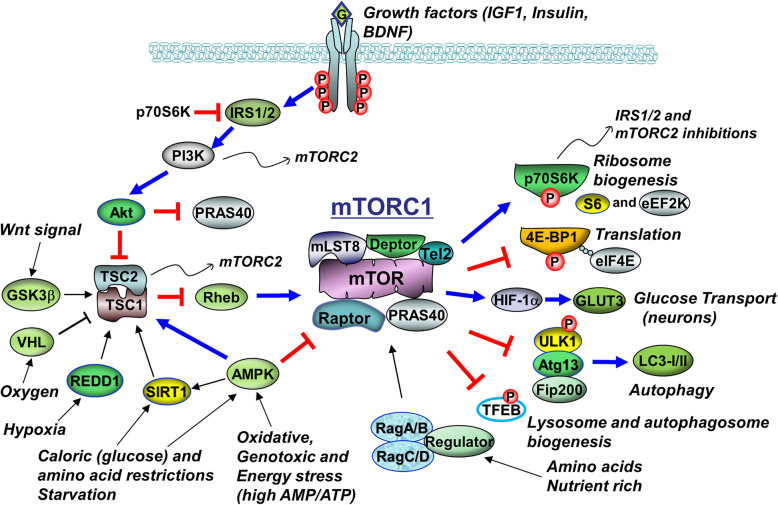
“By inhibiting mTORC1 via TSC2, one consequence of activated AMPK is to facilitate autophagy [37, 38].”
BackgroundPhosphorylation and regulation of Akt/PKB by the rictor-mTOR complex
Sarbassov, D. D., Guertin, D. A., Ali, S. M., & Sabatini, D. M. (2005) · Science · doi:10.1126/science.1106148 · Cited by 6,216
Cui, C., Cui, J., Jin, F., Cui, Y., Li, R., Jiang, X., Tian, Y., Wang, K., Jiang, P., & Gao, J. (2017) · Cellular Physiology and Biochemistry · doi:10.1159/000479571 · Cited by 5,203
Upstream and downstream of mTOR
Hay, N., & Sonenberg, N. (2004) · Genes & Development · doi:10.1101/gad.1212704 · Cited by 4,181
Hearing loss and cognitive decline in older adults
Lin, F. R., Yaffe, K., Xia, J., Xue, Q.-L., Harris, T. B., Purchase-Helzner, E., Satterfield, S., Ayonayon, H. N., Ferrucci, L., Simonsick, E. M., et al. (2013) · JAMA Internal Medicine · doi:10.1001/jamainternmed.2013.1868 · Cited by 4,017
TSC2 Mediates Cellular Energy Response to Control Cell Growth and Survival
Inoki, K., Zhu, T., & Guan, K.-L. (2003) · Cell · doi:10.1016/s0092-8674(03)00929-2 · Cited by 3,914 · cited 9×
“The Tuberous Sclerosis protein complex, TSC1/2, proximally inhibits mTORC1 by preventing the conversion of the mTORC1 activator, Rheb (Ras homolog enriched in brain protein), into its active GTP-bound form (Fig.”
BackgroundInfluentialSuppression of basal autophagy in neural cells causes neurodegenerative disease in mice
Hara, T., Nakamura, K., Matsui, M., Yamamoto, A., Nakahara, Y., Suzuki-Migishima, R., Yokoyama, M., Mishima, K., Saito, I., Okano, H., et al. (2006) · Nature · doi:10.1038/nature04724 · Cited by 3,882 · cited 1×
“The essential role of autophagy in neurodegeneration is demonstrated by the deletion of autophagy genes (Atgs), which results in age-dependent neurodegeneration and proteostasis in model systems [103, 104].”
BackgroundAMPK Phosphorylation of Raptor Mediates a Metabolic Checkpoint
Gwinn, D. M., Shackelford, D. B., Egan, D. F., Mihaylova, M. M., Mery, A., Vasquez, D. S., Turk, B. E., & Shaw, R. J. (2008) · Molecular Cell · doi:10.1016/j.molcel.2008.03.003 · Cited by 3,849
Rapamycin fed late in life extends lifespan in genetically heterogeneous mice
Harrison, D. E., Strong, R., Sharp, Z. D., Nelson, J. F., Astle, C. M., Flurkey, K., Nadon, N. L., Wilkinson, J. E., Frenkel, K., Carter, C. S., et al. (2009) · Nature · doi:10.1038/nature08221 · Cited by 3,766 · cited 1×
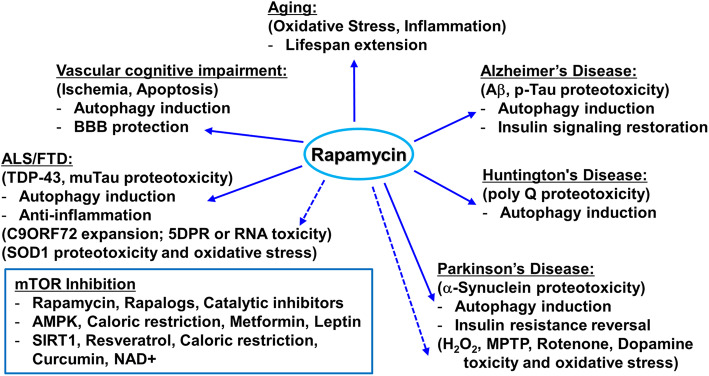
“However, it is the inhibition of mTORC1, downstream in the insulin pathway, with Rapamycin that consistently increases lifespan in mammals [13], rescues several forms of neurodegeneration [328], mitigates synaptic/neuronal losses and restores synaptic plasticity and/or cognition in several animal and cell disease mode…”
BackgroundLoss of autophagy in the central nervous system causes neurodegeneration in mice
Komatsu, M., Waguri, S., Chiba, T., Murata, S., Iwata, J.-I., Tanida, I., Ueno, T., Koike, M., Uchiyama, Y., Kominami, E., et al. (2006) · Nature · doi:10.1038/nature04723 · Cited by 3,500 · cited 1×
“The essential role of autophagy in neurodegeneration is demonstrated by the deletion of autophagy genes (Atgs), which results in age-dependent neurodegeneration and proteostasis in model systems [103, 104].”
BackgroundWatterson, K. R., Bestow, D., Gallagher, J., Hamilton, D. L., Ashford, F. B., Meakin, P. J., & Ashford, M. L. J. (2013) · Neurosignals · doi:10.1159/000334144 · Cited by 3,389
Newgard, C. B., An, J., Bain, J. R., Muehlbauer, M. J., Stevens, R. D., Lien, L. F., Haqq, A. M., Shah, S. H., Arlotto, M., Slentz, C. A., et al. (2009) · Cell Metabolism · doi:10.1016/j.cmet.2009.02.002 · Cited by 3,165 · cited 9×
“In comparing the Control, T2DM, AD and T2DM+AD animal groups, total mTOR protein and mRNA levels in the hippocampus as well as the phosphorylation of tau protein were significantly increased only in the combined T2DM+ AD group, not in the AD alone group compared to control [240].”
BackgroundInfluentialTSC2 is phosphorylated and inhibited by Akt and suppresses mTOR signalling
Inoki, K., Li, Y., Zhu, T., Wu, J., & Guan, K.-L. (2002) · Nature Cell Biology · doi:10.1038/ncb839 · Cited by 3,083
Sarbassov, D. D., Ali, S. M., Kim, D.-H., Guertin, D. A., Latek, R. R., Erdjument-Bromage, H., Tempst, P., & Sabatini, D. M. (2004) · Current Biology · doi:10.1016/j.cub.2004.06.054 · Cited by 2,665
mTOR Inhibition Induces Upstream Receptor Tyrosine Kinase Signaling and Activates Akt
O'Reilly, K. E., Rojo, F., She, Q.-B., Solit, D., Mills, G. B., Smith, D., Lane, H., Hofmann, F., Hicklin, D. J., Ludwig, D. L., et al. (2006) · Cancer Research · doi:10.1158/0008-5472.can-05-2925 · Cited by 2,561 · cited 16×
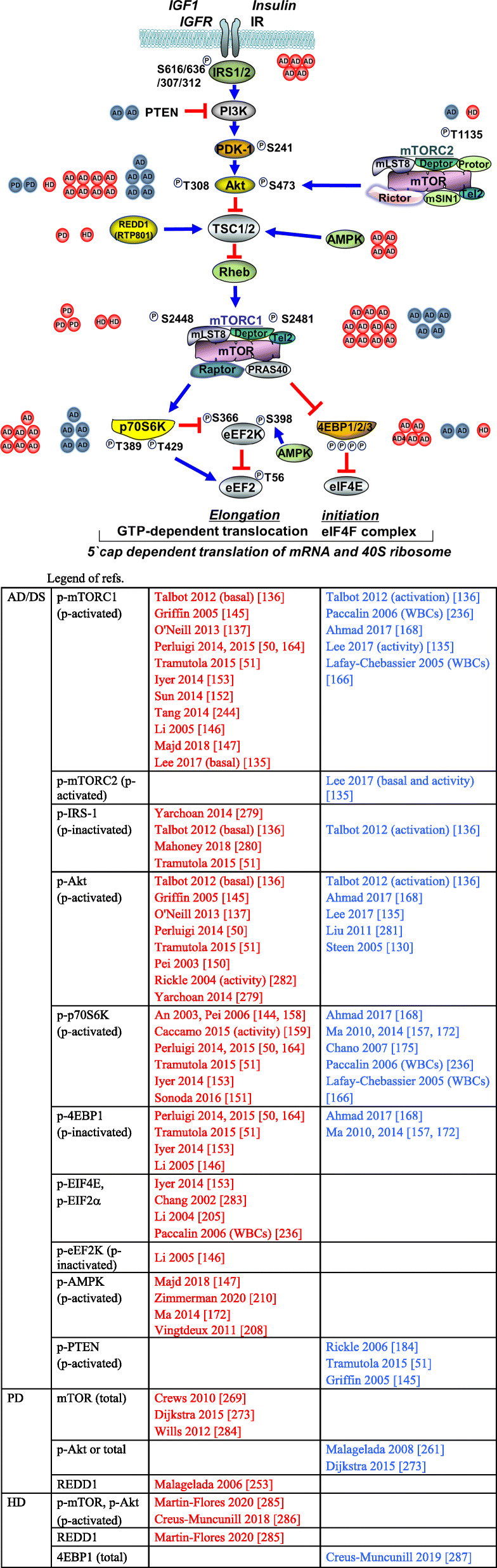
“One group took these as evidence for the general overactivation of the PI3K/Akt/mTOR signaling axis and made further correlations with decreased autophagy marker expression and increased inhibitory phosphorylation of IRS-1 [50, 51].”
BackgroundInfluentialProlonged Rapamycin Treatment Inhibits mTORC2 Assembly and Akt/PKB
Sarbassov, D. D., Ali, S. M., Sengupta, S., Sheen, J.-H., Hsu, P. P., Bagley, A. F., Markhard, A. L., & Sabatini, D. M. (2006) · Molecular Cell · doi:10.1016/j.molcel.2006.03.029 · Cited by 2,365
Ravikumar, B., Vacher, C., Berger, Z., Davies, J. E., Luo, S., Oroz, L. G., Scaravilli, F., Easton, D. F., Duden, R., O'Kane, C. J., et al. (2004) · Nature Genetics · doi:10.1038/ng1362 · Cited by 2,347 · cited 1×
“Drosophila and mouse HD models also benefited from mTOR inhibition [300].”
BackgroundCaloric Restriction Delays Disease Onset and Mortality in Rhesus Monkeys
Colman, R. J., Anderson, R. M., Johnson, S. C., Kastman, E. K., Kosmatka, K. J., Beasley, T. M., Allison, D. B., Cruzen, C., Simmons, H. A., Kemnitz, J. W., et al. (2009) · Science · doi:10.1126/science.1173635 · Cited by 2,277
Risk of dementia in diabetes mellitus: a systematic review
Biessels, G. J., Staekenborg, S., Brunner, E., Brayne, C., & Scheltens, P. (2006) · The Lancet Neurology · doi:10.1016/s1474-4422(05)70284-2 · Cited by 2,187
Diabetes mellitus and the risk of dementia: The Rotterdam Study
Ott, A., Stolk, R. P., van Harskamp, F., Pols, H. A. P., Hofman, A., & Breteler, M. M. B. (1999) · Neurology · doi:10.1212/wnl.53.9.1937 · Cited by 2,175
Mammalian TOR complex 2 controls the actin cytoskeleton and is rapamycin insensitive
Jacinto, E., Loewith, R., Schmidt, A., Lin, S., Rüegg, M. A., Hall, A., & Hall, M. N. (2004) · Nature Cell Biology · doi:10.1038/ncb1183 · Cited by 2,114
mTOR Signaling in Growth, Metabolism, and Disease
Saxton, R. A., & Sabatini, D. M. (2017) · Cell · doi:10.1016/j.cell.2017.03.035 · Cited by 2,070
The role of autophagy in neurodegenerative disease
Nixon, R. A. (2013) · Nature Medicine · doi:10.1038/nm.3232 · Cited by 2,059
ULK-Atg13-FIP200 Complexes Mediate mTOR Signaling to the Autophagy Machinery
Jung, C. H., Jun, C. B., Ro, S.-H., Kim, Y.-M., Otto, N. M., Cao, J., Kundu, M., & Kim, D.-H. (2009) · Molecular Biology of the Cell · doi:10.1091/mbc.e08-12-1249 · Cited by 2,025 · cited 1×
“mTORC1 is a master negative regulator of autophagy, as mTORC1-mediated phosphorylations block complex formation between Atg13 (autophagy-related gene product) and the autophagy initiation protein, ULK1/2 (Unc-51 like kinase), thereby preventing autophagosome formation [98, 99].”
BackgroundTalbot, K., Wang, H.-Y., Kazi, H., Han, L.-Y., Bakshi, K. P., Stucky, A., Fuino, R. L., Kawaguchi, K. R., Samoyedny, A. J., Wilson, R. S., et al. (2012) · Journal of Clinical Investigation · doi:10.1172/jci59903 · Cited by 1,871 · cited 4×
“Actual insulin resistance was convincingly first demonstrated in post-mortem AD brain by Talbot et al [136].”
BackgroundInfluentialAutophagy Is Activated for Cell Survival after Endoplasmic ReticulumStress
Ogata, M., Hino, S.-I., Saito, A., Morikawa, K., Kondo, S., Kanemoto, S., Murakami, T., Taniguchi, M., Tanii, I., Yoshinaga, K., et al. (2006) · Molecular and Cellular Biology · doi:10.1128/mcb.01453-06 · Cited by 1,832
Steen, E., Terry, B. M., J. Rivera, E., Cannon, J. L., Neely, T. R., Tavares, R., Xu, X. J., Wands, J. R., & de la Monte, S. M. (2005) · Journal of Alzheimer's Disease · doi:10.3233/jad-2005-7107 · Cited by 1,703 · cited 1×
“The evidence points to a combination of insulin deficiency [129], attenuated insulin receptor expression [130] and insulin resistance [131, 132].”
BackgroundAbsence of S6K1 protects against age- and diet-induced obesity while enhancing insulin sensitivity
Um, S. H., Frigerio, F., Watanabe, M., Picard, F., Joaquin, M., Sticker, M., Fumagalli, S., Allegrini, P. R., Kozma, S. C., Auwerx, J., et al. (2004) · Nature · doi:10.1038/nature02866 · Cited by 1,677 · cited 1×
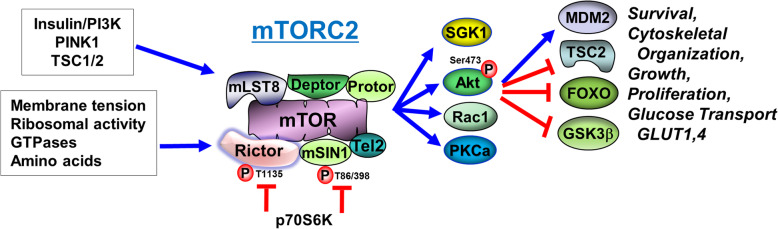
“Underscoring the fine balance in their circuitry, both chronic activation of mTORC1/p70S6K [71, 337] and conversely, prolonged rapamycin treatment [90], can each result in mTORC2 inhibition and lead to insulin resistance.”
BackgroundSteinberg, G. R., & Kemp, B. E. (2009) · Physiological Reviews · doi:10.1152/physrev.00011.2008 · Cited by 1,637
ULK1 induces autophagy by phosphorylating Beclin-1 and activating VPS34 lipid kinase
Russell, R. C., Tian, Y., Yuan, H., Park, H. W., Chang, Y.-Y., Kim, J., Kim, H., Neufeld, T. P., Dillin, A., & Guan, K.-L. (2013) · Nature Cell Biology · doi:10.1038/ncb2757 · Cited by 1,529
Branched-chain amino acids in metabolic signalling and insulin resistance
Lynch, C. J., & Adams, S. H. (2014) · Nature Reviews Endocrinology · doi:10.1038/nrendo.2014.171 · Cited by 1,461 · cited 1×
“Further evidence suggests that excess BCAA may be a marker of insulin resistance or even be causative [67, 68].”
BackgroundJacinto, E., Facchinetti, V., Liu, D., Soto, N., Wei, S., Jung, S. Y., Huang, Q., Qin, J., & Su, B. (2006) · Cell · doi:10.1016/j.cell.2006.08.033 · Cited by 1,410
The coming of age of chaperone-mediated autophagy
Kaushik, S., & Cuervo, A. M. (2018) · Nature Reviews Molecular Cell Biology · doi:10.1038/s41580-018-0001-6 · Cited by 1,407
Tor, a Phosphatidylinositol Kinase Homologue, Controls Autophagy in Yeast
Noda, T., & Ohsumi, Y. (1998) · Journal of Biological Chemistry · doi:10.1074/jbc.273.7.3963 · Cited by 1,309
Rapamycin: one drug, many effects
Li, J., Kim, S. G., & Blenis, J. (2014) · Cell Metabolism · doi:10.1016/j.cmet.2014.01.001 · Cited by 1,287 · cited 1×
“Unfortunately, rapamycin has a systemic toxic profile that includes pneumonitis, stomatitis, poor wound healing, nephrotoxicity and immunosuppression [338, 339].”
BackgroundAkt signalling in health and disease
Hers, I., Vincent, E. E., & Tavaré, J. M. (2011) · Cellular Signalling · doi:10.1016/j.cellsig.2011.05.004 · Cited by 1,239
Rapamycin-Induced Insulin Resistance Is Mediated by mTORC2 Loss and Uncoupled from Longevity
Lamming, D. W., Ye, L., Katajisto, P., Goncalves, M. D., Saitoh, M., Stevens, D. M., Davis, J. G., Salmon, A. B., Richardson, A., Ahima, R. S., et al. (2012) · Science · doi:10.1126/science.1215135 · Cited by 1,199 · cited 1×
“Underscoring the fine balance in their circuitry, both chronic activation of mTORC1/p70S6K [71, 337] and conversely, prolonged rapamycin treatment [90], can each result in mTORC2 inhibition and lead to insulin resistance.”
BackgroundAlzheimer’s disease is type 3 diabetes—Evidence reviewed
de la Monte, S. M., & Wands, J. R. (2008) · Journal of Diabetes Science and Technology · doi:10.1177/193229680800200619 · Cited by 1,158 · cited 1×
“The evidence points to a combination of insulin deficiency [129], attenuated insulin receptor expression [130] and insulin resistance [131, 132].”
BackgroundSarkar, S., Davies, J. E., Huang, Z., Tunnacliffe, A., & Rubinsztein, D. C. (2007) · Journal of Biological Chemistry · doi:10.1074/jbc.m609532200 · Cited by 1,142
Autophagy and Neurodegeneration: Pathogenic Mechanisms and Therapeutic Opportunities
Menzies, F. M., Fleming, A., Caricasole, A., Bento, C. F., Andrews, S. P., Ashkenazi, A., Füllgrabe, J., Jackson, A., Jimenez Sanchez, M., Karabiyik, C., et al. (2017) · Neuron · doi:10.1016/j.neuron.2017.01.022 · Cited by 1,134 · cited 2×
“It should be mentioned that autophagy begins to fail in neurodegenerative disorders because itself becomes the target of toxic protein oligomers [97, 102].”
BackgroundmTOR signaling: At the crossroads of plasticity, memory and disease
Hoeffer, C. A., & Klann, E. (2010) · Trends in Neurosciences · doi:10.1016/j.tins.2009.11.003 · Cited by 1,128
The TSC1-2 tumor suppressor controls insulin–PI3K signaling via regulation of IRS proteins
Harrington, L. S., Findlay, G. M., Gray, A., Tolkacheva, T., Wigfield, S., Rebholz, H., Barnett, J., Leslie, N. R., Cheng, S., Shepherd, P. R., et al. (2004) · The Journal of Cell Biology · doi:10.1083/jcb.200403069 · Cited by 1,123
Boland, B., Kumar, A., Lee, S., Platt, F. M., Wegiel, J., Yu, W. H., & Nixon, R. A. (2008) · Journal of Neuroscience · doi:10.1523/jneurosci.0800-08.2008 · Cited by 1,119
The Atg16L Complex Specifies the Site of LC3 Lipidation for Membrane Biogenesis in Autophagy
Fujita, N., Itoh, T., Omori, H., Fukuda, M., Noda, T., & Yoshimori, T. (2008) · Molecular Biology of the Cell · doi:10.1091/mbc.e07-12-1257 · Cited by 1,081
Spilman, P., Podlutskaya, N., Hart, M. J., Debnath, J., Gorostiza, O., Bredesen, D., Richardson, A., Strong, R., & Galvan, V. (2010) · PLoS ONE · doi:10.1371/journal.pone.0009979 · Cited by 1,033 · cited 5×
“Abnormal p-tau levels and pathology can also be cleared by mTOR-dependent autophagy [112, 221], an outcome similarly observed in 3x transgenic AD mice treated with rapamycin [155, 192].”
BackgroundMethodInfluentialRapamycin passes the torch: a new generation of mTOR inhibitors
Benjamin, D., Colombi, M., Moroni, C., & Hall, M. N. (2011) · Nature Reviews Drug Discovery · doi:10.1038/nrd3531 · Cited by 989
Macroautophagy—a novel β-amyloid peptide-generating pathway activated in Alzheimer's disease
Yu, W. H., Cuervo, A. M., Kumar, A., Peterhoff, C. M., Schmidt, S. D., Lee, J.-H., Mohan, P. S., Mercken, M., Farmery, M. R., Tjernberg, L. O., et al. (2005) · The Journal of Cell Biology · doi:10.1083/jcb.200505082 · Cited by 967
Current Strategies for Brain Drug Delivery
Dong, X. (2018) · Theranostics · doi:10.7150/thno.21254 · Cited by 954
Fragile X mental retardation protein targets G quartet mRNAs important for neuronal function
Darnell, J. C., Jensen, K. B., Jin, P., Brown, V., Warren, S. T., & Darnell, R. B. (2001) · Cell · doi:10.1016/s0092-8674(01)00566-9 · Cited by 952
Translational control of long-lasting synaptic plasticity and memory
Costa-Mattioli, M., Sossin, W. S., Klann, E., & Sonenberg, N. (2009) · Neuron · doi:10.1016/j.neuron.2008.10.055 · Cited by 944
NAVÉ, B. T., Ouwens, D. M., Withers, D. J., Alessi, D. R., & Shepherd, P. R. (1999) · Biochemical Journal · doi:10.1042/0264-6021:3440427 · Cited by 932
Dendritic Protein Synthesis, Synaptic Plasticity, and Memory
Sutton, M. A., & Schuman, E. M. (2006) · Cell · doi:10.1016/j.cell.2006.09.014 · Cited by 888
Reversal of learning deficits in a Tsc2+/− mouse model of tuberous sclerosis
Ehninger, D., Han, S., Shilyansky, C., Zhou, Y., Li, W., Kwiatkowski, D. J., Ramesh, V., & Silva, A. J. (2008) · Nature Medicine · doi:10.1038/nm1788 · Cited by 882 · cited 2×
“[366], glucose intolerance via IRS-1 feedback inhibition [47] and learning impairment [330].”
BackgroundMolecular Interplay between Mammalian Target of Rapamycin (mTOR), Amyloid-β, and Tau
Caccamo, A., Majumder, S., Richardson, A., Strong, R., & Oddo, S. (2010) · Journal of Biological Chemistry · doi:10.1074/jbc.m110.100420 · Cited by 881 · cited 5×
“Abnormal p-tau levels and pathology can also be cleared by mTOR-dependent autophagy [112, 221], an outcome similarly observed in 3x transgenic AD mice treated with rapamycin [155, 192].”
BackgroundInfluentialParkinson's disease dementia: convergence of α-synuclein, tau and amyloid-β pathologies
Irwin, D. J., Lee, V. M.-Y., & Trojanowski, J. Q. (2013) · Nature Reviews Neuroscience · doi:10.1038/nrn3549 · Cited by 869
Compromised autophagy and neurodegenerative diseases
Menzies, F. M., Fleming, A., & Rubinsztein, D. C. (2015) · Nature Reviews Neuroscience · doi:10.1038/nrn3961 · Cited by 851
Choo, A. Y., Yoon, S.-O., Kim, S. G., Roux, P. P., & Blenis, J. (2008) · Proceedings of the National Academy of Sciences · doi:10.1073/pnas.0809136105 · Cited by 810
Sun, S.-Y., Rosenberg, L. M., Wang, X., Zhou, Z., Yue, P., Fu, H., & Khuri, F. R. (2005) · Cancer Research · doi:10.1158/0008-5472.can-05-0917 · Cited by 802
Regulation of mTORC1 by amino acids
Bar-Peled, L., & Sabatini, D. M. (2014) · Trends in Cell Biology · doi:10.1016/j.tcb.2014.03.003 · Cited by 773
Menon, S., Dibble, C. C., Talbott, G., Hoxhaj, G., Valvezan, A. J., Takahashi, H., Cantley, L. C., & Manning, B. D. (2014) · Cell · doi:10.1016/j.cell.2013.11.049 · Cited by 766
Tang, S. J., Reis, G., Kang, H., Gingras, A.-C., Sonenberg, N., & Schuman, E. M. (2002) · Proceedings of the National Academy of Sciences · doi:10.1073/pnas.012605299 · Cited by 734 · cited 9×
“Rapamycin is accordingly found detrimental to normal synaptic plasticity by many laboratories [6, 7, 10, 95, 96, 326].”
BackgroundInfluentialRivera, E. J., Goldin, A., Fulmer, N., Tavares, R., Wands, J. R., & de la Monte, S. M. (2005) · Journal of Alzheimer s Disease · doi:10.3233/jad-2005-8304 · Cited by 723 · cited 1×
“The evidence points to a combination of insulin deficiency [129], attenuated insulin receptor expression [130] and insulin resistance [131, 132].”
BackgroundActivity-dependent neuronal signalling and autism spectrum disorder
Ebert, D. H., & Greenberg, M. E. (2013) · Nature · doi:10.1038/nature11860 · Cited by 666
Rapamycin alleviates toxicity of different aggregate-prone proteins
Berger, Z., Ravikumar, B., Menzies, F. M., Oroz, L. G., Underwood, B. R., Pangalos, M. N., Schmitt, I., Wullner, U., Evert, B. O., O'Kane, C. J., et al. (2006) · Human Molecular Genetics · doi:10.1093/hmg/ddi458 · Cited by 657
Vingtdeux, V., Giliberto, L., Zhao, H., Chandakkar, P., Wu, Q., Simon, J. E., Janle, E. M., Lobo, J., Ferruzzi, M. G., Davies, P., et al. (2010) · Journal of Biological Chemistry · doi:10.1074/jbc.m109.060061 · Cited by 645
Bentzinger, C. F., Romanino, K., Cloëtta, D., Lin, S., Mascarenhas, J. B., Oliveri, F., Xia, J., Casanova, E., Costa, C. F., Brink, M., et al. (2008) · Cell Metabolism · doi:10.1016/j.cmet.2008.10.002 · Cited by 640 · cited 1×
“Analogous to brain, knockout of either Raptor or mTOR or application of specific inhibitors in skeletal muscle results in a muscular dystrophy [23, 24].”
BackgroundDe Felice, F. G., & Ferreira, S. T. (2014) · Diabetes · doi:10.2337/db13-1954 · Cited by 639
mTOR·RICTOR Is the Ser473 Kinase for Akt/Protein Kinase B in 3T3-L1 Adipocytes
Hresko, R. C., & Mueckler, M. (2005) · Journal of Biological Chemistry · doi:10.1074/jbc.m508361200 · Cited by 635
Ho, L., Qin, W., Pompl, P. N., Xiang, Z., Wang, J., Zhao, Z., Peng, Y., Cambareri, G., Rocher, A., Mobbs, C. V., et al. (2004) · The FASEB Journal · doi:10.1096/fj.03-0978fje · Cited by 630
Schieke, S. M., Phillips, D., McCoy, J. P., Aponte, A. M., Shen, R.-F., Balaban, R. S., & Finkel, T. (2006) · Journal of Biological Chemistry · doi:10.1074/jbc.m603536200 · Cited by 623
Metformin, independent of AMPK, induces mTOR inhibition and cell-cycle arrest through REDD1
Ben Sahra, I., Regazzetti, C., Robert, G., Laurent, K., Le Marchand-Brustel, Y., Auberger, P., Tanti, J.-F., Giorgetti-Peraldi, S., & Bost, F. (2011) · Cancer Research · doi:10.1158/0008-5472.can-10-1769 · Cited by 616
Small molecules enhance autophagy and reduce toxicity in Huntington's disease models
Sarkar, S., Perlstein, E. O., Imarisio, S., Pineau, S., Cordenier, A., Maglathlin, R. L., Webster, J. A., Lewis, T. A., O'Kane, C. J., Schreiber, S. L., et al. (2007) · Nature Chemical Biology · doi:10.1038/nchembio883 · Cited by 596
Spencer, B., Potkar, R., Trejo, M., Rockenstein, E., Patrick, C., Gindi, R., Adame, A., Wyss-Coray, T., & Masliah, E. (2009) · The Journal of Neuroscience · doi:10.1523/jneurosci.4390-09.2009 · Cited by 595
Translational Regulatory Mechanisms in Persistent Forms of Synaptic Plasticity
Kelleher, R. J., Govindarajan, A., & Tonegawa, S. (2004) · Neuron · doi:10.1016/j.neuron.2004.09.013 · Cited by 592 · cited 1×
“Rapamycin is accordingly found detrimental to normal synaptic plasticity by many laboratories [6, 7, 10, 95, 96, 326].”
BackgroundMutations causing syndromic autism define an axis of synaptic pathophysiology
Auerbach, B. D., Osterweil, E. K., & Bear, M. F. (2011) · Nature · doi:10.1038/nature10658 · Cited by 592
Amyloid beta oligomers induce impairment of neuronal insulin receptors
Zhao, W., De Felice, F. G., Fernandez, S., Chen, H., Lambert, M. P., Quon, M. J., Krafft, G. A., & Klein, W. L. (2008) · The FASEB Journal · doi:10.1096/fj.06-7703com · Cited by 587
Sarkar, S., Ravikumar, B., Floto, R. A., & Rubinsztein, D. C. (2009) · Cell Death & Differentiation · doi:10.1038/cdd.2008.110 · Cited by 578
Akt activates the mammalian target of rapamycin by regulating cellular ATP level and AMPK activity
Hahn-Windgassen, A., Nogueira, V., Chen, C.-C., Skeen, J. E., Sonenberg, N., & Hay, N. (2005) · Journal of Biological Chemistry · doi:10.1074/jbc.m502876200 · Cited by 539 · cited 1×
“AMPK itself is also negatively regulated by Akt [36].”
BackgroundRapalogs and mTOR inhibitors as anti-aging therapeutics
Lamming, D. W., Ye, L., Sabatini, D. M., & Baur, J. A. (2013) · Journal of Clinical Investigation · doi:10.1172/jci64099 · Cited by 531
Hou, L., & Klann, E. (2004) · The Journal of Neuroscience · doi:10.1523/jneurosci.0995-04.2004 · Cited by 527 · cited 1×
“By supporting protein synthesis in dendrites and their synapses [17], mTOR promotes synaptic plasticity [7, 94] and hippocampal memory consolidation and maintenance [95, 96].”
BackgroundA Ketogenic Diet Extends Longevity and Healthspan in Adult Mice
Roberts, M. N., Wallace, M. A., Tomilov, A. A., Zhou, Z., Marcotte, G. R., Tran, D., Perez, G., Gutierrez-Casado, E., Koike, S., Knotts, T. A., et al. (2017) · Cell Metabolism · doi:10.1016/j.cmet.2017.08.005 · Cited by 514
The TSC1-TSC2 Complex Is Required for Proper Activation of mTOR Complex 2
Huang, J., Dibble, C. C., Matsuzaki, M., & Manning, B. D. (2008) · Molecular and Cellular Biology · doi:10.1128/mcb.00289-08 · Cited by 511
Deficient brain insulin signalling pathway in Alzheimer's disease and diabetes
Liu, Y., Liu, F., Grundke‐Iqbal, I., Iqbal, K., & Gong, C. (2011) · The Journal of Pathology · doi:10.1002/path.2912 · Cited by 502
Reduced IGF-1 signaling delays age-associated proteotoxicity in mice
Cohen, E., Paulsson, J. F., Blinder, P., Burstyn-Cohen, T., Du, D., Estepa, G., Adame, A., Pham, H. M., Holzenberger, M., Kelly, J. W., et al. (2009) · Cell · doi:10.1016/j.cell.2009.11.014 · Cited by 488
Rapamycin Protects against Neuron Death in In Vitro and In Vivo Models of Parkinson's Disease
Malagelada, C., Jin, Z. H., Jackson-Lewis, V., Przedborski, S., & Greene, L. A. (2010) · The Journal of Neuroscience · doi:10.1523/jneurosci.3944-09.2010 · Cited by 462
Griffin, R. J., Moloney, A., Kelliher, M., Johnston, J. A., Ravid, R., Dockery, P., O'Connor, R., & O'Neill, C. (2005) · Journal of Neurochemistry · doi:10.1111/j.1471-4159.2004.02949.x · Cited by 459 · cited 2×
“PTEN in one report [184] and PTEN downregulation (and Akt hyperactivation) in another [145].”
BackgroundHorman, S., Browne, G. J., Krause, U., Patel, J. V., Vertommen, D., Bertrand, L., Lavoinne, A., Hue, L., Proud, C. G., & Rider, M. H. (2002) · Current Biology · doi:10.1016/s0960-9822(02)01077-1 · Cited by 454
Takei, N., Inamura, N., Kawamura, M., Namba, H., Hara, K., Yonezawa, K., & Nawa, H. (2004) · The Journal of Neuroscience · doi:10.1523/jneurosci.1427-04.2004 · Cited by 442 · cited 2×
“Other mTOR-dependent, rapamycin- sensitive, specific synaptic target proteins driven by activity or BDNF/Insulin stimulation include NMDA-R, CamKllα, PSD-95 and Arc [96, 225, 226].”
BackgroundmTORC1-Activated S6K1 Phosphorylates Rictor on Threonine 1135 and Regulates mTORC2 Signaling
Julien, L.-A., Carriere, A., Moreau, J., & Roux, P. P. (2010) · Molecular and Cellular Biology · doi:10.1128/mcb.00601-09 · Cited by 435
The Emerging Role of Branched-Chain Amino Acids in Insulin Resistance and Metabolism
Yoon, M.-S. (2016) · Nutrients · doi:10.3390/nu8070405 · Cited by 430
Biochemical mechanisms for translational regulation in synaptic plasticity
Klann, E., & Dever, T. E. (2004) · Nature Reviews Neuroscience · doi:10.1038/nrn1557 · Cited by 422
Chu, Y., Dodiya, H., Aebischer, P., Olanow, C. W., & Kordower, J. H. (2009) · Neurobiology of Disease · doi:10.1016/j.nbd.2009.05.023 · Cited by 421
Lourenco, M. V., Clarke, J. R., Frozza, R. L., Bomfim, T. R., Forny-Germano, L., Batista, A. F., Sathler, L. B., Brito-Moreira, J., Amaral, O. B., Silva, C. A., et al. (2013) · Cell Metabolism · doi:10.1016/j.cmet.2013.11.002 · Cited by 420
Nutrient signaling to mTOR and cell growth
Jewell, J. L., & Guan, K.-L. (2013) · Trends in Biochemical Sciences · doi:10.1016/j.tibs.2013.01.004 · Cited by 410
Rapamycin pre-treatment protects against apoptosis
Ravikumar, B., Berger, Z., Vacher, C., O'Kane, C. J., & Rubinsztein, D. C. (2006) · Human Molecular Genetics · doi:10.1093/hmg/ddl036 · Cited by 403
Butterfield, D. A., & Boyd-Kimball, D. (2018) · Journal of Alzheimer’s Disease · doi:10.3233/jad-170543 · Cited by 403
Butterfield, D. A., Di Domenico, F., & Barone, E. (2014) · Biochimica et Biophysica Acta (BBA) - Molecular Basis of Disease · doi:10.1016/j.bbadis.2014.06.010 · Cited by 402
Tzatsos, A., & Kandror, K. V. (2006) · Molecular and Cellular Biology · doi:10.1128/mcb.26.1.63-76.2006 · Cited by 399 · cited 1×
“This function of stimulated mTORC1 to negatively regulate sustained Akt activation by insulin [48, 49] has central importance to the widely held notion that the AD brain is an insulin resistant organ [50, 51].”
BackgroundMurphy, K. P. S. J., Carter, R. J., Lione, L. A., Mangiarini, L., Mahal, A., Bates, G. P., Dunnett, S. B., & Morton, A. J. (2000) · The Journal of Neuroscience · doi:10.1523/jneurosci.20-13-05115.2000 · Cited by 398
Watson, G. S., & Craft, S. (2003) · CNS Drugs · doi:10.2165/00023210-200317010-00003 · Cited by 397
SIRT1 Negatively Regulates the Mammalian Target of Rapamycin
Ghosh, H. S., McBurney, M., & Robbins, P. D. (2010) · PLoS ONE · doi:10.1371/journal.pone.0009199 · Cited by 397
Imfeld, P., Bodmer, M., Jick, S. S., & Meier, C. R. (2012) · Journal of the American Geriatrics Society · doi:10.1111/j.1532-5415.2012.03916.x · Cited by 388
AMPK inhibition in health and disease
Viollet, B., Horman, S., Leclerc, J., Lantier, L., Foretz, M., Billaud, M., Giri, S., & Andreelli, F. (2010) · Critical Reviews in Biochemistry and Molecular Biology · doi:10.3109/10409238.2010.488215 · Cited by 383 · cited 1×
“energy stress, is an important negative regulator of mTOR [31, 32].”
BackgroundMiners, J. S., Baig, S., Palmer, J., Palmer, L. E., Kehoe, P. G., & Love, S. (2008) · Brain Pathology · doi:10.1111/j.1750-3639.2008.00132.x · Cited by 381
Muscle inactivation of mTOR causes metabolic and dystrophin defects leading to severe myopathy
Risson, V., Mazelin, L., Roceri, M., Sanchez, H., Moncollin, V., Corneloup, C., Richard-Bulteau, H., Vignaud, A., Baas, D., Defour, A., et al. (2009) · Journal of Cell Biology · doi:10.1083/jcb.200903131 · Cited by 381
Biguanide metformin acts on tau phosphorylation via mTOR/protein phosphatase 2A (PP2A) signaling
Kickstein, E., Krauss, S., Thornhill, P., Rutschow, D., Zeller, R., Sharkey, J., Williamson, R., Fuchs, M., Köhler, A., Glossmann, H., et al. (2010) · Proceedings of the National Academy of Sciences · doi:10.1073/pnas.0912793107 · Cited by 380
Protein homeostasis and aging in neurodegeneration
Douglas, P. M., & Dillin, A. (2010) · Journal of Cell Biology · doi:10.1083/jcb.201005144 · Cited by 372
Metformin treatment prevents amyloid plaque deposition and memory impairment in APP/PS1 mice
Ou, Z., Kong, X., Sun, X., He, X., Zhang, L., Gong, Z., Huang, J., Xu, B., Long, D., Li, J., et al. (2018) · Brain, Behavior, and Immunity · doi:10.1016/j.bbi.2017.12.009 · Cited by 368
Restraining PI3K: mTOR signalling goes back to the membrane
Harrington, L. S., Findlay, G. M., & Lamb, R. F. (2005) · Trends in Biochemical Sciences · doi:10.1016/j.tibs.2004.11.003 · Cited by 366
Direct control of mitochondrial function by mTOR
Ramanathan, A., & Schreiber, S. L. (2009) · Proceedings of the National Academy of Sciences · doi:10.1073/pnas.0912074106 · Cited by 365
Majumder, S., Richardson, A., Strong, R., & Oddo, S. (2011) · PLoS ONE · doi:10.1371/journal.pone.0025416 · Cited by 365
Zhang, X., Li, L., Chen, S., Yang, D., Wang, Y., Zhang, X., Wang, Z., & Le, W. (2011) · Autophagy · doi:10.4161/auto.7.4.14541 · Cited by 364
Caccamo, A., Magrì, A., Medina, D. X., Wisely, E. V., López‐Aranda, M. F., Silva, A. J., & Oddo, S. (2013) · Aging Cell · doi:10.1111/acel.12057 · Cited by 362
mTOR in Brain Physiology and Pathologies
Bockaert, J., & Marin, P. (2015) · Physiological Reviews · doi:10.1152/physrev.00038.2014 · Cited by 356
Selective autophagy as a potential therapeutic target for neurodegenerative disorders
Scrivo, A., Bourdenx, M., Pampliega, O., & Cuervo, A. M. (2018) · The Lancet Neurology · doi:10.1016/s1474-4422(18)30238-2 · Cited by 355
Browne, G. J., Finn, S. G., & Proud, C. G. (2004) · Journal of Biological Chemistry · doi:10.1074/jbc.m309773200 · Cited by 353 · cited 1×
“The consequence is to turn off the elongation step in mRNA translation [39, 40].”
BackgroundKimball, S. R., Shantz, L. M., Horetsky, R. L., & Jefferson, L. S. (1999) · Journal of Biological Chemistry · doi:10.1074/jbc.274.17.11647 · Cited by 351
Koenig, A. M., Mechanic-Hamilton, D., Xie, S. X., Combs, M. F., Cappola, A. R., Xie, L., Detre, J. A., Wolk, D. A., & Arnold, S. E. (2017) · Alzheimer Disease & Associated Disorders · doi:10.1097/wad.0000000000000202 · Cited by 350
A rational mechanism for combination treatment of Huntington's disease using lithium and rapamycin
Sarkar, S., Krishna, G., Imarisio, S., Saiki, S., O'Kane, C. J., & Rubinsztein, D. C. (2008) · Human Molecular Genetics · doi:10.1093/hmg/ddm294 · Cited by 349
Tramutola, A., Triplett, J. C., Di Domenico, F., Niedowicz, D. M., Murphy, M. P., Coccia, R., Perluigi, M., & Butterfield, D. A. (2015) · Journal of Neurochemistry · doi:10.1111/jnc.13037 · Cited by 347 · cited 20×
“One group took these as evidence for the general overactivation of the PI3K/Akt/mTOR signaling axis and made further correlations with decreased autophagy marker expression and increased inhibitory phosphorylation of IRS-1 [50, 51].”
BackgroundInfluentialKapogiannis, D., Boxer, A., Schwartz, J. B., Abner, E. L., Biragyn, A., Masharani, U., Frassetto, L., Petersen, R. C., Miller, B. L., & Goetzl, E. J. (2015) · The FASEB Journal · doi:10.1096/fj.14-262048 · Cited by 345
PINK1 protein in normal human brain and Parkinson's disease
Gandhi, S. (2006) · Brain · doi:10.1093/brain/awl114 · Cited by 342 · cited 1×
“Interestingly, mutations in the PTEN-induced kinase-1 (PINK-1), a ubiquitin kinase participating in mitochondrial quality control, cause recessive early onset Parkinson's disease [185].”
BackgroundCastillo, K., Nassif, M., Valenzuela, V., Rojas, F., Matus, S., Mercado, G., Court, F. A., van Zundert, B., & Hetz, C. (2013) · Autophagy · doi:10.4161/auto.25188 · Cited by 340
Perluigi, M., Di Domenico, F., & Butterfield, D. A. (2015) · Neurobiology of Disease · doi:10.1016/j.nbd.2015.03.014 · Cited by 339
Role of mTOR in physiology and pathology of the nervous system
Swiech, L., Perycz, M., Malik, A., & Jaworski, J. (2008) · Biochimica et Biophysica Acta (BBA) - Proteins and Proteomics · doi:10.1016/j.bbapap.2007.08.015 · Cited by 338 · cited 2×
“By supporting protein synthesis in dendrites and their synapses [17], mTOR promotes synaptic plasticity [7, 94] and hippocampal memory consolidation and maintenance [95, 96].”
BackgroundTau degradation: the ubiquitin-proteasome system versus the autophagy-lysosome system
Lee, M. J., Lee, J. H., & Rubinsztein, D. C. (2013) · Progress in Neurobiology · doi:10.1016/j.pneurobio.2013.03.001 · Cited by 336
Stanfel, M. N., Shamieh, L. S., Kaeberlein, M., & Kennedy, B. K. (2009) · Biochimica et Biophysica Acta (BBA) - General Subjects · doi:10.1016/j.bbagen.2009.06.007 · Cited by 335
de la Monte, S. M. (2017) · Drugs · doi:10.1007/s40265-016-0674-0 · Cited by 331
Autophagy and Alzheimer’s Disease
Li, Q., Liu, Y., & Sun, M. (2017) · Cellular and Molecular Neurobiology · doi:10.1007/s10571-016-0386-8 · Cited by 330
Zhao, L., Teter, B., Morihara, T., Lim, G. P., Ambegaokar, S. S., Ubeda, O. J., Frautschy, S. A., & Cole, G. M. (2004) · The Journal of Neuroscience · doi:10.1523/jneurosci.2860-04.2004 · Cited by 329 · cited 1×
“In support of a causal relation, experimental diabetes is shown to drive AD pathology [127, 128].”
BackgroundInsulin metabolism and the risk of Alzheimer disease: The Rotterdam Study
Schrijvers, E. M. C., Witteman, J. C. M., Sijbrands, E. J. G., Hofman, A., Koudstaal, P. J., & Breteler, M. M. B. (2010) · Neurology · doi:10.1212/wnl.0b013e3181ffe4f6 · Cited by 328
Li, X., Alafuzoff, I., Soininen, H., Winblad, B., & Pei, J. (2005) · The FEBS Journal · doi:10.1111/j.1742-4658.2005.04833.x · Cited by 324
Autophagy and Microglia: Novel Partners in Neurodegeneration and Aging
Plaza-Zabala, A., Sierra-Torre, V., & Sierra, A. (2017) · International Journal of Molecular Sciences · doi:10.3390/ijms18030598 · Cited by 323 · cited 1×
“Mechanistically, these measures promote Atg transcription and recruitment to the phagophore by disinhibiting ULK1/2 complex formation [111, 112].”
BackgroundAn, W.-L., Cowburn, R. F., Li, L., Braak, H., Alafuzoff, I., Iqbal, K., Iqbal, I.-G., Winblad, B., & Pei, J.-J. (2003) · The American Journal of Pathology · doi:10.1016/s0002-9440(10)63687-5 · Cited by 312 · cited 1×
“tivity can also drive excessive Tau mRNA translation, via p70S6K [144].”
BackgroundComplex I deficiency primes Bax-dependent neuronal apoptosis through mitochondrial oxidative damage
Perier, C., Tieu, K., Guégan, C., Caspersen, C., Jackson-Lewis, V., Carelli, V., Martinuzzi, A., Hirano, M., Przedborski, S., & Vila, M. (2005) · Proceedings of the National Academy of Sciences · doi:10.1073/pnas.0508215102 · Cited by 308
mTORC2 controls actin polymerization required for consolidation of long-term memory
Huang, W., Zhu, P. J., Zhang, S., Zhou, H., Stoica, L., Galiano, M., Krnjević, K., Roman, G., & Costa-Mattioli, M. (2013) · Nature Neuroscience · doi:10.1038/nn.3351 · Cited by 307 · cited 2×
“ation with polysomes or cytoskeletal protein polymerization [223, 327].”
BackgroundCammalleri, M., Lütjens, R., Berton, F., King, A. R., Simpson, C., Francesconi, W., & Sanna, P. P. (2003) · Proceedings of the National Academy of Sciences · doi:10.1073/pnas.2336098100 · Cited by 302
Targeting mTOR: prospects for mTOR complex 2 inhibitors in cancer therapy
Sparks, C. A., & Guertin, D. A. (2010) · Oncogene · doi:10.1038/onc.2010.139 · Cited by 299
Congdon, E. E., Wu, J. W., Myeku, N., Figueroa, Y. H., Herman, M., Marinec, P. S., Gestwicki, J. E., Dickey, C. A., Yu, W. H., & Duff, K. E. (2012) · Autophagy · doi:10.4161/auto.19048 · Cited by 297 · cited 1×
“Abnormal p-tau levels and pathology can also be cleared by mTOR-dependent autophagy [112, 221], an outcome similarly observed in 3x transgenic AD mice treated with rapamycin [155, 192].”
BackgroundVingtdeux, V., Davies, P., Dickson, D. W., & Marambaud, P. (2011) · Acta Neuropathologica · doi:10.1007/s00401-010-0759-x · Cited by 296
Leucine and mTORC1: a complex relationship
Dodd, K. M., & Tee, A. R. (2012) · American Journal of Physiology-Endocrinology and Metabolism · doi:10.1152/ajpendo.00525.2011 · Cited by 293
Zhao, W.-Q., & Townsend, M. (2009) · Biochimica et Biophysica Acta (BBA) - Molecular Basis of Disease · doi:10.1016/j.bbadis.2008.10.014 · Cited by 291
O' Neill, C. (2013) · Experimental Gerontology · doi:10.1016/j.exger.2013.02.025 · Cited by 290
Chang, R. C. C., Wong, A. K. Y., Ng, H.-K., & Hugon, J. (2002) · NeuroReport · doi:10.1097/00001756-200212200-00011 · Cited by 289
Pereira, M. J., Palming, J., Rizell, M., Aureliano, M., Carvalho, E., Svensson, M. K. E., & Eriksson, J. W. (2012) · Molecular and Cellular Endocrinology · doi:10.1016/j.mce.2012.01.024 · Cited by 288
Das, U., Scott, D. A., Ganguly, A., Koo, E. H., Tang, Y., & Roy, S. (2013) · Neuron · doi:10.1016/j.neuron.2013.05.035 · Cited by 282
Rapamycin Extends Life and Health in C57BL/6 Mice
Zhang, Y., Bokov, A., Gelfond, J., Soto, V., Ikeno, Y., Hubbard, G., Diaz, V., Sloane, L., Maslin, K., Treaster, S., et al. (2014) · The Journals of Gerontology: Series A · doi:10.1093/gerona/glt056 · Cited by 279
Current treatment strategies for inhibiting mTOR in cancer
Chiarini, F., Evangelisti, C., McCubrey, J. A., & Martelli, A. M. (2015) · Trends in Pharmacological Sciences · doi:10.1016/j.tips.2014.11.004 · Cited by 275
Saxena, S., Roselli, F., Singh, K., Leptien, K., Julien, J.-P., Gros-Louis, F., & Caroni, P. (2013) · Neuron · doi:10.1016/j.neuron.2013.07.027 · Cited by 275 · cited 2×
“Therefore, in the context of these models, as contrasted with AD, motor neuron viability appears dependent on mTOR activity and autophagy needs boosting by other mechanisms [311, 312].”
BackgroundDrummond, M. J., & Rasmussen, B. B. (2008) · Current Opinion in Clinical Nutrition and Metabolic Care · doi:10.1097/mco.0b013e3282fa17fb · Cited by 274
Reynolds, T. H., Bodine, S. C., & Lawrence, J. C. (2002) · Journal of Biological Chemistry · doi:10.1074/jbc.m201142200 · Cited by 272
TOR-Mediated Cell-Cycle Activation Causes Neurodegeneration in a Drosophila Tauopathy Model
Khurana, V., Lu, Y., Steinhilb, M. L., Oldham, S., Shulman, J. M., & Feany, M. B. (2006) · Current Biology · doi:10.1016/j.cub.2005.12.042 · Cited by 266 · cited 1×
“In a Drosophila Tauopathy model, mTOR activation was found to mediate cell cycle reentry and neurodegeneration [212] and blocking mTOR signaling rescued Tau-mediated toxicity in such flies [213].”
BackgroundRapamycin inhibits mTORC1, but not completely
Thoreen, C. C., & Sabatini, D. M. (2009) · Autophagy · doi:10.4161/auto.5.5.8504 · Cited by 266
TOR complex 2: a signaling pathway of its own
Cybulski, N., & Hall, M. N. (2009) · Trends in Biochemical Sciences · doi:10.1016/j.tibs.2009.09.004 · Cited by 265
Balancing mTOR Signaling and Autophagy in the Treatment of Parkinson’s Disease
Zhu, Z., Yang, C., Iyaswamy, A., Krishnamoorthi, S., Sreenivasmurthy, S. G., Liu, J., Wang, Z., Tong, B. C.-K., Song, J., Lu, J., et al. (2019) · International Journal of Molecular Sciences · doi:10.3390/ijms20030728 · Cited by 263
Ma, T., Hoeffer, C. A., Capetillo-Zarate, E., Yu, F., Wong, H., Lin, M. T., Tampellini, D., Klann, E., Blitzer, R. D., & Gouras, G. K. (2010) · PLoS ONE · doi:10.1371/journal.pone.0012845 · Cited by 262 · cited 2×
“Other examples of mTOR overexpression as beneficial to correct the deficiency were in an AD model cited earlier [157] and in a HD model discussed below.”
BackgroundMethodZhang, X., Chen, S., Song, L., Tang, Y., Shen, Y., Jia, L., & Le, W. (2014) · Autophagy · doi:10.4161/auto.27710 · Cited by 259
Aβ1–42 modulation of Akt phosphorylation via α7 nAChR and NMDA receptors
Abbott, J. J., Howlett, D. R., Francis, P. T., & Williams, R. J. (2007) · Neurobiology of Aging · doi:10.1016/j.neurobiolaging.2007.01.003 · Cited by 255
Parsons, R. G., Gafford, G. M., & Helmstetter, F. J. (2006) · The Journal of Neuroscience · doi:10.1523/jneurosci.4209-06.2006 · Cited by 252
Gong, R., Park, C. S., Abbassi, N. R., & Tang, S.-J. (2006) · Journal of Biological Chemistry · doi:10.1074/jbc.m512524200 · Cited by 249 · cited 4×
“By supporting protein synthesis in dendrites and their synapses [17], mTOR promotes synaptic plasticity [7, 94] and hippocampal memory consolidation and maintenance [95, 96].”
BackgroundInfluentialBDNF activates mTOR to regulate GluR1 expression required for memory formation
Slipczuk, L., Bekinschtein, P., Katche, C., Cammarota, M., Izquierdo, I., & Medina, J. H. (2009) · PLoS ONE · doi:10.1371/journal.pone.0006007 · Cited by 246 · cited 2×
“Other trophic factors (EGF, BDNF) also require some mTOR activity to promote enable their neuroprotective and cell survival functions [20, 317].”
BackgroundTsokas, P. (2005) · Journal of Neuroscience · doi:10.1523/jneurosci.0599-05.2005 · Cited by 242
The role of mTOR signaling in Alzheimer disease
Oddo, S. (2012) · Frontiers in Bioscience · doi:10.2741/s310 · Cited by 237
Corradetti, M. N., Inoki, K., & Guan, K.-L. (2005) · Journal of Biological Chemistry · doi:10.1074/jbc.c400557200 · Cited by 237 · cited 1×
“The TSC-2 requirement was confirmed [260].”
Chen, L., Xu, B., Liu, L., Luo, Y., Yin, J., Zhou, H., Chen, W., Shen, T., Han, X., & Huang, S. (2010) · Laboratory Investigation · doi:10.1038/labinvest.2010.36 · Cited by 236 · cited 1×
“In alignment with this view, rapamycin predictably potentiates the oxidative stress [258, 259].”
BackgroundWang, C., Zhang, X., Teng, Z., Zhang, T., & Li, Y. (2014) · European Journal of Pharmacology · doi:10.1016/j.ejphar.2014.06.051 · Cited by 233
Stoica, L., Zhu, P. J., Huang, W., Zhou, H., Kozma, S. C., & Costa-Mattioli, M. (2011) · Proceedings of the National Academy of Sciences · doi:10.1073/pnas.1014715108 · Cited by 232 · cited 1×
“By contrast, the pharmacologic mTORC1 inhibitor, rapamycin, or genetic reductions in mTORC1, block several types of memory consolidation such as fear conditioning and late phase-LTP (long-term potentiation) [6, 7, 22].”
BackgroundAvrahami, L., Farfara, D., Shaham-Kol, M., Vassar, R., Frenkel, D., & Eldar-Finkelman, H. (2013) · Journal of Biological Chemistry · doi:10.1074/jbc.m112.409250 · Cited by 231
Impaired Synaptic Plasticity in Mice Carrying the Huntington's Disease Mutation
Usdin, M. T., Shelbourne, P. F., Myers, R. M., & Madison, D. V. (1999) · Human Molecular Genetics · doi:10.1093/hmg/8.5.839 · Cited by 230
Measures of Adiposity and Dementia Risk in Elderly Persons
Luchsinger, J. A., Patel, B., Tang, M.-X., Schupf, N., & Mayeux, R. (2007) · Archives of Neurology · doi:10.1001/archneur.64.3.392 · Cited by 228
Malagelada, C., Jin, Z. H., & Greene, L. A. (2008) · The Journal of Neuroscience · doi:10.1523/jneurosci.3928-08.2008 · Cited by 228 · cited 1×
“Constitutive Akt expression also protected PC12 cells from either RTP801 or 6OHDA) [261].”
BackgroundVingtdeux, V., Chandakkar, P., Zhao, H., d'Abramo, C., Davies, P., & Marambsud, P. (2011) · The FASEB Journal · doi:10.1096/fj.10-167361 · Cited by 228
Tian, Y., Bustos, V., Flajolet, M., & Greengard, P. (2011) · The FASEB Journal · doi:10.1096/fj.10-175158 · Cited by 224
Multiple amino acid sensing inputs to mTORC1
Shimobayashi, M., & Hall, M. N. (2016) · Cell Research · doi:10.1038/cr.2015.146 · Cited by 223
AMP‐activated protein kinase: a potential player in Alzheimer’s disease
Salminen, A., Kaarniranta, K., Haapasalo, A., Soininen, H., & Hiltunen, M. (2011) · Journal of Neurochemistry · doi:10.1111/j.1471-4159.2011.07331.x · Cited by 222
Thomanetz, V., Angliker, N., Cloëtta, D., Lustenberger, R. M., Schweighauser, M., Oliveri, F., Suzuki, N., & Rüegg, M. A. (2013) · Journal of Cell Biology · doi:10.1083/jcb.201205030 · Cited by 221
Jiang, T.-F., Zhang, Y.-J., Zhou, H.-Y., Wang, H.-M., Tian, L.-P., Liu, J., Ding, J.-Q., & Chen, S.-D. (2013) · Journal of Neuroimmune Pharmacology · doi:10.1007/s11481-012-9431-7 · Cited by 220
Kumar, A., Harris, T. E., Keller, S. R., Choi, K. M., Magnuson, M. A., & Lawrence, J. C. (2008) · Molecular and Cellular Biology · doi:10.1128/mcb.01405-07 · Cited by 216
Salvadó, L., Coll, T., Gómez-Foix, A. M., Salmerón, E., Barroso, E., Palomer, X., & Vázquez-Carrera, M. (2013) · Diabetologia · doi:10.1007/s00125-013-2867-3 · Cited by 215
Insulin-resistant brain state: The culprit in sporadic Alzheimer's disease?
Correia, S. C., Santos, R. X., Perry, G., Zhu, X., Moreira, P. I., & Smith, M. A. (2011) · Ageing Research Reviews · doi:10.1016/j.arr.2011.01.001 · Cited by 212 · cited 1×
“The evidence points to a combination of insulin deficiency [129], attenuated insulin receptor expression [130] and insulin resistance [131, 132].”
BackgroundExcess protein synthesis in Drosophila fragile X mutants impairs long-term memory
Bolduc, F. V., Bell, K., Cox, H., Broadie, K. S., & Tully, T. (2008) · Nature Neuroscience · doi:10.1038/nn.2175 · Cited by 211 · cited 1×
“of mRNA results in excessive proteins synthesis [231].”
BackgroundLafay‐Chebassier, C., Paccalin, M., Page, G., Barc‐Pain, S., Perault‐Pochat, M. C., Gil, R., Pradier, L., & Hugon, J. (2005) · Journal of Neurochemistry · doi:10.1111/j.1471-4159.2005.03187.x · Cited by 211
Calorie restriction: Decelerating mTOR-driven aging from cells to organisms (including humans)
Blagosklonny, M. V. (2010) · Cell Cycle · doi:10.4161/cc.9.4.10766 · Cited by 211
Lin, A.-L., Zheng, W., Halloran, J. J., Burbank, R. R., Hussong, S. A., Hart, M. J., Javors, M., Shih, Y.-Y. I., Muir, E., Fonseca, R. S., et al. (2013) · Journal of Cerebral Blood Flow & Metabolism · doi:10.1038/jcbfm.2013.82 · Cited by 208
Yarchoan, M., Toledo, J. B., Lee, E. B., Arvanitakis, Z., Kazi, H., Han, L.-Y., Louneva, N., Lee, V. M.-Y., Kim, S. F., Trojanowski, J. Q., et al. (2014) · Acta Neuropathologica · doi:10.1007/s00401-014-1328-5 · Cited by 207
Majumder, S., Caccamo, A., Medina, D. X., Benavides, A. D., Javors, M. A., Kraig, E., Strong, R., Richardson, A., & Oddo, S. (2012) · Aging Cell · doi:10.1111/j.1474-9726.2011.00791.x · Cited by 203
Tau phosphorylation affects its axonal transport and degradation
Rodríguez-Martín, T., Cuchillo-Ibáñez, I., Noble, W., Nyenya, F., Anderton, B. H., & Hanger, D. P. (2013) · Neurobiology of Aging · doi:10.1016/j.neurobiolaging.2013.03.015 · Cited by 200
Targeting molecules to medicine with mTOR, autophagy and neurodegenerative disorders
Maiese, K. (2016) · British Journal of Clinical Pharmacology · doi:10.1111/bcp.12804 · Cited by 199
Lee, C.-C., Huang, C.-C., Wu, M.-Y., & Hsu, K.-S. (2005) · Journal of Biological Chemistry · doi:10.1074/jbc.m414112200 · Cited by 198
Amino Acids Activate Mammalian Target of Rapamycin Complex 2 (mTORC2) via PI3K/Akt Signaling
Tato, I., Bartrons, R., Ventura, F., & Rosa, J. L. (2011) · Journal of Biological Chemistry · doi:10.1074/jbc.m110.166991 · Cited by 195
Roles of AMP-activated Protein Kinase in Alzheimer’s Disease
Cai, Z., Yan, L.-J., Li, K., Quazi, S. H., & Zhao, B. (2012) · NeuroMolecular Medicine · doi:10.1007/s12017-012-8173-2 · Cited by 193
Ma, T., Chen, Y., Vingtdeux, V., Zhao, H., Viollet, B., Marambaud, P., & Klann, E. (2014) · The Journal of Neuroscience · doi:10.1523/jneurosci.1694-14.2014 · Cited by 191 · cited 1×
“pathological hyperactivation of AMPK correlated with impaired LTP and was rescued by an AMPK inhibitor, but mTOR status itself was not tested [172].”
BackgroundmTOR‐dependent signalling in Alzheimer's disease
Pei, J., & Hugon, J. (2008) · Journal of Cellular and Molecular Medicine · doi:10.1111/j.1582-4934.2008.00509.x · Cited by 190
Metabolic Regulation of Neuronal Plasticity by the Energy Sensor AMPK
Potter, W. B., O'Riordan, K. J., Barnett, D., Osting, S. M. K., Wagoner, M., Burger, C., & Roopra, A. (2010) · PLoS ONE · doi:10.1371/journal.pone.0008996 · Cited by 189
Cited by
Zhang, J., Zhang, Y., Wang, J., Xia, Y., Zhang, J., & Chen, L. (2024) · Signal Transduction and Targeted Therapy · doi:10.1038/s41392-024-01911-3 · Cited by 1,138
“340 Furthermore, the increased production of in fl ammatory mediators like TNF-α and the activation of stress kinases such as JNK, PKR, and IKK could promote the inhibitory serine phosphorylation of IRS-1, down-regulate insulin signaling in the brain, and induce AD neurological dysfunction.”
BackgroundRedox regulation: mechanisms, biology and therapeutic targets in diseases
Li, B., Ming, H., Qin, S., Nice, E. C., Dong, J., Du, Z., & Huang, C. (2025) · Signal Transduction and Targeted Therapy · doi:10.1038/s41392-024-02095-6 · Cited by 317
Targeting ageing with rapamycin and its derivatives in humans: a systematic review
Lee, D. J. W., Hodzic Kuerec, A., & Maier, A. B. (2024) · The Lancet Healthy Longevity · doi:10.1016/s2666-7568(23)00258-1 · Cited by 175
Antiageing strategy for neurodegenerative diseases: from mechanisms to clinical advances
Jiang, Q., Liu, J., Huang, S., Wang, X.-Y., Chen, X., Liu, G.-H., Ye, K., Song, W., Masters, C. L., Wang, J., et al. (2025) · Signal Transduction and Targeted Therapy · doi:10.1038/s41392-025-02145-7 · Cited by 165
“418 Due to enhanced autophagy, rapamycin can ameliorate the changes in locomotor performance and reduce HTT aggregation in the brains of Drosophila HD models, 419 while rapamycin has also been shown to be neuroprotective in ALS and FTD. 420 Previous studies have revealed that AD/PD and type 2 diabetes mellitus share s…”
Huang, J., Chen, L., Wu, J., Ai, D., Zhang, J., Chen, T., & Wang, L. (2022) · Journal of Medicinal Chemistry · doi:10.1021/acs.jmedchem.2c01070 · Cited by 170
Metadata
- Authors
- Querfurth, H., & Lee, H.-K.
- Affiliations
- Tufts Medical Center (US)
- Corresponding author
- Querfurth, Henry
- ORCID
- Lee, Han-Kyu
- Venue
- Molecular Neurodegeneration
- Published
- 2021-07-02
- Volume
- 16
- Issue
- 1
- Pages
- 44-44
- ISSN
- 1750-1326 (ISSN-L)
- PMC
- PMC8252260
- OpenAlex
- W3174082797
- Cited by
- 288
- References
- 378
- Citations by year
- 2026: 41 · 2025: 76 · 2024: 73 · 2023: 54 · 2022: 38 · 2021: 6
- FWCI
- 6.11
- Type
- journal article
- Language
- en
- Open access
- gold
- doi.org
- Licence
- cc-by
- creativecommons.org/licenses/by/4.0 (tdm)
- creativecommons.org/licenses/by/4.0 (vor)
- Locations
- Molecular Neurodegeneration (publishedVersion, cc-by)
- PubMed Central (publishedVersion, cc-by)
- PubMed (publishedVersion)
- DOAJ (DOAJ: Directory of Open Access Journals) (submittedVersion, cc-by-sa)
- Funders
- National Institute on Aging (AGO44871-01)
- the Bennett Foundation
- Topics
- Life Sciences › Neuroscience › Cellular and Molecular Neuroscience › Alzheimer's disease research and treatments
- Life Sciences › Biochemistry, Genetics and Molecular Biology › Molecular Biology › PI3K/AKT/mTOR signaling in cancer
- Life Sciences › Biochemistry, Genetics and Molecular Biology › Cell Biology › Autophagy in Disease and Therapy
- Keywords
- mTOR, mTORC1, mTORC2, neurodegeneration, Alzheimer's disease, Parkinson's disease, Huntington's disease, frontotemporal dementia, amyotrophic lateral sclerosis, autophagy, amyloid-beta, tau phosphorylation, insulin signaling, cerebrovascular dysfunction, rapamycin, rapalogs, nutrient sensing, energy metabolism, neuroplasticity
- MeSH terms
- Animals, Humans, Nerve Degeneration, Neurodegenerative Diseases, TOR Serine-Threonine Kinases
About these checks
Registry, retraction, Cites and statistics results are computed, not judged, with one exception: a printed reference that no index lists is read once by a model before it counts as a citation error. Claims are extracted by a model and kept only when their quote appears verbatim in the text; each cited source is then checked, with a model’s help, for whether it says what the claim relies on. Those verdicts can be wrong — read the claim’s quote and the cited source before relying on one.
Statistics and arithmetic are recomputed, not judged.
Confidence bands are shown only for fields calibrated on our annotated test set. None is calibrated yet, so no band is shown.
What counts as a claim ›How we measure confidence ›How we check this ›
Are you an author, or do you see a problem with this page? Request a review
Data sources
Bibliographic data: Semantic Scholar, OpenAlex, Crossref.
Contains information from the Semantic Scholar Academic Graph Datasets, made available under the ODC Attribution License (ODC-BY 1.0).
Semantic Scholar’s data is described in: Kinney, R., et al. (2023). The Semantic Scholar Open Data Platform. arXiv:2301.10140.
