

Quorum Sensing and Toxin Production in Staphylococcus aureus Osteomyelitis: Pathogenesis and Paradox
The DOI matches its Crossref record; 153 of the 153 references it cites were found in a registry or an index.
Abstract
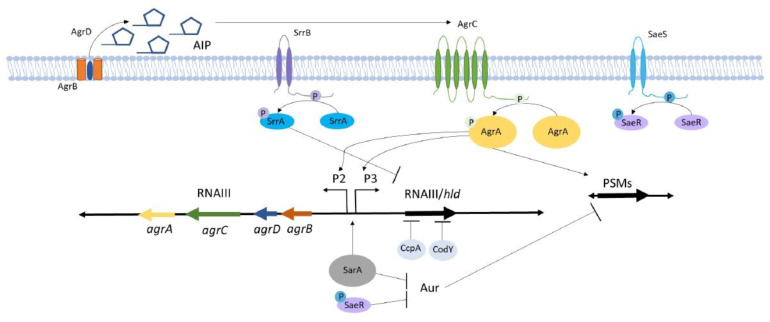
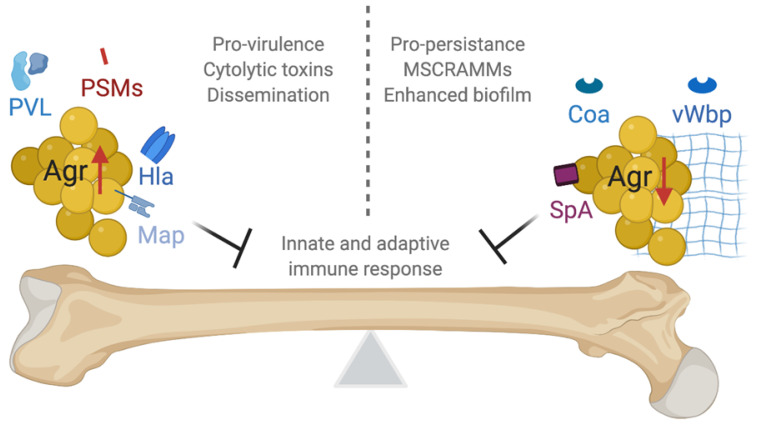
Staphylococcus aureus is a Gram-positive pathogen capable of infecting nearly every vertebrate organ. Among these tissues, invasive infection of bone (osteomyelitis) is particularly common and induces high morbidity. Treatment of osteomyelitis is notoriously difficult and often requires debridement of diseased bone in conjunction with prolonged antibiotic treatment to resolve infection. During osteomyelitis, S. aureus forms characteristic multicellular microcolonies in distinct niches within bone. Virulence and metabolic responses within these multicellular microcolonies are coordinated, in part, by quorum sensing via the accessory gene regulator (agr) locus, which allows staphylococcal populations to produce toxins and adapt in response to bacterial density. During osteomyelitis, the Agr system significantly contributes to dysregulation of skeletal homeostasis and disease severity but may also paradoxically inhibit persistence in the host. Moreover, the Agr system is subject to complex crosstalk with other S. aureus regulatory systems, including SaeRS and SrrAB, which can significantly impact the progression of osteomyelitis. The objective of this review is to highlight Agr regulation, its implications on toxin production, factors that affect Agr activation, and the potential paradoxical influences of Agr regulation on disease progression during osteomyelitis.
Overview
The claims and statistics of this paper haven’t been checked yet.
Free: it reads the open-access text and checks the first 5 claims that cite a source we can check. Create a free account to check every claim.
Integrity signals
Registry
Cites
Statistics
Figures
Verification
Claims the paper makes
The claims and statistics of this paper haven’t been checked yet.
Free: it reads the open-access text and checks the first 5 claims that cite a source we can check. Create a free account to check every claim.
Claims other papers make about this one
Each is checked against this paper’s own text: does it say what the citing paper says it does?
In the citing paper
“However, the mere presence of a pathogenicity factor gene does not always equate to its expression, which is subject to one or more regulatory systems present in the bacterial cell, such as the Agr/Sar system [10]”
From Molecular Mechanisms of Drug Resistance in Staphylococcus aureus (2022) · cites this paper as [10]
Self-check
Percentages, sums and reported differences re-computed from the paper’s own numbers.
The self-check needs the paper’s full text.
Citations
Cites
Staphylococcus aureus Infections
Lowy, F. D. (1998) · New England Journal of Medicine · doi:10.1056/nejm199808203390806 · Cited by 6,005
Two-Component Signal Transduction
Stock, A. M., Robinson, V. L., & Goudreau, P. N. (2000) · Annual Review of Biochemistry · doi:10.1146/annurev.biochem.69.1.183 · Cited by 3,650
Lew, D. P., & Waldvogel, F. A. (2004) · The Lancet · doi:10.1016/s0140-6736(04)16727-5 · Cited by 1,883
Synthesis of staphylococcal virulence factors is controlled by a regulatory RNA molecule.
Novick, R. P., Ross, H. F., Projan, S. J., Kornblum, J., Kreiswirth, B., & Moghazeh, S. (1993) · The EMBO Journal · doi:10.1002/j.1460-2075.1993.tb06074.x · Cited by 1,072
agr-Mediated Dispersal of Staphylococcus aureus Biofilms
Boles, B. R., & Horswill, A. R. (2008) · PLoS Pathogens · doi:10.1371/journal.ppat.1000052 · Cited by 963
Bacterial Interference Caused by Autoinducing Peptide Variants
Ji, G., Beavis, R., & Novick, R. P. (1997) · Science · doi:10.1126/science.276.5321.2027 · Cited by 817
Cell density control of staphylococcal virulence mediated by an octapeptide pheromone.
Ji, G., Beavis, R. C., & Novick, R. P. (1995) · Proceedings of the National Academy of Sciences · doi:10.1073/pnas.92.26.12055 · Cited by 664
Dunman, P. M., Murphy, E., Haney, S., Palacios, D., Tucker-Kellogg, G., Wu, S., Brown, E. L., Zagursky, R. J., Shlaes, D., & Projan, S. J. (2001) · Journal of Bacteriology · doi:10.1128/jb.183.24.7341-7353.2001 · Cited by 648
How Staphylococcus aureus biofilms develop their characteristic structure
Periasamy, S., Joo, H.-S., Duong, A. C., Bach, T.-H. L., Tan, V. Y., Chatterjee, S. S., Cheung, G. Y. C., & Otto, M. (2012) · Proceedings of the National Academy of Sciences · doi:10.1073/pnas.1115006109 · Cited by 640
Staphylococcus aureus α-Toxin: Nearly a Century of Intrigue
Berube, B., & Wardenburg, J. (2013) · Toxins · doi:10.3390/toxins5061140 · Cited by 613
Queck, S. Y., Jameson-Lee, M., Villaruz, A. E., Bach, T.-H. L., Khan, B. A., Sturdevant, D. E., Ricklefs, S. M., Li, M., & Otto, M. (2008) · Molecular Cell · doi:10.1016/j.molcel.2008.08.005 · Cited by 595
Boisset, S., Geissmann, T., Huntzinger, E., Fechter, P., Bendridi, N., Possedko, M., Chevalier, C., Helfer, A. C., Benito, Y., Jacquier, A., et al. (2007) · Genes & Development · doi:10.1101/gad.423507 · Cited by 490
Quorum-sensing regulation in staphylococci—an overview
Le, K. Y., & Otto, M. (2015) · Frontiers in Microbiology · doi:10.3389/fmicb.2015.01174 · Cited by 490
Morfeldt, E., Taylor, D., von Gabain, A., & Arvidson, S. (1995) · The EMBO Journal · doi:10.1002/j.1460-2075.1995.tb00136.x · Cited by 476
Theagr P2 operon: An autocatalytic sensory transduction system inStaphylococcus aureus
Novick, R. P., Projan, S. J., Kornblum, J., Ross, H. F., Ji, G., Kreiswirth, B., Vandenesch, F., Moghazeh, S., & Novick, R. P. (1995) · Molecular and General Genetics MGG · doi:10.1007/bf02191645 · Cited by 461
Wilke, G. A., & Wardenburg, J. B. (2010) · Proceedings of the National Academy of Sciences · doi:10.1073/pnas.1001815107 · Cited by 459
Phenol-soluble modulins and staphylococcal infection
Peschel, A., & Otto, M. (2013) · Nature Reviews Microbiology · doi:10.1038/nrmicro3110 · Cited by 452
Löffler, B., Hussain, M., Grundmeier, M., Brück, M., Holzinger, D., Varga, G., Roth, J., Kahl, B. C., Proctor, R. A., & Peters, G. (2010) · PLoS Pathogens · doi:10.1371/journal.ppat.1000715 · Cited by 436
Craven, R. R., Gao, X., Allen, I. C., Gris, D., Wardenburg, J. B., McElvania-TeKippe, E., Ting, J. P., & Duncan, J. A. (2009) · PLoS ONE · doi:10.1371/journal.pone.0007446 · Cited by 433
Regulation of exoprotein expression in Staphylococcus aureus by a locus (sar) distinct from agr.
Cheung, A. L., Koomey, J. M., Butler, C. A., Projan, S. J., & Fischetti, V. A. (1992) · Proceedings of the National Academy of Sciences · doi:10.1073/pnas.89.14.6462 · Cited by 411
Role of the accessory gene regulator (agr) in pathogenesis of staphylococcal osteomyelitis
Gillaspy, A. F., Hickmon, S. G., Skinner, R. A., Thomas, J. R., Nelson, C. L., & Smeltzer, M. S. (1995) · Infection and Immunity · doi:10.1128/iai.63.9.3373-3380.1995 · Cited by 400
At the Crossroads of Bacterial Metabolism and Virulence Factor Synthesis in Staphylococci
Somerville, G. A., & Proctor, R. A. (2009) · Microbiology and Molecular Biology Reviews · doi:10.1128/mmbr.00005-09 · Cited by 392
Sully, E. K., Malachowa, N., Elmore, B. O., Alexander, S. M., Femling, J. K., Gray, B. M., DeLeo, F. R., Otto, M., Cheung, A. L., Edwards, B. S., et al. (2014) · PLoS Pathogens · doi:10.1371/journal.ppat.1004174 · Cited by 386
Bocchini, C. E., Hulten, K. G., Mason, E. O., Gonzalez, B. E., Hammerman, W. A., & Kaplan, S. L. (2006) · Pediatrics · doi:10.1542/peds.2005-0566 · Cited by 371
On the mechanism of membrane damage by Staphylococcus aureus alpha-toxin.
Füssle, R., Bhakdi, S., Sziegoleit, A., Tranum-Jensen, J., Kranz, T., & Wellensiek, H. J. (1981) · The Journal of cell biology · doi:10.1083/jcb.91.1.83 · Cited by 366
Staphylococcus aureus RNAIII and the endoribonuclease III coordinately regulate spa gene expression
Huntzinger, E., Boisset, S., Saveanu, C., Benito, Y., Geissmann, T., Namane, A., Lina, G., Etienne, J., Ehresmann, B., Ehresmann, C., et al. (2005) · The EMBO Journal · doi:10.1038/sj.emboj.7600572 · Cited by 361
agr function in clinical Staphylococcus aureus isolates
Traber, K. E., Lee, E., Benson, S., Corrigan, R., Cantera, M., Shopsin, B., & Novick, R. P. (2008) · Microbiology · doi:10.1099/mic.0.2007/011874-0 · Cited by 358
Fowler, Jr., Sakoulas, G., McIntyre, L. M., Meka, V. G., Arbeit, R. D., Cabell, C. H., Stryjewski, M. E., Eliopoulos, G. M., Reller, L. B., Corey, G. R., et al. (2004) · The Journal of Infectious Diseases · doi:10.1086/423145 · Cited by 351
Contribution of Coagulases towards Staphylococcus aureus Disease and Protective Immunity
Cheng, A. G., McAdow, M., Kim, H. K., Bae, T., Missiakas, D. M., & Schneewind, O. (2010) · PLoS Pathogens · doi:10.1371/journal.ppat.1001036 · Cited by 324
Targeting Staphylococcus aureus Toxins: A Potential form of Anti-Virulence Therapy
Kong, C., Neoh, H.-M., & Nathan, S. (2016) · Toxins · doi:10.3390/toxins8030072 · Cited by 317
A play in four acts: Staphylococcus aureus abscess formation
Cheng, A. G., DeDent, A. C., Schneewind, O., & Missiakas, D. (2011) · Trends in Microbiology · doi:10.1016/j.tim.2011.01.007 · Cited by 310
Exfoliatin-Producing Strains Define a Fourth agr Specificity Group in Staphylococcus aureus
Jarraud, S., Lyon, G. J., Figueiredo, A. M. S., Gérard, L., Vandenesch, F., Etienne, J., Muir, T. W., & Novick, R. P. (2000) · Journal of Bacteriology · doi:10.1128/jb.182.22.6517-6522.2000 · Cited by 292
Global Regulation of Staphylococcus aureus Genes by Rot
Saïd-Salim, B., Dunman, P. M., McAleese, F. M., Macapagal, D., Murphy, E., McNamara, P. J., Arvidson, S., Foster, T. J., Projan, S. J., & Kreiswirth, B. N. (2003) · Journal of Bacteriology · doi:10.1128/jb.185.2.610-619.2003 · Cited by 286
Human Formyl Peptide Receptor 2 Senses Highly Pathogenic Staphylococcus aureus
Kretschmer, D., Gleske, A.-K., Rautenberg, M., Wang, R., Köberle, M., Bohn, E., Schöneberg, T., Rabiet, M.-J., Boulay, F., Klebanoff, S. J., et al. (2010) · Cell Host & Microbe · doi:10.1016/j.chom.2010.05.012 · Cited by 282
Chavakis, T., Hussain, M., Kanse, S. M., Peters, G., Bretzel, R. G., Flock, J.-I., Herrmann, M., & Preissner, K. T. (2002) · Nature Medicine · doi:10.1038/nm728 · Cited by 264
de Mesy Bentley, K. L., Trombetta, R., Nishitani, K., Bello-Irizarry, S. N., Ninomiya, M., Zhang, L., Chung, H. L., McGrath, J. L., Daiss, J. L., Awad, H. A., et al. (2017) · Journal of Bone and Mineral Research · doi:10.1002/jbmr.3055 · Cited by 262
Inhibition of rot translation by RNAIII, a key feature of agr function
Geisinger, E., Adhikari, R. P., Jin, R., Ross, H. F., & Novick, R. P. (2006) · Molecular Microbiology · doi:10.1111/j.1365-2958.2006.05292.x · Cited by 252
Cassat, J. E., Hammer, N. D., Campbell, J. P., Benson, M. A., Perrien, D. S., Mrak, L. N., Smeltzer, M. S., Torres, V. J., & Skaar, E. P. (2013) · Cell Host & Microbe · doi:10.1016/j.chom.2013.05.003 · Cited by 248
Self-citationPaharik, A. E., Parlet, C. P., Chung, N., Todd, D. A., Rodriguez, E. I., Van Dyke, M. J., Cech, N. B., & Horswill, A. R. (2017) · Cell Host & Microbe · doi:10.1016/j.chom.2017.11.001 · Cited by 244
Geiger, T., Francois, P., Liebeke, M., Fraunholz, M., Goerke, C., Krismer, B., Schrenzel, J., Lalk, M., & Wolz, C. (2012) · PLoS Pathogens · doi:10.1371/journal.ppat.1003016 · Cited by 243
Wardenburg, J. B., Palazzolo‐Ballance, A. M., Otto, M., Schneewind, O., & DeLeo, F. R. (2008) · The Journal of Infectious Diseases · doi:10.1086/592053 · Cited by 236 · cited 1×
“increases in pathogenesis with PVL-positive strains in BALB/c mice [77].”
BackgroundLi, J., Wang, W., Xu, S. X., Magarvey, N. A., & McCormick, J. K. (2011) · Proceedings of the National Academy of Sciences · doi:10.1073/pnas.1017431108 · Cited by 223
Regulation of virulence determinants in Staphylococcus aureus
Arvidson, S., & Tegmark, K. (2001) · International Journal of Medical Microbiology · doi:10.1078/1438-4221-00112 · Cited by 222
CodY in Staphylococcus aureus : a Regulatory Link between Metabolism and Virulence Gene Expression
Pohl, K., Francois, P., Stenz, L., Schlink, F., Geiger, T., Herbert, S., Goerke, C., Schrenzel, J., & Wolz, C. (2009) · Journal of Bacteriology · doi:10.1128/jb.01492-08 · Cited by 221
Direct Targets of CodY in Staphylococcus aureus
Majerczyk, C. D., Dunman, P. M., Luong, T. T., Lee, C. Y., Sadykov, M. R., Somerville, G. A., Bodi, K., & Sonenshein, A. L. (2010) · Journal of Bacteriology · doi:10.1128/jb.00220-10 · Cited by 221
High Genetic Variability of the agr Locus in Staphylococcus Species
Dufour, P., Jarraud, S., Vandenesch, F., Greenland, T., Novick, R. P., Bes, M., Etienne, J., & Lina, G. (2002) · Journal of Bacteriology · doi:10.1128/jb.184.4.1180-1186.2002 · Cited by 213
Confinement-induced quorum sensing of individual Staphylococcus aureus bacteria
Carnes, E. C., Lopez, D. M., Donegan, N. P., Cheung, A., Gresham, H., Timmins, G. S., & Brinker, C. J. (2010) · Nature Chemical Biology · doi:10.1038/nchembio.264 · Cited by 212
Dohin, B., Gillet, Y., Kohler, R., Lina, G., Vandenesch, F., Vanhems, P., Floret, D., & Etienne, J. (2007) · Pediatric Infectious Disease Journal · doi:10.1097/inf.0b013e318133a85e · Cited by 209
The SaeR/S Gene Regulatory System Is Essential for Innate Immune Evasion by Staphylococcus aureus
Voyich, J. M., Vuong, C., DeWald, M., Nygaard, T. K., Kocianova, S., Griffith, S., Jones, J., Iverson, C., Sturdevant, D. E., Braughton, K. R., et al. (2009) · The Journal of Infectious Diseases · doi:10.1086/598967 · Cited by 208
Staphylococcus aureus CcpA Affects Virulence Determinant Production and Antibiotic Resistance
Seidl, K., Stucki, M., Ruegg, M., Goerke, C., Wolz, C., Harris, L., Berger-Bächi, B., & Bischoff, M. (2006) · Antimicrobial Agents and Chemotherapy · doi:10.1128/aac.50.4.1183-1194.2006 · Cited by 207
Effect of Mild Acid on Gene Expression in Staphylococcus aureus
Weinrick, B., Dunman, P. M., McAleese, F., Murphy, E., Projan, S. J., Fang, Y., & Novick, R. P. (2004) · Journal of Bacteriology · doi:10.1128/jb.186.24.8407-8423.2004 · Cited by 203
Cloning and sequencing of sarA of Staphylococcus aureus, a gene required for the expression of agr
Cheung, A. L., & Projan, S. J. (1994) · Journal of Bacteriology · doi:10.1128/jb.176.13.4168-4172.1994 · Cited by 200
Staphylococcus aureus CodY Negatively Regulates Virulence Gene Expression
Majerczyk, C. D., Sadykov, M. R., Luong, T. T., Lee, C., Somerville, G. A., & Sonenshein, A. L. (2008) · Journal of Bacteriology · doi:10.1128/jb.01545-07 · Cited by 197
Geiger, T., Goerke, C., Mainiero, M., Kraus, D., & Wolz, C. (2008) · Journal of Bacteriology · doi:10.1128/jb.01927-07 · Cited by 197
Epistatic Relationships between sarA and agr in Staphylococcus aureus Biofilm Formation
Beenken, K. E., Mrak, L. N., Griffin, L. M., Zielinska, A. K., Shaw, L. N., Rice, K. C., Horswill, A. R., Bayles, K. W., & Smeltzer, M. S. (2010) · PLoS ONE · doi:10.1371/journal.pone.0010790 · Cited by 194
Pragman, A. A., Yarwood, J. M., Tripp, T. J., & Schlievert, P. M. (2004) · Journal of Bacteriology · doi:10.1128/jb.186.8.2430-2438.2004 · Cited by 192
Death by a B Cell Superantigen
Goodyear, C. S., & Silverman, G. J. (2003) · The Journal of Experimental Medicine · doi:10.1084/jem.20020552 · Cited by 192
Surewaard, B. G. J., de Haas, C. J. C., Vervoort, F., Rigby, K. M., DeLeo, F. R., Otto, M., van Strijp, J. A. G., & Nijland, R. (2013) · Cellular Microbiology · doi:10.1111/cmi.12130 · Cited by 189
Kolar, S. L., Antonio Ibarra, J., Rivera, F. E., Mootz, J. M., Davenport, J. E., Stevens, S. M., Horswill, A. R., & Shaw, L. N. (2013) · MicrobiologyOpen · doi:10.1002/mbo3.55 · Cited by 187
Essential Staphylococcus aureus toxin export system
Chatterjee, S. S., Joo, H.-S., Duong, A. C., Dieringer, T. D., Tan, V. Y., Song, Y., Fischer, E. R., Cheung, G. Y. C., Li, M., & Otto, M. (2013) · Nature Medicine · doi:10.1038/nm.3047 · Cited by 180
Vandenesch, F., Kornblum, J., & Novick, R. P. (1991) · Journal of Bacteriology · doi:10.1128/jb.173.20.6313-6320.1991 · Cited by 179
Claro, T., Widaa, A., O'Seaghdha, M., Miajlovic, H., Foster, T. J., O'Brien, F. J., & Kerrigan, S. W. (2011) · PLoS ONE · doi:10.1371/journal.pone.0018748 · Cited by 171
Holzinger, D., Gieldon, L., Mysore, V., Nippe, N., Taxman, D. J., Duncan, J. A., Broglie, P. M., Marketon, K., Austermann, J., Vogl, T., et al. (2012) · Journal of Leukocyte Biology · doi:10.1189/jlb.0112014 · Cited by 170
Wilde, A. D., Snyder, D. J., Putnam, N. E., Valentino, M. D., Hammer, N. D., Lonergan, Z. R., Hinger, S. A., Aysanoa, E. E., Blanchard, C., Dunman, P. M., et al. (2015) · PLOS Pathogens · doi:10.1371/journal.ppat.1005341 · Cited by 165
Self-citationWidaa, A., Claro, T., Foster, T. J., O’Brien, F. J., & Kerrigan, S. W. (2012) · PLoS ONE · doi:10.1371/journal.pone.0040586 · Cited by 161
Discovery of Antivirulence Agents against Methicillin-Resistant Staphylococcus aureus
Khodaverdian, V. Y., Pesho, M. M., Truitt, B. J., Bollinger, L. B., Patel, P., Nithianantham, S., Yu, G.-P., Delaney, E., Jankowsky, E., & Shoham, M. (2013) · Antimicrobial Agents and Chemotherapy · doi:10.1128/aac.00269-13 · Cited by 160
Secondary structure and assembly mechanism of an oligomeric channel protein
Tobkes, N., Wallace, B. A., & Bayley, H. (1985) · Biochemistry · doi:10.1021/bi00329a017 · Cited by 160
Nilsson, I.-M., Hartford, O., Foster, T., & Tarkowski, A. (1999) · Infection and Immunity · doi:10.1128/iai.67.3.1045-1049.1999 · Cited by 155
Impact of Staphylococcus aureus on Pathogenesis in Polymicrobial Infections
Nair, N., Biswas, R., Götz, F., & Biswas, L. (2014) · Infection and Immunity · doi:10.1128/iai.00059-14 · Cited by 155
Schweizer, M. L., Furuno, J. P., Sakoulas, G., Johnson, J. K., Harris, A. D., Shardell, M. D., McGregor, J. C., Thom, K. A., & Perencevich, E. N. (2011) · Antimicrobial Agents and Chemotherapy · doi:10.1128/aac.00918-10 · Cited by 143
Menestrina, G., Dalla Serra, M., Comai, M., Coraiola, M., Viero, G., Werner, S., Colin, D. A., Monteil, H., & Prévost, G. (2003) · FEBS Letters · doi:10.1016/s0014-5793(03)00850-0 · Cited by 139
Kim, J.-M., Jeong, D., Kang, H. K., Jung, S. Y., Kang, S. S., & Min, B.-M. (2007) · Cellular Physiology and Biochemistry · doi:10.1159/000110454 · Cited by 137
Rasigade, J., Trouillet‐Assant, S., Ferry, T., Diep, B. A., Sapin, A., Lhoste, Y., Ranfaing, J., Badiou, C., Benito, Y., Bes, M., et al. (2013) · PLoS ONE · doi:10.1371/journal.pone.0063176 · Cited by 133
Prevalence of agr Dysfunction among Colonizing Staphylococcus aureus Strains
Shopsin, B., Drlica‐Wagner, A., Mathema, B., Adhikari, R. P., Kreiswirth, B. N., & Novick, R. P. (2008) · The Journal of Infectious Diseases · doi:10.1086/592051 · Cited by 131
Traber, K., & Novick, R. (2006) · Molecular Microbiology · doi:10.1111/j.1365-2958.2006.04986.x · Cited by 130
Mashruwala, A. A., Guchte, A. V. D., & Boyd, J. M. (2017) · eLife · doi:10.7554/elife.23845 · Cited by 130
Gray, B., Hall, P., & Gresham, H. (2013) · Sensors · doi:10.3390/s130405130 · Cited by 128
Cunningham, R., Cockayne, A., & Humphreys, H. (1996) · Journal of Medical Microbiology · doi:10.1099/00222615-44-3-157 · Cited by 128
Crémieux, A.-C., Dumitrescu, O., Lina, G., Vallee, C., Côté, J.-F., Muffat-Joly, M., Lilin, T., Etienne, J., Vandenesch, F., & Saleh-Mghir, A. (2009) · PLoS ONE · doi:10.1371/journal.pone.0007204 · Cited by 127
Coordinated Regulation by AgrA, SarA, and SarR To Control agr Expression in Staphylococcus aureus
Reyes, D., Andrey, D. O., Monod, A., Kelley, W. L., Zhang, G., & Cheung, A. L. (2011) · Journal of Bacteriology · doi:10.1128/jb.05436-11 · Cited by 126
RNAIII of the Staphylococcus aureus agr system activates global regulator MgrA by stabilizing mRNA
Gupta, R. K., Luong, T. T., & Lee, C. Y. (2015) · Proceedings of the National Academy of Sciences · doi:10.1073/pnas.1509251112 · Cited by 124
The effects of Staphylococcus aureus leukotoxins on the host: cell lysis and beyond
Yoong, P., & Torres, V. J. (2013) · Current Opinion in Microbiology · doi:10.1016/j.mib.2013.01.012 · Cited by 123
Colin, D. A., Mazurier, I., Sire, S., & Finck-Barbançon, V (1994) · Infection and Immunity · doi:10.1128/iai.62.8.3184-3188.1994 · Cited by 122
Sun, F., Li, C., Jeong, D., Sohn, C., He, C., & Bae, T. (2010) · Journal of Bacteriology · doi:10.1128/jb.01524-09 · Cited by 121
Ambuic Acid Inhibits the Biosynthesis of Cyclic Peptide Quormones in Gram-Positive Bacteria
Nakayama, J., Uemura, Y., Nishiguchi, K., Yoshimura, N., Igarashi, Y., & Sonomoto, K. (2009) · Antimicrobial Agents and Chemotherapy · doi:10.1128/aac.00995-08 · Cited by 121
Management of acute hematogenous osteomyelitis in children
Harik, N., & Smeltzer, M. S. (2010) · Expert Review of Anti-infective Therapy · doi:10.1586/eri.09.130 · Cited by 118
Claro, T., Widaa, A., McDonnell, C. J., Foster, T. J., O’Brien, F. J., & Kerrigan, S. W. (2012) · Microbiology · doi:10.1099/mic.0.063016-0 · Cited by 115
Nakamura, Y., Takahashi, H., Takaya, A., Inoue, Y., Katayama, Y., Kusuya, Y., Shoji, T., Takada, S., Nakagawa, S., Oguma, R., et al. (2020) · Science Translational Medicine · doi:10.1126/scitranslmed.aay4068 · Cited by 112
Zielinska, A. K., Beenken, K. E., Mrak, L. N., Spencer, H. J., Post, G. R., Skinner, R. A., Tackett, A. J., Horswill, A. R., & Smeltzer, M. S. (2012) · Molecular Microbiology · doi:10.1111/mmi.12048 · Cited by 111
Aerobic Glycolysis in Osteoblasts
Esen, E., & Long, F. (2014) · Current Osteoporosis Reports · doi:10.1007/s11914-014-0235-y · Cited by 109
SarA level is a determinant of agr activation in Staphylococcus aureus
Chien, Y., Manna, A. C., & Cheung, A. L. (1998) · Molecular Microbiology · doi:10.1046/j.1365-2958.1998.01126.x · Cited by 106
Lee, L. Y., Miyamoto, Y. J., McIntyre, B. W., Höök, M., McCrea, K. W., McDevitt, D., & Brown, E. L. (2002) · Journal of Clinical Investigation · doi:10.1172/jci0216318 · Cited by 101
Influence of agr on fibrinogen binding in Staphylococcus aureus Newman
Wolz, C., McDevitt, D., Foster, T. J., & Cheung, A. L. (1996) · Infection and Immunity · doi:10.1128/iai.64.8.3142-3147.1996 · Cited by 101
Roux, A., Todd, D. A., Velázquez, J. V., Cech, N. B., & Sonenshein, A. L. (2014) · Journal of Bacteriology · doi:10.1128/jb.00128-13 · Cited by 100
Lindsay, J. A., & Foster, S. J. (1999) · Molecular and General Genetics MGG · doi:10.1007/s004380051090 · Cited by 100
Resistance to leukocytes ties benefits of quorum sensing dysfunctionality to biofilm infection
He, L., LE, K. Y., Khan, B. A., Nguyen, T. D., Hunt, R. L., Bae, J. S., Kabát, J., Zheng, Y., Cheung, G. Y. C., Li, M., et al. (2019) · Nature Microbiology · doi:10.1038/s41564-019-0413-x · Cited by 100
Guggenberger, C., Wolz, C., Morrissey, J. A., & Heesemann, J. (2012) · PLoS Pathogens · doi:10.1371/journal.ppat.1002434 · Cited by 99
Staphylococcus aureus Protein A Promotes Immune Suppression
Kobayashi, S. D., & DeLeo, F. R. (2013) · mBio · doi:10.1128/mbio.00764-13 · Cited by 99
Staphylococcus aureus Responds to the Central Metabolite Pyruvate To Regulate Virulence
Harper, L., Balasubramanian, D., Ohneck, E. A., Sause, W. E., Chapman, J., Mejia-Sosa, B., Lhakhang, T., Heguy, A., Tsirigos, A., Ueberheide, B., et al. (2018) · mBio · doi:10.1128/mbio.02272-17 · Cited by 98
Innate Immunity to Staphylococcus aureus: Evolving Paradigms in Soft Tissue and Invasive Infections
Brandt, S. L., Putnam, N. E., Cassat, J. E., & Serezani, C. H. (2018) · The Journal of Immunology · doi:10.4049/jimmunol.1701574 · Cited by 93
Self-citationRole of sarA in the Pathogenesis of Staphylococcus aureus Musculoskeletal Infection
Blevins, J. S., Elasri, M. O., Allmendinger, S. D., Beenken, K. E., Skinner, R. A., Thomas, J. R., & Smeltzer, M. S. (2003) · Infection and Immunity · doi:10.1128/iai.71.1.516-523.2003 · Cited by 90
Jeong, D., Cho, H., Jones, M. B., Shatzkes, K., Sun, F., Ji, Q., Liu, Q., Peterson, S. N., He, C., & Bae, T. (2012) · Molecular Microbiology · doi:10.1111/j.1365-2958.2012.08198.x · Cited by 90
Suligoy, C. M., Lattar, S. M., Llana, M. N., Gonzalez, C. D., Álvarez, L., Robinson, D. A., Gómez, M. I., Buzzola, F. R., & Sordelli, D. O. (2018) · Frontiers in Cellular and Infection Microbiology · doi:10.3389/fcimb.2018.00018 · Cited by 90
Tromp, A. T., van Gent, M., Abrial, P., Martin, A., Jansen, J. P., de Haas, C. J. C., van Kessel, K. P. M., Bardoel, B. W., Kruse, E. M., Bourdonnay, E., et al. (2018) · Nature Microbiology · doi:10.1038/s41564-018-0159-x · Cited by 90
Zielinska, A. K., Beenken, K. E., Joo, H.-S., Mrak, L. N., Griffin, L. M., Luong, T. T., Lee, C. Y., Otto, M., Shaw, L. N., & Smeltzer, M. S. (2011) · Journal of Bacteriology · doi:10.1128/jb.01517-10 · Cited by 89
Tiwari, N., López-Redondo, M., Miguel-Romero, L., Kulhankova, K., Cahill, M. P., Tran, P. M., Kinney, K. J., Kilgore, S. H., Al-Tameemi, H., Herfst, C. A., et al. (2020) · Proceedings of the National Academy of Sciences · doi:10.1073/pnas.1921307117 · Cited by 88
Valour, F., Rasigade, J., Trouillet‐Assant, S., Gagnaire, J., Bouaziz, A., Karsenty, J., Lacour, C., Bes, M., Lustıg, S., Bénet, T., et al. (2015) · Clinical Microbiology and Infection · doi:10.1016/j.cmi.2015.01.026 · Cited by 83
Todd, O. A., & Peters, B. M. (2019) · Journal of Fungi · doi:10.3390/jof5030081 · Cited by 82
Jin, T., Zhu, Y. L., Li, J., Shi, J., He, X. Q., Ding, J. L., & Xu, Y. Q. (2013) · Cellular Physiology and Biochemistry · doi:10.1159/000354440 · Cited by 80
Brown, M. M., Kwiecinski, J. M., Cruz, L. M., Shahbandi, A., Todd, D. A., Cech, N. B., & Horswill, A. R. (2020) · Antimicrobial Agents and Chemotherapy · doi:10.1128/aac.00172-20 · Cited by 78
Fibrinogen Substrate Recognition by Staphylocoagulase·(Pro)thrombin Complexes
Panizzi, P. R., Friedrich, R., Fuentes‐Prior, P., Richter, K., BOCK, P. E., & Bode, W. (2005) · Journal of Biological Chemistry · doi:10.1074/jbc.m507956200 · Cited by 75
Bronner, S., Stoessel, P., Gravet, A., Monteil, H., & Prévost, G. (2000) · Applied and Environmental Microbiology · doi:10.1128/aem.66.9.3931-3938.2000 · Cited by 74
Potter, A. D., Butrico, C. E., Ford, C. A., Curry, J. M., Trenary, I. A., Tummarakota, S. S., Hendrix, A. S., Young, J. D., & Cassat, J. E. (2020) · Proceedings of the National Academy of Sciences · doi:10.1073/pnas.1922211117 · Cited by 73 · cited 1×
“The presence of glucose results in preferential use of glycolysis over other pathways such as the tricarboxylic acid (TCA) cycle, pentose phosphate pathway, and gluconeogenesis [154].”
BackgroundSelf-citationMorrison, J. (2012) · Frontiers in Cellular and Infection Microbiology · doi:10.3389/fcimb.2012.00026 · Cited by 72
Zhang, L., & Ji, G. (2004) · Journal of Bacteriology · doi:10.1128/jb.186.20.6706-6713.2004 · Cited by 72
Hendrix, A. S., Spoonmore, T. J., Wilde, A. D., Putnam, N. E., Hammer, N. D., Snyder, D. J., Guelcher, S. A., Skaar, E. P., & Cassat, J. E. (2016) · Antimicrobial Agents and Chemotherapy · doi:10.1128/aac.00834-16 · Cited by 71
Self-citationCho, H., Jeong, D.-W., Liu, Q., Yeo, W.-S., Vogl, T., Skaar, E. P., Chazin, W. J., & Bae, T. (2015) · PLOS Pathogens · doi:10.1371/journal.ppat.1005026 · Cited by 70
Dual RNA regulatory control of a Staphylococcus aureus virulence factor
Chabelskaya, S., Bordeau, V., & Felden, B. (2014) · Nucleic Acids Research · doi:10.1093/nar/gku119 · Cited by 68
Haggar, A., Ehrnfelt, C., Holgersson, J., & Flock, J. (2004) · Infection and Immunity · doi:10.1128/iai.72.10.6164-6167.2004 · Cited by 68
Outcomes and Risk Factors for Polymicrobial Posttraumatic Osteomyelitis
Jorge, L. S., Fucuta, P. S., Maria Gabriele, L., Nakazone, M. A., de, J. A., Chueire, A. G., & Salles, M. J. C. (2018) · Journal of Bone and Joint Infection · doi:10.7150/jbji.22566 · Cited by 66
Antibiotic-Mediated Selection of Quorum-Sensing-Negative Staphylococcus aureus
Paulander, W., Nissen Varming, A., Bæk, K. T., Haaber, J., Frees, D., & Ingmer, H. (2012) · mBio · doi:10.1128/mbio.00459-12 · Cited by 65
Lebeau, C., Vandenesch, F., Greenland, T., Novick, R. P., & Étienne, J. (1994) · Journal of Bacteriology · doi:10.1128/jb.176.17.5534-5536.1994 · Cited by 64
The Complex Fibrinogen Interactions of the Staphylococcus aureus Coagulases
Thomas, S., Liu, W., Arora, S., Ganesh, V., Ko, Y., & Höök, M. (2019) · Frontiers in Cellular and Infection Microbiology · doi:10.3389/fcimb.2019.00106 · Cited by 63
Mashruwala, A. A., Gries, C. M., Scherr, T. D., Kielian, T., & Boyd, J. M. (2017) · Infection and Immunity · doi:10.1128/iai.00157-17 · Cited by 61
Genome Plasticity of agr -Defective Staphylococcus aureus during Clinical Infection
Altman, D. R., Sullivan, M. J., Chacko, K. I., Balasubramanian, D., Pak, T. R., Sause, W. E., Kumar, K., Sebra, R., Deikus, G., Attie, O., et al. (2018) · Infection and Immunity · doi:10.1128/iai.00331-18 · Cited by 60
Staphylococcus aureus protein A enhances osteoclastogenesis via TNFR1 and EGFR signaling
Bertelli, A. M., Delpino, M. V., Lattar, S. M., Giai, C., Llana, M. N., Sanjuan, N. A., Cassat, J. E., Sordelli, D. O., & Gómez, M. I. (2016) · Biochimica et Biophysica Acta (BBA) - Molecular Basis of Disease · doi:10.1016/j.bbadis.2016.07.016 · Cited by 58
Self-citationLoughran, A. J., Gaddy, D., Beenken, K. E., Meeker, D. G., Morello, R., Zhao, H., Byrum, S. D., Tackett, A. J., Cassat, J. E., & Smeltzer, M. S. (2016) · Infection and Immunity · doi:10.1128/iai.00152-16 · Cited by 57
Self-citationRNAIII activates map expression by forming an RNA-RNA complex in Staphylococcus aureus
Liu, Y., Mu, C., Ying, X., Li, W., Wu, N., Dong, J., Gao, Y., Shao, N., Fan, M., & Yang, G. (2011) · FEBS Letters · doi:10.1016/j.febslet.2011.02.021 · Cited by 55
Staphylococcus aureus Protein A Disrupts Immunity Mediated by Long-Lived Plasma Cells
Keener, A. B., Thurlow, L. R., Kang, S., Spidale, N. A., Clarke, S. H., Cunnion, K. M., Tisch, R., Richardson, A. R., & Vilen, B. J. (2017) · The Journal of Immunology · doi:10.4049/jimmunol.1600093 · Cited by 52
Mike, L. A., Choby, J. E., Brinkman, P. R., Olive, L. Q., Dutter, B. F., Ivan, S. J., Gibbs, C. M., Sulikowski, G. A., Stauff, D. L., & Skaar, E. P. (2014) · PLoS Pathogens · doi:10.1371/journal.ppat.1004044 · Cited by 49 · cited 1×
“Interestingly, some activated response regulators can cross-regulate transcription of genes associated with other two-component systems [16,17].”
BackgroundMasters, E. A., Salminen, A. T., Begolo, S., Luke, E. N., Barrett, S. C., Overby, C. T., Gill, A. L., de Mesy Bentley, K. L., Awad, H. A., Gill, S. R., et al. (2019) · Nanomedicine: Nanotechnology, Biology and Medicine · doi:10.1016/j.nano.2019.102039 · Cited by 49
Regulation of Staphylococcus aureus Virulence
Jenul, C., & Horswill, A. R. (2019) · ASM Press eBooks · doi:10.1128/9781683670131.ch41 · Cited by 49
Regulation of the protein A-encoding gene in Staphylococcus aureus
Patel, A. H., Kornblum, J. S., Kreiswirth, B. N., Novick, R. P., & Foster, T. J. (1992) · Gene · doi:10.1016/0378-1119(92)90703-r · Cited by 48
Ma, J., Gulbins, E., Edwards, M. J., Caldwell, C. C., Fraunholz, M. J., & Becker, K. A. (2017) · Cellular Physiology and Biochemistry · doi:10.1159/000484296 · Cited by 48
Smith, I. D. M., Milto, K. M., Doherty, C. J., Amyes, S. G. B., Simpson, H., & Hall, A. C. (2018) · Bone and Joint Research · doi:10.1302/2046-3758.77.bjr-2017-0165.r1 · Cited by 45
Nutritional regulation of the Sae two-component system by CodY in Staphylococcus aureus
Mlynek, K. D., Sause, W. E., Moormeier, D. E., Sadykov, M. R., Hill, K. R., Torres, V. J., Bayles, K. W., & Brinsmade, S. R. (2018) · Journal of Bacteriology · doi:10.1128/jb.00012-18 · Cited by 41 · cited 1×
“Virulence regulation in response to Agr quorum sensing is influenced by a number of two-component systems and other regulatory proteins, including those involved in sensing and responding to changes in redox state, immune defenses, and nutrient alterations [12,26,158].”
BackgroundFinding of Agr Phase Variants in Staphylococcus aureus
Gor, V., Takemura, A. J., Nishitani, M., Higashide, M., Medrano Romero, V., Ohniwa, R. L., & Morikawa, K. (2019) · mBio · doi:10.1128/mbio.00796-19 · Cited by 41
Ward, R. J., & Leonard, K. (1992) · Journal of Structural Biology · doi:10.1016/1047-8477(92)90044-b · Cited by 39
Xue, T., You, Y., Shang, F., & Sun, B. (2011) · Medical Microbiology and Immunology · doi:10.1007/s00430-011-0208-z · Cited by 35
Jiang, B., Wang, Y., Feng, Z., Xu, L., Tan, L., Zhao, S., Gong, Y., Zhang, C., Luo, X., Li, S., et al. (2017) · Frontiers in Microbiology · doi:10.3389/fmicb.2017.02355 · Cited by 35
Bouras, D. S., Doudoulakakis, A., Tsolia, M. N., Vaki, I., Giormezis, N., Petropoulou, N., Lebessi, E., Gennimata, V., Tsakris, A., Spiliopoulou, I. T., et al. (2018) · Journal of Medical Microbiology · doi:10.1099/jmm.0.000859 · Cited by 32
Sloan, T. J., Murray, E. J., Yokoyama, M., Massey, R. C., Chan, W. C., Bonev, B. B., & Williams, P. M. (2019) · Journal of Bacteriology · doi:10.1128/jb.00409-19 · Cited by 29
CcpA Affects Infectivity of Staphylococcus aureus in a Hyperglycemic Environment
Bischoff, M., Wonnenberg, B., Nippe, N., Nyffenegger-Jann, N. J., Voss, M., Beisswenger, C., Sunderkötter, C., Molle, V., Dinh, Q. T., Lammert, F., et al. (2017) · Frontiers in Cellular and Infection Microbiology · doi:10.3389/fcimb.2017.00172 · Cited by 28
Buckling, A., Neilson, J., Lindsay, J. A., ffrench‐Constant, R. H., Enright, M. C., Day, N., & Massey, R. C. (2005) · Journal of Bacteriology · doi:10.1128/jb.187.8.2917-2919.2005 · Cited by 19
Steiner, B. D., Eberly, A. R., Hurst, M. N., Zhang, E. W., Green, H. D., Behr, S., Jung, K., & Hadjifrangiskou, M. (2018) · The Journal of Membrane Biology · doi:10.1007/s00232-018-0014-2 · Cited by 17
Spoonmore, T. J., Ford, C. A., Curry, J. M., Guelcher, S. A., & Cassat, J. E. (2020) · Antimicrobial Agents and Chemotherapy · doi:10.1128/aac.00182-20 · Cited by 15
Self-citationMatias, C. S. S., Serrano, I. D., van Harten, S., Mottola, C., Mendes, J. J., Tavares, L. M., & Oliveira, M. (2018) · Antonie van Leeuwenhoek · doi:10.1007/s10482-018-1103-z · Cited by 10
Chronic staphylococcal osteomyelitis: a new experimental rat model
Spagnolo, N., Greco, F. A., Rossi, A., Ciolli, L., Teti, A., & Posteraro, B. (1993) · Infection and Immunity · doi:10.1128/iai.61.12.5225-5230.1993
Power, M. E., Olson, M. S., Domingue, P. A. G., & Costerton, J. W. (1990) · Journal of Medical Microbiology · doi:10.1099/00222615-33-3-189
Alderson, M., Speers, D. J., Emslie, K. R., & Nade, S. M. L. (1986) · Journal of Bone and Joint Surgery - British Volume · doi:10.1302/0301-620x.68b2.3958014
Hannan, C. M., & Attinger, C. E. (2009) · Seminars in Plastic Surgery · doi:10.1055/s-0029-1214165
Brandis, G., Cao, S., Huseby, D. L., & Hughes, D. (2017) · Microbial Cell · doi:10.15698/mic2017.08.587
Biofilm formation byStaphylococcus aureusclinical isolates correlates with the infection type
Kwiecinski, J. M., Jacobsson, G., Horswill, A. R., Josefsson, E., & Jin, T. (2019) · Scandinavian Journal of Infectious Diseases · doi:10.1080/23744235.2019.1593499
Research works printed but not linked: 6
- Hatzenbuehler J. Pulling T.J. Diagnosis and management of osteomyelitis Am. Fam. Physician 2011 84 1027 1033 22046943
- Haag A.F. Bagnoli F. The role of two-component signal transduction systems in Staphylococcus aureus virulence regulation Curr. Top. Microbiol. 2017 409 145 198 10.1007/82_2015_5019 26728068 · DOI
- Rajasree K. Fasim A. Gopal B. Conformational features of the Staphylococcus aureus AgrA-promoter interactions rationalize quorum-sensing triggered gene expression Biochem. Biophys. Rep. 2016 6 124 134 10.1016/j.bbrep.2016.03.012 28955870 PMC5600425 · DOI
- Phonimdaen P. O’Reilly M. O’Toole P.W. Foster T.J. Molecular cloning and expression of the coagulase gene of Staphylococcus aureus 8325-4 J. Gen. Microbiol. 1988 134 75 83 10.1099/00221287-134-1-75 3183615 · DOI
- Krishna Mannala G. Koettnitz J. Mohamed W. Sommer U. Lips K.S. Sproer C. Bunk B. Overmann J. Hain T. Heiss C. Whole-genome comparison of high and low virulent Staphylococcus aureus isolates inducing implant-associated bone infections Int. J. Med. Microbiol. 2018 208 505 513 10.1016/j.ijmm.2018.04.005 29739668 · DOI
- Dossett J.H. Kronvall G. Williams R.C. Quie P.G. RNAIII of the Staphylococcus aureus agr system activates global regulator MgrA by stabilizing mRNA J. Immunol. 1969 103 1405 1410 · DOI · Paper page
Cited by
Molecular Mechanisms of Drug Resistance in Staphylococcus aureus
Mlynarczyk-Bonikowska, B., Kowalewski, C., Krolak-Ulinska, A., & Marusza, W. (2022) · International Journal of Molecular Sciences · doi:10.3390/ijms23158088 · Cited by 412
Wang, D., Wang, L., Liu, Q., & Zhao, Y. (2025) · Animals and Zoonoses · doi:10.1016/j.azn.2024.11.003 · Cited by 57
Metadata
- Authors
- Butrico, C. E., & Cassat, J. E.
- Venue
- Toxins
- Publisher
- MDPI AG
- Published
- 2020-08-12
- Volume
- 12
- Issue
- 8
- Pages
- 516
- ISSN
- 2072-6651
- PMC
- PMC7471978
- Cited by
- 65
- References
- 153
- Language
- en
- Funders
- National Institute of Allergy and Infectious Diseases (R01AI132560, T32AI11254)
- Burroughs Wellcome Fund (1013348)
About these checks
Registry, retraction, Cites and statistics results are computed, not judged, with one exception: a printed reference that no index lists is read once by a model before it counts as a citation error. Claims are extracted by a model and kept only when their quote appears verbatim in the text; each cited source is then checked, with a model’s help, for whether it says what the claim relies on. Those verdicts can be wrong — read the claim’s quote and the cited source before relying on one.
Statistics and arithmetic are recomputed, not judged.
Confidence bands are shown only for fields calibrated on our annotated test set. None is calibrated yet, so no band is shown.
What counts as a claim ›How we measure confidence ›How we check this ›
Are you an author, or do you see a problem with this page? Request a review
Data sources
Bibliographic data: Semantic Scholar, OpenAlex, Crossref.
Contains information from the Semantic Scholar Academic Graph Datasets, made available under the ODC Attribution License (ODC-BY 1.0).
Semantic Scholar’s data is described in: Kinney, R., et al. (2023). The Semantic Scholar Open Data Platform. arXiv:2301.10140.
