

The benefits and harms of inpatient involuntary psychiatric treatment: a scoping review
Open accessThe DOI matches its Crossref record; 131 of the 132 references it cites were found in a registry or an index; 34 of the 163 sources its claims cite were checked for support.
Abstract
This scoping review examined quantitative research comparing involuntary inpatient groups with voluntary inpatients or other comparator group. Ten themes were identified: patient knowledge of legal status, experienced or perceived coercion, effects on medication use, clinical effects measured on outcome scales, effects on psychiatric readmission, use of restraints and seclusion, effects on suicide and deaths, patient satisfaction, length of stay and carer experiences. The review found that involuntary inpatient admission was associated with harms including increased subjective and objective coercion, increased cost and decreased patient satisfaction. In addition, it found that there may be significant confusion among both voluntary and involuntary patients regarding their legal rights. However, patients admitted on an involuntary basis experienced greater improvements in symptoms and function, possibly due to greater symptom burden prior to admission. Involuntary treatment carries the potential for both benefit and harms that should be acknowledged and mitigated by service providers.
Overview
CoChat Summary
TL;DR
This scoping review of 112 quantitative studies found involuntary inpatient admission associated with both harms—increased coercion, lower satisfaction, higher cost, and possible suicide risk—and some clinical benefit, including greater symptom and function improvement. Findings were mixed by outcome and limited by observational designs and confounding.
Key findings
- Across 10 themes, involuntary admission was associated with increased subjective and objective coercion, decreased patient satisfaction, and increased cost; legal-status confusion was common, with 12%–45% of involuntary patients not knowing their legal status (median 28.5%) and 1%–12% of voluntary patients not correctly stating theirs.
- Clinical outcome studies generally found either no difference between involuntary and voluntary admission or greater improvements in symptoms and functioning for involuntary patients, possibly because they had poorer function and worse symptoms at admission; PTSD symptoms were common after any psychiatric admission (8.2%–51%) but not increased among involuntary admissions.
- Medication findings included a four-year Australian cohort finding involuntary admission associated with a nine-fold risk of discharge on more than one antipsychotic and about 1.5 times greater likelihood of high-dose antipsychotic treatment; longer-term adherence findings were mixed.
- Suicide/death findings were mixed: five studies found no difference in suicide or all-cause mortality, five found increased suicide risk after involuntary admission, one found decreased suicide risk, and one found greater all-cause mortality risk.
Methods
- Scoping review commissioned by the Independent Review of Compulsory Treatment and Assessment Criteria and Alignment with Decision-Making Laws in Victoria, Australia; initially registered as a rapid review with PROSPERO (CRD42023397884), then conducted as a scoping review following Joanna Briggs Institute guidance.
- PubMed/Medline searches from March to December 2023, covering 1980 onward, using terms for involuntary/coercive/compulsory admission/detention/treatment and psychiatric/mental; included quantitative studies with involuntary inpatients and a comparator group, excluding qualitative-only studies, no-comparator studies, existing systematic reviews/meta-analyses, and primarily anorexia nervosa or substance use disorder populations.
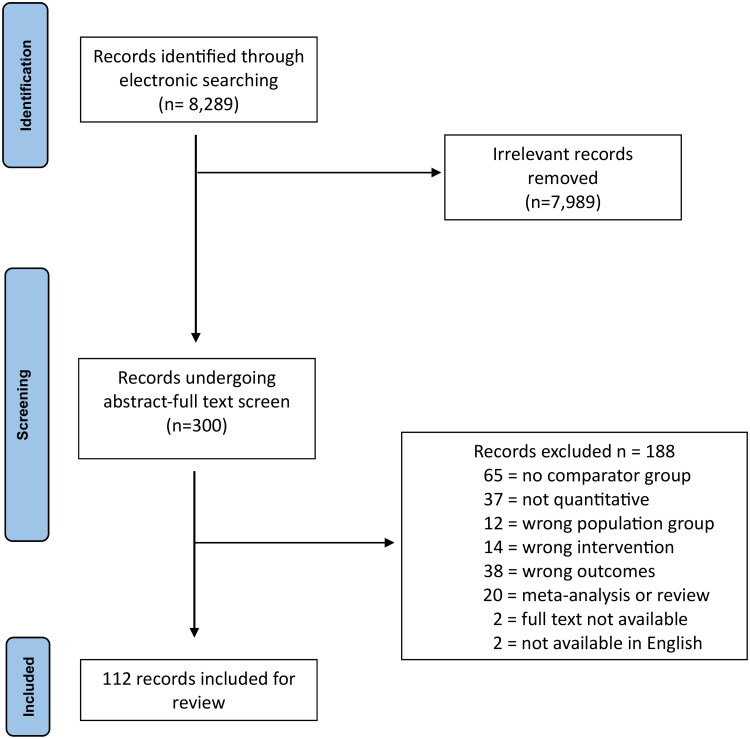
- Search returned 8,289 citations; 300 records proceeded to further review; 112 papers were included. Narrative synthesis by broad themes was used because meta-analysis was not appropriate; initial screening was by one author, with abstract and full-text review by two authors and disagreements resolved by consensus.
Limitations
- The paper states that randomised controlled trials of involuntary admission are difficult, often unethical, and that included studies generally used convenience or observational samples, limiting control for confounders such as severity of illness.
- The paper states that meta-analysis was not appropriate given the nature of included studies, and that most included papers came from Europe and the UK; it also notes no studies examined patient knowledge of legal status in an Australian setting.
- Evident from the text: initial search and screening were undertaken by one author, which may affect screening reliability, though abstract and full-text review involved two authors.
Model-written summary. Check it against the paper before relying on it.
Integrity signals
Registry
Cites
Statistics
Figures
Verification
Claims the paper makes
14 Valid · 13 Not valid · 32 Not checked · 36 Own results and interpretations
At least one cited source doesn’t support this claim or points to a different paper, and none confirmed it — see the verdicts below.
In the paper
“Finally, one study of more than 3000 involuntary patients found that almost 30% wanted their admission when surveyed at the time of admission (116).”
§ The benefits and harms of inpatient involuntary psychiatric treatment: a scoping review > Results and discussion > Theme 8: Satisfaction with care
What the sources say
- Disputedcites [116] Goula A, Margetis E, Stamouli MA, Latsou D, Gkioka V. Differences of mentally ill patients’ satisfaction degree during their involuntary or voluntary stay in a psychiatric clinic. J Public Health Res. 2021; 10(3): 52. 10.4081/jphr.2021.2052 PMC8239621 33769007 sourceExperimental — accuracy not yet measured
The Design and methods section says questionnaires were given on the day of discharge, not at admission. It reports 100 valid questionnaires, and the Results table divides them between voluntary and involuntary patients; it does not report a study of more than 3,000 involuntary patients or a finding that almost 30% wanted admission. (LLM, conf=0.92)
Checked by a reasoning model — may be wrong.
plainn = 3,000- Asserted: passes — The authors put it forward as true.
- Checkable: passes — It can be checked against evidence.
- Load-bearing: unclear — It is unclear whether the paper’s conclusions depend on it.
- Based: passes — The paper gives a reason why it holds.
- Disputed
At least one cited source doesn’t support this claim or points to a different paper, and none confirmed it — see the verdicts below.
In the paper
“However, four studies found no negative effect on patient satisfaction or dignity (112–114).”
§ The benefits and harms of inpatient involuntary psychiatric treatment: a scoping review > Results and discussion > Theme 8: Satisfaction with care
What the sources say
- Not checked — no full text of the sourcecites [112] Strauss JL, Zervakis JB, Stechuchak KM, Olsen MK, Swanson J, Swartz MS, Weinberger M, Marx CE, Calhoun PS, Bradford DW, Butterfield MI, Oddone EZ. Adverse impact of coercive treatments on psychiatric inpatients’ satisfaction with care. Community mental health journal. 2013; 49(4): 457– 465. 10.1007/s10597-012-9539-5 23054144 source
- Disputedcites [113] Svindseth MF, Nøttestad JA, Dahl AA. Perceived humiliation during admission to a psychiatric emergency service and its relation to socio-demography and psychopathology. BMC Psychiatry. 2013; 13: 217. 10.1186/1471-244X-13-217 23988222 PMC3765818 sourceExperimental — accuracy not yet measured
The Results and Conclusion (page unavailable) report that high perceived humiliation was associated with compulsory admission, contrary to the attributed finding of no negative effect on dignity. The paper does not report patient satisfaction as an outcome or establish a finding across four studies. (LLM, conf=0.86)
Checked by a reasoning model — may be wrong.
- Not checked — no full text of the sourcecites [114] Svindseth MF, Dahl AA, Hatling T. Patients’ experience of humiliation in the admission process to acute psychiatric wards. Nord J Psychiatry. 2007; 61(1): 47– 53. 10.1080/08039480601129382 17365789 source
plain- Asserted: passes — The authors put it forward as true.
- Checkable: passes — It can be checked against evidence.
- Load-bearing: unclear — It is unclear whether the paper’s conclusions depend on it.
- Based: passes — The paper gives a reason why it holds.
At least one cited source doesn’t support this claim or points to a different paper, and none confirmed it — see the verdicts below.
In the paper
“Involuntary treatment was generally associated with longer length of stay than was voluntary care (58,68,89,117–120), with the exception of one study (121).”
§ The benefits and harms of inpatient involuntary psychiatric treatment: a scoping review > Results and discussion > Theme 9: Length of stay
What the sources say
- Disputedcites [121] Di Lorenzo R, Vecchi L, Artoni C, Mongelli F, Ferri P. Demographic and clinical characteristics of patients involuntarily hospitalized in an Italian psychiatric ward: a 1-year retrospective analysis. Acta Biomed. 2018; 89(6-s): 17– 28. PMC6357598 30038200 doi:10.23750/abm.v89i6-s.7392Experimental — accuracy not yet measured
The Results (Clinical variables related to voluntary and involuntary hospitalizations) report significantly longer stays for involuntary admissions: 13.33 days versus 8.82 days for voluntary admissions. The Discussion likewise says stays were longer in the involuntary group. This study therefore supports the general association, not the claimed exception. (LLM, conf=0.94)
Checked by a reasoning model — may be wrong.
plainstates an association- Asserted: passes — The authors put it forward as true.
- Checkable: passes — It can be checked against evidence.
- Load-bearing: unclear — It is unclear whether the paper’s conclusions depend on it.
- Based: passes — The paper gives a reason why it holds.
- Disputed
The cited sources that could be checked couldn’t confirm or dispute this claim.
In the paper
“A small number of studies suggested that involuntary admission was associated with a higher burden of psychotropic medication use in the short term (34,35).”
§ The benefits and harms of inpatient involuntary psychiatric treatment: a scoping review > Results and discussion > Theme 3: Effects on medication use
What the sources say
- Could not verifycites [34] Opsal A, Kristensen Ø, Vederhus JK, Clausen T. Perceived coercion to enter treatment among involuntarily and voluntarily admitted patients with substance use disorders. BMC Health Serv Res. 2016; 16(1): 656. 10.1186/s12913-016-1906-4 27846878 PMC5111249 sourceExperimental — accuracy not yet measured
The Methods (Study subjects; page unavailable) list pharmacotherapy among treatments offered, but do not compare medication use between admission groups. The Results (Patient characteristics and substance use; page unavailable) compare other characteristics, not short-term psychotropic medication use. Searches for psychotropic medication and related prescribing terms found no passage addressing the claimed association. (LLM, conf=0.76)
- Not checked — no full text of the sourcecites [35] Arcuni OJ, Asaad G. Voluntary and involuntary schizophrenic patient admissions on the same general hospital psychiatric unit. Gen Hosp Psychiatry. 1989; 11(6): 393– 6. 10.1016/0163-8343(89)90133-3 2572509 source
hedgedstates an association- Asserted: passes — The authors put it forward as true.
- Checkable: passes — It can be checked against evidence.
- Load-bearing: unclear — It is unclear whether the paper’s conclusions depend on it.
- Based: passes — The paper gives a reason why it holds.
- Could not verify
The cited sources support only part of this claim — read each source’s verdict below.
In the paper
“The use of seclusion and restraint also varies drastically between services, jurisdictions and countries, with up to 300-fold differences in the rate of use found in one review (91).”
§ The benefits and harms of inpatient involuntary psychiatric treatment: a scoping review > Results and discussion > Theme 6: Use of restraints and seclusion
What the sources say
- Partly supportedcites [91] Knox DK, Holloman GH, Jr. Use and avoidance of seclusion and restraint: consensus statement of the American association for emergency psychiatry project Beta seclusion and restraint workgroup. West J Emerg Med. 2012; 13(1): 35– 40. 10.5811/westjem.2011.9.6867 22461919 PMC3298214 sourceExperimental — accuracy not yet measured
The Use of Physical Restraint section reports that restraint use is significantly higher in emergency departments than in inpatient facilities, supporting variation between services. It does not report comparisons between jurisdictions or countries, or a review finding up to 300-fold differences in rates. (LLM, conf=0.86)
plainstates an association- Asserted: passes — The authors put it forward as true.
- Checkable: passes — It can be checked against evidence.
- Load-bearing: unclear — It is unclear whether the paper’s conclusions depend on it.
- Based: passes — The paper gives a reason why it holds.
- Partly supported
66 more claims · 19 with their cited sources checked
Create a free account to see all 95 claims and every source verdict.
- Probably not a substantial claim. 13
- It may state two separate claims as one. 13
Self-check
Percentages, sums and reported differences re-computed from the paper’s own numbers.
Each contradiction between two passages listed here was confirmed by an independent check.
Rated minor: it would not touch a result — a value no result rests on, a p-value that stays on the same side of the significance level, or a conflict that is clerical, resolved elsewhere in the paper, or outside its own findings.
In the paper
§ The benefits and harms of inpatient involuntary psychiatric treatment: a scoping review > Discussion
“It has been proposed that psychiatric inpatient admission in and of itself may increase the likelihood of some people to attempt suicide, in a phenomenon termed ‘nosocomial suicide’ (128).”
§ The benefits and harms of inpatient involuntary psychiatric treatment: a scoping review > References
“128. Boydell J, Onwumere J, Dutta R, Bhavsar V, Hill N, Morgan C, et al. Caregiving in first-episode psychosis: social characteristics associated with perceived ‘burden’ and associations with compulsory treatment.”
Rated minor: it would not touch a result — a value no result rests on, a p-value that stays on the same side of the significance level, or a conflict that is clerical, resolved elsewhere in the paper, or outside its own findings.
In the paper
§ The benefits and harms of inpatient involuntary psychiatric treatment: a scoping review > Results and discussion > Theme 3: Effects on medication use
“For instance, a four-year Australian cohort study investigating the association between psychotropic medication burden and involuntary treatment under the Mental Health Act 2016 (Qld) found that involuntary admission was associated with a nine-fold risk of being discharged on more than one antipsychotic medication, and about one and a half times greater likelihood of being prescribed high-dose antipsychotic treatment than for voluntary care (35).”
§ The benefits and harms of inpatient involuntary psychiatric treatment: a scoping review > References
“35. Arcuni OJ, Asaad G. Voluntary and involuntary schizophrenic patient admissions on the same general hospital psychiatric unit. Gen Hosp Psychiatry. 1989; 11(6): 393– 6.”
Rated minor: it would not touch a result — a value no result rests on, a p-value that stays on the same side of the significance level, or a conflict that is clerical, resolved elsewhere in the paper, or outside its own findings.
In the paper
§ The benefits and harms of inpatient involuntary psychiatric treatment: a scoping review > Results and discussion > Theme 3: Effects on medication use
“For example, one study of 119 patients found involuntary treatment was subsequently associated with lower adherence to medication 5 years after admission (37).”
§ The benefits and harms of inpatient involuntary psychiatric treatment: a scoping review > References
“37. Galletly C, Castle D, Dark F, Humberstone V, Jablensky A, Killackey E, et al. Royal Australian and New Zealand College of Psychiatrists clinical practice guidelines for the management of schizophrenia and related disorders.”
Rated minor: it would not touch a result — a value no result rests on, a p-value that stays on the same side of the significance level, or a conflict that is clerical, resolved elsewhere in the paper, or outside its own findings.
In the paper
§ The benefits and harms of inpatient involuntary psychiatric treatment: a scoping review > Results and discussion > Theme 7: Suicide and death
“only one of the included studies found that involuntary admission decreased the risk of suicide compared to voluntary admission (93)”
§ The benefits and harms of inpatient involuntary psychiatric treatment: a scoping review > References
“93. Saya A, Brugnoli C, Piazzi G, Liberato D, Di Ciaccia G, Niolu C, et al. Criteria, procedures, and future prospects of involuntary treatment in psychiatry around the world: a narrative review.”
Rated minor: it would not touch a result — a value no result rests on, a p-value that stays on the same side of the significance level, or a conflict that is clerical, resolved elsewhere in the paper, or outside its own findings.
In the paper
§ The benefits and harms of inpatient involuntary psychiatric treatment: a scoping review > Discussion
“This is in line with one meta-analysis of inpatient suicide, which reported an 87% increased risk of suicide among people admitted involuntarily (127).”
§ The benefits and harms of inpatient involuntary psychiatric treatment: a scoping review > References
“127. Tseng PY, Xie XY, Hsu CC, Chien SH, Chen JD, Wang JY. Investigating medical cost and mortality among psychiatric patients involuntary admissions: a nationwide propensity score-matched study.”
Citations
Cites
Guidance for conducting systematic scoping reviews
Peters, M. D. J., Godfrey, C. M., Khalil, H., McInerney, P., Parker, D., & Soares, C. B. (2015) · International Journal of Evidence-Based Healthcare · doi:10.1097/xeb.0000000000000050 · Cited by 7,472 · cited 1×
“We followed guidelines from the Joanna Briggs Institute on the conduct of scoping reviews (9).”
Rehospitalizations among Patients in the Medicare Fee-for-Service Program
Jencks, S. F., Williams, M. V., & Coleman, E. A. (2009) · New England Journal of Medicine · doi:10.1056/nejmsa0803563 · Cited by 5,164
Galletly, C., Castle, D., Dark, F., Humberstone, V., Jablensky, A., Killackey, E., Kulkarni, J., McGorry, P., Nielssen, O., & Tran, N. (2016) · Australian & New Zealand Journal of Psychiatry · doi:10.1177/0004867416641195 · Cited by 877 · cited 1×
“For example, one study of 119 patients found involuntary treatment was subsequently associated with lower adherence to medication 5 years after admission (37).”
Proportion of hospital readmissions deemed avoidable: a systematic review
van Walraven, C., Bennett, C., Jennings, A., Austin, P. C., & Forster, A. J. (2011) · Canadian Medical Association Journal · doi:10.1503/cmaj.101860 · Cited by 711 · cited 1×
“Healthcare systems globally have attempted to decrease readmission after discharge in an attempt to decrease costs and adverse patient outcomes (56,57).”
Barnett, P., Mackay, E., Matthews, H., Gate, R., Greenwood, H., Ariyo, K., Bhui, K., Halvorsrud, K., Pilling, S., & Smith, S. (2019) · The Lancet Psychiatry · doi:10.1016/s2215-0366(19)30027-6 · Cited by 306
Knox, D., & Holloman, G. (2012) · Western Journal of Emergency Medicine · doi:10.5811/westjem.2011.9.6867 · Cited by 234 · cited 1×
“The use of seclusion and restraint also varies drastically between services, jurisdictions and countries, with up to 300-fold differences in the rate of use found in one review (91).”
Sheridan Rains, L., Zenina, T., Dias, M. C., Jones, R., Jeffreys, S., Branthonne-Foster, S., Lloyd-Evans, B., & Johnson, S. (2019) · The Lancet Psychiatry · doi:10.1016/s2215-0366(19)30090-2 · Cited by 230 · cited 2×
“In fact, Australia had one of the highest rates of involuntary treatment per 100,000 population of 22 countries across Europe, Australia and New Zealand, with an average annual increase of 3.44% (3).”
InfluentialLarge, M., Smith, G., Sharma, S., Nielssen, O., & Singh, S. P. (2011) · Acta Psychiatrica Scandinavica · doi:10.1111/j.1600-0447.2010.01672.x · Cited by 223
Walker, S., Mackay, E., Barnett, P., Sheridan Rains, L., Leverton, M., Dalton-Locke, C., Trevillion, K., Lloyd-Evans, B., & Johnson, S. (2019) · The Lancet Psychiatry · doi:10.1016/s2215-0366(19)30406-7 · Cited by 221 · cited 1×
“These include non-white ethnicity (4), male gender, single marital status, unemployment and receiving welfare benefits (5).”
Suicide in recently discharged psychiatric patients: a case-control study
Hunt, I. M., Kapur, N., Webb, R., Robinson, J., Burns, J., Shaw, J., & Appleby, L. (2009) · Psychological Medicine · doi:10.1017/s0033291708003644 · Cited by 212 · cited 1×
“…included studies found that involuntary admission decreased the risk of suicide compared to voluntary admission (93), while another found an increased risk of presentations to emergency departments with suicidal behaviour after involuntary treatment orders were rescinded by independent review (94).”
Involuntary vs. voluntary hospital admission: A systematic literature review on outcome diversity
Kallert, T. W., Glöckner, M., & Schützwohl, M. (2008) · European Archives of Psychiatry and Clinical Neuroscience · doi:10.1007/s00406-007-0777-4 · Cited by 204
Outcomes of involuntary hospital admission – a review
Katsakou, C., & Priebe, S. (2006) · Acta Psychiatrica Scandinavica · doi:10.1111/j.1600-0447.2006.00823.x · Cited by 200 · cited 1×
“Two previous reviews of quantitative studies examining the outcomes of involuntary treatment undertaken in 2006 and 2008 identified only 18 and 41 studies for inclusion, respectively (6,7), while a recent scoping review identified 57 studies for synthesis (8).”
Swartz, M. S., Swanson, J. W., & Hannon, M. J. (2003) · Behavioral Sciences & the Law · doi:10.1002/bsl.539 · Cited by 172 · cited 1×
“PTSD symptoms were relatively common in people who had experienced any psychiatric admission (prevalence range: 8.2% to 51%), but there was no increase among those admitted on an involuntary basis (51 – 54).”
InfluentialPerceptions of coercion in the admission of voluntary and involuntary psychiatric patients
Hoge, S. K., Lidz, C. W., Eisenberg, M., Gardner, W., Monahan, J., Mulvey, E., Roth, L., & Bennett, N. (1997) · International Journal of Law and Psychiatry · doi:10.1016/s0160-2527(97)00001-0 · Cited by 142
Bindman, J., Reid, Y., Szmukler, G., Tiller, J., Thornicroft, G., & Leese, M. (2005) · Social Psychiatry and Psychiatric Epidemiology · doi:10.1007/s00127-005-0861-x · Cited by 137 · cited 3×
“As a result, perceptions of coercion were not necessarily related to objective legal status (12,33), with high degrees of perceived coercion found among those receiving voluntary care (11,13 – 15,”
InfluentialMEYER, H., TAIMINEN, T., VUORI, T., ÄIJÄLÄ, A., & HELENIUS, H. (1999) · The Journal of Nervous & Mental Disease · doi:10.1097/00005053-199906000-00003 · Cited by 131 · cited 1×
“PTSD symptoms were relatively common in people who had experienced any psychiatric admission (prevalence range: 8.2% to 51%), but there was no increase among those admitted on an involuntary basis (51 – 54).”
InfluentialPatients’ Revisions of Their Beliefs About the Need for Hospitalization
Gardner, W., Lidz, C. W., Hoge, S. K., Monahan, J., Eisenberg, M. M., Bennett, N. S., Mulvey, E. P., & Roth, L. H. (1999) · American Journal of Psychiatry · doi:10.1176/ajp.156.9.1385 · Cited by 128 · cited 1×
“…is by definition associated with objective coercion, but it was also associated with an increased risk of the admission being perceived as coercive (for example experiencing a lack of control or agency) or procedurally unfair when compared to those receiving voluntary care (10,11,15,18 – 31).”
Coercive Measures in Psychiatry: A Review of Ethical Arguments
Chieze, M., Clavien, C., Kaiser, S., & Hurst, S. (2021) · Frontiers in Psychiatry · doi:10.3389/fpsyt.2021.790886 · Cited by 122 · cited 1×
“…and can range from formal or objective coercion such as seclusion, restraint or involuntary treatment, to subjective or informal coercion, such as pressure to make decisions or lack of agency over care (17), and patient and family member experiences of coercion reflect this complexity.”
Satisfaction with services following voluntary and involuntary admission
Smith, D., Roche, E., O’Loughlin, K., Brennan, D., Madigan, K., Lyne, J., Feeney, L., & O’Donoghue, B. (2014) · Journal of Mental Health · doi:10.3109/09638237.2013.841864 · Cited by 111 · cited 1×
“…indicates that people are less satisfied with involuntary care as measured by structured assessment tools including the Client Assessment of Treatment Scale or the Client Satisfaction Questionnaire (10,13,66,104 – 110) and measures of humili-ation and negative affective response (24,110,111).”
Paksarian, D., Mojtabai, R., Kotov, R., Cullen, B., Nugent, K. L., & Bromet, E. J. (2014) · Psychiatric Services · doi:10.1176/appi.ps.201200556 · Cited by 109 · cited 1×
“Healthcare systems globally have attempted to decrease readmission after discharge in an attempt to decrease costs and adverse patient outcomes (56,57).”
Saya, A., Brugnoli, C., Piazzi, G., Liberato, D., Di Ciaccia, G., Niolu, C., & Siracusano, A. (2019) · Frontiers in Psychiatry · doi:10.3389/fpsyt.2019.00271 · Cited by 108 · cited 1×
“…treatment (92), only one of the included studies found that involuntary admission decreased the risk of suicide compared to voluntary admission (93), while another found an increased risk of presentations to emergency departments with suicidal behaviour after involuntary treatment orders were…”
First-onset psychotic illness: Patients'and relatives' satisfaction with services
Leavey, G., King, M., Cole, E., Hoar, A., & Johnson-Sabine, E. (1997) · British Journal of Psychiatry · doi:10.1192/bjp.170.1.53 · Cited by 107
Way, B. B., & Banks, S. M. (1990) · Psychiatric Services · doi:10.1176/ps.41.1.75 · Cited by 106
Perceived coercion among patients admitted to acute wards in Norway
Iversen, K. I., Høyer, G., Sexton, H., & Grønli, O. K. (2002) · Nordic Journal of Psychiatry · doi:10.1080/08039480260389352 · Cited by 101 · cited 5×
“As a result, perceptions of coercion were not necessarily related to objective legal status (12,33), with high degrees of perceived coercion found among those receiving voluntary care (11,13 – 15,”
InfluentialImpact of Coercion on Treatment Outcome
Kaltiala-Heino, R., Laippala, P., & Salokangas, R. K. R. (1997) · International Journal of Law and Psychiatry · doi:10.1016/s0160-2527(97)00013-7 · Cited by 95 · cited 2×
“Another explanation is that any negative effects of involuntary admission may be related to experienced coercion, which can also be seen in many voluntary admissions (27,48).”
Adverse Incidents in Acute Psychiatric Inpatient Units: Rates, Correlates and Pressures
Carr, V. J., Lewin, T. J., Sly, K. A., Conrad, A. M., Tirupati, S., Cohen, M., Ward, P. B., & Coombs, T. (2008) · Australian & New Zealand Journal of Psychiatry · doi:10.1080/00048670701881520 · Cited by 87 · cited 1×
“…admissions, it is widely recognised that the use of seclusion and restraint is linked to detrimental outcomes for patients including increased risk of death, and their use is linked to cultural and institutional factors within organisations including staff attitudes and staffing levels (90).”
Suicide among psychiatric hospital in-patients
Roy, A., & Draper, R. (1995) · Psychological Medicine · doi:10.1017/s0033291700028233 · Cited by 86
Coerced Hospital Admission and Symptom Change—A Prospective Observational Multi-Centre Study
Kallert, T. W., Katsakou, C., Adamowski, T., Dembinskas, A., Fiorillo, A., Kjellin, L., Mastrogianni, A., Nawka, P., Onchev, G., Raboch, J., et al. (2011) · PLoS ONE · doi:10.1371/journal.pone.0028191 · Cited by 82 · cited 1×
“However, involuntary admission may be associated with difficulties establishing clinical rapport and patient insight into illness (12,49,50).”
Schneeberger, A. R., Kowalinski, E., Fröhlich, D., Schröder, K., von Felten, S., Zinkler, M., Beine, K. H., Heinz, A., Borgwardt, S., Lang, U. E., et al. (2017) · Journal of Psychiatric Research · doi:10.1016/j.jpsychires.2017.08.017 · Cited by 81
Perceived Coercion at Hospital Admission and Adherence to Mental Health Treatment After Discharge
Rain, S. D., Williams, V. F., Robbins, P. C., Monahan, J., Steadman, H. J., & Vesselinov, R. (2003) · Psychiatric Services · doi:10.1176/appi.ps.54.1.103 · Cited by 79 · cited 1×
“By contrast, two studies found no association between legal status or perceived coercion and adherence to treatment plans (38,39), or medication as measured by blood levels over two years (22).”
Use of Seclusion in a Psychiatric Acute Inpatient Unit
Tunde-Ayinmode, M., & Little, J. (2004) · Australasian Psychiatry · doi:10.1080/j.1440-1665.2004.02125.x · Cited by 79
Hansson, L. (1989) · European Archives of Psychiatry and Neurological Sciences · doi:10.1007/bf01759581 · Cited by 78
Patient characteristics and symptoms associated with perceived coercion during hospital treatment
Fiorillo, A., Giacco, D., De Rosa, C., Kallert, T., Katsakou, C., Onchev, G., Raboch, J., Mastrogianni, A., Del Vecchio, V., Luciano, M., et al. (2012) · Acta Psychiatrica Scandinavica · doi:10.1111/j.1600-0447.2011.01809.x · Cited by 76 · cited 3×
“…is by definition associated with objective coercion, but it was also associated with an increased risk of the admission being perceived as coercive (for example experiencing a lack of control or agency) or procedurally unfair when compared to those receiving voluntary care (10,11,15,18 – 31).”
Involuntary admission and posttraumatic stress disorder symptoms in schizophrenia patients
Priebe, S., Bröker, M., & Gunkel, S. (1998) · Comprehensive Psychiatry · doi:10.1016/s0010-440x(98)90064-5 · Cited by 75
Ethical benefits and costs of coercion in short-term inpatient psychiatric care
(1997) · Psychiatric Services · doi:10.1176/ps.48.12.1567 · Cited by 74
Risk factors for suicide in the immediate post-discharge period
Kan, C.-K., Ho, T.-P., Dong, J. Y. S., & Dunn, E. L. W. (2007) · Social Psychiatry and Psychiatric Epidemiology · doi:10.1007/s00127-006-0153-0 · Cited by 71
Patients’ and Psychiatrists’ Perceptions of Clinical Decisions During Schizophrenia Treatment
Hamann, J., Mendel, R. T., Fink, B., Pfeiffer, H., Cohen, R., & Kissling, W. (2008) · Journal of Nervous & Mental Disease · doi:10.1097/nmd.0b013e31816a62a0 · Cited by 69 · cited 1×
“Decreased involvement in care was also associated with involuntary status (20,31,32).”
Boydell, J., Onwumere, J., Dutta, R., Bhavsar, V., Hill, N., Morgan, C., Dazzan, P., Morgan, K., Pararajan, M., Kuipers, E., et al. (2014) · Early Intervention in Psychiatry · doi:10.1111/eip.12041 · Cited by 66 · cited 1×
“It has been proposed that psychiatric inpatient admission in and of itself may increase the likelihood of some people to attempt suicide, in a phenomenon termed ‘ nosocomial suicide ’ (128).”
Jordan, J. T., & McNiel, D. E. (2020) · Suicide and Life-Threatening Behavior · doi:10.1111/sltb.12560 · Cited by 66 · cited 1×
“However, five studies found an increased risk of suicide for people admitted involuntar-ily (98 – 102), and one study found that invol-untary admission was associated with a greater risk of all-cause mortality (with no deaths attributable to suicide in either group) (103).”
Knutzen, M., Mjosund, N. H., Eidhammer, G., Lorentzen, S., Opjordsmoen, S., Sandvik, L., & Friis, S. (2011) · Psychiatric Services · doi:10.1176/ps.62.5.pss6205_0492 · Cited by 64
Jaeger, S., Pfiffner, C., Weiser, P., Längle, G., Croissant, D., Schepp, W., Kilian, R., Becker, T., Eschweiler, G., & Steinert, T. (2013) · Social Psychiatry and Psychiatric Epidemiology · doi:10.1007/s00127-013-0687-x · Cited by 63 · cited 2×
“By contrast, two studies found no association between legal status or perceived coercion and adherence to treatment plans (38,39), or medication as measured by blood levels over two years (22).”
Involuntary First Admission of Patients With Schizophrenia as a Predictor of Future Admissions
Fennig, S., Rabinowitz, J., & Fennig, S. (1999) · Psychiatric Services · doi:10.1176/ps.50.8.1049 · Cited by 63
Kjellin, L., Andersson, K., Bartholdson, E., Candefjord, I.-L., Holmstrøm, H., Jacobsson, L., Sandlund, M., Wallsten, T., & Östman, M. (2004) · Nordic Journal of Psychiatry · doi:10.1080/08039480410005549 · Cited by 62 · cited 1×
“Two papers found that involuntary treatment reduced carer satisfaction (107,124), while one found no difference in satisfaction between carers of voluntary or involuntary patients (29) and another no association with legal status and perceived carer burden (125).”
Callaghan, S., & Ryan, C. J. (2016) · SSRN Electronic Journal · Cited by 62
Self-citationHospitalization patterns in schizophrenia
Munk-Jørgensen, P., Bo Mortensen, P., & Machón, R. A. (1991) · Schizophrenia Research · doi:10.1016/0920-9964(91)90004-b · Cited by 61
Opjordsmoen, S., Friis, S., Melle, I., Haahr, U., Johannessen, J. O., Larsen, T. K., Røssberg, J. I., Rund, B. R., Simonsen, E., Vaglum, P., et al. (2010) · Acta Psychiatrica Scandinavica · doi:10.1111/j.1600-0447.2009.01536.x · Cited by 60 · cited 1×
“Another explanation is that any negative effects of involuntary admission may be related to experienced coercion, which can also be seen in many voluntary admissions (27,48).”
Patients’ experience of humiliation in the admission process to acute psychiatric wards
Svindseth, M. F., Dahl, A. A., & Hatling, T. (2007) · Nordic Journal of Psychiatry · doi:10.1080/08039480601129382 · Cited by 60
Perceived coercion and need for hospitalization related to psychiatric admission
Bonsack, C., & Borgeat, F. (2005) · International Journal of Law and Psychiatry · doi:10.1016/j.ijlp.2005.03.008 · Cited by 58 · cited 4×
“As a result, perceptions of coercion were not necessarily related to objective legal status (12,33), with high degrees of perceived coercion found among those receiving voluntary care (11,13 – 15,”
InfluentialFamily, Clinician, and Patient Perceptions of Coercion in Mental Hospital Admission
Hoge, S. K., Lidz, C. W., Eisenberg, M., Monahan, J., Bennett, N., Gardner, W., Mulvey, E. P., & Roth, L. (1998) · International Journal of Law and Psychiatry · doi:10.1016/s0160-2527(98)00002-8 · Cited by 54
Risk Factors for Suicide and other Deaths Following Hospital Treated Self-Poisoning in Australia
Reith, D. M., Whyte, I., Carter, G., McPherson, M., & Carter, N. (2004) · Australian & New Zealand Journal of Psychiatry · doi:10.1080/j.1440-1614.2004.01405.x · Cited by 54 · cited 1×
“However, five studies found an increased risk of suicide for people admitted involuntar-ily (98 – 102), and one study found that invol-untary admission was associated with a greater risk of all-cause mortality (with no deaths attributable to suicide in either group) (103).”
Predicting use of coercive measures in Finland
Korkeila, J. A., Tuohimäki, C., Kaltiala-Heino, R., Lehtinen, V., & Joukamaa, M. (2002) · Nordic Journal of Psychiatry · doi:10.1080/080394802760322105 · Cited by 53
Adverse Impact of Coercive Treatments on Psychiatric Inpatients’ Satisfaction with Care
Strauss, J. L., Zervakis, J. B., Stechuchak, K. M., Olsen, M. K., Swanson, J., Swartz, M. S., Weinberger, M., Marx, C. E., Calhoun, P. S., Bradford, D. W., et al. (2013) · Community Mental Health Journal · doi:10.1007/s10597-012-9539-5 · Cited by 52 · cited 1×
“However, four studies found no negative effect on patient satisfaction or dignity (112 – 114).”
Patient Perception of Coercion on Admission to Acute Psychiatric Services
McKenna, B. G., Simpson, A. I. F., & Laidlaw, T. M. (1999) · International Journal of Law and Psychiatry · doi:10.1016/s0160-2527(98)00039-9 · Cited by 50
Pauselli, L., Verdolini, N., Bernardini, F., Compton, M. T., & Quartesan, R. (2017) · Psychiatric Quarterly · doi:10.1007/s11126-016-9440-4 · Cited by 49
The Therapeutic Relationship After Psychiatric Admission
Roche, E., Madigan, K., Lyne, J. P., Feeney, L., & O’Donoghue, B. (2014) · Journal of Nervous & Mental Disease · doi:10.1097/nmd.0000000000000102 · Cited by 48 · cited 1×
“However, involuntary admission may be associated with difficulties establishing clinical rapport and patient insight into illness (12,49,50).”
de Haan, L., van Amelsvoort, T., Dingemans, P., & Linszen, D. (2007) · Pharmacopsychiatry · doi:10.1055/s-2007-992141 · Cited by 48 · cited 1×
“By contrast, two studies found no association between legal status or perceived coercion and adherence to treatment plans (38,39), or medication as measured by blood levels over two years (22).”
Short-term outcome of inpatient psychiatric care—impact of coercion and treatment characteristics
Wallsten, T., Kjellin, L., & Lindström, L. (2006) · Social Psychiatry and Psychiatric Epidemiology · doi:10.1007/s00127-006-0131-6 · Cited by 48 · cited 1×
“In general, these studies found either no difference in the clinical effects of involuntary admission (27,40 – 45) or greater improvements in clinical symptoms and functioning than for voluntary patients (46,47).”
Early detection of risk factors for seclusion and restraint: a prospective study
Georgieva, I., Vesselinov, R., & Mulder, C. L. (2012) · Early Intervention in Psychiatry · doi:10.1111/j.1751-7893.2011.00330.x · Cited by 48
(2006) · PubMed · Cited by 47
Patient perspectives and the risk of compulsory admission: The Amsterdam Study of Acute Psychiatry V
van der Post, L. F., Peen, J., Visch, I., Mulder, C. L., Beekman, A. T., & Dekker, J. J. (2014) · International Journal of Social Psychiatry · doi:10.1177/0020764012470234 · Cited by 44 · cited 1×
“…indicates that people are less satisfied with involuntary care as measured by structured assessment tools including the Client Assessment of Treatment Scale or the Client Satisfaction Questionnaire (10,13,66,104 – 110) and measures of humili-ation and negative affective response (24,110,111).”
Differences in perceived coercion at admission to psychiatric hospitals in the Nordic countries
Kjellin, L., Høyer, G., Engberg, M., Kaltiala-Heino, R., & Sigurjónsdóttir, M. (2006) · Social Psychiatry and Psychiatric Epidemiology · doi:10.1007/s00127-005-0024-0 · Cited by 44
Steinert, T., & Schmid, P. (2004) · Psychiatric Services · doi:10.1176/appi.ps.55.7.786 · Cited by 44
Large, M. M. B., Ryan, C. J., Walsh, G., Stein‐Parbury, J., & Patfield, M. (2013) · Australasian Psychiatry · doi:10.1177/1039856213511277 · Cited by 44
Self-citationSørgaard, K. W. (2007) · Scandinavian Journal of Caring Sciences · doi:10.1111/j.1471-6712.2007.00458.x · Cited by 42
Sampogna, G., Luciano, M., Del Vecchio, V., Pocai, B., Palummo, C., Fico, G., Giallonardo, V., De Rosa, C., & Fiorillo, A. (2019) · Frontiers in Psychiatry · doi:10.3389/fpsyt.2019.00316 · Cited by 42
Use of Coercive Physical Measures in a Psychiatric Ward of a General Hospital in Greece
Bilanakis, N., Kalampokis, G., Christou, K., & Peritogiannis, V. (2010) · International Journal of Social Psychiatry · doi:10.1177/0020764009106620 · Cited by 41
The use of mechanical restraint in Pacific Rim countries: an international epidemiological study
Newton-Howes, G., Savage, M. K., Arnold, R., Hasegawa, T., Staggs, V., & Kisely, S. (2020) · Epidemiology and Psychiatric Sciences · doi:10.1017/s2045796020001031 · Cited by 41 · cited 2×
“Although the prevention of suicide is a common reason for involuntary treatment (92), only one of the included studies found that involuntary admission decreased the risk of suicide compared to voluntary admission (93), while another found an increased risk of presentations to emergency departments…”
Self-citationPredictors of PTSD Symptoms in Response to Psychosis and Psychiatric Admission
Beattie, N., Shannon, C., Kavanagh, M., & Mulholland, C. (2009) · Journal of Nervous & Mental Disease · doi:10.1097/nmd.0b013e31819273a8 · Cited by 40
Chang, T. M. M., Ferreira, L. K., Ferreira, M. P., & Hirata, E. S. (2013) · Cadernos de Saúde Pública · doi:10.1590/0102-311x00041313 · Cited by 39
Danielsen, A. A., Fenger, M. H. J., Østergaard, S. D., Nielbo, K. L., & Mors, O. (2019) · Acta Psychiatrica Scandinavica · doi:10.1111/acps.13061 · Cited by 38
Kortrijk, H. E., Staring, A. B. P., van Baars, A. W. B., & Mulder, C. L. (2010) · Social Psychiatry and Psychiatric Epidemiology · doi:10.1007/s00127-009-0061-1 · Cited by 36 · cited 1×
“In general, these studies found either no difference in the clinical effects of involuntary admission (27,40 – 45) or greater improvements in clinical symptoms and functioning than for voluntary patients (46,47).”
(2018) · PubMed Central · doi:10.23750/abm.v89i6-s.7392 · Cited by 36 · cited 1×
“Theme 9: Length of stay Involuntary treatment was generally associated with longer length of stay than was voluntary care (58,68,89,117 – 120), with the exception of one study (121).”
Stewart, D., Ross, J., Watson, C., James, K., & Bowers, L. (2012) · Journal of Clinical Nursing · doi:10.1111/j.1365-2702.2011.03832.x · Cited by 34
Houston, K. G., Mariotto, M., & Hays, J. R. (2001) · Psychological Reports · doi:10.2466/pr0.2001.88.3c.1012 · Cited by 34
Graca, J., Klut, C., Trancas, B., Borja-Santos, N., & Cardoso, G. (2013) · Psychiatric Services · doi:10.1176/appi.ps.000782012 · Cited by 34
Golay, P., Morandi, S., Silva, B., Devas, C., & Bonsack, C. (2019) · International Journal of Law and Psychiatry · doi:10.1016/j.ijlp.2019.101512 · Cited by 34
Factors associated with satisfaction of inpatient psychiatric care: a cross country comparison
Bird, V., Miglietta, E., Giacco, D., Bauer, M., Greenberg, L., Lorant, V., Moskalewicz, J., Nicaise, P., Pfennig, A., Ruggeri, M., et al. (2020) · Psychological Medicine · doi:10.1017/s0033291719000011 · Cited by 32
Rehospitalization risk of former voluntary and involuntary patients with schizophrenia
Pfiffner, C., Steinert, T., Kilian, R., Becker, T., Frasch, K., Eschweiler, G., Längle, G., Croissant, D., Schepp, W., Weiser, P., et al. (2014) · Social Psychiatry and Psychiatric Epidemiology · doi:10.1007/s00127-014-0892-2 · Cited by 30 · cited 3×
“Theme 9: Length of stay Involuntary treatment was generally associated with longer length of stay than was voluntary care (58,68,89,117 – 120), with the exception of one study (121).”
Prediction of Readmission of Psychiatric Inpatients
Feigon, S., & Hays, J. R. (2003) · Psychological Reports · doi:10.2466/pr0.2003.93.3.816 · Cited by 30
Shinjo, D., Tachimori, H., Sakurai, K., Ohnuma, T., Fujimori, K., & Fushimi, K. (2017) · Psychiatry and Clinical Neurosciences · doi:10.1111/pcn.12521 · Cited by 30
Physical Restraints in an Italian Psychiatric Ward: Clinical Reasons and Staff Organization Problems
Di Lorenzo, R., Baraldi, S., Ferrara, M., Mimmi, S., & Rigatelli, M. (2012) · Perspectives in Psychiatric Care · doi:10.1111/j.1744-6163.2011.00308.x · Cited by 29
Patient satisfaction after acute admission for psychosis
Bø, B., Ottesen, Ø. H., Gjestad, R., Jørgensen, H. A., Kroken, R. A., Løberg, E.-M., & Johnsen, E. (2016) · Nordic Journal of Psychiatry · doi:10.3109/08039488.2015.1112831 · Cited by 29 · cited 1×
“Two papers found that involuntary treatment reduced carer satisfaction (107,124), while one found no difference in satisfaction between carers of voluntary or involuntary patients (29) and another no association with legal status and perceived carer burden (125).”
Implications of Involuntary Psychiatric Admission: Health, Social, and Clinical Effects on Patients
Iudici, A., Girolimetto, R., Bacioccola, E., Faccio, E., & Turchi, G. (2022) · Journal of Nervous & Mental Disease · doi:10.1097/nmd.0000000000001448 · Cited by 27
Mortality among involuntarily admitted psychiatric patients: a survival analysis
Crisanti, A. S., & Love, E. J. (1999) · Social Psychiatry and Psychiatric Epidemiology · doi:10.1007/s001270050185 · Cited by 26 · cited 1×
“Five studies found no difference in the risk of suicide or all-cause mortality among involuntarily and voluntarily admitted patients (71,96,97,100).”
Perception of coercion in psychiatric and nonpsychiatric (medical and surgical) inpatients
Taborda, J., Baptista, J. P., Gomes, D. A. R., Nogueira, L., & Chaves, M. L. F. (2004) · International Journal of Law and Psychiatry · doi:10.1016/j.ijlp.2004.01.008 · Cited by 25
Opsal, A., Kristensen, Ø., Vederhus, J. K., & Clausen, T. (2016) · BMC Health Services Research · doi:10.1186/s12913-016-1906-4 · Cited by 25 · cited 2×
“…indicating that once a person was admitted as an involuntary patient they were more likely to be subject to use of coercive treatment modalities such as restraint and seclusion than people admitted on a voluntary basis (34,76 – 88), and may be more likely to display aggressive behaviours (89).”
Meesters, P. D., Comijs, H. C., Smit, J. H., Eikelenboom, P., de Haan, L., Beekman, A. T. F., & Stek, M. L. (2016) · The American Journal of Geriatric Psychiatry · doi:10.1016/j.jagp.2015.09.003 · Cited by 24
Silva, M., Antunes, A., Loureiro, A., Azeredo-Lopes, S., Saraceno, B., Caldas-de-Almeida, J., & Cardoso, G. (2020) · Psychiatry Research · doi:10.1016/j.psychres.2020.113420 · Cited by 24 · cited 1×
“By contrast, two studies found that overall readmission was not higher following involuntary admission (69,70) although there was an association with involuntary readmission, possibly indicating less therapeutic engagement (71 – 75).”
Svindseth, M. F., Nøttestad, J. A., & Dahl, A. A. (2013) · BMC Psychiatry · doi:10.1186/1471-244x-13-217 · Cited by 23
Coercion in psychiatry: the importance of extramural factors
Andersen, K., & Nielsen, B. (2016) · Nordic Journal of Psychiatry · doi:10.1080/08039488.2016.1190401 · Cited by 22
Pérez‐Revuelta, J. I., Torrecilla‐Olavarrieta, R., García‐Spínola, E., López‐Martín, Á., Guerrero‐Vida, R., Mongil‐San Juan, J. M., Rodríguez‐Gómez, C., Pascual‐Paño, J. M., González‐Sáiz, F., & Villagrán‐Moreno, J. M. (2021) · Journal of Psychiatric and Mental Health Nursing · doi:10.1111/jpm.12749 · Cited by 22
Risk of readmission in compulsorily and voluntarily admitted patients
Valevski, A., Olfson, M., Weizman, A., & Shiloh, R. (2007) · Social Psychiatry and Psychiatric Epidemiology · doi:10.1007/s00127-007-0243-7 · Cited by 21 · cited 2×
“By contrast, two studies found that overall readmission was not higher following involuntary admission (69,70) although there was an association with involuntary readmission, possibly indicating less therapeutic engagement (71 – 75).”
Caregivers' perceptions of coercion in psychiatric hospital admission
Ranieri, V. F., Madigan, K. V., Roche, E., Bainbridge, E. D., McGuinness, D., Tierney, K. J., Feeney, L., Hallahan, B. P., McDonald, C., & O'Donoghue, B. N. (2015) · Psychiatry Research · doi:10.1016/j.psychres.2015.05.079 · Cited by 19
Impact of compulsory admission on treatment and outcome: A propensity score matched analysis
Hofmann, A. B., Schmid, H. M., Hofmann, L. A., Noboa, V., Seifritz, E., Vetter, S., & Egger, S. T. (2022) · European Psychiatry · doi:10.1192/j.eurpsy.2022.4 · Cited by 19
Levine, S. Z. (2008) · Psychiatric Services · doi:10.1176/ps.2008.59.12.1470 · Cited by 19
(2010) · PubMed · Cited by 18
Lin, C.-E., Chung, C.-H., Chen, L.-F., Chen, P.-C., Cheng, H.-Y., & Chien, W.-C. (2019) · Social Psychiatry and Psychiatric Epidemiology · doi:10.1007/s00127-018-1606-y · Cited by 18
Del Favero, E., Montemagni, C., Villari, V., & Rocca, P. (2020) · Psychiatry Research · doi:10.1016/j.psychres.2020.113309 · Cited by 18 · cited 1×
“By contrast, two studies found that overall readmission was not higher following involuntary admission (69,70) although there was an association with involuntary readmission, possibly indicating less therapeutic engagement (71 – 75).”
Patient satisfaction and acute psychiatric inpatient treatment
Færden, A., Bølgen, B., Løvhaug, L., Thoresen, C., & Dieset, I. (2020) · Nordic Journal of Psychiatry · doi:10.1080/08039488.2020.1764620 · Cited by 17 · cited 2×
“As a result, perceptions of coercion were not necessarily related to objective legal status (12,33), with high degrees of perceived coercion found among those receiving voluntary care (11,13 – 15,”
Factors associated with frequent psychiatric admissions in a general hospital in Spain
Martínez-Ortega, J. M., Gutiérrez-Rojas, L., Jurado, D., Higueras, A., Diaz, F. J., & Gurpegui, M. (2012) · International Journal of Social Psychiatry · doi:10.1177/0020764011413061 · Cited by 16 · cited 1×
“…often used for people with more severe illness or with conditions such as psychosis that take a greater period of time to resolve (89,118,119), although other factors such as logistical and bureaucratic issues or bed availability may also affect length of stay for involuntary patients (64,68,120).”
Longer term outcomes of voluntarily admitted service users with high levels of perceived coercion
O’Donoghue, B., Roche, E., Shannon, S., Creed, L., Lyne, J., Madigan, K., & Feeney, L. (2015) · Psychiatry Research · doi:10.1016/j.psychres.2015.07.013 · Cited by 15
Predictors of involuntary patients’ satisfaction with care: prospective study
Bainbridge, E., Hallahan, B., McGuinness, D., Gunning, P., Newell, J., Higgins, A., Murphy, K., & McDonald, C. (2018) · BJPsych Open · doi:10.1192/bjo.2018.65 · Cited by 14 · cited 1×
“A further study found that while satisfaction was initially lower among involuntary patients, post-discharge satisfaction was similar between groups (115).”
Levola, J., Laine, R., & Pitkänen, T. (2022) · The British Journal of Psychiatry · doi:10.1192/bjp.2022.20 · Cited by 14
A study of outcome in patients treated at a psychiatric emergency unit
Svindseth, M. F., Nøttestad, J. A., & Dahl, A. A. (2010) · Nordic Journal of Psychiatry · doi:10.3109/08039481003690273 · Cited by 13
Drakonakis, N., Stylianidis, S., Peppou, L. E., Douzenis, A., Nikolaidi, S., Tzavara, C., Baladima, C. E., Iatropoulou, G. O., Psarra, V., Tsopanaki, E., et al. (2022) · Community Mental Health Journal · doi:10.1007/s10597-021-00865-y · Cited by 13
Plunkett, R., O’Callaghan, A. K., & Kelly, B. D. (2022) · International Journal of Psychiatry in Clinical Practice · doi:10.1080/13651501.2021.2022162 · Cited by 13 · cited 2×
“Theme 9: Length of stay Involuntary treatment was generally associated with longer length of stay than was voluntary care (58,68,89,117 – 120), with the exception of one study (121).”
Mechanical Restraint in Inpatient Psychiatric Unit: Prevalence and Associated Clinical Variables
Aguglia, A., Corsini, G. P., Berardelli, I., Berti, A., Conio, B., Garbarino, N., Gnecco, G. B., Magni, C., Venturini, E., Costanza, A., et al. (2023) · Medicina · doi:10.3390/medicina59101847 · Cited by 13 · cited 3×
“…indicating that once a person was admitted as an involuntary patient they were more likely to be subject to use of coercive treatment modalities such as restraint and seclusion than people admitted on a voluntary basis (34,76 – 88), and may be more likely to display aggressive behaviours (89).”
(1988) · PubMed · Cited by 12
Wheeler, A. J., Hu, J., Profitt, C., McMillan, S. S., & Theodoros, T. (2020) · BMC Psychiatry · doi:10.1186/s12888-020-02661-6 · Cited by 12 · cited 1×
“This is despite the limited evidence for dual-antipsychotic use and the associated adverse effects, including increased side-effect burden and mortality (36).”
O'Callaghan, A. K., Plunkett, R., & Kelly, B. D. (2021) · International Journal of Law and Psychiatry · doi:10.1016/j.ijlp.2021.101680 · Cited by 12 · cited 1×
“…indicates that people are less satisfied with involuntary care as measured by structured assessment tools including the Client Assessment of Treatment Scale or the Client Satisfaction Questionnaire (10,13,66,104 – 110) and measures of humili-ation and negative affective response (24,110,111).”
Factors associated with involuntary mental healthcare in New South Wales, Australia
Corderoy, A., Large, M. M., Ryan, C., & Sara, G. (2024) · BJPsych Open · doi:10.1192/bjo.2023.628 · Cited by 11 · cited 1×
“While no studies have examined this phenomenon in an Australian setting, data from NSW inpatient admissions found information regarding patient legal status was missing from 3.8% of records of inpatient psychiatric admissions (16).”
InfluentialSelf-citationOutcomes following appeal and reversal of civil commitment
Moss, J. H., & Redelmeier, D. A. (2010) · General Hospital Psychiatry · doi:10.1016/j.genhosppsych.2009.10.004 · Cited by 10 · cited 1×
“One ecological study found a negative correlation between rates of involuntary admissions and general population suicide rates in both sexes (95).”
Setkowski, K., van der Post, L. F., Peen, J., & Dekker, J. J. (2016) · International Journal of Social Psychiatry · doi:10.1177/0020764016655182 · Cited by 10
Compulsory and voluntary admissions in comparison: A 9-year long observational study
Draghetti, S., Alberti, S., Borgiani, G., Panariello, F., De Ronchi, D., & Atti, A. R. (2022) · International Journal of Social Psychiatry · doi:10.1177/00207640211057731 · Cited by 10
Silva, B., Pauli, G., Diringer, O., Morandi, S., Bonsack, C., & Golay, P. (2022) · International Journal of Law and Psychiatry · doi:10.1016/j.ijlp.2022.101793 · Cited by 10 · cited 4×
“Theme 1: Patient knowledge of legal status All studies that examined patient knowledge of legal status found significant confusion among both people treated on an involuntary and voluntary basis regarding their legal rights or status (10 – 15).”
InfluentialCorrelates of rehospitalisation in schizophrenia
Dey, S., Menkes, D. B., Obertova, Z., Chaudhuri, S., & Mellsop, G. (2016) · Australasian Psychiatry · doi:10.1177/1039856216632395 · Cited by 9
The Impact of Coercion on Treatment Outcome: One-Year Follow-up Survey
Seo, M. K., Kim, S. H., & Rhee, M. (2013) · The International Journal of Psychiatry in Medicine · doi:10.2190/pm.45.3.g · Cited by 8
Arcuni, O. J., & Asaad, G. (1989) · General Hospital Psychiatry · doi:10.1016/0163-8343(89)90133-3 · Cited by 8 · cited 2×
“A small number of studies suggested that involuntary admission was associated with a higher burden of psychotropic medication use in the short term (34,35).”
Psychiatric patients’ attitudes towards being hospitalized: a national multicentre study in Norway
Hustoft, K., Larsen, T. K., Brønnick, K., Joa, I., Johannessen, J. O., & Ruud, T. (2022) · BMC Psychiatry · doi:10.1186/s12888-022-04362-8 · Cited by 8 · cited 1×
“…is often used for people with more severe illness or with conditions such as psychosis that take a greater period of time to resolve (89,118,119), although other factors such as logistical and bureaucratic issues or bed availability may also affect length of stay for involuntary patients…”
Caregiver burden and distress following the patient's discharge from psychiatric hospital
Ranieri, V. F., Madigan, K. V., Roche, E., McGuinness, D., Bainbridge, E. D., Feeney, L., Hallahan, B. P., McDonald, C., & O'Donoghue, B. N. (2017) · BJPsych Bulletin · doi:10.1192/pb.bp.115.053074 · Cited by 7
Lin, C., Chung, C., Chen, L., & Chien, W. (2019) · Suicide and Life-Threatening Behavior · doi:10.1111/sltb.12497 · Cited by 7 · cited 1×
“However, five studies found an increased risk of suicide for people admitted involuntar-ily (98 – 102), and one study found that invol-untary admission was associated with a greater risk of all-cause mortality (with no deaths attributable to suicide in either group) (103).”
Morán-Sánchez, I., Bernal-López, M. A., & Pérez-Cárceles, M. D. (2020) · Social Psychiatry and Psychiatric Epidemiology · doi:10.1007/s00127-019-01809-4 · Cited by 7 · cited 2×
“In general, perceived coercion was associated with decreased involvement in, and control over, care (21,31,32).”
The relationship between the use of mental health act and elderly suicide rates in England and Walls
Shah, A., & Buckley, L. (2009) · Journal of Injury and Violence Research · doi:10.5249/jivr.v1i1.58 · Cited by 6
(2014) · PubMed · Cited by 6
Goula, A., Margetis, E., Stamouli, M.-A., Latsou, D., & Gkioka, V. (2021) · Journal of Public Health Research · doi:10.4081/jphr.2021.2052 · Cited by 6 · cited 1×
“Finally, one study of more than 3000 involuntary patients found that almost 30% wanted their admission when surveyed at the time of admission (116).”
The Impact of Legal Procedures on Hospital Length of Stay: Balancing Legal and Clinical Concerns
Shin, J., San Gabriel, M. C. P., Ho-Periola, A., Ramer, S., Kwon, Y., & Bang, H. (2022) · Journal of Korean Academy of psychiatric and Mental Health Nursing · doi:10.12934/jkpmhn.2022.31.2.181 · Cited by 6 · cited 1×
“Two papers examining perceived coercion found that involuntary admission was more likely to lead to differences in perceived coercion between patients and their families (21,126).”
Rane, A., Nadkarni, A., Waikar, S., & Borker, H. A. (2012) · International Psychiatry · doi:10.1192/s1749367600003428 · Cited by 5
Psychiatric admission as a risk factor for posttraumatic stress disorder
Martinaki, S., Kostaras, P., Mihajlovic, N., Papaioannou, A., Asimopoulos, C., Masdrakis, V., & Angelopoulos, E. (2021) · Psychiatry Research · doi:10.1016/j.psychres.2021.114176 · Cited by 5
Tseng, P.-Y., Xie, X.-Y., Hsu, C.-C., Chien, S. H.-L., Chen, J.-D., & Wang, J.-Y. (2022) · Psychiatry Investigation · doi:10.30773/pi.2021.0219 · Cited by 5 · cited 1×
“This is in line with one meta-analysis of inpatient suicide, which reported an 87% increased risk of suicide among people admitted involuntarily (127).”
Seclusion, Restraint, Therapeutic Alliance, and Legal Admission Status: What Really Matters?
O’Callaghan, A. K., Plunkett, R., & Kelly, B. D. (2022) · Journal of Psychiatric Practice · doi:10.1097/pra.0000000000000665 · Cited by 5
Castelpietra, G., Guadagno, S., Pischiutta, L., Tossut, D., Maso, E., Albert, U., & Balestrieri, M. (2022) · Journal of Public Health Research · doi:10.4081/jphr.2021.2382 · Cited by 2
Research works printed but not linked: 1
- UN High Commissioner for Human Rights. Mental health and human rights: report of the United Nations High Commissioner for Human Rights. Geneva: United Nations; 2017. Contract No.: A/HRC/34/32.
Cited by
Pariseau-Legault, P., Pelosse, D., Bernheim, E., Goulet, M.-H., Ouellet, G., Labrecque-Lebeau, L., Jacob, J.-D., & Holmes, D. (2025) · Clinical Nursing Research · doi:10.1177/10547738251321067 · Cited by 6
“Despite their negative effects on both patients and healthcare staff (Aragonés-Calleja & Sánchez-Martínez, 2024; Corderoy et al., 2024; Mooney & Kanyeredzi, 2021), coercive practices are now integrated into the daily work of nurses (Wand, 2024), considered a “necessary evil” (Doedens et al., 2020,…”
Morpeth, E., Brownson, C. B., Weppner, C. H., & Pitasky, S. N. (2025) · Psychiatric Quarterly · doi:10.1007/s11126-025-10199-7 · Cited by 1
Kisely, S. R., & Bull, C. F. (2025) · Australian & New Zealand Journal of Psychiatry · doi:10.1177/00048674251406057 · Cited by 1
Self-citationFischer, B., Corace, K., Hall, W., Jutras‐Aswad, D., & Foll, B. L. (2025) · Drugs Education Prevention and Policy · doi:10.1080/09687637.2025.2566011
“Similarly, individuals committed to compulsory SUD treatment in Massachusetts were more than twice as likely to die of an opioid-related overdose than individuals who only received voluntary care (Kisely et al., 2024; Sinha et al., 2020).”
InfluentialAbdulhussein, M. (2025) · Journal of Humanistic Psychology · doi:10.1177/00221678251396670
Metadata
- Authors
- Corderoy, A., Kisely, S., Zirnsak, T., & Ryan, C. J.
- Affiliations
- UNSW Sydney (AU)
- Griffith University (AU)
- La Trobe University (AU)
- University of Notre Dame (US)
- Corresponding author
- Corderoy, Amy
- Venue
- Psychiatry, Psychology and Law
- Publisher
- Informa UK Limited
- Published
- 2024-09-17
- Volume
- 32
- Issue
- 5
- Pages
- 734-781
- ISSN
- 1321-8719 (ISSN-L)
- 1934-1687
- PMC
- PMC12459180
- OpenAlex
- W4402559370
- Cited by
- 19
- References
- 132
- Citations by year
- 2026: 14 · 2025: 5
- FWCI
- 9.49
- Type
- journal article
- Language
- en
- Open access
- hybrid
- doi.org
- Licence
- Locations
- Psychiatry Psychology and Law (publishedVersion, cc-by-nc-nd)
- PubMed Central (publishedVersion, cc-by-nc-nd)
- Europe PMC (PubMed Central) (publishedVersion, cc-by-nc-nd)
- PubMed (publishedVersion)
- Griffith Research Online (submittedVersion, cc-by-nc-nd)
- Topics
- Social Sciences › Psychology › Clinical Psychology › Healthcare Decision-Making and Restraints
- Social Sciences › Psychology › Clinical Psychology › Psychiatric care and mental health services
- Health Sciences › Medicine › Psychiatry and Mental health › Electroconvulsive Therapy Studies
- Keywords
- involuntary psychiatric treatment, inpatient psychiatric hospitalization, coercion, psychiatric readmission, suicide, patient satisfaction, length of hospital stay, caregiver experiences, medication use, treatment costs
About these checks
Registry, retraction, Cites and statistics results are computed, not judged, with one exception: a printed reference that no index lists is read once by a model before it counts as a citation error. Claims are extracted by a model and kept only when their quote appears verbatim in the text; each cited source is then checked, with a model’s help, for whether it says what the claim relies on. Those verdicts can be wrong — read the claim’s quote and the cited source before relying on one.
The claim verdicts this report counts are experimental: their accuracy is not yet measured.
A language model drew the claims from the paper on 2026-10-10, under version 3 of the claim definition (model deepseek-v4.1-flash, prompt extract-v3).
A second model labelled each claim on 2026-10-10 (model jev-1.13-20260917, definition revision gold-guideline-v0.2).
Cited sources are checked with a language model’s help (gpt-6-sol).
Statistics and arithmetic are recomputed, not judged.
Confidence bands are shown only for fields calibrated on our annotated test set. None is calibrated yet, so no band is shown.
What counts as a claim ›How we measure confidence ›How we check this ›
Are you an author, or do you see a problem with this page? Request a review
Data sources
Bibliographic data: Semantic Scholar, OpenAlex, Crossref.
Contains information from the Semantic Scholar Academic Graph Datasets, made available under the ODC Attribution License (ODC-BY 1.0).
Semantic Scholar’s data is described in: Kinney, R., et al. (2023). The Semantic Scholar Open Data Platform. arXiv:2301.10140.
