

A quantum microtubule substrate of consciousness is experimentally supported and solves the binding and epiphenomenalism problems
Open accessThe DOI matches its Crossref record; 122 of the 129 references it cites were found in a registry or an index, and 1 are not checked yet; 49 of the 103 sources its claims cite were checked for support.
Abstract
Recent experimental evidence, briefly reviewed here, points to intraneuronal microtubules as a functional target of inhalational anesthetics. This finding is consistent with the general hypothesis that the biophysical substrate of consciousness is a collective quantum state of microtubules and is specifically predicted by the Orchestrated Objective Reduction theory of Penrose and Hameroff. I also review experimental evidence that functionally relevant quantum effects occur in microtubules at room temperature, and direct physical evidence of a macroscopic quantum entangled state in the living human brain that is correlated with the conscious state and working memory performance. Having established the physical and biological plausibility of quantum microtubule states related to consciousness, I turn to consider potential practical advantages of a quantum brain and enormous theoretical advantages of a quantum consciousness model. In particular, I explain how the quantum model makes panprotopsychism a viable solution to physicalism's hard problem by solving the phenomenal binding or combination problem. Postulating a quantum physical substrate of consciousness solves the binding problem in principle but appears to leave us with an epiphenomenalism problem, meaning that consciousness seems to have no causal power to confer a fitness advantage, so its evolution remains as an inexplicable mystery. I propose that, contrary to a certain (zombie) intuition, the quantum approach can also solve this problem in a nontrivial way. The Orchestrated Objective Reduction (Orch OR) theory of Penrose and Hameroff embodies these advantages of a quantum model and also accounts for nonalgorithmic human understanding and the psychological arrow of time.
Verified 2026-11-22 · 1 reference not checked yet
Overview
CoChat Summary
TL;DR
The paper argues that consciousness is best explained by an Orch OR-style quantum microtubule substrate, and claims this is supported by anesthetic, biophysical, and MRI-related findings. It further argues that the quantum model conceptually solves the hard problem, binding/combination problem, and epiphenomenalism problem.
Key findings
- The author reports that recent experiments “point to intraneuronal microtubules as a functional target of inhalational anesthetics,” including a rat study in which a brain-penetrant MT-binding drug made rats “significantly longer to fall unconscious” under isoflurane, with a reported Cohen’s d = 1.9.
- The paper cites room-temperature MT quantum effects, including direct evidence of quantum superradiance from MTs at room temperature and MT resonances “spanning across multiple neurons and controlling membrane voltage.”
- It highlights human MRI studies by Kerskens and Pérez that the author says found strong evidence for an entangled brain state related to consciousness and working memory performance, with signal fidelity correlating with short-term memory performance and with conscious state in sleep vs. waking.
- The paper argues that quantum holism offers a conceptual bridge between unified conscious experience and an objectively unified physical state, and claims this avoids the binding/combination problem and epiphenomenalism by making consciousness physically efficacious.
Methods
- Not stated in the paper. The text is a theory/review-style argument drawing on previously published experiments and conceptual analysis.
- Data/sample mentioned in the text include rats, human surgery patients, conscious humans in MRI, and references to single-celled organisms and plants in anesthesia discussions.
- Main analysis is philosophical and theoretical: comparison of classical vs quantum models, discussion of the hard problem, combination/binding problem, mismatch problem, separate subjects problem, and epiphenomenalism, plus synthesis of cited experimental findings.
Limitations
- The paper explicitly acknowledges that some claims are conceptual and not fully established empirically; for example, it says the quantum brain/collapse account is “only in embryonic form right now,” and that future experiments may support or reject particular collapse theories.
- It states that some of the cited evidence is “circumstantial” rather than conclusive, especially for claims about quantum cognition and evolutionary advantage.
- Evident from the text: this is not an empirical test of the theory itself but a narrative and philosophical argument that relies heavily on interpretation of prior studies and does not present a new controlled study design.
Model-written summary. Check it against the paper before relying on it.
Integrity signals
Registry
Cites
Statistics
Figures
Verification
Claims the paper makes
35 Valid · 5 Not valid · 28 Not checked · 61 Own results and interpretations
Some cited sources support this claim and some don’t — read each source’s verdict below.
In the paper
“I also review experimental evidence that functionally relevant quantum effects occur in microtubules at room temperature”
§ A quantum microtubule substrate of consciousness is experimentally supported and solves the binding and epiphenomenalism problems > Abstract Recent experimental evidence, briefly reviewed here, points to intraneuronal microtubules as a functional target of inhalational anesthetics. This finding is consistent with the general hypothesis that the biophysical substrate of consciousness is a collective quantum state of microtubules and is specifically predicted by the Orchestrated Objective Reduction theory of Penrose and Hameroff. I also review experimental evidence that functionally relevant quantum effects occur in microtubules at room temperature, and direct physical evidence of a macroscopic quantum entangled state in the living human brain that is correlated with the conscious state and working memory performance. Having established the physical and biological plausibility of quantum microtubule states related to consciousness, I turn to consider potential practical advantages of a quantum brain and enormous theoretical advantages of a quantum consciousness model. In particular, I explain how the quantum model makes panprotopsychism a viable solution to physicalism’s hard problem by solving the phenomenal binding or combination problem. Postulating a quantum physical substrate of consciousness solves the binding problem in principle but appears to leave us with an epiphenomenalism problem, meaning that consciousness seems to have no causal power to confer a fitness advantage, so its evolution remains as an inexplicable mystery. I propose that, contrary to a certain (zombie) intuition, the quantum approach can also solve this problem in a nontrivial way. The Orchestrated Objective Reduction (Orch OR) theory of Penrose and Hameroff embodies these advantages of a quantum model and also accounts for nonalgorithmic human understanding and the psychological arrow of time.
What the sources say
- Partly supportedcites Babcock et al. 2024 matched to “Ultraviolet superradiance from mega-networks of tryptophan in biological architectures” (2024) sourceExperimental — accuracy not yet measured
The Conclusions report experimental fluorescence quantum-yield measurements in microtubules consistent with collective quantum effects under thermal equilibrium conditions. But they describe roles in metabolic regulation and communication as possibilities, not demonstrated functions; they also caution that the measurements need complementary lifetime measurements. The source therefore does not establish that the effects are functionally relevant. (LLM, conf=0.88)
- Disputedcites Saxena et al. 2020 matched to “Fractal, scale free electromagnetic resonance of a single brain extracted microtubule nanowire, a single tubulin protein and a single neuron” (2020) sourceExperimental — accuracy not yet measured
The Introduction (page unavailable) explicitly calls collisionless quantum transport along a microtubule at ambient conditions “non-physical.” The paper discusses microtubule electromagnetic resonance and its proposed role in neuronal firing, but does not present those functional effects as quantum effects at room temperature. (LLM, conf=0.79)
Checked by a reasoning model — may be wrong.
- Partly supportedcites Kalra et al. 2023 matched to “Electronic energy migration in microtubules” (2023) sourceExperimental — accuracy not yet measured
The Results report electronic energy migration in microtubules, and Methods > Steady-State Measurements says those measurements were performed at room temperature. But the paper does not establish that this effect has a biological function: the Discussion and Conclusion says it is unlikely that biological systems use tubulin’s light-harvesting properties. It also does not demonstrate functionally relevant quantum coherence. (LLM, conf=0.88)
plain- Asserted: passes — The authors put it forward as true.
- Checkable: passes — It can be checked against evidence.
- Load-bearing: passes — The paper’s conclusions depend on it.
- Based: passes — The paper gives a reason why it holds.
- Partly supported
At least one cited source doesn’t support this claim or points to a different paper, and none confirmed it — see the verdicts below.
In the paper
“On the other hand, multiple striking empirical facts appear to suggest that these diverse anesthetic compounds act primarily on a single highly conserved molecular target protein to “selectively” abolish consciousness.”
§ A quantum microtubule substrate of consciousness is experimentally supported and solves the binding and epiphenomenalism problems > Anesthesia and consciousness
What the sources say
- Not checked — no full text of the sourcecites Katz 1994 matched to “Anesthesia and the Meyer-Overton rule. I. potencies and perturbations” (1994) source
- Disputedcites Eger et al. 2008 matched to “Is a new paradigm needed to explain how inhaled anesthetics produce immobility?” (2008) sourceExperimental — accuracy not yet measured
The paper discusses evidence for a common site of action, but its Conclusions state that no single target currently explains the immobility produced by inhaled anesthetics and consider a lipid-bilayer mechanism. Its Cautions section distinguishes immobility from other anesthetic endpoints; it does not present these findings as evidence that one conserved protein selectively abolishes consciousness. Page numbers were not available in our copy. (LLM, conf=0.89)
Checked by a reasoning model — may be wrong.
hedgedstates a cause- Asserted: passes — The authors put it forward as true.
- Checkable: passes — It can be checked against evidence.
- Load-bearing: passes — The paper’s conclusions depend on it.
- Based: passes — The paper gives a reason why it holds.
Some cited sources support this claim and some don’t — read each source’s verdict below.
In the paper
“In any case, experiments have now demonstrated nontrivial quantum effects in MTs at room temperature.”
§ A quantum microtubule substrate of consciousness is experimentally supported and solves the binding and epiphenomenalism problems > MTs are biological integrators well suited for two-way communication with membrane electrical activity
What the sources say
- Partly supportedcites Babcock et al. 2024 matched to “Ultraviolet superradiance from mega-networks of tryptophan in biological architectures” (2024) sourceExperimental — accuracy not yet measured
The Results report a statistically significant fluorescence quantum-yield increase in microtubules, and the Discussion says the measurements suggest collective effects survive at thermal equilibrium. But the Conclusions caution that fluorescence-lifetime measurements are still needed, so the experiments do not establish the quantum effect as definitively as the claim states. Page numbers are unavailable in our copy. (LLM, conf=0.85)
- Disputedcites Saxena et al. 2020 matched to “Fractal, scale free electromagnetic resonance of a single brain extracted microtubule nanowire, a single tubulin protein and a single neuron” (2020) sourceExperimental — accuracy not yet measured
The Introduction (page not available in our copy) calls purported quantum-like transport in microtubules non-physical at ambient conditions. The paper reports electromagnetic resonance measurements, but does not present them as a demonstration of quantum effects at room temperature. (LLM, conf=0.83)
Checked by a reasoning model — may be wrong.
- Not matchedcites Singh et al. 2021a
More than one paper fits this citation.
boosted- Asserted: passes — The authors put it forward as true.
- Checkable: passes — It can be checked against evidence.
- Load-bearing: passes — The paper’s conclusions depend on it.
- Based: passes — The paper gives a reason why it holds.
- Partly supported
Every source the paper cites for this claim was checked and supports it.
In the paper
“Most recently, my lab reported that rats administered with a brain-penetrant MT-binding drug took significantly longer to fall unconscious under the volatile anesthetic isoflurane (Khan et al. 2024), suggesting that isoflurane causes unconsciousness at least in part by binding to MTs.”
§ A quantum microtubule substrate of consciousness is experimentally supported and solves the binding and epiphenomenalism problems > Anesthesia and consciousness
What the sources say
- Supportedcites Khan et al. 2024 matched to “Microtubule-stabilizer epothilone B delays anesthetic-induced unconsciousness in rats” (2024) source
The Discussion describes epothilone B as a brain-penetrant microtubule-stabilizing drug and reports that treated rats took longer to become unconscious under isoflurane. The Results report a statistically significant 69-second increase in latency to loss of righting reflex, the study’s proxy for time to unconsciousness (p = 0.0016; page not provided). (LLM, conf=0.94)
hedgedstates an association- Asserted: passes — The authors put it forward as true.
- Checkable: passes — It can be checked against evidence.
- Load-bearing: passes — The paper’s conclusions depend on it.
- Based: passes — The paper gives a reason why it holds.
- Supported
The cited sources support only part of this claim — read each source’s verdict below.
In the paper
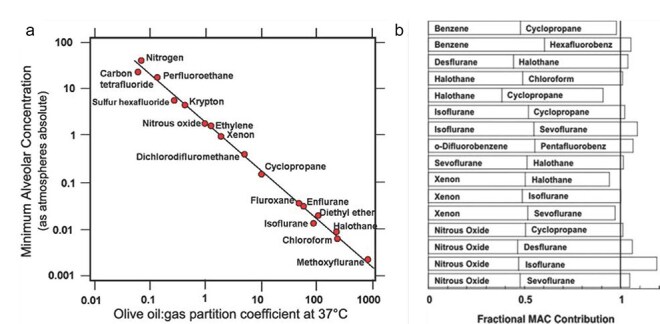
“These theoretical results essentially reproduce the Meyer–Overton correlation by assuming that anesthesia is primarily mediated by MTs.”
§ A quantum microtubule substrate of consciousness is experimentally supported and solves the binding and epiphenomenalism problems > Anesthesia and consciousness
What the sources say
- Partly supportedcites Craddock et al. 2017 matched to “Anesthetic alterations of collective terahertz oscillations in tubulin correlate with clinical potency: implications for anesthetic action and post-operative cognitive dysfunction” (2017) sourceExperimental — accuracy not yet measured
The Results (Quantum Chemical Estimate of Polarizability and MAC; page unavailable) report a strong correlation between modeled tubulin oscillations and anesthetic potency, slightly stronger than the Meyer–Overton correlation for the anesthetics studied. But the Discussion (page unavailable) calls microtubules a potential site of anesthetic action and says other candidate sites need testing; it does not assume anesthesia is primarily mediated by microtubules. (LLM, conf=0.86)
plainstates an association- Asserted: passes — The authors put it forward as true.
- Checkable: passes — It can be checked against evidence.
- Load-bearing: passes — The paper’s conclusions depend on it.
- Based: passes — The paper gives a reason why it holds.
- Partly supported
76 more claims · 26 with their cited sources checked
Create a free account to see all 129 claims and to verify the 8 references still open.
- It may state two separate claims as one. 24
- Probably not a substantial claim. 28
Claims other papers make about this one
Each is checked against this paper’s own text: does it say what the citing paper says it does?
The cited source says what the claim attributes to it.
In the citing paper
“A conceptual review by Wiest [50] argues that microtubules constitute a quantum substrate of consciousness and that Orch OR provides a unified solution to the binding problem and the epiphenomenalism problem.”
From Quantum-Inspired and Non-Classical Approaches to Consciousness: Models, Evidence and Constraints (2026) · cites this paper as [50]
Citations
Cites
James, W. (1913) · Henry Holt and Company eBooks · doi:10.1037/11059-000 · Cited by 25,226
A feature-integration theory of attention.
Treisman, A. M., & Gelade, G. (1980) · Cognitive Psychology · doi:10.1016/0010-0285(80)90005-5 · Cited by 12,366 · cited 1×
“The issue of how to incorporate this unity of consciousness into a neural model is one way to express the so-called phenomenal BP (Treisman and Gelade 1980, Treisman 1998, Revonsuo and Newman 1999, Feldman 2013).”
(1988) · Cited by 3,656
Optimal feedback control as a theory of motor coordination
Todorov, E., & Jordan, M. I. (2002) · Nature Neuroscience · doi:10.1038/nn963 · Cited by 3,081 · cited 1×
“In particular, trial-to-trial fluctuations in real movements tend to vary flexibly along task-irrelevant dimensions, which can change quickly as one adopts new goals (Todorov and Jordan 2002, Todorov 2009).”
Jackson, F. (1982) · The Philosophical Quarterly · doi:10.2307/2960077 · Cited by 2,477
The Emperor's New Mind: Concerning Computers, Minds, and The Laws of Physics
Penrose, R., & Gardner, M. (1989) · doi:10.1093/oso/9780198519737.001.0001 · Cited by 2,007
On gravity's role in quantum state reduction
Penrose, R. (1996) · General Relativity and Gravitation · doi:10.1007/bf02105068 · Cited by 1,872 · cited 5×
“This problem and solution pair was offered in Table 1 of (Hameroff and Penrose 1996) but not discussed in the text.”
InfluentialIntegrated information theory: from consciousness to its physical substrate
Tononi, G., Boly, M., Massimini, M., & Koch, C. (2016) · Nature Reviews Neuroscience · doi:10.1038/nrn.2016.44 · Cited by 1,727 · cited 1×
“In these models (Dehaene et al. 1998, Ser-gent and Dehaene 2004, Tsuchiya et al. 2015, Tononi et al. 2016, Mashour et al. 2020, Albantakis et al. 2023), the substrate of consciousness is understood to be a pattern of membrane electrical activity across a population of distributed neurons.”
The emergence of classical properties through interaction with the environment
Joos, E., & Zeh, H. D. (1985) · Zeitschrift für Physik B Condensed Matter · doi:10.1007/bf01725541 · Cited by 1,505 · cited 1×
“But quantum theory has a serious measurement problem that is not solved by decoherence (Joos and Zeh 1985, 2010, Adler 2003), which after all refers to “delocalized coherence,” not destruction of coherence (Joos and Zeh 2010).”
Jackson, F. (1986) · The Journal of Philosophy · doi:10.2307/2026143 · Cited by 1,422 · cited 1×
“Diverse contemporary thinkers have used diverse arguments to compellingly make the case that this HP is insoluble for physicalism (Jackson 1982, 1986, Chalmers 1997, Griffin 1998, Rosenberg 2004, Tononi and Koch 2015, Koch 2019, Seager et al. 2022, Stoljar 2024).”
A neuronal model of a global workspace in effortful cognitive tasks
Dehaene, S., Kerszberg, M., & Changeux, J.-P. (1998) · Proceedings of the National Academy of Sciences · doi:10.1073/pnas.95.24.14529 · Cited by 1,347
Mind in a Physical World: An Essay on the Mind-Body Problem and Mental Causation
Kim, J. (1998) · doi:10.7551/mitpress/4629.001.0001 · Cited by 1,241 · cited 2×
“…detailed analysis by Kim in terms of a concept of supervenience reaches the same conclusion: if a global consciousness is postulated to accompany physical states in a theory whose local dynamics completely specify a system’s evolution, then that consciousness must be epiphenomenal (Kim 1998).”
Conscious Processing and the Global Neuronal Workspace Hypothesis
Mashour, G. A., Roelfsema, P., Changeux, J.-P., & Dehaene, S. (2020) · Neuron · doi:10.1016/j.neuron.2020.01.026 · Cited by 1,164 · cited 1×
“In these models (Dehaene et al. 1998, Ser-gent and Dehaene 2004, Tsuchiya et al. 2015, Tononi et al. 2016, Mashour et al. 2020, Albantakis et al. 2023), the substrate of consciousness is understood to be a pattern of membrane electrical activity across a population of distributed neurons.”
Visual long-term memory has a massive storage capacity for object details
Brady, T. F., Konkle, T., Alvarez, G. A., & Oliva, A. (2008) · Proceedings of the National Academy of Sciences · doi:10.1073/pnas.0803390105 · Cited by 1,106 · cited 1×
“This is a significant issue for neuroscience because humans have immense memory capacity (Standing 1973, Brady et al. 2008) that may not be accounted for by current models.”
(1994) · CERN Document Server (European Organization for Nuclear Research) · Cited by 1,062
Models for universal reduction of macroscopic quantum fluctuations
Diósi, L. (1989) · Physical Review A · doi:10.1103/physreva.40.1165 · Cited by 1,017 · cited 1×
“The Diosi–Penrose gravitational OR scheme provides principled, nonrandom collapse events (Diosi 1987, 1989, Penrose 1996, 2014).”
Hameroff, S., & Penrose, R. (2014) · Physics of Life Reviews · doi:10.1016/j.plrev.2013.08.002 · Cited by 983 · cited 3×
“Pen-rose and Hameroff have repeatedly claimed that Orch OR solves the binding problem (BP), without much explanation (Hameroff and Penrose 2014).”
Standing, L. (1973) · Quarterly Journal of Experimental Psychology · doi:10.1080/14640747308400340 · Cited by 968 · cited 1×
“This is a significant issue for neuroscience because humans have immense memory capacity (Standing 1973, Brady et al. 2008) that may not be accounted for by current models.”
Consciousness: here, there and everywhere?
Tononi, G., & Koch, C. (2015) · Philosophical Transactions of the Royal Society B: Biological Sciences · doi:10.1098/rstb.2014.0167 · Cited by 811 · cited 1×
“Diverse contemporary thinkers have used diverse arguments to compellingly make the case that this HP is insoluble for physicalism (Jackson 1982, 1986, Chalmers 1997, Griffin 1998, Rosenberg 2004, Tononi and Koch 2015, Koch 2019, Seager et al. 2022, Stoljar 2024).”
Importance of quantum decoherence in brain processes
Tegmark, M. (2000) · Physical Review E · doi:10.1103/physreve.61.4194 · Cited by 776 · cited 2×
“The idea that MTs in a living brain could support stable macroscopic quantum effects has generally been considered extremely implausible since Tegmark’s influential estimate of decoherence times in the brain (Tegmark 2000).”
Feature binding, attention and object perception
Treisman, A. (1998) · Philosophical Transactions of the Royal Society of London. Series B: Biological Sciences · doi:10.1098/rstb.1998.0284 · Cited by 754 · cited 1×
“The issue of how to incorporate this unity of consciousness into a neural model is one way to express the so-called phenomenal BP (Treisman and Gelade 1980, Treisman 1998, Revonsuo and Newman 1999, Feldman 2013).”
Supervised Learning with Quantum Computers
Schuld, M., & Petruccione, F. (2018) · Quantum Science and Technology · doi:10.1007/978-3-319-96424-9 · Cited by 730 · cited 1×
“…conferred by the quantum process—quantum computational advantages including quantum associative memory advantages (Ventura and Martinez 2000, Schuld and Petruccione 2018)—while at the same time accounting for how that complex physical state distributed across the cortex could correspond to…”
Orchestrated reduction of quantum coherence in brain microtubules: a model for consciousness
Hameroff, S., & Penrose, R. (1996) · Mathematics and Computers in Simulation · doi:10.1016/0378-4754(96)80476-9 · Cited by 641 · cited 4×
“Multiple authors have argued that postulating a quantum substrate of consciousness solves the BP (or CP) (Marshall 1989, Stapp 1995, Hameroff and Penrose 1996, Chalmers 2013, 2017, Hameroff et al. 2014, Arkhipov 2022, Neven et al. 2024).”
InfluentialRealistic Monism: Why Physicalism Entails Panpsychism
Strawson, G. (2008) · Real Materialism · doi:10.1093/acprof:oso/9780199267422.003.0003 · Cited by 558 · cited 1×
“However, it is important to note that contemporary philosophers have proposed varied deviations from this traditional use of the term, in which the term “physical” allows for fundamental mental properties such as phenomenal consciousness (Strawson 2006, Stoljar 2024).”
No-Report Paradigms: Extracting the True Neural Correlates of Consciousness
Tsuchiya, N., Wilke, M., Frässle, S., & Lamme, V. A. F. (2015) · Trends in Cognitive Sciences · doi:10.1016/j.tics.2015.10.002 · Cited by 551 · cited 1×
“In these models (Dehaene et al. 1998, Ser-gent and Dehaene 2004, Tsuchiya et al. 2015, Tononi et al. 2016, Mashour et al. 2020, Albantakis et al. 2023), the substrate of consciousness is understood to be a pattern of membrane electrical activity across a population of distributed neurons.”
A universal master equation for the gravitational violation of quantum mechanics
Diósi, L. (1987) · Physics Letters A · doi:10.1016/0375-9601(87)90681-5 · Cited by 538 · cited 1×
“The Diosi–Penrose gravitational OR scheme provides principled, nonrandom collapse events (Diosi 1987, 1989, Penrose 1996, 2014).”
Can quantum probability provide a new direction for cognitive modeling?
Pothos, E. M., & Busemeyer, J. R. (2013) · Behavioral and Brain Sciences · doi:10.1017/s0140525x12001525 · Cited by 440 · cited 1×
“…description of actual human choice behaviors (Bordley 1998, Atmanspacher et al. 2004, Bruza et al. 2009, Conte et al. 2009b, a, Blutner et al. 2013, Pothos and Busemeyer 2013a, b; Wang et al. 2014, Bruza et al. 2015, Busemeyer et al. 2017, Zhu et al. 2020, Pothos and Busemeyer 2022) that are often…”
Panpsychism and Panprotopsychism
Chalmers, D. J. (2016) · Panpsychism · doi:10.1093/acprof:oso/9780199359943.003.0002 · Cited by 432 · cited 6×
“Chalmers (2013) reports that “it is most common to restrict physical properties in this sense.””
InfluentialEfficient computation of optimal actions
Todorov, E. (2009) · Proceedings of the National Academy of Sciences · doi:10.1073/pnas.0710743106 · Cited by 417 · cited 1×
“In particular, trial-to-trial fluctuations in real movements tend to vary flexibly along task-irrelevant dimensions, which can change quickly as one adopts new goals (Todorov and Jordan 2002, Todorov 2009).”
Do Conscious Thoughts Cause Behavior?
Baumeister, R. F., Masicampo, E. J., & Vohs, K. D. (2011) · Annual Review of Psychology · doi:10.1146/annurev.psych.093008.131126 · Cited by 404 · cited 1×
“…capable of a variety of cognitive feats (Hassin 2013), the contemporary weight of evidence still favors the idea that conscious brain processes do confer specific computational and behavioral advantages (Baars 1988, Baumeister and Masicampo 2010, Baumeister et al. 2011, 2018, Mathieson 2024a, b).”
Bayne, T. (2010) · doi:10.1093/acprof:oso/9780199215386.001.0001 · Cited by 402
Quantum computation in brain microtubules: decoherence and biological feasibility
Hagan, S., Hameroff, S. R., & Tuszyński, J. A. (2002) · Physical Review E · doi:10.1103/physreve.65.061901 · Cited by 389 · cited 1×
“However, as pointed out by Hagan et al. (2002) shortly thereafter, Tegmark assumed tubulin proteins (MT subunits) would have to form superpositions of distinct positions separated by an unrealistically large distance.”
On the Gravitization of Quantum Mechanics 1: Quantum State Reduction
Penrose, R. (2014) · Foundations of Physics · doi:10.1007/s10701-013-9770-0 · Cited by 347 · cited 4×
“Pen-rose and Hameroff have repeatedly claimed that Orch OR solves the binding problem (BP), without much explanation (Hameroff and Penrose 2014).”
InfluentialBaumeister, R. F., & Masicampo, E. J. (2010) · Psychological Review · doi:10.1037/a0019393 · Cited by 301 · cited 1×
“…capable of a variety of cognitive feats (Hassin 2013), the contemporary weight of evidence still favors the idea that conscious brain processes do confer specific computational and behavioral advantages (Baars 1988, Baumeister and Masicampo 2010, Baumeister et al. 2011, 2018, Mathieson 2024a, b).”
Albantakis, L., Barbosa, L., Findlay, G., Grasso, M., Haun, A. M., Marshall, W., Mayner, W. G. P., Zaeemzadeh, A., Boly, M., Juel, B. E., et al. (2023) · PLoS Computational Biology · doi:10.1371/journal.pcbi.1011465 · Cited by 292 · cited 1×
“In these models (Dehaene et al. 1998, Ser-gent and Dehaene 2004, Tsuchiya et al. 2015, Tononi et al. 2016, Mashour et al. 2020, Albantakis et al. 2023), the substrate of consciousness is understood to be a pattern of membrane electrical activity across a population of distributed neurons.”
Context effects produced by question orders reveal quantum nature of human judgments
Wang, Z., Solloway, T., Shiffrin, R. M., & Busemeyer, J. R. (2014) · Proceedings of the National Academy of Sciences · doi:10.1073/pnas.1407756111 · Cited by 289 · cited 3×
“…also generated novel, nontrivial quantitative predictions borne out by robust experimental evidence, particularly with regard to question order effects in which people give different answers depending on the order in which pairs of questions are posed (Wang et al. 2014, Pothos and Busemeyer 2022).”
Ventura, D. (2000) · Information Sciences · doi:10.1016/s0020-0255(99)00101-2 · Cited by 286 · cited 2×
“…accounts for physical advantages conferred by the quantum process—quantum computational advantages including quantum associative memory advantages (Ventura and Martinez 2000, Schuld and Petruccione 2018)—while at the same time accounting for how that complex physical state distributed across the…”
Quantum cognition: A new theoretical approach to psychology
Bruza, P. D., Wang, Z., & Busemeyer, J. R. (2015) · Trends in Cognitive Sciences · doi:10.1016/j.tics.2015.05.001 · Cited by 273 · cited 1×
“…1998, Atmanspacher et al. 2004, Bruza et al. 2009, Conte et al. 2009b, a, Blutner et al. 2013, Pothos and Busemeyer 2013a, b; Wang et al. 2014, Bruza et al. 2015, Busemeyer et al. 2017, Zhu et al. 2020, Pothos and Busemeyer 2022) that are often accounted for by multiple ad hoc heuristics…”
Bose condensation of strongly excited longitudinal electric modes
Fröhlich, H. (1968) · Physics Letters A · doi:10.1016/0375-9601(68)90242-9 · Cited by 273 · cited 1×
“In fact, earlier biophysical models (Frohlich 1968, 1977, Wu and Austin 1981) had demonstrated how systems of electric dipoles (like tubulin subunits of MTs) can “con-dense” into stable coherent states at high temperatures if a steady supply of metabolic energy is pumped through the system.”
Yes It Can: On the Functional Abilities of the Human Unconscious
Hassin, R. R. (2013) · Perspectives on Psychological Science · doi:10.1177/1745691612460684 · Cited by 263 · cited 1×
“Although unconscious brain processes are capable of a variety of cognitive feats (Hassin 2013), the contemporary weight of evidence still favors the idea that conscious brain processes do confer specific computational and behavioral advantages (Baars 1988, Baumeister and Masicampo 2010, Baumeister…”
Towards a comprehensive understanding of anesthetic mechanisms of action: a decade of discovery
Hemmings, H. C., Riegelhaupt, P. M., Kelz, M. B., Solt, K., Eckenhoff, R. G., Orser, B. A., & Goldstein, P. A. (2019) · Trends in Pharmacological Sciences · doi:10.1016/j.tips.2019.05.001 · Cited by 244 · cited 3×
“They are currently believed to cause unconsciousness by acting on some combination of ion channels and receptors, synaptic proteins and gap junctions, mitochondria, and cytoskeletal proteins including microtubules (MTs; Hemmings et al. 2019, Kelz and Mashour 2019, Mashour 2024).”
General Anesthetic Actions on GABAA Receptors
Garcia, P., Kolesky, S., & Jenkins, A. (2010) · Current Neuropharmacology · doi:10.2174/157015910790909502 · Cited by 241 · cited 1×
“Although spiking activity is somewhat reduced under anesthesia (Garcia et al. 2010), unconsciousness is understood to be the result of functional disconnection among brain regions rather than reduced brain activity per se (Hemmings et al. 2019, Mashour 2024).”
Bounded rationality: The adaptive toolbox
Holbrook, M. B. (2003) · Psychology & Marketing · doi:10.1002/mar.10060 · Cited by 225
Computational Rationality: Linking Mechanism and Behavior Through Bounded Utility Maximization
Lewis, R. L., Howes, A., & Singh, S. (2014) · Topics in Cognitive Science · doi:10.1111/tops.12086 · Cited by 223 · cited 1×
“…a, Blutner et al. 2013, Pothos and Busemeyer 2013a, b; Wang et al. 2014, Bruza et al. 2015, Busemeyer et al. 2017, Zhu et al. 2020, Pothos and Busemeyer 2022) that are often accounted for by multiple ad hoc heuristics under the classical framework (Gigerenzer and Selten 2001; Lewis et al. 2014).”
Pothos, E. M., & Busemeyer, J. R. (2022) · Annual Review of Psychology · doi:10.1146/annurev-psych-033020-123501 · Cited by 223 · cited 3×
“…also generated novel, nontrivial quantitative predictions borne out by robust experimental evidence, particularly with regard to question order effects in which people give different answers depending on the order in which pairs of questions are posed (Wang et al. 2014, Pothos and Busemeyer 2022).”
The Feeling of Life Itself: Why Consciousness Is Widespread but Can't Be Computed
Koch, C. (2019) · doi:10.7551/mitpress/11705.001.0001 · Cited by 208 · cited 1×
“Diverse contemporary thinkers have used diverse arguments to compellingly make the case that this HP is insoluble for physicalism (Jackson 1982, 1986, Chalmers 1997, Griffin 1998, Rosenberg 2004, Tononi and Koch 2015, Koch 2019, Seager et al. 2022, Stoljar 2024).”
CONSCIOUSNESS, INFORMATION AND PANPSYCHISM
(2002) · Theories of Consciousness · doi:10.4324/9780203053072-12 · Cited by 203
Rudimentary form of cellular "vision".
Albrecht-Buehler, G. (1992) · Proceedings of the National Academy of Sciences · doi:10.1073/pnas.89.17.8288 · Cited by 174 · cited 1×
“…during cell division, they are responsible for the movement of cilia and flagella (along with other proteins), and they can even function to detect and respond to the direction and orientation of electromagnetic signals (Albrecht-Buehler 1991, 1992, 1994, 1995)—like a cellular eye and brain!”
Biological constraints on neural network models of cognitive function
Pulvermüller, F., Tomasello, R., Henningsen-Schomers, M. R., & Wennekers, T. (2021) · Nature Reviews Neuroscience · doi:10.1038/s41583-021-00473-5 · Cited by 173 · cited 1×
“Still, it appears potentially warranted given that human reason is extremely challenging to model in terms of classical neural networks (Pulvermuller et al. 2021).”
Is there something quantum-like about the human mental lexicon?
Bruza, P., Kitto, K., Nelson, D., & McEvoy, C. (2009) · Journal of Mathematical Psychology · doi:10.1016/j.jmp.2009.04.004 · Cited by 172
Why panpsychism doesn’t help us explain consciousness
Goff, P. (2009) · dialectica · doi:10.1111/j.1746-8361.2009.01196.x · Cited by 163 · cited 2×
“Although this CP is traditionally discussed in the context of panpsychism and panprotopsychism (Seager 1995, Goff 2009, Chalmers 2017), it is critical to appreciate that “of course physical-ism is faced with its own version of the combination problem: how do microphysical entities and properties…”
Cytoskeletal signaling: is memory encoded in microtubule lattices by CaMKII phosphorylation?
Craddock, T. J. A., Tuszynski, J. A., & Hameroff, S. (2012) · PLoS Computational Biology · doi:10.1371/journal.pcbi.1002421 · Cited by 160 · cited 1×
“Consistent with the Orch OR account, the cytoskeleton does play a major role in memory (Craddock et al. 2012).”
Consciousness and the Collapse of the Wave Function
Chalmers, D. J., & McQueen, K. J. (2022) · Oxford University Press eBooks · doi:10.1093/oso/9780197501665.003.0002 · Cited by 159
Feldman, J. (2013) · Cognitive Neurodynamics · doi:10.1007/s11571-012-9219-8 · Cited by 158 · cited 1×
“The issue of how to incorporate this unity of consciousness into a neural model is one way to express the so-called phenomenal BP (Treisman and Gelade 1980, Treisman 1998, Revonsuo and Newman 1999, Feldman 2013).”
Why decoherence has not solved the measurement problem: a response to P.W. Anderson
Adler, S. L. (2003) · Studies in History and Philosophy of Science Part B: Studies in History and Philosophy of Modern Physics · doi:10.1016/s1355-2198(02)00086-2 · Cited by 155 · cited 1×
“But quantum theory has a serious measurement problem that is not solved by decoherence (Joos and Zeh 1985, 2010, Adler 2003), which after all refers to “delocalized coherence,” not destruction of coherence (Joos and Zeh 2010).”
Quantum Zeno features of bistable perception
Atmanspacher, H., Filk, T., & R�mer, H. (2004) · Biological Cybernetics · doi:10.1007/s00422-003-0436-4 · Cited by 153 · cited 1×
“This would appear theoretically undesirable, but quantum formalism provides a unified description of actual human choice behaviors (Bordley 1998, Atmanspacher et al. 2004, Bruza et al. 2009, Conte et al. 2009b, a, Blutner et al. 2013, Pothos and Busemeyer 2013a, b; Wang et al. 2014, Bruza et al.…”
The Biology of General Anesthesia from Paramecium to Primate
Kelz, M. B., & Mashour, G. A. (2019) · Current Biology · doi:10.1016/j.cub.2019.09.071 · Cited by 151 · cited 2×
“They are currently believed to cause unconsciousness by acting on some combination of ion channels and receptors, synaptic proteins and gap junctions, mitochondria, and cytoskeletal proteins including microtubules (MTs; Hemmings et al. 2019, Kelz and Mashour 2019, Mashour 2024).”
Mental States Follow Quantum Mechanics During Perception and Cognition of Ambiguous Figures
Conte, E., Khrennikov, A. Y., Todarello, O., Federici, A., Mendolicchio, L., & Zbilut, J. P. (2009) · Open Systems & Information Dynamics · doi:10.1142/s1230161209000074 · Cited by 150 · cited 1×
“…but quantum formalism provides a unified description of actual human choice behaviors (Bordley 1998, Atmanspacher et al. 2004, Bruza et al. 2009, Conte et al. 2009b, a, Blutner et al. 2013, Pothos and Busemeyer 2013a, b; Wang et al. 2014, Bruza et al. 2015, Busemeyer et al. 2017, Zhu et al.…”
Sergent, C., & Dehaene, S. (2004) · Journal of Physiology-Paris · doi:10.1016/j.jphysparis.2005.09.006 · Cited by 139 · cited 1×
“In these models (Dehaene et al. 1998, Ser-gent and Dehaene 2004, Tsuchiya et al. 2015, Tononi et al. 2016, Mashour et al. 2020, Albantakis et al. 2023), the substrate of consciousness is understood to be a pattern of membrane electrical activity across a population of distributed neurons.”
Consciousness and Bose-Einstein condensates
Marshall, I. N. (1989) · New Ideas in Psychology · doi:10.1016/0732-118x(89)90038-x · Cited by 139 · cited 2×
“Given these premises, rigorous reflection (Marshall 1989, Stapp 1995) shows that a system of classically interacting parts cannot provide a satisfactory substrate for causally effective spatially distributed wholes such as our conscious states.”
Long range coherence in biological systems
Fröhlich, H. (1977) · La Rivista Del Nuovo Cimento Series 2 · doi:10.1007/bf02747279 · Cited by 137 · cited 1×
“In fact, earlier biophysical models (Frohlich 1968, 1977, Wu and Austin 1981) had demonstrated how systems of electric dipoles (like tubulin subunits of MTs) can “con-dense” into stable coherent states at high temperatures if a steady supply of metabolic energy is pumped through the system.”
Anesthesia and the neurobiology of consciousness
Mashour, G. A. (2024) · Neuron · doi:10.1016/j.neuron.2024.03.002 · Cited by 127 · cited 3×
“They are currently believed to cause unconsciousness by acting on some combination of ion channels and receptors, synaptic proteins and gap junctions, mitochondria, and cytoskeletal proteins including microtubules (MTs; Hemmings et al. 2019, Kelz and Mashour 2019, Mashour 2024).”
Rosenberg, G. H. (2004) · doi:10.1093/acprof:oso/9780195168143.001.0001 · Cited by 122 · cited 3×
“…by a neutral underlying reality with physical and mental properties (Spinoza/Whitehead/Rus-sell), 2. causality is implemented by the physical properties and degrees of freedom alone (the “scientific default”), or 3. causality is implemented by protophenomenal properties alone (Rosenberg 2004).”
Is a new paradigm needed to explain how inhaled anesthetics produce immobility?
Eger, E. I., Raines, D. E., Shafer, S. L., Hemmings, H. C., & Sonner, J. M. (2008) · Anesthesia & Analgesia · doi:10.1213/ane.0b013e318182aedb · Cited by 119
The conscious mind: In search of a fundamental theory
Gregory, F. (1998) · International Journal of Quantum Chemistry · doi:10.1002/(sici)1097-461x(1998)66:1<107::aid-qua9>3.0.co;2-z · Cited by 119
Surface extensions of 3T3 cells towards distant infrared light sources.
Albrecht‐Buehler, G. (1991) · The Journal of Cell Biology · doi:10.1083/jcb.114.3.493 · Cited by 119 · cited 1×
“…during cell division, they are responsible for the movement of cilia and flagella (along with other proteins), and they can even function to detect and respond to the direction and orientation of electromagnetic signals (Albrecht-Buehler 1991, 1992, 1994, 1995)—like a cellular eye and brain!”
Reimers, J. R., McKemmish, L. K., McKenzie, R. H., Mark, A. E., & Hush, N. S. (2009) · Proceedings of the National Academy of Sciences · doi:10.1073/pnas.0806273106 · Cited by 116
The unity of consciousness and the split-brain syndrome
Bayne, T., & Journal of Philosophy, I. (2008) · Journal of Philosophy · doi:10.5840/jphil2008105638 · Cited by 112 · cited 1×
“The unity of consciousness has been comprehensively defended by Timothy Bayne and others (Cleeremans et al. 2000, Bayne 2008, 2010).”
Craddock, T. J. A., Kurian, P., Preto, J., Sahu, K., Hameroff, S. R., Klobukowski, M., & Tuszynski, J. A. (2017) · Scientific Reports · doi:10.1038/s41598-017-09992-7 · Cited by 109
Active inference as a theory of sentient behavior
Pezzulo, G., Parr, T., & Friston, K. (2024) · Biological Psychology · doi:10.1016/j.biopsycho.2023.108741 · Cited by 109 · cited 1×
“Friston and colleagues have developed an impressive general “active inference” formalism for path-integral-style optimization of behavior and learning (Pezzulo et al. 2024), but it is missing a realistic physical implementation in the brain.”
The Bayesian sampler: Generic Bayesian inference causes incoherence in human probability judgments.
Zhu, J.-Q., Sanborn, A. N., & Chater, N. (2020) · Psychological Review · doi:10.1037/rev0000190 · Cited by 97 · cited 1×
“…et al. 2009, Conte et al. 2009b, a, Blutner et al. 2013, Pothos and Busemeyer 2013a, b; Wang et al. 2014, Bruza et al. 2015, Busemeyer et al. 2017, Zhu et al. 2020, Pothos and Busemeyer 2022) that are often accounted for by multiple ad hoc heuristics under the classical framework (Gigerenzer and…”
How quantum brain biology can rescue conscious free will
Hameroff, S. (2012) · Frontiers in Integrative Neuroscience · doi:10.3389/fnint.2012.00093 · Cited by 95 · cited 2×
“Moreover, this aspect of the theory provides a basis for Whitehead’s ontology founded on a notion of “creativity” or “freedom” (Hameroff 2012), which is absent from Russell’s neutral monism.”
Alterations in rat brain proteins after desflurane anesthesia
Fütterer, C. D., Maurer, M. H., Schmitt, A., Feldmann, R. E., Kuschinsky, W., & Waschke, K. F. (2004) · Anesthesiology · doi:10.1097/00000542-200402000-00019 · Cited by 93 · cited 1×
“Indeed, volatile anesthetics bind to MTs (Pan et al. 2008) resulting in altered gene expression (Futterer et al. 2004, Kalenka et al. 2007), and a behavioral experiment demonstrated that an anthracene-based anesthetic reversibly immobilized tadpoles by acting on their MTs (Emerson et al. 2013).”
Ultraviolet superradiance from mega-networks of tryptophan in biological architectures
Babcock, N. S., Montes-Cabrera, G., Oberhofer, K. E., Chergui, M., Celardo, G. L., & Kurian, P. (2024) · The Journal of Physical Chemistry B · doi:10.1021/acs.jpcb.3c07936 · Cited by 93
Revonsuo, A., & Newman, J. (1999) · Consciousness and Cognition · doi:10.1006/ccog.1999.0393 · Cited by 91 · cited 1×
“The issue of how to incorporate this unity of consciousness into a neural model is one way to express the so-called phenomenal BP (Treisman and Gelade 1980, Treisman 1998, Revonsuo and Newman 1999, Feldman 2013).”
Experimental indications of non-classical brain functions
Kerskens, C. M., & López Pérez, D. (2022) · Journal of Physics Communications · doi:10.1088/2399-6528/ac94be · Cited by 88 · cited 2×
“…correlated with short-term memory performance (Pérez et al. 2023) and the presence or absence of the conscious state itself in sleep vs. waking (Kerskens and Pérez 2022), the authors concluded that the quantum brain processes are likely an important part of our cognitive and conscious brain…”
Anesthetics Act in Quantum Channels in Brain Microtubules to Prevent Consciousness
Craddock, T. J. A., Hameroff, S. R., T. Ayoub, A., Klobukowski, M., & Tuszynski, J. A. (2015) · Current Topics in Medicinal Chemistry · doi:10.2174/1568026615666150225104543 · Cited by 85 · cited 1×
“Remarkably, a detailed quantum chemical modeling study found that the potencies of several volatile anesthetics were predicted by their binding affinity to delocalized electron sites within the tubulin subunits that make up MTs (Craddock et al. 2015, 2017).”
'Orch OR' is the most complete, and most easily falsifiable theory of consciousness
Hameroff, S. (2021) · Cognitive Neuroscience · doi:10.1080/17588928.2020.1839037 · Cited by 84 · cited 1×
“Beyond that, neural MTs are identified as the substrate of the quantum conscious process by the Orch OR theory (Penrose and Hameroff 1995, Hameroff and Penrose 1996, 2014, Hameroff 2021) because they appear to offer an ideal candidate medium for intracellular integration and adaptive responding.”
Isoflurane inhibits the neurotransmitter release machinery
Herring, B. E., Xie, Z., Marks, J., & Fox, A. P. (2009) · Journal of Neurophysiology · doi:10.1152/jn.00252.2009 · Cited by 83 · cited 1×
“In fact the anesthetic isoflurane does inhibit synaptic transmission, but the mechanisms by which it does so do not appear to involve MTs (Herring et al. 2009, Zimin et al. 2018), so this possibility does not seem to be supported at present.”
Sonner, J. M., Werner, D. F., Elsen, F. P., Xing, Y., Liao, M., Harris, R. A., Harrison, N. L., Fanselow, M. S., Eger, E. I., & Homanics, G. E. (2007) · Anesthesiology · doi:10.1097/00000542-200701000-00019 · Cited by 82 · cited 1×
“For example, binding to GABA receptors does appear to contribute to unconsciousness caused by isoflurane because mice with nonfunctional GABARs are somewhat resistant to isoflurane (Sonner et al. 2007).”
Electronic energy migration in microtubules
Kalra, A. P., Benny, A., Travis, S. M., Zizzi, E. A., Morales-Sanchez, A., Oblinsky, D. G., Craddock, T. J. A., Hameroff, S. R., MacIver, M. B., Tuszyński, J. A., et al. (2023) · ACS Central Science · doi:10.1021/acscentsci.2c01114 · Cited by 80 · cited 1×
“More-over, quantum optical effects in MTs were shown to be dampened by inhalational anesthetics (Kalra et al. 2023), supporting the view of anesthesia I outlined in the previous section.”
Cellular infrared detector appears to be contained in the centrosome
Albrecht‐Buehler, G. (1994) · Cell Motility · doi:10.1002/cm.970270307 · Cited by 78 · cited 1×
“…during cell division, they are responsible for the movement of cilia and flagella (along with other proteins), and they can even function to detect and respond to the direction and orientation of electromagnetic signals (Albrecht-Buehler 1991, 1992, 1994, 1995)—like a cellular eye and brain!”
Isoflurane disrupts excitatory neurotransmitter dynamics via inhibition of mitochondrial complex I
Zimin, P. I., Woods, C. B., Kayser, E. B., Ramirez, J. M., Morgan, P. G., & Sedensky, M. M. (2018) · British Journal of Anaesthesia · doi:10.1016/j.bja.2018.01.036 · Cited by 76 · cited 1×
“In fact the anesthetic isoflurane does inhibit synaptic transmission, but the mechanisms by which it does so do not appear to involve MTs (Herring et al. 2009, Zimin et al. 2018), so this possibility does not seem to be supported at present.”
Saxena, K., Singh, P., Sahoo, P., Sahu, S., Ghosh, S., Ray, K., Fujita, D., & Bandyopadhyay, A. (2020) · Fractal and Fractional · doi:10.3390/fractalfract4020011 · Cited by 71 · cited 1×
“Similarly, Anirban Bandyopadhyay and colleagues stimulated MT resonances in cultured neurons and observed the MT resonance state “spanning across multiple neurons and controlling membrane voltage” (Saxena et al. 2020, Singh et al. 2021a, b).”
Consciousness, information and panpsychism
(2016) · Theories of Consciousness · doi:10.4324/9780203485583-14 · Cited by 70
Quantum effects in the understanding of consciousness
Hameroff, S. R., Craddock, T. J. A., & Tuszynski, J. A. (2014) · Journal of Integrative Neuroscience · doi:10.1142/s0219635214400093 · Cited by 67
Direct modulation of microtubule stability contributes to anthracene general anesthesia
Emerson, D. J., Weiser, B. P., Psonis, J., Liao, Z., Taratula, O., Fiamengo, A., Wang, X., Sugasawa, K., Smith, A. B., Eckenhoff, R. G., et al. (2013) · Journal of the American Chemical Society · doi:10.1021/ja311171u · Cited by 63
Li, N., Lu, D., Yang, L., Tao, H., Xu, Y., Wang, C., Fu, L., Liu, H., Chummum, Y., & Zhang, S. (2018) · Anesthesiology · doi:10.1097/aln.0000000000002226 · Cited by 63 · cited 1×
“Interestingly, anesthesia research has also implicated nuclear spin in the mechanism of anesthesia (Li et al. 2018).”
A Quantum Probability Perspective on Borderline Vagueness
Blutner, R., Pothos, E. M., & Bruza, P. (2013) · Topics in Cognitive Science · doi:10.1111/tops.12041 · Cited by 58 · cited 1×
“…provides a unified description of actual human choice behaviors (Bordley 1998, Atmanspacher et al. 2004, Bruza et al. 2009, Conte et al. 2009b, a, Blutner et al. 2013, Pothos and Busemeyer 2013a, b; Wang et al. 2014, Bruza et al. 2015, Busemeyer et al. 2017, Zhu et al. 2020, Pothos and Busemeyer…”
Bordley, R. F. (1998) · Operations Research · doi:10.1287/opre.46.6.923 · Cited by 55 · cited 1×
“This would appear theoretically undesirable, but quantum formalism provides a unified description of actual human choice behaviors (Bordley 1998, Atmanspacher et al. 2004, Bruza et al. 2009, Conte et al. 2009b, a, Blutner et al. 2013, Pothos and Busemeyer 2013a, b; Wang et al. 2014, Bruza et al.…”
Singh, P., Sahoo, P., Saxena, K., Manna, J. S., Ray, K., Ghosh, S., & Bandyopadhyay, A. (2021) · Symmetry · doi:10.3390/sym13050821 · Cited by 52
Plausibility of quantum coherent states in biological systems
Salari, V., Tuszyński, J. A., Rahnama, M., & Bernroider, G. (2011) · Journal of Physics Conference Series · doi:10.1088/1742-6596/306/1/012075 · Cited by 50 · cited 1×
“However, this later study modeled one-dimensional polymers rather than tubular MTs (Salari et al. 2011).”
A recurrent quantum neural network model to describe eye tracking of moving targets
Behera, L., Kar, I., & Elitzur, A. C. (2005) · Foundations of Physics Letters · doi:10.1007/s10702-005-7125-6 · Cited by 48 · cited 1×
“This vague conjecture is realized in an impressive concrete form in a fascinating quantum model of visual pursuit—how our brain moves our eyes to follow a moving visual target (Behera et al. 2005).”
The effects of sevoflurane anesthesia on rat brain proteins: a proteomic time-course analysis
Kalenka, A., Hinkelbein, J., Feldmann, R. E., Kuschinsky, W., Waschke, K. F., & Maurer, M. H. (2007) · Anesthesia & Analgesia · doi:10.1213/01.ane.0000260799.37107.e6 · Cited by 47 · cited 1×
“Indeed, volatile anesthetics bind to MTs (Pan et al. 2008) resulting in altered gene expression (Futterer et al. 2004, Kalenka et al. 2007), and a behavioral experiment demonstrated that an anthracene-based anesthetic reversibly immobilized tadpoles by acting on their MTs (Emerson et al. 2013).”
Black holes, quantum theory and cosmology
Penrose, R. (2009) · Journal of Physics Conference Series · doi:10.1088/1742-6596/174/1/012001 · Cited by 42 · cited 1×
“Although it is widely believed that the second law of thermodynamics explains the arrow of time, this statistical explanation is incoherent without some irreversibility in the fundamental physical dynamics (Penrose 2009, Kastner 2017).”
Changes of cell behavior by near‐infrared signals
Albrecht‐Buehler, G. (1995) · Cell Motility and the Cytoskeleton · doi:10.1002/cm.970320406 · Cited by 41 · cited 1×
“…during cell division, they are responsible for the movement of cilia and flagella (along with other proteins), and they can even function to detect and respond to the direction and orientation of electromagnetic signals (Albrecht-Buehler 1991, 1992, 1994, 1995)—like a cellular eye and brain!”
Conte, E., Khrennikov, A. Y., Todarello, O., Federici, A., & Zbilut, J. P. (2009) · NeuroQuantology · doi:10.14704/nq.2009.7.2.225 · Cited by 41
Neural implementation of operations used in quantum cognition
Busemeyer, J. R., Fakhari, P., & Kvam, P. (2017) · Progress in Biophysics and Molecular Biology · doi:10.1016/j.pbiomolbio.2017.04.007 · Cited by 41 · cited 2×
“…et al. 2004, Bruza et al. 2009, Conte et al. 2009b, a, Blutner et al. 2013, Pothos and Busemeyer 2013a, b; Wang et al. 2014, Bruza et al. 2015, Busemeyer et al. 2017, Zhu et al. 2020, Pothos and Busemeyer 2022) that are often accounted for by multiple ad hoc heuristics under the classical…”
Invariants in probabilistic reasoning
Costello, F., & Watts, P. (2017) · Cognitive Psychology · doi:10.1016/j.cogpsych.2017.11.003 · Cited by 40 · cited 1×
“It is conceivable that this body of data might be explained by purely classical neural network mechanisms (Busemeyer et al. 2017, Costello and Watts 2018, Costello et al. 2018), but the plausibility and generality of such schemes are questionable.”
Singh, P., Saxena, K., Sahoo, P., Ghosh, S., & Bandyopadhyay, A. (2021) · Journal of Neurophysiology · doi:10.1152/jn.00478.2020 · Cited by 40 · cited 1×
“Similarly, Anirban Bandyopadhyay and colleagues stimulated MT resonances in cultured neurons and observed the MT resonance state “spanning across multiple neurons and controlling membrane voltage” (Saxena et al. 2020, Singh et al. 2021a, b).”
Inhaled anesthetics elicit region-specific changes in protein expression in mammalian brain
Pan, J. Z., Xi, J., Eckenhoff, M. F., & Eckenhoff, R. G. (2008) · PROTEOMICS · doi:10.1002/pmic.200800057 · Cited by 39 · cited 1×
“Indeed, volatile anesthetics bind to MTs (Pan et al. 2008) resulting in altered gene expression (Futterer et al. 2004, Kalenka et al. 2007), and a behavioral experiment demonstrated that an anthracene-based anesthetic reversibly immobilized tadpoles by acting on their MTs (Emerson et al. 2013).”
Anesthetics, Anesthesia, and Plants
Yokawa, K., Kagenishi, T., & Baluška, F. (2019) · Trends in Plant Science · doi:10.1016/j.tplants.2018.10.006 · Cited by 35 · cited 1×
“Remarkably, the same anesthetic vapors that make us unconscious also reversibly slow or halt motility in single-celled organisms and plants (Kelz and Mashour 2019, Yokawa et al. 2019).”
Testing the Conjecture That Quantum Processes Create Conscious Experience
Neven, H., Read, P., Kosik, K. S., Van der Molen, T., Bouwmeester, D., Bodnia, E., Turin, L., & Koch, C. (2024) · doi:10.20944/preprints202402.1751.v1 · Cited by 33 · cited 1×
“Multiple authors have argued that postulating a quantum substrate of consciousness solves the BP (or CP) (Marshall 1989, Stapp 1995, Hameroff and Penrose 1996, Chalmers 2013, 2017, Hameroff et al. 2014, Arkhipov 2022, Neven et al. 2024).”
Fröhlich's model of bose condensation in biological systems
Wu, T. M., & Austin, S. J. (1981) · Journal of Biological Physics · doi:10.1007/bf01987286 · Cited by 32 · cited 1×
“In fact, earlier biophysical models (Frohlich 1968, 1977, Wu and Austin 1981) had demonstrated how systems of electric dipoles (like tubulin subunits of MTs) can “con-dense” into stable coherent states at high temperatures if a steady supply of metabolic energy is pumped through the system.”
On Quantum Collapse as a Basis for the Second Law of Thermodynamics
Kastner, R. E. (2017) · Entropy · doi:10.3390/e19030106 · Cited by 30 · cited 1×
“Although it is widely believed that the second law of thermodynamics explains the arrow of time, this statistical explanation is incoherent without some irreversibility in the fundamental physical dynamics (Penrose 2009, Kastner 2017).”
Microtubule-stabilizer epothilone B delays anesthetic-induced unconsciousness in rats
Khan, S., Huang, Y., Timuçin, D., Bailey, S., Lee, S., Lopes, J., Gaunce, E., Mosberger, J., Zhan, M., Abdelrahman, B., et al. (2024) · eneuro · doi:10.1523/eneuro.0291-24.2024 · Cited by 30 · cited 1×
“Most recently, my lab reported that rats administered with a brain-penetrant MT-binding drug took significantly longer to fall uncon-scious under the volatile anesthetic isoflurane (Khan et al. 2024), suggesting that isoflurane causes unconsciousness at least in part by binding to MTs.”
Self-citationSurprising rationality in probability judgment: Assessing two competing models
Costello, F., Watts, P., & Fisher, C. R. (2017) · Cognition · doi:10.1016/j.cognition.2017.08.012 · Cited by 26 · cited 1×
“It is conceivable that this body of data might be explained by purely classical neural network mechanisms (Busemeyer et al. 2017, Costello and Watts 2018, Costello et al. 2018), but the plausibility and generality of such schemes are questionable.”
Mavromatos, N. E., & Nanopoulos, D. V. (1997) · International Journal of Modern Physics B · doi:10.1142/s0217979297000460 · Cited by 26 · cited 1×
“If that particular theory of nonrandom OR is not supported by future experiments, there are others we can consider (Mavromatos and Nanopoulos 1997, Adler and Bassi 2016).”
Gravitational decoherence for mesoscopic systems
Adler, S. L., & Bassi, A. (2015) · Physics Letters A · doi:10.1016/j.physleta.2015.10.064 · Cited by 26 · cited 1×
“If that particular theory of nonrandom OR is not supported by future experiments, there are others we can consider (Mavromatos and Nanopoulos 1997, Adler and Bassi 2016).”
On the Necessity of Consciousness for Sophisticated Human Action
Baumeister, R. F., Lau, S., Maranges, H. M., & Clark, C. J. (2018) · Frontiers in Psychology · doi:10.3389/fpsyg.2018.01925 · Cited by 26
Quantum principles in psychology: The debate, the evidence, and the future
Pothos, E. M., & Busemeyer, J. R. (2013) · Behavioral and Brain Sciences · doi:10.1017/s0140525x12003226 · Cited by 25
Illusionism Big and Small: Some Options for Explaining Consciousness
Graziano, M. S. A. (2024) · eNeuro · doi:10.1523/eneuro.0210-24.2024 · Cited by 24 · cited 1×
“Alternative viewpoints that do not recognize the HP as a valid problem are reviewed in Graziano (2024).”
López Pérez, D., Bokde, A. L. W., & Kerskens, C. M. (2023) · The European Physical Journal Special Topics · doi:10.1140/epjs/s11734-022-00696-2 · Cited by 20 · cited 2×
“…for, and potential advantages of, a quantum conscious process in the human brain In a recent series of experiments, Kerskens and Pérez (2022) and Pérez et al. (2023) used a novel quantum entanglement-detection method applied to conscious humans in a magnetic resonance imaging (MRI) scanner.”
Taxane modulation of anesthetic sensitivity in surgery for nonmetastatic breast cancer
Linganna, R. E., Levy, W. J., Dmochowski, I. J., Eckenhoff, R. G., & Speck, R. M. (2015) · Journal of Clinical Anesthesia · doi:10.1016/j.jclinane.2015.05.001 · Cited by 18 · cited 1×
“Similarly, a clinical study of anesthetic usage by human surgery patients given MT-stabilizing chemotherapy (which generally penetrates poorly into the brain) compared to control subjects found a slight anesthetic resistance in the patients given the MT-binding drug (Linganna et al. 2015).”
Anesthetic Action and “Quantum Consciousness”: A Match Made in Olive Oil
Hameroff, S. R. (2018) · Anesthesiology · doi:10.1097/aln.0000000000002273 · Cited by 14 · cited 1×
“This result is baffling on the assumption that anesthetics work by standard chemical (i.e. electronic) binding at receptors, but understandable in terms of a quantum model of consciousness (Hameroff 2018).”
Non-Separability of Physical Systems as a Foundation of Consciousness
Arkhipov, A. S. (2022) · Entropy · doi:10.3390/e24111539 · Cited by 12 · cited 1×
“Multiple authors have argued that postulating a quantum substrate of consciousness solves the BP (or CP) (Marshall 1989, Stapp 1995, Hameroff and Penrose 1996, Chalmers 2013, 2017, Hameroff et al. 2014, Arkhipov 2022, Neven et al. 2024).”
Three groups close the loopholes in tests of Bell’s theorem
Miller, J. L. (2016) · Physics Today · doi:10.1063/pt.3.3039 · Cited by 9 · cited 2×
“Bell proved that no local theory can account for the predictions of quantum mechanics—and the predictions of quantum mechanics are borne out by solid experiments over decades (Miller 2016, Kaiser 2020).”
Anesthesia and the Meyer-Overton rule. I. potencies and perturbations
Katz, Y. (1994) · Journal of Theoretical Biology · doi:10.1006/jtbi.1994.1054 · Cited by 8 · cited 1×
“First, there is the venerable Meyer–Overton correlation (Katz 1994) between anesthetic potency and solubility in olive oil over several orders of magnitude (Fig.”
Quantum Legacies: Dispatches from an Uncertain World
Kaiser, D., & Lightman, A. (2020) · doi:10.7208/chicago/9780226698199.001.0001 · Cited by 7 · cited 2×
“Bell proved that no local theory can account for the predictions of quantum mechanics—and the predictions of quantum mechanics are borne out by solid experiments over decades (Miller 2016, Kaiser 2020).”
Warren, W. S. (2023) · Journal of Physics Communications · doi:10.1088/2399-6528/acc4a8 · Cited by 5 · cited 1×
“Their interpretation in terms of entanglement has been challenged (Warren 2023), but that author offered no alternative classical account of the signal observed by Kerskens and Pérez.”
Psychological Epiphenomenalism
Mathieson, D. (2024) · Journal of Consciousness Studies · doi:10.53765/20512201.31.3.120 · Cited by 3 · cited 1×
“…capable of a variety of cognitive feats (Hassin 2013), the contemporary weight of evidence still favors the idea that conscious brain processes do confer specific computational and behavioral advantages (Baars 1988, Baumeister and Masicampo 2010, Baumeister et al. 2011, 2018, Mathieson 2024a, b).”
Consciousness, Causation, and Confusion
Mathieson, D. (2024) · Review of Philosophy and Psychology · doi:10.1007/s13164-024-00762-9 · Cited by 3 · cited 1×
“…capable of a variety of cognitive feats (Hassin 2013), the contemporary weight of evidence still favors the idea that conscious brain processes do confer specific computational and behavioral advantages (Baars 1988, Baumeister and Masicampo 2010, Baumeister et al. 2011, 2018, Mathieson 2024a, b).”
Coming to terms with decoherence
Joos, E., & Zeh, H. D. (2010) · Physics Today · doi:10.1063/1.3463639 · Cited by 1 · cited 1×
“But quantum theory has a serious measurement problem that is not solved by decoherence (Joos and Zeh 1985, 2010, Adler 2003), which after all refers to “delocalized coherence,” not destruction of coherence (Joos and Zeh 2010).”
Research works printed but not linked: 8
- Chalmers D. The combination problem for panpsychism. In: Brüntrup G and Jaskolla L (eds), Panpsychism. Oxford, UK: Oxford University Press, 2017, 1– 37.
- Cleeremans A, Chalmers D, Cleeremans A et al. The unity of consciousness: binding, integration, and dissociation - Brussels, Belgium, June 29-July 2, 2000. Conscious Cogn 2000; 9: S1– 2.10979480
- Griffin D. Unsnarling the World-Knot. Oakland, CA: University of California Press, 1998
- Penrose R, Hameroff S. Gaps? What gaps? Reply to Grush and Churchland. J Conscious Stud 1995; 2: 98.
- Russell B. The Analysis of Matter. Oxfordshire, UK: Routledge, 1929.
- Spinoza B. Ethics. New York, NY: Penguin, 2005
- Stapp H. Why classical mechanics cannot accommodate consciousness but quantum mechanics can. Psyche 1995; 2: 1– 23.
- Whitehead A. Process and Reality Corrected Edition. Washington, DC: Free Press, 1933.
Cited by
Keppler, J. (2025) · Frontiers in Human Neuroscience · doi:10.3389/fnhum.2025.1676585 · Cited by 13
“This hypothesis forms the backbone of the Orch OR theory, according to which conscious events are associated with orchestrated quantum processes in neuronal MTs (Hameroff and Penrose, 2014), a path that has recently been taken up again (Wiest, 2025).”
Huang, Y., Qiu, Z., Yu, X., Lee, S., Zeng, X., Chang, A., & Wiest, M. C. (2026) · Neuropharmacology · doi:10.1016/j.neuropharm.2026.110834 · Cited by 5
Self-citationWiest, M. C., & Puniani, A. S. (2025) · Computational and Structural Biotechnology Journal · doi:10.1016/j.csbj.2025.09.017 · Cited by 6
“If sentient biological systems have evolved a way to map their “ personal problems ” onto the potential U(x) in a quantum system manifesting this universal optimization process, the quantum dynamic could naturally implement active inference [126].”
Self-citationQuantum biology: From mechanisms to medicine
Sung, J., & Cheong, J. (2026) · Clinical and Translational Medicine · doi:10.1002/ctm2.70694 · Cited by 5
“The Penrose–Hameroff orchestrated objective reduction 125 hypothesis proposes that microtubules within neurons sustain quantum coherent states that may contribute to consciousness.”
Wiest, M. C. (2025) · Medical Gas Research · doi:10.4103/mgr.medgasres-d-25-00111 · Cited by 2
“10 Thus, a deeper understanding of MT physiology will likely be central to understanding the brain’s basis of memory as well as consciousness.”
InfluentialSelf-citation
Metadata
- Authors
- Wiest, M. C.
- Affiliations
- Wellesley College (US)
- Corresponding author
- Wiest, Michael C
- ORCID
- Wiest, Michael C
- Venue
- Neuroscience of Consciousness
- Publisher
- Oxford University Press (OUP)
- Published
- 2025
- Volume
- 2025
- Issue
- 1
- Pages
- niaf011-niaf011
- ISSN
- 2057-2107 (ISSN-L)
- PMC
- PMC12060853
- OpenAlex
- W4410192571
- Cited by
- 34
- References
- 129
- Citations by year
- 2026: 27 · 2025: 7
- FWCI
- 35.35
- Type
- journal article
- Language
- en
- Open access
- gold
- doi.org
- Locations
- Neuroscience of Consciousness (publishedVersion, cc-by)
- PubMed Central (publishedVersion, cc-by)
- PubMed (publishedVersion)
- Topics
- Social Sciences › Arts and Humanities › Philosophy › Philosophy and Theoretical Science
- Health Sciences › Medicine › Complementary and alternative medicine › Biofield Effects and Biophysics
- Social Sciences › Psychology › Social Psychology › Paranormal Experiences and Beliefs
- Keywords
- quantum consciousness, microtubules, Orchestrated Objective Reduction, Penrose-Hameroff, inhalational anesthetics, macroscopic quantum entanglement, working memory, epiphenomenalism, hard problem of consciousness, quantum brain
About these checks
Registry, retraction, Cites and statistics results are computed, not judged, with one exception: a printed reference that no index lists is read once by a model before it counts as a citation error. Claims are extracted by a model and kept only when their quote appears verbatim in the text; each cited source is then checked, with a model’s help, for whether it says what the claim relies on. Those verdicts can be wrong — read the claim’s quote and the cited source before relying on one.
The claim verdicts this report counts are experimental: their accuracy is not yet measured.
A language model drew the claims from the paper on 2026-10-10, under version 3 of the claim definition (model deepseek-v4.1-flash, prompt extract-v3).
A second model labelled each claim on 2026-10-10 (model jev-1.13-20260917, definition revision gold-guideline-v0.2).
Cited sources are checked with a language model’s help (gpt-6-sol).
Statistics and arithmetic are recomputed, not judged.
Confidence bands are shown only for fields calibrated on our annotated test set. None is calibrated yet, so no band is shown.
What counts as a claim ›How we measure confidence ›How we check this ›
Are you an author, or do you see a problem with this page? Request a review
Data sources
Bibliographic data: Semantic Scholar, OpenAlex, Crossref.
Contains information from the Semantic Scholar Academic Graph Datasets, made available under the ODC Attribution License (ODC-BY 1.0).
Semantic Scholar’s data is described in: Kinney, R., et al. (2023). The Semantic Scholar Open Data Platform. arXiv:2301.10140.
