

Comparisons of the effects of different flaxseed products consumption on lipid profiles, inflammatory cytokines and anthropometric indices in patients with dyslipidemia related diseases: systematic review and a dose-response meta-analysis of randomized controlled trials
Open accessThe DOI matches its Crossref record; 95 of the 95 references it cites were found in a registry or an index; 16 of the 42 sources its claims cite were checked for support.
Abstract
This systematic review and dose-response meta-analysis of randomized controlled trials evaluated effects of different flaxseed products on lipid profiles and inflammatory parameters in patients with dyslipidemia related diseases.
Overview
CoChat Summary
## TL;DR
This systematic review and dose-response meta-analysis of 31 RCTs (1,698 participants) found that flaxseed products had beneficial effects on several lipid, inflammatory, and some anthropometric outcomes in patients with dyslipidemia-related diseases, but effects differed by product type. Whole flaxseed and lignans mainly improved lipid measures, while flaxseed oil mainly reduced inflammatory markers.
## Key findings
- 31 RCTs involving 1,698 participants were included; 875 were assigned to flaxseed interventions and 823 to controls.
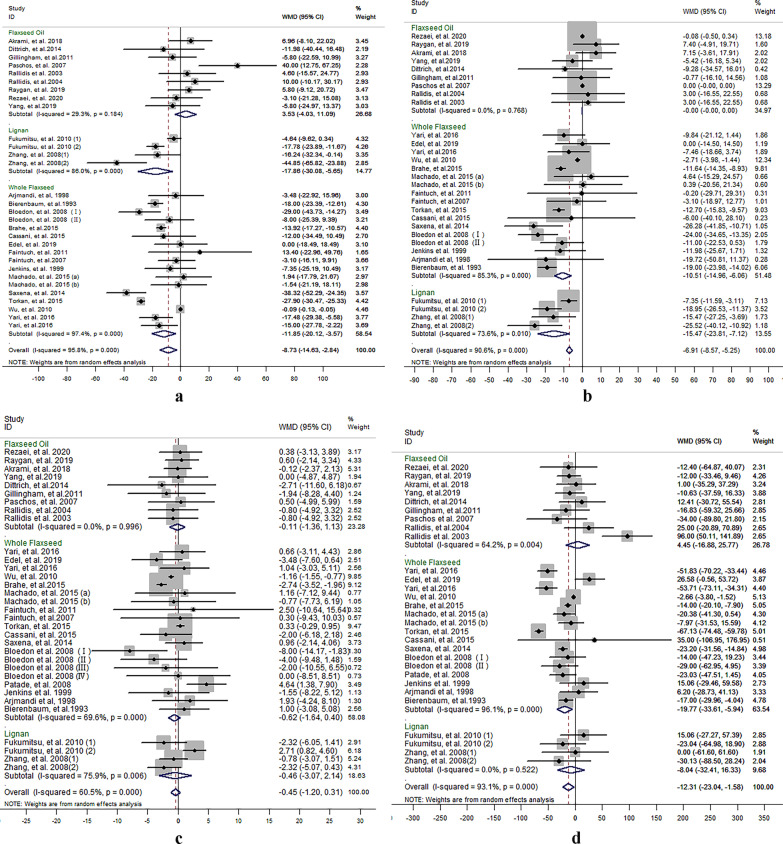
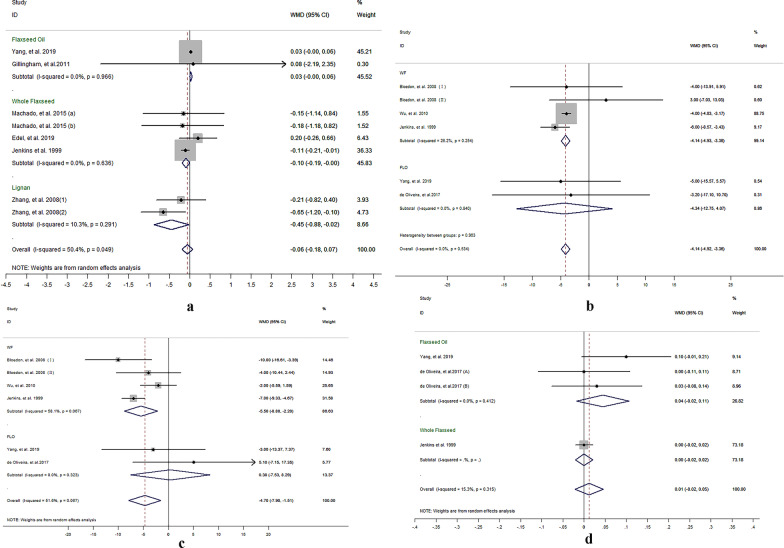
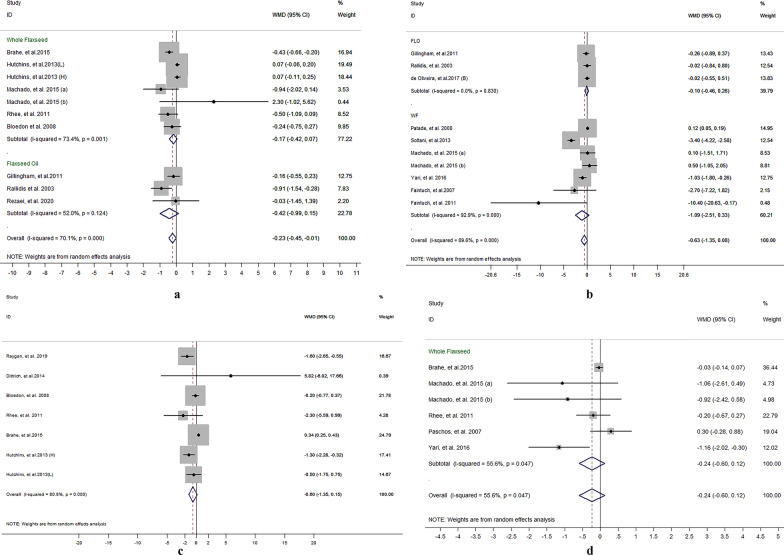
- Overall, flaxseed-containing products significantly reduced total cholesterol (TC) by WMD −8.73 mg/dL, LDL-C by WMD −6.92 mg/dL, triglycerides (TG) by WMD −12.31 mg/dL, apo B by WMD −4.70 mg/dL, and IL-6 by WMD −0.23 pg/mL.
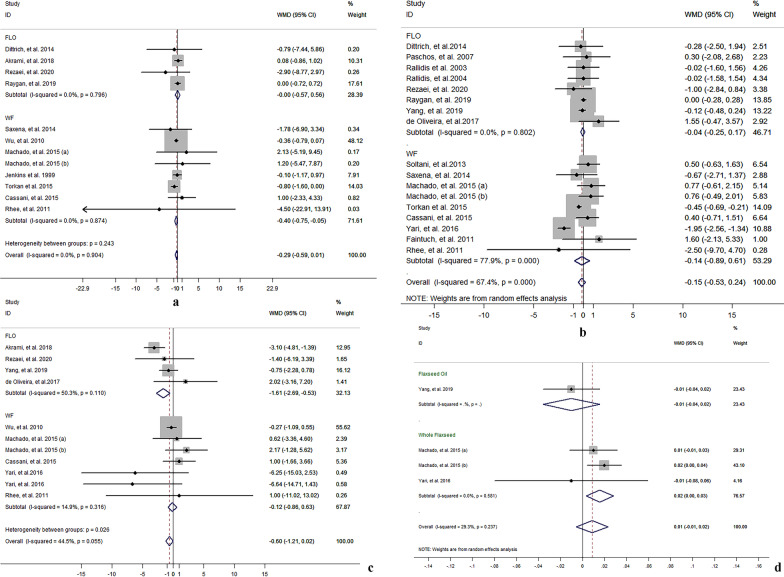
- Whole flaxseed significantly reduced TC (−11.85 mg/dL), LDL-C (−10.51 mg/dL in the abstract; −10.52 mg/mL in the dose subgroup text), TG (−19.77 mg/dL), apo B (−5.73 mg/dL in the abstract; −5.50 mg/dL in the detailed results), TC/HDL-C (−0.10), and weight (−0.40 kg).
- Lignans significantly reduced TC (−17.86 mg/dL), LDL-C (−15.47 mg/dL), and TC/HDL-C (−0.45), while flaxseed oil significantly reduced IL-6 (−0.35 pg/mL) and hs-CRP (−1.54 mg/L).
- No significant effects were seen for HDL-C, apo B/apo A ratio, CRP, TNF-α, BMI, WC overall, or WHR overall.
## Methods
- Systematic review and dose-response meta-analysis of randomized controlled trials in adults with dyslipidemia-related diseases, following PRISMA.
- Searches were run in PubMed, Embase, Cochrane Library, Scopus, and Web of Science from inception to January 2020; only human studies in English were included.
- Pooled weighted mean differences were calculated with fixed- or random-effects models; heterogeneity was assessed with Q and I², with meta-regression, subgroup analyses, sensitivity analyses, and Egger’s test used to explore moderators, robustness, and publication bias.
## Limitations
- The paper states that many SDs of net change were estimated using correlation-based methods rather than exact values.
- It states that between-study heterogeneity could not be fully removed because of differing patient backgrounds, control groups, and uneven study quality.
- It states that some studies may have been missed because grey literature was not searched and non-English studies were excluded.
- The text also makes evident that several outcomes had high heterogeneity and some publication bias signals (for example, TC and LDL-C), which limits confidence in pooled estimates.
Model-written summary. Check it against the paper before relying on it.
Integrity signals
Registry
Cites
Statistics
Figures
Verification
Claims the paper makes
9 Valid · 2 Not valid · 13 Not checked · 111 Own results and interpretations
The cited sources support only part of this claim — read each source’s verdict below.
In the paper
“A recent register study of more than 1 million US veterans found a U-shaped relationship between HDL-C and total mortality with 50 mg/dL (1.25 mmol/L) as the nadir associated with the lowest mortality [76].”
§ Comparisons of the effects of different flaxseed products consumption on lipid profiles, inflammatory cytokines and anthropometric indices in patients with dyslipidemia related diseases: systematic review and a dose–response meta-analysis of randomized controlled trials > Discussion
What the sources say
- Partly supportedcites [76] Bowe B Xie Y Xian H Balasubramanian S Zayed MA Al-Aly Z High density lipoprotein cholesterol and the risk of all-cause mortality among U.S. veterans Clin J Am Soc Nephrol 2016 11 1784 1793 10.2215/CJN.00730116 27515591 PMC5053782 sourceExperimental — accuracy not yet measured
The Discussion (page unavailable) describes a cohort of 1,764,986 U.S. veterans and a U-shaped association between HDL-C and all-cause mortality. The Results section (page unavailable) places the lowest risk in the middle HDL-C deciles, but does not identify 50 mg/dL as the nadir; 50 mg/dL is the boundary of a higher-HDL-C category. (LLM, conf=0.89)
plainstates an association- Asserted: passes — The authors put it forward as true.
- Checkable: passes — It can be checked against evidence.
- Load-bearing: passes — The paper’s conclusions depend on it.
- Based: passes — The paper gives a reason why it holds.
- Partly supported
The cited sources support only part of this claim — read each source’s verdict below.
In the paper
“Previous meta-analysis assessed the effects of flaxseed and flaxseed-derived products (flaxseed oil or lignans) on inflammatory cytokines, did not reach consistent conclusions [15, 80, 81].”
§ Comparisons of the effects of different flaxseed products consumption on lipid profiles, inflammatory cytokines and anthropometric indices in patients with dyslipidemia related diseases: systematic review and a dose–response meta-analysis of randomized controlled trials > Discussion
What the sources say
- Partly supportedcites [15] Rahimlou M Jahromi NB Hasanyani N Ahmadi AR Effects of flaxseed interventions on circulating inflammatory biomarkers: a systematic review and meta-analysis of randomized controlled trials Adv Nutr 2019 10 1108 1119 10.1093/advances/nmz048 31115436 PMC6855939 sourceExperimental — accuracy not yet measured
The Abstract (page unavailable) identifies this paper as a meta-analysis of flaxseed and its derivatives and reports differing results across inflammatory biomarkers. It says clinical studies had contradictory findings, but does not establish that previous meta-analyses reached inconsistent conclusions; the Discussion (page unavailable) calls this the first comprehensive meta-analysis on the topic. (LLM, conf=0.82)
- Not checked — no full text of the sourcecites [80] Askarpour M Karimi M Hadi A Ghaedi E Symonds ME Miraghajani M Javadian P Effect of flaxseed supplementation on markers of inflammation and endothelial function: a systematic review and meta-analysis Cytokine 2020 126 154922 10.1016/j.cyto.2019.154922 31739218 source
- Partly supportedcites [81] Ren G-Y Chen C-Y Chen G-C Chen W-G Pan A Pan C-W Zhang Y-H Qin L-Q Chen L-H Effect of flaxseed intervention on inflammatory marker C-reactive protein: a systematic review and meta-analysis of randomized controlled trials Nutrients 2016 8 136 10.3390/nu8030136 26959052 PMC4808865 sourceExperimental — accuracy not yet measured
The Abstract identifies this paper as a meta-analysis of flaxseed and its derivatives, but its outcome is CRP, not inflammatory cytokines generally. The Introduction says the underlying clinical trials had inconsistent findings; it does not say that previous meta-analyses reached inconsistent conclusions. Page numbers are unavailable in our copy. (LLM, conf=0.86)
plain- Asserted: passes — The authors put it forward as true.
- Checkable: passes — It can be checked against evidence.
- Load-bearing: passes — The paper’s conclusions depend on it.
- Based: passes — The paper gives a reason why it holds.
- Partly supported
The cited sources support only part of this claim — read each source’s verdict below.
In the paper
“Secondly, several studies also have provided evidence that the vascular effects of HDL are variable and hardly correlate with HDL-C concentrations in the plasma.”
§ Comparisons of the effects of different flaxseed products consumption on lipid profiles, inflammatory cytokines and anthropometric indices in patients with dyslipidemia related diseases: systematic review and a dose–response meta-analysis of randomized controlled trials > Discussion
What the sources say
- Supportedcites [78] März W Kleber ME Scharnagl H Speer T Zewinger S Ritsch A Parhofer KG von Eckardstein A Landmesser U Laufs U HDL cholesterol: reappraisal of its clinical relevance Clin Res Cardiol 2017 106 663 675 10.1007/s00392-017-1106-1 28342064 PMC5565659 source
The HDL dysfunction section states the claim directly: studies found that HDL’s vascular effects vary and hardly correlate with plasma HDL-C concentrations. The same section adds that HDL’s properties are poorly reflected by its cholesterol content. (LLM, conf=0.95)
- Partly supportedcites [79] Verwer BJ Scheffer PG Vermue RP Pouwels PJ Diamant M Tushuizen ME NAFLD is related to post-prandial triglyceride-enrichment of HDL particles in association with endothelial and HDL dysfunction Liver Int 2020 40 2439 2444 10.1111/liv.14597 32652824 PMC7540355 sourceExperimental — accuracy not yet measured
The Background (page not provided) reports that HDL’s anti-atherogenic properties can change with triglyceride enrichment, potentially affecting endothelial protection. The Results (page not provided) associate endothelial function with HDL triglyceride enrichment. Neither passage establishes that HDL’s vascular effects hardly correlate with plasma HDL-C concentrations. (LLM, conf=0.83)
plainstates an association- Asserted: passes — The authors put it forward as true.
- Checkable: passes — It can be checked against evidence.
- Load-bearing: unclear — It is unclear whether the paper’s conclusions depend on it.
- Based: passes — The paper gives a reason why it holds.
- Supported
A result the paper reports from its own data — it cites no other source for it, so there is none to check. The quote shows it is in the paper.
In the paper
“lowering-effect on IL-6 (− 0.35 pg/ml, P = 0.033)”
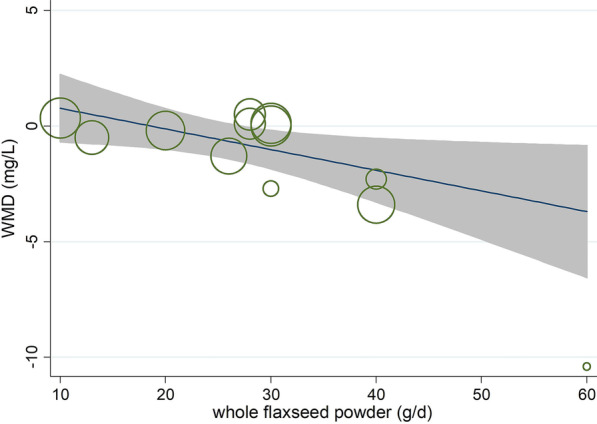
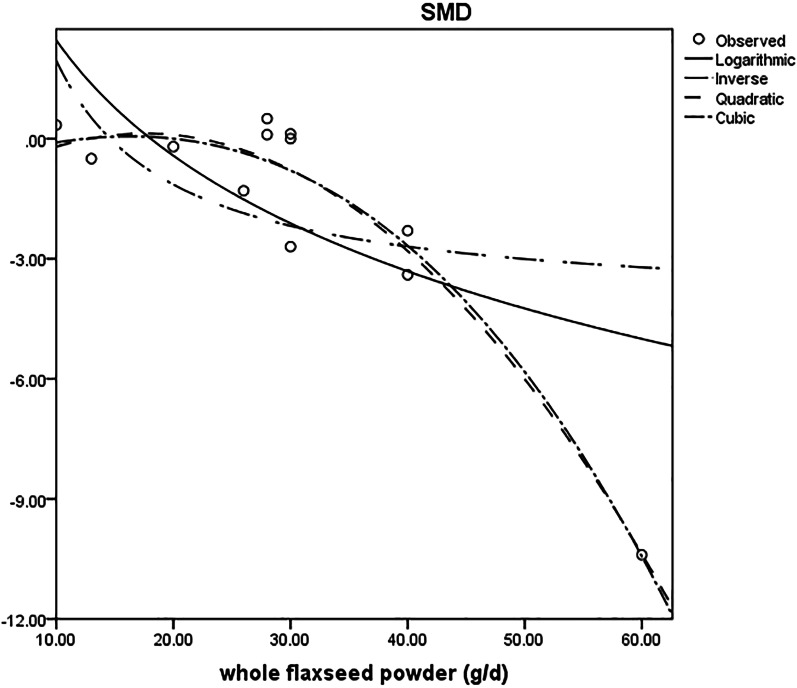
§ Comparisons of the effects of different flaxseed products consumption on lipid profiles, inflammatory cytokines and anthropometric indices in patients with dyslipidemia related diseases: systematic review and a dose–response meta-analysis of randomized controlled trials > Abstract > Results Thirty-one RCTs involving 1,698 participants were included. The present meta-analysis revealed that flaxseed consumption had an overall beneficial effect on serum TC, LDL-C, TG, apo B and IL-6 in patients with dyslipidemia related diseases, but not on apo A, HDL-C, hs-CRP, CRP and anthropometric indices. However, different flaxseed products showed obviously different effects. Whole flaxseed supplementation significantly reduced TC (− 11.85 mg/dl, 95% CI − 20.12 to − 3.57, P = 0.005), LDL-C (− 10.51 mg/dl, 95% CI − 14.96 to − 6.06, P < 0.001), TG (− 19.77 mg/dl, 95% CI − 33.61 to − 5.94, P = 0.005), apolipoprotein B (− 5.73 mg/dl, 95% CI − 7.53 to − 3.93, P < 0.001), TC/HDL-C (− 0.10, 95% CI − 0.19 to − 0.003, P = 0.044) and weight (− 0.40 kg, 95% CI − 0.76 to − 0.05, P = 0.027); Lignans supplementation significantly reduced TC (− 17.86 mg/dl, P = 0.004), LDL-C (− 15.47 mg/dl, P < 0.001) and TC/HDL-C (− 0.45, P = 0.04). Although flaxseed oil supplementation had no such lowering-effect on lipid, meta-analysis revealed its lowering-effect on IL-6 (− 0.35 pg/ml, P = 0.033) and hs-CRP (− 1.54 mg/l, P = 0.004). Subgroup analysis revealed that whole flaxseed decreased TC, LDL-C and TG levels irrespective of country and the intervention time prescribed, but was more pronounced when the dose of whole flaxseed was ≤ 30 g/day (TC: WMD − 13.61 mg/mL; LDL-C: WMD − 10.52 mg/mL; TG: WMD − 23.52 mg/mL), rather not a dose > 30 g/day. Moreover, a linear relationship between dose of whole flaxseed and absolute changes in C-reactive protein (P = 0.036) and a nonlinear relationship between with IL-6 (P < 0.001) were detected.
plainstates a causen = 1,698 ·- Asserted: passes — The authors put it forward as true.
- Checkable: passes — It can be checked against evidence.
- Load-bearing: passes — The paper’s conclusions depend on it.
- Based: passes — The paper gives a reason why it holds.
A result the paper reports from its own data — it cites no other source for it, so there is none to check. The quote shows it is in the paper.
In the paper
“serum LDL-C (I2 = 95.7%)”
§ Comparisons of the effects of different flaxseed products consumption on lipid profiles, inflammatory cytokines and anthropometric indices in patients with dyslipidemia related diseases: systematic review and a dose–response meta-analysis of randomized controlled trials > Meta-analysis results > Flaxseed supplementation on lipid profiles in patients with dyslipidemia-related diseases
plain- Asserted: passes — The authors put it forward as true.
- Checkable: passes — It can be checked against evidence.
- Load-bearing: passes — The paper’s conclusions depend on it.
- Based: passes — The paper gives a reason why it holds.
87 more claims
Create a free account to see all 135 claims and to verify the 1 reference still open.
- It may state two separate claims as one. 25
- Probably not a substantial claim. 19
- The quote only partly states this claim. 4
Self-check
Percentages, sums and reported differences re-computed from the paper’s own numbers.
Each contradiction between two passages listed here was confirmed by an independent check.
Rated major: it would touch a result — a value a result rests on, reported and recomputed p-values on opposite sides of the significance level, two passages that conflict with no sign which is right, or a cited work retracted before this paper was published.
In the paper
§ Comparisons of the effects of different flaxseed products consumption on lipid profiles, inflammatory cytokines and anthropometric indices in patients with dyslipidemia related diseases: systematic review and a dose–response meta-analysis of randomized controlled trials > Abstract > Results
“Whole flaxseed supplementation significantly reduced TC (− 11.85 mg/dl, 95% CI − 20.12 to − 3.57, P = 0.005), LDL-C (− 10.51 mg/dl, 95% CI − 14.96 to − 6.06, P < 0.001), TG (− 19.77 mg/dl, 95% CI − 33.61 to − 5.94, P = 0.005), apolipoprotein B (− 5.73 mg/dl, 95% CI − 7.53 to − 3.93, P < 0.001),”
§ Comparisons of the effects of different flaxseed products consumption on lipid profiles, inflammatory cytokines and anthropometric indices in patients with dyslipidemia related diseases: systematic review and a dose–response meta-analysis of randomized controlled trials > Meta-analysis results > Flaxseed supplementation on lipid profiles in patients with dyslipidemia-related diseases
“whole flaxseed supplementation has significant effects on apolipoproteins (Apo A: − 4.14 mg/dL, 95% CI − 4.92, − 3.36; I2 = 26.2%; Apo B: − 5.50 mg/dL, 95% CI − 8.80, − 2.20; I2 = 58.1%;)”
Rated minor: it would not touch a result — a value no result rests on, a p-value that stays on the same side of the significance level, or a conflict that is clerical, resolved elsewhere in the paper, or outside its own findings.
In the paper
§ Comparisons of the effects of different flaxseed products consumption on lipid profiles, inflammatory cytokines and anthropometric indices in patients with dyslipidemia related diseases: systematic review and a dose–response meta-analysis of randomized controlled trials > Meta-analysis results > Flaxseed supplementation on lipid profiles in patients with dyslipidemia-related diseases
“rather than HDL-C concentrations (LDL-C: intercept = 0.28, P = 0.423).”
§ Comparisons of the effects of different flaxseed products consumption on lipid profiles, inflammatory cytokines and anthropometric indices in patients with dyslipidemia related diseases: systematic review and a dose–response meta-analysis of randomized controlled trials > Meta-analysis results > Flaxseed supplementation on lipid profiles in patients with dyslipidemia-related diseases
“Egger’s linear regression revealed a potential publication bias in the meta-analysis of flaxseed’s effects on plasma LDL-C concentrations (LDL-C: intercept = − 1.97, P < 0.01), rather than HDL-C concentrations”
Cited works that were retracted
Works this paper cites that were later retracted, from the retraction notices publishers deposit. Major when the notice came out before this paper was published.
Rated major: it would touch a result — a value a result rests on, reported and recomputed p-values on opposite sides of the significance level, two passages that conflict with no sign which is right, or a cited work retracted before this paper was published.
In the paper
“Cassani RS, Fassini PG, Silvah JH, Lima CM, Marchini JS. Impact of weight loss diet associated with flaxseed on inflammatory markers in men with cardiovascular risk factors: a clinical study. Nutr J. 2015;14:5.”
Cited work 10.1186/1475-2891-14-5 · retracted 2016-04-21 · notice 10.1186/s12937-016-0165-x · this paper published 2021-10-11
Citations
Cites
1 retracted
Cassani, R. S. L., Fassini, P. G., Silvah, J. H., Lima, C. M. M., & Marchini, J. S. (2015) · Nutrition Journal · doi:10.1186/1475-2891-14-5 · Cited by 69
RetractedThe Cochrane Collaboration's tool for assessing risk of bias in randomised trials
Higgins, J. P. T., Altman, D. G., Gotzsche, P. C., Juni, P., Moher, D., Oxman, A. D., Savovic, J., Schulz, K. F., Weeks, L., Sterne, J. A. C., et al. (2011) · BMJ · doi:10.1136/bmj.d5928 · Cited by 33,817
Cochrane Handbook for Systematic Reviews of Interventions: Cochrane Book Series
(2008) · doi:10.1002/9780470712184 · Cited by 25,048
Preferred reporting items for systematic reviews and meta-analyses: The PRISMA statement
Moher, D., Liberati, A., Tetzlaff, J., & Altman, D. G. (2010) · International Journal of Surgery · doi:10.1016/j.ijsu.2010.02.007 · Cited by 12,156
The metabolic syndrome—a new worldwide definition
Alberti, K. G. M., Zimmet, P., & Shaw, J. (2005) · The Lancet · doi:10.1016/s0140-6736(05)67402-8 · Cited by 9,352
Trumbo, P., Schlicker, S., Yates, A. A., & Poos, M. (2002) · Journal of the American Dietetic Association · doi:10.1016/s0002-8223(02)90346-9 · Cited by 5,993
USDA National Nutrient Database for Standard reference
(2018) · Cited by 794
Al-Lahham, S. H., Peppelenbosch, M. P., Roelofsen, H., Vonk, R. J., & Venema, K. (2010) · Biochimica et Biophysica Acta (BBA) - Molecular and Cell Biology of Lipids · doi:10.1016/j.bbalip.2010.07.007 · Cited by 614
Flaxseed as a functional food source
Oomah, B. D. (2001) · Journal of the Science of Food and Agriculture · doi:10.1002/jsfa.898 · Cited by 584
Flaxseed: A Potential Source of Food, Feed and Fiber
Singh, K. K., Mridula, D., Rehal, J., & Barnwal, P. (2011) · Critical Reviews in Food Science and Nutrition · doi:10.1080/10408390903537241 · Cited by 523
Dyslipidemia and inflammation: an evolutionary conserved mechanism
Esteve, E., Ricart, W., & Fernández-Real, J. M. (2005) · Clinical Nutrition · doi:10.1016/j.clnu.2004.08.004 · Cited by 492
Metabolism and functional effects of plant-derived omega-3 fatty acids in humans
Baker, E. J., Miles, E. A., Burdge, G. C., Yaqoob, P., & Calder, P. C. (2016) · Progress in Lipid Research · doi:10.1016/j.plipres.2016.07.002 · Cited by 472
van der Steeg, W. A., Holme, I., Boekholdt, S. M., Larsen, M. L., Lindahl, C., Stroes, E. S. G., Tikkanen, M. J., Wareham, N. J., Faergeman, O., Olsson, A. G., et al. (2008) · Journal of the American College of Cardiology · doi:10.1016/j.jacc.2007.09.060 · Cited by 374
α-Linolenic acid and risk of cardiovascular disease: a systematic review and meta-analysis
Pan, A., Chen, M., Chowdhury, R., Wu, J. H., Sun, Q., Campos, H., Mozaffarian, D., & Hu, F. B. (2012) · The American Journal of Clinical Nutrition · doi:10.3945/ajcn.112.044040 · Cited by 329
Food, immunity, and the microbiome
Tilg, H., & Moschen, A. R. (2015) · Gastroenterology · doi:10.1053/j.gastro.2014.12.036 · Cited by 292
Rallidis, L. S., Paschos, G., Liakos, G. K., Velissaridou, A. H., Anastasiadis, G., & Zampelas, A. (2003) · Atherosclerosis · doi:10.1016/s0021-9150(02)00427-6 · Cited by 288
Phytoestrogens and cardiovascular health
Wroblewski Lissin, L., & Cooke, J. P. (2000) · Journal of the American College of Cardiology · doi:10.1016/s0735-1097(00)00590-8 · Cited by 286
HDL cholesterol: reappraisal of its clinical relevance
März, W., Kleber, M. E., Scharnagl, H., Speer, T., Zewinger, S., Ritsch, A., Parhofer, K. G., von Eckardstein, A., Landmesser, U., & Laufs, U. (2017) · Clinical Research in Cardiology · doi:10.1007/s00392-017-1106-1 · Cited by 275
Cocate, P. G., Pereira, L. G., Marins, J. C., Cecon, P. R., Bressan, J., & Alfenas, R. C. (2011) · Nutrition Journal · doi:10.1186/1475-2891-10-1 · Cited by 269
Meta-analysis of the effects of flaxseed interventions on blood lipids
Pan, A., Yu, D., Demark-Wahnefried, W., Franco, O. H., & Lin, X. (2009) · The American Journal of Clinical Nutrition · doi:10.3945/ajcn.2009.27469 · Cited by 264
Bloedon, L. T., Balikai, S., Chittams, J., Cunnane, S. C., Berlin, J. A., Rader, D. J., & Szapary, P. O. (2008) · Journal of the American College of Nutrition · doi:10.1080/07315724.2008.10719676 · Cited by 253
Prevalence of fatty liver disease and its risk factors in the population of South China
Zhou, Y. (2007) · World Journal of Gastroenterology · doi:10.3748/wjg.13.6419 · Cited by 246
Dodin, S., Lemay, A., Jacques, H., Légaré, F., Forest, J.-C., & Mâsse, B. (2005) · The Journal of Clinical Endocrinology & Metabolism · doi:10.1210/jc.2004-1148 · Cited by 244
Jenkins, D. J., Kendall, C. W., Vidgen, E., Agarwal, S., Rao, A. V., Rosenberg, R. S., Diamandis, E. P., Novokmet, R., Mehling, C. C., Perera, T., et al. (1999) · The American Journal of Clinical Nutrition · doi:10.1093/ajcn/69.3.395 · Cited by 243
Hypocholesterolemic and antiatherosclerotic effect of flax lignan complex isolated from flaxseed
Prasad, K. (2005) · Atherosclerosis · doi:10.1016/j.atherosclerosis.2004.11.012 · Cited by 232
Long-Chain Omega-3 Polyunsaturated Fatty Acids May Be Beneficial for Reducing Obesity—A Review
Buckley, J. D., & Howe, P. R. C. (2010) · Nutrients · doi:10.3390/nu2121212 · Cited by 229
Zhang, W., Wang, X., Liu, Y., Tian, H., Flickinger, B., Empie, M. W., & Sun, S. Z. (2008) · British Journal of Nutrition · doi:10.1017/s0007114507871649 · Cited by 214
Anti‐obesity effects of long‐chain omega‐3 polyunsaturated fatty acids
Buckley, J. D., & Howe, P. R. C. (2009) · Obesity Reviews · doi:10.1111/j.1467-789x.2009.00584.x · Cited by 213
High Density Lipoprotein Cholesterol and the Risk of All-Cause Mortality among U.S. Veterans
Bowe, B., Xie, Y., Xian, H., Balasubramanian, S., Zayed, M. A., & Al-Aly, Z. (2016) · Clinical Journal of the American Society of Nephrology · doi:10.2215/cjn.00730116 · Cited by 213
Toledo, F. G. S., Sniderman, A. D., & Kelley, D. E. (2006) · Diabetes Care · doi:10.2337/dc06-0455 · Cited by 196
FLAXSEED AS A SOURCE OF FUNCTIONAL INGREDIENTS
Rubilar, M., Gutiérrez, C., Verdugo, M., Shene, C., & Sineiro, J. (2010) · Journal of soil science and plant nutrition · doi:10.4067/s0718-95162010000100010 · Cited by 185
Brahe, L. K., Le Chatelier, E., Prifti, E., Pons, N., Kennedy, S., Blædel, T., Håkansson, J., Dalsgaard, T. K., Hansen, T., Pedersen, O., et al. (2015) · British Journal of Nutrition · doi:10.1017/s0007114515001786 · Cited by 171
Wu, H., Pan, A., Yu, Z., Qi, Q., Lu, L., Zhang, G., Yu, D., Zong, G., Zhou, Y., Chen, X., et al. (2010) · Journal of Nutrition · doi:10.3945/jn.110.126300 · Cited by 171
Effect of flaxseed gum on reduction of blood glucose and cholesterol in type 2 diabetic patients
Thakur, G., Mitra, A., Pal, K., & Rousseau, D. (2009) · International Journal of Food Sciences and Nutrition · doi:10.1080/09637480903022735 · Cited by 170
Hutchins, A. M., Brown, B. D., Cunnane, S. C., Domitrovich, S. G., Adams, E. R., & Bobowiec, C. E. (2013) · Nutrition Research · doi:10.1016/j.nutres.2013.02.012 · Cited by 166
Flaxseed Reduces Total and LDL Cholesterol Concentrations in Native American Postmenopausal Women
Patade, A., Devareddy, L., Lucas, E. A., Korlagunta, K., Daggy, B. P., & Arjmandi, B. H. (2008) · Journal of Women's Health · doi:10.1089/jwh.2007.0359 · Cited by 164
Bioprocessing of Functional Ingredients from Flaxseed
Dzuvor, C. K. O., Taylor, J. T., Acquah, C., Pan, S., & Agyei, D. (2018) · Molecules · doi:10.3390/molecules23102444 · Cited by 163
Santos, H. O., Price, J. C., & Bueno, A. A. (2020) · Nutrients · doi:10.3390/nu12103159 · Cited by 154
Reis, S. E., Costantino, J. P., Wickerham, D. L., Tan-Chiu, E., Wang, J., & Kavanah, M. (2001) · JNCI Journal of the National Cancer Institute · doi:10.1093/jnci/93.1.16 · Cited by 144
Fukumitsu, S., Aida, K., Shimizu, H., & Toyoda, K. (2010) · Nutrition Research · doi:10.1016/j.nutres.2010.06.004 · Cited by 144
Gillingham, L. G., Gustafson, J. A., Han, S.-Y., Jassal, D. S., & Jones, P. J. H. (2011) · British Journal of Nutrition · doi:10.1017/s0007114510003697 · Cited by 143
Dodin, S., Cunnane, S. C., Mâsse, B., Lemay, A., Jacques, H., Asselin, G., Tremblay-Mercier, J., Marc, I., Lamarche, B., Légaré, F., et al. (2008) · Nutrition · doi:10.1016/j.nut.2007.09.003 · Cited by 142
Lemay, A. (2002) · Obstetrics & Gynecology · doi:10.1016/s0029-7844(02)02123-3 · Cited by 137
Natural products for controlling hyperlipidemia: review
El-Tantawy, W. H., & Temraz, A. (2018) · Archives of Physiology and Biochemistry · doi:10.1080/13813455.2018.1441315 · Cited by 134
Kezimana, P., Dmitriev, A. A., Kudryavtseva, A. V., Romanova, E. V., & Melnikova, N. V. (2018) · Frontiers in Genetics · doi:10.3389/fgene.2018.00641 · Cited by 132
The abnormal lipid profile in obesity and coronary heart disease (CHD) in Pakistani subjects
Shabana, S., Shahid, S. U., & Sarwar, S. (2020) · Lipids in Health and Disease · doi:10.1186/s12944-020-01248-0 · Cited by 130
Faris, ‘. A.-I. E., Jahrami, H. A., Alsibai, J., & Obaideen, A. A. (2020) · British Journal of Nutrition · doi:10.1017/s000711451900254x · Cited by 129
Rhee, Y., & Brunt, A. (2011) · Nutrition Journal · doi:10.1186/1475-2891-10-44 · Cited by 125
Arjmandi, B. H., Khan, D. A., Juma, S., Drum, M. L., Venkatesh, S., Sohn, E., Wei, L.-L., & Derman, R. J. (1998) · Nutrition Research · doi:10.1016/s0271-5317(98)00100-6 · Cited by 124
Bierenbaum, M. L., Reichstein, R., & Watkins, T. R. (1993) · Journal of the American College of Nutrition · doi:10.1080/07315724.1993.10718342 · Cited by 123
Yari, Z., Rahimlou, M., Eslamparast, T., Ebrahimi-Daryani, N., Poustchi, H., & Hekmatdoost, A. (2016) · International Journal of Food Sciences and Nutrition · doi:10.3109/09637486.2016.1161011 · Cited by 118
Faintuch, J., Horie, L. M., Barbeiro, H. V., Barbeiro, D. F., Soriano, F. G., Ishida, R. K., & Cecconello, I. (2007) · Obesity Surgery · doi:10.1007/s11695-007-9062-x · Cited by 109
Edel, A. L., Rodriguez-Leyva, D., Maddaford, T. G., Caligiuri, S. P., Austria, J. A., Weighell, W., Guzman, R., Aliani, M., & Pierce, G. N. (2015) · The Journal of Nutrition · doi:10.3945/jn.114.204594 · Cited by 106
Dittrich, M., Jahreis, G., Bothor, K., Drechsel, C., Kiehntopf, M., Blüher, M., & Dawczynski, C. (2014) · European Journal of Nutrition · doi:10.1007/s00394-014-0764-2 · Cited by 96
Ren, G.-Y., Chen, C.-Y., Chen, G.-C., Chen, W.-G., Pan, A., Pan, C.-W., Zhang, Y.-H., Qin, L.-Q., & Chen, L.-H. (2016) · Nutrients · doi:10.3390/nu8030136 · Cited by 88
Rallidis, L. S., Paschos, G. K., Papaioannou, M. L., Liakos, G. K., Panagiotakos, D. B., Anastasiadis, G., & Zampelas, A. (2004) · Atherosclerosis · doi:10.1016/j.atherosclerosis.2004.01.013 · Cited by 87
Machado, A. M., de Paula, H., Cardoso, L. D., & Costa, N. M. B. (2014) · Nutrition · doi:10.1016/j.nut.2014.05.002 · Cited by 86
Effects of IL-6, adiponectin, CRP and metabolic syndrome on subclinical atherosclerosis
Nishida, M., Moriyama, T., Ishii, K., Takashima, S., Yoshizaki, K., Sugita, Y., & Yamauchi-Takihara, K. (2007) · Clinica Chimica Acta · doi:10.1016/j.cca.2007.06.009 · Cited by 86
Effects of flaxseed oil supplementation on plasma adiponectin levels in dyslipidemic men
Paschos, G. K., Zampelas, A., Panagiotakos, D. B., Katsiougiannis, S., Griffin, B. A., Votteas, V., & Skopouli, F. N. (2007) · European Journal of Nutrition · doi:10.1007/s00394-007-0668-5 · Cited by 85
Akrami, A., Nikaein, F., Babajafari, S., Faghih, S., & Yarmohammadi, H. (2018) · Journal of Clinical Lipidology · doi:10.1016/j.jacl.2017.11.004 · Cited by 85
Soltanian, N., & Janghorbani, M. (2019) · Clinical Nutrition ESPEN · doi:10.1016/j.clnesp.2018.11.002 · Cited by 82
Flaxseed gum reduces body weight by regulating gut microbiota
Luo, J., Li, Y., Mai, Y., Gao, L., Ou, S., Wang, Y., Liu, L., & Peng, X. (2018) · Journal of Functional Foods · doi:10.1016/j.jff.2018.05.042 · Cited by 79
Triglyceride metabolism and angiopoietin-like proteins in lipoprotein lipase regulation
Li, J., Li, L., Guo, D., Li, S., Zeng, Y., Liu, C., Fu, R., Huang, M., & Xie, W. (2020) · Clinica Chimica Acta · doi:10.1016/j.cca.2019.12.029 · Cited by 77
Khalatbari Soltani, S., Jamaluddin, R., Tabibi, H., Mohd Yusof, B. N., Atabak, S., Loh, S., & Rahmani, L. (2013) · Hemodialysis International · doi:10.1111/j.1542-4758.2012.00754.x · Cited by 72
Hadi, A., Askarpour, M., Salamat, S., Ghaedi, E., Symonds, M. E., & Miraghajani, M. (2020) · Pharmacological Research · doi:10.1016/j.phrs.2019.104622 · Cited by 71
Repin, N. V., Kay, B. A., Cui, S. W., Wright, A. J., Duncan, A. M., & Goff, H. D. (2017) · Food & Function · doi:10.1039/c7fo00331e · Cited by 66
Evaluation of flaxseed formulation as a potential therapeutic agent in mitigation of dyslipidemia
Katare, C., & Saxena, S. (2014) · Biomedical Journal · doi:10.4103/2319-4170.126447 · Cited by 65
Rezaei, S., Sasani, M. R., Akhlaghi, M., & Kohanmoo, A. (2020) · British Journal of Nutrition · doi:10.1017/s0007114520000318 · Cited by 63
Raygan, F., Taghizadeh, M., Mirhosseini, N., Akbari, E., Bahmani, F., Memarzadeh, M. R., Sharifi, N., Jafarnejad, S., Banikazemi, Z., & Asemi, Z. (2019) · Phytotherapy Research · doi:10.1002/ptr.6393 · Cited by 60
Soltanian, N., & Janghorbani, M. (2018) · Nutrition & Metabolism · doi:10.1186/s12986-018-0273-z · Cited by 59
de Oliveira, P. A., Kovacs, C., Moreira, P., Magnoni, D., Saleh, M. H., & Faintuch, J. (2017) · Obesity Surgery · doi:10.1007/s11695-017-2704-8 · Cited by 58
Flax LignansAnalytical Methods and How They Influence Our Understanding of Biological Activity
Muir, A. D. (2006) · Journal of AOAC INTERNATIONAL · doi:10.1093/jaoac/89.4.1147 · Cited by 56
Yari, Z., Rahimlou, M., Poustchi, H., & Hekmatdoost, A. (2016) · Phytotherapy Research · doi:10.1002/ptr.5635 · Cited by 55
Apolipoprotein status in type 2 diabetes mellitus and its complications
Zhang, P., Gao, J., Pu, C., & Zhang, Y. (2017) · Molecular Medicine Reports · doi:10.3892/mmr.2017.7831 · Cited by 55
Askarpour, M., Karimi, M., Hadi, A., Ghaedi, E., Symonds, M. E., Miraghajani, M., & Javadian, P. (2020) · Cytokine · doi:10.1016/j.cyto.2019.154922 · Cited by 54
Effect of Flaxseed on Blood Lipid Level in Hyperlipidemic Patients
Maryam, T., Entezari, M. H., & Siavash, M. (2015) · Reviews on Recent Clinical Trials · doi:10.2174/1574887110666150121154334 · Cited by 54
Rahimlou, M., Jahromi, N. B., Hasanyani, N., & Ahmadi, A. R. (2019) · Advances in Nutrition · doi:10.1093/advances/nmz048 · Cited by 52
Flax lignans--analytical methods and how they influence our lunderstanding of biological activity.
Muir, A. D. (2006) · PubMed · Cited by 50
Fernández, J., de la Fuente, V. G., García, M. T. F., Sánchez, J. G., Redondo, B. I., Villar, C. J., & Lombó, F. (2020) · Lipids in Health and Disease · doi:10.1186/s12944-020-01205-x · Cited by 50
Bañuls, C., Rovira-Llopis, S., Lopez-Domenech, S., Diaz-Morales, N., Blas-Garcia, A., Veses, S., Morillas, C., Victor, V. M., Rocha, M., & Hernandez-Mijares, A. (2017) · International Journal of Obesity · doi:10.1038/ijo.2017.147 · Cited by 47
Faintuch, J., Bortolotto, L. A., Marques, P. C. D. O. C., Faintuch, J., França, J. Í. D., & Cecconello, I. (2011) · PubMed · Cited by 44
Verwer, B. J., Scheffer, P. G., Vermue, R. P., Pouwels, P. J., Diamant, M., & Tushuizen, M. E. (2020) · Liver International · doi:10.1111/liv.14597 · Cited by 41
Dietary flaxseed: what we know and don’t know about its effects on cardiovascular disease
Parikh, M., & Pierce, G. N. (2019) · Canadian Journal of Physiology and Pharmacology · doi:10.1139/cjpp-2018-0547 · Cited by 40
Lipoprotein profiling in early multiple sclerosis patients: effect of chronic inflammation?
Rádiková, Ž., Penesová, A., Vlček, M., Havranová, A., Siváková, M., Šiarnik, P., Žitňanová, I., Imrich, R., Turčáni, P., & Kollár, B. (2020) · Lipids in Health and Disease · doi:10.1186/s12944-020-01221-x · Cited by 36
Au, M. M. C., Goff, H. D., Kisch, J. A., Coulson, A., & Wright, A. J. (2013) · Journal of the American College of Nutrition · doi:10.1080/07315724.2013.767579 · Cited by 31
Naik, H. S., Srilatha, C., Sujatha, K., Sreedevi, B., & Prasad, T. N. V. K. V. (2018) · Veterinary World · doi:10.14202/vetworld.2018.1433-1439 · Cited by 29
Antihyperlipidemic Effect of Flax Lignan Concentrate in Triton Induced Hyperlipidemic Rats
Zanwar, A. A., Hegde, M. V., & Bodhankar, S. L. (2012) · International Journal of Pharmacology · doi:10.3923/ijp.2012.355.363 · Cited by 29
Yang, B., Shi, M.-Q., Li, Z.-H., Shi, L., Wang, A.-M., Guo, X.-J., & Li, D. (2019) · Food & Function · doi:10.1039/c8fo01707g · Cited by 28
Lands, B. (2014) · Military Medicine · doi:10.7205/milmed-d-14-00149 · Cited by 26
Jalili, C., Pezeshki, M., Askarpour, M., Marx, W., Hassani, B., Hadi, A., & Ghaedi, E. (2020) · Phytotherapy Research · doi:10.1002/ptr.6634 · Cited by 22
Ursoniu, S., Sahebkar, A., Șerban, M.-C., Pînzaru, I., Dehelean, C. A., Noveanu, L., Rysz, J., & Banach, M. (2019) · Archives of Medical Science · doi:10.5114/aoms.2018.81034 · Cited by 21
Tian, J., Liu, J., Li, J., Zheng, J., Chen, L., Wang, Y., Liu, Q., & Ni, J. (2018) · Nutrition & Metabolism · doi:10.1186/s12986-017-0235-x · Cited by 19
Santiago, A., Ryland, D., Cui, S. W., Blewett, H., & Aliani, M. (2018) · Journal of the Science of Food and Agriculture · doi:10.1002/jsfa.9253 · Cited by 17
Imperato, F., Marziani, R., Perniola, G., Ebano, V., Fruscella, M. L., & Mossa, B. (2003) · PubMed · Cited by 13
Hui, Z. (2006) · Acta Nutrimenta Sinica · Cited by 1
Cited by
The Role of Flaxseed in Improving Human Health
Nowak, W., & Jeziorek, M. (2023) · Healthcare · doi:10.3390/healthcare11030395 · Cited by 145
Takić, M. M., Pokimica, B., Petrović-Oggiano, G., & Popović, T. (2022) · Molecules · doi:10.3390/molecules27144471 · Cited by 107
“, 2021 [77] Dyslipidemic Molecules 2022, 27, x FOR PEER REVIEW 9 of 24”
BackgroundFeei, Z., Fu, C., & Lee, Y. Y. (2025) · Foods · doi:10.3390/foods14050821 · Cited by 61
“In addition, lignans have been shown to improve cholesterol regulation, reduce inflammation, and provide antimicrobial and cancer protection [32,34].”
Villarreal-Renteria, A. I., Herrera-Echauri, D. D., Rodríguez-Rocha, N. P., Zúñiga, L. Y., Muñóz-Valle, J. F., García‐Arellano, S., Bernal-Orozco, M. F., & Ojeda, G. M. (2022) · Complementary Therapies in Medicine · doi:10.1016/j.ctim.2022.102852 · Cited by 47
Fats and oils – a scoping review for Nordic Nutrition Recommendations 2023
Rosqvist, F., & Niinistö, S. (2024) · Food & Nutrition Research · doi:10.29219/fnr.v68.10487 · Cited by 44
“Finally, a SR and meta-analysis from 2021, based on nine RCTs, found no differential effect of flaxseed oil on total cholesterol, LDL-cholesterol, HDL-cholesterol or triglycerides compared to other oils (sunflower oil, safflower oil, corn oil) in patients with dys-lipidemia-related diseases (40).”
BackgroundMethod
Metadata
- Authors
- Yang, C., Xia, H., Wan, M., Lu, Y., Xu, D., Yang, X., Yang, L., & Sun, G.
- Affiliations
- Southeast University (CN)
- Corresponding author
- Sun, Guiju
- Venue
- Nutrition & Metabolism
- Published
- 2021-10-11
- Volume
- 18
- Issue
- 1
- Pages
- 91-91
- ISSN
- 1743-7075 (ISSN-L)
- PMC
- PMC8504108
- OpenAlex
- W3207254176
- Cited by
- 40
- References
- 95
- Citations by year
- 2026: 7 · 2025: 14 · 2024: 8 · 2023: 3 · 2022: 8
- FWCI
- 0.63
- Type
- journal article
- Language
- en
- Open access
- gold
- doi.org
- Licence
- cc-by
- creativecommons.org/licenses/by/4.0 (tdm)
- creativecommons.org/licenses/by/4.0 (vor)
- Locations
- Nutrition & Metabolism (publishedVersion, cc-by)
- Europe PMC (PubMed Central) (publishedVersion, other-oa)
- PubMed Central (publishedVersion, cc-by)
- PubMed (publishedVersion)
- DOAJ (DOAJ: Directory of Open Access Journals) (submittedVersion, cc-by-sa)
- Funders
- National Natural Science Foundation of China (81872618, 82073551)
- Postgraduate Research & Practice Innovation Program of Jiangsu Province (KYCX19_0121)
- Scientific Research Foundation of Graduate School of Southeast University (YBPY1944)
- Topics
- Health Sciences › Nursing › Nutrition and Dietetics › Fatty Acid Research and Health
- Health Sciences › Medicine › Cardiology and Cardiovascular Medicine › Lipoproteins and Cardiovascular Health
- Health Sciences › Nursing › Nutrition and Dietetics › Food composition and properties
- Keywords
- flaxseed, linseed oil, lignans, dyslipidemia, lipid profile, LDL cholesterol, triglycerides, apolipoprotein B, inflammatory cytokines, interleukin-6, C-reactive protein, anthropometric indices, weight, dose-response relationship, functional foods, dietary supplementation, linolenic acid, dietary fiber, TC/HDL-C ratio, HDL cholesterol
About these checks
Registry, retraction, Cites and statistics results are computed, not judged, with one exception: a printed reference that no index lists is read once by a model before it counts as a citation error. Claims are extracted by a model and kept only when their quote appears verbatim in the text; each cited source is then checked, with a model’s help, for whether it says what the claim relies on. Those verdicts can be wrong — read the claim’s quote and the cited source before relying on one.
The claim verdicts this report counts are experimental: their accuracy is not yet measured.
A language model drew the claims from the paper on 2026-10-10, under version 3 of the claim definition (model deepseek-v4.1-flash, prompt extract-v3).
A second model labelled each claim on 2026-10-10 (model jev-1.13-20260917, definition revision gold-guideline-v0.2).
Cited sources are checked with a language model’s help (gpt-6-sol).
Statistics and arithmetic are recomputed, not judged.
Confidence bands are shown only for fields calibrated on our annotated test set. None is calibrated yet, so no band is shown.
What counts as a claim ›How we measure confidence ›How we check this ›
Are you an author, or do you see a problem with this page? Request a review
Data sources
Bibliographic data: Semantic Scholar, OpenAlex, Crossref.
Contains information from the Semantic Scholar Academic Graph Datasets, made available under the ODC Attribution License (ODC-BY 1.0).
Semantic Scholar’s data is described in: Kinney, R., et al. (2023). The Semantic Scholar Open Data Platform. arXiv:2301.10140.
