

The DOI matches its Crossref record; 129 of the 133 references it cites were found in a registry or an index; 4 of the 308 sources its claims cite were checked for support.
Endometriosis and Medical Therapy: From Progestogens to Progesterone Resistance to GnRH Antagonists: A Review
Open accessAbstract
Background: The first objective of this review was to present, based on recent literature, the most frequently applied medical options (oral contraceptive pills (OCPs) and progestogens) for the management of symptomatic endometriosis, and evaluate their effectiveness in treating premenopausal women with endometriosis-associated pelvic pain, dysmenorrhea, non-menstrual pelvic pain and dyspareunia. The second objective was to review the concept of progesterone resistance and newly available treatment options. Methods: We reviewed the most relevant papers (n = 73) on the efficacy of OCPs and progestogens as medical therapy for endometriosis, as well as those on progesterone resistance and new medical alternatives (oral gonadotropin-releasing hormone (GnRH) antagonist). Eleven papers, essentially reviews, were selected and scrutinized from among 94 papers discussing the concept of progesterone resistance. Results: Having reviewed the most significant papers, we can confirm that OCPs and progestogens are effective in two-thirds of women suffering from endometriosis, but that other options are required in case of failure (in one-third of women due to progesterone resistance) or intolerance to these compounds. It is clear that there is a need for effective long-term oral treatment capable of managing endometriosis symptoms, while mitigating the impact of side effects. Biochemical, histological and clinical evidence show that estrogens play a critical role in the pathogenesis of endometriosis, so lowering levels of circulating estrogens should be considered an effective medical approach. The efficacy of three oral GnRH antagonists is discussed on the basis of published studies. Conclusion: There is a place for GnRH antagonists in the management of symptomatic endometriosis and clinical trials should be conducted, taking into account the different phenotypes in order to propose novel algorithms.
Overview
AI snapshot
Written from the paper’s full text.
TL;DR
This narrative review concludes that oral contraceptives and progestogens relieve endometriosis-associated pain in about two-thirds of women, while progesterone resistance explains many non-responders, and it evaluates oral GnRH antagonists as newer options. It advocates phenotype-adapted, symptom-oriented medical management and further trials.
Key findings
- First-line OCPs/progestogens are effective in two-thirds of women with symptomatic endometriosis, but one-third are non-responders, often explained by progesterone resistance; deep nodular endometriosis may be especially resistant. Progesterone resistance is linked to PR-B loss, ERβ upregulation, deficient 17β-HSD2, impaired retinoic acid signaling, inflammation/oxidative stress, genetics/epigenetics, and mesenchymal progenitors.
- Elagolix phase III trials: dysmenorrhea improvement at 3 months was 46.4% with 150 mg once daily and 75.8% with 200 mg twice daily versus 19.6% with placebo in Elaris EM-I; in Elaris EM-II, 43.4% and 72.4% versus 22.7%. Non-menstrual pelvic pain improvement was 50.4%/54.5% versus 36.5% in EM-I and 49.8%/57.8% versus 36.5% in EM-II. Hot flushes were dose-dependent, and BMD decreased.
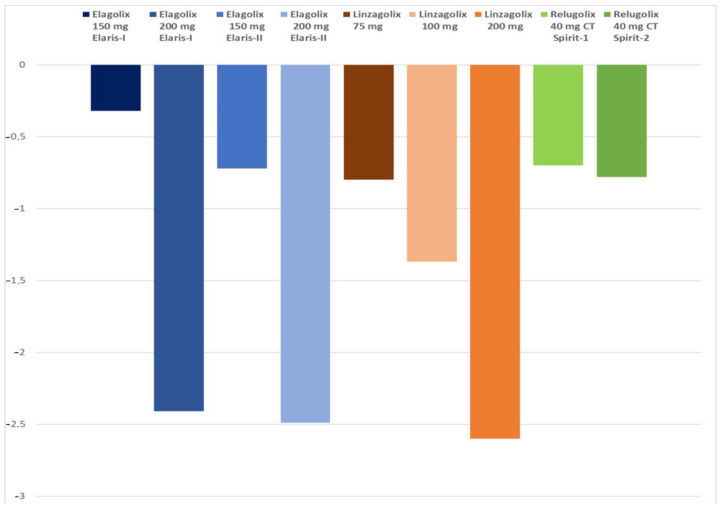
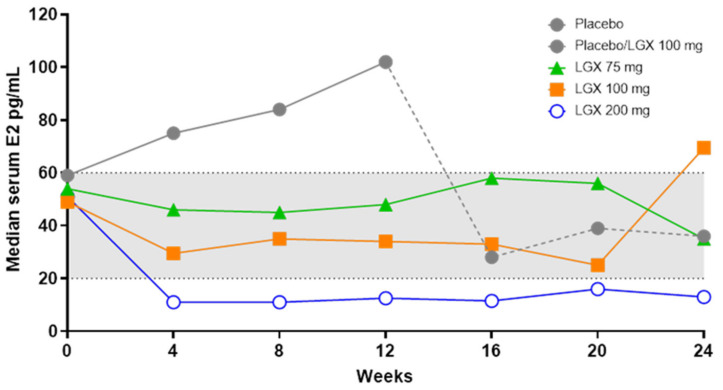
- Linzagolix phase II (n = 328): ≥30% reduction in overall pelvic pain at week 12 was 61.5%, 56.4%, and 56.3% for 75, 100, and 200 mg versus 34.5% for placebo; at week 24, rates were 70.8%, 66.7%, and 77.3%. Amenorrhea at week 12 was 36.3%, 55.8%, and 80.9% versus 4.3%; 200 mg suppressed E2 to 11 pg/mL, and lumbar spine BMD changes were −0.80%, −1.37%, and −2.60%.
- Relugolix phase III SPIRIT-1 (n = 635) and SPIRIT-2 (n = 616): at week 24, dysmenorrhea/non-menstrual pelvic pain responder rates with relugolix combination therapy were 75.5%/58.5% and 75.2%/66%; BMD changes were −0.70%/−1.99% and −0.78%/−1.92%; hot flushes were 10.4%/33.6% and 13.6%/35%. The authors conclude GnRH antagonists have a place in management, but phenotype-specific trials and cost-effectiveness considerations remain.
Methods
- Narrative review with a PubMed/Embase search up to December 2020 using keywords including endometriosis, progesterone, progestogen, GnRH agonist, GnRH antagonist, medical therapy, and add-back therapy.
- From 2010 to 2020, 4732 manuscripts were identified; after screening, 73 articles on OCPs/progestogens were selected, 94 papers on progesterone resistance were considered with 11 selected, and 20 original papers on oral GnRH antagonists were reviewed.
- Synthesis is descriptive rather than a formal systematic review or meta-analysis, incorporating phase II/III trial data and conference presentations.
Limitations
- No formal limitations section is provided. The authors state that further investigations are needed, including real-world populations, add-back therapy, comparisons with OCPs and progestins, and phenotype-specific trials; they also note that RCTs for SPRMs are lacking and that OCP evidence is limited and of low quality.
- Evident from the text: article selection was subjective (“methodologically adequate, very well written, updated, informative and well balanced”), with no reported systematic quality assessment or risk-of-bias appraisal.
- Evident from the text: some long-term GnRH antagonist data, including 52-week linzagolix and relugolix phase III results, are cited from conference presentations/abstracts rather than full peer-reviewed reports, and no meta-analysis is performed.
Model-written summary. Check it against the paper before relying on it.
Integrity signals
Registry
Cites
Statistics
Figures
Verification
Claims the paper makes
159 Not checked yet · 6 Own interpretation · 5 No basis given · 2 Partly supported · 1 Supported · accuracy not yet measured
The cited sources support only part of this claim — read each source’s verdict below.
In the paper
“Progesterone resistance may of course explain this unexpected issue [18,19,20,21,22].”
§ Endometriosis and Medical Therapy: From Progestogens to Progesterone Resistance to GnRH Antagonists: A Review > 2. Recurrent Questions: Are Estroprogestins and Progestins Effective? > 2.2. Clinical Evidence: Estroprogestins and Progestogens
What the sources say
- Not checked yetcites [18] Bulun, 2006, Progesterone resistance in endometriosis: Link to failure to metabolize estradiol, Mol. Cell. Endocrinol. source
- Partly supportedcites [19] Han, 2015, Estrogen receptor b modulates apoptosis complexes and the inflammasome to drive the pathogenesis of endometriosis, Cell sourceExperimental — accuracy not yet measured
The Results section on ERβ gain of function (page unavailable) reports reduced decidualization responses in ERβ-overexpressing human endometrial stromal cells after estradiol–medroxyprogesterone–cAMP treatment. This supports an impaired response to a progesterone-containing stimulus, but the paper does not link progesterone resistance to patients’ non-response to estroprogestin or progestin therapy. (LLM, conf=0.78)
- Not checked yetcites [20] Pavone, 2010, Altered retinoid uptake and action contributes to cell survival in endometriosis, J. Clin. Endocrinol. Metab. source
- Not checked yetcites [21] Pavone, 2011, Endometriosis expresses a molecular pattern consistent with decreased retinoid uptake, metabolism and action, Hum. Reprod. source
- Not checked yetcites [22] Patel, 2017, Progesterone resistance in endometriosis: Origins, consequences and interventions, Acta Obstet. Gynecol. Scand. source
hedgedconditional- Asserted: passes — The authors put it forward as true.
- Checkable: passes — It can be checked against evidence.
- Load-bearing: passes — The paper’s conclusions depend on it.
- Based: passes — The paper gives a reason why it holds.
The cited sources support only part of this claim — read each source’s verdict below.
In the paper
“Achieving a clinically meaningful response to endometriosis-related pain with elagolix was found to be associated with improvements in health-related quality of life and work productivity [111,112].”
§ Endometriosis and Medical Therapy: From Progestogens to Progesterone Resistance to GnRH Antagonists: A Review > 3. Why Do We Need New Options? > 3.3. Elagolix
What the sources say
- Supportedcites [111] Pokrzywinski, 2020, Achieving clinically meaningful response in endometriosis pain symptoms is associated with improvements in health-related quality of life and work productivity: Analysis of 2 phase III clinical trials, Am. J. Obstet. Gynecol. source
The Study Design and Data Source section identifies the two trials as studies of elagolix in women with moderate to severe endometriosis-related pain. The Comment Principal findings and GYNECOLOGY Original Research sections report that clinical pain responders had improved health-related quality of life and workplace productivity. Page numbers are not supplied in our copy. (LLM, conf=0.94)
- Partly supportedcites [112] Taylor, 2020, Health-related quality of life improvements in patients with endometriosis treated with elagolix, Obstet. Gynecol. sourceExperimental — accuracy not yet measured
The Discussion (page not provided) reports clinically meaningful improvements in health-related quality of life with elagolix and says those changes mirror improvements in pain scores. It also states that elagolix restored workplace productivity, citing another study. This paper does not establish that patients who achieved a clinically meaningful pain response were the ones who improved in both quality of life and work productivity. (LLM, conf=0.82)
plaincorrelational- Asserted: passes — The authors put it forward as true.
- Checkable: passes — It can be checked against evidence.
- Load-bearing: passes — The paper’s conclusions depend on it.
- Based: passes — The paper gives a reason why it holds.
- Supported
None of the sources cited for this claim have been checked yet.
In the paper
“OCPs and progestogens are effective in two-thirds of women suffering from endometriosis”
- Also stated in: § An Unmet Need · boosted
“first-line medical therapy (OCPs and progestogens) is effective in two-thirds of women suffering from endometriosis-related pain [5,6]”
- Also stated in: § 3. Why Do We Need New Options? · plain
“Two-thirds of symptomatic women find pain relief and improvement in their general condition thanks to estroprogestins and progestin-only medication”
§ Endometriosis and Medical Therapy: From Progestogens to Progesterone Resistance to GnRH Antagonists: A Review > Abstract
What the sources say
boosteddirect- Asserted: passes — The authors put it forward as true.
- Checkable: passes — It can be checked against evidence.
- Load-bearing: passes — The paper’s conclusions depend on it.
- Based: passes — The paper gives a reason why it holds.
- Also stated in: § An Unmet Need · boosted
None of the sources cited for this claim have been checked yet.
In the paper
“Percentages of women experiencing hot flushes at a dose of 150 mg (once daily) were respectively 23.7%, 22.6%, 44% and 36% in Elaris-I, -II, -III and -IV.”
§ Endometriosis and Medical Therapy: From Progestogens to Progesterone Resistance to GnRH Antagonists: A Review > 3. Why Do We Need New Options? > 3.3. Elagolix
What the sources say
- Not checked yetcites [102] Taylor, 2017, Treatment of endometriosis-associated pain with elagolix, an oral GnRH antagonist, N. Engl. J. Med. source
- Not checked yetcites [103] Surrey, 2018, Long-term outcomes of elagolix in women with endometriosis: Results from two extension studies, Obstet. Gynecol. source
plain- Asserted: passes — The authors put it forward as true.
- Checkable: passes — It can be checked against evidence.
- Load-bearing: unclear — It is unclear whether the paper’s conclusions depend on it.
- Based: passes — The paper gives a reason why it holds.
In the paper
“In Elaris EM-I, the percentage of women who noted an improvement in non-menstrual pelvic pain was 50.4% with elagolix 150 mg once daily and 54.5% with elagolix 200 mg twice daily (compared with 36.5% in the placebo group).”
§ Endometriosis and Medical Therapy: From Progestogens to Progesterone Resistance to GnRH Antagonists: A Review > 3. Why Do We Need New Options? > 3.3. Elagolix
What the sources say
- Not checked yetcites [102] Taylor, 2017, Treatment of endometriosis-associated pain with elagolix, an oral GnRH antagonist, N. Engl. J. Med. source
plain- Asserted: passes — The authors put it forward as true.
- Checkable: passes — It can be checked against evidence.
- Load-bearing: passes — The paper’s conclusions depend on it.
- Based: passes — The paper gives a reason why it holds.
None of the sources cited for this claim have been checked yet.
In the paper
“Regarding side effects, the most frequently reported were hot flushes, depending on the dose.”
§ Endometriosis and Medical Therapy: From Progestogens to Progesterone Resistance to GnRH Antagonists: A Review > 3. Why Do We Need New Options? > 3.3. Elagolix
What the sources say
- Not checked yetcites [102] Taylor, 2017, Treatment of endometriosis-associated pain with elagolix, an oral GnRH antagonist, N. Engl. J. Med. source
- Not checked yetcites [103] Surrey, 2018, Long-term outcomes of elagolix in women with endometriosis: Results from two extension studies, Obstet. Gynecol. source
plaincorrelational- Asserted: passes — The authors put it forward as true.
- Checkable: passes — It can be checked against evidence.
- Load-bearing: unclear — It is unclear whether the paper’s conclusions depend on it.
- Based: passes — The paper gives a reason why it holds.
In the paper
“It should be noted that decreased BMD was the most common cause of treatment discontinuation in subsequent Elaris EM-III and -IV studies described below.”
§ Endometriosis and Medical Therapy: From Progestogens to Progesterone Resistance to GnRH Antagonists: A Review > 3. Why Do We Need New Options? > 3.3. Elagolix
What the sources say
- Not checked yetcites [103] Surrey, 2018, Long-term outcomes of elagolix in women with endometriosis: Results from two extension studies, Obstet. Gynecol. source
plaindirect- Asserted: passes — The authors put it forward as true.
- Checkable: passes — It can be checked against evidence.
- Load-bearing: unclear — It is unclear whether the paper’s conclusions depend on it.
- Based: passes — The paper gives a reason why it holds.
In the paper
“Overall, alleviation of both dysmenorrhea and non-menstrual pelvic pain were sustained for six months (Table 1).”
§ Endometriosis and Medical Therapy: From Progestogens to Progesterone Resistance to GnRH Antagonists: A Review > 3. Why Do We Need New Options? > 3.3. Elagolix
What the sources say
- Not checked yetcites [102] Taylor, 2017, Treatment of endometriosis-associated pain with elagolix, an oral GnRH antagonist, N. Engl. J. Med. source
plaindirect- Asserted: passes — The authors put it forward as true.
- Checkable: passes — It can be checked against evidence.
- Load-bearing: passes — The paper’s conclusions depend on it.
- Based: passes — The paper gives a reason why it holds.
In the paper
“Percentages of women with a ≥30% reduction in overall pelvic pain (primary efficacy endpoint) at week 12 were respectively 61.5%, 56.4% and 56.3% in the 75 mg, 100 mg and 200 mg groups compared to 34.5% in the placebo group [105].”
§ Endometriosis and Medical Therapy: From Progestogens to Progesterone Resistance to GnRH Antagonists: A Review > 3. Why Do We Need New Options? > 3.4. Linzagolix
What the sources say
- Not checked yetcites [105] Donnez, 2020, Treatment of endome-triosis-associated pain with linzagolix, an oral gonadotropin-releasing hormone-antagonist: A randomized clinical trial, Fertil. Steril. source
plainn = 328- Asserted: passes — The authors put it forward as true.
- Checkable: passes — It can be checked against evidence.
- Load-bearing: passes — The paper’s conclusions depend on it.
- Based: passes — The paper gives a reason why it holds.
In the paper
“The percentage of patients with a decrease of >5% from baseline in lumbar spine BMD was higher in the elagolix 200 mg twice daily group in all studies.”
§ Endometriosis and Medical Therapy: From Progestogens to Progesterone Resistance to GnRH Antagonists: A Review > 3. Why Do We Need New Options? > 3.3. Elagolix
What the sources say
- Not checked yetcites [102] Taylor, 2017, Treatment of endometriosis-associated pain with elagolix, an oral GnRH antagonist, N. Engl. J. Med. source
plaincorrelational- Asserted: passes — The authors put it forward as true.
- Checkable: passes — It can be checked against evidence.
- Load-bearing: unclear — It is unclear whether the paper’s conclusions depend on it.
- Based: passes — The paper gives a reason why it holds.
- It may state two separate claims as one. 75
- Probably not a substantial claim. 13
Every source the paper cites for this claim was checked and supports it.
In the paper
“A statistically significant, though modest, improvement in dysmenorrhea was found with OCPs given for four months compared to placebo. OCP administration resulted in about a 50% reduction in dysmenorrhea.”
§ Endometriosis and Medical Therapy: From Progestogens to Progesterone Resistance to GnRH Antagonists: A Review > 2. Recurrent Questions: Are Estroprogestins and Progestins Effective? > 2.2. Clinical Evidence: Estroprogestins and Progestogens
What the sources say
- Supportedcites [63] Harada, 2008, Low-dose oral contraceptive pill for dysmenorrhea associated with endometriosis: A placebo-controlled, double-blind, randomized trial, Fertil. Steril. source
The Abstract describes four cyclic treatments, and the Changes in Pain Score section reports a significantly greater reduction in dysmenorrhea with OCPs than with placebo (P<.0001). Table 2 (under Figure 2; page not available) shows the OCP group's mean visual-analogue score falling from 58.7 to 27.6—about a 53% reduction from baseline. The roughly 50% figure describes the reduction within the OCP group, not the difference from placebo. (LLM, conf=0.93)
plaindirect- Asserted: passes — The authors put it forward as true.
- Checkable: passes — It can be checked against evidence.
- Load-bearing: passes — The paper’s conclusions depend on it.
- Based: passes — The paper gives a reason why it holds.
It may state two separate claims as one.
- Supported
None of the sources cited for this claim have been checked yet.
In the paper
“Accordingly, significantly more women taking either dose of elagolix reported “much” or “very much” improvement on the patient global impression of change (PGIC) scale and a better quality of life on the EHP-30 questionnaire compared to women taking the placebo.”
§ Endometriosis and Medical Therapy: From Progestogens to Progesterone Resistance to GnRH Antagonists: A Review > 3. Why Do We Need New Options? > 3.3. Elagolix
plaindirect- Asserted: passes — The authors put it forward as true.
- Checkable: passes — It can be checked against evidence.
- Load-bearing: passes — The paper’s conclusions depend on it.
- Based: passes — The paper gives a reason why it holds.
It may state two separate claims as one.
In the paper
“The percentage of women who experienced a clinical improvement in dysmenorrhea was 46.4% with elagolix 150 mg once daily and 75.8% with elagolix 200 mg twice daily (compared with 19.6% in the placebo group).”
§ Endometriosis and Medical Therapy: From Progestogens to Progesterone Resistance to GnRH Antagonists: A Review > 3. Why Do We Need New Options? > 3.3. Elagolix
What the sources say
- Not checked yetcites [102] Taylor, 2017, Treatment of endometriosis-associated pain with elagolix, an oral GnRH antagonist, N. Engl. J. Med. source
plain- Asserted: passes — The authors put it forward as true.
- Checkable: passes — It can be checked against evidence.
- Load-bearing: passes — The paper’s conclusions depend on it.
- Based: passes — The paper gives a reason why it holds.
It may state two separate claims as one.
In the paper
“A similar pattern was observed in responder rates for dysmenorrhea and non-menstrual pelvic pain, with significant differences observed compared to the placebo at 12 weeks with doses of 75 mg, 100 mg and 200 mg.”
§ Endometriosis and Medical Therapy: From Progestogens to Progesterone Resistance to GnRH Antagonists: A Review > 3. Why Do We Need New Options? > 3.4. Linzagolix
What the sources say
- Not checked yetcites [105] Donnez, 2020, Treatment of endome-triosis-associated pain with linzagolix, an oral gonadotropin-releasing hormone-antagonist: A randomized clinical trial, Fertil. Steril. source
plaindirect- Asserted: passes — The authors put it forward as true.
- Checkable: passes — It can be checked against evidence.
- Load-bearing: passes — The paper’s conclusions depend on it.
- Based: passes — The paper gives a reason why it holds.
It may state two separate claims as one.
In the paper
“In Elaris EM-II, corresponding percentages were 49.8% and 57.8% (compared with 36.5% in the placebo group).”
§ Endometriosis and Medical Therapy: From Progestogens to Progesterone Resistance to GnRH Antagonists: A Review > 3. Why Do We Need New Options? > 3.3. Elagolix
What the sources say
- Not checked yetcites [102] Taylor, 2017, Treatment of endometriosis-associated pain with elagolix, an oral GnRH antagonist, N. Engl. J. Med. source
plain- Asserted: passes — The authors put it forward as true.
- Checkable: passes — It can be checked against evidence.
- Load-bearing: passes — The paper’s conclusions depend on it.
- Based: passes — The paper gives a reason why it holds.
It may state two separate claims as one.
In the paper
“Percentages of women experiencing a reduction of ≥30% in both dysmenorrhea and non-menstrual pelvic pain at 12 weeks were respectively 68.2% and 58.5% in the 75 mg group, 68.6% and 61.5% in the 100 mg group and 78.9% and 47.7% in the 200 mg group.”
§ Endometriosis and Medical Therapy: From Progestogens to Progesterone Resistance to GnRH Antagonists: A Review > 3. Why Do We Need New Options? > 3.4. Linzagolix
What the sources say
- Not checked yetcites [105] Donnez, 2020, Treatment of endome-triosis-associated pain with linzagolix, an oral gonadotropin-releasing hormone-antagonist: A randomized clinical trial, Fertil. Steril. source
plain- Asserted: passes — The authors put it forward as true.
- Checkable: passes — It can be checked against evidence.
- Load-bearing: passes — The paper’s conclusions depend on it.
- Based: passes — The paper gives a reason why it holds.
It may state two separate claims as one.
In the paper
“Specifically, upon completion of treatment, respective responder rates for dysmenorrhea in Elaris EM-III and EM-IV were 52.1% and 50.8% with elagolix 150 mg once daily, and 78.1% and 75.9% with 200 mg twice daily (Table 2).”
§ Endometriosis and Medical Therapy: From Progestogens to Progesterone Resistance to GnRH Antagonists: A Review > 3. Why Do We Need New Options? > 3.3. Elagolix
What the sources say
- Not checked yetcites [103] Surrey, 2018, Long-term outcomes of elagolix in women with endometriosis: Results from two extension studies, Obstet. Gynecol. source
plainn = 569- Asserted: passes — The authors put it forward as true.
- Checkable: passes — It can be checked against evidence.
- Load-bearing: unclear — It is unclear whether the paper’s conclusions depend on it.
- Based: passes — The paper gives a reason why it holds.
It may state two separate claims as one.
In the paper
“In Elaris EM-II, corresponding percentages were 43.4% and 72.4% (compared with 22.7% in the placebo group).”
§ Endometriosis and Medical Therapy: From Progestogens to Progesterone Resistance to GnRH Antagonists: A Review > 3. Why Do We Need New Options? > 3.3. Elagolix
What the sources say
- Not checked yetcites [102] Taylor, 2017, Treatment of endometriosis-associated pain with elagolix, an oral GnRH antagonist, N. Engl. J. Med. source
plain- Asserted: passes — The authors put it forward as true.
- Checkable: passes — It can be checked against evidence.
- Load-bearing: unclear — It is unclear whether the paper’s conclusions depend on it.
- Based: passes — The paper gives a reason why it holds.
It may state two separate claims as one.
In the paper
“Responder rates for non-menstrual pelvic pain were 67.8% and 66.4% with elagolix 150 mg once daily, and 69.1% and 67.2% with 200 mg twice daily.”
§ Endometriosis and Medical Therapy: From Progestogens to Progesterone Resistance to GnRH Antagonists: A Review > 3. Why Do We Need New Options? > 3.3. Elagolix
What the sources say
- Not checked yetcites [103] Surrey, 2018, Long-term outcomes of elagolix in women with endometriosis: Results from two extension studies, Obstet. Gynecol. source
plainn = 569- Asserted: passes — The authors put it forward as true.
- Checkable: passes — It can be checked against evidence.
- Load-bearing: unclear — It is unclear whether the paper’s conclusions depend on it.
- Based: passes — The paper gives a reason why it holds.
It may state two separate claims as one.
In the paper
“Concerning serum E2, there was rapid and full suppression to 11 pg/mL in the 200 mg dose group by week 4, which was maintained (range 11–16 pg/mL) up to week 24 (Figure 5).”
§ Endometriosis and Medical Therapy: From Progestogens to Progesterone Resistance to GnRH Antagonists: A Review > 3. Why Do We Need New Options? > 3.4. Linzagolix
What the sources say
- Not checked yetcites [105] Donnez, 2020, Treatment of endome-triosis-associated pain with linzagolix, an oral gonadotropin-releasing hormone-antagonist: A randomized clinical trial, Fertil. Steril. source
plaindirect- Asserted: passes — The authors put it forward as true.
- Checkable: passes — It can be checked against evidence.
- Load-bearing: passes — The paper’s conclusions depend on it.
- Based: passes — The paper gives a reason why it holds.
It may state two separate claims as one.
In the paper
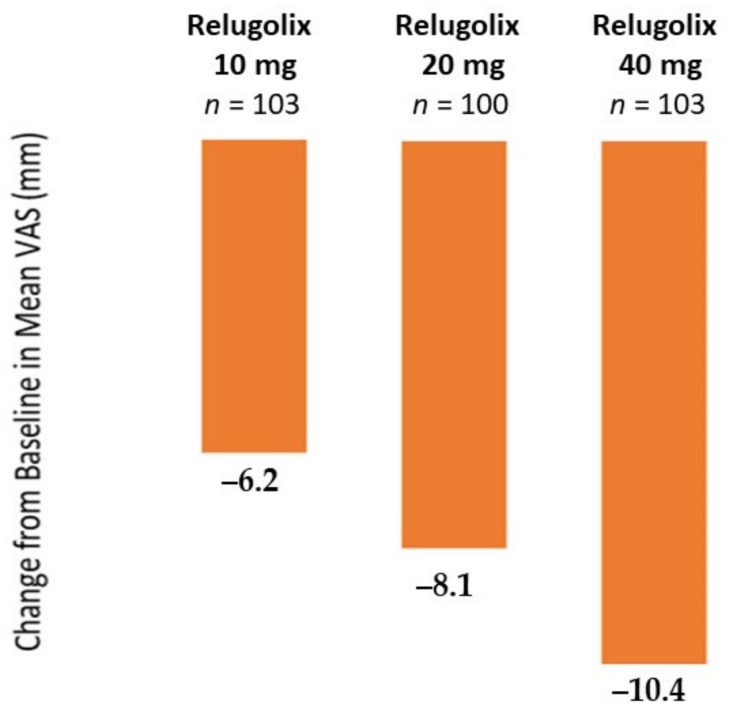
“Change was −10.4 in the relugolix 40 mg group, similar to observations in the leuprolin group [104].”
§ Endometriosis and Medical Therapy: From Progestogens to Progesterone Resistance to GnRH Antagonists: A Review > 3. Why Do We Need New Options? > 3.5. Relugolix
What the sources say
- Not checked yetcites [104] Osuga, 2021, Relugolix, an oral gonadotropin-releasing hormone receptor antagonist, reduces endometriosis-associated pain in a dose-response manner: A randomized, double-blind, place-bo-controlled study, Fertil. Steril. source
plain- Asserted: passes — The authors put it forward as true.
- Checkable: passes — It can be checked against evidence.
- Load-bearing: passes — The paper’s conclusions depend on it.
- Based: passes — The paper gives a reason why it holds.
It may state two separate claims as one.
None of the sources cited for this claim have been checked yet.
In the paper
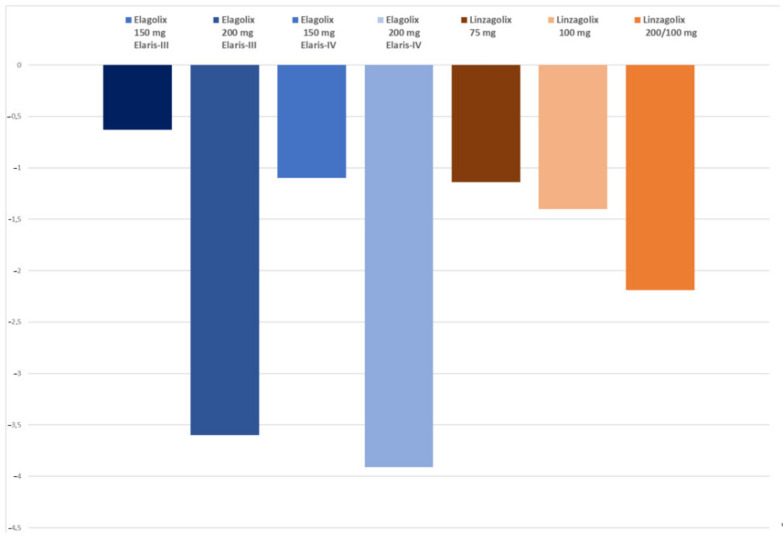
“Mean percentage (95% CI) BMD changes in the lumbar spine were −1.14 (−2.21 −0.07) at a dose of 75 mg, −1.40 (−3.35 +0.55) at a dose of 100 mg and −2.19 (−3.59 −0.78) at a dose of 200/100 mg.”
§ Endometriosis and Medical Therapy: From Progestogens to Progesterone Resistance to GnRH Antagonists: A Review > 3. Why Do We Need New Options? > 3.4. Linzagolix
What the sources say
- Not checked yetcites [113] Taylor, 2019, Long term treatment of endometriosis associated pain (EAP) with linzagolix: Efficacy and safety after 12 months of treatment, Fertil. Steril. source
- Not checked yetcites [114] Bestel, 2020, Quality of life results after 52 weeks of treatment with linzagolix for endometriosis-associated pain, Obstet. Gynecol. source
plain- Asserted: passes — The authors put it forward as true.
- Checkable: passes — It can be checked against evidence.
- Load-bearing: passes — The paper’s conclusions depend on it.
- Based: passes — The paper gives a reason why it holds.
It may state two separate claims as one.
In the paper
“Concerning the secondary endpoint, mean VAS scores for pelvic pain and dysmenorrhea started to fall within the first month of treatment, but results for dyspareunia showed no clear trend with relugolix.”
§ Endometriosis and Medical Therapy: From Progestogens to Progesterone Resistance to GnRH Antagonists: A Review > 3. Why Do We Need New Options? > 3.5. Relugolix
What the sources say
- Not checked yetcites [104] Osuga, 2021, Relugolix, an oral gonadotropin-releasing hormone receptor antagonist, reduces endometriosis-associated pain in a dose-response manner: A randomized, double-blind, place-bo-controlled study, Fertil. Steril. source
plaindirectn = 487- Asserted: passes — The authors put it forward as true.
- Checkable: passes — It can be checked against evidence.
- Load-bearing: unclear — It is unclear whether the paper’s conclusions depend on it.
- Based: passes — The paper gives a reason why it holds.
It may state two separate claims as one.
In the paper
“Percentages of women experiencing a reduction of >30% in both dysmenorrhea and non-menstrual pelvic pain at week 24 were 58.3% and 72.9% in the 75 mg group, 82.1% and 64.1% in the 100 mg group and 84.1% and 72.7% in the 200 mg group.”
§ Endometriosis and Medical Therapy: From Progestogens to Progesterone Resistance to GnRH Antagonists: A Review > 3. Why Do We Need New Options? > 3.4. Linzagolix
What the sources say
- Not checked yetcites [105] Donnez, 2020, Treatment of endome-triosis-associated pain with linzagolix, an oral gonadotropin-releasing hormone-antagonist: A randomized clinical trial, Fertil. Steril. source
plain- Asserted: passes — The authors put it forward as true.
- Checkable: passes — It can be checked against evidence.
- Load-bearing: passes — The paper’s conclusions depend on it.
- Based: passes — The paper gives a reason why it holds.
It may state two separate claims as one.
In the paper
“Hot flushes were more frequent at higher doses of linzagolix, namely, 19.3%, 26.9% and 42.1% with 75 mg, 100 mg and 200 mg, respectively, at week 12, with similar dose-related differences at week 24 (Table 1) [105].”
§ Endometriosis and Medical Therapy: From Progestogens to Progesterone Resistance to GnRH Antagonists: A Review > 3. Why Do We Need New Options? > 3.4. Linzagolix
What the sources say
- Not checked yetcites [105] Donnez, 2020, Treatment of endome-triosis-associated pain with linzagolix, an oral gonadotropin-releasing hormone-antagonist: A randomized clinical trial, Fertil. Steril. source
plaincorrelational- Asserted: passes — The authors put it forward as true.
- Checkable: passes — It can be checked against evidence.
- Load-bearing: unclear — It is unclear whether the paper’s conclusions depend on it.
- Based: passes — The paper gives a reason why it holds.
It may state two separate claims as one.
None of the sources cited for this claim have been checked yet.
In the paper
“Percentages of women experiencing a reduction of ≥30% in both dysmenorrhea and non-menstrual pelvic pain at week 52 were respectively 69.2% and 69.2% in the 75 mg group, 69.2% and 53.8% in the 100 mg group and 64.7 % and 76.5% in the 200/100 mg group.”
§ Endometriosis and Medical Therapy: From Progestogens to Progesterone Resistance to GnRH Antagonists: A Review > 3. Why Do We Need New Options? > 3.4. Linzagolix
What the sources say
- Not checked yetcites [113] Taylor, 2019, Long term treatment of endometriosis associated pain (EAP) with linzagolix: Efficacy and safety after 12 months of treatment, Fertil. Steril. source
- Not checked yetcites [114] Bestel, 2020, Quality of life results after 52 weeks of treatment with linzagolix for endometriosis-associated pain, Obstet. Gynecol. source
plain- Asserted: passes — The authors put it forward as true.
- Checkable: passes — It can be checked against evidence.
- Load-bearing: passes — The paper’s conclusions depend on it.
- Based: passes — The paper gives a reason why it holds.
It may state two separate claims as one.
In the paper
“Mean percentage changes in BMD from baseline were −2.1% in the relugolix 40 mg group and −2.2% in the leuprolin group [104].”
§ Endometriosis and Medical Therapy: From Progestogens to Progesterone Resistance to GnRH Antagonists: A Review > 3. Why Do We Need New Options? > 3.5. Relugolix
What the sources say
- Not checked yetcites [104] Osuga, 2021, Relugolix, an oral gonadotropin-releasing hormone receptor antagonist, reduces endometriosis-associated pain in a dose-response manner: A randomized, double-blind, place-bo-controlled study, Fertil. Steril. source
plain- Asserted: passes — The authors put it forward as true.
- Checkable: passes — It can be checked against evidence.
- Load-bearing: unclear — It is unclear whether the paper’s conclusions depend on it.
- Based: passes — The paper gives a reason why it holds.
It may state two separate claims as one.
None of the sources cited for this claim have been checked yet.
In the paper
“A recent paper demonstrated the efficacy of linzagolix 200 mg in reducing lesion size and improving quality of life in case of severe adenomyosis, which is often associated with deep endometriosis [108,115].”
§ Endometriosis and Medical Therapy: From Progestogens to Progesterone Resistance to GnRH Antagonists: A Review > 3. Why Do We Need New Options? > 3.4. Linzagolix
What the sources say
- Not checked yetcites [108] Donnez, 2020, Gonadotropin-releasing hormone antagonist (linzagolix): A new therapy for uterine adenomyosis, Fertil. Steril. source
- Not checked yetcites [115] Donnez, 2019, What if deep endometriotic nodules and uterine adenomyosis were actually two forms of the same disease?, Fertil. Steril. source
boosteddirect- Asserted: passes — The authors put it forward as true.
- Checkable: passes — It can be checked against evidence.
- Load-bearing: unclear — It is unclear whether the paper’s conclusions depend on it.
- Based: passes — The paper gives a reason why it holds.
It may state two separate claims as one.
In the paper
“Concerning the different parts of the EHP-30 questionnaire, pain and powerlessness domains were significantly transformed with 75 mg, 100 mg and 200 mg doses, whereas for other domains linked to emotional well-being, social support and self-image, there was a consistent significant difference only in the 200 mg dose group.”
§ Endometriosis and Medical Therapy: From Progestogens to Progesterone Resistance to GnRH Antagonists: A Review > 3. Why Do We Need New Options? > 3.4. Linzagolix
What the sources say
- Not checked yetcites [105] Donnez, 2020, Treatment of endome-triosis-associated pain with linzagolix, an oral gonadotropin-releasing hormone-antagonist: A randomized clinical trial, Fertil. Steril. source
plaindirect- Asserted: passes — The authors put it forward as true.
- Checkable: passes — It can be checked against evidence.
- Load-bearing: passes — The paper’s conclusions depend on it.
- Based: passes — The paper gives a reason why it holds.
It may state two separate claims as one.
In the paper
“At week 12, estimated amenorrhea rates were 4.3% in the placebo group and 36.3%, 55.8% and 80.9% in the 75 mg, 100 mg and 200 mg dose groups, respectively.”
§ Endometriosis and Medical Therapy: From Progestogens to Progesterone Resistance to GnRH Antagonists: A Review > 3. Why Do We Need New Options? > 3.4. Linzagolix
What the sources say
- Not checked yetcites [105] Donnez, 2020, Treatment of endome-triosis-associated pain with linzagolix, an oral gonadotropin-releasing hormone-antagonist: A randomized clinical trial, Fertil. Steril. source
hedged- Asserted: passes — The authors put it forward as true.
- Checkable: passes — It can be checked against evidence.
- Load-bearing: passes — The paper’s conclusions depend on it.
- Based: passes — The paper gives a reason why it holds.
It may state two separate claims as one.
In the paper
“Compared to the placebo, there was a significant reduction in dyspareunia at 12 weeks with the 200 mg dose, but not with 75 mg or 100 mg.”
§ Endometriosis and Medical Therapy: From Progestogens to Progesterone Resistance to GnRH Antagonists: A Review > 3. Why Do We Need New Options? > 3.4. Linzagolix
What the sources say
- Not checked yetcites [105] Donnez, 2020, Treatment of endome-triosis-associated pain with linzagolix, an oral gonadotropin-releasing hormone-antagonist: A randomized clinical trial, Fertil. Steril. source
plaindirect- Asserted: passes — The authors put it forward as true.
- Checkable: passes — It can be checked against evidence.
- Load-bearing: passes — The paper’s conclusions depend on it.
- Based: passes — The paper gives a reason why it holds.
It may state two separate claims as one.
In the paper
“Indeed, dyspareunia was only significantly alleviated at the highest daily dose (200 mg twice daily), but not at a lower dose (150 mg once daily), while other types of endometriosis-associated pain were significantly reduced with both the lower and higher dose [96].”
§ Endometriosis and Medical Therapy: From Progestogens to Progesterone Resistance to GnRH Antagonists: A Review > 3. Why Do We Need New Options? > 3.4. Linzagolix
What the sources say
- Not checked yetcites [96] Dragoman, 2016, Research gaps identified during the 2014 update of the WHO medical eligibility criteria for contraceptive use and selected practice recommendations for contraceptive use, Contracept source
plaindirect- Asserted: passes — The authors put it forward as true.
- Checkable: passes — It can be checked against evidence.
- Load-bearing: unclear — It is unclear whether the paper’s conclusions depend on it.
- Based: passes — The paper gives a reason why it holds.
It may state two separate claims as one.
None of the sources cited for this claim have been checked yet.
In the paper
“Percentages of women showing a mean reduction in NRS scores of ≥2.8 points for dysmenorrhea and ≥2.1 points for non-menstrual pelvic pain at week 24 were respectively 75.5% and 58.5% in the relugolix CT arm in SPIRIT-1, and 75.2% and 66% in the relugolix CT arm in SPIRIT-2.”
§ Endometriosis and Medical Therapy: From Progestogens to Progesterone Resistance to GnRH Antagonists: A Review > 3. Why Do We Need New Options? > 3.5. Relugolix
What the sources say
- Not checked yetcites [119] Becker, 2020, Efficacy and safety of relugolix combination therapy in women with endometriosis-associated pain: Phase 3 randomized, double-blind, placebo-controlled study (spirit 2), Fertil. Steril. source
- Not checked yetcites [120] Zandvliet, 2020, Simulated long-term effects of relugolix combination therapy on bone mineral density at the lumbar spine as predicted by a validated semi-mechanistic exposure-response model, Fertil. Steril. source
plain- Asserted: passes — The authors put it forward as true.
- Checkable: passes — It can be checked against evidence.
- Load-bearing: passes — The paper’s conclusions depend on it.
- Based: passes — The paper gives a reason why it holds.
It may state two separate claims as one.
None of the sources cited for this claim have been checked yet.
In the paper
“Mean percentage hot flushes in the relugolix CT and delayed relugolix CT groups at week 24 were 10.4% and 33.6% in SPIRIT-1 and 13.6% and 35% in SPIRIT-2 [118,119].”
§ Endometriosis and Medical Therapy: From Progestogens to Progesterone Resistance to GnRH Antagonists: A Review > 3. Why Do We Need New Options? > 3.5. Relugolix
What the sources say
- Not checked yetcites [118] Biberoglu, 1981, Dosage aspects of danazol therapy in endometriosis: Short-term and long-term effectiveness, Am. J. Obstet. Gynecol. source
- Not checked yetcites [119] Becker, 2020, Efficacy and safety of relugolix combination therapy in women with endometriosis-associated pain: Phase 3 randomized, double-blind, placebo-controlled study (spirit 2), Fertil. Steril. source
plain- Asserted: passes — The authors put it forward as true.
- Checkable: passes — It can be checked against evidence.
- Load-bearing: unclear — It is unclear whether the paper’s conclusions depend on it.
- Based: passes — The paper gives a reason why it holds.
It may state two separate claims as one.
None of the sources cited for this claim have been checked yet.
In the paper
“Mean percentage BMD changes in the lumbar spine from baseline to week 24 in the relugolix CT and delayed relugolix CT arms were respectively −0.70 % and −1.99% in SPIRIT-1 and −0.78% and −1.92% in SPIRIT-2.”
§ Endometriosis and Medical Therapy: From Progestogens to Progesterone Resistance to GnRH Antagonists: A Review > 3. Why Do We Need New Options? > 3.5. Relugolix
What the sources say
- Not checked yetcites [119] Becker, 2020, Efficacy and safety of relugolix combination therapy in women with endometriosis-associated pain: Phase 3 randomized, double-blind, placebo-controlled study (spirit 2), Fertil. Steril. source
- Not checked yetcites [120] Zandvliet, 2020, Simulated long-term effects of relugolix combination therapy on bone mineral density at the lumbar spine as predicted by a validated semi-mechanistic exposure-response model, Fertil. Steril. source
plain- Asserted: passes — The authors put it forward as true.
- Checkable: passes — It can be checked against evidence.
- Load-bearing: unclear — It is unclear whether the paper’s conclusions depend on it.
- Based: passes — The paper gives a reason why it holds.
It may state two separate claims as one.
The paper states this without a source or data behind it here, so there is nothing to check it against. The quote shows it is in the paper.
In the paper
“Based on the role of retrograde menstruation according to Sampson’s theory, blocking ovulation and menstruation by means of hormonal therapies may in theory be disease-modulating and control the symptoms of endometriosis.”
§ Endometriosis and Medical Therapy: From Progestogens to Progesterone Resistance to GnRH Antagonists: A Review > 1. Introduction
hedgedconditional- Asserted: passes — The authors put it forward as true.
- Checkable: passes — It can be checked against evidence.
- Load-bearing: passes — The paper’s conclusions depend on it.
- Based: passes — The paper gives a reason why it holds.
Probably not a substantial claim. It may state two separate claims as one.
- The authors state this as an assumption: Retrograde menstruation according to Sampson's theory is a valid mechanism of endometriosis.
In the paper
“There are three distinct forms of the disease (peritoneal, ovarian and rectovaginal endometriosis)”
§ Endometriosis and Medical Therapy: From Progestogens to Progesterone Resistance to GnRH Antagonists: A Review > 1. Introduction
What the sources say
- Not checked yetcites [2] Nisolle, 1997, Peritoneal endometriosis, ovarian endometriosis, and adenomyotic nodules of the rectovaginal septum are three different entities, Fertil. Steril. source
plain- Asserted: passes — The authors put it forward as true.
- Checkable: passes — It can be checked against evidence.
- Load-bearing: fails — The paper’s conclusions may not depend on it.
- Based: passes — The paper gives a reason why it holds.
Probably not a substantial claim. The paper’s conclusions may not depend on it.
In the paper
“although dysmenorrhea and chronic non-menstrual pelvic pain are the most prevalent [2]”
§ Endometriosis and Medical Therapy: From Progestogens to Progesterone Resistance to GnRH Antagonists: A Review > 1. Introduction
What the sources say
- Not checked yetcites [2] Nisolle, 1997, Peritoneal endometriosis, ovarian endometriosis, and adenomyotic nodules of the rectovaginal septum are three different entities, Fertil. Steril. source
plain- Asserted: passes — The authors put it forward as true.
- Checkable: passes — It can be checked against evidence.
- Load-bearing: fails — The paper’s conclusions may not depend on it.
- Based: passes — The paper gives a reason why it holds.
Probably not a substantial claim. The paper’s conclusions may not depend on it. It may state two separate claims as one.
A conclusion the paper draws from its own results — it cites no other source for it, so there is none to check. The quote shows it is in the paper.
In the paper
“There is therefore a need for effective long-term oral treatment capable of managing endometriosis symptoms, while alleviating the impact of side effects.”
- Also stated in: § Abstract · boosted
“It is clear that there is a need for effective long-term oral treatment capable of managing endometriosis symptoms, while mitigating the impact of side effects.”
§ Endometriosis and Medical Therapy: From Progestogens to Progesterone Resistance to GnRH Antagonists: A Review > 1. Introduction > An Unmet Need
boosted- Asserted: passes — The authors put it forward as true.
- Checkable: fails — It may be too vague to check against evidence.
- Load-bearing: passes — The paper’s conclusions depend on it.
- Based: passes — The paper gives a reason why it holds.
Probably not a substantial claim. It may be too vague to check against evidence.
- Rests on an assumption: Surgery cannot cure endometriosis.
- Also stated in: § Abstract · boosted
None of the sources cited for this claim have been checked yet.
In the paper
“endometriosis, a common chronic inflammatory disease causing pain and infertility [1,2,3]”
§ Endometriosis and Medical Therapy: From Progestogens to Progesterone Resistance to GnRH Antagonists: A Review > 1. Introduction
What the sources say
- Not checked yetcites [1] Donnez, 2002, The efficacy of medical and surgical treatment of endometriosis-associated infertility: Arguments in favour of a medico-surgical approach, Hum. Reprod. Update. source
- Not checked yetcites [2] Nisolle, 1997, Peritoneal endometriosis, ovarian endometriosis, and adenomyotic nodules of the rectovaginal septum are three different entities, Fertil. Steril. source
- Not checked yetcites [3] Giudice, 2010, Clinical practice. Endometriosis, N. Engl. J. Med. source
plaindirect- Asserted: passes — The authors put it forward as true.
- Checkable: passes — It can be checked against evidence.
- Load-bearing: fails — The paper’s conclusions may not depend on it.
- Based: passes — The paper gives a reason why it holds.
Probably not a substantial claim. The paper’s conclusions may not depend on it. It may state two separate claims as one.
None of the sources cited for this claim have been checked yet.
In the paper
“However, hormonal treatment also impedes conception, excluding this approach in women wishing to conceive [1,4].”
§ Endometriosis and Medical Therapy: From Progestogens to Progesterone Resistance to GnRH Antagonists: A Review > 1. Introduction
What the sources say
- Not checked yetcites [1] Donnez, 2002, The efficacy of medical and surgical treatment of endometriosis-associated infertility: Arguments in favour of a medico-surgical approach, Hum. Reprod. Update. source
- Not checked yetcites [4] Ferrero, 2018, Current and emerging treatment options for endometriosis, Expert Opin. Pharmacother. source
plaindirect- Asserted: passes — The authors put it forward as true.
- Checkable: passes — It can be checked against evidence.
- Load-bearing: unclear — It is unclear whether the paper’s conclusions depend on it.
- Based: passes — The paper gives a reason why it holds.
It may state two separate claims as one.
None of the sources cited for this claim have been checked yet.
In the paper
“Proinflammatory factors (like heme and iron) and cytokines (like tumor necrosis factor-alpha (TNFα) and interleukin 1 beta (IL1β)) may also disrupt PR function and play a role in progesterone resistance which finally leads to increased nuclear factor kappa B (NF-kB) activity, which is involved in endometriosis development [27,33,34].”
§ Endometriosis and Medical Therapy: From Progestogens to Progesterone Resistance to GnRH Antagonists: A Review > 2. Recurrent Questions: Are Estroprogestins and Progestins Effective? > 2.1. Biological Evidence: The Concept of Progesterone Resistance in Endometriosis
What the sources say
- Not checked yetcites [27] Donnez, 2002, Iron overload in the peritoneal cavity of women with pelvic endome-triosis, Fertil. Steril. source
- Not checked yetcites [33] Patel, 2014, Role of nuclear progesterone receptor isoforms in uterine pathophysiology, Hum. Reprod. Updat. source
- Not checked yetcites [34] Lousse, 2010, Involvement of the nuclear factor-κB pathway in the pathogenesis of endometriosis, Fertil. Steril. source
hedgedconditional- Asserted: passes — The authors put it forward as true.
- Checkable: passes — It can be checked against evidence.
- Load-bearing: passes — The paper’s conclusions depend on it.
- Based: passes — The paper gives a reason why it holds.
It may state two separate claims as one.
None of the sources cited for this claim have been checked yet.
In the paper
“Conversely, in endometriotic lesions, stromal cells showing progesterone resistance are unable to produce RA which results in loss of 17β-HSD2 expression and failure to inactivate local E2, ultimately leading to high E2 activity [14,15,16,20,21,22].”
§ Endometriosis and Medical Therapy: From Progestogens to Progesterone Resistance to GnRH Antagonists: A Review > 2. Recurrent Questions: Are Estroprogestins and Progestins Effective? > 2.1. Biological Evidence: The Concept of Progesterone Resistance in Endometriosis
What the sources say
- Not checked yetcites [14] Bulun, 2010, 17Beta-hydroxysteroid dehydrogenase-2 deficiency and progesterone resistance in endometriosis, Semin. Reprod. Med. source
- Not checked yetcites [15] Bulun, 2019, Endometriosis, Endocr. Rev. source
- Not checked yetcites [16] Yilmaz, 2019, Endometriosis and nuclear receptors, Hum. Reprod. Update source
- Not checked yetcites [20] Pavone, 2010, Altered retinoid uptake and action contributes to cell survival in endometriosis, J. Clin. Endocrinol. Metab. source
- Not checked yetcites [21] Pavone, 2011, Endometriosis expresses a molecular pattern consistent with decreased retinoid uptake, metabolism and action, Hum. Reprod. source
- Not checked yetcites [22] Patel, 2017, Progesterone resistance in endometriosis: Origins, consequences and interventions, Acta Obstet. Gynecol. Scand. source
plaindirect- Asserted: passes — The authors put it forward as true.
- Checkable: passes — It can be checked against evidence.
- Load-bearing: passes — The paper’s conclusions depend on it.
- Based: passes — The paper gives a reason why it holds.
It may state two separate claims as one.
In the paper
“partial or complete progesterone resistance was identified in over 66% of cases in neonatal endometrium [24], while a full response to progesterone was observed in around 33% [24].”
§ Endometriosis and Medical Therapy: From Progestogens to Progesterone Resistance to GnRH Antagonists: A Review > 2. Recurrent Questions: Are Estroprogestins and Progestins Effective? > 2.1. Biological Evidence: The Concept of Progesterone Resistance in Endometriosis
What the sources say
- Not checked yetcites [24] Ober, 1955, Observations on the endometrium and ovary in the newborn, Pediatrics source
plain- Asserted: passes — The authors put it forward as true.
- Checkable: passes — It can be checked against evidence.
- Load-bearing: passes — The paper’s conclusions depend on it.
- Based: passes — The paper gives a reason why it holds.
It may state two separate claims as one.
None of the sources cited for this claim have been checked yet.
In the paper
“these endometrial cells also exhibit hypermethylation of the PR-B promoter, inducing expression of the receptor protein [38,39,40] and finally resulting in a state of progesterone resistance.”
§ Endometriosis and Medical Therapy: From Progestogens to Progesterone Resistance to GnRH Antagonists: A Review > 2. Recurrent Questions: Are Estroprogestins and Progestins Effective? > 2.1. Biological Evidence: The Concept of Progesterone Resistance in Endometriosis
What the sources say
- Not checked yetcites [38] Neal, 2020, Expression of stromal progesterone receptor and differential methylation patterns in the endometrium may correlate with response to progesterone therapy in endometrial complex atypical hyperplasia, Reprod. Sci. source
- Not checked yetcites [39] Wu, 2005, Aberrant methylation at HOXA10 may be responsible for its aberrant expression in the endometrium of patients with endometriosis, Am. J. Obstet. Gynecol. source
- Not checked yetcites [40] Cakmak, 2010, Molecular mechanisms of treatment resistance in endometriosis: The role of progesterone–hox gene interactions, Semin. Reprod. Med. source
plaindirect- Asserted: passes — The authors put it forward as true.
- Checkable: passes — It can be checked against evidence.
- Load-bearing: passes — The paper’s conclusions depend on it.
- Based: passes — The paper gives a reason why it holds.
It may state two separate claims as one.
None of the sources cited for this claim have been checked yet.
In the paper
“ERβ is the key mediator of estrogen action in endometriotic stromal cells and was found to transcriptionally repress ERα, possibly promoting disease progression by several pathways [15,16].”
§ Endometriosis and Medical Therapy: From Progestogens to Progesterone Resistance to GnRH Antagonists: A Review > 2. Recurrent Questions: Are Estroprogestins and Progestins Effective? > 2.1. Biological Evidence: The Concept of Progesterone Resistance in Endometriosis
What the sources say
hedgeddirect- Asserted: passes — The authors put it forward as true.
- Checkable: passes — It can be checked against evidence.
- Load-bearing: passes — The paper’s conclusions depend on it.
- Based: passes — The paper gives a reason why it holds.
It may state two separate claims as one.
None of the sources cited for this claim have been checked yet.
In the paper
“During the luteal phase, progesterone acts through PR-B and boosts transcription and secretion of 17β-hydroxysteroid dehydrogenase type 2 (17β-HSD2), responsible for converting E2 to the less active estrone [14,15,16].”
§ Endometriosis and Medical Therapy: From Progestogens to Progesterone Resistance to GnRH Antagonists: A Review > 2. Recurrent Questions: Are Estroprogestins and Progestins Effective? > 2.1. Biological Evidence: The Concept of Progesterone Resistance in Endometriosis
What the sources say
- Not checked yetcites [14] Bulun, 2010, 17Beta-hydroxysteroid dehydrogenase-2 deficiency and progesterone resistance in endometriosis, Semin. Reprod. Med. source
- Not checked yetcites [15] Bulun, 2019, Endometriosis, Endocr. Rev. source
- Not checked yetcites [16] Yilmaz, 2019, Endometriosis and nuclear receptors, Hum. Reprod. Update source
plaindirect- Asserted: passes — The authors put it forward as true.
- Checkable: passes — It can be checked against evidence.
- Load-bearing: passes — The paper’s conclusions depend on it.
- Based: passes — The paper gives a reason why it holds.
It may state two separate claims as one.
In the paper
“human endometrial fibroblasts derived from mesenchymal progenitors (mesenchymal stem cells (MSCs)) inherit progesterone resistance and acquire an inflammatory phenotype in the endometrial niche in endometriosis.”
§ Endometriosis and Medical Therapy: From Progestogens to Progesterone Resistance to GnRH Antagonists: A Review > 2. Recurrent Questions: Are Estroprogestins and Progestins Effective? > 2.1. Biological Evidence: The Concept of Progesterone Resistance in Endometriosis
What the sources say
- Not checked yetcites [44] Barragan, 2016, Human endometrial fibroblasts derived from mesenchymal progenitors inherit progesterone resistance and acquire an inflammatory phenotype in the endometrial niche in endometriosis, Biol. Reprod. source
plaindirect- Asserted: passes — The authors put it forward as true.
- Checkable: passes — It can be checked against evidence.
- Load-bearing: passes — The paper’s conclusions depend on it.
- Based: passes — The paper gives a reason why it holds.
It may state two separate claims as one.
None of the sources cited for this claim have been checked yet.
In the paper
“Red lesions were found to be very active, with high proliferative activity and vascular endothelial growth factor (VEGF) and matrix metalloproteinase (MMP) content, explaining their frequent bleeding and remodeling during the menstrual period [46,47,48].”
§ Endometriosis and Medical Therapy: From Progestogens to Progesterone Resistance to GnRH Antagonists: A Review > 2. Recurrent Questions: Are Estroprogestins and Progestins Effective? > 2.1. Biological Evidence: The Concept of Progesterone Resistance in Endometriosis
What the sources say
- Not checked yetcites [46] Donnez, 1996, Stereometric evaluation of peritoneal endometriosis and endometriotic nodules of the rectovaginal septum, Hum. Reprod. source
- Not checked yetcites [47] Donnez, 1996, Peritoneal endometriosis and “endometriotic” nodules of the rectovaginal septum are two different entities, Fertil. Steril. source
- Not checked yetcites [48] Donnez, 1998, Vascular endothelial growth factor (VEGF) in endometriosis, Hum. Reprod. source
plaindirect- Asserted: passes — The authors put it forward as true.
- Checkable: passes — It can be checked against evidence.
- Load-bearing: unclear — It is unclear whether the paper’s conclusions depend on it.
- Based: passes — The paper gives a reason why it holds.
It may state two separate claims as one.
None of the sources cited for this claim have been checked yet.
In the paper
“These red lesions are resistant to progestin therapy, which may induce some decidualization, but not atrophy [46,47,48].”
§ Endometriosis and Medical Therapy: From Progestogens to Progesterone Resistance to GnRH Antagonists: A Review > 2. Recurrent Questions: Are Estroprogestins and Progestins Effective? > 2.1. Biological Evidence: The Concept of Progesterone Resistance in Endometriosis
What the sources say
- Not checked yetcites [46] Donnez, 1996, Stereometric evaluation of peritoneal endometriosis and endometriotic nodules of the rectovaginal septum, Hum. Reprod. source
- Not checked yetcites [47] Donnez, 1996, Peritoneal endometriosis and “endometriotic” nodules of the rectovaginal septum are two different entities, Fertil. Steril. source
- Not checked yetcites [48] Donnez, 1998, Vascular endothelial growth factor (VEGF) in endometriosis, Hum. Reprod. source
hedgedconditional- Asserted: passes — The authors put it forward as true.
- Checkable: passes — It can be checked against evidence.
- Load-bearing: passes — The paper’s conclusions depend on it.
- Based: passes — The paper gives a reason why it holds.
It may state two separate claims as one.
None of the sources cited for this claim have been checked yet.
In the paper
“in endometriotic implants, ERα is reduced but ERβ activity is upregulated, leading to complete loss of PR-B, which is then unable to induce 17β-HSD2.”
§ Endometriosis and Medical Therapy: From Progestogens to Progesterone Resistance to GnRH Antagonists: A Review > 2. Recurrent Questions: Are Estroprogestins and Progestins Effective? > 2.1. Biological Evidence: The Concept of Progesterone Resistance in Endometriosis
What the sources say
plaindirect- Asserted: passes — The authors put it forward as true.
- Checkable: passes — It can be checked against evidence.
- Load-bearing: passes — The paper’s conclusions depend on it.
- Based: passes — The paper gives a reason why it holds.
It may state two separate claims as one.
In the paper
“Despite being 3 to 4 times more frequent, venous thrombotic events are much less severe than arterial thrombotic events, which are more associated with the EE dose than with the progestin type [67].”
§ Endometriosis and Medical Therapy: From Progestogens to Progesterone Resistance to GnRH Antagonists: A Review > 2. Recurrent Questions: Are Estroprogestins and Progestins Effective? > 2.2. Clinical Evidence: Estroprogestins and Progestogens
What the sources say
- Not checked yetcites [67] Lidegaard, 2011, Risk of venous thromboembolism from use of oral contraceptives containing different progestogens and oestrogen doses: Danish cohort study, 2001–2009, BMJ source
plaincorrelational- Asserted: passes — The authors put it forward as true.
- Checkable: passes — It can be checked against evidence.
- Load-bearing: unclear — It is unclear whether the paper’s conclusions depend on it.
- Based: passes — The paper gives a reason why it holds.
It may state two separate claims as one.
None of the sources cited for this claim have been checked yet.
In the paper
“these authors concluded that OCPs can play an important role in the management of endometriosis, as two-thirds of women with symptomatic endometriosis respond to estroprogestins.”
§ Endometriosis and Medical Therapy: From Progestogens to Progesterone Resistance to GnRH Antagonists: A Review > 2. Recurrent Questions: Are Estroprogestins and Progestins Effective? > 2.2. Clinical Evidence: Estroprogestins and Progestogens
What the sources say
- Not checked yetcites [59] Vercellini, 2018, Management of endometriosis: Toward value-based, cost-effective, affordable care, J. Obstet. Gynaecol. Can. source
- Not checked yetcites [60] Vercellini, 2018, A stepped-care approach to symptomatic endometriosis management: A participatory research initiative, Fertil. Steril. source
- Not checked yetcites [61] Vercellini, 2017, Toward minimally disruptive management of symptomatic endometriosis: Reducing low-value care and the burden of treatment, Expert Rev. Pharmacoecon. Outcomes Res. source
- Not checked yetcites [62] Vercellini, 2018, Are combined hormonal contraceptives the neglected treatment for symptomatic endometriosis?, Fertil. Steril. source
plaindirect- Asserted: passes — The authors put it forward as true.
- Checkable: passes — It can be checked against evidence.
- Load-bearing: passes — The paper’s conclusions depend on it.
- Based: passes — The paper gives a reason why it holds.
It may state two separate claims as one.
In the paper
“while OCPs are widely used to treat endometriosis-related pain, evidence of their efficacy is limited and there are insufficient data to make any judgment in terms of comparisons with other medical therapies.”
§ Endometriosis and Medical Therapy: From Progestogens to Progesterone Resistance to GnRH Antagonists: A Review > 2. Recurrent Questions: Are Estroprogestins and Progestins Effective? > 2.2. Clinical Evidence: Estroprogestins and Progestogens
What the sources say
- Not checked yetcites [74] Brown, 2014, Endometriosis: An overview of cochrane reviews, Cochrane Database Syst. Rev.
plain- Asserted: passes — The authors put it forward as true.
- Checkable: passes — It can be checked against evidence.
- Load-bearing: passes — The paper’s conclusions depend on it.
- Based: passes — The paper gives a reason why it holds.
It may state two separate claims as one.
In the paper
“a dose of 20 µg EE in low-dose OCPs is equivalent to 4–6 times the physiological dose of estrogen, which may promote attachment of endometrial cells deposited in the pelvis.”
§ Endometriosis and Medical Therapy: From Progestogens to Progesterone Resistance to GnRH Antagonists: A Review > 2. Recurrent Questions: Are Estroprogestins and Progestins Effective? > 2.2. Clinical Evidence: Estroprogestins and Progestogens
What the sources say
- Not checked yetcites [68] Casper, 2017, Progestin-only pills may be a better first-line treatment for endometriosis than combined estrogen-progestin contraceptive pills, Fertil. Steril. source
hedgedconditional- Asserted: passes — The authors put it forward as true.
- Checkable: passes — It can be checked against evidence.
- Load-bearing: passes — The paper’s conclusions depend on it.
- Based: passes — The paper gives a reason why it holds.
It may state two separate claims as one.
In the paper
“PRs may be present, but biologically inactive. On the other hand, PRs may well be absent, leading to progesterone resistance and no decrease in lesion size with OCP or progestogen therapy [58].”
§ Endometriosis and Medical Therapy: From Progestogens to Progesterone Resistance to GnRH Antagonists: A Review > 2. Recurrent Questions: Are Estroprogestins and Progestins Effective? > 2.1. Biological Evidence: The Concept of Progesterone Resistance in Endometriosis
What the sources say
- Not checked yetcites [58] Flores, 2018, Progesterone receptor status predicts response to progestin therapy in endome-triosis, J. Clin. Endocrinol. Metab. source
hedgedconditional- Asserted: passes — The authors put it forward as true.
- Checkable: passes — It can be checked against evidence.
- Load-bearing: passes — The paper’s conclusions depend on it.
- Based: passes — The paper gives a reason why it holds.
It may state two separate claims as one.
In the paper
“a progestogen (lynestrenol) was unable to reduce vascularization (evaluated by the capillary–stroma relative surface area) in endometriotic lesions, but a significant decrease was observed after GnRH agonist therapy [55].”
§ Endometriosis and Medical Therapy: From Progestogens to Progesterone Resistance to GnRH Antagonists: A Review > 2. Recurrent Questions: Are Estroprogestins and Progestins Effective? > 2.1. Biological Evidence: The Concept of Progesterone Resistance in Endometriosis
What the sources say
- Not checked yetcites [55] Donnez, 1995, Surgery: Rectovaginal septum, endometriosis or adenomyosis: Laparoscopic management in a series of 231 patients, Hum. Reprod. source
plaindirect- Asserted: passes — The authors put it forward as true.
- Checkable: passes — It can be checked against evidence.
- Load-bearing: passes — The paper’s conclusions depend on it.
- Based: passes — The paper gives a reason why it holds.
It may state two separate claims as one.
In the paper
“the available literature considers combined hormone contraceptives to be effective for relief of endometriosis-related pain. However, corroborative data are of low quality and inadequate to draw conclusions on the superiority and relative benefits compared to other approaches [75].”
§ Endometriosis and Medical Therapy: From Progestogens to Progesterone Resistance to GnRH Antagonists: A Review > 2. Recurrent Questions: Are Estroprogestins and Progestins Effective? > 2.2. Clinical Evidence: Estroprogestins and Progestogens
What the sources say
- Not checked yetcites [75] Jensen, 2018, Use of combined hormonal contraceptives for the treatment of endometriosis-related pain: A systematic review of the evidence, Fertil. Steril. source
plaindirect- Asserted: passes — The authors put it forward as true.
- Checkable: passes — It can be checked against evidence.
- Load-bearing: passes — The paper’s conclusions depend on it.
- Based: passes — The paper gives a reason why it holds.
It may state two separate claims as one.
In the paper
“they also concluded that oral norethisterone acetate (NETA) should be considered the first choice, given the extremely favorable cost-effectiveness profile.”
§ Endometriosis and Medical Therapy: From Progestogens to Progesterone Resistance to GnRH Antagonists: A Review > 2. Recurrent Questions: Are Estroprogestins and Progestins Effective? > 2.2. Clinical Evidence: Estroprogestins and Progestogens
What the sources say
- Not checked yetcites [76] Buggio, 2017, Oral and depot progestin therapy for endometriosis: Towards a personalisez medicine, Expert Opin. Pharmacother. source
plain- Asserted: passes — The authors put it forward as true.
- Checkable: passes — It can be checked against evidence.
- Load-bearing: passes — The paper’s conclusions depend on it.
- Based: passes — The paper gives a reason why it holds.
Probably not a substantial claim.
A conclusion the paper draws from its own results — it cites no other source for it, so there is none to check. The quote shows it is in the paper.
In the paper
“due to progesterone resistance, the progestin contained within the OCP and designed to antagonize the estrogen effect sometimes fails to produce the desired effect in endometriotic implants, resulting in relative estrogen dominance.”
§ Endometriosis and Medical Therapy: From Progestogens to Progesterone Resistance to GnRH Antagonists: A Review > 2. Recurrent Questions: Are Estroprogestins and Progestins Effective? > 2.2. Clinical Evidence: Estroprogestins and Progestogens
hedgeddirect- Asserted: passes — The authors put it forward as true.
- Checkable: passes — It can be checked against evidence.
- Load-bearing: passes — The paper’s conclusions depend on it.
- Based: passes — The paper gives a reason why it holds.
It may state two separate claims as one.
In the paper
“Reis et al. [56] summarized the effect of progestins on endometriotic lesions as generating different levels of downregulation of ERs, a drop in local E2 production, a reduction in inflammation, and creation of a pseudo-pregnancy condition.”
§ Endometriosis and Medical Therapy: From Progestogens to Progesterone Resistance to GnRH Antagonists: A Review > 2. Recurrent Questions: Are Estroprogestins and Progestins Effective? > 2.2. Clinical Evidence: Estroprogestins and Progestogens
What the sources say
- Not checked yetcites [56] Reis, 2020, Progesterone receptor ligands for the treatment of endometriosis: The mechanisms behind therapeutic success and failure, Hum. Reprod. Updat. source
plaindirect- Asserted: passes — The authors put it forward as true.
- Checkable: passes — It can be checked against evidence.
- Load-bearing: fails — The paper’s conclusions may not depend on it.
- Based: passes — The paper gives a reason why it holds.
Probably not a substantial claim. The paper’s conclusions may not depend on it. It may state two separate claims as one.
In the paper
“They concluded that all available progestins are effective in controlling pain symptoms in two-thirds of women with endometriosis.”
§ Endometriosis and Medical Therapy: From Progestogens to Progesterone Resistance to GnRH Antagonists: A Review > 2. Recurrent Questions: Are Estroprogestins and Progestins Effective? > 2.2. Clinical Evidence: Estroprogestins and Progestogens
What the sources say
- Not checked yetcites [76] Buggio, 2017, Oral and depot progestin therapy for endometriosis: Towards a personalisez medicine, Expert Opin. Pharmacother. source
plaindirect- Asserted: passes — The authors put it forward as true.
- Checkable: passes — It can be checked against evidence.
- Load-bearing: passes — The paper’s conclusions depend on it.
- Based: passes — The paper gives a reason why it holds.
Probably not a substantial claim.
The paper states this without a source or data behind it here, so there is nothing to check it against. The quote shows it is in the paper.
In the paper
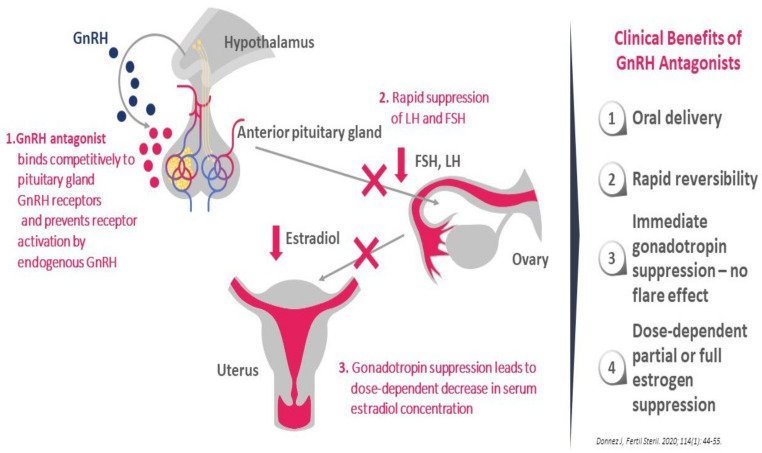
“These drugs cause competitive blockage of the GnRH receptor and hence dose-dependently suppress production of FSH and LH and inhibit secretion of ovarian steroid hormones without inducing a flare-up effect (Figure 1).”
§ Endometriosis and Medical Therapy: From Progestogens to Progesterone Resistance to GnRH Antagonists: A Review > 3. Why Do We Need New Options? > 3.2. GnRH Antagonist: The Ideal New Option?
plaindirect- Asserted: passes — The authors put it forward as true.
- Checkable: passes — It can be checked against evidence.
- Load-bearing: passes — The paper’s conclusions depend on it.
- Based: passes — The paper gives a reason why it holds.
It may state two separate claims as one.
None of the sources cited for this claim have been checked yet.
In the paper
“The reduction in lesion volume is not predictable and not significant in the vast majority of cases. Conflicting results have been observed [77,78,79,80,81,82,86,87,88].”
§ Endometriosis and Medical Therapy: From Progestogens to Progesterone Resistance to GnRH Antagonists: A Review > 3. Why Do We Need New Options?
What the sources say
- Not checked yetcites [77] Donnez, 1987, Combined (hormonal and microsurgical) therapy in infertile women with endometriosis, Fertil. Steril. source
- Not checked yetcites [78] Donnez, 1996, Large ovarian endometriomas, Hum. Reprod. source
- Not checked yetcites [79] Donnez, 1988, Histologic study of ovarian endometriosis after hormonal therapy, Fertil. Steril. source
- Not checked yetcites [80] Donnez, 1990, Evaluation of preoperative use of danazol, gestrinone, lynestrenol, buserelin spray and buserelin implant, in the treatment of endometriosis associated infertility, Prog. Clin. Boil. Res.
- Not checked yetcites [81] Donnez, 1990, Endometriosis-associated infertility: Evaluation of preoperative use of danazol, gestrinone, and buserelin, Int. J. Fertil.
- Not checked yetcites [82] Mabrouk, 2017, Short-term histopathological effects of dienogest therapy on ovarian endometriomas: In vivo, nonrandomized, controlled trial, Gynecol. Endocrinol. source
- Not checked yetcites [86] Ferrero, 2012, Changes in the size of rectovaginal endometriotic nodules infiltrating the rectum during hormonal therapies, Arch. Gynecol. Obstet. source
- Not checked yetcites [87] Razzi, 2007, Use of a progestogen only preparation containing desogestrel in the treatment of recurrent pelvic pain after conservative surgery for endometriosis, Eur. J. Obstet. Gynecol. Reprod. Biol. source
- Not checked yetcites [88] Cursino, 2017, Dienogest and deep infiltrating endometriosis: The remission of symptoms is not related to endometriosis nodule remission, Eur. J. Obstet. Gynecol. Reprod. Biol. source
plain- Asserted: passes — The authors put it forward as true.
- Checkable: passes — It can be checked against evidence.
- Load-bearing: passes — The paper’s conclusions depend on it.
- Based: passes — The paper gives a reason why it holds.
It may state two separate claims as one.
None of the sources cited for this claim have been checked yet.
In the paper
“PR deficiency is evident in endometriotic lesions, leading to progesterone resistance and defective progesterone action, with obvious consequences on the survival and development of endometriotic tissues [15,22,84].”
§ Endometriosis and Medical Therapy: From Progestogens to Progesterone Resistance to GnRH Antagonists: A Review > 2. Recurrent Questions: Are Estroprogestins and Progestins Effective? > 2.2. Clinical Evidence: Estroprogestins and Progestogens
What the sources say
- Not checked yetcites [15] Bulun, 2019, Endometriosis, Endocr. Rev. source
- Not checked yetcites [22] Patel, 2017, Progesterone resistance in endometriosis: Origins, consequences and interventions, Acta Obstet. Gynecol. Scand. source
- Not checked yetcites [84] Kim, 2013, Progesterone action in endometrial cancer, endometriosis, uterine fibroids, and breast cancer, Endocr. Rev. source
plaindirect- Asserted: passes — The authors put it forward as true.
- Checkable: passes — It can be checked against evidence.
- Load-bearing: passes — The paper’s conclusions depend on it.
- Based: passes — The paper gives a reason why it holds.
It may state two separate claims as one.
In the paper
“A study comparing NETA and dienogest [83] reported that 70% and 72% of patients, respectively, were very satisfied or satisfied, meaning that a substantial proportion, around 30% of women, were left dissatisfied, 10% of whom were very dissatisfied.”
§ Endometriosis and Medical Therapy: From Progestogens to Progesterone Resistance to GnRH Antagonists: A Review > 2. Recurrent Questions: Are Estroprogestins and Progestins Effective? > 2.2. Clinical Evidence: Estroprogestins and Progestogens
What the sources say
- Not checked yetcites [83] Vercellini, 2016, Norethindrone acetate or dienogest for the treatment of symptomatic endometriosis: A before and after study, Fertil. Steril. source
plain- Asserted: passes — The authors put it forward as true.
- Checkable: passes — It can be checked against evidence.
- Load-bearing: unclear — It is unclear whether the paper’s conclusions depend on it.
- Based: passes — The paper gives a reason why it holds.
It may state two separate claims as one.
In the paper
“Of course, suppressing ovulation and reducing the amount of menstrual bleeding greatly reduces the number of erythrocytes regurgitated into the pelvis, resulting in a decrease in oxidative stress and the inflammatory environment [30].”
§ Endometriosis and Medical Therapy: From Progestogens to Progesterone Resistance to GnRH Antagonists: A Review > 2. Recurrent Questions: Are Estroprogestins and Progestins Effective? > 2.2. Clinical Evidence: Estroprogestins and Progestogens
What the sources say
- Not checked yetcites [30] Donnez, 2016, Oxidative stress in the pelvic cavity and its role in the pathogenesis of endometriosis, Fertil. Steril. source
plaindirect- Asserted: passes — The authors put it forward as true.
- Checkable: passes — It can be checked against evidence.
- Load-bearing: passes — The paper’s conclusions depend on it.
- Based: passes — The paper gives a reason why it holds.
It may state two separate claims as one.
None of the sources cited for this claim have been checked yet.
In the paper
“among new drugs, selective progesterone receptor modulators (SPRMs) are not an option as they induce progesterone modulator-associated endometrial changes (PAECs) in ectopic foci and their efficacy is limited [89,90,91].”
§ Endometriosis and Medical Therapy: From Progestogens to Progesterone Resistance to GnRH Antagonists: A Review > 3. Why Do We Need New Options?
What the sources say
- Not checked yetcites [89] Donnez, 2016, Uterine fibroid management: From the present to the future, Hum. Reprod. Update source
- Not checked yetcites [90] Donnez, 2020, Hormone therapy for intramural myoma-related infertility from ulipristal acetate to GnRH an-tagonist: A review, Reprod. Biomed. Online source
- Not checked yetcites [91] Donnez, 2020, Fibroids and medical therapy: Bridging the gap from selective progesterone receptor modulators to gonadotropin-releasing hormone antagonist, Fertil. Steril. source
plaindirect- Asserted: passes — The authors put it forward as true.
- Checkable: passes — It can be checked against evidence.
- Load-bearing: passes — The paper’s conclusions depend on it.
- Based: passes — The paper gives a reason why it holds.
It may state two separate claims as one.
None of the sources cited for this claim have been checked yet.
In the paper
“The mechanism is different from that of the GnRH agonist which, after a first phase of stimulation, desensitizes GnRH receptors, leading to full suppression of LH and FSH production and subsequently to complete suppression of E2 to levels similar to those observed after bilateral oophorectomy [95,96,97,98].”
§ Endometriosis and Medical Therapy: From Progestogens to Progesterone Resistance to GnRH Antagonists: A Review > 3. Why Do We Need New Options? > 3.2. GnRH Antagonist: The Ideal New Option?
What the sources say
- Not checked yetcites [95] Brown, 2010, Gonadotrophin-releasing hormone analogues for pain associated with endometriosis, Cochrane Database Syst. Rev.
- Not checked yetcites [96] Dragoman, 2016, Research gaps identified during the 2014 update of the WHO medical eligibility criteria for contraceptive use and selected practice recommendations for contraceptive use, Contracept source
- Not checked yetcites [97] Donnez, 2004, Surgical management of endometriosis, Best Pract. Res. Clin. Obstet. Gynaecol. source
- Not checked yetcites [98] Donnez, 1994, Advanced endoscopic techniques used in dysfunctional bleeding, fibroids and endometriosis, and the role of gonadotrophin-releasing hormone agonist treatment, Br. J. Obstet. Gynaecol. source
plaindirect- Asserted: passes — The authors put it forward as true.
- Checkable: passes — It can be checked against evidence.
- Load-bearing: passes — The paper’s conclusions depend on it.
- Based: passes — The paper gives a reason why it holds.
It may state two separate claims as one.
None of the sources cited for this claim have been checked yet.
In the paper
“GnRH agonists are effective at treating endometriosis symptoms, but they have numerous limitations, including a delayed therapeutic impact because of the flare-up effect, excessive suppression of E2 to less than 20 pg/mL (with related unfavorable side effects), inability to titrate E2 levels, and unpredictable reversibility of treatment when injectable depot forms of GnRH agonists are used [95,96,”
§ Endometriosis and Medical Therapy: From Progestogens to Progesterone Resistance to GnRH Antagonists: A Review > 3. Why Do We Need New Options? > 3.1. The Optimal Goal of Medical Therapy
What the sources say
- Not checked yetcites [95] Brown, 2010, Gonadotrophin-releasing hormone analogues for pain associated with endometriosis, Cochrane Database Syst. Rev.
- Not checked yetcites [96] Dragoman, 2016, Research gaps identified during the 2014 update of the WHO medical eligibility criteria for contraceptive use and selected practice recommendations for contraceptive use, Contracept source
- Not checked yetcites [97] Donnez, 2004, Surgical management of endometriosis, Best Pract. Res. Clin. Obstet. Gynaecol. source
- Not checked yetcites [98] Donnez, 1994, Advanced endoscopic techniques used in dysfunctional bleeding, fibroids and endometriosis, and the role of gonadotrophin-releasing hormone agonist treatment, Br. J. Obstet. Gynaecol. source
plaindirect- Asserted: passes — The authors put it forward as true.
- Checkable: passes — It can be checked against evidence.
- Load-bearing: passes — The paper’s conclusions depend on it.
- Based: passes — The paper gives a reason why it holds.
It may state two separate claims as one.
None of the sources cited for this claim have been checked yet.
In the paper
“endometriotic stromal cells are poorly differentiated with deficient PRs and fail to send physiological paracrine signals to adjacent epithelial cells, explaining the absence of response in more than 30% of women treated with progestins [58,84].”
§ Endometriosis and Medical Therapy: From Progestogens to Progesterone Resistance to GnRH Antagonists: A Review > 2. Recurrent Questions: Are Estroprogestins and Progestins Effective? > 2.2. Clinical Evidence: Estroprogestins and Progestogens
What the sources say
- Not checked yetcites [58] Flores, 2018, Progesterone receptor status predicts response to progestin therapy in endome-triosis, J. Clin. Endocrinol. Metab. source
- Not checked yetcites [84] Kim, 2013, Progesterone action in endometrial cancer, endometriosis, uterine fibroids, and breast cancer, Endocr. Rev. source
plaindirect- Asserted: passes — The authors put it forward as true.
- Checkable: passes — It can be checked against evidence.
- Load-bearing: passes — The paper’s conclusions depend on it.
- Based: passes — The paper gives a reason why it holds.
It may state two separate claims as one.
In the paper
“It is mainly metabolized by the liver (mostly cytochrome P450 3A (CYP3A)-mediated), and 90% of excretion of elagolix and its metabolites occurs in the feces [99].”
§ Endometriosis and Medical Therapy: From Progestogens to Progesterone Resistance to GnRH Antagonists: A Review > 3. Why Do We Need New Options? > 3.3. Elagolix
What the sources say
- Not checked yetcites [99] Ng, 2017, Dose-dependent suppression of gonadotropins and ovarian hormones by elagolix in healthy premenopausal women, J. Clin. Endocrinol. Metab. source
plain- Asserted: passes — The authors put it forward as true.
- Checkable: passes — It can be checked against evidence.
- Load-bearing: fails — The paper’s conclusions may not depend on it.
- Based: passes — The paper gives a reason why it holds.
Probably not a substantial claim. The paper’s conclusions may not depend on it. It may state two separate claims as one.
None of the sources cited for this claim have been checked yet.
In the paper
“In conclusion, use of elagolix 200 mg twice daily causes strong suppression of E2 and marked improvements in dysmenorrhea, non-menstrual pelvic pain and dyspareunia, albeit at the cost of more hot flushes and a more pronounced decrease in BMD (Figure 4).”
§ Endometriosis and Medical Therapy: From Progestogens to Progesterone Resistance to GnRH Antagonists: A Review > 3. Why Do We Need New Options? > 3.3. Elagolix
What the sources say
- Not checked yetcites [102] Taylor, 2017, Treatment of endometriosis-associated pain with elagolix, an oral GnRH antagonist, N. Engl. J. Med. source
- Not checked yetcites [103] Surrey, 2018, Long-term outcomes of elagolix in women with endometriosis: Results from two extension studies, Obstet. Gynecol. source
boosteddirect- Asserted: passes — The authors put it forward as true.
- Checkable: passes — It can be checked against evidence.
- Load-bearing: passes — The paper’s conclusions depend on it.
- Based: passes — The paper gives a reason why it holds.
It may state two separate claims as one.
None of the sources cited for this claim have been checked yet.
In the paper
“Linzagolix has a half-life of 15–18 h, high oral bioavailability, low volume of distribution, no food effects and an absence of interactions with transporters and CYP3A4 enzymes [98,100].”
§ Endometriosis and Medical Therapy: From Progestogens to Progesterone Resistance to GnRH Antagonists: A Review > 3. Why Do We Need New Options? > 3.4. Linzagolix
What the sources say
- Not checked yetcites [98] Donnez, 1994, Advanced endoscopic techniques used in dysfunctional bleeding, fibroids and endometriosis, and the role of gonadotrophin-releasing hormone agonist treatment, Br. J. Obstet. Gynaecol. source
- Not checked yetcites [100] Carr, 2014, Elagolix, an oral GnRH antagonist, versus subcutaneous depot medroxyprogesterone acetate for the treatment of endometriosis: Effects on bone mineral density, Reprod. Sci. source
plain- Asserted: passes — The authors put it forward as true.
- Checkable: passes — It can be checked against evidence.
- Load-bearing: unclear — It is unclear whether the paper’s conclusions depend on it.
- Based: passes — The paper gives a reason why it holds.
It may state two separate claims as one.
In the paper
“As reported by Taylor et al. [107], the recommended treatment duration in women with normal liver function or mild hepatic impairment is up to 24 months with elagolix 150 mg once daily, and up to 6 months with 200 mg twice daily.”
§ Endometriosis and Medical Therapy: From Progestogens to Progesterone Resistance to GnRH Antagonists: A Review > 3. Why Do We Need New Options? > 3.3. Elagolix
What the sources say
- Not checked yetcites [107] Taylor, 2019, Clinical evaluation of the oral gonadotropin-releasing hormone-antagonist elagolix for the management of endometriosis-associated pain, Pain Manag. source
plain- Asserted: passes — The authors put it forward as true.
- Checkable: passes — It can be checked against evidence.
- Load-bearing: unclear — It is unclear whether the paper’s conclusions depend on it.
- Based: passes — The paper gives a reason why it holds.
It may state two separate claims as one.
None of the sources cited for this claim have been checked yet.
In the paper
“As estrogens play a crucial role not only in survival of endometriotic implants, but also in coordinated vasculogenesis and neurogenesis [110] by different pathways involving ER signaling [15,16], it is logical to consider lowering estrogen levels as a therapeutic approach.”
§ Endometriosis and Medical Therapy: From Progestogens to Progesterone Resistance to GnRH Antagonists: A Review > 3. Why Do We Need New Options? > 3.2. GnRH Antagonist: The Ideal New Option?
What the sources say
- Not checked yetcites [110] Barra, 2019, Elagolix sodium for the treatment of women with moderate to severe endometriosis-associated pain, Drugs Today source
- Not checked yetcites [15] Bulun, 2019, Endometriosis, Endocr. Rev. source
- Not checked yetcites [16] Yilmaz, 2019, Endometriosis and nuclear receptors, Hum. Reprod. Update source
plaindirect- Asserted: passes — The authors put it forward as true.
- Checkable: passes — It can be checked against evidence.
- Load-bearing: passes — The paper’s conclusions depend on it.
- Based: passes — The paper gives a reason why it holds.
It may state two separate claims as one.
The paper states this without a source or data behind it here, so there is nothing to check it against. The quote shows it is in the paper.
In the paper
“There is rapid reversibility and recovery of hormone secretion after stopping treatment.”
§ Endometriosis and Medical Therapy: From Progestogens to Progesterone Resistance to GnRH Antagonists: A Review > 3. Why Do We Need New Options? > 3.2. GnRH Antagonist: The Ideal New Option?
plaindirect- Asserted: passes — The authors put it forward as true.
- Checkable: passes — It can be checked against evidence.
- Load-bearing: passes — The paper’s conclusions depend on it.
- Based: passes — The paper gives a reason why it holds.
It may state two separate claims as one.
A conclusion the paper draws from its own results — it cites no other source for it, so there is none to check. The quote shows it is in the paper.
In the paper
“Striking a balance between efficacy and safety/tolerability may unlock the potential of this new class of drug, suggesting the possibility of individual tailoring according to symptoms and the wishes of the patient.”
§ Endometriosis and Medical Therapy: From Progestogens to Progesterone Resistance to GnRH Antagonists: A Review > 3. Why Do We Need New Options? > 3.2. GnRH Antagonist: The Ideal New Option?
hedgedconditional- Asserted: passes — The authors put it forward as true.
- Checkable: fails — It may be too vague to check against evidence.
- Load-bearing: passes — The paper’s conclusions depend on it.
- Based: passes — The paper gives a reason why it holds.
Probably not a substantial claim. It may be too vague to check against evidence. It may state two separate claims as one.
None of the sources cited for this claim have been checked yet.
In the paper
“Elagolix is rapidly absorbed after oral administration and its mean plasma half-life (t1/2) ranges from 2.4 to 6.3 h [99,107,110].”
§ Endometriosis and Medical Therapy: From Progestogens to Progesterone Resistance to GnRH Antagonists: A Review > 3. Why Do We Need New Options? > 3.3. Elagolix
What the sources say
- Not checked yetcites [99] Ng, 2017, Dose-dependent suppression of gonadotropins and ovarian hormones by elagolix in healthy premenopausal women, J. Clin. Endocrinol. Metab. source
- Not checked yetcites [107] Taylor, 2019, Clinical evaluation of the oral gonadotropin-releasing hormone-antagonist elagolix for the management of endometriosis-associated pain, Pain Manag. source
- Not checked yetcites [110] Barra, 2019, Elagolix sodium for the treatment of women with moderate to severe endometriosis-associated pain, Drugs Today source
plain- Asserted: passes — The authors put it forward as true.
- Checkable: passes — It can be checked against evidence.
- Load-bearing: fails — The paper’s conclusions may not depend on it.
- Based: passes — The paper gives a reason why it holds.
Probably not a substantial claim. The paper’s conclusions may not depend on it. It may state two separate claims as one.
In the paper
“These results suggest that although partial suppression of E2 has a significant impact on important aspects of general well-being, full suppression with 200 mg has a more constant effect across more aspects of quality of life affected by endometriosis [105].”
§ Endometriosis and Medical Therapy: From Progestogens to Progesterone Resistance to GnRH Antagonists: A Review > 3. Why Do We Need New Options? > 3.4. Linzagolix
What the sources say
- Not checked yetcites [105] Donnez, 2020, Treatment of endome-triosis-associated pain with linzagolix, an oral gonadotropin-releasing hormone-antagonist: A randomized clinical trial, Fertil. Steril. source
hedgeddirect- Asserted: passes — The authors put it forward as true.
- Checkable: passes — It can be checked against evidence.
- Load-bearing: passes — The paper’s conclusions depend on it.
- Based: passes — The paper gives a reason why it holds.
It may state two separate claims as one.
None of the sources cited for this claim have been checked yet.
In the paper
“Relugolix has a half-life of 37–42 h and is mainly metabolized by the liver [104,117].”
§ Endometriosis and Medical Therapy: From Progestogens to Progesterone Resistance to GnRH Antagonists: A Review > 3. Why Do We Need New Options? > 3.5. Relugolix
What the sources say
- Not checked yetcites [104] Osuga, 2021, Relugolix, an oral gonadotropin-releasing hormone receptor antagonist, reduces endometriosis-associated pain in a dose-response manner: A randomized, double-blind, place-bo-controlled study, Fertil. Steril. source
- Not checked yetcites [117] Markham, 2019, Relugolix: First global approval, Drugs source
plain- Asserted: passes — The authors put it forward as true.
- Checkable: passes — It can be checked against evidence.
- Load-bearing: fails — The paper’s conclusions may not depend on it.
- Based: passes — The paper gives a reason why it holds.
Probably not a substantial claim. The paper’s conclusions may not depend on it. It may state two separate claims as one.
In the paper
“Most subjects taking the 200 mg dose showed a BMD decrease of >3% at 24 weeks, which would necessitate hormone add-back therapy for longer-term use.”
§ Endometriosis and Medical Therapy: From Progestogens to Progesterone Resistance to GnRH Antagonists: A Review > 3. Why Do We Need New Options? > 3.4. Linzagolix
What the sources say
- Not checked yetcites [105] Donnez, 2020, Treatment of endome-triosis-associated pain with linzagolix, an oral gonadotropin-releasing hormone-antagonist: A randomized clinical trial, Fertil. Steril. source
hedgeddirect- Asserted: passes — The authors put it forward as true.
- Checkable: passes — It can be checked against evidence.
- Load-bearing: passes — The paper’s conclusions depend on it.
- Based: passes — The paper gives a reason why it holds.
It may state two separate claims as one.
In the paper
“However, higher rates of hypoestrogenic symptoms were observed, including BMD loss of ≥3% after 24 weeks, indicating that this once-daily dose will require hormone add-back therapy if used for longer than six months [105].”
§ Endometriosis and Medical Therapy: From Progestogens to Progesterone Resistance to GnRH Antagonists: A Review > 3. Why Do We Need New Options? > 3.4. Linzagolix
What the sources say
- Not checked yetcites [105] Donnez, 2020, Treatment of endome-triosis-associated pain with linzagolix, an oral gonadotropin-releasing hormone-antagonist: A randomized clinical trial, Fertil. Steril. source
hedgeddirect- Asserted: passes — The authors put it forward as true.
- Checkable: passes — It can be checked against evidence.
- Load-bearing: passes — The paper’s conclusions depend on it.
- Based: passes — The paper gives a reason why it holds.
It may state two separate claims as one.
In the paper
“These two studies clearly confirmed that GnRH antagonist suppresses ovarian function in a dose-dependent manner, allowing modulation of E2 levels which, according to the threshold hypothesis [86], may provide relief from endometriosis-associated pain while reducing side effects caused by extreme hypoestrogenism.”
§ Endometriosis and Medical Therapy: From Progestogens to Progesterone Resistance to GnRH Antagonists: A Review > 4. Discussion and Conclusion: A Combined Symptom-Oriented and Phenotype-Adapted Approach
What the sources say
- Not checked yetcites [86] Ferrero, 2012, Changes in the size of rectovaginal endometriotic nodules infiltrating the rectum during hormonal therapies, Arch. Gynecol. Obstet. source
boosteddirect- Asserted: passes — The authors put it forward as true.
- Checkable: passes — It can be checked against evidence.
- Load-bearing: passes — The paper’s conclusions depend on it.
- Based: passes — The paper gives a reason why it holds.
It may state two separate claims as one.
None of the sources cited for this claim have been checked yet.
In the paper
“Relugolix CT is well tolerated, the incidence of vasomotor symptoms is similar to the placebo, and BMD is maintained over 24 weeks.”
§ Endometriosis and Medical Therapy: From Progestogens to Progesterone Resistance to GnRH Antagonists: A Review > 3. Why Do We Need New Options? > 3.5. Relugolix
What the sources say
- Not checked yetcites [119] Becker, 2020, Efficacy and safety of relugolix combination therapy in women with endometriosis-associated pain: Phase 3 randomized, double-blind, placebo-controlled study (spirit 2), Fertil. Steril. source
- Not checked yetcites [120] Zandvliet, 2020, Simulated long-term effects of relugolix combination therapy on bone mineral density at the lumbar spine as predicted by a validated semi-mechanistic exposure-response model, Fertil. Steril. source
plain- Asserted: passes — The authors put it forward as true.
- Checkable: passes — It can be checked against evidence.
- Load-bearing: passes — The paper’s conclusions depend on it.
- Based: passes — The paper gives a reason why it holds.
It may state two separate claims as one.
In the paper
“According to the ASRM Practice Committee [121], endometriosis requires a life-long management plan, with the goal of maximizing use of medical therapy and avoiding repeated surgical procedures.”
§ Endometriosis and Medical Therapy: From Progestogens to Progesterone Resistance to GnRH Antagonists: A Review > 4. Discussion and Conclusion: A Combined Symptom-Oriented and Phenotype-Adapted Approach
What the sources say
- Not checked yetcites [121] Practice Committee of the American Society for Reproductive Medicine (2018). American Society for Reproductive Medicine position statement on uterus transplantation: A committee opinion. Fertil. Steril., 110, 605–610.
plain- Asserted: passes — The authors put it forward as true.
- Checkable: passes — It can be checked against evidence.
- Load-bearing: fails — The paper’s conclusions may not depend on it.
- Based: passes — The paper gives a reason why it holds.
Probably not a substantial claim. The paper’s conclusions may not depend on it. It may state two separate claims as one.
None of the sources cited for this claim have been checked yet.
In the paper
“In the present paper, we thoroughly scrutinized the concept of progesterone resistance as an explanation for why 33% of patients do not respond to OCPs and progestins, with this percentage climbing even higher in women with deep nodular endometriosis [46,47,56,58].”
§ Endometriosis and Medical Therapy: From Progestogens to Progesterone Resistance to GnRH Antagonists: A Review > 4. Discussion and Conclusion: A Combined Symptom-Oriented and Phenotype-Adapted Approach
What the sources say
- Not checked yetcites [46] Donnez, 1996, Stereometric evaluation of peritoneal endometriosis and endometriotic nodules of the rectovaginal septum, Hum. Reprod. source
- Not checked yetcites [47] Donnez, 1996, Peritoneal endometriosis and “endometriotic” nodules of the rectovaginal septum are two different entities, Fertil. Steril. source
- Not checked yetcites [56] Reis, 2020, Progesterone receptor ligands for the treatment of endometriosis: The mechanisms behind therapeutic success and failure, Hum. Reprod. Updat. source
- Not checked yetcites [58] Flores, 2018, Progesterone receptor status predicts response to progestin therapy in endome-triosis, J. Clin. Endocrinol. Metab. source
plaindirect- Asserted: passes — The authors put it forward as true.
- Checkable: passes — It can be checked against evidence.
- Load-bearing: passes — The paper’s conclusions depend on it.
- Based: passes — The paper gives a reason why it holds.
It may state two separate claims as one.
In the paper
“Although further investigations, including assessment of efficacy and safety in real-world populations, potential for use of add-back therapy, and comparisons with OCPs and progestins are needed, we agree with Leyland et al. [126] that robust clinical evidence shows oral GnRH antagonists to be effective and well tolerated in patients with moderate-to-severe endometriosis-associated pain.”
§ Endometriosis and Medical Therapy: From Progestogens to Progesterone Resistance to GnRH Antagonists: A Review > 4. Discussion and Conclusion: A Combined Symptom-Oriented and Phenotype-Adapted Approach
What the sources say
- Not checked yetcites [126] Leyland, N., Estes, S.J., Lessey, B.A., Advincula, A.P., and Taylor, H.S. (2020). A clinician’s guide to the treatment of endometriosis with elagolix. J. Womens Heal.
boosteddirect- Asserted: passes — The authors put it forward as true.
- Checkable: passes — It can be checked against evidence.
- Load-bearing: passes — The paper’s conclusions depend on it.
- Based: passes — The paper gives a reason why it holds.
It may state two separate claims as one.
In the paper
“Moreover, according to Wang et al. [125], the two recent FDA-approved doses of elagolix for the management of moderate-to-severe pain associated with endometriosis, namely, 24 months of 150 mg once daily or six months of 200 mg twice daily, both proved cost-effective versus leuprolide acetate over 1–2 years.”
§ Endometriosis and Medical Therapy: From Progestogens to Progesterone Resistance to GnRH Antagonists: A Review > 4. Discussion and Conclusion: A Combined Symptom-Oriented and Phenotype-Adapted Approach
What the sources say
- Not checked yetcites [125] Wang, 2019, Cost–effectiveness of elagolix versus leuprolide acetate for treating moderate-to-severe endometriosis pain in the USA, J. Comp. Eff. Res. source
plaindirect- Asserted: passes — The authors put it forward as true.
- Checkable: passes — It can be checked against evidence.
- Load-bearing: unclear — It is unclear whether the paper’s conclusions depend on it.
- Based: passes — The paper gives a reason why it holds.
It may state two separate claims as one.
The authors state this as an assumption.
Retrograde menstruation according to Sampson's theory is a valid mechanism of endometriosis.
“Based on the role of retrograde menstruation according to Sampson’s theory, blocking ovulation and menstruation by means of hormonal therapies may in theory be disease-modulating and control the symptoms of endometriosis.”
The paper relies on this without support.
Surgery cannot cure endometriosis.
“surgery is of course able to eliminate visible endometriotic lesions, but cannot cure the disease.”
Claims other papers make about this one
Each is checked against this paper’s own text: does it say what the citing paper says it does?
In the citing paper
“Danazol—a derivative of the male sex hormone testosterone. It inhibits the secretion of GnRH, causing a decrease in the secretion of LH and FSH by the pituitary gland.”
From Endometriosis: Epidemiology, Classification, Pathogenesis, Treatment and Genetics (Review of Literature) (2021) · cites this paper as [116]
In the citing paper
“Oral contraceptives (estrogen-progestogen preparations)—their action consists in lowering the level of FSH and stabilizing the endometrium, which leads to a reduction in pain.”
From Endometriosis: Epidemiology, Classification, Pathogenesis, Treatment and Genetics (Review of Literature) (2021) · cites this paper as [116]
In the citing paper
“Aromatase inhibitors interrupt estrogen production in both endometriosis foci and ovaries, causing a significant reduction in estrogen levels.”
From Endometriosis: Epidemiology, Classification, Pathogenesis, Treatment and Genetics (Review of Literature) (2021) · cites this paper as [116]
In the citing paper
“Progestogen preparations—contain progesterone derivatives, whose function is to reduce the level of GnRH, and thus the levels of FSH, LH and estrogen.”
From Endometriosis: Epidemiology, Classification, Pathogenesis, Treatment and Genetics (Review of Literature) (2021) · cites this paper as [116]
In the citing paper
“Gonadoliberin analogues are substances with a structure similar to GnRH, which “deceive” the hypothalamus, causing a decrease in the production of real GnRH. This results in a decrease in LH and FSH levels and a significant reduction in estrogen levels.”
From Endometriosis: Epidemiology, Classification, Pathogenesis, Treatment and Genetics (Review of Literature) (2021) · cites this paper as [116]
In the citing paper
“An intrauterine device releasing levonorgestrel is a progesterone derivative. The effect is the same as progestogen preparations. Recommended especially for women with severe pain.”
From Endometriosis: Epidemiology, Classification, Pathogenesis, Treatment and Genetics (Review of Literature) (2021) · cites this paper as [116]
Self-check
Percentages, sums and reported differences re-computed from the paper’s own numbers.
Each contradiction between two passages listed here was confirmed by an independent check.
Rated minor: it would not touch a result — a value no result rests on, a p-value that stays on the same side of the significance level, or a conflict that is clerical, resolved elsewhere in the paper, or outside its own findings.
In the paper
§ Endometriosis and Medical Therapy: From Progestogens to Progesterone Resistance to GnRH Antagonists: A Review > 3. Why Do We Need New Options? > 3.4. Linzagolix
“Response rates for overall pelvic pain, dysmenorrhea and non-menstrual pelvic pain were maintained or increased after 52 weeks of treatment. Patients randomized to linzagolix 200 mg were switched to linzagolix 100 mg at week 24. Percentages of women with a ≥30% reduction in overall pelvic pain (OPP) (primary efficacy endpoint) at week 52 were 69.2%, 53.8% and 82.4% in the 75 mg, 100 mg and 200/100 mg groups, respectively.”
§ Endometriosis and Medical Therapy: From Progestogens to Progesterone Resistance to GnRH Antagonists: A Review > 3. Why Do We Need New Options? > 3.4. Linzagolix
“Percentages of women with a ≥30% reduction in overall pelvic pain at week 24 were 70.8%, 66.7% and 77.3% in the 75 mg, 100 mg and 200 mg groups, respectively, in phase II trials (Table 1).”
Rated minor: it would not touch a result — a value no result rests on, a p-value that stays on the same side of the significance level, or a conflict that is clerical, resolved elsewhere in the paper, or outside its own findings.
In the paper
§ Endometriosis and Medical Therapy: From Progestogens to Progesterone Resistance to GnRH Antagonists: A Review > 3. Why Do We Need New Options? > 3.5. Relugolix
“A phase II, open-label RCT including 487 women with endometriosis-associated pain found relugolix (10 mg, 20 mg or 40 mg orally once daily) and leuprolin for 24 weeks to be equally effective [104].”
§ Endometriosis and Medical Therapy: From Progestogens to Progesterone Resistance to GnRH Antagonists: A Review > References
“Relugolix, an oral gonadotropin-releasing hormone receptor antagonist, reduces endometriosis-associated pain in a dose-response manner: A randomized, double-blind, place-bo-controlled study”
Citations
Cites
Revised American Society for Reproductive Medicine classification of endometriosis: 1996
American Society for Reproductive Medicine (1997) · Fertility and Sterility · doi:10.1016/s0015-0282(97)81391-x · Cited by 3,018
ESHRE guideline: management of women with endometriosis
Dunselman, G. A. J., Vermeulen, N., Becker, C., Calhaz-Jorge, C., D'Hooghe, T., De Bie, B., Heikinheimo, O., Horne, A. W., Kiesel, L., Nap, A., et al. (2014) · Human Reproduction · doi:10.1093/humrep/det457 · Cited by 2,211
Giudice, L. C. (2010) · New England Journal of Medicine · doi:10.1056/nejmcp1000274 · Cited by 1,924
The effects of oxidative stress on female reproduction: a review
Agarwal, A. K., Aponte, A., Premkumar, B. J., Shaman, A. A., & Gupta, S. (2012) · Reproductive Biology and Endocrinology · doi:10.1186/1477-7827-10-49 · Cited by 1,721
Nisolle, M., & Donnez, J. (1997) · Fertility and Sterility · doi:10.1016/s0015-0282(97)00191-x · Cited by 1,279
Bulun, S. E., Yilmaz, B. D., Sison, C., Miyazaki, K., Bernardi, L., Liu, S., Kohlmeier, A., Yin, P., Milad, M., & Wei, J. (2019) · Endocrine Reviews · doi:10.1210/er.2018-00242 · Cited by 844
Uterine fibroid management: From the present to the future
Donnez, J., & Dolmans, M.-M. (2016) · Human Reproduction Update · doi:10.1093/humupd/dmw023 · Cited by 780
Self-citationLidegaard, O., Nielsen, L. H., Skovlund, C. W., Skjeldestad, F. E., & Lokkegaard, E. (2011) · BMJ · doi:10.1136/bmj.d6423 · Cited by 608
Vascular endothelial growth factor (VEGF) in endometriosis
Donnez, J., Smoes, P., Gillerot, S., Casanas-Roux, F., & Nisolle, M. (1998) · Human Reproduction · doi:10.1093/humrep/13.6.1686 · Cited by 531
Self-citationProgesterone action in endometrial cancer, endometriosis, uterine fibroids, and breast cancer
Kim, J. J., Kurita, T., & Bulun, S. E. (2013) · Endocrine Reviews · doi:10.1210/er.2012-1043 · Cited by 520
Treatment of Endometriosis-Associated Pain with Elagolix, an Oral GnRH Antagonist
Taylor, H. S., Giudice, L. C., Lessey, B. A., Abrao, M. S., Kotarski, J., Archer, D. F., Diamond, M. P., Surrey, E., Johnson, N. P., Watts, N. B., et al. (2017) · New England Journal of Medicine · doi:10.1056/nejmoa1700089 · Cited by 511
Deep endometriosis: definition, diagnosis, and treatment
Koninckx, P. R., Ussia, A., Adamyan, L., Wattiez, A., & Donnez, J. (2012) · Fertility and Sterility · doi:10.1016/j.fertnstert.2012.07.1061 · Cited by 494
Self-citationEndometriosis: Diagnosis and Management
Leyland, N., Casper, R., Laberge, P., Singh, S. S., Allen, L., Arendas, K., Leyland, N., Allaire, C., Awadalla, A., Best, C., et al. (2010) · Journal of Obstetrics and Gynaecology Canada · doi:10.1016/s1701-2163(16)34589-3 · Cited by 427
Pathogenesis of endometriosis: The genetic/epigenetic theory
Koninckx, P. R., Ussia, A., Adamyan, L., Wattiez, A., Gomel, V., & Martin, D. C. (2019) · Fertility and Sterility · doi:10.1016/j.fertnstert.2018.10.013 · Cited by 427
Progesterone resistance in endometriosis: link to failure to metabolize estradiol.
Bulun, S. E., Cheng, Y.-H., Yin, P., Imir, G., Utsunomiya, H., Attar, E., Innes, J., & Julie Kim, J. (2006) · Molecular and Cellular Endocrinology · doi:10.1016/j.mce.2005.11.041 · Cited by 397
Treatment of pelvic pain associated with endometriosis: a committee opinion
(2014) · Fertility and Sterility · doi:10.1016/j.fertnstert.2014.02.012 · Cited by 397
Practice Bulletin No. 114: Management of Endometriosis
(2010) · Obstetrics & Gynecology · doi:10.1097/aog.0b013e3181e8b073 · Cited by 382
Han, S. J., Jung, S. Y., Wu, S.-P., Hawkins, S. M., Park, M. J., Kyo, S., Qin, J., Lydon, J. P., Tsai, S. Y., Tsai, M.-J., et al. (2015) · Cell · doi:10.1016/j.cell.2015.10.034 · Cited by 380
Donnez, J., Nisolle, M., Gillet, N., Smets, M., Bassil, S., & Casanas-Roux, F. (1996) · Human Reproduction · doi:10.1093/humrep/11.3.641 · Cited by 360
Self-citationRole of nuclear progesterone receptor isoforms in uterine pathophysiology
Patel, B., Elguero, S., Thakore, S., Dahoud, W., Bedaiwy, M., & Mesiano, S. (2015) · Human Reproduction Update · doi:10.1093/humupd/dmu056 · Cited by 353
Assessing research gaps and unmet needs in endometriosis
As‐Sanie, S., Black, R., Giudice, L. C., Valbrun, T. G., Gupta, J., Jones, B., Laufer, M. R., Milspaw, A. T., Missmer, S. A., Norman, A., et al. (2019) · American Journal of Obstetrics and Gynecology · doi:10.1016/j.ajog.2019.02.033 · Cited by 347
Progesterone resistance in endometriosis: origins, consequences and interventions
Patel, B. G., Rudnicki, M., Yu, J., Shu, Y., & Taylor, R. N. (2017) · Acta Obstetricia Et Gynecologica Scandinavica · doi:10.1111/aogs.13156 · Cited by 336
Hormone treatment of endometriosis: The estrogenthreshold hypothesis
Barbieri, R. L. (1992) · American Journal of Obstetrics and Gynecology · doi:10.1016/0002-9378(92)91706-g · Cited by 335
Venous thrombosis in users of non-oral hormonal contraception: follow-up study, Denmark 2001-10
Lidegaard, O., Nielsen, L. H., Skovlund, C. W., & Lokkegaard, E. (2012) · BMJ · doi:10.1136/bmj.e2990 · Cited by 326
Harada, T., Momoeda, M., Taketani, Y., Hoshiai, H., & Terakawa, N. (2008) · Fertility and Sterility · doi:10.1016/j.fertnstert.2007.08.051 · Cited by 289
Wu, Y., Halverson, G., Basir, Z., Strawn, E., Yan, P., & Guo, S.-W. (2005) · American Journal of Obstetrics and Gynecology · doi:10.1016/j.ajog.2005.01.034 · Cited by 283
Endometriosis: an overview of Cochrane Reviews
Brown, J., & Farquhar, C. (2014) · Cochrane Database of Systematic Reviews · doi:10.1002/14651858.cd009590.pub2 · Cited by 270
Dosage aspects of danazol therapy in endometriosis: Short-term and long-term effectiveness
Biberoglu, K. O., & Behrman, S. J. (1981) · American Journal of Obstetrics and Gynecology · doi:10.1016/0002-9378(81)90478-6 · Cited by 267
Donnez, O., & Roman, H. (2017) · Fertility and Sterility · doi:10.1016/j.fertnstert.2017.09.006 · Cited by 252
Oxidative stress in the pelvic cavity and its role in the pathogenesis of endometriosis
Donnez, J., Binda, M. M., Donnez, O., & Dolmans, M.-M. (2016) · Fertility and Sterility · doi:10.1016/j.fertnstert.2016.07.1075 · Cited by 251
Self-citationEndometriosis and nuclear receptors
Yilmaz, B. D., & Bulun, S. E. (2019) · Human Reproduction Update · doi:10.1093/humupd/dmz005 · Cited by 243
Estrogen-progestins and progestins for the management of endometriosis
Vercellini, P., Buggio, L., Berlanda, N., Barbara, G., Somigliana, E., & Bosari, S. (2016) · Fertility and Sterility · doi:10.1016/j.fertnstert.2016.10.022 · Cited by 243
Endometriosis-Associated Macrophages: Origin, Phenotype, and Function
Hogg, C., Horne, A. W., & Greaves, E. (2020) · Frontiers in Endocrinology · doi:10.3389/fendo.2020.00007 · Cited by 243
The direct and indirect costs associated with endometriosis: a systematic literature review
Soliman, A. M., Yang, H., Du, E. X., Kelley, C., & Winkel, C. (2016) · Human Reproduction · doi:10.1093/humrep/dev335 · Cited by 239
Vinogradova, Y., Coupland, C., & Hippisley-Cox, J. (2015) · British medical journal · doi:10.1136/bmj.h2135 · Cited by 216
Casper, R. F. (2017) · Fertility and Sterility · doi:10.1016/j.fertnstert.2017.01.003 · Cited by 205
Brion, F., Page, Y. L., Piccini, B., Cardoso, O., Tong, S., Chung, B., & Kah, O. (2012) · PLoS ONE · doi:10.1371/journal.pone.0036069 · Cited by 193
Progesterone Receptor Isoform A But Not B Is Expressed in Endometriosis1
Attia, G. R., Zeitoun, K., Edwards, D., Johns, A., Carr, B. R., & Bulun, S. E. (2000) · The Journal of Clinical Endocrinology & Metabolism · doi:10.1210/jcem.85.8.6739 · Cited by 193
Medical treatment of endometriosis-related pain
Vercellini, P., Buggio, L., Frattaruolo, M. P., Borghi, A., Dridi, D., & Somigliana, E. (2018) · Best Practice & Research Clinical Obstetrics & Gynaecology · doi:10.1016/j.bpobgyn.2018.01.015 · Cited by 188
Gonadotrophin-releasing hormone analogues for pain associated with endometriosis
Veth, V. B., van de Kar, M. M., McDonnell, R., Julania, S., & Hart, R. J. (2010) · Cochrane Database of Systematic Reviews · doi:10.1002/14651858.cd008475.pub2 · Cited by 182
Involvement of the nuclear factor-κB pathway in the pathogenesis of endometriosis
González-Ramos, R., Van Langendonckt, A., Defrère, S., Lousse, J.-C., Colette, S., Devoto, L., & Donnez, J. (2010) · Fertility and Sterility · doi:10.1016/j.fertnstert.2010.01.013 · Cited by 179
Self-citationOral contraceptives and risk of endometriosis: a systematic review and meta-analysis
Vercellini, P., Eskenazi, B., Consonni, D., Somigliana, E., Parazzini, F., Abbiati, A., & Fedele, L. (2011) · Human Reproduction Update · doi:10.1093/humupd/dmq042 · Cited by 176
Donnez, J., Nisolle, M., Casanas-Roux, F., Bassil, S., & Anaf, V. (1995) · Human Reproduction · doi:10.1093/oxfordjournals.humrep.a136001 · Cited by 175
Self-citationPotential role of endometrial stem/progenitor cells in the pathogenesis of early-onset endometriosis
Gargett, C. E., Schwab, K. E., Brosens, J. J., Puttemans, P., Benagiano, G., & Brosens, I. A. (2014) · Molecular Human Reproduction · doi:10.1093/molehr/gau025 · Cited by 168
Soliman, A. M., Coyne, K. S., Zaiser, E., Castelli-Haley, J., & Fuldeore, M. J. (2017) · Journal of Psychosomatic Obstetrics & Gynecology · doi:10.1080/0167482x.2017.1289512 · Cited by 166
Reis, F. M., Coutinho, L. M., Vannuccini, S., Batteux, F., Chapron, C., & Petraglia, F. (2020) · Human Reproduction Update · doi:10.1093/humupd/dmaa009 · Cited by 166
Soliman, A. M., Surrey, E. S., Bonafede, M., Nelson, J. K., & Castelli‐Haley, J. (2018) · Advances in Therapy · doi:10.1007/s12325-018-0667-3 · Cited by 163
Barragan, F., Irwin, J. C., Balayan, S., Erikson, D. W., Chen, J. C., Houshdaran, S., Piltonen, T. T., Spitzer, T. L. B., George, A., Rabban, J. T., et al. (2016) · Biology of Reproduction · doi:10.1095/biolreprod.115.136010 · Cited by 152
Current and emerging treatment options for endometriosis
Ferrero, S., Evangelisti, G., & Barra, F. (2018) · Expert Opinion on Pharmacotherapy · doi:10.1080/14656566.2018.1494154 · Cited by 152
Chapron, C., Souza, C., Borghese, B., Lafay-Pillet, M.-C., Santulli, P., Bijaoui, G., Goffinet, F., & de Ziegler, D. (2011) · Human Reproduction · doi:10.1093/humrep/der156 · Cited by 148
Donnez, J., Nisolle, M., Smoes, P., Gillet, N., Beguin, S., & Casanas-Roux, F. (1996) · Fertility and Sterility · doi:10.1016/s0015-0282(16)58501-x · Cited by 147
Self-citationLong-Term Outcomes of Elagolix in Women With Endometriosis: Results From Two Extension Studies
Surrey, E., Taylor, H. S., Giudice, L., Lessey, B. A., Abrao, M. S., Archer, D. F., Diamond, M. P., Johnson, N. P., Watts, N. B., Gallagher, J. C., et al. (2018) · Obstetrics & Gynecology · doi:10.1097/aog.0000000000002675 · Cited by 139
Iron overload in the peritoneal cavity of women with pelvic endometriosis
Van Langendonckt, A., Casanas-Roux, F., & Donnez, J. (2002) · Fertility and Sterility · doi:10.1016/s0015-0282(02)03346-0 · Cited by 137
Self-citationPeritoneal endometriosis is an inflammatory disease.
Lousse, J., van Langendonckt, A., Defrère, S., Ramos, R. G., Colette, S., & Donnez, J. (2012) · Frontiers in Bioscience · doi:10.2741/358 · Cited by 137
Lousse, J., Defrère, S., Langendonckt, A. V., Gras, J. M., González-Ramos, R., Colette, S., & Donnez, J. (2008) · Fertility and Sterility · doi:10.1016/j.fertnstert.2008.02.103 · Cited by 137
Self-citationSurgical management of endometriosis
Donnez, J., Pirard, C., Smets, M., Jadoul, P., & Squifflet, J. (2004) · Best Practice & Research Clinical Obstetrics & Gynaecology · doi:10.1016/j.bpobgyn.2004.03.004 · Cited by 134
Vercellini, P., Bracco, B., Mosconi, P., Roberto, A., Alberico, D., Dhouha, D., & Somigliana, E. (2016) · Fertility and Sterility · doi:10.1016/j.fertnstert.2015.11.016 · Cited by 127
Peritoneal endometriosis is an inflammatory disease
Donnez, J. (2012) · Frontiers in Bioscience · doi:10.2741/e358 · Cited by 127
Self-citationDonnez, J., Taylor, H. S., Taylor, R. N., Akin, M. D., Tatarchuk, T. F., Wilk, K., Gotteland, J.-P., Lecomte, V., & Bestel, E. (2020) · Fertility and Sterility · doi:10.1016/j.fertnstert.2020.02.114 · Cited by 124
Self-citationDiamond, M. P., Carr, B. R., Dmowski, W. P., Koltun, W. D., O'Brien, C. F., Jiang, P. X., Burke, J., Jimenez, R., Garner, E. I. O., & Chwalisż, K. (2013) · Reproductive Sciences · doi:10.1177/1933719113497292 · Cited by 121
Gonadotrophin-releasing hormone analogues for pain associated with endometriosis
Brown, J., Pan, A., & Hart, R. J. (2010) · Cochrane Database of Systematic Reviews · doi:10.1002/14651858.cd008475 · Cited by 121
Progesterone Receptor Status Predicts Response to Progestin Therapy in Endometriosis
Flores, V. A., Vanhie, A., Dang, T., & Taylor, H. S. (2018) · The Journal of Clinical Endocrinology & Metabolism · doi:10.1210/jc.2018-01227 · Cited by 118
Carr, B., Dmowski, W. P., O’Brien, C., Jiang, P., Burke, J., Jimenez, R., Garner, E., & Chwalisz, K. (2014) · Reproductive Sciences · doi:10.1177/1933719114549848 · Cited by 114
Jensen, J. T., Schlaff, W., & Gordon, K. (2018) · Fertility and Sterility · doi:10.1016/j.fertnstert.2018.03.012 · Cited by 113
Histologic study of ovarian endometriosis after hormonal therapy
Nisolle-Pochet, M., Casanas-Roux, F., & Donnez, J. (1988) · Fertility and Sterility · doi:10.1016/s0015-0282(16)59766-0 · Cited by 111
Self-citationNg, J., Chwalisz, K., Carter, D. C., & Klein, C. E. (2017) · The Journal of Clinical Endocrinology & Metabolism · doi:10.1210/jc.2016-3845 · Cited by 110
Embryologic origin of endometriosis: Analysis of 101 human female fetuses
Signorile, P. G., Baldi, F., Bussani, R., Viceconte, R., Bulzomi, P., D'Armiento, M., D’Avino, A., & Baldi, A. (2011) · Journal of Cellular Physiology · doi:10.1002/jcp.22888 · Cited by 109
Cakmak, H., & Taylor, H. (2010) · Seminars in Reproductive Medicine · doi:10.1055/s-0029-1242996 · Cited by 105
Elagolix: First global approval
Lamb, Y. N. (2018) · Drugs · doi:10.1007/s40265-018-0977-4 · Cited by 104
Genetic, Epigenetic, and Steroidogenic Modulation Mechanisms in Endometriosis
Zubrzycka, A., Zubrzycki, M., Perdas, E., & Zubrzycka, M. (2020) · Journal of Clinical Medicine · doi:10.3390/jcm9051309 · Cited by 101
Osuga, Y., Seki, Y., Tanimoto, M., Kusumoto, T., Kudou, K., & Terakawa, N. (2021) · Fertility and Sterility · doi:10.1016/j.fertnstert.2020.07.055 · Cited by 97
Oral Contraceptives and Venous Thromboembolism
Manzoli, L., Vito, C. D., Marzuillo, C., Boccia, A., & Villari, P. (2012) · Drug Safety · doi:10.2165/11598050-000000000-00000 · Cited by 93
Potential involvement of hemoglobin and heme in the pathogenesis of peritoneal endometriosis
Van Langendonckt, A., Casanas-Roux, F., Dolmans, M.-M., & Donnez, J. (2002) · Fertility and Sterility · doi:10.1016/s0015-0282(01)03211-3 · Cited by 91
Self-citationObservations on the endometrium and ovary in the newborn
Ober, W. B., & Bernstein, J. (1955) · PEDIATRICS · doi:10.1542/peds.16.4.445 · Cited by 87
Redwine, D. B. (2002) · Fertility and Sterility · doi:10.1016/s0015-0282(02)03329-0 · Cited by 87
17β-Hydroxysteroid Dehydrogenase-2 Deficiency and Progesterone Resistance in Endometriosis
Bulun, S., Cheng, Y.-H., Pavone, M., Yin, P., Imir, G., Utsunomiya, H., Thung, S., Xue, Q., Marsh, E., Tokunaga, H., et al. (2010) · Seminars in Reproductive Medicine · doi:10.1055/s-0029-1242992 · Cited by 86
Simpson, J. L., Bischoff, F. Z., Kamat, A., Buster, J. E., & Carson, S. A. (2003) · Obstetrics and Gynecology Clinics of North America · doi:10.1016/s0889-8545(02)00051-7 · Cited by 83
Bernuit, D., Ebert, A. D., Halis, G., Strothmann, A., Gerlinger, C., Geppert, K., & Faustmann, T. (2011) · Journal of Endometriosis · doi:10.5301/je.2011.8525 · Cited by 83
Altered retinoid uptake and action contributes to cell survival in endometriosis
Pavone, M. E., Reierstad, S., Sun, H., Milad, M., Bulun, S. E., & Cheng, Y.-H. (2010) · The Journal of Clinical Endocrinology & Metabolism · doi:10.1210/jc.2010-0459 · Cited by 74
Leonardo-Pinto, J. P., Benetti-Pinto, C. L., Cursino, K., & Yela, D. A. (2017) · European Journal of Obstetrics & Gynecology and Reproductive Biology · doi:10.1016/j.ejogrb.2017.02.015 · Cited by 72
A comprehensive review of hormonal and biological therapies for endometriosis: latest developments
Barra, F., Grandi, G., Tantari, M., Scala, C., Facchinetti, F., & Ferrero, S. (2019) · Expert Opinion on Biological Therapy · doi:10.1080/14712598.2019.1581761 · Cited by 69
Dioxin and endometrial progesterone resistance
Bruner-Tran, K., Ding, T., & Osteen, K. (2010) · Seminars in Reproductive Medicine · doi:10.1055/s-0029-1242995 · Cited by 66
Donnez, J., Nisolle, M., Casanas-Roux, F., Brion, P., & DaFerreira, N. C. (1996) · Human Reproduction · doi:10.1093/oxfordjournals.humrep.a019024 · Cited by 65
Self-citationDonnez, J. (2002) · Human Reproduction Update · doi:10.1093/humupd/8.1.89 · Cited by 65
Self-citationA stepped-care approach to symptomatic endometriosis management: A participatory research initiative
Vercellini, P., Donati, A., Ottolini, F., Frassineti, A., Fiorini, J., Nebuloni, V., Frattaruolo, M. P., Roberto, A., Mosconi, P., & Somigliana, E. (2018) · Fertility and Sterility · doi:10.1016/j.fertnstert.2018.01.037 · Cited by 64
Allyse, M. A., Amer, H., Coutifaris, C., et al. (2018) · Fertility and Sterility · doi:10.1016/j.fertnstert.2018.06.017 · Cited by 64
Razzi, S., Luisi, S., Ferretti, C., Calonaci, F., Gabbanini, M., Mazzini, M., & Petraglia, F. (2007) · European Journal of Obstetrics & Gynecology and Reproductive Biology · doi:10.1016/j.ejogrb.2006.08.002 · Cited by 62
Role of medical therapy in the management of deep rectovaginal endometriosis
Vercellini, P., Buggio, L., & Somigliana, E. (2017) · Fertility and Sterility · doi:10.1016/j.fertnstert.2017.08.038 · Cited by 62
Organochlorines and endometriosis: A mini-review
Heilier, J.-F., Donnez, J., & Lison, D. (2007) · Chemosphere · doi:10.1016/j.chemosphere.2007.09.044 · Cited by 60
Self-citationRelugolix: First global approval
Markham, A. (2019) · Drugs · doi:10.1007/s40265-019-01105-0 · Cited by 60
Chwalisz, K., Surrey, E., & Stanczyk, F. Z. (2012) · Reproductive Sciences · doi:10.1177/1933719112438061 · Cited by 58
Oral and depot progestin therapy for endometriosis: towards a personalized medicine
Buggio, L., Somigliana, E., Barbara, G., Frattaruolo, M. P., & Vercellini, P. (2017) · Expert Opinion on Pharmacotherapy · doi:10.1080/14656566.2017.1381086 · Cited by 58
Gonadotropin-releasing hormone antagonist (linzagolix): A new therapy for uterine adenomyosis
Donnez, O., & Donnez, J. (2020) · Fertility and Sterility · doi:10.1016/j.fertnstert.2020.04.017 · Cited by 58
Self-citationFerrero, S., Leone Roberti Maggiore, U., Scala, C., Di Luca, M., Venturini, P. L., & Remorgida, V. (2013) · Archives of Gynecology and Obstetrics · doi:10.1007/s00404-012-2581-2 · Cited by 57
Pavone, M. E., Dyson, M., Reirstad, S., Pearson, E., Ishikawa, H., Cheng, Y. H., & Bulun, S. E. (2011) · Human Reproduction · doi:10.1093/humrep/der172 · Cited by 56
Combined (hormonal and microsurgical) therapy in infertile women with endometriosis
Donnez, J., Lemaire-Rubbers, M., Karaman, Y., Nisolle-Pochet, M., & Casanas-Roux, F. (1987) · Fertility and Sterility · doi:10.1016/s0015-0282(16)59349-2 · Cited by 54
Self-citationHigher activity by opaque endometriotic lesions than nonopaque lesions
Khan, K. N., Masuzaki, H., Fujishita, A., Kitajima, M., Sekine, I., & Ishimaru, T. (2004) · Acta Obstetricia Et Gynecologica Scandinavica · doi:10.1111/j.0001-6349.2004.00229.x · Cited by 54
Speroff, L., Symons, J. P., Kempfert, N. J., & Rowan, J. P. (2000) · Menopause The Journal of The North American Menopause Society · doi:10.1097/00042192-200011000-00003 · Cited by 52
Donnez, J., & Dolmans, M.-M. (2020) · Reproductive BioMedicine Online · doi:10.1016/j.rbmo.2020.05.017 · Cited by 50
Self-citationDonnez, J., Dolmans, M.-M., & Fellah, L. (2019) · Fertility and Sterility · doi:10.1016/j.fertnstert.2018.12.018 · Cited by 49
Self-citationPartial suppression of estradiol: A new strategy in endometriosis management?
Donnez, J., Taylor, R. N., & Taylor, H. S. (2017) · Fertility and Sterility · doi:10.1016/j.fertnstert.2017.01.013 · Cited by 46
Self-citationElagolix for endometriosis: all that glitters is not gold
Vercellini, P., Viganò, P., Barbàra, G., Buggio, L., Somigliana, E., ‘Luigi Mangiagalli’ Endometriosis Study Group, Aimi, G., Alberico, D., Barbàra, G., Benaglia, L., et al. (2018) · Human Reproduction · doi:10.1093/humrep/dey368 · Cited by 45
A Clinician's Guide to the Treatment of Endometriosis with Elagolix
Leyland, N. A., Estes, S. J., Lessey, B. A., Advincula, A. P., & Taylor, H. S. (2020) · Journal of Women s Health · doi:10.1089/jwh.2019.8096 · Cited by 41
Donnez, J., Nisolle, M., Clerckx, F., Casanas‐Roux, F., Saussoy, P., & Gillerot, S. (1994) · BJOG: An International Journal of Obstetrics & Gynaecology · doi:10.1111/j.1471-0528.1994.tb13677.x · Cited by 40
Self-citationTaylor, H. S., Dun, E. C., & Chwalisz, K. (2019) · Pain Management · doi:10.2217/pmt-2019-0010 · Cited by 38
Gonadotrophin-Releasing Hormone Analogues for Pain Associated With Endometriosis
(2011) · Obstetrics and Gynecology · doi:10.1097/aog.0b013e31820cb0fd · Cited by 37
Management of endometriosis: Toward value-based, cost-effective, affordable care
Vercellini, P., Facchin, F., Buggio, L., Barbara, G., Berlanda, N., Frattaruolo, M. P., & Somigliana, E. (2018) · Journal of Obstetrics and Gynaecology Canada · doi:10.1016/j.jogc.2017.07.011 · Cited by 36
Pokrzywinski, R. M., Soliman, A. M., Chen, J., Snabes, M. C., Coyne, K. S., Surrey, E. S., & Taylor, H. S. (2020) · American Journal of Obstetrics and Gynecology · doi:10.1016/j.ajog.2019.11.1255 · Cited by 36
Heilier, J.-F., Ha, A. T., Lison, D., Donnez, J., Tonglet, R., & Nackers, F. (2004) · Fertility and Sterility · doi:10.1016/j.fertnstert.2003.07.011 · Cited by 35
Self-citationDeep endometriosis: The place of laparoscopic shaving
Donnez, O., & Donnez, J. (2021) · Best Practice & Research Clinical Obstetrics & Gynaecology · doi:10.1016/j.bpobgyn.2020.05.006 · Cited by 28
Self-citationPohl, O., Marchand, L., Bell, D., & Gotteland, J. (2020) · Reproductive Sciences · doi:10.1007/s43032-020-00172-z · Cited by 27
Elagolix sodium for the treatment of women with moderate to severe endometriosis-associated pain
Barra, F., Scala, C., & Ferrero, S. (2019) · Drugs of today · doi:10.1358/dot.2019.55.4.2930713 · Cited by 26
Health-related quality of life improvements in patients with endometriosis treated with elagolix
Taylor, H. S., Soliman, A. M., Johns, B., Pokrzywinski, R. M., Snabes, M., & Coyne, K. S. (2020) · Obstetrics & Gynecology · doi:10.1097/aog.0000000000003917 · Cited by 25
Donnez, J., Nisolle-Pochet, M., & Casanas‐Roux, F. (1991) · PubMed · Cited by 24
Self-citationVercellini, P., Frattaruolo, M. P., & Buggio, L. (2018) · Expert Review of Pharmacoeconomics & Outcomes Research · doi:10.1080/14737167.2018.1411803 · Cited by 24
Wang, S.-T., Johnson, S. J., Mitchell, D., Soliman, A. M., Vora, J. B., & Agarwal, S. K. (2019) · Journal of Comparative Effectiveness Research · doi:10.2217/cer-2018-0124 · Cited by 22
Are combined hormonal contraceptives the neglected treatment for symptomatic endometriosis?
Vercellini, P. (2018) · Fertility and Sterility · doi:10.1016/j.fertnstert.2018.03.038 · Cited by 20
Donnez, J., & Dolmans, M.-M. (2020) · Fertility and Sterility · doi:10.1016/j.fertnstert.2020.07.028 · Cited by 20
Self-citationMabrouk, M., Paradisi, R., Arena, A., Del Forno, S., Matteucci, C., Zannoni, L., Caprara, G., & Seracchioli, R. (2018) · Gynecological Endocrinology · doi:10.1080/09513590.2017.1405932 · Cited by 17
Surrey, E. S., Soliman, A. M., Johns, B., Vora, J. B., Taylor, H. S., & Agarwal, S. K. (2020) · ClinicoEconomics and Outcomes Research · doi:10.2147/ceor.s264905 · Cited by 15
Donnez, J., Nisolle, M., Clerckx, F., et al. (1990) · PubMed · Cited by 14
Self-citationBorini, A., & Coticchio, G. (2020) · Fertility and Sterility · doi:10.1016/j.fertnstert.2020.06.003 · Cited by 14
The endometrium from the neonate to the adolescent
Brosens, I., & Benagiano, G. (2015) · The Journal of Maternal-Fetal & Neonatal Medicine · doi:10.3109/14767058.2015.1040756 · Cited by 13
Dragoman, M. V., Jatlaoui, T., Nanda, K., Curtis, K. M., & Gaffield, M. E. (2016) · Contraception · doi:10.1016/j.contraception.2015.12.009 · Cited by 11
Neal, A. S., Nunez, M., Lai, T., Tosevska, A., Morselli, M., Amneus, M., Zakhour, M., Moatamed, N. A., Pellegrini, M., & Memarzadeh, S. (2020) · Reproductive Sciences · doi:10.1007/s43032-020-00175-w · Cited by 11
Taylor, R. N., Bestel, E., Gotteland, J.-P., Lecomte, V., Dubouloz, R., Terrill, P., Humberstone, A., & Loumaye, E. (2019) · Fertility and Sterility · doi:10.1016/j.fertnstert.2019.07.935 · Cited by 9
As-Sanie, S., Becker, C. M., Johnson, N., Lessey, B. A., Abrao, M. S., Brown, E. L., Wilk, K., Arjona Ferreira, J. C., Mathur, V., Li, Y., et al. (2020) · Fertility and Sterility · doi:10.1016/j.fertnstert.2020.08.238 · Cited by 8
Bestel, E., Gotteland, J.-P., Donnez, J., Taylor, R. N., & Garner, E. I. (2020) · Obstetrics & Gynecology · doi:10.1097/01.aog.0000663200.75027.38 · Cited by 4
Self-citationZandvliet, A. S., Ouerdani, A., Lee, T.-Y., Migoya, E. M., Arjona Ferreira, J. C., & de Greef, R. (2020) · Fertility and Sterility · doi:10.1016/j.fertnstert.2020.08.1046 · Cited by 4
Cited by
Sorted by citations
Smolarz, B., Szyłło, K., & Romanowicz, H. (2021) · International Journal of Molecular Sciences · doi:10.3390/ijms221910554 · Cited by 560
Pathogenesis of Endometriosis: New Insights into Prospective Therapies
Kapoor, R., Stratopoulou, C. A., & Dolmans, M. (2021) · International Journal of Molecular Sciences · doi:10.3390/ijms222111700 · Cited by 144
“In endometriosis, when cells or tissue from the endometrium attach to non-native sites, there is an altered efficiency of progesterone and estrogen hormones, generally resulting in resistance to progesterone and an excess of estrogen [50,51].”
BackgroundSelf-citationProgesterone Resistance in Endometriosis: Current Evidence and Putative Mechanisms
Zhang, P., & Wang, G. (2023) · International Journal of Molecular Sciences · doi:10.3390/ijms24086992 · Cited by 138
“However, progestins are unsuccessful in one-third of symptomatic women globally, which is thought to result from the progesterone resistance associated with the disease [2,5].”
BackgroundEpigenetic Dysregulation in Endometriosis: Implications for Pathophysiology and Therapeutics
Marquardt, R. M., Tran, D. N., Lessey, B. A., Rahman, M. S., & Jeong, J. (2023) · Endocrine Reviews · doi:10.1210/endrev/bnad020 · Cited by 137
Can Endometriosis-Related Oxidative Stress Pave the Way for New Treatment Targets?
Cacciottola, L., Donnez, J., & Dolmans, M.-M. (2021) · International Journal of Molecular Sciences · doi:10.3390/ijms22137138 · Cited by 118
“A proliferative phenotype is sustained by dysregulation of estrogen and progesterone receptor expression in ectopic endometrium, leading to progesterone resistance and curtailing the capacity of progestins to control endometriosis progression [2,57].”
BackgroundSelf-citation
Metadata
- Authors
- Donnez, J., & Dolmans, M.-M.
- Affiliations
- UCLouvain (BE)
- Cliniques Universitaires Saint-Luc (BE)
- Corresponding author
- Donnez, Jacques
- Venue
- Journal of Clinical Medicine
- Publisher
- MDPI AG
- Published
- 2021-03-05
- Volume
- 10
- Issue
- 5
- Pages
- 1085
- ISSN
- 2077-0383 (ISSN-L)
- PMC
- PMC7961981
- OpenAlex
- W3133947928
- Semantic Scholar
- 082ade52a8643600f6d43ad727bd91902f892058
- Cited by
- 182
- References
- 133
- Citations by year
- 2026: 22 · 2025: 24 · 2024: 36 · 2023: 35 · 2022: 45 · 2021: 19
- FWCI
- 5.54
- Type
- journal article
- Language
- en
- Open access
- gold
- doi.org
- Licence
- Locations
- Journal of Clinical Medicine (publishedVersion, cc-by)
- PubMed Central (publishedVersion, cc-by)
- PubMed (publishedVersion)
- Digital Access to Libraries (Université catholique de Louvain (UCL), l'Université de Namur (UNamur) and the Université Saint-Louis (USL-B)) (submittedVersion, other-oa)
- DOAJ (DOAJ: Directory of Open Access Journals) (submittedVersion, cc-by-sa)
- Funders
- Fonds De La Recherche Scientifique - FNRS (5/4/150/5, grant 5/4/150/5)
- Topics
- Health Sciences › Medicine › Reproductive Medicine › Endometriosis Research and Treatment
- Health Sciences › Medicine › Obstetrics and Gynecology › Ectopic Pregnancy Diagnosis and Management
- Health Sciences › Medicine › Public Health, Environmental and Occupational Health › Menstrual Health and Disorders
- Keywords
- endometriosis, medical therapy, progestogens, oral contraceptives, progesterone resistance, GnRH antagonist, dysmenorrhea, dyspareunia, non-menstrual pelvic pain, estrogen, premenopausal women, treatment efficacy
About these checks
Registry, retraction, Cites and statistics results are computed, not judged, with one exception: a printed reference that no index lists is read once by a model before it counts as a citation error. Claims are extracted by a model and kept only when their quote appears verbatim in the text; each cited source is then checked, with a model’s help, for whether it says what the claim relies on. Those verdicts can be wrong — read the claim’s quote and the cited source before relying on one.
A language model drew the claims from the paper on 2026-10-10, under version 3 of the claim definition (model deepseek-v4.1-flash, prompt extract-v3).
A second model labelled each claim on 2026-10-10 (model jev-1.13-20260917, definition revision gold-guideline-v0.2).
Cited sources are checked with a language model’s help (gpt-6-sol).
Statistics and arithmetic are recomputed, not judged.
Confidence bands are shown only for fields calibrated on our annotated test set. None is calibrated yet, so no band is shown.
What counts as a claim ›How we measure confidence ›How we check this ›
Are you an author, or do you see a problem with this page? Request a review
