

The DOI matches its Crossref record; 324 of the 325 references it cites were found in a registry or an index; 58 of the 254 sources its claims cite were checked for support.
Recent Advances in the Remediation of Textile-Dye-Containing Wastewater: Prioritizing Human Health and Sustainable Wastewater Treatment
Open accessAbstract
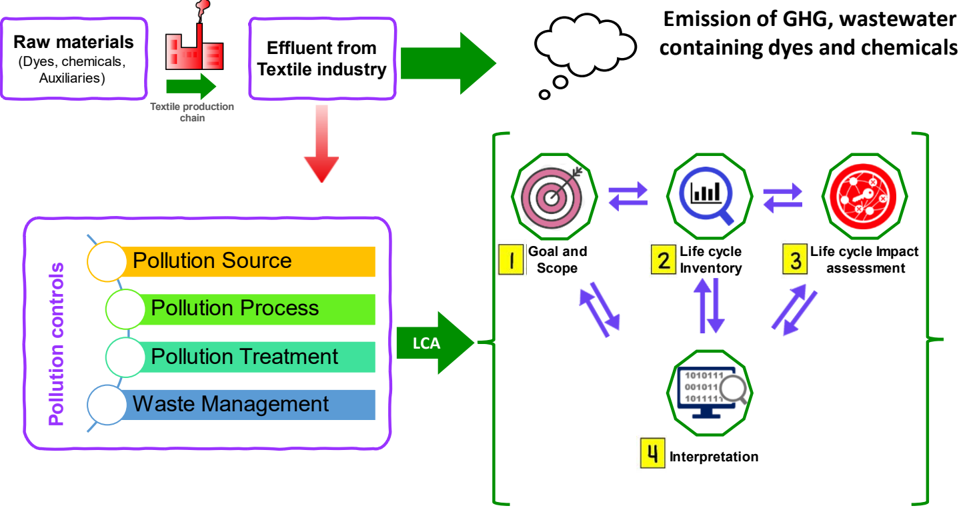
Water makes up most of the Earth, although just 0.3% is usable for people and animals. The huge oceans, icecaps, and other non-potable water resources make up the remaining 99.7%. Water quality has declined in recent decades due to pollution from population growth, industry, unplanned urbanization, and poor water management. The textile industry has significant global importance, although it also stands as a major contributor to wastewater generation, leading to water depletion and ecotoxicity. This issue arises from the extensive utilization of harmful chemicals, notably dyes. The main aim of this review article is to combine and assess the impacts of textile wastewater that contains dyes and chemicals, and to examine their potential consequences on human health, aquatic health, and the environment. Moreover, the dedicated section presents an in-depth review of various environmentally sustainable approaches for the management and treatment of wastewater in the textile industry. These approaches encompass bio adsorbents, biological methods, membrane technology, ion exchange, advanced oxidation processes, as well as physicochemical and biochemical processes. Furthermore, this study also evaluates the contemporary progressions in this particular domain, taking into account the corresponding advantages and disadvantages. Finally, this article highlights the significance of recovering and reusing dyes, alkalis, and electrolytes in wastewater treatment. Additionally, it emphasizes the necessity of performing technoeconomic analyses and life cycle assessments (LCA) on wastewater treatment plants.
Overview
AI snapshot
Written from the paper’s full text.
TL;DR
This review consolidates evidence on the health and environmental hazards of dye-containing textile wastewater and surveys sustainable remediation options, from bioadsorbents and biological treatment to membranes, ion exchange, and advanced oxidation. It argues for recovery and reuse of dyes, alkalis, and electrolytes, and for technoeconomic and life cycle assessment of treatment plants.
Key findings
- The textile industry accounts for roughly 20% of global water pollution and ranks as the second largest polluter after the oil industry; over 8000 chemical species are used, and of ~800,000 tons of dyes produced annually, 10–15% is lost to the environment. Over 10,000 synthetic dye varieties exist, ~70% azo type, and azo dyes account for over 60% of industry usage.
- Reported removal performances vary widely by method: Fenton oxidation achieved 98% color removal and 85% COD removal at pH 3; sequencing batch reactor decolorization reached up to 97% with COD removal up to 98%; enzymatic treatment can reach up to 90% decolorization; bacterial isolates removed MO at 95%, Reactive Yellow at 84%, and Reactive Black 5 at 100%; algae achieved 96% removal of Acid Red-274 and 92% of Malachite Green; cactus and aloe vera juice flocculants gave >85% color removal with 90% removal of total, suspended, and dissolved solids.
- Bioadsorbent capacities span orders of magnitude (Table 2), e.g., potato peel-based sorbent for Direct Blue 71 at 1704 mg/g (pH 3), non-cross-linked/cross-linked chitosan fibers for Acid Orange 7 at 4523 mg/g (pH 7), calcium-rich biochar for Malachite Green at 12,502 mg/g, and rice husk ash for Brilliant Green at 66 mg/g.
- Health and ecological harms documented include disrupted photosynthesis and dissolved oxygen depletion, accumulation in food chains, carcinogenic/mutagenic and immunological/dermal effects, genotoxicity (e.g., Disperse Red 1), and in fish, dose- and duration-dependent erythrocytic and gill micronuclei, reduced feed consumption and growth.
Methods
- Narrative review (no primary data collection) synthesizing literature on textile wastewater treatment; the stated aim is to combine and assess impacts of dye- and chemical-containing textile wastewater on human, aquatic, and environmental health and to review sustainable treatment approaches with their advantages and disadvantages.
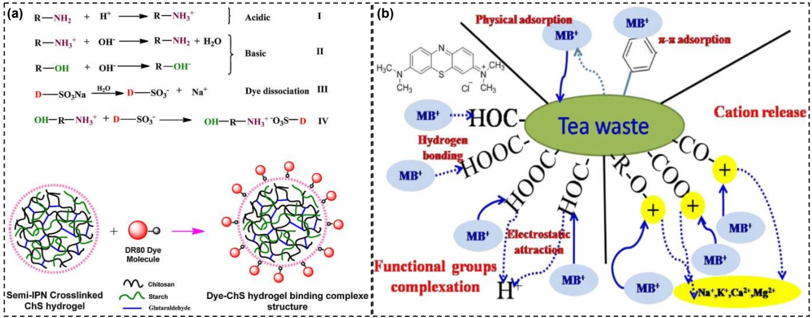
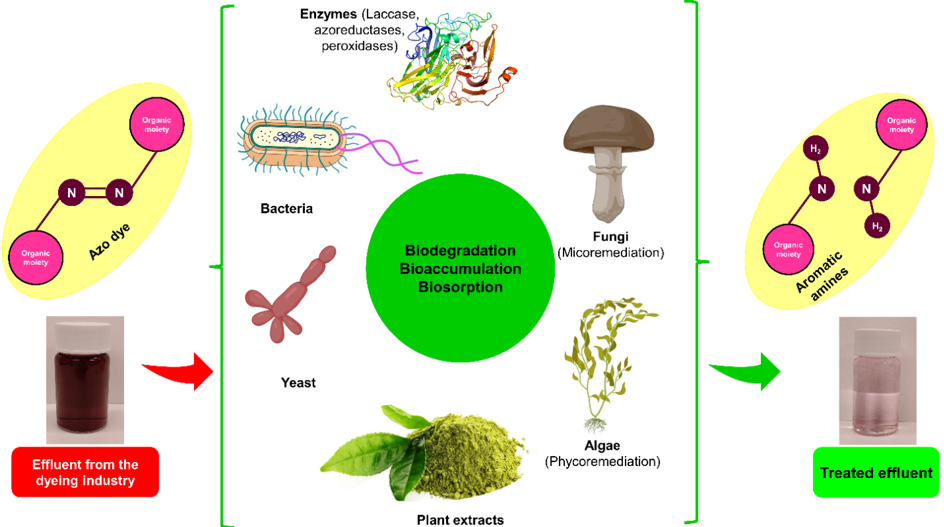
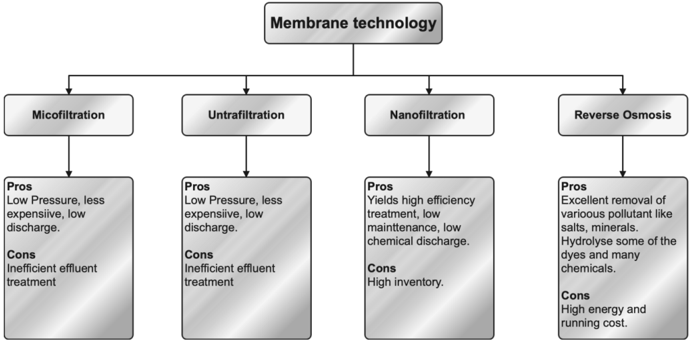
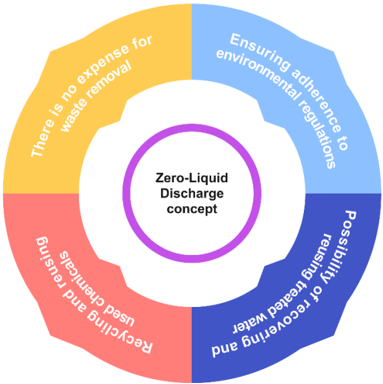
- Treatment categories reviewed: bioadsorbents (agricultural/food wastes, chitosan, tea waste, etc.), biological methods (bacteria, fungi, algae, enzymes such as laccases, peroxidases, azoreductases), membrane separation (UF, NF, RO, forward osmosis), ion exchange, evaporation, granular activated carbon, advanced oxidation processes (Fenton, H2O2/UV, ozonation, photocatalysis, Z-scheme), sequencing batch reactors, hybrid technologies, sludge management, and zero liquid discharge with recovery of electrolytes, alkali, and dyes.
- Supporting tables compile comparative data: Table 1 (advantages/disadvantages of common techniques), Table 2 (bioadsorbent capacities and conditions), plus supplementary Tables S1–S3 and Figure S1.
Limitations
- The paper states no explicit limitations section; it notes that relying on a single treatment procedure may not effectively degrade highly contaminated dyes because intermediates require additional treatment steps and cost, and that sustainable wastewater treatment produces less sludge but "does not comply with norms and standards."
- Evident from the text: this is a review without new experimental data, so reported removal figures are drawn from heterogeneous cited studies with differing dyes, conditions, and scales and are not directly comparable; the text also notes that the rationality of color removal in biological processes "has not been empirically shown," and that enzyme use is hindered by instability, variable activity, and cost.
- Evident from the text: several sections are incomplete or truncated (e.g., the bioadsorbent discussion breaks off mid-sentence, and the bacteria section ends mid-list), and the review relies on figures and supplementary tables not reproduced in the main text.
Model-written summary. Check it against the paper before relying on it.
Integrity signals
Registry
Cites
Statistics
Figures

Verification
Claims the paper makes
81 No full text of the sources · 26 Partly supported · 19 Not checked yet · 14 Own interpretation · 11 Supported · 10 No basis given · 7 Couldn’t confirm · 4 Supported so far · 4 Sources not found · 3 Not supported · 1 Own result · accuracy not yet measured
At least one cited source doesn’t support this claim or points to a different paper, and none confirmed it — see the verdicts below.
In the paper
“Bio chars produced from coconut coir have enhanced dye adsorption capabilities due to their significantly higher specific surface area [139].”
§ Recent Advances in the Remediation of Textile-Dye-Containing Wastewater: Prioritizing Human Health and Sustainable Wastewater Treatment > 4.1. Bioadsorbents in Wastewater Treatment
What the sources say
- Disputedcites [139] Le, 2021, Preparation and Characterization of Biochar Derived from Agricultural By-Products for Dye Removal, Adsorpt. Sci. Technol. sourceExperimental — accuracy not yet measured
The discussion of Figure 15 says rice-husk biochar (BC2), not coconut-coir biochar (BC1), had superior dye adsorption under the tested conditions. It attributes that difference partly to BC2’s greater pore volume and BET surface area (364.22 versus 329.71 m²/g). No page number is supplied for this passage. (LLM, conf=0.90)
Checked by a reasoning model — may be wrong.
plaindirect- Asserted: passes — The authors put it forward as true.
- Checkable: passes — It can be checked against evidence.
- Load-bearing: unclear — It is unclear whether the paper’s conclusions depend on it.
- Based: passes — The paper gives a reason why it holds.
- Disputed
At least one cited source doesn’t support this claim or points to a different paper, and none confirmed it — see the verdicts below.
In the paper
“Similarly, the Fenton process exhibits a significant capability for removing COD, with an efficiency of 85% achieved at a pH of 3 [49,51].”
§ Recent Advances in the Remediation of Textile-Dye-Containing Wastewater: Prioritizing Human Health and Sustainable Wastewater Treatment > 4.4.3. Color Removal by Fenton Oxidation
What the sources say
- Disputedcites [49] Patil, 2014, Treatment of Textile Wastewater by Fenton’s Process as a Advanced Oxidation Process, IOSR J. Environ. Sci. Toxicol. Food Technol. sourceExperimental — accuracy not yet measured
The Conclusion reports 89% COD removal at pH 3, not the cited 85%. It gives 89% again for the stated optimum reagent doses. Although the abstract gives 85%, the full-text conclusion states a contrary figure. (LLM, conf=0.83)
Checked by a reasoning model — may be wrong.
- Not checked — no full text of the sourcecites [51] Ramos, 2021, A Review on the Treatment of Textile Industry Effluents through Fenton Processes, Process Saf. Environ. Prot. source
plaindirect- Asserted: passes — The authors put it forward as true.
- Checkable: passes — It can be checked against evidence.
- Load-bearing: unclear — It is unclear whether the paper’s conclusions depend on it.
- Based: passes — The paper gives a reason why it holds.
- Disputed
The cited sources that could be checked couldn’t confirm or dispute this claim.
In the paper
“Moreover, the presence of these waste liquids has been found to be associated with adverse health effects in humans, such as allergies, dermatitis, skin irritations, cancers, and mutations.”
§ Recent Advances in the Remediation of Textile-Dye-Containing Wastewater: Prioritizing Human Health and Sustainable Wastewater Treatment > 3.1. Environmental Consequences
What the sources say
- Could not verifycites [86] Soni, 2021, In Vitro Propagation and Analysis of Mixotrophic Potential to Improve Survival Rate of Dolichandra Unguis-Cati under Ex Vitro Conditions, Heliyon sourceExperimental — accuracy not yet measured
The Results and discussion section addresses photosynthesis in Dolichandra unguis-cati plantlets, not human exposure to textile-dye waste. Searches for textile-dye wastewater and for the listed health effects found no passage in our copy addressing the claim; no page numbers were provided. (LLM, conf=0.75)
- Not checked — no full text of the sourcecites [87] Li, 2022, Sustainable Production of Bio-Oil and Carbonaceous Materials from Biowaste Co-Pyrolysis, Chem. Eng. J. source
plaincorrelational- Asserted: passes — The authors put it forward as true.
- Checkable: passes — It can be checked against evidence.
- Load-bearing: passes — The paper’s conclusions depend on it.
- Based: passes — The paper gives a reason why it holds.
- Could not verify
The cited sources that could be checked couldn’t confirm or dispute this claim.
In the paper
“In addition, prolonged exposure to textile effluents was found to diminish fish feed consumption, thereby leading to a decrease in the growth rate [96].”
§ Recent Advances in the Remediation of Textile-Dye-Containing Wastewater: Prioritizing Human Health and Sustainable Wastewater Treatment > 3.2. Impact of Textile Dyes on Human Health
What the sources say
- Could not verifycites [96] Chen, 2021, Impacts of Heavy Metals and Medicinal Crops on Ecological Systems, Environmental Pollution, Cultivation, and Production Processes in China, Ecotoxicol. Environ. Saf. sourceExperimental — accuracy not yet measured
The Ecological effects section discusses heavy-metal stress and reduced plant growth, while Environmental pollution discusses contaminants affecting cropland. Searches for textile effluents, fish feed consumption, and prolonged exposure found no passage addressing the claimed effect on fish growth; page numbers were not available in our copy. (LLM, conf=0.75)
plaindirect- Asserted: passes — The authors put it forward as true.
- Checkable: passes — It can be checked against evidence.
- Load-bearing: unclear — It is unclear whether the paper’s conclusions depend on it.
- Based: passes — The paper gives a reason why it holds.
- Could not verify
The cited sources support only part of this claim — read each source’s verdict below.
In the paper
“Textile dye genotoxicity is the biggest possible longterm risk to human health [97,98,100,104,105].”
§ Recent Advances in the Remediation of Textile-Dye-Containing Wastewater: Prioritizing Human Health and Sustainable Wastewater Treatment > 3.2. Impact of Textile Dyes on Human Health
What the sources say
- Partly supportedcites [97] 2023, Treatment of Water from the Textile Industry Contaminated with Indigo Dye: A Hybrid Approach Combining Bioremediation and Nanofiltration for Sustainable Reuse, Case Stud. Chem. Environ. Eng. sourceExperimental — accuracy not yet measured
The Introduction identifies genotoxicity as one of several toxic effects observed in textile dyes, including effects relevant to humans. It does not rank genotoxicity as the biggest risk or characterize it specifically as a long-term risk to human health. (LLM, conf=0.86)
- Not checked — no full text of the sourcecites [98] Jorge, 2023, Textile Dyes Effluents: A Current Scenario and the Use of Aqueous Biphasic Systems for the Recovery of Dyes, J. Water Process Eng. source
- Not checked — no full text of the sourcecites [100] Tamil Selvan, S. (2023). Eco-Technological Approaches for Textile Dye Effluent Treatment and Carbon Dioxide (CO2) Capturing Using Green Microalga Chlorella vulgaris. Mater. Today Proc., in press. source
- Not checked — no full text of the sourcecites [104] Alghamdi, M.A., Ayed, L., Aljarad, M.R., Altayeb, H.N., Abbes, S., and Chaieb, K. (2023). Whole Genome Sequencing Analysis and Box-Behnken Design for the Optimization of the Decolourization of Mixture Textile Dyes by Halotolerant Microbial Consortium. Microbiol. Res., 276. source
- Not checked — no full text of the sourcecites [105] Mu, 2023, Rapid Fiber-to-Fiber Recycling of Poly (Ethylene Terephthalate) and Its Dye from Waste Textiles without Damaging Their Chemical Structures, Resour. Conserv. Recycl. source
plain- Asserted: passes — The authors put it forward as true.
- Checkable: passes — It can be checked against evidence.
- Load-bearing: unclear — It is unclear whether the paper’s conclusions depend on it.
- Based: passes — The paper gives a reason why it holds.
- Partly supported
The cited sources support only part of this claim — read each source’s verdict below.
In the paper
“Cactus juice and aloe vera juice were employed as flocculants for the treatment of textile effluent [144].”
§ Recent Advances in the Remediation of Textile-Dye-Containing Wastewater: Prioritizing Human Health and Sustainable Wastewater Treatment > 4.1. Bioadsorbents in Wastewater Treatment
What the sources say
- Partly supportedcites [144] Amari, 2020, Cactus Material-Based Adsorbents for the Removal of Heavy Metals and Dyes: A Review, Mater. Res. Express sourceExperimental — accuracy not yet measured
The Dye removal section (page unavailable) reports cactus-derived adsorbents treating textile wastewater, including activated carbon made from cactus pear peels. It does not report cactus juice or aloe vera juice being used as flocculants; the treatment method it describes is adsorption. (LLM, conf=0.85)
plaindirect- Asserted: passes — The authors put it forward as true.
- Checkable: passes — It can be checked against evidence.
- Load-bearing: unclear — It is unclear whether the paper’s conclusions depend on it.
- Based: passes — The paper gives a reason why it holds.
- Partly supported
The cited sources support only part of this claim — read each source’s verdict below.
In the paper
“In contrast, azoreductases are a class of enzymes capable of reducing azo dyes to their respective aromatic amines, resulting in reduced toxicity compared to the original molecules [196,197].”
§ Recent Advances in the Remediation of Textile-Dye-Containing Wastewater: Prioritizing Human Health and Sustainable Wastewater Treatment > 4.2.1. Biological Route of Dye Decolorization
What the sources say
- Could not verifycites [196] Campos, 2001, Indigo Degradation with Purified Laccases from Trametes hirsuta and Sclerotium rolfsii, J. Biotechnol. sourceExperimental — accuracy not yet measured
The Results and discussion passage discusses laccase-catalyzed oxidation of indigo and mentions converting toxic azo dyes into harmless products, but it does not discuss azoreductases. Searches for azoreductases, reduction to aromatic amines, and the toxicity of those products found no passage addressing the attributed claim in our copy (page numbers unavailable). (LLM, conf=0.76)
- Partly supportedcites [197] Misal, S.A., and Gawai, K.R. (2018). Azoreductase: A Key Player of Xenobiotic Metabolism. Bioresour. Bioprocess., 5. sourceExperimental — accuracy not yet measured
The Introduction says azoreductases cleave azo bonds and metabolize azo compounds to aromatic amines. It describes degradation as a detoxification pathway but cautions that the resulting metabolites can sometimes be more carcinogenic, so it does not support the unqualified claim that the amines are less toxic than the original dyes. (LLM, conf=0.90)
plaindirect- Asserted: passes — The authors put it forward as true.
- Checkable: passes — It can be checked against evidence.
- Load-bearing: unclear — It is unclear whether the paper’s conclusions depend on it.
- Based: passes — The paper gives a reason why it holds.
- Could not verify
The cited sources support only part of this claim — read each source’s verdict below.
In the paper
“The effluents discharged by the textile industry in their untreated state consist of a wide array of organic contaminants, including unfixed colors, acids, alkalis, and notably, very poisonous dyes [70].”
§ Recent Advances in the Remediation of Textile-Dye-Containing Wastewater: Prioritizing Human Health and Sustainable Wastewater Treatment > 3. Effluent from the Textile Industry: Human and Environmental Issues
What the sources say
- Partly supportedcites [70] Periyasamy, A.P. (2023). Microfiber Emissions from Functionalized Textiles: Potential Threat for Human Health and Environmental Risks. Toxics, 11. sourceExperimental — accuracy not yet measured
Section 2.1 (Coloration; page unavailable) says textile dyeing releases colored pollutants, that dyes remain in water baths, and that azo dyes can degrade into toxic compounds. It does not establish the claimed composition of untreated effluent, including acids and alkalis, or characterize the dyes in it as uniformly very poisonous. (LLM, conf=0.84)
plain- Asserted: passes — The authors put it forward as true.
- Checkable: passes — It can be checked against evidence.
- Load-bearing: passes — The paper’s conclusions depend on it.
- Based: passes — The paper gives a reason why it holds.
- Partly supported
Every source the paper cites for this claim was checked and supports it.
In the paper
“Recent research provides further evidence supporting the removal of 91% of color from the Banana stem [136].”
§ Recent Advances in the Remediation of Textile-Dye-Containing Wastewater: Prioritizing Human Health and Sustainable Wastewater Treatment > 4.1. Bioadsorbents in Wastewater Treatment
What the sources say
- Supportedcites [136] Akbar, 2019, Removal of Colour Using Banana Stem Adsorbent in Textile Wastewater, J. Phys. Conf. Ser. source
The Conclusion reports 91.12% colour removal using banana stem adsorbent, which supports the cited figure of 91%. The result was obtained with a 100 mL synthetic dye sample at an optimum dosage of 1.0 g and a contact time of 90 minutes; the colour was removed by the stem, not from it. (LLM, conf=0.92)
plaindirect- Asserted: passes — The authors put it forward as true.
- Checkable: passes — It can be checked against evidence.
- Load-bearing: unclear — It is unclear whether the paper’s conclusions depend on it.
- Based: passes — The paper gives a reason why it holds.
- Supported
The cited sources that could be checked couldn’t confirm or dispute this claim.
In the paper
“Furthermore, the removal efficiencies for total solids, suspended particles, and dissolved solids were found to be 90%”
§ Recent Advances in the Remediation of Textile-Dye-Containing Wastewater: Prioritizing Human Health and Sustainable Wastewater Treatment > 4.1. Bioadsorbents in Wastewater Treatment
What the sources say
- Could not verifycites [144] Amari, 2020, Cactus Material-Based Adsorbents for the Removal of Heavy Metals and Dyes: A Review, Mater. Res. Express sourceExperimental — accuracy not yet measured
Section 2 mentions cactus as a possible coagulant or flocculant, but does not report results for cactus juice and aloe vera juice. Section 4 reports 90% sulphate removal using dried cactus cladodes, not 90% removal of total, suspended, or dissolved solids. Searches for the juices and those solids measures found no passage addressing the claimed result. (LLM, conf=0.76)
plaindirect- Asserted: passes — The authors put it forward as true.
- Checkable: passes — It can be checked against evidence.
- Load-bearing: unclear — It is unclear whether the paper’s conclusions depend on it.
- Based: passes — The paper gives a reason why it holds.
- Could not verify
- It may state two separate claims as one. 45
- Probably not a substantial claim. 45
At least one cited source doesn’t support this claim or points to a different paper, and none confirmed it — see the verdicts below.
In the paper
“Furthermore, the adsorption process was seen to be endothermic in nature and occurred spontaneously [130].”
§ Recent Advances in the Remediation of Textile-Dye-Containing Wastewater: Prioritizing Human Health and Sustainable Wastewater Treatment > 4.1. Bioadsorbents in Wastewater Treatment
What the sources say
- Disputedcites [130] Aljeboree, 2017, Kinetics and Equilibrium Study for the Adsorption of Textile Dyes on Coconut Shell Activated Carbon, Arab. J. Chem. sourceExperimental — accuracy not yet measured
The Abstract calls adsorption spontaneous and endothermic, but §3.4 (Thermodynamic study) reports negative ΔH values for both dyes and explicitly identifies adsorption as exothermic. The same section supports the spontaneous part through negative ΔG° values. The detailed results therefore contradict the claim's endothermic characterization. (LLM, conf=0.86)
Checked by a reasoning model — may be wrong.
plain- Asserted: passes — The authors put it forward as true.
- Checkable: passes — It can be checked against evidence.
- Load-bearing: unclear — It is unclear whether the paper’s conclusions depend on it.
- Based: passes — The paper gives a reason why it holds.
It may state two separate claims as one.
- Disputed
The cited sources support only part of this claim — read each source’s verdict below.
In the paper
“Frequently, these compounds are recognized for their ionization properties and notable water solubility, leading to their facile dissemination into both the surroundings and human physiology [21].”
§ Recent Advances in the Remediation of Textile-Dye-Containing Wastewater: Prioritizing Human Health and Sustainable Wastewater Treatment > 1. Introduction
What the sources say
- Partly supportedcites [21] Adeyemo, 2017, Adsorption of Dyes Using Different Types of Clay: A Review, Appl. Water Sci. sourceExperimental — accuracy not yet measured
The Introduction (page unavailable) says dyes’ high water solubility leads to wide dissemination into the environment and can harm human health. It does not say that ionization causes this dissemination or that dyes disseminate into human physiology. (LLM, conf=0.86)
plaindirect- Asserted: passes — The authors put it forward as true.
- Checkable: passes — It can be checked against evidence.
- Load-bearing: unclear — It is unclear whether the paper’s conclusions depend on it.
- Based: passes — The paper gives a reason why it holds.
It may state two separate claims as one.
- Partly supported
The cited sources support only part of this claim — read each source’s verdict below.
In the paper
“Currently, a global revolution is underway advocating for the recycling of organic wastes from agriculture, forests, and industries into economically viable products [130].”
§ Recent Advances in the Remediation of Textile-Dye-Containing Wastewater: Prioritizing Human Health and Sustainable Wastewater Treatment > 4.1. Bioadsorbents in Wastewater Treatment
What the sources say
- Partly supportedcites [130] Aljeboree, 2017, Kinetics and Equilibrium Study for the Adsorption of Textile Dyes on Coconut Shell Activated Carbon, Arab. J. Chem. sourceExperimental — accuracy not yet measured
The Introduction (section 1; page unavailable) describes strong interest in making inexpensive activated carbon from waste wood and agricultural biomaterials, with potential commercial benefits. It does not establish a global recycling revolution or address organic industrial wastes and economically viable products generally; its discussion is limited to activated carbon. (LLM, conf=0.85)
plain- Asserted: passes — The authors put it forward as true.
- Checkable: passes — It can be checked against evidence.
- Load-bearing: fails — The paper’s conclusions may not depend on it.
- Based: passes — The paper gives a reason why it holds.
Probably not a substantial claim. The paper’s conclusions may not depend on it.
- Partly supported
The cited sources support only part of this claim — read each source’s verdict below.
In the paper
“The wastewater generated by the textile industry has significant coloration, a fluctuating pH, and contains various salts, alkalis, and acids, which contribute to elevated levels of biological oxygen demand (BOD), chemical oxygen demand (COD), total organic carbon (TOC), and suspended solids (SS) [95].”
§ Recent Advances in the Remediation of Textile-Dye-Containing Wastewater: Prioritizing Human Health and Sustainable Wastewater Treatment > 3.2. Impact of Textile Dyes on Human Health
What the sources say
- Partly supportedcites [95] Sela, 2020, Utilization of Prawn to Reduce the Value of BOD and COD of Textile Wastewater, Clean. Eng. Technol. sourceExperimental — accuracy not yet measured
Split into 2 atoms — 0 confirmed, 2 partially supported, 0 disputed, 0 misattributed, 0 unverifiable. Expand the claim to see per-atom verdicts.
plaindirect- Asserted: passes — The authors put it forward as true.
- Checkable: passes — It can be checked against evidence.
- Load-bearing: unclear — It is unclear whether the paper’s conclusions depend on it.
- Based: passes — The paper gives a reason why it holds.
It may state two separate claims as one.
- Partly supported
The cited sources that could be checked couldn’t confirm or dispute this claim.
In the paper
“Consequently, these waste liquids can contribute to the degradation of water quality, leading to the development of toxic properties, as evidenced by changes in odor and color [86,87].”
§ Recent Advances in the Remediation of Textile-Dye-Containing Wastewater: Prioritizing Human Health and Sustainable Wastewater Treatment > 3.1. Environmental Consequences
What the sources say
- Could not verifycites [86] Soni, 2021, In Vitro Propagation and Analysis of Mixotrophic Potential to Improve Survival Rate of Dolichandra Unguis-Cati under Ex Vitro Conditions, Heliyon sourceExperimental — accuracy not yet measured
The Results and discussion section addresses photosynthetic performance of in vitro plantlets, not the effects of waste liquids on water quality. Searches for waste liquids, wastewater, toxicity, odor, and color found no passage in our copy addressing the claim; page numbers were not available. (LLM, conf=0.76)
- Not checked — no full text of the sourcecites [87] Li, 2022, Sustainable Production of Bio-Oil and Carbonaceous Materials from Biowaste Co-Pyrolysis, Chem. Eng. J. source
plaindirect- Asserted: passes — The authors put it forward as true.
- Checkable: passes — It can be checked against evidence.
- Load-bearing: unclear — It is unclear whether the paper’s conclusions depend on it.
- Based: passes — The paper gives a reason why it holds.
It may state two separate claims as one.
- Could not verify
Every source the paper cites for this claim was checked and supports it.
In the paper
“Research indicates that the global citrus processing industry generates a substantial amount of trash, estimated at approximately 120 million tons [120], creating serious ecological issue.”
§ Recent Advances in the Remediation of Textile-Dye-Containing Wastewater: Prioritizing Human Health and Sustainable Wastewater Treatment > 4.1. Bioadsorbents in Wastewater Treatment
What the sources say
- Supportedcites [120] Mahato, N., Sharma, K., Sinha, M., Baral, E.R., Koteswararao, R., Dhyani, A., Hwan Cho, M., and Cho, S. (2020). Bio-Sorbents, Industrially Important Chemicals and Novel Materials from Citrus Processing Waste as a Sustainable and Renewable Bioresource: A Review, Cairo University. source
The Introduction states that citrus processing industries generate 110–120 million tons of waste worldwide each year and that this creates major pollution and waste-management challenges. The citing sentence’s approximately 120 million tons and ecological concern accurately paraphrase that passage. (LLM, conf=0.93)
hedgeddirect- Asserted: passes — The authors put it forward as true.
- Checkable: passes — It can be checked against evidence.
- Load-bearing: fails — The paper’s conclusions may not depend on it.
- Based: passes — The paper gives a reason why it holds.
Probably not a substantial claim. The paper’s conclusions may not depend on it. It may state two separate claims as one.
- Supported
The cited sources support only part of this claim — read each source’s verdict below.
In the paper
“In recent years, there has been a significant focus on the removal of dyes from wastewater owing to their hazardous properties and conspicuousness also now this wastewater also contains the microplastics [27,28].”
§ Recent Advances in the Remediation of Textile-Dye-Containing Wastewater: Prioritizing Human Health and Sustainable Wastewater Treatment > 1. Introduction
What the sources say
- Not checked — no full text of the sourcecites [27] 2015, A Simple Model to Predict Mass Transfer Rates and Kinetics of Biochemical and Biomedical Michaelis-Menten Surface Reactions, Int. J. Heat. Mass. Transf. source
- Partly supportedcites [28] Periyasamy, 2021, Evaluation of Microfiber Release from Jeans: The Impact of Different Washing Conditions, Environ. Sci. Pollut. Res. sourceExperimental — accuracy not yet measured
The Materials and methods section says the researchers filtered microfibers from jeans-washing wastewater, supporting the point that this wastewater contains microplastics. The paper does not address a recent focus on removing dyes from wastewater or attribute that focus to dyes’ hazardous properties and conspicuousness. Page numbers are unavailable in our copy. (LLM, conf=0.88)
plain- Asserted: passes — The authors put it forward as true.
- Checkable: passes — It can be checked against evidence.
- Load-bearing: fails — The paper’s conclusions may not depend on it.
- Based: passes — The paper gives a reason why it holds.
Probably not a substantial claim. The paper’s conclusions may not depend on it. It may state two separate claims as one.
Every source the paper cites for this claim was checked and supports it.
In the paper
“Adsorption is advantageous over alternative approaches due to its simplicity, cost-effectiveness, ease of operation, non-toxic nature, presence of reactive surface atoms, and large surface area [130].”
§ Recent Advances in the Remediation of Textile-Dye-Containing Wastewater: Prioritizing Human Health and Sustainable Wastewater Treatment > 4.1. Bioadsorbents in Wastewater Treatment
What the sources say
- Supportedcites [130] Aljeboree, 2017, Kinetics and Equilibrium Study for the Adsorption of Textile Dyes on Coconut Shell Activated Carbon, Arab. J. Chem. source
The Introduction describes adsorption as superior to other dye-removal methods in initial cost, simplicity of design, ease of operation, and non-toxicity of the adsorbents. It also identifies high surface area and reactive surface atoms as desirable features of adsorbents used in the process. (LLM, conf=0.89)
plaindirect- Asserted: passes — The authors put it forward as true.
- Checkable: passes — It can be checked against evidence.
- Load-bearing: unclear — It is unclear whether the paper’s conclusions depend on it.
- Based: passes — The paper gives a reason why it holds.
It may state two separate claims as one.
- Supported
The cited sources support only part of this claim — read each source’s verdict below.
In the paper
“Typically, there are two paths, which include textile dye ingestion or inhalation can irritate the skin and eyes [26,70,103], particularly if it occurs in dusty conditions [70].”
§ Recent Advances in the Remediation of Textile-Dye-Containing Wastewater: Prioritizing Human Health and Sustainable Wastewater Treatment > 3.2. Impact of Textile Dyes on Human Health
What the sources say
- Partly supportedcites [26] Periyasamy, A.P., and Periyasami, S. (2023). Critical Review on Sustainability in Denim: A Step toward Sustainable Production and Consumption of Denim. ACS Omega. sourceExperimental — accuracy not yet measured
The “Sustainability of Denim; Why It Is Important” section says that dyes can contain toxic heavy metals that damage the skin. It does not say that dye ingestion or inhalation irritates the eyes, or that irritation is particularly likely in dusty conditions; searches for those exposure routes and dust found no supporting passage. (LLM, conf=0.82)
- Could not verifycites [70] Periyasamy, A.P. (2023). Microfiber Emissions from Functionalized Textiles: Potential Threat for Human Health and Environmental Risks. Toxics, 11. sourceExperimental — accuracy not yet measured
Section 2.1 (Coloration) discusses textile dyes and some health hazards, while Section 3 identifies ingestion and inhalation as exposure routes for microfibers. Neither section says that ingesting or inhaling textile dyes irritates the skin or eyes, particularly in dusty conditions; searches for eye irritation and dusty conditions found no such passage. (LLM, conf=0.72)
- Could not verifycites [103] Periyasamy, A.P. (2023). Environmentally Friendly Approach to the Reduction of Microplastics during Domestic Washing: Prospects for Machine Vision in Microplastics Reduction. Toxics, 11. sourceExperimental — accuracy not yet measured
Section 4.2 discusses how dyes affect microfiber identification, and Section 3.1 discusses their effect on microfiber biodegradability. Neither addresses skin or eye irritation from ingesting or inhaling textile dyes, including in dusty conditions (searched: dye ingestion, inhalation, skin and eye irritation, and dusty conditions). (LLM, conf=0.74)
plaindirect- Asserted: passes — The authors put it forward as true.
- Checkable: passes — It can be checked against evidence.
- Load-bearing: unclear — It is unclear whether the paper’s conclusions depend on it.
- Based: passes — The paper gives a reason why it holds.
It may state two separate claims as one.
- Partly supported
Every source the paper cites for this claim was checked and supports it.
In the paper
“The effectiveness of adsorption was seen to improve with longer contact time, higher solution pH values, and increasing dose of waste black tea powder [141].”
§ Recent Advances in the Remediation of Textile-Dye-Containing Wastewater: Prioritizing Human Health and Sustainable Wastewater Treatment > 4.1. Bioadsorbents in Wastewater Treatment
What the sources say
- Supportedcites [141] Lin, 2020, Adsorption of Dye by Waste Black Tea Powder: Parameters, Kinetic, Equilibrium, and Thermodynamic Studies, J. Chem. source
Section 3.2.1 reports that methylene blue removal efficiency increased with contact time. Section 3.2.2 reports increased adsorption efficiency as pH rose, and Section 3.2.5 reports increased efficiency with a higher waste black tea powder dose, though gains beyond 4 g/L were negligible. Page numbers were not available in our copy. (LLM, conf=0.93)
plaindirect- Asserted: passes — The authors put it forward as true.
- Checkable: passes — It can be checked against evidence.
- Load-bearing: unclear — It is unclear whether the paper’s conclusions depend on it.
- Based: passes — The paper gives a reason why it holds.
It may state two separate claims as one.
- Supported
The cited sources support only part of this claim — read each source’s verdict below.
In the paper
“Textile dyes are extremely deadly and include aromatic chemicals that have the potential to cause cancer [97][98][99].”
§ Recent Advances in the Remediation of Textile-Dye-Containing Wastewater: Prioritizing Human Health and Sustainable Wastewater Treatment > 3.2. Impact of Textile Dyes on Human Health
What the sources say
- Partly supportedcites [97] 2023, Treatment of Water from the Textile Industry Contaminated with Indigo Dye: A Hybrid Approach Combining Bioremediation and Nanofiltration for Sustainable Reuse, Case Stud. Chem. Environ. Eng. sourceExperimental — accuracy not yet measured
The Introduction says several dyes have toxic effects and that their oxidation products are often carcinogenic. The Results and discussion describes indigo carmine as containing benzene rings and as highly toxic and carcinogenic, but the paper does not say textile dyes generally are “extremely deadly.” (LLM, conf=0.86)
- Not checked — no full text of the sourcecites [98] Jorge, 2023, Textile Dyes Effluents: A Current Scenario and the Use of Aqueous Biphasic Systems for the Recovery of Dyes, J. Water Process Eng. source
- Not checked — no full text of the sourcecites [99] Mu, 2023, Complete Recycling of Polymers and Dyes from Polyester/Cotton Blended Textiles via Cost-Effective and Destruction-Minimized Dissolution, Swelling, Precipitation, and Separation, Resour. Conserv. Recycl. source
plainconditional- Asserted: passes — The authors put it forward as true.
- Checkable: passes — It can be checked against evidence.
- Load-bearing: unclear — It is unclear whether the paper’s conclusions depend on it.
- Based: passes — The paper gives a reason why it holds.
It may state two separate claims as one.
- Partly supported
Every source the paper cites for this claim was checked and supports it.
In the paper
“Azoreductases are typically pH-stable within the range of 5-9, and their activity is at its peak under physiological conditions [197]”
§ Recent Advances in the Remediation of Textile-Dye-Containing Wastewater: Prioritizing Human Health and Sustainable Wastewater Treatment > 4.2.4. Enzymes
What the sources say
- Supportedcites [197] Misal, S.A., and Gawai, K.R. (2018). Azoreductase: A Key Player of Xenobiotic Metabolism. Bioresour. Bioprocess., 5. source
The ‘Optimal pH, temperature, and thermal stability’ section says that many known azoreductases are stable at pH 5–9 and that most show optimal activity at physiological pH. This directly supports both parts of the paraphrase. (LLM, conf=0.94)
plaincorrelational- Asserted: passes — The authors put it forward as true.
- Checkable: passes — It can be checked against evidence.
- Load-bearing: fails — The paper’s conclusions may not depend on it.
- Based: passes — The paper gives a reason why it holds.
Probably not a substantial claim. The paper’s conclusions may not depend on it. It may state two separate claims as one.
- Supported
The cited sources support only part of this claim — read each source’s verdict below.
In the paper
“This process yields aromatic amines, which are subsequently eliminated by microbial enzymes including mono-and di-oxygenases, as well as hydrolases [222].”
§ Recent Advances in the Remediation of Textile-Dye-Containing Wastewater: Prioritizing Human Health and Sustainable Wastewater Treatment > 4.2.4. Enzymes
What the sources say
- Partly supportedcites [222] Sarkar, 2020, Structural-Functional Analyses of Textile Dye Degrading Azoreductase, Laccase and Peroxidase: A Comparative in Silico Study, Electron. J. Biotechnol. sourceExperimental — accuracy not yet measured
The Introduction says azoreductase reduces azo bonds, and the Discussion says this cleavage yields “aromatic azo compounds.” Neither section identifies the products as aromatic amines or describes their subsequent elimination by monooxygenases, dioxygenases, or hydrolases; searches for those terms found no supporting passage. Page numbers were not available in our copy. (LLM, conf=0.82)
plaindirect- Asserted: passes — The authors put it forward as true.
- Checkable: passes — It can be checked against evidence.
- Load-bearing: unclear — It is unclear whether the paper’s conclusions depend on it.
- Based: passes — The paper gives a reason why it holds.
It may state two separate claims as one.
- Partly supported
The cited sources support only part of this claim — read each source’s verdict below.
In the paper
“Bacterial organisms have the advantageous characteristic of exhibiting shorter development durations, in addition to their capability to breakdown and mineralize dyes [227].”
§ Recent Advances in the Remediation of Textile-Dye-Containing Wastewater: Prioritizing Human Health and Sustainable Wastewater Treatment > 4.2.5. Bacteria
What the sources say
- Partly supportedcites [227] Moyo, 2022, Use of Bacterial Isolates in the Treatment of Textile Dye Wastewater: A Review, Heliyon sourceExperimental — accuracy not yet measured
The section on bacterial strains used in dye degradation reports that Bacillus megaterium degraded an azo dye into small aliphatic compounds and CO2, supporting the dye-degradation and mineralization part of the claim. The passages on bacterial growth and degradation conditions do not establish that bacteria have shorter development durations. (LLM, conf=0.83)
plaindirect- Asserted: passes — The authors put it forward as true.
- Checkable: passes — It can be checked against evidence.
- Load-bearing: unclear — It is unclear whether the paper’s conclusions depend on it.
- Based: passes — The paper gives a reason why it holds.
It may state two separate claims as one.
- Partly supported
The cited sources support only part of this claim — read each source’s verdict below.
In the paper
“Polyalcohols, which are lipids linked to form lipoteichoic acids known as Gram positive, are present within the cell divider [204].”
§ Recent Advances in the Remediation of Textile-Dye-Containing Wastewater: Prioritizing Human Health and Sustainable Wastewater Treatment > 4.2.1. Biological Route of Dye Decolorization
What the sources say
- Partly supportedcites [204] Szentirmai, 2021, Lipoteichoic Acid, a Cell Wall Component of Gram-Positive Bacteria, Induces Sleep and Fever and Suppresses Feeding, Brain Behav. Immun. sourceExperimental — accuracy not yet measured
The Introduction (page unavailable) says Gram-positive cell walls contain teichoic acids and that membrane teichoic acids anchored to a glycolipid are called lipoteichoic acids. It does not identify these molecules as polyalcohols, so that part of the citing sentence is not supported by our copy. (LLM, conf=0.84)
plain- Asserted: passes — The authors put it forward as true.
- Checkable: passes — It can be checked against evidence.
- Load-bearing: fails — The paper’s conclusions may not depend on it.
- Based: passes — The paper gives a reason why it holds.
Probably not a substantial claim. The paper’s conclusions may not depend on it.
- Partly supported
The cited sources support only part of this claim — read each source’s verdict below.
In the paper
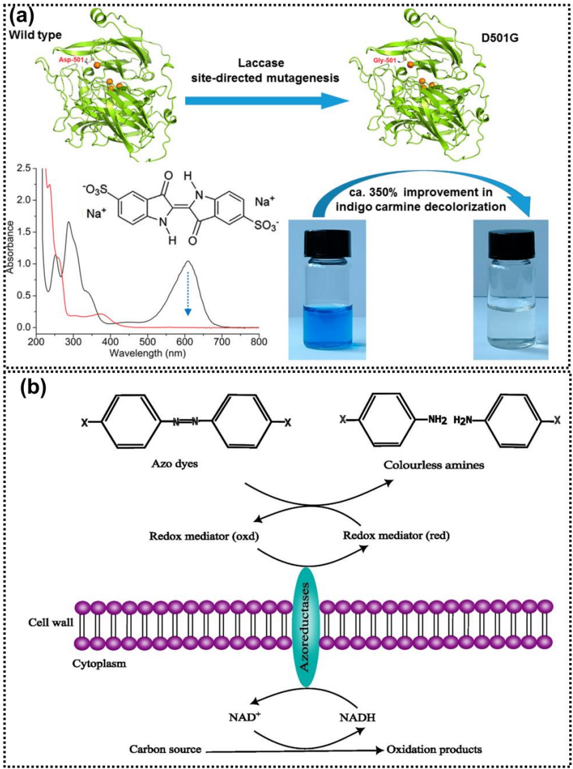
“Azoreductases are a distinct class of flavoenzymes that have the potential to facilitate the reduction of azo bonds (-N=N-) present in the aromatic dyes by hydrolysis of azo bonds in the presence of oxygen or in the absence of oxygen, hence participating in the metabolic breakdown of dyes (see Figure 7b) [221].”
§ Recent Advances in the Remediation of Textile-Dye-Containing Wastewater: Prioritizing Human Health and Sustainable Wastewater Treatment > 4.2.4. Enzymes
What the sources say
- Partly supportedcites [221] Harish, B.S., Thayumanavan, T., Nambukrishnan, V., and Sakthishobana, K. (2023). Heterogeneous Biocatalytic System for Effective Decolorization of Textile Dye Effluent. 3 Biotech., 13. sourceExperimental — accuracy not yet measured
The “Azoreductases for dye degradation” section describes azoreductases as flavoenzymes that reduce azo bonds and says they break those bonds during dye metabolism under aerobic and anaerobic conditions. It describes the mechanism as transfer of reducing equivalents through FMN, not hydrolysis of the azo bonds; hydrolases are mentioned as enzymes involved in later degradation. Page numbers are not supplied for these passages. (LLM, conf=0.88)
hedgeddirect- Asserted: passes — The authors put it forward as true.
- Checkable: passes — It can be checked against evidence.
- Load-bearing: unclear — It is unclear whether the paper’s conclusions depend on it.
- Based: passes — The paper gives a reason why it holds.
It may state two separate claims as one.
- Partly supported
Every source the paper cites for this claim was checked and supports it.
In the paper
“The use of auxiliary agents in the dye and their impact on dye degradation, as well as the influence of different salts on the process of ozonation, were investigated through the application of the AOP [250].”
§ Recent Advances in the Remediation of Textile-Dye-Containing Wastewater: Prioritizing Human Health and Sustainable Wastewater Treatment > 4.4.2. The Advanced Oxidation Process (AOP)
What the sources say
- Supportedcites [250] Gmurek, 2016, Comparison between Industrial and Simulated Textile Wastewater Treatment by AOPs—Biodegradability, Toxicity and Cost Assessment, Chem. Eng. J. source
The Introduction reports studies of how auxiliary agents affect dye degradation with ozone-based AOPs, including studies of different salts’ effects on ozonation. Section 3.2 also compares dye decolorization with and without textile auxiliaries in this paper’s experiments. The different-salt findings are reported from earlier studies, not presented as this paper’s own experiments. (LLM, conf=0.86)
plaincorrelational- Asserted: passes — The authors put it forward as true.
- Checkable: passes — It can be checked against evidence.
- Load-bearing: fails — The paper’s conclusions may not depend on it.
- Based: passes — The paper gives a reason why it holds.
Probably not a substantial claim. The paper’s conclusions may not depend on it. It may state two separate claims as one.
- Supported
The cited sources support only part of this claim — read each source’s verdict below.
In the paper
“The substance in question may be categorized as either natural or synthetic, and it possesses several notable advantages, including affordability, minimal equipment requirements, straightforward operation, and the absence of solvents [67].”
§ Recent Advances in the Remediation of Textile-Dye-Containing Wastewater: Prioritizing Human Health and Sustainable Wastewater Treatment > 4.3.1. Ion Exchange
What the sources say
- Partly supportedcites [67] Hassan, 2018, A Critical Review on Recent Advancements of the Removal of Reactive Dyes from Dyehouse Effluent by Ion-Exchange Adsorbents, Chemosphere sourceExperimental — accuracy not yet measured
The paper’s §2.2.3, “Merits and demerits of ion-exchange resins” (page not given), says resins are easy to handle and describes cheap alternatives, but says commercial resins are relatively expensive. It mentions synthetic resins and biomass-based alternatives, but does not establish the claimed natural-or-synthetic classification or the asserted minimal equipment requirements and absence of solvents. (LLM, conf=0.85)
hedged- Asserted: passes — The authors put it forward as true.
- Checkable: passes — It can be checked against evidence.
- Load-bearing: fails — The paper’s conclusions may not depend on it.
- Based: passes — The paper gives a reason why it holds.
Probably not a substantial claim. The paper’s conclusions may not depend on it. It may state two separate claims as one.
- Partly supported
Every source the paper cites for this claim was checked and supports it.
In the paper
“Notable catalysts that can be utilized include ferrous salts, Al 3+ , and Cu 2+ [49].”
§ Recent Advances in the Remediation of Textile-Dye-Containing Wastewater: Prioritizing Human Health and Sustainable Wastewater Treatment > 4.4.3. Color Removal by Fenton Oxidation
What the sources say
- Supportedcites [49] Patil, 2014, Treatment of Textile Wastewater by Fenton’s Process as a Advanced Oxidation Process, IOSR J. Environ. Sci. Toxicol. Food Technol. source
The Introduction to Fenton Process lists ferrous sulphate as the normally used catalyst and identifies iron salts, Al³⁺, and Cu²⁺ as others normally used. This supports the cited list of catalysts. (LLM, conf=0.94)
plain- Asserted: passes — The authors put it forward as true.
- Checkable: passes — It can be checked against evidence.
- Load-bearing: fails — The paper’s conclusions may not depend on it.
- Based: passes — The paper gives a reason why it holds.
Probably not a substantial claim. The paper’s conclusions may not depend on it.
- Supported
The cited sources support only part of this claim — read each source’s verdict below.
In the paper
“Furthermore, it has been utilized for the purpose of decolorizing Reactive Orange 16 [216][217][218][219].”
§ Recent Advances in the Remediation of Textile-Dye-Containing Wastewater: Prioritizing Human Health and Sustainable Wastewater Treatment > 4.2.4. Enzymes
What the sources say
- Partly supportedcites [216] Jamee, 2019, Biodegradation of Synthetic Dyes of Textile Effluent by Microorganisms: An Environmentally and Economically Sustainable Approach, Eur. J. Microbiol. Immunol. sourceExperimental — accuracy not yet measured
The “Degradation of Dyes by Fungi” section identifies lignin peroxidase as part of an enzyme system involved in synthetic-dye degradation. Neither that section nor the retrieved passages on dye decolorization mention Reactive Orange 16, so the specific dye attribution is unsupported. (LLM, conf=0.82)
- Could not verifycites [217] Mohamed, 2014, Bioremediation of the Textile Waste Effluent by Chlorella Vulgaris, Egypt. J. Aquat. Res. sourceExperimental — accuracy not yet measured
The Introduction discusses enzymatic decolorization of azo dyes generally, while the Discussion attributes decolorization by Chlorella vulgaris to algal azo dye reductase and other mechanisms. Searches for lignin peroxidase and Reactive Orange 16 found no passage in our copy addressing their use together; the dye list in 'Determination of total dye' does not include Reactive Orange 16. No page numbers were available. (LLM, conf=0.76)
- Not checked — no full text of the sourcecites [218] Chin, 2020, Removal of Synthetic Dye by Chlorella Vulgaris Microalgae as Natural Adsorbent, Arab. J. Sci. Eng. source
- Not checked yetcites [219] Gangola, S., Bhatt, P., Chaudhary, P., Khati, P., Kumar, N., and Sharma, A. (2018). Microbial Biotechnology in Environmental Monitoring and Cleanup, IGI Global.
plaindirect- Asserted: passes — The authors put it forward as true.
- Checkable: passes — It can be checked against evidence.
- Load-bearing: fails — The paper’s conclusions may not depend on it.
- Based: passes — The paper gives a reason why it holds.
Probably not a substantial claim. The paper’s conclusions may not depend on it.
- Partly supported
The cited sources support only part of this claim — read each source’s verdict below.
In the paper
“Ion exchange is a widely employed method for the widespread removal of inorganic salts and organic anionic constituents, such as antibiotics, amino acids, organic acids, and small compounds [67].”
§ Recent Advances in the Remediation of Textile-Dye-Containing Wastewater: Prioritizing Human Health and Sustainable Wastewater Treatment > 4.3.1. Ion Exchange
What the sources say
- Partly supportedcites [67] Hassan, 2018, A Critical Review on Recent Advancements of the Removal of Reactive Dyes from Dyehouse Effluent by Ion-Exchange Adsorbents, Chemosphere sourceExperimental — accuracy not yet measured
Section 2, “Types of ion-exchange adsorbents,” says these adsorbents bind oppositely charged pollutants and reviews their use to remove anionic reactive dyes. Section 2.2.3 calls ion-exchange resins popular. The copy does not establish their widespread use to remove inorganic salts or the other organic constituents listed in the citing sentence. (LLM, conf=0.83)
plaindirect- Asserted: passes — The authors put it forward as true.
- Checkable: passes — It can be checked against evidence.
- Load-bearing: fails — The paper’s conclusions may not depend on it.
- Based: passes — The paper gives a reason why it holds.
Probably not a substantial claim. The paper’s conclusions may not depend on it.
- Partly supported
The cited sources support only part of this claim — read each source’s verdict below.
In the paper
“The hypothesis posits that the process of anaerobic digestion of textile waste leads to the generation of biogas, as evidenced by the works [300][301][302].”
§ Recent Advances in the Remediation of Textile-Dye-Containing Wastewater: Prioritizing Human Health and Sustainable Wastewater Treatment > Methods of Sludge Treatment
What the sources say
- Not checked — no full text of the sourcecites [300] Wang, 2017, A Roadmap for Achieving Energy-Positive Sewage Treatment Based on Sludge Treatment Using Free Ammonia, ACS Sustain. Chem. Eng. source
- Not checked — no full text of the sourcecites [301] Sultana, 2015, Bio-Electro Degradation of Azo-Dye in a Combined Anaerobic–Aerobic Process along with Energy Recovery, New J. Chem. source
- Partly supportedcites [302] Đurđević, D., Blecich, P., and Jurić, Ž. (2019). Energy Recovery from Sewage Sludge: The Case Study of Croatia. Energies, 12. sourceExperimental — accuracy not yet measured
The Introduction states that anaerobic digestion of sewage sludge produces biogas, and Section 3.3 discusses biogas from anaerobic sludge stabilization. The cited paper does not establish that the same result holds for textile waste, the feedstock specified in the claim. (LLM, conf=0.88)
hedgeddirect- Asserted: fails — The authors may not put it forward as true.
- Checkable: passes — It can be checked against evidence.
- Load-bearing: fails — The paper’s conclusions may not depend on it.
- Based: passes — The paper gives a reason why it holds.
Probably not a substantial claim. The authors may not put it forward as true. The paper’s conclusions may not depend on it.
The cited sources support only part of this claim — read each source’s verdict below.
In the paper
“Bacterial organisms have the advantageous characteristic of exhibiting shorter development durations, in addition to their capability to breakdown and mineralize dyes[227].”
§ Recent Advances in the Remediation of Textile-Dye-Containing Wastewater: Prioritizing Human Health and Sustainable Wastewater Treatment > 5. Conclusions
What the sources say
- Partly supportedcites [227] Moyo, 2022, Use of Bacterial Isolates in the Treatment of Textile Dye Wastewater: A Review, Heliyon sourceExperimental — accuracy not yet measured
The review’s section on bacterial strains used in dye degradation reports that Bacillus megaterium broke down an azo dye into small aliphatic compounds and CO2, supporting bacterial dye breakdown and mineralization in that example. The passages examined do not establish the claimed shorter development durations for bacteria; dye-degradation times are not bacterial development times. (LLM, conf=0.82)
plain- Asserted: passes — The authors put it forward as true.
- Checkable: passes — It can be checked against evidence.
- Load-bearing: passes — The paper’s conclusions depend on it.
- Based: passes — The paper gives a reason why it holds.
It may state two separate claims as one.
- Partly supported
The sources with a verdict support this claim; the rest weren’t checked yet, have no full text we could read, or their verdicts aren’t rated yet.
In the paper
“The ZLD method in the textile industry focuses on achieving the goal of eliminating any disposal of liquid waste resulting from various waste-generating processes [94,309].”
§ Recent Advances in the Remediation of Textile-Dye-Containing Wastewater: Prioritizing Human Health and Sustainable Wastewater Treatment > 4.7. Roadmap towards ZLD: Focus on Recovery and Reuse
What the sources say
- Not checked — no full text of the sourcecites [94] Kopperi, 2023, Sustainable Consideration for Traditional Textile Handloom Cluster/Village in Pollution Abatement—A Case Study, Environ. Pollut. source
- Supportedcites [309] Jahan, N., Tahmid, M., Shoronika, A.Z., Fariha, A., Roy, H., Pervez, M.N., Cai, Y., Naddeo, V., and Islam, M.S. (2022). A Comprehensive Review on the Sustainable Treatment of Textile Wastewater: Zero Liquid Discharge and Resource Recovery Perspectives. Sustainability, 14. source
The Introduction describes ZLD as a closed water cycle that keeps treated, recyclable water within the system. The Conclusions describe treatment of wastewater from different textile-processing stages as leading toward zero liquid discharge. Together, these support the stated goal of eliminating liquid-waste disposal, rather than claiming that every system already achieves it. (LLM, conf=0.88)
plain- Asserted: passes — The authors put it forward as true.
- Checkable: passes — It can be checked against evidence.
- Load-bearing: fails — The paper’s conclusions may not depend on it.
- Based: passes — The paper gives a reason why it holds.
Probably not a substantial claim. The paper’s conclusions may not depend on it.
The cited sources support only part of this claim — read each source’s verdict below.
In the paper
“The hybrid process, known as PMS, utilizes a compact reactor and demonstrates energy efficiency while effectively eliminating complex and toxic pollutants [278,279].”
§ Recent Advances in the Remediation of Textile-Dye-Containing Wastewater: Prioritizing Human Health and Sustainable Wastewater Treatment > 4.5.1. Physiochemical Methods
What the sources say
- Partly supportedcites [278] Chakachaka, V., Tshangana, C., Mahlangu, O., Mamba, B., and Muleja, A. (2022). Interdependence of Kinetics and Fluid Dynamics in the Design of Photocatalytic Membrane Reactors. Membranes, 12. sourceExperimental — accuracy not yet measured
The Introduction describes photocatalytic membrane reactors (PMRs) as a hybrid of photocatalysis and membrane separation, and Section 5 reports removal of several pollutants. But the paper discusses PMRs, not a process called PMS; it does not establish that they use compact reactors. The Conclusions and Prospects describe energy efficiency as a goal for an ideal PMR, not a demonstrated property of the process. (LLM, conf=0.85)
- Not checked — no full text of the sourcecites [279] Kumar, 2022, TiO2 Based Photocatalysis Membranes: An Efficient Strategy for Pharmaceutical Mineralization, Sci. Total Environ. source
boosteddirect- Asserted: passes — The authors put it forward as true.
- Checkable: passes — It can be checked against evidence.
- Load-bearing: unclear — It is unclear whether the paper’s conclusions depend on it.
- Based: passes — The paper gives a reason why it holds.
It may state two separate claims as one.
- Partly supported
None of the sources cited for this claim have been checked yet.
In the paper
“The textile industry is a significant contributor to water pollution [9], and it is also responsible for approximately 20% of global water pollution [10], as the second largest polluter after the oil industry [10].”
§ Recent Advances in the Remediation of Textile-Dye-Containing Wastewater: Prioritizing Human Health and Sustainable Wastewater Treatment > 1. Introduction
What the sources say
- Not checked — no full text of the sourcecites [9] Ahmed, 2012, Equilibrium Isotherms and Kinetics Modeling of Methylene Blue Adsorption on Agricultural Wastes-Based Activated Carbons, Fluid. Phase Equilib. source
- Not checked yetcites [10] Mohamed, 2017, Hassaan; Ahmed El Nemr Health and Environmental Impacts of Dyes: Mini Review, Am. J. Environ. Sci. Eng.
plaindirect- Asserted: passes — The authors put it forward as true.
- Checkable: passes — It can be checked against evidence.
- Load-bearing: fails — The paper’s conclusions may not depend on it.
- Based: passes — The paper gives a reason why it holds.
Probably not a substantial claim. The paper’s conclusions may not depend on it. It may state two separate claims as one.
In the paper
“The utilization of synthetic dyes, which are derived from benzene and its derivatives, has supplanted the use of conventional natural dyes, leading to the development of over 10,000 dyes with varying chemical structures and characteristics [25].”
§ Recent Advances in the Remediation of Textile-Dye-Containing Wastewater: Prioritizing Human Health and Sustainable Wastewater Treatment > 1. Introduction
What the sources say
- Not checked — no full text of the sourcecites [25] Amir, 2019, Effect on Different TiO2 Photocatalyst Supports on Photodecolorization of Synthetic Dyes: A Review, Int. J. Environ. Sci. Technol. source
plaindirect- Asserted: passes — The authors put it forward as true.
- Checkable: passes — It can be checked against evidence.
- Load-bearing: fails — The paper’s conclusions may not depend on it.
- Based: passes — The paper gives a reason why it holds.
Probably not a substantial claim. The paper’s conclusions may not depend on it. It may state two separate claims as one.
A claim is checked only against the cited paper’s full text, never its abstract, and none is available for its sources.
In the paper
“In comparison to other industrial sectors, the textile industry is known to have the highest water and chemical consumption, with over 8000 species being utilized [11][12][13].”
§ Recent Advances in the Remediation of Textile-Dye-Containing Wastewater: Prioritizing Human Health and Sustainable Wastewater Treatment > 1. Introduction
What the sources say
- Not checked — no full text of the sourcecites [11] Ahmad, 2007, Adsorption of Direct Dye on Palm Ash: Kinetic and Equilibrium Modeling, J. Hazard. Mater. source
- Not checked — no full text of the sourcecites [12] Bhatia, 2017, Biological Methods for Textile Dye Removal from Wastewater: A Review, Crit. Rev. Environ. Sci. Technol. source
- Not checked — no full text of the sourcecites [13] Afroze, 2018, A Review on Heavy Metal Ions and Dye Adsorption from Water by Agricultural Solid Waste Adsorbents, Water Air Soil. Pollut. source
boosted- Asserted: passes — The authors put it forward as true.
- Checkable: passes — It can be checked against evidence.
- Load-bearing: fails — The paper’s conclusions may not depend on it.
- Based: passes — The paper gives a reason why it holds.
Probably not a substantial claim. The paper’s conclusions may not depend on it. It may state two separate claims as one.
In the paper
“Approximately 800,000 tons of dyes are produced annually, with 10-15% of this quantity being lost to the environment [18].”
§ Recent Advances in the Remediation of Textile-Dye-Containing Wastewater: Prioritizing Human Health and Sustainable Wastewater Treatment > 1. Introduction
What the sources say
- Not checked yetcites [18] Ledakowicz, 2010, Application of Anoxic Fixed Film and Aerobic CSTR Bioreactor in Treatment of Nanofiltration Concentrate of Real Textile Wastewater, Chem. Pap.
plain- Asserted: passes — The authors put it forward as true.
- Checkable: passes — It can be checked against evidence.
- Load-bearing: fails — The paper’s conclusions may not depend on it.
- Based: passes — The paper gives a reason why it holds.
Probably not a substantial claim. The paper’s conclusions may not depend on it. It may state two separate claims as one.
A claim is checked only against the cited paper’s full text, never its abstract, and none is available for its sources.
In the paper
“Bacteria can be employed to remove dye decolorization in specific cases, resulting in a 30% reduction in effluent toxicity [200,201].”
§ Recent Advances in the Remediation of Textile-Dye-Containing Wastewater: Prioritizing Human Health and Sustainable Wastewater Treatment > 4.2.1. Biological Route of Dye Decolorization
What the sources say
- Not checked — no full text of the sourcecites [200] Jadhav, 2010, Evaluation of the Efficacy of a Bacterial Consortium for the Removal of Color, Reduction of Heavy Metals, and Toxicity from Textile Dye Effluent, Bioresour. Technol. source
- Not checked — no full text of the sourcecites [201] Chan, 2012, Genome Sequence of Citrobacter Sp. Strain A1, a Dye-Degrading Bacterium, J. Bacteriol. source
plaindirect- Asserted: passes — The authors put it forward as true.
- Checkable: passes — It can be checked against evidence.
- Load-bearing: unclear — It is unclear whether the paper’s conclusions depend on it.
- Based: passes — The paper gives a reason why it holds.
It may state two separate claims as one.
A claim is checked only against the cited paper’s full text, never its abstract, and none is available for its sources.
In the paper
“As significant primary producers in freshwater and marine environments, microalgae are vital to aquatic ecosystems because they provide food for everyone from tiny zooplanktons to gigantic whales [88,89].”
§ Recent Advances in the Remediation of Textile-Dye-Containing Wastewater: Prioritizing Human Health and Sustainable Wastewater Treatment > 3.1. Environmental Consequences
What the sources say
- Not checked — no full text of the sourcecites [88] Khan, 2022, Recent Progress in Microalgae-Derived Biochar for the Treatment of Textile Industry Wastewater, Chemosphere source
- Not checked — no full text of the sourcecites [89] Mishra, 2023, Integrating Microalgae into Textile Wastewater Treatment Processes: Advancements and Opportunities, J. Water Process Eng. source
plaindirect- Asserted: passes — The authors put it forward as true.
- Checkable: passes — It can be checked against evidence.
- Load-bearing: fails — The paper’s conclusions may not depend on it.
- Based: passes — The paper gives a reason why it holds.
Probably not a substantial claim. The paper’s conclusions may not depend on it.
In the paper
“The residual tea waste possesses a significant calorific value, making it suitable for utilization in steam generation within the textile sector following appropriate saturation [142].”
§ Recent Advances in the Remediation of Textile-Dye-Containing Wastewater: Prioritizing Human Health and Sustainable Wastewater Treatment > 4.1. Bioadsorbents in Wastewater Treatment
What the sources say
- Not checked — no full text of the sourcecites [142] Jain, 2020, Batch and Continuous Studies for Adsorption of Anionic Dye onto Waste Tea Residue: Kinetic, Equilibrium, Breakthrough and Reusability Studies, J. Clean. Prod. source
plaindirect- Asserted: passes — The authors put it forward as true.
- Checkable: passes — It can be checked against evidence.
- Load-bearing: fails — The paper’s conclusions may not depend on it.
- Based: passes — The paper gives a reason why it holds.
Probably not a substantial claim. The paper’s conclusions may not depend on it.
In the paper
“Certain dyes have the potential to cause mutagenic reactions; one such dye is Disperse Red 1 [106].”
§ Recent Advances in the Remediation of Textile-Dye-Containing Wastewater: Prioritizing Human Health and Sustainable Wastewater Treatment > 3.2. Impact of Textile Dyes on Human Health
What the sources say
- Not checked — no full text of the sourcecites [106] Chequer, 2009, The Azo Dyes Disperse Red 1 and Disperse Orange 1 Increase the Micronuclei Frequencies in Human Lymphocytes and in HepG2 Cells, Mutat. Res./Genet. Toxicol. Environ. Mutagen. source
hedgedconditional- Asserted: passes — The authors put it forward as true.
- Checkable: passes — It can be checked against evidence.
- Load-bearing: unclear — It is unclear whether the paper’s conclusions depend on it.
- Based: passes — The paper gives a reason why it holds.
It may state two separate claims as one.
In the paper
“Banana fiber is an economically accessible and abundantly available material, owing to its substantial cultivation and extensive presence as a crop, with a global count over 25 billion banana or plantain trees [132].”
§ Recent Advances in the Remediation of Textile-Dye-Containing Wastewater: Prioritizing Human Health and Sustainable Wastewater Treatment > 4.1. Bioadsorbents in Wastewater Treatment
What the sources say
- Not checked — no full text of the sourcecites [132] Castillo, 2023, Environmental Sustainability Assessment of Banana Waste Utilization into Food Packaging and Liquid Fertilizer, Sustain. Prod. Consum. source
plaindirect- Asserted: passes — The authors put it forward as true.
- Checkable: passes — It can be checked against evidence.
- Load-bearing: fails — The paper’s conclusions may not depend on it.
- Based: passes — The paper gives a reason why it holds.
Probably not a substantial claim. The paper’s conclusions may not depend on it. It may state two separate claims as one.
None of the sources cited for this claim have been checked yet.
In the paper
“Additionally, the presence of dyes can disrupt seed germination and hinder plant growth, as well as cause chromosomal aberrations and various diseases [23,29].”
§ Recent Advances in the Remediation of Textile-Dye-Containing Wastewater: Prioritizing Human Health and Sustainable Wastewater Treatment > 1. Introduction
What the sources say
- Not checked yetcites [23] Singh, 2017, Rajani Srivastava an Overview of Textile Dyes and Their Removaltechniques: Indian Perspective, Polution Res. Pap.
- Not checked yetcites [29] Sachidhanandham, A., and Periyasamy, A.P. (2021). Handbook of Nanomaterials and Nanocomposites for Energy and Environmental Applications, Springer International Publishing.
plaindirect- Asserted: passes — The authors put it forward as true.
- Checkable: passes — It can be checked against evidence.
- Load-bearing: unclear — It is unclear whether the paper’s conclusions depend on it.
- Based: passes — The paper gives a reason why it holds.
It may state two separate claims as one.
A claim is checked only against the cited paper’s full text, never its abstract, and none is available for its sources.
In the paper
“The rate of removal is contingent upon several factors, including the concentration of O 2 , the ratio of organic load to microorganism load and dye load, and the temperature range [58,194].”
§ Recent Advances in the Remediation of Textile-Dye-Containing Wastewater: Prioritizing Human Health and Sustainable Wastewater Treatment > 4.2. Dye Removal by Biological Methods
What the sources say
- Not checked — no full text of the sourcecites [58] Paz, 2017, Biological Treatment of Model Dyes and Textile Wastewaters, Chemosphere source
- Not checked — no full text of the sourcecites [194] Holkar, 2016, A Critical Review on Textile Wastewater Treatments: Possible Approaches, J. Environ. Manag. source
plaincorrelational- Asserted: passes — The authors put it forward as true.
- Checkable: passes — It can be checked against evidence.
- Load-bearing: unclear — It is unclear whether the paper’s conclusions depend on it.
- Based: passes — The paper gives a reason why it holds.
It may state two separate claims as one.
In the paper
“The textile business employs many categories of dyes, with azo dyes being the predominant group utilized, accounting for over 60% of the industry's usage [71].”
§ Recent Advances in the Remediation of Textile-Dye-Containing Wastewater: Prioritizing Human Health and Sustainable Wastewater Treatment > 3. Effluent from the Textile Industry: Human and Environmental Issues
What the sources say
- Not checked yetcites [71] Periyasamy, A.P., and Militky, J. (2020). Sustainability in the Textile and Apparel Industries, Springer Nature.
plain- Asserted: passes — The authors put it forward as true.
- Checkable: passes — It can be checked against evidence.
- Load-bearing: fails — The paper’s conclusions may not depend on it.
- Based: passes — The paper gives a reason why it holds.
Probably not a substantial claim. The paper’s conclusions may not depend on it. It may state two separate claims as one.
A conclusion the paper draws from its own results — it cites no other source for it, so there is none to check. The quote shows it is in the paper.
In the paper
“At present, bipolar membrane electrodialysis (BMED) presents itself as an environmentally conscious and sustainable method for commercial implementation.”
§ Recent Advances in the Remediation of Textile-Dye-Containing Wastewater: Prioritizing Human Health and Sustainable Wastewater Treatment > 4.4.7. The Sequencing Batch Reactor (SBR)
plain- Asserted: passes — The authors put it forward as true.
- Checkable: passes — It can be checked against evidence.
- Load-bearing: fails — The paper’s conclusions may not depend on it.
- Based: passes — The paper gives a reason why it holds.
Probably not a substantial claim. The paper’s conclusions may not depend on it.
In the paper
“The AOP has gained significant popularity in the field of leachate treatment and water reuse [251].”
§ Recent Advances in the Remediation of Textile-Dye-Containing Wastewater: Prioritizing Human Health and Sustainable Wastewater Treatment > 4.4.2. The Advanced Oxidation Process (AOP)
What the sources say
- Not checked yetcites [251] Kumar, P.S., and Yaashikaa, P.R. (2018). Sustainable Innovations in Apparel Production, Springer.
plain- Asserted: passes — The authors put it forward as true.
- Checkable: passes — It can be checked against evidence.
- Load-bearing: fails — The paper’s conclusions may not depend on it.
- Based: passes — The paper gives a reason why it holds.
Probably not a substantial claim. The paper’s conclusions may not depend on it.
A claim is checked only against the cited paper’s full text, never its abstract, and none is available for its sources.
In the paper
“Textile effluent is commonly subjected to evaporation through two primary methods, namely solar evaporation and mechanical evaporation [195,236].”
§ Recent Advances in the Remediation of Textile-Dye-Containing Wastewater: Prioritizing Human Health and Sustainable Wastewater Treatment > 4.3.2. Evaporation
What the sources say
- Not checked — no full text of the sourcecites [195] Sarayu, 2012, Current Technologies for Biological Treatment of Textile Wastewater-A Review, Appl. Biochem. Biotechnol. source
- Not checked — no full text of the sourcecites [236] Ranganathan, 2007, Recycling of Wastewaters of Textile Dyeing Industries Using Advanced Treatment Technology and Cost Analysis—Case Studies, Resour. Conserv. Recycl. source
plain- Asserted: passes — The authors put it forward as true.
- Checkable: passes — It can be checked against evidence.
- Load-bearing: fails — The paper’s conclusions may not depend on it.
- Based: passes — The paper gives a reason why it holds.
Probably not a substantial claim. The paper’s conclusions may not depend on it.
A claim is checked only against the cited paper’s full text, never its abstract, and none is available for its sources.
In the paper
“Similarly, Azolla rong pong exhibited decolorization rates of 30% for Acid Green-3 [213] and 43% for Acid Blue-15 [214].”
§ Recent Advances in the Remediation of Textile-Dye-Containing Wastewater: Prioritizing Human Health and Sustainable Wastewater Treatment > 4.2.3. Algae
What the sources say
- Not checked — no full text of the sourcecites [213] Padmesh, 2006, Application of Azolla Rongpong on Biosorption of Acid Red 88, Acid Green 3, Acid Orange 7 and Acid Blue 15 from Synthetic Solutions, Chem. Eng. J. source
- Not checked — no full text of the sourcecites [214] Padmesh, 2006, Biosorption of Acid Blue 15 Using Fresh Water Macroalga Azolla Filiculoides: Batch and Column Studies, Dye Pigment source
plaindirect- Asserted: passes — The authors put it forward as true.
- Checkable: passes — It can be checked against evidence.
- Load-bearing: unclear — It is unclear whether the paper’s conclusions depend on it.
- Based: passes — The paper gives a reason why it holds.
It may state two separate claims as one.
In the paper
“The Honda-Fujishima effect was investigated by Fujishima et al. [269], who employed solar energy and titanium dioxide as photocatalysts to carry out water breakdown and hydrogen reduction activities.”
§ Recent Advances in the Remediation of Textile-Dye-Containing Wastewater: Prioritizing Human Health and Sustainable Wastewater Treatment > 4.4.6. Photocatalytic Oxidation
What the sources say
- Not checked — no full text of the sourcecites [269] Fujishima, 1972, Electrochemical Photolysis of Water at a Semiconductor Electrode, Nature source
plaindirect- Asserted: passes — The authors put it forward as true.
- Checkable: passes — It can be checked against evidence.
- Load-bearing: fails — The paper’s conclusions may not depend on it.
- Based: passes — The paper gives a reason why it holds.
Probably not a substantial claim. The paper’s conclusions may not depend on it.
A claim is checked only against the cited paper’s full text, never its abstract, and none is available for its sources.
In the paper
“This innovative approach also lowers the need for additional biological treatment, resulting in a simplified operational procedure [41,267].”
§ Recent Advances in the Remediation of Textile-Dye-Containing Wastewater: Prioritizing Human Health and Sustainable Wastewater Treatment > 4.4.5. Ozonation
What the sources say
- Not checked — no full text of the sourcecites [41] Malik, 2020, Hybrid Ozonation Process for Industrial Wastewater Treatment: Principles and Applications: A Review, J. Water Process Eng. source
- Not checked — no full text of the sourcecites [267] Bai, 2024, MgAl2O4 Incorporated Catalytic Ceramic Membrane for Catalytic Ozonation of Organic Pollutants, Appl. Catal. B. source
plaindirect- Asserted: passes — The authors put it forward as true.
- Checkable: passes — It can be checked against evidence.
- Load-bearing: unclear — It is unclear whether the paper’s conclusions depend on it.
- Based: passes — The paper gives a reason why it holds.
It may state two separate claims as one.
A claim is checked only against the cited paper’s full text, never its abstract, and none is available for its sources.
In the paper
“This process effectively oxidizes color, odor, and bacteria without generating any detrimental substances [258][259][260].”
§ Recent Advances in the Remediation of Textile-Dye-Containing Wastewater: Prioritizing Human Health and Sustainable Wastewater Treatment > 4.4.5. Ozonation
What the sources say
- Not checked — no full text of the sourcecites [258] Somensi, 2010, Use of Ozone in a Pilot-Scale Plant for Textile Wastewater Pre-Treatment: Physico-Chemical Efficiency, Degradation by-Products Identification and Environmental Toxicity of Treated Wastewater, J. Hazard. Mater. source
- Not checked — no full text of the sourcecites [259] Lo, 2011, Degradation of Chelating Agents in Aqueous Solution Using Advanced Oxidation Process (AOP), Chemosphere source
- Not checked — no full text of the sourcecites [260] Sevimli, 2002, Ozone Treatment of Textile Effluents and Dyes: Effect of Applied Ozone Dose, PH and Dye Concentration, J. Chem. Technol. Biotechnol. source
plaindirect- Asserted: passes — The authors put it forward as true.
- Checkable: passes — It can be checked against evidence.
- Load-bearing: unclear — It is unclear whether the paper’s conclusions depend on it.
- Based: passes — The paper gives a reason why it holds.
It may state two separate claims as one.
In the paper
“There exist several forms of AOPs, including ozone, ozone/hydrogen peroxide, ozone/UV, UV/TiO 2 , UV/hydrogen peroxide, Fenton reactions, Photo-Fenton reactions, ultrasonic irradiation, heat/persulfate, UV/persulfate, Fe(II)/persulfate, and OH-/persulfate [252].”
§ Recent Advances in the Remediation of Textile-Dye-Containing Wastewater: Prioritizing Human Health and Sustainable Wastewater Treatment > 4.4.2. The Advanced Oxidation Process (AOP)
What the sources say
- Not checked — no full text of the sourcecites [252] Yu, 2024, A Review on Recent Advances of Biochar from Agricultural and Forestry Wastes: Preparation, Modification and Applications in Wastewater Treatment, J. Environ. Chem. Eng. source
plain- Asserted: passes — The authors put it forward as true.
- Checkable: passes — It can be checked against evidence.
- Load-bearing: fails — The paper’s conclusions may not depend on it.
- Based: passes — The paper gives a reason why it holds.
Probably not a substantial claim. The paper’s conclusions may not depend on it.
In the paper
“The membranes of NF possess a thin outer layer that is typically non-porous, operating at the nanoscale, and exhibiting a high level of permeability [62].”
§ Recent Advances in the Remediation of Textile-Dye-Containing Wastewater: Prioritizing Human Health and Sustainable Wastewater Treatment > 4.3. Membrane Separation
What the sources say
- Not checked — no full text of the sourcecites [62] Cinperi, 2019, Treatment of Woolen Textile Wastewater Using Membrane Bioreactor, Nanofiltration and Reverse Osmosis for Reuse in Production Processes, J. Clean. Prod. source
plain- Asserted: passes — The authors put it forward as true.
- Checkable: passes — It can be checked against evidence.
- Load-bearing: fails — The paper’s conclusions may not depend on it.
- Based: passes — The paper gives a reason why it holds.
Probably not a substantial claim. The paper’s conclusions may not depend on it. It may state two separate claims as one.
In the paper
“The AOP is well recognized as a prominent technique for the treatment of industrial wastewater, owing to the considerable oxidative potential shown by ozone and the resulting generation of hydroxyl radicals (OH) [249].”
§ Recent Advances in the Remediation of Textile-Dye-Containing Wastewater: Prioritizing Human Health and Sustainable Wastewater Treatment > 4.4.2. The Advanced Oxidation Process (AOP)
What the sources say
- Not checked — no full text of the sourcecites [249] Dehghanzadeh, 2020, Activated Carbon Catalyzed Ozonation (ACCO) of Reactive Blue 194 Azo Dye in Aqueous Saline Solution: Experimental Parameters, Kinetic and Analysis of Activated Carbon Properties, J. Water Process Eng. source
boosteddirect- Asserted: passes — The authors put it forward as true.
- Checkable: passes — It can be checked against evidence.
- Load-bearing: fails — The paper’s conclusions may not depend on it.
- Based: passes — The paper gives a reason why it holds.
Probably not a substantial claim. The paper’s conclusions may not depend on it.
The paper states this without a source or data behind it here, so there is nothing to check it against. The quote shows it is in the paper.
In the paper
“According to reports, it was observed that the decolorization reached a maximum of 97%, while the elimination of COD reached up to 98%.”
§ Recent Advances in the Remediation of Textile-Dye-Containing Wastewater: Prioritizing Human Health and Sustainable Wastewater Treatment > 4.4.7. The Sequencing Batch Reactor (SBR)
plain- Asserted: passes — The authors put it forward as true.
- Checkable: passes — It can be checked against evidence.
- Load-bearing: unclear — It is unclear whether the paper’s conclusions depend on it.
- Based: passes — The paper gives a reason why it holds.
It may state two separate claims as one.
In the paper
“One of the primary benefits of NF is its reduced energy consumption, which leads to a higher efficiency in the removal of contaminants [239].”
§ Recent Advances in the Remediation of Textile-Dye-Containing Wastewater: Prioritizing Human Health and Sustainable Wastewater Treatment > 4.3. Membrane Separation
What the sources say
- Not checked — no full text of the sourcecites [239] Tang, 2002, Nanofiltration of Textile Wastewater for Water Reuse, Desalination source
plaindirect- Asserted: passes — The authors put it forward as true.
- Checkable: passes — It can be checked against evidence.
- Load-bearing: unclear — It is unclear whether the paper’s conclusions depend on it.
- Based: passes — The paper gives a reason why it holds.
It may state two separate claims as one.
In the paper
“It was also suggested that the rate at which dyes are removed by SBR is influenced by the volumetric dye loading rate [275].”
§ Recent Advances in the Remediation of Textile-Dye-Containing Wastewater: Prioritizing Human Health and Sustainable Wastewater Treatment > 4.4.7. The Sequencing Batch Reactor (SBR)
What the sources say
- Not checked — no full text of the sourcecites [275] Nuid, 2023, Pineapple Wastewater as Co-Substrate in Treating Real Alkaline, Non-Biodegradable Textile Wastewater Using Biogranulation Technology, J. Environ. Manage. source
hedgedcorrelational- Asserted: passes — The authors put it forward as true.
- Checkable: passes — It can be checked against evidence.
- Load-bearing: fails — The paper’s conclusions may not depend on it.
- Based: passes — The paper gives a reason why it holds.
Probably not a substantial claim. The paper’s conclusions may not depend on it.
A conclusion the paper draws from its own results — it cites no other source for it, so there is none to check. The quote shows it is in the paper.
In the paper
“The reduction in effluent load and the recovery of NaOH is a very straightforward operation, as it does not include the presence of additional chemicals, such as dyes.”
§ Recent Advances in the Remediation of Textile-Dye-Containing Wastewater: Prioritizing Human Health and Sustainable Wastewater Treatment > 4.7.2. Alkali Recovery
plaindirect- Asserted: passes — The authors put it forward as true.
- Checkable: passes — It can be checked against evidence.
- Load-bearing: fails — The paper’s conclusions may not depend on it.
- Based: fails — The paper may give no reason why it holds.
Probably not a substantial claim. The paper’s conclusions may not depend on it. The paper may give no reason why it holds. It may state two separate claims as one.
A claim is checked only against the cited paper’s full text, never its abstract, and none is available for its sources.
In the paper
“To enhance the biodegradability of sludge, several pre-treatment methods may be employed.These include thermal pre-treatment, enzymatic treatment, ozonation, chemical solubilization by acidification or alkaline hydrolysis, as well as mechanical sludge disintegration and ultrasonic pre-treatment [298,299].”
§ Recent Advances in the Remediation of Textile-Dye-Containing Wastewater: Prioritizing Human Health and Sustainable Wastewater Treatment > Methods of Sludge Treatment
What the sources say
- Not checked — no full text of the sourcecites [298] Zhang, 2016, Effect of Energy Grass on Methane Production and Heavy Metal Fractionation during Anaerobic Digestion of Sewage Sludge, Waste Manag. source
- Not checked — no full text of the sourcecites [299] Yang, 2016, Occurrence of Trace Organic Contaminants in Wastewater Sludge and Their Removals by Anaerobic Digestion, Bioresour. Technol. source
hedgedconditional- Asserted: passes — The authors put it forward as true.
- Checkable: passes — It can be checked against evidence.
- Load-bearing: fails — The paper’s conclusions may not depend on it.
- Based: passes — The paper gives a reason why it holds.
Probably not a substantial claim. The paper’s conclusions may not depend on it. It may state two separate claims as one.
A claim is checked only against the cited paper’s full text, never its abstract, and none is available for its sources.
In the paper
“Mercerization is a significant textile finishing technique performed on cotton fabric, including the application of a concentrated sodium hydroxide solution (ranging from 20% to 30%) [316,317].”
§ Recent Advances in the Remediation of Textile-Dye-Containing Wastewater: Prioritizing Human Health and Sustainable Wastewater Treatment > 4.7.2. Alkali Recovery
What the sources say
- Not checked — no full text of the sourcecites [316] Okano, 1985, Mercerization of Cellulose. II. Alkali–Cellulose Intermediates and a Possible Mercerization Mechanism, J. Appl. Polym. Sci. source
- Not checked — no full text of the sourcecites [317] Nishimura, 1987, Mercerization of Cellulose. III. Changes in Crystallite Sizes, J. Appl. Polym. Sci. source
plain- Asserted: passes — The authors put it forward as true.
- Checkable: passes — It can be checked against evidence.
- Load-bearing: fails — The paper’s conclusions may not depend on it.
- Based: passes — The paper gives a reason why it holds.
Probably not a substantial claim. The paper’s conclusions may not depend on it.
A conclusion the paper draws from its own results — it cites no other source for it, so there is none to check. The quote shows it is in the paper.
In the paper
“Sustainable wastewater treatments have several advantageous attributes, indicating their preference for minimizing chemical use in wastewater treatment plants, reducing energy consumption, and mitigating the carbon impact, among other benefits.”
§ Recent Advances in the Remediation of Textile-Dye-Containing Wastewater: Prioritizing Human Health and Sustainable Wastewater Treatment > 5. Conclusions
hedgeddirect- Asserted: passes — The authors put it forward as true.
- Checkable: passes — It can be checked against evidence.
- Load-bearing: passes — The paper’s conclusions depend on it.
- Based: fails — The paper may give no reason why it holds.
Probably not a substantial claim. The paper may give no reason why it holds. It may state two separate claims as one.
A conclusion the paper draws from its own results — it cites no other source for it, so there is none to check. The quote shows it is in the paper.
In the paper
“The effective management and recovery of dyes and other chemical substances can contribute to the attainment of environmental sustainability and foster economic advancement.”
§ Recent Advances in the Remediation of Textile-Dye-Containing Wastewater: Prioritizing Human Health and Sustainable Wastewater Treatment > 4.8. The Need for Technoeconomic Analysis
plaindirect- Asserted: passes — The authors put it forward as true.
- Checkable: fails — It may be too vague to check against evidence.
- Load-bearing: fails — The paper’s conclusions may not depend on it.
- Based: fails — The paper may give no reason why it holds.
Probably not a substantial claim. It may be too vague to check against evidence. The paper’s conclusions may not depend on it. The paper may give no reason why it holds. It may state two separate claims as one.
- Rests on an assumption: The discharge of effluent originating from the textile sector is resulting in substantial contamination due to the extensive use of colorants and hazardous chemicals, which are the primary contributors to water pollution and the escalating ecological risks.
In the paper
“The recovery of sodium hydroxide from the procedure was found above 90%, recovered NaOH has the potential to be recycled into the process [318].”
§ Recent Advances in the Remediation of Textile-Dye-Containing Wastewater: Prioritizing Human Health and Sustainable Wastewater Treatment > 4.7.2. Alkali Recovery
What the sources say
- Not checked yetcites [318] Jang, Y. (2007). Technical Proceedings of the 2007 Cleantech Conference and Trade Show, CRC Press.
plain- Asserted: passes — The authors put it forward as true.
- Checkable: passes — It can be checked against evidence.
- Load-bearing: unclear — It is unclear whether the paper’s conclusions depend on it.
- Based: passes — The paper gives a reason why it holds.
It may state two separate claims as one.
A result the paper reports from its own data — it cites no other source for it, so there is none to check. The quote shows it is in the paper.
In the paper
“This separation is primarily caused by the difference in Fermi levels between the two semiconductors, as seen in Figure 12b.”
§ Recent Advances in the Remediation of Textile-Dye-Containing Wastewater: Prioritizing Human Health and Sustainable Wastewater Treatment > 4.6. Sustainable Sludge Management
plaindirect- Asserted: passes — The authors put it forward as true.
- Checkable: passes — It can be checked against evidence.
- Load-bearing: fails — The paper’s conclusions may not depend on it.
- Based: passes — The paper gives a reason why it holds.
Probably not a substantial claim. The paper’s conclusions may not depend on it.
A claim is checked only against the cited paper’s full text, never its abstract, and none is available for its sources.
In the paper
“the prevailing price is contingent upon the region's authoritative needs, the availability of feedstock, and the labor force [291,327].”
§ Recent Advances in the Remediation of Textile-Dye-Containing Wastewater: Prioritizing Human Health and Sustainable Wastewater Treatment > 4.8. The Need for Technoeconomic Analysis
What the sources say
- Not checked — no full text of the sourcecites [291] Shabir, 2022, A Review on Recent Advances in the Treatment of Dye-Polluted Wastewater, J. Ind. Eng. Chem. source
- Not checked — no full text of the sourcecites [327] Andooz, 2023, A Comprehensive Review on Pyrolysis from the Circular Economy Point of View and Its Environmental and Social Effects, J. Clean. Prod. source
plaindirect- Asserted: passes — The authors put it forward as true.
- Checkable: passes — It can be checked against evidence.
- Load-bearing: fails — The paper’s conclusions may not depend on it.
- Based: passes — The paper gives a reason why it holds.
Probably not a substantial claim. The paper’s conclusions may not depend on it.
A conclusion the paper draws from its own results — it cites no other source for it, so there is none to check. The quote shows it is in the paper.
In the paper
“the utilization of LCA may facilitate the identification of research and development goals and provide guidance for enhancing innovation by mitigating challenges related to waste disposal and the discharge of hazardous chemicals.”
§ Recent Advances in the Remediation of Textile-Dye-Containing Wastewater: Prioritizing Human Health and Sustainable Wastewater Treatment > 4.9. Life Cycle Assessment (LCA) in WWTPs
hedgedconditional- Asserted: passes — The authors put it forward as true.
- Checkable: fails — It may be too vague to check against evidence.
- Load-bearing: fails — The paper’s conclusions may not depend on it.
- Based: passes — The paper gives a reason why it holds.
Probably not a substantial claim. It may be too vague to check against evidence. The paper’s conclusions may not depend on it. It may state two separate claims as one.
A conclusion the paper draws from its own results — it cites no other source for it, so there is none to check. The quote shows it is in the paper.
In the paper
“In certain cases, using multiple methods could improve pollutant removal efficiency.”
§ Recent Advances in the Remediation of Textile-Dye-Containing Wastewater: Prioritizing Human Health and Sustainable Wastewater Treatment > 5. Conclusions
hedgedconditional- Asserted: passes — The authors put it forward as true.
- Checkable: passes — It can be checked against evidence.
- Load-bearing: fails — The paper’s conclusions may not depend on it.
- Based: fails — The paper may give no reason why it holds.
Probably not a substantial claim. The paper’s conclusions may not depend on it. The paper may give no reason why it holds.
None of the sources cited for this claim have been checked yet.
In the paper
“Photocatalysis, specifically AOPs, facilitates the acceleration of a photoreaction by the absorption of photons from light.”
§ Recent Advances in the Remediation of Textile-Dye-Containing Wastewater: Prioritizing Human Health and Sustainable Wastewater Treatment > 4.5.3. Combination-Based Hybrid Chemical-Chemical Scheme
plaindirect- Asserted: passes — The authors put it forward as true.
- Checkable: passes — It can be checked against evidence.
- Load-bearing: fails — The paper’s conclusions may not depend on it.
- Based: passes — The paper gives a reason why it holds.
Probably not a substantial claim. The paper’s conclusions may not depend on it.
In the paper
“The findings of the study revealed that the forward osmosis membrane exhibited complete rejection of dyes, with a dye reconcentration ranging from 82% to 98%.”
§ Recent Advances in the Remediation of Textile-Dye-Containing Wastewater: Prioritizing Human Health and Sustainable Wastewater Treatment > 4.7.3. Dye Recovery
What the sources say
- Not checked — no full text of the sourcecites [326] Yasmeen, 2023, Recovering and Reuse of Textile Dyes from Dyebath Effluent Using Surfactant Driven Forward Osmosis to Achieve Zero Hazardous Chemical Discharge, Water Res. source
plain- Asserted: passes — The authors put it forward as true.
- Checkable: passes — It can be checked against evidence.
- Load-bearing: passes — The paper’s conclusions depend on it.
- Based: passes — The paper gives a reason why it holds.
It may state two separate claims as one.
None of the sources cited for this claim have been checked yet.
In the paper
“Various elements play a significant role in the management of sludge, including local and national geographical considerations, agronomic issues, economic aspects, and stakeholder perception [292,293].”
§ Recent Advances in the Remediation of Textile-Dye-Containing Wastewater: Prioritizing Human Health and Sustainable Wastewater Treatment > 4.6. Sustainable Sludge Management
What the sources say
- Not checked — no full text of the sourcecites [292] Lacasse, K., and Baumann, W. (2004). Textile Chemicals, Springer. source
- Not checked yetcites [293] Anjum, 2017, Textile Wastewater Treatment Options: A Critical Review, Enhancing Cleanup of Environmental Pollutants
plaincorrelational- Asserted: passes — The authors put it forward as true.
- Checkable: passes — It can be checked against evidence.
- Load-bearing: fails — The paper’s conclusions may not depend on it.
- Based: passes — The paper gives a reason why it holds.
Probably not a substantial claim. The paper’s conclusions may not depend on it.
None of the sources cited for this claim have been checked yet.
In the paper
“The significant characteristics of anaerobic digestion are the reduction in mass, formation of methane, and enhancement of dewatering qualities in the fermented sludge [292-297].”
§ Recent Advances in the Remediation of Textile-Dye-Containing Wastewater: Prioritizing Human Health and Sustainable Wastewater Treatment > Methods of Sludge Treatment
What the sources say
- Not checked — no full text of the sourcecites [292] Lacasse, K., and Baumann, W. (2004). Textile Chemicals, Springer. source
- Not checked yetcites [293] Anjum, 2017, Textile Wastewater Treatment Options: A Critical Review, Enhancing Cleanup of Environmental Pollutants
- Not checked yetcites [294] Wang, 2008, Conversion of Sewage Sludge to Biosolids, Biosolids Engineering and Management
- Not checked — no full text of the sourcecites [295] Yadav, 2011, Industrial Wastes and Sludges Management by Vermicomposting, Rev. Environ. Sci. Biotechnol. source
- Not checked — no full text of the sourcecites [296] Karn, 2015, Hydrolytic Enzyme Protease in Sludge: Recovery and Its Application, Biotechnol. Bioprocess. Eng. source
- Not checked — no full text of the sourcecites [297] He, 2017, Advances in Microbial Fuel Cells for Wastewater Treatment, Renew. Sustain. Energy Rev. source
plaindirect- Asserted: passes — The authors put it forward as true.
- Checkable: passes — It can be checked against evidence.
- Load-bearing: unclear — It is unclear whether the paper’s conclusions depend on it.
- Based: passes — The paper gives a reason why it holds.
It may state two separate claims as one.
A conclusion the paper draws from its own results — it cites no other source for it, so there is none to check. The quote shows it is in the paper.
In the paper
“Consequently, this supplementary treatment incurs additional costs, thereby impacting the overall feasibility of the process.”
§ Recent Advances in the Remediation of Textile-Dye-Containing Wastewater: Prioritizing Human Health and Sustainable Wastewater Treatment > 4.8. The Need for Technoeconomic Analysis
plaindirect- Asserted: passes — The authors put it forward as true.
- Checkable: passes — It can be checked against evidence.
- Load-bearing: passes — The paper’s conclusions depend on it.
- Based: passes — The paper gives a reason why it holds.
It may state two separate claims as one.
The paper states this without a source or data behind it here, so there is nothing to check it against. The quote shows it is in the paper.
In the paper
“The semiconductor denoted as S1, which possesses a relatively low Fermi energy level, undergoes the acceptance of electrons from the semiconductor denoted as S2, which has a higher Fermi energy level.”
§ Recent Advances in the Remediation of Textile-Dye-Containing Wastewater: Prioritizing Human Health and Sustainable Wastewater Treatment > 4.6. Sustainable Sludge Management
plaindirect- Asserted: passes — The authors put it forward as true.
- Checkable: passes — It can be checked against evidence.
- Load-bearing: fails — The paper’s conclusions may not depend on it.
- Based: passes — The paper gives a reason why it holds.
Probably not a substantial claim. The paper’s conclusions may not depend on it.
A conclusion the paper draws from its own results — it cites no other source for it, so there is none to check. The quote shows it is in the paper.
In the paper
“the implementation of a plan that combines several approaches will be crucial in addressing efficiency.”
§ Recent Advances in the Remediation of Textile-Dye-Containing Wastewater: Prioritizing Human Health and Sustainable Wastewater Treatment > 4.8. The Need for Technoeconomic Analysis
plaindirect- Asserted: passes — The authors put it forward as true.
- Checkable: fails — It may be too vague to check against evidence.
- Load-bearing: passes — The paper’s conclusions depend on it.
- Based: passes — The paper gives a reason why it holds.
Probably not a substantial claim. It may be too vague to check against evidence.
A conclusion the paper draws from its own results — it cites no other source for it, so there is none to check. The quote shows it is in the paper.
In the paper
“The practice of reusing and recycling wastewater has the potential to not only mitigate the demand for freshwater resources, but also facilitate the reduction in waste and surplus resources.”
§ Recent Advances in the Remediation of Textile-Dye-Containing Wastewater: Prioritizing Human Health and Sustainable Wastewater Treatment > 4.7.1. Electrolyte Recovery from Reactive Dye Effluent
hedgedconditional- Asserted: passes — The authors put it forward as true.
- Checkable: passes — It can be checked against evidence.
- Load-bearing: fails — The paper’s conclusions may not depend on it.
- Based: passes — The paper gives a reason why it holds.
Probably not a substantial claim. The paper’s conclusions may not depend on it. It may state two separate claims as one.
The paper states this without a source or data behind it here, so there is nothing to check it against. The quote shows it is in the paper.
In the paper
“When two semiconductors are brought into contact, there is a phenomenon of charge separation that takes place at the interfaces.”
§ Recent Advances in the Remediation of Textile-Dye-Containing Wastewater: Prioritizing Human Health and Sustainable Wastewater Treatment > 4.6. Sustainable Sludge Management
plaindirect- Asserted: passes — The authors put it forward as true.
- Checkable: passes — It can be checked against evidence.
- Load-bearing: fails — The paper’s conclusions may not depend on it.
- Based: passes — The paper gives a reason why it holds.
Probably not a substantial claim. The paper’s conclusions may not depend on it.
The paper states this without a source or data behind it here, so there is nothing to check it against. The quote shows it is in the paper.
In the paper
“Consequently, an internal electric field is established at the interface, directing the flow of electrons from S2 to S1, as seen in Figure 12b.”
§ Recent Advances in the Remediation of Textile-Dye-Containing Wastewater: Prioritizing Human Health and Sustainable Wastewater Treatment > 4.6. Sustainable Sludge Management
plaindirect- Asserted: passes — The authors put it forward as true.
- Checkable: passes — It can be checked against evidence.
- Load-bearing: fails — The paper’s conclusions may not depend on it.
- Based: passes — The paper gives a reason why it holds.
Probably not a substantial claim. The paper’s conclusions may not depend on it.
None of the sources cited for this claim have been checked yet.
In the paper
“The application of polyelectrolytes as a conditioning agent for sludge dewatering operations has gained popularity due to its ability to enhance process yields [306-308].”
§ Recent Advances in the Remediation of Textile-Dye-Containing Wastewater: Prioritizing Human Health and Sustainable Wastewater Treatment > Methods of Sludge Treatment
What the sources say
- Not checked — no full text of the sourcecites [306] Vigneswaran, C., Ananthasubramanian, M., and Kandhavadivu, P.B.T.-B.T. (2014). Bioprocessing of Textiles, Woodhead Publishing. source
- Not checked — no full text of the sourcecites [307] Faubert, 2016, Pulp and Paper Mill Sludge Management Practices: What Are the Challenges to Assess the Impacts on Greenhouse Gas Emissions?, Resour. Conserv. Recycl. source
- Not checked yetcites [308] Wilderer, 2011, 4.20—Water in the Textile Industry, Treatise on Water Science
plaindirect- Asserted: passes — The authors put it forward as true.
- Checkable: passes — It can be checked against evidence.
- Load-bearing: fails — The paper’s conclusions may not depend on it.
- Based: passes — The paper gives a reason why it holds.
Probably not a substantial claim. The paper’s conclusions may not depend on it.
In the paper
“The effluent from dyebaths also results in the discharge of significant amounts of unabsorbed dyes, leading to a decrease in dissolved oxygen levels and the generation of high COD [71,[323][324][325].”
§ Recent Advances in the Remediation of Textile-Dye-Containing Wastewater: Prioritizing Human Health and Sustainable Wastewater Treatment > 4.7.3. Dye Recovery
What the sources say
- Not matchedcites [71,[323][324][325]
Couldn’t be matched to a paper in Crossref, so it can’t be checked.
plaindirect- Asserted: passes — The authors put it forward as true.
- Checkable: passes — It can be checked against evidence.
- Load-bearing: unclear — It is unclear whether the paper’s conclusions depend on it.
- Based: passes — The paper gives a reason why it holds.
It may state two separate claims as one.
- Not matched
The paper relies on this without support.
The primary constituents of plant leaves encompass cellulose, hemicellulose, pectins, and lignin, and additionally it contains many functional groups, such as carboxyl, hydroxyl, carbonyl, amino, and nitro, which can interact with the functional groups of the dyes.
“The primary constituents of plant leaves encompass cellulose, hemicellulose, pectins, and lignin, and additionally it contains many functional groups, such as carboxyl, hydroxyl, carbonyl, amino, and nitro, which can interact with the functional groups of the dyes Table 2.”
The paper relies on this without support.
Certain microorganisms can degrade auxochromes and chromophores found in dyes, hence facilitating the removal of organic materials from textile waste.
“Although it is true that certain microorganisms can degrade auxochromes and chromophores found in dyes, hence facilitating the removal of organic materials from textile waste, it is worth noting that some of these microorganisms are also capable of mineralizing colors into carbon dioxide and water (see Figure 6).”
The paper relies on this without support.
Some microorganisms are capable of mineralizing colors into carbon dioxide and water.
“Although it is true that certain microorganisms can degrade auxochromes and chromophores found in dyes, hence facilitating the removal of organic materials from textile waste, it is worth noting that some of these microorganisms are also capable of mineralizing colors into carbon dioxide and water (see Figure 6).”
The paper relies on this without support.
There are still obstacles in the pursuit of efficient approaches to address pollution from complex waste effluents containing organic molecules and heavy metal ions, among other substances.
“Despite the development of several wastewater treatment systems, there are still obstacles in the pursuit of efficient approaches to address pollution from complex waste effluents containing organic molecules and heavy metal ions, among other substances.”
The paper relies on this without support.
Certain locations in developing nations continue to dispose of sludge inappropriately, such as through land disposal or by releasing it into the sea.
“However, it is worth noting that certain locations within developing nations continue to dispose of sludge in inappropriate and environmentally unfriendly ways, such as through land disposal or by releasing it into the sea.”
The paper relies on this without support.
Reusing and recycling wastewater can mitigate demand for freshwater and facilitate reduction in waste and surplus resources.
“The practice of reusing and recycling wastewater has the potential to not only mitigate the demand for freshwater resources, but also facilitate the reduction in waste and surplus resources.”
The paper relies on this without support.
In some cases, the concentration of electrolytes employed in dyeing might reach approximately 90 g/L, leading to substantial increases in the amounts of TDS and chlorides.
“In some cases, the concentration of electrolytes employed might reach approximately 90 g/L, leading to substantial increases in the amounts of TDS and chlorides.”
The paper relies on this without support.
Thermal evaporation treatment is the sole feasible alternative for treating electrolyte-containing reactive dye effluent.
“In the given circumstances, empirical evidence has demonstrated that thermal evaporation treatment is the sole feasible alternative.”
The paper relies on this without support.
Thermal evaporation is a very efficient technique for removing salt and dissolved solids from concentrated textile effluent and for extracting water.
“Thermal evaporation is widely acknowledged as a very efficient technique employed in the wastewater treatment for the textile industry to removing salt and dissolved solids from concentrated effluent, as well as extraction of water.”
The paper relies on this without support.
The recovery of NaOH is crucial when employing a high concentration of alkali.
“The recovery of NaOH is crucial when employing a high concentration of alkali.”
The paper relies on this without support.
Membrane systems are very suitable for the treatment of effluents and the subsequent recovery of NaOH during the initial phases of fiber removal.
“Membrane systems are considered very suitable for the treatment of effluents and the subsequent recovery of NaOH during the initial phases of fiber removal.”
The paper relies on this without support.
Polymeric NF membranes allow for the passage of small molecules and ions without the need for mercerization.
“Polymeric NF membranes allow for the passage of small molecules and ions without the need for mercerization.”
The paper relies on this without support.
The discharge of effluent originating from the textile sector is resulting in substantial contamination due to the extensive use of colorants and hazardous chemicals, which are the primary contributors to water pollution and the escalating ecological risks.
“The discharge of effluent originating from the textile sector is resulting in substantial contamination due to the extensive use of colorants and hazardous chemicals, which are the primary contributors to water pollution and the escalating ecological risks.”
The paper relies on this without support.
The textile industry generates effluents containing significant quantities of hazardous and persistent compounds, including dyes, chemicals, aromatic compounds, formaldehyde, flame retardants, and fluorocarbons.
“The textile industry is responsible for generating effluents that contain significant quantities of hazardous and persistent compounds, including dyes, chemicals, aromatic compounds, formaldehyde, flame retardants, and fluorocarbons.”
The paper relies on this without support.
These substances have detrimental impacts on both the environment and human health, as well as on aquatic organisms.
“These substances have detrimental impacts on both the environment and human health, as well as on aquatic organisms.”
The paper relies on this without support.
Water recovery from textile effluent is easier than recovery of salt or residues.
“The textile industry uses effluent treatment to separate water and other substances, with water recovery being easier than salt or residues.”
The paper relies on this without support.
Highly polluting effluents, such as dye bath discharge, make up 10% of total effluent discharge, while 90% comes from low-polluting streams like wash water.
“Highly polluting effluents, such as dye bath discharge, make up 10% of total effluent discharge, while 90% comes from lowpolluting streams like wash water.”
The paper relies on this without support.
Sustainable wastewater treatment produces less sludge but does not comply with norms and standards.
“Sustainable wastewater treatment produces less sludge, but it does not comply with norms and standards.”
The paper relies on this without support.
Prevention is more effective than treatment.
“In this situation, the idea of prevention being more effective than treatments remains valid.”
Claims other papers make about this one
Each is checked against this paper’s own text: does it say what the citing paper says it does?
The source backs part of the claim, not all of it — or backs it for a different population, condition or comparison.
In the citing paper
“If untreated, such discharges can severely affect aquatic ecosystems by depleting dissolved oxygen and promoting eutrophication.”
From Performance of maize tassel activated carbon for COD removal from industrial wastewater under optimized conditions (2025) · cites this paper as [1]
Experimental — accuracy not yet measured
Self-check
Percentages, sums and reported differences re-computed from the paper’s own numbers.
Each contradiction between two passages listed here was confirmed by an independent check.
Rated minor: it would not touch a result — a value no result rests on, a p-value that stays on the same side of the significance level, or a conflict that is clerical, resolved elsewhere in the paper, or outside its own findings.
In the paper
§ Recent Advances in the Remediation of Textile-Dye-Containing Wastewater: Prioritizing Human Health and Sustainable Wastewater Treatment > 1. Introduction
“The impact of the situation on agricultural activities is evident in the images, as depicted in Figure 2e.”
§ Recent Advances in the Remediation of Textile-Dye-Containing Wastewater: Prioritizing Human Health and Sustainable Wastewater Treatment > 5. Conclusions
“the Noyal River (c-e) in India, and the influence of these effluents on the agricultural land (f-h)”
Rated minor: it would not touch a result — a value no result rests on, a p-value that stays on the same side of the significance level, or a conflict that is clerical, resolved elsewhere in the paper, or outside its own findings.
In the paper
§ Recent Advances in the Remediation of Textile-Dye-Containing Wastewater: Prioritizing Human Health and Sustainable Wastewater Treatment > 5. Conclusions
“pictures taken in April 2022 and reprinted with the permission of ACS [26] licensed under CC-BY 4.0”
§ Recent Advances in the Remediation of Textile-Dye-Containing Wastewater: Prioritizing Human Health and Sustainable Wastewater Treatment > References
“26. Mohd Adnan, M.A.; Muhd Julkapli, N.; Amir, M.N.I.; Maamor, A. Effect on Different TiO2 Photocatalyst Supports on Photodecol- orization of Synthetic Dyes: A Review. Int. J. Environ. Sci. Technol. 2019, 16, 547-566.”
Citations
Cites
Electrochemical Photolysis of Water at a Semiconductor Electrode
FUJISHIMA, A., & HONDA, K. (1972) · Nature · doi:10.1038/238037a0 · Cited by 34,169
Robinson, T., McMullan, G., Marchant, R., & Nigam, P. (2001) · Bioresource Technology · doi:10.1016/s0960-8524(00)00080-8 · Cited by 4,422
Global Water Pollution and Human Health
Schwarzenbach, R. P., Egli, T. W., Hofstetter, T. B., von Gunten, U., & Wehrli, B. (2010) · Annual Review of Environment and Resources · doi:10.1146/annurev-environ-100809-125342 · Cited by 2,185
Verma, A. K., Dash, R. R., & Bhunia, P. (2011) · Journal of Environmental Management · doi:10.1016/j.jenvman.2011.09.012 · Cited by 2,032
Advanced Oxidation Processes (AOPs) in Wastewater Treatment
Deng, Y., & Zhao, R. (2015) · Current Pollution Reports · doi:10.1007/s40726-015-0015-z · Cited by 1,938
A Critical Review on Textile Wastewater Treatments: Possible Approaches
Holkar, C. R., Jadhav, A. J., Pinjari, D. V., Mahamuni, N. M., & Pandit, A. B. (2016) · Journal of Environmental Management · doi:10.1016/j.jenvman.2016.07.090 · Cited by 1,927
Microbial decolorization of textile-dyecontaining effluents: A review
Banat, I. M., Nigam, P., Singh, D., & Marchant, R. (1996) · Bioresource Technology · doi:10.1016/s0960-8524(96)00113-7 · Cited by 1,502
Covalent Organic Framework Photocatalysts: Structures and Applications
Wang, H., Wang, H., Wang, Z., Tang, L., Zeng, G., Xu, P., Chen, M., Xiong, T., Zhou, C., Li, X., et al. (2020) · Chemical Society Reviews · doi:10.1039/d0cs00278j · Cited by 1,301
Decomposition of Ozone in Water: Rate of Initiation by Hydroxide Ions and Hydrogen Peroxide
Staehelin, J., & Hoigne, J. (1982) · Environmental Science & Technology · doi:10.1021/es00104a009 · Cited by 1,235
Ahmad, A., Mohd-Setapar, S. H., Chuong, C. S., Khatoon, A., Wani, W. A., Kumar, R., & Rafatullah, M. (2015) · RSC Advances · doi:10.1039/c4ra16959j · Cited by 1,112
Catalytic ozonation for water and wastewater treatment: Recent advances and perspective
Wang, J., & Chen, H. (2019) · The Science of The Total Environment · doi:10.1016/j.scitotenv.2019.135249 · Cited by 1,103
Asghar, A., Abdul Raman, A. A., & Wan Daud, W. M. A. (2015) · Journal of Cleaner Production · doi:10.1016/j.jclepro.2014.09.010 · Cited by 916
Microbial decolouration of azo dyes: A review
Solís, M., Solı́s, A., Pérez, H. I., Manjarrez, N., & Flores, M. E. S. (2012) · Process Biochemistry · doi:10.1016/j.procbio.2012.08.014 · Cited by 861
Kinetics and Equilibrium Study for the Adsorption of Textile Dyes on Coconut Shell Activated Carbon
Aljeboree, A. M., Alshirifi, A. N., & Alkaim, A. F. (2017) · Arabian Journal of Chemistry · doi:10.1016/j.arabjc.2014.01.020 · Cited by 844
Biological Methods for Textile Dye Removal from Wastewater: A Review
Bhatia, D., Sharma, N. R., Singh, J., & Kanwar, R. S. (2017) · Critical Reviews in Environmental Science and Technology · doi:10.1080/10643389.2017.1393263 · Cited by 816
Hassan, M. M., & Carr, C. M. (2018) · Chemosphere · doi:10.1016/j.chemosphere.2018.06.043 · Cited by 816
An overview of the application of Fenton oxidation to industrial wastewaters treatment
Bautista, P., Mohedano, A. F., Casas, J. A., Zazo, J. A., & Rodriguez, J. J. (2008) · Journal of Chemical Technology & Biotechnology · doi:10.1002/jctb.1988 · Cited by 711
Adsorption of Dyes Using Different Types of Clay: A Review
Adeyemo, A. A., Adeoye, I. O., & Bello, O. S. (2017) · Applied Water Science · doi:10.1007/s13201-015-0322-y · Cited by 609
A Review on Heavy Metal Ions and Dye Adsorption from Water by Agricultural Solid Waste Adsorbents
Afroze, S., & Sen, T. K. (2018) · Water, Air, & Soil Pollution · doi:10.1007/s11270-018-3869-z · Cited by 587
A Brief History of Colour, the Environmental Impact of Synthetic Dyes and Removal by Using Laccases
Ardila-Leal, L. D., Poutou-Piñales, R. A., Pedroza-Rodríguez, A. M., & Quevedo-Hidalgo, B. E. (2021) · Molecules · doi:10.3390/molecules26133813 · Cited by 544
Yang, Y., Zhang, C., Lai, C., Zeng, G., Huang, D., Cheng, M., Wang, J., Chen, F., Zhou, C., & Xiong, W. (2018) · Advances in Colloid and Interface Science · doi:10.1016/j.cis.2018.03.004 · Cited by 544
The utilization of leaf-based adsorbents for dyes removal: A review
Bulgariu, L., Escudero, L. B., Bello, O. S., Iqbal, M., Nisar, J., Adegoke, K. A., Alakhras, F., Kornaros, M. E., & Anastopoulos, I. P. (2018) · Journal of Molecular Liquids · doi:10.1016/j.molliq.2018.12.001 · Cited by 481
Biological Decolorization of Dye Solution Containing Malachite Green by Microalgae Cosmarium Sp.
Daneshvar, N., Ayazloo, M., Khataee, A. R., & Pourhassan, M. (2007) · Bioresource Technology · doi:10.1016/j.biortech.2006.05.025 · Cited by 451
Recent developments of electro-oxidation in water treatment — A review
Särkkä, H., Bhatnagar, A., & Sillanpää, M. E. T. (2015) · Journal of Electroanalytical Chemistry · doi:10.1016/j.jelechem.2015.06.016 · Cited by 425
Current Technologies for Biological Treatment of Textile Wastewater—A Review
Sarayu, K., & Sandhya, S. (2012) · Applied Biochemistry and Biotechnology · doi:10.1007/s12010-012-9716-6 · Cited by 420
Advances in Microbial Fuel Cells for Wastewater Treatment
He, L., Du, P., Chen, Y., Lu, H., Cheng, X., Chang, B., & Wang, Z. (2017) · Renewable and Sustainable Energy Reviews · doi:10.1016/j.rser.2016.12.069 · Cited by 408
Electrodialysis-based Separation Technologies: A Critical Review
Xu, T., & Huang, C. (2008) · AIChE Journal · doi:10.1002/aic.11643 · Cited by 402
A Review on Recent Advances in the Treatment of Dye-Polluted Wastewater
Shabir, M., Yasin, M., Hussain, M., Shafiq, I., Akhter, P., Nizami, A.-S., Jeon, B.-H., & Park, Y.-K. (2022) · Journal of Industrial and Engineering Chemistry · doi:10.1016/j.jiec.2022.05.013 · Cited by 399
Effective Removal of Anionic Textile Dyes Using Adsorbent Synthesized from Coffee Waste
Wong, S., Ghafar, N. A., Ngadi, N., Razmi, F. A., Inuwa, I. M., Mat, R., & Amin, N. A. S. (2020) · Scientific Reports · doi:10.1038/s41598-020-60021-6 · Cited by 394
Jamee, R., & Siddique, R. (2019) · European Journal of Microbiology and Immunology · doi:10.1556/1886.2019.00018 · Cited by 385
A review on microplastic emission from textile materials and its reduction techniques
Periyasamy, A. P., & Tehrani‐Bagha, A. R. (2022) · Polymer Degradation and Stability · doi:10.1016/j.polymdegradstab.2022.109901 · Cited by 381
Self-citationThe Chemistry and Application of Dyes
Waring, D. R., & Hallas, G. (1990) · Springer eBooks · doi:10.1007/978-1-4684-7715-3 · Cited by 354
Hasanbeigi, A., & Price, L. (2015) · Journal of Cleaner Production · doi:10.1016/j.jclepro.2015.02.079 · Cited by 345
Biological treatment of model dyes and textile wastewaters
Paz, A., Carballo, J., Pérez, M. J., & Domínguez, J. M. (2017) · Chemosphere · doi:10.1016/j.chemosphere.2017.04.046 · Cited by 327
Papic, S. (2004) · Dyes and Pigments · doi:10.1016/s0143-7208(03)00148-7 · Cited by 322
Malachite green “a cationic dye” and its removal from aqueous solution by adsorption
Raval, N. P., Shah, P. U., & Shah, N. K. (2016) · Applied Water Science · doi:10.1007/s13201-016-0512-2 · Cited by 319
Choi, H., Sofranko, A. C., & Dionysiou, D. D. (2006) · Advanced Functional Materials · doi:10.1002/adfm.200500658 · Cited by 318
Shakoor, S., & Nasar, A. (2016) · Journal of the Taiwan Institute of Chemical Engineers · doi:10.1016/j.jtice.2016.06.009 · Cited by 316
Biopolymers composites with peanut hull waste biomass and application for Crystal Violet adsorption
Tahir, N., Bhatti, H. N., Iqbal, M., & Noreen, S. (2016) · International Journal of Biological Macromolecules · doi:10.1016/j.ijbiomac.2016.10.013 · Cited by 307
Hybrid Ozonation Process for Industrial Wastewater Treatment: Principles and Applications: A Review
Malik, S. N., Ghosh, P. C., Vaidya, A. N., & Mudliar, S. N. (2020) · Journal of Water Process Engineering · doi:10.1016/j.jwpe.2020.101193 · Cited by 307
Chen, Y.-D., Lin, Y.-C., Ho, S.-H., Zhou, Y., & Ren, N.-Q. (2018) · Bioresource Technology · doi:10.1016/j.biortech.2018.02.094 · Cited by 297
Raghu, S., & Ahmed Basha, C. (2007) · Journal of Hazardous Materials · doi:10.1016/j.jhazmat.2007.03.087 · Cited by 296
Bilińska, L., Gmurek, M., & Ledakowicz, S. (2016) · Chemical Engineering Journal · doi:10.1016/j.cej.2016.07.100 · Cited by 296
Munagapati, V. S., Yarramuthi, V., Kim, Y., Lee, K. M., & Kim, D.-S. (2018) · Ecotoxicology and Environmental Safety · doi:10.1016/j.ecoenv.2017.10.075 · Cited by 288
Calcium-rich biochar from crab shell: An unexpected super adsorbent for dye removal
Dai, L., Zhu, W., He, L., Tan, F., Zhu, N.-M., Zhou, Q., He, M., & Hu, G. (2018) · Bioresource Technology · doi:10.1016/j.biortech.2018.07.090 · Cited by 282
Decolorization and detoxification of textile wastewater by ozonation and coagulation processes
Selçuk, H. (2004) · Dyes and Pigments · doi:10.1016/j.dyepig.2004.03.020 · Cited by 277
Jadhav, J. P., Kalyani, D. C., Telke, A. A., Phugare, S. S., & Govindwar, S. P. (2010) · Bioresource Technology · doi:10.1016/j.biortech.2009.08.027 · Cited by 275
Ahmed, M. J., & Dhedan, S. K. (2012) · Fluid Phase Equilibria · doi:10.1016/j.fluid.2011.12.026 · Cited by 251
Water Pollution: Sources, Effects, Control and Management
Owa, F. D. (2013) · Mediterranean Journal of Social Sciences · doi:10.5901/mjss.2013.v4n8p65 · Cited by 247
OZONATION – AN IMPORTANT TECHNIQUE TO COMPLY WITH NEW GERMAN LAWS FOR TEXTILE WASTEWATER TREATMENT
Gähr, F., Hermanutz, F., & Oppermann, W. (1994) · Water Science & Technology · doi:10.2166/wst.1994.0115 · Cited by 246
Okano, T., & Sarko, A. (1985) · Journal of Applied Polymer Science · doi:10.1002/app.1985.070300128 · Cited by 242
Munagapati, V. S., & Kim, D. (2016) · Journal of Molecular Liquids · doi:10.1016/j.molliq.2016.04.119 · Cited by 239
TEXTILE WASTEWATER TREATMENT BY HOMOGENEOUS OXIDATION WITH HYDROGEN PEROXIDE
Zaharia, C., Șuteu, D., Mureșan, A., Muresan, R., & Popescu, A. (2009) · Environmental Engineering and Management Journal · doi:10.30638/eemj.2009.199 · Cited by 238
Kinetic and Equilibrium Studies of Congo Red Dye Adsorption on Cabbage Waste Powder
Wekoye, J. N., Wanyonyi, W. C., Wangila, P. T., & Tonui, M. K. (2020) · Environmental Chemistry and Ecotoxicology · doi:10.1016/j.enceco.2020.01.004 · Cited by 238
Yadav, D., Karki, S., & Ingole, P. G. (2022) · Journal of environmental chemical engineering · doi:10.1016/j.jece.2022.108109 · Cited by 222
Adsorption of Direct Dye on Palm Ash: Kinetic and Equilibrium Modeling
Ahmad, A. A., Hameed, B. H., & Aziz, N. (2007) · Journal of Hazardous Materials · doi:10.1016/j.jhazmat.2006.06.094 · Cited by 220
Lucas, M. S., Dias, A. A., Sampaio, A., Amaral, C., & Peres, J. A. (2007) · Water Research · doi:10.1016/j.watres.2006.12.013 · Cited by 216
Indigo Degradation with Purified Laccases from Trametes hirsuta and Sclerotium rolfsii
Campos, R., Kandelbauer, A., Robra, K. H., Cavaco-Paulo, A., & Gübitz, G. M. (2001) · Journal of Biotechnology · doi:10.1016/s0168-1656(01)00303-0 · Cited by 216
Cinperi, N. C., Ozturk, E., Yigit, N. O., & Kitis, M. (2019) · Journal of Cleaner Production · doi:10.1016/j.jclepro.2019.03.166 · Cited by 215
Adsorption Behavior of Rhodamine B onRhizopusoryzaeBiomass
Das, S. K., Bhowal, J., Das, A. R., & Guha, A. K. (2006) · Langmuir · doi:10.1021/la0526378 · Cited by 209
Nanofiltration of Textile Wastewater for Water Reuse
Tang, C., & Chen, V. (2002) · Desalination · doi:10.1016/s0011-9164(02)00216-3 · Cited by 204
Degradation of Chelating Agents in Aqueous Solution Using Advanced Oxidation Process (AOP)
Sillanpää, M. E. T., Agustiono Kurniawan, T., & Lo, W.-H. (2011) · Chemosphere · doi:10.1016/j.chemosphere.2011.01.007 · Cited by 201
Adsorption of acid dye on cross-linked chitosan fibers: Equilibria
Yoshida, H., Okamoto, A., & Kataoka, T. (1993) · Chemical Engineering Science · doi:10.1016/0009-2509(93)80242-i · Cited by 201
Guettaï, N., & Ait Amar, H. (2005) · Desalination · doi:10.1016/j.desal.2005.04.048 · Cited by 201
Effect of some operational parameters on textile dye biodegradation in a sequential batch reactor
Lourenço, N. D., Novais, J. M., & Pinheiro, H. M. (2001) · Journal of Biotechnology · doi:10.1016/s0168-1656(01)00313-3 · Cited by 200
Modelling the energy demands of aerobic and anaerobic membrane bioreactors for wastewater treatment
Martin, I., Pidou, M., Soares, A., Judd, S. J., & Jefferson, B. (2011) · Environmental Technology · doi:10.1080/09593330.2011.565806 · Cited by 196
Sevimli, M. F., & Sarikaya, H. Z. (2002) · Journal of Chemical Technology & Biotechnology · doi:10.1002/jctb.644 · Cited by 195
Jorge, A. M. S., Athira, K. K., Alves, M. B., Gardas, R. L., & Pereira, J. F. B. (2023) · Journal of Water Process Engineering · doi:10.1016/j.jwpe.2023.104125 · Cited by 195
Harini, K., Ramya, K., & Sukumar, M. (2018) · Carbohydrate Polymers · doi:10.1016/j.carbpol.2018.08.081 · Cited by 192
Shafiq, I., Shafique, S., Akhter, P., Yang, W., & Hussain, M. (2022) · Catalysis Reviews · doi:10.1080/01614940.2020.1780824 · Cited by 192
Chen, Y.-G., He, X.-L.-S., Huang, J.-H., Luo, R., Ge, H.-Z., Wołowicz, A., Wawrzkiewicz, M., Gładysz-Płaska, A., Li, B., Yu, Q.-X., et al. (2021) · Ecotoxicology and Environmental Safety · doi:10.1016/j.ecoenv.2021.112336 · Cited by 192
A review of effects and applications of ultrasound in mineral flotation
Chen, Y., Truong, V. N. T., Bu, X., & Xie, G. (2019) · Ultrasonics Sonochemistry · doi:10.1016/j.ultsonch.2019.104739 · Cited by 190
Vijayaraghavan, K., & Yun, Y. (2006) · Journal of Hazardous Materials · doi:10.1016/j.jhazmat.2006.06.081 · Cited by 189
Characterization and use of activated carbons prepared from bagasses for liquid-phase adsorption
Juang, R., Wu, F., & Tseng, R. (2002) · Colloids and Surfaces A Physicochemical and Engineering Aspects · doi:10.1016/s0927-7757(01)01004-4 · Cited by 189
Summary on Adsorption and Photocatalysis for Pollutant Remediation: Mini Review
Abebe, B., Murthy, H. C. A., & Zereffa, E. A. (2018) · Journal of Encapsulation and Adsorption Sciences · doi:10.4236/jeas.2018.84012 · Cited by 189
Ahmad, N. N. R., Ang, W. L., Teow, Y. H., Mohammad, A. W., & Hilal, N. (2022) · Journal of Water Process Engineering · doi:10.1016/j.jwpe.2021.102478 · Cited by 188
Subedi, N., Lähde, A., Abu-Danso, E., Iqbal, J., & Bhatnagar, A. (2019) · International Journal of Biological Macromolecules · doi:10.1016/j.ijbiomac.2019.06.151 · Cited by 187
Azoreductase: a key player of xenobiotic metabolism
Misal, S. A., & Gawai, K. R. (2018) · Bioresources and Bioprocessing · doi:10.1186/s40643-018-0206-8 · Cited by 184
Dye Biosorption Sites in Aspergillus Niger
Fu, Y., & Viraraghavan, T. (2002) · Bioresource Technology · doi:10.1016/s0960-8524(01)00172-9 · Cited by 181
Ngwabebhoh, F. A., Gazi, M., & Oladipo, A. A. (2016) · Process Safety and Environmental Protection · doi:10.1016/j.cherd.2016.06.023 · Cited by 180
Jain, S. N., Tamboli, S. R., Sutar, D. S., Jadhav, S. R., Marathe, J. V., Shaikh, A. A., & Prajapati, A. A. (2020) · Journal of Cleaner Production · doi:10.1016/j.jclepro.2019.119778 · Cited by 180
Biosorption of azo dyes from aqueous solution by glutaraldehyde-crosslinked chitosans
Chen, A., & Chen, S.-M. (2009) · Journal of Hazardous Materials · doi:10.1016/j.jhazmat.2009.07.104 · Cited by 179
Dye Removal by Biosorption Using Cross-Linked Chitosan-Based Hydrogels
Crini, G., Torri, G., Lichtfouse, E., Kyzas, G. Z., Wilson, L. D., & Morin-Crini, N. (2019) · Environmental Chemistry Letters · doi:10.1007/s10311-019-00903-y · Cited by 173
Decolorization of triphenylmethane and azo dyes by Citrobacter sp.
An, S.-Y., Min, S.-K., Cha, I., Choi, Y., Cho, Y., Kim, C.-H., & Lee, Y. (2002) · Biotechnology Letters · doi:10.1023/a:1015610018103 · Cited by 170
Khataee, A. R., Dehghan, G., Ebadi, A., Zarei, M., & Pourhassan, M. (2010) · Bioresource Technology · doi:10.1016/j.biortech.2009.11.079 · Cited by 170
Removal of Basic Red 46 Dye from Aqueous Solution by Pine Tree Leaves
Deniz, F., & Karaman, S. (2011) · Chemical Engineering Journal · doi:10.1016/j.cej.2011.03.029 · Cited by 170
Salama, A., Shukry, N., & El‐Sakhawy, M. (2014) · International Journal of Biological Macromolecules · doi:10.1016/j.ijbiomac.2014.11.002 · Cited by 169
Qu, R., Xu, B., Meng, L., Wang, L., & Wang, Z. (2014) · Water Research · doi:10.1016/j.watres.2014.10.017 · Cited by 165
Rosales, E., Pazos, M. M., Longo, M. A., & Sanromán, M. Á. (2009) · Chemical Engineering Journal · doi:10.1016/j.cej.2009.06.028 · Cited by 165
Adsorption Studies of Cationic Dyes onto Ashoka (Saraca asoca) Leaf Powder
Gupta, N., Kushwaha, A. K., & Chattopadhyaya, M. C. (2012) · Journal of the Taiwan Institute of Chemical Engineers · doi:10.1016/j.jtice.2012.01.008 · Cited by 164
Water Pollution: Sources, Effects, Control and Management
Owa, F. W. (2014) · International Letters of Natural Sciences · doi:10.56431/p-gk4d9j · Cited by 163
Mahato, N., Sharma, K., Sinha, M., Baral, E. R., Koteswararao, R., Dhyani, A., Hwan Cho, M., & Cho, S. (2020) · Journal of Advanced Research · doi:10.1016/j.jare.2020.01.007 · Cited by 162
Bioremediation of the Textile Waste Effluent by Chlorella Vulgaris
El-Kassas, H. Y., & Mohamed, L. A. (2014) · Egyptian Journal of Aquatic Research · doi:10.1016/j.ejar.2014.08.003 · Cited by 161
Faubert, P., Barnabé, S., Bouchard, S., Côté, R., & Villeneuve, C. (2016) · Resources, Conservation and Recycling · doi:10.1016/j.resconrec.2016.01.007 · Cited by 159
Influence of ozonation and biodegradation on toxicity of industrial textile wastewater
Paździor, K., Wrębiak, J., Klepacz-Smółka, A., Gmurek, M., Bilińska, L., Kos, L., Sójka‐Ledakowicz, J., & Ledakowicz, S. (2016) · Journal of Environmental Management · doi:10.1016/j.jenvman.2016.06.055 · Cited by 157
Textile Wastewater Treatment Options: A Critical Review
Siddique, K., Rizwan, M., Shahid, M. J., Ali, S., Ahmad, R., & Rizvi, H. (2017) · Springer eBooks · doi:10.1007/978-3-319-55423-5_6 · Cited by 156
Yu, Y., Qiao, N., Wang, D., Zhu, Q., Fu, F., Cao, R., Wang, R., Liu, W., & Xu, B. (2019) · Bioresource Technology · doi:10.1016/j.biortech.2019.121340 · Cited by 154
Guettaï, N., & Ait Amar, H. (2005) · Desalination · doi:10.1016/j.desal.2005.04.049 · Cited by 153
Ceramic membrane behavior in textile wastewater ultrafiltration
Barredo-Damas, S., Alcaina–Miranda, M. I., Bes-Piá, A., Iborra–Clar, M. I., Iborra‐Clar, A., & Mendoza‐Roca, J. A. (2009) · Desalination · doi:10.1016/j.desal.2009.09.037 · Cited by 150
Goei, R., & Lim, T.-T. (2014) · Water Research · doi:10.1016/j.watres.2014.04.025 · Cited by 149
Use of Bacterial Isolates in the Treatment of Textile Dye Wastewater: A Review
Moyo, S., Makhanya, B. P., & Zwane, P. E. (2022) · Heliyon · doi:10.1016/j.heliyon.2022.e09632 · Cited by 148
Kinetic study of brilliant green adsorption from aqueous solution onto white rice husk ash
Tavlieva, M. P., Genieva, S. D., Georgieva, V. G., & Vlaev, L. T. (2013) · Journal of Colloid and Interface Science · doi:10.1016/j.jcis.2013.07.052 · Cited by 145
Elimination and ecotoxicity evaluation of phthalic acid esters from textile-dyeing wastewater
Liang, J., Ning, X., Kong, M., Liu, D., Wang, G., Cai, H., Sun, J., Zhang, Y., Lu, X., & Yuan, Y. (2017) · Environmental Pollution · doi:10.1016/j.envpol.2017.08.006 · Cited by 144
Oyekanmi, A. A., Ahmad, A., Hossain, K., & Rafatullah, M. (2019) · PLOS ONE · doi:10.1371/journal.pone.0216878 · Cited by 144
Jahan, N., Tahmid, M., Shoronika, A. Z., Fariha, A., Roy, H., Pervez, M. N., Cai, Y., Naddeo, V., & Islam, M. S. (2022) · Sustainability · doi:10.3390/su142215398 · Cited by 143
A Review on the Treatment of Textile Industry Effluents through Fenton Processes
Ramos, M. D. N., Santana, C. S., Velloso, C. C. V., da Silva, A. H. M., Magalhães, F., & Aguiar, A. (2021) · Process Safety and Environmental Protection · doi:10.1016/j.psep.2021.09.029 · Cited by 142
Recent Progress in Microalgae-Derived Biochar for the Treatment of Textile Industry Wastewater
Khan, A. A., Gul, J., Naqvi, S. R., Ali, I., Farooq, W., Liaqat, R., AlMohamadi, H., Štěpanec, L., & Juchelková, D. (2022) · Chemosphere · doi:10.1016/j.chemosphere.2022.135565 · Cited by 142
Dionysiou, D. D. (2000) · Water Research · doi:10.1016/s0043-1354(00)00022-1 · Cited by 141
Impact of reactor configuration on anammox process start-up: MBR versus SBR
Tao, Y., Gao, D., Fu, Y., Wu, W., & Ren, N. (2011) · Bioresource Technology · doi:10.1016/j.biortech.2011.10.052 · Cited by 139
Ranganathan, K., Karunagaran, K., & Sharma, D. C. (2007) · Resources, Conservation and Recycling · doi:10.1016/j.resconrec.2006.06.004 · Cited by 136
Adverse Impact of Textile Dyes on the Aquatic Environment as Well as on Human Beings
Mehra, S., Singh, M., & Chadha, P. (2021) · Toxicology International · doi:10.18311/ti/2021/v28i2/26798 · Cited by 136
Lin, J., Ye, W., Huang, J., Ricard, B., Baltaru, M.-C., Greydanus, B., Balta, S., Shen, J., Vlad, M., Sotto, A., et al. (2015) · ACS Sustainable Chemistry & Engineering · doi:10.1021/acssuschemeng.5b00234 · Cited by 133
Application of natural and modified sugar cane bagasse for the removal of dye from aqueous solution
Tahir, H., Muhammad, S., Akhtar, N., Hameed, U., & Abid, T. (2012) · Journal of Saudi Chemical Society · doi:10.1016/j.jscs.2012.09.007 · Cited by 130
Cheng, L., Zhang, Y., Fan, W., & Ji, Y. (2022) · Chemical Engineering Journal · doi:10.1016/j.cej.2022.136677 · Cited by 130
Pattnaik, P., Dangayach, G. S., & Bhardwaj, A. (2018) · Reviews on Environmental Health · doi:10.1515/reveh-2018-0013 · Cited by 129
Somensi, C. A., Simionatto, E. L., Bertoli, S. L., Wisniewski, A., & Radetski, C. M. (2010) · Journal of Hazardous Materials · doi:10.1016/j.jhazmat.2009.09.154 · Cited by 128
Chequer, F. M. D., Angeli, J. P. F., Ferraz, E. R. A., Tsuboy, M. S., Marcarini, J. C., Mantovani, M. S., & de Oliveira, D. P. (2009) · Mutation Research/Genetic Toxicology and Environmental Mutagenesis · doi:10.1016/j.mrgentox.2009.04.004 · Cited by 126
Degradation of anthraquinone dye C.I. Reactive Blue 19 in aqueous solution by ozonation
Fanchiang, J.-M., & Tseng, D.-H. (2009) · Chemosphere · doi:10.1016/j.chemosphere.2009.07.038 · Cited by 125
Energy Recovery from Sewage Sludge: The Case Study of Croatia
Đurđević, D., Blecich, P., & Jurić, Ž. (2019) · Energies · doi:10.3390/en12101927 · Cited by 125
Periyasamy, A. P., & Periyasami, S. (2023) · ACS Omega · doi:10.1021/acsomega.2c06374 · Cited by 125
Self-citationBADAWY, M., & ALI, M. (2006) · Journal of Hazardous Materials · doi:10.1016/j.jhazmat.2006.01.042 · Cited by 123
Adsorption kinetics of some textile dyes onto granular activated carbon
Belaid, K. D., Kacha, S., Kameche, M., & Derriche, Z. (2013) · Journal of environmental chemical engineering · doi:10.1016/j.jece.2013.05.003 · Cited by 121
Adsorptive removal of fluoride from aqueous media using Citrus limonum (lemon) leaf
Tomar, V., Prasad, S., & Kumar, D. (2013) · Microchemical Journal · doi:10.1016/j.microc.2013.09.010 · Cited by 121
Liu, L., Fan, S., & Li, Y. (2018) · International Journal of Environmental Research and Public Health · doi:10.3390/ijerph15071321 · Cited by 121
Recent Breakthroughs in Deep Aerobic Oxidative Desulfurization of Petroleum Refinery Products
Shafiq, I., Shafique, S., Akhter, P., Ishaq, M., Yang, W., & Hussain, M. (2021) · Journal of Cleaner Production · doi:10.1016/j.jclepro.2020.125731 · Cited by 121
Peralta-Zamora, P., Kunz, A., de Moraes, S. G., Pelegrini, R., de Campos Moleiro, P., Reyes, J., & Duran, N. (1999) · Chemosphere · doi:10.1016/s0045-6535(98)00227-6 · Cited by 121
Zhao, F., Yang, Z., Wei, Z., Spinney, R., Sillanpää, M., Tang, J., Tam, M., & Xiao, R. (2020) · Chemical Engineering Journal · doi:10.1016/j.cej.2020.124307 · Cited by 120
Zhuang, M., Sanganyado, E., Zhang, X., Xu, L., Zhu, J., Liu, W., & Song, H. (2020) · Journal of Environmental Management · doi:10.1016/j.jenvman.2020.110222 · Cited by 120
Andooz, A., Eqbalpour, M., Kowsari, E., Ramakrishna, S., & Ansari Cheshmeh, Z. (2023) · Journal of Cleaner Production · doi:10.1016/j.jclepro.2023.136021 · Cited by 119
PADMESH, T., VIJAYARAGHAVAN, K., SEKARAN, G., & VELAN, M. (2006) · Dyes and Pigments · doi:10.1016/j.dyepig.2005.06.003 · Cited by 115
Khounı, I., Marrot, B., & Amar, R. B. (2011) · Separation and Purification Technology · doi:10.1016/j.seppur.2011.11.030 · Cited by 115
Effect on Different TiO2 Photocatalyst Supports on Photodecolorization of Synthetic Dyes: A Review
Mohd Adnan, M. A., Muhd Julkapli, N., Amir, M. N. I., & Maamor, A. (2019) · International Journal of Environmental Science and Technology · doi:10.1007/s13762-018-1857-x · Cited by 114
Temesgen, F., Gabbiye, N., & Sahu, O. (2018) · Surfaces and Interfaces · doi:10.1016/j.surfin.2018.04.007 · Cited by 112
Yang, S., Hai, F. I., Price, W. E., McDonald, J., Khan, S. J., & Nghiem, L. D. (2016) · Bioresource Technology · doi:10.1016/j.biortech.2015.12.080 · Cited by 110
Shakoor, S., & Nasar, A. (2018) · Groundwater for Sustainable Development · doi:10.1016/j.gsd.2018.03.004 · Cited by 109
Guerrero-Coronilla, I., Morales-Barrera, L., & Cristiani-Urbina, E. (2015) · Journal of Environmental Management · doi:10.1016/j.jenvman.2015.01.026 · Cited by 108
Industrial Wastes and Sludges Management by Vermicomposting
Yadav, A., & Garg, V. K. (2011) · Reviews in Environmental Science and Bio/Technology · doi:10.1007/s11157-011-9242-y · Cited by 106
Biosorption of Acid Red 274 (AR 274) on Enteromorpha Prolifera in a Batch System
Özer, A., Akkaya, G., & Turabik, M. (2005) · Journal of Hazardous Materials · doi:10.1016/j.jhazmat.2005.06.018 · Cited by 105
Khan, T. A., Nazir, M., & Khan, E. A. (2013) · Toxicological & Environmental Chemistry · doi:10.1080/02772248.2013.840369 · Cited by 104
Yu, C., Wang, K., Yang, P., Yang, S., Lu, C., Song, Y., Dong, S., Sun, J., & Sun, J. (2017) · Applied Surface Science · doi:10.1016/j.apsusc.2017.05.147 · Cited by 103
Ahmed, M., Mashkoor, F., & Nasar, A. (2020) · Groundwater for Sustainable Development · doi:10.1016/j.gsd.2019.100322 · Cited by 103
Role of Microporosity of Activated Carbons on Their Adsorption Abilities for Phenols and Dyes
Juang, R., Tseng, R., & Wu, F. (2001) · Adsorption · doi:10.1023/a:1011225001324 · Cited by 96
Chen, C., Chang, J.-C., & Chen, A.-H. (2010) · Journal of Hazardous Materials · doi:10.1016/j.jhazmat.2010.09.051 · Cited by 96
Characteristics and application of new ceramic nanofiltration membranes
Weber, R., Chmiel, H., & MAVROV, V. (2003) · Desalination · doi:10.1016/s0011-9164(03)00390-4 · Cited by 94
Ajmal, M., Siddiq, M., Aktaş, N., & Şahiner, N. (2015) · RSC Advances · doi:10.1039/c5ra05785j · Cited by 93
Periyasamy, A. P. (2022) · Sustainable materials and technologies · doi:10.1016/j.susmat.2022.e00472 · Cited by 92
Self-citationBioremoval of the Azo Dye Congo Red by the Microalga Chlorella Vulgaris
Hernández-Zamora, M., Cristiani-Urbina, E., Martínez-Jerónimo, F., Perales-Vela, H. V., Ponce-Noyola, T., Montes-Horcasitas, M. D. C., & Cañizares-Villanueva, R. O. (2015) · Environmental Science and Pollution Research · doi:10.1007/s11356-015-4277-1 · Cited by 90
Adsorption characteristics of Reactive Black 5 onto chitosan beads cross-linked with epichlorohydrin
Kim, T. Y., Park, S., & Cho, S. (2012) · Journal of Industrial and Engineering Chemistry · doi:10.1016/j.jiec.2012.02.006 · Cited by 90
He, Z., Liang, R., Zhou, C., Yan, G., & Wu, L. (2021) · Separation and Purification Technology · doi:10.1016/j.seppur.2020.117725 · Cited by 90
Biodegradable hollow zein nanoparticles for removal of reactive dyes from wastewater
Xu, H., Zhang, Y., Jiang, Q., Reddy, N., & Yang, Y. (2013) · Journal of Environmental Management · doi:10.1016/j.jenvman.2013.03.050 · Cited by 89
Narasaiah, B. P., & Mandal, B. K. (2019) · Journal of Saudi Chemical Society · doi:10.1016/j.jscs.2019.11.003 · Cited by 89
Deniz, F., & Saygideger, S. D. (2010) · Bioresource Technology · doi:10.1016/j.biortech.2010.02.004 · Cited by 88
Lacasse, K., & Baumann, W. (2004) · doi:10.1007/978-3-642-18898-5 · Cited by 88
Reddy, N., Chen, L., Zhang, Y., & Yang, Y. (2014) · Journal of Cleaner Production · doi:10.1016/j.jclepro.2013.09.046 · Cited by 85
Lin, D., Wu, F., Hu, Y., Zhang, T., Liu, C., Hu, Q., Hu, Y., Xue, Z., Han, H., & Ko, T.-H. (2020) · Journal of Chemistry · doi:10.1155/2020/5431046 · Cited by 84
Dong, H., Guo, T., Zhang, W., Ying, H., Wang, P., Wang, Y., & Chen, Y. (2019) · International Journal of Biological Macromolecules · doi:10.1016/j.ijbiomac.2019.08.196 · Cited by 83
P-Nitrophenol -Bioremediation using potent Pseudomonas strain from the textile dye industry effluent
Das, A., & Dey, A. (2020) · Journal of environmental chemical engineering · doi:10.1016/j.jece.2020.103830 · Cited by 83
Jiang, X., Sun, Y., Liu, L., Wang, S., & Tian, X. (2013) · Chemical Engineering Journal · doi:10.1016/j.cej.2013.09.001 · Cited by 82
Liu, Y., Zhang, Y., Quan, X., Zhang, J., Zhao, H., & Chen, S. (2010) · Bioresource Technology · doi:10.1016/j.biortech.2010.11.109 · Cited by 81
Green Materials for Wastewater Treatment
Naushad, M., & Lichtfouse, É. (2019) · Environmental chemistry for a sustainable world · doi:10.1007/978-3-030-17724-9 · Cited by 81
Removal of Synthetic Dye by Chlorella Vulgaris Microalgae as Natural Adsorbent
Chin, J. Y., Chng, L. M., Leong, S. S., Yeap, S. P., Yasin, N. H. M., & Toh, P. Y. (2020) · Arabian Journal for Science and Engineering · doi:10.1007/s13369-020-04557-9 · Cited by 80
Mashkoor, F., & Nasar, A. (2020) · International Journal of Biological Macromolecules · doi:10.1016/j.ijbiomac.2020.06.015 · Cited by 80
Periyasamy, A. (2023) · Toxics · doi:10.3390/toxics11050406 · Cited by 80
Self-citationEvaluation of Microfiber Release from Jeans: The Impact of Different Washing Conditions
Periyasamy, A. P. (2021) · Environmental Science and Pollution Research · doi:10.1007/s11356-021-14761-1 · Cited by 79
Self-citationYu, S., Zhang, W., Dong, X., Wang, F., Yang, W., Liu, C., & Chen, D. (2024) · Journal of Environmental Chemical Engineering · doi:10.1016/j.jece.2023.111638 · Cited by 79
Yu, R.-F., Lin, C.-H., Chen, H., Cheng, W.-P., & Kao, M.-C. (2012) · Chemical Engineering Journal · doi:10.1016/j.cej.2012.12.061 · Cited by 78
The Application of Textile Sludge Adsorbents for the Removal of Reactive Red 2 Dye
Sonai, G. G., de Souza, S. M. A. G. U., de Oliveira, D., & de Souza, A. A. U. (2016) · Journal of Environmental Management · doi:10.1016/j.jenvman.2015.12.003 · Cited by 78
Improvements in the Enzymatic Degradation of Textile Dyes Using Ionic- Liquid-Based Surfactants
Bento, R. M. F., Almeida, M. R., Bharmoria, P., Freire, M. G., & Tavares, A. P. M. (2020) · Separation and Purification Technology · doi:10.1016/j.seppur.2019.116191 · Cited by 78
Jing, G., Ren, S., Gao, Y., Sun, W., & Gao, Z. (2020) · Water · doi:10.3390/w12020595 · Cited by 78
Reduction of acute toxicity and genotoxicity of dye effluent using Fenton-coagulation process
Zhang, J., Chen, S., Zhang, Y., Quan, X., Zhao, H., & Zhang, Y. (2014) · Journal of Hazardous Materials · doi:10.1016/j.jhazmat.2014.04.022 · Cited by 77
Saravanan, S., Carolin, C. F., Kumar, P. S., Boobalan, C., & Rangasamy, G. (2022) · Chemosphere · doi:10.1016/j.chemosphere.2022.136266 · Cited by 74
Mercerization of Cellulose. III. Changes in Crystallite Sizes
Nishimura, H., & Sarko, A. (1987) · Journal of Applied Polymer Science · doi:10.1002/app.1987.070330314 · Cited by 73
A review of photochromism in textiles and its measurement
Periyasamy, A. P., Viková, M., & Vik, M. (2017) · Textile Progress · doi:10.1080/00405167.2017.1305833 · Cited by 73
Self-citationSarkar, S., Banerjee, A., Chakraborty, N., Soren, K., Chakraborty, P., & Bandopadhyay, R. (2020) · Electronic Journal of Biotechnology · doi:10.1016/j.ejbt.2019.12.004 · Cited by 73
Rose, P. K., Poonia, V., Kumar, R., Kataria, N., Sharma, P., Lamba, J., & Bhattacharya, P. (2023) · Groundwater for Sustainable Development · doi:10.1016/j.gsd.2023.101005 · Cited by 72
Emerging and Eco-Friendly Approaches for Waste Management
(2019) · doi:10.1007/978-981-10-8669-4 · Cited by 70
Padmesh, T. V. N., Vijayaraghavan, K., Sekaran, G., & Velan, M. (2006) · Chemical Engineering Journal · doi:10.1016/j.cej.2006.05.013 · Cited by 68
(2017) · doi:10.1007/978-3-319-48281-1 · Cited by 68
Wang, Q. (2017) · ACS Sustainable Chemistry & Engineering · doi:10.1021/acssuschemeng.7b02605 · Cited by 67
Vijayaraghavan, K., & Yun, Y.-S. (2007) · Industrial & Engineering Chemistry Research · doi:10.1021/ie061158g · Cited by 66
Photodegradation of Reactive Black 5 in a ZnO/UV Slurry Membrane Reactor
Laohaprapanon, S., Matahum, J., Tayo, L., & You, S.-J. (2015) · Journal of the Taiwan Institute of Chemical Engineers · doi:10.1016/j.jtice.2014.11.017 · Cited by 66
Velayutham, K., Madhava, A. K., Pushparaj, M., Thanarasu, A., Devaraj, T., Periyasamy, K., & Subramanian, S. (2018) · Environmental Technology · doi:10.1080/09593330.2017.1369579 · Cited by 66
Gupta, S. A., Vishesh, Y., Sarvshrestha, N., Bhardwaj, A. S., Kumar, P. A., Topare, N. S., Raut-Jadhav, S., Bokil, S. A., & Khan, A. (2022) · Materials Today: Proceedings · doi:10.1016/j.matpr.2021.12.044 · Cited by 66
Lourenço, N. D., Franca, R. D. G., Moreira, M. A. C., Gil, F. N., Viegas, C. A., & Pinheiro, H. M. (2015) · Biochemical Engineering Journal · doi:10.1016/j.bej.2015.04.025 · Cited by 65
Oxidative Desulfurization of Refinery Diesel Pool Fractions Using LaVO4 Photocatalyst
Shafiq, I., Hussain, M., Shafique, S., Rashid, R., Akhter, P., Ahmed, A., Jeon, J.-K., & Park, Y.-K. (2021) · Journal of Industrial and Engineering Chemistry · doi:10.1016/j.jiec.2021.03.040 · Cited by 65
Granular Activated Carbon Adsorption
Hung, Y., Lo, H. H., Wang, L. K., Taricska, J. R., & Li, K. H. (2005) · Humana Press eBooks · doi:10.1385/1-59259-820-x:573 · Cited by 64
Szentirmai, É., Massie, A. R., & Kapás, L. (2021) · Brain, Behavior, and Immunity · doi:10.1016/j.bbi.2020.12.008 · Cited by 64
Wastewater from the textile industry: Review of the technologies for wastewater treatment and reuse
Ahsan, A., Jamil, F., Rashad, M. A., Hussain, M., Inayat, A., Akhter, P., Al-Muhtaseb, A. H., Lin, K. A., & Park, Y. (2023) · Korean Journal of Chemical Engineering · doi:10.1007/s11814-023-1475-2 · Cited by 64
Adsorption of Remazol Black 5 from aqueous solution by the templated crosslinked-chitosans
Chen, A., & Huang, Y.-Y. (2009) · Journal of Hazardous Materials · doi:10.1016/j.jhazmat.2009.12.083 · Cited by 63
Jagannathan, M., Durgalakshmi, D., Balakumar, S., Aruna, P., Ganesan, S., Rajendran, S., & Naushad, M. (2019) · Journal of Water Process Engineering · doi:10.1016/j.jwpe.2019.101078 · Cited by 63
Application of Ceramic Membranes for the Separation of Dye Particles
Majewska-Nowak, K. M. (2010) · Desalination · doi:10.1016/j.desal.2009.11.026 · Cited by 62
Wang, J., Lu, L., & Feng, F. (2017) · Catalysts · doi:10.3390/catal7090275 · Cited by 62
Emrooz, H. B. M., Maleki, M., Rashidi, A., & Shokouhimehr, M. (2020) · Biomass Conversion and Biorefinery · doi:10.1007/s13399-019-00584-1 · Cited by 62
Li, K., Liu, Q., Fang, F., Wu, X., Xin, J., Sun, S., Wei, Y., Ruan, R., Chen, P., Wang, Y., et al. (2020) · Journal of Cleaner Production · doi:10.1016/j.jclepro.2020.121067 · Cited by 62
Starch/rice husk ash based superabsorbent composite: high methylene blue removal efficiency
Azevedo, A., Vaz, M. G., Gomes, R. F., Pereira, A. G. B., Fajardo, A. R., & Rodrigues, F. H. A. (2017) · Iranian Polymer Journal · doi:10.1007/s13726-016-0500-2 · Cited by 61
Ali, A. E., Chowdhury, Z. Z., Devnath, R., Ahmed, M. M., Rahman, M. M., Khalid, K., Wahab, Y. A., Badruddin, I. A., Kamangar, S., Hussien, M., et al. (2023) · Separations · doi:10.3390/separations10090506 · Cited by 60
Mu, B., Yu, X., Shao, Y., McBride, L., Hidalgo, H., & Yang, Y. (2023) · Resources, Conservation and Recycling · doi:10.1016/j.resconrec.2023.107275 · Cited by 59
The optimization study of direct red 81 and methylene blue adsorption on NaOH-modified rice husk
Ashrafi, S. D., Kamani, H., & Mahvi, A. H. (2014) · Desalination and Water Treatment · doi:10.1080/19443994.2014.979329 · Cited by 58
Banana Peel Powder Biosorbent for Removal of Hazardous Organic Pollutants from Wastewater
Farias, K. C. S., Guimarães, R. C. A., de Oliveira, K. R. W., Nazário, C. E. D., Ferencz, J. A. P., & Wender, H. (2023) · Toxics · doi:10.3390/toxics11080664 · Cited by 58
Integrating Microalgae into Textile Wastewater Treatment Processes: Advancements and Opportunities
Mishra, V., Mudgal, N., Rawat, D., Poria, P., Mukherjee, P., Sharma, U., Kumria, P., Pani, B., Singh, M., Yadav, A., et al. (2023) · Journal of Water Process Engineering · doi:10.1016/j.jwpe.2023.104128 · Cited by 58
Research works printed but not linked: 22
- Mohamed, 2017, Hassaan; Ahmed El Nemr Health and Environmental Impacts of Dyes: Mini Review, Am. J. Environ. Sci. Eng., 1, 64
- Karunakaran, G., Periyasamy, A.P., and Militký, J. (2023). Fibrous Structures and Their Impact on Textile Design, Springer Nature.
- Chisvert, A., Miralles, P., and Salvador, A. (2018). Analysis of Cosmetic Products, Elsevier.
- Singh, 2017, Rajani Srivastava an Overview of Textile Dyes and Their Removaltechniques: Indian Perspective, Polution Res. Pap., 36, 790
- Sachidhanandham, A., and Periyasamy, A.P. (2021). Handbook of Nanomaterials and Nanocomposites for Energy and Environmental Applications, Springer International Publishing.
- Samarghandi, 2009, Hadi Wo-Parameter Isotherms of Methyl Orange Sorption by Pinecone Derived Activated Carbon, Iran. J. Environ. Health Sci. Eng., 6, 285
- Periyasamy, A.P., and Militky, J. (2020). Sustainability in the Textile and Apparel Industries, Springer Nature.
- Periyasamy, A.P., Ramamoorthy, S.K., Rwawiire, S., and Zhao, Y. (2018). Sustainable Innovations in Apparel Production, Springer.
- Periyasamy, A.P., and Militky, J. (2017). Sustainability in Denim, Elsevier.
- Khaleque, 2016, Removing Reactive Dyes from Textile Effluent Using Banana Fibre, Int. J. Basic Appl. Sci., 16, 14
- Hachoumi, 2017, Adsorption Studies with a New Biosorbent Ensis Siliqua Shell Powder for Removal Two Textile Dyes from Aqueous Solution, J. Mater. Environ. Sci., 8, 1448
- Auta, 2012, Batch Adsorption of Reactive Red 120 from Waste Waters Using Activated Carbon from Waste Tea, Int. J. Adv. Eng. Technol., III, 24
- Mustafa, G., Zahid, M.T., Ullah, F., Zia, I., Younas, A., Batool, T., and Zahid, I. (2023). Current Developments in Bioengineering and Biotechnology, Elsevier.
- Kumar, P.S., and Yaashikaa, P.R. (2018). Sustainable Innovations in Apparel Production, Springer.
- Bethi, B., Radhika, G.B., and Sonawane, S.H. (2022). Novel Approaches Towards Wastewater Treatment and Resource Recovery Technologies, Elsevier.
- Venkataraman, K. (1974). The Chemistry of Synthetic Dyes, Academic Press.
- Jang, Y. (2007). Technical Proceedings of the 2007 Cleantech Conference and Trade Show, CRC Press.
- Muthu, S.S. (2017). Sustainability in Denim, Elsevier.
- Periyasamy, A.P., Wiener, J., and Militky, J. (2017). Sustainability in Denim, Elsevier.
- Martínez, L.M.T., Kharissova, O.V., and Kharisov, B.I. (2018). Handbook of Ecomaterials, Springer International Publishing. · DOI · Paper page
- Periyasamy, 2019, Life Cycle Assessment of Denim: A Review, Colourage, 66, 54
- Periyasamy, A.P., and Militky, J. (2020). Sustainability in the Textile and Apparel Industries, Springer.
Cited by
Sorted by citations
Shamshad, J., & Rehman, R. U. (2024) · Environmental Science Advances · doi:10.1039/d4va00136b · Cited by 291
Islam, M. M., Aidid, A. R., Mohshin, J. N., Mondal, H., Ganguli, S., & Ak, C. (2025) · Cleaner Chemical Engineering · doi:10.1016/j.clce.2025.100165 · Cited by 255
Sahu, A., & Poler, J. C. (2024) · Journal of environmental chemical engineering · doi:10.1016/j.jece.2024.113754 · Cited by 242
Keshta, B. E., Gemeay, A. H., Sinha, D. K., Elsharkawy, S., Hassan, F. M., Rai, N., & Arora, C. (2024) · Results in Chemistry · doi:10.1016/j.rechem.2024.101388 · Cited by 167
Dhila, H. H., Bhapkar, A. R., & Bhame, S. D. (2025) · Desalination and Water Treatment · doi:10.1016/j.dwt.2025.101004 · Cited by 113
Metadata
- Authors
- Periyasamy, A. P.
- Affiliations
- VTT Technical Research Centre of Finland (FI)
- Corresponding author
- Periyasamy, Aravin Prince
- Venue
- Sustainability
- Publisher
- MDPI AG
- Published
- 2024-01-05
- Volume
- 16
- Issue
- 2
- Pages
- 495
- ISSN
- 2071-1050 (ISSN-L)
- OpenAlex
- W4390617246
- Semantic Scholar
- 05dce24433317aa9363013319932eb6e9a860799
- Cited by
- 652
- References
- 323
- Citations by year
- 2026: 296 · 2025: 271 · 2024: 84
- FWCI
- 73.51
- Type
- journal article
- Language
- en
- Open access
- gold
- doi.org
- Licence
- Locations
- Sustainability (publishedVersion, cc-by)
- RePEc: Research Papers in Economics (submittedVersion)
- Topics
- Physical Sciences › Environmental Science › Water Science and Technology › Adsorption and biosorption for pollutant removal
- Physical Sciences › Environmental Science › Water Science and Technology › Advanced oxidation water treatment
- Physical Sciences › Environmental Science › Waste Management and Disposal › Wastewater Treatment and Reuse
- Keywords
- textile wastewater, dye removal, textile dyes, human health effects, aquatic toxicity, sustainable wastewater treatment, biosorbent, biological treatment, membrane technology, ion exchange, advanced oxidation processes, techno-economic analysis, life cycle assessment
About these checks
Registry, retraction, Cites and statistics results are computed, not judged, with one exception: a printed reference that no index lists is read once by a model before it counts as a citation error. Claims are extracted by a model and kept only when their quote appears verbatim in the text; each cited source is then checked, with a model’s help, for whether it says what the claim relies on. Those verdicts can be wrong — read the claim’s quote and the cited source before relying on one.
A language model drew the claims from the paper on 2026-11-08, under version 3 of the claim definition (model deepseek-v4.1-flash, prompt extract-v3).
A second model labelled each claim on 2026-11-08 (model jev-1.13-20260917, definition revision gold-guideline-v0.2).
Cited sources are checked with a language model’s help (gpt-6-sol).
Statistics and arithmetic are recomputed, not judged.
Confidence bands are shown only for fields calibrated on our annotated test set. None is calibrated yet, so no band is shown.
What counts as a claim ›How we measure confidence ›How we check this ›
Are you an author, or do you see a problem with this page? Request a review
