

The blood–brain barrier: Structure, regulation and drug delivery
Open accessThe DOI matches its Crossref record; 407 of the 409 references it cites were found in a registry or an index; 56 of the 148 sources its claims cite were checked for support.
Abstract
Blood-brain barrier (BBB) is a natural protective membrane that prevents central nervous system (CNS) from toxins and pathogens in blood. However, the presence of BBB complicates the pharmacotherapy for CNS disorders as the most chemical drugs and biopharmaceuticals have been impeded to enter the brain.
Overview
CoChat Summary
TL;DR
This is a review of the blood–brain barrier (BBB) that explains its structure, physiology, and the main strategies used to cross or modulate it for brain-targeted drug delivery. It surveys organic, inorganic, and biomimetic delivery systems and argues that better BBB models, safer materials, and more precise targeting are needed for translation.
Key findings
- The BBB is described as a semi-permeable barrier formed mainly by endothelial cells, astrocytes, pericytes, tight junctions, and adherens junctions; it protects the CNS but also excludes “more than 98% of small-molecule drugs and all macromolecular therapeutics” from brain access.
- The review groups BBB-crossing approaches into passive transcytosis, intranasal administration, ligand conjugation, membrane coating, external stimuli-mediated BBB disruption, and other non-invasive strategies.
- It reports several quantitative examples from the literature, including:
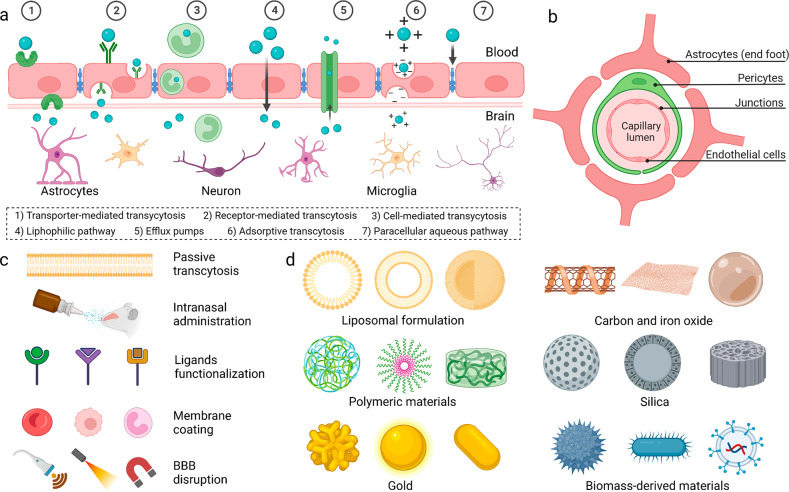
- passive transcytosis routes are limited to “hydrophilic compounds” under 150 Da and highly hydrophobic compounds under 400–600 Da;
- one liposomal system showed brain accumulation peaking at 3 h and 48 h after injection;
- cRGD-modified mesoporous silica nanoparticles (MSNs) of 20, 40, and 80 nm had transport capabilities of 44.0%, 59.2%, and 38.6%, respectively, versus 32.8% for free drugs;
- a PLGA micelle system extended a drug’s therapeutic window from 20 min to at least 4 h.
- The review highlights that many engineered systems can improve delivery, but clinical translation remains limited by safety, reproducibility, and the need for better targeting and evaluation models.
Methods
- This is a narrative review, not an original experimental study.
- It synthesizes prior studies on BBB structure/physiology and on brain-targeted delivery platforms, including liposomes, polymers, gold nanomaterials, carbon materials, iron oxide nanoparticles, silica nanomaterials, and biomimetic systems.
- The main analysis is qualitative: it organizes strategies by BBB transport route/mechanism and compares reported examples from the literature, including preclinical and some clinical-trial-oriented work.
Limitations
- The authors explicitly state that “a timely and comprehensive review is lacking,” indicating the field is broad and rapidly evolving.
- They also say that “there is still a long way to go from clinical popularization and translational application,” and list unresolved issues including better BBB models, region-specific delivery, safety, interactions among components, scalability, and reproducibility.
- Evident from the text: this paper is a review of published examples rather than a primary study, so it does not present a single unified dataset or direct experimental validation of the strategies discussed.
Model-written summary. Check it against the paper before relying on it.
Integrity signals
Registry
Cites
Statistics
Figures
Verification
Claims the paper makes
49 Valid · 1 Not valid · 72 Not checked · 14 Own results and interpretations
At least one cited source doesn’t support this claim or points to a different paper, and none confirmed it — see the verdicts below.
In the paper
“Their method through the oscillating of microbubbles under the ultrasound field could implement the transport of the gene product beyond the blood vessels without breaking the tight junctions and disrupting the BBB.”
§ The blood–brain barrier: Structure, regulation and drug delivery > Strategies for BBB regulation and crossing Brain tumors, cerebrovascular diseases, and neurodegenerative diseases, including Parkinson’s disease, Alzheimer’s disease, and multiple sclerosis, are serious CNS diseases.132 However, therapies for these challenging diseases are limited, because of the lack of effective methods, to enable drugs surpass natural protective hindrances to maintain homeostasis within the brain for preventing the entry of drug molecules to the CNS.133 A number of drugs are routinely administrated by invasive strategies for the management of these diseases and symptom control. For instance, intrathecal drug administration is a typical method for drug delivery into the entire ventricular system without passing through the BBB.134,135 It has been approved to deliver anti-sense oligonucleotides for the treatment of spinal muscular atrophy.136 Other invasive strategies including convection-enhanced delivery,137,138 intracranial implantation,139,140 and deep-brain stimulation were developed for brain drug delivery.141,142 Recent development of microneedle and polymeric wafers with minimal invasiveness provides sustained drug release for CNS disease management which circumvent the BBB.143–146 But the potential risks from brain exposure and damage of these invasive strategies limited their applications for long-term use. In order to efficiently deliver drugs into the brain with safety and precision, various non-invasive strategies to overcome BBB have been exploited. These strategies include BBB penetration via passive transcytosis, intranasal administration, ligands conjugation, membrane coating, and the BBB disruption using light, focused ultrasound, biochemical reagents, and radiation. > External stimuli-mediated BBB disruption
What the sources say
- Disputedcites [225] Gorick, C. M. et al. Sonoselective transfection of cerebral vasculature without blood-brain barrier disruption. Proc. Natl Acad. Sci. USA 117, 5644–5654 (2020). 32123081 PMC7084076 sourceExperimental — accuracy not yet measured
The Abstract says the method uses low-pressure ultrasound and oscillating microbubbles to transfect cerebral endothelial cells without opening the BBB. Contrary to the claim of transport beyond blood vessels, the Discussion section “In Vivo Endothelial Cell Sonoporation without Tight Junction Disruption or Transcellular Transport” says transfection is nearly all confined to the endothelium and does not promote additional transcellular transport. (LLM, conf=0.90)
Checked by a reasoning model — may be wrong.
hedgedstates a cause- Asserted: passes — The authors put it forward as true.
- Checkable: passes — It can be checked against evidence.
- Load-bearing: passes — The paper’s conclusions depend on it.
- Based: passes — The paper gives a reason why it holds.
- Disputed
Every source the paper cites for this claim was checked and supports it.
In the paper
“BBB is a spacious, multicellular, and dynamic semi-permeable membrane that isolates the foreign substances in the blood from the CNS.27”
§ The blood–brain barrier: Structure, regulation and drug delivery > BBB structure and physiology > Anatomical structure of the BBB
What the sources say
- Supportedcites [27] Upton, D. H. et al. Challenges and opportunities to penetrate the blood-brain barrier for brain cancer therapy. Theranostics 12, 4734–4752 (2022). 35832071 PMC9254248 source
The Introduction (§ The Blood-Brain barrier; page not provided) calls the BBB a semi-permeable membrane and says it prevents potentially harmful exogenous substances from passing from the bloodstream into the brain. It also describes the endothelial cells, pericytes, and astrocytes that form the barrier. (LLM, conf=0.93)
plainstates a cause- Asserted: passes — The authors put it forward as true.
- Checkable: passes — It can be checked against evidence.
- Load-bearing: passes — The paper’s conclusions depend on it.
- Based: passes — The paper gives a reason why it holds.
- Supported
Every source the paper cites for this claim was checked and supports it.
In the paper
“However, therapies for these challenging diseases are limited, because of the lack of effective methods, to enable drugs surpass natural protective hindrances to maintain homeostasis within the brain for preventing the entry of drug molecules to the CNS.133”
§ The blood–brain barrier: Structure, regulation and drug delivery > Strategies for BBB regulation and crossing Brain tumors, cerebrovascular diseases, and neurodegenerative diseases, including Parkinson’s disease, Alzheimer’s disease, and multiple sclerosis, are serious CNS diseases.132 However, therapies for these challenging diseases are limited, because of the lack of effective methods, to enable drugs surpass natural protective hindrances to maintain homeostasis within the brain for preventing the entry of drug molecules to the CNS.133 A number of drugs are routinely administrated by invasive strategies for the management of these diseases and symptom control. For instance, intrathecal drug administration is a typical method for drug delivery into the entire ventricular system without passing through the BBB.134,135 It has been approved to deliver anti-sense oligonucleotides for the treatment of spinal muscular atrophy.136 Other invasive strategies including convection-enhanced delivery,137,138 intracranial implantation,139,140 and deep-brain stimulation were developed for brain drug delivery.141,142 Recent development of microneedle and polymeric wafers with minimal invasiveness provides sustained drug release for CNS disease management which circumvent the BBB.143–146 But the potential risks from brain exposure and damage of these invasive strategies limited their applications for long-term use. In order to efficiently deliver drugs into the brain with safety and precision, various non-invasive strategies to overcome BBB have been exploited. These strategies include BBB penetration via passive transcytosis, intranasal administration, ligands conjugation, membrane coating, and the BBB disruption using light, focused ultrasound, biochemical reagents, and radiation.
What the sources say
- Supportedcites [133] Yang, J., Luly, K. M. & Green, J. J. Nonviral nanoparticle gene delivery into the CNS for neurological disorders and brain cancer applications. Wiley Interdiscip. Rev. Nanomed. Nanobiotechnol. 15, e1853 (2022). 36193561 PMC10023321 source
The “Barriers of entry into the central nervous system” section says protective barriers maintain brain homeostasis and impede delivery of drug therapeutics. The “Systemic delivery” section calls crossing the blood–brain barrier the most prominent hurdle to CNS delivery, while the disease-profile section discusses brain tumors, stroke, and dementias. Page numbers are not available in our copy. (LLM, conf=0.88)
plainstates a cause- Asserted: passes — The authors put it forward as true.
- Checkable: passes — It can be checked against evidence.
- Load-bearing: passes — The paper’s conclusions depend on it.
- Based: passes — The paper gives a reason why it holds.
- Supported
The cited sources support only part of this claim — read each source’s verdict below.
In the paper
“In the BBB, tight junctions are the main functional components in sustaining the permeability barrier and controlling tissue homeostasis.88–91”
§ The blood–brain barrier: Structure, regulation and drug delivery > BBB structure and physiology > Anatomical structure of the BBB
What the sources say
- Supportedcites [88] Luissint, A. C., Artus, C., Glacial, F., Ganeshamoorthy, K. & Couraud, P. O. Tight junctions at the blood brain barrier: physiological architecture and disease-associated dysregulation. Fluids Barriers CNS 9, 23 (2012). 23140302 PMC3542074 source
The Abstract says BBB barrier properties notably depend on tight junctions and that the BBB is mandatory for cerebral homeostasis. The Background identifies tight junctions as a barrier to paracellular diffusion. Page numbers are not provided in our copy. (LLM, conf=0.88)
- Partly supportedcites [89] Anderson, J. M. & Van Itallie, C. M. Physiology and function of the tight junction. CSH Perspect. Biol. 1, a002584 (2009). PMC2742087 20066090 sourceExperimental — accuracy not yet measured
The Abstract (page unavailable) describes tight junctions as barriers that separate tissue spaces and regulate solute movement. The Size section (page unavailable) reports that deleting claudin-5 increases tight-junction permeability in blood vessels. These passages support a permeability-barrier role, but do not establish that tight junctions are the main functional components of the blood-brain barrier or that they control its tissue homeostasis. (LLM, conf=0.84)
- Partly supportedcites [90] Dong, X. Current strategies for brain drug delivery. Theranostics 8, 1481–1493 (2018). 29556336 PMC5858162 sourceExperimental — accuracy not yet measured
In “Blood-brain barrier in healthy brain,” the paper says tight junctions play a vital role in sustaining the permeability barrier and controlling tissue homeostasis. It does not identify tight junctions alone as the main functional components: it says interendothelial junctions collectively mainly control BBB permeability and adherens junctions primarily regulate endothelial-barrier permeability. (LLM, conf=0.86)
- Partly supportedcites [91] Ahlawat, J. et al. Nanocarriers as potential drug delivery candidates for overcoming the blood-brain barrier: challenges and possibilities. ACS Omega 5, 12583–12595 (2020). 32548442 PMC7288355 sourceExperimental — accuracy not yet measured
The Introduction’s “Blood–Brain Barrier (BBB)” section says tight junctions are the BBB’s main junctional component and restrict passage between endothelial cells, supporting their role in its permeability barrier. It attributes maintenance of homeostasis to the BBB as a whole, however, rather than specifically saying tight junctions control tissue homeostasis. No page number is available in our copy. (LLM, conf=0.83)
plainstates a cause- Asserted: passes — The authors put it forward as true.
- Checkable: passes — It can be checked against evidence.
- Load-bearing: unclear — It is unclear whether the paper’s conclusions depend on it.
- Based: passes — The paper gives a reason why it holds.
- Supported
Every source the paper cites for this claim was checked and supports it.
In the paper
“The paracellular pathway is the principal route blocked by the tight junctions of cell gaps, restricting ions, polar solutes, and most macromolecules.148”
§ The blood–brain barrier: Structure, regulation and drug delivery > Strategies for BBB regulation and crossing Brain tumors, cerebrovascular diseases, and neurodegenerative diseases, including Parkinson’s disease, Alzheimer’s disease, and multiple sclerosis, are serious CNS diseases.132 However, therapies for these challenging diseases are limited, because of the lack of effective methods, to enable drugs surpass natural protective hindrances to maintain homeostasis within the brain for preventing the entry of drug molecules to the CNS.133 A number of drugs are routinely administrated by invasive strategies for the management of these diseases and symptom control. For instance, intrathecal drug administration is a typical method for drug delivery into the entire ventricular system without passing through the BBB.134,135 It has been approved to deliver anti-sense oligonucleotides for the treatment of spinal muscular atrophy.136 Other invasive strategies including convection-enhanced delivery,137,138 intracranial implantation,139,140 and deep-brain stimulation were developed for brain drug delivery.141,142 Recent development of microneedle and polymeric wafers with minimal invasiveness provides sustained drug release for CNS disease management which circumvent the BBB.143–146 But the potential risks from brain exposure and damage of these invasive strategies limited their applications for long-term use. In order to efficiently deliver drugs into the brain with safety and precision, various non-invasive strategies to overcome BBB have been exploited. These strategies include BBB penetration via passive transcytosis, intranasal administration, ligands conjugation, membrane coating, and the BBB disruption using light, focused ultrasound, biochemical reagents, and radiation. > Passive transcytosis
What the sources say
- Supportedcites [148] Hersh, A. M., Alomari, S. & Tyler, B. M. Crossing the blood-brain barrier: advances in nanoparticle technology for drug delivery in neuro-oncology. Int. J. Mol. Sci. 23, 4153 (2022). 35456971 PMC9032478 source
The Introduction states that tight junctions connect BBB endothelial cells and, together with adherens junctions, restrict paracellular transport of ions, polar solutes, and most macromolecules. This supports the claim's description of the blocked pathway. (LLM, conf=0.90)
plainstates a cause- Asserted: passes — The authors put it forward as true.
- Checkable: passes — It can be checked against evidence.
- Load-bearing: unclear — It is unclear whether the paper’s conclusions depend on it.
- Based: passes — The paper gives a reason why it holds.
- Supported
74 more claims · 26 with their cited sources checked
Create a free account to see all 136 claims and to verify the 6 references still open.
- It may state two separate claims as one. 49
- The quote only partly states this claim. 3
- Probably not a substantial claim. 7
Claims other papers make about this one
Each is checked against this paper’s own text: does it say what the citing paper says it does?
The source backs part of the claim, not all of it — or backs it for a different population, condition or comparison.
In the citing paper
“The most common injection route for nucleic acid therapies is into cerebrospinal fluid (CSF) because, at present, systemic delivery of siRNA-based therapeutics do not reach the CNS in meaningful concentrations due to the blood–brain barrier [5, 6].”
From Elucidating brain transport pathways and cell type-dependent gene silencing of a durable lipid–siRNA conjugate administered into cerebrospinal fluid (2025) · cites this paper as [5]
Experimental — accuracy not yet measuredThe source backs part of the claim, not all of it — or backs it for a different population, condition or comparison.
In the citing paper
“Unfortunately, at present, systemic administration of siRNA-based therapeutics do not reach the CNS in meaningful concentrations due to the blood-brain barrier (BBB).3”
From Lipid-siRNA conjugate accesses a perivascular transport mechanism and achieves widespread and durable knockdown in the central nervous system (2024) · cites this paper as [3]
Experimental — accuracy not yet measuredThe cited source says what the claim attributes to it.
In the citing paper
“This protective barrier limits the entry of foreign substances, including drugs, into the central nervous system.”
The cited source says what the claim attributes to it.
In the citing paper
“ECs are the core anatomical structure of the BBB responsible for the link between the blood vessels and the CNS. Their membrane is negatively charged and allows the passage of small lipophilic molecules and specific substances via transporters present in their surface [6].”
The cited source says what the claim attributes to it.
In the citing paper
“This barrier is responsible for the regulation of molecule influx and efflux into and out of the brain.”
4 more claims about this paper
Create a free account to see every claim other papers make about this one.
Self-check
Percentages, sums and reported differences re-computed from the paper’s own numbers.
Self-check results appear here once an independent check has confirmed them.
Cited works that were retracted
Works this paper cites that were later retracted, from the retraction notices publishers deposit. Major when the notice came out before this paper was published.
A note, not an issue: for example, a cited work that was retracted only after this paper was published, which its authors could not have known.
In the paper
“375 More recently, variants of the AAV have been investigated for its potential use for BBB penetration.”
Cited work 10.1007/s12035-017-0746-5 · retracted 2026-05-14 · notice 10.1007/s12035-026-05921-w · this paper published 2023-05-25
Citations
Cites
1 retracted
Items 201–400 of 407
Keep, R. F., Andjelkovic, A. V., Xiang, J., Stamatovic, S. M., Antonetti, D. A., Hua, Y., & Xi, G. (2018) · Journal of Cerebral Blood Flow & Metabolism · doi:10.1177/0271678x18774666 · Cited by 182 · cited 1×
“Interactions among these proteins provide physical support for the complex of tight junctions.(107) Downregulation of tight junction-related proteins will loss of the BBB phenotype.”
BackgroundCell membrane-derived vesicles for delivery of therapeutic agents
Le, Q.-V., Lee, J., Lee, H., Shim, G., & Oh, Y.-K. (2021) · Acta Pharmaceutica Sinica B · doi:10.1016/j.apsb.2021.01.020 · Cited by 181 · cited 1×
“23 194 Red blood cells, or erythrocytes, have been exploited as delivery systems due to the advantages of prolonging the life span of drugs in circulation and preventing drugs from immune clearance for many years.”
BackgroundAshrafizadeh, M., Mohammadinejad, R., Kailasa, S. K., Ahmadi, Z., Afshar, E. G., & Pardakhty, A. (2020) · Advances in Colloid and Interface Science · doi:10.1016/j.cis.2020.102123 · Cited by 181
Fong, C. W. (2015) · The Journal of Membrane Biology · doi:10.1007/s00232-015-9778-9 · Cited by 178 · cited 1×
“In addition to physical restriction of the potentially harmful substances, the BBB also plays multiple roles in maintaining homeostasis, 124,125 facilitating transport of the essential molecules, 126 regulating in fl ammation 127,128 and so forth.”
BackgroundZhong, Y., Zhang, Y., Xu, J., Zhou, J., Liu, J., Ye, M., Zhang, L., Qiao, B., Wang, Z.-G., Ran, H.-T., et al. (2019) · ACS Nano · doi:10.1021/acsnano.8b09277 · Cited by 177
Ebnet, K. (2017) · Physiological Reviews · doi:10.1152/physrev.00004.2017 · Cited by 176
Wardill, H. R., Mander, K. A., Van Sebille, Y. Z. A., Gibson, R. J., Logan, R. M., Bowen, J. M., & Sonis, S. T. (2016) · International Journal of Cancer · doi:10.1002/ijc.30252 · Cited by 174 · cited 1×
“The latter is mainly developed for the pro-inflammatory state, which is a common state in a number of CNS pathologies.(240) Oxidative stress is incited by an imbalance of oxidants.”
BackgroundCarrier-mediated or specialized transport of drugs across the blood–brain barrier
Tsuji, A., & Tamai, I. (1999) · Advanced Drug Delivery Reviews · doi:10.1016/s0169-409x(98)00084-2 · Cited by 174 · cited 3×
“The tightness of the BBB precludes the entrance of most pharmaceuticals into the brain via passive transcytosis, except for hydrophilic compounds which have a mass lower than 150 Da and highly hydrophobic compounds which have a mass lower than 400 – 600 Da.”
BackgroundZhang, Y., Fu, X., Jia, J., Wikerholmen, T., Xi, K., Kong, Y., Wang, J., Chen, H., Ma, Y., Li, Z., et al. (2020) · ACS Applied Materials & Interfaces · doi:10.1021/acsami.0c12042 · Cited by 174 · cited 1×
“333 The small interfering RNA and the chemical drugs were loaded via EDC/NHS reaction and direct absorption, respectively.”
MethodThe role of the adaptive immune system and T cell dysfunction in neurodegenerative diseases
DeMaio, A., Mehrotra, S., Sambamurti, K., & Husain, S. (2022) · Journal of Neuroinflammation · doi:10.1186/s12974-022-02605-9 · Cited by 174 · cited 1×
“132 However, therapies for these challenging diseases are limited, because of the lack of effective methods, to enable drugs surpass natural protective hindrances to maintain homeostasis within the brain for preventing the entry of drug molecules to the CNS. 133 A number of drugs are routinely…”
BackgroundArami, H., Kananian, S., Khalifehzadeh, L., Patel, C. B., Chang, E., Tanabe, Y., Zeng, Y., Madsen, S. J., Mandella, M. J., Natarajan, A., et al. (2022) · Nature Nanotechnology · doi:10.1038/s41565-022-01189-y · Cited by 171 · cited 1×
“For example, some gold nanoparticles that have higher absorbance at near infrared biowindow are potential nanogents for photothermal therapy of brain tumor.(288) In this section, we will focus on the discussion of the design and synthesis of gold nanomaterialsbased delivery systems.”
BackgroundChronically Implanted Intracranial Electrodes: Tissue Reaction and Electrical Changes
Campbell, A., & Wu, C. (2018) · Micromachines · doi:10.3390/mi9090430 · Cited by 169 · cited 1×
“136 Other invasive strategies including convection-enhanced delivery, 137,138 intracranial implantation, 139,140 and deep-brain stimulation were developed for brain drug delivery.”
BackgroundMultifunctional ginsenoside Rg3-based liposomes for glioma targeting therapy
Zhu, Y., Liang, J., Gao, C., Wang, A., Xia, J., Hong, C., Zhong, Z., Zuo, Z., Kim, J., Ren, H., et al. (2021) · Journal of Controlled Release · doi:10.1016/j.jconrel.2020.12.036 · Cited by 168
Wang, Z., Yang, Z., Jiang, J., Shi, Z., Mao, Y., Qin, N., & Tao, T. H. (2022) · Advanced Materials · doi:10.1002/adma.202106606 · Cited by 167 · cited 1×
“141,142 146 But the potential risks from brain exposure and damage of these invasive strategies limited their applications for long-term use.”
BackgroundDecorated bacteria and the application in drug delivery
Wu, F., & Liu, J. (2022) · Advanced Drug Delivery Reviews · doi:10.1016/j.addr.2022.114443 · Cited by 166
Carbon Nanotubes as an Effective Opportunity for Cancer Diagnosis and Treatment
Sanginario, A., Miccoli, B., & Demarchi, D. (2017) · Biosensors · doi:10.3390/bios7010009 · Cited by 165
Lu, Y., Guo, Z., Zhang, Y., Li, C., Zhang, Y., Guo, Q., Chen, Q., Chen, X., He, X., Liu, L., et al. (2019) · Advanced Science · doi:10.1002/advs.201801586 · Cited by 164 · cited 1×
“268 By mimicking the unregulated A β transportation, the micelles could target the Alzheimer ’ s disease microenvironment and release the model drug curcumin in response to excessive ROS generation in Alzheimer ’ s disease.”
BackgroundSelf-citationBoucher, J., Tseng, Y.-H., & Kahn, C. R. (2010) · Journal of Biological Chemistry · doi:10.1074/jbc.m110.118620 · Cited by 162 · cited 1×
“177 Similar intracellular signaling pathways could be initiated by both insulin and IGF1 receptors.”
BackgroundYao, S., Xu, M.-D., Wang, Y., Zhao, S., Wang, J., Chen, G.-F., Chen, W., Liu, J., Huang, G., Sun, W.-J., et al. (2023) · Nature Communications · doi:10.1038/s41467-023-36209-5 · Cited by 162 · cited 1×
“56 59 Their end feet link them with the basement membrane, via the binding of a set of proteins (aquaporin IV and the dystroglycan-dystrophin complex) with the proteoglycan agrin.”
BackgroundSelf-citationPericyte coverage of retinal and cerebral capillaries.
Frank, R. N., Turczyn, T. J., & Das, A. (1990) · PubMed · Cited by 161
Lakkadwala, S., dos Santos Rodrigues, B., Sun, C., & Singh, J. (2019) · Journal of Controlled Release · doi:10.1016/j.jconrel.2019.06.033 · Cited by 160
BBB pathophysiology–independent delivery of siRNA in traumatic brain injury
Li, W., Qiu, J., Li, X.-L., Aday, S., Zhang, J., Conley, G., Xu, J., Joseph, J., Lan, H., Langer, R., et al. (2021) · Science Advances · doi:10.1126/sciadv.abd6889 · Cited by 160 · cited 2×
“Similar micelle-based strategies with surface modification of targeting ligands were performed for the synergistic chemotherapy of glioma,(269) gene therapy of Alzheimer’s disease,(270) and traumatic brain injury.(230) Nanogel is formulated by three-dimensional crosslink of functional polymers and has a network capabl…”
BackgroundMethodMo, J., He, L., Ma, B., & Chen, T. (2016) · ACS Applied Materials & Interfaces · doi:10.1021/acsami.5b11730 · Cited by 159 · cited 1×
“340 They found that such system exhibited strong permeability across the BBB and then could induce cancer cells apoptosis by releasing drugs.”
BackgroundBioinspired and Biomimetic Delivery Platforms for Cancer Vaccines
Liu, J., Liew, S. S., Wang, J., & Pu, K. (2022) · Advanced Materials · doi:10.1002/adma.202103790 · Cited by 159
Ballance, W. C., Qin, E. C., Chung, H. J., Gillette, M. U., & Kong, H. (2019) · Biomaterials · doi:10.1016/j.biomaterials.2019.119292 · Cited by 156 · cited 1×
“243 They discussed the choice of ROS-responsive functional groups, including sul fi des, selenide, ferrocene, amino acrylate, etc.”
BackgroundRuan, S., Qin, L., Xiao, W., Hu, C., Zhou, Y., Wang, R., Sun, X., Yu, W., He, Q., & Gao, H. (2018) · Advanced Functional Materials · doi:10.1002/adfm.201802227 · Cited by 154 · cited 1×
“172,173 For example, acid-sensitive imine linker (DAK) was conjugated with D-T7 peptide on the nanoparticle surface, which would break up in acidic environment, facilitating the endo/lysosomal escape.”
BackgroundSung, S.-Y., Su, Y.-L., Cheng, W., Hu, P.-F., Chiang, C.-S., Chen, W.-T., & Hu, S.-H. (2019) · Nano Letters · doi:10.1021/acs.nanolett.8b03249 · Cited by 153 · cited 1×
“318 her engineering of cell membrane onto the hybrid particles prolongated the blood circulation, leading to enhanced accumulation at brain tumors.”
BackgroundShaw, A. T., Yasothan, U., & Kirkpatrick, P. N. (2011) · Nature Reviews Drug Discovery · doi:10.1038/nrd3600 · Cited by 151
Nose-to-brain delivery of insulin enhanced by a nanogel carrier
Picone, P., Sabatino, M. A., Ditta, L. A., Amato, A., San Biagio, P. L., Mulè, F., Giacomazza, D., Dispenza, C., & Di Carlo, M. (2018) · Journal of Controlled Release · doi:10.1016/j.jconrel.2017.11.040 · Cited by 148 · cited 1×
“manufactured a poly(Nvinyl pyrrolidone)-based nanogel by e-beam irradiation and evidenced this nanogel-based system could provide nose-tobrain delivery of insulin.(272) Compared with free insulin administration, the drug levels in the anterior and cerebellar regions were significantly increased within 60minutes.”
BackgroundXu, F., Wu, Y., Yang, Q., Cheng, Y., Xu, J., Zhang, Y., Dai, H., Wang, B., Ma, Q., Chen, Y., et al. (2022) · Advanced Materials · doi:10.1002/adma.202207107 · Cited by 147
Yin, T., Fan, Q., Hu, F., Ma, X., Yin, Y., Wang, B., Kuang, L., Hu, X., Xu, B., & Wang, Y. (2022) · Nano Letters · doi:10.1021/acs.nanolett.2c01863 · Cited by 147 · cited 1×
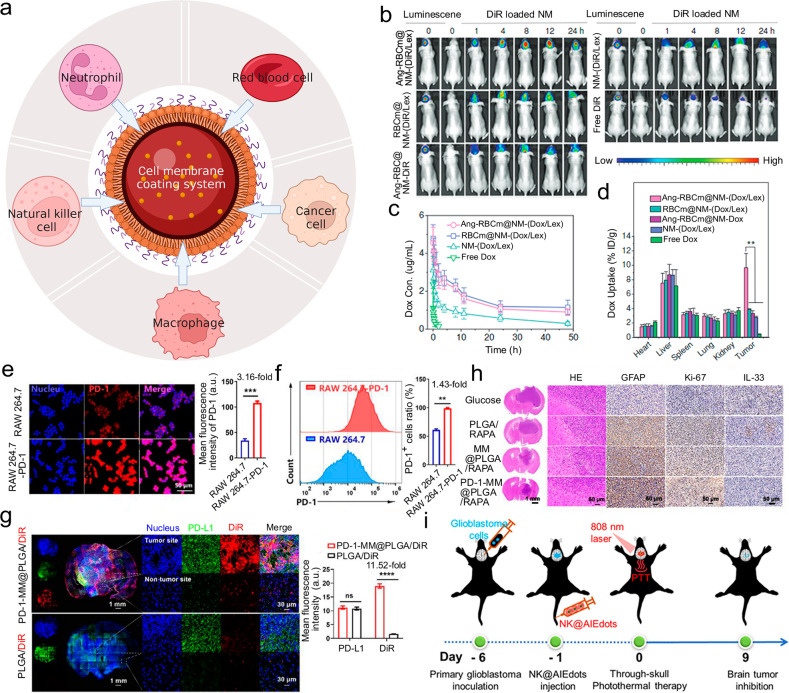
“4eh).(204) Macrophage membranes help the nano-platform to travel across the BBB in response to multiple chemokines.”
BackgroundSelf-citationApplications of focused ultrasound-mediated blood-brain barrier opening
Gorick, C. M., Breza, V. R., Nowak, K. M., Cheng, V. W. T., Fisher, D. G., Debski, A. C., Hoch, M. R., Demir, Z. E. F., Tran, N. M., Schwartz, M. R., et al. (2022) · Advanced Drug Delivery Reviews · doi:10.1016/j.addr.2022.114583 · Cited by 144 · cited 1×
“In recent years, gas-filled microbubble has emerged as a contrast agent in conjunction with ultrasound for opening the BBB in an image-guided and targeted manner, ensuring the local delivery of drugs.(223) Qin et al.”
BackgroundAngiopep‐Conjugated Electro‐Responsive Hydrogel Nanoparticles: Therapeutic Potential for Epilepsy
Ying, X., Wang, Y., Liang, J., Yue, J., Xu, C., Lu, L., Xu, Z., Gao, J., Du, Y., & Chen, Z. (2014) · Angewandte Chemie International Edition · doi:10.1002/anie.201403846 · Cited by 143 · cited 1×
“Previously, our group has reported an angiopep-2 (a dual-targeting ligand towards LRP-1) modified nanogel for targeted delivery of anti-epileptic drugs.(181,182) The brain accumulation of electro-responsive nanogels was significantly improved by the functionalization.”
BackgroundSelf-citationDual-targeted nanomedicines for enhanced tumor treatment
Zhu, Y., Feijén, J., & Zhong, Z. (2018) · Nano Today · doi:10.1016/j.nantod.2017.12.007 · Cited by 141 · cited 1×
“256 Thus, dual targeting strategy in liposome functionalization becomes a possible solution for drug delivery in brain tumor therapy.”
BackgroundColuccia, D., Figueiredo, C. A., Wu, M. Y., Riemenschneider, A. N., Diaz, R., Luck, A., Smith, C., Das, S., Ackerley, C., O’Reilly, M., et al. (2018) · Nanomedicine: Nanotechnology, Biology and Medicine · doi:10.1016/j.nano.2018.01.021 · Cited by 139
Carbon nanotubes-based drug delivery to cancer and brain
Guo, Q., Shen, X., Li, Y., & Shun-qing, X. (2017) · Current Medical Science · doi:10.1007/s11596-017-1783-z · Cited by 138
Yang, P., Sheng, D., Guo, Q., Wang, P., Xu, S., Qian, K., Li, Y., Cheng, Y., Wang, L., Lu, W., et al. (2020) · Biomaterials · doi:10.1016/j.biomaterials.2020.119844 · Cited by 137
iRGD Modified Chemo‐immunotherapeutic Nanoparticles for Enhanced Immunotherapy against Glioblastoma
Kuang, J., Song, W., Yin, J., Zeng, X., Han, S., Zhao, Y., Tao, J., Liu, C., He, X., & Zhang, X. (2018) · Advanced Functional Materials · doi:10.1002/adfm.201800025 · Cited by 133
An updated review of folate-functionalized nanocarriers: A promising ligand in cancer
Ebrahimnejad, P., Sodagar Taleghani, A., Asare-Addo, K., & Nokhodchi, A. (2022) · Drug Discovery Today · doi:10.1016/j.drudis.2021.11.011 · Cited by 133 · cited 1×
“185 They are in relatively common use in the design of drug delivery systems.”
BackgroundKopeček, J., & Yang, J. (2020) · Advanced Drug Delivery Reviews · doi:10.1016/j.addr.2020.07.020 · Cited by 130
Zhou, Y., Liyanage, P. Y., Devadoss, D., Rios Guevara, L. R., Cheng, L., Graham, R. M., Chand, H. S., Al-Youbi, A. O., Bashammakh, A. S., El-Shahawi, M. S., et al. (2019) · Nanoscale · doi:10.1039/c9nr08194a · Cited by 129 · cited 1×
“successively reported the development of two CDs-based nanocarriers to treat glioblastoma brain tumor and Alzheimer’s disease.(307,308) The CDs for brain tumor treatment were conjugated with transferrin, epirubicin, temozolomide via EDC/NHS reactions with carboxylic groups on CDs surface.”
The barrier and interface mechanisms of the brain barrier, and brain drug delivery
Zhang, S., Gan, L., Cao, F., Wang, H., Gong, P., Ma, C., Ren, L., Lin, Y., & Lin, X. (2022) · Brain Research Bulletin · doi:10.1016/j.brainresbull.2022.09.017 · Cited by 129 · cited 16×
“After being injected through the tails of ICR (CD-1) mice, the NP showed signi fi cant antinociceptive effects which means loperamide was able to be transported across BBB. Frey II et al. investigated the delivery of IGF1 to CNS, con fi rming they reached CNS target sites of rats by administering a mixture of [ 125 I]-l…”
BackgroundInfluentialYi, Y., Kim, H. J., Zheng, M., Mi, P., Naito, M., Kim, B. S., Min, H. S., Hayashi, K., Perche, F., Toh, K., et al. (2019) · Journal of Controlled Release · doi:10.1016/j.jconrel.2019.01.006 · Cited by 127
Recent Advances in Macrophage-Mediated Drug Delivery Systems
Liang, T., Zhang, R., Liu, X., Ding, Q., Wu, S., Li, C., Lin, Y., Ye, Y., Zhong, Z., & Zhou, M. (2021) · International Journal of Nanomedicine · doi:10.2147/ijn.s298159 · Cited by 126 · cited 1×
“Thus, the macrophage-based strategy for drug delivery harnesses the prolonged circulation time, abundant surface receptors, and active targeting ability of macrophages under specific phenotype.(203) Wang et al.”
BackgroundAbdelkader, H., Fathalla, Z. M. A., Seyfoddin, A., Farahani, M., Thrimawithana, T. R., Allahham, A., Alani, A. W. G., Al-Kinani, A. A., & Alany, R. G. (2021) · Advanced Drug Delivery Reviews · doi:10.1016/j.addr.2021.113957 · Cited by 125
Liu, Y., Gong, Y., Xie, W., Huang, A., Yuan, X., Zhou, H., Zhu, X., Chen, X., Liu, J., Liu, J., et al. (2020) · Nanoscale · doi:10.1039/c9nr09713a · Cited by 123
Self-citationRevisiting the blood-brain barrier: A hard nut to crack in the transportation of drug molecules
Harilal, S., Jose, J., Parambi, D. G. T., Kumar, R., Unnikrishnan, M. K., Uddin, M. S., Mathew, G. E., Pratap, R., Marathakam, A., & Mathew, B. (2020) · Brain Research Bulletin · doi:10.1016/j.brainresbull.2020.03.018 · Cited by 123 · cited 1×
“129 Meanwhile, cotransporters such as NKCC1 regulate the ion balance by transporting Na + , K + , Cl − .”
BackgroundKucharz, K., Kristensen, K., Johnsen, K. B., Lund, M. A., Lønstrup, M., Moos, T., Andresen, T. L., & Lauritzen, M. J. (2021) · Nature Communications · doi:10.1038/s41467-021-24323-1 · Cited by 123 · cited 1×
“characterized all steps of the liposome delivery routes into brain by using transferrin receptor-targeted liposomal nanoparticles as a model system.(255) They revealed that post-capillary venules is the key site for transcytosis-mediated brain entry of nanoparticles.”
MethodHan, L., Kong, D. K., Zheng, M.-Q., Murikinati, S., Ma, C., Yuan, P., Li, L., Tian, D., Cai, Q., Ye, C., et al. (2016) · ACS Nano · doi:10.1021/acsnano.5b07573 · Cited by 122 · cited 2×
“150 Zhou et al. developed brain tumor-targeting ligand-modi fi ed nanoparticles named CTX-mHph2-III-62%, inside which co-encapsulation of three modulators, minoxidil, lexiscan, and NECA.”
BackgroundTargeting the blood-brain barrier for the delivery of stroke therapies
D'Souza, A., Dave, K. M., Stetler, R. A., & S. Manickam, D. (2021) · Advanced Drug Delivery Reviews · doi:10.1016/j.addr.2021.01.015 · Cited by 122
Yao, Y., Wang, J., Liu, Y., Qu, Y., Wang, K., Zhang, Y., Chang, Y., Yang, Z., Wan, J., Liu, J., et al. (2022) · Nature Biomedical Engineering · doi:10.1038/s41551-022-00938-7 · Cited by 120 · cited 1×
“reported a rational design of two AAV9 variants for brain drug delivery.(236) Confirmed by rodent and primate models, the variants prepared by insertion of cell-penetrating peptide enhanced both BBB transcytosis and cellular transduction.”
BackgroundAccessing neuroinflammation sites: Monocyte/neutrophil-mediated drug delivery for cerebral ischemia
Hou, J., Yang, X., Li, S., Cheng, Z., Wang, Y., Zhao, J., Zhang, C., Li, Y., Luo, M., Ren, H., et al. (2019) · Science Advances · doi:10.1126/sciadv.aau8301 · Cited by 119 · cited 1×
“365 As known, leukocytes are promptly recruited when neuroin fl ammation occurs in brain disorders.”
BackgroundSelf-citationCarbon nanostructures: The drug and the delivery system for brain disorders
Henna, T. K., Raphey, V. R., Sankar, R., Shirin, V. K. A., Gangadharappa, H. V., & Pramod, K. (2020) · International Journal of Pharmaceutics · doi:10.1016/j.ijpharm.2020.119701 · Cited by 118 · cited 1×
“for targeted delivery to brains.(319) The CNTs for drug delivery were usually modified with functional groups such as -NH2 or -COOH, providing reactive sites.”
BackgroundNanoengineered on-demand drug delivery system improves efficacy of pharmacotherapy for epilepsy
Wu, D., Fei, F., Zhang, Q., Wang, X., Gong, Y., Chen, X., Zheng, Y., Tan, B., Xu, C., Xie, H., et al. (2022) · Science Advances · doi:10.1126/sciadv.abm3381 · Cited by 118 · cited 1×
“215 In 2011, Choi et al. reported without compromising vascular integrity, the ultrashort pulsed laser could induce transient leakage of blood plasma.”
BackgroundSelf-citationdos Santos Rodrigues, B., Oue, H., Banerjee, A., Kanekiyo, T., & Singh, J. (2018) · Journal of Controlled Release · doi:10.1016/j.jconrel.2018.07.043 · Cited by 116
Tao, W., & Farokhzad, O. C. (2022) · Chemical Reviews · doi:10.1021/acs.chemrev.2c00089 · Cited by 115
Expression of leucocyte adhesion molecules at the human blood‐brain barrier (BBB)
Rössler, K., Neuchrist, C., Kitz, K., Scheiner, O., Kraft, D., & Lassmann, H. (1992) · Journal of Neuroscience Research · doi:10.1002/jnr.490310219 · Cited by 114 · cited 1×
“48,49 50 – 52 Second, they show designated transporters for regulating the in fl ow and out fl ow of speci fi c substrates.”
BackgroundBrain-targeted delivery shuttled by black phosphorus nanostructure to treat Parkinson's disease
Xiong, S., Li, Z., Liu, Y., Wang, Q., Luo, J., Chen, X., Xie, Z., Zhang, Y., Zhang, H., & Chen, T. (2020) · Biomaterials · doi:10.1016/j.biomaterials.2020.120339 · Cited by 113 · cited 1×
“371 Elevated BBB permeability of the system was observed due to a combination of lactoferrin-mediated BBB transcytosis and photothermal effects.”
BackgroundSelf-citationWillis, C. L., Meske, D. S., & Davis, T. P. (2010) · Journal of Cerebral Blood Flow & Metabolism · doi:10.1038/jcbfm.2010.119 · Cited by 112 · cited 1×
“106 Interactions among these proteins provide physical support for the complex of tight junctions.”
BackgroundLiu, Y., Long, L., Zhang, F., Hu, X., Zhang, J., Hu, C., Wang, Y., & Xu, J. (2021) · Journal of Controlled Release · doi:10.1016/j.jconrel.2021.08.057 · Cited by 112
Self-citationRho, S.-S., Ando, K., & Fukuhara, S. (2017) · Journal of Nippon Medical School · doi:10.1272/jnms.84.148 · Cited by 110 · cited 1×
“116,117 It is a homo-dimeric transmembrane protein whose extracellular domain can connect with the other same molecules of neighboring endothelial cells in the paracellular cleft, and the cytoplasmic domain can interact with the actin fi laments via scaffolding proteins.”
BackgroundLiu, Y., Zhou, H., Yin, T., Gong, Y., Yuan, G., Chen, L., & Liu, J. (2019) · Journal of Colloid and Interface Science · doi:10.1016/j.jcis.2019.05.066 · Cited by 110 · cited 1×
“Bimetallic nanoparticles (gold and palladium) modified with quercetin could serve as a potential inducer for the therapy of Alzheimer’s disease.(298) Currently, some gold nanomaterials-based systems are undergoing pre-clinical and clinical trials.”
BackgroundTargeting receptor-ligand chemistry for drug delivery across blood-brain barrier in brain diseases
Anthony, D. P., Hegde, M., Shetty, S. S., Rafic, T., Mutalik, S., & Rao, B. S. S. (2021) · Life Sciences · doi:10.1016/j.lfs.2021.119326 · Cited by 110 · cited 1×
“168 There have been a lot of studies undertaken using transferrin ligands.”
BackgroundAguilera, G., Berry, C. C., West, R. M., Gonzalez-Monterrubio, E., Angulo-Molina, A., Arias-Carrión, Ó., & Méndez-Rojas, M. Á. (2019) · Nanoscale Advances · doi:10.1039/c8na00010g · Cited by 109
Shi, D., Mi, G., Shen, Y., & Webster, T. J. (2019) · Nanoscale · doi:10.1039/c9nr03931g · Cited by 108 · cited 1×
“For instance, a GBM-specific cell-penetrating peptide and an anti-GBM antibody were simultaneously anchored onto the liposome surface, giving the ability of BBB penetration.(257) By incorporation of superparamagnetic iron oxide nanoparticles (SPIONs) and DOX, the liposomes displayed a thermo-responsive drug release in…”
BackgroundSingh, A. K., Singh, S. S., Rathore, A. S., Singh, S. P., Mishra, G., Awasthi, R., Mishra, S. K., Gautam, V., & Singh, S. K. (2021) · ACS Biomaterials Science & Engineering · doi:10.1021/acsbiomaterials.1c00514 · Cited by 108
Kwon, S.-P., Jeon, S., Lee, S., Yoon, H. Y., Ryu, J. H., Choi, D., Kim, J. Y., Kim, J.-W., Park, J. H., Kim, D., et al. (2017) · Biomaterials · doi:10.1016/j.biomaterials.2017.10.017 · Cited by 107 · cited 1×
“286,287 A variety of applications based on gold nanoparticles have developed for brain disorders treatment thanks to their excellent properties.”
BackgroundSurface chemistry governs cellular tropism of nanoparticles in the brain
Song, E., Gaudin, A., King, A. R., Seo, Y.-E., Suh, H., Deng, Y., Cui, J., Tietjen, G. T., Huttner, A. J., & Saltzman, W. M. (2017) · Nature Communications · doi:10.1038/ncomms15322 · Cited by 105
He, W., Mei, Q., Li, J., Zhai, Y., Chen, Y., Wang, R., Lu, E., Zhang, X.-Y., Zhang, Z., & Sha, X. (2021) · Nano Letters · doi:10.1021/acs.nanolett.1c00231 · Cited by 105
Li, X., Vemireddy, V., Cai, Q., Xiong, H., Kang, P., Li, X., Giannotta, M., Hayenga, H. N., Pan, E., Sirsi, S. R., et al. (2021) · Nano Letters · doi:10.1021/acs.nanolett.1c02996 · Cited by 105 · cited 2×
“modulated BBB by using light boost of molecular targeted nanoparticles, the synthesized gold nanoparticles, which were conjugated with the antibody BV11.(218) Their results showed after light stimulation of BV11 modified gold nanoparticles, tight junctions of BBB ameliorated, allowing particles like macromolecules and…”
BackgroundBlood–brain barrier and its function during inflammation and autoimmunity
Sonar, S. A., & Lal, G. (2018) · Journal of Leukocyte Biology · doi:10.1002/jlb.1ru1117-428r · Cited by 104
Burkhart, A., Skjørringe, T., Johnsen, K. B., Siupka, P., Thomsen, L. B., Nielsen, M. S., Thomsen, L. L., & Moos, T. (2015) · Molecular Neurobiology · doi:10.1007/s12035-015-9582-7 · Cited by 103
Fast‐Acting Black‐Phosphorus‐Assisted Depression Therapy with Low Toxicity
Jin, L., Hu, P., Wang, Y., Wu, L., Qin, K., Cheng, H., Wang, S., Pan, B., Xin, H., Zhang, W., et al. (2020) · Advanced Materials · doi:10.1002/adma.201906050 · Cited by 102 · cited 2×
“In 2019, Wang and co-workers also designed black phosphorus nanosheets-based drug delivery system for loading with the antidepressant drug, Fluoxetine.”
BackgroundSelf-citationCell tracking using gold nanoparticles and computed tomography imaging
Meir, R., & Popovtzer, R. (2017) · Wiley Interdisciplinary Reviews Nanomedicine and Nanobiotechnology · doi:10.1002/wnan.1480 · Cited by 101 · cited 1×
“Moreover, gold nanomaterials could be traced by using computed tomography imaging for imaging-guided therapy, evaluating their biodistribution and accumulation in the brain.(286,287) A variety of applications based on gold nanoparticles have developed for brain disorders treatment thanks to their excellent properties.”
BackgroundCircadian rhythms in the blood–brain barrier: impact on neurological disorders and stress responses
Schurhoff, N. A., & Toborek, M. J. (2023) · Molecular Brain · doi:10.1186/s13041-023-00997-0 · Cited by 100 · cited 1×
“70,71 Moreover, for invertebrates that lack a vascularized circulatory system, astrocytes are the main components of the barrier separating humoral fl uids from the CNS. 72 Pericytes .”
BackgroundFeng, Q., Shen, Y., Fu, Y., Muroski, M. E., Zhang, P., Wang, Q., Xu, C., Lesniak, M. S., Li, G., & Cheng, Y. (2017) · Theranostics · doi:10.7150/thno.18985 · Cited by 99
Xu, H., Yang, J., ZhuGe, D., Lin, M., Zhu, Q., Jin, B., Tong, M., Shen, B., Xiao, J., & Zhao, Y. (2018) · Advanced Healthcare Materials · doi:10.1002/adhm.201701130 · Cited by 98 · cited 17×
“After being injected through the tails of ICR (CD-1) mice, the NP showed signi fi cant antinociceptive effects which means loperamide was able to be transported across BBB. Frey II et al. investigated the delivery of IGF1 to CNS, con fi rming they reached CNS target sites of rats by administering a mixture of [ 125 I]-l…”
BackgroundInfluentialGadhave, D., Rasal, N., Sonawane, R., Sekar, M., & Kokare, C. (2021) · International Journal of Biological Macromolecules · doi:10.1016/j.ijbiomac.2020.11.047 · Cited by 97 · cited 1×
“273 By balancing the interactions of gelling agents, mucoadhesive agents, the nanogel was formulated with lipophilic medicine and achieved two-fold enhancement of drug permeability.”
BackgroundNovel concept of exosome-like liposomes for the treatment of Alzheimer's disease
Fernandes, M., Lopes, I., Magalhães, L., Sárria, M. P., Machado, R., Sousa, J. C., Botelho, C., Teixeira, J., & Gomes, A. C. (2021) · Journal of Controlled Release · doi:10.1016/j.jconrel.2021.06.018 · Cited by 95 · cited 1×
“A lipid film including DODAP (1,2-dioleoyl-3-dimethylammonium-propane) and DPPC (dipalmitoylphosphatidylcholine) was introduced in the preparation of the liposomes, giving the bilayer similar to the outer membrane of exosome.(260) More liposome-based biomimetic nanomaterials for drug delivery will be emphasized in sec…”
MethodEffects of Natural Polyphenols on Oxidative Stress-Mediated Blood-Brain Barrier Dysfunction
Kim, Y., Cho, A. Y., Kim, H. C., Ryu, D., Jo, S. A., & Jung, Y. (2022) · Antioxidants · doi:10.3390/antiox11020197 · Cited by 94 · cited 1×
“These oxidants can further impact a variety of signaling pathways associated with pathological processes, resulting in BBB dysfunction eventually.(242) Redox-sensitive systems could be designed in response to the high level of oxidants, for example, Kong et al.”
BackgroundBiodegradable wafers releasing Temozolomide and Carmustine for the treatment of brain cancer
Shapira-Furman, T., Serra, R., Gorelick, N., Doglioli, M., Tagliaferri, V., Cecia, A., Peters, M., Kumar, A., Rottenberg, Y., Langer, R., et al. (2019) · Journal of Controlled Release · doi:10.1016/j.jconrel.2018.12.048 · Cited by 92
Liu, C., Liu, X.-N., Wang, G.-L., Hei, Y., Meng, S., Yang, L.-F., Yuan, L., & Xie, Y. (2017) · International Journal of Nanomedicine · doi:10.2147/ijn.s131367 · Cited by 91 · cited 1×
“optimized dual-mediated liposomes with transferrin and cellpenetrating peptide.(171) Firstly, in order to construct the rational dual-mediated liposomes, they screened the different PEG molecular weight which is used for connecting transferrin and cell-penetrating peptide (CPP) with liposomes and the densities of liga…”
BackgroundKang, S., Duan, W., Zhang, S., Chen, D., Feng, J., & Qi, N. (2020) · Theranostics · doi:10.7150/thno.41322 · Cited by 91
Nanoparticulate peptide delivery exclusively to the brain produces tolerance free analgesia
Godfrey, L., Iannitelli, A., Garrett, N., Moger, J., Imbert, I., King, T. E., Porreca, F., Soundararajan, R., Lalatsa, A., Schätzlein, A. G., et al. (2017) · Journal of Controlled Release · doi:10.1016/j.jconrel.2017.11.041 · Cited by 90 · cited 1×
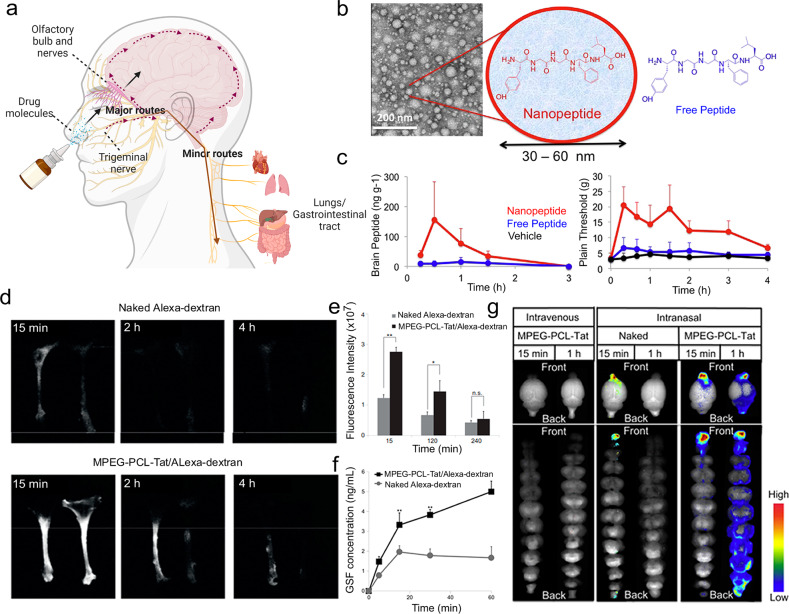
“2b, c).(163) The results presented that after administered, LENK was found in the olfactory bulb, but into the brain it was hard to find them.”
BackgroundChen, T., Li, C., Li, Y., Yi, X., Wang, R., Lee, S. M.-Y., & Zheng, Y. (2017) · ACS Applied Materials & Interfaces · doi:10.1021/acsami.7b01171 · Cited by 89
In vitro blood brain barrier models: An overview
Jagtiani, E., Yeolekar, M., Naik, S., & Patravale, V. (2022) · Journal of Controlled Release · doi:10.1016/j.jconrel.2022.01.011 · Cited by 89
Antisense Oligonucleotides for the Treatment of Spinal Muscular Atrophy
Porensky, P. N., & Burghes, A. H. M. (2013) · Human Gene Therapy · doi:10.1089/hum.2012.225 · Cited by 88 · cited 1×
“136 Other invasive strategies including convection-enhanced delivery, 137,138 intracranial implantation, 139,140 and deep-brain stimulation were developed for brain drug delivery.”
BackgroundEnteshari Najafabadi, R., Kazemipour, N., Esmaeili, A., Beheshti, S., & Nazifi, S. (2018) · BMC Pharmacology and Toxicology · doi:10.1186/s40360-018-0249-7 · Cited by 87
Targeted graphene oxide for drug delivery as a therapeutic nanoplatform against Parkinson's disease
Xiong, S., Luo, J., Wang, Q., Li, Z., Li, J., Liu, Q., Gao, L., Fang, S., Li, Y., Pan, H., et al. (2021) · Biomaterials Science · doi:10.1039/d0bm01765e · Cited by 87
Self-citationLi, J., Wei, Y., Zhang, C., Bi, R., Qiu, Y., Li, Y., & Hu, B. (2023) · Pharmaceutics · doi:10.3390/pharmaceutics15020621 · Cited by 85 · cited 1×
“23 194 Red blood cells, or erythrocytes, have been exploited as delivery systems due to the advantages of prolonging the life span of drugs in circulation and preventing drugs from immune clearance for many years.”
BackgroundFacciolà, A., Visalli, G., La Maestra, S., Ceccarelli, M., D’Aleo, F., Nunnari, G., Pellicanò, G. F., & Di Pietro, A. (2019) · Environmental Toxicology and Pharmacology · doi:10.1016/j.etap.2018.11.006 · Cited by 84
Lei, T., Yang, Z., Xia, X., Chen, Y., Yang, X., Xie, R., Tong, F., Wang, X., & Gao, H. (2021) · Acta Pharmaceutica Sinica B · doi:10.1016/j.apsb.2021.04.022 · Cited by 84 · cited 1×
“For this reason, Gao and his group developed a series of nanoplatforms on the basis of acidic cleavable ligand modification.(172,173) For example, acid-sensitive imine linker (DAK) was conjugated with D-T7 peptide on the nanoparticle surface, which would break up in acidic environment, facilitating the endo/lysosomal…”
BackgroundClinically translatable cytokine delivery platform for eradication of intraperitoneal tumors
Nash, A., Jarvis, M., Aghlara-Fotovat, S., Mukherjee, S., Hernández, A., Hecht, A. D., Rios, P., Ghani, S., Joshi, I., Isa, D., et al. (2022) · Science Advances · doi:10.1126/sciadv.abm1032 · Cited by 83 · cited 1×
“244 They conducted this robust platform in peritoneal tumors in ovarian and colorectal mouse models and considered it could be addressed in other cancers including brain cancer.”
BackgroundVascular Endothelial Cadherin (VE‐Cadherin): Cloning and Role in Endothelial Cell‐Cell Adhesion
Ali, J., Liao, F., Martens, E., & Müller, W. A. (1997) · Microcirculation · doi:10.3109/10739689709146790 · Cited by 79 · cited 1×
“Vascular endothelial-cadherin primarily is associated with cell-to-cell adhesion.(116,117) It is a homo-dimeric transmembrane protein whose extracellular domain can connect with the other same molecules of neighboring endothelial cells in the paracellular cleft, and the cytoplasmic domain can interact with the actin f…”
BackgroundGrosso, A. D., Galliani, M., Angella, L., Santi, M., Tonazzini, I., Parlanti, G., Signore, G., & Cecchini, M. G. (2019) · Science Advances · doi:10.1126/sciadv.aax7462 · Cited by 79
3D printing in cell culture systems and medical applications
Lerman, M. J., Lembong, J., Gillen, G. J., & Fisher, J. P. (2018) · Applied Physics Reviews · doi:10.1063/1.5046087 · Cited by 77 · cited 1×
“Recent advances in 3D printing technology may provide an alternative approach to in vitro BBB study; 377,378 (2) Targeted delivery with better spatial and temporal precision.”
BackgroundCarbon-based nanostructures for cancer therapy and drug delivery applications
Bagheri, B., Surwase, S. S., Lee, S. S., Park, H., Rad, Z. F., Trevaskis, N. L., & Kim, Y. (2022) · Journal of Materials Chemistry B · doi:10.1039/d2tb01741e · Cited by 77
Activated astrocytes attenuate neocortical seizures in rodent models through driving Na+-K+-ATPase
Zhao, J., Sun, J., Zheng, Y., Zheng, Y., Shao, Y., Li, Y., Fei, F., Xu, C., Liu, X., Wang, S., et al. (2022) · Nature Communications · doi:10.1038/s41467-022-34662-2 · Cited by 76
Self-citationGeng, H., Pan, Y., Zhang, R., Gao, D., Wang, Z., Li, B., Li, N., Guo, D., & Xing, C. (2021) · Advanced Functional Materials · doi:10.1002/adfm.202102953 · Cited by 76 · cited 1×
“282 Further investigations on bioavailability, degradability, and bio-interactions of polymers in vivo will facilitate the development in this fi eld.”
BackgroundGaharwar, U. S., Meena, R., & Rajamani, P. (2019) · International Journal of Nanomedicine · doi:10.2147/ijn.s223142 · Cited by 75 · cited 1×
“Their accumulation pattern in organs of rodent models was revealed as follows: spleen > blood > liver > kidney > lungs > heart > testis > brain.(328) Covalent conjugation of targeting ligands, and/or polymeric materials such as PEG chains, carboxymethyl cellulose, dextran could distinctively facilitate the transport o…”
BackgroundSanta-Maria, A. R., Walter, F. R., Figueiredo, R., Kincses, A., Vigh, J. P., Heymans, M., Culot, M., Winter, P., Gosselet, F., Dér, A., et al. (2021) · Journal of Cerebral Blood Flow & Metabolism · doi:10.1177/0271678x21992638 · Cited by 75
Khatri, D. K., Preeti, K., Tonape, S., Bhattacharjee, S., Patel, M., Shah, S., Singh, P. K., Srivastava, S., Gugulothu, D., Vora, L., et al. (2023) · Current Neuropharmacology · doi:10.2174/1570159x20666220507022701 · Cited by 75 · cited 1×
“However, there are also some limitations, including the difference in the shape of respective nasal cavities, the exact dosing of intranasal drugs, the mucociliary elimination, and the drainage to the pharynx or to the lower part.(165) Moreover, the health status of the body also needs to think, otherwise, maybe someo…”
BackgroundEvolving new-age strategies to transport therapeutics across the blood-brain-barrier
Choudhari, M., Hejmady, S., Narayan Saha, R., Damle, S., Singhvi, G., Alexander, A., Kesharwani, P., & Kumar Dubey, S. (2021) · International Journal of Pharmaceutics · doi:10.1016/j.ijpharm.2021.120351 · Cited by 74 · cited 1×
“10 Many efforts have been made in response to each process of the drug transportation, which have also been accompanied by reviews of latest progress in this fi eld, but most of literature emphasize the BBB breakdown in speci fi c brain disorders, 11 – 14 or give a general review of delivery…”
BackgroundWang, D., Li, S., Gessler, D. J., Xie, J., Zhong, L., Li, J., Tran, K., Van Vliet, K., Ren, L., Su, Q., et al. (2018) · Molecular Therapy - Methods & Clinical Development · doi:10.1016/j.omtm.2018.03.004 · Cited by 73 · cited 7×
“70,71 Moreover, for invertebrates that lack a vascularized circulatory system, astrocytes are the main components of the barrier separating humoral fl uids from the CNS. 72 Pericytes .”
BackgroundInfluentialYou, Y., Wang, N., He, L., Shi, C., Zhang, D., Liu, Y., Luo, L., & Chen, T. (2019) · Dalton Transactions · doi:10.1039/c8dt03948h · Cited by 73 · cited 1×
“combined a mixture of brain targeting peptide, glioma targeting and polyethyleneimine with carboxylated MWCNTs to form nanomedicine for orthotopic brain tumors.(322) The therapeutic agents could be loaded within the systems via either covalent conjugation or non-covalent bonding.”
BackgroundYang, X., Wang, Q., & Cao, E. (2020) · Nature Communications · doi:10.1038/s41467-020-14790-3 · Cited by 73 · cited 1×
“130 The dysfunction of the ion transporters may induce the pathological alterations.”
BackgroundAraya, R., Kudo, M., Kawano, M., Ishii, K., Hashikawa, T., Iwasato, T., Itohara, S., Terasaki, T., Oohira, A., Mishina, Y. M., et al. (2008) · Molecular and Cellular Neuroscience · doi:10.1016/j.mcn.2008.04.003 · Cited by 71 · cited 1×
“60,61 69 Some studies considered astrocytes can arise barrier behaviors in cerebral, other endothelial cells, and related epithelial, while other studies thought the BBB goes fi rst before the appearance of astrocytes.”
BackgroundTryps and trips: cell trafficking across the 100-year-old blood–brain barrier
Bentivoglio, M., & Kristensson, K. (2014) · Trends in Neurosciences · doi:10.1016/j.tins.2014.03.007 · Cited by 71 · cited 1×
“25,26 BBB is a spacious, multicellular, and dynamic semi-permeable membrane that isolates the foreign substances in the blood from the CNS. 27 The presence of BBB avoids the brain from damage by keeping a stable environment.”
BackgroundMiao, T., Ju, X., Zhu, Q., Wang, Y., Guo, Q., Sun, T., Lu, C., & Han, L. (2019) · Advanced Functional Materials · doi:10.1002/adfm.201900259 · Cited by 70 · cited 1×
“152 Hyaluronic acid can specially target cell surface receptor CD44, which is highly expressed in breast cancer.”
BackgroundSelf-citationZhu, J., Zhang, Y., Chen, X., Zhang, Y., Zhang, K., Zheng, H., Wei, Y., Zheng, H., Zhu, J., Wu, F., et al. (2021) · Biochemical and Biophysical Research Communications · doi:10.1016/j.bbrc.2020.10.076 · Cited by 69
Self-citationJanjua, T. I., Ahmed-Cox, A., Meka, A. K., Mansfeld, F. M., Forgham, H., Ignacio, R. M. C., Cao, Y., McCarroll, J. A., Mazzieri, R., Kavallaris, M., et al. (2021) · Nanoscale · doi:10.1039/d1nr03553c · Cited by 67
Nosrati, H., Tarantash, M., Bochani, S., Charmi, J., Bagheri, Z., Fridoni, M., Abdollahifar, M.-A., Davaran, S., Danafar, H., & Kheiri Manjili, H. (2019) · ACS Biomaterials Science & Engineering · doi:10.1021/acsbiomaterials.8b01420 · Cited by 66 · cited 1×
“332 The as-synthesized particles were proved to pass through the BBB with shuttle peptide and deliver the drug molecules into brain.”
BackgroundZhang, X., He, T., Chai, Z., Samulski, R. J., & Li, C. (2018) · Biomaterials · doi:10.1016/j.biomaterials.2018.05.041 · Cited by 65 · cited 16×
“After being injected through the tails of ICR (CD-1) mice, the NP showed signi fi cant antinociceptive effects which means loperamide was able to be transported across BBB. Frey II et al. investigated the delivery of IGF1 to CNS, con fi rming they reached CNS target sites of rats by administering a mixture of [ 125 I]-l…”
BackgroundInfluentialWang, Y., Ying, X., Chen, L., Liu, Y., Wang, Y., Liang, J., Xu, C., Guo, Y., Wang, S., Hu, W., et al. (2016) · Neurotherapeutics · doi:10.1007/s13311-016-0431-9 · Cited by 65 · cited 1×
“181,182 The brain accumulation of electro-responsive nano-gels was signi fi cantly improved by the functionalization.”
BackgroundSelf-citationThe Role of Ferroptosis in Blood–Brain Barrier Injury
Zhao, Y., Liu, Y., Xu, Y., Li, K., Zhou, L., Qiao, H., Xu, Q., & Zhao, J. (2022) · Cellular and Molecular Neurobiology · doi:10.1007/s10571-022-01197-5 · Cited by 65
Virus-Inspired Function in Engineered Protein Cages
Edwardson, T. G. W., & Hilvert, D. (2019) · Journal of the American Chemical Society · doi:10.1021/jacs.9b03705 · Cited by 64
Ozdas, M. S., Shah, A. S., Johnson, P. M., Patel, N., Marks, M., Yasar, T. B., Stalder, U., Bigler, L., von der Behrens, W., Sirsi, S. R., et al. (2020) · Nature Communications · doi:10.1038/s41467-020-18059-7 · Cited by 63 · cited 1×
“259 By applying two-component aggregation and uncaging focused ultrasound sequences at different stages, the drug-loaded liposomes could aggregate locally fi rst and then uncage the cargo responsively to achieve high target speci fi city.”
MethodBeyond barrier functions: Roles of pericytes in homeostasis and regulation of neuroinflammation
Bhattacharya, A., Kaushik, D. K., Lozinski, B. M., & Yong, V. W. (2020) · Journal of Neuroscience Research · doi:10.1002/jnr.24715 · Cited by 62 · cited 2×
“…tails of ICR (CD-1) mice, the NP showed signi fi cant antinociceptive effects which means loperamide was able to be transported across BBB. Frey II et al. investigated the delivery of IGF1 to CNS, con fi rming they reached CNS target sites of rats by administering a mixture of [ 125 I]-labeled IGF1.”
BackgroundMethodHe, X., Xie, J., Zhang, J., Wang, X., Jia, X., Yin, H., Qiu, Z., Yang, Z., Chen, J., Ji, Z., et al. (2022) · Advanced Science · doi:10.1002/advs.202104286 · Cited by 62 · cited 1×
“174 The system was demonstrated to have signi fi cant BBB transcytosis enhancement and was employed for further use in the treatment of autism spectrum disorder.”
MethodLiu, Z., Zhang, L., He, Q., Liu, X., Chukwunweike Ikechukwu, O., Tong, L., Guo, L., Yang, H., Zhang, Q., Zhao, H., et al. (2015) · International Journal of Pharmaceutics · doi:10.1016/j.ijpharm.2015.04.049 · Cited by 62 · cited 1×
“156 OX26-PEG-CSLN not only can deliver drugs across BBB but also can adjust the changes of extracellular amino acids.”
BackgroundImmunostimulatory silica nanoparticle boosts innate immunity in brain tumors
Bielecki, P. A., Lorkowski, M. E., Becicka, W. M., Atukorale, P. U., Moon, T. J., Zhang, Y., Wiese, M. L., Covarrubias, G., Ravichandran, S., & Karathanasis, E. (2021) · Nanoscale Horizons · doi:10.1039/d0nh00446d · Cited by 62
The blood-brain barrier and methamphetamine: open sesame?
Turowski, P., & Kenny, B.-A. (2015) · Frontiers in Neuroscience · doi:10.3389/fnins.2015.00156 · Cited by 61 · cited 1×
“123 Physiology of the BBB The existence of BBB provides a controlled microenvironment by regulating the exchange of ions and molecules between the bloodstream and brain tissue.”
BackgroundGeng, X., Gao, D., Hu, D., Liu, Q., Liu, C., Yuan, Z., Zhang, X., Liu, X., Sheng, Z., Wang, X., et al. (2020) · ACS Applied Materials & Interfaces · doi:10.1021/acsami.0c16872 · Cited by 61 · cited 1×
“368 Such delivery systems largely improved the drug accumulation in brain tumor via homologous binding mechanism.”
BackgroundHuang, G., Xie, J., Shuai, S., Wei, S., Chen, Y., Guan, Z., Zheng, Q., Yue, P., & Wang, C. (2021) · International Journal of Pharmaceutics · doi:10.1016/j.ijpharm.2020.120182 · Cited by 60 · cited 1×
“275 The bioavailability of harmine administrated by nanogel was found to be 25-fold higher than that by oral administration.”
BackgroundGlioma-derived exosomes hijack the blood–brain barrier to facilitate nanocapsule delivery via LCN2
Yang, C., Wu, Y., Wang, L., Li, S., Zhou, J., Tan, Y., Song, J., Xing, H., Yi, K., Zhan, Q., et al. (2022) · Journal of Controlled Release · doi:10.1016/j.jconrel.2022.03.038 · Cited by 60
Choi, M., Ku, T., Chong, K., Yoon, J., & Choi, C. (2011) · Proceedings of the National Academy of Sciences · doi:10.1073/pnas.1018790108 · Cited by 59 · cited 1×
“216 They combined the ultrashort pulsed laser with a systemic injection to deliver target molecules to brain cortex and different other tissues.”
MethodZhang, Y., He, J., Shen, L., Wang, T., Yang, J., Li, Y., Wang, Y., & Quan, D. (2021) · Journal of Controlled Release · doi:10.1016/j.jconrel.2020.10.039 · Cited by 59 · cited 2×
“254 But it begs for the question that how can targeting ligand-modi fi ed liposomes bypass through the BBB via receptor-mediated transcytosis.”
BackgroundMethodSelf-citationLiu, S., Xu, J., Liu, Y., You, Y., Xie, L., Tong, S., Chen, Y., Liang, K., Zhou, S., Li, F., et al. (2022) · ACS Applied Materials & Interfaces · doi:10.1021/acsami.2c09020 · Cited by 58 · cited 1×
“201 The inner core consists of PLGA nanoparticles and reactive oxygen species (ROS)-scavenging cannabidiol (CBD).”
BackgroundSensing of Cytoskeletal Forces by Asymmetric Adherens Junctions
Malinova, T. S., & Huveneers, S. (2017) · Trends in Cell Biology · doi:10.1016/j.tcb.2017.11.002 · Cited by 57 · cited 1×
“112,113 Vascular endothelial-cadherin, scaffolding proteins catenins, scaffolding proteins p120, plakoprotein are the main components of adherens junctions.”
BackgroundSonoselective transfection of cerebral vasculature without blood–brain barrier disruption
Gorick, C. M., Mathew, A. S., Garrison, W. J., Thim, E. A., Fisher, D. G., Copeland, C. A., Song, J., Klibanov, A. L., Miller, G. W., & Price, R. J. (2020) · Proceedings of the National Academy of Sciences · doi:10.1073/pnas.1914595117 · Cited by 57 · cited 1×
“endothelial cells of the cerebral vasculature.(225) The negative mCherry plasmid was conjugated to cationic microbubbles.”
BackgroundArmulik, A., Mäe, M. A., & Betsholtz, C. (2011) · Therapeutic Delivery · doi:10.4155/tde.11.23 · Cited by 56 · cited 1×
“75 78 Because of the physical apposition, pericytes and endothelial cells are in close communicate with each other.”
BackgroundShe, D., Huang, H., Li, J., Peng, S., Wang, H., & Yu, X. (2020) · Chemical Engineering Journal · doi:10.1016/j.cej.2020.127359 · Cited by 56 · cited 1×
“277 The phosphor-ylcholine polymer exhibited long-lasting circulation and achieved higher accumulation in brain tumor tissue, serving as an effective tool for BBB crossing.”
BackgroundWang, K., Wang, L., Chen, L., Peng, C., Luo, B., Mo, J., & Chen, W. (2021) · Drug Delivery · doi:10.1080/10717544.2021.1895909 · Cited by 55 · cited 1×
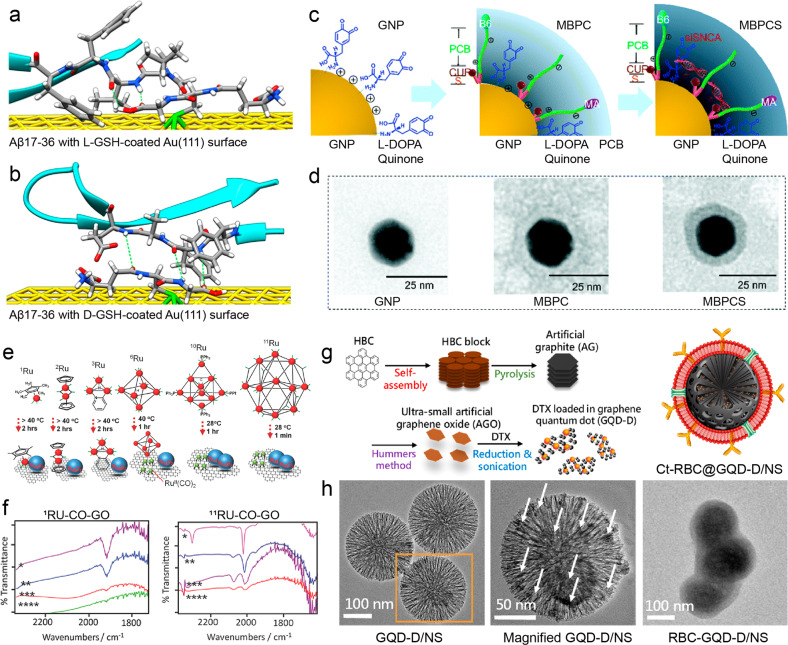
“311 In addition to small-molecule drugs, clusters such as Ru II (CO) 2 species could be absorbed onto GO (Fig.”
BackgroundPrabhu, S., Goda, J. S., Mutalik, S., Mohanty, B. S., Chaudhari, P., Rai, S., Udupa, N., & Rao, B. S. S. (2017) · Nanoscale · doi:10.1039/c7nr00305f · Cited by 54
Tapeinos, C., Tomatis, F., Battaglini, M., Larrañaga, A., Marino, A., Telleria, I. A., Angelakeris, M., Debellis, D., Drago, F., Brero, F., et al. (2019) · Advanced Healthcare Materials · doi:10.1002/adhm.201900612 · Cited by 54
Neuroprotective effects of maize tetrapeptide-anchored gold nanoparticles in Alzheimer’s disease
Zhang, J., Liu, R., Zhang, D., Zhang, Z., Zhu, J., Xu, L., & Guo, Y. (2021) · Colloids and Surfaces B Biointerfaces · doi:10.1016/j.colsurfb.2021.111584 · Cited by 54 · cited 1×
“291 The thiolated biomolecules were anchored onto the nanoparticle surface, achieving brain-targeted delivery and neuroprotection to prevent Alzheimer ’ s disease.”
MethodModulating the blood–brain tumor barrier for improving drug delivery efficiency and efficacy
Song, Y., Hu, C., Fu, Y. S., & Gao, H. (2022) · View · doi:10.1002/viw.20200129 · Cited by 54 · cited 1×
“35 For a deeper understating of the interaction between delivery systems and the brain, how the BBB is constructed should be clari fi ed.”
BackgroundChung, T. D., Linville, R. M., Guo, Z., Ye, R., Jha, R., Grifno, G. N., & Searson, P. C. (2022) · Fluids and Barriers of the CNS · doi:10.1186/s12987-022-00327-x · Cited by 53 · cited 1×
“The former is mainly developed for oxidative stress, which is the similarity between brain disease.(239) The latter is mainly developed for the pro-inflammatory state, which is a common state in a number of CNS pathologies.”
BackgroundCD99 suppresses osteosarcoma cell migration through inhibition of ROCK2 activity
Zucchini, C., Manara, M. C., Pinca, R. S., Sanctis, P. D., Guerzoni, C., Sciandra, M., Lollini, P., Cenacchi, G., Picci, P., Valvassori, L., et al. (2013) · Oncogene · doi:10.1038/onc.2013.152 · Cited by 52
Chang, M., Dong, C., Huang, H., Ding, L., Feng, W., & Chen, Y. (2022) · Advanced Functional Materials · doi:10.1002/adfm.202204791 · Cited by 52
van den Broek, S. L., Shalgunov, V., & Herth, M. M. (2022) · Biomaterials Advances · doi:10.1016/j.bioadv.2022.213125 · Cited by 52 · cited 1×
“In brief, the molecules can partition into the cellular membranes from the top to the bottom lateral side through carrier-mediated and receptor-mediated transcytosis.(154) In particular, lipophilic carriers and some other known carrier systems like cationic amino acids are mainly transported via the transcellular path…”
BackgroundCrossing the blood–brain barrier with graphene nanostructures
Tabish, T. A., & Narayan, R. J. (2021) · Materials Today · doi:10.1016/j.mattod.2021.08.013 · Cited by 50 · cited 2×
“309 They were well known for their electro-mobility, and photothermal properties, high speci fi c surface area, giving them great potentials in targeted drug delivery.”
BackgroundHarsha, P. J., Thotakura, N., Kumar, M., Sharma, S., Mittal, A., Khurana, R. K., Singh, B., Negi, P., & Raza, K. (2019) · Journal of Drug Delivery Science and Technology · doi:10.1016/j.jddst.2019.101186 · Cited by 49 · cited 1×
“Raza developed PEGylated CNTs after -NH2 modification for delivery of mangiferin, a potential anticancer drug as a nanomedicine for brain tumor.(320) Carboxylated SWCNTs were utilized for brain delivery of levodopa for the treatment of Parkinson’s disease.”
MethodTan, J. M., Foo, J. B., Fakurazi, S., & Hussein, M. Z. (2015) · Beilstein Journal of Nanotechnology · doi:10.3762/bjnano.6.23 · Cited by 48 · cited 1×
“Carboxylated SWCNTs were utilized for brain delivery of levodopa for the treatment of Parkinson’s disease.(321) Chen et al.”
MethodDíaz‐García, D., Ferrer-Donato, Á., Méndez‐Arriaga, J. M., Cabrera-Pinto, M., Díaz‐Sánchez, M., Prashar, S., Fernández-Martos, C. M., & Gómez‐Ruiz, S. (2022) · ACS Biomaterials Science & Engineering · doi:10.1021/acsbiomaterials.2c00865 · Cited by 48 · cited 1×
“341 Leptin, a polypeptide hormone possessing neuroprotective effects, was conjugated with -NH 2 of MSNs through EDC/NHS coupling, and pioglitazone, an anti-in fl ammatory agent, was loaded through adsorption.”
MethodLee, J. Y., Vyas, C. K., Kim, G. G., Choi, P. S., Hur, M. G., Yang, S. D., Kong, Y. B., Lee, E. J., & Park, J. H. (2019) · Scientific Reports · doi:10.1038/s41598-019-43969-y · Cited by 47 · cited 1×
“196 Lu et al. used a facile method of avidin-biotin chemistry to modify the red blood cell membrane with CDX peptide, which shows high bond towards nicotinic acetylcholine receptors.”
MethodTuning the Elasticity of Polymersomes for Brain Tumor Targeting
Zheng, M., Du, Q., Wang, X., Zhou, Y., Li, J., Xia, X., Lu, Y., Yin, J., Zou, Y., Park, J. B., et al. (2021) · Advanced Science · doi:10.1002/advs.202102001 · Cited by 47
Gao, Y., Cheng, Y., Chen, J., Lin, D., Liu, C., Zhang, L., Yin, L., Yang, R., & Guan, Y. (2022) · Advanced Healthcare Materials · doi:10.1002/adhm.202201655 · Cited by 46
Harati, R., Villégier, A.-S., Banks, W. A., & Mabondzo, A. (2012) · Journal of Neuroinflammation · doi:10.1186/1742-2094-9-273 · Cited by 45 · cited 1×
“28,29 But it also limits the drugs that enter into the CNS for treating brain diseases such as neurodegenerative diseases and brain cancer.”
BackgroundFolate Receptor α-Modified Nanoparticles for Targeting of the Central Nervous System
Kuplennik, N., Lang, K., Steinfeld, R., & Sosnik, A. (2019) · ACS Applied Materials & Interfaces · doi:10.1021/acsami.9b14659 · Cited by 45 · cited 1×
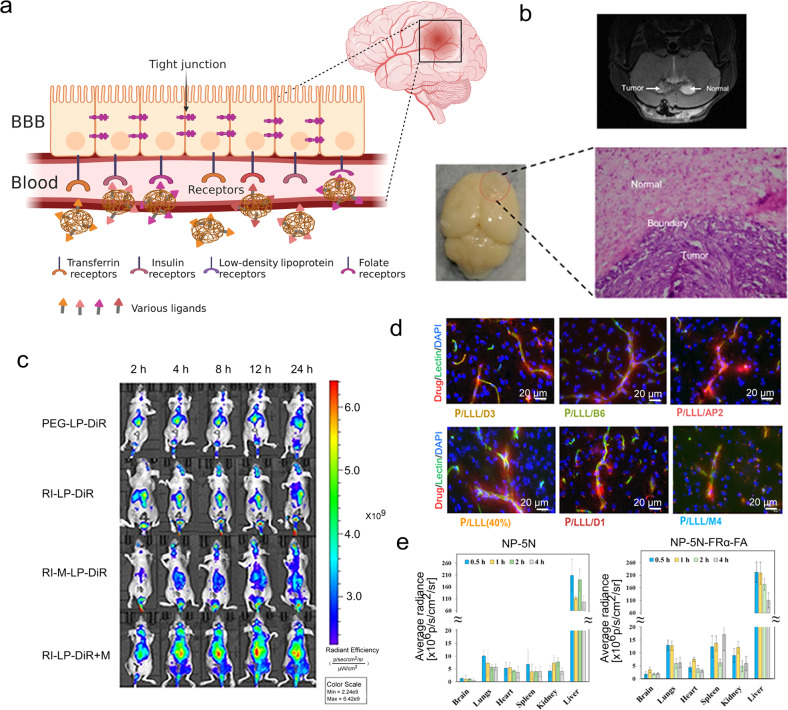
“3e).(188) Modified nanoparticles showed better compatibility and greater internalized extent by primary human choroid plexus epithelial cells.”
BackgroundXu, S., Yang, P., Qian, K., Li, Y., Guo, Q., Wang, P., Meng, R., Wu, J., Cao, J., Cheng, Y., et al. (2022) · Bioactive Materials · doi:10.1016/j.bioactmat.2021.09.017 · Cited by 45
Ligand conjugation: An emerging platform for enhanced brain drug delivery
Nabi, B., Rehman, S., Khan, S., Baboota, S., & Ali, J. (2018) · Brain Research Bulletin · doi:10.1016/j.brainresbull.2018.08.003 · Cited by 44 · cited 1×
“167 As shown in Fig.”
Hsieh, T., Huang, W., Kang, Y., Chu, C., Liao, W., Chen, Y., & Chen, S. (2016) · Advanced Healthcare Materials · doi:10.1002/adhm.201600647 · Cited by 44
Singh, S., Drude, N., Blank, L., Desai, P. B., Königs, H., Rütten, S., Langen, K., Möller, M., Mottaghy, F. M., & Morgenroth, A. (2021) · Advanced Healthcare Materials · doi:10.1002/adhm.202100812 · Cited by 44 · cited 1×
“276 The cross-linked network also contained matrix metalloproteinase substrate, permitting protease responsive drug release.”
BackgroundZhou, X., Li, Y., Lenahan, C., Ou, Y., Wang, M., & He, Y. (2021) · Frontiers in Aging Neuroscience · doi:10.3389/fnagi.2021.698036 · Cited by 43
Blood—Brain Barrier Genomics and Cloning of a Novel Organic Anion Transporter
Chu, C., Li, J. Y., Boado, R. J., & Pardridge, W. M. (2008) · Journal of Cerebral Blood Flow & Metabolism · doi:10.1038/sj.jcbfm.9600538 · Cited by 42 · cited 1×
“53 Third, they show a restriction on the number of transcellular vesicles through the vessel wall due to the high transendothelial electrical resistance.”
BackgroundLi, B., Wang, Y., Gao, D., Ren, S., Li, L., Li, N., An, H., Zhu, T., Yang, Y., Zhang, H., et al. (2021) · Advanced Functional Materials · doi:10.1002/adfm.202010757 · Cited by 41 · cited 1×
“213,214 The reduced transendothelial electrical resistance of cellular monolayer induced by irradiation could recover within 10 min.”
BackgroundSelf-citationIsrael, L. L., Galstyan, A., Cox, A., Shatalova, E. S., Sun, T., Rashid, M.-H., Grodzinski, Z., Chiechi, A., Fuchs, D.-T., Patil, R., et al. (2022) · ACS Nano · doi:10.1021/acsnano.1c10034 · Cited by 41
Intranasal delivery to the brain
Henkin, R. I. (2011) · Nature Biotechnology · doi:10.1038/nbt.1866 · Cited by 40 · cited 1×
“159 Except for those cleared drug molecules by mucociliary clearance, the remains of drugs entered the nasal cavity via neuronal pathway and systemic circulation.”
BackgroundYang, J., Luly, K. M., & Green, J. J. (2023) · WIREs Nanomedicine and Nanobiotechnology · doi:10.1002/wnan.1853 · Cited by 40 · cited 7×
“70,71 Moreover, for invertebrates that lack a vascularized circulatory system, astrocytes are the main components of the barrier separating humoral fl uids from the CNS. 72 Pericytes .”
BackgroundInfluentialMazumder, A. G., Julé, A. M., Cullen, P., & Sun, D. (2022) · iScience · doi:10.1016/j.isci.2022.105568 · Cited by 40
Cheng, G., Li, Z., Liu, Y., Ma, R., Chen, X., Liu, W., Song, Y., Zhang, Y., Yu, G., Wu, Z., et al. (2022) · Journal of Controlled Release · doi:10.1016/j.jconrel.2022.12.024 · Cited by 40
Self-citationTreatment of Glioblastoma Using Multicomponent Silica Nanoparticles
Turan, O., Bielecki, P. A., Perera, V. S., Lorkowski, M. E., Covarrubias, G., Tong, K., Yun, A., Loutrianakis, G., Raghunathan, S. P., Park, Y., et al. (2019) · Advanced Therapeutics · doi:10.1002/adtp.201900118 · Cited by 38 · cited 1×
“349 Unique properties of silica nanomaterials have made them ideal candidates to be used as drug carriers.”
BackgroundExtracellular Calcium Influx Pathways in Astrocyte Calcium Microdomain Physiology
Ahmadpour, N., Kantroo, M., & Stobart, J. L. (2021) · Biomolecules · doi:10.3390/biom11101467 · Cited by 38
Liu, F., Wu, H., Peng, B., Zhang, S., Ma, J., Deng, G., Zou, P., Liu, J., Chen, A. T., Li, D., et al. (2021) · Nano Letters · doi:10.1021/acs.nanolett.1c02459 · Cited by 37 · cited 1×
“336 The clover-shaped nanoparticle was synthesized by a mixture of CoFe-oleate, oleic acid, and oleyl alcohol after an elongated reaction time.”
MethodGioelli, N., Neilson, L. J., Wei, N., Villari, G., Chen, W., Kuhle, B., Ehling, M., Maione, F., Willox, S., Brundu, S., et al. (2022) · Nature Communications · doi:10.1038/s41467-022-31904-1 · Cited by 37 · cited 1×
“114,115 Vascular endothelial-cadherin primarily is associated with cell-to-cell adhesion.”
BackgroundNatural Polysaccharide Carriers in Brain Delivery: Challenge and Perspective
Curcio, M., Cirillo, G., Rouaen, J. R. C., Saletta, F., Nicoletta, F. P., Vittorio, O., & Iemma, F. (2020) · Pharmaceutics · doi:10.3390/pharmaceutics12121183 · Cited by 36
Li, Z., Zhao, C., Fu, Q., Ye, J., Su, L., Ge, X., Chen, L., Song, J., & Yang, H. (2021) · Small · doi:10.1002/smll.202105160 · Cited by 36
Engineering Brain-Specific Pericytes from Human Pluripotent Stem Cells
Jeske, R., Albo, J., Marzano, M., Bejoy, J., & Li, Y. (2020) · Tissue Engineering Part B Reviews · doi:10.1089/ten.teb.2020.0091 · Cited by 34 · cited 1×
“For example, the PDGF-B signaling pathway is one such communication.(79,80) Endothelial cells secrete the PDGF-B to bind PDGFRβ on pericytes, which recruits pericytes to blood vessels.”
BackgroundAl-Ahmady, Z. S., Dickie, B., Aldred, I., Jasim, D. A., Barrington, J., Haley, M., Lemarchand, E., Coutts, G., Kaur, S., Bates, J., et al. (2022) · Theranostics · doi:10.7150/thno.72167 · Cited by 34 · cited 1×
“showed targeting is possible in intracerebral hemorrhage (ICH) using lipid nanoparticles.(155) They fabricated a liposome HSPC:CHOL: DSPE-PEG2000 and injected them into ICH mice.”
MethodRadaram, B., Pisaneschi, F., Rao, Y., Yang, P., Piwnica-Worms, D. R., & Alauddin, M. M. (2019) · European Journal of Medicinal Chemistry · doi:10.1016/j.ejmech.2019.111571 · Cited by 33
Cadherin‐mediated host–pathogen interactions
Dash, S., Duraivelan, K., & Samanta, D. (2021) · Cellular Microbiology · doi:10.1111/cmi.13316 · Cited by 33 · cited 1×
“118,119 122 Totally, adherens junctions are fundamental for the integrity of BBB, any change of adherens junctions may disrupt inter-endothelial cell connections.”
BackgroundZhang, J., Lin, X., Zhou, H., Chen, Y., Xiao, S., Jiao, J., Zhao, Y., & Di, Z. (2018) · Acupuncture in Medicine · doi:10.1136/acupmed-2017-011496 · Cited by 32 · cited 16×
“Studies found that electroacupuncture stimulation at certain parameters could improve the permeability of the BBB.(227) Lin and co-workers found the Baihui and Shuigou acupoints are ideal regions to use for electroacupuncture for 40 min to open BBB.”
BackgroundInfluentialIn vitro study of transportation of porphyrin immobilized graphene oxide through blood brain barrier
Su, S., Wang, J., Qiu, J., Martínez–Zaguilán, R., Sennoune, S. R., & Wang, S. (2019) · Materials Science and Engineering C · doi:10.1016/j.msec.2019.110313 · Cited by 32
Liu, L., Li, Y., Liu, R., Shen, Q., Li, Y., Shi, Z., Shen, J., Ji, W., & Zhang, X. (2019) · Materials Horizons · doi:10.1039/c9mh00482c · Cited by 31 · cited 1×
“7c, d).(295) The modification of nanoparticles with B6 peptide, mazindol, β-thiother ester bonded-copolymer endowed the nanosystem with brain targeting ability, high affinity towards dopaminergic neurons, and ROS-response drug release, respectively.”
BackgroundGu, Y.-T., Xue, Y.-X., Wang, Y.-F., Wang, J.-H., Chen, X., ShangGuan, Q.-R., Lian, Y., Zhong, L., & Meng, Y.-N. (2013) · Neuropharmacology · doi:10.1016/j.neuropharm.2013.08.004 · Cited by 30 · cited 1×
“For example, a modulator called minoxidil sulfate (MS) that anchored the potassium channel, enhances shipping by attenuating the tight junction proteins.(150) Zhou et al.”
BackgroundSelf-citationAlhadidi, Q., Sayeed, M. S. B., & Shah, Z. A. (2017) · CNS & Neurological Disorders - Drug Targets · doi:10.2174/1871527316666170117115040 · Cited by 29 · cited 1×
“They further present with no fenestrations, also known as small transcellular pores, which greatly limit free diffusion and the rapid exchange of molecules between brain tissue and blood.(47) Besides, the amounts of Fig.”
BackgroundGadhave, D., Gupta, A., Khot, S., Tagalpallewar, A., & Kokare, C. (2023) · Annales Pharmaceutiques Françaises · doi:10.1016/j.pharma.2022.08.010 · Cited by 29 · cited 16×
“After being injected through the tails of ICR (CD-1) mice, the NP showed signi fi cant antinociceptive effects which means loperamide was able to be transported across BBB. Frey II et al. investigated the delivery of IGF1 to CNS, con fi rming they reached CNS target sites of rats by administering a mixture of [ 125 I]-l…”
MethodInfluentialKim, D. Y., Zhang, H., Park, S., Kim, Y., Bae, C., Kim, Y., & Kwon, Y. (2020) · Journal of Molecular Medicine · doi:10.1007/s00109-020-01920-z · Cited by 28 · cited 1×
“60,61 69 Some studies considered astrocytes can arise barrier behaviors in cerebral, other endothelial cells, and related epithelial, while other studies thought the BBB goes fi rst before the appearance of astrocytes.”
BackgroundCerebrovascular and metabolic effects on the rat brain of focal Nd:YAG laser irradiation
Kiessling, M., Herchenhan, E., & Eggert, H. R. (1990) · Journal of Neurosurgery · doi:10.3171/jns.1990.73.6.0909 · Cited by 27 · cited 1×
“209 They found laser irradiation immediately caused BBB breakdown which looked to be associated with structural damaged regions of brain microvessels.”
BackgroundRasras, S., Kalantari, H., Rezaei, M., Dehghani, M. A., Zeidooni, L., Alikarami, K., Dehghani, F., & Alboghobeish, S. (2019) · Toxicology and Industrial Health · doi:10.1177/0748233719856983 · Cited by 27 · cited 3×
“After being injected through the tails of ICR (CD-1) mice, the NP showed signi fi cant antinociceptive effects which means loperamide was able to be transported across BBB. Frey II et al. investigated the delivery of IGF1 to CNS, con fi rming they reached CNS target sites of rats by administering a mixture of [ 125 I]-l…”
BackgroundThirumurugan, S., Dash, P., Liu, X., Tseng, Y.-Y., Huang, W.-J., Li, Y., Zhao, G., Lin, C., Murugan, K., Dhawan, U., et al. (2022) · Nanoscale · doi:10.1039/d2nr03683e · Cited by 27 · cited 1×
“synthesized nanoparticles conjugated with angiopep-2 which have core-shell structure, to target and treat glioma.(183) They proved the decoration of angiopep-2 can improve selective glioma targeting for the amounts of cellular uptake of nanoparticles by C6 glioma cells were higher than that by L929 fibroblasts.”
BackgroundAdherens junctions organize size-selective proteolytic hotspots critical for Notch signalling
Kwak, M., Southard, K. M., Kim, W. R., Lin, A., Kim, N. H., Gopalappa, R., Lee, H. J., An, M., Choi, S. H., Jung, Y., et al. (2022) · Nature Cell Biology · doi:10.1038/s41556-022-01031-6 · Cited by 26 · cited 1×
“111 In common with tight junctions, adherens junctions are linked to the cytoskeleton and consisted of transmembrane and cytoplasmic plaque proteins.”
BackgroundBrandtner, A. K., Lehner, G. F., Pircher, A., Feistritzer, C., & Joannidis, M. (2021) · Thrombosis Research · doi:10.1016/j.thromres.2021.07.002 · Cited by 25
Increased brain uptake of pterostilbene loaded folate modified micellar delivery system
Wang, Y., Su, Y., Yang, Y., Jin, H., Wu, M., Wang, Q., Sun, P., Zhang, J., Yang, X., & Shu, X. (2022) · Drug Delivery · doi:10.1080/10717544.2022.2126559 · Cited by 25 · cited 1×
“187 The delivery drug was pterostil-bene (Pt) and the main structure of this system was contributed by mPEG-PCL.”
BackgroundSelf-citationSun, A., Qian, D., Wang, Z., Xu, Y., Ye, H., Fang, C., & Yan, C. (2021) · Chemical Engineering Journal · doi:10.1016/j.cej.2021.128957 · Cited by 24
Qi, W., Li, T., Zhang, C., Liu, F., Wang, J., Chen, D., Fang, X., Wu, C., Li, K., & Xi, L. (2021) · Advanced Healthcare Materials · doi:10.1002/adhm.202100569 · Cited by 24
Nagao, H., Jayavelu, A. K., Cai, W., Pan, H., Dreyfuss, J. M., Batista, T. M., Brandão, B. B., Mann, M., & Kahn, C. R. (2023) · Nature Communications · doi:10.1038/s41467-022-35693-5 · Cited by 23 · cited 1×
“175 Insulin could bind to the α -subunits of insulin receptors which locate outside of the cells, inducing the β -subunits which locate in the inside of the cells 176 When compared to insulin, insulin-like growth factor 1 (IGF1) showed relative lower binding af fi nity to insulin receptors.”
BackgroundPEDF Protects Endothelial Barrier Integrity during Acute Myocardial Infarction via 67LR
Liang, J., Luo, Q., Shen, N., Qin, X., Jia, C., Chao, Z., Zhang, L., Qin, H., Liu, X., Quan, X., et al. (2023) · International Journal of Molecular Sciences · doi:10.3390/ijms24032787 · Cited by 23 · cited 1×
“118,119 122 Totally, adherens junctions are fundamental for the integrity of BBB, any change of adherens junctions may disrupt inter-endothelial cell connections.”
BackgroundGoncalves, A., & Antonetti, D. A. (2022) · Fluids and Barriers of the CNS · doi:10.1186/s12987-022-00386-0 · Cited by 22 · cited 1×
“75 78 Because of the physical apposition, pericytes and endothelial cells are in close communicate with each other.”
BackgroundHybrid fabrication of multimodal intracranial implants for electrophysiology and local drug delivery
Gurke, J., Naegele, T. E., Hilton, S., Pezone, R., Curto, V. F., Barone, D. G., List, E. J. W., Carnicer‐Lombarte, A., & Malliaras, G. G. (2022) · Materials Horizons · doi:10.1039/d1mh01855h · Cited by 22 · cited 1×
“136 Other invasive strategies including convection-enhanced delivery, 137,138 intracranial implantation, 139,140 and deep-brain stimulation were developed for brain drug delivery.”
BackgroundLiu, N., Liang, X., Yang, C., Hu, S., Luo, Q., & Luo, H. (2022) · Theranostics · doi:10.7150/thno.76574 · Cited by 21 · cited 1×
“8e–g).(348) The Fe3O4@MSNs particles were modified with both amyloid-β antibody (1F12) and CD44-targeting ligand (hyaluronic acid).”
MethodLi, M., Hu, K., Lin, D., Wang, Z., Xu, M., Huang, J., Chen, Z., Zhang, Y., Yin, L., You, R., et al. (2021) · ACS Biomaterials Science & Engineering · doi:10.1021/acsbiomaterials.0c01474 · Cited by 21
Self-citationMayo, F., González-Vinceiro, L., Hiraldo-González, L., Calle-Castillejo, C., Morales-Alvarez, S., Ramírez‐Lorca, R., & Echevarría, M. (2023) · International Journal of Molecular Sciences · doi:10.3390/ijms24033048 · Cited by 21 · cited 1×
“56 59 Their end feet link them with the basement membrane, via the binding of a set of proteins (aquaporin IV and the dystroglycan-dystrophin complex) with the proteoglycan agrin.”
BackgroundTemizyürek, A., Yılmaz, C. U., Emik, S., Akcan, U., Atış, M., Orhan, N., Arıcan, N., Ahıshalı, B., Tüzün, E., Küçük, M., et al. (2022) · Epilepsy Research · doi:10.1016/j.eplepsyres.2022.106939 · Cited by 20
Distribution of gold nanoparticles into the brain: a systematic review and meta-analysis
Behroozi, Z., Rahimi, B., Kookli, K., Safari, M. S., Hamblin, M. R., Razmgir, M., Janzadeh, A., & Ramezani, F. (2021) · Nanotoxicology · doi:10.1080/17435390.2021.1966116 · Cited by 19 · cited 1×
“Although only smaller size (<10 nm) gold nanoparticles after intravenous injection was observed to be distributed in the brain slice.(285) Sub-100-nm gold nanoparticles can extravasate through the damaged BBB under some pathological circumstance such as brain tumor, cerebral stroke, brain injury and epilepsy.”
BackgroundShen, D., Ye, X., Li, J., Hao, X., Jin, L., Jin, Y., Tong, L., & Gao, F. (2022) · International Journal of Molecular Sciences · doi:10.3390/ijms23158552 · Cited by 19 · cited 1×
“114,115 Vascular endothelial-cadherin primarily is associated with cell-to-cell adhesion.”
BackgroundExpression of tricellulin in epithelial cells and non-epithelial cells.
Kojima, T., Ninomiya, T., Konno, T., Kohno, T., Taniguchi, M., & Sawada, N. (2013) · PubMed · doi:10.14670/hh-28.1383 · Cited by 18 · cited 1×
“Tricellulin and the lipolysis-stimulated lipoprotein receptor that reside in three-cell contacts are also the major tight junction proteins.(98,99) Besides, more like junction adhesion molecules, calcium/calmodulin-dependent serine protein kinase, monoclonal antibody 7H6, and heterotrimeric G protein also contribute t…”
BackgroundChan, Y., Chen, W., Chen, Y., Lv, Z., Wan, W., Li, Y., & Zhang, C. (2020) · Biological and Pharmaceutical Bulletin · doi:10.1248/bpb.b20-00379 · Cited by 17
Liao, K., Niu, F., Hu, G., & Buch, S. (2022) · Frontiers in Cell and Developmental Biology · doi:10.3389/fcell.2022.984375 · Cited by 16
Research works printed but not linked: 1
- Oshra, B., Malka, S., Menachem, M. & Rachela, P. In Proc. SPIE, Nanoscale Imaging, Sensing, and Actuation for Biomedical Applications XVI. 108911H (2019).
Cited by
Pathogenesis, diagnostics, and therapeutics for Alzheimer's disease: Breaking the memory barrier
Kamatham, P. T., Shukla, R., Khatri, D. K., & Vora, L. K. (2024) · Ageing Research Reviews · doi:10.1016/j.arr.2024.102481 · Cited by 371
A review of large language models and autonomous agents in chemistry
Ramos, M. C., Collison, C. J., & White, A. D. (2025) · Chemical Science · doi:10.1039/d4sc03921a · Cited by 274
Recent Applications of PLGA in Drug Delivery Systems
Yang, J., Zeng, H., Luo, Y., Chen, Y., Wang, M., Wu, C., & Hu, P. (2024) · Polymers · doi:10.3390/polym16182606 · Cited by 268
“Thus, it leads to low therapeutic efficacy and aggravated side effects caused by dose increase and drug accumulation [117].”
BackgroundGao, X. J., Ciura, K., Ma, Y., Mikołajczyk, A., Jagiełło, K., Wan, Y., Gao, Y., Zheng, J., Zhong, S., Puzyn, T., et al. (2024) · Advanced Materials · doi:10.1002/adma.202407793 · Cited by 139
Sun, M., Yang, J., Fan, Y., Zhang, Y., Sun, J. Q., Hu, M., Sun, K., & Zhang, J. (2023) · Advanced Science · doi:10.1002/advs.202303617 · Cited by 138
Metadata
- Authors
- Wu, D., Chen, Q., Chen, X., Han, F., Chen, Z., & Wang, Y.
- Affiliations
- Zhejiang Chinese Medical University (CN)
- Nanjing Medical University (CN)
- Corresponding author
- Wu, Di
- Chen, Zhong
- Wang, Yi
- Venue
- Signal Transduction and Targeted Therapy
- Published
- 2023-05-25
- Volume
- 8
- Issue
- 1
- Pages
- 217-217
- ISSN
- 2059-3635 (ISSN-L)
- PMC
- PMC10212980
- OpenAlex
- W4378217890
- Cited by
- 1,906
- References
- 409
- Citations by year
- 2026: 723 · 2025: 785 · 2024: 351 · 2023: 46
- FWCI
- 49.60
- Type
- journal article
- Language
- en
- Open access
- gold
- doi.org
- Licence
- cc-by
- creativecommons.org/licenses/by/4.0 (tdm)
- creativecommons.org/licenses/by/4.0 (vor)
- Locations
- Signal Transduction and Targeted Therapy (publishedVersion, cc-by)
- PubMed Central (publishedVersion, cc-by)
- PubMed (publishedVersion)
- DOAJ (DOAJ: Directory of Open Access Journals) (submittedVersion, cc-by-sa)
- Funders
- Natural Science Foundation of Zhejiang Province (LD22H310003)
- National Natural Science Foundation of China (82003666)
- National Foundation of Zhejiang Province
- Topics
- Life Sciences › Neuroscience › Neurology › Barrier Structure and Function Studies
- Health Sciences › Medicine › Oncology › Drug Transport and Resistance Mechanisms
- Physical Sciences › Materials Science › Biomaterials › Nanoparticle-Based Drug Delivery
- Keywords
- blood-brain barrier, brain drug delivery, intranasal drug delivery, ligand conjugation, nanomaterials
- MeSH terms
- Biological Products, Biological Transport, Blood-Brain Barrier, Brain, Pharmaceutical Preparations, Drug Delivery Systems
About these checks
Registry, retraction, Cites and statistics results are computed, not judged, with one exception: a printed reference that no index lists is read once by a model before it counts as a citation error. Claims are extracted by a model and kept only when their quote appears verbatim in the text; each cited source is then checked, with a model’s help, for whether it says what the claim relies on. Those verdicts can be wrong — read the claim’s quote and the cited source before relying on one.
The claim verdicts this report counts are experimental: their accuracy is not yet measured.
A language model drew the claims from the paper on 2026-10-10, under version 3 of the claim definition (model deepseek-v4.1-flash, prompt extract-v3).
A second model labelled each claim on 2026-10-10 (model jev-1.13-20260917, definition revision gold-guideline-v0.2).
Cited sources are checked with a language model’s help (gpt-6-sol).
Statistics and arithmetic are recomputed, not judged.
Confidence bands are shown only for fields calibrated on our annotated test set. None is calibrated yet, so no band is shown.
What counts as a claim ›How we measure confidence ›How we check this ›
Are you an author, or do you see a problem with this page? Request a review
Data sources
Bibliographic data: Semantic Scholar, OpenAlex, Crossref.
Contains information from the Semantic Scholar Academic Graph Datasets, made available under the ODC Attribution License (ODC-BY 1.0).
Semantic Scholar’s data is described in: Kinney, R., et al. (2023). The Semantic Scholar Open Data Platform. arXiv:2301.10140.
