

The blood–brain barrier: Structure, regulation and drug delivery
Open accessThe DOI matches its Crossref record; 407 of the 409 references it cites were found in a registry or an index; 56 of the 148 sources its claims cite were checked for support.
Abstract
Blood-brain barrier (BBB) is a natural protective membrane that prevents central nervous system (CNS) from toxins and pathogens in blood. However, the presence of BBB complicates the pharmacotherapy for CNS disorders as the most chemical drugs and biopharmaceuticals have been impeded to enter the brain.
Overview
CoChat Summary
TL;DR
This is a review of the blood–brain barrier (BBB) that explains its structure, physiology, and the main strategies used to cross or modulate it for brain-targeted drug delivery. It surveys organic, inorganic, and biomimetic delivery systems and argues that better BBB models, safer materials, and more precise targeting are needed for translation.
Key findings
- The BBB is described as a semi-permeable barrier formed mainly by endothelial cells, astrocytes, pericytes, tight junctions, and adherens junctions; it protects the CNS but also excludes “more than 98% of small-molecule drugs and all macromolecular therapeutics” from brain access.
- The review groups BBB-crossing approaches into passive transcytosis, intranasal administration, ligand conjugation, membrane coating, external stimuli-mediated BBB disruption, and other non-invasive strategies.
- It reports several quantitative examples from the literature, including:
- passive transcytosis routes are limited to “hydrophilic compounds” under 150 Da and highly hydrophobic compounds under 400–600 Da;
- one liposomal system showed brain accumulation peaking at 3 h and 48 h after injection;
- cRGD-modified mesoporous silica nanoparticles (MSNs) of 20, 40, and 80 nm had transport capabilities of 44.0%, 59.2%, and 38.6%, respectively, versus 32.8% for free drugs;
- a PLGA micelle system extended a drug’s therapeutic window from 20 min to at least 4 h.
- The review highlights that many engineered systems can improve delivery, but clinical translation remains limited by safety, reproducibility, and the need for better targeting and evaluation models.
Methods
- This is a narrative review, not an original experimental study.
- It synthesizes prior studies on BBB structure/physiology and on brain-targeted delivery platforms, including liposomes, polymers, gold nanomaterials, carbon materials, iron oxide nanoparticles, silica nanomaterials, and biomimetic systems.
- The main analysis is qualitative: it organizes strategies by BBB transport route/mechanism and compares reported examples from the literature, including preclinical and some clinical-trial-oriented work.
Limitations
- The authors explicitly state that “a timely and comprehensive review is lacking,” indicating the field is broad and rapidly evolving.
- They also say that “there is still a long way to go from clinical popularization and translational application,” and list unresolved issues including better BBB models, region-specific delivery, safety, interactions among components, scalability, and reproducibility.
- Evident from the text: this paper is a review of published examples rather than a primary study, so it does not present a single unified dataset or direct experimental validation of the strategies discussed.
Model-written summary. Check it against the paper before relying on it.
Integrity signals
Registry
Cites
Statistics
Figures
Verification
Claims the paper makes
49 Valid · 1 Not valid · 72 Not checked · 14 Own results and interpretations
At least one cited source doesn’t support this claim or points to a different paper, and none confirmed it — see the verdicts below.
In the paper
“Their method through the oscillating of microbubbles under the ultrasound field could implement the transport of the gene product beyond the blood vessels without breaking the tight junctions and disrupting the BBB.”
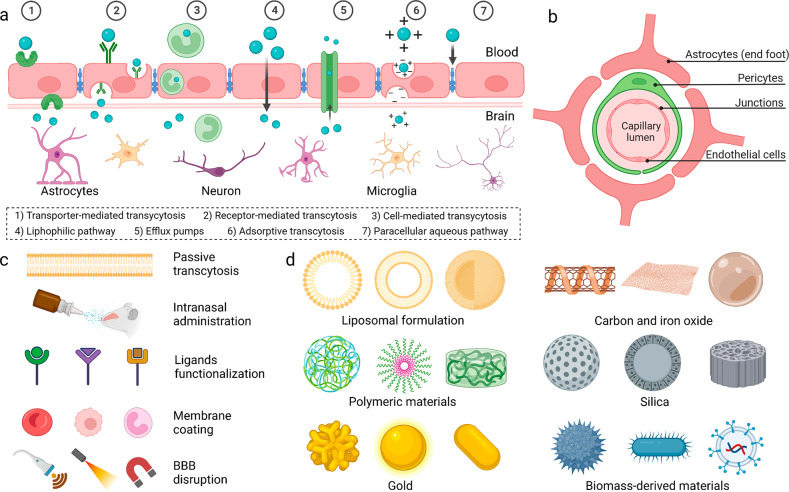
§ The blood–brain barrier: Structure, regulation and drug delivery > Strategies for BBB regulation and crossing Brain tumors, cerebrovascular diseases, and neurodegenerative diseases, including Parkinson’s disease, Alzheimer’s disease, and multiple sclerosis, are serious CNS diseases.132 However, therapies for these challenging diseases are limited, because of the lack of effective methods, to enable drugs surpass natural protective hindrances to maintain homeostasis within the brain for preventing the entry of drug molecules to the CNS.133 A number of drugs are routinely administrated by invasive strategies for the management of these diseases and symptom control. For instance, intrathecal drug administration is a typical method for drug delivery into the entire ventricular system without passing through the BBB.134,135 It has been approved to deliver anti-sense oligonucleotides for the treatment of spinal muscular atrophy.136 Other invasive strategies including convection-enhanced delivery,137,138 intracranial implantation,139,140 and deep-brain stimulation were developed for brain drug delivery.141,142 Recent development of microneedle and polymeric wafers with minimal invasiveness provides sustained drug release for CNS disease management which circumvent the BBB.143–146 But the potential risks from brain exposure and damage of these invasive strategies limited their applications for long-term use. In order to efficiently deliver drugs into the brain with safety and precision, various non-invasive strategies to overcome BBB have been exploited. These strategies include BBB penetration via passive transcytosis, intranasal administration, ligands conjugation, membrane coating, and the BBB disruption using light, focused ultrasound, biochemical reagents, and radiation. > External stimuli-mediated BBB disruption
What the sources say
- Disputedcites [225] Gorick, C. M. et al. Sonoselective transfection of cerebral vasculature without blood-brain barrier disruption. Proc. Natl Acad. Sci. USA 117, 5644–5654 (2020). 32123081 PMC7084076 sourceExperimental — accuracy not yet measured
The Abstract says the method uses low-pressure ultrasound and oscillating microbubbles to transfect cerebral endothelial cells without opening the BBB. Contrary to the claim of transport beyond blood vessels, the Discussion section “In Vivo Endothelial Cell Sonoporation without Tight Junction Disruption or Transcellular Transport” says transfection is nearly all confined to the endothelium and does not promote additional transcellular transport. (LLM, conf=0.90)
Checked by a reasoning model — may be wrong.
hedgedstates a cause- Asserted: passes — The authors put it forward as true.
- Checkable: passes — It can be checked against evidence.
- Load-bearing: passes — The paper’s conclusions depend on it.
- Based: passes — The paper gives a reason why it holds.
- Disputed
Every source the paper cites for this claim was checked and supports it.
In the paper
“BBB is a spacious, multicellular, and dynamic semi-permeable membrane that isolates the foreign substances in the blood from the CNS.27”
§ The blood–brain barrier: Structure, regulation and drug delivery > BBB structure and physiology > Anatomical structure of the BBB
What the sources say
- Supportedcites [27] Upton, D. H. et al. Challenges and opportunities to penetrate the blood-brain barrier for brain cancer therapy. Theranostics 12, 4734–4752 (2022). 35832071 PMC9254248 source
The Introduction (§ The Blood-Brain barrier; page not provided) calls the BBB a semi-permeable membrane and says it prevents potentially harmful exogenous substances from passing from the bloodstream into the brain. It also describes the endothelial cells, pericytes, and astrocytes that form the barrier. (LLM, conf=0.93)
plainstates a cause- Asserted: passes — The authors put it forward as true.
- Checkable: passes — It can be checked against evidence.
- Load-bearing: passes — The paper’s conclusions depend on it.
- Based: passes — The paper gives a reason why it holds.
- Supported
Every source the paper cites for this claim was checked and supports it.
In the paper
“However, therapies for these challenging diseases are limited, because of the lack of effective methods, to enable drugs surpass natural protective hindrances to maintain homeostasis within the brain for preventing the entry of drug molecules to the CNS.133”
§ The blood–brain barrier: Structure, regulation and drug delivery > Strategies for BBB regulation and crossing Brain tumors, cerebrovascular diseases, and neurodegenerative diseases, including Parkinson’s disease, Alzheimer’s disease, and multiple sclerosis, are serious CNS diseases.132 However, therapies for these challenging diseases are limited, because of the lack of effective methods, to enable drugs surpass natural protective hindrances to maintain homeostasis within the brain for preventing the entry of drug molecules to the CNS.133 A number of drugs are routinely administrated by invasive strategies for the management of these diseases and symptom control. For instance, intrathecal drug administration is a typical method for drug delivery into the entire ventricular system without passing through the BBB.134,135 It has been approved to deliver anti-sense oligonucleotides for the treatment of spinal muscular atrophy.136 Other invasive strategies including convection-enhanced delivery,137,138 intracranial implantation,139,140 and deep-brain stimulation were developed for brain drug delivery.141,142 Recent development of microneedle and polymeric wafers with minimal invasiveness provides sustained drug release for CNS disease management which circumvent the BBB.143–146 But the potential risks from brain exposure and damage of these invasive strategies limited their applications for long-term use. In order to efficiently deliver drugs into the brain with safety and precision, various non-invasive strategies to overcome BBB have been exploited. These strategies include BBB penetration via passive transcytosis, intranasal administration, ligands conjugation, membrane coating, and the BBB disruption using light, focused ultrasound, biochemical reagents, and radiation.
What the sources say
- Supportedcites [133] Yang, J., Luly, K. M. & Green, J. J. Nonviral nanoparticle gene delivery into the CNS for neurological disorders and brain cancer applications. Wiley Interdiscip. Rev. Nanomed. Nanobiotechnol. 15, e1853 (2022). 36193561 PMC10023321 source
The “Barriers of entry into the central nervous system” section says protective barriers maintain brain homeostasis and impede delivery of drug therapeutics. The “Systemic delivery” section calls crossing the blood–brain barrier the most prominent hurdle to CNS delivery, while the disease-profile section discusses brain tumors, stroke, and dementias. Page numbers are not available in our copy. (LLM, conf=0.88)
plainstates a cause- Asserted: passes — The authors put it forward as true.
- Checkable: passes — It can be checked against evidence.
- Load-bearing: passes — The paper’s conclusions depend on it.
- Based: passes — The paper gives a reason why it holds.
- Supported
The cited sources support only part of this claim — read each source’s verdict below.
In the paper
“In the BBB, tight junctions are the main functional components in sustaining the permeability barrier and controlling tissue homeostasis.88–91”
§ The blood–brain barrier: Structure, regulation and drug delivery > BBB structure and physiology > Anatomical structure of the BBB
What the sources say
- Supportedcites [88] Luissint, A. C., Artus, C., Glacial, F., Ganeshamoorthy, K. & Couraud, P. O. Tight junctions at the blood brain barrier: physiological architecture and disease-associated dysregulation. Fluids Barriers CNS 9, 23 (2012). 23140302 PMC3542074 source
The Abstract says BBB barrier properties notably depend on tight junctions and that the BBB is mandatory for cerebral homeostasis. The Background identifies tight junctions as a barrier to paracellular diffusion. Page numbers are not provided in our copy. (LLM, conf=0.88)
- Partly supportedcites [89] Anderson, J. M. & Van Itallie, C. M. Physiology and function of the tight junction. CSH Perspect. Biol. 1, a002584 (2009). PMC2742087 20066090 sourceExperimental — accuracy not yet measured
The Abstract (page unavailable) describes tight junctions as barriers that separate tissue spaces and regulate solute movement. The Size section (page unavailable) reports that deleting claudin-5 increases tight-junction permeability in blood vessels. These passages support a permeability-barrier role, but do not establish that tight junctions are the main functional components of the blood-brain barrier or that they control its tissue homeostasis. (LLM, conf=0.84)
- Partly supportedcites [90] Dong, X. Current strategies for brain drug delivery. Theranostics 8, 1481–1493 (2018). 29556336 PMC5858162 sourceExperimental — accuracy not yet measured
In “Blood-brain barrier in healthy brain,” the paper says tight junctions play a vital role in sustaining the permeability barrier and controlling tissue homeostasis. It does not identify tight junctions alone as the main functional components: it says interendothelial junctions collectively mainly control BBB permeability and adherens junctions primarily regulate endothelial-barrier permeability. (LLM, conf=0.86)
- Partly supportedcites [91] Ahlawat, J. et al. Nanocarriers as potential drug delivery candidates for overcoming the blood-brain barrier: challenges and possibilities. ACS Omega 5, 12583–12595 (2020). 32548442 PMC7288355 sourceExperimental — accuracy not yet measured
The Introduction’s “Blood–Brain Barrier (BBB)” section says tight junctions are the BBB’s main junctional component and restrict passage between endothelial cells, supporting their role in its permeability barrier. It attributes maintenance of homeostasis to the BBB as a whole, however, rather than specifically saying tight junctions control tissue homeostasis. No page number is available in our copy. (LLM, conf=0.83)
plainstates a cause- Asserted: passes — The authors put it forward as true.
- Checkable: passes — It can be checked against evidence.
- Load-bearing: unclear — It is unclear whether the paper’s conclusions depend on it.
- Based: passes — The paper gives a reason why it holds.
- Supported
Every source the paper cites for this claim was checked and supports it.
In the paper
“The paracellular pathway is the principal route blocked by the tight junctions of cell gaps, restricting ions, polar solutes, and most macromolecules.148”
§ The blood–brain barrier: Structure, regulation and drug delivery > Strategies for BBB regulation and crossing Brain tumors, cerebrovascular diseases, and neurodegenerative diseases, including Parkinson’s disease, Alzheimer’s disease, and multiple sclerosis, are serious CNS diseases.132 However, therapies for these challenging diseases are limited, because of the lack of effective methods, to enable drugs surpass natural protective hindrances to maintain homeostasis within the brain for preventing the entry of drug molecules to the CNS.133 A number of drugs are routinely administrated by invasive strategies for the management of these diseases and symptom control. For instance, intrathecal drug administration is a typical method for drug delivery into the entire ventricular system without passing through the BBB.134,135 It has been approved to deliver anti-sense oligonucleotides for the treatment of spinal muscular atrophy.136 Other invasive strategies including convection-enhanced delivery,137,138 intracranial implantation,139,140 and deep-brain stimulation were developed for brain drug delivery.141,142 Recent development of microneedle and polymeric wafers with minimal invasiveness provides sustained drug release for CNS disease management which circumvent the BBB.143–146 But the potential risks from brain exposure and damage of these invasive strategies limited their applications for long-term use. In order to efficiently deliver drugs into the brain with safety and precision, various non-invasive strategies to overcome BBB have been exploited. These strategies include BBB penetration via passive transcytosis, intranasal administration, ligands conjugation, membrane coating, and the BBB disruption using light, focused ultrasound, biochemical reagents, and radiation. > Passive transcytosis
What the sources say
- Supportedcites [148] Hersh, A. M., Alomari, S. & Tyler, B. M. Crossing the blood-brain barrier: advances in nanoparticle technology for drug delivery in neuro-oncology. Int. J. Mol. Sci. 23, 4153 (2022). 35456971 PMC9032478 source
The Introduction states that tight junctions connect BBB endothelial cells and, together with adherens junctions, restrict paracellular transport of ions, polar solutes, and most macromolecules. This supports the claim's description of the blocked pathway. (LLM, conf=0.90)
plainstates a cause- Asserted: passes — The authors put it forward as true.
- Checkable: passes — It can be checked against evidence.
- Load-bearing: unclear — It is unclear whether the paper’s conclusions depend on it.
- Based: passes — The paper gives a reason why it holds.
- Supported
74 more claims · 26 with their cited sources checked
Create a free account to see all 136 claims and to verify the 6 references still open.
- It may state two separate claims as one. 49
- The quote only partly states this claim. 3
- Probably not a substantial claim. 7
Claims other papers make about this one
Each is checked against this paper’s own text: does it say what the citing paper says it does?
The source backs part of the claim, not all of it — or backs it for a different population, condition or comparison.
In the citing paper
“The most common injection route for nucleic acid therapies is into cerebrospinal fluid (CSF) because, at present, systemic delivery of siRNA-based therapeutics do not reach the CNS in meaningful concentrations due to the blood–brain barrier [5, 6].”
From Elucidating brain transport pathways and cell type-dependent gene silencing of a durable lipid–siRNA conjugate administered into cerebrospinal fluid (2025) · cites this paper as [5]
Experimental — accuracy not yet measuredThe source backs part of the claim, not all of it — or backs it for a different population, condition or comparison.
In the citing paper
“Unfortunately, at present, systemic administration of siRNA-based therapeutics do not reach the CNS in meaningful concentrations due to the blood-brain barrier (BBB).3”
From Lipid-siRNA conjugate accesses a perivascular transport mechanism and achieves widespread and durable knockdown in the central nervous system (2024) · cites this paper as [3]
Experimental — accuracy not yet measuredThe cited source says what the claim attributes to it.
In the citing paper
“This protective barrier limits the entry of foreign substances, including drugs, into the central nervous system.”
The cited source says what the claim attributes to it.
In the citing paper
“ECs are the core anatomical structure of the BBB responsible for the link between the blood vessels and the CNS. Their membrane is negatively charged and allows the passage of small lipophilic molecules and specific substances via transporters present in their surface [6].”
The cited source says what the claim attributes to it.
In the citing paper
“This barrier is responsible for the regulation of molecule influx and efflux into and out of the brain.”
4 more claims about this paper
Create a free account to see every claim other papers make about this one.
Self-check
Percentages, sums and reported differences re-computed from the paper’s own numbers.
Self-check results appear here once an independent check has confirmed them.
Cited works that were retracted
Works this paper cites that were later retracted, from the retraction notices publishers deposit. Major when the notice came out before this paper was published.
A note, not an issue: for example, a cited work that was retracted only after this paper was published, which its authors could not have known.
In the paper
“375 More recently, variants of the AAV have been investigated for its potential use for BBB penetration.”
Cited work 10.1007/s12035-017-0746-5 · retracted 2026-05-14 · notice 10.1007/s12035-026-05921-w · this paper published 2023-05-25
Citations
Cites
1 retracted
Feng, L., Sharma, A., Niu, F., Huang, Y., Lafuente, J. V., Muresanu, D. F., Ozkızılcık, A., Tian, Z. R., & Sharma, H. S. (2017) · Molecular Neurobiology · doi:10.1007/s12035-017-0746-5 · Cited by 31 · cited 1×
“375 More recently, variants of the AAV have been investigated for its potential use for BBB penetration.”
BackgroundRetractedProspective identification of tumorigenic breast cancer cells
Al-Hajj, M., Wicha, M. S., Benito-Hernandez, A., Morrison, S. J., & Clarke, M. F. (2003) · Proceedings of the National Academy of Sciences · doi:10.1073/pnas.0530291100 · Cited by 10,370 · cited 1×
“Hyaluronic acid can specially target cell surface receptor CD44, which is highly expressed in breast cancer.(153) With the help of the CD44 target and MS boost, M@HNPs could penetrate blood–brain tumor barrier (BTB), internalizing into brain metastatic tumor cells (BMTCs), blunting drug efflux at BMTCs, and producing…”
BackgroundEngineering precision nanoparticles for drug delivery
Mitchell, M. J., Billingsley, M. M., Haley, R. M., Wechsler, M. E., Peppas, N. A., & Langer, R. (2021) · Nature Reviews Drug Discovery · doi:10.1038/s41573-020-0090-8 · Cited by 7,933
Astrocyte-endothelial interactions at the blood-brain barrier
Abbott, N. J., Rönnbäck, L., & Hansson, E. (2006) · Nature Reviews Neuroscience · doi:10.1038/nrn1824 · Cited by 5,595
Astrocytes: Biology and pathology
Sofroniew, M. V., & Vinters, H. V. (2010) · Acta Neuropathologica · doi:10.1007/s00401-009-0619-8 · Cited by 5,196
Structure and function of the blood–brain barrier
Abbott, N. J., Patabendige, A. A. K., Dolman, D. E. M., Yusof, S. R., & Begley, D. J. (2010) · Neurobiology of Disease · doi:10.1016/j.nbd.2009.07.030 · Cited by 5,185 · cited 1×
“2 In the meantime, catenins, p120, plakoprotein are responsible for supporting physics and regulating junctions by forming a bridge that interacts with zonula occludens-1 (tight junctions proteins) and the actin fi la-ments.”
BackgroundDelivery of siRNA to the mouse brain by systemic injection of targeted exosomes
Alvarez-Erviti, L., Seow, Y., Yin, H., Betts, C., Lakhal, S., & Wood, M. J. A. (2011) · Nature Biotechnology · doi:10.1038/nbt.1807 · Cited by 4,930
Liposomal drug delivery systems: From concept to clinical applications
Allen, T. M., & Cullis, P. R. (2013) · Advanced Drug Delivery Reviews · doi:10.1016/j.addr.2012.09.037 · Cited by 4,839 · cited 1×
“Liposomal formulations Liposomes are the first generation of drug delivery systems and have been widely used since their discovery in 1965.(248) They are composed of one or more lipid bilayers and hollow aqueous compartment, which endow them with loading versatility for both hydrophobic and hydrophilic therapeutic age…”
BackgroundDesigning hydrogels for controlled drug delivery
Li, J., & Mooney, D. J. (2016) · Nature Reviews Materials · doi:10.1038/natrevmats.2016.71 · Cited by 4,832
Doxil® — The first FDA-approved nano-drug: Lessons learned
Barenholz, Y. (. (2012) · Journal of Controlled Release · doi:10.1016/j.jconrel.2012.03.020 · Cited by 4,792
Daneman, R., & Prat, A. (2015) · Cold Spring Harbor Perspectives in Biology · doi:10.1101/cshperspect.a020412 · Cited by 3,437
Blood–brain barrier breakdown in Alzheimer disease and other neurodegenerative disorders
Sweeney, M. D., Sagare, A. P., & Zlokovic, B. V. (2018) · Nature Reviews Neurology · doi:10.1038/nrneurol.2017.188 · Cited by 3,076 · cited 1×
“…to each process of the drug transportation, which have also been accompanied by reviews of latest progress in this fi eld, but most of literature emphasize the BBB breakdown in speci fi c brain disorders, 11 – 14 or give a general review of delivery strategies concentrating on the barrier physiology.”
BackgroundPericytes regulate the blood–brain barrier
Armulik, A., Genové, G., Mäe, M., Nisancioglu, M. H., Wallgard, E., Niaudet, C., He, L., Norlin, J., Lindblom, P., Strittmatter, K., et al. (2010) · Nature · doi:10.1038/nature09522 · Cited by 2,843 · cited 1×
“83 If the amounts of pericytes reduce, the tight junctions between endothelial cells will also be reduced.”
BackgroundFINE STRUCTURAL LOCALIZATION OF A BLOOD-BRAIN BARRIER TO EXOGENOUS PEROXIDASE
Reese, T. S., & Karnovsky, M. J. (1967) · The Journal of Cell Biology · doi:10.1083/jcb.34.1.207 · Cited by 2,629 · cited 1×
“42,43 The barrier performance is not the innate properties of endothelial cells.”
BackgroundOccludin: a novel integral membrane protein localizing at tight junctions.
Furuse, M., Hirase, T., Itoh, M., Nagafuchi, A., Yonemura, S., Tsukita, S., & Tsukita, S. (1993) · The Journal of cell biology · doi:10.1083/jcb.123.6.1777 · Cited by 2,580 · cited 1×
“95,96 Claudins display essential barrier function and occludins ensure the tightness of the tight junctions.”
BackgroundMultifunctional strands in tight junctions
Tsukita, S., Furuse, M., & Itoh, M. (2001) · Nature Reviews Molecular Cell Biology · doi:10.1038/35067088 · Cited by 2,509 · cited 1×
“93,94 There are many transmembrane and cytoplasmic proteins involved in forming tight junctions.”
BackgroundDevelopment, maintenance and disruption of the blood-brain barrier
Obermeier, B., Daneman, R., & Ransohoff, R. M. (2013) · Nature Medicine · doi:10.1038/nm.3407 · Cited by 2,452 · cited 1×
“The integrity of BBB could be breached by the intrinsic properties of the pathogens.(232) Directed evolution and capsid engineering have been developed to engineer a number of BBB-crossing AAVs.”
BackgroundAdeno-associated virus vector as a platform for gene therapy delivery
Wang, D., Tai, P. W. L., & Gao, G. (2019) · Nature Reviews Drug Discovery · doi:10.1038/s41573-019-0012-9 · Cited by 2,444
Erythrocyte membrane-camouflaged polymeric nanoparticles as a biomimetic delivery platform
Hu, C.-M. J., Zhang, L., Aryal, S., Cheung, C., Fang, R. H., & Zhang, L. (2011) · Proceedings of the National Academy of Sciences · doi:10.1073/pnas.1106634108 · Cited by 2,433 · cited 1×
“353 Since then, in addition to membrane-enabled technology, alternative strategies including biomacromolecule-enabled strategy, 354 exosome-mediated carrier, 355 virus-inspired synthesis, 356 extracellular vesicles bionic method, 357 and bacteria bionic strategy 358 have been adopted in preparation…”
MethodBlood-Brain Barrier: From Physiology to Disease and Back
Sweeney, M. D., Zhao, Z., Montagne, A., Nelson, A. R., & Zlokovic, B. V. (2019) · Physiological Reviews · doi:10.1152/physrev.00050.2017 · Cited by 2,312 · cited 1×
“131 Intriguingly, pathways through the junctional complex or across the cells actively that participate in transport of ions, nutrients and other molecules could also be potential routes for drug delivery, which is discussed in detail in Section 3.1.”
BackgroundInfluentialThe blood–brain barrier: an overview
Ballabh, P., Braun, A., & Nedergaard, M. (2004) · Neurobiology of Disease · doi:10.1016/j.nbd.2003.12.016 · Cited by 2,261
Pericyte Loss and Microaneurysm Formation in PDGF-B-Deficient Mice
Lindahl, P., Johansson, B. R., Levéen, P., & Betsholtz, C. (1997) · Science · doi:10.1126/science.277.5323.242 · Cited by 2,226 · cited 1×
“81,82 In turn, pericytes also can release signaling factors to affect endothelial cells by determining the numbers of tight junctions and polarizing the end feet of astrocytes.”
BackgroundPericytes are required for blood–brain barrier integrity during embryogenesis
Daneman, R., Zhou, L., Kebede, A. A., & Barres, B. A. (2010) · Nature · doi:10.1038/nature09513 · Cited by 2,128 · cited 1×
“73 They are embedded in the basement membrane and lie abluminal to the endothelial cells.”
BackgroundTHE BIOCHEMISTRY OF P-GLYCOPROTEIN-MEDIATED MULTIDRUG RESISTANCE
Endicott, J. A., & Ling, V. (1989) · Annual Review of Biochemistry · doi:10.1146/annurev.bi.58.070189.001033 · Cited by 2,071 · cited 1×
“8,9 Thus, it is urging to address the issue of brain-targeted therapeutics by developing effective and safe delivery strategies.”
BackgroundExtracellular vesicles as a next-generation drug delivery platform
Herrmann, I. K., Wood, M. J. A., & Fuhrmann, G. (2021) · Nature Nanotechnology · doi:10.1038/s41565-021-00931-2 · Cited by 1,948 · cited 1×
“…membrane-enabled technology, alternative strategies including biomacromolecule-enabled strategy, 354 exosome-mediated carrier, 355 virus-inspired synthesis, 356 extracellular vesicles bionic method, 357 and bacteria bionic strategy 358 have been adopted in preparation of custom-build nanocarriers.”
MethodCell Membrane Coating Nanotechnology
Fang, R. H., Kroll, A. V., Gao, W., & Zhang, L. (2018) · Advanced Materials · doi:10.1002/adma.201706759 · Cited by 1,885
A blood–brain barrier overview on structure, function, impairment, and biomarkers of integrity
Kadry, H., Noorani, B., & Cucullo, L. (2020) · Fluids and Barriers of the CNS · doi:10.1186/s12987-020-00230-3 · Cited by 1,853
The blood–brain barrier and blood–tumour barrier in brain tumours and metastases
Arvanitis, C. D., Ferraro, G. B., & Jain, R. K. (2020) · Nature Reviews Cancer · doi:10.1038/s41568-019-0205-x · Cited by 1,792
Nanoparticles in the clinic: an update
Anselmo, A. C., & Mitragotri, S. (2019) · Bioengineering & Translational Medicine · doi:10.1002/btm2.10143 · Cited by 1,766
Hellström, M., Kalén, M., Lindahl, P., Abramsson, A., & Betsholtz, C. (1999) · Development · doi:10.1242/dev.126.14.3047 · Cited by 1,700
Establishment and Dysfunction of the Blood-Brain Barrier
Zhao, Z., Nelson, A. R., Betsholtz, C., & Zlokovic, B. V. (2015) · Cell · doi:10.1016/j.cell.2015.10.067 · Cited by 1,670 · cited 1×
“70,71 Moreover, for invertebrates that lack a vascularized circulatory system, astrocytes are the main components of the barrier separating humoral fl uids from the CNS. 72 Pericytes .”
BackgroundSaraiva, C., Praça, C., Ferreira, R., Santos, T., Ferreira, L., & Bernardino, L. (2016) · Journal of Controlled Release · doi:10.1016/j.jconrel.2016.05.044 · Cited by 1,609 · cited 1×
“30,31 Capillaries are the major site of the BBB.”
BackgroundReceptor-Mediated Endocytosis: Concepts Emerging from the LDL Receptor System
Goldstein, J. L., Brown, M. S., Anderson, R. G. W., Russell, D. W., & Schneider, W. J. (1985) · Annual Review of Cell Biology · doi:10.1146/annurev.cb.01.110185.000245 · Cited by 1,600 · cited 2×
“Low-density lipoprotein receptor-related protein (LRP) as a transmembrane glycoprotein can mediate the uptake of cholesterol-rich low-density lipoprotein, including cholesterol, tocopherol, and Apos.”
BackgroundEngineering exosomes for targeted drug delivery
Liang, Y., Duan, L., Lu, J., & Xia, J. (2021) · Theranostics · doi:10.7150/thno.52570 · Cited by 1,547
Deep brain stimulation: current challenges and future directions
Lozano, A. M., Lipsman, N., Bergman, H., Brown, P., Chabardes, S., Chang, J. W., Matthews, K., McIntyre, C. C., Schlaepfer, T. E., Schulder, M., et al. (2019) · Nature Reviews Neurology · doi:10.1038/s41582-018-0128-2 · Cited by 1,450 · cited 1×
“141,142 146 But the potential risks from brain exposure and damage of these invasive strategies limited their applications for long-term use.”
BackgroundAnselmo, A. C., & Mitragotri, S. (2016) · Bioengineering & Translational Medicine · doi:10.1002/btm2.10003 · Cited by 1,321
Amino-acid- and peptide-directed synthesis of chiral plasmonic gold nanoparticles
Lee, H.-E., Ahn, H.-Y., Mun, J., Lee, Y. Y., Kim, M., Cho, N. H., Chang, K., Kim, W. S., Rho, J., & Nam, K. T. (2018) · Nature · doi:10.1038/s41586-018-0034-1 · Cited by 1,243 · cited 1×
“292,293 Tang and co-workers fi rstly revealed that the BBB penetration of gold nanoparticles is clearly affected by their chirality (Fig.”
BackgroundFrom blood–brain barrier to blood–brain interface: new opportunities for CNS drug delivery
Banks, W. A. (2016) · Nature Reviews Drug Discovery · doi:10.1038/nrd.2015.21 · Cited by 1,204 · cited 1×
“4,5 The tight gap allows only passive diffusion of lipid-soluble drugs at a molecular weight lower than 400-600 Da.”
BackgroundDesign of liposomes as drug delivery system for therapeutic applications
Guimarães, D., Cavaco-Paulo, A., & Nogueira, E. (2021) · International Journal of Pharmaceutics · doi:10.1016/j.ijpharm.2021.120571 · Cited by 1,196 · cited 1×
“Various types of functionalization strategies have been involved for the development of liposomal delivery system such as brain/tumor-targeting delivery, controlled drug release, imaging-guided delivery, etc.(251) These strategies facilitate the development of liposomal formulations to improve brain-specific delivery.”
BackgroundIron oxide nanoparticles: Diagnostic, therapeutic and theranostic applications
Dadfar, S. M., Roemhild, K., Drude, N. I., von Stillfried, S., Knüchel, R., Kiessling, F., & Lammers, T. (2019) · Advanced Drug Delivery Reviews · doi:10.1016/j.addr.2019.01.005 · Cited by 1,181
Surface functionalized exosomes as targeted drug delivery vehicles for cerebral ischemia therapy
Tian, T., Zhang, H.-X., He, C.-P., Fan, S., Zhu, Y.-L., Qi, C., Huang, N.-P., Xiao, Z.-D., Lu, Z.-H., Tannous, B. A., et al. (2018) · Biomaterials · doi:10.1016/j.biomaterials.2017.10.012 · Cited by 1,154
Strategies for delivering therapeutics across the blood–brain barrier
Terstappen, G. C., Meyer, A. H., Bell, R. D., & Zhang, W. (2021) · Nature Reviews Drug Discovery · doi:10.1038/s41573-021-00139-y · Cited by 1,138 · cited 1×
“15,16 On the basis of these strategies, functional materials with small size, tailored architecture and therapeutic motifs that facilitate the targeted drug delivery are widely engineered.”
BackgroundCarbon Nanotube Chemical Sensors
Schroeder, V., Savagatrup, S., He, M., Lin, S., & Swager, T. M. (2019) · Chemical Reviews · doi:10.1021/acs.chemrev.8b00340 · Cited by 1,131
Targeting Strategies for Tissue-Specific Drug Delivery
Zhao, Z., Ukidve, A., Kim, J., & Mitragotri, S. (2020) · Cell · doi:10.1016/j.cell.2020.02.001 · Cited by 1,099 · cited 1×
“15,16 On the basis of these strategies, functional materials with small size, tailored architecture and therapeutic motifs that facilitate the targeted drug delivery are widely engineered.”
BackgroundPhysiology and function of the tight junction
Anderson, J. M., & Van Itallie, C. M. (2009) · Cold Spring Harbor Perspectives in Biology · doi:10.1101/cshperspect.a002584 · Cited by 1,059
Targeting drugs to tumours using cell membrane-coated nanoparticles
Fang, R. H., Gao, W., & Zhang, L. (2023) · Nature Reviews Clinical Oncology · doi:10.1038/s41571-022-00699-x · Cited by 980
Xue, J., Zhao, Z., Zhang, L., Xue, L., Shen, S., Wen, Y., Wei, Z., Wang, L., Kong, L., Sun, H., et al. (2017) · Nature Nanotechnology · doi:10.1038/nnano.2017.54 · Cited by 959 · cited 1×
“364 The camou fl aged delivery system maintained the physiological features, which could ef fi ciently traverse BBB and migrate to in fl ammatory sites such as tumor parenchyma.”
BackgroundThorne, R. G., Pronk, G. J., Padmanabhan, V., & Frey, W. H. (2004) · Neuroscience · doi:10.1016/j.neuroscience.2004.05.029 · Cited by 958 · cited 1×
“179 The results from high-resolution phosphor imaging autoradiography established the speci fi c binding of IGF1 and binding sites.”
BackgroundCurrent Strategies for Brain Drug Delivery
Dong, X. (2018) · Theranostics · doi:10.7150/thno.21254 · Cited by 954
Engineering Macrophages for Cancer Immunotherapy and Drug Delivery
Xia, Y., Rao, L., Yao, H., Wang, Z., Ning, P., & Chen, X. (2020) · Advanced Materials · doi:10.1002/adma.202002054 · Cited by 949
Self-citationSecond near-infrared photothermal materials for combinational nanotheranostics
Xu, C., & Pu, K. (2021) · Chemical Society Reviews · doi:10.1039/d0cs00664e · Cited by 941
Mesoporous Silica Nanoparticles for Drug Delivery
Manzano, M., & Vallet‐Regí, M. (2020) · Advanced Functional Materials · doi:10.1002/adfm.201902634 · Cited by 939 · cited 1×
“338,339 The presence of silanol groups at particle surface enables the production of multifunctional derivatives of MSNs system for targeted drug delivery in the treatment of brain diseases.”
BackgroundBlood–brain Barrier: Structural Components and Function Under Physiologic and Pathologic Conditions
Persidsky, Y., Ramirez, S. H., Haorah, J., & Kanmogne, G. D. (2006) · Journal of Neuroimmune Pharmacology · doi:10.1007/s11481-006-9025-3 · Cited by 922 · cited 1×
“97 Tricellulin and the lipolysis-stimulated lipoprotein receptor that reside in three-cell contacts are also the major tight junction proteins.”
BackgroundBlood–brain barrier structure and function and the challenges for CNS drug delivery
Abbott, N. J. (2013) · Journal of Inherited Metabolic Disease · doi:10.1007/s10545-013-9608-0 · Cited by 909
Functional morphology of the blood–brain barrier in health and disease
Liebner, S., Dijkhuizen, R. M., Reiss, Y., Plate, K. H., Agalliu, D., & Constantin, G. (2018) · Acta Neuropathologica · doi:10.1007/s00401-018-1815-1 · Cited by 872 · cited 1×
“104,105 Kinase-like proteins modulate the blood – brain barrier permeability.”
BackgroundCrossing the blood-brain barrier with nanoparticles
Zhou, Y., Peng, Z., Seven, E. S., & Leblanc, R. M. (2018) · Journal of Controlled Release · doi:10.1016/j.jconrel.2017.12.015 · Cited by 837
In vivo delivery, pharmacokinetics, biodistribution and toxicity of iron oxide nanoparticles
Arami, H., Khandhar, A., Liggitt, D., & Krishnan, K. M. (2015) · Chemical Society Reviews · doi:10.1039/c5cs00541h · Cited by 830
A neuroanatomical basis for electroacupuncture to drive the vagal–adrenal axis
Liu, S., Wang, Z., Su, Y., Qi, L., Yang, W., Fu, M., Jing, X., Wang, Y., & Ma, Q. (2021) · Nature · doi:10.1038/s41586-021-04001-4 · Cited by 823
Self-citationDerivation of blood-brain barrier endothelial cells from human pluripotent stem cells
Lippmann, E. S., Azarin, S. M., Kay, J. E., Nessler, R. A., Wilson, H. K., Al-Ahmad, A., Palecek, S. P., & Shusta, E. V. (2012) · Nature Biotechnology · doi:10.1038/nbt.2247 · Cited by 800 · cited 1×
“44,45 For morphology, the endothelial cells in the BBB are fastened by both tight junctions and adherens junctions, resulting in distinct lumenal and abluminal membrane compartments.”
BackgroundTricellulin constitutes a novel barrier at tricellular contacts of epithelial cells
Ikenouchi, J., Furuse, M., Furuse, K., Sasaki, H., Tsukita, S., & Tsukita, S. (2005) · The Journal of Cell Biology · doi:10.1083/jcb.200510043 · Cited by 787 · cited 1×
“98,99 103 Junction adhesion molecules mediate the early attachment in the BBB developmental processes.”
BackgroundPhysiological Roles of Aquaporin-4 in Brain
Nagelhus, E. A., & Ottersen, O. P. (2013) · Physiological Reviews · doi:10.1152/physrev.00011.2013 · Cited by 766 · cited 1×
“60,61 69 Some studies considered astrocytes can arise barrier behaviors in cerebral, other endothelial cells, and related epithelial, while other studies thought the BBB goes fi rst before the appearance of astrocytes.”
BackgroundKojima, R., Bojar, D., Rizzi, G., Hamri, G. C.-E., El-Baba, M. D., Saxena, P., Ausländer, S., Tan, K. R., & Fussenegger, M. (2018) · Nature Communications · doi:10.1038/s41467-018-03733-8 · Cited by 748
Liposomes: Advancements and innovation in the manufacturing process
Shah, S., Dhawan, V., Holm, R., Nagarsenker, M. S., & Perrie, Y. (2020) · Advanced Drug Delivery Reviews · doi:10.1016/j.addr.2020.07.002 · Cited by 745 · cited 1×
“They are composed of one or more lipid bilayers and hollow aqueous compartment, which endow them with loading versatility for both hydrophobic and hydrophilic therapeutic agents.(249) Together with high biocompatibility, biodegradability and its intrinsic capability of BBB crossing, liposomes are considered as one of…”
BackgroundThe blood–brain barrier in systemic infection and inflammation
Galea, I. (2021) · Cellular & Molecular Immunology · doi:10.1038/s41423-021-00757-x · Cited by 738
Quantifying thiol–gold interactions towards the efficient strength control
Xue, Y., Li, X., Li, H., & Zhang, W. (2014) · Nature Communications · doi:10.1038/ncomms5348 · Cited by 738
Advances in Magnetic Nanoparticles for Biomedical Applications
Cardoso, V. F., Francesko, A., Ribeiro, C., Bañobre‐López, M., Martins, P., & Lanceros‐Mendez, S. (2018) · Advanced Healthcare Materials · doi:10.1002/adhm.201700845 · Cited by 723
Hwang, D., Ramsey, J. D., & Kabanov, A. V. (2020) · Advanced drug delivery reviews · doi:10.1016/j.addr.2020.09.009 · Cited by 699
Delivery of therapeutic agents to the central nervous system: the problems and the possibilities
Begley, D. J. (2004) · Pharmacology & Therapeutics · doi:10.1016/j.pharmthera.2004.08.001 · Cited by 679
Oldendorf, W. H., Cornford, M. E., & Brown, W. J. (1977) · Annals of Neurology · doi:10.1002/ana.410010502 · Cited by 655 · cited 1×
“48,49 50 – 52 Second, they show designated transporters for regulating the in fl ow and out fl ow of speci fi c substrates.”
BackgroundLuissint, A.-C., Artus, C., Glacial, F., Ganeshamoorthy, K., & Couraud, P.-O. (2012) · Fluids and Barriers of the CNS · doi:10.1186/2045-8118-9-23 · Cited by 654
The blood-brain barrier: Physiology and strategies for drug delivery
Pandit, R., Chen, L., & Götz, J. (2020) · Advanced Drug Delivery Reviews · doi:10.1016/j.addr.2019.11.009 · Cited by 651 · cited 1×
“4,5 The tight gap allows only passive diffusion of lipid-soluble drugs at a molecular weight lower than 400-600 Da.”
BackgroundAttwell, D., Mishra, A., Hall, C. N., O’Farrell, F. M., & Dalkara, T. (2016) · Journal of Cerebral Blood Flow & Metabolism · doi:10.1177/0271678x15610340 · Cited by 648
Nanoarchitectured Structure and Surface Biofunctionality of Mesoporous Silica Nanoparticles
Kankala, R. K., Han, Y., Na, J., Lee, C., Sun, Z., Wang, S., Kimura, T., Ok, Y. S., Yamauchi, Y., Chen, A., et al. (2020) · Advanced Materials · doi:10.1002/adma.201907035 · Cited by 635 · cited 1×
“338,339 The presence of silanol groups at particle surface enables the production of multifunctional derivatives of MSNs system for targeted drug delivery in the treatment of brain diseases.”
BackgroundAgrawal, M., Saraf, S., Saraf, S., Antimisiaris, S. G., Chougule, M. B., Shoyele, S. A., & Alexander, A. (2018) · Journal of Controlled Release · doi:10.1016/j.jconrel.2018.05.011 · Cited by 630 · cited 1×
“160 Among them, (1) and (2) are the major routes through neuronal pathways while (3) is the minor route through the systemic circulation.”
BackgroundTight junction proteins occludin and ZO‐1 as regulators of epithelial proliferation and survival
Kuo, W., Odenwald, M. A., Turner, J. R., & Zuo, L. (2022) · Annals of the New York Academy of Sciences · doi:10.1111/nyas.14798 · Cited by 616 · cited 1×
“118,119 122 Totally, adherens junctions are fundamental for the integrity of BBB, any change of adherens junctions may disrupt inter-endothelial cell connections.”
BackgroundMacrophage exosomes as natural nanocarriers for protein delivery to inflamed brain
Yuan, D., Zhao, Y., Banks, W. A., Bullock, K. M., Haney, M., Batrakova, E., & Kabanov, A. V. (2017) · Biomaterials · doi:10.1016/j.biomaterials.2017.07.011 · Cited by 607
Emerging blood–brain-barrier-crossing nanotechnology for brain cancer theranostics
Tang, W., Fan, W., Lau, J., Deng, L., Shen, Z., & Chen, X. (2019) · Chemical Society Reviews · doi:10.1039/c8cs00805a · Cited by 605
Self-citationNanomaterial-based blood-brain-barrier (BBB) crossing strategies
Xie, J., Shen, Z., Anraku, Y., Kataoka, K., & Chen, X. (2019) · Biomaterials · doi:10.1016/j.biomaterials.2019.119491 · Cited by 604
Self-citationExosome-mediated delivery of siRNA in vitro and in vivo
El-Andaloussi, S., Lee, Y., Lakhal-Littleton, S., Li, J., Seow, Y., Gardiner, C., Alvarez-Erviti, L., Sargent, I. L., & Wood, M. J. A. (2012) · Nature Protocols · doi:10.1038/nprot.2012.131 · Cited by 601
Importance of P-glycoprotein at blood–tissue barriers
Fromm, M. F. (2004) · Trends in Pharmacological Sciences · doi:10.1016/j.tips.2004.06.002 · Cited by 592 · cited 1×
“8,9 Thus, it is urging to address the issue of brain-targeted therapeutics by developing effective and safe delivery strategies.”
BackgroundThe biology of brain metastases—translation to new therapies
Eichler, A. F., Chung, E., Kodack, D. P., Loeffler, J. S., Fukumura, D., & Jain, R. K. (2011) · Nature Reviews Clinical Oncology · doi:10.1038/nrclinonc.2011.58 · Cited by 567 · cited 1×
“30,31 Capillaries are the major site of the BBB.”
BackgroundNanocarbons for Biology and Medicine: Sensing, Imaging, and Drug Delivery
Panwar, N., Soehartono, A. M., Chan, K. K., Zeng, S., Xu, G., Qu, J., Coquet, P., Yong, K.-T., & Chen, X. (2019) · Chemical Reviews · doi:10.1021/acs.chemrev.9b00099 · Cited by 555
Self-citationSengillo, J. D., Winkler, E. A., Walker, C. T., Sullivan, J. S., Johnson, M., & Zlokovic, B. V. (2013) · Brain Pathology · doi:10.1111/bpa.12004 · Cited by 553 · cited 1×
“If the amounts of pericytes reduce, the tight junctions between endothelial cells will also be reduced.(84) Except for modulating and maintaining the BBB, pericytes also have functions in adjusting cerebral blood flow, vascular development and maintenance, and neuroinflammation.”
BackgroundBrain barriers: Crosstalk between complex tight junctions and adherens junctions
Tietz, S., & Engelhardt, B. (2015) · Journal of Cell Biology · doi:10.1083/jcb.201412147 · Cited by 551 · cited 1×
“54,55 Because of the existence of the local environment, endothelial cells can together form and maintain the BBB. Astrocytes .”
BackgroundStructure, biochemistry, and assembly of epithelial tight junctions
Gumbiner, B. (1987) · American Journal of Physiology-Cell Physiology · doi:10.1152/ajpcell.1987.253.6.c749 · Cited by 531 · cited 1×
“They are also known as occluding junctions or zonulae occludes which can restrict the cross of hydrophilic molecules and macromolecules.(92) They reside between endothelial cells, seal the interendothelial cleft, and work as gates and fences to limit paracellular permeability and the lateral diffusion of integral memb…”
BackgroundImmune Cell Membrane‐Coated Biomimetic Nanoparticles for Targeted Cancer Therapy
Oroojalian, F., Beygi, M., Baradaran, B., Mokhtarzadeh, A., & Shahbazi, M. (2021) · Small · doi:10.1002/smll.202006484 · Cited by 528 · cited 1×
“Immune cell membranes, like their mother immune cells, are a promising choice for constructing drug delivery systems, showing great biocompatibility and unnoticeable adverse effects to normal cells.(202) Macrophages play important part in the physiological microenvironment and the polarization of their phenotypes affe…”
BackgroundDevelopment and Cell Biology of the Blood-Brain Barrier
Langen, U. H., Ayloo, S., & Gu, C. (2019) · Annual Review of Cell and Developmental Biology · doi:10.1146/annurev-cellbio-100617-062608 · Cited by 511 · cited 1×
“The barrier performance is not the innate properties of endothelial cells.(44,45) For morphology, the endothelial cells in the BBB are fastened by both tight junctions and adherens junctions, resulting in distinct lumenal and abluminal membrane compartments.”
BackgroundA non-invasive method for focusing ultrasound through the human skull
Clement, G. T., & Hynynen, K. (2002) · Physics in Medicine and Biology · doi:10.1088/0031-9155/47/8/301 · Cited by 510 · cited 1×
“Ultrasound is a technique that can noninvasively focus deep into the body using an ultrasound field.(219) They are mechanical or elastic vibrations in a medium of a frequency above the range of human hearing (18–20 kHz).”
MethodInorganic nanomaterials with rapid clearance for biomedical applications
Wang, X., Zhong, X., Li, J., Liu, Z., & Cheng, L. (2021) · Chemical Society Reviews · doi:10.1039/d0cs00461h · Cited by 509
CSF, blood-brain barrier, and brain drug delivery
Pardridge, W. M. (2016) · Expert Opinion on Drug Delivery · doi:10.1517/17425247.2016.1171315 · Cited by 508 · cited 15×
“After being injected through the tails of ICR (CD-1) mice, the NP showed signi fi cant antinociceptive effects which means loperamide was able to be transported across BBB. Frey II et al. investigated the delivery of IGF1 to CNS, con fi rming they reached CNS target sites of rats by administering a mixture of [ 125 I]-l…”
MethodInfluentialZhu, J.-Y., Zheng, D.-W., Zhang, M.-K., Yu, W.-Y., Qiu, W.-X., Hu, J.-J., Feng, J., & Zhang, X.-Z. (2016) · Nano Letters · doi:10.1021/acs.nanolett.6b02786 · Cited by 498 · cited 1×
“Specific membrane proteins, such as focal adhesion proteins, integrin, focal adhesion kinase, and ras homologous family proteins, contribute to the functions of brain tumor cell membrane-coated systems.(200) Liu et al.”
BackgroundCarbon Dots for In Vivo Bioimaging and Theranostics
Du, J., Xu, N., Fan, J., Sun, W., & Peng, X. (2019) · Small · doi:10.1002/smll.201805087 · Cited by 488
Song, Y., Li, Z., He, T., Qu, M., Jiang, L., Li, W., Shi, X., Pan, J., Zhang, L., Wang, Y., et al. (2019) · Theranostics · doi:10.7150/thno.30879 · Cited by 487
Self-citationHersh, A. M., Alomari, S., & Tyler, B. M. (2022) · International Journal of Molecular Sciences · doi:10.3390/ijms23084153 · Cited by 478 · cited 1×
“148 But the tight junctions are not perfect, small and soluble substances could suf fi ciently cross through the paracellular pathway.”
BackgroundCell or Cell Membrane-Based Drug Delivery Systems
Tan, S., Wu, T., Zhang, D., & Zhang, Z. (2015) · Theranostics · doi:10.7150/thno.11852 · Cited by 466 · cited 1×
“Red blood cells, or erythrocytes, have been exploited as delivery systems due to the advantages of prolonging the life span of drugs in circulation and preventing drugs from immune clearance for many years.(195) They are easy to obtain and have uniformed size and shape.”
BackgroundCNS Drug Design Based on Principles of Blood‐Brain Barrier Transport
Pardridge, W. M. (1998) · Journal of Neurochemistry · doi:10.1046/j.1471-4159.1998.70051781.x · Cited by 460 · cited 1×
“157,158 For this reason, if passive transcytosis is demanded to realize the delivery of the drugs at higher molecular weight, some strategies to enhance the BBB permeability or break BBB temporarily will be desired.”
BackgroundGraphene quantum dots prevent α-synucleinopathy in Parkinson’s disease
Kim, D., Yoo, J. M., Hwang, H., Lee, J., Lee, S. H., Yun, S. P., Park, M. J., Lee, M., Choi, S., Kwon, S. H., et al. (2018) · Nature Nanotechnology · doi:10.1038/s41565-018-0179-y · Cited by 455 · cited 1×
“317 Due to the small size, graphene quantum dots could be encapsulated onto mesoporous nanostructure and mediate the theranostic penetrative delivery of drug and photolytics (Fig.”
BackgroundGänger, S., & Schindowski, K. (2018) · Pharmaceutics · doi:10.3390/pharmaceutics10030116 · Cited by 447 · cited 1×
“161 (2) is also a direct route of drug delivery, because the trigeminal nerve locates in not only the respiratory region but also the olfactory region.”
BackgroundAryal, M., Arvanitis, C. D., Alexander, P. M., & McDannold, N. (2014) · Advanced Drug Delivery Reviews · doi:10.1016/j.addr.2014.01.008 · Cited by 443 · cited 1×
“For ultrasonic BBB disruption, varied sonication parameters can cause different impacts, including the threshold pressure, the magnitude, and the drug quantity for delivering.(222) In recent years, gas-filled microbubble has emerged as a contrast agent in conjunction with ultrasound for opening the BBB in an image-gui…”
BackgroundThe role of pericytes in angiogenesis
Ribatti, D., Nico, B., & Crivellato, E. (2011) · The International Journal of Developmental Biology · doi:10.1387/ijdb.103167dr · Cited by 440
Development of Polymeric Nanoparticles for Blood–Brain Barrier Transfer—Strategies and Challenges
Zhang, W., Mehta, A., Tong, Z., Esser, L., & Voelcker, N. H. (2021) · Advanced Science · doi:10.1002/advs.202003937 · Cited by 430 · cited 1×
“261 They have shown potentials in pre-clinical study in different animal models of CNS diseases demonstrating attractive properties for drug delivery including controlled drug release, cellular targeting and uptake, and the ability to avoid phagocytosis of reticuloendothelial system.”
BackgroundSavidge, T. C., Newman, P., Pothoulakis, C., Ruhl, A., Neunlist, M., Bourreille, A., Hurst, R., & Sofroniew, M. V. (2007) · Gastroenterology · doi:10.1053/j.gastro.2007.01.051 · Cited by 428
Junctional proteins of the blood-brain barrier: New insights into function and dysfunction
Stamatovic, S. M., Johnson, A. M., Keep, R. F., & Andjelkovic, A. V. (2016) · Tissue Barriers · doi:10.1080/21688370.2016.1154641 · Cited by 428 · cited 1×
“112,113 Vascular endothelial-cadherin, scaffolding proteins catenins, scaffolding proteins p120, plakoprotein are the main components of adherens junctions.”
BackgroundIn vivo evaluation of the biodistribution and safety of PLGA nanoparticles as drug delivery systems
Semete, B., Booysen, L., Lemmer, Y., Kalombo, L., Katata, L., Verschoor, J., & Swai, H. S. (2010) · Nanomedicine: Nanotechnology, Biology and Medicine · doi:10.1016/j.nano.2010.02.002 · Cited by 425 · cited 1×
“4% in the brain and can keep at the level for at least seven days.(263) Moreover, the possibility of surface decoration of targeting ligands could further promote their penetration of biological barriers.”
BackgroundGoertsen, D., Flytzanis, N. C., Goeden, N., Chuapoco, M. R., Cummins, A., Chen, Y., Fan, Y., Zhang, Q., Sharma, J., Duan, Y., et al. (2022) · Nature Neuroscience · doi:10.1038/s41593-021-00969-4 · Cited by 420
Biomacromolecules as carriers in drug delivery and tissue engineering
Zhang, Y., Sun, T., & Jiang, C. (2018) · Acta Pharmaceutica Sinica B · doi:10.1016/j.apsb.2017.11.005 · Cited by 416
Dasari Shareena, T. P., McShan, D., Dasmahapatra, A. K., & Tchounwou, P. B. (2018) · Nano-Micro Letters · doi:10.1007/s40820-018-0206-4 · Cited by 414
Ren, J., Shen, S., Wang, D., Xi, Z., Guo, L., Pang, Z., Qian, Y., Sun, X., & Jiang, X. (2012) · Biomaterials · doi:10.1016/j.biomaterials.2012.01.025 · Cited by 408
Pericytes and Neurovascular Function in the Healthy and Diseased Brain
Brown, L. S., Foster, C. G., Courtney, J.-M., King, N. E., Howells, D. W., & Sutherland, B. A. (2019) · Frontiers in Cellular Neuroscience · doi:10.3389/fncel.2019.00282 · Cited by 406
Betz, A. L., Firth, J. A., & Goldstein, G. W. (1980) · Brain Research · doi:10.1016/0006-8993(80)91004-5 · Cited by 400
Breaking through the tight junction barrier.
Gumbiner, B. M. (1993) · The Journal of cell biology · doi:10.1083/jcb.123.6.1631 · Cited by 386 · cited 1×
“93,94 There are many transmembrane and cytoplasmic proteins involved in forming tight junctions.”
BackgroundNeutrophil‐Based Drug Delivery Systems
Chu, D., Dong, X., Shi, X., Zhang, C., & Wang, Z. (2018) · Advanced Materials · doi:10.1002/adma.201706245 · Cited by 386 · cited 1×
“206 Chen et al. proposed a “ nanobuffer ” , (LA-NM-NP/CBD), that has a clear structure.”
BackgroundThe blood-brain barrier: structure, function and therapeutic approaches to cross it.
Tajes, M., Ramos-Fernández, E., Weng-Jiang, X., Bosch-Morató, M., Guivernau, B., Eraso-Pichot, A., Salvador, B., Fernàndez-Busquets, X., Roquer, J., & Muñoz, F. J. (2014) · Molecular Membrane Biology · doi:10.3109/09687688.2014.937468 · Cited by 380
Recent progress in targeted delivery vectors based on biomimetic nanoparticles
Chen, L., Hong, W., Ren, W., Xu, T., Qian, Z., & He, Z. (2021) · Signal Transduction and Targeted Therapy · doi:10.1038/s41392-021-00631-2 · Cited by 374
Black Phosphorus Nanosheets as a Neuroprotective Nanomedicine for Neurodegenerative Disorder Therapy
Chen, W., Ouyang, J., Yi, X., Xu, Y., Niu, C., Zhang, W., Wang, L., Sheng, J., Deng, L., Liu, Y., et al. (2018) · Advanced Materials · doi:10.1002/adma.201703458 · Cited by 374 · cited 1×
“213,214 The reduced transendothelial electrical resistance of cellular monolayer induced by irradiation could recover within 10 min.”
BackgroundHou, K., Zhao, J., Wang, H., Li, B., Li, K., Shi, X., Wan, K., Ai, J., Lv, J., Wang, D., et al. (2020) · Nature Communications · doi:10.1038/s41467-020-18525-2 · Cited by 373 · cited 1×
“294 It is known that GSH transporters at high level in the brain promoted the BBB permeability of GSH-capped nanoparticles.”
BackgroundNiu, W., Xiao, Q., Wang, X., Zhu, J., Li, J., Liang, X., Peng, Y., Wu, C., Lu, R., Pan, Y., et al. (2021) · Nano Letters · doi:10.1021/acs.nanolett.0c04753 · Cited by 372
Self-citationBrain Pericytes As Mediators of Neuroinflammation
Rustenhoven, J., Jansson, D., Smyth, L. C., & Dragunow, M. (2017) · Trends in Pharmacological Sciences · doi:10.1016/j.tips.2016.12.001 · Cited by 371 · cited 1×
“84 87 Tight junctions .”
Role of Blood-Brain Barrier in Alzheimer’s Disease
Cai, Z., Qiao, P.-F., Wan, C.-Q., Cai, M., Zhou, N.-K., & Li, Q. (2018) · Journal of Alzheimer's Disease · doi:10.3233/jad-180098 · Cited by 370 · cited 1×
“The presence of BBB avoids the brain from damage by keeping a stable environment.(28,29) But it also limits the drugs that enter into the CNS for treating brain diseases such as neurodegenerative diseases and brain cancer.”
BackgroundHaseloff, R. F., Dithmer, S., Winkler, L., Wolburg, H., & Blasig, I. E. (2015) · Seminars in Cell & Developmental Biology · doi:10.1016/j.semcdb.2014.11.004 · Cited by 353 · cited 1×
“95,96 Claudins display essential barrier function and occludins ensure the tightness of the tight junctions.”
BackgroundThe role of liposomes in clinical nanomedicine development. What now? Now what?
Crommelin, D. J. A., van Hoogevest, P., & Storm, G. (2020) · Journal of Controlled Release · doi:10.1016/j.jconrel.2019.12.023 · Cited by 349 · cited 1×
“engineering and nanotechnology.(250) Various types of functionalization strategies have been involved for the development of liposomal delivery system such as brain/tumor-targeting delivery, controlled drug release, imaging-guided delivery, etc.”
BackgroundOvercoming barriers by local drug delivery with liposomes
Antimisiaris, S. G., Marazioti, A., Kannavou, M., Natsaridis, E., Gkartziou, F., Kogkos, G., & Mourtas, S. (2021) · Advanced Drug Delivery Reviews · doi:10.1016/j.addr.2021.01.019 · Cited by 339 · cited 1×
“252 For example, Zhan et al. functionalized liposomal surface with amyloid-β -derived peptide which has a highly speci fi c binding af fi nity towards plasm apolipoproteins, giving a protein corona-modi fi ed liposomal system.”
BackgroundQuantitative analysis of drug delivery to the brain via nasal route
Kozlovskaya, L., Abou-Kaoud, M., & Stepensky, D. (2014) · Journal of Controlled Release · doi:10.1016/j.jconrel.2014.06.053 · Cited by 337 · cited 1×
“166 Thus, the nasal route to deliver drugs into the brain is rather immature and more high-quality drug delivery systems should note to solve the above-motioned limitations.”
BackgroundIsrael, L. L., Galstyan, A., Holler, E., & Ljubimova, J. Y. (2020) · Journal of Controlled Release · doi:10.1016/j.jconrel.2020.01.009 · Cited by 337
Brain-targeted drug delivery by manipulating protein corona functions
Zhang, Z., Guan, J., Jiang, Z., Yang, Y., Liu, J., Hua, W., Mao, Y., Li, C., Lu, W., Qian, J., et al. (2019) · Nature Communications · doi:10.1038/s41467-019-11593-z · Cited by 334 · cited 1×
“253 Quan et al. developed transferrin receptor aptamer-functionalized liposomes to deliver acetylcholinesterase reactivator in brain (Fig.”
BackgroundMehta, A. M., Sonabend, A. M., & Bruce, J. N. (2017) · Neurotherapeutics · doi:10.1007/s13311-017-0520-4 · Cited by 331 · cited 1×
“136 Other invasive strategies including convection-enhanced delivery, 137,138 intracranial implantation, 139,140 and deep-brain stimulation were developed for brain drug delivery.”
Lam, F. C., Morton, S. W., Wyckoff, J., Vu Han, T.-L., Hwang, M. K., Maffa, A., Balkanska-Sinclair, E., Yaffe, M. B., Floyd, S. R., & Hammond, P. T. (2018) · Nature Communications · doi:10.1038/s41467-018-04315-4 · Cited by 330 · cited 1×
“Similar micelle-based strategies with surface modi fi cation of targeting ligands were performed for the synergistic chemotherapy of glioma, 269 gene therapy of Alzheimer ’ s disease, 270 and traumatic brain injury.”
MethodReceptor-Mediated Delivery of Magnetic Nanoparticles across the Blood–Brain Barrier
Qiao, R., Jia, Q., Hüwel, S., Xia, R., Liu, T., Gao, F., Galla, H.-J., & Gao, M. (2012) · ACS Nano · doi:10.1021/nn300240p · Cited by 326
Wang, J., Tang, W., Yang, M., Yin, Y., Li, H., Hu, F., Tang, L., Ma, X., Zhang, Y., & Wang, Y. (2021) · Biomaterials · doi:10.1016/j.biomaterials.2021.120784 · Cited by 317 · cited 1×
“Interestingly, some natural exosomes not only could penetrate BBB, but also accumulate at brain tumor site 362 or in fl ammatory region, 363 serving as dual targeted delivery systems.”
BackgroundSelf-citationStrategies for transporting nanoparticles across the blood–brain barrier
Zhang, T.-T., Li, W., Meng, G., Wang, P., & Liao, W. (2016) · Biomaterials Science · doi:10.1039/c5bm00383k · Cited by 308 · cited 7×
“70,71 Moreover, for invertebrates that lack a vascularized circulatory system, astrocytes are the main components of the barrier separating humoral fl uids from the CNS. 72 Pericytes .”
BackgroundInfluentialPlasmonic gold nanoparticles: Optical manipulation, imaging, drug delivery and therapy
Sharifi, M., Attar, F., Saboury, A. A., Akhtari, K., Hooshmand, N., Hasan, A., El-Sayed, M. A., & Falahati, M. (2019) · Journal of Controlled Release · doi:10.1016/j.jconrel.2019.08.032 · Cited by 307 · cited 1×
“283,284 Inert surface chemistry of gold allows limited interactions at nano-bio interface and consequently leads to high cellular and tissue compatibility.”
BackgroundBlood-Brain Delivery Methods Using Nanotechnology
Teleanu, D. M., Chircov, C., Grumezescu, A. M., Volceanov, A., & Teleanu, R. I. (2018) · Pharmaceutics · doi:10.3390/pharmaceutics10040269 · Cited by 305 · cited 1×
“104,105 Kinase-like proteins modulate the blood – brain barrier permeability.”
BackgroundCell membrane-coated nanoparticles: a novel multifunctional biomimetic drug delivery system
Liu, H., Su, Y.-Y., Jiang, X.-C., & Gao, J.-Q. (2023) · Drug Delivery and Translational Research · doi:10.1007/s13346-022-01252-0 · Cited by 302
Blood–brain barrier permeable nano immunoconjugates induce local immune responses for glioma therapy
Galstyan, A., Markman, J. L., Shatalova, E. S., Chiechi, A., Korman, A. J., Patil, R., Klymyshyn, D., Tourtellotte, W. G., Israel, L. L., Braubach, O., et al. (2019) · Nature Communications · doi:10.1038/s41467-019-11719-3 · Cited by 300 · cited 1×
“To improve the BBB permeability of cytotoxic T-lymphocyte associated antigen 4 (a-CTLA-4) and programmed cell death-1 (a-PD-1) for immunotherapy of brain glioma, Ljubimova and co-workers described a nanoscale immunoconjugate system.(360) The immunoconjugate was obtained by covalently attaching antibodies (aCTLA-4 IgG2…”
BackgroundBlood-brain barrier–penetrating siRNA nanomedicine for Alzheimer’s disease therapy
Zhou, Y., Zhu, F., Liu, Y., Zheng, M., Wang, Y., Zhang, D., Anraku, Y., Zou, Y., Li, J., Wu, H., et al. (2020) · Science Advances · doi:10.1126/sciadv.abc7031 · Cited by 300 · cited 1×
“Similar micelle-based strategies with surface modi fi cation of targeting ligands were performed for the synergistic chemotherapy of glioma, 269 gene therapy of Alzheimer ’ s disease, 270 and traumatic brain injury.”
MethodSelf-citationBlood–Brain Barrier Dynamics to Maintain Brain Homeostasis
Segarra, M., Aburto, M. R., & Acker-Palmer, A. (2021) · Trends in Neurosciences · doi:10.1016/j.tins.2020.12.002 · Cited by 300 · cited 1×
“In addition to physical restriction of the potentially harmful substances, the BBB also plays multiple roles in maintaining homeostasis, 124,125 facilitating transport of the essential molecules, 126 regulating in fl ammation 127,128 and so forth.”
BackgroundA journey into the brain: insight into how bacterial pathogens cross blood–brain barriers
Coureuil, M., Lécuyer, H., Bourdoulous, S., & Nassif, X. (2017) · Nature Reviews Microbiology · doi:10.1038/nrmicro.2016.178 · Cited by 299 · cited 1×
“Bacteria can go through the BBB and infect phagocytes.(237) Researchers have proved the feasibility of adopting bacteria to build drug delivery systems to resist central nervous system diseases.”
BackgroundIn vitro models of the blood-brain barrier
Wilhelm, I., Fazakas, C., & Krizbai, I. (2011) · Acta Neurobiologiae Experimentalis · doi:10.55782/ane-2011-1828 · Cited by 298 · cited 1×
“Third, they show a restriction on the number of transcellular vesicles through the vessel wall due to the high transendothelial electrical resistance.(54,55) Because of the existence of the local environment, endothelial cells can together form and maintain the BBB.”
BackgroundStimuli-responsive In situ gelling system for nose-to-brain drug delivery
Agrawal, M., Saraf, S., Saraf, S., Dubey, S. K., Puri, A., Gupta, U., Kesharwani, P., Ravichandiran, V., Kumar, P., Naidu, V. G. M., et al. (2020) · Journal of Controlled Release · doi:10.1016/j.jconrel.2020.07.044 · Cited by 298
Zhuang, X., Teng, Y., Samykutty, A., Mu, J., Deng, Z., Zhang, L., Cao, P., Rong, Y., Yan, J., Miller, D., et al. (2016) · Molecular Therapy · doi:10.1038/mt.2015.188 · Cited by 294 · cited 1×
“186 They found GNV reduces the toxicity of the polyethylenimine, which was used for the load of RNA, and FA-GNVs show better targeting behavior than GNVs with rapid movement into the brain within 1.5 h. Shu et al. constructed a folate-modi fi ed polymeric micellar delivery system using the thin-fi lm…”
MethodInfluentialTriple conjugated carbon dots as a nano-drug delivery model for glioblastoma brain tumors
Hettiarachchi, S. D., Graham, R. M., Mintz, K. J., Zhou, Y., Vanni, S., Peng, Z., & Leblanc, R. M. (2019) · Nanoscale · doi:10.1039/c8nr08970a · Cited by 294 · cited 1×
“successively reported the development of two CDs-based nanocarriers to treat glioblastoma brain tumor and Alzheimer’s disease.(307,308) The CDs for brain tumor treatment were conjugated with transferrin, epirubicin, temozolomide via EDC/NHS reactions with carboxylic groups on CDs surface.”
MethodTargeted liposomal drug delivery: a nanoscience and biophysical perspective
Liu, Y., Castro Bravo, K. M., & Liu, J. (2021) · Nanoscale Horizons · doi:10.1039/d0nh00605j · Cited by 294
Systemic brain tumor delivery of synthetic protein nanoparticles for glioblastoma therapy
Gregory, J. V., Kadiyala, P., Doherty, R., Cadena, M., Habeel, S., Ruoslahti, E., Lowenstein, P. R., Castro, M. G., & Lahann, J. (2020) · Nature Communications · doi:10.1038/s41467-020-19225-7 · Cited by 293 · cited 1×
“359 Under the treatment of electrohydrodynamic jetting, the OEG macromer polymerized and covalently interacted with the lysine residues from albumin, giving nanoparticles at an average size of 115 nm.”
MethodSánchez-López, E., Ettcheto, M., Egea, M. A., Espina, M., Cano, A., Calpena, A. C., Camins, A., Carmona, N., Silva, A. M., Souto, E. B., et al. (2018) · Journal of Nanobiotechnology · doi:10.1186/s12951-018-0356-z · Cited by 291
Factors influencing the blood-brain barrier permeability
Zhao, Y., Gan, L., Ren, L., Lin, Y., Ma, C., & Lin, X. (2022) · Brain Research · doi:10.1016/j.brainres.2022.147937 · Cited by 291 · cited 1×
“Adherens junction is extra crucial for the BBB structural integrity and appropriate assembly of proteins of tight junctions.(109,110) At cellular interfaces, they build spatially, chemically, and mechanically discrete microdomains.”
BackgroundNeurotoxicity of Silica Nanoparticles: Brain Localization and Dopaminergic Neurons Damage Pathways
Wu, J., Wang, C., Sun, J., & Xue, Y. (2011) · ACS Nano · doi:10.1021/nn103530b · Cited by 286
Transport of proteins across normal cerebral arterioles
Westergaard, E., & Brightman, M. W. (1973) · Journal of Comparative Neurology · doi:10.1002/cne.901520103 · Cited by 285 · cited 1×
“42,43 The barrier performance is not the innate properties of endothelial cells.”
BackgroundRecent advances in the formulation of PLGA microparticles for controlled drug delivery
Lagreca, E., Onesto, V., Di Natale, C., La Manna, S., Netti, P. A., & Vecchione, R. (2020) · Progress in Biomaterials · doi:10.1007/s40204-020-00139-y · Cited by 284 · cited 1×
“PLGA is a typical Food and Drug Administration (FDA)-approved polymer used for the formulation of delivery systems in biomedicine.(262) PLGA-based delivery system is qualified to encapsulate a wide range of therapeutic cargos including smallmolecule drugs, genes, proteins, vaccines, ensuring high bioavailability by pr…”
BackgroundActive targeting of gold nanoparticles as cancer therapeutics
Goddard, Z. R., Marín, M. J., Russell, D. A., & Searcey, M. (2020) · Chemical Society Reviews · doi:10.1039/d0cs01121e · Cited by 282 · cited 1×
“283,284 Inert surface chemistry of gold allows limited interactions at nano-bio interface and consequently leads to high cellular and tissue compatibility.”
BackgroundDelivery of peptide and protein drugs over the blood–brain barrier
Brasnjevic, I., Steinbusch, H. W. M., Schmitz, C., & Martinez-Martinez, P. (2009) · Progress in Neurobiology · doi:10.1016/j.pneurobio.2008.12.002 · Cited by 279 · cited 1×
“149 Typically, BBB is destroyed in some brain diseases.”
BackgroundAhlawat, J., Guillama Barroso, G., Masoudi Asil, S., Alvarado, M., Armendariz, I., Bernal, J., Carabaza, X., Chavez, S., Cruz, P., Escalante, V., et al. (2020) · ACS Omega · doi:10.1021/acsomega.0c01592 · Cited by 274 · cited 1×
“91 They are also known as occluding junctions or zonulae occludes which can restrict the cross of hydrophilic molecules and macromolecules.”
BackgroundEmerging technologies for improved deep brain stimulation
Cagnan, H., Denison, T., McIntyre, C., & Brown, P. (2019) · Nature Biotechnology · doi:10.1038/s41587-019-0244-6 · Cited by 272 · cited 1×
“141,142 146 But the potential risks from brain exposure and damage of these invasive strategies limited their applications for long-term use.”
BackgroundGraphene-based nanomaterials and their potentials in advanced drug delivery and cancer therapy
Liu, J., Dong, J., Zhang, T., & Peng, Q. (2018) · Journal of Controlled Release · doi:10.1016/j.jconrel.2018.07.034 · Cited by 271 · cited 1×
“310 Further, the -”
Zhong, Y., Saitoh, T., Minase, T., Sawada, N., Enomoto, K., & Mori, M. (1993) · The Journal of cell biology · doi:10.1083/jcb.120.2.477 · Cited by 266
Wang, H., Chen, Q., & Zhou, S. (2018) · Chemical Society Reviews · doi:10.1039/c7cs00399d · Cited by 260
Self-citationTargeting the insulin receptor: nanoparticles for drug delivery across the blood–brain barrier (BBB)
Ulbrich, K., Knobloch, T., & Kreuter, J. (2011) · Journal of Drug Targeting · doi:10.3109/10611861003734001 · Cited by 259 · cited 1×
“178 They used loperamide as delivered drugs inside HSA and evaluated the potential of loperamide across the BBB. Loperamide-loaded and insulin-modi fi ed HSA presented an increase in size because of the existence of insulin agglomeration on the surface, demonstrating the successful preparation of…”
MethodPossible strategies to cross the blood–brain barrier
Bellettato, C. M., & Scarpa, M. (2018) · Italian Journal of Pediatrics · doi:10.1186/s13052-018-0563-0 · Cited by 258 · cited 1×
“229 Using this treatment, various drug delivery systems could bypass BBB.”
BackgroundChai, Z., Hu, X., Wei, X., Zhan, C., Lu, L., Jiang, K., Su, B., Ruan, H., Ran, D., Fang, R. H., et al. (2017) · Journal of Controlled Release · doi:10.1016/j.jconrel.2017.08.027 · Cited by 253 · cited 1×
“used a facile method of avidin-biotin chemistry to modify the red blood cell membrane with CDX peptide, which shows high bond towards nicotinic acetylcholine receptors.(197) They demonstrated successful preparation of the modified blood cell membranecoated systems and loading of DOX.”
MethodDeng, G., Peng, X., Sun, Z., Zheng, W., Yu, J., Du, L., Chen, H., Gong, P., Zhang, P., Cai, L., et al. (2020) · ACS Nano · doi:10.1021/acsnano.0c03824 · Cited by 252 · cited 1×
“4i).(208) The mechanistic studies demonstrated that receptors from NK cells to the surface of the nanorobots, play a major duty in BBB traversing and tumor identification.”
BackgroundSukumar, U. K., Bose, R. J. C., Malhotra, M., Babikir, H. A., Afjei, R., Robinson, E., Zeng, Y., Chang, E., Habte, F., Sinclair, R., et al. (2019) · Biomaterials · doi:10.1016/j.biomaterials.2019.119342 · Cited by 251 · cited 1×
“337 The gold-iron oxide nanostars could be obtained by consecutive seed and growth steps, giving a uniform size distribution of around 34 nm.”
BackgroundNatural killer cell membrane infused biomimetic liposomes for targeted tumor therapy
Pitchaimani, A., Nguyen, T. D. T., & Aryal, S. (2018) · Biomaterials · doi:10.1016/j.biomaterials.2018.01.018 · Cited by 249 · cited 1×
“207 With the assistance of inhibitory and activating receptors on the cell surface such as LAF-1 and VLA-4, they could ef fi cient target speci fi c cells, providing the potential of brain-targeted delivery.”
BackgroundTight junction modulation of the blood brain barrier: CNS delivery of small molecules
Greene, C., & Campbell, M. (2016) · Tissue Barriers · doi:10.1080/21688370.2015.1138017 · Cited by 246 · cited 1×
“32 This case pushes researchers to develop effective strategies to regulate BBB permeability and targeted delivery systems to overcome the BBB limits.”
BackgroundLi, Z., Wang, Y., Liu, J., Rawding, P., Bu, J., Hong, S., & Hu, Q. (2021) · Advanced Materials · doi:10.1002/adma.202102580 · Cited by 244 · cited 1×
“…membrane-enabled technology, alternative strategies including biomacromolecule-enabled strategy, 354 exosome-mediated carrier, 355 virus-inspired synthesis, 356 extracellular vesicles bionic method, 357 and bacteria bionic strategy 358 have been adopted in preparation of custom-build nanocarriers.”
MethodSelf-citationWu, M., Zhang, H., Tie, C., Yan, C., Deng, Z., Wan, Q., Liu, X., Yan, F., & Zheng, H. (2018) · Nature Communications · doi:10.1038/s41467-018-07250-6 · Cited by 242
Kanazawa, T., Akiyama, F., Kakizaki, S., Takashima, Y., & Seta, Y. (2013) · Biomaterials · doi:10.1016/j.biomaterials.2013.08.036 · Cited by 241 · cited 1×
“164 Functionally, this system played an important role to deliver siRNA to the brain.”
BackgroundCell membrane coated-nanoparticles for cancer immunotherapy
Zeng, Y., Li, S., Zhang, S., Wang, L., Yuan, H., & Hu, F. (2022) · Acta Pharmaceutica Sinica B · doi:10.1016/j.apsb.2022.02.023 · Cited by 238
Exosomes and Nanoengineering: A Match Made for Precision Therapeutics
Tran, P. H. L., Xiang, D., Tran, T. T. D., Yin, W., Zhang, Y., Kong, L., Chen, K., Sun, M., Li, Y., Hou, Y., et al. (2020) · Advanced Materials · doi:10.1002/adma.201904040 · Cited by 236
Cerium oxide nanoparticles with antioxidative neurorestoration for ischemic stroke
Li, X., Han, Z., Wang, T., Ma, C., Li, H., Lei, H., Yang, Y., Wang, Y., Pei, Z., Liu, Z., et al. (2022) · Biomaterials · doi:10.1016/j.biomaterials.2022.121904 · Cited by 236 · cited 1×
“48,49 50 – 52 Second, they show designated transporters for regulating the in fl ow and out fl ow of speci fi c substrates.”
BackgroundSelf-citationRecent Advances on Black Phosphorus for Biomedicine and Biosensing
Ge, X., Xia, Z., & Guo, S. (2019) · Advanced Functional Materials · doi:10.1002/adfm.201900318 · Cited by 234 · cited 1×
“Black phosphorus (BP) is two-dimensional layered semiconducting material with high drug loading capacity, efficient photothermal conversion, and satisfactory biocompatibility.(370) Chen prepared a BP-based delivery system consisted of brain targeting peptide lactoferrin and Paeoniflorin-loaded BP nanosheets.”
BackgroundLehner, C., Gehwolf, R., Tempfer, H., Krizbai, I., Hennig, B., Bauer, H.-C., & Bauer, H. (2011) · Antioxidants & Redox Signaling · doi:10.1089/ars.2011.3923 · Cited by 232 · cited 1×
“241 These oxidants can further impact a variety of signaling pathways associated with pathological processes, resulting in BBB dysfunction eventually.”
BackgroundConvection-enhanced delivery to the central nervous system
Lonser, R. R., Sarntinoranont, M., Morrison, P. F., & Oldfield, E. H. (2015) · Journal of Neurosurgery · doi:10.3171/2014.10.jns14229 · Cited by 230 · cited 1×
“136 Other invasive strategies including convection-enhanced delivery, 137,138 intracranial implantation, 139,140 and deep-brain stimulation were developed for brain drug delivery.”
Barriers in the brain: a renaissance?
Saunders, N. R., Ek, C. J., Habgood, M. D., & Dziegielewska, K. M. (2008) · Trends in Neurosciences · doi:10.1016/j.tins.2008.03.003 · Cited by 228
Current concepts of blood-brain barrier development
Liebner, S., Czupalla, C. J., & Wolburg, H. (2011) · The International Journal of Developmental Biology · doi:10.1387/ijdb.103224sl · Cited by 227 · cited 1×
“25,26 BBB is a spacious, multicellular, and dynamic semi-permeable membrane that isolates the foreign substances in the blood from the CNS. 27 The presence of BBB avoids the brain from damage by keeping a stable environment.”
BackgroundZou, Y., Sun, X., Yang, Q., Zheng, M., Shimoni, O., Ruan, W., Wang, Y., Zhang, D., Yin, J., Huang, X., et al. (2022) · Science Advances · doi:10.1126/sciadv.abm8011 · Cited by 227 · cited 1×
“376 The particle core of Cas9/sgRNA complexes were decorated with positively charged polymer via electrostatic interactions, as the particle size increased from 17 nm for naked Cas9/sgRNA to 31 nm.”
MethodSelf-citationWu, X., Jiang, Y., Rommelfanger, N. J., Yang, F., Zhou, Q., Yin, R., Liu, J., Cai, S., Ren, W., Shin, A., et al. (2022) · Nature Biomedical Engineering · doi:10.1038/s41551-022-00862-w · Cited by 222
Histology of Cerebral Lesions Produced by Focused Ultrasound.
Lynn, J. G., & PUTNAM, T. J. (1944) · PubMed Central · Cited by 219
Carbon Nanomaterials in Biological Studies and Biomedicine
Teradal, N. L., & Jelinek, R. (2017) · Advanced Healthcare Materials · doi:10.1002/adhm.201700574 · Cited by 218
Wang, C., Wu, B., Wu, Y., Song, X., Zhang, S., & Liu, Z. (2020) · Advanced Functional Materials · doi:10.1002/adfm.201909369 · Cited by 217
Krol, S., Macrez, R., Docagne, F., Defer, G., Laurent, S., Rahman, M., Hajipour, M. J., Kehoe, P. G., & Mahmoudi, M. (2013) · Chemical Reviews · doi:10.1021/cr200472g · Cited by 216 · cited 1×
“Downregulation of tight junction-related proteins will loss of the BBB phenotype.(108)”
BackgroundChatterjee, B., Gorain, B., Mohananaidu, K., Sengupta, P., Mandal, U. K., & Choudhury, H. (2019) · International Journal of Pharmaceutics · doi:10.1016/j.ijpharm.2019.05.032 · Cited by 216 · cited 1×
“162 (3) is an indirect route connected to the systemic circulation involving the gastrointestinal and respiratory systems.”
BackgroundPhototheranostics: Active Targeting of Orthotopic Glioma Using Biomimetic Proteolipid Nanoparticles
Jia, Y., Wang, X., Hu, D., Wang, P., Liu, Q., Zhang, X., Jiang, J., Liu, X., Sheng, Z., Liu, B., et al. (2019) · ACS Nano · doi:10.1021/acsnano.8b06556 · Cited by 211 · cited 1×
“prepared biomimetic proteolipid nanoparticles by embedding glioma cell membrane proteins into indocyanine green-loaded liposomes.(367) Unlike membrane-coated polymeric “hard” nanoparticles such as PLGA nanoparticles, these membrane-camouflaged nanoparticles were proved to be “soft” and the active proteins were easy to…”
BackgroundHladky, S. B., & Barrand, M. A. (2018) · Fluids and Barriers of the CNS · doi:10.1186/s12987-018-0113-6 · Cited by 206 · cited 1×
“147 The paracellular pathway is the principal route blocked by the tight junctions of cell gaps, restricting ions, polar solutes, and most macromolecules.”
BackgroundYe, Z., Zhang, T., He, W., Jin, H., Liu, C., Yang, Z., & Ren, J. (2018) · ACS Applied Materials & Interfaces · doi:10.1021/acsami.7b18135 · Cited by 205 · cited 1×
“369 The high binding af fi nity of the peptide and LDL receptor promoted the BBB penetration, glioma distribution and cellular uptake.”
BackgroundBrain insulin signalling in metabolic homeostasis and disease
Scherer, T., Sakamoto, K., & Buettner, C. (2021) · Nature Reviews Endocrinology · doi:10.1038/s41574-021-00498-x · Cited by 205 · cited 1×
“175 Insulin could bind to the α -subunits of insulin receptors which locate outside of the cells, inducing the β -subunits which locate in the inside of the cells 176 When compared to insulin, insulin-like growth factor 1 (IGF1) showed relative lower binding af fi nity to insulin receptors.”
BackgroundYang, T., Fogarty, B., LaForge, B., Aziz, S., Pham, T., Lai, L., & Bai, S. (2017) · The AAPS Journal · doi:10.1208/s12248-016-0015-y · Cited by 204 · cited 1×
“Some natural cell membranes such as exosomes without any functionalization have ability to cross the BBB. 335,361 The delivery ef fi ciency is mainly dependent on the lipid membrane and the active proteins which mediate the internalization between exosomes and target cells.”
BackgroundZou, Y., Liu, Y., Yang, Z., Zhang, D., Lu, Y., Zheng, M., Xue, X., Geng, J., Chung, R., & Shi, B. (2018) · Advanced Materials · doi:10.1002/adma.201803717 · Cited by 203 · cited 1×
“4b–d).(198) The system with low immunogenicity and systemic toxicity improved blood cycle time and tumor accumulation in U87MG glioblastoma tumor-bearing nude mice.”
BackgroundMassively parallel pooled screening reveals genomic determinants of nanoparticle delivery
Boehnke, N., Straehla, J. P., Safford, H. C., Kocak, M., Rees, M. G., Ronan, M., Rosenberg, D., Adelmann, C. H., Chivukula, R. R., Nabar, N., et al. (2022) · Science · doi:10.1126/science.abm5551 · Cited by 203 · cited 1×
“A deeper understanding of complex interactions and computational modeling, including machine learning algorithms, 382 could provide complementary insight on empirical design of drug delivery system.”
Zou, Y., Huang, B., Cao, L., Deng, Y., & Su, J. (2021) · Advanced Materials · doi:10.1002/adma.202005215 · Cited by 200
Cells of the Blood–Brain Barrier: An Overview of the Neurovascular Unit in Health and Disease
McConnell, H., & Mishra, A. (2022) · Methods in molecular biology · doi:10.1007/978-1-0716-2289-6_1 · Cited by 200
Lu, G., Wang, X., Li, F., Wang, S., Zhao, J., Wang, J., Liu, J., Lyu, C., Ye, P., Tan, H., et al. (2022) · Nature Communications · doi:10.1038/s41467-022-31799-y · Cited by 198 · cited 1×
“366 The self-assembly nanoparticles composed of hemoglobin, lactate oxidase, chlorin e6, and chemiluminescence reagent were co-extruded with tumor cell membranes to produce membrane-coated nanoparticles.”
MethodHan, Y., Gao, C., Wang, H., Sun, J., Liang, M., Feng, Y., Liu, Q., Fu, S., Cui, L., Gao, C., et al. (2021) · Bioactive Materials · doi:10.1016/j.bioactmat.2020.08.017 · Cited by 197 · cited 1×
“205 The MA membranes provided RVG/TPP-MASLNs with favorable biocompatibility and reticuloen-dothelial system evasion behaviors.”
BackgroundGao, X., Yue, Q., Liu, Z., Ke, M., Zhou, X., Li, S., Zhang, J., Zhang, R., Chen, L., Mao, Y., et al. (2017) · Advanced Materials · doi:10.1002/adma.201603917 · Cited by 194 · cited 1×
“296,297 Moreover, hybrid nanoparticles that are composed of gold and other materials inherited the intrinsic properties of each component.”
BackgroundRuan, S., Zhou, Y., Jiang, X., & Gao, H. (2021) · Advanced Science · doi:10.1002/advs.202004025 · Cited by 193 · cited 2×
“180 The family of LRP has a lot of members, such as LRP-1, low-density lipoprotein (LDL) receptor-related protein 1B, megalin/LRP-2, apolipoprotein E receptor 2, sortilin-related receptor, LRP-5, and LRP-6.”
BackgroundPolarization-sensitive optoionic membranes from chiral plasmonic nanoparticles
Cai, J., Zhang, W., Xu, L., Hao, C., Ma, W., Sun, M., Wu, X., Qin, X., Colombari, F. M., de Moura, A. F., et al. (2022) · Nature Nanotechnology · doi:10.1038/s41565-022-01079-3 · Cited by 190 · cited 1×
“More recently, chiral gold nanoparticles have received attention in both nanotechnology and biomedicine.(292,293) Tang and coworkers firstly revealed that the BBB penetration of gold nanoparticles is clearly affected by their chirality (Fig.”
BackgroundSun, R., Liu, M., Lu, J., Chu, B., Yang, Y., Song, B., Wang, H., & He, Y. (2022) · Nature Communications · doi:10.1038/s41467-022-32837-5 · Cited by 188 · cited 1×
“5f, g).(238) They demonstrated that intravenously injected Trojan bacteria system could target and penetrate glioblastoma.”
BackgroundIntrathecal drug delivery in the era of nanomedicine
Fowler, M. J., Cotter, J. D., Knight, B. E., Sevick-Muraca, E. M., Sandberg, D. I., & Sirianni, R. W. (2020) · Advanced Drug Delivery Reviews · doi:10.1016/j.addr.2020.02.006 · Cited by 187 · cited 1×
“For instance, intrathecal drug administration is a typical method for drug delivery into the entire ventricular system without passing through the BBB. 134,135 It has been approved to deliver anti-sense oligonucleotides for the treatment of spinal muscular atrophy.”
MethodLu, Y., Li, C., Chen, Q., Liu, P., Guo, Q., Zhang, Y., Chen, X., Zhang, Y., Zhou, W., Liang, D., et al. (2019) · Advanced Materials · doi:10.1002/adma.201808361 · Cited by 187
Self-citationLiu, G., Shen, H., Mao, J., Zhang, L., Jiang, Z., Sun, T., Lan, Q., & Zhang, Z. (2013) · ACS Applied Materials & Interfaces · doi:10.1021/am402128s · Cited by 184
Wang, Y., Jiang, Y., Wei, D., Singh, P., Yu, Y., Lee, T., Zhang, L., Mandl, H. K., Piotrowski-Daspit, A. S., Chen, X., et al. (2021) · Nature Biomedical Engineering · doi:10.1038/s41551-021-00728-7 · Cited by 183 · cited 1×
“6d).(266) Oxaliplatin and 56MESS were encapsulated inside the nanoparticles through hydrophobic interaction and electrostatic complexation, respectively.”
BackgroundSelf-citationChallenges and opportunities to penetrate the blood-brain barrier for brain cancer therapy
Upton, D. H., Ung, C., George, S. M., Tsoli, M., Kavallaris, M., & Ziegler, D. S. (2022) · Theranostics · doi:10.7150/thno.69682 · Cited by 182 · cited 7×
“70,71 Moreover, for invertebrates that lack a vascularized circulatory system, astrocytes are the main components of the barrier separating humoral fl uids from the CNS. 72 Pericytes .”
BackgroundInfluential
Research works printed but not linked: 1
- Oshra, B., Malka, S., Menachem, M. & Rachela, P. In Proc. SPIE, Nanoscale Imaging, Sensing, and Actuation for Biomedical Applications XVI. 108911H (2019).
Cited by
Pathogenesis, diagnostics, and therapeutics for Alzheimer's disease: Breaking the memory barrier
Kamatham, P. T., Shukla, R., Khatri, D. K., & Vora, L. K. (2024) · Ageing Research Reviews · doi:10.1016/j.arr.2024.102481 · Cited by 371
A review of large language models and autonomous agents in chemistry
Ramos, M. C., Collison, C. J., & White, A. D. (2025) · Chemical Science · doi:10.1039/d4sc03921a · Cited by 274
Recent Applications of PLGA in Drug Delivery Systems
Yang, J., Zeng, H., Luo, Y., Chen, Y., Wang, M., Wu, C., & Hu, P. (2024) · Polymers · doi:10.3390/polym16182606 · Cited by 268
“Thus, it leads to low therapeutic efficacy and aggravated side effects caused by dose increase and drug accumulation [117].”
BackgroundGao, X. J., Ciura, K., Ma, Y., Mikołajczyk, A., Jagiełło, K., Wan, Y., Gao, Y., Zheng, J., Zhong, S., Puzyn, T., et al. (2024) · Advanced Materials · doi:10.1002/adma.202407793 · Cited by 139
Sun, M., Yang, J., Fan, Y., Zhang, Y., Sun, J. Q., Hu, M., Sun, K., & Zhang, J. (2023) · Advanced Science · doi:10.1002/advs.202303617 · Cited by 138
Metadata
- Authors
- Wu, D., Chen, Q., Chen, X., Han, F., Chen, Z., & Wang, Y.
- Affiliations
- Zhejiang Chinese Medical University (CN)
- Nanjing Medical University (CN)
- Corresponding author
- Wu, Di
- Chen, Zhong
- Wang, Yi
- Venue
- Signal Transduction and Targeted Therapy
- Published
- 2023-05-25
- Volume
- 8
- Issue
- 1
- Pages
- 217-217
- ISSN
- 2059-3635 (ISSN-L)
- PMC
- PMC10212980
- OpenAlex
- W4378217890
- Cited by
- 1,906
- References
- 409
- Citations by year
- 2026: 723 · 2025: 785 · 2024: 351 · 2023: 46
- FWCI
- 49.60
- Type
- journal article
- Language
- en
- Open access
- gold
- doi.org
- Licence
- cc-by
- creativecommons.org/licenses/by/4.0 (tdm)
- creativecommons.org/licenses/by/4.0 (vor)
- Locations
- Signal Transduction and Targeted Therapy (publishedVersion, cc-by)
- PubMed Central (publishedVersion, cc-by)
- PubMed (publishedVersion)
- DOAJ (DOAJ: Directory of Open Access Journals) (submittedVersion, cc-by-sa)
- Funders
- Natural Science Foundation of Zhejiang Province (LD22H310003)
- National Natural Science Foundation of China (82003666)
- National Foundation of Zhejiang Province
- Topics
- Life Sciences › Neuroscience › Neurology › Barrier Structure and Function Studies
- Health Sciences › Medicine › Oncology › Drug Transport and Resistance Mechanisms
- Physical Sciences › Materials Science › Biomaterials › Nanoparticle-Based Drug Delivery
- Keywords
- blood-brain barrier, brain drug delivery, intranasal drug delivery, ligand conjugation, nanomaterials
- MeSH terms
- Biological Products, Biological Transport, Blood-Brain Barrier, Brain, Pharmaceutical Preparations, Drug Delivery Systems
About these checks
Registry, retraction, Cites and statistics results are computed, not judged, with one exception: a printed reference that no index lists is read once by a model before it counts as a citation error. Claims are extracted by a model and kept only when their quote appears verbatim in the text; each cited source is then checked, with a model’s help, for whether it says what the claim relies on. Those verdicts can be wrong — read the claim’s quote and the cited source before relying on one.
The claim verdicts this report counts are experimental: their accuracy is not yet measured.
A language model drew the claims from the paper on 2026-10-10, under version 3 of the claim definition (model deepseek-v4.1-flash, prompt extract-v3).
A second model labelled each claim on 2026-10-10 (model jev-1.13-20260917, definition revision gold-guideline-v0.2).
Cited sources are checked with a language model’s help (gpt-6-sol).
Statistics and arithmetic are recomputed, not judged.
Confidence bands are shown only for fields calibrated on our annotated test set. None is calibrated yet, so no band is shown.
What counts as a claim ›How we measure confidence ›How we check this ›
Are you an author, or do you see a problem with this page? Request a review
Data sources
Bibliographic data: Semantic Scholar, OpenAlex, Crossref.
Contains information from the Semantic Scholar Academic Graph Datasets, made available under the ODC Attribution License (ODC-BY 1.0).
Semantic Scholar’s data is described in: Kinney, R., et al. (2023). The Semantic Scholar Open Data Platform. arXiv:2301.10140.
