

From movement to motivation: a proposed framework to understand the antidepressant effect of exercise
Open accessThe DOI matches its Crossref record; 213 of the 213 references it cites were found in a registry or an index.
Abstract
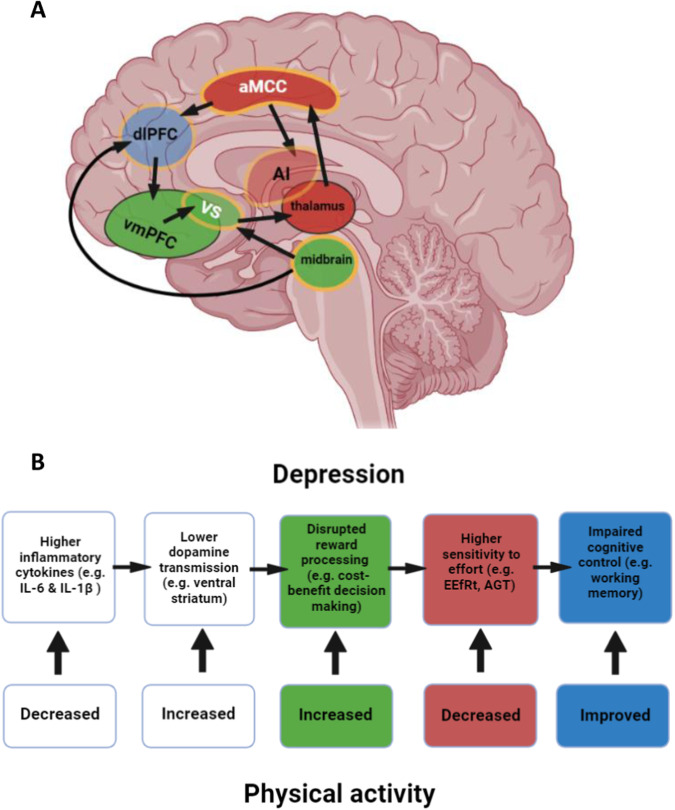
Depression is the leading cause of disability worldwide, exerting a profound negative impact on quality of life in those who experience it. Depression is associated with disruptions to several closely related neural and cognitive processes, including dopamine transmission, fronto-striatal brain activity and connectivity, reward processing and motivation. Physical activity, especially aerobic exercise, reduces depressive symptoms, but the mechanisms driving its antidepressant effects are poorly understood. Here we propose a novel hypothesis for understanding the antidepressant effects of exercise, centred on motivation, across different levels of explanation. There is robust evidence that aerobic exercise decreases systemic inflammation. Inflammation is known to reduce dopamine transmission, which in turn is strongly implicated in effort-based decision making for reward. Drawing on a broad range of research in humans and animals, we propose that by reducing inflammation and boosting dopamine transmission, with consequent effects on effort-based decision making for reward, exercise initially specifically improves ‘interest-activity’ symptoms of depression—namely anhedonia, fatigue and subjective cognitive impairment - by increasing propensity to exert effort. Extending this framework to the topic of cognitive control, we explain how cognitive impairment in depression may also be conceptualised through an effort-based decision-making framework, which may help to explain the impact of exercise on cognitive impairment. Understanding the mechanisms underlying the antidepressant effects of exercise could inform the development of novel intervention strategies, in particular personalised interventions and boost social prescribing.
Overview
The claims and statistics of this paper haven’t been checked yet.
Free: it reads the open-access text and checks the first 5 claims that cite a source we can check. Create a free account to check every claim.
Integrity signals
Registry
Cites
Statistics
Figures
Verification
Claims the paper makes
The claims and statistics of this paper haven’t been checked yet.
Free: it reads the open-access text and checks the first 5 claims that cite a source we can check. Create a free account to check every claim.
Claims other papers make about this one
Each is checked against this paper’s own text: does it say what the citing paper says it does?
In the citing paper
“The mechanism of the antidepressant effect of exercise is not precisely known, and is likely multi-factorial, with alterations in neurotransmitters, inflammatory cytokines, neuroendocrine pathways, dopamine processing, oxidative stress, neuroplasticity, reward processing, body image, self-efficacy, functional independence, and many other pathways likely operative [455]”
From Global consensus on optimal exercise recommendations for enhancing healthy longevity in older adults (ICFSR) (2025) · cites this paper as [455]
Self-check
Percentages, sums and reported differences re-computed from the paper’s own numbers.
The self-check needs the paper’s full text.
Citations
Cites
Trivedi, M. H., Rush, A. J., Wisniewski, S. R., Nierenberg, A. A., Warden, D., Ritz, L., Norquist, G., Howland, R. H., Lebowitz, B., McGrath, P. J., et al. (2006) · American Journal of Psychiatry · doi:10.1176/appi.ajp.163.1.28 · Cited by 3,879
Fitness Effects on the Cognitive Function of Older Adults: A Meta-Analytic Study
Colcombe, S., & Kramer, A. F. (2003) · Psychological Science · doi:10.1111/1467-9280.t01-1-01430 · Cited by 3,782
The reward circuit: linking primate anatomy and human imaging
Haber, S. N., & Knutson, B. (2010) · Neuropsychopharmacology · doi:10.1038/npp.2009.129 · Cited by 3,718 · cited 1×
“Anhedonia is associated with disruption to both dopamine function [53, 54] and striatal activation [52], consistent with preclinical studies implicating the mesolimbic dopamine system in motivational dysfunction [55, 56].”
ResultMacrophages, inflammation, and insulin resistance
Olefsky, J. M., & Glass, C. K. (2010) · Annual Review of Physiology · doi:10.1146/annurev-physiol-021909-135846 · Cited by 2,733
Cognition and Depression: Current Status and Future Directions
Gotlib, I. H., & Joormann, J. (2010) · Annual Review of Clinical Psychology · doi:10.1146/annurev.clinpsy.121208.131305 · Cited by 2,420
The expected value of control: an integrative theory of anterior cingulate cortex function
Shenhav, A., Botvinick, M. M., & Cohen, J. D. (2013) · Neuron · doi:10.1016/j.neuron.2013.07.007 · Cited by 2,321 · cited 1×
“The expected value of control (EVC) theory proposes that cognitive control is modulated by a decision-making process weighing up the potential gain of control against its cost [99].”
BackgroundInflammatory mechanisms linking obesity and metabolic disease
Saltiel, A. R., & Olefsky, J. M. (2017) · Journal of Clinical Investigation · doi:10.1172/jci92035 · Cited by 2,212
Cognitive impairment in depression: a systematic review and meta-analysis
Rock, P. L., Roiser, J. P., Riedel, W. J., & Blackwell, A. D. (2014) · Psychological Medicine · doi:10.1017/s0033291713002535 · Cited by 2,161 · cited 2×
“Poorer performance on tests of cognitive control in depression is accompanied by other cognitive impairments, including on selective attention and memory tasks, which are not resolved by standard antidepressant treatment [79].”
Self-citationThe Bidirectional Relationship of Depression and Inflammation: Double Trouble
Beurel, E., Toups, M., & Nemeroff, C. B. (2020) · Neuron · doi:10.1016/j.neuron.2020.06.002 · Cited by 2,136
Cooney, G. M., Dwan, K., Greig, C. A., Lawlor, D. A., Rimer, J., Waugh, F. R., McMurdo, M., & Mead, G. E. (2013) · Cochrane Database of Systematic Reviews · doi:10.1002/14651858.cd004366.pub6 · Cited by 1,834
Physical Activity and Incident Depression: A Meta-Analysis of Prospective Cohort Studies
Schuch, F. B., Vancampfort, D., Firth, J., Rosenbaum, S., Ward, P. B., Silva, E. S., Hallgren, M., Ponce De Leon, A., Dunn, A. L., Deslandes, A. C., et al. (2018) · American Journal of Psychiatry · doi:10.1176/appi.ajp.2018.17111194 · Cited by 1,763 · cited 2×
“…evidence from observational studies indicating that individuals with higher levels of physical activity have lower odds of developing depression [20]; for example, those exercising for at least four hours per week had 18% lower risk of depression, with a 25% reduction in those who exercised for…”
BackgroundNeural mechanisms of the cognitive model of depression.
Disner, S. G., Beevers, C. G., Haigh, E. A. P., & Beck, A. T. (2011) · Nature Reviews Neuroscience · doi:10.1038/nrn3027 · Cited by 1,718
Inverted-U–Shaped Dopamine Actions on Human Working Memory and Cognitive Control
Cools, R., & D'Esposito, M. (2011) · Biological Psychiatry · doi:10.1016/j.biopsych.2011.03.028 · Cited by 1,673 · cited 1×
“…high-effort choices, higher doses had the inverse effect, decreasing high-effort choices [112]; indicating that the relationship between dopamine and effort is complex, possibly corresponding to the well-documented ‘ inverted U-shaped ’ function of dopaminergic modulation of PFC functioning [113].”
BackgroundSnyder, H. R. (2013) · Psychological Bulletin · doi:10.1037/a0028727 · Cited by 1,667 · cited 1×
“One possible explanation for such a broad pattern of impairment is that reduced cognitive control, arising from a failure to allocate cognitive effort, causes more general impairments in cognitive processing [79 – 82].”
BackgroundCardiovascular fitness, cortical plasticity, and aging
Colcombe, S. J., Kramer, A. F., Erickson, K. I., Scalf, P., McAuley, E., Cohen, N. J., Webb, A., Jerome, G. J., Marquez, D. X., & Elavsky, S. (2004) · Proceedings of the National Academy of Sciences · doi:10.1073/pnas.0400266101 · Cited by 1,648
Raison, C. L., Rutherford, R. E., Woolwine, B. J., Shuo, C., Schettler, P., Drake, D. F., Haroon, E., & Miller, A. H. (2013) · JAMA Psychiatry · doi:10.1001/2013.jamapsychiatry.4 · Cited by 1,617
Reconsidering anhedonia in depression: Lessons from translational neuroscience
Treadway, M. T., & Zald, D. H. (2011) · Neuroscience & Biobehavioral Reviews · doi:10.1016/j.neubiorev.2010.06.006 · Cited by 1,579 · cited 1×
“Anhedonia is de fi ned as diminished interest or pleasure in previously enjoyable activities and is a core part of the interest-activity cluster of depressive symptoms [37].”
BackgroundExercise as a treatment for depression: a meta-analysis adjusting for publication bias
Schuch, F. B., Vancampfort, D., Richards, J., Rosenbaum, S., Ward, P. B., & Stubbs, B. (2016) · Journal of Psychiatric Research · doi:10.1016/j.jpsychires.2016.02.023 · Cited by 1,529 · cited 1×
“…of exercise [157], concluding that it has a moderate-to-large antidepressant effect when compared to no-treatment or control groups [152, 158 – 160], is no less effective than antidepressant medication or psychological therapy [158, 159] and has a moderate bene fi t over treatment as usual…”
Depression Is the Leading Cause of Disability Around the World
Friedrich, M. J. (2017) · JAMA · doi:10.1001/jama.2017.3826 · Cited by 1,459 · cited 1×
“Depression is the leading cause of disability worldwide [1].”
The mysterious motivational functions of mesolimbic dopamine
Salamone, J. D., & Correa, M. (2012) · Neuron · doi:10.1016/j.neuron.2012.10.021 · Cited by 1,418 · cited 3×
“Effort is typically considered to be signalled by tonic dopamine transmission [56, 116], but when studied across multiple timescales in rodents, tonic (minute-by-minute) dopamine release correlates with both reward rate and motivational vigour, whilst phasic (second-by-second) dopamine release…”
BackgroundResultSedentary time and cardio-metabolic biomarkers in US adults: NHANES 2003–06
Healy, G. N., Matthews, C. E., Dunstan, D. W., Winkler, E. A. H., & Owen, N. (2011) · European Heart Journal · doi:10.1093/eurheartj/ehq451 · Cited by 1,368 · cited 2×
“While exercise has an anti-in fl ammatory effect, a sedentary lifestyle is independently associated with chronic low-grade in fl ammatory illnesses [179, 180].”
BackgroundAssociation Between Physical Activity and Risk of Depression: A Systematic Review and Meta-analysis
Pearce, M., Garcia, L., Abbas, A., Strain, T., Schuch, F. B., Golubic, R., Kelly, P., Khan, S., Utukuri, M., Laird, Y., et al. (2022) · JAMA Psychiatry · doi:10.1001/jamapsychiatry.2022.0609 · Cited by 1,332
Kandola, A., Ashdown-Franks, G., Hendrikse, J., Sabiston, C. M., & Stubbs, B. (2019) · Neuroscience & Biobehavioral Reviews · doi:10.1016/j.neubiorev.2019.09.040 · Cited by 1,309 · cited 2×
“Substantial prior research indicates that exercise alters several biological processes that could in fl uence depressive symptoms [28], such as elevated brain derived neurotrophic factor (BDNF) [29], increased grey matter volume [30], decreased oxidative stress [31] and altered neuroendocrine…”
BackgroundThe role of dopamine in the pathophysiology of depression
Dunlop, B. W., & Nemeroff, C. B. (2007) · Archives of General Psychiatry · doi:10.1001/archpsyc.64.3.327 · Cited by 1,244 · cited 1×
“Anhedonia is associated with disruption to both dopamine function [53, 54] and striatal activation [52], consistent with preclinical studies implicating the mesolimbic dopamine system in motivational dysfunction [55, 56].”
ResultPizzagalli, D. A., Holmes, A. J., Dillon, D. G., Goetz, E. L., Birk, J. L., Bogdan, R., Dougherty, D. D., Iosifescu, D. V., Rauch, S. L., & Fava, M. (2009) · American Journal of Psychiatry · doi:10.1176/appi.ajp.2008.08081201 · Cited by 1,232 · cited 1×
“At the neural level, these changes are thought to be driven by altered activation during reward processing in the ventral striatum, caudate and anterior mid-cingulate cortex (aMCC, often referred to as dorsal anterior cingulate cortex (dACC), or simply ACC) in depression [49 – 52].”
BackgroundMuscle–Organ Crosstalk: The Emerging Roles of Myokines
Severinsen, M. C. K., & Pedersen, B. K. (2020) · Endocrine Reviews · doi:10.1210/endrev/bnaa016 · Cited by 1,226
Depression, Stress, and Anhedonia: Toward a Synthesis and Integrated Model
Pizzagalli, D. A. (2014) · Annual Review of Clinical Psychology · doi:10.1146/annurev-clinpsy-050212-185606 · Cited by 1,155
Depression: Perspectives from Affective Neuroscience
Davidson, R. J., Pizzagalli, D., Nitschke, J. B., & Putnam, K. (2002) · Annual Review of Psychology · doi:10.1146/annurev.psych.53.100901.135148 · Cited by 1,138
Tonic dopamine: Opportunity costs and the control of response vigor
Niv, Y., Daw, N. D., Joel, D., & Dayan, P. (2007) · Psychopharmacology · doi:10.1007/s00213-006-0502-4 · Cited by 1,133 · cited 1×
“Effort is typically considered to be signalled by tonic dopamine transmission [56, 116], but when studied across multiple timescales in rodents, tonic (minute-by-minute) dopamine release correlates with both reward rate and motivational vigour, whilst phasic (second-by-second) dopamine release…”
BackgroundThe neurobiology of anhedonia and other reward-related deficits
Der-Avakian, A., & Markou, A. (2012) · Trends in Neurosciences · doi:10.1016/j.tins.2011.11.005 · Cited by 1,130
Toward a rational and mechanistic account of mental effort
Shenhav, A., Musslick, S., Lieder, F., Kool, W., Griffiths, T. L., Cohen, J. D., & Botvinick, M. M. (2017) · Annual Review of Neuroscience · doi:10.1146/annurev-neuro-072116-031526 · Cited by 1,077 · cited 3×
“According to EVC theory, cognitive control results from a decision-making process in which the potential rewards and costs of cognitive control are weighed up and the brain allocates resources accordingly [75, 77].”
BackgroundMethodTyring, S., Gottlieb, A., Papp, K., Gordon, K., Leonardi, C., Wang, A., Lalla, D., Woolley, M., Jahreis, A., Zitnik, R., et al. (2006) · The Lancet · doi:10.1016/s0140-6736(05)67763-x · Cited by 1,069 · cited 1×
“Conversely, inhibition of in fl amma-tory cytokines reduces depressive symptoms in patients with in fl ammatory conditions [120] and reduces anhedonia in depressed individuals with high in fl ammatory cytokines as well as in those with in fl ammatory conditions [121, 122].”
Singh, B., Olds, T., Curtis, R., Dumuid, D., Virgara, R., Watson, A., Szeto, K., O'Connor, E., Ferguson, T., Eglitis, E., et al. (2023) · British Journal of Sports Medicine · doi:10.1136/bjsports-2022-106195 · Cited by 1,049 · cited 1×
“…meta-analyses of randomised controlled trials of aerobic exercise interventions estimate a substantial effect on overall depressive symptoms [149, 150], in both adults (ES ~ 0.8) [21] and young people (ES ~ 0.8) [22], although a lower effect size was reported in a meta-analysis including…”
BackgroundInfluentialFried, E. I., & Nesse, R. M. (2015) · Journal of Affective Disorders · doi:10.1016/j.jad.2014.10.010 · Cited by 1,043 · cited 1×
“Even individuals with apparently similar symptoms of depression may respond differently to the same treatment, probably because depression is highly mechanistically heterogeneous [5].”
BackgroundBupropion-SR, Sertraline, or Venlafaxine-XR after Failure of SSRIs for Depression
Rush, A. J., Trivedi, M. H., Wisniewski, S. R., Stewart, J. W., Nierenberg, A. A., Thase, M. E., Ritz, L., Biggs, M. M., Warden, D., Luther, J. F., et al. (2006) · New England Journal of Medicine · doi:10.1056/nejmoa052963 · Cited by 1,033 · cited 1×
“Depression is also dif fi cult to treat: fewer than half of people respond to selective serotonin reuptake inhibitors, with only around one-third remitting from their fi rst pharmacological treatment [3] and still fewer remit after switching to a second treatment [4].”
Bridging animal and human models of exercise-induced brain plasticity
Voss, M. W., Vivar, C., Kramer, A. F., & van Praag, H. (2013) · Trends in Cognitive Sciences · doi:10.1016/j.tics.2013.08.001 · Cited by 1,030 · cited 1×
“Further, the effect of exercise on BDNF has been examined mainly in animals due to the dif fi culty of measuring cellular and molecular changes in human brains [140].”
BackgroundEffort-related functions of nucleus accumbens dopamine and associated forebrain circuits
Salamone, J. D., Correa, M., Farrar, A., & Mingote, S. M. (2007) · Psychopharmacology · doi:10.1007/s00213-006-0668-9 · Cited by 1,000
Frontocingulate Dysfunction in Depression: Toward Biomarkers of Treatment Response
Pizzagalli, D. A. (2011) · Neuropsychopharmacology · doi:10.1038/npp.2010.166 · Cited by 945 · cited 1×
“1A); accordingly dlPFC activity is reduced in depression [100 – 102], including during cognitive control [103] and activity in the dlPFC predicts improvements in depressive symptoms after non-invasive brain stimulation treatment [104].”
BackgroundExerkines in health, resilience and disease
Chow, L. S., Gerszten, R. E., Taylor, J. M., Pedersen, B. K., van Praag, H., Trappe, S., Febbraio, M. A., Galis, Z. S., Gao, Y., Haus, J. M., et al. (2022) · Nature Reviews Endocrinology · doi:10.1038/s41574-022-00641-2 · Cited by 927 · cited 1×
“Muscle is increasingly recognised as an endocrine organ because it secretes cytokines (or myokines) to coordinate immediate responses to exercise, indicating the importance of the musculature in the anti-in fl ammatory effects of exercise [167 – 169].”
BackgroundA meta-analytic review of the effects of exercise on brain-derived neurotrophic factor
Szuhany, K. L., Bugatti, M., & Otto, M. W. (2015) · Journal of Psychiatric Research · doi:10.1016/j.jpsychires.2014.10.003 · Cited by 909 · cited 2×
“…research indicates that exercise alters several biological processes that could in fl uence depressive symptoms [28], such as elevated brain derived neurotrophic factor (BDNF) [29], increased grey matter volume [30], decreased oxidative stress [31] and altered neuroendocrine responses [32, 33].”
BackgroundInfluentialThe Salience Network: A Neural System for Perceiving and Responding to Homeostatic Demands
Seeley, W. W. (2019) · The Journal of Neuroscience · doi:10.1523/jneurosci.1138-17.2019 · Cited by 845 · cited 2×
“The CON [89, 106, 108] is thought to play a key role in this process, activated both when deciding to perform an effortful action [105] and during cognitive control tasks [104, 200]; importantly, CON connectivity is also disrupted in depression [201].”
Exercise as a treatment for depression: A meta-analysis
Kvam, S., Kleppe, C. L., Nordhus, I. H., & Hovland, A. (2016) · Journal of Affective Disorders · doi:10.1016/j.jad.2016.03.063 · Cited by 837 · cited 1×
“…of exercise [157], concluding that it has a moderate-to-large antidepressant effect when compared to no-treatment or control groups [152, 158 – 160], is no less effective than antidepressant medication or psychological therapy [158, 159] and has a moderate bene fi t over treatment as usual [159].”
Mesolimbic dopamine signals the value of work
Hamid, A. A., Pettibone, J. R., Mabrouk, O. S., Hetrick, V. L., Schmidt, R., Vander Weele, C. M., Kennedy, R. T., Aragona, B. J., & Berke, J. D. (2016) · Nature Neuroscience · doi:10.1038/nn.4173 · Cited by 824 · cited 2×
“Dopamine is associated with anhedonia, consistent with the link between anhedonia and motivation; indeed, it is well established that dopamine plays a central role in motivation [11, 48, 56, 109].”
BackgroundMcNulty, K. L., Elliott-Sale, K. J., Dolan, E., Swinton, P. A., Ansdell, P., Goodall, S., Thomas, K., & Hicks, K. M. (2020) · Sports Medicine · doi:10.1007/s40279-020-01319-3 · Cited by 812
Reduced hedonic capacity in major depressive disorder: evidence from a probabilistic reward task
Pizzagalli, D. A., Iosifescu, D., Hallett, L. A., Ratner, K. G., & Fava, M. (2008) · Journal of Psychiatric Research · doi:10.1016/j.jpsychires.2008.03.001 · Cited by 780
Osimo, E. F., Baxter, L. J., Lewis, G., Jones, P. B., & Khandaker, G. M. (2019) · Psychological Medicine · doi:10.1017/s0033291719001454 · Cited by 774 · cited 1×
“…important methodological limitations remain: in particular, because increased in fl ammation is only present in a subset of depressed individuals [128], participants should ideally be strati fi ed by their in fl ammatory status at baseline and in fl amma-tory markers should be assessed pre-and…”
Self-citationTreadway, M. T., Buckholtz, J. W., Schwartzman, A. N., Lambert, W. E., & Zald, D. H. (2009) · PLoS ONE · doi:10.1371/journal.pone.0006598 · Cited by 769 · cited 3×
“In this task, physical effort is manipulated by the number of button presses required in a fi xed amount of time and the potential reward that can be obtained is varied [69].”
BackgroundMethodInfluentialA meta-regression to examine the relationship between aerobic fitness and cognitive performance
Etnier, J. L., Nowell, P. M., Landers, D. M., & Sibley, B. A. (2006) · Brain Research Reviews · doi:10.1016/j.brainresrev.2006.01.002 · Cited by 749
Treadway, M. T., Bossaller, N. A., Shelton, R. C., & Zald, D. H. (2012) · Journal of Abnormal Psychology · doi:10.1037/a0028813 · Cited by 733 · cited 3×
“Speci fi cally, patients with depression - particularly those with anhedonia - have impaired reward-processing [7] and are less willing to exert effort in order to obtain reward [8 – 10].”
BackgroundMethodKappelmann, N., Lewis, G., Dantzer, R., Jones, P. B., & Khandaker, G. M. (2018) · Molecular Psychiatry · doi:10.1038/mp.2016.167 · Cited by 659
Self-citationNeuroscience of apathy and anhedonia: a transdiagnostic approach
Husain, M., & Roiser, J. P. (2018) · Nature Reviews Neuroscience · doi:10.1038/s41583-018-0029-9 · Cited by 640 · cited 3×
“…most reliably observed on tests of reward bias (assessed through an asymmetrically rewarded signal detection task), cost-bene fi t decision making (how potential rewards are used to guide decisions) and reinforcement learning (updating expectations from outcomes to guide future choices) [48].”
BackgroundSelf-citationMcTeague, L. M., Huemer, J., Carreon, D. M., Jiang, Y., Eickhoff, S. B., & Etkin, A. (2017) · American Journal of Psychiatry · doi:10.1176/appi.ajp.2017.16040400 · Cited by 635
Proposed diagnostic criteria for apathy in Alzheimer’s disease and other neuropsychiatric disorders
Robert, P., Onyike, C. U., Leentjens, A. F. G., Dujardin, K., Aalten, P., Starkstein, S., Verhey, F. R. J., Yessavage, J., Clement, J. P., Drapier, D., et al. (2009) · European Psychiatry · doi:10.1016/j.eurpsy.2008.09.001 · Cited by 619 · cited 1×
“Apathy refers to a loss of enthusiasm for a variety of activities, which is often expressed as lower motivation to perform goal-directed behaviour across different domains of function [36].”
BackgroundInflammation-Induced Anhedonia: Endotoxin Reduces Ventral Striatum Responses to Reward
Eisenberger, N. I., Berkman, E. T., Inagaki, T. K., Rameson, L. T., Mashal, N. M., & Irwin, M. R. (2010) · Biological Psychiatry · doi:10.1016/j.biopsych.2010.06.010 · Cited by 596
Effect of exercise training on chronic inflammation
Beavers, K. M., Brinkley, T. E., & Nicklas, B. J. (2010) · Clinica Chimica Acta · doi:10.1016/j.cca.2010.02.069 · Cited by 591
Firth, J., Rosenbaum, S., Stubbs, B., Gorczynski, P., Yung, A. R., & Vancampfort, D. (2016) · Psychological Medicine · doi:10.1017/s0033291716001732 · Cited by 577
Effort-Based Cost–Benefit Valuation and the Human Brain
Croxson, P. L., Walton, M. E., O'Reilly, J. X., Behrens, T. E. J., & Rushworth, M. F. S. (2009) · The Journal of Neuroscience · doi:10.1523/jneurosci.4515-08.2009 · Cited by 560 · cited 1×
“Speci fi c parts of these circuits appear to integrate effort and reward to compute a net value of performing an action [48, 89]; effort and reward expectations are integrated in the ventral striatum, midbrain and aMCC [90, 95, 96].”
Neural Responses to Monetary Incentives in Major Depression
Knutson, B., Bhanji, J. P., Cooney, R. E., Atlas, L. Y., & Gotlib, I. H. (2008) · Biological Psychiatry · doi:10.1016/j.biopsych.2007.07.023 · Cited by 496
Mapping anhedonia onto reinforcement learning: a behavioural meta-analysis
Huys, Q. J., Pizzagalli, D. A., Bogdan, R., & Dayan, P. (2013) · Biology of Mood & Anxiety Disorders · doi:10.1186/2045-5380-3-12 · Cited by 480
Promoting self-regulation through school-based martial arts training.
Lakes, K. D., & Hoyt, W. T. (2004) · Journal of Applied Developmental Psychology · doi:10.1016/j.appdev.2004.04.002 · Cited by 463 · cited 1×
“A causal relationship between physical activity and motivation was indicated in a 12-week martial arts intervention in children, which yielded large improvements speci fi cally on observer ratings of motivation, perseverance, will and engagement [197, 198].”
BackgroundHeissel, A., Heinen, D., Brokmeier, L. L., Skarabis, N., Kangas, M., Vancampfort, D., Stubbs, B., Firth, J., Ward, P. B., Rosenbaum, S., et al. (2023) · British Journal of Sports Medicine · doi:10.1136/bjsports-2022-106282 · Cited by 449 · cited 1×
“…meta-analyses of randomised controlled trials of aerobic exercise interventions estimate a substantial effect on overall depressive symptoms [149, 150], in both adults (ES ~ 0.8) [21] and young people (ES ~ 0.8) [22], although a lower effect size was reported in a meta-analysis including less…”
BackgroundInfluentialMcMakin, D. L., Olino, T. M., Porta, G., Dietz, L. J., Emslie, G., Clarke, G., Wagner, K. D., Asarnow, J. R., Ryan, N. D., Birmaher, B., et al. (2012) · Journal of the American Academy of Child & Adolescent Psychiatry · doi:10.1016/j.jaac.2012.01.011 · Cited by 448 · cited 1×
“Anhedonia is especially important to understand because it is associated with antidepressant treatment failure [6], a more chronic course of depression [63, 64] and fewer depression-free days following antidepressant treatment [65].”
BackgroundInflammation Effects on Motivation and Motor Activity: Role of Dopamine
Felger, J. C., & Treadway, M. T. (2017) · Neuropsychopharmacology · doi:10.1038/npp.2016.143 · Cited by 442
Reduced Reward Learning Predicts Outcome in Major Depressive Disorder
Vrieze, E., Pizzagalli, D. A., Demyttenaere, K., Hompes, T., Sienaert, P., de Boer, P., Schmidt, M., & Claes, S. (2013) · Biological Psychiatry · doi:10.1016/j.biopsych.2012.10.014 · Cited by 441 · cited 2×
“Depressed individuals with high anhedonia show poorer reward learning compared to those with low anhedonia [43, 44], as well as lower reward sensitivity [45], even following remission [46].”
BackgroundKohut, M. L., McCann, D. A., Russell, D. W., Konopka, D. N., Cunnick, J. E., Franke, W. D., Castillo, M. C., Reighard, A. E., & Vanderah, E. (2006) · Brain, Behavior, and Immunity · doi:10.1016/j.bbi.2005.12.002 · Cited by 436
Dopaminergic and Glutamatergic Regulation of Effort- and Delay-Based Decision Making
Floresco, S. B., Tse, M. T. L., & Ghods-Sharifi, S. (2008) · Neuropsychopharmacology · doi:10.1038/sj.npp.1301565 · Cited by 435 · cited 1×
“In animals, dopamine D2 receptor antagonism decreases effort expenditure [112, 114] speci fi cally in the nucleus accumbens (equivalent to the ventral striatum in humans) [70].”
BackgroundExercise reduces depression and inflammation but intensity matters
Paolucci, E. M., Loukov, D., Bowdish, D. M. E., & Heisz, J. J. (2018) · Biological Psychology · doi:10.1016/j.biopsycho.2018.01.015 · Cited by 430
Uher, R., Perlis, R. H., Henigsberg, N., Zobel, A., Rietschel, M., Mors, O., Hauser, J., Dernovsek, M. Z., Souery, D., Bajs, M., et al. (2012) · Psychological Medicine · doi:10.1017/s0033291711001905 · Cited by 420 · cited 2×
“Impaired motivation is an important feature of depression that is associated with interest-activity symptoms [6] and linked to poor treatment outcome [6].”
LAPLANE, D., LEVASSEUR, M., PILLON, B., DUBOIS, B., BAULAC, M., MAZOYER, B., DINH, S. T., SETTE, G., DANZE, F., & BARON, J. C. (1989) · Brain · doi:10.1093/brain/112.3.699 · Cited by 415
Neurocomputational mechanisms underlying subjective valuation of effort costs
Chong, T. T.-J., Apps, M., Giehl, K., Sillence, A., Grima, L. L., & Husain, M. (2017) · PLOS Biology · doi:10.1371/journal.pbio.1002598 · Cited by 415
Dopaminergic mechanisms of individual differences in human effort-based decision-making
Treadway, M. T., Buckholtz, J. W., Cowan, R. L., Woodward, N. D., Li, R., Ansari, M. S., Baldwin, R. M., Schwartzman, A. N., Kessler, R. M., & Zald, D. H. (2012) · The Journal of Neuroscience · doi:10.1523/jneurosci.6459-11.2012 · Cited by 385
Capuron, L., Pagnoni, G., Drake, D. F., Woolwine, B. J., Spivey, J. R., Crowe, R. J., Votaw, J. R., Goodman, M. M., & Miller, A. H. (2012) · Archives of General Psychiatry · doi:10.1001/archgenpsychiatry.2011.2094 · Cited by 382 · cited 1×
“…reward responsivity in the ventral striatum, as well as dopamine transmission in the caudate and putamen and increases depressive symptoms including anhedonia [132, 133]; and ventral striatal response to reward anticipation has been reported to mediate the effect of in fl ammation on mood [134].”
BackgroundGender and Sex Differences in Adipose Tissue
Chang, E., Varghese, M., & Singer, K. (2018) · Current Diabetes Reports · doi:10.1007/s11892-018-1031-3 · Cited by 382 · cited 1×
“An anti-in fl ammatory effect is observed most consistently in men, which could be due to differences in adiposity between the sexes [175], or cyclical variations in baseline levels of in fl ammation in women which may confound results [176].”
ResultThe anatomy of apathy: a neurocognitive framework for amotivated behaviour
Le Heron, C., Apps., M. A. J., & Husain, M. (2018) · Neuropsychologia · doi:10.1016/j.neuropsychologia.2017.07.003 · Cited by 380
Functional Characterization of the Cingulo-Opercular Network in the Maintenance of Tonic Alertness
Sadaghiani, S., & D'Esposito, M. (2015) · Cerebral Cortex · doi:10.1093/cercor/bhu072 · Cited by 370 · cited 2×
“The CON [89, 106, 108] is thought to play a key role in this process, activated both when deciding to perform an effortful action [105] and during cognitive control tasks [104, 200]; importantly, CON connectivity is also disrupted in depression [201].”
BackgroundHPA axis and aging in depression: Systematic review and meta-analysis
Belvederi Murri, M., Pariante, C., Mondelli, V., Masotti, M., Atti, A. R., Mellacqua, Z., Antonioli, M., Ghio, L., Menchetti, M., Zanetidou, S., et al. (2014) · Psychoneuroendocrinology · doi:10.1016/j.psyneuen.2013.12.004 · Cited by 367
Nutt, D., Demyttenaere, K., Janka, Z., Aarre, T., Bourin, M., Canonico, P. L., Carrasco, J. L., & Stahl, S. (2007) · Journal of Psychopharmacology · doi:10.1177/0269881106069938 · Cited by 366 · cited 1×
“Antidepressants are generally ineffective for treating motivational dysfunction and can even exacerbate these symptoms in some patients, indicating an important unmet clinical need [66 – 68].”
BackgroundDopamine promotes cognitive effort by biasing the benefits versus costs of cognitive work
Westbrook, A., van den Bosch, R., Määttä, J. I., Hofmans, L., Papadopetraki, D., Cools, R., & Frank, M. J. (2020) · Science · doi:10.1126/science.aaz5891 · Cited by 356
Salamone, J. D., Yohn, S. E., López-Cruz, L., San Miguel, N., & Correa, M. (2016) · Brain · doi:10.1093/brain/aww050 · Cited by 350 · cited 1×
“Given that dopamine function is associated with anhedonia [11, 12], and with the propensity to exert effort in both animals [13] and humans [14] (with greater effects of dopamine manipulation in individuals with lower dopamine transmission [15]), a candidate alternative to SSRIs to treat depression…”
BackgroundMorres, I. D., Hatzigeorgiadis, A., Stathi, A., Comoutos, N., Arpin-Cribbie, C., Krommidas, C., & Theodorakis, Y. (2019) · Depression and Anxiety · doi:10.1002/da.22842 · Cited by 350 · cited 3×
“Indeed, it is well established that any level of physical activity can help prevent [20] and treat [21, 22] depression in both adults and adolescents, with a longer duration of intervention and more intense activity having a greater effect [23].”
BackgroundInfluentialMotivation and cognitive control in depression
Grahek, I., Shenhav, A., Musslick, S., Krebs, R. M., & Koster, E. H. W. (2019) · Neuroscience & Biobehavioral Reviews · doi:10.1016/j.neubiorev.2019.04.011 · Cited by 348
Bailey, A. P., Hetrick, S. E., Rosenbaum, S., Purcell, R., & Parker, A. G. (2018) · Psychological Medicine · doi:10.1017/s0033291717002653 · Cited by 338 · cited 2×
“Indeed, it is well established that any level of physical activity can help prevent [20] and treat [21, 22] depression in both adults and adolescents, with a longer duration of intervention and more intense activity having a greater effect [23].”
InfluentialKrogh, J., Nordentoft, M., Sterne, J. A. C., & Lawlor, D. A. (2011) · The Journal of Clinical Psychiatry · doi:10.4088/jcp.08r04913blu · Cited by 326 · cited 1×
“Indeed, it is well established that any level of physical activity can help prevent [20] and treat [21, 22] depression in both adults and adolescents, with a longer duration of intervention and more intense activity having a greater effect [23].”
Stringaris, A., Vidal-Ribas Belil, P., Artiges, E., Lemaitre, H., Gollier-Briant, F., Wolke, S., Vulser, H., Miranda, R., Penttilä, J., Struve, M., et al. (2015) · American Journal of Psychiatry · doi:10.1176/appi.ajp.2015.14101298 · Cited by 322
The Computational and Neural Basis of Cognitive Control: Charted Territory and New Frontiers
Botvinick, M. M., & Cohen, J. D. (2014) · Cognitive Science · doi:10.1111/cogs.12126 · Cited by 322 · cited 1×
“Cognitive control (often called executive function) describes a set of effortful cognitive processes [75] which allow for fl exible adaptation of behaviour in line with goals [76], including functions such as working memory, task-switching, response inhibition and attentional control [77].”
BackgroundVerheggen, R. J. H. M., Maessen, M. F. H., Green, D. J., Hermus, A. R. M. M., Hopman, M. T. E., & Thijssen, D. H. T. (2016) · Obesity Reviews · doi:10.1111/obr.12406 · Cited by 318
Chaddock-Heyman, L., Erickson, K. I., Voss, M. W., Knecht, A. M., Pontifex, M. B., Castelli, D. M., Hillman, C. H., & Kramer, A. F. (2013) · Frontiers in Human Neuroscience · doi:10.3389/fnhum.2013.00072 · Cited by 305
Drinkwater, C., Wildman, J., & Moffatt, S. (2019) · BMJ · doi:10.1136/bmj.l1285 · Cited by 304 · cited 1×
“Such knowledge could contribute to social prescribing — the use of non-medical interventions to tackle wider in fl uences on health and support individuals to effectively manage their health [213] — increasingly a priority for mental healthcare.”
BackgroundThe effect of physical activity on mediators of inflammation
Nimmo, M. A., Leggate, M., Viana, J. L., & King, J. A. (2013) · Diabetes, Obesity and Metabolism · doi:10.1111/dom.12156 · Cited by 302
Interleukin 6 as an Energy Allocator in Muscle Tissue
Kistner, T. M., Pedersen, B. K., & Lieberman, D. E. (2022) · Nature Metabolism · doi:10.1038/s42255-022-00538-4 · Cited by 295
Yang, X.-H., Huang, J., Zhu, C.-Y., Wang, Y.-F., Cheung, E. F. C., Chan, R. C. K., & Xie, G.-R. (2014) · Psychiatry Research · doi:10.1016/j.psychres.2014.08.056 · Cited by 288
Samaras, K., Botelho, N. K., Chisholm, D. J., & Lord, R. V. (2010) · Obesity · doi:10.1038/oby.2009.443 · Cited by 287 · cited 1×
“It is not the overall volume of adiposity per se which has an in fl ammatory effect, but rather the size of individual adipose cells and their location, with hypertrophic cells and visceral location having the biggest effect [171, 172].”
BackgroundNeurobiological effects of exercise on major depressive disorder: A systematic review
Schuch, F. B., Deslandes, A. C., Stubbs, B., Gosmann, N. P., Silva, C. T. B. D., & Fleck, M. P. D. A. (2016) · Neuroscience & Biobehavioral Reviews · doi:10.1016/j.neubiorev.2015.11.012 · Cited by 279 · cited 1×
“However, although there has been extensive research on the biological, neural and behavioural effects of exercise in animal models of depression, to date the mechanisms driving its antidepressant effects in humans are poorly understood [34, 35].”
BackgroundDopamine enhances willingness to exert effort for reward in Parkinson's disease
Chong, T. T.-J., Bonnelle, V., Manohar, S., Veromann, K.-R., Muhammed, K., Tofaris, G. K., Hu, M., & Husain, M. (2015) · Cortex · doi:10.1016/j.cortex.2015.04.003 · Cited by 276
Karrer, T. M., Josef, A. K., Mata, R., Morris, E. D., & Samanez-Larkin, G. R. (2017) · Neurobiology of Aging · doi:10.1016/j.neurobiolaging.2017.05.006 · Cited by 260 · cited 1×
“Interestingly, cross-sectional and longitudinal studies suggest that striatal and frontal dopamine transporters and D1 and D2 receptors reduce with age [206 – 208], which could be one reason that older adults are more sensitive to the psychological effects of exercise.”
BackgroundAmping Up Effort: Effects of d-Amphetamine on Human Effort-Based Decision-Making
Wardle, M. C., Treadway, M. T., Mayo, L. M., Zald, D. H., & de Wit, H. (2011) · The Journal of Neuroscience · doi:10.1523/jneurosci.4387-11.2011 · Cited by 259 · cited 1×
“Administration of amphetamine, which directly releases dopamine, increases willingness to exert effort [111], although interestingly one animal study showed that while lower doses of amphetamine increased high-effort choices, higher doses had the inverse effect, decreasing high-effort choices…”
Spijker, J., Bijl, R. V., De Graaf, R., & Nolen, W. A. (2001) · Acta Psychiatrica Scandinavica · doi:10.1034/j.1600-0447.2001.103002122.x · Cited by 254 · cited 1×
“Anhedonia is especially important to understand because it is associated with antidepressant treatment failure [6], a more chronic course of depression [63, 64] and fewer depression-free days following antidepressant treatment [65].”
BackgroundThe will to persevere Induced by electrical stimulation of the human cingulate gyrus
Parvizi, J., Rangarajan, V., Shirer, W. R., Desai, N., & Greicius, M. D. (2013) · Neuron · doi:10.1016/j.neuron.2013.10.057 · Cited by 254 · cited 1×
“Direct electrical stimulation of the aMCC (during brain surgery) induces a feeling of imminent challenge [94] and in line with the importance of the aMCC in motivated behaviour, apathy is associated with increased effort sensitivity and with decreased connectivity between this region and the…”
BackgroundInflammation, leukocytes and menstruation
Evans, J., & Salamonsen, L. A. (2012) · Reviews in Endocrine and Metabolic Disorders · doi:10.1007/s11154-012-9223-7 · Cited by 252
Shilyansky, C., Williams, L. M., Gyurak, A., Harris, A., Usherwood, T., & Etkin, A. (2016) · The Lancet Psychiatry · doi:10.1016/s2215-0366(16)00012-2 · Cited by 249 · cited 1×
“Objectively measured cognitive impairment in depression, which is not improved by most serotonergic antidepressants [24], has also been reported to be improved by physical activity [25, 26], although the picture is more mixed than for subjective depressive symptoms such as mood.”
Klein-Flügge, M. C., Kennerley, S. W., Friston, K., & Bestmann, S. (2016) · The Journal of Neuroscience · doi:10.1523/jneurosci.0292-16.2016 · Cited by 243 · cited 1×
“The supplementary motor area and aMCC have also been shown to encode the difference in reward and effort between chosen and unchosen options, providing a signal to guide decisions about whether to engage in an effortful challenge [98].”
Wipfli, B., Landers, D., Nagoshi, C., & Ringenbach, S. (2011) · Scandinavian Journal of Medicine & Science in Sports · doi:10.1111/j.1600-0838.2009.01049.x · Cited by 242
Bai, S., Guo, W., Feng, Y., Deng, H., Li, G., Nie, H., Guo, G., Yu, H., Ma, Y., Wang, J., et al. (2020) · Journal of Neurology, Neurosurgery & Psychiatry · doi:10.1136/jnnp-2019-320912 · Cited by 235
Striatal dopamine turnover during treadmill running in the rat: Relation to the speed of running
Hattori, S., Naoi, M., & Nishino, H. (1994) · Brain Research Bulletin · doi:10.1016/0361-9230(94)90214-3 · Cited by 234 · cited 1×
“Indeed, animal studies show that exercise protects against the loss of dopamine neurons associated with in fl ammation [186], elicits dopamine release [187] and increases striatal activity [187].”
BackgroundThe common inflammatory etiology of depression and cognitive impairment: a therapeutic target
Allison, D. J., & Ditor, D. S. (2014) · Journal of Neuroinflammation · doi:10.1186/s12974-014-0151-1 · Cited by 231
Why not try harder? Computational approach to motivation deficits in neuro-psychiatric diseases
Pessiglione, M., Vinckier, F., Bouret, S., Daunizeau, J., & Le Bouc, R. (2018) · Brain · doi:10.1093/brain/awx278 · Cited by 231
Rømer Thomsen, K., Whybrow, P. C., & Kringelbach, M. L. (2015) · Frontiers in Behavioral Neuroscience · doi:10.3389/fnbeh.2015.00049 · Cited by 229
Halahakoon, D. C., Kieslich, K., O’Driscoll, C., Nair, A., Lewis, G., & Roiser, J. P. (2020) · JAMA Psychiatry · doi:10.1001/jamapsychiatry.2020.2139 · Cited by 222
Self-citationMetsios, G. S., Moe, R. H., & Kitas, G. D. (2020) · Best Practice & Research Clinical Rheumatology · doi:10.1016/j.berh.2020.101504 · Cited by 221
Wu, S.-Y., Wang, T.-F., Yu, L., Jen, C. J., Chuang, J.-I., Wu, F.-S., Wu, C.-W., & Kuo, Y.-M. (2011) · Brain Behavior and Immunity · doi:10.1016/j.bbi.2010.09.006 · Cited by 206
Randall, P. A., Pardo, M., Nunes, E. J., López Cruz, L., Vemuri, V. K., Makriyannis, A., Baqi, Y., Müller, C. E., Correa, M., & Salamone, J. D. (2012) · PLoS ONE · doi:10.1371/journal.pone.0047934 · Cited by 196 · cited 1×
“This result is consistent with animal research showing that dopamine activity in the nucleus accumbens is greater in high-effort responders [115].”
ResultExercise increases caudate dopamine release and ventral striatal activation in Parkinson's disease
Sacheli, M. A., Neva, J. L., Lakhani, B., Murray, D. K., Vafai, N., Shahinfard, E., English, C., McCormick, S., Dinelle, K., Neilson, N., et al. (2019) · Movement Disorders · doi:10.1002/mds.27865 · Cited by 196 · cited 3×
“This is consistent with the hypothesis that exercise alters striatal response to reward, potentially via enhancing transmission in the mesolimbic dopaminergic pathway [19].”
BackgroundMethodWhy Don't You Try Harder? An Investigation of Effort Production in Major Depression
Cléry-Melin, M.-L., Schmidt, L., Lafargue, G., Baup, N., Fossati, P., & Pessiglione, M. (2011) · PLoS ONE · doi:10.1371/journal.pone.0023178 · Cited by 195
Blunted reward responsiveness in remitted depression
Pechtel, P., Dutra, S. J., Goetz, E. L., & Pizzagalli, D. A. (2013) · Journal of Psychiatric Research · doi:10.1016/j.jpsychires.2013.08.011 · Cited by 192 · cited 1×
“Depressed individuals with high anhedonia show poorer reward learning compared to those with low anhedonia [43, 44], as well as lower reward sensitivity [45], even following remission [46].”
BackgroundOertel-Knöchel, V., Mehler, P., Thiel, C., Steinbrecher, K., Malchow, B., Tesky, V., Ademmer, K., Prvulovic, D., Banzer, W., Zopf, Y., et al. (2014) · European Archives of Psychiatry and Clinical Neuroscience · doi:10.1007/s00406-014-0485-9 · Cited by 185
Glowacki, K., Duncan, M. J., Gainforth, H. L., & Faulkner, G. (2017) · Mental health and physical activity · doi:10.1016/j.mhpa.2017.10.001 · Cited by 184
Anhedonia in depression: biological mechanisms and computational models
Cooper, J. A., Arulpragasam, A. R., & Treadway, M. T. (2018) · Current Opinion in Behavioral Sciences · doi:10.1016/j.cobeha.2018.01.024 · Cited by 180 · cited 1×
“However, the mechanisms driving anhedonia are not well understood, arguably because it is driven by a variety of cognitive processes that have not been fully characterised and dissociated [57].”
BackgroundKrafft, C. E., Schwarz, N. F., Chi, L., Weinberger, A. L., Schaeffer, D. J., Pierce, J. E., Rodrigue, A. L., Yanasak, N. E., Miller, P. H., Tomporowski, P. D., et al. (2014) · Obesity · doi:10.1002/oby.20518 · Cited by 178 · cited 1×
“However, interventions of similar durations in children yielded only marginal improvements in performance on fl anker and antisaccade tasks [200, 204], and increased aMCC activity [204] and decreased dlPFC activity [200], raising the possibility of age-related differences in the impact of exercise.”
BackgroundAnterior cerebral artery infarction: Stroke mechanism and clinical-imaging study in 100 patients
Kang, S. Y., & Kim, J. S. (2008) · Neurology · doi:10.1212/01.wnl.0000314686.94007.d0 · Cited by 177
Skvortsova, V., Palminteri, S., & Pessiglione, M. (2014) · The Journal of Neuroscience · doi:10.1523/jneurosci.1350-14.2014 · Cited by 177
Effort and Valuation in the Brain: The Effects of Anticipation and Execution
Kurniawan, I. T., Guitart-Masip, M., Dayan, P., & Dolan, R. J. (2013) · The Journal of Neuroscience · doi:10.1523/jneurosci.4777-12.2013 · Cited by 177 · cited 1×
“Speci fi c parts of these circuits appear to integrate effort and reward to compute a net value of performing an action [48, 89]; effort and reward expectations are integrated in the ventral striatum, midbrain and aMCC [90, 95, 96].”
Recchia, F., Bernal, J. D. K., Fong, D. Y., Wong, S. H. S., Chung, P.-K., Chan, D. K. C., Capio, C. M., Yu, C. C. W., Wong, S. W. S., Sit, C. H. P., et al. (2023) · JAMA Pediatrics · doi:10.1001/jamapediatrics.2022.5090 · Cited by 177
Reward Processing, Neuroeconomics, and Psychopathology
Zald, D. H., & Treadway, M. T. (2017) · Annual Review of Clinical Psychology · doi:10.1146/annurev-clinpsy-032816-044957 · Cited by 176
The role of exercise in the treatment of depression: biological underpinnings and clinical outcomes
Ross, R. E., VanDerwerker, C. J., Saladin, M. E., & Gregory, C. M. (2023) · Molecular Psychiatry · doi:10.1038/s41380-022-01819-w · Cited by 176 · cited 1×
“A recent review summarised the meta-analyses and systematic reviews assessing the antidepressant effects of exercise [157], concluding that it has a moderate-to-large antidepressant effect when compared to no-treatment or control groups [152, 158 – 160], is no less effective than antidepressant…”
BackgroundChase, H. W., Frank, M. J., Michael, A., Bullmore, E. T., Sahakian, B. J., & Robbins, T. W. (2010) · Psychological Medicine · doi:10.1017/s0033291709990468 · Cited by 174 · cited 2×
“…of studies have reported associations between anhedonia and reward processing that survive controlling for overall symptom severity; although this has been shown in some cases, for example reward prediction error in the striatum [62], reward learning [61] and reward response over time [44].”
Quantifying motivation with effort-based decision-making paradigms in health and disease
Chong, T. T. ‐., Bonnelle, V., & Husain, M. (2016) · Progress in brain research · doi:10.1016/bs.pbr.2016.05.002 · Cited by 167 · cited 1×
“In such designs participants decide on each trial whether to accept an effortful challenge to win varying amounts of reward, as in the Apple Gathering Task (AGT) [72].”
Husain, M. I., Chaudhry, I. B., Khoso, A. B., Husain, M. O., Hodsoll, J., Ansari, M. A., Naqvi, H. A., Minhas, F. A., Carvalho, A. F., Meyer, J. H., et al. (2020) · The Lancet Psychiatry · doi:10.1016/s2215-0366(20)30138-3 · Cited by 167 · cited 1×
“It is worth noting that fi ndings into the antidepressant effects of anti-in fl ammatory medication are mixed [126], and although a meta-analysis found an overall antidepressant effect [127], important methodological limitations remain: in particular, because increased in fl ammation is only present…”
Altered neural reward and loss processing and prediction error signalling in depression
Ubl, B., Kuehner, C., Kirsch, P., Ruttorf, M., Diener, C., & Flor, H. (2015) · Social Cognitive and Affective Neuroscience · doi:10.1093/scan/nsu158 · Cited by 165 · cited 1×
“Self-reported anhedonia correlates with various markers of reward processing, including behaviour and neural activation during effort-based decision-making [9, 58, 59], the ability to sustain an optimal reward response over time [44, 60], reinforcement learning [43, 61] and reward sensitivity [45].”
BackgroundIndividual Differences in Premotor Brain Systems Underlie Behavioral Apathy
Bonnelle, V., Manohar, S., Behrens, T., & Husain, M. (2015) · Cerebral Cortex · doi:10.1093/cercor/bhv247 · Cited by 163 · cited 2×
“Further, healthy participants with high apathy scores are more sensitive to effort (less likely to accept effort trials) on the AGT [74].”
BackgroundDynamics of the dopaminergic system as a key component to the understanding of depression
YADID, G., & FRIEDMAN, A. (2008) · Progress in Brain Research · doi:10.1016/s0079-6123(08)00913-8 · Cited by 162 · cited 1×
“Anhedonia is associated with disruption to both dopamine function [53, 54] and striatal activation [52], consistent with preclinical studies implicating the mesolimbic dopamine system in motivational dysfunction [55, 56].”
Fava, M., Ball, S., Nelson, J. C., Sparks, J., Konechnik, T., Classi, P., Dube, S., & Thase, M. E. (2014) · Depression and Anxiety · doi:10.1002/da.22199 · Cited by 160 · cited 1×
“Antidepressants are generally ineffective for treating motivational dysfunction and can even exacerbate these symptoms in some patients, indicating an important unmet clinical need [66 – 68].”
BackgroundDishman, R. K., McDowell, C. P., & Herring, M. P. (2021) · British Journal of Sports Medicine · doi:10.1136/bjsports-2020-103140 · Cited by 158 · cited 1×
“Another meta-analysis suggested that increasing levels of moderate-to-vigorous physical activity is negatively associated with the incidence of depression as well as the occurrence of subclinical symptoms [148].”
BackgroundBekhbat, M., Li, Z., Mehta, N. D., Treadway, M. T., Lucido, M. J., Woolwine, B. J., Haroon, E., Miller, A. H., & Felger, J. C. (2022) · Molecular Psychiatry · doi:10.1038/s41380-022-01715-3 · Cited by 154
Endrighi, R., Steptoe, A., & Hamer, M. (2016) · British Journal of Psychiatry · doi:10.1192/bjp.bp.114.150755 · Cited by 152
Self-citationSeparate mesocortical and mesolimbic pathways encode effort and reward learning signals
Hauser, T. U., Eldar, E., & Dolan, R. J. (2017) · Proceedings of the National Academy of Sciences · doi:10.1073/pnas.1705643114 · Cited by 145 · cited 2×
“As well as the aMCC and AI, activity in the striatum, ventral tegmental area and posterior parietal cortex have been found to signal actual and expected effort [90 – 93].”
BackgroundCarvalho, L. A., Bergink, V, Sumaski, L., Wijkhuijs, J., Hoogendijk, W. J., Birkenhager, T. K., & Drexhage, H. A. (2014) · Translational Psychiatry · doi:10.1038/tp.2013.118 · Cited by 139
Lipopolysaccharide Alters Motivated Behavior in a Monetary Reward Task: a Randomized Trial
Lasselin, J., Treadway, M. T., Lacourt, T. E., Soop, A., Olsson, M. J., Karshikoff, B., Göranson, S. P., Axelsson, J., Dantzer, R., & Lekander, M. (2016) · Neuropsychopharmacology · doi:10.1038/npp.2016.191 · Cited by 138 · cited 1×
“In humans, induced in fl ammation resulted in a greater sensitivity to the probability of winning when choosing to exert effort, which was also related to sleepiness [138] and in another study, in fl ammation increased effort sensitivity [139].”
ResultWhite, K., Kendrick, T., & Yardley, L. (2009) · Mental health and physical activity · doi:10.1016/j.mhpa.2009.03.001 · Cited by 136
Characterization of reward and effort mechanisms in apathy
Bonnelle, V., Veromann, K.-R., Burnett Heyes, S., Lo Sterzo, E., Manohar, S., & Husain, M. (2015) · Journal of Physiology-Paris · doi:10.1016/j.jphysparis.2014.04.002 · Cited by 136 · cited 1×
“Healthy participants with high apathy traits (a motivational impairment which overlaps with anhedonia [42]) show an increased modulation of grip force by effort level [71].”
BackgroundNeuroimaging and Depression: Current Status and Unresolved Issues
Gotlib, I. H., & Hamilton, J. P. (2008) · Current Directions in Psychological Science · doi:10.1111/j.1467-8721.2008.00567.x · Cited by 134
Hsu, F.-C., Kritchevsky, S. B., Liu, Y., Kanaya, A., Newman, A. B., Perry, S. E., Visser, M., Pahor, M., Harris, T. B., Nicklas, B. J., et al. (2009) · The Journals of Gerontology Series A: Biological Sciences and Medical Sciences · doi:10.1093/gerona/glp005 · Cited by 127
Anhedonia revisited: Is there a role for dopamine-targeting drugs for depression?
Argyropoulos, S. V., & Nutt, D. J. (2013) · Journal of Psychopharmacology · doi:10.1177/0269881113494104 · Cited by 126 · cited 1×
“However, with the exception of bupropion [16], trials using dopaminergic agents have had limited success, likely due to the mechanistic heterogeneity of depression which may render a one-size-fi ts-all treatment approach ineffective [17].”
BackgroundDopamine transporter binding in depressed patients with anhedonia
Sarchiapone, M., Carli, V., Camardese, G., Cuomo, C., Giuda, D. D., Calcagni, M. L., Focacci, C., & Risio, S. D. (2006) · Psychiatry Research Neuroimaging · doi:10.1016/j.pscychresns.2006.03.001 · Cited by 125 · cited 1×
“Molecular imaging studies indicate that D2/3 receptor availability in the ventral striatum correlates negatively with anhedonia in depressed patients [12] and with lower dopamine transporter binding in the striatum, caudate and putamen in depressed patients with anhedonia compared to controls [110].”
BackgroundNeural mechanisms of reinforcement learning in unmedicated patients with major depressive disorder
Rothkirch, M., Tonn, J., Köhler, S., & Sterzer, P. (2017) · Brain · doi:10.1093/brain/awx025 · Cited by 124 · cited 1×
“…of studies have reported associations between anhedonia and reward processing that survive controlling for overall symptom severity; although this has been shown in some cases, for example reward prediction error in the striatum [62], reward learning [61] and reward response over time [44].”
ResultPreferences for Exercise as a Treatment for Depression
Busch, A. M., Ciccolo, J. T., Puspitasari, A. J., Nosrat, S., Whitworth, J. W., & Stults-Kolehmainen, M. A. (2016) · Mental Health and Physical Activity · doi:10.1016/j.mhpa.2015.12.004 · Cited by 119 · cited 2×
“Additional barriers to exercise in depressed individuals include a lack of support [164], low con fi dence in ability [161] and fear of injury [161].”
BackgroundPeciña, M., Sikora, M., Avery, E. T., Heffernan, J., Peciña, S., Mickey, B. J., & Zubieta, J.-K. (2017) · European Neuropsychopharmacology · doi:10.1016/j.euroneuro.2017.08.427 · Cited by 115 · cited 2×
“Given that dopamine function is associated with anhedonia [11, 12], and with the propensity to exert effort in both animals [13] and humans [14] (with greater effects of dopamine manipulation in individuals with lower dopamine transmission [15]), a candidate alternative to SSRIs to treat depression…”
BackgroundPhysical activity and depression: A multiple mediation analysis
Pickett, K., Yardley, L., & Kendrick, T. (2012) · Mental health and physical activity · doi:10.1016/j.mhpa.2012.10.001 · Cited by 108
Nunes, E. J., Randall, P. A., Estrada, A., Epling, B., Hart, E. E., Lee, C. A., Baqi, Y., Müller, C. E., Correa, M., & Salamone, J. D. (2014) · Psychopharmacology · doi:10.1007/s00213-013-3285-4 · Cited by 108
Beserra, A. H. N., Kameda, P., Deslandes, A. C., Schuch, F. B., Laks, J., & Moraes, H. S. D. (2018) · Trends in Psychiatry and Psychotherapy · doi:10.1590/2237-6089-2017-0155 · Cited by 108
Marques, A., Marconcin, P., Werneck, A. O., Ferrari, G., Gouveia, É. R., Kliegel, M., Peralta, M., & Ihle, A. (2021) · Brain Sciences · doi:10.3390/brainsci11070829 · Cited by 107
Rayner, G., Jackson, G., & Wilson, S. (2016) · Neuroscience & Biobehavioral Reviews · doi:10.1016/j.neubiorev.2015.09.022 · Cited by 104 · cited 1×
“Reduced cognitive control has also been proposed as a potential mechanism driving other symptoms of depression, including indecisiveness, negative automatic thoughts, poor concentration and distorted cognitive processing [83].”
BackgroundThe effects of exercise on oxidative stress (TBARS) and BDNF in severely depressed inpatients
Schuch, F. B., Vasconcelos-Moreno, M. P., Borowsky, C., Zimmermann, A. B., Wollenhaupt-Aguiar, B., Ferrari, P., & Fleck, M. P. D. A. (2014) · European Archives of Psychiatry and Clinical Neuroscience · doi:10.1007/s00406-014-0489-5 · Cited by 101 · cited 2×
“…research indicates that exercise alters several biological processes that could in fl uence depressive symptoms [28], such as elevated brain derived neurotrophic factor (BDNF) [29], increased grey matter volume [30], decreased oxidative stress [31] and altered neuroendocrine responses [32, 33].”
BackgroundEdwards, M. K., & Loprinzi, P. D. (2016) · Mayo Clinic Proceedings · doi:10.1016/j.mayocp.2016.03.021 · Cited by 101
Dopamine reverses reward insensitivity in apathy following globus pallidus lesions
Adam, R., Leff, A., Sinha, N., Turner, C., Bays, P., Draganski, B., & Husain, M. (2013) · Cortex · doi:10.1016/j.cortex.2012.04.013 · Cited by 100 · cited 1×
“In humans, lesions in the basal ganglia [84, 85] and dmPFC [86, 87] are associated with a motivational de fi cits such as inertia and apathy, indicating the importance of these structures in signalling motivation.”
BackgroundYohn, S. E., Arif, Y., Haley, A., Tripodi, G., Baqi, Y., Müller, C. E., Miguel, N. S., Correa, M., & Salamone, J. D. (2016) · Psychopharmacology · doi:10.1007/s00213-016-4392-9 · Cited by 97
Lipopolysaccharide Reduces Incentive Motivation While Boosting Preference for High Reward in Mice
Vichaya, E. G., Hunt, S. C., & Dantzer, R. (2014) · Neuropsychopharmacology · doi:10.1038/npp.2014.141 · Cited by 96 · cited 1×
“In line with a link between in fl ammation and effort sensitivity, several animal studies have indicated that inducing in fl ammatory responses increases effort sensitivity and depression-like behaviours [135 – 137].”
ResultDraper, A., Koch, R. M., van der Meer, J. W., AJ Apps, M., Pickkers, P., Husain, M., & van der Schaaf, M. E. (2018) · Neuropsychopharmacology · doi:10.1038/npp.2017.231 · Cited by 91 · cited 1×
“In humans, induced in fl ammation resulted in a greater sensitivity to the probability of winning when choosing to exert effort, which was also related to sleepiness [138] and in another study, in fl ammation increased effort sensitivity [139].”
ResultThe effects of high-intensity exercise on neural responses to images of food
Crabtree, D. R., Chambers, E. S., Hardwick, R. M., & Blannin, A. K. (2013) · American Journal of Clinical Nutrition · doi:10.3945/ajcn.113.071381 · Cited by 90 · cited 1×
“…(but not all [188]) neuroimaging studies suggest that exercise results in an acute decreased striatal response to reward (i.e. in the immediate aftermath of activity), which might re fl ect an increase in tonic extracellular dopamine, inhibiting the magnitude of phasic dopamine release [189, 190].”
BackgroundNord, C. L., Halahakoon, D. C., Limbachya, T., Charpentier, C. J., Lally, N., Walsh, V., Leibowitz, J., Pilling, S., & Roiser, J. P. (2019) · Neuropsychopharmacology · doi:10.1038/s41386-019-0401-0 · Cited by 90 · cited 3×
“The CON [89, 106, 108] is thought to play a key role in this process, activated both when deciding to perform an effortful action [105] and during cognitive control tasks [104, 200]; importantly, CON connectivity is also disrupted in depression [201].”
BackgroundSelf-citationExercise is an effective treatment for positive valence symptoms in major depression
Toups, M., Carmody, T., Greer, T., Rethorst, C., Grannemann, B., & Trivedi, M. H. (2017) · Journal of Affective Disorders · doi:10.1016/j.jad.2016.08.058 · Cited by 89 · cited 2×
“The bene fi cial effect of exercise on anhedonia has been further demonstrated in a three-month intervention study as an augmentation treatment for patients with treatment-resistant depression, fi nding improved anhedonia and other motivational symptoms [199].”
BackgroundDeficits in sustaining reward responses in subsyndromal and syndromal major depression
Liu, W.-H., Chan, R. C. K., Wang, L.-Z., Huang, J., Cheung, E. F. C., Gong, Q.-Y., & Gollan, J. K. (2011) · Progress in Neuro-Psychopharmacology and Biological Psychiatry · doi:10.1016/j.pnpbp.2011.02.018 · Cited by 85
Contreras-Osorio, F., Ramírez‐Campillo, R., Cerda-Vega, E., Campos-Jara, R., Martínez‐Salazar, C., Reigal, R. E., Hernández-Mendo, A., Carneiro, L. S. R. D. S. F., & Campos‐Jara, C. (2022) · International Journal of Environmental Research and Public Health · doi:10.3390/ijerph192215270 · Cited by 85 · cited 3×
“Behavioural studies also suggest that exercise improves cognitive control [35], though results are less consistent in depression [209].”
BackgroundMethodResultSacher, J., Okon-Singer, H., & Villringer, A. (2013) · Frontiers in Human Neuroscience · doi:10.3389/fnhum.2013.00374 · Cited by 79 · cited 1×
“…fl uctuations in hormones may interact with other variables that might affect the antidepressant effect of exercise, such as dopamine function [177] and exercise performance itself [178], though limited human studies and heterogeneous study designs make it dif fi cult to draw fi rm conclusions.”
BackgroundKnapen, J., van de Vliet, P., van Coppenolle, H., David, A., Peuskens, J., Pieters, G., & Knapen, K. (2005) · Psychotherapy and Psychosomatics · doi:10.1159/000087782 · Cited by 78
Levodopa Reverses Cytokine-Induced Reductions in Striatal Dopamine Release
Felger, J. C., Hernandez, C. R., & Miller, A. H. (2015) · International Journal of Neuropsychopharmacology · doi:10.1093/ijnp/pyu084 · Cited by 76 · cited 1×
“Administration of levodopa has also been shown to reverse the effect of in fl ammation on striatal dopamine release in non-human primates [131].”
BackgroundExecutive dysfunction in depression in adolescence: the role of inflammation and higher body mass
Mac Giollabhui, N., Swistun, D., Murray, S., Moriarity, D. P., Kautz, M. M., Ellman, L. M., Olino, T. M., Coe, C. L., Abramson, L. Y., & Alloy, L. B. (2020) · Psychological Medicine · doi:10.1017/s0033291719000564 · Cited by 76 · cited 1×
“Further, chronic in fl ammation is thought to result in cognitive impairment and is associated with poorer cognitive control in depression [123 – 125].”
Physical activity attitudes and preferences among inpatient adults with mental illness
Fraser, S. J., Chapman, J. J., Brown, W. J., Whiteford, H. A., & Burton, N. W. (2015) · International Journal of Mental Health Nursing · doi:10.1111/inm.12158 · Cited by 75 · cited 1×
“One challenge with using exercise as a treatment for depression may be that for many patients, their symptoms can make it more dif fi cult to engage with exercise, due to low motivation [161 – 163], fatigue [161, 162], or low mood [161, 162, 164, 165].”
BackgroundSedentary time and markers of inflammation in people with newly diagnosed type 2 diabetes
Falconer, C. L., Cooper, A. R., Walhin, J. P., Thompson, D., Page, A. S., Peters, T. J., Montgomery, A. A., Sharp, D. J., Dayan, C. M., & Andrews, R. C. (2014) · Nutrition, Metabolism and Cardiovascular Diseases · doi:10.1016/j.numecd.2014.03.009 · Cited by 75
Sacheli, M., Murray, D., Vafai, N. M., Cherkasova, M. V., Dinelle, K., Shahinfard, E., Neilson, N., McKenzie, J., Schulzer, M., Appel‐Cresswell, S., et al. (2018) · Movement Disorders · doi:10.1002/mds.27498 · Cited by 74
Wu, X., Lin, P., Yang, J., Song, H., Yang, R., & Yang, J. (2016) · Journal of Affective Disorders · doi:10.1016/j.jad.2016.04.046 · Cited by 73
Distinct regions of the striatum underlying effort, movement initiation and effort discounting
Suzuki, S., Lawlor, V. M., Cooper, J. A., Arulpragasam, A. R., & Treadway, M. T. (2020) · Nature Human Behaviour · doi:10.1038/s41562-020-00972-y · Cited by 73 · cited 1×
“As well as the aMCC and AI, activity in the striatum, ventral tegmental area and posterior parietal cortex have been found to signal actual and expected effort [90 – 93].”
BackgroundRelations Between Anhedonia and Physical Activity
Leventhal, A. M. (2012) · American Journal of Health Behavior · doi:10.5993/ajhb.36.6.12 · Cited by 69 · cited 1×
“In line with its effects on both effort sensitivity and depression, physical activity is negatively associated with anhedonia [194] and fatigue [195].”
Repeated exposure to systemic inflammation and risk of new depressive symptoms among older adults
Bell, J. A., Kivimäki, M., Bullmore, E. T., Steptoe, A., MRC ImmunoPsychiatry Consortium, Bullmore, E., Vértes, P. E., Cardinal, R., Richardson, S., Leday, G., et al. (2017) · Translational Psychiatry · doi:10.1038/tp.2017.155 · Cited by 69
Rzepa, E., Fisk, J., & McCabe, C. (2017) · Journal of Psychopharmacology · doi:10.1177/0269881116681416 · Cited by 68 · cited 1×
“Self-reported anhedonia correlates with various markers of reward processing, including behaviour and neural activation during effort-based decision-making [9, 58, 59], the ability to sustain an optimal reward response over time [44, 60], reinforcement learning [43, 61] and reward sensitivity [45].”
BackgroundFunctional Fractionation of the Cingulo-opercular Network: Alerting Insula and Updating Cingulate
Han, S. W., Eaton, H. P., & Marois, R. (2019) · Cerebral Cortex · doi:10.1093/cercor/bhy130 · Cited by 68
Brush, C. J., Hajcak, G., Bocchine, A. J., Ude, A. A., Muniz, K. M., Foti, D., & Alderman, B. L. (2022) · Psychological Medicine · doi:10.1017/s0033291720002573 · Cited by 68 · cited 1×
“…not changed by the intervention, although its amplitude did predict who experienced an improvement in symptoms: individuals with larger pre-treatment reward positivity were more likely to respond to aerobic exercise, again implicating reward processing in the effect of exercise on depression [191].”
Lee, J., Gierc, M., Vila-Rodriguez, F., Puterman, E., & Faulkner, G. (2021) · Journal of Affective Disorders · doi:10.1016/j.jad.2021.09.043 · Cited by 67
Kroemer, N. B., Guevara, A., Ciocanea Teodorescu, I., Wuttig, F., Kobiella, A., & Smolka, M. N. (2014) · NeuroImage · doi:10.1016/j.neuroimage.2014.07.060 · Cited by 64
Pleasure, Reward Value, Prediction Error and Anhedonia
Kieslich, K., Valton, V., & Roiser, J. P. (2022) · Current topics in behavioral neurosciences · doi:10.1007/7854_2021_295 · Cited by 64 · cited 1×
“However, one dif fi culty in interpreting his literature is that many tasks used to measure reward learning do not dissociate reward learning from reward value (the internal expectation assigned to potentially rewarding outcomes [47]).”
Self-citationApathy and Motivation: Biological Basis and Drug Treatment
Costello, H., Husain, M., & Roiser, J. P. (2023) · The Annual Review of Pharmacology and Toxicology · doi:10.1146/annurev-pharmtox-022423-014645 · Cited by 64 · cited 2×
“It has been hypothesised that both apathy and anhedonia are driven by an impairment in reward processing [38 – 42].”
Self-citationHuman ventromedial prefrontal lesions alter incentivisation by reward
Manohar, S. G., & Husain, M. (2016) · Cortex · doi:10.1016/j.cortex.2016.01.005 · Cited by 62
Reversal of SSRI-Associated Apathy Syndrome by Discontinuation of Therapy
Padala, P. R., Padala, K. P., Monga, V., Ramirez, D. A., & Sullivan, D. H. (2012) · Annals of Pharmacotherapy · doi:10.1345/aph.1q656 · Cited by 59
Buschert, V. C., Prochazka, D., Bartl, H., Diemer, J., Malchow, B., Zwanzger, P., & Brunnauer, A. (2018) · European Archives of Psychiatry and Clinical Neuroscience · doi:10.1007/s00406-018-0916-0 · Cited by 58 · cited 1×
“In one study, a four-week exercise intervention improved cognitive performance in depressed participants [211], although this was not replicated in another study using a three-week intervention [212].”
ResultIndividualized Web-Based Exercise for the Treatment of Depression: Randomized Controlled Trial
Haller, N., Lorenz, S., Pfirrmann, D., Koch, C., Lieb, K., Dettweiler, U., Simon, P., & Jung, P. (2018) · JMIR Mental Health · doi:10.2196/10698 · Cited by 58 · cited 1×
“Exercise also has psychological bene fi ts; it enhances self-esteem [142] and self-ef fi cacy [143 – 145] which could mediate its antidepressant effects [146], underlining the importance of assessing the effects of exercise at multiple levels of explanation.”
BackgroundSymptom dimensions as predictors of the two-year course of depressive and anxiety disorders
Wardenaar, K. J., Giltay, E. J., van Veen, T., Zitman, F. G., & Penninx, B. W. J. H. (2011) · Journal of Affective Disorders · doi:10.1016/j.jad.2011.11.037 · Cited by 54 · cited 1×
“Anhedonia is especially important to understand because it is associated with antidepressant treatment failure [6], a more chronic course of depression [63, 64] and fewer depression-free days following antidepressant treatment [65].”
BackgroundHeinze, K., Cumming, J., Dosanjh, A., Palin, S., Poulton, S., Bagshaw, A. P., & Broome, M. R. (2021) · Neuroscience & Biobehavioral Reviews · doi:10.1016/j.neubiorev.2020.10.014 · Cited by 54
Longitudinal Dopamine D2 Receptor Changes and Cerebrovascular Health in Aging
Karalija, N., Johansson, J. J., Papenberg, G., Wåhlin, A., Salami, A., Köhncke, Y., Brandmaier, A. M., Andersson, M., Axelsson, J., Riklund, K., et al. (2022) · Neurology · doi:10.1212/wnl.0000000000200891 · Cited by 50 · cited 1×
“Interestingly, cross-sectional and longitudinal studies suggest that striatal and frontal dopamine transporters and D1 and D2 receptors reduce with age [206 – 208], which could be one reason that older adults are more sensitive to the psychological effects of exercise.”
Bernacer, J., Martinez-Valbuena, I., Martinez, M., Pujol, N., Luis, E. O., Ramirez-Castillo, D., & Pastor, M. A. (2019) · NeuroImage · doi:10.1016/j.neuroimage.2019.116181 · Cited by 49
Carpiniello, B., Primavera, D., Pilu, A., Vaccargiu, N., & Pinna, F. (2013) · Journal of Mental Health · doi:10.3109/09638237.2013.815330 · Cited by 48 · cited 1×
“One challenge with using exercise as a treatment for depression may be that for many patients, their symptoms can make it more dif fi cult to engage with exercise, due to low motivation [161 – 163], fatigue [161, 162], or low mood [161, 162, 164, 165].”
BackgroundIs the Effect of Aerobic Exercise on Cognition a Placebo Effect?
Stothart, C. R., Simons, D. J., Boot, W. R., & Kramer, A. F. (2014) · PLoS ONE · doi:10.1371/journal.pone.0109557 · Cited by 46 · cited 1×
“…reported that participants have similar ef fi cacy expectations for aerobic versus non-aerobic activities (such as stretching or toning exercises) [153], making any differences between an aerobic active group and a non-aerobic stretching control group less likely to be due to the placebo effect.”
BackgroundExercise for depression: A feasibility trial exploring neural mechanisms
Gujral, S., Aizenstein, H., Reynolds, C. F., Butters, M. A., Grove, G., Karp, J. F., & Erickson, K. I. (2019) · The American Journal of Geriatric Psychiatry · doi:10.1016/j.jagp.2019.01.012 · Cited by 44 · cited 2×
“…research indicates that exercise alters several biological processes that could in fl uence depressive symptoms [28], such as elevated brain derived neurotrophic factor (BDNF) [29], increased grey matter volume [30], decreased oxidative stress [31] and altered neuroendocrine responses [32, 33].”
BackgroundNeural response to reward anticipation in those with depression with and without panic disorder
Gorka, S. M., Huggins, A. A., Fitzgerald, D. A., Nelson, B. D., Phan, K. L., & Shankman, S. A. (2014) · Journal of Affective Disorders · doi:10.1016/j.jad.2014.04.019 · Cited by 42
Trial failures of anti-inflammatory drugs in depression
Miller, A. H., & Pariante, C. M. (2020) · The Lancet Psychiatry · doi:10.1016/s2215-0366(20)30357-6 · Cited by 41 · cited 1×
“Further, given evidence for a link between anhedonia and in fl ammation [119], it is important to assess changes in anhedonia speci fi cally, alongside depressive symptoms [129].”
Physical activity and specific symptoms of depression: A pooled analysis of six cohort studies
Soini, E., Rosenström, T. H., Määttänen, I., & Jokela, M. M. (2023) · Journal of Affective Disorders · doi:10.1016/j.jad.2023.12.039 · Cited by 39
Robles, C. F., & Johnson, A. W. (2016) · Behavioural Brain Research · doi:10.1016/j.bbr.2016.10.043 · Cited by 38 · cited 2×
“…showed that while lower doses of amphetamine increased high-effort choices, higher doses had the inverse effect, decreasing high-effort choices [112]; indicating that the relationship between dopamine and effort is complex, possibly corresponding to the well-documented ‘ inverted U-shaped ’…”
BackgroundPhysical Activity Reduces Clinical Symptoms and Restores Neuroplasticity in Major Depression
Brüchle, W., Schwarzer, C., Berns, C., Scho, S., Schneefeld, J., Koester, D., Schack, T., Schneider, U., & Rosenkranz, K. (2021) · Frontiers in Psychiatry · doi:10.3389/fpsyt.2021.660642 · Cited by 38 · cited 1×
“In one study, a four-week exercise intervention improved cognitive performance in depressed participants [211], although this was not replicated in another study using a three-week intervention [212].”
ResultAcute Exercise Influences Reward Processing in Highly Trained and Untrained Men
BOTHE, N., ZSCHUCKE, E., DIMEO, F., HEINZ, A., WÜSTENBERG, T., & STRÖHLE, A. (2013) · Medicine & Science in Sports & Exercise · doi:10.1249/mss.0b013e318275306f · Cited by 37
Hormonal Function Responses to Moderate Aerobic Exercise in Older Adults with Depression
Alghadir, A. H., & Gabr, S. A. (2020) · Clinical Interventions in Aging · doi:10.2147/cia.s259422 · Cited by 37 · cited 2×
“…research indicates that exercise alters several biological processes that could in fl uence depressive symptoms [28], such as elevated brain derived neurotrophic factor (BDNF) [29], increased grey matter volume [30], decreased oxidative stress [31] and altered neuroendocrine responses [32, 33].”
Aerobic exercise modulates anticipatory reward processing via the μ‐opioid receptor system
Saanijoki, T., Nummenmaa, L., Tuulari, J. J., Tuominen, L., Arponen, E., Kalliokoski, K. K., & Hirvonen, J. (2018) · Human Brain Mapping · doi:10.1002/hbm.24224 · Cited by 35 · cited 1×
“Counter-intuitively, some (but not all [188]) neuroimaging studies suggest that exercise results in an acute decreased striatal response to reward (i.e. in the immediate aftermath of activity), which might re fl ect an increase in tonic extracellular dopamine, inhibiting the magnitude of phasic…”
Nordin, K., Gorbach, T., Pedersen, R., Lundmark, V. P., Johansson, J. J., Andersson, M., McNulty, C., Riklund, K., Wåhlin, A., Papenberg, G., et al. (2022) · Journal of Neuroscience Research · doi:10.1002/jnr.25039 · Cited by 34
Research works printed but not linked: 2
- American Psychiatric Association. Multiaxial assessment.DSM-IV-TR: diagnostic and statistical manual of mental disorders. 2002 Washington, DC American Psychiatric Association
- Rock PL Roiser JP Riedel WJ Blackwell AD Cognitive impairment in depression: a systematic review and meta-analysis Psychol Med 2014 44 2029 40 10.1017/S0033291713002535 24168753 · DOI · Paper page
Cited by
Izquierdo, M., de Souto Barreto, P., Arai, H., Bischoff-Ferrari, H. A., Cadore, E. L., Cesari, M., Chen, L.-K., Coen, P. M., Courneya, K. S., Duque, G., et al. (2025) · The Journal of nutrition, health and aging · doi:10.1016/j.jnha.2024.100401 · Cited by 273
Immuno-metabolic depression: from concept to implementation
Penninx, B. W. J. H., Lamers, F., Jansen, R., Berk, M., Khandaker, G. M., Picker, L. D., & Milaneschi, Y. (2024) · The Lancet Regional Health - Europe · doi:10.1016/j.lanepe.2024.101166 · Cited by 171
“91 In the TREAD study investigating effects of an exercise intervention, higher TNF-a levels were associated with larger reductions in depressive symptoms.”
Gerber, M., Cheval, B., Cody, R., Colledge, F., Hohberg, V., Klimentidis, Y. C., Lang, C., Looser, V. N., Ludyga, S., Stults‐Kolehmainen, M., et al. (2025) · Physiological Reviews · doi:10.1152/physrev.00021.2024 · Cited by 73
Ye, M., Song, T., Xia, H., Hou, Y., & Chen, A. (2024) · International Journal of Nursing Studies · doi:10.1016/j.ijnurstu.2024.104912 · Cited by 53
From energy metabolism to mood regulation: The rise of lactate as a therapeutic target
Zhang, S., Xia, J., He, W., Zou, Y., Liu, W., Li, L., Huang, Z., Li, Q., Li, Q. X., & Liu, W. (2025) · Journal of Advanced Research · doi:10.1016/j.jare.2025.04.018 · Cited by 32
Metadata
- Authors
- Hird, E. J., Slanina-Davies, A., Lewis, G., Hamer, M., & Roiser, J. P.
- Affiliations
- University College London (GB)
- Corresponding author
- Hird, E. J.
- Venue
- Translational Psychiatry
- Published
- 2024-07-04
- Volume
- 14
- Issue
- 1
- Pages
- 273-273
- ISSN
- 2158-3188 (ISSN-L)
- PMC
- PMC11222551
- OpenAlex
- W4400307804
- Cited by
- 79
- References
- 213
- Citations by year
- 2026: 50 · 2025: 22 · 2024: 7
- FWCI
- 4.95
- Type
- journal article
- Language
- en
- Open access
- gold
- doi.org
- Licence
- cc-by
- creativecommons.org/licenses/by/4.0 (tdm)
- creativecommons.org/licenses/by/4.0 (vor)
- Locations
- Translational Psychiatry (publishedVersion, cc-by)
- PubMed Central (publishedVersion, cc-by)
- PubMed (publishedVersion)
- UCL Discovery (University College London) (submittedVersion, cc-by)
- DOAJ (DOAJ: Directory of Open Access Journals) (submittedVersion, cc-by-sa)
- PsyArXiv (OSF Preprints) (submittedVersion)
- PsyArXiv (OSF Preprints) (submittedVersion, public-domain)
- Funders
- Wellcome Trust (226777/Z/22/Z)
- Rosetrees Trust (PGL21/10005)
- UCLH Biomedical Research Centre
- Topics
- Health Sciences › Medicine › Pharmacology (medical) › Treatment of Major Depression
- Health Sciences › Medicine › Public Health, Environmental and Occupational Health › Physical Activity and Health
- Life Sciences › Neuroscience › Cellular and Molecular Neuroscience › Neurotransmitter Receptor Influence on Behavior
- Keywords
- physical activity, antidepressant effects, depression, motivation, effort-based decision making, reward processing, dopamine signaling, systemic inflammation, anhedonia, fatigue, cognitive impairment, cognitive control, frontostriatal connectivity, social prescribing, personalized interventions
- MeSH terms
- Animals, Decision Making, Depression, Depressive Disorder, Dopamine, Exercise Therapy, Humans, Inflammation, Motivation, Reward, Exercise, Cognitive Dysfunction
About these checks
Registry, retraction, Cites and statistics results are computed, not judged, with one exception: a printed reference that no index lists is read once by a model before it counts as a citation error. Claims are extracted by a model and kept only when their quote appears verbatim in the text; each cited source is then checked, with a model’s help, for whether it says what the claim relies on. Those verdicts can be wrong — read the claim’s quote and the cited source before relying on one.
Statistics and arithmetic are recomputed, not judged.
Confidence bands are shown only for fields calibrated on our annotated test set. None is calibrated yet, so no band is shown.
What counts as a claim ›How we measure confidence ›How we check this ›
Are you an author, or do you see a problem with this page? Request a review
Data sources
Bibliographic data: Semantic Scholar, OpenAlex, Crossref.
Contains information from the Semantic Scholar Academic Graph Datasets, made available under the ODC Attribution License (ODC-BY 1.0).
Semantic Scholar’s data is described in: Kinney, R., et al. (2023). The Semantic Scholar Open Data Platform. arXiv:2301.10140.
