

The DOI matches its Crossref record; 212 of the 212 references it cites were found in a registry or an index; 4 of the 229 sources its claims cite were checked for support.
Pet roundworms and hookworms: A continuing need for global worming
Open accessAbstract
Ascarids and ancylostomatids are the most important parasites affecting dogs and cats worldwide, in terms of diffusion and risk for animal and human health. Different misconceptions have led the general public and pet owners to minimize the importance of these intestinal worms. A low grade of interest is also registered among veterinary professions, although there is a significant merit in keeping our guard up against these parasites. This article reviews current knowledge of ascarids and ancylostomatids, with a special focus on pathogenicity, epidemiology and control methods in veterinary and human medicine.
Overview
AI snapshot
Written from the paper’s full text.
TL;DR
Ascarids and ancylostomatids remain the most important intestinal parasites of dogs and cats worldwide, with ongoing zoonotic risk and a need for lifelong control. This narrative review synthesizes their biology, epidemiology, pathogenicity, treatment, and public-education challenges.
Key findings
- Soil-transmitted helminthoses affect more than 2 billion people worldwide; *Toxocara canis* and *Toxocara cati* are the major ascarids of dogs and cats, while common hookworms include *Ancylostoma caninum*, *A. tubaeforme*, *A. braziliense*, *A. ceylanicum*, and *Uncinaria stenocephala*.
- Vertical transmission is central: *T. canis* infects pups in utero by the second month of gestation, with egg shedding about 2 weeks after birth, and lactogenic transmission can continue for at least 38 days; *A. caninum* larvae are reactivated in the last 2–3 weeks of pregnancy and passed via milk for at least 3 weeks, with a bitch infectious for three consecutive litters.
- Prepatent periods reported: *T. canis* minimum 4–5 weeks after embryonated eggs or resting larvae and 2–3 weeks for prenatal infections; *T. cati* about 7–8 weeks; *T. leonina* about 10–11 weeks; *A. caninum*, *A. tubaeforme*, and *U. stenocephala* about 2–3 weeks.
- Treatment efficacy examples: febantel/pyrantel/praziquantel has ~99.9% efficacy against canine *T. canis* and hookworms; emodepside/praziquantel spot-on has up to 100% efficacy against *T. cati* or *T. leonina*; emodepside/toltrazuril oral suspension has ≥94.7–99.3% efficacy against immature *T. canis* and 100% against adults, and ≥99.5–100% against adult *A. caninum* and *U. stenocephala*. A Swiss study found a yearly incidence of 32% *T. canis* infection in dogs receiving four anthelmintic treatments per year.
Methods
- Narrative review of current knowledge on ascarids and ancylostomatids affecting dogs and cats, focusing on pathogenicity, epidemiology, and control in veterinary and human medicine.
- No systematic search strategy, inclusion criteria, or primary data collection are reported; the article synthesizes selected literature and cites prior studies.
- *Trichuris vulpis* is explicitly excluded because it was recently described elsewhere.
Limitations
- The paper states evidence gaps: the role of each animal hookworm in causing human disease remains to be elucidated; the real proportion of pets’ fur contaminated by infectious *Toxocara* eggs and whether this is a real threat remains to be elucidated; and evidence of drug resistance in small animal parasites is very limited, with only pyrantel resistance in *A. caninum*.
- Evident from the text: this is a single-author narrative review without a systematic search, formal quality appraisal, or meta-analysis, so conclusions may reflect selected literature.
- Evident from the text: many treatment efficacy figures come from cited experimental and field studies with varied designs, infection sources, and outcome measures, and are not quantitatively pooled.
Model-written summary. Check it against the paper before relying on it.
Integrity signals
Registry
Cites
Statistics
Figures
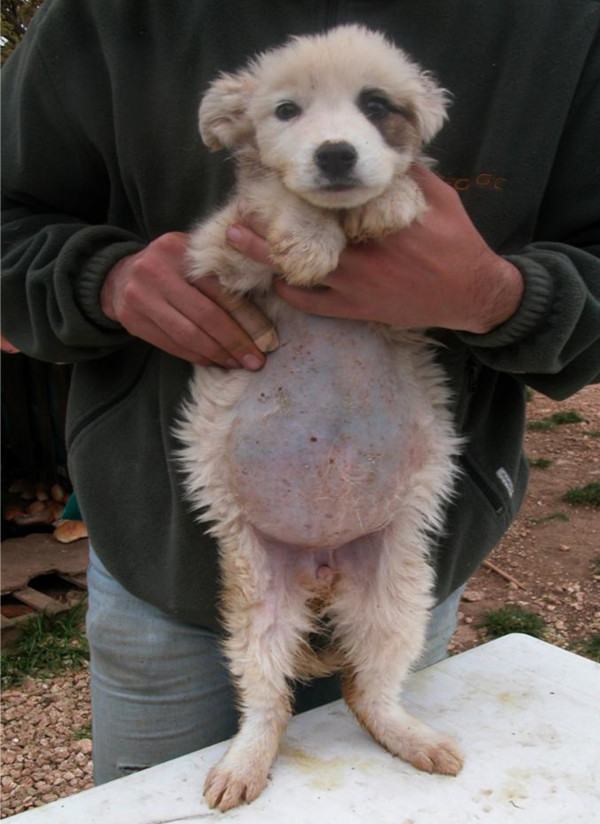
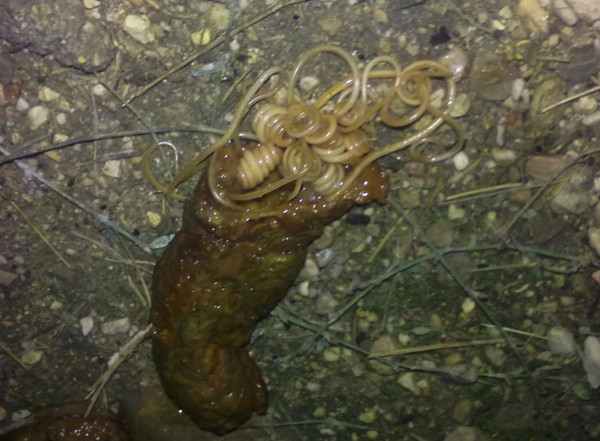
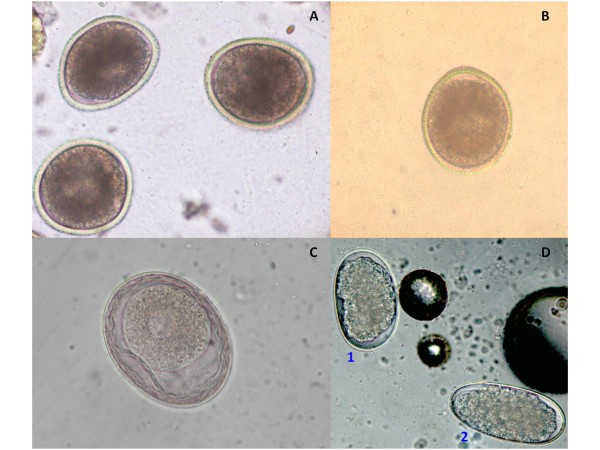
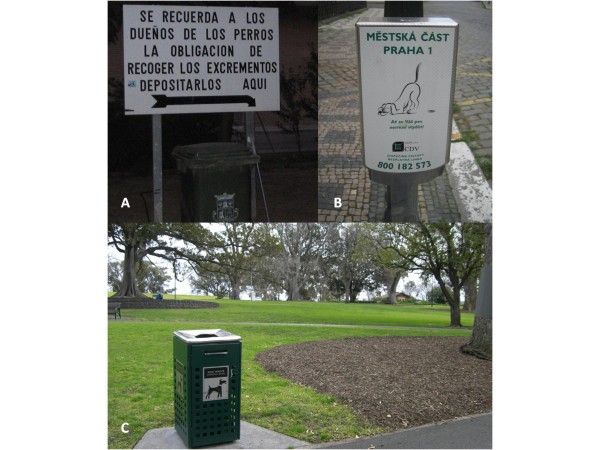
Verification
Claims the paper makes
104 Not checked yet · 12 Own interpretation · 3 Partly supported · 3 No basis given · accuracy not yet measured
The cited sources support only part of this claim — read each source’s verdict below.
In the paper
“the high resistance of infectious stages in the environment regardless season or climate (e.g. ascarid ova resist to harsh chemicals, broad temperature ranges and several degrees of moisture)”
§ Pet roundworms and hookworms: A continuing need for global worming > Review > Treatment and control methods: Need for compromises?
What the sources say
- Not checked yetcites [13] Epe C: Intestinal nematodes: biology and control. Vet Clin North Am Small Anim Pract. 2009, 39: 1091-1107. 10.1016/j.cvsm.2009.07.002. vi-vii source
- Partly supportedcites [88] Despommier D: Toxocariasis: clinical aspects, epidemiology, medical ecology, and molecular aspects. Clin Microbiol Rev. 2003, 16: 265-272. 10.1128/CMR.16.2.265-272.2003. sourceExperimental — accuracy not yet measured
MEDICAL ECOLOGY (page not provided) says infective ascarid eggs withstand harsh chemicals, extreme temperature changes, and varying moisture. But it says they persist for months to years under optimal conditions, not regardless of season or climate. LIFE CYCLE (page not provided) also notes that low temperatures delay embryonation and eggs in northern latitudes may remain dormant until spring. (LLM, conf=0.87)
plain- Asserted: passes — The authors put it forward as true.
- Checkable: passes — It can be checked against evidence.
- Load-bearing: passes — The paper’s conclusions depend on it.
- Based: passes — The paper gives a reason why it holds.
The cited sources support only part of this claim — read each source’s verdict below.
In the paper
“companion animals, which, in turn, are virtually subjected for all their lifespan to continuous re-infection by roundworms and hookworms, even when they have a lifestyle far from that of stray animals or of animals kept in shelter or refuges [47,188-190]”
§ Pet roundworms and hookworms: A continuing need for global worming > Review > The importance of copromicroscopic examinations
What the sources say
- Not checked yetcites [47] Little SE, Johnson EM, Lewis D, Jaklitsch RP, Payton ME, Blagburn BL, Bowman DD, Moroff S, Tams T, Rich L, Aucoin D: Prevalence of intestinal parasites in pet dogs in the United States. Vet Parasitol. 2009, 166: 144-152. 10.1016/j.vetpar.2009.07.044. source
- Partly supportedcites [188] Jordan HE, Mullins ST, Stebbins ME: Endoparasitism in dogs: 21,583 cases (1981–1990). J Am Vet Med Assoc. 1993, 203: 547-549. sourceExperimental — accuracy not yet measured
The Results (p. 1) document Toxocara (roundworm) and Ancylostoma (hookworm) infections in dogs examined at a veterinary hospital. The paper does not establish continuous reinfection throughout an animal’s lifespan or compare companion animals’ lifestyles with those of stray or shelter animals. (LLM, conf=0.86)
- Not checked yetcites [189] Nolan TJ, Smith G: Time series analysis of the prevalence of endoparasitic infections in cats and dogs presented to a veterinary teaching hospital. Vet Parasitol. 1995, 59: 87-96. 10.1016/0304-4017(94)00742-U. source
- Not checked yetcites [190] Hackett T, Lappin MR: Prevalence of enteric pathogens in dogs of north-central Colorado. J Am Anim Hosp Assoc. 2003, 39: 52-56. source
boosted- Asserted: passes — The authors put it forward as true.
- Checkable: passes — It can be checked against evidence.
- Load-bearing: passes — The paper’s conclusions depend on it.
- Based: passes — The paper gives a reason why it holds.
In the paper
“This is of particular importance also because some driving forces are nowadays favouring their spread, e.g. the increase of wild fox populations in sub-urban and urban areas.”
§ Pet roundworms and hookworms: A continuing need for global worming > Review > Background
What the sources say
- Not checked yetcites [8] Antolová D, Reiterová K, Miterpáková M, Stanko M, Dubinský P: Circulation of Toxocara spp. in suburban and rural ecosystems in the Slovak Republic. Vet Parasitol. 2004, 126: 317-324. 10.1016/j.vetpar.2004.08.005. source
plaindirect- Asserted: passes — The authors put it forward as true.
- Checkable: passes — It can be checked against evidence.
- Load-bearing: unclear — It is unclear whether the paper’s conclusions depend on it.
- Based: passes — The paper gives a reason why it holds.
None of the sources cited for this claim have been checked yet.
In the paper
“When mobilized larvae are transmitted via the lactogenic route litters can also be infected by colostrum and milk for at least 38 days after delivery [12,13].”
§ Pet roundworms and hookworms: A continuing need for global worming > Review > Intestinal nematodes are complex and interesting
What the sources say
- Not checked yetcites [12] Zimmermann U, Löwenstein MD, Stoye M: Migration and distribution of Toxocara canis Werner 1782 (Anisakidae) larvae in the definitive host (beagle) following primary infection and reinfection. Zentralbl Veterinarmed B. 1985, 32: 1-28. (in German source
- Not checked yetcites [13] Epe C: Intestinal nematodes: biology and control. Vet Clin North Am Small Anim Pract. 2009, 39: 1091-1107. 10.1016/j.cvsm.2009.07.002. vi-vii source
plaindirect- Asserted: passes — The authors put it forward as true.
- Checkable: passes — It can be checked against evidence.
- Load-bearing: unclear — It is unclear whether the paper’s conclusions depend on it.
- Based: passes — The paper gives a reason why it holds.
In the paper
“Bitches can be re-infected also by ingesting immature ascarids defecated by their suckling offspring.”
§ Pet roundworms and hookworms: A continuing need for global worming > Review > Intestinal nematodes are complex and interesting
What the sources say
- Not checked yetcites [13] Epe C: Intestinal nematodes: biology and control. Vet Clin North Am Small Anim Pract. 2009, 39: 1091-1107. 10.1016/j.cvsm.2009.07.002. vi-vii source
plaindirect- Asserted: passes — The authors put it forward as true.
- Checkable: passes — It can be checked against evidence.
- Load-bearing: unclear — It is unclear whether the paper’s conclusions depend on it.
- Based: passes — The paper gives a reason why it holds.
In the paper
“Different species of ascarids (commonly known as “roundworms”) and ancylostomatids (commonly known as “hookworms”) may affect the small intestine of dogs and cats [7].”
§ Pet roundworms and hookworms: A continuing need for global worming > Review > Background
What the sources say
- Not checked yetcites [7] Anderson RC: Nematode Parasites of Vertebrates. Their development and transmission. 2000, Guilford: CABI, 2
hedgedconditional- Asserted: passes — The authors put it forward as true.
- Checkable: passes — It can be checked against evidence.
- Load-bearing: unclear — It is unclear whether the paper’s conclusions depend on it.
- Based: passes — The paper gives a reason why it holds.
None of the sources cited for this claim have been checked yet.
In the paper
“Indeed, global climate change is influencing the ecology of helminths with multiple hosts and different transmission routes.”
§ Pet roundworms and hookworms: A continuing need for global worming > Review > Background
What the sources say
- Not checked yetcites [2] Otranto D, Traversa D: Thelazia eyeworm: an original endo- and ecto-parasitic nematode. Trends Parasitol. 2005, 21: 1-4. 10.1016/j.pt.2004.10.008. source
- Not checked yetcites [3] Traversa D, Di Cesare A, Conboy G: Canine and feline cardiopulmonary parasitic nematodes in Europe: emerging and underestimated. Parasit Vectors. 2010, 3: 62-10.1186/1756-3305-3-62. source
- Not checked yetcites [4] Otranto D, Eberhard ML: Zoonotic helminths affecting the human eye. Parasit Vectors. 2011, 4: 41-10.1186/1756-3305-4-41. source
- Not checked yetcites [5] Jefferies R, Shaw SE, Willesen J, Viney ME, Morgan ER: Elucidating the spread of the emerging canid nematode Angiostrongylus vasorum between Palaearctic and Nearctic ecozones. Infect Genet Evol. 2010, 10: 561-568. 10.1016/j.meegid.2010.01.013. source
plaindirect- Asserted: passes — The authors put it forward as true.
- Checkable: passes — It can be checked against evidence.
- Load-bearing: unclear — It is unclear whether the paper’s conclusions depend on it.
- Based: passes — The paper gives a reason why it holds.
None of the sources cited for this claim have been checked yet.
In the paper
“These resting larvae will mobilize during pregnancies and infect subsequent litters even when re-infections do not occur.”
§ Pet roundworms and hookworms: A continuing need for global worming > Review > Intestinal nematodes are complex and interesting
What the sources say
- Not checked yetcites [10] Lloyd S, Amersinghe PH, Soulsby EJL: Periparturient immunosuppression in the bitch and its influence on infection with Toxocara canis. J Small Anim Pract. 1983, 24: 237-247. 10.1111/j.1748-5827.1983.tb00437.x. source
- Not checked yetcites [11] Lloyd S: Toxocara canis: the dog. In Toxocara and Toxocariasis Clinical, Epidemiological and Molecular Perspectives. Edited by: Lewis JW, Maizels RM. 1993, London: British Society for Parasitology. Institute of Biology, 11-24.
plaindirect- Asserted: passes — The authors put it forward as true.
- Checkable: passes — It can be checked against evidence.
- Load-bearing: passes — The paper’s conclusions depend on it.
- Based: passes — The paper gives a reason why it holds.
In the paper
“For example, wild foxes may act as reservoirs and amplifiers of canine ascarids, thus they re-enforce environmental contamination and risk of infection [8].”
§ Pet roundworms and hookworms: A continuing need for global worming > Review > Background
What the sources say
- Not checked yetcites [8] Antolová D, Reiterová K, Miterpáková M, Stanko M, Dubinský P: Circulation of Toxocara spp. in suburban and rural ecosystems in the Slovak Republic. Vet Parasitol. 2004, 126: 317-324. 10.1016/j.vetpar.2004.08.005. source
hedgedconditional- Asserted: passes — The authors put it forward as true.
- Checkable: passes — It can be checked against evidence.
- Load-bearing: unclear — It is unclear whether the paper’s conclusions depend on it.
- Based: passes — The paper gives a reason why it holds.
In the paper
“Ascarids and ancylostomatids are the most important parasites affecting dogs and cats worldwide, in terms of diffusion and risk for animal and human health.”
- Also stated in: § Background · plain
“Actually, they remain the most important parasites affecting companion animals worldwide and maintain the primacy in terms of dispersion and risk for animal and human health.”
§ Pet roundworms and hookworms: A continuing need for global worming > Abstract
What the sources say
- Not checked yetcites [7] Anderson RC: Nematode Parasites of Vertebrates. Their development and transmission. 2000, Guilford: CABI, 2
plain- Asserted: passes — The authors put it forward as true.
- Checkable: passes — It can be checked against evidence.
- Load-bearing: passes — The paper’s conclusions depend on it.
- Based: passes — The paper gives a reason why it holds.
- Also stated in: § Background · plain
- It may state two separate claims as one. 36
- Probably not a substantial claim. 11
The cited sources support only part of this claim — read each source’s verdict below.
In the paper
“it has been demonstrated that pet ownership minimizes depression and that standard hygiene measures reduce at minimum the risk of acquiring zoonotic infections in this particular category [215,216]”
§ Pet roundworms and hookworms: A continuing need for global worming > Conclusion
What the sources say
- Partly supportedcites [215] Angulo FJ, Glaser CA, Juranek DD, Lappin MR, Regnery RL: Caring for pets of immunocompromised persons. J Am Vet Med Assoc. 1994, 205: 1711-1718. sourceExperimental — accuracy not yet measured
The Public Health Role for Veterinarians (p. 2) reports that pet ownership was associated with fewer depressive symptoms among HIV-infected persons, particularly those with less human social support. It does not establish that pet ownership minimizes depression across all immunocompromised persons. The Guidelines (p. 2) say simple precautions can further reduce the risk of infection. (LLM, conf=0.88)
- Partly supportedcites [216] Wong SK, Feinstein LH, Heidmann P: Healthy pets, healthy people. J Am Vet Med Assoc. 1999, 215: 335-338. sourceExperimental — accuracy not yet measured
The Statement of the Problem (page not available) says pet ownership can benefit immunocompromised people and refers to steps to prevent zoonosis transmission. But the passages in our copy do not identify depression as a benefit or say that standard hygiene measures reduce infection risk; searches for depression and hygiene found no more specific support. (LLM, conf=0.77)
boosteddirect- Asserted: passes — The authors put it forward as true.
- Checkable: passes — It can be checked against evidence.
- Load-bearing: passes — The paper’s conclusions depend on it.
- Based: passes — The paper gives a reason why it holds.
It may state two separate claims as one.
- Partly supported
In the paper
“Therefore, lactation may either cause or reinforce a patent infection in bitches, which provides another source of environmental contamination and infection for puppies [13].”
§ Pet roundworms and hookworms: A continuing need for global worming > Review > Intestinal nematodes are complex and interesting
What the sources say
- Not checked yetcites [13] Epe C: Intestinal nematodes: biology and control. Vet Clin North Am Small Anim Pract. 2009, 39: 1091-1107. 10.1016/j.cvsm.2009.07.002. vi-vii source
hedgedconditional- Asserted: passes — The authors put it forward as true.
- Checkable: passes — It can be checked against evidence.
- Load-bearing: unclear — It is unclear whether the paper’s conclusions depend on it.
- Based: passes — The paper gives a reason why it holds.
It may state two separate claims as one.
None of the sources cited for this claim have been checked yet.
In the paper
“Pups become infected in utero by the second month of gestation, which result in egg shedding after a minimum period of about two weeks after birth [10,11].”
§ Pet roundworms and hookworms: A continuing need for global worming > Review > Intestinal nematodes are complex and interesting
What the sources say
- Not checked yetcites [10] Lloyd S, Amersinghe PH, Soulsby EJL: Periparturient immunosuppression in the bitch and its influence on infection with Toxocara canis. J Small Anim Pract. 1983, 24: 237-247. 10.1111/j.1748-5827.1983.tb00437.x. source
- Not checked yetcites [11] Lloyd S: Toxocara canis: the dog. In Toxocara and Toxocariasis Clinical, Epidemiological and Molecular Perspectives. Edited by: Lewis JW, Maizels RM. 1993, London: British Society for Parasitology. Institute of Biology, 11-24.
plaindirect- Asserted: passes — The authors put it forward as true.
- Checkable: passes — It can be checked against evidence.
- Load-bearing: passes — The paper’s conclusions depend on it.
- Based: passes — The paper gives a reason why it holds.
It may state two separate claims as one.
A conclusion the paper draws from its own results — it cites no other source for it, so there is none to check. The quote shows it is in the paper.
In the paper
“Indeed, the use of broad spectrum drugs, which are sold (often over-the-counter) in a plethora of formulations, carries the risk that leads the general public to minimize the importance of the “common intestinal worms” and to erode the importance of the veterinarian in controlling parasites”
§ Pet roundworms and hookworms: A continuing need for global worming > Review > Background
hedgeddirect- Asserted: passes — The authors put it forward as true.
- Checkable: fails — It may be too vague to check against evidence.
- Load-bearing: passes — The paper’s conclusions depend on it.
- Based: passes — The paper gives a reason why it holds.
Probably not a substantial claim. It may be too vague to check against evidence. It may state two separate claims as one.
None of the sources cited for this claim have been checked yet.
In the paper
“Prepatency period is about 10–11 weeks [20,21].”
§ Pet roundworms and hookworms: A continuing need for global worming > Review > Intestinal nematodes are complex and interesting
What the sources say
- Not checked yetcites [20] Taylor MA, Coop RL, Wall RL: Veterinary Parasitology. 2007, Oxford, UK: Blackwell Publishing, 3r
- Not checked yetcites [21] Sprent JF: Observations on the development of Toxocara canis (Werner, 1782) in the dog. Parasitology. 1958, 48: 184-209. 10.1017/S0031182000021168. source
plain- Asserted: passes — The authors put it forward as true.
- Checkable: passes — It can be checked against evidence.
- Load-bearing: fails — The paper’s conclusions may not depend on it.
- Based: passes — The paper gives a reason why it holds.
Probably not a substantial claim. The paper’s conclusions may not depend on it.
None of the sources cited for this claim have been checked yet.
In the paper
“These resting stages survive for years and are, in turn, reactivated during oestrus and in the last 2–3 weeks of pregnancy, when they are passed via the milk to the litter for at least 3 weeks after delivery [26,28-30].”
§ Pet roundworms and hookworms: A continuing need for global worming > Review > Intestinal nematodes are complex and interesting
What the sources say
- Not checked yetcites [26] Bowman DD, Montgomery SP, Zajac AM, Eberhard ML, Kazacos KR: Hookworms of dogs and cats as agents of cutaneous larva migrans. Trends Parasitol. 2010, 26: 162-167. 10.1016/j.pt.2010.01.005. source
- Not checked yetcites [28] Stoye M: Galactogenic and prenatal Toxocara canis infections in dogs (Beagle). Dtsch Tierarztl Woch. 1976, 83: 107-108. in German
- Not checked yetcites [29] Stoye M: Biology, pathogenicity, diagnosis and control of Ancylostoma caninum. Dtsch Tierarztl Woch. 1992, 99: 315-321. in German
- Not checked yetcites [30] Bosse M, Manhardt J, Stoye M: Epidemiology and Control of neonatal Helminth Infections of the dog. Fortschr Vet Med. 1980, 30: 247-256. in German
plaindirect- Asserted: passes — The authors put it forward as true.
- Checkable: passes — It can be checked against evidence.
- Load-bearing: passes — The paper’s conclusions depend on it.
- Based: passes — The paper gives a reason why it holds.
It may state two separate claims as one.
None of the sources cited for this claim have been checked yet.
In the paper
“Among the most common hookworms, Ancylostoma caninum and Ancylostoma tubaeforme are species-specific for dogs and cats respectively, while Ancylostoma brazilienseAncylostoma ceylanicum and Uncinaria stenocephala affect both species [7,17,22].”
§ Pet roundworms and hookworms: A continuing need for global worming > Review > Intestinal nematodes are complex and interesting
What the sources say
- Not checked yetcites [7] Anderson RC: Nematode Parasites of Vertebrates. Their development and transmission. 2000, Guilford: CABI, 2
- Not checked yetcites [17] Bowman DD, Hendrix CM, Lindsay DS, Barr SC: Feline Clinical Parasitology. 2002, Iowa State University: Blackwell Science Company source
- Not checked yetcites [22] Prociv P: Zoonotic hookworm infections (Ancylostomosis). In Zoonoses. Edited by: Palmer SR, Soulsby EJL, Simpson DIH. 1998, Oxford, UK: Oxford Medical Publications, 1
plain- Asserted: passes — The authors put it forward as true.
- Checkable: passes — It can be checked against evidence.
- Load-bearing: unclear — It is unclear whether the paper’s conclusions depend on it.
- Based: passes — The paper gives a reason why it holds.
It may state two separate claims as one.
None of the sources cited for this claim have been checked yet.
In the paper
“Dogs and cats of all ages can also acquire the infection by ingesting Toxocara embryonated eggs from the environment and eating paratenic hosts (e.g. invertebrates, ruminants, rodents, birds) harboring tissutal larvae [13,16-18].”
§ Pet roundworms and hookworms: A continuing need for global worming > Review > Intestinal nematodes are complex and interesting
What the sources say
- Not checked yetcites [13] Epe C: Intestinal nematodes: biology and control. Vet Clin North Am Small Anim Pract. 2009, 39: 1091-1107. 10.1016/j.cvsm.2009.07.002. vi-vii source
- Not checked yetcites [16] Bowman DD: Georgi's Parasitology for Veterinarians. 2009, Philadelphia, USA: Saunders Company, 9
- Not checked yetcites [17] Bowman DD, Hendrix CM, Lindsay DS, Barr SC: Feline Clinical Parasitology. 2002, Iowa State University: Blackwell Science Company source
- Not checked yetcites [18] Lee CY, Schantz PM, Kazacos KR, Montgomery SP, Bowman DD: Epidemiologic and zoonotic aspects of ascarid infections in dogs and cats. Trends Parasitol. 2010, 26: 155-161. 10.1016/j.pt.2010.01.002. source
plaindirect- Asserted: passes — The authors put it forward as true.
- Checkable: passes — It can be checked against evidence.
- Load-bearing: unclear — It is unclear whether the paper’s conclusions depend on it.
- Based: passes — The paper gives a reason why it holds.
It may state two separate claims as one.
None of the sources cited for this claim have been checked yet.
In the paper
“but the infection does not occur in animals aged less than about 2 months.”
§ Pet roundworms and hookworms: A continuing need for global worming > Review > Intestinal nematodes are complex and interesting
What the sources say
- Not checked yetcites [20] Taylor MA, Coop RL, Wall RL: Veterinary Parasitology. 2007, Oxford, UK: Blackwell Publishing, 3r
- Not checked yetcites [21] Sprent JF: Observations on the development of Toxocara canis (Werner, 1782) in the dog. Parasitology. 1958, 48: 184-209. 10.1017/S0031182000021168. source
plain- Asserted: passes — The authors put it forward as true.
- Checkable: passes — It can be checked against evidence.
- Load-bearing: fails — The paper’s conclusions may not depend on it.
- Based: passes — The paper gives a reason why it holds.
Probably not a substantial claim. The paper’s conclusions may not depend on it.
None of the sources cited for this claim have been checked yet.
In the paper
“The prepatent period for toxocarosis by T. canis is at minimum 4–5 weeks after ingestion of embryonated eggs or resting larvae, and 2–3 weeks for prenatal infections”
§ Pet roundworms and hookworms: A continuing need for global worming > Review > Intestinal nematodes are complex and interesting
What the sources say
- Not checked yetcites [13] Epe C: Intestinal nematodes: biology and control. Vet Clin North Am Small Anim Pract. 2009, 39: 1091-1107. 10.1016/j.cvsm.2009.07.002. vi-vii source
- Not checked yetcites [19] Parsons JC: Ascarid infections of cats and dogs. Vet Clin North Am Small Anim Pract. 1987, 17: 1307-1339. source
- Not checked yetcites [20] Taylor MA, Coop RL, Wall RL: Veterinary Parasitology. 2007, Oxford, UK: Blackwell Publishing, 3r
plaindirect- Asserted: passes — The authors put it forward as true.
- Checkable: passes — It can be checked against evidence.
- Load-bearing: unclear — It is unclear whether the paper’s conclusions depend on it.
- Based: passes — The paper gives a reason why it holds.
It may state two separate claims as one.
None of the sources cited for this claim have been checked yet.
In the paper
“The most important infectious stage is represented by filariform larvae present in the soil, which infect a suitable host by actively penetrating the skin (especially for Ancylostoma spp.) and/or via the oral route (i.e. Ancylostoma spp., Uncinaria spp.) [7,13,22,27].”
§ Pet roundworms and hookworms: A continuing need for global worming > Review > Intestinal nematodes are complex and interesting
What the sources say
- Not checked yetcites [7] Anderson RC: Nematode Parasites of Vertebrates. Their development and transmission. 2000, Guilford: CABI, 2
- Not checked yetcites [13] Epe C: Intestinal nematodes: biology and control. Vet Clin North Am Small Anim Pract. 2009, 39: 1091-1107. 10.1016/j.cvsm.2009.07.002. vi-vii source
- Not checked yetcites [22] Prociv P: Zoonotic hookworm infections (Ancylostomosis). In Zoonoses. Edited by: Palmer SR, Soulsby EJL, Simpson DIH. 1998, Oxford, UK: Oxford Medical Publications, 1
- Not checked yetcites [27] Bowman DD: Georgi's Parasitology for Veterinarians. 2002, Saunders Company, 7
plaindirect- Asserted: passes — The authors put it forward as true.
- Checkable: passes — It can be checked against evidence.
- Load-bearing: fails — The paper’s conclusions may not depend on it.
- Based: passes — The paper gives a reason why it holds.
Probably not a substantial claim. The paper’s conclusions may not depend on it. It may state two separate claims as one.
In the paper
“A third roundworm, Toxascaris leonina, affects both dogs and cats.”
§ Pet roundworms and hookworms: A continuing need for global worming > Review > Intestinal nematodes are complex and interesting
What the sources say
- Not checked yetcites [13] Epe C: Intestinal nematodes: biology and control. Vet Clin North Am Small Anim Pract. 2009, 39: 1091-1107. 10.1016/j.cvsm.2009.07.002. vi-vii source
plaincorrelational- Asserted: passes — The authors put it forward as true.
- Checkable: passes — It can be checked against evidence.
- Load-bearing: fails — The paper’s conclusions may not depend on it.
- Based: passes — The paper gives a reason why it holds.
Probably not a substantial claim. The paper’s conclusions may not depend on it.
None of the sources cited for this claim have been checked yet.
In the paper
“In general A. caninumA. tubaeforme and U. stenocephala are spread especially in warm countries (Ancylostoma spp.) and in colder areas of temperate and subarctic regions (U. stenocephala) in both hemispheres; the remaining hookworms are most often present in sub-tropical and tropical countries [20,23-26].”
§ Pet roundworms and hookworms: A continuing need for global worming > Review > Intestinal nematodes are complex and interesting
What the sources say
- Not checked yetcites [20] Taylor MA, Coop RL, Wall RL: Veterinary Parasitology. 2007, Oxford, UK: Blackwell Publishing, 3r
- Not checked yetcites [23] Manning L, Chambers S, Paltridge G, Maurice P: Cutaneous larva migrans (hookworm) acquired in Christchurch. New Zealand. N Z Med J. 2006, 119: 1910-1913.
- Not checked yetcites [24] Palmer CS, Traub RJ, Robertson ID, Hobbs RP, Elliot A, While L, Rees R, Thompson RC: The veterinary and public health significance of hookworm in dogs and cats in Australia and the status of A. ceylanicum. Vet Parasitol. 2007, 145: 304-313. 10.1016/j.vetpar.2006.12.018. source
- Not checked yetcites [25] Traub RJ, Hobbs RP, Adams PJ, Behnke JM, Harris PD, Thompson RC: A case of mistaken identity reappraisal of the species of canid and felid hookworms (Ancylostoma) present in Australia and India. Parasitology. 2007, 134: 113-119. 10.1017/S0031182006001211. source
- Not checked yetcites [26] Bowman DD, Montgomery SP, Zajac AM, Eberhard ML, Kazacos KR: Hookworms of dogs and cats as agents of cutaneous larva migrans. Trends Parasitol. 2010, 26: 162-167. 10.1016/j.pt.2010.01.005. source
plaincorrelational- Asserted: passes — The authors put it forward as true.
- Checkable: passes — It can be checked against evidence.
- Load-bearing: unclear — It is unclear whether the paper’s conclusions depend on it.
- Based: passes — The paper gives a reason why it holds.
It may state two separate claims as one.
In the paper
“This species is, in general, less diffuse than Toxocara spp., especially because transmissions via the placenta and mammary glands do not occur.”
§ Pet roundworms and hookworms: A continuing need for global worming > Review > Intestinal nematodes are complex and interesting
What the sources say
- Not checked yetcites [13] Epe C: Intestinal nematodes: biology and control. Vet Clin North Am Small Anim Pract. 2009, 39: 1091-1107. 10.1016/j.cvsm.2009.07.002. vi-vii source
plaindirect- Asserted: passes — The authors put it forward as true.
- Checkable: passes — It can be checked against evidence.
- Load-bearing: unclear — It is unclear whether the paper’s conclusions depend on it.
- Based: passes — The paper gives a reason why it holds.
It may state two separate claims as one.
None of the sources cited for this claim have been checked yet.
In the paper
“while kittens start to shed T. cati eggs after about 7–8 weeks post infection [13,19,20].”
§ Pet roundworms and hookworms: A continuing need for global worming > Review > Intestinal nematodes are complex and interesting
What the sources say
- Not checked yetcites [13] Epe C: Intestinal nematodes: biology and control. Vet Clin North Am Small Anim Pract. 2009, 39: 1091-1107. 10.1016/j.cvsm.2009.07.002. vi-vii source
- Not checked yetcites [19] Parsons JC: Ascarid infections of cats and dogs. Vet Clin North Am Small Anim Pract. 1987, 17: 1307-1339. source
- Not checked yetcites [20] Taylor MA, Coop RL, Wall RL: Veterinary Parasitology. 2007, Oxford, UK: Blackwell Publishing, 3r
plain- Asserted: passes — The authors put it forward as true.
- Checkable: passes — It can be checked against evidence.
- Load-bearing: fails — The paper’s conclusions may not depend on it.
- Based: passes — The paper gives a reason why it holds.
Probably not a substantial claim. The paper’s conclusions may not depend on it.
A conclusion the paper draws from its own results — it cites no other source for it, so there is none to check. The quote shows it is in the paper.
In the paper
“The real truth is that pets are exposed to roundworm and hookworm infections throughout the year and for all their life.”
§ Pet roundworms and hookworms: A continuing need for global worming > Review > Is age a decisive circumstance for host-finding strategies of intestinal nematodes?
plain- Asserted: passes — The authors put it forward as true.
- Checkable: passes — It can be checked against evidence.
- Load-bearing: passes — The paper’s conclusions depend on it.
- Based: passes — The paper gives a reason why it holds.
It may state two separate claims as one.
None of the sources cited for this claim have been checked yet.
In the paper
“A bitch harbouring somatic larvae is infectious for three consecutive litters, although the larval output is reduced in each lactation [30-34].”
§ Pet roundworms and hookworms: A continuing need for global worming > Review > Intestinal nematodes are complex and interesting
What the sources say
- Not checked yetcites [30] Bosse M, Manhardt J, Stoye M: Epidemiology and Control of neonatal Helminth Infections of the dog. Fortschr Vet Med. 1980, 30: 247-256. in German
- Not checked yetcites [31] Stoye M: Ascarid and Ancylostomatid infections of the dog. Tieraerztl Prax. 1983, 11: 229-243. in German
- Not checked yetcites [32] Stoye M: Ascarid and hookworm infections in the dog biology, epizootology and control. Berl Muench Tieraerzt Wschr. 1979, 92: 464-472. in German
- Not checked yetcites [33] Clapham PA: Canine hookworm disease. J Small Anim Pract. 1962, 3: 133-136. 10.1111/j.1748-5827.1962.tb04169.x. source
- Not checked yetcites [34] Stoye M: Studies on the possibility of prenatal and galactogenic infections with Ancylostoma caninum Ercolani 1859 (Ancylostomidae) in the dog. Zbl Vet Med B. 1973, 20: 1-39. in German source
plaindirect- Asserted: passes — The authors put it forward as true.
- Checkable: passes — It can be checked against evidence.
- Load-bearing: unclear — It is unclear whether the paper’s conclusions depend on it.
- Based: passes — The paper gives a reason why it holds.
It may state two separate claims as one.
A conclusion the paper draws from its own results — it cites no other source for it, so there is none to check. The quote shows it is in the paper.
In the paper
“First of all, the possibility of puppies and kittens being infected by their dam by transmammary and/or transplacental route/s is a powerful host-finding strategy.”
§ Pet roundworms and hookworms: A continuing need for global worming > Review > Intestinal nematodes are complex and interesting
plaindirect- Asserted: passes — The authors put it forward as true.
- Checkable: passes — It can be checked against evidence.
- Load-bearing: passes — The paper’s conclusions depend on it.
- Based: passes — The paper gives a reason why it holds.
It may state two separate claims as one.
None of the sources cited for this claim have been checked yet.
In the paper
“Prepatent period for A. caninumA. tubaeforme and U. stenocephala is about 2–3 weeks [7,17,20].”
§ Pet roundworms and hookworms: A continuing need for global worming > Review > Intestinal nematodes are complex and interesting
What the sources say
- Not checked yetcites [7] Anderson RC: Nematode Parasites of Vertebrates. Their development and transmission. 2000, Guilford: CABI, 2
- Not checked yetcites [17] Bowman DD, Hendrix CM, Lindsay DS, Barr SC: Feline Clinical Parasitology. 2002, Iowa State University: Blackwell Science Company source
- Not checked yetcites [20] Taylor MA, Coop RL, Wall RL: Veterinary Parasitology. 2007, Oxford, UK: Blackwell Publishing, 3r
plain- Asserted: passes — The authors put it forward as true.
- Checkable: passes — It can be checked against evidence.
- Load-bearing: fails — The paper’s conclusions may not depend on it.
- Based: passes — The paper gives a reason why it holds.
Probably not a substantial claim. The paper’s conclusions may not depend on it.
None of the sources cited for this claim have been checked yet.
In the paper
“In utero and lactogenic infections do not occur for A. tubaeforme, even though literature is scarce and the extent of milk transmission is stated to be not well known [7,17,27].”
§ Pet roundworms and hookworms: A continuing need for global worming > Review > Intestinal nematodes are complex and interesting
What the sources say
- Not checked yetcites [7] Anderson RC: Nematode Parasites of Vertebrates. Their development and transmission. 2000, Guilford: CABI, 2
- Not checked yetcites [17] Bowman DD, Hendrix CM, Lindsay DS, Barr SC: Feline Clinical Parasitology. 2002, Iowa State University: Blackwell Science Company source
- Not checked yetcites [27] Bowman DD: Georgi's Parasitology for Veterinarians. 2002, Saunders Company, 7
plain- Asserted: passes — The authors put it forward as true.
- Checkable: passes — It can be checked against evidence.
- Load-bearing: fails — The paper’s conclusions may not depend on it.
- Based: passes — The paper gives a reason why it holds.
Probably not a substantial claim. The paper’s conclusions may not depend on it. It may state two separate claims as one.
The paper states this without a source or data behind it here, so there is nothing to check it against. The quote shows it is in the paper.
In the paper
“Ascarid eggs can survive for years in extreme environmental conditions, thus are available for ingestion at any time.”
§ Pet roundworms and hookworms: A continuing need for global worming > Review > Intestinal nematodes are complex and interesting
plaindirect- Asserted: passes — The authors put it forward as true.
- Checkable: passes — It can be checked against evidence.
- Load-bearing: passes — The paper’s conclusions depend on it.
- Based: fails — The paper may give no reason why it holds.
Probably not a substantial claim. The paper may give no reason why it holds. It may state two separate claims as one.
None of the sources cited for this claim have been checked yet.
In the paper
“Indeed, if in utero infection occurs at all, it is obfuscated by the lactogenic route and, in any case, prenatal transmission by A. caninum does not occur in all puppies from a litter [7,27,37-39].”
§ Pet roundworms and hookworms: A continuing need for global worming > Review > Intestinal nematodes are complex and interesting
What the sources say
- Not checked yetcites [7] Anderson RC: Nematode Parasites of Vertebrates. Their development and transmission. 2000, Guilford: CABI, 2
- Not checked yetcites [27] Bowman DD: Georgi's Parasitology for Veterinarians. 2002, Saunders Company, 7
- Not checked yetcites [37] Enigk K, Stoye M: Studies of the pathway of infection of Ancylostoma caninum. Med Klin. 1968, 63: 1012-1017. in German
- Not checked yetcites [38] Soulsby EJL: Helminths, Arthropods and Protozoa of Domesticated Animals. 1982, London, UK: Bailliere Tindall, 7
- Not checked yetcites [39] Miller TA: Vaccination against the canine hookworm diseases. Adv Parasitol. 1971, 9: 153-183. source
hedged- Asserted: passes — The authors put it forward as true.
- Checkable: passes — It can be checked against evidence.
- Load-bearing: unclear — It is unclear whether the paper’s conclusions depend on it.
- Based: passes — The paper gives a reason why it holds.
It may state two separate claims as one.
The paper states this without a source or data behind it here, so there is nothing to check it against. The quote shows it is in the paper.
In the paper
“Also, pups have daily thousands epg counts for T. canis and animals often shed millions of hookworm eggs for weeks, thus causing a high environmental contamination.”
§ Pet roundworms and hookworms: A continuing need for global worming > Review > Intestinal nematodes are complex and interesting
plaindirect- Asserted: passes — The authors put it forward as true.
- Checkable: passes — It can be checked against evidence.
- Load-bearing: passes — The paper’s conclusions depend on it.
- Based: unclear — It is unclear why the paper says it holds.
It may state two separate claims as one.
A conclusion the paper draws from its own results — it cites no other source for it, so there is none to check. The quote shows it is in the paper.
In the paper
“The need for a frequent parasiticide administration in pups is due to the continued exposition to re-infections, via the milk and the environment, and to the fact that they may already harbor migrating larvae after birth.”
§ Pet roundworms and hookworms: A continuing need for global worming > Review > Treatment and control methods: Need for compromises?
plaindirect- Asserted: passes — The authors put it forward as true.
- Checkable: passes — It can be checked against evidence.
- Load-bearing: passes — The paper’s conclusions depend on it.
- Based: passes — The paper gives a reason why it holds.
It may state two separate claims as one.
- Rests on an assumption: Lactogenic transmission lasts at least 5 weeks post partum.
None of the sources cited for this claim have been checked yet.
In the paper
“Prolonged daily administration of fenbendazole can reduce prenatal infection but such regimen is expensive and can suffer from lack of compliance by the owner [13,176].”
§ Pet roundworms and hookworms: A continuing need for global worming > Review > Treatment and control methods: Need for compromises?
What the sources say
- Not checked yetcites [13] Epe C: Intestinal nematodes: biology and control. Vet Clin North Am Small Anim Pract. 2009, 39: 1091-1107. 10.1016/j.cvsm.2009.07.002. vi-vii source
- Not checked yetcites [176] Barriga OO: A critical look at the importance, prevalence and control of toxocariasis and the possibilities of immunological control. Vet Parasitol. 1988, 29: 195-234. 10.1016/0304-4017(88)90126-4. source
plaindirect- Asserted: passes — The authors put it forward as true.
- Checkable: passes — It can be checked against evidence.
- Load-bearing: unclear — It is unclear whether the paper’s conclusions depend on it.
- Based: passes — The paper gives a reason why it holds.
It may state two separate claims as one.
None of the sources cited for this claim have been checked yet.
In the paper
“Patent ascaridosis may be detected in animals older than 3 years or more, and may also establish when infection occurs with a few larvated ova [11,46,54-56].”
§ Pet roundworms and hookworms: A continuing need for global worming > Review > Is age a decisive circumstance for host-finding strategies of intestinal nematodes?
What the sources say
- Not checked yetcites [11] Lloyd S: Toxocara canis: the dog. In Toxocara and Toxocariasis Clinical, Epidemiological and Molecular Perspectives. Edited by: Lewis JW, Maizels RM. 1993, London: British Society for Parasitology. Institute of Biology, 11-24.
- Not checked yetcites [46] Fahrion AS, Staebler S, Deplazes P: Patent Toxocara canis infections in previously exposed and in helminth-free dogs after infection with low numbers of embryonated eggs. Vet Parasitol. 2008, 152: 108-115. 10.1016/j.vetpar.2007.11.022. source
- Not checked yetcites [54] Blagburn BL, Lindsay DS, Vaughan JL, Rippey NS, Wright JC, Lynn RC, Kelch WJ, Ritchie GC, Hepler DI: Prevalence of canine parasites based on fecal flotation. Comp Cont Ed. 1996, 18: 483-509.
- Not checked yetcites [55] Barutzki D, Schaper R: Endoparasites in dogs and cats in Germany 1999–2002. Parasitol Res. 2003, 90 (Suppl 3): S148-150. source
- Not checked yetcites [56] Roddie G, Stafford P, Holland C, Wolfe A: Contamination of dog hair with eggs of Toxocara canis. Vet Parasitol. 2008, 152: 85-93. 10.1016/j.vetpar.2007.12.008. source
hedgedconditional- Asserted: passes — The authors put it forward as true.
- Checkable: passes — It can be checked against evidence.
- Load-bearing: passes — The paper’s conclusions depend on it.
- Based: passes — The paper gives a reason why it holds.
It may state two separate claims as one.
In the paper
“Despite the absence of label claims, such an approach could lead to increased compliance of the owners [13].”
§ Pet roundworms and hookworms: A continuing need for global worming > Review > Treatment and control methods: Need for compromises?
What the sources say
- Not checked yetcites [13] Epe C: Intestinal nematodes: biology and control. Vet Clin North Am Small Anim Pract. 2009, 39: 1091-1107. 10.1016/j.cvsm.2009.07.002. vi-vii source
hedgedconditional- Asserted: passes — The authors put it forward as true.
- Checkable: passes — It can be checked against evidence.
- Load-bearing: fails — The paper’s conclusions may not depend on it.
- Based: passes — The paper gives a reason why it holds.
Probably not a substantial claim. The paper’s conclusions may not depend on it.
A conclusion the paper draws from its own results — it cites no other source for it, so there is none to check. The quote shows it is in the paper.
In the paper
“These cats are also more susceptible to infection by A. tubaeforme, because they can eat contaminated grass or larvae while grooming, or because larvae can penetrate their skin when they are outdoors.”
§ Pet roundworms and hookworms: A continuing need for global worming > Review > Treatment and control methods: Need for compromises?
plaindirect- Asserted: passes — The authors put it forward as true.
- Checkable: passes — It can be checked against evidence.
- Load-bearing: unclear — It is unclear whether the paper’s conclusions depend on it.
- Based: passes — The paper gives a reason why it holds.
It may state two separate claims as one.
None of the sources cited for this claim have been checked yet.
In the paper
“the vast majority of dogs aged less that 6 weeks are infected by intestinal roundworms, although they may score negative at the copromicroscopic examination [6,191]”
§ Pet roundworms and hookworms: A continuing need for global worming > Review > The importance of copromicroscopic examinations
What the sources say
- Not checked yetcites [6] Robertson ID, Thompson RC: Enteric parasitic zoonoses of domesticated dogs and cats. Microbes Infect. 2002, 4: 867-873. 10.1016/S1286-4579(02)01607-6. source
- Not checked yetcites [191] Holland CV, O'Lorcain P, Taylor MR, Kelly A: Sero-epidemiology of toxocariasis in school children. Parasitology. 1995, 110 (5): 535-545. 10.1017/S0031182000065252. source
plaincorrelational- Asserted: passes — The authors put it forward as true.
- Checkable: passes — It can be checked against evidence.
- Load-bearing: passes — The paper’s conclusions depend on it.
- Based: passes — The paper gives a reason why it holds.
It may state two separate claims as one.
In the paper
“the monthly treatment approach appears to have several benefits, especially when performed with a macrolactone, which can accomplish the suppression of most important parasitic nematodes affecting pets [179]”
§ Pet roundworms and hookworms: A continuing need for global worming > Review > Treatment and control methods: Need for compromises?
What the sources say
- Not checked yetcites [179] Deplazes P: Helminthosen von Hund und Katze. In Veterinarmedizinische Parasitologie. Edited by: Schnyder T. 2006, Stuttgart: Parey, 444-518.
hedgedconditional- Asserted: passes — The authors put it forward as true.
- Checkable: passes — It can be checked against evidence.
- Load-bearing: unclear — It is unclear whether the paper’s conclusions depend on it.
- Based: passes — The paper gives a reason why it holds.
It may state two separate claims as one.
None of the sources cited for this claim have been checked yet.
In the paper
“A minimum number of 4 administrations per year or treatments at intervals of 4–6 weeks can be effective in preventing most patent infections”
§ Pet roundworms and hookworms: A continuing need for global worming > Review > Treatment and control methods: Need for compromises?
What the sources say
- Not checked yetcites [13] Epe C: Intestinal nematodes: biology and control. Vet Clin North Am Small Anim Pract. 2009, 39: 1091-1107. 10.1016/j.cvsm.2009.07.002. vi-vii source
- Not checked yetcites [178] Coati N, Hellmann K, Mencke N, Epe C: Recent investigation on the prevalence of gastrointestinal nematodes in cats from France and Germany. Parasitol Res. 2003, 90: 146-147. 10.1007/s00436-003-0921-7. source
plainconditional- Asserted: passes — The authors put it forward as true.
- Checkable: passes — It can be checked against evidence.
- Load-bearing: passes — The paper’s conclusions depend on it.
- Based: passes — The paper gives a reason why it holds.
It may state two separate claims as one.
In the paper
“Pets are usually treated individually, thus most roundworms and hookworms in a given area escape from the treatment and remain in the refugium[13]”
§ Pet roundworms and hookworms: A continuing need for global worming > Review > Treatment and control methods: Need for compromises?
What the sources say
- Not checked yetcites [13] Epe C: Intestinal nematodes: biology and control. Vet Clin North Am Small Anim Pract. 2009, 39: 1091-1107. 10.1016/j.cvsm.2009.07.002. vi-vii source
plaindirect- Asserted: passes — The authors put it forward as true.
- Checkable: passes — It can be checked against evidence.
- Load-bearing: passes — The paper’s conclusions depend on it.
- Based: passes — The paper gives a reason why it holds.
It may state two separate claims as one.
In the paper
“autochthonous reports of CLM have been reported from countries where the tropical A. braziliense is absent, thus these cases are considered “unexpected” [26].”
§ Pet roundworms and hookworms: A continuing need for global worming > Review > Hookworms and travelling
What the sources say
- Not checked yetcites [26] Bowman DD, Montgomery SP, Zajac AM, Eberhard ML, Kazacos KR: Hookworms of dogs and cats as agents of cutaneous larva migrans. Trends Parasitol. 2010, 26: 162-167. 10.1016/j.pt.2010.01.005. source
plain- Asserted: passes — The authors put it forward as true.
- Checkable: passes — It can be checked against evidence.
- Load-bearing: passes — The paper’s conclusions depend on it.
- Based: passes — The paper gives a reason why it holds.
It may state two separate claims as one.
None of the sources cited for this claim have been checked yet.
In the paper
“direct contact with infected pets presents no relevant risk in the transmission of intestinal nematodes and there is no association between pet ownership and infection occurrence [78,79]”
§ Pet roundworms and hookworms: A continuing need for global worming > Conclusion
What the sources say
- Not checked yetcites [78] Overgaauw PAM: Aspects of Toxocara epidemiology: toxocarosis in dogs and cats. Crit Rev Microbiol. 1997, 23: 233-251. 10.3109/10408419709115138. source
- Not checked yetcites [79] Overgaauw PAM: Aspects of Toxocara epidemiology: human toxocarosis. Crit Rev Microbiol. 1997, 23: 215-231. 10.3109/10408419709115137. source
boosted- Asserted: passes — The authors put it forward as true.
- Checkable: passes — It can be checked against evidence.
- Load-bearing: passes — The paper’s conclusions depend on it.
- Based: passes — The paper gives a reason why it holds.
It may state two separate claims as one.
In the paper
“Therefore, the high presence of zoonotic species in owned dogs of the studied region, along with the lack of information known by owners, endorse that the risk of zoonotic infection by canine intestinal nematodes may be indeed high [59].”
§ Pet roundworms and hookworms: A continuing need for global worming > Review > Awareness of the general public and pet owners: A need to enhance risk perception without causing alarm
What the sources say
- Not checked yetcites [59] Katagiri S, Oliveira-Sequeira TC: Prevalence of dog intestinal parasites and risk perception of zoonotic infection by dog owners in Sao Paulo State, Brazil. Zoonoses Public Health. 2008, 55: 406-413. 10.1111/j.1863-2378.2008.01163.x. source
hedgedconditional- Asserted: passes — The authors put it forward as true.
- Checkable: passes — It can be checked against evidence.
- Load-bearing: passes — The paper’s conclusions depend on it.
- Based: passes — The paper gives a reason why it holds.
It may state two separate claims as one.
None of the sources cited for this claim have been checked yet.
In the paper
“owning companion animals is vital for the majority of families, especially when children and the elderly are present [212,214]”
§ Pet roundworms and hookworms: A continuing need for global worming > Conclusion
What the sources say
- Not checked yetcites [212] Beck AM, Meyers NM: Health enhancement and companion animal ownership. Annu Rev Public Health. 1996, 17: 247-257. 10.1146/annurev.pu.17.050196.001335. source
- Not checked yetcites [214] Robertson ID, Irwin PJ, Lymbery AJ, Thompson RCA: The role of companion animals in the emergence of parasitic zoonoses. Int J Parasitol. 2000, 30: 1369-1377. 10.1016/S0020-7519(00)00134-X. source
plain- Asserted: passes — The authors put it forward as true.
- Checkable: fails — It may be too vague to check against evidence.
- Load-bearing: fails — The paper’s conclusions may not depend on it.
- Based: passes — The paper gives a reason why it holds.
Probably not a substantial claim. It may be too vague to check against evidence. The paper’s conclusions may not depend on it.
In the paper
“coprophagy is relatively common in dogs, thus the presence of eggs in stool samples after treatment could often be due not to failure of treatments but rather to ingestion of their own defecation or other animals’ faeces [84]”
§ Pet roundworms and hookworms: A continuing need for global worming > Review > The importance of copromicroscopic examinations
What the sources say
- Not checked yetcites [84] Nagy A, Ziadinov I, Schweiger A, Schnyder M, Deplazes P: Hair coat contamination with zoonotic helminth eggs of farm and pet dogs and foxes. Berl Munch Tierarztl Wochenschr. 2011, 124: 503-511. in German
hedgedconditional- Asserted: passes — The authors put it forward as true.
- Checkable: passes — It can be checked against evidence.
- Load-bearing: unclear — It is unclear whether the paper’s conclusions depend on it.
- Based: passes — The paper gives a reason why it holds.
It may state two separate claims as one.
None of the sources cited for this claim have been checked yet.
In the paper
“those who own a pet have been shown to display reduction in blood pressure and cholesterol levels, require less medical care, and it has also been reported that there is an improvement of life quality and quick recovery after heartbreaking events [209-213]”
§ Pet roundworms and hookworms: A continuing need for global worming > Conclusion
What the sources say
- Not checked yetcites [209] Headey B, Krause P: Health benefits and potential budgets savings due to pets, Australian and German results. A Aust Social Mon. 1999, 2: 4-6.
- Not checked yetcites [210] Wilson CC: The pet as an anxiolytic intervention. J Nerv Ment Dis. 1991, 179: 482-489. 10.1097/00005053-199108000-00006. source
- Not checked yetcites [211] Friedmann E, Thomas SA: Pet ownership, social support, and one-year survival after acute myocardial infarction in the Cardiac Arrhythmia Suppression Trial (CAST). Am J Cardiol. 1995, 76: 1213-1217. 10.1016/S0002-9149(99)80343-9. source
- Not checked yetcites [212] Beck AM, Meyers NM: Health enhancement and companion animal ownership. Annu Rev Public Health. 1996, 17: 247-257. 10.1146/annurev.pu.17.050196.001335. source
- Not checked yetcites [213] Paul M, King L, Carlin EP: Zoonoses of people and their pets: a US perspective on significant pet-associated parasitic diseases. Trends Parasitol. 2010, 26: 153-154. 10.1016/j.pt.2010.01.008. source
plaincorrelational- Asserted: passes — The authors put it forward as true.
- Checkable: passes — It can be checked against evidence.
- Load-bearing: unclear — It is unclear whether the paper’s conclusions depend on it.
- Based: passes — The paper gives a reason why it holds.
It may state two separate claims as one.
None of the sources cited for this claim have been checked yet.
In the paper
“Public parks may be highly contaminated by eggs of T. canis, while sand-boxes and sand-pits by those of T. cati[18,88,90,207,208].”
§ Pet roundworms and hookworms: A continuing need for global worming > Review > Awareness of the general public and pet owners: A need to enhance risk perception without causing alarm
What the sources say
- Not checked yetcites [18] Lee CY, Schantz PM, Kazacos KR, Montgomery SP, Bowman DD: Epidemiologic and zoonotic aspects of ascarid infections in dogs and cats. Trends Parasitol. 2010, 26: 155-161. 10.1016/j.pt.2010.01.002. source
- Not checked yetcites [88] Despommier D: Toxocariasis: clinical aspects, epidemiology, medical ecology, and molecular aspects. Clin Microbiol Rev. 2003, 16: 265-272. 10.1128/CMR.16.2.265-272.2003. source
- Not checked yetcites [90] Holland CV, Smith HV: Toxocara: The Enigmatic Parasite. 2006, Oxfordshire, UK: CABI Publishing source
- Not checked yetcites [207] Tharaldsen J: Parasitic organisms from dogs and cats in sandpits from nursery schools in Oslo. Norsk Veterinaertidsskrift. 1982, 94: 251-254.
- Not checked yetcites [208] Jansen J, Van Knapen F: Toxocara eggs in public parks and sandboxes in Utrecht. Tijdschr Diergeneeskd. 1993, 118: 611-614.
hedgedcorrelational- Asserted: passes — The authors put it forward as true.
- Checkable: passes — It can be checked against evidence.
- Load-bearing: unclear — It is unclear whether the paper’s conclusions depend on it.
- Based: passes — The paper gives a reason why it holds.
It may state two separate claims as one.
In the paper
“In Canada less than the half of practitioners working in small animal practices declared that they talked with pet-owners about the zoonotic risk of pet endoparasites, while the remaining did so only under particular circumstances or did not at all [206].”
§ Pet roundworms and hookworms: A continuing need for global worming > Review > Awareness of the general public and pet owners: A need to enhance risk perception without causing alarm
What the sources say
- Not checked yetcites [206] Stull JW, Carr AP, Chomel BB, Berghaus RD, Hird DW: Small animal deworming protocols, client education, and veterinarian perception of zoonotic parasites in western Canada. Can Vet J. 2007, 48: 269-276.
plain- Asserted: passes — The authors put it forward as true.
- Checkable: passes — It can be checked against evidence.
- Load-bearing: passes — The paper’s conclusions depend on it.
- Based: passes — The paper gives a reason why it holds.
It may state two separate claims as one.
In the paper
“parasitic zoonoses are too often neglected or underappreciated, and may be mismanaged or underdiagnosed by both veterinarians and physicians [213]”
§ Pet roundworms and hookworms: A continuing need for global worming > Conclusion
What the sources say
- Not checked yetcites [213] Paul M, King L, Carlin EP: Zoonoses of people and their pets: a US perspective on significant pet-associated parasitic diseases. Trends Parasitol. 2010, 26: 153-154. 10.1016/j.pt.2010.01.008. source
hedged- Asserted: passes — The authors put it forward as true.
- Checkable: passes — It can be checked against evidence.
- Load-bearing: passes — The paper’s conclusions depend on it.
- Based: passes — The paper gives a reason why it holds.
It may state two separate claims as one.
In the paper
“the present climate changes and global warming supports the need for a continuous global worming, given that faster egg embryonation and increased over-wintering of infectious elements in the environment will likely increase the spread of helminths affecting companion animals and humans in several areas of the World, as recently hypothesized for sub-Arctic and Arctic regions [221].”
§ Pet roundworms and hookworms: A continuing need for global worming > Conclusion
What the sources say
- Not checked yetcites [221] Jenkins EJ, Schurer JM, Gesy KM: Old problems on a new playing field: Helminth zoonoses transmitted among dogs, wildlife, and people in a changing northern climate. Vet Parasitol. 2011, 182: 54-69. 10.1016/j.vetpar.2011.07.015. source
hedgedconditional- Asserted: passes — The authors put it forward as true.
- Checkable: passes — It can be checked against evidence.
- Load-bearing: passes — The paper’s conclusions depend on it.
- Based: passes — The paper gives a reason why it holds.
It may state two separate claims as one.
A conclusion the paper draws from its own results — it cites no other source for it, so there is none to check. The quote shows it is in the paper.
In the paper
“roundworms and hookworms remain today the most diffused nematodes affecting pets around the world and they still cause zoonotic infections in humans.”
§ Pet roundworms and hookworms: A continuing need for global worming > Conclusion
plaindirect- Asserted: passes — The authors put it forward as true.
- Checkable: passes — It can be checked against evidence.
- Load-bearing: passes — The paper’s conclusions depend on it.
- Based: unclear — It is unclear why the paper says it holds.
It may state two separate claims as one.
The paper relies on this without support.
Different misconceptions have led the general public and pet owners to minimize the importance of intestinal worms of dogs and cats.
“Different misconceptions have led the general public and pet owners to minimize the importance of these intestinal worms.”
The paper relies on this without support.
A low grade of interest in these parasites is registered among veterinary professions.
“A low grade of interest is also registered among veterinary professions, although there is a significant merit in keeping our guard up against these parasites.”
The paper relies on this without support.
Toxocara canis and Toxocara cati are the two major ascarids globally infecting dogs and cats, respectively.
“Toxocara canis and Toxocara cati are the two major ascarids globally infecting dogs and cats, respectively.”
The paper relies on this without support.
There is a long-standing misconception that intestinal worms are only a health problem of puppies and kittens and that adult animals are resistant.
“There is a long-standing misconception on the age categories of dogs and cats, which can be infected. In fact, it is often thought that “intestinal worms” are only a health problem of puppies and kittens and that adult animals are, instead, resistant.”
The paper relies on this without support.
Virtually 100% of dogs and cats, from the cosseted and beloved pet to the stray animal, have been in contact with ascarids and ancylostomatids or, at least, are at risk of disease.
“Virtually 100% of dogs and cats, from the cosseted and beloved pet to the stray animal, have been in contact with ascarids and ancylostomatids or, at least, are at risk of disease.”
The paper relies on this without support.
The major sources of infection and contamination for ascarids are puppies from 3 weeks to 6 months of age and nursing bitches.
“Taking control of ascarids as the key example, the major sources of infection and contamination are puppies from 3 weeks and 6 months of age and nursing bitches.”
The paper relies on this without support.
Lactogenic transmission lasts at least 5 weeks post partum.
“Given that the lactogenic transmission lasts at least 5 weeks post partum”
The paper relies on this without support.
If a parasiticide is not administered within the 4th week of age, female ascarids may reach adulthood and become gravid, thus eggs are shed by the pup when it is as young as about 21 days.
“If a parasiticide is not administered within the 4th week of age, female ascarids may reach the adulthood and become gravid, thus eggs are shed by the pup when it is as young as about 21 days.”
The paper relies on this without support.
No transplacental transmission occurs in cats.
“No transplacental transmission occurs in cats”
The paper relies on this without support.
Treatment of pregnant and/or lactating animals is facilitated by the availability on the market of molecules which can be administered safely in different time periods or for the whole pregnancy and/or lactation, for instance pyrantel or milbemycin oxime, or other broad spectrum drugs.
“Treatment of pregnant and/or lactating animals is facilitated by the availability on the market of molecules which can be administered safely in different time periods or for the whole pregnancy and/or lactation, for instance pyrantel or milbemycin oxime, or other broad spectrum drugs.”
The paper relies on this without support.
In the past decades the abuse of parasiticides has led to the emergence of livestock and horse parasites resistant to one or more anthelmintic classes.
“In the past decades the abuse of parasiticides has led to the emergence of livestock and horse parasites resistant to one or more anthelmintic classes.”
The paper relies on this without support.
The unnecessary use of anthelmintics has major influence in promoting drug resistance.
“the unnecessary use of anthelmintics has major influence in promoting drug resistance”
The paper relies on this without support.
No practical methods exist to eliminate infective elements of intestinal nematodes of pets (especially for ascarids) present on the ground.
“No practical methods exist to eliminate infective elements of intestinal nematodes of pets (especially for ascarids) present on the ground”
The paper relies on this without support.
A. braziliense is endemic in popular tourist areas.
“A. braziliense is endemic in popular tourist areas”
The paper relies on this without support.
Virtually all of the majority of roundworms and hookworms affecting dogs and cats may cause human diseases.
“Although virtually all of the majority of roundworms and hookworms affecting dogs and cats may cause human diseases, the public risk perception in general is poor.”
The paper relies on this without support.
Copromicroscopic techniques are easy to perform in clinical practices.
“Copromicroscopic techniques, e.g. floatation methods or commercial kits, are easy to perform in clinical practices.”
The paper relies on this without support.
Diagnosis of ancylostomosis in dogs and cats cannot be achieved at the species level for the overlapping morphological and morphometric features of Ancylostoma spp. eggs.
“Diagnosis of ancylostomosis in dogs and cats cannot be achieved at the species level for the overlapping morphological and morphometric features of Ancylostoma spp. eggs”
The paper relies on this without support.
Advances in chemotherapy for AIDS and new possibilities of organ transplants, and the prolonged life expectancy, have increased the number of immunocompromised patients in human communities.
“advances in chemotherapy for AIDS and new possibilities of organ transplants, and the prolonged life expectancy, have increased the number of immunocompromised patients in human communities.”
Claims other papers make about this one
Each is checked against this paper’s own text: does it say what the citing paper says it does?
In the citing paper
“When milbemycin oxime is associated with praziquantel the formulation can be used also for tapeworms, and when associated with lufenuron the combination is effective also against immature fleas [5,6].”
From Fleas infesting pets in the era of emerging extra-intestinal nematodes (2013) · cites this paper as [6]
In the citing paper
“This is particularly true where the risk of heartworm transmission is considered low but pets may be infected with intestinal nematodes (e.g. whipworms, hookworms, roundworms) throughout the year [5,6,149].”
From Fleas infesting pets in the era of emerging extra-intestinal nematodes (2013) · cites this paper as [6]
Citations
Cites
Nematode parasites of vertebrates: their development and transmission
Anderson, R. C. (2000) · CABI Publishing eBooks · doi:10.1079/9780851994215.0000 · Cited by 2,501
Helminths, Arthropods and Protozoa of Domesticated Animals
Soulsby (1983) · Cited by 2,134
Helminths, Arthropods and Protozoa of Domesticated Animals
Beaver, P. C. (1983) · American Journal of Tropical Medicine and Hygiene · doi:10.4269/ajtmh.1983.32.906 · Cited by 1,448
Toxocariasis: Clinical Aspects, Epidemiology, Medical Ecology, and Molecular Aspects
Despommier, D. (2003) · Clinical Microbiology Reviews · doi:10.1128/cmr.16.2.265-272.2003 · Cited by 980
Georgis' Parasitology for Veterinarians
(2021) · Elsevier eBooks · doi:10.1016/c2016-0-02298-2 · Cited by 975
The Nematode Parasites of Vertebrates
Yorke, W., & Maplestone, P. A. (1926) · Transactions of the American Microscopical Society · doi:10.2307/3221805 · Cited by 774
Bowman, D. D., Hendrix, C. M., Lindsay, D. S., & Barr, S. C. (2002) · doi:10.1002/9780470376805 · Cited by 638
EPIDEMIOLOGY AND PATHOGENESIS OF ZOONOTIC TOXOCARIASIS
Glickman, L. T., & Schantz, P. M. (1981) · Epidemiologic Reviews · doi:10.1093/oxfordjournals.epirev.a036235 · Cited by 568
Friedmann, E., & Thomas, S. A. (1995) · The American Journal of Cardiology · doi:10.1016/s0002-9149(99)80343-9 · Cited by 489
Chronic eosinophilia due to visceral larva migrans; report of three cases.
Beaver, P. C., Snyder, C. H., Carrera, G. M., Dent, J., & LAFFERTY, J. W. (1952) · PubMed · Cited by 456
CHRONIC EOSINOPHILIA DUE TO VISCERAL LARVA MIGRANS
Beaver, P. C., Snyder, C. H., Carrera, G. M., Jh, D., & LAFFERTY, J. W. (1952) · PEDIATRICS · doi:10.1542/peds.9.1.7 · Cited by 397
Rubinsky-Elefant, G., Hirata, C. E., Yamamoto, J. H., & Ferreira, M. U. (2010) · Annals of Tropical Medicine & Parasitology · doi:10.1179/136485910x12607012373957 · Cited by 390
Hookworms of dogs and cats as agents of cutaneous larva migrans
Bowman, D. D., Montgomery, S. P., Zajac, A. M., Eberhard, M. L., & Kazacos, K. R. (2010) · Trends in Parasitology · doi:10.1016/j.pt.2010.01.005 · Cited by 360 · cited 15×
“stenocephala) in both hemispheres; the remaining hookworms are most often present in sub-tropical and tropical countries [20,23-26].”
BackgroundInfluentialThe role of companion animals in the emergence of parasitic zoonoses
Robertson, I. D., Irwin, P. J., Lymbery, A. J., & Thompson, R. C. A. (2000) · International Journal for Parasitology · doi:10.1016/s0020-7519(00)00134-x · Cited by 353
Canine and feline cardiopulmonary parasitic nematodes in Europe: emerging and underestimated
Traversa, D., Di Cesare, A., & Conboy, G. (2010) · Parasites & Vectors · doi:10.1186/1756-3305-3-62 · Cited by 351
Self-citationParasitology for veterinarians
Georgi, J. R. (1974) · Medical Entomology and Zoology · Cited by 340
Heyneman, D., Beaver, P. C., Jung, R. C., & Cupp, E. W. (1984) · Journal of Parasitology · doi:10.2307/3281652 · Cited by 321
Zoonotic parasites in fecal samples and fur from dogs and cats in The Netherlands
Overgaauw, P. A. M., van Zutphen, L., Hoek, D., Yaya, F. O., Roelfsema, J., Pinelli, E., van Knapen, F., & Kortbeek, L. M. (2009) · Veterinary Parasitology · doi:10.1016/j.vetpar.2009.03.044 · Cited by 284
Epidemiologic and zoonotic aspects of ascarid infections in dogs and cats
Lee, A. C. Y., Schantz, P. M., Kazacos, K. R., Montgomery, S. P., & Bowman, D. D. (2010) · Trends in Parasitology · doi:10.1016/j.pt.2010.01.002 · Cited by 279
Schantz, P. M. (1989) · American Journal of Tropical Medicine and Hygiene · doi:10.4269/ajtmh.1989.41.21 · Cited by 270
(1938) · BMJ · doi:10.1136/bmj.2.4050.407 · Cited by 256
McCarthy, J., & Moore, T. A. (2000) · International Journal for Parasitology · doi:10.1016/s0020-7519(00)00122-3 · Cited by 254
Endoparasites in dogs and cats in Germany 1999 ? 2002
Barutzki, D., & Schaper, R. (2003) · Parasitology Research · doi:10.1007/s00436-003-0922-6 · Cited by 252
Aspects of Toxocara Epidemiology: Toxocarosis in Dogs and Cats
Overgaauw, P. A. M., & Nederland, V. (1997) · Critical Reviews in Microbiology · doi:10.3109/10408419709115138 · Cited by 239
Prevalence of intestinal parasites in pet dogs in the United States
Little, S. E., Johnson, E. M., Lewis, D., Jaklitsch, R. P., Payton, M. E., Blagburn, B. L., Bowman, D. D., Moroff, S., Tams, T., Rich, L., et al. (2009) · Veterinary Parasitology · doi:10.1016/j.vetpar.2009.07.044 · Cited by 234
Enteric parasitic zoonoses of domesticated dogs and cats
Robertson, I. D., & Thompson, R. C. (2002) · Microbes and Infection · doi:10.1016/s1286-4579(02)01607-6 · Cited by 226
The early evolution of the domestic dog
Morey, D. F. (1994) · American Scientist · Cited by 224
Baylisascaris procyonisand Related Species
Kazacos, K. R. (2001) · doi:10.1002/9780470377000.ch11 · Cited by 220
Estimation of canine intestinal parasites in Córdoba (Spain) and their risk to public health
Martínez-Moreno, F. J., Hernandez, S. A., López-Cobos, E., Becerra, C., Acosta, I., & Martínez‐Moreno, Á. (2006) · Veterinary Parasitology · doi:10.1016/j.vetpar.2006.08.004 · Cited by 212
Barutzki, D., & Schaper, R. (2011) · Parasitology Research · doi:10.1007/s00436-011-2402-8 · Cited by 204
Zoonotic helminths affecting the human eye
Otranto, D., & Eberhard, M. L. (2011) · Parasites & Vectors · doi:10.1186/1756-3305-4-41 · Cited by 203
Aspects of Toxocara Epidemiology: Human Toxocarosis
Overgaauw, P. A. M., & Nederland, V. (1997) · Critical Reviews in Microbiology · doi:10.3109/10408419709115137 · Cited by 202
Observations on the development of Toxocara canis(Werner, 1782) in the dog
Sprent, J. F. A. (1958) · Parasitology · doi:10.1017/s0031182000021168 · Cited by 201
Katagiri, S., & Oliveira‐Sequeira, T. C. G. (2008) · Zoonoses and Public Health · doi:10.1111/j.1863-2378.2008.01163.x · Cited by 198
Wilder, H. C. (2004) · PubMed · Cited by 193
Miró, G., Montoya, A., Jiménez, S., Frisuelos, C., Mateo, M., & Fuentes, I. (2004) · Veterinary Parasitology · doi:10.1016/j.vetpar.2004.08.015 · Cited by 189
Gastrointestinal Parasites of Urban Dogs in Perth, Western Australia
BUGG, R. J., Robertson, I., Elliot, A., & THOMPSON, R. C. A. (1999) · The Veterinary Journal · doi:10.1053/tvjl.1998.0327 · Cited by 184
Toxocara: the enigmatic parasite
(2006) · doi:10.1079/9781845930264.0000 · Cited by 184
Endoparasite prevalence and recurrence across different age groups of dogs and cats
Gates, M. C., & Nolan, T. J. (2009) · Veterinary Parasitology · doi:10.1016/j.vetpar.2009.07.041 · Cited by 181
Fontanarrosa, M. F., Vezzani, D., Basabe, J., & Eiras, D. F. (2006) · Veterinary Parasitology · doi:10.1016/j.vetpar.2005.11.012 · Cited by 181
Health Enhancement and Companion Animal Ownership
Beck, A. M., & Meyers, N. M. (1996) · Annual Review of Public Health · doi:10.1146/annurev.pu.17.050196.001335 · Cited by 180
The Pet as an Anxiolytic Intervention
WILSON, C. C. (1991) · The Journal of Nervous and Mental Disease · doi:10.1097/00005053-199108000-00006 · Cited by 177 · cited 1×
“Companion animals represent a way of life for a lot of the people and this relationship provides socialization, mental health, and physical wellbeing: those who own a pet have been shown to display reduction in blood pressure and cholesterol levels, require less medical care, and it has also been reported that there i…”
BackgroundImmune System Development in the Dog and Cat
Day, M. J. (2007) · Journal of Comparative Pathology · doi:10.1016/j.jcpa.2007.04.005 · Cited by 176 · cited 1×
“The possible explanation of such a high degree of parasitism in old animals may reside in a loss of immune response against previously experienced parasites [61,62].”
BackgroundHuman eosinophilic enteritis caused by dog hookworm Ancylostoma caninum
Prociv, P., & Croese, J. (1990) · The Lancet · doi:10.1016/0140-6736(90)91186-e · Cited by 174
Helminths, arthropods and protozoa of domesticated animals. Seventh edition.
Soulsby, E. J. L. (1982) · Cited by 171
eyeworm: an original endo- and ecto-parasitic nematode
OTRANTO, D., & TRAVERSA, D. (2005) · Trends in Parasitology · doi:10.1016/j.pt.2004.10.008 · Cited by 167
Self-citationHookworm‐Related Cutaneous Larva Migrans
Hochedez, P., & Caumes, É. (2007) · Journal of Travel Medicine · doi:10.1111/j.1708-8305.2007.00148.x · Cited by 162
Human toxocariasis and direct contact with dogs
Wolfe, A., & Wright, I. P. (2003) · Veterinary Record · doi:10.1136/vr.152.14.419 · Cited by 158
Prociv, P., & Croese, J. (1996) · Acta Tropica · doi:10.1016/s0001-706x(96)00016-2 · Cited by 156 · cited 2×
“It can be even caused by a single hookworm in the intestinal lumen and is characterized by abdominal pain, discomfort and distension, weight loss, diarrhoea and rectal bleeding [22,128-130].”
BackgroundVaccination Against the Canine Hookworm Diseases
Miller, T. A. (1971) · Advances in Parasitology · doi:10.1016/s0065-308x(08)60161-x · Cited by 155
Barriga, O. O. (1988) · Veterinary Parasitology · doi:10.1016/0304-4017(88)90126-4 · Cited by 153
Traversa, D. (2011) · Parasites & Vectors · doi:10.1186/1756-3305-4-32 · Cited by 148
Self-citationPrevalence of Enteric Pathogens in Dogs of North-Central Colorado
Hackett, T., & Lappin, M. R. (2003) · Journal of the American Animal Hospital Association · doi:10.5326/0390052 · Cited by 141
VISCERAL LARVA MIGRANS IN FRENCH ADULTS: A NEW DISEASE SYNDROME?
Glickman, L. T., Magnaval, J., Domanski, L. M., Shofer, F. S., Lauria, S., Gottstein, B., & Brochier, B. (1987) · American Journal of Epidemiology · doi:10.1093/oxfordjournals.aje.a114618 · Cited by 140
Nutter, F. B., Dubey, J. P., Levine, J. F., Breitschwerdt, E. B., Ford, R. B., & Stoskopf, M. K. (2004) · Journal of the American Veterinary Medical Association · doi:10.2460/javma.2004.225.1394 · Cited by 135
Ascarid Infections of Cats and Dogs
Parsons, J. C. (1987) · Veterinary Clinics of North America: Small Animal Practice · doi:10.1016/s0195-5616(87)50004-3 · Cited by 133
High-level pyrantel resistance in the hookworm Ancylostoma caninum
Kopp, S. R., Kotze, A. C., McCarthy, J. S., & Coleman, G. T. (2007) · Veterinary Parasitology · doi:10.1016/j.vetpar.2006.08.036 · Cited by 129
Contamination of dog hair with eggs of Toxocara canis
Roddie, G., Stafford, P., Holland, C., & Wolfe, A. (2008) · Veterinary Parasitology · doi:10.1016/j.vetpar.2007.12.008 · Cited by 128
Palmer, C. S., Traub, R. J., Robertson, I. D., Hobbs, R. P., Elliot, A., While, L., Rees, R., & Thompson, R. C. A. (2007) · Veterinary Parasitology · doi:10.1016/j.vetpar.2006.12.018 · Cited by 127
Selamectin: a novel broad-spectrum endectocide for dogs and cats
Bishop, B. F., Bruce, C. I., Evans, N. A., Goudie, A. C., Gration, K. A. F., Gibson, S., PACEY, M. S., Perry, D. A., Walshe, N. D. A., & Witty, M. J. (2000) · Veterinary Parasitology · doi:10.1016/s0304-4017(00)00289-2 · Cited by 124
Sharghi, N., Schantz, P. M., Caramico, L. A., et al. (2001) · Clinical Infectious Diseases · doi:10.1086/319593 · Cited by 123
Sero-epidemiology of toxocariasis in school children
Holland, C. V., O'Lorcain, P., Taylor, M. R. H., & Kelly, A. (1995) · Parasitology · doi:10.1017/s0031182000065252 · Cited by 118
Sager, H., Moret, C. S., Grimm, F., Deplazes, P., Doherr, M. G., & Gottstein, B. (2006) · Parasitology Research · doi:10.1007/s00436-005-0093-8 · Cited by 116
Zoonoses ,Biology,clinical Practice,and Public Health Control
Palmer, S., Soulsby, L., & Simpson, D. I. H. (1998) · Oxford University Press eBooks · Cited by 115
Epidemiology of human toxocariasis in La Réunion
Magnaval, J., Michault, A., Calon, N., et al. (1994) · Transactions of the Royal Society of Tropical Medicine and Hygiene · doi:10.1016/0035-9203(94)90148-1 · Cited by 114
Clinical Features of Covert Toxocariasis
Taylor, M. R. H., Keane, C. T., O’Connor, P. E., Girdwood, R. W. A., & Smith, H. V. (1987) · Scandinavian Journal of Infectious Diseases · doi:10.3109/00365548709117206 · Cited by 114
Intestinal Nematodes: Biology and Control
Epe, C. (2009) · Veterinary Clinics of North America: Small Animal Practice · doi:10.1016/j.cvsm.2009.07.002 · Cited by 109
Worley, G., Green, J. A., Frothingham, T. E., STURNER, R. A., Walls, K. W., Pakalnis, V. A., & Ellis, G. S. (1984) · The Journal of Infectious Diseases · doi:10.1093/infdis/149.4.591 · Cited by 107
Companion animal parasitology: a clinical perspective
Irwin, P. J. (2002) · International Journal for Parasitology · doi:10.1016/s0020-7519(01)00361-7 · Cited by 106
Role of small mammals in the epidemiology of toxocariasis
Dubinsky, P., Havasiová, K., Peťko, B., Hovorka, I., & Tomašovičová, O. (1995) · Parasitology · doi:10.1017/s0031182000063952 · Cited by 103
Cutaneous manifestations of human toxocariasis
Gavignet, B., Piarroux, R., Aubin, F., et al. (2008) · Journal of the American Academy of Dermatology · doi:10.1016/j.jaad.2008.06.031 · Cited by 103
Cutaneous larva migrans with folliculitis: report of seven cases and review of the literature
Caumes, É., Ly, F., & Bricaire, F. (2002) · British Journal of Dermatology · doi:10.1046/j.0007-0963.2001.04531.x · Cited by 100
Jenkins, E. J., Schurer, J. M., & Gesy, K. M. (2011) · Veterinary Parasitology · doi:10.1016/j.vetpar.2011.07.015 · Cited by 98
Nolan, T. J., & Smith, G. (1995) · Veterinary Parasitology · doi:10.1016/0304-4017(94)00742-u · Cited by 97
Eosinophilic Enteritis in Northeastern Australia
Walker, N. I., Croese, J., Clouston, A. D., Loukas, A. C., & Prociv, P. (1995) · The American Journal of Surgical Pathology · doi:10.1097/00000478-199503000-00011 · Cited by 95
Toxocaral Visceral Larva Migrans After Ingestion of Raw Lamb Liver
Salem, G., & Schantz, P. (1992) · Clinical Infectious Diseases · doi:10.1093/clind/15.4.743 · Cited by 93
Prevalence of canine parasites based on fecal flotation
Blagburn, B. L., Lindsay, D. S., Vaughan, J. L., Rippey, N. S., Wright, J. C., Lynn, R. C., Kelch, W. J., Ritchie, G., & Hepler, D. I. (1996) · Compendium on Continuing Education for The Practicing Veterinarian · Cited by 92
Caring for pets of immunocompromised persons
Angulo, F. J., Glaser, C. A., Juranek, D. D., Lappin, M. R., & Regnery, R. L. (1994) · Journal of the American Veterinary Medical Association · doi:10.2460/javma.1994.205.12.1711 · Cited by 89 · cited 1×
“that standard hygiene measures reduce at minimum the risk of acquiring zoonotic infections in this particular category [215,216].”
BackgroundJefferies, R., Shaw, S. E., Willesen, J., Viney, M. E., & Morgan, E. R. (2010) · Infection, Genetics and Evolution · doi:10.1016/j.meegid.2010.01.013 · Cited by 78
Miró, G., Mateo, M., Montoya, A., Vela, E., & Calonge, R. (2007) · Parasitology Research · doi:10.1007/s00436-006-0258-0 · Cited by 77
Stürchler, D., Weiss, N. S., & Gassner, M. (1990) · The Journal of Infectious Diseases · doi:10.1093/infdis/162.2.571 · Cited by 76
Effect of Age and Sex on the Prevalence of Intestinal Parasitism in Dogs
Visco, R. J., Corwin, R. M., & Selby, L. A. (1977) · Journal of the American Veterinary Medical Association · doi:10.2460/javma.1977.170.08.835 · Cited by 76
Popiołek, M., Szczęsna-Staśkiewicz, J., Bartoszewicz, M., Okarma, H., Smalec, B., & Zalewski, A. (2011) · Journal of Parasitology · doi:10.1645/ge-2525.1 · Cited by 72
Javier López, D., Abarca, K., V, Patricio Paredes, M., et al. (2006) · Revista médica de Chile · doi:10.4067/s0034-98872006000200009 · Cited by 71
Toxocara and toxocariasis : clinical, epidemiological and molecular perspectives
Lewis, J. W., & Maizels, R. M. (1993) · OpenGrey (Institut de l'Information Scientifique et Technique) · Cited by 70
Zoonotic Visceral and Ocular Larva Migrans
Glickman, L. T., & Shofer, F. S. (1987) · Veterinary Clinics of North America Small Animal Practice · doi:10.1016/s0195-5616(87)50604-0 · Cited by 70
Dogs, zoonoses and immunosuppression
Robinson, R. A., & Pugh, R. N. (2002) · The Journal of the Royal Society for the Promotion of Health · doi:10.1177/146642400212200210 · Cited by 70
Zoonoses of people and their pets: a US perspective on significant pet-associated parasitic diseases
Paul, M., King, L., & Carlin, E. P. (2010) · Trends in Parasitology · doi:10.1016/j.pt.2010.01.008 · Cited by 69 · cited 3×
“Companion animals represent a way of life for a lot of the people and this relationship provides socialization, mental health, and physical wellbeing: those who own a pet have been shown to display reduction in blood pressure and cholesterol levels, require less medical care, and it has also been reported that there i…”
BackgroundVertical transmission of Toxocara cati Schrank 1788 (Anisakidae) in the cat
Coati, N., Schnieder, T., & Epe, C. (2004) · Parasitology Research · doi:10.1007/s00436-003-1019-y · Cited by 68
Full Recovery from Baylisascaris procyonis Eosinophilic Meningitis
Pai, P. J., Blackburn, B. G., Kazacos, K. R., Warrier, R. P., & Bégué, R. E. (2007) · Emerging Infectious Diseases · doi:10.3201/eid1306.061541 · Cited by 67
Fahrion, A. S., Staebler, S., & Deplazes, P. (2008) · Veterinary Parasitology · doi:10.1016/j.vetpar.2007.11.022 · Cited by 67
Circulation of Toxocara spp. in suburban and rural ecosystems in the Slovak Republic
Antolová, D., Reiterová, K., Miterpáková, M., Stanko, M., & Dubinský, P. (2004) · Veterinary Parasitology · doi:10.1016/j.vetpar.2004.08.005 · Cited by 66
TRAUB, R. J., HOBBS, R. P., ADAMS, P. J., BEHNKE, J. M., HARRIS, P. D., & THOMPSON, R. C. A. (2007) · Parasitology · doi:10.1017/s0031182006001211 · Cited by 66
Kalkofen, U. P. (1987) · Veterinary Clinics of North America: Small Animal Practice · doi:10.1016/s0195-5616(87)50005-5 · Cited by 65
Molecular epidemiology: A multidisciplinary approach to understanding parasitic zoonoses
Traub, R. J., Monis, P. T., & Robertson, I. D. (2005) · International Journal for Parasitology · doi:10.1016/j.ijpara.2005.06.008 · Cited by 65
Schantz, P. M. (1994) · Journal of the American Veterinary Medical Association · doi:10.2460/javma.1994.204.07.1023 · Cited by 64
Contamination of the hair of owned dogs with the eggs of Toxocara spp.
Keegan, J. D., & Holland, C. V. (2010) · Veterinary Parasitology · doi:10.1016/j.vetpar.2010.06.010 · Cited by 62
Transmammary Passage of Toxocara cati in the Cat
Swerczek, T. W., Nielsen, S. W., & Helmboldt, C. F. (1971) · American Journal of Veterinary Research · doi:10.2460/ajvr.1971.32.01.89 · Cited by 62
Traversa, D., Di Cesare, A., Milillo, P., Lohr, B., Iorio, R., Pampurini, F., Schaper, R., Paoletti, B., & Heine, J. (2009) · Parasitology Research · doi:10.1007/s00436-009-1496-8 · Cited by 60
Self-citationSeroepidemiological survey for Toxocara canis infection in the northwestern part of Turkey.
Doğan, N., Dinleyici, E. Ç., Bör, Ö., et al. (2007) · PubMed · Cited by 59
Surgical Management of Retinal Traction Caused by Toxocariasis
Small, K. W., McCuen, B. W., de Juan, E., et al. (1989) · American Journal of Ophthalmology · doi:10.1016/s0002-9394(14)73253-2 · Cited by 58
Toxocara and toxocariasis: Clinical, epidemiological and molecular perspectives
STURROCK, R. F. (1994) · Transactions of the Royal Society of Tropical Medicine and Hygiene · doi:10.1016/0035-9203(94)90451-0 · Cited by 57
Bianciardi, P., & Otranto, D. (2005) · Veterinary Parasitology · doi:10.1016/j.vetpar.2004.12.020 · Cited by 55
The Impact of Zoonotic Diseases Transmitted by Pets on Human Health and the Economy
Stehr-Green, J. K., & Schantz, P. M. (1987) · Veterinary Clinics of North America: Small Animal Practice · doi:10.1016/s0195-5616(87)50601-5 · Cited by 55
Periparturient immunosuppression in the bitch and its influence on infection with Toxocara canis
LLOYD, S., AMERASINGHE, P. H., & SOULSBY, E. J. L. (1983) · Journal of Small Animal Practice · doi:10.1111/j.1748-5827.1983.tb00437.x · Cited by 55
Prevalence of selected zoonotic and vector-borne agents in dogs and cats in Costa Rica
Scorza, A. V., Duncan, C., Miles, L., & Lappin, M. R. (2011) · Veterinary Parasitology · doi:10.1016/j.vetpar.2011.06.025 · Cited by 53
Traversa, D., Milillo, P., Di Cesare, A., Lohr, B., Iorio, R., Pampurini, F., Schaper, R., Bartolini, R., & Heine, J. (2009) · Parasitology Research · doi:10.1007/s00436-009-1499-5 · Cited by 53
Self-citationForrest, R. J. (1968) · Canadian Journal of Animal Science · doi:10.4141/cjas68-037 · Cited by 51
Wong, S. K., Feinstein, L. H., & Heidmann, P. (1999) · Journal of the American Veterinary Medical Association · doi:10.2460/javma.1999.215.03.335 · Cited by 51 · cited 2×
“that standard hygiene measures reduce at minimum the risk of acquiring zoonotic infections in this particular category [215,216].”
BackgroundThe prevalence and intensity of gastrointestinal parasites of dogs in Ile-Ife, Nigeria
Sowemimo, O. A. (2008) · Journal of Helminthology · doi:10.1017/s0022149x08067229 · Cited by 50
The prevalence of Toxocara cati in domestic cats in Mexico City
Martı́nez-Barbabosa, I., Vázquez Tsuji, O., Cabello, R. R., Cárdenas, E. M. G., & Chasin, O. A. (2003) · Veterinary Parasitology · doi:10.1016/s0304-4017(03)00038-4 · Cited by 49
Stoye, M. (1973) · PubMed · Cited by 47
Toxoplasma, Toxocara, and Epilepsy
Critchley, E. M. R., Vakil, S. D., Hutchinson, D. N., & Taylor, P. (1982) · Epilepsia · doi:10.1111/j.1528-1157.1982.tb06197.x · Cited by 47
Prevalence of dog intestinal nematode parasites in south central West Virginia, USA
Savilla, T. M., Joy, J. E., May, J. D., & Somerville, C. C. (2011) · Veterinary Parasitology · doi:10.1016/j.vetpar.2010.12.034 · Cited by 46
COVERT TOXOCARIASIS – A CAUSE OF RECURRENT ABDOMINAL PAIN IN CHILDHOOD
Nathwani, D., Laing, R. B. S., & Currie, P. F. (1992) · International Journal of Clinical Practice · doi:10.1111/j.1742-1241.1992.tb10365.x · Cited by 46
Harvey, J. B., Roberts, J. M., & Schantz, P. M. (1991) · Journal of the American Veterinary Medical Association · doi:10.2460/javma.1991.199.06.702 · Cited by 46
Stoye, M. (1973) · Zentralblatt für Veterinärmedizin Reihe B · doi:10.1111/j.1439-0450.1973.tb01098.x · Cited by 45
Diffuse Unilateral Subacute Neuroretinitis—DUSN
Garcia, C. A. D. A., Sabrosa, N. A., Gomes, A. B., Segundo, P. D. S., Filho, C. A. D. A. G., & Sabrosa, A. S. (2008) · International Ophthalmology Clinics · doi:10.1097/iio.0b013e31817d9a2a · Cited by 44
Prevalence of dogs with intestinal parasites in Tochigi, Japan in 1979, 1991 and 2002
Asano, K., Suzuki, K., Matsumoto, T., Sakai, T., & Asano, R. (2004) · Veterinary Parasitology · doi:10.1016/j.vetpar.2004.01.009 · Cited by 43
Prevalence of Toxocara spp. and other parasites in dogs and cats in Halifax, Nova Scotia.
Malloy, W. F., & Embil, J. A., Jr. (1978) · PubMed · Cited by 43
Ancylostoma Larva in a muscle fiber of man Following Cutaneous Larva Migrans
Little, M. D., Halsey, N. A., Cline, B. L., & Katz, S. P. (1983) · American Journal of Tropical Medicine and Hygiene · doi:10.4269/ajtmh.1983.32.1285 · Cited by 43
Toxocariasis: A practical approach to management of ocular disease
Dinning, W. J., Gillespie, S. H., Cooling, R. J., et al. (1988) · Eye · doi:10.1038/eye.1988.108 · Cited by 42
The Effect of Age on Serum Antibody Titers after Rabies and Influenza Vaccination in Healthy Horses
Muirhead, T. L., McClure, J. T., Wichtel, J. J., Stryhn, H., Markham, R. J. F., McFarlane, D., & Lunn, D. P. (2008) · Journal of Veterinary Internal Medicine · doi:10.1111/j.1939-1676.2008.0091.x · Cited by 42
Repeated patent infection of adult dogs with Toxocara camis
Maizels, R. M., & Meghji, M. (1984) · Journal of Helminthology · doi:10.1017/s0022149x00025219 · Cited by 41
Endoparasitism in dogs: 21,583 cases (1981–1990)
Jordan, H. E., Mullins, S. T., & Stebbins, M. E. (1993) · Journal of the American Veterinary Medical Association · doi:10.2460/javma.1993.203.04.0547 · Cited by 41
Malvy, D. J.-M., Ezzedine, K., Pistone, T., Receveur, M., & Longy‐Boursier, M. (2006) · Journal of Travel Medicine · doi:10.1111/j.1708-8305.2006.00040.x · Cited by 39
Kornblatt, A. N., & Schantz, P. Μ. (1980) · Journal of the American Veterinary Medical Association · doi:10.2460/javma.1980.177.12.1212 · Cited by 38 · cited 1×
“professions [203-205].”
Altreuther, G., Buch, J. S., Charles, S. D., et al. (2005) · Parasitology Research · doi:10.1007/s00436-005-1445-0 · Cited by 38
Human Toxocariasis and Pyogenic Liver Abscess: A Possible Association
Rayes, A., Teixeira, D., Serufo, J. C., et al. (2001) · The American Journal of Gastroenterology · doi:10.1111/j.1572-0241.2001.03471.x · Cited by 37
The future impact of societal and cultural factors on parasitic disease – some emerging issues
Thompson, R. C. A. (2001) · International Journal for Parasitology · doi:10.1016/s0020-7519(01)00202-8 · Cited by 37
Les Maladies Vermineuses des Animaux Domestique et leur Incidences sur la Pathologie Humaine
Anderson, R. C., & Euzéby, J. (1969) · Journal of Parasitology · doi:10.2307/3277358 · Cited by 37
[Toxocara ova in parks and sand-boxes in the city of Utrecht].
Jansen, J., Knapen, F. V., Schreurs, M., & van Wijngaarden, T. (1993) · PubMed · Cited by 34
[Hair coat contamination with zoonotic helminth eggs of farm and pet dogs and foxes].
(2011) · PubMed · doi:10.2376/0005-9366-124-503 · Cited by 34
Clark, J. N., Daurio, C. P., Plue, R. E., Wallace, D. H., & Longhofer, S. L. (1992) · American Journal of Veterinary Research · doi:10.2460/ajvr.1991.53.04.517 · Cited by 33
Veterinärmedizinische Parasitologie
Schnieder, T. (2007) · Schweizer Archiv für Tierheilkunde · doi:10.1024/0036-7281.149.1.40c · Cited by 33
Rivera‐Roig, V., Sánchez, J. L., & Hillyer, G. V. (2008) · International Journal of Dermatology · doi:10.1111/j.1365-4632.2008.03469.x · Cited by 32
Recent investigation on the prevalence of gastrointestinal nematodes in cats from France and Germany
Coati, N., Hellmann, K., Mencke, N., & Epe, C. (2003) · Parasitology Research · doi:10.1007/s00436-003-0921-7 · Cited by 29 · cited 1×
“A minimum number of 4 administrations per year or treatments at intervals of 4–6 weeks can be effective in preventing most patent infections, while a worming frequency of less than 3–4 times per year does not influence parasite prevalence [13,178].”
BackgroundMcTier, T. L., Shanks, D. J., Wren, J. A., et al. (2000) · Veterinary Parasitology · doi:10.1016/s0304-4017(00)00301-0 · Cited by 28
Reinemeyer, C. R., Charles, S. D., Buch, J. S., Settje, T. L., Altreuther, G., Cruthers, L. R., McCall, J. W., Young, D. R., & Epe, C. (2005) · Parasitology Research · doi:10.1007/s00436-005-1443-2 · Cited by 28
Effects of milbemycin oxime on adult hookworms in dogs with naturally acquired infections
Bowman, D. D., Johnson, R. C., & Hepler, D. I. (1990) · American Journal of Veterinary Research · doi:10.2460/ajvr.1990.51.03.487 · Cited by 27
Nephrotic syndrome associated withToxocara canisinfection
Shetty, A. K., & Avilés, D. (1999) · Annals of Tropical Paediatrics · doi:10.1080/02724939992400 · Cited by 27
Public understanding of toxocariasis
Wells, D. L. (2007) · Public Health · doi:10.1016/j.puhe.2006.10.016 · Cited by 27
Altreuther, G., Radeloff, I., LeSueur, C., Schimmel, A., & Krieger, K. J. (2009) · Parasitology Research · doi:10.1007/s00436-009-1492-z · Cited by 27
McTier, T. L., Siedek, E. M., Clemence, R. G., Wren, J. A., Bowman, D. D., Hellmann, K., Holbert, M. S., Murphy, M. G., Young, D. R., Cruthers, L. R., et al. (2000) · Veterinary Parasitology · doi:10.1016/s0304-4017(00)00303-4 · Cited by 26
Gates, M. C., & Nolan, T. J. (2009) · Journal of Small Animal Practice · doi:10.1111/j.1748-5827.2009.00814.x · Cited by 25
Why Veterinarians Should Care More About Parasitology
Zajac, A. M., Sangster, N. C., & Geary, T. G. (2000) · Parasitology Today · doi:10.1016/s0169-4758(00)01799-3 · Cited by 24
ONWULIRI, C. O. E., Nwosu, A. B. C., & Anya, A. O. (1980) · Parasitology Research · doi:10.1007/bf00930491 · Cited by 23
Altreuther, G., Gasda, N., Adler, K., Hellmann, K., Thurieau, H., Schimmel, A., Hutchens, D., & Krieger, K. J. (2011) · Parasitology Research · doi:10.1007/s00436-011-2399-z · Cited by 21
Schimmel, A., Altreuther, G., Schroeder, I., et al. (2009) · Parasitology Research · doi:10.1007/s00436-009-1490-1 · Cited by 21
Effects of milbemycin on adult Toxocara canis in dogs with experimentally induced infection
Bowman, D. D., Parsons, J. C., Grieve, R. B., & Hepler, D. I. (1988) · American Journal of Veterinary Research · doi:10.2460/ajvr.1988.49.11.1986 · Cited by 20
Schnitzler, B., Hayes, B., Wiseman, S., & Snyder, D. E. (2011) · Veterinary Parasitology · doi:10.1016/j.vetpar.2011.11.012 · Cited by 20
Altreuther, G., Borgsteede, F. H. M., Buch, J. S., et al. (2005) · Parasitology Research · doi:10.1007/s00436-005-1444-1 · Cited by 20
Zimmermann, U., Löwenstein, M. D., & Stoye, M. (1985) · Zentralblatt für Veterinärmedizin Reihe B · doi:10.1111/j.1439-0450.1985.tb01933.x · Cited by 20
Schimmel, A., Schroeder, I., Altreuther, G., Settje, T. L., Charles, S. D., Wolken, S., Kok, D. J., Ketzis, J. K., Young, D., Hutchens, D. E., et al. (2011) · Parasitology Research · doi:10.1007/s00436-011-2397-1 · Cited by 19
Efficacy, safety and palatability of a new broad‐spectrum anthelmintic formulation in dogs
Schmid, K., Rohdich, N., Zschiesche, E., Kok, D. J., & Allan, M. J. (2010) · Veterinary Record · doi:10.1136/vr.c4661 · Cited by 19
[Loffler's fibroblastic endocarditis. A report of a case complicating toxocarosis].
Prunier, F., Delepine, S., Victor, J., et al. (2001) · PubMed · Cited by 18
Arther, R. G., Charles, S., Ciszewski, D. K., Davis, W. L., & Settje, T. S. (2005) · Veterinary Parasitology · doi:10.1016/j.vetpar.2005.04.001 · Cited by 18
Altreuther, G., Schimmel, A., Schroeder, I., et al. (2009) · Parasitology Research · doi:10.1007/s00436-009-1489-7 · Cited by 18
Six, R. H., Sture, G. H., Thomas, C. A., et al. (2000) · Veterinary Parasitology · doi:10.1016/s0304-4017(00)00302-2 · Cited by 18
Variations in Response to Filariform Larvae of Ancylostoma caninum in the Skin of Man
HUNTER, G. W., & Worth, C. B. (1945) · Journal of Parasitology · doi:10.2307/3273034 · Cited by 18
Blagburn, B. L., Hendrix, C. M., Lindsay, D. S., Vaughan, J. L., Hepler, D. I., & Wright, J. C. (1992) · American Journal of Veterinary Research · doi:10.2460/ajvr.1991.53.04.513 · Cited by 18
Caring for pets of immunocompromised persons.
Angulo, F. J., Glaser, C. A., Juranek, D. D., Lappin, M. R., & Regnery, R. L. (1995) · PubMed · Cited by 17
Disseminated granulomatous disease in a cat caused by larvae of Toxocara canis
Parsons, J. C., Bowman, D. D., GILLETTE, D. M., et al. (1988) · Journal of Comparative Pathology · doi:10.1016/0021-9975(88)90055-2 · Cited by 17
Health Benefits and Potential Budget Savings Due to Pets: Australian and German Survey Results
Headey, B., & Krause, P. (1999) · Australian social monitor · Cited by 17
Clinical parasitology 9th edition
Beaver, P. C., Jung, R., & Cupp, E. W. (1984) · Cited by 17
Larval granulomatosis (visceral larva migrans).
Karpinski, F. E., EVERTS-SUAREZ, E. A., & Sawitz, W. (1956) · PubMed · Cited by 16
Snyder, D. E., & Wiseman, S. (2011) · Veterinary Parasitology · doi:10.1016/j.vetpar.2011.11.067 · Cited by 16
Nolan, T. J., Hawdon, J. M., Longhofer, S. L., et al. (1992) · Veterinary Parasitology · doi:10.1016/0304-4017(92)90015-2 · Cited by 16
[Toxocariasis and functional intestinal disorders. Presentation of 4 cases].
Konaté, A., Duhamel, O., Basset, D., et al. (1996) · PubMed · Cited by 15
Infectivity of Ancylostoma caninum Larvae from Canine Milk
Stone, W. M., & Peckham, J. C. (1970) · American Journal of Veterinary Research · doi:10.2460/ajvr.1970.31.09.1693 · Cited by 14
Overgaauw, P. A. M. (1996) · Preventive Veterinary Medicine · doi:10.1016/0167-5877(96)01041-0 · Cited by 14
Eosinophilic meningoencephalitis due toToxocara canis
Mimoso, M. G., Pereira, M. C., Estêvão, M. H., Barroso, A. A. M., & da Mota, H. C. (1993) · European Journal of Pediatrics · doi:10.1007/bf01954007 · Cited by 14
Petry, G., Kruedewagen, E., Bach, T., Gasda, N., & Krieger, K. J. (2011) · Parasitology Research · doi:10.1007/s00436-011-2401-9 · Cited by 14
Vossmann, T., & Stoye, M. (1986) · Journal of Veterinary Medicine Series B · doi:10.1111/j.1439-0450.1986.tb00072.x · Cited by 13
Studies on the control of Toxocara canis in breeding kennels
Fisher, M. A., Jacobs, D. E., Hutchinson, M. J., & Dick, I. G. C. (1994) · Veterinary Parasitology · doi:10.1016/0304-4017(94)90058-2 · Cited by 13
Schenker, R., Bowman, D. D., Epe, C., et al. (2006) · Veterinary Parasitology · doi:10.1016/j.vetpar.2006.11.003 · Cited by 13
Pet parasites infesting the human colon
Tu, C., Liao, W., Chiang, T., & Wang, H. (2007) · Gastrointestinal Endoscopy · doi:10.1016/j.gie.2007.07.009 · Cited by 13
Beelitz, P., Göbel, E., & Gothe, R. (1992) · PubMed · Cited by 13
Niamatali, S., Bhopale, V. M., & Schad, G. A. (1992) · Journal of the American Veterinary Medical Association · doi:10.2460/javma.1992.201.09.1385 · Cited by 13
Ascaridoid Larva (Nematoda) from the Eye of a Child in Uganda
Beaver, P. C., & Bowman, D. D. (1984) · American Journal of Tropical Medicine and Hygiene · doi:10.4269/ajtmh.1984.33.1272 · Cited by 13
Nolan, T. J., Niamatali, S., Bhopale, V. M., et al. (1992) · American Journal of Veterinary Research · doi:10.2460/ajvr.1992.53.08.1411 · Cited by 13
Bowman, D. D., Legg, W., & Stansfield, D. (2002) · PubMed · Cited by 12
[Galactogenic and prenatal Toxocara canis infections in dogs (Beagle). (Brief communication)].
Stoye, M. (1976) · PubMed · Cited by 12
Ferri-Ñíguez, B., Gil, E. R., Suárez, B. F., et al. (2007) · Cited by 11
[Ocular toxocariasis or retinoblastoma?].
López‐Vélez, R., de Figueroa, M. S., Gimeno, L., et al. (1995) · PubMed · Cited by 10
Effect of milbemycin oxime against Ancylostoma caninum in dogs with naturally acquired infection.
Wade, C., Mercer, S., Hepler, D. I., et al. (1991) · PubMed · Cited by 10
Hellmann, K., Knoppe, T. N., Radeloff, I., et al. (2003) · Parasitology Research · doi:10.1007/s00436-003-0919-1 · Cited by 10
Humbert‐Droz, E., Büscher, G., Cavalleri, D., et al. (2004) · Veterinary Record · doi:10.1136/vr.154.5.140 · Cited by 10
Schenker, R., Cody, R., Strehlau, G., Alexander, D., & Junquera, P. (2006) · Veterinary Parasitology · doi:10.1016/j.vetpar.2006.01.023 · Cited by 10
[GRANULOMATOUS ENCEPHALITIS DUE TO TOXOCARA LARVAE (VISCERAL LARVA MIGRANS)].
SCHOENFELD, A. E., Ghitnic, E., & ROSEN, N. (1964) · PubMed · Cited by 10
Infection of an infant with an adult Toxocara cati (Nematoda)
von Reyn, C. F., Roberts, T. M., Owen, R., & Beaver, P. C. (1978) · The Journal of Pediatrics · doi:10.1016/s0022-3476(78)80506-x · Cited by 9
Experimental studies on Toxascaris leonina
薄井, 万. (1968) · Medical Entomology and Zoology · Cited by 9
[Biology, pathogenicity, diagnosis and control of Ancylostoma caninum].
Stoye, M. (1992) · PubMed · Cited by 9
[Negligible risk of visceral or ocular larva migrans from petting a dog].
Overgaauw, P. A. M., & van Knapen, F. (2004) · PubMed · Cited by 9
Hepatic and peritoneal invasion by adult ascarids (Toxocara canis) in a dog.
Dade, A. W., & Jf, W. (1975) · PubMed · Cited by 8
Lloyd, S. (1998) · Zoonoses · doi:10.1093/oso/9780192623805.003.0063 · Cited by 8
Cutaneous larva migrans (hookworm) acquired in Christchurch, New Zealand.
Manning, L. A., Chambers, S. T., Paltridge, G. P., & Maurice, P. (2006) · PubMed · Cited by 7
The efficacy of two anthelmintics against ascarids and hookworms in naturally infected cats
Catton, D. G., & van Schalkwyk, P. C. (2003) · Parasitology Research · doi:10.1007/s00436-003-0920-8 · Cited by 7
Rare cases of Toxascaris leonina and Toxocara mystax in man.
Grinberg, A. I. (1961) · Meditsinskaya Parazitologiya i Parazitarnye Bolezni · Cited by 7
Research works printed but not linked: 22
- Bowman DD: Georgi's Parasitology for Veterinarians. 2009, Philadelphia, USA: Saunders Company, 9
- Prociv P: Zoonotic hookworm infections (Ancylostomosis). In Zoonoses. Edited by: Palmer SR, Soulsby EJL, Simpson DIH. 1998, Oxford, UK: Oxford Medical Publications, 1
- Bosse M, Manhardt J, Stoye M: Epidemiology and Control of neonatal Helminth Infections of the dog. Fortschr Vet Med. 1980, 30: 247-256. in German
- Stoye M: Ascarid and Ancylostomatid infections of the dog. Tieraerztl Prax. 1983, 11: 229-243. in German
- Walker MJ, Jacobs DE: Pathophysiology of Uncinaria stenocephala infections of dogs. Vet Annual. 1985, 25: 263-271.
- Visco RJ, Corwin RM, Selby LA: Effect of age and sex on the prevalence of intestinal parasitism in cats. J Am Vet Med Assoc. 1978, 1978 (172): 797-800.
- Hendrix CM: Helminth infections of the feline small and large intestine: diagnosis and treatment. Vet Med. 1995, 90: 456-476.
- Eckert J: Helminthosen von Hund und Katze. In Veterinarmedizinische Parasitologie. Edited by: Rommel M, Eckert J, Kutzer E, Körting W, Schneider T. 2000, Berlin: Verlag Paul Parey, 545-604. 5
- Fei ACY, Jeng CR, Lay RY: Toxascaris leonina infection in a kitten. J Chinese Soc Vet Sci. 1986, 12: 61-63.
- Puccini V: Soulsby EJL: Guida alle Malattie Parassitarie. 1992, Bologna, Italy: Edagricole
- De Carneri I, Castellino S: Incapacità delle larve di Ancylostoma tubaeforme di provocare dermatiti nell’uomo. Rev Parasitol. 1961, 25: 31-24.
- Fulleborn F: Durch hakenwurmlarven des hundes (Uncinaria stenocephala) beim meschen erzeugte “creeping eruption”. Abh Gebiet Auslandskunde. 1927, 26: 121-133.
- Anonymous : Evaluation of the Effectiveness of a Combination of Imidacloprid and Moxidectin against Natural Infections with Trichuris vulpis in Dogs. Freedom of information summary, Advantage Multi for dogs, NADA 141–251, Federal Drug Administration. 2006, 25-27.
- EMEA: Advocate Public Assessment report 2009WC500060915. 2009, 44-45.
- Sakamoto T, Seki I, Kikuchi K, Nakahara H, Ogasawara H, Hattori M, Hakura R: Anthelmintic effect of milbemycin D on parasites in dogs. Journal of the Faculty of Agriculture Iwate University. 1984, 17: 69-81.
- López J, Abarca K, Paredes P, Inzunza E: Intestinal parasites in dogs and cats with gastrointestinal symptoms in Santiago, Chile. Rev Med Chil. 2006, 134: 193-200.
- Blagburn BL: Heartworms and resistance: Truth or fiction?. [ http://www.bayeranimalhealthsymposium.com/blagburn_heartworm.shtml ]. Bayer Animal Health New Developments in Parasitology Symposium, 2011
- McCarthy J, Moore TA: Emerging helminth zoonoses. Int J Parasitol. 2000, 30: 1351-1360. 10.1016/S0020-7519(00)00122-3. · DOI · Paper page
- Kazacos KR: Unusual fecal parasite in a dog. NAVC Clinician’s Brief. 2006, 4: 37-39.
- Stull JW, Carr AP, Chomel BB, Berghaus RD, Hird DW: Small animal deworming protocols, client education, and veterinarian perception of zoonotic parasites in western Canada. Can Vet J. 2007, 48: 269-276.
- Tharaldsen J: Parasitic organisms from dogs and cats in sandpits from nursery schools in Oslo. Norsk Veterinaertidsskrift. 1982, 94: 251-254.
- Jansen J, Van Knapen F: Toxocara eggs in public parks and sandboxes in Utrecht. Tijdschr Diergeneeskd. 1993, 118: 611-614.
Cited by
Sorted by citations
Zoonotic parasites in feces and fur of stray and private dogs from Italy
Paoletti, B., Traversa, D., Iorio, R., De Berardinis, A., Bartolini, R., Salini, R., & Di Cesare, A. (2015) · Parasitology Research · doi:10.1007/s00436-015-4402-6 · Cited by 57
Self-citationFleas infesting pets in the era of emerging extra-intestinal nematodes
Traversa, D. (2013) · Parasites & Vectors · doi:10.1186/1756-3305-6-59 · Cited by 53
Self-citationZoonotic intestinal parasites and vector-borne pathogens in Italian shelter and kennel dogs
Traversa, D., Di Cesare, A., Simonato, G., Cassini, R., Merola, C., Diakou, A., Halos, L., Beugnet, F., & Frangipane di Regalbono, A. (2017) · Comparative Immunology, Microbiology and Infectious Diseases · doi:10.1016/j.cimid.2017.04.003 · Cited by 39
Self-citationMini-FLOTAC, a new tool for copromicroscopic diagnosis of common intestinal nematodes in dogs
Maurelli, M. P., Rinaldi, L., Alfano, S., Pepe, P., Coles, G. C., & Cringoli, G. (2014) · Parasites & Vectors · doi:10.1186/1756-3305-7-356 · Cited by 39
Helminth control in kennels: is the combination of milbemycin oxime and praziquantel a right choice?
Rinaldi, L., Pennacchio, S., Musella, V., Maurelli, M., La Torre, F., & Cringoli, G. (2015) · Parasites & Vectors · doi:10.1186/s13071-015-0647-2 · Cited by 23
Metadata
- Authors
- Traversa, D.
- Affiliations
- University of Teramo (IT)
- Corresponding author
- Traversa, Donato
- ORCID
- Traversa, Donato
- Venue
- Parasites & Vectors
- Published
- 2012-05-10
- Volume
- 5
- Issue
- 1
- Pages
- 91-91
- ISSN
- 1756-3305 (ISSN-L)
- PMC
- PMC3418564
- OpenAlex
- W2135099830
- Semantic Scholar
- ad89111bef72713b4c6053377832986a30ccf350
- Cited by
- 221
- References
- 212
- Citations by year
- 2026: 13 · 2025: 24 · 2024: 16 · 2023: 21 · 2022: 22 · 2021: 27 · 2020: 23 · 2019: 10 · 2018: 14 · 2017: 13 · 2016: 12 · 2015: 10 · 2014: 10 · 2013: 6
- FWCI
- 1.91
- Type
- journal article
- Language
- en
- Open access
- gold
- doi.org
- Licence
- Locations
- Parasites & Vectors (publishedVersion, cc-by)
- PubMed Central (publishedVersion, cc-by)
- PubMed (publishedVersion)
- DOAJ (DOAJ: Directory of Open Access Journals) (submittedVersion, cc-by-sa)
- UniTERAMO Research Catalog (University of Teramo) (submittedVersion)
- Funders
- Institut National Du Cancer
- Topics
- Life Sciences › Immunology and Microbiology › Parasitology › Helminth infection and control
- Life Sciences › Immunology and Microbiology › Parasitology › Parasitic infections in humans and animals
- Life Sciences › Immunology and Microbiology › Parasitology › Parasites and Host Interactions
- Keywords
- hookworm, ascarids, dogs, cats, intestinal parasites, zoonotic parasites, anthelmintic treatment, parasite pathogenicity, parasite epidemiology, parasite control
- MeSH terms
- Animals, Anthelmintics, Helminthiasis, Animal, Humans, Intestinal Diseases, Parasitic, Global Health, Pets
About these checks
Registry, retraction, Cites and statistics results are computed, not judged, with one exception: a printed reference that no index lists is read once by a model before it counts as a citation error. Claims are extracted by a model and kept only when their quote appears verbatim in the text; each cited source is then checked, with a model’s help, for whether it says what the claim relies on. Those verdicts can be wrong — read the claim’s quote and the cited source before relying on one.
A language model drew the claims from the paper on 2026-10-10, under version 3 of the claim definition (model deepseek-v4.1-flash, prompt extract-v3).
A second model labelled each claim on 2026-10-10 (model jev-1.13-20260917, definition revision gold-guideline-v0.2).
Cited sources are checked with a language model’s help (gpt-6-sol).
Statistics and arithmetic are recomputed, not judged.
Confidence bands are shown only for fields calibrated on our annotated test set. None is calibrated yet, so no band is shown.
What counts as a claim ›How we measure confidence ›How we check this ›
Are you an author, or do you see a problem with this page? Request a review
