

Advancing Undergraduate Student Mental Healthcare of Social Anxiety Disorder: Evaluating the Acceptance of AR-Assisted Cognitive Behavioral Therapy Through TAM-Based Constructs.
Open accessThe DOI matches its Crossref record; 118 of the 120 references it cites were found in a registry or an index, and 2 are not checked yet; 49 of the 91 sources its claims cite were checked for support.
Abstract
Background: As a crucial transitional period from campus to society, providing comprehensive undergraduate health psychological care is essential for addressing Social Anxiety Disorder (SAD). Current global healthcare research is actively exploring innovative digital interventions, with a specific focus on leveraging Augmented Reality (AR) as a transformative auxiliary tool in clinical settings. Methods: This study investigates the factors influencing the acceptance of AR-assisted Cognitive Behavioral Therapy (CBT) within student healthcare frameworks by developing a research model based on the Technology Acceptance Model (TAM). The framework incorporates key clinical and behavioral constructs: self-efficacy (SE), facilitating conditions (FC), and social influence (SI). Results: SE, FC, and SI significantly and positively impact the willingness to adopt AR technology for mental health purposes. Based on these findings, practical recommendations are provided for healthcare technology developers, therapists, and university psychological care providers to enhance the integration of AR-assisted CBT. Conclusions: Strengthening these digital pathways is vital for improving healthcare outcomes and enabling students to navigate future social and professional environments effectively. Because the sample consisted solely of Chinese undergraduate students, the findings should be interpreted within this specific cultural and educational context and require further validation in cross-cultural and multi-regional samples.
Verified 2026-11-25 · 2 references not checked yet
Overview
CoChat Summary
## TL;DR
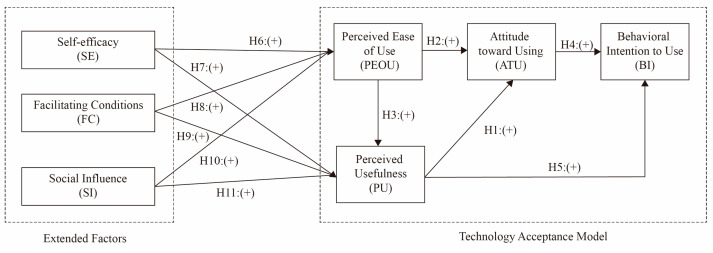
This study used an extended Technology Acceptance Model to explain undergraduate students’ acceptance of smartphone-based AR-assisted CBT for social anxiety disorder (SAD). In a sample of 258 Chinese undergraduates with SAD, all 11 hypothesized paths were supported, with self-efficacy, facilitating conditions, and social influence positively shaping perceived usefulness/ease of use and downstream intention.
## Key findings
- The study analyzed data from 258 undergraduate students with SAD; participants had a mean age of 19.6 years (SD = 0.5) and a mean SPIN score of 28.3 (SD = 3.1).
- The measurement model showed strong reliability and fit: Cronbach’s alpha ranged from 0.912 to 0.979, and fit indices were χ2/df = 3.762, CFI = 0.952, SRMR = 0.064, and RMSEA = 0.058.
- The structural model also fit acceptably: χ2/df = 3.871, CFI = 0.945, SRMR = 0.068, and RMSEA = 0.064.
- All 11 hypotheses were supported: SE, FC, and SI positively influenced PU and PEOU; PEOU positively influenced PU and ATU; PU positively influenced ATU and BI; and ATU positively influenced BI.
## Methods
- The study developed an extended TAM for AR-assisted CBT, adding self-efficacy (SE), facilitating conditions (FC), and social influence (SI) to explain acceptance among undergraduate students with SAD.
- Participants were recruited from large public universities in China using purposive sampling and a two-stage screening process: 1000 students completed a preliminary survey and SPIN screening, and those with SPIN ≥ 19 were invited to the full study.
- Participants first reviewed a standardized, smartphone-based AR-assisted CBT protocol, then completed a self-administered questionnaire measuring PU, PEOU, ATU, BI, SE, FC, and SI; data were analyzed with CFA and SEM in AMOS 26.
## Limitations
- The authors state that the sample was limited to participants recruited in China, which may restrict generalizability; they call for multi-regional and cross-national validation.
- The study was cross-sectional, so acceptance may change over time; the authors suggest longitudinal research.
- The authors note the model emphasized positive antecedents only and omitted possible negative factors such as technology anxiety, privacy concerns, or psychological resistance.
- The text also makes evident that the sample was technology-experienced (76.7% had prior AR experience) and female-overrepresented (68.2% female), which may limit generalizability beyond similar student populations.
Model-written summary. Check it against the paper before relying on it.
Integrity signals
Registry
Cites
Statistics
Figures
Verification
Claims the paper makes
38 Valid · 4 Not valid · 26 Not checked · 52 Own results and interpretations
The cited sources support only part of this claim — read each source’s verdict below.
In the paper
“While AR technology has been developed for various applications in healthcare and education, its use in a blended-reality approach is considered effective for administering CBT, particularly for SAD [28,29,30,31,32].”
§ Advancing Undergraduate Student Mental Healthcare of Social Anxiety Disorder: Evaluating the Acceptance of AR-Assisted Cognitive Behavioral Therapy Through TAM-Based Constructs > 1. Introduction University students with social anxiety disorder (SAD) experience significant and persistent fear of social situations within which they anticipate rejection, scrutiny, and embarrassment [1,2]. SAD is a common anxiety disorder characterized by marked fear or anxiety in social or performance situations in which individuals may be exposed to possible scrutiny by others [3]. Individuals with SAD often fear negative evaluation, embarrassment, rejection, or visible anxiety symptoms, which can lead to avoidance of social interaction, academic participation, public speaking, and other performance-related situations [4]. International epidemiological evidence indicates that SAD is not limited to a specific national or cultural context. Cross-national data showed that SAD is a globally distributed mental health condition, with substantial prevalence across countries and regions [5,6,7]. SAD also tends to emerge during adolescence and early adulthood, making university students a particularly relevant population for investigation [6]. As a common mental health condition, SAD significantly impairs social interactions, academic performance, and professional functioning in children, adolescents, and youth [8]. SAD could have a severe impact on individuals’ educational attainment and ability to work productively and maintain social relationships [9]. As a crucial transitional period from campus to society, ensuring robust undergraduate health psychological care is essential for addressing SAD [10]. In current intervention studies for SAD, cognitive behavioral therapy (CBT) was the most widely used treatment paradigm [11,12,13]. CBT is a time-limited and present-oriented approach to psychotherapy that equips patients with the mental and social tools necessary for adaptive functioning in their private lives and social circles [14]. Perera [15] argued that CBT is overly focused on immediate symptom reduction rather than addressing the deep and underlying personality structures or developmental traumas. Traditional CBT often struggles to address systemic stressors or diverse cultural values because its Western-centric framework primarily focuses on correcting an individual’s internal cognitive distortions [16]. Currently, because information technology continues to evolve, CBT is moving toward an intelligent direction [17]. How to effectively apply new technologies in CBT for SAD has become a widely discussed topic in the academic community [18]. Some studies combined internet technology with CBT and applied this approach to the treatment of SAD among undergraduate students [19]. Studies led by Menzies and colleagues showed that standalone and fully automated online CBT programs could deliver structured cognitive restructuring and exposure-based exercises without continuous face-to-face clinician contact [20]. For example, CBTpsych and iGlebe were developed to address social anxiety associated with stuttering and demonstrated reductions in social anxiety symptoms, unhelpful cognitions, and avoidance-related difficulties [21]. Similarly, web-based CBT programs such as Overcome Social Anxiety showed significant symptom improvement among users who completed the intervention [22]. These findings indicated that online CBT can improve access to evidence-based SAD treatment and support self-guided therapeutic engagement. Global therapeutic studies were actively exploring innovative strategies to aid in the treatment of SAD, with particular emphasis on leveraging augmented reality (AR) technology as an effective auxiliary therapeutic tool [23,24]. AR technology overlays simulated digital elements onto the physical world, allowing users to interact with 3D virtual objects while remaining grounded in their actual surroundings [25]. Generally categorized into marker-based, markerless, and location-based types, AR provides diverse mechanisms for integrating digital overlays [26]. Among these types, markerless AR offers superior flexibility and stability for dynamic environments [27]. While AR technology has been developed for various applications in healthcare and education, its use in a blended-reality approach is considered effective for administering CBT, particularly for SAD [28,29,30,31,32]. AR-assisted CBT enhances the treatment of SAD by providing a highly controllable and accessible medium for graded exposure therapy, allowing patients to confront anxiogenic stimuli in familiar environments [23]. The efficacy of this approach is predicated upon the seamless combination of real and virtual worlds, interactivity, and real-time registration [23]. Furthermore, studies suggested that AR-integrated CBT exerts a more favorable impact on patient treatment engagement and adherence than conventional in vivo exposure approaches [33]. AR technology significantly reduces people’s anxiety levels and increases tolerance for fear-inducing situations, providing a strong precedent for SAD research [34]. Employing AR technology for contextualized exposure positively influences patients by promoting their coping efficacy and enhancing their positivity for self-directed therapeutic practice [35]. Despite these promising clinical foundations, current research remains primarily focused on the clinical efficacy of AR-assisted CBT for undergraduate students with SAD, leaving an important research gap in understanding the behavioral factors that determine actual adoption. From a resource-sustainability perspective, AR-assisted interventions offer a scalable alternative to traditional face-to-face therapy, reducing the demand for physical clinical space and minimizing the carbon footprint associated with travel to specialized centers. Beyond these ecological factors, the socio-economic impact of AR-assisted interventions encompasses multi-level cost savings and geographic liberation [36]. On a macroeconomic scale, deploying automated or cloud-based AR protocols alleviates the financial and human resource burdens on institutional wellness programs and government-funded public health sectors, fostering a more resilient healthcare ecosystem [37]. Individually, AR-assisted interventions eliminate geographic barriers, allowing undergraduate students in remote or underserved regions to access high-fidelity mental health support without being tethered to a specific centralized clinic [38]. Furthermore, the rapid transition from specialized hardware to cross-platform and markerless mobile AR vastly reduces platform dependency [39]. By enabling delivery through ubiquitous personal smartphones, AR-assisted interventions lower technological and financial barriers to entry, thereby ensuring high scalability and democratic access across diverse demographic strata. There are many studies focusing on the TAM in the field of digital mental health. For instance, Nævdal et al. [40] examined therapists’ acceptance of internet-delivered cognitive behavioral therapy in Norway and constructed a TAM-based model to explain how therapist-related characteristics influenced the acceptance of mobile CBT in psychological treatment. Kelly et al. [41] investigated public acceptance of ChatGPT (Version 4o) for mental and physical healthcare and developed an extended TAM framework to explain users’ intention to adopt conversational AI as a healthcare-support technology. Jones et al. [42] evaluated the acceptance and usability of a virtual reality intervention among military members and veterans with treatment-resistant posttraumatic stress disorder, as well as therapists and VR operators. Although these studies have examined the TAM for different digital types of mental health treatments, limited research has specifically constructed a TAM-based model for AR-assisted psychotherapy among undergraduate students. Bouguettaya and Aboujaoude [43] found that group identification in social influence (SI) has a certain impact on students’ acceptance of AR-based therapy for anxiety disorders. Although Patel et al. [44] emphasized that SI is critical for understanding CBT-assisted AR technology adoption among adults with SAD, SI has not been rigorously analyzed through quantitative models in undergraduate populations. Moreover, Hazell et al. [45] found that facilitating conditions (FC), such as therapist control and environmental safety, are the primary reasons students chose technology-based interventions over real-world experiences, and comprehensively analyzed the reasons why students accept or reject digital therapeutics. Lau et al. [46] emphasized that FC and SE are the primary factors predicting whether students accept digital mental health interventions for depression and anxiety. While Chen et al. [47] highlighted a significant gap in understanding the link between students’ SE and digital therapeutic environments, inconvenient usage environments can undermine user confidence, reducing intentions to adopt the technology. Despite the growing integration of AR technology in clinical contexts, the complex interrelationships among SE, FC, SI, and behavioral intention remain insufficiently explored among undergraduate students using AR technology for therapeutic purposes, leaving an important research gap. Accordingly, this study addressed the research gap by extending the technology acceptance model (TAM) with SE, FC, and SI to explain the acceptance of AR-assisted CBT among undergraduate students with SAD. By analyzing SE, FC, and SI, this study moved beyond clinical outcomes to identify the specific environmental and psychological factors required to transition AR-assisted CBT from an experimental auxiliary tool into a widely accepted and accessible standard of campus mental healthcare [48]. Ultimately, the findings of this study provided actionable insights for developers and therapists to optimize therapeutic environments and product design for increasing clinical adoption of AR-assisted interventions among undergraduate students with SAD.
What the sources say
- Partly supportedcites [28] Youssef S. McDonnell J.M. Wilson K.V. Turley L. Cunniffe G. Morris S. Darwish S. Butler J.S. Accuracy of augmented reality-assisted pedicle screw placement: A systematic review Eur. Spine J. 2024 33 974 984 10.1007/s00586-023-08094-5 38177834 sourceExperimental — accuracy not yet measured
The Discussion says AR has been used in healthcare and educational settings, supporting the sentence’s background statement. It discusses surgical applications, however, and does not address blended-reality CBT or its effectiveness for social anxiety disorder (SAD). (LLM, conf=0.84)
- Could not verifycites [29] Ye C. Zhang R. Li X. Deng W. Wang J. Shao S. HGA-DP: Optimal Partitioning of Multimodal DNNs Enabling Real-Time Image Inference for AR-Assisted Communication Maintenance on Cloud-Edge-End Systems Information 2025 16 1091 sourceExperimental — accuracy not yet measured
The Introduction and Conclusions discuss AR for communication-maintenance technicians and the deployment of multimodal models, not therapy. Searches for blended reality, CBT, and social anxiety disorder found no passage addressing whether AR is effective for administering CBT for SAD. (LLM, conf=0.76)
- Not checked — no full text of the sourcecites [30] Man S.S. Wang J. Chan A.H.S. Liu L. Ageing in the digital age: What drives virtual reality technology adoption among older adults? Ergonomics 2026 69 642 656 40047464 source
- Not checked — no full text of the sourcecites [31] Horigome T. Kurokawa S. Sawada K. Kudo S. Shiga K. Mimura M. Kishimoto T. Virtual reality exposure therapy for social anxiety disorder: A systematic review and meta-analysis Psychol. Med. 2020 50 2487 2497 10.1017/s0033291720003785 33070784 source
- Could not verifycites [32] Sarhan M.Y. Alarify M. Khojah M. Unlocking AI Chatbot Potential in Healthcare: Trust-Enhanced DeLone & McLean IS Success Model Healthcare 2026 14 1324 42194414 PMC13205441 sourceExperimental — accuracy not yet measured
The Introduction discusses healthcare chatbots and mental-health applications, not augmented reality or blended-reality CBT for social anxiety disorder. Searches for augmented reality, blended reality, CBT, and SAD found no passage addressing the claimed effectiveness; the References list a chatbot-delivered CBT trial, but that does not establish the AR claim. No page numbers were provided for these passages. (LLM, conf=0.76)
plainstates a cause- Asserted: passes — The authors put it forward as true.
- Checkable: passes — It can be checked against evidence.
- Load-bearing: passes — The paper’s conclusions depend on it.
- Based: passes — The paper gives a reason why it holds.
- Partly supported
The cited sources support only part of this claim — read each source’s verdict below.
In the paper
“AR-assisted CBT enhances the treatment of SAD by providing a highly controllable and accessible medium for graded exposure therapy, allowing patients to confront anxiogenic stimuli in familiar environments [23].”
§ Advancing Undergraduate Student Mental Healthcare of Social Anxiety Disorder: Evaluating the Acceptance of AR-Assisted Cognitive Behavioral Therapy Through TAM-Based Constructs > 1. Introduction University students with social anxiety disorder (SAD) experience significant and persistent fear of social situations within which they anticipate rejection, scrutiny, and embarrassment [1,2]. SAD is a common anxiety disorder characterized by marked fear or anxiety in social or performance situations in which individuals may be exposed to possible scrutiny by others [3]. Individuals with SAD often fear negative evaluation, embarrassment, rejection, or visible anxiety symptoms, which can lead to avoidance of social interaction, academic participation, public speaking, and other performance-related situations [4]. International epidemiological evidence indicates that SAD is not limited to a specific national or cultural context. Cross-national data showed that SAD is a globally distributed mental health condition, with substantial prevalence across countries and regions [5,6,7]. SAD also tends to emerge during adolescence and early adulthood, making university students a particularly relevant population for investigation [6]. As a common mental health condition, SAD significantly impairs social interactions, academic performance, and professional functioning in children, adolescents, and youth [8]. SAD could have a severe impact on individuals’ educational attainment and ability to work productively and maintain social relationships [9]. As a crucial transitional period from campus to society, ensuring robust undergraduate health psychological care is essential for addressing SAD [10]. In current intervention studies for SAD, cognitive behavioral therapy (CBT) was the most widely used treatment paradigm [11,12,13]. CBT is a time-limited and present-oriented approach to psychotherapy that equips patients with the mental and social tools necessary for adaptive functioning in their private lives and social circles [14]. Perera [15] argued that CBT is overly focused on immediate symptom reduction rather than addressing the deep and underlying personality structures or developmental traumas. Traditional CBT often struggles to address systemic stressors or diverse cultural values because its Western-centric framework primarily focuses on correcting an individual’s internal cognitive distortions [16]. Currently, because information technology continues to evolve, CBT is moving toward an intelligent direction [17]. How to effectively apply new technologies in CBT for SAD has become a widely discussed topic in the academic community [18]. Some studies combined internet technology with CBT and applied this approach to the treatment of SAD among undergraduate students [19]. Studies led by Menzies and colleagues showed that standalone and fully automated online CBT programs could deliver structured cognitive restructuring and exposure-based exercises without continuous face-to-face clinician contact [20]. For example, CBTpsych and iGlebe were developed to address social anxiety associated with stuttering and demonstrated reductions in social anxiety symptoms, unhelpful cognitions, and avoidance-related difficulties [21]. Similarly, web-based CBT programs such as Overcome Social Anxiety showed significant symptom improvement among users who completed the intervention [22]. These findings indicated that online CBT can improve access to evidence-based SAD treatment and support self-guided therapeutic engagement. Global therapeutic studies were actively exploring innovative strategies to aid in the treatment of SAD, with particular emphasis on leveraging augmented reality (AR) technology as an effective auxiliary therapeutic tool [23,24]. AR technology overlays simulated digital elements onto the physical world, allowing users to interact with 3D virtual objects while remaining grounded in their actual surroundings [25]. Generally categorized into marker-based, markerless, and location-based types, AR provides diverse mechanisms for integrating digital overlays [26]. Among these types, markerless AR offers superior flexibility and stability for dynamic environments [27]. While AR technology has been developed for various applications in healthcare and education, its use in a blended-reality approach is considered effective for administering CBT, particularly for SAD [28,29,30,31,32]. AR-assisted CBT enhances the treatment of SAD by providing a highly controllable and accessible medium for graded exposure therapy, allowing patients to confront anxiogenic stimuli in familiar environments [23]. The efficacy of this approach is predicated upon the seamless combination of real and virtual worlds, interactivity, and real-time registration [23]. Furthermore, studies suggested that AR-integrated CBT exerts a more favorable impact on patient treatment engagement and adherence than conventional in vivo exposure approaches [33]. AR technology significantly reduces people’s anxiety levels and increases tolerance for fear-inducing situations, providing a strong precedent for SAD research [34]. Employing AR technology for contextualized exposure positively influences patients by promoting their coping efficacy and enhancing their positivity for self-directed therapeutic practice [35]. Despite these promising clinical foundations, current research remains primarily focused on the clinical efficacy of AR-assisted CBT for undergraduate students with SAD, leaving an important research gap in understanding the behavioral factors that determine actual adoption. From a resource-sustainability perspective, AR-assisted interventions offer a scalable alternative to traditional face-to-face therapy, reducing the demand for physical clinical space and minimizing the carbon footprint associated with travel to specialized centers. Beyond these ecological factors, the socio-economic impact of AR-assisted interventions encompasses multi-level cost savings and geographic liberation [36]. On a macroeconomic scale, deploying automated or cloud-based AR protocols alleviates the financial and human resource burdens on institutional wellness programs and government-funded public health sectors, fostering a more resilient healthcare ecosystem [37]. Individually, AR-assisted interventions eliminate geographic barriers, allowing undergraduate students in remote or underserved regions to access high-fidelity mental health support without being tethered to a specific centralized clinic [38]. Furthermore, the rapid transition from specialized hardware to cross-platform and markerless mobile AR vastly reduces platform dependency [39]. By enabling delivery through ubiquitous personal smartphones, AR-assisted interventions lower technological and financial barriers to entry, thereby ensuring high scalability and democratic access across diverse demographic strata. There are many studies focusing on the TAM in the field of digital mental health. For instance, Nævdal et al. [40] examined therapists’ acceptance of internet-delivered cognitive behavioral therapy in Norway and constructed a TAM-based model to explain how therapist-related characteristics influenced the acceptance of mobile CBT in psychological treatment. Kelly et al. [41] investigated public acceptance of ChatGPT (Version 4o) for mental and physical healthcare and developed an extended TAM framework to explain users’ intention to adopt conversational AI as a healthcare-support technology. Jones et al. [42] evaluated the acceptance and usability of a virtual reality intervention among military members and veterans with treatment-resistant posttraumatic stress disorder, as well as therapists and VR operators. Although these studies have examined the TAM for different digital types of mental health treatments, limited research has specifically constructed a TAM-based model for AR-assisted psychotherapy among undergraduate students. Bouguettaya and Aboujaoude [43] found that group identification in social influence (SI) has a certain impact on students’ acceptance of AR-based therapy for anxiety disorders. Although Patel et al. [44] emphasized that SI is critical for understanding CBT-assisted AR technology adoption among adults with SAD, SI has not been rigorously analyzed through quantitative models in undergraduate populations. Moreover, Hazell et al. [45] found that facilitating conditions (FC), such as therapist control and environmental safety, are the primary reasons students chose technology-based interventions over real-world experiences, and comprehensively analyzed the reasons why students accept or reject digital therapeutics. Lau et al. [46] emphasized that FC and SE are the primary factors predicting whether students accept digital mental health interventions for depression and anxiety. While Chen et al. [47] highlighted a significant gap in understanding the link between students’ SE and digital therapeutic environments, inconvenient usage environments can undermine user confidence, reducing intentions to adopt the technology. Despite the growing integration of AR technology in clinical contexts, the complex interrelationships among SE, FC, SI, and behavioral intention remain insufficiently explored among undergraduate students using AR technology for therapeutic purposes, leaving an important research gap. Accordingly, this study addressed the research gap by extending the technology acceptance model (TAM) with SE, FC, and SI to explain the acceptance of AR-assisted CBT among undergraduate students with SAD. By analyzing SE, FC, and SI, this study moved beyond clinical outcomes to identify the specific environmental and psychological factors required to transition AR-assisted CBT from an experimental auxiliary tool into a widely accepted and accessible standard of campus mental healthcare [48]. Ultimately, the findings of this study provided actionable insights for developers and therapists to optimize therapeutic environments and product design for increasing clinical adoption of AR-assisted interventions among undergraduate students with SAD.
What the sources say
- Partly supportedcites [23] Rajkumar R.P. Augmented reality as an aid to behavior therapy for anxiety disorders: A narrative review Cureus 2024 16 e69454 10.7759/cureus.69454 39282478 PMC11402374 sourceExperimental — accuracy not yet measured
The Introduction and background describes controllable, graded exposure alongside real-world stimuli as potential advantages of AR. But the Review says effectiveness has been systematically established only for specific phobia; its sole report involving social phobia found just 3.5% symptom improvement in three patients receiving AR combined with VR and neurofeedback. The source therefore does not establish that AR-assisted CBT enhances treatment of social anxiety disorder (SAD), nor does it establish accessibility in familiar environments. (LLM, conf=0.88)
plainstates a cause- Asserted: passes — The authors put it forward as true.
- Checkable: passes — It can be checked against evidence.
- Load-bearing: passes — The paper’s conclusions depend on it.
- Based: passes — The paper gives a reason why it holds.
- Partly supported
The cited sources that could be checked couldn’t confirm or dispute this claim.
In the paper
“In the context of digital mental health interventions, users with higher SE are more likely to approach technology-based treatment with confidence and persistence [56].”
§ Advancing Undergraduate Student Mental Healthcare of Social Anxiety Disorder: Evaluating the Acceptance of AR-Assisted Cognitive Behavioral Therapy Through TAM-Based Constructs > 2. Model Development and Hypotheses > 2.2. Self-Efficacy Self-efficacy (SE) refers to an individual’s belief in their capability to organize and execute the actions required to achieve specific goals [55]. In the present study, SE is defined as undergraduate students’ perceived confidence in their ability to use AR-assisted CBT for SAD, manage difficulties encountered during AR-based therapeutic activities, and persist in completing treatment-related tasks. Thus, SE does not represent students’ actual technical competence or the objective therapeutic effectiveness of AR-assisted CBT. Rather, SE reflects their subjective belief that they can successfully engage with the AR-assisted CBT process. In the context of digital mental health interventions, users with higher SE are more likely to approach technology-based treatment with confidence and persistence [56]. Moshe et al. [57] found that dropout was associated with users’ baseline characteristics and early engagement patterns, which also influence individuals’ SE because the characteristics and patterns can shape users’ confidence in their ability to engage with and successfully complete digital interventions. These findings highlighted the importance of SE and early user experiences in sustaining engagement from a technology acceptance perspective. SE was widely acknowledged as an essential predictor of students’ technology acceptance because it influences cognitive processing, emotional stability, and perceived ability to manage new technologies [58,59]. SE influenced undergraduate students’ cognitive processes and the intensity and stability of their emotional states when using new technology [58]. In addition, Larsen [60] conducted a review on TAM and found that SE was a factor that positively affects PU and PEOU. Drawing on this evidence, we proposed that: SE positively affects PEOU.
What the sources say
- Could not verifycites [56] Huda M.H. Rahman M.F. Zalaya Y. Mukminin M.A. Purnamasari T. Hendarwan H. Su’udi A. Hasugian A.R. Yuniar Y. Handayani R.S. A meta-analysis of technology-based interventions on treatment adherence and treatment success among TBC patients PLoS ONE 2024 19 e0312001 39621611 PMC11611106 sourceExperimental — accuracy not yet measured
The Results and Conclusions address technology-based interventions for tuberculosis treatment, not digital mental health interventions. The Discussion says intrinsically motivated people may persist in tasks, but it does not address whether higher self-efficacy (SE) predicts confidence or persistence with technology-based treatment. Searches for self-efficacy, confidence, and mental health found no passage establishing the claim. (LLM, conf=0.76)
hedgedstates an association- Asserted: passes — The authors put it forward as true.
- Checkable: passes — It can be checked against evidence.
- Load-bearing: passes — The paper’s conclusions depend on it.
- Based: passes — The paper gives a reason why it holds.
- Could not verify
The cited sources support only part of this claim — read each source’s verdict below.
In the paper
“SE was widely acknowledged as an essential predictor of students’ technology acceptance because it influences cognitive processing, emotional stability, and perceived ability to manage new technologies [58,59].”
§ Advancing Undergraduate Student Mental Healthcare of Social Anxiety Disorder: Evaluating the Acceptance of AR-Assisted Cognitive Behavioral Therapy Through TAM-Based Constructs > 2. Model Development and Hypotheses > 2.2. Self-Efficacy Self-efficacy (SE) refers to an individual’s belief in their capability to organize and execute the actions required to achieve specific goals [55]. In the present study, SE is defined as undergraduate students’ perceived confidence in their ability to use AR-assisted CBT for SAD, manage difficulties encountered during AR-based therapeutic activities, and persist in completing treatment-related tasks. Thus, SE does not represent students’ actual technical competence or the objective therapeutic effectiveness of AR-assisted CBT. Rather, SE reflects their subjective belief that they can successfully engage with the AR-assisted CBT process. In the context of digital mental health interventions, users with higher SE are more likely to approach technology-based treatment with confidence and persistence [56]. Moshe et al. [57] found that dropout was associated with users’ baseline characteristics and early engagement patterns, which also influence individuals’ SE because the characteristics and patterns can shape users’ confidence in their ability to engage with and successfully complete digital interventions. These findings highlighted the importance of SE and early user experiences in sustaining engagement from a technology acceptance perspective. SE was widely acknowledged as an essential predictor of students’ technology acceptance because it influences cognitive processing, emotional stability, and perceived ability to manage new technologies [58,59]. SE influenced undergraduate students’ cognitive processes and the intensity and stability of their emotional states when using new technology [58]. In addition, Larsen [60] conducted a review on TAM and found that SE was a factor that positively affects PU and PEOU. Drawing on this evidence, we proposed that: SE positively affects PEOU.
What the sources say
- Not checked — no full text of the sourcecites [58] Tan T.H.B. Lim S. Vun C.H.N. Role of technology self-efficacy and digital alliance in digital mental health tool acceptance among university students in Singapore Int. J. Crowd Sci. 2024 8 101 109 10.26599/ijcs.2024.9100001 source
- Partly supportedcites [59] Pan X. Technology acceptance, technological self-efficacy, and attitude toward technology-based self-directed learning: Learning motivation as a mediator Front. Psychol. 2020 11 564294 33192838 PMC7653185 sourceExperimental — accuracy not yet measured
The Literature Review (Technology Acceptance and Technological Self-Efficacy; page not available) describes technological self-efficacy as an important determinant of technology-use intentions and reports a positive influence on technology acceptance. It also defines the construct in terms of students’ perceived ability to use technology. The cited passages do not establish the claimed explanation through cognitive processing or emotional stability. (LLM, conf=0.85)
boostedstates a cause- Asserted: passes — The authors put it forward as true.
- Checkable: passes — It can be checked against evidence.
- Load-bearing: passes — The paper’s conclusions depend on it.
- Based: passes — The paper gives a reason why it holds.
The sources with a verdict support this claim; the rest weren’t checked yet, have no full text we could read, or their verdicts aren’t rated yet.
In the paper
“the questionnaire items were not newly developed in the present study but were adapted from established technology acceptance and digital health acceptance studies [49,119].”
§ Advancing Undergraduate Student Mental Healthcare of Social Anxiety Disorder: Evaluating the Acceptance of AR-Assisted Cognitive Behavioral Therapy Through TAM-Based Constructs > 5. Discussions > 5.3. Limitations and Future Research Opportunities This study must acknowledge several research limitations. First, the sample of this study was limited to participants recruited in China, which may lead to the restricted generalizability of the findings. Regional differences in cultural, social, and economic contexts have been shown to substantially influence technology acceptance behaviors. Therefore, to address the potential generalizability constraints inherent in the present study’s regional sample, subsequent research should validate the findings using multi-regional data to establish the model’s applicability across diverse populations. Comparative cross-national investigations are particularly well-suited to illuminate the role of cultural factors in shaping AR-assisted CBT acceptance, thereby enabling the development of culturally tailored frameworks for global AR-assisted CBT promotion. Second, acceptance was often measured at a single point in time (cross-sectional). For AR-assisted CBT, acceptance might fluctuate as the undergraduate students become more habituated to the hardware or as their anxiety levels change throughout the semester [117]. Therefore, future research could consider incorporating longitudinal study methods to investigate the dynamic changes and influencing factors of undergraduate students regarding AR-assisted CBT for SAD in depth. Third, the research model of this study primarily focused on positive antecedents derived from classic technology acceptance paradigms. While this directional formulation aligned with established literature, it inherently omitted potential counter-forces that could inhibit technology adoption [118]. Future research should strive for a balanced and bidirectional theoretical framework by integrating negative factors, such as technology anxiety, privacy concerns, or psychological resistance. Examining how these negative nodes interact with self-efficacy and facilitating conditions can provide a nuanced and comprehensive diagnostic tool for institutional stakeholders deploying digital therapeutics. Fourth, the questionnaire items were not newly developed in the present study but were adapted from established technology acceptance and digital health acceptance studies [49,119]. All Likert-scale items in the questionnaire were positively worded. Although the items were adapted from established technology acceptance instruments and demonstrated acceptable reliability and validity in the present study, the exclusive use of positively framed statements may have increased the possibility of acquiescence bias or agreement tendency. Therefore, future research should further refine the questionnaire design by considering balanced item wording, attention-check items, common method bias testing, or comparison between positively worded and mixed-wording scales [120]. Fifth, the sample consisted of undergraduate students recruited from large public universities, a highly tech-savvy cohort. In addition, 76.7% of participants reported prior AR experience, primarily through mobile-based applications. Therefore, the study population may represent a relatively technology-experienced cohort, which may have increased their PEOU, PU, ATU, and BI. This characteristic may limit the generalizability of the findings to less digitally experienced students, older adults, patients from non-university settings, or populations with limited access to digital technologies. Future research should recruit participants with more diverse levels of digital literacy, AR familiarity, and technology access to further validate the proposed model across broader healthcare populations. Sixth, the sample of this study consisted of 31.8% male and 68.2% female participants, indicating that female undergraduate students were overrepresented. Prior technology-acceptance research suggested that gender may shape how users evaluate new technologies, including the relative importance of perceived usefulness, perceived ease of use, and social influence [121]. The gender imbalance of the sample in this study may have influenced the estimated acceptance of AR-assisted CBT. Future research should recruit a gender-balanced sample and examine whether the structural relationships in the proposed model differ between male and female students.
What the sources say
- Not checked — no full text of the sourcecites [49] Davis F.D. Perceived usefulness, perceived ease of use, and user acceptance of information technology MIS Q. 1989 13 319 340 10.2307/249008 source
- Supportedcites [119] Ashmawy R. Zeina S. Kamal E. Shelbaya K. Gawish N. Sharaf S. Redwan E.M. Mehanna A. A reliable tool for assessment of acceptance of e-consultation service in hospitals: The modified e-consultation Technology Acceptance Model (TAM) questionnaire J. Egypt. Public Health Assoc. 2025 100 6 40261534 PMC12014876 source
In Methods, Phase 1 (page unavailable), the paper says it adapted an existing TAM questionnaire for e-consultation rather than developing its acceptance items from scratch. The Methods also identify 12 items from the modified TAM, making this a relevant digital-health acceptance questionnaire for the citing sentence. (LLM, conf=0.86)
plain- Asserted: passes — The authors put it forward as true.
- Checkable: passes — It can be checked against evidence.
- Load-bearing: unclear — It is unclear whether the paper’s conclusions depend on it.
- Based: passes — The paper gives a reason why it holds.
38 more claims · 4 with their cited sources checked
Create a free account to see all 120 claims and to verify the 5 references still open.
- Probably not a substantial claim. 64
- It may state two separate claims as one. 34
- The quote only partly states this claim. 1
Citations
Cites
Evaluating structural equation models with unobservable variables and measurement error
Fornell, C., & Larcker, D. F. (1981) · Journal of Marketing Research · doi:10.1177/002224378101800104 · Cited by 109,190 · cited 1×
“To determine the discriminant validity of the measurement, the square root of AVE (SAVE) was calculated for each construct [86].”
Perceived usefulness, perceived ease of use, and user acceptance of information technology
Davis, F. D. (1989) · MIS Quarterly · doi:10.2307/249008 · Cited by 68,483 · cited 4×
“These findings were consistent with the original TAM [49] and previous AR technology acceptance studies [89,90].”
InfluentialUser Acceptance of Information Technology: Toward A Unified View1
Venkatesh, V., Morris, M. G., Davis, G. B., & Davis, F. D. (2003) · MIS Quarterly · doi:10.2307/30036540 · Cited by 45,035
Coefficient Alpha and the Internal Structure of Tests
Cronbach, L. J. (1951) · Psychometrika · doi:10.1007/bf02310555 · Cited by 43,931 · cited 1×
“Following the guidelines proposed by Cronbach [87] for measuring internal consistency reliability, Cronbach’s alpha coefficient was computed for each construct.”
Structural equation modeling in practice: A review and recommended two-step approach
Anderson, J. C., & Gerbing, D. W. (1988) · Psychological Bulletin · doi:10.1037/0033-2909.103.3.411 · Cited by 41,941 · cited 1×
“According to Anderson and Gerbing [82], the structural equation modeling (SEM) has two steps.”
A Theoretical Extension of the Technology Acceptance Model: Four Longitudinal Field Studies
Venkatesh, V., & Davis, F. D. (2000) · Management Science · doi:10.1287/mnsc.46.2.186.11926 · Cited by 23,066
Evaluating Goodness-of-Fit Indexes for Testing Measurement Invariance
Cheung, G. W., & Rensvold, R. B. (2002) · Structural Equation Modeling: A Multidisciplinary Journal · doi:10.1207/s15328007sem0902_5 · Cited by 16,280
Hu, L.-T., & Bentler, P. M. (1998) · Psychological Methods · doi:10.1037/1082-989x.3.4.424 · Cited by 12,298 · cited 1×
“As suggested by Hu and Bentler [84], a model exhibits a good fit when χ 2 / df < 5, CFI > 0.90, SRMR 0.08, and RMSEA 0.08.”
InfluentialThe Technology Acceptance Model: Past, Present, and Future
Lee, Y., Kozar, K. A., & Larsen, K. R. T. (2003) · Communications of the Association for Information Systems · doi:10.17705/1cais.01250 · Cited by 2,572
Regulation of cognitive processes through perceived self-efficacy.
Bandura, A. (1989) · Developmental Psychology · doi:10.1037/0012-1649.25.5.729 · Cited by 1,900
Psychometric properties of the Social Phobia Inventory (SPIN): New self-rating scale
Connor, K. M., Davidson, J. R. T., Churchill, L. E., Sherwood, A., Weisler, R. H., & Foa, E. (2000) · British Journal of Psychiatry · doi:10.1192/bjp.176.4.379 · Cited by 1,624 · cited 1×
“Following the established methodology of Connor et al. [74], a cut-off score of 19 or higher was implemented to distinguish individuals with clinically significant symptoms from the broader student population.”
Discriminant Validity Assessment: Use of Fornell & Larcker criterion versus HTMT Criterion
Ab Hamid, M. R., Sami, W., & Mohmad Sidek, M. H. (2017) · Journal of Physics: Conference Series · doi:10.1088/1742-6596/890/1/012163 · Cited by 1,478 · cited 1×
“To examine consistency across multiple indicators corresponding to the same construct, the convergent validity of the measurement was evaluated by computing the average variance extracted (AVE) index [85].”
Kim, J., Lee, H., & Cho, Y. H. (2022) · Education and Information Technologies · doi:10.1007/s10639-021-10831-6 · Cited by 669
Al-Adwan, A. S., Li, N., Al-Adwan, A., Abbasi, G. A., Albelbisi, N. A., & Habibi, A. (2023) · Education and Information Technologies · doi:10.1007/s10639-023-11816-3 · Cited by 637 · cited 1×
“They also aligned with evidence from mobile learning research showing that positive attitudes can strengthen students’ intention to use new technologies [91].”
Ineffectiveness of Reverse Wording of Questionnaire Items: Let’s Learn from Cows in the Rain
Sonderen, E. V., Sanderman, R., & Coyne, J. C. (2013) · PLoS ONE · doi:10.1371/journal.pone.0068967 · Cited by 544
Social Anxiety and Social Anxiety Disorder
Morrison, A. S., & Heimberg, R. G. (2013) · Annual Review of Clinical Psychology · doi:10.1146/annurev-clinpsy-050212-185631 · Cited by 480 · cited 1×
“SAD is a common anxiety disorder characterized by marked fear or anxiety in social or performance situations in which individuals may be exposed to possible scrutiny by others [3].”
Wu, H., Li, S., Zheng, J., & Guo, J. (2020) · Medical Education Online · doi:10.1080/10872981.2020.1742964 · Cited by 468
Cognitive-behavioral therapy for social anxiety disorder: Current status and future directions
Heimberg, R. G. (2002) · Biological Psychiatry · doi:10.1016/s0006-3223(01)01183-0 · Cited by 351
Functional impairment in social anxiety disorder
Aderka, I. M., Hofmann, S. G., Nickerson, A., Hermesh, H., Gilboa-Schechtman, E., & Marom, S. (2012) · Journal of Anxiety Disorders · doi:10.1016/j.janxdis.2012.01.003 · Cited by 343
Pan, X. (2020) · Frontiers in Psychology · doi:10.3389/fpsyg.2020.564294 · Cited by 329 · cited 1×
“SE was widely acknowledged as an essential predictor of students’ technology acceptance because it influences cognitive processing, emotional stability, and perceived ability to manage new technologies [58,59].”
Psychometric properties of the social phobia inventory: Further evaluation
Antony, M. M., Coons, M. J., McCabe, R. E., Ashbaugh, A., & Swinson, R. P. (2006) · Behaviour Research and Therapy · doi:10.1016/j.brat.2005.08.013 · Cited by 299 · cited 1×
“In the first stage, a total of 1000 students completed a preliminary demographic survey and the Social Phobia Inventory (SPIN) [70].”
Using virtual reality for dynamic learning: an extended technology acceptance model
Fussell, S. G., & Truong, D. (2022) · Virtual Reality · doi:10.1007/s10055-021-00554-x · Cited by 261
Strzelecki, A., & ElArabawy, S. (2024) · British Journal of Educational Technology · doi:10.1111/bjet.13425 · Cited by 260 · cited 1×
“Therefore, when developing the technology, it should be ensured that the AR treatment platform can be used compatibly with the existing infrastructure in the campus, and that users can contact trained staff for assistance when problems arise [111,112].”
Oyman, M., Bal, D., & Ozer, S. (2022) · Computers in Human Behavior · doi:10.1016/j.chb.2021.107127 · Cited by 244
Zhang, X., Han, X., Dang, Y., Meng, F., Guo, X., & Lin, J. (2017) · Informatics for Health and Social Care · doi:10.1080/17538157.2016.1200053 · Cited by 241 · cited 1×
“These constructs were measured using 21 items adapted from the work of Zhang et al. [75] and Chung and Dong [76], with each factor represented by three specific indicators.”
Dahri, N. A., Yahaya, N., Al-Rahmi, W. M., Aldraiweesh, A., Alturki, U., Almutairy, S., Shutaleva, A., & Soomro, R. B. (2024) · Heliyon · doi:10.1016/j.heliyon.2024.e29317 · Cited by 239 · cited 1×
“Similarly, the positive effects of SI are consistent with prior research indicating that social expectations, peer endorsement, and collective support can shape users’ acceptance of new technologies [61,103–106].”
Online learner engagement: Conceptual definitions, research themes, and supportive practices
Martin, F., & Borup, J. (2022) · Educational Psychologist · doi:10.1080/00461520.2022.2089147 · Cited by 220
The social influence model of technology adoption
Vannoy, S. A., & Palvia, P. (2010) · Communications of the ACM · doi:10.1145/1743546.1743585 · Cited by 210 · cited 1×
“Specifically, interpersonal interaction generates perceived pressure through messages or signals for individuals to act on certain behaviors [67].”
Hidayat, R., & Wardat, Y. (2023) · Education and Information Technologies · doi:10.1007/s10639-023-12157-x · Cited by 191
Patel, S., Akhtar, A., Malins, S., Wright, N., Rowley, E., Young, E., Sampson, S., & Morriss, R. (2020) · Journal of Medical Internet Research · doi:10.2196/16228 · Cited by 190 · cited 1×
“Although Patel et al. [44] emphasized that SI is critical for understanding CBT-assisted AR technology adoption among adults with SAD, SI has not been rigorously analyzed through quantitative models in undergraduate populations.”
Why Do People Reject Technologies: A Review of User Resistance Theories
Laumer, S., & Eckhardt, A. (2011) · Integrated series on information systems/Integrated series in information systems · doi:10.1007/978-1-4419-6108-2_4 · Cited by 175
Virtual reality exposure therapy for social anxiety disorder: a systematic review and meta-analysis
Horigome, T., Kurokawa, S., Sawada, K., Kudo, S., Shiga, K., Mimura, M., & Kishimoto, T. (2020) · Psychological Medicine · doi:10.1017/s0033291720003785 · Cited by 160
Barrett, A. J., Pack, A., & Quaid, E. D. (2021) · Computers & Education · doi:10.1016/j.compedu.2021.104214 · Cited by 160
Augmented Reality: A Brand New Challenge for the Assessment and Treatment of Psychological Disorders
Chicchi Giglioli, I. A., Pallavicini, F., Pedroli, E., Serino, S., & Riva, G. (2015) · Computational and Mathematical Methods in Medicine · doi:10.1155/2015/862942 · Cited by 150
Social media: A digital social mirror for identity development during adolescence
Pérez-Torres, V. (2024) · Current Psychology · doi:10.1007/s12144-024-05980-z · Cited by 147
Self-efficacy as an antecedent of cognition and affect in technology acceptance
Kulviwat, S., C. Bruner II, G., & P. Neelankavil, J. (2014) · Journal of Consumer Marketing · doi:10.1108/jcm-10-2013-0727 · Cited by 144 · cited 1×
“SE may reduce uncertainty when students interact with AR interfaces, allowing them to focus more on therapeutic activities, such as simulated social exposure and cognitive restructuring, rather than on the complexity of the technology itself [96–99].”
Bervell, B., & Arkorful, V. (2020) · International Journal of Educational Technology in Higher Education · doi:10.1186/s41239-020-0183-9 · Cited by 144 · cited 1×
“In the context of AR-assisted CBT, accessible devices, stable network conditions, appropriate usage environments, and timely technical support may reduce perceived barriers and improve students’ confidence in using the system [101,102].”
Wang, C., Li, Y., Fu, W., & Jin, J. (2023) · Journal of Retailing and Consumer Services · doi:10.1016/j.jretconser.2023.103325 · Cited by 126 · cited 1×
“For AR-assisted CBT, acceptance might fluctuate as the undergraduate students become more habituated to the hardware or as their anxiety levels change throughout the semester [117].”
Gender differences in artificial intelligence: the role of artificial intelligence anxiety
Russo, C., Romano, L., Clemente, D., Iacovone, L., Gladwin, T. E., & Panno, A. (2025) · Frontiers in Psychology · doi:10.3389/fpsyg.2025.1559457 · Cited by 126 · cited 1×
“Prior technology-acceptance research suggested that gender may shape how users evaluate new technologies, including the relative importance of perceived usefulness, perceived ease of use, and social influence [121].”
Kachaturoff, M., Caboral-Stevens, M., Gee, M., & Lan, V. M. (2020) · Journal of Professional Nursing · doi:10.1016/j.profnurs.2019.12.007 · Cited by 117 · cited 1×
“Extensive research indicated that SI exerted a significant positive effect on PEOU because endorsement from peers and mentors reduces the cognitive burden and anxiety associated with adopting new technology [68,69].”
Thongsri, N., Shen, L., & Bao, Y. (2020) · Innovations in Education and Teaching International · doi:10.1080/14703297.2019.1585904 · Cited by 106
Tang, X., Liu, Q., Cai, F., Tian, H., Shi, X., & Tang, S. (2022) · Frontiers in Psychology · doi:10.3389/fpsyg.2022.792356 · Cited by 106
Chahal, J., & Rani, N. (2022) · Journal of Computing in Higher Education · doi:10.1007/s12528-022-09327-0 · Cited by 100
Wong, T. K. M., Man, S. S., & Chan, A. H. S. (2021) · Safety Science · doi:10.1016/j.ssci.2021.105239 · Cited by 91
Self-citationAcceptance of dance training system based on augmented reality and technology acceptance model (TAM)
Iqbal, J., & Sidhu, M. S. (2022) · Virtual Reality · doi:10.1007/s10055-021-00529-y · Cited by 90 · cited 1×
“These findings were consistent with the original TAM [49] and previous AR technology acceptance studies [89,90].”
Real-time feedback using extended reality: A current overview and further integration into sports
Geisen, M., & Klatt, S. (2021) · International Journal of Sports Science & Coaching · doi:10.1177/17479541211051006 · Cited by 80
Manca, F., Sivakumar, A., & Polak, J. W. (2019) · Transportation Research Part C Emerging Technologies · doi:10.1016/j.trc.2019.02.010 · Cited by 78
van Sonderen, E., Sanderman, R., & Coyne, J. C. (2013) · PLoS ONE · doi:10.1371/annotation/af78b324-7b44-4f89-b932-e851fe04a8e5 · Cited by 71
Zou, B., Wang, C., Yan, Y., Du, X., & Ji, Y. (2025) · International Journal of Applied Linguistics · doi:10.1111/ijal.12658 · Cited by 66 · cited 1×
“The TAM has been extensively used to explain students’ technology acceptance [52,53].”
Nicoară, N. D., Marian, P., Petriș, A. O., Delcea, C., & Manole, F. (2023) · Pharmacophore · doi:10.51847/lkulo5pb1t · Cited by 61
Fitrianie, S., Horsch, C., Beun, R. J., Griffioen-Both, F., & Brinkman, W.-P. (2021) · Journal of Medical Systems · doi:10.1007/s10916-021-01785-w · Cited by 57 · cited 1×
“The positive effects of FC are consistent with previous findings showing that technical and environmental support can improve users’ perceptions of usefulness and ease of use in psychological intervention and AR-related contexts [62,100].”
Wu, Y., Li, X., Ji, X., Ren, W., Zhu, Y., Chen, Z., & Du, X. (2025) · Journal of Affective Disorders · doi:10.1016/j.jad.2024.12.086 · Cited by 57 · cited 1×
“Cross-national data showed that SAD is a globally distributed mental health condition, with substantial prevalence across countries and regions [5–7].”
Emotions in social anxiety disorder: A review
Rozen, N., & Aderka, I. M. (2023) · Journal of Anxiety Disorders · doi:10.1016/j.janxdis.2023.102696 · Cited by 54 · cited 1×
“As a common mental health condition, SAD significantly impairs social interactions, academic performance, and professional functioning in children, adolescents, and youth [8].”
Impact of an acceptance facilitating intervention on psychotherapists' acceptance of blended therapy
Baumeister, H., Terhorst, Y., Grässle, C., Freudenstein, M., Nübling, R., & Ebert, D. D. (2020) · PLoS ONE · doi:10.1371/journal.pone.0236995 · Cited by 53 · cited 1×
“Also, FC significantly bolster PU and PEOU among clinicians delivering psychological interventions [63].”
Online CBT I: Bridging the Gap Between Eliza and Modern Online CBT Treatment Packages
Helgadóttir, F. D., Menzies, R. G., Onslow, M., Packman, A., & O'Brian, S. (2009) · Behaviour Change · doi:10.1375/bech.26.4.245 · Cited by 52
Man, S. S., Ding, M., Li, X., Chan, A. H. S., & Zhang, T. (2024) · International Journal of Human-Computer Interaction · doi:10.1080/10447318.2024.2316389 · Cited by 51
Self-citationAcceptability of Digital Mental Health Interventions for Depression and Anxiety: Systematic Review
Lau, C. K. Y., Saad, A., Camara, B., Rahman, D., & Bolea-Alamanac, B. (2024) · Journal of Medical Internet Research · doi:10.2196/52609 · Cited by 51 · cited 1×
“Lau et al. [46] emphasized that FC and SE are the primary factors predicting whether students accept digital mental health interventions for depression and anxiety.”
Wut, T. M., Lee, S. W., & Xu, J. (. (2022) · Education Sciences · doi:10.3390/educsci12050337 · Cited by 50 · cited 1×
“In the context of AR-assisted CBT, accessible devices, stable network conditions, appropriate usage environments, and timely technical support may reduce perceived barriers and improve students’ confidence in using the system [101,102].”
Helgadóttir, F. D., Menzies, R. G., Onslow, M., Packman, A., & O'Brian, S. (2009) · Behaviour Change · doi:10.1375/bech.26.4.254 · Cited by 48 · cited 1×
“For example, CBTpsych and iGlebe were developed to address social anxiety associated with stuttering and demonstrated reductions in social anxiety symptoms, unhelpful cognitions, and avoidance-related difficulties [21].”
Anatomy in the metaverse: Exploring student technology acceptance through the UTAUT2 model
Kalınkara, Y., & Özdemir, O. (2024) · Anatomical Sciences Education · doi:10.1002/ase.2353 · Cited by 46 · cited 2×
“FC serves as a measure of students’ perceptions regarding the robustness of institutional resources, ranging from hardware availability to the immediacy of technical assistance [62].”
Oliveira, C., Pacheco, M., Borges, J., Meira, L., & Santos, A. (2023) · Internet Interventions · doi:10.1016/j.invent.2023.100609 · Cited by 42
Yuan, Z., Liu, J., Deng, X., Ding, T., & Wijaya, T. T. (2023) · Mathematics · doi:10.3390/math11061536 · Cited by 39
Accuracy of augmented reality-assisted pedicle screw placement: A systematic review
Youssef, S., McDonnell, J. M., Wilson, K. V., Turley, L., Cunniffe, G., Morris, S., Darwish, S., & Butler, J. S. (2024) · European Spine Journal · doi:10.1007/s00586-023-08094-5 · Cited by 36 · cited 1×
“While AR technology has been developed for various applications in healthcare and education, its use in a blended-reality approach is considered effective for administering CBT, particularly for SAD [28–32].”
Gao, W., Li, Y., Yuan, J., & He, Q. (2025) · Depression and Anxiety · doi:10.1155/da/9559056 · Cited by 34
Chen, H., Rodriguez, M. A., Qian, M., Kishimoto, T., Lin, M., & Berger, T. (2020) · Behavioural and Cognitive Psychotherapy · doi:10.1017/s1352465819000730 · Cited by 33
Varrette, M., Berkenstock, J., Greenwood-Ericksen, A., Ortega, A., Michaels, F., Pietrobon, V., & Schodorf, M. (2023) · Social Work With Groups · doi:10.1080/01609513.2022.2146029 · Cited by 29 · cited 1×
“In current intervention studies for SAD, cognitive behavioral therapy (CBT) was the most widely used treatment paradigm [11–13].”
Moshe, I., Terhorst, Y., Paganini, S., Schlicker, S., Pulkki-Råback, L., Baumeister, H., Sander, L. B., & Ebert, D. D. (2022) · Journal of Medical Internet Research · doi:10.2196/38261 · Cited by 28 · cited 1×
“Moshe et al. [57] found that dropout was associated with users’ baseline characteristics and early engagement patterns, which also influence individuals’ SE because the characteristics and patterns can shape users’ confidence in their ability to engage with and successfully complete digital…”
Öst, L.-G., Enebrink, P., Finnes, A., Ghaderi, A., Havnen, A., Kvale, G., Salomonsson, S., & Wergeland, G. J. (2023) · Clinical Psychology: Science and Practice · doi:10.1037/cps0000144 · Cited by 26 · cited 1×
“In current intervention studies for SAD, cognitive behavioral therapy (CBT) was the most widely used treatment paradigm [11–13].”
Shyr, W.-J., Wei, B.-L., & Liang, Y.-C. (2024) · Sustainability · doi:10.3390/su16052015 · Cited by 26 · cited 1×
“These findings were consistent with the original TAM [49] and previous AR technology acceptance studies [89,90].”
Buraimoh, O. F., Boor, C. H. M., & Aladesusi, G. A. (2022) · Indonesian Journal of Educational Research and Technology · doi:10.17509/ijert.v3i1.44720 · Cited by 25
Man, S. S., Fang, Y., Chan, A. H. S., & Han, J. (2024) · Education and Information Technologies · doi:10.1007/s10639-024-12969-5 · Cited by 25
Self-citationPeng, L., Man, S. S., Chan, A. H. S., & Ng, J. Y. K. (2023) · International Journal of Human-Computer Interaction · doi:10.1080/10447318.2022.2050539 · Cited by 23 · cited 1×
“How to effectively apply new technologies in CBT for SAD has become a widely discussed topic in the academic community [18].”
Maner, S., Morris, P. G., & Flewitt, B. I. (2022) · Clinical Psychology & Psychotherapy · doi:10.1002/cpp.2801 · Cited by 21
Jones, C., Miguel Cruz, A., Smith-MacDonald, L., Brown, M. R. G., Vermetten, E., & Brémault-Phillips, S. (2022) · JMIR Formative Research · doi:10.2196/33681 · Cited by 19 · cited 1×
“Jones et al. [42] evaluated the acceptance and usability of a virtual reality intervention among military members and veterans with treatment-resistant posttraumatic stress disorder, as well as therapists and VR operators.”
Li, M., Patel, J., & Katapally, T. R. (2025) · PLoS ONE · doi:10.1371/journal.pone.0315313 · Cited by 19
Wang, J., Guan, X., & Tao, N. (2025) · Frontiers in Public Health · doi:10.3389/fpubh.2025.1556981 · Cited by 18 · cited 1×
“Cross-national data showed that SAD is a globally distributed mental health condition, with substantial prevalence across countries and regions [5–7].”
Integrating VR, AR, and haptics in basic surgical skills training: A review and perspective
Sanfilippo, F., Salvietti, G., Blažauskas, T., Gabriele, G., Zafar, M., Tuan Hua, M., Hamza Zafar, M., Kumayl Raza Moosavi, S., Armalis, P., Poursina, M., et al. (2025) · IEEE Access · doi:10.1109/access.2025.3574265 · Cited by 18 · cited 1×
“On a macroeconomic scale, deploying automated or cloud-based AR protocols alleviates the financial and human resource burdens on institutional wellness programs and government-funded public health sectors, fostering a more resilient healthcare ecosystem [37].”
Arztmann, M., Domínguez Alfaro, J. L., Hornstra, L., Jeuring, J., & Kester, L. (2024) · British Journal of Educational Technology · doi:10.1111/bjet.13395 · Cited by 17 · cited 1×
“SE may reduce uncertainty when students interact with AR interfaces, allowing them to focus more on therapeutic activities, such as simulated social exposure and cognitive restructuring, rather than on the complexity of the technology itself [96–99].”
Kelly, S., Kaye, S.-A., White, K. M., & Oviedo-Trespalacios, O. (2025) · AI & SOCIETY · doi:10.1007/s00146-025-02334-6 · Cited by 17
Overcoming death anxiety: a phase I trial of an online CBT program in a clinical sample
Menzies, R. E., Julien, A., Sharpe, L., Menzies, R. G., Helgadóttir, F. D., & Dar-Nimrod, I. (2023) · Behavioural and Cognitive Psychotherapy · doi:10.1017/s135246582300005x · Cited by 16
Kunorubwe, T. (2023) · The Cognitive Behaviour Therapist · doi:10.1017/s1754470x23000302 · Cited by 15 · cited 1×
“Traditional CBT often struggles to address systemic stressors or diverse cultural values because its Western-centric framework primarily focuses on correcting an individual’s internal cognitive distortions [16].”
Zielke, M. A., Zakhidov, D., Lo, T., Craig, S. D., Rege, R., Pyle, H., Meer, N. V., & Kuo, N. (2025) · International Journal of Human–Computer Interaction · doi:10.1080/10447318.2024.2323280 · Cited by 15 · cited 1×
“Participants accessed the protocol on their personal Android or iOS smartphones and interacted with simulated social scenarios and cognitive restructuring prompts through touch gestures, providing a safe, controlled, scalable, and repeatable medium for exposure therapy [72,73].”
The rise of artificial intelligence for cognitive behavioral therapy: A bibliometric overview
Vanhée, L., Andersson, G., Garcia, D., & Sikström, S. (2025) · Applied Psychology Health and Well-Being · doi:10.1111/aphw.70033 · Cited by 14
Khodabandeh, F., & Mombini, A. (2024) · Education and Information Technologies · doi:10.1007/s10639-024-12486-5 · Cited by 14
Wong, J. T., Richland, L. E., & Hughes, B. S. (2025) · Technology, Knowledge and Learning · doi:10.1007/s10758-024-09746-1 · Cited by 13
Ruchiwit, M., Vuthiarpa, S., Ruchiwit, K., Muijeen, K., & Phanphairoj, K. (2024) · Clinical Practice and Epidemiology in Mental Health · doi:10.2174/0117450179276691231229071003 · Cited by 12
Ageing in the digital age: What drives virtual reality technology adoption among older adults?
Man, S. S., Wang, J., Chan, A. H. S., & Liu, L. (2026) · Ergonomics · doi:10.1080/00140139.2025.2473685 · Cited by 11
Augmented Reality and Learning-Cognitive Outcomes in Autism Spectrum Disorder: A Systematic Review
Fuentes, C., Gómez, S., De Stasio, S., & Berenguer, C. (2025) · Children · doi:10.3390/children12040493 · Cited by 11
Adouani, Y., & Khenissi, M. A. (2024) · Education and Information Technologies · doi:10.1007/s10639-023-12437-6 · Cited by 11
Advancements and Challenges in 360° Augmented Reality Video Streaming: A Comprehensive Review
(2024) · International Journal of Computing Communications and Networking · doi:10.30534/ijccn/2024/011312024 · Cited by 11
Man, S. S., Li, X., Lin, X. J., Lee, Y.-C., & Chan, A. H. S. (2025) · International Journal of Human–Computer Interaction · doi:10.1080/10447318.2024.2434957 · Cited by 10
Self-citationShankar, R., Lim, A., & Xu, Q. (2026) · Healthcare · doi:10.3390/healthcare14101267 · Cited by 9 · cited 1×
“Therefore, the present study provided preliminary theoretical support for applying the TAM to the acceptance of AR-enabled mental health interventions among undergraduate students with SAD [92].”
Man, S. S., Xie, Y., Chen, Y., Chan, A. H. S., & Liu, L. (2025) · Safety Science · doi:10.1016/j.ssci.2025.106998 · Cited by 9
Self-citationHuda, M. H., Rahman, M. F., Zalaya, Y., Mukminin, M. A., Purnamasari, T., Hendarwan, H., Su’udi, A., Hasugian, A. R., Yuniar, Y., Handayani, R. S., et al. (2024) · PLOS ONE · doi:10.1371/journal.pone.0312001 · Cited by 8 · cited 1×
“In the context of digital mental health interventions, users with higher SE are more likely to approach technology-based treatment with confidence and persistence [56].”
Tutul, R., Buchem, I., Jakob, A., & Pinkwart, N. (2025) · IEEE Access · doi:10.1109/access.2025.3648556 · Cited by 8
Hoian, I. M., & Budz, V. P. (2020) · Anthropological Measurements of Philosophical Research · doi:10.15802/ampr.v0i18.221379 · Cited by 7 · cited 1×
“When individuals participate in a social system, they identify with and assume a role within that system and typically act in accordance with the expectations of other members [64].”
Tan, T. H. B., Lim, S., & Vun, C. H. N. (2024) · International Journal of Crowd Science · doi:10.26599/ijcs.2024.9100001 · Cited by 7 · cited 3×
“SE was widely acknowledged as an essential predictor of students’ technology acceptance because it influences cognitive processing, emotional stability, and perceived ability to manage new technologies [58,59].”
Li, Z., Xiang, L., Ning, J., Li, W., Huang, Y., & Xiao, X. (2025) · Journal of Medical Internet Research · doi:10.2196/63927 · Cited by 7
Man, S. S., Su, P., Xiao, C., Yun, H., & Chan, A. H. S. (2026) · Ergonomics · doi:10.1080/00140139.2025.2554243 · Cited by 7
Self-citationNævdal, R., Vis, C., & Kenter, R. M. F. (2025) · Internet Interventions · doi:10.1016/j.invent.2025.100881 · Cited by 6 · cited 2×
“In addition, the TAM has been extensively used and extended in CBT to forecast people’s acceptance and use, such as in digital therapeutics [54] and internet-delivered interventions [40].”
Man, S. S., Fang, Y., Chan, A. H. S., & Han, J. (2025) · Journal of Educational Computing Research · doi:10.1177/07356331251390717 · Cited by 6
Self-citationPattiasina, T. J., Ar Rosyid, H., Handayani, A. N., Junaedi, H., & Trianto, E. M. (2024) · Jurnal Pekommas · doi:10.56873/jpkm.v9i1.5317 · Cited by 5 · cited 1×
“Employing AR technology for contextualized exposure positively influences patients by promoting their coping efficacy and enhancing their positivity for self-directed therapeutic practice [35].”
Bouguettaya, A., & Aboujaoude, E. (2024) · JMIR Formative Research · doi:10.2196/64494 · Cited by 5
Sulistiyono, M., Hasyim, J. W., Bernadhed, B., Liantoni, F., & Sidauruk, A. (2024) · Journal of Soft Computing Exploration · doi:10.52465/joscex.v5i4.503 · Cited by 5 · cited 1×
“Among these types, markerless AR offers superior flexibility and stability for dynamic environments [27].”
Perera, R. (2023) · Vidyodaya Journal of Humanities and Social Sciences · doi:10.31357/fhss/vjhss.v08i02.13 · Cited by 5
Xu, W., Zhu, K., Zhou, D., Wang, C., & Wen, C. (2025) · Education Sciences · doi:10.3390/educsci15070828 · Cited by 4
Digital Psychiatry with Virtual Reality and Augmented Reality: Recent Advances and Limitations
Chang, J. H., Jang, Y. J., Yoon, S. C., An, J. H., Choi, J., & Jeon, H. J. (2026) · Clinical Psychopharmacology and Neuroscience · doi:10.9758/cpn.25.1382 · Cited by 4
Ashmawy, R., Zeina, S., Kamal, E., Shelbaya, K., Gawish, N., Sharaf, S., Redwan, E. M., & Mehanna, A. (2025) · Journal of the Egyptian Public Health Association · doi:10.1186/s42506-025-00187-x · Cited by 3 · cited 1×
“Fourth, the questionnaire items were not newly developed in the present study but were adapted from established technology acceptance and digital health acceptance studies [49,119].”
Augmented reality as an aid to behavior therapy for anxiety disorders: A narrative review
Rajkumar, R. P. (2024) · Cureus · doi:10.7759/cureus.69454 · Cited by 3 · cited 3×
“The efficacy of this approach is predicated upon the seamless combination of real and virtual worlds, interactivity, and real-time registration [23].”
InfluentialLi, M., Patel, J., Ibrahim, S., & Katapally, T. R. (2025) · doi:10.1101/2025.08.20.25334071 · Cited by 2
Revolutionizing Healthcare: The Impact of Augmented and Virtual Reality (AR/VR) Technologies
Chabukswar, A., Pahuja, S., & Kulkarni, S. (2025) · Augmented and Virtual Reality in Immersive Healthcare · doi:10.1002/9781394302864.ch5 · Cited by 2
Acceptance of Technological Innovations in Emergency Departments
Lee, A. T., Ramasamy, R. K., & Subbarao, A. (2026) · doi:10.20944/preprints202603.1940.v1 · Cited by 2
Alharbi, A. M., & Bahari, G. (2026) · Healthcare · doi:10.3390/healthcare14101266 · Cited by 2
Unlocking AI Chatbot Potential in Healthcare: Trust-Enhanced DeLone & McLean IS Success Model
Sarhan, M. Y., Alarify, M., & Khojah, M. (2026) · Healthcare · doi:10.3390/healthcare14101324 · Cited by 2 · cited 1×
“While AR technology has been developed for various applications in healthcare and education, its use in a blended-reality approach is considered effective for administering CBT, particularly for SAD [28–32].”
Park, J., Lee, H., Kwon, Y., Cho, G., & Yun, J. (2026) · Healthcare · doi:10.3390/healthcare14101344 · Cited by 2 · cited 1×
“The Technology Acceptance Model holds significant value for technology-assisted undergraduate health treatment, as it provides a structured psychological framework to evaluate how digital interventions transition from clinical tools to accepted patient practices [50,51].”
Co-Creation of Mental Health Intervention for Adolescents: A Social Hackathon Approach
Baumann, H., & Ksiezarczyk, A.-M. (2026) · Healthcare · doi:10.3390/healthcare14101315 · Cited by 1
Khan, A., Gul, A., Rizwan, M., & Khan, S. H. (2025) · Journal of Asian Development Studies · doi:10.62345/jads.2025.14.3.76 · Cited by 1
Ye, C., Zhang, R., Li, X., Deng, W., Wang, J., & Shao, S. (2025) · Information · doi:10.3390/info16121091 · Cited by 1
Hazell, C. M., Malinowski, J., Edwards, B., Bergin, A. D. G., Berry, C., Flynn, M., Smyth, N., & Birkett, J. (2026) · Pilot and Feasibility Studies · doi:10.1186/s40814-026-01771-4 · Cited by 1 · cited 1×
“Moreover, Hazell et al. [45] found that facilitating conditions (FC), such as therapist control and environmental safety, are the primary reasons students chose technology-based interventions over real-world experiences, and comprehensively analyzed the reasons why students accept or reject digital…”
Anggara, O. F., Rahmasari, D., Savira, S. I., Dewi, D. K., Budiani, M. S., & Satiningsih, S. (2024) · Procedia of Social Sciences and Humanities · doi:10.21070/pssh.v6i.535
Research works printed but not linked: 3
- Han E. Lee B. Yang J. A Study on the Factors Affecting Acceptance Intention of Cognitive Behavioral Therapy Using Digital Therapeutics J. Inst. Internet Broadcast. Commun. 2025 25 227 240
- Chung B.G. Dong H.L. Influential factors on technology acceptance of augmented reality (AR) Asia-Pac. J. Bus. Ventur. Entrep. 2019 14 153 168
- Abd-El-Fattah S.M. Structural equation modeling with AMOS: Basic concepts, applications and programming J. Appl. Quant. Methods 2010 5 365 368
Metadata
- Authors
- Zhou, Z., Zhou, Y., Ouyang, B., Man, S. S., & Chan, A. H. S.
- Affiliations
- South China University of Technology (CN)
- Beijing Institute of Technology (CN)
- City University of Hong Kong (HK)
- Corresponding author
- Ouyang, Bo
- Venue
- Healthcare
- Publisher
- MDPI AG
- Published
- 2026-07-03
- Volume
- 14
- Issue
- 13
- Pages
- 1978
- ISSN
- 2227-9032 (ISSN-L)
- PMC
- PMC13361425
- OpenAlex
- W7167204847
- Semantic Scholar
- 2bd4236c80a4560edaf2700300d83f72520b9e0e
- Cited by
- 0
- References
- 108
- FWCI
- 0.00
- Type
- journal article
- Language
- en
- Open access
- gold
- doi.org
- Licence
- Locations
- Healthcare (publishedVersion, cc-by)
- PubMed Central (publishedVersion, cc-by)
- PubMed (publishedVersion)
- Funders
- National Natural Science Foundation of China (72301110)
- Philosophy and Social Science Planning Project of Guangdong Province of China (GD25YYS35)
- Yangcheng Youth Scholar Project of Philosophy and Social Science Planning of Guangzhou (2025GZQN07)
- Topics
- Social Sciences › Psychology › Applied Psychology › Digital Mental Health Interventions
- Social Sciences › Decision Sciences › Information Systems and Management › Technology Adoption and User Behaviour
- Physical Sciences › Computer Science › Computer Vision and Pattern Recognition › Augmented Reality Applications
- Keywords
- social anxiety disorder, augmented reality, cognitive behavioral therapy, technology acceptance, undergraduate students, student mental health, self-efficacy, facilitating conditions, social influence, digital mental health interventions
About these checks
Registry, retraction, Cites and statistics results are computed, not judged, with one exception: a printed reference that no index lists is read once by a model before it counts as a citation error. Claims are extracted by a model and kept only when their quote appears verbatim in the text; each cited source is then checked, with a model’s help, for whether it says what the claim relies on. Those verdicts can be wrong — read the claim’s quote and the cited source before relying on one.
The claim verdicts this report counts are experimental: their accuracy is not yet measured.
A language model drew the claims from the paper on 2026-10-11, under version 3 of the claim definition (model deepseek-v4.1-flash, prompt extract-v3).
A second model labelled each claim on 2026-10-11 (model jev-1.13-20260917, definition revision gold-guideline-v0.2).
Cited sources are checked with a language model’s help (gpt-6-sol).
Statistics and arithmetic are recomputed, not judged.
Confidence bands are shown only for fields calibrated on our annotated test set. None is calibrated yet, so no band is shown.
What counts as a claim ›How we measure confidence ›How we check this ›
Are you an author, or do you see a problem with this page? Request a review
Data sources
Bibliographic data: Semantic Scholar, OpenAlex, Crossref.
Contains information from the Semantic Scholar Academic Graph Datasets, made available under the ODC Attribution License (ODC-BY 1.0).
Semantic Scholar’s data is described in: Kinney, R., et al. (2023). The Semantic Scholar Open Data Platform. arXiv:2301.10140.
