

The DOI matches its Crossref record; 162 of the 163 references it cites were found in a registry or an index; none of the 99 sources its claims cite is checked for support yet.
Proton pump inhibitors and dysbiosis: Current knowledge and aspects to be clarified
Open accessAbstract
., dysbiosis). The gut microbiota is a complex ecosystem in which microbes coexist and interact with the human host. Indeed, the resident gut bacteria are needed for multiple vital functions, such as nutrient and drug metabolism, the production of energy, defense against pathogens, the modulation of the immune system and support of the integrity of the gut mucosal barrier. The bacteria are collected in communities that vary in density and composition within each segment of the gastrointestinal (GI) tract. Therefore, every change in the gut ecosystem has been connected to an increased susceptibility or exacerbation of various GI disorders. The aim of this review is to summarize the recently available data on PPI-related microbiota alterations in each segment of the GI tract and to analyze the possible involvement of PPIs in the pathogenesis of several specific GI diseases.
Overview
AI snapshot
Written from the paper’s full text.
TL;DR
This narrative review summarizes evidence that proton pump inhibitors, through long-term acid suppression, alter gut microbiota composition across the gastrointestinal tract and may contribute to dysbiosis-associated diseases. It concludes that PPIs should be used only when strictly necessary and that further prospective studies are needed to clarify health impacts.
Key findings
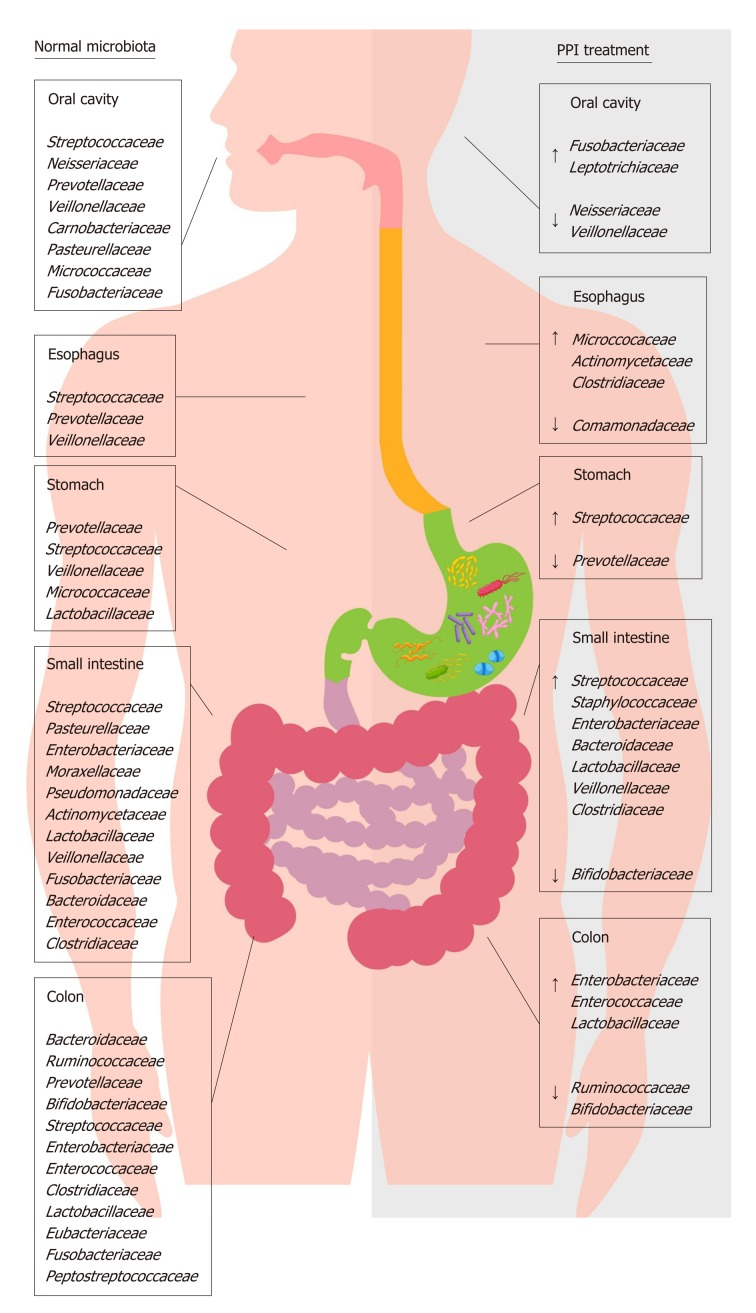
- PPIs reduce gastric acid and alter microbiota in each GI segment; a four-week esomeprazole study in healthy volunteers increased *Fusobacterium* and *Leptotrichia* in the periodontal pocket, decreased *Neisseria* and *Veillonella* in saliva, and increased *Streptococcus* in fecal samples.
- In the stomach, *Streptococcaceae* were the most abundant family during PPI therapy; hypochlorhydria reduced microbial diversity and increased nitrate/nitrite reductase bacterial functions. One study reported up to 2.4 times greater gastric cancer risk in long-term PPI users even after *H. pylori* eradication, though other meta-analyses did not confirm this risk.
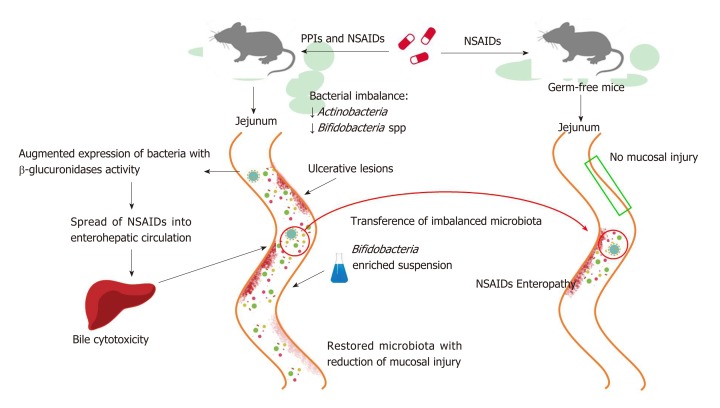
- Chronic PPIs strongly impact the small intestine and can cause small intestinal bacterial overgrowth, defined as more than 10^5 bacteria per ml of upper gut aspirate; PPI-induced dysbiosis may increase risk of hepatic encephalopathy and spontaneous bacterial peritonitis in cirrhosis. In rats, PPIs reduced jejunal *Actinobacteria* and *Bifidobacteria* spp. and exacerbated NSAID-induced enteropathy.
- In the colon, PPIs decrease commensal bacteria and microbial diversity and increase oral bacteria in stool; they are associated with increased *Clostridium difficile* infection and other enteric infections and may predispose to IBS. Post-infectious IBS occurs in 10%-30% of patients after infectious gastroenteritis, while many studies found no direct correlation between PPI use and colorectal cancer.
Methods
- Design: narrative review.
- Data or sample: no primary data; synthesizes published literature on PPI-related microbiota alterations in each GI tract segment and specific GI diseases.
- Main analysis: narrative synthesis; no systematic search strategy, databases, inclusion/exclusion criteria, or quantitative meta-analysis are reported.
Limitations
- The paper states that further prospective studies are necessary to define how PPI-induced microbial changes impact human health, that confirmation in humans is needed for the role of dysbiosis in NSAID enteropathy, and that the validity of probiotic prevention remains to be seen.
- The paper notes ongoing uncertainty: the role of PPIs in gastric cancer development is under debate, IBD microbial data are not fully elucidated, and many studies have not found a direct correlation between PPI use and colorectal cancer.
- Evident from the text: as a narrative review, it lacks a systematic search, formal quality appraisal, and meta-analysis, so findings are synthesized without formal bias assessment.
Model-written summary. Check it against the paper before relying on it.
Integrity signals
Registry
Cites
Statistics
Figures
Verification
Claims the paper makes
52 Not checked yet · 4 Own interpretation
None of the sources cited for this claim have been checked yet.
In the paper
“Changes in this microbial equilibrium that is, dysbiosis can promote and influence the course of many intestinal and extra-intestinal diseases[14-16].”
§ Proton pump inhibitors and dysbiosis: Current knowledge and aspects to be clarified > INTRODUCTION
What the sources say
plaindirect- Asserted: passes — The authors put it forward as true.
- Checkable: passes — It can be checked against evidence.
- Load-bearing: passes — The paper’s conclusions depend on it.
- Based: passes — The paper gives a reason why it holds.
None of the sources cited for this claim have been checked yet.
In the paper
“This bacterium could have a role in EAC, promoting the metaplastic processes in the early stages of cancer through an increase in the interleukin (IL)-18 expression and downregulation of transforming growth factor beta 1, nuclear factor kappa B (NF-κB) and signal transducer and activator of transcription 3 signaling involved in the EAC cascade[42-44].”
§ Proton pump inhibitors and dysbiosis: Current knowledge and aspects to be clarified > ESOPHAGUS
What the sources say
hedgedconditional- Asserted: passes — The authors put it forward as true.
- Checkable: passes — It can be checked against evidence.
- Load-bearing: unclear — It is unclear whether the paper’s conclusions depend on it.
- Based: passes — The paper gives a reason why it holds.
None of the sources cited for this claim have been checked yet.
In the paper
“The use of PPIs is generally well tolerated, although their long-term use exposes patients to an increased risk of developing extra-intestinal disorders[6-8]”
§ Proton pump inhibitors and dysbiosis: Current knowledge and aspects to be clarified > INTRODUCTION
What the sources say
plaindirect- Asserted: passes — The authors put it forward as true.
- Checkable: passes — It can be checked against evidence.
- Load-bearing: passes — The paper’s conclusions depend on it.
- Based: passes — The paper gives a reason why it holds.
None of the sources cited for this claim have been checked yet.
In the paper
“likely due to PPI-driven gastric hypo-chlorhydria, which can cause also significant changes in gut microbiota composition[9-11]”
§ Proton pump inhibitors and dysbiosis: Current knowledge and aspects to be clarified > INTRODUCTION
What the sources say
hedgeddirect- Asserted: passes — The authors put it forward as true.
- Checkable: passes — It can be checked against evidence.
- Load-bearing: passes — The paper’s conclusions depend on it.
- Based: passes — The paper gives a reason why it holds.
In the paper
“A recent epidemiological study revealed that, in the absence of other risk factors, the long-term use of PPIs is associated with an increased risk of EAC[48].”
§ Proton pump inhibitors and dysbiosis: Current knowledge and aspects to be clarified > ESOPHAGUS
What the sources say
- Not checked yetcites [48] source
plaincorrelational- Asserted: passes — The authors put it forward as true.
- Checkable: passes — It can be checked against evidence.
- Load-bearing: passes — The paper’s conclusions depend on it.
- Based: passes — The paper gives a reason why it holds.
None of the sources cited for this claim have been checked yet.
In the paper
“In both these conditions, a significant enrichment of Campylobacter concisus has been reported[42,43].”
§ Proton pump inhibitors and dysbiosis: Current knowledge and aspects to be clarified > ESOPHAGUS
plaincorrelational- Asserted: passes — The authors put it forward as true.
- Checkable: passes — It can be checked against evidence.
- Load-bearing: unclear — It is unclear whether the paper’s conclusions depend on it.
- Based: passes — The paper gives a reason why it holds.
None of the sources cited for this claim have been checked yet.
In the paper
“and other meta-analyses not confirming such a risk[65,66]”
§ Proton pump inhibitors and dysbiosis: Current knowledge and aspects to be clarified > STOMACH
What the sources say
- Not checked yetcites [65] source
- Not checked yetcites [66] Eslami L, Nasseri-Moghaddam S. Meta-analyses: Does long-term PPI use increase the risk of gastric premalignant lesions? Arch Iran Med 2013; 16: 449-458
plain- Asserted: passes — The authors put it forward as true.
- Checkable: passes — It can be checked against evidence.
- Load-bearing: unclear — It is unclear whether the paper’s conclusions depend on it.
- Based: passes — The paper gives a reason why it holds.
In the paper
“Several studies have shown that the bacterial migration from the antrum to gastric body and fundus occurs more frequently during long-term PPIs use[71].”
§ Proton pump inhibitors and dysbiosis: Current knowledge and aspects to be clarified > STOMACH
What the sources say
- Not checked yetcites [71] source
plaincorrelational- Asserted: passes — The authors put it forward as true.
- Checkable: passes — It can be checked against evidence.
- Load-bearing: passes — The paper’s conclusions depend on it.
- Based: passes — The paper gives a reason why it holds.
In the paper
“Through the induction of different metabolic pathways, such bacteria could have a role in gastric cancer (GC) progression[61].”
§ Proton pump inhibitors and dysbiosis: Current knowledge and aspects to be clarified > STOMACH
What the sources say
- Not checked yetcites [61] source
hedgedconditional- Asserted: passes — The authors put it forward as true.
- Checkable: passes — It can be checked against evidence.
- Load-bearing: unclear — It is unclear whether the paper’s conclusions depend on it.
- Based: passes — The paper gives a reason why it holds.
In the paper
“It is noteworthy that some of the microbial changes caused by PPIs are the same as the alterations already present in patients with cirrhosis and especially in patients with decompensated cirrhosis including the relative increase of potentially pathogenic bacteria such as Staphylococcaeae, Enterobacteriaceae and Enterococcaceae[93].”
§ Proton pump inhibitors and dysbiosis: Current knowledge and aspects to be clarified > SMALL INTESTINE
What the sources say
- Not checked yetcites [93] source
plaincorrelational- Asserted: passes — The authors put it forward as true.
- Checkable: passes — It can be checked against evidence.
- Load-bearing: passes — The paper’s conclusions depend on it.
- Based: passes — The paper gives a reason why it holds.
- It may state two separate claims as one. 27
- Probably not a substantial claim. 5
In the paper
“One study showed that, in healthy volunteers, a four-week esomeprazole administration of PPI caused an increase of Fusobacterium and Leptotrichia in the periodontal pocket, associated with a decrease of Neisseria and Veillonella in saliva and a parallel increase of Streptococcus in fecal samples”
§ Proton pump inhibitors and dysbiosis: Current knowledge and aspects to be clarified > ORAL CAVITY
What the sources say
- Not checked yetcites [34] source
plaincorrelational- Asserted: passes — The authors put it forward as true.
- Checkable: passes — It can be checked against evidence.
- Load-bearing: passes — The paper’s conclusions depend on it.
- Based: passes — The paper gives a reason why it holds.
It may state two separate claims as one.
None of the sources cited for this claim have been checked yet.
In the paper
“PPIs are the first-choice treatment for acid-related disorders such as bleeding, peptic ulcers, gastroesophageal reflux, erosive esophagitis (ERD) and certain dyspepsia subtypes[2-5].”
§ Proton pump inhibitors and dysbiosis: Current knowledge and aspects to be clarified > INTRODUCTION
What the sources say
plaindirect- Asserted: passes — The authors put it forward as true.
- Checkable: passes — It can be checked against evidence.
- Load-bearing: fails — The paper’s conclusions may not depend on it.
- Based: passes — The paper gives a reason why it holds.
Probably not a substantial claim. The paper’s conclusions may not depend on it.
In the paper
“It is likely that this switch in favor of Gram-negative bacteria could cause an LPS-mediated activation of innate immunity, inducing a dangerous cycle of dysbiosis-inflammation-dysbiosis and mucosal damage[38].”
§ Proton pump inhibitors and dysbiosis: Current knowledge and aspects to be clarified > ESOPHAGUS
What the sources say
- Not checked yetcites [38] source
hedgedconditional- Asserted: passes — The authors put it forward as true.
- Checkable: passes — It can be checked against evidence.
- Load-bearing: passes — The paper’s conclusions depend on it.
- Based: passes — The paper gives a reason why it holds.
It may state two separate claims as one.
In the paper
“Proton pump inhibitors (PPIs) are acid-suppressive agents and are among the most widely used and over-used drugs in the world[1].”
§ Proton pump inhibitors and dysbiosis: Current knowledge and aspects to be clarified > INTRODUCTION
What the sources say
- Not checked yetcites [1] source
plain- Asserted: passes — The authors put it forward as true.
- Checkable: passes — It can be checked against evidence.
- Load-bearing: fails — The paper’s conclusions may not depend on it.
- Based: passes — The paper gives a reason why it holds.
Probably not a substantial claim. The paper’s conclusions may not depend on it. It may state two separate claims as one.
None of the sources cited for this claim have been checked yet.
In the paper
“The gut microbiota has a key role in metabolic, nutritional, physiological, defensive and immunological processes in the human body, and its composition is closely connected to individuals’ health and the diseases they experience[12,13].”
§ Proton pump inhibitors and dysbiosis: Current knowledge and aspects to be clarified > INTRODUCTION
plaincorrelational- Asserted: passes — The authors put it forward as true.
- Checkable: passes — It can be checked against evidence.
- Load-bearing: passes — The paper’s conclusions depend on it.
- Based: passes — The paper gives a reason why it holds.
Probably not a substantial claim.
A conclusion the paper draws from its own results — it cites no other source for it, so there is none to check. The quote shows it is in the paper.
In the paper
“Based on these data, the oral cavity could represent a potential source of microbiota information related to oral and non-oral disorders; it could also be an important indicator of dysbiosis in other areas of the GI tract.”
§ Proton pump inhibitors and dysbiosis: Current knowledge and aspects to be clarified > ORAL CAVITY
hedgedcorrelational- Asserted: passes — The authors put it forward as true.
- Checkable: passes — It can be checked against evidence.
- Load-bearing: passes — The paper’s conclusions depend on it.
- Based: passes — The paper gives a reason why it holds.
It may state two separate claims as one.
In the paper
“PPI treatment can alter esophageal microbiota, causing an increase in the abundance of Firmicutes and a decrease in the abundance of Bacteroidetes and Proteobacteria[47].”
§ Proton pump inhibitors and dysbiosis: Current knowledge and aspects to be clarified > ESOPHAGUS
What the sources say
- Not checked yetcites [47] source
plaindirect- Asserted: passes — The authors put it forward as true.
- Checkable: passes — It can be checked against evidence.
- Load-bearing: passes — The paper’s conclusions depend on it.
- Based: passes — The paper gives a reason why it holds.
It may state two separate claims as one.
None of the sources cited for this claim have been checked yet.
In the paper
“two types of microbiota have been identified in the esophagus: Type I, present in healthy subjects, is characterized by a predominance of Gram-positive taxa (especially Streptococcus), whereas type II, associated with ERD and Barrett esophagus (BE), is constituted by a predominance of Gram-negative taxa”
§ Proton pump inhibitors and dysbiosis: Current knowledge and aspects to be clarified > ESOPHAGUS
plaincorrelational- Asserted: passes — The authors put it forward as true.
- Checkable: passes — It can be checked against evidence.
- Load-bearing: unclear — It is unclear whether the paper’s conclusions depend on it.
- Based: passes — The paper gives a reason why it holds.
It may state two separate claims as one.
In the paper
“The distal tract is mostly colonized by Firmicutes, followed by Bacteroidetes, Actinobacteria, Proteobacteria and Fusobacteria, with the most represented genera being Streptococcus, followed by Prevotella and Veillonella[35].”
§ Proton pump inhibitors and dysbiosis: Current knowledge and aspects to be clarified > ESOPHAGUS
What the sources say
- Not checked yetcites [35] source
plain- Asserted: passes — The authors put it forward as true.
- Checkable: passes — It can be checked against evidence.
- Load-bearing: unclear — It is unclear whether the paper’s conclusions depend on it.
- Based: passes — The paper gives a reason why it holds.
It may state two separate claims as one.
In the paper
“this suggests that PPIs may cause both oral and gut microbiota alterations[34]”
§ Proton pump inhibitors and dysbiosis: Current knowledge and aspects to be clarified > ORAL CAVITY
What the sources say
- Not checked yetcites [34] source
hedgedconditional- Asserted: passes — The authors put it forward as true.
- Checkable: passes — It can be checked against evidence.
- Load-bearing: passes — The paper’s conclusions depend on it.
- Based: passes — The paper gives a reason why it holds.
It may state two separate claims as one.
In the paper
“Both ERD and BE are considered precursor conditions to esophageal adenocarcinoma (EAC)[41].”
§ Proton pump inhibitors and dysbiosis: Current knowledge and aspects to be clarified > ESOPHAGUS
What the sources say
- Not checked yetcites [41] source
plaindirect- Asserted: passes — The authors put it forward as true.
- Checkable: passes — It can be checked against evidence.
- Load-bearing: unclear — It is unclear whether the paper’s conclusions depend on it.
- Based: passes — The paper gives a reason why it holds.
It may state two separate claims as one.
None of the sources cited for this claim have been checked yet.
In the paper
“with some studies and meta-analyses reporting an increased risk of developing GC in long-term PPI users[62,63] up to 2.4 times greater, even after Helicobacter pylori (H. pylori) eradication, according to a recent study[64]”
§ Proton pump inhibitors and dysbiosis: Current knowledge and aspects to be clarified > STOMACH
What the sources say
hedgedcorrelational- Asserted: passes — The authors put it forward as true.
- Checkable: passes — It can be checked against evidence.
- Load-bearing: fails — The paper’s conclusions may not depend on it.
- Based: passes — The paper gives a reason why it holds.
Probably not a substantial claim. The paper’s conclusions may not depend on it.
In the paper
“The primary abundance of Streptococcaceae was also demonstrated in dyspeptic patients during PPI treatment, suggesting that this ecological switch in favor of Streptococcaceae could be an independent indicator of gastric dysbiosis due to these drugs[59].”
§ Proton pump inhibitors and dysbiosis: Current knowledge and aspects to be clarified > STOMACH
What the sources say
- Not checked yetcites [59] source
hedgedconditional- Asserted: passes — The authors put it forward as true.
- Checkable: passes — It can be checked against evidence.
- Load-bearing: unclear — It is unclear whether the paper’s conclusions depend on it.
- Based: passes — The paper gives a reason why it holds.
It may state two separate claims as one.
None of the sources cited for this claim have been checked yet.
In the paper
“Moreover, germ-free mice are less susceptible to intestinal lesions induced by NSAIDs and it has been documented that NSAID-induced enteropathy is transferable via microbiota[98,101,102].”
§ Proton pump inhibitors and dysbiosis: Current knowledge and aspects to be clarified > SMALL INTESTINE
What the sources say
plaindirect- Asserted: passes — The authors put it forward as true.
- Checkable: passes — It can be checked against evidence.
- Load-bearing: passes — The paper’s conclusions depend on it.
- Based: passes — The paper gives a reason why it holds.
It may state two separate claims as one.
None of the sources cited for this claim have been checked yet.
In the paper
“H. pylori infection can lead to antrum-predominant gastritis, in which the oxyntic mucosa is not inflamed but a gastrin-driven increase in acid output occurs, along with the possible development of duodenal ulcer[67,68].”
§ Proton pump inhibitors and dysbiosis: Current knowledge and aspects to be clarified > STOMACH
plaindirect- Asserted: passes — The authors put it forward as true.
- Checkable: passes — It can be checked against evidence.
- Load-bearing: unclear — It is unclear whether the paper’s conclusions depend on it.
- Based: passes — The paper gives a reason why it holds.
It may state two separate claims as one.
In the paper
“It is important to keep in mind that hypochlorhydria promotes a reduction in microbial diversity and the growth of microbes that have genotoxic potential, with an increase in the nitrate/nitrite reductase bacterial functions involved in cancer development[60].”
§ Proton pump inhibitors and dysbiosis: Current knowledge and aspects to be clarified > STOMACH
What the sources say
- Not checked yetcites [60] source
plaindirect- Asserted: passes — The authors put it forward as true.
- Checkable: passes — It can be checked against evidence.
- Load-bearing: passes — The paper’s conclusions depend on it.
- Based: passes — The paper gives a reason why it holds.
It may state two separate claims as one.
None of the sources cited for this claim have been checked yet.
In the paper
“In addition, when the infection does spread to the oxyntic mucosa, it causes pangastritis, which is associated with hypochloridria, and is responsible for the development of chronic atrophic gastritis, intestinal metaplasia and, finally, dysplasia and GC[69,70].”
§ Proton pump inhibitors and dysbiosis: Current knowledge and aspects to be clarified > STOMACH
plaindirect- Asserted: passes — The authors put it forward as true.
- Checkable: passes — It can be checked against evidence.
- Load-bearing: passes — The paper’s conclusions depend on it.
- Based: passes — The paper gives a reason why it holds.
It may state two separate claims as one.
None of the sources cited for this claim have been checked yet.
In the paper
“Chronic treatment with PPIs strongly impacts small intestine microbiota and, in particular, causes small intestinal bacterial overgrowth (SIBO), likely due to the loss of the gastric acid defensive barrier[81-83].”
§ Proton pump inhibitors and dysbiosis: Current knowledge and aspects to be clarified > SMALL INTESTINE
What the sources say
hedgeddirect- Asserted: passes — The authors put it forward as true.
- Checkable: passes — It can be checked against evidence.
- Load-bearing: passes — The paper’s conclusions depend on it.
- Based: passes — The paper gives a reason why it holds.
It may state two separate claims as one.
None of the sources cited for this claim have been checked yet.
In the paper
“Moreover, PPIs augmented the expression of bacteria with beta-glucuronidases activity, and this microbial imbalance could promote the spread of NSAIDs into enterohepatic circulation, increasing bile cytotoxicity and subsequently causing ulcerative lesions[99,100].”
§ Proton pump inhibitors and dysbiosis: Current knowledge and aspects to be clarified > SMALL INTESTINE
hedgedconditional- Asserted: passes — The authors put it forward as true.
- Checkable: passes — It can be checked against evidence.
- Load-bearing: passes — The paper’s conclusions depend on it.
- Based: passes — The paper gives a reason why it holds.
It may state two separate claims as one.
In the paper
“The gastric microbiota is composed mainly of Firmicutes, Bacteroidetes, Proteo-bacteria and Actinobacteria, with the most abundant genera being Streptococcus, followed by Veillonella, Prevotella, Fusobacterium and Rothia[54].”
§ Proton pump inhibitors and dysbiosis: Current knowledge and aspects to be clarified > STOMACH
What the sources say
- Not checked yetcites [54] source
plain- Asserted: passes — The authors put it forward as true.
- Checkable: passes — It can be checked against evidence.
- Load-bearing: unclear — It is unclear whether the paper’s conclusions depend on it.
- Based: passes — The paper gives a reason why it holds.
It may state two separate claims as one.
None of the sources cited for this claim have been checked yet.
In the paper
“PPIs have unfavorable effects on gastric functions and host defensive mechanisms, causing delayed gastric emptying, decreased gastric mucus viscosity, increased bacterial load and increased bacterial translocation[55-57].”
§ Proton pump inhibitors and dysbiosis: Current knowledge and aspects to be clarified > STOMACH
What the sources say
plaindirect- Asserted: passes — The authors put it forward as true.
- Checkable: passes — It can be checked against evidence.
- Load-bearing: passes — The paper’s conclusions depend on it.
- Based: passes — The paper gives a reason why it holds.
It may state two separate claims as one.
A conclusion the paper draws from its own results — it cites no other source for it, so there is none to check. The quote shows it is in the paper.
In the paper
“Moreover, the gastric hypochlorhydria caused by PPIs favors the survival and migration of oral bacteria in lower areas of the GI tract, with a possible establishment of a pro-inflammatory microenvironment.”
§ Proton pump inhibitors and dysbiosis: Current knowledge and aspects to be clarified > CONCLUSION
hedgeddirect- Asserted: passes — The authors put it forward as true.
- Checkable: passes — It can be checked against evidence.
- Load-bearing: passes — The paper’s conclusions depend on it.
- Based: passes — The paper gives a reason why it holds.
It may state two separate claims as one.
None of the sources cited for this claim have been checked yet.
In the paper
“PPIs by reducing gastric acid secretion can produce profound changes in the colonic microbiota, mainly characterized by a decrease in the abundance of commensal bacteria, which is associated with a reduction in microbial diversity and an increase of oral bacteria in the stool[108,109].”
§ Proton pump inhibitors and dysbiosis: Current knowledge and aspects to be clarified > COLON
plaindirect- Asserted: passes — The authors put it forward as true.
- Checkable: passes — It can be checked against evidence.
- Load-bearing: passes — The paper’s conclusions depend on it.
- Based: passes — The paper gives a reason why it holds.
It may state two separate claims as one.
In the paper
“Even if not fully clarified, it has been hypothesized that, in CDI, a reduction in alpha diversity and a decrease in the abundance of bacteria of the Ruminococcoceae associated with an increase in the Enterobacteriaceae, Enterococcoceae and Lactobacillaceae families observed during long-term PPI treatment could facilitate the onset of infection[109].”
§ Proton pump inhibitors and dysbiosis: Current knowledge and aspects to be clarified > COLON
What the sources say
- Not checked yetcites [109] source
hedgedconditional- Asserted: fails — The authors may not put it forward as true.
- Checkable: passes — It can be checked against evidence.
- Load-bearing: passes — The paper’s conclusions depend on it.
- Based: passes — The paper gives a reason why it holds.
Probably not a substantial claim. The authors may not put it forward as true.
None of the sources cited for this claim have been checked yet.
In the paper
“As previously stated, the long-term PPI use facilitates the induction of enteric infection, and, through secondary changes in microbiota composition, these drugs may influence gut–brain axis functions, prompting IBS onset[117,118].”
§ Proton pump inhibitors and dysbiosis: Current knowledge and aspects to be clarified > COLON
What the sources say
- Not checked yetcites [117] source
- Not checked yetcites [118] Carabotti M, Scirocco A, Maselli MA, Severi C. The gut-brain axis: Interactions between enteric microbiota, central and enteric nervous systems. Ann Gastroenterol 2015; 28: 203-209
hedgedconditional- Asserted: passes — The authors put it forward as true.
- Checkable: passes — It can be checked against evidence.
- Load-bearing: passes — The paper’s conclusions depend on it.
- Based: passes — The paper gives a reason why it holds.
It may state two separate claims as one.
None of the sources cited for this claim have been checked yet.
In the paper
“This microorganism has two adhesion proteins, FapA and FadA, the latter of which mediates the invasion of the bacterium into the intestinal epithelium.”
§ Proton pump inhibitors and dysbiosis: Current knowledge and aspects to be clarified > COLON
plaindirect- Asserted: passes — The authors put it forward as true.
- Checkable: passes — It can be checked against evidence.
- Load-bearing: unclear — It is unclear whether the paper’s conclusions depend on it.
- Based: passes — The paper gives a reason why it holds.
It may state two separate claims as one.
None of the sources cited for this claim have been checked yet.
In the paper
“PPIs can influence the onset of enteric infections, resulting in an increased risk of Clostridium difficile infection (CDI), as well as Salmonella, Campylobacter and diarrheagenic Escherichia coli (E. coli)[110-113].”
§ Proton pump inhibitors and dysbiosis: Current knowledge and aspects to be clarified > COLON
What the sources say
plaindirect- Asserted: passes — The authors put it forward as true.
- Checkable: passes — It can be checked against evidence.
- Load-bearing: passes — The paper’s conclusions depend on it.
- Based: passes — The paper gives a reason why it holds.
It may state two separate claims as one.
None of the sources cited for this claim have been checked yet.
In the paper
“The net result of these changes is the creation of a pro-inflammatory milieu for tumor growth, favored by the FapA-mediated suppression of T cells’ cytotoxic activity[147,150].”
§ Proton pump inhibitors and dysbiosis: Current knowledge and aspects to be clarified > COLON
plaindirect- Asserted: passes — The authors put it forward as true.
- Checkable: passes — It can be checked against evidence.
- Load-bearing: passes — The paper’s conclusions depend on it.
- Based: passes — The paper gives a reason why it holds.
It may state two separate claims as one.
In the paper
“F. nucleatum is a commensal anaerobic bacterium of the oral cavity associated with periodontal disorders, and it has been found in large quantities in CRC[147].”
§ Proton pump inhibitors and dysbiosis: Current knowledge and aspects to be clarified > COLON
What the sources say
- Not checked yetcites [147] source
plaincorrelational- Asserted: passes — The authors put it forward as true.
- Checkable: passes — It can be checked against evidence.
- Load-bearing: passes — The paper’s conclusions depend on it.
- Based: passes — The paper gives a reason why it holds.
It may state two separate claims as one.
A conclusion the paper draws from its own results — it cites no other source for it, so there is none to check. The quote shows it is in the paper.
In the paper
“The evidence indicates that PPIs which are widely used in gastroenterology clinical practice likely through their acid-antisecretory effects, are able to modify the host microbiota in each segment of the GI tract and can contribute to dysbiosis development; this dysbiosis can, in turn, facilitate the onset of certain GI disorders.”
§ Proton pump inhibitors and dysbiosis: Current knowledge and aspects to be clarified > CONCLUSION
hedgedconditional- Asserted: passes — The authors put it forward as true.
- Checkable: passes — It can be checked against evidence.
- Load-bearing: passes — The paper’s conclusions depend on it.
- Based: passes — The paper gives a reason why it holds.
It may state two separate claims as one.
None of the sources cited for this claim have been checked yet.
In the paper
“The IBS dysbiosis mostly consists of a reduction in alpha diversity and an imbalance between microbial groups, represented by a scarce amount Bifidobacteria and Lactobacilli members and an increase in potentially pathogenic Enterobacteriaceae, such as E. coli[127,128]”
§ Proton pump inhibitors and dysbiosis: Current knowledge and aspects to be clarified > COLON
plain- Asserted: passes — The authors put it forward as true.
- Checkable: passes — It can be checked against evidence.
- Load-bearing: passes — The paper’s conclusions depend on it.
- Based: passes — The paper gives a reason why it holds.
It may state two separate claims as one.
The paper relies on this without support.
Gastric dysbiosis occurs as a result of H. pylori-related gastritis.
“Gastric dysbiosis occurs as a result of H. pylori-related gastritis.”
The paper relies on this without support.
H. pylori pro-inflammatory activity affects the luminal microenvironment and modifies the gastric microbiota.
“H. pylori pro-inflammatory activity affects the luminal microenvironment and modifies the gastric microbiota.”
The paper relies on this without support.
Depending on the site of H. pylori colonization, the dysbiosis can be associated with either an increase or decrease in acid secretion, which further influences gastric microbiota composition.
“It is noteworthy that, depending on the site of H. pylori colonization, the dysbiosis can be associated with either an increase or decrease in acid secretion, which further influences gastric microbiota composition.”
The paper relies on this without support.
This dysbiosis has also been shown to be related to the occurrence of HE and SBP, implying a poor prognosis and disease progression.
“This dysbiosis has also been shown to be related to the occurrence of HE and SBP, implying a poor prognosis and disease progression.”
Claims other papers make about this one
Each is checked against this paper’s own text: does it say what the citing paper says it does?
In the citing paper
“Outcomes vary, with some studies showing no association.”
From Signalling cognition: The gut microbiota and hypothalamic-pituitary-adrenal axis (2023) · cites this paper as [446]
In the citing paper
“Another group of drugs that has been shown to cause dysbiosis and is associated with cognitive decline is the proton pump inhibitors (PPI) (446, 447).”
From Signalling cognition: The gut microbiota and hypothalamic-pituitary-adrenal axis (2023) · cites this paper as [446]
Citations
Cites
Enterotypes of the human gut microbiome
MetaHIT Consortium (additional members), Arumugam, M., Raes, J., Pelletier, E., Le Paslier, D., Yamada, T., Mende, D. R., Fernandes, G. R., Tap, J., Bruls, T., et al. (2011) · Nature · doi:10.1038/nature09944 · Cited by 7,548
Revised Estimates for the Number of Human and Bacteria Cells in the Body
Sender, R., Fuchs, S., & Milo, R. (2016) · PLOS Biology · doi:10.1371/journal.pbio.1002533 · Cited by 5,425
Introduction to the human gut microbiota
Thursby, E., & Juge, N. (2017) · Biochemical Journal · doi:10.1042/bcj20160510 · Cited by 3,600
Dewhirst, F. E., Chen, T., Izard, J., Paster, B. J., Tanner, A. C. R., Yu, W.-H., Lakshmanan, A., & Wade, W. G. (2010) · Journal of Bacteriology · doi:10.1128/jb.00542-10 · Cited by 3,352
Defining the normal bacterial flora of the oral cavity
Aas, J. A., Paster, B. J., Stokes, L. N., Olsen, I., & Dewhirst, F. E. (2005) · Journal of Clinical Microbiology · doi:10.1128/jcm.43.11.5721-5732.2005 · Cited by 3,092
Management of Helicobacter pylori infection—the Maastricht V/Florence Consensus Report
Malfertheiner, P., Mégraud, F., O'Morain, C. A., Gisbert, J. P., Kuipers, E. J., Axon, A. T. R., Bazzoli, F., Gasbarrini, A., Atherton, J. C., Graham, D. Y., et al. (2016) · Gut · doi:10.1136/gutjnl-2016-312288 · Cited by 3,023
Role of the normal gut microbiota
Jandhyala, S. M. (2015) · World Journal of Gastroenterology · doi:10.3748/wjg.v21.i29.8787 · Cited by 3,001
The gut-brain axis: interactions between enteric microbiota, central and enteric nervous systems.
(2015) · PubMed Central · Cited by 2,540
Self-citationPathogenesis of Helicobacter pylori Infection
Kusters, J. G., van Vliet, A. H. M., & Kuipers, E. J. (2006) · Clinical Microbiology Reviews · doi:10.1128/cmr.00054-05 · Cited by 2,526
The gut microbiota and host health: a new clinical frontier
Marchesi, J. R., Adams, D. H., Fava, F., Hermes, G. D. A., Hirschfield, G. M., Hold, G., Quraishi, M. N., Kinross, J., Smidt, H., Tuohy, K. M., et al. (2016) · Gut · doi:10.1136/gutjnl-2015-309990 · Cited by 2,302
Cited by
Sorted by citations
Signalling cognition: The gut microbiota and hypothalamic-pituitary-adrenal axis
Rusch, J. A., Layden, B. T., & Dugas, L. R. (2023) · Frontiers in Endocrinology · doi:10.3389/fendo.2023.1130689 · Cited by 415
Cortellini, A., Tucci, M., Adamo, V., Stucci, L. S., Russo, A., Tanda, E. T., Spagnolo, F., Rastelli, F., Bisonni, R., Santini, D., et al. (2020) · Journal for ImmunoTherapy of Cancer · doi:10.1136/jitc-2020-001361 · Cited by 275
Schirrmacher, V. (2020) · Biomedicines · doi:10.3390/biomedicines8110526 · Cited by 129
Bicknell, B. T., Liebert, A. D., Borody, T. J., Herkes, G., McLachlan, C. S., & Kiat, H. (2023) · International Journal of Molecular Sciences · doi:10.3390/ijms24119577 · Cited by 135
Mechanisms of proton pump inhibitor‐induced hypomagnesemia
Gommers, L. M. M., Hoenderop, J. G. J., & de Baaij, J. H. F. (2022) · Acta Physiologica · doi:10.1111/apha.13846 · Cited by 134
Gut microbiome health and dysbiosis: A clinical primer
Bidell, M. R., Hobbs, A. L. V., & Lodise, T. P. (2022) · Pharmacotherapy The Journal of Human Pharmacology and Drug Therapy · doi:10.1002/phar.2731 · Cited by 146
Giuffrè, M., Campigotto, M., Campisciano, G., Comar, M., & Crocè, L. S. (2020) · American Journal of Physiology-Gastrointestinal and Liver Physiology · doi:10.1152/ajpgi.00161.2019 · Cited by 122
Rizzo, A., Cusmai, A., Giovannelli, F., Acquafredda, S., Rinaldi, L., Misino, A., Montagna, E. S., Ungaro, V., Lorusso, M., & Palmiotti, G. (2022) · Cancers · doi:10.3390/cancers14061404 · Cited by 110
Kiecka, A., & Szczepanik, M. (2023) · Pharmacological Reports · doi:10.1007/s43440-023-00489-x · Cited by 125
Lopes, S., Pabst, L., Dory, A., Klotz, M., Gourieux, B., Michel, B., & Mascaux, C. (2023) · Frontiers in Immunology · doi:10.3389/fimmu.2023.1070076 · Cited by 75
Term Infant Formulas Influencing Gut Microbiota: An Overview
Fabiano, V., Indrio, F., Verduci, E., Calcaterra, V., Pop, T. L., Mari, A., Zuccotti, G., Cokugras, F. C., Pettoello‐Mantovani, M., & Goulet, O. (2021) · Nutrients · doi:10.3390/nu13124200 · Cited by 78
Hussain, N., Naeem, M., & Pinato, D. J. (2021) · Human Vaccines & Immunotherapeutics · doi:10.1080/21645515.2020.1769398 · Cited by 69
Exploring the Relationship between the Gut Microbiota and Ageing: A Possible Age Modulator
Salazar, J., Durán, P., Díaz, M. P., Chacín, M., Santeliz, R., Mengual, E., Gutiérrez, E., León, X., Díaz, A., Bernal, M., et al. (2023) · International Journal of Environmental Research and Public Health · doi:10.3390/ijerph20105845 · Cited by 71
Approach to the diagnosis and management of dysbiosis
Alagiakrishnan, K., Morgadinho, J., & Halverson, T. (2024) · Frontiers in Nutrition · doi:10.3389/fnut.2024.1330903 · Cited by 79
The Use and Misuse of Proton Pump Inhibitors: An Opportunity for Deprescribing
Dharmarajan, T. S. (2020) · Journal of the American Medical Directors Association · doi:10.1016/j.jamda.2020.09.046 · Cited by 65
Potential proton pump inhibitor–related adverse effects
Perry, I. E., Sonu, I. S., Scarpignato, C., Akiyama, J., Hongo, M., & Vega, K. J. (2020) · Annals of the New York Academy of Sciences · doi:10.1111/nyas.14428 · Cited by 68
Yadav, M., & Chauhan, N. S. (2020) · Journal of Applied Microbiology · doi:10.1111/jam.14883 · Cited by 60
Meta-analysis of the effects of proton pump inhibitors on the human gut microbiota
Zhang, J., Zhang, C., Zhang, Q., Yu, L., Chen, W., Xue, Y., & Zhai, Q. (2023) · BMC Microbiology · doi:10.1186/s12866-023-02895-w · Cited by 65
Probiotics, Prebiotics, and Synbiotics for the Prevention of Necrotizing Enterocolitis
Murphy, K., Ross, R. P., Ryan, C. A., Dempsey, E. M., & Stanton, C. (2021) · Frontiers in Nutrition · doi:10.3389/fnut.2021.667188 · Cited by 62
A systematic review of microbial markers for risk prediction of colorectal neoplasia
Yu, L., Zhao, G., Wang, L., Zhou, X., Sun, J., Li, X., He, Y., He, Y., Kofonikolas, K., Bogaert, D., et al. (2022) · British Journal of Cancer · doi:10.1038/s41416-022-01740-7 · Cited by 53
Barathan, M., & Hanafiah, A. (2025) · International Journal of Molecular Sciences · doi:10.3390/ijms26094264 · Cited by 56
Duration of use of proton pump inhibitors and the risk of gastric and oesophageal cancer
Brusselaers, N., Lagergren, J., & Engstrand, L. G. (2019) · Cancer Epidemiology · doi:10.1016/j.canep.2019.101585 · Cited by 53
Takashima, S., Tanaka, F., Kawaguchi, Y., Usui, Y., Fujimoto, K., Nadatani, Y., Otani, K., Hosomi, S., Nagami, Y., Kamata, N., et al. (2020) · Neurogastroenterology & Motility · doi:10.1111/nmo.13841 · Cited by 51
Gaucher, L., Adda, L., Séjourné, A., Joachim, C., Chaby, G., Poulet, C., Liabeuf, S., Gras‐Champel, V., Masmoudi, K., Houessinon, A., et al. (2021) · Therapeutic Advances in Medical Oncology · doi:10.1177/17588359211000591 · Cited by 48
Long-term proton pump inhibitor usage and the association with pancreatic cancer in Sweden
Brusselaers, N., Sadr‐Azodi, O., & Engstrand, L. G. (2019) · Journal of Gastroenterology · doi:10.1007/s00535-019-01652-z · Cited by 49
Characterization of the Oral Microbiome of Medicated Type-2 Diabetes Patients
Almeida-Santos, A. C., Martins‐Mendes, D., Gayà‐Vidal, M., Pérez-Pardal, L., & Beja‐Pereira, A. (2021) · Frontiers in Microbiology · doi:10.3389/fmicb.2021.610370 · Cited by 54
Nyein, A., Bari, S., Hogue, S., Zhao, Y., Maller, B., Sha, S. T., Gómez, M. F. L., Rollison, D. E. M., & Robinson, L. A. (2022) · BMC Cancer · doi:10.1186/s12885-022-09210-2 · Cited by 45
Drug repurposing for anticancer therapies. A lesson from proton pump inhibitors
Spugnini, E. P., & Fais, S. (2019) · Expert Opinion on Therapeutic Patents · doi:10.1080/13543776.2020.1704733 · Cited by 46
The Potential Benefits of Vonoprazan as Helicobacter pylori Infection Therapy
Miftahussurur, M., Putra, B. P., & Yamaoka, Y. (2020) · Pharmaceuticals · doi:10.3390/ph13100276 · Cited by 45
Cumulative Use of Proton Pump Inhibitors and Risk of Dementia
Northuis, C. A., Bell, E. J., Lutsey, P. L., George, K. M., Gottesman, R. F., Mosley, T. H., Whitsel, E. A., & Lakshminarayan, K. (2023) · Neurology · doi:10.1212/wnl.0000000000207747 · Cited by 42
Nighot, M., Liao, P.-L., Morris, N. M., McCarthy, D., Viszwapriya, D., Khan, I. U., Dalessio, S., Saha, K., Ganapathy, A. S., Wang, A., et al. (2022) · Journal of Crohn s and Colitis · doi:10.1093/ecco-jcc/jjac168 · Cited by 40
Lü, F., Ma, Y., Huang, H., Zhang, Y., Kong, H., Zhao, Y., Qu, H., Wang, Q., Liu, Y., & Kang, Z. (2021) · Nanoscale · doi:10.1039/d1nr01099a · Cited by 39
Tao, Z., Han, J., & Fang, J. (2020) · Helicobacter · doi:10.1111/hel.12754 · Cited by 38
Li, M., Zeng, C., Yao, J., Ge, Y., & An, G. (2020) · International Immunopharmacology · doi:10.1016/j.intimp.2020.106972 · Cited by 35
Jia, X., He, Y.-H., Li, L., & Xu, D. (2023) · Frontiers in Pharmacology · doi:10.3389/fphar.2023.1091530 · Cited by 41
Kim, H., Nelson, P., Nzabarushimana, É., Shen, J., Jensen, J., Bhosle, A., Li, C., Lee, N., Everett, C., Berdy, B. M., et al. (2025) · Nature Metabolism · doi:10.1038/s42255-025-01318-6 · Cited by 39
Untangling the oral–gut axis in the pathogenesis of intestinal inflammation
Kitamoto, S., & Kamada, N. (2022) · International Immunology · doi:10.1093/intimm/dxac027 · Cited by 36
Checkpoint inhibitor responses can be regulated by the gut microbiota – A systematic review
Zeriouh, M., Raskov, H., Kvich, L., Gögenür, I., & Bennedsen, A. L. B. (2023) · Neoplasia · doi:10.1016/j.neo.2023.100923 · Cited by 33
Impact of Helicobacter pylori eradication on the gastric microbiome
Mao, L.-Q., Zhou, Y., Wang, S., Chen, L., Hu, Y., Yu, L.-M., Xu, J., & Lü, B. (2021) · Gut Pathogens · doi:10.1186/s13099-021-00460-2 · Cited by 31
Current opinion on the regulation of small intestinal magnesium absorption
Chamniansawat, S., Suksridechacin, N., & Thongon, N. (2023) · World Journal of Gastroenterology · doi:10.3748/wjg.v29.i2.332 · Cited by 34
The role of microbiomes in gastrointestinal cancers: new insights
Yarahmadi, A., & Afkhami, H. (2024) · Frontiers in Oncology · doi:10.3389/fonc.2023.1344328 · Cited by 30
The impact of lifestyle factors on myopia development: Insights and recommendations
Ba, M., & Li, Z. (2024) · AJO International · doi:10.1016/j.ajoint.2024.100010 · Cited by 35
Lu, T. X., Dapas, M., Lin, E. T., Peters, T., & Sakuraba, A. (2020) · Gut · doi:10.1136/gutjnl-2020-321609 · Cited by 29
Gurung, B., Stricklin, M. L., & Wang, S. (2024) · Metabolites · doi:10.3390/metabo14010074 · Cited by 28
The Crucial Roles of Diet, Microbiota, and Postbiotics in Colorectal Cancer
Kuru-Yaşar, R., & Üstün‐Aytekin, Ö. (2024) · Current Nutrition Reports · doi:10.1007/s13668-024-00525-z · Cited by 31
Microbiome influence in gastric cancer progression and therapeutic strategies
Bautista, J., Maldonado-Noboa, I., Maldonado-Guerrero, D., Reinoso-Quinga, L., & López‐Cortés, A. (2025) · Frontiers in Medicine · doi:10.3389/fmed.2025.1681824 · Cited by 29
Danielak, A., Wallace, J. L., Brzozowski, T., & Magierowski, M. (2021) · Frontiers in Pharmacology · doi:10.3389/fphar.2021.657457 · Cited by 28
Takada, K., Buti, S., Bersanelli, M., Shimokawa, M., Takamori, S., Matsubara, T., Takenaka, T., Okamoto, T., Hamatake, M., Tsuchiya‐Kawano, Y., et al. (2022) · European Journal of Cancer · doi:10.1016/j.ejca.2022.06.002 · Cited by 27
The oral-gut axis: a missing piece in the IBD puzzle
Kitamoto, S., & Kamada, N. (2023) · Inflammation and Regeneration · doi:10.1186/s41232-023-00304-3 · Cited by 31
Gastric microbiota: an emerging player in gastric cancer
Zhou, S., Li, C., Liu, L., Yuan, Q., Miao, J., Wang, H., Ding, C., & Guan, W. (2023) · Frontiers in Microbiology · doi:10.3389/fmicb.2023.1130001 · Cited by 28
Pharmacomicrobiomics: Immunosuppressive Drugs and Microbiome Interactions in Transplantation
Mohamed, M. E., Saqr, A., Staley, C. M., Onyeaghala, G. C., Teigen, L. M., Dorr, C. R., Remmel, R. P., Guan, W., Oetting, W. S., Matas, A. J., et al. (2024) · Transplantation · doi:10.1097/tp.0000000000004926 · Cited by 26
The CLL comorbidity index in a population-based cohort: a tool for clinical care and research
Rotbain, E. C., Gordon, M. J., Vainer, N., Frederiksen, H., Hjalgrim, H., Danilov, A. V., & Niemann, C. U. (2022) · Blood Advances · doi:10.1182/bloodadvances.2021005716 · Cited by 26
Proton Pump Inhibitors: Rational Use and Use-Reduction – The Windsor Workshop
Kahrilas, P. J., Anastasiou, F., Bredenoord, A. J., Serag, H. E., Labenz, J., Mendive, J. M., Savarino, E. V., Sifrim, D. A., Udrescu, M., Yadlapati, R. H., et al. (2024) · Digestive Diseases · doi:10.1159/000538399 · Cited by 25
Microbiome of the Aerodigestive Tract in Health and Esophageal Disease
Hasan, A., Hasan, L. K., Schnabl, B., Greytak, M., & Yadlapati, R. H. (2020) · Digestive Diseases and Sciences · doi:10.1007/s10620-020-06720-6 · Cited by 25
Lasagna, A., Mascaro, F., Figini, S., Basile, S., Gambini, G., Klersy, C., Lenti, M. V., Sabatino, A. D., Benedetto, A. D., Calvi, M., et al. (2023) · Cancer Medicine · doi:10.1002/cam4.6565 · Cited by 25
Moreels, N., Boven, A., Gressani, O., Andersson, F., Vlieghe, E., Callens, S. F. J., Engstrand, L. G., Simin, J., & Brusselaers, N. (2024) · Journal of Antimicrobial Chemotherapy · doi:10.1093/jac/dkae012 · Cited by 28
Proton pump inhibitors and cancer treatments: Emerging evidence against coadministration
Raoul, J., & Hansten, P. D. (2024) · Cancer Treatment Reviews · doi:10.1016/j.ctrv.2024.102794 · Cited by 25
Yan, C., Chen, Y., Sun, C., Ahmed, M. A., Bhan, C., Cheng, C., Hu, L., Zuo, Y., Yan, Y., Cao, C., et al. (2021) · Japanese Journal of Infectious Diseases · doi:10.7883/yoken.jjid.2021.074 · Cited by 24
Proton pump inhibitors display anti‐tumour potential in glioma
Li, B., Liu, Y., & Sun, S. (2022) · Cell Proliferation · doi:10.1111/cpr.13321 · Cited by 24
Koulouridi, A., Messaritakis, I., Gouvas, N., Tsiaoussis, J., & Souglakos, J. (2020) · Cancers · doi:10.3390/cancers13010043 · Cited by 26
Levothyroxine treatment and gastric juice pH in humans: the proof of concept
Virili, C., Bruno, G., Santaguida, M. G., Gargano, L., Stramazzo, I., De Vito, C., Cicenia, A., Scalese, G., Porowska, B., Severi, C., et al. (2022) · Endocrine · doi:10.1007/s12020-022-03056-1 · Cited by 22
Self-citationThe cultivable microbiota of the human distal ileum
Villmones, H. C., Halland, A., Stenstad, T., Ulvestad, E., Weedon‐Fekjær, H., & Kommedal, Ø. (2020) · Clinical Microbiology and Infection · doi:10.1016/j.cmi.2020.08.021 · Cited by 22
Microbiome First Medicine in Health and Safety
Dietert, R. R. (2021) · Biomedicines · doi:10.3390/biomedicines9091099 · Cited by 21
Gut Microbiome Integration in Drug Discovery and Development of Small Molecules
Jimonet, P., Druart, C., Blanquet‐Diot, S., Boucinha, L., Kourula, S., Vacon, F. L., Maubant, S., Rabot, S., de Wiele, T. V., Schuren, F. H. J., et al. (2024) · Drug Metabolism and Disposition · doi:10.1124/dmd.123.001605 · Cited by 23
Okuyama, Y., Okamoto, T., Sasaki, D., Ozaki, K., Jung, S., Hatakeyama, S., Mikami, T., & Οhyama, C. (2021) · International Urology and Nephrology · doi:10.1007/s11255-021-03044-w · Cited by 20
Yin, J., Elias, R. M., Peng, L., Levonyak, N. S., Asokan, A., Christie, A. L., Kubiliun, N. M., Brugarolas, J., & Hammers, H. J. (2022) · Clinical Genitourinary Cancer · doi:10.1016/j.clgc.2022.01.017 · Cited by 23
Cantarutti, A., Amidei, C. B., Valsecchi, C., Scamarcia, A., Corrao, G., Gregori, D., Giaquinto, C., Ludvigsson, J. F., & Canova, C. (2021) · International Journal of Environmental Research and Public Health · doi:10.3390/ijerph18189633 · Cited by 19
Tranah, T. H., Kronsten, V. T., & Shawcross, D. L. (2021) · Liver Transplantation · doi:10.1002/lt.26353 · Cited by 21
Arai, J., Niikura, R., Hayakawa, Y., Kawahara, T., Honda, T., Hasatani, K., Yoshida, N., Nishida, T., Sumiyoshi, T., Kiyotoki, S., et al. (2021) · Digestion · doi:10.1159/000520924 · Cited by 19
Brusselaers, N., Pereira, M., Alm, J. S., Engstrand, L. G., & Lilja, H. E. (2022) · Gut Pathogens · doi:10.1186/s13099-022-00518-9 · Cited by 18
Khan, Z., Mehan, S., Saifi, M. A., Gupta, G. D., Narula, A. S., & Kalfin, R. E. (2023) · Current Alzheimer Research · doi:10.2174/0115672050289946240223050737 · Cited by 21
Rodríguez, L. A. G., Lanas, Á., Soriano‐Gabarró, M., Vora, P., & Soriano, L. C. (2020) · Journal of Clinical Medicine · doi:10.3390/jcm9040928 · Cited by 19
Durán-Rosas, C., Priego-Parra, B. A., Morel-Cerda, E. C., Mercado-Jauregui, L. A., Aquino-Ruiz, C. A., Triana‐Romero, A., Amieva‐Balmori, M., Velasco, J. A. V.-R., & Remes-Troche, J. M. (2023) · Digestive Diseases and Sciences · doi:10.1007/s10620-023-08162-2 · Cited by 18
Coschi, C. H., & Juergens, R. A. (2023) · Current Oncology · doi:10.3390/curroncol31010001 · Cited by 23
Gullo, I., Costa, C., Silva, S. L., Ferreira, C., Motta, A., Silva, S. P., Ferreira, R., Rosmaninho, P., Faria, E., Costa, J. T., et al. (2020) · Cells · doi:10.3390/cells9061498 · Cited by 18
Helicobacter pylori Related Diseases and Osteoporotic Fractures (Narrative Review)
Fisher, L., Fisher, A., & Smith, P. N. (2020) · Journal of Clinical Medicine · doi:10.3390/jcm9103253 · Cited by 18
Exploiting drug delivery systems for oral route in the peptic ulcer disease treatment
Spósito, L., Fortunato, G. C., de Camargo, B. A. F., Ramos, M. A. D. S., de Souza, M. P. C., Meneguin, A. B., Bauab, T. M., & Chorilli, M. (2021) · Journal of drug targeting · doi:10.1080/1061186x.2021.1904249 · Cited by 18
Bouferraa, Y., Chedid, A., Amhaz, G., Lakkiss, A. E., Mukherji, D., Temraz, S. N., & Shamseddine, A. I. (2021) · International Journal of Molecular Sciences · doi:10.3390/ijms22158036 · Cited by 18
Effects of proton pump inhibitor use on the esophageal microbial community
Tasnim, S., Miller, A. L., Jupiter, D. C., Hamilton, C. F., Reep, G. L., Krill, T. S., Pyles, R. B., & Okereke, I. C. (2020) · BMC Gastroenterology · doi:10.1186/s12876-020-01460-3 · Cited by 17
The Role of the Microbiome in Gastroentero-Pancreatic Neuroendocrine Neoplasms (GEP-NENs)
Mohamed, A., Asa, S. L., McCormick, T. S., Al-Shakhshir, H., Dasari, A. N., Retuerto, M., Salem, I., Ocuin, L. M., Bajor, D. L., Lee, R. T., et al. (2022) · Current Issues in Molecular Biology · doi:10.3390/cimb44050136 · Cited by 17
Stiernborg, M., Prast‐Nielsen, S., Melas, P. A., Skott, M., Millischer, V., Boulund, F., Forsell, Y., & Lavebratt, C. (2024) · Brain Behavior and Immunity · doi:10.1016/j.bbi.2024.01.218 · Cited by 17
Incidence, Pathogenesis, and Management of Proton Pump Inhibitor-Induced Nephrotoxicity
Wei, X., Yu, J., Xu, Z., Wang, C., & Wu, Y. (2022) · Drug Safety · doi:10.1007/s40264-022-01181-4 · Cited by 18
Cairat, M., Rahmoun, M. A., Gunter, M. J., Severi, G., Dossus, L., & Fournier, A. (2020) · Breast Cancer Research · doi:10.1186/s13058-020-01343-1 · Cited by 16
Microbiota and Its Impact on the Immune System in COVID-19—A Narrative Review
Jabczyk, M., Nowak, J., Hudzik, B., & Zubelewicz‐Szkodzińska, B. (2021) · Journal of Clinical Medicine · doi:10.3390/jcm10194537 · Cited by 17
Drugs Versus Microbiota: How Pharmacotherapy Affects Gut and Probiotic Bacteria
Zawistowska-Rojek, A., & Tyski, S. S. (2025) · Pharmaceuticals · doi:10.3390/ph18091372 · Cited by 16
Risk factors for the occurrence of ampullary tumors: A case‐control study
Zaccari, P., Archibugi, L., Belfiori, G., Nista, E. C., Dell’Anna, G., Crippa, S., Schepis, T., Tacelli, M., Aleotti, F., Petrone, M. C., et al. (2022) · United European Gastroenterology Journal · doi:10.1002/ueg2.12281 · Cited by 15
Self-citationMizaki, T., Nobata, H., Banno, S., Yamaguchi, M., Kinashi, H., Iwagaitsu, S., Ishimoto, T., Kuru, Y., Ohnishi, M., Sako, K.-I., et al. (2023) · Journal of Pharmaceutical Health Care and Sciences · doi:10.1186/s40780-022-00271-w · Cited by 15
Chen, Y., Wang, Z., Chen, X., Chao, G., & Zhang, S. (2023) · Journal of Applied Microbiology · doi:10.1093/jambio/lxad032 · Cited by 16
Rizzo, A., Santoni, M., Mollica, V., Ricci, A. D., Calabrò, C., Cusmai, A., Gadaleta‐Caldarola, G., Palmiotti, G., & Massari, F. (2022) · Journal of Personalized Medicine · doi:10.3390/jpm12050842 · Cited by 15
Chawla, B. K., Cohen, R. E., Stellrecht, E. M., & Yerke, L. M. (2022) · Clinical and Experimental Dental Research · doi:10.1002/cre2.616 · Cited by 15
Dysbiosis versus diabesity: Pathological signaling and promising therapeutic strategies
Sharma, A. K., Sharma, A., Lal, S., Kumar, A., Yadav, N. K., Tabassum, F., Akhtar, M. S., Imam, M. T., Almalki, Z. S., & Mukherjee, M. (2023) · Drug Discovery Today · doi:10.1016/j.drudis.2023.103558 · Cited by 15
Amidei, C. B., Zingone, F., Zanier, L., & Canova, C. (2020) · International Journal of Environmental Research and Public Health · doi:10.3390/ijerph17124255 · Cited by 14
Shastri, S. A., Kantamneni, R., Rashid, M., Chandran, V. P., Suhita, R., Begum, I., Nair, S., & Thunga, G. (2022) · Medicine and Pharmacy Reports · doi:10.15386/mpr-2259 · Cited by 14
Evidence for proton-pump inhibitor (PPI)-associated dysbiosis in metabolically unhealthy obesity
Burmeister, M. A., Smith, T. E., Fincher, T. K., & Weldon, A. J. (2023) · Frontiers in Endocrinology · doi:10.3389/fendo.2023.1205490 · Cited by 14
Wong, S. P., Er, Y. X., Tan, S. M., Lee, S. C., Rajasuriar, R., & Lim, Y. A. L. (2023) · Transplantation and Cellular Therapy · doi:10.1016/j.jtct.2023.06.016 · Cited by 13
Clostridioides difficile Infection: Landscape and Microbiome Therapeutics.
Gawey, B. J., & Khanna, S. (2023) · PubMed Central · Cited by 13
Jenkins, D., & Modolell, I. (2023) · BMJ · doi:10.1136/bmj-2022-070752 · Cited by 13
Safety of potassium-competitive acid blockers in the treatment of gastroesophageal reflux disease
Tietto, A., Faggin, S., Scarpignato, C., Savarino, E. V., & Giron, M. C. (2024) · Expert Opinion on Drug Metabolism & Toxicology · doi:10.1080/17425255.2024.2397433 · Cited by 13
Assalin, H. B., Almeida, K. C. G. D., Guadagnini, D., Santos, A., Teixeira, C. J., Bordin, S. A., Rocha, G. Z., & Saad, M. J. A. (2022) · International Journal of Molecular Sciences · doi:10.3390/ijms232213766 · Cited by 15
Mruk-Mazurkiewicz, H., Kulaszyńska, M., Jakubczyk, K., Janda, K., Czarnecka, W., Rębacz‐Maron, E., Zacha, S., Sieńko, J., Zeair, S., Dalewski, B., et al. (2023) · Biomedicines · doi:10.3390/biomedicines11030952 · Cited by 14
Metadata
- Authors
- Bruno, G., Zaccari, P., Rocco, G., Scalese, G., Panetta, C., Porowska, B., Pontone, S., & Severi, C.
- Affiliations
- University of Otago (NZ)
- Corresponding author
- Pontone, Stefano
- Venue
- World Journal of Gastroenterology
- Publisher
- Baishideng Publishing Group Inc.
- Published
- 2019-06-14
- Volume
- 25
- Issue
- 22
- Pages
- 2706-2719
- ISSN
- 1007-9327 (ISSN-L)
- PMC
- PMC6580352
- OpenAlex
- W2950297440
- Semantic Scholar
- 8c9a916b6bbfed0cf31d78d22613750fe17a7b02
- Cited by
- 258
- References
- 163
- Citations by year
- 2026: 19 · 2025: 31 · 2024: 46 · 2023: 62 · 2022: 31 · 2021: 37 · 2020: 27 · 2019: 4
- FWCI
- 2.22
- Type
- journal article
- Language
- en
- Open access
- hybrid
- doi.org
- Licence
- cc-by-nc
- Locations
- World Journal of Gastroenterology (publishedVersion, cc-by-nc)
- PubMed Central (publishedVersion, cc-by-nc)
- PubMed (publishedVersion)
- IRIS Research product catalog (Sapienza University of Rome) (submittedVersion, cc-by-nc)
- Topics
- Life Sciences › Biochemistry, Genetics and Molecular Biology › Molecular Biology › Gut microbiota and health
- Health Sciences › Medicine › Gastroenterology › Gastrointestinal motility and disorders
- Health Sciences › Medicine › Gastroenterology › Helicobacter pylori-related gastroenterology studies
- Keywords
- proton pump inhibitors, gut dysbiosis, gut microbiota, gastrointestinal diseases, gut mucosal barrier, immunomodulation, pathogenesis
- MeSH terms
- Gastrointestinal Microbiome, Achlorhydria, Bacteria, Gastric Acid, Gastric Mucosa, Humans, Intestinal Mucosa, Proton Pump Inhibitors, Dysbiosis
About these checks
Registry, retraction, Cites and statistics results are computed, not judged, with one exception: a printed reference that no index lists is read once by a model before it counts as a citation error. Claims are extracted by a model and kept only when their quote appears verbatim in the text; each cited source is then checked, with a model’s help, for whether it says what the claim relies on. Those verdicts can be wrong — read the claim’s quote and the cited source before relying on one.
A language model drew the claims from the paper on 2026-10-09, under version 3 of the claim definition (model deepseek-v4.1-flash, prompt extract-v3).
A second model labelled each claim on 2026-10-09 (model jev-1.13-20260917, definition revision gold-guideline-v0.2).
Statistics and arithmetic are recomputed, not judged.
Confidence bands are shown only for fields calibrated on our annotated test set. None is calibrated yet, so no band is shown.
What counts as a claim ›How we measure confidence ›How we check this ›
Are you an author, or do you see a problem with this page? Request a review
