

The DOI matches its Crossref record; 156 of the 156 references it cites were found in a registry or an index; none of the 120 sources its claims cite is checked for support yet.
Wearables and the Medical Revolution
Open accessAbstract
Wearable sensors are already impacting healthcare and medicine by enabling health monitoring outside of the clinic and prediction of health events. This paper reviews current and prospective wearable technologies and their progress toward clinical application. We describe technologies underlying common, commercially available wearable sensors and early-stage devices and outline research, when available, to support the use of these devices in healthcare. We cover applications in the following health areas: metabolic, cardiovascular and gastrointestinal monitoring; sleep, neurology, movement disorders and mental health; maternal, pre- and neo-natal care; and pulmonary health and environmental exposures. Finally, we discuss challenges associated with the adoption of wearable sensors in the current healthcare ecosystem and discuss areas for future research and development.
Overview
AI snapshot
Written from the paper’s full text.
TL;DR
This review surveys wearable sensors for healthcare, covering mechanical, physiological, and biochemical devices and applications from hospital monitoring to chronic disease, maternal, pulmonary, and mental health. It argues wearables can enable continuous longitudinal monitoring and prediction but require validation, standards, integration, and regulatory clarity before broad clinical adoption.
Key findings
- Wearables span mechanical, physiological, and biochemical sensors, with applications including glucose monitoring, arrhythmia detection, sleep, maternal/fetal care, pulmonary health, and environmental exposures.
- In a partnership with the UCSF Health eHeart study, Cardiogram’s DeepHeart platform used data from 14,011 wearable-equipped participants and detected Type II diabetes at 85% accuracy, atrial fibrillation at 97%, sleep apnea at 90%, and hypertension at 82%. A trial comparing AliveCor’s technology with routine care (n = 1001) resulted in a nearly fourfold increase in atrial fibrillation diagnosis.
- Other reported performance examples include Fitbit Charge post-ICU tachycardia detection with 69.5% sensitivity and 98.8% specificity (n = 50); Oura ring sleep detection with 96% sensitivity, 48% wake specificity, and 65/51/61% agreement for light/deep/REM sleep; Empatica Embrace detecting 94% of GTC seizures in 80 pediatric patients with less than one false alarm per 24 h; ADAMM asthma detection accuracy of 71% in 84 teens; and VitalConnect HealthPatch fall detection with 99% sensitivity and 100% specificity (n = 25).
- The global wearable devices market was anticipated to reach $19.5 billion in 2021; replacing one in five outpatient consultations and home health visits with digital visits was estimated to save $40 billion a year, and remote monitoring in patients with implantable cardiovascular devices (n = 43) decreased healthcare costs by 25%.
Methods
- Narrative review of current and prospective wearable technologies and their progress toward clinical application, organized by health areas: metabolic, cardiovascular, and gastrointestinal monitoring; sleep, neurology, movement disorders, and mental health; maternal, pre- and neo-natal care; and pulmonary health and environmental exposures.
- No primary data collection; the paper synthesizes published studies, commercially available devices, early-stage devices, and examples from the literature.
- No systematic search strategy, inclusion criteria, or meta-analysis is stated; the review also discusses regulatory oversight, economic impact, challenges, and future directions.
Limitations
- The paper states limitations including high device cost, cross-platform incompatibility, lack of data standards, setup and charging burden, variable acceptability and stigma, need for large clinical and field trials, unsubstantiated commercial claims, false negatives and false positives, inaccurate activity tracking, need for clinician training, and potential emotional burden or technology addiction.
- Evident from the text: as a narrative review, it lacks a systematic search or formal quality appraisal, and many cited studies are small, early-stage, feasibility, pilot, or not yet peer-reviewed; several device examples are commercial or under development.
Model-written summary. Check it against the paper before relying on it.
Integrity signals
Registry
Cites
Statistics
Figures
Verification
Claims the paper makes
73 Not checked yet · 38 Own interpretation · 13 No basis given
None of the sources cited for this claim have been checked yet.
In the paper
“To address this data deluge, we and others have recently developed algorithms to automatically process and interpret wearables data in order to present evidence-based health insights such as detection of inflammation or prediction of cardiometabolic health based on activity habits [40-43].”
§ Wearables and the medical revolution > Wearable devices used for general health management
What the sources say
- Not checked yetcites [40] Li X, Dunn J, Salins D Digital health: tracking physiomes and activity using wearable biosensors reveals useful health-related information. PLoS Biol. 15(1), e2001402 (2017). 28081144 PMC5230763 •• The first deep phenotyping study that used wearable sensing to detect health events. source
- Not checked yetcites [41] Ballinger B, Hsieh J, Singh A DeepHeart: semi-supervised sequence learning for cardiovascular risk prediction. arXiv (2018). https://arxiv.org/abs/1802.02511
- Not checked yetcites [42] Lim WK, Davila S, Teo JX Beyond fitness tracking: The use of consumer-grade wearable data from normal volunteers in cardiovascular and lipidomics research. PLoS Biol. 16(2), e2004285 (2018). 29485983 PMC5828350 source
- Not checked yetcites [43] Price ND, Magis AT, Earls JC A wellness study of 108 individuals using personal, dense, dynamic data clouds. Nat. Biotechnol 35(8), 747– 756 (2017). 28714965 PMC5568837 source
plaindirect- Asserted: passes — The authors put it forward as true.
- Checkable: passes — It can be checked against evidence.
- Load-bearing: passes — The paper’s conclusions depend on it.
- Based: passes — The paper gives a reason why it holds.
In the paper
“A semi-supervised method that reduces the amount of labeled wearables data needed for training digital biomarker models by tenfold was developed to address this challenge.”
§ Wearables and the medical revolution > Wearable devices used for general health management
What the sources say
- Not checked yetcites [41] Ballinger B, Hsieh J, Singh A DeepHeart: semi-supervised sequence learning for cardiovascular risk prediction. arXiv (2018). https://arxiv.org/abs/1802.02511
plaindirect- Asserted: passes — The authors put it forward as true.
- Checkable: passes — It can be checked against evidence.
- Load-bearing: passes — The paper’s conclusions depend on it.
- Based: passes — The paper gives a reason why it holds.
None of the sources cited for this claim have been checked yet.
In the paper
“Wearables have been successful in detecting OSA in a variety of ways, including with personalized machine learning algorithms based on similarity to other OSA patients (detection accuracies between 90 and 93.6%) [41,87].”
§ Wearables and the medical revolution > Wearable biosensors revolutionizing specific fields of healthcare outside of the hospital & clinic > Sleep, neurology, mental health & movement disorders
What the sources say
- Not checked yetcites [41] Ballinger B, Hsieh J, Singh A DeepHeart: semi-supervised sequence learning for cardiovascular risk prediction. arXiv (2018). https://arxiv.org/abs/1802.02511
- Not checked yetcites [87] Wu H-T, Wu J-C, Huang P-C Phenotype-based and self-learning inter-individual sleep Apnea screening with a level IV monitoring system. arXiv (2018). https://arxiv.org/abs/1802.09706 PMC6036126 30013479
plaincorrelational- Asserted: passes — The authors put it forward as true.
- Checkable: passes — It can be checked against evidence.
- Load-bearing: unclear — It is unclear whether the paper’s conclusions depend on it.
- Based: passes — The paper gives a reason why it holds.
In the paper
“Tachycardia detection had 69.5% sensitivity and 98.8% specificity [22].”
§ Wearables and the medical revolution > Wearable biosensors revolutionizing in-clinic/hospital care
What the sources say
- Not checked yetcites [22] Kroll RR, Mckenzie ED, Boyd JG Use of wearable devices for post-discharge monitoring of ICU patients: a feasibility study. J. Intensive Care 5, 64 (2017). 29201377 PMC5698959 source
plainn = 50- Asserted: passes — The authors put it forward as true.
- Checkable: passes — It can be checked against evidence.
- Load-bearing: passes — The paper’s conclusions depend on it.
- Based: passes — The paper gives a reason why it holds.
The paper states this without a source or data behind it here, so there is nothing to check it against. The quote shows it is in the paper.
In the paper
“Some digital biomarkers have been found to outperform traditional clinical methods, for example, for arrhythmia detection, because of their ability to continuously monitor patients outside of the clinic.”
§ Wearables and the medical revolution > Wearable devices used for general health management
plaindirect- Asserted: passes — The authors put it forward as true.
- Checkable: passes — It can be checked against evidence.
- Load-bearing: unclear — It is unclear whether the paper’s conclusions depend on it.
- Based: passes — The paper gives a reason why it holds.
In the paper
“Specificity in detecting wake was 48%.”
§ Wearables and the medical revolution > Wearable biosensors revolutionizing specific fields of healthcare outside of the hospital & clinic > Sleep, neurology, mental health & movement disorders
What the sources say
- Not checked yetcites [35] De Zambotti M, Rosas L, Colrain IM, Baker FC. The sleep of the ring: comparison of the OURA sleep tracker against polysomnography. Behav. Sleep Med doi: 10.1080/15402002.2017.1300587 (2017) (Epub ahead of print). PMC6095823 28323455 source
plain- Asserted: passes — The authors put it forward as true.
- Checkable: passes — It can be checked against evidence.
- Load-bearing: unclear — It is unclear whether the paper’s conclusions depend on it.
- Based: passes — The paper gives a reason why it holds.
In the paper
“Encouragingly, using only measurements from a consumer smart watch, we were able to predict clinical measurements of inflammation, infection and insulin sensitivity status based only on measurements from a consumer smart watch [40].”
§ Wearables and the medical revolution > Wearable devices used for general health management
What the sources say
- Not checked yetcites [40] Li X, Dunn J, Salins D Digital health: tracking physiomes and activity using wearable biosensors reveals useful health-related information. PLoS Biol. 15(1), e2001402 (2017). 28081144 PMC5230763 •• The first deep phenotyping study that used wearable sensing to detect health events. source
plaincorrelational- Asserted: passes — The authors put it forward as true.
- Checkable: passes — It can be checked against evidence.
- Load-bearing: passes — The paper’s conclusions depend on it.
- Based: passes — The paper gives a reason why it holds.
In the paper
“In a multisite retrospective study of 172,726 ED visits, e-triage predictions had areas under the receiver operating characteristic curve ranging from 0.73 to 0.92.”
§ Wearables and the medical revolution > Wearable biosensors revolutionizing in-clinic/hospital care
What the sources say
- Not checked yetcites [53] Levin S, Toerper M, Hamrock E Machine-learning-based electronic triage more accurately differentiates patients with respect to clinical outcomes compared with the emergency severity index. Ann. Emerg. Med doi: 10.1016/j.annemergmed.2017.08.005 (2017) (Epub ahead of print). 28888332 source
plain- Asserted: passes — The authors put it forward as true.
- Checkable: passes — It can be checked against evidence.
- Load-bearing: passes — The paper’s conclusions depend on it.
- Based: passes — The paper gives a reason why it holds.
In the paper
“LiveVest showed comparable outcomes to implantable cardiac devices in a 3-year study (n = 3569) with acute event survival at 99.2% [38].”
§ Wearables and the medical revolution > Wearable biosensors revolutionizing specific fields of healthcare outside of the hospital & clinic > Metabolic, cardiovascular & gastrointestinal health
What the sources say
- Not checked yetcites [38] Chung MK, Szymkiewicz SJ, Shao M Aggregate national experience with the wearable cardioverter-defibrillator: event rates, compliance, and survival. J. Am. College Cardiol 56(3), 194– 203 (2010). PMC2962668 20620738 source
plainn = 3,569- Asserted: passes — The authors put it forward as true.
- Checkable: passes — It can be checked against evidence.
- Load-bearing: passes — The paper’s conclusions depend on it.
- Based: passes — The paper gives a reason why it holds.
In the paper
“Similar to PSG, ‘deep sleep’ detected with the Oura ring was negatively correlated with advancing age [35].”
§ Wearables and the medical revolution > Wearable biosensors revolutionizing specific fields of healthcare outside of the hospital & clinic > Sleep, neurology, mental health & movement disorders
What the sources say
- Not checked yetcites [35] De Zambotti M, Rosas L, Colrain IM, Baker FC. The sleep of the ring: comparison of the OURA sleep tracker against polysomnography. Behav. Sleep Med doi: 10.1080/15402002.2017.1300587 (2017) (Epub ahead of print). PMC6095823 28323455 source
plaincorrelational- Asserted: passes — The authors put it forward as true.
- Checkable: passes — It can be checked against evidence.
- Load-bearing: unclear — It is unclear whether the paper’s conclusions depend on it.
- Based: passes — The paper gives a reason why it holds.
- Probably not a substantial claim. 31
- It may state two separate claims as one. 42
The paper states this without a source or data behind it here, so there is nothing to check it against. The quote shows it is in the paper.
In the paper
“Wearables that are most commonly related to clinical applications include biochemical sensors.”
§ Wearables and the medical revolution > Typical wearable devices with applications in health
plaincorrelational- Asserted: passes — The authors put it forward as true.
- Checkable: passes — It can be checked against evidence.
- Load-bearing: fails — The paper’s conclusions may not depend on it.
- Based: fails — The paper may give no reason why it holds.
Probably not a substantial claim. The paper’s conclusions may not depend on it. The paper may give no reason why it holds.
The paper states this without a source or data behind it here, so there is nothing to check it against. The quote shows it is in the paper.
In the paper
“The first continuous glucose monitor (CGM) for retrospective patient analysis (MiniMed) earned FDA approval in 1999.”
§ Wearables and the medical revolution > Wearable biosensors revolutionizing specific fields of healthcare outside of the hospital & clinic > Metabolic, cardiovascular & gastrointestinal health
plain- Asserted: passes — The authors put it forward as true.
- Checkable: passes — It can be checked against evidence.
- Load-bearing: fails — The paper’s conclusions may not depend on it.
- Based: fails — The paper may give no reason why it holds.
Probably not a substantial claim. The paper’s conclusions may not depend on it. The paper may give no reason why it holds.
In the paper
“The Oura ring (FIN) compared with polysomnography had a 96% sensitivity to detect sleep, and agreement of 65, 51 and 61%, in detecting ‘light sleep’, ‘deep sleep’ and REM sleep, respectively.”
§ Wearables and the medical revolution > Wearable biosensors revolutionizing specific fields of healthcare outside of the hospital & clinic > Sleep, neurology, mental health & movement disorders
What the sources say
- Not checked yetcites [35] De Zambotti M, Rosas L, Colrain IM, Baker FC. The sleep of the ring: comparison of the OURA sleep tracker against polysomnography. Behav. Sleep Med doi: 10.1080/15402002.2017.1300587 (2017) (Epub ahead of print). PMC6095823 28323455
plaincorrelational- Asserted: passes — The authors put it forward as true.
- Checkable: passes — It can be checked against evidence.
- Load-bearing: passes — The paper’s conclusions depend on it.
- Based: passes — The paper gives a reason why it holds.
It may state two separate claims as one.
None of the sources cited for this claim have been checked yet.
In the paper
“The leading CGMs on market today are Dexcom (CA, USA), Medtronic (MN, USA) and Abbott (IL, USA) devices [2-5,19,31].”
§ Wearables and the medical revolution > Wearable biosensors revolutionizing specific fields of healthcare outside of the hospital & clinic > Metabolic, cardiovascular & gastrointestinal health
What the sources say
- Not checked yetcites [2] Boscari F, Galasso S, Acciaroli G Head-to-head comparison of the accuracy of Abbott FreeStyle Libre and Dexcom G5 mobile. Nutr. Metab. Cardiovasc. Dis 28(4), 425– 427 (2018). 29502924
- Not checked yetcites [3] Thompson H, Lunt H, Fleckney C, Soule S. Insulin degludec overdose in an adolescent with Type 1 diabetes: proactive management including monitoring using the Freestyle Libre flash glucose monitoring system. Endocrinol. Diabetes Metab. Case Rep doi: 10.1530/EDM-18-0044 (2018) (Epub ahead of print). PMC5987182 29887987
- Not checked yetcites [4] Massa GG, Gys I, Op ‘t Eyndt A Evaluation of the FreeStyle® Libre Flash Glucose Monitoring System in children and adolescents with Type 1 diabetes. Horm. Res. Paediatr 89(3), 189– 199 (2018). 29587254
- Not checked yetcites [5] Matuleviciene V, Joseph JI, Andelin M A clinical trial of the accuracy and treatment experience of the Dexcom G4 sensor (Dexcom G4 system) and Enlite sensor (guardian REAL-time system) tested simultaneously in ambulatory patients with Type 1 diabetes. Diabetes Technol. Ther 16(11), 759– 767 (2014). 25233297 PMC4201312
- Not checked yetcites [19] Heinemann L, Freckmann G, Ehrmann D Real-time continuous glucose monitoring in adults with Type 1 diabetes and impaired hypoglycaemia awareness or severe hypoglycaemia treated with multiple daily insulin injections (HypoDE): a multicentre, randomised controlled trial. Lancet 391(10128), 1367– 1377 (2018). 29459019 source
- Not checked yetcites [31] Sinha M, Mckeon KM, Parker S A comparison of time delay in three continuous glucose monitors for adolescents and adults. J. Diabetes Sci. Technol 11(6), 1132– 1137 (2017). 28459159 PMC5951038
plain- Asserted: passes — The authors put it forward as true.
- Checkable: passes — It can be checked against evidence.
- Load-bearing: fails — The paper’s conclusions may not depend on it.
- Based: passes — The paper gives a reason why it holds.
Probably not a substantial claim. The paper’s conclusions may not depend on it.
None of the sources cited for this claim have been checked yet.
In the paper
“VitalConnect (CA, USA) has also built successful sleep apnea and fall detection algorithms using respiratory rate and accelerometry [48-51].”
§ Wearables and the medical revolution > Wearable devices used for general health management
What the sources say
- Not checked yetcites [48] Selvaraj N, Narasimhan R. Detection of sleep apnea on a per-second basis using respiratory signals. Presented at: Engineering in Medicine and Biology Society (EMBC), 2013 35th Annual International Conference of the IEEE. Osaka, Japan, (3-7 July 2013). 24110140
- Not checked yetcites [49] Selvaraj N, Narasimhan R. Automated prediction of the apnea-hypopnea index using a wireless patch sensor. Presented at: Engineering in Medicine and Biology Society (EMBC), 2014 36th Annual International Conference of the IEEE. IL, USA (26-30 August 2014). 25570349
- Not checked yetcites [50] Narasimhan R. Skin-contact sensor for automatic fall detection. Presented at: Engineering in Medicine and Biology Society (EMBC), 2012 Annual International Conference of the IEEE. CA, USA (28 August-1 September 2012). 23366814
- Not checked yetcites [51] Chan AM, Selvaraj N, Ferdosi N, Narasimhan R. Wireless patch sensor for remote monitoring of heart rate, respiration, activity, and falls. Presented at: Engineering in Medicine and Biology Society (EMBC), 2013 35th Annual International Conference of the IEEE. Osaka, Japan, (3-7 July 2013). 24111135
plaindirect- Asserted: passes — The authors put it forward as true.
- Checkable: passes — It can be checked against evidence.
- Load-bearing: unclear — It is unclear whether the paper’s conclusions depend on it.
- Based: passes — The paper gives a reason why it holds.
It may state two separate claims as one.
The paper states this without a source or data behind it here, so there is nothing to check it against. The quote shows it is in the paper.
In the paper
“Data from these sensors have been used in a wide range of tasks, including, for example, tracking gait, detecting atrial fibrillation and monitoring blood glucose, respectively.”
§ Wearables and the medical revolution > Typical wearable devices with applications in health
plain- Asserted: passes — The authors put it forward as true.
- Checkable: passes — It can be checked against evidence.
- Load-bearing: fails — The paper’s conclusions may not depend on it.
- Based: passes — The paper gives a reason why it holds.
Probably not a substantial claim. The paper’s conclusions may not depend on it. It may state two separate claims as one.
The paper states this without a source or data behind it here, so there is nothing to check it against. The quote shows it is in the paper.
In the paper
“Wearable pressure sensors have also become increasingly common to track forces either exerted on or by the body.”
§ Wearables and the medical revolution > Typical wearable devices with applications in health
plain- Asserted: passes — The authors put it forward as true.
- Checkable: passes — It can be checked against evidence.
- Load-bearing: fails — The paper’s conclusions may not depend on it.
- Based: fails — The paper may give no reason why it holds.
Probably not a substantial claim. The paper’s conclusions may not depend on it. The paper may give no reason why it holds.
None of the sources cited for this claim have been checked yet.
In the paper
“This team has demonstrated early success in detecting Type II diabetes (85% accuracy), atrial fibrillation (97% accuracy), sleep apnea (90% accuracy), hypertension (82% accuracy) and more recently, cardiovascular risk using the DeepHeart platform [42,48].”
§ Wearables and the medical revolution > Wearable devices used for general health management
What the sources say
- Not checked yetcites [42] Lim WK, Davila S, Teo JX Beyond fitness tracking: The use of consumer-grade wearable data from normal volunteers in cardiovascular and lipidomics research. PLoS Biol. 16(2), e2004285 (2018). 29485983 PMC5828350
- Not checked yetcites [48] Selvaraj N, Narasimhan R. Detection of sleep apnea on a per-second basis using respiratory signals. Presented at: Engineering in Medicine and Biology Society (EMBC), 2013 35th Annual International Conference of the IEEE. Osaka, Japan, (3-7 July 2013). 24110140
boostedcorrelationaln = 14,011- Asserted: passes — The authors put it forward as true.
- Checkable: passes — It can be checked against evidence.
- Load-bearing: passes — The paper’s conclusions depend on it.
- Based: passes — The paper gives a reason why it holds.
It may state two separate claims as one.
The paper states this without a source or data behind it here, so there is nothing to check it against. The quote shows it is in the paper.
In the paper
“At this time, most integration/interoperability apps aggregate data from hundreds of different wearables with their partnered electronic health record systems.”
§ Wearables and the medical revolution > Wearable biosensors revolutionizing in-clinic/hospital care
plain- Asserted: passes — The authors put it forward as true.
- Checkable: passes — It can be checked against evidence.
- Load-bearing: fails — The paper’s conclusions may not depend on it.
- Based: fails — The paper may give no reason why it holds.
Probably not a substantial claim. The paper’s conclusions may not depend on it. The paper may give no reason why it holds.
The paper states this without a source or data behind it here, so there is nothing to check it against. The quote shows it is in the paper.
In the paper
“Technological limitations include noisy heart rate during periods of high intensity activity.”
§ Wearables and the medical revolution > Wearable biosensors revolutionizing specific fields of healthcare outside of the hospital & clinic > Sleep, neurology, mental health & movement disorders
plaindirect- Asserted: passes — The authors put it forward as true.
- Checkable: passes — It can be checked against evidence.
- Load-bearing: fails — The paper’s conclusions may not depend on it.
- Based: fails — The paper may give no reason why it holds.
Probably not a substantial claim. The paper’s conclusions may not depend on it. The paper may give no reason why it holds.
In the paper
“An early-stage ingestible sensor is being explored to diagnose gastrointestinal slowdown or monitor food intake via gastrointestinal movement [83].”
§ Wearables and the medical revolution > Wearable biosensors revolutionizing specific fields of healthcare outside of the hospital & clinic > Metabolic, cardiovascular & gastrointestinal health
What the sources say
- Not checked yetcites [83] Dagdeviren C, Javid F, Joe P Flexible piezoelectric devices for gastrointestinal motility sensing. Nat. Biomed. Eng 1(10), 807 (2017). 31015594
plain- Asserted: passes — The authors put it forward as true.
- Checkable: passes — It can be checked against evidence.
- Load-bearing: unclear — It is unclear whether the paper’s conclusions depend on it.
- Based: passes — The paper gives a reason why it holds.
It may state two separate claims as one.
None of the sources cited for this claim have been checked yet.
In the paper
“The Empatica Embrace (MA, USA), a smartwatch that evolved out of the MIT Media Lab, can detect seizures using electrodermal activity and accelerometry and can also notify emergency contacts [20,21,103].”
§ Wearables and the medical revolution > Wearable biosensors revolutionizing specific fields of healthcare outside of the hospital & clinic > Sleep, neurology, mental health & movement disorders
What the sources say
- Not checked yetcites [20] Poh MZ, Loddenkemper T, Reinsberger C Convulsive seizure detection using a wrist-worn electrodermal activity and accelerometry biosensor. Epilepsia 53(5), e93– e97 (2012). 22432935 source
- Not checked yetcites [21] Dolgin E. Dressed to detect. Nature 511(Suppl. 7508), S16– S17 (2014). 25019131
- Not checked yetcites [103] Poh M-Z, Loddenkemper T, Reinsberger C Autonomic changes with seizures correlate with postictal EEG suppression. Neurology 78(23), 1868– 1876 (2012). 22539579 PMC3369522
plaindirectn = 80- Asserted: passes — The authors put it forward as true.
- Checkable: passes — It can be checked against evidence.
- Load-bearing: unclear — It is unclear whether the paper’s conclusions depend on it.
- Based: passes — The paper gives a reason why it holds.
It may state two separate claims as one.
The paper states this without a source or data behind it here, so there is nothing to check it against. The quote shows it is in the paper.
In the paper
“Still a challenge is the dependence on active patient participation and the semi-quantitative nature of the measurements.”
§ Wearables and the medical revolution > Wearable biosensors revolutionizing specific fields of healthcare outside of the hospital & clinic > Sleep, neurology, mental health & movement disorders
plain- Asserted: passes — The authors put it forward as true.
- Checkable: passes — It can be checked against evidence.
- Load-bearing: passes — The paper’s conclusions depend on it.
- Based: passes — The paper gives a reason why it holds.
It may state two separate claims as one.
The paper states this without a source or data behind it here, so there is nothing to check it against. The quote shows it is in the paper.
In the paper
“Wearable technologies to detect, diagnose and manage gastrointestinal conditions are limited.”
§ Wearables and the medical revolution > Wearable biosensors revolutionizing specific fields of healthcare outside of the hospital & clinic > Metabolic, cardiovascular & gastrointestinal health
plain- Asserted: passes — The authors put it forward as true.
- Checkable: passes — It can be checked against evidence.
- Load-bearing: fails — The paper’s conclusions may not depend on it.
- Based: fails — The paper may give no reason why it holds.
Probably not a substantial claim. The paper’s conclusions may not depend on it. The paper may give no reason why it holds.
In the paper
“One example is Sentio Solutions’ Feel wristband (San Francisco, CA, USA), which is anticipated to deliver personalized interventions to the wearer according to their mood state based on their proprietary neural network model that can accurately detect 70–75% of relaxed, anxious, excited and fun mood states using features of heart rate variability and skin conductance (n = 224) [37].”
§ Wearables and the medical revolution > Wearable biosensors revolutionizing specific fields of healthcare outside of the hospital & clinic > Sleep, neurology, mental health & movement disorders
What the sources say
- Not checked yetcites [37] Martinez HP, Bengio Y, Yannakakis GN. Learning deep physiological models of affect. IEEE Comput. Intel. Mag 8(2), 20– 33 (2013).
hedgeddirectn = 224- Asserted: passes — The authors put it forward as true.
- Checkable: passes — It can be checked against evidence.
- Load-bearing: unclear — It is unclear whether the paper’s conclusions depend on it.
- Based: passes — The paper gives a reason why it holds.
It may state two separate claims as one.
In the paper
“In a recent study, 33 and 43% of the alerts successfully engaged the participant in the self-regulation exercise and resulted in de-escalation of a potential episode, respectively [99].”
§ Wearables and the medical revolution > Wearable biosensors revolutionizing specific fields of healthcare outside of the hospital & clinic > Sleep, neurology, mental health & movement disorders
What the sources say
- Not checked yetcites [99] Torrado JC, Gomez J, Montoro G. Emotional self-regulation of individuals with autism spectrum disorders: smartwatches for monitoring and interaction. Sensors (Basel) 17(6), 1359 (2017). 28604607 PMC5492838
plaindirect- Asserted: passes — The authors put it forward as true.
- Checkable: passes — It can be checked against evidence.
- Load-bearing: passes — The paper’s conclusions depend on it.
- Based: passes — The paper gives a reason why it holds.
It may state two separate claims as one.
In the paper
“IMUs affixed to shoes were recently found to result in comparable diagnoses with gold standard video-based assessments to distinguish gait differences between PD and unaffected patients and for longitudinal tracking of gait changes in PD (n = 291) [78].”
§ Wearables and the medical revolution > Wearable biosensors revolutionizing specific fields of healthcare outside of the hospital & clinic > Sleep, neurology, mental health & movement disorders
What the sources say
- Not checked yetcites [78] Watanabe S, Hojo M, Nagahara A. Metabolic syndrome and gastrointestinal diseases. J. Gastroenterol 42(4), 267– 274 (2007). 17464454
plaincorrelationaln = 291- Asserted: passes — The authors put it forward as true.
- Checkable: passes — It can be checked against evidence.
- Load-bearing: passes — The paper’s conclusions depend on it.
- Based: passes — The paper gives a reason why it holds.
It may state two separate claims as one.
A conclusion the paper draws from its own results — it cites no other source for it, so there is none to check. The quote shows it is in the paper.
In the paper
“Wearable sensors are already impacting healthcare and medicine by enabling health monitoring outside of the clinic and prediction of health events.”
§ Wearables and the medical revolution > Abstract
plaindirect- Asserted: passes — The authors put it forward as true.
- Checkable: passes — It can be checked against evidence.
- Load-bearing: passes — The paper’s conclusions depend on it.
- Based: fails — The paper may give no reason why it holds.
Probably not a substantial claim. The paper may give no reason why it holds.
In the paper
“Accelerometers are most common in wearables, but gyroscopes are appropriate when it is necessary to differentiate acceleration due to gravity versus acceleration due to movement [39].”
§ Wearables and the medical revolution > Typical wearable devices with applications in health
What the sources say
- Not checked yetcites [39] Casson AJ, Galvez AV, Jarchi D. Gyroscope vs. accelerometer measurements of motion from wrist PPG during physical exercise. ICT Express 2(4), 175– 179 (2016). source
plain- Asserted: passes — The authors put it forward as true.
- Checkable: passes — It can be checked against evidence.
- Load-bearing: fails — The paper’s conclusions may not depend on it.
- Based: passes — The paper gives a reason why it holds.
Probably not a substantial claim. The paper’s conclusions may not depend on it. It may state two separate claims as one.
The paper states this without a source or data behind it here, so there is nothing to check it against. The quote shows it is in the paper.
In the paper
“Bioimpedance sensors are thought to be useful for detecting stress and emotion through changes in electrical resistance of tissues related to neural activity.”
§ Wearables and the medical revolution > Typical wearable devices with applications in health
hedgedconditional- Asserted: passes — The authors put it forward as true.
- Checkable: passes — It can be checked against evidence.
- Load-bearing: fails — The paper’s conclusions may not depend on it.
- Based: fails — The paper may give no reason why it holds.
Probably not a substantial claim. The paper’s conclusions may not depend on it. The paper may give no reason why it holds.
A conclusion the paper draws from its own results — it cites no other source for it, so there is none to check. The quote shows it is in the paper.
In the paper
“Wearables also facilitate algorithm development for automated health event prediction, prevention and intervention.”
§ Wearables and the medical revolution > Abstract
plaindirect- Asserted: passes — The authors put it forward as true.
- Checkable: passes — It can be checked against evidence.
- Load-bearing: passes — The paper’s conclusions depend on it.
- Based: fails — The paper may give no reason why it holds.
Probably not a substantial claim. The paper may give no reason why it holds.
The paper states this without a source or data behind it here, so there is nothing to check it against. The quote shows it is in the paper.
In the paper
“One of the major challenges in the wide adoption of wearable biosensor technologies for healthcare is the extraction of useful and actionable health-related information from the large volume of data.”
§ Wearables and the medical revolution > Wearable devices used for general health management
plaindirect- Asserted: passes — The authors put it forward as true.
- Checkable: passes — It can be checked against evidence.
- Load-bearing: passes — The paper’s conclusions depend on it.
- Based: passes — The paper gives a reason why it holds.
Probably not a substantial claim.
A conclusion the paper draws from its own results — it cites no other source for it, so there is none to check. The quote shows it is in the paper.
In the paper
“New wearables-based analytic platforms are coming online at an unprecedented rate and are transforming quality and accessibility of healthcare everywhere from hospital intensive care units (ICUs) to in-home chronic disease management to resource-limited field settings.”
§ Wearables and the medical revolution > Abstract
plaindirect- Asserted: passes — The authors put it forward as true.
- Checkable: passes — It can be checked against evidence.
- Load-bearing: passes — The paper’s conclusions depend on it.
- Based: fails — The paper may give no reason why it holds.
Probably not a substantial claim. The paper may give no reason why it holds.
A conclusion the paper draws from its own results — it cites no other source for it, so there is none to check. The quote shows it is in the paper.
In the paper
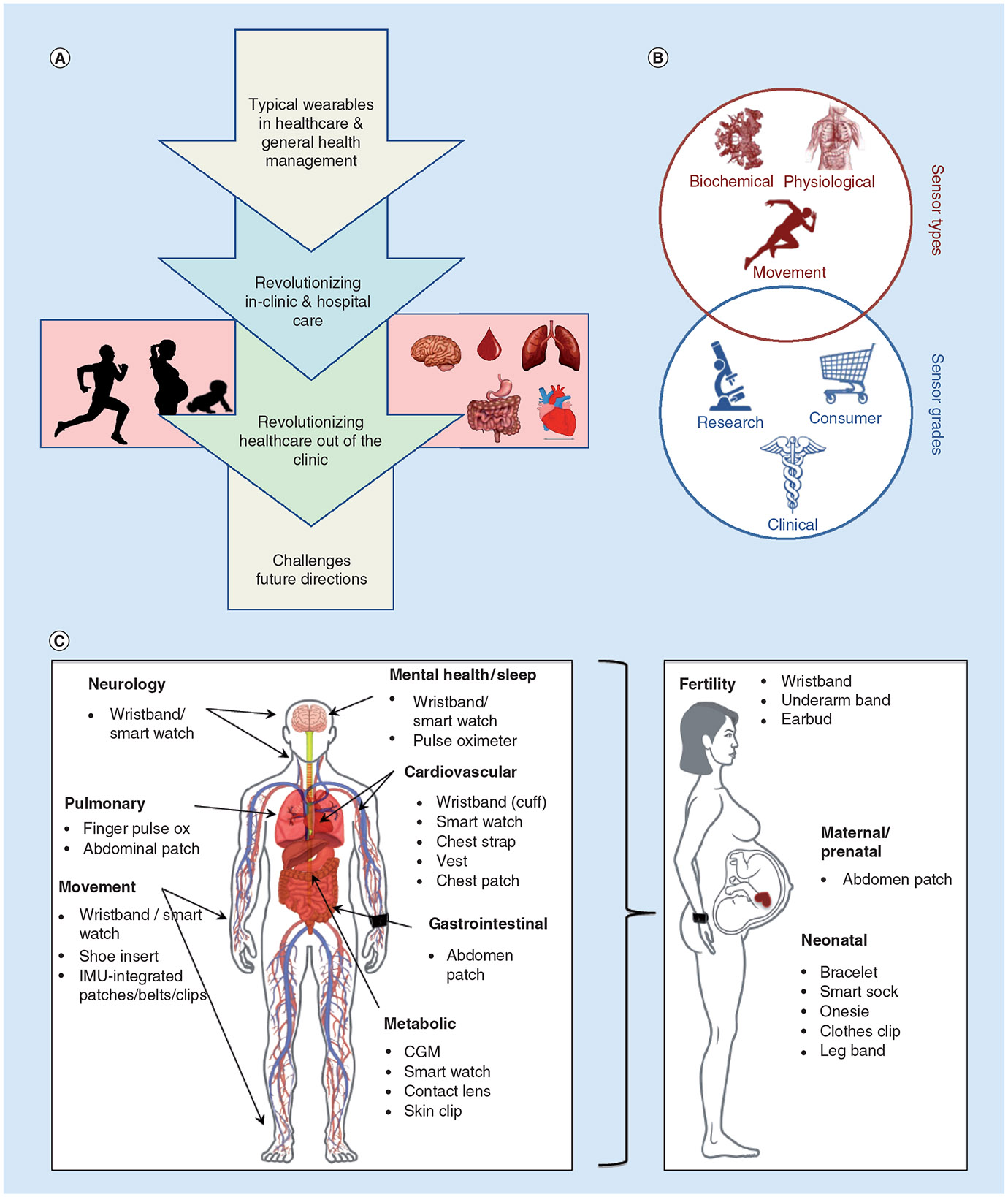
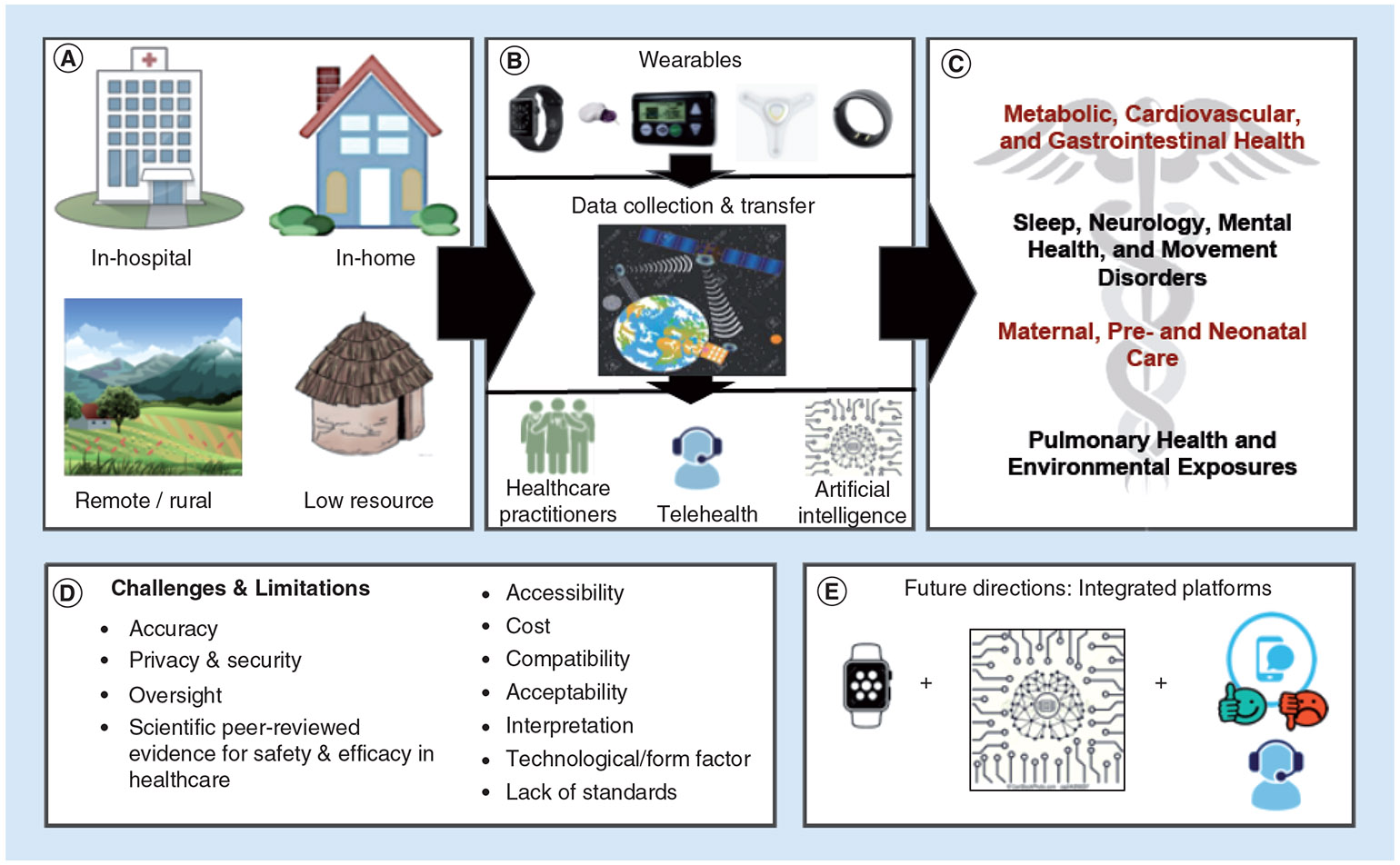
“Wearable devices provide opportunities to improve healthcare in a variety of settings, from in-hospital and in-clinic care, to ambulatory care in the home and in remote geographical settings including rural areas and low-resource environments (Figure 2A).”
§ Wearables and the medical revolution > Wearable devices used for general health management
plainconditional- Asserted: passes — The authors put it forward as true.
- Checkable: passes — It can be checked against evidence.
- Load-bearing: passes — The paper’s conclusions depend on it.
- Based: fails — The paper may give no reason why it holds.
Probably not a substantial claim. The paper may give no reason why it holds.
In the paper
“These sensors can generally be classified into three main categories: mechanical, physiological and biochemical (Figure 1B) [1].”
§ Wearables and the medical revolution > Typical wearable devices with applications in health
What the sources say
- Not checked yetcites [1] Tamsin M. Wearable biosensor technologies. Int. J. Innov. Sci. Res 13, 697– 703 (2015).
plain- Asserted: passes — The authors put it forward as true.
- Checkable: passes — It can be checked against evidence.
- Load-bearing: fails — The paper’s conclusions may not depend on it.
- Based: passes — The paper gives a reason why it holds.
Probably not a substantial claim. The paper’s conclusions may not depend on it.
A conclusion the paper draws from its own results — it cites no other source for it, so there is none to check. The quote shows it is in the paper.
In the paper
“Previously geared toward consumer health enthusiasts, healthcare practitioners are now beginning to adopt wearables for patient monitoring.”
§ Wearables and the medical revolution > Abstract
plain- Asserted: passes — The authors put it forward as true.
- Checkable: passes — It can be checked against evidence.
- Load-bearing: passes — The paper’s conclusions depend on it.
- Based: fails — The paper may give no reason why it holds.
Probably not a substantial claim. The paper may give no reason why it holds.
None of the sources cited for this claim have been checked yet.
In the paper
“Diagnosis and monitoring of hypertension and treatment efficacy is difficult for a few reasons: a single blood pressure (BP) measurement in the clinic often does not capture true average BP, BP fluctuates throughout the day based on circadian rhythms and daily activity, and the ‘white coat syndrome’ can lead to higher BP measurements in the clinic [68-73].”
§ Wearables and the medical revolution > Wearable biosensors revolutionizing specific fields of healthcare outside of the hospital & clinic > Metabolic, cardiovascular & gastrointestinal health
What the sources say
- Not checked yetcites [68] Wexler R. Ambulatory blood pressure monitoring in primary care. South Med. J 103(5), 447– 452 (2010). 20375938
- Not checked yetcites [69] Hermida RC, Ayala DE, Mojon A, Fernandez JR. Decreasing sleep-time blood pressure determined by ambulatory monitoring reduces cardiovascular risk. J. Am. Coll. Cardiol 58(11), 1165– 1173 (2011). 21884956
- Not checked yetcites [70] Burkard T, Mayr M, Winterhalder C, Leonardi L, Eckstein J, Vischer AS. Reliability of single office blood pressure measurements. Heart doi: 10.1136/heartjnl-2017-312523 (2018) (Epub ahead of print). 29530989
- Not checked yetcites [71] Asayama K, Thijs L, Brguljan-Hitij J Risk stratification by self-measured home blood pressure across categories of conventional blood pressure: a participant-level meta-analysis. PLoS Med 11(1), e1001591 (2014). 24465187 PMC3897370 source
- Not checked yetcites [72] Pickering TG. The clinical significance of diurnal blood pressure variations. Dippers and nondippers. Circulation 81(2), 700– 702 (1990). 2137050
- Not checked yetcites [73] Mahabala C, Kamath P, Bhaskaran U, Pai ND, Pai AU. Antihypertensive therapy: nocturnal dippers and nondippers. Do we treat them differently? Vasc. Health Risk Manag. 9, 125– 133 (2013). 23569382 PMC3616131
plaindirect- Asserted: passes — The authors put it forward as true.
- Checkable: passes — It can be checked against evidence.
- Load-bearing: passes — The paper’s conclusions depend on it.
- Based: passes — The paper gives a reason why it holds.
It may state two separate claims as one.
In the paper
“Polysomnography, the current gold standard for sleep monitoring, often conflicts with subjective self-reports of sleep and is difficult to monitor longitudinally [84].”
§ Wearables and the medical revolution > Wearable biosensors revolutionizing specific fields of healthcare outside of the hospital & clinic > Sleep, neurology, mental health & movement disorders
What the sources say
- Not checked yetcites [84] Kaplan KA, Hirshman J, Hernandez B When a gold standard isn’t so golden: lack of prediction of subjective sleep quality from sleep polysomnography. Biol. Psychol 123, 37– 46 (2017). 27889439 PMC5292065
plaincorrelational- Asserted: passes — The authors put it forward as true.
- Checkable: passes — It can be checked against evidence.
- Load-bearing: passes — The paper’s conclusions depend on it.
- Based: passes — The paper gives a reason why it holds.
It may state two separate claims as one.
A conclusion the paper draws from its own results — it cites no other source for it, so there is none to check. The quote shows it is in the paper.
In the paper
“With the ability to more accurately track acute and chronic neurologic and mental health symptoms, the opportunity for real-time intervention follows.”
§ Wearables and the medical revolution > Wearable biosensors revolutionizing specific fields of healthcare outside of the hospital & clinic > Sleep, neurology, mental health & movement disorders
plaindirect- Asserted: passes — The authors put it forward as true.
- Checkable: passes — It can be checked against evidence.
- Load-bearing: passes — The paper’s conclusions depend on it.
- Based: passes — The paper gives a reason why it holds.
It may state two separate claims as one.
A conclusion the paper draws from its own results — it cites no other source for it, so there is none to check. The quote shows it is in the paper.
In the paper
“The devices described above provide new sensing and potential therapeutic modalities and are expected to dramatically improve gastrointestinal care.”
§ Wearables and the medical revolution > Wearable biosensors revolutionizing specific fields of healthcare outside of the hospital & clinic > Metabolic, cardiovascular & gastrointestinal health
boostedconditional- Asserted: passes — The authors put it forward as true.
- Checkable: passes — It can be checked against evidence.
- Load-bearing: passes — The paper’s conclusions depend on it.
- Based: passes — The paper gives a reason why it holds.
Probably not a substantial claim. It may state two separate claims as one.
A conclusion the paper draws from its own results — it cites no other source for it, so there is none to check. The quote shows it is in the paper.
In the paper
“If FDA approved, these devices will pioneer the field of continuous BP monitoring.”
§ Wearables and the medical revolution > Wearable biosensors revolutionizing specific fields of healthcare outside of the hospital & clinic > Metabolic, cardiovascular & gastrointestinal health
hedgedconditional- Asserted: passes — The authors put it forward as true.
- Checkable: passes — It can be checked against evidence.
- Load-bearing: fails — The paper’s conclusions may not depend on it.
- Based: fails — The paper may give no reason why it holds.
Probably not a substantial claim. The paper’s conclusions may not depend on it. The paper may give no reason why it holds.
A conclusion the paper draws from its own results — it cites no other source for it, so there is none to check. The quote shows it is in the paper.
In the paper
“Continuous, passive wearables monitoring can lower dependence on participant interaction and increase the volume of data that can be collected over time.”
§ Wearables and the medical revolution > Wearable biosensors revolutionizing specific fields of healthcare outside of the hospital & clinic > Sleep, neurology, mental health & movement disorders
plaindirect- Asserted: passes — The authors put it forward as true.
- Checkable: passes — It can be checked against evidence.
- Load-bearing: passes — The paper’s conclusions depend on it.
- Based: passes — The paper gives a reason why it holds.
It may state two separate claims as one.
None of the sources cited for this claim have been checked yet.
In the paper
“Sleep impacts chronic illness, neurological conditions and acute cognitive function including memory and mood [22,88-90].”
§ Wearables and the medical revolution > Wearable biosensors revolutionizing specific fields of healthcare outside of the hospital & clinic > Sleep, neurology, mental health & movement disorders
What the sources say
- Not checked yetcites [22] Kroll RR, Mckenzie ED, Boyd JG Use of wearable devices for post-discharge monitoring of ICU patients: a feasibility study. J. Intensive Care 5, 64 (2017). 29201377 PMC5698959
- Not checked yetcites [88] Horvath K, Aschermann Z, Acs P Is the MDS-UPDRS a good screening tool for detecting sleep problems and daytime sleepiness in Parkinson’s disease? Parkinsons Dis. 2014, 806169 (2014). 25506041 PMC4251816
- Not checked yetcites [89] Walker MP. The role of sleep in cognition and emotion. Ann. NY Acad. Sci 1156, 168– 197 (2009). 19338508
- Not checked yetcites [90] Bianchi MT. Sleep devices: wearables and nearables, informational and interventional, consumer and clinical. Metabolism 84 99– 108 (2017). 29080814
plaindirect- Asserted: passes — The authors put it forward as true.
- Checkable: passes — It can be checked against evidence.
- Load-bearing: unclear — It is unclear whether the paper’s conclusions depend on it.
- Based: passes — The paper gives a reason why it holds.
It may state two separate claims as one.
In the paper
“Gait analysis is also used to assess Parkinson’s Disease (PD) patients and generally requires video-based motion-capture in a specialized laboratory [34].”
§ Wearables and the medical revolution > Wearable biosensors revolutionizing specific fields of healthcare outside of the hospital & clinic > Sleep, neurology, mental health & movement disorders
What the sources say
- Not checked yetcites [34] Schlachetzki JC, Barth J, Marxreiter F Wearable sensors objectively measure gait parameters in Parkinson’s disease. PLoS ONE 12(10), e0183989 (2017). 29020012 PMC5636070
plain- Asserted: passes — The authors put it forward as true.
- Checkable: passes — It can be checked against evidence.
- Load-bearing: fails — The paper’s conclusions may not depend on it.
- Based: passes — The paper gives a reason why it holds.
Probably not a substantial claim. The paper’s conclusions may not depend on it. It may state two separate claims as one.
None of the sources cited for this claim have been checked yet.
In the paper
“Their labor risk score was developed based on in-hospital data from 55 pregnant women and was evaluated on recordings from 142 pregnant women in free-living conditions.”
§ Wearables and the medical revolution > Wearable biosensors revolutionizing specific fields of healthcare outside of the hospital & clinic > Maternal, pre- & neo-natal care
What the sources say
- Not checked yetcites [18] Altini M, Rossetti E, Rooijakkers M Combining electrohysterography and heart rate data to detect labour. Presented at: Biomedical & Health Informatics (BHI), 2017 IEEE EMBS International Conference Orlando-, FL, USA (16-19 February 2017).
- Not checked yetcites [120] Altini M, Rossetti E, Rooijakkers M 762: remote labour detection using maternal electrohysterography and heart rate data acquired with a wearable sensor. Am. J. Obstet. Gynecol 216(1), S441– S442 (2017).
plainn = 142- Asserted: passes — The authors put it forward as true.
- Checkable: passes — It can be checked against evidence.
- Load-bearing: unclear — It is unclear whether the paper’s conclusions depend on it.
- Based: passes — The paper gives a reason why it holds.
It may state two separate claims as one.
A conclusion the paper draws from its own results — it cites no other source for it, so there is none to check. The quote shows it is in the paper.
In the paper
“Commercially available motion sensing, physiological and biochemical wearable sensors have been adopted for use in both consumer and clinical healthcare.”
§ Wearables and the medical revolution > Regulatory oversight & economic impact
plain- Asserted: passes — The authors put it forward as true.
- Checkable: passes — It can be checked against evidence.
- Load-bearing: passes — The paper’s conclusions depend on it.
- Based: fails — The paper may give no reason why it holds.
Probably not a substantial claim. The paper may give no reason why it holds.
A conclusion the paper draws from its own results — it cites no other source for it, so there is none to check. The quote shows it is in the paper.
In the paper
“Wearable and environmental sensors promise to improve information collection and transfer rapidly, potentially to off-site experts and specially designed algorithms enable automated and real-time medical decision support in time- and resource-constrained environments (Figure 2B).”
§ Wearables and the medical revolution > Conclusion
hedgedconditional- Asserted: passes — The authors put it forward as true.
- Checkable: passes — It can be checked against evidence.
- Load-bearing: passes — The paper’s conclusions depend on it.
- Based: passes — The paper gives a reason why it holds.
It may state two separate claims as one.
A conclusion the paper draws from its own results — it cites no other source for it, so there is none to check. The quote shows it is in the paper.
In the paper
“This study established the device’s utility for detection and a modest potential to predict near-future disease progression.”
§ Wearables and the medical revolution > Wearable biosensors revolutionizing specific fields of healthcare outside of the hospital & clinic > Pulmonary health & environmental exposures
plaincorrelational- Asserted: passes — The authors put it forward as true.
- Checkable: passes — It can be checked against evidence.
- Load-bearing: passes — The paper’s conclusions depend on it.
- Based: passes — The paper gives a reason why it holds.
It may state two separate claims as one.
In the paper
“Shcherbina et al. demonstrated that most wrist-worn devices adequately measure HR in laboratory-based activities, but poorly estimate energy expenditure and caution the use of those measurements as part of health improvement programs [144].”
§ Wearables and the medical revolution > Challenges & future directions
What the sources say
- Not checked yetcites [144] Shcherbina A, Mattsson CM, Waggott D Accuracy in wrist-worn, sensor-based measurements of heart rate and energy expenditure in a diverse cohort. J. Pers. Med 7(2), 3 (2017). 28538708 PMC5491979 source
boosted- Asserted: passes — The authors put it forward as true.
- Checkable: passes — It can be checked against evidence.
- Load-bearing: passes — The paper’s conclusions depend on it.
- Based: passes — The paper gives a reason why it holds.
It may state two separate claims as one.
In the paper
“Further, these tools can be used in specific settings to target extreme healthcare costs, for example, by reducing emergency room visits and hospital readmission rates, improving postsurgical and rehabilitation outcomes, assisting with aging in-home, and preventing serious, preventable and costly medical events (deemed ‘never events’ by CMS) (Figure 2A) [137].”
§ Wearables and the medical revolution > Conclusion
What the sources say
- Not checked yetcites [137] Centers for Medicare & Medicaid Services. Eliminating serious, preventable, and costly medical errors – never events (2013). www.cms.gov/Newsroom/MediaReleaseDatabase/Fact-sheets/2006-Fact-sheets-items/2006-2005-2018.html
plaindirect- Asserted: passes — The authors put it forward as true.
- Checkable: passes — It can be checked against evidence.
- Load-bearing: passes — The paper’s conclusions depend on it.
- Based: passes — The paper gives a reason why it holds.
It may state two separate claims as one.
In the paper
“The acceptability of these devices and potential stigma associated with them varies by community and may also be a factor in dividing who benefits from these technologies [141].”
§ Wearables and the medical revolution > Challenges & future directions
What the sources say
- Not checked yetcites [141] Farrington C. Wearable technologies and stigma in diabetes: the role of medical aesthetics. Lancet Diabetes Endocrinol. 4(7), 566 (2016). 26923941
hedgedconditional- Asserted: passes — The authors put it forward as true.
- Checkable: passes — It can be checked against evidence.
- Load-bearing: unclear — It is unclear whether the paper’s conclusions depend on it.
- Based: passes — The paper gives a reason why it holds.
It may state two separate claims as one.
The paper states this without a source or data behind it here, so there is nothing to check it against. The quote shows it is in the paper.
In the paper
“Several neurologic disorders include motor control dysregulation.”
§ Wearables and the medical revolution > Wearable biosensors revolutionizing specific fields of healthcare outside of the hospital & clinic > Sleep, neurology, mental health & movement disorders
plaincorrelational- Asserted: passes — The authors put it forward as true.
- Checkable: passes — It can be checked against evidence.
- Load-bearing: fails — The paper’s conclusions may not depend on it.
- Based: fails — The paper may give no reason why it holds.
Probably not a substantial claim. The paper’s conclusions may not depend on it. The paper may give no reason why it holds.
A conclusion the paper draws from its own results — it cites no other source for it, so there is none to check. The quote shows it is in the paper.
In the paper
“Currently, there is a wide effort to integrate information from these devices into electronic health records.”
§ Wearables and the medical revolution > Regulatory oversight & economic impact
plain- Asserted: passes — The authors put it forward as true.
- Checkable: passes — It can be checked against evidence.
- Load-bearing: fails — The paper’s conclusions may not depend on it.
- Based: passes — The paper gives a reason why it holds.
Probably not a substantial claim. The paper’s conclusions may not depend on it.
A conclusion the paper draws from its own results — it cites no other source for it, so there is none to check. The quote shows it is in the paper.
In the paper
“Wearable sensors have an extremely broad variety of applications to specific areas of medicine, enabling monitoring of acute and chronic conditions and overall health both in and outside of the clinical setting.”
§ Wearables and the medical revolution > Conclusion
plaindirect- Asserted: passes — The authors put it forward as true.
- Checkable: passes — It can be checked against evidence.
- Load-bearing: passes — The paper’s conclusions depend on it.
- Based: passes — The paper gives a reason why it holds.
It may state two separate claims as one.
A conclusion the paper draws from its own results — it cites no other source for it, so there is none to check. The quote shows it is in the paper.
In the paper
“Although consumer-grade research devices have been primarily adopted for fitness, medical professionals are beginning to find utility in information collected by these devices.”
§ Wearables and the medical revolution > Regulatory oversight & economic impact
plaincorrelational- Asserted: passes — The authors put it forward as true.
- Checkable: passes — It can be checked against evidence.
- Load-bearing: unclear — It is unclear whether the paper’s conclusions depend on it.
- Based: passes — The paper gives a reason why it holds.
It may state two separate claims as one.
In the paper
“Based on collective results of 16 studies, wheeze and crackle event classification had accuracies between 75.78–100% and 89–98.15%, respectively [124].”
§ Wearables and the medical revolution > Wearable biosensors revolutionizing specific fields of healthcare outside of the hospital & clinic > Pulmonary health & environmental exposures
What the sources say
- Not checked yetcites [124] Pramono RXA, Bowyer S, Rodriguez-Villegas E. Automatic adventitious respiratory sound analysis: a systematic review. PLoS ONE 12(5), e0177926 (2017). 28552969 PMC5446130
plain- Asserted: passes — The authors put it forward as true.
- Checkable: passes — It can be checked against evidence.
- Load-bearing: passes — The paper’s conclusions depend on it.
- Based: passes — The paper gives a reason why it holds.
It may state two separate claims as one.
A conclusion the paper draws from its own results — it cites no other source for it, so there is none to check. The quote shows it is in the paper.
In the paper
“Further, many devices are not compatible across platforms (e.g., iOS and Android smart phone operating systems) and there is a lack of data standards which limits their broad use and ubiquity.”
§ Wearables and the medical revolution > Challenges & future directions
plaindirect- Asserted: passes — The authors put it forward as true.
- Checkable: passes — It can be checked against evidence.
- Load-bearing: unclear — It is unclear whether the paper’s conclusions depend on it.
- Based: passes — The paper gives a reason why it holds.
It may state two separate claims as one.
In the paper
“Wheezing, characterized by narrowing airway and limited airflow, is linked to both asthma and chronic obstructive pulmonary disease while fine crackling, caused by ‘explosive opening of small airways,’ is linked with pneumonia, congestive heart failure and lung fibrosis [124].”
§ Wearables and the medical revolution > Wearable biosensors revolutionizing specific fields of healthcare outside of the hospital & clinic > Pulmonary health & environmental exposures
What the sources say
- Not checked yetcites [124] Pramono RXA, Bowyer S, Rodriguez-Villegas E. Automatic adventitious respiratory sound analysis: a systematic review. PLoS ONE 12(5), e0177926 (2017). 28552969 PMC5446130
plaincorrelational- Asserted: passes — The authors put it forward as true.
- Checkable: passes — It can be checked against evidence.
- Load-bearing: passes — The paper’s conclusions depend on it.
- Based: passes — The paper gives a reason why it holds.
It may state two separate claims as one.
A conclusion the paper draws from its own results — it cites no other source for it, so there is none to check. The quote shows it is in the paper.
In the paper
“The time needed to choose and properly set up a device, and remembering to charge the device are also potential barriers to proper use.”
§ Wearables and the medical revolution > Challenges & future directions
hedgedconditional- Asserted: passes — The authors put it forward as true.
- Checkable: passes — It can be checked against evidence.
- Load-bearing: fails — The paper’s conclusions may not depend on it.
- Based: passes — The paper gives a reason why it holds.
Probably not a substantial claim. The paper’s conclusions may not depend on it. It may state two separate claims as one.
A conclusion the paper draws from its own results — it cites no other source for it, so there is none to check. The quote shows it is in the paper.
In the paper
“False negatives can cause a potentially fatal condition to be missed while false positives can lead to overtreatment and/or anxiety.”
§ Wearables and the medical revolution > Challenges & future directions
plaindirect- Asserted: passes — The authors put it forward as true.
- Checkable: passes — It can be checked against evidence.
- Load-bearing: passes — The paper’s conclusions depend on it.
- Based: passes — The paper gives a reason why it holds.
Probably not a substantial claim. It may state two separate claims as one.
A conclusion the paper draws from its own results — it cites no other source for it, so there is none to check. The quote shows it is in the paper.
In the paper
“It is common to find unsubstantiated scientific claims with no reference to peer-reviewed studies on commercial wearable device company websites and advertising materials that can set a dangerous precedent if inaccurate or misinterpreted data is factored into medical decision making.”
§ Wearables and the medical revolution > Challenges & future directions
plain- Asserted: passes — The authors put it forward as true.
- Checkable: passes — It can be checked against evidence.
- Load-bearing: passes — The paper’s conclusions depend on it.
- Based: fails — The paper may give no reason why it holds.
Probably not a substantial claim. The paper may give no reason why it holds.
A conclusion the paper draws from its own results — it cites no other source for it, so there is none to check. The quote shows it is in the paper.
In the paper
“Wearables can inform ongoing or new symptoms, such as medication side effects or interactions, and may be able to provide automated just-in-time interventions.”
§ Wearables and the medical revolution > Conclusion
hedgedconditional- Asserted: passes — The authors put it forward as true.
- Checkable: passes — It can be checked against evidence.
- Load-bearing: passes — The paper’s conclusions depend on it.
- Based: unclear — It is unclear why the paper says it holds.
It may state two separate claims as one.
A conclusion the paper draws from its own results — it cites no other source for it, so there is none to check. The quote shows it is in the paper.
In the paper
“High device cost is a concern that may hinder the accessibility of this consumer healthcare technology to benefit only those who can afford the devices.”
§ Wearables and the medical revolution > Challenges & future directions
hedgedconditional- Asserted: passes — The authors put it forward as true.
- Checkable: passes — It can be checked against evidence.
- Load-bearing: fails — The paper’s conclusions may not depend on it.
- Based: passes — The paper gives a reason why it holds.
Probably not a substantial claim. The paper’s conclusions may not depend on it.
A conclusion the paper draws from its own results — it cites no other source for it, so there is none to check. The quote shows it is in the paper.
In the paper
“The tripartite regulation of wearable devices by the federal government through the FDA, Federal Communications Commission and CMS creates challenges for device manufacturers and vendors whereby regulations can be difficult to adhere to due to the different, and sometimes divergent, objectives of these agencies.”
§ Wearables and the medical revolution > Challenges & future directions
plaindirect- Asserted: passes — The authors put it forward as true.
- Checkable: passes — It can be checked against evidence.
- Load-bearing: fails — The paper’s conclusions may not depend on it.
- Based: fails — The paper may give no reason why it holds.
Probably not a substantial claim. The paper’s conclusions may not depend on it. The paper may give no reason why it holds.
In the paper
“Pantelopoulos and Bourbakis created a scoring system from the perspective of the patient/wearer, the manufacturer and supervising physician for wearables found that many systems score low on wearability, because sensor, battery and on-body hardware size tends to be too bulky in weight and size [165].”
§ Wearables and the medical revolution > Challenges & future directions
What the sources say
- Not checked yetcites [165] Pantelopoulos A, Bourbakis N. A survey on wearable biosensor systems for health monitoring. Conf. Proc. IEEE Eng. Med. Biol. Soc. 2008, 4887– 4890 (2008). 19163812
plaindirect- Asserted: passes — The authors put it forward as true.
- Checkable: passes — It can be checked against evidence.
- Load-bearing: passes — The paper’s conclusions depend on it.
- Based: passes — The paper gives a reason why it holds.
It may state two separate claims as one.
In the paper
“Wristbands to detect environmental exposures have been successful but require off-site analysis using gas chromatography on returned wristbands [154].”
§ Wearables and the medical revolution > Challenges & future directions
What the sources say
- Not checked yetcites [154] Donald CE, Scott RP, Blaustein KL Silicone wristbands detect individuals’ pesticide exposures in West Africa. R. Soc. Open Sci 3(8), 160433 (2016). 27853621 PMC5108971
plain- Asserted: passes — The authors put it forward as true.
- Checkable: passes — It can be checked against evidence.
- Load-bearing: unclear — It is unclear whether the paper’s conclusions depend on it.
- Based: passes — The paper gives a reason why it holds.
It may state two separate claims as one.
A conclusion the paper draws from its own results — it cites no other source for it, so there is none to check. The quote shows it is in the paper.
In the paper
“Although immense progress has been made over the past several decades in wearable sensing technologies and even more recently toward their applications in healthcare, significant limitations must be addressed for wearable biosensing to achieve its full potential of seamless integration into healthcare.”
§ Wearables and the medical revolution > Challenges & future directions
plain- Asserted: passes — The authors put it forward as true.
- Checkable: fails — It may be too vague to check against evidence.
- Load-bearing: passes — The paper’s conclusions depend on it.
- Based: passes — The paper gives a reason why it holds.
Probably not a substantial claim. It may be too vague to check against evidence. It may state two separate claims as one.
None of the sources cited for this claim have been checked yet.
In the paper
“The wristband device also measures skin temperature for calibration, and that data is also useful in analyzing health as described earlier [126,156].”
§ Wearables and the medical revolution > Challenges & future directions
What the sources say
- Not checked yetcites [126] Asimina S, Chapizanis D, Karakitsios S Assessing and enhancing the utility of low-cost activity and location sensors for exposure studies. Environ. Monit. Assess 190(3), 155 (2018). 29464404
- Not checked yetcites [156] Gao W, Emaminejad S, Nyein HYY Fully integrated wearable sensor arrays for multiplexed in situ perspiration analysis. Nature 529(7587), 509– 514 (2016). 26819044 PMC4996079 source
plaincorrelational- Asserted: passes — The authors put it forward as true.
- Checkable: passes — It can be checked against evidence.
- Load-bearing: unclear — It is unclear whether the paper’s conclusions depend on it.
- Based: passes — The paper gives a reason why it holds.
It may state two separate claims as one.
A conclusion the paper draws from its own results — it cites no other source for it, so there is none to check. The quote shows it is in the paper.
In the paper
“There are often conflicting technological constraints in device design.”
§ Wearables and the medical revolution > Challenges & future directions
plain- Asserted: passes — The authors put it forward as true.
- Checkable: passes — It can be checked against evidence.
- Load-bearing: passes — The paper’s conclusions depend on it.
- Based: passes — The paper gives a reason why it holds.
Probably not a substantial claim.
In the paper
“This device was recently tested for cystic fibrosis diagnosis and preliminary investigation of the blood/sweat glucose correlation [161].”
§ Wearables and the medical revolution > Challenges & future directions
What the sources say
- Not checked yetcites [161] Emaminejad S, Gao W, Wu E Autonomous sweat extraction and analysis applied to cystic fibrosis and glucose monitoring using a fully integrated wearable platform. Proc. Natl Acad. Sci. USA 114(18), 4625– 4630 (2017). 28416667 PMC5422810 •• A seminal demonstration of how fully integrated wearable platforms with multimodal measurement capabilities can dramatically improve monitoring and intervention capabilities. source
plain- Asserted: passes — The authors put it forward as true.
- Checkable: passes — It can be checked against evidence.
- Load-bearing: unclear — It is unclear whether the paper’s conclusions depend on it.
- Based: passes — The paper gives a reason why it holds.
It may state two separate claims as one.
A conclusion the paper draws from its own results — it cites no other source for it, so there is none to check. The quote shows it is in the paper.
In the paper
“Unsubstantiated claims that overstate the testing accuracy and indications for the device are commonly made by wearable device companies to improve sales, and further regulations are needed to ensure their appropriate use and to evaluate the potential harm that may result from medical interventions or overdiagnosis based on the use of these devices.”
§ Wearables and the medical revolution > Challenges & future directions
plaindirect- Asserted: passes — The authors put it forward as true.
- Checkable: passes — It can be checked against evidence.
- Load-bearing: passes — The paper’s conclusions depend on it.
- Based: fails — The paper may give no reason why it holds.
Probably not a substantial claim. The paper may give no reason why it holds.
A conclusion the paper draws from its own results — it cites no other source for it, so there is none to check. The quote shows it is in the paper.
In the paper
“FDA-regulated devices like CGMs have substantially more clinical trials establishing the safety and efficacy of these devices in healthcare (only the most recent/impactful studies are referenced for brevity), but consumer-grade FDA devices have limited evidence of their utility in healthcare.”
§ Wearables and the medical revolution > Challenges & future directions
plain- Asserted: passes — The authors put it forward as true.
- Checkable: passes — It can be checked against evidence.
- Load-bearing: passes — The paper’s conclusions depend on it.
- Based: passes — The paper gives a reason why it holds.
It may state two separate claims as one.
None of the sources cited for this claim have been checked yet.
In the paper
“BreathLink is another breath analysis technology to identify women with breast cancer and pulmonary tuberculosis, but this technology is not yet in a wearable form factor [152,153].”
§ Wearables and the medical revolution > Challenges & future directions
What the sources say
- Not checked yetcites [152] Phillips M, Beatty JD, Cataneo RN Rapid point-of-care breath test for biomarkers of breast cancer and abnormal mammograms. PLoS ONE 9(3), e90226 (2014). 24599224 PMC3943910
- Not checked yetcites [153] Phillips M, Basa-Dalay V, Blais J Point-of-care breath test for biomarkers of active pulmonary tuberculosis. Tuberculosis (Edinb.) 92(4), 314– 320 (2012). 22647661
plain- Asserted: passes — The authors put it forward as true.
- Checkable: passes — It can be checked against evidence.
- Load-bearing: unclear — It is unclear whether the paper’s conclusions depend on it.
- Based: passes — The paper gives a reason why it holds.
It may state two separate claims as one.
In the paper
“This type of device has been explored most recently through closed-loop insulin delivery systems for Type 1 diabetics, and broader applications are forthcoming [162].”
§ Wearables and the medical revolution > Challenges & future directions
What the sources say
- Not checked yetcites [162] Stone JY, Haviland N, Bailey TS. Review of a commercially available hybrid closed-loop insulin-delivery system in the treatment of Type 1 diabetes. Ther. Deliv 9(2), 77– 87 (2018). 29235423
plain- Asserted: passes — The authors put it forward as true.
- Checkable: passes — It can be checked against evidence.
- Load-bearing: unclear — It is unclear whether the paper’s conclusions depend on it.
- Based: passes — The paper gives a reason why it holds.
It may state two separate claims as one.
A conclusion the paper draws from its own results — it cites no other source for it, so there is none to check. The quote shows it is in the paper.
In the paper
“Challenges to addressing this include the wide range of device and system architectures and the proprietary nature of many analytic platforms which limit their generalizability.”
§ Wearables and the medical revolution > Challenges & future directions
plaindirect- Asserted: passes — The authors put it forward as true.
- Checkable: passes — It can be checked against evidence.
- Load-bearing: passes — The paper’s conclusions depend on it.
- Based: passes — The paper gives a reason why it holds.
It may state two separate claims as one.
None of the sources cited for this claim have been checked yet.
In the paper
“Wearable oxygen diffusion sensors have been used to track wound healing, and moisture sensors can inform better timing of wound dressing changes [148,149].”
§ Wearables and the medical revolution > Challenges & future directions
What the sources say
- Not checked yetcites [148] Niederauer MQ, Michalek JE, Armstrong DG. A prospective, randomized, double-blind multicenter study comparing continuous diffusion of oxygen therapy to sham therapy in the treatment of diabetic foot ulcers. J. Diabetes Sci. Technol 11(5), 883– 891 (2017). 28654304 PMC5950983
- Not checked yetcites [149] Milne SD, Seoudi I, Al Hamad H A wearable wound moisture sensor as an indicator for wound dressing change: an observational study of wound moisture and status. Int. Wound J 13(6), 1309– 1314 (2016). 26561281 PMC7950073
plaindirect- Asserted: passes — The authors put it forward as true.
- Checkable: passes — It can be checked against evidence.
- Load-bearing: unclear — It is unclear whether the paper’s conclusions depend on it.
- Based: passes — The paper gives a reason why it holds.
It may state two separate claims as one.
The paper relies on this without support.
Most airway abnormalities can be characterized by abnormal sounds (adventitious sounds).
“Pulmonary disease wearables take advantage of the fact that most airway abnormalities can be characterized by the abnormal sounds (adventitious sounds).”
Claims other papers make about this one
Each is checked against this paper’s own text: does it say what the citing paper says it does?
In the citing paper
“In recent years, the quality and accuracy of wearables have improved [7,8], resulting in more clinically approved certifications [9].”
From The impact of wearable technologies in health research: scoping review (2022) · cites this paper as [9]
In the citing paper
“The literature underlines the potential for wearable-based research in low-resource settings to generate data and improve health care [9], based on their low cost and ease of use (data acquisition, hardware, and software handling) [233].”
From The impact of wearable technologies in health research: scoping review (2022) · cites this paper as [9]
In the citing paper
“We have provided a wide overview of wearable devices; however, the included studies did not show the full range of possible wearables and measured vital signs [9,37].”
From The impact of wearable technologies in health research: scoping review (2022) · cites this paper as [9]
In the citing paper
“However, most studies were conducted in high-income settings, like the US and Europe [19, 25, 35].”
Self-check
Percentages, sums and reported differences re-computed from the paper’s own numbers.
Each contradiction between two passages listed here was confirmed by an independent check.
Rated minor: it would not touch a result — a value no result rests on, a p-value that stays on the same side of the significance level, or a conflict that is clerical, resolved elsewhere in the paper, or outside its own findings.
In the paper
§ Wearables and the medical revolution > Conclusion
“are four large-scale initiatives to collect longitudinal wearable device data”
§ Wearables and the medical revolution > Conclusion
“The Precision Medicine Initiative, the Google Baseline Project, MyHeartCounts, the Stanford Azumio Activity Inequality study and the Health ePeople study”
Citations
Cites
Ecological momentary assessment
Shiffman, S., Stone, A. A., & Hufford, M. R. (2008) · Annual Review of Clinical Psychology · doi:10.1146/annurev.clinpsy.3.022806.091415 · Cited by 6,454 · cited 1×
“, depressive mood, anxious mood or fatigue) through real-time assessments that can be administered outside of the clinic and accurate recall and time of recording [94,95].”
Fully integrated wearable sensor arrays for multiplexed in situ perspiration analysis
Gao, W., Emaminejad, S., Nyein, H. Y. Y., Challa, S., Chen, K., Peck, A., Fahad, H. M., Ota, H., Shiraki, H., Kiriya, D., et al. (2016) · Nature · doi:10.1038/nature16521 · Cited by 5,087 · cited 1×
“The wristband device also measures skin temperature for calibration, and that data is also useful in analyzing health as described earlier [126,156].”
The State of US Health, 1990-2010: Burden of Diseases, Injuries, and Risk Factors
Murray, C. J. L. (2013) · JAMA · doi:10.1001/jama.2013.13805 · Cited by 2,438
The epidemiology of adult obstructive sleep apnea
Punjabi, N. M. (2008) · Proceedings of the American Thoracic Society · doi:10.1513/pats.200709-155mg · Cited by 2,361
Burden of Gastrointestinal Disease in the United States: 2012 Update
Peery, A. F., Dellon, E. S., Lund, J. L., Crockett, S. D., McGowan, C., Bulsiewicz, W. J., Gangarosa, L. M., Thiny, M. T., Stizenberg, K., Morgan, D. R., et al. (2012) · Gastroenterology · doi:10.1053/j.gastro.2012.08.002 · Cited by 2,010
The Rise of Consumer Health Wearables: Promises and Barriers
Piwek, L., Ellis, D. A., Andrews, S., & Joinson, A. (2016) · PLoS Medicine · doi:10.1371/journal.pmed.1001953 · Cited by 1,301
Personal omics profiling reveals dynamic molecular and medical phenotypes
Chen, R., Mias, G. I., Li-Pook-Than, J., Jiang, L., Lam, H. Y. K., Chen, R., Miriami, E., Karczewski, K. J., Hariharan, M., Dewey, F. E., et al. (2012) · Cell · doi:10.1016/j.cell.2012.02.009 · Cited by 1,291
Self-citationThe Role of Sleep in Cognition and Emotion
Walker, M. P. (2009) · Annals of the New York Academy of Sciences · doi:10.1111/j.1749-6632.2009.04416.x · Cited by 1,111
Large-scale physical activity data reveal worldwide activity inequality
Althoff, T., Sosič, R., Hicks, J. L., King, A. C., Delp, S. L., & Leskovec, J. (2017) · Nature · doi:10.1038/nature23018 · Cited by 1,000
Wearable smart sensor systems integrated on soft contact lenses for wireless ocular diagnostics
Kim, J., Kim, M., Lee, M.-S., Kim, K., Ji, S., Kim, Y.-T., Park, J., Na, K., Bae, K.-H., Kyun Kim, H., et al. (2017) · Nature Communications · doi:10.1038/ncomms14997 · Cited by 951
Toward ubiquitous blood pressure monitoring via pulse transit time: Theory and practice
Mukkamala, R., Hahn, J.-O., Inan, O. T., Mestha, L. K., Kim, C.-S., Toreyin, H., & Kyal, S. (2015) · IEEE Transactions on Biomedical Engineering · doi:10.1109/tbme.2015.2441951 · Cited by 935 · cited 1×
“, Omron HeartGuide, currently undergoing clinical testing) or optical pulse wave-based metrics of BP [75,76].”
Electrochemical Tattoo Biosensors for Real-Time Noninvasive Lactate Monitoring in Human Perspiration
Jia, W., Bandodkar, A. J., Valdés-Ramírez, G., Windmiller, J. R., Yang, Z., Ramírez, J., Chan, G., & Wang, J. (2013) · Analytical Chemistry · doi:10.1021/ac401573r · Cited by 862
Emaminejad, S., Gao, W., Wu, E., Davies, Z. A., Yin Yin Nyein, H., Challa, S., Ryan, S. P., Fahad, H. M., Chen, K., Shahpar, Z., et al. (2017) · Proceedings of the National Academy of Sciences · doi:10.1073/pnas.1701740114 · Cited by 839
Nwankwo, T., Yoon, S. S., Burt, V. L., & Gu, Q. (2013) · PubMed · Cited by 689
Hypertensive Disorders and Severe Obstetric Morbidity in the United States
Kuklina, E. V., Ayala, C., & Callaghan, W. M. (2009) · Obstetrics and Gynecology · doi:10.1097/aog.0b013e3181a45b25 · Cited by 681
Wearable salivary uric acid mouthguard biosensor with integrated wireless electronics
Kim, J., Imani, S., de Araujo, W. R., Warchall, J., Valdés-Ramírez, G., Paixão, T. R. L. C., Mercier, P. P., & Wang, J. (2015) · Biosensors and Bioelectronics · doi:10.1016/j.bios.2015.07.039 · Cited by 678
Soft, smart contact lenses with integrations of wireless circuits, glucose sensors, and displays
Park, J., Kim, J., Kim, S.-Y., Cheong, W. H., Jang, J., Park, Y.-G., Na, K., Kim, Y.-T., Heo, J. H., Lee, C. Y., et al. (2018) · Science Advances · doi:10.1126/sciadv.aap9841 · Cited by 671
Shcherbina, A., Mattsson, C., Waggott, D., Salisbury, H., Christle, J., Hastie, T., Wheeler, M., & Ashley, E. (2017) · Journal of Personalized Medicine · doi:10.3390/jpm7020003 · Cited by 625
Burden of Diabetic Foot Ulcers for Medicare and Private Insurers
Rice, J. B., Desai, U., Cummings, A. K. G., Birnbaum, H. G., Skornicki, M., & Parsons, N. B. (2014) · Diabetes Care · doi:10.2337/dc13-2176 · Cited by 624
Moon, R. Y., TASK FORCE ON SUDDEN INFANT DEATH SYNDROME, Darnall, R. A., Feldman-Winter, L., Goodstein, M. H., & Hauck, F. R. (2016) · Pediatrics · doi:10.1542/peds.2016-2940 · Cited by 583
Grand challenges in clinical decision support
Sittig, D. F., Wright, A., Osheroff, J. A., Middleton, B., Teich, J. M., Ash, J. S., Campbell, E., & Bates, D. W. (2008) · Journal of Biomedical Informatics · doi:10.1016/j.jbi.2007.09.003 · Cited by 582
Halcox, J. P. J., Wareham, K., Cardew, A., Gilmore, M., Barry, J. P., Phillips, C., & Gravenor, M. B. (2017) · Circulation · doi:10.1161/circulationaha.117.030583 · Cited by 580
Passive Detection of Atrial Fibrillation Using a Commercially Available Smartwatch
Tison, G. H., Sanchez, J. M., Ballinger, B., Singh, A., Olgin, J. E., Pletcher, M. J., Vittinghoff, E., Lee, E. S., Fan, S. M., Gladstone, R. A., et al. (2018) · JAMA Cardiology · doi:10.1001/jamacardio.2018.0136 · Cited by 566
Emerging flexible and wearable physical sensing platforms for healthcare and biomedical applications
Kenry, Yeo, J. C., & Lim, C. T. (2016) · Microsystems & Nanoengineering · doi:10.1038/micronano.2016.43 · Cited by 550
Heinemann, L., Freckmann, G., Ehrmann, D., Faber-Heinemann, G., Guerra, S., Waldenmaier, D., & Hermanns, N. (2018) · The Lancet · doi:10.1016/s0140-6736(18)30297-6 · Cited by 522
Dagdeviren, C., Shi, Y., Joe, P., Ghaffari, R., Balooch, G., Usgaonkar, K., Gur, O., Tran, P. L., Crosby, J. R., Meyer, M., et al. (2015) · Nature Materials · doi:10.1038/nmat4289 · Cited by 513
Barrett, P. M., Komatireddy, R., Haaser, S., Topol, S., Sheard, J., Encinas, J., Fought, A. J., & Topol, E. J. (2014) · The American Journal of Medicine · doi:10.1016/j.amjmed.2013.10.003 · Cited by 498
(2013) · PubMed · Cited by 462
Li, X., Dunn, J., Salins, D., Zhou, G., Zhou, W., Schüssler-Fiorenza Rose, S. M., Perelman, D., Colbert, E., Runge, R., Rego, S., et al. (2017) · PLOS Biology · doi:10.1371/journal.pbio.2001402 · Cited by 431
Self-citationA wellness study of 108 individuals using personal, dense, dynamic data clouds
Price, N. D., Magis, A. T., Earls, J. C., Glusman, G., Levy, R., Lausted, C., McDonald, D. T., Kusebauch, U., Moss, C. L., Zhou, Y., et al. (2017) · Nature Biotechnology · doi:10.1038/nbt.3870 · Cited by 427
Levin, S., Toerper, M., Hamrock, E., Hinson, J. S., Barnes, S., Gardner, H., Dugas, A., Linton, B., Kirsch, T., & Kelen, G. (2018) · Annals of Emergency Medicine · doi:10.1016/j.annemergmed.2017.08.005 · Cited by 424
Stimuli-responsive nanomaterials for therapeutic protein delivery
Lu, Y., Sun, W., & Gu, Z. (2014) · Journal of Controlled Release · doi:10.1016/j.jconrel.2014.08.015 · Cited by 415
The clinical significance of diurnal blood pressure variations. Dippers and nondippers.
Pickering, T. G. (1990) · Circulation · doi:10.1161/01.cir.81.2.700 · Cited by 373
Accuracy of Heart Rate Watches: Implications for Weight Management
Wallen, M. P., Gomersall, S. R., Keating, S. E., Wisløff, U., & Coombes, J. S. (2016) · PLOS ONE · doi:10.1371/journal.pone.0154420 · Cited by 336
Wearable sensors objectively measure gait parameters in Parkinson’s disease
Schlachetzki, J. C. M., Barth, J., Marxreiter, F., Goßler, J., Kohl, Z., Reinfelder, S., Gaßner, H., Aminian, K., Eskofier, B. M., Winkler, J., et al. (2017) · PLoS ONE · doi:10.1371/journal.pone.0183989 · Cited by 334
Lau, J. K., Lowres, N., Neubeck, L., Brieger, D. B., Sy, R. W., Galloway, C. D., Albert, D. E., & Freedman, S. B. (2013) · International Journal of Cardiology · doi:10.1016/j.ijcard.2013.01.220 · Cited by 326
Stretchable wireless system for sweat pH monitoring
Dang, W., Manjakkal, L., Navaraj, W. T., Lorenzelli, L., Vinciguerra, V., & Dahiya, R. (2018) · Biosensors and Bioelectronics · doi:10.1016/j.bios.2018.02.025 · Cited by 326
Eyeglasses based wireless electrolyte and metabolite sensor platform
Sempionatto, J. R., Nakagawa, T., Pavinatto, A., Mensah, S. T., Imani, S., Mercier, P., & Wang, J. (2017) · Lab on a Chip · doi:10.1039/c7lc00192d · Cited by 311
Automatic adventitious respiratory sound analysis: A systematic review
Pramono, R. X. A., Bowyer, S. A., & Rodriguez–Villegas, E. (2017) · PLoS ONE · doi:10.1371/journal.pone.0177926 · Cited by 300
Aggregate National Experience With the Wearable Cardioverter-Defibrillator
Chung, M. K., Szymkiewicz, S. J., Shao, M., Zishiri, E., Niebauer, M. J., Lindsay, B. D., & Tchou, P. J. (2010) · Journal of the American College of Cardiology · doi:10.1016/j.jacc.2010.04.016 · Cited by 297
Decreasing Sleep-Time Blood Pressure Determined by Ambulatory Monitoring Reduces Cardiovascular Risk
Hermida, R. C., Ayala, D. E., Mojón, A., & Fernández, J. R. (2011) · Journal of the American College of Cardiology · doi:10.1016/j.jacc.2011.04.043 · Cited by 295
Learning deep physiological models of affect
Martinez, H. P., Bengio, Y., & Yannakakis, G. N. (2013) · IEEE Computational Intelligence Magazine · doi:10.1109/mci.2013.2247823 · Cited by 287
The Sleep of the Ring: Comparison of the ŌURA Sleep Tracker Against Polysomnography
de Zambotti, M., Rosas, L., Colrain, I. M., & Baker, F. C. (2019) · Behavioral Sleep Medicine · doi:10.1080/15402002.2017.1300587 · Cited by 287
Sankar, P. L., & Parker, L. S. (2016) · Genetics in Medicine · doi:10.1038/gim.2016.183 · Cited by 276
Diabetes Trends Among Delivery Hospitalizations in the U.S., 1994–2004
Albrecht, S. S., Kuklina, E. V., Bansil, P., Jamieson, D. J., Whiteman, M. K., Kourtis, A. P., Posner, S. F., & Callaghan, W. M. (2010) · Diabetes Care · doi:10.2337/dc09-1801 · Cited by 272
Convulsive seizure detection using a wrist‐worn electrodermal activity and accelerometry biosensor
Poh, M., Loddenkemper, T., Reinsberger, C., Swenson, N. C., Goyal, S., Sabtala, M. C., Madsen, J. R., & Picard, R. W. (2012) · Epilepsia · doi:10.1111/j.1528-1167.2012.03444.x · Cited by 272
Diagnostic utility of a novel leadless arrhythmia monitoring device.
Turakhia, M. P., Hoang, D. D., Zimetbaum, P., Miller, J. D., Froelicher, V. F., Kumar, U. N., Xu, X., Yang, F., & Heidenreich, P. A. (2013) · The American Journal of Cardiology · doi:10.1016/j.amjcard.2013.04.017 · Cited by 258 · cited 1×
“…monitoring (e.g., AliveCor’s Kardia-Mobile or KardiaBand or continuous passive monitoring using optical heart rate sensors (e.g., smart watch PPG sensor combined with an analytics engine like cardiogram, which has atrial fibrillation detection of 97% accuracy) [10-14, 29, 30 , 63-65 63-65].”
Stretch-Triggered Drug Delivery from Wearable Elastomer Films Containing Therapeutic Depots
Di, J., Yao, S., Ye, Y., Cui, Z., Yu, J., Ghosh, T. K., Zhu, Y., & Gu, Z. (2015) · ACS Nano · doi:10.1021/acsnano.5b03975 · Cited by 253
Association between Obesity during Pregnancy and Increased Use of Health Care
Chu, S. Y., Bachman, D. J., Callaghan, W. M., Whitlock, E. P., Dietz, P. M., Berg, C. J., O'Keeffe-Rosetti, M., Bruce, F. C., & Hornbrook, M. C. (2008) · New England Journal of Medicine · doi:10.1056/nejmoa0706786 · Cited by 242
Autonomic changes with seizures correlate with postictal EEG suppression
Poh, M., Loddenkemper, T., Reinsberger, C., Swenson, N. C., Goyal, S., Madsen, J. R., & Picard, R. W. (2012) · Neurology · doi:10.1212/wnl.0b013e318258f7f1 · Cited by 242
Dooley, E. E., Golaszewski, N. M., & Bartholomew, J. B. (2017) · JMIR mHealth and uHealth · doi:10.2196/mhealth.7043 · Cited by 242
McConnell, M. V., Shcherbina, A., Pavlovic, A., Homburger, J. R., Goldfeder, R. L., Waggot, D., Cho, M. K., Rosenberger, M. E., Haskell, W. L., Myers, J., et al. (2017) · JAMA Cardiology · doi:10.1001/jamacardio.2016.4395 · Cited by 239
Dieffenderfer, J., Goodell, H., Mills, S., McKnight, M., Yao, S., Lin, F., Beppler, E., Bent, B., Lee, B., Misra, V., et al. (2016) · IEEE Journal of Biomedical and Health Informatics · doi:10.1109/jbhi.2016.2573286 · Cited by 212
Integrative Personal Omics Profiles during Periods of Weight Gain and Loss
Piening, B., Zhou, W., Contrepois, K., Röst, H. L., Gu, G. J., Mishra, T., Hanson, B., Bautista, E. J., Leopold, S. R., Yeh, C. Y., et al. (2018) · Cell Systems · doi:10.1016/j.cels.2017.12.013 · Cited by 212
Self-citationHead-Impact–Measurement Devices: A Systematic Review
O'Connor, K. L., Rowson, S., Duma, S. M., & Broglio, S. P. (2017) · Journal of Athletic Training · doi:10.4085/1062-6050.52.2.05 · Cited by 210 · cited 1×
“Preventice Bodyguardian Heart Ambulatory cardiac monitoring Ordered through physician billed directly to insurance Chest patch Accel, ECG Cleared [36]”
Kaplan, K. A., Hirshman, J., Hernandez, B., Stefanick, M. L., Hoffman, A. R., Redline, S. S., Ancoli‐Israel, S., Stone, K. L., Friedman, L., & Zeitzer, J. M. (2016) · Biological Psychology · doi:10.1016/j.biopsycho.2016.11.010 · Cited by 208
Reducing false alarm rates for critical arrhythmias using the arterial blood pressure waveform
Aboukhalil, A., Nielsen, L., Saeed, M., Mark, R. G., & Clifford, G. D. (2008) · Journal of Biomedical Informatics · doi:10.1016/j.jbi.2008.03.003 · Cited by 204
Flexible piezoelectric devices for gastrointestinal motility sensing
Dağdeviren, C., Javid, F., Joe, P., von Erlach, T. C., Bensel, T., Wei, Z., Saxton, S. H., Cleveland, C., Booth, L., McDonnell, S., et al. (2017) · Nature Biomedical Engineering · doi:10.1038/s41551-017-0140-7 · Cited by 199
Point-of-care breath test for biomarkers of active pulmonary tuberculosis
Phillips, M., Basa-Dalay, V., Blais, J. D., Bothamley, G. H., Chaturvedi, A., Modi, K. D., Pandya, M., Natividad, M. P. R., Patel, U. K., Ramraje, N. N., et al. (2012) · Tuberculosis · doi:10.1016/j.tube.2012.04.002 · Cited by 190
Graphene nanoelectronic heterodyne sensor for rapid and sensitive vapour detection
Kulkarni, G. S., Reddy, K., Zhong, Z., & Fan, X. (2014) · Nature Communications · doi:10.1038/ncomms5376 · Cited by 189
Runyan, J. D., Steenbergh, T. A., Bainbridge, C., Daugherty, D. A., Oke, L., & Fry, B. N. (2013) · PLoS ONE · doi:10.1371/journal.pone.0071325 · Cited by 179
Nicklas, J. M., Zera, C. A., Seely, E. W., Abdul-Rahim, Z. S., Rudloff, N. D., & Levkoff, S. E. (2011) · BMC Pregnancy and Childbirth · doi:10.1186/1471-2393-11-23 · Cited by 177
Clinical decision support capabilities of commercially-available clinical information systems
Wright, A., Sittig, D. F., Ash, J. S., Sharma, S., Pang, J. E., & Middleton, B. (2009) · Journal of the American Medical Informatics Association · doi:10.1197/jamia.m3111 · Cited by 156
DeepHeart: Semi-Supervised Sequence Learning for Cardiovascular Risk Prediction
Ballinger, B., Hsieh, J., Singh, A., Sohoni, N., Wang, J., Tison, G., Marcus, G., Sanchez, J., Maguire, C., Olgin, J., et al. (2018) · Proceedings of the AAAI Conference on Artificial Intelligence · doi:10.1609/aaai.v32i1.11891 · Cited by 156
A survey on wearable biosensor systems for health monitoring
Pantelopoulos, A., & Bourbakis, N. (2008) · Annual International Conference of the IEEE Engineering in Medicine and Biology Society (EMBC) · doi:10.1109/iembs.2008.4650309 · Cited by 147
Energy efficient wearable sensor node for IoT-based fall detection systems
Nguyen Gia, T., Sarker, V. K., Tcarenko, I., Rahmani, A. M., Westerlund, T., Liljeberg, P., & Tenhunen, H. (2018) · Microprocessors and Microsystems · doi:10.1016/j.micpro.2017.10.014 · Cited by 146
Kuklina, E., & Callaghan, W. (2011) · BJOG: An International Journal of Obstetrics & Gynaecology · doi:10.1111/j.1471-0528.2010.02743.x · Cited by 145
Milne, S. D., Seoudi, I. A., Hamad, H. K. A., Talal, T. K., Anoop, A. A., Allahverdi, N., Zakaria, Z. Z., Menzies, R. A., & Connolly, P. (2015) · International Wound Journal · doi:10.1111/iwj.12521 · Cited by 141
Yin, H., & Jha, N. K. (2017) · IEEE Transactions on Multi-Scale Computing Systems · doi:10.1109/tmscs.2017.2710194 · Cited by 131
Torrado, J. C., Gomez, J., & Montoro, G. (2017) · Sensors · doi:10.3390/s17061359 · Cited by 130
Sleep devices: wearables and nearables, informational and interventional, consumer and clinical
Bianchi, M. T. (2017) · Metabolism · doi:10.1016/j.metabol.2017.10.008 · Cited by 124
Faedda, G. L., Ohashi, K., Hernandez, M., McGreenery, C. E., Grant, M. C., Baroni, A., Polcari, A., & Teicher, M. H. (2016) · Journal of Child Psychology and Psychiatry · doi:10.1111/jcpp.12520 · Cited by 111
Silicone wristbands detect individuals' pesticide exposures in West Africa
Donald, C. E., Scott, R. P., Blaustein, K. L., Halbleib, M. L., Sarr, M., JEPSON, P. C., & Anderson, K. A. (2016) · Royal Society Open Science · doi:10.1098/rsos.160433 · Cited by 110
Gharibans, A. A., Kim, S., Kunkel, D. C., & Coleman, T. P. (2016) · IEEE Transactions on Biomedical Engineering · doi:10.1109/tbme.2016.2579310 · Cited by 108
Wireless patch sensor for remote monitoring of heart rate, respiration, activity, and falls
Chan, A. M., Selvaraj, N., Ferdosi, N., & Narasimhan, R. (2013) · Annual International Conference of the IEEE Engineering in Medicine and Biology Society (EMBC) · doi:10.1109/embc.2013.6610948 · Cited by 107
Metabolic syndrome and gastrointestinal diseases
Watanabe, S., Hojo, M., & Nagahara, A. (2007) · Journal of Gastroenterology · doi:10.1007/s00535-007-2033-0 · Cited by 101
Orchard, J. J., Lowres, N., Freedman, B., Ladak, L. A., Lee, W., Zwar, N. A., Peiris, D., Kamaladasa, Y., Li, J., & Neubeck, L. (2016) · European Journal of Preventive Cardiology · doi:10.1177/2047487316670255 · Cited by 100
Najafi, B., Ron, E., Enriquez, A., Marin, I., Razjouyan, J., & Armstrong, D. G. (2017) · Journal of Diabetes Science and Technology · doi:10.1177/1932296816689105 · Cited by 100 · cited 1×
“This device has also been successful for pressure-offloading alerts to prevent diabetic foot ulcers, which cost the US$81.7 billion in 2012 [104,105].”
InfluentialGharibans, A. A., Smarr, B. L., Kunkel, D. C., Kriegsfeld, L. J., Mousa, H. M., & Coleman, T. P. (2018) · Scientific Reports · doi:10.1038/s41598-018-23302-9 · Cited by 100
Chahine, Topouchian, J. A., Blacher, J., Assemaani, N., Asmar, R. G., Ibanez, I., Agnoletti, D., & Youssef, A. (2014) · Vascular Health and Risk Management · doi:10.2147/vhrm.s53968 · Cited by 97
Postpartum Screening for Diabetes After a Gestational Diabetes Mellitus–Affected Pregnancy
Dietz, P. M., Vesco, K. K., Callaghan, W. M., Bachman, D. J., Bruce, F. C., Berg, C. J., England, L. J., & Hornbrook, M. C. (2008) · Obstetrics & Gynecology · doi:10.1097/aog.0b013e318184db63 · Cited by 89
Asayama, K., Thijs, L., Brguljan-Hitij, J., Niiranen, T. J., Hozawa, A., Boggia, J., Aparicio, L. S., Hara, A., Johansson, J. K., Ohkubo, T., et al. (2014) · PLoS Medicine · doi:10.1371/journal.pmed.1001591 · Cited by 87
Fall Detection with Wearable Sensors--Safe (Smart Fall Detection)
Ojetola, O., Gaura, E. I., & Brusey, J. (2011) · International Conference on Intelligent Environments (IE) · doi:10.1109/ie.2011.38 · Cited by 87
Wearable technologies – future challenges for implementation in healthcare services
Lewy, H. (2015) · Healthcare Technology Letters · doi:10.1049/htl.2014.0104 · Cited by 86
Matuleviciene, V., Joseph, J. I., Andelin, M., Hirsch, I. B., Attvall, S., Pivodic, A., Dahlqvist, S., Klonoff, D. C., Haraldsson, B. S., & Lind, M. (2014) · Diabetes Technology & Therapeutics · doi:10.1089/dia.2014.0238 · Cited by 83
IBM’s Health Analytics and Clinical Decision Support
Sun, J., Knoop, S., Shabo, A., Carmeli, B., Sow, D., Syeda-Mahmood, T. F., Rapp, W., & Kohn, M. S. (2014) · Yearbook of Medical Informatics · doi:10.15265/iy-2014-0002 · Cited by 82
Fertility awareness-based mobile application for contraception
Scherwitzl, E. B., Gemzell‐Danielsson, K., Sellberg, J. A., & Scherwitzl, R. (2016) · The European Journal of Contraception & Reproductive Health Care · doi:10.3109/13625187.2016.1154143 · Cited by 81
Ambulatory blood pressure monitoring
Sheps, S. G., Pickering, T. G., White, W. B., Weber, M. A., Clement, D. L., Krakoff, L. R., Messerli, F. H., & Perloff, D. L. (1994) · Journal of the American College of Cardiology · doi:10.1016/0735-1097(94)90400-6 · Cited by 75
Massa, G., Gys, I., Eyndt, A. O., Bevilacqua, E., Wijnands, A., Declercq, P. E., & Zeevaert, R. (2018) · Hormone Research in Paediatrics · doi:10.1159/000487361 · Cited by 74
Vesco, K. K., Dietz, P. M., Bulkley, J., Bruce, F. C., Callaghan, W. M., England, L., Kimes, T., Bachman, D. J., Hartinger, K. J., & Hornbrook, M. C. (2012) · American Journal of Obstetrics and Gynecology · doi:10.1016/j.ajog.2012.08.017 · Cited by 73
Hashemi, J., Tepper, M., Spina, T. V., Esler, A., Morellas, V., Papanikolopoulos, N. P., EGGER, H. L., Dawson, G., & Sapiro, G. (2014) · Autism Research and Treatment · doi:10.1155/2014/935686 · Cited by 72
Lim, W. K., Davila, S., Teo, J. X., Yang, C., Pua, C. J., Blöcker, C., Lim, J. Q., Ching, J., Yap, J. J. L., Tan, S. Y., et al. (2018) · PLOS Biology · doi:10.1371/journal.pbio.2004285 · Cited by 70
Shilaih, M., Clerck, V. D., Falco, L., Kübler, F., & Leeners, B. (2017) · Scientific Reports · doi:10.1038/s41598-017-01433-9 · Cited by 69
Use of wearable devices for post-discharge monitoring of ICU patients: a feasibility study
for the WEARable Information Technology for hospital INpatients (WEARIT-IN) study group, Kroll, R. R., McKenzie, E. D., Boyd, J. G., Sheth, P., Howes, D., Wood, M., & Maslove, D. M. (2017) · Journal of Intensive Care · doi:10.1186/s40560-017-0261-9 · Cited by 69
A sensor fusion approach for drowsiness detection in wearable ultra-low-power systems
Kartsch, V. J., Benatti, S., Schiavone, P. D., Rossi, D., & Benini, L. (2018) · Information Fusion · doi:10.1016/j.inffus.2017.11.005 · Cited by 69
Solomon, M. D., Yang, J., Sung, S. H., Livingston, M. L., Sarlas, G., Lenane, J. C., & Go, A. S. (2016) · BMC Cardiovascular Disorders · doi:10.1186/s12872-016-0210-x · Cited by 65
Leth, S., Hansen, J., Nielsen, O., & Dinesen, B. (2017) · Sensors · doi:10.3390/s17010211 · Cited by 64
Rapid Point-Of-Care Breath Test for Biomarkers of Breast Cancer and Abnormal Mammograms
Phillips, M., Beatty, J. D., Cataneo, R. N., Huston, J., Kaplan, P. D., Lalisang, R. I., Lambin, P., Lobbes, M. B. I., Mundada, M., Pappas, N., et al. (2014) · PLoS ONE · doi:10.1371/journal.pone.0090226 · Cited by 62
Head-to-head comparison of the accuracy of Abbott FreeStyle Libre and Dexcom G5 mobile
Boscari, F., Galasso, S., Acciaroli, G., Facchinetti, A., Marescotti, M. C., Avogaro, A., & Bruttomesso, D. (2018) · Nutrition Metabolism and Cardiovascular Diseases · doi:10.1016/j.numecd.2018.01.003 · Cited by 59
Kim, J., Nakamura, T., Kikuchi, H., Sasaki, T., & Yamamoto, Y. (2013) · PLoS ONE · doi:10.1371/journal.pone.0074979 · Cited by 58 · cited 1×
“A study on the relationship between mood and physical activity using wearable actigraphs (n = 85) showed that distinct activity patterns correspond with worsening depressive symptoms [96].”
Antihypertensive therapy: nocturnal dippers and nondippers. Do we treat them differently?
Mahabala, C., Padmanabha Kamath, K., Unnikrishnan, B., Pai, N. D., & Pai, A. U. (2013) · Vascular Health and Risk Management · doi:10.2147/vhrm.s33515 · Cited by 58
Clinical Validation of Heart Rate Apps: Mixed-Methods Evaluation Study
Vandenberk, T., Stans, J., Mortelmans, C., Haelst, R. V., Schelvergem, G. V., Pelckmans, C., Smeets, C. J. P. P., Lanssens, D., Cannière, H. D., Storms, V., et al. (2017) · JMIR mhealth and uhealth · doi:10.2196/mhealth.7254 · Cited by 58
Scalable Manufacturing of Solderable and Stretchable Physiologic Sensing Systems
Kim, Y., Lu, J., Shih, B., Gharibans, A. A., Zou, Z., Matsuno, K., Aguilera, R., Han, Y., Meek, A., Xiao, J., et al. (2017) · Advanced Materials · doi:10.1002/adma.201701312 · Cited by 58
Obesity and metabolic syndrome: pathological effects on the gastrointestinal tract
Feakins, R. M. (2015) · Histopathology · doi:10.1111/his.12907 · Cited by 57
Gyroscope vs. accelerometer measurements of motion from wrist PPG during physical exercise
Casson, A. J., Vazquez Galvez, A., & Jarchi, D. (2016) · ICT Express · doi:10.1016/j.icte.2016.11.003 · Cited by 57
The Emerging Market of Smartphone-Integrated Infant Physiologic Monitors
Bonafide, C. P., Jamison, D. T., & Foglia, E. E. (2017) · JAMA · doi:10.1001/jama.2016.19137 · Cited by 56
Reliability of single office blood pressure measurements
Burkard, T., Mayr, M., Winterhalder, C., Leonardi, L., Eckstein, J., & Vischer, A. S. (2018) · Heart · doi:10.1136/heartjnl-2017-312523 · Cited by 56
Validation of an Acoustic Gastrointestinal Surveillance Biosensor for Postoperative Ileus
Spiegel, B. M. R., Kaneshiro, M., Russell, M. M., Lin, A., Patel, A., Tashjian, V. C., Zegarski, V., Singh, D., Cohen, S. E., Reid, M. W., et al. (2014) · Journal of Gastrointestinal Surgery · doi:10.1007/s11605-014-2597-y · Cited by 50
A Comparison of Time Delay in Three Continuous Glucose Monitors for Adolescents and Adults
Sinha, M., McKeon, K., Parker, S., Goergen, L. G., Zheng, H., El-Khatib, F. H., & Russell, S. J. (2017) · Journal of Diabetes Science and Technology · doi:10.1177/1932296817704443 · Cited by 50
Niederauer, M. Q., Michalek, J. E., & Armstrong, D. G. (2017) · Journal of Diabetes Science and Technology · doi:10.1177/1932296817695574 · Cited by 49
Steinhubl, S. R., Feye, D., Levine, A. C., Conkright, C., Wegerich, S., & Conkright, G. (2016) · BMJ Global Health · doi:10.1136/bmjgh-2016-000070 · Cited by 47
King, D. A., Hume, P. A., Gissane, C., & Clark, T. N. (2016) · Journal of Neurosurgery: Pediatrics · doi:10.3171/2015.12.peds15605 · Cited by 43
Kaneshiro, M., Kaiser, W., Pourmorady, J., Fleshner, P., Russell, M., Zaghiyan, K., Lin, A., Martinez, B., Patel, A., Nguyen, A., et al. (2016) · Journal of Gastrointestinal Surgery · doi:10.1007/s11605-015-2956-3 · Cited by 40
Assessing and enhancing the utility of low-cost activity and location sensors for exposure studies
Asimina, S., Chapizanis, D., Karakitsios, S., Kontoroupis, P., Asimakopoulos, D. N., Maggos, T., & Sarigiannis, D. (2018) · Environmental Monitoring and Assessment · doi:10.1007/s10661-018-6537-2 · Cited by 40 · cited 2×
“The wristband device also measures skin temperature for calibration, and that data is also useful in analyzing health as described earlier [126,156].”
Rhee, H., Miner, S., Sterling, M., Halterman, J. S., & Fairbanks, E. (2014) · JMIR mHealth and uHealth · doi:10.2196/mhealth.3118 · Cited by 39
Fotiadis, D. I., Glaros, C., & Likas, A. C. (2006) · Wiley Encyclopedia of Biomedical Engineering · doi:10.1002/9780471740360.ebs1326 · Cited by 38
Textbook of Rapid Response Systems
Lighthall, G. K., Winters, B. D., Jones, D. A., Odell, M., Bellomo, R., Hillman, K., & DeVita, M. A. (2017) · Springer eBooks · doi:10.1007/978-3-319-39391-9 · Cited by 37
Detection of sleep apnea on a per-second basis using respiratory signals
Selvaraj, N., & Narasimhan, R. (2013) · doi:10.1109/embc.2013.6609953 · Cited by 35
Nanoelectronic Heterodyne Sensor: A New Electronic Sensing Paradigm
Kulkarni, G. S., Zang, W., & Zhong, Z. (2016) · Accounts of Chemical Research · doi:10.1021/acs.accounts.6b00329 · Cited by 32
Gentili, C., Valenza, G., Nardelli, M., Lanatà, A., Bertschy, G., Weiner, L., Mauri, M., Scilingo, E. P., & Pietrini, P. (2017) · Journal of Affective Disorders · doi:10.1016/j.jad.2016.11.008 · Cited by 32
Automated Cough Assessment on a Mobile Platform
Sterling, M., Rhee, H., & Bocko, M. (2014) · Journal of Medical Engineering · doi:10.1155/2014/951621 · Cited by 31
The Promise and Perils of Wearable Physiological Sensors for Diabetes Management
Schwartz, F., Marling, C. R., & Bunescu, R. (2018) · Journal of Diabetes Science and Technology · doi:10.1177/1932296818763228 · Cited by 31
Rhee, H., Belyea, M. J., Sterling, M., & Bocko, M. F. (2015) · Journal of Medical Internet Research · doi:10.2196/jmir.4975 · Cited by 30
Perceived Usefulness and Ease of Use of Wearable Sensor-Based Systems in Emergency Departments
Claudio, D., Velázquez, M. A., Bravo-Llerena, W., Okudan, G. E., & Freivalds, A. (2015) · IIE Transactions on Occupational Ergonomics and Human Factors · doi:10.1080/21577323.2015.1040559 · Cited by 29
Dedicated cardiac rehabilitation wearable sensor and its clinical potential
Lee, H., Chung, H., Ko, H., Jeong, C., Noh, S.-E., Kim, C., & Lee, J. (2017) · PLoS ONE · doi:10.1371/journal.pone.0187108 · Cited by 29
DeepHeart: Semi-Supervised Sequence Learning for Cardiovascular Risk PredictionPreprint
Ballinger, B. M., Hsieh, J. T., Singh, A. K., et al. (2018) · arXiv (Cornell University) · doi:10.48550/arxiv.1802.02511 · Cited by 29
Automated prediction of the apnea-hypopnea index using a wireless patch sensor
Selvaraj, N., & Narasimhan, R. (2014) · 2014 36th Annual International Conference of the IEEE Engineering in Medicine and Biology Society · doi:10.1109/embc.2014.6943981 · Cited by 28
Wearable Nanoplasmonic Patch Detecting Sun/UV Exposure
Barajas-Carmona, J. G., Francisco-Aldana, L., & Morales-Narváez, E. (2017) · Analytical Chemistry · doi:10.1021/acs.analchem.7b04066 · Cited by 28
Stone, J. Y., Haviland, N., & Bailey, T. S. (2017) · Therapeutic Delivery · doi:10.4155/tde-2017-0099 · Cited by 27
Horváth, K., Aschermann, Z., Ács, P., Bosnyák, E., Deli, G., Pál, E., Janszky, J., Faludi, B., Késmárki, I., Komoly, S., et al. (2014) · Parkinson s Disease · doi:10.1155/2014/806169 · Cited by 22
Dolgin, E. (2014) · Nature · doi:10.1038/511s16a · Cited by 21
Hypothermia detection in low birth weight neonates using a novel bracelet device
Tanigasalam, V., Bhat, B. V., Adhisivam, B., Balachander, B., & Kumar, H. (2018) · The Journal of Maternal-Fetal & Neonatal Medicine · doi:10.1080/14767058.2018.1443072 · Cited by 21
Moreno, S., Quintero, A., Ochoa, C., Bonfante, M., Villareal, R., & Pestana, J. (2016) · Symposium on Image, Signal Processing and Artificial Vision (STSIVA) · doi:10.1109/stsiva.2016.7743353 · Cited by 20
Skin-contact sensor for automatic fall detection
Narasimhan, R. (2012) · doi:10.1109/embc.2012.6346853 · Cited by 19
HL7-Compliant Healthcare Information System for Home Monitoring
Lebak, J. W., Yao, J., & Warren, S. (2005) · doi:10.1109/iembs.2004.1403938 · Cited by 19
Nano-Composite Foam Sensor System in Football Helmets
Merrell, A. J., Christensen, W. F., Seeley, M. K., Bowden, A. E., & Fullwood, D. T. (2017) · Annals of Biomedical Engineering · doi:10.1007/s10439-017-1910-9 · Cited by 19
Tison, G. H., Singh, A. C., Ohashi, D. A., Hsieh, J. T., Ballinger, B. M., Olgin, J. E., Marcus, G. M., & Pletcher, M. J. (2017) · Circulation · doi:10.1161/circ.136.suppl_1.21042 · Cited by 19
Wearable Biosensor Technologies
Tamsin, M. (2015) · Cited by 18
Solà, J., Proença, M., Braun, F., Pierrel, N., Degiorgis, Y., Verjus, C., Lemay, M., Bertschi, M., & Schoettker, P. (2016) · Current Directions in Biomedical Engineering · doi:10.1515/cdbme-2016-0060 · Cited by 18
Monitoring gastric myoelectric activity after pancreaticoduodenectomy for diet “readiness”
Dua, M. M., Navalgund, A. R., Axelrod, S., Axelrod, L. A., Worth, P. J., Norton, J. A., Poultsides, G. A., Triadafilopoulos, G., & Visser, B. C. (2018) · American Journal of Physiology-Gastrointestinal and Liver Physiology · doi:10.1152/ajpgi.00074.2018 · Cited by 17
Costa, P. D., Reis, A. H., & Rodrigues, P. P. (2013) · Telemedicine and e-Health · doi:10.1089/tmj.2012.0064 · Cited by 16
Wearable technologies and stigma in diabetes: the role of medical aesthetics
Farrington, C. (2016) · The Lancet Diabetes & Endocrinology · doi:10.1016/s2213-8587(16)00075-9 · Cited by 16
Ambulatory Blood Pressure Monitoring in Primary Care
Wexler, R. (2010) · Southern Medical Journal · doi:10.1097/smj.0b013e3181d82404 · Cited by 14
Combining electrohysterography and heart rate data to detect labour
Altini, M., Rossetti, E., Rooijakkers, M., Penders, J., Lanssens, D., Grieten, L., & Gyselaers, W. (2017) · IEEE-EMBS International Conference on Biomedical and Health Informatics (BHI ...) · doi:10.1109/bhi.2017.7897227 · Cited by 13
Ambulatory blood pressure monitoring.
(2011) · PubMed · Cited by 13
Fully-automated ventricular ectopic beat classification for use with mobile cardiac telemetry
Teplitzky, B. A., & McRoberts, M. (2018) · IEEE International Conference on Wearable and Implantable Body Sensor Networks (BSN) · doi:10.1109/bsn.2018.8329658 · Cited by 10
Wu, H., Wu, J.-C., Huang, P.-C., Lin, T., Wang, T., Huang, Y.-H., & Lo, Y. (2018) · Frontiers in Physiology · doi:10.3389/fphys.2018.00723 · Cited by 10
Ambulatory blood pressure monitoring
Nagy, V. (2010) · Orvosi Hetilap · doi:10.1556/oh.2010.28992 · Cited by 9
Kuklina, E. V., & Callaghan, W. M. (2011) · Obstetric Anesthesia Digest · doi:10.1097/01.aoa.0000406665.63917.e1 · Cited by 7
High Frequency Actionable Pathogenic Exome Mutations in an Average-Risk CohortPreprint
Rego, S. M., Dagan‐Rosenfeld, O., Zhou, W., Sailani, M. R., Limcaoco, P., Colbert, E., Avina, M., Wheeler, J., Craig, C. M., Salins, D. N., et al. (2017) · bioRxiv (Cold Spring Harbor Laboratory) · doi:10.1101/151225 · Cited by 5
Self-citationVienneau, J. (2017) · Biomedical Journal of Scientific & Technical Research · doi:10.26717/bjstr.2018.02.000689 · Cited by 4
Monitoring of Gastric Myoelectric Activity after Pancreaticoduodenectomy
Dua, M. M., Malhotra, L., Navalgund, A. R., Axelrod, S., Triadafilopoulos, G., & Visser, B. (2017) · Gastroenterology · doi:10.1016/s0016-5085(17)34317-2 · Cited by 3 · cited 2×
“G-tech (Mountain View, CA, USA) takes a different approach to gastric myoelectric activity monitoring via electrodes that measure motor activity of the stomach, small intestine and colon [24,25].”
Thompson, H., Lunt, H., Fleckney, C., & Soule, S. G. (2018) · Endocrinology Diabetes and Metabolism Case Reports · doi:10.1530/edm-18-0044 · Cited by 3
The Integrated Blast Effects Sensor Suite: A Rapidly Developed, Complex, System of Systems
Liu, B., Medda, A., Woods, D., Phelps, S., & Fain, W. (2015) · Military Medicine · doi:10.7205/milmed-d-14-00455 · Cited by 2
Altini, M., Rossetti, E., Rooijakkers, M., Dy, E., Penders, J., Grieten, L., & Gyselaers, W. (2017) · American Journal of Obstetrics and Gynecology · doi:10.1016/j.ajog.2016.11.495 · Cited by 1 · cited 1×
“The Bloomlife Smart Pregnancy Tracker (CA, USA), a wearable device for tracking contractions in the third trimester of pregnancy, was shown to have an 87% success rate in predicting delivery within 24-h using electrohysterography and HR [18,120].”
Wu, H., Wu, J.-C., Huang, P.-C., Lin, T., Wang, T., Huang, Y.-H., & Lo, Y. (2018) · arXiv (Cornell University) · doi:10.48550/arxiv.1802.09706 · Cited by 1
Research works printed but not linked: 4
- 10.1177/19322968187632281932296818763228 · DOI
- Nandakumar S . Long-term remote monitoring of vital signs using a wireless patch sensor . Presented at: IEEE Health Innovations and Point-of-Care Technologies Conference . Seattle, WA, USA ( 8–10 October 2014 ).
- Semi Supervised Sequence Learning for Continuous Digital Biomarkers. Neural information processing systems machine learning for healthcare workshop ( 2016 ). www.nipsml4hc.ws/posters .
- WHO . Improving access to epilepsy care . WHO/entity/mental_health/neurology/epilepsy/en/index.html( 2018 ) ( Epub ahead of print ).
Cited by
Sorted by citations
Tehrani, F., Teymourian, H., Wuerstle, B. L., Kavner, J., Patel, R., Furmidge, A., Aghavali, R., Hosseini-Toudeshki, H., Brown, C., Zhang, F., et al. (2022) · Nature Biomedical Engineering · doi:10.1038/s41551-022-00887-1 · Cited by 663
Wearable Sleep Technology in Clinical and Research Settings
DE ZAMBOTTI, M., CELLINI, N., GOLDSTONE, A., COLRAIN, I. M., & BAKER, F. C. (2019) · Medicine & Science in Sports & Exercise · doi:10.1249/mss.0000000000001947 · Cited by 564
Goldsack, J. C., Coravos, A., Bakker, J. P., Bent, B., Dowling, A. V., Fitzer-Attas, C., Godfrey, A., Godino, J. G., Gujar, N., Izmailova, E., et al. (2020) · npj Digital Medicine · doi:10.1038/s41746-020-0260-4 · Cited by 557
Self-citationPre-symptomatic detection of COVID-19 from smartwatch data
Mishra, T., Wang, M., Metwally, A. A., Bogu, G. K., Brooks, A., Bahmani, A. H., Alavi, A., Celli, A., Higgs, E., Dagan‐Rosenfeld, O., et al. (2020) · Nature Biomedical Engineering · doi:10.1038/s41551-020-00640-6 · Cited by 484
Self-citationMulti-Omics Profiling for Health
Babu, M., & Snyder, M. P. (2023) · Molecular & Cellular Proteomics · doi:10.1016/j.mcpro.2023.100561 · Cited by 434
Self-citation
Metadata
- Authors
- Dunn, J., Runge, R., & Snyder, M.
- Affiliations
- Stanford University (US)
- Corresponding author
- Snyder, Michael
- Venue
- Personalized Medicine
- Publisher
- Informa UK Limited
- Published
- 2018-09
- Volume
- 15
- Issue
- 5
- Pages
- 429-448
- ISSN
- 1741-0541 (ISSN-L)
- 1744-828X
- PMC
- PMC12294383
- OpenAlex
- W2893814198
- Semantic Scholar
- 10a52258659a025213707790354a6cc13482bade
- Cited by
- 654
- References
- 154
- Citations by year
- 2026: 99 · 2025: 88 · 2024: 101 · 2023: 94 · 2022: 94 · 2021: 95 · 2020: 56 · 2019: 22 · 2018: 5
- FWCI
- 3.64
- Type
- journal article
- Language
- en
- Open access
- hybrid
- doi.org
- Licence
- Locations
- Personalized Medicine (publishedVersion, cc-by-nc-nd)
- PubMed (publishedVersion)
- Funders
- Mobilize Center (U54 EB020405)
- Topics
- Physical Sciences › Engineering › Biomedical Engineering › Non-Invasive Vital Sign Monitoring
- Physical Sciences › Computer Science › Computer Vision and Pattern Recognition › Context-Aware Activity Recognition Systems
- Physical Sciences › Engineering › Biomedical Engineering › Wireless Body Area Networks
- Keywords
- wearable sensors, remote patient monitoring, clinical translation, metabolic monitoring, cardiovascular monitoring, gastrointestinal monitoring, sleep monitoring, neurology, movement disorders, mental health, maternal and newborn care, respiratory health, environmental exposure monitoring
- MeSH terms
- Wearable Electronic Devices, Delivery of Health Care, Humans, Monitoring, Physiologic, Telemetry, Monitoring, Ambulatory, Wireless Technology
About these checks
Registry, retraction, Cites and statistics results are computed, not judged, with one exception: a printed reference that no index lists is read once by a model before it counts as a citation error. Claims are extracted by a model and kept only when their quote appears verbatim in the text; each cited source is then checked, with a model’s help, for whether it says what the claim relies on. Those verdicts can be wrong — read the claim’s quote and the cited source before relying on one.
A language model drew the claims from the paper on 2026-10-09, under version 3 of the claim definition (model deepseek-v4.1-flash, prompt extract-v3).
A second model labelled each claim on 2026-10-09 (model jev-1.13-20260917, definition revision gold-guideline-v0.2).
Statistics and arithmetic are recomputed, not judged.
Confidence bands are shown only for fields calibrated on our annotated test set. None is calibrated yet, so no band is shown.
What counts as a claim ›How we measure confidence ›How we check this ›
Are you an author, or do you see a problem with this page? Request a review
