

The DOI matches its Crossref record; 202 of the 204 references it cites were found in a registry or an index; 130 of the 238 sources its claims cite were checked for support.
Mangiferin in human disease: Multifaceted mechanisms and applications (Review)
Open accessAbstract
Mangiferin (MGF) is a natural C‑glucosyl xanthone with multitarget activity relevant to metabolic, inflammatory and cancer diseases. Notably, MGF modulates AMP‑activated protein kinase, NF‑κB, PI3K/AKT and MAPK signaling; through these pathways, it affects glucose and lipid metabolism, oxidative stress, apoptosis and inflammatory responses. In metabolic disorders, MGF has been shown to improve insulin sensitivity, support mitochondrial function and reduce diabetic complications. In cancer models, MGF suppresses proliferation, invasion and angiogenesis, and can influence antitumor immunity in the tumor microenvironment. Anti‑inflammatory actions include decreased cytokine release and regulation of the NLR family pyrin domain‑containing 3 inflammasome. Notably, clinical translation remains limited due to its low aqueous solubility, poor oral bioavailability and rapid metabolism. However, benefits of nanocarrier delivery, structural optimization and combination therapy have been reported, which may improve exposure and efficacy in experimental systems. Furthermore, safety signals in animals are favorable at relevant doses, but clinical evidence remains limited. In conclusion, the present review summarizes the pharmacodynamics and mechanisms of MGF across major disease settings and identifies key gaps for translation. Priorities include standardized clinical trials, optimization of delivery strategies, and rigorous assessment of long‑term safety and efficacy.
Overview
AI snapshot
Written from the paper’s full text.
TL;DR
This review synthesizes preclinical and limited clinical evidence that mangiferin (MGF), a natural C-glucosyl xanthone, modulates AMPK, NF-κB, PI3K/Akt, MAPK, Nrf2 and NLRP3 pathways to produce antidiabetic, anticancer, anti-inflammatory, antioxidant and neuroprotective effects. Translation is constrained by low aqueous solubility (0.111 mg/ml), poor oral bioavailability (~1.2%) and rapid metabolism, with nanocarrier delivery, structural optimization and combination therapy proposed to improve exposure and efficacy.
Key findings
- MGF has broad multitarget activity: it modulates AMPK, NF-κB, PI3K/AKT, MAPK and NLRP3 signaling, affecting glucose/lipid metabolism, oxidative stress, apoptosis, inflammatory responses, angiogenesis and antitumor immunity. In cancer models it suppresses proliferation, invasion and angiogenesis, selectively inhibits MMP-9, and radiosensitizes glioblastoma partly by inhibiting nonhomologous end joining and modulating miR-15b/MMP-9.
- Preclinical disease models report efficacy at specific doses: diabetic pulmonary fibrosis with 60 mg/kg every 3 days for 4 weeks via AMPK/FoxO3/SIRT3; diabetic nephropathy with 15–60 mg/kg/day for 4 weeks via PTEN/PI3K/Akt; NAFLD with 25–100 mg/kg for 12 weeks via AMPK and NLRP3 suppression; rheumatoid arthritis with 15–45 mg/kg for 2 weeks via MAPK/NF-κB inhibition; acute lung injury with 100 mg/kg via NLRP3 suppression.
- Antimicrobial activity is reported with MIC values of 1.95–62.5 μg/ml for fungi and 1.95–31.25 μg/ml for bacteria; in a murine periodontitis model, oral MGF at 50 mg/kg for 8 weeks suppressed *Porphyromonas gingivalis*-induced alveolar bone loss and inhibited NF-κB and JAK1/STAT1/3 phosphorylation.
- Clinical translation remains limited: oral bioavailability is ~1.2% generally and only 1.15% in mice at 30 mg/kg; first-pass metabolism and microbiota-dependent deglycosylation reduce parent drug exposure. Nanostructured lipid carriers, polymeric/chitosan nanogels, phospholipid complexes and monosodium derivatives are reported to improve exposure, but human evidence is sparse, heterogeneous and often extract-based; animal safety signals are favorable at relevant doses, while chronic toxicity, drug-drug interaction and long-term safety data are limited.
Methods
- Structured literature search in PubMed, Web of Science, Scopus and Google Scholar for studies published January 2000–June 2025, using keywords including ‘mangiferin’, ‘pharmacological activity’, ‘bioavailability’, ‘metabolism’, ‘toxicity’, ‘mechanism of action’ and ‘therapeutic potential’.
- Inclusion criteria: original research or review articles on pharmacological, biochemical or clinical properties of MGF; studies with mechanistic, pharmacokinetic or toxicological data; English-language peer-reviewed publications. Exclusion criteria: non-peer-reviewed materials, conference abstracts or duplicated data; complex herbal mixtures without quantifiable MGF content; articles lacking sufficient methodological detail or outcome data. References were screened by title, abstract and full text.
- Narrative review organized by mechanism (AMPK, NF-κB, PI3K/Akt, MAPK, NLRP3) and disease setting (metabolic, inflammatory, cancer and other diseases); evidence selection prioritized primary studies and systematic analyses with prespecified methods. Cancer subsections report model, exposure, phosphorylation status of key proteins and a disease-relevant functional endpoint, with brief appraisal of sample size and risks of bias.
Limitations
- Stated in the paper: results vary across cell lines and animal strains; frequently cited mechanisms (NF-κB or MMP-9 modulation, G2/M arrest, AMPK activation) are context dependent and inconsistently replicated. Many studies rely on single models, small or unreported sample sizes, and pretreatment designs rather than therapeutic intervention after disease onset.
- Stated in the paper: PK constraints remain under-characterized, including oral exposure at clinically relevant doses, the relative contribution of metabolites such as norathyriol, tissue penetration in target organs, and variability introduced by different formulations. Material standardization is uneven, with frequent use of extracts or nanoparticles without full reporting of purity, content uniformity or release profiles. Mechanistic claims often rely on surrogate protein readouts without orthogonal validation or causal rescue experiments; dose-response and time-course data are incomplete; comparative efficacy vs. standard of care is rarely tested; safety reporting is inconsistent, with limited long-term toxicity, immunomodulatory risk and drug-drug interaction data, and few studies stratify patients by sex or age. Human evidence remains sparse, with a lack of standardized endpoints, validated translational biomarkers and prospective randomized trials.
- Evident from the text: as a narrative review, it does not report a systematic review registration, PRISMA flow, quantitative pooling or formal risk-of-bias assessment across all included studies; the evidence base is dominated by preclinical models, limiting generalizability to clinical use.
Model-written summary. Check it against the paper before relying on it.
Integrity signals
Registry
Cites
Statistics
Figures
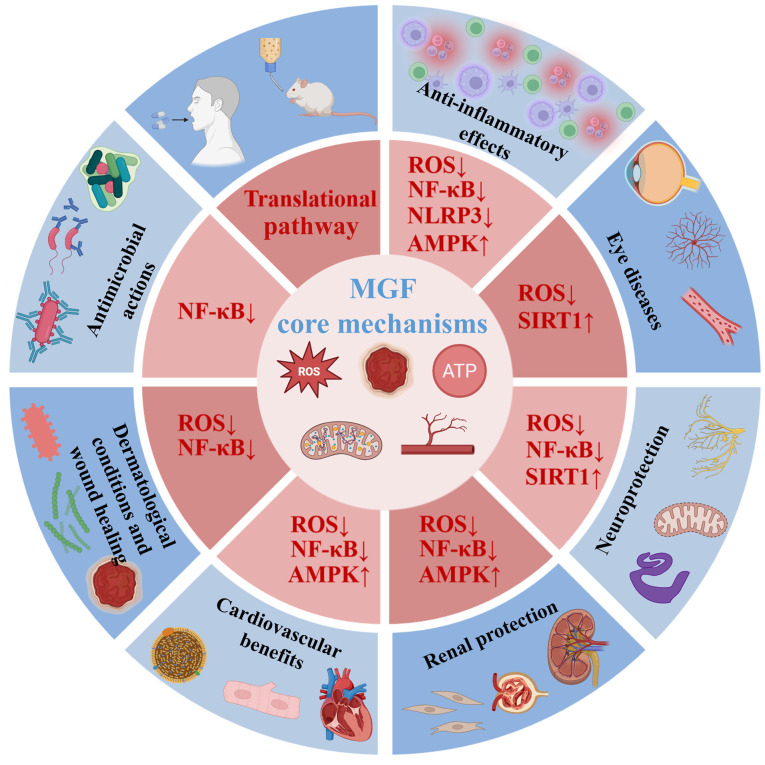
Verification
Claims the paper makes
62 No full text of the sources · 51 Partly supported · 23 Couldn’t confirm · 12 Supported · 10 No basis given · 8 Own interpretation · 4 Own method · 2 Supported so far · 2 Not supported · 1 Mixed support · accuracy not yet measured
Every source the paper cites for this claim was checked and supports it.
In the paper
“In streptozotocin-induced diabetic mice, oral administration of 15-60 mg/kg/day MGF for 4 weeks may attenuate renal injury, which is consistent with diabetic nephropathy.”
§ Mangiferin in human disease: Multifaceted mechanisms and applications (Review) > Pharmacological effects of MGF on diabetes > Structural derivatives and therapeutic effects on diabetic complications
What the sources say
- Supportedcites [34] Song Y Liu W Tang K Zang J Li D Gao H Mangiferin alleviates renal interstitial fibrosis in streptozotocin-induced diabetic mice through regulating the PTEN/PI3k/Akt signaling pathway J Diabetes Res 2020 9481720 2020 10.1155/2020/9481720 32076626 PMC7016412 source
The Methods (section 2.1) specify oral gavage of mangiferin at 15, 30, or 60 mg/kg/day, and the Abstract specifies four weeks of treatment. The Results (section 3.3) report reduced renal fibrosis and describe the effect as renal protection in diabetic nephropathy. (LLM, conf=0.94)
hedgedconditional- Asserted: passes — The authors put it forward as true.
- Checkable: passes — It can be checked against evidence.
- Load-bearing: passes — The paper’s conclusions depend on it.
- Based: passes — The paper gives a reason why it holds.
- Supported
The cited sources that could be checked couldn’t confirm or dispute this claim.
In the paper
“In rats administered oral MGF, peak concentrations in the plasma, lungs and kidneys have been reported to occur 4-6 h after dosing.”
§ Mangiferin in human disease: Multifaceted mechanisms and applications (Review) > Absorption and metabolism of MGF > Absorption of MGF
What the sources say
- Could not verifycites [19] Gelabert-Rebato M Wiebe JC Martin-Rincon M Gericke N Perez-Valera M Curtelin D Galvan-Alvarez V Lopez-Rios L Morales-Alamo D Calbet JAL Mangifera indica l. Leaf extract in combination with luteolin or quercetin enhances VO2peak and peak power output, and preserves skeletal muscle function during ischemia-reperfusion in humans Front Physiol 9 740 2018 10.3389/fphys.2018.00740 29937737 PMC6002676 sourceExperimental — accuracy not yet measured
The Materials and methods > Main experiment passage describes oral mangiferin absorption and a mean residence time near 7 hours, citing a human-plasma pharmacokinetic study; it does not give peak concentrations in rats. Searches for rat plasma, lung and kidney concentrations and a 4–6-hour peak found no passage addressing that claim. Page numbers were not available in our copy. (LLM, conf=0.76)
plaindirect- Asserted: passes — The authors put it forward as true.
- Checkable: passes — It can be checked against evidence.
- Load-bearing: unclear — It is unclear whether the paper’s conclusions depend on it.
- Based: passes — The paper gives a reason why it holds.
- Could not verify
The cited sources support only part of this claim — read each source’s verdict below.
In the paper
“These steps can occur sequentially or in parallel within the gut lumen and microbiota, the intestinal epithelium and the liver, and the relative contribution of each route depends on the species, dose and formulation (21).”
§ Mangiferin in human disease: Multifaceted mechanisms and applications (Review) > Absorption and metabolism of MGF > Metabolism of MGF
What the sources say
- Partly supportedcites [21] Tian X Gao Y Xu Z Lian S Ma Y Guo X Hu P Li Z Huang C Pharmacokinetics of mangiferin and its metabolite-norathyriol, part 1: Systemic evaluation of hepatic first-pass effect in vitro and in vivo Biofactors 42 533 544 2016 10.1002/biof.1291 27130074 sourceExperimental — accuracy not yet measured
The Discussion reports that hepatic first-pass metabolism contributes little to mangiferin’s poor bioavailability in rats, while intestinal bacteria generate norathyriol. It does not establish that the relative contribution of metabolic routes depends on species, dose, or formulation; its discussion of repeated dosing concerns possible metabolite accumulation, not a change in route contribution. Page numbers were not available in our copy. (LLM, conf=0.83)
plaindirect- Asserted: passes — The authors put it forward as true.
- Checkable: passes — It can be checked against evidence.
- Load-bearing: unclear — It is unclear whether the paper’s conclusions depend on it.
- Based: passes — The paper gives a reason why it holds.
- Partly supported
The cited sources support only part of this claim — read each source’s verdict below.
In the paper
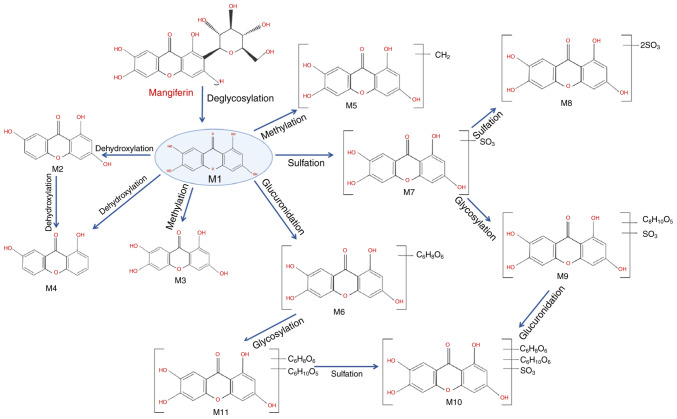
“Subsequent phase I reactions (for example, dehydroxylation and O-methylation) and phase II conjugations (including glucuronidation and sulfation) yield additional metabolites with distinct physicochemical properties (21).”
§ Mangiferin in human disease: Multifaceted mechanisms and applications (Review) > Absorption and metabolism of MGF > Metabolism of MGF
What the sources say
- Partly supportedcites [21] Tian X Gao Y Xu Z Lian S Ma Y Guo X Hu P Li Z Huang C Pharmacokinetics of mangiferin and its metabolite-norathyriol, part 1: Systemic evaluation of hepatic first-pass effect in vitro and in vivo Biofactors 42 533 544 2016 10.1002/biof.1291 27130074 sourceExperimental — accuracy not yet measured
The Introduction reports 33 mangiferin metabolites in samples from orally dosed rats and lists dehydroxylation, methylation, glucuronidation, and sulfation among their biotransformations. It does not specify O-methylation or state that these additional metabolites have distinct physicochemical properties. (LLM, conf=0.84)
plaindirect- Asserted: passes — The authors put it forward as true.
- Checkable: passes — It can be checked against evidence.
- Load-bearing: unclear — It is unclear whether the paper’s conclusions depend on it.
- Based: passes — The paper gives a reason why it holds.
- Partly supported
The cited sources support only part of this claim — read each source’s verdict below.
In the paper
“Similarly, repeated oral administration of MGF (30 or 90 mg/kg for 14 days) in partially pancreatectomized mice may promote islet regeneration through the upregulation of key cell-cycle regulators (such as cyclin D1 and Ki-67) and pancreatic progenitor markers, including Pdx1 and Ngn3 (27).”
§ Mangiferin in human disease: Multifaceted mechanisms and applications (Review) > Pharmacological effects of MGF on diabetes > β-cell protection and pancreatic regeneration
What the sources say
- Partly supportedcites [27] Suman RK Borde MK Mohanty IR Singh HK Mechanism of action of natural dipeptidyl peptidase-IV inhibitors (berberine and mangiferin) in experimentally induced diabetes with metabolic syndrome Int J Appl Basic Med Res 13 133 142 2023 10.4103/ijabmr.ijabmr_115_23 38023603 PMC10666829 sourceExperimental — accuracy not yet measured
The Discussion section on preservation of pancreatic beta-cell mass and function reports more insulin-positive cells and preserved beta-cell mass in mangiferin-treated rats, which supports the general possibility of an islet benefit. But the cited paper studies diabetic rats, not partially pancreatectomized mice; its Results list a mangiferin dose of 40 mg/kg, not 30 or 90 mg/kg. Our copy does not report a 14-day regimen or upregulation of cyclin D1, Ki-67, Pdx1, or Ngn3. (LLM, conf=0.88)
hedgedconditional- Asserted: passes — The authors put it forward as true.
- Checkable: passes — It can be checked against evidence.
- Load-bearing: passes — The paper’s conclusions depend on it.
- Based: passes — The paper gives a reason why it holds.
- Partly supported
Every source the paper cites for this claim was checked and supports it.
In the paper
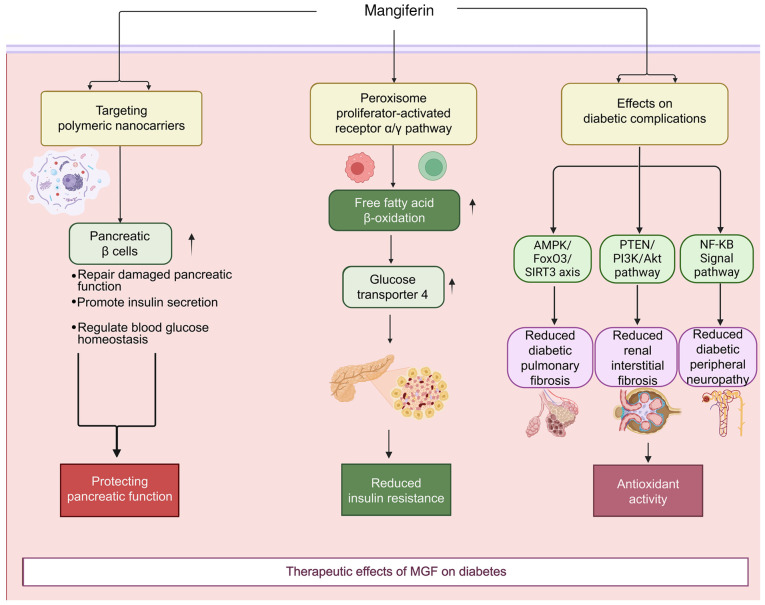
“In a mouse model of diabetic pulmonary fibrosis, oral administration of 60 mg/kg MGF every 3 days for 4 weeks has been shown to reduce the progression of fibrosis.”
§ Mangiferin in human disease: Multifaceted mechanisms and applications (Review) > Pharmacological effects of MGF on diabetes > Structural derivatives and therapeutic effects on diabetic complications
What the sources say
- Supportedcites [33] Fu TL Li GR Li DH He RY Liu BH Xiong R Xu CZ Lu ZL Song CK Qiu HL Mangiferin alleviates diabetic pulmonary fibrosis in mice via inhibiting endothelial-mesenchymal transition through AMPK/FoxO3/SIRT3 axis Acta Pharmacol Sin 45 1002 1018 2024 10.1038/s41401-023-01202-7 38225395 PMC11053064 source
The animal-model methods state that mice with established diabetes received 60 mg/kg mangiferin by intragastric administration every 3 days for 4 weeks. The Results section, “Mangiferin attenuated STZ-induced DPF via inhibiting EndMT in vivo,” reports fewer pulmonary fibrotic lesions in the high-dose group than in untreated diabetic mice. The supplied passages do not give page numbers. (LLM, conf=0.94)
boosteddirect- Asserted: passes — The authors put it forward as true.
- Checkable: passes — It can be checked against evidence.
- Load-bearing: passes — The paper’s conclusions depend on it.
- Based: passes — The paper gives a reason why it holds.
- Supported
Every source the paper cites for this claim was checked and supports it.
In the paper
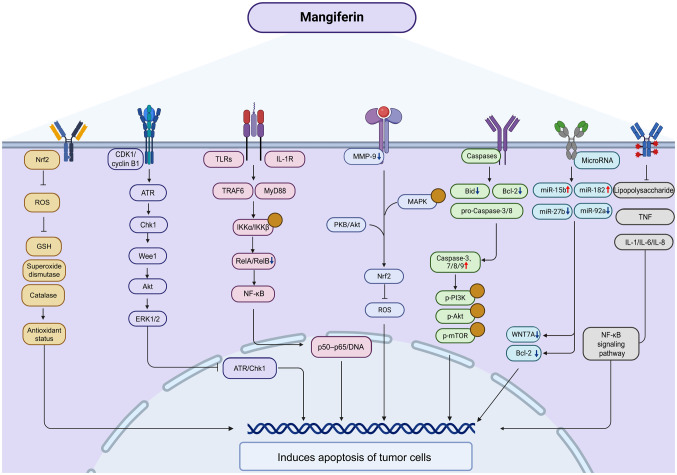
“Similarly, in prostate cancer PC3 cells, MGF elevates miR-182 levels, leading to decreased Bcl-2 expression and increased apoptotic activity (65).”
§ Mangiferin in human disease: Multifaceted mechanisms and applications (Review) > Anticancer mechanisms of MGF > Apoptosis pathways
What the sources say
- Supportedcites [65] Li M Ma H Yang L Li P Mangiferin inhibition of proliferation and induction of apoptosis in human prostate cancer cells is correlated with downregulation of b-cell lymphoma-2 and upregulation of microRNA-182 Oncol Lett 11 817 822 2016 10.3892/ol.2015.3924 26870290 PMC4726971 source
The Discussion reports that mangiferin increased miR-182 in PC3 cells, that miR-182 upregulation suppressed Bcl-2, and that mangiferin increased apoptosis. In the ‘miR-182 inhibitor abrogates the effect of mangiferin’ section, inhibiting miR-182 reduced mangiferin’s apoptotic effect, supporting the claimed link. (LLM, conf=0.91)
plaindirect- Asserted: passes — The authors put it forward as true.
- Checkable: passes — It can be checked against evidence.
- Load-bearing: passes — The paper’s conclusions depend on it.
- Based: passes — The paper gives a reason why it holds.
- Supported
The cited sources support only part of this claim — read each source’s verdict below.
In the paper
“MGF induces apoptosis in nasopharyngeal carcinoma cells by modulating the mitochondrial pathway, decreasing antiapoptotic Bcl-2 and increasing proapoptotic Bax expression (61).”
§ Mangiferin in human disease: Multifaceted mechanisms and applications (Review) > Anticancer mechanisms of MGF > Apoptosis pathways
What the sources say
- Partly supportedcites [61] Pan LL Wang AY Huang YQ Luo Y Ling M Mangiferin induces apoptosis by regulating Bcl-2 and bax expression in the CNE2 nasopharyngeal carcinoma cell line Asian Pac J Cancer Prev 15 7065 7068 2014 10.7314/APJCP.2014.15.17.7065 25227792 sourceExperimental — accuracy not yet measured
The Abstract and Discussion report apoptosis in mangiferin-treated CNE2 nasopharyngeal carcinoma cells, with decreased Bcl-2 and increased Bax expression. The Discussion links Bcl-2-family proteins to the mitochondrial pathway, but presents their involvement in these cells as a suggestion; it does not establish that mangiferin modulates that pathway. (LLM, conf=0.84)
plaindirect- Asserted: passes — The authors put it forward as true.
- Checkable: passes — It can be checked against evidence.
- Load-bearing: passes — The paper’s conclusions depend on it.
- Based: passes — The paper gives a reason why it holds.
- Partly supported
The cited sources that could be checked couldn’t confirm or dispute this claim.
In the paper
“MGF has been shown to promote this cascade through multiple upstream regulators, including the Bcl-2 protein family and cytochrome c-mediated pathways (60).”
§ Mangiferin in human disease: Multifaceted mechanisms and applications (Review) > Anticancer mechanisms of MGF > Apoptosis pathways
What the sources say
- Could not verifycites [60] Liu Z Li Y Zhu Y Li N Li W Shang C Song G Li S Cong J Li T Apoptin induces pyroptosis of colorectal cancer cells via the GSDME-dependent pathway Int J Biol Sci 18 717 730 2022 10.7150/ijbs.64350 35002520 PMC8741846 sourceExperimental — accuracy not yet measured
The Results and Discussion describe apoptin acting through Bax, cytochrome C and caspases in colorectal cancer cells, not MGF. Searches for “MGF” and “mangiferin” found no passage addressing whether MGF promotes this cascade. (LLM, conf=0.78)
plaindirect- Asserted: passes — The authors put it forward as true.
- Checkable: passes — It can be checked against evidence.
- Load-bearing: passes — The paper’s conclusions depend on it.
- Based: passes — The paper gives a reason why it holds.
- Could not verify
The cited sources support only part of this claim — read each source’s verdict below.
In the paper
“MGF exerts potent anticancer activity through multiple mechanisms that target key cellular processes underlying tumor initiation and progression.”
§ Mangiferin in human disease: Multifaceted mechanisms and applications (Review) > Anticancer mechanisms of MGF
What the sources say
- Supportedcites [36] Iqbal H Inam-Ur-Raheem M Munir S Rabail R Kafeel S Shahid A Mousavi Khaneghah A Aadil RM Therapeutic potential of mangiferin in cancer: unveiling regulatory pathways, mechanisms of action, and bioavailability enhancements-an updated review Food Sci Nutr 12 1413 1429 2024 10.1002/fsn3.3869 38455223 PMC10916574 source
The Mechanism of Action section describes multiple anticancer pathways affecting angiogenesis, invasion, proliferation and apoptosis. The Antitumor Effects section reports inhibited tumor growth in experimental studies. Together, these support the broad claim; the supplied passages do not include page numbers. (LLM, conf=0.90)
- Partly supportedcites [37] Xiao J Liu L Zhong Z Xiao C Zhang J Mangiferin regulates proliferation and apoptosis in glioma cells by induction of microRNA-15b and inhibition of MMP-9 expression Oncol Rep 33 2815 2820 2015 10.3892/or.2015.3919 25901555 sourceExperimental — accuracy not yet measured
The Discussion (page not specified) reports that mangiferin suppressed proliferation and induced apoptosis in U87 glioma cells, with changes involving miR-15b and MMP-9. This supports anticancer effects through several cellular processes, but the study does not establish potent activity across cancers or an effect on tumor initiation. (LLM, conf=0.82)
boosteddirect- Asserted: passes — The authors put it forward as true.
- Checkable: passes — It can be checked against evidence.
- Load-bearing: passes — The paper’s conclusions depend on it.
- Based: passes — The paper gives a reason why it holds.
- Supported
- It may state two separate claims as one. 105
- Probably not a substantial claim. 6
At least one cited source doesn’t support this claim or points to a different paper, and none confirmed it — see the verdicts below.
In the paper
“In neuroblastoma SK-N-SH cells, MGF reduces ROS production and the activity of key antioxidants, such as glutathione (GSH), superoxide dismutase (SOD), catalase and GSH peroxidase (GSH-Px), pushing the redox balance toward apoptosis (9,76).”
§ Mangiferin in human disease: Multifaceted mechanisms and applications (Review) > Anticancer mechanisms of MGF > Apoptosis pathways
What the sources say
- Disputedcites [9] Li HW Lan TJ Yun CX Yang KD Du ZC Luo XF Hao EW Deng JG Mangiferin exerts neuroprotective activity against lead-induced toxicity and oxidative stress via Nrf2 pathway Chin Herb Med 12 36 46 2020 36117559 PMC9476390 sourceExperimental — accuracy not yet measured
The Results sections on rat brain homogenates report that mangiferin increased GSH content and the activities of SOD, catalase, and GSH-Px—not decreased them. The Discussion describes a favorable antioxidant balance and neuroprotection, not a shift toward apoptosis. The reported experiments were in lead-exposed rats, not SK-N-SH cells; page numbers are unavailable in our copy. (LLM, conf=0.89)
Checked by a reasoning model — may be wrong.
- Not checked — no full text of the sourcecites [76] Kavitha M Manivasagam T Essa MM Tamilselvam K Selvakumar GP Karthikeyan S Thenmozhi JA Subash S Mangiferin antagonizes rotenone: induced apoptosis through attenuating mitochondrial dysfunction and oxidative stress in SK-N-SH neuroblastoma cells Neurochem Res 39 668 676 2014 10.1007/s11064-014-1249-7 24493626 source
plaindirect- Asserted: passes — The authors put it forward as true.
- Checkable: passes — It can be checked against evidence.
- Load-bearing: passes — The paper’s conclusions depend on it.
- Based: passes — The paper gives a reason why it holds.
It may state two separate claims as one.
- Disputed
Some cited sources support this claim and some don’t — read each source’s verdict below.
In the paper
“After uptake in the proximal small intestine, extensive first-pass metabolism and gut microbiota-mediated deglycosylation (yielding norathyriol and downstream conjugates) further reduce parent drug levels (21,160-162).”
§ Mangiferin in human disease: Multifaceted mechanisms and applications (Review) > Applications in other diseases > Translational aspects
What the sources say
- Disputedcites [21] Tian X Gao Y Xu Z Lian S Ma Y Guo X Hu P Li Z Huang C Pharmacokinetics of mangiferin and its metabolite-norathyriol, part 1: Systemic evaluation of hepatic first-pass effect in vitro and in vivo Biofactors 42 533 544 2016 10.1002/biof.1291 27130074 sourceExperimental — accuracy not yet measured
The Discussion (p. unavailable) concludes that hepatic first-pass metabolism plays a negligible role in MGF’s poor bioavailability, contrary to the claim of extensive first-pass metabolism. Results §3.3.2 (p. unavailable) reports that intestinal bacteria produced norathyriol slowly—only 0.1% of the added MGF after 72 hours—while parent MGF changed very little. The paper therefore does not support substantial depletion of parent MGF by either process. (LLM, conf=0.90)
Checked by a reasoning model — may be wrong.
- Partly supportedcites [160] Bunt D Schwalbe M Hayeeawaema F El Aidy S Gut microbiota-mediated conversion of mangiferin to norathyriol alters short chain fatty acid and urate metabolism Gut Microbes 17 2508422 2025 10.1080/19490976.2025.2508422 40401774 PMC12101588 sourceExperimental — accuracy not yet measured
The Results section (‘Microbial conversion of MAN to NOR occurs in the colon, not the small intestine’; page unavailable) reports that fecal microbiota converted mangiferin to norathyriol, supporting the deglycosylation component. The Introduction instead attributes mangiferin’s poor oral bioavailability primarily to poor intestinal solubility and permeability; the cited passages do not establish proximal-small-intestinal uptake, extensive first-pass metabolism, or downstream conjugates as causes of reduced parent levels. (LLM, conf=0.87)
- Partly supportedcites [161] Barakat S Nasr M Ahmed RF Badawy S Mortada N Recent formulation advances of mangiferin Rev Bras Farmacogn 32 871 882 2022 10.1007/s43450-022-00297-z sourceExperimental — accuracy not yet measured
The Bioavailability section reports greater mangiferin absorption in the duodenum and jejunum than farther along the intestine, and intensive hepatic first-pass metabolism that reduces the dose reaching circulation in normal rats. The Metabolism section describes deglycosylation to norathyriol followed by gut-microbiome-mediated conjugation, but does not specifically attribute the deglycosylation step to the microbiota. (LLM, conf=0.85)
- Not checked — no full text of the sourcecites [162] Guo X Cheng M Hu P Shi Z Chen S Liu H Shi H Xu Z Tian X Huang C Absorption, metabolism, and pharmacokinetics profiles of norathyriol, an aglycone of mangiferin, in rats by HPLC-MS/MS J Agric Food Chem 66 12227 12235 2018 10.1021/acs.jafc.8b03763 30298742 source
plaindirect- Asserted: passes — The authors put it forward as true.
- Checkable: passes — It can be checked against evidence.
- Load-bearing: passes — The paper’s conclusions depend on it.
- Based: passes — The paper gives a reason why it holds.
It may state two separate claims as one.
- Disputed
At least one cited source doesn’t support this claim or points to a different paper, and none confirmed it — see the verdicts below.
In the paper
“A nonclinical study has previously reported favorable tolerability at pharmacologically relevant exposures, with adverse findings emerging at substantially higher doses (180).”
§ Mangiferin in human disease: Multifaceted mechanisms and applications (Review) > Applications in other diseases > Translational aspects
What the sources say
- Disputedcites [180] Sellamuthu PS Muniappan BP Perumal SM Kandasamy M Antihyperglycemic effect of mangiferin in streptozotocin induced diabetic rats J Health Sci 55 206 214 2009 10.1248/jhs.55.206 sourceExperimental — accuracy not yet measured
The Materials and Methods section identifies 40 mg/kg/day as the dose used in diabetic rats and 25–500 mg/kg/day as the toxicity-test range. Contrary to the claim that adverse findings emerged at higher doses, Acute Toxicity Studies reports no toxic reactions at any tested dose over 30 days. (LLM, conf=0.88)
Checked by a reasoning model — may be wrong.
plaindirect- Asserted: passes — The authors put it forward as true.
- Checkable: passes — It can be checked against evidence.
- Load-bearing: unclear — It is unclear whether the paper’s conclusions depend on it.
- Based: passes — The paper gives a reason why it holds.
It may state two separate claims as one.
- Disputed
The sources with a verdict support this claim; the rest weren’t checked yet, have no full text we could read, or their verdicts aren’t rated yet.
In the paper
“Despite its low water solubility (0.111 mg/ml) (1) and poor oral bioavailability (~1.2%) (2,3), due to its limited lipophilicity and intestinal permeability (4), MGF has been identified in 96 species, 28 genera and 19 families of angiosperms (5).”
§ Mangiferin in human disease: Multifaceted mechanisms and applications (Review) > Introduction
What the sources say
- Not checked — no full text of the sourcecites [1] Wang M Liang Y Chen K Wang M Long X Liu H Sun Y He B The management of diabetes mellitus by mangiferin: Advances and prospects Nanoscale 14 2119 2135 2022 10.1039/D1NR06690K 35088781 source
- Not checked — no full text of the sourcecites [2] Bhattacharyya S Ahmmed SM Saha BP Mukherjee PK Soya phospholipid complex of mangiferin enhances its hepatoprotectivity by improving its bioavailability and pharmacokinetics J Sci Food Agric 94 1380 1388 2014 10.1002/jsfa.6422 24114670 source
- Not checked — no full text of the sourcecites [3] Mei S Perumal M Battino M Kitts DD Xiao J Ma H Chen X Mangiferin: A review of dietary sources, absorption, metabolism, bioavailability, and safety Crit Rev Food Sci Nutr 63 3046 3064 2023 10.1080/10408398.2021.1983767 34606395 source
- Supportedcites [4] Morozkina SN Nhung Vu TH Generalova YE Snetkov PP Uspenskaya MV Mangiferin as new potential anti-cancer agent and mangiferin-integrated polymer systems-a novel research direction Biomolecules 11 79 2021 10.3390/biom11010079 33435313 PMC7827323 source
The Introduction attributes mangiferin’s low oral bioavailability to low lipophilicity and poor permeability through the intestinal membrane, which is the portion of the citing sentence attached to this source. It also reports bioavailability of 1.2%; the separate 0.111 mg/ml solubility figure is attached to a different citation. (LLM, conf=0.94)
plaindirect- Asserted: passes — The authors put it forward as true.
- Checkable: passes — It can be checked against evidence.
- Load-bearing: unclear — It is unclear whether the paper’s conclusions depend on it.
- Based: passes — The paper gives a reason why it holds.
It may state two separate claims as one.
Every source the paper cites for this claim was checked and supports it.
In the paper
“This previous study reported downregulation of phosphatase and tensin homolog (PTEN)/PI3K/Akt signaling, and reduced expression of fibronectin, collagen I and α-smooth muscle actin (α-SMA), along with decreases in renal fibrosis, inflammation and oxidative stress endpoints (34).”
§ Mangiferin in human disease: Multifaceted mechanisms and applications (Review) > Pharmacological effects of MGF on diabetes > Structural derivatives and therapeutic effects on diabetic complications
What the sources say
- Supportedcites [34] Song Y Liu W Tang K Zang J Li D Gao H Mangiferin alleviates renal interstitial fibrosis in streptozotocin-induced diabetic mice through regulating the PTEN/PI3k/Akt signaling pathway J Diabetes Res 2020 9481720 2020 10.1155/2020/9481720 32076626 PMC7016412 source
The Results (sections 3.4 and 3.5) report reductions in inflammatory cytokines, MDA and ROS after mangiferin treatment. The Discussion reports reduced collagen I, fibronectin and α-SMA and alleviated renal fibrosis; Results section 3.7 reports inhibition of PI3K/Akt signaling. More precisely, mangiferin increased PTEN while decreasing PI3K and Akt phosphorylation—it did not downregulate PTEN itself. (LLM, conf=0.91)
plaindirect- Asserted: passes — The authors put it forward as true.
- Checkable: passes — It can be checked against evidence.
- Load-bearing: passes — The paper’s conclusions depend on it.
- Based: passes — The paper gives a reason why it holds.
It may state two separate claims as one.
- Supported
Every source the paper cites for this claim was checked and supports it.
In the paper
“Reported effects include the inhibition of endothelial-mesenchymal transition and modulation of the AMPK/FoxO3/sirtuin (SIRT)3 pathway, as evidenced by changes in pathway proteins and fibrosis markers (33).”
§ Mangiferin in human disease: Multifaceted mechanisms and applications (Review) > Pharmacological effects of MGF on diabetes > Structural derivatives and therapeutic effects on diabetic complications
What the sources say
- Supportedcites [33] Fu TL Li GR Li DH He RY Liu BH Xiong R Xu CZ Lu ZL Song CK Qiu HL Mangiferin alleviates diabetic pulmonary fibrosis in mice via inhibiting endothelial-mesenchymal transition through AMPK/FoxO3/SIRT3 axis Acta Pharmacol Sin 45 1002 1018 2024 10.1038/s41401-023-01202-7 38225395 PMC11053064 source
The Conclusions state that mangiferin (MF) alleviated diabetic pulmonary fibrosis by inhibiting endothelial-mesenchymal transition through an AMPK/FoxO3/SIRT3-dependent pathway. The Discussion reports changes in AMPK and FoxO3 phosphorylation and SIRT3 expression with MF treatment; the Fig. 2 and Fig. 3 captions identify the fibrosis and endothelial markers measured in mice and high-glucose-exposed cells. Page numbers are not available in our copy. (LLM, conf=0.93)
plaindirect- Asserted: passes — The authors put it forward as true.
- Checkable: passes — It can be checked against evidence.
- Load-bearing: passes — The paper’s conclusions depend on it.
- Based: passes — The paper gives a reason why it holds.
It may state two separate claims as one.
- Supported
The cited sources that could be checked couldn’t confirm or dispute this claim.
In the paper
“In animal models of type 1 and type 2 diabetes, tail vein administration of MGF-loaded polymeric nanocarriers (5-10 mg/kg) have been reported to increase β-cell proliferation, inhibit apoptosis and restored insulin secretion, thereby improving glycemic control (26).”
§ Mangiferin in human disease: Multifaceted mechanisms and applications (Review) > Pharmacological effects of MGF on diabetes > β-cell protection and pancreatic regeneration
What the sources say
- Could not verifycites [26] Kaur P Gupta RC Dey A Malik T Pandey DK Optimization of harvest and extraction factors by full factorial design for the improved yield of C-glucosyl xanthone mangiferin from swertia chirata Sci Rep 11 16346 2021 10.1038/s41598-021-95663-7 34381094 PMC8357827 sourceExperimental — accuracy not yet measured
Split into 2 atoms — 0 confirmed, 0 partially supported, 0 disputed, 0 misattributed, 2 unverifiable. Expand the claim to see per-atom verdicts.
hedgeddirect- Asserted: passes — The authors put it forward as true.
- Checkable: passes — It can be checked against evidence.
- Load-bearing: passes — The paper’s conclusions depend on it.
- Based: passes — The paper gives a reason why it holds.
It may state two separate claims as one.
- Could not verify
The cited sources that could be checked couldn’t confirm or dispute this claim.
In the paper
“Under the reported analytical conditions, MGF is not detected in brain tissue, which is consistent with limited penetration across the blood-brain barrier in this model (19).”
§ Mangiferin in human disease: Multifaceted mechanisms and applications (Review) > Absorption and metabolism of MGF > Absorption of MGF
What the sources say
- Could not verifycites [19] Gelabert-Rebato M Wiebe JC Martin-Rincon M Gericke N Perez-Valera M Curtelin D Galvan-Alvarez V Lopez-Rios L Morales-Alamo D Calbet JAL Mangifera indica l. Leaf extract in combination with luteolin or quercetin enhances VO2peak and peak power output, and preserves skeletal muscle function during ischemia-reperfusion in humans Front Physiol 9 740 2018 10.3389/fphys.2018.00740 29937737 PMC6002676 sourceExperimental — accuracy not yet measured
The Materials and methods section describes measurements of cerebral oxygenation and blood velocity, not an assay for mangiferin (MGF) in brain tissue. The Introduction says mangiferin can traverse the blood-brain barrier, but the paper reports no brain-tissue detection result or analytical conditions that could establish the claimed limited penetration. Searches for brain-tissue detection and blood-brain-barrier penetration found no such result. (LLM, conf=0.77)
plain- Asserted: passes — The authors put it forward as true.
- Checkable: passes — It can be checked against evidence.
- Load-bearing: unclear — It is unclear whether the paper’s conclusions depend on it.
- Based: passes — The paper gives a reason why it holds.
It may state two separate claims as one.
- Could not verify
The cited sources support only part of this claim — read each source’s verdict below.
In the paper
“MGF isolated from indica rice leaves has various pharmacological benefits; notably, it exhibits potent, broad-spectrum antimicrobial activity against diverse fungal and bacterial pathogens, with minimum inhibitory concentration (MIC) values of 1.95-62.5 and 1.95-31.25 μg/ml, respectively (7).”
§ Mangiferin in human disease: Multifaceted mechanisms and applications (Review) > Introduction
What the sources say
- Partly supportedcites [7] Yehia RS Altwaim SA An insight into in vitro antioxidant, antimicrobial, cytotoxic, and apoptosis induction potential of mangiferin, a bioactive compound derived from mangifera indica Plants (Basel) 12 1539 2023 37050165 PMC10096949 sourceExperimental — accuracy not yet measured
The Conclusions report broad in vitro activity against bacteria and Candida species, but identify the source as Mangifera indica leaves, not indica rice leaves. They assign MIC ranges of 1.95–62.5 µg/mL to bacteria and 1.95–31.25 µg/mL to fungi—the reverse of the citing sentence. The Results (section 2.3) corroborate that assignment, although the paper’s abstract also reverses the ranges. (LLM, conf=0.89)
plaindirect- Asserted: passes — The authors put it forward as true.
- Checkable: passes — It can be checked against evidence.
- Load-bearing: unclear — It is unclear whether the paper’s conclusions depend on it.
- Based: passes — The paper gives a reason why it holds.
It may state two separate claims as one.
- Partly supported
The cited sources that could be checked couldn’t confirm or dispute this claim.
In the paper
“Thus, while the formation of M1 is well documented (20,21), it should be considered a predominant rather than obligatory initial event in the overall metabolic scheme.”
§ Mangiferin in human disease: Multifaceted mechanisms and applications (Review) > Absorption and metabolism of MGF > Metabolism of MGF
What the sources say
- Not checked — no full text of the sourcecites [20] Ehianeta TS Laval SP Yu B Bio- and chemical syntheses of mangiferin and congeners Biofactors 42 445 458 2016 10.1002/biof.1279 27774668 source
- Could not verifycites [21] Tian X Gao Y Xu Z Lian S Ma Y Guo X Hu P Li Z Huang C Pharmacokinetics of mangiferin and its metabolite-norathyriol, part 1: Systemic evaluation of hepatic first-pass effect in vitro and in vivo Biofactors 42 533 544 2016 10.1002/biof.1291 27130074 sourceExperimental — accuracy not yet measured
The citation is attached to the assertion that M1 formation is well documented; the qualification about a ‘predominant rather than obligatory’ event is the citing authors’ own framing. The Introduction and Discussion describe formation of norathyriol (NTR) from mangiferin, but our copy does not identify NTR as M1 or otherwise document formation of a metabolite called M1 (searched: M1, initial metabolite, metabolic scheme). (LLM, conf=0.76)
plain- Asserted: passes — The authors put it forward as true.
- Checkable: passes — It can be checked against evidence.
- Load-bearing: unclear — It is unclear whether the paper’s conclusions depend on it.
- Based: passes — The paper gives a reason why it holds.
It may state two separate claims as one.
The cited sources that could be checked couldn’t confirm or dispute this claim.
In the paper
“Additionally, MGF enhances phase II detoxifying enzymes, including GSH S-transferase, quinone reductase and UDP-glucuronosyltransferase, while reducing lipid peroxidation in lung cancer models (77,78).”
§ Mangiferin in human disease: Multifaceted mechanisms and applications (Review) > Anticancer mechanisms of MGF > Apoptosis pathways
What the sources say
- Not checked — no full text of the sourcecites [77] Walia V Chaudhary SK Kumar Sethiya N Therapeutic potential of mangiferin in the treatment of various neuropsychiatric and neurodegenerative disorders Neurochem Int 143 104939 2021 10.1016/j.neuint.2020.104939 33346032 source
- Could not verifycites [78] Rui R Zhou L He S Cancer immunotherapies: Advances and bottlenecks Front Immunol 14 1212476 2023 10.3389/fimmu.2023.1212476 37691932 PMC10484345 sourceExperimental — accuracy not yet measured
The Cancer cell vaccines and LAG-3 sections discuss immunotherapy mechanisms and studies, not MGF’s effects on detoxifying enzymes or lipid peroxidation. Searches for MGF, mangiferin, the named enzymes, and lipid peroxidation found no passage addressing the claim in our copy. (LLM, conf=0.76)
plaindirect- Asserted: passes — The authors put it forward as true.
- Checkable: passes — It can be checked against evidence.
- Load-bearing: unclear — It is unclear whether the paper’s conclusions depend on it.
- Based: passes — The paper gives a reason why it holds.
It may state two separate claims as one.
The cited sources support only part of this claim — read each source’s verdict below.
In the paper
“In lung adenocarcinoma models, MGF reduces the expression of miR-27b and miR-92a, two oncogenic miRNAs highly expressed in tumor tissues, thereby inhibiting tumor cell proliferation and promoting apoptosis (66).”
§ Mangiferin in human disease: Multifaceted mechanisms and applications (Review) > Anticancer mechanisms of MGF > Apoptosis pathways
What the sources say
- Partly supportedcites [66] Chi XJ Meng JJ Lin CY Su QS Qin YY Wei RH Lan D Huang C Mangiferin inhibits human lung adenocarcinoma by suppressing MiR-27b and MiR-92a Evid Based Complement Alternat Med 2021 2822950 2021 10.1155/2021/2822950 34335801 PMC8292060 sourceExperimental — accuracy not yet measured
The Discussion reports that mangiferin lowered miR-27b and miR-92a in lung adenocarcinoma cells and that both miRNAs were elevated in tumor tissue. It also describes growth inhibition and apoptosis, but presents the proposed causal link to the miRNAs as an inference and says their biological functions still need in-vitro verification. The claim states that mechanism more definitively than the source supports. (LLM, conf=0.88)
plaindirect- Asserted: passes — The authors put it forward as true.
- Checkable: passes — It can be checked against evidence.
- Load-bearing: passes — The paper’s conclusions depend on it.
- Based: passes — The paper gives a reason why it holds.
It may state two separate claims as one.
- Partly supported
The cited sources support only part of this claim — read each source’s verdict below.
In the paper
“This activity suppresses intracellular ROS accumulation and induces apoptosis in leukemia HL-60 cells (75).”
§ Mangiferin in human disease: Multifaceted mechanisms and applications (Review) > Anticancer mechanisms of MGF > Apoptosis pathways
What the sources say
- Partly supportedcites [75] Zhao J Zhang B Li S Zeng L Chen Y Fang J Mangiferin increases nrf2 protein stability by inhibiting its ubiquitination and degradation in human HL60 myeloid leukemia cells Int J Mol Med 33 1348 1354 2014 10.3892/ijmm.2014.1696 24626801 sourceExperimental — accuracy not yet measured
The Results (p. 5) show that mangiferin inhibits Nrf2 ubiquitination in HL60 cells, and the Discussion (p. 6) links its increased stability to Nrf2 signaling. The paper does not report that this activity suppresses intracellular ROS accumulation or induces apoptosis in those cells; the Discussion instead describes a possible cytoprotective effect. (LLM, conf=0.85)
plaindirect- Asserted: passes — The authors put it forward as true.
- Checkable: passes — It can be checked against evidence.
- Load-bearing: passes — The paper’s conclusions depend on it.
- Based: passes — The paper gives a reason why it holds.
It may state two separate claims as one.
- Partly supported
The cited sources support only part of this claim — read each source’s verdict below.
In the paper
“These include the induction of cell cycle arrest, the promotion of apoptosis through various intracellular pathways, the inhibition of tumor invasion and metastasis, the modulation of immune responses, and the enhancement of radiosensitivity in cancer such as glioblastoma (GBM) (36,37).”
§ Mangiferin in human disease: Multifaceted mechanisms and applications (Review) > Anticancer mechanisms of MGF
What the sources say
- Partly supportedcites [36] Iqbal H Inam-Ur-Raheem M Munir S Rabail R Kafeel S Shahid A Mousavi Khaneghah A Aadil RM Therapeutic potential of mangiferin in cancer: unveiling regulatory pathways, mechanisms of action, and bioavailability enhancements-an updated review Food Sci Nutr 12 1413 1429 2024 10.1002/fsn3.3869 38455223 PMC10916574 sourceExperimental — accuracy not yet measured
The Introduction and Mechanism of Action sections describe cell-cycle arrest, apoptosis, reduced tumor invasion or migration, and immune modulation. The reviewed studies are in cells and animals, and the passages found on radiation and treatment sensitivity do not report enhanced radiosensitivity in glioblastoma. That part of the claim is unsupported by our copy (page numbers unavailable). (LLM, conf=0.88)
- Partly supportedcites [37] Xiao J Liu L Zhong Z Xiao C Zhang J Mangiferin regulates proliferation and apoptosis in glioma cells by induction of microRNA-15b and inhibition of MMP-9 expression Oncol Rep 33 2815 2820 2015 10.3892/or.2015.3919 25901555 sourceExperimental — accuracy not yet measured
The Discussion (page unavailable) reports that mangiferin increased apoptosis and caspase activation in U87 glioma cells. The introductory passage also says mangiferin can arrest the cell cycle in a hepatoma cell line and has anti-inflammatory effects. This paper does not establish that mangiferin inhibits invasion or metastasis, modulates anticancer immune responses, or enhances radiosensitivity in glioblastoma; its U87 results concern proliferation, apoptosis, miR-15b and MMP-9. (LLM, conf=0.88)
plaindirect- Asserted: passes — The authors put it forward as true.
- Checkable: passes — It can be checked against evidence.
- Load-bearing: passes — The paper’s conclusions depend on it.
- Based: passes — The paper gives a reason why it holds.
It may state two separate claims as one.
- Partly supported
The cited sources support only part of this claim — read each source’s verdict below.
In the paper
“MAPK modulation is context dependent; a number of models show attenuation of ERK1/2, JNK and p38 phosphorylation, reduced activator protein (AP)-1 activity, and consequent decreases in proliferation and cytokine output (38,46).”
§ Mangiferin in human disease: Multifaceted mechanisms and applications (Review) > Anticancer mechanisms of MGF
What the sources say
- Partly supportedcites [38] Gold-Smith F Fernandez A Bishop K Mangiferin and cancer: Mechanisms of action Nutrients 8 396 2016 10.3390/nu8070396 27367721 PMC4963872 sourceExperimental — accuracy not yet measured
Section 2.2.1 (page not provided) says mangiferin inhibits p38, ERK and JNK phosphorylation; Section 2.3.2 links it to reduced AP-1 binding in astroglioma cells. Section 2.1.1 reports reduced IL-6 and IL-8 production, but attributes that effect to NFκB downregulation. The paper does not establish the claimed chain from MAPK and AP-1 attenuation to reduced proliferation and cytokine output, or explicitly characterize MAPK modulation as context dependent. (LLM, conf=0.85)
- Partly supportedcites [46] Pal PB Sinha K Sil PC Mangiferin attenuates diabetic nephropathy by inhibiting oxidative stress mediated signaling cascade, TNFα related and mitochondrial dependent apoptotic pathways in streptozotocin-induced diabetic rats PLoS One 9 e107220 2014 10.1371/journal.pone.0107220 25233093 PMC4169432 sourceExperimental — accuracy not yet measured
The Results section, “Mangiferin inhibits STZ-induced activation of MAPKs” (page unavailable), reports that mangiferin reversed increased p38, JNK and ERK1/2 phosphorylation in diabetic rat kidney. The Discussion also reports decreased TNFα with treatment, but the paper does not establish reduced AP-1 activity, decreased proliferation, or the claimed sequence linking those effects to MAPK attenuation. (LLM, conf=0.88)
plaindirect- Asserted: passes — The authors put it forward as true.
- Checkable: passes — It can be checked against evidence.
- Load-bearing: passes — The paper’s conclusions depend on it.
- Based: passes — The paper gives a reason why it holds.
It may state two separate claims as one.
- Partly supported
The cited sources support only part of this claim — read each source’s verdict below.
In the paper
“However, across tumor cell systems, the functional consequence remains G2/M arrest, with reduced proliferation and increased susceptibility to apoptosis.”
§ Mangiferin in human disease: Multifaceted mechanisms and applications (Review) > Anticancer mechanisms of MGF > Cell cycle arrest via CDK1/cyclin B1
What the sources say
- Not checked — no full text of the sourcecites [55] Żuryń A Krajewski A Szulc D Litwiniec A Grzanka A Activity of cyclin B1 in HL-60 cells treated with etoposide Acta Histochem 118 537 543 2016 10.1016/j.acthis.2016.05.010 27297620 source
- Partly supportedcites [56] Shi W Deng J Tong R Yang Y He X Lv J Wang H Deng S Qi P Zhang D Wang Y Molecular mechanisms underlying mangiferin-induced apoptosis and cell cycle arrest in A549 human lung carcinoma cells Mol Med Rep 13 3423 3432 2016 10.3892/mmr.2016.4947 26935347 PMC4805064 sourceExperimental — accuracy not yet measured
The Discussion reports G2/M arrest, growth inhibition and apoptosis after mangiferin treatment in A549 lung carcinoma cells. It does not establish that these effects occur across tumor cell systems. Page numbers are not provided in our copy. (LLM, conf=0.88)
- Could not verifycites [57] Pal-Ghosh R Xue D Warburton R Hill N Polgar P Wilson JL CDC2 is an important driver of vascular smooth muscle cell proliferation via FOXM1 and PLK1 in pulmonary arterial hypertension Int J Mol Sci 22 6943 2021 10.3390/ijms22136943 34203295 PMC8268698 sourceExperimental — accuracy not yet measured
The Discussion describes G2/M arrest with the CDC2 inhibitor RO-3306, not with MGF. The paper studies pulmonary-artery smooth muscle cells; searches for MGF and mangiferin found no passage addressing their effects on tumor-cell proliferation or apoptosis. The claimed outcome of MGF exposure therefore cannot be verified from this copy. (LLM, conf=0.78)
plaindirect- Asserted: passes — The authors put it forward as true.
- Checkable: passes — It can be checked against evidence.
- Load-bearing: passes — The paper’s conclusions depend on it.
- Based: passes — The paper gives a reason why it holds.
It may state two separate claims as one.
The cited sources support only part of this claim — read each source’s verdict below.
In the paper
“For PI3K/Akt, changes in Akt Thr308/Ser473, and downstream GSK3β and mTOR complex 1 lead to reduced protein synthesis and survival signaling in tumor cells, whereas in metabolic tissues, they support GLUT4 translocation and glycogen synthesis (16,47-54).”
§ Mangiferin in human disease: Multifaceted mechanisms and applications (Review) > Anticancer mechanisms of MGF
What the sources say
- Not checked — no full text of the sourcecites [16] Andreu GP Delgado R Velho JA Curti C Vercesi AE Iron complexing activity of mangiferin, a naturally occurring glucosylxanthone, inhibits mitochondrial lipid peroxidation induced by Fe2+-citrate Eur J Pharmacol 513 47 55 2005 10.1016/j.ejphar.2005.03.007 15878708 source
- Not checked — no full text of the sourcecites [47] Du M Wen G Jin J Chen Y Cao J Xu A Mangiferin prevents the growth of gastric carcinoma by blocking the PI3K-Akt signalling pathway Anticancer Drugs 29 167 175 2018 10.1097/CAD.0000000000000583 29215373 source
- Partly supportedcites [48] Zou B Wang H Liu Y Qi P Lei T Sun M Wang Y Mangiferin induces apoptosis in human ovarian adenocarcinoma OVCAR3 cells via the regulation of Notch3 Oncol Rep 38 1431 1441 2017 10.3892/or.2017.5814 28714011 PMC5549032 sourceExperimental — accuracy not yet measured
The Results (page not provided) report that mangiferin decreased phosphorylation of Akt at Ser473 and mTOR at Ser2448 in OVCAR3 ovarian cancer cells; the Discussion links PI3K/Akt/mTOR inhibition to its antineoplastic effect. The paper does not establish changes at Akt Thr308 or in GSK3β, identify the mTOR complex as mTORC1, or report reduced protein synthesis. It also does not address GLUT4 translocation or glycogen synthesis in metabolic tissues. (LLM, conf=0.88)
- Not checked — no full text of the sourcecites [49] Xia J Li X Yao J Song D Gu Z Zheng G Tu C Mangiferin targets PFKFB3 to inhibit glioblastoma progression by suppressing glycolysis and PI3k/AKT/mTOR signaling Brain Res Bull 230 111520 2025 10.1016/j.brainresbull.2025.111520 40865736 source
- Not checked — no full text of the sourcecites [50] Girón MD Sevillano N Salto R Haidour A Manzano M Jiménez ML Rueda R López-Pedrosa JM Salacia oblonga extract increases glucose transporter 4-mediated glucose uptake in L6 rat myotubes: Role of mangiferin Clin Nutr 28 565 574 2009 10.1016/j.clnu.2009.04.018 19477051 source
- Partly supportedcites [51] Apontes P Liu Z Su K Benard O Youn DY Li X Li W Mirza RH Bastie CC Jelicks LA Mangiferin stimulates carbohydrate oxidation and protects against metabolic disorders induced by high-fat diets Diabetes 63 3626 3636 2014 10.2337/db14-0006 24848064 PMC4207399 sourceExperimental — accuracy not yet measured
The Results section on carbohydrate utilization reports increased GLUT4 mRNA and glucose utilization in muscle with MGF treatment. It does not establish GLUT4 translocation or glycogen synthesis, and the passages found do not link these effects to Akt Thr308/Ser473, GSK3β, or mTORC1. They also do not address protein synthesis or survival signaling in tumor cells. (LLM, conf=0.78)
- Not checked — no full text of the sourcecites [52] Singh AK Raj V Keshari AK Rai A Kumar P Rawat A Maity B Kumar D Prakash A De A Isolated mangiferin and naringenin exert antidiabetic effect via PPAR(γ)/GLUT4 dual agonistic action with strong metabolic regulation Chem Biol Interact 280 33 44 2018 10.1016/j.cbi.2017.12.007 29223569 source
- Partly supportedcites [53] Mistry J Biswas M Sarkar S Ghosh S Antidiabetic activity of mango peel extract and mangiferin in alloxan-induced diabetic rats Future J Pharm 9 22 2023 10.1186/s43094-023-00472-6 sourceExperimental — accuracy not yet measured
The section on liver and muscle glycogen reports that mangiferin increased glycogen levels in alloxan-induced diabetic rats, supporting the glycogen portion of the claim. It does not address Akt phosphorylation, GSK3β, mTORC1, GLUT4 translocation, or protein synthesis and survival signaling in tumor cells (no page number available in our copy). (LLM, conf=0.88)
- Partly supportedcites [54] Alsaedi AQ Nader MA El-Kashef DH Abdelmageed ME Mangiferin mitigates dexamethasone-induced insulin resistance in rats: Insight into vascular dysfunction and hepatic steatosis Front Pharmacol 16 1572758 2025 10.3389/fphar.2025.1572758 40406487 PMC12095298 sourceExperimental — accuracy not yet measured
The Introduction links PI3K/Akt to glycogen synthesis and glucose transport, while the Discussion reports that mangiferin reversed dexamethasone-associated hepatic changes and induced glycogen synthesis in rats. The paper does not report Akt Thr308/Ser473 or mTORC1 changes, GLUT4 translocation, or reduced protein synthesis and survival signaling in tumor cells; it discusses GLUT4 expression in relation to AMPK instead. (LLM, conf=0.87)
plaindirect- Asserted: passes — The authors put it forward as true.
- Checkable: passes — It can be checked against evidence.
- Load-bearing: passes — The paper’s conclusions depend on it.
- Based: passes — The paper gives a reason why it holds.
It may state two separate claims as one.
The cited sources support only part of this claim — read each source’s verdict below.
In the paper
“For NF-κB, typical engagement is inferred from reduced IKKα/IKKβ phosphorylation, stabilization of IκBα, and reduced nuclear p65 DNA binding, with downstream decreases in pro-survival and invasive effectors, such as BCL2L1, BIRC5 and MMP-9 (40-43).”
§ Mangiferin in human disease: Multifaceted mechanisms and applications (Review) > Anticancer mechanisms of MGF
What the sources say
- Not checked — no full text of the sourcecites [40] Takeda T Tsubaki M Sakamoto K Ichimura E Enomoto A Suzuki Y Itoh T Imano M Tanabe G Muraoka O Mangiferin, a novel nuclear factor kappa b-inducing kinase inhibitor, suppresses metastasis and tumor growth in a mouse metastatic melanoma model Toxicol Appl Pharmacol 306 105 112 2016 10.1016/j.taap.2016.07.005 27417526 source
- Not checked — no full text of the sourcecites [41] Jung JS Jung K Kim DH Kim HES Selective inhibition of MMP-9 gene expression by mangiferin in PMA-stimulated human astroglioma cells: involvement of PI3k/akt and MAPK signaling pathways Pharmacol Res 66 95 103 2012 10.1016/j.phrs.2012.02.013 22465218 source
- Partly supportedcites [42] Dilshara MG Kang CH Choi YH Kim GY Mangiferin inhibits tumor necrosis factor-α-induced matrix metalloproteinase-9 expression and cellular invasion by suppressing nuclear factor-κB activity BMB Rep 48 559 564 2015 10.5483/BMBRep.2015.48.10.003 25739392 PMC4911182 sourceExperimental — accuracy not yet measured
The Results section, ‘Inhibition of TNF-α-induced NF-κB activity by mangiferin’ (page not specified in the indexed copy), reports reduced NF-κB DNA binding after mangiferin treatment; the Introduction and Discussion link NF-κB suppression to reduced MMP-9 expression in TNF-α-stimulated LNCaP cells. The copy does not report reduced IKKα/IKKβ phosphorylation, IκBα stabilization, or decreases in BCL2L1 or BIRC5. Its DNA-binding assay measures NF-κB binding, not p65 binding specifically. (LLM, conf=0.88)
- Not checked — no full text of the sourcecites [43] Shoji K Tsubaki M Yamazoe Y Satou T Itoh T Kidera Y Tanimori Y Yanae M Matsuda H Taga A Mangiferin induces apoptosis by suppressing Bcl-xL and XIAP expressions and nuclear entry of NF-κB in HL-60 cells Arch Pharm Res 34 469 475 2011 10.1007/s12272-011-0316-8 21547680 source
plaindirect- Asserted: passes — The authors put it forward as true.
- Checkable: passes — It can be checked against evidence.
- Load-bearing: passes — The paper’s conclusions depend on it.
- Based: passes — The paper gives a reason why it holds.
It may state two separate claims as one.
The cited sources that could be checked couldn’t confirm or dispute this claim.
In the paper
“MGF reduces the mitochondrial membrane potential in HT29 colon cancer cells, leading to mitochondrial outer membrane permeabilization and apoptosis (69).”
§ Mangiferin in human disease: Multifaceted mechanisms and applications (Review) > Anticancer mechanisms of MGF > Apoptosis pathways
What the sources say
- Could not verifycites [69] Rodriguez-Gonzalez JC Hernández-Balmaseda I Declerck K Pérez-Novo C Logie E Theys C Jakubek P Quiñones-Maza OL Dantas-Cassali G Carlos Dos Reis D Antiproliferative, antiangiogenic, and antimetastatic therapy response by mangiferin in a syngeneic immunocompetent colorectal cancer mouse model involves changes in mitochondrial energy metabolism Front Pharmacol 12 670167 2021 10.3389/fphar.2021.670167 34924998 PMC8678272 sourceExperimental — accuracy not yet measured
The Results section, “Mangiferin Targets Fatty Acid β-oxidation Metabolism in Human HT29 Colon Cancer Cells” (page unavailable), reports that MGF reverses free-fatty-acid-induced changes in β-hydroxybutyrate and CPT1 expression. Searches for mitochondrial membrane potential, outer membrane permeabilization, and apoptosis found no passage establishing the claimed sequence in HT29 cells. (LLM, conf=0.76)
plaindirect- Asserted: passes — The authors put it forward as true.
- Checkable: passes — It can be checked against evidence.
- Load-bearing: passes — The paper’s conclusions depend on it.
- Based: passes — The paper gives a reason why it holds.
It may state two separate claims as one.
- Could not verify
The cited sources support only part of this claim — read each source’s verdict below.
In the paper
“This outcome is consistent with reports of decreased CDK1/cyclin B1 activity, altered phosphorylation of CDK1 with reduced activating phosphorylation and increased inhibitory phosphorylation, and engagement of checkpoint signaling, including ATR-dependent Chk1 activation, in other tumor cell lines exposed to MGF (56,57).”
§ Mangiferin in human disease: Multifaceted mechanisms and applications (Review) > Anticancer mechanisms of MGF > Cell cycle arrest via CDK1/cyclin B1
What the sources say
- Partly supportedcites [56] Shi W Deng J Tong R Yang Y He X Lv J Wang H Deng S Qi P Zhang D Wang Y Molecular mechanisms underlying mangiferin-induced apoptosis and cell cycle arrest in A549 human lung carcinoma cells Mol Med Rep 13 3423 3432 2016 10.3892/mmr.2016.4947 26935347 PMC4805064 sourceExperimental — accuracy not yet measured
The Results section reports reduced CDK1 (cdc2) and cyclin B1 protein expression after mangiferin treatment in A549 cells, supporting downregulation of that pathway. It does not report a direct activity measurement, CDK1 phosphorylation changes, or ATR-dependent Chk1 activation; those terms were also searched in our copy. The study’s cell-line finding cannot by itself establish those mechanisms in other tumor cell lines. (LLM, conf=0.87)
- Could not verifycites [57] Pal-Ghosh R Xue D Warburton R Hill N Polgar P Wilson JL CDC2 is an important driver of vascular smooth muscle cell proliferation via FOXM1 and PLK1 in pulmonary arterial hypertension Int J Mol Sci 22 6943 2021 10.3390/ijms22136943 34203295 PMC8268698 sourceExperimental — accuracy not yet measured
The Introduction describes activating and inhibitory phosphorylation of CDC2/cyclin B, but not changes caused by MGF. The paper’s Results concern pulmonary artery smooth muscle cells; searches for MGF, mangiferin, and ATR-dependent Chk1 activation found no passage addressing the claimed effects in tumor cell lines. No page numbers are available in our copy. (LLM, conf=0.78)
plaindirect- Asserted: passes — The authors put it forward as true.
- Checkable: passes — It can be checked against evidence.
- Load-bearing: passes — The paper’s conclusions depend on it.
- Based: passes — The paper gives a reason why it holds.
It may state two separate claims as one.
- Partly supported
The cited sources support only part of this claim — read each source’s verdict below.
In the paper
“For Nrf2, evidence includes diminished Kelch-like ECH-associated protein 1-mediated ubiquitination, increased nuclear Nrf2, and the induction of heme oxygenase (HO)-1, NAD(P)H quinone dehydrogenase 1 (NQO1) and other phase II enzymes, aligning with decreased ROS and lipid peroxidation (44,45).”
§ Mangiferin in human disease: Multifaceted mechanisms and applications (Review) > Anticancer mechanisms of MGF
What the sources say
- Partly supportedcites [44] Gong M Li Y Ye X Zhang L Wang Z Xu X Shen Y Zheng C Loss-of-function mutations in KEAP1 drive lung cancer progression via KEAP1/NRF2 pathway activation Cell Commun Signal 18 98 2020 10.1186/s12964-020-00568-z 32576270 PMC7310414 sourceExperimental — accuracy not yet measured
The Results section on KEAP1-mutant lung cancer cell lines reports increased nuclear NRF2, higher HO-1 and NQO1 expression, reduced NRF2 degradation, and lower ROS. It does not report MGF treatment, directly measure KEAP1-mediated ubiquitination, or address lipid peroxidation. Page numbers are unavailable in our copy. (LLM, conf=0.88)
- Partly supportedcites [45] DeBlasi JM Falzone A Caldwell S Prieto-Farigua N Prigge JR Schmidt EE Chio IIC Karreth FA DeNicola GM Distinct nrf2 signaling thresholds mediate lung tumor initiation and progression Cancer Res 83 1953 1967 2023 10.1158/0008-5472.CAN-22-3848 37062029 PMC10267679 sourceExperimental — accuracy not yet measured
The Introduction describes KEAP1-mediated NRF2 ubiquitination and NRF2’s role in detoxifying reactive oxygen species. The Results report that the studied KEAP1 and NRF2 mutations prevent ubiquitination and increase transcription of Nrf2 targets including Nqo1. This lung-cancer study does not establish the claimed MGF effects or report HO-1 induction, decreased lipid peroxidation, or the full set of changes as a linked response. Page numbers are unavailable in our copy. (LLM, conf=0.86)
plaindirect- Asserted: passes — The authors put it forward as true.
- Checkable: passes — It can be checked against evidence.
- Load-bearing: passes — The paper’s conclusions depend on it.
- Based: passes — The paper gives a reason why it holds.
It may state two separate claims as one.
- Partly supported
The cited sources that could be checked couldn’t confirm or dispute this claim.
In the paper
“MGF has been demonstrated to have a selective inhibitory effect on MMP-9, making it a promising candidate for antimetastatic therapy (87).”
§ Mangiferin in human disease: Multifaceted mechanisms and applications (Review) > Anticancer mechanisms of MGF > Apoptosis pathways
What the sources say
- Could not verifycites [87] Chen J Liu Z Fang H Su Q Fan Y Song L He S Therapeutic efficacy of a novel self-assembled immunostimulatory siRNA combining apoptosis promotion with RIG-I activation in gliomas J Transl Med 22 395 2024 10.1186/s12967-024-05151-5 38685028 PMC11057130 sourceExperimental — accuracy not yet measured
The Results section discusses mitochondrial membrane potential (MMP) in glioma cells, not MMP-9 inhibition. The Conclusions concern an immunostimulatory siRNA. Searches for MGF, selective MMP-9 inhibition, and antimetastatic therapy found no passage addressing the claim in our copy. (LLM, conf=0.77)
boosteddirect- Asserted: passes — The authors put it forward as true.
- Checkable: passes — It can be checked against evidence.
- Load-bearing: passes — The paper’s conclusions depend on it.
- Based: passes — The paper gives a reason why it holds.
It may state two separate claims as one.
- Could not verify
The cited sources support only part of this claim — read each source’s verdict below.
In the paper
“Its therapeutic actions converge on several core molecular pathways, particularly the suppression of oxidative stress and NF-κB-mediated inflammation, and the activation of AMPK and SIRT1 signaling (119-121).”
§ Mangiferin in human disease: Multifaceted mechanisms and applications (Review) > Applications in other diseases
What the sources say
- Partly supportedcites [119] Pal PB Sinha K Sil PC Mangiferin, a natural xanthone, protects murine liver in Pb(II) induced hepatic damage and cell death via MAP kinase, NF-κB and mitochondria dependent pathways PLoS One 8 e56894 2013 10.1371/journal.pone.0056894 23451106 PMC3581562 sourceExperimental — accuracy not yet measured
The Results section ('Effect on intracellular ROS production') reports that mangiferin reduced Pb(II)-induced ROS in murine liver, and the Discussion reports suppression of phosphorylated NF-κB in liver and hepatocytes. The paper frames the NF-κB finding as part of protection against hepatic damage and apoptosis, rather than demonstrating reduced NF-κB-mediated inflammation. Searches for AMPK and SIRT1 found no support for activation of either pathway in our copy. (LLM, conf=0.90)
- Partly supportedcites [120] Chen X Huang J Mangiferin inhibits hypoxia/reoxygenation-induced alveolar epithelial cell injury via the SIRT1/AMPK signaling pathway Exp Ther Med 22 1220 2021 10.3892/etm.2021.10654 34603517 PMC8453333 sourceExperimental — accuracy not yet measured
The Results (page unavailable) show that mangiferin reduced inflammatory markers in hypoxia/reoxygenation-treated A549 cells and increased SIRT1 and AMPK signaling. The Introduction describes mangiferin as antioxidative, but this study does not establish suppression of oxidative stress or NF-κB-mediated inflammation as mechanisms of its protective effect. (LLM, conf=0.87)
- Partly supportedcites [121] Sadhukhan P Saha S Dutta S Sil PC Mangiferin ameliorates cisplatin induced acute kidney injury by upregulating Nrf-2 via the activation of PI3K and exhibits synergistic anticancer activity with cisplatin Front Pharmacol 9 638 2018 10.3389/fphar.2018.00638 29967581 PMC6015878 sourceExperimental — accuracy not yet measured
The Results (page unavailable) report that mangiferin restored renal NF-κB levels and pro-inflammatory cytokines after cisplatin exposure; the Discussion also describes attenuation of oxidative stress. The paper instead identifies PI3K–Nrf-2 signaling as a protective pathway and does not report activation of AMPK or SIRT1 by mangiferin. (LLM, conf=0.90)
plaindirect- Asserted: passes — The authors put it forward as true.
- Checkable: passes — It can be checked against evidence.
- Load-bearing: passes — The paper’s conclusions depend on it.
- Based: passes — The paper gives a reason why it holds.
It may state two separate claims as one.
- Partly supported
The cited sources support only part of this claim — read each source’s verdict below.
In the paper
“In HeLa and HT29 cells, this suppression coincides with improved responses to oxaliplatin and reduced drug resistance.”
§ Mangiferin in human disease: Multifaceted mechanisms and applications (Review) > Anticancer mechanisms of MGF > Immunomodulatory activity
What the sources say
- Partly supportedcites [56] Shi W Deng J Tong R Yang Y He X Lv J Wang H Deng S Qi P Zhang D Wang Y Molecular mechanisms underlying mangiferin-induced apoptosis and cell cycle arrest in A549 human lung carcinoma cells Mol Med Rep 13 3423 3432 2016 10.3892/mmr.2016.4947 26935347 PMC4805064 sourceExperimental — accuracy not yet measured
The Discussion (page not provided) reports that mangiferin suppresses PKC–NF-κB signaling in A549 lung carcinoma cells. The Results (page not provided) report enhanced antiproliferative effects when mangiferin is combined with cisplatin in A549 cells. The paper does not support the claimed findings in HeLa or HT29 cells, improved responses to oxaliplatin, or reduced drug resistance. (LLM, conf=0.86)
plaincorrelational- Asserted: passes — The authors put it forward as true.
- Checkable: passes — It can be checked against evidence.
- Load-bearing: passes — The paper’s conclusions depend on it.
- Based: passes — The paper gives a reason why it holds.
It may state two separate claims as one.
- Partly supported
The cited sources support only part of this claim — read each source’s verdict below.
In the paper
“In MDA-MB-231 breast cancer cells, MGF disrupts Rac1/WAVE2 signaling and inhibits cytokine secretion (for example, IL-6 and IL-8), thereby reducing invasive capacity and inflammatory crosstalk (104).”
§ Mangiferin in human disease: Multifaceted mechanisms and applications (Review) > Anticancer mechanisms of MGF > Immunomodulatory activity
What the sources say
- Partly supportedcites [104] Deng Q Tian YX Liang J Mangiferin inhibits cell migration and invasion through Rac1/WAVE2 signalling in breast cancer Cytotechnology 70 593 601 2018 10.1007/s10616-017-0140-1 29455393 PMC5851954 sourceExperimental — accuracy not yet measured
The Discussion and invasion results (page numbers unavailable) support that mangiferin suppresses Rac1/WAVE2 signalling and reduces invasion in MDA-MB-231 cells. The copy does not report inhibited IL-6 or IL-8 secretion or reduced inflammatory crosstalk; searches for cytokine secretion and interleukins found no supporting passage. (LLM, conf=0.88)
plaindirect- Asserted: passes — The authors put it forward as true.
- Checkable: passes — It can be checked against evidence.
- Load-bearing: passes — The paper’s conclusions depend on it.
- Based: passes — The paper gives a reason why it holds.
It may state two separate claims as one.
- Partly supported
Every source the paper cites for this claim was checked and supports it.
In the paper
“This results in reduced inflammatory cytokine production and amelioration of pulmonary pathology (126).”
§ Mangiferin in human disease: Multifaceted mechanisms and applications (Review) > Applications in other diseases > Anti-inflammatory effects
What the sources say
- Supportedcites [126] Li N Xiong R He R Liu B Wang B Geng Q Mangiferin mitigates lipopolysaccharide-induced lung injury by inhibiting NLRP3 inflammasome activation J Inflamm Res 14 2289 2300 2021 10.2147/JIR.S304492 34103962 PMC8178744 source
The Results section reports that MF pretreatment reduced IL-1β and IL-18 levels in lung tissue from LPS-challenged mice. A separate Results section reports significantly alleviated pathological lung injury after MF pretreatment. The evidence is specific to this murine LPS-induced lung-injury model. (LLM, conf=0.93)
plaindirect- Asserted: passes — The authors put it forward as true.
- Checkable: passes — It can be checked against evidence.
- Load-bearing: passes — The paper’s conclusions depend on it.
- Based: passes — The paper gives a reason why it holds.
It may state two separate claims as one.
- Supported
The cited sources that could be checked couldn’t confirm or dispute this claim.
In the paper
“MGF induces cytoskeletal rearrangement in macrophages, alters their morphology and enhances their phagocytic capacity (102).”
§ Mangiferin in human disease: Multifaceted mechanisms and applications (Review) > Anticancer mechanisms of MGF > Immunomodulatory activity
What the sources say
- Could not verifycites [102] Chen Q Wang S Bao R Wang D Wu Y Zhang Y Liu M Wang T Combination of mangiferin and T0901317 targeting autophagy promotes cholesterol efflux from macrophage foam cell in atherosclerosis Chin Med 19 5 2024 10.1186/s13020-023-00876-9 38183139 PMC10770909 sourceExperimental — accuracy not yet measured
The Results sections on foam-cell formation and autophagic flux report changes in lipid accumulation and cholesterol efflux, not cytoskeletal rearrangement, macrophage morphology, or phagocytic capacity. Searches for those terms and for actin, cell shape, and phagocytosis found no passage addressing the claim. Page numbers are unavailable in our copy. (LLM, conf=0.76)
plaindirect- Asserted: passes — The authors put it forward as true.
- Checkable: passes — It can be checked against evidence.
- Load-bearing: passes — The paper’s conclusions depend on it.
- Based: passes — The paper gives a reason why it holds.
It may state two separate claims as one.
- Could not verify
The cited sources that could be checked couldn’t confirm or dispute this claim.
In the paper
“In intervertebral disc degeneration, MGF has been shown to attenuate mitochondrial dysfunction and reduce ROS in human nucleus pulposus cells.”
§ Mangiferin in human disease: Multifaceted mechanisms and applications (Review) > Applications in other diseases > Anti-inflammatory effects
What the sources say
- Could not verifycites [122] Li W Wang K Liu Y Wu H He Y Li C Wang Q Su X Yan S Su W A novel drug combination of mangiferin and cinnamic acid alleviates rheumatoid arthritis by inhibiting TLR4/NFκB/NLRP3 activation-induced pyroptosis Front Immunol 13 912933 2022 10.3389/fimmu.2022.912933 35799788 PMC9253268 sourceExperimental — accuracy not yet measured
The Results and Materials and Methods passages concern rheumatoid arthritis models, RAW264.7 macrophages, and MH7A synoviocytes. Searches for intervertebral disc degeneration, nucleus pulposus cells, mitochondrial dysfunction, and ROS found no passage in our copy addressing the claimed effect. (LLM, conf=0.76)
boosteddirect- Asserted: passes — The authors put it forward as true.
- Checkable: passes — It can be checked against evidence.
- Load-bearing: passes — The paper’s conclusions depend on it.
- Based: passes — The paper gives a reason why it holds.
It may state two separate claims as one.
- Could not verify
The cited sources support only part of this claim — read each source’s verdict below.
In the paper
“By sensitizing tumor cells to radiation-induced DNA damage, MGF improves therapeutic outcomes without necessitating an increase in radiation dose (36).”
§ Mangiferin in human disease: Multifaceted mechanisms and applications (Review) > Anticancer mechanisms of MGF > Immunomodulatory activity
What the sources say
- Partly supportedcites [36] Iqbal H Inam-Ur-Raheem M Munir S Rabail R Kafeel S Shahid A Mousavi Khaneghah A Aadil RM Therapeutic potential of mangiferin in cancer: unveiling regulatory pathways, mechanisms of action, and bioavailability enhancements-an updated review Food Sci Nutr 12 1413 1429 2024 10.1002/fsn3.3869 38455223 PMC10916574 sourceExperimental — accuracy not yet measured
The Mechanism of Action section (page unavailable) reports that MGF may cause ROS-mediated DNA damage and inhibit cancer-cell growth. The review does not link that damage to radiation or report improved radiotherapy outcomes at an unchanged radiation dose; its discussion of treatment sensitization concerns chemotherapy. (LLM, conf=0.85)
plaindirect- Asserted: passes — The authors put it forward as true.
- Checkable: passes — It can be checked against evidence.
- Load-bearing: passes — The paper’s conclusions depend on it.
- Based: passes — The paper gives a reason why it holds.
It may state two separate claims as one.
- Partly supported
The cited sources that could be checked couldn’t confirm or dispute this claim.
In the paper
“MGF also promotes inflammatory apoptosis and attenuates the pathogenic activity of fibroblast-like synoviocytes in arthritic rats (123).”
§ Mangiferin in human disease: Multifaceted mechanisms and applications (Review) > Applications in other diseases > Anti-inflammatory effects
What the sources say
- Could not verifycites [123] Radu AF Bungau SG Management of rheumatoid arthritis: An overview Cells 10 2857 2021 10.3390/cells10112857 34831081 PMC8616326 sourceExperimental — accuracy not yet measured
The Pathophysiology of RA section describes the pathogenic activity of fibroblast-like synoviocytes, but does not discuss MGF or its effects on those cells. Searches for MGF, mangiferin, apoptosis, and arthritic rats found no passage establishing the claimed effect. (LLM, conf=0.75)
plaindirect- Asserted: passes — The authors put it forward as true.
- Checkable: passes — It can be checked against evidence.
- Load-bearing: passes — The paper’s conclusions depend on it.
- Based: passes — The paper gives a reason why it holds.
It may state two separate claims as one.
- Could not verify
The cited sources that could be checked couldn’t confirm or dispute this claim.
In the paper
“In a rat model of rheumatoid arthritis, MGF (15-45 mg/kg, 2-week administration) inhibits the MAPK and NF-κB pathways, thereby reducing inflammatory cell proliferation, migration and cytokine secretion.”
§ Mangiferin in human disease: Multifaceted mechanisms and applications (Review) > Applications in other diseases > Anti-inflammatory effects
What the sources say
- Could not verifycites [123] Radu AF Bungau SG Management of rheumatoid arthritis: An overview Cells 10 2857 2021 10.3390/cells10112857 34831081 PMC8616326 sourceExperimental — accuracy not yet measured
Section 6 (page unavailable) mentions p38 MAPK as a potential therapeutic target, but does not discuss MGF treatment. Searches for MGF, mangiferin, the 15–45 mg/kg dose, and the proposed MAPK/NF-κB effects found no passage addressing the claimed rat experiment. (LLM, conf=0.73)
plaindirect- Asserted: passes — The authors put it forward as true.
- Checkable: passes — It can be checked against evidence.
- Load-bearing: passes — The paper’s conclusions depend on it.
- Based: passes — The paper gives a reason why it holds.
It may state two separate claims as one.
- Could not verify
Every source the paper cites for this claim was checked and supports it.
In the paper
“In a rodent model of high-fat diet-induced nonalcoholic fatty liver disease (NAFLD), MGF (25-100 mg/kg, 12 weeks) activates AMPK and suppresses NLRP3 inflammasome signaling, reducing hepatic inflammation and steatosis (124).”
§ Mangiferin in human disease: Multifaceted mechanisms and applications (Review) > Applications in other diseases > Anti-inflammatory effects
What the sources say
- Supportedcites [124] Yong Z Ruiqi W Hongji Y Ning M Chenzuo J Yu Z Zhixuan X Qiang L Qibing L Weiying L Xiaopo Z Mangiferin ameliorates HFD-induced NAFLD through regulation of the AMPK and NLRP3 inflammasome signal pathways J Immunol Res 2021 4084566 2021 10.1155/2021/4084566 34734090 PMC8560285 source
The Animal Experiments section reports high-fat-diet-fed mice given 25, 50, or 100 mg/kg/day of mangiferin for 12 weeks. Results §§3.4 and 3.6 report improved hepatic steatosis, increased liver AMPK phosphorylation, and reduced NLRP3 inflammasome markers and inflammation. Page numbers are unavailable in our copy. (LLM, conf=0.93)
plaindirect- Asserted: passes — The authors put it forward as true.
- Checkable: passes — It can be checked against evidence.
- Load-bearing: passes — The paper’s conclusions depend on it.
- Based: passes — The paper gives a reason why it holds.
It may state two separate claims as one.
- Supported
The cited sources support only part of this claim — read each source’s verdict below.
In the paper
“In colorectal cancer, an azoxymethane-induced rat model treated with MGF has been shown to exhibit improved antioxidant enzyme activity, reduced aberrant crypt foci formation and modulation of apoptotic proteins, such as Bax, Bcl-2 and caspase-3, have been reported, linking redox control to tumor suppression in colon tissue (80).”
§ Mangiferin in human disease: Multifaceted mechanisms and applications (Review) > Anticancer mechanisms of MGF > Apoptosis pathways
What the sources say
- Partly supportedcites [80] Abdul-Aziz Ahmed K Jabbar AAJ Abdulla MA Zuhair Alamri Z Ain Salehen N Abdel Aziz Ibrahim I Almaimani G Bamagous GA Almaimani RA Almasmoum HA Mangiferin (mango) attenuates AOM-induced colorectal cancer in rat's colon by augmentation of apoptotic proteins and antioxidant mechanisms Sci Rep 14 813 2024 10.1038/s41598-023-50947-y 38191592 PMC10774405 sourceExperimental — accuracy not yet measured
The Abstract and Results report fewer aberrant crypt foci, higher antioxidant enzyme activity, and increased Bax expression in mangiferin-treated AOM rats. The Results and Methods identify β-catenin, not Bcl-2 or caspase-3, as the other protein examined in their colon tissue. The Discussion mentions Bcl-2 and caspase-3 only when describing findings in cardiomyocytes, not this rat colon model; page numbers are unavailable in our copy. (LLM, conf=0.91)
plaindirect- Asserted: passes — The authors put it forward as true.
- Checkable: passes — It can be checked against evidence.
- Load-bearing: passes — The paper’s conclusions depend on it.
- Based: passes — The paper gives a reason why it holds.
It may state two separate claims as one.
- Partly supported
The cited sources that could be checked couldn’t confirm or dispute this claim.
In the paper
“Notably, MGF selectively inhibits the nonhomologous end joining pathway, a major DNA repair mechanism in GBM cells, thereby impairing DNA repair following radiation and enhancing radiotherapeutic efficacy.”
§ Mangiferin in human disease: Multifaceted mechanisms and applications (Review) > Anticancer mechanisms of MGF > Immunomodulatory activity
What the sources say
- Could not verifycites [36] Iqbal H Inam-Ur-Raheem M Munir S Rabail R Kafeel S Shahid A Mousavi Khaneghah A Aadil RM Therapeutic potential of mangiferin in cancer: unveiling regulatory pathways, mechanisms of action, and bioavailability enhancements-an updated review Food Sci Nutr 12 1413 1429 2024 10.1002/fsn3.3869 38455223 PMC10916574 sourceExperimental — accuracy not yet measured
The Mechanism of Action section (page unavailable) says MGF-induced ROS may damage cancer-cell DNA, but it does not discuss inhibition of DNA repair. A separate section mentions a glioblastoma cell line in nanoparticle assays. Searches for nonhomologous end joining, GBM DNA repair, radiation, and radiosensitization found no passage supporting the claimed mechanism or radiotherapeutic benefit. (LLM, conf=0.75)
plaindirect- Asserted: passes — The authors put it forward as true.
- Checkable: passes — It can be checked against evidence.
- Load-bearing: passes — The paper’s conclusions depend on it.
- Based: passes — The paper gives a reason why it holds.
It may state two separate claims as one.
- Could not verify
The cited sources support only part of this claim — read each source’s verdict below.
In the paper
“It suppresses TNF-α-induced NF-κB activation and downregulates the expression of apoptosis-related markers, including pro-apoptotic caspases and Bcl-2 family proteins, indicating its therapeutic potential for treating degenerative disc disorders (122).”
§ Mangiferin in human disease: Multifaceted mechanisms and applications (Review) > Applications in other diseases > Anti-inflammatory effects
What the sources say
- Partly supportedcites [122] Li W Wang K Liu Y Wu H He Y Li C Wang Q Su X Yan S Su W A novel drug combination of mangiferin and cinnamic acid alleviates rheumatoid arthritis by inhibiting TLR4/NFκB/NLRP3 activation-induced pyroptosis Front Immunol 13 912933 2022 10.3389/fimmu.2022.912933 35799788 PMC9253268 sourceExperimental — accuracy not yet measured
The Results (Figures 4–6; page unavailable) report reduced NF-κB signaling and caspase-1 in rheumatoid-arthritis models treated with mangiferin, alone or with cinnamic acid. They do not establish suppression of TNF-α-induced NF-κB activation in intervertebral disc degeneration, or downregulation of apoptosis-related Bcl-2 family proteins; the measured caspase-1 is discussed in relation to pyroptosis. (LLM, conf=0.82)
plaindirect- Asserted: passes — The authors put it forward as true.
- Checkable: passes — It can be checked against evidence.
- Load-bearing: passes — The paper’s conclusions depend on it.
- Based: passes — The paper gives a reason why it holds.
It may state two separate claims as one.
- Partly supported
The cited sources support only part of this claim — read each source’s verdict below.
In the paper
“Furthermore, MGF impairs the nuclear translocation and DNA-binding activity of p65 in response to TNF-α stimulation (100), thereby disrupting NF-κB-driven transcription and weakening the survival response in tumor cells (101).”
§ Mangiferin in human disease: Multifaceted mechanisms and applications (Review) > Anticancer mechanisms of MGF > Immunomodulatory activity
What the sources say
- Partly supportedcites [100] Dai C Yu L Wang Z Deng P Li L Gu Z He X Wang J Yuan J Mangiferin and taurine ameliorate MSRV infection by suppressing NF-κB signaling Microbiol Spectr 11 e0514622 2023 10.1128/spectrum.05146-22 37255471 PMC10434205 sourceExperimental — accuracy not yet measured
The Results section (page unavailable in our copy) reports that mangiferin reduced p65 nuclear translocation in MSRV-infected fish brain cells. It does not report p65 DNA-binding activity or TNF-α stimulation. The later claim about tumor-cell survival carries a different citation and is not assessed here. (LLM, conf=0.88)
- Not checked — no full text of the sourcecites [101] Gálvez-Rodríguez A Ferino-Pérez A Rodríguez-Riera Z Rodeiro Guerra I řeha D Minofar B Jáuregui-Haza UJ Explaining the interaction of mangiferin with MMP-9 and NF-κβ: A computational study J Mol Model 28 266 2022 10.1007/s00894-022-05260-2 35987945 source
plaindirect- Asserted: passes — The authors put it forward as true.
- Checkable: passes — It can be checked against evidence.
- Load-bearing: passes — The paper’s conclusions depend on it.
- Based: passes — The paper gives a reason why it holds.
It may state two separate claims as one.
- Partly supported
Every source the paper cites for this claim was checked and supports it.
In the paper
“In streptozotocin-induced diabetic mice, MGF (15, 30 or 60 mg/kg) suppresses inflammation and oxidative stress by modulating the PTEN/PI3K/Akt pathway, leading to reduced expression of fibrotic markers such as collagen I, fibronectin and α-SMA (34).”
§ Mangiferin in human disease: Multifaceted mechanisms and applications (Review) > Applications in other diseases > Renal protection
What the sources say
- Supportedcites [34] Song Y Liu W Tang K Zang J Li D Gao H Mangiferin alleviates renal interstitial fibrosis in streptozotocin-induced diabetic mice through regulating the PTEN/PI3k/Akt signaling pathway J Diabetes Res 2020 9481720 2020 10.1155/2020/9481720 32076626 PMC7016412 source
The Methods (2.1) specify 15, 30, and 60 mg/kg/day mangiferin in streptozotocin-induced diabetic mice. The Abstract reports reduced inflammatory and oxidative-stress measures, lower collagen I, fibronectin, and α-SMA expression, and changes in PTEN/PI3K/Akt signaling. It presents the pathway-mediated explanation as a possible mechanism, which is consistent with the claim's paraphrase. (LLM, conf=0.90)
plaindirect- Asserted: passes — The authors put it forward as true.
- Checkable: passes — It can be checked against evidence.
- Load-bearing: passes — The paper’s conclusions depend on it.
- Based: passes — The paper gives a reason why it holds.
It may state two separate claims as one.
- Supported
The cited sources support only part of this claim — read each source’s verdict below.
In the paper
“A placebo-controlled human study demonstrated that acute MGF administration enhances attention, long-term memory and cognitive performance in healthy adults (136).”
§ Mangiferin in human disease: Multifaceted mechanisms and applications (Review) > Applications in other diseases > Neuroprotection
What the sources say
- Partly supportedcites [136] Arora MK Kisku A Jangra A Mangiferin ameliorates intracerebroventricular-quinolinic acid-induced cognitive deficits, oxidative stress, and neuroinflammation in wistar rats Indian J Pharmacol 52 296 305 2020 10.4103/ijp.IJP_699_19 33078731 PMC7722907 sourceExperimental — accuracy not yet measured
The Results report that MGF improved memory deficits, but only in rats given quinolinic acid. The Experimental design describes treatment over 21 days, not acute administration. The paper does not support a placebo-controlled human study or improvements in attention, long-term memory, and cognitive performance in healthy adults; no page numbers are available in our copy. (LLM, conf=0.89)
boosteddirect- Asserted: passes — The authors put it forward as true.
- Checkable: passes — It can be checked against evidence.
- Load-bearing: passes — The paper’s conclusions depend on it.
- Based: passes — The paper gives a reason why it holds.
It may state two separate claims as one.
- Partly supported
The cited sources support only part of this claim — read each source’s verdict below.
In the paper
“Furthermore, it enhances hippocampal neuronal excitability and cognitive processing, supporting its potential as a neurocognitive enhancer (139).”
§ Mangiferin in human disease: Multifaceted mechanisms and applications (Review) > Applications in other diseases > Neuroprotection
What the sources say
- Partly supportedcites [139] López-Ríos L Wiebe JC Vega-Morales T Gericke N Central nervous system activities of extract mangifera indica L J Ethnopharmacol 260 112996 2020 10.1016/j.jep.2020.112996 32473365 sourceExperimental — accuracy not yet measured
Section 4.1 reports that mangiferin increased hippocampal pyramidal-cell excitability in rat hippocampal slices and may enhance memory. The paper does not establish that mangiferin enhances cognitive processing: the clinical tests used mango leaf extract, and Section 3.3.2 reports no statistically significant improvement in psychometric performance versus placebo. Page numbers are unavailable in our copy. (LLM, conf=0.86)
plaindirect- Asserted: passes — The authors put it forward as true.
- Checkable: passes — It can be checked against evidence.
- Load-bearing: passes — The paper’s conclusions depend on it.
- Based: passes — The paper gives a reason why it holds.
It may state two separate claims as one.
- Partly supported
The cited sources that could be checked couldn’t confirm or dispute this claim.
In the paper
“In 1-methyl-4-phenyl-1,2,3,6-tetrahydropyridine-induced mouse models and α-synuclein overexpression transgenic mouse models of Parkinson's disease, MGF reduces neuroinflammation and oxidative stress by inhibiting NF-κB signaling, resulting in improved motor coordination and neuronal survival in the substantia nigra (133).”
§ Mangiferin in human disease: Multifaceted mechanisms and applications (Review) > Applications in other diseases > Neuroprotection
What the sources say
- Could not verifycites [133] Li Y Xia Y Yin S Wan F Hu J Kou L Sun Y Wu J Zhou Q Huang J Targeting microglial α-synuclein/TLRs/NF-kappaB/NLRP3 inflammasome axis in Parkinson's disease Front Immunol 12 719807 2021 10.3389/fimmu.2021.719807 34691027 PMC8531525 sourceExperimental — accuracy not yet measured
Section 3.3 discusses reduced inflammation, NF-κB activity, and motor deficits in Parkinson’s mouse models, but attributes those effects to compounds such as hypoestoxide and lenalidomide, not MGF. Searches for MGF, mangiferin, and the claimed combination of mouse models and outcomes found no passage addressing MGF’s effects. (LLM, conf=0.76)
plaindirect- Asserted: passes — The authors put it forward as true.
- Checkable: passes — It can be checked against evidence.
- Load-bearing: passes — The paper’s conclusions depend on it.
- Based: passes — The paper gives a reason why it holds.
It may state two separate claims as one.
- Could not verify
The cited sources support only part of this claim — read each source’s verdict below.
In the paper
“In high-fat diet-induced hyperlipidemic rats, MGF (50, 100 or 150 mg/kg, orally administered for 6 weeks) has been shown to activate hepatic AMPK, resulting in improved lipid metabolism and reduced circulating free fatty acids (147).”
§ Mangiferin in human disease: Multifaceted mechanisms and applications (Review) > Applications in other diseases > Cardiovascular benefits
What the sources say
- Partly supportedcites [147] Han J Yang N Zhang F Zhang C Liang F Xie W Chen W Rhizoma anemarrhenae extract ameliorates hyperglycemia and insulin resistance via activation of AMP-activated protein kinase in diabetic rodents J Ethnopharmacol 172 368 376 2015 10.1016/j.jep.2015.05.016 26162543 sourceExperimental — accuracy not yet measured
The Discussion (page unavailable) reports that mangiferin activated hepatic AMPK in hyperlipidemic rats, citing Niu et al. (2012); the References list describes that study as finding decreased plasma free fatty acids through hepatic AMPK activation. Our copy does not give the claimed 50, 100, or 150 mg/kg doses, oral administration, six-week duration, or high-fat-diet condition for those rats. (LLM, conf=0.88)
plaindirect- Asserted: passes — The authors put it forward as true.
- Checkable: passes — It can be checked against evidence.
- Load-bearing: passes — The paper’s conclusions depend on it.
- Based: passes — The paper gives a reason why it holds.
It may state two separate claims as one.
- Partly supported
Every source the paper cites for this claim was checked and supports it.
In the paper
“In aging mice, MGF improves memory, reduces hippocampal pathology, and decreases the β-amyloid burden and lipid peroxidation (138).”
§ Mangiferin in human disease: Multifaceted mechanisms and applications (Review) > Applications in other diseases > Neuroprotection
What the sources say
- Supportedcites [138] Du Z Fanshi F Lai YH Chen JR Hao E Deng J Hsiao CD Mechanism of anti-dementia effects of mangiferin in a senescence accelerated mouse (SAMP8) model Biosci Rep 39 BSR20190488 2019 10.1042/BSR20190488 31484797 PMC6753319 source
The Results sections report improved water-maze performance and recovery of hippocampal morphology in mangiferin-treated SAMP8 mice. The Discussion reports reduced brain Aβ accumulation and lipid peroxidation. Page numbers are not provided in the supplied copy. (LLM, conf=0.94)
plaindirect- Asserted: passes — The authors put it forward as true.
- Checkable: passes — It can be checked against evidence.
- Load-bearing: passes — The paper’s conclusions depend on it.
- Based: passes — The paper gives a reason why it holds.
It may state two separate claims as one.
- Supported
Every source the paper cites for this claim was checked and supports it.
In the paper
“Diabetic nephropathy is a common microvascular complication of type 1 and type 2 diabetes (143).”
§ Mangiferin in human disease: Multifaceted mechanisms and applications (Review) > Applications in other diseases > Renal protection
What the sources say
- Supportedcites [143] Samsu N Diabetic nephropathy: Challenges in pathogenesis, diagnosis, and treatment Biomed Res Int 2021 1497449 2021 10.1155/2021/1497449 34307650 PMC8285185 source
The Introduction describes diabetic nephropathy as one of the most frequent complications of diabetes. The Abstract discusses screening for it in both type 1 and type 2 diabetes; together, these passages support the citing sentence's broad characterization. (LLM, conf=0.88)
plaincorrelational- Asserted: passes — The authors put it forward as true.
- Checkable: passes — It can be checked against evidence.
- Load-bearing: fails — The paper’s conclusions may not depend on it.
- Based: passes — The paper gives a reason why it holds.
Probably not a substantial claim. The paper’s conclusions may not depend on it.
- Supported
The cited sources support only part of this claim — read each source’s verdict below.
In the paper
“Orally administered MGF shows low aqueous solubility and limited intestinal permeability, resulting in poor systemic exposure at conventional doses (157-160).”
§ Mangiferin in human disease: Multifaceted mechanisms and applications (Review) > Applications in other diseases > Translational aspects
What the sources say
- Not checked — no full text of the sourcecites [157] Ma H Chen H Sun L Tong L Zhang T Improving permeability and oral absorption of mangiferin by phospholipid complexation Fitoterapia 93 54 61 2014 10.1016/j.fitote.2013.10.016 24220727 source
- Partly supportedcites [158] Pacheco-Ordaz RN Antunes-Ricardo M Gutiérrez-Uribe JA González-Aguilar GA Intestinal permeability and cellular antioxidant activity of phenolic compounds from mango (mangifera indica cv. Ataulfo) peels Int J Mol Sci 19 514 2018 10.3390/ijms19020514 29419800 PMC5855736 sourceExperimental — accuracy not yet measured
Results §2.3 reports mangiferin transport across an intestinal cell monolayer, including 28.84% basolateral recovery from one mango-peel fraction and an apparent permeability coefficient for the mangiferin standard. This provides some support for limited intestinal permeability, but the paper does not establish low aqueous solubility or poor systemic exposure after oral administration at conventional doses. (LLM, conf=0.82)
- Not checked — no full text of the sourcecites [159] Hou S Wang F Li Y Li Y Wang M Sun D Sun C Pharmacokinetic study of mangiferin in human plasma after oral administration Food Chem 132 289 294 2012 10.1016/j.foodchem.2011.10.079 26434292 source
- Partly supportedcites [160] Bunt D Schwalbe M Hayeeawaema F El Aidy S Gut microbiota-mediated conversion of mangiferin to norathyriol alters short chain fatty acid and urate metabolism Gut Microbes 17 2508422 2025 10.1080/19490976.2025.2508422 40401774 PMC12101588 sourceExperimental — accuracy not yet measured
The Introduction attributes mangiferin’s negligible oral bioavailability in rats to poor intestinal solubility and permeability, and says it was undetectable in rat plasma even at relatively high oral doses of 50–500 mg/kg. This supports poor systemic exposure after oral administration, but the passage does not establish the claim for populations beyond rats or define exposure at “conventional doses.” (LLM, conf=0.84)
plaindirect- Asserted: passes — The authors put it forward as true.
- Checkable: passes — It can be checked against evidence.
- Load-bearing: passes — The paper’s conclusions depend on it.
- Based: passes — The paper gives a reason why it holds.
It may state two separate claims as one.
The cited sources support only part of this claim — read each source’s verdict below.
In the paper
“The tissue distribution in rodents indicates measurable concentrations in the liver, kidney and lung with delayed plasma peaks, whereas brain penetration appears limited under standard conditions (107,163).”
§ Mangiferin in human disease: Multifaceted mechanisms and applications (Review) > Applications in other diseases > Translational aspects
What the sources say
- Partly supportedcites [107] Kammalla AK Ramasamy MK Inampudi J Dubey GP Agrawal A Kaliappan I Comparative pharmacokinetic study of mangiferin after oral administration of pure mangiferin and US patented polyherbal formulation to rats AAPS PharmSciTech 16 250 258 2015 10.1208/s12249-014-0206-8 25273025 PMC4370957 sourceExperimental — accuracy not yet measured
The Tissue Distribution Studies and Discussion report detectable mangiferin in rat liver, kidney, and lung, with brain levels below the quantification limit. Table III in the Discussion shows a later plasma peak for the polyherbal formulation than for pure mangiferin (3.00 versus 0.67 hours). The claim omits that this delay was formulation-specific and that tissue distribution was measured after administration of the formulation, not under general ‘standard conditions.’ (LLM, conf=0.86)
- Not checked — no full text of the sourcecites [163] Lin A Li J Li D Jin H Liu Y Tissue distribution study of mangiferin after intragastric administration of mangiferin monomer, rhizoma anemarrhenae, and rhizoma anemarrhenae-phellodendron decoctions in normal or type 2 diabetic rats by LC-MS/MS J Chromatogr B Analyt Technol Biomed Life Sci 1122-1123 18 28 2019 10.1016/j.jchromb.2019.05.019 31129356 source
hedged- Asserted: passes — The authors put it forward as true.
- Checkable: passes — It can be checked against evidence.
- Load-bearing: unclear — It is unclear whether the paper’s conclusions depend on it.
- Based: passes — The paper gives a reason why it holds.
It may state two separate claims as one.
- Partly supported
The cited sources support only part of this claim — read each source’s verdict below.
In the paper
“Human evidence remains sparse, with a lack of standardized endpoints, validated translational biomarkers, and prospective trials that incorporate randomization, blinding and predefined primary outcomes (184,191).”
§ Mangiferin in human disease: Multifaceted mechanisms and applications (Review) > Evidence gaps
What the sources say
- Not checked — no full text of the sourcecites [184] Shang Y Tian J Zhang Z Luo L Saeheng S Qiu S Zhou R Chen J Li L Mangiferin: Sources, anti-inflammatory activities, and molecular mechanisms J Agric Food Chem 73 27145 27160 2025 10.1021/acs.jafc.5c06234 41108271 source
- Partly supportedcites [191] Minniti G Laurindo LF Machado NM Duarte LG Guiguer EL Araujo AC Dias JA Lamas CB Nunes YC Bechara MD Mangifera indica L., By-products, and mangiferin on cardio-metabolic and other health conditions: A systematic review Life (Basel) 13 2270 2023 38137871 PMC10744517 sourceExperimental — accuracy not yet measured
The Results (section 3; page unavailable) report only 12 clinical trials, and the Discussion (section 4.2; page unavailable) identifies limitations including small samples and limited outcome measurement. These passages support the characterization of human evidence as limited, but they do not establish a lack of standardized endpoints, validated translational biomarkers, or trials combining randomization, blinding, and predefined primary outcomes. (LLM, conf=0.84)
plain- Asserted: passes — The authors put it forward as true.
- Checkable: passes — It can be checked against evidence.
- Load-bearing: passes — The paper’s conclusions depend on it.
- Based: passes — The paper gives a reason why it holds.
It may state two separate claims as one.
The cited sources support only part of this claim — read each source’s verdict below.
In the paper
“Furthermore, safety reporting is inconsistent, with limited long-term toxicity, immunomodulatory risk and drug-drug interaction data, and with few studies that stratify patients by sex or age (184,185,190).”
§ Mangiferin in human disease: Multifaceted mechanisms and applications (Review) > Evidence gaps
What the sources say
- Not checked — no full text of the sourcecites [184] Shang Y Tian J Zhang Z Luo L Saeheng S Qiu S Zhou R Chen J Li L Mangiferin: Sources, anti-inflammatory activities, and molecular mechanisms J Agric Food Chem 73 27145 27160 2025 10.1021/acs.jafc.5c06234 41108271 source
- Partly supportedcites [185] Na L Zhang Q Jiang S Du S Zhang W Li Y Sun C Niu Y Mangiferin supplementation improves serum lipid profiles in overweight patients with hyperlipidemia: A double-blind randomized controlled trial Sci Rep 5 10344 2015 10.1038/srep10344 25989216 PMC4437311 sourceExperimental — accuracy not yet measured
The Discussion (page unavailable) says there had been no reports of long-duration mangiferin intervention in humans, supporting the concern about limited long-term safety data. It also reports no observed side effects during this 12-week trial. The paper does not assess whether safety reporting is inconsistent across studies or discuss immunomodulatory risks or drug–drug interaction data. (LLM, conf=0.86)
- Could not verifycites [190] Ren K Li H Zhou HF Liang Y Tong M Chen L Zheng XL Zhao GJ Mangiferin promotes macrophage cholesterol efflux and protects against atherosclerosis by augmenting the expression of ABCA1 and ABCG1 Aging (Albany NY) 11 10992 11009 2019 10.18632/aging.102498 31790366 PMC6932905 sourceExperimental — accuracy not yet measured
The Discussion reports effects on cholesterol efflux and atherosclerosis, while Materials and Methods describes experiments in male mice; neither section assesses safety reporting across studies. Searches for long-term toxicity, immunomodulatory risk, drug–drug interactions, and sex- or age-stratified patient data found no passage addressing the claim. Page numbers were not available in our copy. (LLM, conf=0.76)
plain- Asserted: passes — The authors put it forward as true.
- Checkable: passes — It can be checked against evidence.
- Load-bearing: passes — The paper’s conclusions depend on it.
- Based: passes — The paper gives a reason why it holds.
It may state two separate claims as one.
The cited sources support only part of this claim — read each source’s verdict below.
In the paper
“Early human data are limited, heterogeneous (often extract-based) and not yet definitive for purified MGF.”
§ Mangiferin in human disease: Multifaceted mechanisms and applications (Review) > Applications in other diseases > Translational aspects
What the sources say
- Supportedcites [139] López-Ríos L Wiebe JC Vega-Morales T Gericke N Central nervous system activities of extract mangifera indica L J Ethnopharmacol 260 112996 2020 10.1016/j.jep.2020.112996 32473365 source
Section 4.4.4 describes the two human trials as small, single-dose exploratory studies and calls for larger studies. Section 2.4 says participants received mango leaf extract containing mangiferin, while the Introduction describes other trials using the extract in combinations with quercetin or luteolin. These differing extract-based studies support the characterization of early human data as limited and heterogeneous, rather than definitive evidence for purified mangiferin. (LLM, conf=0.88)
- Supportedcites [166] Fuentes-Rios D Sanchez-Rodriguez A Lopez-Rios L Garcia-Gonzalez E Martinez-Canton M Galvan-Alvarez V Gallego-Selles A Martin-Rincon M Calbet JAL Vega-Morales T Human pharmacokinetic profiling and comparative analysis of mangiferin and its monosodium derivative from mangifera indica extracts using UHPLC-MS/MS with (1)h NMR and MALDI-TOF confirmation Molecules 30 461 2025 10.3390/molecules30030461 39942566 PMC11820055 source
The Discussion (page not supplied) identifies only one prior human pharmacokinetic study using mangiferin of >90% purity. This paper studies two mango-leaf extracts instead, reports high inter-individual variability in absorption (Results, §2.3.1), and says further research is needed (Discussion). Together, these passages support the characterization of early human evidence as limited, heterogeneous, and not definitive for purified mangiferin. (LLM, conf=0.90)
- Partly supportedcites [185] Na L Zhang Q Jiang S Du S Zhang W Li Y Sun C Niu Y Mangiferin supplementation improves serum lipid profiles in overweight patients with hyperlipidemia: A double-blind randomized controlled trial Sci Rep 5 10344 2015 10.1038/srep10344 25989216 PMC4437311 sourceExperimental — accuracy not yet measured
The Discussion says no long-term human mangiferin intervention had previously been reported, supporting the description of early human evidence as limited. But the Methods describe this trial’s intervention as 98%-pure mangiferin, and the Discussion reports significant lipid-profile improvements after 12 weeks. The paper does not establish that human studies were often extract-based or characterize the evidence for purified mangiferin as not definitive. (LLM, conf=0.82)
plain- Asserted: passes — The authors put it forward as true.
- Checkable: passes — It can be checked against evidence.
- Load-bearing: passes — The paper’s conclusions depend on it.
- Based: passes — The paper gives a reason why it holds.
It may state two separate claims as one.
- Supported
The cited sources support only part of this claim — read each source’s verdict below.
In the paper
“PK constraints remain under-characterized, including oral exposure at clinically relevant doses, the relative contribution of metabolites such as norathyriol, tissue penetration in target organs and the variability introduced by different formulations (21,159,162).”
§ Mangiferin in human disease: Multifaceted mechanisms and applications (Review) > Evidence gaps
What the sources say
- Partly supportedcites [21] Tian X Gao Y Xu Z Lian S Ma Y Guo X Hu P Li Z Huang C Pharmacokinetics of mangiferin and its metabolite-norathyriol, part 1: Systemic evaluation of hepatic first-pass effect in vitro and in vivo Biofactors 42 533 544 2016 10.1002/biof.1291 27130074 sourceExperimental — accuracy not yet measured
The Introduction reports very low oral bioavailability, and the Abstract says norathyriol’s exposure and possible effects after repeated dosing require further study. The Discussion reports limited accumulation in the liver. These passages concern rat dosing and liver measurements; they do not establish uncertainty about exposure at clinically relevant doses, penetration into other target organs, or variability between formulations. Page numbers are unavailable in the indexed passages. (LLM, conf=0.86)
- Not checked — no full text of the sourcecites [159] Hou S Wang F Li Y Li Y Wang M Sun D Sun C Pharmacokinetic study of mangiferin in human plasma after oral administration Food Chem 132 289 294 2012 10.1016/j.foodchem.2011.10.079 26434292 source
- Not checked — no full text of the sourcecites [162] Guo X Cheng M Hu P Shi Z Chen S Liu H Shi H Xu Z Tian X Huang C Absorption, metabolism, and pharmacokinetics profiles of norathyriol, an aglycone of mangiferin, in rats by HPLC-MS/MS J Agric Food Chem 66 12227 12235 2018 10.1021/acs.jafc.8b03763 30298742 source
plain- Asserted: passes — The authors put it forward as true.
- Checkable: passes — It can be checked against evidence.
- Load-bearing: passes — The paper’s conclusions depend on it.
- Based: passes — The paper gives a reason why it holds.
It may state two separate claims as one.
- Partly supported
The cited sources support only part of this claim — read each source’s verdict below.
In the paper
“A number of studies rely on single models, small or unreported sample sizes, and pretreatment designs rather than therapeutic intervention after disease onset, which reduces external validity (117,188).”
§ Mangiferin in human disease: Multifaceted mechanisms and applications (Review) > Evidence gaps
What the sources say
- Partly supportedcites [117] Suchal K Malik S Khan SI Malhotra RK Goyal SN Bhatia J Kumari S Ojha S Arya DS Protective effect of mangiferin on myocardial ischemia-reperfusion injury in streptozotocin-induced diabetic rats: Role of AGE-RAGE/MAPK pathways Sci Rep 7 42027 2017 10.1038/srep42027 28181586 PMC5299420 sourceExperimental — accuracy not yet measured
The Methods section, “Drug administration and animal model of myocardial IR injury” (page not available), describes one rat model with 10–12 animals per group and mangiferin given for 28 days before ischemia–reperfusion injury. It does report sample sizes, however, and does not assess a broader pattern across studies or state that these designs reduce external validity. The treatment also began in diabetic rats, so it was not solely pretreatment before disease onset. (LLM, conf=0.84)
- Not checked — no full text of the sourcecites [188] Bhatia J Suchal K Bhargava P Malik S Arya D Evaluation of the cardioprotective effect of mangiferin in an experimental model of ischemia reperfusion injury J Hypertens 39 e280 2021 10.1097/01.hjh.0000747668.48915.20 source
plaindirect- Asserted: passes — The authors put it forward as true.
- Checkable: passes — It can be checked against evidence.
- Load-bearing: passes — The paper’s conclusions depend on it.
- Based: passes — The paper gives a reason why it holds.
It may state two separate claims as one.
- Partly supported
A claim is checked only against the cited paper’s full text, never its abstract, and none is available for its sources.
In the paper
“Given that chronic inflammation and oxidative stress are central to the development of diabetes (29), MGF mitigates these processes through the inhibition of HIF-1α and NF-κB signaling, the suppression of JNK phosphorylation, and the reduction in endoplasmic reticulum stress, collectively restoring insulin signaling (30).”
§ Mangiferin in human disease: Multifaceted mechanisms and applications (Review) > Pharmacological effects of MGF on diabetes > Insulin sensitization and glucose metabolism
What the sources say
- Not checked — no full text of the sourcecites [29] Mao X Liu L Cheng L Cheng R Zhang L Deng L Sun X Zhang Y Sarmento B Cui W Adhesive nanoparticles with inflammation regulation for promoting skin flap regeneration J Control Release 297 91 101 2019 10.1016/j.jconrel.2019.01.031 30690104 source
- Not checked — no full text of the sourcecites [30] Yang CQ Xu JH Yan DD Liu BL Liu K Huang F Mangiferin ameliorates insulin resistance by inhibiting inflammation and regulatiing adipokine expression in adipocytes under hypoxic condition Chin J Nat Med 15 664 673 2017 28991527 source
plaindirect- Asserted: passes — The authors put it forward as true.
- Checkable: passes — It can be checked against evidence.
- Load-bearing: passes — The paper’s conclusions depend on it.
- Based: passes — The paper gives a reason why it holds.
It may state two separate claims as one.
The paper states this without a source or data behind it here, so there is nothing to check it against. The quote shows it is in the paper.
In the paper
“In metabolic disorders, MGF has been shown to improve insulin sensitivity, support mitochondrial function and reduce diabetic complications.”
§ Mangiferin in human disease: Multifaceted mechanisms and applications (Review) > Abstract
boosteddirect- Asserted: passes — The authors put it forward as true.
- Checkable: passes — It can be checked against evidence.
- Load-bearing: passes — The paper’s conclusions depend on it.
- Based: unclear — It is unclear why the paper says it holds.
It may state two separate claims as one.
In the paper
“Specifically, M1 is dehydroxylated to form 1,3,7-trihydroxyxanthone (M2) and 1,7-dihydroxyxanthone (M4), with M2 being the predominant urinary metabolite in rodents (22).”
§ Mangiferin in human disease: Multifaceted mechanisms and applications (Review) > Absorption and metabolism of MGF > Metabolism of MGF
What the sources say
- Not checked — no full text of the sourcecites [22] Hasanah U Miki K Nitoda T Kanzaki H Aerobic bioconversion of c-glycoside mangiferin into its aglycone norathyriol by an isolated mouse intestinal bacterium Biosci Biotechnol Biochem 85 989 997 2021 10.1093/bbb/zbaa121 33710320 source
plaindirect- Asserted: passes — The authors put it forward as true.
- Checkable: passes — It can be checked against evidence.
- Load-bearing: unclear — It is unclear whether the paper’s conclusions depend on it.
- Based: passes — The paper gives a reason why it holds.
It may state two separate claims as one.
In the paper
“In addition, it exerts wide-ranging pharmacological effects by modulating key metabolic pathways, including glycolysis, the tricarboxylic acid (TCA) cycle, and lipid and amino acid metabolism, supporting its potential use in treating metabolic disorders such as hyperlipidemia and hyperglycemia (8).”
§ Mangiferin in human disease: Multifaceted mechanisms and applications (Review) > Introduction
What the sources say
- Not checked — no full text of the sourcecites [8] Xiang G Guo S Xing N Du Q Qin J Gao H Zhang Y Wang S Mangiferin, a potential supplement to improve metabolic syndrome: Current status and future opportunities Am J Chin Med 52 355 386 2024 10.1142/S0192415X24500150 38533569 source
plaindirect- Asserted: passes — The authors put it forward as true.
- Checkable: passes — It can be checked against evidence.
- Load-bearing: passes — The paper’s conclusions depend on it.
- Based: passes — The paper gives a reason why it holds.
It may state two separate claims as one.
In the paper
“A frequently observed pathway is microbial or enzymatic deglycosylation of C-glucoside, generating the aglycone norathyriol (metabolite M1), which has greater membrane permeability than the parent compound (20).”
§ Mangiferin in human disease: Multifaceted mechanisms and applications (Review) > Absorption and metabolism of MGF > Metabolism of MGF
What the sources say
- Not checked — no full text of the sourcecites [20] Ehianeta TS Laval SP Yu B Bio- and chemical syntheses of mangiferin and congeners Biofactors 42 445 458 2016 10.1002/biof.1279 27774668 source
plaindirect- Asserted: passes — The authors put it forward as true.
- Checkable: passes — It can be checked against evidence.
- Load-bearing: unclear — It is unclear whether the paper’s conclusions depend on it.
- Based: passes — The paper gives a reason why it holds.
It may state two separate claims as one.
In the paper
“A previous in vivo study demonstrated that only 1.15% of orally administered MGF (30 mg/kg) is bioavailable in mice, whereas intraperitoneal administration results in markedly increased systemic levels.”
§ Mangiferin in human disease: Multifaceted mechanisms and applications (Review) > Absorption and metabolism of MGF > Absorption of MGF
What the sources say
- Not checked — no full text of the sourcecites [17] Gu PC Wang L Han MN Peng J Shang JC Pan YQ Han WL Comparative pharmacokinetic study of mangiferin in normal and alloxan-induced diabetic rats after oral and intravenous administration by UPLC-MS/MS Pharmacology 103 30 37 2019 10.1159/000493364 30359985 source
boosteddirect- Asserted: passes — The authors put it forward as true.
- Checkable: passes — It can be checked against evidence.
- Load-bearing: unclear — It is unclear whether the paper’s conclusions depend on it.
- Based: passes — The paper gives a reason why it holds.
It may state two separate claims as one.
What the paper did — it cites no source for this, so there is none to check. The quote shows it is in the paper.
In the paper
“References were screened by title, abstract and full text, and only those meeting the inclusion criteria were included in the final review.”
§ Mangiferin in human disease: Multifaceted mechanisms and applications (Review) > Introduction > Literature search strategy
plain- Asserted: passes — The authors put it forward as true.
- Checkable: passes — It can be checked against evidence.
- Load-bearing: passes — The paper’s conclusions depend on it.
- Based: passes — The paper gives a reason why it holds.
Probably not a substantial claim. It may state two separate claims as one.
The paper states this without a source or data behind it here, so there is nothing to check it against. The quote shows it is in the paper.
In the paper
“Anti-inflammatory actions include decreased cytokine release and regulation of the NLR family pyrin domain-containing 3 inflammasome.”
§ Mangiferin in human disease: Multifaceted mechanisms and applications (Review) > Abstract
plaindirect- Asserted: passes — The authors put it forward as true.
- Checkable: passes — It can be checked against evidence.
- Load-bearing: passes — The paper’s conclusions depend on it.
- Based: unclear — It is unclear why the paper says it holds.
It may state two separate claims as one.
In the paper
“The stability of its C-glycosidic bond prevents enzymatic cleavage and reduces transmembrane transport, thereby restricting passive absorption across the intestinal epithelium (16).”
§ Mangiferin in human disease: Multifaceted mechanisms and applications (Review) > Absorption and metabolism of MGF > Absorption of MGF
What the sources say
- Not checked — no full text of the sourcecites [16] Andreu GP Delgado R Velho JA Curti C Vercesi AE Iron complexing activity of mangiferin, a naturally occurring glucosylxanthone, inhibits mitochondrial lipid peroxidation induced by Fe2+-citrate Eur J Pharmacol 513 47 55 2005 10.1016/j.ejphar.2005.03.007 15878708 source
plaindirect- Asserted: passes — The authors put it forward as true.
- Checkable: passes — It can be checked against evidence.
- Load-bearing: passes — The paper’s conclusions depend on it.
- Based: passes — The paper gives a reason why it holds.
It may state two separate claims as one.
In the paper
“Furthermore, MGF reverses high glucose-induced impairment of GLUT4 translocation and glucose uptake, partly via AMPK activation and Akt phosphorylation, thereby improving hepatic energy metabolism and overall insulin responsiveness (31).”
§ Mangiferin in human disease: Multifaceted mechanisms and applications (Review) > Pharmacological effects of MGF on diabetes > Insulin sensitization and glucose metabolism
What the sources say
- Not checked — no full text of the sourcecites [31] Fan X Jiao G Pang T Wen T He Z Han J Zhang F Chen W Ameliorative effects of mangiferin derivative TPX on insulin resistance via PI3k/AKT and AMPK signaling pathways in human HepG2 and HL-7702 hepatocytes Phytomedicine 114 154740 2023 10.1016/j.phymed.2023.154740 36965373 source
plaindirect- Asserted: passes — The authors put it forward as true.
- Checkable: passes — It can be checked against evidence.
- Load-bearing: passes — The paper’s conclusions depend on it.
- Based: passes — The paper gives a reason why it holds.
It may state two separate claims as one.
In the paper
“Moreover, MGF complies with Lipinski's rule of five, suggesting favorable drug-like properties despite its absorption limitations (6).”
§ Mangiferin in human disease: Multifaceted mechanisms and applications (Review) > Introduction
What the sources say
- Not checked — no full text of the sourcecites [6] Akkewar AS Mishra KA Sethi KK Mangiferin: A natural bioactive immunomodulating glucosylxanthone with potential against cancer and rheumatoid arthritis J Biochem Mol Toxicol 38 e23765 2024 10.1002/jbt.23765 38967724 source
hedgedcorrelational- Asserted: passes — The authors put it forward as true.
- Checkable: passes — It can be checked against evidence.
- Load-bearing: unclear — It is unclear whether the paper’s conclusions depend on it.
- Based: passes — The paper gives a reason why it holds.
It may state two separate claims as one.
In the paper
“For example, compound X-3, a semi-synthetic derivative prepared from MGF, has been reported to markedly reduce hyperglycemia and obesity in mice after 8 weeks of oral treatment (40-120 mg/kg), primarily through AMPK pathway activation (32).”
§ Mangiferin in human disease: Multifaceted mechanisms and applications (Review) > Pharmacological effects of MGF on diabetes > Structural derivatives and therapeutic effects on diabetic complications
What the sources say
- Not checked — no full text of the sourcecites [32] Han J Yi J Liang F Jiang B Xiao Y Gao S Yang N Hu H Xie WF Chen W X-3, a mangiferin derivative, stimulates AMP-activated protein kinase and reduces hyperglycemia and obesity in db/db mice Mol Cell Endocrinol 405 63 73 2015 10.1016/j.mce.2015.02.008 25681564 source
plaindirect- Asserted: passes — The authors put it forward as true.
- Checkable: passes — It can be checked against evidence.
- Load-bearing: unclear — It is unclear whether the paper’s conclusions depend on it.
- Based: passes — The paper gives a reason why it holds.
It may state two separate claims as one.
The paper states this without a source or data behind it here, so there is nothing to check it against. The quote shows it is in the paper.
In the paper
“In cancer models, MGF suppresses proliferation, invasion and angiogenesis, and can influence antitumor immunity in the tumor microenvironment.”
§ Mangiferin in human disease: Multifaceted mechanisms and applications (Review) > Abstract
plaindirect- Asserted: passes — The authors put it forward as true.
- Checkable: passes — It can be checked against evidence.
- Load-bearing: passes — The paper’s conclusions depend on it.
- Based: unclear — It is unclear why the paper says it holds.
It may state two separate claims as one.
The paper states this without a source or data behind it here, so there is nothing to check it against. The quote shows it is in the paper.
In the paper
“Additionally, MGF has neuroprotective, anti-inflammatory and anticancer effects by reducing oxidative stress, inhibiting proinflammatory signaling, and suppressing tumor proliferation and metastasis.”
§ Mangiferin in human disease: Multifaceted mechanisms and applications (Review) > Introduction
plaindirect- Asserted: passes — The authors put it forward as true.
- Checkable: passes — It can be checked against evidence.
- Load-bearing: passes — The paper’s conclusions depend on it.
- Based: fails — The paper may give no reason why it holds.
Probably not a substantial claim. The paper may give no reason why it holds. It may state two separate claims as one.
In the paper
“Activation of the peroxisome proliferator-activated receptor (PPAR)α/γ axis enhances fatty acid β-oxidation and upregulates glucose transporter 4 (GLUT4), thereby improving insulin sensitivity (28).”
§ Mangiferin in human disease: Multifaceted mechanisms and applications (Review) > Pharmacological effects of MGF on diabetes > Insulin sensitization and glucose metabolism
What the sources say
- Not checked — no full text of the sourcecites [28] Shimada T Nagai E Harasawa Y Watanabe M Negishi K Akase T Sai Y Miyamoto K Aburada M Salacia reticulata inhibits differentiation of 3T3-l1 adipocytes J Ethnopharmacol 136 67 74 2011 10.1016/j.jep.2011.04.012 21511020 source
plaindirect- Asserted: passes — The authors put it forward as true.
- Checkable: passes — It can be checked against evidence.
- Load-bearing: passes — The paper’s conclusions depend on it.
- Based: passes — The paper gives a reason why it holds.
It may state two separate claims as one.
The paper states this without a source or data behind it here, so there is nothing to check it against. The quote shows it is in the paper.
In the paper
“Mangiferin (MGF) is a natural C-glucosyl xanthone with multitarget activity relevant to metabolic, inflammatory and cancer diseases.”
§ Mangiferin in human disease: Multifaceted mechanisms and applications (Review) > Abstract
plaincorrelational- Asserted: passes — The authors put it forward as true.
- Checkable: passes — It can be checked against evidence.
- Load-bearing: passes — The paper’s conclusions depend on it.
- Based: passes — The paper gives a reason why it holds.
It may state two separate claims as one.
What the paper did — it cites no source for this, so there is none to check. The quote shows it is in the paper.
In the paper
“The exclusion criteria were as follows: i) Non-peer-reviewed materials, conference abstracts or duplicated data; ii) studies using complex herbal mixtures without quantifiable MGF content; and iii) articles lacking sufficient methodological detail or outcome data.”
§ Mangiferin in human disease: Multifaceted mechanisms and applications (Review) > Introduction > Literature search strategy
plain- Asserted: passes — The authors put it forward as true.
- Checkable: passes — It can be checked against evidence.
- Load-bearing: passes — The paper’s conclusions depend on it.
- Based: passes — The paper gives a reason why it holds.
Probably not a substantial claim. It may state two separate claims as one.
In the paper
“It promotes glycolysis and glycogen synthesis while inhibiting gluconeogenesis by modulating key enzymes such as glycogen synthase kinase 3β (GSK3β), glucose-6-phosphatase and phosphoenolpyruvate carboxykinase.”
§ Mangiferin in human disease: Multifaceted mechanisms and applications (Review) > Pharmacological effects of MGF on diabetes > Insulin sensitization and glucose metabolism
What the sources say
- Not checked — no full text of the sourcecites [31] Fan X Jiao G Pang T Wen T He Z Han J Zhang F Chen W Ameliorative effects of mangiferin derivative TPX on insulin resistance via PI3k/AKT and AMPK signaling pathways in human HepG2 and HL-7702 hepatocytes Phytomedicine 114 154740 2023 10.1016/j.phymed.2023.154740 36965373 source
plaindirect- Asserted: passes — The authors put it forward as true.
- Checkable: passes — It can be checked against evidence.
- Load-bearing: passes — The paper’s conclusions depend on it.
- Based: passes — The paper gives a reason why it holds.
It may state two separate claims as one.
What the paper did — it cites no source for this, so there is none to check. The quote shows it is in the paper.
In the paper
“The inclusion criteria were as follows: i) Original research or review articles investigating the pharmacological, biochemical or clinical properties of MGF; ii) studies providing mechanistic, pharmacokinetic (PK) or toxicological data; and iii) publications written in English and indexed in peer-reviewed journals.”
§ Mangiferin in human disease: Multifaceted mechanisms and applications (Review) > Introduction > Literature search strategy
plain- Asserted: passes — The authors put it forward as true.
- Checkable: passes — It can be checked against evidence.
- Load-bearing: passes — The paper’s conclusions depend on it.
- Based: passes — The paper gives a reason why it holds.
Probably not a substantial claim. It may state two separate claims as one.
The paper states this without a source or data behind it here, so there is nothing to check it against. The quote shows it is in the paper.
In the paper
“Furthermore, safety signals in animals are favorable at relevant doses, but clinical evidence remains limited.”
§ Mangiferin in human disease: Multifaceted mechanisms and applications (Review) > Abstract
plain- Asserted: passes — The authors put it forward as true.
- Checkable: passes — It can be checked against evidence.
- Load-bearing: passes — The paper’s conclusions depend on it.
- Based: unclear — It is unclear why the paper says it holds.
It may state two separate claims as one.
The paper states this without a source or data behind it here, so there is nothing to check it against. The quote shows it is in the paper.
In the paper
“However, benefits of nanocarrier delivery, structural optimization and combination therapy have been reported, which may improve exposure and efficacy in experimental systems.”
§ Mangiferin in human disease: Multifaceted mechanisms and applications (Review) > Abstract
hedgedconditional- Asserted: passes — The authors put it forward as true.
- Checkable: passes — It can be checked against evidence.
- Load-bearing: passes — The paper’s conclusions depend on it.
- Based: unclear — It is unclear why the paper says it holds.
It may state two separate claims as one.
What the paper did — it cites no source for this, so there is none to check. The quote shows it is in the paper.
In the paper
“To ensure the comprehensiveness and reliability of the present review, a structured literature search was conducted in the PubMed (https://pubmed.ncbi.nlm.nih.gov/), Web of Science (http://www.webofscience.com/), Scopus (http://www.scopus.com/) and Google Scholar (http://scholar.google.com/) databases. The search included studies published between January 2000 and June 2025.”
§ Mangiferin in human disease: Multifaceted mechanisms and applications (Review) > Introduction > Literature search strategy
plain- Asserted: passes — The authors put it forward as true.
- Checkable: passes — It can be checked against evidence.
- Load-bearing: passes — The paper’s conclusions depend on it.
- Based: passes — The paper gives a reason why it holds.
Probably not a substantial claim.
In the paper
“In situ perfusion experiments have indicated greater apparent permeability in the duodenum compared with that in the jejunum, and greater permeability in the jejunum than in the ileum, which suggests that the upper small intestine is the principal site of uptake (18).”
§ Mangiferin in human disease: Multifaceted mechanisms and applications (Review) > Absorption and metabolism of MGF > Absorption of MGF
What the sources say
- Not checked — no full text of the sourcecites [18] Liu H Wu B Pan G He L Li Z Fan M Jian L Chen M Wang K Huang C Metabolism and pharmacokinetics of mangiferin in conventional rats, pseudo-germ-free rats, and streptozotocin-induced diabetic rats Drug Metab Dispos 40 2109 2118 2012 10.1124/dmd.112.045849 22859782 source
hedgedcorrelational- Asserted: passes — The authors put it forward as true.
- Checkable: passes — It can be checked against evidence.
- Load-bearing: unclear — It is unclear whether the paper’s conclusions depend on it.
- Based: passes — The paper gives a reason why it holds.
It may state two separate claims as one.
In the paper
“Metabolic investigations have indicated that MGF is biotransformed by the human intestinal microbiota, with deglycosylation to norathyriol a key step (8).”
§ Mangiferin in human disease: Multifaceted mechanisms and applications (Review) > Historical discovery, botanical sources and early pharmacological insights into MGF
What the sources say
- Not checked — no full text of the sourcecites [8] Xiang G Guo S Xing N Du Q Qin J Gao H Zhang Y Wang S Mangiferin, a potential supplement to improve metabolic syndrome: Current status and future opportunities Am J Chin Med 52 355 386 2024 10.1142/S0192415X24500150 38533569 source
hedgeddirect- Asserted: passes — The authors put it forward as true.
- Checkable: passes — It can be checked against evidence.
- Load-bearing: unclear — It is unclear whether the paper’s conclusions depend on it.
- Based: passes — The paper gives a reason why it holds.
It may state two separate claims as one.
In the paper
“In lung cancer mouse models, MGF alters mitochondrial metabolism by increasing lipid peroxidation and suppressing key TCA cycle and electron transport enzymes, including isocitrate dehydrogenase, succinate dehydrogenase, malate dehydrogenase and α-ketoglutarate dehydrogenase (70).”
§ Mangiferin in human disease: Multifaceted mechanisms and applications (Review) > Anticancer mechanisms of MGF > Apoptosis pathways
What the sources say
- Not checked — no full text of the sourcecites [70] Rajendran P Ekambaram G Sakthisekaran D Effect of mangiferin on benzo(a)pyrene induced lung carcinogenesis in experimental swiss albino mice Nat Prod Res 22 672 680 2008 10.1080/14786410701824973 18569708 source
plaindirect- Asserted: passes — The authors put it forward as true.
- Checkable: passes — It can be checked against evidence.
- Load-bearing: passes — The paper’s conclusions depend on it.
- Based: passes — The paper gives a reason why it holds.
It may state two separate claims as one.
In the paper
“In HeLa cervical cancer cells, ethanolic mango peel extract enriched with MGF downregulates Bid, Bcl-2 and pro-caspase-3 and -8, while activating caspases-3, -7, -8 and -9, and cleaving poly(ADP-ribose) polymerase (PARP)-hallmarks of caspase-mediated apoptosis (62).”
§ Mangiferin in human disease: Multifaceted mechanisms and applications (Review) > Anticancer mechanisms of MGF > Apoptosis pathways
What the sources say
- Not checked — no full text of the sourcecites [62] Kim H Kim H Mosaddik A Gyawali R Ahn KS Cho SK Induction of apoptosis by ethanolic extract of mango peel and comparative analysis of the chemical constitutes of mango peel and flesh Food Chem 133 416 422 2012 10.1016/j.foodchem.2012.01.053 25683414 source
plaindirect- Asserted: passes — The authors put it forward as true.
- Checkable: passes — It can be checked against evidence.
- Load-bearing: passes — The paper’s conclusions depend on it.
- Based: passes — The paper gives a reason why it holds.
It may state two separate claims as one.
In the paper
“Concurrently, it enhances antioxidant defenses and upregulates nerve growth factor, thereby promoting nerve regeneration and functional recovery (35).”
§ Mangiferin in human disease: Multifaceted mechanisms and applications (Review) > Pharmacological effects of MGF on diabetes > Structural derivatives and therapeutic effects on diabetic complications
What the sources say
- Not checked — no full text of the sourcecites [35] Shivam Gupta AK Neuroprotective effects of isolated mangiferin from swertia chirayita leaves regulating oxidative pathway on streptozotocin-induced diabetic neuropathy in experimental rats Cent Nerv Syst Agents Med Chem 24 182 195 2024 10.2174/0118715249255977231213053039 38305392 source
plaindirect- Asserted: passes — The authors put it forward as true.
- Checkable: passes — It can be checked against evidence.
- Load-bearing: passes — The paper’s conclusions depend on it.
- Based: passes — The paper gives a reason why it holds.
It may state two separate claims as one.
In the paper
“In SGC-7901 gastric cancer cells, MGF suppresses Bcl-2, Bcl-xL and Mcl-1 expression, and increases Bax, Bad, and cleaved caspase-3 and -9 levels.”
§ Mangiferin in human disease: Multifaceted mechanisms and applications (Review) > Anticancer mechanisms of MGF > Apoptosis pathways
What the sources say
- Not checked — no full text of the sourcecites [47] Du M Wen G Jin J Chen Y Cao J Xu A Mangiferin prevents the growth of gastric carcinoma by blocking the PI3K-Akt signalling pathway Anticancer Drugs 29 167 175 2018 10.1097/CAD.0000000000000583 29215373 source
plaindirect- Asserted: passes — The authors put it forward as true.
- Checkable: passes — It can be checked against evidence.
- Load-bearing: passes — The paper’s conclusions depend on it.
- Based: passes — The paper gives a reason why it holds.
It may state two separate claims as one.
A conclusion the paper draws from its own results — it cites no other source for it, so there is none to check. The quote shows it is in the paper.
In the paper
“Notably, crosstalk is evident: AMPK activation can suppress NF-κB priming and MAPK activity, whereas redox shifts through Nrf2 dampen inflammasome priming, which converges on MMP-9 and invasion programs.”
§ Mangiferin in human disease: Multifaceted mechanisms and applications (Review) > Anticancer mechanisms of MGF
plaindirect- Asserted: passes — The authors put it forward as true.
- Checkable: passes — It can be checked against evidence.
- Load-bearing: passes — The paper’s conclusions depend on it.
- Based: passes — The paper gives a reason why it holds.
It may state two separate claims as one.
A claim is checked only against the cited paper’s full text, never its abstract, and none is available for its sources.
In the paper
“MGF activates the Nrf2 pathway, stabilizing Nrf2 protein levels by inhibiting its ubiquitination, which leads to increased transcription of antioxidant enzymes, such as NQO1 (73,74).”
§ Mangiferin in human disease: Multifaceted mechanisms and applications (Review) > Anticancer mechanisms of MGF > Apoptosis pathways
What the sources say
- Not checked — no full text of the sourcecites [73] Ren J Su D Li L Cai H Zhang M Zhai J Li M Wu X Hu K Anti-inflammatory effects of aureusidin in LPS-stimulated RAW264.7 macrophages via suppressing NF-κB and activating ROS- and MAPKs-dependent Nrf2/HO-1 signaling pathways Toxicol Appl Pharmacol 387 114846 2020 10.1016/j.taap.2019.114846 31790703 source
- Not checked — no full text of the sourcecites [74] Qin ZZ Ruan J Lee MR Sun K Chen P Chen Y Hong M Xia LH Fang J Tang H Mangiferin promotes bregs level, activates Nrf2 antioxidant signaling, and inhibits proinflammatory cytokine expression in murine splenic mononuclear cells in vitro Curr Med Sci 41 454 464 2021 10.1007/s11596-021-2371-9 34129203 source
plaindirect- Asserted: passes — The authors put it forward as true.
- Checkable: passes — It can be checked against evidence.
- Load-bearing: passes — The paper’s conclusions depend on it.
- Based: passes — The paper gives a reason why it holds.
It may state two separate claims as one.
In the paper
“Additionally, it inhibits the PI3K/Akt/mTOR signaling axis, further promoting apoptosis and suppressing cell survival (47).”
§ Mangiferin in human disease: Multifaceted mechanisms and applications (Review) > Anticancer mechanisms of MGF > Apoptosis pathways
What the sources say
- Not checked — no full text of the sourcecites [47] Du M Wen G Jin J Chen Y Cao J Xu A Mangiferin prevents the growth of gastric carcinoma by blocking the PI3K-Akt signalling pathway Anticancer Drugs 29 167 175 2018 10.1097/CAD.0000000000000583 29215373 source
plaindirect- Asserted: passes — The authors put it forward as true.
- Checkable: passes — It can be checked against evidence.
- Load-bearing: unclear — It is unclear whether the paper’s conclusions depend on it.
- Based: passes — The paper gives a reason why it holds.
It may state two separate claims as one.
A claim is checked only against the cited paper’s full text, never its abstract, and none is available for its sources.
In the paper
“Dose-dependent immunostimulatory effects have also been observed in murine models; low concentrations (5-40 mg/ml) enhance the proliferation of splenocytes and thymocytes, whereas higher doses inhibit tumor cell proliferation.”
§ Mangiferin in human disease: Multifaceted mechanisms and applications (Review) > Anticancer mechanisms of MGF > Immunomodulatory activity
What the sources say
- Not checked — no full text of the sourcecites [105] Shang HS Chen CJ Shih YL Peng SF Chen YL Liu KC Huang HC Hsueh SC Chen KW Lu HF Mangiferin induces immune responses and evaluates the survival rate in WEHI-3 cell generated mouse leukemia in vivo Environ Toxicol 36 77 85 2021 10.1002/tox.23013 32889744 source
- Not checked — no full text of the sourcecites [106] Jeong JJ Jang SE Hyam SR Han MJ Kim DH Mangiferin ameliorates colitis by inhibiting IRAK1 phosphorylation in NF-κB and MAPK pathways Eur J Pharmacol 740 652 661 2014 10.1016/j.ejphar.2014.06.013 24972244 source
plaindirect- Asserted: passes — The authors put it forward as true.
- Checkable: passes — It can be checked against evidence.
- Load-bearing: unclear — It is unclear whether the paper’s conclusions depend on it.
- Based: passes — The paper gives a reason why it holds.
It may state two separate claims as one.
A claim is checked only against the cited paper’s full text, never its abstract, and none is available for its sources.
In the paper
“MGF activates splenocytes, facilitates plant lectin agglutination and stimulates NK-resistant tumor cell killing by macrophages (105,106).”
§ Mangiferin in human disease: Multifaceted mechanisms and applications (Review) > Anticancer mechanisms of MGF > Immunomodulatory activity
What the sources say
- Not checked — no full text of the sourcecites [105] Shang HS Chen CJ Shih YL Peng SF Chen YL Liu KC Huang HC Hsueh SC Chen KW Lu HF Mangiferin induces immune responses and evaluates the survival rate in WEHI-3 cell generated mouse leukemia in vivo Environ Toxicol 36 77 85 2021 10.1002/tox.23013 32889744 source
- Not checked — no full text of the sourcecites [106] Jeong JJ Jang SE Hyam SR Han MJ Kim DH Mangiferin ameliorates colitis by inhibiting IRAK1 phosphorylation in NF-κB and MAPK pathways Eur J Pharmacol 740 652 661 2014 10.1016/j.ejphar.2014.06.013 24972244 source
plaindirect- Asserted: passes — The authors put it forward as true.
- Checkable: passes — It can be checked against evidence.
- Load-bearing: passes — The paper’s conclusions depend on it.
- Based: passes — The paper gives a reason why it holds.
It may state two separate claims as one.
In the paper
“In metastatic melanoma models, low-dose MGF enhances the antitumor activity of citrus-derived glycosides, partly by increasing TNF-α expression and inhibiting metastasis (89).”
§ Mangiferin in human disease: Multifaceted mechanisms and applications (Review) > Anticancer mechanisms of MGF > Apoptosis pathways
What the sources say
- Not checked — no full text of the sourcecites [89] Delgado-Hernández R Hernández-Balmaseda I Rodeiro-Guerra I Cesar Rodriguez Gonzalez J De Wever O Logie E Declerck K Pérez-Novo C Vanden Berghe W Anti-angiogenic effects of mangiferin and mechanism of action in metastatic melanoma Melanoma Res 30 39 51 2020 10.1097/CMR.0000000000000647 31651714 source
plaindirect- Asserted: passes — The authors put it forward as true.
- Checkable: passes — It can be checked against evidence.
- Load-bearing: unclear — It is unclear whether the paper’s conclusions depend on it.
- Based: passes — The paper gives a reason why it holds.
It may state two separate claims as one.
In the paper
“MGF suppresses RelA and RelB expression, reduces NF-κB transcriptional activity, and induces apoptosis in malignancies such as multiple myeloma (95).”
§ Mangiferin in human disease: Multifaceted mechanisms and applications (Review) > Anticancer mechanisms of MGF > Immunomodulatory activity
What the sources say
- Not checked — no full text of the sourcecites [95] Wu Y Yao X Shi X Xu Z Ren J Shi M Li M Liu J Du X Myeloma extracellular vesicle-derived RAGE increases inflammatory responses and myotube atrophy in multiple myeloma through activation of the TLR4/NF-κB p65 pathway Apoptosis 29 849 864 2024 10.1007/s10495-023-01920-7 38117373 source
plaindirect- Asserted: passes — The authors put it forward as true.
- Checkable: passes — It can be checked against evidence.
- Load-bearing: passes — The paper’s conclusions depend on it.
- Based: passes — The paper gives a reason why it holds.
It may state two separate claims as one.
In the paper
“MGF upregulates proapoptotic markers, including cleaved caspase-3, cleaved PARP-1, p53, phosphorylated-p53 and p53-upregulated modulator of apoptosis, while downregulating antiapoptotic proteins, such as survivin and Bcl-xL (40).”
§ Mangiferin in human disease: Multifaceted mechanisms and applications (Review) > Anticancer mechanisms of MGF > Immunomodulatory activity
What the sources say
- Not checked — no full text of the sourcecites [40] Takeda T Tsubaki M Sakamoto K Ichimura E Enomoto A Suzuki Y Itoh T Imano M Tanabe G Muraoka O Mangiferin, a novel nuclear factor kappa b-inducing kinase inhibitor, suppresses metastasis and tumor growth in a mouse metastatic melanoma model Toxicol Appl Pharmacol 306 105 112 2016 10.1016/j.taap.2016.07.005 27417526 source
plaindirect- Asserted: passes — The authors put it forward as true.
- Checkable: passes — It can be checked against evidence.
- Load-bearing: passes — The paper’s conclusions depend on it.
- Based: passes — The paper gives a reason why it holds.
It may state two separate claims as one.
In the paper
“In human glioma models, MGF reduces phorbol 12-myristate 13-acetate-induced MMP-9 without materially affecting other MMP family members, which is consistent with decreased NF-κB and AP-1 binding to the MMP-9 promoter, and with upstream attenuation of Akt and MAPK signaling (41).”
§ Mangiferin in human disease: Multifaceted mechanisms and applications (Review) > Anticancer mechanisms of MGF > Apoptosis pathways
What the sources say
- Not checked — no full text of the sourcecites [41] Jung JS Jung K Kim DH Kim HES Selective inhibition of MMP-9 gene expression by mangiferin in PMA-stimulated human astroglioma cells: involvement of PI3k/akt and MAPK signaling pathways Pharmacol Res 66 95 103 2012 10.1016/j.phrs.2012.02.013 22465218 source
plaindirect- Asserted: passes — The authors put it forward as true.
- Checkable: passes — It can be checked against evidence.
- Load-bearing: passes — The paper’s conclusions depend on it.
- Based: passes — The paper gives a reason why it holds.
It may state two separate claims as one.
In the paper
“An additional study has confirmed the ability of MGF to inhibit the NF-κB and JNK pathways, with reduced body weight and plasma triglyceride and cholesterol levels in NAFLD mouse models (125).”
§ Mangiferin in human disease: Multifaceted mechanisms and applications (Review) > Applications in other diseases > Anti-inflammatory effects
What the sources say
- Not checked — no full text of the sourcecites [125] Wang H Zhu YY Wang L Teng T Zhou M Wang SG Tian YZ Du L Yin XX Sun Y Mangiferin ameliorates fatty liver via modulation of autophagy and inflammation in high-fat-diet induced mice Biomed Pharmacother 96 328 335 2017 10.1016/j.biopha.2017.10.022 29024899 source
plaindirect- Asserted: passes — The authors put it forward as true.
- Checkable: passes — It can be checked against evidence.
- Load-bearing: unclear — It is unclear whether the paper’s conclusions depend on it.
- Based: passes — The paper gives a reason why it holds.
It may state two separate claims as one.
In the paper
“In a diethylnitrosamine-induced hepatocellular carcinoma rat model, treatment with MGF has been shown to improve hepatic oxidative stress markers, as follows: Malondialdehyde (MDA) content was reduced, whereas SOD activity and GSH levels were elevated, and tumor formation was attenuated (79).”
§ Mangiferin in human disease: Multifaceted mechanisms and applications (Review) > Anticancer mechanisms of MGF > Apoptosis pathways
What the sources say
- Not checked — no full text of the sourcecites [79] Yang G Shang X Cui G Zhao L Zhao H Wang N Mangiferin attenuated diethynitrosamine-induced hepatocellular carcinoma in sprague-dawley rats via alteration of oxidative stress and apoptotic pathway J Environ Pathol Toxicol Oncol 38 1 12 2019 10.1615/JEnvironPatholToxicolOncol.2018027392 30806285 source
plaindirect- Asserted: passes — The authors put it forward as true.
- Checkable: passes — It can be checked against evidence.
- Load-bearing: unclear — It is unclear whether the paper’s conclusions depend on it.
- Based: passes — The paper gives a reason why it holds.
It may state two separate claims as one.
The paper states this without a source or data behind it here, so there is nothing to check it against. The quote shows it is in the paper.
In the paper
“Additionally, MGF suppresses NF-κB-inducing kinase, further reinforcing the blockade of both the canonical and noncanonical NF-κB pathways, ultimately limiting cancer cell proliferation, metastasis and survival.”
§ Mangiferin in human disease: Multifaceted mechanisms and applications (Review) > Anticancer mechanisms of MGF > Immunomodulatory activity
plaindirect- Asserted: passes — The authors put it forward as true.
- Checkable: passes — It can be checked against evidence.
- Load-bearing: passes — The paper’s conclusions depend on it.
- Based: passes — The paper gives a reason why it holds.
It may state two separate claims as one.
In the paper
“A Computational study has provided support for direct interactions between MGF derivatives and the MMP-9 catalytic site, which may contribute to enzymatic inhibition (88).”
§ Mangiferin in human disease: Multifaceted mechanisms and applications (Review) > Anticancer mechanisms of MGF > Apoptosis pathways
What the sources say
- Not checked — no full text of the sourcecites [88] Gálvez-Rodríguez A Ferino-Pérez A Rodríguez-Riera Z Guerra IR Jáuregui-Haza UJ In silico evaluation of new mangiferin-based positron emission tomography radiopharmaceuticals through the inhibition of metalloproteinase-9 J Mol Graph Model 124 108569 2023 10.1016/j.jmgm.2023.108569 37487370 source
hedgedconditional- Asserted: passes — The authors put it forward as true.
- Checkable: passes — It can be checked against evidence.
- Load-bearing: unclear — It is unclear whether the paper’s conclusions depend on it.
- Based: passes — The paper gives a reason why it holds.
It may state two separate claims as one.
In the paper
“Its mechanisms include the modulation of oxidative stress, mitochondrial protection and anti-inflammatory signaling (132).”
§ Mangiferin in human disease: Multifaceted mechanisms and applications (Review) > Applications in other diseases > Neuroprotection
What the sources say
- Not checked — no full text of the sourcecites [132] Hayes MT Parkinson's disease and parkinsonism Am J Med 132 802 807 2019 10.1016/j.amjmed.2019.03.001 30890425 source
plaindirect- Asserted: passes — The authors put it forward as true.
- Checkable: passes — It can be checked against evidence.
- Load-bearing: passes — The paper’s conclusions depend on it.
- Based: passes — The paper gives a reason why it holds.
It may state two separate claims as one.
In the paper
“Similarly, in D(+)-galactosamine-induced nephrotoxicity, MGF exhibits antioxidant properties by inhibiting inducible nitric oxide synthase and downregulating NF-κB signaling, leading to improved renal function and histology (142).”
§ Mangiferin in human disease: Multifaceted mechanisms and applications (Review) > Applications in other diseases > Renal protection
What the sources say
- Not checked — no full text of the sourcecites [142] Zhang D Han S Zhou Y Qi B Wang X Therapeutic effects of mangiferin on sepsis-associated acute lung and kidney injuries via the downregulation of vascular permeability and protection of inflammatory and oxidative damages Eur J Pharm Sci 152 105400 2020 10.1016/j.ejps.2020.105400 32540472 source
plaindirect- Asserted: passes — The authors put it forward as true.
- Checkable: passes — It can be checked against evidence.
- Load-bearing: passes — The paper’s conclusions depend on it.
- Based: passes — The paper gives a reason why it holds.
It may state two separate claims as one.
In the paper
“In streptozotocin-induced diabetic rats, biochemical analysis has revealed that MGF increases antioxidant enzyme activity (SOD, GSH-Px), reduces lipid peroxidation (MDA), and decreases advanced glycation end-products (AGEs) and sorbitol levels in the lens and serum, thereby contributing to the prevention of diabetic ocular complications (131).”
§ Mangiferin in human disease: Multifaceted mechanisms and applications (Review) > Applications in other diseases > Eye diseases
What the sources say
- Not checked — no full text of the sourcecites [131] Li X Cui X Wang J Yang J Sun X Li X Zhu Q Li W Rhizome of Anemarrhena asphodeloides counteracts diabetic ophthalmopathy progression in streptozotocin-induced diabetic rats Phytother Res 27 1243 1250 2013 10.1002/ptr.4866 23148017 source
plaindirect- Asserted: passes — The authors put it forward as true.
- Checkable: passes — It can be checked against evidence.
- Load-bearing: passes — The paper’s conclusions depend on it.
- Based: passes — The paper gives a reason why it holds.
It may state two separate claims as one.
In the paper
“In ischemic retinal injury, MGF downregulates HIF-1α and glial fibrillary acidic protein while upregulating SIRT1, thereby protecting retinal ganglion cells from oxidative damage in mouse models (128).”
§ Mangiferin in human disease: Multifaceted mechanisms and applications (Review) > Applications in other diseases > Eye diseases
What the sources say
- Not checked — no full text of the sourcecites [128] Kim SJ Sung MS Heo H Lee JH Park SWO Mangiferin protects retinal ganglion cells in ischemic mouse retina via SIRT1 Curr Eye Res 41 844 855 2016 10.3109/02713683.2015.1050736 26200953 source
plaindirect- Asserted: passes — The authors put it forward as true.
- Checkable: passes — It can be checked against evidence.
- Load-bearing: unclear — It is unclear whether the paper’s conclusions depend on it.
- Based: passes — The paper gives a reason why it holds.
It may state two separate claims as one.
In the paper
“In a murine periodontitis model, oral administration of MGF (50 mg/kg for 8 weeks) has been reported to suppress Porphyromonas gingivalis-induced alveolar bone loss, downregulate TNF-α production and inhibit NF-κB and JAK1/STAT1/3 phosphorylation in the gingival epithelium (155).”
§ Mangiferin in human disease: Multifaceted mechanisms and applications (Review) > Applications in other diseases > Antimicrobial actions
What the sources say
- Not checked — no full text of the sourcecites [155] Li H Wang Q Ding Y Bao C Li W Mangiferin ameliorates porphyromonas gingivalis-induced experimental periodontitis by inhibiting phosphorylation of nuclear factor-κB and janus kinase 1-signal transducer and activator of transcription signaling pathways J Periodontal Res 52 1 7 2017 10.1111/jre.12360 26825585 source
hedgeddirect- Asserted: passes — The authors put it forward as true.
- Checkable: passes — It can be checked against evidence.
- Load-bearing: unclear — It is unclear whether the paper’s conclusions depend on it.
- Based: passes — The paper gives a reason why it holds.
It may state two separate claims as one.
In the paper
“Moreover, MGF (12.5, 25 or 50 mg/kg) enhances autophagic flux via AMPK-mTOR signaling, delaying the progression of diabetic nephropathy (145).”
§ Mangiferin in human disease: Multifaceted mechanisms and applications (Review) > Applications in other diseases > Renal protection
What the sources say
- Not checked — no full text of the sourcecites [145] Wang X Gao L Lin H Song J Wang J Yin Y Zhao J Xu X Li Z Li L Mangiferin prevents diabetic nephropathy progression and protects podocyte function via autophagy in diabetic rat glomeruli Eur J Pharmacol 824 170 178 2018 10.1016/j.ejphar.2018.02.009 29444469 source
plaindirect- Asserted: passes — The authors put it forward as true.
- Checkable: passes — It can be checked against evidence.
- Load-bearing: passes — The paper’s conclusions depend on it.
- Based: passes — The paper gives a reason why it holds.
It may state two separate claims as one.
In the paper
“Purified MGF has MIC values ranging from 1.95 to 62.5 μg/ml for fungi and from 1.95 to 31.25 μg/ml for bacteria, with a time-kill study confirming its bactericidal and fungicidal efficacy (1).”
§ Mangiferin in human disease: Multifaceted mechanisms and applications (Review) > Applications in other diseases > Antimicrobial actions
What the sources say
- Not checked — no full text of the sourcecites [1] Wang M Liang Y Chen K Wang M Long X Liu H Sun Y He B The management of diabetes mellitus by mangiferin: Advances and prospects Nanoscale 14 2119 2135 2022 10.1039/D1NR06690K 35088781 source
plain- Asserted: passes — The authors put it forward as true.
- Checkable: passes — It can be checked against evidence.
- Load-bearing: passes — The paper’s conclusions depend on it.
- Based: passes — The paper gives a reason why it holds.
It may state two separate claims as one.
In the paper
“MGF also protects against β-amyloid-induced oxidative damage, restoring redox balance and preserving mitochondrial integrity in Alzheimer's disease models, such as amyloid β-treated neuronal cultures and APP/PS1 transgenic mice (137).”
§ Mangiferin in human disease: Multifaceted mechanisms and applications (Review) > Applications in other diseases > Neuroprotection
What the sources say
- Not checked — no full text of the sourcecites [137] Liu T Song Y Hu A Neuroprotective mechanisms of mangiferin in neurodegenerative diseases Drug Dev Res 82 494 502 2021 10.1002/ddr.21783 33458836 source
plaindirect- Asserted: passes — The authors put it forward as true.
- Checkable: passes — It can be checked against evidence.
- Load-bearing: passes — The paper’s conclusions depend on it.
- Based: passes — The paper gives a reason why it holds.
It may state two separate claims as one.
In the paper
“MGF (20, 50 or 100 mg/kg) also protects against sepsis-induced acute kidney injury in an LPS-induced sepsis mouse model by preserving the endothelial glycocalyx component syndecan-1, reducing ROS and MDA production, enhancing tight junction integrity, and limiting vascular leakage and inflammation (142).”
§ Mangiferin in human disease: Multifaceted mechanisms and applications (Review) > Applications in other diseases > Renal protection
What the sources say
- Not checked — no full text of the sourcecites [142] Zhang D Han S Zhou Y Qi B Wang X Therapeutic effects of mangiferin on sepsis-associated acute lung and kidney injuries via the downregulation of vascular permeability and protection of inflammatory and oxidative damages Eur J Pharm Sci 152 105400 2020 10.1016/j.ejps.2020.105400 32540472 source
plaindirect- Asserted: passes — The authors put it forward as true.
- Checkable: passes — It can be checked against evidence.
- Load-bearing: passes — The paper’s conclusions depend on it.
- Based: passes — The paper gives a reason why it holds.
It may state two separate claims as one.
In the paper
“In rat models of diabetic cardiomyopathy, MGF (20 mg/kg for 16 weeks) has been shown to notably decrease ROS production and AGE accumulation, partly through the inhibition of NF-κB signaling. This preserves myocardial function and delays cardiomyopathic remodeling (149).”
§ Mangiferin in human disease: Multifaceted mechanisms and applications (Review) > Applications in other diseases > Cardiovascular benefits
What the sources say
- Not checked — no full text of the sourcecites [149] Hou J Zheng D Fung G Deng H Chen L Liang J Jiang Y Hu Y Mangiferin suppressed advanced glycation end products (AGEs) through NF-κB deactivation and displayed anti-inflammatory effects in streptozotocin and high fat diet-diabetic cardiomyopathy rats Can J Physiol Pharmacol 94 332 340 2016 10.1139/cjpp-2015-0073 26751764 source
plaindirect- Asserted: passes — The authors put it forward as true.
- Checkable: passes — It can be checked against evidence.
- Load-bearing: passes — The paper’s conclusions depend on it.
- Based: passes — The paper gives a reason why it holds.
It may state two separate claims as one.
In the paper
“Furthermore, MGF derivatives have demonstrated efficacy against K. pneumoniae by disrupting biofilms, impairing virulence factor expression and increasing antibiotic susceptibility (154).”
§ Mangiferin in human disease: Multifaceted mechanisms and applications (Review) > Applications in other diseases > Antimicrobial actions
What the sources say
- Not checked — no full text of the sourcecites [154] Saifi S Ashraf A Hasan GM Shamsi A Hassan MI Insights into the preventive actions of natural compounds against klebsiella pneumoniae infections and drug resistance Fitoterapia 173 105811 2024 10.1016/j.fitote.2023.105811 38168570 source
boosteddirect- Asserted: passes — The authors put it forward as true.
- Checkable: passes — It can be checked against evidence.
- Load-bearing: passes — The paper’s conclusions depend on it.
- Based: passes — The paper gives a reason why it holds.
It may state two separate claims as one.
In the paper
“In murine models of contact dermatitis induced by oxazolone, MGF suppresses TNF-α-stimulated macrophage activation and inhibits NF-κB pathway activation, resulting in decreased production of inflammatory mediators and oxidative stress markers (150).”
§ Mangiferin in human disease: Multifaceted mechanisms and applications (Review) > Applications in other diseases > Dermatological benefits and wound healing
What the sources say
- Not checked — no full text of the sourcecites [150] Zhao Y Wang W Wu X Ma X Qu R Chen X Liu C Liu Y Wang X Yan P Mangiferin antagonizes TNF-α-mediated inflammatory reaction and protects against dermatitis in a mice model Int Immunopharmacol 45 174 179 2017 10.1016/j.intimp.2017.02.014 28222357 source
plaindirect- Asserted: passes — The authors put it forward as true.
- Checkable: passes — It can be checked against evidence.
- Load-bearing: passes — The paper’s conclusions depend on it.
- Based: passes — The paper gives a reason why it holds.
It may state two separate claims as one.
In the paper
“Furthermore, in high-fat diet-induced hyperlipidemic rats, MGF-loaded N-succinyl-chitosan-grafted alginate nanoparticles enhance therapeutic efficacy by increasing the hepatic expression of PPARα, carnitine palmitoyltransferase I and FAT/CD36, while suppressing lipogenic genes, such as SREBP-1c, ACC, DGAT2 and MTP (148).”
§ Mangiferin in human disease: Multifaceted mechanisms and applications (Review) > Applications in other diseases > Cardiovascular benefits
What the sources say
- Not checked — no full text of the sourcecites [148] Wang Y Karmakar T Ghosh N Basak S Gopal Sahoo N Targeting mangiferin loaded n-succinyl chitosan-alginate grafted nanoparticles against atherosclerosis-a case study against diabetes mediated hyperlipidemia in rat Food Chem 370 131376 2022 10.1016/j.foodchem.2021.131376 34662793 source
plaindirect- Asserted: passes — The authors put it forward as true.
- Checkable: passes — It can be checked against evidence.
- Load-bearing: passes — The paper’s conclusions depend on it.
- Based: passes — The paper gives a reason why it holds.
It may state two separate claims as one.
A conclusion the paper draws from its own results — it cites no other source for it, so there is none to check. The quote shows it is in the paper.
In the paper
“Notably, the clinical use of MGF is limited by poor solubility and low oral bioavailability.”
§ Mangiferin in human disease: Multifaceted mechanisms and applications (Review) > Conclusion and future prospects
plaindirect- Asserted: passes — The authors put it forward as true.
- Checkable: passes — It can be checked against evidence.
- Load-bearing: passes — The paper’s conclusions depend on it.
- Based: passes — The paper gives a reason why it holds.
It may state two separate claims as one.
A conclusion the paper draws from its own results — it cites no other source for it, so there is none to check. The quote shows it is in the paper.
In the paper
“Preclinical findings regarding MGF are promising; however, the evidence base shows important gaps that limit translation.”
§ Mangiferin in human disease: Multifaceted mechanisms and applications (Review) > Evidence gaps
plain- Asserted: passes — The authors put it forward as true.
- Checkable: passes — It can be checked against evidence.
- Load-bearing: passes — The paper’s conclusions depend on it.
- Based: passes — The paper gives a reason why it holds.
It may state two separate claims as one.
A conclusion the paper draws from its own results — it cites no other source for it, so there is none to check. The quote shows it is in the paper.
In the paper
“MGF, a natural C-glucosylxanthone, has broad pharmacological effects, including antidiabetic, anticancer, anti-inflammatory, antioxidant and neuroprotective activities, with low toxicity and good biocompatibility, making it a promising therapeutic candidate.”
§ Mangiferin in human disease: Multifaceted mechanisms and applications (Review) > Conclusion and future prospects
plaindirect- Asserted: passes — The authors put it forward as true.
- Checkable: passes — It can be checked against evidence.
- Load-bearing: passes — The paper’s conclusions depend on it.
- Based: unclear — It is unclear why the paper says it holds.
It may state two separate claims as one.
The paper relies on this without support.
The mechanisms and efficacy observed in preclinical models are relevant to human disease.
“In conclusion, the present review summarizes the pharmacodynamics and mechanisms of MGF across major disease settings and identifies key gaps for translation.”
The paper relies on this without support.
Oxidative stress serves a central role in the pathogenesis of ocular disorders such as diabetic retinopathy and macular degeneration.
“Oxidative stress serves a central role in the pathogenesis of ocular disorders such as diabetic retinopathy and macular degeneration.”
The paper relies on this without support.
Renal dysfunction, often driven by oxidative stress and inflammation, contributes to the pathogenesis of acute and chronic kidney diseases.
“Renal dysfunction, often driven by oxidative stress and inflammation, contributes to the pathogenesis of acute and chronic kidney diseases.”
Self-check
Percentages, sums and reported differences re-computed from the paper’s own numbers.
Each contradiction between two passages listed here was confirmed by an independent check.
Rated minor: it would not touch a result — a value no result rests on, a p-value that stays on the same side of the significance level, or a conflict that is clerical, resolved elsewhere in the paper, or outside its own findings.
In the paper
§ Mangiferin in human disease: Multifaceted mechanisms and applications (Review) > Historical discovery, botanical sources and early pharmacological insights into MGF
“In 2012, nanostructured lipid carriers were applied to MGF, providing a basis for subsequent nanotechnology-oriented approaches that aim to increase its solubility, stability and oral bioavailability (15).”
§ Mangiferin in human disease: Multifaceted mechanisms and applications (Review) > References
“15. Hudecová A Kusznierewicz B Hašplová K Huk A Magdolenová Z Miadoková E Gálová E Dušinská M Gentiana asclepiadea exerts antioxidant activity and enhances DNA repair of hydrogen peroxide- and silver nanoparticles-induced DNA damage Food Chem Toxicol 50 3352 3359 2012”
Rated minor: it would not touch a result — a value no result rests on, a p-value that stays on the same side of the significance level, or a conflict that is clerical, resolved elsewhere in the paper, or outside its own findings.
In the paper
§ Mangiferin in human disease: Multifaceted mechanisms and applications (Review) > Applications in other diseases > Anti-inflammatory effects
“In intervertebral disc degeneration, MGF has been shown to attenuate mitochondrial dysfunction and reduce ROS in human nucleus pulposus cells. It suppresses TNF-α-induced NF-κB activation and downregulates the expression of apoptosis-related markers, including pro-apoptotic caspases and Bcl-2 family proteins, indicating its therapeutic potential for treating degenerative disc disorders (122).”
§ Mangiferin in human disease: Multifaceted mechanisms and applications (Review) > References
“122. Li W Wang K Liu Y Wu H He Y Li C Wang Q Su X Yan S Su W A novel drug combination of mangiferin and cinnamic acid alleviates rheumatoid arthritis by inhibiting TLR4/NFκB/NLRP3 activation-induced pyroptosis Front Immunol 13 912933 2022”
Rated minor: it would not touch a result — a value no result rests on, a p-value that stays on the same side of the significance level, or a conflict that is clerical, resolved elsewhere in the paper, or outside its own findings.
In the paper
§ Mangiferin in human disease: Multifaceted mechanisms and applications (Review) > Applications in other diseases > Neuroprotection
“A placebo-controlled human study demonstrated that acute MGF administration enhances attention, long-term memory and cognitive performance in healthy adults (136).”
§ Mangiferin in human disease: Multifaceted mechanisms and applications (Review) > References
“136. Arora MK Kisku A Jangra A Mangiferin ameliorates intracerebroventricular-quinolinic acid-induced cognitive deficits, oxidative stress, and neuroinflammation in wistar rats Indian J Pharmacol 52 296 305 2020”
Rated minor: it would not touch a result — a value no result rests on, a p-value that stays on the same side of the significance level, or a conflict that is clerical, resolved elsewhere in the paper, or outside its own findings.
In the paper
§ Mangiferin in human disease: Multifaceted mechanisms and applications (Review) > Applications in other diseases > Cardiovascular benefits
“A randomized, double-blind clinical trial demonstrated that MGF supplementation can markedly decrease serum triglyceride and free fatty acid levels in overweight individuals with hyperlipidemia, highlighting its clinical potential (146).”
§ Mangiferin in human disease: Multifaceted mechanisms and applications (Review) > References
“146. Chen L Li S Zhu J You A Huang X Yi X Xue M Mangiferin prevents myocardial infarction-induced apoptosis and heart failure in mice by activating the Sirt1/FoxO3a pathway J Cell Mol Med 25 2944 2955 2021”
Rated minor: it would not touch a result — a value no result rests on, a p-value that stays on the same side of the significance level, or a conflict that is clerical, resolved elsewhere in the paper, or outside its own findings.
In the paper
§ Mangiferin in human disease: Multifaceted mechanisms and applications (Review) > Anticancer mechanisms of MGF > Cell cycle arrest via CDK1/cyclin B1
“This outcome is consistent with reports of decreased CDK1/cyclin B1 activity, altered phosphorylation of CDK1 with reduced activating phosphorylation and increased inhibitory phosphorylation, and engagement of checkpoint signaling, including ATR-dependent Chk1 activation, in other tumor cell lines exposed to MGF (56,57).”
§ Mangiferin in human disease: Multifaceted mechanisms and applications (Review) > References
“57. Pal-Ghosh R Xue D Warburton R Hill N Polgar P Wilson JL CDC2 is an important driver of vascular smooth muscle cell proliferation via FOXM1 and PLK1 in pulmonary arterial hypertension Int J Mol Sci 22 6943 2021”
Rated minor: it would not touch a result — a value no result rests on, a p-value that stays on the same side of the significance level, or a conflict that is clerical, resolved elsewhere in the paper, or outside its own findings.
In the paper
§ Mangiferin in human disease: Multifaceted mechanisms and applications (Review) > Anticancer mechanisms of MGF > Immunomodulatory activity
“MGF exerts these effects by downregulating MMP-9 expression and modulating miR-15b, thereby disrupting tumor cell survival and invasion (35).”
§ Mangiferin in human disease: Multifaceted mechanisms and applications (Review) > References
“35. Shivam Gupta AK Neuroprotective effects of isolated mangiferin from swertia chirayita leaves regulating oxidative pathway on streptozotocin-induced diabetic neuropathy in experimental rats Cent Nerv Syst Agents Med Chem 24 182 195 2024”
Rated minor: it would not touch a result — a value no result rests on, a p-value that stays on the same side of the significance level, or a conflict that is clerical, resolved elsewhere in the paper, or outside its own findings.
In the paper
§ Mangiferin in human disease: Multifaceted mechanisms and applications (Review) > Applications in other diseases > Anti-inflammatory effects
“In a rat model of rheumatoid arthritis, MGF (15-45 mg/kg, 2-week administration) inhibits the MAPK and NF-κB pathways, thereby reducing inflammatory cell proliferation, migration and cytokine secretion. MGF also promotes inflammatory apoptosis and attenuates the pathogenic activity of fibroblast-like synoviocytes in arthritic rats (123).”
§ Mangiferin in human disease: Multifaceted mechanisms and applications (Review) > References
“123. Radu AF Bungau SG Management of rheumatoid arthritis: An overview Cells 10 2857 2021”
Rated minor: it would not touch a result — a value no result rests on, a p-value that stays on the same side of the significance level, or a conflict that is clerical, resolved elsewhere in the paper, or outside its own findings.
In the paper
§ Mangiferin in human disease: Multifaceted mechanisms and applications (Review) > Anticancer mechanisms of MGF > Cell cycle arrest via CDK1/cyclin B1
“In HL-60 cells, some studies have reported increased CDK1 and cyclin B1 mRNA following MGF exposure, indicating regulation at the transcriptional level in this model (55).”
§ Mangiferin in human disease: Multifaceted mechanisms and applications (Review) > References
“55. Żuryń A Krajewski A Szulc D Litwiniec A Grzanka A Activity of cyclin B1 in HL-60 cells treated with etoposide Acta Histochem 118 537 543 2016”
Rated minor: it would not touch a result — a value no result rests on, a p-value that stays on the same side of the significance level, or a conflict that is clerical, resolved elsewhere in the paper, or outside its own findings.
In the paper
§ Mangiferin in human disease: Multifaceted mechanisms and applications (Review) > Absorption and metabolism of MGF > Absorption of MGF
“In rats administered oral MGF, peak concentrations in the plasma, lungs and kidneys have been reported to occur 4-6 h after dosing. Under the reported analytical conditions, MGF is not detected in brain tissue, which is consistent with limited penetration across the blood-brain barrier in this model (19).”
§ Mangiferin in human disease: Multifaceted mechanisms and applications (Review) > References
“19. Gelabert-Rebato M Wiebe JC Martin-Rincon M Gericke N Perez-Valera M Curtelin D Galvan-Alvarez V Lopez-Rios L Morales-Alamo D Calbet JAL Mangifera indica l. Leaf extract in combination with luteolin or quercetin enhances VO2peak and peak power output, and preserves skeletal muscle function during ischemia-reperfusion in humans”
Rated minor: it would not touch a result — a value no result rests on, a p-value that stays on the same side of the significance level, or a conflict that is clerical, resolved elsewhere in the paper, or outside its own findings.
In the paper
§ Mangiferin in human disease: Multifaceted mechanisms and applications (Review) > Pharmacological effects of MGF on diabetes > β-cell protection and pancreatic regeneration
“In animal models of type 1 and type 2 diabetes, tail vein administration of MGF-loaded polymeric nanocarriers (5-10 mg/kg) have been reported to increase β-cell proliferation, inhibit apoptosis and restored insulin secretion, thereby improving glycemic control (26).”
§ Mangiferin in human disease: Multifaceted mechanisms and applications (Review) > References
“26. Kaur P Gupta RC Dey A Malik T Pandey DK Optimization of harvest and extraction factors by full factorial design for the improved yield of C-glucosyl xanthone mangiferin from swertia chirata Sci Rep 11 16346 2021”
Cited works that were retracted
Works this paper cites that were later retracted, from the retraction notices publishers deposit. Major when the notice came out before this paper was published.
A note, not an issue: for example, a cited work that was retracted only after this paper was published, which its authors could not have known.
In the paper
“Shi, 2016, Molecular mechanisms underlying mangiferin-induced apoptosis and cell cycle arrest in A549 human lung carcinoma cells, Mol Med Rep, 13, 3423, 10.3892/mmr.2016.4947”
Cited work 10.3892/mmr.2016.4947 · retraction date not known · this paper published 2026-01-21
Citations
Cites
1 retracted
SHI, W., DENG, J., TONG, R., YANG, Y., HE, X., LV, J., WANG, H., DENG, S., QI, P., ZHANG, D., et al. (2016) · Molecular Medicine Reports · doi:10.3892/mmr.2016.4947 · Cited by 50
RetractedTargeting cancer cells by ROS-mediated mechanisms: a radical therapeutic approach?
Trachootham, D., Alexandre, J., & Huang, P. (2009) · Nature Reviews Drug Discovery · doi:10.1038/nrd2803 · Cited by 5,452 · cited 1×
“However, available data suggest that MGF‑driven restoration of redox homeostasis represents a central mechanistic axis of its antitumor activity, rather than merely a downstream branch of apoptosis (84,85).”
Management of Rheumatoid Arthritis: An Overview
Radu, A.-F., & Bungau, S. G. (2021) · Cells · doi:10.3390/cells10112857 · Cited by 1,089
Diabetic Nephropathy: Challenges in Pathogenesis, Diagnosis, and Treatment
Samsu, N. (2021) · BioMed Research International · doi:10.1155/2021/1497449 · Cited by 1,001 · cited 1×
“…mouse model by preserving the endothelial glycocalyx component syndecan‑1, reducing ROS and MdA produc‑ tion, enhancing tight junction integrity, and limiting vascular leakage and inflammation (142). diabetic nephropathy is a common microvascular compli‑ cation of type 1 and type 2 diabetes (143).”
Oxidative Stress in Human Pathology and Aging: Molecular Mechanisms and Perspectives
Hajam, Y. A., Rani, R., Ganie, S. Y., Sheikh, T. A., Javaid, D., Qadri, S. S., Pramodh, S., Alsulimani, A., Alkhanani, M. F., Harakeh, S., et al. (2022) · Cells · doi:10.3390/cells11030552 · Cited by 915 · cited 1×
“ROS serve a paradoxical role in cancer, contributing to tumor initiation while also serving as apoptotic triggers when in excess (72).”
Parkinson's Disease and Parkinsonism
Hayes, M. T. (2019) · The American Journal of Medicine · doi:10.1016/j.amjmed.2019.03.001 · Cited by 823
Minimum information reporting in bio–nano experimental literature
Faria, M., Björnmalm, M., Thurecht, K. J., Kent, S. J., Parton, R. G., Kavallaris, M., Johnston, A. P. R., Gooding, J. J., Corrie, S. R., Boyd, B. J., et al. (2018) · Nature Nanotechnology · doi:10.1038/s41565-018-0246-4 · Cited by 777 · cited 1×
“In the future, head‑to‑head comparisons using common dose units, matched controls and standardized PK endpoints (AUc, bioavailability, tissue‑plasma ratios) will be essential for identi‑ fying clinically scalable options (170,179).”
Cancer immunotherapies: advances and bottlenecks
Rui, R., Zhou, L., & He, S. (2023) · Frontiers in Immunology · doi:10.3389/fimmu.2023.1212476 · Cited by 484 · cited 2×
“Additionally, MGF enhances phase II detoxifying enzymes, including GSH S‑transferase, quinone reductase and UdP‑glucuronosyltransferase, while reducing lipid peroxidation in lung cancer models (77,78).”
Redox-Directed Cancer Therapeutics: Molecular Mechanisms and Opportunities
Wondrak, G. T. (2009) · Antioxidants & Redox Signaling · doi:10.1089/ars.2009.2541 · Cited by 462 · cited 1×
“…proposed by previous scholars, these strategies effectively integrate formulation, dosage and Pds into a coherent translational framework (166,195,197). deeper investigations into signaling pathways, including the NF‑ κ B, Nrf2 and AMPK pathways, will further clarify the underlying mechanisms of…”
Mangiferin: A natural miracle bioactive compound against lifestyle related disorders
Imran, M., Arshad, M. S., Butt, M. S., Kwon, J.-H., Arshad, M. U., & Sultan, M. T. (2017) · Lipids in Health and Disease · doi:10.1186/s12944-017-0449-y · Cited by 366 · cited 1×
“In addition to this proapoptotic cascade, accumulating evidence has suggested that redox regulation itself constitutes a primary mechanistic axis rather than a subordinate branch of apoptosis, reflecting broader control of mitochondrial and metabolic homeostasis (82,83).”
Cited by
Sorted by citations
Tipsuwan, W., Thananchai, H., Pongjanta, A., Yubo, S., Taesothikul, T., Kanjanapothi, D., Zhong, Y. D., & Srichairatanakool, S. (2026) · International Journal of Molecular Sciences · doi:10.3390/ijms27135742
“Previous studies have demonstrated that MGF and mango extracts can improve glucose metabolism, enhance insulin sensitivity, and reduce lipid accumulation through the modulation of oxidative stress and inflammatory pathways [1,3,9–11].”
Ruan, C., Tsai, H.-Y., Hung, C., & Lin, M. (2026) · Food and Chemical Toxicology · doi:10.1016/j.fct.2026.116271
Ashique, S., Garg, A., Hussain, M. S., Yasmin, S., Kaushik, M., Mukherjee, T., Mohanty, S., Islam, A., Dar, A. H., & Ansari, M. Y. (2026) · Preparative Biochemistry & Biotechnology · doi:10.1080/10826068.2026.2710763
Metadata
- Authors
- Dai, Y., Huang, Q., Tan, M., Wang, Z., Jiang, C., Liu, Z., Zhang, S., & Song, S.
- Affiliations
- Fujian Key Laboratory of Aptamers Technology, 900th Hospital of Joint Logistics Support Force, Fuzhou, Fujian 350025, P.R. China
- Center for Integrated Traditional Chinese and Western Medicine, Xiamen Xianyue Hospital, Xiamen, Fujian 361000, P.R. China
- Fujian University of Traditional Chinese Medicine (CN)
- Fuzhou University (CN)
- The University of Texas MD Anderson Cancer Center (US)
- Baylor College of Medicine (US)
- Venue
- International Journal of Molecular Medicine
- Publisher
- Spandidos Publications
- Published
- 2026-01-21
- Volume
- 57
- Issue
- 3
- Pages
- 1-19
- ISSN
- 1107-3756 (ISSN-L)
- 1791-244X
- PMC
- PMC12834370
- OpenAlex
- W7125152286
- Semantic Scholar
- e7f664dec01d2a01ed58197364f75b796b6343eb
- Cited by
- 3
- References
- 202
- Citations by year
- 2026: 3
- FWCI
- 29.22
- Type
- journal article
- Language
- en
- Open access
- hybrid
- doi.org
- Licence
- cc-by-nc-nd
- Locations
- International Journal of Molecular Medicine (publishedVersion, cc-by-nc-nd)
- PubMed (publishedVersion)
- PubMed Central (submittedVersion, cc-by-nc-nd)
- Funders
- National Natural Science Foundation of China (82474616)
- Natural Science Foundation of Fujian Province
- University of Electronic Science and Technology of China
- Topics
- Health Sciences › Medicine › Complementary and alternative medicine › Mangiferin and Mango Extracts
- Health Sciences › Medicine › Endocrinology, Diabetes and Metabolism › Natural Antidiabetic Agents Studies
- Life Sciences › Agricultural and Biological Sciences › Plant Science › Natural Compound Pharmacology Studies
- Keywords
- mangiferin, xanthones, AMPK, NF-κB signaling, PI3K/Akt signaling, MAPK signaling, glucose metabolism, lipid metabolism, oxidative stress, apoptosis, insulin sensitivity, mitochondrial function, diabetes complications, cancer, angiogenesis, tumor microenvironment, antitumor immunity, NLRP3 inflammasome, inflammation, nanocarrier delivery, bioavailability, drug metabolism, combination therapy
- MeSH terms
- Animals, Anti-Inflammatory Agents, Humans, Inflammation, Metabolic Diseases, Neoplasms, Signal Transduction, Oxidative Stress, Xanthones
About these checks
Registry, retraction, Cites and statistics results are computed, not judged, with one exception: a printed reference that no index lists is read once by a model before it counts as a citation error. Claims are extracted by a model and kept only when their quote appears verbatim in the text; each cited source is then checked, with a model’s help, for whether it says what the claim relies on. Those verdicts can be wrong — read the claim’s quote and the cited source before relying on one.
A language model drew the claims from the paper on 2026-10-12, under version 3 of the claim definition (model deepseek-v4.1-flash, prompt extract-v3).
A second model labelled each claim on 2026-10-12 (model jev-1.13-20260917, definition revision gold-guideline-v0.2).
Cited sources are checked with a language model’s help (gpt-6-sol).
Statistics and arithmetic are recomputed, not judged.
Confidence bands are shown only for fields calibrated on our annotated test set. None is calibrated yet, so no band is shown.
What counts as a claim ›How we measure confidence ›How we check this ›
Are you an author, or do you see a problem with this page? Request a review
