

Investigating sources of inaccuracy in wearable optical heart rate sensors
Open accessThe DOI matches its Crossref record; 37 of the 37 references it cites were found in a registry or an index; 19 of the 50 sources its claims cite were checked for support.
Abstract
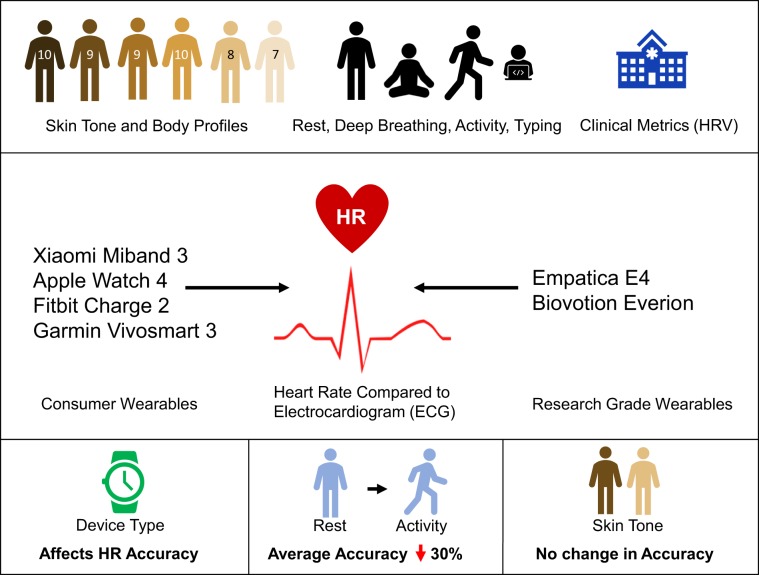
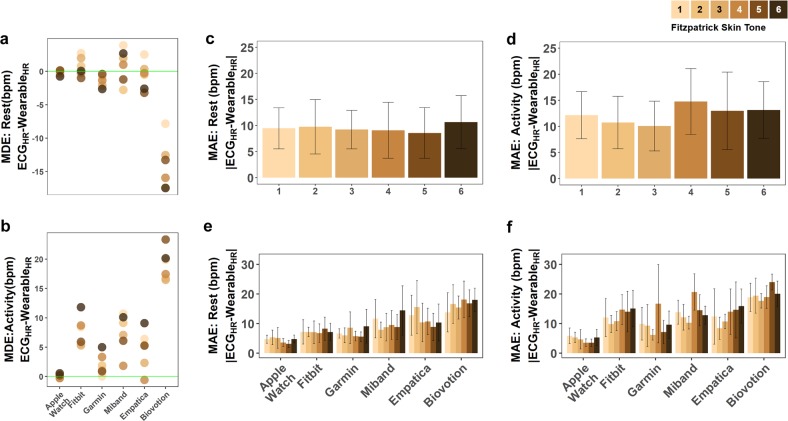
As wearable technologies are being increasingly used for clinical research and healthcare, it is critical to understand their accuracy and determine how measurement errors may affect research conclusions and impact healthcare decision-making. Accuracy of wearable technologies has been a hotly debated topic in both the research and popular science literature. Currently, wearable technology companies are responsible for assessing and reporting the accuracy of their products, but little information about the evaluation method is made publicly available. Heart rate measurements from wearables are derived from photoplethysmography (PPG), an optical method for measuring changes in blood volume under the skin. Potential inaccuracies in PPG stem from three major areas, includes (1) diverse skin types, (2) motion artifacts, and (3) signal crossover. To date, no study has systematically explored the accuracy of wearables across the full range of skin tones. Here, we explored heart rate and PPG data from consumer- and research-grade wearables under multiple circumstances to test whether and to what extent these inaccuracies exist. We saw no statistically significant difference in accuracy across skin tones, but we saw significant differences between devices, and between activity types, notably, that absolute error during activity was, on average, 30% higher than during rest. Our conclusions indicate that different wearables are all reasonably accurate at resting and prolonged elevated heart rate, but that differences exist between devices in responding to changes in activity. This has implications for researchers, clinicians, and consumers in drawing study conclusions, combining study results, and making health-related decisions using these devices.
Overview
CoChat Summary
## TL;DR
This study tested six wearable optical heart-rate devices in 53 participants across the full Fitzpatrick skin-tone scale, using ECG as the reference standard. The main drivers of error were device type and activity condition, not skin tone.
## Key findings
- Across all devices, there was no statistically significant difference in heart-rate accuracy across skin tones; the authors also report no differences in HRV accuracy between skin-tone groups.
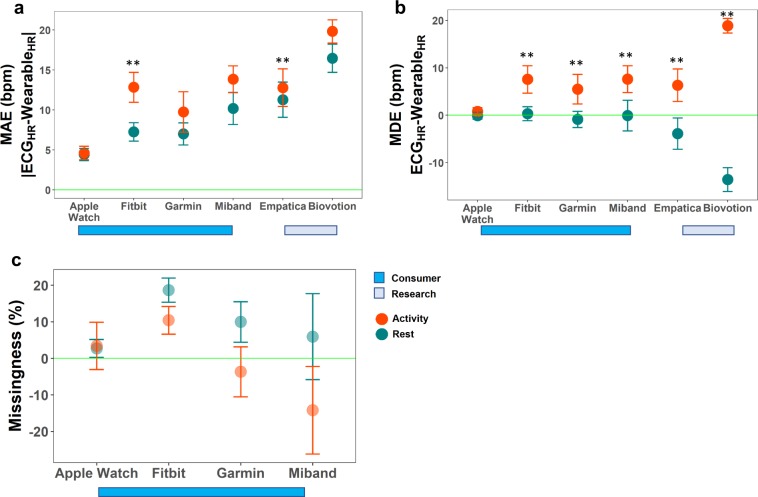
- At rest, consumer-grade wearables were more accurate than research-grade wearables: MAE was 7.2 ± 5.4 bpm vs 13.9 ± 7.8 bpm (p < 0.0125).
- During physical activity, error increased for both categories: MAE was 10.2 ± 7.5 bpm for consumer devices vs 15.9 ± 8.1 bpm for research devices (p < 0.0125); the abstract also states absolute error during activity was 30% higher than during rest.
- Device performance varied substantially: at rest, the Apple Watch 4 had the lowest MAE among consumer devices (4.4 bpm) and the Empatica E4 the lowest among research devices (11.3 bpm); during activity, the Apple Watch 4 remained lowest (4.6 bpm) while the Biovotion Everion was highest among research devices (19.8 bpm).
## Methods
- Design/sample: Observational validation study of 56 recruited participants, with 53 completing the protocol; participants were 18–54 years old, with an approximately equal distribution across six Fitzpatrick skin-tone categories.
- Devices/protocol: Six wearables were tested—4 consumer-grade (Apple Watch 4, Fitbit Charge 2, Garmin Vivosmart 3, Xiaomi Miband 3) and 2 research-grade (Empatica E4, Biovotion Everion)—during rest, deep breathing, walking, washout, and typing, with ECG (Bittium Faros 180) as the reference standard.
- Analysis: The paper compared wearable HR to ECG using MAE, MDE, missingness, and HRV analyses, with mixed-effects models for skin tone, condition, device, and interactions, plus t tests and Bonferroni corrections.
## Limitations
- The authors state that the study had a limited scope of devices, so they could not tease apart the separate effects of cost, market size, and release year.
- For HRV, analysis was limited to only the Empatica E4, because most wearables did not provide the raw data needed for HRV calculations.
- Evident from the text: the protocol was short and structured (about 1 hour of seated rest, deep breathing, walking, and typing), so the findings may not generalize to other activities or longer-term real-world use.
Model-written summary. Check it against the paper before relying on it.
Integrity signals
Registry
Cites
Statistics
Figures
Verification
Claims the paper makes
5 Valid · 4 Not valid · 8 Not checked · 77 Own results and interpretations
Some cited sources support this claim and some don’t — read each source’s verdict below.
In the paper
“Our analyses reinforces the growing body of research demonstrating that wearable devices have higher error during activity than at rest.8,11,35,38,39”
§ Investigating sources of inaccuracy in wearable optical heart rate sensors > Discussion
What the sources say
- Not checked — no full text of the sourcecites [8] Jo, E., Lewis, K., Directo, D., Kim, M. J. & Dolezal, B. A. Validation of biofeedback wearables for photoplethysmographic heart rate tracking. J. Sports Sci. Med.15, 540–547 (2016). PMC4974868 27803634
- Disputedcites [11] Shcherbina A Accuracy in wrist-worn, sensor-based measurements of heart rate and energy expenditure in a diverse cohort J. Pers. Med. 2017 7 3 10.3390/jpm7020003 PMC5491979 28538708 sourceExperimental — accuracy not yet measured
The Results (§3.2; page unavailable) report the opposite for energy expenditure: error was highest while sitting and lower during walking and running. The paper also finds that heart-rate error varies by activity rather than establishing that it is generally higher during activity than at rest (§3.1 and §3.4). (LLM, conf=0.87)
Checked by a reasoning model — may be wrong.
- Partly supportedcites [35] Zhang Y Motion artifact reduction for wrist-worn photoplethysmograph sensors based on different wavelengths Sensors 2019 19 673 10.3390/s19030673 PMC6387309 30736395 sourceExperimental — accuracy not yet measured
The Introduction says motion can distort wrist-worn PPG signals, and Section 4.1 reports a higher peak-to-noise ratio in stationary conditions than in several motion conditions. These passages support the direction of the claim for wrist-worn PPG, but the paper does not establish that wearable devices generally have higher measurement error during activity than at rest. (LLM, conf=0.78)
- Not checked — no full text of the sourcecites [38] Zong, C. & Jafari, R. Robust heart rate estimation using wrist-based PPG signals in the presence of intense physical activities. in 2015 37th Annual International Conference of the IEEE Engineering in Medicine and Biology Society (EMBC) 8078–8082. 10.1109/EMBC.2015.7320268 (IEEE, 2015). 26738168 source
- Could not verifycites [39] Reis VM Are wearable heart rate measurements accurate to estimate aerobic energy cost during low-intensity resistance exercise? PLoS ONE 2019 14 e0221284 10.1371/journal.pone.0221284 31437191 PMC6705857 sourceExperimental — accuracy not yet measured
The Results and Conclusions report estimation errors during low-intensity resistance exercise, but do not compare them with errors at rest. A search for resting measurements and an activity-versus-rest accuracy comparison found no passage addressing that comparison in our copy. (LLM, conf=0.76)
boostedstates an association- Asserted: passes — The authors put it forward as true.
- Checkable: passes — It can be checked against evidence.
- Load-bearing: passes — The paper’s conclusions depend on it.
- Based: passes — The paper gives a reason why it holds.
The cited sources support only part of this claim — read each source’s verdict below.
In the paper
“Several research groups and manufacturers have identified that cyclical motion can affect accuracy of HR in wearable sensors.”
§ Investigating sources of inaccuracy in wearable optical heart rate sensors > Introduction
What the sources say
- Supportedcites [9] Reddy RK Accuracy of wrist-worn activity monitors during common daily physical activities and types of structured exercise: evaluation study JMIR mHealth uHealth 2018 6 e10338 10.2196/10338 30530451 PMC6305876 source
The Results (Heart Rate Accuracy; page not supplied) report significantly different heart-rate errors between activities with and without repetitive upper-torso motion. The Discussion (Principal Findings; page not supplied) likewise says accuracy differed with repetitive wrist motion. These findings support the claim that cyclical motion can affect wearable heart-rate accuracy, without implying that it necessarily worsens it. (LLM, conf=0.91)
- Supportedcites [10] Sartor F Wrist-worn optical and chest strap heart rate comparison in a heterogeneous sample of healthy individuals and in coronary artery disease patients BMC Sports Sci. Med. Rehabil. 2018 10 10 10.1186/s13102-018-0098-0 29881626 PMC5984393 source
The Background explains that motion artifacts distort the PPG signal used by wearable heart-rate monitors and that filtering them is especially challenging during periodic motion. This supports the claim that cyclical motion can affect heart-rate accuracy. (LLM, conf=0.91)
- Not matchedcites [15] Apple Support. Get the most accurate measurements using your Apple Watch—Apple Support. https://support.apple.com/en-us/HT207941#heartrate (2019).
Its entry has no title and year that we can search by.
plainstates a possible cause- Asserted: passes — The authors put it forward as true.
- Checkable: passes — It can be checked against evidence.
- Load-bearing: passes — The paper’s conclusions depend on it.
- Based: passes — The paper gives a reason why it holds.
- Supported
The cited sources support only part of this claim — read each source’s verdict below.
In the paper
“Several studies have demonstrated that HR measurements from wearable devices are often less accurate during physical activity or cyclic wrist motions.”
§ Investigating sources of inaccuracy in wearable optical heart rate sensors > Introduction
What the sources say
- Not checked — no full text of the sourcecites [8] Jo, E., Lewis, K., Directo, D., Kim, M. J. & Dolezal, B. A. Validation of biofeedback wearables for photoplethysmographic heart rate tracking. J. Sports Sci. Med.15, 540–547 (2016). PMC4974868 27803634
- Partly supportedcites [11] Shcherbina A Accuracy in wrist-worn, sensor-based measurements of heart rate and energy expenditure in a diverse cohort J. Pers. Med. 2017 7 3 10.3390/jpm7020003 PMC5491979 28538708 sourceExperimental — accuracy not yet measured
The Discussion reports higher heart-rate error at higher intensity within each activity, and Results §3.1 reports more error during walking than cycling. But the paper does not assess cyclic wrist motions, and its Conclusions say heart-rate measurements were within an acceptable error range in most activity settings; it does not support a general claim that physical activity makes them less accurate. (LLM, conf=0.84)
- Supportedcites [35] Zhang Y Motion artifact reduction for wrist-worn photoplethysmograph sensors based on different wavelengths Sensors 2019 19 673 10.3390/s19030673 PMC6387309 30736395 source
The Introduction states that motions during ambulatory monitoring can distort wrist-worn PPG signals and that motion artifacts can overlap the heart-rate signal. The Results and Discussion assess heart-rate estimation error during motion, supporting the claim that wearable heart-rate measurements can be less accurate during activity or wrist motion. (LLM, conf=0.90)
- Not checked — no full text of the sourcecites [38] Zong, C. & Jafari, R. Robust heart rate estimation using wrist-based PPG signals in the presence of intense physical activities. in 2015 37th Annual International Conference of the IEEE Engineering in Medicine and Biology Society (EMBC) 8078–8082. 10.1109/EMBC.2015.7320268 (IEEE, 2015). 26738168 source
- Partly supportedcites [39] Reis VM Are wearable heart rate measurements accurate to estimate aerobic energy cost during low-intensity resistance exercise? PLoS ONE 2019 14 e0221284 10.1371/journal.pone.0221284 31437191 PMC6705857 sourceExperimental — accuracy not yet measured
The Discussion reports that some wearable HR devices had errors above 10% when used to predict energy cost during higher-intensity resistance exercise, while this study found errors below 10% at low intensity. That supports a narrower, activity-dependent concern about energy-cost estimates, not the claim that HR measurements themselves are often less accurate during physical activity; the paper does not address cyclic wrist motions. Our copy provides no page numbers for these passages. (LLM, conf=0.82)
boostedstates an association- Asserted: passes — The authors put it forward as true.
- Checkable: passes — It can be checked against evidence.
- Load-bearing: passes — The paper’s conclusions depend on it.
- Based: passes — The paper gives a reason why it holds.
The cited sources support only part of this claim — read each source’s verdict below.
In the paper
“previous research demonstrated that inaccurate PPG HR measurements occur up to 15% more frequently in dark skin as compared to light skin”
§ Investigating sources of inaccuracy in wearable optical heart rate sensors > Introduction
What the sources say
- Not checked — no full text of the sourcecites [23] Zonios G Bykowski J Kollias N Skin melanin, hemoglobin, and light scattering properties can be quantitatively assessed in vivo using diffuse reflectance spectroscopy J. Invest. Dermatol. 2001 117 1452 1457 10.1046/j.0022-202x.2001.01577.x 11886508 source
- Could not verifycites [24] Tseng S-H Grant A Durkin AJ In vivo determination of skin near-infrared optical properties using diffuse optical spectroscopy J. Biomed. Opt. 2008 13 014016 10.1117/1.2829772 18315374 PMC2626348 sourceExperimental — accuracy not yet measured
Our copy of Tseng et al. (2008) is entirely about building a superficial diffusing DOS probe and recovering absorption/reduced-scattering coefficients of volar forearm and palm skin in 15 subjects (Introduction, Results Sec. 4, Conclusion); no passage mentions photoplethysmography, pulse/heart rate measurement, or any accuracy/error rate, and no 15% figure of that kind appears (searched: PPG/pulse rate/heart rate accuracy, pulse oximetry, introduction/motivation). The closest content is mechanistic background — Results Sec. 4 (Fig. 4a) that melanin absorption in dark skin reduces the probe's interrogation depth so hemoglobin features 'are not apparent,' and Sec. 4 (Fig. 5a) that dark-skinned subjects' absorption is ~5x Caucasian at 650 nm — which explains why light-based signals are weaker in dark skin but does not state the attributed quantitative claim about inaccurate PPG HR measurements. The paper also names no other work as the source of such a PPG error statistic, so misattribution cannot be established either. (LLM, conf=0.72)
- Not checked — no full text of the sourcecites [25] Fallow BA Tarumi T Tanaka H Influence of skin type and wavelength on light wave reflectance J. Clin. Monit. Comput. 2013 27 313 317 10.1007/s10877-013-9436-7 23397431 source
- Could not verifycites [26] Treesirichod A Chansakulporn S Wattanapan P Correlation between skin color evaluation by skin color scale chart and narrowband reflectance spectrophotometer Indian J. Dermatol. 2014 59 339 342 10.4103/0019-5154.135476 25071249 PMC4103266 sourceExperimental — accuracy not yet measured
The Introduction states that the study compares a skin-color chart with a narrowband reflectance spectrophotometer, and the Methods describe skin-color measurements with a Mexameter MX18. Searches for PPG heart-rate accuracy, dark-versus-light-skin error rates, and 15% found no passage addressing the cited claim. No page numbers were available in our copy. (LLM, conf=0.76)
- Not checked — no full text of the sourcecites [27] Ries AL Prewitt LM Johnson JJ Skin color and ear oximetry Chest 1989 96 287 290 10.1378/chest.96.2.287 2752811 source
- Could not verifycites [28] Lister T Wright PA Chappell PH Optical properties of human skin J. Biomed. Opt. 2012 17 0909011 10.1117/1.JBO.17.9.090901 23085902 sourceExperimental — accuracy not yet measured
Our copy of Lister et al. (2012) is a review of the absorption and scattering coefficients of human skin; it nowhere addresses photoplethysmography, heart-rate measurement, or any 15% error figure (searched: 'photoplethysmography PPG heart rate measurement accuracy dark skin', 'pulse oximetry blood volume pulse measurement error skin type', 'heart rate pulse oximetry photoplethysmogram ... Fitzpatrick'). The closest content is qualitative and mechanistic — Sec. 2.2 (Scattering) notes melanosome volume fraction rising from ~1% in pale to ~5% in darker skin and melanin's variable contribution to epidermal scatter, and Sec. 4.3 (Further Causes of Discrepancy) notes 'darker skin types demonstrating greater absorption across the visible spectrum' (Svaasand et al., only one or two subjects per skin type) — but neither reports PPG measurement accuracy nor the attributed magnitude. Nothing in our copy contradicts the claim; it simply does not cover it, so the 15% figure must come from another source. (LLM, conf=0.72)
- Not checked — no full text of the sourcecites [29] Weiler DT Villajuan SO Edkins L Cleary S Saleem JJ Wearable heart rate monitor technology accuracy in research: a comparative study between PPG and ECG technology Proc. Hum. Factors Ergon. Soc. Annu. Meet. 2017 61 1292 1296 10.1177/1541931213601804 source
- Could not verifycites [30] Nitzan M Romem A Koppel R Pulse oximetry: fundamentals and technology update Med. Devices Evid. Res. 2014 7 231 10.2147/MDER.S47319 PMC4099100 25031547 sourceExperimental — accuracy not yet measured
The 'Pulse oximetry – the technique' section says melanin can absorb light used in PPG, but it does not compare measurement accuracy by skin tone. The accuracy section concerns oxygen-saturation measurements, not PPG heart-rate errors. Searches for skin pigmentation, heart rate, and 15% found no passage supporting the claimed difference. (LLM, conf=0.76)
- Partly supportedcites [31] Yan, L., Hu, S., Alzahrani, A., Alharbi, S. & Blanos, P. A Multi-wavelength opto-electronic patch sensor to effectively detect physiological changes against human skin types. Biosensors7, 22 (2017). PMC5487964 28635643 sourceExperimental — accuracy not yet measured
The Introduction says skin pigmentation can affect PPG signal quality and mentions anecdotal errors of 3–5% in black skin. It does not report that inaccurate PPG heart-rate measurements occur 15% more frequently in dark skin than in light skin. The Discussion reports no significant effect of skin type on heart-rate measurements with the sensor tested (p = 0.09). (LLM, conf=0.87)
boostedstates an association- Asserted: passes — The authors put it forward as true.
- Checkable: passes — It can be checked against evidence.
- Load-bearing: passes — The paper’s conclusions depend on it.
- Based: passes — The paper gives a reason why it holds.
The cited sources that could be checked couldn’t confirm or dispute this claim.
In the paper
“since optical HR measurements primarily measure green light absorption.24,25”
§ Investigating sources of inaccuracy in wearable optical heart rate sensors > Methods > Sample size
What the sources say
- Could not verifycites [24] Tseng S-H Grant A Durkin AJ In vivo determination of skin near-infrared optical properties using diffuse optical spectroscopy J. Biomed. Opt. 2008 13 014016 10.1117/1.2829772 18315374 PMC2626348 sourceExperimental — accuracy not yet measured
Our copy of Tseng et al. (2008) deals exclusively with recovering skin absorption and reduced-scattering coefficients over the 650-1000 nm near-infrared window (Instrumentation, six laser diodes at 661-850 nm; Results, Sec. 4), and never mentions heart rate, pulse, photoplethysmography, or green-light absorption. Searches for 'green light absorption / heart rate / photoplethysmography' and for 'wavelengths shorter than 650 nm / hemoglobin spectral features' returned only the Conclusion's statement that the instrument is being improved so that shorter-than-650 nm wavelengths, with more prominent hemoglobin features, can be acquired - a forward-looking remark about their own DOS system, not a claim about how optical HR measurements work. Nothing in our copy either supports or contradicts the attributed point. (LLM, conf=0.72)
- Not checked — no full text of the sourcecites [25] Fallow BA Tarumi T Tanaka H Influence of skin type and wavelength on light wave reflectance J. Clin. Monit. Comput. 2013 27 313 317 10.1007/s10877-013-9436-7 23397431 source
plain- Asserted: passes — The authors put it forward as true.
- Checkable: passes — It can be checked against evidence.
- Load-bearing: passes — The paper’s conclusions depend on it.
- Based: passes — The paper gives a reason why it holds.
- Could not verify
41 more claims
Create a free account to see all 94 claims and to verify the 3 references still open.
- It may state two separate claims as one. 34
- Probably not a substantial claim. 17
Claims other papers make about this one
Each is checked against this paper’s own text: does it say what the citing paper says it does?
The cited source doesn’t support the claim as written.
In the citing paper
“too few people with the darkest skin tones were included (n = 9 in FST Type 6)”
From Response To: Investigating sources of inaccuracy in wearable optical heart rate sensors (2021) · cites this paper as [1]
Checked by a reasoning model — may be wrong.
Experimental — accuracy not yet measuredThe cited source doesn’t support the claim as written.
In the citing paper
“A power analysis conducted prior to data collection indicated that a minimum of 52 participants would be needed to detect a medium effect size (f2(v) = 0.20) in a MANOVA with two groups and two dependent variables (absolute and directional error), assuming α = 0.05 and power (1 − β) = 0.80 [23].”
From PPG-Based Heart Rate Accuracy in Hispanic Adults with Fitzpatrick III–V Skin Tones: An Evaluation of Body Composition and Skin-Tone Effects (2026) · cites this paper as [23]
Checked by a reasoning model — may be wrong.
Experimental — accuracy not yet measuredThe source backs part of the claim, not all of it — or backs it for a different population, condition or comparison.
In the citing paper
“there are only a small handful of studies that examine skin tone and accuracy rates directly1–3,11”
From Response To: Investigating sources of inaccuracy in wearable optical heart rate sensors (2021) · cites this paper as [1]
Experimental — accuracy not yet measuredThe source backs part of the claim, not all of it — or backs it for a different population, condition or comparison.
In the citing paper
“Bent et al. (2020) reported that PPG devices showed error rates exceeding 20% during cycling and resistance exercise in individuals with higher pigmentation, while maintaining <10% error at rest, underscoring the importance of activity context [5].”
From Photoplethysmography in Diverse Skin Tones: Evaluating Bias in Smartwatch Health Monitoring (2025) · cites this paper as [5]
Experimental — accuracy not yet measuredThe source backs part of the claim, not all of it — or backs it for a different population, condition or comparison.
In the citing paper
“failing to correct for these errors exacerbates existing healthcare disparities [10,23,24,25,26]”
From PPG-Based Heart Rate Accuracy in Hispanic Adults with Fitzpatrick III–V Skin Tones: An Evaluation of Body Composition and Skin-Tone Effects (2026) · cites this paper as [23]
Experimental — accuracy not yet measured
43 more claims about this paper
Create a free account to see every claim other papers make about this one.
Citations
Cites
An overview of heart rate variability metrics and norms
Shaffer, F., & Ginsberg, J. P. (2017) · Frontiers in Public Health · doi:10.3389/fpubh.2017.00258 · Cited by 7,185 · cited 1×
“In addition to HR, we examined HR variability (HRV), a clinically relevant diagnostic metric that can be derived from PPG signals and is a widely used metric of autonomic nervous system function.(43) The standard HRV metrics we examined, included the time-domain metrics, included mean HRV, minimum HRV, maximum HRV, RM…”
MethodThe validity and practicality of sun-reactive skin types I through VI
Fitzpatrick, T. B. (1988) · Archives of Dermatology · doi:10.1001/archderm.1988.01670060015008 · Cited by 4,339
Ghamari, M. (2018) · International Journal of Biosensors & Bioelectronics · doi:10.15406/ijbsbe.2018.04.00125 · Cited by 945 · cited 1×
“Another suspected measurement error in wrist-worn devices is motion artifact, which is typically caused by displacement of the PPG sensor over the skin, changes in skin deformation, blood flow dynamics, and ambient temperature.(33,34) Motion artifacts may manifest as missing or false beats which result in incorrect HR…”
BackgroundWearable photoplethysmographic sensors—past and present
Tamura, T., Maeda, Y., Sekine, M., & Yoshida, M. (2014) · Electronics · doi:10.3390/electronics3020282 · Cited by 912
Shcherbina, A., Mattsson, C., Waggott, D., Salisbury, H., Christle, J., Hastie, T., Wheeler, M., & Ashley, E. (2017) · Journal of Personalized Medicine · doi:10.3390/jpm7020003 · Cited by 625 · cited 2×
“Our analyses reinforces the growing body of research demonstrating that wearable devices have higher error during activity than at rest.(8,11,35,38,39) We further demonstrate that the directionality of the HR error is dependent on the activity type.”
BackgroundResultGoldsack, J. C., Coravos, A., Bakker, J. P., Bent, B., Dowling, A. V., Fitzer-Attas, C., Godfrey, A., Godino, J. G., Gujar, N., Izmailova, E., et al. (2020) · npj Digital Medicine · doi:10.1038/s41746-020-0260-4 · Cited by 557
Self-citationZonios, G., Bykowski, J., & Kollias, N. (2001) · Journal of Investigative Dermatology · doi:10.1046/j.0022-202x.2001.01577.x · Cited by 477
Optical properties of human skin
Lister, T., Wright, P. A., & Chappell, P. H. (2012) · Journal of Biomedical Optics · doi:10.1117/1.jbo.17.9.090901 · Cited by 467
Pulse oximetry: fundamentals and technology update
Nitzan, M., Romem, A., & Koppel, R. (2014) · Medical Devices: Evidence and Research · doi:10.2147/mder.s47319 · Cited by 438
Effects of skin pigmentation on pulse oximeter accuracy at low saturation
Bickler, P. E., Feiner, J. R., & Severinghaus, J. W. (2005) · Anesthesiology · doi:10.1097/00000542-200504000-00004 · Cited by 427
Research works printed but not linked: 1
- Hugh et al. Consumer-Grade Wrist-worn Ppg Sensors Can Be Used to Detect Differences in Heart Rate Variability among A Heterogenous Prediabetic Population (IEEE International Conference on Biomedical and Health Informatics, 2018).
Cited by
Smart wearable devices in cardiovascular care: Where we are and how to move forward
Bayoumy, K., Gaber, M., Elshafeey, A., Mhaimeed, O., Dineen, E. H., Marvel, F. A., Martin, S. S., Muse, E. D., Turakhia, M. P., Tarakji, K. G., et al. (2021) · Nature Reviews Cardiology · doi:10.1038/s41569-021-00522-7 · Cited by 829
Review of Wearable Devices and Data Collection Considerations for Connected Health
Vijayan, V., Connolly, J. P., Condell, J., McKelvey, N., & Gardiner, P. (2021) · Sensors · doi:10.3390/s21165589 · Cited by 435
Armoundas, A. A., Narayan, S. M., Arnett, D. K., Spector-Bagdady, K., Bennett, D. A., Celi, L. A., Friedman, P. A., Gollob, M. H., Hall, J. L., Kwitek, A. E., et al. (2024) · Circulation · doi:10.1161/cir.0000000000001201 · Cited by 347
Sources of inaccuracy in photoplethysmography for continuous cardiovascular monitoring
Fine, J., Branan, K. L., Rodriguez, A. J., Boonya-ananta, T., Ajmal, Ramella-Roman, J. C., McShane, M. J., & Coté, G. L. (2021) · Biosensors · doi:10.3390/bios11040126 · Cited by 348
“published an experimental analysis of error observed in optical heart rate sensors manufactured by Apple (Apple Watch 4), Fitbit (Fitbit Charge 2), Garmin (Garmin Vivosmart 3), Xiaomi (Xiaomi Miband 3), Empatica (Empatica E4), and Biovotion (Biovation Everion) as a function of skin tone [46].”
BackgroundMethodInfluentialMachine Learning for Healthcare Wearable Devices: The Big Picture
Sabry, F., Eltaras, T., Labda, W., Alzoubi, K., & Malluhi, Q. (2022) · Journal of Healthcare Engineering · doi:10.1155/2022/4653923 · Cited by 321
“Care should be taken as some of the research wearable devices provide raw data [102] that require clean-up of the signals for removing noise and motion artifacts as the work done in [181].”
BackgroundMin, S., Kim, D. H., Joe, D. J., Kim, B. W., Jung, Y. H., Lee, J. H., Lee, B., Doh, I., An, J., Youn, Y., et al. (2023) · Advanced Materials · doi:10.1002/adma.202301627 · Cited by 278
Wearable Photoplethysmography for Cardiovascular Monitoring
Charlton, P. H., Kyriacou, P. A., Mant, J., Marozas, V., Chowienczyk, P., & Alastruey, J. (2022) · Proceedings of the IEEE · doi:10.1109/jproc.2022.3149785 · Cited by 250
“Furthermore, different devices have different levels of accuracy [122].”
Guidelines for wrist-worn consumer wearable assessment of heart rate in biobehavioral research
Nelson, B. W., Low, C. A., Jacobson, N., Areán, P., Torous, J., & Allen, N. B. (2020) · npj Digital Medicine · doi:10.1038/s41746-020-0297-4 · Cited by 241
Quigley, K. S., Gianaros, P. J., Norman, G. J., Jennings, J. R., Berntson, G. G., & de Geus, E. J. C. (2024) · Psychophysiology · doi:10.1111/psyp.14604 · Cited by 225
Osama, M., Ateya, A. A., Sayed, M. S., Hammad, M., Pławiak, P., Abd El-Latif, A. A., & Elsayed, R. A. (2023) · Sensors · doi:10.3390/s23177435 · Cited by 216
“Therefore, it is essential to monitor their health and recognize any irregularities promptly so that they can receive appropriate care.”
BackgroundTransducer Technologies for Biosensors and Their Wearable Applications
Polat, E. O., Cetin, M. M., Tabak, A. F., Bilget Güven, E., Uysal, B. Ö., Arsan, T., Kabbani, A., Hamed, H., & Gül, S. B. (2022) · Biosensors · doi:10.3390/bios12060385 · Cited by 200
“In parallel, the effect of skin tone has also been discussed frequently in the context of optical heart rate wearables [140].”
BackgroundMethodThe 2023 wearable photoplethysmography roadmap
Charlton, P. H., Allen, J., Bailón, R., Baker, S., Behar, J. A., Chen, F., Clifford, G. D., Clifton, D. A., Davies, H. J., Ding, C., et al. (2023) · Physiological Measurement · doi:10.1088/1361-6579/acead2 · Cited by 187
Self-citationHinde, K., White, G., & Armstrong, N. (2021) · Sensors · doi:10.3390/s21041061 · Cited by 171
Multi‐Mode/Signal Biosensors: Electrochemical Integrated Sensing Techniques
Han, Q., Wang, H., & Wang, J. (2024) · Advanced Functional Materials · doi:10.1002/adfm.202403122 · Cited by 165
Chen, S., Fan, S., Qiao, Z., Wu, Z., Lin, B., Li, Z., Riegler, M. A., Wong, M. Y. H., Opheim, A., Korostynska, O., et al. (2025) · Advanced Materials · doi:10.1002/adma.202500412 · Cited by 164
A Review of Wearable Multi-Wavelength Photoplethysmography
Ray, D., Collins, T., Woolley, S., & Ponnapalli, P. (2023) · IEEE Reviews in Biomedical Engineering · doi:10.1109/rbme.2021.3121476 · Cited by 155
“found no statistically significant differences in HR estimation accuracy across skin tones for commercially available wrist-worn reflectance mode PPG devices [52].”
BackgroundMansi, S. A., Barone, G. B., Forzano, C., Pigliautile, I., Ferrara, M., Pisello, A. L., & Arnesano, M. (2021) · Measurement · doi:10.1016/j.measurement.2021.109872 · Cited by 175
Limiting racial disparities and bias for wearable devices in health science research
Colvonen, P. J., DeYoung, P. N., Bosompra, N.-O. A., & Owens, R. L. (2020) · Sleep · doi:10.1093/sleep/zsaa159 · Cited by 137
“” [4] We fear that these conclusions are misleading because too few people with the darkest skin tones were included (n = 9), as assessed by the FST rather than objective measurement.”
BackgroundMethodThe Role of Wearable Devices in Chronic Disease Monitoring and Patient Care: A Comprehensive Review
Jafleh, E. A., Alnaqbi, F. A., Almaeeni, H. A., Faqeeh, S., Alzaabi, M. A., & Al Zaman, K. (2024) · Cureus · doi:10.7759/cureus.68921 · Cited by 125
“Similarly, wearable devices that monitor heart rate (HR), blood pressure (BP), and pulse during moderate exercise can aid in managing cardiovascular diseases by identifying arrhythmias, monitoring BP, and promoting critical cardiovascular function through exercise [2].”
Cabanas, A. M., Fuentes-Guajardo, M., Latorre, K., León, D., & Martín-Escudero, P. (2022) · Sensors · doi:10.3390/s22093402 · Cited by 124
Blood Pressure Variability in Clinical Practice: Past, Present and the Future
Sheikh, A. B., Sobotka, P. A., Garg, I., Dunn, J., Minhas, A. M. K., Shandhi, M. M. H., Molinger, J., McDonnell, B. J., & Fudim, M. (2023) · Journal of the American Heart Association · doi:10.1161/jaha.122.029297 · Cited by 148
Self-citationMühlen, J. M., Stang, J., Lykke Skovgaard, E., Judice, P. B., Molina-Garcia, P., Johnston, W., Sardinha, L. B., Ortega, F. B., Caulfield, B., Bloch, W., et al. (2021) · British Journal of Sports Medicine · doi:10.1136/bjsports-2020-103148 · Cited by 116
Past, Present, and Future of Multisensory Wearable Technology to Monitor Sleep and Circadian Rhythms
Lujan, M. R., Perez-Pozuelo, I., & Grandner, M. A. (2021) · Frontiers in Digital Health · doi:10.3389/fdgth.2021.721919 · Cited by 137
“variance tended to be more pronounced during periods of activity as opposed to periods of rest (106).”
BackgroundWearable Photoplethysmography for Cardiovascular Monitoring.
Charlton, P. H., Kyriacou, P. A., Mant, J., Marozas, V., Chowienczyk, P., & Alastruey, J. (2022) · KTUePubl (Repository of Kaunas University of Technology) · doi:10.17863/cam.81148 · Cited by 113
RETRACTED: Cellulose‐Based Dual‐Network Conductive Hydrogel with Exceptional Adhesion
Shi, H., Huo, H., Yang, H., Li, H., Shen, J., Wan, J., Du, G., & Yang, L. (2024) · Advanced Functional Materials · doi:10.1002/adfm.202408560 · Cited by 118
RetractedMin, S., An, J., Lee, J. H., Kim, J. H., Joe, D. J., Eom, S. H., Yoo, C. D., Ahn, H., Hwang, J.-Y., Xu, S. H., et al. (2025) · Nature Reviews Cardiology · doi:10.1038/s41569-025-01127-0 · Cited by 177
“Despite these advantages, the accuracy of PPG sensors is limited by their susceptibility to motion artefacts 126,127 , by variations in skin tone and thickness 128,129 and by environmental interference from ambient light 130 and temperature 131 .”
Wearable Artificial Intelligence for Anxiety and Depression: Scoping Review
Abd-alrazaq, A., AlSaad, R., Aziz, S., Ahmed, A., Denecke, K., Househ, M., Farooq, F., & Sheikh, J. (2023) · Journal of Medical Internet Research · doi:10.2196/42672 · Cited by 107
AI-Driven Wearable Bioelectronics in Digital Healthcare
Huang, G., Chen, X., & Liao, C. (2025) · Biosensors · doi:10.3390/bios15070410 · Cited by 138
The Current State of Optical Sensors in Medical Wearables
Vavrinsky, E., Esfahani, N. E., Hausner, M., Kuzma, A., Rezo, V., Donoval, M., & Kosnacova, H. (2022) · Biosensors · doi:10.3390/bios12040217 · Cited by 103
Continuous cuffless blood pressure monitoring with a wearable ring bioimpedance device
Sel, K., Osman, D., Huerta, N., Edgar, A., Pettigrew, R. I., & Jafari, R. (2023) · npj Digital Medicine · doi:10.1038/s41746-023-00796-w · Cited by 100
Evaluation of biases in remote photoplethysmography methods
Dasari, A., Prakash, S. K. A., Jeni, L. A., & Tucker, C. S. (2021) · npj Digital Medicine · doi:10.1038/s41746-021-00462-z · Cited by 125
“The tests are defined as follows, H0 : cPRðIndiaFemaleÞ ¼ cPRðSierra LeonFemaleÞ (11) Ha : cPRðIndiaFemaleÞ≠cPRðSierra LeonFemaleÞ (12) H0 : cPRðIndiaMaleÞ ¼ cPRðSierra LeonMaleÞ (13) Ha : cPRðIndiaMaleÞ≠cPRðSierra LeonMaleÞ (14) where H0 and Ha are the null and alternate hypotheses, respectively.”
Stone, J. D., Ulman, H. K., Tran, K., Thompson, A. G., Halter, M. D., Ramadan, J. H., Stephenson, M., Finomore, V. S., Galster, S. M., Rezai, A. R., et al. (2021) · Frontiers in Sports and Active Living · doi:10.3389/fspor.2021.585870 · Cited by 124
“The present study aimed to assess the validity of various COTS devices (both tangible devices and third-party software applications) when measuring rMSSD, a common heart rate variability (HRV) metric consistently reported across the wearables market (Bent et al., 2020).”
BackgroundInfluentialStretchable PPG sensor with light polarization for physical activity–permissible monitoring
Lee, G. H., Kang, H., Chung, J. W., Lee, Y., Yoo, H., Jeong, S., Cho, H. K., Kim, J., Kang, S., Jung, J. Y., et al. (2022) · Science Advances · doi:10.1126/sciadv.abm3622 · Cited by 104
Roos, L. G., & Slavich, G. M. (2023) · Brain Behavior and Immunity · doi:10.1016/j.bbi.2023.08.008 · Cited by 130
“In fact, prior research has found that these lights can be up to 15% less accurate in persons with darker skin (Bent et al., 2020).”
Koerber, D., Khan, S., Shamsheri, T., Kirubarajan, A., & Mehta, S. (2023) · Journal of Racial and Ethnic Health Disparities · doi:10.1007/s40615-022-01446-9 · Cited by 91
“This technology relies on LEDs projecting light onto the skin, and photodetectors measuring the quantity of reflected light [1, 2].”
BackgroundInfluentialData quality evaluation in wearable monitoring
Böttcher, S., Vieluf, S., Bruno, E., Joseph, B., Epitashvili, N., Biondi, A., Zabler, N., Glasstetter, M., Dümpelmann, M., Van Laerhoven, K., et al. (2022) · Scientific Reports · doi:10.1038/s41598-022-25949-x · Cited by 91
Nazarian, S., Lam, K., Darzi, A. W., & Ashrafian, H. (2021) · Journal of Medical Internet Research · doi:10.2196/28974 · Cited by 116
“Although previous research has questioned the use of PPG sensors in darker skin, a recently published study showed no statistically significant differences in wearable heart rate measurement accuracy across skin tones [43].”
Sarkar, P., & Etemad, A. (2021) · Proceedings of the AAAI Conference on Artificial Intelligence · doi:10.1609/aaai.v35i1.16126 · Cited by 127
“Nonetheless, PPG suffers from inaccurate HR estimation and several other limitations in comparison to conventional ECG monitoring devices (Bent et al. 2020) due to factors like skin tone, diverse skin types, motion arte-facts, and signal crossovers among others.”
BackgroundMachine learning for real-time aggregated prediction of hospital admission for emergency patients
King, Z., Farrington, J., Utley, M., Kung, E., Elkhodair, S., Harris, S., Sekula, R., Gillham, J., Li, K., & Crowe, S. (2022) · npj Digital Medicine · doi:10.1038/s41746-022-00649-y · Cited by 87
Consumer Wearable Health and Fitness Technology in Cardiovascular Medicine
Petek, B. J., Al‐Alusi, M. A., Moulson, N., Grant, A. J., Besson, C., Guseh, J. S., Wasfy, M. M., Grémeaux, V., Churchill, T. W., & Baggish, A. L. (2023) · Journal of the American College of Cardiology · doi:10.1016/j.jacc.2023.04.054 · Cited by 126
Monitoring long-term cardiac activity with contactless radio frequency signals
Zhang, B., Zhang, D., Li, Y., Lu, Z., Chen, J., Wang, H., Zhou, F., Pu, Y., Hu, Y., Ma, L., et al. (2024) · Nature Communications · doi:10.1038/s41467-024-55061-9 · Cited by 109
“The ground-truth data was obtained through ECG measurements using body-attached electrodes 34 .”
Avram, R., Ramsis, M., Cristal, A. D., Nathan, V., Zhu, L., Kim, J., Kuang, J., Gao, A. J., Vittinghoff, E., Rohdin-Bibby, L., et al. (2021) · Heart Rhythm · doi:10.1016/j.hrthm.2021.03.044 · Cited by 97
Kazanskiy, N. L., Butt, M. A., & Khonina, S. N. (2022) · Nanomaterials · doi:10.3390/nano12030334 · Cited by 99
“Wearable optical sensing devices have thus far mostly been utilized for heart tracking [74, 78].”
BackgroundMethodBent, B., Wang, K., Grzesiak, E. A., Jiang, C., Qi, Y., Jiang, Y., Cho, P., Zingler, K., Ogbeide, F. I., Zhao, A., et al. (2020) · Journal of Clinical and Translational Science · doi:10.1017/cts.2020.511 · Cited by 104
“However, the lack of standardization and open-source computational tools has limited collaborative research and has resulted in numerous digital biomarkers in use that have not been validated [8,15].”
BackgroundSelf-citationStone, J. D., Rentz, L. E., Forsey, J., Ramadan, J., Markwald, R. R., Finomore, V. S., Galster, S. M., Rezai, A., & Hagen, J. A. (2020) · Nature and Science of Sleep · doi:10.2147/nss.s270705 · Cited by 82
Lou, Z., Tao, J., Wei, B., Jiang, X., Cheng, S., Wang, Z., Qin, C., Liang, R., Guo, H., Zhu, L., et al. (2023) · Advanced Science · doi:10.1002/advs.202304174 · Cited by 86
Evaluating the Reproducibility of Physiological Stress Detection Models
Mishra, V., Sen, S., Chen, G., Tian, H., Rogers, J., Chen, C.-H., & Kotz, D. F. (2020) · Proceedings of the ACM on Interactive Mobile Wearable and Ubiquitous Technologies · doi:10.1145/3432220 · Cited by 107
“…measure the electrical activity of the heart (and are known to be accurate [26]), Empatica E4 uses a Photoplethysmogram (PPG) sensor to measure blood-volume changes to calculate heart-rate and IBI data, and the Empatica has recently been shown to have errors when compared with an ECG patch [3].”
MethodDetection and monitoring of stress using wearables: a systematic review
Pinge, A., Gad, V. R., Jaisighani, D., Ghosh, S., & Sen, S. (2024) · Frontiers in Computer Science · doi:10.3389/fcomp.2024.1478851 · Cited by 148
Ajmal, Boonya-Ananta, T., Rodriguez, A. J., Du Le, V. N., & Ramella-Roman, J. C. (2021) · Biomedical Optics Express · doi:10.1364/boe.439893 · Cited by 79
“In contrast to these findings, recent experimental studies seem to indicate that although activities may lead to inaccuracy in heart rate measurements using commercial wearable devices, skin tone is not a source of error [9,18].”
BackgroundResultSensors for Context-Aware Smart Healthcare: A Security Perspective
Batista, E., Moncusi, M. A., López-Aguilar, P., Martínez-Ballesté, A., & Solanas, A. (2021) · Sensors · doi:10.3390/s21206886 · Cited by 103
Kotzen, K., Charlton, P. H., Salabi, S., Amar, L., Landesberg, A., & Behar, J. A. (2022) · IEEE Journal of Biomedical and Health Informatics · doi:10.1109/jbhi.2022.3225363 · Cited by 101
“Most modern wearables already incorporate PPG [9].”
FLIRT: A feature generation toolkit for wearable data
Föll, S., Maritsch, M., Spinola, F., Mishra, V., Barata, F., Kowatsch, T., Fleisch, E., & Wortmann, F. (2021) · Computer Methods and Programs in Biomedicine · doi:10.1016/j.cmpb.2021.106461 · Cited by 72
Personalized Stress Detection Using Biosignals from Wearables: A Scoping Review
Bolpagni, M., Pardini, S., Dianti, M., & Gabrielli, S. (2024) · Sensors · doi:10.3390/s24103221 · Cited by 120
“Among the most common causes of these distortions are motion artifacts [113,114,116,118], physical or human activity [111,116,118,119], and optical sensor issues [113].”
BackgroundSetchfield, K., Gorman, A., Simpson, A. H. R. W., Somekh, M. G., & Wright, A. J. (2024) · Journal of Biomedical Optics · doi:10.1117/1.jbo.29.1.010901 · Cited by 72
“On the contrary, Bent et al. 145 investigated the reliability of wearable optical heart rate monitors on 53 subjects with a variety of FSTs and showed that that these were unaffected by skin color.”
BackgroundBoonya-ananta, T., Rodriguez, A. J., Ajmal, A., Du Le, V. N., Hansen, A. K., Hutcheson, J. D., & Ramella-Roman, J. C. (2021) · Scientific Reports · doi:10.1038/s41598-021-82124-4 · Cited by 70
Ueafuea, K., Boonnag, C., Sudhawiyangkul, T., Leelaarporn, P., Gulistan, A., Chen, W., Mukhopadhyay, S. C., Wilaiprasitporn, T., & Piyayotai, S. (2020) · IEEE Sensors Journal · doi:10.1109/jsen.2020.3046259 · Cited by 84
Validating cuffless continuous blood pressure monitoring devices
Hu, J., Martin, G., Iyengar, S., Kovell, L. C., Plante, T. B., van Helmond, N., Dart, R. A., Brady, T. M., Turkson‐Ocran, R., & Juraschek, S. P. (2023) · Cardiovascular Digital Health Journal · doi:10.1016/j.cvdhj.2023.01.001 · Cited by 88
“Similar results have been observed in studies examining HR with wearable device manufacturers reporting 15% more inaccurate readings among persons with darker skin compared to persons with lighter skin 35 and greater inaccuracy among persons with darker skin tones in the context of dark rooms.”
Chee, M. W. L., Baumert, M., Scott, H., Cellini, N., Goldstein, C. A., Baron, K. G., Imtiaz, S. A., Penzel, T., & Kushida, C. A. (2025) · Sleep Medicine · doi:10.1016/j.sleep.2025.106506 · Cited by 88
Digitally Enabled, Patient‐Centric Clinical Trials: Shifting the Drug Development Paradigm
Dockendorf, M. F., Hansen, B. J., Bateman, K. P., Moyer, M., Shah, J. K., & Shipley, L. A. (2021) · Clinical and Translational Science · doi:10.1111/cts.12910 · Cited by 67
“73,75,76 Merck also conducted a study in collaboration with Koneksa Health that explored use of mobile health approaches to measure changes in heart rate and blood pressure, which found that mobile health approaches were comparable to standard in-clinic measures and sufficiently sensitive to detect…”
BackgroundAl‐Qatatsheh, A., Morsi, Y., Zavabeti, A., Zolfagharian, A., Salim, N. V., Kouzani, A. Z., Mosadegh, B., & Gharaie, S. (2020) · Sensors · doi:10.3390/s20164484 · Cited by 72
Ramesh, J., Solatidehkordi, Z., Aburukba, R., & Sagahyroon, A. A. (2021) · Sensors · doi:10.3390/s21217233 · Cited by 78
Saganowski, S. (2022) · Electronics · doi:10.3390/electronics11030496 · Cited by 80
Response To: Investigating sources of inaccuracy in wearable optical heart rate sensors
Colvonen, P. J. (2021) · npj Digital Medicine · doi:10.1038/s41746-021-00408-5 · Cited by 65
Jiang, Y., Qi, Y., Wang, W. K., Bent, B., Avram, R., Olgin, J. E., & Dunn, J. (2020) · Sensors · doi:10.3390/s20092700 · Cited by 73
Self-citationBooth, B. M., Vrzáková, H., Mattingly, S. M., Martinez, G. J., Faust, L. J., & D’Mello, S. K. (2022) · IEEE Transactions on Affective Computing · doi:10.1109/taffc.2022.3188006 · Cited by 78
“tracked on a daily basis [23], [24], [25].”
BackgroundAccuracy and Precision of Wearable Devices for Real-Time Monitoring of Swimming Athletes
Cosoli, G., Antognoli, L., Veroli, V., & Scalise, L. (2022) · Sensors · doi:10.3390/s22134726 · Cited by 81
Care Models for Acute Chest Pain That Improve Outcomes and Efficiency
Dawson, L. P., Smith, K. L., Cullen, L., Nehme, Z., Lefkovits, J., Taylor, A. J., & Stub, D. A. (2022) · Journal of the American College of Cardiology · doi:10.1016/j.jacc.2022.03.380 · Cited by 75
Advancements in Electronic Materials and Devices for Stretchable Displays
Lee, Y., Cho, H. K., Yoon, H., Kang, H., Yoo, H., Zhou, H., Jeong, S., Lee, G. H., Kim, G., Go, G., et al. (2023) · Advanced Materials Technologies · doi:10.1002/admt.202201067 · Cited by 70
Five strategies for clinicians to advance diagnostic excellence
Singh, H., Connor, D. M., & Dhaliwal, G. (2022) · BMJ · doi:10.1136/bmj-2021-068044 · Cited by 73
An Evaluation of Biometric Monitoring Technologies for Vital Signs in the Era of COVID‐19
Manta, C. J., Jain, S. S., Coravos, A., Mendelsohn, D., & Izmailova, E. S. (2020) · Clinical and Translational Science · doi:10.1111/cts.12874 · Cited by 72
“Moreover, BioMeTs not intended for medical use can provide useful information.(25,26) Consequently, a medical device designation does not render a BioMeT fit for purpose by default.”
BackgroundResultInfluentialE-Textiles for Sports and Fitness Sensing: Current State, Challenges, and Future Opportunities
Yang, K., McErlain‐Naylor, S. A., Isaia, B., Callaway, A. J., & Beeby, S. (2024) · Sensors · doi:10.3390/s24041058 · Cited by 90
“This approach can be subject to motion artefacts, and the quality of the fit and location on the wrist can also affect measurements, especially when active [103].”
BackgroundFuture trends in measuring physiology in free-living animals
Williams, H. J., Shipley, J. R., Rutz, C., Wikelski, M. C., Wilkes, M., & Hawkes, L. A. (2021) · Philosophical Transactions of the Royal Society B Biological Sciences · doi:10.1098/rstb.2020.0230 · Cited by 65
Ferlini, A., Montanari, A., Min, C., Li, H., Sassi, U., & Kawsar, F. (2021) · IEEE Pervasive Computing · doi:10.1109/mprv.2021.3121171 · Cited by 67
Cuffless Blood Pressure Devices
Bradley, C., Shimbo, D., Colburn, D. A. M., Pugliese, D. N., Padwal, R. S., Sia, S. K., & Anstey, D. E. (2022) · American Journal of Hypertension · doi:10.1093/ajh/hpac017 · Cited by 63
Wearable devices—addressing bias and inequity
Zinzuwadia, A., & Singh, J. P. (2022) · The Lancet Digital Health · doi:10.1016/s2589-7500(22)00194-7 · Cited by 58
3D Printed Polymer Piezoelectric Materials: Transforming Healthcare through Biomedical Applications
Ali, F., & Koç, M. (2023) · Polymers · doi:10.3390/polym15234470 · Cited by 56
Masè, M., Micarelli, A., & Strapazzon, G. (2020) · Frontiers in Physiology · doi:10.3389/fphys.2020.568886 · Cited by 65
“These factors include motion artifact from physical movement, misalignment/distance between the skin and the optical sensor, geometry of the sensor, variation in the intensity and spectrum of the light source, ambient light, variations in skin color/tone, size, and depth of the vascular area, poor tissue perfusion (Le…”
BackgroundWang, Y.-C., Xu, X., Hajra, A., Apple, S. J., Kharawala, A., Duarte, G., Liaqat, W., Fu, Y., Li, W., Chen, Y., et al. (2022) · Diagnostics · doi:10.3390/diagnostics12030689 · Cited by 65
Kim, E. H., Jenness, J. L., Miller, A. B., Halabi, R., de Zambotti, M., Bagot, K. S., Baker, F. C., & Pratap, A. (2023) · JAMA Network Open · doi:10.1001/jamanetworkopen.2023.5681 · Cited by 53
The use of advanced technology and statistical methods to predict and prevent suicide
Kleiman, E. M., Glenn, C. R., & Liu, R. T. (2023) · Nature Reviews Psychology · doi:10.1038/s44159-023-00175-y · Cited by 54
“Other studies 85 find differences in accuracy based on activity type (for example, rest and prolonged high heart rate are detected more accurately than are changes in activity).”
BackgroundRecent progress in 3D printing piezoelectric materials for biomedical applications
Zeng, Y., Jiang, L., He, Q., Wodnicki, R., Yang, Y., Chen, Y., & Zhou, Q. (2021) · Journal of Physics D Applied Physics · doi:10.1088/1361-6463/ac27d2 · Cited by 65
Systematic Review on Human Skin-Compatible Wearable Photoplethysmography Sensors
Lee, I., Park, N., Lee, H., Hwang, C., Kim, J. H., & Park, S. (2021) · Applied Sciences · doi:10.3390/app11052313 · Cited by 61
Barteit, S., Boudo, V., Ouedraogo, A., Zabré, P., Ouremi, L., Sié, A., Munga, S., Obor, D., Kwaro, D., Huhn, S., et al. (2021) · PLOS ONE · doi:10.1371/journal.pone.0257170 · Cited by 51
“A study has found that substantial differences exist between various devices and various activities, at times showing significantly high average error as compared to measured resting periods [64].”
BackgroundHuang, Z., Xu, Y., Cheng, Y., Xue, M., Deng, M., Jaffrezic-Renault, N. J., & Guo, Z. (2022) · Sensors & Diagnostics · doi:10.1039/d2sd00037g · Cited by 57
Pérez, A. D. L. C., Román, P. Á. L., Jiménez, M. M., Zurita, M. L., Laredo‐Aguilera, J. A., MONTILLA, J. A. P., & Linares, J. C. C. (2022) · International Journal of Environmental Research and Public Health · doi:10.3390/ijerph19031593 · Cited by 60
Setchfield, K., Gorman, A., Simpson, A. H. R. W., Somekh, M. G., & Wright, A. J. (2023) · Biomedical Optics Express · doi:10.1364/boe.493588 · Cited by 49
Validity of the Wrist-Worn Polar Vantage V2 to Measure Heart Rate and Heart Rate Variability at Rest
Nuuttila, O., Korhonen, E., Laukkanen, J. A., & Kyröläinen, H. (2021) · Sensors · doi:10.3390/s22010137 · Cited by 63
Moscato, S., Giudice, S. L., Massaro, G., & Chiari, L. (2022) · Sensors · doi:10.3390/s22155831 · Cited by 69
“While HR and some morphological features related to detecting the systolic peak can be estimated from Basic-quality pulses, more sophisticated morphological features require the detection of both systolic and diastolic peaks [25–27], so only High-quality pulses are suitable.”
BackgroundMethodhEARt: Motion-resilient Heart Rate Monitoring with In-ear Microphones
Butkow, K.-J., Dang, T., Ferlini, A., Ma, D., & Mascolo, C. (2023) · IEEE International Conference on Pervasive Computing and Communications · doi:10.1109/percom56429.2023.10099317 · Cited by 82
“ning, yields substantial deviations from GT, resulting in average errors up to 30% across a wide-spectrum of wrist-worn devices [7].”
BackgroundResultInfluentialA Concise Review of the Progress in Photonic Sensing Devices
Shahbaz, M., Butt, M. A., & Piramidowicz, R. (2023) · Photonics · doi:10.3390/photonics10060698 · Cited by 54
Wearable Healthcare and Continuous Vital Sign Monitoring with IoT Integration
Taherdoost, H. (2024) · Computers, Materials & Continua · doi:10.32604/cmc.2024.054378 · Cited by 47
Horizons in Single-Lead ECG Analysis From Devices to Data
Abdou, A., & Krishnan, S. (2022) · Frontiers in Signal Processing · doi:10.3389/frsip.2022.866047 · Cited by 63
“It is evident that even a 30% increase in human activity from its resting stage can cause probable inaccuracies in a PPG signal (Bent et al., 2020).”
BackgroundMerrigan, J. J., Stovall, J. H., Stone, J. D., Stephenson, M., Finomore, V. S., & Hagen, J. A. (2022) · Measurement in Physical Education and Exercise Science · doi:10.1080/1091367x.2022.2161820 · Cited by 59
“Thus, it seems the errors may be most affected by activity types and movement artifacts (Bent et al., 2020).”
BackgroundMethodInfluentialMeasurement of Human Stress: A Multidimensional Approach
Dorsey, A. F., Scherer, E. M., Eckhoff, R., & Furberg, R. (2022) · doi:10.3768/rtipress.2022.op.0073.2206 · Cited by 65
Wearable Artificial Intelligence for Detecting Anxiety: Systematic Review and Meta-Analysis
Abd-Alrazaq, A. A., AlSaad, R., Harfouche, M., Aziz, S., Ahmed, A., Damseh, R., & Sheikh, J. I. (2023) · Journal of Medical Internet Research · doi:10.2196/48754 · Cited by 65
“For example, it is necessary for sensors that monitor heart rate during physical activity to be able to distinguish artifacts caused by arm motion [61,62].”
Marques, M., Almeida, A. M., & Pereira, H. (2024) · Cureus · doi:10.7759/cureus.69405 · Cited by 92
“The epistemic considerations are the inconclusive evidence, the inscrutable evidence, and the misguided evidence [29].”
BackgroundInfluentialRentz, L. E., Ulman, H. K., & Galster, S. M. (2021) · Sensors · doi:10.3390/s21155071 · Cited by 60
“Due to the positional dependency of PPG devices (most commonly placed at the most distal parts of the body such as the wrist, ankle, or finger), the signal is highly susceptible to motion artifacts, which can greatly affect data accuracy [47,51,52].”
BackgroundWearable photoplethysmography devices
Marozas, V., & Charlton, P. H. (2021) · Zenodo (CERN European Organization for Nuclear Research) · doi:10.5281/zenodo.4601548 · Cited by 45
Demographic Imbalances Resulting From the Bring-Your-Own-Device Study Design
Cho, P. J., Yi, J., Ho, E., Shandhi, M. M. H., Dinh, Y., Patil, A., Martin, L., Singh, G., Bent, B., Ginsburg, G. S., et al. (2022) · JMIR mhealth and uhealth · doi:10.2196/29510 · Cited by 52
“As a specific example, optical sensors to measure blood oxygen saturation may fail in people with more melanin and for people with the sickle cell trait [19-21], both characteristics common in Black populations, for two completely separate reasons.”
BackgroundSelf-citationSaito, T., Suzuki, H., & Kishi, A. (2022) · Frontiers in Digital Health · doi:10.3389/fdgth.2022.861808 · Cited by 48
Metadata
- Authors
- Bent, B., Goldstein, B. A., Kibbe, W. A., & Dunn, J. P.
- Affiliations
- Duke University (US)
- Corresponding author
- Dunn, Jessilyn P.
- Venue
- npj Digital Medicine
- Published
- 2020-02-10
- Volume
- 3
- Issue
- 1
- Pages
- 18-18
- ISSN
- 2398-6352 (ISSN-L)
- PMC
- PMC7010823
- OpenAlex
- W3005348902
- Cited by
- 673
- References
- 37
- Citations by year
- 2026: 127 · 2025: 114 · 2024: 111 · 2023: 98 · 2022: 114 · 2021: 85 · 2020: 24
- FWCI
- 25.20
- Type
- journal article
- Language
- en
- Open access
- gold
- doi.org
- Licence
- cc-by
- creativecommons.org/licenses/by/4.0 (tdm)
- creativecommons.org/licenses/by/4.0 (vor)
- Locations
- npj Digital Medicine (publishedVersion, cc-by)
- PubMed Central (publishedVersion, cc-by)
- PubMed (publishedVersion)
- DOAJ (DOAJ: Directory of Open Access Journals) (submittedVersion, cc-by-sa)
- Funders
- Duke FORGE Fellowship
- Topics
- Physical Sciences › Engineering › Biomedical Engineering › Non-Invasive Vital Sign Monitoring
- Health Sciences › Medicine › Cardiology and Cardiovascular Medicine › Heart Rate Variability and Autonomic Control
- Health Sciences › Medicine › Physiology (medical) › Cardiovascular and exercise physiology
- Keywords
- wearable devices, heart rate monitoring, photoplethysmography, measurement accuracy, skin tone, motion artifacts, device comparison, physical activity
About these checks
Registry, retraction, Cites and statistics results are computed, not judged, with one exception: a printed reference that no index lists is read once by a model before it counts as a citation error. Claims are extracted by a model and kept only when their quote appears verbatim in the text; each cited source is then checked, with a model’s help, for whether it says what the claim relies on. Those verdicts can be wrong — read the claim’s quote and the cited source before relying on one.
The claim verdicts this report counts are experimental: their accuracy is not yet measured.
A language model drew the claims from the paper on 2026-10-10, under version 3 of the claim definition (model deepseek-v4.1-flash, prompt extract-v3).
A second model labelled each claim on 2026-10-10 (model jev-1.13-20260917, definition revision gold-guideline-v0.2).
Cited sources are checked with a language model’s help (gpt-6-sol and qwen3.8-omni-flash).
Statistics and arithmetic are recomputed, not judged.
Confidence bands are shown only for fields calibrated on our annotated test set. None is calibrated yet, so no band is shown.
What counts as a claim ›How we measure confidence ›How we check this ›
Are you an author, or do you see a problem with this page? Request a review
Data sources
Bibliographic data: Semantic Scholar, OpenAlex, Crossref.
Contains information from the Semantic Scholar Academic Graph Datasets, made available under the ODC Attribution License (ODC-BY 1.0).
Semantic Scholar’s data is described in: Kinney, R., et al. (2023). The Semantic Scholar Open Data Platform. arXiv:2301.10140.
