

Iron behaving badly: inappropriate iron chelation as a major contributor to the aetiology of vascular and other progressive inflammatory and degenerative diseases
Open accessThe DOI matches its Crossref record; 2,499 of the 2,563 references it cites were found in a registry or an index, and 9 are not checked yet; 66 of the 633 sources its claims cite were checked for support.
Abstract
Background: The production of peroxide and superoxide is an inevitable consequence of aerobic metabolism, and while these particular 'reactive oxygen species' (ROSs) can exhibit a number of biological effects, they are not of themselves excessively reactive and thus they are not especially damaging at physiological concentrations.However, their reactions with poorly liganded iron species can lead to the catalytic production of the very reactive and dangerous hydroxyl radical, which is exceptionally damaging, and a major cause of chronic inflammation.Review: We review the considerable and wide-ranging evidence for the involvement of this combination of (su)peroxide and poorly liganded iron in a large number of physiological and indeed pathological processes and inflammatory disorders, especially those involving the progressive degradation of cellular and organismal performance.These diseases share a great many similarities and thus might be considered to have a common cause (i.e.iron-catalysed free radical and especially hydroxyl radical generation).The studies reviewed include those focused on a series of cardiovascular, metabolic and neurological diseases, where iron can be found at the sites of plaques and lesions, as well as studies showing the significance of iron to aging and longevity.The effective chelation of iron by natural or synthetic ligands is thus of major physiological (and potentially therapeutic) importance.As systems properties, we need to recognise that physiological observables have multiple molecular causes, and studying them in isolation leads to inconsistent patterns of apparent causality when it is the simultaneous combination of multiple factors that is responsible.This explains, for instance, the decidedly mixed effects of antioxidants that have been observed, since in some circumstances (especially the presence of poorly liganded iron) molecules that are nominally antioxidants can actually act as pro-oxidants.The reduction of redox stress thus requires suitable levels of both antioxidants and effective iron chelators.Some polyphenolic antioxidants may serve both roles.Understanding the exact speciation and liganding of iron in all its states is thus crucial to separating its various pro-and anti-inflammatory activities.Redox stress, innate immunity and pro-(and some anti-)inflammatory cytokines are linked in particular via signalling pathways involving NF-kappaB and p38, with the oxidative roles of iron here seemingly involved upstream of the IkappaB kinase (IKK) reaction.In a number of cases it is possible to identify mechanisms by which ROSs and poorly BioMed Central Open Access liganded iron act synergistically and autocatalytically, leading to 'runaway' reactions that are hard to control unless one tackles multiple sites of action simultaneously.Some molecules such as statins and erythropoietin, not traditionally associated with anti-inflammatory activity, do indeed have 'pleiotropic' anti-inflammatory effects that may be of benefit here.Conclusion: Overall we argue, by synthesising a widely dispersed literature, that the role of poorly liganded iron has been rather underappreciated in the past, and that in combination with peroxide and superoxide its activity underpins the behaviour of a great many physiological processes that degrade over time.Understanding these requires an integrative, systems-level approach that may lead to novel therapeutic targets. Background and preambleThe 'balkanisation' of the literature is in part due to the amount of it (some 25,000 journals with presently 2.5 million peer-reviewed papers per year, i.e. ~5 per minute [1]), with a number http://www.nlm.nih.gov/ bsd/medline_cit_counts_yr_pub.htmlincreasing by something approaching 2 per minute at PubMed/Medline alone.In addition, the disconnect between the papers in the literature (usually as pdf files) and the metadata describing them (author, journal, year, pages, etc) is acute and badly needs filling [2].Without solving this problem, and without automation of the processes of reading, interpreting and exploiting this literature and its metadata in a digital format, we cannot make use of the existing tools for text mining and natural language processing (e.g.[3-5]), for joining disparate concepts [6], for literature-based discovery (e.g.[7-11], and for studies of bibliometrics [12, 13], literature dynamics [14], knowledge domains [15], detecting republication [16] and so on.Until we recognise these possibilities we are unlikely to seek to realise them.The present article (and see [17] for a preprint) serves to show some of the benefits than can accrue from a more overarching view of the otherwise highly disparate literature in a particular domain (see also [18]), but was done 'the hard way', i.e. with a few bibliographic and bibliometric tools but without the kind of automation implied above.For the record, the main tools used (see a review in [2]) were Web of Knowledge and Scopus for literature a
Verified 2026-10-05 · 9 references not checked yet
Overview
CoChat Summary
TL;DR
This review argues that poorly liganded iron, reacting with superoxide/peroxide to generate hydroxyl radicals, is an underappreciated common driver of progressive inflammatory and degenerative diseases. It synthesizes dispersed evidence across cardiovascular, metabolic, neurological, renal, and other conditions and proposes that effective iron chelation, often combined with antioxidants, is a rational therapeutic strategy.
Key findings
- Poorly liganded iron catalyses hydroxyl radical production via Fenton/Haber-Weiss chemistry; the review states that 1–4% of reduced O₂ forms partially reduced species such as hydrogen peroxide and superoxide, which are comparatively non-toxic until they encounter poorly liganded iron.
- Iron is implicated across many diseases reviewed, including pre-eclampsia, diabetes, metabolic syndrome, hypertension, atherosclerosis, stroke, Alzheimer’s/Parkinson’s, Friedreich’s ataxia, ALS, aging/frailty, rheumatoid arthritis, lupus, asthma, IBD, AMD, psoriasis, gout, liver disease, COPD, cancer, malaria, sepsis/SIRS, and others.
- Antioxidant trials have been mixed or disappointing; the review argues this may occur because antioxidants can act as pro-oxidants in the presence of poorly liganded Fe(II), so redox stress reduction requires both suitable antioxidants and effective iron chelators.
- Quantitative examples cited include EPR-detectable iron in atherosclerotic tissue being 17 times greater than healthy tissue, aspirin lowering colon cancer incidence by 40% (age-adjusted relative risk = 0.6), and NGAL serum concentrations approaching 20–30 nM during inflammation.
Methods
- Narrative literature review/meta-analysis synthesizing widely dispersed literature; the main review was completed on June 30th, 2008, with some updates after refereeing.
- Literature and citation searching used Web of Knowledge and Scopus, supplemented by Google Scholar; some use was made of ARROWSMITH, GOPubMed, Taverna workflows, and Endnote for citations/metadata.
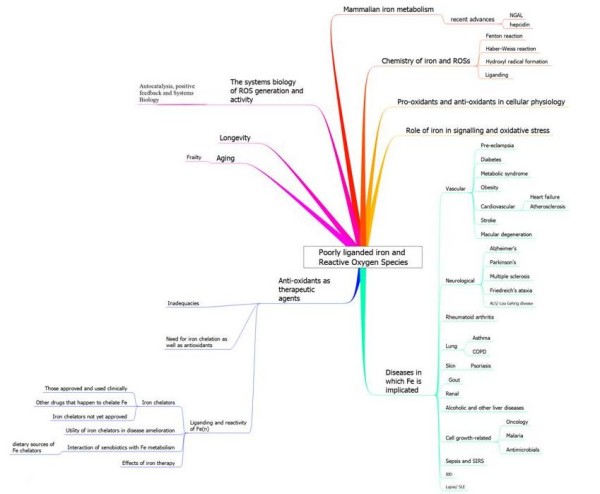
- The paper develops a systems-biology argument rather than reporting primary experimental data; it includes a mind-map overview and discusses iron chemistry, chelator pharmacology, signalling pathways, and disease associations.
Limitations
- Stated: the review notes that it is “not easy to state at this time” how much deranged iron metabolism is causal in accelerated aging, that few studies have been mechanistically specific, and that interpretation of chelation experiments is not always clear-cut.
- Stated: for pre-eclampsia, no serum hepcidin measurements had been reported to date; for obesity, the authors “see no major evidence as yet for a causative role of deranged iron metabolism or chelation in causing obesity.”
- Evident: this is a broad narrative synthesis, not a systematic review with formal search/selection criteria or quantitative meta-analysis, and many disease links are presented as mechanistic hypotheses supported by dispersed, often indirect evidence.
Model-written summary of a shortened version of the paper’s full text (it is longer than we read). Check it against the paper before relying on it.
Integrity signals
Registry
Cites
Statistics
Figures
Verification
Claims the paper makes
32 Valid · 6 Not valid · 122 Not checked · 46 Own results and interpretations
The sources with a verdict support this claim; the rest weren’t checked yet, have no full text we could read, or their verdicts aren’t rated yet.
In the paper
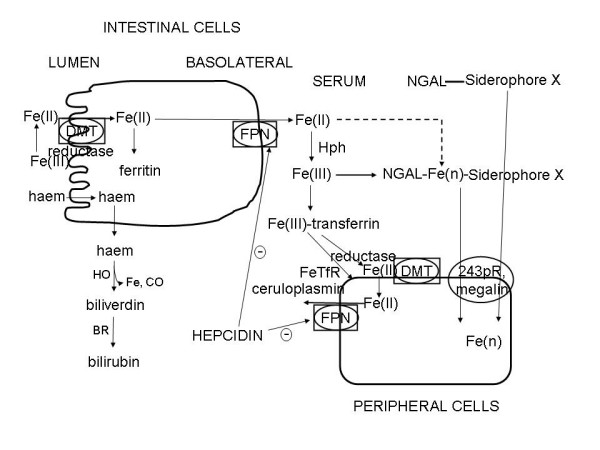
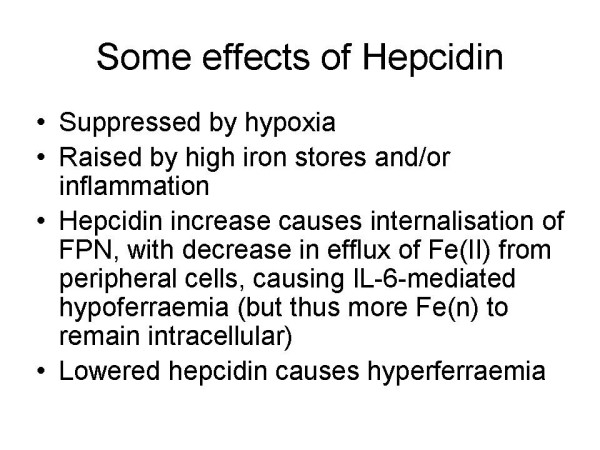
“that acts in part as a negative regulator of iron efflux [328] by causing the internalisation of ferroportin [329-333].”
§ Iron behaving badly: inappropriate iron chelation as a major contributor to the aetiology of vascular and other progressive inflammatory and degenerative diseases > Mammalian iron metabolism > Hepcidin
What the sources say
- Supportedcites [328] Knutson MD Oukka M Koss LM Aydemir F Wessling-Resnick M Iron release from macrophages after erythrophagocytosis is up-regulated by ferroportin 1 overexpression and down-regulated by hepcidin Proc Natl Acad Sci USA 2005 102 1324 8 15665091 PMC547844 source
Citation [328] is attached to the claim that hepcidin negatively regulates iron efflux, not to the subsequent internalisation mechanism cited to [329–333]. The Discussion calls hepcidin a negative regulator of iron export, and the Results report reduced iron release from hepcidin-treated macrophages. (LLM, conf=0.94)
- Not checked yetcites [329] Nemeth E Tuttle MS Powelson J Vaughn MB Donovan A Ward DM Ganz T Kaplan J Hepcidin regulates cellular iron efflux by binding to ferroportin and inducing its internalization Science 2004 306 2090 2093 15514116 source
- Not checked yetcites [330] Delaby C Pilard N Goncalves AS Beaumont C Canonne-Hergaux F Presence of the iron exporter ferroportin at the plasma membrane of macrophages is enhanced by iron loading and down-regulated by hepcidin Blood 2005 106 3979 84 16081696 source
- Not checked yetcites [331] Ganz T Hepcidin – a regulator of intestinal iron absorption and iron recycling by macrophages Best Practice & Research Clinical Haematology 2005 18 171 182 15737883 source
- Supportedcites [332] Papanikolaou G Tzilianos M Christakis JI Bogdanos D Tsimirika K MacFarlane J Goldberg YP Sakellaropoulos N Ganz T Nemeth E Hepcidin in iron overload disorders Blood 2005 105 4103 4105 15671438 PMC1895089 source
The Abstract states that hepcidin inhibits cellular iron efflux by binding to ferroportin and inducing its internalization and degradation. The Introduction also states that hepcidin binds ferroportin and causes its internalization. (LLM, conf=0.94)
- Supportedcites [333] Lesbordes-Brion JC Viatte L Bennoun M Lou DQ Ramey G Houbron C Hamard G Kahn A Vaulont S Targeted disruption of the hepcidin 1 gene results in severe hemochromatosis Blood 2006 108 1402 1405 16574947 source
The Introduction states that hepcidin limits iron egress by binding to ferroportin and inducing its internalization and degradation, decreasing cellular iron export. This supports the attributed role as a negative regulator of iron efflux. (LLM, conf=0.94)
plainstates a cause- Asserted: passes — The authors put it forward as true.
- Checkable: passes — It can be checked against evidence.
- Load-bearing: unclear — It is unclear whether the paper’s conclusions depend on it.
- Based: passes — The paper gives a reason why it holds.
- Supported
The cited sources support only part of this claim — read each source’s verdict below.
In the paper
“the well-known adverse vascular effects of homocysteine (in inhibiting flow-mediated dilatation) are in fact iron-dependent [701-703]”
§ Iron behaving badly: inappropriate iron chelation as a major contributor to the aetiology of vascular and other progressive inflammatory and degenerative diseases > Some disease manifestations in which iron may be implicated > Cardiovascular diseases
What the sources say
- Partly supportedcites [701] Zheng H Dimayuga C Hudaihed A Katz SD Effect of dexrazoxane on homocysteine-induced endothelial dysfunction in normal subjects Arterioscler Thromb Vasc Biol 2002 22 E15 8 12117747 sourceExperimental — accuracy not yet measured
The Abstract and Results of Zheng et al. (2002) do show, as a measured fact in 10 healthy volunteers, that the iron-chelating prodrug dexrazoxane 'completely abrogate[d] the homocysteine-induced reduction in FMD' after a methionine load, without lowering homocysteine itself — so the source supports iron-dependence of homocysteine's inhibition of flow-mediated dilatation in that acute model. However, the paper hedges the causal/mechanistic claim it is credited with establishing: the Iron-Based Oxidative Stress section states homocysteine toxicity 'may be dependent in part on interactions with intracellular LMW-Fe2+', and the Conclusions say iron-based hydroxyl-radical production 'may contribute' and that chelation 'may have therapeutic potential'. The citing sentence asserts the effects 'are in fact iron-dependent' and 'well-known', a confident generalisation the source does not make, and the source's data come only from transient hyperhomocysteinemia in normal subjects, not from chronic or other vascular outcomes. (LLM, conf=0.72)
- Not checked yetcites [702] Zheng H Huang X Zhang Q Katz SD Iron sucrose augments homocysteine-induced endothelial dysfunction in normal subjects Kidney Int 2006 69 679 84 16395269 PMC2988421 source
- Not checked yetcites [703] Sullivan JL Is homocysteine an iron-dependent cardiovascular risk factor? Kidney Int 2006 69 642 4 16467888 source
boostedstates a cause- Asserted: passes — The authors put it forward as true.
- Checkable: passes — It can be checked against evidence.
- Load-bearing: passes — The paper’s conclusions depend on it.
- Based: passes — The paper gives a reason why it holds.
- Partly supported
The cited sources support only part of this claim — read each source’s verdict below.
In the paper
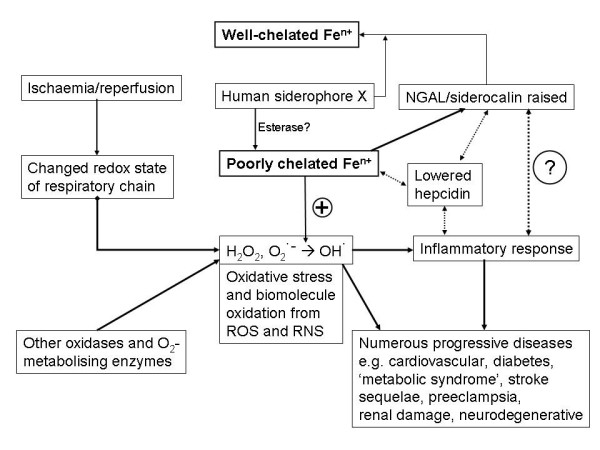
“There is no doubt that the iron-mediated causal chain of ischaemia → (su)peroxide → OH• radical formation occurs during the development of heart disease, especially during reperfusion injury [710-713]”
§ Iron behaving badly: inappropriate iron chelation as a major contributor to the aetiology of vascular and other progressive inflammatory and degenerative diseases > Some disease manifestations in which iron may be implicated > Cardiovascular diseases
What the sources say
- Not checked yetcites [710] Smith JK Carden DL Grisham MB Granger DN Korthuis RJ Role of iron in postischemic microvascular injury Am J Physiol 1989 256 H1472 7 2719141
- Partly supportedcites [711] Kukreja RC Hess ML The oxygen free radical system: from equations through membrane protein interactions to cardiovascular injury and protection Cardiovasc Res 1992 26 641 655 1423428 sourceExperimental — accuracy not yet measured
The Conclusions passage and the Figure 8 legend in our copy state exactly the iron-mediated chain the claim attributes: ischaemia/reperfusion generates superoxide, which dismutates to H2O2 and, in the presence of iron, forms .OH via iron-catalysed Fenton and Haber-Weiss reactions, initiating membrane lipid peroxidation and myocardial injury. However, the source hedges this as a proposal ('This hypothesis proposes...', radicals 'are thought to be responsible for much of this injury', 'it now appears that the oxygen free radical system plays a pivotal role'), and the Masterclass section explicitly notes 'Many investigators, but not all' found scavenger protection — so the citing sentence's 'there is no doubt' overstates the source. Our copy also bounds the mechanism to myocardial ischaemia/reperfusion, stunning, arrhythmias and inflammation, not to the general 'development of heart disease'. (LLM, conf=0.78)
- Not checked yetcites [712] Lesnefsky E Ye J Exogenous intracellular, but not extracellular, iron augments myocardial reperfusion injury Amer J Physiol 1994 266 H384 H392 8141338
- Not checked yetcites [713] Berenshtein E Mayer B Goldberg C Kitrossky N Chevion M Patterns of mobilization of copper and iron following myocardial ischemia: Possible predictive criteria for tissue injury J Mol Cell Cardiol 1997 29 3025 3034 9405177 source
boostedstates a cause- Asserted: passes — The authors put it forward as true.
- Checkable: passes — It can be checked against evidence.
- Load-bearing: passes — The paper’s conclusions depend on it.
- Based: passes — The paper gives a reason why it holds.
The cited sources support only part of this claim — read each source’s verdict below.
In the paper
“Iron and oxidised lipids are both found in atherosclerotic lesions [141,765-777]”
§ Iron behaving badly: inappropriate iron chelation as a major contributor to the aetiology of vascular and other progressive inflammatory and degenerative diseases > Some disease manifestations in which iron may be implicated > Atherosclerosis
What the sources say
- Not checked yetcites [141] Brewer GJ Iron and copper toxicity in diseases of aging, particularly atherosclerosis and Alzheimer's disease Exp Biol Med 2007 232 323 335 17259340
- Partly supportedcites [765] Smith C Mitchinson MJ Aruoma OI Halliwell B Stimulation of lipid peroxidation and hydroxyl radical generation by the contents of human atherosclerotic lesions Biochem J 1992 286 901 905 1329721 PMC1132988 sourceExperimental — accuracy not yet measured
The Abstract reports bleomycin-detectable iron in every sample from advanced human atherosclerotic lesions. It reports that the samples stimulated lipid peroxidation in rat liver microsomes, but does not establish that oxidised lipids were present in the lesions themselves; the Discussion describes lipid damage in lesions as a proposal. (LLM, conf=0.86)
- Not checked yetcites [766] Ramakrishna G Rooke TW Cooper LT Iron and peripheral arterial disease: revisiting the iron hypothesis in a different light Vasc Med 2003 8 203 210 14989563 source
- Supportedcites [767] Stadler N Lindner RA Davies MJ Direct detection and quantification of transition metal ions in human atherosclerotic plaques: evidence for the presence of elevated levels of iron and copper Arterioscler Thromb Vasc Biol 2004 24 949 54 15001454 source
The paper reports in its Abstract that oxidized lipids have been detected in human plaques. Its Discussion reports elevated iron levels in advanced human carotid lesions compared with healthy tissue. Together, these passages support the claim; page numbers are unavailable in our copy. (LLM, conf=0.91)
- Not checked yetcites [768] Wolff B Volzke H Ludemann J Robinson D Vogelgesang D Staudt A Kessler C Dahm JB John U Felix SB Association between high serum ferritin levels and carotid atherosclerosis in the study of health in Pomerania (SHIP) Stroke 2004 35 453 7 14726541 source
- Not checked yetcites [769] Roijers RB Dutta RK Mutsaers PHA Gijbels MJJ de Winther MPJ de Goeij JJM Vusse GJ van der Spatial correlation of trace elements with morphological features of atherosclerotic plaques Nuclear Instruments & Methods in Physics Research Section B-Beam Interactions with Materials and Atoms 2005 231 239 244 source
- Not checked yetcites [770] Stocker R Keaney JF New insights on oxidative stress in the artery wall Journal of Thrombosis and Haemostasis 2005 3 1825 1834 16102049 source
- Not checked yetcites [771] Stanley N Stadler N Woods AA Bannon PG Davies MJ Concentrations of iron correlate with the extent of protein, but not lipid, oxidation in advanced human atherosclerotic lesions Free Radical Biology and Medicine 2006 40 1636 1643 16632123 source
- Not checked yetcites [772] Watt F Rajendran R Ren MQ Tan BKH Halliwell B A nuclear microscopy study of trace elements Ca, Fe, Zn and Cu in atherosclerosis Nucl Instr Meth Phys Res B 2006 249 646 652 source
- Partly supportedcites [773] Fernandes de Godoy M Takakura IT Machado RD Grassi LV Nogueira PR Serum ferritin and obstructive coronary artery disease: Angiographic correlation Arquivos Brasileiros De Cardiologia 2007 88 430 433 17546273 sourceExperimental — accuracy not yet measured
The Discussion (page unavailable) reports increased expression of the iron-storage protein ferritin in atherosclerotic coronary arteries. It only speculates that this might affect lipid oxidation in the vessel wall; it does not establish that oxidised lipids were found in the lesions. (LLM, conf=0.82)
plainstates an association- Asserted: passes — The authors put it forward as true.
- Checkable: passes — It can be checked against evidence.
- Load-bearing: passes — The paper’s conclusions depend on it.
- Based: passes — The paper gives a reason why it holds.
The sources with a verdict support this claim; the rest weren’t checked yet, have no full text we could read, or their verdicts aren’t rated yet.
In the paper
“while iron chelation improves it [797-800].”
§ Iron behaving badly: inappropriate iron chelation as a major contributor to the aetiology of vascular and other progressive inflammatory and degenerative diseases > Some disease manifestations in which iron may be implicated > Atherosclerosis
What the sources say
- Supportedcites [797] Duffy SJ Biegelsen ES Holbrook M Russell JD Gokce N Keaney JF Jr Vita JA Iron chelation improves endothelial function in patients with coronary artery disease Circulation 2001 103 2799 804 11401935 source
The Abstract (Methods and Results / Conclusions) of our copy states that deferoxamine (an iron chelator) improved the blood flow response to methacholine in patients with coronary artery disease (P<0.01) and concludes 'Deferoxamine improved nitric oxide-mediated, endothelium-dependent vasodilation in patients with coronary artery disease.' The paper's title itself is 'Iron Chelation Improves Endothelial Function in Patients With Coronary Artery Disease,' so the paraphrase matches the source, with the population qualifier (CAD patients) intact; deferoxamine had no effect in normal volunteers, consistent with the stated finding. (LLM, conf=0.93)
- Supportedcites [798] Ishizaka N Saito K Mori I Matsuzaki G Ohno M Nagai R Iron chelation suppresses ferritin upregulation and attenuates vascular dysfunction in the aorta of angiotensin II-infused rats Arterioscler Thromb Vasc Biol 2005 25 2282 8 16100038 source
The Results section ('Relaxations of Aortic Segments') states that deferoxamine reversed the impaired acetylcholine-induced (endothelium-dependent) relaxation in the aortas of angiotensin II–infused rats (50.4±5.7% → 69.2±6.0%, n=10), i.e. an improvement in endothelial function, with Figure 4A showing the same. The Discussion frames this as iron chelation suppressing Ang II-induced impaired vascular relaxation, attributing it to reduced iron-catalysed oxidative stress. The support is for the direction of the claim in a rat aorta model and is described as partial rather than complete reversal, which is the only qualifier the unqualified citing sentence omits. (LLM, conf=0.80)
- Not checked yetcites [799] Saito K Ishizaka N Aizawa T Sata M Iso-o N Noiri E Mori I Ohno M Nagai R Iron chelation and a free radical scavenger suppress angiotensin II-induced upregulation of TGF-beta1 in the heart Am J Physiol Heart Circ Physiol 2005 288 H1836 43 15550525 source
- Not checked yetcites [800] Thomas SR Schulz E Keaney JF Hydrogen peroxide restrains endothelium-derived nitric oxide bioactivity – Role for iron-dependent oxidative stress Free Radical Biology and Medicine 2006 41 681 688 16864001 source
plainstates a cause- Asserted: passes — The authors put it forward as true.
- Checkable: passes — It can be checked against evidence.
- Load-bearing: passes — The paper’s conclusions depend on it.
- Based: passes — The paper gives a reason why it holds.
- Supported
81 more claims · 6 with their cited sources checked
Create a free account to see all 206 claims and to verify the 567 references still open.
- Probably not a substantial claim. 42
- It may state two separate claims as one. 95
Claims other papers make about this one
Each is checked against this paper’s own text: does it say what the citing paper says it does?
The source backs part of the claim, not all of it — or backs it for a different population, condition or comparison.
In the citing paper
“Due to the presence of high-affinity iron binding and storage proteins, the actual toxicity of iron is restricted to the so called “labile iron pool”.”
From The interaction of asbestos and iron in lung tissue revealed by synchrotron-based scanning X-ray microscopy (2013) · cites this paper as [18]
Experimental — accuracy not yet measuredThe source backs part of the claim, not all of it — or backs it for a different population, condition or comparison.
In the citing paper
“Fe (II) reacting with unsaturated fatty acids in the presence of H 2 O 2 can initiate lipid peroxidation cascade in biological membranes and lipoproteins by production of HO•.”
From Iron, Oxidative Stress and Health (2012) · cites this paper as Kell, 2009
Experimental — accuracy not yet measuredThe source backs part of the claim, not all of it — or backs it for a different population, condition or comparison.
In the citing paper
“Lipid peroxidation increases membrane fragility of cell organelles such as mitochondria, lysosomes and endoplasmic reticulum leading to impaired cell function”
From Iron, Oxidative Stress and Health (2012) · cites this paper as Kell, 2009
Experimental — accuracy not yet measuredThe cited source says what the claim attributes to it.
In the citing paper
“Importantly, dysregulated iron homeostasis is associated with progressive inflammatory and degenerative diseases, as well as cancer [2].”
From The utility of iron chelators in the management of inflammatory disorders (2015) · cites this paper as [2]
The cited source says what the claim attributes to it.
In the citing paper
“Concerning this issue, the recent reviews by D. Kell1819 analyse the wide but dispersed literature via a systems biology approach, and indicate that iron that is weakly complexed boosts many biochemical processes leading to a large variety of apparently unrelated diseases.”
From The interaction of asbestos and iron in lung tissue revealed by synchrotron-based scanning X-ray microscopy (2013) · cites this paper as [18]
3 more claims about this paper
Create a free account to see every claim other papers make about this one.
Citations
Cites
3 retracted
Items 201–400 of 2,563
Albert, M. A., Danielson, E., Rifai, N., Ridker, P. M., & for the PRINCE Investigators (2001) · JAMA · doi:10.1001/jama.286.1.64 · Cited by 1,641
Oxidative Stress and Vascular Disease
Madamanchi, N. R., Vendrov, A., & Runge, M. S. (2005) · Arteriosclerosis, Thrombosis, and Vascular Biology · doi:10.1161/01.atv.0000150649.39934.13 · Cited by 1,618 · cited 1×
“Atherosclerosis is a progressive inflammatory disease [637-667] characterized by the accumulation of both oxidised lipids and various fibrous elements in arteries, often as plaques [668; 669].”
BackgroundNF-κB links innate immunity to the hypoxic response through transcriptional regulation of HIF-1α
Rius, J., Guma, M., Schachtrup, C., Akassoglou, K., Zinkernagel, A. S., Nizet, V., Johnson, R. S., Haddad, G. G., & Karin, M. (2008) · Nature · doi:10.1038/nature06905 · Cited by 1,614 · cited 2×
“immunity via the NF-κB system [2069].”
Wright, J. S., Johnson, E. R., & DiLabio, G. A. (2001) · Journal of the American Chemical Society · doi:10.1021/ja002455u · Cited by 1,610
Taverna: a tool for the composition and enactment of bioinformatics workflows
Oinn, T., Addis, M., Ferris, J., Marvin, D., Senger, M., Greenwood, M., Carver, T., Glover, K., Pocock, M. R., Wipat, A., et al. (2004) · Bioinformatics · doi:10.1093/bioinformatics/bth361 · Cited by 1,602
Opening Pandora's Box: A Sociological Analysis of Scientists' Discourse.
Gieryn, T. F., Gilbert, G. N., & Mulkay, M. (1985) · Contemporary Sociology · doi:10.2307/2070471 · Cited by 1,580
Aggarwal, B. B. (2004) · Cancer Cell · doi:10.1016/j.ccr.2004.09.003 · Cited by 1,574
Cellular Defenses against Superoxide and Hydrogen Peroxide
Imlay, J. A. (2008) · Annual Review of Biochemistry · doi:10.1146/annurev.biochem.77.061606.161055 · Cited by 1,563 · cited 1×
“[55], and they are even used in cellular signalling (e.”
BackgroundBrzezinski, A. (1997) · New England Journal of Medicine · doi:10.1056/nejm199701163360306 · Cited by 1,549
Hepcidin, a key regulator of iron metabolism and mediator of anemia of inflammation
Ganz, T. (2003) · Blood · doi:10.1182/blood-2003-03-0672 · Cited by 1,544 · cited 2×
“In the liver and elsewhere, many aspects of iron metabolism are regulated by a recently discovered 25amino acid polypeptide called hepcidin [163; 186; 190; 212; 230-255] that acts in part as a negative regulator of iron efflux [256] by causing the internalisation of ferroportin [257-261].”
BackgroundMesoscale Iron Enrichment Experiments 1993-2005: Synthesis and Future Directions
Boyd, P. W., Jickells, T., Law, C. S., Blain, S., Boyle, E. A., Buesseler, K. O., Coale, K. H., Cullen, J. J., de Baar, H. J. W., Follows, M., et al. (2007) · Science · doi:10.1126/science.1131669 · Cited by 1,542 · cited 1×
“even at the scale of global CO2 fixation [1506-1509], its excess can in some circumstances [1510] correlate with”
BackgroundA Human Protein Atlas for Normal and Cancer Tissues Based on Antibody Proteomics
Uhlén, M., Björling, E., Agaton, C., Szigyarto, C. A.-K., Amini, B., Andersen, E., Andersson, A.-C., Angelidou, P., Asplund, A., Asplund, C., et al. (2005) · Molecular & Cellular Proteomics · doi:10.1074/mcp.m500279-mcp200 · Cited by 1,540
Iron Metabolism in Pathogenic Bacteria
Ratledge, C., & Dover, L. G. (2000) · Annual Review of Microbiology · doi:10.1146/annurev.micro.54.1.881 · Cited by 1,539 · cited 1×
“siderophores [170-189] (and for haemophores see”
NF-κB activation by reactive oxygen species: Fifteen years later
Gloire, G., Legrand-Poels, S., & Piette, J. (2006) · Biochemical Pharmacology · doi:10.1016/j.bcp.2006.04.011 · Cited by 1,537
The Role of Oxidative Stress in Carcinogenesis
Klaunig, J. E., & Kamendulis, L. M. (2004) · Annual Review of Pharmacology and Toxicology · doi:10.1146/annurev.pharmtox.44.101802.121851 · Cited by 1,533
Robustness in simple biochemical networks
Barkai, N., & Leibler, S. (1997) · Nature · doi:10.1038/43199 · Cited by 1,513
Dithiocarbamates as potent inhibitors of nuclear factor kappa B activation in intact cells.
Schreck, R., Meier, B., Männel, D. N., Dröge, W., & Baeuerle, P. A. (1992) · The Journal of experimental medicine · doi:10.1084/jem.175.5.1181 · Cited by 1,508 · cited 2×
“A variety of studies have shown that iron is involved in these signalling processes [1668; 1824; 1843; 1908-1912], probably again acting upstream of the IKK [472; 1910; 1913; 1914].”
BackgroundHalliwell, B. (2001) · Drugs & Aging · doi:10.2165/00002512-200118090-00004 · Cited by 1,502
CCR2 modulates inflammatory and metabolic effects of high-fat feeding
Weisberg, S. P., Hunter, D., Huber, R., Lemieux, J., Slaymaker, S., Vaddi, K., Charo, I., Leibel, R. L., & Jr., A. W. F. (2006) · Journal of Clinical Investigation · doi:10.1172/jci24335 · Cited by 1,497
Pathophysiology of acute wound healing
Li, J., Chen, J., & Kirsner, R. (2007) · Clinics in Dermatology · doi:10.1016/j.clindermatol.2006.09.007 · Cited by 1,486
Gene expression profile of aging and its retardation by caloric restriction
Lee, C.-K., Klopp, R. G., Weindruch, R., & Prolla, T. A. (1999) · Science · doi:10.1126/science.285.5432.1390 · Cited by 1,473 · cited 1×
“pretty well all species [1218-1223] – although possibly”
Background1,026 Experimental treatments in acute stroke
O'Collins, V. E., Macleod, M. R., Donnan, G. A., Horky, L. L., van der Worp, B. H., & Howells, D. W. (2006) · Annals of Neurology · doi:10.1002/ana.20741 · Cited by 1,460
Krauss, R. M., Eckel, R. H., Howard, B., Appel, L. J., Daniels, S. R., Deckelbaum, R. J., Erdman, J. W., Kris-Etherton, P., Goldberg, I. J., Kotchen, T. A., et al. (2000) · Circulation · doi:10.1161/01.cir.102.18.2284 · Cited by 1,458
KACSER, H., & Ja, B. (1973) · PubMed · Cited by 1,455
Guralnik, J. M., Eisenstaedt, R. S., Ferrucci, L., Klein, H. G., & Woodman, R. C. (2004) · Blood · doi:10.1182/blood-2004-05-1812 · Cited by 1,450
Cherny, R. A., Atwood, C. S., Xilinas, M. E., Gray, D. N., Jones, W. D., McLean, C. A., Barnham, K. J., Volitakis, I., Fraser, F. W., Kim, Y.-S., et al. (2001) · Neuron · doi:10.1016/s0896-6273(01)00317-8 · Cited by 1,447 · cited 7×
“Nevertheless, iron chelators have demonstrated therapeutic benefits in Alzheimer’s [1509; 1541; 1598-1600], Parkinson’s [928; 1560; 1601], cold-induced brain injury [1602; 1603], coronary disease [621; 694], renal diseases [1604], various kinds of infection [1592] and of course in iron overload diseases [1591; 1596].”
BackgroundInfluentialROS-Generating Mitochondrial DNA Mutations Can Regulate Tumor Cell Metastasis
Ishikawa, K., Takenaga, K., Akimoto, M., Koshikawa, N., Yamaguchi, A., Imanishi, H., Nakada, K., Honma, Y., & Hayashi, J.-I. (2008) · Science · doi:10.1126/science.1156906 · Cited by 1,444 · cited 1×
“In addition to the issues of smoking, the development of cancer can certainly contain an inflammatory component [1268-1278], and indeed the long-term use of prophylactic anti-inflammatory aspirin lowers colon cancer incidence by 40% (age-adjusted relative risk = 0.”
BackgroundAging, energy, and oxidative stress in neurodegenerative diseases
Beal, M. F. (1995) · Annals of Neurology · doi:10.1002/ana.410380304 · Cited by 1,440
CCR2 modulates inflammatory and metabolic effects of high-fat feeding
Weisberg, S. P. (2006) · Journal of Clinical Investigation · doi:10.1172/jci24335c1 · Cited by 1,425 · cited 1×
“aetiology to be inflammatory in nature [553, 571-590].”
BackgroundThe Haber–Weiss reaction and mechanisms of toxicity
Kehrer, J. P. (2000) · Toxicology · doi:10.1016/s0300-483x(00)00231-6 · Cited by 1,418 · cited 1×
“Weiss reaction [67] to produce Fe(II) again, thereby”
BackgroundHepcidin, a putative mediator of anemia of inflammation, is a type II acute-phase protein
Nemeth, E., Valore, E. V., Territo, M., Schiller, G., Lichtenstein, A., & Ganz, T. (2003) · Blood · doi:10.1182/blood-2002-10-3235 · Cited by 1,417 · cited 1×
“and is an early inflammatory marker [245, 341-345].”
BackgroundInflammation and Activated Innate Immunity in the Pathogenesis of Type 2 Diabetes
Pickup, J. C. (2004) · Diabetes Care · doi:10.2337/diacare.27.3.813 · Cited by 1,414 · cited 1×
“aetiology to be inflammatory in nature [553, 571-590].”
BackgroundPhenolic Acids in Foods: An Overview of Analytical Methodology
Robbins, R. J. (2003) · Journal of Agricultural and Food Chemistry · doi:10.1021/jf026182t · Cited by 1,413
Peto, R. (2000) · BMJ · doi:10.1136/bmj.321.7257.323 · Cited by 1,409
Accurate Multiplex Polony Sequencing of an Evolved Bacterial Genome
Shendure, J., Porreca, G. J., Reppas, N. B., Lin, X., McCutcheon, J. P., Rosenbaum, A. M., Wang, M. D., Zhang, K., Mitra, R. D., & Church, G. M. (2005) · Science · doi:10.1126/science.1117389 · Cited by 1,402
Erythropoietin crosses the blood–brain barrier to protect against experimental brain injury
Brines, M. L., Ghezzi, P., Keenan, S., Agnello, D., de Lanerolle, N. C., Cerami, C., Itri, L. M., & Cerami, A. (2000) · Proceedings of the National Academy of Sciences · doi:10.1073/pnas.97.19.10526 · Cited by 1,402 · cited 1×
“ischaemia/reperfusion injury and stroke [924-939], by a”
Schreck, R., Albermann, K., & Baeuerle, P. A. (1992) · Free Radical Research Communications · doi:10.3109/10715769209079515 · Cited by 1,401
Wu, C.-Y., & Benet, L. Z. (2005) · Pharmaceutical Research · doi:10.1007/s11095-004-9004-4 · Cited by 1,401 · cited 1×
“As with pharmaceutical drugs [1534; 1751-1753], there are significant problems with bioavailability [1754; 1755], although the necessary measurements are starting to come forward [1633; 1638; 1754-1760].”
BackgroundWolozin, B. (2000) · Archives of Neurology · doi:10.1001/archneur.57.10.1439 · Cited by 1,398
ETIOLOGY AND PATHOGENESIS OF PARKINSON'S DISEASE
Olanow, C. W., & Tatton, W. G. (1999) · Annual Review of Neuroscience · doi:10.1146/annurev.neuro.22.1.123 · Cited by 1,396
Oxidant signals and oxidative stress
Finkel, T. (2003) · Current Opinion in Cell Biology · doi:10.1016/s0955-0674(03)00002-4 · Cited by 1,393
The oxidative environment and protein damage
Davies, M. J. (2005) · Biochimica et Biophysica Acta (BBA) - Proteins and Proteomics · doi:10.1016/j.bbapap.2004.08.007 · Cited by 1,392
Heinrich, R., & Rapoport, T. A. (1974) · European Journal of Biochemistry · doi:10.1111/j.1432-1033.1974.tb03318.x · Cited by 1,386
Statins as a newly recognized type of immunomodulator.
Kwak, B., Mulhaupt, F., Myit, S., & Mach, F. (2000) · Nature Medicine · doi:10.1038/82219 · Cited by 1,383 · cited 1×
“[704] Kwak, B.”
Transition metals, ferritin, glutathione, and ascorbic acid in parkinsonian brains
Riederer, P., Sofic, E., Rausch, W., Schmidt, B., Reynolds, G. P., Jellinger, K., & Youdim, M. B. H. (1989) · Journal of Neurochemistry · doi:10.1111/j.1471-4159.1989.tb09150.x · Cited by 1,383
Oxidative Stress in Neurodegenerative Diseases
Simonian, N. A., & Coyle, J. T. (1996) · Annual Review of Pharmacology and Toxicology · doi:10.1146/annurev.pa.36.040196.000503 · Cited by 1,377
Global reconstruction of the human metabolic network based on genomic and bibliomic data
Duarte, N. C., Becker, S. A., Jamshidi, N., Thiele, I., Mo, M. L., Vo, T. D., Srivas, R., & Palsson, B. Ø. (2007) · Proceedings of the National Academy of Sciences · doi:10.1073/pnas.0610772104 · Cited by 1,374
Oxidative DNA damage and disease: induction, repair and significance
Evans, M. D., Dizdaroglu, M., & Cooke, M. S. (2004) · Mutation Research/Reviews in Mutation Research · doi:10.1016/j.mrrev.2003.11.001 · Cited by 1,372 · cited 1×
“leads to considerable DNA damage [74-76] and to the”
BackgroundFruit and vegetables, and cardiovascular disease: A review
Ness, A. R., & Powles, J. W. (1997) · International Journal of Epidemiology · doi:10.1093/ije/26.1.1 · Cited by 1,368
Oxygen Radical Absorbing Capacity of Anthocyanins
Wang, H., Cao, G., & Prior, R. L. (1997) · Journal of Agricultural and Food Chemistry · doi:10.1021/jf960421t · Cited by 1,365
Goetz, D. H., Holmes, M. A., Borregaard, N., Bluhm, M. E., Raymond, K. N., & Strong, R. K. (2002) · Molecular Cell · doi:10.1016/s1097-2765(02)00708-6 · Cited by 1,355 · cited 4×
“seminal paper of Goetz and colleagues [362] (and see”
BackgroundInfluentialIron accumulation in Alzheimer disease is a source of redox-generated free radicals
Smith, M. A., Harris, P. L. R., Sayre, L. M., & Perry, G. (1997) · Proceedings of the National Academy of Sciences · doi:10.1073/pnas.94.18.9866 · Cited by 1,355
Dysmetabolic Hyperferritinemia: All Iron Overload Is Not Hemochromatosis
Makker, J., Hanif, A., Bajantri, B., & Chilimuri, S. (2015) · Case Reports in Gastroenterology · doi:10.1159/000373883 · Cited by 1,351
Bioavailability and bioefficacy of polyphenols in humans. II. Review of 93 intervention studies
Williamson, G., & Manach, C. (2005) · The American Journal of Clinical Nutrition · doi:10.1093/ajcn/81.1.243s · Cited by 1,340
The plasticity of aging: insights from long-lived mutants
Kenyon, C. (2005) · Cell · doi:10.1016/j.cell.2005.02.002 · Cited by 1,338 · cited 1×
“evity is linked to age-related disease [1217].”
Mitochondrial metabolism of reactive oxygen species
Andreyev, A. Y., Kushnareva, Y. E., & Starkov, A. A. (2005) · Biochemistry (Moscow) · doi:10.1007/s10541-005-0102-7 · Cited by 1,336
The metallobiology of Alzheimer's disease
Bush, A. I. (2003) · Trends in Neurosciences · doi:10.1016/s0166-2236(03)00067-5 · Cited by 1,315 · cited 1×
“Iron (and in some cases copper) is also strongly implicated in a variety of neurodegenerative diseases [867] [868] [869] [870] [871] [872] [836] [873] [837] [850] [874] [875] [876] [877] [854] [878] [879] [880] [881] [842] [882] [883] [884] [885] [886] [887] [888] [889] [890] [891] [892] [893] [894] [895] [896] [897]…”
Inflammation and cancer: how hot is the link?
Aggarwal, B. B., Shishodia, S., Sandur, S. K., Pandey, M. K., & Sethi, G. (2006) · Biochemical Pharmacology · doi:10.1016/j.bcp.2006.06.029 · Cited by 1,312 · cited 1×
“In addition to the issues of smoking, the development of cancer can certainly contain an inflammatory component [1268-1278], and indeed the long-term use of prophylactic anti-inflammatory aspirin lowers colon cancer incidence by 40% (age-adjusted relative risk = 0.”
BackgroundKeaney, J. F., Larson, M. G., Vasan, R. S., Wilson, P. W. F., Lipinska, I., Corey, D., Massaro, J. M., Sutherland, P., Vita, J. A., & Benjamin, E. J. (2003) · Arteriosclerosis, Thrombosis, and Vascular Biology · doi:10.1161/01.atv.0000058402.34138.11 · Cited by 1,304 · cited 1×
“[674], while obesity is linked [675, 676] to urinary levels of”
BackgroundInflammation as a Cardiovascular Risk Factor
Willerson, J. T., & Ridker, P. M. (2004) · Circulation · doi:10.1161/01.cir.0000129535.04194.38 · Cited by 1,304 · cited 1×
“[731-762] characterized by the accumulation of both”
Genetics of gene expression and its effect on disease
Emilsson, V., Thorleifsson, G., Zhang, B., Leonardson, A. S., Zink, F., Zhu, J., Carlson, S., Helgason, A., Walters, G. B., Gunnarsdottir, S., et al. (2008) · Nature · doi:10.1038/nature06758 · Cited by 1,296 · cited 1×
“Importantly, considerable evidence suggests that obesity and inflammation are significantly related [121; 405; 490; 496; 551; 555-572], not least because adipocytes produce and release various adipokines including pro-inflammatory cytokines such”
BackgroundSultan, M., Schulz, M. H., Richard, H., Magen, A., Klingenhoff, A., Scherf, M., Seifert, M., Borodina, T., Soldatov, A., Parkhomchuk, D., et al. (2008) · Science · doi:10.1126/science.1160342 · Cited by 1,293 · cited 1×
“[2418-2423]), and one can anticipate using these”
Isolation and primary structure of NGAL, a novel protein associated with human neutrophil gelatinase
Kjeldsen, L., Johnsen, A. H., Sengeløv, H., & Borregaard, N. (1993) · Journal of Biological Chemistry · doi:10.1016/s0021-9258(18)82217-7 · Cited by 1,284
Phenolic compounds and their role in oxidative processes in fruits
Robards, K., Prenzler, P. D., Tucker, G., Swatsitang, P., & Glover, W. (1999) · Food Chemistry · doi:10.1016/s0308-8146(99)00093-x · Cited by 1,277 · cited 1×
“may also act to chelate iron as well [1073, 1829-1843].”
BackgroundThe iron exporter ferroportin/Slc40a1 is essential for iron homeostasis
Donovan, A., Lima, C. A., Pinkus, J. L., Pinkus, G. S., Zon, L. I., Robine, S., & Andrews, N. C. (2005) · Cell Metabolism · doi:10.1016/j.cmet.2005.01.003 · Cited by 1,275 · cited 1×
“Iron(II) is subsequently exported through the basolateral membrane of the enterocyte by ferroportin-1 (FPN1) [209-211].”
BackgroundThe role of inflammation in CNS injury and disease
Lucas, S., Rothwell, N. J., & Gibson, R. M. (2006) · British Journal of Pharmacology · doi:10.1038/sj.bjp.0706400 · Cited by 1,272 · cited 1×
“[900] and to the formation of ROS and other damaging”
BackgroundMitochondrial Oxidative Stress: Implications for Cell Death
Orrenius, S., Gogvadze, V., & Zhivotovsky, B. (2007) · Annual Review of Pharmacology and Toxicology · doi:10.1146/annurev.pharmtox.47.120505.105122 · Cited by 1,272
Pleiotropic Effects of 3-Hydroxy-3-Methylglutaryl Coenzyme A Reductase Inhibitors
Takemoto, M., & Liao, J. K. (2001) · Arteriosclerosis, Thrombosis, and Vascular Biology · doi:10.1161/hq1101.098486 · Cited by 1,272 · cited 1×
“ogical disease-lowering benefit, while having little effect on plaques, is arguably well explained, especially within the context of the present review, via their additional anti-inflammatory effects [712; 736, 737, 738, 739, 740, 741, 742, 743, 744, 745, 746, 747, 748, 749, 750, 751, 752, 753, 754, 755, 756] [121; 71…”
BackgroundDandona, P., Aljada, A., Chaudhuri, A., Mohanty, P., & Garg, R. (2005) · Circulation · doi:10.1161/01.cir.0000158483.13093.9d · Cited by 1,263 · cited 2×
“Although some of its origins may be pre-natal [462], many of the features of these diseases are also seen in the Metabolic Syndrome [537-541].”
BackgroundMechanisms of Cell Death in Oxidative Stress
Ryter, S. W., Kim, H. P., Hoetzel, A., Park, J. W., Nakahira, K., Wang, X., & Choi, A. M. K. (2007) · Antioxidants & Redox Signaling · doi:10.1089/ars.2007.9.49 · Cited by 1,261 · cited 1×
“[1637; 2031; 2032]) seem to act via many of the same signalling pathways as do inflammatory agents [835; 1969; 2033-2042].”
BackgroundI NHIBITION OF C ARCINOGENESIS BY D IETARY P OLYPHENOLIC C OMPOUNDS
Yang, C. S., Landau, J. M., Huang, M.-T., & Newmark, H. L. (2001) · Annual Review of Nutrition · doi:10.1146/annurev.nutr.21.1.381 · Cited by 1,260 · cited 1×
“[1816-1819]), and – although possibly aminimum –”
Weinberg, E. D. (1978) · Microbiological Reviews · doi:10.1128/mmbr.42.1.45-66.1978 · Cited by 1,254
Mattson, M. P. (2008) · Ageing Research Reviews · doi:10.1016/j.arr.2007.08.007 · Cited by 1,253
Blum, D., Torch, S., Lambeng, N., Nissou, M.-F., Benabid, A.-L., Sadoul, R., & Verna, J.-M. (2001) · Progress in Neurobiology · doi:10.1016/s0301-0082(01)00003-x · Cited by 1,246
Base-excision repair of oxidative DNA damage
David, S. S., O'Shea, V. L., & Kundu, S. (2007) · Nature · doi:10.1038/nature05978 · Cited by 1,238 · cited 1×
“leads to considerable DNA damage [74-76] and to the”
BackgroundButelli, E., Titta, L., Giorgio, M., Mock, H.-P., Matros, A., Peterek, S., Schijlen, E. G. W. M., Hall, R. D., Bovy, A. G., Luo, J., et al. (2008) · Nature Biotechnology · doi:10.1038/nbt.1506 · Cited by 1,238 · cited 1×
“multiple steps in a pathway [1906] or modulation of”
BackgroundNicolas, G., Bennoun, M., Devaux, I., Beaumont, C., Grandchamp, B., Kahn, A., & Vaulont, S. (2001) · Proceedings of the National Academy of Sciences · doi:10.1073/pnas.151179498 · Cited by 1,233 · cited 1×
“In the liver and elsewhere, many aspects of iron metabolism are regulated by a recently discovered 25amino acid polypeptide called hepcidin [163; 186; 190; 212; 230-255] that acts in part as a negative regulator of iron efflux [256] by causing the internalisation of ferroportin [257-261].”
BackgroundUnderstanding the control of metabolism
(1997) · Choice Reviews Online · doi:10.5860/choice.34-6252 · Cited by 1,231
Grundy, S. M. (2011) · Atlas of Atherosclerosis and Metabolic Syndrome · doi:10.1007/978-1-4419-5839-6_1 · Cited by 1,223
Nicolas, G., Chauvet, C., Viatte, L., Danan, J. L., Bigard, X., Devaux, I., Beaumont, C., Kahn, A., & Vaulont, S. (2002) · Journal of Clinical Investigation · doi:10.1172/jci0215686 · Cited by 1,214 · cited 1×
“production [245, 339, 340] (Fig 3), such that just while”
BackgroundStochastic and genetic factors influence tissue-specific decline in ageing C. elegans
Herndon, L. A., Schmeissner, P. J., Dudaronek, J. M., Brown, P. A., Listner, K. M., Sakano, Y., Paupard, M. C., Hall, D. H., & Driscoll, M. (2002) · Nature · doi:10.1038/nature01135 · Cited by 1,214 · cited 1×
“with age, partly due to dietary reasons [1033] (and see [1034]). So too does the expression of NGAL/Lcn2/siderocalin, a process that can be reversed by melatonin [1035]. Mainstream theories of aging [123; 1036, 1037, 1038, 1039, 1040, 1041, 1042, 1043, 1044, 1045, 1046, 1047, 1048, 1049, 1050, 1051, 1052, 1053] recogn…”
BackgroundIn Vitro Selection of Functional Nucleic Acids
Wilson, D. S., & Szostak, J. W. (1999) · Annual Review of Biochemistry · doi:10.1146/annurev.biochem.68.1.611 · Cited by 1,206
The Regulation of Cellular Systems
Heinrich, R., & Schuster, S. (1996) · Springer eBooks · doi:10.1007/978-1-4613-1161-4 · Cited by 1,193
Minireview: The Adipocyte—At the Crossroads of Energy Homeostasis, Inflammation, and Atherosclerosis
Rajala, M. W., & Scherer, P. E. (2003) · Endocrinology · doi:10.1210/en.2003-0580 · Cited by 1,190 · cited 1×
“[573] Rajala, M.”
Oscillations in NF-κB Signaling Control the Dynamics of Gene Expression
Nelson, D. E., Ihekwaba, A. E. C., Elliott, M., Johnson, J. R., Gibney, C. A., Foreman, B. E., Nelson, G., See, V., Horton, C. A., Spiller, D. G., et al. (2004) · Science · doi:10.1126/science.1099962 · Cited by 1,186
Self-citationUNRAVELING THE MECHANISMS INVOLVED IN MOTOR NEURON DEGENERATION IN ALS
Bruijn, L. I., Miller, T. M., & Cleveland, D. W. (2004) · Annual Review of Neuroscience · doi:10.1146/annurev.neuro.27.070203.144244 · Cited by 1,185
The elephant in uremia: Oxidant stress as a unifying concept of cardiovascular disease in uremia
Himmelfarb, J., Stenvinkel, P., Ikizler, T. A., & Hakim, R. M. (2002) · Kidney International · doi:10.1046/j.1523-1755.2002.00600.x · Cited by 1,179 · cited 1×
“[731-762] characterized by the accumulation of both”
Targeting Antioxidants to Mitochondria by Conjugation to Lipophilic Cations
Murphy, M. P., & Smith, R. A. J. (2007) · Annual Review of Pharmacology and Toxicology · doi:10.1146/annurev.pharmtox.47.120505.105110 · Cited by 1,173 · cited 1×
“(One might also comment that the intracellular location of the antioxidants may be an issue, and the view that targeting them to mitochondria may well have considerable merit [1497; 1498].”
BackgroundOxidative stress and Alzheimer disease
Christen, Y. (2000) · The American Journal of Clinical Nutrition · doi:10.1093/ajcn/71.2.621s · Cited by 1,158
Multi-target-Directed Ligands To Combat Neurodegenerative Diseases
Cavalli, A., Bolognesi, M. L., Minarini, A., Rosini, M., Tumiatti, V., Recanatini, M., & Melchiorre, C. (2008) · Journal of Medicinal Chemistry · doi:10.1021/jm7009364 · Cited by 1,152
Dexter, D. T., Wells, F. R., Lee, A. J., Agid, F., Agid, Y., Jenner, P., & Marsden, C. D. (1989) · Journal of Neurochemistry · doi:10.1111/j.1471-4159.1989.tb07264.x · Cited by 1,149
Kalantar-Zadeh, K. (2017) · American Journal of Nephrology · doi:10.1159/000455387 · Cited by 1,148
The segment polarity network is a robust developmental module
von Dassow, G., Meir, E., Munro, E. M., & Odell, G. M. (2000) · Nature · doi:10.1038/35018085 · Cited by 1,144
Wenger, R. H. (2002) · The FASEB Journal · doi:10.1096/fj.01-0944rev · Cited by 1,135 · cited 2×
“The source of the iron appears to be excess angiogenesis and leakage from blood vessels catalysed by VEGF, and a PEGylated aptamer [1203- 1205] against VEGF (pegaptanib) or a monoclonal antibody (ranibizumab) have shown significant promise in the treatment of macular degeneration [1206-1211].”
BackgroundCloning and expression of the human erythropoietin gene.
Lin, F. K., Suggs, S., Lin, C. H., Browne, J. K., Smalling, R., Egrie, J. C., Chen, K. K., Fox, G. M., Martin, F., & Stabinsky, Z. (1985) · Proceedings of the National Academy of Sciences · doi:10.1073/pnas.82.22.7580 · Cited by 1,134 · cited 1×
“erythropoiesis [2145-2147] (hence its name, of course),”
Choi, A. M., & Alam, J. (1996) · American Journal of Respiratory Cell and Molecular Biology · doi:10.1165/ajrcmb.15.1.8679227 · Cited by 1,126 · cited 1×
“degradation pathway via haem oxygenase [276, 277] to”
A Systematic Screening of Total Antioxidants in Dietary Plants
Halvorsen, B. L., Holte, K., Myhrstad, M. C. W., Barikmo, I., Hvattum, E., Remberg, S. F., Wold, A.-B., Haffner, K., Baugerød, H., Andersen, L. F., et al. (2002) · The Journal of Nutrition · doi:10.1093/jn/132.3.461 · Cited by 1,122 · cited 1×
“tannins and anthocyanidins) [1821-1828] so implicated”
REGULATION OF GENE EXPRESSION BY REACTIVE OXYGEN
Dalton, T. P., Shertzer, H. G., & Puga, A. (1999) · Annual Review of Pharmacology and Toxicology · doi:10.1146/annurev.pharmtox.39.1.67 · Cited by 1,118
Pharmacological and Clinical Aspects of Heme Oxygenase
Abraham, N. G., & Kappas, A. (2008) · Pharmacological Reviews · doi:10.1124/pr.107.07104 · Cited by 1,115 · cited 2×
“it is thereby internalized, while the iron in heme is liberated by heme oxygenase-1 (HO1) [252-254].”
Oberley, L. W. (1988) · Free Radical Biology and Medicine · doi:10.1016/0891-5849(88)90036-6 · Cited by 1,105 · cited 1×
“disease even in 'normal' populations [594-603], and”
Multi-target therapeutics: when the whole is greater than the sum of the parts
Zimmermann, G. R., Lehár, J., & Keith, C. T. (2007) · Drug Discovery Today · doi:10.1016/j.drudis.2006.11.008 · Cited by 1,105
Youssef, S., Stüve, O., Patarroyo, J. C., Ruiz, P. J., Radosevich, J. L., Hur, E. M., Bravo, M., Mitchell, D. J., Sobel, R. A., Steinman, L., et al. (2002) · Nature · doi:10.1038/nature01158 · Cited by 1,097
Inflammation and cancer: An ancient link with novel potentials
Perwez Hussain, S., & Harris, C. C. (2007) · International Journal of Cancer · doi:10.1002/ijc.23173 · Cited by 1,097
Shipley, B. (2000) · Cited by 1,089
Cuzzocrea, S., Riley, D. P., Caputi, A. P., & Salvemini, D. (2001) · Pharmacological Reviews · doi:10.1016/s0031-6997(24)01484-4 · Cited by 1,087 · cited 2×
“In this regard, it is especially interesting that the antioxidant melatonin is particularly effective in preventing septic shock [1423-1425], and a variety of suitable antioxidants have shown potential here [1411; 1426-1429], notably in combination with iron chelators [1430; 1431] (and see also [1432; 1433]).”
BackgroundA role for local inflammation in the formation of drusen in the aging eye
Anderson, D. H., Mullins, R. F., Hageman, G. S., & Johnson, L. V. (2002) · American Journal of Ophthalmology · doi:10.1016/s0002-9394(02)01624-0 · Cited by 1,087
Vulpe, C. D., Kuo, Y.-M., Murphy, T. L., Cowley, L., Askwith, C., Libina, N., Gitschier, J., & Anderson, G. J. (1999) · Nature Genetics · doi:10.1038/5979 · Cited by 1,084 · cited 1×
“hephaestin (Hp) [272] before it is bound by transferrin”
BackgroundIsolation and characterization of genomic and cDNA clones of human erythropoietin
Jacobs, K., Shoemaker, C., Rudersdorf, R., Neill, S. D., Kaufman, R. J., Mufson, A., Seehra, J., Jones, S. S., Hewick, R., Fritsch, E. F., et al. (1985) · Nature · doi:10.1038/313806a0 · Cited by 1,080
Free Radicals and Antioxidants: A Personal View
Halliwell, B. (2009) · Nutrition Reviews · doi:10.1111/j.1753-4887.1994.tb01453.x · Cited by 1,077 · cited 1×
“Many small molecule metabolic markers for this kind of oxidative stress induced by the hydroxyl radical and other ‘reactive oxygen species’ (ROSs) are known [16; 52-59], and include 8oxo-guanine [60-64], 8-hydroxy guanine [65], 8-hydroxy-2’-deoxy-guanosine [66; 67], 8-oxo-GTP [68], 4-hydroxy-2-hexenal [69], 4-hydroxy-…”
BackgroundInstitutional Repositories: Essential Infrastructure For Scholarship In The Digital Age
Lynch, C. A. (2003) · portal: Libraries and the Academy · doi:10.1353/pla.2003.0039 · Cited by 1,072 · cited 1×
“and other repositories [2441, 2442] of full-text papers.”
BackgroundPapanikolaou, G., & Pantopoulos, K. (2005) · Toxicology and Applied Pharmacology · doi:10.1016/j.taap.2004.06.021 · Cited by 1,070 · cited 1×
“[99; 104; 151; 167-186]), including a series on ‘iron imports’ [187-193], and for our present purposes (Fig 2) mainly involves the intestinal (mainly duodenal) uptake of Fe(II) (produced from Fe(III) using a luminal ferrireductase) via a divalent metal ion transporter DMT1/DCT1/NRAMP [194; 195] and its”
BackgroundMitochondrial reactive oxygen species in cell death signaling
Fleury, C., Mignotte, B., & Vayssière, J.-L. (2002) · Biochimie · doi:10.1016/s0300-9084(02)01369-x · Cited by 1,068 · cited 1×
“apoptosis [2035, 2036], aging [1199], and in diseases such”
BackgroundMitochondria, oxygen free radicals, disease and ageing
Raha, S., & Robinson, B. H. (2000) · Trends in Biochemical Sciences · doi:10.1016/s0968-0004(00)01674-1 · Cited by 1,066 · cited 1×
“It has largely defied efforts to uncover the genetic basis of any predisposition [1025], save for a very clear association with defects in a Cu/Zn superoxide dismutase [8; 1026-1028] that can obviously lead to an increase in the steady-state levels of superoxide (and hence hydroxyl radical formation).”
BackgroundTumor necrosis factor: a pleiotropic cytokine and therapuetic target
Tracey, M. D., & Cerami, P. D. (1994) · Annual Review of Medicine · doi:10.1146/annurev.med.45.1.491 · Cited by 1,063 · cited 1×
“[1582], and cellular responses via the Toll-Like Receptor”
BackgroundPhagocytes and oxidative stress
Babior, B. M. (2000) · The American Journal of Medicine · doi:10.1016/s0002-9343(00)00481-2 · Cited by 1,061 · cited 2×
“reaction of NO and superoxide) [46, 149-154] leading to”
BackgroundThe role of iron regulatory proteins in mammalian iron homeostasis and disease
Rouault, T. A. (2006) · Nature Chemical Biology · doi:10.1038/nchembio807 · Cited by 1,055 · cited 1×
“[226-229]), which is not our main focus.”
Richardson, L., & Ruby, S. (2007) · CERN Document Server (European Organization for Nuclear Research) · Cited by 1,053
Robustness of cellular functions
Stelling, J., Sauer, U., Szallasi, Z., Doyle, F. J., & Doyle, J. (2004) · Cell · doi:10.1016/j.cell.2004.09.008 · Cited by 1,049
Cell death by necrosis: towards a molecular definition
Golstein, P., & Kroemer, G. (2007) · Trends in Biochemical Sciences · doi:10.1016/j.tibs.2006.11.001 · Cited by 1,044 · cited 1×
“Consequently, the recognition of a series of symptoms contingent on this initial inflammatory response has led to the development of the idea of a Systemic Inflammatory Response Syndrome (SIRS) [1379-1389] that leads to the MOF, both via apoptosis [1390] and necrosis [1391; 1392].”
BackgroundInteractions of Flavonoids with Iron and Copper Ions: A Mechanism for their Antioxidant Activity
Mira, L., Tereza Fernandez, M., Santos, M., Rocha, R., Helena Florêncio, M., & Jennings, K. R. (2002) · Free Radical Research · doi:10.1080/1071576021000016463 · Cited by 1,043 · cited 1×
“76, 1677, 1678, 1679, 1680, 1681, 1682] have groups such as the catechol moiety that are part of the known iron-binding elements of microbial siderophores. Examples include flavones such as quercetin [1658; 1683, 1684, 1685, 1686, 1687, 1688, 1689, 1690, 1691, 1692, 1693], rutin [1658; 1686; 1687; 1694; 1695], baicali…”
Weitz-Schmidt, G., Welzenbach, K., Brinkmann, V., Kamata, T., Kallen, J., Bruns, C., Cottens, S., Takada, Y., & Hommel, U. (2001) · Nature Medicine · doi:10.1038/89058 · Cited by 1,041
Cruciferous vegetables and human cancer risk: epidemiologic evidence and mechanistic basis
HIGDON, J., DELAGE, B., WILLIAMS, D., & DASHWOOD, R. (2007) · Pharmacological Research · doi:10.1016/j.phrs.2007.01.009 · Cited by 1,039
Reactions of oxyl radicals with DNA
Breen, A. P., & Murphy, J. A. (1995) · Free Radical Biology and Medicine · doi:10.1016/0891-5849(94)00209-3 · Cited by 1,038 · cited 1×
“the following appear to be a result of reactions involving OH [2294, 2295]: 8-oxo-2'-deoxyguanosine (oxo(8)dG)”
BackgroundMolecular mechanisms of quinone cytotoxicity
O'Brien, P. J. (1991) · Chemico-Biological Interactions · doi:10.1016/0009-2797(91)90029-7 · Cited by 1,029 · cited 1×
“Iron (and in some cases copper) is also strongly implicated in a variety of neurodegenerative diseases [867] [868] [869] [870] [871] [872] [836] [873] [837] [850] [874] [875] [876] [877] [854] [878] [879] [880] [881] [842] [882] [883] [884] [885] [886] [887] [888] [889] [890] [891] [892] [893] [894] [895] [896] [897]…”
Erythropoietin Therapy for Acute Stroke Is Both Safe and Beneficial
Ehrenreich, H., Hasselblatt, M., Dembowski, C., Cepek, L., Lewczuk, P., Stiefel, M., Rustenbeck, H.-H., Breiter, N., Jacob, S., Knerlich, F., et al. (2002) · Molecular Medicine · doi:10.1007/bf03402029 · Cited by 1,028
Artemisinins target the SERCA of Plasmodium falciparum
Eckstein-Ludwig, U., Webb, R. J., van Goethem, I. D. A., East, J. M., Lee, A. G., Kimura, M., O'Neill, P. M., Bray, P. G., Ward, S. A., & Krishna, S. (2003) · Nature · doi:10.1038/nature01813 · Cited by 1,027
Update on Mechanisms of Ischemic Acute Kidney Injury
Devarajan, P. (2006) · Journal of the American Society of Nephrology · doi:10.1681/asn.2006010017 · Cited by 1,026 · cited 4×
“Exogenously administered NGAL also markedly upregulates heme oxygenase-1, a proven multifunctional protective agent in experimental Acute Kidney Injury (AKI) that is thought to work by limiting iron uptake, promoting intracellular iron release, enhancing production of antioxidants such as biliverdin and carbon monoxid…”
BackgroundInfluentialCalorie restriction, SIRT1 and metabolism: understanding longevity
Bordone, L., & Guarente, L. (2005) · Nature Reviews Molecular Cell Biology · doi:10.1038/nrm1616 · Cited by 1,020 · cited 1×
“pretty well all species [1218-1223] – although possibly”
BackgroundErythropoietin prevents neuronal apoptosis after cerebral ischemia and metabolic stress
Sirén, A.-L., Fratelli, M., Brines, M., Goemans, C., Casagrande, S., Lewczuk, P., Keenan, S., Gleiter, C., Pasquali, C., Capobianco, A., et al. (2001) · Proceedings of the National Academy of Sciences · doi:10.1073/pnas.051606598 · Cited by 1,019 · cited 1×
“ischaemia/reperfusion injury and stroke [924-939], by a”
Pesticides and oxidative stress: a review.
Abdollahi, M. R., Ranjbar, A., Shadnia, S., Nikfar, S., & Rezaie, A. R. (2004) · PubMed · Cited by 1,006
A functional genomics strategy that uses metabolome data to reveal the phenotype of silent mutations
Raamsdonk, L. M., Teusink, B., Broadhurst, D., Zhang, N., Hayes, A., Walsh, M. C., Berden, J. A., Brindle, K. M., Kell, D. B., Rowland, J. J., et al. (2001) · Nature Biotechnology · doi:10.1038/83496 · Cited by 1,005
Self-citationOxidative stress and the use of antioxidants in diabetes: Linking basic science to clinical practice
Johansen, J. S., Harris, A. K., Rychly, D. J., & Ergul, A. (2005) · Cardiovascular Diabetology · doi:10.1186/1475-2840-4-5 · Cited by 1,003
Butterfield, D. A., & Lauderback, C. M. (2002) · Free Radical Biology and Medicine · doi:10.1016/s0891-5849(02)00794-3 · Cited by 1,001
SYSTEMIC LUPUS ERYTHEMATOSUS: REVIEW OF THE LITERATURE AND CLINICAL ANALYSIS OF 138 CASES
HARVEY, A. M., SHULMAN, L. E., TUMULTY, P. A., CONLEY, C. L., & SCHOENRICH, E. H. (1954) · Medicine · doi:10.1097/00005792-195412000-00001 · Cited by 993
Interleukin-1 and neuronal injury
Allan, S. M., Tyrrell, P. J., & Rothwell, N. J. (2005) · Nature Reviews Immunology · doi:10.1038/nri1664 · Cited by 992 · cited 5×
“As with most if 11 not all of the other diseases we review here, studies of pro-inflammatory markers (such as TNF-α, IL-1 and C-reactive protein [485]) during the development of diabetes show its aetiology to be inflammatory in nature [468; 486-505].”
BackgroundInfluentialRitchie, C. W., Bush, A. I., Mackinnon, A., Macfarlane, S., Mastwyk, M., MacGregor, L., Kiers, L., Cherny, R., Li, Q.-X., Tammer, A., et al. (2003) · Archives of Neurology · doi:10.1001/archneur.60.12.1685 · Cited by 988 · cited 1×
“f it can be bad), toxicity, selectivity and so on, and their design is consequently highly non-trivial [1500; 1505]. Nevertheless, iron chelators have demonstrated therapeutic benefits in Alzheimer’s [1541; 1598, 1599, 1600], Parkinson’s [928; 1560; 1601], cold-induced brain injury [1602; 1603], coronary disease [621;…”
BackgroundRapid appearance and local toxicity of amyloid-β plaques in a mouse model of Alzheimer’s disease
Meyer-Luehmann, M., Spires-Jones, T. L., Prada, C., Garcia-Alloza, M., de Calignon, A., Rozkalne, A., Koenigsknecht-Talboo, J., Holtzman, D. M., Bacskai, B. J., & Hyman, B. T. (2008) · Nature · doi:10.1038/nature06616 · Cited by 987 · cited 1×
“formation precedes neurodegeneration [974].”
Afanas'ev, I. B., Dcrozhko, A. I., Brodskii, A. V., Kostyuk, V. A., & Potapovitch, A. I. (1989) · Biochemical Pharmacology · doi:10.1016/0006-2952(89)90410-3 · Cited by 982 · cited 1×
“soflavones, stilbenes, flavanones, catechins (flavan-3-ols), chalcones, tannins and anthocyanidins) [1650, 1651, 1652, 1653, 1654, 1655, 1656, 1657] so implicated may also act to chelate iron as well [963; 1658, 1659, 1660, 1661, 1662, 1663, 1664, 1665, 1666, 1667, 1668, 1669, 1670, 1671, 1672]. This is reasonable giv…”
Immunohistochemical detection of 4-hydroxynonenal protein adducts in Parkinson disease.
Yoritaka, A., Hattori, N., Uchida, K., Tanaka, M., Stadtman, E. R., & Mizuno, Y. (1996) · Proceedings of the National Academy of Sciences · doi:10.1073/pnas.93.7.2696 · Cited by 981 · cited 1×
“neurodegenerative diseases [920, 944-957] such as”
Joseph, J. A., Shukitt-Hale, B., Denisova, N. A., Bielinski, D., Martin, A., McEwen, J. J., & Bickford, P. C. (1999) · The Journal of Neuroscience · doi:10.1523/jneurosci.19-18-08114.1999 · Cited by 980 · cited 2×
“indica extract [1879], strawberries [1907], spinach [1907]”
Vascular Remodeling in Hypertension: Roles of Apoptosis, Inflammation, and Fibrosis
Intengan, H. D., & Schiffrin, E. L. (2001) · Hypertension · doi:10.1161/hy09t1.096249 · Cited by 979 · cited 1×
“inflammatory in nature [678-686], is related to the”
BackgroundOxidative stress and the pathogenesis of Parkinson's disease
Jenner, P., & Olanow, C. W. (1996) · Neurology · doi:10.1212/wnl.47.6_suppl_3.161s · Cited by 971 · cited 1×
“neurodegenerative diseases [920, 944-957] such as”
IRON AND THE SEX DIFFERENCE IN HEART DISEASE RISK
Sullivan, J. (1981) · The Lancet · doi:10.1016/s0140-6736(81)92463-6 · Cited by 969 · cited 1×
“was proposed by Jerome Sullivan in 1981 [695-698]”
MethodToward a Consensus Definition for COPD Exacerbations
Rodriguez-Roisin, R. (2000) · Chest · doi:10.1378/chest.117.5_suppl_2.398s · Cited by 969 · cited 1×
“exacerbation of COPD (AECOPD) is defined [1372] as”
BackgroundEndres, M., Laufs, U., Huang, Z., Nakamura, T., Huang, P., Moskowitz, M. A., & Liao, J. K. (1998) · Proceedings of the National Academy of Sciences · doi:10.1073/pnas.95.15.8880 · Cited by 966
Reactive oxygen species in tumor progression
Storz, P. (2005) · Frontiers in Bioscience · doi:10.2741/1667 · Cited by 957 · cited 1×
“significance in promoting oncogenesis [1290-1305].”
Beneficial Cardiovascular Pleiotropic Effects of Statins
Davignon, J. (2004) · Circulation · doi:10.1161/01.cir.0000131517.20177.5a · Cited by 955 · cited 1×
“[715] Davignon, J.”
Qinghaosu (Artemisinin): The Price of Success
White, N. J. (2008) · Science · doi:10.1126/science.1155165 · Cited by 954 · cited 1×
“cytotoxic) mode of action of artemisinin [1336; 1338-1346], and this reaction is in fact inhibited by iron chelators [1347] such that a combined artemisinin-chelator therapy would be contraindicated.”
BackgroundMori, K., Lee, H. T., Rapoport, D., Drexler, I. R., Foster, K., Yang, J., Schmidt-Ott, K. M., Chen, X., Li, J. Y., Weiss, S., et al. (2005) · Journal of Clinical Investigation · doi:10.1172/jci23056 · Cited by 954
Free radical-induced damage to DNA: mechanisms and measurement
Dizdaroglu, M., Jaruga, P., Birincioglu, M., & Rodriguez, H. (2002) · Free Radical Biology and Medicine · doi:10.1016/s0891-5849(02)00826-2 · Cited by 953
Schaible, U. E., & Kaufmann, S. H. E. (2004) · Nature Reviews Microbiology · doi:10.1038/nrmicro1046 · Cited by 945
Taverna: a tool for building and running workflows of services
Hull, D., Wolstencroft, K., Stevens, R., Goble, C., Pocock, M. R., Li, P., & Oinn, T. (2006) · Nucleic Acids Research · doi:10.1093/nar/gkl320 · Cited by 943
Explaining How “High-Grade” Systemic Inflammation Accelerates Vascular Risk in Rheumatoid Arthritis
Sattar, N., McCarey, D. W., Capell, H., & McInnes, I. B. (2003) · Circulation · doi:10.1161/01.cir.0000099844.31524.05 · Cited by 942
Antioxidant and Antiproliferative Activities of Common Vegetables
Chu, Y.-F., Sun, J., Wu, X., & Liu, R. H. (2002) · Journal of Agricultural and Food Chemistry · doi:10.1021/jf020665f · Cited by 937 · cited 1×
“A considerable number of studies with non-purified dietary constituents containing the above polyphenolic components have also shown promise in inhibiting diseases in which oxidative stress is implicated [1654; 1732-1734].”
BackgroundAptamers: An Emerging Class of Therapeutics
Nimjee, S. M., Rusconi, C. P., & Sullenger, B. A. (2005) · Annual Review of Medicine · doi:10.1146/annurev.med.56.062904.144915 · Cited by 937
Bergan, J. J., Schmid-Schönbein, G. W., Smith, P. D. C., Nicolaides, A. N., Boisseau, M. R., & Eklof, B. (2006) · New England Journal of Medicine · doi:10.1056/nejmra055289 · Cited by 933
Enterobactin: an archetype for microbial iron transport.
Raymond, K. N., Dertz, E. A., & Kim, S. S. (2003) · Proceedings of the National Academy of Sciences · doi:10.1073/pnas.0630018100 · Cited by 933 · cited 1×
“siderophores [170-189] (and for haemophores see”
Adipokines: molecular links between obesity and atheroslcerosis
Lau, D. C. W., Dhillon, B., Yan, H., Szmitko, P. E., & Verma, S. (2005) · American Journal of Physiology-Heart and Circulatory Physiology · doi:10.1152/ajpheart.01058.2004 · Cited by 931 · cited 1×
“[578] Lau, D.”
Hypoxia-inducible factor 1: oxygen homeostasis and disease pathophysiology
Semenza, G. L. (2001) · Trends in Molecular Medicine · doi:10.1016/s1471-4914(01)02090-1 · Cited by 930
Bacterial Iron Sources: From Siderophores to Hemophores
Wandersman, C., & Delepelaire, P. (2004) · Annual Review of Microbiology · doi:10.1146/annurev.micro.58.030603.123811 · Cited by 930
Inflammatory mediators in the elderly
Krabbe, K. S., Pedersen, M., & Bruunsgaard, H. (2004) · Experimental Gerontology · doi:10.1016/j.exger.2004.01.009 · Cited by 928
The oxidant stress hypothesis in Parkinson's disease: Evidence supporting it
Fahn, S., & Cohen, G. (1992) · Annals of Neurology · doi:10.1002/ana.410320616 · Cited by 927 · cited 1×
“neurodegenerative diseases [920, 944-957] such as”
Inflammation in Atherosclerosis: From Vascular Biology to Biomarker Discovery and Risk Prediction
Packard, R. R. S., & Libby, P. (2008) · Clinical Chemistry · doi:10.1373/clinchem.2007.097360 · Cited by 925
Life and Death: Metabolic Rate, Membrane Composition, and Life Span of Animals
Hulbert, A. J., Pamplona, R., Buffenstein, R., & Buttemer, W. A. (2007) · Physiological Reviews · doi:10.1152/physrev.00047.2006 · Cited by 925
Bjelakovic, G., Nikolova, D., Gluud, L. L., Simonetti, R. G., & Gluud, C. (2012) · Cochrane Database of Systematic Reviews · doi:10.1002/14651858.cd007176.pub2 · Cited by 924
Digicaylioglu, M., & Lipton, S. A. (2001) · Nature · doi:10.1038/35088074 · Cited by 923 · cited 2×
“[819] Digicaylioglu, M.”
BackgroundOxidative stress and regulation of glutathione in lung inflammation
Rahman, I., & MacNee, W. (2000) · European Respiratory Journal · doi:10.1034/j.1399-3003.2000.016003534.x · Cited by 923 · cited 1×
“The induction of NF-κB by ROSs appears to involve a coupling via the glutathione system [1835; 1863; 1864; 1888-1905] (and see also [1906; 1907]).”
MethodThe Mortality of Doctors in Relation to Their Smoking Habits
Doll, R., & Hill, A. B. (1954) · BMJ · doi:10.1136/bmj.1.4877.1451 · Cited by 922
Anti-Inflammatory Effects of Statins: Clinical Evidence and Basic Mechanisms
Jain, M. K., & Ridker, P. M. (2005) · Nature Reviews Drug Discovery · doi:10.1038/nrd1901 · Cited by 915
Radicals and oxidative stress in diabetes
West, I. C. (2000) · Diabetic Medicine · doi:10.1046/j.1464-5491.2000.00259.x · Cited by 913
Infotopia How Many Minds Produce Knowledge
Sunstein, C. R. (2006) · doi:10.1093/oso/9780195189285.001.0001 · Cited by 913
Extension of Life-Span with Superoxide Dismutase/Catalase Mimetics
Melov, S., Ravenscroft, J., Malik, S., Gill, M. S., Walker, D. W., Clayton, P. E., Wallace, D. C., Malfroy, B., Doctrow, S. R., & Lithgow, G. J. (2000) · Science · doi:10.1126/science.289.5484.1567 · Cited by 912
HIF-1 and human disease: one highly involved factor
Semenza, G. L. (2000) · Genes & Development · doi:10.1101/gad.14.16.1983 · Cited by 909 · cited 11×
“The active HIF is the HIF-1αβ heterodimer [2068].”
BackgroundInfluentialCircuitry of nuclear factor κB signaling
Hoffmann, A., & Baltimore, D. (2006) · Immunological Reviews · doi:10.1111/j.0105-2896.2006.00375.x · Cited by 907
Oxidative stress in Alzheimer’s disease
Smith, M. A., Rottkamp, C. A., Nunomura, A., Raina, A. K., & Perry, G. (2000) · Biochimica et Biophysica Acta (BBA) - Molecular Basis of Disease · doi:10.1016/s0925-4439(00)00040-5 · Cited by 895
Oxidative damage in Alzheimer's
Smith, M. A., Perry, G., Richey, P. L., Sayrec, L. M., Anderson, V. E., Beal, M. F., & Kowall, N. (1996) · Nature · doi:10.1038/382120b0 · Cited by 894
Reactive oxygen species and cell signaling: Respiratory burst in macrophage signaling
Forman, H. J., & Torres, M. (2002) · American Journal of Respiratory and Critical Care Medicine · doi:10.1164/rccm.2206007 · Cited by 891 · cited 1×
“The NF-κB system is intimately involved in this [503; 580; 625; 1271; 1272; 1299; 1822-1847].”
Variations in DNA elucidate molecular networks that cause disease
Chen, Y., Zhu, J., Lum, P. Y., Yang, X., Pinto, S., MacNeil, D. J., Zhang, C., Lamb, J., Edwards, S., Sieberts, S. K., et al. (2008) · Nature · doi:10.1038/nature06757 · Cited by 887 · cited 1×
“Importantly, considerable evidence suggests that obesity and inflammation are significantly related [121; 405; 490; 496; 551; 555-572], not least because adipocytes produce and release various adipokines including pro-inflammatory cytokines such”
BackgroundFunctional Aptamers and Aptazymes in Biotechnology, Diagnostics, and Therapy
Famulok, M., Hartig, J. S., & Mayer, G. (2007) · Chemical Reviews · doi:10.1021/cr0306743 · Cited by 887 · cited 1×
“VEGF, and a PEGylated aptamer [1332-1334] against VEGF”
BackgroundInsulin Resistance and Chronic Cardiovascular Inflammatory Syndrome
Fernández-Real, J. M., & Ricart, W. (2003) · Endocrine Reviews · doi:10.1210/er.2002-0010 · Cited by 886
Ferritins: A family of molecules for iron storage, antioxidation and more
Arosio, P., Ingrassia, R., & Cavadini, P. (2009) · Biochimica et Biophysica Acta (BBA) - General Subjects · doi:10.1016/j.bbagen.2008.09.004 · Cited by 886 · cited 1×
“dria (see [258-262]), while ferritin [263] too can bind”
BackgroundPurification of human erythropoietin.
Miyake, T., Kung, C. K., & Goldwasser, E. (1977) · Journal of Biological Chemistry · doi:10.1016/s0021-9258(19)63387-9 · Cited by 886
Keel, M., & Trentz, O. (2005) · Injury · doi:10.1016/j.injury.2004.12.037 · Cited by 885 · cited 2×
“(SIRS) [1541-1551] that leads to the MOF, both via”
BackgroundBerry anthocyanins as novel antioxidants in human health and disease prevention
Zafra‐Stone, S., Yasmin, T., Bagchi, M., Chatterjee, A., Vinson, J. A., & Bagchi, D. (2007) · Molecular Nutrition & Food Research · doi:10.1002/mnfr.200700002 · Cited by 884
Kregel, K. C., & Zhang, H. J. (2007) · American Journal of Physiology-Regulatory, Integrative and Comparative Physiology · doi:10.1152/ajpregu.00327.2006 · Cited by 883 · cited 1×
“[1078] Kregel, K.”
Robustness and Evolvability in Living Systems
Wagner, A. (2013) · Princeton University Press eBooks · doi:10.1515/9781400849383 · Cited by 882
Davey, H. M., & Kell, D. B. (1996) · Microbiological Reviews · doi:10.1128/mr.60.4.641-696.1996 · Cited by 879
Self-citationImmune Mechanisms in Atherosclerosis
Hansson, G. K. (2001) · Arteriosclerosis, Thrombosis, and Vascular Biology · doi:10.1161/hq1201.100220 · Cited by 876 · cited 1×
“[731-762] characterized by the accumulation of both”
Mignotte, B., & Vayssiere, J. (1998) · European Journal of Biochemistry · doi:10.1046/j.1432-1327.1998.2520001.x · Cited by 870
The lipocalin protein family: structural and sequence overview
Flower, D. R., North, A. C. T., & Sansom, C. E. (2000) · Biochimica et Biophysica Acta (BBA) - Protein Structure and Molecular Enzymology · doi:10.1016/s0167-4838(00)00148-5 · Cited by 868 · cited 1×
“Lipocalins [357] are a diverse group of ligand-binding”
BackgroundThe Kidney, Hypertension, and Obesity
Hall, J. E. (2003) · Hypertension · doi:10.1161/01.hyp.0000052314.95497.78 · Cited by 868 · cited 1×
“[556; 595-599]) and may be mediated mainly via ROSs [600].”
BackgroundMitochondrial damage induced by conditions of oxidative stress
Kowaltowski, A. J., & Vercesi, A. E. (1999) · Free Radical Biology and Medicine · doi:10.1016/s0891-5849(98)00216-0 · Cited by 866 · cited 1×
“to further production of radicals [28, 30, 2264], and the”
BackgroundTouyz, R. M. (2004) · Hypertension · doi:10.1161/01.hyp.0000138070.47616.9d · Cited by 866 · cited 1×
“give rise to the symptoms of 10 hypertension, proteinuria, and sudden oedema characteristic of preeclampsia [40]. Indeed, many studies implicate oxidative stress as a substantial contributor to this [344, 345, 346, 347, 348, 349, 350, 351, 352, 353, 354, 355, 356, 357, 358, 359, 360, 361, 362, 363, 364, 365, 366, 367,…”
BackgroundMetal-catalyzed oxidation of proteins. Physiological consequences
Stadtman, E. R., & Oliver, C. N. (1991) · Journal of Biological Chemistry · doi:10.1016/s0021-9258(18)52199-2 · Cited by 862 · cited 1×
“[47] Stadtman, E.”
Mutant antimicrobial peptide hepcidin is associated with severe juvenile hemochromatosis
Roetto, A., Papanikolaou, G., Politou, M., Alberti, F., Girelli, D., Christakis, J., Loukopoulos, D., & Camaschella, C. (2003) · Nature Genetics · doi:10.1038/ng1053 · Cited by 860 · cited 1×
“In the liver and elsewhere, many aspects of iron metabolism are regulated by a recently discovered 25amino acid polypeptide called hepcidin [163; 186; 190; 212; 230-255] that acts in part as a negative regulator of iron efflux [256] by causing the internalisation of ferroportin [257-261].”
BackgroundFassbender, K., Simons, M., Bergmann, C., Stroick, M., Lütjohann, D., Keller, P., Runz, H., Kühl, S., Bertsch, T., von Bergmann, K., et al. (2001) · Proceedings of the National Academy of Sciences · doi:10.1073/pnas.081620098 · Cited by 860
Parameter estimation in biochemical pathways: a comparison of global optimization methods
Moles, C. G., Mendes, P., & Banga, J. R. (2003) · Genome Research · doi:10.1101/gr.1262503 · Cited by 858 · cited 1×
“[1951-1954].”
Johnson, F. B., Sinclair, D. A., & Guarente, L. (1999) · Cell · doi:10.1016/s0092-8674(00)80567-x · Cited by 846
Ekbom, K. A. (1960) · Neurology · doi:10.1212/wnl.10.9.868 · Cited by 841
Biomarkers of free radical damage
de Zwart, L. L., Meerman, J. H. N., Commandeur, J. N. M., & Vermeulen, N. P. E. (1999) · Free Radical Biology and Medicine · doi:10.1016/s0891-5849(98)00196-8 · Cited by 838
Research works printed but not linked: 9
- Kell DB Iron behaving badly: inappropriate iron chelation as a major contributor to the aetiology of vascular and other progressive inflammatory and degenerative diseases 2008 PMC2672098 19133145
- Weinberg ED Exposing the hidden dangers of iron: what every medical professional should know about the impact of iron on the disease process 2004 Cumberland House
- Brown GM The living end: the future of death, aging and immortality 2008 Macmillan, London
- Warner DS Sheng H Batinić-Haberle I Oxidants, antioxidants and the ischemic brain J Exp Biol 2004 207 3221 31 15299043 · DOI · Paper page
- Lovejoy DB Richardson DR Iron chelators as anti-neoplastic agents: current developments and promise of the PIH class of chelators Curr Med Chem 2003 10 1035 49 12678675 · DOI · Paper page
- Kalt W Joseph JA Shukitt-Hale B Blueberries and human health: a review of current reseach J Amer Pomol Soc 2007 61 151 160
- Curin Y Andriantsitohaina R Polyphenols as potential therapeutical agents against cardiovascular diseases Pharmacological Reports 2005 57 97 107 16415490
- Tapscott D Williams A Wikinomics: how masscollaboration changes everything 2007 New Paradigm
- Leadbeater C We-think 2008 Profile Books, London
Cited by
Advances in metal-induced oxidative stress and human disease
Jomova, K., & Valko, M. (2011) · Toxicology · doi:10.1016/j.tox.2011.03.001 · Cited by 3,207
“To avoid harmful effect of free iron, ts proper chelation is of key importance (Kell, 2009).”
BackgroundFluorescent Sensors for Measuring Metal Ions in Living Systems
Carter, K. P., Young, A. M., & Palmer, A. E. (2014) · Chemical Reviews · doi:10.1021/cr400546e · Cited by 2,451
The role of iron and reactive oxygen species in cell death
Dixon, S. J., & Stockwell, B. R. (2014) · Nature Chemical Biology · doi:10.1038/nchembio.1416 · Cited by 2,381
Graves, D. B. (2012) · Journal of Physics D: Applied Physics · doi:10.1088/0022-3727/45/26/263001 · Cited by 1,518
Heavy metals: toxicity and human health effects
Jomova, K., Alomar, S. Y., Nepovimova, E., Kuca, K., & Valko, M. (2025) · Archives of Toxicology · doi:10.1007/s00204-024-03903-2 · Cited by 983
Metadata
- Authors
- Kell, D. B.
- Affiliations
- University of Manchester (GB)
- Corresponding author
- Kell, Douglas B
- ORCID
- Kell, Douglas B
- Venue
- BMC Medical Genomics
- Published
- 2009-01-08
- Volume
- 2
- Issue
- 1
- Pages
- 2-2
- ISSN
- 1755-8794 (ISSN-L)
- PMC
- PMC2672098
- OpenAlex
- W2159509177
- Semantic Scholar
- a7d7f7c7ee6e75c693c508186ec809c0e5d2def4
- Cited by
- 554
- References
- 2,555
- Citations by year
- 2026: 15 · 2025: 14 · 2024: 29 · 2023: 26 · 2022: 30 · 2021: 26 · 2020: 32 · 2019: 33 · 2018: 28 · 2017: 30 · 2016: 31 · 2015: 39 · 2014: 41 · 2013: 45 · 2012: 42
- FWCI
- 29.55
- Type
- journal article
- Language
- en
- Open access
- gold
- doi.org
- Licence
- Locations
- BMC Medical Genomics (publishedVersion, other-oa)
- PubMed Central (publishedVersion, cc-by)
- PubMed (publishedVersion)
- arXiv (Cornell University) (submittedVersion)
- DOAJ (DOAJ: Directory of Open Access Journals) (submittedVersion, cc-by-sa)
- Research Explorer (The University of Manchester) (submittedVersion)
- arXiv (Cornell University)
- Funders
- British Heart Foundation
- Engineering and Physical Sciences Research Council
- Biotechnology and Biological Sciences Research Council (BB/F018398/1)
- Topics
- Health Sciences › Medicine › Hematology › Iron Metabolism and Disorders
- Health Sciences › Medicine › Biochemistry (medical) › Antioxidant Activity and Oxidative Stress
- Health Sciences › Medicine › Physiology (medical) › Nitric Oxide and Endothelin Effects
- Keywords
- iron chelation, hydroxyl radicals, reactive oxygen species, oxidative stress, chronic inflammation, vascular disease, neurodegenerative diseases, aging, antioxidants, antioxidant polyphenols, NF-κB signaling, p38 MAPK, statins, erythropoietin, iron speciation
About these checks
Registry, retraction, Cites and statistics results are computed, not judged, with one exception: a printed reference that no index lists is read once by a model before it counts as a citation error. Claims are extracted by a model and kept only when their quote appears verbatim in the text; each cited source is then checked, with a model’s help, for whether it says what the claim relies on. Those verdicts can be wrong — read the claim’s quote and the cited source before relying on one.
The claim verdicts this report counts are experimental: their accuracy is not yet measured.
A language model drew the claims from the paper on 2026-10-05, under version 3 of the claim definition (model deepseek-v4.1-flash, prompt extract-v3).
A second model labelled each claim on 2026-10-05 (model jev-1.13-20260917, definition revision gold-guideline-v0.2).
Cited sources are checked with a language model’s help (gpt-6-sol and qwen3.8-omni-flash).
Statistics and arithmetic are recomputed, not judged.
Confidence bands are shown only for fields calibrated on our annotated test set. None is calibrated yet, so no band is shown.
What counts as a claim ›How we measure confidence ›How we check this ›
Are you an author, or do you see a problem with this page? Request a review
Data sources
Bibliographic data: Semantic Scholar, OpenAlex, Crossref.
Contains information from the Semantic Scholar Academic Graph Datasets, made available under the ODC Attribution License (ODC-BY 1.0).
Semantic Scholar’s data is described in: Kinney, R., et al. (2023). The Semantic Scholar Open Data Platform. arXiv:2301.10140.
