

Efficacy of a transdiagnostic Internet prevention approach in adolescents (EMPATIA study): study protocol of a randomized controlled trial
Open accessPublished version of a preprint
The DOI matches its Crossref record; 180 of the 182 references it cites were found in a registry or an index; 57 of the 111 sources its claims cite were checked for support.
Abstract
Background: Most mental disorders have their onset in adolescence. Preventive interventions during this period are important; however, help-seeking behavior is generally poor in this age group resulting in low treatment rates. Internet interventions are expected to be an effective, low-threshold, and scalable approach to overcome barriers to help-seeking, particularly for individuals experiencing subclinical symptoms. Internet-delivered indicated prevention seems promising as it targets individuals with minimal symptoms of mental disorders who might need care but are not help-seeking yet. Previous indicated prevention-approaches have mainly targeted specific risk-syndromes. However, this contradicts the increasing recognition of emerging psychopathology as a complex system characterized by co-occurrence and rapid shifts of subclinical symptoms cutting across diagnostic categories. Therefore, this study will investigate the efficacy, mediators, moderators, and core symptomatic changes of a transdiagnostic Internet-delivered indicated prevention program (EMPATIA program) for adolescents. Methods: This randomized controlled trial (RCT) will be conducted in a general population sample (planned n = 152) of adolescents aged 12–18 years with subclinical symptoms but without any current or past mental disorder. Participants will be randomly assigned to the EMPATIA program or a care as usual (CAU) control condition. The 8-week guided EMPATIA program encompasses 8 modules targeting the following transdiagnostic mechanisms: repetitive negative thinking, self-perfectionism, emotion regulation, intolerance of uncertainty, rejection sensitivity, and behavioral avoidance. Participants will be asked to answer online self-report questionnaires at baseline, after 8 weeks, and at 6-, 9-, and 12-month follow-up. Diagnostic telephone interviews will be conducted at baseline and at 12-month follow-up. Additionally, intervention-specific constructs (motivation, alliance, negative effects, satisfaction, adherence) will be assessed during and after the EMPATIA program. The level of self-reported general psychopathology post-intervention is the primary outcome. Discussion: Results will be discussed considering the potential of Internet interventions as a scalable, low-threshold option for indicated prevention in adolescents experiencing subclinical symptoms. The EMPATIA program introduces a novel Internet prevention program targeting six transdiagnostic mechanisms associated with various mental health outcomes. Thereby, this trial pursues a very timely and important topic because it may contribute to narrow the current care gap for adolescents, to prevent mental health problems and related negative consequences, and to promote mental health in the long-term. Trial registration: The trial was approved by Swissmedic (Registration Number: 10001035, 08/22/2022) and the Ethics Committee of Bern (Registration Number: 2022-D0036, 08/22/2022). The trial was registered at ClinicalTrials.gov NCT05934019 on 07–03-2023. © The Author(s) 2024.
Overview
CoChat Summary
## TL;DR
This paper is a study protocol for a randomized controlled trial testing whether the 8-week EMPATIA Internet prevention program reduces general psychopathology in adolescents with subclinical symptoms compared with care as usual. It plans to recruit 152 Swiss adolescents aged 12–18 and evaluate both symptom change and downstream effects such as functioning, service use, onset of mental disorders, and mediation/moderation mechanisms.
## Key findings
- The trial is planned as a randomized, controlled, single-blinded, monocentric, two-arm superiority RCT with a planned sample of 152 adolescents aged 12–18 years from the Swiss general population.
- The primary outcome is change in general psychopathology from baseline to post-intervention, measured with the SDQ-s; the protocol expects the EMPATIA program to produce small effects and states it is powered to detect at least f = 0.10 with 80% power, alpha = 0.05, and 20% dropout.
- The intervention is an 8-week guided Internet program with 8 modules plus a booster module 3 weeks after the last session, targeting six transdiagnostic mechanisms: repetitive negative thinking, self-perfectionism, emotion regulation, intolerance of uncertainty, rejection sensitivity, and behavioral avoidance.
- Secondary aims include effects on service usage, acceptability, safety, functioning, subclinical symptoms, and onset of mental disorders; the protocol also plans to test moderation by adherence, therapeutic alliance, and motivation and mediation by the targeted mechanisms.
## Methods
- Design: Randomized controlled trial with two parallel arms: EMPATIA program vs care as usual (CAU); participants allocated with equal probability using block randomization in REDCap, with single blinding of interviewers.
- Sample/data: Adolescents 12–18 years old, German-speaking, living in a German-speaking canton of Switzerland, with at least mild subclinical symptoms and no current or past mental disorder; assessments collected online via REDCap and by phone interviews at baseline and 12 months, with online follow-ups at 2 months, 6, 9, and 12 months.
- Analysis: Primary analyses use intention-to-treat mixed models for repeated measures with group, time, and time×group interaction; age and gender are covariates. Cox regression is planned for time to onset of mental disorder, and longitudinal SEM for moderation/mediation; missing data will be handled with multiple imputation if MAR/MCAR, otherwise with full information maximum likelihood.
## Limitations
- The authors explicitly note three limitations: no consensus on the most relevant transdiagnostic mechanisms in adolescents, uncertainty about how best to characterize and measure early-stage psychopathology in non-help-seeking individuals, and the need for future work on which personalization features matter most.
- The discussion also states that prior adolescent Internet prevention studies have had limitations such as lack of control groups, short follow-up periods, and small sample sizes; this is presented as background for the field, not as a limitation of this protocol specifically.
- Evident from the text: this is a protocol, so no efficacy results are reported yet; the paper provides planned methods and expected effects rather than completed findings.
Model-written summary. Check it against the paper before relying on it.
Integrity signals
Registry
Cites
Statistics
Figures
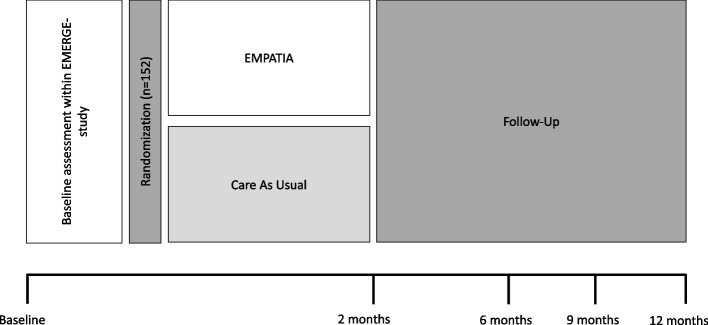
Verification
Claims the paper makes
32 Valid · 4 Not valid · 24 Not checked · 25 Own results and interpretations
The cited sources support only part of this claim — read each source’s verdict below.
In the paper
“Subclinical symptoms are highly prevalent in adolescence [13, 14]”
§ Efficacy of a transdiagnostic Internet prevention approach in adolescents (EMPATIA study): study protocol of a randomized controlled trial > Background and rationale {6a}
What the sources say
- Could not verifycites [13] Polanczyk GV, Salum GA, Sugaya LS, Caye A, Rohde LA. Annual Research Review: a meta-analysis of the worldwide prevalence of mental disorders in children and adolescents. J Child Psychol Psychiatry. 2015;56(3):345–65. 10.1007/s10488-012-0408-x. 25649325 10.1007/s10488-012-0408-x sourceExperimental — accuracy not yet measured
The Results (Substantive Results; page not available) describe symptom severity among youths entering treatment, not the prevalence of subclinical symptoms among adolescents generally. Searches for subclinical symptoms and their prevalence found no passage addressing that claim. (LLM, conf=0.74)
- Partly supportedcites [14] Werner-Seidler A, Maston K, Calear A, Batterham P, Larsen M, Torok M, et al. The Future Proofing Study: design, methods and baseline characteristics of a prospective cohort study of the mental health of Australian adolescents. Int J Methods Psychiatr Res. 2022;28(32): e1954. 10.1002/mpr.1954. 10.1002/mpr.1954 PMC10485316 36444163 sourceExperimental — accuracy not yet measured
The Results (Table 5; page not available) report substantial rates of mental-health symptoms among Australian adolescents, including 15.1% meeting the clinical cutoff for depression and 31.6% for psychological distress. Those figures concern clinical cutoffs; the paper does not establish how prevalent specifically subclinical symptoms are. (LLM, conf=0.84)
plain- Asserted: passes — The authors put it forward as true.
- Checkable: passes — It can be checked against evidence.
- Load-bearing: passes — The paper’s conclusions depend on it.
- Based: passes — The paper gives a reason why it holds.
- Could not verify
The cited sources support only part of this claim — read each source’s verdict below.
In the paper
“associated with neurobiological and cognitive abnormalities [15–18]”
§ Efficacy of a transdiagnostic Internet prevention approach in adolescents (EMPATIA study): study protocol of a randomized controlled trial > Background and rationale {6a}
What the sources say
- Not checked — no full text of the sourcecites [15] Besteher B, Gaser C, Nenadić I. Brain structure and subclinical symptoms: a dimensional perspective of psychopathology in the depression and anxiety spectrum. Neuropsychobiology. 2019;79(4–5):270–83. 10.1159/000501024. 31340207 10.1159/000501024 source
- Partly supportedcites [16] Catalan A, de SalazarPablo G, Aymerich C, Damiani S, Sordi V, Radua J, et al. Neurocognitive functioning in individuals at clinical high risk for psychosis: a systematic review and meta-analysis. JAMA Psychiatry. 2021;78(8):859–67. 10.1001/jamapsychiatry.2021.1290. 34132736 10.1001/jamapsychiatry.2021.1290 PMC8209603 sourceExperimental — accuracy not yet measured
The Findings section reports substantial neurocognitive deficits in individuals at clinical high risk for psychosis, supporting the cognitive part of the claim. The paper does not establish that subclinical symptoms are associated with neurobiological abnormalities; its mention of neuroimaging and electrophysiological predictors in the Discussion does not establish such abnormalities. The findings are also limited mainly to help-seeking high-risk samples, rather than people with subclinical symptoms generally (Discussion; page numbers unavailable). (LLM, conf=0.86)
- Supportedcites [17] Dotson VM, McClintock SM, Verhaeghen P, Kim JU, Draheim AA, Syzmkowicz SM, et al. Depression and cognitive control across the lifespan: a systematic review and meta-analysis. Neuropsychol Rev. 2020;30(4):461–76. 10.1007/s11065-020-09436-6. 32385756 10.1007/s11065-020-09436-6 PMC9637269 source
The Discussion explicitly states that subthreshold depressive symptoms are associated with cognitive deficits and structural and functional brain abnormalities. This supports the claim’s cognitive and neurobiological components; no page number is provided in the supplied copy. (LLM, conf=0.94)
- Not checked — no full text of the sourcecites [18] Zhang X, Cheng X, Chen J, Zhang B, Wu Q, Deng W, et al. Association of subthreshold manic symptoms and cognitive impairments in euthymic patients with bipolar disorder I. Psychiatry Res. 2019;278:303–8. 10.1016/j.psychres.2019.06.032. 31255953 10.1016/j.psychres.2019.06.032 source
plainstates an association- Asserted: passes — The authors put it forward as true.
- Checkable: passes — It can be checked against evidence.
- Load-bearing: unclear — It is unclear whether the paper’s conclusions depend on it.
- Based: passes — The paper gives a reason why it holds.
The cited sources support only part of this claim — read each source’s verdict below.
In the paper
“enhance the risk of developing a mental disorder later on [19–21]”
§ Efficacy of a transdiagnostic Internet prevention approach in adolescents (EMPATIA study): study protocol of a randomized controlled trial > Background and rationale {6a}
What the sources say
- Not checked — no full text of the sourcecites [19] Bertha EA, Balázs J. Subthreshold depression in adolescence: a systematic review. Eur Child Adolesc Psychiatry. 2013;22(10):589–603. 10.1007/s00787-013-0411-0. 23579389 10.1007/s00787-013-0411-0 source
- Partly supportedcites [20] Iorfino F, Scott EM, Carpenter JS, Cross SP, Hermens DF, Killedar M, et al. Clinical stage transitions in persons aged 12 to 25 years presenting to early intervention mental health services with anxiety, mood, and psychotic disorders. JAMA Psychiat. 2019;76(11):1167. 10.1001/jamapsychiatry.2019.2360. 10.1001/jamapsychiatry.2019.2360 PMC6714017 31461129 sourceExperimental — accuracy not yet measured
The Discussion reports that young people presenting for mental health care with stage 1b attenuated syndromes had a higher early risk of developing a full-threshold disorder than those with stage 1a nonspecific symptoms. The claim extends this finding to subclinical symptoms generally; the paper does not establish that all such symptoms increase risk, or that they cause later disorders. No page number is available in our copy. (LLM, conf=0.86)
- Supportedcites [21] Mennigen E, Bearden CE. Psychosis risk and development: what do we know from population-based studies? Biol Psychiatry. 2020;88(4):315–25. 10.1016/j.biopsych.2019.12.014. 32061373 10.1016/j.biopsych.2019.12.014 PMC7305046 source
The Abstract states that subclinical psychopathological symptoms pose a risk for later severe mental illness. The section “Are psychotic symptoms a public health concern?” further reports elevated risk of later psychotic and other mental disorders among people with psychotic symptoms. No page numbers are provided in our copy. (LLM, conf=0.91)
plainstates a cause- Asserted: passes — The authors put it forward as true.
- Checkable: passes — It can be checked against evidence.
- Load-bearing: passes — The paper’s conclusions depend on it.
- Based: passes — The paper gives a reason why it holds.
The cited sources support only part of this claim — read each source’s verdict below.
In the paper
“Indicated prevention programs in adolescents focusing on these mechanisms have found significant positive effects on subclinical depressive and/or anxiety symptoms in adolescents compared to no and to (active) wait-list control groups when delivered via the Internet [78, 94–98].”
§ Efficacy of a transdiagnostic Internet prevention approach in adolescents (EMPATIA study): study protocol of a randomized controlled trial > Background and rationale {6a}
What the sources say
- Not checked — no full text of the sourcecites [78] Shapiro MO, Allan NP, Raines AM, Schmidt NB. A randomized control trial examining the initial efficacy of an intolerance of uncertainty focused psychoeducation intervention. J Psychopathol Behav Assess. 2022. 10.1007/s10862-022-10002-y. 10.1007/s10862-022-10002-y source
- Partly supportedcites [94] Garcia-Lopez LJ, Jimenez-Vazquez D, Muela-Martinez JA, Piqueras JA, Espinosa-Fernandez L, Canals-Sans J, et al. Effectiveness of a transdiagnostic indicated preventive intervention for adolescents at high risk for anxiety and depressive disorders. Curr Psychol. 2023. 10.1007/s12144-023-05421-3. 10.1007/s12144-023-05421-3 sourceExperimental — accuracy not yet measured
The Design and Between-group analyses sections report an online transdiagnostic intervention for at-risk adolescents and significantly greater reductions in anxiety and mood symptoms than an active control condition after a booster session. This trial did not compare the intervention with no intervention or a wait-list control; its active control was an emotion-education and support program. (LLM, conf=0.86)
- Partly supportedcites [95] Sandín B, García-Escalera J, Valiente RM, Espinosa V, Chorot P. Clinical utility of an Internet-delivered version of the Unified Protocol for Transdiagnostic Treatment of Emotional Disorders in Adolescents (iUP-A): a pilot open trial. Int J Environ Res Public Health. 2020;17(22):8306. 10.3390/ijerph17228306. 33182711 10.3390/ijerph17228306 PMC7697415 sourceExperimental — accuracy not yet measured
Split into 2 atoms — 0 confirmed, 2 partially supported, 0 disputed, 0 misattributed, 0 unverifiable. Expand the claim to see per-atom verdicts.
- Partly supportedcites [96] Schmitt JC, Valiente RM, García-Escalera J, Arnáez S, Espinosa V, Sandín B, et al. Prevention of depression and anxiety in subclinical adolescents: effects of a transdiagnostic Internet-delivered CBT program. Int J Env Res Public Health. 2022;19:5365. 10.3390/ijerph19095365. 35564759 10.3390/ijerph19095365 PMC9101842 sourceExperimental — accuracy not yet measured
Split into 2 atoms — 1 confirmed, 1 partially supported, 0 disputed, 0 misattributed, 0 unverifiable. Expand the claim to see per-atom verdicts.
- Not checked — no full text of the sourcecites [97] Shu CY, Watson HJ, Anderson RA, Wade TD, Kane RT, Egan SJ. A randomized controlled trial of unguided internet cognitive behaviour therapy for perfectionism in adolescents: Impact on risk for eating disorders. Behav Res Ther. 2019;120:103429. 10.1016/j.brat.2019.103429. 31279221 10.1016/j.brat.2019.103429 source
- Not checked — no full text of the sourcecites [98] Topper M, Emmelkamp PMG, Watkins E, Ehring T. Prevention of anxiety disorders and depression by targeting excessive worry and rumination in adolescents and young adults: a randomized controlled trial. Behav Res Ther. 2017;90:123–36. 10.1016/j.brat.2016.12.015. 28049069 10.1016/j.brat.2016.12.015 source
plainstates a cause- Asserted: passes — The authors put it forward as true.
- Checkable: passes — It can be checked against evidence.
- Load-bearing: passes — The paper’s conclusions depend on it.
- Based: passes — The paper gives a reason why it holds.
The cited sources support only part of this claim — read each source’s verdict below.
In the paper
“Meta-analytic results in adult samples suggest that transdiagnostic Internet interventions targeting co-occurring subclinical symptoms of anxiety and depression can be as effective as diagnosis-specific interventions in improving the primary clinical diagnosis and comorbidity [74–76].”
§ Efficacy of a transdiagnostic Internet prevention approach in adolescents (EMPATIA study): study protocol of a randomized controlled trial > Background and rationale {6a}
What the sources say
- Not checked — no full text of the sourcecites [74] Newby JM, Twomey C, Yuan Li SS, Andrews G. Transdiagnostic computerised cognitive behavioural therapy for depression and anxiety: a systematic review and meta-analysis. J Affect Disord. 2016;199:30–41. 10.1016/j.jad.2016.03.018. 27060430 10.1016/j.jad.2016.03.018 source
- Not checked — no full text of the sourcecites [75] Păsărelu CR, Andersson G, Bergman Nordgren L, Dobrean A. Internet-delivered transdiagnostic and tailored cognitive behavioral therapy for anxiety and depression: a systematic review and meta-analysis of randomized controlled trials. Cogn Behav Ther. 2017;46(1):1–28. 10.1080/16506073.2016.1231219. 27712544 10.1080/16506073.2016.1231219 source
- Partly supportedcites [76] Schaeuffele C, Meine LE, Schulz A, Weber MC, Moser A, Paersch C, et al. A systematic review and meta-analysis of transdiagnostic cognitive behavioural therapies for emotional disorders. Nat Hum Behav. 2024. 10.1038/s41562-023-01787-3. 38228727 10.1038/s41562-023-01787-3 PMC10963275 sourceExperimental — accuracy not yet measured
Split into 2 atoms — 0 confirmed, 2 partially supported, 0 disputed, 0 misattributed, 0 unverifiable. Expand the claim to see per-atom verdicts.
hedged- Asserted: passes — The authors put it forward as true.
- Checkable: passes — It can be checked against evidence.
- Load-bearing: passes — The paper’s conclusions depend on it.
- Based: passes — The paper gives a reason why it holds.
26 more claims · 14 with their cited sources checked
Create a free account to see all 85 claims and to verify the 3 references still open.
- It may state two separate claims as one. 30
- Probably not a substantial claim. 41
Citations
Cites
Diagnostic and Statistical Manual of Mental Disorders
American Psychiatric Association (2013) · doi:10.1176/appi.books.9780890425596 · Cited by 116,369
Faul, F., Erdfelder, E., Lang, A.-G., & Buchner, A. (2007) · Behavior Research Methods · doi:10.3758/bf03193146 · Cited by 65,971 · cited 1×
“…( f = 0.10) for the interaction between time (five assessment points) and group (intervention vs. CAU), an a priori power analysis with G*Power [181] using repeated measures analyses of variance (ANOVA, within-between-interaction), an assumed power of 0.80, an alpha-level of 0.05, and an…”
MethodInfluentialHarris, P. A., Taylor, R., Thielke, R., Payne, J., Gonzalez, N., & Conde, J. G. (2009) · Journal of Biomedical Informatics · doi:10.1016/j.jbi.2008.08.010 · Cited by 51,384 · cited 8×
“The randomization table providing the basis for the computerized allocation in REDCap [182, 183] will be generated by an external researcher, who will be the only one with access to the original randomization table.”
MethodInfluentialThe REDCap consortium: building an international community of software platform partners
Harris, P. A., Taylor, R., Minor, B. L., Elliott, V., Fernandez, M., O'Neal, L., McLeod, L., Delacqua, G., Delacqua, F., Kirby, J., et al. (2019) · Journal of Biomedical Informatics · doi:10.1016/j.jbi.2019.103208 · Cited by 24,013 · cited 8×
“The randomization table providing the basis for the computerized allocation in REDCap [182, 183] will be generated by an external researcher, who will be the only one with access to the original randomization table.”
MethodInfluentialJacobson, N. S., & Truax, P. (1991) · Journal of Consulting and Clinical Psychology · doi:10.1037/0022-006x.59.1.12 · Cited by 7,770 · cited 1×
“The Reliable Change Index [179] will be used to assess symp - tom deterioration according to the primary outcome (i.e., SDQ-s).”
MethodSPIRIT 2013 explanation and elaboration: guidance for protocols of clinical trials
Chan, A.-W., Tetzlaff, J. M., Gotzsche, P. C., Altman, D. G., Mann, H., Berlin, J. A., Dickersin, K., Hrobjartsson, A., Schulz, K. F., Parulekar, W. R., et al. (2013) · BMJ · doi:10.1136/bmj.e7586 · Cited by 6,251 · cited 1×
“This study protocol follows the SPIRIT reporting guidelines [101].”
MethodLöwe, B., Decker, O., Müller, S., Brähler, E., Schellberg, D., Herzog, W., & Herzberg, P. Y. (2008) · Medical Care · doi:10.1097/mlr.0b013e318160d093 · Cited by 4,527 · cited 1×
“The PHQ-A has good psychometric properties to detect depression in adolescents [136]; (2) the Generalized Anxiety Disorder Screener ( GAD-7 [137]), a 7-item questionnaire assessing general anxiety symptoms on a 4-point Likert scale from Not at all (0) to Nearly every day (3).”
MethodPolanczyk, G. V., Salum, G. A., Sugaya, L. S., Caye, A., & Rohde, L. A. (2015) · Journal of Child Psychology and Psychiatry · doi:10.1111/jcpp.12381 · Cited by 3,990 · cited 1×
“Subclinical symptoms are highly prevalent in adolescence [13, 14], associated with neurobiological and cognitive abnormalities [15–18], and enhance the risk of developing a mental disorder later on [19–21].”
BackgroundAge at onset of mental disorders worldwide: Large-scale meta-analysis of 192 epidemiological studies
Solmi, M., Radua, J., Olivola, M., Croce, E., Soardo, L., Salazar de Pablo, G., Il Shin, J., Kirkbride, J. B., Jones, P., Kim, J. H., et al. (2022) · Molecular Psychiatry · doi:10.1038/s41380-021-01161-7 · Cited by 3,835 · cited 1×
“More than 34% of all life-time mental disorders have their onset before the age of 14 and over 60% before the age of 25 [4].”
BackgroundThe Lancet Commission on global mental health and sustainable development
Patel, V., Saxena, S., Lund, C., Thornicroft, G., Baingana, F., Bolton, P., Chisholm, D., Collins, P. Y., Cooper, J. L., Eaton, J., et al. (2018) · The Lancet · doi:10.1016/s0140-6736(18)31612-x · Cited by 3,692 · cited 3×
“This results in both low treatment rates of 38% for any mental disorder in this age group [38] and many adolescents in need of care who nevertheless remain untreated (known as the “care gap”) [24, 39, 40].”
BackgroundFearing the unknown: A short version of the Intolerance of Uncertainty Scale
Carleton, R. N., Norton, M. A. P. J., & Asmundson, G. J. G. (2007) · Journal of Anxiety Disorders · doi:10.1016/j.janxdis.2006.03.014 · Cited by 2,288 · cited 1×
“The IUS-12 demonstrated very good psycho - metric properties [163, 164] which have been replicated in clinical as well as nonclinical samples [164–166]; (6) the Children’s Rejection Sensitivity Questionnaire ( C-RSQ [167, 168]) assesses rejection sensitivity through six hypothetical interpersonal…”
BackgroundCarlbring, P., Andersson, G., Cuijpers, P., Riper, H., & Hedman-Lagerlöf, E. (2018) · Cognitive Behaviour Therapy · doi:10.1080/16506073.2017.1401115 · Cited by 1,232 · cited 1×
“Furthermore, they tend to be as effective as face-to-face interventions [53, 56, 57].”
BackgroundImportance of investing in adolescence from a developmental science perspective
Dahl, R. E., Allen, N. B., Wilbrecht, L., & Suleiman, A. B. (2018) · Nature · doi:10.1038/nature25770 · Cited by 1,196 · cited 1×
“Furthermore, they impose a huge burden on family and friends [9].”
BackgroundRadez, J., Reardon, T., Creswell, C., Lawrence, P. J., Evdoka-Burton, G., & Waite, P. (2021) · European Child & Adolescent Psychiatry · doi:10.1007/s00787-019-01469-4 · Cited by 1,119
Bjureberg, J., Ljótsson, B., Tull, M. T., Hedman, E., Sahlin, H., Lundh, L.-G., Bjärehed, J., DiLillo, D., Messman-Moore, T., Gumpert, C. H., et al. (2016) · Journal of Psychopathology and Behavioral Assessment · doi:10.1007/s10862-015-9514-x · Cited by 1,081 · cited 2×
“…has been demonstrated to be a reliable and valid transdiagnostic measure of RNT in adolescents [86]; (4) the Difficulties in Emotion Regulation Scale ( DERS-16 [159]), a 16-item questionnaire measuring emotion regulation on a 5-point Likert-type scale from Almost never (1) to Almost always (5).”
BackgroundMethodKaryotaki, E., Efthimiou, O., Miguel, C., Maas genannt Bermpohl, F., Furukawa, T. A., Cuijpers, P., Individual Patient Data Meta-Analyses for Depression (IPDMA-DE) Collaboration, Riper, H., Patel, V., Mira, A., et al. (2021) · JAMA Psychiatry · doi:10.1001/jamapsychiatry.2020.4364 · Cited by 866
The patient health questionnaire for adolescents
Johnson, J. G., Harris, E. S., Spitzer, R. L., & Williams, J. B. W. (2002) · Journal of Adolescent Health · doi:10.1016/s1054-139x(01)00333-0 · Cited by 810 · cited 2×
“…in sum scores or means of the following assessments measuring subclinical symptoms : (1) the Patient Health Questionnaire-9 for Adolescents ( PHQ-A [105]), a 9-item questionnaire assessing the frequency of depressive symptoms over the last 2 weeks on a 4-point Likert scale from Not at all (0) to…”
BackgroundRichardson, L. P., McCauley, E., Grossman, D. C., McCarty, C. A., Richards, J., Russo, J. E., Rockhill, C., & Katon, W. (2010) · Pediatrics · doi:10.1542/peds.2010-0852 · Cited by 806 · cited 1×
“The PHQ-A has good psychometric properties to detect depression in adolescents [136]; (2) the Generalized Anxiety Disorder Screener ( GAD-7 [137]), a 7-item questionnaire assessing general anxiety symptoms on a 4-point Likert scale from Not at all (0) to Nearly every day (3).”
MethodIncreasingly certain about uncertainty: Intolerance of uncertainty across anxiety and depression
Carleton, R. N., Mulvogue, M. K., Thibodeau, M. A., McCabe, R. E., Antony, M. M., & Asmundson, G. J. G. (2012) · Journal of Anxiety Disorders · doi:10.1016/j.janxdis.2012.01.011 · Cited by 775 · cited 1×
“…and has been used in adolescent clinical as well as in nonclinical samples before [160, 161]; (5) the Intolerance of Uncertainty Scale ( IUS-12 [162]), a 12-item questionnaire measuring reactions to uncertainty, ambiguous situations, and the future on a 5-point Likert scale from Not at all…”
MethodThe Somatic Symptom Scale–8 (SSS-8): A Brief Measure of Somatic Symptom Burden
Gierk, B., Kohlmann, S., Kroenke, K., Spangenberg, L., Zenger, M., Brähler, E., & Löwe, B. (2014) · JAMA Internal Medicine · doi:10.1001/jamainternmed.2013.12179 · Cited by 740 · cited 1×
“The SDQ-s has moderate to good psychometric properties [134]; (9) the Somatic Symptom Scale ( SSS-8 [147]), an 8-item questionnaire assessing somatic symptoms over the past 7 days on a 5-point scale from Not at all (0) to Very strongly (4).”
MethodAguirre Velasco, A., Cruz, I. S. S., Billings, J., Jimenez, M., & Rowe, S. (2020) · BMC Psychiatry · doi:10.1186/s12888-020-02659-0 · Cited by 736 · cited 1×
“Barriers to help-seeking in adolescence include a lack of confidence in mental health professionals, a preference for self-reliance, difficulties with physical and financial access to care, and feelings of embarrassment and stigma [34–37].”
BackgroundCornblatt, B. A., Auther, A. M., Niendam, T., Smith, C. W., Zinberg, J., Bearden, C. E., & Cannon, T. D. (2007) · Schizophrenia Bulletin · doi:10.1093/schbul/sbm029 · Cited by 630 · cited 1×
“The Global Functioning Social and Role Scale ( GFs/GFr [169]) will be carried out.”
The Lancet Psychiatry Commission on psychological treatments research in tomorrow's science
Holmes, E. A., Ghaderi, A., Harmer, C. J., Ramchandani, P. G., Cuijpers, P., Morrison, A. P., Roiser, J. P., Bockting, C. L. H., O'Connor, R. C., Shafran, R., et al. (2018) · The Lancet Psychiatry · doi:10.1016/s2215-0366(17)30513-8 · Cited by 624 · cited 1×
“Third, while the EMPATIA program allows for some personalization in terms of content, feedback, and usage, future studies are necessary to investigate what are the most relevant features for personalization depending on factors such as the developmental stage [189, 190].”
BackgroundEPA guidance on the early intervention in clinical high risk states of psychoses
Schmidt, S. J., Schultze-Lutter, F., Schimmelmann, B. G., Maric, N. P., Salokangas, R. K. R., Riecher-Rössler, A., van der Gaag, M., Meneghelli, A., Nordentoft, M., Marshall, M., et al. (2015) · European Psychiatry · doi:10.1016/j.eurpsy.2015.01.013 · Cited by 585
Self-citationKazdin, A. E. (2017) · Behaviour Research and Therapy · doi:10.1016/j.brat.2016.06.004 · Cited by 554
Designing and scaling up integrated youth mental health care
McGorry, P. D., Mei, C., Chanen, A., Hodges, C., Alvarez‐Jimenez, M., & Killackey, E. (2022) · World Psychiatry · doi:10.1002/wps.20938 · Cited by 546 · cited 1×
“They are easily scalable and offer help at a low threshold and with high confidentiality as well as privacy [2, 39].”
BackgroundNeumann, A., van Lier, P. A. C., Gratz, K. L., & Koot, H. M. (2010) · Assessment · doi:10.1177/1073191109349579 · Cited by 521 · cited 1×
“…has good psychometric properties in adolescents [159] and has been used in adolescent clinical as well as in nonclinical samples before [160, 161]; (5) the Intolerance of Uncertainty Scale ( IUS-12 [162]), a 12-item questionnaire measuring reactions to uncertainty, ambiguous situations, and…”
MethodPreventive psychiatry: a blueprint for improving the mental health of young people
Fusar‐Poli, P., Correll, C. U., Arango, C., Berk, M., Patel, V., & Ioannidis, J. P. A. (2021) · World Psychiatry · doi:10.1002/wps.20869 · Cited by 497 · cited 4×
“While universal and targeted prevention should be conceptualized as complementary approaches [22, 26], indicated prevention targeting individuals with minimal signs or symptoms of a mental disorder below the diagnostic threshold [22, 27] seems especially beneficial.”
BackgroundInfluentialBeyond the “at risk mental state” concept: transitioning to transdiagnostic psychiatry
McGorry, P. D., Hartmann, J. A., Spooner, R., & Nelson, B. (2018) · World Psychiatry · doi:10.1002/wps.20514 · Cited by 488 · cited 1×
“These earliest expressions of psychopathology have high rates of co-occurrence, change from one clinical picture to another, and only gradually differentiate into more distinct mental disorders [67, 69, 70].”
BackgroundLehtimaki, S., Martic, J., Wahl, B., Foster, K. T., & Schwalbe, N. (2021) · JMIR Mental Health · doi:10.2196/25847 · Cited by 488 · cited 4×
“This may also result in more representative samples (e.g., in terms of socio-economic background) than recruitment based on self-selection [46, 47].”
BackgroundInfluentialChisholm, D., Knapp, M. R. J., Knudsen, H. C., Amaddeo, F., Gaite, L., van Wijngaarden, B., & EPSILON Study Group (2000) · British Journal of Psychiatry · doi:10.1192/bjp.177.39.s28 · Cited by 480 · cited 1×
“The Client Socio-Demographic and Service Receipt Inventory-European Version ( CSSRI-EU [171, 172]) is a standardized interview to assess the utilization of help and help-seeking behavior.”
BackgroundPsychometric Validation of the Revised Family Affluence Scale: a Latent Variable Approach
the FAS Development Study Group, Torsheim, T., Cavallo, F., Levin, K. A., Schnohr, C., Mazur, J., Niclasen, B., & Currie, C. (2016) · Child Indicators Research · doi:10.1007/s12187-015-9339-x · Cited by 472 · cited 2×
“The FAS has demonstrated good psychometric properties to detect socioeconomic differences in adolescents in Western European countries [131, 132].”
BackgroundMethodRejection Sensitivity and Children's Interpersonal Difficulties
Downey, G., Lebolt, A., Rincón, C., & Freitas, A. L. (1998) · Child Development · doi:10.1111/j.1467-8624.1998.tb06161.x · Cited by 417 · cited 2×
“The measurement was developed and validated in a sample of fifth to seventh graders [167].”
BackgroundMethodMcEvoy, P. M., & Mahoney, A. E. J. (2011) · Journal of Anxiety Disorders · doi:10.1016/j.janxdis.2010.08.010 · Cited by 412
Liverpool, S., Mota, C. P., Sales, C. M. D., Čuš, A., Carletto, S., Hancheva, C., Sousa, S., Cerón, S. C., Moreno-Peral, P., Pietrabissa, G., et al. (2020) · Journal of Medical Internet Research · doi:10.2196/16317 · Cited by 408 · cited 1×
“…focus-group interviews have been carried out with young people from the general population to improve understandability as well as usability and to find the best way to implement features known to facilitate participation in Internet interventions, such as personalization and confidentiality [109].”
BackgroundEbert, D. D., Mortier, P., Kaehlke, F., Bruffaerts, R., Baumeister, H., Auerbach, R. P., Alonso, J., Vilagut, G., Martínez, K. U., Lochner, C., et al. (2019) · International Journal of Methods in Psychiatric Research · doi:10.1002/mpr.1782 · Cited by 407 · cited 1×
“Accordingly, adolescents use the Internet frequently when searching for mental health topics [35, 49] and are intrigued by Internet interventions on mental health promotion [50, 51], especially when subclinical symptoms are present [52].”
BackgroundSubthreshold depression in adolescence: a systematic review
Bertha, E. A., & Balázs, J. (2013) · European Child & Adolescent Psychiatry · doi:10.1007/s00787-013-0411-0 · Cited by 398 · cited 1×
“Subclinical symptoms are highly prevalent in adolescence [13, 14], associated with neurobiological and cognitive abnormalities [15–18], and enhance the risk of developing a mental disorder later on [19–21].”
BackgroundJacobson, N. S., & Truax, P. (1992) · Methodological issues & strategies in clinical research. · doi:10.1037/10109-042 · Cited by 384
Weisz, J. R., The Research Network on Youth Mental Health, Chorpita, B. F., Frye, A., Ng, M. Y., Lau, N., Bearman, S. K., Ugueto, A. M., Langer, D. A., & Hoagwood, K. E. (2011) · Journal of Consulting and Clinical Psychology · doi:10.1037/a0023307 · Cited by 381 · cited 1×
“Furthermore, participants are asked to re-assess the severity of the top personal problems [128] that were identified at the first session so they can perceive their own progress throughout the EMPATIA program.”
BackgroundCurrent Definitions of “Transdiagnostic” in Treatment Development: A Search for Consensus
Sauer-Zavala, S., Gutner, C. A., Farchione, T. J., Boettcher, H. T., Bullis, J. R., & Barlow, D. H. (2017) · Behavior Therapy · doi:10.1016/j.beth.2016.09.004 · Cited by 371 · cited 1×
“With regard to adolescent samples, transdiagnostic Internet interventions have often focused on psychological mechanisms common to several mental disorders instead of co-occurring, disorder-specific symptoms [77, 78].”
BackgroundBeatty, L., & Binnion, C. (2016) · International Journal of Behavioral Medicine · doi:10.1007/s12529-016-9556-9 · Cited by 347 · cited 1×
“As in other studies of Internet interventions, adherence will be calculated with respect to each of these variables and with respect to a composite measure [180].”
BackgroundTiirikainen, K., Haravuori, H., Ranta, K., Kaltiala-Heino, R., & Marttunen, M. (2019) · Psychiatry Research · doi:10.1016/j.psychres.2018.12.004 · Cited by 345 · cited 1×
“The GAD-7 produced good psychometric properties in adolescents [138] [146]) , an 8-item questionnaire measuring specific eating disorder psychopathology in children and adolescents over the past 28 days.”
BackgroundPăsărelu, C. R., Andersson, G., Bergman Nordgren, L., & Dobrean, A. (2017) · Cognitive Behaviour Therapy · doi:10.1080/16506073.2016.1231219 · Cited by 335
Associations between rejection sensitivity and mental health outcomes: A meta-analytic review
Gao, S., Assink, M., Cipriani, A., & Lin, K. (2017) · Clinical Psychology Review · doi:10.1016/j.cpr.2017.08.007 · Cited by 330 · cited 1×
“Among these are behavioral avoidance [79–82], repetitive negative thinking [83–85], intolerance of uncertainty [86], emotion regulation [87, 88], self-perfectionism [89–91], and rejection sensitivity [92, 93].”
BackgroundAndersson, G., Carlbring, P., Titov, N., & Lindefors, N. (2019) · The Canadian Journal of Psychiatry · doi:10.1177/0706743719839381 · Cited by 324 · cited 2×
“Internet interventions developed for adults have shown beneficial effects compared to wait-list controls for various mental disorders in clinical as well as general population samples [53–55].”
Background(1989) · PubMed · Cited by 298
Anxiety sensitivity and intolerance of uncertainty: requisites of the fundamental fears?
Nicholas Carleton, R., Sharpe, D., & Asmundson, G. J. G. (2007) · Behaviour Research and Therapy · doi:10.1016/j.brat.2007.04.006 · Cited by 293 · cited 1×
“The IUS-12 demonstrated very good psycho - metric properties [163, 164] which have been replicated in clinical as well as nonclinical samples [164–166]; (6) the Children’s Rejection Sensitivity Questionnaire ( C-RSQ [167, 168]) assesses rejection sensitivity through six hypothetical interpersonal…”
BackgroundMargraf, J., Cwik, J. C., Pflug, V., & Schneider, S. (2017) · Zeitschrift für Klinische Psychologie und Psychotherapie · doi:10.1026/1616-3443/a000430 · Cited by 293 · cited 4×
“The Kinder-DIPS [102, 103] will be used to assess the presence of current and past mental disorders and the time until the onset of a mental disorder.”
BackgroundMethodInfluentialTransdiagnostic clinical staging in youth mental health: a first international consensus statement
Shah, J. L., Scott, J., McGorry, P. D., Cross, S. P. M., Keshavan, M. S., Nelson, B., Wood, S. J., Marwaha, S., Yung, A. R., Scott, E. M., et al. (2020) · World Psychiatry · doi:10.1002/wps.20745 · Cited by 291 · cited 3×
“Ways to tackle this high rate of co-occurring subclinical symptoms and heterogeneous mental health needs are personalized transdiagnostic interventions [22, 71–73].”
BackgroundVallejo, M. A., Vallejo-Slocker, L., Fernández-Abascal, E. G., & Mañanes, G. (2018) · Frontiers in Psychology · doi:10.3389/fpsyg.2018.00037 · Cited by 286 · cited 2×
“…properties in online and offline formats [149, 150] and proved to be a useful instrument in the general population in different European countries [151]; (11) the Work and Social Adjustment Scale for Youth Self-Report Version ( WSAS-Y [151]), a 5-item questionnaire measuring adjustment to daily…”
BackgroundKazdin, A. E. (2019) · Journal of Child Psychology and Psychiatry · doi:10.1111/jcpp.12937 · Cited by 274 · cited 2×
“This results in both low treatment rates of 38% for any mental disorder in this age group [38] and many adolescents in need of care who nevertheless remain untreated (known as the “care gap”) [24, 39, 40].”
BackgroundTorok, M., Han, J., Baker, S., Werner-Seidler, A., Wong, I., Larsen, M. E., & Christensen, H. (2020) · The Lancet Digital Health · doi:10.1016/s2589-7500(19)30199-2 · Cited by 273 · cited 1×
“Meta-analyses with a specific focus on Internet-delivered prevention reported small significant effects on subclinical symptoms [45, 61–63], which were generally smaller or even insignificant for adolescents compared to adults [62].”
BackgroundFusar-Poli, P., Rocchetti, M., Sardella, A., Avila, A., Brandizzi, M., Caverzasi, E., Politi, P., Ruhrmann, S., & McGuire, P. (2015) · British Journal of Psychiatry · doi:10.1192/bjp.bp.114.157115 · Cited by 272 · cited 2×
“Given the evidence for risk enrichment for help-seeking samples compared to general population samples [42], it seems important to detect and to intervene as early as possible.”
BackgroundMcEvoy, P. M., Hyett, M. P., Shihata, S., Price, J. E., & Strachan, L. (2019) · Clinical Psychology Review · doi:10.1016/j.cpr.2019.101778 · Cited by 271 · cited 2×
“Among these are behavioral avoidance [79–82], repetitive negative thinking [83–85], intolerance of uncertainty [86], emotion regulation [87, 88], self-perfectionism [89–91], and rejection sensitivity [92, 93].”
BackgroundMethodTopper, M., Emmelkamp, P. M. G., Watkins, E., & Ehring, T. (2017) · Behaviour Research and Therapy · doi:10.1016/j.brat.2016.12.015 · Cited by 254 · cited 5×
“…interventions are applied that have already proven to be effective in adolescents or young adults (repetitive negative thinking [98, 111–114], intolerance of uncertainty [115–118], behavioral avoidance [81, 82, 111, 119], self-perfection-ism [120–123], emotion regulation [82,…”
BackgroundMethodResultInfluentialYouth Mental Health Should Be a Top Priority for Health Care in Canada
Malla, A., Shah, J., Iyer, S., Boksa, P., Joober, R., Andersson, N., Lal, S., & Fuhrer, R. (2018) · The Canadian Journal of Psychiatry · doi:10.1177/0706743718758968 · Cited by 232
Ladwig, I., Rief, W., & Nestoriuc, Y. (2014) · Verhaltenstherapie · doi:10.1159/000367928 · Cited by 227 · cited 3×
“…questionnaire measuring ado-lescent’s motivation for therapy on a 5-point Likert scale from Strongly disagree (1) to Strongly agree (5); (2) the Inventory for Assessment of Negative Effects in Psy-chotherapy ( INEP [174, 175]), a 12-item questionnaire assessing negative effects of the intervention.”
BackgroundMethodThe cross-national epidemiology of specific phobia in the World Mental Health Surveys
Wardenaar, K. J., Lim, C. C. W., Al-Hamzawi, A. O., Alonso, J., Andrade, L. H., Benjet, C., Bunting, B., de Girolamo, G., Demyttenaere, K., Florescu, S. E., et al. (2017) · Psychological Medicine · doi:10.1017/s0033291717000174 · Cited by 227 · cited 1×
“Notably, adolescents with a past and/or present diagnosis of a specific phobia will not be excluded as specific phobias are highly prevalent in adolescence but only a minority of them are clinically relevant and require treatment [106, 107].”
BackgroundHerrero, J., & Meneses, J. (2006) · Computers in Human Behavior · doi:10.1016/j.chb.2004.03.007 · Cited by 222 · cited 2×
“The PSS-4 has reliable psychometric properties in online and offline formats [149, 150] and proved to be a useful instrument in the general population in different European countries [151]; (11) the Work and Social Adjustment Scale for Youth Self-Report Version ( WSAS-Y [151]), a 5-item…”
BackgroundMethodSander, L., Rausch, L., & Baumeister, H. (2016) · JMIR Mental Health · doi:10.2196/mental.6061 · Cited by 218 · cited 1×
“Internet interventions developed for adults have shown beneficial effects compared to wait-list controls for various mental disorders in clinical as well as general population samples [53–55].”
BackgroundLinardon, J., Shatte, A., Messer, M., Firth, J., & Fuller-Tyszkiewicz, M. (2020) · Journal of Consulting and Clinical Psychology · doi:10.1037/ccp0000575 · Cited by 218
Catalan, A., Salazar de Pablo, G., Aymerich, C., Damiani, S., Sordi, V., Radua, J., Oliver, D., McGuire, P., Giuliano, A. J., Stone, W. S., et al. (2021) · JAMA Psychiatry · doi:10.1001/jamapsychiatry.2021.1290 · Cited by 217
Mojtabai, R., Stuart, E. A., Hwang, I., Eaton, W. W., Sampson, N., & Kessler, R. C. (2015) · Social Psychiatry and Psychiatric Epidemiology · doi:10.1007/s00127-015-1083-5 · Cited by 215
Alonso, J., Mortier, P., Auerbach, R. P., Bruffaerts, R., Vilagut, G., Cuijpers, P., Demyttenaere, K., Ebert, D. D., Ennis, E., Gutiérrez-García, R. A., et al. (2018) · Depression and Anxiety · doi:10.1002/da.22778 · Cited by 205
A review of approaches and models in psychopathology conceptualization research
Eaton, N. R., Bringmann, L. F., Elmer, T., Fried, E. I., Forbes, M. K., Greene, A. L., Krueger, R. F., Kotov, R., McGorry, P. D., Mei, C., et al. (2023) · Nature Reviews Psychology · doi:10.1038/s44159-023-00218-4 · Cited by 198 · cited 2×
“Ways to tackle this high rate of co-occurring subclinical symptoms and heterogeneous mental health needs are personalized transdiagnostic interventions [22, 71–73].”
BackgroundYouth mental health in the time of COVID-19
Power, E., Hughes, S., Cotter, D., & Cannon, M. (2020) · Irish Journal of Psychological Medicine · doi:10.1017/ipm.2020.84 · Cited by 192 · cited 1×
“They negatively affect educational and occupational attainments, social relationships, and physical health, both in the short and long term [5–8].”
BackgroundNewby, J. M., Twomey, C., Yuan Li, S. S., & Andrews, G. (2016) · Journal of Affective Disorders · doi:10.1016/j.jad.2016.03.018 · Cited by 189 · cited 1×
“Meta-analytic results in adult samples suggest that transdiagnostic Internet interventions targeting co-occurring subclinical symptoms of anxiety and depression can be as effective as diagnosis-specific interventions in improving the primary clinical diagnosis and comorbidity [74–76].”
BackgroundIorfino, F., Scott, E. M., Carpenter, J. S., Cross, S. P., Hermens, D. F., Killedar, M., Nichles, A., Zmicerevska, N., White, D., Guastella, A. J., et al. (2019) · JAMA Psychiatry · doi:10.1001/jamapsychiatry.2019.2360 · Cited by 188
A comparison of the 27-item and 12-item intolerance of uncertainty scales
Khawaja, N. G., & Yu, L. N. H. (2010) · Clinical Psychologist · doi:10.1080/13284207.2010.502542 · Cited by 181 · cited 1×
“The IUS-12 demonstrated very good psycho - metric properties [163, 164] which have been replicated in clinical as well as nonclinical samples [164–166]; (6) the Children’s Rejection Sensitivity Questionnaire ( C-RSQ [167, 168]) assesses rejection sensitivity through six hypothetical interpersonal…”
BackgroundHow Adolescents Search for and Appraise Online Health Information: A Systematic Review
Freeman, J. L., Caldwell, P. H. Y., Bennett, P. A., & Scott, K. M. (2018) · The Journal of Pediatrics · doi:10.1016/j.jpeds.2017.11.031 · Cited by 174 · cited 1×
“Accordingly, adolescents use the Internet frequently when searching for mental health topics [35, 49] and are intrigued by Internet interventions on mental health promotion [50, 51], especially when subclinical symptoms are present [52].”
BackgroundDepression and Cognitive Control across the Lifespan: a Systematic Review and Meta-Analysis
Dotson, V. M., McClintock, S. M., Verhaeghen, P., Kim, J. U., Draheim, A. A., Syzmkowicz, S. M., Gradone, A. M., Bogoian, H. R., & Wit, L. D. (2020) · Neuropsychology Review · doi:10.1007/s11065-020-09436-6 · Cited by 173
Brief screening for psychosis-like experiences
Capra, C., Kavanagh, D. J., Hides, L. M., & Scott, J. G. (2013) · Schizophrenia Research · doi:10.1016/j.schres.2013.05.020 · Cited by 171
Hebert, E. A., & Dugas, M. J. (2019) · Cognitive and Behavioral Practice · doi:10.1016/j.cbpra.2018.07.007 · Cited by 165
Roick, C., Kilian, R., Matschinger, H., Bernert, S., Mory, C., & Angermeyer, M. C. (2001) · Psychiatrische Praxis · doi:10.1055/s-2001-17790 · Cited by 163
Armocida, B., Monasta, L., Sawyer, S., Bustreo, F., Segafredo, G., Castelpietra, G., Ronfani, L., Pasovic, M., Hay, S., Armocida, B., et al. (2022) · The Lancet Child & Adolescent Health · doi:10.1016/s2352-4642(22)00073-6 · Cited by 155 · cited 1×
“Mental disorders are the major health problem experienced by adolescents [1–3].”
BackgroundWhy are help-seeking subjects at ultra-high risk for psychosis help-seeking?
Falkenberg, I., Valmaggia, L., Byrnes, M., Frascarelli, M., Jones, C., Rocchetti, M., Straube, B., Badger, S., McGuire, P. K., & Fusar‐Poli, P. (2015) · Psychiatry Research · doi:10.1016/j.psychres.2015.05.018 · Cited by 150 · cited 1×
“Those adolescents who seek help at mental health services often already experience functional impairments and comorbid mental health problems [41, 42].”
BackgroundCuijpers, P., Pineda, B. S., Quero, S., Karyotaki, E., Struijs, S. Y., Figueroa, C. A., Llamas, J. A., Furukawa, T. A., & Muñoz, R. F. (2021) · Clinical Psychology Review · doi:10.1016/j.cpr.2020.101955 · Cited by 148 · cited 1×
“…have shown the potential to reduce subclinical symptoms or even prevent the onset of a mental disorder in help-seeking and community samples [28–31] with a relatively good benefit–cost ratio and with high participant satisfaction by allocating resources to those reporting a need for it [26,…”
BackgroundA comparative evaluation of three self-rating scales for acute mania
Altman, E. G., Hedeker, D., Peterson, J. L., & Davis, J. M. (2001) · Biological Psychiatry · doi:10.1016/s0006-3223(01)01065-4 · Cited by 133
Hobza, V., Hamrik, Z., Bucksch, J., & De Clercq, B. (2017) · International Journal of Environmental Research and Public Health · doi:10.3390/ijerph14121540 · Cited by 129 · cited 1×
“The FAS has demonstrated good psychometric properties to detect socioeconomic differences in adolescents in Western European countries [131, 132].”
BackgroundHuibers, M. J. H., Lorenzo-Luaces, L., Cuijpers, P., & Kazantzis, N. (2021) · Frontiers in Psychiatry · doi:10.3389/fpsyt.2020.607508 · Cited by 125 · cited 1×
“Third, while the EMPATIA program allows for some personalization in terms of content, feedback, and usage, future studies are necessary to investigate what are the most relevant features for personalization depending on factors such as the developmental stage [189, 190].”
BackgroundNeuschwander, M., In-Albon, T., Adornetto, C., Roth, B., & Schneider, S. (2013) · Zeitschrift für Kinder- und Jugendpsychiatrie und Psychotherapie · doi:10.1024/1422-4917//a000247 · Cited by 122 · cited 1×
“It is a structured diagnostic interview for adolescents with very good psychometric properties [170].”
BackgroundThe Dynamics of Subthreshold Psychopathology: Implications for Diagnosis and Treatment
van Os, J. (2013) · American Journal of Psychiatry · doi:10.1176/appi.ajp.2013.13040474 · Cited by 121 · cited 1×
“…approaches focusing on specific risk syndromes, such as depression or psychosis, contradict the increasing recognition of emerging psycho-pathology as a complex system characterized by rapid shifts of and interactions between subclinical symptoms cutting across diagnostic categories [66–68].”
BackgroundGlobal research priorities for youth mental health
Mei, C., Fitzsimons, J., Allen, N., Alvarez‐Jimenez, M., Amminger, G. P., Browne, V., Cannon, M., Davis, M., Dooley, B., Hickie, I. B., et al. (2020) · Early Intervention in Psychiatry · doi:10.1111/eip.12878 · Cited by 117 · cited 1×
“This may help to better tackle the diversity and complexity of mental health needs of young people that are often fluc - tuating across time and diagnostic boundaries [73, 186, 187].”
BackgroundRosmalen, J. G. M., Bos, E. H., & de Jonge, P. (2012) · Psychological Medicine · doi:10.1017/s0033291712000608 · Cited by 116 · cited 1×
“The experience of critical life events will be assessed by the List of Threatening Experiences ( LTE [133]).”
MethodDevelopment and Validation of the Frost Multidimensional Perfectionism Scale–Brief
Burgess, A. M., Frost, R. O., & DiBartolo, P. M. (2016) · Journal of Psychoeducational Assessment · doi:10.1177/0734282916651359 · Cited by 116 · cited 1×
“The CEASE-A has good psychometric properties in adolescents [155]; (2) the Frost Multi-Dimensional Perfectionism Scale-Brief ( F-MPS-B [156]), an 8-item questionnaire measuring perfectionism on a 5-point Likert-type scale from Not at all true (1) to Very true (5).”
MethodMoreno-Peral, P., Conejo-Cerón, S., Rubio-Valera, M., Fernández, A., Navas-Campaña, D., Rodríguez-Morejón, A., Motrico, E., Rigabert, A., Luna, J. D. D., Martín-Pérez, C., et al. (2017) · JAMA Psychiatry · doi:10.1001/jamapsychiatry.2017.2509 · Cited by 115
Ehrenreich-May, J., Kennedy, S. M., Sherman, J. A., Bilek, E. L., Buzzella, B. A., Bennett, S. M., & Barlow, D. H. (2017) · Oxford University Press eBooks · doi:10.1093/med-psych/9780199340989.001.0001 · Cited by 112
Behavioral activation for children and adolescents: a systematic review of progress and promise
Martin, F., & Oliver, T. (2019) · European Child & Adolescent Psychiatry · doi:10.1007/s00787-018-1126-z · Cited by 111 · cited 1×
“…that have already proven to be effective in adolescents or young adults (repetitive negative thinking [98, 111–114], intolerance of uncertainty [115–118], behavioral avoidance [81, 82, 111, 119], self-perfection-ism [120–123], emotion regulation [82, 94, 124], rejection sensitivity [125–127]).”
BackgroundConley, C. S., Durlak, J. A., Shapiro, J. B., Kirsch, A. C., & Zahniser, E. (2016) · Prevention Science · doi:10.1007/s11121-016-0662-3 · Cited by 110 · cited 1×
“Some studies found larger effects indicated than for universal or selective Internet-delivered prevention approaches for adolescents and adults [62, 64].”
BackgroundShah, J. L., Jones, N., van Os, J., McGorry, P. D., & Gülöksüz, S. (2022) · The Lancet Psychiatry · doi:10.1016/s2215-0366(21)00467-3 · Cited by 109 · cited 1×
“This may help to better tackle the diversity and complexity of mental health needs of young people that are often fluc - tuating across time and diagnostic boundaries [73, 186, 187].”
BackgroundMental Health Problems among Young People—A Scoping Review of Help-Seeking
Westberg, K. H., Nyholm, M., Nygren, J. M., & Svedberg, P. (2022) · International Journal of Environmental Research and Public Health · doi:10.3390/ijerph19031430 · Cited by 108 · cited 1×
“Barriers to help-seeking in adolescence include a lack of confidence in mental health professionals, a preference for self-reliance, difficulties with physical and financial access to care, and feelings of embarrassment and stigma [34–37].”
BackgroundFoxhall, M., Hamilton‐Giachritsis, C., & Button, K. (2019) · British Journal of Clinical Psychology · doi:10.1111/bjc.12216 · Cited by 107 · cited 1×
“Among these are behavioral avoidance [79–82], repetitive negative thinking [83–85], intolerance of uncertainty [86], emotion regulation [87, 88], self-perfectionism [89–91], and rejection sensitivity [92, 93].”
BackgroundWang, S., Li, Q., Lu, J., Ran, H., Che, Y., Fang, D., Liang, X., Sun, H., Chen, L., Peng, J., et al. (2023) · JAMA Network Open · doi:10.1001/jamanetworkopen.2023.38174 · Cited by 106
Cuijpers, P., Pineda, B. S., Ng, M. Y., Weisz, J. R., Muñoz, R. F., Gentili, C., Quero, S., & Karyotaki, E. (2021) · Journal of the American Academy of Child & Adolescent Psychiatry · doi:10.1016/j.jaac.2020.11.024 · Cited by 102 · cited 1×
“Meta-analyses with a specific focus on Internet-delivered prevention reported small significant effects on subclinical symptoms [45, 61–63], which were generally smaller or even insignificant for adolescents compared to adults [62].”
BackgroundHartmann, J., McGorry, P. D., Destrée, L., Amminger, G. P., Chanen, A. M., Davey, C. G., Ghieh, R., Polari, A. R., Ratheesh, A., Yuen, H. P., et al. (2021) · Frontiers in Psychiatry · doi:10.3389/fpsyt.2020.553578 · Cited by 101 · cited 1×
“…approaches focusing on specific risk syndromes, such as depression or psychosis, contradict the increasing recognition of emerging psycho-pathology as a complex system characterized by rapid shifts of and interactions between subclinical symptoms cutting across diagnostic categories [66–68].”
BackgroundTransdiagnostic treatment of depression and anxiety: a meta-analysis
Cuijpers, P., Miguel, C., Ciharova, M., Ebert, D., Harrer, M., & Karyotaki, E. (2023) · Psychological Medicine · doi:10.1017/s0033291722003841 · Cited by 96 · cited 1×
“However, it remains unclear whether such interventions have positive effects not only on subclinical symptoms but also on the onset of a mental disorder [65].”
BackgroundDodge, K. A. (2020) · Journal of Child Psychology and Psychiatry · doi:10.1111/jcpp.13141 · Cited by 95 · cited 3×
“While universal and targeted prevention should be conceptualized as complementary approaches [22, 26], indicated prevention targeting individuals with minimal signs or symptoms of a mental disorder below the diagnostic threshold [22, 27] seems especially beneficial.”
BackgroundRigabert, A., Motrico, E., Moreno-Peral, P., Resurrección, D. M., Conejo-Cerón, S., Cuijpers, P., Martín-Gómez, C., López-Del-Hoyo, Y., & Bellón, J. Á. (2020) · Clinical Psychology Review · doi:10.1016/j.cpr.2020.101931 · Cited by 92 · cited 3×
“Although it seems necessary to better address individual and dynamic needs of participants by personalizing the intervention, less is known if this can be achieved by providing individualized e-guidance [47, 62, 99].”
BackgroundSchaeuffele, C., Meine, L. E., Schulz, A., Weber, M. C., Moser, A., Paersch, C., Recher, D., Boettcher, J., Renneberg, B., Flückiger, C., et al. (2024) · Nature Human Behaviour · doi:10.1038/s41562-023-01787-3 · Cited by 91 · cited 1×
“Meta-analytic results in adult samples suggest that transdiagnostic Internet interventions targeting co-occurring subclinical symptoms of anxiety and depression can be as effective as diagnosis-specific interventions in improving the primary clinical diagnosis and comorbidity [74–76].”
McEvoy, P. M., Salmon, K., Hyett, M. P., Jose, P. E., Gutenbrunner, C., Bryson, K., & Dewhirst, M. (2019) · Assessment · doi:10.1177/1073191117693923 · Cited by 88 · cited 1×
“The F-MPS-B was reported to be a promising measurement for adolescents [158]; (3) the Repetitive Thinking Questionnaire ( RTQ-10 [84]), a 10-item questionnaire measuring repetitive negative thinking on a 5-point Likert-type scale from Not true at all (1) to Very true (5).”
BackgroundRapee, R. M., Wignall, A., Sheffield, J., Kowalenko, N., Davis, A., McLoone, J., & Spence, S. H. (2006) · Prevention Science · doi:10.1007/s11121-006-0035-4 · Cited by 87 · cited 2×
“…have shown the potential to reduce subclinical symptoms or even prevent the onset of a mental disorder in help-seeking and community samples [28–31] with a relatively good benefit–cost ratio and with high participant satisfaction by allocating resources to those reporting a need for it [26, 32].”
BackgroundRobichaud, M. (2013) · Cognitive and Behavioral Practice · doi:10.1016/j.cbpra.2012.09.001 · Cited by 86
Becker, A., Wang, B., Kunze, B., Otto, C., Schlack, R., Hölling, H., Ravens-Sieberer, U., Klasen, F., Rogge, J., Isensee, C., et al. (2018) · Zeitschrift für Kinder- und Jugendpsychiatrie und Psychotherapie · doi:10.1024/1422-4917/a000589 · Cited by 86 · cited 4×
“The primary outcome will be the change in the sum score of self-reported general psychopathology from baseline to post-intervention as assessed by the German version of the Strength and Difficulties Questionnaire, self-report ( SDQ-s [134]).”
BackgroundMethodInfluentialLee, Y. Y., Barendregt, J. J., Stockings, E. A., Ferrari, A. J., Whiteford, H. A., Patton, G. A., & Mihalopoulos, C. (2017) · Epidemiology and Psychiatric Sciences · doi:10.1017/s2045796016000469 · Cited by 85 · cited 1×
“Further, Internet interventions meet the preference of adolescents for self-reliance because they can use them at their own pace, at low costs, and independent of time and place [38, 48].”
BackgroundBesteher, B., Gaser, C., & Nenadić, I. (2020) · Neuropsychobiology · doi:10.1159/000501024 · Cited by 83 · cited 1×
“Subclinical symptoms are highly prevalent in adolescence [13, 14], associated with neurobiological and cognitive abnormalities [15–18], and enhance the risk of developing a mental disorder later on [19–21].”
Background‘At risk mental state’ clinics for psychosis – an idea whose time has come – and gone!
Ajnakina, O., David, A. S., & Murray, R. M. (2019) · Psychological Medicine · doi:10.1017/s0033291718003859 · Cited by 82 · cited 1×
“Therefore, a prevention approach targeted to those individuals in the general population, who experience subclinical symptoms but who are not necessarily help-seeking yet, seems promising [22, 43–45].”
BackgroundMcEvoy, P. M., Hyett, M. P., Ehring, T. W., Johnson, S. L., Samtani, S., Anderson, R., & Moulds, M. L. (2018) · Journal of Affective Disorders · doi:10.1016/j.jad.2018.02.072 · Cited by 79 · cited 1×
“Among these are behavioral avoidance [79–82], repetitive negative thinking [83–85], intolerance of uncertainty [86], emotion regulation [87, 88], self-perfectionism [89–91], and rejection sensitivity [92, 93].”
BackgroundNewby, J. M., Williams, A. D., & Andrews, G. (2014) · Behaviour Research and Therapy · doi:10.1016/j.brat.2014.05.009 · Cited by 78 · cited 1×
“…interventions are applied that have already proven to be effective in adolescents or young adults (repetitive negative thinking [98, 111–114], intolerance of uncertainty [115–118], behavioral avoidance [81, 82, 111, 119], self-perfection-ism [120–123], emotion regulation [82, 94, 124],…”
BackgroundLunn, J., Greene, D., Callaghan, T., & Egan, S. J. (2023) · Cognitive Behaviour Therapy · doi:10.1080/16506073.2023.2211736 · Cited by 75 · cited 1×
“Among these are behavioral avoidance [79–82], repetitive negative thinking [83–85], intolerance of uncertainty [86], emotion regulation [87, 88], self-perfectionism [89–91], and rejection sensitivity [92, 93].”
BackgroundKliem, S., Schmidt, R., Vogel, M., Hiemisch, A., Kiess, W., & Hilbert, A. (2017) · International Journal of Eating Disorders · doi:10.1002/eat.22658 · Cited by 67 · cited 2×
“The GAD-7 produced good psychometric properties in adolescents [138] [146]) , an 8-item questionnaire measuring specific eating disorder psychopathology in children and adolescents over the past 28 days.”
BackgroundMethodJassi, A., Lenhard, F., Krebs, G., Gumpert, M., Jolstedt, M., Andrén, P., Nord, M., Aspvall, K., Wahlund, T., Volz, C., et al. (2020) · Child Psychiatry & Human Development · doi:10.1007/s10578-020-00956-z · Cited by 66 · cited 1×
“The WSAS-Y is a simple, reliable, valid, and sensitive-to-change measure of functional impairment [152]; (12) to assess the presence of non-suicidal self-injurious behaviors the additional module of the Kinder-DIPS will be used [102, 103, 153].”
MethodBell, I., Marx, W., Nguyen, K., Grace, S., Gleeson, J., & Álvarez‐Jiménez, M. (2022) · Psychological Medicine · doi:10.1017/s0033291722003373 · Cited by 64 · cited 1×
“Among these are behavioral avoidance [79–82], repetitive negative thinking [83–85], intolerance of uncertainty [86], emotion regulation [87, 88], self-perfectionism [89–91], and rejection sensitivity [92, 93].”
BackgroundMalik, K., Ibrahim, M., Bernstein, A., Venkatesh, R. K., Rai, T., Chorpita, B., & Patel, V. (2021) · BMC Psychology · doi:10.1186/s40359-021-00655-x · Cited by 62
Charak, R., Byllesby, B. M., Fowler, J. C., Sharp, C., Elhai, J. D., & Frueh, B. C. (2019) · Psychiatry Research · doi:10.1016/j.psychres.2019.04.010 · Cited by 61 · cited 1×
“The DERS-16 has good psychometric properties in adolescents [159] and has been used in adolescent clinical as well as in nonclinical samples before [160, 161]; (5) the Intolerance of Uncertainty Scale ( IUS-12 [162]), a 12-item questionnaire measuring reactions to uncertainty, ambiguous situations,…”
MethodEstimating the burden of psychiatric disorders in adolescence: the impact of subthreshold disorders
Roberts, R. E., Fisher, P. W., Blake Turner, J., & Tang, M. (2015) · Social Psychiatry and Psychiatric Epidemiology · doi:10.1007/s00127-014-0972-3 · Cited by 59 · cited 1×
“Notably, not only mental disorders but also subclinical symptoms (i.e., psychopathology before diagnostic criteria are fully met) cause considerable functional impairment [10] and lead to high healthcare costs and reduced economic productivity [11, 12].”
BackgroundShu, C. Y., Watson, H. J., Anderson, R. A., Wade, T. D., Kane, R. T., & Egan, S. J. (2019) · Behaviour Research and Therapy · doi:10.1016/j.brat.2019.103429 · Cited by 59
Dugas, M. J., Sexton, K. A., Hebert, E. A., Bouchard, S., Gouin, J.-P., & Shafran, R. (2022) · Behavior Therapy · doi:10.1016/j.beth.2022.05.003 · Cited by 58 · cited 1×
“…that have already proven to be effective in adolescents or young adults (repetitive negative thinking [98, 111–114], intolerance of uncertainty [115–118], behavioral avoidance [81, 82, 111, 119], self-perfection-ism [120–123], emotion regulation [82, 94, 124], rejection sensitivity [125–127]).”
BackgroundAddressing the treatment gap: Expanding the scalability and reach of treatment.
Kazdin, A. E. (2023) · Journal of Consulting and Clinical Psychology · doi:10.1037/ccp0000762 · Cited by 58 · cited 1×
“This results in both low treatment rates of 38% for any mental disorder in this age group [38] and many adolescents in need of care who nevertheless remain untreated (known as the “care gap”) [24, 39, 40].”
BackgroundObradović, J., & Hipwell, A. (2010) · Development and Psychopathology · doi:10.1017/s0954579410000325 · Cited by 53
Adolescent Emotion Regulation and Future Psychopathology: A Prospective Transdiagnostic Analysis
Klein, R. J., Nguyen, N. D., Gyorda, J. A., & Jacobson, N. C. (2022) · Journal of Research on Adolescence · doi:10.1111/jora.12743 · Cited by 52 · cited 1×
“Among these are behavioral avoidance [79–82], repetitive negative thinking [83–85], intolerance of uncertainty [86], emotion regulation [87, 88], self-perfectionism [89–91], and rejection sensitivity [92, 93].”
BackgroundCohen, K. A., Stiles-Shields, C., Winquist, N., & Lattie, E. G. (2021) · The Journal of Behavioral Health Services & Research · doi:10.1007/s11414-020-09746-w · Cited by 51 · cited 1×
“Accordingly, adolescents use the Internet frequently when searching for mental health topics [35, 49] and are intrigued by Internet interventions on mental health promotion [50, 51], especially when subclinical symptoms are present [52].”
BackgroundWahlund, T., Andersson, E., Jolstedt, M., Perrin, S., Vigerland, S., & Serlachius, E. (2020) · Cognitive and Behavioral Practice · doi:10.1016/j.cbpra.2019.06.002 · Cited by 49 · cited 1×
“…that have already proven to be effective in adolescents or young adults (repetitive negative thinking [98, 111–114], intolerance of uncertainty [115–118], behavioral avoidance [81, 82, 111, 119], self-perfection-ism [120–123], emotion regulation [82, 94, 124], rejection sensitivity [125–127]).”
BackgroundKriz, D., Nübling, R., Steffanowski, A., Wittmann, W. W., & Schmidt, J. (2008) · Zeitschrift für Medizinische Psychologie · doi:10.3233/zmp-2008-17_2-3_04 · Cited by 49
Breda, C. S., & Riemer, M. (2012) · Administration and Policy in Mental Health and Mental Health Services Research · doi:10.1007/s10488-012-0408-x · Cited by 48 · cited 1×
“These measures include the following: (1) the Motivation for Youth’s Treatment Scale ( MYTS [173]), an 8-item questionnaire measuring ado-lescent’s motivation for therapy on a 5-point Likert scale from Strongly disagree (1) to Strongly agree (5); (2) the Inventory for Assessment of Negative Effects…”
MethodRanney, M. L., Choo, E. K., Spirito, A., & Mello, M. J. (2013) · Pediatric Emergency Care · doi:10.1097/pec.0b013e31828a322f · Cited by 47 · cited 1×
“Moreover, adolescents with subclinical symptoms seem to prefer Internet interventions over face-to-face interventions [52, 185] making them a promising tool for prevention.”
BackgroundThe economic impact of subthreshold and clinical childhood mental disorders
Fatori, D., Salum, G., Itria, A., Pan, P., Alvarenga, P., Rohde, L. A., Bressan, R., Gadelha, A., de Jesus Mari, J., Conceição do Rosário, M., et al. (2018) · Journal of Mental Health · doi:10.1080/09638237.2018.1466041 · Cited by 47 · cited 1×
“Notably, not only mental disorders but also subclinical symptoms (i.e., psychopathology before diagnostic criteria are fully met) cause considerable functional impairment [10] and lead to high healthcare costs and reduced economic productivity [11, 12].”
BackgroundSchmitt, J. C., Valiente, R. M., García-Escalera, J., Arnáez, S., Espinosa, V., Sandín, B., & Chorot, P. (2022) · International Journal of Environmental Research and Public Health · doi:10.3390/ijerph19095365 · Cited by 45
Transdiagnostic factors in symptoms of depression and post-traumatic stress: a systematic review
Hernández-Posadas, A., Lommen, M. J. J., la Rosa-Gómez, A. D., Bouman, T. K., Díaz, J. M. M., & del Palacio‐González, A. (2023) · Current Psychology · doi:10.1007/s12144-023-04792-x · Cited by 45 · cited 1×
“Among these are behavioral avoidance [79–82], repetitive negative thinking [83–85], intolerance of uncertainty [86], emotion regulation [87, 88], self-perfectionism [89–91], and rejection sensitivity [92, 93].”
BackgroundSandín, B., García-Escalera, J., Valiente, R. M., Espinosa, V., & Chorot, P. (2020) · International Journal of Environmental Research and Public Health · doi:10.3390/ijerph17228306 · Cited by 43
Online Indicated Preventive Mental Health Interventions for Youth: A Scoping Review
van Doorn, M., Nijhuis, L. A., Egeler, M. D., Daams, J. G., Popma, A., van Amelsvoort, T., McEnery, C., Gleeson, J. F., Öry, F. G., Avis, K. A., et al. (2021) · Frontiers in Psychiatry · doi:10.3389/fpsyt.2021.580843 · Cited by 43 · cited 2×
“Regarding Internet interventions for adolescents, substantially fewer and methodologically less rigorous randomized controlled trials (RCTs) have been conducted [47, 58].”
BackgroundEilert, N., Wogan, R., Leen, A., & Richards, D. (2022) · JMIR Pediatrics and Parenting · doi:10.2196/33551 · Cited by 43 · cited 4×
“Based on previous empirical findings on Internet interventions targeting adolescent samples with subclinical symptoms [59] or adolescent and young adult samples with elevated levels of repetitive negative thinking as a transdi-agnostic mechanism [98], we expect that the EMPATIA program will produce…”
BackgroundInfluentialPsychosis Risk and Development: What Do We Know From Population-Based Studies?
Mennigen, E., & Bearden, C. E. (2020) · Biological Psychiatry · doi:10.1016/j.biopsych.2019.12.014 · Cited by 40 · cited 1×
“Subclinical symptoms are highly prevalent in adolescence [13, 14], associated with neurobiological and cognitive abnormalities [15–18], and enhance the risk of developing a mental disorder later on [19–21].”
BackgroundSauer-Zavala, S., Tirpak, J. W., Eustis, E. H., Woods, B. K., & Russell, K. (2021) · Behavior Therapy · doi:10.1016/j.beth.2020.01.010 · Cited by 40 · cited 1×
“…that have already proven to be effective in adolescents or young adults (repetitive negative thinking [98, 111–114], intolerance of uncertainty [115–118], behavioral avoidance [81, 82, 111, 119], self-perfection-ism [120–123], emotion regulation [82, 94, 124], rejection sensitivity [125–127]).”
BackgroundTossmann, P., Kasten, L., Lang, P., & Strüber, E. (2009) · Zeitschrift für Kinder- und Jugendpsychiatrie und Psychotherapie · doi:10.1024/1422-4917.37.5.451 · Cited by 38
Feldhaus, C. G., Jacobs, R. H., Watkins, E. R., Peters, A. T., Bessette, K. L., & Langenecker, S. A. (2020) · Journal of Child and Family Studies · doi:10.1007/s10826-020-01711-7 · Cited by 38 · cited 2×
“…interventions are applied that have already proven to be effective in adolescents or young adults (repetitive negative thinking [98, 111–114], intolerance of uncertainty [115–118], behavioral avoidance [81, 82, 111, 119], self-perfection-ism [120–123], emotion regulation [82, 94,…”
BackgroundMeasuring perfectionism in children: a systematic review of the mental health literature
Leone, E. M., & Wade, T. D. (2018) · European Child & Adolescent Psychiatry · doi:10.1007/s00787-017-1078-8 · Cited by 37 · cited 1×
“The F-MPS-B was reported to be a promising measurement for adolescents [158]; (3) the Repetitive Thinking Questionnaire ( RTQ-10 [84]), a 10-item questionnaire measuring repetitive negative thinking on a 5-point Likert-type scale from Not true at all (1) to Very true (5).”
BackgroundWerner‐Seidler, A., Maston, K., Calear, A. L., Batterham, P. J., Larsen, M. E., Torok, M., O’Dea, B., Huckvale, K., Beames, J. R., Brown, L., et al. (2023) · International Journal of Methods in Psychiatric Research · doi:10.1002/mpr.1954 · Cited by 37 · cited 1×
“Subclinical symptoms are highly prevalent in adolescence [13, 14], associated with neurobiological and cognitive abnormalities [15–18], and enhance the risk of developing a mental disorder later on [19–21].”
BackgroundWalder, N., Frey, A., Berger, T., & Schmidt, S. J. (2025) · Journal of Medical Internet Research · doi:10.2196/67067 · Cited by 37
Self-citationTaubner, S., Ioannou, Y., Saliba, A., Sales, C. M. D., Volkert, J., Protić, S., Adler, A., Barkauskiene, R., Conejo-Cerón, S., Di Giacomo, D., et al. (2024) · European Child & Adolescent Psychiatry · doi:10.1007/s00787-023-02186-9 · Cited by 36 · cited 1×
“First, there is still no consensus on the most relevant transdiagnostic mechanisms in psychological interventions in adolescents [188].”
BackgroundSelf-citationCollaborators, O. B. O. T. W. W. M. H. S., de Vries, Y. A., Al-Hamzawi, A., Alonso, J., Borges, G., Bruffaerts, R., Bunting, B., Caldas-de-Almeida, J. M., Cia, A. H., De Girolamo, G., et al. (2019) · BMC Medicine · doi:10.1186/s12916-019-1328-3 · Cited by 36 · cited 1×
“Further, specific phobias are currently discussed as a potential marker and predictor of the onset of mental disorder(s), making them a valuable factor in characterizing preventive stages [108].”
BackgroundCatarino, A., Harper, S., Malcolm, R., Stainthorpe, A., Warren, G., Margoum, M., Hooper, J., Blackwell, A. D., & Welchman, A. E. (2023) · Nature Mental Health · doi:10.1038/s44220-023-00106-z · Cited by 36 · cited 1×
“Furthermore, they tend to be as effective as face-to-face interventions [53, 56, 57].”
BackgroundPrevention of psychosis: moving on from the at-risk mental state to universal primary prevention
Murray, R. M., David, A. S., & Ajnakina, O. (2021) · Psychological Medicine · doi:10.1017/s003329172000313x · Cited by 35
Garcia-Lopez, L.-J., Jimenez-Vazquez, D., Muela-Martinez, J.-A., Piqueras, J. A., Espinosa-Fernandez, L., Canals-Sans, J., Vivas-Fernandez, M., Morales-Hidalgo, P., Diaz-Castela, M.-M., Rivera, M., et al. (2024) · Current Psychology · doi:10.1007/s12144-023-05421-3 · Cited by 34
Are existing self‐ratings of acute manic symptoms in adults reliable and valid?—A systematic review
Meyer, T. D., Crist, N., La Rosa, N., Ye, B., Soares, J. C., & Bauer, I. E. (2020) · Bipolar Disorders · doi:10.1111/bdi.12906 · Cited by 33
A model of self-criticism as a transdiagnostic mechanism of eating disorder comorbidity: A review
Williams, B. M., & Levinson, C. A. (2022) · New Ideas in Psychology · doi:10.1016/j.newideapsych.2022.100949 · Cited by 33
Figueiredo, B., Dias, P., Lima, V. S., & Lamela, D. J. P. D. V. (2016) · European Journal of Psychological Assessment · doi:10.1027/1015-5759/a000364 · Cited by 31 · cited 1×
“…adapted for its use with Internet interventions in previous studies [130]; (4) the Working Alliance Inventory for Children and Adolescents ( WAI-CA [178]), a 12-item questionnaire measuring therapeutic alliance adapted to Internet interventions [130] with therapeutic support on a 5-point Likert…”
MethodBolinski, F., Kleiboer, A., Karyotaki, E., Bosmans, J. E., Zarski, A.-C., Weisel, K. K., Ebert, D. D., Jacobi, C., Cuijpers, P., & Riper, H. (2018) · Trials · doi:10.1186/s13063-018-2477-y · Cited by 31 · cited 1×
“In line with previous RCTs on Internet interventions [129, 130], participants in the control condition will not receive any intervention or support from the research team.”
ResultBenjet, C., Borges, G., Stein, D. J., Méndez, E., & Medina-Mora, M. E. (2012) · The Journal of Clinical Psychiatry · doi:10.4088/jcp.11m07442 · Cited by 30 · cited 1×
“Notably, adolescents with a past and/or present diagnosis of a specific phobia will not be excluded as specific phobias are highly prevalent in adolescence but only a minority of them are clinically relevant and require treatment [106, 107].”
BackgroundLevine, S. L., Tabri, N., & Milyavskaya, M. (2021) · Development and Psychopathology · doi:10.1017/s0954579421000626 · Cited by 30 · cited 1×
“Among these are behavioral avoidance [79–82], repetitive negative thinking [83–85], intolerance of uncertainty [86], emotion regulation [87, 88], self-perfectionism [89–91], and rejection sensitivity [92, 93].”
BackgroundCross, S. P. M., Nicholas, J., Mangelsdorf, S. N., Valentine, L., Baker, S. T. E., McGorry, P. D., Gleeson, J., & Álvarez‐Jiménez, M. (2023) · JMIR Formative Research · doi:10.2196/49846 · Cited by 28 · cited 1×
“Accordingly, adolescents use the Internet frequently when searching for mental health topics [35, 49] and are intrigued by Internet interventions on mental health promotion [50, 51], especially when subclinical symptoms are present [52].”
BackgroundWade, T. D., Kay, E., de Valle, M. K., Egan, S. J., Andersson, G., Carlbring, P., & Shafran, R. (2019) · Clinical Psychologist · doi:10.1111/cp.12193 · Cited by 27 · cited 1×
“…that have already proven to be effective in adolescents or young adults (repetitive negative thinking [98, 111–114], intolerance of uncertainty [115–118], behavioral avoidance [81, 82, 111, 119], self-perfection-ism [120–123], emotion regulation [82, 94, 124], rejection sensitivity [125–127]).”
BackgroundČihařová, M., Cuijpers, P. J., Amanvermez, Y., Riper, H. M., Klein, A. M., Bolinski, F., de Wit, L. M., der Heijde, C. M. V., Bruffaerts, R., Struijs, S. Y., et al. (2023) · Internet Interventions · doi:10.1016/j.invent.2023.100646 · Cited by 26 · cited 2×
“Although it seems necessary to better address individual and dynamic needs of participants by personalizing the intervention, less is known if this can be achieved by providing individualized e-guidance [47, 62, 99].”
BackgroundBieda, A., Pflug, V., Scholten, S., Lippert, M. W., Ladwig, I., Nestoriuc, Y., & Schneider, S. (2018) · PPmP - Psychotherapie · Psychosomatik · Medizinische Psychologie · doi:10.1055/s-0044-102291 · Cited by 25 · cited 1×
“…questionnaire measuring ado-lescent’s motivation for therapy on a 5-point Likert scale from Strongly disagree (1) to Strongly agree (5); (2) the Inventory for Assessment of Negative Effects in Psy-chotherapy ( INEP [174, 175]), a 12-item questionnaire assessing negative effects of the intervention.”
BackgroundBolinski, F., Kleiboer, A., Neijenhuijs, K., Karyotaki, E., Wiers, R., de Koning, L., Jacobi, C., Zarski, A.-C., Weisel, K. K., Cuijpers, P., et al. (2022) · Journal of Medical Internet Research · doi:10.2196/40892 · Cited by 24 · cited 2×
“However, less consistent results have been found for such interventions in samples of younger adults, for example university students, often due to difficulties with recruitment [33].”
Noh, D., & Kim, H. (2023) · Prevention Science · doi:10.1007/s11121-022-01443-8 · Cited by 24 · cited 3×
“Furthermore, RCTs on Internet-delivered interventions for a broad range of subclinical symptoms are needed as most studies in adolescents so far have focused on subthreshold depression and could not show any significant reductions in anxiety and stress [45].”
BackgroundRatheesh, A., Hammond, D., Gao, C. X., Marwaha, S., Thompson, A. D., Hartmann, J., Davey, C. G., Zammit, S., Berk, M., McGorry, P. D., et al. (2023) · Translational Psychiatry · doi:10.1038/s41398-023-02396-4 · Cited by 24
(2010) · PubMed · Cited by 23
Shapiro, M. O., Allan, N. P., Raines, A. M., & Schmidt, N. B. (2023) · Journal of Psychopathology and Behavioral Assessment · doi:10.1007/s10862-022-10002-y · Cited by 21 · cited 2×
“With regard to adolescent samples, transdiagnostic Internet interventions have often focused on psychological mechanisms common to several mental disorders instead of co-occurring, disorder-specific symptoms [77, 78].”
BackgroundValidation of the Short Obsessive–Compulsive Disorder Screener (SOCS) in children and adolescents
Piqueras, J. A., Rodríguez-Jiménez, T., Ortiz, A. G., Moreno, E., Lázaro, L., & Godoy, A. (2015) · BJPsych Open · doi:10.1192/bjpo.bp.115.000695 · Cited by 20
Imperfection, Indecision, and Hoarding
Burgess, A., Frost, R. O., Marani, C., & Gabrielson, I. (2018) · Current Psychology · doi:10.1007/s12144-017-9695-4 · Cited by 20 · cited 1×
“The two subscales (“Evaluative Concerns” and “Striving”) showed strong internal consistency in community and clinical samples [157].”
BackgroundNúñez, D., Godoy, M. I., Gaete, J., Faúndez, M. J., Campos, S., Fresno, A., & Spencer, R. (2021) · PLOS ONE · doi:10.1371/journal.pone.0256686 · Cited by 20
Kliem, S., Krieg, Y., Beller, J., Brähler, E., & Baier, D. (2021) · Journal of Psychosomatic Research · doi:10.1016/j.jpsychores.2021.110593 · Cited by 19 · cited 1×
“The German version of the SSS-8 has good psychometric properties in adolescents [148]; (10) the Perceived Stress Scale ( PSS-4 [149]), a 4-item questionnaire measuring perceived stress on a 5-point scale from Never (1) to Very often (5).”
BackgroundSkinner, A., Occhipinti, J.-A., Song, Y. J. C., & Hickie, I. B. (2023) · Scientific Reports · doi:10.1038/s41598-023-47322-2 · Cited by 19 · cited 1×
“…have shown the potential to reduce subclinical symptoms or even prevent the onset of a mental disorder in help-seeking and community samples [28–31] with a relatively good benefit–cost ratio and with high participant satisfaction by allocating resources to those reporting a need for it [26,…”
BackgroundWalder, N., Berger, T., & Schmidt, S. J. (2023) · JMIR Research Protocols · doi:10.2196/44346 · Cited by 18
Self-citationReis, S. L., Matthews, E. L., & Grenyer, B. F. S. (2021) · Research in Psychotherapy Psychopathology Process and Outcome · doi:10.4081/ripppo.2020.488 · Cited by 16 · cited 1×
“Based on previous studies [58, 110], participants are recommended to complete one module every week, to work at their own pace and time availability, to select the modules based on their own preferences, and to make use of additional examples and exercises for every-day life as much as possible.”
BackgroundPsychometric properties of the German version of the CRAFFT
Wartberg, L., Kriston, L., Diestelkamp, S., Arnaud, N., & Thomasius, R. (2016) · Addictive Behaviors · doi:10.1016/j.addbeh.2016.03.020 · Cited by 15
Scott, J., Crouse, J. J., Ho, N., Iorfino, F., Martin, N., Parker, R., McGrath, J., Gillespie, N. A., Medland, S., & Hickie, I. B. (2021) · PLOS ONE · doi:10.1371/journal.pone.0252550 · Cited by 15 · cited 1×
“These earliest expressions of psychopathology have high rates of co-occurrence, change from one clinical picture to another, and only gradually differentiate into more distinct mental disorders [67, 69, 70].”
BackgroundCrouse, J. J., Ho, N., Scott, J., Parker, R., Park, S. H., Couvy-Duchesne, B., Mitchell, B. L., Byrne, E. M., Hermens, D. F., Medland, S. E., et al. (2022) · European Psychiatry · doi:10.1192/j.eurpsy.2022.23 · Cited by 14 · cited 1×
“These earliest expressions of psychopathology have high rates of co-occurrence, change from one clinical picture to another, and only gradually differentiate into more distinct mental disorders [67, 69, 70].”
BackgroundSchneider, S., Pflug, V., In‐Albon, T., & Margraf, J. (2018) · Dokumentenrepositorium der RUB (Ruhr University Bochum) · doi:10.13154/rub.101.90 · Cited by 13
Self-Compassion as a Moderator between Clinical Perfectionism and Psychological Distress
Adams, V., Howell, J., & Egan, S. J. (2023) · Australian Psychologist · doi:10.1080/00050067.2022.2125281 · Cited by 12 · cited 1×
“…that have already proven to be effective in adolescents or young adults (repetitive negative thinking [98, 111–114], intolerance of uncertainty [115–118], behavioral avoidance [81, 82, 111, 119], self-perfection-ism [120–123], emotion regulation [82, 94, 124], rejection sensitivity [125–127]).”
BackgroundTeismann, T., & Ehring, T. W. (2019) · Hogrefe eBooks · doi:10.1026/02748-000 · Cited by 10
Exploring trajectories in transdiagnostic behavior therapy
Grös, D. F., Saulnier, K. G., & Allan, N. P. (2023) · Journal of Traumatic Stress · doi:10.1002/jts.22963 · Cited by 10 · cited 1×
“Among these are behavioral avoidance [79–82], repetitive negative thinking [83–85], intolerance of uncertainty [86], emotion regulation [87, 88], self-perfectionism [89–91], and rejection sensitivity [92, 93].”
BackgroundZhang, X., Cheng, X., Chen, J., Zhang, B., Wu, Q., Deng, W., Li, X., Lin, Y., Yang, C., & Cao, L. (2019) · Psychiatry Research · doi:10.1016/j.psychres.2019.06.032 · Cited by 9 · cited 1×
“Subclinical symptoms are highly prevalent in adolescence [13, 14], associated with neurobiological and cognitive abnormalities [15–18], and enhance the risk of developing a mental disorder later on [19–21].”
BackgroundLeBeau, R. T. (2019) · Archives of Sexual Behavior · doi:10.1007/s10508-019-01613-w · Cited by 9 · cited 1×
“…that have already proven to be effective in adolescents or young adults (repetitive negative thinking [98, 111–114], intolerance of uncertainty [115–118], behavioral avoidance [81, 82, 111, 119], self-perfection-ism [120–123], emotion regulation [82, 94, 124], rejection sensitivity [125–127]).”
BackgroundChen, R., Zheng, J., Li, T., Zhang, Q., Li, C., & Cui, L. (2020) · Current Psychology · doi:10.1007/s12144-020-01094-4 · Cited by 8 · cited 1×
“…that have already proven to be effective in adolescents or young adults (repetitive negative thinking [98, 111–114], intolerance of uncertainty [115–118], behavioral avoidance [81, 82, 111, 119], self-perfection-ism [120–123], emotion regulation [82, 94, 124], rejection sensitivity [125–127]).”
BackgroundHäfeli, X. A., Hirsig, A., & Schmidt, S. J. (2024) · BMJ Open · doi:10.1136/bmjopen-2024-084821 · Cited by 7 · cited 5×
“Participants will be screened for subclinical symptoms after the 12-month follow-up assessment of the EMERGE study [100] if they have orally agreed to take part in the EMPATIA study.”
BackgroundMethodInfluentialSelf-citationSchneider, S., & Adornetto, C. (2019) · Lehrbuch der Verhaltenstherapie, Band 3 · doi:10.1007/978-3-662-57369-3_8 · Cited by 5
Gleichaltrigenprobleme im Jugendalter
Dresbach, E., & Döpfner, M. (2019) · Hogrefe eBooks · doi:10.1026/02234-000 · Cited by 1
(1998) · doi:10.1002/(sici)1099-0879(199809)5:3
Research works printed but not linked: 5
- Institute of Medicine (US) Committee on Prevention of Mental Disorders. Reducing risks for mental disorders: frontiers for preventive intervention research. Mrazek PJ, Haggerty RJ, editors. Washington (DC): National Academies Press (US); 1994. Available from: http://www.ncbi.nlm.nih.gov/books/NBK236319/. Cited 2024 Mar 20. 25144015
- Watkins ER. Rumination-focused cognitive-behavioral therapy for depression. New York: Guilford Press; 2016.
- Shafran R, Egan S, Wade T. Overcoming Perfectionism: a self-help guide using scientifically supported cognitive behavioural techniques. London: Little Brown Book Group; 2018.
- Cohen S, Williamson G. Perceived stress in a probability sample of the United States. In: Spacapam S, Oskamp S, editors. The social psychology of health: Claremont Symposium on applied social psychology. Newbury Park: Sage; 1988.
- In-Albon T, Kraus L. Nichtsuizidale Selbstverletzungen [Non-suicidal self-injury]. Klinische Psychologie und Psychotherapie des Kindes- und Jugendalters: Universität Koblenz-Landau; 2017.
Cited by
Zafra-Palomino, L., López, L. J. G., & Jiménez-Vázquez, D. (2026) · Children and Youth Services Review · doi:10.1016/j.childyouth.2026.109037 · Cited by 2
Hirsig, A., Walder, N., Häfeli, X. A., & Schmidt, S. J. (2026) · Journal of Medical Internet Research · doi:10.2196/76494
Self-citation
Metadata
- Authors
- Hirsig, A., Häfeli, X. A., & Schmidt, S. J.
- Affiliations
- University of Bern (CH)
- Corresponding author
- Hirsig, Anja
- Venue
- Trials
- Published
- 2024-08-08
- Volume
- 25
- Issue
- 1
- Pages
- 530-530
- ISSN
- 1745-6215 (ISSN-L)
- PMC
- PMC11308397
- OpenAlex
- W4401427860
- Cited by
- 2
- References
- 182
- Citations by year
- 2026: 1 · 2025: 1
- FWCI
- 0.79
- Type
- journal article
- Language
- en
- Open access
- gold
- doi.org
- Licence
- cc-by-nc-nd
- creativecommons.org/licenses/by-nc-nd/4.0 (tdm)
- creativecommons.org/licenses/by-nc-nd/4.0 (vor)
- Locations
- Trials (publishedVersion, cc-by-nc-nd)
- PubMed Central (publishedVersion, cc-by-nc-nd)
- PubMed (publishedVersion)
- DOAJ (DOAJ: Directory of Open Access Journals) (submittedVersion, cc-by-sa)
- Funders
- Schweizerischer Nationalfonds zur Förderung der Wissenschaftlichen Forschung (PCEGP1_186913)
- Topics
- Social Sciences › Psychology › Applied Psychology › Digital Mental Health Interventions
- Social Sciences › Psychology › Experimental and Cognitive Psychology › Anxiety, Depression, Psychometrics, Treatment, Cognitive Processes
- Social Sciences › Psychology › Experimental and Cognitive Psychology › Mental Health Research Topics
- Keywords
- transdiagnostic prevention, online intervention, adolescents, subclinical symptoms, help-seeking barriers, indicated prevention, repetitive negative thinking, self-perfectionism, emotion regulation, intolerance of uncertainty, rejection sensitivity, behavioral avoidance, care gaps, mediators and moderators, mental health promotion, alliances, motivation, general psychopathology
- MeSH terms
- Internet-Based Intervention, Adolescent, Adolescent Behavior, Age Factors, Mental Disorders, Child, Female, Humans, Male, Mental Health, Netherlands, Time Factors, Randomized Controlled Trials as Topic, Treatment Outcome, Internet
About these checks
Registry, retraction, Cites and statistics results are computed, not judged, with one exception: a printed reference that no index lists is read once by a model before it counts as a citation error. Claims are extracted by a model and kept only when their quote appears verbatim in the text; each cited source is then checked, with a model’s help, for whether it says what the claim relies on. Those verdicts can be wrong — read the claim’s quote and the cited source before relying on one.
The claim verdicts this report counts are experimental: their accuracy is not yet measured.
A language model drew the claims from the paper on 2026-10-11, under version 3 of the claim definition (model deepseek-v4.1-flash, prompt extract-v3).
A second model labelled each claim on 2026-10-11 (model jev-1.13-20260917, definition revision gold-guideline-v0.2).
Cited sources are checked with a language model’s help (gpt-6-sol).
Statistics and arithmetic are recomputed, not judged.
Confidence bands are shown only for fields calibrated on our annotated test set. None is calibrated yet, so no band is shown.
What counts as a claim ›How we measure confidence ›How we check this ›
Are you an author, or do you see a problem with this page? Request a review
Data sources
Bibliographic data: Semantic Scholar, OpenAlex, Crossref.
Contains information from the Semantic Scholar Academic Graph Datasets, made available under the ODC Attribution License (ODC-BY 1.0).
Semantic Scholar’s data is described in: Kinney, R., et al. (2023). The Semantic Scholar Open Data Platform. arXiv:2301.10140.
