

A 'choice', an 'addiction', a way 'out of the lost': Exploring self-injury in autistic people without intellectual disability
Open accessThe DOI matches its Crossref record; 147 of the 150 references it cites were found in a registry or an index, and 1 are not checked yet; 42 of the 129 sources its claims cite were checked for support.
Abstract
Background: Non-suicidal self-injury (NSSI) describes a phenomenon where individuals inflict deliberate pain and tissue damage to their bodies. Self-injurious behaviour is especially prevalent across the autism spectrum, but little is understood about the features and functions of self-injury for autistic individuals without intellectual disability, or about the risk factors that might be valuable for clinical usage in this group. Methods: One hundred and three autistic adults who responded to an online advertisement were classified as current, historic or non-self-harmers in accordance with responses to the Non-Suicidal Self-Injury Assessment Tool (NSSI-AT). Multinomial regression aimed to predict categorisation of participants in accordance with scores on tests of autistic traits, alexithymia, depression, anxiety, mentalising and sensory sensitivity. Linear regression examined relationships between these predictors and the range, frequency, lifetime occurrence and functional purposes of NSSI. Qualitative analysis explored the therapeutic interventions that participants had found helpful, and what they wished people understood about self-injury. Results: Current, historic and non-self-harming participants did not differ in age, age at diagnosis, male-to-female ratio, level of employment or education (the majority qualified to at least degree level). The most common function of NSSI was the regulation of low-energy affective states (depression, dissociation), followed by the regulation of high-energy states such as anger and anxiety. Alexithymia significantly predicted the categorisation of participants as current, historic or non-self-harmers, and predicted use of NSSI for regulating high-energy states and communicating distress to others. Depression, anxiety and sensory-sensitivity also differentiated participant groups, and sensory differences also predicted the range of bodily areas targeted, lifetime incidence and frequency of NSSI. Sensory differences, difficulty expressing and identifying emotions also emerged as problematic in the qualitative analysis, where participants expressed the need for compassion, patience, non-judgement and the need to recognise diversity between self-harmers, with some participants perceiving NSSI as a practical, non-problematic coping strategy. Conclusions: Alexithymia, depression, anxiety and sensory differences may place some autistic individuals at especial risk of self-injury. Investigating the involvement of these variables and their utility for identification and treatment is of high importance, and the voices of participants offer guidance to practitioners confronted with NSSI in their autistic clients. © 2019 The Author(s).
Verified 2026-11-22 · 1 reference not checked yet
Overview
CoChat Summary
## TL;DR
This mixed-methods study of 103 autistic adults without intellectual disability found that current and historic self-harmers differed from non-self-harmers on alexithymia, depression, anxiety, and sensory sensitivity, with sensory variables also predicting some aspects of NSSI severity and frequency. Qualitative responses suggested that many participants saw NSSI as functional coping or expression, and wanted others to respond with compassion, patience, and non-judgement.
## Key findings
- Of 103 participants, 49 were current self-harmers, 27 historic self-harmers, and 27 non-self-harmers; 76 had current or past self-harm, and the paper reports that 50% of the autistic sample (n = 42) had engaged in at least one act of NSSI.
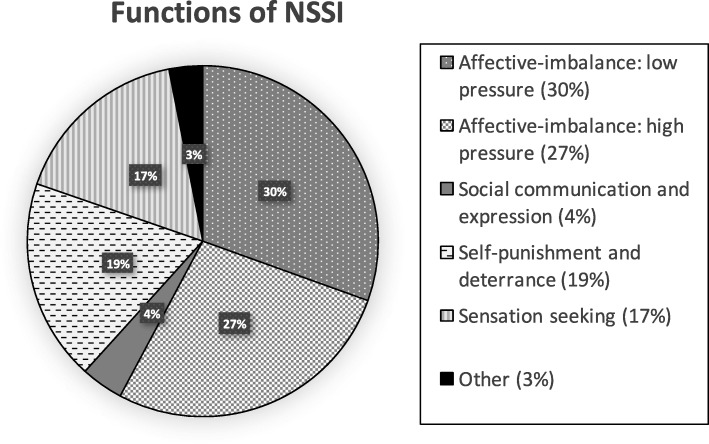
- The most common function of NSSI was regulation of low-energy affective states; on average, current and historic self-harmers endorsed 2.6 statements in the low-pressure affective-imbalance category, 2.3 in high-pressure affective-imbalance, 1.6 in self-punishment/deterrence, 1.4 in sensation seeking, and 0.33 in social communication/expression.
- In multinomial regression, alexithymia, BDI, BAI, and sensory sensitivity predicted self-harm categorisation; alexithymia explained 11% of variance, depression 13%, anxiety 19%, and sensory sensitivity 10%. In stepwise linear regression, sensory avoidance predicted range of body areas targeted (F[1,62] = 5.157, p = .027) and lifetime incidence (F[1,62] = 7.715, p = .007), while sensory low registration predicted frequency in the most active period (F[1,62] = 4.264, p = .043).
- For functional purposes, alexithymia predicted NSSI used to regulate high-energy states (F[1,74] = 5.065, p = .027) and to communicate with others (b = .255, t = 2.251, p = .027), but not low-energy states, sensory-seeking, or self-punishment/deterrence.
## Methods
- Mixed-methods design combining online questionnaire data with qualitative analysis of two open-ended NSSI-AT items.
- Sample: 103 autistic adults recruited via support groups and the Cambridge Autism Research Database; 70 females and 33 males, average age 43 years (SD = 13.6), average age at diagnosis 34.2 years (SD = 16.2); all had attended school to GCSE/equivalent and the majority had degrees, used as evidence they did not have intellectual impairment.
- Main analyses: multinomial regression for current vs historic vs non-self-harmers; stepwise linear regression for range, location, lifetime incidence, and frequency of NSSI; regression for functional purposes of NSSI; and thematic analysis of two open questions.
## Limitations
- The paper states that there was no non-autistic control group, so it cannot determine whether alexithymia, depression, anxiety, and sensory sensitivity are specific risk factors for autistic people or general risk factors for self-injury.
- It also states that IQ could not be operationalised in this online design, and autistic symptomatology was measured only with the AQ rather than a more thorough instrument such as the ADOS.
- The paper states that it did not correct for multiple statistical tests and that multicollinearity/shared variance among predictors makes it hard to identify unique contributions; additionally, the measures were designed for non-autistic people and not validated with autistic groups.
Model-written summary. Check it against the paper before relying on it.
Integrity signals
Registry
Cites
Statistics
Figures
Verification
Claims the paper makes
21 Valid · 3 Not valid · 30 Not checked · 147 Own results and interpretations
Every source the paper cites for this claim was checked and supports it.
In the paper
“NSSI in autism spectrum conditions (ASC) is challenging to define due to the presence of high-frequency self-injurious behaviours, such as head-banging and biting, which are commonly classed as ‘stereotyped’ [12], as elements of repetitive and restricted behaviours and interests (RRBI).”
§ A ‘choice’, an ‘addiction’, a way ‘out of the lost’: exploring self-injury in autistic people without intellectual disability > Abstract > Electronic supplementary material
What the sources say
- Supportedcites [12] Minshawi NF, Hurwitz S, Fodstad JC, Biebl S, Morriss DH, CJ MD. The association between self-injurious behaviors and autism spectrum disorders. Psychol Res Behav Manag. 2014;7:125–36. PMC3990505 24748827 source
The “SIB defined and incidence in ASD” section (page unavailable) lists head banging and self-biting, says SIB in ASD tends to be classified as “stereotyped SIB,” and describes it as commonly highly repetitive. The Introduction (page unavailable) places stereotyped behaviors among restricted or repetitive patterns of behavior. The paper notes that SIB can also be episodic, which does not conflict with the claim’s “commonly” qualifier. (LLM, conf=0.91)
plain- Asserted: passes — The authors put it forward as true.
- Checkable: passes — It can be checked against evidence.
- Load-bearing: passes — The paper’s conclusions depend on it.
- Based: passes — The paper gives a reason why it holds.
- Supported
The sources with a verdict support this claim; the rest weren’t checked yet, have no full text we could read, or their verdicts aren’t rated yet.
In the paper
“Accordingly, interventions aiming to strengthen mentalising ability have been seen to decrease self-injury alongside borderline symptomatology [36, 37], with further trials ongoing [38].”
§ A ‘choice’, an ‘addiction’, a way ‘out of the lost’: exploring self-injury in autistic people without intellectual disability > Abstract > Electronic supplementary material
What the sources say
- Supportedcites [36] Rossouw Trudie I. Fonagy Peter Mentalization-Based Treatment for Self-Harm in Adolescents: A Randomized Controlled Trial Journal of the American Academy of Child & Adolescent Psychiatry 2012 51 12 1304-1313.e3 10.1016/j.jaac.2012.09.018 23200287 source
The Discussion reports that MBT-A reduced self-harm and that the treatment group showed reductions in BPD diagnoses and traits. It also reports improved mentalizing in that group, matching the claim about an intervention aimed at strengthening mentalizing ability. (LLM, conf=0.93)
- Not checked — no full text of the sourcecites [37] Bateman A Fonagy P Randomized controlled trial of outpatient mentalization-based treatment versus structured clinical management for borderline personality disorder Am J Psychiatry 2009 166 1355 1364 10.1176/appi.ajp.2009.09040539 19833787 source
plainstates a cause- Asserted: passes — The authors put it forward as true.
- Checkable: passes — It can be checked against evidence.
- Load-bearing: passes — The paper’s conclusions depend on it.
- Based: passes — The paper gives a reason why it holds.
- Supported
The cited sources support only part of this claim — read each source’s verdict below.
In the paper
“which mirrors the typical age of NSSI onset in neurotypical participants [1, 73]”
§ A ‘choice’, an ‘addiction’, a way ‘out of the lost’: exploring self-injury in autistic people without intellectual disability > Discussion The prediction and characterisation of self-injury in autistic people is of high clinical importance, given the relationship between self-injury and later suicidality [3–9]. Our mixed-methods approach addressed the dearth of research on self-injury in autistic people without intellectual disability by validating and extending findings from a previous investigation of self-injury in this population [15]. The features of self-injury were remarkably similar in this considerably larger dataset of autistic individuals. An adolescent age of onset of NSSI was confirmed (12.7 years in Maddox et al., 15.1 years in the present study), which mirrors the typical age of NSSI onset in neurotypical participants [1, 73]. As in Maddox, descriptive analysis showed that our participants most commonly engaged in scratching, pinching or cutting, and most often targeted the hands and arms; self-anger and upset were common initial motivators, but the largest proportion of our participants claimed to have stumbled on self-injury ‘accidentally’ without having seen or heard of it from external sources. Whilst Maddox et al. found no difference in the prevalence of self-injury in a direct comparison of autistic adults diagnosed in childhood and those diagnosed after 18, we likewise found no significant differences in age of diagnosis between current, historic and non-self-harming autistic adults, suggesting that no group is of particular risk. Our participants did differ from those in the previous study in respect of biological sex, with Maddox and colleagues reporting a greater number of autistic women than men in their self-harming group. Respondent bias might possibly have influenced these findings in both cases: most participants in the previous study were male (24 out of 42), whereas the majority of our participants (70 out of 103) were female. Sex differences in autistic self-harmers are of interest given that NSSI tends to be more prevalent in women generally, with the ratio of women to men especially greater in clinical populations [74].3 Our data suggests that this assumption cannot be extended to autism: self-injury, in ASC, should be of concern to clinicians of male and female patients. An important goal highlighted in this study is the need to identify autistic individuals at heightened risk for self-injury, and we consequently aimed to extend the previous work in this area with consideration of the variables that might be of clinical importance in predicting the presence of self-injury.
What the sources say
- Not checked — no full text of the sourcecites [1] Nock MK Self-injury Annu Rev Clin Psychol 2010 6 339 363 10.1146/annurev.clinpsy.121208.131258 20192787 source
- Partly supportedcites [73] Nixon MK Cloutier P Jansson SM Nonsuicidal self-harm in youth: a population-based survey CMAJ 2008 178 306 312 10.1503/cmaj.061693 18227450 PMC2211340 sourceExperimental — accuracy not yet measured
The Results report a mean onset age of 15.2 years in a population-based youth sample, supporting adolescent onset. The paper does not identify a neurotypical subgroup or report an onset age specifically for neurotypical participants, so that qualifier is not established. (LLM, conf=0.84)
plain- Asserted: passes — The authors put it forward as true.
- Checkable: passes — It can be checked against evidence.
- Load-bearing: unclear — It is unclear whether the paper’s conclusions depend on it.
- Based: passes — The paper gives a reason why it holds.
The sources with a verdict support this claim; the rest weren’t checked yet, have no full text we could read, or their verdicts aren’t rated yet.
In the paper
“given the relationship between self-injury and later suicidality [3–9]”
§ A ‘choice’, an ‘addiction’, a way ‘out of the lost’: exploring self-injury in autistic people without intellectual disability > Discussion The prediction and characterisation of self-injury in autistic people is of high clinical importance, given the relationship between self-injury and later suicidality [3–9]. Our mixed-methods approach addressed the dearth of research on self-injury in autistic people without intellectual disability by validating and extending findings from a previous investigation of self-injury in this population [15]. The features of self-injury were remarkably similar in this considerably larger dataset of autistic individuals. An adolescent age of onset of NSSI was confirmed (12.7 years in Maddox et al., 15.1 years in the present study), which mirrors the typical age of NSSI onset in neurotypical participants [1, 73]. As in Maddox, descriptive analysis showed that our participants most commonly engaged in scratching, pinching or cutting, and most often targeted the hands and arms; self-anger and upset were common initial motivators, but the largest proportion of our participants claimed to have stumbled on self-injury ‘accidentally’ without having seen or heard of it from external sources. Whilst Maddox et al. found no difference in the prevalence of self-injury in a direct comparison of autistic adults diagnosed in childhood and those diagnosed after 18, we likewise found no significant differences in age of diagnosis between current, historic and non-self-harming autistic adults, suggesting that no group is of particular risk. Our participants did differ from those in the previous study in respect of biological sex, with Maddox and colleagues reporting a greater number of autistic women than men in their self-harming group. Respondent bias might possibly have influenced these findings in both cases: most participants in the previous study were male (24 out of 42), whereas the majority of our participants (70 out of 103) were female. Sex differences in autistic self-harmers are of interest given that NSSI tends to be more prevalent in women generally, with the ratio of women to men especially greater in clinical populations [74].3 Our data suggests that this assumption cannot be extended to autism: self-injury, in ASC, should be of concern to clinicians of male and female patients. An important goal highlighted in this study is the need to identify autistic individuals at heightened risk for self-injury, and we consequently aimed to extend the previous work in this area with consideration of the variables that might be of clinical importance in predicting the presence of self-injury.
What the sources say
- Not checked — no full text of the sourcecites [3] Cooper J Kapur N Webb R Lawlor M Guthrie E Mackway-Jones K Suicide after deliberate self-harm: a 4-year cohort study Am J Psychiatry 2005 162 297 303 10.1176/appi.ajp.162.2.297 15677594 source
- Supportedcites [4] Hawton K Zahl D Weatherall R Suicide following deliberate self-harm: long-term follow-up of patients who presented to a general hospital Br J Psychiatry 2003 182 537 542 10.1192/bjp.182.6.537 12777346 source
The Results (p. 1) report suicide after deliberate self-harm, and the Discussion (p. 4) states that the risk is considerable and persists long term. This supports the cited relationship between self-injury and later suicidality. (LLM, conf=0.93)
- Not checked — no full text of the sourcecites [5] Hawton K Harriss L Deliberate self-harm in young people: characteristics and subsequent mortality in a 20-year cohort of patients presenting to hospital J. Clin. Psychiatry. 2007 68 1574 1583 10.4088/JCP.v68n1017 17960975 source
- Not checked — no full text of the sourcecites [6] Olfson M Wall M Wang S Crystal S Gerhard T Blanco C Suicide following deliberate self-harm Am J Psychiatry 2017 174 765 774 10.1176/appi.ajp.2017.16111288 28320225 source
- Not checked — no full text of the sourcecites [7] Wester KL Ivers N Villalba JA Trepal HC Henson R The relationship between nonsuicidal self-injury and suicidal ideation J Couns Dev 2016 94 3 12 10.1002/jcad.12057 source
- Supportedcites [8] Cox LJ Stanley BH Melhem NM Oquendo MA Birmaher B Burke A A longitudinal study of nonsuicidal self-injury in offspring at high risk for mood disorder J Clin Psychiatry 2012 73 821 828 10.4088/JCP.11m07250 22687609 PMC3563355 source
The Discussion reports that baseline nonsuicidal self-injury strongly predicted an eventual suicide attempt, even after controlling for prior attempts. The Conclusion likewise states that nonsuicidal self-injury and suicide attempts each predicted the other over follow-up. This supports the cited relationship with later suicidality, without establishing that self-injury causes it. (LLM, conf=0.93)
- Not checked — no full text of the sourcecites [9] David Klonsky E May AM Glenn CR The relationship between nonsuicidal self-injury and attempted suicide: converging evidence from four samples J Abnorm Psychol 2013 122 231 237 10.1037/a0030278 23067259 source
plainstates an association- Asserted: passes — The authors put it forward as true.
- Checkable: passes — It can be checked against evidence.
- Load-bearing: passes — The paper’s conclusions depend on it.
- Based: passes — The paper gives a reason why it holds.
The sources with a verdict support this claim; the rest weren’t checked yet, have no full text we could read, or their verdicts aren’t rated yet.
In the paper
“the data corroborates the association between depression, anxiety and self-injury [73, 93–101]”
§ A ‘choice’, an ‘addiction’, a way ‘out of the lost’: exploring self-injury in autistic people without intellectual disability > Discussion The prediction and characterisation of self-injury in autistic people is of high clinical importance, given the relationship between self-injury and later suicidality [3–9]. Our mixed-methods approach addressed the dearth of research on self-injury in autistic people without intellectual disability by validating and extending findings from a previous investigation of self-injury in this population [15]. The features of self-injury were remarkably similar in this considerably larger dataset of autistic individuals. An adolescent age of onset of NSSI was confirmed (12.7 years in Maddox et al., 15.1 years in the present study), which mirrors the typical age of NSSI onset in neurotypical participants [1, 73]. As in Maddox, descriptive analysis showed that our participants most commonly engaged in scratching, pinching or cutting, and most often targeted the hands and arms; self-anger and upset were common initial motivators, but the largest proportion of our participants claimed to have stumbled on self-injury ‘accidentally’ without having seen or heard of it from external sources. Whilst Maddox et al. found no difference in the prevalence of self-injury in a direct comparison of autistic adults diagnosed in childhood and those diagnosed after 18, we likewise found no significant differences in age of diagnosis between current, historic and non-self-harming autistic adults, suggesting that no group is of particular risk. Our participants did differ from those in the previous study in respect of biological sex, with Maddox and colleagues reporting a greater number of autistic women than men in their self-harming group. Respondent bias might possibly have influenced these findings in both cases: most participants in the previous study were male (24 out of 42), whereas the majority of our participants (70 out of 103) were female. Sex differences in autistic self-harmers are of interest given that NSSI tends to be more prevalent in women generally, with the ratio of women to men especially greater in clinical populations [74].3 Our data suggests that this assumption cannot be extended to autism: self-injury, in ASC, should be of concern to clinicians of male and female patients. An important goal highlighted in this study is the need to identify autistic individuals at heightened risk for self-injury, and we consequently aimed to extend the previous work in this area with consideration of the variables that might be of clinical importance in predicting the presence of self-injury. > Predictors of self-injury: alexithymia, depression, anxiety and sensory differences Alexithymia, difficulty identifying one’s own emotional states, was a prime candidate of interest given its common presence in clinical populations who self-injure [16–20]. This construct is not entirely equivalent to emotional dysregulation (operationalised by Maddox et al. with the Emotion Regulation Scale [75]), but encapsulates the latter in combination with difficulty identifying and understanding one’s emotions [76, 77]. With this substantially larger sample, alexithymia was a significant predictor of self-injury, with current self-harmers exhibiting the highest levels of alexithymia followed by historic and then non-self-harmers. Our analysis further connected alexithymia to NSSI for the functional purpose of regulating high-energy states and as a means of social influence (communication and expression). This corroborates our theory-driven interest in this variable: individuals with alexithymia have difficulty identifying, and indeed regulating, high-energy states such as anger, agitation, frustration and anxiety, and by its nature alexithymia describes a difficulty in expressing emotional states that would make communication difficult. The importance of this variable also emerged in qualitative responses, where participants spoke about how learning to identify and express emotions, and understand the cause of emotions, was helpful. The use of NSSI to ‘control overwhelming feelings’, and the ‘traumatic’ and ‘frustrating’ difficulty of communicating how they feel, also corroborated our quantitative data around alexithymia. A growing literature has highlighted the importance of diagnosing comorbid alexithymia, which may explain some of the socioemotional and communicative deficits of autism and be worthy of targeted intervention [78–83]. Our analysis, indeed, suggests that alexithymia may be of clinical relevance in identifying those at particular risk of self-injurious behaviour. The decreased levels of alexithymia in the historic as compared to current self-harmers does, however, create an interesting puzzle for future research. Alexithymia is generally conceptualised as a stable construct (a trait) [84–86], though the temporal stability of the factors (difficulty identifying feelings, difficulty describing feelings and externally orientated thinking) has been seen to differ, the former two to increase when patients are in depressive episodes [87]. Current self-harmers were indeed marginally more depressed than historic self-harmers, but not significantly so. Difficulty identifying and communicating one’s own emotional states (alexithymia) is closely related to the ability to identify and understand the emotional and mental states of other people. Impairments in this latter ability, commonly known as ‘theory of mind’ or ‘mentalising’, were, like alexithymia, hypothesised to put participants at particular risk of self-injury. Interestingly, this hypothesis was not borne out: deficits in the popular ‘Reading the Mind in the Eyes’ task (RMET) [41] were unrelated to the presence of self-injury, its range or frequency or its use for the functional purpose of communicating with others. Notably, previous literature has failed to link NSSI to mentalising deficits, although these are common in clinical populations notorious for self-injury [31–33]. A tenuous link has been made between the two with therapeutic attempts to alleviate self-injury through improving mentalising ability [36–38]. Problematically, the described therapeutic approach conflates strengthening mentalising ability with alleviating alexithymia, involving as it does increasing awareness and identification of emotions and communicating about them. Importantly, mentalising and alexithymia are distinct constructs, and there is debate as to whether the RMET indexes mentalising (the common assumption and the assertion of the authors, who validated it against other mentalising tasks [88–90]) or recognition of emotional expressions [91], deficits in which are associated with alexithymia. Adopting the latter view leaves open the question as to whether mentalising deficits really do increase the risk of self-injury, but the implication from our data, given the relationship between NSSI and TAS-20 scores but not between NSSI and RMET, is that the inability to identify and express one’s emotions is of greater concern for self-injury than is the ability to recognise emotions in others, even if the latter would theoretically impair communication. Further variables of clinical interest for the risk of self-injury were depression and anxiety. Depression was examined by Maddox et al., who found no difference between their self-harming and non-self-harming autistic groups. We suggest the likely reason for this lack of difference was their indiscriminate categorisation of self-harming participants, a group containing current self-harmers and those we would classify as ‘historic’.4 Indeed, where current depression significantly predicted the dichotomous likelihood that participants had ever engaged in NSSI, planned t tests revealed that significant differences were only evident between current and non-self-harmers, and between historic and non-self-harmers, but not, as previously mentioned, between current and historic self-harmers. The same was true of anxiety, which was significantly higher in both self-harming groups than in the non-self-harming group. Of course, the implications of these findings are tempered by the fact that depression and anxiety, as measured by the BDI and the BAI, reflect states, not traits: in this case, they reflect emotional state over the last 2 and 4 weeks respectively. State anxiety tends to correlate with trait anxiety [92], but without the inclusion of a measure of trait anxiety, we can only speculate whether trait anxiety is a risk-factor for NSSI. Nevertheless, the data corroborates the association between depression, anxiety and self-injury [73, 93–101], and highlights the risk for self-injury in autistic sufferers of anxiety and depression. The most common functional purpose of self-injury reported by our sample was the regulation of low-energy states (e.g. depression, dissociation), with the second most popular function being the alleviation of high-energy states (which include anxiety). The qualitative data, too, makes mention of depression and anxiety, which are implied by one participant as the cause of self-injury in so far as tackling these issues helps reduce NSSI. The last variables explored as potential risks for NSSI were autistic traits as a proxy of symptom severity [42], and sensory differences [13, 49]. Interestingly, though both variables were highlighted in the literature on the ‘stereotyped’ form of NSSI often seen in individuals with autism and intellectual disability, sensory sensitivity also appeared in our group as a predictor of group categorisation, and sensory differences were the only variables to predict the range of body areas targeted (sensory avoidance), lifetime incidence of NSSI (sensory avoidance) and the frequency of NSSI in most active phase (sensory low registration). These findings are theoretically consistent with the high level of distress that autistic people report from their sensory disturbances [102–104], and are bolstered by data from our qualitative analysis, where NSSI was linked to being ‘overwhelmed’ by sensory stimulation, and could be helped by learning to identify sensory needs and/or sensory stimulation. That individuals with low registration (that is, under-responsivity to sensory stimulation) might engage in NSSI with higher frequency has alarming implications for injuries more severe than perhaps intended, and highlights self-injury as a potential deleterious association of sensory differences.
What the sources say
- Supportedcites [73] Nixon MK Cloutier P Jansson SM Nonsuicidal self-harm in youth: a population-based survey CMAJ 2008 178 306 312 10.1503/cmaj.061693 18227450 PMC2211340 source
The Results report significantly higher symptom scores, including anxiety and depressive mood, among youth who reported nonsuicidal self-harm than among those who did not. Table 3 shows the same pattern for both symptom categories. This supports an association, though the study does not establish causation. (LLM, conf=0.92)
- Supportedcites [93] Klonsky ED Oltmanns TF Turkheimer E Deliberate self-harm in a nonclinical population: prevalence and psychological correlates Am J Psychiatry 2003 160 1501 1508 10.1176/appi.ajp.160.8.1501 12900314 PMC4362719 source
The Results report higher depression and anxiety scores in the self-harm group than in the non-self-harm group. They also note that both associations were stronger for men than for women. (LLM, conf=0.93)
- Supportedcites [94] Hawton K Rodham K Evans E Weatherall R Deliberate self harm in adolescents: self report survey in schools in England BMJ 2002 325 1207 1211 10.1136/bmj.325.7374.1207 12446536 PMC135492 source
The Discussion states that depression and anxiety were associated with deliberate self-harm, more noticeably in females. The study’s summary also lists both as associated factors; the claim makes no causal assertion. (LLM, conf=0.94)
- Not checked — no full text of the sourcecites [95] Hawton Keith Saunders Kate EA O'Connor Rory C Self-harm and suicide in adolescents The Lancet 2012 379 9834 2373 2382 10.1016/S0140-6736(12)60322-5 22726518 source
- Not checked — no full text of the sourcecites [96] Muehlenkamp JJ Gutierrez PM An investigation of differences between self-injurious behavior and suicide attempts in a sample of adolescents Suicide Life-Threatening Behav 2004 34 12 23 10.1521/suli.34.1.12.27769 15106884 source
- Not checked — no full text of the sourcecites [97] Gollust SE Eisenberg D Golberstein E Prevalence and correlates of self-injury among university students J Am Coll Heal 2008 56 491 498 10.3200/JACH.56.5.491-498 18400660 source
- Not checked — no full text of the sourcecites [98] Tuisku V Pelkonen M Karlsson L Kiviruusu O Holi M Ruuttu T Suicidal ideation, deliberate self-harm behaviour and suicide attempts among adolescent outpatients with depressive mood disorders and comorbid axis I disorders Eur Child Adolesc Psychiatry 2006 15 199 206 10.1007/s00787-005-0522-3 16604437 source
- Not checked — no full text of the sourcecites [99] Wilkinson P Kelvin R Roberts C Dubicka B Goodyer I Clinical and psychosocial predictors of suicide attempts and nonsuicidal self-injury in the Adolescent Depression Antidepressants and Psychotherapy Trial (ADAPT) Am J Psychiatry 2011 168 495 501 10.1176/appi.ajp.2010.10050718 21285141 source
- Not checked — no full text of the sourcecites [100] Nock MK Joiner TE Gordon KH Lloyd-Richardson E Prinstein MJ Non-suicidal self-injury among adolescents: diagnostic correlates and relation to suicide attempts Psychiatry Res 2006 144 65 72 10.1016/j.psychres.2006.05.010 16887199 source
- Supportedcites [101] Chartrand H Sareen J Toews M Bolton JM Suicide attempts versus nonsuicidal self-injury among individuals with anxiety disorders in a nationally representative sample Depress Anxiety 2012 29 172 179 10.1002/da.20882 21948315 source
The Results report that anxiety disorders and mood disorders were associated with nonsuicidal self-injury and suicide attempts. The Methods define the mood-disorder category as major depressive disorder and dysthymia, supporting the citing sentence’s broad reference to depression. (LLM, conf=0.87)
plainstates an association- Asserted: passes — The authors put it forward as true.
- Checkable: passes — It can be checked against evidence.
- Load-bearing: passes — The paper’s conclusions depend on it.
- Based: passes — The paper gives a reason why it holds.
- Supported
82 more claims · 1 with their cited sources checked
Create a free account to see all 201 claims and every source verdict.
- It may state two separate claims as one. 81
- Probably not a substantial claim. 61
- The quote only partly states this claim. 2
Claims other papers make about this one
Each is checked against this paper’s own text: does it say what the citing paper says it does?
The source backs part of the claim, not all of it — or backs it for a different population, condition or comparison.
In the citing paper
“Emotion dysregulation (ED), the difficulty in modulating emotions, has been identified as an important risk factor.”
From Feasibility, Acceptability and Preliminary Efficacy of Dialectical Behavior Therapy for Autistic Adults without Intellectual Disability: A Mixed Methods Study (2022) · cites this paper as Moseley et al., 2019
Experimental — accuracy not yet measuredThe source backs part of the claim, not all of it — or backs it for a different population, condition or comparison.
In the citing paper
“In ASD, ED has also been identified as a risk factor in the emergence of self-harm, as autistic individuals may use self-harming behaviors as a way to regulate painful emotions, i.e., low-energy affective states such as depression or high-energy affective states such as anger and anxiety (Moseley et al., 2019).”
From Feasibility, Acceptability and Preliminary Efficacy of Dialectical Behavior Therapy for Autistic Adults without Intellectual Disability: A Mixed Methods Study (2022) · cites this paper as Moseley et al., 2019
Experimental — accuracy not yet measuredThe source backs part of the claim, not all of it — or backs it for a different population, condition or comparison.
In the citing paper
“There is a growing body of literature suggesting that ED might be a relevant treatment target in autistic individuals (Reyes et al., 2019; Conner et al., 2020), especially those with self-harming behaviors and increased suicidality (Moseley et al., 2019; Conner et al., 2020).”
From Feasibility, Acceptability and Preliminary Efficacy of Dialectical Behavior Therapy for Autistic Adults without Intellectual Disability: A Mixed Methods Study (2022) · cites this paper as Moseley et al., 2019
Experimental — accuracy not yet measuredThe cited source says what the claim attributes to it.
In the citing paper
“Alexithymia, in particular, a prevalent trait in ASD (Kinnaird et al., 2019; Ziermans et al., 2019), has been identified as predictive of using self-harm to regulate emotions, especially those related to high-energy affective states (Moseley et al., 2019).”
From Feasibility, Acceptability and Preliminary Efficacy of Dialectical Behavior Therapy for Autistic Adults without Intellectual Disability: A Mixed Methods Study (2022) · cites this paper as Moseley et al., 2019
Statistics that don’t add up
Each reported p-value recomputed from its test statistic and degrees of freedom, each partial η² from its F, and each ratio, mean difference or B printed with a p checked against its own confidence interval.
Rated minor: it would not touch a result — a value no result rests on, a p-value that stays on the same side of the significance level, or a conflict that is clerical, resolved elsewhere in the paper, or outside its own findings.
In the paper
“χ2(2) = 1.906, p = .086”
§ A ‘choice’, an ‘addiction’, a way ‘out of the lost’: exploring self-injury in autistic people without intellectual disability > Results > Group demographic information
Reported p = .086 · recomputed p = .386
Rated minor: it would not touch a result — a value no result rests on, a p-value that stays on the same side of the significance level, or a conflict that is clerical, resolved elsewhere in the paper, or outside its own findings.
In the paper
“χ2(2) = 34.73, p = .022”
§ A ‘choice’, an ‘addiction’, a way ‘out of the lost’: exploring self-injury in autistic people without intellectual disability > Results > Statistical analysis: predictors of NSSI Variables which predicted the categorisation of participants as current, historic or non-self-harmers were alexithymia (χ2(2) = 10.677, p = .005), BDI scores (χ2(2) = 12.313, p = .002), BAI scores (χ2(2) = 19.299, p < .001) and sensory sensitivity (χ2(2) = 9.953, p = .007). Alexithymia explained 11% (Nagelkerke R2) of the variance in categorisation, with the model able to differentiate significantly between current and non-self-harmers in accordance with their alexithymia scores (b = .062, Exp [b] = 1.064, p = .002) but not between historic and non-self-harmers (p = .232); planned comparison showed that the difference between current and historic self-harmers was only marginal (t [74] = 1.968, p = .053). Scores on the depression inventory explained 13% of the variance (Nagelkerke R2), with the model able to correctly differentiate current from non-self-harmers (b = .068, Exp [b] = 1.070, p = .002) and historic from non-self-harmers (b = .053, Exp [b] = 1.055, p = .02), and planned comparison showing no significant difference between current and historic self-harmers. Scores on the anxiety inventory explained 19% of the variance (Nagelkerke R2), with the model correctly differentiating between current and historic self-harmers (b = .107, Exp [b] = 1.113, p < .001) and between historic and non-self-harmers (b = .091, Exp [b] = 1.095, p = .003), and planned comparisons showing no significant differences between current and historic self-harmers. Sensory sensitivity explained 10% of the variance (Nagelkerke R2), but the model only significantly differentiated between current and non-self-harmers (b = .063, Exp [b] = 1.065, p = .004); the planned comparison between current and historic self-harmers (t [74] = 2.005, p = .049) was only marginally significant. This approach to regression, of course, fails to address the issue of multicollinearity, given that many of these variables would theoretically be expected to correlate with one another. As such, we added all variables (AQ, BDI, BAI, alexithymia, mentalising score and the four sensory variables) into a binomial regression. Together, they significantly predicted categorisation of participants as current, historic or non-self-harmers (χ2(2) = 34.73, p = .022), and explained 38% of the variance. However, given the correlations (i.e. shared variance) between the variables (Additional file 1: Table S1), no single variable emerged as a significant predictor in the model; greater power would be required to tease out the contributions of each variable. Stepwise linear regression was conducted to look at several continuous outcome measures, namely the range of self-injurious behaviours, the range of bodily locations targeted, the lifetime incidence of NSSI and the frequency of NSSI in the participant’s most active period of self-injury. None of the variables significantly predicted the range of self-injurious behaviours. The only significant predictor to remain in a model of the range of bodily areas targeted (F [1, 62] = 5.157, p = .027) was sensory avoidance (b [standardised coefficient] = .279, t = 2.271, p = .027). Likewise, the only predictor to remain in a model of lifetime incidence (F [1, 62] = 7.715, p = .007) was sensory avoidance (b = .335, t = 2778, p = .007). The only predictor to remain in a model of frequency of behaviours in most active period (F [1, 62] = 4.264, p = .043) was sensory low registration (b = .256, t = 2.065, p = .043). As regards engagement in NSSI for the purpose of regulating low-energy states such as depression or dissociation, our hypothesis was not supported: alexithymia was not a significant predictor of participants’ endorsement of statements about NSSI related to regulating these low-energy states. In contrast, the hypothesis that alexithymia would predict use of NSSI to regulate high-energy states was supported (F [1, 74] = 5.065, p = .027), with participants high in alexithymia more likely to endorse statements about engaging in NSSI for the purpose of regulating high-energy states. In a stepwise regression predicting use of NSSI for communicative purposes (F [1, 74] = 5.065, p = .027), alexithymia (b = .255, t = 2.251, p = .027) was a significant predictor but mentalising performance was not. Neither sensory low registration nor sensory seeking predicted NSSI for the purpose of sensory seeking. None of the variables predicted NSSI for the purpose of self-punishment and deterrence.
Reported p = .022 · recomputed p < .001
Statistics recomputed
Every reported test result, recomputed from its test statistic and degrees of freedom. A result shows as not adding up only once an independent check has confirmed it.
- Doesn’t add upχ²(2) = 1.906reported p = .086 · recomputed p = .386
“χ2(2) = 1.906, p = .086”
- Doesn’t add upχ²(2) = 34.73reported p = .022 · recomputed p < .001
“χ2(2) = 34.73, p = .022”
- Consistentχ²(2) = 4.341reported p = .114 · recomputed p = .114
“χ2(2) = 4.341, p = .114”
- Consistentχ²(2) = 0.35reported p = .84 · recomputed p = .839
“χ2(2) = .350, p = .840”
- Consistentχ²(2) = 7.72reported p = .021 · recomputed p = .021
“χ2(2) = 7.720, p = .021”
5 more recomputed tests
Create a free account to see every test the Stats check recomputed.
Self-check
Percentages, sums and reported differences re-computed from the paper’s own numbers.
Self-check results appear here once an independent check has confirmed them.
Citations
Cites
Using thematic analysis in psychology
Braun, V., & Clarke, V. (2006) · Qualitative Research in Psychology · doi:10.1191/1478088706qp063oa · Cited by 194,414
Gratz, K. L., & Roemer, L. (2004) · Journal of Psychopathology and Behavioral Assessment · doi:10.1023/b:joba.0000007455.08539.94 · Cited by 8,942 · cited 2×
“with the Emotion Regulation Scale [75]), but encapsulates the latter in combination with difficulty identifying and understanding one’s emotions [76, 77].”
BackgroundBeck, A. T., Steer, R. A., & Brown, G. (2011) · PsycTESTS Dataset · doi:10.1037/t00742-000 · Cited by 7,535
Lord, C., Risi, S., Lambrecht, L., Cook, E. H., Leventhal, B. L., DiLavore, P. C., Pickles, A., & Rutter, M. (2000) · Journal of Autism and Developmental Disorders · doi:10.1023/a:1005592401947 · Cited by 7,520
(1993) · Cited by 7,136
Baron-Cohen, S., Wheelwright, S., Skinner, R., Martin, J., & Clubley, E. (2001) · Journal of Autism and Developmental Disorders · doi:10.1023/a:1005653411471 · Cited by 6,450 · cited 1×
“The Autism-Spectrum Quotient (AQ) [55] is a quantitative measure of autistic traits that can be used in the general population as well as in clinical groups.”
MethodSelf-citationCognitive-Behavioral Treatment of Borderline Personality Disorder
Cary, G. L. (1994) · American Journal of Psychotherapy · doi:10.1176/appi.psychotherapy.1994.48.1.155 · Cited by 6,283
The PHQ-9: A New Depression Diagnostic and Severity Measure
Kroenke, K., & Spitzer, R. L. (2002) · Psychiatric Annals · doi:10.3928/0048-5713-20020901-06 · Cited by 5,898 · cited 2×
“4Though, notably, differences could also be partially due to measures used: we employed the Beck Depression Inventory, whilst Maddox and colleagues used the Patient Health Questionnaire-9 [144].”
MethodBagby, R. M., Parker, J. D. A., & Taylor, G. J. (1994) · Journal of Psychosomatic Research · doi:10.1016/0022-3999(94)90005-1 · Cited by 5,293
Baron‐Cohen, S., Wheelwright, S., Hill, J., Raste, Y., & Plumb, I. (2001) · Journal of Child Psychology and Psychiatry · doi:10.1111/1469-7610.00715 · Cited by 4,555
Self-citationBaron‐Cohen, S., Wheelwright, S. J., Hill, J., Raste, Y., & Plumb, I. (2001) · PubMed · Cited by 4,313
Self-citationMindblindness: An Essay on Autism and Theory of Mind
(1995) · Choice Reviews Online · doi:10.5860/choice.33-2412 · Cited by 3,670
Mindblindness: An Essay on Autism and Theory of Mind
Baron-Cohen, S. (1995) · doi:10.7551/mitpress/4635.001.0001 · Cited by 3,428
Self-citationSelf-harm and suicide in adolescents
Hawton, K., Saunders, K. E., & O'Connor, R. C. (2012) · The Lancet · doi:10.1016/s0140-6736(12)60322-5 · Cited by 2,306
Baron‐Cohen, S., Jolliffe, T., Mortimore, C., & Robertson, M. (1997) · Journal of Child Psychology and Psychiatry · doi:10.1111/j.1469-7610.1997.tb01599.x · Cited by 1,970
Self-citationWhich terms should be used to describe autism? Perspectives from the UK autism community
Kenny, L., Hattersley, C., Molins, B., Buckley, C., Povey, C., & Pellicano, E. (2016) · Autism · doi:10.1177/1362361315588200 · Cited by 1,941
Non-suicidal self-injury among adolescents: Diagnostic correlates and relation to suicide attempts
NOCK, M., JOINERJR, T., GORDON, K., LLOYDRICHARDSON, E., & PRINSTEIN, M. (2006) · Psychiatry Research · doi:10.1016/j.psychres.2006.05.010 · Cited by 1,617
Nock, M. K. (2010) · Annual Review of Clinical Psychology · doi:10.1146/annurev.clinpsy.121208.131258 · Cited by 1,550
Borderline personality disorder
Lieb, K., Zanarini, M. C., Schmahl, C., Linehan, M. M., & Bohus, M. (2004) · The Lancet · doi:10.1016/s0140-6736(04)16770-6 · Cited by 1,369
The health status of adults on the autism spectrum
Croen, L. A., Zerbo, O., Qian, Y., Massolo, M. L., Rich, S., Sidney, S., & Kripke, C. (2015) · Autism · doi:10.1177/1362361315577517 · Cited by 1,110
Issues and recommendations regarding use of the Beck Depression Inventory
Kendall, P. C., Hollon, S. D., Beck, A. T., Hammen, C. L., & Ingram, R. E. (1987) · Cognitive Therapy and Research · doi:10.1007/bf01186280 · Cited by 1,069
A meta-analysis of sensory modulation symptoms in individuals with autism spectrum disorders
Ben-Sasson, A., Hen, L., Fluss, R., Cermak, S. A., Engel-Yeger, B., & Gal, E. (2009) · Journal of Autism and Developmental Disorders · doi:10.1007/s10803-008-0593-3 · Cited by 1,047
The 20-Item Toronto Alexithymia Scale
Parker, J. D. A., Taylor, G. J., & Bagby, R. M. (2003) · Journal of Psychosomatic Research · doi:10.1016/s0022-3999(02)00578-0 · Cited by 1,036
Measuring empathy: reliability and validity of the Empathy Quotient
LAWRENCE, E. J., SHAW, P., BAKER, D., BARON-COHEN, S., & DAVID, A. S. (2004) · Psychological Medicine · doi:10.1017/s0033291703001624 · Cited by 1,014
Self-citationDeliberate self harm in adolescents: self report survey in schools in England
Hawton, K., Rodham, K., Evans, E., & Weatherall, R. (2002) · BMJ · doi:10.1136/bmj.325.7374.1207 · Cited by 1,008
Bateman, A., & Fonagy, P. (2009) · American Journal of Psychiatry · doi:10.1176/appi.ajp.2009.09040539 · Cited by 961
Klonsky, E. D., & Glenn, C. R. (2009) · Journal of Psychopathology and Behavioral Assessment · doi:10.1007/s10862-008-9107-z · Cited by 934
Dunn, W. (1997) · Infants & Young Children · doi:10.1097/00001163-199704000-00005 · Cited by 899
Autism: The Empathizing–Systemizing (E‐S) Theory
Baron‐Cohen, S. (2009) · Annals of the New York Academy of Sciences · doi:10.1111/j.1749-6632.2009.04467.x · Cited by 830
Self-citationWhat should autism research focus upon? Community views and priorities from the United Kingdom
Pellicano, E., Dinsmore, A., & Charman, T. (2014) · Autism · doi:10.1177/1362361314529627 · Cited by 800
Deliberate Self-Harm in a Nonclinical Population: Prevalence and Psychological Correlates
Klonsky, E. D., Oltmanns, T. F., & Turkheimer, E. (2003) · American Journal of Psychiatry · doi:10.1176/appi.ajp.160.8.1501 · Cited by 780
Woodbury-Smith, M. R., Robinson, J., Wheelwright, S., & Baron-Cohen, S. (2005) · Journal of Autism and Developmental Disorders · doi:10.1007/s10803-005-3300-7 · Cited by 771
Self-citationOn Writing Qualitative Research: Living by Words
Ely, M., Vinz, R., Downing, M., & Anzul, M. (1998) · College Composition and Communication · doi:10.2307/358568 · Cited by 766 · cited 1×
“In this conceptualization, the themes in the data do not exist there objectively but ‘reside in our heads from our thinking about our data and creating links as we understand them’ ([68], pp.”
BackgroundHawton, K., Zahl, D., & Weatherall, R. (2003) · British Journal of Psychiatry · doi:10.1192/bjp.182.6.537 · Cited by 751
Nonsuicidal Self-Harm Among Community Adolescents: Understanding the “Whats” and “Whys” of Self-Harm
Laye-Gindhu, A., & Schonert-Reichl, K. A. (2005) · Journal of Youth and Adolescence · doi:10.1007/s10964-005-7262-z · Cited by 746 · cited 1×
“Both low self-esteem [122, 123] and self-criticism [124–127] have been linked to NSSI; poor self-esteem, in particular, appears (along with weak coping strategies) to mediate the relationship between personality pathology and self-injury [128].”
BackgroundMentalization-based treatment for self-harm in adolescents: a randomized controlled trial
Rossouw, T. I., & Fonagy, P. (2012) · Journal of the American Academy of Child & Adolescent Psychiatry · doi:10.1016/j.jaac.2012.09.018 · Cited by 746
Self‐injury: A research review for the practitioner
Klonsky, E. D., & Muehlenkamp, J. J. (2007) · Journal of Clinical Psychology · doi:10.1002/jclp.20412 · Cited by 722
Storch, E. A., Roberti, J. W., & Roth, D. A. (2004) · Depression and Anxiety · doi:10.1002/da.20002 · Cited by 694
Psychometric evaluation of the Beck Depression Inventory-II with primary care medical patients.
Arnau, R. C., Meagher, M. W., Norris, M. P., & Bramson, R. (2001) · Health Psychology · doi:10.1037/0278-6133.20.2.112 · Cited by 694
Klonsky, E. D., May, A. M., & Glenn, C. R. (2013) · Journal of Abnormal Psychology · doi:10.1037/a0030278 · Cited by 692
Suicide After Deliberate Self-Harm: A 4-Year Cohort Study
Cooper, J., Kapur, N., Webb, R., Lawlor, M., Guthrie, E., Mackway-Jones, K., & Appleby, L. (2005) · American Journal of Psychiatry · doi:10.1176/appi.ajp.162.2.297 · Cited by 690
Gender differences in the prevalence of nonsuicidal self-injury: A meta-analysis
Bresin, K., & Schoenleber, M. (2015) · Clinical Psychology Review · doi:10.1016/j.cpr.2015.02.009 · Cited by 678
McClintock, K., Hall, S., & Oliver, C. (2003) · Journal of Intellectual Disability Research · doi:10.1046/j.1365-2788.2003.00517.x · Cited by 675
The 20-Item Toronto Alexithymia Scale
Taylor, G. J., Bagby, R. M., & Parker, J. D. A. (2003) · Journal of Psychosomatic Research · doi:10.1016/s0022-3999(02)00601-3 · Cited by 673
Probing compulsive and impulsive behaviors, from animal models to endophenotypes: A narrative review
Fineberg, N. A., Potenza, M. N., Chamberlain, S. R., Berlin, H. A., Menzies, L., Bechara, A., Sahakian, B. J., Robbins, T. W., Bullmore, E. T., & Hollander, E. (2010) · Neuropsychopharmacology · doi:10.1038/npp.2009.185 · Cited by 654
Hoekstra, R. A., Bartels, M., Cath, D. C., & Boomsma, D. I. (2008) · Journal of Autism and Developmental Disorders · doi:10.1007/s10803-008-0538-x · Cited by 651
Wilkinson, P., Kelvin, R., Roberts, C., Dubicka, B., & Goodyer, I. (2011) · American Journal of Psychiatry · doi:10.1176/appi.ajp.2010.10050718 · Cited by 645
Ruzich, E., Allison, C., Smith, P., Watson, P., Auyeung, B., Ring, H., & Baron-Cohen, S. (2015) · Molecular Autism · doi:10.1186/2040-2392-6-2 · Cited by 610
Self-citationMixed emotions: the contribution of alexithymia to the emotional symptoms of autism
Bird, G., & Cook, R. (2013) · Translational Psychiatry · doi:10.1038/tp.2013.61 · Cited by 592
Choi-Kain, L. W., & Gunderson, J. G. (2008) · American Journal of Psychiatry · doi:10.1176/appi.ajp.2008.07081360 · Cited by 565
Muehlenkamp, J. J., & Gutierrez, P. M. (2004) · Suicide and Life-Threatening Behavior · doi:10.1521/suli.34.1.12.27769 · Cited by 533
Theory of mind and emotion regulation difficulties in adolescents with borderline traits
Sharp, C., Pane, H., Ha, C., Venta, A., Patel, A. B., Sturek, J., & Fonagy, P. (2011) · Journal of the American Academy of Child & Adolescent Psychiatry · doi:10.1016/j.jaac.2011.01.017 · Cited by 492
The virtual cutting edge: The Internet and adolescent self-injury.
Whitlock, J. L., Powers, J. L., & Eckenrode, J. (2006) · Developmental Psychology · doi:10.1037/0012-1649.42.3.407 · Cited by 491
Kooiman, C. G., Spinhoven, P., & Trijsburg, R. W. (2002) · Journal of Psychosomatic Research · doi:10.1016/s0022-3999(02)00348-3 · Cited by 452
Child maltreatment, non-suicidal self-injury, and the mediating role of self-criticism
Glassman, L. H., Weierich, M. R., Hooley, J. M., Deliberto, T. L., & Nock, M. K. (2007) · Behaviour Research and Therapy · doi:10.1016/j.brat.2007.04.002 · Cited by 447
Cassidy, S., Bradley, P., Robinson, J., Allison, C., McHugh, M., & Baron-Cohen, S. (2014) · The Lancet Psychiatry · doi:10.1016/s2215-0366(14)70248-2 · Cited by 432
Self-citationOakley, B. F. M., Brewer, R., Bird, G., & Catmur, C. (2016) · Journal of Abnormal Psychology · doi:10.1037/abn0000182 · Cited by 431
The adult sensory profile: measuring patterns of sensory processing.
Brown, C., Tollefson, N., Dunn, W., Cromwell, R., & Filion, D. (2001) · American Journal of Occupational Therapy · doi:10.5014/ajot.55.1.75 · Cited by 422
A systematic review of sensory processing interventions for children with autism spectrum disorders
Case-Smith, J., Weaver, L. L., & Fristad, M. A. (2015) · Autism · doi:10.1177/1362361313517762 · Cited by 409
Vellante, M., Baron-Cohen, S., Melis, M., Marrone, M., Petretto, D. R., Masala, C., & Preti, A. (2013) · Cognitive Neuropsychiatry · doi:10.1080/13546805.2012.721728 · Cited by 406
Self-citationChapman, E., Baron-Cohen, S., Auyeung, B., Knickmeyer, R., Taylor, K., & Hackett, G. (2006) · Social Neuroscience · doi:10.1080/17470910600992239 · Cited by 389
Self-citationSwart, M., Kortekaas, R., & Aleman, A. (2009) · PLoS ONE · doi:10.1371/journal.pone.0005751 · Cited by 338
Alexithymia, not autism, is associated with impaired interoception
Shah, P., Hall, R., Catmur, C., & Bird, G. (2016) · Cortex · doi:10.1016/j.cortex.2016.03.021 · Cited by 326
Borderline Personality Disorder: Ontogeny of a Diagnosis
Gunderson, J. G. (2009) · American Journal of Psychiatry · doi:10.1176/appi.ajp.2009.08121825 · Cited by 315
Strang, J. F., Kenworthy, L., Daniolos, P., Case, L., Wills, M. C., Martin, A., & Wallace, G. L. (2012) · Research in Autism Spectrum Disorders · doi:10.1016/j.rasd.2011.06.015 · Cited by 314
Zlotnick, C., Shea, M. T., Pearlstein, T., Simpson, E., Costello, E., & Begin, A. (1996) · Comprehensive Psychiatry · doi:10.1016/s0010-440x(96)90044-9 · Cited by 308
The Sensory Experiences of Adults with Autism Spectrum Disorder: A Qualitative Analysis
Robertson, A. E., & Simmons, D. R. (2015) · Perception · doi:10.1068/p7833 · Cited by 293
Naviaux, J. C., Wang, L., Li, K., Bright, A., Alaynick, W. A., Williams, K. R., Powell, S. B., & Naviaux, R. K. (2015) · Molecular Autism · doi:10.1186/2040-2392-6-1 · Cited by 285
Nonsuicidal self-harm in youth: a population-based survey
Nixon, M. K., Cloutier, P., & Jansson, S. M. (2007) · Canadian Medical Association Journal · doi:10.1503/cmaj.061693 · Cited by 283
Prevalence and Correlates of Self-Injury Among University Students
Gollust, S. E., Eisenberg, D., & Golberstein, E. (2008) · Journal of American College Health · doi:10.3200/jach.56.5.491-498 · Cited by 282
Double dissociation between cognitive and affective empathy in borderline personality disorder
Harari, H., Shamay-Tsoory, S. G., Ravid, M., & Levkovitz, Y. (2010) · Psychiatry Research · doi:10.1016/j.psychres.2009.03.002 · Cited by 280
Alexithymia as a mediator between childhood trauma and self-injurious behaviors
Paivio, S. C., & McCulloch, C. R. (2004) · Child Abuse & Neglect · doi:10.1016/j.chiabu.2003.11.018 · Cited by 273
Andover, M. S., Morris, B. W., Wren, A., & Bruzzese, M. E. (2012) · Child and Adolescent Psychiatry and Mental Health · doi:10.1186/1753-2000-6-11 · Cited by 271 · cited 1×
“Both low self-esteem [122, 123] and self-criticism [124–127] have been linked to NSSI; poor self-esteem, in particular, appears (along with weak coping strategies) to mediate the relationship between personality pathology and self-injury [128].”
BackgroundSensory integration therapy for autism spectrum disorders: A systematic review
Lang, R., O’Reilly, M., Healy, O., Rispoli, M., Lydon, H., Streusand, W., Davis, T., Kang, S., Sigafoos, J., Lancioni, G., et al. (2012) · Research in Autism Spectrum Disorders · doi:10.1016/j.rasd.2012.01.006 · Cited by 259
Enhancing the Validity of a Quality of Life Measure for Autistic People
McConachie, H., Mason, D., Parr, J. R., Garland, D., Wilson, C., & Rodgers, J. (2018) · Journal of Autism and Developmental Disorders · doi:10.1007/s10803-017-3402-z · Cited by 245
Baron-Cohen, S., Bowen, D. C., Holt, R. J., Allison, C., Auyeung, B., Lombardo, M. V., Smith, P., & Lai, M.-C. (2015) · PLOS ONE · doi:10.1371/journal.pone.0136521 · Cited by 238
Self-citationFactor structure and psychometric characteristics of the beck depression inventory-II
Osman, A., Downs, W. R., Barrios, F. X., Kopper, B. A., Gutierrez, P. M., & Chiros, C. E. (1997) · Journal of Psychopathology and Behavioral Assessment · doi:10.1007/bf02229026 · Cited by 235
Targeting emotion dysregulation in the treatment of self‐injury
Gratz, K. L. (2007) · Journal of Clinical Psychology · doi:10.1002/jclp.20417 · Cited by 232
Nonsuicidal Self‐Injury and Gender: Patterns of Prevalence, Methods, and Locations among Adolescents
Sornberger, M. J., Heath, N. L., Toste, J. R., & McLouth, R. (2012) · Suicide and Life-Threatening Behavior · doi:10.1111/j.1943-278x.2012.0088.x · Cited by 227
Pellicano, E., & Stears, M. (2011) · Autism Research · doi:10.1002/aur.201 · Cited by 227
Hawton, K., & Harriss, L. (2007) · The Journal of Clinical Psychiatry · doi:10.4088/jcp.v68n1017 · Cited by 226
Hurst, R. M., Mitchell, J. T., Kimbrel, N. A., Kwapil, T. K., & Nelson-Gray, R. O. (2007) · Personality and Individual Differences · doi:10.1016/j.paid.2007.06.012 · Cited by 217
Self‐harm in a mixed clinical population: The roles of self‐criticism, shame, and social rank
Gilbert, P., McEwan, K., Irons, C., Bhundia, R., Christie, R., Broomhead, C., & Rockliff, H. (2010) · British Journal of Clinical Psychology · doi:10.1348/014466509x479771 · Cited by 214
Psychiatric comorbidities in Asperger syndrome and high functioning autism: diagnostic challenges
Mazzone, L., Ruta, L., & Reale, L. (2012) · Annals of General Psychiatry · doi:10.1186/1744-859x-11-16 · Cited by 213 · cited 1×
“that a relationship exists between autistic traits and depressive symptomatology [134] and that depression and anxiety often co-exist in autistic [135, 136] and non-autistic [137] populations.”
BackgroundBoyd, B. A., McBee, M., Holtzclaw, T., Baranek, G. T., & Bodfish, J. W. (2009) · Research in Autism Spectrum Disorders · doi:10.1016/j.rasd.2009.05.003 · Cited by 210
Suicide Following Deliberate Self-Harm
Olfson, M., Wall, M., Wang, S., Crystal, S., Gerhard, T., & Blanco, C. (2017) · American Journal of Psychiatry · doi:10.1176/appi.ajp.2017.16111288 · Cited by 205
Swannell, S., Martin, G., Page, A., Hasking, P., Hazell, P., Taylor, A., & Protani, M. (2012) · Child Abuse & Neglect · doi:10.1016/j.chiabu.2012.05.005 · Cited by 204
Matson, J. L., & LoVullo, S. V. (2008) · Behavior Modification · doi:10.1177/0145445507304581 · Cited by 198
Loas, G., Corcos, M., Stephan, P., Pellet, J., Bizouard, P., Venisse, J. L., Perez-Diaz, F., Guelfi, J. D., & Jeammet, P. (2001) · Journal of Psychosomatic Research · doi:10.1016/s0022-3999(01)00197-0 · Cited by 198
Duerden, E. G., Oatley, H. K., Mak-Fan, K. M., McGrath, P. A., Taylor, M. J., Szatmari, P., & Roberts, S. W. (2012) · Journal of Autism and Developmental Disorders · doi:10.1007/s10803-012-1497-9 · Cited by 198
Empirically Supported Treatments and General Therapy Guidelines for Non-Suicidal Self-Injury
Muehlenkamp, J. J. (2006) · Journal of Mental Health Counseling · doi:10.17744/mehc.28.2.6w61cut2lxjdg3m7 · Cited by 195
The association between self-injurious behaviors and autism spectrum disorders
Minshawi, N., Hurwitz, S., Fodstad, J., Biebl, S., Morris, D., & McDougle, C. (2014) · Psychology Research and Behavior Management · doi:10.2147/prbm.s44635 · Cited by 188
Test-retest reliability of the ‘Reading the Mind in the Eyes’ test: a one-year follow-up study
Fernández-Abascal, E. G., Cabello, R., Fernández-Berrocal, P., & Baron-Cohen, S. (2013) · Molecular Autism · doi:10.1186/2040-2392-4-33 · Cited by 187
Self-citationBjärehed, J., & Lundh, L. (2008) · Cognitive Behaviour Therapy · doi:10.1080/16506070701778951 · Cited by 183
Milosavljevic, B., Carter Leno, V., Simonoff, E., Baird, G., Pickles, A., Jones, C. R. G., Erskine, C., Charman, T., & Happé, F. (2016) · Journal of Autism and Developmental Disorders · doi:10.1007/s10803-015-2670-8 · Cited by 170
Zaki, L. F., Coifman, K. G., Rafaeli, E., Berenson, K. R., & Downey, G. (2013) · Behavior Therapy · doi:10.1016/j.beth.2013.04.008 · Cited by 161
Whitlock, J., Exner-Cortens, D., & Purington, A. (2014) · Psychological Assessment · doi:10.1037/a0036611 · Cited by 157
Is there a reliable factorial structure in the 20-item Toronto Alexithymia Scale?
Müller, J. M., Bühner, M., & Ellgring, H. (2003) · Journal of Psychosomatic Research · doi:10.1016/s0022-3999(03)00033-3 · Cited by 156 · cited 1×
“Whilst these authors found the three distinct factors named above to be largely reliable across cultures, other findings contradict this, especially in patient groups ([52, 53], though Loas et al.”
ResultStability of alexithymia in the general population: an 11-year follow-up
Tolmunen, T., Heliste, M., Lehto, S. M., Hintikka, J., Honkalampi, K., & Kauhanen, J. (2011) · Comprehensive Psychiatry · doi:10.1016/j.comppsych.2010.09.007 · Cited by 156
Temporal Stability of Alexithymia Over a Five-Year Period in Outpatients with Major Depression
Saarijärvi, S., Salminen, J. K., & Toikka, T. (2006) · Psychotherapy and Psychosomatics · doi:10.1159/000090895 · Cited by 154
Untended wounds: Non-suicidal self-injury in adults with autism spectrum disorder
Maddox, B. B., Trubanova, A., & White, S. W. (2017) · Autism · doi:10.1177/1362361316644731 · Cited by 154
Cassidy, S. A., Bradley, L., Bowen, E., Wigham, S., & Rodgers, J. (2018) · Autism Research · doi:10.1002/aur.1922 · Cited by 144
The psychophysiological mechanisms of alexithymia in autism spectrum disorder
Gaigg, S. B., Cornell, A. S., & Bird, G. (2018) · Autism · doi:10.1177/1362361316667062 · Cited by 142
An exploration of sensory and movement differences from the perspective of individuals with autism
Robledo, J., Donnellan, A. M., & Strandt-Conroy, K. (2012) · Frontiers in Integrative Neuroscience · doi:10.3389/fnint.2012.00107 · Cited by 136 · cited 1×
“Participant groups did not differ with respect to current age (F [2, 102] = 1.”
BackgroundPain Sensitivity and Observer Perception of Pain in Individuals with Autistic Spectrum Disorder
Allely, C. S. (2013) · The Scientific World Journal · doi:10.1155/2013/916178 · Cited by 135
The treatment of self-injurious behavior
Favell, J. E., Azrin, N. H., Baumeister, A. A., Carr, E. G., Dorsey, M. F., Forehand, R., Foxx, R. M., Lövaas, O. I., Rincover, A., Risley, T. R., et al. (1982) · Behavior Therapy · doi:10.1016/s0005-7894(82)80015-4 · Cited by 132
Acute pain experience in individuals with autism spectrum disorders: A review
Moore, D. J. (2015) · Autism · doi:10.1177/1362361314527839 · Cited by 131
Victor, S. E., Glenn, C. R., & Klonsky, E. D. (2012) · Psychiatry Research · doi:10.1016/j.psychres.2011.12.011 · Cited by 125
Baetens, I., Claes, L., Hasking, P., Smits, D., Grietens, H., Onghena, P., & Martin, G. (2015) · Journal of Child and Family Studies · doi:10.1007/s10826-013-9861-8 · Cited by 122
Rosbrook, A., & Whittingham, K. (2009) · Research in Autism · doi:10.1016/j.rasd.2009.10.012 · Cited by 119 · cited 1×
“that a relationship exists between autistic traits and depressive symptomatology [134] and that depression and anxiety often co-exist in autistic [135, 136] and non-autistic [137] populations.”
BackgroundAlexithymia and emotional regulation: A cluster analytical approach
Chen, J., Xu, T., Jing, J., & Chan, R. C. (2011) · BMC Psychiatry · doi:10.1186/1471-244x-11-33 · Cited by 117 · cited 1×
“with the Emotion Regulation Scale [75]), but encapsulates the latter in combination with difficulty identifying and understanding one’s emotions [76, 77].”
BackgroundSalminen, J. K., Saarijärvi, S., Ääirelä, E., & Tamminen, T. (1994) · Journal of Psychosomatic Research · doi:10.1016/0022-3999(94)90020-5 · Cited by 115
Emotional decision-making in autism spectrum disorder: the roles of interoception and alexithymia
Shah, P., Catmur, C., & Bird, G. (2016) · Molecular Autism · doi:10.1186/s13229-016-0104-x · Cited by 113
Best, C. S., Moffat, V. J., Power, M., Owens, D. G. C., & Johnstone, E. C. (2007) · Journal of Autism and Developmental Disorders · doi:10.1007/s10803-007-0451-8 · Cited by 112
Trevisan, D. A., Bowering, M., & Birmingham, E. (2016) · Molecular Autism · doi:10.1186/s13229-016-0108-6 · Cited by 107
Alexithymia behaves as a personality trait over a 5-year period in Finnish general population
Salminen, J. K., Saarijärvi, S., Toikka, T., Kauhanen, J., & Äärelä, E. (2006) · Journal of Psychosomatic Research · doi:10.1016/j.jpsychores.2006.01.014 · Cited by 104
Cassidy, S. A., Bradley, L., Bowen, E., Wigham, S., & Rodgers, J. (2018) · Clinical Psychology Review · doi:10.1016/j.cpr.2018.05.002 · Cited by 104
Ronald, A., Viding, E., Happé, F., & Plomin, R. (2006) · Social Neuroscience · doi:10.1080/17470910601068088 · Cited by 101
The Role of seeing blood in non‐suicidal self‐injury
Glenn, C. R., & Klonsky, E. D. (2010) · Journal of Clinical Psychology · doi:10.1002/jclp.20661 · Cited by 99 · cited 1×
“Interestingly, non-autistic participants suggest that quite aside from pain, looking at the blood from self-injury seems particularly important for many self-harmers, serving to, likewise, ‘make [s] me feel calm’ [116].”
BackgroundTranslation: Mentalizing as treatment target in borderline personality disorder.
Fonagy, P., Luyten, P., & Bateman, A. (2015) · Personality Disorders: Theory, Research, and Treatment · doi:10.1037/per0000113 · Cited by 99
Psychotherapeutic approaches to non-suicidal self-injury in adolescents
Washburn, J. J., Richardt, S. L., Styer, D. M., Gebhardt, M., Juzwin, K. R., Yourek, A., & Aldridge, D. (2012) · Child and Adolescent Psychiatry and Mental Health · doi:10.1186/1753-2000-6-14 · Cited by 98 · cited 1×
“Accordingly, therapeutic interventions in non-autistic participants commonly attempt to decrease self-criticism and improve self-worth, alongside teaching more adaptive coping strategies [32, 117, 129, 130].”
BackgroundCawood, C. D., & Huprich, S. K. (2011) · Journal of Personality Disorders · doi:10.1521/pedi.2011.25.6.765 · Cited by 97
Ashburner, J., Bennett, L., Rodger, S., & Ziviani, J. (2013) · Australian Occupational Therapy Journal · doi:10.1111/1440-1630.12025 · Cited by 96
Jivraj, J., Sacrey, L.-A., Newton, A., Nicholas, D., & Zwaigenbaum, L. (2014) · Autism · doi:10.1177/1362361314539858 · Cited by 95
Chartrand, H., Sareen, J., Toews, M., & Bolton, J. M. (2012) · Depression and Anxiety · doi:10.1002/da.20882 · Cited by 86
The relationship between self‐harm and alexithymia
Norman, H., & Borrill, J. (2015) · Scandinavian Journal of Psychology · doi:10.1111/sjop.12217 · Cited by 82
A Longitudinal Study of Nonsuicidal Self-Injury in Offspring at High Risk for Mood Disorder
Cox, L. J., Stanley, B. H., Melhem, N. M., Oquendo, M. A., Birmaher, B., Burke, A., Kolko, D. J., Zelazny, J. M., Mann, J. J., Porta, G., et al. (2012) · The Journal of Clinical Psychiatry · doi:10.4088/jcp.11m07250 · Cited by 78
Tuisku, V., Pelkonen, M., Karlsson, L., Kiviruusu, O., Holi, M., Ruuttu, T., Punamäki, R.-L., & Marttunen, M. (2006) · European Child & Adolescent Psychiatry · doi:10.1007/s00787-005-0522-3 · Cited by 78
The Scars of the Inner Critic: Perfectionism and Nonsuicidal Self‐Injury in Eating Disorders
Claes, L., Soenens, B., Vansteenkiste, M., & Vandereycken, W. (2012) · European Eating Disorders Review · doi:10.1002/erv.1158 · Cited by 77
Vulnerabilities to deliberate self‐harm among adolescents: The role of alexithymia and victimization
Garisch, J. A., & Wilson, M. S. (2010) · British Journal of Clinical Psychology · doi:10.1348/014466509x441709 · Cited by 76
Sensory cognitive abnormalities of pain in autism spectrum disorder: a case–control study
Yasuda, Y., Hashimoto, R., Nakae, A., Kang, H., Ohi, K., Yamamori, H., Fujimoto, M., Hagihira, S., & Takeda, M. (2016) · Annals of General Psychiatry · doi:10.1186/s12991-016-0095-1 · Cited by 74
Students who self-harm: Coping style, Rumination and Alexithymia
Borrill, J., Fox, P., Flynn, M., & Roger, D. (2009) · Counselling Psychology Quarterly · doi:10.1080/09515070903334607 · Cited by 73
Opiate mechanisms in self‐injury
Sandman, C. A., & Hetrick, W. P. (1995) · Mental Retardation and Developmental Disabilities Research Reviews · doi:10.1002/mrdd.1410010209 · Cited by 71
Baez, S., Marengo, J., Perez, A., Huepe, D., Font, F. G., Rial, V., Gonzalez‐Gadea, M. L., Manes, F., & Ibanez, A. (2015) · Journal of Neuropsychology · doi:10.1111/jnp.12046 · Cited by 69
Adolescent Non‐Suicidal Self‐Injury (NSSI) Interventions
Gonzales, A. H., & Bergstrom, L. (2013) · Journal of Child and Adolescent Psychiatric Nursing · doi:10.1111/jcap.12035 · Cited by 63
Understanding, recognising and treating co-occurring anxiety in autism
Rodgers, J., & Ofield, A. (2018) · Current Developmental Disorders Reports · doi:10.1007/s40474-018-0132-7 · Cited by 62
Bateman, A., & Fonagy, P. (2015) · Journal of Clinical Psychology · doi:10.1002/jclp.22206 · Cited by 57
Gros, D. F., Simms, L. J., & Antony, M. M. (2010) · Behavior Therapy · doi:10.1016/j.beth.2009.07.001 · Cited by 55
Expressive Incoherence and Alexithymia in Autism Spectrum Disorder
Costa, A. P., Steffgen, G., & Samson, A. C. (2017) · Journal of Autism and Developmental Disorders · doi:10.1007/s10803-017-3073-9 · Cited by 51
‘CHARLIE: PLEASE RESPOND!’ Using a participatory methodology with individuals on the autism spectrum
MacLeod, A., Lewis, A., & Robertson, C. (2013) · International Journal of Research & Method in Education · doi:10.1080/1743727x.2013.776528 · Cited by 50
Buser, T. J., & Buser, J. K. (2013) · Journal of Addictions & Offender Counseling · doi:10.1002/j.2161-1874.2013.00011.x · Cited by 47
Wright, C. A., Wright, S. D., Diener, M. L., & Eaton, J. (2014) · Journal of Autism · doi:10.7243/2054-992x-1-1 · Cited by 42
Beck, E., Bo, S., Gondan, M., Poulsen, S., Pedersen, L., Pedersen, J., & Simonsen, E. (2016) · Trials · doi:10.1186/s13063-016-1431-0 · Cited by 37 · cited 1×
“Accordingly, interventions aiming to strengthen mentalising ability have been seen to decrease self-injury alongside borderline symptomatology [36, 37], with further trials ongoing [38].”
BackgroundDifficulties in Emotion Regulation Scale
Gratz, K. L., & Roemer, L. (2015) · PsycTESTS Dataset · doi:10.1037/t01029-000 · Cited by 37
The Relationship Between Nonsuicidal Self‐Injury and Suicidal Ideation
Wester, K. L., Ivers, N., Villalba, J. A., Trepal, H. C., & Henson, R. (2016) · Journal of Counseling & Development · doi:10.1002/jcad.12057 · Cited by 36
Common and Specific Dimensions of Self-Reported Anxiety and Depression in Adolescent Outpatients
Steer, R. A., Clark, D. A., Kumar, G., & Beck, A. T. (2007) · Journal of Psychopathology and Behavioral Assessment · doi:10.1007/s10862-007-9060-2 · Cited by 28
Sensory theory in autism makes sense: A brief review of the past and present research
Bogdashina, O. (2013) · OA Autism · doi:10.13172/2052-7810-1-1-391 · Cited by 16 · cited 1×
“Sensory stimulation as a function of NSSI is highly relevant for autistic people, as different sensory-perceptual experience of the world is very common in autism (see [46, 47]).”
BackgroundMental Health and Suicide within the Autism Community
Mackley, A., & Parkin, E. (2017) · Cited by 2
Research works printed but not linked: 2
- Beck AT Steer RA Manual for the Beck anxiety inventory 1990 San Antonio Psychological Corporation
- Autistica Personal tragedies, public crisis: the urgent need for a national response to early death in autism 2016
Cited by
Prevalence of physical and mental health conditions in Medicare-enrolled, autistic older adults
Hand, B. N., Angell, A. M., Harris, L., & Carpenter, L. A. (2020) · Autism · doi:10.1177/1362361319890793 · Cited by 235
“, 2019; Zahid & Upthegrove, 2017) and intentional self-inflicted injury (Maddox et al., 2018; Moseley et al., 2019) are significantly more common in autistic adults of all ages.”
BackgroundUpdated Systematic Review of Suicide in Autism: 2018–2024
Brown, C. M., Newell, V., Sahin, E., & Hedley, D. (2024) · Current Developmental Disorders Reports · doi:10.1007/s40474-024-00308-9 · Cited by 169
“…criteria of autism––accounting for the presentation of some self-injurious behaviors––it is important to acknowledge that engagement in NSSI by autistic people is not dissimilar to non-autistic people in terms of age of onset, methods used, and functions (e.g., regulating affective states) [21–23].”
Measuring Depression in Autistic Adults: Psychometric Validation of the Beck Depression Inventory–II
Williams, Z. J., Everaert, J., & Gotham, K. O. (2021) · Assessment · doi:10.1177/1073191120952889 · Cited by 83
“The functional impact of depression in autistic adults is substantial, with comorbid depressive symptoms predicting diminished quality of life, as well as increased rates of behavioral problems, self-injurious behaviors, and suicidality (Cassidy et al., 2018; M.-H. Chen et al., 2017; Hedley et al., 2018; Hirvikoski et…”
BackgroundLinks between self-injury and suicidality in autism
Moseley, R. L., Gregory, N. J., Smith, P., Allison, C., & Baron-Cohen, S. (2020) · Molecular Autism · doi:10.1186/s13229-020-0319-8 · Cited by 76
Self-citationUnrelenting Depression and Suicidality in Women with Autistic Traits
South, M., Beck, J. S., Lundwall, R. A., Christensen, M., Cutrer‐Párraga, E. A., Gabrielsen, T. P., Cox, J. C., & Lundwall, R. A. (2019) · Journal of Autism and Developmental Disorders · doi:10.1007/s10803-019-04324-2 · Cited by 90
Metadata
- Authors
- Moseley, R. L., Gregory, N. J., Smith, P., Allison, C., & Baron-Cohen, S.
- Affiliations
- Bournemouth University (GB)
- University of Cambridge (GB)
- Corresponding author
- Moseley, R. L.
- Venue
- Molecular Autism
- Published
- 2019-04-11
- Volume
- 10
- Issue
- 1
- Pages
- 18-18
- ISSN
- 2040-2392 (ISSN-L)
- PMC
- PMC6458651
- OpenAlex
- W2944354056
- Cited by
- 97
- References
- 150
- Citations by year
- 2026: 6 · 2025: 16 · 2024: 26 · 2023: 13 · 2022: 12 · 2021: 13 · 2020: 7 · 2019: 4
- FWCI
- 10.50
- Type
- journal article
- Language
- en
- Open access
- gold
- doi.org
- Licence
- cc-by
- creativecommons.org/licenses/by/4.0/ (tdm)
- Locations
- Molecular Autism (publishedVersion, cc-by)
- PubMed Central (publishedVersion, cc-by)
- PubMed (publishedVersion)
- Bournemouth University Research Online (Bournemouth University) (acceptedVersion)
- DOAJ (DOAJ: Directory of Open Access Journals) (submittedVersion)
- Apollo (University of Cambridge) (submittedVersion, cc-by)
- Apollo (cc-by)
- Funders
- Bournemouth University
- National Institute for Health and Care Research (NF-SI-0515-10097)
- Department of Health and Social Care
- Topics
- Social Sciences › Psychology › Clinical Psychology › Suicide and Self-Harm Studies
- Life Sciences › Neuroscience › Cognitive Neuroscience › Autism Spectrum Disorder Research
- Social Sciences › Psychology › Clinical Psychology › Personality Disorders and Psychopathology
- Keywords
- non-suicidal self-injury, autistic adults, alexithymia, sensory differences, depression, anxiety, mentalization, coping strategies, therapeutic interventions
- MeSH terms
- Adult, Affective Symptoms, Autistic Disorder, Female, Humans, Male, Sensation, Self-Injurious Behavior
About these checks
Registry, retraction, Cites and statistics results are computed, not judged, with one exception: a printed reference that no index lists is read once by a model before it counts as a citation error. Claims are extracted by a model and kept only when their quote appears verbatim in the text; each cited source is then checked, with a model’s help, for whether it says what the claim relies on. Those verdicts can be wrong — read the claim’s quote and the cited source before relying on one.
The claim verdicts this report counts are experimental: their accuracy is not yet measured.
A language model drew the claims from the paper on 2026-10-11, under version 3 of the claim definition (model deepseek-v4.1-flash, prompt extract-v3).
A second model labelled each claim on 2026-10-11 (model jev-1.13-20260917, definition revision gold-guideline-v0.2).
Cited sources are checked with a language model’s help (gpt-6-sol).
Statistics and arithmetic are recomputed, not judged.
Confidence bands are shown only for fields calibrated on our annotated test set. None is calibrated yet, so no band is shown.
What counts as a claim ›How we measure confidence ›How we check this ›
Are you an author, or do you see a problem with this page? Request a review
Data sources
Bibliographic data: Semantic Scholar, OpenAlex, Crossref.
Contains information from the Semantic Scholar Academic Graph Datasets, made available under the ODC Attribution License (ODC-BY 1.0).
Semantic Scholar’s data is described in: Kinney, R., et al. (2023). The Semantic Scholar Open Data Platform. arXiv:2301.10140.
