

The DOI matches its Crossref record; 175 of the 177 references it cites were found in a registry or an index; none of the 212 sources its claims cite is checked for support yet.
Inter‐organ communication: a gatekeeper for metabolic health
Open accessAbstract
Multidirectional interactions between metabolic organs in the periphery and the central nervous system have evolved concomitantly with multicellular organisms to maintain whole‐body energy homeostasis and ensure the organism's adaptation to external cues. These interactions are altered in pathological conditions such as obesity and type 2 diabetes. Bioactive peptides and proteins, such as hormones and cytokines, produced by both peripheral organs and the central nervous system, are key messengers in this inter‐organ communication. Despite the early discovery of the first hormones more than 100 years ago, recent studies taking advantage of novel technologies have shed light on the multiple ways used by cells in the body to communicate and maintain energy balance. This review briefly summarizes well‐established concepts and focuses on recent advances describing how specific proteins and peptides mediate the crosstalk between gut, brain, and other peripheral metabolic organs in order to maintain energy homeostasis. Additionally, this review outlines how the improved knowledge about these inter‐organ networks is helping us to redefine therapeutic strategies in an effort to promote healthy living and fight metabolic disorders and other diseases.
Overview
AI snapshot
Written from the paper’s full text.
TL;DR
This review describes how hormones, cytokines, myokines, adipokines, and neural signals coordinate gut, brain, liver, muscle, adipose, and pancreas to maintain energy homeostasis in feeding, fasting, cold exposure, and exercise. It also summarizes how these inter-organ networks are altered in obesity and type 2 diabetes and discusses therapeutic strategies, especially GLP-1 receptor agonists.
Key findings
- In feeding, gut hormones such as GLP-1, secretin, and LEAP2 signal to the brain to reduce food intake; GLP-1 and GIP potentiate glucose-stimulated insulin secretion; FGF19 represses hepatic bile acid synthesis; and leptin suppresses food intake. In fasting, ghrelin increases appetite and adiposity, asprosin promotes hepatic glucose production and food intake, FGF21 increases adipose lipolysis and hepatic fatty acid oxidation/ketogenesis, and glucagon drives glycogenolysis and gluconeogenesis.
- Cold-induced thermogenesis involves hypothalamic orexin/BMP8b, sympathetic norepinephrine, thyroid hormones, FGF21, and bile acids acting on brown adipose tissue; a UCP1-independent pathway mediated by PM20D1 is also described. Exercise-induced IL-6, irisin, and cathepsin B mediate muscle crosstalk with pancreas, liver, adipose tissue, and brain.
- In obesity and related disorders, inter-organ communication is altered: leptin resistance, increased NPY, decreased adiponectin, increased FGF21 and asprosin, ghrelin resistance, altered GLP-1 after bariatric surgery, and proinflammatory adipokines are reported. The review notes that in pathological situations WAT can account for more than 50% of human body weight.
- Therapeutic efforts include GLP-1 receptor agonists, which promote satiety and reduce food intake; leptin therapy alone failed to induce significant weight loss or insulin sensitization; FGF21 variants showed only a small trend toward glucose lowering in humans; and an asprosin-neutralizing antibody reduced appetite, body weight, and blood glucose in obese mice. The review also states that more than 15% of the protein-coding genome encodes roughly 3,000 secreted proteins, but only a handful have been properly annotated.
Methods
- Design: narrative review summarizing well-established concepts and recent advances in inter-organ communication.
- Data or sample: Not stated in the paper; no primary dataset or systematic sample is reported. The review synthesizes cited literature and includes figures and a table.
- Main analysis: qualitative synthesis organized by physiological states—feeding/fasting cycles, non-shivering thermogenesis, exercise, and obesity—and by therapeutic implications.
Limitations
- Stated: the review explicitly excludes the role of the immune system in energy homeostasis, noting it has been discussed elsewhere. It also identifies unresolved or controversial areas, including the role of FGF21, the normal physiology of Lcn5 and Metrnl, and the central mechanism of ghrelin action.
- Evident: as a narrative review, it does not report a systematic search strategy, inclusion criteria, quality assessment, or meta-analysis.
- Evident: therapeutic conclusions rely on cited preclinical and early clinical studies and are not systematically appraised.
Model-written summary. Check it against the paper before relying on it.
Integrity signals
Registry
Cites
Statistics
Figures
Verification
Claims the paper makes
152 Not checked yet · 6 Own interpretation · 1 No basis given
In the paper
“Peripheral organs and immune cells can also produce smaller bioactive proteins, namely cytokines 1, that also participate in inter‐organ communication.”
§ Inter‐organ communication: a gatekeeper for metabolic health > Introduction
What the sources say
- Not checked yetcites [1] Dinarello CA (2007) Historical insights into cytokines. Eur J Immunol 37(Suppl 1): S34–S45 source
plaincorrelational- Asserted: passes — The authors put it forward as true.
- Checkable: passes — It can be checked against evidence.
- Load-bearing: unclear — It is unclear whether the paper’s conclusions depend on it.
- Based: passes — The paper gives a reason why it holds.
None of the sources cited for this claim have been checked yet.
In the paper
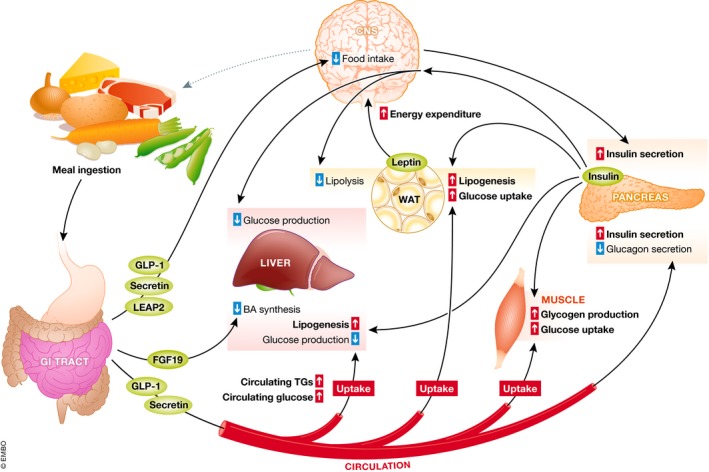
“Moreover, secretin can also inhibit food intake via the activation of secretin receptor (SctR) in vagal sensory nerves and melanocortin signaling in the brain 22, 23.”
§ Inter‐organ communication: a gatekeeper for metabolic health > Inter‐organ communication in the control of fasting/feeding cycles > Inter‐organ communication in feeding conditions
What the sources say
- Not checked yetcites [22] Cheng CY, Chu JY, Chow BK (2011) Central and peripheral administration of secretin inhibits food intake in mice through the activation of the melanocortin system. Neuropsychopharmacology 36: 459–471 source
- Not checked yetcites [23] Chu JY, Cheng CY, Sekar R, Chow BK (2013) Vagal afferent mediates the anorectic effect of peripheral secretin. PLoS One 8: e64859 source
plaindirect- Asserted: passes — The authors put it forward as true.
- Checkable: passes — It can be checked against evidence.
- Load-bearing: unclear — It is unclear whether the paper’s conclusions depend on it.
- Based: passes — The paper gives a reason why it holds.
In the paper
“A major target for gut‐derived hormones is the vagal afferent neurons (VANs) 21.”
§ Inter‐organ communication: a gatekeeper for metabolic health > Inter‐organ communication in the control of fasting/feeding cycles > Inter‐organ communication in feeding conditions
What the sources say
- Not checked yetcites [21] Ronveaux CC, Tome D, Raybould HE (2015) Glucagon‐like peptide 1 interacts with ghrelin and leptin to regulate glucose metabolism and food intake through vagal afferent neuron signaling. J Nutr 145: 672–680 source
plaincorrelational- Asserted: passes — The authors put it forward as true.
- Checkable: passes — It can be checked against evidence.
- Load-bearing: unclear — It is unclear whether the paper’s conclusions depend on it.
- Based: passes — The paper gives a reason why it holds.
In the paper
“An increase in circulating glucose levels is sensed by pancreatic β‐cells through the glucose transporter GLUT2.”
§ Inter‐organ communication: a gatekeeper for metabolic health > Inter‐organ communication in the control of fasting/feeding cycles > Inter‐organ communication in feeding conditions
What the sources say
- Not checked yetcites [24] Tokarz VL, MacDonald PE, Klip A (2018) The cell biology of systemic insulin function. J Cell Biol 217: 2273–2289 source
plaindirect- Asserted: passes — The authors put it forward as true.
- Checkable: passes — It can be checked against evidence.
- Load-bearing: unclear — It is unclear whether the paper’s conclusions depend on it.
- Based: passes — The paper gives a reason why it holds.
In the paper
“GLP‐1 and GIP work synergistically to potentiate glucose‐stimulated insulin secretion by pancreatic β‐cells 21.”
§ Inter‐organ communication: a gatekeeper for metabolic health > Inter‐organ communication in the control of fasting/feeding cycles > Inter‐organ communication in feeding conditions
What the sources say
- Not checked yetcites [21] Ronveaux CC, Tome D, Raybould HE (2015) Glucagon‐like peptide 1 interacts with ghrelin and leptin to regulate glucose metabolism and food intake through vagal afferent neuron signaling. J Nutr 145: 672–680 source
plaindirect- Asserted: passes — The authors put it forward as true.
- Checkable: passes — It can be checked against evidence.
- Load-bearing: unclear — It is unclear whether the paper’s conclusions depend on it.
- Based: passes — The paper gives a reason why it holds.
None of the sources cited for this claim have been checked yet.
In the paper
“The secretion of these signaling molecules varies according to the metabolic status of the body. They respond for instance to fasting and feeding cycles 14, to the circadian rhythm 15, to cold exposure 16, and to exercise17, thus participating in the organism's adaptive response and ensuring metabolic flexibility.”
§ Inter‐organ communication: a gatekeeper for metabolic health > Introduction
What the sources say
- Not checked yetcites [14] Longo VD, Panda S (2016) Fasting, circadian rhythms, and time‐restricted feeding in healthy lifespan. Cell Metab 23: 1048–1059 source
- Not checked yetcites [15] Gnocchi D, Bruscalupi G (2017) Circadian rhythms and hormonal homeostasis: pathophysiological implications. Biology (Basel) 6: 10
- Not checked yetcites [16] Betz MJ, Enerback S (2015) Human brown adipose tissue: what we have learned so far. Diabetes 64: 2352–2360 source
plaindirect- Asserted: passes — The authors put it forward as true.
- Checkable: passes — It can be checked against evidence.
- Load-bearing: passes — The paper’s conclusions depend on it.
- Based: passes — The paper gives a reason why it holds.
None of the sources cited for this claim have been checked yet.
In the paper
“In parallel, glucose inhibits the release of glucagon from the pancreatic α‐cells 25, 26.”
§ Inter‐organ communication: a gatekeeper for metabolic health > Inter‐organ communication in the control of fasting/feeding cycles > Inter‐organ communication in feeding conditions
What the sources say
- Not checked yetcites [25] Kersten S (2001) Mechanisms of nutritional and hormonal regulation of lipogenesis. EMBO Rep 2: 282–286 source
- Not checked yetcites [26] Vieira E, Salehi A, Gylfe E (2007) Glucose inhibits glucagon secretion by a direct effect on mouse pancreatic alpha cells. Diabetologia 50: 370–379 source
plaindirect- Asserted: passes — The authors put it forward as true.
- Checkable: passes — It can be checked against evidence.
- Load-bearing: unclear — It is unclear whether the paper’s conclusions depend on it.
- Based: passes — The paper gives a reason why it holds.
None of the sources cited for this claim have been checked yet.
In the paper
“Leptin is secreted by white adipocytes proportionally to TG stores 35, 36, 37.”
§ Inter‐organ communication: a gatekeeper for metabolic health > Inter‐organ communication in the control of fasting/feeding cycles > Inter‐organ communication in feeding conditions
What the sources say
- Not checked yetcites [35] Frederich RC, Hamann A, Anderson S, Lollmann B, Lowell BB, Flier JS (1995) Leptin levels reflect body lipid content in mice: evidence for diet‐induced resistance to leptin action. Nat Med 1: 1311–1314 source
- Not checked yetcites [36] Ingalls AM, Dickie MM, Snell GD (1950) Obese, a new mutation in the house mouse. J Hered 41: 317–318 source
- Not checked yetcites [37] Zhang Y, Proenca R, Maffei M, Barone M, Leopold L, Friedman JM (1994) Positional cloning of the mouse obese gene and its human homologue. Nature 372: 425–432 source
plaincorrelational- Asserted: passes — The authors put it forward as true.
- Checkable: passes — It can be checked against evidence.
- Load-bearing: unclear — It is unclear whether the paper’s conclusions depend on it.
- Based: passes — The paper gives a reason why it holds.
In the paper
“Importantly, LEAP2 was reported to be an endogenous antagonist of the ghrelin receptor, or growth hormone secretagogue receptor (GHSR).”
§ Inter‐organ communication: a gatekeeper for metabolic health > Inter‐organ communication in the control of fasting/feeding cycles > Inter‐organ communication in feeding conditions
What the sources say
- Not checked yetcites [47] Ge X, Yang H, Bednarek MA, Galon‐Tilleman H, Chen P, Chen M, Lichtman JS, Wang Y, Dalmas O, Yin Y et al (2018) LEAP2 is an endogenous antagonist of the ghrelin receptor. Cell Metab 27: 461–469 e6 source
plaindirect- Asserted: passes — The authors put it forward as true.
- Checkable: passes — It can be checked against evidence.
- Load-bearing: passes — The paper’s conclusions depend on it.
- Based: passes — The paper gives a reason why it holds.
In the paper
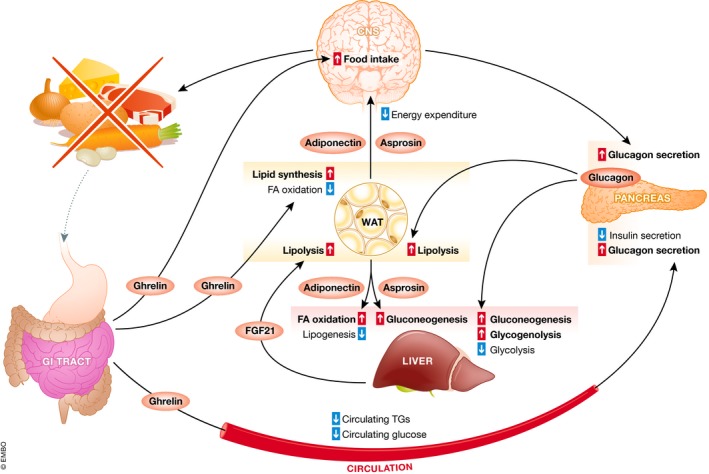
“The effects of ghrelin on adiposity have been shown to require intact sympathetic nervous system signaling 53.”
§ Inter‐organ communication: a gatekeeper for metabolic health > Inter‐organ communication in the control of fasting/feeding cycles > Inter‐organ communication in fasting conditions
What the sources say
- Not checked yetcites [53] Theander‐Carrillo C, Wiedmer P, Cettour‐Rose P, Nogueiras R, Perez‐Tilve D, Pfluger P, Castaneda TR, Muzzin P, Schurmann A, Szanto I et al (2006) Ghrelin action in the brain controls adipocyte metabolism. J Clin Invest 116: 1983–1993 source
plaindirect- Asserted: passes — The authors put it forward as true.
- Checkable: passes — It can be checked against evidence.
- Load-bearing: unclear — It is unclear whether the paper’s conclusions depend on it.
- Based: passes — The paper gives a reason why it holds.
- It may state two separate claims as one. 65
- Probably not a substantial claim. 5
- The quote only partly states this claim. 1
None of the sources cited for this claim have been checked yet.
In the paper
“Enteroendocrine cells sense nutrients in the intestinal lumen and produce peptides such as cholecystokinin (CCK), secretin, and the incretins; glucose‐dependent insulinotropic peptide (GIP); and glucagon‐like peptide 1 (GLP‐1) 19, 20.”
§ Inter‐organ communication: a gatekeeper for metabolic health > Inter‐organ communication in the control of fasting/feeding cycles > Inter‐organ communication in feeding conditions
What the sources say
- Not checked yetcites [19] Batterham RL, Cowley MA, Small CJ, Herzog H, Cohen MA, Dakin CL, Wren AM, Brynes AE, Low MJ, Ghatei MA et al (2002) Gut hormone PYY(3‐36) physiologically inhibits food intake. Nature 418: 650–654 source
- Not checked yetcites [20] Turton MD, O'Shea D, Gunn I, Beak SA, Edwards CM, Meeran K, Choi SJ, Taylor GM, Heath MM, Lambert PD et al (1996) A role for glucagon‐like peptide‐1 in the central regulation of feeding. Nature 379: 69–72 source
plaindirect- Asserted: passes — The authors put it forward as true.
- Checkable: passes — It can be checked against evidence.
- Load-bearing: passes — The paper’s conclusions depend on it.
- Based: passes — The paper gives a reason why it holds.
It may state two separate claims as one.
None of the sources cited for this claim have been checked yet.
In the paper
“Alternatively, the nervous system coordinates whole‐body metabolism not only by the production of neurohormones that act locally, but also by direct innervation of the target tissues 2, 3, 4, 5.”
§ Inter‐organ communication: a gatekeeper for metabolic health > Introduction
What the sources say
- Not checked yetcites [2] Ryan DG, Murphy MP, Frezza C, Prag HA, Chouchani ET, O'Neill LA, Mills EL (2019) Coupling Krebs cycle metabolites to signalling in immunity and cancer. Nat Metab 1: 16–33 source
- Not checked yetcites [3] Myers Jr MG, Olson DP (2012) Central nervous system control of metabolism. Nature 491: 357–363 source
- Not checked yetcites [4] Nogueiras R, Tschop MH, Zigman JM (2008) Central nervous system regulation of energy metabolism: ghrelin versus leptin. Ann N Y Acad Sci 1126: 14–19 source
plaindirect- Asserted: passes — The authors put it forward as true.
- Checkable: passes — It can be checked against evidence.
- Load-bearing: unclear — It is unclear whether the paper’s conclusions depend on it.
- Based: passes — The paper gives a reason why it holds.
It may state two separate claims as one.
None of the sources cited for this claim have been checked yet.
In the paper
“Indeed, leptin suppresses food intake and the production of adrenal corticosteroids while promoting energy expenditure and decreasing insulin secretion 38, 39.”
§ Inter‐organ communication: a gatekeeper for metabolic health > Inter‐organ communication in the control of fasting/feeding cycles > Inter‐organ communication in feeding conditions
What the sources say
- Not checked yetcites [38] Pan WW, Myers Jr MG (2018) Leptin and the maintenance of elevated body weight. Nat Rev Neurosci 19: 95–105 source
- Not checked yetcites [39] Stern JH, Rutkowski JM, Scherer PE (2016) Adiponectin, leptin, and fatty acids in the maintenance of metabolic homeostasis through adipose tissue crosstalk. Cell Metab 23: 770–784 source
boosteddirect- Asserted: passes — The authors put it forward as true.
- Checkable: passes — It can be checked against evidence.
- Load-bearing: unclear — It is unclear whether the paper’s conclusions depend on it.
- Based: passes — The paper gives a reason why it holds.
It may state two separate claims as one.
None of the sources cited for this claim have been checked yet.
In the paper
“By signaling through the brain, insulin regulates feeding behavior and modifies energy metabolism in liver and adipose tissues, as well as several more cognitive functions 27, 28, 29, 30, 31.”
§ Inter‐organ communication: a gatekeeper for metabolic health > Inter‐organ communication in the control of fasting/feeding cycles > Inter‐organ communication in feeding conditions
What the sources say
- Not checked yetcites [27] Lee SH, Zabolotny JM, Huang H, Lee H, Kim YB (2016) Insulin in the nervous system and the mind: functions in metabolism, memory, and mood. Mol Metab 5: 589–601 source
- Not checked yetcites [28] Gray SM, Meijer RI, Barrett EJ (2014) Insulin regulates brain function, but how does it get there? Diabetes 63: 3992–3997 source
- Not checked yetcites [29] Bruning JC, Gautam D, Burks DJ, Gillette J, Schubert M, Orban PC, Klein R, Krone W, Muller‐Wieland D, Kahn CR (2000) Role of brain insulin receptor in control of body weight and reproduction. Science 289: 2122–2125 source
plaindirect- Asserted: passes — The authors put it forward as true.
- Checkable: passes — It can be checked against evidence.
- Load-bearing: passes — The paper’s conclusions depend on it.
- Based: passes — The paper gives a reason why it holds.
It may state two separate claims as one.
None of the sources cited for this claim have been checked yet.
In the paper
“Intact hepatic insulin signaling is, however, dispensable for the postprandial repression of hepatic glucose production in the absence of hepatic FoxO1 32, 33, highlighting the importance of hypothalamic insulin signaling in the control of liver glucose metabolism 34.”
§ Inter‐organ communication: a gatekeeper for metabolic health > Inter‐organ communication in the control of fasting/feeding cycles > Inter‐organ communication in feeding conditions
What the sources say
- Not checked yetcites [32] O‐Sullivan I, Zhang W, Wasserman DH, Liew CW, Liu J, Paik J, DePinho RA, Stolz DB, Kahn CR, Schwartz MW et al (2015) FoxO1 integrates direct and indirect effects of insulin on hepatic glucose production and glucose utilization. Nat Commun 6: 7079 source
- Not checked yetcites [33] Titchenell PM, Chu Q, Monks BR, Birnbaum MJ (2015) Hepatic insulin signalling is dispensable for suppression of glucose output by insulin in vivo. Nat Commun 6: 7078 source
- Not checked yetcites [34] Obici S, Zhang BB, Karkanias G, Rossetti L (2002) Hypothalamic insulin signaling is required for inhibition of glucose production. Nat Med 8: 1376–1382 source
plaindirect- Asserted: passes — The authors put it forward as true.
- Checkable: passes — It can be checked against evidence.
- Load-bearing: passes — The paper’s conclusions depend on it.
- Based: passes — The paper gives a reason why it holds.
It may state two separate claims as one.
In the paper
“FGF19 then signals to the liver and induces a feedback repression of hepatic BA synthesis 42.”
§ Inter‐organ communication: a gatekeeper for metabolic health > Inter‐organ communication in the control of fasting/feeding cycles > Inter‐organ communication in feeding conditions
What the sources say
- Not checked yetcites [42] Inagaki T, Choi M, Moschetta A, Peng L, Cummins CL, McDonald JG, Luo G, Jones SA, Goodwin B, Richardson JA et al (2005) Fibroblast growth factor 15 functions as an enterohepatic signal to regulate bile acid homeostasis. Cell Metab 2: 217–225 source
plaindirect- Asserted: passes — The authors put it forward as true.
- Checkable: passes — It can be checked against evidence.
- Load-bearing: passes — The paper’s conclusions depend on it.
- Based: passes — The paper gives a reason why it holds.
It may state two separate claims as one.
In the paper
“Leptin can also activate glucose uptake in BAT, as well as glucose uptake and fatty acid oxidation in muscle in an AMPK‐dependent manner 40.”
§ Inter‐organ communication: a gatekeeper for metabolic health > Inter‐organ communication in the control of fasting/feeding cycles > Inter‐organ communication in feeding conditions
What the sources say
- Not checked yetcites [40] Minokoshi Y, Kim YB, Peroni OD, Fryer LG, Muller C, Carling D, Kahn BB (2002) Leptin stimulates fatty‐acid oxidation by activating AMP‐activated protein kinase. Nature 415: 339–343 source
plaindirect- Asserted: passes — The authors put it forward as true.
- Checkable: passes — It can be checked against evidence.
- Load-bearing: unclear — It is unclear whether the paper’s conclusions depend on it.
- Based: passes — The paper gives a reason why it holds.
It may state two separate claims as one.
In the paper
“Indeed, LEAP2 can fully blunt GHSR activation by ghrelin, thus reducing food intake and growth hormone (GH) release 47.”
§ Inter‐organ communication: a gatekeeper for metabolic health > Inter‐organ communication in the control of fasting/feeding cycles > Inter‐organ communication in feeding conditions
What the sources say
- Not checked yetcites [47] Ge X, Yang H, Bednarek MA, Galon‐Tilleman H, Chen P, Chen M, Lichtman JS, Wang Y, Dalmas O, Yin Y et al (2018) LEAP2 is an endogenous antagonist of the ghrelin receptor. Cell Metab 27: 461–469 e6 source
plaindirect- Asserted: passes — The authors put it forward as true.
- Checkable: passes — It can be checked against evidence.
- Load-bearing: passes — The paper’s conclusions depend on it.
- Based: passes — The paper gives a reason why it holds.
It may state two separate claims as one.
None of the sources cited for this claim have been checked yet.
In the paper
“FGF19 also increases liver protein and glycogen synthesis while repressing hepatic glucose production 43, 44, in order to ensure proper postprandial energy storage independently from insulin.”
§ Inter‐organ communication: a gatekeeper for metabolic health > Inter‐organ communication in the control of fasting/feeding cycles > Inter‐organ communication in feeding conditions
What the sources say
- Not checked yetcites [43] Kir S, Beddow SA, Samuel VT, Miller P, Previs SF, Suino‐Powell K, Xu HE, Shulman GI, Kliewer SA, Mangelsdorf DJ (2011) FGF19 as a postprandial, insulin‐independent activator of hepatic protein and glycogen synthesis. Science 331: 1621–1624 source
- Not checked yetcites [44] Potthoff MJ, Boney‐Montoya J, Choi M, He T, Sunny NE, Satapati S, Suino‐Powell K, Xu HE, Gerard RD, Finck BN et al (2011) FGF15/19 regulates hepatic glucose metabolism by inhibiting the CREB‐PGC‐1alpha pathway. Cell Metab 13: 729–738 source
plaindirect- Asserted: passes — The authors put it forward as true.
- Checkable: passes — It can be checked against evidence.
- Load-bearing: passes — The paper’s conclusions depend on it.
- Based: passes — The paper gives a reason why it holds.
It may state two separate claims as one.
None of the sources cited for this claim have been checked yet.
In the paper
“Importantly, Fgf15 can also signal through the brain to modulate glucose homeostasis 45 and glucagon secretion 46.”
§ Inter‐organ communication: a gatekeeper for metabolic health > Inter‐organ communication in the control of fasting/feeding cycles > Inter‐organ communication in feeding conditions
What the sources say
- Not checked yetcites [45] Ryan KK, Kohli R, Gutierrez‐Aguilar R, Gaitonde SG, Woods SC, Seeley RJ (2013) Fibroblast growth factor‐19 action in the brain reduces food intake and body weight and improves glucose tolerance in male rats. Endocrinology 154: 9–15 source
- Not checked yetcites [46] Picard A, Soyer J, Berney X, Tarussio D, Quenneville S, Jan M, Grouzmann E, Burdet F, Ibberson M, Thorens B (2016) A genetic screen identifies hypothalamic Fgf15 as a regulator of glucagon secretion. Cell Rep 17: 1795–1806 source
plaindirect- Asserted: passes — The authors put it forward as true.
- Checkable: passes — It can be checked against evidence.
- Load-bearing: unclear — It is unclear whether the paper’s conclusions depend on it.
- Based: passes — The paper gives a reason why it holds.
It may state two separate claims as one.
None of the sources cited for this claim have been checked yet.
In the paper
“In the brain, adiponectin activates AMPK signaling in hypothalamic ARC, resulting in an increase in food intake and a reduction in energy expenditure, suggesting that in the hypothalamus adiponectin promotes feeding and inhibits the anorexigenic effects of leptin 55, 56.”
§ Inter‐organ communication: a gatekeeper for metabolic health > Inter‐organ communication in the control of fasting/feeding cycles > Inter‐organ communication in fasting conditions
What the sources say
- Not checked yetcites [55] Steinberg GR, Kemp BE (2007) Adiponectin: starving for attention. Cell Metab 6: 3–4 source
- Not checked yetcites [56] Kubota N, Yano W, Kubota T, Yamauchi T, Itoh S, Kumagai H, Kozono H, Takamoto I, Okamoto S, Shiuchi T et al (2007) Adiponectin stimulates AMP‐activated protein kinase in the hypothalamus and increases food intake. Cell Metab 6: 55–68 source
hedgeddirect- Asserted: passes — The authors put it forward as true.
- Checkable: passes — It can be checked against evidence.
- Load-bearing: passes — The paper’s conclusions depend on it.
- Based: passes — The paper gives a reason why it holds.
It may state two separate claims as one.
In the paper
“Plasma concentrations of ghrelin are high during fasting and decrease in the postprandial state 48.”
§ Inter‐organ communication: a gatekeeper for metabolic health > Inter‐organ communication in the control of fasting/feeding cycles > Inter‐organ communication in fasting conditions
What the sources say
- Not checked yetcites [48] Cummings DE, Purnell JQ, Frayo RS, Schmidova K, Wisse BE, Weigle DS (2001) A preprandial rise in plasma ghrelin levels suggests a role in meal initiation in humans. Diabetes 50: 1714–1719 source
plaincorrelational- Asserted: passes — The authors put it forward as true.
- Checkable: passes — It can be checked against evidence.
- Load-bearing: unclear — It is unclear whether the paper’s conclusions depend on it.
- Based: passes — The paper gives a reason why it holds.
It may state two separate claims as one.
None of the sources cited for this claim have been checked yet.
In the paper
“Fibroblast growth factor 21 (FGF21) was first identified as an hepatokine 61 and has been shown to be necessary for the adaptation to fasting 62, 63.”
§ Inter‐organ communication: a gatekeeper for metabolic health > Inter‐organ communication in the control of fasting/feeding cycles > Inter‐organ communication in fasting conditions
What the sources say
- Not checked yetcites [61] Kharitonenkov A, Shiyanova TL, Koester A, Ford AM, Micanovic R, Galbreath EJ, Sandusky GE, Hammond LJ, Moyers JS, Owens RA et al (2005) FGF‐21 as a novel metabolic regulator. J Clin Invest 115: 1627–1635 source
- Not checked yetcites [62] Badman MK, Pissios P, Kennedy AR, Koukos G, Flier JS, Maratos‐Flier E (2007) Hepatic fibroblast growth factor 21 is regulated by PPARalpha and is a key mediator of hepatic lipid metabolism in ketotic states. Cell Metab 5: 426–437 source
- Not checked yetcites [63] Inagaki T, Dutchak P, Zhao G, Ding X, Gautron L, Parameswara V, Li Y, Goetz R, Mohammadi M, Esser V et al (2007) Endocrine regulation of the fasting response by PPARalpha‐mediated induction of fibroblast growth factor 21. Cell Metab 5: 415–425 source
plaindirect- Asserted: passes — The authors put it forward as true.
- Checkable: passes — It can be checked against evidence.
- Load-bearing: unclear — It is unclear whether the paper’s conclusions depend on it.
- Based: passes — The paper gives a reason why it holds.
It may state two separate claims as one.
None of the sources cited for this claim have been checked yet.
In the paper
“It is worth noting that FGF21 knockout mice exhibit lower glycemia in the fasted state, and lower plasma levels of ketone bodies in both the fasted and the fed state 64, 65.”
§ Inter‐organ communication: a gatekeeper for metabolic health > Inter‐organ communication in the control of fasting/feeding cycles > Inter‐organ communication in fasting conditions
What the sources say
- Not checked yetcites [64] BonDurant LD, Potthoff MJ (2018) Fibroblast growth factor 21: a versatile regulator of metabolic homeostasis. Annu Rev Nutr 38: 173–196 source
- Not checked yetcites [65] Potthoff MJ, Inagaki T, Satapati S, Ding X, He T, Goetz R, Mohammadi M, Finck BN, Mangelsdorf DJ, Kliewer SA et al (2009) FGF21 induces PGC‐1alpha and regulates carbohydrate and fatty acid metabolism during the adaptive starvation response. Proc Natl Acad Sci USA 106: 10853–10858 source
plaincorrelational- Asserted: passes — The authors put it forward as true.
- Checkable: passes — It can be checked against evidence.
- Load-bearing: unclear — It is unclear whether the paper’s conclusions depend on it.
- Based: passes — The paper gives a reason why it holds.
It may state two separate claims as one.
In the paper
“Asprosin directly targets the liver to promote glucose release, without increasing plasma levels of glucagon, catecholamines, and glucocorticoids.”
§ Inter‐organ communication: a gatekeeper for metabolic health > Inter‐organ communication in the control of fasting/feeding cycles > Inter‐organ communication in fasting conditions
What the sources say
- Not checked yetcites [59] Romere C, Duerrschmid C, Bournat J, Constable P, Jain M, Xia F, Saha PK, Del Solar M, Zhu B, York B et al (2016) Asprosin, a fasting‐induced glucogenic protein hormone. Cell 165: 566–579 source
plaindirect- Asserted: passes — The authors put it forward as true.
- Checkable: passes — It can be checked against evidence.
- Load-bearing: passes — The paper’s conclusions depend on it.
- Based: passes — The paper gives a reason why it holds.
It may state two separate claims as one.
In the paper
“This process is independent from glucagon receptor signaling and from the β‐adrenergic receptor 59.”
§ Inter‐organ communication: a gatekeeper for metabolic health > Inter‐organ communication in the control of fasting/feeding cycles > Inter‐organ communication in fasting conditions
What the sources say
- Not checked yetcites [59] Romere C, Duerrschmid C, Bournat J, Constable P, Jain M, Xia F, Saha PK, Del Solar M, Zhu B, York B et al (2016) Asprosin, a fasting‐induced glucogenic protein hormone. Cell 165: 566–579 source
plain- Asserted: passes — The authors put it forward as true.
- Checkable: passes — It can be checked against evidence.
- Load-bearing: passes — The paper’s conclusions depend on it.
- Based: passes — The paper gives a reason why it holds.
It may state two separate claims as one.
None of the sources cited for this claim have been checked yet.
In the paper
“In the peripheral tissues, adiponectin promotes liver insulin sensitivity via several independent mechanisms: an AMPK‐dependent mechanism involving increased ACC phosphorylation, an AMPK‐independent mechanism that involves a reduction in liver ceramide levels 57, and an IL‐6‐dependent mechanism that involves the upregulation of insulin receptor substrate 2 (IRS‐2) through the activation of STAT3 5”
§ Inter‐organ communication: a gatekeeper for metabolic health > Inter‐organ communication in the control of fasting/feeding cycles > Inter‐organ communication in fasting conditions
What the sources say
- Not checked yetcites [57] Holland WL, Miller RA, Wang ZV, Sun K, Barth BM, Bui HH, Davis KE, Bikman BT, Halberg N, Rutkowski JM et al (2011) Receptor‐mediated activation of ceramidase activity initiates the pleiotropic actions of adiponectin. Nat Med 17: 55–63 source
- Not checked yetcites [58] Awazawa M, Ueki K, Inabe K, Yamauchi T, Kubota N, Kaneko K, Kobayashi M, Iwane A, Sasako T, Okazaki Y et al (2011) Adiponectin enhances insulin sensitivity by increasing hepatic IRS‐2 expression via a macrophage‐derived IL‐6‐dependent pathway. Cell Metab 13: 401–412 source
plaindirect- Asserted: passes — The authors put it forward as true.
- Checkable: passes — It can be checked against evidence.
- Load-bearing: passes — The paper’s conclusions depend on it.
- Based: passes — The paper gives a reason why it holds.
It may state two separate claims as one.
In the paper
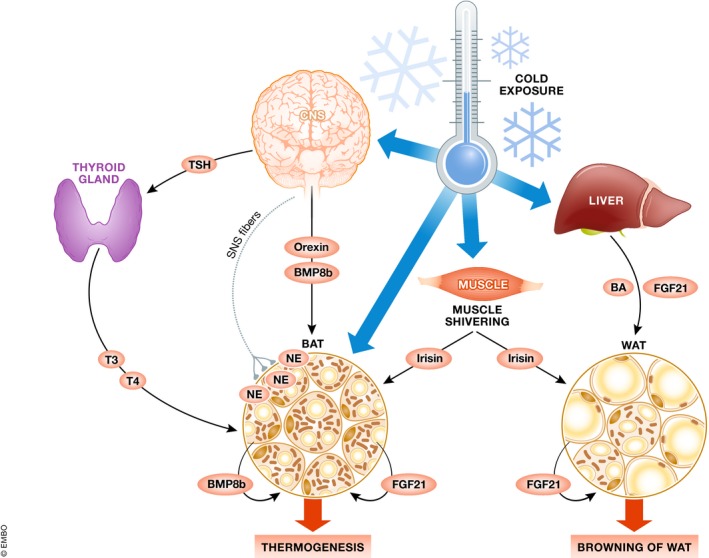
“The central administration of orexin peptide has been described to stimulate BAT activation and therefore thermogenesis 77.”
§ Inter‐organ communication: a gatekeeper for metabolic health > Inter‐organ communication in non‐shivering thermogenesis > Cold‐induced thermogenesis
What the sources say
- Not checked yetcites [77] Sellayah D, Bharaj P, Sikder D (2011) Orexin is required for brown adipose tissue development, differentiation, and function. Cell Metab 14: 478–490 source
plaindirect- Asserted: passes — The authors put it forward as true.
- Checkable: passes — It can be checked against evidence.
- Load-bearing: unclear — It is unclear whether the paper’s conclusions depend on it.
- Based: passes — The paper gives a reason why it holds.
It may state two separate claims as one.
In the paper
“Interestingly, BMP8b can also be produced in BAT and promote NE signaling locally, activating the MAPK pathway and lipolysis in brown adipocytes 80.”
§ Inter‐organ communication: a gatekeeper for metabolic health > Inter‐organ communication in non‐shivering thermogenesis > Cold‐induced thermogenesis
What the sources say
- Not checked yetcites [80] Whittle AJ, Carobbio S, Martins L, Slawik M, Hondares E, Vazquez MJ, Morgan D, Csikasz RI, Gallego R, Rodriguez‐Cuenca S et al (2012) BMP8B increases brown adipose tissue thermogenesis through both central and peripheral actions. Cell 149: 871–885 source
plaindirect- Asserted: passes — The authors put it forward as true.
- Checkable: passes — It can be checked against evidence.
- Load-bearing: unclear — It is unclear whether the paper’s conclusions depend on it.
- Based: passes — The paper gives a reason why it holds.
It may state two separate claims as one.
In the paper
“Mammals have BAT, a highly specialized tissue that functions to produce heat 73.”
§ Inter‐organ communication: a gatekeeper for metabolic health > Inter‐organ communication in non‐shivering thermogenesis
What the sources say
- Not checked yetcites [73] Cannon B, Nedergaard J (2004) Brown adipose tissue: function and physiological significance. Physiol Rev 84: 277–359 source
plain- Asserted: passes — The authors put it forward as true.
- Checkable: passes — It can be checked against evidence.
- Load-bearing: fails — The paper’s conclusions may not depend on it.
- Based: passes — The paper gives a reason why it holds.
Probably not a substantial claim. The paper’s conclusions may not depend on it.
In the paper
“Cold is sensed by the terminals of sensory neurons found in skin, and this signal is then processed in the hypothalamic preoptic area (POA), also known as the thermoregulatory center 76.”
§ Inter‐organ communication: a gatekeeper for metabolic health > Inter‐organ communication in non‐shivering thermogenesis > Cold‐induced thermogenesis
What the sources say
- Not checked yetcites [76] Zhang W, Bi S (2015) Hypothalamic regulation of brown adipose tissue thermogenesis and energy homeostasis. Front Endocrinol (Lausanne) 6: 136
plaindirect- Asserted: passes — The authors put it forward as true.
- Checkable: passes — It can be checked against evidence.
- Load-bearing: unclear — It is unclear whether the paper’s conclusions depend on it.
- Based: passes — The paper gives a reason why it holds.
It may state two separate claims as one.
None of the sources cited for this claim have been checked yet.
In the paper
“However, it is denser in specific regions of subcutaneous (or inguinal) WAT and can be increased in response to cold 70, 71.”
§ Inter‐organ communication: a gatekeeper for metabolic health > Inter‐organ communication in the control of fasting/feeding cycles > Inter‐organ communication in fasting conditions
What the sources say
- Not checked yetcites [70] Chi J, Wu Z, Choi CHJ, Nguyen L, Tegegne S, Ackerman SE, Crane A, Marchildon F, Tessier‐Lavigne M, Cohen P (2018) Three‐dimensional adipose tissue imaging reveals regional variation in beige fat biogenesis and PRDM16‐dependent sympathetic neurite density. Cell Metab 27: 226–236 e3 source
- Not checked yetcites [71] Jiang H, Ding X, Cao Y, Wang H, Zeng W (2017) Dense intra‐adipose sympathetic arborizations are essential for cold‐induced beiging of mouse white adipose tissue. Cell Metab 26: 686–692 e3 source
plaindirect- Asserted: passes — The authors put it forward as true.
- Checkable: passes — It can be checked against evidence.
- Load-bearing: unclear — It is unclear whether the paper’s conclusions depend on it.
- Based: passes — The paper gives a reason why it holds.
It may state two separate claims as one.
None of the sources cited for this claim have been checked yet.
In the paper
“BAT is especially abundant in hibernating mammals 74 , but can also be found in adult humans 75.”
§ Inter‐organ communication: a gatekeeper for metabolic health > Inter‐organ communication in non‐shivering thermogenesis
What the sources say
plain- Asserted: passes — The authors put it forward as true.
- Checkable: passes — It can be checked against evidence.
- Load-bearing: fails — The paper’s conclusions may not depend on it.
- Based: passes — The paper gives a reason why it holds.
Probably not a substantial claim. The paper’s conclusions may not depend on it. It may state two separate claims as one.
None of the sources cited for this claim have been checked yet.
In the paper
“Free fatty acids, resulting from lipolysis, are used both as energy substrates and as activators of UCP1 to uncouple ATP production from mitochondrial respiration into heat 73, 85.”
§ Inter‐organ communication: a gatekeeper for metabolic health > Inter‐organ communication in non‐shivering thermogenesis > Cold‐induced thermogenesis
What the sources say
- Not checked yetcites [73] Cannon B, Nedergaard J (2004) Brown adipose tissue: function and physiological significance. Physiol Rev 84: 277–359 source
- Not checked yetcites [85] Fedorenko A, Lishko PV, Kirichok Y (2012) Mechanism of fatty‐acid‐dependent UCP1 uncoupling in brown fat mitochondria. Cell 151: 400–413 source
plaindirect- Asserted: passes — The authors put it forward as true.
- Checkable: passes — It can be checked against evidence.
- Load-bearing: unclear — It is unclear whether the paper’s conclusions depend on it.
- Based: passes — The paper gives a reason why it holds.
It may state two separate claims as one.
In the paper
“Under cold exposure, FGF21 can be secreted by BAT and WAT, have a paracrine effect, and stimulate the expression of thermogenic genes 91.”
§ Inter‐organ communication: a gatekeeper for metabolic health > Inter‐organ communication in non‐shivering thermogenesis > Cold‐induced thermogenesis
What the sources say
- Not checked yetcites [91] Hondares E, Iglesias R, Giralt A, Gonzalez FJ, Giralt M, Mampel T, Villarroya F (2011) Thermogenic activation induces FGF21 expression and release in brown adipose tissue. J Biol Chem 286: 12983–12990 source
plaindirect- Asserted: passes — The authors put it forward as true.
- Checkable: passes — It can be checked against evidence.
- Load-bearing: unclear — It is unclear whether the paper’s conclusions depend on it.
- Based: passes — The paper gives a reason why it holds.
It may state two separate claims as one.
In the paper
“Some teams have reported that FGF21 knockout mice have impaired adaptation to chronic cold exposure and decreased browning of WAT 92.”
§ Inter‐organ communication: a gatekeeper for metabolic health > Inter‐organ communication in non‐shivering thermogenesis > Cold‐induced thermogenesis
What the sources say
- Not checked yetcites [92] Fisher FM, Kleiner S, Douris N, Fox EC, Mepani RJ, Verdeguer F, Wu J, Kharitonenkov A, Flier JS, Maratos‐Flier E et al (2012) FGF21 regulates PGC‐1alpha and browning of white adipose tissues in adaptive thermogenesis. Genes Dev 26: 271–281 source
hedgeddirect- Asserted: passes — The authors put it forward as true.
- Checkable: passes — It can be checked against evidence.
- Load-bearing: fails — The paper’s conclusions may not depend on it.
- Based: passes — The paper gives a reason why it holds.
Probably not a substantial claim. The paper’s conclusions may not depend on it. It may state two separate claims as one.
In the paper
“Brite adipocytes can express UCP1 and, as such, can participate in the maintenance of body temperature 90.”
§ Inter‐organ communication: a gatekeeper for metabolic health > Inter‐organ communication in non‐shivering thermogenesis > Cold‐induced thermogenesis
What the sources say
- Not checked yetcites [90] Wu J, Cohen P, Spiegelman BM (2013) Adaptive thermogenesis in adipocytes: is beige the new brown? Genes Dev 27: 234–250 source
plainconditional- Asserted: passes — The authors put it forward as true.
- Checkable: passes — It can be checked against evidence.
- Load-bearing: unclear — It is unclear whether the paper’s conclusions depend on it.
- Based: passes — The paper gives a reason why it holds.
It may state two separate claims as one.
In the paper
“However, others have shown that the lack of FGF21 in long‐term cold adaptation does not impair the thermogenic response of mice 93.”
§ Inter‐organ communication: a gatekeeper for metabolic health > Inter‐organ communication in non‐shivering thermogenesis > Cold‐induced thermogenesis
What the sources say
- Not checked yetcites [93] Keipert S, Kutschke M, Ost M, Schwarzmayr T, van Schothorst EM, Lamp D, Brachthauser L, Hamp I, Mazibuko SE, Hartwig S et al (2017) Long‐term cold adaptation does not require FGF21 or UCP1. Cell Metab 26: 437–446 e5 source
plain- Asserted: passes — The authors put it forward as true.
- Checkable: passes — It can be checked against evidence.
- Load-bearing: fails — The paper’s conclusions may not depend on it.
- Based: passes — The paper gives a reason why it holds.
Probably not a substantial claim. The paper’s conclusions may not depend on it.
In the paper
“Additionally, hepatic FGF21 production can also be induced by cold, and blunted hepatic FGF21 secretion, but not adipocytic FGF21 secretion, results in impaired cold tolerance and decreased sympathetic nerve activity in BAT 95.”
§ Inter‐organ communication: a gatekeeper for metabolic health > Inter‐organ communication in non‐shivering thermogenesis > Cold‐induced thermogenesis
What the sources say
- Not checked yetcites [95] Ameka M, Markan KR, Morgan DA, BonDurant LD, Idiga SO, Naber MC, Zhu Z, Zingman LV, Grobe JL, Rahmouni K et al (2019) Liver derived FGF21 maintains core body temperature during acute cold exposure. Sci Rep 9: 630 source
plaindirect- Asserted: passes — The authors put it forward as true.
- Checkable: passes — It can be checked against evidence.
- Load-bearing: passes — The paper’s conclusions depend on it.
- Based: passes — The paper gives a reason why it holds.
It may state two separate claims as one.
In the paper
“These mice show neglectable browning and exhibit reduced cold tolerance due to reduced adipose mitochondrial fusion 98.”
§ Inter‐organ communication: a gatekeeper for metabolic health > Inter‐organ communication in non‐shivering thermogenesis > Cold‐induced thermogenesis
What the sources say
- Not checked yetcites [98] Velazquez‐Villegas LA, Perino A, Lemos V, Zietak M, Nomura M, Pols TWH, Schoonjans K (2018) TGR5 signalling promotes mitochondrial fission and beige remodelling of white adipose tissue. Nat Commun 9: 245 source
plaindirect- Asserted: passes — The authors put it forward as true.
- Checkable: passes — It can be checked against evidence.
- Load-bearing: passes — The paper’s conclusions depend on it.
- Based: passes — The paper gives a reason why it holds.
It may state two separate claims as one.
In the paper
“It has been described that BA secretion increases energy expenditure in BAT by enhancing the enzymatic activity of DIO2 and therefore regulating thyroid hormone metabolism in BAT 97.”
§ Inter‐organ communication: a gatekeeper for metabolic health > Inter‐organ communication in non‐shivering thermogenesis > Cold‐induced thermogenesis
What the sources say
- Not checked yetcites [97] Watanabe M, Houten SM, Mataki C, Christoffolete MA, Kim BW, Sato H, Messaddeq N, Harney JW, Ezaki O, Kodama T et al (2006) Bile acids induce energy expenditure by promoting intracellular thyroid hormone activation. Nature 439: 484–489 source
plaindirect- Asserted: passes — The authors put it forward as true.
- Checkable: passes — It can be checked against evidence.
- Load-bearing: unclear — It is unclear whether the paper’s conclusions depend on it.
- Based: passes — The paper gives a reason why it holds.
It may state two separate claims as one.
In the paper
“The activation of feeding–responsive thermogenesis has been strongly associated with food intake regulation by inhibiting orexigenic activation in the brain, revealing a gut–brain–BAT–brain axis 104.”
§ Inter‐organ communication: a gatekeeper for metabolic health > Inter‐organ communication in non‐shivering thermogenesis > Feeding‐induced thermogenesis
What the sources say
- Not checked yetcites [104] Kelsey R (2018) BAT is involved in control of satiation. Nat Rev Endocrinol 15: 1 source
boostedcorrelational- Asserted: passes — The authors put it forward as true.
- Checkable: passes — It can be checked against evidence.
- Load-bearing: passes — The paper’s conclusions depend on it.
- Based: passes — The paper gives a reason why it holds.
It may state two separate claims as one.
The paper states this without a source or data behind it here, so there is nothing to check it against. The quote shows it is in the paper.
In the paper
“Most of these molecules act through the brain, like GLP‐1 and CCK, where they increase sympathetic activation and therefore stimulate the local release of NE in BAT.”
§ Inter‐organ communication: a gatekeeper for metabolic health > Inter‐organ communication in non‐shivering thermogenesis > Feeding‐induced thermogenesis
plaindirect- Asserted: passes — The authors put it forward as true.
- Checkable: passes — It can be checked against evidence.
- Load-bearing: passes — The paper’s conclusions depend on it.
- Based: passes — The paper gives a reason why it holds.
It may state two separate claims as one.
In the paper
“Interestingly, secretin can stimulate BAT thermogenesis in a non‐sympathetic manner and contribute to satiation.”
§ Inter‐organ communication: a gatekeeper for metabolic health > Inter‐organ communication in non‐shivering thermogenesis > Feeding‐induced thermogenesis
What the sources say
- Not checked yetcites [107] Li Y, Schnabl K, Gabler SM, Willershauser M, Reber J, Karlas A, Laurila S, Lahesmaa M, U Din M, Bast‐Habersbrunner A et al (2018) Secretin‐activated brown fat mediates prandial thermogenesis to induce satiation. Cell 175: 1561–1574 e12 source
plaindirect- Asserted: passes — The authors put it forward as true.
- Checkable: passes — It can be checked against evidence.
- Load-bearing: unclear — It is unclear whether the paper’s conclusions depend on it.
- Based: passes — The paper gives a reason why it holds.
It may state two separate claims as one.
In the paper
“Moreover, secretin treatment increases the expression of the anorexigenic proopiomelanocortin (POMC) peptide in the hypothalamus and therefore reduces food intake 107.”
§ Inter‐organ communication: a gatekeeper for metabolic health > Inter‐organ communication in non‐shivering thermogenesis > Feeding‐induced thermogenesis
What the sources say
- Not checked yetcites [107] Li Y, Schnabl K, Gabler SM, Willershauser M, Reber J, Karlas A, Laurila S, Lahesmaa M, U Din M, Bast‐Habersbrunner A et al (2018) Secretin‐activated brown fat mediates prandial thermogenesis to induce satiation. Cell 175: 1561–1574 e12 source
plaindirect- Asserted: passes — The authors put it forward as true.
- Checkable: passes — It can be checked against evidence.
- Load-bearing: passes — The paper’s conclusions depend on it.
- Based: passes — The paper gives a reason why it holds.
It may state two separate claims as one.
A conclusion the paper draws from its own results — it cites no other source for it, so there is none to check. The quote shows it is in the paper.
In the paper
“In this section, we described how brown and beige adipose tissue thermogenesis are activated not only to adapt to cold stress (Fig 3), but also to prevent the excessive energy storage that could lead to obesity and thus maintain general energy homeostasis in the organism.”
§ Inter‐organ communication: a gatekeeper for metabolic health > Inter‐organ communication in non‐shivering thermogenesis > Feeding‐induced thermogenesis
plaindirect- Asserted: passes — The authors put it forward as true.
- Checkable: passes — It can be checked against evidence.
- Load-bearing: passes — The paper’s conclusions depend on it.
- Based: passes — The paper gives a reason why it holds.
It may state two separate claims as one.
In the paper
“Irisin can also increase muscle oxidative metabolism and substrate (glucose and fatty acid) uptake, and reduce hepatic glucose output 117.”
§ Inter‐organ communication: a gatekeeper for metabolic health > Inter‐organ communication during exercise
What the sources say
- Not checked yetcites [117] Perakakis N, Triantafyllou GA, Fernandez‐Real JM, Huh JY, Park KH, Seufert J, Mantzoros CS (2017) Physiology and role of irisin in glucose homeostasis. Nat Rev Endocrinol 13: 324–337 source
plaindirect- Asserted: passes — The authors put it forward as true.
- Checkable: passes — It can be checked against evidence.
- Load-bearing: unclear — It is unclear whether the paper’s conclusions depend on it.
- Based: passes — The paper gives a reason why it holds.
It may state two separate claims as one.
None of the sources cited for this claim have been checked yet.
In the paper
“IL‐6 also triggers insulin production in pancreas, hepatic glucose production, and adipose tissue lipolysis, thus ensuring the availability of energy substrates for exercising muscle 11, 17.”
§ Inter‐organ communication: a gatekeeper for metabolic health > Inter‐organ communication during exercise
What the sources say
plaindirect- Asserted: passes — The authors put it forward as true.
- Checkable: passes — It can be checked against evidence.
- Load-bearing: passes — The paper’s conclusions depend on it.
- Based: passes — The paper gives a reason why it holds.
It may state two separate claims as one.
None of the sources cited for this claim have been checked yet.
In the paper
“Exercise‐induced IL‐6 production was initially believed to be linked to muscle damage, but has now been proven to directly depend on contraction and to mediate muscle glucose uptake, increased insulin sensitivity, and increased fatty acid oxidation.”
§ Inter‐organ communication: a gatekeeper for metabolic health > Inter‐organ communication during exercise
What the sources say
boosteddirect- Asserted: passes — The authors put it forward as true.
- Checkable: passes — It can be checked against evidence.
- Load-bearing: passes — The paper’s conclusions depend on it.
- Based: passes — The paper gives a reason why it holds.
It may state two separate claims as one.
None of the sources cited for this claim have been checked yet.
In the paper
“Moreover, IL‐6 has the ability to induce an anti‐inflammatory response by reducing tumor necrosis factor‐α (TNF‐α) production while increasing the levels of interleukin 10 (IL‐10), interleukin 1 receptor antagonist (IL‐1Ra), and interleukin 15 (IL‐15) 17, 114.”
§ Inter‐organ communication: a gatekeeper for metabolic health > Inter‐organ communication during exercise
What the sources say
- Not checked yetcites [17] Pedersen BK, Febbraio MA (2012) Muscles, exercise and obesity: skeletal muscle as a secretory organ. Nat Rev Endocrinol 8: 457–465 source
- Not checked yetcites [114] Leal LG, Lopes MA, Batista Jr ML (2018) Physical exercise‐induced myokines and muscle‐adipose tissue crosstalk: a review of current knowledge and the implications for health and metabolic diseases. Front Physiol 9: 1307 source
plaindirect- Asserted: passes — The authors put it forward as true.
- Checkable: passes — It can be checked against evidence.
- Load-bearing: passes — The paper’s conclusions depend on it.
- Based: passes — The paper gives a reason why it holds.
It may state two separate claims as one.
None of the sources cited for this claim have been checked yet.
In the paper
“More precisely, during exercise skeletal muscle tightly interacts with adipose tissue, pancreas, and liver to sustain the energy demands of physical activity and mediate positive effects in whole‐body energy metabolism.”
§ Inter‐organ communication: a gatekeeper for metabolic health > Inter‐organ communication during exercise
What the sources say
plaindirect- Asserted: passes — The authors put it forward as true.
- Checkable: passes — It can be checked against evidence.
- Load-bearing: passes — The paper’s conclusions depend on it.
- Based: passes — The paper gives a reason why it holds.
It may state two separate claims as one.
In the paper
“Despite this, they do not show the expected reduction in food intake and increase in energy expenditure, thus leading to the concept of leptin resistance, probably due to a decrease in JAK2‐STAT3 signaling in pathologic conditions 127.”
§ Inter‐organ communication: a gatekeeper for metabolic health > Inter‐organ communication in pathological conditions: the case of obesity and related disorders
What the sources say
- Not checked yetcites [127] Munzberg H, Flier JS, Bjorbaek C (2004) Region‐specific leptin resistance within the hypothalamus of diet‐induced obese mice. Endocrinology 145: 4880–4889 source
hedgedconditional- Asserted: passes — The authors put it forward as true.
- Checkable: passes — It can be checked against evidence.
- Load-bearing: passes — The paper’s conclusions depend on it.
- Based: passes — The paper gives a reason why it holds.
It may state two separate claims as one.
In the paper
“Interestingly, cold‐induced muscle shivering can increase circulating irisin levels and promote brown fat thermogenesis 118 (Fig 3).”
§ Inter‐organ communication: a gatekeeper for metabolic health > Inter‐organ communication during exercise
What the sources say
- Not checked yetcites [118] Lee P, Linderman JD, Smith S, Brychta RJ, Wang J, Idelson C, Perron RM, Werner CD, Phan GQ, Kammula US et al (2014) Irisin and FGF21 are cold‐induced endocrine activators of brown fat function in humans. Cell Metab 19: 302–309 source
plaindirect- Asserted: passes — The authors put it forward as true.
- Checkable: passes — It can be checked against evidence.
- Load-bearing: unclear — It is unclear whether the paper’s conclusions depend on it.
- Based: passes — The paper gives a reason why it holds.
It may state two separate claims as one.
In the paper
“Finally, a recent study using proteomic approaches demonstrates that the secreted form of lysosomal enzyme cathepsin B (CTSB) is also an exercise–responsive myokine that targets the brain, promotes hippocampal neurogenesis, and therefore enhances cognitive abilities 122.”
§ Inter‐organ communication: a gatekeeper for metabolic health > Inter‐organ communication during exercise
What the sources say
- Not checked yetcites [122] Moon HY, Becke A, Berron D, Becker B, Sah N, Benoni G, Janke E, Lubejko ST, Greig NH, Mattison JA et al (2016) Running‐induced systemic cathepsin B secretion is associated with memory function. Cell Metab 24: 332–340 source
boosteddirect- Asserted: passes — The authors put it forward as true.
- Checkable: passes — It can be checked against evidence.
- Load-bearing: passes — The paper’s conclusions depend on it.
- Based: passes — The paper gives a reason why it holds.
It may state two separate claims as one.
In the paper
“Most humans with obesity, as well as DIO mice, fed highly caloric palatable diets, develop insulin resistance, and exhibit high plasma levels of leptin 35.”
§ Inter‐organ communication: a gatekeeper for metabolic health > Inter‐organ communication in pathological conditions: the case of obesity and related disorders
What the sources say
- Not checked yetcites [35] Frederich RC, Hamann A, Anderson S, Lollmann B, Lowell BB, Flier JS (1995) Leptin levels reflect body lipid content in mice: evidence for diet‐induced resistance to leptin action. Nat Med 1: 1311–1314 source
plaincorrelational- Asserted: passes — The authors put it forward as true.
- Checkable: passes — It can be checked against evidence.
- Load-bearing: unclear — It is unclear whether the paper’s conclusions depend on it.
- Based: passes — The paper gives a reason why it holds.
It may state two separate claims as one.
None of the sources cited for this claim have been checked yet.
In the paper
“Moreover, physical exercise also promotes the browning of WAT and BAT thermogenesis, possibly in order to meet the increased demand for fatty acid and glucose oxidation and to prevent the accumulation of energy substrates in the circulation 123, 124.”
§ Inter‐organ communication: a gatekeeper for metabolic health > Inter‐organ communication during exercise
What the sources say
hedgedconditional- Asserted: passes — The authors put it forward as true.
- Checkable: passes — It can be checked against evidence.
- Load-bearing: passes — The paper’s conclusions depend on it.
- Based: passes — The paper gives a reason why it holds.
It may state two separate claims as one.
In the paper
“This increase triggers a reduction in the expression of tyrosine hydroxylase neurons in the paraventricular nucleus (PVN) of the hypothalamus and consequently, diminishes the thermogenic activation of BAT and overall energy expenditure 129.”
§ Inter‐organ communication: a gatekeeper for metabolic health > Inter‐organ communication in pathological conditions: the case of obesity and related disorders
What the sources say
- Not checked yetcites [129] Shi YC, Lau J, Lin Z, Zhang H, Zhai L, Sperk G, Heilbronn R, Mietzsch M, Weger S, Huang XF et al (2013) Arcuate NPY controls sympathetic output and BAT function via a relay of tyrosine hydroxylase neurons in the PVN. Cell Metab 17: 236–248 source
plaindirect- Asserted: passes — The authors put it forward as true.
- Checkable: passes — It can be checked against evidence.
- Load-bearing: passes — The paper’s conclusions depend on it.
- Based: passes — The paper gives a reason why it holds.
It may state two separate claims as one.
In the paper
“Moreover, despite evidence showing improved metabolic fitness in FGF21 treatment or overexpression studies, clinical studies in humans have revealed high FGF21 circulating concentrations in obese and insulin‐resistant subjects, as well as the onset of a so called “FGF21 resistance” 134.”
§ Inter‐organ communication: a gatekeeper for metabolic health > Inter‐organ communication in pathological conditions: the case of obesity and related disorders
What the sources say
- Not checked yetcites [134] Fisher FM, Chui PC, Antonellis PJ, Bina HA, Kharitonenkov A, Flier JS, Maratos‐Flier E (2010) Obesity is a fibroblast growth factor 21 (FGF21)‐resistant state. Diabetes 59: 2781–2789 source
plaincorrelational- Asserted: passes — The authors put it forward as true.
- Checkable: passes — It can be checked against evidence.
- Load-bearing: passes — The paper’s conclusions depend on it.
- Based: passes — The paper gives a reason why it holds.
It may state two separate claims as one.
None of the sources cited for this claim have been checked yet.
In the paper
“So far, the activation of adiponectin signaling has improved glucose tolerance, insulin sensitivity, and longevity in mice 12, 130.”
§ Inter‐organ communication: a gatekeeper for metabolic health > Inter‐organ communication in pathological conditions: the case of obesity and related disorders
What the sources say
- Not checked yetcites [12] Fasshauer M, Bluher M (2015) Adipokines in health and disease. Trends Pharmacol Sci 36: 461–470 source
- Not checked yetcites [130] Okada‐Iwabu M, Yamauchi T, Iwabu M, Honma T, Hamagami K, Matsuda K, Yamaguchi M, Tanabe H, Kimura‐Someya T, Shirouzu M et al (2013) A small‐molecule AdipoR agonist for type 2 diabetes and short life in obesity. Nature 503: 493–499 source
plaindirect- Asserted: passes — The authors put it forward as true.
- Checkable: passes — It can be checked against evidence.
- Load-bearing: unclear — It is unclear whether the paper’s conclusions depend on it.
- Based: passes — The paper gives a reason why it holds.
It may state two separate claims as one.
In the paper
“Interestingly, postprandial glucagon‐like peptide‐1 (GLP‐1) secretion is increased in obese patients following bariatric surgery and correlates with weight loss maintenance 139.”
§ Inter‐organ communication: a gatekeeper for metabolic health > Inter‐organ communication in pathological conditions: the case of obesity and related disorders
What the sources say
- Not checked yetcites [139] Madsbad S (2014) The role of glucagon‐like peptide‐1 impairment in obesity and potential therapeutic implications. Diabetes Obes Metab 16: 9–21 source
plaincorrelational- Asserted: passes — The authors put it forward as true.
- Checkable: passes — It can be checked against evidence.
- Load-bearing: unclear — It is unclear whether the paper’s conclusions depend on it.
- Based: passes — The paper gives a reason why it holds.
It may state two separate claims as one.
A conclusion the paper draws from its own results — it cites no other source for it, so there is none to check. The quote shows it is in the paper.
In the paper
“These findings highlight the fact that improving muscle oxidative capacity is beneficial both to prevent metabolic disease and to cure metabolic disease; however, the role of Lcn5 and Metrnl in normal physiology remains to be determined.”
§ Inter‐organ communication: a gatekeeper for metabolic health > Inter‐organ communication in pathological conditions: the case of obesity and related disorders
plaindirect- Asserted: passes — The authors put it forward as true.
- Checkable: passes — It can be checked against evidence.
- Load-bearing: passes — The paper’s conclusions depend on it.
- Based: passes — The paper gives a reason why it holds.
It may state two separate claims as one.
In the paper
“Physical inactivity, that can be both a cause and a consequence of obesity, is known to be associated with decreased insulin sensitivity, reduced postprandial lipid metabolism, decreased muscle mass, and obesity.”
§ Inter‐organ communication: a gatekeeper for metabolic health > Inter‐organ communication in pathological conditions: the case of obesity and related disorders
What the sources say
- Not checked yetcites [112] Hoffmann C, Weigert C (2017) Skeletal muscle as an endocrine organ: the role of myokines in exercise adaptations. Cold Spring Harb Perspect Med 7: a029793 source
boostedcorrelational- Asserted: passes — The authors put it forward as true.
- Checkable: passes — It can be checked against evidence.
- Load-bearing: unclear — It is unclear whether the paper’s conclusions depend on it.
- Based: passes — The paper gives a reason why it holds.
It may state two separate claims as one.
In the paper
“However, serum Metrnl levels are decreased in patients with T2D and inversely correlate with fasting glucose levels 137.”
§ Inter‐organ communication: a gatekeeper for metabolic health > Inter‐organ communication in pathological conditions: the case of obesity and related disorders
What the sources say
- Not checked yetcites [137] Lee JH, Kang YE, Kim JM, Choung S, Joung KH, Kim HJ, Ku BJ (2018) Serum Meteorin‐like protein levels decreased in patients newly diagnosed with type 2 diabetes. Diabetes Res Clin Pract 135: 7–10 source
plaincorrelational- Asserted: passes — The authors put it forward as true.
- Checkable: passes — It can be checked against evidence.
- Load-bearing: unclear — It is unclear whether the paper’s conclusions depend on it.
- Based: passes — The paper gives a reason why it holds.
It may state two separate claims as one.
In the paper
“Metrnl promotes adipose tissue browning by recruiting IL‐4 and IL‐13 producing eosinophils and thus promoting anti‐inflammatory macrophage activation 136.”
§ Inter‐organ communication: a gatekeeper for metabolic health > Inter‐organ communication in pathological conditions: the case of obesity and related disorders
What the sources say
- Not checked yetcites [136] Rao RR, Long JZ, White JP, Svensson KJ, Lou J, Lokurkar I, Jedrychowski MP, Ruas JL, Wrann CD, Lo JC et al (2014) Meteorin‐like is a hormone that regulates immune‐adipose interactions to increase beige fat thermogenesis. Cell 157: 1279–1291 source
plaindirect- Asserted: passes — The authors put it forward as true.
- Checkable: passes — It can be checked against evidence.
- Load-bearing: unclear — It is unclear whether the paper’s conclusions depend on it.
- Based: passes — The paper gives a reason why it holds.
It may state two separate claims as one.
In the paper
“However, the use of leptin analogs in combination with other agents, namely amylin, has given more encouraging results, but was stopped due to adverse secondary effects 12.”
§ Inter‐organ communication: a gatekeeper for metabolic health > Taking advantage of inter‐organ communication to treat obesity and associated diseases
What the sources say
- Not checked yetcites [12] Fasshauer M, Bluher M (2015) Adipokines in health and disease. Trends Pharmacol Sci 36: 461–470 source
plaindirect- Asserted: passes — The authors put it forward as true.
- Checkable: passes — It can be checked against evidence.
- Load-bearing: unclear — It is unclear whether the paper’s conclusions depend on it.
- Based: passes — The paper gives a reason why it holds.
It may state two separate claims as one.
None of the sources cited for this claim have been checked yet.
In the paper
“Importantly, the inhibition of myostatin signaling increases PGC1α and mitochondrial biogenesis 145, while mice deficient for myostatin show an improved metabolic phenotype and a resistance to HFD 146, 147.”
§ Inter‐organ communication: a gatekeeper for metabolic health > Inter‐organ communication in pathological conditions: the case of obesity and related disorders
What the sources say
- Not checked yetcites [146] Zhao B, Wall RJ, Yang J (2005) Transgenic expression of myostatin propeptide prevents diet‐induced obesity and insulin resistance. Biochem Biophys Res Commun 337: 248–255 source
- Not checked yetcites [147] Shan T, Liang X, Bi P, Kuang S (2013) Myostatin knockout drives browning of white adipose tissue through activating the AMPK‐PGC1alpha‐Fndc5 pathway in muscle. FASEB J 27: 1981–1989 source
plaindirect- Asserted: passes — The authors put it forward as true.
- Checkable: passes — It can be checked against evidence.
- Load-bearing: passes — The paper’s conclusions depend on it.
- Based: passes — The paper gives a reason why it holds.
It may state two separate claims as one.
In the paper
“Adiponectin receptor analogs have successfully been used in preclinical mouse models 130, but have not yet been used in human patients.”
§ Inter‐organ communication: a gatekeeper for metabolic health > Taking advantage of inter‐organ communication to treat obesity and associated diseases
What the sources say
- Not checked yetcites [130] Okada‐Iwabu M, Yamauchi T, Iwabu M, Honma T, Hamagami K, Matsuda K, Yamaguchi M, Tanabe H, Kimura‐Someya T, Shirouzu M et al (2013) A small‐molecule AdipoR agonist for type 2 diabetes and short life in obesity. Nature 503: 493–499 source
plain- Asserted: passes — The authors put it forward as true.
- Checkable: passes — It can be checked against evidence.
- Load-bearing: unclear — It is unclear whether the paper’s conclusions depend on it.
- Based: passes — The paper gives a reason why it holds.
It may state two separate claims as one.
In the paper
“A truncated globular form of adiponectin has also been shown to promote muscle fatty acid oxidation, decrease muscle ceramides, and overall improve insulin sensitivity, whether or not this globular adiponectin mimics the function of the multimeric adiponectin complexes found in circulation remains to be demonstrated 39.”
§ Inter‐organ communication: a gatekeeper for metabolic health > Taking advantage of inter‐organ communication to treat obesity and associated diseases
What the sources say
- Not checked yetcites [39] Stern JH, Rutkowski JM, Scherer PE (2016) Adiponectin, leptin, and fatty acids in the maintenance of metabolic homeostasis through adipose tissue crosstalk. Cell Metab 23: 770–784 source
plaindirect- Asserted: passes — The authors put it forward as true.
- Checkable: passes — It can be checked against evidence.
- Load-bearing: unclear — It is unclear whether the paper’s conclusions depend on it.
- Based: passes — The paper gives a reason why it holds.
It may state two separate claims as one.
In the paper
“Moreover, GLP‐1Ras improve glycemic control and reduce liver inflammation and fibrosis 157.”
§ Inter‐organ communication: a gatekeeper for metabolic health > Taking advantage of inter‐organ communication to treat obesity and associated diseases
What the sources say
- Not checked yetcites [157] Andersen A, Lund A, Knop FK, Vilsboll T (2018) Glucagon‐like peptide 1 in health and disease. Nat Rev Endocrinol 14: 390–403 source
plaindirect- Asserted: passes — The authors put it forward as true.
- Checkable: passes — It can be checked against evidence.
- Load-bearing: passes — The paper’s conclusions depend on it.
- Based: passes — The paper gives a reason why it holds.
It may state two separate claims as one.
None of the sources cited for this claim have been checked yet.
In the paper
“Recent studies show that more than 15% of the protein‐coding genome encodes for roughly 3,000 secreted proteins, but only a handful of them has been properly annotated 159, 160, suggesting that a very high number of “molecular messengers” remain to be discovered.”
§ Inter‐organ communication: a gatekeeper for metabolic health > Concluding remarks
What the sources say
- Not checked yetcites [159] Uhlen M, Oksvold P, Fagerberg L, Lundberg E, Jonasson K, Forsberg M, Zwahlen M, Kampf C, Wester K, Hober S et al (2010) Towards a knowledge‐based Human Protein Atlas. Nat Biotechnol 28: 1248–1250 source
- Not checked yetcites [160] Lindskog C (2015) The potential clinical impact of the tissue‐based map of the human proteome. Expert Rev Proteomics 12: 213–215 source
plain- Asserted: passes — The authors put it forward as true.
- Checkable: passes — It can be checked against evidence.
- Load-bearing: passes — The paper’s conclusions depend on it.
- Based: passes — The paper gives a reason why it holds.
It may state two separate claims as one.
In the paper
“More recently, a neutralizing antibody against asprosin was used in obese mice to reduce appetite, body weight, and blood glucose, suggesting that this orexigenic hormone can be targeted to modulate food intake and lower glycemia in obese subjects 60.”
§ Inter‐organ communication: a gatekeeper for metabolic health > Taking advantage of inter‐organ communication to treat obesity and associated diseases
What the sources say
- Not checked yetcites [60] Duerrschmid C, He Y, Wang C, Li C, Bournat JC, Romere C, Saha PK, Lee ME, Phillips KJ, Jain M et al (2017) Asprosin is a centrally acting orexigenic hormone. Nat Med 23: 1444–1453 source
hedgeddirect- Asserted: passes — The authors put it forward as true.
- Checkable: passes — It can be checked against evidence.
- Load-bearing: passes — The paper’s conclusions depend on it.
- Based: passes — The paper gives a reason why it holds.
It may state two separate claims as one.
None of the sources cited for this claim have been checked yet.
In the paper
“Extensive efforts have also been made with the use of recombinant FGF21 or FGF21 variants as potential therapy, due to beneficial metabolic effects observed in mice 152, 153; however, only a small trend toward glucose lowering was reported in humans 154.”
§ Inter‐organ communication: a gatekeeper for metabolic health > Taking advantage of inter‐organ communication to treat obesity and associated diseases
What the sources say
- Not checked yetcites [152] Zhang C, Huang Z, Gu J, Yan X, Lu X, Zhou S, Wang S, Shao M, Zhang F, Cheng P et al (2015) Fibroblast growth factor 21 protects the heart from apoptosis in a diabetic mouse model via extracellular signal‐regulated kinase 1/2‐dependent signalling pathway. Diabetologia 58: 1937–1948 source
- Not checked yetcites [153] Xu J, Lloyd DJ, Hale C, Stanislaus S, Chen M, Sivits G, Vonderfecht S, Hecht R, Li YS, Lindberg RA et al (2009) Fibroblast growth factor 21 reverses hepatic steatosis, increases energy expenditure, and improves insulin sensitivity in diet‐induced obese mice. Diabetes 58: 250–259 source
- Not checked yetcites [154] Gaich G, Chien JY, Fu H, Glass LC, Deeg MA, Holland WL, Kharitonenkov A, Bumol T, Schilske HK, Moller DE (2013) The effects of LY2405319, an FGF21 analog, in obese human subjects with type 2 diabetes. Cell Metab 18: 333–340 source
plaindirect- Asserted: passes — The authors put it forward as true.
- Checkable: passes — It can be checked against evidence.
- Load-bearing: passes — The paper’s conclusions depend on it.
- Based: passes — The paper gives a reason why it holds.
It may state two separate claims as one.
In the paper
“More recently, a neutralizing antibody against asprosin was used in obese mice to reduce appetite, body weight, and blood glucose, suggesting that this orexigenic hormone can be targeted to modulate food intake and lower glycemia in obese subjects 60.”
§ Inter‐organ communication: a gatekeeper for metabolic health > Taking advantage of inter‐organ communication to treat obesity and associated diseases
What the sources say
- Not checked yetcites [60] Duerrschmid C, He Y, Wang C, Li C, Bournat JC, Romere C, Saha PK, Lee ME, Phillips KJ, Jain M et al (2017) Asprosin is a centrally acting orexigenic hormone. Nat Med 23: 1444–1453 source
hedgedconditional- Asserted: passes — The authors put it forward as true.
- Checkable: passes — It can be checked against evidence.
- Load-bearing: passes — The paper’s conclusions depend on it.
- Based: passes — The paper gives a reason why it holds.
The quote only partly states this claim.
In the paper
“Significant preclinical and clinical success, however, has been encountered by using GLP‐1 receptor agonists (GLP‐1Ras), that trigger a reduction in body weight by promoting satiety and reducing food intake, and profit from a longer half‐life than endogenous GLP‐1.”
§ Inter‐organ communication: a gatekeeper for metabolic health > Taking advantage of inter‐organ communication to treat obesity and associated diseases
What the sources say
- Not checked yetcites [157] Andersen A, Lund A, Knop FK, Vilsboll T (2018) Glucagon‐like peptide 1 in health and disease. Nat Rev Endocrinol 14: 390–403 source
plaindirect- Asserted: passes — The authors put it forward as true.
- Checkable: passes — It can be checked against evidence.
- Load-bearing: passes — The paper’s conclusions depend on it.
- Based: passes — The paper gives a reason why it holds.
It may state two separate claims as one.
In the paper
“More precisely, adipose tissue exosomes carrying circulating miRNAs have recently been shown to have far‐reaching effects in other peripheral tissues, and can therefore be considered the most recent family of adipokines 171.”
§ Inter‐organ communication: a gatekeeper for metabolic health > Concluding remarks
What the sources say
- Not checked yetcites [171] Thomou T, Mori MA, Dreyfuss JM, Konishi M, Sakaguchi M, Wolfrum C, Rao TN, Winnay JN, Garcia‐Martin R, Grinspoon SK et al (2017) Adipose‐derived circulating miRNAs regulate gene expression in other tissues. Nature 542: 450–455 source
plaindirect- Asserted: passes — The authors put it forward as true.
- Checkable: passes — It can be checked against evidence.
- Load-bearing: passes — The paper’s conclusions depend on it.
- Based: passes — The paper gives a reason why it holds.
It may state two separate claims as one.
A conclusion the paper draws from its own results — it cites no other source for it, so there is none to check. The quote shows it is in the paper.
In the paper
“Overall, the findings summarized in this review highlight the importance of inter‐organ communication in health and disease.”
§ Inter‐organ communication: a gatekeeper for metabolic health > Concluding remarks
plain- Asserted: passes — The authors put it forward as true.
- Checkable: fails — It may be too vague to check against evidence.
- Load-bearing: passes — The paper’s conclusions depend on it.
- Based: passes — The paper gives a reason why it holds.
Probably not a substantial claim. It may be too vague to check against evidence.
In the paper
“In one instance, Simcox and colleagues showed that upon cold exposure, WAT produces free fatty acids that, in turn, promote hepatic acylcarnitine production. These acylcarnitines are in fine used by BAT for adaptive thermogenesis 163.”
§ Inter‐organ communication: a gatekeeper for metabolic health > Concluding remarks
What the sources say
- Not checked yetcites [163] Simcox J, Geoghegan G, Maschek JA, Bensard CL, Pasquali M, Miao R, Lee S, Jiang L, Huck I, Kershaw EE et al (2017) Global analysis of plasma lipids identifies liver‐derived acylcarnitines as a fuel source for brown fat thermogenesis. Cell Metab 26: 509–522 e6 source
boosteddirect- Asserted: passes — The authors put it forward as true.
- Checkable: passes — It can be checked against evidence.
- Load-bearing: passes — The paper’s conclusions depend on it.
- Based: passes — The paper gives a reason why it holds.
It may state two separate claims as one.
In the paper
“Comparing RNA sequencing of jejunum and stomach when comparing sham and gastric sleeve bypass allowed the identification of LEAP2, an endogenous antagonist of the ghrelin receptor, which may contribute to the efficiency of gastric bypass 47.”
§ Inter‐organ communication: a gatekeeper for metabolic health > Concluding remarks
What the sources say
- Not checked yetcites [47] Ge X, Yang H, Bednarek MA, Galon‐Tilleman H, Chen P, Chen M, Lichtman JS, Wang Y, Dalmas O, Yin Y et al (2018) LEAP2 is an endogenous antagonist of the ghrelin receptor. Cell Metab 27: 461–469 e6 source
hedgedconditional- Asserted: passes — The authors put it forward as true.
- Checkable: passes — It can be checked against evidence.
- Load-bearing: passes — The paper’s conclusions depend on it.
- Based: passes — The paper gives a reason why it holds.
It may state two separate claims as one.
None of the sources cited for this claim have been checked yet.
In the paper
“Therefore, the direct use of specific diets, or the modulation of inter‐organ communication, could have a pharmacological effect on its own 167 or increase the efficiency of pharmacological approaches to treat a wide variety of diseases 173, 174.”
§ Inter‐organ communication: a gatekeeper for metabolic health > Concluding remarks
What the sources say
- Not checked yetcites [167] Trompette A, Gollwitzer ES, Pattaroni C, Lopez‐Mejia IC, Riva E, Pernot J, Ubags N, Fajas L, Nicod LP, Marsland BJ (2018) Dietary fiber confers protection against flu by shaping Ly6c(−) patrolling monocyte hematopoiesis and CD8(+) T cell metabolism. Immunity 48: 992–1005 e8 source
- Not checked yetcites [173] Hopkins BD, Pauli C, Du X, Wang DG, Li X, Wu D, Amadiume SC, Goncalves MD, Hodakoski C, Lundquist MR et al (2018) Suppression of insulin feedback enhances the efficacy of PI3K inhibitors. Nature 560: 499–503 source
- Not checked yetcites [174] Quail DF, Olson OC, Bhardwaj P, Walsh LA, Akkari L, Quick ML, Chen IC, Wendel N, Ben‐Chetrit N, Walker J et al (2017) Obesity alters the lung myeloid cell landscape to enhance breast cancer metastasis through IL5 and GM‐CSF. Nat Cell Biol 19: 974–987 source
hedgedconditional- Asserted: passes — The authors put it forward as true.
- Checkable: passes — It can be checked against evidence.
- Load-bearing: passes — The paper’s conclusions depend on it.
- Based: passes — The paper gives a reason why it holds.
It may state two separate claims as one.
The paper relies on this without support.
Multidirectional interactions between peripheral metabolic organs and the central nervous system maintain whole-body energy homeostasis and ensure adaptation to external cues.
“Multidirectional interactions between metabolic organs in the periphery and the central nervous system have evolved concomitantly with multicellular organisms to maintain whole‐body energy homeostasis and ensure the organism's adaptation to external cues.”
The paper relies on this without support.
These interactions are altered in pathological conditions such as obesity and type 2 diabetes.
“These interactions are altered in pathological conditions such as obesity and type 2 diabetes.”
The paper relies on this without support.
Bioactive peptides and proteins, such as hormones and cytokines, produced by both peripheral organs and the central nervous system, are key messengers in inter-organ communication.
“Bioactive peptides and proteins, such as hormones and cytokines, produced by both peripheral organs and the central nervous system, are key messengers in this inter‐organ communication.”
The paper relies on this without support.
Inter-organ communication is altered in different pathologic conditions, for example, in conditions related to adipose tissue dysfunction, like obesity.
“Inter‐organ communication is altered in different pathologic conditions, for example, in conditions related to adipose tissue dysfunction, like obesity.”
The paper relies on this without support.
Alterations in hormones and cytokines contribute to the spectrum of obesity-associated pathologies.
“As such, alterations in hormones and cytokines are currently known to notably contribute to the spectrum of obesity‐associated pathologies.”
The paper relies on this without support.
Pharmacological interventions to modify the production of hormones/cytokines, or directly delivering recombinant hormones/cytokines, are promising approaches to treat obesity-related endocrine diseases.
“Therefore, pharmacological interventions to modify the production of hormones/cytokines, or directly delivering recombinant hormones/cytokines, are currently being explored as promising approaches to treat a wide variety of obesity‐related endocrine diseases.”
Claims other papers make about this one
Each is checked against this paper’s own text: does it say what the citing paper says it does?
In the citing paper
“Hormones were identified and subsequently leveraged for use as therapeutics throughout the 20th century but it is only in more recent times that numerous families of secreted signaling molecules bearing the suffix “‐kines” such as myokines, 243 osteokines, adipokines, 244 and hepatokines 245 have been identified. 242”
From The role of the androgen receptor in the pathogenesis of obesity and its utility as a target for obesity treatments (2022) · cites this paper as [242]
In the citing paper
“Since then, numerous other signaling molecules have been identified but have yet to yield results, 242 suggesting there may be other opportunities that remain to be discovered.”
From The role of the androgen receptor in the pathogenesis of obesity and its utility as a target for obesity treatments (2022) · cites this paper as [242]
In the citing paper
“This notion of novel inter‐cellular communication molecules forming the basis of novel therapeutics have been previously reported. 242”
From The role of the androgen receptor in the pathogenesis of obesity and its utility as a target for obesity treatments (2022) · cites this paper as [242]
Self-check
Percentages, sums and reported differences re-computed from the paper’s own numbers.
Each contradiction between two passages listed here was confirmed by an independent check.
Rated minor: it would not touch a result — a value no result rests on, a p-value that stays on the same side of the significance level, or a conflict that is clerical, resolved elsewhere in the paper, or outside its own findings.
In the paper
§ Inter‐organ communication: a gatekeeper for metabolic health > Inter‐organ communication in pathological conditions: the case of obesity and related disorders
“However, myostatin‐deficient mice also develop insulin resistance via alterations in AMPK activity 148”
§ Inter‐organ communication: a gatekeeper for metabolic health > References
“148. Zhang C, McFarlane C, Lokireddy S, Bonala S, Ge X, Masuda S, Gluckman PD, Sharma M, Kambadur R (2011) Myostatin‐deficient mice exhibit reduced insulin resistance through activating the AMP‐activated protein kinase signalling pathway.”
Citations
Cites
Positional cloning of the mouse obese gene and its human homologue
Zhang, Y., Proenca, R., Maffei, M., Barone, M., Leopold, L., & Friedman, J. M. (1994) · Nature · doi:10.1038/372425a0 · Cited by 13,419
Ghrelin is a growth-hormone-releasing acylated peptide from stomach
Kojima, M., Hosoda, H., Date, Y., Nakazato, M., Matsuo, H., & Kangawa, K. (1999) · Nature · doi:10.1038/45230 · Cited by 8,479
Brown Adipose Tissue: Function and Physiological Significance
CANNON, B., & NEDERGAARD, J. (2004) · Physiological Reviews · doi:10.1152/physrev.00015.2003 · Cited by 6,433
A PGC1-α-dependent myokine that drives brown-fat-like development of white fat and thermogenesis
Boström, P., Wu, J., Jedrychowski, M. P., Korde, A., Ye, L., Lo, J. C., Rasbach, K. A., Boström, E. A., Choi, J. H., Long, J. Z., et al. (2012) · Nature · doi:10.1038/nature10777 · Cited by 4,810
Regulation of skeletal muscle mass in mice by a new TGF-p superfamily member
McPherron, A. C., Lawler, A. M., & Lee, S.-J. (1997) · Nature · doi:10.1038/387083a0 · Cited by 4,013
Ghrelin induces adiposity in rodents
Tschöp, M., Smiley, D. L., & Heiman, M. L. (2000) · Nature · doi:10.1038/35038090 · Cited by 3,949
Obesity and insulin resistance
Kahn, B. B., & Flier, J. S. (2000) · Journal of Clinical Investigation · doi:10.1172/jci10842 · Cited by 3,345
The anti-inflammatory effect of exercise
Petersen, A. M. W., & Pedersen, B. K. (2005) · Journal of Applied Physiology · doi:10.1152/japplphysiol.00164.2004 · Cited by 3,100
A preprandial rise in plasma ghrelin levels suggests a role in meal initiation in humans
Cummings, D. E., Purnell, J. Q., Frayo, R. S., Schmidova, K., Wisse, B. E., & Weigle, D. S. (2001) · Diabetes · doi:10.2337/diabetes.50.8.1714 · Cited by 2,940 · cited 1×
“Plasma concentrations of ghrelin are high during fasting and decrease in the postprandial state [48].”
Muscles, exercise and obesity: skeletal muscle as a secretory organ
Pedersen, B. K., & Febbraio, M. A. (2012) · Nature Reviews Endocrinology · doi:10.1038/nrendo.2012.49 · Cited by 2,909
Research works printed but not linked: 1
- Bernard C (1853) Nouvelle fonction du foie considéré comme organe producteur de matière sucrée chez l'homme et les animaux. Paris: Baillère JB
Cited by
Sorted by citations
A guide to the organ-on-a-chip
Leung, C. M., de Haan, P., Ronaldson-Bouchard, K., Kim, G.-A., Ko, J., Rho, H. S., Chen, Z., Habibovic, P., Jeon, N. L., Takayama, S., et al. (2022) · Nature Reviews Methods Primers · doi:10.1038/s43586-022-00118-6 · Cited by 1,116
Hepatokines and metabolism: Deciphering communication from the liver
Jensen-Cody, S. O., & Potthoff, M. J. (2021) · Molecular Metabolism · doi:10.1016/j.molmet.2020.101138 · Cited by 252
Miyazawa, T., Itaya, M., Burdeos, G. C., Nakagawa, K., & Miyazawa, T. (2021) · International Journal of Nanomedicine · doi:10.2147/ijn.s298606 · Cited by 198
Skeletal muscle energy metabolism in obesity
Mengeste, A. M., Rustan, A. C., & Lund, J. (2021) · Obesity · doi:10.1002/oby.23227 · Cited by 141
The vagus nerve: An old but new player in brain–body communication
Ma, L., Wang, H., & Hashimoto, K. (2024) · Brain Behavior and Immunity · doi:10.1016/j.bbi.2024.11.023 · Cited by 157
Metadata
- Authors
- Castillo‐Armengol, J., Fajas, L., & Lopez‐Mejia, I. C.
- Affiliations
- University of Lausanne (CH)
- Venue
- The EMBO Reports
- Published
- 2019-08-19
- Volume
- 20
- Issue
- 9
- Pages
- e47903-e47903
- ISSN
- 1469-221X (ISSN-L)
- 1469-3178
- PMC
- PMC6726901
- OpenAlex
- W2969433956
- Cited by
- 178
- References
- 177
- Citations by year
- 2026: 24 · 2025: 29 · 2024: 35 · 2023: 28 · 2022: 29 · 2021: 19 · 2020: 13 · 2019: 1
- FWCI
- 1.86
- Type
- journal article
- Language
- en
- Open access
- green
- www.ncbi.nlm.nih.gov
- Locations
- EMBO Reports (publishedVersion)
- PubMed Central (publishedVersion, cc-by)
- PubMed (publishedVersion)
- SERVAL (Université de Lausanne) (publishedVersion, cc-by)
- IRIS (submittedVersion, cc-by)
- Funders
- Schweizerischer Nationalfonds zur Förderung der Wissenschaftlichen Forschung (168077)
- Topics
- Life Sciences › Neuroscience › Endocrine and Autonomic Systems › Regulation of Appetite and Obesity
- Health Sciences › Medicine › Endocrinology, Diabetes and Metabolism › Adipokines, Inflammation, and Metabolic Diseases
- Health Sciences › Medicine › Reproductive Medicine › Hypothalamic control of reproductive hormones
- Keywords
- inter-organ communication, gut-brain axis, energy homeostasis, metabolic crosstalk, hormones, cytokines, bioactive peptides, obesity, type 2 diabetes, metabolic disorders, treatment options
- MeSH terms
- Animals, Diabetes Mellitus, Type 2, Energy Metabolism, Homeostasis, Humans, Models, Biological, Obesity
About these checks
Registry, retraction, Cites and statistics results are computed, not judged, with one exception: a printed reference that no index lists is read once by a model before it counts as a citation error. Claims are extracted by a model and kept only when their quote appears verbatim in the text; each cited source is then checked, with a model’s help, for whether it says what the claim relies on. Those verdicts can be wrong — read the claim’s quote and the cited source before relying on one.
A language model drew the claims from the paper on 2026-10-10, under version 3 of the claim definition (model deepseek-v4.1-flash, prompt extract-v3).
A second model labelled each claim on 2026-10-10 (model jev-1.13-20260917, definition revision gold-guideline-v0.2).
Statistics and arithmetic are recomputed, not judged.
Confidence bands are shown only for fields calibrated on our annotated test set. None is calibrated yet, so no band is shown.
What counts as a claim ›How we measure confidence ›How we check this ›
Are you an author, or do you see a problem with this page? Request a review
