

The DOI matches its Crossref record; 86 of the 89 references it cites were found in a registry or an index; 4 of the 92 sources its claims cite were checked for support.
Ozone Pollution: A Major Health Hazard Worldwide
Open accessAbstract
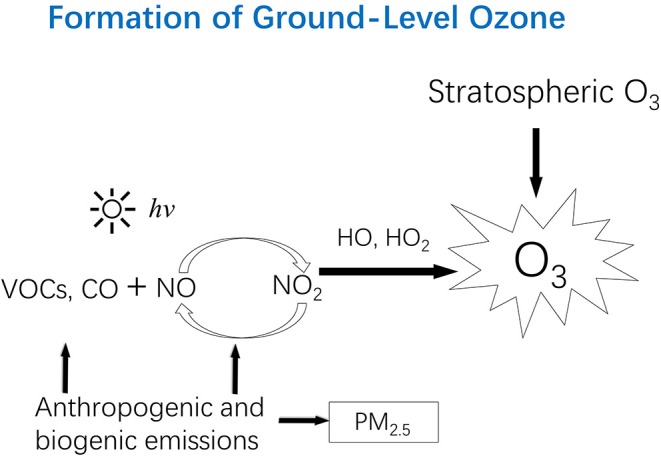
Oxides of nitrogen (NOx) and volatile organic compounds (VOCs) released into the atmosphere can react in the presence of solar irradiation, leading to ozone formation in the troposphere. Historically before clean air regulations were implemented to control NOx and VOCs, ozone concentrations were high enough to exert acute effects such as eye and nose irritation, respiratory disease emergencies, and lung function impairment. At or above current regulatory standards, day-to-day variations in ozone concentrations have been positively associated with asthma incidence and daily non-accidental mortality rate. Emerging evidence has shown that both short-term and long-term exposures to ozone, at concentrations below the current regulatory standards, were associated with increased mortality due to respiratory and cardiovascular diseases. The pathophysiology to support the epidemiologic associations between mortality and morbidity and ozone centers at the chemical and toxicological property of ozone as a strong oxidant, being able to induce oxidative damages to cells and the lining fluids of the airways, and immune-inflammatory responses within and beyond the lung. These new findings add substantially to the existing challenges in controlling ozone pollution. For example, in the United States in 2016, 90% of noncompliance to the national ambient air quality standards was due to ozone whereas only 10% was due to particulate matter and other regulated pollutants. Climate change, through creating atmospheric conditions favoring ozone formation, has been and will continue to increase ozone concentrations in many parts of world. Worldwide, ozone is responsible for several hundreds of thousands premature deaths and tens of million asthma-related emergency room visits annually. To combat ozone pollution globally, more aggressive reductions in fossil fuel consumption are needed to cut NOx and VOCs as well as greenhouse gas emissions. Meanwhile, preventive and therapeutic strategies are needed to alleviate the detrimental effects of ozone especially in more susceptible individuals. Interventional trials in humans are needed to evaluate the efficacy of antioxidants and ozone-scavenging compounds that have shown promising results in animal studies.
Overview
AI snapshot
Written from the paper’s full text.
TL;DR
This narrative review synthesizes evidence that tropospheric ozone, formed photochemically from NOx and VOCs, is a worldwide health hazard causing respiratory and emerging cardiovascular and CNS effects, with concentrations rising in many regions despite declines in the US and Western Europe. It argues that adverse effects occur below current regulatory standards, that climate change will worsen ozone burdens, and that more aggressive precursor emission cuts plus antioxidant/scavenger strategies are needed.
Key findings
- Ozone exposure is associated with respiratory effects (airway inflammation, aggravated asthma, emphysema, COPD), likely asthma development, and premature death, with stronger evidence for respiratory than other mortality; children are at increased risk. In the US in 2016, 90% of non-compliance with national ambient air quality standards was due to ozone versus 10% for particulate matter and other pollutants, and 100.6 million people (nearly one in three) lived in counties exceeding the 70 ppb NAAQS in 2017.
- Despite US reductions in NOx (61%) and VOCs (54%) from 1980–2017 and a 32% decrease in national average daily max 8-h ozone, global background ozone is rising: Mt Waliguan Observatory on the Tibetan Plateau showed increases of 0.2–0.3 ppb per year during spring and autumn (1994–2013). In the North China Plain, a 40% PM2.5 reduction from 2013–2017 was partly responsible for an ozone increase of 1–3 ppb per year.
- Climate change is projected to increase ozone: warming alone may increase ozone-standard exceedance days across the eastern US by 68% by 2050; the 95th percentile of daily 8-h max ozone is predicted to rise from 79 ppb in 2012 to 87 ppb in 2050; and climate change alone is estimated to add 0.43 ppb (95% CI: 0.14–0.75) to average ozone in 19 southeastern US urban communities in the 2040s versus 2000.
- Global mortality estimates vary widely: a 6% increase in premature deaths attributable to ozone from 1990 (143,000) to 2010 (152,000); 700,000 ± 300,000 respiratory mortalities in 2000; 254,000 COPD deaths in 2015; 316,000 respiratory deaths in China; ~23,500 in the EU. Ozone was linked to an estimated 9–23 million (8–20% of total) asthma-related emergency room visits globally, and DALYs lost of 6.3 ± 3.0 million years in 2000 and 4.1 (95% CI: 1.6–6.8) million years from COPD alone in 2015. A 5 ppb increase in long-term ozone was associated with 0.25 year (95% CI: −0.30 to −0.19) lower life expectancy in males and 0.21 year (95% CI: −0.25 to −0.17) in females.
- Mechanistically, ozone as a strong oxidant induces oxidative damage and immune-inflammatory responses; Koren et al. found acute exposure (0.4 ppm for 2 h) produced an 8.2-fold increase in polymorphonuclear leukocytes in BAL fluid. Emerging evidence links ozone to cardiovascular mortality, hemostatic markers, and CNS effects including neurodegenerative disorders.
Methods
- Narrative review (no primary data collection); the paper synthesizes atmospheric chemistry, exposure/dosimetry considerations, epidemiological and toxicological evidence, and regulatory context.
- Draws on cited studies including controlled human exposure trials, animal/rodent studies, cohort studies (e.g., American Cancer Society cohort, US Medicare population of 60 million older adults, 2000–2012), multicity time-series studies, and climate/ozone projection modeling.
- No systematic search strategy, inclusion criteria, or meta-analytic pooling is described.
Limitations
- Stated: the relatively large gap in mortality estimates across studies is due to uncertainties and inconsistency in the concentration–effect relationship and ozone exposure assessment; estimates were based on respiratory effects alone due to uncertainties in cardiovascular evidence; epidemiological evidence is limited for a causal relationship between chronic exposure and mortality/morbidity; determining the best measure of long-term ozone exposure is challenging given diurnal and seasonal variation; co-exposure to PM2.5 may affect repair of ozone damage.
- Evident from the text: as a narrative review without a stated systematic search or quality appraisal, selection of cited evidence may be non-exhaustive; several cited findings are projections or model-based rather than observed outcomes; the paper notes null findings in some European studies on long-term ozone and cardiovascular mortality, indicating inconsistency in the evidence base.
Model-written summary. Check it against the paper before relying on it.
Integrity signals
Registry
Cites
Statistics
Figures
Verification
Claims the paper makes
68 Not checked yet · 28 No basis given · 20 Own interpretation · 1 Supported
Every source the paper cites for this claim was checked and supports it.
In the paper
“In contrast, animal studies with high ozone exposures have generated more consistent findings on cardiovascular effects of ozone through altering vascular tone (60–62), mRNA for genes encoding thrombogenic factors (63), and atherogenesis (60).”
§ Ozone Pollution: A Major Health Hazard Worldwide > Immune-inflammatory Responses and Emerging Effects
What the sources say
- Supportedcites [60] Chuang, 2009, Pulmonary ozone exposure induces vascular dysfunction, mitochondrial damage, and atherogenesis, Am J Physiol Lung Cell Mol Physiol. source
This source is cited for vascular tone and atherogenesis, not for thrombogenic-factor mRNA, which the sentence attributes to citation 63. The Abstract reports altered vascular tone regulation and increased atherogenesis after ozone exposure; the Discussion specifies a 0.5 ppm exposure. (LLM, conf=0.91)
- Supportedcites [61] Paffett, 2015, Ozone inhalation impairs coronary artery dilation via intracellular oxidative stress: evidence for serum-borne factors as drivers of systemic toxicity, Toxicol Sci. source
This paper supports the vascular-tone part of the sentence, for which citations 60–62 are given. In “Ozone Inhalation Enhances Tone at Baseline,” coronary arteries from ozone-exposed rats developed greater basal tone than those from filtered-air controls. The sentence cites a different source, citation 60, for atherogenesis. (LLM, conf=0.92)
- Supportedcites [62] Robertson, 2013, CD36 mediates endothelial dysfunction downstream of circulating factors induced by O3 exposure, Toxicol Sci. source
The Results section (‘Loss of CD36 Prevents Vascular Endothelial Dysfunction Following Exposure to O3’; page unavailable) reports impaired aortic relaxation in ozone-exposed mice, supporting the vascular-tone finding for which this paper is cited. The separate claims about thrombogenic-gene mRNA and atherogenesis have different citations in the citing sentence and are not attributed to this source. (LLM, conf=0.92)
- Supportedcites [63] Kodavanti, 2010, Vascular and cardiac impairments in rats inhaling ozone and diesel exhaust particles, Environ Health Perspect. source
This paper supports the thrombogenic-factor mRNA clause, the part of the citing sentence associated with citation 63. Its Conclusion (page unavailable) reports increased aortic mRNA biomarkers of microvascular thrombosis after episodic ozone exposure in rats. The sentence assigns atherogenesis to a different citation, so that is not part of this verdict. (LLM, conf=0.91)
plaindirect- Asserted: passes — The authors put it forward as true.
- Checkable: passes — It can be checked against evidence.
- Load-bearing: unclear — It is unclear whether the paper’s conclusions depend on it.
- Based: passes — The paper gives a reason why it holds.
- Supported
In the paper
“observations made at a rural site (Dadianzi) 100 km northeast Beijing showed a steady increase in annual averages of the 8-h daily max ozone concentrations from 2004 to 2015 (13).”
§ Ozone Pollution: A Major Health Hazard Worldwide > Ambient Concentrations in Reference of Air Quality Standards
What the sources say
- Not checked yetcites [13] Ma, 2016, Significant increase of surface ozone at a rural site, north of eastern China, Atmos Chem Phys source
plaincorrelational- Asserted: passes — The authors put it forward as true.
- Checkable: passes — It can be checked against evidence.
- Load-bearing: unclear — It is unclear whether the paper’s conclusions depend on it.
- Based: passes — The paper gives a reason why it holds.
The paper states this without a source or data behind it here, so there is nothing to check it against. The quote shows it is in the paper.
In the paper
“The predominant source of tropospheric ozone, however, is the photochemical reactions involving volatile organic compounds (VOCs) and oxides of nitrogen (NOx), mainly comprised of NO2 and nitric oxide (NO).”
§ Ozone Pollution: A Major Health Hazard Worldwide > Sources and Chemistry
plaindirect- Asserted: passes — The authors put it forward as true.
- Checkable: passes — It can be checked against evidence.
- Load-bearing: unclear — It is unclear whether the paper’s conclusions depend on it.
- Based: passes — The paper gives a reason why it holds.
In the paper
“A recent study showed that a 40% reduction in PM2.5 from 2013 to 2017 in the North China Plain was partly responsible for an increasing ozone trend (at 1–3 ppb per year) during the period of 2013–2017 observed in megacity clusters of eastern China (6).”
§ Ozone Pollution: A Major Health Hazard Worldwide > Sources and Chemistry
What the sources say
- Not checked yetcites [6] Li, 2019, Anthropogenic drivers of 2013–2017 trends in summer surface ozone in China, Proc Natl Acad Sci USA. source
plainconditional- Asserted: passes — The authors put it forward as true.
- Checkable: passes — It can be checked against evidence.
- Load-bearing: passes — The paper’s conclusions depend on it.
- Based: passes — The paper gives a reason why it holds.
In the paper
“it is predicted that by the year 2050, warming alone may increase by 68% the number of ozone-standard exceedance days across the eastern United States (7).”
§ Ozone Pollution: A Major Health Hazard Worldwide > Impact of Climate Change on Ground-Level Ozone
What the sources say
- Not checked yetcites [7] Bell, 2007, Climate change, ambient ozone, and health in 50 US cities, Clim Change source
hedgedconditional- Asserted: passes — The authors put it forward as true.
- Checkable: passes — It can be checked against evidence.
- Load-bearing: unclear — It is unclear whether the paper’s conclusions depend on it.
- Based: passes — The paper gives a reason why it holds.
None of the sources cited for this claim have been checked yet.
In the paper
“evidence suggests that global average ozone concentrations are increasing.”
§ Ozone Pollution: A Major Health Hazard Worldwide > Ambient Concentrations in Reference of Air Quality Standards
hedgeddirect- Asserted: passes — The authors put it forward as true.
- Checkable: passes — It can be checked against evidence.
- Load-bearing: passes — The paper’s conclusions depend on it.
- Based: passes — The paper gives a reason why it holds.
In the paper
“100.6 million people nationwide (or nearly one in every three people) lived in U.S. counties where ozone levels exceeded the NAAQS standard of 70 ppb in 2017”
§ Ozone Pollution: A Major Health Hazard Worldwide > Ambient Concentrations in Reference of Air Quality Standards
What the sources say
- Not checked yetcites [3] Guenther, 2000, Natural emissions of non-methane volatile organic compounds, carbon monoxide, and oxides of nitrogen from North America, Atmosph Environ. source
plain- Asserted: passes — The authors put it forward as true.
- Checkable: passes — It can be checked against evidence.
- Load-bearing: unclear — It is unclear whether the paper’s conclusions depend on it.
- Based: passes — The paper gives a reason why it holds.
In the paper
“estimated an increase of 0.43 ppb (95% CI: 0.14–0.75) in average ozone concentration during the 2040s compared to 2000 due to climate change alone (9).”
§ Ozone Pollution: A Major Health Hazard Worldwide > Impact of Climate Change on Ground-Level Ozone
What the sources say
- Not checked yetcites [9] Chang, 2010, Impact of climate change on ambient ozone level and mortality in southeastern United States, Int J Environ Res Public Health source
hedgeddirect- Asserted: passes — The authors put it forward as true.
- Checkable: passes — It can be checked against evidence.
- Load-bearing: unclear — It is unclear whether the paper’s conclusions depend on it.
- Based: passes — The paper gives a reason why it holds.
A conclusion the paper draws from its own results — it cites no other source for it, so there is none to check. The quote shows it is in the paper.
In the paper
“Climate change can also prolong the ozone season.”
§ Ozone Pollution: A Major Health Hazard Worldwide > Impact of Climate Change on Ground-Level Ozone
plainconditional- Asserted: passes — The authors put it forward as true.
- Checkable: passes — It can be checked against evidence.
- Load-bearing: unclear — It is unclear whether the paper’s conclusions depend on it.
- Based: passes — The paper gives a reason why it holds.
In the paper
“ozone measured at Mt Waliguan Observatory (a global “background” site) on the Tibetan Plateau over the period of 1994–2013 has shown an increasing trend at 0.2–0.3 ppb per year during spring and autumn (11).”
§ Ozone Pollution: A Major Health Hazard Worldwide > Ambient Concentrations in Reference of Air Quality Standards
What the sources say
- Not checked yetcites [11] Xu, 2018, Long-term trends of surface ozone and its influencing factors at the Mt Waliguan GAW station, China-Part 2: the roles of anthropogenic emissions and climate variability, Atmos Chem Phys source
plaincorrelational- Asserted: passes — The authors put it forward as true.
- Checkable: passes — It can be checked against evidence.
- Load-bearing: passes — The paper’s conclusions depend on it.
- Based: passes — The paper gives a reason why it holds.
None of the sources cited for this claim have been checked yet.
In the paper
“ground-level ozone concentrations measured in some monitoring sites in China showed an increasing trend in the past several years.”
§ Ozone Pollution: A Major Health Hazard Worldwide > Ambient Concentrations in Reference of Air Quality Standards
plaincorrelational- Asserted: passes — The authors put it forward as true.
- Checkable: passes — It can be checked against evidence.
- Load-bearing: unclear — It is unclear whether the paper’s conclusions depend on it.
- Based: passes — The paper gives a reason why it holds.
In the paper
“Consequently, there was a 32% decrease in national average of daily maximum 8-h averages of ozone measured at 200 monitoring sites across the United States3.”
§ Ozone Pollution: A Major Health Hazard Worldwide > Ambient Concentrations in Reference of Air Quality Standards
What the sources say
- Not checked yetcites [3] Guenther, 2000, Natural emissions of non-methane volatile organic compounds, carbon monoxide, and oxides of nitrogen from North America, Atmosph Environ. source
plain- Asserted: passes — The authors put it forward as true.
- Checkable: passes — It can be checked against evidence.
- Load-bearing: unclear — It is unclear whether the paper’s conclusions depend on it.
- Based: passes — The paper gives a reason why it holds.
In the paper
“However, this demonstrates that NOx and VOCs emitted in more populous regions can undergo long-range transport and affect “background” ozone level.”
§ Ozone Pollution: A Major Health Hazard Worldwide > Ambient Concentrations in Reference of Air Quality Standards
What the sources say
- Not checked yetcites [11] Xu, 2018, Long-term trends of surface ozone and its influencing factors at the Mt Waliguan GAW station, China-Part 2: the roles of anthropogenic emissions and climate variability, Atmos Chem Phys source
boosteddirect- Asserted: passes — The authors put it forward as true.
- Checkable: passes — It can be checked against evidence.
- Load-bearing: passes — The paper’s conclusions depend on it.
- Based: passes — The paper gives a reason why it holds.
The paper states this without a source or data behind it here, so there is nothing to check it against. The quote shows it is in the paper.
In the paper
“More importantly, particulate matter (e.g., particles with an aerodynamic diameter equal to or smaller than 2.5 μm, noted as PM2.5) can serve as a sink of free radicals responsible for ozone formation.”
§ Ozone Pollution: A Major Health Hazard Worldwide > Sources and Chemistry
plaindirect- Asserted: passes — The authors put it forward as true.
- Checkable: passes — It can be checked against evidence.
- Load-bearing: passes — The paper’s conclusions depend on it.
- Based: passes — The paper gives a reason why it holds.
The paper states this without a source or data behind it here, so there is nothing to check it against. The quote shows it is in the paper.
In the paper
“From 1980 to 2017, total national emissions of NOX and VOCs were reduced by 61 and 54%, respectively.”
§ Ozone Pollution: A Major Health Hazard Worldwide > Ambient Concentrations in Reference of Air Quality Standards
plaindirect- Asserted: passes — The authors put it forward as true.
- Checkable: passes — It can be checked against evidence.
- Load-bearing: unclear — It is unclear whether the paper’s conclusions depend on it.
- Based: passes — The paper gives a reason why it holds.
The paper states this without a source or data behind it here, so there is nothing to check it against. The quote shows it is in the paper.
In the paper
“Epidemiological studies have found that ozone concentrations averaged over a longer period (such as 8 h instead of 1 h) within a day are a more health-relevant indicator of ozone exposure.”
§ Ozone Pollution: A Major Health Hazard Worldwide > Ambient Concentrations in Reference of Air Quality Standards
plaincorrelational- Asserted: passes — The authors put it forward as true.
- Checkable: passes — It can be checked against evidence.
- Load-bearing: passes — The paper’s conclusions depend on it.
- Based: passes — The paper gives a reason why it holds.
A conclusion the paper draws from its own results — it cites no other source for it, so there is none to check. The quote shows it is in the paper.
In the paper
“If the WHO-recommended 8-h limit of 50 ppb is used, there would be even more people living in places with ozone exceeding the health-based limit.”
§ Ozone Pollution: A Major Health Hazard Worldwide > Ambient Concentrations in Reference of Air Quality Standards
hedgeddirect- Asserted: passes — The authors put it forward as true.
- Checkable: passes — It can be checked against evidence.
- Load-bearing: unclear — It is unclear whether the paper’s conclusions depend on it.
- Based: passes — The paper gives a reason why it holds.
In the paper
“it is predicted that the 95th percentile for daily 8-h maximum ozone would increase from 79 ppb in 2012 to 87 ppb in 2050 (8).”
§ Ozone Pollution: A Major Health Hazard Worldwide > Impact of Climate Change on Ground-Level Ozone
What the sources say
- Not checked yetcites [8] Pfister, 2014, Projections of future summertime ozone over the US. JGR: atmospheres source
hedgeddirect- Asserted: passes — The authors put it forward as true.
- Checkable: passes — It can be checked against evidence.
- Load-bearing: unclear — It is unclear whether the paper’s conclusions depend on it.
- Based: passes — The paper gives a reason why it holds.
The paper states this without a source or data behind it here, so there is nothing to check it against. The quote shows it is in the paper.
In the paper
“Emerging evidence has shown that both short-term and long-term exposures to ozone, at concentrations below the current regulatory standards, were associated with increased mortality due to respiratory and cardiovascular diseases.”
§ Ozone Pollution: A Major Health Hazard Worldwide > Abstract
plaincorrelational- Asserted: passes — The authors put it forward as true.
- Checkable: passes — It can be checked against evidence.
- Load-bearing: passes — The paper’s conclusions depend on it.
- Based: passes — The paper gives a reason why it holds.
The paper states this without a source or data behind it here, so there is nothing to check it against. The quote shows it is in the paper.
In the paper
“a warming climate favors the formation and accumulation of ozone in the atmosphere mainly through two physicochemical mechanisms.”
§ Ozone Pollution: A Major Health Hazard Worldwide > Impact of Climate Change on Ground-Level Ozone
plaindirect- Asserted: passes — The authors put it forward as true.
- Checkable: passes — It can be checked against evidence.
- Load-bearing: passes — The paper’s conclusions depend on it.
- Based: passes — The paper gives a reason why it holds.
In the paper
“This increase was attributed to changes in anthropogenic emissions of ozone precursors as well as reductions in PM2.5 concentrations as described earlier.”
§ Ozone Pollution: A Major Health Hazard Worldwide > Ambient Concentrations in Reference of Air Quality Standards
What the sources say
- Not checked yetcites [6] Li, 2019, Anthropogenic drivers of 2013–2017 trends in summer surface ozone in China, Proc Natl Acad Sci USA. source
plaindirect- Asserted: passes — The authors put it forward as true.
- Checkable: passes — It can be checked against evidence.
- Load-bearing: passes — The paper’s conclusions depend on it.
- Based: passes — The paper gives a reason why it holds.
In the paper
“This finding suggests that occurrences of a drying and warming fall in the future may lead to an extension of the ozone season from summer to fall in the regions with significant biogenic VOC emissions.”
§ Ozone Pollution: A Major Health Hazard Worldwide > Impact of Climate Change on Ground-Level Ozone
What the sources say
- Not checked yetcites [10] Zhang, 2016, Climate-driven ground-level ozone extreme in the fall over the Southeast United States, Proc Natl Acad Sci USA. source
hedgedconditional- Asserted: passes — The authors put it forward as true.
- Checkable: passes — It can be checked against evidence.
- Load-bearing: passes — The paper’s conclusions depend on it.
- Based: passes — The paper gives a reason why it holds.
In the paper
“The current WHO Air Quality Guidelines for ambient (outdoor) ozone is 100 μg/m3 (~50 ppb) measured as 8-h maximum moving average within a day1.”
§ Ozone Pollution: A Major Health Hazard Worldwide > Ambient Concentrations in Reference of Air Quality Standards
What the sources say
- Not checked yetcites [1] McDonald, 2018, Volatile chemical products emerging as largest petrochemical source of urban organic emissions, Science. source
plain- Asserted: passes — The authors put it forward as true.
- Checkable: passes — It can be checked against evidence.
- Load-bearing: unclear — It is unclear whether the paper’s conclusions depend on it.
- Based: passes — The paper gives a reason why it holds.
In the paper
“a recent analysis of ground-level ozone concentrations measured at nearly 1,000 sites across China also found an increasing trend of summertime ozone in northeastern China from 2013 to 2017 (6).”
§ Ozone Pollution: A Major Health Hazard Worldwide > Ambient Concentrations in Reference of Air Quality Standards
What the sources say
- Not checked yetcites [6] Li, 2019, Anthropogenic drivers of 2013–2017 trends in summer surface ozone in China, Proc Natl Acad Sci USA. source
plaincorrelational- Asserted: passes — The authors put it forward as true.
- Checkable: passes — It can be checked against evidence.
- Load-bearing: unclear — It is unclear whether the paper’s conclusions depend on it.
- Based: passes — The paper gives a reason why it holds.
In the paper
“However, ozone during the fall reached the summer level in several Octobers in the 2000s and in 2010 over the southeastern United States. This was attributed to enhanced emissions of biogenic isoprene (a VOC precursor of ozone) from water-stressed plants under a drying and warming condition (10).”
§ Ozone Pollution: A Major Health Hazard Worldwide > Impact of Climate Change on Ground-Level Ozone
What the sources say
- Not checked yetcites [10] Zhang, 2016, Climate-driven ground-level ozone extreme in the fall over the Southeast United States, Proc Natl Acad Sci USA. source
plaindirect- Asserted: passes — The authors put it forward as true.
- Checkable: passes — It can be checked against evidence.
- Load-bearing: passes — The paper’s conclusions depend on it.
- Based: passes — The paper gives a reason why it holds.
The paper states this without a source or data behind it here, so there is nothing to check it against. The quote shows it is in the paper.
In the paper
“in summer months, daily air quality reports released to the public in recent years have often shown more days when the ozone standard was exceeded than when PM2.5 or other regulated pollutants exceeded the standards in many cities of China.”
§ Ozone Pollution: A Major Health Hazard Worldwide > Ambient Concentrations in Reference of Air Quality Standards
plaincorrelational- Asserted: passes — The authors put it forward as true.
- Checkable: passes — It can be checked against evidence.
- Load-bearing: unclear — It is unclear whether the paper’s conclusions depend on it.
- Based: passes — The paper gives a reason why it holds.
In the paper
“Krishna et al. further confirmed that ozone-induced neutrophil influx in human peripheral airways was partly mediated by IL-8 (38).”
§ Ozone Pollution: A Major Health Hazard Worldwide > Immune-inflammatory Responses and Emerging Effects
What the sources say
- Not checked yetcites [38] Krishna, 1998, Effects of 0.2 ppm ozone on biomarkers of inflammation in bronchoalveolar lavage fluid and bronchial mucosa of healthy subjects, Eur Respir J source
plainconditional- Asserted: passes — The authors put it forward as true.
- Checkable: passes — It can be checked against evidence.
- Load-bearing: unclear — It is unclear whether the paper’s conclusions depend on it.
- Based: passes — The paper gives a reason why it holds.
In the paper
“Based on this assessment, the national ambient air quality standard for 8-h daily max ozone was revised from 75 to 70 ppb in 2015.”
§ Ozone Pollution: A Major Health Hazard Worldwide > Health Effects Evidence to Support Ozone Regulations
What the sources say
- Not checked yetcites [7] Bell, 2007, Climate change, ambient ozone, and health in 50 US cities, Clim Change source
plaindirect- Asserted: passes — The authors put it forward as true.
- Checkable: passes — It can be checked against evidence.
- Load-bearing: unclear — It is unclear whether the paper’s conclusions depend on it.
- Based: passes — The paper gives a reason why it holds.
None of the sources cited for this claim have been checked yet.
In the paper
“Long-term exposures to ozone have been associated with lower lung function and deteriorated or abnormal lung development in children (31, 32).”
§ Ozone Pollution: A Major Health Hazard Worldwide > Health Effects Evidence to Support Ozone Regulations
What the sources say
- Not checked yetcites [31] Gauderman, 2004, The effect of air pollution on lung development from 10 to 18 years of age, N Engl J Med source
- Not checked yetcites [32] Gauderman, 2002, Association between air pollution and lung function growth in southern California children: results from a second cohort, Am J Respir Crit Care Med source
plaincorrelational- Asserted: passes — The authors put it forward as true.
- Checkable: passes — It can be checked against evidence.
- Load-bearing: passes — The paper’s conclusions depend on it.
- Based: passes — The paper gives a reason why it holds.
The paper states this without a source or data behind it here, so there is nothing to check it against. The quote shows it is in the paper.
In the paper
“In contrast, for leaky buildings and for building with windows frequently open, indoor concentrations can reach >70% outdoor concentrations.”
§ Ozone Pollution: A Major Health Hazard Worldwide > Human Exposure and Dosimetry
plaindirect- Asserted: passes — The authors put it forward as true.
- Checkable: passes — It can be checked against evidence.
- Load-bearing: passes — The paper’s conclusions depend on it.
- Based: passes — The paper gives a reason why it holds.
In the paper
“A meta-analysis of 53 studies showed a weak but significant association between ozone and hospital admission and mortality from stroke (41).”
§ Ozone Pollution: A Major Health Hazard Worldwide > Immune-inflammatory Responses and Emerging Effects
What the sources say
- Not checked yetcites [41] Shah, 2015, Short term exposure to air pollution and stroke: systematic review and meta-analysis, BMJ. source
plaincorrelational- Asserted: passes — The authors put it forward as true.
- Checkable: passes — It can be checked against evidence.
- Load-bearing: unclear — It is unclear whether the paper’s conclusions depend on it.
- Based: passes — The paper gives a reason why it holds.
The paper states this without a source or data behind it here, so there is nothing to check it against. The quote shows it is in the paper.
In the paper
“Second, outdoor ozone concentrations exhibit a substantial seasonal variation in most of the places.”
§ Ozone Pollution: A Major Health Hazard Worldwide > Human Exposure and Dosimetry
plain- Asserted: passes — The authors put it forward as true.
- Checkable: passes — It can be checked against evidence.
- Load-bearing: passes — The paper’s conclusions depend on it.
- Based: unclear — It is unclear why the paper says it holds.
In the paper
“However, VOC emissions have remained relatively unchanged.”
§ Ozone Pollution: A Major Health Hazard Worldwide > Ambient Concentrations in Reference of Air Quality Standards
What the sources say
- Not checked yetcites [6] Li, 2019, Anthropogenic drivers of 2013–2017 trends in summer surface ozone in China, Proc Natl Acad Sci USA. source
plain- Asserted: passes — The authors put it forward as true.
- Checkable: passes — It can be checked against evidence.
- Load-bearing: passes — The paper’s conclusions depend on it.
- Based: passes — The paper gives a reason why it holds.
None of the sources cited for this claim have been checked yet.
In the paper
“Ozone can cause adverse respiratory effects such as difficulty of breathing (e.g., shortness of breath and pain when taking a deep breath) and inflammation of the airways in the general population.”
§ Ozone Pollution: A Major Health Hazard Worldwide > Health Effects Evidence to Support Ozone Regulations
What the sources say
plaindirect- Asserted: passes — The authors put it forward as true.
- Checkable: passes — It can be checked against evidence.
- Load-bearing: passes — The paper’s conclusions depend on it.
- Based: passes — The paper gives a reason why it holds.
None of the sources cited for this claim have been checked yet.
In the paper
“Increased exposure to ambient ozone has been associated with increased levels of hemostatic markers, including fibrinogen (48–50), von Willebrand factor (49), and plasminogen activator inhibitor-1 (48).”
§ Ozone Pollution: A Major Health Hazard Worldwide > Immune-inflammatory Responses and Emerging Effects
What the sources say
- Not checked yetcites [48] Chuang, 2007, The effect of urban air pollution on inflammation, oxidative stress, coagulation, and autonomic dysfunction in young adults, Am J Respir Crit Care Med. source
- Not checked yetcites [49] Liao, 2005, Association of criteria pollutants with plasma hemostatic/inflammatory markers: a population-based study, J Expo Anal Environ Epidemiol. source
- Not checked yetcites [50] Steinvil, 2008, Short-term exposure to air pollution and inflammation-sensitive biomarkers, Environ Res. source
plaincorrelational- Asserted: passes — The authors put it forward as true.
- Checkable: passes — It can be checked against evidence.
- Load-bearing: passes — The paper’s conclusions depend on it.
- Based: passes — The paper gives a reason why it holds.
None of the sources cited for this claim have been checked yet.
In the paper
“warm-season averages have often been used (14, 15), assuming that the health risk associated with lower-level ozone in cold months is negligible.”
§ Ozone Pollution: A Major Health Hazard Worldwide > Human Exposure and Dosimetry
What the sources say
- Not checked yetcites [14] Turner, 2016, Long-term ozone exposure and mortality in a large prospective study, Am J Respir Crit Care Med source
- Not checked yetcites [15] Malley, 2017, Updated global estimates of respiratory mortality in adults >/ = 30 years of age attributable to long-term ozone exposure, Environ Health Perspect source
plaincorrelational- Asserted: passes — The authors put it forward as true.
- Checkable: passes — It can be checked against evidence.
- Load-bearing: passes — The paper’s conclusions depend on it.
- Based: passes — The paper gives a reason why it holds.
- The authors state this as an assumption: The health risk associated with lower-level ozone in cold months is negligible.
None of the sources cited for this claim have been checked yet.
In the paper
“In addressing exposure to low-level concentrations (such as concentrations below the current air quality standard), however, 24-h average may be another relevant measure of daily exposure, at least for certain outcomes (21–24).”
§ Ozone Pollution: A Major Health Hazard Worldwide > Human Exposure and Dosimetry
What the sources say
- Not checked yetcites [21] Day, 2017, Association of ozone exposure with cardiorespiratory pathophysiologic mechanisms in healthy adults, JAMA Intern Med source
- Not checked yetcites [22] Di, 2017, Association of short-term exposure to air pollution with mortality in older adults, JAMA. source
- Not checked yetcites [23] Dai, 2018, Age-dependent effect of ambient ozone on emergency asthma hospitalizations in Hong Kong, J Allergy Clin Immunol source
- Not checked yetcites [24] Sun, 2018, Acute effect of multiple ozone metrics on mortality by season in 34 Chinese counties in 2013–2015, J Intern Med source
hedged- Asserted: passes — The authors put it forward as true.
- Checkable: passes — It can be checked against evidence.
- Load-bearing: unclear — It is unclear whether the paper’s conclusions depend on it.
- Based: passes — The paper gives a reason why it holds.
In the paper
“Ozone continues to damage the lungs even when the symptoms have disappeared.”
§ Ozone Pollution: A Major Health Hazard Worldwide > Health Effects Evidence to Support Ozone Regulations
What the sources say
- Not checked yetcites [1] McDonald, 2018, Volatile chemical products emerging as largest petrochemical source of urban organic emissions, Science. source
plaindirect- Asserted: passes — The authors put it forward as true.
- Checkable: passes — It can be checked against evidence.
- Load-bearing: passes — The paper’s conclusions depend on it.
- Based: passes — The paper gives a reason why it holds.
In the paper
“anthropogenic emissions of NOx have decreased substantially in most urban areas of China (a 21% nationwide reduction) from 2013 to 2017 (6).”
§ Ozone Pollution: A Major Health Hazard Worldwide > Ambient Concentrations in Reference of Air Quality Standards
What the sources say
- Not checked yetcites [6] Li, 2019, Anthropogenic drivers of 2013–2017 trends in summer surface ozone in China, Proc Natl Acad Sci USA. source
plain- Asserted: passes — The authors put it forward as true.
- Checkable: passes — It can be checked against evidence.
- Load-bearing: passes — The paper’s conclusions depend on it.
- Based: passes — The paper gives a reason why it holds.
The paper states this without a source or data behind it here, so there is nothing to check it against. The quote shows it is in the paper.
In the paper
“Since the 2013 EPA assessment was released, several studies conducted in North America further confirmed significant positive associations, robust to controlling for co-pollutants, between short-term ozone exposure and one or more of the following mortality classifications: cardiovascular, dysrhythmia, cardiometabolic, and ischemic heart disease.”
§ Ozone Pollution: A Major Health Hazard Worldwide > Immune-inflammatory Responses and Emerging Effects
plaincorrelational- Asserted: passes — The authors put it forward as true.
- Checkable: passes — It can be checked against evidence.
- Load-bearing: passes — The paper’s conclusions depend on it.
- Based: passes — The paper gives a reason why it holds.
The paper states this without a source or data behind it here, so there is nothing to check it against. The quote shows it is in the paper.
In the paper
“In airtight buildings with doors and windows closed, indoor ozone levels are typically smaller than 20% of outdoor levels.”
§ Ozone Pollution: A Major Health Hazard Worldwide > Human Exposure and Dosimetry
plain- Asserted: passes — The authors put it forward as true.
- Checkable: passes — It can be checked against evidence.
- Load-bearing: passes — The paper’s conclusions depend on it.
- Based: passes — The paper gives a reason why it holds.
A conclusion the paper draws from its own results — it cites no other source for it, so there is none to check. The quote shows it is in the paper.
In the paper
“using outdoor concentration as a surrogate for ozone exposure would lead to greater overestimation of exposure for people living or working in more airtight buildings than for those living in less airtight buildings.”
§ Ozone Pollution: A Major Health Hazard Worldwide > Human Exposure and Dosimetry
hedgeddirect- Asserted: passes — The authors put it forward as true.
- Checkable: passes — It can be checked against evidence.
- Load-bearing: passes — The paper’s conclusions depend on it.
- Based: passes — The paper gives a reason why it holds.
A conclusion the paper draws from its own results — it cites no other source for it, so there is none to check. The quote shows it is in the paper.
In the paper
“These immune-inflammatory responses to ozone may “spill over” to the circulatory system, which may help explain emerging evidence on the cardiovascular and neuronal effects of ozone.”
§ Ozone Pollution: A Major Health Hazard Worldwide > Immune-inflammatory Responses and Emerging Effects
hedgedconditional- Asserted: passes — The authors put it forward as true.
- Checkable: passes — It can be checked against evidence.
- Load-bearing: passes — The paper’s conclusions depend on it.
- Based: unclear — It is unclear why the paper says it holds.
The paper states this without a source or data behind it here, so there is nothing to check it against. The quote shows it is in the paper.
In the paper
“children, older adults, and people who are active outdoors (especially outdoor workers) are more vulnerable to ozone exposure.”
§ Ozone Pollution: A Major Health Hazard Worldwide > Health Effects Evidence to Support Ozone Regulations
plaincorrelational- Asserted: passes — The authors put it forward as true.
- Checkable: passes — It can be checked against evidence.
- Load-bearing: unclear — It is unclear whether the paper’s conclusions depend on it.
- Based: passes — The paper gives a reason why it holds.
In the paper
“Ozone exposure makes the lungs more susceptible to infection.”
§ Ozone Pollution: A Major Health Hazard Worldwide > Health Effects Evidence to Support Ozone Regulations
What the sources say
- Not checked yetcites [1] McDonald, 2018, Volatile chemical products emerging as largest petrochemical source of urban organic emissions, Science. source
plaindirect- Asserted: passes — The authors put it forward as true.
- Checkable: passes — It can be checked against evidence.
- Load-bearing: unclear — It is unclear whether the paper’s conclusions depend on it.
- Based: passes — The paper gives a reason why it holds.
The paper states this without a source or data behind it here, so there is nothing to check it against. The quote shows it is in the paper.
In the paper
“As a potent oxidizing gas, ambient ozone is well-known to cause oxidative damages to the cells and the lining fluids of the airways, thereby inducing immune-inflammatory responses in the lung.”
§ Ozone Pollution: A Major Health Hazard Worldwide > Immune-inflammatory Responses and Emerging Effects
boosteddirect- Asserted: passes — The authors put it forward as true.
- Checkable: passes — It can be checked against evidence.
- Load-bearing: passes — The paper’s conclusions depend on it.
- Based: passes — The paper gives a reason why it holds.
None of the sources cited for this claim have been checked yet.
In the paper
“Ozone exposure resulted in significant neutrophilic inflammation, reflected with increased levels of myeloperoxidase (MPO) in the supernatant of induced sputum samples from healthy subjects (39, 40).”
§ Ozone Pollution: A Major Health Hazard Worldwide > Immune-inflammatory Responses and Emerging Effects
What the sources say
plaindirect- Asserted: passes — The authors put it forward as true.
- Checkable: passes — It can be checked against evidence.
- Load-bearing: unclear — It is unclear whether the paper’s conclusions depend on it.
- Based: passes — The paper gives a reason why it holds.
The paper states this without a source or data behind it here, so there is nothing to check it against. The quote shows it is in the paper.
In the paper
“However, accumulating evidence suggests that there may not exist a threshold ozone concentration below which the risk is “zero.””
§ Ozone Pollution: A Major Health Hazard Worldwide > Human Exposure and Dosimetry
hedged- Asserted: passes — The authors put it forward as true.
- Checkable: passes — It can be checked against evidence.
- Load-bearing: passes — The paper’s conclusions depend on it.
- Based: unclear — It is unclear why the paper says it holds.
None of the sources cited for this claim have been checked yet.
In the paper
“These effects can aggravate lung diseases such as asthma, emphysema, and chronic bronchitis [chronic obstructive pulmonary disease (COPD)].”
§ Ozone Pollution: A Major Health Hazard Worldwide > Health Effects Evidence to Support Ozone Regulations
What the sources say
plaindirect- Asserted: passes — The authors put it forward as true.
- Checkable: passes — It can be checked against evidence.
- Load-bearing: passes — The paper’s conclusions depend on it.
- Based: passes — The paper gives a reason why it holds.
None of the sources cited for this claim have been checked yet.
In the paper
“A recent cohort study by Lim et al. further confirmed this association between long-term exposure to ozone and increased cardiovascular mortality (45).”
§ Ozone Pollution: A Major Health Hazard Worldwide > Immune-inflammatory Responses and Emerging Effects
What the sources say
boostedcorrelational- Asserted: passes — The authors put it forward as true.
- Checkable: passes — It can be checked against evidence.
- Load-bearing: passes — The paper’s conclusions depend on it.
- Based: passes — The paper gives a reason why it holds.
None of the sources cited for this claim have been checked yet.
In the paper
“Long-term exposure to ozone is likely to be one of many causes of asthma development.”
§ Ozone Pollution: A Major Health Hazard Worldwide > Health Effects Evidence to Support Ozone Regulations
What the sources say
hedgedconditional- Asserted: passes — The authors put it forward as true.
- Checkable: passes — It can be checked against evidence.
- Load-bearing: passes — The paper’s conclusions depend on it.
- Based: passes — The paper gives a reason why it holds.
None of the sources cited for this claim have been checked yet.
In the paper
“Additionally, deleterious effects of ozone exposure on the central nervous system (CNS) are emerging (64, 65).”
§ Ozone Pollution: A Major Health Hazard Worldwide > Immune-inflammatory Responses and Emerging Effects
What the sources say
- Not checked yetcites [64] Martínez-Lazcano, 2013, The effects of ozone exposure and associated injury mechanisms on the central nervous system, Rev Neurosci. source
- Not checked yetcites [65] Croze, 2018, Ozone atmospheric pollution and Alzheimer's disease: from epidemiological facts to molecular mechanisms, J Alzheimers Dis. source
plaindirect- Asserted: passes — The authors put it forward as true.
- Checkable: passes — It can be checked against evidence.
- Load-bearing: passes — The paper’s conclusions depend on it.
- Based: passes — The paper gives a reason why it holds.
A conclusion the paper draws from its own results — it cites no other source for it, so there is none to check. The quote shows it is in the paper.
In the paper
“Disease burden attributable to ozone is expected to continue to rise in the future for two reasons.”
§ Ozone Pollution: A Major Health Hazard Worldwide > Discussion and Conclusions
plaindirect- Asserted: passes — The authors put it forward as true.
- Checkable: passes — It can be checked against evidence.
- Load-bearing: passes — The paper’s conclusions depend on it.
- Based: passes — The paper gives a reason why it holds.
In the paper
“a study found that a 5 ppb (10 μg/m3) increase in long-term ozone concentration was associated with 0.25 year (95% CI: −0.30 to −0.19) lower life expectancy in males”
§ Ozone Pollution: A Major Health Hazard Worldwide > Discussion and Conclusions
What the sources say
- Not checked yetcites [78] Li, 2016, Long-term exposure to ozone and life expectancy in the United States, 2002 to 2008, Medicine. source
plaincorrelational- Asserted: passes — The authors put it forward as true.
- Checkable: passes — It can be checked against evidence.
- Load-bearing: passes — The paper’s conclusions depend on it.
- Based: passes — The paper gives a reason why it holds.
In the paper
“A large multicity study in China showed that short-term exposure to ambient ozone was associated with higher non-accidental and cardiovascular mortality (20).”
§ Ozone Pollution: A Major Health Hazard Worldwide > Discussion and Conclusions
What the sources say
- Not checked yetcites [20] Yin, 2017, Ambient ozone pollution and daily mortality: a nationwide study in 272 Chinese cities, Environ Health Perspect source
plaincorrelational- Asserted: passes — The authors put it forward as true.
- Checkable: passes — It can be checked against evidence.
- Load-bearing: passes — The paper’s conclusions depend on it.
- Based: passes — The paper gives a reason why it holds.
In the paper
“Rodríguez et al. showed that ozone exposure resulted in the activation of apoptotic death in rat hippocampus mediated by endoplasmic reticulum stress (68).”
§ Ozone Pollution: A Major Health Hazard Worldwide > Immune-inflammatory Responses and Emerging Effects
What the sources say
- Not checked yetcites [68] Rodriguez-Martinez, 2016, The effect of chronic ozone exposure on the activation of endoplasmic reticulum stress and apoptosis in rat hippocampus, Front Aging Neurosci. source
plaindirect- Asserted: passes — The authors put it forward as true.
- Checkable: passes — It can be checked against evidence.
- Load-bearing: unclear — It is unclear whether the paper’s conclusions depend on it.
- Based: passes — The paper gives a reason why it holds.
The paper states this without a source or data behind it here, so there is nothing to check it against. The quote shows it is in the paper.
In the paper
“These estimates were based on respiratory effects alone, due to uncertainties associated with the current evidence on the cardiovascular effects.”
§ Ozone Pollution: A Major Health Hazard Worldwide > Discussion and Conclusions
plaindirect- Asserted: passes — The authors put it forward as true.
- Checkable: passes — It can be checked against evidence.
- Load-bearing: passes — The paper’s conclusions depend on it.
- Based: passes — The paper gives a reason why it holds.
In the paper
“For example, an analysis of national databases found a positive association between increase in long-term ozone concentrations and an increased risk of respiratory diseases and death (44).”
§ Ozone Pollution: A Major Health Hazard Worldwide > Discussion and Conclusions
What the sources say
- Not checked yetcites [44] Jerrett, 2009, Long-term ozone exposure and mortality, N Engl J Med source
plaincorrelational- Asserted: passes — The authors put it forward as true.
- Checkable: passes — It can be checked against evidence.
- Load-bearing: passes — The paper’s conclusions depend on it.
- Based: passes — The paper gives a reason why it holds.
The paper states this without a source or data behind it here, so there is nothing to check it against. The quote shows it is in the paper.
In the paper
“The first is the fact that ozone concentration is on the rise in many parts of the world as described earlier.”
§ Ozone Pollution: A Major Health Hazard Worldwide > Discussion and Conclusions
plain- Asserted: passes — The authors put it forward as true.
- Checkable: passes — It can be checked against evidence.
- Load-bearing: passes — The paper’s conclusions depend on it.
- Based: unclear — It is unclear why the paper says it holds.
In the paper
“Bello-Medina et al. found that rats chronically exposed to ozone exhibited deficits in learning and memory loss associated with deafferentation in hippocampus-related neurons (69).”
§ Ozone Pollution: A Major Health Hazard Worldwide > Immune-inflammatory Responses and Emerging Effects
What the sources say
- Not checked yetcites [69] Bello-Medina, 2019, Effect of ozone exposure on dendritic spines of CA1 pyramidal neurons of the dorsal hippocampus and on object-place recognition memory in rats, Neuroscience. source
plaincorrelational- Asserted: passes — The authors put it forward as true.
- Checkable: passes — It can be checked against evidence.
- Load-bearing: unclear — It is unclear whether the paper’s conclusions depend on it.
- Based: passes — The paper gives a reason why it holds.
In the paper
“Long-term ozone exposure (3-year averages) has been associated with development of acute respiratory distress syndrome (ARDS) in at-risk critically ill patients, particularly in trauma patients and current smokers (77).”
§ Ozone Pollution: A Major Health Hazard Worldwide > Discussion and Conclusions
What the sources say
- Not checked yetcites [77] Ware, 2016, Long-term ozone exposure increases the risk of developing the acute respiratory distress syndrome, Am J Respir Crit Care Med. source
plaincorrelational- Asserted: passes — The authors put it forward as true.
- Checkable: passes — It can be checked against evidence.
- Load-bearing: unclear — It is unclear whether the paper’s conclusions depend on it.
- Based: passes — The paper gives a reason why it holds.
In the paper
“An estimated 9–23 million (8–20% of total) asthma-related emergency room visits globally were attributable to ozone (74).”
§ Ozone Pollution: A Major Health Hazard Worldwide > Discussion and Conclusions
What the sources say
- Not checked yetcites [74] Anenberg, 2018, Estimates of the global burden of ambient PM2.5, ozone, and NO2 on asthma incidence and emergency room visits, Environ Health Perspect. source
hedgeddirect- Asserted: passes — The authors put it forward as true.
- Checkable: passes — It can be checked against evidence.
- Load-bearing: unclear — It is unclear whether the paper’s conclusions depend on it.
- Based: passes — The paper gives a reason why it holds.
In the paper
“Using large hospital records, increased chronic ozone exposure was associated with increased asthma hospital admissions in children (27).”
§ Ozone Pollution: A Major Health Hazard Worldwide > Discussion and Conclusions
What the sources say
- Not checked yetcites [27] Lin, 2008, Chronic exposure to ambient ozone and asthma hospital admissions among children, Environ Health Perspect source
plaincorrelational- Asserted: passes — The authors put it forward as true.
- Checkable: passes — It can be checked against evidence.
- Load-bearing: unclear — It is unclear whether the paper’s conclusions depend on it.
- Based: passes — The paper gives a reason why it holds.
In the paper
“Relative to that in 2000, there will be a 14% increase in global ozone-related mortality (75).”
§ Ozone Pollution: A Major Health Hazard Worldwide > Discussion and Conclusions
What the sources say
- Not checked yetcites [75] Silva, 2017, Future global mortality from changes in air pollution attributable to climate change, Nat Clim Change. source
plaindirect- Asserted: passes — The authors put it forward as true.
- Checkable: passes — It can be checked against evidence.
- Load-bearing: passes — The paper’s conclusions depend on it.
- Based: passes — The paper gives a reason why it holds.
A conclusion the paper draws from its own results — it cites no other source for it, so there is none to check. The quote shows it is in the paper.
In the paper
“The relatively large gap in the estimates across studies is due to uncertainties associated with and inconsistence in concentration–effect relationship and ozone exposure assessment.”
§ Ozone Pollution: A Major Health Hazard Worldwide > Discussion and Conclusions
plaindirect- Asserted: passes — The authors put it forward as true.
- Checkable: passes — It can be checked against evidence.
- Load-bearing: unclear — It is unclear whether the paper’s conclusions depend on it.
- Based: passes — The paper gives a reason why it holds.
None of the sources cited for this claim have been checked yet.
In the paper
“Neurodegenerative disorders, such as Alzheimer's disease (AD) and Parkinson's disease, have been linked to ozone exposures in recent epidemiologic studies (66, 67).”
§ Ozone Pollution: A Major Health Hazard Worldwide > Immune-inflammatory Responses and Emerging Effects
What the sources say
- Not checked yetcites [66] Jung, 2015, Ozone, particulate matter, and newly diagnosed Alzheimer's disease: a population-based cohort study in Taiwan, J Alzheimers Dis. source
- Not checked yetcites [67] Kirrane, 2015, Associations of ozone and PM2. 5 concentrations with Parkinson's disease among participants in the agricultural health study, J Occup Environ Med. source
plaincorrelational- Asserted: passes — The authors put it forward as true.
- Checkable: passes — It can be checked against evidence.
- Load-bearing: passes — The paper’s conclusions depend on it.
- Based: passes — The paper gives a reason why it holds.
A conclusion the paper draws from its own results — it cites no other source for it, so there is none to check. The quote shows it is in the paper.
In the paper
“The improved knowledge will likely add to ozone-associated disease burden that is currently uncounted for.”
§ Ozone Pollution: A Major Health Hazard Worldwide > Discussion and Conclusions
hedgedconditional- Asserted: passes — The authors put it forward as true.
- Checkable: passes — It can be checked against evidence.
- Load-bearing: passes — The paper’s conclusions depend on it.
- Based: passes — The paper gives a reason why it holds.
In the paper
“Jia et al. showed that ambient ozone exposure within several minutes can decrease heart rate variability in the healthy elderly subjects, suggesting that a dysfunction of cardiac autonomic nervous system may be involved (53).”
§ Ozone Pollution: A Major Health Hazard Worldwide > Immune-inflammatory Responses and Emerging Effects
What the sources say
- Not checked yetcites [53] Jia, 2011, Acute effect of ambient ozone on heart rate variability in healthy elderly subjects, J Expo Sci Environ Epidemiol. source
plaindirect- Asserted: passes — The authors put it forward as true.
- Checkable: passes — It can be checked against evidence.
- Load-bearing: unclear — It is unclear whether the paper’s conclusions depend on it.
- Based: passes — The paper gives a reason why it holds.
A conclusion the paper draws from its own results — it cites no other source for it, so there is none to check. The quote shows it is in the paper.
In the paper
“Ozone pollution is a worldwide health hazard.”
§ Ozone Pollution: A Major Health Hazard Worldwide > Discussion and Conclusions
plaindirect- Asserted: passes — The authors put it forward as true.
- Checkable: passes — It can be checked against evidence.
- Load-bearing: passes — The paper’s conclusions depend on it.
- Based: passes — The paper gives a reason why it holds.
In the paper
“For example, an estimated increase of 0.43 ppb in average ozone concentration, during the 2040s compared to 2000 due to climate change alone, would correspond to a 0.01% increase in mortality rate in 19 urban communities in southeastern United States (9).”
§ Ozone Pollution: A Major Health Hazard Worldwide > Discussion and Conclusions
What the sources say
- Not checked yetcites [9] Chang, 2010, Impact of climate change on ambient ozone level and mortality in southeastern United States, Int J Environ Res Public Health source
hedgeddirect- Asserted: passes — The authors put it forward as true.
- Checkable: passes — It can be checked against evidence.
- Load-bearing: unclear — It is unclear whether the paper’s conclusions depend on it.
- Based: passes — The paper gives a reason why it holds.
In the paper
“Di et al. (76) analyzed the entire US Medicare population of 60 million older adults from the years 2000 through 2012 and found a positive association between annual averages of ozone and all-cause mortality rate.”
§ Ozone Pollution: A Major Health Hazard Worldwide > Discussion and Conclusions
What the sources say
- Not checked yetcites [76] Di, 2017, Air pollution and mortality in the Medicare population, N Engl J Med. source
plaincorrelational- Asserted: passes — The authors put it forward as true.
- Checkable: passes — It can be checked against evidence.
- Load-bearing: unclear — It is unclear whether the paper’s conclusions depend on it.
- Based: passes — The paper gives a reason why it holds.
A conclusion the paper draws from its own results — it cites no other source for it, so there is none to check. The quote shows it is in the paper.
In the paper
“Epidemiological evidence is limited to support a causal relationship between the chronic exposure and mortality or morbidity, although progresses have been made in recent years by using large datasets.”
§ Ozone Pollution: A Major Health Hazard Worldwide > Discussion and Conclusions
plain- Asserted: passes — The authors put it forward as true.
- Checkable: passes — It can be checked against evidence.
- Load-bearing: passes — The paper’s conclusions depend on it.
- Based: passes — The paper gives a reason why it holds.
A conclusion the paper draws from its own results — it cites no other source for it, so there is none to check. The quote shows it is in the paper.
In the paper
“The mechanistic understanding appears to be sufficient to support the use of antioxidants or ozone scavenger to alleviate the ozone effects.”
§ Ozone Pollution: A Major Health Hazard Worldwide > Discussion and Conclusions
hedgedconditional- Asserted: passes — The authors put it forward as true.
- Checkable: passes — It can be checked against evidence.
- Load-bearing: passes — The paper’s conclusions depend on it.
- Based: passes — The paper gives a reason why it holds.
- Rests on an assumption: The immune-inflammatory responses initiated in the lung are the key in more downstream systemic effects.
None of the sources cited for this claim have been checked yet.
In the paper
“For example, rodent studies confirmed that the use of N-acetylcysteine and sulfide salt can help prevent or recover the lung impairment caused by ozone (82, 83).”
§ Ozone Pollution: A Major Health Hazard Worldwide > Discussion and Conclusions
What the sources say
- Not checked yetcites [82] Li, 2016, Hydrogen sulfide prevents and partially reverses ozone-induced features of lung inflammation and emphysema in mice, Am J Respir Cell Mol Biol. source
- Not checked yetcites [83] Li, 2013, Effects of N-acetylcysteine in ozone-induced chronic obstructive pulmonary disease model, PLoS ONE. source
plaindirect- Asserted: passes — The authors put it forward as true.
- Checkable: passes — It can be checked against evidence.
- Load-bearing: unclear — It is unclear whether the paper’s conclusions depend on it.
- Based: passes — The paper gives a reason why it holds.
None of the sources cited for this claim have been checked yet.
In the paper
“Yet, emerging evidence does not support a threshold for adverse effects of ozone (79, 80).”
§ Ozone Pollution: A Major Health Hazard Worldwide > Discussion and Conclusions
What the sources say
- Not checked yetcites [79] Bell, 2006, The exposure-response curve for ozone and risk of mortality and the adequacy of current ozone regulations, Environ Health Perspect. source
- Not checked yetcites [80] Chen, 2017, Acute effect of ozone exposure on daily mortality in seven cities of Jiangsu Province, China: no clear evidence for threshold, Environ Res. source
plain- Asserted: passes — The authors put it forward as true.
- Checkable: passes — It can be checked against evidence.
- Load-bearing: passes — The paper’s conclusions depend on it.
- Based: passes — The paper gives a reason why it holds.
In the paper
“Making ozone forecasting available to the general public will enhance the effectiveness of such personal protection methods to reduce ozone exposure (81).”
§ Ozone Pollution: A Major Health Hazard Worldwide > Discussion and Conclusions
What the sources say
- Not checked yetcites [81] Zhang, 2017, Low-level air pollution associated with death: policy and clinical implications, JAMA. source
hedgeddirect- Asserted: passes — The authors put it forward as true.
- Checkable: passes — It can be checked against evidence.
- Load-bearing: passes — The paper’s conclusions depend on it.
- Based: passes — The paper gives a reason why it holds.
A conclusion the paper draws from its own results — it cites no other source for it, so there is none to check. The quote shows it is in the paper.
In the paper
“Relatively less is known to understand how ozone affects the cardiovascular health outcomes”
§ Ozone Pollution: A Major Health Hazard Worldwide > Discussion and Conclusions
plain- Asserted: passes — The authors put it forward as true.
- Checkable: passes — It can be checked against evidence.
- Load-bearing: unclear — It is unclear whether the paper’s conclusions depend on it.
- Based: passes — The paper gives a reason why it holds.
In the paper
“A randomized trial found that a daily supplement of vitamins C and E might provide some protection against acute nasal inflammatory response to ozone in asthmatic children (84).”
§ Ozone Pollution: A Major Health Hazard Worldwide > Discussion and Conclusions
What the sources say
- Not checked yetcites [84] Sienra-Monge, 2004, Antioxidant supplementation and nasal inflammatory responses among young asthmatics exposed to high levels of ozone, Clin Exp Immunol. source
hedgedconditional- Asserted: passes — The authors put it forward as true.
- Checkable: passes — It can be checked against evidence.
- Load-bearing: unclear — It is unclear whether the paper’s conclusions depend on it.
- Based: passes — The paper gives a reason why it holds.
In the paper
“and 0.21 year (95% CI: −0.25 to −0.17) in females (78).”
§ Ozone Pollution: A Major Health Hazard Worldwide > Discussion and Conclusions
What the sources say
- Not checked yetcites [78] Li, 2016, Long-term exposure to ozone and life expectancy in the United States, 2002 to 2008, Medicine. source
plaincorrelational- Asserted: passes — The authors put it forward as true.
- Checkable: passes — It can be checked against evidence.
- Load-bearing: passes — The paper’s conclusions depend on it.
- Based: passes — The paper gives a reason why it holds.
A conclusion the paper draws from its own results — it cites no other source for it, so there is none to check. The quote shows it is in the paper.
In the paper
“Or if a threshold exists, it would have to be substantially lower than the current health-based regulatory standards or guidelines.”
§ Ozone Pollution: A Major Health Hazard Worldwide > Discussion and Conclusions
hedged- Asserted: passes — The authors put it forward as true.
- Checkable: passes — It can be checked against evidence.
- Load-bearing: passes — The paper’s conclusions depend on it.
- Based: passes — The paper gives a reason why it holds.
A conclusion the paper draws from its own results — it cites no other source for it, so there is none to check. The quote shows it is in the paper.
In the paper
“The natural fluctuation in ambient ozone concentration hence makes it challenging to examine chronic effects of short-term and long-term exposures.”
§ Ozone Pollution: A Major Health Hazard Worldwide > Discussion and Conclusions
plaindirect- Asserted: passes — The authors put it forward as true.
- Checkable: passes — It can be checked against evidence.
- Load-bearing: passes — The paper’s conclusions depend on it.
- Based: passes — The paper gives a reason why it holds.
- Rests on an assumption: Some acute ozone effects are reversible.
A conclusion the paper draws from its own results — it cites no other source for it, so there is none to check. The quote shows it is in the paper.
In the paper
“For all these challenges, ozone pollution in developing countries is expected to be a long-term problem”
§ Ozone Pollution: A Major Health Hazard Worldwide > Discussion and Conclusions
plain- Asserted: passes — The authors put it forward as true.
- Checkable: unclear — It is unclear whether it could be checked against evidence.
- Load-bearing: passes — The paper’s conclusions depend on it.
- Based: passes — The paper gives a reason why it holds.
- Rests on an assumption: The relationship of ozone production with its precursors is non-linear, so reducing one precursor may not necessarily lead to ozone reduction.
- Rests on an assumption: Even within a metropolitan area, the optimal ratio of NOx to VOCs associated with minimal ozone formation changes from day to day and from upwind to downwind.
- Rests on an assumption: Sources of VOCs can be numerous and hard to characterize.
- Rests on an assumption: Some known sources of VOCs, such as household use of consumer chemicals and biogenic emissions, are difficult to control through regulatory actions.
- Rests on an assumption: Ozone concentrations and spatiotemporal distributions are specific to local meteorological conditions, local sources of NOx and VOCs, and long-range transport of ozone and associated chemical species.
- Rests on an assumption: Aggregative regulatory actions to cut down anthropogenic emissions of NOx and VOCs have not necessarily resulted in sufficient reductions in ozone concentrations in certain areas of the United States.
In the paper
“In a control human exposure study (2-h exposure to 400 ppb ozone vs. filtered air), healthy adults who had received a dietary antioxidant supplementation of a mixture of vitamin C, alpha-tocopherol, and vegetable cocktail exhibited a significantly smaller ozone-induced reduction in pulmonary function (85).”
§ Ozone Pollution: A Major Health Hazard Worldwide > Discussion and Conclusions
What the sources say
- Not checked yetcites [85] Samet, 2001, Effect of antioxidant supplementation on ozone-induced lung injury in human subjects, Am J Respir Crit Care Med. source
plaindirect- Asserted: passes — The authors put it forward as true.
- Checkable: passes — It can be checked against evidence.
- Load-bearing: passes — The paper’s conclusions depend on it.
- Based: passes — The paper gives a reason why it holds.
A conclusion the paper draws from its own results — it cites no other source for it, so there is none to check. The quote shows it is in the paper.
In the paper
“In the United States and developed countries with relatively better air quality, following decades of controls for NOx and VOCs emissions, further controls of anthropogenic emissions via policy, and technological tools are becoming increasingly limited.”
§ Ozone Pollution: A Major Health Hazard Worldwide > Discussion and Conclusions
plain- Asserted: passes — The authors put it forward as true.
- Checkable: passes — It can be checked against evidence.
- Load-bearing: passes — The paper’s conclusions depend on it.
- Based: passes — The paper gives a reason why it holds.
- Rests on an assumption: Aggregative regulatory actions to cut down anthropogenic emissions of NOx and VOCs have not necessarily resulted in sufficient reductions in ozone concentrations in certain areas of the United States.
- Probably not a substantial claim. 18
- It may state two separate claims as one. 18
- The quote only partly states this claim. 2
The paper states this without a source or data behind it here, so there is nothing to check it against. The quote shows it is in the paper.
In the paper
“Worldwide, ozone is responsible for several hundreds of thousands of premature deaths and tens of millions of asthma-related emergency room visits annually.”
§ Ozone Pollution: A Major Health Hazard Worldwide > Abstract
plaindirect- Asserted: passes — The authors put it forward as true.
- Checkable: passes — It can be checked against evidence.
- Load-bearing: fails — The paper’s conclusions may not depend on it.
- Based: fails — The paper may give no reason why it holds.
Probably not a substantial claim. The paper’s conclusions may not depend on it. The paper may give no reason why it holds. It may state two separate claims as one.
The paper states this without a source or data behind it here, so there is nothing to check it against. The quote shows it is in the paper.
In the paper
“At or above current regulatory standards, day-to-day variations in ozone concentrations have been positively associated with asthma incidence and daily non-accidental mortality rate.”
§ Ozone Pollution: A Major Health Hazard Worldwide > Abstract
plaincorrelational- Asserted: passes — The authors put it forward as true.
- Checkable: passes — It can be checked against evidence.
- Load-bearing: passes — The paper’s conclusions depend on it.
- Based: passes — The paper gives a reason why it holds.
It may state two separate claims as one.
The paper states this without a source or data behind it here, so there is nothing to check it against. The quote shows it is in the paper.
In the paper
“However, VOCs or CO participate in a series of complex photochemical reactions to produce free radicals that compete with ozone to react with NO.”
§ Ozone Pollution: A Major Health Hazard Worldwide > Sources and Chemistry
plaindirect- Asserted: passes — The authors put it forward as true.
- Checkable: passes — It can be checked against evidence.
- Load-bearing: unclear — It is unclear whether the paper’s conclusions depend on it.
- Based: passes — The paper gives a reason why it holds.
The quote only partly states this claim.
In the paper
“The springtime ozone increase was partly (~60%) attributed to increased stratosphere-to-troposphere transport, whereas rising Asian anthropogenic emissions of ozone precursors were the key driver of increasing autumnal ozone at this site.”
§ Ozone Pollution: A Major Health Hazard Worldwide > Ambient Concentrations in Reference of Air Quality Standards
What the sources say
- Not checked yetcites [11] Xu, 2018, Long-term trends of surface ozone and its influencing factors at the Mt Waliguan GAW station, China-Part 2: the roles of anthropogenic emissions and climate variability, Atmos Chem Phys source
plaindirect- Asserted: passes — The authors put it forward as true.
- Checkable: passes — It can be checked against evidence.
- Load-bearing: passes — The paper’s conclusions depend on it.
- Based: passes — The paper gives a reason why it holds.
It may state two separate claims as one.
The paper states this without a source or data behind it here, so there is nothing to check it against. The quote shows it is in the paper.
In the paper
“Oxides of nitrogen (NOx) and volatile organic compounds (VOCs) released into the atmosphere can react in the presence of solar irradiation, leading to ozone formation in the troposphere.”
§ Ozone Pollution: A Major Health Hazard Worldwide > Abstract
plaindirect- Asserted: passes — The authors put it forward as true.
- Checkable: passes — It can be checked against evidence.
- Load-bearing: passes — The paper’s conclusions depend on it.
- Based: passes — The paper gives a reason why it holds.
Probably not a substantial claim.
The paper states this without a source or data behind it here, so there is nothing to check it against. The quote shows it is in the paper.
In the paper
“In the United States, the current National Ambient Air Quality Standards (NAAQS) for ozone include a 1-h standard (1-h maximum within a day) at 120 ppb and an 8-h standard (8-h daily max) at 70 ppb.”
§ Ozone Pollution: A Major Health Hazard Worldwide > Ambient Concentrations in Reference of Air Quality Standards
plain- Asserted: passes — The authors put it forward as true.
- Checkable: passes — It can be checked against evidence.
- Load-bearing: fails — The paper’s conclusions may not depend on it.
- Based: passes — The paper gives a reason why it holds.
Probably not a substantial claim. The paper’s conclusions may not depend on it. It may state two separate claims as one.
The paper states this without a source or data behind it here, so there is nothing to check it against. The quote shows it is in the paper.
In the paper
“The pathophysiology to support the epidemiologic associations between mortality and morbidity and ozone centers at the chemical and toxicological property of ozone as a strong oxidant, being able to induce oxidative damages to cells and the lining fluids of the airways, and immune-inflammatory responses within and beyond the lung.”
§ Ozone Pollution: A Major Health Hazard Worldwide > Abstract
plaindirect- Asserted: passes — The authors put it forward as true.
- Checkable: passes — It can be checked against evidence.
- Load-bearing: passes — The paper’s conclusions depend on it.
- Based: passes — The paper gives a reason why it holds.
It may state two separate claims as one.
The paper states this without a source or data behind it here, so there is nothing to check it against. The quote shows it is in the paper.
In the paper
“For example, in the United States in 2016, 90% of non-compliance to the national ambient air quality standards was due to ozone whereas only 10% was due to particulate matter and other regulated pollutants.”
§ Ozone Pollution: A Major Health Hazard Worldwide > Abstract
plain- Asserted: passes — The authors put it forward as true.
- Checkable: passes — It can be checked against evidence.
- Load-bearing: fails — The paper’s conclusions may not depend on it.
- Based: fails — The paper may give no reason why it holds.
Probably not a substantial claim. The paper’s conclusions may not depend on it. The paper may give no reason why it holds. It may state two separate claims as one.
A conclusion the paper draws from its own results — it cites no other source for it, so there is none to check. The quote shows it is in the paper.
In the paper
“Climate change, through creating atmospheric conditions favoring ozone formation, has been and will continue to increase ozone concentrations in many parts of world.”
§ Ozone Pollution: A Major Health Hazard Worldwide > Abstract
plaindirect- Asserted: passes — The authors put it forward as true.
- Checkable: passes — It can be checked against evidence.
- Load-bearing: passes — The paper’s conclusions depend on it.
- Based: fails — The paper may give no reason why it holds.
Probably not a substantial claim. The paper may give no reason why it holds.
None of the sources cited for this claim have been checked yet.
In the paper
“Children are at increased risk from ozone exposure, as children have a relatively higher dose per body mass and children's lung is still developing.”
§ Ozone Pollution: A Major Health Hazard Worldwide > Health Effects Evidence to Support Ozone Regulations
What the sources say
plaindirect- Asserted: passes — The authors put it forward as true.
- Checkable: passes — It can be checked against evidence.
- Load-bearing: unclear — It is unclear whether the paper’s conclusions depend on it.
- Based: passes — The paper gives a reason why it holds.
It may state two separate claims as one.
The paper states this without a source or data behind it here, so there is nothing to check it against. The quote shows it is in the paper.
In the paper
“whereas using 8-h daily max concentration assumes that lower concentrations during the rest of 16 h do not contribute to an adverse effect.”
§ Ozone Pollution: A Major Health Hazard Worldwide > Human Exposure and Dosimetry
plain- Asserted: passes — The authors put it forward as true.
- Checkable: passes — It can be checked against evidence.
- Load-bearing: fails — The paper’s conclusions may not depend on it.
- Based: passes — The paper gives a reason why it holds.
Probably not a substantial claim. The paper’s conclusions may not depend on it.
- The authors state this as an assumption: Lower concentrations during the rest of 16 h do not contribute to an adverse effect when using 8-h daily max concentration.
None of the sources cited for this claim have been checked yet.
In the paper
“Ozone exposure is likely to cause premature deaths, and the evidence is stronger for mortality due to respiratory illnesses than for that due to other diseases.”
§ Ozone Pollution: A Major Health Hazard Worldwide > Health Effects Evidence to Support Ozone Regulations
What the sources say
hedgedconditional- Asserted: passes — The authors put it forward as true.
- Checkable: passes — It can be checked against evidence.
- Load-bearing: passes — The paper’s conclusions depend on it.
- Based: passes — The paper gives a reason why it holds.
It may state two separate claims as one.
The paper states this without a source or data behind it here, so there is nothing to check it against. The quote shows it is in the paper.
In the paper
“Using 1-h max concentration is to assess the acute effect of peak exposure,”
§ Ozone Pollution: A Major Health Hazard Worldwide > Human Exposure and Dosimetry
plain- Asserted: passes — The authors put it forward as true.
- Checkable: passes — It can be checked against evidence.
- Load-bearing: fails — The paper’s conclusions may not depend on it.
- Based: passes — The paper gives a reason why it holds.
Probably not a substantial claim. The paper’s conclusions may not depend on it.
In the paper
“Ozone can cause coughing and sore or scratchy throat.”
§ Ozone Pollution: A Major Health Hazard Worldwide > Health Effects Evidence to Support Ozone Regulations
What the sources say
- Not checked yetcites [1] McDonald, 2018, Volatile chemical products emerging as largest petrochemical source of urban organic emissions, Science. source
plaindirect- Asserted: passes — The authors put it forward as true.
- Checkable: passes — It can be checked against evidence.
- Load-bearing: unclear — It is unclear whether the paper’s conclusions depend on it.
- Based: passes — The paper gives a reason why it holds.
It may state two separate claims as one.
The paper states this without a source or data behind it here, so there is nothing to check it against. The quote shows it is in the paper.
In the paper
“Typically decreasing NOx would increase ozone under VOC-limited conditions, which has been the case for many urban areas of China.”
§ Ozone Pollution: A Major Health Hazard Worldwide > Ambient Concentrations in Reference of Air Quality Standards
hedgeddirect- Asserted: passes — The authors put it forward as true.
- Checkable: passes — It can be checked against evidence.
- Load-bearing: passes — The paper’s conclusions depend on it.
- Based: passes — The paper gives a reason why it holds.
It may state two separate claims as one.
The paper states this without a source or data behind it here, so there is nothing to check it against. The quote shows it is in the paper.
In the paper
“Third, outdoor ozone typically exhibits a distinct diurnal pattern with high concentrations during afternoon and early evening hours.”
§ Ozone Pollution: A Major Health Hazard Worldwide > Human Exposure and Dosimetry
plaincorrelational- Asserted: passes — The authors put it forward as true.
- Checkable: passes — It can be checked against evidence.
- Load-bearing: fails — The paper’s conclusions may not depend on it.
- Based: fails — The paper may give no reason why it holds.
Probably not a substantial claim. The paper’s conclusions may not depend on it. The paper may give no reason why it holds.
None of the sources cited for this claim have been checked yet.
In the paper
“On high ozone days, there have been increased school absences, increased visits to emergency rooms, and increased hospital admissions (27–30).”
§ Ozone Pollution: A Major Health Hazard Worldwide > Health Effects Evidence to Support Ozone Regulations
What the sources say
- Not checked yetcites [27] Lin, 2008, Chronic exposure to ambient ozone and asthma hospital admissions among children, Environ Health Perspect source
- Not checked yetcites [28] Strickland, 2010, Short-term associations between ambient air pollutants and pediatric asthma emergency department visits, Am J Respir Crit Care Med source
- Not checked yetcites [29] Malig, 2016, A time-stratified case-crossover study of ambient ozone exposure and emergency department visits for specific respiratory diagnoses in California (2005-2008), Environ Health Perspect source
- Not checked yetcites [30] Tian, 2018, Association between ambient air pollution and daily hospital admissions for ischemic stroke: a nationwide time-series analysis, PLoS Med source
plaincorrelational- Asserted: passes — The authors put it forward as true.
- Checkable: passes — It can be checked against evidence.
- Load-bearing: passes — The paper’s conclusions depend on it.
- Based: passes — The paper gives a reason why it holds.
It may state two separate claims as one.
The paper states this without a source or data behind it here, so there is nothing to check it against. The quote shows it is in the paper.
In the paper
“First, ozone is chemically reactive and can be more effectively scavenged by building surfaces.”
§ Ozone Pollution: A Major Health Hazard Worldwide > Human Exposure and Dosimetry
plaindirect- Asserted: passes — The authors put it forward as true.
- Checkable: passes — It can be checked against evidence.
- Load-bearing: passes — The paper’s conclusions depend on it.
- Based: passes — The paper gives a reason why it holds.
It may state two separate claims as one.
In the paper
“A seminal work by Koren et al. demonstrated that an acute exposure to ozone (0.4 ppm for 2 h) resulted in 8.2-fold increase of polymorphonuclear leukocytes (PMN) in bronchial alveolar lavage (BAL) fluid and enhanced level of inflammatory mediators in the lower airways of humans (37).”
§ Ozone Pollution: A Major Health Hazard Worldwide > Immune-inflammatory Responses and Emerging Effects
What the sources say
- Not checked yetcites [37] Koren, 1989, Ozone-induced inflammation in the lower airways of human subjects, Am Rev Respir Dis source
boosteddirect- Asserted: passes — The authors put it forward as true.
- Checkable: passes — It can be checked against evidence.
- Load-bearing: unclear — It is unclear whether the paper’s conclusions depend on it.
- Based: passes — The paper gives a reason why it holds.
It may state two separate claims as one.
In the paper
“Disability adjust life years (DALY) lost attributable to ozone were estimated to be 6.3 ± 3.0 million years in 2000 (58)”
§ Ozone Pollution: A Major Health Hazard Worldwide > Discussion and Conclusions
What the sources say
- Not checked yetcites [58] Brook, 2002, Inhalation of fine particulate air pollution and ozone causes acute arterial vasoconstriction in healthy adults, Circulation. source
hedgeddirect- Asserted: passes — The authors put it forward as true.
- Checkable: passes — It can be checked against evidence.
- Load-bearing: fails — The paper’s conclusions may not depend on it.
- Based: passes — The paper gives a reason why it holds.
Probably not a substantial claim. The paper’s conclusions may not depend on it.
None of the sources cited for this claim have been checked yet.
In the paper
“Other ozone-associated mortality estimates include 316,000 respiratory deaths in China (15) and ~23,500 in the European Union8.”
§ Ozone Pollution: A Major Health Hazard Worldwide > Discussion and Conclusions
What the sources say
- Not checked yetcites [15] Malley, 2017, Updated global estimates of respiratory mortality in adults >/ = 30 years of age attributable to long-term ozone exposure, Environ Health Perspect source
- Not checked yetcites [8] Pfister, 2014, Projections of future summertime ozone over the US. JGR: atmospheres source
plaincorrelational- Asserted: passes — The authors put it forward as true.
- Checkable: passes — It can be checked against evidence.
- Load-bearing: fails — The paper’s conclusions may not depend on it.
- Based: passes — The paper gives a reason why it holds.
Probably not a substantial claim. The paper’s conclusions may not depend on it. It may state two separate claims as one.
In the paper
“A study reported a 6% increase in premature deaths attributable to ozone globally from 1990 to 2010 (71), although the estimates (143,000 deaths in 1990 and 152,000 deaths in 2010) seem to be substantially lower than the estimated reported in other studies.”
§ Ozone Pollution: A Major Health Hazard Worldwide > Discussion and Conclusions
What the sources say
- Not checked yetcites [71] Lim, 2012, A comparative risk assessment of burden of disease and injury attributable to 67 risk factors and risk factor clusters in 21 regions, 1990-2010: a systematic analysis for the Global Burden of Disease Study 2010, Lancet. source
plaindirect- Asserted: passes — The authors put it forward as true.
- Checkable: passes — It can be checked against evidence.
- Load-bearing: fails — The paper’s conclusions may not depend on it.
- Based: passes — The paper gives a reason why it holds.
Probably not a substantial claim. The paper’s conclusions may not depend on it.
In the paper
“Chronic exposure to low-dose ozone, on the other hand, could enhance systemic and hippocampal Th17/IL-17A immune responses, which may be partly responsible for neurodegenerative effects in rats (70).”
§ Ozone Pollution: A Major Health Hazard Worldwide > Immune-inflammatory Responses and Emerging Effects
What the sources say
- Not checked yetcites [70] Solleiro-Villavicencio, 2019, Systemic Th17/IL-17A response appears prior to hippocampal neurodegeneration in rats exposed to low doses of ozone, Neurología. source
hedgedconditional- Asserted: passes — The authors put it forward as true.
- Checkable: passes — It can be checked against evidence.
- Load-bearing: unclear — It is unclear whether the paper’s conclusions depend on it.
- Based: passes — The paper gives a reason why it holds.
It may state two separate claims as one.
In the paper
“Wang et al. found that increased ambient ozone exposure was associated with increased rate of carotid wall thickness progression and risk of new plaque formation in healthy adults (52).”
§ Ozone Pollution: A Major Health Hazard Worldwide > Immune-inflammatory Responses and Emerging Effects
What the sources say
- Not checked yetcites [52] Wang, 2019, Long-term exposure to ambient ozone and progression of subclinical arterial disease: the multi-ethnic study of atherosclerosis and air pollution, Environ Health Perspect source
plaincorrelational- Asserted: passes — The authors put it forward as true.
- Checkable: passes — It can be checked against evidence.
- Load-bearing: passes — The paper’s conclusions depend on it.
- Based: passes — The paper gives a reason why it holds.
It may state two separate claims as one.
In the paper
“Xia et al. revealed that short-term exposure to ambient ozone can elevate serum levels of ACE and ET-1, decrease their DNA methylation, and alter the lipid metabolism, which may be partly responsible for increased blood pressure and vascular endothelial disfunction (51).”
§ Ozone Pollution: A Major Health Hazard Worldwide > Immune-inflammatory Responses and Emerging Effects
What the sources say
- Not checked yetcites [51] Xia, 2018, Effects of personal short-term exposure to ambient ozone on blood pressure and vascular endothelial function: a mechanistic study based on DNA methylation and metabolomics, Environ Sci Technol. source
hedgedconditional- Asserted: passes — The authors put it forward as true.
- Checkable: passes — It can be checked against evidence.
- Load-bearing: passes — The paper’s conclusions depend on it.
- Based: passes — The paper gives a reason why it holds.
It may state two separate claims as one.
In the paper
“In another study, exposure to ozone was responsible for 254,000 deaths from COPD alone in 2015 (73).”
§ Ozone Pollution: A Major Health Hazard Worldwide > Discussion and Conclusions
What the sources say
- Not checked yetcites [73] Cohen, 2017, Estimates and 25-year trends of the global burden of disease attributable to ambient air pollution: an analysis of data from the Global Burden of Diseases Study 2015, Lancet. source
plaindirect- Asserted: passes — The authors put it forward as true.
- Checkable: passes — It can be checked against evidence.
- Load-bearing: fails — The paper’s conclusions may not depend on it.
- Based: passes — The paper gives a reason why it holds.
Probably not a substantial claim. The paper’s conclusions may not depend on it.
In the paper
“In one study, for example, anthropogenic ozone was associated with an estimated 700,000 ± 300,000 respiratory mortalities in 2000 (72).”
§ Ozone Pollution: A Major Health Hazard Worldwide > Discussion and Conclusions
What the sources say
- Not checked yetcites [72] Anenberg, 2010, An estimate of the global burden of anthropogenic ozone and fine particulate matter on premature human mortality using atmospheric modeling, Environ Health Perspect. source
hedgedcorrelational- Asserted: passes — The authors put it forward as true.
- Checkable: passes — It can be checked against evidence.
- Load-bearing: fails — The paper’s conclusions may not depend on it.
- Based: passes — The paper gives a reason why it holds.
Probably not a substantial claim. The paper’s conclusions may not depend on it.
A conclusion the paper draws from its own results — it cites no other source for it, so there is none to check. The quote shows it is in the paper.
In the paper
“It is expected that the impact would be larger when other ozone effects were considered.”
§ Ozone Pollution: A Major Health Hazard Worldwide > Discussion and Conclusions
hedgedconditional- Asserted: passes — The authors put it forward as true.
- Checkable: passes — It can be checked against evidence.
- Load-bearing: fails — The paper’s conclusions may not depend on it.
- Based: passes — The paper gives a reason why it holds.
Probably not a substantial claim. The paper’s conclusions may not depend on it.
In the paper
“In addition, an estimated 23.0–40.3 million respiratory-related deaths were attributable to long-term O3 exposure in 2016 (15).”
§ Ozone Pollution: A Major Health Hazard Worldwide > Discussion and Conclusions
What the sources say
- Not checked yetcites [15] Malley, 2017, Updated global estimates of respiratory mortality in adults >/ = 30 years of age attributable to long-term ozone exposure, Environ Health Perspect source
hedgeddirect- Asserted: passes — The authors put it forward as true.
- Checkable: passes — It can be checked against evidence.
- Load-bearing: fails — The paper’s conclusions may not depend on it.
- Based: passes — The paper gives a reason why it holds.
Probably not a substantial claim. The paper’s conclusions may not depend on it.
A conclusion the paper draws from its own results — it cites no other source for it, so there is none to check. The quote shows it is in the paper.
In the paper
“In many parts of the world, as described above, ozone concentrations are projected to increase, leading to increases in ozone-associated mortalities and morbidities.”
§ Ozone Pollution: A Major Health Hazard Worldwide > Discussion and Conclusions
plaindirect- Asserted: passes — The authors put it forward as true.
- Checkable: passes — It can be checked against evidence.
- Load-bearing: passes — The paper’s conclusions depend on it.
- Based: passes — The paper gives a reason why it holds.
It may state two separate claims as one.
In the paper
“and 4.1 (95% CI: 1·6–6·8) million years from COPD alone in 2015 (73).”
§ Ozone Pollution: A Major Health Hazard Worldwide > Discussion and Conclusions
What the sources say
- Not checked yetcites [73] Cohen, 2017, Estimates and 25-year trends of the global burden of disease attributable to ambient air pollution: an analysis of data from the Global Burden of Diseases Study 2015, Lancet. source
hedgeddirect- Asserted: passes — The authors put it forward as true.
- Checkable: passes — It can be checked against evidence.
- Load-bearing: fails — The paper’s conclusions may not depend on it.
- Based: passes — The paper gives a reason why it holds.
Probably not a substantial claim. The paper’s conclusions may not depend on it.
A conclusion the paper draws from its own results — it cites no other source for it, so there is none to check. The quote shows it is in the paper.
In the paper
“The co-exposure may affect the ability to repair the damage caused by acute ozone exposures.”
§ Ozone Pollution: A Major Health Hazard Worldwide > Discussion and Conclusions
hedgedconditional- Asserted: passes — The authors put it forward as true.
- Checkable: passes — It can be checked against evidence.
- Load-bearing: fails — The paper’s conclusions may not depend on it.
- Based: fails — The paper may give no reason why it holds.
Probably not a substantial claim. The paper’s conclusions may not depend on it. The paper may give no reason why it holds. The quote only partly states this claim.
- Rests on an assumption: Some acute ozone effects are reversible.
A conclusion the paper draws from its own results — it cites no other source for it, so there is none to check. The quote shows it is in the paper.
In the paper
“Meanwhile, predictions of ozone levels in response to changing NOx and VOC concentrations get harder with ozone concentrations approaching their “background” level.”
§ Ozone Pollution: A Major Health Hazard Worldwide > Discussion and Conclusions
plaincorrelational- Asserted: passes — The authors put it forward as true.
- Checkable: passes — It can be checked against evidence.
- Load-bearing: fails — The paper’s conclusions may not depend on it.
- Based: fails — The paper may give no reason why it holds.
Probably not a substantial claim. The paper’s conclusions may not depend on it. The paper may give no reason why it holds.
The authors state this as an assumption.
The health risk associated with lower-level ozone in cold months is negligible.
“assuming that the health risk associated with lower-level ozone in cold months is negligible”
The authors state this as an assumption.
Lower concentrations during the rest of 16 h do not contribute to an adverse effect when using 8-h daily max concentration.
“using 8-h daily max concentration assumes that lower concentrations during the rest of 16 h do not contribute to an adverse effect”
The paper relies on this without support.
Some acute ozone effects are reversible.
“some of the acute ozone effects are known to be reversible”
The paper relies on this without support.
The relationship of ozone production with its precursors is non-linear, so reducing one precursor may not necessarily lead to ozone reduction.
“Part of the challenges is the “non-linear” relationship of ozone production with its precursors, as reducing one of the precursors may not necessarily lead to ozone reduction.”
The paper relies on this without support.
Even within a metropolitan area, the optimal ratio of NOx to VOCs associated with minimal ozone formation changes from day to day and from upwind to downwind.
“Even within a metropolitan area, the optimal ratio of NOx to VOCs associated with minimal ozone formation changes from day to day (even hour to hour) and from upwind to downwind.”
The paper relies on this without support.
Sources of VOCs can be numerous and hard to characterize.
“Sources of VOCs can be numerous and hard to characterize.”
The paper relies on this without support.
Some known sources of VOCs, such as household use of consumer chemicals and biogenic emissions, are difficult to control through regulatory actions.
“Some known sources, such as household use of consumer chemicals and biogenic emissions, are difficult to control through regulatory actions.”
The paper relies on this without support.
Ozone concentrations and spatiotemporal distributions are specific to local meteorological conditions, local sources of NOx and VOCs, and long-range transport of ozone and associated chemical species.
“Although the fundamental chemistry of ozone formation is clear, ozone concentrations, and spatiotemporal distributions are specific to local meteorological conditions, local sources of NOx and VOCs, and long-range transport of ozone and associated chemical species.”
The paper relies on this without support.
Aggregative regulatory actions to cut down anthropogenic emissions of NOx and VOCs have not necessarily resulted in sufficient reductions in ozone concentrations in certain areas of the United States.
“Based on the history of ozone control in the United States, aggregative regulatory actions to cut down anthropogenic emissions of NOx and VOCs have not necessarily resulted in sufficient reductions in ozone concentrations in certain areas of the United States.”
The paper relies on this without support.
The immune-inflammatory responses initiated in the lung are the key in more downstream systemic effects.
“although the immune-inflammatory responses initiated in the lung are thought to be the key in more downstream systemic effects.”
Claims other papers make about this one
Each is checked against this paper’s own text: does it say what the citing paper says it does?
In the citing paper
“The increased NO x emissions from biofuels could lead to adverse impacts on both the environment and public health because of formation of additional ozone, which is a component of photochemical smog and powerful oxidant [81,82].”
From Investigation of Biofuel as a Potential Renewable Energy Source (2021) · cites this paper as [82]
Self-check
Percentages, sums and reported differences re-computed from the paper’s own numbers.
Each contradiction between two passages listed here was confirmed by an independent check.
Rated major: it would touch a result — a value a result rests on, reported and recomputed p-values on opposite sides of the significance level, two passages that conflict with no sign which is right, or a cited work retracted before this paper was published.
In the paper
§ Ozone Pollution: A Major Health Hazard Worldwide > Abstract
“Worldwide, ozone is responsible for several hundreds of thousands of premature deaths and tens of millions of asthma-related emergency room visits annually.”
§ Ozone Pollution: A Major Health Hazard Worldwide > Discussion and Conclusions
“In addition, an estimated 23.0–40.3 million respiratory-related deaths were attributable to long-term O3 exposure in 2016 (15).”
Citations
Cites
Lim, S. S., Vos, T., Flaxman, A. D., Danaei, G., Shibuya, K., Adair-Rohani, H., AlMazroa, M. A., Amann, M., Anderson, H. R., Andrews, K. G., et al. (2012) · The Lancet · doi:10.1016/s0140-6736(12)61766-8 · Cited by 11,805
Cohen, A. J., Brauer, M., Burnett, R., Anderson, H. R., Frostad, J., Estep, K., Balakrishnan, K., Brunekreef, B., Dandona, L., Dandona, R., et al. (2017) · The Lancet · doi:10.1016/s0140-6736(17)30505-6 · Cited by 6,583
Anthropogenic drivers of 2013–2017 trends in summer surface ozone in China
Li, K., Jacob, D. J., Liao, H., Shen, L., Zhang, Q., & Bates, K. H. (2019) · Proceedings of the National Academy of Sciences · doi:10.1073/pnas.1812168116 · Cited by 1,804
Long-term ozone exposure and mortality
Jerrett, M., Burnett, R. T., Pope, C. A., Ito, K., Thurston, G., Krewski, D., Shi, Y., Calle, E., & Thun, M. (2009) · New England Journal of Medicine · doi:10.1056/nejmoa0803894 · Cited by 1,602
Air pollution and mortality in the Medicare population
Di, Q., Wang, Y., Zanobetti, A., Wang, Y., Koutrakis, P., Choirat, C., Dominici, F., & Schwartz, J. D. (2017) · New England Journal of Medicine · doi:10.1056/nejmoa1702747 · Cited by 1,510 · cited 1×
“(76) analyzed the entire US Medicare population of 60 million older adults from the years 2000 through 2012 and found a positive association between annual averages of ozone and all-cause mortality rate.”
BackgroundThe effect of air pollution on lung development from 10 to 18 years of age
Gauderman, W. J., Avol, E., Gilliland, F., Vora, H., Thomas, D., Berhane, K., McConnell, R., Kuenzli, N., Lurmann, F., Rappaport, E., et al. (2004) · New England Journal of Medicine · doi:10.1056/nejmoa040610 · Cited by 1,440
Volatile chemical products emerging as largest petrochemical source of urban organic emissions
McDonald, B. C., de Gouw, J. A., Gilman, J. B., Jathar, S. H., Akherati, A., Cappa, C. D., Jimenez, J. L., Lee-Taylor, J., Hayes, P. L., McKeen, S. A., et al. (2018) · Science · doi:10.1126/science.aaq0524 · Cited by 1,373
Fehsenfeld, F. C., Calvert, J. G., Fall, R., Goldan, P. D., Guenther, A., HEWITT, C. N., Lamb, B., Liu, S. C., Trainer, M., Westberg, H. H., et al. (1992) · Global Biogeochemical Cycles · doi:10.1029/92gb02125 · Cited by 954
Long-term ozone exposure and mortality in a large prospective study
Turner, M. C., Jerrett, M., Pope, C. A., Krewski, D., Gapstur, S. M., Diver, W. R., Beckerman, B. S., Marshall, J. D., Su, J., Crouse, D. L., et al. (2016) · American Journal of Respiratory and Critical Care Medicine · doi:10.1164/rccm.201508-1633oc · Cited by 938
Short term exposure to air pollution and stroke: systematic review and meta-analysis
Shah, A. S. V., Lee, K. K., McAllister, D. A., Hunter, A., Nair, H., Whiteley, W., Langrish, J. P., Newby, D. E., & Mills, N. L. (2015) · BMJ · doi:10.1136/bmj.h1295 · Cited by 870
Cited by
Sorted by citations
Chaudhary, P., Janmeda, P., Docea, A. O., Yeskaliyeva, B. K., Razis, A. F. A., Modu, B., Călina, D. C., & Sharifi‐Rad, J. (2023) · Frontiers in Chemistry · doi:10.3389/fchem.2023.1158198 · Cited by 1,129
Pant, P., Pandey, S., & Dall’Acqua, S. (2021) · Chemistry & Biodiversity · doi:10.1002/cbdv.202100345 · Cited by 664
Links between air pollution and COVID-19 in England
Travaglio, M., Yu, Y., Popovic, R., Selley, L., Leal, N. S., & Martins, L. M. (2020) · Environmental Pollution · doi:10.1016/j.envpol.2020.115859 · Cited by 646
Environmental and human health impacts of volatile organic compounds: A perspective review
Zhou, X., Zhou, X., Wang, C., & Zhou, H. (2022) · Chemosphere · doi:10.1016/j.chemosphere.2022.137489 · Cited by 523
Environmental risk factors and cardiovascular diseases: a comprehensive expert review
Münzel, T. F., Hahad, O., Sørensen, M., Lelieveld, J., Duerr, G. D., Nieuwenhuijsen, M. J., & Daiber, A. (2021) · Cardiovascular Research · doi:10.1093/cvr/cvab316 · Cited by 404
Metadata
- Authors
- Zhang, J. (., Wei, Y., & Fang, Z.
- Affiliations
- Duke University (US)
- Chinese Research Academy of Environmental Sciences (CN)
- Guangzhou Institute of Respiratory Health (CN)
- Corresponding author
- Zhang, Junfeng (Jim)
- Wei, Yongjie
- Venue
- Frontiers in Immunology
- Publisher
- Frontiers Media SA
- Published
- 2019-10-31
- Volume
- 10
- Pages
- 2518-2518
- ISSN
- 1664-3224 (ISSN-L)
- PMC
- PMC6834528
- OpenAlex
- W2981938452
- Semantic Scholar
- af6cf2853c494aaf65433b19c213b76f4250fe97
- Cited by
- 828
- References
- 89
- Citations by year
- 2026: 103 · 2025: 165 · 2024: 185 · 2023: 136 · 2022: 121 · 2021: 79 · 2020: 37 · 2019: 1
- FWCI
- 5.68
- Type
- journal article
- Language
- en
- Open access
- gold
- doi.org
- Licence
- Locations
- Frontiers in Immunology (publishedVersion, cc-by)
- Europe PMC (PubMed Central) (publishedVersion, cc-by)
- PubMed Central (publishedVersion, cc-by)
- PubMed (publishedVersion)
- DOAJ (DOAJ: Directory of Open Access Journals) (submittedVersion, cc-by-sa)
- Funders
- Innovative Research Group Project of the National Natural Science Foundation of China
- Topics
- Physical Sciences › Environmental Science › Health, Toxicology and Mutagenesis › Air Quality and Health Impacts
- Physical Sciences › Earth and Planetary Sciences › Atmospheric Science › Atmospheric chemistry and aerosols
- Physical Sciences › Environmental Science › Health, Toxicology and Mutagenesis › Indoor Air Quality and Microbial Exposure
- Keywords
- tropospheric ozone, ozone pollution, air pollution health effects, nitrogen oxides, volatile organic compounds, asthma, respiratory mortality, cardiovascular mortality, oxidative stress, airway inflammation, immune response, ambient air quality standards, antioxidants, fossil fuel emissions, premature mortality
- MeSH terms
- Air Pollutants, Air Pollution, Animals, Asthma, Humans, Ozone, United States, Global Health
About these checks
Registry, retraction, Cites and statistics results are computed, not judged, with one exception: a printed reference that no index lists is read once by a model before it counts as a citation error. Claims are extracted by a model and kept only when their quote appears verbatim in the text; each cited source is then checked, with a model’s help, for whether it says what the claim relies on. Those verdicts can be wrong — read the claim’s quote and the cited source before relying on one.
A language model drew the claims from the paper on 2026-10-10, under version 3 of the claim definition (model deepseek-v4.1-flash, prompt extract-v3).
A second model labelled each claim on 2026-10-10 (model jev-1.13-20260917, definition revision gold-guideline-v0.2).
Cited sources are checked with a language model’s help (gpt-6-sol).
Statistics and arithmetic are recomputed, not judged.
Confidence bands are shown only for fields calibrated on our annotated test set. None is calibrated yet, so no band is shown.
What counts as a claim ›How we measure confidence ›How we check this ›
Are you an author, or do you see a problem with this page? Request a review
