

Key Targets for Improving Algal Biofuel Production
Open accessThe DOI matches its Crossref record; 142 of the 143 references it cites were found in a registry or an index; 61 of the 156 sources its claims cite were checked for support.
Abstract
A number of technological challenges need to be overcome if algae are to be utilized for commercial fuel production. Current economic assessment is largely based on laboratory scale up or commercial systems geared to the production of high value products, since no industrial scale plant exits that are dedicated to algal biofuel. For microalgal biofuel production, open raceway ponds are more cost-effective than photobioreactors, with CO2 and harvesting/dewatering costs estimated to be ~50% and up to 15% of total costs, respectively. These costs need to be reduced by an order of magnitude if algal biodiesel is to compete with petroleum. ...
Overview
CoChat Summary
## TL;DR
This review argues that algal biofuels are limited mainly by economics and processing, not by a lack of technically feasible conversion routes. It concludes that macroalgae are most promising for anaerobic digestion and bioethanol, while microalgae are more suited to biodiesel if costs for cultivation, harvesting, and conversion can be reduced.
## Key findings
- The abstract states that for macroalgae, the most promising biofuel routes are anaerobic digestion for biomethane and fermentation for bioethanol, and that bioethanol levels can exceed those from sugar cane.
- For microalgae production, the paper says open raceway ponds are more cost-effective than photobioreactors; it estimates CO2 costs at ~50% of total costs and harvesting/dewatering at up to 15% of total costs.
- The paper reports that algal biofuels must reduce costs by an order of magnitude to compete with petroleum, and gives a current algal biofuel cost of ~$8.72 per L versus petroleum oil at ~$0.62 per L.
- Reported examples include >98% flotation recovery with Al3+ plus CTAB, 49.2% and 55.4% bio-oil yields from fast pyrolysis of *Chlorella vulgaris* and *Dunaliella salina*, and 186 GJ·ha−1·yr−1 gross energy yield from cultivation and AD of *Saccharina latissima*.
- For biodiesel, the paper states algal biodiesel generally shows lower CO, HC, and NOx emissions than fossil diesel, while fuel properties are often acceptable; some species such as *Chlorella protothecoides*, *Stoechospermum marginatum*, *Neochloris oleoabundans*, and *Crypthecodinium cohnii* are said to have calorific values close to fossil diesel.
## Methods
- This is a narrative review of algal biofuel production, covering macroalgae and microalgae, cultivation, harvesting, conversion technologies, biodiesel properties, and integrated biorefinery concepts.
- The paper synthesizes published literature and secondary data (including cited tables, reported yields, costs, and engine performance studies) rather than presenting new primary experiments.
- Its main analysis is comparative and descriptive, weighing routes such as anaerobic digestion, fermentation, hydrothermal liquefaction, fast pyrolysis, and transesterification on cost, energy, and product quality grounds.
## Limitations
- The paper explicitly states that no industrial-scale plant exists dedicated to algal biofuel production, so much of the economic assessment is based on laboratory-scale up or commercial systems aimed at high-value products.
- It also says that currently no large-scale assessment has been undertaken to compare harvesting methods and perform mass and energy balance calculations.
- Evident from the text: many conclusions rely on reported estimates and literature values, and the paper repeatedly notes that commercial-scale viability remains unresolved, especially for high-cost downstream processing and reactor costs in HTL.
Model-written summary. Check it against the paper before relying on it.
Integrity signals
Registry
Cites
Statistics
Figures
Verification
Claims the paper makes
45 Valid · 28 Not valid · 88 Not checked · 93 Own results and interpretations
The cited sources that could be checked couldn’t confirm or dispute this claim.
In the paper
“with CO2 and harvesting/dewatering costs estimated to be ~50% and up to 15% of total costs, respectively.”
- Also stated in: § 3.3. Economics of Microalgae Production · hedged
“The base cost of production in an idealised raceway pond is estimated to be ~1.6-1.8 · kg -1 (with CO2 being ~50% of the costs)”
What the sources say
- Could not verifycites [2] 2. Fasaei, F.; Bitter, J.H.; Slegers, P.M.; Van Boxtel, A.J.B. Techno-economic evaluation of microalgae harvesting and dewatering systems. Algal Res.-Biomass Biofuels Bioprod. 2018 , 31 , 347-362. [CrossRef] sourceExperimental — accuracy not yet measured
The cited paper’s Sensitivity analysis (section 3.4) and Conclusion (section 4) estimate harvesting and dewatering at 3–15% of algal biomass production costs. A search for CO2, carbon dioxide, and the claimed 50% cost share found no passage addressing CO2 costs, so the specific claim cannot be verified from our copy. (LLM, conf=0.76)
hedged- Asserted: passes — The authors put it forward as true.
- Checkable: passes — It can be checked against evidence.
- Load-bearing: passes — The paper’s conclusions depend on it.
- Based: passes — The paper gives a reason why it holds.
- Also stated in: § 3.3. Economics of Microalgae Production · hedged
The cited sources support only part of this claim — read each source’s verdict below.
In the paper
“This latter point favours the set up of production sites in regions between approximately 30 ◦ north and 30 ◦ south of the equator [1].”
What the sources say
- Partly supportedcites [1] 1. Slade, R.; Bauen, A. Micro-algae cultivation for biofuels: Cost, energy balance, environmental impacts and future prospects. Biomass Bioenergy 2013 , 53 , 29-38. [CrossRef] sourceExperimental — accuracy not yet measured
Section 3.2 (Land use and location) says the most suitable sites are warm countries close to the equator with at least 3000 hours of annual insolation. It does not specify a boundary of approximately 30° north and south, so the precise latitude range is not supported by our copy. (LLM, conf=0.86)
plainstates a cause- Asserted: passes — The authors put it forward as true.
- Checkable: passes — It can be checked against evidence.
- Load-bearing: unclear — It is unclear whether the paper’s conclusions depend on it.
- Based: passes — The paper gives a reason why it holds.
- Partly supported
The cited sources support only part of this claim — read each source’s verdict below.
In the paper
“Whilst it is currently economical to produce algae for food or high value products”
What the sources say
- Supportedcites [1] 1. Slade, R.; Bauen, A. Micro-algae cultivation for biofuels: Cost, energy balance, environmental impacts and future prospects. Biomass Bioenergy 2013 , 53 , 29-38. [CrossRef] source
Section 2 describes existing commercial micro-algae schemes producing high-value pigments and health-food supplements. Section 3.2 also notes that commercial micro-algae farms operate in several locations. Together, these support the claim that producing algae for food or high-value products was commercially viable, though the paper does not give a profitability figure for those products. (LLM, conf=0.85)
- Could not verifycites [2] 2. Fasaei, F.; Bitter, J.H.; Slegers, P.M.; Van Boxtel, A.J.B. Techno-economic evaluation of microalgae harvesting and dewatering systems. Algal Res.-Biomass Biofuels Bioprod. 2018 , 31 , 347-362. [CrossRef] sourceExperimental — accuracy not yet measured
The Introduction says commercial production of algal products is still in its infancy and that commodity production costs need to fall substantially. The cost estimates in the Conclusion and §3.4 concern harvesting and dewatering, not whether producing algae for food or high-value products is currently economical. Searches for food and high-value-product economics found no passage establishing that claim. (LLM, conf=0.72)
plain- Asserted: passes — The authors put it forward as true.
- Checkable: passes — It can be checked against evidence.
- Load-bearing: unclear — It is unclear whether the paper’s conclusions depend on it.
- Based: passes — The paper gives a reason why it holds.
- Supported
The cited sources support only part of this claim — read each source’s verdict below.
In the paper
“with CO2 and harvesting/dewatering costs estimated to be ~50% and up to 15% of total costs, respectively.”
- Also stated in: § 4. Harvesting, Dewatering, and Drying of Microalgae · hedged
“Harvesting and dewatering costs have been estimated to be in the range of 20-30% of total production costs, but recent modelling has put this figure much lower and in the range of 3-15%”
What the sources say
- Partly supportedcites [2] 2. Fasaei, F.; Bitter, J.H.; Slegers, P.M.; Van Boxtel, A.J.B. Techno-economic evaluation of microalgae harvesting and dewatering systems. Algal Res.-Biomass Biofuels Bioprod. 2018 , 31 , 347-362. [CrossRef] sourceExperimental — accuracy not yet measured
The Sensitivity analysis (§3.4) and Conclusion (§4) estimate harvesting and dewatering at 3–15% of the production costs of algal biomass. They do not establish that share for total microalgal biofuel production costs, which also include conversion of biomass into fuel. (LLM, conf=0.88)
hedged- Asserted: passes — The authors put it forward as true.
- Checkable: passes — It can be checked against evidence.
- Load-bearing: passes — The paper’s conclusions depend on it.
- Based: passes — The paper gives a reason why it holds.
- Also stated in: § 4. Harvesting, Dewatering, and Drying of Microalgae · hedged
Every source the paper cites for this claim was checked and supports it.
In the paper
“For microalgal biofuel production, open raceway ponds are more cost-effective than photobioreactors”
What the sources say
- Supportedcites [1] 1. Slade, R.; Bauen, A. Micro-algae cultivation for biofuels: Cost, energy balance, environmental impacts and future prospects. Biomass Bioenergy 2013 , 53 , 29-38. [CrossRef] source
Section 4.2 states that raceway ponds have a lower algal-biomass production cost than photobioreactors. Section 4.1 likewise reports lower costs for ponds in both the base and projected scenarios. (LLM, conf=0.94)
plain- Asserted: passes — The authors put it forward as true.
- Checkable: passes — It can be checked against evidence.
- Load-bearing: passes — The paper’s conclusions depend on it.
- Based: passes — The paper gives a reason why it holds.
- Supported
68 more claims · 9 with their cited sources checked
Create a free account to see all 254 claims and every source verdict.
- It may state two separate claims as one. 123
- Probably not a substantial claim. 115
Self-check
Percentages, sums and reported differences re-computed from the paper’s own numbers.
Each contradiction between two passages listed here was confirmed by an independent check.
Rated minor: it would not touch a result — a value no result rests on, a p-value that stays on the same side of the significance level, or a conflict that is clerical, resolved elsewhere in the paper, or outside its own findings.
In the paper
§ 7.1. Terpenoid 'Oils'
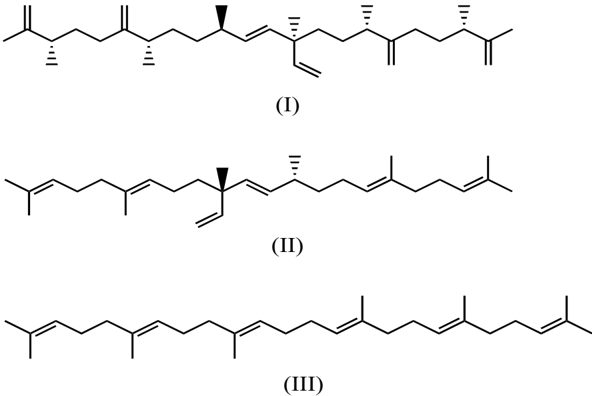
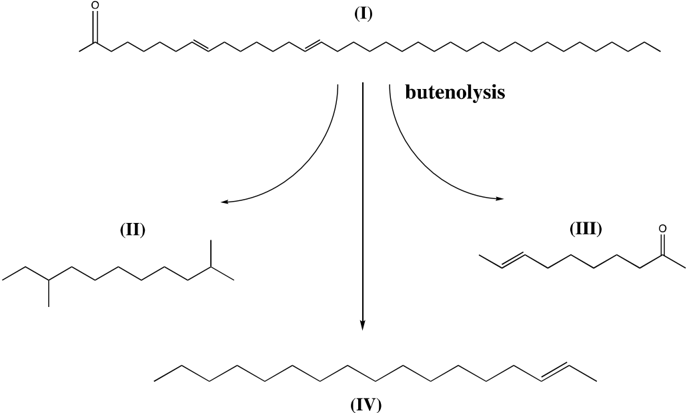
“Instead of accumulating acyl-lipids, this species accumulates a range of linear and monocyclic terpenes, termed botryococcenes, to levels of up to 70% (Figure 12, structures (I) and (II)).”
§ 7.1. Terpenoid 'Oils'
“However, in Botryococcus , botryococcenes consist of up to ten compounds (Cn H2n; n = 30-34), representing 25-40 of its dry weight.”
Cited works that were retracted
Works this paper cites that were later retracted, from the retraction notices publishers deposit. Major when the notice came out before this paper was published.
A note, not an issue: for example, a cited work that was retracted only after this paper was published, which its authors could not have known.
In the paper
“Koyande, 2019, Bio-processing of algal bio-refinery: A review on current advances and future perspectives, Bioengineered, 10, 574, 10.1080/21655979.2019.1679697”
Cited work 10.1080/21655979.2019.1679697 · retracted 2026-01-19 · notice 10.1080/21655979.2026.2614863 · this paper published 2021-10-09
Citations
Cites
1 retracted
Koyande, A. K., Show, P.-L., Guo, R., Tang, B., Ogino, C., & Chang, J.-S. (2019) · Bioengineered · doi:10.1080/21655979.2019.1679697 · Cited by 182
RetractedReview of fast pyrolysis of biomass and product upgrading
Bridgwater, A. V. (2012) · Biomass and Bioenergy · doi:10.1016/j.biombioe.2011.01.048 · Cited by 4,856
A review on hydrothermal liquefaction of biomass
Gollakota, A. R. K., Kishore, N., & Gu, S. (2018) · Renewable and Sustainable Energy Reviews · doi:10.1016/j.rser.2017.05.178 · Cited by 1,306
Liang, Y., Sarkany, N., & Cui, Y. (2009) · Biotechnology Letters · doi:10.1007/s10529-009-9975-7 · Cited by 1,059
Slade, R., & Bauen, A. (2013) · Biomass and Bioenergy · doi:10.1016/j.biombioe.2012.12.019 · Cited by 978
Flocculation as a low-cost method for harvesting microalgae for bulk biomass production
Vandamme, D., Foubert, I., & Muylaert, K. (2013) · Trends in Biotechnology · doi:10.1016/j.tibtech.2012.12.005 · Cited by 928
Suganya, T., Varman, M., Masjuki, H. H., & Renganathan, S. (2016) · Renewable and Sustainable Energy Reviews · doi:10.1016/j.rser.2015.11.026 · Cited by 793
Buschmann, A. H., Camus, C., Infante, J., Neori, A., Israel, Á., Hernández-González, M. C., Pereda, S. V., Gomez-Pinchetti, J. L., Golberg, A., Tadmor-Shalev, N., et al. (2017) · European Journal of Phycology · doi:10.1080/09670262.2017.1365175 · Cited by 767
Techno-economic evaluation of microalgae harvesting and dewatering systems
Fasaei, F., Bitter, J. H., Slegers, P. M., & van Boxtel, A. J. B. (2018) · Algal Research · doi:10.1016/j.algal.2017.11.038 · Cited by 621
A Review of Recent Advances in Biomass Pyrolysis
Wang, G., Dai, Y., Yang, H., Xiong, Q., Wang, K., Zhou, J., Li, Y., & Wang, S. (2020) · Energy & Fuels · doi:10.1021/acs.energyfuels.0c03107 · Cited by 597
Renewable methane from anaerobic digestion of biomass
Chynoweth, D. P., Owens, J. M., & Legrand, R. (2001) · Renewable Energy · doi:10.1016/s0960-1481(00)00019-7 · Cited by 596
Fast pyrolysis of microalgae to produce renewable fuels
Miao, X., Wu, Q., & Yang, C. (2004) · Journal of Analytical and Applied Pyrolysis · doi:10.1016/j.jaap.2003.11.004 · Cited by 568
Seaweed aquaculture: cultivation technologies, challenges and its ecosystem services
Kim, J. K., Yarish, C., Hwang, E. K., Park, M., & Kim, Y. (2017) · ALGAE · doi:10.4490/algae.2017.32.3.3 · Cited by 516
Lee, X. J., Ong, H. C., Gan, Y. Y., Chen, W.-H., & Mahlia, T. M. I. (2020) · Energy Conversion and Management · doi:10.1016/j.enconman.2020.112707 · Cited by 465
Jena, U., & Das, K. C. (2011) · Energy & Fuels · doi:10.1021/ef201373m · Cited by 405
Microalgal hydrogen production - A review
Khetkorn, W., Rastogi, R. P., Incharoensakdi, A., Lindblad, P., Madamwar, D., Pandey, A., & Larroche, C. (2017) · Bioresource Technology · doi:10.1016/j.biortech.2017.07.085 · Cited by 389
Fabris, M., Abbriano, R. M., Pernice, M., Sutherland, D. L., Commault, A. S., Hall, C. C., Labeeuw, L., McCauley, J. I., Kuzhiuparambil, U., Ray, P., et al. (2020) · Frontiers in Plant Science · doi:10.3389/fpls.2020.00279 · Cited by 382
DNA-based species delimitation in algae
Leliaert, F., Verbruggen, H., Vanormelingen, P., Steen, F., López-Bautista, J. M., Zuccarello, G. C., & De Clerck, O. (2014) · European Journal of Phycology · doi:10.1080/09670262.2014.904524 · Cited by 380
Photosynthesis: basics, history and modelling
Stirbet, A., Lazár, D., Guo, Y., & Govindjee, G. (2020) · Annals of Botany · doi:10.1093/aob/mcz171 · Cited by 368
Continuous Hydrothermal Liquefaction of Biomass: A Critical Review
Castello, D., Pedersen, T. H., & Rosendahl, L. A. (2018) · Energies · doi:10.3390/en11113165 · Cited by 343
The potential of microalgae in biodiesel production
Chen, J., Li, J., Dong, W., Zhang, X., Tyagi, R. D., Drogui, P., & Surampalli, R. Y. (2018) · Renewable and Sustainable Energy Reviews · doi:10.1016/j.rser.2018.03.073 · Cited by 330
Bioethanol production from Gracilaria verrucosa, a red alga, in a biorefinery approach
Kumar, S., Gupta, R., Kumar, G., Sahoo, D., & Kuhad, R. C. (2013) · Bioresource Technology · doi:10.1016/j.biortech.2012.10.120 · Cited by 319
Kebelmann, K., Hornung, A., Karsten, U., & Griffiths, G. (2013) · Biomass and Bioenergy · doi:10.1016/j.biombioe.2012.12.006 · Cited by 317
Self-citationAlginate Oligosaccharides: Production, Biological Activities, and Potential Applications
Liu, J., Yang, S., Li, X., Yan, Q., Reaney, M. J. T., & Jiang, Z. (2019) · Comprehensive Reviews in Food Science and Food Safety · doi:10.1111/1541-4337.12494 · Cited by 311
Metabolism of acyl‐lipids in Chlamydomonas reinhardtii
Li‐Beisson, Y., Beisson, F., & Riekhof, W. (2015) · The Plant Journal · doi:10.1111/tpj.12787 · Cited by 310
Seaweeds: an opportunity for wealth and sustainable livelihood for coastal communities.
Rebours, C., Marinho-Soriano, E., Zertuche-González, J. A., Hayashi, L., Vásquez, J. A., Kradolfer, P., Soriano, G., Ugarte, R., Abreu, M. H., Bay-Larsen, I., et al. (2014) · Journal of Applied Phycology · doi:10.1007/s10811-014-0304-8 · Cited by 281
Rammuni, M. N., Ariyadasa, T. U., Nimarshana, P. H. V., & Attalage, R. A. (2019) · Food Chemistry · doi:10.1016/j.foodchem.2018.10.066 · Cited by 269
Algal biofuels from wastewater treatment high rate algal ponds
Craggs, R. J., Heubeck, S., Lundquist, T. J., & Benemann, J. R. (2011) · Water Science and Technology · doi:10.2166/wst.2011.100 · Cited by 267
Importance of Seaweeds and Extractive Species in Global Aquaculture Production
Chopin, T., & Tacon, A. G. J. (2021) · Reviews in Fisheries Science & Aquaculture · doi:10.1080/23308249.2020.1810626 · Cited by 226
Dong, T., Knoshaug, E. P., Davis, R., Laurens, L. M. L., Van Wychen, S., Pienkos, P. T., & Nagle, N. (2016) · Algal Research · doi:10.1016/j.algal.2015.12.021 · Cited by 224
Storage of starch and lipids in microalgae: Biosynthesis and manipulation by nutrients
Ran, W., Wang, H., Liu, Y., Qi, M., Xiang, Q., Yao, C., Zhang, Y., & Lan, X. (2019) · Bioresource Technology · doi:10.1016/j.biortech.2019.121894 · Cited by 224
Astaxanthin and other Nutrients from Haematococcus pluvialis—Multifunctional Applications
Mularczyk, M., Michalak, I., & Marycz, K. (2020) · Marine Drugs · doi:10.3390/md18090459 · Cited by 220
Harvesting of microalgae by flocculation with poly (γ-glutamic acid)
Zheng, H., Gao, Z., Yin, J., Tang, X., Ji, X., & Huang, H. (2012) · Bioresource Technology · doi:10.1016/j.biortech.2012.02.086 · Cited by 211
The lipid metabolism in thraustochytrids
Morabito, C., Bournaud, C., Maës, C., Schuler, M., Aiese Cigliano, R., Dellero, Y., Maréchal, E., Amato, A., & Rébeillé, F. (2019) · Progress in Lipid Research · doi:10.1016/j.plipres.2019.101007 · Cited by 202
Phylogeny and Evolution of the Brown Algae
Bringloe, T. T., Starko, S., Wade, R. M., Vieira, C., Kawai, H., De Clerck, O., Cock, J. M., Coelho, S. M., Destombe, C., Valero, M., et al. (2020) · Critical Reviews in Plant Sciences · doi:10.1080/07352689.2020.1787679 · Cited by 202
Harvesting of Microalgae by Flocculation
Branyikova, I., Prochazkova, G., Potocar, T., Jezkova, Z., & Branyik, T. (2018) · Fermentation · doi:10.3390/fermentation4040093 · Cited by 195
The Perspective of Large-Scale Production of Algae Biodiesel
Bošnjaković, M., & Sinaga, N. (2020) · Applied Sciences · doi:10.3390/app10228181 · Cited by 194
A Brief Review of Anaerobic Digestion of Algae for Bioenergy
Milledge, J. J., Nielsen, B. V., Maneein, S., & Harvey, P. J. (2019) · Energies · doi:10.3390/en12061166 · Cited by 191
Advanced microalgae-based renewable biohydrogen production systems: A review
Goswami, R. K., Mehariya, S., Obulisamy, P. K., & Verma, P. (2021) · Bioresource Technology · doi:10.1016/j.biortech.2020.124301 · Cited by 189
Bioethanol from macroalgae: Prospects and challenges
Ramachandra, T. V., & Hebbale, D. (2020) · Renewable and Sustainable Energy Reviews · doi:10.1016/j.rser.2019.109479 · Cited by 184
Subramaniam, M., Solomon, J. M., Nadanakumar, V., Anaimuthu, S., & Sathyamurthy, R. (2020) · Energy Reports · doi:10.1016/j.egyr.2020.05.022 · Cited by 184
Al-lwayzy, S. H., & Yusaf, T. (2017) · Renewable Energy · doi:10.1016/j.renene.2016.09.035 · Cited by 181
Challenges and opportunities for hydrogen production from microalgae
Oey, M., Sawyer, A. L., Ross, I. L., & Hankamer, B. (2016) · Plant Biotechnology Journal · doi:10.1111/pbi.12516 · Cited by 180
Jacob, A., Ashok, B., Alagumalai, A., Chyuan, O. H., & Le, P. T. K. (2021) · Energy Conversion and Management · doi:10.1016/j.enconman.2020.113655 · Cited by 176
Manoylov, K. M. (2014) · Journal of Phycology · doi:10.1111/jpy.12183 · Cited by 161
Recent advances in carrageenan-based delivery systems for bioactive ingredients: A review
Dong, Y., Wei, Z., & Xue, C. (2021) · Trends in Food Science & Technology · doi:10.1016/j.tifs.2021.04.012 · Cited by 160
The considerable environmental benefits of seaweed aquaculture in China
Zheng, Y., Jin, R., Zhang, X., Wang, Q., & Wu, J. (2019) · Stochastic Environmental Research and Risk Assessment · doi:10.1007/s00477-019-01685-z · Cited by 159
Barros, A., Pereira, H., Campos, J., Marques, A., Varela, J., & Silva, J. (2019) · Scientific Reports · doi:10.1038/s41598-019-50206-z · Cited by 156
Phlorotannins: A review on biosynthesis, chemistry and bioactivity
Shrestha, S., Zhang, W., & Smid, S. D. (2021) · Food Bioscience · doi:10.1016/j.fbio.2020.100832 · Cited by 155
Upgrading biomass fast pyrolysis liquids
Bridgwater, A. V. (2012) · Environmental Progress & Sustainable Energy · doi:10.1002/ep.11635 · Cited by 155
Rajak, U., Nashine, P., & Verma, T. N. (2020) · Fuel · doi:10.1016/j.fuel.2020.117305 · Cited by 150
Two-stage heterotrophic and phototrophic culture strategy for algal biomass and lipid production
Zheng, Y., Chi, Z., Lucker, B., & Chen, S. (2012) · Bioresource Technology · doi:10.1016/j.biortech.2011.09.122 · Cited by 148
Bio-based flocculants for sustainable harvesting of microalgae for biofuel production. A review
Ogbonna, C. N., & Nwoba, E. G. (2021) · Renewable and Sustainable Energy Reviews · doi:10.1016/j.rser.2020.110690 · Cited by 146
Investigation on Pyrolysis of Low Lipid Microalgae Chlorella vulgaris and Dunaliella salina
Gong, X., Zhang, B., Zhang, Y., Huang, Y., & Xu, M. (2014) · Energy & Fuels · doi:10.1021/ef401500z · Cited by 138
Van Dael, P. (2021) · Nutrition Research and Practice · doi:10.4162/nrp.2021.15.2.137 · Cited by 138
Environmental effect of CI engine using microalgae methyl ester with doped nano additives
Karthikeyan, S., & Prathima, A. (2017) · Transportation Research Part D Transport and Environment · doi:10.1016/j.trd.2016.11.028 · Cited by 134
Industrial hydrogen production technology and development status in China: A review
Chai, S., Zhang, G., Li, G., & Zhang, Y. (2021) · Clean Technologies and Environmental Policy · doi:10.1007/s10098-021-02089-w · Cited by 133
Sustainable saline microalgae co-cultivation for biofuel production: A critical review
Ishika, T., Moheimani, N. R., & Bahri, P. A. (2017) · Renewable and Sustainable Energy Reviews · doi:10.1016/j.rser.2017.04.110 · Cited by 130
What is the gross energy yield of third generation gaseous biofuel sourced from seaweed?
Allen, E., Wall, D. M., Herrmann, C., Xia, A., & Murphy, J. D. (2015) · Energy · doi:10.1016/j.energy.2014.12.048 · Cited by 124
Rajak, U., Nashine, P., Verma, T. N., & Pugazhendhi, A. (2020) · Fuel · doi:10.1016/j.fuel.2020.117645 · Cited by 123
Gohil, N., Bhattacharjee, G., Khambhati, K., Braddick, D., & Singh, V. (2019) · Frontiers in Bioengineering and Biotechnology · doi:10.3389/fbioe.2019.00050 · Cited by 121
Therapeutic Uses of Red Macroalgae
Ismail, M. M., Alotaibi, B. S., & EL-Sheekh, M. M. (2020) · Molecules · doi:10.3390/molecules25194411 · Cited by 118
Commercially important bioproducts from microalgae and their current applications—A review
Mobin, S. M. A., Chowdhury, H., & Alam, F. (2019) · Energy Procedia · doi:10.1016/j.egypro.2019.02.183 · Cited by 115
Recent development of hydrothermal liquefaction for algal biorefinery
Gu, X., Martinez-Fernandez, J. S., Pang, N., Fu, X., & Chen, S. (2020) · Renewable and Sustainable Energy Reviews · doi:10.1016/j.rser.2020.109707 · Cited by 115
Mathimani, T., Senthil Kumar, T., Chandrasekar, M., Uma, L., & Prabaharan, D. (2017) · Renewable Energy · doi:10.1016/j.renene.2016.12.090 · Cited by 114
Fuel properties and emission characteristics of biodiesel produced from unused algae grown in India
Karmakar, R., Kundu, K., & Rajor, A. (2018) · Petroleum Science · doi:10.1007/s12182-017-0209-7 · Cited by 114
Microalgae Water Bioremediation: Trends and Hot Topics
Pacheco, D., Rocha, A. C., Pereira, L., & Verdelhos, T. (2020) · Applied Sciences · doi:10.3390/app10051886 · Cited by 114
Enhancement in hydrogen production by co-cultures of Bacillus and Enterobacter
Patel, S. K. S., Kumar, P., Mehariya, S., Purohit, H. J., Lee, J.-K., & Kalia, V. C. (2014) · International Journal of Hydrogen Energy · doi:10.1016/j.ijhydene.2014.07.084 · Cited by 113
Regional Climatic Features of the Arabian Peninsula
Πατλάκας, Π., Stathopoulos, C., Flocas, H. A., Kalogeri, C., & Kallos, G. (2019) · Atmosphere · doi:10.3390/atmos10040220 · Cited by 113
Brodie, J. A., Chan, C. X., Clerck, O. D., Cock, J. M., Coelho, S. M., Gachon, C. M. M., Grossman, A. R., Möck, T., Raven, J. A., Smith, A. G., et al. (2017) · Trends in Plant Science · doi:10.1016/j.tplants.2017.05.005 · Cited by 109
Overview on the Current Status of Hydrogen Energy Research and Development in India
Medisetty, V. M., Kumar, R., Ahmadi, M. H., Vo, D.-V. N., Ochoa, A. A. V., & Solanki, R. (2020) · Chemical Engineering & Technology · doi:10.1002/ceat.201900496 · Cited by 106
Revisiting metabolic engineering strategies for microbial synthesis of oleochemicals
Yan, Q., & Pfleger, B. F. (2020) · Metabolic Engineering · doi:10.1016/j.ymben.2019.04.009 · Cited by 105
Jasmonates: Biosynthesis, perception and signal transduction
Griffiths, G. (2020) · Essays in Biochemistry · doi:10.1042/ebc20190085 · Cited by 103
Self-citationUsing macroalgae as biofuel: Current opportunities and challenges
Gao, G., Burgess, J. G., Wu, M., Wang, S., & Gao, K. (2020) · Botanica Marina · doi:10.1515/bot-2019-0065 · Cited by 99
Biofuel Production in Ireland-An Approach to 2020 Targets with a Focus on Algal Biomass
Murphy, F., Devlin, G., Deverell, R., & McDonnell, K. (2013) · Energies · doi:10.3390/en6126391 · Cited by 95
Djandja, O. S., Wang, Z., Chen, L., Qin, L., Wang, F., Xu, Y., & Duan, P. (2020) · Energy & Fuels · doi:10.1021/acs.energyfuels.0c01973 · Cited by 93
Development of a high-productivity, halophilic, thermotolerant microalga Picochlorum renovo
Dahlin, L. R., Gerritsen, A. T., Henard, C. A., Van Wychen, S., Linger, J. G., Kunde, Y., Hovde, B. T., Starkenburg, S. R., Posewitz, M. C., & Guarnieri, M. T. (2019) · Communications Biology · doi:10.1038/s42003-019-0620-2 · Cited by 86
Quality analysis studies on biodiesel production of neochloris oleoabundans algae
Karthikeyan, S., Kalaimurugan, K., & Prathima, A. (2018) · Energy Sources, Part A: Recovery, Utilization, and Environmental Effects · doi:10.1080/15567036.2017.1422059 · Cited by 84
Yin, Z., Chu, R., Zhu, L., Li, S., Mo, F., Hu, D., & Liu, C. (2021) · Renewable and Sustainable Energy Reviews · doi:10.1016/j.rser.2021.111159 · Cited by 81
Optimisation of microalgal cultivation via nutrient-enhanced strategies: the biorefinery paradigm
Figueroa-Torres, G. M., Pittman, J. K., & Theodoropoulos, C. (2021) · Biotechnology for Biofuels · doi:10.1186/s13068-021-01912-2 · Cited by 75
The Seaweed Diet in Prevention and Treatment of the Neurodegenerative Diseases
Pereira, L., & Valado, A. (2021) · Marine Drugs · doi:10.3390/md19030128 · Cited by 74
Sui, S.-F. (2021) · Annual Review of Biophysics · doi:10.1146/annurev-biophys-062920-063657 · Cited by 72
Chlorella protothecoides Microalgae as an Alternative Fuel for Tractor Diesel Engines
Al-lwayzy, S., & Yusaf, T. (2013) · Energies · doi:10.3390/en6020766 · Cited by 71
Using a B-Phycoerythrin Extract as a Natural Colorant: Application in Milk-Based Products
García, A., Longo, E., Murillo, M., & Bermejo, R. (2021) · Molecules · doi:10.3390/molecules26020297 · Cited by 70
Mhatre, A., Gore, S., Mhatre, A., Trivedi, N., Sharma, M., Pandit, R., Anil, A., & Lali, A. (2019) · Renewable Energy · doi:10.1016/j.renene.2018.08.012 · Cited by 69
Gargouch, N., Karkouch, I., Elleuch, J., Elkahoui, S., Michaud, P., Abdelkafi, S., Laroche, C., & Fendri, I. (2018) · International Journal of Biological Macromolecules · doi:10.1016/j.ijbiomac.2018.09.037 · Cited by 68
Effective harvesting of low surface-hydrophobicity microalgae by froth flotation
Garg, S., Wang, L., & Schenk, P. M. (2014) · Bioresource Technology · doi:10.1016/j.biortech.2014.03.030 · Cited by 67
Zheng, Y., Wang, J., Li, D., Liu, C., Lu, Y., Lin, X., & Zheng, Z. (2021) · Journal of the Energy Institute · doi:10.1016/j.joei.2021.04.008 · Cited by 67
Comparison of Cassava Starch with Corn as a Feedstock for Bioethanol Production
Pradyawong, S., Juneja, A., Sadiq, M. B., Noomhorm, A., & Singh, V. (2018) · Energies · doi:10.3390/en11123476 · Cited by 61
Algal cells harvesting using cost-effective magnetic nano-particles
Almomani, F. (2020) · Science of The Total Environment · doi:10.1016/j.scitotenv.2020.137621 · Cited by 61
Ortiz, R., Geleta, M., Gustafsson, C., Lager, I., Hofvander, P., Löfstedt, C., Cahoon, E. B., Minina, E., Bozhkov, P., & Stymne, S. (2020) · Current Opinion in Plant Biology · doi:10.1016/j.pbi.2019.12.003 · Cited by 60
Microalgal bio-flocculation: Present scenario and prospects for commercialization
Ray, A., Banerjee, S., & Das, D. (2021) · Environmental Science and Pollution Research · doi:10.1007/s11356-021-13437-0 · Cited by 60
Mikrou, T., Pantelidou, E., Parasyri, N., Papaioannou, A., Kapsokefalou, M., Gardeli, C., & Mallouchos, A. (2020) · Molecules · doi:10.3390/molecules25173818 · Cited by 59
Hossain, F. M., Nurun Nabi, M., & Brown, R. J. (2019) · Energy Conversion and Management · doi:10.1016/j.enconman.2019.02.061 · Cited by 56
Milledge, J. J., Nielsen, B. V., & Harvey, P. J. (2019) · Journal of Applied Phycology · doi:10.1007/s10811-018-1512-4 · Cited by 55
Apandi, N. M., Mohamed, R. M. S. R., Al-Gheethi, A., & Kassim, A. H. M. (2019) · Environmental Science and Pollution Research · doi:10.1007/s11356-018-3937-3 · Cited by 54
Optimization of Microalga Chlorella vulgaris Magnetic Harvesting
Savvidou, M. G., Dardavila, M. M., Georgiopoulou, I., Louli, V., Stamatis, H., Kekos, D., & Voutsas, E. (2021) · Nanomaterials · doi:10.3390/nano11061614 · Cited by 54
Effective harvesting of microalgae by coagulation-flotation
Xia, L., Li, Y., Huang, R., & Song, S. (2017) · Royal Society Open Science · doi:10.1098/rsos.170867 · Cited by 53
Hydrothermal liquefaction of Malaysia's algal biomass for high‐quality bio‐oil production
Latif, N. S. A., Ong, M. Y., & Nomanbhay, S. M. (2019) · Engineering in Life Sciences · doi:10.1002/elsc.201800144 · Cited by 53
Hydrothermal liquefaction of macroalgae for the production of renewable biofuels
Raikova, S., Allen, M. J., & Chuck, C. J. (2019) · Biofuels, Bioproducts and Biorefining · doi:10.1002/bbb.2047 · Cited by 51
Antioxidant Production in Dunaliella
Roy, U. K., Nielsen, B. V., & Milledge, J. J. (2021) · Applied Sciences · doi:10.3390/app11093959 · Cited by 51
Coagulation-membrane filtration of Chlorella vulgaris
Lee, D.-J., Liao, G.-Y., Chang, Y.-R., & Chang, J.-S. (2012) · Bioresource Technology · doi:10.1016/j.biortech.2011.12.098 · Cited by 50
Microalgal production of zeaxanthin
Bourdon, L., Jensen, A. A., Kavanagh, J. M., & McClure, D. D. (2021) · Algal Research · doi:10.1016/j.algal.2021.102266 · Cited by 50
Structure of plant photosystem I−light harvesting complex I supercomplex at 2.4 Å resolution
Wang, J., Yu, L., Wang, W., et al. (2021) · Journal of Integrative Plant Biology · doi:10.1111/jipb.13095 · Cited by 49
Fernando, I. P. S., Sanjeewa, K. K. A., Samarakoon, K. W., Lee, W. W., Kim, H.-S., & Jeon, Y.-J. (2018) · Journal of Food Biochemistry · doi:10.1111/jfbc.12628 · Cited by 46
Yields and Variability of Ozone Reaction Products from Human Skin
Morrison, G. C., Eftekhari, A., Majluf, F., & Krechmer, J. E. (2021) · Environmental Science & Technology · doi:10.1021/acs.est.0c05262 · Cited by 45
An overview on agarophyte trade in India and need for policy interventions
Mantri, V. A., Ganesan, M., Gupta, V., Krishnan, P., & Siddhanta, A. K. (2019) · Journal of Applied Phycology · doi:10.1007/s10811-019-01791-z · Cited by 42
Rajendran, K., Browne, J. D., & Murphy, J. D. (2019) · Renewable Energy · doi:10.1016/j.renene.2018.10.091 · Cited by 41
The unique Namib desert-coastal region and its opportunities for climate smart agriculture: A review
Mupambwa, H. A., Hausiku, M. K., Nciizah, A. D., & Dube, E. (2019) · Cogent Food & Agriculture · doi:10.1080/23311932.2019.1645258 · Cited by 40
Phasey, J., Vandamme, D., & Fallowfield, H. J. (2017) · Algal Research · doi:10.1016/j.algal.2017.06.015 · Cited by 38
Manoyan, J., Gabrielyan, L., Kozel, N., & Trchounian, A. (2019) · Journal of Photochemistry and Photobiology B Biology · doi:10.1016/j.jphotobiol.2019.111597 · Cited by 37
Paul, T., Sinharoy, A., Baskaran, D., Pakshirajan, K., Pugazhenthi, G., & Lens, P. N. L. (2022) · Critical Reviews in Environmental Science and Technology · doi:10.1080/10643389.2020.1820803 · Cited by 37
O’Neil, G. W., Culler, A. R., Williams, J. R., Burlow, N. P., Gilbert, G. J., Carmichael, C. A., Nelson, R. K., Swarthout, R. F., & Reddy, C. M. (2015) · Energy & Fuels · doi:10.1021/ef502617z · Cited by 35
Roberts, K. P., Heaven, S., & Banks, C. J. (2016) · Renewable Energy · doi:10.1016/j.renene.2015.11.009 · Cited by 34
Lim, K. C., Yusoff, F. M., Shariff, M., & Kamarudin, M. S. (2019) · Aquaculture Nutrition · doi:10.1111/anu.12961 · Cited by 33
More Than a Methanotroph: A Broader Substrate Spectrum for Methylacidiphilum fumariolicum SolV
Picone, N., Mohammadi, S. S., Waajen, A. C., van Alen, T. A., Jetten, M. S. M., Pol, A., & den Camp, H. J. M. O. (2020) · Frontiers in Microbiology · doi:10.3389/fmicb.2020.604485 · Cited by 33
Saxena, A., Marella, T. K., Singh, P. K., & Tiwari, A. (2021) · Bioresource Technology · doi:10.1016/j.biortech.2021.125098 · Cited by 32
Zheng, Y., Dillon, J. T., Zhang, Y., & Huang, Y. (2016) · Journal of Phycology · doi:10.1111/jpy.12461 · Cited by 28
Tassoni, A., Awad, N., & Griffiths, G. (2018) · Plant Physiology and Biochemistry · doi:10.1016/j.plaphy.2017.12.014 · Cited by 28
Self-citationKlassen, V., Blifernez-Klassen, O., Bax, J., & Kruse, O. (2020) · Bioresource Technology · doi:10.1016/j.biortech.2020.123825 · Cited by 28
Dagle, V. L., Lopez, J. S., Cooper, A., Luecke, J., Swita, M., Dagle, R. A., & Gaspar, D. (2020) · Fuel · doi:10.1016/j.fuel.2020.118147 · Cited by 27
Lipids extraction from the green alga Ankistrodesmus falcatus using different methods
El-Sheekh, M. M., & Hamouda, R. A. (2016) · RENDICONTI LINCEI · doi:10.1007/s12210-016-0528-4 · Cited by 26
Development of model for assessment of renewable energy sources: a case study on Gujarat, India
Ghose, D., Pradhan, S., & Shabbiruddin (2019) · International Journal of Ambient Energy · doi:10.1080/01430750.2019.1691650 · Cited by 26
Sánchez‐Saavedra, M. D. P., Sauceda-Carvajal, D., Castro-Ochoa, F. Y., & Molina-Cárdenas, C. A. (2020) · BioEnergy Research · doi:10.1007/s12155-019-10070-1 · Cited by 24
Sharma, V., & Duraisamy, G. (2019) · Environmental Science and Pollution Research · doi:10.1007/s11356-019-04958-w · Cited by 21
Self-citationInfluence of torrefaction pretreatment on the pyrolysis characteristics of seaweed biomass
Hu, Y., Wang, S., Wang, Q., He, Z., Abomohra, A. E.-F., & Cao, B. (2019) · Cellulose · doi:10.1007/s10570-019-02595-7 · Cited by 21
Awad, N., Vega-Estévez, S., & Griffiths, G. (2020) · Plant Physiology and Biochemistry · doi:10.1016/j.plaphy.2020.02.019 · Cited by 20
Self-citationChitosan coagulation–membrane filtration of Chlorella vulgaris
Lee, D., Liao, G.-Y., Chang, Y.-R., & Chang, J. (2012) · International Journal of Hydrogen Energy · doi:10.1016/j.ijhydene.2012.02.048 · Cited by 19
A Fuzzy-COPRAS Model for Analysis of Renewable Energy Sources in West Bengal, India
Ghose, D., Pradhan, S. K., & Shabbiruddin (2019) · IEEE International Conference on Energy, Systems and Information Processing (ICESIP) · doi:10.1109/icesip46348.2019.8938344 · Cited by 16
Katam, G. B., A., V. B., K., M. M., & Warkhade, G. S. (2017) · World Journal of Engineering · doi:10.1108/wje-06-2016-0012 · Cited by 15
Veronesi, D., D’Imporzano, G., Menin, B., Salati, S., & Adani, F. (2020) · Bioprocess and Biosystems Engineering · doi:10.1007/s00449-020-02381-x · Cited by 15
Cañavate, J.-P., Hachero-Cruzado, I., Pérez-Gavilán, C., & Fernández-Díaz, C. (2020) · Journal of Applied Phycology · doi:10.1007/s10811-020-02258-2 · Cited by 14
Flocculation of Chlorella vulgaris with alum and pH adjustment
Mohseni, F., & Zenooz, A. M. (2021) · Biotechnology and Applied Biochemistry · doi:10.1002/bab.2182 · Cited by 14
An economic valuation of the commercial cultivation of Agarophyton chilensis in northern Chile
Zúñiga-Jara, S., & Contreras, C. (2020) · Journal of Applied Phycology · doi:10.1007/s10811-020-02165-6 · Cited by 13
Cheng, D., Li, X., Yuan, Y., & Zhao, Q. (2020) · Biotechnology and Applied Biochemistry · doi:10.1002/bab.1829 · Cited by 11
Griffiths, G., & Morse, N. (2006) · Journal of the American Oil Chemists Society · doi:10.1007/s11746-006-1191-1 · Cited by 10
Self-citationKruger, J. S., Knoshaug, E. P., Dong, T., Hull, T. C., & Pienkos, P. T. (2021) · Johnson Matthey Technology Review · doi:10.1595/205651321x16024905831259 · Cited by 10
Gohil, N., Bhattacharjee, G., Khambhati, K., Braddick, D., & Singh, V. (2019) · Frontiers in Bioengineering and Biotechnology · doi:10.3389/fbioe.2019.00114 · Cited by 10
Structure of plant photosystem I-light harvesting complex I supercomplex: 7dkz
Wang, J., Yu, L. J., & Wang, W. (2021) · Worldwide Protein Data Bank · doi:10.2210/pdb7dkz/pdb · Cited by 9
Santos, D. N., Silva, F. S., Verde, A. B., Bittencourt, G. M., & De Oliveira, A. L. (2020) · Grasas y Aceites · doi:10.3989/gya.0450191 · Cited by 7
Periodic symmetry defined bioreactors enhance algae growth
Tseng, Y.-H., Lee, T. I., Doane, S. J., Butterfield, A. E., McLennan, J. D., Mohanty, S. K., & Pease, L. F. (2019) · Environmental Science: Water Research & Technology · doi:10.1039/c9ew00035f · Cited by 1
Optimisation of Microalgal Cultivation via Nutrient-Enhanced Strategies: the Biorefinery Paradigm
Figueroa-Torres, G. M., Pittman, J., & Theodoropoulos, C. (2021) · doi:10.21203/rs.3.rs-96301/v2
Cited by
Genetic engineering for biohydrogen production from microalgae
Zhang, J., Xue, D., Wang, C., Fang, D., Cao, L., & Gong, C. (2023) · iScience · doi:10.1016/j.isci.2023.107255 · Cited by 105
Algal bioenergy production and utilization: Technologies, challenges, and prospects
Tazikeh, S., Zendehboudi, S., Ghafoori, S., Lohi, A., & Mahinpey, N. (2022) · Journal of environmental chemical engineering · doi:10.1016/j.jece.2022.107863 · Cited by 65
Humic Substances as Microalgal Biostimulants—Implications for Microalgal Biotechnology
Popa, D. G., Lupu, C. E., Constantinescu-Aruxandei, D., & Oancea, F. (2022) · Marine Drugs · doi:10.3390/md20050327 · Cited by 67
Sahu, S., Kunj, P., Kaur, A., Khatri, M., Singh, G., & Arya, S. K. (2024) · Energy Conversion and Management · doi:10.1016/j.enconman.2024.118467 · Cited by 44
Phalanisong, P., Plangklang, P., & Reungsang, A. (2021) · Molecules · doi:10.3390/molecules26247613 · Cited by 32
Metadata
- Authors
- Griffiths, G., Hossain, A. K., Sharma, V., & Duraisamy, G.
- Affiliations
- Aston University (GB)
- Anna University, Chennai (IN)
- Corresponding author
- Griffiths, Gareth
- Venue
- Clean Technologies
- Publisher
- MDPI AG
- Published
- 2021-10-09
- Volume
- 3
- Issue
- 4
- Pages
- 711-742
- ISSN
- 2571-8797 (ISSN-L)
- OpenAlex
- W3205639083
- Cited by
- 49
- References
- 143
- Citations by year
- 2026: 11 · 2025: 12 · 2024: 9 · 2023: 7 · 2022: 9 · 2021: 1
- FWCI
- 1.22
- Type
- journal article
- Language
- en
- Open access
- gold
- doi.org
- Licence
- Locations
- Clean Technologies (publishedVersion, cc-by)
- Aston Publications Explorer (Aston University) (acceptedVersion, public-domain)
- RePEc: Research Papers in Economics (submittedVersion)
- DOAJ (DOAJ: Directory of Open Access Journals) (submittedVersion, cc-by-sa)
- Funders
- DST-UKIERI project (DST-UKIERI 18-19-04)
- Topics
- Physical Sciences › Energy › Renewable Energy, Sustainability and the Environment › Algal biology and biofuel production
- Physical Sciences › Engineering › Biomedical Engineering › Biofuel production and bioconversion
- Life Sciences › Biochemistry, Genetics and Molecular Biology › Molecular Biology › Microbial Metabolic Engineering and Bioproduction
- Keywords
- algal biofuels, microalgae, seaweed, anaerobic digestion, biomethane, bioethanol, hydrolytic enzymes, polysaccharide degradation, raceway ponds, photobioreactors, algal biodiesel, industrial wastewater, CO2 utilization, flocculation, biorefinery, hydrothermal liquefaction, transesterification, economic evaluation
About these checks
Registry, retraction, Cites and statistics results are computed, not judged, with one exception: a printed reference that no index lists is read once by a model before it counts as a citation error. Claims are extracted by a model and kept only when their quote appears verbatim in the text; each cited source is then checked, with a model’s help, for whether it says what the claim relies on. Those verdicts can be wrong — read the claim’s quote and the cited source before relying on one.
The claim verdicts this report counts are experimental: their accuracy is not yet measured.
A language model drew the claims from the paper on 2026-10-09, under version 3 of the claim definition (model deepseek-v4.1-flash, prompt extract-v3).
A second model labelled each claim on 2026-10-09 (model jev-1.13-20260917, definition revision gold-guideline-v0.2).
Cited sources are checked with a language model’s help (gpt-6-sol).
Statistics and arithmetic are recomputed, not judged.
Confidence bands are shown only for fields calibrated on our annotated test set. None is calibrated yet, so no band is shown.
What counts as a claim ›How we measure confidence ›How we check this ›
Are you an author, or do you see a problem with this page? Request a review
Data sources
Bibliographic data: Semantic Scholar, OpenAlex, Crossref.
Contains information from the Semantic Scholar Academic Graph Datasets, made available under the ODC Attribution License (ODC-BY 1.0).
Semantic Scholar’s data is described in: Kinney, R., et al. (2023). The Semantic Scholar Open Data Platform. arXiv:2301.10140.
