

Recent advances in targeting the “undruggable” proteins: from drug discovery to clinical trials
Open accessThe DOI matches its Crossref record; 672 of the 672 references it cites were found in a registry or an index; 168 of the 876 sources its claims cite were checked for support.
Abstract
Undruggable proteins are a class of proteins that are often characterized by large, complex structures or functions that are difficult to interfere with using conventional drug design strategies. Targeting such undruggable targets has been considered also a great opportunity for treatment of human diseases and has attracted substantial efforts in the field of medicine. Therefore, in this review, we focus on the recent development of drug discovery targeting “undruggable” proteins and their application in clinic. To make this review well organized, we discuss the design strategies targeting the undruggable proteins, including covalent regulation, allosteric inhibition, protein–protein/DNA interaction inhibition, targeted proteins regulation, nucleic acid-based approach, immunotherapy and others.
Overview
CoChat Summary
TL;DR
This review surveys drug-discovery strategies for "undruggable" proteins — targets with flat, pocketless interfaces such as KRAS, phosphatases, transcription factors, and PPI-driven proteins — covering covalent regulation, allosteric modulation, PPI/protein–DNA inhibition, targeted protein degradation and stabilization, nucleic acid approaches, and immunotherapy. It catalogs marketed drugs, clinical candidates, and preclinical leads across these modalities, framing the field's shift from "undruggable" to "difficult to drug" or "yet to be drugged."
Key findings
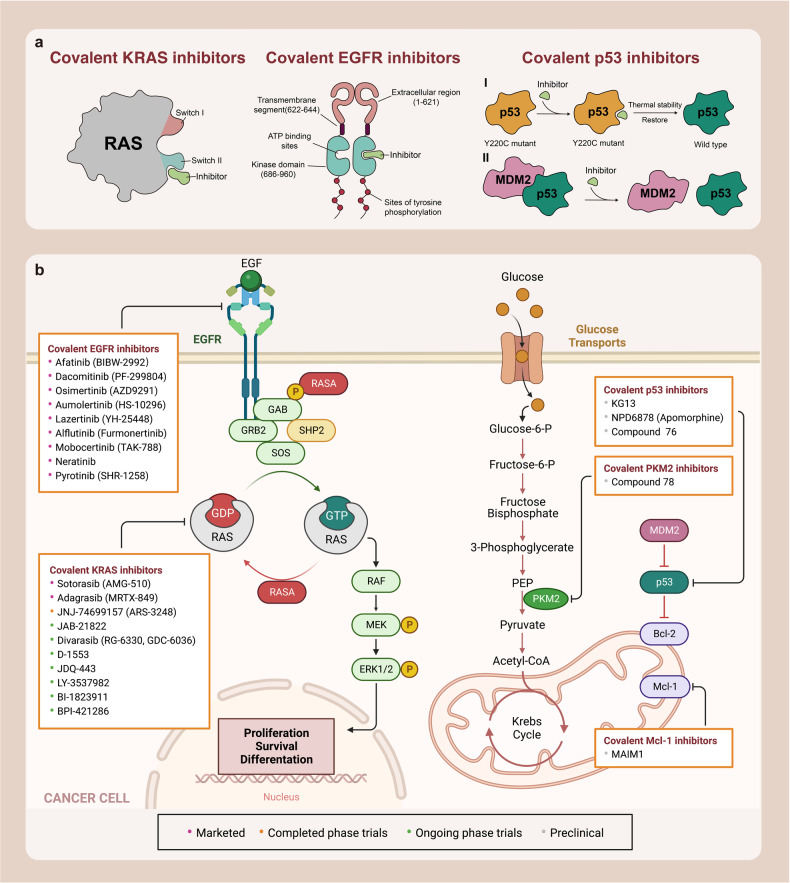
- Covalent inhibition produced the field's landmark success: sotorasib (AMG-510) received FDA accelerated approval in May 2021 for KRASG12C-mutated NSCLC, with an overall remission rate of 37%, disease control rate of 81%, median PFS 6.8 months, and median duration of remission 10.0 months; adagrasib (MRTX-849) followed with ORR 58%, median duration of treatment 9.5 months, and median duration of remission 12.6 months.
- Clinical-stage covalent KRASG12C inhibitors report ORRs including JAB-21822 56.3% (18/32, DCR 90.6%), divarasib 46% confirmed ORR (26/57 evaluable NSCLC patients), D-1553 37.8% (28/74, DCR 91.9%), JDQ-443 57% (4/7) at the phase II recommended dose, and IBI-351 50.9% (28/55) overall with 61.9% (13/21) at the recommended dose.
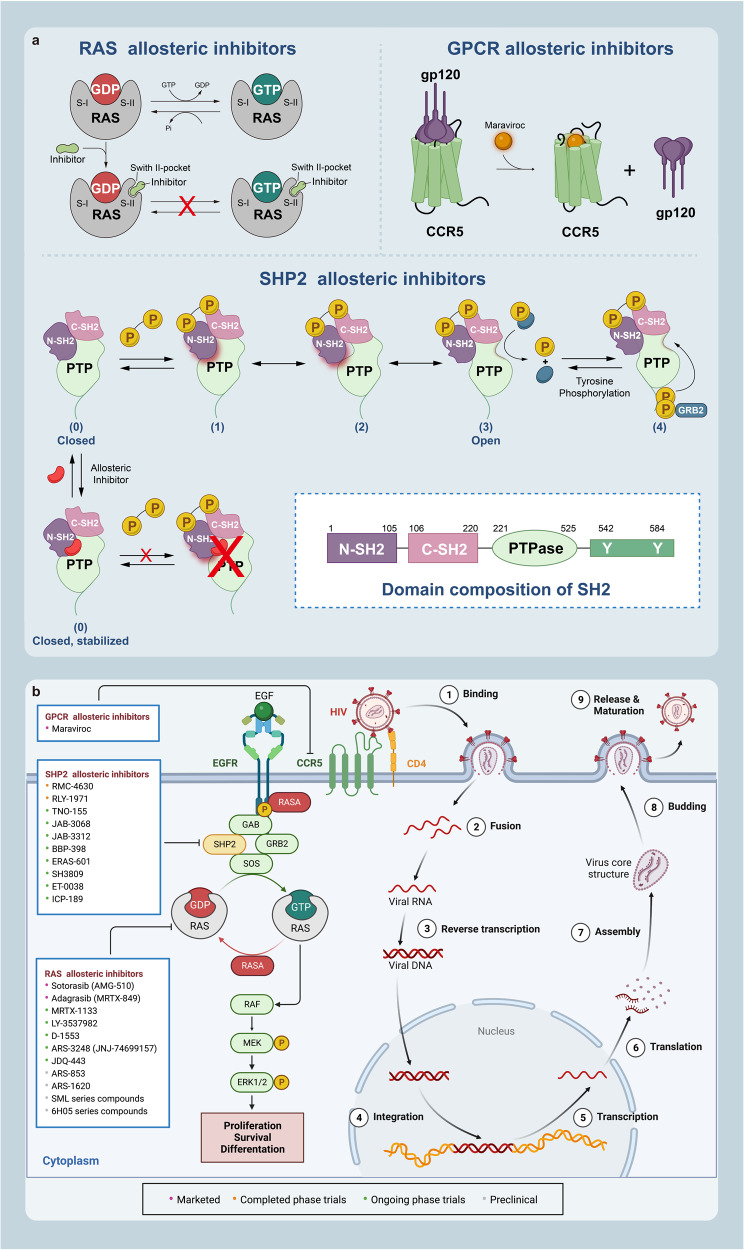
- Allosteric modulators target undruggable proteins lacking orthosteric pockets: MRTX-1133 binds inactive KRASG12D with IC50 < 2 nM and ~700-fold selectivity over KRASWT; SHP2 allosteric inhibitors (TNO-155, JAB-3068, RMC-4630, JAB-3312, RLY-1971, BBP-398, ERAS-601, SH3809, ET-0038, ICP-189) have entered clinical trials though none are approved.
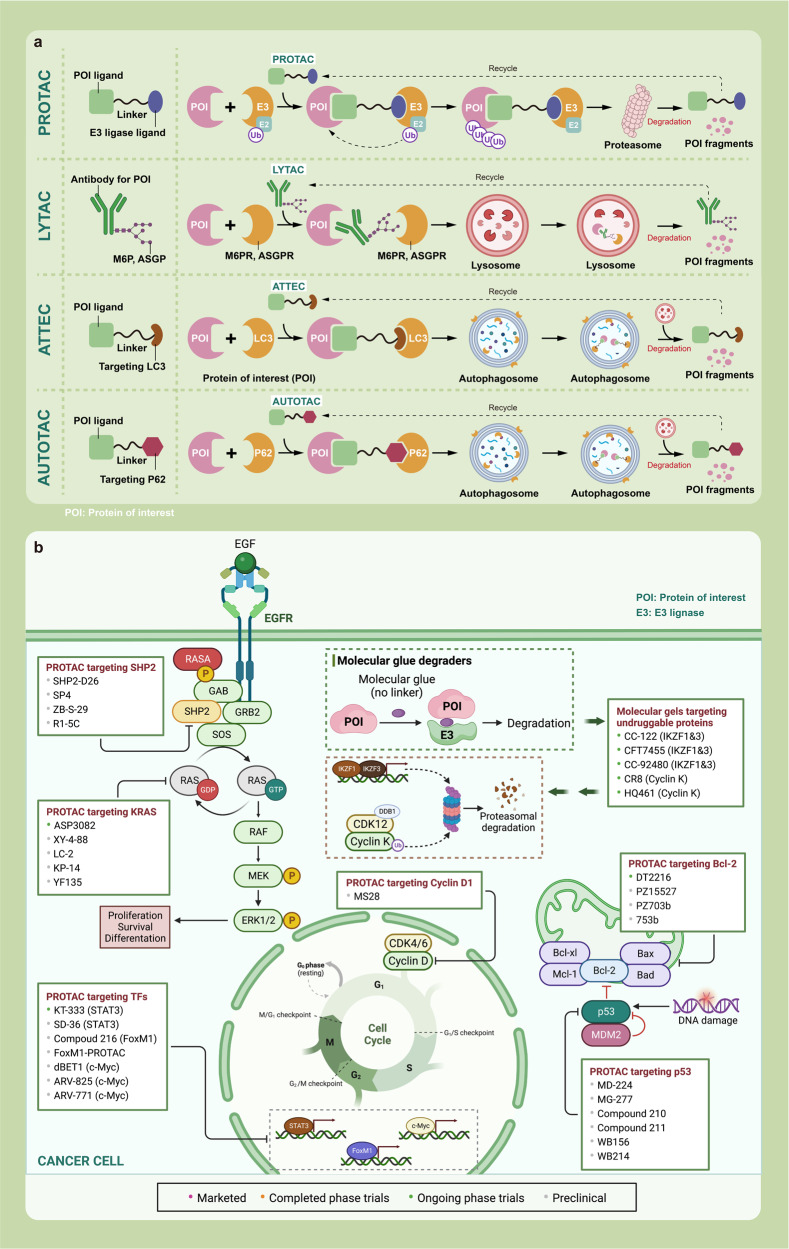
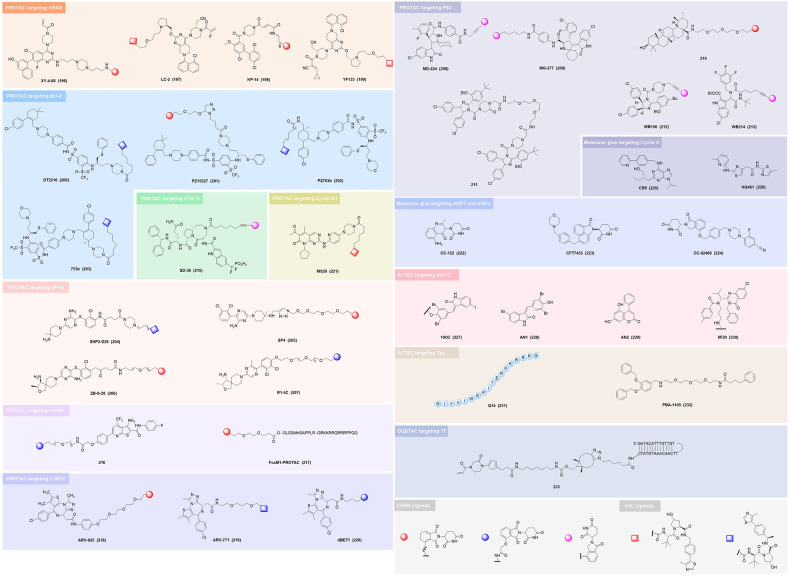
- Targeted protein degradation extends to previously undruggable targets: PROTACs degrade KRASG12C (LC-2, DC50 0.25 μM in NCI-H23), Bcl-2/Bcl-xL (DT2216 in phase I), SHP2 (SHP2-D26, DC50 2.6 nM in MV4;11), MDM2/p53 (MD-224, IC50 1.5 nM), STAT3 (KT-333 in phase I), and c-Myc pathway proteins; molecular glues degrade IKZF1/3 and Cyclin K.
Methods
- Narrative review, not primary research: the authors organize drug-discovery strategies for undruggable proteins into covalent regulation, allosteric modulation, PPI and protein–DNA interaction inhibition, targeted protein regulation (degradation/stabilization), nucleic acid-based approaches, immunotherapy, and other approaches (upstream/downstream effectors, synthetic lethality, PTMs, conjugates).
- Evidence base is the published literature and trial registries: six summary tables (Tables 1–6) compile compound name/structure, target, cancer cell line activity, indications, status/clinical trial identifier, and references, with clinical trial data collected from ClinicalTrials.gov (last accessed March 2023).
- Undruggable target classes defined as small GTPases (RAS family), phosphatases (PTPs, PSTPs), transcription factors (p53, Myc, ER, AR, XBP1, NRF2, NF-κB, BACH), epigenetic targets, and other proteins including PPI- and intrinsically disordered proteins.
Limitations
- The paper states that a lack of accurate structural information on undruggable proteins remains a significant obstacle, and that cryo-EM low resolutions still need to be addressed; it also notes that genetic therapies such as therapeutic RNAs and synthetic lethal screening are limited by off-target effects and side effects.
- The paper states that for marketed drugs, upcoming resistance is a major challenge that must be foreseen and protective plans developed; it also notes that most existing modulators are inhibitors, so activators (e.g., for p53) and PPI stabilizers remain underexplored.
- Evident from the text: many cited clinical trials are listed as completed, terminated, withdrawn, or ongoing with results "pending publication" or not posted, so several efficacy claims rest on conference abstracts, company reports, or unpublished data rather than peer-reviewed results; the review also relies heavily on preclinical cell-line IC50/DC50 values that may not translate clinically.
Model-written summary. Check it against the paper before relying on it.
Integrity signals
Registry
Cites
Statistics
Figures
Verification
Claims the paper makes
98 Valid · 25 Not valid · 463 Not checked · 121 Own results and interpretations
At least one cited source doesn’t support this claim or points to a different paper, and none confirmed it — see the verdicts below.
In the paper
“The chemical and enzymatic stability of XY-02-075 is greatly improved by methylene substitution of the central oxygen in the phosphonic anhydride bonds of SML-8-73-1 and SM-10-70-1.”
§ Recent advances in targeting the “undruggable” proteins: from drug discovery to clinical trials > Covalent regulation > Covalent KRAS inhibitors
What the sources say
- Disputedcites [92] Xiong Y Covalent guanosine mimetic inhibitors of G12C KRAS ACS Med. Chem. Lett. 2017 8 61 66 10.1021/acsmedchemlett.6b00373 28105276 PMC5238463 sourceExperimental — accuracy not yet measured
Our copy identifies XY-02-075 as compound 47, the 'phosphonyl sulfonamide analogue' built by sulfonylation of ethylenediamine (sulfamoyl phosphonate, Scheme/Abstract), whose cocrystal structure shows 'replacement of β-phosphate with sulfonamide' — so its modified linkage is a P–N(S) bond, not a methylene-substituted central oxygen. The methylene substitution of the central oxygen is described for a different series: bisphosphonate 10 (XY-01-103) and the difluoro/monofluoromethylene analogues 11 and 12, where the paper says the P–C–P bisphosphonate 'is considered to be resistant to acidic and enzymatic hydrolysis' (quoting refs 29,30) and that 11 'remove[s] the liability of the hydrolytic instability of the diphosphate moiety'. No passage in our copy mentions SM-10-70-1 at all (searched: SM-10-70-1), and no measured chemical/enzymatic stability data are reported for XY-02-075 — its t1/2 of 2.3 h is a labeling (kinact) value, not a hydrolytic stability value. (LLM, conf=0.75)
Checked by a reasoning model — may be wrong.
plainstates a cause- Asserted: passes — The authors put it forward as true.
- Checkable: passes — It can be checked against evidence.
- Load-bearing: passes — The paper’s conclusions depend on it.
- Based: passes — The paper gives a reason why it holds.
- Disputed
At least one cited source doesn’t support this claim or points to a different paper, and none confirmed it — see the verdicts below.
In the paper
“XY-02-075 is expected to be a promising compound despite 40 folds reduction in affinity compared to SML-8-73-1.92”
§ Recent advances in targeting the “undruggable” proteins: from drug discovery to clinical trials > Covalent regulation > Covalent KRAS inhibitors
What the sources say
- Disputedcites [92] Xiong Y Covalent guanosine mimetic inhibitors of G12C KRAS ACS Med. Chem. Lett. 2017 8 61 66 10.1021/acsmedchemlett.6b00373 28105276 PMC5238463 sourceExperimental — accuracy not yet measured
The passage labeled Abstract (page unavailable) calls compound 11—not XY-02-075—promising and says it has 40-fold lower affinity than SML-8-73-1. The paper identifies XY-02-075 as compound 47 and reports a Ki of 1.6 μM, versus 9 nM for SML-8-73-1; it does not make the claimed promising-compound assessment for XY-02-075. (LLM, conf=0.91)
Checked by a reasoning model — may be wrong.
plain- Asserted: passes — The authors put it forward as true.
- Checkable: passes — It can be checked against evidence.
- Load-bearing: unclear — It is unclear whether the paper’s conclusions depend on it.
- Based: passes — The paper gives a reason why it holds.
- Disputed
At least one cited source doesn’t support this claim or points to a different paper, and none confirmed it — see the verdicts below.
In the paper
“Wei’s team developed a TF-DUBTAC platform capable of selectively stabilizing oncoproteins, including FOXO3A, p53, and IRF3.”
§ Recent advances in targeting the “undruggable” proteins: from drug discovery to clinical trials > Targeted proteins’ regulation > Targeted protein stabilization (TPS)
What the sources say
- Disputedcites [549] Liu J TF-DUBTACs stabilize tumor suppressor transcription factors J. Am. Chem. Soc. 2022 144 12934 12941 10.1021/jacs.2c04824 35786952 PMC10981454 sourceExperimental — accuracy not yet measured
The Conclusions report that the TF-DUBTACs stabilized FOXO3A, p53, and IRF3, but explicitly identify them as tumor suppressor transcription factors—not oncoproteins. The same passage distinguishes TF-DUBTACs from the authors’ TF-PROTAC technology for targeting oncogenic transcription factors. (LLM, conf=0.90)
Checked by a reasoning model — may be wrong.
plainstates a cause- Asserted: passes — The authors put it forward as true.
- Checkable: passes — It can be checked against evidence.
- Load-bearing: passes — The paper’s conclusions depend on it.
- Based: passes — The paper gives a reason why it holds.
- Disputed
At least one cited source doesn’t support this claim or points to a different paper, and none confirmed it — see the verdicts below.
In the paper
“Yet, no studies have been conducted on undruggable targets.547”
§ Recent advances in targeting the “undruggable” proteins: from drug discovery to clinical trials > Targeted proteins’ regulation > Lysosome-based TPD
What the sources say
- Disputedcites [547] Grohmann C Development of NanoLuc-targeting protein degraders and a universal reporter system to benchmark tag-targeted degradation platforms Nat. Commun. 2022 13 2073 10.1038/s41467-022-29670-1 35440107 PMC9019100 sourceExperimental — accuracy not yet measured
The Results sections “FKBPF36V-targeting degraders outperform other tTPD systems” and “tTPD systems trigger physiologically relevant degradation” report a NanoTAC study of MLKL, a pseudokinase: NC4 degraded MLKL-NanoLuc and reduced MLKL-driven necroptosis. This runs contrary to the claim that no studies have been conducted on such targets, although the paper does not explicitly call MLKL “undruggable.” Page numbers were not available in our copy. (LLM, conf=0.73)
Checked by a reasoning model — may be wrong.
plain- Asserted: passes — The authors put it forward as true.
- Checkable: passes — It can be checked against evidence.
- Load-bearing: unclear — It is unclear whether the paper’s conclusions depend on it.
- Based: passes — The paper gives a reason why it holds.
- Disputed
The cited sources support only part of this claim — read each source’s verdict below.
In the paper
“Sotorasib specifically and irreversibly inhibits KRASG12C by binding to GDP and locking KRAS in an inactive state.”
§ Recent advances in targeting the “undruggable” proteins: from drug discovery to clinical trials > Covalent regulation > Covalent KRAS inhibitors
What the sources say
- Partly supportedcites [53] Skoulidis F Sotorasib for lung cancers with KRAS p.G12C mutation N. Engl. J. Med. 2021 384 2371 2381 10.1056/NEJMoa2103695 34096690 PMC9116274 sourceExperimental — accuracy not yet measured
The passage labeled Abstract > Conclusions says sotorasib specifically and irreversibly inhibits KRASG12C and traps it in an inactive state. It does not say sotorasib binds to GDP: it says the drug binds to a pocket in KRAS that is present when KRAS is GDP-bound. (LLM, conf=0.90)
plainstates a cause- Asserted: passes — The authors put it forward as true.
- Checkable: passes — It can be checked against evidence.
- Load-bearing: passes — The paper’s conclusions depend on it.
- Based: passes — The paper gives a reason why it holds.
- Partly supported
286 more claims · 45 with their cited sources checked
Create a free account to see all 707 claims and to verify the 708 references still open.
- It may state two separate claims as one. 382
- Probably not a substantial claim. 57
- The quote only partly states this claim. 6
Claims other papers make about this one
Each is checked against this paper’s own text: does it say what the citing paper says it does?
The cited source says what the claim attributes to it.
In the citing paper
“Allosteric modulators typically attach to regions distinct from the orthosteric site of receptors, inducing conformational changes to regulate the affinity and/or efficacy of orthosteric ligands, or to directly modulate receptor activity with positive, negative, or neutral effects.542–545”
From Recent advances in Alzheimer's disease: Mechanisms, clinical trials and new drug development strategies. (2024) · cites this paper as [543]
Self-check
Percentages, sums and reported differences re-computed from the paper’s own numbers.
Each contradiction between two passages listed here was confirmed by an independent check.
Rated major: it would touch a result — a value a result rests on, reported and recomputed p-values on opposite sides of the significance level, two passages that conflict with no sign which is right, or a cited work retracted before this paper was published.
In the paper
§ Recent advances in targeting the “undruggable” proteins: from drug discovery to clinical trials > Covalent regulation > Covalent KRAS inhibitors
“| RMC-8839 (16)a | KRASG12C | – | – | Preclinical | 83 |”
§ Recent advances in targeting the “undruggable” proteins: from drug discovery to clinical trials > Covalent regulation > Covalent KRAS inhibitors
“RMC-8839 (16) is the first orally-administered, mutant-selective, covalent KRASG13C inhibitor developed by Revolution Medicines. This compound directly targets KRASG13C”
Rated major: it would touch a result — a value a result rests on, reported and recomputed p-values on opposite sides of the significance level, two passages that conflict with no sign which is right, or a cited work retracted before this paper was published.
In the paper
§ Recent advances in targeting the “undruggable” proteins: from drug discovery to clinical trials > PPI inhibition
“| Macdonald’s researchCompound (170) | Myc-Max | HEK293T(IC50 = 29 μM) | – | Preclinical | 428 |”
§ Recent advances in targeting the “undruggable” proteins: from drug discovery to clinical trials > PPI inhibition > Myc PPI inhibitors
“Although compound (170) was the most active (IC50 = 29 nM), it was unsuitable for in vivo studies.”
Rated major: it would touch a result — a value a result rests on, reported and recomputed p-values on opposite sides of the significance level, two passages that conflict with no sign which is right, or a cited work retracted before this paper was published.
In the paper
§ Recent advances in targeting the “undruggable” proteins: from drug discovery to clinical trials > PPI inhibition
“| Macdonald’s researchCompound (171) | Myc-Max | HEK293T(IC50 = 100 μM) | – | Preclinical | 429 |”
§ Recent advances in targeting the “undruggable” proteins: from drug discovery to clinical trials > PPI inhibition > Myc PPI inhibitors
“resulting in compound (171) (IC50 = 100 nM).”
Rated minor: it would not touch a result — a value no result rests on, a p-value that stays on the same side of the significance level, or a conflict that is clerical, resolved elsewhere in the paper, or outside its own findings.
In the paper
§ Recent advances in targeting the “undruggable” proteins: from drug discovery to clinical trials > Allosteric modulators > RAS allosteric inhibitors
“These include Sotorasib (AMG-510), Adagrasib (MRTX-849), ARS-853, ARS-1620, LY-3537982, GDC-6036 (RG-6300), D-1553, ARS-3248 (JNJ-74699157), JDQ-443, and SML series compounds, among others, such as LY-3537982, ARS-853, ARS-1620, and 6H05 series compounds (Table 2).”
§ Recent advances in targeting the “undruggable” proteins: from drug discovery to clinical trials > Allosteric modulators
“| MRTX-1133 (79) | KRASG12D | – | Colorectal cancer, NSCLC, pancreas cancer | OngoingNCT05737706(I/II) | 254 |”
Rated minor: it would not touch a result — a value no result rests on, a p-value that stays on the same side of the significance level, or a conflict that is clerical, resolved elsewhere in the paper, or outside its own findings.
In the paper
§ Recent advances in targeting the “undruggable” proteins: from drug discovery to clinical trials > PPI inhibition > RAS PPI inhibitors
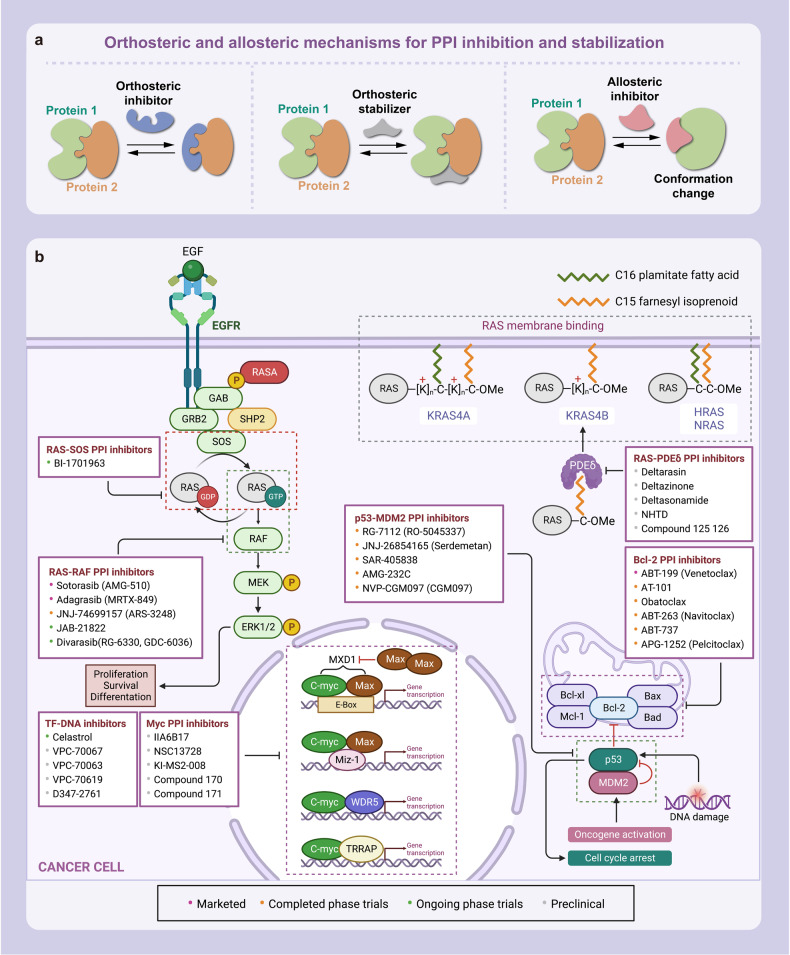
“Compound (129) exhibited superior affinity for PDEδ (Kd = 38 ± 17 nM)”
§ Recent advances in targeting the “undruggable” proteins: from drug discovery to clinical trials > PPI inhibition > RAS PPI inhibitors
“compound (127) (Kd = 9 ± 2.3 nM)”
3 more findings
Create a free account to see every finding of this check.
Citations
Cites
1 retracted
Items 201–400 of 672
Target gene-independent functions of MYC oncoproteins
Baluapuri, A., Wolf, E., & Eilers, M. (2020) · Nature Reviews Molecular Cell Biology · doi:10.1038/s41580-020-0215-2 · Cited by 310
Antibody–Drug Conjugates (ADCs) for Personalized Treatment of Solid Tumors: A Review
Lambert, J. M., & Morris, C. Q. (2017) · Advances in Therapy · doi:10.1007/s12325-017-0519-6 · Cited by 304
Therapeutic Targeting of Oncogenic K‐Ras by a Covalent Catalytic Site Inhibitor
Lim, S. M., Westover, K. D., Ficarro, S. B., Harrison, R. A., Choi, H. G., Pacold, M. E., Carrasco, M., Hunter, J., Kim, N. D., Xie, T., et al. (2014) · Angewandte Chemie International Edition · doi:10.1002/anie.201307387 · Cited by 300
Aptamers: A Review of Their Chemical Properties and Modifications for Therapeutic Application
Adachi, T., & Nakamura, Y. (2019) · Molecules · doi:10.3390/molecules24234229 · Cited by 300
Garcia Fortanet, J., Chen, C. H.-T., Chen, Y.-N. P., Chen, Z., Deng, Z., Firestone, B., Fekkes, P., Fodor, M., Fortin, P. D., Fridrich, C., et al. (2016) · Journal of Medicinal Chemistry · doi:10.1021/acs.jmedchem.6b00680 · Cited by 298
Sun, D., Li, Z., Rew, Y., Gribble, M., Bartberger, M. D., Beck, H. P., Canon, J., Chen, A., Chen, X., Chow, D., et al. (2014) · Journal of Medicinal Chemistry · doi:10.1021/jm401753e · Cited by 290
Mao, M., Tian, F., Mariadason, J. M., Tsao, C. C., Lemos, R., Dayyani, F., Gopal, Y. N. V., Jiang, Z.-Q., Wistuba, I. I., Tang, X. M., et al. (2013) · Clinical Cancer Research · doi:10.1158/1078-0432.ccr-11-1446 · Cited by 290
The MYC transcription factor network: balancing metabolism, proliferation and oncogenesis
Carroll, P. A., Freie, B. W., Mathsyaraja, H., & Eisenman, R. N. (2018) · Frontiers of Medicine · doi:10.1007/s11684-018-0650-z · Cited by 289
EGFR family: Structure physiology signalling and therapeutic targets †
Burgess, A. W. (2008) · Growth Factors · doi:10.1080/08977190802312844 · Cited by 288
Subtype-selective allosteric modulators of muscarinic receptors for the treatment of CNS disorders
Conn, P. J., Jones, C. K., & Lindsley, C. W. (2009) · Trends in Pharmacological Sciences · doi:10.1016/j.tips.2008.12.002 · Cited by 286
VAN GIEZEN, J. J. J., NILSSON, L., BERNTSSON, P., WISSING, B. M., GIORDANETTO, F., TOMLINSON, W., & GREASLEY, P. J. (2009) · Journal of Thrombosis and Haemostasis · doi:10.1111/j.1538-7836.2009.03527.x · Cited by 284
Tovar, C., Graves, B., Packman, K., Filipovic, Z., Xia, B. H. M., Tardell, C., Garrido, R., Lee, E., Kolinsky, K., To, K.-H., et al. (2013) · Cancer Research · doi:10.1158/0008-5472.can-12-2807 · Cited by 283
Inhibition of RAS function through targeting an allosteric regulatory site
Spencer-Smith, R., Koide, A., Zhou, Y., Eguchi, R. R., Sha, F., Gajwani, P., Santana, D., Gupta, A., Jacobs, M., Herrero-Garcia, E., et al. (2017) · Nature Chemical Biology · doi:10.1038/nchembio.2231 · Cited by 283
PROTACs: great opportunities for academia and industry (an update from 2020 to 2021)
He, M., Cao, C., Ni, Z., Liu, Y., Song, P., Hao, S., He, Y., Sun, X., & Rao, Y. (2022) · Signal Transduction and Targeted Therapy · doi:10.1038/s41392-022-00999-9 · Cited by 283
He, Y., Zhang, X., Chang, J., Kim, H.-N., Zhang, P., Wang, Y., Khan, S., Liu, X., Zhang, X., Lv, D., et al. (2020) · Nature Communications · doi:10.1038/s41467-020-15838-0 · Cited by 280
Ward, R. A., Anderton, M. J., Ashton, S., Bethel, P. A., Box, M., Butterworth, S., Colclough, N., Chorley, C. G., Chuaqui, C., Cross, D. A. E., et al. (2013) · Journal of Medicinal Chemistry · doi:10.1021/jm400822z · Cited by 279
Gjertsen, M. K., Buanes, T., Rosseland, A. R., Bakka, A., Gladhaug, I., S�reide, O., Eriksen, J. A., M�ller, M., Baksaas, I., Lothe, R. A., et al. (2001) · International Journal of Cancer · doi:10.1002/ijc.1205 · Cited by 276
Exploring Targeted Degradation Strategy for Oncogenic KRASG12C
Zeng, M., Xiong, Y., Safaee, N., Nowak, R. P., Donovan, K. A., Yuan, C. J., Nabet, B., Gero, T. W., Feru, F., Li, L., et al. (2020) · Cell Chemical Biology · doi:10.1016/j.chembiol.2019.12.006 · Cited by 275
Antibody targeting of E3 ubiquitin ligases for receptor degradation
Marei, H., Tsai, W.-T. K., Kee, Y.-S., Ruiz, K., He, J., Cox, C., Sun, T., Penikalapati, S., Dwivedi, P., Choi, M., et al. (2022) · Nature · doi:10.1038/s41586-022-05235-6 · Cited by 273
Cai, Q., Sun, H., Peng, Y., Lu, J., Nikolovska-Coleska, Z., McEachern, D., Liu, L., Qiu, S., Yang, C.-Y., Miller, R., et al. (2011) · Journal of Medicinal Chemistry · doi:10.1021/jm101505d · Cited by 272
Kobayashi, S., Ji, H., Yuza, Y., Meyerson, M., Wong, K.-K., Tenen, D. G., & Halmos, B. (2005) · Cancer Research · doi:10.1158/0008-5472.can-05-1346 · Cited by 272
KRAS: From undruggable to a druggable Cancer Target
Uprety, D., & Adjei, A. A. (2020) · Cancer Treatment Reviews · doi:10.1016/j.ctrv.2020.102070 · Cited by 271
Smaill, J. B., Rewcastle, G. W., Loo, J. A., Greis, K. D., Chan, O. H., Reyner, E. L., Lipka, E., Showalter, H. D. H., Vincent, P. W., Elliott, W. L., et al. (2000) · Journal of Medicinal Chemistry · doi:10.1021/jm990482t · Cited by 269
Hepatocellular Carcinoma: Molecular Mechanisms and Targeted Therapies
Alqahtani, A., Khan, Z., Alloghbi, A., S. Said Ahmed, T., Ashraf, M., & M. Hammouda, D. (2019) · Medicina · doi:10.3390/medicina55090526 · Cited by 265
Pance, K., Gramespacher, J. A., Byrnes, J. R., Salangsang, F., Serrano, J.-A. C., Cotton, A. D., Steri, V., & Wells, J. A. (2023) · Nature Biotechnology · doi:10.1038/s41587-022-01456-2 · Cited by 265
Peirs, S., Matthijssens, F., Goossens, S., Van de Walle, I., Ruggero, K., de Bock, C. E., Degryse, S., Canté-Barrett, K., Briot, D., Clappier, E., et al. (2014) · Blood · doi:10.1182/blood-2014-05-574566 · Cited by 264
JAK inhibitors for the treatment of autoimmune and inflammatory diseases
Jamilloux, Y., El Jammal, T., Vuitton, L., Gerfaud-Valentin, M., Kerever, S., & Sève, P. (2019) · Autoimmunity Reviews · doi:10.1016/j.autrev.2019.102390 · Cited by 264
Controlling Allosteric Networks in Proteins
Dokholyan, N. V. (2016) · Chemical Reviews · doi:10.1021/acs.chemrev.5b00544 · Cited by 260
Arl2-GTP and Arl3-GTP regulate a GDI-like transport system for farnesylated cargo
Ismail, S. A., Chen, Y.-X., Rusinova, A., Chandra, A., Bierbaum, M., Gremer, L., Triola, G., Waldmann, H., Bastiaens, P. I. H., & Wittinghofer, A. (2011) · Nature Chemical Biology · doi:10.1038/nchembio.686 · Cited by 252
Flygare, J. A., Beresini, M., Budha, N., Chan, H., Chan, I. T., Cheeti, S., Cohen, F., Deshayes, K., Doerner, K., Eckhardt, S. G., et al. (2012) · Journal of Medicinal Chemistry · doi:10.1021/jm300060k · Cited by 252
Trivalent PROTACs enhance protein degradation via combined avidity and cooperativity
Imaide, S., Riching, K. M., Makukhin, N., Vetma, V., Whitworth, C., Hughes, S. J., Trainor, N., Mahan, S. D., Murphy, N., Cowan, A. D., et al. (2021) · Nature Chemical Biology · doi:10.1038/s41589-021-00878-4 · Cited by 251
Cole, K. A., Huggins, J., Laquaglia, M., Hulderman, C. E., Russell, M. R., Bosse, K., Diskin, S. J., Attiyeh, E. F., Sennett, R., Norris, G., et al. (2011) · Proceedings of the National Academy of Sciences · doi:10.1073/pnas.1012351108 · Cited by 249
Dual inhibition of MDMX and MDM2 as a therapeutic strategy in leukemia
Carvajal, L. A., Neriah, D. B., Senecal, A., Benard, L., Thiruthuvanathan, V., Yatsenko, T., Narayanagari, S.-R., Wheat, J. C., Todorova, T. I., Mitchell, K., et al. (2018) · Science Translational Medicine · doi:10.1126/scitranslmed.aao3003 · Cited by 249
Goss, G., Tsai, C.-M., Shepherd, F. A., Ahn, M.-J., Bazhenova, L., Crinò, L., de Marinis, F., Felip, E., Morabito, A., Hodge, R., et al. (2018) · Annals of Oncology · doi:10.1093/annonc/mdx820 · Cited by 247
Bifunctional small molecules that mediate the degradation of extracellular proteins
Caianiello, D. F., Zhang, M., Ray, J. D., Howell, R. A., Swartzel, J. C., Branham, E. M. J., Chirkin, E., Sabbasani, V. R., Gong, A. Z., McDonald, D. M., et al. (2021) · Nature Chemical Biology · doi:10.1038/s41589-021-00851-1 · Cited by 244
Schmick, M., Vartak, N., Papke, B., Kovacevic, M., Truxius, D. C., Rossmannek, L., & Bastiaens, P. I. H. (2014) · Cell · doi:10.1016/j.cell.2014.02.051 · Cited by 243
Regulation of transcription factor activity by interconnected post-translational modifications
Filtz, T. M., Vogel, W. K., & Leid, M. (2014) · Trends in Pharmacological Sciences · doi:10.1016/j.tips.2013.11.005 · Cited by 242
Hunter, J. C., Gurbani, D., Ficarro, S. B., Carrasco, M. A., Lim, S. M., Choi, H. G., Xie, T., Marto, J. A., Chen, Z., Gray, N. S., et al. (2014) · Proceedings of the National Academy of Sciences · doi:10.1073/pnas.1404639111 · Cited by 242
Hoeflich, K. P., Merchant, M., Orr, C., Chan, J., Den Otter, D., Berry, L., Kasman, I., Koeppen, H., Rice, K., Yang, N.-Y., et al. (2012) · Cancer Research · doi:10.1158/0008-5472.can-11-1515 · Cited by 242
Tamura, T., Ueda, T., Goto, T., Tsukidate, T., Shapira, Y., Nishikawa, Y., Fujisawa, A., & Hamachi, I. (2018) · Nature Communications · doi:10.1038/s41467-018-04343-0 · Cited by 242
Blair, H. A. (2021) · Drugs · doi:10.1007/s40265-021-01574-2 · Cited by 241
Identification of T-cell Receptors Targeting KRAS-Mutated Human Tumors
Wang, Q. J., Yu, Z., Griffith, K., Hanada, K.-I., Restifo, N. P., & Yang, J. C. (2016) · Cancer Immunology Research · doi:10.1158/2326-6066.cir-15-0188 · Cited by 240
Hansen, J. D., Correa, M., Nagy, M. A., Alexander, M., Plantevin, V., Grant, V., Whitefield, B., Huang, D., Kercher, T., Harris, R., et al. (2020) · Journal of Medicinal Chemistry · doi:10.1021/acs.jmedchem.9b01928 · Cited by 240
PROTACs: An Emerging Targeting Technique for Protein Degradation in Drug Discovery
Gu, S., Cui, D., Chen, X., Xiong, X., & Zhao, Y. (2018) · BioEssays · doi:10.1002/bies.201700247 · Cited by 231
Identification of TNO155, an Allosteric SHP2 Inhibitor for the Treatment of Cancer
LaMarche, M. J., Acker, M., Argintaru, A., Bauer, D., Boisclair, J., Chan, H., Chen, C. H.-T., Chen, Y.-N., Chen, Z., Deng, Z., et al. (2020) · Journal of Medicinal Chemistry · doi:10.1021/acs.jmedchem.0c01170 · Cited by 231
Targeting KRAS mutant cancers: from druggable therapy to drug resistance
Zhu, C., Guan, X., Zhang, X., Luan, X., Song, Z., Cheng, X., Zhang, W., & Qin, J.-J. (2022) · Molecular Cancer · doi:10.1186/s12943-022-01629-2 · Cited by 231
Signal Propagation in Proteins and Relation to Equilibrium Fluctuations
Chennubhotla, C., & Bahar, I. (2007) · PLoS Computational Biology · doi:10.1371/journal.pcbi.0030172 · Cited by 228
Li, X., Yang, C., Wan, H., Zhang, G., Feng, J., Zhang, L., Chen, X., Zhong, D., Lou, L., Tao, W., et al. (2017) · European Journal of Pharmaceutical Sciences · doi:10.1016/j.ejps.2017.01.021 · Cited by 227
Self-citationMurtuza, A., Bulbul, A., Shen, J. P., Keshavarzian, P., Woodward, B. D., Lopez-Diaz, F. J., Lippman, S. M., & Husain, H. (2019) · Cancer Research · doi:10.1158/0008-5472.can-18-1281 · Cited by 226
Drugging Undruggable Molecular Cancer Targets
Lazo, J. S., & Sharlow, E. R. (2016) · Annual Review of Pharmacology and Toxicology · doi:10.1146/annurev-pharmtox-010715-103440 · Cited by 224
Zhu, H., Gao, H., Ji, Y., Zhou, Q., Du, Z., Tian, L., Jiang, Y., Yao, K., & Zhou, Z. (2022) · Journal of Hematology & Oncology · doi:10.1186/s13045-022-01314-3 · Cited by 223
Protein Ser/ Thr phosphatases – the ugly ducklings of cell signalling
Brautigan, D. L. (2013) · The FEBS Journal · doi:10.1111/j.1742-4658.2012.08609.x · Cited by 222
Textor, S., Fiegler, N., Arnold, A., Porgador, A., Hofmann, T. G., & Cerwenka, A. (2011) · Cancer Research · doi:10.1158/0008-5472.can-10-3211 · Cited by 221
Brodowska, K., Al-Moujahed, A., Marmalidou, A., Meyer zu Horste, M., Cichy, J., Miller, J. W., Gragoudas, E., & Vavvas, D. G. (2014) · Experimental Eye Research · doi:10.1016/j.exer.2014.04.011 · Cited by 220
Treatment of polycystic kidney disease with a novel tyrosine kinase inhibitor
Sweeney, W. E., Chen, Y., Nakanishi, K., Frost, P., & Avner, E. D. (2000) · Kidney International · doi:10.1046/j.1523-1755.2000.00829.x · Cited by 219
The Structural Basis of Oncogenic Mutations G12, G13 and Q61 in Small GTPase K-Ras4B
Lu, S., Jang, H., Nussinov, R., & Zhang, J. (2016) · Scientific Reports · doi:10.1038/srep21949 · Cited by 219
Nagasaka, M., Zhu, V. W., Lim, S. M., Greco, M., Wu, F., & Ou, S.-H. I. (2021) · Journal of Thoracic Oncology · doi:10.1016/j.jtho.2020.11.028 · Cited by 219
Turning enzymes ON with small molecules
Zorn, J. A., & Wells, J. A. (2010) · Nature Chemical Biology · doi:10.1038/nchembio.318 · Cited by 218
Killing cancer cells by flipping the Bcl-2/Bax switch
Cory, S., & Adams, J. M. (2005) · Cancer Cell · doi:10.1016/j.ccr.2005.06.012 · Cited by 217
Targeting the β-catenin/TCF transcriptional complex in the treatment of multiple myeloma
Sukhdeo, K., Mani, M., Zhang, Y., Dutta, J., Yasui, H., Rooney, M. D., Carrasco, D. E., Zheng, M., He, H., Tai, Y.-T., et al. (2007) · Proceedings of the National Academy of Sciences · doi:10.1073/pnas.0610299104 · Cited by 216
Exosome-mediated delivery of CRISPR/Cas9 for targeting of oncogenic Kras G12D in pancreatic cancer
McAndrews, K. M., Xiao, F., Chronopoulos, A., LeBleu, V. S., Kugeratski, F. G., & Kalluri, R. (2021) · Life Science Alliance · doi:10.26508/lsa.202000875 · Cited by 216
Discovery of a molecular glue promoting CDK12-DDB1 interaction to trigger cyclin K degradation
Lv, L., Chen, P., Cao, L., Li, Y., Zeng, Z., Cui, Y., Wu, Q., Li, J., Wang, J.-H., Dong, M.-Q., et al. (2020) · eLife · doi:10.7554/elife.59994 · Cited by 215
The c‐myc Promoter: Still MysterY and Challenge
(2008) · Advances in Cancer Research · doi:10.1016/s0065-230x(07)99004-1 · Cited by 211
Martinez, L. A., Naguibneva, I., Lehrmann, H., Vervisch, A., Tchénio, T., Lozano, G., & Harel-Bellan, A. (2002) · Proceedings of the National Academy of Sciences · doi:10.1073/pnas.222406899 · Cited by 210
Allosteric small-molecule kinase inhibitors
Wu, P., Clausen, M. H., & Nielsen, T. E. (2015) · Pharmacology & Therapeutics · doi:10.1016/j.pharmthera.2015.10.002 · Cited by 204
Holzer, P., Masuya, K., Furet, P., Kallen, J., Valat-Stachyra, T., Ferretti, S., Berghausen, J., Bouisset-Leonard, M., Buschmann, N., Pissot-Soldermann, C., et al. (2015) · Journal of Medicinal Chemistry · doi:10.1021/acs.jmedchem.5b00810 · Cited by 203
Cummins, J. M., Kohli, M., Rago, C., Kinzler, K. W., Vogelstein, B., & Bunz, F. (2004) · Cancer Research · doi:10.1158/0008-5472.can-04-0046 · Cited by 200
Novel Allosteric Modulators of G Protein-coupled Receptors
Gentry, P. R., Sexton, P. M., & Christopoulos, A. (2015) · Journal of Biological Chemistry · doi:10.1074/jbc.r115.662759 · Cited by 199
Blazer, L. L., & Neubig, R. R. (2009) · Neuropsychopharmacology · doi:10.1038/npp.2008.151 · Cited by 197
Graham, C. H., Forsdike, J., Fitzgerald, C. J., & Macdonald-Goodfellow, S. K. (1999) · International Journal of Cancer · doi:10.1002/(sici)1097-0215(19990209)80:4<595::aid-ijc18>3.0.co;2-b · Cited by 195
Smith, A. J. T., Zhang, X., Leach, A. G., & Houk, K. N. (2009) · Journal of Medicinal Chemistry · doi:10.1021/jm800498e · Cited by 193
Ma, C. X., Bose, R., Gao, F., Freedman, R. A., Telli, M. L., Kimmick, G., Winer, E., Naughton, M., Goetz, M. P., Russell, C., et al. (2017) · Clinical Cancer Research · doi:10.1158/1078-0432.ccr-17-0900 · Cited by 193
Arkin, M. R., & Whitty, A. (2009) · Current Opinion in Chemical Biology · doi:10.1016/j.cbpa.2009.05.125 · Cited by 190
Yang, J., Li, Y., Aguilar, A., Liu, Z., Yang, C.-Y., & Wang, S. (2019) · Journal of Medicinal Chemistry · doi:10.1021/acs.jmedchem.9b00846 · Cited by 190
Gonzalvez, F., Vincent, S., Baker, T. E., Gould, A. E., Li, S., Wardwell, S. D., Nadworny, S., Ning, Y., Zhang, S., Huang, W.-S., et al. (2021) · Cancer Discovery · doi:10.1158/2159-8290.cd-20-1683 · Cited by 190
Self-citationDrugging Ras GTPase: a comprehensive mechanistic and signaling structural view
Lu, S., Jang, H., Gu, S., Zhang, J., & Nussinov, R. (2016) · Chemical Society Reviews · doi:10.1039/c5cs00911a · Cited by 188
Xuhong, J., Qi, X., Zhang, Y., & Jiang, J. (2019) · PubMed · Cited by 187
Speetjens, F. M., Kuppen, P. J. K., Welters, M. J. P., Essahsah, F., Voet van den Brink, A. M. E. G., Lantrua, M. G. K., Valentijn, A. R. P. M., Oostendorp, J., Fathers, L. M., Nijman, H. W., et al. (2009) · Clinical Cancer Research · doi:10.1158/1078-0432.ccr-08-2227 · Cited by 185
KRAS G12C Game of Thrones, which direct KRAS inhibitor will claim the iron throne?
Nagasaka, M., Li, Y., Sukari, A., Ou, S.-H. I., Al-Hallak, M. N., & Azmi, A. S. (2020) · Cancer Treatment Reviews · doi:10.1016/j.ctrv.2020.101974 · Cited by 185
Li, Q., Sun, Y., Jarugumilli, G. K., Liu, S., Dang, K., Cotton, J. L., Xiol, J., Chan, P. Y., DeRan, M., Ma, L., et al. (2020) · Cell Stem Cell · doi:10.1016/j.stem.2020.03.002 · Cited by 180
Recent Advances in Selective and Irreversible Covalent Ligand Development and Validation
Zhang, T., Hatcher, J. M., Teng, M., Gray, N. S., & Kostic, M. (2019) · Cell Chemical Biology · doi:10.1016/j.chembiol.2019.09.012 · Cited by 178
Ross, S. J., Revenko, A. S., Hanson, L. L., Ellston, R., Staniszewska, A., Whalley, N., Pandey, S. K., Revill, M., Rooney, C., Buckett, L. K., et al. (2017) · Science Translational Medicine · doi:10.1126/scitranslmed.aal5253 · Cited by 177
Cryo-EM structures of the triheteromeric NMDA receptor and its allosteric modulation
Lü, W., Du, J., Goehring, A., & Gouaux, E. (2017) · Science · doi:10.1126/science.aal3729 · Cited by 176
Cinacalcet HCl attenuates parathyroid hyperplasia in a rat model of secondary hyperparathyroidism
Colloton, M., Shatzen, E., Miller, G., Stehman-Breen, C., Wada, M., Lacey, D., & Martin, D. (2005) · Kidney International · doi:10.1111/j.1523-1755.2005.67103.x · Cited by 174
Walensky, L. D., & Gavathiotis, E. (2011) · Trends in Biochemical Sciences · doi:10.1016/j.tibs.2011.08.009 · Cited by 173
Walters, M. J., Wang, Y., Lai, N., Baumgart, T., Zhao, B. N., Dairaghi, D. J., Bekker, P. J., Ertl, L. S., Penfold, M. E. T., Jaén, J. C., et al. (2010) · Journal of Pharmacology and Experimental Therapeutics · doi:10.1124/jpet.110.169714 · Cited by 173
Lu, X., Yu, L., Zhang, Z., Ren, X., Smaill, J. B., & Ding, K. (2018) · Medicinal Research Reviews · doi:10.1002/med.21488 · Cited by 173
Chemical and structural studies provide a mechanistic basis for recognition of the MYC G-quadruplex
Calabrese, D. R., Chen, X., Leon, E. C., Gaikwad, S. M., Phyo, Z., Hewitt, W. M., Alden, S., Hilimire, T. A., He, F., Michalowski, A. M., et al. (2018) · Nature Communications · doi:10.1038/s41467-018-06315-w · Cited by 172
Carabet, L. A., Rennie, P. S., & Cherkasov, A. (2018) · International Journal of Molecular Sciences · doi:10.3390/ijms20010120 · Cited by 172
Fakih, M., O'Neil, B., Price, T. J., Falchook, G. S., Desai, J., Kuo, J., Govindan, R., Rasmussen, E., Morrow, P. K. H., Ngang, J., et al. (2019) · Journal of Clinical Oncology · doi:10.1200/jco.2019.37.15_suppl.3003 · Cited by 172
Discovery of SHP2-D26 as a First, Potent, and Effective PROTAC Degrader of SHP2 Protein
Wang, M., Lu, J., Wang, M., Yang, C.-Y., & Wang, S. (2020) · Journal of Medicinal Chemistry · doi:10.1021/acs.jmedchem.0c00471 · Cited by 172
Olmutinib: First Global Approval
Kim, E. S. (2016) · Drugs · doi:10.1007/s40265-016-0606-z · Cited by 170
Patel, H., Pawara, R., Ansari, A., & Surana, S. (2017) · European Journal of Medicinal Chemistry · doi:10.1016/j.ejmech.2017.05.027 · Cited by 170
Iversen, P. L., Arora, V., Acker, A., Mason, D. H., & Devi, G. R. (2003) · PubMed · Cited by 169
Zhou, X., Singh, M., Sanz Santos, G., Guerlavais, V., Carvajal, L. A., Aivado, M., Zhan, Y., Oliveira, M. M. S., Westerberg, L. S., Annis, D. A., et al. (2021) · Cancer Discovery · doi:10.1158/2159-8290.cd-20-1741 · Cited by 169
Combinations with Allosteric SHP2 Inhibitor TNO155 to Block Receptor Tyrosine Kinase Signaling
Liu, C., Lu, H., Wang, H., Loo, A., Zhang, X., Yang, G., Kowal, C., Delach, S., Wang, Y., Goldoni, S., et al. (2021) · Clinical Cancer Research · doi:10.1158/1078-0432.ccr-20-2718 · Cited by 167
State-of-the-art strategies for targeting protein–protein interactions by small-molecule inhibitors
Sheng, C., Dong, G., Miao, Z., Zhang, W., & Wang, W. (2015) · Chemical Society Reviews · doi:10.1039/c5cs00252d · Cited by 165
Christopher, J. A., Aves, S. J., Bennett, K. A., Doré, A. S., Errey, J. C., Jazayeri, A., Marshall, F. H., Okrasa, K., Serrano-Vega, M. J., Tehan, B. G., et al. (2015) · Journal of Medicinal Chemistry · doi:10.1021/acs.jmedchem.5b00892 · Cited by 165
Yang, J. C.-H., Camidge, D. R., Yang, C.-T., Zhou, J., Guo, R., Chiu, C.-H., Chang, G.-C., Shiah, H.-S., Chen, Y., Wang, C.-C., et al. (2020) · Journal of Thoracic Oncology · doi:10.1016/j.jtho.2020.09.001 · Cited by 165
Structure-Guided Design of a Series of MCL-1 Inhibitors with High Affinity and Selectivity
Bruncko, M., Wang, L., Sheppard, G. S., Phillips, D. C., Tahir, S. K., Xue, J., Erickson, S., Fidanze, S., Fry, E., Hasvold, L., et al. (2015) · Journal of Medicinal Chemistry · doi:10.1021/jm501258m · Cited by 164
Peeters, M., Kafatos, G., Taylor, A., Gastanaga, V. M., Oliner, K. S., Hechmati, G., Terwey, J.-H., & van Krieken, J. H. (2015) · European Journal of Cancer · doi:10.1016/j.ejca.2015.05.017 · Cited by 163
The many faces of p53: something for everyone
Levine, A. J. (2019) · Journal of Molecular Cell Biology · doi:10.1093/jmcb/mjz026 · Cited by 163
Identification of pyrazolopyridazinones as PDEδ inhibitors
Papke, B., Murarka, S., Vogel, H. A., Martín-Gago, P., Kovacevic, M., Truxius, D. C., Fansa, E. K., Ismail, S., Zimmermann, G., Heinelt, K., et al. (2016) · Nature Communications · doi:10.1038/ncomms11360 · Cited by 160
Saleh, M. N., Patel, M. R., Bauer, T. M., Goel, S., Falchook, G. S., Shapiro, G. I., Chung, K. Y., Infante, J. R., Conry, R. M., Rabinowits, G., et al. (2021) · Clinical Cancer Research · doi:10.1158/1078-0432.ccr-21-0715 · Cited by 159
Chemoselective Covalent Modification of K-Ras(G12R) with a Small Molecule Electrophile
Zhang, Z., Morstein, J., Ecker, A. K., Guiley, K. Z., & Shokat, K. M. (2022) · Journal of the American Chemical Society · doi:10.1021/jacs.2c05377 · Cited by 159
Development of a BCL-xL and BCL-2 dual degrader with improved anti-leukemic activity,
Lv, D., Pal, P., Liu, X., Jia, Y., Thummuri, D., Zhang, P., Hu, W., Pei, J., Zhang, Q., Zhou, S., et al. (2021) · Nature Communications · doi:10.1038/s41467-021-27210-x · Cited by 158
Liao, H., Li, X., Zhao, L., Wang, Y., Wang, X., Wu, Y., Zhou, X., Fu, W., Liu, L., Hu, H.-G., et al. (2020) · Cell Discovery · doi:10.1038/s41421-020-0171-1 · Cited by 156
Self-citationRas activation by SOS: Allosteric regulation by altered fluctuation dynamics
Iversen, L., Tu, H.-L., Lin, W.-C., Christensen, S. M., Abel, S. M., Iwig, J., Wu, H.-J., Gureasko, J., Rhodes, C., Petit, R. S., et al. (2014) · Science · doi:10.1126/science.1250373 · Cited by 154
Discovery of a Functional Covalent Ligand Targeting an Intrinsically Disordered Cysteine within MYC
Boike, L., Cioffi, A. G., Majewski, F. C., Co, J., Henning, N. J., Jones, M. D., Liu, G., McKenna, J. M., Tallarico, J. A., Schirle, M., et al. (2021) · Cell Chemical Biology · doi:10.1016/j.chembiol.2020.09.001 · Cited by 154
Bridged Proteolysis Targeting Chimera (PROTAC) Enables Degradation of Undruggable Targets
Xiong, Y., Zhong, Y., Yim, H., Yang, X., Park, K.-S., Xie, L., Poulikakos, P. I., Han, X., Xiong, Y., Chen, X., et al. (2022) · Journal of the American Chemical Society · doi:10.1021/jacs.2c09255 · Cited by 154
Chemical acylation of an acquired serine suppresses oncogenic signaling of K-Ras(G12S)
Zhang, Z., Guiley, K. Z., & Shokat, K. M. (2022) · Nature Chemical Biology · doi:10.1038/s41589-022-01065-9 · Cited by 153
Canon, J., Osgood, T., Olson, S. H., Saiki, A. Y., Robertson, R., Yu, D., Eksterowicz, J., Ye, Q., Jin, L., Chen, A., et al. (2015) · Molecular Cancer Therapeutics · doi:10.1158/1535-7163.mct-14-0710 · Cited by 152
Huang, Y., Rich, R. L., Myszka, D. G., & Wu, H. (2003) · Journal of Biological Chemistry · doi:10.1074/jbc.m310061200 · Cited by 152
In vitro Effects of the BH3 Mimetic, (−)-Gossypol, on Head and Neck Squamous Cell Carcinoma Cells
Oliver, C. L., Bauer, J. A., Wolter, K. G., Ubell, M. L., Narayan, A., O’Connell, K. M., Fisher, S. G., Wang, S., Wu, X., Ji, M., et al. (2004) · Clinical Cancer Research · doi:10.1158/1078-0432.ccr-04-0551 · Cited by 151
Bekker, P., Dairaghi, D., Seitz, L., Leleti, M., Wang, Y., Ertl, L., Baumgart, T., Shugarts, S., Lohr, L., Dang, T., et al. (2016) · PLOS ONE · doi:10.1371/journal.pone.0164646 · Cited by 151
Weiss, A., Lorthiois, E., Barys, L., Beyer, K. S., Bomio-Confaglia, C., Burks, H., Chen, X., Cui, X., de Kanter, R., Dharmarajan, L., et al. (2022) · Cancer Discovery · doi:10.1158/2159-8290.cd-22-0158 · Cited by 150
2P2Idb: a structural database dedicated to orthosteric modulation of protein–protein interactions
Basse, M. J., Betzi, S., Bourgeas, R., Bouzidi, S., Chetrit, B., Hamon, V., Morelli, X., & Roche, P. (2012) · Nucleic Acids Research · doi:10.1093/nar/gks1002 · Cited by 148
Orthosteric and allosteric action of the C5a receptor antagonists
Liu, H., Kim, H. R., Deepak, R. N. V. K., Wang, L., Chung, K. Y., Fan, H., Wei, Z., & Zhang, C. (2018) · Nature Structural & Molecular Biology · doi:10.1038/s41594-018-0067-z · Cited by 148
Targeting the Undruggable Proteome: The Small Molecules of My Dreams
Crews, C. M. (2010) · Chemistry & Biology · doi:10.1016/j.chembiol.2010.05.011 · Cited by 147
Inhibitor of MYC identified in a Kröhnke pyridine library
Hart, J. R., Garner, A. L., Yu, J., Ito, Y., Sun, M., Ueno, L., Rhee, J.-K., Baksh, M. M., Stefan, E., Hartl, M., et al. (2014) · Proceedings of the National Academy of Sciences · doi:10.1073/pnas.1319488111 · Cited by 147
Qin, R., You, F.-M., Zhao, Q., Xie, X., Peng, C., Zhan, G., & Han, B. (2022) · Journal of Hematology & Oncology · doi:10.1186/s13045-022-01350-z · Cited by 140
Self-citationMutational spectrum of p53 mutations in primary breast and ovarian tumors
Feki, A., & Irminger-Finger, I. (2004) · Critical Reviews in Oncology/Hematology · doi:10.1016/j.critrevonc.2004.07.002 · Cited by 139
Promoter‐specific transcriptional interference and c‐myc gene silencing by siRNAs in human cells
Napoli, S., Pastori, C., Magistri, M., Carbone, G. M., & Catapano, C. V. (2009) · The EMBO Journal · doi:10.1038/emboj.2009.139 · Cited by 137
Phase I trial of an antisense oligonucleotide OL(1)p53 in hematologic malignancies.
Bishop, M. R., Iversen, P. L., Bayever, E., Sharp, J. G., Greiner, T. C., Copple, B. L., Ruddon, R., Zon, G., Spinolo, J., Arneson, M., et al. (1996) · Journal of Clinical Oncology · doi:10.1200/jco.1996.14.4.1320 · Cited by 136
Potent and Selective Covalent Quinazoline Inhibitors of KRAS G12C
Zeng, M., Lu, J., Li, L., Feru, F., Quan, C., Gero, T. W., Ficarro, S. B., Xiong, Y., Ambrogio, C., Paranal, R. M., et al. (2017) · Cell Chemical Biology · doi:10.1016/j.chembiol.2017.06.017 · Cited by 136
Goh, K. C., Novotny-Diermayr, V, Hart, S., Ong, L. C., Loh, Y. K., Cheong, A., Tan, Y. C., Hu, C., Jayaraman, R., William, A. D., et al. (2012) · Leukemia · doi:10.1038/leu.2011.218 · Cited by 135
The interaction of Ras with GTPase‐activating proteins
Wittinghofer, A., Scheffzek, K., & Ahmadian, M. R. (1997) · FEBS Letters · doi:10.1016/s0014-5793(97)00321-9 · Cited by 135
Buchwald, P. (2010) · IUBMB Life · doi:10.1002/iub.383 · Cited by 133
Efficacy of CHK inhibitors as single agents in MYC-driven lymphoma cells
Ferrao, P. T., Bukczynska, E. P., Johnstone, R. W., & McArthur, G. A. (2012) · Oncogene · doi:10.1038/onc.2011.358 · Cited by 133
Mechanism of activating mutations and allosteric drug inhibition of the phosphatase SHP2
Pádua, R. A. P., Sun, Y., Marko, I., Pitsawong, W., Stiller, J. B., Otten, R., & Kern, D. (2018) · Nature Communications · doi:10.1038/s41467-018-06814-w · Cited by 133
Wang, M., Yang, J. C.-H., Mitchell, P. L., Fang, J., Camidge, D. R., Nian, W., Chiu, C.-H., Zhou, J., Zhao, Y., Su, W.-C., et al. (2022) · Cancer Discovery · doi:10.1158/2159-8290.cd-21-1615 · Cited by 133
Self-citationZhuang, C., Miao, Z., Zhu, L., Dong, G., Guo, Z., Wang, S., Zhang, Y., Wu, Y., Yao, J., Sheng, C., et al. (2012) · Journal of Medicinal Chemistry · doi:10.1021/jm300969t · Cited by 131
Initial testing (stage 1) of the BH3 mimetic ABT‐263 by the pediatric preclinical testing program
Lock, R. B., Carol, H., Houghton, P. J., Morton, C. L., Kolb, E. A., Gorlick, R. G., Reynolds, C. P., Maris, J. M., Keir, S. T., Wu, J., et al. (2007) · Pediatric Blood & Cancer · doi:10.1002/pbc.21433 · Cited by 131
Curative Properties of Noninternalizing Antibody–Drug Conjugates Based on Maytansinoids
Perrino, E., Steiner, M., Krall, N., Bernardes, G. J. L., Pretto, F., Casi, G., & Neri, D. (2014) · Cancer Research · doi:10.1158/0008-5472.can-13-2990 · Cited by 130
Stabilization of the Max Homodimer with a Small Molecule Attenuates Myc-Driven Transcription
Struntz, N. B., Chen, A., Deutzmann, A., Wilson, R. M., Stefan, E., Evans, H. L., Ramirez, M. A., Liang, T., Caballero, F., Wildschut, M. H. E., et al. (2019) · Cell Chemical Biology · doi:10.1016/j.chembiol.2019.02.009 · Cited by 130
Integrated genomic analyses of ovarian carcinoma
The Cancer Genome Atlas Research Network (2011) · Nature · doi:10.1038/nature10166 · Cited by 129
Advances in CRISPR-Cas systems for RNA targeting, tracking and editing
Wang, F., Wang, L., Zou, X., Duan, S., Li, Z., Deng, Z., Luo, J., Lee, S. Y., & Chen, S. (2019) · Biotechnology Advances · doi:10.1016/j.biotechadv.2019.03.016 · Cited by 128
Atomic Analysis of Protein-Protein Interfaces with Known Inhibitors: The 2P2I Database
Bourgeas, R., Basse, M.-J., Morelli, X., & Roche, P. (2010) · PLoS ONE · doi:10.1371/journal.pone.0009598 · Cited by 126
Chiappori, A. A., Soliman, H., Janssen, W. E., Antonia, S. J., & Gabrilovich, D. I. (2010) · Expert Opinion on Biological Therapy · doi:10.1517/14712598.2010.484801 · Cited by 126
Dietrich, L., Rathmer, B., Ewan, K., Bange, T., Heinrichs, S., Dale, T. C., Schade, D., & Grossmann, T. N. (2017) · Cell Chemical Biology · doi:10.1016/j.chembiol.2017.06.013 · Cited by 126
Discovery of a Small Molecule MDM2 Inhibitor (AMG 232) for Treating Cancer
Rew, Y., & Sun, D. (2014) · Journal of Medicinal Chemistry · doi:10.1021/jm500627s · Cited by 125
Melarsoprol Resistance in African Trypanosomiasis
Fairlamb, A. H., & Horn, D. (2018) · Trends in Parasitology · doi:10.1016/j.pt.2018.04.002 · Cited by 125
Castell, A., Yan, Q., Fawkner, K., Hydbring, P., Zhang, F., Verschut, V., Franco, M., Zakaria, S. M., Bazzar, W., Goodwin, J., et al. (2018) · Scientific Reports · doi:10.1038/s41598-018-28107-4 · Cited by 125
Kerr, D. L., Haderk, F., & Bivona, T. G. (2021) · Current Opinion in Chemical Biology · doi:10.1016/j.cbpa.2020.11.007 · Cited by 124
Targeting Lysosomal Degradation Pathways: New Strategies and Techniques for Drug Discovery
Pei, J., Wang, G., Feng, L., Zhang, J., Jiang, T., Sun, Q., & Ouyang, L. (2021) · Journal of Medicinal Chemistry · doi:10.1021/acs.jmedchem.0c01689 · Cited by 124
Applying Structure-Based Drug Design Approaches to Allosteric Modulators of GPCRs
Congreve, M., Oswald, C., & Marshall, F. H. (2017) · Trends in Pharmacological Sciences · doi:10.1016/j.tips.2017.05.010 · Cited by 123
Protein–protein interactions as targets for small-molecule therapeutics in cancer
White, A. W., Westwell, A. D., & Brahemi, G. (2008) · Expert Reviews in Molecular Medicine · doi:10.1017/s1462399408000641 · Cited by 122
ASD v3.0: unraveling allosteric regulation with structural mechanisms and biological networks
Shen, Q., Wang, G., Li, S., Liu, X., Lu, S., Chen, Z., Song, K., Yan, J., Geng, L., Huang, Z., et al. (2016) · Nucleic Acids Research · doi:10.1093/nar/gkv902 · Cited by 122
Self-citationJia, Y., Juarez, J., Li, J., Manuia, M., Niederst, M. J., Tompkins, C., Timple, N., Vaillancourt, M.-T., Pferdekamper, A. C., Lockerman, E. L., et al. (2016) · Cancer Research · doi:10.1158/0008-5472.can-15-2581 · Cited by 121
Phase I Trial of the Human Double Minute 2 Inhibitor MK-8242 in Patients With Advanced Solid Tumors
Wagner, A. J., Banerji, U., Mahipal, A., Somaiah, N., Hirsch, H., Fancourt, C., Johnson-Levonas, A. O., Lam, R., Meister, A. K., Russo, G., et al. (2017) · Journal of Clinical Oncology · doi:10.1200/jco.2016.70.7117 · Cited by 120
Fell, J. B., Fischer, J. P., Baer, B. R., Ballard, J., Blake, J. F., Bouhana, K., Brandhuber, B. J., Briere, D. M., Burgess, L. E., Burkard, M. R., et al. (2018) · ACS Medicinal Chemistry Letters · doi:10.1021/acsmedchemlett.8b00382 · Cited by 120
A comprehensive review of SHP2 and its role in cancer
Asmamaw, M. D., Shi, X.-J., Zhang, L.-R., & Liu, H.-M. (2022) · Cellular Oncology · doi:10.1007/s13402-022-00698-1 · Cited by 119
ARIH1 signaling promotes anti-tumor immunity by targeting PD-L1 for proteasomal degradation
Wu, Y., Zhang, C., Liu, X., He, Z., Shan, B., Zeng, Q., Zhao, Q., Zhu, H., Liao, H., Cen, X., et al. (2021) · Nature Communications · doi:10.1038/s41467-021-22467-8 · Cited by 117
Peptide-based PROTAC degrader of FOXM1 suppresses cancer and decreases GLUT1 and PD-L1 expression
Wang, K., Dai, X., Yu, A., Feng, C., Liu, K., & Huang, L. (2022) · Journal of Experimental & Clinical Cancer Research · doi:10.1186/s13046-022-02483-2 · Cited by 115
Verreault, M., Schmitt, C., Goldwirt, L., Pelton, K., Haidar, S., Levasseur, C., Guehennec, J., Knoff, D., Labussière, M., Marie, Y., et al. (2016) · Clinical Cancer Research · doi:10.1158/1078-0432.ccr-15-1015 · Cited by 114
Shin, Y., Jeong, J. W., Wurz, R. P., Achanta, P., Arvedson, T., Bartberger, M. D., Campuzano, I. D. G., Fucini, R., Hansen, S. K., Ingersoll, J., et al. (2019) · ACS Medicinal Chemistry Letters · doi:10.1021/acsmedchemlett.9b00258 · Cited by 113
Discafani, C. M., Carroll, M. L., Floyd, M. B., Hollander, I. J., Husain, Z., Johnson, B. D., Kitchen, D., May, M. K., Malo, M. S., Minnick, A. A., et al. (1999) · Biochemical Pharmacology · doi:10.1016/s0006-2952(98)00356-6 · Cited by 112
Allensworth, J. L., Sauer, S. J., Lyerly, H. K., Morse, M. A., & Devi, G. R. (2013) · Breast Cancer Research and Treatment · doi:10.1007/s10549-012-2352-6 · Cited by 112
Approaches to Study Phosphatases
Fahs, S., Luján, P., & Köhn, M. (2016) · ACS Chemical Biology · doi:10.1021/acschembio.6b00570 · Cited by 110
Lorthiois, E., Gerspacher, M., Beyer, K. S., Vaupel, A., Leblanc, C., Stringer, R., Weiss, A., Wilcken, R., Guthy, D. A., Lingel, A., et al. (2022) · Journal of Medicinal Chemistry · doi:10.1021/acs.jmedchem.2c01438 · Cited by 110
Efficient targeted oncogenic KRASG12C degradation via first reversible-covalent PROTAC
Yang, F., Wen, Y., Wang, C., Zhou, Y., Zhou, Y., Zhang, Z.-M., Liu, T., & Lu, X. (2022) · European Journal of Medicinal Chemistry · doi:10.1016/j.ejmech.2021.114088 · Cited by 109
Disruption of protein–protein interactions: Towards new targets for chemotherapy
Loregian, A., & Palù, G. (2005) · Journal of Cellular Physiology · doi:10.1002/jcp.20356 · Cited by 108
Phosphatases start shedding their stigma of undruggability
Mullard, A. (2018) · Nature Reviews Drug Discovery · doi:10.1038/nrd.2018.201 · Cited by 108
Hot-spot analysis for drug discovery targeting protein-protein interactions
Rosell, M., & Fernández-Recio, J. (2018) · Expert Opinion on Drug Discovery · doi:10.1080/17460441.2018.1430763 · Cited by 105
Labbé, C. M., Laconde, G., Kuenemann, M. A., Villoutreix, B. O., & Sperandio, O. (2013) · Drug Discovery Today · doi:10.1016/j.drudis.2013.05.003 · Cited by 104
Sun, Y., Meyers, B. A., Czako, B., Leonard, P., Mseeh, F., Harris, A. L., Wu, Q., Johnson, S., Parker, C. A., Cross, J. B., et al. (2020) · Cancer Research · doi:10.1158/0008-5472.can-20-1634 · Cited by 103
Chennubhotla, C., Yang, Z., & Bahar, I. (2008) · Molecular BioSystems · doi:10.1039/b717819k · Cited by 102
Recent computational advances in the identification of allosteric sites in proteins
Lu, S., Huang, W., & Zhang, J. (2014) · Drug Discovery Today · doi:10.1016/j.drudis.2014.07.012 · Cited by 102
Self-citationA Small Molecule Reacts with the p53 Somatic Mutant Y220C to Rescue Wild-type Thermal Stability
Guiley, K. Z., & Shokat, K. M. (2023) · Cancer Discovery · doi:10.1158/2159-8290.cd-22-0381 · Cited by 102
Jung, L. A., Gebhardt, A., Koelmel, W., Ade, C. P., Walz, S., Kuper, J., von Eyss, B., Letschert, S., Redel, C., d'Artista, L., et al. (2017) · Oncogene · doi:10.1038/onc.2016.354 · Cited by 101
Hu, M.-H., Wang, Y.-Q., Yu, Z.-Y., Hu, L.-N., Ou, T.-M., Chen, S.-B., Huang, Z.-S., & Tan, J.-H. (2018) · Journal of Medicinal Chemistry · doi:10.1021/acs.jmedchem.7b01697 · Cited by 101
Singh, H., Walker, A. J., Amiri-Kordestani, L., Cheng, J., Tang, S., Balcazar, P., Barnett-Ringgold, K., Palmby, T. R., Cao, X., Zheng, N., et al. (2018) · Clinical Cancer Research · doi:10.1158/1078-0432.ccr-17-3628 · Cited by 99
Strategies for targeting undruggable targets
Zhang, G., Zhang, J., Gao, Y., Li, Y., & Li, Y. (2022) · Expert Opinion on Drug Discovery · doi:10.1080/17460441.2021.1969359 · Cited by 99
Nuclear Signaling by Receptor Tyrosine Kinases: The First Robin of Spring
Schlessinger, J., & Lemmon, M. A. (2006) · Cell · doi:10.1016/j.cell.2006.09.013 · Cited by 98
The design and development of covalent protein-protein interaction inhibitors for cancer treatment
Cheng, S.-S., Yang, G.-J., Wang, W., Leung, C.-H., & Ma, D.-L. (2020) · Journal of Hematology & Oncology · doi:10.1186/s13045-020-00850-0 · Cited by 98
Meng, Z., Li, T., Ma, X., Wang, X., Van Ness, C., Gan, Y., Zhou, H., Tang, J., Lou, G., Wang, Y., et al. (2013) · Molecular Cancer Therapeutics · doi:10.1158/1535-7163.mct-13-0314 · Cited by 97
Self-citationPlanken, S., Behenna, D. C., Nair, S. K., Johnson, T. O., Nagata, A., Almaden, C., Bailey, S., Ballard, T. E., Bernier, L., Cheng, H., et al. (2017) · Journal of Medicinal Chemistry · doi:10.1021/acs.jmedchem.6b01894 · Cited by 97
P53 and The Immune Response: 40 Years of Exploration—A Plan for the Future
Levine, A. J. (2020) · International Journal of Molecular Sciences · doi:10.3390/ijms21020541 · Cited by 97
Thielmann, M., Corteville, D., Szabo, G., Swaminathan, M., Lamy, A., Lehner, L. J., Brown, C. D., Noiseux, N., Atta, M. G., Squiers, E. C., et al. (2021) · Circulation · doi:10.1161/circulationaha.120.053029 · Cited by 97
KRAS G12C–Mutant Non–Small Cell Lung Cancer
Veluswamy, R., Mack, P. C., Houldsworth, J., Elkhouly, E., & Hirsch, F. R. (2021) · The Journal of Molecular Diagnostics · doi:10.1016/j.jmoldx.2021.02.002 · Cited by 96
Bröker, J., Waterson, A. G., Smethurst, C., Kessler, D., Böttcher, J., Mayer, M., Gmaschitz, G., Phan, J., Little, A., Abbott, J. R., et al. (2022) · Journal of Medicinal Chemistry · doi:10.1021/acs.jmedchem.2c01120 · Cited by 96
Selective irreversible inhibition of a protease by targeting a noncatalytic cysteine
Hagel, M., Niu, D., St Martin, T., Sheets, M. P., Qiao, L., Bernard, H., Karp, R. M., Zhu, Z., Labenski, M. T., Chaturvedi, P., et al. (2011) · Nature Chemical Biology · doi:10.1038/nchembio.492 · Cited by 95
Covalent targeting of acquired cysteines in cancer
Visscher, M., Arkin, M. R., & Dansen, T. B. (2016) · Current Opinion in Chemical Biology · doi:10.1016/j.cbpa.2015.11.004 · Cited by 95
Lelais, G., Epple, R., Marsilje, T. H., Long, Y. O., McNeill, M., Chen, B., Lu, W., Anumolu, J., Badiger, S., Bursulaya, B., et al. (2016) · Journal of Medicinal Chemistry · doi:10.1021/acs.jmedchem.5b01985 · Cited by 95
A feed forward loop enforces YAP/TAZ signaling during tumorigenesis
Gill, M. K., Christova, T., Zhang, Y. Y., Gregorieff, A., Zhang, L., Narimatsu, M., Song, S., Xiong, S., Couzens, A. L., Tong, J., et al. (2018) · Nature Communications · doi:10.1038/s41467-018-05939-2 · Cited by 95
Novel immunomodulatory drugs and neo-substrates
Gao, S., Wang, S., & Song, Y. (2020) · Biomarker Research · doi:10.1186/s40364-020-0182-y · Cited by 95
Combining Allosteric and Orthosteric Drugs to Overcome Drug Resistance
Ni, D., Li, Y., Qiu, Y., Pu, J., Lu, S., & Zhang, J. (2020) · Trends in Pharmacological Sciences · doi:10.1016/j.tips.2020.02.001 · Cited by 95
Cho, B. C., Felip, E., Hayashi, H., Thomas, M., Lu, S., Besse, B., Sun, T., Martinez, M., Sethi, S. N., Shreeve, S. M., et al. (2022) · Future Oncology · doi:10.2217/fon-2021-0923 · Cited by 95
Zerbib, F., Bruley des Varannes, S., Roman, S., Tutuian, R., Galmiche, J.-P., Mion, F., Tack, J., Malfertheiner, P., & Keywood, C. (2011) · Alimentary Pharmacology & Therapeutics · doi:10.1111/j.1365-2036.2011.04596.x · Cited by 94
Zhou, C., Fan, Z., Zhou, Z., Li, Y., Cui, R., Liu, C., Zhou, G., Diao, X., Jiang, H., Zheng, M., et al. (2022) · Journal of Medicinal Chemistry · doi:10.1021/acs.jmedchem.1c01774 · Cited by 94
TIMBAL v2: update of a database holding small molecules modulating protein–protein interactions
Higueruelo, A. P., Jubb, H., & Blundell, T. L. (2013) · Database · doi:10.1093/database/bat039 · Cited by 93
Glecaprevir/Pibrentasvir: First Global Approval
Lamb, Y. N. (2017) · Drugs · doi:10.1007/s40265-017-0817-y · Cited by 93
Issahaku, A. R., Mukelabai, N., Agoni, C., Rudrapal, M., Aldosari, S. M., Almalki, S. G., & Khan, J. (2022) · Scientific Reports · doi:10.1038/s41598-022-22668-1 · Cited by 93
Omomyc Reveals New Mechanisms To Inhibit the MYC Oncogene
Demma, M. J., Mapelli, C., Sun, A., Bodea, S., Ruprecht, B., Javaid, S., Wiswell, D., Muise, E., Chen, S., Zelina, J., et al. (2019) · Molecular and Cellular Biology · doi:10.1128/mcb.00248-19 · Cited by 92
Reis, B., Jukofsky, L., Chen, G., Martinelli, G., Zhong, H., So, W. V., Dickinson, M. J., Drummond, M., Assouline, S., Hashemyan, M., et al. (2016) · Haematologica · doi:10.3324/haematol.2015.139717 · Cited by 91
Structure-based prediction of protein allostery
Greener, J. G., & Sternberg, M. J. (2018) · Current Opinion in Structural Biology · doi:10.1016/j.sbi.2017.10.002 · Cited by 91
Martinko, A. J., Truillet, C., Julien, O., Diaz, J. E., Horlbeck, M. A., Whiteley, G., Blonder, J., Weissman, J. S., Bandyopadhyay, S., Evans, M. J., et al. (2018) · eLife · doi:10.7554/elife.31098 · Cited by 91
Homo-PROTAC mediated suicide of MDM2 to treat non-small cell lung cancer
He, S., Ma, J., Fang, Y., Liu, Y., Wu, S., Dong, G., Wang, W., & Sheng, C. (2021) · Acta Pharmaceutica Sinica B · doi:10.1016/j.apsb.2020.11.022 · Cited by 91
Discovery of High-Affinity Noncovalent Allosteric KRAS Inhibitors That Disrupt Effector Binding
McCarthy, M. J., Pagba, C. V., Prakash, P., Naji, A. K., van der Hoeven, D., Liang, H., Gupta, A. K., Zhou, Y., Cho, K.-J., Hancock, J. F., et al. (2019) · ACS Omega · doi:10.1021/acsomega.8b03308 · Cited by 90
Shapiro, G. I., LoRusso, P., Kwak, E., Pandya, S., Rudin, C. M., Kurkjian, C., Cleary, J. M., Pilat, M. J., Jones, S., de Crespigny, A., et al. (2020) · Investigational New Drugs · doi:10.1007/s10637-019-00776-6 · Cited by 90
Research works printed but not linked: 2
- Walter AO Discovery of a mutant-selective covalent inhibitor of EGFR that overcomes T790M-mediated resistance in NSCLC Cancer Discov. 2013 3 1404 1415 10.1158/2159-8290.CD-13-0314 24065731 PMC4048995 · DOI · Paper page
- Meng, J. After the AACR Conference, what new drugs are worth watching? https://baijiahao.baidu.com/s?id=1730615953532632799&wfr=spider&for=pc (2022).
Cited by
Zhang, J., Zhang, Y., Wang, J., Xia, Y., Zhang, J., & Chen, L. (2024) · Signal Transduction and Targeted Therapy · doi:10.1038/s41392-024-01911-3 · Cited by 1,138
Mechanisms of PANoptosis and relevant small-molecule compounds for fighting diseases
Wang, L., Zhu, Y., Zhang, L., Guo, L., Wang, X., Pan, Z., Jiang, X., Wu, F., & He, G. (2023) · Cell Death & Disease · doi:10.1038/s41419-023-06370-2 · Cited by 183
“However, subsequent studies have found that NSA act as a direct chemical inhibitor of GSDMD and binds to GSDMD to inhibit GSDMD-mediated pyroptosis [174].”
BackgroundSelf-citationGlaviano, A., Lau, H., Carter, L. M., Lee, E. H. C., Lam, H. Y., Okina, E., Tan, D. J. J., Tan, W., Ang, H. L., Carbone, D., et al. (2025) · Journal of Hematology & Oncology · doi:10.1186/s13045-024-01634-6 · Cited by 184
Mining the CRBN target space redefines rules for molecular glue-induced neosubstrate recognition
Petzold, G., Gainza, P., Annunziato, S., Lamberto, I., Trenh, P., McAllister, L. A., DeMarco, B., Schwander, L., Bunker, R. D., Zlotosch, M., et al. (2025) · Science · doi:10.1126/science.adt6736 · Cited by 117
Targeting the undruggables—the power of protein degraders
Zhang, C., Liu, Y., Li, G., Yang, Z., Han, C., Sun, X., Sheng, C., Ding, K., & Rao, Y. (2024) · Science Bulletin · doi:10.1016/j.scib.2024.03.056 · Cited by 119
Metadata
- Authors
- Xie, X., Yu, T., Li, X., Zhang, N., Foster, L. J., Peng, C., Huang, W., & He, G.
- Affiliations
- University of British Columbia (CA)
- Chengdu University of Traditional Chinese Medicine (CN)
- Sichuan University (CN)
- Corresponding author
- Peng, Cheng
- Huang, Wei
- He, Gu
- Venue
- Signal Transduction and Targeted Therapy
- Published
- 2023-09-06
- Volume
- 8
- Issue
- 1
- Pages
- 335-335
- ISSN
- 2059-3635 (ISSN-L)
- PMC
- PMC10480221
- OpenAlex
- W4386446579
- Semantic Scholar
- 10717dfbac76f1ca9b0348797db5269a5f868391
- Cited by
- 396
- References
- 670
- Citations by year
- 2026: 127 · 2025: 173 · 2024: 92 · 2023: 4
- FWCI
- 10.40
- Type
- journal article
- Language
- en
- Open access
- gold
- doi.org
- Licence
- cc-by
- creativecommons.org/licenses/by/4.0 (tdm)
- creativecommons.org/licenses/by/4.0 (vor)
- Locations
- Signal Transduction and Targeted Therapy (publishedVersion, cc-by)
- PubMed Central (publishedVersion, cc-by)
- PubMed (publishedVersion)
- DOAJ (DOAJ: Directory of Open Access Journals) (submittedVersion, cc-by-sa)
- Funders
- National Natural Science Foundation of China (22177084, 82104373, 82073998)
- Topics
- Life Sciences › Biochemistry, Genetics and Molecular Biology › Molecular Biology › Protein Degradation and Inhibitors
- Life Sciences › Pharmacology, Toxicology and Pharmaceutics › Drug Discovery › Computational Drug Discovery Methods
- Life Sciences › Biochemistry, Genetics and Molecular Biology › Cancer Research › Cancer Mechanisms and Therapy
- Keywords
- undruggable proteins, drug discovery, covalent drug design, allosteric inhibition, protein-protein interaction inhibition, nucleic acid therapeutics, immunotherapy, clinical translation
- MeSH terms
- Humans, Immunotherapy, Nucleic Acids, Drug Design, Drug Delivery Systems, Drug Discovery
About these checks
Registry, retraction, Cites and statistics results are computed, not judged, with one exception: a printed reference that no index lists is read once by a model before it counts as a citation error. Claims are extracted by a model and kept only when their quote appears verbatim in the text; each cited source is then checked, with a model’s help, for whether it says what the claim relies on. Those verdicts can be wrong — read the claim’s quote and the cited source before relying on one.
The claim verdicts this report counts are experimental: their accuracy is not yet measured.
A language model drew the claims from the paper on 2026-10-05, under version 3 of the claim definition (model deepseek-v4.1-flash, prompt extract-v3).
A second model labelled each claim on 2026-10-05 (model jev-1.13-20260917, definition revision gold-guideline-v0.2).
Cited sources are checked with a language model’s help (qwen3.8-omni-flash and gpt-6-sol).
Statistics and arithmetic are recomputed, not judged.
Confidence bands are shown only for fields calibrated on our annotated test set. None is calibrated yet, so no band is shown.
What counts as a claim ›How we measure confidence ›How we check this ›
Are you an author, or do you see a problem with this page? Request a review
Data sources
Bibliographic data: Semantic Scholar, OpenAlex, Crossref.
Contains information from the Semantic Scholar Academic Graph Datasets, made available under the ODC Attribution License (ODC-BY 1.0).
Semantic Scholar’s data is described in: Kinney, R., et al. (2023). The Semantic Scholar Open Data Platform. arXiv:2301.10140.
