

The DOI matches its Crossref record; 298 of the 314 references it cites were found in a registry or an index; 3 of the 236 sources its claims cite were checked for support.
Mitochondrial Uncoupling: A Key Controller of Biological Processes in Physiology and Diseases
Open accessAbstract
Mitochondrial uncoupling can be defined as a dissociation between mitochondrial membrane potential generation and its use for mitochondria-dependent ATP synthesis. Although this process was originally considered a mitochondrial dysfunction, the identification of UCP-1 as an endogenous physiological uncoupling protein suggests that the process could be involved in many other biological processes. In this review, we first compare the mitochondrial uncoupling agents available in term of mechanistic and non-specific effects. Proteins regulating mitochondrial uncoupling, as well as chemical compounds with uncoupling properties are discussed. Second, we summarize the most recent findings linking mitochondrial uncoupling and other cellular or biological processes, such as bulk and specific autophagy, reactive oxygen species production, protein secretion, cell death, physical exercise, metabolic adaptations in adipose tissue, and cell signaling. Finally, we show how mitochondrial uncoupling could be used to treat several human diseases, such as obesity, cardiovascular diseases, or neurological disorders.
Overview
AI snapshot
Written from the paper’s full text.
TL;DR
Mitochondrial uncoupling is a dissociation between mitochondrial membrane potential generation and ATP synthesis, and this review argues it is not merely dysfunction but a regulator of autophagy, ROS, secretion, cell death, exercise adaptation, adipose biology, and disease. It surveys natural and synthetic uncouplers and their therapeutic potential, while cautioning that most mechanistic evidence comes from non-specific agents such as DNP and FCCP.
Key findings
- Basal proton leak can account for up to 30–50% of resting cellular metabolic rate, and ANTs can account for up to 50% of basal mitochondrial membrane proton conductance.
- UCP-1 is a well-established uncoupling protein, but uncoupling properties of other UCPs remain debated; UCP-3 expression is 200–700-fold lower than UCP-1 in mouse skeletal muscle, so overexpression models may be artefactual.
- Mitochondrial uncoupling is linked to bulk and specific autophagy/mitophagy, ROS production, protein secretion, cell death, physical exercise, adipose tissue browning, and cell signaling; mitochondrial ROS release can account for 0.1–0.2% of O₂ consumed in rat tissues.
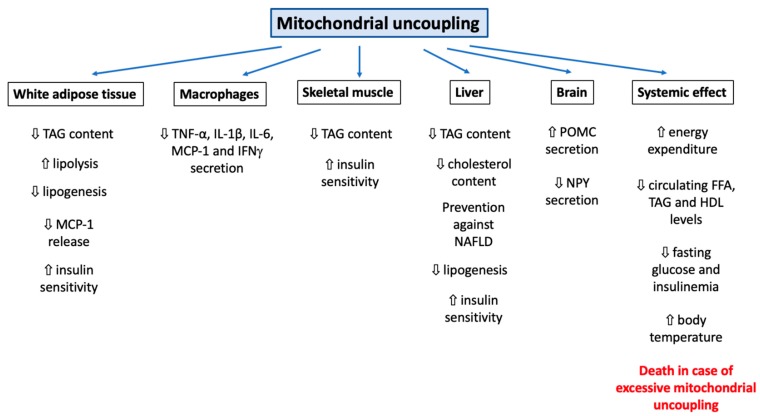
- Therapeutic potential is discussed for obesity, diabetes, cardiovascular disease, and neurological disorders; controlled-release DNP in rats decreased fasting plasma glucose, fatty acids by 30%, TAG, HDL by 30%, and hyperinsulinemia by 50%, with 50–90% decreases in TAG in plasma, liver, and skeletal muscle. DNP at 30 °C decreased energy expenditure by 17% and weight loss by 23% in female C57BL/6J mice, while no significant effect was observed at 22 °C.
Methods
- Narrative review comparing mitochondrial uncoupling agents, uncoupling proteins (UCPs and ANTs), and chemical compounds with uncoupling properties.
- Synthesizes cited literature on cellular and biological processes including autophagy, mitophagy, ROS production, protein secretion, cell death, physical exercise, adipose tissue browning, and cell signaling.
- Discusses possible use of mitochondrial uncouplers in human diseases such as obesity, cardiovascular diseases, and neurological disorders; no primary experimental data or systematic search strategy is reported.
Limitations
- The authors state that most mechanistic studies have focused on classical but non-specific uncouplers such as DNP or FCCP, making it difficult to discriminate effects directly imputable to mitochondrial uncoupling from unspecific effects.
- The authors state that cellular consequences have not been studied rigorously and that continuous development of mitochondria-specific uncoupling agents is needed to improve knowledge and safety.
- Evident from the text: this is a narrative review without stated systematic search or inclusion criteria, and many findings are described as conflicting or dependent on species, cell type, temperature, membrane composition, and uncoupler used.
Model-written summary. Check it against the paper before relying on it.
Integrity signals
Registry
Cites
Statistics
Figures
Verification
Claims the paper makes
164 Not checked yet · 10 Own interpretation · 4 No basis given · 1 Supported · 1 Partly supported · accuracy not yet measured
The cited sources support only part of this claim — read each source’s verdict below.
In the paper
“By decreasing the Ca2+ buffering capacity of mitochondria, CCCP or FCCP increases global exocytosis in chromaffin cells [164,165,166].”
§ Mitochondrial Uncoupling: A Key Controller of Biological Processes in Physiology and Diseases > 3. Cellular Responses to Mitochondrial Uncoupling > 3.8. Cell Signaling
What the sources say
- Partly supportedcites [164] Giovannucci, 1999, Mitochondria regulate the Ca(2+)-exocytosis relationship of bovine adrenal chromaffin cells, J. Neurosci. sourceExperimental — accuracy not yet measured
In “Effect of FCCP on the stimulus-evoked Cm response,” the paper reports that FCCP reduces mitochondrial Ca2+ import and increases stimulus-evoked exocytosis in bovine chromaffin cells. It does not establish the same effect for CCCP, and it reports no significant effect of FCCP on basal membrane capacitance. The supported finding is therefore an increase in evoked, rather than unqualified, exocytosis. (LLM, conf=0.86)
- Partly supportedcites [165] Jurkiewicz, 2013, Novel features on the regulation by mitochondria of calcium and secretion transients in chromaffin cells challenged with acetylcholine at 37°C, Physiol. Rep. sourceExperimental — accuracy not yet measured
The Introduction says CCCP and FCCP suppress mitochondrial Ca2+ buffering and increase exocytosis in bovine chromaffin cells; the Results also report that FCCP potentiates ACh-evoked secretion. But the Introduction notes that protonophores reduce K+-evoked secretory responses in mouse chromaffin cells, so the unqualified claim about chromaffin cells is too broad. (LLM, conf=0.87)
- Not checked yetcites [166] Jurkiewicz, 2009, Role of the Endoplasmic Reticulum and Mitochondria on Quantal Catecholamine Release from Chromaffin Cells of Control and Hypertensive Rats, J. Pharmacol. Exp. Ther. source
plaindirect- Asserted: passes — The authors put it forward as true.
- Checkable: passes — It can be checked against evidence.
- Load-bearing: unclear — It is unclear whether the paper’s conclusions depend on it.
- Based: passes — The paper gives a reason why it holds.
- Partly supported
None of the sources cited for this claim have been checked yet.
In the paper
“Regarding UCP-3, several groups reported that UCP-3 has no clear uncoupling effect as it does, for instance, in CHO cells overexpressing this protein [19] or in rat skeletal muscles [20].”
§ Mitochondrial Uncoupling: A Key Controller of Biological Processes in Physiology and Diseases > 2. Mitochondrial Uncouplers > 2.1. UCPs and ANTs
What the sources say
- Not checked yetcites [19] Mozo, 2006, Expression of UCP3 in CHO cells does not cause uncoupling, but controls mitochondrial activity in the presence of glucose, Biochem. J. source
- Not checked yetcites [20] Cadenas, 1999, UCP2 and UCP3 rise in starved rat skeletal muscle but mitochondrial proton conductance is unchanged, FEBS Lett. source
plain- Asserted: passes — The authors put it forward as true.
- Checkable: passes — It can be checked against evidence.
- Load-bearing: unclear — It is unclear whether the paper’s conclusions depend on it.
- Based: passes — The paper gives a reason why it holds.
In the paper
“First, purine nucleotides, such as GDP, directly bind UCP-1 and lead to its inactivation [8].”
§ Mitochondrial Uncoupling: A Key Controller of Biological Processes in Physiology and Diseases > 2. Mitochondrial Uncouplers > 2.1. UCPs and ANTs
What the sources say
- Not checked yetcites [8] Rial, 1983, Brown-adipose-tissue mitochondria: The regulation of the 32000-Mr uncoupling protein by fatty acids and purine nucleotides, JBIC J. Biol. Inorg. Chem.
plaindirect- Asserted: passes — The authors put it forward as true.
- Checkable: passes — It can be checked against evidence.
- Load-bearing: unclear — It is unclear whether the paper’s conclusions depend on it.
- Based: passes — The paper gives a reason why it holds.
In the paper
“UCP-2 could then only be activated under some circumstances, such as a massive entry of FFAs into mitochondria [18].”
§ Mitochondrial Uncoupling: A Key Controller of Biological Processes in Physiology and Diseases > 2. Mitochondrial Uncouplers > 2.1. UCPs and ANTs
What the sources say
- Not checked yetcites [18] Berardi, 2014, Fatty Acid Flippase Activity of UCP2 Is Essential for Its Proton Transport in Mitochondria, Cell Metab. source
hedgedconditional- Asserted: passes — The authors put it forward as true.
- Checkable: passes — It can be checked against evidence.
- Load-bearing: unclear — It is unclear whether the paper’s conclusions depend on it.
- Based: passes — The paper gives a reason why it holds.
In the paper
“Underlining their importance, ANTs can account for up to 50% of basal mitochondrial membrane proton conductance [25].”
§ Mitochondrial Uncoupling: A Key Controller of Biological Processes in Physiology and Diseases > 2. Mitochondrial Uncouplers > 2.1. UCPs and ANTs
What the sources say
- Not checked yetcites [25] Brand, 2005, The basal proton conductance of mitochondria depends on adenine nucleotide translocase content, Biochem. J. source
plaindirect- Asserted: passes — The authors put it forward as true.
- Checkable: passes — It can be checked against evidence.
- Load-bearing: unclear — It is unclear whether the paper’s conclusions depend on it.
- Based: passes — The paper gives a reason why it holds.
None of the sources cited for this claim have been checked yet.
In the paper
“Second, free fatty acids (FFAs) are well-known to promote UCP-1-dependent protein leak [8,9].”
§ Mitochondrial Uncoupling: A Key Controller of Biological Processes in Physiology and Diseases > 2. Mitochondrial Uncouplers > 2.1. UCPs and ANTs
What the sources say
- Not checked yetcites [8] Rial, 1983, Brown-adipose-tissue mitochondria: The regulation of the 32000-Mr uncoupling protein by fatty acids and purine nucleotides, JBIC J. Biol. Inorg. Chem.
- Not checked yetcites [9] Strieleman, 1985, Fatty acid activation of the reconstituted brown adipose tissue mitochondria uncoupling protein, J. Biol. Chem. source
boosteddirect- Asserted: passes — The authors put it forward as true.
- Checkable: passes — It can be checked against evidence.
- Load-bearing: unclear — It is unclear whether the paper’s conclusions depend on it.
- Based: passes — The paper gives a reason why it holds.
None of the sources cited for this claim have been checked yet.
In the paper
“First, they stimulate directly mitochondrial respiration, as seen in intact isolated brown adipocytes or mitochondria isolated from these cells [28,29].”
§ Mitochondrial Uncoupling: A Key Controller of Biological Processes in Physiology and Diseases > 2. Mitochondrial Uncouplers > 2.2. Natural Uncouplers
What the sources say
- Not checked yetcites [28] Bukowiecki, 1981, Metabolic relationships between lipolysis and respiration in rat brown adipocytes. The role of long chain fatty acids as regulators of mitochondrial respiration and feedback inhibitors of lipolysis, J. Biol. Chem. source
- Not checked yetcites [29] Wojtczak, 1993, Effect of fatty acids on energy coupling processes in mitochondria, Biochim. Biophys. Acta source
plaindirect- Asserted: passes — The authors put it forward as true.
- Checkable: passes — It can be checked against evidence.
- Load-bearing: passes — The paper’s conclusions depend on it.
- Based: passes — The paper gives a reason why it holds.
In the paper
“For instance, UCP-3 expression is expressed at a much lower level than UCP-1 (200–700 fold) in mouse skeletal muscle [21].”
§ Mitochondrial Uncoupling: A Key Controller of Biological Processes in Physiology and Diseases > 2. Mitochondrial Uncouplers > 2.1. UCPs and ANTs
What the sources say
- Not checked yetcites [21] Harper, 2002, Artifactual uncoupling by uncoupling protein 3 in yeast mitochondria at the concentrations found in mouse and rat skeletal-muscle mitochondria, Biochem. J. source
plain- Asserted: passes — The authors put it forward as true.
- Checkable: passes — It can be checked against evidence.
- Load-bearing: unclear — It is unclear whether the paper’s conclusions depend on it.
- Based: passes — The paper gives a reason why it holds.
In the paper
“However, others found that UCP-2 could indeed induce mitochondrial uncoupling by essentially acting as a fatty acid flippase transporter [18].”
§ Mitochondrial Uncoupling: A Key Controller of Biological Processes in Physiology and Diseases > 2. Mitochondrial Uncouplers > 2.1. UCPs and ANTs
What the sources say
- Not checked yetcites [18] Berardi, 2014, Fatty Acid Flippase Activity of UCP2 Is Essential for Its Proton Transport in Mitochondria, Cell Metab. source
plaindirect- Asserted: passes — The authors put it forward as true.
- Checkable: passes — It can be checked against evidence.
- Load-bearing: unclear — It is unclear whether the paper’s conclusions depend on it.
- Based: passes — The paper gives a reason why it holds.
The paper states this without a source or data behind it here, so there is nothing to check it against. The quote shows it is in the paper.
In the paper
“Besides this activity, ANT also possesses some uncoupling properties.”
§ Mitochondrial Uncoupling: A Key Controller of Biological Processes in Physiology and Diseases > 2. Mitochondrial Uncouplers > 2.1. UCPs and ANTs
plaindirect- Asserted: passes — The authors put it forward as true.
- Checkable: passes — It can be checked against evidence.
- Load-bearing: unclear — It is unclear whether the paper’s conclusions depend on it.
- Based: passes — The paper gives a reason why it holds.
- It may state two separate claims as one. 63
- Probably not a substantial claim. 14
- The quote only partly states this claim. 1
Every source the paper cites for this claim was checked and supports it.
In the paper
“Indeed, mice treated with DNP present a decrease in mTOR activity, in the insulin-PI3K-MAPK signaling pathways, and a stimulation of the Ca2+-CREB axis accompanied by an increase in autophagy [94].”
§ Mitochondrial Uncoupling: A Key Controller of Biological Processes in Physiology and Diseases > 3. Cellular Responses to Mitochondrial Uncoupling > 3.1. Autophagy
What the sources say
- Supportedcites [94] Liu, 2015, The Mitochondrial Uncoupler DNP Triggers Brain Cell mTOR Signaling Network Reprogramming and CREB Pathway Upregulation, J. Neurochem. source
The Results sections report reduced mTOR and phosphorylated mTOR in DNP-treated mouse cortex, suppressed insulin/PI3K–AKT and MAPK–ERK signaling, and up-regulated calcium–calmodulin–CREB signaling. The autophagy Results section reports increased autophagy-related genes and protein markers; it does not directly measure autophagic flux. Page numbers were not available in our copy. (LLM, conf=0.88)
plaindirect- Asserted: passes — The authors put it forward as true.
- Checkable: passes — It can be checked against evidence.
- Load-bearing: unclear — It is unclear whether the paper’s conclusions depend on it.
- Based: passes — The paper gives a reason why it holds.
It may state two separate claims as one.
- Supported
In the paper
“UCP-1 is a transmembrane protein localized in the inner mitochondrial membrane catalyzing the transport of protons across the mitochondrial membrane and thereby inducing mitochondrial uncoupling [7].”
§ Mitochondrial Uncoupling: A Key Controller of Biological Processes in Physiology and Diseases > 2. Mitochondrial Uncouplers > 2.1. UCPs and ANTs
What the sources say
- Not checked yetcites [7] Jacobsson, 1985, Mitochondrial uncoupling protein from mouse brown fat. Molecular cloning, genetic mapping, and mRNA expression, J. Biol. Chem. source
plaindirect- Asserted: passes — The authors put it forward as true.
- Checkable: passes — It can be checked against evidence.
- Load-bearing: unclear — It is unclear whether the paper’s conclusions depend on it.
- Based: passes — The paper gives a reason why it holds.
It may state two separate claims as one.
In the paper
“In addition, UCP-1 activity is also tightly modulated by phosphorylation, a phenomenon shown to increase in response to cold in rats [10].”
§ Mitochondrial Uncoupling: A Key Controller of Biological Processes in Physiology and Diseases > 2. Mitochondrial Uncouplers > 2.1. UCPs and ANTs
What the sources say
- Not checked yetcites [10] Carroll, 2008, Identification of serine phosphorylation in mitochondrial uncoupling protein 1, Biochim. Biophys. Acta source
plaindirect- Asserted: passes — The authors put it forward as true.
- Checkable: passes — It can be checked against evidence.
- Load-bearing: unclear — It is unclear whether the paper’s conclusions depend on it.
- Based: passes — The paper gives a reason why it holds.
It may state two separate claims as one.
In the paper
“The same authors suggested that UCP-2 activity could be completely blocked by GDP at the basal state (100 µM, which corresponds to the basal intracellular GDP/GTP concentration) [18].”
§ Mitochondrial Uncoupling: A Key Controller of Biological Processes in Physiology and Diseases > 2. Mitochondrial Uncouplers > 2.1. UCPs and ANTs
What the sources say
- Not checked yetcites [18] Berardi, 2014, Fatty Acid Flippase Activity of UCP2 Is Essential for Its Proton Transport in Mitochondria, Cell Metab. source
hedgeddirect- Asserted: passes — The authors put it forward as true.
- Checkable: passes — It can be checked against evidence.
- Load-bearing: fails — The paper’s conclusions may not depend on it.
- Based: passes — The paper gives a reason why it holds.
Probably not a substantial claim. The paper’s conclusions may not depend on it.
In the paper
“This process essentially depends on the composition of the inner mitochondrial membrane and could account for up to 30–50% of the resting cellular metabolic rate [3].”
§ Mitochondrial Uncoupling: A Key Controller of Biological Processes in Physiology and Diseases > 1. Introduction
What the sources say
- Not checked yetcites [3] Jastroch, 2010, Mitochondrial proton and electron leaks, Essays Biochem. source
hedgeddirect- Asserted: passes — The authors put it forward as true.
- Checkable: passes — It can be checked against evidence.
- Load-bearing: unclear — It is unclear whether the paper’s conclusions depend on it.
- Based: passes — The paper gives a reason why it holds.
It may state two separate claims as one.
None of the sources cited for this claim have been checked yet.
In the paper
“Importantly, although strong evidence of the mitochondrial uncoupling property is clear for UCP-1 [7,12], it is still heavily debated for the other UCPs [13,14,15].”
§ Mitochondrial Uncoupling: A Key Controller of Biological Processes in Physiology and Diseases > 2. Mitochondrial Uncouplers > 2.1. UCPs and ANTs
What the sources say
- Not checked yetcites [7] Jacobsson, 1985, Mitochondrial uncoupling protein from mouse brown fat. Molecular cloning, genetic mapping, and mRNA expression, J. Biol. Chem. source
- Not checked yetcites [12] Nedergaard, 2001, UCP1: The only protein able to mediate adaptive non-shivering thermogenesis and metabolic inefficiency, Biochim. Biophys. Acta source
- Not checked yetcites [13] Bouillaud, 2009, UCP2, not a physiologically relevant uncoupler but a glucose sparing switch impacting ROS production and glucose sensing, Biochim. Biophys. Acta source
- Not checked yetcites [14] Shabalina, 2011, Mitochondrial (‘mild’) uncoupling and ROS production: Physiologically relevant or not?, Biochem. Soc. Trans. source
- Not checked yetcites [15] Stuart, 2001, Physiological Levels of Mammalian Uncoupling Protein 2 Do Not Uncouple Yeast Mitochondria, J. Biol. Chem. source
boosted- Asserted: passes — The authors put it forward as true.
- Checkable: passes — It can be checked against evidence.
- Load-bearing: unclear — It is unclear whether the paper’s conclusions depend on it.
- Based: passes — The paper gives a reason why it holds.
It may state two separate claims as one.
None of the sources cited for this claim have been checked yet.
In the paper
“The molecular mechanism is not entirely clear but has been suggested to depend on the transport of fatty acids [23,24].”
§ Mitochondrial Uncoupling: A Key Controller of Biological Processes in Physiology and Diseases > 2. Mitochondrial Uncouplers > 2.1. UCPs and ANTs
What the sources say
- Not checked yetcites [23] Andreyev, 1989, The ATP/ADP-antiporter is involved in the uncoupling effect of fatty acids on mitochondria, JBIC J. Biol. Inorg. Chem.
- Not checked yetcites [24] Sparks, 2016, ANT1-mediated fatty acid-induced uncoupling as a target for improving myocellular insulin sensitivity, Diabetologia source
hedgedconditional- Asserted: passes — The authors put it forward as true.
- Checkable: passes — It can be checked against evidence.
- Load-bearing: fails — The paper’s conclusions may not depend on it.
- Based: passes — The paper gives a reason why it holds.
Probably not a substantial claim. The paper’s conclusions may not depend on it.
In the paper
“For instance, BAM15 ((2-fluorophenyl)6-[(2-fluorophenyl)amino](1,2,5-oxadiazolo[3,4-e]pyrazin-5-yl)amine) is a novel mitochondria-specific protonophore uncoupler that possesses a similar potency to FCCP or DNP [45].”
§ Mitochondrial Uncoupling: A Key Controller of Biological Processes in Physiology and Diseases > 2. Mitochondrial Uncouplers > 2.3. Synthetic Mitochondrial Uncouplers
What the sources say
- Not checked yetcites [45] Kenwood, 2014, Identification of a novel mitochondrial uncoupler that does not depolarize the plasma membrane, Mol. Metab. source
plaincorrelational- Asserted: passes — The authors put it forward as true.
- Checkable: passes — It can be checked against evidence.
- Load-bearing: unclear — It is unclear whether the paper’s conclusions depend on it.
- Based: passes — The paper gives a reason why it holds.
It may state two separate claims as one.
In the paper
“For instance, CCCP can interfere with lysosomal function and inhibit autophagic cargo degradation in both yeast and HeLa cells [83].”
§ Mitochondrial Uncoupling: A Key Controller of Biological Processes in Physiology and Diseases > 2. Mitochondrial Uncouplers > 2.4. Mitochondrial Uncouplers Affect Lysosomal Ion Homeostasis
What the sources say
- Not checked yetcites [83] Padman, 2013, The protonophore CCCP interferes with lysosomal degradation of autophagic cargo in yeast and mammalian cells, Autophagy source
plaindirect- Asserted: passes — The authors put it forward as true.
- Checkable: passes — It can be checked against evidence.
- Load-bearing: unclear — It is unclear whether the paper’s conclusions depend on it.
- Based: passes — The paper gives a reason why it holds.
It may state two separate claims as one.
In the paper
“In this model, a low concentration (0.5 μM) in this mitochondrial uncoupler is sufficient to reduce adipocyte triacylglycerol (TAG) content, resulting from a lipolysis activation that is independent of the classical cytosolic lipases HSL (Hormone Sensitive Lipase) and ATGL (Adipose Triglyceride Lipase) [91].”
§ Mitochondrial Uncoupling: A Key Controller of Biological Processes in Physiology and Diseases > 3. Cellular Responses to Mitochondrial Uncoupling > 3.1. Autophagy
What the sources say
- Not checked yetcites [91] Demine, 2018, Mild mitochondrial uncoupling induces HSL/ATGL-independent lipolysis relying on a form of autophagy in 3T3-L1 adipocytes, J. Cell. Physiol. source
plaindirect- Asserted: passes — The authors put it forward as true.
- Checkable: passes — It can be checked against evidence.
- Load-bearing: passes — The paper’s conclusions depend on it.
- Based: passes — The paper gives a reason why it holds.
It may state two separate claims as one.
None of the sources cited for this claim have been checked yet.
In the paper
“These molecules are also known to upregulate UCP-1 expression in many models, including mouse [40,41], rat [42,43], and human [44] brown adipose tissues.”
§ Mitochondrial Uncoupling: A Key Controller of Biological Processes in Physiology and Diseases > 2. Mitochondrial Uncouplers > 2.2. Natural Uncouplers
What the sources say
- Not checked yetcites [40] Rehnmark, 1990, Alpha- and beta-adrenergic induction of the expression of the uncoupling protein thermogenin in brown adipocytes differentiated in culture, J. Biol. Chem. source
- Not checked yetcites [41] Champigny, 1992, Regulation of UCP gene expression in brown adipocytes differentiated in primary culture. Effects of a new beta-adrenoceptor agonist, Mol. Cell. Endocrinol. source
- Not checked yetcites [42] Silva, 1988, Full Expression of Uncoupling Protein Gene Requires the Concurrence of Norepinephrine and Triiodothyronine, Mol. Endocrinol. source
- Not checked yetcites [43] Herron, 1990, Norepinephrine-induced synthesis of the uncoupling protein thermogenin (UCP) and its mitochondrial targeting in brown adipocytes differentiated in culture, FEBS Lett. source
- Not checked yetcites [44] Champigny, 1996, Evidence from in vitro differentiating cells that adrenoceptor agonists can increase uncoupling protein mRNA level in adipocytes of adult humans: An RT-PCR study, J. Lipid Res. source
plaindirect- Asserted: passes — The authors put it forward as true.
- Checkable: passes — It can be checked against evidence.
- Load-bearing: unclear — It is unclear whether the paper’s conclusions depend on it.
- Based: passes — The paper gives a reason why it holds.
It may state two separate claims as one.
In the paper
“In summary, FR58P1 mildly uncouples mitochondria, leading to a mitochondrial clearance by mitophagy, activation of the cytoprotective AMPK/Sirt1 axis, and a glycolytic shift.”
§ Mitochondrial Uncoupling: A Key Controller of Biological Processes in Physiology and Diseases > 2. Mitochondrial Uncouplers > 2.3. Synthetic Mitochondrial Uncouplers
What the sources say
- Not checked yetcites [54] Urra, 2018, FR58P1a; a new uncoupler of OXPHOS that inhibits migration in triple-negative breast cancer cells via Sirt1/AMPK/β1-integrin pathway, Sci. Rep. source
plaindirect- Asserted: passes — The authors put it forward as true.
- Checkable: passes — It can be checked against evidence.
- Load-bearing: unclear — It is unclear whether the paper’s conclusions depend on it.
- Based: passes — The paper gives a reason why it holds.
It may state two separate claims as one.
In the paper
“Indeed, mice deficient for LAL (Lysosomal Acid Lipase, lysosomal lipase) exhibit BAT with lysosome and lipid droplet accumulation, reduced UCP-1 expression, and mitochondrial dysfunction [97].”
§ Mitochondrial Uncoupling: A Key Controller of Biological Processes in Physiology and Diseases > 3. Cellular Responses to Mitochondrial Uncoupling > 3.1. Autophagy
What the sources say
- Not checked yetcites [97] Sachdev, 2018, Lysosomal acid lipase regulates fatty acid channeling in brown adipose tissue to maintain thermogenesis, Biochim. Biophys. Acta Mol. Cell. Biol. Lipids
plaindirect- Asserted: passes — The authors put it forward as true.
- Checkable: passes — It can be checked against evidence.
- Load-bearing: passes — The paper’s conclusions depend on it.
- Based: passes — The paper gives a reason why it holds.
It may state two separate claims as one.
In the paper
“For instance, low doses of CCCP (5 μM) or C12TPP (0.2 nM) do not upregulate macroautophagy in human EAhy926 endothelial cells but still induce an anti-inflammatory response, including reduction in the expression of E-selectin, ICAM1, and VCAM1 and in the adhesion of neutrophils to endothelium induced by TNFα (Tumor Necrosis Factor α) [95].”
§ Mitochondrial Uncoupling: A Key Controller of Biological Processes in Physiology and Diseases > 3. Cellular Responses to Mitochondrial Uncoupling > 3.1. Autophagy
What the sources say
- Not checked yetcites [95] Romaschenko, 2015, Low concentrations of uncouplers of oxidative phosphorylation prevent inflammatory activation of endothelial cells by tumor necrosis factor, Biochemistry
plaindirect- Asserted: passes — The authors put it forward as true.
- Checkable: passes — It can be checked against evidence.
- Load-bearing: unclear — It is unclear whether the paper’s conclusions depend on it.
- Based: passes — The paper gives a reason why it holds.
It may state two separate claims as one.
In the paper
“Indeed, the mitochondrial uncoupler cloxyquin (5-chloro-8-hydroxyquinoline) protects mouse cardiomyocytes against ischemia-reperfusion, an effect requiring autophagy [99].”
§ Mitochondrial Uncoupling: A Key Controller of Biological Processes in Physiology and Diseases > 3. Cellular Responses to Mitochondrial Uncoupling > 3.1. Autophagy
What the sources say
- Not checked yetcites [99] Zhang, 2016, The cardioprotective compound cloxyquin uncouples mitochondria and induces autophagy, Am. J. Physiol. Heart Circ. Physiol. source
plaindirect- Asserted: passes — The authors put it forward as true.
- Checkable: passes — It can be checked against evidence.
- Load-bearing: unclear — It is unclear whether the paper’s conclusions depend on it.
- Based: passes — The paper gives a reason why it holds.
It may state two separate claims as one.
None of the sources cited for this claim have been checked yet.
In the paper
“T3 regulates mitochondrial uncoupling by different mechanisms: (1) by sympathetic stimulation [61], (2) by increasing acylcarnitine production [61], thereby activating mitochondrial respiration/uncoupling, and (3) by directly stimulating the transcription of the Ucp1 gene [37].”
§ Mitochondrial Uncoupling: A Key Controller of Biological Processes in Physiology and Diseases > 2. Mitochondrial Uncouplers > 2.2. Natural Uncouplers
What the sources say
plaindirect- Asserted: passes — The authors put it forward as true.
- Checkable: passes — It can be checked against evidence.
- Load-bearing: unclear — It is unclear whether the paper’s conclusions depend on it.
- Based: passes — The paper gives a reason why it holds.
It may state two separate claims as one.
None of the sources cited for this claim have been checked yet.
In the paper
“PUFAs such as eicosapentaenoic acid (EPA) and docosahexaenoic acid (DHA) also stimulate UCP1 expression and thus adaptive non-shivering or diet-induced thermogenesis in brown adipocytes, as well as the browning of the white adipose tissue (WAT) in C57BL/6 mice [67,68], Sprague-Dawley rats [69,70], and overweight humans [71].”
§ Mitochondrial Uncoupling: A Key Controller of Biological Processes in Physiology and Diseases > 2. Mitochondrial Uncouplers > 2.2. Natural Uncouplers
What the sources say
- Not checked yetcites [67] Bargut, T.C.L., Martins, F.F., Santos, L.P., Aguila, M.B., and Mandarim-de-Lacerda, C.A. (2018). Administration of eicosapentaenoic and docosahexaenoic acids may improve the remodeling and browning in subcutaneous white adipose tissue and thermogenic markers in brown adipose tissue in mice. Mol. Cell. Endocrinol. source
- Not checked yetcites [68] Zhao, 2014, Eicosapentaenoic acid promotes thermogenic and fatty acid storage capacity in mouse subcutaneous adipocytes, Biochem. Biophys. Res. Commun. source
- Not checked yetcites [69] Oudart, 1997, Brown fat thermogenesis in rats fed high-fat diets enriched with n-3 polyunsaturated fatty acids, Int. J. Obes. source
- Not checked yetcites [70] Takahashi, 2000, Dietary n-3 fatty acids affect mRNA level of brown adipose tissue uncoupling protein 1, and white adipose tissue leptin and glucose transporter 4 in the rat, Br. J. Nutr. source
- Not checked yetcites [71] Laiglesia, 2016, Eicosapentaenoic acid promotes mitochondrial biogenesis and beige-like features in subcutaneous adipocytes from overweight subjects, J. Nutr. Biochem. source
plaindirect- Asserted: passes — The authors put it forward as true.
- Checkable: passes — It can be checked against evidence.
- Load-bearing: unclear — It is unclear whether the paper’s conclusions depend on it.
- Based: passes — The paper gives a reason why it holds.
It may state two separate claims as one.
In the paper
“However, BAM15 has low or no effect on plasma membrane polarization, as seen in rat L6 myoblasts [45].”
§ Mitochondrial Uncoupling: A Key Controller of Biological Processes in Physiology and Diseases > 2. Mitochondrial Uncouplers > 2.3. Synthetic Mitochondrial Uncouplers
What the sources say
- Not checked yetcites [45] Kenwood, 2014, Identification of a novel mitochondrial uncoupler that does not depolarize the plasma membrane, Mol. Metab. source
plainSingle case- Asserted: passes — The authors put it forward as true.
- Checkable: passes — It can be checked against evidence.
- Load-bearing: unclear — It is unclear whether the paper’s conclusions depend on it.
- Based: passes — The paper gives a reason why it holds.
It may state two separate claims as one. The quote only partly states this claim.
In the paper
“Indeed, hyperthyroidic Atg5KO mice are characterized by a lower body temperature and lower mitochondrial uncoupling than WT littermates [61].”
§ Mitochondrial Uncoupling: A Key Controller of Biological Processes in Physiology and Diseases > 2. Mitochondrial Uncouplers > 2.2. Natural Uncouplers
What the sources say
- Not checked yetcites [61] Yau, 2019, Thyroid hormone (T3) stimulates brown adipose tissue activation via mitochondrial biogenesis and MTOR-mediated mitophagy, Autophagy source
plainconditional- Asserted: passes — The authors put it forward as true.
- Checkable: passes — It can be checked against evidence.
- Load-bearing: unclear — It is unclear whether the paper’s conclusions depend on it.
- Based: passes — The paper gives a reason why it holds.
It may state two separate claims as one.
In the paper
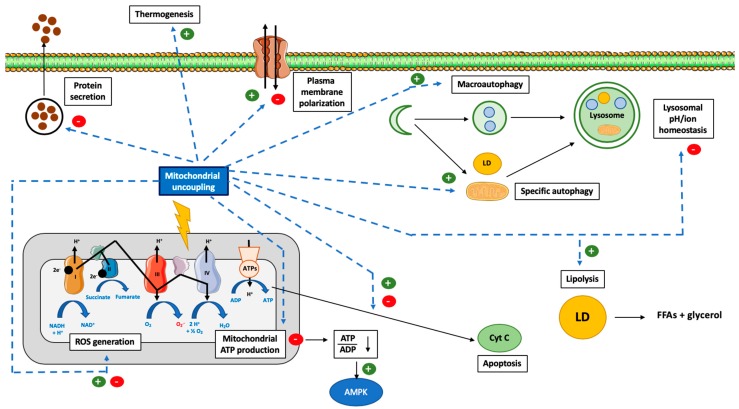
“Mitochondrial uncoupling has often been associated with autophagy activation, and more specifically, with mitophagy (specific degradation of mitochondria by macroautophagy) (Figure 1).”
§ Mitochondrial Uncoupling: A Key Controller of Biological Processes in Physiology and Diseases > 3. Cellular Responses to Mitochondrial Uncoupling > 3.1. Autophagy
What the sources say
- Not checked yetcites [90] Lyamzaev, 2018, Induction of autophagy by depolarization of mitochondria, Autophagy source
plaincorrelational- Asserted: passes — The authors put it forward as true.
- Checkable: passes — It can be checked against evidence.
- Load-bearing: unclear — It is unclear whether the paper’s conclusions depend on it.
- Based: passes — The paper gives a reason why it holds.
It may state two separate claims as one.
In the paper
“Interestingly, rapamycin treatment is accompanied by an increase in mitochondrial potential membrane [100], suggesting, again, a link between mitochondrial (un)coupling and autophagy.”
§ Mitochondrial Uncoupling: A Key Controller of Biological Processes in Physiology and Diseases > 3. Cellular Responses to Mitochondrial Uncoupling > 3.1. Autophagy
What the sources say
- Not checked yetcites [100] Radad, 2015, Rapamycin protects dopaminergic neurons against rotenone-induced cell death in primary mesencephalic cell culture, Folia Neuropathol. source
hedgeddirect- Asserted: passes — The authors put it forward as true.
- Checkable: passes — It can be checked against evidence.
- Load-bearing: unclear — It is unclear whether the paper’s conclusions depend on it.
- Based: passes — The paper gives a reason why it holds.
It may state two separate claims as one.
In the paper
“In humans, physical exercise increases total mitochondrial mass and uncoupling in skeletal muscular cells [192].”
§ Mitochondrial Uncoupling: A Key Controller of Biological Processes in Physiology and Diseases > 3. Cellular Responses to Mitochondrial Uncoupling > 3.6. Physical Exercise
What the sources say
- Not checked yetcites [192] Phielix, 2010, Exercise training increases mitochondrial content and ex vivo mitochondrial function similarly in patients with type 2 diabetes and in control individuals, Diabetologia source
plaindirect- Asserted: passes — The authors put it forward as true.
- Checkable: passes — It can be checked against evidence.
- Load-bearing: unclear — It is unclear whether the paper’s conclusions depend on it.
- Based: passes — The paper gives a reason why it holds.
It may state two separate claims as one.
None of the sources cited for this claim have been checked yet.
In the paper
“In accordance with this theory, use of CCCP or FCCP decreases the Ca2+ buffering capacity of mitochondria and increases global exocytosis in bovine [164,165] and rat chromaffin cells [166] but not in the same cell type in mice [167], suggesting species differences.”
§ Mitochondrial Uncoupling: A Key Controller of Biological Processes in Physiology and Diseases > 3. Cellular Responses to Mitochondrial Uncoupling > 3.4. Protein Secretion
What the sources say
- Not checked yetcites [164] Giovannucci, 1999, Mitochondria regulate the Ca(2+)-exocytosis relationship of bovine adrenal chromaffin cells, J. Neurosci. source
- Not checked yetcites [165] Jurkiewicz, 2013, Novel features on the regulation by mitochondria of calcium and secretion transients in chromaffin cells challenged with acetylcholine at 37°C, Physiol. Rep. source
- Not checked yetcites [166] Jurkiewicz, 2009, Role of the Endoplasmic Reticulum and Mitochondria on Quantal Catecholamine Release from Chromaffin Cells of Control and Hypertensive Rats, J. Pharmacol. Exp. Ther. source
- Not checked yetcites [167] Fuentealba, 2005, Depolarization evokes different patterns of calcium signals and exocytosis in bovine and mouse chromaffin cells: The role of mitochondria, Eur. J. Neurosci. source
hedgeddirect- Asserted: passes — The authors put it forward as true.
- Checkable: passes — It can be checked against evidence.
- Load-bearing: unclear — It is unclear whether the paper’s conclusions depend on it.
- Based: passes — The paper gives a reason why it holds.
It may state two separate claims as one.
None of the sources cited for this claim have been checked yet.
In the paper
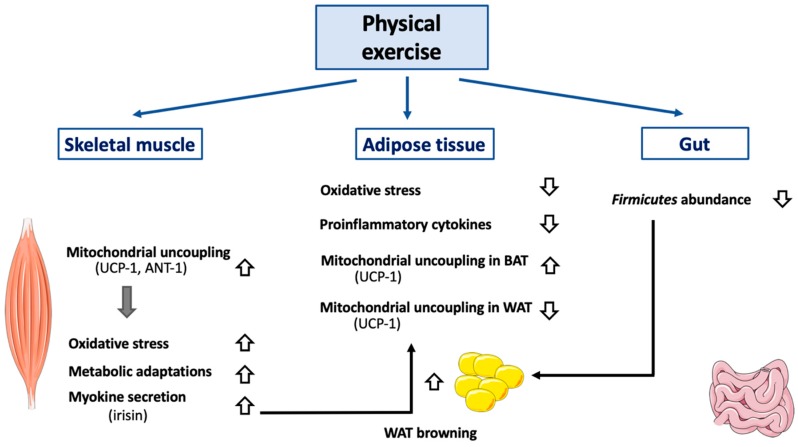
“First, physical exercise by itself directly reduces proton leak and ROS production and increases mitochondrial membrane potential, suggesting an improvement of mitochondrial coupling (Figure 3).”
§ Mitochondrial Uncoupling: A Key Controller of Biological Processes in Physiology and Diseases > 3. Cellular Responses to Mitochondrial Uncoupling > 3.6. Physical Exercise
hedgeddirect- Asserted: passes — The authors put it forward as true.
- Checkable: passes — It can be checked against evidence.
- Load-bearing: unclear — It is unclear whether the paper’s conclusions depend on it.
- Based: passes — The paper gives a reason why it holds.
It may state two separate claims as one.
None of the sources cited for this claim have been checked yet.
In the paper
“Irisin is mainly secreted by skeletal muscle cells, although some secretion was also reported in WAT [204] and, to a lesser extent, in BAT [204,205].”
§ Mitochondrial Uncoupling: A Key Controller of Biological Processes in Physiology and Diseases > 3. Cellular Responses to Mitochondrial Uncoupling > 3.6. Physical Exercise
What the sources say
- Not checked yetcites [204] Roca-Rivada, A., Castelao, C., Senin, L.L., Landrove, M.O., Baltar, J., Crujeiras, A.B., Seoane, L.M., Casanueva, F.F., and Pardo, M. (2013). FNDC5/Irisin Is Not Only a Myokine but Also an Adipokine. PLoS ONE, 8. source
- Not checked yetcites [205] 2018, Irisin a Novel Metabolic biomarker: Present knowledge and future directions, Int. J. Endocrinol.
plain- Asserted: passes — The authors put it forward as true.
- Checkable: passes — It can be checked against evidence.
- Load-bearing: unclear — It is unclear whether the paper’s conclusions depend on it.
- Based: passes — The paper gives a reason why it holds.
It may state two separate claims as one.
The paper states this without a source or data behind it here, so there is nothing to check it against. The quote shows it is in the paper.
In the paper
“Another hallmark of this tissue is the expression of UCP-1, allowing these cells to oxidize fatty acids in order to dissipate and produce energy as heat, a phenomenon called “non-shivering adaptive thermogenesis.””
§ Mitochondrial Uncoupling: A Key Controller of Biological Processes in Physiology and Diseases > 3. Cellular Responses to Mitochondrial Uncoupling > 3.7. Adipose Tissue Browning
plaindirect- Asserted: passes — The authors put it forward as true.
- Checkable: passes — It can be checked against evidence.
- Load-bearing: fails — The paper’s conclusions may not depend on it.
- Based: passes — The paper gives a reason why it holds.
Probably not a substantial claim. The paper’s conclusions may not depend on it. It may state two separate claims as one.
In the paper
“Contrary to UCP-1, the effect of the overexpression of ANT-1 (but not ANT2 [184]) is well-known to promote apoptosis.”
§ Mitochondrial Uncoupling: A Key Controller of Biological Processes in Physiology and Diseases > 3. Cellular Responses to Mitochondrial Uncoupling > 3.5. Cell Death
What the sources say
- Not checked yetcites [184] Zamora, 2004, Recruitment of NF-κB into Mitochondria Is Involved in Adenine Nucleotide Translocase 1 (ANT1)-induced Apoptosis, J. Biol. Chem. source
boosteddirect- Asserted: passes — The authors put it forward as true.
- Checkable: passes — It can be checked against evidence.
- Load-bearing: unclear — It is unclear whether the paper’s conclusions depend on it.
- Based: passes — The paper gives a reason why it holds.
It may state two separate claims as one.
None of the sources cited for this claim have been checked yet.
In the paper
“Three types of adipose tissues have been identified so far: The WAT [218], the BAT [219,220], and the beige or brite (brown in white) adipose tissue (BIWAT) [220].”
§ Mitochondrial Uncoupling: A Key Controller of Biological Processes in Physiology and Diseases > 3. Cellular Responses to Mitochondrial Uncoupling > 3.7. Adipose Tissue Browning
What the sources say
- Not checked yetcites [218] Rutkowski, 2015, The cell biology of fat expansion, J. Cell Biol. source
- Not checked yetcites [219] Schulz, 2013, Brown adipose tissue: Development, metabolism and beyond, Biochem. J. source
- Not checked yetcites [220] Harms, 2013, Brown and beige fat: Development, function and therapeutic potential, Nat. Med. source
plain- Asserted: passes — The authors put it forward as true.
- Checkable: passes — It can be checked against evidence.
- Load-bearing: fails — The paper’s conclusions may not depend on it.
- Based: passes — The paper gives a reason why it holds.
Probably not a substantial claim. The paper’s conclusions may not depend on it.
In the paper
“To explain this effect, it was suggested that mitochondrial uncoupling, by decreasing ATP content, could slow down the energy-demanding steps in protein secretion [160].”
§ Mitochondrial Uncoupling: A Key Controller of Biological Processes in Physiology and Diseases > 3. Cellular Responses to Mitochondrial Uncoupling > 3.4. Protein Secretion
What the sources say
- Not checked yetcites [160] Argon, 1989, Two steps in the intracellular transport of IgD are sensitive to energy depletion, J. Immunol. source
hedgedconditional- Asserted: passes — The authors put it forward as true.
- Checkable: passes — It can be checked against evidence.
- Load-bearing: fails — The paper’s conclusions may not depend on it.
- Based: passes — The paper gives a reason why it holds.
Probably not a substantial claim. The paper’s conclusions may not depend on it.
A conclusion the paper draws from its own results — it cites no other source for it, so there is none to check. The quote shows it is in the paper.
In the paper
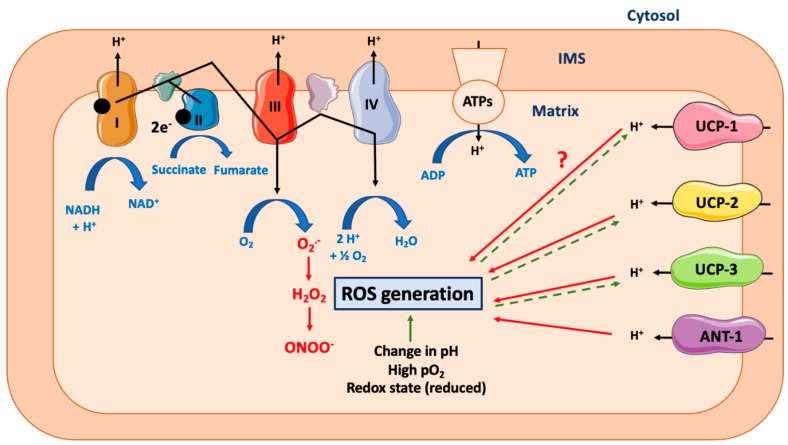
“Based on the simple model described above, the induction of mitochondrial uncoupling would theoretically lead to a decrease in ROS production (Figure 2).”
§ Mitochondrial Uncoupling: A Key Controller of Biological Processes in Physiology and Diseases > 3. Cellular Responses to Mitochondrial Uncoupling > 3.3. Reactive Oxygen Species Production
hedgedconditional- Asserted: passes — The authors put it forward as true.
- Checkable: passes — It can be checked against evidence.
- Load-bearing: passes — The paper’s conclusions depend on it.
- Based: passes — The paper gives a reason why it holds.
Probably not a substantial claim.
In the paper
“In fine, excessive ROS production damages mitochondria and induces secondary mitochondrial respiration uncoupling [158].”
§ Mitochondrial Uncoupling: A Key Controller of Biological Processes in Physiology and Diseases > 3. Cellular Responses to Mitochondrial Uncoupling > 3.3. Reactive Oxygen Species Production
What the sources say
- Not checked yetcites [158] Ma, 2015, Mitochondrial targeted β-lapachone induces mitochondrial dysfunction and catastrophic vacuolization in cancer cells, Bioorg. Med. Chem. Lett. source
plaindirect- Asserted: passes — The authors put it forward as true.
- Checkable: passes — It can be checked against evidence.
- Load-bearing: unclear — It is unclear whether the paper’s conclusions depend on it.
- Based: passes — The paper gives a reason why it holds.
It may state two separate claims as one.
In the paper
“However, this coupling is not complete and leads in fine to the production of ROS, a process called electron leak [3] (Figure 2).”
§ Mitochondrial Uncoupling: A Key Controller of Biological Processes in Physiology and Diseases > 3. Cellular Responses to Mitochondrial Uncoupling > 3.3. Reactive Oxygen Species Production
What the sources say
- Not checked yetcites [3] Jastroch, 2010, Mitochondrial proton and electron leaks, Essays Biochem. source
plaindirect- Asserted: passes — The authors put it forward as true.
- Checkable: passes — It can be checked against evidence.
- Load-bearing: unclear — It is unclear whether the paper’s conclusions depend on it.
- Based: passes — The paper gives a reason why it holds.
It may state two separate claims as one.
In the paper
“Indeed, no increase in the mitochondrial uncoupling rate in subcutaneous inguinal WAT of rats exposed to cold was found, even though UCP-1 protein expression was elevated as expected [223].”
§ Mitochondrial Uncoupling: A Key Controller of Biological Processes in Physiology and Diseases > 3. Cellular Responses to Mitochondrial Uncoupling > 3.7. Adipose Tissue Browning
What the sources say
- Not checked yetcites [223] Jani, 2019, Cold acclimation enhances UCP1 content, lipolysis, and triacylglycerol resynthesis, but not mitochondrial uncoupling and fat oxidation, in rat white adipocytes, Am. J. Physiol. Physiol. source
plain- Asserted: passes — The authors put it forward as true.
- Checkable: passes — It can be checked against evidence.
- Load-bearing: passes — The paper’s conclusions depend on it.
- Based: passes — The paper gives a reason why it holds.
It may state two separate claims as one.
None of the sources cited for this claim have been checked yet.
In the paper
“In the adipose tissue, the latest cytokine is released by both macrophages and adipocytes in obese mice and humans [237,238].”
§ Mitochondrial Uncoupling: A Key Controller of Biological Processes in Physiology and Diseases > 3. Cellular Responses to Mitochondrial Uncoupling > 3.7. Adipose Tissue Browning
What the sources say
- Not checked yetcites [237] Ahmad, 2017, Increased adipose tissue expression of IL-18R and its ligand IL-18 associates with inflammation and insulin resistance in obesity, Immun. Inflamm. Dis. source
- Not checked yetcites [238] Skurk, 2005, The proatherogenic cytokine interleukin-18 is secreted by human adipocytes, Eur. J. Endocrinol. source
plain- Asserted: passes — The authors put it forward as true.
- Checkable: passes — It can be checked against evidence.
- Load-bearing: fails — The paper’s conclusions may not depend on it.
- Based: passes — The paper gives a reason why it holds.
Probably not a substantial claim. The paper’s conclusions may not depend on it.
In the paper
“Indeed, C57BL7 mice deficient for IL-18 are extremely sensitive to obesity but also exhibit larger brown adipocytes and a higher UCP-1 expression in BAT compared to wild-type littermates [240].”
§ Mitochondrial Uncoupling: A Key Controller of Biological Processes in Physiology and Diseases > 3. Cellular Responses to Mitochondrial Uncoupling > 3.7. Adipose Tissue Browning
What the sources say
- Not checked yetcites [240] Yamanishi, 2018, Deficiency in interleukin-18 promotes differentiation of brown adipose tissue resulting in fat accumulation despite dyslipidemia, J. Transl. Med. source
plaincorrelational- Asserted: passes — The authors put it forward as true.
- Checkable: passes — It can be checked against evidence.
- Load-bearing: unclear — It is unclear whether the paper’s conclusions depend on it.
- Based: passes — The paper gives a reason why it holds.
It may state two separate claims as one.
In the paper
“The effect of IL-1β on white adipocytes includes an increase in ROS production, a decrease in SOD activity, and mitochondrial depolarization [229].”
§ Mitochondrial Uncoupling: A Key Controller of Biological Processes in Physiology and Diseases > 3. Cellular Responses to Mitochondrial Uncoupling > 3.7. Adipose Tissue Browning
What the sources say
- Not checked yetcites [229] Okla, 2018, Inhibitory effects of toll-like receptor 4, NLRP3 inflammasome, and interleukin-1β on white adipocyte browning, Inflammation source
plaindirect- Asserted: passes — The authors put it forward as true.
- Checkable: passes — It can be checked against evidence.
- Load-bearing: unclear — It is unclear whether the paper’s conclusions depend on it.
- Based: passes — The paper gives a reason why it holds.
It may state two separate claims as one.
In the paper
“If both mouse models are overweight at the basal state but protected against diet-induced obesity, only IL-18r KO mice can increase thermogenesis and white browning in response to HFD or cold [241].”
§ Mitochondrial Uncoupling: A Key Controller of Biological Processes in Physiology and Diseases > 3. Cellular Responses to Mitochondrial Uncoupling > 3.7. Adipose Tissue Browning
What the sources say
- Not checked yetcites [241] Pazos, 2015, Divergent responses to thermogenic stimuli in BAT and subcutaneous adipose tissue from interleukin 18 and interleukin 18 receptor 1-deficient mice, Sci. Rep. source
plaincorrelational- Asserted: passes — The authors put it forward as true.
- Checkable: passes — It can be checked against evidence.
- Load-bearing: passes — The paper’s conclusions depend on it.
- Based: passes — The paper gives a reason why it holds.
It may state two separate claims as one.
In the paper
“IL-18 expression seems to be tightly correlated to other proinflammatory markers, such as TNFα, and a linear correlation between IL-18 and BMI was found in humans [237].”
§ Mitochondrial Uncoupling: A Key Controller of Biological Processes in Physiology and Diseases > 3. Cellular Responses to Mitochondrial Uncoupling > 3.7. Adipose Tissue Browning
What the sources say
- Not checked yetcites [237] Ahmad, 2017, Increased adipose tissue expression of IL-18R and its ligand IL-18 associates with inflammation and insulin resistance in obesity, Immun. Inflamm. Dis. source
hedgedcorrelational- Asserted: passes — The authors put it forward as true.
- Checkable: passes — It can be checked against evidence.
- Load-bearing: fails — The paper’s conclusions may not depend on it.
- Based: passes — The paper gives a reason why it holds.
Probably not a substantial claim. The paper’s conclusions may not depend on it.
A conclusion the paper draws from its own results — it cites no other source for it, so there is none to check. The quote shows it is in the paper.
In the paper
“The precise action of IL-18 is likely to be complex and possibly independent from the IL-18 receptor (IL-18r).”
§ Mitochondrial Uncoupling: A Key Controller of Biological Processes in Physiology and Diseases > 3. Cellular Responses to Mitochondrial Uncoupling > 3.7. Adipose Tissue Browning
hedgedconditional- Asserted: passes — The authors put it forward as true.
- Checkable: passes — It can be checked against evidence.
- Load-bearing: unclear — It is unclear whether the paper’s conclusions depend on it.
- Based: passes — The paper gives a reason why it holds.
It may state two separate claims as one.
None of the sources cited for this claim have been checked yet.
In the paper
“Sestrins are a family of stress-inducible proteins involved in the negative regulation of the AMPK/TORC1 axis [227] and in ROS detoxifying by restoration of the activity of oxidized peroxiredoxins [227,228].”
§ Mitochondrial Uncoupling: A Key Controller of Biological Processes in Physiology and Diseases > 3. Cellular Responses to Mitochondrial Uncoupling > 3.7. Adipose Tissue Browning
What the sources say
plaindirect- Asserted: passes — The authors put it forward as true.
- Checkable: passes — It can be checked against evidence.
- Load-bearing: passes — The paper’s conclusions depend on it.
- Based: passes — The paper gives a reason why it holds.
It may state two separate claims as one.
In the paper
“This effect seems to be due to IL-1β release by macrophages, as IL-1β blocking antibodies protected the human white adipocytes.”
§ Mitochondrial Uncoupling: A Key Controller of Biological Processes in Physiology and Diseases > 3. Cellular Responses to Mitochondrial Uncoupling > 3.7. Adipose Tissue Browning
What the sources say
- Not checked yetcites [229] Okla, 2018, Inhibitory effects of toll-like receptor 4, NLRP3 inflammasome, and interleukin-1β on white adipocyte browning, Inflammation source
hedgedconditional- Asserted: passes — The authors put it forward as true.
- Checkable: passes — It can be checked against evidence.
- Load-bearing: unclear — It is unclear whether the paper’s conclusions depend on it.
- Based: passes — The paper gives a reason why it holds.
It may state two separate claims as one.
In the paper
“For instance, in combination with IL-2, IL-18 can promote a Th2 response, while a Th1 response will be promoted in response to IL-12 (reviewed here [239]).”
§ Mitochondrial Uncoupling: A Key Controller of Biological Processes in Physiology and Diseases > 3. Cellular Responses to Mitochondrial Uncoupling > 3.7. Adipose Tissue Browning
What the sources say
- Not checked yetcites [239] Seljeflot, 2010, The role of interleukin-18 in the metabolic syndrome, Cardiovasc. Diabetol. source
plaindirect- Asserted: passes — The authors put it forward as true.
- Checkable: passes — It can be checked against evidence.
- Load-bearing: fails — The paper’s conclusions may not depend on it.
- Based: passes — The paper gives a reason why it holds.
Probably not a substantial claim. The paper’s conclusions may not depend on it. It may state two separate claims as one.
In the paper
“IL-18 is known to enhance both T cell and natural killer cell maturation and promote proinflammatory cytokine release [239].”
§ Mitochondrial Uncoupling: A Key Controller of Biological Processes in Physiology and Diseases > 3. Cellular Responses to Mitochondrial Uncoupling > 3.7. Adipose Tissue Browning
What the sources say
- Not checked yetcites [239] Seljeflot, 2010, The role of interleukin-18 in the metabolic syndrome, Cardiovasc. Diabetol. source
boosteddirect- Asserted: passes — The authors put it forward as true.
- Checkable: passes — It can be checked against evidence.
- Load-bearing: fails — The paper’s conclusions may not depend on it.
- Based: passes — The paper gives a reason why it holds.
Probably not a substantial claim. The paper’s conclusions may not depend on it. It may state two separate claims as one.
None of the sources cited for this claim have been checked yet.
In the paper
“Oxidative stress is usually observed in adipocytes during obesity.”
§ Mitochondrial Uncoupling: A Key Controller of Biological Processes in Physiology and Diseases > 3. Cellular Responses to Mitochondrial Uncoupling > 3.7. Adipose Tissue Browning
What the sources say
plaincorrelational- Asserted: passes — The authors put it forward as true.
- Checkable: passes — It can be checked against evidence.
- Load-bearing: fails — The paper’s conclusions may not depend on it.
- Based: passes — The paper gives a reason why it holds.
Probably not a substantial claim. The paper’s conclusions may not depend on it.
In the paper
“To support the role of IL-18 in this process, exogenous administration of IL-18 in these mice restores the adipocyte size as well as the expression of UCP-1 [240].”
§ Mitochondrial Uncoupling: A Key Controller of Biological Processes in Physiology and Diseases > 3. Cellular Responses to Mitochondrial Uncoupling > 3.7. Adipose Tissue Browning
What the sources say
- Not checked yetcites [240] Yamanishi, 2018, Deficiency in interleukin-18 promotes differentiation of brown adipose tissue resulting in fat accumulation despite dyslipidemia, J. Transl. Med. source
plaindirect- Asserted: passes — The authors put it forward as true.
- Checkable: passes — It can be checked against evidence.
- Load-bearing: unclear — It is unclear whether the paper’s conclusions depend on it.
- Based: passes — The paper gives a reason why it holds.
It may state two separate claims as one.
In the paper
“Though most studies often focus on WAT adipokine secretion, BAT is also characterized by its own set of (non-BAT-specific) adipokines, including, for instance, IL-6, IL-8, and MCP-1 [242].”
§ Mitochondrial Uncoupling: A Key Controller of Biological Processes in Physiology and Diseases > 3. Cellular Responses to Mitochondrial Uncoupling > 3.7. Adipose Tissue Browning
What the sources say
- Not checked yetcites [242] Veress, 2019, Interleukin-6 released from differentiating human beige adipocytes improves browning, Exp. Cell Res. source
plain- Asserted: passes — The authors put it forward as true.
- Checkable: passes — It can be checked against evidence.
- Load-bearing: fails — The paper’s conclusions may not depend on it.
- Based: passes — The paper gives a reason why it holds.
Probably not a substantial claim. The paper’s conclusions may not depend on it.
In the paper
“IL-18 expression seems to be tightly correlated to other proinflammatory markers, such as TNFα, and a linear correlation between IL-18 and BMI was found in humans [237].”
§ Mitochondrial Uncoupling: A Key Controller of Biological Processes in Physiology and Diseases > 3. Cellular Responses to Mitochondrial Uncoupling > 3.7. Adipose Tissue Browning
What the sources say
- Not checked yetcites [237] Ahmad, 2017, Increased adipose tissue expression of IL-18R and its ligand IL-18 associates with inflammation and insulin resistance in obesity, Immun. Inflamm. Dis. source
plaincorrelational- Asserted: passes — The authors put it forward as true.
- Checkable: passes — It can be checked against evidence.
- Load-bearing: fails — The paper’s conclusions may not depend on it.
- Based: passes — The paper gives a reason why it holds.
Probably not a substantial claim. The paper’s conclusions may not depend on it.
None of the sources cited for this claim have been checked yet.
In the paper
“The reported side effects of DNP include acute cataract [261,262], sensory axonal polyneuropathy [263], fever, tachycardia, sweating, nausea, rash, breathing difficulties, abdominal pain, agitation, headache, and death [264,265].”
§ Mitochondrial Uncoupling: A Key Controller of Biological Processes in Physiology and Diseases > 4. Possible Use of Mitochondrial Uncouplers for Human Diseases
What the sources say
- Not checked yetcites [261] Margo, 2014, Diet pills and the cataract outbreak of 1935: Reflections on the evolution of consumer protection legislation, Surv. Ophthalmol. source
- Not checked yetcites [262] Horner, 1936, Cataract following di-nitrophenol treatment for obesity, Arch. Ophthalmol. source
- Not checked yetcites [263] Izumoto, 2017, Sensory axonal polyneuropathy due to 2,4-dinitrophenol, Rinsho Shinkeigaku source
- Not checked yetcites [264] Kamour, 2015, Increasing frequency of severe clinical toxicity after use of 2,4-dinitrophenol in the UK: A report from the National Poisons Information Service, Emerg. Med. J. source
- Not checked yetcites [265] Grundlingh, 2011, 2,4-Dinitrophenol (DNP): A Weight Loss Agent with Significant Acute Toxicity and Risk of Death, J. Med. Toxicol. source
plaindirect- Asserted: passes — The authors put it forward as true.
- Checkable: passes — It can be checked against evidence.
- Load-bearing: passes — The paper’s conclusions depend on it.
- Based: passes — The paper gives a reason why it holds.
It may state two separate claims as one.
In the paper
“Moreover, these mice also showed a similar intolerance to physical activity and a degeneration of smooth muscle cells [259].”
§ Mitochondrial Uncoupling: A Key Controller of Biological Processes in Physiology and Diseases > 3. Cellular Responses to Mitochondrial Uncoupling > 3.8. Cell Signaling
What the sources say
- Not checked yetcites [259] Ost, M., Werner, F., Dokas, J., Klaus, S., and Voigt, A. (2014). Activation of AMPKα2 Is Not Crucial for Mitochondrial Uncoupling-Induced Metabolic Effects but Required to Maintain Skeletal Muscle Integrity. PLoS ONE, 9. source
plaincorrelational- Asserted: passes — The authors put it forward as true.
- Checkable: passes — It can be checked against evidence.
- Load-bearing: unclear — It is unclear whether the paper’s conclusions depend on it.
- Based: passes — The paper gives a reason why it holds.
It may state two separate claims as one.
In the paper
“Interestingly, the effects of UCP-1 overexpression are fat depot-dependent and can be explained by differences in term of AMPK subunit activation (reviewed here [258]).”
§ Mitochondrial Uncoupling: A Key Controller of Biological Processes in Physiology and Diseases > 3. Cellular Responses to Mitochondrial Uncoupling > 3.8. Cell Signaling
What the sources say
- Not checked yetcites [258] Klaus, 2012, Augmenting energy expenditure by mitochondrial uncoupling: A role of AMP-activated protein kinase, Genes Nutr. source
plaindirect- Asserted: passes — The authors put it forward as true.
- Checkable: passes — It can be checked against evidence.
- Load-bearing: unclear — It is unclear whether the paper’s conclusions depend on it.
- Based: passes — The paper gives a reason why it holds.
It may state two separate claims as one.
In the paper
“Indeed, DNP induces a decrease in energy expenditure by 17% and weight loss by 23% at 30 °C in female C57BL/6J, while no significant effect has been observed at 22 °C [269].”
§ Mitochondrial Uncoupling: A Key Controller of Biological Processes in Physiology and Diseases > 4. Possible Use of Mitochondrial Uncouplers for Human Diseases
What the sources say
- Not checked yetcites [269] Goldgof, 2014, The Chemical Uncoupler 2,4-Dinitrophenol (DNP) Protects against Diet-induced Obesity and Improves Energy Homeostasis in Mice at Thermoneutrality, J. Biol. Chem. source
plaindirect- Asserted: passes — The authors put it forward as true.
- Checkable: passes — It can be checked against evidence.
- Load-bearing: unclear — It is unclear whether the paper’s conclusions depend on it.
- Based: passes — The paper gives a reason why it holds.
It may state two separate claims as one.
In the paper
“Indeed, intermittent fasting is associated with body weight decrease and WAT browning, also by increasing the Firmicutes level [248].”
§ Mitochondrial Uncoupling: A Key Controller of Biological Processes in Physiology and Diseases > 3. Cellular Responses to Mitochondrial Uncoupling > 3.7. Adipose Tissue Browning
What the sources say
- Not checked yetcites [248] Li, 2017, Intermittent Fasting Promotes White Adipose Browning and Decreases Obesity by Shaping the Gut Microbiota, Cell Metab. source
plaincorrelational- Asserted: passes — The authors put it forward as true.
- Checkable: passes — It can be checked against evidence.
- Load-bearing: unclear — It is unclear whether the paper’s conclusions depend on it.
- Based: passes — The paper gives a reason why it holds.
It may state two separate claims as one.
None of the sources cited for this claim have been checked yet.
In the paper
“More recently, an increase in the use of DNP as a self-medication has been observed in China [266] and the United Kingdom [267], leading to new cases of DNP-associated fatalities.”
§ Mitochondrial Uncoupling: A Key Controller of Biological Processes in Physiology and Diseases > 4. Possible Use of Mitochondrial Uncouplers for Human Diseases
What the sources say
- Not checked yetcites [266] Lee, 2014, 2,4-Dinitrophenol: A threat to Chinese body-conscious groups, J. Chin. Med. Assoc. source
- Not checked yetcites [267] Holborow, A., Purnell, R.M., and Wong, J.F. (2016). Beware the yellow slimming pill: Fatal 2,4-dinitrophenol overdose. BMJ Case Rep., 2016. source
plaindirect- Asserted: passes — The authors put it forward as true.
- Checkable: passes — It can be checked against evidence.
- Load-bearing: unclear — It is unclear whether the paper’s conclusions depend on it.
- Based: passes — The paper gives a reason why it holds.
It may state two separate claims as one.
In the paper
“For instance, FCCP leads to an increase in intracellular/cytosolic Ca2+ concentration and to the secondary opening of Ca2+-activated K+ channels, causing a plasma membrane hyperpolarization in mouse sensory neurons [77].”
§ Mitochondrial Uncoupling: A Key Controller of Biological Processes in Physiology and Diseases > 3. Cellular Responses to Mitochondrial Uncoupling > 3.8. Cell Signaling
What the sources say
- Not checked yetcites [77] Duchen, 1990, Effects of metabolic inhibition on the membrane properties of isolated mouse primary sensory neurones, J. Physiol. source
plaindirect- Asserted: passes — The authors put it forward as true.
- Checkable: passes — It can be checked against evidence.
- Load-bearing: unclear — It is unclear whether the paper’s conclusions depend on it.
- Based: passes — The paper gives a reason why it holds.
It may state two separate claims as one.
In the paper
“Moreover, interindividual sensitivity largely differs, i.e., side effects could be observed in some patients but not in others, even at therapeutically efficient doses, thereby complicating its medical use.”
§ Mitochondrial Uncoupling: A Key Controller of Biological Processes in Physiology and Diseases > 4. Possible Use of Mitochondrial Uncouplers for Human Diseases
What the sources say
- Not checked yetcites [260] Ingbe, S.Z., and Carlson-Lynch, H. (1995). Toxicological Profile for Dinitrophenols.
hedgedcorrelational- Asserted: passes — The authors put it forward as true.
- Checkable: passes — It can be checked against evidence.
- Load-bearing: passes — The paper’s conclusions depend on it.
- Based: passes — The paper gives a reason why it holds.
It may state two separate claims as one.
None of the sources cited for this claim have been checked yet.
In the paper
“In terms of cell signaling, the best-known effect of mitochondrial uncouplers is probably a drop in ATP/AMP levels, which induces the activation of the AMPK signaling pathway (Figure 1).”
§ Mitochondrial Uncoupling: A Key Controller of Biological Processes in Physiology and Diseases > 3. Cellular Responses to Mitochondrial Uncoupling > 3.8. Cell Signaling
What the sources say
- Not checked yetcites [91] Demine, 2018, Mild mitochondrial uncoupling induces HSL/ATGL-independent lipolysis relying on a form of autophagy in 3T3-L1 adipocytes, J. Cell. Physiol. source
- Not checked yetcites [251] Matejkova, 2004, Possible involvement of AMP-activated protein kinase in obesity resistance induced by respiratory uncoupling in white fat, FEBS Lett. source
- Not checked yetcites [252] Neschen, 2008, Uncoupling protein 1 expression in murine skeletal muscle increases AMPK activation, glucose turnover, and insulin sensitivity in vivo, Physiol. Genom. source
- Not checked yetcites [253] Han, 2004, UCP-mediated energy depletion in skeletal muscle increases glucose transport despite lipid accumulation and mitochondrial dysfunction, Am. J. Physiol. Metab.
- Not checked yetcites [54] Urra, 2018, FR58P1a; a new uncoupler of OXPHOS that inhibits migration in triple-negative breast cancer cells via Sirt1/AMPK/β1-integrin pathway, Sci. Rep. source
- Not checked yetcites [254] Figarola, 2015, SR4 Uncouples Mitochondrial Oxidative Phosphorylation, Modulates AMP-dependent Kinase (AMPK)-Mammalian Target of Rapamycin (mTOR) Signaling, and Inhibits Proliferation of HepG2 Hepatocarcinoma Cells, J. Biol. Chem. source
- Not checked yetcites [255] Singhal, 2012, 1,3-bis(3,5-dichlorophenyl) Urea Compound ‘COH-SR4’ Inhibits Proliferation and Activates Apoptosis in Melanoma, Biochem. Pharmacol. source
- Not checked yetcites [256] Singhal, 2013, Novel Compound 1, 3-bis (3, 5-dichlorophenyl) urea Inhibits Lung Cancer Progression, Biochem. Pharmacol. source
hedgeddirect- Asserted: passes — The authors put it forward as true.
- Checkable: passes — It can be checked against evidence.
- Load-bearing: unclear — It is unclear whether the paper’s conclusions depend on it.
- Based: passes — The paper gives a reason why it holds.
It may state two separate claims as one.
In the paper
“MCP-1 release was also decreased by lower concentrations (1.5 μM) of DNP in murine 3T3-L1 adipocytes, an effect which relies on endoplasmic reticulum stress induction and AMPK activation [272].”
§ Mitochondrial Uncoupling: A Key Controller of Biological Processes in Physiology and Diseases > 4. Possible Use of Mitochondrial Uncouplers for Human Diseases
What the sources say
- Not checked yetcites [272] Takahashi, 2012, Induction of mitochondrial uncoupling enhances VEGF₁₂₀ but reduces MCP-1 release in mature 3T3-L1 adipocytes: Possible regulatory mechanism through endogenous ER stress and AMPK-related pathways, Biochem. Biophys. Res. Commun. source
plaindirect- Asserted: passes — The authors put it forward as true.
- Checkable: passes — It can be checked against evidence.
- Load-bearing: unclear — It is unclear whether the paper’s conclusions depend on it.
- Based: passes — The paper gives a reason why it holds.
It may state two separate claims as one.
In the paper
“Rats exposed to 1 mg/kg DNP using an orally available, controlled-release formulation of DNP exhibit a decrease in fasting plasma glucose, fatty acids (by 30%), TAG concentrations, HDL concentrations (by 30%) and hyperinsulinemia (50%) [277].”
§ Mitochondrial Uncoupling: A Key Controller of Biological Processes in Physiology and Diseases > 4. Possible Use of Mitochondrial Uncouplers for Human Diseases
What the sources say
- Not checked yetcites [277] Perry, 2015, Controlled-release mitochondrial protonophore reverses diabetes and steatohepatitis in rats, Science source
plaindirect- Asserted: passes — The authors put it forward as true.
- Checkable: passes — It can be checked against evidence.
- Load-bearing: passes — The paper’s conclusions depend on it.
- Based: passes — The paper gives a reason why it holds.
It may state two separate claims as one.
In the paper
“The mechanism seems to depend on (1) a direct activation of AMPK via the β1 subunit by salsalate and (2) an AMPK-independent increase in mitochondrial proton conductance [281].”
§ Mitochondrial Uncoupling: A Key Controller of Biological Processes in Physiology and Diseases > 4. Possible Use of Mitochondrial Uncouplers for Human Diseases
What the sources say
- Not checked yetcites [281] Smith, 2016, Salsalate (Salicylate) Uncouples Mitochondria, Improves Glucose Homeostasis, and Reduces Liver Lipids Independent of AMPK-β1, Diabetes source
hedgedconditional- Asserted: passes — The authors put it forward as true.
- Checkable: passes — It can be checked against evidence.
- Load-bearing: unclear — It is unclear whether the paper’s conclusions depend on it.
- Based: passes — The paper gives a reason why it holds.
It may state two separate claims as one.
In the paper
“Indeed, mitochondrial dysfunction, a common hallmark in neurodegenerative diseases, points especially to the mitochondrial uncoupling process as a critical player [288].”
§ Mitochondrial Uncoupling: A Key Controller of Biological Processes in Physiology and Diseases > 4. Possible Use of Mitochondrial Uncouplers for Human Diseases
What the sources say
- Not checked yetcites [288] Montesanto, 2018, Uncoupling protein 4 (UCP4) gene variability in neurodegenerative disorders: Further evidence of association in Frontotemporal dementia, Aging source
boosteddirect- Asserted: passes — The authors put it forward as true.
- Checkable: passes — It can be checked against evidence.
- Load-bearing: passes — The paper’s conclusions depend on it.
- Based: passes — The paper gives a reason why it holds.
It may state two separate claims as one.
In the paper
“When used in rats, the treatment reduces hepatic steatosis development and lowers TAG liver levels as well as total cholesterol content, while body temperature is not increased [279].”
§ Mitochondrial Uncoupling: A Key Controller of Biological Processes in Physiology and Diseases > 4. Possible Use of Mitochondrial Uncouplers for Human Diseases
What the sources say
- Not checked yetcites [279] Wei, 2017, Sustained-release mitochondrial protonophore reverses nonalcoholic fatty liver disease in rats, Int. J. Pharm. source
plaindirect- Asserted: passes — The authors put it forward as true.
- Checkable: passes — It can be checked against evidence.
- Load-bearing: passes — The paper’s conclusions depend on it.
- Based: passes — The paper gives a reason why it holds.
It may state two separate claims as one.
In the paper
“For instance, a long-chain PUFA (PolyUnsaturated Fatty Acids)-enriched HFD protects C57BL/6J mice against obesity, while an isocaloric diet strongly induces weight gain in the same mouse model [282].”
§ Mitochondrial Uncoupling: A Key Controller of Biological Processes in Physiology and Diseases > 4. Possible Use of Mitochondrial Uncouplers for Human Diseases
What the sources say
- Not checked yetcites [282] Worsch, 2018, Dietary n-3 long-chain polyunsaturated fatty acids upregulate energy dissipating metabolic pathways conveying anti-obesogenic effects in mice, Nutr. Metab. source
boosteddirect- Asserted: passes — The authors put it forward as true.
- Checkable: passes — It can be checked against evidence.
- Load-bearing: passes — The paper’s conclusions depend on it.
- Based: passes — The paper gives a reason why it holds.
It may state two separate claims as one.
In the paper
“Interestingly, food consumption of mice housed at 22 °C was higher than at 30 °C, which could counter-balance the effect of DNP [269].”
§ Mitochondrial Uncoupling: A Key Controller of Biological Processes in Physiology and Diseases > 4. Possible Use of Mitochondrial Uncouplers for Human Diseases
What the sources say
- Not checked yetcites [269] Goldgof, 2014, The Chemical Uncoupler 2,4-Dinitrophenol (DNP) Protects against Diet-induced Obesity and Improves Energy Homeostasis in Mice at Thermoneutrality, J. Biol. Chem. source
hedgedconditional- Asserted: passes — The authors put it forward as true.
- Checkable: passes — It can be checked against evidence.
- Load-bearing: unclear — It is unclear whether the paper’s conclusions depend on it.
- Based: passes — The paper gives a reason why it holds.
It may state two separate claims as one.
In the paper
“Molecular mechanisms include diminished de novo lipogenesis and increased hepatic and intestinal fatty acid oxidation [282].”
§ Mitochondrial Uncoupling: A Key Controller of Biological Processes in Physiology and Diseases > 4. Possible Use of Mitochondrial Uncouplers for Human Diseases
What the sources say
- Not checked yetcites [282] Worsch, 2018, Dietary n-3 long-chain polyunsaturated fatty acids upregulate energy dissipating metabolic pathways conveying anti-obesogenic effects in mice, Nutr. Metab. source
plaindirect- Asserted: passes — The authors put it forward as true.
- Checkable: passes — It can be checked against evidence.
- Load-bearing: passes — The paper’s conclusions depend on it.
- Based: passes — The paper gives a reason why it holds.
It may state two separate claims as one.
In the paper
“Indeed, although HFD supplemented with n-3 PUFA protects C57BL/6J mice against weight gain, no effect on the expression and/or activation of the gene encoding the thermogenic UCP-1 could be found [286].”
§ Mitochondrial Uncoupling: A Key Controller of Biological Processes in Physiology and Diseases > 4. Possible Use of Mitochondrial Uncouplers for Human Diseases
What the sources say
- Not checked yetcites [286] Flachs, 2005, Polyunsaturated fatty acids of marine origin upregulate mitochondrial biogenesis and induce β-oxidation in white fat, Diabetologia source
plain- Asserted: passes — The authors put it forward as true.
- Checkable: passes — It can be checked against evidence.
- Load-bearing: unclear — It is unclear whether the paper’s conclusions depend on it.
- Based: passes — The paper gives a reason why it holds.
It may state two separate claims as one.
In the paper
“Mutations in VCP (Valosin-Containing Protein), a type II AAA+ ATPase family, could also cause mitochondrial uncoupling and play a role in frontotemporal dementia (IBMPFD) and some familial cases of amyotrophic lateral sclerosis, as it could sensitize deficient neuronal cells to subsequent stress, such as ischemia and other conditions requiring high energy demand [290].”
§ Mitochondrial Uncoupling: A Key Controller of Biological Processes in Physiology and Diseases > 4. Possible Use of Mitochondrial Uncouplers for Human Diseases
What the sources say
- Not checked yetcites [290] Wu, 2013, Pathogenic VCP Mutations Induce Mitochondrial Uncoupling and Reduced ATP Levels, Neuron source
hedgedconditional- Asserted: passes — The authors put it forward as true.
- Checkable: passes — It can be checked against evidence.
- Load-bearing: unclear — It is unclear whether the paper’s conclusions depend on it.
- Based: passes — The paper gives a reason why it holds.
It may state two separate claims as one.
In the paper
“Mechanistically, the treatment seems to induce AMPKα phosphorylation (possibly due to UCP-1 uncoupling/thermogenic activity and a decrease in ATP/AMP level), PPARα activation, and the expression of Fgf21 [282].”
§ Mitochondrial Uncoupling: A Key Controller of Biological Processes in Physiology and Diseases > 4. Possible Use of Mitochondrial Uncouplers for Human Diseases
What the sources say
- Not checked yetcites [282] Worsch, 2018, Dietary n-3 long-chain polyunsaturated fatty acids upregulate energy dissipating metabolic pathways conveying anti-obesogenic effects in mice, Nutr. Metab. source
hedgedconditional- Asserted: passes — The authors put it forward as true.
- Checkable: passes — It can be checked against evidence.
- Load-bearing: unclear — It is unclear whether the paper’s conclusions depend on it.
- Based: passes — The paper gives a reason why it holds.
It may state two separate claims as one.
In the paper
“DNP treatment also prevents NAFLD (Non-Alcoholic Fatty Liver Disease) development in rats by reducing fasting plasma glucose as well as concentrations of non-esterified fatty acids and insulin, accompanied by a 50–90% decrease in TAG concentrations in plasma, liver, and skeletal muscle [277].”
§ Mitochondrial Uncoupling: A Key Controller of Biological Processes in Physiology and Diseases > 4. Possible Use of Mitochondrial Uncouplers for Human Diseases
What the sources say
- Not checked yetcites [277] Perry, 2015, Controlled-release mitochondrial protonophore reverses diabetes and steatohepatitis in rats, Science source
plaindirect- Asserted: passes — The authors put it forward as true.
- Checkable: passes — It can be checked against evidence.
- Load-bearing: passes — The paper’s conclusions depend on it.
- Based: passes — The paper gives a reason why it holds.
It may state two separate claims as one.
In the paper
“For instance, DNP can affect melanocortin-secreting neuron activity by inhibiting orexigenic NPY (Neuropeptide Y) and activating anorexigenic POMC (Proopiomelanocortin) neurons [270].”
§ Mitochondrial Uncoupling: A Key Controller of Biological Processes in Physiology and Diseases > 4. Possible Use of Mitochondrial Uncouplers for Human Diseases
What the sources say
- Not checked yetcites [270] Michael, 2017, Mitochondrial uncoupling in the melanocortin system differentially regulates NPY and POMC neurons to promote weight-loss, Mol. Metab. source
plaindirect- Asserted: passes — The authors put it forward as true.
- Checkable: passes — It can be checked against evidence.
- Load-bearing: unclear — It is unclear whether the paper’s conclusions depend on it.
- Based: passes — The paper gives a reason why it holds.
It may state two separate claims as one.
In the paper
“Global glucose tolerance was also improved in DNP-treated rats, an effect resulting from an increase in liver- and muscle-insulin sensitivity [277].”
§ Mitochondrial Uncoupling: A Key Controller of Biological Processes in Physiology and Diseases > 4. Possible Use of Mitochondrial Uncouplers for Human Diseases
What the sources say
- Not checked yetcites [277] Perry, 2015, Controlled-release mitochondrial protonophore reverses diabetes and steatohepatitis in rats, Science source
plaindirect- Asserted: passes — The authors put it forward as true.
- Checkable: passes — It can be checked against evidence.
- Load-bearing: passes — The paper’s conclusions depend on it.
- Based: passes — The paper gives a reason why it holds.
It may state two separate claims as one.
In the paper
“Indeed, a putative role in stroke, dementia, and depression has been suggested.”
§ Mitochondrial Uncoupling: A Key Controller of Biological Processes in Physiology and Diseases > 4. Possible Use of Mitochondrial Uncouplers for Human Diseases
What the sources say
- Not checked yetcites [288] Montesanto, 2018, Uncoupling protein 4 (UCP4) gene variability in neurodegenerative disorders: Further evidence of association in Frontotemporal dementia, Aging source
hedgedconditional- Asserted: passes — The authors put it forward as true.
- Checkable: passes — It can be checked against evidence.
- Load-bearing: unclear — It is unclear whether the paper’s conclusions depend on it.
- Based: passes — The paper gives a reason why it holds.
It may state two separate claims as one.
In the paper
“Cholesterol synthesis was also reduced, while its reabsorption was increased [287].”
§ Mitochondrial Uncoupling: A Key Controller of Biological Processes in Physiology and Diseases > 4. Possible Use of Mitochondrial Uncouplers for Human Diseases
What the sources say
- Not checked yetcites [287] Van Schothorst, E.M., Flachs, P., Hal, N.L.F.-V., Kuda, O., Bunschoten, A., Molthoff, J., Vink, C., Hooiveld, G.J.E.J., Kopecky, J., and Keijer, J. (2009). Induction of lipid oxidation by polyunsaturated fatty acids of marine origin in small intestine of mice fed a high-fat diet. BMC Genom., 10. source
plaindirect- Asserted: passes — The authors put it forward as true.
- Checkable: passes — It can be checked against evidence.
- Load-bearing: unclear — It is unclear whether the paper’s conclusions depend on it.
- Based: passes — The paper gives a reason why it holds.
It may state two separate claims as one.
A conclusion the paper draws from its own results — it cites no other source for it, so there is none to check. The quote shows it is in the paper.
In the paper
“These responses are complex and often rely on the combination of several biological features (species, cell type), physical (temperature), and/or chemical (ion concentration, lipid composition of membranes, nature of the uncoupler) parameters.”
§ Mitochondrial Uncoupling: A Key Controller of Biological Processes in Physiology and Diseases > 5. Conclusions
plaincorrelational- Asserted: passes — The authors put it forward as true.
- Checkable: passes — It can be checked against evidence.
- Load-bearing: passes — The paper’s conclusions depend on it.
- Based: fails — The paper may give no reason why it holds.
Probably not a substantial claim. The paper may give no reason why it holds.
A conclusion the paper draws from its own results — it cites no other source for it, so there is none to check. The quote shows it is in the paper.
In the paper
“However, the induction of such a condition not only impacts mitochondrial respiration but can also activate or hamper multiple cellular mechanisms, including bulk and specific forms of autophagy, ROS production regulation, protein secretion, physical exercise capacity, and adipose tissue biology (Figure 1).”
§ Mitochondrial Uncoupling: A Key Controller of Biological Processes in Physiology and Diseases > 5. Conclusions
plaindirect- Asserted: passes — The authors put it forward as true.
- Checkable: passes — It can be checked against evidence.
- Load-bearing: passes — The paper’s conclusions depend on it.
- Based: passes — The paper gives a reason why it holds.
It may state two separate claims as one.
The paper relies on this without support.
During browning, UCP-1 must be expressed, imported into mitochondria, and activated; during whitening, UCP-1 protein must be cleared from the mitochondrial population.
“During browning, UCP-1 must be expressed, imported in mitochondria, and activated; while, conversely, UCP-1 protein must be cleared from the mitochondrial population during whitening (Figure 4).”
The paper relies on this without support.
The beige-to-white adipocyte transition is often associated with mitochondrial disposal by mitophagy.
“The beige-to-white adipocyte transition is often associated with a mitochondrial disposal by mitophagy.”
The paper relies on this without support.
The cellular consequences of mitochondrial uncoupling have not been studied rigorously.
“Unfortunately, the cellular consequences have not been studied rigorously.”
Claims other papers make about this one
Each is checked against this paper’s own text: does it say what the citing paper says it does?
The source backs part of the claim, not all of it — or backs it for a different population, condition or comparison.
In the citing paper
“Under high-workload conditions, mitochondria exhibit an increased electrochemical (proton) gradient across the inner mitochondrial membrane, which may initially reduce electron leakage per unit of oxygen consumed.”
From Exercise-Induced Muscle–Fat Crosstalk: Molecular Mediators and Their Pharmacological Modulation for the Maintenance of Metabolic Flexibility in Aging (2025) · cites this paper as [31]
Experimental — accuracy not yet measuredThe source backs part of the claim, not all of it — or backs it for a different population, condition or comparison.
In the citing paper
“However, because of the marked increase in total mitochondrial respiration, the absolute number of electrons escaping the electron transport chain (ETC) increases, even if the percentage of leakage is lower [31].”
From Exercise-Induced Muscle–Fat Crosstalk: Molecular Mediators and Their Pharmacological Modulation for the Maintenance of Metabolic Flexibility in Aging (2025) · cites this paper as [31]
Experimental — accuracy not yet measuredThe source backs part of the claim, not all of it — or backs it for a different population, condition or comparison.
In the citing paper
“Higher oxygen consumption together with an increased glycolysis while having reduced ATP production is a sign of mitochondrial uncoupling.”
From APOE genotype-dependent differences in human astrocytic energy metabolism (2025) · cites this paper as Demine et al., 2019
Experimental — accuracy not yet measuredThe source backs part of the claim, not all of it — or backs it for a different population, condition or comparison.
In the citing paper
“Increased mitochondrial respiration together with decreased ATP levels can also be induced by treating cells with mitochondrial uncouplers supporting our hypothesis of APOE4 may induce mitochondrial uncoupling (Demine et al., 2019; Shrestha et al.,”
From APOE genotype-dependent differences in human astrocytic energy metabolism (2025) · cites this paper as Demine et al., 2019
Experimental — accuracy not yet measured
Self-check
Percentages, sums and reported differences re-computed from the paper’s own numbers.
Each contradiction between two passages listed here was confirmed by an independent check.
Rated minor: it would not touch a result — a value no result rests on, a p-value that stays on the same side of the significance level, or a conflict that is clerical, resolved elsewhere in the paper, or outside its own findings.
In the paper
§ Mitochondrial Uncoupling: A Key Controller of Biological Processes in Physiology and Diseases > 3. Cellular Responses to Mitochondrial Uncoupling > 3.2. Mitophagy
“both the increase in mitochondrial fission and the decrease in mitochondrial fission are a prerequisite for mitochondrial uncoupling-induced mitophagy.”
§ Mitochondrial Uncoupling: A Key Controller of Biological Processes in Physiology and Diseases > 3. Cellular Responses to Mitochondrial Uncoupling > 3.2. Mitophagy
“The overexpression of SIRT4 is also sufficient to counteract the effect of CCCP in HEK293 cells [126]”
Rated minor: it would not touch a result — a value no result rests on, a p-value that stays on the same side of the significance level, or a conflict that is clerical, resolved elsewhere in the paper, or outside its own findings.
In the paper
§ Mitochondrial Uncoupling: A Key Controller of Biological Processes in Physiology and Diseases > 2. Mitochondrial Uncouplers > 2.3. Synthetic Mitochondrial Uncouplers
“However, exposure of MDA-MB-231 cells to 30 μM FR58P1 still leads to a rapid decrease in intracellular ATP content, a drop in NAD+/NADH ratio, AMPK activation, and Sirt1 inhibition”
§ Mitochondrial Uncoupling: A Key Controller of Biological Processes in Physiology and Diseases > 2. Mitochondrial Uncouplers > 2.3. Synthetic Mitochondrial Uncouplers
“FR58P1 mildly uncouples mitochondria, leading to a mitochondrial clearance by mitophagy, activation of the cytoprotective AMPK/Sirt1 axis, and a glycolytic shift.”
Citations
Cites
1 retracted
Mitochondrial protein UCP1 mediates liver injury induced by LPS through EKR signaling pathway.
Liu, P., Yang, J., Chen, Z.-Y., et al. (2017) · PubMed · doi:10.26355/eurrev_202007_21863 · Cited by 4 · cited 2×
“Similar results were obtained in the liver tissue of sepsis patients [182].”
BackgroundResultRetractedA PGC1-α-dependent myokine that drives brown-fat-like development of white fat and thermogenesis
Boström, P., Wu, J., Jedrychowski, M. P., Korde, A., Ye, L., Lo, J. C., Rasbach, K. A., Boström, E. A., Choi, J. H., Long, J. Z., et al. (2012) · Nature · doi:10.1038/nature10777 · Cited by 4,810 · cited 3×
“Indeed, physical exercise would reduce UCP-1 and PGC-1α (Peroxisome Proliferator-Activated Receptor γ Coactivator 1α) protein expression in sub-cutaneous WAT of HFD-treated C57BL/6 mice [196].”
BackgroundAdipokines in inflammation and metabolic disease
Ouchi, N., Parker, J. L., Lugus, J. J., & Walsh, K. (2011) · Nature Reviews Immunology · doi:10.1038/nri2921 · Cited by 4,625 · cited 1×
“By acting on white adipocyte mass, mitochondrial uncouplers could protect against diabetes, as limiting hyperaccumulation of triacyglycerol (TAG) in these cells might limit organelle stress [91,273–275] and modifications in the expression pattern of genes encoding adipokines, which are known to communicate the level o…”
BackgroundParkin is recruited selectively to impaired mitochondria and promotes their autophagy
Narendra, D., Tanaka, A., Suen, D.-F., & Youle, R. J. (2008) · The Journal of Cell Biology · doi:10.1083/jcb.200809125 · Cited by 4,026 · cited 2×
“Indeed, CCCP is known to rapidly activate mitochondrial degradation by mitophagy [83,85] via a mechanism discussed later in this review, and it has been suggested that this could be due to the generation of a negative lysosomal membrane potential (by decreasing the lysosomal pH gradient without affecting ion counter-g…”
BackgroundBoveris, A., & Chance, B. (1973) · Biochemical Journal · doi:10.1042/bj1340707 · Cited by 2,626 · cited 12×
“Indeed, skeletal muscles from ANT-1-deficient mice exhibit a 3- to 4-fold increase in H2O2 levels [156].”
BackgroundInfluentialBrown and beige fat: Development, function and therapeutic potential
Harms, M., & Seale, P. (2013) · Nature Medicine · doi:10.1038/nm.3361 · Cited by 2,328
The machinery of macroautophagy
Feng, Y., He, D., Yao, Z., & Klionsky, D. J. (2014) · Cell Research · doi:10.1038/cr.2013.168 · Cited by 2,083 · cited 3×
“CMA seems to only exist in mammals, while both macro- and micro-autophagy have been reported in mammals and yeast [86,87].”
BackgroundMitophagy and Quality Control Mechanisms in Mitochondrial Maintenance
Pickles, S., Vigié, P., & Youle, R. J. (2018) · Current Biology · doi:10.1016/j.cub.2018.01.004 · Cited by 2,081
Molecular definitions of autophagy and related processes
Galluzzi, L., Baehrecke, E. H., Ballabio, A., Boya, P., Bravo‐San Pedro, J. M., Cecconi, F., Choi, A. M., Chu, C. T., Codogno, P., Colombo, M. I., et al. (2017) · The EMBO Journal · doi:10.15252/embj.201796697 · Cited by 1,646 · cited 1×
“We will not discuss here the molecular actors of autophagy, but we invite the reader to continue reading with a dedicated review [89].”
BackgroundInflammation, Oxidative Stress, and Obesity
Fernández-Sánchez, A., Madrigal‐Santillán, E., Bautista, M., Esquivel-Soto, J., Morales‐González, Á., Esquivel-Chirino, C., Durante-Montiel, I., Sánchez-Rivera, G., Valadez-Vega, M. D. C., & Morales‐González, J. A. (2011) · International Journal of Molecular Sciences · doi:10.3390/ijms12053117 · Cited by 1,536
Research works printed but not linked: 2
- Gnaiger, E., Aasander Frostner, E., Abdul Karim, N., Abdel-Rahman, E.A., Abumrad, N.A., Acuna-Castroviejo, D., Adiele, R.C., Ahn, B., Alencar, M.B., and Ali, S.S. (2019). Mitochondrial respiratory states and rates. MitoFit Preprint Arch.
- Garlid, 2018, Mitochondrial uncoupling proteins: Subtle regulators of cellular redox signaling, Antioxid. Redox Signal., 29, 667
Cited by
Sorted by citations
Items 101–200 of 462
Reiter, R. J., Sharma, R., Rosales-Corral, S., de Mange, J., Phillips, W. T., Tan, D. X., & Bitar, R. D. (2022) · Biochemical and Biophysical Research Communications · doi:10.1016/j.bbrc.2022.03.025 · Cited by 31
Gao, Y., Kamogashira, T., Fujimoto, C., Iwasaki, S., & Yamasoba, T. (2022) · npj Aging · doi:10.1038/s41514-022-00083-0 · Cited by 30
Arojojoye, A. S., Olelewe, C., Gukathasan, S., Kim, J. H., Vekaria, H. J., Parkin, S., Sullivan, P. G., & Awuah, S. G. (2023) · Journal of Medicinal Chemistry · doi:10.1021/acs.jmedchem.3c00238 · Cited by 30
Jin, H., Lee, K., Chei, S., Oh, H., Lee, K., & Lee, B.-Y. (2020) · Cells · doi:10.3390/cells9040871 · Cited by 30
“FAO is required for UCP1-induced browning [15], during which some of the energy from FAO normally captured as ATP is lost as heat [16].”
BackgroundGarcía‐Navas, R., Liceras-Boillos, P., Gómez, C., Baltanás, F. C., Calzada, N., Nuevo‐Tapioles, C., Cuezva, J. M., & Santos, E. (2021) · Oncogene · doi:10.1038/s41388-021-01886-3 · Cited by 29
“In contrast, treatment with oligomycin (targeting the ATP synthase but unable to completely inhibit electron flow [62]) or with the CCCP protonophore (which causes uncoupling of the proton gradient, thus reducing the ability of ATP synthase to function optimally [63]) resulted in significant RAS activation (RAS•GTP fo…”
Kim, D. K., Jeong, H., Bae, J., Cha, M.-Y., Kang, M., Shin, D., Ha, S., Hyeon, S. J., Kim, H., Suh, K. Y., et al. (2022) · Experimental & Molecular Medicine · doi:10.1038/s12276-022-00841-w · Cited by 29
Defining Mitochondrial Cristae Morphology Changes Induced by Aging in Brown Adipose Tissue
Crabtree, A., Neikirk, K., Marshall, A. G., Vang, L., Whiteside, A. J., Williams, Q., Altamura, C. T., Owens, T. C., Stephens, D. C., Shao, B., et al. (2023) · Advanced Biology · doi:10.1002/adbi.202300186 · Cited by 31
Fluorescein Derivatives as Antibacterial Agents Acting via Membrane Depolarization
Nazarov, P. A., Kirsanov, R. S., Denisov, S. S., Khailova, L. S., Karakozova, M. V., Lyamzaev, K. G., Korshunova, G. A., Lukyanov, K. A., Kotova, Е. А., & Antonenko, Y. N. (2020) · Biomolecules · doi:10.3390/biom10020309 · Cited by 28
Drosophila melanogaster Mitochondrial Carriers: Similarities and Differences with the Human Carriers
Curcio, R., Lunetti, P., Zara, V., Ferramosca, A., Marra, F., Fiermonte, G., Cappello, A. R., Leonardis, F. D., Capobianco, L., & Dolce, V. (2020) · International Journal of Molecular Sciences · doi:10.3390/ijms21176052 · Cited by 28
Yan, H., Meng, Y., Li, X., Xiang, R., Hou, S., Wang, L., Wang, L., Yu, X., Xu, M., Chi, Y., et al. (2022) · Metabolism · doi:10.1016/j.metabol.2022.155372 · Cited by 28
Novel Insights Into Molecular Mechanism of Mitochondria in Diabetic Cardiomyopathy
Bai, J., Liu, C., Zhu, P., & Li, Y. (2021) · Frontiers in Physiology · doi:10.3389/fphys.2020.609157 · Cited by 27
Dalske, K. A., Raymond‐Pope, C. J., McFaline‐Figueroa, J., Basten, A. M., Call, J. A., & Greising, S. M. (2021) · PLoS ONE · doi:10.1371/journal.pone.0253629 · Cited by 31
“dissociation between mitochondrial membrane potential generation and its use for mitochondria-dependent ATP production [38].”
BackgroundQuality Matters? The Involvement of Mitochondrial Quality Control in Cardiovascular Disease
Lin, K.-L., Chen, S., Lin, K.-J., Liou, C., Chuang, Y., Wang, P., Chuang, J., & Lin, T. (2021) · Frontiers in Cell and Developmental Biology · doi:10.3389/fcell.2021.636295 · Cited by 27
Targeting mitochondrial transporters and metabolic reprogramming for disease treatment
Anselme, M., He, H., Lai, C., Luo, W., & Zhong, S. (2025) · Journal of Translational Medicine · doi:10.1186/s12967-025-06976-4 · Cited by 33
Salamoun, J. M., Garcia, C. J., Hargett, S. R., Murray, J. H., Chen, S.-Y., Beretta, M., Alexopoulos, S. J., Shah, D. P., Olzomer, E. M., Tucker, S. P., et al. (2020) · Journal of Medicinal Chemistry · doi:10.1021/acs.jmedchem.0c00542 · Cited by 26
Zunica, E. R. M., Axelrod, C. L., Cho, E., et al. (2021) · Cancer & Metabolism · doi:10.1186/s40170-021-00274-5 · Cited by 26
“The notion that mitochondrial uncouplers have direct anticancer action is somewhat paradoxical in that the cellular compensation to reduced ATP synthesis is to stimulate nutrient uptake, subsequently increasing aerobic glycolysis and improving cell survival [20].”
BackgroundAssi, A. A., Posty, S., Lamarche, F., Chebel, A., Guitton, J., Cottet‐Rousselle, C., Prudent, R., Lafanéchère, L., Giraud, S., Dallemagne, P., et al. (2024) · Cell Death and Disease · doi:10.1038/s41419-024-06668-9 · Cited by 27
“Several ETC-1 inhibitors (rotenone, metformin, IACS-010759, and IM156) inhibit NADH oxidation and electron transfer in the MRC [17], while uncouplers (FCCP and BAM-15) mediate proton transport into the matrix and dissipate the proton gradient [18].”
Ghosh, S., Dutta, R. K., Goswami, D., Ghatak, D., & De, R. (2025) · Biochimica et Biophysica Acta (BBA) - Reviews on Cancer · doi:10.1016/j.bbcan.2025.189471 · Cited by 31
Combined threats of climate change and contaminant exposure through the lens of bioenergetics
Grunst, M. L., Grunst, A. S., Grémillet, D., & Fort, J. (2023) · Global Change Biology · doi:10.1111/gcb.16822 · Cited by 22
Intracellular microbial rhodopsin-based optogenetics to control metabolism and cell signaling
Vlasova, A. D., Bukhalovich, S. M., Bagaeva, D. F., Polyakova, A., Ilyinsky, N. S., Nesterov, S. V., Tsybrov, F. M., Bogorodskiy, A. O., Zinovev, E. V., Mikhailov, A. E., et al. (2024) · Chemical Society Reviews · doi:10.1039/d3cs00699a · Cited by 26
Xie, A., Shen, X., Hong, R., Xie, Y., Zhang, Y., Chen, J., Li, Z., Li, M., Yue, X., & Quek, S. Y. (2025) · Food Research International · doi:10.1016/j.foodres.2025.116307 · Cited by 26
Luo, M., Zhang, Y., He, S., Guo, Y., Cao, X., Gong, T., Zhang, Z., Deng, L., & Fu, Y. S. (2025) · ACS Nano · doi:10.1021/acsnano.4c13609 · Cited by 26
Alharbi, M., Alshammari, A., Kaur, G., Kalra, S., Mehan, S., Suri, M., Chhabra, S., Kumar, N., Alanazi, W. A., Alshanwani, A. R., et al. (2022) · Molecules · doi:10.3390/molecules27227951 · Cited by 24
“Mitochondrial failure causes decreased ATP synthesis, increased DNA mutation and an intracellular calcium imbalance [9].”
BackgroundInfluentialTourville, A., Viguier, S., González‐Lizárraga, F., Tomas‐Grau, R. H., Ramírez, P., Brunel, J. M., Pereira, M. D. S., Bel, E. A. D., Chehín, R. N., Ferrié, L., et al. (2023) · Antioxidants · doi:10.3390/antiox12030575 · Cited by 24
Metabolic plasticity in pancreatic cancer: The mitochondrial connection
Noemi, G., Abbo, D., Anastasia, B., Costamagna, A., Porporato, P. E., & Martini, M. (2024) · Molecular Metabolism · doi:10.1016/j.molmet.2024.102089 · Cited by 24
“Mitoquinone (Mito-Q), a targeted antioxidant focusing on mitochondria, effectively eliminates excessive ROS, that consists of TPP þ and the ubiquinone portion of CoQ [95,96].”
Caiment, F., Wolters, J. E. J., Smit, E., Schrooders, Y., Kleinjans, J. C. S., & van den Beucken, T. (2020) · Archives of Toxicology · doi:10.1007/s00204-020-02835-x · Cited by 23
“Several of the C/EBPα-dependent genes that we have identified in PHHs have previously been linked to mitochondrial dysfunction, including uncoupling protein 1 (UCP1) (Demine et al.”
BackgroundGoedeke, L., Murt, K. N., Di Francesco, A., Camporez, J. P., Nasiri, A. R., Wang, Y., Zhang, X., Cline, G. W., de Cabo, R., & Shulman, G. I. (2022) · Aging Cell · doi:10.1111/acel.13539 · Cited by 22
Kavyashree, P., Chakraborty, B., Rani, V., & Koner, A. L. (2022) · Journal of Materials Chemistry B · doi:10.1039/d2tb00879c · Cited by 25
BAM15 as a mitochondrial uncoupler: a promising therapeutic agent for diverse diseases
Xiong, G., Zhang, K., Ma, Y., Song, Y., Zhang, W., Qi, T., Qiu, H., Shi, J., Kan, C., Zhang, J., et al. (2023) · Frontiers in Endocrinology · doi:10.3389/fendo.2023.1252141 · Cited by 28
“Various mitochondrial uncoupling agents have been discovered, in fl uencing biological processes and diseases (68).”
BackgroundBorowiec, B. G., Birceanu, O., Wilson, J. M., McDonald, A. E., & Wilkie, M. P. (2022) · Environmental Science & Technology · doi:10.1021/acs.est.1c07117 · Cited by 22
Hawkey, A. B., Piatos, P., Holloway, Z., Boyda, J., Koburov, R., Fleming, E., Giulio, R. T. D., & Levin, E. D. (2022) · Neurotoxicology and Teratology · doi:10.1016/j.ntt.2022.107121 · Cited by 22
Kim, K., Wann, J., Kim, H.-G., So, J., Rosen, E. D., & Roh, H. C. (2024) · Molecular Metabolism · doi:10.1016/j.molmet.2024.101948 · Cited by 22
Structural investigations on the mitochondrial uncouplers niclosamide and FCCP
Ng, M. Y., Song, Z. J., Tan, C., Bassetto, M., & Hagen, T. (2024) · FEBS Open Bio · doi:10.1002/2211-5463.13817 · Cited by 23
“Apart from the inhibition of oxidative phosphorylation, another major side effect of FCCP is depolarization of the plasma membrane as well as of other cellular membranes such as the lysosomal membrane [27].”
Therapeutic Strategies Targeting Mitochondrial Dysfunction in Sepsis-induced Cardiomyopathy
Salami, O. M., Habimana, O., Peng, J., & Yi, G. (2022) · Cardiovascular Drugs and Therapy · doi:10.1007/s10557-022-07354-8 · Cited by 23
“In humans, the uncoupling proteins (UCPs) family is made up of 5 members (UCP-1 to UCP-5) [101].”
Wang, Y., Moura, A. K., Zuo, R. M., Wang, Z., Roudbari, K., Hu, J. Z., Wang, M., Li, P., Zhang, Y., & Li, X. (2025) · Cell Death Discovery · doi:10.1038/s41420-025-02669-5 · Cited by 20
“…Secondary Antibody, Alexa Fluor 555 ™ (Thermo Fisher A-31572), Donkey anti-Rabbit IgG (H + L) Highly Cross-Adsorbed Secondary Antibody, Alexa Fluor 488 ™ (Thermo Fisher A-21206), Donkey anti-Mouse IgG (H + L) Highly Cross-Adsorbed Secondary Anti-body, Alexa Fluor 555 ™ (Thermo Fisher A-31570).”
Cell-surface SLC nucleoside transporters and purine levels modulate BRD4-dependent chromatin states
Li, K., Girardi, E., Kartnig, F., Grosche, S., Pemovska, T., Bigenzahn, J. W., Goldmann, U., Sedlyarov, V., Bensimon, A., Schick, S., et al. (2021) · Nature Metabolism · doi:10.1038/s42255-021-00386-8 · Cited by 21
Zhao, Y., & Qin, R. (2022) · APOPTOSIS · doi:10.1007/s10495-022-01765-6 · Cited by 21
“Uncoupling proteins, composed of five members UCP1-5, are mitochondrial inner membrane proteins that are involved in regulation of body temperature and energy balance [7].”
BackgroundThe emerging significance of mitochondrial targeted strategies in NAFLD treatment
Zhang, T., Nie, Y., & Wang, J. (2023) · Life Sciences · doi:10.1016/j.lfs.2023.121943 · Cited by 21
Current Advances in Mitochondrial Targeted Interventions in Alzheimer’s Disease
de Sousa, T. S., Moreira, P. I., & Cardoso, S. (2023) · Biomedicines · doi:10.3390/biomedicines11092331 · Cited by 22
Iaubasarova, I. R., Khailova, L. S., Firsov, A. M., Grivennikova, V. G., Kirsanov, R. S., Korshunova, G. A., Kotova, Е. А., & Antonenko, Y. N. (2020) · PLoS ONE · doi:10.1371/journal.pone.0244499 · Cited by 21
Mule, R. D., Roy, R., Mandal, K., Chopra, D., Dutta, T., Sancheti, S. P., Shinde, P. S., Banerjee, S., Koner, A. L., Bhowal, R., et al. (2022) · Chemistry - A European Journal · doi:10.1002/chem.202200632 · Cited by 20
Targeting reprogrammed metabolism as a therapeutic approach for respiratory diseases
Gan, P. X. L., Zhang, S., & Wong, W. S. F. (2024) · Biochemical Pharmacology · doi:10.1016/j.bcp.2024.116187 · Cited by 20
Li, Z., Zhang, J., Cheng, K., Zhang, L., & Wang, T. (2023) · Journal of Functional Foods · doi:10.1016/j.jff.2023.105749 · Cited by 22
Boaru, D. L., León-Oliva, D. D., Castro-Martinez, P. D., Montero, C. G., Fraile‐Μartinez, O., García-González, B., Pérez-González, I., Alhaddadin, M. N. M., Barrena-Blázquez, S., López-González, L., et al. (2025) · Biomedicine & Pharmacotherapy · doi:10.1016/j.biopha.2025.118422 · Cited by 30
Zhang, P., Cheng, X., Sun, H., Li, Y., Mei, W., & Zeng, C. (2021) · Frontiers in Pharmacology · doi:10.3389/fphar.2021.736655 · Cited by 19
Reyad‐ul‐Ferdous, M., Abdalla, M., Yang, M., Xiaoling, L., & Song, Y. (2022) · Journal of Biomolecular Structure and Dynamics · doi:10.1080/07391102.2021.2024255 · Cited by 19
“cated set of proteins: UCPs (Uncoupling Proteins) or ANTs (Adenine Nucleotide Translocases) (Demine et al., 2019).”
BackgroundInfluentialBicarbonate suppresses mitochondrial membrane depolarization induced by conventional uncouplers
Khailova, L. S., Vygodina, T. V., Lomakina, G. Y., Kotova, Е. А., & Antonenko, Y. N. (2020) · Biochemical and Biophysical Research Communications · doi:10.1016/j.bbrc.2020.06.131 · Cited by 19
Kim, Y. H., Jung, J. I., Jeon, Y. E., Kim, S. M., Oh, T. K., Lee, J., Moon, J. M., Kim, T. Y., & Kim, E. J. (2022) · Nutrition Research and Practice · doi:10.4162/nrp.2022.16.1.14 · Cited by 18
Advanced multimodal solid-state optochemical pH and dual pH/O2 sensors for cell analysis
Li, L., Zhdanov, A. V., & Papkovsky, D. B. (2022) · Sensors and Actuators B Chemical · doi:10.1016/j.snb.2022.132486 · Cited by 18
MAK, R. H. K., Gunta, S. S., OLIVEIRA, E. A., & Cheung, W. W. (2022) · International Journal of Molecular Sciences · doi:10.3390/ijms232315310 · Cited by 18
“By “uncoupling” ATP synthesis, UCPs regulate energy homeostasis by dissipating the mitochondrial proton gradient for ATP synthesis and producing heat [25,26].”
BackgroundLauria, G., Curcio, R., Lunetti, P., Tiziani, S., Coppola, V., Dolce, V., Fiermonte, G., & Ahmed, A. (2023) · Cancers · doi:10.3390/cancers15020411 · Cited by 18
“This transporter is a member of a subfamily of the SLC25 mitochondrial family known as uncoupling proteins and is thought to allow protons to enter the mitochondrial matrix, thereby dissipating the proton gradient generated by the activity of the respiratory electron transport chain, thus uncoupling respiration from A…”
BackgroundLee, W. E., Genetzakis, E., & Figtree, G. A. (2023) · Antioxidants · doi:10.3390/antiox12071359 · Cited by 18
“Protons that re-enter the matrix without producing ATP ‘uncouple’ the ETC from ATP production [138].”
BackgroundInfluentialA Neutral Flavin–Triphenylamine Probe for Mitochondrial Bioimaging under Different Microenvironments
Agrawal, H. G., Giri, P. S., Meena, P., et al. (2023) · ACS Medicinal Chemistry Letters · doi:10.1021/acsmedchemlett.3c00446 · Cited by 18
Ceccarelli, D. C., & Solerte, S. B. (2025) · Metabolites · doi:10.3390/metabo15030159 · Cited by 18
“A similar attempt has been pursued with molecules that induce mild intermittent bioenergetic cellular stress and with mitochondrial uncoupling agents, such as ATP-dependent K+ channel openers or 2-deoxyglucose [35].”
Sabbir, M. G., Taylor, C. G., & Zahradka, P. C. (2021) · Cell Communication and Signaling · doi:10.1186/s12964-021-00778-z · Cited by 22
“One emerging question is – what is the relevance of an increase or decrease in uncoupled mitochondrial respiration? Uncoupling is a general term comprising diverse mechanisms [71].”
BackgroundMan, A. W. C., Xia, N., & Li, H. (2025) · Cardiovascular Diabetology · doi:10.1186/s12933-025-02814-5 · Cited by 20
“UCP1 expression is negatively associated with reactive oxygen species (ROS) production in adipocytes, implying that the hierarchy of ROS production in adipocytes is white > beige > brown [21].”
Zhao, Y., Wang, H., Duah, P. A., Retyunskiy, V., Liu, Y., & Chen, G. (2022) · Aquatic Toxicology · doi:10.1016/j.aquatox.2022.106195 · Cited by 16
Gan, P. X. L., Liao, W., Lim, H. F., et al. (2023) · Pharmacological Research · doi:10.1016/j.phrs.2023.106929 · Cited by 16
Forston, M. D., Wei, G. Z., Chariker, J. H., Stephenson, T., Andres, K. R., Glover, C., Rouchka, E. C., Whittemore, S. R., & Hetman, M. (2023) · Scientific Reports · doi:10.1038/s41598-023-48425-6 · Cited by 17
“As FCCP uncouples mitochondrial respiration from ATP synthesis and increases mitochondrial ROS generation 76 , upregulation of STEAP3 may represent a response of OL lineage cells to mitochondria dysfunction/mitochondrial oxidative stress.”
BackgroundPanga, M. J., & Zhao, Y. (2024) · Antioxidants · doi:10.3390/antiox13020173 · Cited by 16
“…of the mitochondrial membrane, resulting in the loss of membrane potential, the disruption of oxidative phosphorylation, an amplified generation of reactive oxygen species, and the diffusion of mitochondrial components into the cytosol, of which among these components is cytochrome c [122].”
BackgroundThe bioenergetic landscape of cancer
Zunica, E. R. M., Axelrod, C. L., Gilmore, L. A., Gnaiger, E., & Kirwan, J. P. (2024) · Molecular Metabolism · doi:10.1016/j.molmet.2024.101966 · Cited by 16
“Basal leak is the routine physiological exchange of protons that occurs along the respiratory system and accounts for up to 10% of oxygen consumption [18].”
BackgroundKell, D. B. (2021) · Advances in microbial physiology/Advances in Microbial Physiology · doi:10.1016/bs.ampbs.2021.01.001 · Cited by 16
Reyad‐ul‐Ferdous, M., & Song, Y. (2022) · International Journal of Biological Macromolecules · doi:10.1016/j.ijbiomac.2022.09.285 · Cited by 16
Pham, L. T. T., Mangmool, S., & Parichatikanond, W. (2024) · ACS Pharmacology & Translational Science · doi:10.1021/acsptsci.4c00240 · Cited by 19
车松天, Ma, Y., Fu, J., Zhou, X., & Cao, J. (2026) · International Journal of Biological Macromolecules · doi:10.1016/j.ijbiomac.2026.150272 · Cited by 22
Phytochemicals with Added Value from Morella and Myrica Species
Rosa, G. P., Silva, B. J. C., Seca, A. M. L., Moujir, L., & Barreto, M. D. C. (2020) · Molecules · doi:10.3390/molecules25246052 · Cited by 15
“Respiration uncoupling seems to be implicated in numerous physiological and pathological processes like autophagy, regulation of ROS production, protein secretion, capacity to carry out physical exercise, and adipose tissue biology [70].”
BackgroundDíaz, M., Pibuel, M. A., Paglilla, N., et al. (2021) · Life Sciences · doi:10.1016/j.lfs.2021.120065 · Cited by 15
Murray, J. H., Burgio, A. L., Beretta, M., Hargett, S. R., Harris, T. E., Olzomer, E. M., Grams, R. J., Garcia, C. J., Li, C., Salamoun, J. M., et al. (2023) · Journal of Medicinal Chemistry · doi:10.1021/acs.jmedchem.2c01573 · Cited by 14
Zhang, C., Yang, H., Gao, L., Bai, M., Fu, W., Huang, C., Mi, N., Ma, H., Lu, Y., Jiang, N., et al. (2023) · Frontiers in Pharmacology · doi:10.3389/fphar.2023.1098915 · Cited by 15
“JC-1 has been extensively used to evaluate MMP over the years.”
BackgroundInfluentialTaylor, A. L., Dubuisson, O. S., Pandey, P., Zunica, E. R. M., Vandanmagsar, B., Dantas, W. S., Johnson, A. E., Axelrod, C. L., & Kirwan, J. P. (2024) · Aging Cell · doi:10.1111/acel.14107 · Cited by 13
Crabtree, A., Neikirk, K., Pinette, J. A., Whiteside, A. J., Shao, B., Bedenbaugh, J., Vue, Z., Vang, L., Le, H., Demirci, M., et al. (2024) · Journal of Cellular Physiology · doi:10.1002/jcp.31340 · Cited by 15
Liddle, L. J., Kalisvaart, A. C. J., Abrahart, A. H., Almekhlafi, M., Demchuk, A. M., & Colbourne, F. (2021) · Journal of Neurochemistry · doi:10.1111/jnc.15508 · Cited by 15
“Mitochondrial uncoupling proteins are channels/ transporters that dissipate the proton gradient created by the ETC, allowing proton influx back over the inner mitochondrial membrane (Demine et al., 2019; Kim- Han & Dugan, 2005).”
BackgroundChoi, M., & Bonanno, J. A. (2021) · Investigative Ophthalmology & Visual Science · doi:10.1167/iovs.62.12.4 · Cited by 15
Indole-3-propionic acid promotes hepatic stellate cells inactivation
Ilha, M., Sehgal, R., Matilainen, J., Rilla, K. J., Kamińska, D., Gandhi, S., Männistö, V., Ling, C., Romeo, S., Pajukanta, P., et al. (2025) · Journal of Translational Medicine · doi:10.1186/s12967-025-06266-z · Cited by 16
“This phenomenon can protect the cells against apoptosis and/or promote it, according to cell type [46].”
Verma, A., Azhar, G., Patyal, P., Zhang, X., & Wei, J. Y. (2025) · Cells · doi:10.3390/cells14110804 · Cited by 14
Sekhar, V. C., Gulia, K. K., Deepti, A., Chakrapani, P. S. B., Baby, S., & Viswanathan, G. (2023) · Molecular Neurobiology · doi:10.1007/s12035-023-03741-w · Cited by 14
“The reduction of mitochondrial membrane potential stimulates the formation of ROS [51].”
Sorafenib extends the lifespan of C. elegans through mitochondrial uncoupling mechanism
Zheng, L.-Y., Da, Y.-X., Luo, X., Zhang, X., Sun, Z., & Dong, D. (2024) · Free Radical Biology and Medicine · doi:10.1016/j.freeradbiomed.2024.02.008 · Cited by 16
Choi, J. E. (2021) · Medical Lasers · doi:10.25289/ml.2021.10.4.195 · Cited by 13
Thriving in Oxygen While Preventing ROS Overproduction: No Two Systems Are Created Equal
Méndez-Romero, O. A., Ricardez-García, C., Castañeda-Támez, P., Chiquete‐Félix, N., & Uribe‐Carvajal, S. (2022) · Frontiers in Physiology · doi:10.3389/fphys.2022.874321 · Cited by 15
Lycorine Inhibits Hypertrophic Scar Formation by Inducing ROS-Mediated Apoptosis
Dong, Y., Lv, D., Zhao, Z., Xu, Z., Hu, Z., & Tang, B. (2022) · Frontiers in Bioengineering and Biotechnology · doi:10.3389/fbioe.2022.892015 · Cited by 13
“Our data indicated that lycorine modulated mitochondrial homeostasis and induced the apoptosis of HSFs. Evidently, lycorine treatment decreased the MMP, which is an important indicator of oxidative stress (Sinha et al., 2013; Demine et al., 2019).”
BackgroundMoon, D. (2023) · Molecular Biology Reports · doi:10.1007/s11033-023-08746-1 · Cited by 15
“Uncoupling Protein (UCP) facilitates non-shivering thermogenesis by disconnecting the electron transport chain from ATP production [ 39].”
BackgroundThe Mitochondrial Ca2+ import complex is altered in ADPKD
Yanda, M. K., Tomar, V., Cole, R. N., et al. (2021) · Cell Calcium · doi:10.1016/j.ceca.2021.102501 · Cited by 12
Charrasse, S., Poquillon, T., Saint-Omer, C., Pastore, M., Bordignon, B., Frye, R. E., Reynès, C., Racine, V., & Aouacheria, A. (2023) · Computational and Structural Biotechnology Journal · doi:10.1016/j.csbj.2023.11.015 · Cited by 14
“…CCCP and other traditional uncouplers (like FCCP or 2,4-dinitrophenol), novel mitochondria-specific uncoupling agents such as BAM15 and FR58P1 [60] or the organic pollutant pentachlorophenol [61] were identified that could be tested using our technology to improve our knowledge of the…”
Graham, A. M., Lavretsky, P., Wilson, R. E., & McCracken, K. G. (2024) · PLoS ONE · doi:10.1371/journal.pone.0294842 · Cited by 12
Mitochondria and diabetes: insights and potential therapies
Moorthy, R., Bhattamisra, S. K., Pandey, M., Mayuren, J., Kow, C. S., & Candasamy, M. (2024) · Expert Review of Endocrinology & Metabolism · doi:10.1080/17446651.2024.2307526 · Cited by 13
“BAT’s potential contributions to glucose homeostasis illuminate a fresh avenue of exploration [33].”
BackgroundWiggins, R., Woo, J., & Mito, S. (2024) · Cancers · doi:10.3390/cancers16203548 · Cited by 13
“The accumulation of these effects is believed to be a major mechanism of niclosamide-induced tumor cell death (created with Bio Render) [19–21].”
BackgroundRole of Dietary Polyphenols in Adipose Tissue Browning: A Narrative Review
Salazar, J. J., Cano, C., Pérez, J. L., Castro, A., Diaz, M. P., Garrido, B., Carrasquero, R., Chacín, M., Velasco, M., D’Marco, L., et al. (2020) · Current Pharmaceutical Design · doi:10.2174/1381612826666200701211422 · Cited by 12
Sun, L., Li, F., Han, C., Wang, Z., Gao, K., Qiao, Y., Ma, S., Xie, T., & Wang, J. (2021) · The FASEB Journal · doi:10.1096/fj.202100868r · Cited by 12
Tian, J., Stucky, C. S., Wang, T., Muma, N. A., Johnson, M. A., & Du, H. (2023) · Journal of Alzheimer s Disease · doi:10.3233/jad-230072 · Cited by 13
“To this end, we exposed hippocampal slices from nonTg mice to carbonyl cyanide 4-(trifluoromethoxy)phenylhydrazone (FCCP), a mitochondrial oxidative phosphorylation (OXPHOS) uncoupler [55], and performed electro-chemical assays for hippocampal serotonin release.”
The impact of catecholamines on skeletal muscle following massive burns: Friend or foe?
Blears, E. E., Ross, E., Ogunbileje, J. O., Porter, C. C., & Murton, A. J. (2021) · Burns · doi:10.1016/j.burns.2021.01.009 · Cited by 13
Singh, P., Reza, M. I., Syed, A. A., Husain, A., Katekar, R. A., & Gayen, J. R. (2021) · Life Sciences · doi:10.1016/j.lfs.2021.119677 · Cited by 12
Extracellular Mitochondrial Components and Effects on Cardiovascular Disease
Xu, Y., Yu, Y., Yang, B., Hui, J., Zhang, C., Hua, F., Bian, X., Tao, M., Lu, Y., & Shang, Z. (2021) · DNA and Cell Biology · doi:10.1089/dna.2021.0087 · Cited by 12
“Mitochondria also possess many other functions, including calcium signaling transduction, reactive oxygen species (ROS) production, fatty acid biosynthesis, and regulation of cell apoptosis (Kastaniotis et al. , 2017; Pallafacchina et al. , 2018; Demine et al. , 2019; Bock and Tait, 2020).”
A Spatial Transcriptomics Study of the Brain-Electrode Interface in Rat Motor CortexPreprint
Whitsitt, Q. A., Patel, B., Hunt, B., & Purcell, E. K. (2021) · bioRxiv (Cold Spring Harbor Laboratory) · doi:10.1101/2021.12.03.471147 · Cited by 12
Zhang, P., Li, N.-N., Gu, X. Q., Zhou, C., Jiang, Z.-Z., Luo, X.-J., Zhu, H., & Zhu, X.-Y. (2025) · Frontiers in Endocrinology · doi:10.3389/fendo.2025.1596436 · Cited by 11
García-Díaz, C. C., Chamkha, I., Elmér, E., & Nord, A. (2023) · The FASEB Journal · doi:10.1096/fj.202201613r · Cited by 7
Role of solute carrier transporters in regulating dendritic cell maturation and function
Shao, L., Yang, M., Sun, T., Xia, H., Du, D., Li, X., & Jie, Z. (2023) · European Journal of Immunology · doi:10.1002/eji.202350385 · Cited by 11
“The UCP family contains five members, UCP1–UCP5, also known as SLC25A7, SLC25A8, SLC25A9, SLC25A27, and SLC25A14, respectively [91].”
BackgroundHénin, G., Loumaye, A., Deldicque, L., Leclercq, I. A., & Lanthier, N. (2024) · Liver International · doi:10.1111/liv.15938 · Cited by 12
“103 Mitochondrial uncouplers were used in the 30s as a treatment for obesity but were rapidly taken off the market by the FDA due to their lethal systemic side effects including malignant hyperthermia.”
InfluentialMitochondrial Thermogenesis Can Trigger Heat Shock Response in the Nucleus
Kang, M., Kim, H.-R., Lee, H. Y., Kwak, C. S., Koh, H. K., Kang, B. H., Roe, J., & Rhee, H. (2024) · ACS Central Science · doi:10.1021/acscentsci.3c01589 · Cited by 12
Chau, P. K., Ryan, E., Dalen, K. T., & Haugen, F. (2024) · Journal of Thermal Biology · doi:10.1016/j.jtherbio.2024.103938 · Cited by 11
Kell, D. B. (2024) · Biochimica et Biophysica Acta (BBA) - Bioenergetics · doi:10.1016/j.bbabio.2024.149504 · Cited by 13
Metadata
- Authors
- Demine, S., Renard, P., & Arnould, T.
- Affiliations
- Université Libre de Bruxelles (BE)
- University of Namur (BE)
- Corresponding author
- Arnould, Thierry
- Venue
- Cells
- Publisher
- MDPI AG
- Published
- 2019-07-30
- Volume
- 8
- Issue
- 8
- Pages
- 795
- ISSN
- 2073-4409 (ISSN-L)
- PMC
- PMC6721602
- OpenAlex
- W2964584752
- Semantic Scholar
- 5fe753e811e24f270976b9bc449a6cba68aac805
- Cited by
- 476
- References
- 314
- Citations by year
- 2026: 47 · 2025: 77 · 2024: 78 · 2023: 89 · 2022: 70 · 2021: 74 · 2020: 35 · 2019: 5
- FWCI
- 4.06
- Type
- journal article
- Language
- en
- Open access
- gold
- dx.doi.org
- Licence
- Locations
- Cells (publishedVersion, cc-by)
- PubMed Central (publishedVersion, cc-by)
- PubMed (publishedVersion)
- Repository of the University of Namur (publishedVersion, cc-by)
- Dépôt institutionnel de l'Université libre de Bruxelles (Université Libre de Bruxelles) (submittedVersion, other-oa)
- DOAJ (DOAJ: Directory of Open Access Journals) (submittedVersion, cc-by-sa)
- Funders
- Fonds De La Recherche Scientifique - FNRS (Crédit de Recherche J.0034.18, Crédit de Recherche 19497337)
- Topics
- Life Sciences › Biochemistry, Genetics and Molecular Biology › Molecular Biology › Mitochondrial Function and Pathology
- Health Sciences › Medicine › Physiology (medical) › Adipose Tissue and Metabolism
- Life Sciences › Biochemistry, Genetics and Molecular Biology › Cell Biology › Autophagy in Disease and Therapy
- Keywords
- mitochondrial uncoupling, UCP1, uncoupling proteins, mitochondrial membrane potential, ATP production, autophagy, reactive oxygen species, protein secretion, cell death, physical activity, adipose tissue metabolism, signal transduction, obesity, cardiovascular disease, neurological disorders, disease therapy
- MeSH terms
- Mitochondrial Uncoupling Proteins, Animals, Autophagy, Humans, Mitochondria, Oxidative Phosphorylation, Uncoupling Agents, Signal Transduction, Reactive Oxygen Species
About these checks
Registry, retraction, Cites and statistics results are computed, not judged, with one exception: a printed reference that no index lists is read once by a model before it counts as a citation error. Claims are extracted by a model and kept only when their quote appears verbatim in the text; each cited source is then checked, with a model’s help, for whether it says what the claim relies on. Those verdicts can be wrong — read the claim’s quote and the cited source before relying on one.
A language model drew the claims from the paper on 2026-10-09, under version 3 of the claim definition (model deepseek-v4.1-flash, prompt extract-v3).
A second model labelled each claim on 2026-10-09 (model jev-1.13-20260917, definition revision gold-guideline-v0.2).
Cited sources are checked with a language model’s help (gpt-6-sol).
Statistics and arithmetic are recomputed, not judged.
Confidence bands are shown only for fields calibrated on our annotated test set. None is calibrated yet, so no band is shown.
What counts as a claim ›How we measure confidence ›How we check this ›
Are you an author, or do you see a problem with this page? Request a review
