

The DOI matches its Crossref record; 375 of the 392 references it cites were found in a registry or an index; none of the 411 sources its claims cite is checked for support yet.
The Not-So-Good, the Bad and the Ugly: HPV E5, E6 and E7 Oncoproteins in the Orchestration of Carcinogenesis
Open accessAbstract
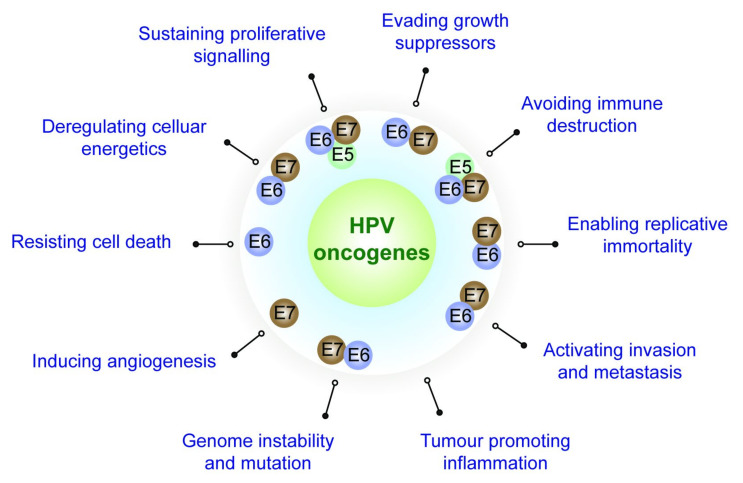
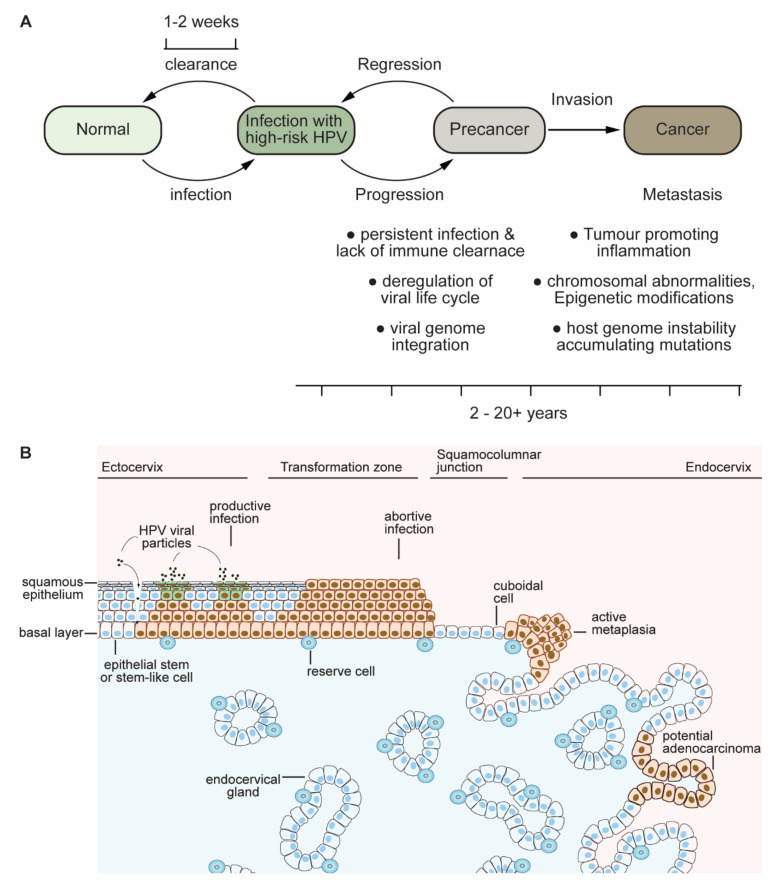
Infection with HPV starts with the access of the viral particles to basal cells in the epidermis, potentially via microtraumas to the skin. The basal cells are able to keep away these pathogens in normal circumstances through a robust immune response from the host, as HPV infections are, in general, cleared within 2 to 3 weeks. However, the rare instances of persistent infection and/or in cases where the host immune system is compromised are major risk factors for the development of lesions potentially leading to malignancy. Evolutionarily, obligatory pathogens such as HPVs would not be expected to risk exposing the host to lethal cancer, as this would entail challenging their own life cycle, but infection with these viruses is highly correlated with cancer and malignancy—as in cancer of the cervix, which is almost always associated with these viruses. Despite this key associative cause and the availability of very effective vaccines against these viruses, therapeutic interventions against HPV-induced cancers are still a challenge, indicating the need for focused translational research. In this review, we will consider the key roles that the viral proteins play in driving the host cells to carcinogenesis, mainly focusing on events orchestrated by early proteins E5, E6 and E7—the not-so-good, the bad and the ugly—and discuss and summarize the major events that lead to these viruses mechanistically corrupting cellular homeostasis, giving rise to cancer and malignancy.
Overview
CoChat Summary
Written by AI from the paper’s full text.
TL;DR
This review argues that HPV E5, E6, and E7 oncoproteins collectively rewire host cellular homeostasis to drive carcinogenesis, with E6/E7 inactivating p53/pRB and E5 contributing to proliferation, apoptosis resistance, and immune evasion. It synthesizes mechanisms across cancer hallmarks and notes that therapeutic agents against HPV-mediated cancers remain lacking.
Key findings
- HPV infection is usually cleared: 70–90% of infections are asymptomatic and resolved within 1–2 years, but 5–10% of infected individuals develop persistent infection that can lead to malignancy; >70% of HPV-mediated cancers are caused by high-risk types 16 and 18.
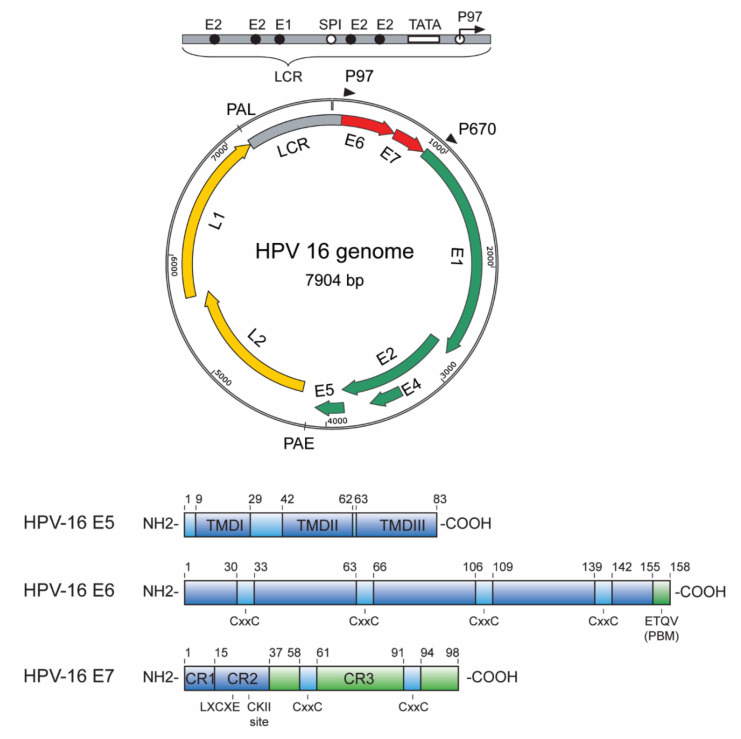
- Viral integration disrupts E2 repression and drives high E6/E7 expression; HPV-18 genome is integrated in 100% of HPV-18-positive cancers, while HPV-16 can remain episomal in up to 25% of cancers.
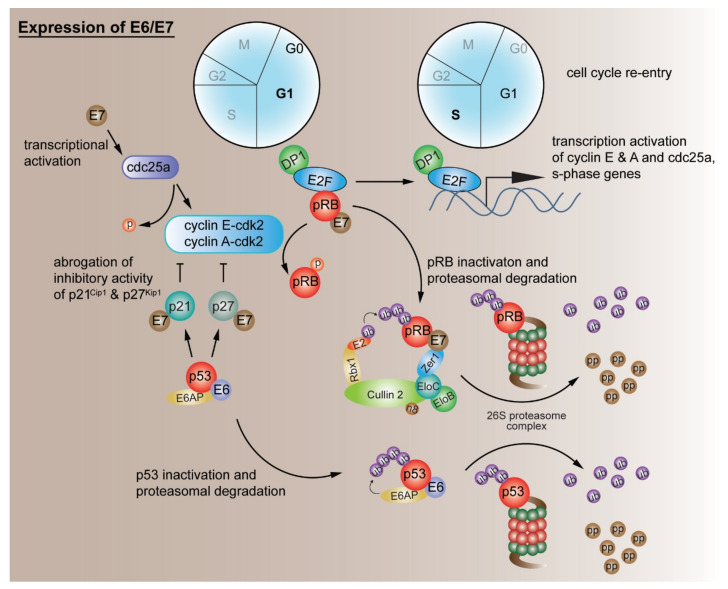
- E6 and E7 inactivate tumor suppressors: E7 binds pRB via LXCXE and destabilizes pocket proteins, while E6 forms an E6–E6AP complex to ubiquitinate and degrade p53; low-risk E7 binds pRB approximately 10-fold less efficiently and cannot target all pRB family proteins.
- E5 contributes via EGFR/MAPK signaling, apoptosis resistance, and immune evasion, including downregulation of MHC class I/II and CD1d; in HNSCC, E5-expressing tumors were resistant to anti-PD-1/PD-L1 immunotherapy, and rimantadine improved checkpoint blockade response.
Methods
- Narrative review; no primary experimental data or systematic search described.
- Synthesizes published literature on HPV E5, E6, and E7, organized around cancer hallmarks such as evading growth suppressors, resisting cell death, sustaining proliferation, replicative immortality, invasion/metastasis, angiogenesis, metabolism, genome instability, immune evasion, and inflammation.
- Main analysis is thematic/mechanistic synthesis of cited studies.
Limitations
- Stated: many mechanisms behind the carcinogenic effects of these viral oncoproteins remain uncovered, and specific therapeutic agents against HPV-mediated cancer have not yet been found; how detected somatic mutations contribute to HPV-mediated carcinogenesis is not fully understood.
- Evident: as a narrative review, it does not perform systematic literature retrieval, quality appraisal, or quantitative meta-analysis, so conclusions depend on selected cited studies.
Model-written summary. Check it against the paper before relying on it.
Integrity signals
Registry
Cites
Statistics
Figures
Verification
Claims the paper makes
157 Check pending · 37 No full text of the sources · 18 Own interpretation · 6 Not checked yet
In the paper
“the presence of the E5 gene in the viral genome correlates with the carcinogenic potential [27,30]”
§ The Not-So-Good, the Bad and the Ugly: HPV E5, E6 and E7 Oncoproteins in the Orchestration of Carcinogenesis > 1. Carcinogenic Orchestration by E5, E6 and E7 > 1.1. E5, E6 and E7 Oncoproteins—An Overview
What the sources say
- Check pendingcites [27] Bravo, 2004, Mucosal human papillomaviruses encode four different E5 proteins whose chemistry and phylogeny correlate with malignant or benign growth, J. Virol. source
- Check pendingcites [30] Schiffman, 2005, The carcinogenicity of human papillomavirus types reflects viral evolution, Virology source
plainstates an association- Asserted: passes — The authors put it forward as true.
- Checkable: passes — It can be checked against evidence.
- Load-bearing: unclear — It is unclear whether the paper’s conclusions depend on it.
- Based: passes — The paper gives a reason why it holds.
In the paper
“recent evidence of circular RNA encompassing the E7 oncogene (circE7) has been demonstrated to make a significant contribution to the E7 protein levels and transforming properties, despite being a less abundant species (~1–3% of total E7 transcripts) [51]”
§ The Not-So-Good, the Bad and the Ugly: HPV E5, E6 and E7 Oncoproteins in the Orchestration of Carcinogenesis > 1. Carcinogenic Orchestration by E5, E6 and E7 > 1.1. E5, E6 and E7 Oncoproteins—An Overview
What the sources say
- Check pendingcites [51] Zhao, 2019, Transforming activity of an oncoprotein-encoding circular RNA from human papillomavirus, Nat. Commun. source
boostedstates a cause- Asserted: passes — The authors put it forward as true.
- Checkable: passes — It can be checked against evidence.
- Load-bearing: unclear — It is unclear whether the paper’s conclusions depend on it.
- Based: passes — The paper gives a reason why it holds.
In the paper
“Persistent infection with HR-HPVs may lead to inadvertent integration of the viral episomes into the host genome [7,8].”
§ The Not-So-Good, the Bad and the Ugly: HPV E5, E6 and E7 Oncoproteins in the Orchestration of Carcinogenesis > 1. Carcinogenic Orchestration by E5, E6 and E7
What the sources say
- Check pendingcites [7] McBride, A.A., and Warburton, A. (2017). The role of integration in oncogenic progression of HPV-associated cancers. PLoS Pathog., 13. source
- Not checked — no full text of the sourcecites [8] McBride, 2017, Mechanisms and strategies of papillomavirus replication, Biol. Chem. source
hedgedstates a possible cause- Asserted: passes — The authors put it forward as true.
- Checkable: passes — It can be checked against evidence.
- Load-bearing: passes — The paper’s conclusions depend on it.
- Based: passes — The paper gives a reason why it holds.
In the paper
“the integration event disrupts the repressive function of the E2 gene on the early promoter, leading to an overwhelming expression of E6 and E7, thereby rewiring cellular functions towards a carcinogenic fate [16]”
§ The Not-So-Good, the Bad and the Ugly: HPV E5, E6 and E7 Oncoproteins in the Orchestration of Carcinogenesis > 1. Carcinogenic Orchestration by E5, E6 and E7
What the sources say
- Check pendingcites [16] Munger, 2004, Mechanisms of human papillomavirus-induced oncogenesis, J. Virol. source
plainstates a cause- Asserted: passes — The authors put it forward as true.
- Checkable: passes — It can be checked against evidence.
- Load-bearing: passes — The paper’s conclusions depend on it.
- Based: passes — The paper gives a reason why it holds.
In the paper
“More than 70% of HPV-mediated cancers are caused by high-risk types 16 and 18 alone”
§ The Not-So-Good, the Bad and the Ugly: HPV E5, E6 and E7 Oncoproteins in the Orchestration of Carcinogenesis > 1. Carcinogenic Orchestration by E5, E6 and E7
What the sources say
- Check pendingcites [13] Burk, 2017, Integrated genomic and molecular characterization of cervical cancer, Nature source
- Not checked — no full text of the sourcecites [14] Cullen, 1991, Analysis of the physical state of different human papillomavirus DNAs in intraepithelial and invasive cervical neoplasm, J. Virol. source
- Check pendingcites [15] Morgan, I.M., DiNardo, L.J., and Windle, B. (2017). Integration of Human Papillomavirus Genomes in Head and Neck Cancer: Is It Time to Consider a Paradigm Shift?. Viruses, 9. source
plainstates a cause- Asserted: passes — The authors put it forward as true.
- Checkable: passes — It can be checked against evidence.
- Load-bearing: unclear — It is unclear whether the paper’s conclusions depend on it.
- Based: passes — The paper gives a reason why it holds.
- It may state two separate claims as one. 82
- Probably not a substantial claim. 9
Create a free account to see these claims.
Create a free account to see these assumptions.
126 more claims
Create a free account to see all 218 claims and to verify the 259 references still open.
Self-check
Percentages, sums and reported differences re-computed from the paper’s own numbers.
Each contradiction between two passages listed here was confirmed by an independent check.
Rated minor: it would not touch a result — a value no result rests on, a p-value that stays on the same side of the significance level, or a conflict that is clerical, resolved elsewhere in the paper, or outside its own findings.
In the paper
§ The Not-So-Good, the Bad and the Ugly: HPV E5, E6 and E7 Oncoproteins in the Orchestration of Carcinogenesis > 2. Role Played by the HPV Oncoproteins towards Attaining the Cancer Hallmarks > 2.8. Genome Instability and the Consequent Mutation of Hallmark-Enabling Genes
“Higher expression of p16INK4A caused by HPV-16 E7 mediated KDM6D upregulation represents an E7-triggered oncogene-induced senescence (OIS) response.”
§ The Not-So-Good, the Bad and the Ugly: HPV E5, E6 and E7 Oncoproteins in the Orchestration of Carcinogenesis > 2. Role Played by the HPV Oncoproteins towards Attaining the Cancer Hallmarks > 2.8. Genome Instability and the Consequent Mutation of Hallmark-Enabling Genes
“Further, KDM6B induction mediates increased expression of the cervical cancer biomarker p16INK4A.”
Rated minor: it would not touch a result — a value no result rests on, a p-value that stays on the same side of the significance level, or a conflict that is clerical, resolved elsewhere in the paper, or outside its own findings.
In the paper
§ The Not-So-Good, the Bad and the Ugly: HPV E5, E6 and E7 Oncoproteins in the Orchestration of Carcinogenesis > 2. Role Played by the HPV Oncoproteins towards Attaining the Cancer Hallmarks > 2.3. Sustaining Proliferative Signalling
“One of the key roles that HPV E5 plays towards development of cancer is to thwart the activation of certain growth factor signalling pathways.”
§ The Not-So-Good, the Bad and the Ugly: HPV E5, E6 and E7 Oncoproteins in the Orchestration of Carcinogenesis > 2. Role Played by the HPV Oncoproteins towards Attaining the Cancer Hallmarks > 2.3. Sustaining Proliferative Signalling
“HPV-E5 has been shown to activate proliferative signalling in a number of ways.”
Citations
Cites
Hallmarks of Cancer: The Next Generation
Hanahan, D., & Weinberg, R. A. (2011) · Cell · doi:10.1016/j.cell.2011.02.013 · Cited by 66,590
The serial cultivation of human diploid cell strains
Hayflick, L., & Moorhead, P. S. (1961) · Experimental Cell Research · doi:10.1016/0014-4827(61)90192-6 · Cited by 8,508
WAF1, a potential mediator of p53 tumor suppression
El-Deiry, W. S., Tokino, T., Velculescu, V. E., Levy, D. B., Parsons, R., Trent, J. M., Lin, D., Mercer, W. E., Kinzler, K. W., & Vogelstein, B. (1993) · Cell · doi:10.1016/0092-8674(93)90500-p · Cited by 8,321
Patterns and emerging mechanisms of the angiogenic switch during tumorigenesis
Hanahan, D., & Folkman, J. (1996) · Cell · doi:10.1016/s0092-8674(00)80108-7 · Cited by 6,885
The limited in vitro lifetime of human diploid cell strains
Hayflick, L. (1965) · Experimental Cell Research · doi:10.1016/0014-4827(65)90211-9 · Cited by 5,876
The E6 oncoprotein encoded by human papillomavirus types 16 and 18 promotes the degradation of p53
Scheffner, M., Werness, B. A., Huibregtse, J. M., Levine, A. J., & Howley, P. M. (1990) · Cell · doi:10.1016/0092-8674(90)90409-8 · Cited by 3,995
Comprehensive genomic characterization of head and neck squamous cell carcinomas
The Cancer Genome Atlas Network (2015) · Nature · doi:10.1038/nature14129 · Cited by 3,877
On Respiratory Impairment in Cancer Cells
Warburg, O. H. (1956) · Science · doi:10.1126/science.124.3215.269 · Cited by 3,513
The human papilloma virus-16 E7-oncoprotein is able to bind to the retinoblastoma gene product
Dyson, N., Howley, P. M., Münger, K., & Harlow, E. (1989) · Science · doi:10.1126/science.2537532 · Cited by 3,017
Proliferation, cell cycle and apoptosis in cancer
Evan, G. I., & Vousden, K. H. (2001) · Nature · doi:10.1038/35077213 · Cited by 2,724
Association of Human Papillomavirus Types 16 and 18 E6 Proteins with p53
Werness, B. A., Levine, A. J., & Howley, P. M. (1990) · Science · doi:10.1126/science.2157286 · Cited by 2,562
Worldwide burden of cancer attributable to HPV by site, country and HPV type
de Martel, C., Plummer, M., Vignat, J., & Franceschi, S. (2017) · International Journal of Cancer · doi:10.1002/ijc.30716 · Cited by 2,330
The regulation of E2F by pRB-family proteins.
Dyson, N. (1998) · Genes & Development · doi:10.1101/gad.12.15.2245 · Cited by 2,317
Global burden of cancers attributable to infections in 2012: a synthetic analysis
Plummer, M., de Martel, C., Vignat, J., Ferlay, J., Bray, F., & Franceschi, S. (2016) · The Lancet Global Health · doi:10.1016/s2214-109x(16)30143-7 · Cited by 1,634
Integrated genomic and molecular characterization of cervical cancer
The Cancer Genome Atlas Research Network (2017) · Nature · doi:10.1038/nature21386 · Cited by 1,479
Tischer, E., Mitchell, R., Hartman, T., Silva, M., Gospodarowicz, D., Fiddes, J. C., & Abraham, J. A. (1991) · Journal of Biological Chemistry · doi:10.1016/s0021-9258(18)99049-6 · Cited by 1,476
Recognition of Unique Carboxyl-Terminal Motifs by Distinct PDZ Domains
Songyang, Z., Fanning, A. S., Fu, C., Xu, J., Marfatia, S. M., Chishti, A. H., Crompton, A., Chan, A. C., Anderson, J. M., & Cantley, L. C. (1997) · Science · doi:10.1126/science.275.5296.73 · Cited by 1,385
Frisch, S. M., & Screaton, R. A. (2001) · Current Opinion in Cell Biology · doi:10.1016/s0955-0674(00)00251-9 · Cited by 1,249
Regulation of tumor angiogenesis by p53-induced degradation of hypoxia-inducible factor 1alpha.
Ravi, R. K., Mookerjee, B., Bhujwalla, Z. M., Sutter, T. R., Artemov, D., Zeng, Q., Dillehay, L. E., Madan, A., Semenza, G. L., & Bedi, A. (2000) · PubMed Central · Cited by 1,099
Münger, K., Phelps, W. C., Bubb, V, Howley, P. M., & Schlegel, R. (1989) · Journal of Virology · doi:10.1128/jvi.63.10.4417-4421.1989 · Cited by 1,030
PI3K/AKT signaling pathway and cancer: An updated review
Martini, M., De Santis, M. C., Braccini, L., Gulluni, F., & Hirsch, E. (2014) · Annals of Medicine · doi:10.3109/07853890.2014.912836 · Cited by 1,020
Carcinogenic human papillomavirus infection
Schiffman, M., Doorbar, J., Wentzensen, N., de Sanjosé, S., Fakhry, C., Monk, B. J., Stanley, M. A., & Franceschi, S. (2016) · Nature Reviews Disease Primers · doi:10.1038/nrdp.2016.86 · Cited by 999
Asymmetric cell divisions promote stratification and differentiation of mammalian skin
Lechler, T., & Fuchs, E. (2005) · Nature · doi:10.1038/nature03922 · Cited by 998
Regulation of tumor angiogenesis by p53-induced degradation of hypoxia-inducible factor 1α
Ravi, R., Mookerjee, B., Bhujwalla, Z. M., Sutter, C. H., Artemov, D., Zeng, Q., Dillehay, L. E., Madan, A., Semenza, G. L., & Bedi, A. (2000) · Genes & Development · doi:10.1101/gad.14.1.34 · Cited by 967
Münger, K., Werness, B. A., Dyson, N., Phelps, W. C., Harlow, E., & Howley, P. M. (1989) · The EMBO Journal · doi:10.1002/j.1460-2075.1989.tb08594.x · Cited by 964
Direct activation of TERT transcription by c-MYC
Wu, K.-J., Grandori, C., Amacker, M., Simon-Vermot, N., Polack, A., Lingner, J., & Dalla-Favera, R. (1999) · Nature Genetics · doi:10.1038/6010 · Cited by 893
Huibregtse, J. M., Scheffner, M., & Howley, P. M. (1991) · The EMBO Journal · doi:10.1002/j.1460-2075.1991.tb04990.x · Cited by 879
Physiology and pathophysiology of matrix metalloproteases
Klein, T., & Bischoff, R. (2010) · Amino Acids · doi:10.1007/s00726-010-0689-x · Cited by 866
Mechanisms of human papillomavirus-induced oncogenesis
Münger, K., Baldwin, A., Edwards, K. M., Hayakawa, H., Nguyen, C. L., Owens, M., Grace, M., & Huh, K. (2004) · Journal of Virology · doi:10.1128/jvi.78.21.11451-11460.2004 · Cited by 815
HPV16 E6 and E7 proteins cooperate to immortalize human foreskin keratinocytes
Hawley‐Nelson, P., Vousden, K. H., Hubbert, N. L., Lowy, D. R., & Schiller, J. T. (1989) · The EMBO Journal · doi:10.1002/j.1460-2075.1989.tb08570.x · Cited by 733
De novo carcinogenesis promoted by chronic inflammation is B lymphocyte dependent
de Visser, K. E., Korets, L. V., & Coussens, L. M. (2005) · Cancer Cell · doi:10.1016/j.ccr.2005.04.014 · Cited by 715
Kombe, A. J. K., Li, B., Zahid, A., Mengist, H. M., Bounda, G., Zhou, Y. Y., & Jin, T. (2021) · Frontiers in Public Health · doi:10.3389/fpubh.2020.552028 · Cited by 715
Giraudo, E., Inoue, M., & Hanahan, D. (2004) · Journal of Clinical Investigation · doi:10.1172/jci200422087 · Cited by 700
Smotkin, D., & Wettstein, F. O. (1986) · Proceedings of the National Academy of Sciences · doi:10.1073/pnas.83.13.4680 · Cited by 661
Telomerase activation by the E6 gene product of human papillomavirus type 16
Klingelhutz, A. J., Foster, S. A., & McDougall, J. K. (1996) · Nature · doi:10.1038/380079a0 · Cited by 660
Ronco, L. V., Karpova, A. Y., Vidal, M., & Howley, P. M. (1998) · Genes & Development · doi:10.1101/gad.12.13.2061 · Cited by 544
Polycomb group proteins: navigators of lineage pathways led astray in cancer
Bracken, A. P., & Helin, K. (2009) · Nature Reviews Cancer · doi:10.1038/nrc2736 · Cited by 523
Phelps, W. C., Yee, C. L., Münger, K., & Howley, P. M. (1988) · Cell · doi:10.1016/0092-8674(88)90570-3 · Cited by 509
Halbert, C. L., Demers, G. W., & Galloway, D. A. (1991) · Journal of Virology · doi:10.1128/jvi.65.1.473-478.1991 · Cited by 462
DNA tumor virus oncogenes antagonize the cGAS-STING DNA-sensing pathway
Lau, L., Gray, E. E., Brunette, R. L., & Stetson, D. B. (2015) · Science · doi:10.1126/science.aab3291 · Cited by 453
Cullen, A. P., Reid, R., Campion, M., & Lörincz, A. T. (1991) · Journal of Virology · doi:10.1128/jvi.65.2.606-612.1991 · Cited by 445
The carcinogenicity of human papillomavirus types reflects viral evolution
Schiffman, M., Herrero, R., DeSalle, R., Hildesheim, A., Wacholder, S., Cecilia Rodriguez, A., Bratti, M. C., Sherman, M. E., Morales, J., Guillen, D., et al. (2005) · Virology · doi:10.1016/j.virol.2005.04.002 · Cited by 441
Kiyono, T., Hiraiwa, A., Fujita, M., Hayashi, Y., Akiyama, T., & Ishibashi, M. (1997) · Proceedings of the National Academy of Sciences · doi:10.1073/pnas.94.21.11612 · Cited by 428
A complex barcode underlies the heterogeneous response of p53 to stress
Murray-Zmijewski, F., Slee, E. A., & Lu, X. (2008) · Nature Reviews Molecular Cell Biology · doi:10.1038/nrm2451 · Cited by 420
Funk, J. O., Waga, S., Harry, J. B., Espling, E., Stillman, B., & Galloway, D. A. (1997) · Genes & Development · doi:10.1101/gad.11.16.2090 · Cited by 419
The papillomavirus E7 proteins
Roman, A., & Münger, K. (2013) · Virology · doi:10.1016/j.virol.2013.04.013 · Cited by 410
Duensing, S., Lee, L. Y., Duensing, A., Basile, J., Piboonniyom, S.-O., Gonzalez, S., Crum, C. P., & Münger, K. (2000) · Proceedings of the National Academy of Sciences · doi:10.1073/pnas.170093297 · Cited by 397
Nakagawa, S., & Huibregtse, J. M. (2000) · Molecular and Cellular Biology · doi:10.1128/mcb.20.21.8244-8253.2000 · Cited by 382
Anchorage-dependent Cell Cycle Progression
Assoian, R. K. (1997) · The Journal of Cell Biology · doi:10.1083/jcb.136.1.1 · Cited by 379
Jones, D. L., Alani, R. M., & Münger, K. (1997) · Genes & Development · doi:10.1101/gad.11.16.2101 · Cited by 378
The role of integration in oncogenic progression of HPV-associated cancers
McBride, A. A., & Warburton, A. (2017) · PLOS Pathogens · doi:10.1371/journal.ppat.1006211 · Cited by 376
Papillomavirus E6 oncoproteins
Pol, S. V., & Klingelhutz, A. J. (2013) · Virology · doi:10.1016/j.virol.2013.04.026 · Cited by 374
The E6 protein of human papillomavirus type 16 binds to and inhibits co-activation by CBP and p300
Patel, D., Huang, S., Baglia, L. A., & McCance, D. J. (1999) · The EMBO Journal · doi:10.1093/emboj/18.18.5061 · Cited by 374
Moody, C. A., & Laimins, L. A. (2009) · PLoS Pathogens · doi:10.1371/journal.ppat.1000605 · Cited by 371
Mietz, J. A., Unger, T., Huibregtse, J. M., & Howley, P. M. (1992) · The EMBO Journal · doi:10.1002/j.1460-2075.1992.tb05608.x · Cited by 368
Goodwin, E. C., & DiMaio, D. (2000) · Proceedings of the National Academy of Sciences · doi:10.1073/pnas.97.23.12513 · Cited by 362
Dependence of Cyclin E-CDK2 Kinase Activity on Cell Anchorage
Fang, F., Orend, G., Watanabe, N., Hunter, T. R., & Ruoslahti, E. I. (1996) · Science · doi:10.1126/science.271.5248.499 · Cited by 360
Lee, S. S., Weiss, R. S., & Javier, R. T. (1997) · Proceedings of the National Academy of Sciences · doi:10.1073/pnas.94.13.6670 · Cited by 356
Molecular mechanisms of E2F-dependent activation and pRB-mediated repression
Frolov, M. V., & Dyson, N. J. (2004) · Journal of Cell Science · doi:10.1242/jcs.01227 · Cited by 338
Kuzmichev, A., Margueron, R., Vaquero, A., Preissner, T. S., Scher, M., Kirmizis, A., Ouyang, X., Brockdorff, N., Abate-Shen, C., Farnham, P., et al. (2005) · Proceedings of the National Academy of Sciences · doi:10.1073/pnas.0409875102 · Cited by 336
Inactivation of the cdk inhibitor p27KIP1 by the human papillomavirus type 16 E7 oncoprotein.
Zerfass, K., Zwerschke, W., Mannhardt, B., Tindle, R. W., Botz, J. W., & Jansen‐Dürr, P. (1996) · PubMed · Cited by 333
Barbosa, M. S., Edmonds, C., Fisher, C., Schiller, J. T., Lowy, D. R., & Vousden, K. H. (1990) · The EMBO Journal · doi:10.1002/j.1460-2075.1990.tb08091.x · Cited by 327
Dyson, N., Guida, P., Münger, K., & Harlow, E. (1992) · Journal of Virology · doi:10.1128/jvi.66.12.6893-6902.1992 · Cited by 314
Inactivation of a Cdk2 Inhibitor during Interleukin 2-Induced Proliferation of Human T Lymphocytes
Firpo, E. J., Koff, A., Solomon, M. J., & Roberts, J. M. (1994) · Molecular and Cellular Biology · doi:10.1128/mcb.14.7.4889 · Cited by 295
McLaughlin-Drubin, M. E., Crum, C. P., & Münger, K. (2011) · Proceedings of the National Academy of Sciences · doi:10.1073/pnas.1009933108 · Cited by 288
Inactivation of Interferon Regulatory Factor-1 Tumor Suppressor Protein by HPV E7 Oncoprotein
Park, J.-S., Kim, E.-J., Kwon, H.-J., Hwang, E.-S., Namkoong, S.-E., & Um, S.-J. (2000) · Journal of Biological Chemistry · doi:10.1074/jbc.275.10.6764 · Cited by 285
Butz, K., Ristriani, T., Hengstermann, A., Denk, C., Scheffner, M., & Hoppe-Seyler, F. (2003) · Oncogene · doi:10.1038/sj.onc.1206894 · Cited by 283
Zimmermann, H., Degenkolbe, R., Bernard, H.-U., & O’Connor, M. J. (1999) · Journal of Virology · doi:10.1128/jvi.73.8.6209-6219.1999 · Cited by 282
DNA methylation and microRNA dysregulation in cancer
Suzuki, H., Maruyama, R., Yamamoto, E., & Kai, M. (2012) · Molecular Oncology · doi:10.1016/j.molonc.2012.07.007 · Cited by 280
Smith, J. S. (2002) · CancerSpectrum Knowledge Environment · doi:10.1093/jnci/94.21.1604 · Cited by 278
Gewin, L., Myers, H., Kiyono, T., & Galloway, D. A. (2004) · Genes & Development · doi:10.1101/gad.1214704 · Cited by 277
Gardiol, D., Kühne, C., Glaunsinger, B., Lee, S. S., Javier, R., & Banks, L. (1999) · Oncogene · doi:10.1038/sj.onc.1202920 · Cited by 277
Self-citationTransforming activity of an oncoprotein-encoding circular RNA from human papillomavirus
Zhao, J., Lee, E. E., Kim, J., Yang, R., Chamseddin, B., Ni, C., Gusho, E., Xie, Y., Chiang, C.-M., Buszczak, M., et al. (2019) · Nature Communications · doi:10.1038/s41467-019-10246-5 · Cited by 276
Straight, S. W., Hinkle, P. M., Jewers, R. J., & McCance, D. J. (1993) · Journal of Virology · doi:10.1128/jvi.67.8.4521-4532.1993 · Cited by 271
Gonzalez, S. L., Stremlau, M., He, X., Basile, J. R., & Münger, K. (2001) · Journal of Virology · doi:10.1128/jvi.75.16.7583-7591.2001 · Cited by 270
DiMaio, D., & Petti, L. M. (2013) · Virology · doi:10.1016/j.virol.2013.05.006 · Cited by 269
The E7 oncoprotein associates with Mi2 and histone deacetylase activity to promote cell growth
Brehm, A., Nielsen, S. J., Miska, E. A., McCance, D. J., Reid, J. L., Bannister, A. J., & Kouzarides, T. (1999) · The EMBO Journal · doi:10.1093/emboj/18.9.2449 · Cited by 267
Human papillomavirus type 16 alters human epithelial cell differentiation in vitro
McCance, D. J., Kopan, R., Fuchs, E., & Laimins, L. A. (1988) · Proceedings of the National Academy of Sciences · doi:10.1073/pnas.85.19.7169 · Cited by 265
Glaunsinger, B. A., Lee, S. S., Thomas, M., Banks, L., & Javier, R. (2000) · Oncogene · doi:10.1038/sj.onc.1203906 · Cited by 264
Self-citationCloning of cDNAs for cellular proteins that bind to the retinoblastoma gene product
Defeo-Jones, D., Huang, P. S., Jones, R. E., Haskell, K. M., Vuocolo, G. A., Hanobik, M. G., Huber, H. E., & Oliff, A. (1991) · Nature · doi:10.1038/352251a0 · Cited by 263
Huh, K., Zhou, X., Hayakawa, H., Cho, J.-Y., Libermann, T. A., Jin, J., Wade Harper, J., & Munger, K. (2007) · Journal of Virology · doi:10.1128/jvi.00881-07 · Cited by 259
Human papillomavirus type 16 DNA cooperates with activated ras in transforming primary cells
Matlashewski, G., Schneider, J., Banks, L., Jones, N., Murray, A., & Crawford, L. (1987) · The EMBO Journal · doi:10.1002/j.1460-2075.1987.tb02426.x · Cited by 258
Self-citationHudson, J. B., Bedell, M. A., McCance, D. J., & Laiminis, L. A. (1990) · Journal of Virology · doi:10.1128/jvi.64.2.519-526.1990 · Cited by 258
Straight, S. W., Herman, B. A., & McCance, D. J. (1995) · Journal of Virology · doi:10.1128/jvi.69.5.3185-3192.1995 · Cited by 255
Li, S., Labrecque, S., Gauzzi, M. C., Cuddihy, A. R., Wong, A. H., Pellegrini, S., Matlashewski, G. J., & Koromilas, A. E. (1999) · Oncogene · doi:10.1038/sj.onc.1202960 · Cited by 245
Liu, X., Clements, A. M., Zhao, K., & Marmorstein, R. (2005) · Journal of Biological Chemistry · doi:10.1074/jbc.m508455200 · Cited by 243
Viral oncoproteins target the DNA methyltransferases
Burgers, W. A., Blanchon, L., Pradhan, S., Launoit, Y. D., Kouzarides, T., & Fuks, F. (2007) · Oncogene · doi:10.1038/sj.onc.1209950 · Cited by 242
Inhibition of Bak-induced apoptosis by HPV-18 E6
Thomas, M., & Banks, L. (1998) · Oncogene · doi:10.1038/sj.onc.1202223 · Cited by 241
Self-citationHuibregtse, J. M., Scheffner, M., & Howley, P. M. (1993) · Molecular and Cellular Biology · doi:10.1128/mcb.13.2.775 · Cited by 233
Papillomavirus sequences integrate near cellular oncogenes in some cervical carcinomas
Dürst, M., Croce, C. M., Gissmann, L., Schwarz, E., & Huebner, K. (1987) · Proceedings of the National Academy of Sciences · doi:10.1073/pnas.84.4.1070 · Cited by 232
Jones, D. L., Thompson, D. A., & Münger, K. (1997) · Virology · doi:10.1006/viro.1997.8851 · Cited by 231
Par3 controls epithelial spindle orientation by aPKC-mediated phosphorylation of apical Pins
Hao, Y., Du, Q., Chen, X., Zheng, Z., Balsbaugh, J. L., Maitra, S., Shabanowitz, J., Hunt, D. F., & Macara, I. G. (2010) · Current Biology · doi:10.1016/j.cub.2010.09.032 · Cited by 230
Tang, S., Tao, M., McCoy, J. P., & Zheng, Z. (2006) · Journal of Virology · doi:10.1128/jvi.80.9.4249-4263.2006 · Cited by 230
Halbert, C. L., Demers, G. W., & Galloway, D. A. (1992) · Journal of Virology · doi:10.1128/jvi.66.4.2125-2134.1992 · Cited by 227
Persistent Human Papillomavirus Infection
Fera, A. N. D., Warburton, A., Coursey, T. L., Khurana, S., & McBride, A. A. (2021) · Viruses · doi:10.3390/v13020321 · Cited by 227
Modulation of type M 2 pyruvate kinase activity by the human papillomavirus type 16 E7 oncoprotein
Zwerschke, W., Mazurek, S., Massimi, P., Banks, L., Eigenbrodt, E., & Jansen-Dürr, P. (1999) · Proceedings of the National Academy of Sciences · doi:10.1073/pnas.96.4.1291 · Cited by 223
Self-citationStructural basis for hijacking of cellular LxxLL motifs by papillomavirus E6 oncoproteins
Zanier, K., Charbonnier, S., Sidi, A. O. M. O., McEwen, A. G., Ferrario, M. G., Poussin-Courmontagne, P., Cura, V., Brimer, N., Babah, K. O., Ansari, T., et al. (2013) · Science · doi:10.1126/science.1229934 · Cited by 222
p53 regulates the expression of the tumor suppressor gene maspin
Zou, Z., Gao, C., Nagaich, A. K., Connell, T., Saito, S., Moul, J. W., Seth, P., Appella, E., & Srivastava, S. (2000) · Journal of Biological Chemistry · doi:10.1074/jbc.275.9.6051 · Cited by 221
Johnston, C. A., Hirono, K., Prehoda, K. E., & Doe, C. Q. (2009) · Cell · doi:10.1016/j.cell.2009.07.041 · Cited by 216
Detection of novel splicing patterns in a HPV16-containing keratinocyte cell line
Doorbar, J., Parton, A., Hartley, K. O., Banks, L., Crook, T., Stanley, M., & Crawford, L. (1990) · Virology · doi:10.1016/0042-6822(90)90401-c · Cited by 201
Self-citationOh, S. T., Kyo, S., & Laimins, L. A. (2001) · Journal of Virology · doi:10.1128/jvi.75.12.5559-5566.2001 · Cited by 201
Dobrosotskaya, I. Y., Guy, R. K., & James, G. L. (1997) · Journal of Biological Chemistry · doi:10.1074/jbc.272.50.31589 · Cited by 196
Inhibition of p53 DNA binding by human papillomavirus E6 proteins
Lechner, M. S., & Laimins, L. A. (1994) · Journal of Virology · doi:10.1128/jvi.68.7.4262-4273.1994 · Cited by 195
Structure-function analysis of the human papillomavirus type 16 E7 oncoprotein
Phelps, W. C., Münger, K., Yee, C. L., Barnes, J. A., & Howley, P. M. (1992) · Journal of Virology · doi:10.1128/jvi.66.4.2418-2427.1992 · Cited by 194
E5 protein of human papillomavirus type 16 selectively downregulates surface HLA class I
Ashrafi, G. H., Haghshenas, M. R., Marchetti, B., O'Brien, P. M., & Campo, M. S. (2005) · International Journal of Cancer · doi:10.1002/ijc.20558 · Cited by 192
Hasan, U. A., Zannetti, C., Parroche, P., Goutagny, N., Malfroy, M., Roblot, G., Carreira, C., Hussain, I., Müller, M., Taylor-Papadimitriou, J., et al. (2013) · Journal of Experimental Medicine · doi:10.1084/jem.20122394 · Cited by 191
Woodworth, C. D., Doniger, J., & DiPaolo, J. A. (1989) · Journal of Virology · doi:10.1128/jvi.63.1.159-164.1989 · Cited by 190
Spangle, J. M., & Münger, K. (2010) · Journal of Virology · doi:10.1128/jvi.00974-10 · Cited by 189
Schlegel, R., Phelps, W. C., Zhang, Y. L., & Barbosa, M. (1988) · The EMBO Journal · doi:10.1002/j.1460-2075.1988.tb03185.x · Cited by 189
Papillomavirus polypeptides E6 and E7 are zinc-binding proteins
Barbosa, M. S., Lowy, D. R., & Schiller, J. T. (1989) · Journal of Virology · doi:10.1128/jvi.63.3.1404-1407.1989 · Cited by 184
Pahler, J. C., Tazzyman, S., Erez, N., Chen, Y.-Y., Murdoch, C., Nozawa, H., Lewis, C. E., & Hanahan, D. (2008) · Neoplasia · doi:10.1593/neo.07871 · Cited by 184
López-Ocejo, O., Viloria-Petit, A., Bequet-Romero, M., Mukhopadhyay, D., Rak, J., & Kerbel, R. S. (2000) · Oncogene · doi:10.1038/sj.onc.1203817 · Cited by 183
Human papillomavirus type 16 DNA-induced malignant transformation of NIH 3T3 cells
Yasumoto, S., Burkhardt, A. L., Doniger, J., & DiPaolo, J. A. (1986) · Journal of Virology · doi:10.1128/jvi.57.2.572-577.1986 · Cited by 183
KDM5 histone demethylases repress immune response via suppression of STING
Wu, L., Cao, J. P., Cai, W. L., Lang, S. M., Horton, J. R., Jansen, D. J., Liu, Z. Z., Chen, J. F.-Y., Zhang, M., Mott, B. T., et al. (2018) · PLoS Biology · doi:10.1371/journal.pbio.2006134 · Cited by 183
Huibregtse, J. M., Scheffner, M., & Howley, P. M. (1993) · Molecular and Cellular Biology · doi:10.1128/mcb.13.8.4918 · Cited by 182
Gage, J. R., Meyers, C., & Wettstein, F. O. (1990) · Journal of Virology · doi:10.1128/jvi.64.2.723-730.1990 · Cited by 180
Thomas, M. C., & Chiang, C.-M. (2005) · Molecular Cell · doi:10.1016/j.molcel.2004.12.016 · Cited by 178
Nominé, Y., Masson, M., Charbonnier, S., Zanier, K., Ristriani, T., Deryckère, F., Sibler, A.-P., Desplancq, D., Atkinson, R. A., Weiss, E., et al. (2006) · Molecular Cell · doi:10.1016/j.molcel.2006.01.024 · Cited by 177
Rapid induction of senescence in human cervical carcinoma cells
Goodwin, E. C., Yang, E., Lee, C.-J., Lee, H.-W., DiMaio, D., & Hwang, E.-S. (2000) · Proceedings of the National Academy of Sciences · doi:10.1073/pnas.97.20.10978 · Cited by 176
Huh, K.-W., DeMasi, J., Ogawa, H., Nakatani, Y., Howley, P. M., & Münger, K. (2005) · Proceedings of the National Academy of Sciences · doi:10.1073/pnas.0505337102 · Cited by 176
Mechanism of Genomic Instability in Cells Infected with the High-Risk Human Papillomaviruses
Kadaja, M., Isok-Paas, H., Laos, T., Ustav, E., & Ustav, M. (2009) · PLoS Pathogens · doi:10.1371/journal.ppat.1000397 · Cited by 173
Demers, G. W., Foster, S. A., Halbert, C. L., & Galloway, D. A. (1994) · Proceedings of the National Academy of Sciences · doi:10.1073/pnas.91.10.4382 · Cited by 172
Smith, J. S., Muñoz, N., Herrero, R., Eluf‐Neto, J., Ngelangel, C., Franceschi, S., Bosch, F. X., Walboomers, J. M. M., & Peeling, R. W. (2002) · The Journal of Infectious Diseases · doi:10.1086/338569 · Cited by 171
Thomas, M., & Banks, L. (1999) · Journal of General Virology · doi:10.1099/0022-1317-80-6-1513 · Cited by 166
Self-citationAntinore, M. J., Birrer, M. J., Patel, D., Nader, L., & McCance, D. J. (1996) · The EMBO Journal · doi:10.1002/j.1460-2075.1996.tb00546.x · Cited by 165
Liu, Y., Chen, J. J., Gao, Q., Dalal, S., Hong, Y., Mansur, C. P., Band, V., & Androphy, E. J. (1999) · Journal of Virology · doi:10.1128/jvi.73.9.7297-7307.1999 · Cited by 165
Tumor suppressor p16 INK4A is necessary for survival of cervical carcinoma cell lines
McLaughlin-Drubin, M. E., Park, D., & Munger, K. (2013) · Proceedings of the National Academy of Sciences · doi:10.1073/pnas.1310432110 · Cited by 163
Human papillomaviruses, cervical cancer and cell polarity
Thomas, M., Narayan, N., Pim, D., Tomaić, V, Massimi, P., Nagasaka, K., Kranjec, C., Gammoh, N., & Banks, L. (2008) · Oncogene · doi:10.1038/onc.2008.351 · Cited by 163
Self-citationHuman papillomavirus types 16 E6 and E7 contribute differently to carcinogenesis
Song, S., Liem, A., Miller, J. A., & Lambert, P. F. (2000) · Virology · doi:10.1006/viro.1999.0106 · Cited by 160
The major human papillomavirus protein in cervical cancers is a cytoplasmic phosphoprotein
Smotkin, D., & Wettstein, F. O. (1987) · Journal of Virology · doi:10.1128/jvi.61.5.1686-1689.1987 · Cited by 159
Zhang, B., Chen, W., & Roman, A. (2006) · Proceedings of the National Academy of Sciences · doi:10.1073/pnas.0510012103 · Cited by 156
Yoshinouchi, M., Yamada, T., Kizaki, M., Fen, J., Koseki, T., Ikeda, Y., Nishihara, T., & Yamato, K. (2003) · Molecular Therapy · doi:10.1016/j.ymthe.2003.08.004 · Cited by 156
Pim, D., Massimi, P., Dilworth, S. M., & Banks, L. (2005) · Oncogene · doi:10.1038/sj.onc.1208935 · Cited by 156
Self-citationReiser, J., Hurst, J., Voges, M., Krauss, P., Münch, P., Iftner, T., & Stubenrauch, F. (2011) · Journal of Virology · doi:10.1128/jvi.05279-11 · Cited by 155
Robust control of mitotic spindle orientation in the developing epidermis
Poulson, N. D., & Lechler, T. (2010) · The Journal of Cell Biology · doi:10.1083/jcb.201008001 · Cited by 154
Huang, S.-M., & McCance, D. J. (2002) · Journal of Virology · doi:10.1128/jvi.76.17.8710-8721.2002 · Cited by 151
Filippova, M., Parkhurst, L., & Duerksen-Hughes, P. J. (2004) · Journal of Biological Chemistry · doi:10.1074/jbc.m401172200 · Cited by 149
DiMaio, D., Guralski, D., & Schiller, J. T. (1986) · Proceedings of the National Academy of Sciences · doi:10.1073/pnas.83.6.1797 · Cited by 149
Zerfass, K., Schulze, A., Spitkovsky, D., Friedman, V, Henglein, B., & Jansen-Dürr, P. (1995) · Journal of Virology · doi:10.1128/jvi.69.10.6389-6399.1995 · Cited by 147
Bodily, J. M., Mehta, K. P. M., & Laimins, L. A. (2011) · Cancer Research · doi:10.1158/0008-5472.can-10-2626 · Cited by 147
Jones, D. L., & Münger, K. (1997) · Journal of Virology · doi:10.1128/jvi.71.4.2905-2912.1997 · Cited by 146
Loss of p53 protein in human papillomavirus type 16 E6-immortalized human mammary epithelial cells
Band, V, De Caprio, J. A., Delmolino, L., Kulesa, V, & Sager, R. (1991) · Journal of Virology · doi:10.1128/jvi.65.12.6671-6676.1991 · Cited by 145
Human papillomavirus type 16 E7 up-regulates AKT activity through the retinoblastoma protein
Menges, C. W., Baglia, L. A., Lapoint, R., & McCance, D. J. (2006) · Cancer Research · doi:10.1158/0008-5472.can-06-0499 · Cited by 145
Melar-New, M., & Laimins, L. A. (2010) · Journal of Virology · doi:10.1128/jvi.00078-10 · Cited by 145
McMurray, H. R., & McCance, D. J. (2003) · Journal of Virology · doi:10.1128/jvi.77.18.9852-9861.2003 · Cited by 143
HPV-16 E5 down-regulates expression of surface HLA class I and reduces recognition by CD8 T cells
Campo, M. S., Graham, S. V., Cortese, M. S., Ashrafi, G. H., Araibi, E. H., Dornan, E. S., Miners, K., Nunes, C., & Man, S. (2010) · Virology · doi:10.1016/j.virol.2010.07.044 · Cited by 142
Human papillomavirus E6 and E7: What remains?
Vats, A., Trejo-Cerro, Ó., Thomas, M., & Banks, L. (2021) · Tumour Virus Research · doi:10.1016/j.tvr.2021.200213 · Cited by 141
Self-citationChiang, C., Pauli, E.-K., Biryukov, J., Feister, K. F., Meng, M., White, E. A., Münger, K., Howley, P. M., Meyers, C., & Gack, M. U. (2018) · Journal of Virology · doi:10.1128/jvi.01737-17 · Cited by 140
Evolving immunosuppressive microenvironment during human cervical carcinogenesis
Kobayashi, A., Weinberg, V, Darragh, T., & Smith-McCune, K. (2008) · Mucosal Immunology · doi:10.1038/mi.2008.33 · Cited by 136
Pim, D., Massimi, P., & Banks, L. (1997) · Oncogene · doi:10.1038/sj.onc.1201202 · Cited by 136
Self-citationHelt, A.-M., & Galloway, D. A. (2001) · Journal of Virology · doi:10.1128/jvi.75.15.6737-6747.2001 · Cited by 135
Brimer, N., Lyons, C., Wallberg, A. E., & Vande Pol, S. B. (2012) · Oncogene · doi:10.1038/onc.2011.589 · Cited by 133
Tan, M. J. A., White, E. A., Sowa, M. E., Harper, J. W., Aster, J. C., & Howley, P. M. (2012) · Proceedings of the National Academy of Sciences · doi:10.1073/pnas.1205991109 · Cited by 132
Ashrafi, G. H., Haghshenas, M., Marchetti, B., & Campo, M. S. (2006) · International Journal of Cancer · doi:10.1002/ijc.22089 · Cited by 131
Human papillomavirus oncoprotein E6 inactivates the transcriptional coactivator human ADA3
Kumar, A., Zhao, Y., Meng, G., Zeng, M., Srinivasan, S., Delmolino, L. M., Gao, Q., Dimri, G., Weber, G. F., Wazer, D. E., et al. (2002) · Molecular and Cellular Biology · doi:10.1128/mcb.22.16.5801-5812.2002 · Cited by 131
Ide, N., Hata, Y., Nishioka, H., Hirao, K., Yao, I., Deguchi, M., Mizoguchi, A., Nishimori, H., Tokino, T., Nakamura, Y., et al. (1999) · Oncogene · doi:10.1038/sj.onc.1203153 · Cited by 131
Identification of human papillomavirus type 18 transforming genes in immortalized and primary cells
Bedell, M. A., Jones, K. H., Grossman, S. R., & Laimins, L. A. (1989) · Journal of Virology · doi:10.1128/jvi.63.3.1247-1255.1989 · Cited by 129
The E7 open reading frame of human papillomavirus type 16 encodes a transforming gene.
Kh, V., Doniger, J., DiPaolo, J. A., & Dr, L. (1988) · PubMed · Cited by 129
Refining our understanding of cervical neoplasia and its cellular origins
Doorbar, J., & Griffin, H. M. (2019) · Papillomavirus Research · doi:10.1016/j.pvr.2019.04.005 · Cited by 128
Lee, C., & Laimins, L. A. (2004) · Journal of Virology · doi:10.1128/jvi.78.22.12366-12377.2004 · Cited by 125
Genther Williams, S. M., Disbrow, G. L., Schlegel, R., Lee, D., Threadgill, D. W., & Lambert, P. F. (2005) · Cancer Research · doi:10.1158/0008-5472.can-05-0083 · Cited by 125
Zanier, K., ould M'hamed ould Sidi, A., Boulade-Ladame, C., Rybin, V., Chappelle, A., Atkinson, A., Kieffer, B., & Travé, G. (2012) · Structure · doi:10.1016/j.str.2012.02.001 · Cited by 125
Matthews, K., Leong, C. M., Baxter, L., Inglis, E., Yun, K., Bäckström, B. T., Doorbar, J., & Hibma, M. (2003) · Journal of Virology · doi:10.1128/jvi.77.15.8378-8385.2003 · Cited by 125
Hurlin, P. J., Kaur, P., Smith, P. P., Perez-Reyes, N., Blanton, R. A., & McDougall, J. K. (1991) · Proceedings of the National Academy of Sciences · doi:10.1073/pnas.88.2.570 · Cited by 124
McIntyre, M. C., Frattini, M. G., Grossman, S. R., & Laimins, L. A. (1993) · Journal of Virology · doi:10.1128/jvi.67.6.3142-3150.1993 · Cited by 121
Jha, S., Vande Pol, S., Banerjee, N. S., Dutta, A. B., Chow, L. T., & Dutta, A. (2010) · Molecular Cell · doi:10.1016/j.molcel.2010.05.020 · Cited by 120
Human papillomavirus type 16 open reading frame E7 encodes a transforming gene for rat 3Y1 cells
Kanda, T., Furuno, A., & Yoshiike, K. (1988) · Journal of Virology · doi:10.1128/jvi.62.2.610-613.1988 · Cited by 119
Toussaint-Smith, E., Donner, D. B., & Roman, A. (2004) · Oncogene · doi:10.1038/sj.onc.1207442 · Cited by 119
Barbosa, M. S., Vass, W. C., Lowy, D. R., & Schiller, J. T. (1991) · Journal of Virology · doi:10.1128/jvi.65.1.292-298.1991 · Cited by 118
Crusius, K., Auvinen, E., Steuer, B., Gaissert, H., & Alonso, A. (1998) · Experimental Cell Research · doi:10.1006/excr.1998.4024 · Cited by 118
Thomas, M., Massimi, P., Navarro, C., Borg, J.-P., & Banks, L. (2005) · Oncogene · doi:10.1038/sj.onc.1208757 · Cited by 117
Self-citationHuman papillomavirus type 16 E7 oncoprotein associates with E2F6
McLaughlin-Drubin, M. E., Huh, K.-W., & Münger, K. (2008) · Journal of Virology · doi:10.1128/jvi.00579-08 · Cited by 116
HAMMES, L., TEKMAL, R., NAUD, P., EDELWEISS, M., KIRMA, N., VALENTE, P., SYRJANEN, K., & CUNHAFILHO, J. (2007) · Gynecologic Oncology · doi:10.1016/j.ygyno.2006.11.023 · Cited by 116
Mechanisms and strategies of papillomavirus replication
McBride, A. A. (2017) · Biological Chemistry · doi:10.1515/hsz-2017-0113 · Cited by 116
Bravo, I. G., & Alonso, A. (2004) · Journal of Virology · doi:10.1128/jvi.78.24.13613-13626.2004 · Cited by 113
Hatterschide, J., Bohidar, A. E., Grace, M., Nulton, T. J., Kim, H. W., Windle, B., Morgan, I. M., Munger, K., & White, E. A. (2019) · Proceedings of the National Academy of Sciences · doi:10.1073/pnas.1819534116 · Cited by 112
Hwang, S. G., Lee, D., Kim, J., Seo, T., & Choe, J. (2002) · Journal of Biological Chemistry · doi:10.1074/jbc.m109113200 · Cited by 111
Solution structure of the partially folded high-risk human papilloma virus 45 oncoprotein E7
Ohlenschläger, O., Seiboth, T., Zengerling, H., Briese, L., Marchanka, A., Ramachandran, R., Baum, M., Korbas, M., Meyer‐Klaucke, W., Dürst, M., et al. (2006) · Oncogene · doi:10.1038/sj.onc.1209584 · Cited by 111
New highly potent and specific E6 and E7 siRNAs for treatment of HPV16 positive cervical cancer
Yamato, K., Yamada, T., Kizaki, M., Ui-Tei, K., Natori, Y., Fujino, M., Nishihara, T., Ikeda, Y., Nasu, Y., Saigo, K., et al. (2008) · Cancer Gene Therapy · doi:10.1038/sj.cgt.7701118 · Cited by 110
Bouvard, V., Matlashewski, G., Gu, Z.-M., Storey, A., & Banks, L. (1994) · Virology · doi:10.1006/viro.1994.1456 · Cited by 110
Self-citationZhang, B., Li, P., Wang, E., Brahmi, Z., Dunn, K. W., Blum, J. S., & Roman, A. (2003) · Virology · doi:10.1016/s0042-6822(03)00103-x · Cited by 108
Miura, S., Kawana, K., Schust, D. J., Fujii, T., Yokoyama, T., Iwasawa, Y., Nagamatsu, T., Adachi, K., Tomio, A., Tomio, K., et al. (2010) · Journal of Virology · doi:10.1128/jvi.01053-10 · Cited by 108
Role of the endothelin axis and its antagonists in the treatment of cancer
Bagnato, A., Loizidou, M., Pflug, B., Curwen, J., & Growcott, J. (2011) · British Journal of Pharmacology · doi:10.1111/j.1476-5381.2011.01217.x · Cited by 107
Interaction of the HPV E7 proteins with the pCAF acetyltransferase
Avvakumov, N., Torchia, J., & Mymryk, J. S. (2003) · Oncogene · doi:10.1038/sj.onc.1206562 · Cited by 107
PDZ domains: The building blocks regulating tumorigenesis
Subbaiah, V. K., Kranjec, C., Thomas, M., & Banks, L. (2011) · Biochemical Journal · doi:10.1042/bj20110903 · Cited by 106
Self-citationRampias, T., Boutati, E., Pectasides, E., Sasaki, C., Kountourakis, P., Weinberger, P., & Psyrri, A. (2010) · Molecular Cancer Research · doi:10.1158/1541-7786.mcr-09-0345 · Cited by 105
Fausch, S. C., Da Silva, D. M., Rudolf, M. P., & Kast, W. M. (2002) · The Journal of Immunology · doi:10.4049/jimmunol.169.6.3242 · Cited by 104
Filippova, M., Johnson, M. M., Bautista, M., Filippov, V., Fodor, N., Tungteakkhun, S. S., Williams, K., & Duerksen-Hughes, P. J. (2007) · Journal of Virology · doi:10.1128/jvi.01924-06 · Cited by 103
Cell polarity proteins: Common targets for tumorigenic human viruses
Javier, R. T. (2008) · Oncogene · doi:10.1038/onc.2008.352 · Cited by 102
Wu, E. W., Clemens, K. E., Heck, D. V., & Münger, K. (1993) · Journal of Virology · doi:10.1128/jvi.67.4.2402-2407.1993 · Cited by 101
Durst, M., Gallahan, D., Jay, G., & Rhim, J. S. (1989) · Virology · doi:10.1016/0042-6822(89)90595-3 · Cited by 101
High-Risk Human Papillomavirus E7 Proteins Target PTPN14 for Degradation
White, E. A., Münger, K., & Howley, P. M. (2016) · mBio · doi:10.1128/mbio.01530-16 · Cited by 101
Leptak, C., Ramon y Cajal, S., Kulke, R., Horwitz, B. H., Riese, D. J., Dotto, G. P., & DiMaio, D. (1991) · Journal of Virology · doi:10.1128/jvi.65.12.7078-7083.1991 · Cited by 99
Activation of the Enhancer of Zeste Homologue 2 Gene by the Human Papillomavirus E7 Oncoprotein
Holland, D., Hoppe-Seyler, K., Schuller, B., Lohrey, C., Maroldt, J., Dürst, M., & Hoppe-Seyler, F. (2008) · Cancer Research · doi:10.1158/0008-5472.can-08-1134 · Cited by 99
Liu, X., Yuan, H., Fu, B., Disbrow, G. L., Apolinario, T., Tomaić, V., Kelley, M. L., Baker, C. C., Huibregtse, J., & Schlegel, R. (2005) · Journal of Biological Chemistry · doi:10.1074/jbc.m410343200 · Cited by 99
The E7 protein of human papillomavirus type 16 is phosphorylated by casein kinase II.
Firzlaff, J. M., Galloway, D. A., Eisenman, R. N., & Lüscher, B. (1989) · PubMed · Cited by 97
Banerjee, N. S., Wang, H.-K., Broker, T. R., & Chow, L. T. (2011) · Journal of Biological Chemistry · doi:10.1074/jbc.m110.197574 · Cited by 97
Zhai, Y., Hotary, K. B., Nan, B., Bosch, F. X., Muñoz, N., Weiss, S. J., & Cho, K. R. (2005) · Cancer Research · doi:10.1158/0008-5472.can-05-0231 · Cited by 97
HPV31 E7 facilitates replication by activating E2F2 transcription through its interaction with HDACs
Longworth, M. S., Wilson, R., & Laimins, L. A. (2005) · The EMBO Journal · doi:10.1038/sj.emboj.7600651 · Cited by 96
Lu, Z., Hu, X., Li, Y., Zheng, L., Zhou, Y., Jiang, H., Ning, T., Basang, Z., Zhang, C., & Ke, Y. (2004) · Journal of Biological Chemistry · doi:10.1074/jbc.m403385200 · Cited by 96
Cited by
Roles of human papillomavirus in cancers: oncogenic mechanisms and clinical use
Zhang, Y., Qiu, K., Ren, J., Zhao, Y. Q., & Cheng, P. (2025) · Signal Transduction and Targeted Therapy · doi:10.1038/s41392-024-02083-w · Cited by 150
Pérez‐González, A., Cachay, E. R., Ocampo, A., & Poveda, E. (2022) · Microorganisms · doi:10.3390/microorganisms10051047 · Cited by 83
Galati, L., Chiantore, M. V., Marinaro, M., & Bonito, P. D. (2024) · Viruses · doi:10.3390/v16030416 · Cited by 59
Innovations in graphene-based electrochemical biosensors in healthcare applications
Ozbey, S., Keles, G., & Kurbanoğlu, S. (2025) · Microchimica Acta · doi:10.1007/s00604-025-07141-w · Cited by 58
Human Papillomavirus: Challenges and Opportunities for the Control of Cervical Cancer
Piña‐Sánchez, P. (2022) · Archives of Medical Research · doi:10.1016/j.arcmed.2022.11.009 · Cited by 54
Metadata
- Authors
- Basukala, O., & Banks, L.
- Affiliations
- International Centre for Genetic Engineering and Biotechnology (IT)
- Corresponding author
- Banks, Lawrence
- Venue
- Viruses
- Publisher
- MDPI AG
- Published
- 2021-09-22
- Volume
- 13
- Issue
- 10
- Pages
- 1892
- ISSN
- 1999-4915 (ISSN-L)
- PMC
- PMC8541208
- OpenAlex
- W3200328701
- Cited by
- 137
- References
- 392
- Citations by year
- 2026: 25 · 2025: 35 · 2024: 34 · 2023: 22 · 2022: 20 · 2021: 1
- FWCI
- 3.32
- Type
- journal article
- Language
- en
- Open access
- gold
- doi.org
- Licence
- Locations
- Viruses (publishedVersion, cc-by)
- Europe PMC (PubMed Central) (publishedVersion, other-oa)
- PubMed (publishedVersion)
- PubMed Central (publishedVersion, cc-by)
- DOAJ (DOAJ: Directory of Open Access Journals) (submittedVersion, cc-by-sa)
- Funders
- Associazione Italiana per la Ricerca sul Cancro (IG2019 - ID. 23572)
- Topics
- Health Sciences › Medicine › Epidemiology › Cervical Cancer and HPV Research
- Health Sciences › Medicine › Oncology › Cancer-related Molecular Pathways
- Health Sciences › Medicine › Oncology › Viral-associated cancers and disorders
- Keywords
- human papillomavirus, E6 oncoprotein, E7 oncoprotein, viral oncogenesis, carcinogenesis, persistent HPV infection, cervical cancer, basal keratinocytes, host immune response, cellular homeostasis, HPV vaccine, therapeutic interventions
- MeSH terms
- Persistent Infection, Animals, Female, Humans, Oncogene Proteins, Viral, Papillomaviridae, Papillomavirus Infections, Mice, Carcinogenesis
About these checks
Registry, retraction, Cites and statistics results are computed, not judged, with one exception: a printed reference that no index lists is read once by a model before it counts as a citation error. Claims are extracted by a model and kept only when their quote appears verbatim in the text; each cited source is then checked, with a model’s help, for whether it says what the claim relies on. Those verdicts can be wrong — read the claim’s quote and the cited source before relying on one.
A language model drew the claims from the paper on 2026-11-12, under version 3 of the claim definition (model deepseek-v4.1-flash, prompt extract-v3).
A second model labelled each claim on 2026-11-12 (model jev-1.13-20260917, definition revision gold-guideline-v0.2).
Statistics and arithmetic are recomputed, not judged.
Confidence bands are shown only for fields calibrated on our annotated test set. None is calibrated yet, so no band is shown.
What counts as a claim ›How we measure confidence ›How we check this ›
Are you an author, or do you see a problem with this page? Request a review
