

The DOI matches its Crossref record; 276 of the 278 references it cites were found in a registry or an index; 17 of the 225 sources its claims cite were checked for support.
Hepatokines and metabolism: Deciphering communication from the liver
Open accessAbstract
BACKGROUND: The liver is a key regulator of systemic energy homeostasis and can sense and respond to nutrient excess and deficiency through crosstalk with multiple tissues. Regulation of systemic energy homeostasis by the liver is mediated in part through regulation of glucose and lipid metabolism. Dysregulation of either process may result in metabolic dysfunction and contribute to the development of insulin resistance or fatty liver disease. SCOPE OF REVIEW: The liver has recently been recognized as an endocrine organ that secretes hepatokines, which are liver-derived factors that can signal to and communicate with distant tissues. Dysregulation of liver-centered inter-organ pathways may contribute to improper regulation of energy homeostasis and ultimately metabolic dysfunction. Deciphering the mechanisms that regulate hepatokine expression and communication with distant tissues is essential for understanding inter-organ communication and for the development of therapeutic strategies to treat metabolic dysfunction. MAJOR CONCLUSIONS: In this review, we discuss liver-centric regulation of energy homeostasis through hepatokine secretion. We highlight key hepatokines and their roles in metabolic control, examine the molecular mechanisms of each hepatokine, and discuss their potential as therapeutic targets for metabolic disease. We also discuss important areas of future studies that may contribute to understanding hepatokine signaling under healthy and pathophysiological conditions.
Overview
AI snapshot
Written from the paper’s full text.
TL;DR
This review describes the liver as an endocrine organ that secretes hepatokines to regulate systemic energy, glucose, and lipid homeostasis. It summarizes key hepatokines, their target tissues and metabolic roles, and discusses their therapeutic potential and unresolved questions in metabolic disease.
Key findings
- The review classifies hepatokines by metabolic impact: beneficial hepatokines include activin-E, ANGPTL4, ANGPTL6, FGF21, GDF15, IGF-1, LCN13, SMOC1, and TSK; detrimental hepatokines include ANGPTL3, ANGPTL8, fetuin-A, hepassocin, LECT-2, and selenoprotein-P.
- Table 1 reports human serum concentration changes in insulin resistance: increased for activin-E, ANGPTL3, ANGPTL6, fetuin-A, FGF21, follistatin, GDF15, hepassocin, LECT2, selenoprotein-P, and Tsukushi; decreased for IGF1, LCN13, and SMOC1; debated for ANGPTL4 and ANGPTL8.
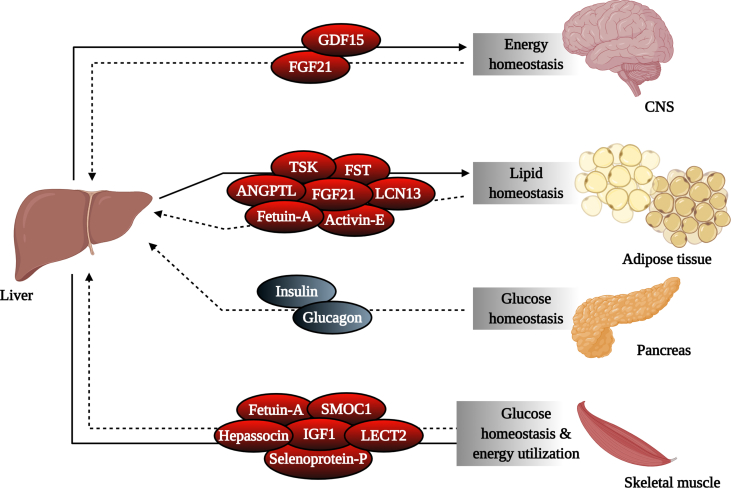
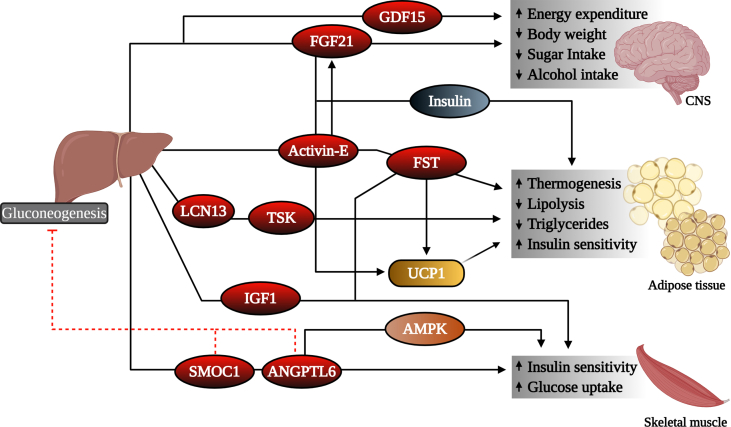
- Several mechanisms are highlighted, including FGF21 signaling through FGFR1c/β-klotho, GDF15 signaling through GFRAL/RET, and ANGPTL3/ANGPTL8 complex inhibition of lipoprotein lipase.
- The review notes that elevated levels of some hepatokines in obesity and diabetes may reflect endocrine resistance, similar to insulin or leptin resistance, and that hepatokines are promising but incompletely validated therapeutic targets.
Methods
- Narrative review; no primary experiments, systematic search strategy, or meta-analysis are described.
- The paper synthesizes published rodent and human literature, including genetic, pharmacological, and clinical trial findings, and presents a summary table of hepatokines with target organs, metabolic roles, and human serum concentration changes in insulin resistance.
- Main analysis is qualitative: mechanisms, target tissues, physiological contexts, and therapeutic implications are discussed for each selected hepatokine.
Limitations
- Stated: the review is “not meant to be an exhaustive list”; future studies are needed to determine how hepatokines integrate with other organokines, how preclinical evidence translates to humans, how hepatokines contribute to disease progression, and how each hepatokine is regulated and acts under healthy and pathophysiological conditions.
- Stated/evident: conflicting findings exist for some hepatokines, such as debated circulating ANGPTL4 and ANGPTL8 levels in metabolic disease and non-reproduced TSK knockout results in a subsequent study.
- Evident: as a narrative review, it lacks systematic search, quantitative synthesis, and primary data to establish causality or effect sizes.
Model-written summary. Check it against the paper before relying on it.
Integrity signals
Registry
Cites
Statistics
Figures
Verification
Claims the paper makes
126 Not checked yet · 15 Own interpretation · 14 No basis given · 5 Partly supported · 2 Supported · 2 Supported so far · 1 Own result · accuracy not yet measured
The sources with a verdict support this claim; the rest weren’t checked yet, have no full text we could read, or their verdicts aren’t rated yet.
In the paper
“FGF21 directly binds to KLB, which then facilitates binding to FGFR1c and then initiates downstream signaling events [[146], [147], [148], [149]].”
§ Hepatokines and metabolism: Deciphering communication from the liver > Introduction > The liver and hepatokines
What the sources say
- Supportedcites [146] Yie, 2012, Understanding the physical interactions in the FGF21/FGFR/beta-Klotho complex: structural requirements and implications in FGF21 signaling, Chemical Biology & Drug Design source
The Abstract states that FGF21 binds directly to β-Klotho and uses it as an anchor for FGFR-mediated signaling. The Conclusion describes FGF21–β-Klotho binding as facilitating interaction with FGFR1c and subsequent receptor activation, while presenting the detailed activation sequence as a proposed mechanism. (LLM, conf=0.90)
- Not checked yetcites [147] Yie, 2009, FGF21 N- and C-termini play different roles in receptor interaction and activation, FEBS Letters source
- Supportedcites [148] Lee, 2018, Structures of beta-klotho reveal a 'zip code'-like mechanism for endocrine FGF signalling, Nature source
The passage indexed under Abstract (discussion of Fig. 4c; page not provided) states that FGF21 binds β-Klotho, bringing its FGF core into proximity with FGFR1c to form an activated complex that promotes cell signaling. Extended Data Fig. 6 also reports direct FGF21–β-Klotho binding and measures FGFR1c activation after FGF21 stimulation. (LLM, conf=0.92)
plaindirect- Asserted: passes — The authors put it forward as true.
- Checkable: passes — It can be checked against evidence.
- Load-bearing: unclear — It is unclear whether the paper’s conclusions depend on it.
- Based: passes — The paper gives a reason why it holds.
- Supported
The sources with a verdict support this claim; the rest weren’t checked yet, have no full text we could read, or their verdicts aren’t rated yet.
In the paper
“several recent studies confirmed that hepatic FGF21 increases in response to other nutritional stimuli, including conditions of macronutrient imbalance [152], and in response to alcohol intake [138,140,153].”
§ Hepatokines and metabolism: Deciphering communication from the liver > Introduction > The liver and hepatokines
What the sources say
- Not checked yetcites [152] Solon-Biet, 2016, Defining the nutritional and metabolic context of FGF21 using the geometric framework, Cell Metabolism source
- Could not verifycites [138] Talukdar, 2016, FGF21 regulates sweet and alcohol preference, Cell Metabolism sourceExperimental — accuracy not yet measured
Citation [153] is attached to the alcohol-intake portion of the sentence. The Introduction says hepatic FGF21 is induced by fasting and certain diets, while Results and Discussion examine whether FGF21 affects alcohol preference; neither reports that alcohol intake increases hepatic FGF21. Searches for alcohol-induced hepatic FGF21 did not find that claim in our copy. (LLM, conf=0.76)
- Supportedcites [140] Schumann, 2016, KLB is associated with alcohol drinking, and its gene product beta-Klotho is necessary for FGF21 regulation of alcohol preference, Proceedings of the National Academy of Sciences of the U S A source
The citation to this paper is attached to the alcohol-intake portion of the sentence, not the macronutrient-imbalance portion. The Introduction (p. 4) says liver FGF21 is induced in response to alcohol, and the Discussion (p. 7) specifies that this was observed in a mouse model of chronic-binge alcohol consumption. (LLM, conf=0.91)
- Supportedcites [153] Desai, 2017, Fibroblast growth factor 21 (FGF21) is robustly induced by ethanol and has a protective role in ethanol associated liver injury, Mol Metab source
This paper is cited for the alcohol-intake portion of the sentence, not the macronutrient-imbalance portion. The Introduction reports a marked rise in circulating FGF21 after ethanol exposure in humans and mice, and the Discussion states that hepatic FGF21 expression rises with chronic ethanol exposure. (LLM, conf=0.92)
boosteddirect- Asserted: passes — The authors put it forward as true.
- Checkable: passes — It can be checked against evidence.
- Load-bearing: unclear — It is unclear whether the paper’s conclusions depend on it.
- Based: passes — The paper gives a reason why it holds.
Every source the paper cites for this claim was checked and supports it.
In the paper
“Recent research demonstrated that FGF21 signaling to glutamatergic neurons lowers carbohydrate intake and non-nutritive sweet-taste preference in mice [173].”
§ Hepatokines and metabolism: Deciphering communication from the liver > Introduction > The liver and hepatokines
What the sources say
- Supportedcites [173] Jensen-Cody, 2020, FGF21 signals to glutamatergic neurons in the ventromedial hypothalamus to suppress carbohydrate intake, Cell Metabolism source
The Results section reports that FGF21 did not reduce saccharin intake when signaling to glutamatergic neurons was disrupted, and concludes that direct signaling to these neurons reduces both sugar intake and sweet-taste preference. The Introduction identifies sucrose intake and non-nutritive sweet-taste preference as effects mediated by this signaling in mice. (LLM, conf=0.91)
boosteddirect- Asserted: passes — The authors put it forward as true.
- Checkable: passes — It can be checked against evidence.
- Load-bearing: unclear — It is unclear whether the paper’s conclusions depend on it.
- Based: passes — The paper gives a reason why it holds.
- Supported
The cited sources support only part of this claim — read each source’s verdict below.
In the paper
“FGF21 directly signals adipose tissue to improve insulin sensitivity [169,170]”
§ Hepatokines and metabolism: Deciphering communication from the liver > Introduction > The liver and hepatokines
What the sources say
- Partly supportedcites [169] BonDurant, 2017, FGF21 regulates metabolism through adipose-dependent and -independent mechanisms, Cell Metabolism sourceExperimental — accuracy not yet measured
The Results section reports that direct FGF21 signaling to adipose tissue is required for its acute insulin-sensitizing effects. The claim omits that limitation: the same section reports that extended FGF21 administration improves insulin sensitivity without direct adipose signaling. (LLM, conf=0.88)
- Supportedcites [170] Lan, 2017, FGF19, FGF21, and an FGFR1/β-klotho-activating antibody act on the nervous system to regulate body weight and glycemia, Cell Metabolism source
The Discussion states that, under hyperinsulinemic-euglycemic clamp conditions, FGF21 increases insulin sensitivity by acting directly on adipose tissue. The Results likewise conclude that this direct action increases whole-body insulin sensitivity under acute treatment conditions; the paper distinguishes these acute effects from longer-term effects. (LLM, conf=0.94)
plaindirect- Asserted: passes — The authors put it forward as true.
- Checkable: passes — It can be checked against evidence.
- Load-bearing: unclear — It is unclear whether the paper’s conclusions depend on it.
- Based: passes — The paper gives a reason why it holds.
- Partly supported
The cited sources support only part of this claim — read each source’s verdict below.
In the paper
“Hepatic and circulating FGF21 levels also increase in response to low-protein content or amino acid deprivation [152,[155], [156], [157], [158], [159], [160]] in an ATF4-dependent mechanism [155,161,162].”
§ Hepatokines and metabolism: Deciphering communication from the liver > Introduction > The liver and hepatokines
What the sources say
- Not checked yetcites [152,[155]
- Partly supportedcites [156] Maida, 2016, A liver stress-endocrine nexus promotes metabolic integrity during dietary protein dilution, Journal of Clinical Investigation sourceExperimental — accuracy not yet measured
In the section on liver-derived FGF21 (page not provided), the paper reports increased liver Fgf21 expression and serum FGF21 after dietary protein dilution, and increased hepatocyte FGF21 after amino-acid restriction. It identifies an integrated-stress-response/NUPR1 pathway, but does not establish that the FGF21 increase is ATF4-dependent. (LLM, conf=0.85)
- Partly supportedcites [157] De Sousa-Coelho, 2013, FGF21 mediates the lipid metabolism response to amino acid starvation, The Journal of Lipid Research sourceExperimental — accuracy not yet measured
The Discussion reports increased hepatic FGF21 expression and serum protein levels after leucine deprivation, and the introductory passage describes FGF21 induction during amino acid deprivation as part of an ATF4-initiated transcriptional program. Our copy does not establish the same response to a low-protein diet; its evidence concerns amino acid deprivation, specifically leucine deprivation in mice. (LLM, conf=0.86)
plaindirect- Asserted: passes — The authors put it forward as true.
- Checkable: passes — It can be checked against evidence.
- Load-bearing: unclear — It is unclear whether the paper’s conclusions depend on it.
- Based: passes — The paper gives a reason why it holds.
Every source the paper cites for this claim was checked and supports it.
In the paper
“Recent research demonstrated that acute high-fat diet overfeeding increased circulating concentrations of LECT2 in healthy men [251].”
§ Hepatokines and metabolism: Deciphering communication from the liver > Introduction > The liver and hepatokines
What the sources say
- Supportedcites [251] Willis, 2020, Acute hyperenergetic, high-fat feeding increases circulating FGF21, LECT2, and fetuin-A in healthy men, Journal of Nutrition source
The Hepatokine responses to high-fat overfeeding section reports that fasting plasma LECT2 was elevated after 3 and 7 days of the hyperenergetic, high-fat diet compared with the control diet. The Discussion identifies the participants as healthy men and describes the increase as a response to acute feeding. (LLM, conf=0.95)
boosteddirect- Asserted: passes — The authors put it forward as true.
- Checkable: passes — It can be checked against evidence.
- Load-bearing: unclear — It is unclear whether the paper’s conclusions depend on it.
- Based: passes — The paper gives a reason why it holds.
- Supported
The cited sources support only part of this claim — read each source’s verdict below.
In the paper
“both mRNA and plasma levels of LCN13 are low in mice with genetic or high-fat diet-induced obesity [254,257].”
§ Hepatokines and metabolism: Deciphering communication from the liver > Introduction > The liver and hepatokines
What the sources say
- Supportedcites [254] Zhou, 2013, Lipocalin 13 regulation of glucose and lipid metabolism in obesity, Vitamins & Hormones source
Section III (page not provided) reports extremely low circulating LCN13 in mice with either genetic (db/db) or high-fat-diet-induced obesity. It also reports lower liver LCN13 expression in obese mice than in lean mice, supporting the claim about reduced mRNA expression, though it does not use the term “mRNA” in this passage. (LLM, conf=0.88)
- Partly supportedcites [257] Ekim Üstünel, 2016, Control of diabetic hyperglycaemia and insulin resistance through TSC22D4, Nature Communications sourceExperimental — accuracy not yet measured
In Results (‘LCN13 partially mediates the effects of hepatic TSC22D4’; page unavailable), the paper reports reduced Lcn13 mRNA under high-fat-diet conditions after hepatic TSC22D4 overexpression. It also reports increased serum LCN13 after TSC22D4 deficiency. Neither result establishes that both mRNA and plasma LCN13 are low in untreated mice with genetic or high-fat-diet-induced obesity. (LLM, conf=0.78)
plaincorrelational- Asserted: passes — The authors put it forward as true.
- Checkable: passes — It can be checked against evidence.
- Load-bearing: unclear — It is unclear whether the paper’s conclusions depend on it.
- Based: passes — The paper gives a reason why it holds.
- Supported
The cited sources support only part of this claim — read each source’s verdict below.
In the paper
“Plasma levels of TSK have been linked to NAFLD and NASH pathologies [269,270].”
§ Hepatokines and metabolism: Deciphering communication from the liver > Introduction > The liver and hepatokines
What the sources say
- Partly supportedcites [269] Mouchiroud, 2019, The hepatokine Tsukushi is released in response to NAFLD and impacts cholesterol homeostasis, JCI Insight sourceExperimental — accuracy not yet measured
The Results report elevated circulating TSK in mice with diet-induced steatosis, supporting a link with NAFLD. The Discussion says circulating TSK was below detection in the human samples with elevated liver triglycerides; the measured human plasma elevations were in acetaminophen-induced acute liver failure. These passages do not establish a link between plasma TSK levels and NASH. (LLM, conf=0.88)
- Partly supportedcites [270] Xiong, 2019, Mapping the molecular signatures of diet-induced NASH and its regulation by the hepatokine Tsukushi, Mol Metab sourceExperimental — accuracy not yet measured
The Results section (‘NASH pathogenesis is linked to marked elevation of the hepatokine TSK in plasma’; page unavailable) reports elevated plasma TSK and a correlation with liver-injury markers in mouse NASH models. The Introduction identifies NASH as part of the NAFLD spectrum, but the paper does not separately establish a plasma-TSK link across NAFLD pathologies more broadly. (LLM, conf=0.82)
plaincorrelational- Asserted: passes — The authors put it forward as true.
- Checkable: passes — It can be checked against evidence.
- Load-bearing: unclear — It is unclear whether the paper’s conclusions depend on it.
- Based: passes — The paper gives a reason why it holds.
- Partly supported
None of the sources cited for this claim have been checked yet.
In the paper
“Pharmacological administration of FGF21 decreases plasma glucose and lipid levels, improves insulin and leptin sensitivity, decreases hepatic steatosis, increases energy expenditure [[131], [132], [133], [134], [135], [136]], and decreases sugar and alcohol intake in mice [[137], [138], [139], [140], [141], [142]].”
§ Hepatokines and metabolism: Deciphering communication from the liver > Introduction > The liver and hepatokines
What the sources say
- Not checked yetcites [131] Coskun, 2008, Fibroblast growth factor 21 corrects obesity in mice, Endocrinology source
- Not checked yetcites [132] Xu, 2009, Acute glucose-lowering and insulin-sensitizing action of FGF21 in insulin-resistant mouse models--association with liver and adipose tissue effects, American Journal of Physiology. Endocrinology and Metabolism source
- Not checked yetcites [133] Xu, 2009, Fibroblast growth factor 21 reverses hepatic steatosis, increases energy expenditure, and improves insulin sensitivity in diet-induced obese mice, Diabetes source
plaindirect- Asserted: passes — The authors put it forward as true.
- Checkable: passes — It can be checked against evidence.
- Load-bearing: unclear — It is unclear whether the paper’s conclusions depend on it.
- Based: passes — The paper gives a reason why it holds.
None of the sources cited for this claim have been checked yet.
In the paper
“Pharmacological administration of FGF21 decreases plasma glucose and lipid levels, improves insulin and leptin sensitivity, decreases hepatic steatosis, increases energy expenditure [[131], [132], [133], [134], [135], [136]], and decreases sugar and alcohol intake in mice [[137], [138], [139], [140], [141], [142]].”
§ Hepatokines and metabolism: Deciphering communication from the liver > Introduction > The liver and hepatokines
What the sources say
- Not checked yetcites [137] von Holstein-Rathlou, 2016, FGF21 mediates endocrine control of simple sugar intake and sweet taste preference by the liver, Cell Metabolism source
- Not checked yetcites [138] Talukdar, 2016, FGF21 regulates sweet and alcohol preference, Cell Metabolism source
- Not checked yetcites [139] Tanaka, 2013, Genome-wide meta-analysis of observational studies shows common genetic variants associated with macronutrient intake, American Journal of Clinical Nutrition source
plaindirect- Asserted: passes — The authors put it forward as true.
- Checkable: passes — It can be checked against evidence.
- Load-bearing: unclear — It is unclear whether the paper’s conclusions depend on it.
- Based: passes — The paper gives a reason why it holds.
- It may state two separate claims as one. 78
- Probably not a substantial claim. 33
The cited sources support only part of this claim — read each source’s verdict below.
In the paper
“Leukocyte cell-derived chemotaxin 2 (LECT2) is an energy-sensing hepatokine that is positively associated with hepatic inflammatory signaling, obesity, NAFLD, and insulin resistance [239,240].”
§ Hepatokines and metabolism: Deciphering communication from the liver > Introduction > The liver and hepatokines
What the sources say
- Partly supportedcites [239] Lan, 2014, LECT2 functions as a hepatokine that links obesity to skeletal muscle insulin resistance, Diabetes sourceExperimental — accuracy not yet measured
The Abstract (p. 3) identifies LECT2 as an energy-sensing hepatokine and reports positive correlations with obesity and insulin resistance in humans. The paper does not establish a positive association with NAFLD: it reports mild steatosis alongside increased liver Lect2 expression in high-fat-fed mice (p. 17). Nor does it establish a positive association with hepatic inflammatory signaling; the Discussion (p. 26) instead describes context-dependent inflammatory effects, including attenuation of liver inflammation. (LLM, conf=0.88)
- Partly supportedcites [240] Jung, 2016, Implication of hepatokines in metabolic disorders and cardiovascular diseases, BBA Clin sourceExperimental — accuracy not yet measured
The LECT2 section (page unavailable) calls LECT2 an energy-sensing hepatokine and reports positive relationships with BMI and insulin resistance, plus elevated levels in obesity and fatty liver. It does not establish a positive association specifically with hepatic inflammatory signaling: the reported induction of proinflammatory cytokines is in human endothelial cells, while involvement in hepatitis is hedged as a possibility. (LLM, conf=0.85)
plaincorrelational- Asserted: passes — The authors put it forward as true.
- Checkable: passes — It can be checked against evidence.
- Load-bearing: unclear — It is unclear whether the paper’s conclusions depend on it.
- Based: passes — The paper gives a reason why it holds.
It may state two separate claims as one.
- Partly supported
The paper states this without a source or data behind it here, so there is nothing to check it against. The quote shows it is in the paper.
In the paper
“The liver can sense and respond to nutrient overabundance and deficit by secreting hepatokines, which signal energy status and help regulate nutrient availability to multiple peripheral tissues and the central nervous system (CNS).”
§ Hepatokines and metabolism: Deciphering communication from the liver > Introduction
plaindirect- Asserted: passes — The authors put it forward as true.
- Checkable: passes — It can be checked against evidence.
- Load-bearing: passes — The paper’s conclusions depend on it.
- Based: passes — The paper gives a reason why it holds.
It may state two separate claims as one.
None of the sources cited for this claim have been checked yet.
In the paper
“In response to fasting, however, the liver increases hepatic glucose production via glycogenolysis and gluconeogenesis to supply glucose as a fuel source for non-hepatic tissues including the brain and skeletal muscle [15,16].”
§ Hepatokines and metabolism: Deciphering communication from the liver > Introduction > The liver and hepatokines
What the sources say
- Not checked yetcites [15] Roden, 2003, Hepatic glucose metabolism in humans—its role in health and disease, Best Practice & Research Clinical Endocrinology & Metabolism source
- Not checked yetcites [16] Leone, 1999, A critical role for the peroxisome proliferator-activated receptor alpha (PPARalpha) in the cellular fasting response: the PPARalpha-null mouse as a model of fatty acid oxidation disorders, Proceedings of the National Academy of Sciences of the U S A source
plaindirect- Asserted: passes — The authors put it forward as true.
- Checkable: passes — It can be checked against evidence.
- Load-bearing: fails — The paper’s conclusions may not depend on it.
- Based: passes — The paper gives a reason why it holds.
Probably not a substantial claim. The paper’s conclusions may not depend on it.
None of the sources cited for this claim have been checked yet.
In the paper
“NAFLD is the most common chronic liver disease worldwide and a risk factor for type 2 diabetes, obesity, and cardiovascular disease (CVD) [8,12,22].”
§ Hepatokines and metabolism: Deciphering communication from the liver > Introduction > The liver and hepatokines
What the sources say
- Not checked yetcites [8] Iroz, 2015, Hepatokines: unlocking the multi-organ network in metabolic diseases, Diabetologia source
- Not checked yetcites [12] Stefan, 2013, The role of hepatokines in metabolism, Nature Reviews Endocrinology source
- Not checked yetcites [22] Morrison, 2019, Causality between non-alcoholic fatty liver disease and risk of cardiovascular disease and type 2 diabetes: a meta-analysis with bias analysis, Liver International source
plaincorrelational- Asserted: passes — The authors put it forward as true.
- Checkable: passes — It can be checked against evidence.
- Load-bearing: fails — The paper’s conclusions may not depend on it.
- Based: passes — The paper gives a reason why it holds.
Probably not a substantial claim. The paper’s conclusions may not depend on it. It may state two separate claims as one.
In the paper
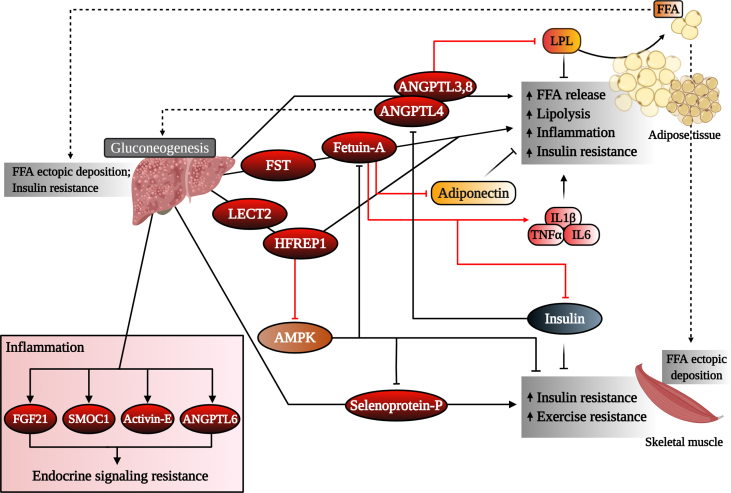
“ANGPTL3 is exclusively expressed and secreted by the liver and has emerged as an important regulator of plasma triglyceride levels due to its inhibition of LPL in oxidative tissues [34] (Figure 3).”
§ Hepatokines and metabolism: Deciphering communication from the liver > Introduction > The liver and hepatokines
What the sources say
- Not checked yetcites [34] Conklin, 1999, Identification of a mammalian angiopoietin-related protein expressed specifically in liver, Genomics source
plaindirect- Asserted: passes — The authors put it forward as true.
- Checkable: passes — It can be checked against evidence.
- Load-bearing: unclear — It is unclear whether the paper’s conclusions depend on it.
- Based: passes — The paper gives a reason why it holds.
It may state two separate claims as one.
In the paper
“Activin-E expression increases during fasting and is markedly suppressed by loss of the insulin receptor in the liver [10], suggesting dynamic regulation.”
§ Hepatokines and metabolism: Deciphering communication from the liver > Introduction > The liver and hepatokines
What the sources say
- Not checked yetcites [10] Smati, 2020, Regulation of hepatokine gene expression in response to fasting and feeding: influence of PPAR-alpha and insulin-dependent signalling in hepatocytes, Diabetes & Metabolism source
plaindirect- Asserted: passes — The authors put it forward as true.
- Checkable: passes — It can be checked against evidence.
- Load-bearing: unclear — It is unclear whether the paper’s conclusions depend on it.
- Based: passes — The paper gives a reason why it holds.
It may state two separate claims as one.
None of the sources cited for this claim have been checked yet.
In the paper
“Furthermore, circulating levels of activin-E are elevated in high-fat diet-fed mice and are thought to contribute to resistance to body weight gain [28,30].”
§ Hepatokines and metabolism: Deciphering communication from the liver > Introduction > The liver and hepatokines
What the sources say
- Not checked yetcites [28] Chabicovsky, 2003, Overexpression of activin beta(C) or activin beta(E) in the mouse liver inhibits regenerative deoxyribonucleic acid synthesis of hepatic cells, Endocrinology source
- Not checked yetcites [30] Hashimoto, 2018, Activin E controls energy homeostasis in both Brown and white adipose tissues as a hepatokine, Cell Reports source
hedgedconditional- Asserted: passes — The authors put it forward as true.
- Checkable: passes — It can be checked against evidence.
- Load-bearing: unclear — It is unclear whether the paper’s conclusions depend on it.
- Based: passes — The paper gives a reason why it holds.
It may state two separate claims as one.
In the paper
“Insulin resistance occurs when insulin is unable to properly (1) stimulate glucose uptake into metabolic tissues (skeletal muscle and adipose tissues), (2) suppress hepatic glucose production, and/or (3) reduce adipose tissue lipolysis [17].”
§ Hepatokines and metabolism: Deciphering communication from the liver > Introduction > The liver and hepatokines
What the sources say
- Not checked yetcites [17] Hotamisligil, 2006, Inflammation and metabolic disorders, Nature source
plaindirect- Asserted: passes — The authors put it forward as true.
- Checkable: passes — It can be checked against evidence.
- Load-bearing: fails — The paper’s conclusions may not depend on it.
- Based: passes — The paper gives a reason why it holds.
Probably not a substantial claim. The paper’s conclusions may not depend on it. It may state two separate claims as one.
The paper states this without a source or data behind it here, so there is nothing to check it against. The quote shows it is in the paper.
In the paper
“Dysregulation of liver-centered inter-organ pathways may contribute to improper regulation of energy homeostasis and ultimately metabolic dysfunction.”
§ Hepatokines and metabolism: Deciphering communication from the liver > Abstract > Scope of review
hedgedconditional- Asserted: passes — The authors put it forward as true.
- Checkable: passes — It can be checked against evidence.
- Load-bearing: passes — The paper’s conclusions depend on it.
- Based: fails — The paper may give no reason why it holds.
Probably not a substantial claim. The paper may give no reason why it holds.
In the paper
“During hepatic insulin resistance, excess storage of ectopic fat in the liver can contribute to the development of non-alcoholic fatty liver disease (NAFLD) [[17], [18], [19], [20]].”
§ Hepatokines and metabolism: Deciphering communication from the liver > Introduction > The liver and hepatokines
What the sources say
- Not checked yetcites [17], [18], [19], [20]
plainconditional- Asserted: passes — The authors put it forward as true.
- Checkable: passes — It can be checked against evidence.
- Load-bearing: fails — The paper’s conclusions may not depend on it.
- Based: passes — The paper gives a reason why it holds.
Probably not a substantial claim. The paper’s conclusions may not depend on it.
The paper states this without a source or data behind it here, so there is nothing to check it against. The quote shows it is in the paper.
In the paper
“The liver regulates systemic glucose homeostasis through hepatic glucose production and glycogen storage.”
§ Hepatokines and metabolism: Deciphering communication from the liver > Introduction > The liver and hepatokines
plaindirect- Asserted: passes — The authors put it forward as true.
- Checkable: passes — It can be checked against evidence.
- Load-bearing: fails — The paper’s conclusions may not depend on it.
- Based: passes — The paper gives a reason why it holds.
Probably not a substantial claim. The paper’s conclusions may not depend on it.
The paper states this without a source or data behind it here, so there is nothing to check it against. The quote shows it is in the paper.
In the paper
“The liver has recently been recognized as an endocrine organ that secretes hepatokines, which are liver-derived factors that can signal to and communicate with distant tissues.”
§ Hepatokines and metabolism: Deciphering communication from the liver > Abstract > Scope of review
plaindirect- Asserted: passes — The authors put it forward as true.
- Checkable: passes — It can be checked against evidence.
- Load-bearing: passes — The paper’s conclusions depend on it.
- Based: fails — The paper may give no reason why it holds.
Probably not a substantial claim. The paper may give no reason why it holds. It may state two separate claims as one.
None of the sources cited for this claim have been checked yet.
In the paper
“FGF21, unlike traditional FGFs, is an endocrine hormone produced and secreted predominantly by the liver [129,130].”
§ Hepatokines and metabolism: Deciphering communication from the liver > Introduction > The liver and hepatokines
What the sources say
- Not checked yetcites [129] Nishimura, 2000, Identification of a novel FGF, FGF-21, preferentially expressed in the liver, Biochimica et Biophysica Acta source
- Not checked yetcites [130] Fon Tacer, 2010, Research resource: comprehensive expression atlas of the fibroblast growth factor system in adult mouse, Molecular Endocrinology source
plaindirect- Asserted: passes — The authors put it forward as true.
- Checkable: passes — It can be checked against evidence.
- Load-bearing: unclear — It is unclear whether the paper’s conclusions depend on it.
- Based: passes — The paper gives a reason why it holds.
It may state two separate claims as one.
None of the sources cited for this claim have been checked yet.
In the paper
“FST acts as a multi-faceted hepatokine that is involved in reproduction [181], muscle growth [182], cancer development [183], and metabolism [184].”
§ Hepatokines and metabolism: Deciphering communication from the liver > Introduction > The liver and hepatokines
What the sources say
- Not checked yetcites [181] de Kretser, 2002, Inhibins, activins and follistatin in reproduction, Human Reproduction Update source
- Not checked yetcites [182] Rodino-Klapac, 2009, Inhibition of myostatin with emphasis on follistatin as a therapy for muscle disease, Muscle & Nerve source
- Not checked yetcites [183] Shi, 2016, Clinical and therapeutic implications of follistatin in solid tumours, CANCER GENOMICS and PROTEOMICS source
plaincorrelational- Asserted: passes — The authors put it forward as true.
- Checkable: passes — It can be checked against evidence.
- Load-bearing: unclear — It is unclear whether the paper’s conclusions depend on it.
- Based: passes — The paper gives a reason why it holds.
It may state two separate claims as one.
In the paper
“Most of FST's effects on reproductive health and cancer development are related to its interactions with activins and follicle-stimulating hormone, while its effects on muscle growth result from interactions with myostatin [186].”
§ Hepatokines and metabolism: Deciphering communication from the liver > Introduction > The liver and hepatokines
What the sources say
- Not checked yetcites [186] Brown, 2011, Follistatin and follistatin like-3 differentially regulate adiposity and glucose homeostasis, Obesity source
plaindirect- Asserted: passes — The authors put it forward as true.
- Checkable: passes — It can be checked against evidence.
- Load-bearing: fails — The paper’s conclusions may not depend on it.
- Based: passes — The paper gives a reason why it holds.
Probably not a substantial claim. The paper’s conclusions may not depend on it. It may state two separate claims as one.
None of the sources cited for this claim have been checked yet.
In the paper
“Under fasted conditions, FGF21 increases hepatic gluconeogenesis, β-oxidation, and ketogenesis in mice [142,154].”
§ Hepatokines and metabolism: Deciphering communication from the liver > Introduction > The liver and hepatokines
What the sources say
- Not checked yetcites [142] Hotta, 2009, Fibroblast growth factor 21 regulates lipolysis in white adipose tissue but is not required for ketogenesis and triglyceride clearance in liver, Endocrinology source
- Not checked yetcites [154] Potthoff, 2009, FGF21 induces PGC-1alpha and regulates carbohydrate and fatty acid metabolism during the adaptive starvation response, Proceedings of the National Academy of Sciences of the U S A source
plaindirect- Asserted: passes — The authors put it forward as true.
- Checkable: passes — It can be checked against evidence.
- Load-bearing: unclear — It is unclear whether the paper’s conclusions depend on it.
- Based: passes — The paper gives a reason why it holds.
It may state two separate claims as one.
In the paper
“FGF21 signaling to the ventromedial hypothalamus (VMH) is required for its effects on lowering carbohydrate intake but not non-nutritive sweet-taste preference or body weight.”
§ Hepatokines and metabolism: Deciphering communication from the liver > Introduction > The liver and hepatokines
What the sources say
- Not checked yetcites [173] Jensen-Cody, 2020, FGF21 signals to glutamatergic neurons in the ventromedial hypothalamus to suppress carbohydrate intake, Cell Metabolism source
plaindirect- Asserted: passes — The authors put it forward as true.
- Checkable: passes — It can be checked against evidence.
- Load-bearing: unclear — It is unclear whether the paper’s conclusions depend on it.
- Based: passes — The paper gives a reason why it holds.
It may state two separate claims as one.
The paper states this without a source or data behind it here, so there is nothing to check it against. The quote shows it is in the paper.
In the paper
“FGF21 expression is regulated by nutrient signals and subsequently functions to regulate nutrient homeostasis.”
§ Hepatokines and metabolism: Deciphering communication from the liver > Introduction > The liver and hepatokines
plaindirect- Asserted: passes — The authors put it forward as true.
- Checkable: passes — It can be checked against evidence.
- Load-bearing: unclear — It is unclear whether the paper’s conclusions depend on it.
- Based: passes — The paper gives a reason why it holds.
It may state two separate claims as one.
In the paper
“Administration of FGF21 analogs to obese and type 2 diabetic subjects improves dyslipidemia, decreases body weight, improves fasting insulin levels, and was recently thoroughly reviewed [136] (Figure 2).”
§ Hepatokines and metabolism: Deciphering communication from the liver > Introduction > The liver and hepatokines
What the sources say
- Not checked yetcites [136] Gaich, 2013, The effects of LY2405319, an FGF21 analog, in obese human subjects with type 2 diabetes, Cell Metabolism source
plaindirect- Asserted: passes — The authors put it forward as true.
- Checkable: passes — It can be checked against evidence.
- Load-bearing: passes — The paper’s conclusions depend on it.
- Based: passes — The paper gives a reason why it holds.
It may state two separate claims as one.
None of the sources cited for this claim have been checked yet.
In the paper
“This robust increase in FGF21 results in increased energy expenditure and lower body weight gain [155,156,160,163] (Figure 2)”
§ Hepatokines and metabolism: Deciphering communication from the liver > Introduction > The liver and hepatokines
What the sources say
- Not checked yetcites [155] Laeger, 2014, FGF21 is an endocrine signal of protein restriction, Journal of Clinical Investigation source
- Not checked yetcites [156] Maida, 2016, A liver stress-endocrine nexus promotes metabolic integrity during dietary protein dilution, Journal of Clinical Investigation source
- Not checked yetcites [160] Pérez-Martí, 2017, A low-protein diet induces body weight loss and browning of subcutaneous white adipose tissue through enhanced expression of hepatic fibroblast growth factor 21 (FGF21), Molecular Nutrition & Food Research source
- Not checked yetcites [163] Flippo, 2020, FGF21 signaling in glutamatergic neurons is required for weight loss associated with dietary protein dilution, Scientific Reports source
boosteddirect- Asserted: passes — The authors put it forward as true.
- Checkable: passes — It can be checked against evidence.
- Load-bearing: passes — The paper’s conclusions depend on it.
- Based: passes — The paper gives a reason why it holds.
It may state two separate claims as one.
None of the sources cited for this claim have been checked yet.
In the paper
“while it signals the CNS to increase energy expenditure and decrease body weight [169,171,172] (Figure 2).”
§ Hepatokines and metabolism: Deciphering communication from the liver > Introduction > The liver and hepatokines
What the sources say
- Not checked yetcites [169] BonDurant, 2017, FGF21 regulates metabolism through adipose-dependent and -independent mechanisms, Cell Metabolism source
- Not checked yetcites [171] Ameka, 2019, Liver derived FGF21 maintains core body temperature during acute cold exposure, Scientific Reports source
- Not checked yetcites [172] Owen, 2014, FGF21 acts centrally to induce sympathetic nerve activity, energy expenditure, and weight loss, Cell Metabolism source
plaindirect- Asserted: passes — The authors put it forward as true.
- Checkable: passes — It can be checked against evidence.
- Load-bearing: unclear — It is unclear whether the paper’s conclusions depend on it.
- Based: passes — The paper gives a reason why it holds.
It may state two separate claims as one.
None of the sources cited for this claim have been checked yet.
In the paper
“In humans, circulating FGF21 levels also increase with obesity [[174], [175], [176]], type 2 diabetes [[176], [177], [178]], and NAFLD [179,180]”
§ Hepatokines and metabolism: Deciphering communication from the liver > Introduction > The liver and hepatokines
What the sources say
- Not checked yetcites [174] Zhang, 2008, Serum FGF21 levels are increased in obesity and are independently associated with the metabolic syndrome in humans, Diabetes source
- Not checked yetcites [175] Berti, 2015, Fibroblast growth factor 21 is elevated in metabolically unhealthy obesity and affects lipid deposition, adipogenesis, and adipokine secretion of human abdominal subcutaneous adipocytes, Mol Metab source
- Not checked yetcites [176] Mraz, 2009, Serum concentrations and tissue expression of a novel endocrine regulator fibroblast growth factor-21 in patients with type 2 diabetes and obesity, Clinical Endocrinology source
plaindirect- Asserted: passes — The authors put it forward as true.
- Checkable: passes — It can be checked against evidence.
- Load-bearing: passes — The paper’s conclusions depend on it.
- Based: passes — The paper gives a reason why it holds.
It may state two separate claims as one.
None of the sources cited for this claim have been checked yet.
In the paper
“Classically recognized as a fasting hormone regulated by the nuclear receptor peroxisome proliferator-activated receptor α (PPARα) [150,151]”
§ Hepatokines and metabolism: Deciphering communication from the liver > Introduction > The liver and hepatokines
What the sources say
- Not checked yetcites [150] Badman, 2007, Hepatic fibroblast growth factor 21 is regulated by PPARalpha and is a key mediator of hepatic lipid metabolism in ketotic states, Cell Metabolism source
- Not checked yetcites [151] Inagaki, 2007, Endocrine regulation of the fasting response by PPARalpha-mediated induction of fibroblast growth factor 21, Cell Metabolism source
plaindirect- Asserted: passes — The authors put it forward as true.
- Checkable: passes — It can be checked against evidence.
- Load-bearing: fails — The paper’s conclusions may not depend on it.
- Based: passes — The paper gives a reason why it holds.
Probably not a substantial claim. The paper’s conclusions may not depend on it.
None of the sources cited for this claim have been checked yet.
In the paper
“FST acts as an inhibitor of members of the TGF-β superfamily, including myostatin and activins [185,186], and can function as a promoter of skeletal muscle growth [187].”
§ Hepatokines and metabolism: Deciphering communication from the liver > Introduction > The liver and hepatokines
What the sources say
- Not checked yetcites [185] Sidis, 2006, Biological activity of follistatin isoforms and follistatin-like-3 is dependent on differential cell surface binding and specificity for activin, myostatin, and bone morphogenetic proteins, Endocrinology source
- Not checked yetcites [186] Brown, 2011, Follistatin and follistatin like-3 differentially regulate adiposity and glucose homeostasis, Obesity source
- Not checked yetcites [187] Lee, 2010, Regulation of muscle mass by follistatin and activins, Molecular Endocrinology source
plaindirect- Asserted: passes — The authors put it forward as true.
- Checkable: passes — It can be checked against evidence.
- Load-bearing: unclear — It is unclear whether the paper’s conclusions depend on it.
- Based: passes — The paper gives a reason why it holds.
It may state two separate claims as one.
In the paper
“FST is secreted by a broad range of cell types, and plasma levels are thought to result from paracrine/autocrine signaling spillover [188].”
§ Hepatokines and metabolism: Deciphering communication from the liver > Introduction > The liver and hepatokines
What the sources say
- Not checked yetcites [188] Hansen, 2016, Circulating follistatin in relation to energy metabolism, Molecular and Cellular Endocrinology source
hedgedconditional- Asserted: passes — The authors put it forward as true.
- Checkable: passes — It can be checked against evidence.
- Load-bearing: fails — The paper’s conclusions may not depend on it.
- Based: passes — The paper gives a reason why it holds.
Probably not a substantial claim. The paper’s conclusions may not depend on it. It may state two separate claims as one.
In the paper
“Administration of hGDF15 to GFRAL-deficient mice had no effect on body weight, energy expenditure, serum leptin and insulin levels, and food intake compared to wild-type mice given hGDF15 [213].”
§ Hepatokines and metabolism: Deciphering communication from the liver > Introduction > The liver and hepatokines
What the sources say
- Not checked yetcites [213] Yang, 2017, GFRAL is the receptor for GDF15 and is required for the anti-obesity effects of the ligand, Natura Med source
plain- Asserted: passes — The authors put it forward as true.
- Checkable: passes — It can be checked against evidence.
- Load-bearing: passes — The paper’s conclusions depend on it.
- Based: passes — The paper gives a reason why it holds.
It may state two separate claims as one.
None of the sources cited for this claim have been checked yet.
In the paper
“Patients with type 2 diabetes have slightly elevated levels of circulating FST and plasma levels associated with glycemic parameters in these patients [188,191,192] (Table 1).”
§ Hepatokines and metabolism: Deciphering communication from the liver > Introduction > The liver and hepatokines
What the sources say
- Not checked yetcites [188] Hansen, 2016, Circulating follistatin in relation to energy metabolism, Molecular and Cellular Endocrinology source
- Not checked yetcites [191] Hansen, 2013, Plasma follistatin is elevated in patients with type 2 diabetes: relationship to hyperglycemia, hyperinsulinemia, and systemic low-grade inflammation, Diabetes Metab Res Rev source
- Not checked yetcites [192] Hansen, 2016, Exercise-induced secretion of FGF21 and follistatin are blocked by pancreatic clamp and impaired in type 2 diabetes, Journal of Clinical Endocrinology & Metabolism source
plaincorrelational- Asserted: passes — The authors put it forward as true.
- Checkable: passes — It can be checked against evidence.
- Load-bearing: unclear — It is unclear whether the paper’s conclusions depend on it.
- Based: passes — The paper gives a reason why it holds.
It may state two separate claims as one.
In the paper
“Hepassocin has mitogenic activity on hepatocytes, serving as a regulator of hepatic growth and proliferation [218].”
§ Hepatokines and metabolism: Deciphering communication from the liver > Introduction > The liver and hepatokines
What the sources say
- Not checked yetcites [218] Gao, 2014, Hepassocin activates the EGFR/ERK cascade and induces proliferation of L02 cells through the Src-dependent pathway, Cellular Signalling source
plaindirect- Asserted: passes — The authors put it forward as true.
- Checkable: passes — It can be checked against evidence.
- Load-bearing: unclear — It is unclear whether the paper’s conclusions depend on it.
- Based: passes — The paper gives a reason why it holds.
It may state two separate claims as one.
In the paper
“FST functions to increase the phosphorylation of MAPK/ERK1/2 proteins in WAT and increase the expression of Myf5 protein in BAT, which increases UCP1 expression in both tissues [198].”
§ Hepatokines and metabolism: Deciphering communication from the liver > Introduction > The liver and hepatokines
What the sources say
- Not checked yetcites [198] Singh, 2017, Follistatin targets distinct pathways to promote Brown adipocyte characteristics in Brown and white adipose tissues, Endocrinology source
plaindirect- Asserted: passes — The authors put it forward as true.
- Checkable: passes — It can be checked against evidence.
- Load-bearing: unclear — It is unclear whether the paper’s conclusions depend on it.
- Based: passes — The paper gives a reason why it holds.
It may state two separate claims as one.
None of the sources cited for this claim have been checked yet.
In the paper
“GDF15 binds with high affinity to GFRAL and its co-receptor RET, which induces phosphorylation of RET, leading to downstream signaling through the AKT, ERK1/2, and phospholipase C (PLCγ) pathways [201,213,215].”
§ Hepatokines and metabolism: Deciphering communication from the liver > Introduction > The liver and hepatokines
What the sources say
- Not checked yetcites [201] Mullican, 2018, Uniting GDF15 and GFRAL: therapeutic opportunities in obesity and beyond, Trends in Endocrinology and Metabolism source
- Not checked yetcites [213] Yang, 2017, GFRAL is the receptor for GDF15 and is required for the anti-obesity effects of the ligand, Natura Med source
- Not checked yetcites [215] Hsu, 2017, Non-homeostatic body weight regulation through a brainstem-restricted receptor for GDF15, Nature source
plaindirect- Asserted: passes — The authors put it forward as true.
- Checkable: passes — It can be checked against evidence.
- Load-bearing: unclear — It is unclear whether the paper’s conclusions depend on it.
- Based: passes — The paper gives a reason why it holds.
It may state two separate claims as one.
A conclusion the paper draws from its own results — it cites no other source for it, so there is none to check. The quote shows it is in the paper.
In the paper
“This discrepancy may have been due to differences in the mode and duration of elevated GDF15 levels.”
§ Hepatokines and metabolism: Deciphering communication from the liver > Introduction > The liver and hepatokines
hedgedconditional- Asserted: passes — The authors put it forward as true.
- Checkable: passes — It can be checked against evidence.
- Load-bearing: fails — The paper’s conclusions may not depend on it.
- Based: passes — The paper gives a reason why it holds.
Probably not a substantial claim. The paper’s conclusions may not depend on it.
None of the sources cited for this claim have been checked yet.
In the paper
“Plasma levels of hepassocin are associated with fasted plasma glucose, HOMA-IR, and prediabetes and increase in patients with type 2 diabetes (Table 1) [217,220].”
§ Hepatokines and metabolism: Deciphering communication from the liver > Introduction > The liver and hepatokines
What the sources say
plaincorrelational- Asserted: passes — The authors put it forward as true.
- Checkable: passes — It can be checked against evidence.
- Load-bearing: unclear — It is unclear whether the paper’s conclusions depend on it.
- Based: passes — The paper gives a reason why it holds.
It may state two separate claims as one.
None of the sources cited for this claim have been checked yet.
In the paper
“FST is present in three main isoforms, FST288, FST303, and FST315, with FST315 being the predominant isoform found in the circulation [185,194,195].”
§ Hepatokines and metabolism: Deciphering communication from the liver > Introduction > The liver and hepatokines
What the sources say
- Not checked yetcites [185] Sidis, 2006, Biological activity of follistatin isoforms and follistatin-like-3 is dependent on differential cell surface binding and specificity for activin, myostatin, and bone morphogenetic proteins, Endocrinology source
- Not checked yetcites [194] Shimasaki, 1988, Primary structure of the human follistatin precursor and its genomic organization, Proceedings of the National Academy of Sciences of the U S A source
- Not checked yetcites [195] Schneyer, 2004, Differential distribution of follistatin isoforms: application of a new FS315-specific immunoassay, Journal of Clinical Endocrinology & Metabolism source
plain- Asserted: passes — The authors put it forward as true.
- Checkable: passes — It can be checked against evidence.
- Load-bearing: fails — The paper’s conclusions may not depend on it.
- Based: passes — The paper gives a reason why it holds.
Probably not a substantial claim. The paper’s conclusions may not depend on it. It may state two separate claims as one.
None of the sources cited for this claim have been checked yet.
In the paper
“The expression of human GDF15 (hGDF15) improved glucose tolerance and insulin sensitivity, lowered body weight and leptin levels, and increased oxidative metabolism and energy expenditure in mice [207,208] (Figure 2).”
§ Hepatokines and metabolism: Deciphering communication from the liver > Introduction > The liver and hepatokines
What the sources say
- Not checked yetcites [207] Baek, 2006, Nonsteroidal anti-inflammatory drug-activated gene-1 over expression in transgenic mice suppresses intestinal neoplasia, Gastroenterology source
- Not checked yetcites [208] Chrysovergis, 2014, NAG-1/GDF-15 prevents obesity by increasing thermogenesis, lipolysis and oxidative metabolism, International Journal of Obesity source
plaindirect- Asserted: passes — The authors put it forward as true.
- Checkable: passes — It can be checked against evidence.
- Load-bearing: unclear — It is unclear whether the paper’s conclusions depend on it.
- Based: passes — The paper gives a reason why it holds.
It may state two separate claims as one.
In the paper
“Hepassocin is secreted predominantly from the liver, but is also expressed in adipose tissue where it is suggested to regulate lipid metabolism [219].”
§ Hepatokines and metabolism: Deciphering communication from the liver > Introduction > The liver and hepatokines
What the sources say
- Not checked yetcites [219] Demchev, 2013, Targeted deletion of fibrinogen like protein 1 reveals a novel role in energy substrate utilization, PloS One source
hedgedconditional- Asserted: passes — The authors put it forward as true.
- Checkable: passes — It can be checked against evidence.
- Load-bearing: unclear — It is unclear whether the paper’s conclusions depend on it.
- Based: passes — The paper gives a reason why it holds.
It may state two separate claims as one.
None of the sources cited for this claim have been checked yet.
In the paper
“GFRAL is exclusively expressed in the human brainstem and is responsible for the metabolic effects of GDF15 on regulating appetite [201,215].”
§ Hepatokines and metabolism: Deciphering communication from the liver > Introduction > The liver and hepatokines
What the sources say
- Not checked yetcites [201] Mullican, 2018, Uniting GDF15 and GFRAL: therapeutic opportunities in obesity and beyond, Trends in Endocrinology and Metabolism source
- Not checked yetcites [215] Hsu, 2017, Non-homeostatic body weight regulation through a brainstem-restricted receptor for GDF15, Nature source
plaindirect- Asserted: passes — The authors put it forward as true.
- Checkable: passes — It can be checked against evidence.
- Load-bearing: unclear — It is unclear whether the paper’s conclusions depend on it.
- Based: passes — The paper gives a reason why it holds.
It may state two separate claims as one.
None of the sources cited for this claim have been checked yet.
In the paper
“Conversely, administration of GDF15 to wild-type mice produced responses similar to those in transgenic mice; however, these mice exhibited consistent reduction in food intake [201,213].”
§ Hepatokines and metabolism: Deciphering communication from the liver > Introduction > The liver and hepatokines
What the sources say
- Not checked yetcites [201] Mullican, 2018, Uniting GDF15 and GFRAL: therapeutic opportunities in obesity and beyond, Trends in Endocrinology and Metabolism source
- Not checked yetcites [213] Yang, 2017, GFRAL is the receptor for GDF15 and is required for the anti-obesity effects of the ligand, Natura Med source
plaindirect- Asserted: passes — The authors put it forward as true.
- Checkable: passes — It can be checked against evidence.
- Load-bearing: unclear — It is unclear whether the paper’s conclusions depend on it.
- Based: passes — The paper gives a reason why it holds.
It may state two separate claims as one.
In the paper
“A recent study found that GDF15 induced anorexia through nausea and emesis in mice and musk shrews, respectively [216].”
§ Hepatokines and metabolism: Deciphering communication from the liver > Introduction > The liver and hepatokines
What the sources say
- Not checked yetcites [216] Borner, 2020, GDF15 induces anorexia through nausea and emesis, Cell Metabolism source
plaindirect- Asserted: passes — The authors put it forward as true.
- Checkable: passes — It can be checked against evidence.
- Load-bearing: unclear — It is unclear whether the paper’s conclusions depend on it.
- Based: passes — The paper gives a reason why it holds.
It may state two separate claims as one.
None of the sources cited for this claim have been checked yet.
In the paper
“Growth differentiation factor 15 (GDF15), also called macrophage inhibitory cytokine-1, is associated with numerous biological processes and diseases including cancer, cardiovascular disease, and obesity [[199], [200], [201], [202]].”
§ Hepatokines and metabolism: Deciphering communication from the liver > Introduction > The liver and hepatokines
What the sources say
- Not checked yetcites [199] Bauskin, 2006, Role of macrophage inhibitory cytokine-1 in tumorigenesis and diagnosis of cancer, Cancer Research source
- Not checked yetcites [200] Breit, 2011, The TGF-β superfamily cytokine, MIC-1/GDF15: a pleotrophic cytokine with roles in inflammation, cancer and metabolism, Growth Factors source
- Not checked yetcites [201] Mullican, 2018, Uniting GDF15 and GFRAL: therapeutic opportunities in obesity and beyond, Trends in Endocrinology and Metabolism source
plaincorrelational- Asserted: passes — The authors put it forward as true.
- Checkable: passes — It can be checked against evidence.
- Load-bearing: fails — The paper’s conclusions may not depend on it.
- Based: passes — The paper gives a reason why it holds.
Probably not a substantial claim. The paper’s conclusions may not depend on it.
The paper states this without a source or data behind it here, so there is nothing to check it against. The quote shows it is in the paper.
In the paper
“GDF15 belongs to the TGF-β superfamily and is upregulated by several inflammatory or stress-related proteins, including interleukin (IL)-1β, IL-2, and tumor necrosis factor (TNF) alpha.”
§ Hepatokines and metabolism: Deciphering communication from the liver > Introduction > The liver and hepatokines
plaindirect- Asserted: passes — The authors put it forward as true.
- Checkable: passes — It can be checked against evidence.
- Load-bearing: fails — The paper’s conclusions may not depend on it.
- Based: passes — The paper gives a reason why it holds.
Probably not a substantial claim. The paper’s conclusions may not depend on it. It may state two separate claims as one.
In the paper
“Physiological levels of circulating GDF15 are low in healthy humans but increase in disease states and during pregnancy [203] (Table 1).”
§ Hepatokines and metabolism: Deciphering communication from the liver > Introduction > The liver and hepatokines
What the sources say
- Not checked yetcites [203] Li, 2000, Placental transforming growth factor-beta is a downstream mediator of the growth arrest and apoptotic response of tumor cells to DNA damage and p53 overexpression, Journal of Biological Chemistry source
plaindirect- Asserted: passes — The authors put it forward as true.
- Checkable: passes — It can be checked against evidence.
- Load-bearing: fails — The paper’s conclusions may not depend on it.
- Based: passes — The paper gives a reason why it holds.
Probably not a substantial claim. The paper’s conclusions may not depend on it. It may state two separate claims as one.
None of the sources cited for this claim have been checked yet.
In the paper
“Two studies found that GDF15 transgenic mice were protected against obesity and had increased insulin sensitivity and energy expenditure without any changes in food consumption compared to control mice [207,208].”
§ Hepatokines and metabolism: Deciphering communication from the liver > Introduction > The liver and hepatokines
What the sources say
- Not checked yetcites [207] Baek, 2006, Nonsteroidal anti-inflammatory drug-activated gene-1 over expression in transgenic mice suppresses intestinal neoplasia, Gastroenterology source
- Not checked yetcites [208] Chrysovergis, 2014, NAG-1/GDF-15 prevents obesity by increasing thermogenesis, lipolysis and oxidative metabolism, International Journal of Obesity source
plaindirect- Asserted: passes — The authors put it forward as true.
- Checkable: passes — It can be checked against evidence.
- Load-bearing: unclear — It is unclear whether the paper’s conclusions depend on it.
- Based: passes — The paper gives a reason why it holds.
It may state two separate claims as one.
None of the sources cited for this claim have been checked yet.
In the paper
“While GDF15 is not highly expressed in the human liver under basal conditions, it is highly expressed in the liver, adipose, and intestine in mice [[204], [205], [206]].”
§ Hepatokines and metabolism: Deciphering communication from the liver > Introduction > The liver and hepatokines
What the sources say
- Not checked yetcites [204] Hsiao, 2000, Characterization of growth-differentiation factor 15, a transforming growth factor beta superfamily member induced following liver injury, Molecular and Cellular Biology source
- Not checked yetcites [205] Baek, 2019, Growth differentiation factor 15 (GDF15): a survival protein with therapeutic potential in metabolic diseases, Pharmacology & Therapeutics source
- Not checked yetcites [206] Lockhart, 2020, GDF15: a hormone conveying somatic distress to the brain, Endocrine Reviews source
plain- Asserted: passes — The authors put it forward as true.
- Checkable: passes — It can be checked against evidence.
- Load-bearing: unclear — It is unclear whether the paper’s conclusions depend on it.
- Based: passes — The paper gives a reason why it holds.
It may state two separate claims as one.
None of the sources cited for this claim have been checked yet.
In the paper
“Overexpression of FST in mice resulted in insulin resistance in WAT, increased hepatic glucose production, and impaired whole-body glucose tolerance, consistent with higher expression in patients with type 2 diabetes [77,196].”
§ Hepatokines and metabolism: Deciphering communication from the liver > Introduction > The liver and hepatokines
What the sources say
- Not checked yetcites [77] Gonzalez-Gil, 2020, The role of exercise in the interplay between myokines, hepatokines, osteokines, adipokines, and modulation of inflammation for energy substrate redistribution and fat mass loss: a review, Nutrients source
- Not checked yetcites [196] Tao, 2018, Inactivating hepatic follistatin alleviates hyperglycemia, Natura Med source
plaindirect- Asserted: passes — The authors put it forward as true.
- Checkable: passes — It can be checked against evidence.
- Load-bearing: unclear — It is unclear whether the paper’s conclusions depend on it.
- Based: passes — The paper gives a reason why it holds.
It may state two separate claims as one.
In the paper
“LECT2-deficient mice exhibited increased glucose tolerance and insulin sensitivity [239].”
§ Hepatokines and metabolism: Deciphering communication from the liver > Introduction > The liver and hepatokines
What the sources say
- Not checked yetcites [239] Lan, 2014, LECT2 functions as a hepatokine that links obesity to skeletal muscle insulin resistance, Diabetes source
plaindirect- Asserted: passes — The authors put it forward as true.
- Checkable: passes — It can be checked against evidence.
- Load-bearing: unclear — It is unclear whether the paper’s conclusions depend on it.
- Based: passes — The paper gives a reason why it holds.
It may state two separate claims as one.
In the paper
“While IGF2 functions predominantly in early embryogenesis [226]”
§ Hepatokines and metabolism: Deciphering communication from the liver > Introduction > The liver and hepatokines
What the sources say
- Not checked yetcites [226] Baker, 1993, Role of insulin-like growth factors in embryonic and postnatal growth, Cell source
plain- Asserted: passes — The authors put it forward as true.
- Checkable: passes — It can be checked against evidence.
- Load-bearing: fails — The paper’s conclusions may not depend on it.
- Based: passes — The paper gives a reason why it holds.
Probably not a substantial claim. The paper’s conclusions may not depend on it.
In the paper
“LCN13 in particular is secreted from multiple tissues including the liver to regulate glucose homeostasis and improve insulin sensitivity [254].”
§ Hepatokines and metabolism: Deciphering communication from the liver > Introduction > The liver and hepatokines
What the sources say
- Not checked yetcites [254] Zhou, 2013, Lipocalin 13 regulation of glucose and lipid metabolism in obesity, Vitamins & Hormones source
plaindirect- Asserted: passes — The authors put it forward as true.
- Checkable: passes — It can be checked against evidence.
- Load-bearing: unclear — It is unclear whether the paper’s conclusions depend on it.
- Based: passes — The paper gives a reason why it holds.
It may state two separate claims as one.
In the paper
“Administration of recombinant hepassocin or hepatic overexpression of hepassocin in mice induces insulin resistance in the liver and skeletal muscle, while loss of hepassocin improves high-fat diet-induced insulin resistance in wild-type and ob/ob mice [217] (Figure 3).”
§ Hepatokines and metabolism: Deciphering communication from the liver > Introduction > The liver and hepatokines
What the sources say
- Not checked yetcites [217] Wu, 2016, A novel hepatokine, HFREP1, plays a crucial role in the development of insulin resistance and type 2 diabetes, Diabetologia source
plaindirect- Asserted: passes — The authors put it forward as true.
- Checkable: passes — It can be checked against evidence.
- Load-bearing: passes — The paper’s conclusions depend on it.
- Based: passes — The paper gives a reason why it holds.
It may state two separate claims as one.
The paper states this without a source or data behind it here, so there is nothing to check it against. The quote shows it is in the paper.
In the paper
“Decreased expression of LECT2 is observed during tissue inflammation, fibrosis, or pathology, suggesting that LECT2 functions positively under normal conditions.”
§ Hepatokines and metabolism: Deciphering communication from the liver > Introduction > The liver and hepatokines
hedgedcorrelational- Asserted: passes — The authors put it forward as true.
- Checkable: passes — It can be checked against evidence.
- Load-bearing: unclear — It is unclear whether the paper’s conclusions depend on it.
- Based: passes — The paper gives a reason why it holds.
It may state two separate claims as one.
In the paper
“These mice also exhibited increased insulin-stimulated AKT phosphorylation in skeletal muscle but not in the liver or adipose tissue, suggesting that loss of LECT2 selectively improves insulin sensitivity in skeletal muscle [239].”
§ Hepatokines and metabolism: Deciphering communication from the liver > Introduction > The liver and hepatokines
What the sources say
- Not checked yetcites [239] Lan, 2014, LECT2 functions as a hepatokine that links obesity to skeletal muscle insulin resistance, Diabetes source
hedgeddirect- Asserted: passes — The authors put it forward as true.
- Checkable: passes — It can be checked against evidence.
- Load-bearing: passes — The paper’s conclusions depend on it.
- Based: passes — The paper gives a reason why it holds.
It may state two separate claims as one.
In the paper
“For example, mice that were fed high-fat diets or exercised had increased or decreased serum and hepatic levels of LECT2, respectively [239].”
§ Hepatokines and metabolism: Deciphering communication from the liver > Introduction > The liver and hepatokines
What the sources say
- Not checked yetcites [239] Lan, 2014, LECT2 functions as a hepatokine that links obesity to skeletal muscle insulin resistance, Diabetes source
plaindirect- Asserted: passes — The authors put it forward as true.
- Checkable: passes — It can be checked against evidence.
- Load-bearing: unclear — It is unclear whether the paper’s conclusions depend on it.
- Based: passes — The paper gives a reason why it holds.
It may state two separate claims as one.
None of the sources cited for this claim have been checked yet.
In the paper
“Lipocalin (LCN) proteins are secreted proteins that bind small hydrophobic ligands through their conical β barrels [252,253].”
§ Hepatokines and metabolism: Deciphering communication from the liver > Introduction > The liver and hepatokines
What the sources say
plaindirect- Asserted: passes — The authors put it forward as true.
- Checkable: passes — It can be checked against evidence.
- Load-bearing: fails — The paper’s conclusions may not depend on it.
- Based: passes — The paper gives a reason why it holds.
Probably not a substantial claim. The paper’s conclusions may not depend on it.
In the paper
“Insulin-like growth factors (IGFs) are structurally and functionally related to insulin and play an important role in enhancing insulin sensitivity [222].”
§ Hepatokines and metabolism: Deciphering communication from the liver > Introduction > The liver and hepatokines
What the sources say
- Not checked yetcites [222] Moses, 1996, Recombinant human insulin-like growth factor I increases insulin sensitivity and improves glycemic control in type II diabetes, Diabetes source
plaindirect- Asserted: passes — The authors put it forward as true.
- Checkable: passes — It can be checked against evidence.
- Load-bearing: unclear — It is unclear whether the paper’s conclusions depend on it.
- Based: passes — The paper gives a reason why it holds.
It may state two separate claims as one.
In the paper
“IGF1 is secreted into the circulation by the liver in response to growth hormone stimulation [227].”
§ Hepatokines and metabolism: Deciphering communication from the liver > Introduction > The liver and hepatokines
What the sources say
- Not checked yetcites [227] Van Wyk, 1999, Insulin-like growth factors and skeletal growth: possibilities for therapeutic interventions, Journal of Clinical Endocrinology & Metabolism source
plaindirect- Asserted: passes — The authors put it forward as true.
- Checkable: passes — It can be checked against evidence.
- Load-bearing: fails — The paper’s conclusions may not depend on it.
- Based: passes — The paper gives a reason why it holds.
Probably not a substantial claim. The paper’s conclusions may not depend on it.
None of the sources cited for this claim have been checked yet.
In the paper
“IGFs are regulated by a family of IGF-binding proteins (IGFBP) that can bind IGFs with equal or greater affinity than IGF1R [224,225].”
§ Hepatokines and metabolism: Deciphering communication from the liver > Introduction > The liver and hepatokines
What the sources say
- Not checked yetcites [224] Rajkumar, 1996, Impaired glucose homeostasis in insulin-like growth factor binding protein-1 transgenic mice, Journal of Clinical Investigation source
- Not checked yetcites [225] Jones, 1995, Insulin-like growth factors and their binding proteins: biological actions∗, Endocrine Reviews
plaindirect- Asserted: passes — The authors put it forward as true.
- Checkable: passes — It can be checked against evidence.
- Load-bearing: fails — The paper’s conclusions may not depend on it.
- Based: passes — The paper gives a reason why it holds.
Probably not a substantial claim. The paper’s conclusions may not depend on it.
None of the sources cited for this claim have been checked yet.
In the paper
“There is evidence that low plasma levels of IGF1 predict the development of type 2 diabetes and correlate with insulin resistance and increased risk of metabolic syndrome and cardiovascular disease [[231], [232], [233]] (Table 1).”
§ Hepatokines and metabolism: Deciphering communication from the liver > Introduction > The liver and hepatokines
What the sources say
- Not checked yetcites [231] Sandhu, 2002, Circulating concentrations of insulin-like growth factor-I and development of glucose intolerance: a prospective observational study, The Lancet source
- Not checked yetcites [232] Succurro, 2009, Low plasma insulin-like growth factor-1 levels are associated with reduced insulin sensitivity and increased insulin secretion in nondiabetic subjects, Nutrition, Metabolism, and Cardiovascular Diseases source
- Not checked yetcites [233] Juul, 2002, Low serum insulin-like growth factor I is associated with increased risk of ischemic heart disease: a population-based case-control study, Circulation source
hedgedcorrelational- Asserted: passes — The authors put it forward as true.
- Checkable: passes — It can be checked against evidence.
- Load-bearing: unclear — It is unclear whether the paper’s conclusions depend on it.
- Based: passes — The paper gives a reason why it holds.
It may state two separate claims as one.
None of the sources cited for this claim have been checked yet.
In the paper
“LECT2 functions in liver regeneration, immune modulation, bone growth, neural development, glucose metabolism, metabolic syndrome, and cancer [[241], [242], [243], [244], [245], [246]].”
§ Hepatokines and metabolism: Deciphering communication from the liver > Introduction > The liver and hepatokines
What the sources say
- Not checked yetcites [241] Segawa, 2001, Possible changes in expression of chemotaxin LECT2 mRNA in mouse liver after concanavalin A-induced hepatic injury, Biological and Pharmaceutical Bulletin source
- Not checked yetcites [242] Yamagoe, 1996, Purification and primary amino acid sequence of a novel neutrophil chemotactic factor LECT2, Immunology Letters source
- Not checked yetcites [243] Ovejero, 2004, Identification of the leukocyte cell-derived chemotaxin 2 as a direct target gene of beta-catenin in the liver, Hepatology source
plaindirect- Asserted: passes — The authors put it forward as true.
- Checkable: passes — It can be checked against evidence.
- Load-bearing: unclear — It is unclear whether the paper’s conclusions depend on it.
- Based: passes — The paper gives a reason why it holds.
It may state two separate claims as one.
None of the sources cited for this claim have been checked yet.
In the paper
“Administration of IGF1 in humans results in decreased blood glucose levels and improved insulin sensitivity in those with and without type 2 diabetes [[234], [235], [236]].”
§ Hepatokines and metabolism: Deciphering communication from the liver > Introduction > The liver and hepatokines
What the sources say
- Not checked yetcites [234] Laron, 1995, Carbohydrate metabolism in primary growth hormone resistance (Laron syndrome) before and during insulin-like growth factor-I treatment, Metabolism source
- Not checked yetcites [235] Laron, 1999, The essential role of IGF-I: lessons from the long-term study and treatment of children and adults with Laron syndrome, Journal of Clinical Endocrinology & Metabolism source
- Not checked yetcites [236] Hong, 2017, Central IGF1 improves glucose tolerance and insulin sensitivity in mice, Nutrition & Diabetes source
plaindirect- Asserted: passes — The authors put it forward as true.
- Checkable: passes — It can be checked against evidence.
- Load-bearing: unclear — It is unclear whether the paper’s conclusions depend on it.
- Based: passes — The paper gives a reason why it holds.
It may state two separate claims as one.
In the paper
“IGFBP1 is elevated in patients with type 2 diabetes and has been shown to counteract the hypoglycemic effect of insulin through inhibition of IGF1 [224].”
§ Hepatokines and metabolism: Deciphering communication from the liver > Introduction > The liver and hepatokines
What the sources say
- Not checked yetcites [224] Rajkumar, 1996, Impaired glucose homeostasis in insulin-like growth factor binding protein-1 transgenic mice, Journal of Clinical Investigation source
plaindirect- Asserted: passes — The authors put it forward as true.
- Checkable: passes — It can be checked against evidence.
- Load-bearing: unclear — It is unclear whether the paper’s conclusions depend on it.
- Based: passes — The paper gives a reason why it holds.
It may state two separate claims as one.
In the paper
“LECT2-deficient mice showed improved insulin sensitivity in skeletal muscle, while administration of recombinant LECT2 in mice led to impaired insulin signaling and induced insulin resistance in skeletal muscle [239] (Figure 3).”
§ Hepatokines and metabolism: Deciphering communication from the liver > Introduction > The liver and hepatokines
What the sources say
- Not checked yetcites [239] Lan, 2014, LECT2 functions as a hepatokine that links obesity to skeletal muscle insulin resistance, Diabetes source
plaindirect- Asserted: passes — The authors put it forward as true.
- Checkable: passes — It can be checked against evidence.
- Load-bearing: unclear — It is unclear whether the paper’s conclusions depend on it.
- Based: passes — The paper gives a reason why it holds.
It may state two separate claims as one.
None of the sources cited for this claim have been checked yet.
In the paper
“LECT2 alters insulin signaling through the JNK pathway in myocytes, and the expression of LECT2 in the liver is negatively regulated by the energy-depletion sensor AMPK [239,248,249].”
§ Hepatokines and metabolism: Deciphering communication from the liver > Introduction > The liver and hepatokines
What the sources say
- Not checked yetcites [239] Lan, 2014, LECT2 functions as a hepatokine that links obesity to skeletal muscle insulin resistance, Diabetes source
- Not checked yetcites [248] Hwang, 2015, LECT2 induces atherosclerotic inflammatory reaction via CD209 receptor-mediated JNK phosphorylation in human endothelial cells, Metabolism source
- Not checked yetcites [249] Hwang, 2015, A dipeptidyl peptidase-IV inhibitor improves hepatic steatosis and insulin resistance by AMPK-dependent and JNK-dependent inhibition of LECT2 expression, Biochemical Pharmacology source
plaindirect- Asserted: passes — The authors put it forward as true.
- Checkable: passes — It can be checked against evidence.
- Load-bearing: unclear — It is unclear whether the paper’s conclusions depend on it.
- Based: passes — The paper gives a reason why it holds.
It may state two separate claims as one.
None of the sources cited for this claim have been checked yet.
In the paper
“it is well established that LCN13 regulates glucose metabolism in adipocytes and hepatocytes by enhancing insulin signaling, insulin-stimulated glucose uptake, and insulin suppression of glucose production [254,258].”
§ Hepatokines and metabolism: Deciphering communication from the liver > Introduction > The liver and hepatokines
What the sources say
- Not checked yetcites [254] Zhou, 2013, Lipocalin 13 regulation of glucose and lipid metabolism in obesity, Vitamins & Hormones source
- Not checked yetcites [258] Cho, 2011, Lipocalin-13 regulates glucose metabolism by both insulin-dependent and insulin-independent mechanisms, Molecular and Cellular Biology source
boosteddirect- Asserted: passes — The authors put it forward as true.
- Checkable: passes — It can be checked against evidence.
- Load-bearing: unclear — It is unclear whether the paper’s conclusions depend on it.
- Based: passes — The paper gives a reason why it holds.
It may state two separate claims as one.
In the paper
“Liver injury in mice enhances the expression of hepassocin in adipose tissues, suggesting crosstalk between the liver and adipose tissue, although its role in obesity remains obscure [219].”
§ Hepatokines and metabolism: Deciphering communication from the liver > Introduction > The liver and hepatokines
What the sources say
- Not checked yetcites [219] Demchev, 2013, Targeted deletion of fibrinogen like protein 1 reveals a novel role in energy substrate utilization, PloS One source
hedgeddirect- Asserted: passes — The authors put it forward as true.
- Checkable: passes — It can be checked against evidence.
- Load-bearing: unclear — It is unclear whether the paper’s conclusions depend on it.
- Based: passes — The paper gives a reason why it holds.
It may state two separate claims as one.
A conclusion the paper draws from its own results — it cites no other source for it, so there is none to check. The quote shows it is in the paper.
In the paper
“Altogether, it is clear that IGF1 plays an important role in maintaining insulin sensitivity; however, the full mechanism by which it does so has not been completely resolved.”
§ Hepatokines and metabolism: Deciphering communication from the liver > Introduction > The liver and hepatokines
boosteddirect- Asserted: passes — The authors put it forward as true.
- Checkable: passes — It can be checked against evidence.
- Load-bearing: unclear — It is unclear whether the paper’s conclusions depend on it.
- Based: passes — The paper gives a reason why it holds.
It may state two separate claims as one.
In the paper
“The two main IGFs, IGF1 and IGF2, bind the IGF1 receptor (IGF1R), which elicits phosphorylation of intracellular adaptor proteins and activation of MAPK and PI3K/AKT signaling pathways [223].”
§ Hepatokines and metabolism: Deciphering communication from the liver > Introduction > The liver and hepatokines
What the sources say
- Not checked yetcites [223] Menu, 2004, Specific roles for the PI3K and the MEK-ERK pathway in IGF-1-stimulated chemotaxis, VEGF secretion and proliferation of multiple myeloma cells: study in the 5T33MM model, British Journal of Cancer source
plaindirect- Asserted: passes — The authors put it forward as true.
- Checkable: passes — It can be checked against evidence.
- Load-bearing: fails — The paper’s conclusions may not depend on it.
- Based: passes — The paper gives a reason why it holds.
Probably not a substantial claim. The paper’s conclusions may not depend on it. It may state two separate claims as one.
None of the sources cited for this claim have been checked yet.
In the paper
“Interestingly, tissues normally lacking LECT2 exhibit increased expression of LECT2 in disease settings, indicating that improper upregulation of LECT2 may contribute to pathological conditions [246,247].”
§ Hepatokines and metabolism: Deciphering communication from the liver > Introduction > The liver and hepatokines
What the sources say
- Not checked yetcites [246] Slowik, 2017, Leukocyte cell-derived chemotaxin-2: it's role in pathophysiology and future in clinical medicine, Clin Transl Sci source
- Not checked yetcites [247] Nagai, 1998, Systemic expression of a newly recognized protein, LECT2, in the human body, Pathology International source
hedgedconditional- Asserted: passes — The authors put it forward as true.
- Checkable: passes — It can be checked against evidence.
- Load-bearing: unclear — It is unclear whether the paper’s conclusions depend on it.
- Based: passes — The paper gives a reason why it holds.
It may state two separate claims as one.
The paper states this without a source or data behind it here, so there is nothing to check it against. The quote shows it is in the paper.
In the paper
“LECT2 is expressed in the liver, adipose tissue, neurons, and white blood cells and is often found in the circulation.”
§ Hepatokines and metabolism: Deciphering communication from the liver > Introduction > The liver and hepatokines
plain- Asserted: passes — The authors put it forward as true.
- Checkable: passes — It can be checked against evidence.
- Load-bearing: fails — The paper’s conclusions may not depend on it.
- Based: passes — The paper gives a reason why it holds.
Probably not a substantial claim. The paper’s conclusions may not depend on it. It may state two separate claims as one.
In the paper
“Interestingly, there is a positive relationship between circulating LECT2 levels, BMI, and insulin resistance in humans [239] (Table 1).”
§ Hepatokines and metabolism: Deciphering communication from the liver > Introduction > The liver and hepatokines
What the sources say
- Not checked yetcites [239] Lan, 2014, LECT2 functions as a hepatokine that links obesity to skeletal muscle insulin resistance, Diabetes source
plaincorrelational- Asserted: passes — The authors put it forward as true.
- Checkable: passes — It can be checked against evidence.
- Load-bearing: unclear — It is unclear whether the paper’s conclusions depend on it.
- Based: passes — The paper gives a reason why it holds.
It may state two separate claims as one.
The paper states this without a source or data behind it here, so there is nothing to check it against. The quote shows it is in the paper.
In the paper
“IGFs promotes cell growth, proliferation, differentiation, and survival in an endocrine, paracrine, and autocrine fashion.”
§ Hepatokines and metabolism: Deciphering communication from the liver > Introduction > The liver and hepatokines
plaindirect- Asserted: passes — The authors put it forward as true.
- Checkable: passes — It can be checked against evidence.
- Load-bearing: fails — The paper’s conclusions may not depend on it.
- Based: passes — The paper gives a reason why it holds.
Probably not a substantial claim. The paper’s conclusions may not depend on it.
In the paper
“Expression and secretion of LCN13 in mice vary in response to changes in metabolic states, suggesting a role for this hepatokine in nutrient sensing and regulation [254].”
§ Hepatokines and metabolism: Deciphering communication from the liver > Introduction > The liver and hepatokines
What the sources say
- Not checked yetcites [254] Zhou, 2013, Lipocalin 13 regulation of glucose and lipid metabolism in obesity, Vitamins & Hormones source
hedgedcorrelational- Asserted: passes — The authors put it forward as true.
- Checkable: passes — It can be checked against evidence.
- Load-bearing: unclear — It is unclear whether the paper’s conclusions depend on it.
- Based: passes — The paper gives a reason why it holds.
It may state two separate claims as one.
In the paper
“Administration of a long-lasting SMOC1-Fc fusion protein improved glycemic control, cholesterol, and NAFLD activity scores in lean and obese mice up to 4 weeks following the final administration of SMOC1-Fc [266].”
§ Hepatokines and metabolism: Deciphering communication from the liver > Introduction > The liver and hepatokines
What the sources say
- Not checked yetcites [266] Montgomery, 2020, SMOC1 is a glucose-responsive hepatokine and therapeutic target for glycemic control, Science Translational Medicine source
plaindirect- Asserted: passes — The authors put it forward as true.
- Checkable: passes — It can be checked against evidence.
- Load-bearing: passes — The paper’s conclusions depend on it.
- Based: passes — The paper gives a reason why it holds.
It may state two separate claims as one.
None of the sources cited for this claim have been checked yet.
In the paper
“Selenoprotein P (SeP) is a glycoprotein that is secreted predominantly from the liver and is upregulated by selenium and glucose supplies but downregulated by insulin and adiponectin [260,261].”
§ Hepatokines and metabolism: Deciphering communication from the liver > Introduction > The liver and hepatokines
What the sources say
- Not checked yetcites [260] Misu, 2010, A liver-derived secretory protein, selenoprotein P, causes insulin resistance, Cell Metabolism source
- Not checked yetcites [261] Misu, 2012, Inverse correlation between serum levels of selenoprotein P and adiponectin in patients with type 2 diabetes, PloS One source
plaindirect- Asserted: passes — The authors put it forward as true.
- Checkable: passes — It can be checked against evidence.
- Load-bearing: unclear — It is unclear whether the paper’s conclusions depend on it.
- Based: passes — The paper gives a reason why it holds.
It may state two separate claims as one.
In the paper
“Mice overexpressing LCN13 are resistant to high-fat diet-induced hepatic steatosis and hyperlipidemia [259].”
§ Hepatokines and metabolism: Deciphering communication from the liver > Introduction > The liver and hepatokines
What the sources say
- Not checked yetcites [259] Sheng, 2011, Lipocalin 13 protein protects against hepatic steatosis by both inhibiting lipogenesis and stimulating fatty acid β-oxidation, Journal of Biological Chemistry source
plaindirect- Asserted: passes — The authors put it forward as true.
- Checkable: passes — It can be checked against evidence.
- Load-bearing: unclear — It is unclear whether the paper’s conclusions depend on it.
- Based: passes — The paper gives a reason why it holds.
It may state two separate claims as one.
A conclusion the paper draws from its own results — it cites no other source for it, so there is none to check. The quote shows it is in the paper.
In the paper
“The liver responds to energy influx and demand by secreting hepatokines that act on various tissues to facilitate energy utilization or storage.”
§ Hepatokines and metabolism: Deciphering communication from the liver > Conclusion
plaindirect- Asserted: passes — The authors put it forward as true.
- Checkable: passes — It can be checked against evidence.
- Load-bearing: passes — The paper’s conclusions depend on it.
- Based: fails — The paper may give no reason why it holds.
Probably not a substantial claim. The paper may give no reason why it holds.
A conclusion the paper draws from its own results — it cites no other source for it, so there is none to check. The quote shows it is in the paper.
In the paper
“These hepatokines can act in isolation or in conjunction with other factors to coordinate systemic metabolic processes.”
§ Hepatokines and metabolism: Deciphering communication from the liver > Conclusion
plaindirect- Asserted: passes — The authors put it forward as true.
- Checkable: passes — It can be checked against evidence.
- Load-bearing: passes — The paper’s conclusions depend on it.
- Based: fails — The paper may give no reason why it holds.
Probably not a substantial claim. The paper may give no reason why it holds.
None of the sources cited for this claim have been checked yet.
In the paper
“Tsukushi (TSK) is an inducible hepatokine that regulates energy expenditure and is strongly associated with NAFLD, NASH, and obesity [269,270].”
§ Hepatokines and metabolism: Deciphering communication from the liver > Introduction > The liver and hepatokines
What the sources say
- Not checked yetcites [269] Mouchiroud, 2019, The hepatokine Tsukushi is released in response to NAFLD and impacts cholesterol homeostasis, JCI Insight source
- Not checked yetcites [270] Xiong, 2019, Mapping the molecular signatures of diet-induced NASH and its regulation by the hepatokine Tsukushi, Mol Metab source
boosteddirect- Asserted: passes — The authors put it forward as true.
- Checkable: passes — It can be checked against evidence.
- Load-bearing: unclear — It is unclear whether the paper’s conclusions depend on it.
- Based: passes — The paper gives a reason why it holds.
It may state two separate claims as one.
The paper states this without a source or data behind it here, so there is nothing to check it against. The quote shows it is in the paper.
In the paper
“Interestingly, SMOC1 has no effect on food intake, body weight, or energy expenditure.”
§ Hepatokines and metabolism: Deciphering communication from the liver > Introduction > The liver and hepatokines
plain- Asserted: passes — The authors put it forward as true.
- Checkable: passes — It can be checked against evidence.
- Load-bearing: unclear — It is unclear whether the paper’s conclusions depend on it.
- Based: passes — The paper gives a reason why it holds.
It may state two separate claims as one.
In the paper
“TSK-deficient mice were resistant to diet-induced obesity, insulin resistance, and hepatic steatosis as a result of enhanced sympathetic activation and brown fat thermogenesis [271].”
§ Hepatokines and metabolism: Deciphering communication from the liver > Introduction > The liver and hepatokines
What the sources say
- Not checked yetcites [271] Wang, 2019, The hepatokine Tsukushi gates energy expenditure via brown fat sympathetic innervation, Nat Metab source
plaindirect- Asserted: passes — The authors put it forward as true.
- Checkable: passes — It can be checked against evidence.
- Load-bearing: unclear — It is unclear whether the paper’s conclusions depend on it.
- Based: passes — The paper gives a reason why it holds.
It may state two separate claims as one.
In the paper
“LCN13 likely regulates lipid metabolism by downregulating the expression of key liver lipogenic genes including ChREBP and PPARγ and upregulating hepatic expression of carnitine palmitoyltransferase-1α (CPT1α) to decrease lipogenesis and increase fatty acid β-oxidation [259].”
§ Hepatokines and metabolism: Deciphering communication from the liver > Introduction > The liver and hepatokines
What the sources say
- Not checked yetcites [259] Sheng, 2011, Lipocalin 13 protein protects against hepatic steatosis by both inhibiting lipogenesis and stimulating fatty acid β-oxidation, Journal of Biological Chemistry source
hedgedconditional- Asserted: passes — The authors put it forward as true.
- Checkable: passes — It can be checked against evidence.
- Load-bearing: passes — The paper’s conclusions depend on it.
- Based: passes — The paper gives a reason why it holds.
It may state two separate claims as one.
The paper states this without a source or data behind it here, so there is nothing to check it against. The quote shows it is in the paper.
In the paper
“SMOC1 is widely expressed in multiple tissues and generally localized at the basement membrane of cells.”
§ Hepatokines and metabolism: Deciphering communication from the liver > Introduction > The liver and hepatokines
plain- Asserted: passes — The authors put it forward as true.
- Checkable: passes — It can be checked against evidence.
- Load-bearing: fails — The paper’s conclusions may not depend on it.
- Based: passes — The paper gives a reason why it holds.
Probably not a substantial claim. The paper’s conclusions may not depend on it. It may state two separate claims as one.
A conclusion the paper draws from its own results — it cites no other source for it, so there is none to check. The quote shows it is in the paper.
In the paper
“The discrepancies in findings between groups may have been due to the differences in TSK knockout mouse models that were generated and/or variations in diet composition that were used.”
§ Hepatokines and metabolism: Deciphering communication from the liver > Introduction > The liver and hepatokines
hedgedconditional- Asserted: passes — The authors put it forward as true.
- Checkable: passes — It can be checked against evidence.
- Load-bearing: fails — The paper’s conclusions may not depend on it.
- Based: passes — The paper gives a reason why it holds.
Probably not a substantial claim. The paper’s conclusions may not depend on it. It may state two separate claims as one.
None of the sources cited for this claim have been checked yet.
In the paper
“Plasma levels of SMOC1 decrease in patients with insulin-resistance compared with insulin-sensitive individuals and correlate with hepatic and peripheral insulin sensitivity (Table 1).”
§ Hepatokines and metabolism: Deciphering communication from the liver > Introduction > The liver and hepatokines
plaincorrelational- Asserted: passes — The authors put it forward as true.
- Checkable: passes — It can be checked against evidence.
- Load-bearing: unclear — It is unclear whether the paper’s conclusions depend on it.
- Based: passes — The paper gives a reason why it holds.
It may state two separate claims as one.
In the paper
“SPARC-related modular calcium-binding protein-1 (SMOC1) is a hepatokine recently identified to improve glucose homeostasis in rodents [266].”
§ Hepatokines and metabolism: Deciphering communication from the liver > Introduction > The liver and hepatokines
What the sources say
- Not checked yetcites [266] Montgomery, 2020, SMOC1 is a glucose-responsive hepatokine and therapeutic target for glycemic control, Science Translational Medicine source
plaindirect- Asserted: passes — The authors put it forward as true.
- Checkable: passes — It can be checked against evidence.
- Load-bearing: unclear — It is unclear whether the paper’s conclusions depend on it.
- Based: passes — The paper gives a reason why it holds.
It may state two separate claims as one.
A conclusion the paper draws from its own results — it cites no other source for it, so there is none to check. The quote shows it is in the paper.
In the paper
“Beneficial hepatokines that improve metabolic dysfunction include activin-E, ANGPTL4, ANGPTL6, FGF21, GDF15, IGF-1, LCN13, SMOC1, and TSK.”
§ Hepatokines and metabolism: Deciphering communication from the liver > Conclusion
plaindirect- Asserted: passes — The authors put it forward as true.
- Checkable: passes — It can be checked against evidence.
- Load-bearing: passes — The paper’s conclusions depend on it.
- Based: fails — The paper may give no reason why it holds.
Probably not a substantial claim. The paper may give no reason why it holds.
A conclusion the paper draws from its own results — it cites no other source for it, so there is none to check. The quote shows it is in the paper.
In the paper
“Their concentrations and effects are altered in response to metabolic stressors, and dysregulation in their signaling can result in pathologies including obesity, type 2 diabetes, and NAFLD.”
§ Hepatokines and metabolism: Deciphering communication from the liver > Conclusion
plaindirect- Asserted: passes — The authors put it forward as true.
- Checkable: passes — It can be checked against evidence.
- Load-bearing: passes — The paper’s conclusions depend on it.
- Based: fails — The paper may give no reason why it holds.
Probably not a substantial claim. The paper may give no reason why it holds. It may state two separate claims as one.
A conclusion the paper draws from its own results — it cites no other source for it, so there is none to check. The quote shows it is in the paper.
In the paper
“The regulation of whole-body energy homeostasis by the liver is a complex process that involves tissue crosstalk through the production of hepatokines and changes in hepatic metabolism in response to metabolic cues and substrates.”
§ Hepatokines and metabolism: Deciphering communication from the liver > Conclusion
plaindirect- Asserted: passes — The authors put it forward as true.
- Checkable: passes — It can be checked against evidence.
- Load-bearing: passes — The paper’s conclusions depend on it.
- Based: fails — The paper may give no reason why it holds.
Probably not a substantial claim. The paper may give no reason why it holds.
In the paper
“whereas SeP knockout mice showed improved glucose tolerance and insulin resistance [260].”
§ Hepatokines and metabolism: Deciphering communication from the liver > Introduction > The liver and hepatokines
What the sources say
- Not checked yetcites [260] Misu, 2010, A liver-derived secretory protein, selenoprotein P, causes insulin resistance, Cell Metabolism source
plaindirect- Asserted: passes — The authors put it forward as true.
- Checkable: passes — It can be checked against evidence.
- Load-bearing: passes — The paper’s conclusions depend on it.
- Based: passes — The paper gives a reason why it holds.
It may state two separate claims as one.
None of the sources cited for this claim have been checked yet.
In the paper
“SeP is associated with insulin resistance and increased serum triglyceride, and patients with NAFLD, obesity, and type 2 diabetes have high circulating levels of SeP [260,263,264] (Table 1).”
§ Hepatokines and metabolism: Deciphering communication from the liver > Introduction > The liver and hepatokines
What the sources say
- Not checked yetcites [260] Misu, 2010, A liver-derived secretory protein, selenoprotein P, causes insulin resistance, Cell Metabolism source
- Not checked yetcites [263] Misu, 2019, Identification of hepatokines involved in pathology of type 2 diabetes and obesity, Endocrine Journal source
- Not checked yetcites [264] Yang, 2011, Serum selenoprotein P levels in patients with type 2 diabetes and prediabetes: implications for insulin resistance, inflammation, and atherosclerosis, Journal of Clinical Endocrinology & Metabolism source
plaincorrelational- Asserted: passes — The authors put it forward as true.
- Checkable: passes — It can be checked against evidence.
- Load-bearing: passes — The paper’s conclusions depend on it.
- Based: passes — The paper gives a reason why it holds.
It may state two separate claims as one.
A conclusion the paper draws from its own results — it cites no other source for it, so there is none to check. The quote shows it is in the paper.
In the paper
“These hepatokines improve whole organism energy homeostasis by accomplishing one or more of the following (1) increasing energy expenditure through brown and beige adipocyte activation, (2) increasing insulin sensitivity, (3) increasing glucose uptake, (4) decreasing plasma triglyceride concentrations and regulating cholesterol homeostasis, (5) decreasing body weight, and (6) lowering food intake.”
§ Hepatokines and metabolism: Deciphering communication from the liver > Conclusion
plaindirect- Asserted: passes — The authors put it forward as true.
- Checkable: passes — It can be checked against evidence.
- Load-bearing: passes — The paper’s conclusions depend on it.
- Based: passes — The paper gives a reason why it holds.
It may state two separate claims as one.
A conclusion the paper draws from its own results — it cites no other source for it, so there is none to check. The quote shows it is in the paper.
In the paper
“Chronic decreased levels of detrimental hepatokines, including ANGPTL3, ANGPTL8, fetuin-A, hepassocin, LECT-2, and SeP aid in maintaining insulin sensitivity, lipid homeostasis, and healthy body weight by decreasing systemic inflammation and insulin resistance.”
§ Hepatokines and metabolism: Deciphering communication from the liver > Conclusion
plaindirect- Asserted: passes — The authors put it forward as true.
- Checkable: passes — It can be checked against evidence.
- Load-bearing: passes — The paper’s conclusions depend on it.
- Based: fails — The paper may give no reason why it holds.
Probably not a substantial claim. The paper may give no reason why it holds.
None of the sources cited for this claim have been checked yet.
In the paper
“Mice lacking TSK exhibit elevated core body temperatures and are unable to adequately suppress energy expenditure during starvation, leading to greater body weight loss.”
§ Hepatokines and metabolism: Deciphering communication from the liver > Introduction > The liver and hepatokines
plaindirect- Asserted: passes — The authors put it forward as true.
- Checkable: passes — It can be checked against evidence.
- Load-bearing: passes — The paper’s conclusions depend on it.
- Based: passes — The paper gives a reason why it holds.
It may state two separate claims as one.
None of the sources cited for this claim have been checked yet.
In the paper
“Loss of hepatic SMOC1 impairs glycemic control in lean mice, whereas acute SMOC1 administration and chronic hepatic SMOC1 overexpression improves glycemic control in lean and obese mice.”
§ Hepatokines and metabolism: Deciphering communication from the liver > Introduction > The liver and hepatokines
plaindirect- Asserted: passes — The authors put it forward as true.
- Checkable: passes — It can be checked against evidence.
- Load-bearing: passes — The paper’s conclusions depend on it.
- Based: passes — The paper gives a reason why it holds.
It may state two separate claims as one.
None of the sources cited for this claim have been checked yet.
In the paper
“SMOC1 is known to regulate cell matrix interactions by binding to cell surface receptors, including laminins, C-reactive protein, and tenascin-C [266,268].”
§ Hepatokines and metabolism: Deciphering communication from the liver > Introduction > The liver and hepatokines
What the sources say
- Not checked yetcites [266] Montgomery, 2020, SMOC1 is a glucose-responsive hepatokine and therapeutic target for glycemic control, Science Translational Medicine source
- Not checked yetcites [268] Wang, 2018, SMOC1 silencing suppresses the angiotensin II-induced myocardial fibrosis of mouse myocardial fibroblasts via affecting the BMP2/Smad pathway, Oncol Lett
boosteddirect- Asserted: passes — The authors put it forward as true.
- Checkable: passes — It can be checked against evidence.
- Load-bearing: fails — The paper’s conclusions may not depend on it.
- Based: passes — The paper gives a reason why it holds.
Probably not a substantial claim. The paper’s conclusions may not depend on it.
In the paper
“However, SMOC1 is highly expressed and secreted by the liver and regulates glucose homeostasis [266].”
§ Hepatokines and metabolism: Deciphering communication from the liver > Introduction > The liver and hepatokines
What the sources say
- Not checked yetcites [266] Montgomery, 2020, SMOC1 is a glucose-responsive hepatokine and therapeutic target for glycemic control, Science Translational Medicine source
plaindirect- Asserted: passes — The authors put it forward as true.
- Checkable: passes — It can be checked against evidence.
- Load-bearing: passes — The paper’s conclusions depend on it.
- Based: passes — The paper gives a reason why it holds.
It may state two separate claims as one.
A result the paper reports from its own data — it cites no other source for it, so there is none to check. The quote shows it is in the paper.
In the paper
“SeP expression increased in mice in response to ER stress and JNK activation, while activation of AMPK protected against SeP production (Figure 3).”
§ Hepatokines and metabolism: Deciphering communication from the liver > Introduction > The liver and hepatokines
plaindirect- Asserted: passes — The authors put it forward as true.
- Checkable: passes — It can be checked against evidence.
- Load-bearing: unclear — It is unclear whether the paper’s conclusions depend on it.
- Based: passes — The paper gives a reason why it holds.
It may state two separate claims as one.
None of the sources cited for this claim have been checked yet.
In the paper
“TSK was recently identified as an atypical member of the small leucine-rich proteoglycan family that regulates developmental processes in various organisms [[269], [270], [271]].”
§ Hepatokines and metabolism: Deciphering communication from the liver > Introduction > The liver and hepatokines
What the sources say
- Not checked yetcites [269] Mouchiroud, 2019, The hepatokine Tsukushi is released in response to NAFLD and impacts cholesterol homeostasis, JCI Insight source
- Not checked yetcites [270] Xiong, 2019, Mapping the molecular signatures of diet-induced NASH and its regulation by the hepatokine Tsukushi, Mol Metab source
- Not checked yetcites [271] Wang, 2019, The hepatokine Tsukushi gates energy expenditure via brown fat sympathetic innervation, Nat Metab source
plaindirect- Asserted: passes — The authors put it forward as true.
- Checkable: passes — It can be checked against evidence.
- Load-bearing: fails — The paper’s conclusions may not depend on it.
- Based: passes — The paper gives a reason why it holds.
Probably not a substantial claim. The paper’s conclusions may not depend on it.
In the paper
“SMOC1 belongs to a family of matricellular proteins including secreted protein acidic and rich in cysteine (SPARC), SMOC2, and testican-1 [267].”
§ Hepatokines and metabolism: Deciphering communication from the liver > Introduction > The liver and hepatokines
What the sources say
- Not checked yetcites [267] Awwad, 2015, Role of secreted modular calcium-binding protein 1 (SMOC1) in transforming growth factor β signalling and angiogenesis, Cardiovascular Research source
plain- Asserted: passes — The authors put it forward as true.
- Checkable: passes — It can be checked against evidence.
- Load-bearing: fails — The paper’s conclusions may not depend on it.
- Based: passes — The paper gives a reason why it holds.
Probably not a substantial claim. The paper’s conclusions may not depend on it.
In the paper
“Wild-type mice treated with SeP exhibited whole-body glucose intolerance and insulin resistance [260]”
§ Hepatokines and metabolism: Deciphering communication from the liver > Introduction > The liver and hepatokines
What the sources say
- Not checked yetcites [260] Misu, 2010, A liver-derived secretory protein, selenoprotein P, causes insulin resistance, Cell Metabolism source
plaindirect- Asserted: passes — The authors put it forward as true.
- Checkable: passes — It can be checked against evidence.
- Load-bearing: passes — The paper’s conclusions depend on it.
- Based: passes — The paper gives a reason why it holds.
It may state two separate claims as one.
Claims other papers make about this one
Each is checked against this paper’s own text: does it say what the citing paper says it does?
The source backs part of the claim, not all of it — or backs it for a different population, condition or comparison.
In the citing paper
“The main hepatokines related to insulin resistance, a fundamental factor in the development of DM2 and obesity, are fetuin-A, hepassocin, LECT2, and selenoprotein.”
From Adipokines, Myokines, and Hepatokines: Crosstalk and Metabolic Repercussions (2021) · cites this paper as [88]
Experimental — accuracy not yet measuredIn the citing paper
“Hepatic and plasma levels of this hepatokine are strongly stimulated by stimuli that augment thermogenesis and energy expenditure (including adrenergic agonists and cold exposure) [78,88,89].”
From Adipokines, Myokines, and Hepatokines: Crosstalk and Metabolic Repercussions (2021) · cites this paper as [88]
In the citing paper
“Angptl8 is a hepatokine related to the reset of diurnal rhythms of hepatic clock, and metabolic genes in mice [88,90,91].”
From Adipokines, Myokines, and Hepatokines: Crosstalk and Metabolic Repercussions (2021) · cites this paper as [88]
In the citing paper
“Physiological circulating levels of FGF21 are produced primarily by the liver in response to homeostatic imbalance, perhaps partly to protect the liver itself from metabolic or cellular stress3,104.”
From Metabolic messengers: FGF21 (2021) · cites this paper as [104]
Self-check
Percentages, sums and reported differences re-computed from the paper’s own numbers.
Each contradiction between two passages listed here was confirmed by an independent check.
Rated major: it would touch a result — a value a result rests on, reported and recomputed p-values on opposite sides of the significance level, two passages that conflict with no sign which is right, or a cited work retracted before this paper was published.
In the paper
§ Hepatokines and metabolism: Deciphering communication from the liver > Conclusion
“Beneficial hepatokines that improve metabolic dysfunction include activin-E, ANGPTL4, ANGPTL6, FGF21, GDF15, IGF-1, LCN13, SMOC1, and TSK.”
§ Hepatokines and metabolism: Deciphering communication from the liver > Introduction > The liver and hepatokines
“TSK-deficient mice were resistant to diet-induced obesity, insulin resistance, and hepatic steatosis as a result of enhanced sympathetic activation and brown fat thermogenesis [271].”
Citations
Cites
Inflammation and metabolic disorders
Hotamisligil, G. S. (2006) · Nature · doi:10.1038/nature05485 · Cited by 9,199
Heart Disease and Stroke Statistics—2019 Update: A Report From the American Heart Association
Benjamin, E. J., Muntner, P., Alonso, A., Bittencourt, M. S., Callaway, C. W., Carson, A. P., Chamberlain, A. M., Chang, A. R., Cheng, S., Das, S. R., et al. (2019) · Circulation · doi:10.1161/cir.0000000000000659 · Cited by 9,036
Insulin-Like Growth Factors and Their Binding Proteins: Biological Actions*
Jones, J. I. W., & Clemmons, D. R. (1995) · Endocrine Reviews · doi:10.1210/edrv-16-1-3 · Cited by 4,488
Finucane, M. M., Stevens, G. A., Cowan, M. J., Danaei, G., Lin, J. K., Paciorek, C. J., Singh, G. M., Gutierrez, H. R., Lu, Y., Bahalim, A. N., et al. (2011) · The Lancet · doi:10.1016/s0140-6736(10)62037-5 · Cited by 4,050
MAFLD: a consensus-driven proposed nomenclature for metabolic associated fatty liver disease
Eslam, M., Sanyal, A. J., George, J., Sanyal, A., Neuschwander-Tetri, B., Tiribelli, C., Kleiner, D. E., Brunt, E., Bugianesi, E., Yki-Järvinen, H., et al. (2020) · Gastroenterology · doi:10.1053/j.gastro.2019.11.312 · Cited by 3,286
Muscles, exercise and obesity: skeletal muscle as a secretory organ
Pedersen, B. K., & Febbraio, M. A. (2012) · Nature Reviews Endocrinology · doi:10.1038/nrendo.2012.49 · Cited by 2,909
Role of insulin-like growth factors in embryonic and postnatal growth
Baker, J., Liu, J.-P., Robertson, E. J., & Efstratiadis, A. (1993) · Cell · doi:10.1016/s0092-8674(05)80085-6 · Cited by 2,463
FGF-21 as a novel metabolic regulator
Kharitonenkov, A., Shiyanova, T. L., Koester, A., Ford, A. M., Micanovic, R., Galbreath, E. J., Sandusky, G. E., Hammond, L. J., Moyers, J. S., Owens, R. A., et al. (2005) · Journal of Clinical Investigation · doi:10.1172/jci23606 · Cited by 2,125
Insulin-like growth factors and their binding proteins: biological actions
Jones, J. I. (1995) · Endocrine Reviews · doi:10.1210/er.16.1.3 · Cited by 2,060
The lipocalin protein family: structure and function
FLOWER, D. R. (1996) · Biochemical Journal · doi:10.1042/bj3180001 · Cited by 1,679
Research works printed but not linked: 1
- Patrick Auberger, 1989, Jean olivier contreres, gilles pages, ginette le cam, bernard rossi, alphonse le cam, vol. 58
Cited by
Sorted by citations
Items 101–200 of 252
Maehara, H., Kokaji, T., Hatano, A., Suzuki, Y., Matsumoto, M., Nakayama, K. I., Egami, R., Tsuchiya, T., Ozaki, H., Morita, K., et al. (2023) · Scientific Reports · doi:10.1038/s41598-023-46393-5 · Cited by 10
Liver-based inter-organ communication: A disease perspective
Luo, X.-Y., Ying, S.-Q., Cao, Y., Jin, Y. J., Jin, F., Zheng, C., & Sui, B. (2024) · Life Sciences · doi:10.1016/j.lfs.2024.122824 · Cited by 11
Li, H., Wang, K., Tan, M., Zhu, B., & Wang, H. (2024) · International Journal of Biological Macromolecules · doi:10.1016/j.ijbiomac.2024.134891 · Cited by 9
Berdeville, C. H. D. S. F., Silva-Amaral, D., Dalgalarrondo, P., Banzato, C. E. M., & Martins‐de‐Souza, D. (2024) · Neuroscience & Biobehavioral Reviews · doi:10.1016/j.neubiorev.2024.105949 · Cited by 9
Retinopathy in Metabolic Dysfunction-Associated Steatotic Liver Disease
Orfanidou, M., & Pοlyzos, S. A. (2024) · Medicina · doi:10.3390/medicina61010038 · Cited by 11
Hepatic ER stress suppresses adipose browning through ATF4-CIRP-ANGPTL3 cascade
Lv, S., Zhou, Y., Chen, J., Yuan, H., Zhang, Z., & Luan, B. (2022) · Cell Reports · doi:10.1016/j.celrep.2022.111422 · Cited by 10
Gato, S., García‐Fernández, V., Gil‐Gómez, A., Rojas, Á., Montero‐Vallejo, R., Múñoz‐Hernández, R., & Romero‐Gómez, M. (2024) · European Cardiology Review · doi:10.15420/ecr.2023.26 · Cited by 9
Transcriptome Analysis of Multiple Metabolic Tissues in High-Salt Diet–Fed Mice
Mao, F., Wang, E., Xu, J., Lu, J., Yan, G., Fu, L., Jiao, Y., Wu, L., Liu, T., & Li, Y. (2022) · Frontiers in Endocrinology · doi:10.3389/fendo.2022.887843 · Cited by 9
Hepatokines and their role in cardiohepatic interactions in heart failure
Shouman, W. A., Najmeddine, S., Sinno, L., Nehme, R. D., Ghawi, A. E., Ziade, J. A., Altara, R., Amin, G., Booz, G. W., & Zouein, F. A. (2025) · European Journal of Pharmacology · doi:10.1016/j.ejphar.2025.177356 · Cited by 9
Arai, T., Hayashi, E., Maeda, S., Matsubara, T., Fujii, H., Shinohara, K., Sogabe, A., Wainai, S., Tanaka, D., Ono, Y., et al. (2025) · Nature Communications · doi:10.1038/s41467-025-57167-0 · Cited by 8
Shen, Y., Hu, T., Tan, H., Xu, Y., Wang, Y., Ma, X., & Bao, Y. (2023) · Cytokine · doi:10.1016/j.cyto.2023.156318 · Cited by 8
Insomnia Promotes Hepatic Steatosis in Rats Possibly by Mediating Sympathetic Overactivation
Wang, Z., Liang, X., Lu, Y., Jiang, T., Aji, T., Aimulajiang, K., Sun, H., Zhang, L., Zhou, X., Tang, B., et al. (2021) · Frontiers in Physiology · doi:10.3389/fphys.2021.734009 · Cited by 8
Suzuki, K., Hekmatikar, A. H. A., Jalalian, S., Abbasi, S., Ahmadi, E., Kazemi, A., Ruhee, R. T., & Khoramipour, K. (2022) · International Journal of Environmental Research and Public Health · doi:10.3390/ijerph192315645 · Cited by 8
Hu, F., Cheng, Y., Fan, B., Li, W., Ye, B., Wu, Z., Tan, Z., & He, Z. (2024) · mSystems · doi:10.1128/msystems.00873-24 · Cited by 7
Emerging Roles of Post-Translational Modifications in Metabolic Homeostasis and Type 2 Diabetes
Kim, Y. K., & Kim, H. (2025) · International Journal of Molecular Sciences · doi:10.3390/ijms262311552 · Cited by 8
Jiao, Y., Huang, Z., Chen, M., Zhou, X., Lu, H., Wang, B., & Dai, X. (2022) · Analytical Methods · doi:10.1039/d1ay02198b · Cited by 7
In vitro skeletal muscle models for type 2 diabetes
Sheng, C. Y., Son, Y. H., Jang, J., & Park, S. (2022) · Biophysics Reviews · doi:10.1063/5.0096420 · Cited by 8
Reversal of nonalcoholic fatty liver disease reduces the risk of cardiovascular disease among Korean
Oh, Y. H., Jeong, S., Park, S. J., Ahn, J. C., & Park, S. M. (2023) · Medicine · doi:10.1097/md.0000000000035804 · Cited by 7
Ding, J., Ji, R., Wang, Z., Jia, Y., Meng, T., Song, X., Gao, J., & He, Q. (2024) · Frontiers in Pharmacology · doi:10.3389/fphar.2024.1405545 · Cited by 7
Herance, J. R., Martín‐Saladich, Q., Velásquez, M. A., Hernández, C., Aparicio, C., Ramírez, C., Ferrer, R., Giralt, M., Ballester, M. Á. G., Pericàs, J. M., et al. (2022) · International Journal of Molecular Sciences · doi:10.3390/ijms23158783 · Cited by 7
Association of serum Tsukushi level with metabolic syndrome and its components
Li, Y., Deng, X., Wu, X., Zhao, L., Zhao, Z., Guo, C. Y., Jia, J., Yang, L., Zhou, L., Wang, D., et al. (2023) · Endocrine · doi:10.1007/s12020-022-03285-4 · Cited by 7
Chan, P., Cheung, P. H., Kang, X.-Z., Cheng, Y., Wong, C., Jin, D., & Chan, C. (2025) · International Journal of Biological Sciences · doi:10.7150/ijbs.97008 · Cited by 6
Angiotensinogen inhibition concurrently mitigates alcohol-associated hepatic and muscle injury
Che, Z., Cai, M., Dong, X., Yuan, Y., Wang, Y., Xiao, L., Song, Y., Zhong, J., Luo, P., Wang, H., et al. (2025) · Metabolism · doi:10.1016/j.metabol.2025.156275 · Cited by 5
Hepatokine fibrinogen-like protein 1 drives liver-kidney crosstalk to promote renal fibrosis
Wu, W., Zhu, L.-Z., Liu, K., Cao, L., Fan, Y., Zhou, P., Zhang, Y., Ma, G., Liu, J., Liu, B.-L., et al. (2026) · Nature Communications · doi:10.1038/s41467-025-68188-0 · Cited by 6
Inter-organ Crosstalk and the Effect on the Aging Process in Obesity
Armutçu, F., & Özen, O. A. (2023) · Current Aging Science · doi:10.2174/1874609816666230223110458 · Cited by 6
The role of FGF21 in the metabolic adjustments required for exercise capacity
Abe, L., & Dantzer, R. (2025) · Life Sciences · doi:10.1016/j.lfs.2025.123940 · Cited by 5
Wang, W., Qian, J., Shang, M., Qiao, Y., Huang, J., Gao, X., Zhou, Y., Tong, X., Xu, K., Li, X. O., et al. (2023) · Genes & Diseases · doi:10.1016/j.gendis.2023.101161 · Cited by 6
Biofluid-Derived Exosomal LncRNAs: Their Potential in Obesity and Related Comorbidities
Ngowi, E. E., Lu, T., Liu, Q., Xie, X., Wang, N., Luo, L., Deng, L., Zhou, Y., Zhang, Z., & Qiao, A. (2024) · Biology · doi:10.3390/biology13120976 · Cited by 5
Peixoto, Á. S., Moreno, M. F., Castro, É., Perandini, L. A., Belchior, T., Oliveira, T. E., Vieira, T. S., Gilio, G. R., Tomazelli, C. A., Leonardi, B. F., et al. (2023) · Journal of Physiology and Biochemistry · doi:10.1007/s13105-023-00970-4 · Cited by 6
Activin E upregulates uncoupling protein 1 and fibroblast growth factor 21 in brown adipocytes
Sakaki, M., Kamatari, Y. O., Kurisaki, A., Funaba, M., & Hashimoto, O. (2024) · Molecular and Cellular Endocrinology · doi:10.1016/j.mce.2024.112326 · Cited by 5
IGUDESMAN, D. A., Mucinski, J. M., Harrison, S. L., Cawthon, P. M., Linge, J., Goodpaster, B. H., Cummings, S. R., Hepple, R. T., Jurczak, M. J., Kritchevsky, S. B., et al. (2024) · The Journals of Gerontology Series A · doi:10.1093/gerona/glae047 · Cited by 5
Šoša, I., Labinac-Peteh, L., & Perković, M. (2025) · International Journal of Molecular Sciences · doi:10.3390/ijms26072837 · Cited by 5
Huang, Y., Liu, B., Hu, C., & Lu, Y. (2025) · Protein & Cell · doi:10.1093/procel/pwaf027 · Cited by 4
Wu, X., Hu, F., Zhang, T., Pan, Y., He, J., Zhang, R., Zhou, H., & Shi, H. (2025) · Scientific Reports · doi:10.1038/s41598-025-10119-6 · Cited by 4
The Liver Clock Tunes Transcriptional Rhythms in Skeletal Muscle to Regulate Mitochondrial Function
Sica, V., Sato, T., Tsialtas, I., Hernandez, S., Chen, S., Baldi, P., Muñoz‐Cánoves, P., Sassone‐Corsi, P., Koronowski, K. B., & Smith, J. G. (2026) · Journal of Biological Rhythms · doi:10.1177/07487304251386926 · Cited by 4
Yamazaki, M., Yamada, H., Munetsuna, E., Ando, Y., Mizuno, G., Teshigawara, A., Ichikawa, H., Nouchi, Y., Kageyama, I., Wakasugi, T., et al. (2024) · The Journal of Nutritional Biochemistry · doi:10.1016/j.jnutbio.2024.109671 · Cited by 4
Unraveling the mechanisms of hepatogenous diabetes and its therapeutic perspectives
Yadav, M. C., Verma, S., Tiwari, P., & Mugale, M. N. (2024) · Life Sciences · doi:10.1016/j.lfs.2024.122934 · Cited by 4
Xiang, L., Zhou, B., Luo, Y., Bi, H., Lü, Y., & Zhou, J. (2025) · Chinese Medical Journal · doi:10.1097/cm9.0000000000003525 · Cited by 5
Kaur, K. K. (2022) · Open Access Journal of Endocrinology · doi:10.23880/oaje-16000164 · Cited by 4
Xiao, P., Goodarzi, P., Pezeshki, A., & Hagen, D. E. (2022) · Journal of Animal Science · doi:10.1093/jas/skac156 · Cited by 4
Zhao, Y., Zhang, L., Liang, X., Zhang, X., Chang, J.-R., Shi, M., Liu, H., Zhou, Y. M., Sun, Z., & Zhao, Y. (2022) · International Journal of Molecular Sciences · doi:10.3390/ijms23105490 · Cited by 4
Toprak, K., Kaplangöray, M., Palice, A., Taşcanov, M. B., Altıparmak, İ. H., Biçer, A., & Demirbağ, R. (2022) · Acta Clinica Belgica · doi:10.1080/17843286.2022.2140246 · Cited by 4
Szczepańska, E., Glinicki, P., Zgliczyński, W., Slowinska-Srzednicka, J., Jastrzębska, H., & Gietka‐Czernel, M. (2022) · Frontiers in Endocrinology · doi:10.3389/fendo.2022.900034 · Cited by 3
Yuri, G., Sanhueza, S., Paredes, A., Morales, G., Cifuentes, M., & Ormazabal, P. (2023) · Molecular and Cellular Endocrinology · doi:10.1016/j.mce.2023.111882 · Cited by 3
Sarkar, B., Jyotsna, Yadav, M., Sharma, P., Sharma, R. D., Singh, S., Chandramouli, A., Mehdiratta, K., Kumar, A., Kamat, S. S., et al. (2025) · eLife · doi:10.1101/2024.02.02.578554 · Cited by 3
Chen, C., Jiang, C., Lin, T., Hu, Y., Wu, H., Xiang, Q., Yang, M.-G., Wang, S., Han, X., & Tao, J. (2024) · Acta Physiologica · doi:10.1111/apha.14154 · Cited by 4
He, Y., Wu, P., Jiang, W., Liu, Y., Jin, X., Ren, H., Zhang, R., Zhou, X., & Feng, L. (2024) · Journal of Animal Science and Biotechnology/Journal of animal science and biotechnology · doi:10.1186/s40104-024-01069-6 · Cited by 3
Abdel‐Magied, N., Abouelella, A. M., Mostafa, H., Mohamed, H. E., & Hendy, N. I. (2025) · Dose-Response · doi:10.1177/15593258251342304 · Cited by 3
Endocrinology for the Hepatologist
Isaacs, S. D., & Isaacs, A. (2024) · Current Hepatology Reports · doi:10.1007/s11901-024-00639-6 · Cited by 3
Coreopsis tinctoria improves energy metabolism in obese hyperglycemic mice
Huangfu, B., Yang, M., Xu, J., Gao, R., Hu, Y., Zhao, Y., Huang, K., & He, X. (2024) · Heliyon · doi:10.1016/j.heliyon.2024.e27449 · Cited by 3
Shavkuta, G. V., & Туркина, С. В. (2024) · South Russian Journal of Therapeutic Practice · doi:10.21886/2712-8156-2024-5-2-29-37 · Cited by 3
Swer, P. B., Kharbuli, B., Syiem, D., & Sharma, R. (2024) · Biogerontology · doi:10.1007/s10522-024-10117-7 · Cited by 4
Tomita, Y., Misaka, T., Sugawara, Y., Ichijo, Y., Anzai, F., Sato, Y., Kimishima, Y., Yokokawa, T., Sato, T., Oikawa, M., et al. (2024) · Journal of the American Heart Association · doi:10.1161/jaha.124.035139 · Cited by 3
Wang, H., Zhan, J., Zhao, S., Jiang, H., Jia, H., Yue, P., Zhong, X., & Huo, J. (2025) · Microorganisms · doi:10.3390/microorganisms13040943 · Cited by 2
Ponte, M. E., Prom, J. C., Newcomb, M. A., Jordan, A. B., Comfort, L. L., Hu, J., Puchalska, P., Koestler, D. C., Geisler, C. E., Hayes, M. R., et al. (2025) · Molecular Metabolism · doi:10.1016/j.molmet.2025.102167 · Cited by 2
Fibrinogen superfamily proteins: Key regulators in hepatic disorders
Qu, R.-H., Rong, Y., Ni, W.-Z., Huang, X.-L., Chen, Y.-Z., & Li, H. (2025) · World Journal of Experimental Medicine · doi:10.5493/wjem.v15.i3.106677 · Cited by 2
Liu, Y., Yong, C., Yang, M., Qi, H., Zheng, S., Wang, M., Huang, X., Zhao, S., Zhang, Q., Han, J., et al. (2025) · iScience · doi:10.1016/j.isci.2025.113503 · Cited by 2
Hepatokines modulation in obesity: which exercise training model is better in men with obesity?
Ataeinosrat, A., Abednatanzi, H., Hajesfandiari, S., Nasser, M. N. A., Dara, M. M., Farzanegi, P., Nahand, M. S., Almaqhawi, A., Karimi, N., Bagherzadeh-Rahmani, B., et al. (2025) · Frontiers in Endocrinology · doi:10.3389/fendo.2025.1560453 · Cited by 3
Pirrotte, P., Lovell, B., Harlow, S. D., Karvonen-Gutierrez, C. A., Hood, M. M., Piras, I. S., Wu, X., Martinez, M. N., Sharma, R., Garcia‐Mansfield, K., et al. (2025) · BMC Medicine · doi:10.1186/s12916-025-04571-4 · Cited by 2
Liver–pancreas communication in disease and drug development
Jia, Y., Zhu, Q., Pan, Q., Lu, G., & Xiao, J. (2026) · Acta Pharmaceutica Sinica B · doi:10.1016/j.apsb.2026.01.018 · Cited by 2
Feeding-regulated glycogen metabolism drives rhythmic liver protein secretion
Weger, M., Mauvoisin, D., Hoyle, D., Wang, J., Martín, E., Rae, J., Ferguson, C., Klinke, G., Cielesh, M., Macauslane, K. L., et al. (2026) · Nature Metabolism · doi:10.1038/s42255-026-01453-8 · Cited by 3
Li, J., Zhou, Q., Xia, M., Li, Y., Wang, J., Buist‐Homan, M., de Meijer, V. E., Blokzijl, H., Faber, K. N., & Moshage, H. J. (2026) · Diabetes Obesity and Metabolism · doi:10.1111/dom.70561 · Cited by 3
Hepatogenous diabetes in the era of precision medicine: diagnosis, management, and future directions
El-Azab, G., Rady, M. A., Assem, M., & Nagdy, H. M. (2026) · Clinical and Experimental Medicine · doi:10.1007/s10238-026-02112-8 · Cited by 3
Dai, H., & Zhang, Z. (2026) · Biomolecules · doi:10.3390/biom16040613 · Cited by 2
de Medeiros, S. F., & Maciel, G. A. R. (2026) · Metabolites · doi:10.3390/metabo16060393 · Cited by 3
The Liver and Heart: How the Two Most Beloved “Babies” in the Human Body Communicate
Yan, W., Tao, L., & Ma, X. (2021) · Cardiology Discovery · doi:10.1097/cd9.0000000000000037 · Cited by 2
El‐Shobokshy, S. A., Abo-Samaha, M. I., Abdelmaksoud, E. M., Khatab, S. A., Khafaga, A. F., & Wirtu, G. (2022) · Journal of Advanced Veterinary and Animal Research · doi:10.5455/javar.2022.i644 · Cited by 2
Mapping the evolution of liver aging research: A bibliometric analysis
Han, Q., Huang, S.-M., Wu, S., Luo, S.-S., Lou, Z.-Y., Li, H., Yang, Y., Zhang, Q., Shao, J., & Zhu, L. (2024) · World Journal of Gastroenterology · doi:10.3748/wjg.v30.i41.4461 · Cited by 3
Wu, C., Chen, Q.-C., Ni, Q., Cai, W., Jiang, C., Yi, Y., Liu, L., & Shen, C. (2025) · International Journal of Biological Macromolecules · doi:10.1016/j.ijbiomac.2025.145806 · Cited by 2
Resistance training and ursolic acid consumption affect hepatokines in aged diabetic rat liver
Farsani, Z. H., Faramarzi, M., Karaji, Z. G., Akbarzadeh, H., & Hosseinzadeh, M. (2025) · Scientific Reports · doi:10.1038/s41598-025-01156-2 · Cited by 2
Multi-omics profiling reveals liver–retina axis in high-fat diet-induced early retinopathy
Zhang, X., Xia, M., Liu, Y., Yang, M., Zhang, X., Chen, F., Wang, X., Feng, Z., Wu, Y., & Zhang, F. (2025) · Biochemical and Biophysical Research Communications · doi:10.1016/j.bbrc.2025.152516 · Cited by 2
Sarkar, B., Singh, J., Yadav, M., Sharma, P., Sharma, R., Singh, S., Chandramouli, A., Mehdiratta, K., Kumar, A., Kamat, S. S., et al. (2025) · bioRxiv · doi:10.7554/elife.103817 · Cited by 6
Krentz, A. J. (2023) · Elsevier eBooks · doi:10.1016/b978-0-323-91707-0.00001-2 · Cited by 1
Chemogenetic activation of hepatic G12 signaling ameliorates hepatic steatosis and obesity
Arai, K., Ono, Y., Hirai, N., Sugiura, Y., Kaneko, K., Matsuda, S., Iio, K., Kajino, K., Saitoh, T., Wei, F., et al. (2024) · Biochimica et Biophysica Acta (BBA) - Molecular Basis of Disease · doi:10.1016/j.bbadis.2024.167566 · Cited by 1
Yen, I., Chen, S., Lin, C., Fan, K., Yang, C., Hsu, C., Kuo, C., Lin, M., Lyu, Y., Juan, H.-C., et al. (2024) · Journal of Diabetes Investigation · doi:10.1111/jdi.14311 · Cited by 1
The sex-chromosomes related cellular dimorphism in physiology and pathology
Antinozzi, C., Sgrò, P., & Luigi, L. D. (2025) · Molecular and Cellular Endocrinology · doi:10.1016/j.mce.2025.112630 · Cited by 1
Lee, S., Hwang, J., & Jo, Y. (2026) · Translational Psychiatry · doi:10.1038/s41398-026-04074-7 · Cited by 1
Abrego-Guandique, D. M., Galmés, S., Cannataro, R., Ribot, J., Bonet, M. L., & Cione, E. (2025) · The Journal of Nutritional Biochemistry · doi:10.1016/j.jnutbio.2025.110149 · Cited by 1
Elevated LECT2 and PEDF in Pediatric MAFLD: Diagnostic Performance and Metabolic Correlations
Yang, L., Ni, H., Deng, M., Guo, T., Zhang, J., Sun, B., & Yang, W. (2025) · Diabetes Metabolic Syndrome and Obesity · doi:10.2147/dmso.s555108 · Cited by 1
Stress-induced hepatokines in inflammation and metabolism
Zhang, K. (2025) · Environmental Disease · doi:10.4103/ed.ed_25_25 · Cited by 1
Dutta, R. K., Du, K., Ren, N., Umbaugh, D. S., Oh, S., Wang, L., Kalsotra, A., Blackshear, P. J., & Diehl, A. (2026) · Gut · doi:10.1136/gutjnl-2025-337019 · Cited by 2
Botia, M., Muñoz-Prieto, A., Ortín-Bustillo, A., Maslov, D. R., Rubić, I., Fuentes, P., Jiménez-Caparrós, F. J., Hernández-Gómez, J. L., Avellaneda, A., Cerón, J. M. C., et al. (2026) · Animal Welfare · doi:10.1017/awf.2025.10055 · Cited by 1
Betulin Activates Hepatic PPARα-FGF21 Signaling to Combat Obesity
Ma, L., Huang, T., Luo, X., Jin, X., Jiang, X., Jin, C., Feng, B., Che, L., Xu, S., Lin, Y., et al. (2026) · Journal of Agricultural and Food Chemistry · doi:10.1021/acs.jafc.5c09970 · Cited by 1
Chymase and Fetuin-A in Metabolic Inflammation: Molecular Pathways Linking to Insulin Resistance
Öner-İyidoğan, Y., & Koçak, H. (2026) · Diabetology · doi:10.3390/diabetology7020033 · Cited by 1
Fasting-mimicking diets as a strategy to reprogram tumor metabolism: a systematic review
Pereira, I. C., Martins, J. A., de Sousa, D. J. M., Neres, M. S. D. O., LIMA, R. S. P., Sousa, J. D. S., Monteiro, R. L., da Silva, F. C. C., Severo, J. S., & Torres‐Leal, F. L. (2026) · European Journal of Nutrition · doi:10.1007/s00394-026-03891-2 · Cited by 2
Ma, S., Sha, Y., Ma, X., Wang, H., Zhao, S., & Jiao, T. (2026) · BMC Microbiology · doi:10.1186/s12866-026-04785-3 · Cited by 1
Zhang, J.-H., Chen, K., Zhu, X.-M., Zhou, H., Jiang, J.-M., Zou, Y.-Q., Liu, K.-R., Zhang, L., & Li, Y. (2026) · World Journal of Gastroenterology · doi:10.3748/wjg.v32.i13.113985 · Cited by 1
Hepatocyte PPARα Is Essential for Triglyceride-Lowering Effect of Pemafibrate
Zhang, Z., Zhang, X., Qian, C., Diao, P., Nakajima, T., Kimura, T., Gonzalez, F. J., & Tanaka, N. (2026) · International Journal of Molecular Sciences · doi:10.3390/ijms27073308 · Cited by 1
Liu, T., & Dai, Q. (2026) · Cardiovascular Diabetology · doi:10.1186/s12933-026-03159-3 · Cited by 1
Shen, Y., Chen, Q., Zhao, Z., Chen, Q., Tang, Y., Chen, F., Hao, T., Du, J., & Ai, Q. (2026) · The FASEB Journal · doi:10.1096/fj.202504683rr · Cited by 1
Hu, M.-Y., Hou, X.-Y., Huang, X.-S., Yu, X.-L., Liu, F., & Yang, J. (2026) · Toxics · doi:10.3390/toxics14070625 · Cited by 1
Marycz, K., Kornicka‐Garbowska, K., Galuppo, L. D., & Bourebaba, L. (2021) · Stem Cell Reviews and Reports · doi:10.1007/s12015-021-10304-w · Cited by 1
The ANGPTL8 Levels as An Important a Biochemical Markers for The Women with T2DM
Al-Khakani, M. F., & Fadhel, A. S. (2022) · Journal of Pharmaceutical Negative Results · doi:10.47750/pnr.2022.13.s01.01 · Cited by 1
Malaikah, S., Willis, S. A., Henson, J. J., Sargeant, J. A., Yates, T. E., Thackray, A. E., Goltz, F. R., Roberts, M. J., Bernard-Deshong, D., Aithal, G. P., et al. (2023) · Applied Physiology, Nutrition, and Metabolism · doi:10.1139/apnm-2022-0445 · Cited by 1
MKP-2 Deficiency Leads to Lipolytic and Inflammatory Response to Fasting in Mice
Junkins, S., Westenberger, G., Sellers, J., Martinez, I., Ghimire, N., Secunda, C., Welch, M., Patel, U., Min, K., & Lawan, A. (2024) · Journal of Cellular Signaling · doi:10.33696/signaling.5.108 · Cited by 1
Liver diseases: genetic factors, current challenges, and future directions
Kajal, Dubey, M. K., Ahmed, K., Dubey, S., & Pandey, D. K. (2025) · Elsevier eBooks · doi:10.1016/b978-0-443-30080-6.00021-3 · Cited by 1
Intercepting Modes of Cellular Communication
Claflin, K. E., & Potthoff, M. J. (2025) · Cellular and Molecular Gastroenterology and Hepatology · doi:10.1016/j.jcmgh.2025.101531 · Cited by 1
Self-citationIshtiaq, S. M. (2023) · Advances in Pharmacology & Clinical Trials · doi:10.23880/apct-16000228 · Cited by 1
"Metabolic Syndrome and Fetuin-A: Framework of Situation"
Finelli, C. (2021) · Biomedical Journal of Scientific & Technical Research · doi:10.26717/bjstr.2021.37.005980 · Cited by 1
Continuous glucose monitoring in sleep and circadian research
Seward, S. L., Blankenship, J. M., & Broussard, J. L. (2022) · Elsevier eBooks · doi:10.1016/b978-0-12-822963-7.00274-7 · Cited by 1
Metadata
- Authors
- Jensen-Cody, S. O., & Potthoff, M. J.
- Affiliations
- University of Iowa (US)
- Corresponding author
- Potthoff, Matthew J.
- ORCID
- Potthoff, Matthew J.
- Venue
- Molecular Metabolism
- Publisher
- Elsevier BV
- Published
- 2021-02
- Volume
- 44
- Pages
- 101138
- ISSN
- 2212-8778 (ISSN-L)
- PMC
- PMC7788242
- OpenAlex
- W3112435365
- Cited by
- 252
- References
- 278
- Citations by year
- 2026: 42 · 2025: 54 · 2024: 58 · 2023: 41 · 2022: 36 · 2021: 21
- FWCI
- 3.58
- Type
- journal article
- Language
- en
- Open access
- gold
- doi.org
- Licence
- Locations
- Molecular Metabolism (publishedVersion, cc-by-nc-nd)
- Europe PMC (PubMed Central) (publishedVersion, cc-by-nc-nd)
- PubMed Central (publishedVersion, cc-by-nc-nd)
- PubMed (publishedVersion)
- DOAJ (DOAJ: Directory of Open Access Journals) (submittedVersion, cc-by-sa)
- Funders
- National Institutes of Health
- U.S. Department of Veterans Affairs
- Topics
- Health Sciences › Medicine › Endocrinology, Diabetes and Metabolism › Adipokines, Inflammation, and Metabolic Diseases
- Health Sciences › Medicine › Hepatology › Liver Disease Diagnosis and Treatment
- Health Sciences › Medicine › Hepatology › Liver physiology and pathology
- Keywords
- hepatokines, energy homeostasis, inter-organ communication, glucose metabolism, lipid metabolism, insulin resistance, hepatic steatosis, metabolic dysfunction, therapeutic target
- MeSH terms
- Nutrients, Animals, Diabetes Mellitus, Type 2, Fatty Liver, Glucose, Homeostasis, Humans, Insulin Resistance, Liver, Metabolic Diseases, Obesity, Cytokines, Lipid Metabolism
About these checks
Registry, retraction, Cites and statistics results are computed, not judged, with one exception: a printed reference that no index lists is read once by a model before it counts as a citation error. Claims are extracted by a model and kept only when their quote appears verbatim in the text; each cited source is then checked, with a model’s help, for whether it says what the claim relies on. Those verdicts can be wrong — read the claim’s quote and the cited source before relying on one.
A language model drew the claims from the paper on 2026-10-10, under version 3 of the claim definition (model deepseek-v4.1-flash, prompt extract-v3).
A second model labelled each claim on 2026-10-10 (model jev-1.13-20260917, definition revision gold-guideline-v0.2).
Cited sources are checked with a language model’s help (gpt-6-sol).
Statistics and arithmetic are recomputed, not judged.
Confidence bands are shown only for fields calibrated on our annotated test set. None is calibrated yet, so no band is shown.
What counts as a claim ›How we measure confidence ›How we check this ›
Are you an author, or do you see a problem with this page? Request a review
