

The DOI matches its Crossref record; 183 of the 183 references it cites were found in a registry or an index; none of the 160 sources its claims cite is checked for support yet.
Protein Requirements for Master Athletes: Just Older Versions of Their Younger Selves
Open accessAbstract
It is established that protein requirements are elevated in athletes to support their training and post-exercise recovery and adaptation, especially within skeletal muscle. However, research on the requirements for this macronutrient has been performed almost exclusively in younger athletes, which may complicate their translation to the growing population of Master athletes (i.e. > 35 years old). In contrast to older (> 65 years) untrained adults who typically demonstrate anabolic resistance to dietary protein as a primary mediator of the ‘normal’ age-related loss of muscle mass and strength, Master athletes are generally considered successful models of aging as evidenced by possessing similar body composition, muscle mass, and aerobic fitness as untrained adults more than half their age. The primary physiology changes considered to underpin the anabolic resistance of aging are precipitated or exacerbated by physical inactivity, which has led to higher protein recommendations to stimulate muscle protein synthesis in older untrained compared to younger untrained adults. This review puts forth the argument that Master athletes have similar muscle characteristics, physiological responses to exercise, and protein metabolism as young athletes and, therefore, are unlikely to have protein requirements that are different from their young contemporaries. Recommendations for protein amount, type, and pattern will be discussed for Master athletes to enhance their recovery from and adaptation to resistance and endurance training.
Overview
CoChat Summary
TL;DR
This narrative review argues that Master athletes (>35 years) are not simply older versions of untrained older adults: they largely avoid age-related anabolic resistance and appear to have protein requirements similar to younger athletes. It recommends applying current younger-athlete protein targets, with meal-focused intakes of ~0.3–0.5 g/kg and daily intakes around ~1.6–1.8 g/kg/day depending on training mode.
Key findings
- Master athletes are described as models of successful aging, with body composition, muscle mass, and aerobic fitness generally comparable to untrained adults more than half their age; the review argues they do not show the typical age-related anabolic resistance to dietary protein.
- In untrained older adults, an estimated average meal protein requirement of ~0.4 g/kg of high-quality leucine-enriched protein is needed to maximize myofibrillar protein synthesis at rest, ~65% greater than in younger adults; after exercise, 20 g whey is sufficient in young trained men, whereas older untrained adults may require up to 40 g.
- For Master athletes, the review recommends resistance training post-exercise protein of ~0.3–0.4 g/kg per meal and a daily target of ~1.6 g/kg/day; endurance training post-exercise protein of ~0.5 g/kg per meal and a daily target of ~1.8 g/kg/day, consumed as 4–5 equally spaced meals.
- Low-carbohydrate availability training may increase daily protein requirements by ~10–15%, and plant-based proteins may warrant a ~10% higher intake; Master athletes are reported to self-report lower post-exercise meal protein intakes than younger athletes (e.g., ~0.4 vs. ~0.3 g/kg, respectively).
Methods
- Narrative review synthesizing evidence on protein requirements, anabolic resistance, digestion/absorption, amino acid delivery and uptake, mTORC1 signaling, inflammation, sex differences, and bone health in aging and athletic populations.
- Focuses primarily on older adults/athletes (>60 years) while defining Master athletes as >35 years; evidence includes acute stable isotope dose–response studies, nitrogen balance, indicator amino acid oxidation, and training studies.
- No new primary data are presented; recommendations are extrapolated from younger athletes and older untrained adults because direct Master athlete protein dose–response studies are lacking.
Limitations
- The paper states that studies investigating post-exercise ingested bolus protein dose–response in Master athletes do not currently exist, and that additional research is needed, especially in females and postmenopausal women.
- The paper notes that studies often do not consistently report baseline physical activity or fitness, making some comparisons indirect; evidence from geographical activity differences is suggestive rather than definitive.
- Evident from the text: this is a narrative review without a systematic search or meta-analysis, and many recommendations rely on extrapolation from younger athletes or older untrained adults rather than direct Master athlete data.
Model-written summary. Check it against the paper before relying on it.
Integrity signals
Registry
Cites
Statistics
Figures
Verification
Claims the paper makes
0 Valid · 2 Not valid · 92 Not checked · 19 Own results and interpretations
None of the sources cited for this claim have been checked yet.
In the paper
“Thus, this anabolic resistance to suboptimal meal protein intakes has contributed to the recommendations that older untrained adults require a greater meal protein intake to maximize muscle protein synthesis at rest [12] and after resistance exercise [11].”
§ Protein Requirements for Master Athletes: Just Older Versions of Their Younger Selves > Anabolic Resistance of Aging
What the sources say
- Not checked yetcites [12] Murphy CH, Oikawa SY, Phillips SM. Dietary protein to maintain muscle mass in aging: a case for per-meal protein recommendations. J Frailty Aging. 2016;5(1):49–58. source
- Not checked yetcites [11] Churchward-Venne TA, Holwerda AM, Phillips SM, van Loon LJ. What is the optimal amount of protein to support post-exercise skeletal muscle reconditioning in the older adult? Sports Med (Auckland, NZ). 2016;46(9):1205–12. source
plainstates a cause- Asserted: passes — The authors put it forward as true.
- Checkable: passes — It can be checked against evidence.
- Load-bearing: passes — The paper’s conclusions depend on it.
- Based: passes — The paper gives a reason why it holds.
None of the sources cited for this claim have been checked yet.
In the paper
“Aging has been shown to reduce the appearance of dietary amino acids in the systemic circulation during the postprandial period [24, 25], which could reduce their availability for uptake by skeletal muscle.”
§ Protein Requirements for Master Athletes: Just Older Versions of Their Younger Selves > Anabolic Resistance of Aging > Digestion and Absorption
What the sources say
- Not checked yetcites [24] Volpi E, Mittendorfer B, Wolf SE, Wolfe RR. Oral amino acids stimulate muscle protein anabolism in the elderly despite higher first-pass splanchnic extraction. Am J Physiol. 1999;277(3):E513–20. source
- Not checked yetcites [25] Gorissen SHM, Trommelen J, Kouw IWK, Holwerda AM, Pennings B, Groen BBL, et al. Protein type, protein dose, and age modulate dietary protein digestion and phenylalanine absorption kinetics and plasma phenylalanine availability in humans. J Nutr. 2020;150(8):2041–50. source
plainstates a cause- Asserted: passes — The authors put it forward as true.
- Checkable: passes — It can be checked against evidence.
- Load-bearing: passes — The paper’s conclusions depend on it.
- Based: passes — The paper gives a reason why it holds.
In the paper
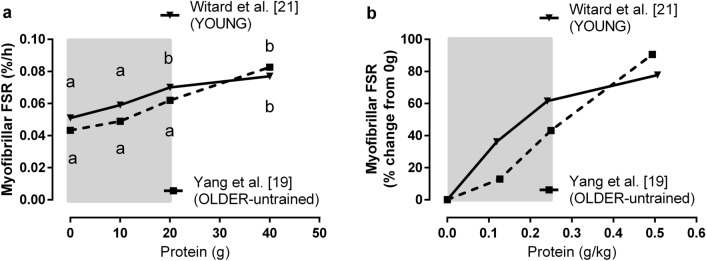
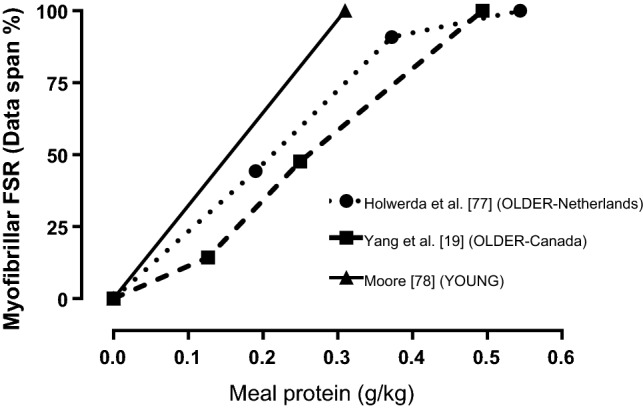
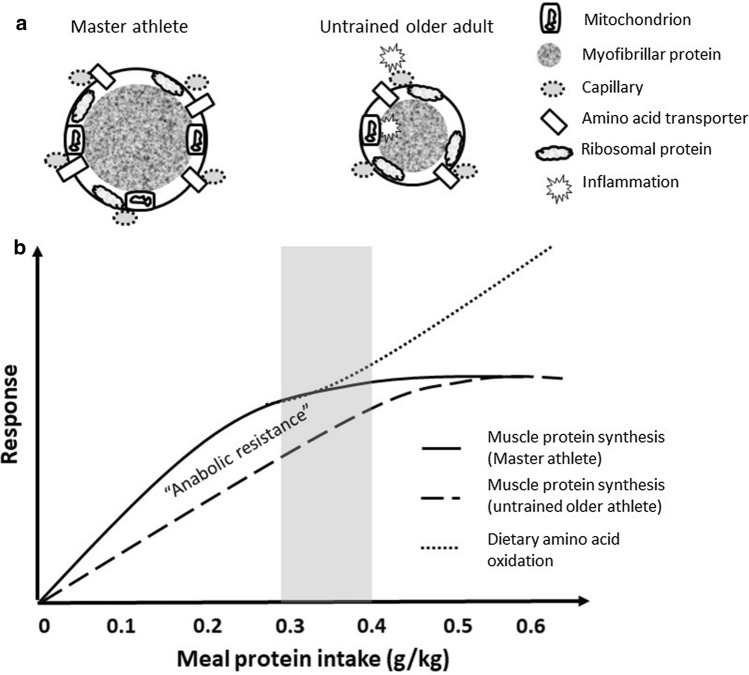
“an estimated average meal protein requirement of ~ 0.4 g/kg of high-quality, leucine-enriched protein (i.e. whey) is required to maximize myofibrillar protein synthesis (MyoPS) at rest in untrained older adults, which is ~ 65% greater than for younger adults [17].”
§ Protein Requirements for Master Athletes: Just Older Versions of Their Younger Selves > Anabolic Resistance of Aging
What the sources say
- Not checked yetcites [17] Moore DR, Churchward-Venne TA, Witard O, Breen L, Burd NA, Tipton KD, et al. Protein ingestion to stimulate myofibrillar protein synthesis requires greater relative protein intakes in healthy older versus younger men. J Gerontol A Biol Sci Med Sci. 2015;70(1):57–62. source
hedgedstates a cause- Asserted: passes — The authors put it forward as true.
- Checkable: passes — It can be checked against evidence.
- Load-bearing: passes — The paper’s conclusions depend on it.
- Based: passes — The paper gives a reason why it holds.
A conclusion the paper draws from its own results — it cites no other source for it, so there is none to check. The quote shows it is in the paper.
In the paper
“Thus, provided dental health is maintained, there is insufficient evidence to suggest that Master athletes would suffer from age-related anabolic resistance secondary to increased splanchnic amino acid sequestration that may affect their sedentary counterparts.”
§ Protein Requirements for Master Athletes: Just Older Versions of Their Younger Selves > Anabolic Resistance of Aging > Digestion and Absorption
hedged- Asserted: passes — The authors put it forward as true.
- Checkable: passes — It can be checked against evidence.
- Load-bearing: passes — The paper’s conclusions depend on it.
- Based: passes — The paper gives a reason why it holds.
None of the sources cited for this claim have been checked yet.
In the paper
“older untrained muscle is generally able to mount an equivalent MyoPS response to that of young adults when meal protein ingestion is at or above its respective maximal threshold [17, 19, 21], although this finding is not without exceptions [16].”
§ Protein Requirements for Master Athletes: Just Older Versions of Their Younger Selves > Anabolic Resistance of Aging
What the sources say
- Not checked yetcites [17] Moore DR, Churchward-Venne TA, Witard O, Breen L, Burd NA, Tipton KD, et al. Protein ingestion to stimulate myofibrillar protein synthesis requires greater relative protein intakes in healthy older versus younger men. J Gerontol A Biol Sci Med Sci. 2015;70(1):57–62. source
- Not checked yetcites [19] Yang Y, Breen L, Burd NA, Hector AJ, Churchward-Venne TA, Josse AR, et al. Resistance exercise enhances myofibrillar protein synthesis with graded intakes of whey protein in older men. Br J Nutr. 2012;108(10):1780–8. source
- Not checked yetcites [21] Witard OC, Jackman SR, Breen L, Smith K, Selby A, Tipton KD. Myofibrillar muscle protein synthesis rates subsequent to a meal in response to increasing doses of whey protein at rest and after resistance exercise. Am J Clin Nutr. 2014;99(1):86–95. source
hedged- Asserted: passes — The authors put it forward as true.
- Checkable: passes — It can be checked against evidence.
- Load-bearing: passes — The paper’s conclusions depend on it.
- Based: passes — The paper gives a reason why it holds.
66 more claims
Create a free account to see all 113 claims and to verify the 160 references still open.
- Probably not a substantial claim. 14
- It may state two separate claims as one. 29
Claims other papers make about this one
Each is checked against this paper’s own text: does it say what the citing paper says it does?
In the citing paper
“It is well reported that, compared to younger cohorts, non-athletic elderly past the age of 60 years require different recovery and nutritional strategies to maintain health [5,14].”
From Protein Intake, Physical Performance and Body Composition in Master Athletes—A Short Scoping Review (2025) · cites this paper as [5]
In the citing paper
“protein intake across the day was not considered; research suggests distributed protein intake leads to greater lean‐mass gains and recovery from exercise for master athletes [68].”
From Dietary Intake of Canadian Middle‐Aged Endurance Athletes (2025) · cites this paper as [68]
In the citing paper
“Previous researchers have elucidated that Masters Athletes have similar muscle characteristics, physiological responses to exercise and protein metabolism as young athletes, and are unlikely to have protein requirements that are different from their young contemporaries(9).”
From Association between protein intake and lean body mass in a group of Masters Athletes (2022) · cites this paper as [9]
Citations
Cites
Trumbo, P., Schlicker, S., Yates, A. A., & Poos, M. (2002) · Journal of the American Dietetic Association · doi:10.1016/s0002-8223(02)90346-9 · Cited by 5,993
Bidirectional Transport of Amino Acids Regulates mTOR and Autophagy
Nicklin, P., Bergman, P., Zhang, B., Triantafellow, E., Wang, H., Nyfeler, B., Yang, H., Hild, M., Kung, C., Wilson, C., et al. (2009) · Cell · doi:10.1016/j.cell.2008.11.044 · Cited by 1,798
Invited Review: Aging and sarcopenia
Doherty, T. J. (2003) · Journal of Applied Physiology · doi:10.1152/japplphysiol.00347.2003 · Cited by 1,764
Macronutrients, P. O., Fiber, P. O. T. D. O. D., Nutrients, S. O. U. R. L. O., Intakes, S. O. I. A. U. O. D. R., Standing Committee on the Scientific Evaluation of Dietary Reference Intakes, Food and Nutrition Board, & Institute of Medicine (2005) · doi:10.17226/10490 · Cited by 1,482
Aging of skeletal muscle: a 12-yr longitudinal study
Frontera, W. R., Hughes, V. A., Fielding, R. A., Fiatarone, M. A., Evans, W. J., & Roubenoff, R. (2000) · Journal of Applied Physiology · doi:10.1152/jappl.2000.88.4.1321 · Cited by 1,443
Mitchell, W. K., Williams, J., Atherton, P., Larvin, M., Lund, J., & Narici, M. (2012) · Frontiers in Physiology · doi:10.3389/fphys.2012.00260 · Cited by 1,377
Nutrition and Athletic Performance
(2016) · Medicine & Science in Sports & Exercise · doi:10.1249/mss.0000000000000852 · Cited by 1,305
Morton, R. W., Murphy, K. T., McKellar, S. R., Schoenfeld, B. J., Henselmans, M., Helms, E., Aragon, A. A., Devries, M. C., Banfield, L., Krieger, J. W., et al. (2018) · British Journal of Sports Medicine · doi:10.1136/bjsports-2017-097608 · Cited by 1,269
Anabolic signaling deficits underlie amino acid resistance of wasting, aging muscle
Cuthbertson, D., Smith, K., Babraj, J., Leese, G., Waddell, T., Atherton, P., Wackerhage, H., Taylor, P. M., & Rennie, M. J. (2005) · The FASEB Journal · doi:10.1096/fj.04-2640fje · Cited by 1,211
Mixed muscle protein synthesis and breakdown after resistance exercise in humans
Phillips, S. M., Tipton, K. D., Aarsland, A., Wolf, S. E., & Wolfe, R. R. (1997) · American Journal of Physiology-Endocrinology and Metabolism · doi:10.1152/ajpendo.1997.273.1.e99 · Cited by 1,132
Addressing Current Criticism Regarding the Value of Self-Report Dietary Data
Subar, A. F., Freedman, L. S., Tooze, J. A., Kirkpatrick, S. I., Boushey, C., Neuhouser, M. L., Thompson, F. E., Potischman, N., Guenther, P. M., Tarasuk, V., et al. (2015) · The Journal of Nutrition · doi:10.3945/jn.115.219634 · Cited by 1,047
Large-scale physical activity data reveal worldwide activity inequality
Althoff, T., Sosič, R., Hicks, J. L., King, A. C., Delp, S. L., & Leskovec, J. (2017) · Nature · doi:10.1038/nature23018 · Cited by 1,000
Moore, D. R., Robinson, M. J., Fry, J. L., Tang, J. E., Glover, E. I., Wilkinson, S. B., Prior, T., Tarnopolsky, M. A., & Phillips, S. M. (2009) · The American Journal of Clinical Nutrition · doi:10.3945/ajcn.2008.26401 · Cited by 973
Self-citationAccelerated longitudinal decline of aerobic capacity in healthy older adults
Fleg, J. L., Morrell, C. H., Bos, A. G., Brant, L. J., Talbot, L. A., Wright, J. G., & Lakatta, E. G. (2005) · Circulation · doi:10.1161/circulationaha.105.545459 · Cited by 970
Katsanos, C. S., Kobayashi, H., Sheffield-Moore, M., Aarsland, A., & Wolfe, R. R. (2006) · American Journal of Physiology-Endocrinology and Metabolism · doi:10.1152/ajpendo.00488.2005 · Cited by 923
Sarcopenia: characteristics, mechanisms and functional significance
Narici, M. V., & Maffulli, N. (2010) · British Medical Bulletin · doi:10.1093/bmb/ldq008 · Cited by 827
An abundant supply of amino acids enhances the metabolic effect of exercise on muscle protein
Biolo, G., Tipton, K. D., Klein, S., & Wolfe, R. R. (1997) · American Journal of Physiology-Endocrinology and Metabolism · doi:10.1152/ajpendo.1997.273.1.e122 · Cited by 825
Moore, D. R., Churchward-Venne, T. A., Witard, O., Breen, L., Burd, N. A., Tipton, K. D., & Phillips, S. M. (2015) · The Journals of Gerontology: Series A · doi:10.1093/gerona/glu103 · Cited by 770
Self-citationKumar, V., Selby, A., Rankin, D., Patel, R., Atherton, P., Hildebrandt, W., Williams, J., Smith, K., Seynnes, O., Hiscock, N., et al. (2009) · The Journal of Physiology · doi:10.1113/jphysiol.2008.164483 · Cited by 740
Biolo, G., Maggi, S. P., Williams, B. D., Tipton, K. D., & Wolfe, R. R. (1995) · American Journal of Physiology-Endocrinology and Metabolism · doi:10.1152/ajpendo.1995.268.3.e514 · Cited by 713 · cited 1×
“Resistance exercise is an inherently anabolic exercise modality that has been consistently shown to increase muscle protein turnover and attenuate the otherwise negative net muscle protein balance in the rested fasted state [45, 83].”
BackgroundThe Skeletal Muscle Anabolic Response to Plant- versus Animal-Based Protein Consumption
van Vliet, S., Burd, N. A., & van Loon, L. J. (2015) · The Journal of Nutrition · doi:10.3945/jn.114.204305 · Cited by 651
International society of sports nutrition position stand: nutrient timing
Kerksick, C. M., Arent, S., Schoenfeld, B. J., Stout, J. R., Campbell, B., Wilborn, C. D., Taylor, L., Kalman, D., Smith-Ryan, A. E., Kreider, R. B., et al. (2017) · Journal of the International Society of Sports Nutrition · doi:10.1186/s12970-017-0189-4 · Cited by 622
Where are all the female participants in Sports and Exercise Medicine research?
Costello, J. T., Bieuzen, F., & Bleakley, C. M. (2014) · European Journal of Sport Science · doi:10.1080/17461391.2014.911354 · Cited by 599
Dietary protein for athletes: From requirements to optimum adaptation
Phillips, S. M., & Van Loon, L. J. C. (2011) · Journal of Sports Sciences · doi:10.1080/02640414.2011.619204 · Cited by 530
Rasmussen, B. B., Tipton, K. D., Miller, S. L., Wolf, S. E., & Wolfe, R. R. (2000) · Journal of Applied Physiology · doi:10.1152/jappl.2000.88.2.386 · Cited by 523
Witard, O. C., Jackman, S. R., Breen, L., Smith, K., Selby, A., & Tipton, K. D. (2014) · The American Journal of Clinical Nutrition · doi:10.3945/ajcn.112.055517 · Cited by 517
Areta, J. L., Burke, L. M., Ross, M. L., Camera, D. M., West, D. W. D., Broad, E. M., Jeacocke, N. A., Moore, D. R., Stellingwerff, T., Phillips, S. M., et al. (2013) · The Journal of Physiology · doi:10.1113/jphysiol.2012.244897 · Cited by 495
Self-citationEffects of antinutritional factors on protein digestibility and amino acid availability in foods
Gilani, G. S., Cockell, K. A., & Sepehr, E. (2005) · Journal of AOAC INTERNATIONAL · doi:10.1093/jaoac/88.3.967 · Cited by 483
Yang, Y., Breen, L., Burd, N. A., Hector, A. J., Churchward-Venne, T. A., Josse, A. R., Tarnopolsky, M. A., & Phillips, S. M. (2012) · British Journal of Nutrition · doi:10.1017/s0007114511007422 · Cited by 480
International Society of Sports Nutrition position stand: Nutrient timing
Kerksick, C., Harvey, T., Stout, J., Campbell, B., Wilborn, C., Kreider, R., Kalman, D., Ziegenfuss, T., Lopez, H., Landis, J., et al. (2008) · Journal of the International Society of Sports Nutrition · doi:10.1186/1550-2783-5-17 · Cited by 456
Resistance exercise decreases skeletal muscle tumor necrosis factor α in frail elderly humans
GREIWE, J. S., CHENG, B., RUBIN, D. C., YARASHESKI, K. E., & SEMENKOVICH, C. F. (2001) · The FASEB Journal · doi:10.1096/fj.00-0274com · Cited by 454
Prevalence of dietary supplement use by athletes: Systematic review and meta-analysis
Knapik, J. J., Steelman, R. A., Hoedebecke, S. S., Austin, K. G., Farina, E. K., & Lieberman, H. R. (2016) · Sports Medicine · doi:10.1007/s40279-015-0387-7 · Cited by 452
Volpi, E., Mittendorfer, B., Wolf, S. E., & Wolfe, R. R. (1999) · American Journal of Physiology-Endocrinology and Metabolism · doi:10.1152/ajpendo.1999.277.3.e513 · Cited by 418
Health-enhancing physical activity across European Union countries: the Eurobarometer study
Sjöström, M., Oja, P., Hagströmer, M., Smith, B. J., & Bauman, A. (2006) · Journal of Public Health · doi:10.1007/s10389-006-0031-y · Cited by 400
Breen, L., Stokes, K. A., Churchward-Venne, T. A., Moore, D. R., Baker, S. K., Smith, K., Atherton, P. J., & Phillips, S. M. (2013) · The Journal of Clinical Endocrinology & Metabolism · doi:10.1210/jc.2013-1502 · Cited by 395
Self-citationAnabolic Resistance of Muscle Protein Synthesis with Aging
Burd, N. A., Gorissen, S. H., & van Loon, L. J. C. (2013) · Exercise and Sport Sciences Reviews · doi:10.1097/jes.0b013e318292f3d5 · Cited by 384
Effects of intermittent fasting on body composition and clinical health markers in humans
Tinsley, G. M., & La Bounty, P. M. (2015) · Nutrition Reviews · doi:10.1093/nutrit/nuv041 · Cited by 382
Exercise-Induced Splanchnic Hypoperfusion Results in Gut Dysfunction in Healthy Men
van Wijck, K., Lenaerts, K., van Loon, L. J. C., Peters, W. H. M., Buurman, W. A., & Dejong, C. H. C. (2011) · PLoS ONE · doi:10.1371/journal.pone.0022366 · Cited by 359
Aging impairs contraction-induced human skeletal muscle mtorc1 signaling and protein synthesis
Fry, C. S., Drummond, M. J., Glynn, E. L., Dickinson, J. M., Gundermann, D. M., Timmerman, K. L., Walker, D. K., Dhanani, S., Volpi, E., & Rasmussen, B. B. (2011) · Skeletal Muscle · doi:10.1186/2044-5040-1-11 · Cited by 351
Burd, N. A., West, D. W. D., Moore, D. R., Atherton, P. J., Staples, A. W., Prior, T., Tang, J. E., Rennie, M. J., Baker, S. K., & Phillips, S. M. (2011) · The Journal of Nutrition · doi:10.3945/jn.110.135038 · Cited by 325
Self-citationDawson-Hughes, B., & Harris, S. S. (2002) · The American Journal of Clinical Nutrition · doi:10.1093/ajcn/75.4.773 · Cited by 324
Time‐restricted feeding in young men performing resistance training: A randomized controlled trial †
Tinsley, G. M., Forsse, J. S., Butler, N. K., Paoli, A., Bane, A. A., La Bounty, P. M., Morgan, G. B., & Grandjean, P. W. (2017) · European Journal of Sport Science · doi:10.1080/17461391.2016.1223173 · Cited by 307
Amino acid transceptors: gate keepers of nutrient exchange and regulators of nutrient signaling
Hundal, H. S., & Taylor, P. M. (2009) · American Journal of Physiology-Endocrinology and Metabolism · doi:10.1152/ajpendo.91002.2008 · Cited by 301
Effect of initial muscle glycogen levels on protein catabolism during exercise
Lemon, P. W., & Mullin, J. P. (1980) · Journal of Applied Physiology · doi:10.1152/jappl.1980.48.4.624 · Cited by 291
Gender differences in leucine kinetics and nitrogen balance in endurance athletes
Phillips, S. M., Atkinson, S. A., Tarnopolsky, M. A., & MacDougall, J. D. (1993) · Journal of Applied Physiology · doi:10.1152/jappl.1993.75.5.2134 · Cited by 281
Stokes, T., Hector, A., Morton, R., McGlory, C., & Phillips, S. (2018) · Nutrients · doi:10.3390/nu10020180 · Cited by 263
Biolo, G., Williams, B. D., Fleming, R. Y., & Wolfe, R. R. (1999) · Diabetes · doi:10.2337/diabetes.48.5.949 · Cited by 256
Lambert, C. P., Wright, N. R., Finck, B. N., & Villareal, D. T. (2008) · Journal of Applied Physiology · doi:10.1152/japplphysiol.00006.2008 · Cited by 249
Protein requirements for endurance athletes
Tarnopolsky, M. (2004) · Nutrition · doi:10.1016/j.nut.2004.04.008 · Cited by 242
Frassetto, L. A., Morris, R. C., Sellmeyer, D. E., Todd, K., & Sébastian, A. (2001) · European Journal of Nutrition · doi:10.1007/s394-001-8347-4 · Cited by 234
Impey, S. G., Hearris, M. A., Hammond, K. M., Bartlett, J. D., Louis, J., Close, G. L., & Morton, J. P. (2018) · Sports Medicine · doi:10.1007/s40279-018-0867-7 · Cited by 232
Areta, J. L., Burke, L. M., Camera, D. M., West, D. W. D., Crawshay, S., Moore, D. R., Stellingwerff, T., Phillips, S. M., Hawley, J. A., & Coffey, V. G. (2014) · American Journal of Physiology-Endocrinology and Metabolism · doi:10.1152/ajpendo.00590.2013 · Cited by 227
Self-citationVitamin C–enriched gelatin supplementation before intermittent activity augments collagen synthesis
Shaw, G., Lee-Barthel, A., Ross, M. L., Wang, B., & Baar, K. (2017) · The American Journal of Clinical Nutrition · doi:10.3945/ajcn.116.138594 · Cited by 227
Protein Ingestion before Sleep Improves Postexercise Overnight Recovery
RES, P. T., GROEN, B., PENNINGS, B., BEELEN, M., WALLIS, G. A., GIJSEN, A. P., SENDEN, J. M. G., & VAN LOON, L. J. C. (2012) · Medicine & Science in Sports & Exercise · doi:10.1249/mss.0b013e31824cc363 · Cited by 226
Fujita, S., Rasmussen, B. B., Cadenas, J. G., Drummond, M. J., Glynn, E. L., Sattler, F. R., & Volpi, E. (2007) · Diabetes · doi:10.2337/db06-1566 · Cited by 224
Do older athletes reach limits in their performance during marathon running?
Lepers, R., & Cattagni, T. (2011) · AGE · doi:10.1007/s11357-011-9271-z · Cited by 210
Hepple, R. T., Mackinnon, S. L. M., Goodman, J. M., Thomas, S. G., & Plyley, M. J. (1997) · Journal of Applied Physiology · doi:10.1152/jappl.1997.82.4.1305 · Cited by 203
The effect of protein timing on muscle strength and hypertrophy: a meta-analysis
Schoenfeld, B. J., Aragon, A. A., & Krieger, J. W. (2013) · Journal of the International Society of Sports Nutrition · doi:10.1186/1550-2783-10-53 · Cited by 201
Drummond, M. J., Dickinson, J. M., Fry, C. S., Walker, D. K., Gundermann, D. M., Reidy, P. T., Timmerman, K. L., Markofski, M. M., Paddon-Jones, D., Rasmussen, B. B., et al. (2012) · American Journal of Physiology-Endocrinology and Metabolism · doi:10.1152/ajpendo.00603.2011 · Cited by 197
Tipton, K. D., Borsheim, E., Wolf, S. E., Sanford, A. P., & Wolfe, R. R. (2003) · American Journal of Physiology-Endocrinology and Metabolism · doi:10.1152/ajpendo.00234.2002 · Cited by 193
Loenneke, J. P., Loprinzi, P. D., Murphy, C. H., & Phillips, S. M. (2016) · Clinical Nutrition · doi:10.1016/j.clnu.2016.04.002 · Cited by 179
Role and potential mechanisms of anabolic resistance in sarcopenia
Haran, P. H., Rivas, D. A., & Fielding, R. A. (2012) · Journal of Cachexia Sarcopenia and Muscle · doi:10.1007/s13539-012-0068-4 · Cited by 178
Protein Requirements for Endurance Athletes
Tarnopolsky, M. A. (2004) · European Journal of Sport Science · doi:10.1080/17461390400074102 · Cited by 177
Snijders, T., Res, P. T., Smeets, J. S., van Vliet, S., van Kranenburg, J., Maase, K., Kies, A. K., Verdijk, L. B., & van Loon, L. J. (2015) · The Journal of Nutrition · doi:10.3945/jn.114.208371 · Cited by 175
Arentson-Lantz, E. J., English, K. L., Paddon-Jones, D., & Fry, C. S. (2016) · Journal of Applied Physiology · doi:10.1152/japplphysiol.00799.2015 · Cited by 171
Smith, G. I., Atherton, P., Villareal, D. T., Frimel, T. N., Rankin, D., Rennie, M. J., & Mittendorfer, B. (2008) · PLoS ONE · doi:10.1371/journal.pone.0001875 · Cited by 168
Pennings, B., Groen, B. B., van Dijk, J.-W., de Lange, A., Kiskini, A., Kuklinski, M., Senden, J. M., & van Loon, L. J. (2013) · The American Journal of Clinical Nutrition · doi:10.3945/ajcn.112.051201 · Cited by 167
Nutrition for the Prevention and Treatment of Injuries in Track and Field Athletes
Close, G. L., Sale, C., Baar, K., & Bermon, S. (2019) · International Journal of Sport Nutrition and Exercise Metabolism · doi:10.1123/ijsnem.2018-0290 · Cited by 158
Humayun, M. A., Elango, R., Ball, R. O., & Pencharz, P. B. (2007) · The American Journal of Clinical Nutrition · doi:10.1093/ajcn/86.4.995 · Cited by 154
Timmerman, K. L., Lee, J. L., Dreyer, H. C., Dhanani, S., Glynn, E. L., Fry, C. S., Drummond, M. J., Sheffield-Moore, M., Rasmussen, B. B., & Volpi, E. (2010) · The Journal of Clinical Endocrinology & Metabolism · doi:10.1210/jc.2009-2696 · Cited by 154
Rémond, D., Machebeuf, M., Yven, C., Buffière, C., Mioche, L., Mosoni, L., & Mirand, P. P. (2007) · American Journal of Clinical Nutrition · doi:10.1093/ajcn/85.5.1286 · Cited by 151
Timmerman, K. L., Lee, J. L., Fujita, S., Dhanani, S., Dreyer, H. C., Fry, C. S., Drummond, M. J., Sheffield-Moore, M., Rasmussen, B. B., & Volpi, E. (2010) · Diabetes · doi:10.2337/db10-0415 · Cited by 149
Hamadeh, M. J., Devries, M. C., & Tarnopolsky, M. A. (2005) · The Journal of Clinical Endocrinology & Metabolism · doi:10.1210/jc.2004-1743 · Cited by 144
Sex-based comparisons of myofibrillar protein synthesis after resistance exercise in the fed state
West, D. W. D., Burd, N. A., Churchward-Venne, T. A., Camera, D. M., Mitchell, C. J., Baker, S. K., Hawley, J. A., Coffey, V. G., & Phillips, S. M. (2012) · Journal of Applied Physiology · doi:10.1152/japplphysiol.00170.2012 · Cited by 143
Devries, M. C., McGlory, C., Bolster, D. R., Kamil, A., Rahn, M., Harkness, L., Baker, S. K., & Phillips, S. M. (2018) · The Journal of Nutrition · doi:10.1093/jn/nxy091 · Cited by 141
van Vliet, S., Shy, E. L., Abou Sawan, S., Beals, J. W., West, D. W., Skinner, S. K., Ulanov, A. V., Li, Z., Paluska, S. A., Parsons, C. M., et al. (2017) · The American Journal of Clinical Nutrition · doi:10.3945/ajcn.117.159855 · Cited by 141
Self-citationMeléndez-Hevia, E., de Paz-Lugo, P., Cornish-Bowden, A., & Cárdenas, M. L. (2009) · Journal of Biosciences · doi:10.1007/s12038-009-0100-9 · Cited by 136
Enhanced Endurance Performance by Periodization of Carbohydrate Intake: “Sleep Low” Strategy
MARQUET, L.-A., BRISSWALTER, J., LOUIS, J., TIOLLIER, E., BURKE, L. M., HAWLEY, J. A., & HAUSSWIRTH, C. (2016) · Medicine & Science in Sports & Exercise · doi:10.1249/mss.0000000000000823 · Cited by 134
Effects of aging and lifelong aerobic exercise on basal and exercise-induced inflammation
Lavin, K. M., Perkins, R. K., Jemiolo, B., Raue, U., Trappe, S. W., & Trappe, T. A. (2020) · Journal of Applied Physiology · doi:10.1152/japplphysiol.00495.2019 · Cited by 134
Oral health and elite sport performance
Needleman, I. G., Ashley, P. F., Fine, P. D., Haddad, F. S., Loosemore, M., de Medici, A., Donos, N., Newton, T., van Someren, K. A., Moazzez, R., et al. (2014) · British Journal of Sports Medicine · doi:10.1136/bjsports-2014-093804 · Cited by 132
Gorissen, S. H., Trommelen, J., Kouw, I. W., Kouw, I. W., Pennings, B., Pennings, B., Wall, B. T., Churchward-Venne, T. A., Horstman, A. M., Koopman, R., et al. (2020) · The Journal of Nutrition · doi:10.1093/jn/nxaa024 · Cited by 131
Joanisse, S., Nederveen, J. P., Snijders, T., McKay, B. R., & Parise, G. (2016) · Gerontology · doi:10.1159/000450922 · Cited by 129
Song, Z., Moore, D. R., Hodson, N. W., Ward, C., Dent, J. R., O’Leary, M. F., Shaw, A. M., Hamilton, D. L., Sarkar, S., Gangloff, Y., et al. (2017) · Scientific Reports · doi:10.1038/s41598-017-05483-x · Cited by 129
Self-citationKato, H., Suzuki, K., Bannai, M., & Moore, D. R. (2016) · PLOS ONE · doi:10.1371/journal.pone.0157406 · Cited by 128
Self-citationMoro, T., Tinsley, G., Longo, G., Grigoletto, D., Bianco, A., Ferraris, C., Guglielmetti, M., Veneto, A., Tagliabue, A., Marcolin, G., et al. (2020) · Journal of the International Society of Sports Nutrition · doi:10.1186/s12970-020-00396-z · Cited by 128
Burd, N. A., Beals, J. W., Martinez, I. G., Salvador, A. F., & Skinner, S. K. (2019) · Sports Medicine · doi:10.1007/s40279-018-1009-y · Cited by 127
Nutrition and athlete bone health
Sale, C., & Elliott-Sale, K. J. (2019) · Sports Medicine · doi:10.1007/s40279-019-01161-2 · Cited by 127
Davies, R. W., Carson, B. P., & Jakeman, P. M. (2018) · Nutrients · doi:10.3390/nu10020221 · Cited by 125
Drummond, M. J., Fry, C. S., Glynn, E. L., Timmerman, K. L., Dickinson, J. M., Walker, D. K., Gundermann, D. M., Volpi, E., & Rasmussen, B. B. (2011) · Journal of Applied Physiology · doi:10.1152/japplphysiol.01408.2010 · Cited by 120
Timmerman, K. L., Dhanani, S., Glynn, E. L., Fry, C. S., Drummond, M. J., Jennings, K., Rasmussen, B. B., & Volpi, E. (2012) · The American Journal of Clinical Nutrition · doi:10.3945/ajcn.111.020800 · Cited by 120
Case study: Nutrition and training periodization in three elite marathon runners
Stellingwerff, T. (2012) · International Journal of Sport Nutrition and Exercise Metabolism · doi:10.1123/ijsnem.22.5.392 · Cited by 119
Smeuninx, B., Mckendry, J., Wilson, D., Martin, U., & Breen, L. (2017) · The Journal of Clinical Endocrinology & Metabolism · doi:10.1210/jc.2017-00869 · Cited by 118
A Critical Examination of Dietary Protein Requirements, Benefits, and Excesses in Athletes
Phillips, S. M., Moore, D. R., & Tang, J. E. (2007) · International Journal of Sport Nutrition and Exercise Metabolism · doi:10.1123/ijsnem.17.s1.s58 · Cited by 118
Self-citationDeclining performance of master athletes: silhouettes of the trajectory of healthy human ageing?
Lazarus, N. R., & Harridge, S. D. R. (2017) · The Journal of Physiology · doi:10.1113/jp272443 · Cited by 116
Dietary protein requirements and body protein metabolism in endurance-trained men
Meredith, C. N., Zackin, M. J., Frontera, W. R., & Evans, W. J. (1989) · Journal of Applied Physiology · doi:10.1152/jappl.1989.66.6.2850 · Cited by 115
Musculoskeletal Injury in the Masters Runners
McKean, K. A., Manson, N. A., & Stanish, W. D. (2006) · Clinical Journal of Sport Medicine · doi:10.1097/00042752-200603000-00011 · Cited by 113
West, D., Abou Sawan, S., Mazzulla, M., Williamson, E., & Moore, D. (2017) · Nutrients · doi:10.3390/nu9070735 · Cited by 112
Self-citationMuscle morphology and performance in master athletes: A systematic review and meta-analyses
Mckendry, J., Breen, L., Shad, B. J., & Greig, C. A. (2018) · Ageing Research Reviews · doi:10.1016/j.arr.2018.04.007 · Cited by 111
Miller, B. F., Hansen, M., Olesen, J. L., Flyvbjerg, A., Schwarz, P., Babraj, J. A., Smith, K., Rennie, M. J., & Kjaer, M. (2006) · American Journal of Physiology-Endocrinology and Metabolism · doi:10.1152/ajpendo.00300.2005 · Cited by 111
Stratton, M. T., Tinsley, G. M., Alesi, M. G., Hester, G. M., Olmos, A. A., Serafini, P. R., Modjeski, A. S., Mangine, G. T., King, K., Savage, S. N., et al. (2020) · Nutrients · doi:10.3390/nu12041126 · Cited by 111
Monteyne, A. J., Coelho, M. O., Porter, C., Abdelrahman, D. R., Jameson, T. S., Jackman, S. R., Blackwell, J. R., Finnigan, T. J., Stephens, F. B., Dirks, M. L., et al. (2020) · The American Journal of Clinical Nutrition · doi:10.1093/ajcn/nqaa092 · Cited by 110
Robinson, M. J., Burd, N. A., Breen, L., Rerecich, T., Yang, Y., Hector, A. J., Baker, S. K., & Phillips, S. M. (2013) · Applied Physiology, Nutrition, and Metabolism · doi:10.1139/apnm-2012-0092 · Cited by 109
Kim, I.-Y., Schutzler, S., Schrader, A., Spencer, H. J., Azhar, G., Ferrando, A. A., & Wolfe, R. R. (2016) · American Journal of Physiology-Endocrinology and Metabolism · doi:10.1152/ajpendo.00365.2015 · Cited by 109
Howarth, K. R., Phillips, S. M., MacDonald, M. J., Richards, D., Moreau, N. A., & Gibala, M. J. (2010) · Journal of Applied Physiology · doi:10.1152/japplphysiol.00108.2009 · Cited by 108
Histochemical and enzymatic characteristics of skeletal muscle in master athletes
Coggan, A. R., Spina, R. J., Rogers, M. A., King, D. S., Brown, M., Nemeth, P. M., & Holloszy, J. O. (1990) · Journal of Applied Physiology · doi:10.1152/jappl.1990.68.5.1896 · Cited by 107
Devries, M. C., Breen, L., Von Allmen, M., MacDonald, M. J., Moore, D. R., Offord, E. A., Horcajada, M.-N., Breuillé, D., & Phillips, S. M. (2015) · Physiological Reports · doi:10.14814/phy2.12493 · Cited by 107
Self-citationGroenendijk, I., den Boeft, L., van Loon, L. J. C., & de Groot, L. C. P. G. M. (2019) · Computational and Structural Biotechnology Journal · doi:10.1016/j.csbj.2019.07.005 · Cited by 107
Churchward-Venne, T. A., Pinckaers, P. J., Smeets, J. S., Betz, M. W., Senden, J. M., Goessens, J. P., Gijsen, A. P., Rollo, I., Verdijk, L. B., & van Loon, L. J. (2020) · The American Journal of Clinical Nutrition · doi:10.1093/ajcn/nqaa073 · Cited by 106
Tipton, K. D., & Witard, O. C. (2007) · Clinics in Sports Medicine · doi:10.1016/j.csm.2006.11.003 · Cited by 105
Sexually dimorphic effect of aging on skeletal muscle protein synthesis
Smith, G. I., Reeds, D. N., Hall, A. M., Chambers, K. T., Finck, B. N., & Mittendorfer, B. (2012) · Biology of Sex Differences · doi:10.1186/2042-6410-3-11 · Cited by 105
Javed, A. A., Mayhew, A. J., Shea, A. K., & Raina, P. (2019) · JAMA Network Open · doi:10.1001/jamanetworkopen.2019.10154 · Cited by 105
van Wijck, K., Pennings, B., van Bijnen, A. A. J. H. M., Senden, J. M., Buurman, W. A., Dejong, C. H. C., van Loon, L. J. C., & Lenaerts, K. (2013) · American Journal of Physiology-Regulatory, Integrative and Comparative Physiology · doi:10.1152/ajpregu.00294.2012 · Cited by 101
Eating Patterns and Meal Frequency of Elite Australian Athletes
Burke, L. M., Slater, G., Broad, E. M., Haukka, J., Modulon, S., & Hopkins, W. G. (2003) · International Journal of Sport Nutrition and Exercise Metabolism · doi:10.1123/ijsnem.13.4.521 · Cited by 99
Exercise and the master athlete—a model of successful aging
Hawkins, S. A., Wiswell, R. A., & Marcell, T. J. (2003) · The Journals of Gerontology Series A: Biological Sciences and Medical Sciences · doi:10.1093/gerona/58.11.m1009 · Cited by 97
Holwerda, A. M., Paulussen, K. J. M., Overkamp, M., Goessens, J. P. B., Kramer, I. F., Wodzig, W. K. W. H., Verdijk, L. B., & van Loon, L. J. C. (2019) · Journal of Nutrition · doi:10.1093/jn/nxy263 · Cited by 97
Maximizing Post-exercise Anabolism: The Case for Relative Protein Intakes
Moore, D. R. (2019) · Frontiers in Nutrition · doi:10.3389/fnut.2019.00147 · Cited by 86
Self-citationMoore, D. R., Areta, J., Coffey, V. G., Stellingwerff, T., Phillips, S. M., Burke, L. M., Cléroux, M., Godin, J.-P., & Hawley, J. A. (2012) · Nutrition & Metabolism · doi:10.1186/1743-7075-9-91 · Cited by 85
Self-citationOikawa, S. Y., Kamal, M. J., Webb, E. K., McGlory, C., Baker, S. K., & Phillips, S. M. (2020) · The American Journal of Clinical Nutrition · doi:10.1093/ajcn/nqz332 · Cited by 84
Keeping older muscle “young” through dietary protein and physical activity
Moore, D. R. (2014) · Advances in Nutrition · doi:10.3945/an.113.005405 · Cited by 80
Self-citationThe effects of age and resistance loading on skeletal muscle ribosome biogenesis
Stec, M. J., Mayhew, D. L., & Bamman, M. M. (2015) · Journal of Applied Physiology · doi:10.1152/japplphysiol.00489.2015 · Cited by 80
Dietary Protein Intake and Distribution Patterns of Well-Trained Dutch Athletes
Gillen, J. B., Trommelen, J., Wardenaar, F. C., Brinkmans, N. Y. J., Versteegen, J. J., Jonvik, K. L., Kapp, C., de Vries, J., van den Borne, J. J. G. C., Gibala, M. J., et al. (2017) · International Journal of Sport Nutrition and Exercise Metabolism · doi:10.1123/ijsnem.2016-0154 · Cited by 80
Trommelen, J., Kouw, I. W. K., Holwerda, A. M., Snijders, T., Halson, S. L., Rollo, I., Verdijk, L. B., & van Loon, L. J. C. (2018) · American Journal of Physiology-Endocrinology and Metabolism · doi:10.1152/ajpendo.00273.2016 · Cited by 76
Dickinson, J. M., Drummond, M. J., Coben, J. R., Volpi, E., & Rasmussen, B. B. (2013) · Clinical Nutrition · doi:10.1016/j.clnu.2012.07.009 · Cited by 75
Mitchell, W. K., Phillips, B. E., Williams, J. P., Rankin, D., Smith, K., Lund, J. N., & Atherton, P. J. (2013) · Physiological Reports · doi:10.1002/phy2.119 · Cited by 74
Churchward-Venne, T. A., Holwerda, A. M., Phillips, S. M., & van Loon, L. J. C. (2016) · Sports Medicine · doi:10.1007/s40279-016-0504-2 · Cited by 71
Skeletal muscle size, function, and adiposity with lifelong aerobic exercise
Chambers, T. L., Burnett, T. R., Raue, U., Lee, G. A., Finch, W. H., Graham, B. M., Trappe, T. A., & Trappe, S. (2020) · Journal of Applied Physiology · doi:10.1152/japplphysiol.00426.2019 · Cited by 71
Tayrose, G. A., Beutel, B. G., Cardone, D. A., & Sherman, O. H. (2014) · Sports Health A Multidisciplinary Approach · doi:10.1177/1941738114548999 · Cited by 70
Figueroa, A., Going, S. B., Milliken, L. A., Blew, R. M., Sharp, S., Teixeira, P. J., & Lohman, T. G. (2003) · The Journals of Gerontology Series A: Biological Sciences and Medical Sciences · doi:10.1093/gerona/58.3.m266 · Cited by 70
Holwerda, A. M., Kouw, I. W., Trommelen, J., Halson, S. L., Wodzig, W. K., Verdijk, L. B., & van Loon, L. J. (2016) · The Journal of Nutrition · doi:10.3945/jn.116.230086 · Cited by 67
Snijders, T., Trommelen, J., Kouw, I. W. K., Holwerda, A. M., Verdijk, L. B., & van Loon, L. J. C. (2019) · Frontiers in Nutrition · doi:10.3389/fnut.2019.00017 · Cited by 67
Aoyagi, Y., & Shephard, R. J. (2013) · Archives of Gerontology and Geriatrics · doi:10.1016/j.archger.2012.11.006 · Cited by 63
Moro, T., Brightwell, C. R., Deer, R. R., Graber, T. G., Galvan, E., Fry, C. S., Volpi, E., & Rasmussen, B. B. (2018) · The Journal of Nutrition · doi:10.1093/jn/nxy064 · Cited by 63
Protein Distribution and Muscle-Related Outcomes: Does the Evidence Support the Concept?
Hudson, J., Bergia, R. E., & Campbell, W. W. (2020) · Nutrients · doi:10.3390/nu12051441 · Cited by 62
Snijders, T., Nederveen, J. P., Bell, K. E., Lau, S. W., Mazara, N., Kumbhare, D. A., Phillips, S. M., & Parise, G. (2019) · The Journal of Physiology · doi:10.1113/jp276260 · Cited by 60
Paul, C., Leser, S., & Oesser, S. (2019) · Nutrients · doi:10.3390/nu11051079 · Cited by 60
Effects of 8 wk of 16:8 Time-restricted Eating in Male Middle- and Long-Distance Runners
BRADY, A. J., LANGTON, H. M., MULLIGAN, M., & EGAN, B. (2021) · Medicine & Science in Sports & Exercise · doi:10.1249/mss.0000000000002488 · Cited by 60
Holwerda, A. M., Overkamp, M., Paulussen, K. J. M., Smeets, J. S. J., van Kranenburg, J., Backx, E. M. P., Gijsen, A. P., Goessens, J. P. B., Verdijk, L. B., & van Loon, L. J. C. (2018) · The Journal of Nutrition · doi:10.1093/jn/nxy169 · Cited by 59
Brown, M., Birge, S. J., & Kohrt, W. M. (1997) · The Journals of Gerontology Series A: Biological Sciences and Medical Sciences · doi:10.1093/gerona/52a.3.b166 · Cited by 58
Sexual dimorphism in skeletal muscle protein turnover
Smith, G. I., & Mittendorfer, B. (2016) · Journal of Applied Physiology · doi:10.1152/japplphysiol.00625.2015 · Cited by 57
Van Vliet, S., Beals, J. W., Martinez, I. G., Skinner, S. K., & Burd, N. A. (2018) · Nutrients · doi:10.3390/nu10020224 · Cited by 56
Sawan, S. A., van Vliet, S., Parel, J. T., Beals, J. W., Mazzulla, M., West, D. W. D., Philp, A., Li, Z., Paluska, S. A., Burd, N. A., et al. (2018) · Physiological Reports · doi:10.14814/phy2.13628 · Cited by 52
Self-citationThe Importance of mTOR Trafficking for Human Skeletal Muscle Translational Control
Hodson, N. W., & Philp, A. (2018) · Exercise and Sport Sciences Reviews · doi:10.1249/jes.0000000000000173 · Cited by 52
Moore, D. R., Kelly, R. P., Devries, M. C., Churchward‐Venne, T. A., Phillips, S. M., Parise, G., & Johnston, A. P. (2018) · Journal of Cachexia, Sarcopenia and Muscle · doi:10.1002/jcsm.12306 · Cited by 50
Self-citationPiasecki, J., McPhee, J. S., Hannam, K., Deere, K. C., Elhakeem, A., Piasecki, M., Degens, H., Tobias, J. H., & Ireland, A. (2018) · Archives of Osteoporosis · doi:10.1007/s11657-018-0486-9 · Cited by 50
Phillips, B. E., Atherton, P. J., Varadhan, K. K., Limb, M. C., Wilkinson, D. J., Sjøberg, K. A., Smith, K., & Williams, J. P. (2015) · The Journal of Physiology · doi:10.1113/jp270343 · Cited by 49
Waskiw-Ford, M., Hannaian, S., Duncan, J., Kato, H., Abou Sawan, S., Locke, M., Kumbhare, D., & Moore, D. (2020) · Nutrients · doi:10.3390/nu12041061 · Cited by 49
Self-citationEffects of Different Vitamin C–Enriched Collagen Derivatives on Collagen Synthesis
Lis, D. M., & Baar, K. (2019) · International Journal of Sport Nutrition and Exercise Metabolism · doi:10.1123/ijsnem.2018-0385 · Cited by 42
Oxidative stress, inflammatory cytokines and body composition of master athletes: The interplay
Aguiar, S. S., Sousa, C. V., Deus, L. A., Rosa, T. S., Sales, M. M., Neves, R. V. P., Barbosa, L. P., Santos, P. A., Campbell, C. S., & Simões, H. G. (2020) · Experimental Gerontology · doi:10.1016/j.exger.2019.110806 · Cited by 42
Doering, T. M., Reaburn, P. R., Phillips, S. M., & Jenkins, D. G. (2016) · International Journal of Sport Nutrition and Exercise Metabolism · doi:10.1123/ijsnem.2015-0102 · Cited by 41
Yasuda, J., Tomita, T., Arimitsu, T., & Fujita, S. (2020) · The Journal of Nutrition · doi:10.1093/jn/nxaa101 · Cited by 41
Endurance Exercise Attenuates Postprandial Whole-Body Leucine Balance in Trained Men
MAZZULLA, M., PAREL, J. T., BEALS, J. W., VAN VLIET, S., ABOU SAWAN, S., WEST, D. W. D., PALUSKA, S. A., ULANOV, A. V., MOORE, D. R., & BURD, N. A. (2017) · Medicine & Science in Sports & Exercise · doi:10.1249/mss.0000000000001394 · Cited by 39
Self-citationWilliamson, E., & Moore, D. R. (2021) · Frontiers in Nutrition · doi:10.3389/fnut.2021.640621 · Cited by 38
Self-citationPavis, G. F., Jameson, T. S. O., Dirks, M. L., Lee, B. P., Abdelrahman, D. R., Murton, A. J., Porter, C., Alamdari, N., Mikus, C. R., Wall, B. T., et al. (2021) · American Journal of Physiology-Endocrinology and Metabolism · doi:10.1152/ajpendo.00454.2020 · Cited by 37
Amino acid transporters in the regulation of human skeletal muscle protein metabolism
Dickinson, J. M., & Rasmussen, B. B. (2013) · Current Opinion in Clinical Nutrition and Metabolic Care · doi:10.1097/mco.0b013e3283653ec5 · Cited by 37
Master triathletes have not reached limits in their Ironman triathlon performance
Stiefel, M., Knechtle, B., & Lepers, R. (2014) · Scandinavian Journal of Medicine & Science in Sports · doi:10.1111/j.1600-0838.2012.01473.x · Cited by 37
Abou Sawan, S., van Vliet, S., West, D. W. D., Beals, J. W., Paluska, S. A., Burd, N. A., & Moore, D. R. (2018) · American Journal of Physiology-Cell Physiology · doi:10.1152/ajpcell.00225.2018 · Cited by 36
Self-citationProtein to Maximize Whole-Body Anabolism in Resistance-trained Females after Exercise
Malowany, J. M., West, D. W. D., Williamson, E., Volterman, K. A., Sawan, S. A., Mazzulla, M., & Moore, D. R. (2018) · Medicine & Science in Sports & Exercise · doi:10.1249/mss.0000000000001832 · Cited by 36
Self-citationMuscle Characteristics and Substrate Energetics in Lifelong Endurance Athletes
DUBÉ, J. J., BROSKEY, N. T., DESPINES, A. A., STEFANOVIC-RACIC, M., TOLEDO, F. G. S., GOODPASTER, B. H., & AMATI, F. (2016) · Medicine & Science in Sports & Exercise · doi:10.1249/mss.0000000000000789 · Cited by 34
Wall, B. T., Burd, N. A., Franssen, R., Gorissen, S. H. M., Snijders, T., Senden, J. M., Gijsen, A. P., & van Loon, L. J. C. (2016) · American Journal of Physiology-Endocrinology and Metabolism · doi:10.1152/ajpendo.00325.2016 · Cited by 34
Effects of aging and lifelong aerobic exercise on basal and exercise-induced inflammation in women
Lavin, K. M., Perkins, R. K., Jemiolo, B., Raue, U., Trappe, S. W., & Trappe, T. A. (2020) · Journal of Applied Physiology · doi:10.1152/japplphysiol.00655.2020 · Cited by 34
The Effect of Dietary Protein on Protein Metabolism and Performance in Endurance-trained Males
WILLIAMSON, E., KATO, H., VOLTERMAN, K. A., SUZUKI, K., & MOORE, D. R. (2019) · Medicine & Science in Sports & Exercise · doi:10.1249/mss.0000000000001791 · Cited by 33
Self-citationLow-Carbohydrate Training Increases Protein Requirements of Endurance Athletes
GILLEN, J. B., WEST, D. W. D., WILLIAMSON, E. P., FUNG, H. J. W., & MOORE, D. R. (2019) · Medicine & Science in Sports & Exercise · doi:10.1249/mss.0000000000002036 · Cited by 33
Self-citationMazzulla, M., Abou Sawan, S., Williamson, E., Hannaian, S. J., Volterman, K. A., West, D. W. D., & Moore, D. R. (2020) · The Journal of Nutrition · doi:10.1093/jn/nxz249 · Cited by 32
Self-citationLactalbumin, Not Collagen, Augments Muscle Protein Synthesis with Aerobic Exercise
OIKAWA, S. Y., MACINNIS, M. J., TRIPP, T. R., MCGLORY, C., BAKER, S. K., & PHILLIPS, S. M. (2020) · Medicine & Science in Sports & Exercise · doi:10.1249/mss.0000000000002253 · Cited by 31
Manetta, J., Brun, J.-F., Prefaut, C., & Mercier, J. (2005) · Metabolism · doi:10.1016/j.metabol.2004.12.002 · Cited by 30
Lower Integrated Muscle Protein Synthesis in Masters Compared with Younger Athletes
DOERING, T. M., JENKINS, D. G., REABURN, P. R., BORGES, N. R., HOHMANN, E., & PHILLIPS, S. M. (2016) · Medicine & Science in Sports & Exercise · doi:10.1249/mss.0000000000000935 · Cited by 29
Mazzulla, M., Volterman, K. A., Packer, J. E., Wooding, D. J., Brooks, J. C., Kato, H., & Moore, D. R. (2018) · Nutrition & Metabolism · doi:10.1186/s12986-018-0301-z · Cited by 28
Self-citationRoberson, P. A., Mobley, C. B., Romero, M. A., Haun, C. T., Osburn, S. C., Mumford, P. W., Vann, C. G., Greer, R. A., Ferrando, A. A., & Roberts, M. D. (2021) · Frontiers in Nutrition · doi:10.3389/fnut.2020.628405 · Cited by 28
Kato, H., Suzuki, K., Bannai, M., & Moore, D. R. (2018) · The Journal of Nutrition · doi:10.1093/jn/nxy048 · Cited by 27
Self-citationDietary intake and supplement use in female master cyclists and runners
Beshgetoor, D., & Nichols, J. F. (2003) · International Journal of Sport Nutrition and Exercise Metabolism · doi:10.1123/ijsnem.13.2.166 · Cited by 25
Piasecki, J., Ireland, A., Piasecki, M., Deere, K., Hannam, K., Tobias, J., & McPhee, J. S. (2019) · Frontiers in Physiology · doi:10.3389/fphys.2019.01050 · Cited by 24
van Schooten, K. S., van Dieën, J. H., Pijnappels, M. A. G. M., Maier, A. B., Hul, A. J. V. ‘., Niessen, M., & van Lummel, R. C. (2018) · BMC Public Health · doi:10.1186/s12889-018-5719-8 · Cited by 23
Doering, T. M., Reaburn, P. R., Cox, G., & Jenkins, D. G. (2016) · International Journal of Sport Nutrition and Exercise Metabolism · doi:10.1123/ijsnem.2015-0289 · Cited by 22
Higher protein intake is associated with improved muscle strength in elite senior athletes
Di Girolamo, F. G., Situlin, R., Fiotti, N., Tence, M., De Colle, P., Mearelli, F., Minetto, M. A., Ghigo, E., Pagani, M., Lucini, D., et al. (2017) · Nutrition · doi:10.1016/j.nut.2017.05.003 · Cited by 22
Protein Requirements of Pre-Menopausal Female Athletes: Systematic Literature Review
Mercer, D., Convit, L., Condo, D., Carr, A. J., Hamilton, D. L., Slater, G., & Snipe, R. M. J. (2020) · Nutrients · doi:10.3390/nu12113527 · Cited by 20
Jespersen, S. E., & Agergaard, J. (2021) · European Journal of Nutrition · doi:10.1007/s00394-021-02487-2 · Cited by 19
Agergaard, J., Bülow, J., Jensen, J. K., Reitelseder, S., Bornø, A., Drummond, M. J., Schjerling, P., & Holm, L. (2017) · Physiological Reports · doi:10.14814/phy2.13444 · Cited by 17
DIETARY PROTEIN TO MAINTAIN MUSCLE MASS IN AGING: A CASE FOR PER-MEAL PROTEIN RECOMMENDATIONS
MURPHY, C. H., OIKAWA, S. Y., & PHILLIPS, S. M. (2016) · The Journal of Frailty & Aging · doi:10.14283/jfa.2016.80 · Cited by 14
Doering, T. M., Reaburn, P. R., Borges, N. R., Cox, G. R., & Jenkins, D. G. (2017) · International Journal of Sport Nutrition and Exercise Metabolism · doi:10.1123/ijsnem.2016-0079 · Cited by 14
Brook, M. S., Scaife, P. J., Bass, J. J., Cegielski, J., Watanabe, S., Wilkinson, D. J., Smith, K., Phillips, B. E., & Atherton, P. J. (2021) · Clinical Nutrition · doi:10.1016/j.clnu.2021.01.002 · Cited by 13
Loprinzi, P. D., Loenneke, J. P., & Hamilton, D. L. (2017) · European Journal of Clinical Nutrition · doi:10.1038/ejcn.2017.101 · Cited by 12
One size doesn’t fit all: postexercise protein requirements for the endurance athlete
Moore, D. R. (2020) · American Journal of Clinical Nutrition · doi:10.1093/ajcn/nqaa144 · Cited by 10
Self-citationHannaian, S. J., Orlando, M. N., Abou Sawan, S., Mazzulla, M., West, D. W. D., & Moore, D. R. (2020) · Frontiers in Sports and Active Living · doi:10.3389/fspor.2020.568740 · Cited by 4
Self-citation
Cited by
Strategies to Prevent Sarcopenia in the Aging Process: Role of Protein Intake and Exercise
Rogeri, P. S., Zanella, R., Martins, G. L., Garcia, M. D. A., Leite, G., Lugaresi, R., Gasparini, S. O., Sperandio, G. A., Ferreira, L. H. B., Souza-Junior, T. P., et al. (2021) · Nutrients · doi:10.3390/nu14010052 · Cited by 181
Age-related muscle anabolic resistance: inevitable or preventable?
Aragon, A. A., Tipton, K. D., & Schoenfeld, B. J. (2022) · Nutrition Reviews · doi:10.1093/nutrit/nuac062 · Cited by 102
The Impact of Training on the Loss of Cardiorespiratory Fitness in Aging Masters Endurance Athletes
Burtscher, J., Strasser, B., Burtscher, M., & Millet, G. P. (2022) · International Journal of Environmental Research and Public Health · doi:10.3390/ijerph191711050 · Cited by 36
Witard, O. C., Hearris, M. A., & Morgan, P. T. (2025) · Sports Medicine · doi:10.1007/s40279-025-02203-8 · Cited by 39
Lanng, S. K., Oxfeldt, M., Pedersen, S. S., Johansen, F. T., Risikesan, J., Lejel, T., Bertram, H. C., & Hansen, M. (2022) · European Journal of Nutrition · doi:10.1007/s00394-022-03071-y · Cited by 34
Metadata
- Authors
- Moore, D. R.
- Affiliations
- University of Toronto (CA)
- Corresponding author
- Moore, Daniel R.
- ORCID
- Moore, Daniel R.
- Venue
- Sports Medicine
- Published
- 2021-09
- Volume
- 51
- Issue
- S1
- Pages
- 13-30
- ISSN
- 0112-1642 (ISSN-L)
- 1179-2035
- PMC
- PMC8566396
- OpenAlex
- W3200315391
- Cited by
- 33
- References
- 183
- Citations by year
- 2026: 7 · 2025: 9 · 2024: 2 · 2023: 6 · 2022: 7 · 2021: 2
- FWCI
- 0.53
- Type
- journal article
- Language
- en
- Open access
- hybrid
- doi.org
- Licence
- cc-by
- creativecommons.org/licenses/by/4.0 (tdm)
- creativecommons.org/licenses/by/4.0 (vor, 12 d)
- Locations
- Sports Medicine (publishedVersion, cc-by)
- PubMed (publishedVersion)
- PubMed Central (publishedVersion, cc-by)
- TSpace (University of Toronto) (acceptedVersion, cc-by)
- Funders
- Gatorade Sport Science Institute
- Topics
- Health Sciences › Nursing › Nutrition and Dietetics › Muscle metabolism and nutrition
- Health Sciences › Medicine › Physiology (medical) › Nutrition and Health in Aging
- Health Sciences › Medicine › Orthopedics and Sports Medicine › Sports Performance and Training
- Keywords
- protein requirements, master athletes, aging, anabolic resistance, muscle protein synthesis, post-exercise recovery, resistance training, endurance training, protein metabolism, older athletes, muscle mass
- MeSH terms
- Adult, Aged, Aging, Body Composition, Humans, Physical Endurance, Exercise, Muscle, Skeletal, Athletes
About these checks
Registry, retraction, Cites and statistics results are computed, not judged, with one exception: a printed reference that no index lists is read once by a model before it counts as a citation error. Claims are extracted by a model and kept only when their quote appears verbatim in the text; each cited source is then checked, with a model’s help, for whether it says what the claim relies on. Those verdicts can be wrong — read the claim’s quote and the cited source before relying on one.
A language model drew the claims from the paper on 2026-11-14, under version 3 of the claim definition (model deepseek-v4.1-flash, prompt extract-v3).
A second model labelled each claim on 2026-11-14 (model jev-1.13-20260917, definition revision gold-guideline-v0.2).
Statistics and arithmetic are recomputed, not judged.
Confidence bands are shown only for fields calibrated on our annotated test set. None is calibrated yet, so no band is shown.
What counts as a claim ›How we measure confidence ›How we check this ›
Are you an author, or do you see a problem with this page? Request a review
Data sources
Bibliographic data: Semantic Scholar, OpenAlex, Crossref.
Contains information from the Semantic Scholar Academic Graph Datasets, made available under the ODC Attribution License (ODC-BY 1.0).
Semantic Scholar’s data is described in: Kinney, R., et al. (2023). The Semantic Scholar Open Data Platform. arXiv:2301.10140.
