

Adolescent nicotine exposure and persistent neurocircuitry changes: unveiling lifelong psychiatric risks
Open accessThe DOI matches its Crossref record; 168 of the 168 references it cites were found in a registry or an index; 86 of the 173 sources its claims cite were checked for support.
Abstract
Nicotine exposure during adolescence has emerged as a significant risk factor for later psychiatric disease. Notably, adolescence is a critical period for the maturation of acetylcholine and dopamine systems, neuromodulators which tightly regulate cognitive, motivational and emotional behaviors known to contribute to psychiatric vulnerability. This review explores whether long-lasting modifications in these neuromodulatory systems following adolescent nicotine exposure underlie the increased vulnerability to mental health disorders. We discuss evidence that nicotine in adolescence leads to enduring molecular, cellular alterations by perturbing the normal trajectory of cholinergic and dopamine systems, and link these changes with potential adverse behavioral outcomes in adulthood. We propose that persistent alterations in acetylcholine and dopamine signaling caused by adolescent nicotine exposure may contribute to the heightened risk for psychiatric disorders including substance abuse, anxio-depressive disorders, and schizophrenia for which deficits in a large spectrum of motivational domains are highly prevalent. The interaction between nicotine and these developing neurotransmitter systems during adolescence raises important questions about the mechanisms driving these changes. Finally, we discuss limitations in the current research and subsequently identify open questions in the field which will help drive forward research on the psychiatric consequences of adolescent nicotine use. Understanding these maladaptations could pave the way for targeted therapeutic strategies to mitigate the adverse effects of adolescent nicotine exposure on brain development and subsequent psychiatric outcomes.
Overview
CoChat Summary
## TL;DR
This is a review of animal and translational evidence arguing that nicotine exposure during adolescence can cause lasting changes in cholinergic and dopaminergic circuitry. The authors link these persistent neuroadaptations to increased adult risk for addiction and mood- or psychosis-related outcomes, while emphasizing that the literature is limited and heterogeneous.
## Key findings
- The review states that nicotine exposure during adolescence is associated with increased risk of later psychiatric disease, including substance abuse, anxio-depressive disorders, and schizophrenia.
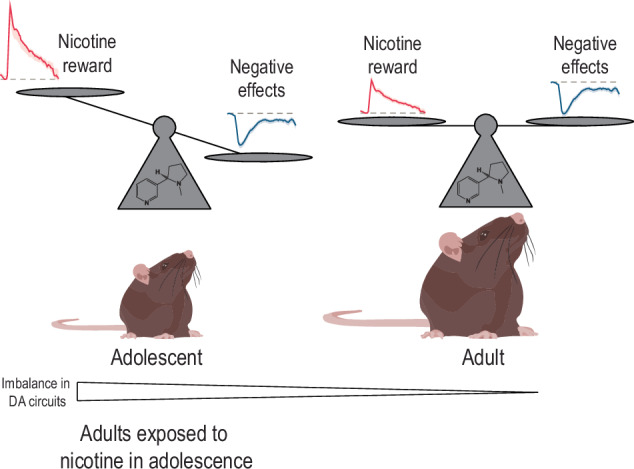
- In animal models, adolescent nicotine exposure increased later nicotine reward sensitivity and reduced aversion: adult mice exposed in early adolescence consumed more nicotine, were less affected by its negative effects, and showed greater sensitivity to its rewarding properties.
- The paper reports sex- and age-specific behavioral effects: mid-adolescent nicotine exposure (PND 35–44) induced anxiety-like behavior and persistent depressive-like behavior in adult rats, with these effects reported as specific to male rats.
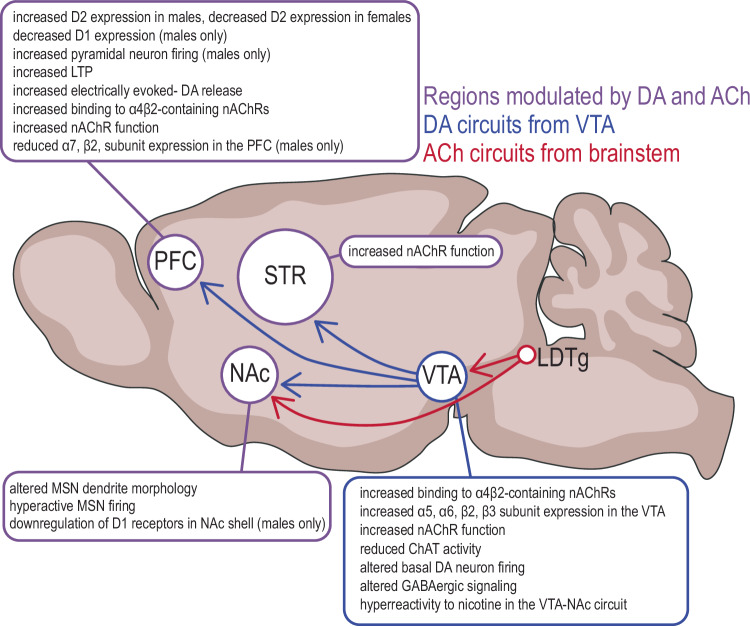
- The authors describe persistent neurobiological changes after adolescent nicotine exposure, including increased α4β2 nAChR binding persisting into adulthood in the PFC and midbrain after 2 weeks of mid-adolescent exposure (PND 30–47), as well as altered DA circuit function such as increased electrically evoked DA release in the adult PFC after mid-adolescent exposure (PND 34–43).
## Methods
- Narrative review of preclinical and translational literature on adolescent nicotine exposure, with emphasis on long-term effects on cholinergic and dopaminergic systems.
- The review synthesizes rodent studies spanning defined adolescent windows, especially early, middle, and late adolescence in rodents (roughly PND 21–60), and compares outcomes by exposure timing, dose/route, and sex.
- Main analysis is qualitative: the authors integrate findings across behavioral assays, receptor binding/expression studies, electrophysiology, and circuit-level interventions such as chemogenetics.
## Limitations
- The paper states that adolescent age definitions are not standardized, and the same nicotine exposure at different adolescent ages can produce different outcomes.
- It notes that not all studies include an adult control group, which makes it impossible to conclude that observed effects are specific to adolescent exposure rather than exposure in general.
- The paper says nicotine dose and route vary widely across studies, complicating comparison and replication of human adolescent use patterns.
- It also highlights sex-difference handling as a limitation: some studies include both sexes, while others use only one sex or do not adequately account for sex differences.
Model-written summary. Check it against the paper before relying on it.
Integrity signals
Registry
Cites
Statistics
Figures
Verification
Claims the paper makes
47 Valid · 5 Not valid · 32 Not checked · 28 Own results and interpretations
The cited sources support only part of this claim — read each source’s verdict below.
In the paper
“Nicotine use in adolescence has been shown to predict the later appearance of depression symptoms [6–10].”
§ Adolescent nicotine exposure and persistent neurocircuitry changes: unveiling lifelong psychiatric risks > Introduction
What the sources say
- Not checked — no full text of the sourcecites [6] Choi WS, Patten CA, Gillin JC, Kaplan RM, Pierce JP. Cigarette smoking predicts development of depressive symptoms among U.S. adolescents. Ann Behav Med. 1997;19:42–50. 9603677 source
- Not checked — no full text of the sourcecites [7] Wu LT, Anthony JC. Tobacco smoking and depressed mood in late childhood and early adolescence. Am J Public Health. 1999;89:1837–40. 10589312 PMC1509011 source
- Not checked — no full text of the sourcecites [8] Goodman E, Capitman J. Depressive symptoms and cigarette smoking among teens. Pediatrics. 2000;106:748–55. 11015518 source
- Supportedcites [9] Ranjit A, Buchwald J, Latvala A, Heikkilä K, Tuulio-Henriksson A, Rose RJ, et al. Predictive association of smoking with depressive symptoms: a longitudinal study of adolescent twins. Prev Sci. 2019;20:1021–30. 31069603 PMC6718365 source
The Discussion reports that adolescent smokers had higher depressive-symptom scores later than never-smokers and concludes that early-adolescent cigarette smoking predicts more symptoms later in adolescence. The paper cautions that this association is likely confounded and does not establish causation; the citing sentence makes a predictive, not causal, claim. (LLM, conf=0.89)
- Partly supportedcites [10] Baiden P, Szlyk HS, Cavazos-Rehg P, Onyeaka HK, Peoples JE, Kasson E. Use of electronic vaping products and mental health among adolescent high school students in the United States: the moderating effect of sex. J Psychiatr Res. 2022;147:24–33. 35007808 PMC8905685 sourceExperimental — accuracy not yet measured
The Introduction (page unavailable) reports that cigarette smoking at age 14 significantly predicted depressive symptoms at age 17. That supports a later association for adolescent cigarette smoking, but it does not establish the first appearance of symptoms or the same prediction for nicotine use generally. (LLM, conf=0.82)
plainstates an association- Asserted: passes — The authors put it forward as true.
- Checkable: passes — It can be checked against evidence.
- Load-bearing: passes — The paper’s conclusions depend on it.
- Based: passes — The paper gives a reason why it holds.
The sources with a verdict support this claim; the rest weren’t checked yet, have no full text we could read, or their verdicts aren’t rated yet.
In the paper
“striking, age-dependent differences can be reported in the enduring effects of the same experience on neural circuitry depending on the adolescent period in which this experience occurred [48–51].”
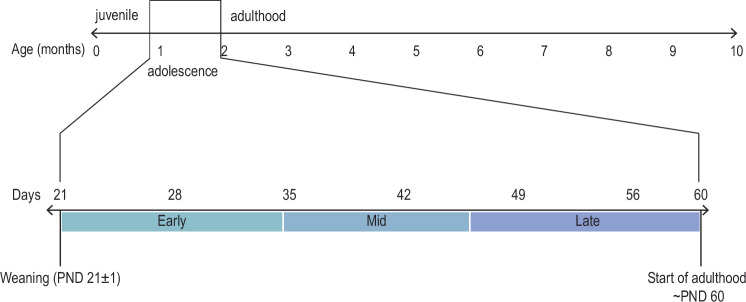
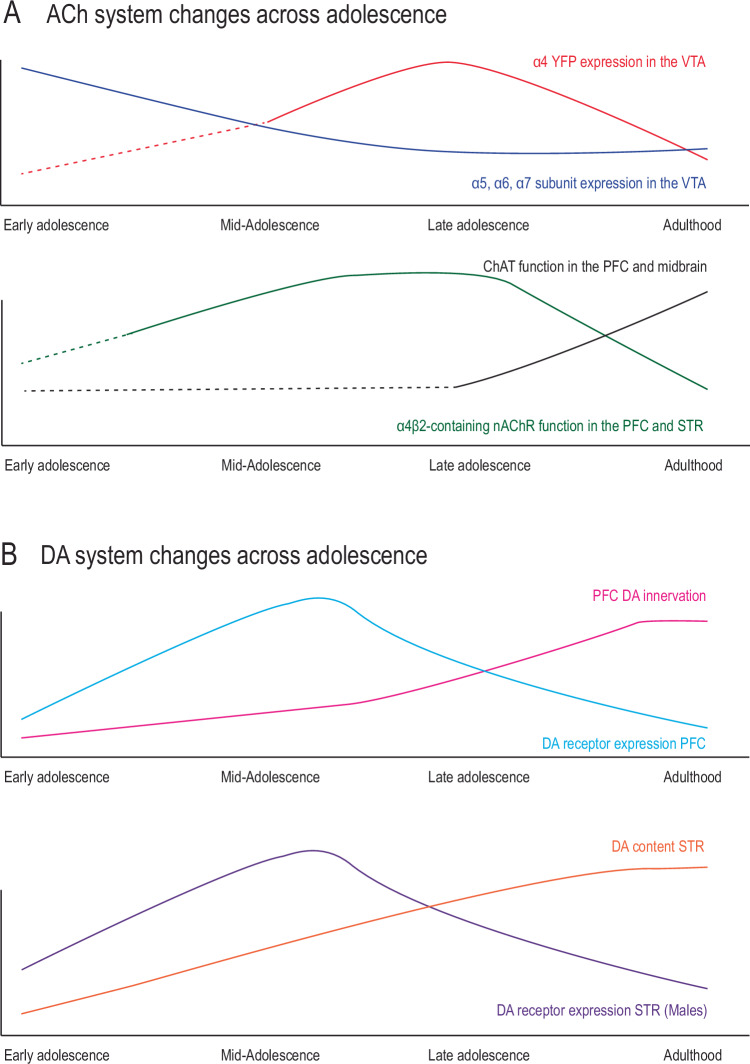
§ Adolescent nicotine exposure and persistent neurocircuitry changes: unveiling lifelong psychiatric risks > Adolescent development of neuromodulatory systems in translational models While this period is most often thought of in the context of human teenagers, it is increasingly recognized to be evolutionarily conserved, with animal species also showing distinct markers of an adolescent state [35–40]. Defining the boundaries of adolescence has proved challenging, as there are not clear hallmarks to signal the onset or completion of adolescent development. While puberty and adolescence occur during the same time period, they are not necessarily synonymous: puberty represents the process of attaining sexual maturity, while adolescence is a more diffuse period marked by significant neurobiological, behavioral and social changes. Thus, the age boundaries of the adolescent period are difficult to precisely define. Modern definitions of the human adolescent period range between 10 and 24 years of age [35, 41], an age range where children show dramatic behavioral changes and the human brain undergoes significant restructuring [22, 23, 42, 43]. While there is no clear consensus on the age range of adolescence in animal models, adolescence in rodents is increasingly defined more in line with this larger age window in humans, by counting the period from weaning (~PND 21) where mice and rats gain begin to interact independently with their environments for the first time, leading to a wealth of experiences with the potential to enduringly impact adult behavioral phenotypes and their underlying neuronal circuits. Rodents show behavioral and neurobiological markers of development until neurobiological maturity is reached around two months of age (~PND 60) [36, 38, 39, 44–47]. The adolescent period can be further sub-divided into early (~PND 21–34), middle (~PND 35–45), and late (~PND 45–60) periods [39, 46], which coincide roughly with pre- peri- and post-pubertal periods (Fig. 1). It is important to define these time windows, as striking, age-dependent differences can be reported in the enduring effects of the same experience on neural circuitry depending on the adolescent period in which this experience occurred [48–51]. Thus, we take great care in this review to be as specific as possible about the age at which nicotine exposure occurred during adolescence. Studies in rodent models have begun to elucidate the complex development of neuromodulatory neurotransmitter circuits in adolescence, including those most likely to be directly affected by adolescent nicotine use. Nicotine usurps the action of endogenous acetylcholine (ACh) by signaling through nicotinic acetylcholine receptors (nAChRs), a diverse family of pentameric ligand-gated cation channels [52]. While nAChRs are present throughout the brain at all developmental stages, maturational patterns in their expression and function have been identified [53, 54]. Notably, expression of the most abundant and high-affinity α4β2-containing nAChRs across the brain peaks in adolescence before diminishing to adult levels [55–58], and this peak has been suggested to underlie elevated nicotine self-administration in adolescent animals [59]. This increased nAChR expression was notably observed within the striatum and the midbrain [59]. Studies with greater regional specificity have shown that expression of α4- containing nAChRs in the VTA peaks late in adolescence, and is positively correlated with nicotine intake in an oral self-administration task (Fig. 2A) [60]. Rubidium efflux assays, an index of potassium channel activity, indicate higher nAChR receptor functionality in adolescents than in adults in the cortex, striatum, hippocampus, and thalamus (Fig. 2A) [61, 62]. In parallel to the developmental plasticity of cholinergic receptors, activity of choline acetyltransferase (ChAT), a requisite enzyme for ACh synthesis that also reflects the density of cholinergic innervation, increases from adolescence to adulthood in both the cortex and midbrain (Fig. 2A) [63]. At the cellular level, electrophysiological response to nicotine in cholinergic cells from the laterodorsal tegmentum (LDT), a small brain region located in the brainstem that constitutes the primary source of ACh to the ventral tegmental area (VTA) [64, 65], changes across development, with a larger excitatory response in cells from juvenile mice (PND 7–15) than in late juvenile/early adolescent mice (PND 15–34). This change in nicotine responsivity in LDT neurons is thought to represent a developmental reorganization of the nAChR subunits present on these cells [66, 67]. ACh provides a complex regulation of reward and motivation behaviors through its actions on dopamine (DA) circuitry [68–72]. The release of ACh from LDT projections directly modulates activity of VTA DA neurons, finely tuning their firing rate and burst properties [73, 74]. DA signaling in the striatum is also modulated at the terminal level by ACh release from local striatal cholinergic interneurons [75], but also from an external direct cholinergic input from the LDT [76]. Hence, ACh signaling through presynaptic and somato-dendritic nAChRs tightly regulates DA circuit activity, suggesting that it is another neuromodulatory system profoundly affected by developmental exposure to nicotine. Dopamine circuits undergo a robust period of maturation in adolescence, including changes to innervation patterns, dopamine synthesis and release, basal dopamine neuron firing rates, and dopamine receptor expression in terminal areas, with particularly pronounced changes in mesocortical and mesolimbic circuits (Fig. 2B) [39, 77–82]. Of note, the segregation of mesocorticolimbic dopamine pathways continues in adolescence, with a subset of dopamine axons passing through limbic regions before growing to the PFC [83]. The targeting processes of these axons can be disrupted by experience with stimulant drugs of abuse in adolescence, such as amphetamine [49, 51], or by stress [84], resulting in enduring cognitive deficits. The development of dopaminergic and cholinergic systems may also be inter-related. Adolescent rodents show greater DA release in the NAc in response to acute nicotine when compared to adult counterparts, despite similar baseline measures [85, 86]. Electrophysiological response of VTA DA neurons to acute nicotine also changes across development, with an increased sensitivity in early adolescent animals [87]. Molecular evidence links these changes to maturation in VTA nAChR expression, as mRNA transcripts of α5 α6 and α7 nAChR receptor subunits in the VTA peak early in adolescence (Fig. 2A), in tandem to nicotine-stimulated DA release in the ventral striatum [88]. Together, these results suggest that nicotine in adolescence produces different immediate and long-term outcomes through its actions on these developing neurotransmitter systems.
What the sources say
- Not checked — no full text of the sourcecites [48] Yetnikoff L, Pokinko M, Arvanitogiannis A, Flores C. Adolescence: a time of transition for the phenotype of dcc heterozygous mice. Psychopharmacology. 2014;231:1705–14. 23572211 source
- Supportedcites [49] Reynolds LM, Yetnikoff L, Pokinko M, Wodzinski M, Epelbaum JG, Lambert LC, et al. Early adolescence is a critical period for the maturation of inhibitory behavior. Cereb Cortex. 2019;29:3676–86. 30295713 PMC6686753 source
The Abstract reports that the same amphetamine regimen caused lasting changes in prefrontal dopamine connectivity in male mice when given during early adolescence, but not at later ages. This supports the cited sentence’s point that the enduring effects of an experience on neural circuitry can depend on when in adolescence it occurs. (LLM, conf=0.92)
- Not checked — no full text of the sourcecites [50] Yetnikoff L, Almey A, Arvanitogiannis A, Flores C. Abolition of the behavioral phenotype of adult netrin-1 receptor deficient mice by exposure to amphetamine during the juvenile period. Psychopharmacology. 2011;217:505–14. 21523346 source
- Supportedcites [51] Reynolds LM, Hernandez G, MacGowan D, Popescu C, Nouel D, Cuesta S, et al. Amphetamine disrupts dopamine axon growth in adolescence by a sex-specific mechanism in mice. Nat Commun. 2023;14:4035. 37419977 PMC10329029 source
The Discussion (page unavailable) describes rerouting of dopamine axons after amphetamine exposure as a sex- and age-dependent consequence of an adolescent experience. The Results report altered prefrontal dopamine innervation in adult male mice exposed in early adolescence, supporting this as an example of an enduring, age-dependent effect on circuitry. (LLM, conf=0.91)
plainstates an association- Asserted: passes — The authors put it forward as true.
- Checkable: passes — It can be checked against evidence.
- Load-bearing: passes — The paper’s conclusions depend on it.
- Based: passes — The paper gives a reason why it holds.
The cited sources support only part of this claim — read each source’s verdict below.
In the paper
“These neurobiological changes underlie the profound maturation in motivational and cognitive domains across adolescence [30–34]”
§ Adolescent nicotine exposure and persistent neurocircuitry changes: unveiling lifelong psychiatric risks > Introduction
What the sources say
- Supportedcites [30] Wahlstrom D, White T, Luciana M. Neurobehavioral evidence for changes in dopamine system activity during adolescence. Neurosci Biobehav Rev. 2010;34:631–48. 20026110 PMC2845533 source
The Introduction links adolescent behavioral changes to brain maturation, identifying prefrontal systems involved in regulation and limbic–striatal systems involved in motivation. The section 'An Overview of Behavioral and Brain Development in Adolescence' also describes continued maturation of cognitive and motivated-decision-making abilities. Page numbers were not supplied for these passages. (LLM, conf=0.87)
- Partly supportedcites [31] Luciana M, Wahlstrom D, Porter JN, Collins PF. Dopaminergic modulation of incentive motivation in adolescence: age-related changes in signaling, individual differences, and implications for the development of self-regulation. Dev Psychol. 2012;48:844–61. 22390660 PMC3341492 sourceExperimental — accuracy not yet measured
The Neurobiological Foundation and Concluding Comments link adolescent neural and dopamine changes to the development of incentive motivation. The Concluding Comments also describe a developing cognitive-behavioral control system, but treat dopamine’s role as a proposed mechanism and do not establish that the described changes underlie broad cognitive maturation. (LLM, conf=0.83)
- Partly supportedcites [32] Tervo-Clemmens B, Calabro FJ, Parr AC, Fedor J, Foran W, Luna B. A canonical trajectory of executive function maturation from adolescence to adulthood. Nat Commun. 2023;14:6922. 37903830 PMC10616171 sourceExperimental — accuracy not yet measured
The Introduction describes adolescence as a period of cognitive and affective maturation, and the Discussion reports continued development of goal-directed cognition into late adolescence. The cited paper does not establish that neurobiological changes underlie this maturation, nor does it directly document maturation in the motivational domain. (LLM, conf=0.84)
- Supportedcites [33] Somerville LH, Hare T, Casey BJ. Frontostriatal maturation predicts cognitive control failure to appetitive cues in adolescents. J Cogn Neurosci. 2011;23:2123–34. 20809855 PMC3131482 source
The introductory passage (page not provided) describes changing interactions between brain circuitry for motivation and cognitive control across development. The Discussion conclusion likewise links adolescent motivational drives and developing regulatory capacity to these neural systems, supporting the broad claim. (LLM, conf=0.87)
- Partly supportedcites [34] Liston C, Watts R, Tottenham N, Davidson MC, Niogi S, Ulug AM, et al. Frontostriatal microstructure modulates efficient recruitment of cognitive control. Cereb Cortex. 2006;16:553–60. 16033925 sourceExperimental — accuracy not yet measured
The Introduction (page not provided) describes frontostriatal maturation through adolescence alongside developing cognitive control, and the Discussion links frontostriatal connectivity to that capacity. The paper does not address maturation in the motivational domain; its reported comparison is primarily between children and adults, rather than a demonstration of change across adolescence. (LLM, conf=0.84)
plainstates a cause- Asserted: passes — The authors put it forward as true.
- Checkable: passes — It can be checked against evidence.
- Load-bearing: passes — The paper’s conclusions depend on it.
- Based: passes — The paper gives a reason why it holds.
- Supported
The cited sources support only part of this claim — read each source’s verdict below.
In the paper
“expression of the most abundant and high-affinity α4β2-containing nAChRs across the brain peaks in adolescence before diminishing to adult levels [55–58]”
§ Adolescent nicotine exposure and persistent neurocircuitry changes: unveiling lifelong psychiatric risks > Adolescent development of neuromodulatory systems in translational models While this period is most often thought of in the context of human teenagers, it is increasingly recognized to be evolutionarily conserved, with animal species also showing distinct markers of an adolescent state [35–40]. Defining the boundaries of adolescence has proved challenging, as there are not clear hallmarks to signal the onset or completion of adolescent development. While puberty and adolescence occur during the same time period, they are not necessarily synonymous: puberty represents the process of attaining sexual maturity, while adolescence is a more diffuse period marked by significant neurobiological, behavioral and social changes. Thus, the age boundaries of the adolescent period are difficult to precisely define. Modern definitions of the human adolescent period range between 10 and 24 years of age [35, 41], an age range where children show dramatic behavioral changes and the human brain undergoes significant restructuring [22, 23, 42, 43]. While there is no clear consensus on the age range of adolescence in animal models, adolescence in rodents is increasingly defined more in line with this larger age window in humans, by counting the period from weaning (~PND 21) where mice and rats gain begin to interact independently with their environments for the first time, leading to a wealth of experiences with the potential to enduringly impact adult behavioral phenotypes and their underlying neuronal circuits. Rodents show behavioral and neurobiological markers of development until neurobiological maturity is reached around two months of age (~PND 60) [36, 38, 39, 44–47]. The adolescent period can be further sub-divided into early (~PND 21–34), middle (~PND 35–45), and late (~PND 45–60) periods [39, 46], which coincide roughly with pre- peri- and post-pubertal periods (Fig. 1). It is important to define these time windows, as striking, age-dependent differences can be reported in the enduring effects of the same experience on neural circuitry depending on the adolescent period in which this experience occurred [48–51]. Thus, we take great care in this review to be as specific as possible about the age at which nicotine exposure occurred during adolescence. Studies in rodent models have begun to elucidate the complex development of neuromodulatory neurotransmitter circuits in adolescence, including those most likely to be directly affected by adolescent nicotine use. Nicotine usurps the action of endogenous acetylcholine (ACh) by signaling through nicotinic acetylcholine receptors (nAChRs), a diverse family of pentameric ligand-gated cation channels [52]. While nAChRs are present throughout the brain at all developmental stages, maturational patterns in their expression and function have been identified [53, 54]. Notably, expression of the most abundant and high-affinity α4β2-containing nAChRs across the brain peaks in adolescence before diminishing to adult levels [55–58], and this peak has been suggested to underlie elevated nicotine self-administration in adolescent animals [59]. This increased nAChR expression was notably observed within the striatum and the midbrain [59]. Studies with greater regional specificity have shown that expression of α4- containing nAChRs in the VTA peaks late in adolescence, and is positively correlated with nicotine intake in an oral self-administration task (Fig. 2A) [60]. Rubidium efflux assays, an index of potassium channel activity, indicate higher nAChR receptor functionality in adolescents than in adults in the cortex, striatum, hippocampus, and thalamus (Fig. 2A) [61, 62]. In parallel to the developmental plasticity of cholinergic receptors, activity of choline acetyltransferase (ChAT), a requisite enzyme for ACh synthesis that also reflects the density of cholinergic innervation, increases from adolescence to adulthood in both the cortex and midbrain (Fig. 2A) [63]. At the cellular level, electrophysiological response to nicotine in cholinergic cells from the laterodorsal tegmentum (LDT), a small brain region located in the brainstem that constitutes the primary source of ACh to the ventral tegmental area (VTA) [64, 65], changes across development, with a larger excitatory response in cells from juvenile mice (PND 7–15) than in late juvenile/early adolescent mice (PND 15–34). This change in nicotine responsivity in LDT neurons is thought to represent a developmental reorganization of the nAChR subunits present on these cells [66, 67]. ACh provides a complex regulation of reward and motivation behaviors through its actions on dopamine (DA) circuitry [68–72]. The release of ACh from LDT projections directly modulates activity of VTA DA neurons, finely tuning their firing rate and burst properties [73, 74]. DA signaling in the striatum is also modulated at the terminal level by ACh release from local striatal cholinergic interneurons [75], but also from an external direct cholinergic input from the LDT [76]. Hence, ACh signaling through presynaptic and somato-dendritic nAChRs tightly regulates DA circuit activity, suggesting that it is another neuromodulatory system profoundly affected by developmental exposure to nicotine. Dopamine circuits undergo a robust period of maturation in adolescence, including changes to innervation patterns, dopamine synthesis and release, basal dopamine neuron firing rates, and dopamine receptor expression in terminal areas, with particularly pronounced changes in mesocortical and mesolimbic circuits (Fig. 2B) [39, 77–82]. Of note, the segregation of mesocorticolimbic dopamine pathways continues in adolescence, with a subset of dopamine axons passing through limbic regions before growing to the PFC [83]. The targeting processes of these axons can be disrupted by experience with stimulant drugs of abuse in adolescence, such as amphetamine [49, 51], or by stress [84], resulting in enduring cognitive deficits. The development of dopaminergic and cholinergic systems may also be inter-related. Adolescent rodents show greater DA release in the NAc in response to acute nicotine when compared to adult counterparts, despite similar baseline measures [85, 86]. Electrophysiological response of VTA DA neurons to acute nicotine also changes across development, with an increased sensitivity in early adolescent animals [87]. Molecular evidence links these changes to maturation in VTA nAChR expression, as mRNA transcripts of α5 α6 and α7 nAChR receptor subunits in the VTA peak early in adolescence (Fig. 2A), in tandem to nicotine-stimulated DA release in the ventral striatum [88]. Together, these results suggest that nicotine in adolescence produces different immediate and long-term outcomes through its actions on these developing neurotransmitter systems.
What the sources say
- Partly supportedcites [55] Doura MB, Gold AB, Keller AB, Perry DC. Adult and periadolescent rats differ in expression of nicotinic cholinergic receptor subtypes and in the response of these subtypes to chronic nicotine exposure. Brain Res. 2008;1215:40–52. 18474362 PMC2493527 sourceExperimental — accuracy not yet measured
The Results (section 2; page unavailable) report higher α4β2⁎ receptor binding in periadolescent than adult rats across 38 sampled brain regions. This supports a widespread adolescent-to-adult difference, but the study compares only those two ages; it does not establish that expression peaks in adolescence, and its finding is limited to rats. (LLM, conf=0.84)
- Not checked — no full text of the sourcecites [56] Trauth JA, Seidler FJ, McCook EC, Slotkin TA. Adolescent nicotine exposure causes persistent upregulation of nicotinic cholinergic receptors in rat brain regions. Brain Res. 1999;851:9–19. 10642823 source
- Partly supportedcites [57] Counotte DS, Goriounova NA, Moretti M, Smoluch MT, Irth H, Clementi F, et al. Adolescent nicotine exposure transiently increases high‐affinity nicotinic receptors and modulates inhibitory synaptic transmission in rat medial prefrontal cortex. FASEB J. 2012;26:1810–20. 22308197 PMC3558741 sourceExperimental — accuracy not yet measured
The Results (‘3H-epibatidine binding to receptors’; page not supplied) report that α4- and β2-containing receptors decline from early adolescence to adulthood in rat medial prefrontal cortex. The claim extends this pattern across the brain, but the same section finds no age-related decline in occipital cortex; measurements beginning in early adolescence also do not establish a peak at that age. (LLM, conf=0.88)
- Partly supportedcites [58] Cano M, Reynaga DD, Belluzzi JD, Loughlin SE, Leslie F. Chronic exposure to cigarette smoke extract upregulates nicotinic receptor binding in adult and adolescent rats. Neuropharmacology. 2020;181:108308. 32950561 PMC7655523 sourceExperimental — accuracy not yet measured
Results §3.2 (page unavailable) reports higher α4β2 receptor binding in adolescent than adult rats in a majority of the brain regions analyzed. It does not establish that expression peaks in adolescence and then declines, or that the pattern holds across the entire brain; the reported measure is receptor binding, not expression. (LLM, conf=0.86)
plainstates a cause- Asserted: passes — The authors put it forward as true.
- Checkable: passes — It can be checked against evidence.
- Load-bearing: passes — The paper’s conclusions depend on it.
- Based: passes — The paper gives a reason why it holds.
- Partly supported
The cited sources support only part of this claim — read each source’s verdict below.
In the paper
“Functional imaging studies further indicate that significant changes occur in the function of subcortical structures and in their relationship with cortical regions, notably in nuclei associated with reward and motivation [26–29].”
§ Adolescent nicotine exposure and persistent neurocircuitry changes: unveiling lifelong psychiatric risks > Introduction
What the sources say
- Supportedcites [26] Parr AC, Calabro F, Larsen B, Tervo-Clemmens B, Elliot S, Foran W, et al. Dopamine-related striatal neurophysiology is associated with specialization of frontostriatal reward circuitry through adolescence. Prog Neurobiol. 2021;201:101997. 33667595 PMC8096717 source
The Discussion (page unavailable) reports age-related decreases in functional connectivity between the nucleus accumbens, a subcortical reward region, and several prefrontal cortical regions. It also links developmental changes in nucleus accumbens tissue properties to those connectivity changes, supporting the cited statement about changes in reward circuitry. (LLM, conf=0.90)
- Not checked — no full text of the sourcecites [27] Galvan A, Hare TA, Parra CE, Penn J, Voss H, Glover G, et al. Earlier development of the accumbens relative to orbitofrontal cortex might underlie risk-taking behavior in adolescents. J Neurosci. 2006;26:6885–92. 16793895 PMC6673830 source
- Partly supportedcites [28] Larsen B, Luna B. In vivo evidence of neurophysiological maturation of the human adolescent striatum. Dev Cogn Neurosci. 2014;12C:74–85. PMC4385446 25594607 sourceExperimental — accuracy not yet measured
The Introduction reports fMRI evidence of age-related differences in striatal responses to reward, and the Results (Whole-brain analysis) identify developmental changes in the ventral striatum, a reward-related region. The Discussion (T2* and the adolescent brain) discusses frontostriatal development, but the passages do not establish changes in the functional relationship between subcortical and cortical regions. (LLM, conf=0.82)
- Supportedcites [29] Larsen B, Olafsson V, Calabro F, Laymon C, Tervo-Clemmens B, Campbell E, et al. Maturation of the human striatal dopamine system revealed by PET and quantitative MRI. Nat Commun. 2020;11:846. 32051403 PMC7015913 source
The Discussion reports developmental differences in reward-related striatal activation in human fMRI studies and decreased functional connectivity between the striatum and frontal brain areas during adolescence. It also notes that findings on the direction of striatal reward responses are mixed; the citing sentence does not specify a direction. (LLM, conf=0.90)
hedgedstates an association- Asserted: passes — The authors put it forward as true.
- Checkable: passes — It can be checked against evidence.
- Load-bearing: unclear — It is unclear whether the paper’s conclusions depend on it.
- Based: passes — The paper gives a reason why it holds.
- Supported
59 more claims · 20 with their cited sources checked
Create a free account to see all 112 claims and to verify the 2 references still open.
- It may state two separate claims as one. 32
- Probably not a substantial claim. 15
- Borderline: one of the tests for a substantial claim is unclear. 1
Citations
Cites
Dynamic mapping of human cortical development during childhood through early adulthood
Gogtay, N., Giedd, J. N., Lusk, L., Hayashi, K. M., Greenstein, D., Vaituzis, A. C., Nugent, T. F., Herman, D. H., Clasen, L. S., Toga, A. W., et al. (2004) · Proceedings of the National Academy of Sciences · doi:10.1073/pnas.0402680101 · Cited by 5,604 · cited 1×
“Indeed, evidence from cross sectional and longitudinal structural MRI studies of human brain development show that gray matter thickness in cortical regions decreases across adolescence before stabilizing at adult levels, while white matter volumes increase [18 – 21].”
Brain development during childhood and adolescence: a longitudinal MRI study
Giedd, J. N., Blumenthal, J., Jeffries, N. O., Castellanos, F. X., Liu, H., Zijdenbos, A., Paus, T., Evans, A. C., & Rapoport, J. L. (1999) · Nature Neuroscience · doi:10.1038/13158 · Cited by 5,552
The adolescent brain and age-related behavioral manifestations
Spear, L. P. (2000) · Neuroscience & Biobehavioral Reviews · doi:10.1016/s0149-7634(00)00014-2 · Cited by 5,433 · cited 1×
“Rodents show behavioral and neurobiological markers of development until neurobiological maturity is reached around two months of age (~PND 60) [36, 38, 39, 44 – 47].”
Sawyer, S. M., Azzopardi, P. S., Wickremarathne, D., & Patton, G. C. (2018) · The Lancet Child & Adolescent Health · doi:10.1016/s2352-4642(18)30022-1 · Cited by 3,666
Selected major risk factors and global and regional burden of disease
Ezzati, M., Lopez, A. D., Rodgers, A., Vander Hoorn, S., & Murray, C. J. (2002) · The Lancet · doi:10.1016/s0140-6736(02)11403-6 · Cited by 3,594
Dopamine, learning and motivation.
Wise, R. A. (2004) · Nature Reviews Neuroscience · doi:10.1038/nrn1406 · Cited by 3,379 · cited 1×
“…during mid-adolescence (PND 30 – 47), PERSISTENT EFFECTS OF ADOLESCENT NICOTINE EXPOSURE ON DA CIRCUITS DA neurotransmission is essential for diverse behavioral outputs, including motivation, cognition, reward learning, decision making, salience attribution, and voluntary motor control [121 – 127].”
Estimating the true global burden of mental illness
Vigo, D., Thornicroft, G., & Atun, R. (2016) · The Lancet Psychiatry · doi:10.1016/s2215-0366(15)00505-2 · Cited by 2,494
Dopamine in motivational control: rewarding, aversive, and alerting
Bromberg-Martin, E. S., Matsumoto, M., & Hikosaka, O. (2010) · Neuron · doi:10.1016/j.neuron.2010.11.022 · Cited by 2,396
Mapping cortical change across the human life span
Sowell, E. R., Peterson, B. S., Thompson, P. M., Welcome, S. E., Henkenius, A. L., & Toga, A. W. (2003) · Nature Neuroscience · doi:10.1038/nn1008 · Cited by 2,328
Inverted-U–Shaped Dopamine Actions on Human Working Memory and Cognitive Control
Cools, R., & D'Esposito, M. (2011) · Biological Psychiatry · doi:10.1016/j.biopsych.2011.03.028 · Cited by 1,673
In vivo evidence for post-adolescent brain maturation in frontal and striatal regions
Sowell, E. R., Thompson, P. M., Holmes, C. J., Jernigan, T. L., & Toga, A. W. (1999) · Nature Neuroscience · doi:10.1038/13154 · Cited by 1,439 · cited 1×
“Indeed, evidence from cross sectional and longitudinal structural MRI studies of human brain development show that gray matter thickness in cortical regions decreases across adolescence before stabilizing at adult levels, while white matter volumes increase [18 – 21].”
Extraordinary neoteny of synaptic spines in the human prefrontal cortex
Petanjek, Z., Judaš, M., Šimić, G., Rašin, M. R., Uylings, H. B. M., Rakic, P., & Kostović, I. (2011) · Proceedings of the National Academy of Sciences · doi:10.1073/pnas.1105108108 · Cited by 1,411 · cited 2×
“…of the adolescent period are dif fi cult to precisely de fi ne. Modern de fi nitions of the human adolescent period range between 10 and 24 years of age [35, 41], an age range where children show dramatic behavioral changes and the human brain undergoes signi fi cant restructuring [22, 23, 42, 43].”
Acetylcholine as a Neuromodulator: Cholinergic Signaling Shapes Nervous System Function and Behavior
Picciotto, M. R., Higley, M. J., & Mineur, Y. S. (2012) · Neuron · doi:10.1016/j.neuron.2012.08.036 · Cited by 1,404 · cited 1×
“…it signals through cationic nAChRs and metabotropic muscarinic receptors, notably regulating cellular excitability, synaptic plasticity, and the coordinated fi ring of groups of neurons to play a key role in fundamental aspects of brain physiology including emotion, cognition and motivation [100].”
Galvan, A., Hare, T. A., Parra, C. E., Penn, J., Voss, H., Glover, G., & Casey, B. J. (2006) · Journal of Neuroscience · doi:10.1523/jneurosci.1062-06.2006 · Cited by 1,282
The role of dopamine in the pathophysiology of depression
Dunlop, B. W., & Nemeroff, C. B. (2007) · Archives of General Psychiatry · doi:10.1001/archpsyc.64.3.327 · Cited by 1,244
Schultz, W. (2007) · Trends in Neurosciences · doi:10.1016/j.tins.2007.03.007 · Cited by 1,028
The dopamine motive system: implications for drug and food addiction
Volkow, N. D., Wise, R. A., & Baler, R. (2017) · Nature Reviews Neuroscience · doi:10.1038/nrn.2017.130 · Cited by 939 · cited 1×
“With such varied outputs, it is unsurprising that DA signaling has been heavily implicated in psychiatric disease, and neuroimaging studies in adult patients with schizophrenia, depression, and addiction have noted alterations to dopaminergic receptor expression [128 – 131].”
Berke, J. D. (2018) · Nature Neuroscience · doi:10.1038/s41593-018-0152-y · Cited by 904
Guidelines on nicotine dose selection for in vivo research
Matta, S. G., Balfour, D. J., Benowitz, N. L., Boyd, R. T., Buccafusco, J. J., Caggiula, A. R., Craig, C. R., Collins, A. C., Damaj, M. I., Donny, E. C., et al. (2007) · Psychopharmacology · doi:10.1007/s00213-006-0441-0 · Cited by 824
Nicotinic Receptors in the Development and Modulation of CNS Synapses
Role, L. W., & Berg, D. K. (1996) · Neuron · doi:10.1016/s0896-6273(00)80134-8 · Cited by 762 · cited 1×
“However, in addition to its functions in the mature brain, ACh signaling is essential for neuronal development, where it plays a trophic role in establishing and maintaining neuronal connectivity [111, 112].”
Tobacco use and cessation in psychiatric disorders: National Institute of Mental Health report
Ziedonis, D., Hitsman, B., Beckham, J. C., Zvolensky, M., Adler, L. E., Audrain-McGovern, J., Breslau, N., Brown, R. A., George, T. P., Williams, J., et al. (2008) · Nicotine & Tobacco Research · doi:10.1080/14622200802443569 · Cited by 735 · cited 1×
“In addition, nicotine use is associated with multiple psychiatric comorbidities [5].”
Prolonged myelination in human neocortical evolution
Miller, D. J., Duka, T., Stimpson, C. D., Schapiro, S. J., Baze, W. B., McArthur, M. J., Fobbs, A. J., Sousa, A. M. M., Šestan, N., Wildman, D. E., et al. (2012) · Proceedings of the National Academy of Sciences · doi:10.1073/pnas.1117943109 · Cited by 699 · cited 1×
“…of the adolescent period are dif fi cult to precisely de fi ne. Modern de fi nitions of the human adolescent period range between 10 and 24 years of age [35, 41], an age range where children show dramatic behavioral changes and the human brain undergoes signi fi cant restructuring [22, 23, 42, 43].”
Imaging brain development: The adolescent brain
Blakemore, S.-J. (2012) · NeuroImage · doi:10.1016/j.neuroimage.2011.11.080 · Cited by 649
Nicotine and the adolescent brain
Yuan, M., Cross, S. J., Loughlin, S. E., & Leslie, F. M. (2015) · The Journal of Physiology · doi:10.1113/jp270492 · Cited by 623 · cited 3×
“Rodents show behavioral and neurobiological markers of development until neurobiological maturity is reached around two months of age (~PND 60) [36, 38, 39, 44 – 47].”
Laviola, G., Macrı̀, S., Morley-Fletcher, S., & Adriani, W. (2003) · Neuroscience & Biobehavioral Reviews · doi:10.1016/s0149-7634(03)00006-x · Cited by 621
Nicotine reinforcement and cognition restored by targeted expression of nicotinic receptors
Maskos, U., Molles, B. E., Pons, S., Besson, M., Guiard, B. P., Guilloux, J.-P., Evrard, A., Cazala, P., Cormier, A., Mameli-Engvall, M., et al. (2005) · Nature · doi:10.1038/nature03694 · Cited by 566 · cited 2×
“ACh provides a complex regulation of reward and motivation behaviors through its actions on dopamine (DA) circuitry [68 – 72].”
The dynamic effects of nicotine on the developing brain
Dwyer, J. B., McQuown, S. C., & Leslie, F. M. (2009) · Pharmacology & Therapeutics · doi:10.1016/j.pharmthera.2009.02.003 · Cited by 559 · cited 2×
“While nAChRs are present throughout the brain at all developmental stages, maturational patterns in their expression and function have been identi fi ed [53, 54].”
Frontostriatal maturation predicts cognitive control failure to appetitive cues in adolescents
Somerville, L. H., Hare, T., & Casey, B. J. (2011) · Journal of Cognitive Neuroscience · doi:10.1162/jocn.2010.21572 · Cited by 523
Association Between Cigarette Smoking and Anxiety Disorders During Adolescence and Early Adulthood
Johnson, J. G. (2000) · JAMA · doi:10.1001/jama.284.18.2348 · Cited by 494
Frontostriatal Microstructure Modulates Efficient Recruitment of Cognitive Control
Liston, C., Watts, R., Tottenham, N., Davidson, M. C., Niogi, S., Ulug, A. M., & Casey, B. J. (2006) · Cerebral Cortex · doi:10.1093/cercor/bhj003 · Cited by 477
Nicotine addiction and nicotinic receptors: lessons from genetically modified mice
Changeux, J.-P. (2010) · Nature Reviews Neuroscience · doi:10.1038/nrn2849 · Cited by 453
Depressive Symptoms and Cigarette Smoking Among Teens
Goodman, E., & Capitman, J. (2000) · Pediatrics · doi:10.1542/peds.106.4.748 · Cited by 416
Lewis, D. (1997) · Neuropsychopharmacology · doi:10.1016/s0893-133x(96)00277-1 · Cited by 388 · cited 1×
“Postmortem studies suggest that these macroscale changes likely re fl ect cellular, molecular, and connectivity development [22 – 25].”
Fung, S. J., Webster, M. J., Sivagnanasundaram, S., Duncan, C., Elashoff, M., & Weickert, C. S. (2010) · American Journal of Psychiatry · doi:10.1176/appi.ajp.2010.09060784 · Cited by 366
Dautan, D., Huerta-Ocampo, I., Witten, I. B., Deisseroth, K., Bolam, J. P., Gerdjikov, T., & Mena-Segovia, J. (2014) · The Journal of Neuroscience · doi:10.1523/jneurosci.5071-13.2014 · Cited by 343 · cited 1×
“DA signaling in the striatum is also modulated at the terminal level by ACh release from local striatal cholinergic interneurons [75], but also from an external direct cholinergic input from the LDT [76].”
Neurobehavioral evidence for changes in dopamine system activity during adolescence
Wahlstrom, D., White, T., & Luciana, M. (2010) · Neuroscience & Biobehavioral Reviews · doi:10.1016/j.neubiorev.2009.12.007 · Cited by 277 · cited 1×
“These neurobiological changes underlie the profound maturation in motivational and cognitive domains across adolescence [30 – 34], and interfering with these processes may bias individuals toward a vulnerable psychiatric state.”
Tobacco smoking and depressed mood in late childhood and early adolescence.
Wu, L. T., & Anthony, J. C. (1999) · American Journal of Public Health · doi:10.2105/ajph.89.12.1837 · Cited by 273
Forster, G. L., & Blaha, C. D. (2000) · European Journal of Neuroscience · doi:10.1046/j.1460-9568.2000.00250.x · Cited by 271
Adolescence as a vulnerable period to alter rodent behavior
Schneider, M. (2013) · Cell and Tissue Research · doi:10.1007/s00441-013-1581-2 · Cited by 266 · cited 1×
“Rodents show behavioral and neurobiological markers of development until neurobiological maturity is reached around two months of age (~PND 60) [36, 38, 39, 44 – 47].”
Nicotine as a modulator of behavior: beyond the inverted U
Picciotto, M. R. (2003) · Trends in Pharmacological Sciences · doi:10.1016/s0165-6147(03)00230-x · Cited by 257 · cited 1×
“One possibility is changes to nAChR receptor traf fi cking and surface expression patterns in response to nicotine, which may be short-or long-lasting in response to nAChR desensitization or inactivation following exposure [158].”
Evidence for enhanced neurobehavioral vulnerability to nicotine during periadolescence in rats
Adriani, W., Spijker, S., Deroche-Gamonet, V., Laviola, G., Le Moal, M., Smit, A. B., & Piazza, P. V. (2003) · The Journal of Neuroscience · doi:10.1523/jneurosci.23-11-04712.2003 · Cited by 257 · cited 1×
“A similar mid-adolescent exposure regimen (PND 34 – 43) lead to an increased expression of α 5, α 6, β 2, and β 3 nAChR subunits in the adult VTA –– while the same exposure, given instead during adulthood, only increased the β 3 subunit [117].”
Nicotine and brain development
Dwyer, J. B., Broide, R. S., & Leslie, F. M. (2008) · Birth Defects Research Part C: Embryo Today: Reviews · doi:10.1002/bdrc.20118 · Cited by 256 · cited 1×
“While nAChRs are present throughout the brain at all developmental stages, maturational patterns in their expression and function have been identi fi ed [53, 54].”
Laterodorsal tegmental projections to identified cell populations in the rat ventral tegmental area
Omelchenko, N., & Sesack, S. R. (2005) · The Journal of Comparative Neurology · doi:10.1002/cne.20417 · Cited by 252
Meaningful silences: how dopamine listens to the ACh pause
Cragg, S. J. (2006) · Trends in Neurosciences · doi:10.1016/j.tins.2006.01.003 · Cited by 245 · cited 2×
“DA signaling in the striatum is also modulated at the terminal level by ACh release from local striatal cholinergic interneurons [75], but also from an external direct cholinergic input from the LDT [76].”
A canonical trajectory of executive function maturation from adolescence to adulthood
Tervo-Clemmens, B., Calabro, F. J., Parr, A. C., Fedor, J., Foran, W., & Luna, B. (2023) · Nature Communications · doi:10.1038/s41467-023-42540-8 · Cited by 241
Dopamine hypothesis of schizophrenia: Making sense of it all
Toda, M., & Abi-Dargham, A. (2007) · Current Psychiatry Reports · doi:10.1007/s11920-007-0041-7 · Cited by 235
Trauth, J. A., Seidler, F. J., McCook, E. C., & Slotkin, T. A. (1999) · Brain Research · doi:10.1016/s0006-8993(99)01994-0 · Cited by 230 · cited 1×
“…to nicotine in mid-adolescence (PND 30 – 47) increased binding to α 4 β 2-containing nAChRs, an effect that persisted into adulthood in the PFC and midbrain [56, 63, 115], while an upregulation of α 7-containing NAChRs in the striatum, brainstem, and cerebellum was apparent only transiently [116].”
Hollenstein, T., & Lougheed, J. P. (2013) · American Psychologist · doi:10.1037/a0033586 · Cited by 226
Grant, B. F. (1998) · Journal of Substance Abuse · doi:10.1016/s0899-3289(99)80141-2 · Cited by 212 · cited 2×
“…the prognosis may be particularly bleak for the up to 90% of adult smokers who began in adolescence [2], as early onset nicotine use is associated with longer and heavier smoking careers [3], and smokers with an adolescent onset are less likely to quit smoking than those who began as adults [4].”
The association between cigarette smoking and drug abuse in the United States
Lai, S., Lai, H., Page, J. B., & McCoy, C. B. (2000) · Journal of Addictive Diseases · doi:10.1300/j069v19n04_02 · Cited by 212 · cited 1×
“Nicotine is also posited to act as a “ gateway drug ” , where its use in adolescence is linked with later abuse of different drug categories, such as alcohol, opiate drugs, or cocaine [3, 13 – 15].”
Cigarette smoking predicts development of depressive symptoms among U.S. Adolescents
Choi, W. S., Patten, C. A., Christian Gillin, J., Kaplan, R. M., & Pierce, J. P. (1997) · Annals of Behavioral Medicine · doi:10.1007/bf02883426 · Cited by 208
Stress in adolescence and drugs of abuse in rodent models: role of dopamine, CRF, and HPA axis
Burke, A. R., & Miczek, K. A. (2014) · Psychopharmacology · doi:10.1007/s00213-013-3369-1 · Cited by 207
Baarendse, P. J. J., Counotte, D. S., O'Donnell, P., & Vanderschuren, L. J. M. J. (2013) · Neuropsychopharmacology · doi:10.1038/npp.2013.47 · Cited by 206
Rethinking schizophrenia in the context of normal neurodevelopment
Catts, V. S., Fung, S. J., Long, L. E., Joshi, D., Vercammen, A., Allen, K. M., Fillman, S. G., Rothmond, D. A., Sinclair, D., Tiwari, Y., et al. (2013) · Frontiers in Cellular Neuroscience · doi:10.3389/fncel.2013.00060 · Cited by 206 · cited 1×
“…of the adolescent period are dif fi cult to precisely de fi ne. Modern de fi nitions of the human adolescent period range between 10 and 24 years of age [35, 41], an age range where children show dramatic behavioral changes and the human brain undergoes signi fi cant restructuring [22, 23, 42, 43].”
Nicotine dependence and reward differ between adolescent and adult male mice
Kota, D., Martin, B. R., Robinson, S. E., & Damaj, M. I. (2007) · The Journal of Pharmacology and Experimental Therapeutics · doi:10.1124/jpet.107.121616 · Cited by 202 · cited 1×
“2A) [61, 62].”
How fast and how often: The pharmacokinetics of drug use are decisive in addiction
Allain, F., Minogianis, E.-A., Roberts, D. C. S., & Samaha, A.-N. (2015) · Neuroscience & Biobehavioral Reviews · doi:10.1016/j.neubiorev.2015.06.012 · Cited by 192 · cited 1×
“Different administration routes and/or nicotine doses can thus lead to signi fi cant variability in reported fi ndings, particularly as different administration routes are known to alter the pharmacokinetic and pharmacodynamic properties of the same drug dose [153].”
Neuromodulation by acetylcholine: examples from schizophrenia and depression
Higley, M. J., & Picciotto, M. R. (2014) · Current Opinion in Neurobiology · doi:10.1016/j.conb.2014.06.004 · Cited by 184
Nicotine reverses hypofrontality in animal models of addiction and schizophrenia
Koukouli, F., Rooy, M., Tziotis, D., Sailor, K. A., O'Neill, H. C., Levenga, J., Witte, M., Nilges, M., Changeux, J.-P., Hoeffer, C. A., et al. (2017) · Nature Medicine · doi:10.1038/nm.4274 · Cited by 183 · cited 1×
“Mouse models have begun to address how manipulating signaling through nAChRs in adult animals may produce symptoms associated with psychiatric diseases other than addiction to nicotine itself [74, 107 – 110].”
Goldenson, N. I., Leventhal, A. M., Stone, M. D., McConnell, R. S., & Barrington-Trimis, J. L. (2017) · JAMA Pediatrics · doi:10.1001/jamapediatrics.2017.3209 · Cited by 179
Unique, long-term effects of nicotine on adolescent brain.
Leslie, F. M. (2020) · Pharmacology, Biochemistry, and Behavior · doi:10.1016/j.pbb.2020.173010 · Cited by 178 · cited 1×
“Nicotine in adolescence has been shown to increase later sensitivity to the rewarding effects of nicotine, while decreasing its aversive effects; these studies have been thoroughly reviewed elsewhere, see: [90, 92]).”
Laminar distribution of nicotinic receptor subtypes in cortical regions in schizophrenia
Marutle, A., Zhang, X., Court, J., Piggott, M., Johnson, M., Perry, R., Perry, E., & Nordberg, A. (2001) · Journal of Chemical Neuroanatomy · doi:10.1016/s0891-0618(01)00117-x · Cited by 175 · cited 1×
“Notably, anomalies in the availability or expression of speci fi c nAChR subunits have been implicated in depression [104] and schizophrenia patients [105, 106].”
Nicotine Gateway Effects on Adolescent Substance Use
Ren, M., & Lotfipour, S. (2019) · Western Journal of Emergency Medicine · doi:10.5811/westjem.2019.7.41661 · Cited by 166 · cited 1×
“Nicotine in adolescence has been shown to increase later sensitivity to the rewarding effects of nicotine, while decreasing its aversive effects; these studies have been thoroughly reviewed elsewhere, see: [90, 92]).”
Long-Lasting Cognitive Deficits Resulting from Adolescent Nicotine Exposure in Rats
Counotte, D. S., Spijker, S., Van de Burgwal, L. H., Hogenboom, F., Schoffelmeer, A. N. M., De Vries, T. J., Smit, A. B., & Pattij, T. (2009) · Neuropsychopharmacology · doi:10.1038/npp.2008.96 · Cited by 163
Making Dopamine Connections in Adolescence
Hoops, D., & Flores, C. (2017) · Trends in Neurosciences · doi:10.1016/j.tins.2017.09.004 · Cited by 162
Exley, R., Maubourguet, N., David, V., Eddine, R., Evrard, A., Pons, S., Marti, F., Threlfell, S., Cazala, P., McIntosh, J. M., et al. (2011) · Proceedings of the National Academy of Sciences · doi:10.1073/pnas.1103000108 · Cited by 159
Nicotine exposure during adolescence induces a depression-like state in adulthood
Iñiguez, S. D., Warren, B. L., Parise, E. M., Alcantara, L. F., Schuh, B., Maffeo, M. L., Manojlovic, Z., & Bolaños-Guzmán, C. A. (2009) · Neuropsychopharmacology · doi:10.1038/npp.2008.220 · Cited by 157 · cited 1×
“…depression-like behaviors induced by adolescent nicotine exposure can be rescued in adult male rats by re-exposure to treatment with SSRIs [99], or, intriguingly, by re-exposure to nicotine; suggesting that the repression of these negative emotional states may also be a driver for…”
Nicotine on the developing brain.
Castro, E. M., Lotfipour, S., & Leslie, F. M. (2023) · Pharmacological research · doi:10.1016/j.phrs.2023.106716 · Cited by 157 · cited 1×
“Furthermore, these behavioral outcomes have been linked to differences in response to nicotine across several neurotransmitter systems, as well as recruiting microglial pathways to sculpt circuitry in response to acute exposure [44, 89 – 91].”
Luciana, M., Wahlstrom, D., Porter, J. N., & Collins, P. F. (2012) · Developmental Psychology · doi:10.1037/a0027432 · Cited by 156
Orsini, C. A., Moorman, D. E., Young, J. W., Setlow, B., & Floresco, S. B. (2015) · Neuroscience & Biobehavioral Reviews · doi:10.1016/j.neubiorev.2015.04.009 · Cited by 153
Abreu-Villaça, Y., Seidler, F. J., Qiao, D., Tate, C. A., Cousins, M. M., Thillai, I., & Slotkin, T. A. (2003) · Neuropsychopharmacology · doi:10.1038/sj.npp.1300221 · Cited by 151 · cited 1×
“…to nicotine in mid-adolescence (PND 30 – 47) increased binding to α 4 β 2-containing nAChRs, an effect that persisted into adulthood in the PFC and midbrain [56, 63, 115], while an upregulation of α 7-containing NAChRs in the striatum, brainstem, and cerebellum was apparent only transiently [116].”
Co-activation of VTA DA and GABA neurons mediates nicotine reinforcement
Tolu, S., Eddine, R., Marti, F., David, V, Graupner, M., Pons, S., Baudonnat, M., Husson, M., Besson, M., Reperant, C., et al. (2013) · Molecular Psychiatry · doi:10.1038/mp.2012.83 · Cited by 151
Trauth, J. A., Seidler, F. J., Ali, S. F., & Slotkin, T. A. (2001) · Brain Research · doi:10.1016/s0006-8993(00)03227-3 · Cited by 150
Learning from Action: Reconsidering Movement Signaling in Midbrain Dopamine Neuron Activity
Coddington, L. T., & Dudman, J. T. (2019) · Neuron · doi:10.1016/j.neuron.2019.08.036 · Cited by 150
Dautan, D., Souza, A. S., Huerta-Ocampo, I., Valencia, M., Assous, M., Witten, I. B., Deisseroth, K., Tepper, J. M., Bolam, J. P., Gerdjikov, T. V., et al. (2016) · Nature Neuroscience · doi:10.1038/nn.4335 · Cited by 148 · cited 1×
“…tegmentum (LDT), a small brain region located in the brainstem that constitutes the primary source of ACh to the ventral tegmental area (VTA) [64, 65], changes across development, with a larger excitatory response in cells from juvenile mice (PND 7 – 15) than in late juvenile/early adolescent…”
Basal forebrain cholinergic signalling: development, connectivity and roles in cognition
Ananth, M. R., Rajebhosale, P., Kim, R., Talmage, D. A., & Role, L. W. (2023) · Nature Reviews Neuroscience · doi:10.1038/s41583-023-00677-x · Cited by 148 · cited 1×
“However, in addition to its functions in the mature brain, ACh signaling is essential for neuronal development, where it plays a trophic role in establishing and maintaining neuronal connectivity [111, 112].”
Levin, E. D., Lawrence, S. S., Petro, A., Horton, K., Rezvani, A. H., Seidler, F. J., & Slotkin, T. A. (2007) · Neurotoxicology and Teratology · doi:10.1016/j.ntt.2007.02.002 · Cited by 147
Association of e-Cigarette Vaping and Progression to Heavier Patterns of Cigarette Smoking
Leventhal, A. M., Stone, M. D., Andrabi, N., Barrington-Trimis, J., Strong, D. R., Sussman, S., & Audrain-McGovern, J. (2016) · JAMA · doi:10.1001/jama.2016.14649 · Cited by 142 · cited 1×
“Moreover, more adolescents are inclined to transition from vaping to conventional cigarettes, reversing a two-decade-long decline [166 – 169].”
Developmental regulation of nicotinic acetylcholine receptors within midbrain dopamine neurons
Azam, L., Chen, Y., & Leslie, F. M. (2007) · Neuroscience · doi:10.1016/j.neuroscience.2006.11.011 · Cited by 138 · cited 1×
“2A), in tandem to nicotine-stimulated DA release in the ventral striatum [88].”
Mesocorticolimbic Dopamine Pathways Across Adolescence: Diversity in Development
Reynolds, L. M., & Flores, C. (2021) · Frontiers in Neural Circuits · doi:10.3389/fncir.2021.735625 · Cited by 137 · cited 3×
“Rodents show behavioral and neurobiological markers of development until neurobiological maturity is reached around two months of age (~PND 60) [36, 38, 39, 44 – 47].”
Self-citationNicotine inhibits the VTA-to-amygdala dopamine pathway to promote anxiety
Nguyen, C., Mondoloni, S., Le Borgne, T., Centeno, I., Come, M., Jehl, J., Solié, C., Reynolds, L. M., Durand-de Cuttoli, R., Tolu, S., et al. (2021) · Neuron · doi:10.1016/j.neuron.2021.06.013 · Cited by 136 · cited 2×
“Nicotine in adolescence is thus poised to alter DA development, as it acts directly on VTA DA neurons through their expression of nAChRs, modulating their fi ring rate in a population-speci fi c manner in adult rodents [72, 137 – 139].”
Self-citationLasting synaptic changes underlie attention deficits caused by nicotine exposure during adolescence
Counotte, D. S., Goriounova, N. A., Li, K. W., Loos, M., van der Schors, R. C., Schetters, D., Schoffelmeer, A. N. M., Smit, A. B., Mansvelder, H. D., Pattij, T., et al. (2011) · Nature Neuroscience · doi:10.1038/nn.2770 · Cited by 132
Mansvelder, H. D., De Rover, M., McGehee, D. S., & Brussaard, A. B. (2003) · European Journal of Pharmacology · doi:10.1016/j.ejphar.2003.08.099 · Cited by 130 · cited 1×
“Nicotine also has indirect or circuit effects on DA neurotransmission, as nAChRs are also present on DA axon terminals, on neurons present in dopaminoceptive regions, and importantly on VTA GABA neurons, which regulate DA neuron activity [52, 68, 69, 140].”
Doura, M. B., Gold, A. B., Keller, A. B., & Perry, D. C. (2008) · Brain Research · doi:10.1016/j.brainres.2008.03.056 · Cited by 129 · cited 1×
“Notably, expression of the most abundant and high-af fi nity α 4 β 2-contain-ing nAChRs across the brain peaks in adolescence before diminishing to adult levels [55 – 58], and this peak has been suggested to underlie elevated nicotine self-administration in adolescent animals [59].”
Reynolds, L. M., Pokinko, M., Torres-Berrío, A., Cuesta, S., Lambert, L. C., Del Cid Pellitero, E., Wodzinski, M., Manitt, C., Krimpenfort, P., Kolb, B., et al. (2018) · Biological Psychiatry · doi:10.1016/j.biopsych.2017.06.009 · Cited by 129
Self-citationRole of nicotinic acetylcholine receptors in regulating dopamine neuron activity
Faure, P., Tolu, S., Valverde, S., & Naudé, J. (2014) · Neuroscience · doi:10.1016/j.neuroscience.2014.05.040 · Cited by 125 · cited 1×
“The release of ACh from LDT projections directly modulates activity of VTA DA neurons, fi nely tuning their fi ring rate and burst properties [73, 74].”
Manitt, C., Eng, C., Pokinko, M., Ryan, R. T., Torres-Berrío, A., Lopez, J. P., Yogendran, S. V., Daubaras, M. J. J., Grant, A., Schmidt, E. R. E., et al. (2013) · Translational Psychiatry · doi:10.1038/tp.2013.105 · Cited by 125 · cited 1×
“DA terminals in the PFC are known to develop throughout adolescence, and their development shapes the maturation of local circuits and calibrates adult cognitive function [83, 145].”
Yeomans, J., Forster, G., & Blaha, C. (2001) · Life Sciences · doi:10.1016/s0024-3205(01)01038-4 · Cited by 124 · cited 1×
“Both muscarinic and nicotinic ACh receptors are present on VTA dopamine neurons, as well as on cholinergic and glutamatergic terminals regulating different aspects of dopamine release in output sites, such as the striatum and NAc [160 – 162].”
Adolescent nicotine induces persisting changes in development of neural connectivity.
Smith, R. F., McDonald, C. G., Bergstrom, H. C., Ehlinger, D. G., & Brielmaier, J. M. (2015) · Neuroscience & Biobehavioral Reviews · doi:10.1016/j.neubiorev.2015.05.019 · Cited by 120 · cited 1×
“Nicotine in adolescence has also been shown to change dendrite morphology in DAceptive regions including the NAc [144].”
Persistent β 2 *-Nicotinic Acetylcholinergic Receptor Dysfunction in Major Depressive Disorder
Saricicek, A., Esterlis, I., Maloney, K. H., Mineur, Y. S., Ruf, B. M., Muralidharan, A., Chen, J. I., Cosgrove, K. P., Kerestes, R., Ghose, S., et al. (2012) · American Journal of Psychiatry · doi:10.1176/appi.ajp.2012.11101546 · Cited by 118
Nicotine Addiction and Intensity of e-Cigarette Use by Adolescents in the US, 2014 to 2021
Glantz, S., Jeffers, A., & Winickoff, J. P. (2022) · JAMA Network Open · doi:10.1001/jamanetworkopen.2022.40671 · Cited by 117
Prior cigarette smoking initiation predicting current alcohol use
Chen, X., Unger, J. B., Palmer, P., Weiner, M. D., Johnson, C. A., Wong, M. M., & Austin, G. (2002) · Addictive Behaviors · doi:10.1016/s0306-4603(01)00211-8 · Cited by 112
Adolescent Maturation of Cortical Dopamine
O’Donnell, P. (2010) · Neurotoxicity Research · doi:10.1007/s12640-010-9157-3 · Cited by 107
Maturation of the human striatal dopamine system revealed by PET and quantitative MRI
Larsen, B., Olafsson, V., Calabro, F., Laymon, C., Tervo-Clemmens, B., Campbell, E., Minhas, D., Montez, D., Price, J., & Luna, B. (2020) · Nature Communications · doi:10.1038/s41467-020-14693-3 · Cited by 107 · cited 1×
“Functional imaging studies further indicate that signi fi cant changes occur in the function of subcortical structures and in their relationship with cortical regions, notably in nuclei associated with reward and motivation [26 – 29].”
Dopamine neurons in the ventral tegmental area fire faster in adolescent rats than in adults
McCutcheon, J. E., Conrad, K. L., Carr, S. B., Ford, K. A., McGehee, D. S., & Marinelli, M. (2012) · Journal of Neurophysiology · doi:10.1152/jn.00077.2012 · Cited by 106
Hanna, E. Z., & Grant, B. F. (1999) · Alcoholism: Clinical and Experimental Research · doi:10.1111/j.1530-0277.1999.tb04146.x · Cited by 103 · cited 1×
“Nicotine is also posited to act as a “ gateway drug ” , where its use in adolescence is linked with later abuse of different drug categories, such as alcohol, opiate drugs, or cocaine [3, 13 – 15].”
Coleman, B. N., Johnson, S. E., Tessman, G. K., Tworek, C., Alexander, J., Dickinson, D. M., Rath, J., & Green, K. M. (2016) · Drug and Alcohol Dependence · doi:10.1016/j.drugalcdep.2015.11.028 · Cited by 101
Dementia rating and nicotinic receptor expression in the prefrontal cortex in schizophrenia
Martin-Ruiz, C. M., Haroutunian, V. H., Long, P., Young, A. H., Davis, K. L., Perry, E. K., & Court, J. A. (2003) · Biological Psychiatry · doi:10.1016/s0006-3223(03)00348-2 · Cited by 100 · cited 1×
“Notably, anomalies in the availability or expression of speci fi c nAChR subunits have been implicated in depression [104] and schizophrenia patients [105, 106].”
Miller, A. D., & Blaha, C. D. (2005) · European Journal of Neuroscience · doi:10.1111/j.1460-9568.2005.04017.x · Cited by 93 · cited 1×
“Both muscarinic and nicotinic ACh receptors are present on VTA dopamine neurons, as well as on cholinergic and glutamatergic terminals regulating different aspects of dopamine release in output sites, such as the striatum and NAc [160 – 162].”
Martinelli, T., Candel, M. J. J. M., de Vries, H., Talhout, R., Knapen, V., van Schayck, C. P., & Nagelhout, G. E. (2023) · Tobacco Control · doi:10.1136/tobaccocontrol-2021-056528 · Cited by 92
An epigenetic mechanism mediates developmental nicotine effects on neuronal structure and behavior
Jung, Y., Hsieh, L. S., Lee, A. M., Zhou, Z., Coman, D., Heath, C. J., Hyder, F., Mineur, Y. S., Yuan, Q., Goldman, D., et al. (2016) · Nature Neuroscience · doi:10.1038/nn.4315 · Cited by 90 · cited 1×
“Exposure to nicotine in adolescence may also produce enduring epigenetic changes, like those seen after pre-natal and juvenile exposure to nicotine [159].”
Nicotinic acetylcholine receptors in neurological and psychiatric diseases
Terry, A. V., Jones, K., & Bertrand, D. (2023) · Pharmacological Research · doi:10.1016/j.phrs.2023.106764 · Cited by 90 · cited 1×
“Impairments to cholinergic signaling in the adult human brain have been linked to psychiatric disorders in adult patients, including schizophrenia, anxiety, and depression [101 – 103].”
Modeling adolescent nicotine exposure: effects on cholinergic systems in rat brain regions
Trauth, J. A., McCook, E. C., Seidler, F. J., & Slotkin, T. A. (2000) · Brain Research · doi:10.1016/s0006-8993(00)02465-3 · Cited by 88
Peters, K. Z., & Naneix, F. (2022) · Frontiers in Neural Circuits · doi:10.3389/fncir.2022.939235 · Cited by 85
Nicotinic receptors mediate stress-nicotine detrimental interplay via dopamine cells’ activity
Morel, C., Fernandez, S. P., Pantouli, F., Meye, F. J., Marti, F., Tolu, S., Parnaudeau, S., Marie, H., Tronche, F., Maskos, U., et al. (2018) · Molecular Psychiatry · doi:10.1038/mp.2017.145 · Cited by 83
Self-citationEffects of sex and COMT genotype on environmentally modulated cognitive control in mice
Papaleo, F., Erickson, L., Liu, G., Chen, J., & Weinberger, D. R. (2012) · Proceedings of the National Academy of Sciences · doi:10.1073/pnas.1214397109 · Cited by 81
Hu, T., Gall, S., Widome, R., Bazzano, L., Burns, T. L., Daniels, S. R., Dwyer, T., Ikonen, J., Juonala, M., Kähönen, M. A. P., et al. (2020) · Journal of the American Heart Association · doi:10.1161/jaha.119.014381 · Cited by 81 · cited 1×
“…the prognosis may be particularly bleak for the up to 90% of adult smokers who began in adolescence [2], as early onset nicotine use is associated with longer and heavier smoking careers [3], and smokers with an adolescent onset are less likely to quit smoking than those who began as adults [4].”
In vivo evidence of neurophysiological maturation of the human adolescent striatum
Larsen, B., & Luna, B. (2015) · Developmental Cognitive Neuroscience · doi:10.1016/j.dcn.2014.12.003 · Cited by 78
Microglial activation increases cocaine self-administration following adolescent nicotine exposure
Linker, K. E., Gad, M., Tawadrous, P., Cano, M., Green, K. N., Wood, M. A., & Leslie, F. M. (2020) · Nature Communications · doi:10.1038/s41467-019-14173-3 · Cited by 77 · cited 1×
“Furthermore, these behavioral outcomes have been linked to differences in response to nicotine across several neurotransmitter systems, as well as recruiting microglial pathways to sculpt circuitry in response to acute exposure [44, 89 – 91].”
Early Adolescence is a Critical Period for the Maturation of Inhibitory Behavior
Reynolds, L. M., Yetnikoff, L., Pokinko, M., Wodzinski, M., Epelbaum, J. G., Lambert, L. C., Cossette, M.-P., Arvanitogiannis, A., & Flores, C. (2019) · Cerebral Cortex · doi:10.1093/cercor/bhy247 · Cited by 75 · cited 2×
“Functional studies in adult rodent models have linked genetic or experimentally induced alterations in DA neuron activity, DA release, and receptor binding to transdiag-nostic changes in motivation and cognitive control [49, 132 – 135].”
Self-citationFernandez, S. P., Broussot, L., Marti, F., Contesse, T., Mouska, X., Soiza-Reilly, M., Marie, H., Faure, P., & Barik, J. (2018) · Nature Communications · doi:10.1038/s41467-018-06809-7 · Cited by 75 · cited 2×
“The release of ACh from LDT projections directly modulates activity of VTA DA neurons, fi nely tuning their fi ring rate and burst properties [73, 74].”
Self-citationCholinergic modulation of dopamine pathways through nicotinic acetylcholine receptors
de Kloet, S. F., Mansvelder, H. D., & De Vries, T. J. (2015) · Biochemical Pharmacology · doi:10.1016/j.bcp.2015.07.014 · Cited by 69
Goriounova, N. A., & Mansvelder, H. D. (2012) · Frontiers in Synaptic Neuroscience · doi:10.3389/fnsyn.2012.00003 · Cited by 65 · cited 1×
“Transient changes in nAChR expression following adolescent nicotine exposure have been reviewed elsewhere [44, 53, 113, 114].”
Jobson, C. L. M., Renard, J., Szkudlarek, H., Rosen, L. G., Pereira, B., Wright, D. J., Rushlow, W., & Laviolette, S. R. (2019) · Cerebral Cortex · doi:10.1093/cercor/bhy179 · Cited by 64
Age dependent nicotinic influences over dopamine neuron synaptic plasticity
Placzek, A. N., Zhang, T. A., & Dani, J. A. (2009) · Biochemical Pharmacology · doi:10.1016/j.bcp.2009.05.014 · Cited by 61
Nicotinic receptors in the ventral tegmental area promote uncertainty-seeking
Naudé, J., Tolu, S., Dongelmans, M., Torquet, N., Valverde, S., Rodriguez, G., Pons, S., Maskos, U., Mourot, A., Marti, F., et al. (2016) · Nature Neuroscience · doi:10.1038/nn.4223 · Cited by 61
Parr, A. C., Calabro, F., Larsen, B., Tervo-Clemmens, B., Elliot, S., Foran, W., Olafsson, V., & Luna, B. (2021) · Progress in Neurobiology · doi:10.1016/j.pneurobio.2021.101997 · Cited by 60
Enhanced nicotine reward in adulthood after exposure to nicotine during early adolescence in mice
Kota, D., Robinson, S. E., & Imad Damaj, M. (2009) · Biochemical Pharmacology · doi:10.1016/j.bcp.2009.06.099 · Cited by 59 · cited 1×
“Brief exposure to nicotine in early adolescence (PND 27 – 33) increased nAChR function seven weeks later in the striatum, PFC, hippocampus, and thalamus/midbrain, including the VTA [118].”
Laviolette, S. R. (2021) · Neuropharmacology · doi:10.1016/j.neuropharm.2020.108411 · Cited by 57 · cited 1×
“A second focus of behavioral studies with nicotine in adolescence has been its long-term effects of translational behavioral markers for vulnerability to psychiatric disease [94, 95].”
Age at Smoking Onset and the Onset of Depression and Anxiety Disorders
Jamal, M., Does, A. J. W. V. D., Penninx, B. W. J. H., & Cuijpers, P. (2011) · Nicotine & Tobacco Research · doi:10.1093/ntr/ntr077 · Cited by 55 · cited 1×
“…which include generalized anxiety disorder, panic disorder, and post-traumatic stress disorder, in early adulthood, even after controlling for the presence of anxiety and depressive disorders in adolescence [11], and is also associated with a shorter time to onset of anxiety disorders [12].”
Kinnunen, J. M., Ollila, H., Minkkinen, J., Lindfors, P. L., Timberlake, D. S., & Rimpelä, A. H. (2019) · Drug and Alcohol Dependence · doi:10.1016/j.drugalcdep.2019.04.019 · Cited by 55
Goriounova, N. A., & Mansvelder, H. D. (2012) · Journal of Neuroscience · doi:10.1523/jneurosci.5502-11.2012 · Cited by 51 · cited 2×
“These electrophysiological and behavioral alterations were associated with transient changes in nAChR expression [57], and enduring changes in mGluR2 signaling [147, 148].”
Thomas, A. M., Ostroumov, A., Kimmey, B. A., Taormina, M. B., Holden, W. M., Kim, K., Brown-Mangum, T., & Dani, J. A. (2018) · Cell Reports · doi:10.1016/j.celrep.2018.03.030 · Cited by 50
Yimsaard, P., McNeill, A., Yong, H.-H., Cummings, K. M., Chung-Hall, J., Hawkins, S. S., Quah, A. C. K., Fong, G. T., O’Connor, R. J., & Hitchman, S. C. (2021) · Nicotine & Tobacco Research · doi:10.1093/ntr/ntaa196 · Cited by 45
Vassilev, P., Pantoja-Urban, A. H., Giroux, M., Nouel, D., Hernandez, G., Orsini, T., & Flores, C. (2021) · eneuro · doi:10.1523/eneuro.0045-21.2021 · Cited by 45 · cited 1×
“The targeting processes of these axons can be disrupted by experience with stimulant drugs of abuse in adolescence, such as amphetamine [49, 51], or by stress [84], resulting in enduring cognitive de fi cits.”
Counotte, D. S., Goriounova, N. A., Moretti, M., Smoluch, M. T., Irth, H., Clementi, F., Schoffelmeer, A. N. M., Mansvelder, H. D., Smit, A. B., Gotti, C., et al. (2012) · The FASEB Journal · doi:10.1096/fj.11-198994 · Cited by 44
Pathophysiology of nAChRs: Limbic circuits and related disorders
Mineur, Y. S., Soares, A. R., Etherington, I. M., Abdulla, Z. I., & Picciotto, M. R. (2023) · Pharmacological Research · doi:10.1016/j.phrs.2023.106745 · Cited by 44
A concurrent excitation and inhibition of dopaminergic subpopulations in response to nicotine
Eddine, R., Valverde, S., Tolu, S., Dautan, D., Hay, A., Morel, C., Cui, Y., Lambolez, B., Venance, L., Marti, F., et al. (2015) · Scientific Reports · doi:10.1038/srep08184 · Cited by 42
Britton, A. F., Vann, R. E., & Robinson, S. E. (2007) · The Journal of Pharmacology and Experimental Therapeutics · doi:10.1124/jpet.106.112730 · Cited by 42 · cited 1×
“2A) [61, 62].”
Slotkin, T. A., Cousins, M. M., & Seidler, F. J. (2004) · Brain Research · doi:10.1016/j.brainres.2004.10.009 · Cited by 40
Ribeiro-Carvalho, A., Lima, C. S., Medeiros, A. H., Siqueira, N. R., Filgueiras, C. C., Manhães, A. C., & Abreu-Villaça, Y. (2009) · Neuroscience · doi:10.1016/j.neuroscience.2009.05.032 · Cited by 40 · cited 3×
“…to nicotine in mid-adolescence (PND 30 – 47) increased binding to α 4 β 2-containing nAChRs, an effect that persisted into adulthood in the PFC and midbrain [56, 63, 115], while an upregulation of α 7-containing NAChRs in the striatum, brainstem, and cerebellum was apparent only transiently [116].”
Unique effects of nicotine across the lifespan
Ren, M., Lotfipour, S., & Leslie, F. (2022) · Pharmacology Biochemistry and Behavior · doi:10.1016/j.pbb.2022.173343 · Cited by 40 · cited 1×
“Transient changes in nAChR expression following adolescent nicotine exposure have been reviewed elsewhere [44, 53, 113, 114].”
Nicotinic alteration of decision-making
Naudé, J., Dongelmans, M., & Faure, P. (2015) · Neuropharmacology · doi:10.1016/j.neuropharm.2014.11.021 · Cited by 39
Lewis, A. S., & Picciotto, M. R. (2013) · Psychopharmacology · doi:10.1007/s00213-013-3126-5 · Cited by 38
Sex Differences in E-Cigarette Use and Related Health Effects
Alam, F., & Silveyra, P. (2023) · International Journal of Environmental Research and Public Health · doi:10.3390/ijerph20227079 · Cited by 38 · cited 1×
“– Sex differences : Sex and gender differences in nicotine use have been reported in human populations [154 – 156], notably among adolescent users, as well as in rodent studies [157].”
Baiden, P., Szlyk, H. S., Cavazos-Rehg, P., Onyeaka, H. K., Peoples, J. E., & Kasson, E. (2022) · Journal of Psychiatric Research · doi:10.1016/j.jpsychires.2021.12.050 · Cited by 37 · cited 1×
“Nicotine use in adolescence has been shown to predict the later appearance of depression symptoms [6 – 10].”
Volesky, K. D., Maki, A., Scherf, C., Watson, L. M., Cassol, E., & Villeneuve, P. J. (2016) · Health Promotion and Chronic Disease Prevention in Canada · doi:10.24095/hpcdp.36.7.02 · Cited by 36
Corongiu, S., Dessì, C., & Cadoni, C. (2020) · Addiction Biology · doi:10.1111/adb.12721 · Cited by 36 · cited 1×
“Adolescent rodents show greater DA release in the NAc in response to acute nicotine when compared to adult counterparts, despite similar baseline measures [85, 86].”
Gurvich, C., & Rossell, S. L. (2015) · Behavioural Brain Research · doi:10.1016/j.bbr.2014.11.045 · Cited by 33
Ortiz, V., Campos, R. C., Fofo, H., Fernández, S. P., & Barik, J. (2022) · Neuropsychopharmacology · doi:10.1038/s41386-022-01314-4 · Cited by 32
Self-citationChristensen, M. H., Ishibashi, M., Nielsen, M. L., Leonard, C. S., & Kohlmeier, K. A. (2014) · Neuropharmacology · doi:10.1016/j.neuropharm.2014.05.010 · Cited by 31
Protracted maturation of forebrain afferent connections of the ventral tegmental area in the rat
Yetnikoff, L., Reichard, R. A., Schwartz, Z. M., Parsely, K. P., & Zahm, D. S. (2014) · Journal of Comparative Neurology · doi:10.1002/cne.23459 · Cited by 30 · cited 1×
“Rodents show behavioral and neurobiological markers of development until neurobiological maturity is reached around two months of age (~PND 60) [36, 38, 39, 44 – 47].”
Yetnikoff, L., Almey, A., Arvanitogiannis, A., & Flores, C. (2011) · Psychopharmacology · doi:10.1007/s00213-011-2312-6 · Cited by 30
Predictive Association of Smoking with Depressive Symptoms: a Longitudinal Study of Adolescent Twins
Ranjit, A., Buchwald, J., Latvala, A., Heikkilä, K., Tuulio-Henriksson, A., Rose, R. J., Kaprio, J., & Korhonen, T. (2019) · Prevention Science · doi:10.1007/s11121-019-01020-6 · Cited by 30
Moen, J. K., & Lee, A. M. (2021) · Frontiers in Neuroscience · doi:10.3389/fnins.2021.745783 · Cited by 30 · cited 1×
“– Sex differences : Sex and gender differences in nicotine use have been reported in human populations [154 – 156], notably among adolescent users, as well as in rodent studies [157].”
Amphetamine disrupts dopamine axon growth in adolescence by a sex-specific mechanism in mice
Reynolds, L. M., Hernandez, G., MacGowan, D., Popescu, C., Nouel, D., Cuesta, S., Burke, S., Savell, K. E., Zhao, J., Restrepo-Lozano, J. M., et al. (2023) · Nature Communications · doi:10.1038/s41467-023-39665-1 · Cited by 30
Self-citationWong, D. N., & Fan, W. (2018) · Public Health · doi:10.1016/j.puhe.2018.01.019 · Cited by 26 · cited 1×
“– Sex differences : Sex and gender differences in nicotine use have been reported in human populations [154 – 156], notably among adolescent users, as well as in rodent studies [157].”
Adolescent reward system perseveration due to nicotine: Studies with methylphenidate
Nolley, E. P., & Kelley, B. M. (2007) · Neurotoxicology and Teratology · doi:10.1016/j.ntt.2006.09.026 · Cited by 24 · cited 1×
“This idea was fi rst proposed as mice exposed to nicotine in adolescence showed behavioral responses to methylphenidate as adults that closely resembled the responses of naïve adolescent animals [151].”
Nicotine produces long-term increases in cocaine reinforcement in adolescent but not adult rats
Reed, S. C., & Izenwasser, S. (2017) · Brain Research · doi:10.1016/j.brainres.2016.07.044 · Cited by 23 · cited 1×
“Nicotine in adolescence has also been proposed to increase sensitivity to other psychostimulant drugs in adulthood [93], leading, notably, to its reputation as a “ gateway drug ” .”
Hudson, R., Green, M., Wright, D. J., Renard, J., Jobson, C. E. L., Jung, T., Rushlow, W., & Laviolette, S. R. (2021) · Addiction Biology · doi:10.1111/adb.12891 · Cited by 23 · cited 3×
“In the NAc, DA D1 receptors (D1Rs) were downregulated in the shell subregion of adult male rats that were exposed to nicotine in mid-adolescence (PND 35 – 44), while, in contrast, D1Rs in the NAc shell were enduringly unregulated in female rats exposed to nicotine in adolescence [97, 98].”
InfluentialNg, T. H. J., Sarikahya, M. H., Hudson, R., Szkudlarek, H. J., Pérez-Valenzuela, E., Uzuneser, T. C., Proud, E., Gummerson, D., Youssef, M., Machado, M., et al. (2024) · Neuropsychopharmacology · doi:10.1038/s41386-024-01853-y · Cited by 23
Adolescence: a time of transition for the phenotype of dcc heterozygous mice
Yetnikoff, L., Pokinko, M., Arvanitogiannis, A., & Flores, C. (2014) · Psychopharmacology · doi:10.1007/s00213-013-3083-z · Cited by 18
Renda, A., Penty, N., Komal, P., & Nashmi, R. (2016) · Neuropharmacology · doi:10.1016/j.neuropharm.2016.04.019 · Cited by 17
Cano, M., Reynaga, D. D., Belluzzi, J. D., Loughlin, S. E., & Leslie, F. (2020) · Neuropharmacology · doi:10.1016/j.neuropharm.2020.108308 · Cited by 17 · cited 1×
“Notably, expression of the most abundant and high-af fi nity α 4 β 2-contain-ing nAChRs across the brain peaks in adolescence before diminishing to adult levels [55 – 58], and this peak has been suggested to underlie elevated nicotine self-administration in adolescent animals [59].”
Slotkin, T. A., Ryde, I. T., MacKillop, E. A., Bodwell, B. E., & Seidler, F. J. (2008) · Brain Research Bulletin · doi:10.1016/j.brainresbull.2008.03.001 · Cited by 16 · cited 1×
“…in adolescence appear to be primarily transient, with an upregulation of ChAT activity in the striatum of male rats and in the midbrain of females reported during and shortly following exposure in mid-adolescence (PND 30 – 47), which were no longer detectable once the rats reached adulthood [119].”
Granata, L., Gildawie, K. R., Ismail, N., Brenhouse, H. C., & Kopec, A. M. (2022) · Developmental Cognitive Neuroscience · doi:10.1016/j.dcn.2022.101143 · Cited by 15
Magnetic resonance imaging of the dopamine system in schizophrenia – A scoping review
Schulz, J., Zimmermann, J., Sorg, C., Menegaux, A., & Brandl, F. (2022) · Frontiers in Psychiatry · doi:10.3389/fpsyt.2022.925476 · Cited by 14 · cited 1×
“With such varied outputs, it is unsurprising that DA signaling has been heavily implicated in psychiatric disease, and neuroimaging studies in adult patients with schizophrenia, depression, and addiction have noted alterations to dopaminergic receptor expression [128 – 131].”
Barth, B., Portella, A. K., Dubé, L., Meaney, M. J., & Silveira, P. P. (2019) · Healthy Ageing and Longevity · doi:10.1007/978-3-030-24958-8_7 · Cited by 13 · cited 1×
“As the dopamine system undergoes a period of profound and dynamic development in adolescence [39], it is increasingly proposed to function as a ‘ plasticity system ’ , where experiences can create enduring changes to behavior through their actions on the dopamine system [78, 136].”
Laviolette, S. R. (2019) · Psychological Medicine · doi:10.1017/s0033291719003325 · Cited by 13 · cited 1×
“A second focus of behavioral studies with nicotine in adolescence has been its long-term effects of translational behavioral markers for vulnerability to psychiatric disease [94, 95].”
Cadoni, C., De Felice, M., Corongiu, S., Dessì, C., Espa, E., Melis, M., & Fenu, S. (2020) · Addiction Biology · doi:10.1111/adb.12803 · Cited by 10
Adolescent dopamine development
Reynolds, L. M., & Flores, C. (2021) · Diagnosis, Management and Modeling of Neurodevelopmental Disorders · doi:10.1016/b978-0-12-817988-8.00026-9 · Cited by 10
Self-citationReynolds, L. M., Gulmez, A., Fayad, S. L., Campos, R. C., Rigoni, D., Nguyen, C., Le Borgne, T., Topilko, T., Rajot, D., Franco, C., et al. (2024) · Nature Communications · doi:10.1038/s41467-024-53327-w · Cited by 10 · cited 3×
“These differences result from an imbalance in dopamine neuron response to nicotine at the circuit level [150].”
InfluentialSelf-citationChristensen, M. H., & Kohlmeier, K. A. (2014) · Addiction Biology · doi:10.1111/adb.12194 · Cited by 9
Rat prefrontal dopamine and cognitive control: Impaired and enhanced conflict performance.
Haddon, J. E., & Killcross, S. (2011) · Behavioral Neuroscience · doi:10.1037/a0023572 · Cited by 9
The scheduling of adolescence with Netrin-1 and UNC5C
Hoops, D., Kyne, R., Salameh, S., MacGowan, D., Avramescu, R. G., Ewing, E., He, A. T., Orsini, T., Durand, A., Popescu, C., et al. (2024) · eLife · doi:10.7554/elife.88261 · Cited by 8 · cited 1×
“While this period is most often thought of in the context of human teenagers, it is increasingly recognized to be evolutionarily conserved, with animal species also showing distinct markers of an adolescent state [35 – 40].”
Islam, K. U. S., & Blaess, S. (2024) · Frontiers in Neuroscience · doi:10.3389/fnins.2024.1403402 · Cited by 5 · cited 1×
“2B) [39, 77 – 82].”
Vrettou, M., Thalhammer, S. B., Svensson, A.-L., Dumas, S., Nilsson, K. W., Wallén-Mackenzie, Å., Fredriksson, R., Nylander, I., & Comasco, E. (2023) · Drug and Alcohol Dependence Reports · doi:10.1016/j.dadr.2023.100180 · Cited by 4
Eddins, D., Petro, A., & Levin, E. D. (2022) · Neurotoxicology and Teratology · doi:10.1016/j.ntt.2022.107122 · Cited by 2
Research works printed but not linked: 1
- SAMHSA. Results from the 2011 National Survey on Drug Use and Health: summary of national findings. NSDUH Series H-44, HHS Publication No (SMA) 12-4713. Rockville, MD: Substance Abuse and Mental Health Services Administration; 2012.
Cited by
Sivamaruthi, B. S., Kesika, P., Chaiyasut, C., & Varman, D. R. (2026) · Frontiers in Microbiology · doi:10.3389/fmicb.2026.1750377 · Cited by 4
“…during neurodevelopment, including adolescent nicotine exposure, induce persistent neurocircuitry alterations that increase life-long psychiatric vulnerability, highlighting critical windows during which microbiome–neurotransmitter interactions may exert amplified effects (Reynolds et al., 2025).”
Ansari, A. A., Akbar, D., Saleh, D. A., Qehs, D. A., Kandari, H. A., Duwailah, R. A., Rashdan, S. A., Mutairi, Y. A., & Ziyab, A. H. (2026) · Tobacco Use Insights · doi:10.1177/1179173x261424137 · Cited by 1
Jeong, C., Kim, B., Oh, D. J., Sohn, T. S., Han, K., & Kwon, H.-S. (2025) · Diabetes Research and Clinical Practice · doi:10.1016/j.diabres.2025.112967 · Cited by 2
Chen, M. X., Hing, B. W. Q., Taylor, R. J., & Stevens, H. E. (2025) · bioRxiv (Cold Spring Harbor Laboratory) · doi:10.1101/2025.11.06.687006
“Adapted from (8, 11, 29, 30, 127).”
InfluentialFernández-Cáceres, C., Sánchez-Gutiérrez, J. L., & Marín-Navarrete, R. (2025) · Revista Internacional de Investigación en Adicciones · doi:10.28931/riiad.2025.418
Metadata
- Authors
- Reynolds, L. M., Faure, P., & Barik, J.
- Affiliations
- Centre National de la Recherche Scientifique (FR)
- Corresponding author
- Reynolds, Lauren M.
- Barik, Jacques
- Venue
- Molecular Psychiatry
- Published
- 2025-08-29
- Volume
- 30
- Issue
- 11
- Pages
- 5534-5545
- ISSN
- 1359-4184 (ISSN-L)
- 1476-5578
- PMC
- PMC12532584
- OpenAlex
- W4413818391
- Cited by
- 26
- References
- 166
- Citations by year
- 2026: 23 · 2025: 3
- FWCI
- 3.37
- Type
- journal article
- Language
- en
- Open access
- hybrid
- doi.org
- Licence
- cc-by
- creativecommons.org/licenses/by/4.0 (tdm)
- creativecommons.org/licenses/by/4.0 (vor)
- Locations
- Molecular Psychiatry (publishedVersion, cc-by)
- Europe PMC (PubMed Central) (publishedVersion, cc-by)
- PubMed (publishedVersion)
- Funders
- Institut National Du Cancer (TABAC-16-022)
- Agence Nationale de la Recherche (ANR-20-CE37-0017, ANR-15-IDEX-01)
- U.S. Department of Health & Human Services | NIH | National Institute on Drug Abuse
- Topics
- Health Sciences › Medicine › Public Health, Environmental and Occupational Health › Smoking Behavior and Cessation
- Life Sciences › Biochemistry, Genetics and Molecular Biology › Molecular Biology › Nicotinic Acetylcholine Receptors Study
- Health Sciences › Medicine › Pediatrics, Perinatology and Child Health › Prenatal Substance Exposure Effects
- Keywords
- adolescent nicotine exposure, acetylcholine system, dopaminergic system, psychiatric risk, substance abuse, anxiety-depressive disorders, schizophrenia, motivational deficits, brain development
- MeSH terms
- Acetylcholine, Adolescent, Animals, Mental Disorders, Brain, Dopamine, Humans, Nicotine, Risk Factors
About these checks
Registry, retraction, Cites and statistics results are computed, not judged, with one exception: a printed reference that no index lists is read once by a model before it counts as a citation error. Claims are extracted by a model and kept only when their quote appears verbatim in the text; each cited source is then checked, with a model’s help, for whether it says what the claim relies on. Those verdicts can be wrong — read the claim’s quote and the cited source before relying on one.
The claim verdicts this report counts are experimental: their accuracy is not yet measured.
A language model drew the claims from the paper on 2026-10-11, under version 3 of the claim definition (model deepseek-v4.1-flash, prompt extract-v3).
A second model labelled each claim on 2026-10-11 (model jev-1.13-20260917, definition revision gold-guideline-v0.2).
Cited sources are checked with a language model’s help (gpt-6-sol).
Statistics and arithmetic are recomputed, not judged.
Confidence bands are shown only for fields calibrated on our annotated test set. None is calibrated yet, so no band is shown.
What counts as a claim ›How we measure confidence ›How we check this ›
Are you an author, or do you see a problem with this page? Request a review
Data sources
Bibliographic data: Semantic Scholar, OpenAlex, Crossref.
Contains information from the Semantic Scholar Academic Graph Datasets, made available under the ODC Attribution License (ODC-BY 1.0).
Semantic Scholar’s data is described in: Kinney, R., et al. (2023). The Semantic Scholar Open Data Platform. arXiv:2301.10140.
