

The DOI matches its Crossref record; 143 of the 143 references it cites were found in a registry or an index.
Sniffing around oxytocin: review and meta-analyses of trials in healthy and clinical groups with implications for pharmacotherapy
Open accessAbstract
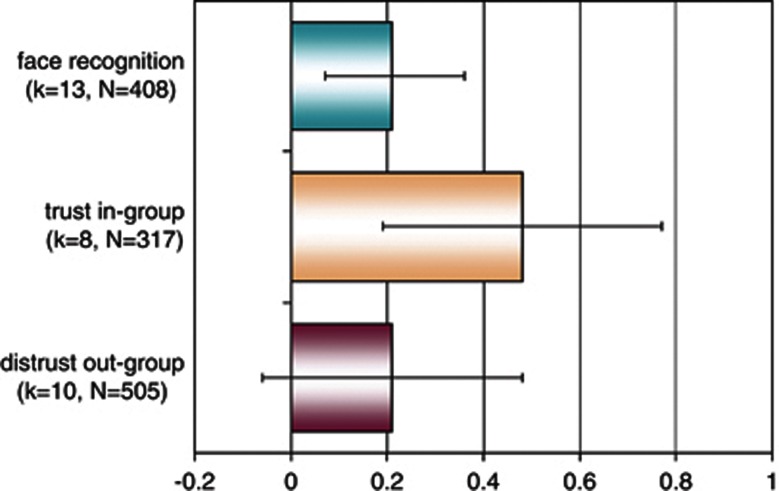
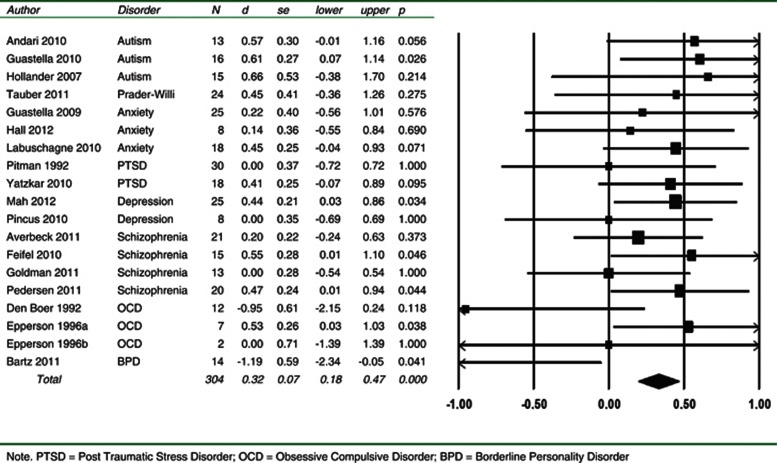
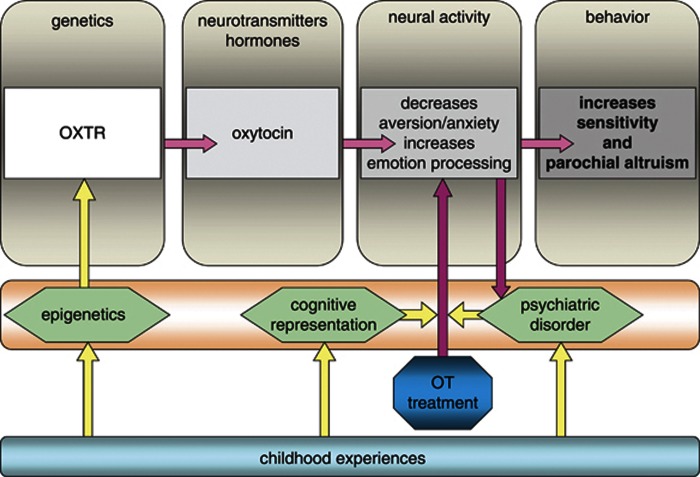
The popularity of oxytocin (OT) has grown exponentially during the past decade, and so has the number of OT trials in healthy and clinical groups. We take stock of the evidence from these studies to explore potentials and limitations of pharmacotherapeutic applications. In healthy participants, intranasally administered OT leads to better emotion recognition and more trust in conspecifics, but the effects appear to be moderated by context (perceived threat of the 'out-group'), personality and childhood experiences. In individuals with untoward childhood experiences, positive behavioral or neurobiological effects seem lowered or absent. In 19 clinical trials, covering autism, social anxiety, postnatal depression, obsessive-compulsive problems, schizophrenia, borderline personality disorder and post-traumatic stress, the effects of OT administration were tested, with doses ranging from 15 IU to more than 7000 IU. The combined effect size was d=0.32 (N=304; 95% confidence interval (CI): 0.18-0.47; P<0.01). However, of all disorders, only studies on autism spectrum disorder showed a significant combined effect size (d=0.57; N=68; 95% CI: 0.15-0.99; P<0.01). We hypothesize that for some of the other disorders, etiological factors rooted in negative childhood experiences may also have a role in the diminished effectiveness of treatment with OT.
Overview
The claims and statistics of this paper haven’t been checked yet.
Run the check — free, no account needed. It reads the open-access text and checks the sources it cites.
Integrity signals
Registry
Cites
Statistics
Figures
Verification
Claims the paper makes
The claims and statistics of this paper haven’t been checked yet.
Run the check — free, no account needed. It reads the open-access text and checks the sources it cites.
Claims other papers make about this one
Each is checked against this paper’s own text: does it say what the citing paper says it does?
The cited source doesn’t support the claim as written.
In the citing paper
“These studies yielded summarized effect sizes ranging from d=0.21 to d=0.48.”
From Statistical and Methodological Considerations for the Interpretation of Intranasal Oxytocin Studies (2016) · cites this paper as [11]
Checked by a reasoning model — may be wrong.
Experimental — accuracy not yet measuredThe source backs part of the claim, not all of it — or backs it for a different population, condition or comparison.
In the citing paper
“The meta-analyses mentioned in this paper all tested for evidence of publication bias in the IN-OT literature, with mixed results (9–11).”
From Statistical and Methodological Considerations for the Interpretation of Intranasal Oxytocin Studies (2016) · cites this paper as [11]
Experimental — accuracy not yet measuredThe source backs part of the claim, not all of it — or backs it for a different population, condition or comparison.
In the citing paper
“Finally, in the meta-analysis by Bakermans-Kranenburg and Van IJzendoorn (11) IN-OT seems to have the largest effect size in individuals with autism. Only four studies of autism were included in the analysis and should therefore be interpreted cautiously. However, the larger effect size for autism (d=0.57) compared to all clinical studies (d=0.32)”
From Statistical and Methodological Considerations for the Interpretation of Intranasal Oxytocin Studies (2016) · cites this paper as [11]
Experimental — accuracy not yet measuredThe cited source says what the claim attributes to it.
In the citing paper
“Bakermans-Kranenburg and Van IJzendoorn studied the effect of IN-OT in clinical trials (19 effect sizes, total N=304)(11).”
From Statistical and Methodological Considerations for the Interpretation of Intranasal Oxytocin Studies (2016) · cites this paper as [11]
The cited source says what the claim attributes to it.
In the citing paper
“To date three meta-analyses of the effects of IN-OT on human behavior have been published.”
From Statistical and Methodological Considerations for the Interpretation of Intranasal Oxytocin Studies (2016) · cites this paper as [11]
The cited source says what the claim attributes to it.
In the citing paper
“Only four studies of autism were included in the analysis and should therefore be interpreted cautiously.”
From Statistical and Methodological Considerations for the Interpretation of Intranasal Oxytocin Studies (2016) · cites this paper as [11]
In the citing paper
“Several clinical studies have also investigated the potential of intranasal oxytocin as a treatment for socio-cognitive, behavioral, and socio-affective symptoms of ASD. So far, these studies cannot provide a certain conclusion about oxytocin’s therapeutic potential43–47.”
From Randomized clinical trial shows no substantial modulation of empathy-related neural activation by intranasal oxytocin in autism (2021) · cites this paper as [46]
In the citing paper
“In typically developing individuals, OT has been linked to interpersonal bonding, parental care, and the ability to establish trust and form social attachments [2, 3].”
From Behavioral effects of multiple-dose oxytocin treatment in autism: a randomized, placebo-controlled trial with long-term follow-up (2020) · cites this paper as [2]
In the citing paper
“the genetic background of oxytocin system might influence efficacy of oxytocin administration.19, 20”
From Oxytocin efficacy is modulated by dosage and oxytocin receptor genotype in young adults with high-functioning autism: a 24-week randomized clinical trial (2016) · cites this paper as [19]
In the citing paper
“oxytocin is emerging as a pharmacological target for social dysfunction in clinical trials (29, 30).”
From Placebo treatment facilitates social trust and approach behavior (2018) · cites this paper as [30]
Self-check
Percentages, sums and reported differences re-computed from the paper’s own numbers.
The self-check needs the paper’s full text.
Citations
Cites
Statistical Power Analysis for the Behavioral Sciences
Muller, K. E., & Cohen, J. (1989) · Technometrics · doi:10.2307/1270020 · Cited by 99,603
Statistical power analysis for the behavioral sciences
Cohen, J. (1990) · Computers Environment and Urban Systems · doi:10.1016/0198-9715(90)90050-4 · Cited by 65,417
(1969) · Cited by 18,340
Duval, S., & Tweedie, R. (2000) · Biometrics · doi:10.1111/j.0006-341x.2000.00455.x · Cited by 14,099
(2000) · Cited by 9,198
LeDoux, J. E. (2000) · Annual Review of Neuroscience · doi:10.1146/annurev.neuro.23.1.155 · Cited by 8,444
Baron-Cohen, S., Wheelwright, S., Skinner, R., Martin, J., & Clubley, E. (2001) · Journal of Autism and Developmental Disorders · doi:10.1023/a:1005653411471 · Cited by 6,450
Kirschbaum, C., Pirke, K.-M., & Hellhammer, D. H. (2008) · Neuropsychobiology · doi:10.1159/000119004 · Cited by 6,093
The precuneus: a review of its functional anatomy and behavioural correlates
Cavanna, A. E., & Trimble, M. R. (2006) · Brain · doi:10.1093/brain/awl004 · Cited by 5,128
Meta-Analytic Procedures for Social Research
Rosenthal, R. (1991) · doi:10.4135/9781412984997 · Cited by 4,635
Baron‐Cohen, S., Wheelwright, S., Hill, J., Raste, Y., & Plumb, I. (2001) · Journal of Child Psychology and Psychiatry · doi:10.1111/1469-7610.00715 · Cited by 4,555
Baron‐Cohen, S., Wheelwright, S. J., Hill, J., Raste, Y., & Plumb, I. (2001) · PubMed · Cited by 4,313
Attachment in adulthood: structure, dynamics, and change
(2008) · Choice Reviews Online · doi:10.5860/choice.45-2903 · Cited by 4,303
Meta-Analytic Procedures for Social Research.
Metcalfe, A., & Rosenthal, R. (1994) · Journal of the Royal Statistical Society Series D (The Statistician) · doi:10.2307/2348600 · Cited by 4,249
The reward circuit: linking primate anatomy and human imaging
Haber, S. N., & Knutson, B. (2010) · Neuropsychopharmacology · doi:10.1038/npp.2009.129 · Cited by 3,718
Oxytocin increases trust in humans
Kosfeld, M., Heinrichs, M., Zak, P. J., Fischbacher, U., & Fehr, E. (2005) · Nature · doi:10.1038/nature03701 · Cited by 3,690
Attachment theory and close relationships
(1998) · Choice Reviews Online · doi:10.5860/choice.35-6513 · Cited by 3,642
The functional architecture of human empathy
Decety, J., & Jackson, P. L. (2004) · Behavioral and Cognitive Neuroscience Reviews · doi:10.1177/1534582304267187 · Cited by 3,407
An Item-Response Theory Analysis of Self-Report Measures of Adult Attachment
Fraley, R. C., Waller, N. G., & Brennan, K. A. (2000) · Journal of Personality and Social Psychology · doi:10.1037/0022-3514.78.2.350 · Cited by 3,385
The oxytocin receptor system: structure, function, and regulation
Gimpl, G., & Fahrenholz, F. (2001) · Physiological Reviews · doi:10.1152/physrev.2001.81.2.629 · Cited by 3,089
A Nonparametric “Trim and Fill” Method of Accounting for Publication Bias in Meta-Analysis
Duval, S., & Tweedie, R. (2000) · Journal of the American Statistical Association · doi:10.1080/01621459.2000.10473905 · Cited by 2,955
The debate over dopamine’s role in reward: the case for incentive salience
Berridge, K. C. (2007) · Psychopharmacology · doi:10.1007/s00213-006-0578-x · Cited by 2,347
A unifying view of the basis of social cognition
GALLESE, V, KEYSERS, C., & RIZZOLATTI, G. (2004) · Trends in Cognitive Sciences · doi:10.1016/j.tics.2004.07.002 · Cited by 2,236
The human orbitofrontal cortex: linking reward to hedonic experience
Kringelbach, M. L. (2005) · Nature Reviews Neuroscience · doi:10.1038/nrn1747 · Cited by 2,180
Heinrichs, M., Baumgartner, T., Kirschbaum, C., & Ehlert, U. (2003) · Biological Psychiatry · doi:10.1016/s0006-3223(03)00465-7 · Cited by 2,091
Pharmacogenomics — Drug Disposition, Drug Targets, and Side Effects
Evans, W. E., & McLeod, H. L. (2003) · New England Journal of Medicine · doi:10.1056/nejmra020526 · Cited by 1,778
Mothers and others: the evolutionary origins of mutual understanding
(2010) · Choice Reviews Online · doi:10.5860/choice.47-3250 · Cited by 1,735
Oxytocin Modulates Neural Circuitry for Social Cognition and Fear in Humans
Kirsch, P., Esslinger, C., Chen, Q., Mier, D., Lis, S., Siddhanti, S., Gruppe, H., Mattay, V. S., Gallhofer, B., & Meyer-Lindenberg, A. (2005) · The Journal of Neuroscience · doi:10.1523/jneurosci.3984-05.2005 · Cited by 1,639
(1990) · Choice Reviews Online · doi:10.5860/choice.27-6366 · Cited by 1,627
Imitation, empathy, and mirror neurons
Iacoboni, M. (2009) · Annual Review of Psychology · doi:10.1146/annurev.psych.60.110707.163604 · Cited by 1,606
Social effects of oxytocin in humans: context and person matter
Bartz, J. A., Zaki, J., Bolger, N., & Ochsner, K. N. (2011) · Trends in Cognitive Sciences · doi:10.1016/j.tics.2011.05.002 · Cited by 1,581 · cited 4×
“The context- and persondependent nature of the effects of OT administration has been observed in several reviews.(6,25,63) Here, we systematically review the moderating effects of context, personality and childhood experiences.”
BackgroundInfluentialNeuroendocrine perspectives on social attachment and love
Sue Carter, C. (1998) · Psychoneuroendocrinology · doi:10.1016/s0306-4530(98)00055-9 · Cited by 1,425
Empirical assessment of effect of publication bias on meta-analyses
Sutton, A. J. (2000) · BMJ · doi:10.1136/bmj.320.7249.1574 · Cited by 1,398
Affective neuroscience of pleasure: reward in humans and animals
Berridge, K. C., & Kringelbach, M. L. (2008) · Psychopharmacology · doi:10.1007/s00213-008-1099-6 · Cited by 1,254
The Neuropeptide Oxytocin Regulates Parochial Altruism in Intergroup Conflict Among Humans
De Dreu, C. K. W., Greer, L. L., Handgraaf, M. J. J., Shalvi, S., Van Kleef, G. A., Baas, M., Ten Velden, F. S., Van Dijk, E., & Feith, S. W. W. (2010) · Science · doi:10.1126/science.1189047 · Cited by 1,148
Cyberball: A program for use in research on interpersonal ostracism and acceptance
Williams, K. D., & Jarvis, B. (2006) · Behavior Research Methods · doi:10.3758/bf03192765 · Cited by 1,088
Landgraf, R., & Neumann, I. D. (2004) · Frontiers in Neuroendocrinology · doi:10.1016/j.yfrne.2004.05.001 · Cited by 1,059
Insel, T. R. (2010) · Neuron · doi:10.1016/j.neuron.2010.03.005 · Cited by 1,044
Intranasal oxytocin improves emotion recognition for youth with autism spectrum disorders.
Guastella, A. J., Einfeld, S. L., Gray, K. M., Rinehart, N. J., Tonge, B. J., Lambert, T. J., & Hickie, I. B. (2010) · Biological Psychiatry · doi:10.1016/j.biopsych.2009.09.020 · Cited by 962
Betancur, C. (2011) · Brain Research · doi:10.1016/j.brainres.2010.11.078 · Cited by 954
Promoting social behavior with oxytocin in high-functioning autism spectrum disorders.
Andari, E., Duhamel, J.-R., Zalla, T., Herbrecht, E., Leboyer, M., & Sirigu, A. (2010) · Proceedings of the National Academy of Sciences · doi:10.1073/pnas.0910249107 · Cited by 941
Feldman, R., Weller, A., Zagoory-Sharon, O., & Levine, A. (2007) · Psychological Science · doi:10.1111/j.1467-9280.2007.02010.x · Cited by 787
Segregated fronto-cerebellar circuits revealed by intrinsic functional connectivity
Krienen, F. M., & Buckner, R. L. (2009) · Cerebral Cortex · doi:10.1093/cercor/bhp135 · Cited by 782
Adult attachment predicts maternal brain and oxytocin response to infant cues.
Strathearn, L., Fonagy, P., Amico, J., & Montague, P. R. (2009) · Neuropsychopharmacology · doi:10.1038/npp.2009.103 · Cited by 773
Oxytocin enhances amygdala-dependent, socially reinforced learning and emotional empathy in humans
Hurlemann, R., Patin, A., Onur, O. A., Cohen, M. X., Baumgartner, T., Metzler, S., Dziobek, I., Gallinat, J., Wagner, M., Maier, W., et al. (2010) · The Journal of Neuroscience · doi:10.1523/jneurosci.5538-09.2010 · Cited by 771
Oxytocin and social affiliation in humans
Feldman, R. (2012) · Hormones and Behavior · doi:10.1016/j.yhbeh.2012.01.008 · Cited by 767
Oxytocin Increases Retention of Social Cognition in Autism
Hollander, E., Bartz, J., Chaplin, W., Phillips, A., Sumner, J., Soorya, L., Anagnostou, E., & Wasserman, S. (2007) · Biological Psychiatry · doi:10.1016/j.biopsych.2006.05.030 · Cited by 693
Oxytocin Infusion Reduces Repetitive Behaviors in Adults with Autistic and Asperger's Disorders
Hollander, E., Novotny, S., Hanratty, M., Yaffe, R., DeCaria, C. M., Aronowitz, B. R., & Mosovich, S. (2003) · Neuropsychopharmacology · doi:10.1038/sj.npp.1300021 · Cited by 689
The Cerebellum and Cognition: Evidence from Functional Imaging Studies
Stoodley, C. J. (2012) · The Cerebellum · doi:10.1007/s12311-011-0260-7 · Cited by 686
Zhang, H., & Maloney, L. T. (2012) · Frontiers in Neuroscience · doi:10.3389/fnins.2012.00001 · Cited by 679
Empathy for positive and negative emotions in the gustatory cortex
Jabbi, M., Swart, M., & Keysers, C. (2006) · NeuroImage · doi:10.1016/j.neuroimage.2006.10.032 · Cited by 590
The Peptide That Binds: A Systematic Review of Oxytocin and its Prosocial Effects in Humans
MacDonald, K., & MacDonald, T. M. (2010) · Harvard Review of Psychiatry · doi:10.3109/10673220903523615 · Cited by 585
Schmahmann, J. D. (2010) · Neuropsychology Review · doi:10.1007/s11065-010-9142-x · Cited by 583
The Adult Attachment Interview and self-reports of attachment style: An empirical rapprochement.
Roisman, G. I., Holland, A. S., Fortuna, K., Fraley, R. C., Clausell, E., & Clarke, A. (2007) · Journal of Personality and Social Psychology · doi:10.1037/0022-3514.92.4.678 · Cited by 575
Psychotic-like experiences in the general population: characterizing a high-risk group for psychosis
Kelleher, I., & Cannon, M. D. (2010) · Psychological Medicine · doi:10.1017/s0033291710001005 · Cited by 567
Oxytocin Attenuates Amygdala Reactivity to Fear in Generalized Social Anxiety Disorder
Labuschagne, I., Phan, K. L., Wood, A., Angstadt, M., Chua, P., Heinrichs, M., Stout, J. C., & Nathan, P. J. (2010) · Neuropsychopharmacology · doi:10.1038/npp.2010.123 · Cited by 549 · cited 2×
“In a study using fMRI, the effects of a single intranasal OT administration (24 IU) on neural reactivity to angry and fearful faces in 18 SAD patients and 18 matched healthy controls were examined.(100) When watching fearful faces, SAD patients showed heightened bilateral amygdala activation compared with controls.”
BackgroundEffects of intranasal oxytocin on emotional face processing in women
Domes, G., Lischke, A., Berger, C., Grossmann, A., Hauenstein, K., Heinrichs, M., & Herpertz, S. C. (2010) · Psychoneuroendocrinology · doi:10.1016/j.psyneuen.2009.06.016 · Cited by 521
Noftle, E. E., & Shaver, P. R. (2006) · Journal of Research in Personality · doi:10.1016/j.jrp.2004.11.003 · Cited by 501
Different amygdala subregions mediate valence-related and attentional effects of oxytocin in humans
Gamer, M., Zurowski, B., & Büchel, C. (2010) · Proceedings of the National Academy of Sciences · doi:10.1073/pnas.1000985107 · Cited by 487 · cited 1×
“Participants were instructed to classify briefly presented negative (fearful), positive (happy) or neutral facial expressions as quickly and accurately as possible.(46) OT decreased activity in lateral and dorsal regions of the anterior amygdala when viewing fearful faces, and stimulated activity in these parts in res…”
BackgroundModulating social behavior with oxytocin: How does it work? What does it mean?
Churchland, P. S., & Winkielman, P. (2012) · Hormones and Behavior · doi:10.1016/j.yhbeh.2011.12.003 · Cited by 464
Oxytocin selectively improves empathic accuracy
Bartz, J. A., Zaki, J., Bolger, N., Hollander, E., Ludwig, N. N., Kolevzon, A., & Ochsner, K. N. (2010) · Psychological Science · doi:10.1177/0956797610383439 · Cited by 442
Association between Functional Connectivity Hubs and Brain Networks
Tomasi, D. G., & Volkow, N. D. (2011) · Cerebral Cortex · doi:10.1093/cercor/bhq268 · Cited by 441
Bos, P. A., Panksepp, J., Bluthé, R.-M., & Honk, J. V. (2012) · Frontiers in Neuroendocrinology · doi:10.1016/j.yfrne.2011.01.002 · Cited by 429
Swaab, D. F., Purba, J. S., & Hofman, M. A. (1995) · The Journal of Clinical Endocrinology & Metabolism · doi:10.1210/jcem.80.2.7852523 · Cited by 421
Heinrichs, M., Meinlschmidt, G., Neumann, I., Wagner, S., Kirschbaum, C., Ehlert, U., & Hellhammer, D. H. (2001) · The Journal of Clinical Endocrinology & Metabolism · doi:10.1210/jcem.86.10.7919 · Cited by 386
Mullen, B. (2013) · Psychology Press eBooks · doi:10.4324/9780203771938 · Cited by 385
Graustella, A. J., & MacLeod, C. (2012) · Hormones and Behavior · doi:10.1016/j.yhbeh.2012.01.002 · Cited by 379
Guastella, A. J., Howard, A. L., Dadds, M. R., Mitchell, P., & Carson, D. S. (2009) · Psychoneuroendocrinology · doi:10.1016/j.psyneuen.2009.01.005 · Cited by 366
Riem, M. M. E., Bakermans-Kranenburg, M. J., Pieper, S., Tops, M., Boksem, M. A. S., Vermeiren, R. R. J. M., van IJzendoorn, M. H., & Rombouts, S. A. R. B. (2011) · Biological Psychiatry · doi:10.1016/j.biopsych.2011.02.006 · Cited by 366
Van IJzendoorn, M. H., & Bakermans-Kranenburg, M. J. (2012) · Psychoneuroendocrinology · doi:10.1016/j.psyneuen.2011.07.008 · Cited by 365
The comorbidity of autism with the genomic disorders of chromosome 15q11.2-q13
Hogart, A., Wu, D., LaSalle, J. M., & Schanen, N. C. (2008) · Neurobiology of Disease · doi:10.1016/j.nbd.2008.08.011 · Cited by 361
Guastella, A. J., Hickie, I. B., McGuinness, M. M., Otis, M., Woods, E. A., Disinger, H. M., Chan, H.-K., Chen, T. F., & Banati, R. B. (2013) · Psychoneuroendocrinology · doi:10.1016/j.psyneuen.2012.11.019 · Cited by 357
Morrison, S. E., & Salzman, C. D. (2010) · Current Opinion in Neurobiology · doi:10.1016/j.conb.2010.02.007 · Cited by 354
Skrundz, M., Bolten, M., Nast, I., Hellhammer, D. H., & Meinlschmidt, G. (2011) · Neuropsychopharmacology · doi:10.1038/npp.2011.74 · Cited by 349
Dopaminergic-neuropeptide interactions in the social brain
Skuse, D. H., & Gallagher, L. (2009) · Trends in Cognitive Sciences · doi:10.1016/j.tics.2008.09.007 · Cited by 340
Declerck, C. H., Boone, C., & Kiyonari, T. (2010) · Hormones and Behavior · doi:10.1016/j.yhbeh.2010.01.006 · Cited by 331
Oxytocin improves specific recognition of positive facial expressions
Marsh, A. A., Yu, H. H., Pine, D. S., & Blair, R. J. R. (2010) · Psychopharmacology · doi:10.1007/s00213-010-1780-4 · Cited by 321
Theodoridou, A., Rowe, A. C., Penton-Voak, I. S., & Rogers, P. J. (2009) · Hormones and Behavior · doi:10.1016/j.yhbeh.2009.03.019 · Cited by 318
Adjunctive intranasal oxytocin reduces symptoms in schizophrenia patients
Feifel, D., Macdonald, K., Nguyen, A., Cobb, P., Warlan, H., Galangue, B., Minassian, A., Becker, O., Cooper, J., Perry, W., et al. (2010) · Biological Psychiatry · doi:10.1016/j.biopsych.2010.04.039 · Cited by 308
Pedersen, C. A., Gibson, C. M., Rau, S. W., Salimi, K., Smedley, K. L., Casey, R. L., Leserman, J., Jarskog, L. F., & Penn, D. L. (2011) · Schizophrenia Research · doi:10.1016/j.schres.2011.07.027 · Cited by 305
Prosocial effects of oxytocin and clinical evidence for its therapeutic potential
Striepens, N., Kendrick, K. M., Maier, W., & Hurlemann, R. (2011) · Frontiers in Neuroendocrinology · doi:10.1016/j.yfrne.2011.07.001 · Cited by 283
Chen, F. S., Kumsta, R., von Dawans, B., Monakhov, M., Ebstein, R. P., & Heinrichs, M. (2011) · Proceedings of the National Academy of Sciences · doi:10.1073/pnas.1113079108 · Cited by 268
King, D. W., King, L. A., Foy, D. W., & Gudanowski, D. M. (1996) · Journal of Consulting and Clinical Psychology · doi:10.1037//0022-006x.64.3.520 · Cited by 264
McCabe, C., Rolls, E. T., Bilderbeck, A., & McGlone, F. (2008) · Social Cognitive and Affective Neuroscience · doi:10.1093/scan/nsn005 · Cited by 262
The Role of Oxytocin in Mother-Infant Relations: A Systematic Review of Human Studies
Galbally, M., Lewis, A. J., van IJzendoorn, M., & Permezel, M. (2011) · Harvard Review of Psychiatry · doi:10.3109/10673229.2011.549771 · Cited by 260
Etchells, P. J., Benton, C. P., Ludwig, C. J. H., & Gilchrist, I. D. (2011) · Frontiers in Psychology · doi:10.3389/fpsyg.2011.00115 · Cited by 234
Gordon, I., Zagoory‐Sharon, O., Schneiderman, I., Leckman, J. F., Weller, A., & Feldman, R. (2008) · Psychophysiology · doi:10.1111/j.1469-8986.2008.00649.x · Cited by 232
Peripheral oxytocin is associated with reduced symptom severity in schizophrenia
Rubin, L. H., Carter, C. S., Drogos, L. L., Pournajafi‐Nazarloo, H., Sweeney, J. A., & Maki, P. M. (2010) · Schizophrenia Research · doi:10.1016/j.schres.2010.09.014 · Cited by 228
Gondoli, D. M., & Silverberg, S. B. (1997) · Developmental Psychology · doi:10.1037//0012-1649.33.5.861 · Cited by 227
Naber, F., van IJzendoorn, M. H., Deschamps, P., van Engeland, H., & Bakermans-Kranenburg, M. J. (2010) · Psychoneuroendocrinology · doi:10.1016/j.psyneuen.2010.04.007 · Cited by 222
Evidence of dysregulated peripheral oxytocin release among depressed women
Cyranowski, J. M., Hofkens, T. L., Frank, E., Seltman, H., Cai, H.-M., & Amico, J. A. (2008) · Psychosomatic Medicine · doi:10.1097/psy.0b013e318188ade4 · Cited by 220
Oxytocin makes people trusting, not gullible
Mikolajczak, M., Gross, J. J., Lane, A., Corneille, O., de Timary, P., & Luminet, O. (2010) · Psychological Science · doi:10.1177/0956797610377343 · Cited by 216
Sensitivity to Intranasal Oxytocin in Adult Men with Early Parental Separation
Meinlschmidt, G., & Heim, C. C. (2006) · Biological Psychiatry · doi:10.1016/j.biopsych.2006.09.007 · Cited by 210
III. ATTACHMENT AND EMOTIONAL DEVELOPMENT IN INSTITUTIONAL CARE: CHARACTERISTICS AND CATCH UP
Bakermans‐Kranenburg, M. J., Steele, H., Zeanah, C. H., Muhamedrahimov, R. J., Vorria, P., Dobrova‐Krol, N. A., Steele, M., van IJzendoorn, M. H., Juffer, F., & Gunnar, M. R. (2011) · Monographs of the Society for Research in Child Development · doi:10.1111/j.1540-5834.2011.00628.x · Cited by 202
Oxytocin increases amygdala reactivity to threatening scenes in females
Lischke, A., Gamer, M., Berger, C., Grossmann, A., Hauenstein, K., Heinrichs, M., Herpertz, S. C., & Domes, G. (2012) · Psychoneuroendocrinology · doi:10.1016/j.psyneuen.2012.01.011 · Cited by 194
King, D. W., King, L. A., Foy, D. W., et al. (1996) · Journal of Consulting and Clinical Psychology · doi:10.1037/0022-006x.64.3.520 · Cited by 194
Riem, M. M. E., van IJzendoorn, M. H., Tops, M., Boksem, M. A. S., Rombouts, S. A. R. B., & Bakermans-Kranenburg, M. J. (2012) · Neuropsychopharmacology · doi:10.1038/npp.2011.313 · Cited by 191
Oxytocin increases recognition of masked emotional faces
Schulze, L., Lischke, A., Greif, J., Herpertz, S. C., Heinrichs, M., & Domes, G. (2011) · Psychoneuroendocrinology · doi:10.1016/j.psyneuen.2011.03.011 · Cited by 180
Predictors of Maternal Sensitivity to Infant Distress
Leerkes, E. M. (2010) · Parenting · doi:10.1080/15295190903290840 · Cited by 177
Sharing secrets: oxytocin and trust in schizophrenia
Kéri, S., Kiss, I., & Kelemen, O. (2009) · Social Neuroscience · doi:10.1080/17470910802319710 · Cited by 167
Cerebellar volume and cognitive functioning in children who experienced early deprivation
Bauer, P. M., Hanson, J. L., Pierson, R. K., Davidson, R. J., & Pollak, S. D. (2009) · Biological Psychiatry · doi:10.1016/j.biopsych.2009.06.014 · Cited by 167
Simeon, D., Bartz, J. A., Hamilton, H., Crystal, S., Braun, A. R., Ketay, S., & Hollander, E. (2011) · Psychoneuroendocrinology · doi:10.1016/j.psyneuen.2011.03.013 · Cited by 167
Empathizing with basic emotions: Common and discrete neural substrates
Chakrabarti, B., Bullmore, E. T., & Baron‐Cohen, S. (2006) · Social Neuroscience · doi:10.1080/17470910601041317 · Cited by 167
Being human: Conflict: Altruism's midwife
Bowles, S. (2008) · Nature · doi:10.1038/456326a · Cited by 162
Lactation and Stress: Protective Effects of Breast-feeding in Humans
Heinrichs, M., Neumann, I. D., & Ehlert, U. (2002) · Stress · doi:10.1080/1025389021000010530 · Cited by 156
Pitman, R. K., Orr, S. P., & Lasko, N. B. (1993) · Psychiatry Research · doi:10.1016/0165-1781(93)90035-f · Cited by 150
Yamasue, H., Yee, J. R., Hurlemann, R., Rilling, J. K., Chen, F. S., Meyer-Lindenberg, A., & Tost, H. (2012) · The Journal of Neuroscience · doi:10.1523/jneurosci.3327-12.2012 · Cited by 149
Altered cerebellar-cerebral functional connectivity in geriatric depression
Alalade, E., Denny, K., Potter, G., Steffens, D., & Wang, L. (2011) · PLoS ONE · doi:10.1371/journal.pone.0020035 · Cited by 149
Gondoli, D. M., & Silverberg, S. B. (1997) · Developmental Psychology · doi:10.1037/0012-1649.33.5.861 · Cited by 149
Emotion recognition and oxytocin in patients with schizophrenia
Averbeck, B. B., Bobin, T., Evans, S., & Shergill, S. S. (2011) · Psychological Medicine · doi:10.1017/s0033291711001413 · Cited by 148
Labuschagne, I., Phan, K. L., WOOD, A. G., Angstadt, M., Chua, P. M.-L., Heinrichs, M., Stout, J. C., & Nathan, P. J. (2011) · The International Journal of Neuropsychopharmacology · doi:10.1017/s1461145711001489 · Cited by 144
Oxytocin in postnatally depressed mothers: Its influence on mood and expressed emotion
Mah, B. L., van IJzendoorn, M. H., Smith, R., & Bakermans‐Kranenburg, M. J. (2012) · Progress in Neuro-Psychopharmacology and Biological Psychiatry · doi:10.1016/j.pnpbp.2012.10.005 · Cited by 143
Effects of intranasal oxytocin on social anxiety in males with fragile X syndrome
Hall, S. S., Lightbody, A. A., McCarthy, B. E., Parker, K. J., & Reiss, A. L. (2012) · Psychoneuroendocrinology · doi:10.1016/j.psyneuen.2011.07.020 · Cited by 143
Intranasal oxytocin modulates EEG mu/alpha and beta rhythms during perception of biological motion
Perry, A., Bentin, S., Shalev, I., Israel, S., Uzefovsky, F., Bar-On, D., & Ebstein, R. P. (2010) · Psychoneuroendocrinology · doi:10.1016/j.psyneuen.2010.04.011 · Cited by 143
Leitman (2010) · Frontiers in Human Neuroscience · doi:10.3389/fnhum.2010.00019 · Cited by 137
Elevated salivary levels of oxytocin persist more than 7 h after intranasal administration
van IJzendoorn, M. H., Bhandari, R., van der Veen, R., Grewen, K. M., & Bakermans-Kranenburg, M. J. (2012) · Frontiers in Neuroscience · doi:10.3389/fnins.2012.00174 · Cited by 137
Self-citationBakermans‐Kranenburg, M. J., van IJzendoorn, M. H., Riem, M. M. E., Mattie Tops, A., & Alink, L. R. A. (2011) · Social Cognitive and Affective Neuroscience · doi:10.1093/scan/nsr067 · Cited by 126
On the origins of background emotions: From affect synchrony to symbolic expression.
Feldman, R. (2007) · Emotion · doi:10.1037/1528-3542.7.3.601 · Cited by 125
Oxytocin selectively facilitates recognition of positive sex and relationship words.
Unkelbach, C., Guastella, A. J., & Forgas, J. P. (2008) · Psychological Science · doi:10.1111/j.1467-9280.2008.02206.x · Cited by 122
Intranasal oxytocin administration is reflected in human saliva
Weisman, O., Zagoory-Sharon, O., & Feldman, R. (2012) · Psychoneuroendocrinology · doi:10.1016/j.psyneuen.2012.02.014 · Cited by 120
Adjunctive intranasal oxytocin improves verbal memory in people with schizophrenia
Feifel, D., MacDonald, K. S., Cobb, P., & Minassian, A. (2012) · Schizophrenia Research · doi:10.1016/j.schres.2012.05.018 · Cited by 117
Tauber, M., Mantoulan, C., Copet, P., Jauregui, J., Demeer, G., Diene, G., Rogé, B., Laurier, V., Ehlinger, V., Arnaud, C., et al. (2011) · Orphanet Journal of Rare Diseases · doi:10.1186/1750-1172-6-47 · Cited by 117 · cited 2×
“Twenty-four Prader–Willi syndrome patients (8 males) were tested with a single dose of 24 IU OT (n1⁄4 12) or placebo (n1⁄4 12).(99) Patients were observed in their daily routines and scored by trained staff on behavioral scales before and immediately after treatment and during two days following treatment.”
BackgroundMethodRiem, M. M. E., Bakermans‐Kranenburg, M. J., Huffmeijer, R., & van IJzendoorn, M. H. (2013) · Psychoneuroendocrinology · doi:10.1016/j.psyneuen.2012.12.023 · Cited by 114
Goldman, M. B., Gomes, A. M., Carter, C. S., & Lee, R. (2011) · Psychopharmacology · doi:10.1007/s00213-011-2193-8 · Cited by 112
Oxytocin as a natural antipsychotic: a study using oxytocin knockout mice
Caldwell, H. K., Stephens, S. L., & Young, W. S. (2008) · Molecular Psychiatry · doi:10.1038/sj.mp.4002150 · Cited by 108
Reduction of plasma oxytocin levels in patients suffering from major depression.
Frasch, A., Zetzsche, D. A., Steiger, A., & Jirikowski, G. F. (1995) · PubMed · Cited by 106
Oxytocin effects on complex brain networks are moderated by experiences of maternal love withdrawal
Riem, M. M. E., van IJzendoorn, M. H., Tops, M., Boksem, M. A. S., Rombouts, S. A. R. B., & Bakermans-Kranenburg, M. J. (2013) · European Neuropsychopharmacology · doi:10.1016/j.euroneuro.2013.01.011 · Cited by 91
Pincus, D. (2010) · Frontiers in Psychiatry · doi:10.3389/fpsyt.2010.00134 · Cited by 91
Intranasal oxytocin in obsessive-compulsive disorder
Epperson, C. N., McDougle, C. J., & Price, L. H. (1996) · Biological Psychiatry · doi:10.1016/0006-3223(96)00120-5 · Cited by 88
Marsh, A. A., Yu, H. H., Pine, D. S., Gorodetsky, E. K., Goldman, D., & Blair, R. J. R. (2012) · Psychopharmacology · doi:10.1007/s00213-012-2775-0 · Cited by 87
van IJzendoorn, M. H., Huffmeijer, R., Alink, L. R. A., Bakermans-Kranenburg, M. J., & Tops, M. (2011) · Frontiers in Psychology · doi:10.3389/fpsyg.2011.00258 · Cited by 83 · cited 2×
“Moreover, recent research indicates that positive OT effects on behavior or neurobiology are lowered or absent in individuals with negative childhood experiences.(78,79,91)”
BackgroundSelf-citationOxytocin in obsessive compulsive disorder
den Boer, J. A., & Westenberg, H. G. M. (1992) · Peptides · doi:10.1016/0196-9781(92)90010-z · Cited by 79
Structural brain magnetic resonance imaging of pediatric twins
Giedd, J. N., Schmitt, J. E., & Neale, M. C. (2007) · Human Brain Mapping · doi:10.1002/hbm.20403 · Cited by 72
Bruins, J., Hijman, R., & van Ree, J. M. (1992) · Peptides · doi:10.1016/0196-9781(92)90075-e · Cited by 64
Huffmeijer, R., Alink, L. R. A., Mattie Tops, A., Grewen, K., Light, K. C., Bakermans‐Kranenburg, M. J., & van IJzendoorn, M. H. (2012) · PubMed · Cited by 62
Oxytocin modulates selection of allies in intergroup conflict
Dreu, C. K. W. D., Greer, L. L., Handgraaf, M. J. J., Shalvi, S., & Kleef, G. A. V. (2011) · Proceedings of the Royal Society B Biological Sciences · doi:10.1098/rspb.2011.1444 · Cited by 55
Exclusion and micro-rejection: event-related potential response predicts mitigated distress
Crowley, M. J., Wu, J., McCarty, E. R., David, D. H., Bailey, C. A., & Mayes, L. C. (2009) · Neuroreport · doi:10.1097/wnr.0b013e328330377a · Cited by 50
Huffmeijer, R., Alink, L. R. A., Tops, M., Bakermans‐Kranenburg, M. J., & van IJzendoorn, M. H. (2012) · Cognitive Affective & Behavioral Neuroscience · doi:10.3758/s13415-011-0082-6 · Cited by 42
Hua, Q.-P., Zeng, X.-Z., Liu, J.-Y., Wang, J.-Y., Guo, J.-Y., & Luo, F. (2008) · Cellular and Molecular Neurobiology · doi:10.1007/s10571-007-9228-z · Cited by 40
Yatzkar, U., & Klein, E. (2010) · European Neuropsychopharmacology · doi:10.1016/s0924-977x(10)70098-5 · Cited by 32
Stretched Until It Snaps: Attachment and Close Relationships
van IJzendoorn, M. H., & Bakermans‐Kranenburg, M. J. (2010) · Child Development Perspectives · doi:10.1111/j.1750-8606.2010.00127.x · Cited by 22
Intranasal oxytocin in trichotillomania
Epperson, C. N., McDougle, C. J., & Price, L. H. (1996) · Biological Psychiatry · doi:10.1016/0006-3223(96)00165-5 · Cited by 16
Variations in Maternal Behavior—Oxytocin and Reward Pathways—Peripheral Measures Matter?!
Leckman, J. F. (2011) · Neuropsychopharmacology · doi:10.1038/npp.2011.201 · Cited by 12
Research works printed but not linked: 1
- Borenstein M, Hedges LV, Higgins JPT, Rothstein HR . Comprehensive Meta-Analysis, Version 2. Biostat: Englewood, NJ, USA, 2005.
Cited by
Sorted by citations
Assessing human mirror activity with EEG mu rhythm: A meta-analysis.
Fox, N. A., Bakermans‐Kranenburg, M. J., Yoo, K. H., Bowman, L. C., Cannon, E. N., Vanderwert, R. E., Ferrari, P. F., & van IJzendoorn, M. H. (2015) · Psychological Bulletin · doi:10.1037/bul0000031 · Cited by 466
The adaptive human parental brain: implications for children's social development
Feldman, R. (2015) · Trends in Neurosciences · doi:10.1016/j.tins.2015.04.004 · Cited by 419
Statistical and Methodological Considerations for the Interpretation of Intranasal Oxytocin Studies
Walum, H., Waldman, I. D., & Young, L. J. (2016) · Biological Psychiatry · doi:10.1016/j.biopsych.2015.06.016 · Cited by 347
“Finally, in the meta-analysis by BakermansKranenburg and Van IJzendoorn (11) IN-OT seems to have the largest effect size in individuals with autism.”
BackgroundMethodInfluentialRole of neuropeptides in anxiety, stress, and depression: From animals to humans
Kormos, V., & Gaszner, B. (2013) · Neuropeptides · doi:10.1016/j.npep.2013.10.014 · Cited by 333
Does Oxytocin Increase Trust in Humans? A Critical Review of Research
Nave, G., Camerer, C., & McCullough, M. (2015) · Perspectives on Psychological Science · doi:10.1177/1745691615600138 · Cited by 316
Metadata
- Authors
- Bakermans-Kranenburg, M. J., & van IJzendoorn, M. H.
- Venue
- Translational Psychiatry
- Published
- 2013-05-21
- Volume
- 3
- Issue
- 5
- Pages
- e258-e258
- ISSN
- 2158-3188 (ISSN-L)
- PMC
- PMC3669921
- OpenAlex
- W1966317054
- Cited by
- 383
- References
- 142
- Citations by year
- 2026: 7 · 2025: 13 · 2024: 12 · 2023: 18 · 2022: 11 · 2021: 24 · 2020: 22 · 2019: 29 · 2018: 41 · 2017: 55 · 2016: 43 · 2015: 59 · 2014: 40 · 2013: 9
- FWCI
- 6.67
- Type
- journal article
- Language
- en
- Open access
- gold
- doi.org
- Licence
- cc-by-nc-nd
- www.springer.com/tdm (unspecified)
- Locations
- Translational Psychiatry (publishedVersion, cc-by-nc-nd)
- Europe PMC (PubMed Central) (publishedVersion, cc-by-nc-nd)
- PubMed Central (publishedVersion, cc-by-nc-nd)
- PubMed (publishedVersion)
- Funders
- Nederlandse Organisatie voor Wetenschappelijk Onderzoek
- Topics
- Life Sciences › Neuroscience › Endocrine and Autonomic Systems › Neuroendocrine regulation and behavior
- Life Sciences › Neuroscience › Sensory Systems › Olfactory and Sensory Function Studies
- Life Sciences › Neuroscience › Behavioral Neuroscience › Stress Responses and Cortisol
- Keywords
- oxytocin, intranasal administration, pharmacotherapy, autism spectrum disorder, social anxiety, postpartum depression, obsessive-compulsive disorder, schizophrenia, borderline personality disorder, post-traumatic stress disorder, emotion recognition, trust, child abuse, personality moderators, treatment effect size
- MeSH terms
- Administration, Intranasal, Anxiety, Mental Disorders, Child, Child Development Disorders, Pervasive, Depression, Humans, Oxytocin, Personality Disorders, Phobic Disorders, Schizophrenia, Stress Disorders, Post-Traumatic, Anti-Anxiety Agents, Trust
About these checks
Registry, retraction, Cites and statistics results are computed, not judged, with one exception: a printed reference that no index lists is read once by a model before it counts as a citation error. Claims are extracted by a model and kept only when their quote appears verbatim in the text; each cited source is then checked, with a model’s help, for whether it says what the claim relies on. Those verdicts can be wrong — read the claim’s quote and the cited source before relying on one.
Statistics and arithmetic are recomputed, not judged.
Confidence bands are shown only for fields calibrated on our annotated test set. None is calibrated yet, so no band is shown.
What counts as a claim ›How we measure confidence ›How we check this ›
Are you an author, or do you see a problem with this page? Request a review
