

The DOI matches its Crossref record; 295 of the 295 references it cites were found in a registry or an index; 37 of the 358 sources its claims cite were checked for support.
Emerging role of exosomes in cancer therapy: progress and challenges
Open accessAbstract
This review highlights recent progress in exosome-based drug delivery for cancer therapy, covering exosome biogenesis, cargo selection mechanisms, and their application across multiple cancer types. As small extracellular vesicles, exosomes exhibit high biocompatibility and low immunogenicity, making them ideal drug delivery vehicles capable of efficiently targeting cancer cells, minimizing off-target damage and side effects. This review aims to explore the potential of exosomes in cancer therapy, with a focus on applications in chemotherapy, gene therapy, and immunomodulation. Additionally, challenges related to exosome production and standardization are analyzed, highlighting the importance of addressing these issues for their clinical application. In conclusion, exosome-based drug delivery systems offer promising potential for future cancer therapies. Further research should aim to enhance production efficiency and facilitate clinical translation, paving the way for innovative cancer treatment strategies.
Overview
AI snapshot
Written from the paper’s full text.
TL;DR
This review summarizes exosome-based drug delivery for cancer therapy, covering exosome biogenesis, cargo loading, engineering strategies, and applications across multiple cancer types. It concludes that exosomes offer biocompatibility, low immunogenicity, and targeting advantages, but clinical translation is limited by production scalability, standardization, safety, and regulatory challenges.
Key findings
- Exosomes are 30–150 nm small extracellular vesicles originating from the endosomal pathway; they have high biocompatibility and low immunogenicity, can carry small molecules, nucleic acids, and proteins, and can cross biological barriers including the blood-brain barrier.
- Across cancer types, the review reports examples such as oral FA-ExoPAC achieving a 55% tumor inhibition rate in animal models, intravenous FA-ExoPAC surpassing Abraxane, and CTX/DOX exosomes extending survival of glioma-bearing rats by 47% compared with DOX monotherapy.
- For small-molecule drug loading, electroporation shows 0.5–50% efficiency, sonication 8–30%, and incubation 1–67%; ultracentrifugation can yield around 440.22 ± 11.71 µg/mL, while serial extruding synthetic exosomes can yield up to 500-fold higher than natural exosomes.
- Major barriers include large-scale production, standardization, regulatory uncertainty, limited clinical trials, and safety concerns because tumor-derived exosomes can promote tumor growth, metastasis, angiogenesis, and immune evasion.
Methods
- Design: narrative review; no primary experiments, systematic search strategy, or inclusion/exclusion criteria are described.
- Data/sample: synthesizes published literature and selected preclinical/clinical examples across cancer types, including chemotherapy, gene therapy, and immunotherapy applications.
- Main analysis: thematic synthesis of exosome biogenesis, cargo loading, natural/synthetic/hybrid delivery systems, and cancer-specific applications, with tables comparing isolation methods and delivery platform features.
Limitations
- Stated in the paper: production and scalability, quality control, regulatory and safety issues, and clinical translation remain unresolved; there is an absence of large-scale randomized controlled trials, and optimal dosage, administration route, predictive biomarkers, and long-term side effects are not fully understood.
- Stated in the paper: tumor-derived exosomes can carry oncogenic substances and promote tumor progression, metastasis, angiogenesis, and immune evasion, raising safety concerns for therapeutic use.
- Evident from the text: as a narrative review, it lacks a described systematic search or quantitative synthesis, and many cited applications are preclinical/animal or early-phase, so patient-level efficacy and safety remain uncertain.
Model-written summary. Check it against the paper before relying on it.
Integrity signals
Registry
Cites
Statistics
Figures
Verification
Claims the paper makes
204 Not checked yet · 80 No full text of the sources · 27 Own interpretation · 23 No basis given · 20 Supported · 12 Partly supported · 2 Sources not found · 2 Check pending · 1 Supported so far · 1 Couldn’t confirm · accuracy not yet measured
Every source the paper cites for this claim was checked and supports it.
In the paper
“while intravenous administration of FA-ExoPAC surpassed the efficacy of Abraxane (albumin-bound paclitaxel), which is FDA-approved for similar use.”
§ Emerging role of exosomes in cancer therapy: progress and challenges > Applications in cancer therapy > Respiratory system
What the sources say
- Supportedcites [74] Kandimalla R, Aqil F, Alhakeem SS, Jeyabalan J, Tyagi N, Agrawal A et al. Targeted oral delivery of Paclitaxel using Colostrum-Derived exosomes. Cancers (Basel). 2021;13(15). source
The Results (section 3.6) report greater tumor-growth inhibition with intravenous FA-ExoPAC than with intravenous Abraxane in the orthotopic lung tumor mouse model (76% versus 59% in the higher-dose study). The Discussion likewise states that intravenous FA-ExoPAC produced significantly higher antitumor activity than Abraxane. (LLM, conf=0.94)
plaindirect- Asserted: passes — The authors put it forward as true.
- Checkable: passes — It can be checked against evidence.
- Load-bearing: passes — The paper’s conclusions depend on it.
- Based: passes — The paper gives a reason why it holds.
- Supported
Every source the paper cites for this claim was checked and supports it.
In the paper
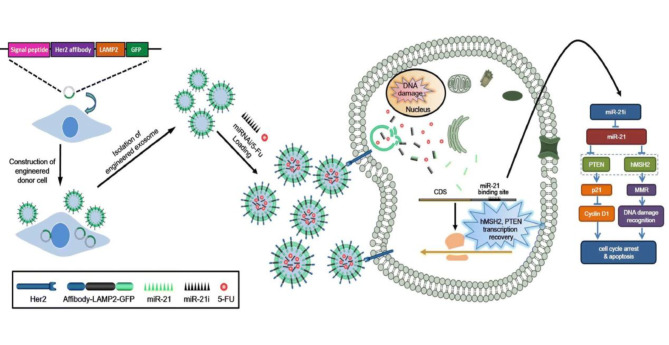
“To efficiently direct the exosomes to HCT-1165FR cells, they fused Her2 with LAMP2, which allowed the Her2-LAMP2 fusion protein to be displayed on the exosome surface, thereby facilitating targeted uptake via EGFR receptor- driven endocytosis in HCT-116 cells.”
§ Emerging role of exosomes in cancer therapy: progress and challenges > Applications in cancer therapy > Digestive system
What the sources say
- Supportedcites [148] Liang G, Zhu Y, Ali DJ, Tian T, Xu H, Si K, et al. Engineered exosomes for targeted co-delivery of miR-21 inhibitor and chemotherapeutics to reverse drug resistance in colon cancer. J Nanobiotechnol. 2020;18(1):10. source
The Introduction explicitly states that the Her2-LAMP2 fusion protein was expressed on exosome surfaces and facilitated targeted uptake through EGFR receptor-mediated endocytosis in HCT-116 cells. The Results section also reports incorporation of the fusion protein into exosomes. (LLM, conf=0.91)
plaindirect- Asserted: passes — The authors put it forward as true.
- Checkable: passes — It can be checked against evidence.
- Load-bearing: passes — The paper’s conclusions depend on it.
- Based: passes — The paper gives a reason why it holds.
- Supported
Every source the paper cites for this claim was checked and supports it.
In the paper
“These findings suggest that IL3-targeted exosomes are a promising strategy for overcoming pharmacological resistance in CML [166].”
§ Emerging role of exosomes in cancer therapy: progress and challenges > Applications in cancer therapy > Cardiovascular system
What the sources say
- Supportedcites [166] Bellavia D, Raimondo S, Calabrese G, Forte S, Cristaldi M, Patinella A, et al. Interleukin 3- receptor targeted exosomes inhibit in vitro and in vivo chronic myelogenous leukemia cell growth. Theranostics. 2017;7(5):1333–45. source
The Discussion explicitly calls the IL3-targeted exosome results promising and proposes their use in CML to overcome pharmacological resistance. It reports uptake by imatinib-resistant CML cells and xenografts and reduced tumor growth, while identifying clinical applicability as a future question. (LLM, conf=0.94)
hedgedconditional- Asserted: passes — The authors put it forward as true.
- Checkable: passes — It can be checked against evidence.
- Load-bearing: passes — The paper’s conclusions depend on it.
- Based: passes — The paper gives a reason why it holds.
- Supported
Every source the paper cites for this claim was checked and supports it.
In the paper
“Furthermore, this innovative strategy has progressed to a Phase I clinical trial for PDAC patients harboring the KrasG12D mutation (NCT03608631) [143].”
§ Emerging role of exosomes in cancer therapy: progress and challenges > Applications in cancer therapy > Digestive system
What the sources say
- Supportedcites [143] Chen K, Wang Q, Kornmann M, Tian X, Yang Y. The role of exosomes in Pancreatic Cancer from Bench to Clinical Application: an updated review. Front Oncol. 2021;11. source
The ‘Exosomes as a Therapeutic Vehicle of PDAC’ section describes exosomes loaded with siRNA against KrasG12D and explicitly says the strategy reached a Phase I trial in PDAC patients with that mutation, identifying NCT03608631. (LLM, conf=0.95)
plain- Asserted: passes — The authors put it forward as true.
- Checkable: passes — It can be checked against evidence.
- Load-bearing: unclear — It is unclear whether the paper’s conclusions depend on it.
- Based: passes — The paper gives a reason why it holds.
- Supported
The cited sources that could be checked couldn’t confirm or dispute this claim.
In the paper
“James Graham Brown Cancer Center initiated a phase I clinical trials to test the therapeutic effect of plant exosomes on colon cancer (NCT01294072) [149].”
§ Emerging role of exosomes in cancer therapy: progress and challenges > Applications in cancer therapy > Digestive system
What the sources say
- Could not verifycites [149] Weng W, Goel A. Curcumin and colorectal cancer: an update and current perspective on this natural medicine. Semin Cancer Biol. 2022;80:73–86. sourceExperimental — accuracy not yet measured
The section on clinical trials using curcumin as an adjunct to chemotherapy in cancer discusses a phase I trial of curcumin in advanced colorectal cancer, not plant exosomes. Searches for NCT01294072, James Graham Brown Cancer Center, and plant-derived exosomes found no passage identifying the claimed trial in our copy. (LLM, conf=0.74)
plain- Asserted: passes — The authors put it forward as true.
- Checkable: passes — It can be checked against evidence.
- Load-bearing: unclear — It is unclear whether the paper’s conclusions depend on it.
- Based: passes — The paper gives a reason why it holds.
- Could not verify
Every source the paper cites for this claim was checked and supports it.
In the paper
“Herein, Gaofeng Liang et al. created a method to generate targeted exosomes for co- transport of a miR-21 inhibitor (miR-21i) and anticancer agents into 5-FU-resistant HCT-116 (HCT-1165FR) cells, a colorectal cancer cell line with high miR-21 expression.”
§ Emerging role of exosomes in cancer therapy: progress and challenges > Applications in cancer therapy > Digestive system
What the sources say
- Supportedcites [148] Liang G, Zhu Y, Ali DJ, Tian T, Xu H, Si K, et al. Engineered exosomes for targeted co-delivery of miR-21 inhibitor and chemotherapeutics to reverse drug resistance in colon cancer. J Nanobiotechnol. 2020;18(1):10. source
The Introduction states that the authors developed target-specific exosomes to co-deliver miR-21i and chemotherapeutic drugs into 5-FU-resistant HCT-1165FR colorectal cancer cells, which it describes as having high miR-21 expression. The Conclusions confirm simultaneous delivery of miR-21i and 5-FU to those cells. (LLM, conf=0.94)
plaindirect- Asserted: passes — The authors put it forward as true.
- Checkable: passes — It can be checked against evidence.
- Load-bearing: passes — The paper’s conclusions depend on it.
- Based: passes — The paper gives a reason why it holds.
- Supported
The cited sources support only part of this claim — read each source’s verdict below.
In the paper
“Moreover, digestive system cancers, especially colorectal and pancreatic cancers, often display resistance to chemotherapy and targeted therapies.”
§ Emerging role of exosomes in cancer therapy: progress and challenges > Applications in cancer therapy > Digestive system
What the sources say
- Partly supportedcites [152] Chen L, Yang F, Chen S, Tai J. Mechanisms on chemotherapy resistance of colorectal cancer stem cells and research progress of reverse transformation: a mini-review. Front Med. 2022;9. sourceExperimental — accuracy not yet measured
The Introduction identifies colorectal cancer as a digestive-tract cancer and says chemotherapy resistance is a leading cause of poor prognosis. It mentions pancreatic cancer only as another cancer in which stem cells have been identified. The passages do not establish chemotherapy resistance in pancreatic cancer or resistance to targeted therapies; the Conclusion instead discusses targeted therapy as a potential treatment direction. Page numbers were not provided in our copy. (LLM, conf=0.89)
- Partly supportedcites [153] Long S-A, Amparo AM, Goodhart G, Ahmad SA, Waters AM. Evaluation of KRAS inhibitor-directed therapies for pancreatic cancer treatment. Front Oncol. 2024;14. sourceExperimental — accuracy not yet measured
The “Resistance mechanisms to KRAS inhibitors” section says drug resistance limits chemotherapy in pancreatic cancer and that most treated colon cancer patients relapse after KRAS-targeted therapy. It predicts resistance to KRAS inhibitors in pancreatic cancer but says patient data are insufficient to establish how those tumors adapt. The paper does not establish the claim for digestive system cancers broadly or specifically document frequent chemotherapy resistance in colorectal cancer. (LLM, conf=0.86)
plaincorrelational- Asserted: passes — The authors put it forward as true.
- Checkable: passes — It can be checked against evidence.
- Load-bearing: unclear — It is unclear whether the paper’s conclusions depend on it.
- Based: passes — The paper gives a reason why it holds.
- Partly supported
Every source the paper cites for this claim was checked and supports it.
In the paper
“The clinical effect of MSCs is partly attributed to their generation of EVs [173].”
§ Emerging role of exosomes in cancer therapy: progress and challenges > Applications in cancer therapy > Cardiovascular system
What the sources say
- Supportedcites [173] Han Y, Yang J, Fang J, Zhou Y, Candi E, Wang J, et al. The secretion profile of mesenchymal stem cells and potential applications in treating human diseases. Signal Transduct Target Ther. 2022;7(1):92. source
In “Major factors released by MSCs > Extracellular vehicles” (page not provided), the paper says MSC immunoregulatory functions partially rely on exosomes, a subtype of extracellular vesicle. The same section describes MSC-derived EVs as therapeutic and reports that administering exosomes can reproduce the therapeutic efficacy of human MSCs. (LLM, conf=0.92)
plainconditional- Asserted: passes — The authors put it forward as true.
- Checkable: passes — It can be checked against evidence.
- Load-bearing: unclear — It is unclear whether the paper’s conclusions depend on it.
- Based: passes — The paper gives a reason why it holds.
- Supported
The cited sources support only part of this claim — read each source’s verdict below.
In the paper
“However, its therapeutic efficacy is significantly compromised by multidrug resistance (MDR) that can develop with prolonged administration of 5-FU.”
§ Emerging role of exosomes in cancer therapy: progress and challenges > Applications in cancer therapy > Digestive system
What the sources say
- Partly supportedcites [145] Hwang GR, Yuen JG, Ju J. Roles of microRNAs in Gastrointestinal Cancer Stem Cell Resistance and Therapeutic Development. Int J Mol Sci. 2021;22(4). sourceExperimental — accuracy not yet measured
The Introduction (page unavailable) identifies therapy resistance as a treatment obstacle, and Section 6 reports GI cancer stem cells resistant to 5-FU. The paper does not say that prolonged 5-FU administration causes multidrug resistance or quantify how much it compromises 5-FU efficacy. (LLM, conf=0.86)
plaindirect- Asserted: passes — The authors put it forward as true.
- Checkable: passes — It can be checked against evidence.
- Load-bearing: passes — The paper’s conclusions depend on it.
- Based: passes — The paper gives a reason why it holds.
- Partly supported
The cited sources support only part of this claim — read each source’s verdict below.
In the paper
“A variety of small molecule drugs, chemotherapy agents, and RNAi have been triumphantly incorporated into exosomes and dispatched to target cells in vitro and in experimental preclinical models, where they have shown antineoplastic effectiveness [205].”
§ Emerging role of exosomes in cancer therapy: progress and challenges > Applications in cancer therapy > Nervous system
What the sources say
- Partly supportedcites [205] Kamerkar S, LeBleu VS, Sugimoto H, Yang S, Ruivo CF, Melo SA, et al. Exosomes facilitate therapeutic targeting of oncogenic KRAS in pancreatic cancer. Nature. 2017;546(7659):498–503. sourceExperimental — accuracy not yet measured
The Methods (Electroporation of exosomes and liposomes; page unavailable) describe loading exosomes with RNAi, and the Results (iExosomes suppress KrasG12D-expressing human pancreatic orthotopic tumors; page unavailable) report reduced tumor burden in treated mice. The paper does not show small-molecule drugs or chemotherapy agents loaded into exosomes; gemcitabine was administered separately as a comparator. (LLM, conf=0.88)
boosteddirect- Asserted: passes — The authors put it forward as true.
- Checkable: passes — It can be checked against evidence.
- Load-bearing: passes — The paper’s conclusions depend on it.
- Based: passes — The paper gives a reason why it holds.
- Partly supported
- It may state two separate claims as one. 184
- Probably not a substantial claim. 42
- The quote only partly states this claim. 4
Every source the paper cites for this claim was checked and supports it.
In the paper
“Synthetic exosomes, or artificial exosomes, can have significantly higher yields. The serial extruding method can yield up to 500-fold higher than natural exosomes [37].”
§ Emerging role of exosomes in cancer therapy: progress and challenges > Exosome delivery strategies > Synthetic exosomes
What the sources say
- Supportedcites [37] Li Y-J, Wu J-Y, Liu J, Xu W, Qiu X, Huang S, et al. Artificial exosomes for translational nanomedicine. J Nanobiotechnol. 2021;19(1):242. source
The Comparison of natural exosomes and artificial exosomes section states that serial extrusion usually yields nearly 100 times as many artificial exosomes as natural exosomes, with a reported maximum of 500 times. This supports the citing sentence’s qualified claim of yields up to 500-fold higher. (LLM, conf=0.94)
plaindirect- Asserted: passes — The authors put it forward as true.
- Checkable: passes — It can be checked against evidence.
- Load-bearing: passes — The paper’s conclusions depend on it.
- Based: passes — The paper gives a reason why it holds.
It may state two separate claims as one.
- Supported
Every source the paper cites for this claim was checked and supports it.
In the paper
“For instance, Exo-miR-26b-5p has been found to suppress ATF2 expression in lung tissues, thereby increasing radiosensitivity and promoting apoptosis in cancer cells [76].”
§ Emerging role of exosomes in cancer therapy: progress and challenges > Applications in cancer therapy > Respiratory system
What the sources say
- Supportedcites [76] Han F, Huang D, Huang X, Wang W, Yang S, Chen S. Exosomal microRNA-26b-5p down-regulates ATF2 to enhance radiosensitivity of lung adenocarcinoma cells. J Cell Mol Med. 2020;24(14):7730–42. source
The Results section (‘ATF2 was targeted by miR‐26b‐5p’; page not provided) reports reduced ATF2 expression in lung adenocarcinoma cells and examines the relationship in tumour tissues. The Discussion (page not provided) states that exosomal miR‐26b‐5p transferred to irradiation-resistant cells induced apoptosis and enhanced radiosensitivity by regulating ATF2. (LLM, conf=0.88)
plaindirect- Asserted: passes — The authors put it forward as true.
- Checkable: passes — It can be checked against evidence.
- Load-bearing: passes — The paper’s conclusions depend on it.
- Based: passes — The paper gives a reason why it holds.
It may state two separate claims as one.
- Supported
Every source the paper cites for this claim was checked and supports it.
In the paper
“Exosomes are natural nanocarriers that inherit the molecular characteristics of their donor cells, including proteins, lipids, and nucleic acids, which can significantly influence their therapeutic potential in gene therapy and immunotherapy [32].”
§ Emerging role of exosomes in cancer therapy: progress and challenges > Advantages of exosome-based drug delivery systems > The dual functions of exosomes
What the sources say
- Supportedcites [32] Amiri A, Bagherifar R, Ansari Dezfouli E, Kiaie SH, Jafari R, Ramezani R. Exosomes as bio-inspired nanocarriers for RNA delivery: preparation and applications. J Translational Med. 2022;20(1):125. source
The Introduction identifies proteins, lipids, and nucleic acids as exosome components. In 'Exosomes with intrinsic therapeutic activity' (page not provided), the paper says MSC-derived exosomes retain activities of their parent cells and describes how dendritic-cell and tumor-cell exosome contents affect immune responses. 'Exosome-mediated RNA therapeutics' also describes exosomes as vectors for RNAi-based gene therapy. (LLM, conf=0.90)
plaindirect- Asserted: passes — The authors put it forward as true.
- Checkable: passes — It can be checked against evidence.
- Load-bearing: passes — The paper’s conclusions depend on it.
- Based: passes — The paper gives a reason why it holds.
It may state two separate claims as one.
- Supported
The cited sources support only part of this claim — read each source’s verdict below.
In the paper
“In addition to targeting capabilities, exosomes enhance drug stability by protecting therapeutic agents from degradation in the bloodstream. The encapsulation of drugs within the lipid bilayer of exosomes shields them from enzymatic degradation and harsh biological environments, increasing their bioavailability and effectiveness.”
§ Emerging role of exosomes in cancer therapy: progress and challenges > Advantages of exosome-based drug delivery systems > Enhanced targeting capabilities and drug stability
What the sources say
- Partly supportedcites [31] Herrmann IK, Wood MJA, Fuhrmann G. Extracellular vesicles as a next-generation drug delivery platform. Nat Nanotechnol. 2021;16(7):748–59. sourceExperimental — accuracy not yet measured
Split into 2 atoms — 0 confirmed, 1 partially supported, 0 disputed, 0 misattributed, 1 unverifiable. Expand the claim to see per-atom verdicts.
plaindirect- Asserted: passes — The authors put it forward as true.
- Checkable: passes — It can be checked against evidence.
- Load-bearing: passes — The paper’s conclusions depend on it.
- Based: passes — The paper gives a reason why it holds.
It may state two separate claims as one.
- Partly supported
Every source the paper cites for this claim was checked and supports it.
In the paper
“Moreover, it has been demonstrated that curcumin can interfere with colon carcinogenesis in multiple chemical and genetic rodent models.”
§ Emerging role of exosomes in cancer therapy: progress and challenges > Applications in cancer therapy > Digestive system
What the sources say
- Supportedcites [149] Weng W, Goel A. Curcumin and colorectal cancer: an update and current perspective on this natural medicine. Semin Cancer Biol. 2022;80:73–86. source
In “Curcumin targets cancer stem cells and acts as a chemosensitizer” (page unavailable), the review reports that curcumin suppressed spontaneous intestinal adenomas in genetically predisposed APCMin+/− mice. “Curcumin promotes anti-inflammatory activity in the gastrointestinal tract” (page unavailable) reports inhibitory effects in chemically induced DSS and azoxymethane mouse models. Together, these passages support the broad claim that curcumin can interfere with carcinogenesis in chemical and genetic rodent models. (LLM, conf=0.90)
boosteddirect- Asserted: passes — The authors put it forward as true.
- Checkable: passes — It can be checked against evidence.
- Load-bearing: fails — The paper’s conclusions may not depend on it.
- Based: passes — The paper gives a reason why it holds.
Probably not a substantial claim. The paper’s conclusions may not depend on it.
- Supported
The cited sources support only part of this claim — read each source’s verdict below.
In the paper
“EVs are promising options for gene transfer due to their low immune response and cell toxicity, as well as their ability to cross physiological barriers [31].”
§ Emerging role of exosomes in cancer therapy: progress and challenges > Applications in cancer therapy > Digestive system
What the sources say
- Partly supportedcites [31] Herrmann IK, Wood MJA, Fuhrmann G. Extracellular vesicles as a next-generation drug delivery platform. Nat Nanotechnol. 2021;16(7):748–59. sourceExperimental — accuracy not yet measured
The section ‘Characterisation as a prerequisite for meaningful safety and efficacy studies’ says EVs have the potential to deliver functional RNA across certain biological barriers, including the blood–brain barrier. ‘Immune responses and potential toxicity’ reports reassuring safety findings for some EVs but explicitly warns against generalising biocompatibility and requires each formulation to be evaluated. The citing sentence overstates those qualified findings as general properties of EVs. (LLM, conf=0.86)
plaindirect- Asserted: passes — The authors put it forward as true.
- Checkable: passes — It can be checked against evidence.
- Load-bearing: passes — The paper’s conclusions depend on it.
- Based: passes — The paper gives a reason why it holds.
It may state two separate claims as one.
- Partly supported
Every source the paper cites for this claim was checked and supports it.
In the paper
“Several mechanisms contribute to cancer cell resistance to chemotherapy drugs and studies on miRNAs’ role in this resistance have revealed various findings and demonstrated possible countermeasures [145].”
§ Emerging role of exosomes in cancer therapy: progress and challenges > Applications in cancer therapy > Digestive system
What the sources say
- Supportedcites [145] Hwang GR, Yuen JG, Ju J. Roles of microRNAs in Gastrointestinal Cancer Stem Cell Resistance and Therapeutic Development. Int J Mol Sci. 2021;22(4). source
The Introduction identifies several mechanisms of resistance, including drug efflux, resistance to apoptosis, and DNA repair. Section 6 reviews findings on miRNAs that promote chemotherapy resistance or enhance sensitivity, and describes modulating their expression as a potential therapeutic approach. The review focuses primarily on gastrointestinal cancer stem cells. (LLM, conf=0.90)
boosteddirect- Asserted: passes — The authors put it forward as true.
- Checkable: passes — It can be checked against evidence.
- Load-bearing: passes — The paper’s conclusions depend on it.
- Based: passes — The paper gives a reason why it holds.
It may state two separate claims as one.
- Supported
The cited sources support only part of this claim — read each source’s verdict below.
In the paper
“This resistance may arise from tumor heterogeneity, resistance genes (such as KRAS mutations, PI3K/Akt/mTOR pathway activation), and the hypoxic, acidic tumor microenvironment, as well as the presence of drug efflux pumps [152, 153].”
§ Emerging role of exosomes in cancer therapy: progress and challenges > Applications in cancer therapy > Digestive system
What the sources say
- Partly supportedcites [152] Chen L, Yang F, Chen S, Tai J. Mechanisms on chemotherapy resistance of colorectal cancer stem cells and research progress of reverse transformation: a mini-review. Front Med. 2022;9. sourceExperimental — accuracy not yet measured
The Introduction and EMT section link colorectal cancer stem-cell chemoresistance with tumor heterogeneity and hypoxia; the ABC transporters section explains resistance through drug efflux. The antiapoptotic-regulation section mentions PI3-K activation, but our copy does not substantiate KRAS mutations, the full PI3K/Akt/mTOR pathway, or an acidic microenvironment as claimed. The review also focuses on colorectal cancer stem cells rather than digestive-system cancers generally (no page numbers are available in our copy). (LLM, conf=0.87)
- Not checked yetcites [153] Long S-A, Amparo AM, Goodhart G, Ahmad SA, Waters AM. Evaluation of KRAS inhibitor-directed therapies for pancreatic cancer treatment. Front Oncol. 2024;14. source
Checked before — its earlier verdict is held back until a new check runs.
hedgedconditional- Asserted: passes — The authors put it forward as true.
- Checkable: passes — It can be checked against evidence.
- Load-bearing: unclear — It is unclear whether the paper’s conclusions depend on it.
- Based: passes — The paper gives a reason why it holds.
It may state two separate claims as one.
- Partly supported
The cited sources support only part of this claim — read each source’s verdict below.
In the paper
“In contrast, exosomes from DCs display both MHC-I and MHC-II molecules, boosting T-cell mediated immune response and tumor elimination. Due to their longer lifespan than DC vaccines, DC-derived exosomal vaccines are being considered as a potential alternative to traditional DC vaccines [107].”
§ Emerging role of exosomes in cancer therapy: progress and challenges > Applications in cancer therapy > Digestive system
What the sources say
- Partly supportedcites [107] Zhang L, Yu D. Exosomes in cancer development, metastasis, and immunity. Biochim Biophys Acta Rev Cancer. 2019;1871(2):455–68. sourceExperimental — accuracy not yet measured
Split into 2 atoms — 1 confirmed, 1 partially supported, 0 disputed, 0 misattributed, 0 unverifiable. Expand the claim to see per-atom verdicts.
plaindirect- Asserted: passes — The authors put it forward as true.
- Checkable: passes — It can be checked against evidence.
- Load-bearing: passes — The paper’s conclusions depend on it.
- Based: passes — The paper gives a reason why it holds.
It may state two separate claims as one.
- Partly supported
Every source the paper cites for this claim was checked and supports it.
In the paper
“This inhibition results in slower tumor progression and extends the survival of the mice.”
§ Emerging role of exosomes in cancer therapy: progress and challenges > Applications in cancer therapy > Nervous system
What the sources say
- Supportedcites [208] Haltom AR, Hassen WE, Hensel J, Kim J, Sugimoto H, Li B et al. Engineered exosomes targeting MYC reverse the proneural-mesenchymal transition and extend survival of glioblastoma. Extracell Vesicle. 2022;1. source
The Results section reports slower tumor growth in mice treated with Myc-targeting exosomes and a significant increase in their survival (Figure 2B, 2E). An independent Myc-targeting siRNA experiment likewise found delayed tumor growth and increased survival (Figure 3B, 3E). (LLM, conf=0.94)
plaindirect- Asserted: passes — The authors put it forward as true.
- Checkable: passes — It can be checked against evidence.
- Load-bearing: passes — The paper’s conclusions depend on it.
- Based: passes — The paper gives a reason why it holds.
It may state two separate claims as one.
- Supported
The cited sources support only part of this claim — read each source’s verdict below.
In the paper
“Compared to other drug delivery methods, exosomes offer several advantages, including improved bioavailability, greater stability, and reduced off-target cytotoxicity and immunogenicity [214, 215].”
§ Emerging role of exosomes in cancer therapy: progress and challenges > Applications in cancer therapy > Genitourinary system
What the sources say
- Not checked — no full text of the sourcecites [214] Tiwari P, Yadav K, Shukla RP, Gautam S, Marwaha D, Sharma M, et al. Surface modification strategies in translocating nano-vesicles across different barriers and the role of bio-vesicles in improving anticancer therapy. J Control Release. 2023;363:290–348. source
- Partly supportedcites [215] Gilligan KE, Dwyer RM. Engineering Exosomes for Cancer Therapy. Int J Mol Sci. 2017;18(6). sourceExperimental — accuracy not yet measured
The Introduction (page unavailable) says exosomes provide a relatively stable environment for therapeutic agents and that allogenic exosomes are thought to decrease immune response. It describes sparing healthy cells as a goal of targeted uptake, not an established reduction in off-target cytotoxicity. The passages do not establish improved bioavailability or a general advantage over other drug-delivery methods. (LLM, conf=0.86)
plaindirect- Asserted: passes — The authors put it forward as true.
- Checkable: passes — It can be checked against evidence.
- Load-bearing: passes — The paper’s conclusions depend on it.
- Based: passes — The paper gives a reason why it holds.
It may state two separate claims as one.
The cited sources support only part of this claim — read each source’s verdict below.
In the paper
“However, carriers for delivering triptolide still face challenges, including uncontrolled drug release before reaching the target site, rapid clearance by the mononuclear phagocytic system (MPS) [265], and uncertain biological safety [266].”
§ Emerging role of exosomes in cancer therapy: progress and challenges > Applications in cancer therapy > Dermal system
What the sources say
- Not checked — no full text of the sourcecites [265] Peng Q, Zhang S, Yang Q, Zhang T, Wei XQ, Jiang L, et al. Preformed albumin corona, a protective coating for nanoparticles based drug delivery system. Biomaterials. 2013;34(33):8521–30. source
- Partly supportedcites [266] Peng Y, Chen L, Ye S, Kang Y, Liu J, Zeng S, et al. Research and development of drug delivery systems based on drug transporter and nano-formulation. Asian J Pharm Sci. 2020;15(2):220–36. sourceExperimental — accuracy not yet measured
The Liposomes section (page unavailable) says liposomes can undergo rapid elimination by the mononuclear phagocytic system, supporting the clearance concern attached to citation [265]. The paper does not establish that this happens specifically to triptolide carriers; its discussion of release control also does not establish premature release by those carriers. The safety concern is attached to a different citation [266]. (LLM, conf=0.83)
plain- Asserted: passes — The authors put it forward as true.
- Checkable: passes — It can be checked against evidence.
- Load-bearing: passes — The paper’s conclusions depend on it.
- Based: passes — The paper gives a reason why it holds.
It may state two separate claims as one.
Every source the paper cites for this claim was checked and supports it.
In the paper
“Furthermore, exosomal circSPIRE1 can inhibit both angiogenesis and vascular permeability, further contributing to its anti-metastatic effects in RCC [251].”
§ Emerging role of exosomes in cancer therapy: progress and challenges > Applications in cancer therapy > Genitourinary system
What the sources say
- Supportedcites [251] Shu G, Lu X, Pan Y, Cen J, Huang K, Zhou M, et al. Exosomal circSPIRE1 mediates glycosylation of E-cadherin to suppress metastasis of renal cell carcinoma. Oncogene. 2023;42(22):1802–20. source
The Results section, under “CircSPIRE1 suppressed vascular permeability and angiogenesis,” says exosomal circSPIRE1 strengthened endothelial barriers and suppressed angiogenesis. It also links low circSPIRE1 expression to increased vascular permeability, angiogenesis, and tumor metastasis, supporting the claimed anti-metastatic contribution. (LLM, conf=0.92)
plaindirect- Asserted: passes — The authors put it forward as true.
- Checkable: passes — It can be checked against evidence.
- Load-bearing: passes — The paper’s conclusions depend on it.
- Based: passes — The paper gives a reason why it holds.
It may state two separate claims as one.
- Supported
The cited sources support only part of this claim — read each source’s verdict below.
In the paper
“Exosomes accelerate the delivery of DC@CQDs to tumor cells, possess unique proteins adhering to HSPG receptors, initiate membrane invagination, facilitate transport of contents, and enable triggering of DC, aiming to enhance therapeutic efficacy and reduce adverse effects [222].”
§ Emerging role of exosomes in cancer therapy: progress and challenges > Applications in cancer therapy > Genitourinary system
What the sources say
- Partly supportedcites [222] Christianson HC, Svensson KJ, van Kuppevelt TH, Li JP, Belting M. Cancer cell exosomes depend on cell-surface heparan sulfate proteoglycans for their internalization and functional activity. Proc Natl Acad Sci U S A. 2013;110(43):17380–5. sourceExperimental — accuracy not yet measured
Split into 2 atoms — 0 confirmed, 2 partially supported, 0 disputed, 0 misattributed, 0 unverifiable. Expand the claim to see per-atom verdicts.
plaindirect- Asserted: passes — The authors put it forward as true.
- Checkable: passes — It can be checked against evidence.
- Load-bearing: passes — The paper’s conclusions depend on it.
- Based: passes — The paper gives a reason why it holds.
It may state two separate claims as one.
- Partly supported
Every source the paper cites for this claim was checked and supports it.
In the paper
“Although these approaches have been demonstrated to slightly enhance patient survival, patients, particularly those diagnosed with GB, frequently encounter a recurrence of their illness [198, 199].”
§ Emerging role of exosomes in cancer therapy: progress and challenges > Applications in cancer therapy > Nervous system
What the sources say
- Supportedcites [198] Obrador E, Moreno-Murciano P, Oriol-Caballo M, López-Blanch R, Pineda B, Gutiérrez-Arroyo JL, et al. Glioblastoma therapy: past, Present and Future. Int J Mol Sci. 2024;25(5):2529. source
The Conclusions report improvements in shorter-term survival but only modest improvements in patient outcomes. The Introduction says glioblastoma relapse is, in practice, inevitable despite advances in treatment. Section labels are available, but page numbers are not provided in our copy. (LLM, conf=0.91)
- Supportedcites [199] Chang C, Chavarro VS, Gerstl JVE, Blitz SE, Spanehl L, Dubinski D et al. Recurrent glioblastoma-molecular underpinnings and Evolving Treatment paradigms. Int J Mol Sci. 2024;25(12). source
The Introduction (page unavailable) says maximal safe resection provides a survival benefit, yet median survival remains poor and recurrence typically occurs within 6–9 months of diagnosis despite initial treatment. The Abstract (page unavailable) likewise says standard care rarely prevents relapse. Together, these passages support the claim’s modest-survival-benefit framing and frequent recurrence in glioblastoma. (LLM, conf=0.88)
boosteddirect- Asserted: passes — The authors put it forward as true.
- Checkable: passes — It can be checked against evidence.
- Load-bearing: unclear — It is unclear whether the paper’s conclusions depend on it.
- Based: passes — The paper gives a reason why it holds.
It may state two separate claims as one.
- Supported
The sources with a verdict support this claim; the rest weren’t checked yet, have no full text we could read, or their verdicts aren’t rated yet.
In the paper
“MSC-derived small extracellular vesicles (MsEVs) deliver both the lipid membrane and cytoplasmic components from MSCs, demonstrating a natural tumor-homing effect. This makes them well-suited as drug transport systems for cancer treatment [238, 239].”
§ Emerging role of exosomes in cancer therapy: progress and challenges > Applications in cancer therapy > Genitourinary system
What the sources say
- Supportedcites [238] Lin Z, Wu Y, Xu Y, Li G, Li Z, Liu T. Mesenchymal stem cell-derived exosomes in cancer therapy resistance: recent advances and therapeutic potential. Mol Cancer. 2022;21(1):179. source
The Background describes exosomes as membrane vesicles that transfer molecules, including nucleic acids, lipids and proteins. The Perspectives and challenges section explicitly notes the native tumour-homing properties of MSC-derived exosomes, while the drug-delivery section describes their potential as carriers of chemotherapeutic agents. Page numbers are not available in our copy. (LLM, conf=0.90)
- Not checked yetcites [239] Zhang F, Guo J, Zhang Z, Qian Y, Wang G, Duan M, et al. Mesenchymal stem cell-derived exosome: a tumor regulator and carrier for targeted tumor therapy. Cancer Lett. 2022;526:29–40. source
Checked before — its earlier verdict is held back until a new check runs.
boosteddirect- Asserted: passes — The authors put it forward as true.
- Checkable: passes — It can be checked against evidence.
- Load-bearing: passes — The paper’s conclusions depend on it.
- Based: passes — The paper gives a reason why it holds.
It may state two separate claims as one.
- Supported
Every source the paper cites for this claim was checked and supports it.
In the paper
“Nevertheless, even in conjunction with targeted therapies and immunological treatment for metastatic RCC, the median survival duration remains around 48 months. Persistent issues such as therapeutic resistance and immune-related adverse events (irAEs) continue to challenge treatment effectiveness and patient outcomes [248].”
§ Emerging role of exosomes in cancer therapy: progress and challenges > Applications in cancer therapy > Genitourinary system
What the sources say
- Supportedcites [248] Wang J, Zou Y, Du B, Li W, Yu G, Li L, et al. SNP-mediated lncRNA-ENTPD3-AS1 upregulation suppresses renal cell carcinoma via miR-155/HIF-1α signaling. Cell Death Dis. 2021;12(7):672. source
Split into 2 atoms — 2 confirmed, 0 partially supported, 0 disputed, 0 misattributed, 0 unverifiable. Expand the claim to see per-atom verdicts.
plain- Asserted: passes — The authors put it forward as true.
- Checkable: passes — It can be checked against evidence.
- Load-bearing: unclear — It is unclear whether the paper’s conclusions depend on it.
- Based: passes — The paper gives a reason why it holds.
It may state two separate claims as one.
- Supported
The cited sources support only part of this claim — read each source’s verdict below.
In the paper
“GB tumors are related to neural stem cells and Myc signaling, but effective targeting of Myc in clinical practice is yet to be achieved despite efforts, and there are various challenges in translating related strategies to clinical settings [202, 203].”
§ Emerging role of exosomes in cancer therapy: progress and challenges > Applications in cancer therapy > Nervous system
What the sources say
- Partly supportedcites [202] Habib S, Ariatti M, Singh M. Anti-c-myc RNAi-Based onconanotherapeutics. Biomedicines. 2020;8(12). sourceExperimental — accuracy not yet measured
Section 2.3 reports that anti-c-myc siRNA inhibited glioblastoma spheroid growth in vitro, and the Conclusions say that a clinically viable anti-c-myc agent remains awaited because of delivery challenges. The paper does not establish the claimed relationship between glioblastoma tumors and neural stem cells; its glioblastoma result is preclinical, not evidence of effective clinical targeting. (LLM, conf=0.88)
- Partly supportedcites [203] Helweg LP, Storm J, Witte KE, Schulten W, Wrachtrup L, Janotte T, et al. Targeting Key Signaling pathways in Glioblastoma Stem cells for the development of efficient chemo- and immunotherapy. Int J Mol Sci. 2022;23(21):12919. sourceExperimental — accuracy not yet measured
The Introduction describes glioblastoma stem cells and MYC signaling in GBM, and the Discussion says the MYC inhibitor KJ-Pyr-9 is not yet in clinical use while another MYC inhibitor is in a phase I/II trial (page numbers unavailable). This supports the clinical-translation concern, but the paper discusses glioblastoma stem cells rather than establishing a relationship between GB tumors and neural stem cells specifically. (LLM, conf=0.83)
plaincorrelational- Asserted: passes — The authors put it forward as true.
- Checkable: passes — It can be checked against evidence.
- Load-bearing: unclear — It is unclear whether the paper’s conclusions depend on it.
- Based: passes — The paper gives a reason why it holds.
It may state two separate claims as one.
- Partly supported
Every source the paper cites for this claim was checked and supports it.
In the paper
“| Malignant melanoma | cRGD-Exo/TP | Prolonged circulation time, higher tumor accumulation, and better targeting compared to non-targeted systems | [262] |”
§ Emerging role of exosomes in cancer therapy: progress and challenges > Challenges and limitations
What the sources say
- Supportedcites [262] Gu Y, Du Y, Jiang L, Tang X, Li A, Zhao Y, et al. αvβ3 integrin-specific exosomes engineered with cyclopeptide for targeted delivery of triptolide against malignant melanoma. J Nanobiotechnol. 2022;20(1):384. source
In the Results and discussion section on in vivo biodistribution and pharmacokinetics (page not specified), cRGD-Exo/TP had a longer plasma half-life than Exo/TP and free TP. The same section reports greater tumor accumulation and better tumor targeting than the non-targeted Exo/TP group in melanoma-bearing mice. (LLM, conf=0.94)
plaindirect- Asserted: passes — The authors put it forward as true.
- Checkable: passes — It can be checked against evidence.
- Load-bearing: unclear — It is unclear whether the paper’s conclusions depend on it.
- Based: passes — The paper gives a reason why it holds.
It may state two separate claims as one.
- Supported
The cited sources support only part of this claim — read each source’s verdict below.
In the paper
“The skin is a distinct organ with unique physiological structures and an immune microenvironment, all of which play a crucial role in the design and effectiveness of exosome-based delivery systems [269].”
§ Emerging role of exosomes in cancer therapy: progress and challenges > Applications in cancer therapy > Dermal system
What the sources say
- Partly supportedcites [269] Chen H, Zhao Q, Zhong Q, Duan C, Krutmann J, Wang J, et al. Skin Microbiome, Metabolome and skin phenome, from the perspectives of skin as an ecosystem. Phenomics. 2022;2(6):363–82. sourceExperimental — accuracy not yet measured
The Introduction describes skin as a barrier organ, and the Micro-environment of the Human Skin Ecosystem section describes its structural features and local immune signals (page numbers unavailable). These passages support the description of skin physiology and immunity, but the paper does not connect those features to the design or effectiveness of exosome-based delivery systems. (LLM, conf=0.86)
plaindirect- Asserted: passes — The authors put it forward as true.
- Checkable: passes — It can be checked against evidence.
- Load-bearing: unclear — It is unclear whether the paper’s conclusions depend on it.
- Based: passes — The paper gives a reason why it holds.
It may state two separate claims as one.
- Partly supported
None of the sources cited for this claim have been checked yet.
In the paper
“GALNT3 enhances glycosylation and facilitates the membrane positioning of E-cadherin, while QKI establishes a positive feedback loop to increase circSPIRE1 levels.”
§ Emerging role of exosomes in cancer therapy: progress and challenges > Applications in cancer therapy > Genitourinary system
What the sources say
- Not checked yetcites [251] Shu G, Lu X, Pan Y, Cen J, Huang K, Zhou M, et al. Exosomal circSPIRE1 mediates glycosylation of E-cadherin to suppress metastasis of renal cell carcinoma. Oncogene. 2023;42(22):1802–20. source
Checked before — its earlier verdict is held back until a new check runs.
plaindirect- Asserted: passes — The authors put it forward as true.
- Checkable: passes — It can be checked against evidence.
- Load-bearing: passes — The paper’s conclusions depend on it.
- Based: passes — The paper gives a reason why it holds.
It may state two separate claims as one.
- Not checked yet
In the paper
“The resulting codelivery system (MsEV-siYTHDF1-DTX) demonstrated enhanced tumor targeting and improved endo/lysosomal evade of siYTHDF1, enabling powerful restraint of OC by lowering YTHDF1 expression and inhibiting EIF3C protein translation in an m6A-dependent fashion.”
§ Emerging role of exosomes in cancer therapy: progress and challenges > Applications in cancer therapy > Genitourinary system
What the sources say
- Not checked — no full text of the sourcecites [240] Du R, You Q, Liu J, Wang C, Zhu L, Yang Y. Dual-functional extracellular vesicles enable synergistic treatment via m6A reader YTHDF1-targeting epigenetic regulation and chemotherapy. Nano Res. 2023;16(12):13309–21. source
boosteddirect- Asserted: passes — The authors put it forward as true.
- Checkable: passes — It can be checked against evidence.
- Load-bearing: passes — The paper’s conclusions depend on it.
- Based: passes — The paper gives a reason why it holds.
It may state two separate claims as one.
None of the sources cited for this claim have been checked yet.
In the paper
“Remarkably, exosomes containing GPI-IL-12 can notably enhance T cell reproduction, leading to an increased release of IFN-γ.”
§ Emerging role of exosomes in cancer therapy: progress and challenges > Applications in cancer therapy > Genitourinary system
What the sources say
- Not checked yetcites [250] Zhang Y, Luo CL, He BC, Zhang JM, Cheng G, Wu XH. Exosomes derived from IL-12-anchored renal cancer cells increase induction of specific antitumor response in vitro: a novel vaccine for renal cell carcinoma. Int J Oncol. 2010;36(1):133–40. source
Checked before — its earlier verdict is held back until a new check runs.
plaindirect- Asserted: passes — The authors put it forward as true.
- Checkable: passes — It can be checked against evidence.
- Load-bearing: passes — The paper’s conclusions depend on it.
- Based: passes — The paper gives a reason why it holds.
It may state two separate claims as one.
- Not checked yet
In the paper
“This epigenetic modulation, together with DTX-induced inhibition of microtubule depolymerization, resulted in markedly enhanced tumor suppression and prolonged survival in mice with tumors.”
§ Emerging role of exosomes in cancer therapy: progress and challenges > Applications in cancer therapy > Genitourinary system
What the sources say
- Not checked — no full text of the sourcecites [240] Du R, You Q, Liu J, Wang C, Zhu L, Yang Y. Dual-functional extracellular vesicles enable synergistic treatment via m6A reader YTHDF1-targeting epigenetic regulation and chemotherapy. Nano Res. 2023;16(12):13309–21. source
plaindirect- Asserted: passes — The authors put it forward as true.
- Checkable: passes — It can be checked against evidence.
- Load-bearing: passes — The paper’s conclusions depend on it.
- Based: passes — The paper gives a reason why it holds.
It may state two separate claims as one.
None of the sources cited for this claim have been checked yet.
In the paper
“Additionally, exosomes with GPI-IL-12 are capable of inducing antigen-targeted CTLs, which results in notable cytotoxic responses.”
§ Emerging role of exosomes in cancer therapy: progress and challenges > Applications in cancer therapy > Genitourinary system
What the sources say
- Not checked yetcites [250] Zhang Y, Luo CL, He BC, Zhang JM, Cheng G, Wu XH. Exosomes derived from IL-12-anchored renal cancer cells increase induction of specific antitumor response in vitro: a novel vaccine for renal cell carcinoma. Int J Oncol. 2010;36(1):133–40. source
Checked before — its earlier verdict is held back until a new check runs.
plaindirect- Asserted: passes — The authors put it forward as true.
- Checkable: passes — It can be checked against evidence.
- Load-bearing: passes — The paper’s conclusions depend on it.
- Based: passes — The paper gives a reason why it holds.
It may state two separate claims as one.
- Not checked yet
None of the sources cited for this claim have been checked yet.
In the paper
“The experiment of Yongwei Gu et al. developed the cRGD-Exo/TP system, explored its mechanisms and efficacy in vitro and in vivo, and confirmed its good biosafety for targeted transport of triptolide to melanoma [262].”
§ Emerging role of exosomes in cancer therapy: progress and challenges > Applications in cancer therapy > Dermal system
What the sources say
- Not checked yetcites [262] Gu Y, Du Y, Jiang L, Tang X, Li A, Zhao Y, et al. αvβ3 integrin-specific exosomes engineered with cyclopeptide for targeted delivery of triptolide against malignant melanoma. J Nanobiotechnol. 2022;20(1):384. source
Checked before — its earlier verdict is held back until a new check runs.
plaindirect- Asserted: passes — The authors put it forward as true.
- Checkable: passes — It can be checked against evidence.
- Load-bearing: passes — The paper’s conclusions depend on it.
- Based: passes — The paper gives a reason why it holds.
It may state two separate claims as one.
- Not checked yet
None of the sources cited for this claim have been checked yet.
In the paper
“Their study demonstrated that when RCC cells were handled with exosomes originated from miR-1-transfected cells, miR-1 expression increased significantly within these cells. miR-1 expression increased approximately 10 to 40 times compared to the control group. It significantly inhibited the growth, migration, and invasion of 786-o and A498 cells.”
§ Emerging role of exosomes in cancer therapy: progress and challenges > Applications in cancer therapy > Genitourinary system
What the sources say
- Not checked yetcites [249] Yoshino H, Tatarano S, Tamai M, Tsuruda M, Iizasa S, Arima J, et al. Exosomal microRNA-1 and MYO15A as a target for therapy and diagnosis in renal cell carcinoma. Biochem Biophys Res Commun. 2022;630:71–6. source
Checked before — its earlier verdict is held back until a new check runs.
boosteddirect- Asserted: passes — The authors put it forward as true.
- Checkable: passes — It can be checked against evidence.
- Load-bearing: passes — The paper’s conclusions depend on it.
- Based: passes — The paper gives a reason why it holds.
It may state two separate claims as one.
- Not checked yet
None of the sources cited for this claim have been checked yet.
In the paper
“In vivo studies showed that EM-Dox had a longer circulation time and higher accumulation in tumor tissues compared to other carriers, supporting its enhanced targeting capabilities.”
§ Emerging role of exosomes in cancer therapy: progress and challenges > Applications in cancer therapy > Motor system
What the sources say
- Not checked yetcites [282] Wang J, Li M, Jin L, Guo P, Zhang Z, Zhanghuang C, et al. Exosome mimetics derived from bone marrow mesenchymal stem cells deliver doxorubicin to osteosarcoma in vitro and in vivo. Drug Deliv. 2022;29(1):3291–303. source
Checked before — its earlier verdict is held back until a new check runs.
plaindirect- Asserted: passes — The authors put it forward as true.
- Checkable: passes — It can be checked against evidence.
- Load-bearing: passes — The paper’s conclusions depend on it.
- Based: passes — The paper gives a reason why it holds.
It may state two separate claims as one.
- Not checked yet
None of the sources cited for this claim have been checked yet.
In the paper
“In vitro studies confirmed efficient uptake of EM-Dox by osteosarcoma cells and demonstrated higher cytotoxicity against these cells compared to free doxorubicin.”
§ Emerging role of exosomes in cancer therapy: progress and challenges > Applications in cancer therapy > Motor system
What the sources say
- Not checked yetcites [282] Wang J, Li M, Jin L, Guo P, Zhang Z, Zhanghuang C, et al. Exosome mimetics derived from bone marrow mesenchymal stem cells deliver doxorubicin to osteosarcoma in vitro and in vivo. Drug Deliv. 2022;29(1):3291–303. source
Checked before — its earlier verdict is held back until a new check runs.
boosteddirect- Asserted: passes — The authors put it forward as true.
- Checkable: passes — It can be checked against evidence.
- Load-bearing: passes — The paper’s conclusions depend on it.
- Based: passes — The paper gives a reason why it holds.
It may state two separate claims as one.
- Not checked yet
In the paper
“Li et al. treated late-stage osteosarcoma using apatinib enclosed in hydrophobic poly[ester amide] nanoparticles, which notably inhibited tumor proliferation with minimal adverse effects [276].”
§ Emerging role of exosomes in cancer therapy: progress and challenges > Applications in cancer therapy > Motor system
What the sources say
- Not checked — no full text of the sourcecites [276] Li X, Wang L, Wang L, Yu J, Lu G, Zhao W, et al. Overcoming therapeutic failure in osteosarcoma via apatinib-encapsulated hydrophobic poly(ester amide) nanoparticles. Biomater Sci. 2020;8(21):5888–99. source
plaindirect- Asserted: passes — The authors put it forward as true.
- Checkable: passes — It can be checked against evidence.
- Load-bearing: unclear — It is unclear whether the paper’s conclusions depend on it.
- Based: passes — The paper gives a reason why it holds.
It may state two separate claims as one.
None of the sources cited for this claim have been checked yet.
In the paper
“Furthermore, exosomes can be modified to carry a variety of medicinal payloads, including chemotherapeutic drugs, small interfering RNA (siRNA), and microRNA (miRNA), which allows for versatile applications in treating different types of cancer.”
§ Emerging role of exosomes in cancer therapy: progress and challenges > Introduction > Importance of exosome-based drug delivery
What the sources say
- Not checked yetcites [7] Zhao X, Wu D, Ma X, Wang J, Hou W, Zhang W. Exosomes as drug carriers for cancer therapy and challenges regarding exosome uptake. Biomed Pharmacother. 2020;128:110237. source
Checked before — its earlier verdict is held back until a new check runs.
plaindirect- Asserted: passes — The authors put it forward as true.
- Checkable: passes — It can be checked against evidence.
- Load-bearing: passes — The paper’s conclusions depend on it.
- Based: passes — The paper gives a reason why it holds.
It may state two separate claims as one.
- Not checked yet
None of the sources cited for this claim have been checked yet.
In the paper
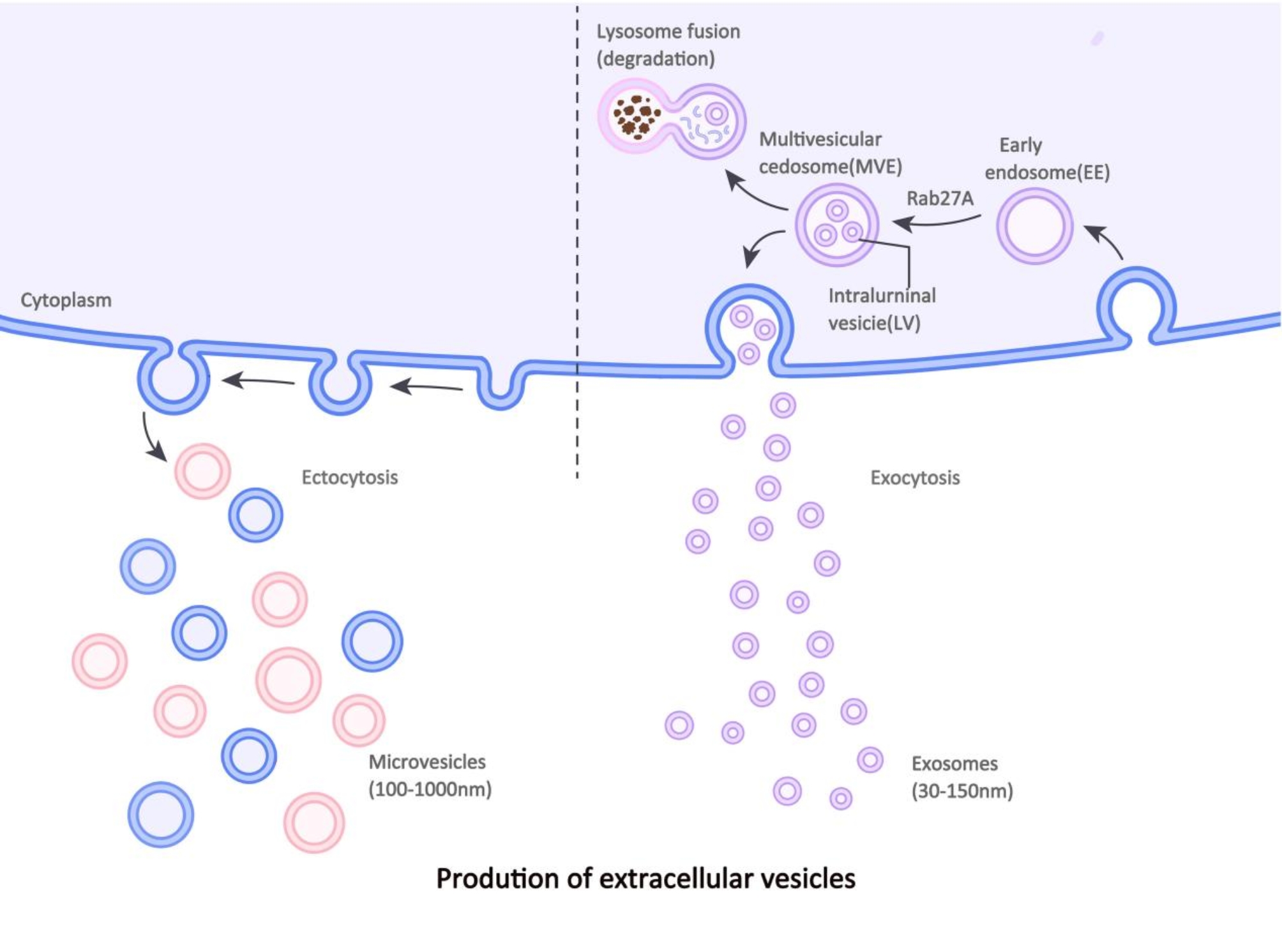
“Exosomes are small extracellular vesicles (EVs) that originate from the endosomal system.”
- Also stated in: § Background on exosome-based drug delivery · plain
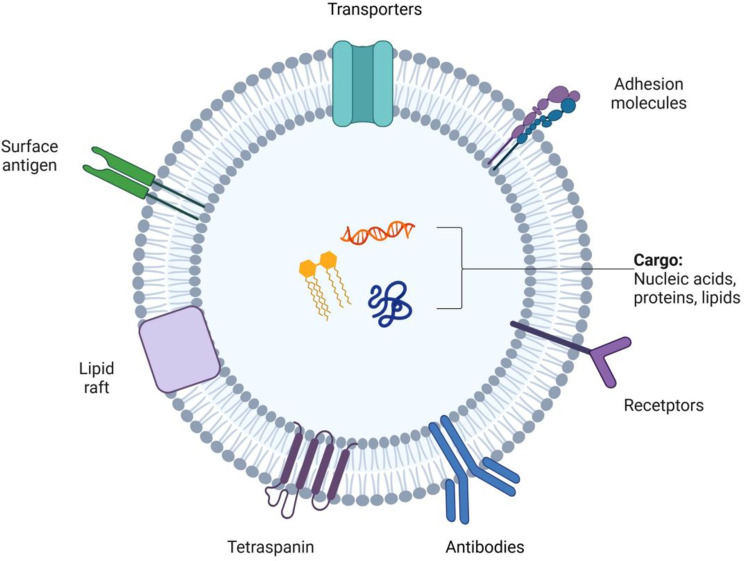
“These vesicles, usually 30 to 150 nanometers in size, originate from the endosomal pathway and have a lipid bilayer containing biomolecules like proteins, lipids, and nucleic acids (Fig. 1).”
§ Emerging role of exosomes in cancer therapy: progress and challenges > Mechanisms of exosome formation and cargo loading > Biogenesis of exosomes
What the sources say
- Not checked yetcites [16] Arya SB, Collie SP, Parent CA. The ins-and-outs of exosome biogenesis, secretion, and internalization. Trends Cell Biol. 2024;34(2):90–108. source
Checked before — its earlier verdict is held back until a new check runs.
plain- Asserted: passes — The authors put it forward as true.
- Checkable: passes — It can be checked against evidence.
- Load-bearing: fails — The paper’s conclusions may not depend on it.
- Based: passes — The paper gives a reason why it holds.
Probably not a substantial claim. The paper’s conclusions may not depend on it. It may state two separate claims as one.
- Also stated in: § Background on exosome-based drug delivery · plain
In the paper
“They carry oncogenic proteins and RNAs that can alter recipient cell phenotypes, degrade the extracellular matrix to facilitate invasion, establish pre-metastatic niches in distant tissues, and enhance angiogenesis via pro-angiogenic factors.”
§ Emerging role of exosomes in cancer therapy: progress and challenges > Introduction > Importance of exosome-based drug delivery
What the sources say
- Not checked yetcites [9] Mashouri L, Yousefi H, Aref AR, Ahadi Am, Molaei F, Alahari SK. Exosomes: composition, biogenesis, and mechanisms in cancer metastasis and drug resistance. Mol Cancer. 2019;18(1):75. source
plaindirect- Asserted: passes — The authors put it forward as true.
- Checkable: passes — It can be checked against evidence.
- Load-bearing: passes — The paper’s conclusions depend on it.
- Based: passes — The paper gives a reason why it holds.
It may state two separate claims as one.
None of the sources cited for this claim have been checked yet.
In the paper
“Their biocompatibility, capacity to cross biological barriers, and low immunogenicity make them highly suitable for drug delivery, particularly in cancer therapy [1].”
§ Emerging role of exosomes in cancer therapy: progress and challenges > Introduction > Background on exosome-based drug delivery
What the sources say
- Not checked yetcites [1] Avgoulas DI, Tasioulis KS, Papi RM, Pantazaki AA. Therapeutic and diagnostic potential of Exosomes as Drug Delivery systems in Brain Cancer. Pharmaceutics. 2023;15(5). source
Checked before — its earlier verdict is held back until a new check runs.
plain- Asserted: passes — The authors put it forward as true.
- Checkable: passes — It can be checked against evidence.
- Load-bearing: passes — The paper’s conclusions depend on it.
- Based: passes — The paper gives a reason why it holds.
It may state two separate claims as one.
- Not checked yet
A conclusion the paper draws from its own results — it cites no other source for it, so there is none to check. The quote shows it is in the paper.
In the paper
“Targeted delivery limits healthy tissue exposure to toxic drugs, reducing side effects and enhancing the therapeutic index of cancer treatments.”
§ Emerging role of exosomes in cancer therapy: progress and challenges > Introduction > Importance of exosome-based drug delivery
plaindirect- Asserted: passes — The authors put it forward as true.
- Checkable: passes — It can be checked against evidence.
- Load-bearing: passes — The paper’s conclusions depend on it.
- Based: passes — The paper gives a reason why it holds.
It may state two separate claims as one.
In the paper
“For example, exosomes can carry chemotherapeutic drugs or genetic material to selectively target cancer cells while reducing systemic toxicity [4].”
§ Emerging role of exosomes in cancer therapy: progress and challenges > Introduction > Background on exosome-based drug delivery
What the sources say
- Not checked — no full text of the sourcecites [4] Mondal J, Pillarisetti S, Junnuthula V, Saha M, Hwang SR, Park IK, et al. Hybrid exosomes, exosome-like nanovesicles and engineered exosomes for therapeutic applications. J Control Release. 2023;353:1127–49. source
plaindirect- Asserted: passes — The authors put it forward as true.
- Checkable: passes — It can be checked against evidence.
- Load-bearing: passes — The paper’s conclusions depend on it.
- Based: passes — The paper gives a reason why it holds.
It may state two separate claims as one.
None of the sources cited for this claim have been checked yet.
In the paper
“Moreover, exosomes can carry various therapeutic agents, such as small molecules, nucleic acids, and proteins, to recipient cells, improving the precision of cancer treatments [3].”
§ Emerging role of exosomes in cancer therapy: progress and challenges > Introduction > Background on exosome-based drug delivery
What the sources say
- Not checked yetcites [3] Li MY, Liu LZ, Dong M. Progress on pivotal role and application of exosome in lung cancer carcinogenesis, diagnosis, therapy and prognosis. Mol Cancer. 2021;20(1):22. source
Checked before — its earlier verdict is held back until a new check runs.
plaindirect- Asserted: passes — The authors put it forward as true.
- Checkable: passes — It can be checked against evidence.
- Load-bearing: passes — The paper’s conclusions depend on it.
- Based: passes — The paper gives a reason why it holds.
It may state two separate claims as one.
- Not checked yet
None of the sources cited for this claim have been checked yet.
In the paper
“Their ability to protect these cargoes from degradation in the bloodstream also enhances the stability and bioavailability of the delivered therapeutics, further increasing the efficacy of cancer treatments [7].”
§ Emerging role of exosomes in cancer therapy: progress and challenges > Introduction > Importance of exosome-based drug delivery
What the sources say
- Not checked yetcites [7] Zhao X, Wu D, Ma X, Wang J, Hou W, Zhang W. Exosomes as drug carriers for cancer therapy and challenges regarding exosome uptake. Biomed Pharmacother. 2020;128:110237. source
Checked before — its earlier verdict is held back until a new check runs.
plaindirect- Asserted: passes — The authors put it forward as true.
- Checkable: passes — It can be checked against evidence.
- Load-bearing: passes — The paper’s conclusions depend on it.
- Based: passes — The paper gives a reason why it holds.
It may state two separate claims as one.
- Not checked yet
In the paper
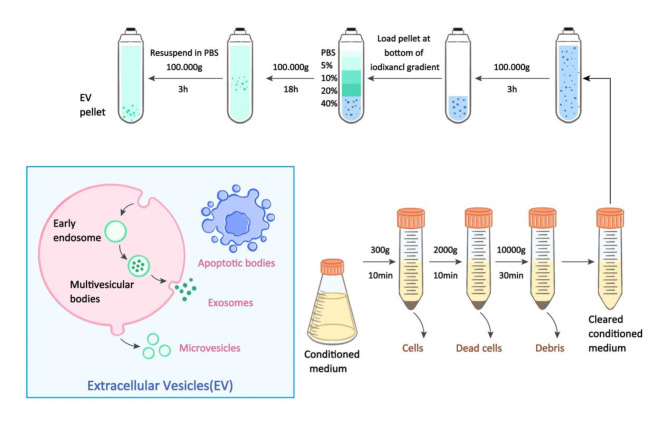
“However, large-scale production and purification of natural exosomes present significant challenges. Standardization of isolation techniques remains an area of ongoing research, with variations in yield and purity across different methods [36].”
§ Emerging role of exosomes in cancer therapy: progress and challenges > Exosome delivery strategies > Natural exosomes
What the sources say
- Not checked yetcites [36] Yang Z, Shi J, Xie J, Wang Y, Sun J, Liu T, et al. Large-scale generation of functional mRNA-encapsulating exosomes via cellular nanoporation. Nat Biomed Eng. 2020;4(1):69–83. source
plain- Asserted: passes — The authors put it forward as true.
- Checkable: passes — It can be checked against evidence.
- Load-bearing: unclear — It is unclear whether the paper’s conclusions depend on it.
- Based: passes — The paper gives a reason why it holds.
It may state two separate claims as one.
None of the sources cited for this claim have been checked yet.
In the paper
“By delivering immune checkpoint inhibitors (e.g., anti-PD-1, anti-PD-L1 antibodies) or cytokines (e.g., IL-2, IFN-γ), exosomes can boost immune cell responses against tumors. They can also effectively modulate the tumor microenvironment, activate T cells, inhibit Tregs, and reduce the accumulation of MDSCs [96].”
§ Emerging role of exosomes in cancer therapy: progress and challenges > Applications in cancer therapy > Respiratory system
What the sources say
- Not checked yetcites [96] Kang J, Hua P, Wu X, Wang B. Exosomes: efficient macrophage-related immunomodulators in chronic lung diseases. Front Cell Dev Biology. 2024;12. source
Checked before — its earlier verdict is held back until a new check runs.
plaindirect- Asserted: passes — The authors put it forward as true.
- Checkable: passes — It can be checked against evidence.
- Load-bearing: passes — The paper’s conclusions depend on it.
- Based: passes — The paper gives a reason why it holds.
It may state two separate claims as one.
- Not checked yet
None of the sources cited for this claim have been checked yet.
In the paper
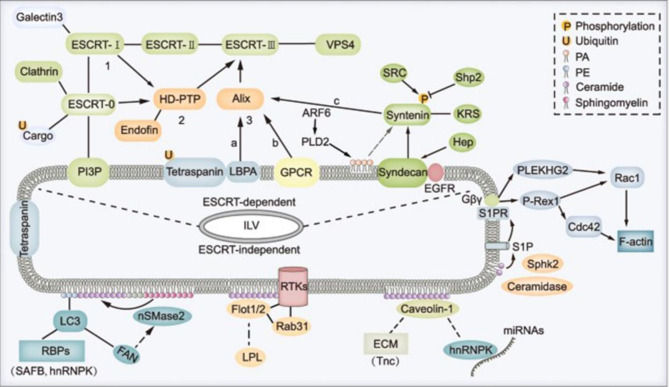
“The ESCRT machinery plays a central role in sorting ubiquitinated proteins into exosomes, while proteins like Alix and TSG101 assist in cargo selection by interacting with these molecules and directing them into ILVs [20].”
§ Emerging role of exosomes in cancer therapy: progress and challenges > Mechanisms of exosome formation and cargo loading > Cargo selection and loading mechanisms
What the sources say
- Not checked yetcites [20] Bahadorani M, Nasiri M, Dellinger K, Aravamudhan S, Zadegan R. Engineering Exosomes for therapeutic applications: Decoding Biogenesis, Content Modification, and Cargo Loading Strategies. Int J Nanomed. 2024;19:7137–64. source
Checked before — its earlier verdict is held back until a new check runs.
plaindirect- Asserted: passes — The authors put it forward as true.
- Checkable: passes — It can be checked against evidence.
- Load-bearing: unclear — It is unclear whether the paper’s conclusions depend on it.
- Based: passes — The paper gives a reason why it holds.
It may state two separate claims as one.
- Not checked yet
None of the sources cited for this claim have been checked yet.
In the paper
“On the other hand, exosomes originating from tumor cells may carry immunosuppressive molecules like PD-L1, which can inhibit T-cell function and promote immune evasion, counteracting the goals of immunotherapy [34].”
§ Emerging role of exosomes in cancer therapy: progress and challenges > Advantages of exosome-based drug delivery systems > The dual functions of exosomes
What the sources say
- Not checked yetcites [34] Xie J, Zheng Z, Tuo L, Deng X, Tang H, Peng C et al. Recent advances in exosome-based immunotherapy applied to cancer. Front Immunol. 2023;14. source
Checked before — its earlier verdict is held back until a new check runs.
hedgedconditional- Asserted: passes — The authors put it forward as true.
- Checkable: passes — It can be checked against evidence.
- Load-bearing: passes — The paper’s conclusions depend on it.
- Based: passes — The paper gives a reason why it holds.
It may state two separate claims as one.
- Not checked yet
None of the sources cited for this claim have been checked yet.
In the paper
“For instance, in cancer, exosome biogenesis can be upregulated, leading to increased secretion of tumor-derived exosomes that carry oncogenic factors, which can promote tumor growth, metastasis, and immune evasion.”
§ Emerging role of exosomes in cancer therapy: progress and challenges > Mechanisms of exosome formation and cargo loading > Biogenesis of exosomes
What the sources say
- Not checked yetcites [19] Krylova SV, Feng D. The Machinery of exosomes: Biogenesis, Release, and Uptake. Int J Mol Sci. 2023;24(2). source
Checked before — its earlier verdict is held back until a new check runs.
plaindirect- Asserted: passes — The authors put it forward as true.
- Checkable: passes — It can be checked against evidence.
- Load-bearing: passes — The paper’s conclusions depend on it.
- Based: passes — The paper gives a reason why it holds.
It may state two separate claims as one.
- Not checked yet
None of the sources cited for this claim have been checked yet.
In the paper
“Moreover, exosome-loaded paclitaxel (ExoPAC), delivered through either oral or intravenous routes, has been shown to increase bioavailability and tumor specificity [73].”
§ Emerging role of exosomes in cancer therapy: progress and challenges > Applications in cancer therapy > Respiratory system
What the sources say
- Not checked yetcites [73] Kim MS, Haney MJ, Zhao Y, Mahajan V, Deygen I, Klyachko NL, et al. Development of exosome-encapsulated paclitaxel to overcome MDR in cancer cells. Nanomed Nanotechnol Biol Med. 2016;12(3):655–64. source
Checked before — its earlier verdict is held back until a new check runs.
plaindirect- Asserted: passes — The authors put it forward as true.
- Checkable: passes — It can be checked against evidence.
- Load-bearing: passes — The paper’s conclusions depend on it.
- Based: passes — The paper gives a reason why it holds.
It may state two separate claims as one.
- Not checked yet
None of the sources cited for this claim have been checked yet.
In the paper
“Moreover, automation of exosome isolation using systems like microfluidics or centrifugal filtration could increase efficiency and reduce labor costs. Technologies that minimize handling time and reduce manual interventions would also help mitigate batch-to-batch variability [67].”
§ Emerging role of exosomes in cancer therapy: progress and challenges > Exosome delivery strategies > Exosome-nanoparticle hybrid systems
What the sources say
- Not checked yetcites [67] Wu Y, Wang Y, Lu Y, Luo X, Huang Y, Xie T et al. Microfluidic Technology for the isolation and analysis of Exosomes. Micromachines (Basel). 2022;13(10). source
Checked before — its earlier verdict is held back until a new check runs.
hedgedconditional- Asserted: passes — The authors put it forward as true.
- Checkable: passes — It can be checked against evidence.
- Load-bearing: fails — The paper’s conclusions may not depend on it.
- Based: passes — The paper gives a reason why it holds.
Probably not a substantial claim. The paper’s conclusions may not depend on it. It may state two separate claims as one.
- Not checked yet
In the paper
“Exosomes from dendritic cells can act as a nanovaccine platform by delivering patient-specific neoantigens to lymph nodes, activating antigen-presenting cells. This process enables T and B cells to recognize and attack tumor cells, triggering a broad-spectrum immune response.”
§ Emerging role of exosomes in cancer therapy: progress and challenges > Applications in cancer therapy > Respiratory system
What the sources say
- Not checked — no full text of the sourcecites [82] Li J, Li J, Peng Y, Du Y, Yang Z, Qi X. Dendritic cell derived exosomes loaded neoantigens for personalized cancer immunotherapies. J Control Release. 2023;353:423–33. source
plaindirect- Asserted: passes — The authors put it forward as true.
- Checkable: passes — It can be checked against evidence.
- Load-bearing: passes — The paper’s conclusions depend on it.
- Based: passes — The paper gives a reason why it holds.
It may state two separate claims as one.
In the paper
“Unlike synthetic nanocarriers such as liposomes or polymer-based systems, exosomes are less likely to trigger adverse reactions, making them a safer option for therapeutic applications [26].”
§ Emerging role of exosomes in cancer therapy: progress and challenges > Advantages of exosome-based drug delivery systems > High biocompatibility and low immunogenicity
What the sources say
- Not checked yetcites [26] Liang Y, Duan L, Lu J, Xia J. Engineering exosomes for targeted drug delivery. Theranostics. 2021;11(7):3183–95. source
hedgeddirect- Asserted: passes — The authors put it forward as true.
- Checkable: passes — It can be checked against evidence.
- Load-bearing: passes — The paper’s conclusions depend on it.
- Based: passes — The paper gives a reason why it holds.
It may state two separate claims as one.
None of the sources cited for this claim have been checked yet.
In the paper
“These engineered exosomes have demonstrated strong potential as drug carriers, providing targeted delivery, reduced toxicity, and improved therapeutic effectiveness in preclinical models.”
§ Emerging role of exosomes in cancer therapy: progress and challenges > Mechanisms of exosome formation and cargo loading > Cargo selection and loading mechanisms
What the sources say
- Not checked yetcites [24] Iyaswamy A, Thakur A, Guan XJ, Krishnamoorthi S, Fung TY, Lu K, et al. Fe65-engineered neuronal exosomes encapsulating corynoxine-B ameliorate cognition and pathology of Alzheimer’s disease. Signal Transduct Target Ther. 2023;8(1):404. source
- Not checked — no full text of the sourcecites [25] Huang X, Wu W, Jing D, Yang L, Guo H, Wang L, et al. Engineered exosome as targeted lncRNA MEG3 delivery vehicles for osteosarcoma therapy. J Control Release. 2022;343:107–17. source
boosteddirect- Asserted: passes — The authors put it forward as true.
- Checkable: passes — It can be checked against evidence.
- Load-bearing: passes — The paper’s conclusions depend on it.
- Based: passes — The paper gives a reason why it holds.
It may state two separate claims as one.
None of the sources cited for this claim have been checked yet.
In the paper
“TME of lung cancer exhibits strong immune evasion characteristics. Common features of the immunosuppressive environment in lung cancer include tumor-infiltrating immunosuppressive cells, such as regulatory T cells and myeloid-derived suppressor cells, as well as the overexpression of immune checkpoint molecules like PD-1/PD-L1.”
§ Emerging role of exosomes in cancer therapy: progress and challenges > Applications in cancer therapy > Respiratory system
What the sources say
- Not checked yetcites [92] Huang R, Kang T, Chen S. The role of tumor-associated macrophages in tumor immune evasion. J Cancer Res Clin Oncol. 2024;150(5):238. source
Checked before — its earlier verdict is held back until a new check runs.
- Not checked yetcites [93] Enfield KSS, Colliver E, Lee C, Magness A, Moore DA, Sivakumar M, et al. Spatial Architecture of myeloid and T cells orchestrates Immune Evasion and Clinical Outcome in Lung Cancer. Cancer Discov. 2024;14(6):1018–47. source
Checked before — its earlier verdict is held back until a new check runs.
boostedcorrelational- Asserted: passes — The authors put it forward as true.
- Checkable: passes — It can be checked against evidence.
- Load-bearing: passes — The paper’s conclusions depend on it.
- Based: passes — The paper gives a reason why it holds.
It may state two separate claims as one.
- Not checked yet
In the paper
“By combining the biological benefits of exosomes with the versatility and scalability of synthetic nanoparticles, hybrid systems could potentially overcome many of the current limitations of exosome-based therapies. These systems could also offer synergistic effects, such as improved targeting and enhanced drug delivery efficiency [64].”
§ Emerging role of exosomes in cancer therapy: progress and challenges > Exosome delivery strategies > Exosome-nanoparticle hybrid systems
What the sources say
- Not checked — no full text of the sourcecites [64] Lagopati N, Efstathopoulos EP, Veroutis D, Katifelis H, Theocharous G, Pantelis P, et al. Hybrid multifunctional nanomaterials for diagnostic and therapeutic applications. In: Barabadi H, Mostafavi E, Saravanan M, editors. Pharmaceutical Nanobiotechnology for targeted therapy. Cham: Springer International Publishing; 2022. pp. 489–519. source
hedgedconditional- Asserted: passes — The authors put it forward as true.
- Checkable: passes — It can be checked against evidence.
- Load-bearing: unclear — It is unclear whether the paper’s conclusions depend on it.
- Based: passes — The paper gives a reason why it holds.
It may state two separate claims as one.
- Rests on an assumption: Scaling exosome production and improving consistency of cargo loading remain significant challenges.
None of the sources cited for this claim have been checked yet.
In the paper
“Research has shown that loading paclitaxel into exosomes not only significantly reduces off-target toxicity but also enhances the drug concentration in cancer cells, thereby improving therapeutic efficacy.”
§ Emerging role of exosomes in cancer therapy: progress and challenges > Applications in cancer therapy > Respiratory system
What the sources say
- Not checked yetcites [73] Kim MS, Haney MJ, Zhao Y, Mahajan V, Deygen I, Klyachko NL, et al. Development of exosome-encapsulated paclitaxel to overcome MDR in cancer cells. Nanomed Nanotechnol Biol Med. 2016;12(3):655–64. source
Checked before — its earlier verdict is held back until a new check runs.
boosteddirect- Asserted: passes — The authors put it forward as true.
- Checkable: passes — It can be checked against evidence.
- Load-bearing: passes — The paper’s conclusions depend on it.
- Based: passes — The paper gives a reason why it holds.
It may state two separate claims as one.
- Rests on an assumption: Paclitaxel’s lack of selectivity harms healthy cells, particularly in the liver and kidneys, causing severe systemic toxicity.
- Not checked yet
In the paper
“This selective RNA sorting enables exosomes to carry regulatory molecules that affect gene activity in recipient cells, contributing to processes like tumor growth and immune response [22].”
§ Emerging role of exosomes in cancer therapy: progress and challenges > Mechanisms of exosome formation and cargo loading > Cargo selection and loading mechanisms
What the sources say
- Not checked — no full text of the sourcecites [22] Gehrmann U, Näslund TI, Hiltbrunner S, Larssen P, Gabrielsson S. Harnessing the exosome-induced immune response for cancer immunotherapy. Semin Cancer Biol. 2014;28:58–67. source
plaindirect- Asserted: passes — The authors put it forward as true.
- Checkable: passes — It can be checked against evidence.
- Load-bearing: passes — The paper’s conclusions depend on it.
- Based: passes — The paper gives a reason why it holds.
It may state two separate claims as one.
In the paper
“MSCs can enclose and transport paclitaxel to target cells via exosomes, exhibiting significant anticancer effects [101].”
§ Emerging role of exosomes in cancer therapy: progress and challenges > Applications in cancer therapy > Digestive system
What the sources say
- Not checked — no full text of the sourcecites [101] Pascucci L, Coccè V, Bonomi A, Ami D, Ceccarelli P, Ciusani E, et al. Paclitaxel is incorporated by mesenchymal stromal cells and released in exosomes that inhibit in vitro tumor growth: a new approach for drug delivery. J Control Release. 2014;192:262–70. source
plaindirect- Asserted: passes — The authors put it forward as true.
- Checkable: passes — It can be checked against evidence.
- Load-bearing: unclear — It is unclear whether the paper’s conclusions depend on it.
- Based: passes — The paper gives a reason why it holds.
It may state two separate claims as one.
In the paper
“This is particularly important in gene therapy applications, where the hybrid systems can protect sensitive nucleic acids from degradation and ensure their delivery to target cells [62].”
§ Emerging role of exosomes in cancer therapy: progress and challenges > Exosome delivery strategies > Exosome-nanoparticle hybrid systems
What the sources say
- Not checked yetcites [62] Lin Y, Wu J, Gu W, Huang Y, Tong Z, Huang L, et al. Exosome–liposome hybrid nanoparticles deliver CRISPR/Cas9 system in MSCs. Adv Sci. 2018;5(4):1700611. source
plaindirect- Asserted: passes — The authors put it forward as true.
- Checkable: passes — It can be checked against evidence.
- Load-bearing: passes — The paper’s conclusions depend on it.
- Based: passes — The paper gives a reason why it holds.
It may state two separate claims as one.
None of the sources cited for this claim have been checked yet.
In the paper
“Additionally, Exo-miR30a has the ability to suppress ATF1 expression and disrupt the ATM pathway, which plays a essential role in recognizing the DNA damage response (DDR). By doing so, Exo-miR30a impairs DNA strand repair and induces apoptosis in tumor cells.”
§ Emerging role of exosomes in cancer therapy: progress and challenges > Applications in cancer therapy > Respiratory system
What the sources say
- Not checked yetcites [77] Long L, Zhang X, Bai J, Li Y, Wang X, Zhou Y. Tissue-specific and exosomal miRNAs in lung cancer radiotherapy: from regulatory mechanisms to clinical implications. Cancer Manag Res. 2019;11:4413–24. source
Checked before — its earlier verdict is held back until a new check runs.
- Not checked yetcites [78] Tang Y, Cui Y, Li Z, Jiao Z, Zhang Y, He Y, et al. Radiation-induced miR-208a increases the proliferation and radioresistance by targeting p21 in human lung cancer cells. J Experimental Clin Cancer Res. 2016;35(1):7. source
Checked before — its earlier verdict is held back until a new check runs.
- Not checked yetcites [79] Yuan D, Xu J, Wang J, Pan Y, Fu J, Bai Y, et al. Extracellular miR-1246 promotes lung cancer cell proliferation and enhances radioresistance by directly targeting DR5. Oncotarget. 2016;7(22):32707–22. source
Checked before — its earlier verdict is held back until a new check runs.
plaindirect- Asserted: passes — The authors put it forward as true.
- Checkable: passes — It can be checked against evidence.
- Load-bearing: passes — The paper’s conclusions depend on it.
- Based: passes — The paper gives a reason why it holds.
It may state two separate claims as one.
- Not checked yet
In the paper
“In Wang’s study, a recombinant exosome from homologous glioma cells (R-EXO: Recombinant Exosomes) carrying Temozolomide (TMZ) and dihydrotanshinone (DHT) was found to overcome drug resistance and improve lesion-targeting delivery, defined as R-exo-TMZ/DHT (R-EXo-T/D) [43].”
§ Emerging role of exosomes in cancer therapy: progress and challenges > Exosome delivery strategies > Synthetic exosomes
What the sources say
- Not checked — no full text of the sourcecites [43] Wang R, Liang Q, Zhang X, Di Z, Wang X, Di L. Tumor-derived exosomes reversing TMZ resistance by synergistic drug delivery for glioma-targeting treatment. Colloids Surf B Biointerfaces. 2022;215:112505. source
plaindirect- Asserted: passes — The authors put it forward as true.
- Checkable: passes — It can be checked against evidence.
- Load-bearing: unclear — It is unclear whether the paper’s conclusions depend on it.
- Based: passes — The paper gives a reason why it holds.
It may state two separate claims as one.
None of the sources cited for this claim have been checked yet.
In the paper
“The expression of IL-12 activates immune cells within the tumor microenvironment, strengthening the anti-tumor immune response and fostering long-lasting tumor-specific immune memory [85].”
§ Emerging role of exosomes in cancer therapy: progress and challenges > Applications in cancer therapy > Respiratory system
What the sources say
- Not checked yetcites [85] Liu M, Hu S, Yan N, Popowski KD, Cheng K. Inhalable extracellular vesicle delivery of IL-12 mRNA to treat lung cancer and promote systemic immunity. Nat Nanotechnol. 2024;19(4):565–75. source
Checked before — its earlier verdict is held back until a new check runs.
plaindirect- Asserted: passes — The authors put it forward as true.
- Checkable: passes — It can be checked against evidence.
- Load-bearing: passes — The paper’s conclusions depend on it.
- Based: passes — The paper gives a reason why it holds.
It may state two separate claims as one.
- Not checked yet
None of the sources cited for this claim have been checked yet.
In the paper
“Natural exosomes typically have lower yields due to the complexity of their isolation. For example, traditional methods like ultracentrifugation can yield around 440.22 ± 11.71 µg/mL [46].”
§ Emerging role of exosomes in cancer therapy: progress and challenges > Exosome delivery strategies > Synthetic exosomes
What the sources say
- Not checked yetcites [46] Li W-J, Chen H, Tong M-L, Niu J-J, Zhu X-Z, Lin L-R. Comparison of the yield and purity of plasma exosomes extracted by ultracentrifugation, precipitation, and membrane-based approaches. Open Chem. 2022;20(1):182–91. source
Checked before — its earlier verdict is held back until a new check runs.
plaindirect- Asserted: passes — The authors put it forward as true.
- Checkable: passes — It can be checked against evidence.
- Load-bearing: passes — The paper’s conclusions depend on it.
- Based: passes — The paper gives a reason why it holds.
It may state two separate claims as one.
- Not checked yet
None of the sources cited for this claim have been checked yet.
In the paper
“Moreover, exosome-nanoparticle hybrids offer multifunctionality, as they can carry both hydrophilic and hydrophobic drugs, nucleic acids (e.g., siRNA, mRNA), imaging agents, and therapeutic proteins, enabling multi-modal therapies (such as drug delivery and imaging) within a single system [52].”
§ Emerging role of exosomes in cancer therapy: progress and challenges > Exosome delivery strategies > Exosome-nanoparticle hybrid systems
What the sources say
- Not checked yetcites [52] Liu A, Yang G, Liu Y, Liu T. Research progress in membrane fusion-based hybrid exosomes for drug delivery systems. Front Bioeng Biotechnol. 2022;10:939441. source
Checked before — its earlier verdict is held back until a new check runs.
plaindirect- Asserted: passes — The authors put it forward as true.
- Checkable: passes — It can be checked against evidence.
- Load-bearing: unclear — It is unclear whether the paper’s conclusions depend on it.
- Based: passes — The paper gives a reason why it holds.
It may state two separate claims as one.
- Not checked yet
In the paper
“Research has shown that this exosome-based nanovaccine can effectively inhibit tumor growth, while enhancing tumor-specific immune memory to delay tumor recurrence and metastasis [82].”
§ Emerging role of exosomes in cancer therapy: progress and challenges > Applications in cancer therapy > Respiratory system
What the sources say
- Not checked — no full text of the sourcecites [82] Li J, Li J, Peng Y, Du Y, Yang Z, Qi X. Dendritic cell derived exosomes loaded neoantigens for personalized cancer immunotherapies. J Control Release. 2023;353:423–33. source
plaindirect- Asserted: passes — The authors put it forward as true.
- Checkable: passes — It can be checked against evidence.
- Load-bearing: passes — The paper’s conclusions depend on it.
- Based: passes — The paper gives a reason why it holds.
It may state two separate claims as one.
None of the sources cited for this claim have been checked yet.
In the paper
“Additionally, studies have shown that plant-derived nanovesicles can transfer mitochondrial DNA to tumor-associated macrophages, activating the cGAS-STING pathway. This reprograms macrophages and boosts anti-tumor immune responses.”
§ Emerging role of exosomes in cancer therapy: progress and challenges > Applications in cancer therapy > Respiratory system
What the sources say
- Not checked yetcites [84] Liu J, Xiang J, Jin C, Ye L, Wang L, Gao Y, et al. Medicinal plant-derived mtDNA via nanovesicles induces the cGAS-STING pathway to remold tumor-associated macrophages for tumor regression. J Nanobiotechnol. 2023;21(1):78. source
Checked before — its earlier verdict is held back until a new check runs.
plaindirect- Asserted: passes — The authors put it forward as true.
- Checkable: passes — It can be checked against evidence.
- Load-bearing: passes — The paper’s conclusions depend on it.
- Based: passes — The paper gives a reason why it holds.
It may state two separate claims as one.
- Not checked yet
None of the sources cited for this claim have been checked yet.
In the paper
“The results demonstrated that the Dex vaccine effectively activated NK cells, thereby enhancing the anti-tumor immune response (NCT01159288) [83].”
§ Emerging role of exosomes in cancer therapy: progress and challenges > Applications in cancer therapy > Respiratory system
What the sources say
- Not checked yetcites [83] Besse B, Charrier M, Lapierre V, Dansin E, Lantz O, Planchard D, et al. Dendritic cell-derived exosomes as maintenance immunotherapy after first line chemotherapy in NSCLC. Oncoimmunology. 2016;5(4):e1071008. source
Checked before — its earlier verdict is held back until a new check runs.
boosteddirect- Asserted: passes — The authors put it forward as true.
- Checkable: passes — It can be checked against evidence.
- Load-bearing: passes — The paper’s conclusions depend on it.
- Based: passes — The paper gives a reason why it holds.
The quote only partly states this claim.
- Not checked yet
None of the sources cited for this claim have been checked yet.
In the paper
“For example, exosomes used in bone-targeting therapies have shown promising results in preventing bone loss and promoting bone formation without causing significant immune responses [27].”
§ Emerging role of exosomes in cancer therapy: progress and challenges > Advantages of exosome-based drug delivery systems > High biocompatibility and low immunogenicity
What the sources say
- Not checked yetcites [27] Guo J, Wang F, Hu Y, Luo Y, Wei Y, Xu K, et al. Exosome-based bone-targeting drug delivery alleviates impaired osteoblastic bone formation and bone loss in inflammatory bowel diseases. Cell Rep Med. 2023;4(1):100881. source
Checked before — its earlier verdict is held back until a new check runs.
plaindirect- Asserted: passes — The authors put it forward as true.
- Checkable: passes — It can be checked against evidence.
- Load-bearing: unclear — It is unclear whether the paper’s conclusions depend on it.
- Based: passes — The paper gives a reason why it holds.
It may state two separate claims as one.
- Not checked yet
None of the sources cited for this claim have been checked yet.
In the paper
“For instance, the surface of exosomes can be decorated with anti-EGFR monoclonal antibodies or specific peptides to improve targeting, thereby facilitating their localization and entry into lung cancer cells [94].”
§ Emerging role of exosomes in cancer therapy: progress and challenges > Applications in cancer therapy > Respiratory system
What the sources say
- Not checked yetcites [94] Yue M, Hu S, Sun H, Tuo B, Jia B, Chen C, et al. Extracellular vesicles remodel tumor environment for cancer immunotherapy. Mol Cancer. 2023;22(1):203. source
Checked before — its earlier verdict is held back until a new check runs.
plaindirect- Asserted: passes — The authors put it forward as true.
- Checkable: passes — It can be checked against evidence.
- Load-bearing: passes — The paper’s conclusions depend on it.
- Based: passes — The paper gives a reason why it holds.
It may state two separate claims as one.
- Not checked yet
None of the sources cited for this claim have been checked yet.
In the paper
“They have been utilized to deliver signals, like MHC class I/peptide complexes, to immune cells like undeveloped dendritic cells (DCs). This leads to the activation of CD8+ T-cells, which in turn enhances the immune reaction, facilitates the elimination of tumor cells, and induces the formation of memory T-cells [81].”
§ Emerging role of exosomes in cancer therapy: progress and challenges > Applications in cancer therapy > Respiratory system
What the sources say
- Not checked yetcites [81] Zhao Y, Liu L, Sun R, Cui G, Guo S, Han S, et al. Exosomes in cancer immunoediting and immunotherapy. Asian J Pharm Sci. 2022;17(2):193–205. source
Checked before — its earlier verdict is held back until a new check runs.
plaindirect- Asserted: passes — The authors put it forward as true.
- Checkable: passes — It can be checked against evidence.
- Load-bearing: passes — The paper’s conclusions depend on it.
- Based: passes — The paper gives a reason why it holds.
It may state two separate claims as one.
- Not checked yet
In the paper
“This targeting approach has been successfully demonstrated in liver cancer models, where magnetic exosome-nanoparticle hybrids have shown improved drug accumulation at tumor sites, reducing off-target effects and increasing the therapeutic efficacy of chemotherapeutic drug [60].”
§ Emerging role of exosomes in cancer therapy: progress and challenges > Exosome delivery strategies > Exosome-nanoparticle hybrid systems
What the sources say
- Not checked — no full text of the sourcecites [60] Qi H, Liu C, Long L, Ren Y, Zhang S, Chang X, et al. Blood exosomes endowed with magnetic and Targeting properties for Cancer Therapy. ACS Nano. 2016;10(3):3323–33. source
boosteddirect- Asserted: passes — The authors put it forward as true.
- Checkable: passes — It can be checked against evidence.
- Load-bearing: passes — The paper’s conclusions depend on it.
- Based: passes — The paper gives a reason why it holds.
It may state two separate claims as one.
None of the sources cited for this claim have been checked yet.
In the paper
“However, the latest few reviews not systematically review the progress made in cancer treatment, nor do they clarify how exosome-based therapies could pave the way for future personalized medicine. Furthermore, they do not provide an in-depth analysis of the challenges that exosomes still face in cancer therapy, or the measures required to overcome them [14, 15].”
§ Emerging role of exosomes in cancer therapy: progress and challenges > Introduction > Importance of exosome-based drug delivery
What the sources say
- Not checked yetcites [14] Kim HI, Park J, Zhu Y, Wang X, Han Y, Zhang D. Recent advances in extracellular vesicles for therapeutic cargo delivery. Exp Mol Med. 2024;56(4):836–49. source
Checked before — its earlier verdict is held back until a new check runs.
- Not checked — no full text of the sourcecites [15] Sharma V, Mukhopadhyay CD. Exosome as drug delivery system: current advancements. Extracell Vesicle. 2024;3. source
plain- Asserted: passes — The authors put it forward as true.
- Checkable: passes — It can be checked against evidence.
- Load-bearing: passes — The paper’s conclusions depend on it.
- Based: passes — The paper gives a reason why it holds.
It may state two separate claims as one.
- Not checked yet
In the paper
“Studies have shown that animals treated with exosome-loaded paclitaxel experienced no significant immunosuppression or systemic toxicity, with liver and kidney function remaining unaffected.”
§ Emerging role of exosomes in cancer therapy: progress and challenges > Applications in cancer therapy > Respiratory system
What the sources say
- Not matchedcites [75] Liu Y, Xia Y, Smollar J, Mao W, Wan Y. The roles of small extracellular vesicles in lung cancer: molecular pathology, mechanisms, diagnostics, and therapeutics. Biochimica et Biophysica Acta (BBA) -. Reviews Cancer. 2021;1876(1):188539.
Couldn’t be matched to a paper in Crossref, so it can’t be checked.
plain- Asserted: passes — The authors put it forward as true.
- Checkable: passes — It can be checked against evidence.
- Load-bearing: passes — The paper’s conclusions depend on it.
- Based: passes — The paper gives a reason why it holds.
It may state two separate claims as one.
- Rests on an assumption: Paclitaxel’s lack of selectivity harms healthy cells, particularly in the liver and kidneys, causing severe systemic toxicity.
- Not matched
In the paper
“Compared to traditional intravenous paclitaxel, exosome-loaded paclitaxel not only improves drug delivery efficiency but also significantly reduces toxicity [74].”
§ Emerging role of exosomes in cancer therapy: progress and challenges > Applications in cancer therapy > Respiratory system
What the sources say
- Not checked yetcites [74] Kandimalla R, Aqil F, Alhakeem SS, Jeyabalan J, Tyagi N, Agrawal A et al. Targeted oral delivery of Paclitaxel using Colostrum-Derived exosomes. Cancers (Basel). 2021;13(15). source
plaindirect- Asserted: passes — The authors put it forward as true.
- Checkable: passes — It can be checked against evidence.
- Load-bearing: passes — The paper’s conclusions depend on it.
- Based: passes — The paper gives a reason why it holds.
It may state two separate claims as one.
- Rests on an assumption: Paclitaxel’s lack of selectivity harms healthy cells, particularly in the liver and kidneys, causing severe systemic toxicity.
None of the sources cited for this claim have been checked yet.
In the paper
“Recent advances in 3D cell culture and microfluidic devices are promising as they allow for more controlled and efficient exosome secretion. These systems can potentially improve the consistency of exosome production and make the process more scalable [65, 66].”
§ Emerging role of exosomes in cancer therapy: progress and challenges > Exosome delivery strategies > Exosome-nanoparticle hybrid systems
What the sources say
- Not checked yetcites [65] Lee D-H, Yun DW, Kim YH, Im G-B, Hyun J, Park HS, et al. Various three-Dimensional Culture methods and Cell types for Exosome Production. Tissue Eng Regenerative Med. 2023;20(4):621–35. source
Checked before — its earlier verdict is held back until a new check runs.
- Not checked yetcites [66] Yousafzai NA, El Khalki L, Wang W, Szpendyk J, Sossey-Alaoui K. Advances in 3D culture models to Study exosomes in Triple-negative breast Cancer. Cancers (Basel). 2024;16(5). source
Checked before — its earlier verdict is held back until a new check runs.
hedgedconditional- Asserted: passes — The authors put it forward as true.
- Checkable: passes — It can be checked against evidence.
- Load-bearing: unclear — It is unclear whether the paper’s conclusions depend on it.
- Based: passes — The paper gives a reason why it holds.
It may state two separate claims as one.
- Not checked yet
None of the sources cited for this claim have been checked yet.
In the paper
“For instance, exosomes may be phagocytosed by immunosuppressive cells or rejected via the PD-1/PD-L1 pathway, reducing their activity and targeting efficacy at the tumor site.”
§ Emerging role of exosomes in cancer therapy: progress and challenges > Applications in cancer therapy > Respiratory system
What the sources say
- Not checked yetcites [92] Huang R, Kang T, Chen S. The role of tumor-associated macrophages in tumor immune evasion. J Cancer Res Clin Oncol. 2024;150(5):238. source
Checked before — its earlier verdict is held back until a new check runs.
- Not checked yetcites [93] Enfield KSS, Colliver E, Lee C, Magness A, Moore DA, Sivakumar M, et al. Spatial Architecture of myeloid and T cells orchestrates Immune Evasion and Clinical Outcome in Lung Cancer. Cancer Discov. 2024;14(6):1018–47. source
Checked before — its earlier verdict is held back until a new check runs.
hedgedconditional- Asserted: passes — The authors put it forward as true.
- Checkable: passes — It can be checked against evidence.
- Load-bearing: passes — The paper’s conclusions depend on it.
- Based: passes — The paper gives a reason why it holds.
It may state two separate claims as one.
- Not checked yet
In the paper
“Similarly, in breast cancer, exosome-nanoparticle hybrids have been engineered to carry doxorubicin, a commonly used chemotherapy drug. The hybrid system guarantees the targeted delivery of drugs to tumor cells, minimizing the damage to healthy tissue and improving patient results [61].”
§ Emerging role of exosomes in cancer therapy: progress and challenges > Exosome delivery strategies > Exosome-nanoparticle hybrid systems
What the sources say
- Not checked — no full text of the sourcecites [61] Ansari MA, Thiruvengadam M, Venkidasamy B, Alomary MN, Salawi A, Chung IM, et al. Exosome-based nanomedicine for cancer treatment by targeting inflammatory pathways: current status and future perspectives. Semin Cancer Biol. 2022;86(Pt 2):678–96. source
boosteddirect- Asserted: passes — The authors put it forward as true.
- Checkable: passes — It can be checked against evidence.
- Load-bearing: unclear — It is unclear whether the paper’s conclusions depend on it.
- Based: passes — The paper gives a reason why it holds.
It may state two separate claims as one.
None of the sources cited for this claim have been checked yet.
In the paper
“In lung cancer models, this mechanism not only suppresses tumor growth but also significantly enhances the efficacy of PD-L1 inhibitors [84].”
§ Emerging role of exosomes in cancer therapy: progress and challenges > Applications in cancer therapy > Respiratory system
What the sources say
- Not checked yetcites [84] Liu J, Xiang J, Jin C, Ye L, Wang L, Gao Y, et al. Medicinal plant-derived mtDNA via nanovesicles induces the cGAS-STING pathway to remold tumor-associated macrophages for tumor regression. J Nanobiotechnol. 2023;21(1):78. source
Checked before — its earlier verdict is held back until a new check runs.
plaindirect- Asserted: passes — The authors put it forward as true.
- Checkable: passes — It can be checked against evidence.
- Load-bearing: passes — The paper’s conclusions depend on it.
- Based: passes — The paper gives a reason why it holds.
It may state two separate claims as one.
- Not checked yet
In the paper
“These factors not only affect the stability of exosomes but also limit their bioavailability in the gut.”
§ Emerging role of exosomes in cancer therapy: progress and challenges > Applications in cancer therapy > Digestive system
What the sources say
- Not checked — no full text of the sourcecites [150] Zhang S, Zhu C, Huang W, Liu H, Yang M, Zeng X, et al. Recent progress of micro/nanomotors to overcome physiological barriers in the gastrointestinal tract. J Control Release. 2023;360:514–27. source
plaindirect- Asserted: passes — The authors put it forward as true.
- Checkable: passes — It can be checked against evidence.
- Load-bearing: passes — The paper’s conclusions depend on it.
- Based: passes — The paper gives a reason why it holds.
It may state two separate claims as one.
In the paper
“In HCC cells exhibiting MDR, the expression of P-glycoprotein-1 (Pgp-1/ABC-B1) is increased, contributing to the development of drug resistance [117].”
§ Emerging role of exosomes in cancer therapy: progress and challenges > Applications in cancer therapy > Digestive system
What the sources say
- Not checked — no full text of the sourcecites [117] Zaja R, Caminada D, Loncar J, Fent K, Smital T. Development and characterization of P-glycoprotein 1 (Pgp1, ABCB1)-mediated doxorubicin-resistant PLHC-1 hepatoma fish cell line. Toxicol Appl Pharmacol. 2008;227(2):207–18. source
plaindirect- Asserted: passes — The authors put it forward as true.
- Checkable: passes — It can be checked against evidence.
- Load-bearing: passes — The paper’s conclusions depend on it.
- Based: passes — The paper gives a reason why it holds.
It may state two separate claims as one.
In the paper
“Nevertheless, tumor-derived exosomes (TDEs) contain various oncogenes that can drive tumor growth, making TDE-based vaccine safety uncertain.”
§ Emerging role of exosomes in cancer therapy: progress and challenges > Applications in cancer therapy > Digestive system
What the sources say
- Not checked yetcites [107] Zhang L, Yu D. Exosomes in cancer development, metastasis, and immunity. Biochim Biophys Acta Rev Cancer. 2019;1871(2):455–68. source
plaindirect- Asserted: passes — The authors put it forward as true.
- Checkable: passes — It can be checked against evidence.
- Load-bearing: passes — The paper’s conclusions depend on it.
- Based: passes — The paper gives a reason why it holds.
It may state two separate claims as one.
In the paper
“This study showcases an easy, cost-effective method for producing plentiful targeted EVs loaded with high levels of genetic cargo, demonstrating their potential for effectively treating advanced cancers in animal models [141].”
§ Emerging role of exosomes in cancer therapy: progress and challenges > Applications in cancer therapy > Digestive system
What the sources say
- Not checked yetcites [141] Chiang CL, Ma Y, Hou YC, Pan J, Chen SY, Chien MH, et al. Dual targeted extracellular vesicles regulate oncogenic genes in advanced pancreatic cancer. Nat Commun. 2023;14(1):6692. source
boosteddirect- Asserted: passes — The authors put it forward as true.
- Checkable: passes — It can be checked against evidence.
- Load-bearing: passes — The paper’s conclusions depend on it.
- Based: passes — The paper gives a reason why it holds.
It may state two separate claims as one.
In the paper
“The effectiveness of exoDOX, exosomes loaded with doxorubicin, is comparable to doxorubicin treatment alone, but exoDOX significantly reduces the cardiotoxicity typically associated with doxorubicin [119].”
§ Emerging role of exosomes in cancer therapy: progress and challenges > Applications in cancer therapy > Digestive system
What the sources say
- Not checked — no full text of the sourcecites [119] Jones IC, Dass CR. Doxorubicin-induced cardiotoxicity: causative factors and possible interventions. J Pharm Pharmacol. 2022;74(12):1677–88. source
plaindirect- Asserted: passes — The authors put it forward as true.
- Checkable: passes — It can be checked against evidence.
- Load-bearing: passes — The paper’s conclusions depend on it.
- Based: passes — The paper gives a reason why it holds.
It may state two separate claims as one.
In the paper
“In comparison to traditional transfection techniques, exosome-based delivery of miR-21 inhibitors exhibits stronger inhibitory effects and lower cytotoxicity, emphasizing the promise of miR-21 and exosomes as therapeutic tools for gastric GC [105].”
§ Emerging role of exosomes in cancer therapy: progress and challenges > Applications in cancer therapy > Digestive system
What the sources say
- Not checked yetcites [105] Wang JJ, Wang ZY, Chen R, Xiong J, Yao YL, Wu JH, et al. Macrophage-secreted exosomes delivering miRNA-21 inhibitor can regulate BGC-823 cell proliferation. Asian Pac J Cancer Prev. 2015;16(10):4203–9. source
plaindirect- Asserted: passes — The authors put it forward as true.
- Checkable: passes — It can be checked against evidence.
- Load-bearing: passes — The paper’s conclusions depend on it.
- Based: passes — The paper gives a reason why it holds.
It may state two separate claims as one.
None of the sources cited for this claim have been checked yet.
In the paper
“The targeted therapy has increased the ten-year survival rate of patients from around 20% to 80–90% [157].”
§ Emerging role of exosomes in cancer therapy: progress and challenges > Applications in cancer therapy > Cardiovascular system
What the sources say
- Not checked yetcites [157] Druker BJ, Lydon NB. Lessons learned from the development of an abl tyrosine kinase inhibitor for chronic myelogenous leukemia. J Clin Invest. 2000;105(1):3–7. source
Checked before — its earlier verdict is held back until a new check runs.
plaindirect- Asserted: passes — The authors put it forward as true.
- Checkable: passes — It can be checked against evidence.
- Load-bearing: fails — The paper’s conclusions may not depend on it.
- Based: passes — The paper gives a reason why it holds.
Probably not a substantial claim. The paper’s conclusions may not depend on it.
- Not checked yet
In the paper
“They demonstrate that engineered exosomes containing IL3-Lamp2B, loaded with Imatinib, can selectively target tumor cells in vivo, resulting in a reduction in tumor size.”
§ Emerging role of exosomes in cancer therapy: progress and challenges > Applications in cancer therapy > Cardiovascular system
What the sources say
- Not checked yetcites [166] Bellavia D, Raimondo S, Calabrese G, Forte S, Cristaldi M, Patinella A, et al. Interleukin 3- receptor targeted exosomes inhibit in vitro and in vivo chronic myelogenous leukemia cell growth. Theranostics. 2017;7(5):1333–45. source
boosteddirect- Asserted: passes — The authors put it forward as true.
- Checkable: passes — It can be checked against evidence.
- Load-bearing: passes — The paper’s conclusions depend on it.
- Based: passes — The paper gives a reason why it holds.
It may state two separate claims as one.
None of the sources cited for this claim have been checked yet.
In the paper
“In contrast, viral vectors transport efficiently but are strongly immunogenic [136, 137].”
§ Emerging role of exosomes in cancer therapy: progress and challenges > Applications in cancer therapy > Digestive system
What the sources say
- Not checked yetcites [136] Kong N, Tao W, Ling X, Wang J, Xiao Y, Shi S, et al. Synthetic mRNA nanoparticle-mediated restoration of p53 tumor suppressor sensitizes p53-deficient cancers to mTOR inhibition. Sci Transl Med. 2019;11:523. source
- Not checked yetcites [137] Shirley JL, de Jong YP, Terhorst C, Herzog RW. Immune responses to viral gene therapy vectors. Mol Ther. 2020;28(3):709–22. source
boosted- Asserted: passes — The authors put it forward as true.
- Checkable: passes — It can be checked against evidence.
- Load-bearing: unclear — It is unclear whether the paper’s conclusions depend on it.
- Based: passes — The paper gives a reason why it holds.
It may state two separate claims as one.
None of the sources cited for this claim have been checked yet.
In the paper
“Upon sorafenib treatment, exosomal linc-VLDLR levels in HCC cells increase. This linc-VLDLR is subsequently transferred to neighboring cells through exosomes. After being absorbed by target cells, linc-VLDLR causes drug resistance by increasing ATP-binding cassette sub-family G member 2 (ABC-G2) [116].”
§ Emerging role of exosomes in cancer therapy: progress and challenges > Applications in cancer therapy > Digestive system
What the sources say
- Not checked yetcites [116] Takahashi K, Yan IK, Wood J, Haga H, Patel T. Involvement of extracellular vesicle long noncoding RNA (linc-VLDLR) in tumor cell responses to chemotherapy. Mol Cancer Res. 2014;12(10):1377–87. source
Checked before — its earlier verdict is held back until a new check runs.
plaindirect- Asserted: passes — The authors put it forward as true.
- Checkable: passes — It can be checked against evidence.
- Load-bearing: unclear — It is unclear whether the paper’s conclusions depend on it.
- Based: passes — The paper gives a reason why it holds.
It may state two separate claims as one.
- Not checked yet
None of the sources cited for this claim have been checked yet.
In the paper
“While liposomal nanoparticles (LNPs) are widely used, they are ineffective for treating solid tumors due to poor tissue penetration and inability to cross physiological barriers.”
§ Emerging role of exosomes in cancer therapy: progress and challenges > Applications in cancer therapy > Digestive system
What the sources say
- Not checked yetcites [136] Kong N, Tao W, Ling X, Wang J, Xiao Y, Shi S, et al. Synthetic mRNA nanoparticle-mediated restoration of p53 tumor suppressor sensitizes p53-deficient cancers to mTOR inhibition. Sci Transl Med. 2019;11:523. source
- Not checked yetcites [137] Shirley JL, de Jong YP, Terhorst C, Herzog RW. Immune responses to viral gene therapy vectors. Mol Ther. 2020;28(3):709–22. source
plaindirect- Asserted: passes — The authors put it forward as true.
- Checkable: passes — It can be checked against evidence.
- Load-bearing: passes — The paper’s conclusions depend on it.
- Based: passes — The paper gives a reason why it holds.
It may state two separate claims as one.
None of the sources cited for this claim have been checked yet.
In the paper
“However, many patients develop resistance to sorafenib, with studies suggesting that exosome-mediated suppression of apoptotic signaling and the promotion of epithelial-mesenchymal transition (EMT) play a role in this treatment resistance [113].”
§ Emerging role of exosomes in cancer therapy: progress and challenges > Applications in cancer therapy > Digestive system
What the sources say
- Not checked yetcites [113] Tang W, Chen Z, Zhang W, Cheng Y, Zhang B, Wu F, et al. The mechanisms of sorafenib resistance in hepatocellular carcinoma: theoretical basis and therapeutic aspects. Signal Transduct Target Ther. 2020;5(1):87. source
Checked before — its earlier verdict is held back until a new check runs.
hedgedconditional- Asserted: passes — The authors put it forward as true.
- Checkable: passes — It can be checked against evidence.
- Load-bearing: passes — The paper’s conclusions depend on it.
- Based: passes — The paper gives a reason why it holds.
It may state two separate claims as one.
- Not checked yet
None of the sources cited for this claim have been checked yet.
In the paper
“While chemotherapy in combination with other cell-toxic agents continues to be the most widely used treatment, traditional chemotherapy agents have constraints such as limited targeting ability, adverse reactions, elevated drug tolerance, and poor targeting precision.”
§ Emerging role of exosomes in cancer therapy: progress and challenges > Applications in cancer therapy > Cardiovascular system
What the sources say
- Not checked yetcites [186] Gyanani V, Haley JC, Goswami R. Challenges of current Anticancer Treatment approaches with Focus on Liposomal Drug Delivery systems. Pharmaceuticals (Basel). 2021;14(9). source
Checked before — its earlier verdict is held back until a new check runs.
plain- Asserted: passes — The authors put it forward as true.
- Checkable: passes — It can be checked against evidence.
- Load-bearing: passes — The paper’s conclusions depend on it.
- Based: passes — The paper gives a reason why it holds.
It may state two separate claims as one.
- Not checked yet
None of the sources cited for this claim have been checked yet.
In the paper
“However, exosomes can evade the liver’s immune-suppressive environment, showcasing significant advantages in this context [131].”
§ Emerging role of exosomes in cancer therapy: progress and challenges > Applications in cancer therapy > Digestive system
What the sources say
- Not checked yetcites [131] Buonaguro L, Mauriello A, Cavalluzzo B, Petrizzo A, Tagliamonte M. Immunotherapy in hepatocellular carcinoma. Ann Hepatol. 2019;18(2):291–7. source
Checked before — its earlier verdict is held back until a new check runs.
plaindirect- Asserted: passes — The authors put it forward as true.
- Checkable: passes — It can be checked against evidence.
- Load-bearing: passes — The paper’s conclusions depend on it.
- Based: passes — The paper gives a reason why it holds.
It may state two separate claims as one.
- Not checked yet
None of the sources cited for this claim have been checked yet.
In the paper
“In vitro and in vivo studies have indicated that exosomes, functioning as drug carriers, are capable of bypassing the Pgp-1-mediated efflux system and effectively delivering drugs to tumor cells.”
§ Emerging role of exosomes in cancer therapy: progress and challenges > Applications in cancer therapy > Digestive system
What the sources say
- Not checked yetcites [118] Kim MS, Haney MJ, Zhao Y, Mahajan V, Deygen I, Klyachko NL, et al. Development of exosome-encapsulated paclitaxel to overcome MDR in cancer cells. Nanomedicine. 2016;12(3):655–64. source
Checked before — its earlier verdict is held back until a new check runs.
hedgeddirect- Asserted: passes — The authors put it forward as true.
- Checkable: passes — It can be checked against evidence.
- Load-bearing: passes — The paper’s conclusions depend on it.
- Based: passes — The paper gives a reason why it holds.
It may state two separate claims as one.
- Not checked yet
In the paper
“Additionally, nanopharmaceuticals derived from cell membranes and their byproducts naturally contain targeting ability, making them especially promising for the research and development of drug transport systems in lymphoma treatment.”
§ Emerging role of exosomes in cancer therapy: progress and challenges > Applications in cancer therapy > Cardiovascular system
What the sources say
- Not checked — no full text of the sourcecites [189] Davis ME, Chen ZG, Shin DM. Nanoparticle therapeutics: an emerging treatment modality for cancer. Nat Rev Drug Discov. 2008;7(9):771–82. source
plaindirect- Asserted: passes — The authors put it forward as true.
- Checkable: passes — It can be checked against evidence.
- Load-bearing: unclear — It is unclear whether the paper’s conclusions depend on it.
- Based: passes — The paper gives a reason why it holds.
It may state two separate claims as one.
None of the sources cited for this claim have been checked yet.
In the paper
“For instance, the plentiful AFP in exosomes derived from HCC cells cultured in vitro can enhance antigen presentation capability of DCs, activate CD8+ T cell growth, modulate cytokine secretion (by decreasing IL-10 and TGF-β while elevating IFN-γ and IL-2), and promote immune-triggered apoptosis [128].”
§ Emerging role of exosomes in cancer therapy: progress and challenges > Applications in cancer therapy > Digestive system
What the sources say
- Not checked yetcites [128] Zuo B, Zhang Y, Zhao K, Wu L, Qi H, Yang R, et al. Universal immunotherapeutic strategy for hepatocellular carcinoma with exosome vaccines that engage adaptive and innate immune responses. J Hematol Oncol. 2022;15(1):46. source
Checked before — its earlier verdict is held back until a new check runs.
plaindirect- Asserted: passes — The authors put it forward as true.
- Checkable: passes — It can be checked against evidence.
- Load-bearing: passes — The paper’s conclusions depend on it.
- Based: passes — The paper gives a reason why it holds.
It may state two separate claims as one.
- Not checked yet
None of the sources cited for this claim have been checked yet.
In the paper
“In recent times, both in lab and in living organisms’ studies have revealed that exosomes might play an essential role in the initiation, progression, diagnosis, and treatment of HCC [112].”
§ Emerging role of exosomes in cancer therapy: progress and challenges > Applications in cancer therapy > Digestive system
What the sources say
- Not checked yetcites [112] Li X, Li C, Zhang L, Wu M, Cao K, Jiang F, et al. The significance of exosomes in the development and treatment of hepatocellular carcinoma. Mol Cancer. 2020;19(1):1. source
Checked before — its earlier verdict is held back until a new check runs.
hedgedconditional- Asserted: passes — The authors put it forward as true.
- Checkable: passes — It can be checked against evidence.
- Load-bearing: passes — The paper’s conclusions depend on it.
- Based: passes — The paper gives a reason why it holds.
It may state two separate claims as one.
- Not checked yet
In the paper
“The interleukin-3 receptor (IL3-R) is known to be excessively expressed in CML and acute myeloid leukemia (AML) blasts, while it shows minimal or no expression in normal hematopoietic stem cells, indicating that IL3-R could be a potential receptor site for an exosome-based drug delivery system to suppress BCR-ABL.”
§ Emerging role of exosomes in cancer therapy: progress and challenges > Applications in cancer therapy > Cardiovascular system
What the sources say
- Not checked yetcites [166] Bellavia D, Raimondo S, Calabrese G, Forte S, Cristaldi M, Patinella A, et al. Interleukin 3- receptor targeted exosomes inhibit in vitro and in vivo chronic myelogenous leukemia cell growth. Theranostics. 2017;7(5):1333–45. source
hedgedconditional- Asserted: passes — The authors put it forward as true.
- Checkable: passes — It can be checked against evidence.
- Load-bearing: passes — The paper’s conclusions depend on it.
- Based: passes — The paper gives a reason why it holds.
It may state two separate claims as one.
None of the sources cited for this claim have been checked yet.
In the paper
“The exosomes were efficiently absorbed by HepG2 cells, resulting in the downregulation of Cyclin D2, Cyclin E2, and CDK6.”
§ Emerging role of exosomes in cancer therapy: progress and challenges > Applications in cancer therapy > Digestive system
What the sources say
- Not checked yetcites [121] Liang G, Kan S, Zhu Y, Feng S, Feng W, Gao S. Engineered exosome-mediated delivery of functionally active miR-26a and its enhanced suppression effect in HepG2 cells. Int J Nanomed. 2018;13:585–99. source
Checked before — its earlier verdict is held back until a new check runs.
plaindirect- Asserted: passes — The authors put it forward as true.
- Checkable: passes — It can be checked against evidence.
- Load-bearing: unclear — It is unclear whether the paper’s conclusions depend on it.
- Based: passes — The paper gives a reason why it holds.
It may state two separate claims as one.
- Not checked yet
In the paper
“Exosomes from macrophages can act as vehicles to transport miR-21 inhibitors to GC cells, promoting cell migration while preventing apoptosis.”
§ Emerging role of exosomes in cancer therapy: progress and challenges > Applications in cancer therapy > Digestive system
What the sources say
- Not checked yetcites [105] Wang JJ, Wang ZY, Chen R, Xiong J, Yao YL, Wu JH, et al. Macrophage-secreted exosomes delivering miRNA-21 inhibitor can regulate BGC-823 cell proliferation. Asian Pac J Cancer Prev. 2015;16(10):4203–9. source
plaindirect- Asserted: passes — The authors put it forward as true.
- Checkable: passes — It can be checked against evidence.
- Load-bearing: unclear — It is unclear whether the paper’s conclusions depend on it.
- Based: passes — The paper gives a reason why it holds.
It may state two separate claims as one.
None of the sources cited for this claim have been checked yet.
In the paper
“Currently, bortezomib (BTZ)-driven chemotherapy regimen is the primary frontline regimen for MM [169, 170].”
§ Emerging role of exosomes in cancer therapy: progress and challenges > Applications in cancer therapy > Cardiovascular system
What the sources say
- Not checked yetcites [169] Rajkumar SV. Multiple myeloma: 2022 update on diagnosis, risk stratification, and management. Am J Hematol. 2022;97(8):1086–107. source
- Not checked yetcites [170] Moreau P, Attal M, Facon T. Frontline therapy of multiple myeloma. Blood. 2015;125(20):3076–84. source
Checked before — its earlier verdict is held back until a new check runs.
plain- Asserted: passes — The authors put it forward as true.
- Checkable: passes — It can be checked against evidence.
- Load-bearing: fails — The paper’s conclusions may not depend on it.
- Based: passes — The paper gives a reason why it holds.
Probably not a substantial claim. The paper’s conclusions may not depend on it.
None of the sources cited for this claim have been checked yet.
In the paper
“This, in turn, induced cell cycle arrest in HCC cells, inhibiting their proliferation and metastasis [121].”
§ Emerging role of exosomes in cancer therapy: progress and challenges > Applications in cancer therapy > Digestive system
What the sources say
- Not checked yetcites [121] Liang G, Kan S, Zhu Y, Feng S, Feng W, Gao S. Engineered exosome-mediated delivery of functionally active miR-26a and its enhanced suppression effect in HepG2 cells. Int J Nanomed. 2018;13:585–99. source
Checked before — its earlier verdict is held back until a new check runs.
plaindirect- Asserted: passes — The authors put it forward as true.
- Checkable: passes — It can be checked against evidence.
- Load-bearing: unclear — It is unclear whether the paper’s conclusions depend on it.
- Based: passes — The paper gives a reason why it holds.
It may state two separate claims as one.
- Not checked yet
None of the sources cited for this claim have been checked yet.
In the paper
“Furthermore, digestive system tumors are typically characterized by abundant blood supply and a complex tumor microenvironment, where low oxygen levels, acidic conditions, and stromal factors hinder the penetration of exosomes into the tumor, further complicating treatment [154].”
§ Emerging role of exosomes in cancer therapy: progress and challenges > Applications in cancer therapy > Digestive system
What the sources say
- Not checked yetcites [154] Liu Y, Wu H, Sang Y, Chong W, Shang L, Li L. Research progress of exosomes in the angiogenesis of digestive system tumour. Discover Oncol. 2024;15(1):33. source
Checked before — its earlier verdict is held back until a new check runs.
plaindirect- Asserted: passes — The authors put it forward as true.
- Checkable: passes — It can be checked against evidence.
- Load-bearing: unclear — It is unclear whether the paper’s conclusions depend on it.
- Based: passes — The paper gives a reason why it holds.
It may state two separate claims as one.
- Not checked yet
None of the sources cited for this claim have been checked yet.
In the paper
“A significant shift in CML treatment occurred during the early 1990s following the identification of Imatinib mesylate (IM), which became the primary therapy for patients because of its targeted inhibition of Bcr-Abl protein tyrosine kinase activity.”
§ Emerging role of exosomes in cancer therapy: progress and challenges > Applications in cancer therapy > Cardiovascular system
What the sources say
- Not checked yetcites [157] Druker BJ, Lydon NB. Lessons learned from the development of an abl tyrosine kinase inhibitor for chronic myelogenous leukemia. J Clin Invest. 2000;105(1):3–7. source
Checked before — its earlier verdict is held back until a new check runs.
plaindirect- Asserted: passes — The authors put it forward as true.
- Checkable: passes — It can be checked against evidence.
- Load-bearing: fails — The paper’s conclusions may not depend on it.
- Based: passes — The paper gives a reason why it holds.
Probably not a substantial claim. The paper’s conclusions may not depend on it.
- Not checked yet
None of the sources cited for this claim have been checked yet.
In the paper
“Exosomes are valued for their capability to carry and convey therapeutic substances directly to target cells, enhancing treatment precision and efficacy in combatting lymphoma [190].”
§ Emerging role of exosomes in cancer therapy: progress and challenges > Applications in cancer therapy > Cardiovascular system
What the sources say
- Not checked yetcites [190] Meng W, He C, Hao Y, Wang L, Li L, Zhu G. Prospects and challenges of extracellular vesicle-based drug delivery system: considering cell source. Drug Deliv. 2020;27(1):585–98. source
Checked before — its earlier verdict is held back until a new check runs.
plaindirect- Asserted: passes — The authors put it forward as true.
- Checkable: passes — It can be checked against evidence.
- Load-bearing: passes — The paper’s conclusions depend on it.
- Based: passes — The paper gives a reason why it holds.
It may state two separate claims as one.
- Not checked yet
In the paper
“Experimental results showed that this dual delivery system not only significantly improved drug tumor-targeting and cellular uptake efficiency but also enhanced the anti-tumor immune reaction, suppressed tumor growth, and extended the survival of mice, demonstrating its great promise in the treatment of PDAC [142].”
§ Emerging role of exosomes in cancer therapy: progress and challenges > Applications in cancer therapy > Digestive system
What the sources say
- Not checked — no full text of the sourcecites [142] Zhou W, Zhou Y, Chen X, Ning T, Chen H, Guo Q, et al. Pancreatic cancer-targeting exosomes for enhancing immunotherapy and reprogramming tumor microenvironment. Biomaterials. 2021;268:120546. source
boosteddirect- Asserted: passes — The authors put it forward as true.
- Checkable: passes — It can be checked against evidence.
- Load-bearing: passes — The paper’s conclusions depend on it.
- Based: passes — The paper gives a reason why it holds.
It may state two separate claims as one.
In the paper
“When Huh7 cells with increased miR-122 are co-cultivated with HepG2 cells with low miR-122 levels, the exosomal transfer of miR-122 between the cell lines significantly raises miR-122 in HepG2 cells.”
§ Emerging role of exosomes in cancer therapy: progress and challenges > Applications in cancer therapy > Digestive system
What the sources say
- Not checked yetcites [123] Li XN, Yang H, Yang T. miR-122 inhibits Hepatocarcinoma Cell Progression by Targeting LMNB2. Oncol Res. 2020;28(1):41–9. source
plaindirect- Asserted: passes — The authors put it forward as true.
- Checkable: passes — It can be checked against evidence.
- Load-bearing: passes — The paper’s conclusions depend on it.
- Based: passes — The paper gives a reason why it holds.
It may state two separate claims as one. The quote only partly states this claim.
None of the sources cited for this claim have been checked yet.
In the paper
“This chemotherapy strategy is associated with notable side effects, including peripheral nervous toxicity, kidney toxicity, and leukocyte reduction [171].”
§ Emerging role of exosomes in cancer therapy: progress and challenges > Applications in cancer therapy > Cardiovascular system
What the sources say
- Not checked yetcites [171] Kumar SK, Jacobus SJ, Cohen AD, Weiss M, Callander N, Singh AK, et al. Carfilzomib or bortezomib in combination with lenalidomide and dexamethasone for patients with newly diagnosed multiple myeloma without intention for immediate autologous stem-cell transplantation (ENDURANCE): a multicentre, open-label, phase 3, randomised, controlled trial. Lancet Oncol. 2020;21(10):1317–30. source
Checked before — its earlier verdict is held back until a new check runs.
plaincorrelational- Asserted: passes — The authors put it forward as true.
- Checkable: passes — It can be checked against evidence.
- Load-bearing: fails — The paper’s conclusions may not depend on it.
- Based: passes — The paper gives a reason why it holds.
Probably not a substantial claim. The paper’s conclusions may not depend on it.
- Not checked yet
None of the sources cited for this claim have been checked yet.
In the paper
“These engineered exosomes effectively targeted the KrasG12D mutation in PDAC cells in vivo, demonstrating a notable improvement in overall survival without causing toxicity.”
§ Emerging role of exosomes in cancer therapy: progress and challenges > Applications in cancer therapy > Digestive system
What the sources say
- Not checked yetcites [143] Chen K, Wang Q, Kornmann M, Tian X, Yang Y. The role of exosomes in Pancreatic Cancer from Bench to Clinical Application: an updated review. Front Oncol. 2021;11. source
Checked before — its earlier verdict is held back until a new check runs.
boosteddirect- Asserted: passes — The authors put it forward as true.
- Checkable: passes — It can be checked against evidence.
- Load-bearing: passes — The paper’s conclusions depend on it.
- Based: passes — The paper gives a reason why it holds.
It may state two separate claims as one.
- Not checked yet
None of the sources cited for this claim have been checked yet.
In the paper
“Heat-treated malignant ascites-derived exosomes have demonstrated the ability to promote DC maturation and trigger a tumor-targeted CTL response, suggesting that heat stress can boost the immunogenicity of malignant ascites exosomes in patients with GC [106].”
§ Emerging role of exosomes in cancer therapy: progress and challenges > Applications in cancer therapy > Digestive system
What the sources say
- Not checked yetcites [106] Hyung S, Ko J, Heo YJ, Blum SM, Kim ST, Park SH, et al. Patient-derived exosomes facilitate therapeutic targeting of oncogenic MET in advanced gastric cancer. Sci Adv. 2023;9(47):eadk1098. source
Checked before — its earlier verdict is held back until a new check runs.
boosteddirect- Asserted: passes — The authors put it forward as true.
- Checkable: passes — It can be checked against evidence.
- Load-bearing: passes — The paper’s conclusions depend on it.
- Based: passes — The paper gives a reason why it holds.
It may state two separate claims as one.
- Not checked yet
In the paper
“For instance, injecting AFP-containing exosomes derived from DC cells (DEXAFP) into mice with primary HCC triggered a robust targeted immune reaction, promoted the accumulation of CD8+ T cells in tumors, and diminished the tumor expansion speed [129].”
§ Emerging role of exosomes in cancer therapy: progress and challenges > Applications in cancer therapy > Digestive system
What the sources say
- Not checked — no full text of the sourcecites [129] Lu Z, Zuo B, Jing R, Gao X, Rao Q, Liu Z, et al. Dendritic cell-derived exosomes elicit tumor regression in autochthonous hepatocellular carcinoma mouse models. J Hepatol. 2017;67(4):739–48. source
plaindirect- Asserted: passes — The authors put it forward as true.
- Checkable: passes — It can be checked against evidence.
- Load-bearing: passes — The paper’s conclusions depend on it.
- Based: passes — The paper gives a reason why it holds.
It may state two separate claims as one.
None of the sources cited for this claim have been checked yet.
In the paper
“Exosomes derived from cisplatin-refractory GC cells carry miR-500a-3p, targeting FBXW7 in both in vitro and in vivo models, thereby boosting cisplatin tolerance and promoting the stem-like properties of GC cells [103].”
§ Emerging role of exosomes in cancer therapy: progress and challenges > Applications in cancer therapy > Digestive system
What the sources say
- Not checked yetcites [103] Lin H, Zhang L, Zhang C, Liu P. Exosomal MiR-500a-3p promotes cisplatin resistance and stemness via negatively regulating FBXW7 in gastric cancer. J Cell Mol Med. 2020;24(16):8930–41. source
Checked before — its earlier verdict is held back until a new check runs.
plaindirect- Asserted: passes — The authors put it forward as true.
- Checkable: passes — It can be checked against evidence.
- Load-bearing: passes — The paper’s conclusions depend on it.
- Based: passes — The paper gives a reason why it holds.
It may state two separate claims as one.
- Not checked yet
In the paper
“These exosomes increase the level of proteins like CD69, NKG2D, and NKp44 in NK cells, while downregulating the suppressive receptor CD94.”
§ Emerging role of exosomes in cancer therapy: progress and challenges > Applications in cancer therapy > Digestive system
What the sources say
- Not checked yetcites [132] Lv LH, Wan YL, Lin Y, Zhang W, Yang M, Li GL, et al. Anticancer drugs cause release of exosomes with heat shock proteins from human hepatocellular carcinoma cells that elicit effective natural killer cell antitumor responses in vitro. J Biol Chem. 2012;287(19):15874–85. source
plaindirect- Asserted: passes — The authors put it forward as true.
- Checkable: passes — It can be checked against evidence.
- Load-bearing: passes — The paper’s conclusions depend on it.
- Based: passes — The paper gives a reason why it holds.
It may state two separate claims as one. The quote only partly states this claim.
None of the sources cited for this claim have been checked yet.
In the paper
“They utilize humanized anti-receptor tyrosine kinase-like orphan receptor 1 (αROR1, clone: 2A2) antibodies as the additional ligand, specifically targeting ROR1 receptors, which are typically found on tumors but absent in normal tissues [139, 140].”
§ Emerging role of exosomes in cancer therapy: progress and challenges > Applications in cancer therapy > Digestive system
What the sources say
- Not checked yetcites [139] Dekkers G, Bentlage AEH, Stegmann TC, Howie HL, Lissenberg-Thunnissen S, Zimring J, et al. Affinity of human IgG subclasses to mouse fc gamma receptors. MAbs. 2017;9(5):767–73. source
Checked before — its earlier verdict is held back until a new check runs.
- Not checked yetcites [140] Cui B, Zhang S, Chen L, Yu J, Widhopf GF 2nd, Fecteau JF, et al. Targeting ROR1 inhibits epithelial-mesenchymal transition and metastasis. Cancer Res. 2013;73(12):3649–60. source
plaindirect- Asserted: passes — The authors put it forward as true.
- Checkable: passes — It can be checked against evidence.
- Load-bearing: passes — The paper’s conclusions depend on it.
- Based: passes — The paper gives a reason why it holds.
It may state two separate claims as one.
- Not checked yet
None of the sources cited for this claim have been checked yet.
In the paper
“And, it has been revealed that curcumin has a potent inhibitory impact on the growth of colon cancer cell lines.”
§ Emerging role of exosomes in cancer therapy: progress and challenges > Applications in cancer therapy > Digestive system
What the sources say
- Not checked yetcites [149] Weng W, Goel A. Curcumin and colorectal cancer: an update and current perspective on this natural medicine. Semin Cancer Biol. 2022;80:73–86. source
Checked before — its earlier verdict is held back until a new check runs.
boosteddirect- Asserted: passes — The authors put it forward as true.
- Checkable: passes — It can be checked against evidence.
- Load-bearing: fails — The paper’s conclusions may not depend on it.
- Based: passes — The paper gives a reason why it holds.
Probably not a substantial claim. The paper’s conclusions may not depend on it.
- Not checked yet
In the paper
“This system utilizes bone marrow MSC-derived exosomes to carry oxaliplatin (OXA) and galectin-9 siRNA, inducing immunogenic cell death (ICD) in tumor cells and reversing the immunosuppressive tumor microenvironment.”
§ Emerging role of exosomes in cancer therapy: progress and challenges > Applications in cancer therapy > Digestive system
What the sources say
- Not checked — no full text of the sourcecites [142] Zhou W, Zhou Y, Chen X, Ning T, Chen H, Guo Q, et al. Pancreatic cancer-targeting exosomes for enhancing immunotherapy and reprogramming tumor microenvironment. Biomaterials. 2021;268:120546. source
plaindirect- Asserted: passes — The authors put it forward as true.
- Checkable: passes — It can be checked against evidence.
- Load-bearing: passes — The paper’s conclusions depend on it.
- Based: passes — The paper gives a reason why it holds.
It may state two separate claims as one.
None of the sources cited for this claim have been checked yet.
In the paper
“Nucleic acid inhibitors targeting gene expression, such as RNA interference (RNAi), have been suggested as a strategy to target neoplastic cells for treating CML [162, 163].”
§ Emerging role of exosomes in cancer therapy: progress and challenges > Applications in cancer therapy > Cardiovascular system
What the sources say
- Not checked yetcites [162] Koldehoff M, Zakrzewski JL, Beelen DW, Elmaagacli AH. Additive antileukemia effects by GFI1B- and BCR-ABL-specific siRNA in advanced phase chronic myeloid leukemic cells. Cancer Gene Ther. 2013;20(7):421–7. source
Checked before — its earlier verdict is held back until a new check runs.
- Not checked yetcites [163] Zhao RC, McIvor RS, Griffin JD, Verfaillie CM. Gene therapy for chronic myelogenous leukemia (CML): a retroviral vector that renders hematopoietic progenitors methotrexate-resistant and CML progenitors functionally normal and nontumorigenic in vivo. Blood. 1997;90(12):4687–98. source
Checked before — its earlier verdict is held back until a new check runs.
hedgedconditional- Asserted: passes — The authors put it forward as true.
- Checkable: passes — It can be checked against evidence.
- Load-bearing: fails — The paper’s conclusions may not depend on it.
- Based: passes — The paper gives a reason why it holds.
Probably not a substantial claim. The paper’s conclusions may not depend on it.
- Not checked yet
A conclusion the paper draws from its own results — it cites no other source for it, so there is none to check. The quote shows it is in the paper.
In the paper
“Thus, both intratumoral and intravenous (i.v.) injection are effective pathways for exosome-based drug delivery,”
§ Emerging role of exosomes in cancer therapy: progress and challenges > Applications in cancer therapy > Digestive system
plaindirect- Asserted: passes — The authors put it forward as true.
- Checkable: passes — It can be checked against evidence.
- Load-bearing: passes — The paper’s conclusions depend on it.
- Based: passes — The paper gives a reason why it holds.
It may state two separate claims as one.
In the paper
“Chemotherapy drugs can cause HCC cells to release exosomes with heat shock proteins (HSPs), including HSP60, HSP70, and HSP90, which stimulate human NK cell cytotoxicity, resulting in anti-tumor effects.”
§ Emerging role of exosomes in cancer therapy: progress and challenges > Applications in cancer therapy > Digestive system
What the sources say
- Not checked yetcites [132] Lv LH, Wan YL, Lin Y, Zhang W, Yang M, Li GL, et al. Anticancer drugs cause release of exosomes with heat shock proteins from human hepatocellular carcinoma cells that elicit effective natural killer cell antitumor responses in vitro. J Biol Chem. 2012;287(19):15874–85. source
plaindirect- Asserted: passes — The authors put it forward as true.
- Checkable: passes — It can be checked against evidence.
- Load-bearing: unclear — It is unclear whether the paper’s conclusions depend on it.
- Based: passes — The paper gives a reason why it holds.
It may state two separate claims as one.
None of the sources cited for this claim have been checked yet.
In the paper
“Although TKIs have proven highly effective in the treatment of CML, the emergence of drug resistance limits their treatment promise.”
§ Emerging role of exosomes in cancer therapy: progress and challenges > Applications in cancer therapy > Cardiovascular system
What the sources say
- Not checked yetcites [159] Mughal TI, Schrieber A. Principal long-term adverse effects of imatinib in patients with chronic myeloid leukemia in chronic phase. Biologics. 2010;4:315–23. source
Checked before — its earlier verdict is held back until a new check runs.
- Not checked — no full text of the sourcecites [160] Farmer S, Horváth-Puhó E, Vestergaard H, Hermann AP, Frederiksen H. Chronic myeloproliferative neoplasms and risk of osteoporotic fractures; a nationwide population-based cohort study. Br J Haematol. 2013;163(5):603–10. source
plaindirect- Asserted: passes — The authors put it forward as true.
- Checkable: passes — It can be checked against evidence.
- Load-bearing: unclear — It is unclear whether the paper’s conclusions depend on it.
- Based: passes — The paper gives a reason why it holds.
It may state two separate claims as one.
- Not checked yet
None of the sources cited for this claim have been checked yet.
In the paper
“Takahashi et al. discovered that drug therapy could increase exosomal linc-RoR levels in HCC cells, which inhibits p53 level and diminishes sorafenib-triggered apoptosis [115].”
§ Emerging role of exosomes in cancer therapy: progress and challenges > Applications in cancer therapy > Digestive system
What the sources say
- Not checked yetcites [115] Takahashi K, Yan IK, Kogure T, Haga H, Patel T. Extracellular vesicle-mediated transfer of long non-coding RNA ROR modulates chemosensitivity in human hepatocellular cancer. FEBS Open Bio. 2014;4:458–67. source
Checked before — its earlier verdict is held back until a new check runs.
plaindirect- Asserted: passes — The authors put it forward as true.
- Checkable: passes — It can be checked against evidence.
- Load-bearing: unclear — It is unclear whether the paper’s conclusions depend on it.
- Based: passes — The paper gives a reason why it holds.
It may state two separate claims as one.
- Not checked yet
In the paper
“The engineered exosomes caused cell cycle halt, enhanced apoptosis, and inhibited cancer cells proliferation more effectively compared to the single-agent therapy with either miR-21i or 5-FU alone.”
§ Emerging role of exosomes in cancer therapy: progress and challenges > Applications in cancer therapy > Digestive system
What the sources say
- Not checked yetcites [148] Liang G, Zhu Y, Ali DJ, Tian T, Xu H, Si K, et al. Engineered exosomes for targeted co-delivery of miR-21 inhibitor and chemotherapeutics to reverse drug resistance in colon cancer. J Nanobiotechnol. 2020;18(1):10. source
plaindirect- Asserted: passes — The authors put it forward as true.
- Checkable: passes — It can be checked against evidence.
- Load-bearing: passes — The paper’s conclusions depend on it.
- Based: passes — The paper gives a reason why it holds.
It may state two separate claims as one.
None of the sources cited for this claim have been checked yet.
In the paper
“Exosome-based therapy for urogenital system tumors faces unique challenges, including physiological barriers [such as the urine environment and epithelial barriers], tumor immune evasion, tumor heterogeneity, hypoxic vascular environments, and immune clearance.”
§ Emerging role of exosomes in cancer therapy: progress and challenges > Applications in cancer therapy > Genitourinary system
plaincorrelational- Asserted: passes — The authors put it forward as true.
- Checkable: passes — It can be checked against evidence.
- Load-bearing: passes — The paper’s conclusions depend on it.
- Based: passes — The paper gives a reason why it holds.
It may state two separate claims as one.
A conclusion the paper draws from its own results — it cites no other source for it, so there is none to check. The quote shows it is in the paper.
In the paper
“Luckily, biological materials provide alternative methods as innovative carriers to address these limitations.”
§ Emerging role of exosomes in cancer therapy: progress and challenges > Applications in cancer therapy > Dermal system
plaindirect- Asserted: passes — The authors put it forward as true.
- Checkable: passes — It can be checked against evidence.
- Load-bearing: passes — The paper’s conclusions depend on it.
- Based: passes — The paper gives a reason why it holds.
Probably not a substantial claim.
None of the sources cited for this claim have been checked yet.
In the paper
“There is a pressing need for new and targeted therapeutics for MM, and natural products such as triptolide show promise [257].”
§ Emerging role of exosomes in cancer therapy: progress and challenges > Applications in cancer therapy > Dermal system
What the sources say
- Not checked yetcites [257] Gu Y, Yang M, Tang X, Wang T, Yang D, Zhai G, et al. Lipid nanoparticles loading triptolide for transdermal delivery: mechanisms of penetration enhancement and transport properties. J Nanobiotechnol. 2018;16(1):68. source
Checked before — its earlier verdict is held back until a new check runs.
plaincorrelational- Asserted: passes — The authors put it forward as true.
- Checkable: passes — It can be checked against evidence.
- Load-bearing: unclear — It is unclear whether the paper’s conclusions depend on it.
- Based: passes — The paper gives a reason why it holds.
It may state two separate claims as one.
- Not checked yet
In the paper
“This innovative system not only significantly enhanced drug penetration across the BBB but also improved therapeutic concentrations in brain lesions, effectively inhibiting tumor proliferation and migration.”
§ Emerging role of exosomes in cancer therapy: progress and challenges > Applications in cancer therapy > Nervous system
What the sources say
- Not checked — no full text of the sourcecites [210] Chu L, Sun Y, Zhao Y, Wang A, Sun Y, Duan X, et al. Exosome-mediated delivery platform of biomacromolecules into the brain: Cetuximab in combination with doxorubicin for glioblastoma therapy. Int J Pharm. 2024;660:124262. source
plaindirect- Asserted: passes — The authors put it forward as true.
- Checkable: passes — It can be checked against evidence.
- Load-bearing: passes — The paper’s conclusions depend on it.
- Based: passes — The paper gives a reason why it holds.
It may state two separate claims as one.
In the paper
“The exosome-CQD complex demonstrated tremendous potential in cancer therapy through effective targeting mechanisms, improved pharmacokinetics, and enhanced drug efficacy [221].”
§ Emerging role of exosomes in cancer therapy: progress and challenges > Applications in cancer therapy > Genitourinary system
What the sources say
- Not checked — no full text of the sourcecites [221] Tiwari P, Shukla RP, Yadav K, Singh N, Marwaha D, Gautam S, et al. Dacarbazine-primed carbon quantum dots coated with breast cancer cell-derived exosomes for improved breast cancer therapy. J Control Release. 2024;365:43–59. source
boosteddirect- Asserted: passes — The authors put it forward as true.
- Checkable: passes — It can be checked against evidence.
- Load-bearing: passes — The paper’s conclusions depend on it.
- Based: passes — The paper gives a reason why it holds.
It may state two separate claims as one.
A claim is checked only against the cited paper’s full text, never its abstract, and none is available for its sources.
In the paper
“Despite advancements in conventional therapies, clinical toxicity and lack of precise targeting continue to hinder effective BC treatment [212, 213].”
§ Emerging role of exosomes in cancer therapy: progress and challenges > Applications in cancer therapy > Genitourinary system
What the sources say
- Not checked — no full text of the sourcecites [212] Jafari SH, Saadatpour Z, Salmaninejad A, Momeni F, Mokhtari M, Nahand JS, et al. Breast cancer diagnosis: imaging techniques and biochemical markers. J Cell Physiol. 2018;233(7):5200–13. source
- Not checked — no full text of the sourcecites [213] Sharma M, Bakshi AK, Mittapelly N, Gautam S, Marwaha D, Rai N, et al. Recent updates on innovative approaches to overcome drug resistance for better outcomes in cancer. J Control Release. 2022;346:43–70. source
plaindirect- Asserted: passes — The authors put it forward as true.
- Checkable: passes — It can be checked against evidence.
- Load-bearing: passes — The paper’s conclusions depend on it.
- Based: passes — The paper gives a reason why it holds.
It may state two separate claims as one.
In the paper
“This underscores a dire demand for the development of novel therapeutic approaches [231].”
§ Emerging role of exosomes in cancer therapy: progress and challenges > Applications in cancer therapy > Genitourinary system
What the sources say
- Not checked — no full text of the sourcecites [231] Konstantinopoulos PA, Matulonis UA. Clinical and translational advances in ovarian cancer therapy. Nat Cancer. 2023;4(9):1239–57. source
boosted- Asserted: passes — The authors put it forward as true.
- Checkable: fails — It may be too vague to check against evidence.
- Load-bearing: fails — The paper’s conclusions may not depend on it.
- Based: passes — The paper gives a reason why it holds.
Probably not a substantial claim. It may be too vague to check against evidence. The paper’s conclusions may not depend on it.
In the paper
“Exosomes can deliver small molecules to targeted cells or tissues for targeted therapy and improve therapy accuracy and efficacy [26].”
§ Emerging role of exosomes in cancer therapy: progress and challenges > Applications in cancer therapy > Genitourinary system
What the sources say
- Not checked yetcites [26] Liang Y, Duan L, Lu J, Xia J. Engineering exosomes for targeted drug delivery. Theranostics. 2021;11(7):3183–95. source
plaindirect- Asserted: passes — The authors put it forward as true.
- Checkable: passes — It can be checked against evidence.
- Load-bearing: passes — The paper’s conclusions depend on it.
- Based: passes — The paper gives a reason why it holds.
It may state two separate claims as one.
A conclusion the paper draws from its own results — it cites no other source for it, so there is none to check. The quote shows it is in the paper.
In the paper
“A potential strategy to address these challenges involves downregulating m6A modulators, which have demonstrated potential in boosting chemotherapy sensitivity and enhancing tumor inhibition.”
§ Emerging role of exosomes in cancer therapy: progress and challenges > Applications in cancer therapy > Genitourinary system
boostedconditional- Asserted: passes — The authors put it forward as true.
- Checkable: passes — It can be checked against evidence.
- Load-bearing: passes — The paper’s conclusions depend on it.
- Based: passes — The paper gives a reason why it holds.
It may state two separate claims as one.
In the paper
“While DC has demonstrated effectiveness in cancers such as Hodgkin lymphoma and metastatic melanoma, its functions and treatment promise in BC are not yet fully explored [219].”
§ Emerging role of exosomes in cancer therapy: progress and challenges > Applications in cancer therapy > Genitourinary system
What the sources say
- Not matchedcites [219] Nicolosi R, Tagne J-B. Compositions and methods for treating cancer with dacarbazine nanoemulsions. Google Patents; 2010.
Couldn’t be matched to a paper in Crossref, so it can’t be checked.
boosted- Asserted: passes — The authors put it forward as true.
- Checkable: passes — It can be checked against evidence.
- Load-bearing: unclear — It is unclear whether the paper’s conclusions depend on it.
- Based: passes — The paper gives a reason why it holds.
It may state two separate claims as one.
- Not matched
In the paper
“As source cells, MSCs are able to be sourced from nearly all human tissues and possess high proliferative capacity, allowing for large-scale exosome production [267].”
§ Emerging role of exosomes in cancer therapy: progress and challenges > Applications in cancer therapy > Dermal system
What the sources say
- Not checked — no full text of the sourcecites [267] Yeo RW, Lai RC, Zhang B, Tan SS, Yin Y, Teh BJ, et al. Mesenchymal stem cell: an efficient mass producer of exosomes for drug delivery. Adv Drug Deliv Rev. 2013;65(3):336–41. source
plaindirect- Asserted: passes — The authors put it forward as true.
- Checkable: passes — It can be checked against evidence.
- Load-bearing: unclear — It is unclear whether the paper’s conclusions depend on it.
- Based: passes — The paper gives a reason why it holds.
It may state two separate claims as one.
In the paper
“Exosome stability in the bloodstream is another key concern, as they can easily bind to plasma proteins, forming immune complexes that lead to recognition and clearance by the immune system, ultimately reducing their concentration and effectiveness at tumor sites [193].”
§ Emerging role of exosomes in cancer therapy: progress and challenges > Applications in cancer therapy > Cardiovascular system
What the sources say
- Not checked — no full text of the sourcecites [193] Kanno S, Sakamoto T, Fukuta M, Kato H, Aoki Y. Stability of exosomes in the postmortem serum and preliminary study on exosomal miRNA expression profiling in serum from myocardial infarction cadavers. Int J Legal Med. 2023;137(3):825–34. source
plaindirect- Asserted: passes — The authors put it forward as true.
- Checkable: passes — It can be checked against evidence.
- Load-bearing: passes — The paper’s conclusions depend on it.
- Based: passes — The paper gives a reason why it holds.
It may state two separate claims as one.
In the paper
“Fucose-based CQDs provide benefits such as biodegradability, biocompatibility, aqueous dispersibility, and antioxidant and anticancer properties [216].”
§ Emerging role of exosomes in cancer therapy: progress and challenges > Applications in cancer therapy > Genitourinary system
What the sources say
- Not checked — no full text of the sourcecites [216] Wang Y, Huo T, Jiang H, Xie Y, Zhang X, Nie H, et al. Sugar-originated carbon nanodots selectively damage the tumor and enhance the sensitivity of chemotherapy. Nano Today. 2021;38:101200. source
plaindirect- Asserted: passes — The authors put it forward as true.
- Checkable: passes — It can be checked against evidence.
- Load-bearing: unclear — It is unclear whether the paper’s conclusions depend on it.
- Based: passes — The paper gives a reason why it holds.
It may state two separate claims as one.
A conclusion the paper draws from its own results — it cites no other source for it, so there is none to check. The quote shows it is in the paper.
In the paper
“Given the potential to reverse chemotherapy resistance by interfering with YTHDF1, the combinational therapy strategy is anticipated to yield a synergistic therapeutic effect.”
§ Emerging role of exosomes in cancer therapy: progress and challenges > Applications in cancer therapy > Genitourinary system
hedgedconditional- Asserted: passes — The authors put it forward as true.
- Checkable: passes — It can be checked against evidence.
- Load-bearing: fails — The paper’s conclusions may not depend on it.
- Based: passes — The paper gives a reason why it holds.
Probably not a substantial claim. The paper’s conclusions may not depend on it. The quote only partly states this claim.
In the paper
“Unlike traditional chemotherapy agents, it does not interfere with gene synthesis in tumor cells or cause DNA damage. Instead, it disrupts the dynamic equilibrium between microtubules and tubulin dimers, affecting cell mitosis, ultimately suppressing cell growth and triggering apoptosis [234].”
§ Emerging role of exosomes in cancer therapy: progress and challenges > Applications in cancer therapy > Genitourinary system
What the sources say
- Not checked — no full text of the sourcecites [234] Cortes JE, Pazdur R, Docetaxel. J Clin Oncol. 1995;13(10):2643–55. source
plaindirect- Asserted: passes — The authors put it forward as true.
- Checkable: passes — It can be checked against evidence.
- Load-bearing: unclear — It is unclear whether the paper’s conclusions depend on it.
- Based: passes — The paper gives a reason why it holds.
It may state two separate claims as one.
None of the sources cited for this claim have been checked yet.
In the paper
“While targeted therapies and monoclonal antibodies have shown some efficacy, their clinical application is limited due to high costs, intolerable adverse effects, and the progression of therapeutic tolerance [256].”
§ Emerging role of exosomes in cancer therapy: progress and challenges > Applications in cancer therapy > Dermal system
What the sources say
- Not checked yetcites [256] Long GV, Swetter SM, Menzies AM, Gershenwald JE, Scolyer RA. Cutaneous melanoma. Lancet. 2023;402(10400):485–502. source
Checked before — its earlier verdict is held back until a new check runs.
plaindirect- Asserted: passes — The authors put it forward as true.
- Checkable: passes — It can be checked against evidence.
- Load-bearing: passes — The paper’s conclusions depend on it.
- Based: passes — The paper gives a reason why it holds.
It may state two separate claims as one.
- Not checked yet
In the paper
“Exosomes are able to specifically target tumor cells via HSPG receptors and protect the consistency of DC and CQDs throughout delivery [221].”
§ Emerging role of exosomes in cancer therapy: progress and challenges > Applications in cancer therapy > Genitourinary system
What the sources say
- Not checked — no full text of the sourcecites [221] Tiwari P, Shukla RP, Yadav K, Singh N, Marwaha D, Gautam S, et al. Dacarbazine-primed carbon quantum dots coated with breast cancer cell-derived exosomes for improved breast cancer therapy. J Control Release. 2024;365:43–59. source
plaindirect- Asserted: passes — The authors put it forward as true.
- Checkable: passes — It can be checked against evidence.
- Load-bearing: passes — The paper’s conclusions depend on it.
- Based: passes — The paper gives a reason why it holds.
It may state two separate claims as one.
None of the sources cited for this claim have been checked yet.
In the paper
“CcRCC, the most common subtype, is related to VHL gene variations and involves other genetic and epigenetic changes, with a specific tumor microenvironment [245].”
§ Emerging role of exosomes in cancer therapy: progress and challenges > Applications in cancer therapy > Genitourinary system
What the sources say
- Not checked yetcites [245] Hsieh JJ, Purdue MP, Signoretti S, Swanton C, Albiges L, Schmidinger M, et al. Renal cell carcinoma. Nat Rev Dis Primers. 2017;3:17009. source
Checked before — its earlier verdict is held back until a new check runs.
plaincorrelational- Asserted: passes — The authors put it forward as true.
- Checkable: passes — It can be checked against evidence.
- Load-bearing: fails — The paper’s conclusions may not depend on it.
- Based: passes — The paper gives a reason why it holds.
Probably not a substantial claim. The paper’s conclusions may not depend on it. It may state two separate claims as one.
- Not checked yet
None of the sources cited for this claim have been checked yet.
In the paper
“Glioblastoma (GB) is a lethal cancer with complex treatment due to brain and tumor factors like the Blood-brain barrier (BBB), tumor variety, and identified subpopulations with potential changes and different treatment responses [195–197].”
§ Emerging role of exosomes in cancer therapy: progress and challenges > Applications in cancer therapy > Nervous system
What the sources say
- Not checked yetcites [195] Frederico SC, Darling C, Bielanin JP, Dubinsky AC, Zhang X, Hadjipanayis CG et al. Neoadjuvant immune checkpoint inhibition in the management of glioblastoma: exploring a new frontier. Front Immunol. 2023;14. source
Checked before — its earlier verdict is held back until a new check runs.
- Not checked yetcites [196] Crivii C-B, Boșca AB, Melincovici CS, Constantin A-M, Mărginean M, Dronca E, et al. Glioblastoma Microenvironment Cell Interact Cancers. 2022;14(4):1092. source
Checked before — its earlier verdict is held back until a new check runs.
- Not checked yetcites [197] Wu H, Guo C, Wang C, Xu J, Zheng S, Duan J, et al. Single-cell RNA sequencing reveals tumor heterogeneity, microenvironment, and drug-resistance mechanisms of recurrent glioblastoma. Cancer Sci. 2023;114(6):2609–21. source
Checked before — its earlier verdict is held back until a new check runs.
plaindirect- Asserted: passes — The authors put it forward as true.
- Checkable: passes — It can be checked against evidence.
- Load-bearing: fails — The paper’s conclusions may not depend on it.
- Based: passes — The paper gives a reason why it holds.
Probably not a substantial claim. The paper’s conclusions may not depend on it. It may state two separate claims as one.
- Not checked yet
None of the sources cited for this claim have been checked yet.
In the paper
“Approximately 70% of RCC patients are initially diagnosed with localized disease and undergo nephrectomy, while about 30% have metastasis at diagnosis or during follow-up [246].”
§ Emerging role of exosomes in cancer therapy: progress and challenges > Applications in cancer therapy > Genitourinary system
What the sources say
- Not checked yetcites [246] Cosso F, Roviello G, Nesi G, Shabani S, Spatafora P, Villari D et al. Adjuvant therapy for renal cell carcinoma: hype or hope? Int J Mol Sci. 2023;24(4). source
Checked before — its earlier verdict is held back until a new check runs.
plain- Asserted: passes — The authors put it forward as true.
- Checkable: passes — It can be checked against evidence.
- Load-bearing: fails — The paper’s conclusions may not depend on it.
- Based: passes — The paper gives a reason why it holds.
Probably not a substantial claim. The paper’s conclusions may not depend on it. It may state two separate claims as one.
- Not checked yet
In the paper
“Protein blotting can confirm the resemblance between the surface components of the delivery system and the originating cell membrane, yet it is absent of the capability to detect possible partial membrane structure damage post-coating.”
§ Emerging role of exosomes in cancer therapy: progress and challenges > Applications in cancer therapy > Cardiovascular system
What the sources say
- Not checked — no full text of the sourcecites [187] Li X, Zhang Y, Wang C, Wang L, Ye Y, Xue R, et al. Drug-loaded Biomimetic carriers for Non-hodgkin’s lymphoma therapy: advances and perspective. ACS Biomater Sci Eng. 2024;10(2):723–42. source
plain- Asserted: passes — The authors put it forward as true.
- Checkable: passes — It can be checked against evidence.
- Load-bearing: passes — The paper’s conclusions depend on it.
- Based: passes — The paper gives a reason why it holds.
It may state two separate claims as one.
None of the sources cited for this claim have been checked yet.
In the paper
“Especially, human umbilical cord MSCs (hUCMSCs) have garnered significant focus because of their easy accessibility, minimal ethical concerns, straightforward cultivation, and rapid expansion capabilities [268].”
§ Emerging role of exosomes in cancer therapy: progress and challenges > Applications in cancer therapy > Dermal system
What the sources say
- Not checked yetcites [268] Yao Z, Li J, Xiong H, Cui H, Ning J, Wang S, et al. MicroRNA engineered umbilical cord stem cell-derived exosomes direct tendon regeneration by mTOR signaling. J Nanobiotechnol. 2021;19(1):169. source
Checked before — its earlier verdict is held back until a new check runs.
plaindirect- Asserted: passes — The authors put it forward as true.
- Checkable: passes — It can be checked against evidence.
- Load-bearing: fails — The paper’s conclusions may not depend on it.
- Based: passes — The paper gives a reason why it holds.
Probably not a substantial claim. The paper’s conclusions may not depend on it.
- Not checked yet
The paper states this without a source or data behind it here, so there is nothing to check it against. The quote shows it is in the paper.
In the paper
“The Chinese guidelines for melanoma diagnosis and treatment, along with recommendations from the American Society of Clinical Oncology, suggest that only early-stage melanoma is suitable for surgical intervention. For primary or metastatic melanomas that are inoperable, radiotherapy may be considered; however, its impact on survival time is minimal.”
§ Emerging role of exosomes in cancer therapy: progress and challenges > Applications in cancer therapy > Dermal system
hedged- Asserted: passes — The authors put it forward as true.
- Checkable: passes — It can be checked against evidence.
- Load-bearing: fails — The paper’s conclusions may not depend on it.
- Based: fails — The paper may give no reason why it holds.
Probably not a substantial claim. The paper’s conclusions may not depend on it. The paper may give no reason why it holds. It may state two separate claims as one.
None of the sources cited for this claim have been checked yet.
In the paper
“Further single-cell RNA sequencing showed that iExo-Myc induced a shift in GB cells from a mesenchymal to a proneural state and downregulated genes related to cell proliferation and inflammation.”
§ Emerging role of exosomes in cancer therapy: progress and challenges > Applications in cancer therapy > Nervous system
What the sources say
- Not checked yetcites [208] Haltom AR, Hassen WE, Hensel J, Kim J, Sugimoto H, Li B et al. Engineered exosomes targeting MYC reverse the proneural-mesenchymal transition and extend survival of glioblastoma. Extracell Vesicle. 2022;1. source
Checked before — its earlier verdict is held back until a new check runs.
plaindirect- Asserted: passes — The authors put it forward as true.
- Checkable: passes — It can be checked against evidence.
- Load-bearing: passes — The paper’s conclusions depend on it.
- Based: passes — The paper gives a reason why it holds.
It may state two separate claims as one.
- Not checked yet
None of the sources cited for this claim have been checked yet.
In the paper
“Its application in BC treatment faces challenges due to limited solubility in water, vulnerability to light-induced degradation, and a brief biological half-life. These restrictions can negatively impact medication delivery, bioavailability, and treatment potency, potentially causing non-specific cytotoxicity to nomal cells and leading to harmful side effects [220].”
§ Emerging role of exosomes in cancer therapy: progress and challenges > Applications in cancer therapy > Genitourinary system
What the sources say
- Not checked yetcites [220] Barrios CH. Global challenges in breast cancer detection and treatment. Breast. 2022;62(Suppl 1):S3–6. source
Checked before — its earlier verdict is held back until a new check runs.
plaindirect- Asserted: passes — The authors put it forward as true.
- Checkable: passes — It can be checked against evidence.
- Load-bearing: unclear — It is unclear whether the paper’s conclusions depend on it.
- Based: passes — The paper gives a reason why it holds.
It may state two separate claims as one.
- Not checked yet
In the paper
“As an emerging programmable gene interference technique, siRNA offers high specificity and flexibility in targeting the diseased human genome [236].”
§ Emerging role of exosomes in cancer therapy: progress and challenges > Applications in cancer therapy > Genitourinary system
What the sources say
- Not checked — no full text of the sourcecites [236] Dowdy SF. Overcoming cellular barriers for RNA therapeutics. Nat Biotechnol. 2017;35(3):222–9. source
plain- Asserted: passes — The authors put it forward as true.
- Checkable: passes — It can be checked against evidence.
- Load-bearing: unclear — It is unclear whether the paper’s conclusions depend on it.
- Based: passes — The paper gives a reason why it holds.
It may state two separate claims as one.
None of the sources cited for this claim have been checked yet.
In the paper
“Specifically, iExo-Myc successfully localizes to GB tumors in mice, significantly inhibiting tumor proliferation and angiogenesis.”
§ Emerging role of exosomes in cancer therapy: progress and challenges > Applications in cancer therapy > Nervous system
What the sources say
- Not checked yetcites [208] Haltom AR, Hassen WE, Hensel J, Kim J, Sugimoto H, Li B et al. Engineered exosomes targeting MYC reverse the proneural-mesenchymal transition and extend survival of glioblastoma. Extracell Vesicle. 2022;1. source
Checked before — its earlier verdict is held back until a new check runs.
plaindirect- Asserted: passes — The authors put it forward as true.
- Checkable: passes — It can be checked against evidence.
- Load-bearing: passes — The paper’s conclusions depend on it.
- Based: passes — The paper gives a reason why it holds.
It may state two separate claims as one.
- Not checked yet
The paper states this without a source or data behind it here, so there is nothing to check it against. The quote shows it is in the paper.
In the paper
“Exosomes are crucial for facilitating communication between cells, and leveraging this function can be beneficial in therapies aimed at inhibiting RCC infiltration.”
§ Emerging role of exosomes in cancer therapy: progress and challenges > Applications in cancer therapy > Genitourinary system
plainconditional- Asserted: passes — The authors put it forward as true.
- Checkable: passes — It can be checked against evidence.
- Load-bearing: passes — The paper’s conclusions depend on it.
- Based: passes — The paper gives a reason why it holds.
It may state two separate claims as one.
In the paper
“Together, these advancements highlight exosome-based platforms as a promising frontier in GB therapy, offering precise targeting, enhanced drug efficacy, and minimized systemic side effects, thereby paving the way for a new era in brain tumor treatment [211].”
§ Emerging role of exosomes in cancer therapy: progress and challenges > Applications in cancer therapy > Nervous system
What the sources say
- Not checked — no full text of the sourcecites [211] Wang Y, Huo Y, Zhao C, Liu H, Shao Y, Zhu C, et al. Engineered exosomes with enhanced stability and delivery efficiency for glioblastoma therapy. J Control Release. 2024;368:170–83. source
plaindirect- Asserted: passes — The authors put it forward as true.
- Checkable: passes — It can be checked against evidence.
- Load-bearing: passes — The paper’s conclusions depend on it.
- Based: passes — The paper gives a reason why it holds.
It may state two separate claims as one.
A conclusion the paper draws from its own results — it cites no other source for it, so there is none to check. The quote shows it is in the paper.
In the paper
“Therefore, exosomes co-encapsulated with CQDs and DC offer substantial curative benefits against BC simultaneously mitigating many of the dangers related to free DC.”
§ Emerging role of exosomes in cancer therapy: progress and challenges > Applications in cancer therapy > Genitourinary system
plaindirect- Asserted: passes — The authors put it forward as true.
- Checkable: passes — It can be checked against evidence.
- Load-bearing: passes — The paper’s conclusions depend on it.
- Based: passes — The paper gives a reason why it holds.
It may state two separate claims as one.
None of the sources cited for this claim have been checked yet.
In the paper
“The present first-line treatment for ovarian cancer comprises a combination of cytoreductive surgery and platinum-based chemotherapy [227].”
§ Emerging role of exosomes in cancer therapy: progress and challenges > Applications in cancer therapy > Genitourinary system
What the sources say
- Not checked yetcites [227] Hinchcliff E, Westin SN, Herzog TJ. State of the science: contemporary front-line treatment of advanced ovarian cancer. Gynecol Oncol. 2022;166(1):18–24. source
Checked before — its earlier verdict is held back until a new check runs.
plain- Asserted: passes — The authors put it forward as true.
- Checkable: passes — It can be checked against evidence.
- Load-bearing: fails — The paper’s conclusions may not depend on it.
- Based: passes — The paper gives a reason why it holds.
Probably not a substantial claim. The paper’s conclusions may not depend on it.
- Not checked yet
None of the sources cited for this claim have been checked yet.
In the paper
“Fucose-based Quantum Dots (QDs)can effectively deliver therapeutic agents to BC cells while also demonstrating inherent anticancer properties by generating reactive oxygen species (ROS).”
§ Emerging role of exosomes in cancer therapy: progress and challenges > Applications in cancer therapy > Genitourinary system
What the sources say
- Not checked yetcites [217] Pardo J, Peng Z, Leblanc RM. Cancer Targeting and Drug Delivery using Carbon-based Quantum dots and nanotubes. Molecules. 2018;23(2). source
Checked before — its earlier verdict is held back until a new check runs.
plaindirect- Asserted: passes — The authors put it forward as true.
- Checkable: passes — It can be checked against evidence.
- Load-bearing: unclear — It is unclear whether the paper’s conclusions depend on it.
- Based: passes — The paper gives a reason why it holds.
It may state two separate claims as one.
- Not checked yet
None of the sources cited for this claim have been checked yet.
In the paper
“In recent years, treatments for metastatic RCC have advanced significantly through targeted therapies and immune checkpoint inhibitors, with different types and targets [247].”
§ Emerging role of exosomes in cancer therapy: progress and challenges > Applications in cancer therapy > Genitourinary system
What the sources say
- Not checked yetcites [247] Meza L, Feng M, Lee K, Sperandio R, Pal SK. The gut microbiome and metastatic renal cell carcinoma. J Clin Med. 2023;12(4). source
Checked before — its earlier verdict is held back until a new check runs.
plaindirect- Asserted: passes — The authors put it forward as true.
- Checkable: passes — It can be checked against evidence.
- Load-bearing: fails — The paper’s conclusions may not depend on it.
- Based: passes — The paper gives a reason why it holds.
Probably not a substantial claim. The paper’s conclusions may not depend on it.
- Not checked yet
In the paper
“Targeted therapy, such as anti-VEGF antibodies and PARP inhibitors, can be utilized for certain patients [228].”
§ Emerging role of exosomes in cancer therapy: progress and challenges > Applications in cancer therapy > Genitourinary system
What the sources say
- Not checked — no full text of the sourcecites [228] Bartoletti M, Musacchio L, Giannone G, Tuninetti V, Bergamini A, Scambia G, et al. Emerging molecular alterations leading to histology-specific targeted therapies in ovarian cancer beyond PARP inhibitors. Cancer Treat Rev. 2021;101:102298. source
plain- Asserted: passes — The authors put it forward as true.
- Checkable: passes — It can be checked against evidence.
- Load-bearing: fails — The paper’s conclusions may not depend on it.
- Based: passes — The paper gives a reason why it holds.
Probably not a substantial claim. The paper’s conclusions may not depend on it.
None of the sources cited for this claim have been checked yet.
In the paper
“This approach not only overcomes the limitations posed by the blood-brain barrier but also provides a new avenue for targeting difficult-to-inhibit oncogenes [208].”
§ Emerging role of exosomes in cancer therapy: progress and challenges > Applications in cancer therapy > Nervous system
What the sources say
- Not checked yetcites [208] Haltom AR, Hassen WE, Hensel J, Kim J, Sugimoto H, Li B et al. Engineered exosomes targeting MYC reverse the proneural-mesenchymal transition and extend survival of glioblastoma. Extracell Vesicle. 2022;1. source
Checked before — its earlier verdict is held back until a new check runs.
plaindirect- Asserted: passes — The authors put it forward as true.
- Checkable: passes — It can be checked against evidence.
- Load-bearing: passes — The paper’s conclusions depend on it.
- Based: passes — The paper gives a reason why it holds.
It may state two separate claims as one.
- Not checked yet
None of the sources cited for this claim have been checked yet.
In the paper
“Nevertheless, over half of the patients will suffer a recurrence within two years, leading to little or no enhancement in the survival rate [229, 230].”
§ Emerging role of exosomes in cancer therapy: progress and challenges > Applications in cancer therapy > Genitourinary system
What the sources say
- Not checked — no full text of the sourcecites [229] Pierce SR, Clark LH. Current first-line therapy for ovarian Cancer: a Comprehensive Review. Obstet Gynecol Surv. 2018;73(11):650–7. source
- Not checked yetcites [230] Qiao L, Chen X, Xi X, Chen X, Zhang P, Dong H, et al. Correlation analysis and clinical significance of CA125, HE4, DDI, and FDP in type II epithelial ovarian cancer. Med (Baltim). 2020;99(49):e23329. source
Checked before — its earlier verdict is held back until a new check runs.
plaindirect- Asserted: passes — The authors put it forward as true.
- Checkable: passes — It can be checked against evidence.
- Load-bearing: unclear — It is unclear whether the paper’s conclusions depend on it.
- Based: passes — The paper gives a reason why it holds.
It may state two separate claims as one.
In the paper
“The study showed that these chimeric exosomes effectively slowed tumor development within multiple animal tumor models, involving lymphoma, outperforming the performance of traditional tumor vaccines and T-cell re-infusion treatments [191].”
§ Emerging role of exosomes in cancer therapy: progress and challenges > Applications in cancer therapy > Cardiovascular system
What the sources say
- Not checked — no full text of the sourcecites [191] Wang S, Li F, Ye T, Wang J, Lyu C, Qing S, et al. Macrophage-tumor chimeric exosomes accumulate in lymph node and tumor to activate the immune response and the tumor microenvironment. Sci Transl Med. 2021;13(615):eabb6981. source
plaindirect- Asserted: passes — The authors put it forward as true.
- Checkable: passes — It can be checked against evidence.
- Load-bearing: passes — The paper’s conclusions depend on it.
- Based: passes — The paper gives a reason why it holds.
It may state two separate claims as one.
None of the sources cited for this claim have been checked yet.
In the paper
“These results confirm the promise of Myc as a therapeutical target for GB and demonstrate that delivering Myc siRNA via exosomes is an effective strategy for extending the survival of GB-bearing mice.”
§ Emerging role of exosomes in cancer therapy: progress and challenges > Applications in cancer therapy > Nervous system
What the sources say
- Not checked yetcites [208] Haltom AR, Hassen WE, Hensel J, Kim J, Sugimoto H, Li B et al. Engineered exosomes targeting MYC reverse the proneural-mesenchymal transition and extend survival of glioblastoma. Extracell Vesicle. 2022;1. source
Checked before — its earlier verdict is held back until a new check runs.
boosteddirect- Asserted: passes — The authors put it forward as true.
- Checkable: passes — It can be checked against evidence.
- Load-bearing: passes — The paper’s conclusions depend on it.
- Based: passes — The paper gives a reason why it holds.
It may state two separate claims as one.
- Not checked yet
In the paper
“The Pep2-modified exosomes demonstrated superior drug retention in GB tissue, significant anti-tumor activity, and excellent biocompatibility, with no observed toxicity in other organs.”
§ Emerging role of exosomes in cancer therapy: progress and challenges > Applications in cancer therapy > Nervous system
What the sources say
- Not checked — no full text of the sourcecites [211] Wang Y, Huo Y, Zhao C, Liu H, Shao Y, Zhu C, et al. Engineered exosomes with enhanced stability and delivery efficiency for glioblastoma therapy. J Control Release. 2024;368:170–83. source
boosteddirect- Asserted: passes — The authors put it forward as true.
- Checkable: passes — It can be checked against evidence.
- Load-bearing: passes — The paper’s conclusions depend on it.
- Based: passes — The paper gives a reason why it holds.
It may state two separate claims as one.
None of the sources cited for this claim have been checked yet.
In the paper
“Pathological analysis classifies RCC into different subtypes, with ccRCC being the most common, accounting for about 75% of cases [244].”
§ Emerging role of exosomes in cancer therapy: progress and challenges > Applications in cancer therapy > Genitourinary system
What the sources say
- Not checked yetcites [244] Deleuze A, Saout J, Dugay F, Peyronnet B, Mathieu R, Verhoest G et al. Immunotherapy in Renal Cell Carcinoma: the future is now. Int J Mol Sci. 2020;21(7). source
Checked before — its earlier verdict is held back until a new check runs.
plain- Asserted: passes — The authors put it forward as true.
- Checkable: passes — It can be checked against evidence.
- Load-bearing: fails — The paper’s conclusions may not depend on it.
- Based: passes — The paper gives a reason why it holds.
Probably not a substantial claim. The paper’s conclusions may not depend on it. It may state two separate claims as one.
- Not checked yet
In the paper
“This sEV-derived nanoplatform offers a promising approach for optimized co-transport of siRNA and anticancer drugs directed to tumor locations, providing insights into combinational therapy for OC [240].”
§ Emerging role of exosomes in cancer therapy: progress and challenges > Applications in cancer therapy > Genitourinary system
What the sources say
- Not checked — no full text of the sourcecites [240] Du R, You Q, Liu J, Wang C, Zhu L, Yang Y. Dual-functional extracellular vesicles enable synergistic treatment via m6A reader YTHDF1-targeting epigenetic regulation and chemotherapy. Nano Res. 2023;16(12):13309–21. source
plainconditional- Asserted: passes — The authors put it forward as true.
- Checkable: passes — It can be checked against evidence.
- Load-bearing: passes — The paper’s conclusions depend on it.
- Based: passes — The paper gives a reason why it holds.
It may state two separate claims as one.
In the paper
“Dacarbazine (DC) is a chemotherapy prodrug that exerts anticancer effects through metabolic activation in hepatic tissue and covalent linkage to DNA molecules in tumor cells, causing DNA strand cross-linking and apoptosis [218].”
§ Emerging role of exosomes in cancer therapy: progress and challenges > Applications in cancer therapy > Genitourinary system
What the sources say
- Not checked — no full text of the sourcecites [218] Al-Badr AA, Alodhaib MM, Dacarbazine. Profiles Drug Subst Excip Relat Methodol. 2016;41:323–77. source
plaindirect- Asserted: passes — The authors put it forward as true.
- Checkable: passes — It can be checked against evidence.
- Load-bearing: fails — The paper’s conclusions may not depend on it.
- Based: passes — The paper gives a reason why it holds.
Probably not a substantial claim. The paper’s conclusions may not depend on it. It may state two separate claims as one.
None of the sources cited for this claim have been checked yet.
In the paper
“In spite of the strong anti- cancer effects of DTX, treatment tolerance and tumor relapse have been identified as significant challenges [235].”
§ Emerging role of exosomes in cancer therapy: progress and challenges > Applications in cancer therapy > Genitourinary system
What the sources say
- Not checked yetcites [235] Qiu L, Wang J, Chen M, Chen F, Tu W. Exosomal microRNA–146a derived from mesenchymal stem cells increases the sensitivity of ovarian cancer cells to docetaxel and taxane via a LAMC2–mediated PI3K/Akt axis. Int J Mol Med. 2020;46(2):609–20. source
Checked before — its earlier verdict is held back until a new check runs.
plain- Asserted: passes — The authors put it forward as true.
- Checkable: passes — It can be checked against evidence.
- Load-bearing: passes — The paper’s conclusions depend on it.
- Based: passes — The paper gives a reason why it holds.
It may state two separate claims as one.
- Not checked yet
None of the sources cited for this claim have been checked yet.
In the paper
“These challenges necessitate the development of targeted exosome delivery systems, employing strategies such as surface functionalization, targeted delivery, immune-modulating molecule loading, and enhanced exosome stability to overcome these physiological and immune barriers, ultimately improving the therapeutic efficacy of exosomes in treating urogenital system tumors [252].”
§ Emerging role of exosomes in cancer therapy: progress and challenges > Applications in cancer therapy > Genitourinary system
What the sources say
- Not checked yetcites [252] Mao W, Wang K, Wu Z, Xu B, Chen M. Current status of research on exosomes in general, and for the diagnosis and treatment of kidney cancer in particular. J Exp Clin Cancer Res. 2021;40(1):305. source
Checked before — its earlier verdict is held back until a new check runs.
plaindirect- Asserted: passes — The authors put it forward as true.
- Checkable: passes — It can be checked against evidence.
- Load-bearing: passes — The paper’s conclusions depend on it.
- Based: passes — The paper gives a reason why it holds.
Probably not a substantial claim. It may state two separate claims as one.
- Not checked yet
In the paper
“Nanotechnology-mediated transport systems offer improved efficacy, reduced toxic side effects, and a significant potential for drug encapsulation [263].”
§ Emerging role of exosomes in cancer therapy: progress and challenges > Applications in cancer therapy > Dermal system
What the sources say
- Not checked — no full text of the sourcecites [263] Ren Q, Li M, Deng Y, Lu A, Lu J. Triptolide delivery: nanotechnology-based carrier systems to enhance efficacy and limit toxicity. Pharmacol Res. 2021;165:105377. source
plaindirect- Asserted: passes — The authors put it forward as true.
- Checkable: passes — It can be checked against evidence.
- Load-bearing: fails — The paper’s conclusions may not depend on it.
- Based: passes — The paper gives a reason why it holds.
Probably not a substantial claim. The paper’s conclusions may not depend on it. It may state two separate claims as one.
None of the sources cited for this claim have been checked yet.
In the paper
“Transcriptomic analysis revealed that Myc inhibition induces transcriptional changes in tumor cells, suppressing pathways associated with tumor invasion and promoting a transition from a mesenchymal to a proneural phenotype.”
§ Emerging role of exosomes in cancer therapy: progress and challenges > Applications in cancer therapy > Nervous system
What the sources say
- Not checked yetcites [208] Haltom AR, Hassen WE, Hensel J, Kim J, Sugimoto H, Li B et al. Engineered exosomes targeting MYC reverse the proneural-mesenchymal transition and extend survival of glioblastoma. Extracell Vesicle. 2022;1. source
Checked before — its earlier verdict is held back until a new check runs.
plaindirect- Asserted: passes — The authors put it forward as true.
- Checkable: passes — It can be checked against evidence.
- Load-bearing: passes — The paper’s conclusions depend on it.
- Based: passes — The paper gives a reason why it holds.
It may state two separate claims as one.
- Not checked yet
In the paper
“The commercialization of exosome-based vehicles faces numerous obstacles, including not fully developed preparation techniques, variable requirements, limited repeatability, and constraints in feature analysis methods.”
§ Emerging role of exosomes in cancer therapy: progress and challenges > Applications in cancer therapy > Cardiovascular system
What the sources say
- Not checked — no full text of the sourcecites [187] Li X, Zhang Y, Wang C, Wang L, Ye Y, Xue R, et al. Drug-loaded Biomimetic carriers for Non-hodgkin’s lymphoma therapy: advances and perspective. ACS Biomater Sci Eng. 2024;10(2):723–42. source
plaindirect- Asserted: passes — The authors put it forward as true.
- Checkable: passes — It can be checked against evidence.
- Load-bearing: unclear — It is unclear whether the paper’s conclusions depend on it.
- Based: passes — The paper gives a reason why it holds.
It may state two separate claims as one.
None of the sources cited for this claim have been checked yet.
In the paper
“SEVs are crucial in multiple pathophysiological mechanisms, have excellent transcellular permeability and compatibility, can reduce immunological clearance, deliver various cargo, and be used as co-transport vehicles [31].”
§ Emerging role of exosomes in cancer therapy: progress and challenges > Applications in cancer therapy > Genitourinary system
What the sources say
- Not checked yetcites [31] Herrmann IK, Wood MJA, Fuhrmann G. Extracellular vesicles as a next-generation drug delivery platform. Nat Nanotechnol. 2021;16(7):748–59. source
Checked before — its earlier verdict is held back until a new check runs.
plaindirect- Asserted: passes — The authors put it forward as true.
- Checkable: passes — It can be checked against evidence.
- Load-bearing: passes — The paper’s conclusions depend on it.
- Based: passes — The paper gives a reason why it holds.
It may state two separate claims as one.
- Not checked yet
None of the sources cited for this claim have been checked yet.
In the paper
“Therefore, it is crucial to fully evaluate the safety of exosomes in preclinical studies to ensure patient safety [287].”
§ Emerging role of exosomes in cancer therapy: progress and challenges > Challenges and limitations > Regulatory and safety issues
What the sources say
- Not checked yetcites [287] Lee KWA, Chan LKW, Hung LC, Phoebe LKW, Park Y, Yi KH. Clinical applications of exosomes: a critical review. Int J Mol Sci. 2024;25(14). source
Checked before — its earlier verdict is held back until a new check runs.
plain- Asserted: passes — The authors put it forward as true.
- Checkable: fails — It may be too vague to check against evidence.
- Load-bearing: passes — The paper’s conclusions depend on it.
- Based: passes — The paper gives a reason why it holds.
Probably not a substantial claim. It may be too vague to check against evidence.
- Not checked yet
In the paper
“For instance, exosome-based vaccines are being investigated for their ability to present antigens to immune cells, potentially enhancing the efficacy of cancer immunotherapy and infectious disease prevention [291].”
§ Emerging role of exosomes in cancer therapy: progress and challenges > Future outlook > Emerging trends
What the sources say
- Not checked — no full text of the sourcecites [291] Li J, Xing H, Meng F, Liu T, Hong X, Han X et al. Virus-mimetic extracellular-vesicle vaccine boosts systemic and mucosal immunity via Immune Recruitment. ACS Nano. 2024. source
hedgedconditional- Asserted: passes — The authors put it forward as true.
- Checkable: passes — It can be checked against evidence.
- Load-bearing: fails — The paper’s conclusions may not depend on it.
- Based: passes — The paper gives a reason why it holds.
Probably not a substantial claim. The paper’s conclusions may not depend on it.
The paper states this without a source or data behind it here, so there is nothing to check it against. The quote shows it is in the paper.
In the paper
“Moreover, the long-term efficacy and potential side effects have yet to be fully understood, which is crucial for establishing standardized treatment protocols.”
§ Emerging role of exosomes in cancer therapy: progress and challenges > Challenges and limitations > Clinical translation
plain- Asserted: passes — The authors put it forward as true.
- Checkable: passes — It can be checked against evidence.
- Load-bearing: passes — The paper’s conclusions depend on it.
- Based: passes — The paper gives a reason why it holds.
It may state two separate claims as one.
The paper states this without a source or data behind it here, so there is nothing to check it against. The quote shows it is in the paper.
In the paper
“Another challenge in treating cutaneous tumors is the effective delivery of exosomes to tumor sites. Unlike internal tumors, cutaneous tumors are often more localized, allowing for treatment through topical application and avoiding systemic side effects. However, ensuring that exosomes specifically target the tumor cells remains a challenge.”
§ Emerging role of exosomes in cancer therapy: progress and challenges > Applications in cancer therapy > Dermal system
plain- Asserted: passes — The authors put it forward as true.
- Checkable: passes — It can be checked against evidence.
- Load-bearing: unclear — It is unclear whether the paper’s conclusions depend on it.
- Based: passes — The paper gives a reason why it holds.
It may state two separate claims as one.
The paper states this without a source or data behind it here, so there is nothing to check it against. The quote shows it is in the paper.
In the paper
“Immune modulation is another crucial strategy; exosomes can carry immune checkpoint inhibitors or immune-boosting molecules to reverse immune evasion and amplify immune responses.”
§ Emerging role of exosomes in cancer therapy: progress and challenges > Applications in cancer therapy > Motor system
plaindirect- Asserted: passes — The authors put it forward as true.
- Checkable: passes — It can be checked against evidence.
- Load-bearing: passes — The paper’s conclusions depend on it.
- Based: unclear — It is unclear why the paper says it holds.
It may state two separate claims as one.
None of the sources cited for this claim have been checked yet.
In the paper
“Additionally, to overcome the hypoxic and acidic conditions, exosome stability and resilience can be improved by encapsulating them in materials like polyethylene glycol or nanoparticles, thereby increasing accumulation at tumor sites [284].”
§ Emerging role of exosomes in cancer therapy: progress and challenges > Applications in cancer therapy > Motor system
What the sources say
- Not checked yetcites [284] Gerami MH, Khorram R, Rasoolzadegan S, Mardpour S, Nakhaei P, Hashemi S, et al. Emerging role of mesenchymal stem/stromal cells (MSCs) and MSCs-derived exosomes in bone- and joint-associated musculoskeletal disorders: a new frontier. Eur J Med Res. 2023;28(1):86. source
Checked before — its earlier verdict is held back until a new check runs.
plaindirect- Asserted: passes — The authors put it forward as true.
- Checkable: passes — It can be checked against evidence.
- Load-bearing: passes — The paper’s conclusions depend on it.
- Based: passes — The paper gives a reason why it holds.
It may state two separate claims as one.
- Not checked yet
A conclusion the paper draws from its own results — it cites no other source for it, so there is none to check. The quote shows it is in the paper.
In the paper
“Due to their natural origin, exosomes are biocompatible and can evade the immune system, allowing for the delivery of a wider range of therapeutics, including small molecules, siRNAs, and CRISPR-Cas9 gene editing tools.”
§ Emerging role of exosomes in cancer therapy: progress and challenges > Future outlook > Long-term outlook for exosome-based cancer therapy
plaindirect- Asserted: passes — The authors put it forward as true.
- Checkable: passes — It can be checked against evidence.
- Load-bearing: passes — The paper’s conclusions depend on it.
- Based: passes — The paper gives a reason why it holds.
Probably not a substantial claim.
- Rests on an assumption: Exosomes are biocompatible and can evade the immune system due to their natural origin.
None of the sources cited for this claim have been checked yet.
In the paper
“By isolating exosomes from a patient’s own cells, researchers can further reduce the risk of immune rejection, making exosome-based therapies an attractive option for personalized cancer treatment [292].”
§ Emerging role of exosomes in cancer therapy: progress and challenges > Future outlook > Long-term outlook for exosome-based cancer therapy
What the sources say
- Not checked yetcites [292] Zhan Q, Yi K, Cui X, Li X, Yang S, Wang Q, et al. Blood exosomes-based targeted delivery of cPLA2 siRNA and metformin to modulate glioblastoma energy metabolism for tailoring personalized therapy. Neuro Oncol. 2022;24(11):1871–83. source
Checked before — its earlier verdict is held back until a new check runs.
plaindirect- Asserted: passes — The authors put it forward as true.
- Checkable: passes — It can be checked against evidence.
- Load-bearing: fails — The paper’s conclusions may not depend on it.
- Based: passes — The paper gives a reason why it holds.
Probably not a substantial claim. The paper’s conclusions may not depend on it. It may state two separate claims as one.
- Not checked yet
A conclusion the paper draws from its own results — it cites no other source for it, so there is none to check. The quote shows it is in the paper.
In the paper
“To address these obstacles, exosome delivery systems require multiple strategies. Surface functionalization and targeted delivery—such as modifying exosome surfaces with tumor-specific receptors or antibodies—can enhance exosome recognition and penetration into targeted tumor cells.”
§ Emerging role of exosomes in cancer therapy: progress and challenges > Applications in cancer therapy > Motor system
plaindirect- Asserted: passes — The authors put it forward as true.
- Checkable: passes — It can be checked against evidence.
- Load-bearing: passes — The paper’s conclusions depend on it.
- Based: passes — The paper gives a reason why it holds.
It may state two separate claims as one.
A conclusion the paper draws from its own results — it cites no other source for it, so there is none to check. The quote shows it is in the paper.
In the paper
“translating these findings into widely accessible treatments requires overcoming significant scientific and regulatory hurdles”
§ Emerging role of exosomes in cancer therapy: progress and challenges > Conclusion
plaindirect- Asserted: passes — The authors put it forward as true.
- Checkable: fails — It may be too vague to check against evidence.
- Load-bearing: passes — The paper’s conclusions depend on it.
- Based: passes — The paper gives a reason why it holds.
Probably not a substantial claim. It may be too vague to check against evidence.
The paper states this without a source or data behind it here, so there is nothing to check it against. The quote shows it is in the paper.
In the paper
“One factor contributing to this issue is that the chemotherapy agents utilized for osteosarcoma are not only non-specific but also lack effectiveness, frequently leading to considerable side effects unrelated to the target.”
§ Emerging role of exosomes in cancer therapy: progress and challenges > Applications in cancer therapy > Motor system
plaindirect- Asserted: passes — The authors put it forward as true.
- Checkable: passes — It can be checked against evidence.
- Load-bearing: passes — The paper’s conclusions depend on it.
- Based: passes — The paper gives a reason why it holds.
It may state two separate claims as one.
None of the sources cited for this claim have been checked yet.
In the paper
“Systematic clinical research is essential to build a strong foundation for integrating exosome-based therapies into standard cancer treatment paradigms [288].”
§ Emerging role of exosomes in cancer therapy: progress and challenges > Challenges and limitations > Clinical translation
What the sources say
- Not checked yetcites [288] Wang Z, Wang Q, Qin F, Chen J. Exosomes: a promising avenue for cancer diagnosis beyond treatment. Front Cell Dev Biol. 2024;12:1344705. source
Checked before — its earlier verdict is held back until a new check runs.
plaindirect- Asserted: passes — The authors put it forward as true.
- Checkable: fails — It may be too vague to check against evidence.
- Load-bearing: passes — The paper’s conclusions depend on it.
- Based: passes — The paper gives a reason why it holds.
Probably not a substantial claim. It may be too vague to check against evidence.
- Not checked yet
None of the sources cited for this claim have been checked yet.
In the paper
“Their ability to target specific cells or tissues enhances the precision of treatments, reducing off-target effects and drug resistance [290].”
§ Emerging role of exosomes in cancer therapy: progress and challenges > Future outlook > Emerging trends
What the sources say
- Not checked yetcites [290] Chen Y, Tang S, Cai F, Wan Y. Strategies for small extracellular vesicle-based Cancer Immunotherapy. Research (Wash D C). 2024;7:0421. source
Checked before — its earlier verdict is held back until a new check runs.
plaindirect- Asserted: passes — The authors put it forward as true.
- Checkable: passes — It can be checked against evidence.
- Load-bearing: passes — The paper’s conclusions depend on it.
- Based: passes — The paper gives a reason why it holds.
It may state two separate claims as one.
- Not checked yet
In the paper
“| Breast cancer | Ex-DC@CQDs | Enhanced tumor targeting and therapeutic efficacy | [221] |”
§ Emerging role of exosomes in cancer therapy: progress and challenges > Challenges and limitations
What the sources say
- Not checked — no full text of the sourcecites [221] Tiwari P, Shukla RP, Yadav K, Singh N, Marwaha D, Gautam S, et al. Dacarbazine-primed carbon quantum dots coated with breast cancer cell-derived exosomes for improved breast cancer therapy. J Control Release. 2024;365:43–59. source
plaindirect- Asserted: passes — The authors put it forward as true.
- Checkable: passes — It can be checked against evidence.
- Load-bearing: unclear — It is unclear whether the paper’s conclusions depend on it.
- Based: passes — The paper gives a reason why it holds.
It may state two separate claims as one.
The paper states this without a source or data behind it here, so there is nothing to check it against. The quote shows it is in the paper.
In the paper
“Studies have demonstrated that exosomes can be engineered to deliver chemotherapeutic agents, gene therapies, and immunomodulators with a high degree of specificity to cancer cells, minimizing damage to healthy tissues and reducing systemic toxicity.”
§ Emerging role of exosomes in cancer therapy: progress and challenges > Conclusion
boosteddirect- Asserted: passes — The authors put it forward as true.
- Checkable: passes — It can be checked against evidence.
- Load-bearing: passes — The paper’s conclusions depend on it.
- Based: unclear — It is unclear why the paper says it holds.
It may state two separate claims as one.
In the paper
“In the realm of prevention, exosomes are being explored for their role in immunomodulation. They have the potential to stimulate immune responses or regulate immune functions, which is particularly relevant in the context of vaccines and immune-based therapies.”
§ Emerging role of exosomes in cancer therapy: progress and challenges > Future outlook > Emerging trends
What the sources say
- Not checked — no full text of the sourcecites [291] Li J, Xing H, Meng F, Liu T, Hong X, Han X et al. Virus-mimetic extracellular-vesicle vaccine boosts systemic and mucosal immunity via Immune Recruitment. ACS Nano. 2024. source
hedgedconditional- Asserted: passes — The authors put it forward as true.
- Checkable: passes — It can be checked against evidence.
- Load-bearing: fails — The paper’s conclusions may not depend on it.
- Based: passes — The paper gives a reason why it holds.
Probably not a substantial claim. The paper’s conclusions may not depend on it.
None of the sources cited for this claim have been checked yet.
In the paper
“| Glioblastoma | iExo-Myc | Significantly inhibited tumor proliferation and angiogenesis | [208] |”
§ Emerging role of exosomes in cancer therapy: progress and challenges > Challenges and limitations
What the sources say
- Not checked yetcites [208] Haltom AR, Hassen WE, Hensel J, Kim J, Sugimoto H, Li B et al. Engineered exosomes targeting MYC reverse the proneural-mesenchymal transition and extend survival of glioblastoma. Extracell Vesicle. 2022;1. source
Checked before — its earlier verdict is held back until a new check runs.
plaindirect- Asserted: passes — The authors put it forward as true.
- Checkable: passes — It can be checked against evidence.
- Load-bearing: unclear — It is unclear whether the paper’s conclusions depend on it.
- Based: passes — The paper gives a reason why it holds.
It may state two separate claims as one.
- Not checked yet
In the paper
“| Gastric cancer | Exosome-mediated delivery of miR-21 inhibitors | Stronger inhibitory effects and reduced cytotoxicity | [105] |”
§ Emerging role of exosomes in cancer therapy: progress and challenges > Challenges and limitations
What the sources say
- Not checked yetcites [105] Wang JJ, Wang ZY, Chen R, Xiong J, Yao YL, Wu JH, et al. Macrophage-secreted exosomes delivering miRNA-21 inhibitor can regulate BGC-823 cell proliferation. Asian Pac J Cancer Prev. 2015;16(10):4203–9. source
boosteddirect- Asserted: passes — The authors put it forward as true.
- Checkable: passes — It can be checked against evidence.
- Load-bearing: unclear — It is unclear whether the paper’s conclusions depend on it.
- Based: passes — The paper gives a reason why it holds.
It may state two separate claims as one.
A conclusion the paper draws from its own results — it cites no other source for it, so there is none to check. The quote shows it is in the paper.
In the paper
“Overcoming these hurdles will require comprehensive, well-designed clinical studies that evaluate not only the immediate therapeutic benefits but also the potential risks associated with long-term use.”
§ Emerging role of exosomes in cancer therapy: progress and challenges > Challenges and limitations > Clinical translation
plainconditional- Asserted: passes — The authors put it forward as true.
- Checkable: fails — It may be too vague to check against evidence.
- Load-bearing: passes — The paper’s conclusions depend on it.
- Based: passes — The paper gives a reason why it holds.
Probably not a substantial claim. It may be too vague to check against evidence.
None of the sources cited for this claim have been checked yet.
In the paper
“| | Exosomal circSPIRE1 | Suppressed both angiogenesis and vessel permeability | [251] |”
§ Emerging role of exosomes in cancer therapy: progress and challenges > Challenges and limitations
What the sources say
- Not checked yetcites [251] Shu G, Lu X, Pan Y, Cen J, Huang K, Zhou M, et al. Exosomal circSPIRE1 mediates glycosylation of E-cadherin to suppress metastasis of renal cell carcinoma. Oncogene. 2023;42(22):1802–20. source
Checked before — its earlier verdict is held back until a new check runs.
plaindirect- Asserted: passes — The authors put it forward as true.
- Checkable: passes — It can be checked against evidence.
- Load-bearing: unclear — It is unclear whether the paper’s conclusions depend on it.
- Based: passes — The paper gives a reason why it holds.
It may state two separate claims as one.
- Not checked yet
A conclusion the paper draws from its own results — it cites no other source for it, so there is none to check. The quote shows it is in the paper.
In the paper
“Current limitations in the large-scale manufacturing of exosomes, as well as the complexities involved in purifying and characterizing these vesicles, hinder their widespread clinical application.”
§ Emerging role of exosomes in cancer therapy: progress and challenges > Conclusion
plaindirect- Asserted: passes — The authors put it forward as true.
- Checkable: passes — It can be checked against evidence.
- Load-bearing: passes — The paper’s conclusions depend on it.
- Based: passes — The paper gives a reason why it holds.
Probably not a substantial claim. It may state two separate claims as one.
None of the sources cited for this claim have been checked yet.
In the paper
“| Lung Cancer | FA-ExoPAC | Improved drug delivery efficiency and significantly reduced toxicity | [74] |”
§ Emerging role of exosomes in cancer therapy: progress and challenges > Challenges and limitations
What the sources say
- Not checked yetcites [74] Kandimalla R, Aqil F, Alhakeem SS, Jeyabalan J, Tyagi N, Agrawal A et al. Targeted oral delivery of Paclitaxel using Colostrum-Derived exosomes. Cancers (Basel). 2021;13(15). source
Checked before — its earlier verdict is held back until a new check runs.
plaindirect- Asserted: passes — The authors put it forward as true.
- Checkable: passes — It can be checked against evidence.
- Load-bearing: unclear — It is unclear whether the paper’s conclusions depend on it.
- Based: passes — The paper gives a reason why it holds.
It may state two separate claims as one.
- Not checked yet
The paper states this without a source or data behind it here, so there is nothing to check it against. The quote shows it is in the paper.
In the paper
“Key challenges include identifying the optimal dosage, administration route, and determining biomarkers to predict response to exosome therapy.”
§ Emerging role of exosomes in cancer therapy: progress and challenges > Challenges and limitations > Clinical translation
plain- Asserted: passes — The authors put it forward as true.
- Checkable: passes — It can be checked against evidence.
- Load-bearing: passes — The paper’s conclusions depend on it.
- Based: passes — The paper gives a reason why it holds.
It may state two separate claims as one.
In the paper
“| Ovarian cancer | MsEV-siYTHDF1-DTX | Significantly improved tumor inhibition and extended survival in tumor-bearing mice | [240] |”
§ Emerging role of exosomes in cancer therapy: progress and challenges > Challenges and limitations
What the sources say
- Not checked — no full text of the sourcecites [240] Du R, You Q, Liu J, Wang C, Zhu L, Yang Y. Dual-functional extracellular vesicles enable synergistic treatment via m6A reader YTHDF1-targeting epigenetic regulation and chemotherapy. Nano Res. 2023;16(12):13309–21. source
plaindirect- Asserted: passes — The authors put it forward as true.
- Checkable: passes — It can be checked against evidence.
- Load-bearing: unclear — It is unclear whether the paper’s conclusions depend on it.
- Based: passes — The paper gives a reason why it holds.
It may state two separate claims as one.
The paper states this without a source or data behind it here, so there is nothing to check it against. The quote shows it is in the paper.
In the paper
“Although significant progress has been made in the laboratory research of exosomes, their clinical application remains in its infancy.”
§ Emerging role of exosomes in cancer therapy: progress and challenges > Challenges and limitations > Clinical translation
plain- Asserted: passes — The authors put it forward as true.
- Checkable: passes — It can be checked against evidence.
- Load-bearing: passes — The paper’s conclusions depend on it.
- Based: passes — The paper gives a reason why it holds.
It may state two separate claims as one.
A conclusion the paper draws from its own results — it cites no other source for it, so there is none to check. The quote shows it is in the paper.
In the paper
“Recent advances in the study of exosomes have demonstrated their significant potential in the fields of diagnosis, therapy, and prevention across a variety of diseases.”
§ Emerging role of exosomes in cancer therapy: progress and challenges > Future outlook > Emerging trends
boosteddirect- Asserted: passes — The authors put it forward as true.
- Checkable: passes — It can be checked against evidence.
- Load-bearing: fails — The paper’s conclusions may not depend on it.
- Based: passes — The paper gives a reason why it holds.
Probably not a substantial claim. The paper’s conclusions may not depend on it.
None of the sources cited for this claim have been checked yet.
In the paper
“| Osteosarcoma | EM-Dox | Enhanced drug delivery specificity and minimized off-target toxicity | [282] |”
§ Emerging role of exosomes in cancer therapy: progress and challenges > Challenges and limitations
What the sources say
- Not checked yetcites [282] Wang J, Li M, Jin L, Guo P, Zhang Z, Zhanghuang C, et al. Exosome mimetics derived from bone marrow mesenchymal stem cells deliver doxorubicin to osteosarcoma in vitro and in vivo. Drug Deliv. 2022;29(1):3291–303. source
Checked before — its earlier verdict is held back until a new check runs.
plaindirect- Asserted: passes — The authors put it forward as true.
- Checkable: passes — It can be checked against evidence.
- Load-bearing: unclear — It is unclear whether the paper’s conclusions depend on it.
- Based: passes — The paper gives a reason why it holds.
It may state two separate claims as one.
- Not checked yet
None of the sources cited for this claim have been checked yet.
In the paper
“Therefore, developing cost-effective and scalable production methods is essential for advancing the clinical application of exosome-based therapies [6].”
§ Emerging role of exosomes in cancer therapy: progress and challenges > Challenges and limitations > Production and scalability
What the sources say
- Not checked yetcites [6] Sadeghi S, Tehrani FR, Tahmasebi S, Shafiee A, Hashemi SM. Exosome engineering in cell therapy and drug delivery. Inflammopharmacology. 2023;31(1):145–69. source
Checked before — its earlier verdict is held back until a new check runs.
plaindirect- Asserted: passes — The authors put it forward as true.
- Checkable: fails — It may be too vague to check against evidence.
- Load-bearing: passes — The paper’s conclusions depend on it.
- Based: passes — The paper gives a reason why it holds.
Probably not a substantial claim. It may be too vague to check against evidence.
- Not checked yet
A conclusion the paper draws from its own results — it cites no other source for it, so there is none to check. The quote shows it is in the paper.
In the paper
“Despite the significant potential of exosome therapies in cancer treatment (Table 3), several challenges remain in their practical application, necessitating further research and solutions.”
§ Emerging role of exosomes in cancer therapy: progress and challenges > Challenges and limitations
plain- Asserted: passes — The authors put it forward as true.
- Checkable: fails — It may be too vague to check against evidence.
- Load-bearing: passes — The paper’s conclusions depend on it.
- Based: passes — The paper gives a reason why it holds.
Probably not a substantial claim. It may be too vague to check against evidence. It may state two separate claims as one.
The paper states this without a source or data behind it here, so there is nothing to check it against. The quote shows it is in the paper.
In the paper
“As an emerging biological therapy, the regulatory framework for exosomes is not yet clear. Regulatory agencies in different countries and regions have varying definitions and classifications for exosomes, which can complicate approval processes.”
§ Emerging role of exosomes in cancer therapy: progress and challenges > Challenges and limitations > Regulatory and safety issues
plainconditional- Asserted: passes — The authors put it forward as true.
- Checkable: passes — It can be checked against evidence.
- Load-bearing: fails — The paper’s conclusions may not depend on it.
- Based: passes — The paper gives a reason why it holds.
Probably not a substantial claim. The paper’s conclusions may not depend on it. It may state two separate claims as one.
None of the sources cited for this claim have been checked yet.
In the paper
“Using sequential extrusion, they produced EMs and enclosed doxorubicin to create EM-Dox.”
§ Emerging role of exosomes in cancer therapy: progress and challenges > Applications in cancer therapy > Motor system
What the sources say
- Not checked yetcites [282] Wang J, Li M, Jin L, Guo P, Zhang Z, Zhanghuang C, et al. Exosome mimetics derived from bone marrow mesenchymal stem cells deliver doxorubicin to osteosarcoma in vitro and in vivo. Drug Deliv. 2022;29(1):3291–303. source
Checked before — its earlier verdict is held back until a new check runs.
plaindirect- Asserted: passes — The authors put it forward as true.
- Checkable: passes — It can be checked against evidence.
- Load-bearing: passes — The paper’s conclusions depend on it.
- Based: passes — The paper gives a reason why it holds.
Probably not a substantial claim. It may state two separate claims as one.
- Not checked yet
The paper states this without a source or data behind it here, so there is nothing to check it against. The quote shows it is in the paper.
In the paper
“To start with, EMs inherently target their source tissues.”
§ Emerging role of exosomes in cancer therapy: progress and challenges > Applications in cancer therapy > Motor system
plaindirect- Asserted: passes — The authors put it forward as true.
- Checkable: passes — It can be checked against evidence.
- Load-bearing: passes — The paper’s conclusions depend on it.
- Based: fails — The paper may give no reason why it holds.
Probably not a substantial claim. The paper may give no reason why it holds.
The paper states this without a source or data behind it here, so there is nothing to check it against. The quote shows it is in the paper.
In the paper
“The outermost layer of the skin, the stratum corneum, has a strong barrier function that prevents external substances, including exosomes, from entering the body. This barrier presents one of the biggest challenges in skin treatment.”
§ Emerging role of exosomes in cancer therapy: progress and challenges > Applications in cancer therapy > Dermal system
boosteddirect- Asserted: passes — The authors put it forward as true.
- Checkable: passes — It can be checked against evidence.
- Load-bearing: passes — The paper’s conclusions depend on it.
- Based: passes — The paper gives a reason why it holds.
It may state two separate claims as one.
A claim is checked only against the cited paper’s full text, never its abstract, and none is available for its sources.
In the paper
“Currently, the standard treatment for osteosarcoma is surgical resection combined with neoadjuvant chemotherapy. Unfortunately, the five-year survival rate for osteosarcoma patients stays at only 60–70% [273, 274].”
§ Emerging role of exosomes in cancer therapy: progress and challenges > Applications in cancer therapy > Motor system
What the sources say
- Not checked — no full text of the sourcecites [273] Anninga JK, Gelderblom H, Fiocco M, Kroep JR, Taminiau AH, Hogendoorn PC, et al. Chemotherapeutic adjuvant treatment for osteosarcoma: where do we stand? Eur J Cancer. 2011;47(16):2431–45. source
- Not checked — no full text of the sourcecites [274] Meyers PA. Systemic therapy for osteosarcoma and Ewing sarcoma. Am Soc Clin Oncol Educ Book. 2015:e644–7. source
plain- Asserted: passes — The authors put it forward as true.
- Checkable: passes — It can be checked against evidence.
- Load-bearing: unclear — It is unclear whether the paper’s conclusions depend on it.
- Based: passes — The paper gives a reason why it holds.
It may state two separate claims as one.
A conclusion the paper draws from its own results — it cites no other source for it, so there is none to check. The quote shows it is in the paper.
In the paper
“Consequently, there is a pressing requirement to create novel targeted therapies with improved tumor-eradicating effectiveness and reduced adverse effects to enhance the survival of osteosarcoma patients.”
§ Emerging role of exosomes in cancer therapy: progress and challenges > Applications in cancer therapy > Motor system
plain- Asserted: passes — The authors put it forward as true.
- Checkable: fails — It may be too vague to check against evidence.
- Load-bearing: fails — The paper’s conclusions may not depend on it.
- Based: passes — The paper gives a reason why it holds.
Probably not a substantial claim. It may be too vague to check against evidence. The paper’s conclusions may not depend on it.
None of the sources cited for this claim have been checked yet.
In the paper
“Exosomes may induce immune reactions or unintended biological effects, such as promoting tumor invasion and metastasis9.”
§ Emerging role of exosomes in cancer therapy: progress and challenges > Challenges and limitations > Regulatory and safety issues
What the sources say
- Not checked yetcites [9] Mashouri L, Yousefi H, Aref AR, Ahadi Am, Molaei F, Alahari SK. Exosomes: composition, biogenesis, and mechanisms in cancer metastasis and drug resistance. Mol Cancer. 2019;18(1):75. source
Checked before — its earlier verdict is held back until a new check runs.
hedgedconditional- Asserted: passes — The authors put it forward as true.
- Checkable: passes — It can be checked against evidence.
- Load-bearing: passes — The paper’s conclusions depend on it.
- Based: passes — The paper gives a reason why it holds.
It may state two separate claims as one.
- Not checked yet
The paper states this without a source or data behind it here, so there is nothing to check it against. The quote shows it is in the paper.
In the paper
“In cancers such as prostate and lung cancer, the ongoing clinical trials are still in early stages, and the efficacy, safety, and overall applicability of these therapies need further validation.”
§ Emerging role of exosomes in cancer therapy: progress and challenges > Challenges and limitations > Clinical translation
plain- Asserted: passes — The authors put it forward as true.
- Checkable: passes — It can be checked against evidence.
- Load-bearing: passes — The paper’s conclusions depend on it.
- Based: passes — The paper gives a reason why it holds.
It may state two separate claims as one.
None of the sources cited for this claim have been checked yet.
In the paper
“| | DC-derived exosome vaccines | Enhanced the T-cell immune response and tumor rejection | [107] |”
§ Emerging role of exosomes in cancer therapy: progress and challenges > Challenges and limitations
What the sources say
- Not checked yetcites [107] Zhang L, Yu D. Exosomes in cancer development, metastasis, and immunity. Biochim Biophys Acta Rev Cancer. 2019;1871(2):455–68. source
Checked before — its earlier verdict is held back until a new check runs.
plaindirect- Asserted: passes — The authors put it forward as true.
- Checkable: passes — It can be checked against evidence.
- Load-bearing: unclear — It is unclear whether the paper’s conclusions depend on it.
- Based: passes — The paper gives a reason why it holds.
It may state two separate claims as one.
- Not checked yet
In the paper
“Their ability to carry disease-specific proteins, RNA, and other molecular signatures has led to the development of liquid biopsy techniques, offering a less invasive and more accessible method for clinical screening and disease progression tracking [289].”
§ Emerging role of exosomes in cancer therapy: progress and challenges > Future outlook > Emerging trends
What the sources say
- Not checked — no full text of the sourcecites [289] Zheng L, Li J, Li Y, Sun W, Ma L, Qu F et al. Empowering exosomes with aptamers for Precision Theranostics. Small Methods. 2024:e2400551. source
plaindirect- Asserted: passes — The authors put it forward as true.
- Checkable: passes — It can be checked against evidence.
- Load-bearing: unclear — It is unclear whether the paper’s conclusions depend on it.
- Based: passes — The paper gives a reason why it holds.
It may state two separate claims as one.
A conclusion the paper draws from its own results — it cites no other source for it, so there is none to check. The quote shows it is in the paper.
In the paper
“Overall, the latest progress in exosome research is driving their application toward becoming pivotal tools in personalized medicine, with significant implications for diagnostics, targeted therapeutics, and preventative healthcare strategies.”
§ Emerging role of exosomes in cancer therapy: progress and challenges > Future outlook > Emerging trends
plaindirect- Asserted: passes — The authors put it forward as true.
- Checkable: fails — It may be too vague to check against evidence.
- Load-bearing: passes — The paper’s conclusions depend on it.
- Based: passes — The paper gives a reason why it holds.
Probably not a substantial claim. It may be too vague to check against evidence. It may state two separate claims as one.
None of the sources cited for this claim have been checked yet.
In the paper
“Furthermore, the production process is often complex and resource-intensive, making cost reduction another major obstacle [286].”
§ Emerging role of exosomes in cancer therapy: progress and challenges > Challenges and limitations > Production and scalability
What the sources say
- Not checked yetcites [286] Maumus M, Rozier P, Boulestreau J, Jorgensen C, Noël D. Mesenchymal stem cell-derived extracellular vesicles: opportunities and challenges for clinical translation. Front Bioeng Biotechnol. 2020;8:997. source
Checked before — its earlier verdict is held back until a new check runs.
plaindirect- Asserted: passes — The authors put it forward as true.
- Checkable: passes — It can be checked against evidence.
- Load-bearing: passes — The paper’s conclusions depend on it.
- Based: passes — The paper gives a reason why it holds.
It may state two separate claims as one.
- Not checked yet
The paper states this without a source or data behind it here, so there is nothing to check it against. The quote shows it is in the paper.
In the paper
“Nanotechnology systems offer intrinsic benefits as drug transport systems, including prolonged circulation time, small size, and the ability to accumulate within tumors.”
§ Emerging role of exosomes in cancer therapy: progress and challenges > Applications in cancer therapy > Motor system
plaindirect- Asserted: passes — The authors put it forward as true.
- Checkable: passes — It can be checked against evidence.
- Load-bearing: fails — The paper’s conclusions may not depend on it.
- Based: fails — The paper may give no reason why it holds.
Probably not a substantial claim. The paper’s conclusions may not depend on it. The paper may give no reason why it holds. It may state two separate claims as one.
In the paper
“| Multiple myeloma | BTZ/PC-apoVs | Significantly increased apoptosis in MM cells in vitro and a stronger anti-tumor activity | [184] |”
§ Emerging role of exosomes in cancer therapy: progress and challenges > Challenges and limitations
What the sources say
- Not checked — no full text of the sourcecites [184] Cao Z, Li P, Li Y, Zhang M, Hao M, Li W, et al. Encapsulation of Nano-Bortezomib in apoptotic stem cell-derived vesicles for the treatment of multiple myeloma. Small. 2023;19(40):e2301748. source
plaindirect- Asserted: passes — The authors put it forward as true.
- Checkable: passes — It can be checked against evidence.
- Load-bearing: unclear — It is unclear whether the paper’s conclusions depend on it.
- Based: passes — The paper gives a reason why it holds.
It may state two separate claims as one.
None of the sources cited for this claim have been checked yet.
In the paper
“Musculoskeletal tumors, such as bone and muscle cancers, present unique challenges, including mineralization barriers in bone tissue, high metabolic rates in muscle, hypoxic and acidic microenvironments, and immune evasion mechanisms [283].”
§ Emerging role of exosomes in cancer therapy: progress and challenges > Applications in cancer therapy > Motor system
What the sources say
- Not checked yetcites [283] Errani C, Mavrogenis AF, Tsukamoto S. What’s new in musculoskeletal oncology. BMC Musculoskelet Disord. 2021;22(1):704. source
Checked before — its earlier verdict is held back until a new check runs.
plain- Asserted: passes — The authors put it forward as true.
- Checkable: passes — It can be checked against evidence.
- Load-bearing: passes — The paper’s conclusions depend on it.
- Based: passes — The paper gives a reason why it holds.
It may state two separate claims as one.
- Not checked yet
None of the sources cited for this claim have been checked yet.
In the paper
“| | Exosomal rhTRAIL | Effectively induced apoptosis in tumor cells and no significant toxicity to normal cells | [120] |”
§ Emerging role of exosomes in cancer therapy: progress and challenges > Challenges and limitations
What the sources say
- Not checked yetcites [120] Rivoltini L, Chiodoni C, Squarcina P, Tortoreto M, Villa A, Vergani B, et al. TNF-Related apoptosis-inducing ligand (TRAIL)-Armed exosomes deliver proapoptotic signals to Tumor Site. Clin Cancer Res. 2016;22(14):3499–512. source
Checked before — its earlier verdict is held back until a new check runs.
plaindirect- Asserted: passes — The authors put it forward as true.
- Checkable: passes — It can be checked against evidence.
- Load-bearing: unclear — It is unclear whether the paper’s conclusions depend on it.
- Based: passes — The paper gives a reason why it holds.
It may state two separate claims as one.
- Not checked yet
A conclusion the paper draws from its own results — it cites no other source for it, so there is none to check. The quote shows it is in the paper.
In the paper
“Despite these advances, significant challenges remain in scaling the production of exosome-based therapies, ensuring quality control, and addressing safety and regulatory concerns.”
§ Emerging role of exosomes in cancer therapy: progress and challenges > Conclusion
plain- Asserted: passes — The authors put it forward as true.
- Checkable: passes — It can be checked against evidence.
- Load-bearing: passes — The paper’s conclusions depend on it.
- Based: passes — The paper gives a reason why it holds.
It may state two separate claims as one.
The paper relies on this without support.
Findings from preclinical models of exosome-based drug delivery will translate to clinical cancer therapy.
“These engineered exosomes have demonstrated strong potential as drug carriers, providing targeted delivery, reduced toxicity, and improved therapeutic effectiveness in preclinical models.”
“In conclusion, exosome-based drug delivery systems offer promising potential for future cancer therapies.”
The paper relies on this without support.
Exosomes inherently possess cell-specific targeting abilities due to surface proteins such as tetraspanins, integrins, and glycoproteins.
“Exosomes, with surface proteins such as tetraspanins, integrins, and glycoproteins, inherently possess cell-specific targeting abilities.”
The paper relies on this without support.
In glioblastoma, hybrid exosomes incorporating both magnetic nanoparticles and chemotherapeutic drugs have been used to simultaneously target tumor cells and enhance penetration of drugs into the brain.
“For instance, in GB, hybrid exosomes incorporating both magnetic nanoparticles and chemotherapeutic drugs have been used to simultaneously target tumor cells and enhance the penetration of drugs into the brain.”
The paper relies on this without support.
Scaling exosome production and improving consistency of cargo loading remain significant challenges.
“However, scaling exosome production and improving the consistency of cargo loading remain significant challenges.”
The paper relies on this without support.
Paclitaxel’s lack of selectivity harms healthy cells, particularly in the liver and kidneys, causing severe systemic toxicity.
“However, paclitaxel’s lack of selectivity can also harm healthy cells, particularly in the liver and kidneys. This non-specificity often results in severe systemic toxicity with side effects such as nausea, hair loss, immunosuppression, neurotoxicity, and liver dysfunction, complicating treatment and limiting tolerable dosages.”
The paper relies on this without support.
One of the key mechanisms behind multidrug resistance in tumor cells is their ability to actively expel anticancer drugs from the cells.
“One of the key mechanisms behind multidrug resistance (MDR) in tumor cells is their ability to actively expel anticancer drugs from the cells.”
The paper relies on this without support.
The liver's immune-tolerant nature poses challenges for HCC immune therapy.
“The liver’s immune-tolerant nature poses challenges for HCC immune therapy.”
The paper relies on this without support.
5-FU-based chemotherapeutic treatment is a crucial component in treating colorectal cancer.
“5-FU-based chemotherapeutic treatment is a crucial component in treating CRC.”
The paper relies on this without support.
Exosomes derived from tumor cells can specifically target tumors.
“Exosomes derived from tumor cells can specifically target tumors, facilitate tissue restoration, and regulate the immune response.”
The paper relies on this without support.
Exosomes derived from tumor cells can facilitate tissue restoration.
“Exosomes derived from tumor cells can specifically target tumors, facilitate tissue restoration, and regulate the immune response.”
The paper relies on this without support.
Exosomes derived from tumor cells can regulate the immune response.
“Exosomes derived from tumor cells can specifically target tumors, facilitate tissue restoration, and regulate the immune response.”
The paper relies on this without support.
BC cells exhibit a heightened reliance on fucose, a sugar essential for their proliferation and division, causing greater dependence on it compared to normal cells.
“BC cells exhibit a heightened reliance on fucose, a sugar essential for their proliferation and division, causing greater dependence on it compared to normal cells.”
The paper relies on this without support.
The volume variability of QDs influences cellular absorption dynamics: larger QDs may struggle to penetrate cells, while smaller QDs are more likely to enter cells but may pose a risk of cellular damage.
“Furthermore, the volume variability of QDs influences cellular absorption dynamics: larger QDs may struggle to penetrate cells, while smaller QDs are more likely to enter cells but may pose a risk of cellular damage.”
The paper relies on this without support.
Exosomes inherently contain the capability to pass through biological barriers, allowing them to restore internalized medications that are lost in circulation.
“Additionally, exosomes inherently contain the capability to pass through biological barriers, allowing them to restore internalized medications that are lost in circulation.”
The paper relies on this without support.
Downregulating m6A modulators has demonstrated potential in boosting chemotherapy sensitivity and enhancing tumor inhibition.
“A potential strategy to address these challenges involves downregulating m6A modulators, which have demonstrated potential in boosting chemotherapy sensitivity and enhancing tumor inhibition.”
The paper relies on this without support.
Exosomes are biocompatible and can evade the immune system due to their natural origin.
“Due to their natural origin, exosomes are biocompatible and can evade the immune system, allowing for the delivery of a wider range of therapeutics, including small molecules, siRNAs, and CRISPR-Cas9 gene editing tools.”
The paper relies on this without support.
Exosomes have natural targeting capabilities.
“Exosomes’ unique properties, such as high biocompatibility, ability to deliver a wide range of therapeutic agents, and natural targeting capabilities, make them an ideal tool in the fight against cancer.”
The paper relies on this without support.
Exosomes can modulate the tumor microenvironment.
“One of the most promising future roles for exosomes in cancer treatment is their ability to modulate the TME.”
Self-check
Percentages, sums and reported differences re-computed from the paper’s own numbers.
Each contradiction between two passages listed here was confirmed by an independent check.
Rated minor: it would not touch a result — a value no result rests on, a p-value that stays on the same side of the significance level, or a conflict that is clerical, resolved elsewhere in the paper, or outside its own findings.
In the paper
§ Emerging role of exosomes in cancer therapy: progress and challenges > Applications in cancer therapy > Cardiovascular system
“Phatsapong Yingchoncharoen et al. developed engineered exosomes for targeted delivery of Imatinib or BCR-ABL siRNA to CML cells, aiming to get over drug tolerance.”
§ Emerging role of exosomes in cancer therapy: progress and challenges > References
“166. Bellavia D, Raimondo S, Calabrese G, Forte S, Cristaldi M, Patinella A, et al. Interleukin 3- receptor targeted exosomes inhibit in vitro and in vivo chronic myelogenous leukemia cell growth. Theranostics. 2017;7(5):1333–45. 28435469 PMC5399597”
Rated minor: it would not touch a result — a value no result rests on, a p-value that stays on the same side of the significance level, or a conflict that is clerical, resolved elsewhere in the paper, or outside its own findings.
In the paper
§ Emerging role of exosomes in cancer therapy: progress and challenges > Applications in cancer therapy > Respiratory system
“Furthermore, the upregulation of Exo-miR-208a and Exo-miR-1246 in tumor cells has been shown to enhance their sensitivity to radiotherapy [77–79].”
§ Emerging role of exosomes in cancer therapy: progress and challenges > References
“78. Tang Y, Cui Y, Li Z, Jiao Z, Zhang Y, He Y, et al. Radiation-induced miR-208a increases the proliferation and radioresistance by targeting p21 in human lung cancer cells. J Experimental Clin Cancer Res. 2016;35(1):7. PMC4710038 26754670 79. Yuan D, Xu J, Wang J, Pan Y, Fu J, Bai Y, et al. Extracellular miR-1246 promotes lung cancer cell proliferation and enhances radioresistance by directly targeting DR5. Oncotarget. 2016;7(22):32707–22. 27129166 PMC5078045”
Cited works that were retracted
Works this paper cites that were later retracted, from the retraction notices publishers deposit. Major when the notice came out before this paper was published.
A note, not an issue: for example, a cited work that was retracted only after this paper was published, which its authors could not have known.
In the paper
“Li XN, Yang H, Yang T. miR-122 inhibits Hepatocarcinoma Cell Progression by Targeting LMNB2. Oncol Res. 2020;28(1):41–9.”
Cited work 10.3727/096504019x15615433287579 · retracted 2026-04-22 · notice 10.32604/or.2026.081624 · this paper published 2025-01-13
A note, not an issue: for example, a cited work that was retracted only after this paper was published, which its authors could not have known.
In the paper
“Gerami MH, Khorram R, Rasoolzadegan S, Mardpour S, Nakhaei P, Hashemi S, et al. Emerging role of mesenchymal stem/stromal cells (MSCs) and MSCs-derived exosomes in bone- and joint-associated musculoskeletal disorders: a new frontier. Eur J Med Res. 2023;28(1):86.”
Cited work 10.1186/s40001-023-01034-5 · retracted 2025-10-04 · notice 10.1186/s40001-025-03274-z · this paper published 2025-01-13
Citations
Cites
2 retracted
miR-122 Inhibits Hepatocarcinoma Cell Progression by Targeting LMNB2
Li, X.-N., Yang, H., & Yang, T. (2020) · Oncology Research Featuring Preclinical and Clinical Cancer Therapeutics · doi:10.3727/096504019x15615433287579 · Cited by 34
RetractedGerami, M. H., Khorram, R., Rasoolzadegan, S., Mardpour, S., Nakhaei, P., Hashemi, S., Al-Naqeeb, B. Z. T., Aminian, A., & Samimi, S. (2023) · European Journal of Medical Research · doi:10.1186/s40001-023-01034-5 · Cited by 27
RetractedSung, H., Ferlay, J., Siegel, R. L., Laversanne, M., Soerjomataram, I., Jemal, A., & Bray, F. (2021) · CA: A Cancer Journal for Clinicians · doi:10.3322/caac.21660 · Cited by 108,699
Bray, F., Laversanne, M., Sung, H., Ferlay, J., Siegel, R. L., Soerjomataram, I., & Jemal, A. (2024) · CA: a cancer journal for clinicians · doi:10.3322/caac.21834 · Cited by 27,064
Siegel, R. L., Miller, K. D., Fuchs, H. E., & Jemal, A. (2021) · CA: A Cancer Journal for Clinicians · doi:10.3322/caac.21654 · Cited by 16,522
Siegel, R. L., Miller, K. D., Wagle, N. S., & Jemal, A. (2023) · CA: A Cancer Journal for Clinicians · doi:10.3322/caac.21763 · Cited by 16,303
The biology , function , and biomedical applications of exosomes
Kalluri, R., & LeBleu, V. S. (2020) · Science · doi:10.1126/science.aau6977 · Cited by 10,770
Llovet, J. M., Kelley, R. K., Villanueva, A., Singal, A. G., Pikarsky, E., Roayaie, S., Lencioni, R., Koike, K., Zucman-Rossi, J., & Finn, R. S. (2021) · Nature Reviews Disease Primers · doi:10.1038/s41572-020-00240-3 · Cited by 7,055
Forner, A., Reig, M., & Bruix, J. (2018) · The Lancet · doi:10.1016/s0140-6736(18)30010-2 · Cited by 5,778
Nanoparticle therapeutics: an emerging treatment modality for cancer
Davis, M. E., Chen, Z., & Shin, D. M. (2008) · Nature Reviews Drug Discovery · doi:10.1038/nrd2614 · Cited by 4,233
Self-citation
Research works printed but not linked: 2
- Kim MS, Haney MJ, Zhao Y, Mahajan V, Deygen I, Klyachko NL, et al. Development of exosome-encapsulated paclitaxel to overcome MDR in cancer cells. Nanomedicine. 2016;12(3):655–64. · DOI · Paper page
- Crivii C-B, Boșca AB, Melincovici CS, Constantin A-M, Mărginean M, Dronca E, et al. Glioblastoma Microenvironment Cell Interact Cancers. 2022;14(4):1092.
Cited by
Sorted by citations
Mitochondrial metabolism and cancer therapeutic innovation
Du, H., Xu, T., Yu, S., Wu, S., & Zhang, J. (2025) · Signal Transduction and Targeted Therapy · doi:10.1038/s41392-025-02311-x · Cited by 283
Serrano, D. R., Juste, F., Anaya, B. J., Ramirez, B. I., Sánchez-Guirales, S. A., Moyota, J. M. Q., Hernandez, E. M., Simon, J. A., Trallero, J. M., Serrano, C., et al. (2025) · Pharmaceutics · doi:10.3390/pharmaceutics17101336 · Cited by 133
Uti, D. E., Alum, E. U., Atangwho, I. J., Ugwu, O. P.-C., Egbung, G. E., & Aja, P. M. (2025) · Journal of Nanobiotechnology · doi:10.1186/s12951-025-03412-z · Cited by 104
Extracellular vesicles in cancer´s communication: messages we can read and how to answer
Semerádtová, A., Liegertová, M., Herma, R., Čapková, M., Brignole, C., & Zotto, G. D. (2025) · Molecular Cancer · doi:10.1186/s12943-025-02282-1 · Cited by 95
Exosomes in cancer nanomedicine: biotechnological advancements and innovations
Liu, J. J. J., Liu, D., To, S. K. Y., & Wong, A. S. T. (2025) · Molecular Cancer · doi:10.1186/s12943-025-02372-0 · Cited by 89
Engineered exosomes: a promising drug delivery platform with therapeutic potential
Schwarz, G., Ren, X., Xie, W., Guo, H., Jiang, Y. H., & Zhang, J. (2025) · Frontiers in Molecular Biosciences · doi:10.3389/fmolb.2025.1583992 · Cited by 74
Gong, Z., Cheng, C., Sun, C., & Cheng, X. (2025) · Journal of Experimental & Clinical Cancer Research · doi:10.1186/s13046-025-03403-w · Cited by 72
Machine learning for extracellular vesicles enables diagnostic and therapeutic nanobiotechnology
Tiwari, A. K., Widodo, Krisnawati, D. I., Tzou, K.-Y., & Kuo, T. (2026) · Journal of Nanobiotechnology · doi:10.1186/s12951-025-03952-4 · Cited by 55
Tumor-derived exosomes and their application in cancer treatment
Javdani-Mallak, A., Mowla, S. J., & Alibolandi, M. (2025) · Journal of Translational Medicine · doi:10.1186/s12967-025-06814-7 · Cited by 50
Exosomes in inflammation and cancer: from bench to bedside applications
Huang, S., Fang, Y., Qiu, Y., Liu, T., Zhang, W., Yang, Y., Zhong, R., Yang, Y., & Peng, X. (2025) · Molecular Biomedicine · doi:10.1186/s43556-025-00280-9 · Cited by 46
Younas, A., Wang, S., Asad, M., Mamun, A. A., Majeed, S., Sharif, A., Zhou, Q., Liu, Y., Geng, P., Shao, C., et al. (2025) · Materials Today Bio · doi:10.1016/j.mtbio.2025.102660 · Cited by 42
Ma, B., Barathan, M., Ng, M. H., & Law, J. X. (2025) · International Journal of Molecular Sciences · doi:10.3390/ijms26073148 · Cited by 41
Sun, M., Qin, F., Bu, Q., Zhao, Y., Yang, X., Zhang, D., & Cen, X. (2025) · MedComm · doi:10.1002/mco2.70386 · Cited by 39
MALAT1 as a molecular driver of tumor progression, immune evasion, and resistance to therapy
Bitaraf, A., Zafarani, A., Jahandideh, P., Hakak‐Zargar, B., Haghi, A., Asgaritarghi, G., & Babashah, S. (2025) · Molecular Cancer · doi:10.1186/s12943-025-02415-6 · Cited by 37
Li, J., Peng, J., Wang, J., & Chen, Z. (2025) · Med Research · doi:10.1002/mdr2.70022 · Cited by 36
Self-citationSamad, M. A., Ahmad, I., Zughaibi, T. A., Suhail, M., Zaidi, S. K., Al-Abbasi, F. A., & Tabrez, S. (2025) · European Journal of Medicinal Chemistry Reports · doi:10.1016/j.ejmcr.2025.100268 · Cited by 35
Yang, Y., Nicol, C. J. B., & Chiang, M. (2025) · International Journal of Molecular Sciences · doi:10.3390/ijms26083915 · Cited by 34
Jannati, S., Patel, A., Patnaik, R., & Banerjee, Y. (2025) · International Journal of Molecular Sciences · doi:10.3390/ijms26125521 · Cited by 34
Extracellular Vesicle-Based Therapeutic Cargo Delivery for Cancer Therapy
Huang, Z., Cheng, J., Deng, Z., Liu, C., Huang, T., & Lin, W. (2025) · International Journal of Nanomedicine · doi:10.2147/ijn.s548006 · Cited by 34
Xu, S., Yang, H., Minev, B., & Ma, W. (2026) · Journal of Advanced Research · doi:10.1016/j.jare.2026.01.070 · Cited by 32
Zhang, B., Chen, Q., Chen, Q., & Zhang, H. (2025) · Metabolism · doi:10.1016/j.metabol.2025.156333 · Cited by 31
Exploring CRISPR-Cas: The transformative impact of gene editing in molecular biology
Pandey, V. P., Sharma, S., & Pokharel, Y. R. (2025) · Molecular Therapy — Nucleic Acids · doi:10.1016/j.omtn.2025.102717 · Cited by 29
Targeting phagocytosis checkpoints for cancer immunotherapy
Veillette, A., Li, J., Galindo, C. C., Davidson, D., & Tang, Z.-H. (2025) · Nature reviews. Cancer · doi:10.1038/s41568-025-00893-w · Cited by 26
Self-citationRahgoshay, M., Atashi, A., Vaezi, M., Ajorloo, M., Amini‐Kafiabad, S., & Ahmadvand, M. (2025) · Cancer Nanotechnology · doi:10.1186/s12645-025-00334-1 · Cited by 25
Exosome-Mediated Crosstalk Between Cancer Cells and Tumor Microenvironment
Saad, S. H., Kashanchi, A., Zadeh, M. A., Williams, A., & Batrakova, E. V. (2025) · Cells · doi:10.3390/cells14221750 · Cited by 25
Abdel‐Bar, H. M., Tandiono, S., Liam‐Or, R., Cheung, C. C. L., Hassuneh, O. W. M., Lyu, Q., Qin, Y., Han, S., Rouatbi, N., Wang, J. T.-W., et al. (2025) · ACS Nano · doi:10.1021/acsnano.5c16991 · Cited by 24
Self-citationBerikkhanova, K., Inuwa, I., Jibo, A. G., Berikkhanov, N., Bikhanov, N., Sultan, Y., & Omarbekov, A. (2025) · International Journal of Molecular Sciences · doi:10.3390/ijms27010248 · Cited by 24
Chigozie, V. U. (2026) · Clinical and Experimental Medicine · doi:10.1007/s10238-026-02092-9 · Cited by 24
Advancing the potential of nanoparticles for cancer detection and precision therapeutics
Kiani, M. N., Khaliq, H., Abubakar, M., Rafique, M., Jalilov, F. S., Ashraf, G. A., Ayari‐Akkari, A., & Akremi, A. (2025) · Medical Oncology · doi:10.1007/s12032-025-02782-6 · Cited by 23
Precision Targeting in Metastatic Prostate Cancer: Molecular Insights to Therapeutic Frontiers
Kwon, W., & Joung, J. Y. (2025) · Biomolecules · doi:10.3390/biom15050625 · Cited by 22
Zhang, Y., Wang, M., Xu, L., Chen, Y., Zhong, S.-T., Feng, Y., Zhang, H., Cheng, S., Xie, M., & Huang, W. (2025) · Lab on a Chip · doi:10.1039/d5lc00279f · Cited by 20
Gene editing and CRISPR-dependent homology-mediated end joining
Ruis, B. L., Bielinsky, A., & Hendrickson, E. A. (2025) · Experimental & Molecular Medicine · doi:10.1038/s12276-025-01442-z · Cited by 20
Clinical Applications of Extracellular Vesicles: Promises and Pitfalls
Primorac, D., Brlek, P., Bulić, L., Hrvatin, N., Škaro, V., Projić, P., Glavan, M., Oleru, I., Rocheteau, P., Tremolada, C., et al. (2026) · International Journal of Molecular Sciences · doi:10.3390/ijms27031509 · Cited by 20
Fu, H., Zhang, J., Chen, H., Hou, H., Chen, H., Xie, R., Chen, Y., Zhang, J., Liu, D., Yan, L., et al. (2025) · Advanced Science · doi:10.1002/advs.202503233 · Cited by 19
Lee, H., Sajid, K., & Lee, J. (2025) · Exploration of Targeted Anti-tumor Therapy · doi:10.37349/etat.2025.1002339 · Cited by 18
Rafati, F., Ghorbani, Z., Manoochehrabadi, T., Khosravi, F., Majidi, J., Eskandari, F., Eftekhary, M., & Nasiri, H. (2025) · Regenerative Therapy · doi:10.1016/j.reth.2025.101045 · Cited by 18
Unravelling the therapeutic properties of aptamer-modified exosome nanocomposite
Makkar, S., Rana, N., Priyadarshi, N., Bajaj, G., Kumar, S., & Singhal, N. K. (2025) · Advances in Colloid and Interface Science · doi:10.1016/j.cis.2025.103517 · Cited by 17
Hassan, N., Hussein, D. M., Malak, F. A., Abdelaziz, M., Boushra, M. I., Shaalan, W., & Elzayat, E. M. (2025) · Stem Cell Reviews and Reports · doi:10.1007/s12015-025-10944-2 · Cited by 17
Palieri, R., Luca, M. D., Balestra, F., Panzetta, G., Lotesoriere, C., Rizzi, F. R., Ricci, A. D., Mastrogiacomo, R., Curri, M. L., Laghi, L., et al. (2025) · Oncology Reviews · doi:10.3389/or.2025.1702932 · Cited by 17
Unraveling exosome-mediated cancer therapy resistance: pathways and therapeutic challenges
Sonwane, S., Telrandhe, U. B., Chambhare, N., & Vaidya, S. (2025) · Journal of the Egyptian National Cancer Institute · doi:10.1186/s43046-025-00289-9 · Cited by 17
Lou, W., Qiu, X., Qin, Y., Lu, Y., Cao, Y. B., & Lü, H. (2025) · Bioactive Materials · doi:10.1016/j.bioactmat.2025.04.028 · Cited by 17
Storage stability of exosomes in different buffers with/without lyophilization
Shen, J., He, Y., Deng, J., Zeng, W., Deng, F., Yu, X., & Zhang, Z. (2025) · Journal of Drug Delivery Science and Technology · doi:10.1016/j.jddst.2025.107278 · Cited by 16
Ansarian, M. A., Fatahichegeni, M., Wang, Y., Ren, J., Zhang, T., & Wang, X. (2025) · Frontiers in Immunology · doi:10.3389/fimmu.2025.1677088 · Cited by 14
The biogenesis and biological roles of migrasomes in human diseases
Zhang, Y., Chen, W., Zhu, J., & Xu, L. (2025) · Cell Death Discovery · doi:10.1038/s41420-025-02569-8 · Cited by 13
Bioinspired nanocarriers for advanced drug delivery
Pathak, K., Ahmad, M. Z., Sahariah, J. J., Sahariah, M., Konwar, S., Talukdar, B., Das, A., Borthakur, P. P., & Gogoi, A. (2025) · Nano Express · doi:10.1088/2632-959x/adff9f · Cited by 13
Smart nanoparticle delivery of cancer vaccines enhances tumor immune responses: a review
Qiu, J., & Wu, C. (2025) · Frontiers in Nanotechnology · doi:10.3389/fnano.2025.1564267 · Cited by 12
Ahmad, I. S., Hussein, A., Kanabar, B. K., Kumar, A., Ramachandran, T., Shankhyan, A., Karthikeyan, A. S., Thatoi, D. N., Aminov, Z., Samarkhazan, H. S., et al. (2025) · Cellular Immunology · doi:10.1016/j.cellimm.2025.104986 · Cited by 12
Zhang, X., Zhang, Z., Zhang, Z., & Zhang, X. (2025) · Frontiers in Immunology · doi:10.3389/fimmu.2025.1628573 · Cited by 12
Polarized Macrophages and Their Exosomes: Implications for Autoimmune and Immune-Mediated Diseases
Yuan, G. (2025) · Biology · doi:10.3390/biology14101371 · Cited by 12
Advances in Intranasal Delivery of Exosomes for Central Nervous System Disorders
Arjmand, B., Mojavezi, A. R., Kamroo, A., Yazdi, R. K., Rezaei–Tavirani, M., & Vahedi, M.-S. (2025) · Molecular Neurobiology · doi:10.1007/s12035-025-05563-4 · Cited by 12
Qoura, L. A., Kostyushev, D. S., Parodi, A., Boyarintsev, D. I., Chulanov, V., & Pokrovsky, V. S. (2026) · Cellular and Molecular Bioengineering · doi:10.1007/s12195-026-00888-z · Cited by 12
Small extracellular vesicles: crucial mediators for prostate cancer
Tang, S., Cheng, H., Zang, X., Tian, J., Ling, Z., Wang, L., Xu, W., & Jiang, J. (2025) · Journal of Nanobiotechnology · doi:10.1186/s12951-025-03326-w · Cited by 11
Shahlaei, M., Afkhami, H., Ahmadieh-Yazdi, A., Mirmazloumi, S. H., Sahraei, S. S., Akbari, M., Yang, P., Manoochehri, H., Tanzadehpanah, H., Mahaki, H., et al. (2025) · Biomedicine & Pharmacotherapy · doi:10.1016/j.biopha.2025.118548 · Cited by 11
Zhang, R., Xu, Z., Xu, S., Li, R., & Qian, H. (2025) · International Journal of Nanomedicine · doi:10.2147/ijn.s550390 · Cited by 11
Nikanfar, M., Avci, Ç. B., Khalilnezhad, A., Shahriyari, E., & Nourazarian, A. (2025) · Molecular Neurobiology · doi:10.1007/s12035-025-05247-z · Cited by 10
Zhang, M., Zhang, Y., Liu, Z., Xiao, L., Zheng, X., Li, J., Zhao, Q., Chen, A., & Zhao, M. (2025) · Chemical Engineering Journal · doi:10.1016/j.cej.2025.171296 · Cited by 10
Self-citationNathani, A., Sun, L. J., Li, Y., Lazarte, J., Aare, M., & Singh, M. (2025) · International Journal of Pharmaceutics · doi:10.1016/j.ijpharm.2025.125573 · Cited by 10
Jamil, N. Y., Nawrooz, M. S., Bishoyi, A. K., Ballal, S., Singh, A., Krithiga, T., Panigrahi, R., Bakhtiyarovna, B. Z., Taher, S. G., Alwan, M., et al. (2025) · Investigational New Drugs · doi:10.1007/s10637-025-01551-6 · Cited by 9
Engineered exosome based immunomodulation therapies: Advancements and clinical applications
Qazi, R., Rehman, F. U., Rehman, A., & Mian, A. A. (2025) · Nano Biomedicine and Engineering · doi:10.1016/j.nbe.2025.100005 · Cited by 9
Tumor-derived extracellular vesicles: Bridging communication and next-generation theranostics
Chen, J., Verdiell, A., Formoso, C., Luciano, M., Chen, C. T., & Thakur, A. (2025) · Biomedicine & Pharmacotherapy · doi:10.1016/j.biopha.2025.118815 · Cited by 9
Advances in targeted therapeutics and smart delivery systems based on precision nano-oncology
Ma, J., Zhao, C. F., & Liu, X. (2025) · International Immunopharmacology · doi:10.1016/j.intimp.2025.115946 · Cited by 9
Cao, M., Li, Y., Su, X., Tang, Y., Yuan, F., Ren, Y., Deng, M., & Yao, Z. (2025) · Non-coding RNA Research · doi:10.1016/j.ncrna.2025.05.007 · Cited by 8
Elsherbiny, S. A., El-Kamel, A. H., Bakr, B. A., & Heikal, L. (2025) · Drug Delivery and Translational Research · doi:10.1007/s13346-025-01914-9 · Cited by 8
Advanced protein-based hydrophilic coatings for anti-biofouling applications: A review
Wang, X., Liu, L., Jiang, S., Zhao, N., Zhuo, X., Li, S., Zhang, W., Xiong, D., Li, X., Zhu, H., et al. (2025) · International Journal of Biological Macromolecules · doi:10.1016/j.ijbiomac.2025.147882 · Cited by 8
Bavishi, L., Butani, S., & Patel, S. S. (2025) · European Journal of Pharmacology · doi:10.1016/j.ejphar.2025.178198 · Cited by 8
Alrumaihi, F., Alromaihi, R. A., Kumar, V., & Anwar, S. (2025) · Current Issues in Molecular Biology · doi:10.3390/cimb47121056 · Cited by 8
Natural compounds in ovarian cancer: mechanistic insights and therapeutic potential
Barathan, M., & Abdullah, N. A. H. (2026) · Frontiers in Pharmacology · doi:10.3389/fphar.2025.1687805 · Cited by 8
Wang, X., Wang, W., Yao, R., Liu, Z., & Wang, Q. (2026) · Molecular and Cellular Probes · doi:10.1016/j.mcp.2026.102064 · Cited by 8
Baena, J. C., Cabrera-Salcedo, S. C., Suárez, Y. C., Biancha‐Vasco, J. M., Ríos-Serna, L. J., García-Mantilla, M. D., Estrada, M., Hincapie, J. S. V., Toro-Pedroza, A., García-Robledo, J. E., et al. (2026) · Journal of Nanobiotechnology · doi:10.1186/s12951-026-04089-8 · Cited by 8
Tiny messengers, big Impact: Exosomes driving EMT in oral cancer
Mivehchi, H., Eskandari-Yaghbastlo, A., Emrahoglu, S., Masouleh, S. S., Faghihinia, F., Ayoubi, S., & Nabi‐Afjadi, M. (2025) · Pathology - Research and Practice · doi:10.1016/j.prp.2025.155873 · Cited by 8
Exosomes derived from natural killer cells: transforming immunotherapy for aggressive breast cancer
Altamimi, A. S. A., Babu, M. A., Afzal, M., Bishoyi, A. K., Roopashree, R., Saini, S., Sharma, R. K., Pathak, P. K., Chauhan, A. S., Goyal, K., et al. (2025) · Medical Oncology · doi:10.1007/s12032-025-02647-y · Cited by 8
Shah, K. A., Ali, T., Hussain, Y., Dormocara, A., You, B., & Cui, J.-H. (2025) · Biochemical and Biophysical Research Communications · doi:10.1016/j.bbrc.2025.151707 · Cited by 8
A new era in melanoma immunotherapy: focus on DCs metabolic reprogramming
Nour, M. A., Rajabivahid, M., Mehdi, M. S. S., Tahmasebi, S., Dashtgol, S. N., Dehghani-Ghorbi, M., Vanan, A. G., & Ghorbaninezhad, F. (2025) · Cancer Cell International · doi:10.1186/s12935-025-03781-3 · Cited by 8
Hong, Y., Feng, Z., Ge, Y., Xi, Y., Zhang, B., Wu, J., Xia, T., Tang, B., Wang, W., Chen, J. R., et al. (2025) · Regenerative Therapy · doi:10.1016/j.reth.2025.04.004 · Cited by 7
Bajgiran, N. K., Ahmadi, Y., & Majidi, S. (2025) · International Journal of Pharmaceutics · doi:10.1016/j.ijpharm.2025.125817 · Cited by 7
Chen, Q., Wang, W., He, X., Wang, C., Guo, H., & Ou, C. (2025) · Cancer Letters · doi:10.1016/j.canlet.2025.218034 · Cited by 7
Yang, W., Zheng, Y., Chen, S., Guo, J., Pan, Z., & Yu, Y. (2025) · International Journal of Molecular Medicine · doi:10.3892/ijmm.2025.5657 · Cited by 7
Learn from nature: Biomimetic nanocarriers for intracellular protein delivery
Zhu, C., Pu, Y., & Liang, L. (2025) · Bioactive Materials · doi:10.1016/j.bioactmat.2025.09.048 · Cited by 7
BharathwajChetty, B., Aswani, B. S., Shinde, S. S., Alqahtani, M. S., Abbas, M., Sethi, G., Ma, Z., & Kunnumakkara, A. B. (2026) · Cell Communication and Signaling · doi:10.1186/s12964-025-02554-9 · Cited by 7
Liu, C. J. S., Wang, S.-B., Su, P.-Y., Hsieh, Y.-P., & Wang, H.-Y. A. (2026) · Advanced Drug Delivery Reviews · doi:10.1016/j.addr.2026.115851 · Cited by 7
Exosomal biomarkers in cancer: Insights from Multi-OMIC approaches
Al-Daffaie, F. M., Al-Daffaie, M. M., Abuhelwa, A. Y., Alqudah, M. A. Y., Aleidi, S. M., El‐Huneidi, W., Abu‐Gharbieh, E., Alzoubi, K. H., Bustanji, Y. K., & Semreen, M. H. (2025) · Clinica Chimica Acta · doi:10.1016/j.cca.2025.120606 · Cited by 6
Dawn, B., Talom, A., Jirpu, T., & Ghosh, A. (2025) · Discover Pharmaceutical Sciences · doi:10.1007/s44395-025-00023-3 · Cited by 6
Zhu, L., Qu, J., Tian, Q., Qin, S., Xu, Z., Zhang, J., Lu, C., & Li, W. (2025) · Journal of Materials Chemistry B · doi:10.1039/d5tb02115d · Cited by 6
Liu, X., Li, S., Wu, G., Jia, W., Zhao, Y., Fang, Y., & Cao, Y. (2025) · Bioactive Materials · doi:10.1016/j.bioactmat.2025.11.020 · Cited by 6
Yang, L., Akbarabadi, P., & Babashah, S. (2026) · Biochimica et Biophysica Acta (BBA) - Reviews on Cancer · doi:10.1016/j.bbcan.2026.189545 · Cited by 6
Engineered exosomes for targeted bone regeneration: design, delivery, and functionalization
Emami, A., & Oskouie, I. M. (2026) · Cell and Tissue Banking · doi:10.1007/s10561-026-10213-7 · Cited by 6
T cell-inspired therapeutic delivery platforms: From nanomedicines to cell therapy
Jan, N., Shah, H., Khan, S., Khan, N. U., Li, Y., Zhang, X., & Shi, G. (2026) · Materials Today Bio · doi:10.1016/j.mtbio.2026.102909 · Cited by 6
Youssef, J. R., Elgammal, E. M., Mahdy, D. M., Ghazi, N., & Bebawy, G. (2026) · Pharmaceutical Research · doi:10.1007/s11095-026-04095-3 · Cited by 6
The role of extracellular vesicles in intercellular communication within the oral cavity
Semlali, A., Al-zharani, M., & Al-Ansari, J. (2026) · Journal of Oral Microbiology · doi:10.1080/20002297.2026.2673760 · Cited by 6
The role of exosomes in bladder cancer immunotherapy
Ghasroldasht, M. M., & Agarwal, P. K. (2025) · Journal of the National Cancer Center · doi:10.1016/j.jncc.2025.04.001 · Cited by 6
Recent advances in phototherapy-based nanomedicine of lymphoma
Huang, J., Zhang, Y., Jin, H., Yin, F., Tong, X., Ji, L., & Cai, Y. (2025) · Materials Today Bio · doi:10.1016/j.mtbio.2025.102047 · Cited by 6
Bindu, S., Ash, A., & Sarkar, K. (2025) · Pathology - Research and Practice · doi:10.1016/j.prp.2025.156113 · Cited by 6
Biomedical applications of extracellular vesicles (EVs): even better with cryogels
Rizqullah, A. H., & Saylan, Y. (2025) · Microchimica Acta · doi:10.1007/s00604-025-07560-9 · Cited by 5
Liu, M., Ma, X., Zhou, R., Yang, X., Zhou, Y., Ma, B., Su, C., & Duan, X. (2025) · Biomaterials Research · doi:10.34133/bmr.0284 · Cited by 5
Exosome-based liquid biopsy for rare and complex diseases
Li, J., Peng, J., Guo, H., Zheng, W., Chen, R., Miao, C., Wang, J., Chen, Z., & Tang, C. (2025) · International Journal of Surgery · doi:10.1097/js9.0000000000003951 · Cited by 5
Self-citationRole of exosomes in gastrointestinal physiology and pathophysiology
Wellington, V. N. A., & Singh, S. (2026) · Frontiers in Immunology · doi:10.3389/fimmu.2025.1717977 · Cited by 5
Karakülah, Y. S., Yalçıntaş, Y. M., Bechelany, M., & Karav, S. (2026) · Pharmaceuticals · doi:10.3390/ph19010168 · Cited by 5
Microfluidics engineered autologous nanovaccine for activating and visualizing antitumor activity
Jiang, X., Song, J., Mu, Y., Zu, G., Wang, R., Liu, X., Ding, X., & Chen, T. (2026) · Journal of Nanobiotechnology · doi:10.1186/s12951-026-04045-6 · Cited by 5
Exosomes serve as natural nanocarriers targeting cancer stem cells to advance precision oncology
AlRamadneh, T. N., Aditya, F. A., Abdulsahib, W. K., Jasim, I. K., Malathi, H., Nayak, P. P., Anand, D. A., Mukherjee, G., Sinha, A., & Hayitova, M. (2026) · Discover Oncology · doi:10.1007/s12672-026-04748-0 · Cited by 5
Secretory exosomes from modified immune cells against cancer
Mafakheri, A., Fathi, F., Majidpoor, J., Moayeri, H., & Mortezaee, K. (2025) · Medical Oncology · doi:10.1007/s12032-025-02706-4 · Cited by 5
Metadata
- Authors
- Li, J., Wang, J., & Chen, Z.
- Affiliations
- Central South University (CN)
- Corresponding author
- Wang, Jiachong
- Chen, Zigui
- ORCID
- Chen, Zigui
- Venue
- Molecular Cancer
- Published
- 2025-01-13
- Volume
- 24
- Issue
- 1
- Pages
- 13-13
- ISSN
- 1476-4598 (ISSN-L)
- PMC
- PMC11727182
- OpenAlex
- W4406300216
- Semantic Scholar
- 2fdbf909f70fc3b20000e5f48937fe68e842de8f
- Cited by
- 297
- References
- 292
- Citations by year
- 2026: 169 · 2025: 128
- FWCI
- 21.88
- Type
- journal article
- Language
- en
- Open access
- gold
- doi.org
- Licence
- Locations
- Molecular Cancer (publishedVersion, cc-by-nc-nd)
- PubMed Central (publishedVersion, cc-by-nc-nd)
- PubMed (publishedVersion)
- DOAJ (DOAJ: Directory of Open Access Journals) (submittedVersion, cc-by-sa)
- Funders
- National Natural Science Foundation of China (82160492, 82460479)
- Supported by the specific research fund of The Innovation Platform for Academicians of Hainan Province (YSPTZX202033)
- Hainan Province Clinical Medical Research Center (LCYX202410)
- Hainan Province Clinical Medical Center (0202068)
- Topics
- Life Sciences › Biochemistry, Genetics and Molecular Biology › Molecular Biology › Extracellular vesicles in disease
- Physical Sciences › Materials Science › Biomaterials › Nanoparticle-Based Drug Delivery
- Physical Sciences › Engineering › Biomedical Engineering › Nanoplatforms for cancer theranostics
- Keywords
- exosomes, extracellular vesicles, cancer therapy, exosome-based drug delivery, exosome biogenesis, cargo selection, chemotherapy, gene therapy, immunomodulation, exosome production, standardization, clinical translation
- MeSH terms
- Animals, Antineoplastic Agents, Humans, Neoplasms, Genetic Therapy, Drug Delivery Systems, Exosomes
About these checks
Registry, retraction, Cites and statistics results are computed, not judged, with one exception: a printed reference that no index lists is read once by a model before it counts as a citation error. Claims are extracted by a model and kept only when their quote appears verbatim in the text; each cited source is then checked, with a model’s help, for whether it says what the claim relies on. Those verdicts can be wrong — read the claim’s quote and the cited source before relying on one.
A language model drew the claims from the paper on 2026-11-10, under version 3 of the claim definition (model deepseek-v4.1-flash, prompt extract-v3).
A second model labelled each claim on 2026-11-10 (model jev-1.13-20260917, definition revision gold-guideline-v0.2).
Cited sources are checked with a language model’s help (gpt-6-sol).
Statistics and arithmetic are recomputed, not judged.
Confidence bands are shown only for fields calibrated on our annotated test set. None is calibrated yet, so no band is shown.
What counts as a claim ›How we measure confidence ›How we check this ›
Are you an author, or do you see a problem with this page? Request a review
