

The DOI matches its Crossref record; 220 of the 227 references it cites were found in a registry or an index; 5 of the 385 sources its claims cite were checked for support.
Recent Advances in Therapeutics for the Treatment of Alzheimer’s Disease
Open accessAbstract
The most prevalent chronic neurodegenerative illness in the world is Alzheimer’s disease (AD). It results in mental symptoms including behavioral abnormalities and cognitive impairment, which have a substantial financial and psychological impact on the relatives of the patients. The review discusses various pathophysiological mechanisms contributing to AD, including amyloid beta, tau protein, inflammation, and other factors, while emphasizing the need for effective disease-modifying therapeutics that alter disease progression rather than merely alleviating symptoms. This review mainly covers medications that are now being studied in clinical trials or recently approved by the FDA that fall under the disease-modifying treatment (DMT) category, which alters the progression of the disease by targeting underlying biological mechanisms rather than merely alleviating symptoms. DMTs focus on improving patient outcomes by slowing cognitive decline, enhancing neuroprotection, and supporting neurogenesis. Additionally, the review covers amyloid-targeting therapies, tau-targeting therapies, neuroprotective therapies, and others. This evaluation specifically looked at studies on FDA-approved novel DMTs in Phase II or III development that were carried out between 2021 and 2024. A thorough review of the US government database identified clinical trials of biologics and small molecule drugs for 14 agents in Phase I, 34 in Phase II, and 11 in Phase III that might be completed by 2028.
Overview
AI snapshot
Written from the paper’s full text.
TL;DR
This review summarizes Alzheimer’s disease pathophysiology and disease-modifying therapies, focusing on amyloid-, tau-, and neuroprotective strategies and recent FDA-approved or clinical-stage agents. It reports the 2024 AD drug development pipeline and highlights challenges including disease heterogeneity, blood–brain barrier penetration, biomarkers, and regulation.
Key findings
- The 2024 AD drug development pipeline included 164 trials, of which 127 were testing possible treatments or medicines; 41% targeted disease-modifying small molecules and 34% targeted disease-modifying biological agents, with the remaining trials focused on cognitive or neuropsychiatric symptoms.
- A review of the US government clinical trials database identified disease-modifying biologic and small-molecule trials for 14 agents in Phase I, 34 in Phase II, and 11 in Phase III that might be completed by 2028. Section 3.2 separately reports Phase I: 26 trials assessing 25 agents; Phase II: 90 studies of 81 medicines; Phase III: 48 trials testing 32 medications.
- Lecanemab reduced total brain amyloid plaque burden versus placebo at 79 weeks, with a mean difference of −73.5 centiloids and −0.31 standardized uptake value ratio (SUVR) units; the treatment effect was dose- and exposure-dependent, and the study suggested a 20%–40% risk reduction in clinical symptom progression.
- Aducanumab showed inconsistent results in the Phase III EMERGE and ENGAGE trials; FDA expedited approval was based on the EMERGE trial’s amyloid reduction. Both aducanumab and lecanemab slowed cognitive decline and reduced amyloid plaques but were more likely to cause amyloid-related imaging abnormalities (ARIAs), especially ARIA-E with aducanumab.
Methods
- Narrative review of AD pathophysiology, disease-modifying therapeutic mechanisms, current treatments, clinical trials, and emerging therapies; no formal systematic review or meta-analysis is described.
- The evaluation focused on studies of FDA-approved novel DMTs in Phase II or III development conducted between 2021 and 2024, and a thorough review of the US government clinical trials database identified disease-modifying biologic and small-molecule agents across phases.
- Findings are presented in narrative text and in Tables 2 and 3, which summarize clinical trials of disease-modifying biological agents and disease-modifying small-molecule drugs, respectively.
Limitations
- Stated challenges include disease heterogeneity complicating diagnosis, treatment, and trial design; blood–brain barrier penetration limits drug delivery, with the text noting impermeability to 98% of small molecules and around 100% of large molecules in relevant quantities; lack of validated diagnostic biomarkers and low clinical diagnostic specificity can require larger trials and inclusion of “slow/no progressors”; regulatory obstacles include inconsistent review levels and restrictions on biobanking and repository research.
- The conclusion states that only a small percentage of AD patients benefit from the two currently approved DMTs, that more research comparing DMTs with diverse therapeutic targets and across patient groups is needed, and that natural compounds require clinical trials to verify safety and efficacy.
- Evident from the text: this is a narrative review without a described systematic search strategy, inclusion/exclusion criteria, or risk-of-bias assessment; trial-count figures in the abstract and Section 3.2 differ, which may reflect different database snapshots or definitions.
Model-written summary. Check it against the paper before relying on it.
Integrity signals
Registry
Cites
Statistics
Figures
Verification
Claims the paper makes
143 Not checked yet · 7 Own interpretation · 1 Supported · 1 Partly supported · 1 Own result · 1 No basis given · accuracy not yet measured
The cited sources support only part of this claim — read each source’s verdict below.
In the paper
“In the healthy aging human brain, amyloid-β plaques have the ability to cause persistent inflammation in microglia, which are the brain’s resident immune cells.”
§ Recent Advances in Therapeutics for the Treatment of Alzheimer’s Disease > 4. Future Directions and Emerging Therapies in DMT
What the sources say
- Partly supportedcites [202] Yang, 2020, TREM2 ectodomain and its soluble form in Alzheimer’s disease, J. Neuroinflamm. sourceExperimental — accuracy not yet measured
The “Microglial activation and innate immune system” section describes chronic neuroinflammation in Alzheimer’s disease and reports that some studies find protein overload induces an inflammatory response. It does not establish persistent plaque-caused microglial inflammation in the healthy aging human brain; it says the relationship between protein deposition and inflammation is conflicting. (LLM, conf=0.87)
- Partly supportedcites [203] Huang, W., Huang, J., Huang, N., and Luo, Y. (2023). The role of TREM2 in Alzheimer’s disease: From the perspective of Tau. Front. Cell Dev. Biol., 11. sourceExperimental — accuracy not yet measured
Section 2 (page unavailable) identifies TREM2 as a microglial receptor for Aβ, and Section 3 links microglial regulation to neuroinflammation in Alzheimer’s disease. Neither passage says that amyloid-β plaques cause persistent microglial inflammation in healthy aging human brains; that setting, duration, and causal claim are unsupported. (LLM, conf=0.78)
- Partly supportedcites [204] Shi, Q., Gutierrez, R.A., and Bhat, M.A. (2024). Microglia, Trem2, and Neurodegeneration. Neuroscientist, 10738584241254118. sourceExperimental — accuracy not yet measured
The Figure 3 caption in “Mechanisms Linking TREM2 Variants to AD” says that accumulating amyloid-β plaques during Alzheimer disease progression can lead to excessive microglial activation and release of proinflammatory factors. “Microglia—Specialized Neuroimmune Cells” identifies microglia as the brain’s resident immune cells and links chronic inflammation to neurodegenerative disease. The paper does not establish this plaque-driven persistent inflammation specifically in the healthy aging human brain. (LLM, conf=0.87)
- Partly supportedcites [205] Pocock, 2024, Microglia and TREM2, Neuropharmacology sourceExperimental — accuracy not yet measured
The paper’s discussion of TREM2 and NLRP3 inflammasome activation says that exposure to amyloid-β can activate an inflammasome and release proinflammatory cytokines. It does not establish that amyloid-β plaques cause persistent microglial inflammation in healthy aging human brains. The Conclusions identify microglia as immune cells of the brain. (LLM, conf=0.86)
plaindirect- Asserted: passes — The authors put it forward as true.
- Checkable: passes — It can be checked against evidence.
- Load-bearing: unclear — It is unclear whether the paper’s conclusions depend on it.
- Based: passes — The paper gives a reason why it holds.
- Partly supported
Every source the paper cites for this claim was checked and supports it.
In the paper
“One example of this is rasagiline, which combines neuroprotective and amyloid-processing properties with monoamine oxidase B inhibition [217].”
§ Recent Advances in Therapeutics for the Treatment of Alzheimer’s Disease > 4. Future Directions and Emerging Therapies in DMT
What the sources say
- Supportedcites [217] Cummings, 2019, Treatment Combinations for Alzheimer’s Disease: Current and Future Pharmacotherapy Options, J. Alzheimer’s Dis. source
The TYPES OF COMBINATION THERAPIES section explicitly identifies rasagiline as an MAO B inhibitor with neuroprotective effects and effects on amyloid processing. The Phase II add-on and combination treatments section further describes its neuroprotective action and modulation of AβPP cleavage. (LLM, conf=0.95)
plain- Asserted: passes — The authors put it forward as true.
- Checkable: passes — It can be checked against evidence.
- Load-bearing: unclear — It is unclear whether the paper’s conclusions depend on it.
- Based: passes — The paper gives a reason why it holds.
- Supported
A result the paper reports from its own data — it cites no other source for it, so there is none to check. The quote shows it is in the paper.
In the paper
“A thorough review of the US government database identified clinical trials of biologics and small molecule drugs for 14 agents in Phase I, 34 in Phase II, and 11 in Phase III that might be completed by 2028.”
§ Recent Advances in Therapeutics for the Treatment of Alzheimer’s Disease > Abstract
hedged- Asserted: passes — The authors put it forward as true.
- Checkable: passes — It can be checked against evidence.
- Load-bearing: passes — The paper’s conclusions depend on it.
- Based: passes — The paper gives a reason why it holds.
None of the sources cited for this claim have been checked yet.
In the paper
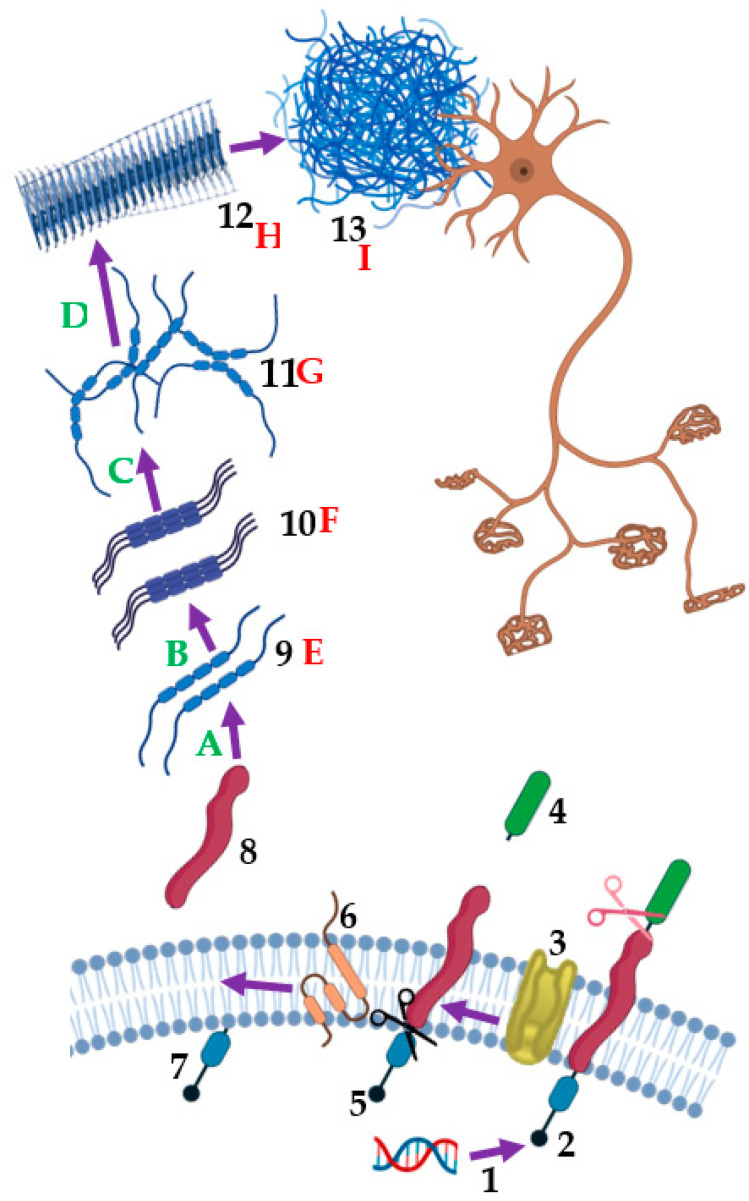
“The hydrophobic C-terminus of Aβ42 facilitates its aggregation and the formation of senile plaques.”
§ Recent Advances in Therapeutics for the Treatment of Alzheimer’s Disease > 1. Introduction > 1.1. Pathophysiological Mechanisms and Symptoms of AD
What the sources say
plaindirect- Asserted: passes — The authors put it forward as true.
- Checkable: passes — It can be checked against evidence.
- Load-bearing: unclear — It is unclear whether the paper’s conclusions depend on it.
- Based: passes — The paper gives a reason why it holds.
None of the sources cited for this claim have been checked yet.
In the paper
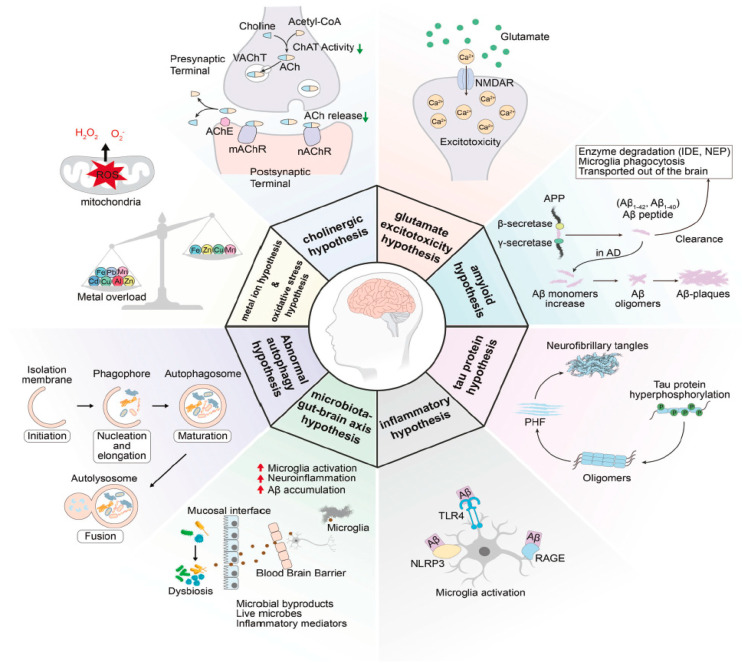
“Mutations in presenilin-1 (PS1) can promote Aβ accumulation through increased production and impaired autophagy functions.”
§ Recent Advances in Therapeutics for the Treatment of Alzheimer’s Disease > 1. Introduction > 1.1. Pathophysiological Mechanisms and Symptoms of AD
What the sources say
plaindirect- Asserted: passes — The authors put it forward as true.
- Checkable: passes — It can be checked against evidence.
- Load-bearing: unclear — It is unclear whether the paper’s conclusions depend on it.
- Based: passes — The paper gives a reason why it holds.
None of the sources cited for this claim have been checked yet.
In the paper
“This hypothesis suggests that a reduction in the synthesis and release of ACh impairs its physiological functions, which are critical for learning, memory, and other cognitive processes.”
§ Recent Advances in Therapeutics for the Treatment of Alzheimer’s Disease > 1. Introduction > 1.1. Pathophysiological Mechanisms and Symptoms of AD
What the sources say
hedgeddirect- Asserted: passes — The authors put it forward as true.
- Checkable: passes — It can be checked against evidence.
- Load-bearing: passes — The paper’s conclusions depend on it.
- Based: passes — The paper gives a reason why it holds.
None of the sources cited for this claim have been checked yet.
In the paper
“This hypothesis posits that various pathological factors, such as Aβ plaques, pro-inflammatory cytokines, and oxidative stress, activate microglia, the central nervous system’s innate immune cells. Upon activation, microglia undergo morphological changes and initiate a variety of inflammatory responses, which can lead to the release of pro-inflammatory mediators that exacerbate neurotoxicity.”
§ Recent Advances in Therapeutics for the Treatment of Alzheimer’s Disease > 1. Introduction > 1.1. Pathophysiological Mechanisms and Symptoms of AD
What the sources say
plaindirect- Asserted: passes — The authors put it forward as true.
- Checkable: passes — It can be checked against evidence.
- Load-bearing: unclear — It is unclear whether the paper’s conclusions depend on it.
- Based: passes — The paper gives a reason why it holds.
None of the sources cited for this claim have been checked yet.
In the paper
“The persistent activation of microglia may result in a failure to resolve inflammation, contributing to neuronal damage and the cognitive decline associated with AD [15,16].”
§ Recent Advances in Therapeutics for the Treatment of Alzheimer’s Disease > 1. Introduction > 1.1. Pathophysiological Mechanisms and Symptoms of AD
What the sources say
hedgedconditional- Asserted: passes — The authors put it forward as true.
- Checkable: passes — It can be checked against evidence.
- Load-bearing: unclear — It is unclear whether the paper’s conclusions depend on it.
- Based: passes — The paper gives a reason why it holds.
None of the sources cited for this claim have been checked yet.
In the paper
“A person with one copy of this allele is more likely to be affected than a person with two copies [42,43,44].”
§ Recent Advances in Therapeutics for the Treatment of Alzheimer’s Disease > 1. Introduction > 1.2. Causes and Factors of AD
What the sources say
- Not checked yetcites [42] Narayan, 2020, PICALM Rescues Endocytic Defects Caused by the Alzheimer’s Disease Risk Factor APOE4, Cell Rep. source
- Not checked yetcites [43] Fu, 2023, The role of genetic risk factors of Alzheimer’s disease in synaptic dysfunction, Semin. Cell Dev. Biol. source
- Not checked yetcites [44] Flores-Cordero, J.A., Pérez-Pérez, A., Jiménez-Cortegana, C., Alba, G., Flores-Barragán, A., and Sánchez-Margalet, V. (2022). Obesity as a Risk Factor for Dementia and Alzheimer’s Disease: The Role of Leptin. Int. J. Mol. Sci., 23. source
hedgedcorrelational- Asserted: passes — The authors put it forward as true.
- Checkable: passes — It can be checked against evidence.
- Load-bearing: unclear — It is unclear whether the paper’s conclusions depend on it.
- Based: passes — The paper gives a reason why it holds.
None of the sources cited for this claim have been checked yet.
In the paper
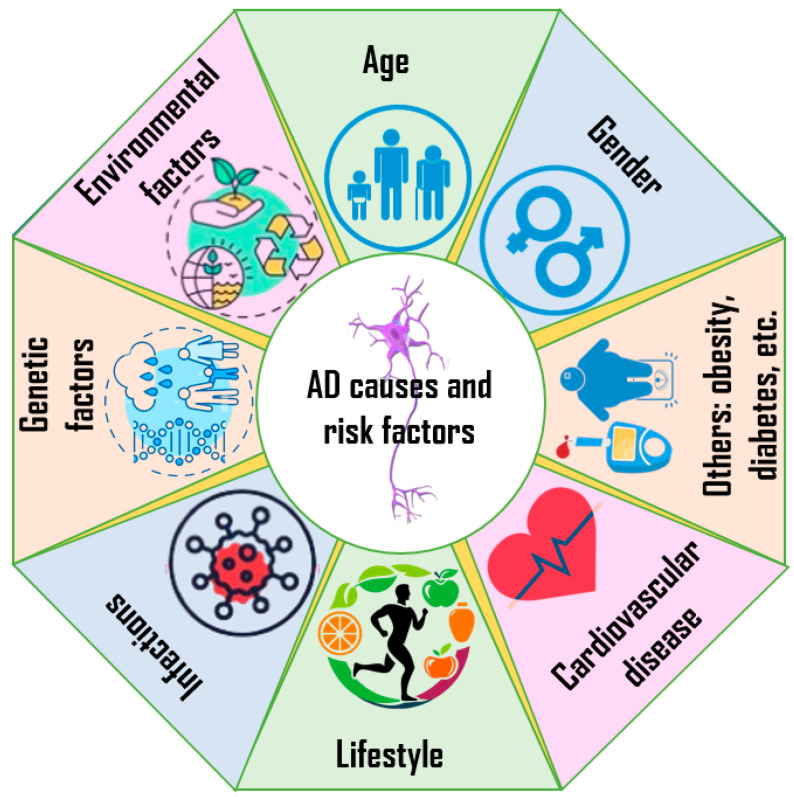
“According to studies, having these gene mutations practically guarantees that a person will develop the sickness [39,40,41].”
§ Recent Advances in Therapeutics for the Treatment of Alzheimer’s Disease > 1. Introduction > 1.2. Causes and Factors of AD
What the sources say
- Not checked yetcites [39] Bellenguez, 2020, Genetics of Alzheimer’s disease: Where we are, and where we are going, Curr. Opin. Neurobiol. source
- Not checked yetcites [40] Neuner, S.M., Tcw, J., and Goate, A.M. (2020). Genetic architecture of Alzheimer’s disease. Neurobiol. Dis., 143. source
- Not checked yetcites [41] Miyashita, 2022, Genetics of Alzheimer’s disease: An East Asian perspective, J. Hum. Genet. source
boosteddirect- Asserted: passes — The authors put it forward as true.
- Checkable: passes — It can be checked against evidence.
- Load-bearing: unclear — It is unclear whether the paper’s conclusions depend on it.
- Based: passes — The paper gives a reason why it holds.
None of the sources cited for this claim have been checked yet.
In the paper
“The oxidative stress hypothesis indicates that oxidative stress plays a crucial role in the pathogenesis of AD.”
§ Recent Advances in Therapeutics for the Treatment of Alzheimer’s Disease > 1. Introduction > 1.1. Pathophysiological Mechanisms and Symptoms of AD
What the sources say
- Not checked yetcites [19] Jurcau, 2020, Oxidative Stress in the Pathogenesis of Alzheimer’s Disease and Cerebrovascular Disease with Therapeutic Implications, CNS Neurol. Disord.—Drug Targets
- Not checked yetcites [20] Bai, 2022, Oxidative stress: The core pathogenesis and mechanism of Alzheimer’s disease, Ageing Res. Rev. source
hedgeddirect- Asserted: passes — The authors put it forward as true.
- Checkable: passes — It can be checked against evidence.
- Load-bearing: unclear — It is unclear whether the paper’s conclusions depend on it.
- Based: passes — The paper gives a reason why it holds.
In the paper
“The metal ion hypothesis examines the dysregulation of metal ions, particularly copper, zinc, and iron, which plays a significant role in the pathogenesis of AD.”
§ Recent Advances in Therapeutics for the Treatment of Alzheimer’s Disease > 1. Introduction > 1.1. Pathophysiological Mechanisms and Symptoms of AD
What the sources say
- Not checked yetcites [21] Chen, L.-L., Fan, Y.-G., Zhao, L.-X., Zhang, Q., and Wang, Z.-Y. (2022). The metal ion hypothesis of Alzheimer’s disease and the anti-neuroinflammatory effect of metal chelators. Bioorganic Chem., 131. source
plaindirect- Asserted: passes — The authors put it forward as true.
- Checkable: passes — It can be checked against evidence.
- Load-bearing: unclear — It is unclear whether the paper’s conclusions depend on it.
- Based: passes — The paper gives a reason why it holds.
None of the sources cited for this claim have been checked yet.
In the paper
“It suggests that an imbalance between the production of reactive oxygen species (ROS) and the body’s ability to detoxify these harmful compounds leads to damage of neuronal membrane lipids, proteins, and nucleic acids, ultimately causing neuronal cell death.”
§ Recent Advances in Therapeutics for the Treatment of Alzheimer’s Disease > 1. Introduction > 1.1. Pathophysiological Mechanisms and Symptoms of AD
What the sources say
- Not checked yetcites [19] Jurcau, 2020, Oxidative Stress in the Pathogenesis of Alzheimer’s Disease and Cerebrovascular Disease with Therapeutic Implications, CNS Neurol. Disord.—Drug Targets
- Not checked yetcites [20] Bai, 2022, Oxidative stress: The core pathogenesis and mechanism of Alzheimer’s disease, Ageing Res. Rev. source
hedgeddirect- Asserted: passes — The authors put it forward as true.
- Checkable: passes — It can be checked against evidence.
- Load-bearing: unclear — It is unclear whether the paper’s conclusions depend on it.
- Based: passes — The paper gives a reason why it holds.
None of the sources cited for this claim have been checked yet.
In the paper
“In AD, autophagy defects can lead to the accumulation of Aβ and the abnormal aggregation of tau protein, contributing to the disruption of protein homeostasis networks.”
§ Recent Advances in Therapeutics for the Treatment of Alzheimer’s Disease > 1. Introduction > 1.1. Pathophysiological Mechanisms and Symptoms of AD
What the sources say
- Not checked yetcites [22] Curtis, 2019, Autophagy Dysfunction in Alzheimer’s Disease: Mechanistic Insights and New Therapeutic Opportunities, Biol. Psychiatry
- Not checked yetcites [23] Hamano, 2018, The Implications of Autophagy in Alzheimer’s Disease, Curr. Alzheimer Res. source
plaindirect- Asserted: passes — The authors put it forward as true.
- Checkable: passes — It can be checked against evidence.
- Load-bearing: unclear — It is unclear whether the paper’s conclusions depend on it.
- Based: passes — The paper gives a reason why it holds.
None of the sources cited for this claim have been checked yet.
In the paper
“The AD risk is greatly increased by the APOE ε4 allele.”
§ Recent Advances in Therapeutics for the Treatment of Alzheimer’s Disease > 1. Introduction > 1.2. Causes and Factors of AD
What the sources say
- Not checked yetcites [42] Narayan, 2020, PICALM Rescues Endocytic Defects Caused by the Alzheimer’s Disease Risk Factor APOE4, Cell Rep. source
- Not checked yetcites [43] Fu, 2023, The role of genetic risk factors of Alzheimer’s disease in synaptic dysfunction, Semin. Cell Dev. Biol. source
- Not checked yetcites [44] Flores-Cordero, J.A., Pérez-Pérez, A., Jiménez-Cortegana, C., Alba, G., Flores-Barragán, A., and Sánchez-Margalet, V. (2022). Obesity as a Risk Factor for Dementia and Alzheimer’s Disease: The Role of Leptin. Int. J. Mol. Sci., 23. source
plaindirect- Asserted: passes — The authors put it forward as true.
- Checkable: passes — It can be checked against evidence.
- Load-bearing: unclear — It is unclear whether the paper’s conclusions depend on it.
- Based: passes — The paper gives a reason why it holds.
None of the sources cited for this claim have been checked yet.
In the paper
“In clinical trials, immunotherapies make up the majority of tau-targeting treatments.”
§ Recent Advances in Therapeutics for the Treatment of Alzheimer’s Disease > 2. Disease-Modifying Therapeutics > 2.3. Mechanisms of Action
What the sources say
- Not checked yetcites [96] Guo, 2022, Tau-targeting therapy in Alzheimer’s disease: Critical advances and future opportunities, Ageing Neurodegener. Dis. source
- Not checked yetcites [97] Sigurdsson, 2020, Tau immunotherapies: Lessons learned, current status and future considerations, Neuropharmacology source
plain- Asserted: passes — The authors put it forward as true.
- Checkable: passes — It can be checked against evidence.
- Load-bearing: unclear — It is unclear whether the paper’s conclusions depend on it.
- Based: passes — The paper gives a reason why it holds.
None of the sources cited for this claim have been checked yet.
In the paper
“But a lot of these methods have had difficulties in the clinic, frequently because of problems with toxicity or ineffectiveness [95,98].”
§ Recent Advances in Therapeutics for the Treatment of Alzheimer’s Disease > 2. Disease-Modifying Therapeutics > 2.3. Mechanisms of Action
What the sources say
plaindirect- Asserted: passes — The authors put it forward as true.
- Checkable: passes — It can be checked against evidence.
- Load-bearing: unclear — It is unclear whether the paper’s conclusions depend on it.
- Based: passes — The paper gives a reason why it holds.
In the paper
“Furthermore, some DMTs work to support neurogenesis, the process that results in the formation of new neurons, which will support cognitive function even as the disease advances [78].”
§ Recent Advances in Therapeutics for the Treatment of Alzheimer’s Disease > 2. Disease-Modifying Therapeutics > 2.2. Purpose of DMT
What the sources say
- Not checked yetcites [78] Xi, 2022, Versatile nanomaterials for Alzheimer’s disease: Pathogenesis inspired disease-modifying therapy, J. Control. Release source
plaindirect- Asserted: passes — The authors put it forward as true.
- Checkable: passes — It can be checked against evidence.
- Load-bearing: unclear — It is unclear whether the paper’s conclusions depend on it.
- Based: passes — The paper gives a reason why it holds.
None of the sources cited for this claim have been checked yet.
In the paper
“Since amyloid-beta (Aβ) plaques and tau tangles are characteristic of AD and are thought to be important in the onset and development of the disease, the main focus of these therapies has been on removing or reducing them.”
§ Recent Advances in Therapeutics for the Treatment of Alzheimer’s Disease > 2. Disease-Modifying Therapeutics > 2.2. Purpose of DMT
What the sources say
- Not checked yetcites [82] Ashrafian, 2021, Review on Alzheimer’s disease: Inhibition of amyloid beta and tau tangle formation, Int. J. Biol. Macromol. source
- Not checked yetcites [83] Yin, 2021, The Role of Amyloid-Beta and Tau in the Early Pathogenesis of Alzheimer’s Disease, Med. Sci. Monit. source
- Not checked yetcites [84] Zhang, 2021, Interaction between Aβ and Tau in the Pathogenesis of Alzheimer’s Disease, Int. J. Biol. Sci. source
plaindirect- Asserted: passes — The authors put it forward as true.
- Checkable: passes — It can be checked against evidence.
- Load-bearing: passes — The paper’s conclusions depend on it.
- Based: passes — The paper gives a reason why it holds.
None of the sources cited for this claim have been checked yet.
In the paper
“The primary goal of DMTs for AD patients is to slow the rate of cognitive decline [66,67,68].”
§ Recent Advances in Therapeutics for the Treatment of Alzheimer’s Disease > 2. Disease-Modifying Therapeutics > 2.2. Purpose of DMT
What the sources say
- Not checked yetcites [66] Parums, 2021, Editorial: Targets for Disease-Modifying Therapies in Alzheimer’s Disease, Including Amyloid β and Tau Protein, Med. Sci. Monit.
- Not checked yetcites [67] Villain, 2022, Therapeutic news in Alzheimer’s disease: Soon a disease-modifying therapy?, Rev. Neurol. source
- Not checked yetcites [68] Cummings, 2022, Alzheimer’s disease drug development pipeline: 2022, Alzheimer’s Dement. Transl. Res. Clin. Interv. source
plain- Asserted: passes — The authors put it forward as true.
- Checkable: passes — It can be checked against evidence.
- Load-bearing: unclear — It is unclear whether the paper’s conclusions depend on it.
- Based: passes — The paper gives a reason why it holds.
None of the sources cited for this claim have been checked yet.
In the paper
“Lowering amyloid levels may help to lessen the disease’s related neurodegeneration and cognitive impairment, according to research [73,74].”
§ Recent Advances in Therapeutics for the Treatment of Alzheimer’s Disease > 2. Disease-Modifying Therapeutics > 2.2. Purpose of DMT
What the sources say
- Not checked yetcites [73] Haass, C., and Selkoe, D. (2022). If amyloid drives Alzheimer disease, why have anti-amyloid therapies not yet slowed cognitive decline?. PLoS Biol., 20. source
- Not checked yetcites [74] Karran, 2022, The amyloid hypothesis in Alzheimer disease: New insights from new therapeutics, Nat. Rev. Drug Discov. source
hedgedconditional- Asserted: passes — The authors put it forward as true.
- Checkable: passes — It can be checked against evidence.
- Load-bearing: passes — The paper’s conclusions depend on it.
- Based: passes — The paper gives a reason why it holds.
None of the sources cited for this claim have been checked yet.
In the paper
“Donepezil, galantamine, and rivastigmine are the cholinesterase inhibitors that are most frequently prescribed [102,103,104,105,106].”
§ Recent Advances in Therapeutics for the Treatment of Alzheimer’s Disease > 3. AD Current Treatment Drugs
What the sources say
- Not checked yetcites [102] Yiannopoulou, 2020, Current and Future Treatments in Alzheimer Disease: An Update, J. Cent. Nerv. Syst. Dis. source
- Not checked yetcites [103] Pardo-Moreno, T., González-Acedo, A., Rivas-Domínguez, A., García-Morales, V., García-Cozar, F.J., Ramos-Rodríguez, J.J., and Melguizo-Rodríguez, L. (2022). Therapeutic Approach to Alzheimer’s Disease: Current Treatments and New Perspectives. Pharmaceutics, 14. source
- Not checked yetcites [104] Selkoe, 2021, Treatments for Alzheimer’s disease emerge, Science source
- Not checked yetcites [105] Vaz, 2020, Alzheimer’s disease: Recent treatment strategies, Eur. J. Pharmacol. source
- Not checked yetcites [106] Cummings, 2021, New approaches to symptomatic treatments for Alzheimer’s disease, Mol. Neurodegener.
plain- Asserted: passes — The authors put it forward as true.
- Checkable: passes — It can be checked against evidence.
- Load-bearing: unclear — It is unclear whether the paper’s conclusions depend on it.
- Based: passes — The paper gives a reason why it holds.
None of the sources cited for this claim have been checked yet.
In the paper
“In animal models, case in point, antibodies that bind selectively to phosphorylated tau have shown promise in lowering tau pathology.”
§ Recent Advances in Therapeutics for the Treatment of Alzheimer’s Disease > 2. Disease-Modifying Therapeutics > 2.3. Mechanisms of Action
What the sources say
plainconditional- Asserted: passes — The authors put it forward as true.
- Checkable: passes — It can be checked against evidence.
- Load-bearing: unclear — It is unclear whether the paper’s conclusions depend on it.
- Based: passes — The paper gives a reason why it holds.
None of the sources cited for this claim have been checked yet.
In the paper
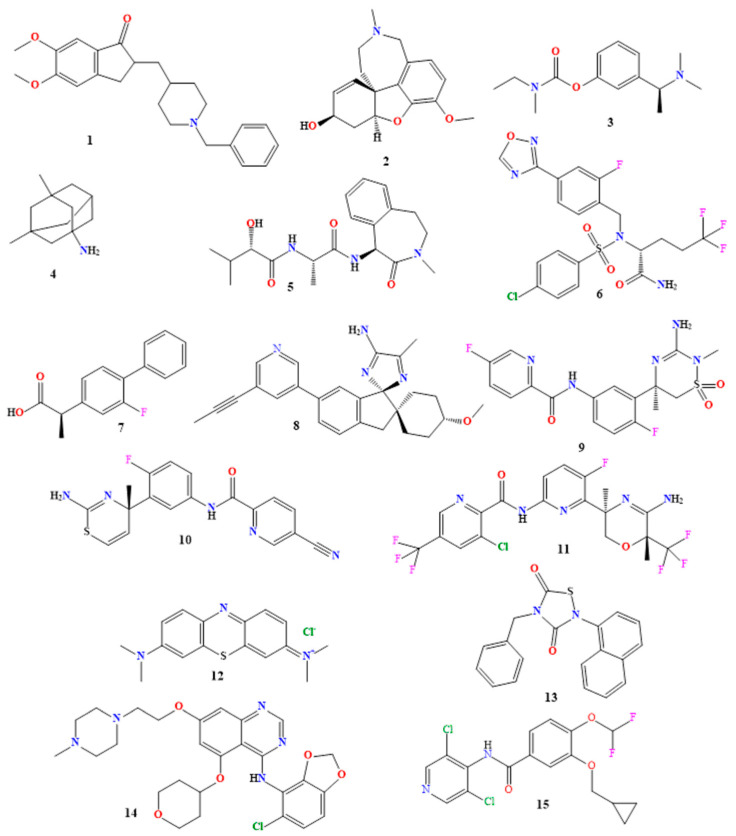
“This includes γ-secretase inhibitors, such as tarenflurbil (7, Figure 5) [155,156], avagacestat (labeled as 6, Figure 5) [157,158], and semagacestat (5, Figure 5) [159,160]. Their purpose is to lower the synthesis of amyloid beta by preventing the gamma secretase enzyme from functioning.”
§ Recent Advances in Therapeutics for the Treatment of Alzheimer’s Disease > 3. AD Current Treatment Drugs > 3.1. Oral Immunotherapies or Small Molecules Containing DMTs
What the sources say
- Not checked yetcites [155] Egunlusi, 2022, Ever-expanding landscape: Alzheimer’s—New targets and new patents, Pharm. Pat. Anal. source
- Not checked yetcites [156] Miranda, 2021, Selective Secretase Targeting for Alzheimer’s Disease Therapy, J. Alzheimer’s Dis. source
- Not checked yetcites [157] Piton, 2018, Alzheimer’s Disease: Advances in Drug Development, J. Alzheimer’s Dis. source
- Not checked yetcites [158] Medina, 2023, γ-Secretase Inhibitors Selected by Molecular Docking, to Develop a New Drug Against Alzheimer’s Disease, Rep. Biochem. Mol. Biol. source
- Not checked yetcites [159] Alan, 2023, Molecular mechanisms of Alzheimer’s disease: From therapeutic targets to promising drugs, Fundam. Clin. Pharmacol. source
- Not checked yetcites [160] Ettcheto, 2020, A Chronological Review of Potential Disease-Modifying Therapeutic Strategies for Alzheimer’s Disease, Curr. Pharm. Des. source
plaindirect- Asserted: passes — The authors put it forward as true.
- Checkable: passes — It can be checked against evidence.
- Load-bearing: unclear — It is unclear whether the paper’s conclusions depend on it.
- Based: passes — The paper gives a reason why it holds.
None of the sources cited for this claim have been checked yet.
In the paper
“In order to decrease the synthesis of amyloid beta, β-secretase inhibitors (BACE inhibitors) such lanabecestat (labeled as 8, Figure 5) [157,161,162], verubecestat (labeled as 9, Figure 5) [157,163,164], and atabecestat (labeled as 10, Figure 5) target the enzyme Bace-1 [157,165].”
§ Recent Advances in Therapeutics for the Treatment of Alzheimer’s Disease > 3. AD Current Treatment Drugs > 3.1. Oral Immunotherapies or Small Molecules Containing DMTs
What the sources say
- Not checked yetcites [157] Piton, 2018, Alzheimer’s Disease: Advances in Drug Development, J. Alzheimer’s Dis. source
- Not checked yetcites [161] Zimmer, 2021, Lanabecestat: Neuroimaging results in early symptomatic Alzheimer’s disease, Alzheimer’s Dement. Transl. Res. Clin. Interv. source
- Not checked yetcites [162] Burki, 2018, Alzheimer’s disease research: The future of BACE inhibitors, Lancet source
- Not checked yetcites [163] Egan, 2018, Randomized Trial of Verubecestat for Mild-to-Moderate Alzheimer’s Disease, N. Engl. J. Med. source
- Not checked yetcites [164] Egan, 2019, Randomized Trial of Verubecestat for Prodromal Alzheimer’s Disease, N. Engl. J. Med. source
- Not checked yetcites [165] Timmers, 2018, Pharmacodynamics of atabecestat (JNJ-54861911), an oral BACE1 inhibitor in patients with early Alzheimer’s disease: Randomized, double-blind, placebo-controlled study, Alzheimer’s Res. Ther. source
plaindirect- Asserted: passes — The authors put it forward as true.
- Checkable: passes — It can be checked against evidence.
- Load-bearing: unclear — It is unclear whether the paper’s conclusions depend on it.
- Based: passes — The paper gives a reason why it holds.
None of the sources cited for this claim have been checked yet.
In the paper
“For moderate-to-severe AD dementia, a combination of a glutamate regulator (memantine) and a cholinesterase inhibitor (donepezil) is approved [127,128,129].”
§ Recent Advances in Therapeutics for the Treatment of Alzheimer’s Disease > 3. AD Current Treatment Drugs
What the sources say
- Not checked yetcites [127] Yaghmaei, 2024, Combined use of Donepezil and Memantine increases the probability of five-year survival of Alzheimer’s disease patients, Commun. Med. source
- Not checked yetcites [128] Padovani, 2023, Extemporaneous combination of donepezil and memantine to treat dementia in Alzheimer disease: Evidence from Italian real-world data, Curr. Med. Res. Opin. source
- Not checked yetcites [129] Dezfouli, 2024, Are there links between Alzheimer’s disease and ADHD? The efficacy of acetylcholinesterase inhibitors and NMDA receptor antagonists in controlling ADHD symptoms: A systematic review, Middle East Curr. Psychiatry source
plain- Asserted: passes — The authors put it forward as true.
- Checkable: passes — It can be checked against evidence.
- Load-bearing: unclear — It is unclear whether the paper’s conclusions depend on it.
- Based: passes — The paper gives a reason why it holds.
None of the sources cited for this claim have been checked yet.
In the paper
“There is insufficient safety or efficacy information on starting treatment sooner or later than in the conducted studies [137,138,139].”
§ Recent Advances in Therapeutics for the Treatment of Alzheimer’s Disease > 3. AD Current Treatment Drugs
What the sources say
- Not checked yetcites [137] Chowdhury, 2023, Novel anti-amyloid-beta (Aβ) monoclonal antibody lecanemab for Alzheimer’s disease: A systematic review, Int. J. Immunopathol. Pharmacol. source
- Not checked yetcites [138] Niidome, 2024, Mechanism of action and clinical trial results of Lecanemab (Leqembi® 200 mg, 500 mg for Intravenous Infusion), a novel treatment for Alzheimer’s disease, Folia Pharmacol. Jpn. source
- Not checked yetcites [139] Swanson, 2023, Lecanemab in Early Alzheimer’s Disease, N. Engl. J. Med. source
plain- Asserted: passes — The authors put it forward as true.
- Checkable: passes — It can be checked against evidence.
- Load-bearing: unclear — It is unclear whether the paper’s conclusions depend on it.
- Based: passes — The paper gives a reason why it holds.
None of the sources cited for this claim have been checked yet.
In the paper
“However, AN-1792 was withdrawn during Phase II of the trial due to side effects associated with meningoencephalitis, which were reported in 6% of patients [140,141,142,143,144].”
§ Recent Advances in Therapeutics for the Treatment of Alzheimer’s Disease > 3. AD Current Treatment Drugs > 3.1. Oral Immunotherapies or Small Molecules Containing DMTs
What the sources say
- Not checked yetcites [140] Bhadane, 2024, Immunotherapeutic approaches for Alzheimer’s disease: Exploring active and passive vaccine progress, Brain Res. source
- Not checked yetcites [141] Parrocha, 2022, Current peptide vaccine and immunotherapy approaches against Alzheimer’s disease, Pept. Sci. source
- Not checked yetcites [142] Honig, 2023, Alzheimer Disease: A New Beginning in Therapeutics, Alzheimer Dis. Assoc. Disord. source
- Not checked yetcites [143] Xiao, 2024, Current therapeutics for Alzheimer’s disease and clinical trials, Explor. Neurosci. source
- Not checked yetcites [144] Holdridge, 2023, Targeting amyloid β in Alzheimer’s disease: Meta-analysis of low-dose solanezumab in Alzheimer’s disease with mild dementia studies, Alzheimer’s Dement. source
plaindirect- Asserted: passes — The authors put it forward as true.
- Checkable: passes — It can be checked against evidence.
- Load-bearing: unclear — It is unclear whether the paper’s conclusions depend on it.
- Based: passes — The paper gives a reason why it holds.
None of the sources cited for this claim have been checked yet.
In the paper
“Aducanumab has been given FDA approval under the expedited approval pathway to treat moderate AD [134,135,136].”
§ Recent Advances in Therapeutics for the Treatment of Alzheimer’s Disease > 3. AD Current Treatment Drugs
What the sources say
- Not checked yetcites [134] Dunn, 2021, Approval of Aducanumab for Alzheimer Disease—The FDA’s Perspective, JAMA Intern. Med. source
- Not checked yetcites [135] Mullard, 2023, FDA approves second anti-amyloid antibody for Alzheimer disease, Nat. Rev. Drug Discov. source
- Not checked yetcites [136] Reardon, 2023, FDA approves Alzheimer’s drug lecanemab amid safety concerns, Nature source
plain- Asserted: passes — The authors put it forward as true.
- Checkable: passes — It can be checked against evidence.
- Load-bearing: unclear — It is unclear whether the paper’s conclusions depend on it.
- Based: passes — The paper gives a reason why it holds.
None of the sources cited for this claim have been checked yet.
In the paper
“Tideglusib (NP-031112 (labeled as 13, Figure 5)), an inhibitor of GSK3β, targets tau hyperphosphorylation, which is required for the development of tau tangles [171,172,173].”
§ Recent Advances in Therapeutics for the Treatment of Alzheimer’s Disease > 3. AD Current Treatment Drugs > 3.1. Oral Immunotherapies or Small Molecules Containing DMTs
What the sources say
- Not checked yetcites [171] Lao, 2018, Drug development for Alzheimer’s disease: Review, J. Drug Target. source
- Not checked yetcites [172] Shri, 2023, Role of GSK-3β Inhibitors: New Promises and Opportunities for Alzheimer’s Disease, Adv. Pharm. Bull. source
- Not checked yetcites [173] Dong, Y., Lu, J., Zhang, S., Chen, L., Wen, J., Wang, F., Mao, Y., Li, L., Zhang, J., and Liao, S. (2023). Design, synthesis and bioevaluation of 1,2,4-thiadiazolidine-3,5-dione derivatives as potential GSK-3β inhibitors for the treatment of Alzheimer’s disease. Bioorganic Chem., 134. source
plaindirect- Asserted: passes — The authors put it forward as true.
- Checkable: passes — It can be checked against evidence.
- Load-bearing: unclear — It is unclear whether the paper’s conclusions depend on it.
- Based: passes — The paper gives a reason why it holds.
None of the sources cited for this claim have been checked yet.
In the paper
“After 79 weeks, lecanemab was found to have a lower total brain amyloid plaque burden than a placebo (Study 201).”
§ Recent Advances in Therapeutics for the Treatment of Alzheimer’s Disease > 3. AD Current Treatment Drugs > 3.2. Recent DMT’s Clinical Trials
What the sources say
- Not checked yetcites [187] Mukhopadhyay, 2021, A Primer on the Evolution of Aducanumab: The First Antibody Approved for Treatment of Alzheimer’s Disease, J. Alzheimer’s Dis. source
- Not checked yetcites [188] Swanson, 2021, A randomized, double-blind, phase 2b proof-of-concept clinical trial in early Alzheimer’s disease with lecanemab, an anti-Aβ protofibril antibody, Alzheimer’s Res. Ther. source
plaindirect- Asserted: passes — The authors put it forward as true.
- Checkable: passes — It can be checked against evidence.
- Load-bearing: passes — The paper’s conclusions depend on it.
- Based: passes — The paper gives a reason why it holds.
None of the sources cited for this claim have been checked yet.
In the paper
“In Phase I, there are 26 trials assessing 25 agents.”
§ Recent Advances in Therapeutics for the Treatment of Alzheimer’s Disease > 3. AD Current Treatment Drugs > 3.2. Recent DMT’s Clinical Trials
What the sources say
- Not checked yetcites [37] Breijyeh, Z., and Karaman, R. (2020). Comprehensive Review on Alzheimer’s Disease: Causes and Treatment. Molecules, 25. source
- Not checked yetcites [183] Cummings, 2024, Alzheimer’s disease drug development pipeline: 2024, Alzheimer’s Dement. Transl. Res. Clin. Interv. source
- Not checked yetcites [184] Huang, L.-K., Kuan, Y.-C., Lin, H.-W., and Hu, C.-J. (2023). Clinical trials of new drugs for Alzheimer disease: A 2020–2023 update. J. Biomed. Sci., 30. source
plain- Asserted: passes — The authors put it forward as true.
- Checkable: passes — It can be checked against evidence.
- Load-bearing: unclear — It is unclear whether the paper’s conclusions depend on it.
- Based: passes — The paper gives a reason why it holds.
None of the sources cited for this claim have been checked yet.
In the paper
“In spite of this, the FDA granted expedited approval on the grounds of the EMERGE trial’s documented decrease in amyloid levels [132,185,186,187].”
§ Recent Advances in Therapeutics for the Treatment of Alzheimer’s Disease > 3. AD Current Treatment Drugs > 3.2. Recent DMT’s Clinical Trials
What the sources say
- Not checked yetcites [132] Vaz, 2022, Role of Aducanumab in the Treatment of Alzheimer’s Disease: Challenges and Opportunities, Clin. Interv. Aging source
- Not checked yetcites [185] Knopman, 2020, Failure to demonstrate efficacy of aducanumab: An analysis of the EMERGE and ENGAGE trials as reported by Biogen, December 2019, Alzheimer’s Dement. source
- Not checked yetcites [186] Dhillon, 2021, Aducanumab: First Approval, Drugs source
- Not checked yetcites [187] Mukhopadhyay, 2021, A Primer on the Evolution of Aducanumab: The First Antibody Approved for Treatment of Alzheimer’s Disease, J. Alzheimer’s Dis. source
plaindirect- Asserted: passes — The authors put it forward as true.
- Checkable: passes — It can be checked against evidence.
- Load-bearing: passes — The paper’s conclusions depend on it.
- Based: passes — The paper gives a reason why it holds.
None of the sources cited for this claim have been checked yet.
In the paper
“Phase III trials, including 48 trials that tested 32 medications [37,183,184].”
§ Recent Advances in Therapeutics for the Treatment of Alzheimer’s Disease > 3. AD Current Treatment Drugs > 3.2. Recent DMT’s Clinical Trials
What the sources say
- Not checked yetcites [37] Breijyeh, Z., and Karaman, R. (2020). Comprehensive Review on Alzheimer’s Disease: Causes and Treatment. Molecules, 25. source
- Not checked yetcites [183] Cummings, 2024, Alzheimer’s disease drug development pipeline: 2024, Alzheimer’s Dement. Transl. Res. Clin. Interv. source
- Not checked yetcites [184] Huang, L.-K., Kuan, Y.-C., Lin, H.-W., and Hu, C.-J. (2023). Clinical trials of new drugs for Alzheimer disease: A 2020–2023 update. J. Biomed. Sci., 30. source
plain- Asserted: passes — The authors put it forward as true.
- Checkable: passes — It can be checked against evidence.
- Load-bearing: unclear — It is unclear whether the paper’s conclusions depend on it.
- Based: passes — The paper gives a reason why it holds.
The paper states this without a source or data behind it here, so there is nothing to check it against. The quote shows it is in the paper.
In the paper
“But ENGAGE did not demonstrate the same effectiveness.”
§ Recent Advances in Therapeutics for the Treatment of Alzheimer’s Disease > 3. AD Current Treatment Drugs > 3.2. Recent DMT’s Clinical Trials
plain- Asserted: passes — The authors put it forward as true.
- Checkable: passes — It can be checked against evidence.
- Load-bearing: passes — The paper’s conclusions depend on it.
- Based: passes — The paper gives a reason why it holds.
None of the sources cited for this claim have been checked yet.
In the paper
“In the EMERGE experiment, when participants with AD were at risk for cognitive deterioration, there was a decrease in the amount of amyloid-beta plaques.”
§ Recent Advances in Therapeutics for the Treatment of Alzheimer’s Disease > 3. AD Current Treatment Drugs > 3.2. Recent DMT’s Clinical Trials
What the sources say
- Not checked yetcites [132] Vaz, 2022, Role of Aducanumab in the Treatment of Alzheimer’s Disease: Challenges and Opportunities, Clin. Interv. Aging source
- Not checked yetcites [185] Knopman, 2020, Failure to demonstrate efficacy of aducanumab: An analysis of the EMERGE and ENGAGE trials as reported by Biogen, December 2019, Alzheimer’s Dement. source
- Not checked yetcites [186] Dhillon, 2021, Aducanumab: First Approval, Drugs source
- Not checked yetcites [187] Mukhopadhyay, 2021, A Primer on the Evolution of Aducanumab: The First Antibody Approved for Treatment of Alzheimer’s Disease, J. Alzheimer’s Dis. source
plaindirect- Asserted: passes — The authors put it forward as true.
- Checkable: passes — It can be checked against evidence.
- Load-bearing: passes — The paper’s conclusions depend on it.
- Based: passes — The paper gives a reason why it holds.
None of the sources cited for this claim have been checked yet.
In the paper
“Lecanemab’s capacity to lower the amount of amyloid in the brain, as shown by PET scans, has led to its submission for expedited approval for the treatment of AD.”
§ Recent Advances in Therapeutics for the Treatment of Alzheimer’s Disease > 3. AD Current Treatment Drugs > 3.2. Recent DMT’s Clinical Trials
What the sources say
- Not checked yetcites [187] Mukhopadhyay, 2021, A Primer on the Evolution of Aducanumab: The First Antibody Approved for Treatment of Alzheimer’s Disease, J. Alzheimer’s Dis. source
- Not checked yetcites [188] Swanson, 2021, A randomized, double-blind, phase 2b proof-of-concept clinical trial in early Alzheimer’s disease with lecanemab, an anti-Aβ protofibril antibody, Alzheimer’s Res. Ther. source
plaindirect- Asserted: passes — The authors put it forward as true.
- Checkable: passes — It can be checked against evidence.
- Load-bearing: passes — The paper’s conclusions depend on it.
- Based: passes — The paper gives a reason why it holds.
None of the sources cited for this claim have been checked yet.
In the paper
“Aducanumab demonstrated inconsistent outcomes in its two main clinical trials, the Phase III EMERGE and ENGAGE research investigations.”
§ Recent Advances in Therapeutics for the Treatment of Alzheimer’s Disease > 3. AD Current Treatment Drugs > 3.2. Recent DMT’s Clinical Trials
What the sources say
- Not checked yetcites [132] Vaz, 2022, Role of Aducanumab in the Treatment of Alzheimer’s Disease: Challenges and Opportunities, Clin. Interv. Aging source
- Not checked yetcites [185] Knopman, 2020, Failure to demonstrate efficacy of aducanumab: An analysis of the EMERGE and ENGAGE trials as reported by Biogen, December 2019, Alzheimer’s Dement. source
- Not checked yetcites [186] Dhillon, 2021, Aducanumab: First Approval, Drugs source
- Not checked yetcites [187] Mukhopadhyay, 2021, A Primer on the Evolution of Aducanumab: The First Antibody Approved for Treatment of Alzheimer’s Disease, J. Alzheimer’s Dis. source
boosted- Asserted: passes — The authors put it forward as true.
- Checkable: passes — It can be checked against evidence.
- Load-bearing: passes — The paper’s conclusions depend on it.
- Based: passes — The paper gives a reason why it holds.
None of the sources cited for this claim have been checked yet.
In the paper
“More and more research is recognizing the etiological and clinical heterogeneity of AD as a hallmark of AD and related diseases (ADRDs), which makes it more difficult to diagnose, treat, and develop and test new medications for AD.”
§ Recent Advances in Therapeutics for the Treatment of Alzheimer’s Disease > 3. AD Current Treatment Drugs > 3.2. Recent DMT’s Clinical Trials
What the sources say
- Not checked yetcites [190] Duara, 2022, Heterogeneity in Alzheimer’s Disease Diagnosis and Progression Rates: Implications for Therapeutic Trials, Neurotherapeutics source
- Not checked yetcites [191] Liu, 2024, A review of neuroimaging-based data-driven approach for Alzheimer’s disease heterogeneity analysis, Rev. Neurosci. source
- Not checked yetcites [192] Wei, H., Wu, C., Yuan, Y., and Lai, L. (2023). Uncovering the Achilles heel of genetic heterogeneity: Machine learning-based classification and immunological properties of necroptosis clusters in Alzheimer’s disease. Front. Aging Neurosci., 15. source
plaindirect- Asserted: passes — The authors put it forward as true.
- Checkable: passes — It can be checked against evidence.
- Load-bearing: unclear — It is unclear whether the paper’s conclusions depend on it.
- Based: passes — The paper gives a reason why it holds.
None of the sources cited for this claim have been checked yet.
In the paper
“Numerous approaches, such as tau aggregation inhibitors, are being studied in an effort to address the tau protein problem and prevent tau tangle formation.”
§ Recent Advances in Therapeutics for the Treatment of Alzheimer’s Disease > 4. Future Directions and Emerging Therapies in DMT
What the sources say
- Not checked yetcites [198] Sinsky, J., Pichlerova, K., and Hanes, J. (2021). Tau Protein Interaction Partners and Their Roles in Alzheimer’s Disease and Other Tauopathies. Int. J. Mol. Sci., 22. source
- Not checked yetcites [199] Alquezar, C., Arya, S., and Kao, A.W. (2021). Tau Post-translational Modifications: Dynamic Transformers of Tau Function, Degradation, and Aggregation. Front. Neurol., 11. source
- Not checked yetcites [200] Yang, J., Zhi, W., and Wang, L. (2024). Role of Tau Protein in Neurodegenerative Diseases and Development of Its Targeted Drugs: A Literature Review. Molecules, 29. source
- Not checked yetcites [201] Sigurdsson, 2018, Tau Immunotherapies for Alzheimer’s Disease and Related Tauopathies: Progress and Potential Pitfalls1, J. Alzheimer’s Dis. source
plain- Asserted: passes — The authors put it forward as true.
- Checkable: passes — It can be checked against evidence.
- Load-bearing: unclear — It is unclear whether the paper’s conclusions depend on it.
- Based: passes — The paper gives a reason why it holds.
A conclusion the paper draws from its own results — it cites no other source for it, so there is none to check. The quote shows it is in the paper.
In the paper
“This has been made worse by the increased focus given to the predementia stages of the disease: (1) asymptomatic predementia, also referred to as the preclinical phase or Stage 1–2, and (2) symptomatic predementia, also known as amnestic MCI or Stage 3.”
§ Recent Advances in Therapeutics for the Treatment of Alzheimer’s Disease > 3. AD Current Treatment Drugs > 3.2. Recent DMT’s Clinical Trials
plaindirect- Asserted: passes — The authors put it forward as true.
- Checkable: passes — It can be checked against evidence.
- Load-bearing: unclear — It is unclear whether the paper’s conclusions depend on it.
- Based: passes — The paper gives a reason why it holds.
None of the sources cited for this claim have been checked yet.
In the paper
“The indicated BBB penetration values are inconsistent with the physicochemical characteristics of monoclonal antibodies (solanezumab, aducanumab, bapineuzumab) or gamma-secretase inhibitors (semagacestat, tarenflurbil) [193,194,195].”
§ Recent Advances in Therapeutics for the Treatment of Alzheimer’s Disease > 3. AD Current Treatment Drugs > 3.2. Recent DMT’s Clinical Trials
What the sources say
- Not checked yetcites [193] Conrado, 2020, Challenges in Alzheimer’s Disease Drug Discovery and Development: The Role of Modeling, Simulation, and Open Data, Clin. Pharmacol. Ther. source
- Not checked yetcites [194] Abduljawad, A.A., Elawad, M.A., Elkhalifa, M.E.M., Ahmed, A., Hamdoon, A.A.E., Salim, L.H.M., Ashraf, M., Ayaz, M., Hassan, S.S.U., and Bungau, S. (2022). Alzheimer’s Disease as a Major Public Health Concern: Role of Dietary Saponins in Mitigating Neurodegenerative Disorders and Their Underlying Mechanisms. Molecules, 27. source
- Not checked yetcites [195] Ribba, B. (2023). Reinforcement learning as an innovative model-based approach: Examples from precision dosing, digital health and computational psychiatry. Front. Pharmacol., 13. source
plain- Asserted: passes — The authors put it forward as true.
- Checkable: passes — It can be checked against evidence.
- Load-bearing: unclear — It is unclear whether the paper’s conclusions depend on it.
- Based: passes — The paper gives a reason why it holds.
None of the sources cited for this claim have been checked yet.
In the paper
“The interplay between phenotypes and genotypes is part of the heterogeneity of AD.”
§ Recent Advances in Therapeutics for the Treatment of Alzheimer’s Disease > 3. AD Current Treatment Drugs > 3.2. Recent DMT’s Clinical Trials
What the sources say
- Not checked yetcites [190] Duara, 2022, Heterogeneity in Alzheimer’s Disease Diagnosis and Progression Rates: Implications for Therapeutic Trials, Neurotherapeutics source
- Not checked yetcites [191] Liu, 2024, A review of neuroimaging-based data-driven approach for Alzheimer’s disease heterogeneity analysis, Rev. Neurosci. source
- Not checked yetcites [192] Wei, H., Wu, C., Yuan, Y., and Lai, L. (2023). Uncovering the Achilles heel of genetic heterogeneity: Machine learning-based classification and immunological properties of necroptosis clusters in Alzheimer’s disease. Front. Aging Neurosci., 15. source
plaincorrelational- Asserted: passes — The authors put it forward as true.
- Checkable: passes — It can be checked against evidence.
- Load-bearing: unclear — It is unclear whether the paper’s conclusions depend on it.
- Based: passes — The paper gives a reason why it holds.
None of the sources cited for this claim have been checked yet.
In the paper
“Cognitive, neurological, psychological, and functional deficits are complicated and different as a result of these interactions with environmental factors.”
§ Recent Advances in Therapeutics for the Treatment of Alzheimer’s Disease > 3. AD Current Treatment Drugs > 3.2. Recent DMT’s Clinical Trials
What the sources say
- Not checked yetcites [190] Duara, 2022, Heterogeneity in Alzheimer’s Disease Diagnosis and Progression Rates: Implications for Therapeutic Trials, Neurotherapeutics source
- Not checked yetcites [191] Liu, 2024, A review of neuroimaging-based data-driven approach for Alzheimer’s disease heterogeneity analysis, Rev. Neurosci. source
- Not checked yetcites [192] Wei, H., Wu, C., Yuan, Y., and Lai, L. (2023). Uncovering the Achilles heel of genetic heterogeneity: Machine learning-based classification and immunological properties of necroptosis clusters in Alzheimer’s disease. Front. Aging Neurosci., 15. source
plaindirect- Asserted: passes — The authors put it forward as true.
- Checkable: passes — It can be checked against evidence.
- Load-bearing: unclear — It is unclear whether the paper’s conclusions depend on it.
- Based: passes — The paper gives a reason why it holds.
None of the sources cited for this claim have been checked yet.
In the paper
“Moreover, biobanking and repository research are being scrutinized and restricted more harshly [196,197].”
§ Recent Advances in Therapeutics for the Treatment of Alzheimer’s Disease > 3. AD Current Treatment Drugs > 3.2. Recent DMT’s Clinical Trials
What the sources say
- Not checked yetcites [196] Ndebele, 2014, Regulatory Challenges Associated with Conducting Multicountry Clinical Trials in Resource-Limited Settings, JAIDS J. Acquir. Immune Defic. Syndr. source
- Not checked yetcites [197] Alemayehu, 2018, Barriers for conducting clinical trials in developing countries—A systematic review, Int. J. Equity Health source
plain- Asserted: passes — The authors put it forward as true.
- Checkable: passes — It can be checked against evidence.
- Load-bearing: unclear — It is unclear whether the paper’s conclusions depend on it.
- Based: passes — The paper gives a reason why it holds.
None of the sources cited for this claim have been checked yet.
In the paper
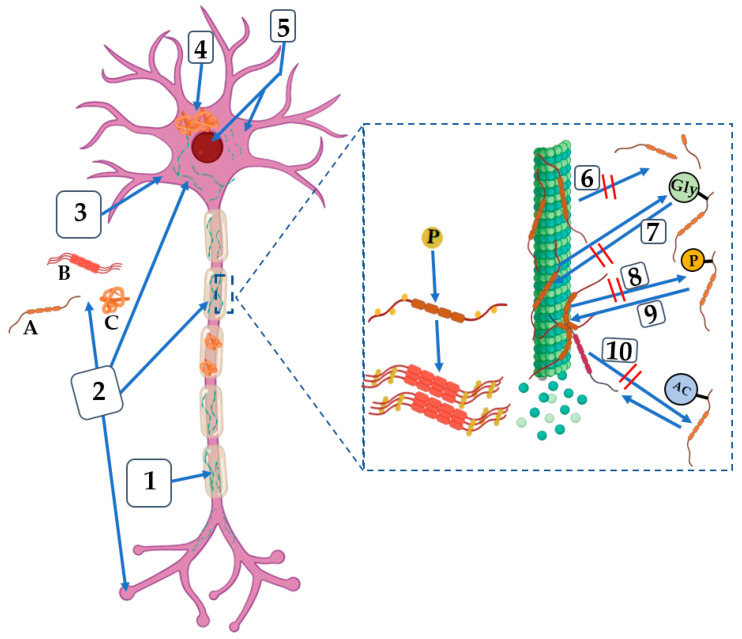
“The accumulation of tau protein in neurofibrillary tangles, which is known as tau protein modulation, provides a novel venue for disease modification.”
§ Recent Advances in Therapeutics for the Treatment of Alzheimer’s Disease > 4. Future Directions and Emerging Therapies in DMT
What the sources say
- Not checked yetcites [198] Sinsky, J., Pichlerova, K., and Hanes, J. (2021). Tau Protein Interaction Partners and Their Roles in Alzheimer’s Disease and Other Tauopathies. Int. J. Mol. Sci., 22. source
- Not checked yetcites [199] Alquezar, C., Arya, S., and Kao, A.W. (2021). Tau Post-translational Modifications: Dynamic Transformers of Tau Function, Degradation, and Aggregation. Front. Neurol., 11. source
- Not checked yetcites [200] Yang, J., Zhi, W., and Wang, L. (2024). Role of Tau Protein in Neurodegenerative Diseases and Development of Its Targeted Drugs: A Literature Review. Molecules, 29. source
- Not checked yetcites [201] Sigurdsson, 2018, Tau Immunotherapies for Alzheimer’s Disease and Related Tauopathies: Progress and Potential Pitfalls1, J. Alzheimer’s Dis. source
plaindirect- Asserted: passes — The authors put it forward as true.
- Checkable: passes — It can be checked against evidence.
- Load-bearing: passes — The paper’s conclusions depend on it.
- Based: passes — The paper gives a reason why it holds.
None of the sources cited for this claim have been checked yet.
In the paper
“The effectiveness and safety of several monoclonal antibodies used to treat AD were assessed by meta-analyses of monoclonal antibodies.”
§ Recent Advances in Therapeutics for the Treatment of Alzheimer’s Disease > 3. AD Current Treatment Drugs > 3.2. Recent DMT’s Clinical Trials
What the sources say
- Not checked yetcites [37] Breijyeh, Z., and Karaman, R. (2020). Comprehensive Review on Alzheimer’s Disease: Causes and Treatment. Molecules, 25. source
- Not checked yetcites [92] Qiao, 2024, Comparative Efficacy and Safety of Monoclonal Antibodies for Cognitive Decline in Patients with Alzheimer’s Disease: A Systematic Review and Network Meta-Analysis, CNS Drugs source
plain- Asserted: passes — The authors put it forward as true.
- Checkable: passes — It can be checked against evidence.
- Load-bearing: passes — The paper’s conclusions depend on it.
- Based: passes — The paper gives a reason why it holds.
None of the sources cited for this claim have been checked yet.
In the paper
“A molecular weight less than 450 Daltons, a polar surface area less than 90 Å2, and a hydrogen bond donor number less than 3 are characteristics of candidates for BBB penetration.”
§ Recent Advances in Therapeutics for the Treatment of Alzheimer’s Disease > 3. AD Current Treatment Drugs > 3.2. Recent DMT’s Clinical Trials
What the sources say
- Not checked yetcites [193] Conrado, 2020, Challenges in Alzheimer’s Disease Drug Discovery and Development: The Role of Modeling, Simulation, and Open Data, Clin. Pharmacol. Ther. source
- Not checked yetcites [194] Abduljawad, A.A., Elawad, M.A., Elkhalifa, M.E.M., Ahmed, A., Hamdoon, A.A.E., Salim, L.H.M., Ashraf, M., Ayaz, M., Hassan, S.S.U., and Bungau, S. (2022). Alzheimer’s Disease as a Major Public Health Concern: Role of Dietary Saponins in Mitigating Neurodegenerative Disorders and Their Underlying Mechanisms. Molecules, 27. source
- Not checked yetcites [195] Ribba, B. (2023). Reinforcement learning as an innovative model-based approach: Examples from precision dosing, digital health and computational psychiatry. Front. Pharmacol., 13. source
plaincorrelational- Asserted: passes — The authors put it forward as true.
- Checkable: passes — It can be checked against evidence.
- Load-bearing: unclear — It is unclear whether the paper’s conclusions depend on it.
- Based: passes — The paper gives a reason why it holds.
None of the sources cited for this claim have been checked yet.
In the paper
“Aducanumab in particular was more likely to cause ARIA-E (edema) [37,92].”
§ Recent Advances in Therapeutics for the Treatment of Alzheimer’s Disease > 3. AD Current Treatment Drugs > 3.2. Recent DMT’s Clinical Trials
What the sources say
- Not checked yetcites [37] Breijyeh, Z., and Karaman, R. (2020). Comprehensive Review on Alzheimer’s Disease: Causes and Treatment. Molecules, 25. source
- Not checked yetcites [92] Qiao, 2024, Comparative Efficacy and Safety of Monoclonal Antibodies for Cognitive Decline in Patients with Alzheimer’s Disease: A Systematic Review and Network Meta-Analysis, CNS Drugs source
plaindirect- Asserted: passes — The authors put it forward as true.
- Checkable: passes — It can be checked against evidence.
- Load-bearing: unclear — It is unclear whether the paper’s conclusions depend on it.
- Based: passes — The paper gives a reason why it holds.
None of the sources cited for this claim have been checked yet.
In the paper
“For a medicine to penetrate the blood–brain barrier, its physicochemical properties—such as its polar surface area, molecular weight, and lipophilicity as assessed by hydrogen bonding ability—are essential.”
§ Recent Advances in Therapeutics for the Treatment of Alzheimer’s Disease > 3. AD Current Treatment Drugs > 3.2. Recent DMT’s Clinical Trials
What the sources say
- Not checked yetcites [193] Conrado, 2020, Challenges in Alzheimer’s Disease Drug Discovery and Development: The Role of Modeling, Simulation, and Open Data, Clin. Pharmacol. Ther. source
- Not checked yetcites [194] Abduljawad, A.A., Elawad, M.A., Elkhalifa, M.E.M., Ahmed, A., Hamdoon, A.A.E., Salim, L.H.M., Ashraf, M., Ayaz, M., Hassan, S.S.U., and Bungau, S. (2022). Alzheimer’s Disease as a Major Public Health Concern: Role of Dietary Saponins in Mitigating Neurodegenerative Disorders and Their Underlying Mechanisms. Molecules, 27. source
- Not checked yetcites [195] Ribba, B. (2023). Reinforcement learning as an innovative model-based approach: Examples from precision dosing, digital health and computational psychiatry. Front. Pharmacol., 13. source
plaindirect- Asserted: passes — The authors put it forward as true.
- Checkable: passes — It can be checked against evidence.
- Load-bearing: passes — The paper’s conclusions depend on it.
- Based: passes — The paper gives a reason why it holds.
None of the sources cited for this claim have been checked yet.
In the paper
“An important impediment to the development of AD medications is the blood–brain barrier (BBB), which prevents potential drug candidates from entering the brain parenchyma.”
§ Recent Advances in Therapeutics for the Treatment of Alzheimer’s Disease > 3. AD Current Treatment Drugs > 3.2. Recent DMT’s Clinical Trials
What the sources say
- Not checked yetcites [193] Conrado, 2020, Challenges in Alzheimer’s Disease Drug Discovery and Development: The Role of Modeling, Simulation, and Open Data, Clin. Pharmacol. Ther. source
- Not checked yetcites [194] Abduljawad, A.A., Elawad, M.A., Elkhalifa, M.E.M., Ahmed, A., Hamdoon, A.A.E., Salim, L.H.M., Ashraf, M., Ayaz, M., Hassan, S.S.U., and Bungau, S. (2022). Alzheimer’s Disease as a Major Public Health Concern: Role of Dietary Saponins in Mitigating Neurodegenerative Disorders and Their Underlying Mechanisms. Molecules, 27. source
- Not checked yetcites [195] Ribba, B. (2023). Reinforcement learning as an innovative model-based approach: Examples from precision dosing, digital health and computational psychiatry. Front. Pharmacol., 13. source
plaindirect- Asserted: passes — The authors put it forward as true.
- Checkable: passes — It can be checked against evidence.
- Load-bearing: passes — The paper’s conclusions depend on it.
- Based: passes — The paper gives a reason why it holds.
None of the sources cited for this claim have been checked yet.
In the paper
“The study also suggested at week 79 that a risk reduction of 20% to 40% be applied to the advancement of clinical symptoms [187,188].”
§ Recent Advances in Therapeutics for the Treatment of Alzheimer’s Disease > 3. AD Current Treatment Drugs > 3.2. Recent DMT’s Clinical Trials
What the sources say
- Not checked yetcites [187] Mukhopadhyay, 2021, A Primer on the Evolution of Aducanumab: The First Antibody Approved for Treatment of Alzheimer’s Disease, J. Alzheimer’s Dis. source
- Not checked yetcites [188] Swanson, 2021, A randomized, double-blind, phase 2b proof-of-concept clinical trial in early Alzheimer’s disease with lecanemab, an anti-Aβ protofibril antibody, Alzheimer’s Res. Ther. source
hedgedconditional- Asserted: passes — The authors put it forward as true.
- Checkable: passes — It can be checked against evidence.
- Load-bearing: passes — The paper’s conclusions depend on it.
- Based: passes — The paper gives a reason why it holds.
None of the sources cited for this claim have been checked yet.
In the paper
“TREM2 receptor interaction plays a key role in identifying microglia for the build-up of debris and damage during the regulation of microglial activation.”
§ Recent Advances in Therapeutics for the Treatment of Alzheimer’s Disease > 4. Future Directions and Emerging Therapies in DMT
What the sources say
- Not checked yetcites [202] Yang, 2020, TREM2 ectodomain and its soluble form in Alzheimer’s disease, J. Neuroinflamm. source
- Not checked yetcites [203] Huang, W., Huang, J., Huang, N., and Luo, Y. (2023). The role of TREM2 in Alzheimer’s disease: From the perspective of Tau. Front. Cell Dev. Biol., 11. source
- Not checked yetcites [204] Shi, Q., Gutierrez, R.A., and Bhat, M.A. (2024). Microglia, Trem2, and Neurodegeneration. Neuroscientist, 10738584241254118. source
- Not checked yetcites [205] Pocock, 2024, Microglia and TREM2, Neuropharmacology source
plaindirect- Asserted: passes — The authors put it forward as true.
- Checkable: passes — It can be checked against evidence.
- Load-bearing: passes — The paper’s conclusions depend on it.
- Based: passes — The paper gives a reason why it holds.
None of the sources cited for this claim have been checked yet.
In the paper
“Examples of medications that may improve synaptic function include those that allosterically increase the M1 muscarinic acetylcholine receptor [209,210].”
§ Recent Advances in Therapeutics for the Treatment of Alzheimer’s Disease > 4. Future Directions and Emerging Therapies in DMT
What the sources say
hedgedconditional- Asserted: passes — The authors put it forward as true.
- Checkable: passes — It can be checked against evidence.
- Load-bearing: unclear — It is unclear whether the paper’s conclusions depend on it.
- Based: passes — The paper gives a reason why it holds.
None of the sources cited for this claim have been checked yet.
In the paper
“They may also be the cause of neuroinflammation by activating microglia and producing inflammatory cytokines.”
§ Recent Advances in Therapeutics for the Treatment of Alzheimer’s Disease > 4. Future Directions and Emerging Therapies in DMT
What the sources say
- Not checked yetcites [37] Breijyeh, Z., and Karaman, R. (2020). Comprehensive Review on Alzheimer’s Disease: Causes and Treatment. Molecules, 25. source
- Not checked yetcites [213] AlMansoori, M.E., Jemimah, S., Abuhantash, F., and AlShehhi, A. (2024). Predicting early Alzheimer’s with blood biomarkers and clinical features. Sci. Rep., 14. source
- Not checked yetcites [214] Kesu, S.M.R., Sinha, N., and Ramasangu, H. (2024). Cellular Automata Framework for Dementia Classification Using Explainable AI. Eng. Proc., 68. source
hedgedconditional- Asserted: passes — The authors put it forward as true.
- Checkable: passes — It can be checked against evidence.
- Load-bearing: unclear — It is unclear whether the paper’s conclusions depend on it.
- Based: passes — The paper gives a reason why it holds.
In the paper
“Regarding the plasticity of synapses and neurodefense, it has been found that the decline in cognitive abilities in ADs is positively correlated with the breakdown of synaptic connections.”
§ Recent Advances in Therapeutics for the Treatment of Alzheimer’s Disease > 4. Future Directions and Emerging Therapies in DMT
What the sources say
- Not checked yetcites [208] Su, 2016, Inflammatory Cytokines and Alzheimer’s Disease: A Review from the Perspective of Genetic Polymorphisms, Neurosci. Bull. source
plaincorrelational- Asserted: passes — The authors put it forward as true.
- Checkable: passes — It can be checked against evidence.
- Load-bearing: unclear — It is unclear whether the paper’s conclusions depend on it.
- Based: passes — The paper gives a reason why it holds.
None of the sources cited for this claim have been checked yet.
In the paper
“These mutations have been linked to a high frequency of seizures, accounting for about 32% of cases.”
§ Recent Advances in Therapeutics for the Treatment of Alzheimer’s Disease > 4. Future Directions and Emerging Therapies in DMT
What the sources say
- Not checked yetcites [37] Breijyeh, Z., and Karaman, R. (2020). Comprehensive Review on Alzheimer’s Disease: Causes and Treatment. Molecules, 25. source
- Not checked yetcites [213] AlMansoori, M.E., Jemimah, S., Abuhantash, F., and AlShehhi, A. (2024). Predicting early Alzheimer’s with blood biomarkers and clinical features. Sci. Rep., 14. source
- Not checked yetcites [214] Kesu, S.M.R., Sinha, N., and Ramasangu, H. (2024). Cellular Automata Framework for Dementia Classification Using Explainable AI. Eng. Proc., 68. source
plaincorrelational- Asserted: passes — The authors put it forward as true.
- Checkable: passes — It can be checked against evidence.
- Load-bearing: unclear — It is unclear whether the paper’s conclusions depend on it.
- Based: passes — The paper gives a reason why it holds.
None of the sources cited for this claim have been checked yet.
In the paper
“Furthermore, several risk loci associated with apoptosis and Wnt/β-catenin signaling pathways, including USP6NL/ECHDC3, PFDN1/HBEGF, BZRAP1-AS1, and TPBG, have been identified by genome-wide association studies (GWAS) [37,213,214].”
§ Recent Advances in Therapeutics for the Treatment of Alzheimer’s Disease > 4. Future Directions and Emerging Therapies in DMT
What the sources say
- Not checked yetcites [37] Breijyeh, Z., and Karaman, R. (2020). Comprehensive Review on Alzheimer’s Disease: Causes and Treatment. Molecules, 25. source
- Not checked yetcites [213] AlMansoori, M.E., Jemimah, S., Abuhantash, F., and AlShehhi, A. (2024). Predicting early Alzheimer’s with blood biomarkers and clinical features. Sci. Rep., 14. source
- Not checked yetcites [214] Kesu, S.M.R., Sinha, N., and Ramasangu, H. (2024). Cellular Automata Framework for Dementia Classification Using Explainable AI. Eng. Proc., 68. source
plaincorrelational- Asserted: passes — The authors put it forward as true.
- Checkable: passes — It can be checked against evidence.
- Load-bearing: unclear — It is unclear whether the paper’s conclusions depend on it.
- Based: passes — The paper gives a reason why it holds.
None of the sources cited for this claim have been checked yet.
In the paper
“Treatment options for neuroinflammation associated with AD have been investigated, including IL-1β antagonists such as canakinumab [206,207,208].”
§ Recent Advances in Therapeutics for the Treatment of Alzheimer’s Disease > 4. Future Directions and Emerging Therapies in DMT
What the sources say
- Not checked yetcites [206] Rani, 2023, Role of pro-inflammatory cytokines in Alzheimer’s disease and neuroprotective effects of pegylated self-assembled nanoscaffolds, Curr. Res. Pharmacol. Drug Discov. source
- Not checked yetcites [207] Simpson, D.S.A., and Oliver, P.L. (2020). ROS Generation in Microglia: Understanding Oxidative Stress and Inflammation in Neurodegenerative Disease. Antioxidants, 9. source
- Not checked yetcites [208] Su, 2016, Inflammatory Cytokines and Alzheimer’s Disease: A Review from the Perspective of Genetic Polymorphisms, Neurosci. Bull. source
plaincorrelational- Asserted: passes — The authors put it forward as true.
- Checkable: passes — It can be checked against evidence.
- Load-bearing: unclear — It is unclear whether the paper’s conclusions depend on it.
- Based: passes — The paper gives a reason why it holds.
In the paper
“Cholinesterase inhibitors and NMDA receptor antagonists are the only two categories of medications that are prescribed to address symptoms [208].”
§ Recent Advances in Therapeutics for the Treatment of Alzheimer’s Disease > 4. Future Directions and Emerging Therapies in DMT
What the sources say
- Not checked yetcites [208] Su, 2016, Inflammatory Cytokines and Alzheimer’s Disease: A Review from the Perspective of Genetic Polymorphisms, Neurosci. Bull. source
plain- Asserted: passes — The authors put it forward as true.
- Checkable: passes — It can be checked against evidence.
- Load-bearing: unclear — It is unclear whether the paper’s conclusions depend on it.
- Based: passes — The paper gives a reason why it holds.
None of the sources cited for this claim have been checked yet.
In the paper
“In order to preserve microtubules and maintain neuronal function, neuroprotective agents—substances such as NAP, the activity-dependent neuroprotective protein generated from ADNP—have been shown to be useful in preventing the death of neurons [211,212].”
§ Recent Advances in Therapeutics for the Treatment of Alzheimer’s Disease > 4. Future Directions and Emerging Therapies in DMT
What the sources say
- Not checked yetcites [211] Guo, 2023, Brain-neuron targeted nanoparticles for peptide synergy therapy at dual-target of Alzheimer’s disease, J. Control. Release source
- Not checked yetcites [212] Ferreira, 2023, Neuroprotective protein ADNP-dependent histone remodeling complex promotes T helper 2 immune cell differentiation, Immunity source
plaindirect- Asserted: passes — The authors put it forward as true.
- Checkable: passes — It can be checked against evidence.
- Load-bearing: unclear — It is unclear whether the paper’s conclusions depend on it.
- Based: passes — The paper gives a reason why it holds.
In the paper
“Consequently, neurotransmitter modulation is useful.”
§ Recent Advances in Therapeutics for the Treatment of Alzheimer’s Disease > 4. Future Directions and Emerging Therapies in DMT
What the sources say
- Not checked yetcites [208] Su, 2016, Inflammatory Cytokines and Alzheimer’s Disease: A Review from the Perspective of Genetic Polymorphisms, Neurosci. Bull. source
plaindirect- Asserted: passes — The authors put it forward as true.
- Checkable: passes — It can be checked against evidence.
- Load-bearing: passes — The paper’s conclusions depend on it.
- Based: passes — The paper gives a reason why it holds.
None of the sources cited for this claim have been checked yet.
In the paper
“Inflammation, or neuroinflammation, is a crucial factor in the mechanisms behind AD.”
§ Recent Advances in Therapeutics for the Treatment of Alzheimer’s Disease > 4. Future Directions and Emerging Therapies in DMT
What the sources say
- Not checked yetcites [202] Yang, 2020, TREM2 ectodomain and its soluble form in Alzheimer’s disease, J. Neuroinflamm. source
- Not checked yetcites [203] Huang, W., Huang, J., Huang, N., and Luo, Y. (2023). The role of TREM2 in Alzheimer’s disease: From the perspective of Tau. Front. Cell Dev. Biol., 11. source
- Not checked yetcites [204] Shi, Q., Gutierrez, R.A., and Bhat, M.A. (2024). Microglia, Trem2, and Neurodegeneration. Neuroscientist, 10738584241254118. source
- Not checked yetcites [205] Pocock, 2024, Microglia and TREM2, Neuropharmacology source
plaindirect- Asserted: passes — The authors put it forward as true.
- Checkable: passes — It can be checked against evidence.
- Load-bearing: passes — The paper’s conclusions depend on it.
- Based: passes — The paper gives a reason why it holds.
None of the sources cited for this claim have been checked yet.
In the paper
“Techniques for tau immunotherapy, such as those being tried with AADvac1, function by teaching the immune system to eliminate aberrant tau proteins from the brain.”
§ Recent Advances in Therapeutics for the Treatment of Alzheimer’s Disease > 4. Future Directions and Emerging Therapies in DMT
What the sources say
- Not checked yetcites [198] Sinsky, J., Pichlerova, K., and Hanes, J. (2021). Tau Protein Interaction Partners and Their Roles in Alzheimer’s Disease and Other Tauopathies. Int. J. Mol. Sci., 22. source
- Not checked yetcites [199] Alquezar, C., Arya, S., and Kao, A.W. (2021). Tau Post-translational Modifications: Dynamic Transformers of Tau Function, Degradation, and Aggregation. Front. Neurol., 11. source
- Not checked yetcites [200] Yang, J., Zhi, W., and Wang, L. (2024). Role of Tau Protein in Neurodegenerative Diseases and Development of Its Targeted Drugs: A Literature Review. Molecules, 29. source
- Not checked yetcites [201] Sigurdsson, 2018, Tau Immunotherapies for Alzheimer’s Disease and Related Tauopathies: Progress and Potential Pitfalls1, J. Alzheimer’s Dis. source
plaindirect- Asserted: passes — The authors put it forward as true.
- Checkable: passes — It can be checked against evidence.
- Load-bearing: unclear — It is unclear whether the paper’s conclusions depend on it.
- Based: passes — The paper gives a reason why it holds.
None of the sources cited for this claim have been checked yet.
In the paper
“First, there is evidence that tau vaccinations may slow the disease’s course by reducing tau protein accumulation [198,199,200,201].”
§ Recent Advances in Therapeutics for the Treatment of Alzheimer’s Disease > 4. Future Directions and Emerging Therapies in DMT
What the sources say
- Not checked yetcites [198] Sinsky, J., Pichlerova, K., and Hanes, J. (2021). Tau Protein Interaction Partners and Their Roles in Alzheimer’s Disease and Other Tauopathies. Int. J. Mol. Sci., 22. source
- Not checked yetcites [199] Alquezar, C., Arya, S., and Kao, A.W. (2021). Tau Post-translational Modifications: Dynamic Transformers of Tau Function, Degradation, and Aggregation. Front. Neurol., 11. source
- Not checked yetcites [200] Yang, J., Zhi, W., and Wang, L. (2024). Role of Tau Protein in Neurodegenerative Diseases and Development of Its Targeted Drugs: A Literature Review. Molecules, 29. source
- Not checked yetcites [201] Sigurdsson, 2018, Tau Immunotherapies for Alzheimer’s Disease and Related Tauopathies: Progress and Potential Pitfalls1, J. Alzheimer’s Dis. source
hedgedconditional- Asserted: passes — The authors put it forward as true.
- Checkable: passes — It can be checked against evidence.
- Load-bearing: unclear — It is unclear whether the paper’s conclusions depend on it.
- Based: passes — The paper gives a reason why it holds.
None of the sources cited for this claim have been checked yet.
In the paper
“For ADs, precision medicine focuses on genetic and biomarker analysis to improve therapy approaches, risk assessment, and diagnosis.”
§ Recent Advances in Therapeutics for the Treatment of Alzheimer’s Disease > 4. Future Directions and Emerging Therapies in DMT
What the sources say
- Not checked yetcites [37] Breijyeh, Z., and Karaman, R. (2020). Comprehensive Review on Alzheimer’s Disease: Causes and Treatment. Molecules, 25. source
- Not checked yetcites [213] AlMansoori, M.E., Jemimah, S., Abuhantash, F., and AlShehhi, A. (2024). Predicting early Alzheimer’s with blood biomarkers and clinical features. Sci. Rep., 14. source
- Not checked yetcites [214] Kesu, S.M.R., Sinha, N., and Ramasangu, H. (2024). Cellular Automata Framework for Dementia Classification Using Explainable AI. Eng. Proc., 68. source
plaindirect- Asserted: passes — The authors put it forward as true.
- Checkable: passes — It can be checked against evidence.
- Load-bearing: unclear — It is unclear whether the paper’s conclusions depend on it.
- Based: passes — The paper gives a reason why it holds.
None of the sources cited for this claim have been checked yet.
In the paper
“Research on cytokine inhibition has focused on anti-inflammatory medications that interact with pro-inflammatory cytokines such as TNF-a and IL-1 beta.”
§ Recent Advances in Therapeutics for the Treatment of Alzheimer’s Disease > 4. Future Directions and Emerging Therapies in DMT
What the sources say
- Not checked yetcites [206] Rani, 2023, Role of pro-inflammatory cytokines in Alzheimer’s disease and neuroprotective effects of pegylated self-assembled nanoscaffolds, Curr. Res. Pharmacol. Drug Discov. source
- Not checked yetcites [207] Simpson, D.S.A., and Oliver, P.L. (2020). ROS Generation in Microglia: Understanding Oxidative Stress and Inflammation in Neurodegenerative Disease. Antioxidants, 9. source
- Not checked yetcites [208] Su, 2016, Inflammatory Cytokines and Alzheimer’s Disease: A Review from the Perspective of Genetic Polymorphisms, Neurosci. Bull. source
plain- Asserted: passes — The authors put it forward as true.
- Checkable: passes — It can be checked against evidence.
- Load-bearing: unclear — It is unclear whether the paper’s conclusions depend on it.
- Based: passes — The paper gives a reason why it holds.
None of the sources cited for this claim have been checked yet.
In the paper
“Artificial intelligence (AI) has transformed the processing, integration, and analysis of large-scale data produced by wearable sensors and “OMICS” or “EXPOsOMICS”-based measurement methodologies.”
§ Recent Advances in Therapeutics for the Treatment of Alzheimer’s Disease > 4. Future Directions and Emerging Therapies in DMT
What the sources say
- Not checked yetcites [37] Breijyeh, Z., and Karaman, R. (2020). Comprehensive Review on Alzheimer’s Disease: Causes and Treatment. Molecules, 25. source
- Not checked yetcites [213] AlMansoori, M.E., Jemimah, S., Abuhantash, F., and AlShehhi, A. (2024). Predicting early Alzheimer’s with blood biomarkers and clinical features. Sci. Rep., 14. source
- Not checked yetcites [216] Forloni, 2020, Alzheimer’s disease: From basic science to precision medicine approach, BMJ Neurol. Open source
plaindirect- Asserted: passes — The authors put it forward as true.
- Checkable: passes — It can be checked against evidence.
- Load-bearing: unclear — It is unclear whether the paper’s conclusions depend on it.
- Based: passes — The paper gives a reason why it holds.
None of the sources cited for this claim have been checked yet.
In the paper
“As an illustration, ongoing clinical trials combine novel DMT- or symptomatic-based treatments with standard-of-care medications (such as memantine or cholinesterase inhibitors) [217,218,219].”
§ Recent Advances in Therapeutics for the Treatment of Alzheimer’s Disease > 4. Future Directions and Emerging Therapies in DMT
What the sources say
- Not checked yetcites [217] Cummings, 2019, Treatment Combinations for Alzheimer’s Disease: Current and Future Pharmacotherapy Options, J. Alzheimer’s Dis. source
- Not checked yetcites [218] Horani, 2015, Anticancer Prodrugs—Three Decades of Design, World J. Pharm. Pharm. Sci.
- Not checked yetcites [219] Dudchenko, 2024, Combination Drug Therapy for the Management of Alzheimer’s Disease, Russ. J. Geriatr. Med. source
plain- Asserted: passes — The authors put it forward as true.
- Checkable: passes — It can be checked against evidence.
- Load-bearing: unclear — It is unclear whether the paper’s conclusions depend on it.
- Based: passes — The paper gives a reason why it holds.
None of the sources cited for this claim have been checked yet.
In the paper
“With the use of fluorodeoxyglucose (FDG)-PET, magnetic resonance imaging (MRI), and positron emission tomography (PET) imaging for the detection of tau and amyloid proteins, neuroimaging techniques have significantly advanced precision medicine in AD.”
§ Recent Advances in Therapeutics for the Treatment of Alzheimer’s Disease > 4. Future Directions and Emerging Therapies in DMT
What the sources say
- Not checked yetcites [214] Kesu, S.M.R., Sinha, N., and Ramasangu, H. (2024). Cellular Automata Framework for Dementia Classification Using Explainable AI. Eng. Proc., 68. source
- Not checked yetcites [215] Arafah, A., Khatoon, S., Rasool, I., Khan, A., Rather, M.A., Abujabal, K.A., Faqih, Y.A.H., Rashid, H., Rashid, S.M., and Ahmad, S.B. (2023). The Future of Precision Medicine in the Cure of Alzheimer’s Disease. Biomedicines, 11. source
boosteddirect- Asserted: passes — The authors put it forward as true.
- Checkable: passes — It can be checked against evidence.
- Load-bearing: unclear — It is unclear whether the paper’s conclusions depend on it.
- Based: passes — The paper gives a reason why it holds.
None of the sources cited for this claim have been checked yet.
In the paper
“Combination therapies of the pharmacodynamic and pharmacokinetic types are available.”
§ Recent Advances in Therapeutics for the Treatment of Alzheimer’s Disease > 4. Future Directions and Emerging Therapies in DMT
What the sources say
- Not checked yetcites [217] Cummings, 2019, Treatment Combinations for Alzheimer’s Disease: Current and Future Pharmacotherapy Options, J. Alzheimer’s Dis. source
- Not checked yetcites [218] Horani, 2015, Anticancer Prodrugs—Three Decades of Design, World J. Pharm. Pharm. Sci.
- Not checked yetcites [219] Dudchenko, 2024, Combination Drug Therapy for the Management of Alzheimer’s Disease, Russ. J. Geriatr. Med. source
plain- Asserted: passes — The authors put it forward as true.
- Checkable: passes — It can be checked against evidence.
- Load-bearing: unclear — It is unclear whether the paper’s conclusions depend on it.
- Based: passes — The paper gives a reason why it holds.
None of the sources cited for this claim have been checked yet.
In the paper
“The field of AD precision medicine has been significantly improved by the application of artificial intelligence.”
§ Recent Advances in Therapeutics for the Treatment of Alzheimer’s Disease > 4. Future Directions and Emerging Therapies in DMT
What the sources say
- Not checked yetcites [37] Breijyeh, Z., and Karaman, R. (2020). Comprehensive Review on Alzheimer’s Disease: Causes and Treatment. Molecules, 25. source
- Not checked yetcites [213] AlMansoori, M.E., Jemimah, S., Abuhantash, F., and AlShehhi, A. (2024). Predicting early Alzheimer’s with blood biomarkers and clinical features. Sci. Rep., 14. source
- Not checked yetcites [216] Forloni, 2020, Alzheimer’s disease: From basic science to precision medicine approach, BMJ Neurol. Open source
boosteddirect- Asserted: passes — The authors put it forward as true.
- Checkable: passes — It can be checked against evidence.
- Load-bearing: unclear — It is unclear whether the paper’s conclusions depend on it.
- Based: passes — The paper gives a reason why it holds.
None of the sources cited for this claim have been checked yet.
In the paper
“The field of biomarkers is dominated by blood-based markers, including heart-type fatty acid-binding protein (HFABP), neurofilament light chain (NFL), neuron-specific enolase (NSE), total tau (t-Tau), phosphorylated tau (p-Tau), and monocyte chemoattractant protein-1 (MCP-1).”
§ Recent Advances in Therapeutics for the Treatment of Alzheimer’s Disease > 4. Future Directions and Emerging Therapies in DMT
What the sources say
- Not checked yetcites [214] Kesu, S.M.R., Sinha, N., and Ramasangu, H. (2024). Cellular Automata Framework for Dementia Classification Using Explainable AI. Eng. Proc., 68. source
- Not checked yetcites [215] Arafah, A., Khatoon, S., Rasool, I., Khan, A., Rather, M.A., Abujabal, K.A., Faqih, Y.A.H., Rashid, H., Rashid, S.M., and Ahmad, S.B. (2023). The Future of Precision Medicine in the Cure of Alzheimer’s Disease. Biomedicines, 11. source
plain- Asserted: passes — The authors put it forward as true.
- Checkable: passes — It can be checked against evidence.
- Load-bearing: unclear — It is unclear whether the paper’s conclusions depend on it.
- Based: passes — The paper gives a reason why it holds.
- Probably not a substantial claim. 38
- It may state two separate claims as one. 57
In the paper
“AD is a progressive neurodegenerative disorder and the leading cause of dementia among older adults, characterized by a gradual decline in cognitive function, memory loss, and behavioral changes, ultimately leading to complete dependence on caregivers [7].”
§ Recent Advances in Therapeutics for the Treatment of Alzheimer’s Disease > 1. Introduction > 1.1. Pathophysiological Mechanisms and Symptoms of AD
What the sources say
- Not checked yetcites [7] Chen, Z.-R., Huang, J.-B., Yang, S.-L., and Hong, F.-F. (2022). Role of Cholinergic Signaling in Alzheimer’s Disease. Molecules, 27. source
plaindirect- Asserted: passes — The authors put it forward as true.
- Checkable: passes — It can be checked against evidence.
- Load-bearing: fails — The paper’s conclusions may not depend on it.
- Based: passes — The paper gives a reason why it holds.
Probably not a substantial claim. The paper’s conclusions may not depend on it. It may state two separate claims as one.
None of the sources cited for this claim have been checked yet.
In the paper
“The tau protein hypothesis focuses on the hyperphosphorylation of tau protein leading to its detachment from microtubules, resulting in the formation of neurofibrillary tangles (NFTs) which are a hallmark of AD.”
§ Recent Advances in Therapeutics for the Treatment of Alzheimer’s Disease > 1. Introduction > 1.1. Pathophysiological Mechanisms and Symptoms of AD
What the sources say
plaindirect- Asserted: passes — The authors put it forward as true.
- Checkable: passes — It can be checked against evidence.
- Load-bearing: fails — The paper’s conclusions may not depend on it.
- Based: passes — The paper gives a reason why it holds.
Probably not a substantial claim. The paper’s conclusions may not depend on it.
In the paper
“The glutamatergic hypothesis posits that dysregulation of glutamate, the main excitatory neurotransmitter in the central nervous system, plays a critical role in the pathogenesis of AD.”
§ Recent Advances in Therapeutics for the Treatment of Alzheimer’s Disease > 1. Introduction > 1.1. Pathophysiological Mechanisms and Symptoms of AD
What the sources say
- Not checked yetcites [10] Conway, 2020, Alzheimer’s disease: Targeting the glutamatergic system, Biogerontology source
plaindirect- Asserted: passes — The authors put it forward as true.
- Checkable: passes — It can be checked against evidence.
- Load-bearing: fails — The paper’s conclusions may not depend on it.
- Based: passes — The paper gives a reason why it holds.
Probably not a substantial claim. The paper’s conclusions may not depend on it.
None of the sources cited for this claim have been checked yet.
In the paper
“However, the relationship between FAD mutations and Aβ levels is complex, and the plaque formation in sporadic AD is influenced by a dynamic imbalance between Aβ production and clearance mechanisms [11,12].”
§ Recent Advances in Therapeutics for the Treatment of Alzheimer’s Disease > 1. Introduction > 1.1. Pathophysiological Mechanisms and Symptoms of AD
What the sources say
plaincorrelational- Asserted: passes — The authors put it forward as true.
- Checkable: passes — It can be checked against evidence.
- Load-bearing: unclear — It is unclear whether the paper’s conclusions depend on it.
- Based: passes — The paper gives a reason why it holds.
It may state two separate claims as one.
None of the sources cited for this claim have been checked yet.
In the paper
“AChE inhibitors, such as donepezil, rivastigmine, and galantamine, have been developed as treatments based on this hypothesis, although their efficacy is limited and they do not halt disease progression [7,9].”
§ Recent Advances in Therapeutics for the Treatment of Alzheimer’s Disease > 1. Introduction > 1.1. Pathophysiological Mechanisms and Symptoms of AD
What the sources say
plain- Asserted: passes — The authors put it forward as true.
- Checkable: passes — It can be checked against evidence.
- Load-bearing: unclear — It is unclear whether the paper’s conclusions depend on it.
- Based: passes — The paper gives a reason why it holds.
It may state two separate claims as one.
None of the sources cited for this claim have been checked yet.
In the paper
“The inflammatory hypothesis suggests that chronic neuroinflammation plays a significant role in the pathogenesis of AD.”
§ Recent Advances in Therapeutics for the Treatment of Alzheimer’s Disease > 1. Introduction > 1.1. Pathophysiological Mechanisms and Symptoms of AD
What the sources say
hedgeddirect- Asserted: passes — The authors put it forward as true.
- Checkable: passes — It can be checked against evidence.
- Load-bearing: fails — The paper’s conclusions may not depend on it.
- Based: passes — The paper gives a reason why it holds.
Probably not a substantial claim. The paper’s conclusions may not depend on it.
None of the sources cited for this claim have been checked yet.
In the paper
“The microbiota–gut–brain axis hypothesis suggests a bidirectional communication system between the gut and the brain, involving metabolic, endocrine, neural, and immune pathways.”
§ Recent Advances in Therapeutics for the Treatment of Alzheimer’s Disease > 1. Introduction > 1.1. Pathophysiological Mechanisms and Symptoms of AD
What the sources say
- Not checked yetcites [17] Wiatrak, B., Balon, K., Jawień, P., Bednarz, D., Jęśkowiak, I., and Szeląg, A. (2022). The Role of the Microbiota-Gut-Brain Axis in the Development of Alzheimer’s Disease. Int. J. Mol. Sci., 23. source
- Not checked yetcites [18] Doifode, 2020, The impact of the microbiota-gut-brain axis on Alzheimer’s disease pathophysiology, Pharmacol. Res. source
hedgedcorrelational- Asserted: passes — The authors put it forward as true.
- Checkable: passes — It can be checked against evidence.
- Load-bearing: fails — The paper’s conclusions may not depend on it.
- Based: passes — The paper gives a reason why it holds.
Probably not a substantial claim. The paper’s conclusions may not depend on it.
None of the sources cited for this claim have been checked yet.
In the paper
“The cholinergic hypothesis posits that the degeneration of cholinergic neurons, particularly in the basal forebrain, is a central feature of AD and is closely linked to cognitive decline.”
§ Recent Advances in Therapeutics for the Treatment of Alzheimer’s Disease > 1. Introduction > 1.1. Pathophysiological Mechanisms and Symptoms of AD
What the sources say
plaincorrelational- Asserted: passes — The authors put it forward as true.
- Checkable: passes — It can be checked against evidence.
- Load-bearing: unclear — It is unclear whether the paper’s conclusions depend on it.
- Based: passes — The paper gives a reason why it holds.
It may state two separate claims as one.
In the paper
“The pathophysiological process of AD is multifaceted, involving several key hypotheses: the cholinergic, glutamatergic, amyloid, tau protein, inflammatory, microbiota–gut–brain axis, oxidative stress, metal ion, and abnormal autophagy hypotheses, as shown in the summary of AD pathophysiology in Figure 1 [8].”
§ Recent Advances in Therapeutics for the Treatment of Alzheimer’s Disease > 1. Introduction > 1.1. Pathophysiological Mechanisms and Symptoms of AD
What the sources say
- Not checked yetcites [8] Zhang, 2024, Recent advances in Alzheimer’s disease: Mechanisms, clinical trials and new drug development strategies, Signal Transduct. Target. Ther. source
plaincorrelational- Asserted: passes — The authors put it forward as true.
- Checkable: passes — It can be checked against evidence.
- Load-bearing: fails — The paper’s conclusions may not depend on it.
- Based: passes — The paper gives a reason why it holds.
Probably not a substantial claim. The paper’s conclusions may not depend on it.
None of the sources cited for this claim have been checked yet.
In the paper
“This hyperphosphorylation promotes tau aggregation into paired helical filaments and NFTs, which correlate strongly with clinical symptoms of AD.”
§ Recent Advances in Therapeutics for the Treatment of Alzheimer’s Disease > 1. Introduction > 1.1. Pathophysiological Mechanisms and Symptoms of AD
What the sources say
boosteddirect- Asserted: passes — The authors put it forward as true.
- Checkable: passes — It can be checked against evidence.
- Load-bearing: unclear — It is unclear whether the paper’s conclusions depend on it.
- Based: passes — The paper gives a reason why it holds.
It may state two separate claims as one.
None of the sources cited for this claim have been checked yet.
In the paper
“Dysbiosis, or disruption of the microbiota’s composition and functionality, can occur due to factors such as dietary changes, antibiotic use, psychosocial stress, or immune irregularities, leading to a compromised intestinal epithelial barrier.”
§ Recent Advances in Therapeutics for the Treatment of Alzheimer’s Disease > 1. Introduction > 1.1. Pathophysiological Mechanisms and Symptoms of AD
What the sources say
- Not checked yetcites [17] Wiatrak, B., Balon, K., Jawień, P., Bednarz, D., Jęśkowiak, I., and Szeląg, A. (2022). The Role of the Microbiota-Gut-Brain Axis in the Development of Alzheimer’s Disease. Int. J. Mol. Sci., 23. source
- Not checked yetcites [18] Doifode, 2020, The impact of the microbiota-gut-brain axis on Alzheimer’s disease pathophysiology, Pharmacol. Res. source
plaindirect- Asserted: passes — The authors put it forward as true.
- Checkable: passes — It can be checked against evidence.
- Load-bearing: unclear — It is unclear whether the paper’s conclusions depend on it.
- Based: passes — The paper gives a reason why it holds.
It may state two separate claims as one.
None of the sources cited for this claim have been checked yet.
In the paper
“Aβ originates from the processing of the amyloid precursor protein (APP) through sequential cleavage by β-secretase and γ-secretase, resulting in various lengths of Aβ fragments, with Aβ40 and Aβ42 being predominant.”
§ Recent Advances in Therapeutics for the Treatment of Alzheimer’s Disease > 1. Introduction > 1.1. Pathophysiological Mechanisms and Symptoms of AD
What the sources say
plaindirect- Asserted: passes — The authors put it forward as true.
- Checkable: passes — It can be checked against evidence.
- Load-bearing: unclear — It is unclear whether the paper’s conclusions depend on it.
- Based: passes — The paper gives a reason why it holds.
It may state two separate claims as one.
None of the sources cited for this claim have been checked yet.
In the paper
“The amyloid hypothesis emphasizes that the accumulation of Aβ plaques in the brain is a central event in the pathogenesis of AD, leading to neurodegeneration and cognitive decline.”
§ Recent Advances in Therapeutics for the Treatment of Alzheimer’s Disease > 1. Introduction > 1.1. Pathophysiological Mechanisms and Symptoms of AD
What the sources say
plaindirect- Asserted: passes — The authors put it forward as true.
- Checkable: passes — It can be checked against evidence.
- Load-bearing: fails — The paper’s conclusions may not depend on it.
- Based: passes — The paper gives a reason why it holds.
Probably not a substantial claim. The paper’s conclusions may not depend on it.
None of the sources cited for this claim have been checked yet.
In the paper
“The decline in choline acetyltransferase (ChAT) activity, combined with the detrimental effects of amyloid beta (Aβ) on cholinergic signaling, leads to decreased ACh levels. Consequently, this reduction contributes to the cognitive deficits observed in AD patients.”
§ Recent Advances in Therapeutics for the Treatment of Alzheimer’s Disease > 1. Introduction > 1.1. Pathophysiological Mechanisms and Symptoms of AD
What the sources say
plaindirect- Asserted: passes — The authors put it forward as true.
- Checkable: passes — It can be checked against evidence.
- Load-bearing: passes — The paper’s conclusions depend on it.
- Based: passes — The paper gives a reason why it holds.
It may state two separate claims as one.
None of the sources cited for this claim have been checked yet.
In the paper
“Additionally, tau pathology is associated with neuroinflammation, as pro-inflammatory cytokines can increase tau transcription and activate inflammatory pathways that further exacerbate tau-related neurodegeneration [13,14].”
§ Recent Advances in Therapeutics for the Treatment of Alzheimer’s Disease > 1. Introduction > 1.1. Pathophysiological Mechanisms and Symptoms of AD
What the sources say
plaindirect- Asserted: passes — The authors put it forward as true.
- Checkable: passes — It can be checked against evidence.
- Load-bearing: unclear — It is unclear whether the paper’s conclusions depend on it.
- Based: passes — The paper gives a reason why it holds.
It may state two separate claims as one.
None of the sources cited for this claim have been checked yet.
In the paper
“Key contributors to oxidative stress in AD include mitochondrial dysfunction, which reduces the activities of essential enzymes and disrupts mitochondrial dynamics.”
§ Recent Advances in Therapeutics for the Treatment of Alzheimer’s Disease > 1. Introduction > 1.1. Pathophysiological Mechanisms and Symptoms of AD
What the sources say
- Not checked yetcites [19] Jurcau, 2020, Oxidative Stress in the Pathogenesis of Alzheimer’s Disease and Cerebrovascular Disease with Therapeutic Implications, CNS Neurol. Disord.—Drug Targets
- Not checked yetcites [20] Bai, 2022, Oxidative stress: The core pathogenesis and mechanism of Alzheimer’s disease, Ageing Res. Rev. source
plaindirect- Asserted: passes — The authors put it forward as true.
- Checkable: passes — It can be checked against evidence.
- Load-bearing: unclear — It is unclear whether the paper’s conclusions depend on it.
- Based: passes — The paper gives a reason why it holds.
It may state two separate claims as one.
None of the sources cited for this claim have been checked yet.
In the paper
“Moreover, exposure to air pollution may worsen neuroinflammation and cognitive decline [49,50].”
§ Recent Advances in Therapeutics for the Treatment of Alzheimer’s Disease > 1. Introduction > 1.2. Causes and Factors of AD
What the sources say
- Not checked yetcites [49] Attademo, 2020, Air Pollution as Risk Factor for Mental Disorders: In Search for a Possible Link with Alzheimer’s Disease and Schizophrenia, J. Alzheimer’s Dis. source
- Not checked yetcites [50] He, 2022, Impact of air pollution exposure on the risk of Alzheimer’s disease in China: A community-based cohort study, Environ. Res. source
hedgedconditional- Asserted: passes — The authors put it forward as true.
- Checkable: passes — It can be checked against evidence.
- Load-bearing: fails — The paper’s conclusions may not depend on it.
- Based: passes — The paper gives a reason why it holds.
Probably not a substantial claim. The paper’s conclusions may not depend on it. It may state two separate claims as one.
None of the sources cited for this claim have been checked yet.
In the paper
“Furthermore, sedentary lifestyles and bad dietary habits, such as consuming large amounts of carbs and saturated fats, have been connected to an increased risk [54,55,56,57].”
§ Recent Advances in Therapeutics for the Treatment of Alzheimer’s Disease > 1. Introduction > 1.2. Causes and Factors of AD
What the sources say
- Not checked yetcites [54] Gentreau, 2020, Refined carbohydrate-rich diet is associated with long-term risk of dementia and Alzheimer’s disease in apolipoprotein E ε4 allele carriers, Alzheimer’s Dement. source
- Not checked yetcites [55] Frausto, D.M., Forsyth, C.B., Keshavarzian, A., and Voigt, R.M. (2021). Dietary Regulation of Gut-Brain Axis in Alzheimer’s Disease: Importance of Microbiota Metabolites. Front. Neurosci., 15. source
- Not checked yetcites [56] Ellouze, I., Sheffler, J., Nagpal, R., and Arjmandi, B. (2023). Dietary Patterns and Alzheimer’s Disease: An Updated Review Linking Nutrition to Neuroscience. Nutrients, 15. source
- Not checked yetcites [57] Khemka, 2023, Role of diet and exercise in aging, Alzheimer’s disease, and other chronic diseases, Ageing Res. Rev. source
plaincorrelational- Asserted: passes — The authors put it forward as true.
- Checkable: passes — It can be checked against evidence.
- Load-bearing: fails — The paper’s conclusions may not depend on it.
- Based: passes — The paper gives a reason why it holds.
Probably not a substantial claim. The paper’s conclusions may not depend on it.
None of the sources cited for this claim have been checked yet.
In the paper
“AD is categorized into three stages: mild, moderate, and severe [24,25,26,27,28].”
§ Recent Advances in Therapeutics for the Treatment of Alzheimer’s Disease > 1. Introduction > 1.1. Pathophysiological Mechanisms and Symptoms of AD
What the sources say
- Not checked yetcites [24] Liew, 2021, Neuropsychiatric symptoms in early stage of Alzheimer’s and non-Alzheimer’s dementia, and the risk of progression to severe dementia, Age Ageing source
- Not checked yetcites [25] Cummings, 2021, The Role of Neuropsychiatric Symptoms in Research Diagnostic Criteria for Neurodegenerative Diseases, Am. J. Geriatr. Psychiatry source
- Not checked yetcites [26] Wiels, W.A., Wittens, M.M.J., Zeeuws, D., Baeken, C., and Engelborghs, S. (2021). Neuropsychiatric Symptoms in Mild Cognitive Impairment and Dementia Due to AD: Relation with Disease Stage and Cognitive Deficits. Front. Psychiatry, 12. source
- Not checked yetcites [27] Devanand, 2022, Associations Between Neuropsychiatric Symptoms and Neuropathological Diagnoses of Alzheimer Disease and Related Dementias, JAMA Psychiatry source
- Not checked yetcites [28] Abbate, 2019, Signs and symptoms method in neuropsychology: A preliminary investigation of a standardized clinical interview for assessment of cognitive decline in dementia, Appl. Neuropsychol. Adult source
plain- Asserted: passes — The authors put it forward as true.
- Checkable: passes — It can be checked against evidence.
- Load-bearing: fails — The paper’s conclusions may not depend on it.
- Based: passes — The paper gives a reason why it holds.
Probably not a substantial claim. The paper’s conclusions may not depend on it.
None of the sources cited for this claim have been checked yet.
In the paper
“Dementia risk has been shown to rise with toxic exposure to heavy metals as lead, mercury, and aluminum [45,46,47,48].”
§ Recent Advances in Therapeutics for the Treatment of Alzheimer’s Disease > 1. Introduction > 1.2. Causes and Factors of AD
What the sources say
- Not checked yetcites [45] Antoniadou, 2020, Toxic Environmental Factors and their Association with the Development of Dementia: A Mini Review on Heavy Metals and Ambient Particulate Matter, Mater. Socio Medica source
- Not checked yetcites [46] Amirrad, 2017, Alzheimer’s Disease: Dawn of a New Era?, J. Pharm. Pharm. Sci. source
- Not checked yetcites [47] Islam, F., Shohag, S., Akhter, S., Islam, M.R., Sultana, S., Mitra, S., Chandran, D., Khandaker, M.U., Ashraf, G.M., and Idris, A.M. (2022). Exposure of metal toxicity in Alzheimer’s disease: An extensive review. Front. Pharmacol., 13. source
- Not checked yetcites [48] Rehman, Q., Rehman, K., and Akash, M.S.H. (2021). Heavy Metals and Neurological Disorders: From Exposure to Preventive Interventions. Emerging Contaminants and Associated Treatment Technologies, Springer International Publishing. source
boosteddirect- Asserted: passes — The authors put it forward as true.
- Checkable: passes — It can be checked against evidence.
- Load-bearing: fails — The paper’s conclusions may not depend on it.
- Based: passes — The paper gives a reason why it holds.
Probably not a substantial claim. The paper’s conclusions may not depend on it.
None of the sources cited for this claim have been checked yet.
In the paper
“The abnormal autophagy hypothesis suggests that disruptions in the autophagy process are closely linked to the pathogenesis of AD.”
§ Recent Advances in Therapeutics for the Treatment of Alzheimer’s Disease > 1. Introduction > 1.1. Pathophysiological Mechanisms and Symptoms of AD
What the sources say
- Not checked yetcites [22] Curtis, 2019, Autophagy Dysfunction in Alzheimer’s Disease: Mechanistic Insights and New Therapeutic Opportunities, Biol. Psychiatry
- Not checked yetcites [23] Hamano, 2018, The Implications of Autophagy in Alzheimer’s Disease, Curr. Alzheimer Res. source
hedgedcorrelational- Asserted: passes — The authors put it forward as true.
- Checkable: passes — It can be checked against evidence.
- Load-bearing: fails — The paper’s conclusions may not depend on it.
- Based: passes — The paper gives a reason why it holds.
Probably not a substantial claim. The paper’s conclusions may not depend on it.
In the paper
“The most well-known genes are those for presenilin-1 (PSEN1), presenilin-2 (PSEN2), and amyloid precursor protein (APP). Mutations in these genes can cause early-onset familial AD, which often manifests before the age of 65 [38].”
§ Recent Advances in Therapeutics for the Treatment of Alzheimer’s Disease > 1. Introduction > 1.2. Causes and Factors of AD
What the sources say
- Not checked yetcites [38] Prajapati, V., Shinde, S., Shrivastav, P., and Prajapati, B.G. (2024). New biologicals and biomaterials in the therapy of Alzheimer’s disease. Alzheimer’s Disease and Advanced Drug Delivery Strategies, Academic Press. source
plaindirect- Asserted: passes — The authors put it forward as true.
- Checkable: passes — It can be checked against evidence.
- Load-bearing: fails — The paper’s conclusions may not depend on it.
- Based: passes — The paper gives a reason why it holds.
Probably not a substantial claim. The paper’s conclusions may not depend on it. It may state two separate claims as one.
None of the sources cited for this claim have been checked yet.
In the paper
“The two main gene categories associated with AD are deterministic and risk-factor genes [29,37].”
§ Recent Advances in Therapeutics for the Treatment of Alzheimer’s Disease > 1. Introduction > 1.2. Causes and Factors of AD
What the sources say
plaincorrelational- Asserted: passes — The authors put it forward as true.
- Checkable: passes — It can be checked against evidence.
- Load-bearing: fails — The paper’s conclusions may not depend on it.
- Based: passes — The paper gives a reason why it holds.
Probably not a substantial claim. The paper’s conclusions may not depend on it.
None of the sources cited for this claim have been checked yet.
In the paper
“One of the main variables that causes AD is genetics. Certain genes that are inherited have been connected to the condition as risk factors.”
§ Recent Advances in Therapeutics for the Treatment of Alzheimer’s Disease > 1. Introduction > 1.2. Causes and Factors of AD
What the sources say
plaindirect- Asserted: passes — The authors put it forward as true.
- Checkable: passes — It can be checked against evidence.
- Load-bearing: unclear — It is unclear whether the paper’s conclusions depend on it.
- Based: passes — The paper gives a reason why it holds.
It may state two separate claims as one.
None of the sources cited for this claim have been checked yet.
In the paper
“AD risk factors include obesity, diabetes, high blood pressure, and high cholesterol [51,52,53].”
§ Recent Advances in Therapeutics for the Treatment of Alzheimer’s Disease > 1. Introduction > 1.2. Causes and Factors of AD
What the sources say
- Not checked yetcites [51] Yang, 2022, Association of Healthy Lifestyles with Risk of Alzheimer Disease and Related Dementias in Low-Income Black and White Americans, Neurology source
- Not checked yetcites [52] Heneghan, 2023, Modifiable Lifestyle Activities Affect Cognition in Cognitively Healthy Middle-Aged Individuals at Risk for Late-Life Alzheimer’s Disease, J. Alzheimer’s Dis. source
- Not checked yetcites [53] Shafighi, K., Villeneuve, S., Neto, P.R., Badhwar, A., Poirier, J., Sharma, V., Medina, Y.I., Silveira, P.P., Dube, L., and Glahn, D. (2023). Social isolation is linked to classical risk factors of Alzheimer’s disease-related dementias. PLoS ONE, 18. source
plaincorrelational- Asserted: passes — The authors put it forward as true.
- Checkable: passes — It can be checked against evidence.
- Load-bearing: fails — The paper’s conclusions may not depend on it.
- Based: passes — The paper gives a reason why it holds.
Probably not a substantial claim. The paper’s conclusions may not depend on it. It may state two separate claims as one.
None of the sources cited for this claim have been checked yet.
In the paper
“The most common symptoms of AD are short-term memory loss, which is followed by a progressive impairment in both implicit and explicit memory. Those who have the condition also exhibit neuropsychiatric symptoms, and with time, they lose their ability to perform basic daily duties [24,25,26,27,28].”
§ Recent Advances in Therapeutics for the Treatment of Alzheimer’s Disease > 1. Introduction > 1.1. Pathophysiological Mechanisms and Symptoms of AD
What the sources say
- Not checked yetcites [24] Liew, 2021, Neuropsychiatric symptoms in early stage of Alzheimer’s and non-Alzheimer’s dementia, and the risk of progression to severe dementia, Age Ageing source
- Not checked yetcites [25] Cummings, 2021, The Role of Neuropsychiatric Symptoms in Research Diagnostic Criteria for Neurodegenerative Diseases, Am. J. Geriatr. Psychiatry source
- Not checked yetcites [26] Wiels, W.A., Wittens, M.M.J., Zeeuws, D., Baeken, C., and Engelborghs, S. (2021). Neuropsychiatric Symptoms in Mild Cognitive Impairment and Dementia Due to AD: Relation with Disease Stage and Cognitive Deficits. Front. Psychiatry, 12. source
- Not checked yetcites [27] Devanand, 2022, Associations Between Neuropsychiatric Symptoms and Neuropathological Diagnoses of Alzheimer Disease and Related Dementias, JAMA Psychiatry source
- Not checked yetcites [28] Abbate, 2019, Signs and symptoms method in neuropsychology: A preliminary investigation of a standardized clinical interview for assessment of cognitive decline in dementia, Appl. Neuropsychol. Adult source
plain- Asserted: passes — The authors put it forward as true.
- Checkable: passes — It can be checked against evidence.
- Load-bearing: fails — The paper’s conclusions may not depend on it.
- Based: passes — The paper gives a reason why it holds.
Probably not a substantial claim. The paper’s conclusions may not depend on it. It may state two separate claims as one.
None of the sources cited for this claim have been checked yet.
In the paper
“The emotional toll is high, causing worry, despair, and exhaustion in those who provide care [35,36].”
§ Recent Advances in Therapeutics for the Treatment of Alzheimer’s Disease > 1. Introduction > 1.1. Pathophysiological Mechanisms and Symptoms of AD
What the sources say
- Not checked yetcites [35] Vu, 2022, Impact of Alzheimer’s Disease on Caregivers in the United States, Health Psychol. Res. source
- Not checked yetcites [36] Kerwin, 2022, Alzheimer’s disease diagnosis and management: Perspectives from around the world, Alzheimer’s Dement. Diagn. Assess. Dis. Monit.
plaindirect- Asserted: passes — The authors put it forward as true.
- Checkable: passes — It can be checked against evidence.
- Load-bearing: fails — The paper’s conclusions may not depend on it.
- Based: passes — The paper gives a reason why it holds.
Probably not a substantial claim. The paper’s conclusions may not depend on it.
In the paper
“This hypothesis suggests that metal dyshomeostasis can lead to oxidative stress, which is linked to various pathological events in AD, such as amyloidosis and tauopathy.”
§ Recent Advances in Therapeutics for the Treatment of Alzheimer’s Disease > 1. Introduction > 1.1. Pathophysiological Mechanisms and Symptoms of AD
What the sources say
- Not checked yetcites [21] Chen, L.-L., Fan, Y.-G., Zhao, L.-X., Zhang, Q., and Wang, Z.-Y. (2022). The metal ion hypothesis of Alzheimer’s disease and the anti-neuroinflammatory effect of metal chelators. Bioorganic Chem., 131. source
hedgeddirect- Asserted: passes — The authors put it forward as true.
- Checkable: passes — It can be checked against evidence.
- Load-bearing: unclear — It is unclear whether the paper’s conclusions depend on it.
- Based: passes — The paper gives a reason why it holds.
It may state two separate claims as one.
None of the sources cited for this claim have been checked yet.
In the paper
“Patients with AD and their families, as well as the healthcare system, bear a heavy burden. Families must deal with social, economic, and emotional difficulties as the illness worsens.”
§ Recent Advances in Therapeutics for the Treatment of Alzheimer’s Disease > 1. Introduction > 1.1. Pathophysiological Mechanisms and Symptoms of AD
What the sources say
- Not checked yetcites [35] Vu, 2022, Impact of Alzheimer’s Disease on Caregivers in the United States, Health Psychol. Res. source
- Not checked yetcites [36] Kerwin, 2022, Alzheimer’s disease diagnosis and management: Perspectives from around the world, Alzheimer’s Dement. Diagn. Assess. Dis. Monit.
plaincorrelational- Asserted: passes — The authors put it forward as true.
- Checkable: passes — It can be checked against evidence.
- Load-bearing: fails — The paper’s conclusions may not depend on it.
- Based: passes — The paper gives a reason why it holds.
Probably not a substantial claim. The paper’s conclusions may not depend on it. It may state two separate claims as one.
None of the sources cited for this claim have been checked yet.
In the paper
“Conversely, maintaining cardiovascular health, eating a balanced diet rich in antioxidants, and exercising frequently can all lower the incidence of AD [55,58].”
§ Recent Advances in Therapeutics for the Treatment of Alzheimer’s Disease > 1. Introduction > 1.2. Causes and Factors of AD
What the sources say
- Not checked yetcites [55] Frausto, D.M., Forsyth, C.B., Keshavarzian, A., and Voigt, R.M. (2021). Dietary Regulation of Gut-Brain Axis in Alzheimer’s Disease: Importance of Microbiota Metabolites. Front. Neurosci., 15. source
- Not checked yetcites [58] Zhu, 2021, Dietary fatty acids and risk for Alzheimer’s disease, dementia, and mild cognitive impairment: A prospective cohort meta-analysis, Nutrition source
plaindirect- Asserted: passes — The authors put it forward as true.
- Checkable: passes — It can be checked against evidence.
- Load-bearing: fails — The paper’s conclusions may not depend on it.
- Based: passes — The paper gives a reason why it holds.
Probably not a substantial claim. The paper’s conclusions may not depend on it. It may state two separate claims as one.
None of the sources cited for this claim have been checked yet.
In the paper
“Amyloidogenic proteins (Aβ) and tau are two examples of heat-shock proteins (HSPs) that can both promote and inhibit the aggregation of misfolded proteins [37,101].”
§ Recent Advances in Therapeutics for the Treatment of Alzheimer’s Disease > 2. Disease-Modifying Therapeutics > 2.3. Mechanisms of Action
What the sources say
- Not checked yetcites [37] Breijyeh, Z., and Karaman, R. (2020). Comprehensive Review on Alzheimer’s Disease: Causes and Treatment. Molecules, 25. source
- Not checked yetcites [101] Yang, 2019, Heat Shock Protein Inspired Nanochaperones Restore Amyloid-β Homeostasis for Preventative Therapy of Alzheimer’s Disease, Adv. Sci. source
plaindirect- Asserted: passes — The authors put it forward as true.
- Checkable: passes — It can be checked against evidence.
- Load-bearing: fails — The paper’s conclusions may not depend on it.
- Based: passes — The paper gives a reason why it holds.
Probably not a substantial claim. The paper’s conclusions may not depend on it. It may state two separate claims as one.
None of the sources cited for this claim have been checked yet.
In the paper
“According to the amyloid cascade hypothesis, tau protein tangles and neuroinflammation are brought on by Aβ aggregation, which in turn leads to neuronal death and cognitive decline [90,91,92].”
§ Recent Advances in Therapeutics for the Treatment of Alzheimer’s Disease > 2. Disease-Modifying Therapeutics > 2.3. Mechanisms of Action
What the sources say
- Not checked yetcites [90] Rabinovici, 2023, Amyloid-Targeting Monoclonal Antibodies for Alzheimer Disease, JAMA source
- Not checked yetcites [91] Fedele, E. (2023). Anti-Amyloid Therapies for Alzheimer’s Disease and the Amyloid Cascade Hypothesis. Int. J. Mol. Sci., 24. source
- Not checked yetcites [92] Qiao, 2024, Comparative Efficacy and Safety of Monoclonal Antibodies for Cognitive Decline in Patients with Alzheimer’s Disease: A Systematic Review and Network Meta-Analysis, CNS Drugs source
plaindirect- Asserted: passes — The authors put it forward as true.
- Checkable: passes — It can be checked against evidence.
- Load-bearing: unclear — It is unclear whether the paper’s conclusions depend on it.
- Based: passes — The paper gives a reason why it holds.
It may state two separate claims as one.
None of the sources cited for this claim have been checked yet.
In the paper
“Research has indicated that tau pathology has a stronger correlation with cognitive deficits than Aβ plaques, indicating that treatment benefits from targeting tau may outweigh those from concentrating only on amyloid clearance [94,95].”
§ Recent Advances in Therapeutics for the Treatment of Alzheimer’s Disease > 2. Disease-Modifying Therapeutics > 2.3. Mechanisms of Action
What the sources say
hedgedconditional- Asserted: passes — The authors put it forward as true.
- Checkable: passes — It can be checked against evidence.
- Load-bearing: passes — The paper’s conclusions depend on it.
- Based: passes — The paper gives a reason why it holds.
It may state two separate claims as one.
None of the sources cited for this claim have been checked yet.
In the paper
“Inadequate operation of these systems can lead to oxidative stress, mitochondrial dysfunction, and various other pathological conditions that damage the body, cause neuronal death, and exacerbate dementia.”
§ Recent Advances in Therapeutics for the Treatment of Alzheimer’s Disease > 2. Disease-Modifying Therapeutics > 2.3. Mechanisms of Action
What the sources say
- Not checked yetcites [37] Breijyeh, Z., and Karaman, R. (2020). Comprehensive Review on Alzheimer’s Disease: Causes and Treatment. Molecules, 25. source
- Not checked yetcites [101] Yang, 2019, Heat Shock Protein Inspired Nanochaperones Restore Amyloid-β Homeostasis for Preventative Therapy of Alzheimer’s Disease, Adv. Sci. source
plaindirect- Asserted: passes — The authors put it forward as true.
- Checkable: passes — It can be checked against evidence.
- Load-bearing: unclear — It is unclear whether the paper’s conclusions depend on it.
- Based: passes — The paper gives a reason why it holds.
It may state two separate claims as one.
None of the sources cited for this claim have been checked yet.
In the paper
“The second generation of AChEIs, donepezil (labeled as 1, Figure 5), is an indanonebenzylpiperidine derivative that is authorized for the treatment of AD in all phases. By reversibly binding to acetylcholinesterase, it slows the hydrolysis of acetylcholine, increasing the concentration of ACh at synapses [106,107].”
§ Recent Advances in Therapeutics for the Treatment of Alzheimer’s Disease > 3. AD Current Treatment Drugs
What the sources say
- Not checked yetcites [106] Cummings, 2021, New approaches to symptomatic treatments for Alzheimer’s disease, Mol. Neurodegener.
- Not checked yetcites [107] Eissa, 2022, Development of new Alzheimer’s disease drug candidates using donepezil as a key model, Arch. Der Pharm. source
plaindirect- Asserted: passes — The authors put it forward as true.
- Checkable: passes — It can be checked against evidence.
- Load-bearing: unclear — It is unclear whether the paper’s conclusions depend on it.
- Based: passes — The paper gives a reason why it holds.
It may state two separate claims as one.
None of the sources cited for this claim have been checked yet.
In the paper
“Several clinical investigations focusing on Aβ have produced contradictory findings, casting doubt on the veracity of the amyloid theory in general.”
§ Recent Advances in Therapeutics for the Treatment of Alzheimer’s Disease > 2. Disease-Modifying Therapeutics > 2.3. Mechanisms of Action
What the sources say
plaindirect- Asserted: passes — The authors put it forward as true.
- Checkable: passes — It can be checked against evidence.
- Load-bearing: unclear — It is unclear whether the paper’s conclusions depend on it.
- Based: passes — The paper gives a reason why it holds.
It may state two separate claims as one.
None of the sources cited for this claim have been checked yet.
In the paper
“DMTs are treatments that postpone, moderate, or even reverse the evolution of an illness by addressing its underlying cause.”
§ Recent Advances in Therapeutics for the Treatment of Alzheimer’s Disease > 2. Disease-Modifying Therapeutics
What the sources say
- Not checked yetcites [6] Sperling, 2022, Meaningful benefits: A framework to assess disease-modifying therapies in preclinical and early Alzheimer’s disease, Alzheimer’s Res. Ther. source
- Not checked yetcites [59] Forester, 2020, Setbacks and Opportunities in Disease-Modifying Therapies in Alzheimer Disease, JAMA Psychiatry source
- Not checked yetcites [60] Morató, X., Pytel, V., Jofresa, S., Ruiz, A., and Boada, M. (2022). Symptomatic and Disease-Modifying Therapy Pipeline for Alzheimer’s Disease: Towards a Personalized Polypharmacology Patient-Centered Approach. Int. J. Mol. Sci., 23. source
plaindirect- Asserted: passes — The authors put it forward as true.
- Checkable: fails — It may be too vague to check against evidence.
- Load-bearing: fails — The paper’s conclusions may not depend on it.
- Based: passes — The paper gives a reason why it holds.
Probably not a substantial claim. It may be too vague to check against evidence. The paper’s conclusions may not depend on it.
None of the sources cited for this claim have been checked yet.
In the paper
“It is a first-line medication for mild-to-severe AD that has a good efficacy and tolerability in improving behavioral symptoms, activities of daily living, and cognitive performance [110,112,113].”
§ Recent Advances in Therapeutics for the Treatment of Alzheimer’s Disease > 3. AD Current Treatment Drugs
What the sources say
- Not checked yetcites [110] Manickam, 2022, Galantamine tethered hydrogel as a novel therapeutic target for streptozotocin-induced Alzheimer’s disease in Wistar rats, Curr. Res. Pharmacol. Drug Discov. source
- Not checked yetcites [112] Kaur, 2022, Galantamine: A Review Update, J. Drug Deliv. Ther. source
- Not checked yetcites [113] Santos, 2020, Use of galantamine in the treatment of Alzheimer’s disease and strategies to optimize its biosynthesis using the in vitro culture technique, Plant Cell Tissue Organ Cult. (PCTOC) source
plaindirect- Asserted: passes — The authors put it forward as true.
- Checkable: passes — It can be checked against evidence.
- Load-bearing: unclear — It is unclear whether the paper’s conclusions depend on it.
- Based: passes — The paper gives a reason why it holds.
It may state two separate claims as one.
In the paper
“DMTs are intended to delay the progression of long-term conditions such as AD and ultimately improve the patient’s quality of life [60].”
§ Recent Advances in Therapeutics for the Treatment of Alzheimer’s Disease > 2. Disease-Modifying Therapeutics > 2.1. Definition of DMT
What the sources say
- Not checked yetcites [60] Morató, X., Pytel, V., Jofresa, S., Ruiz, A., and Boada, M. (2022). Symptomatic and Disease-Modifying Therapy Pipeline for Alzheimer’s Disease: Towards a Personalized Polypharmacology Patient-Centered Approach. Int. J. Mol. Sci., 23. source
plaindirect- Asserted: passes — The authors put it forward as true.
- Checkable: passes — It can be checked against evidence.
- Load-bearing: fails — The paper’s conclusions may not depend on it.
- Based: passes — The paper gives a reason why it holds.
Probably not a substantial claim. The paper’s conclusions may not depend on it. It may state two separate claims as one.
None of the sources cited for this claim have been checked yet.
In the paper
“Studies have shown that Aβ buildup can start 15–20 years before clinical symptoms appear, indicating that therapy effectiveness may depend on early intervention [88,89].”
§ Recent Advances in Therapeutics for the Treatment of Alzheimer’s Disease > 2. Disease-Modifying Therapeutics > 2.3. Mechanisms of Action
What the sources say
- Not checked yetcites [88] Panza, 2019, A critical appraisal of amyloid-β-targeting therapies for Alzheimer disease, Nat. Rev. Neurol. source
- Not checked yetcites [89] Shi, M., Chu, F., Zhu, F., and Zhu, J. (2022). Impact of Anti-amyloid-β Monoclonal Antibodies on the Pathology and Clinical Profile of Alzheimer’s Disease: A Focus on Aducanumab and Lecanemab. Front. Aging Neurosci., 14. source
hedgedconditional- Asserted: passes — The authors put it forward as true.
- Checkable: passes — It can be checked against evidence.
- Load-bearing: unclear — It is unclear whether the paper’s conclusions depend on it.
- Based: passes — The paper gives a reason why it holds.
It may state two separate claims as one.
None of the sources cited for this claim have been checked yet.
In the paper
“While lowering Aβ levels can decrease cognitive deterioration, not all patients will definitely see improved clinical outcomes from this strategy, according to certain research [86,93].”
§ Recent Advances in Therapeutics for the Treatment of Alzheimer’s Disease > 2. Disease-Modifying Therapeutics > 2.3. Mechanisms of Action
What the sources say
plainconditional- Asserted: passes — The authors put it forward as true.
- Checkable: passes — It can be checked against evidence.
- Load-bearing: unclear — It is unclear whether the paper’s conclusions depend on it.
- Based: passes — The paper gives a reason why it holds.
It may state two separate claims as one.
None of the sources cited for this claim have been checked yet.
In the paper
“Memantine is safe and well-tolerated; it is used to treat moderate-to-severe AD alone or in combination with AChEI [124,125,126].”
§ Recent Advances in Therapeutics for the Treatment of Alzheimer’s Disease > 3. AD Current Treatment Drugs
What the sources say
- Not checked yetcites [124] Marotta, G., Basagni, F., Rosini, M., and Minarini, A. (2020). Memantine Derivatives as Multitarget Agents in Alzheimer’s Disease. Molecules, 25. source
- Not checked yetcites [125] Turcu, 2022, Design, synthesis, and in vitro and in vivo characterization of new memantine analogs for Alzheimer’s disease, Eur. J. Med. Chem. source
- Not checked yetcites [126] Wu, 2021, Therapeutic efficacy of novel memantine nitrate MN-08 in animal models of Alzheimer’s disease, Aging Cell source
plain- Asserted: passes — The authors put it forward as true.
- Checkable: passes — It can be checked against evidence.
- Load-bearing: unclear — It is unclear whether the paper’s conclusions depend on it.
- Based: passes — The paper gives a reason why it holds.
It may state two separate claims as one.
None of the sources cited for this claim have been checked yet.
In the paper
“The first disease-modifying medication for AD is a recombinant monoclonal antibody called aducanumab, also known by the brand name Aduhelm. It targets amyloid beta specifically [37]. It functions by lowering the quantity of amyloid deposits or brain plaques [130,131].”
§ Recent Advances in Therapeutics for the Treatment of Alzheimer’s Disease > 3. AD Current Treatment Drugs
What the sources say
- Not checked yetcites [37] Breijyeh, Z., and Karaman, R. (2020). Comprehensive Review on Alzheimer’s Disease: Causes and Treatment. Molecules, 25. source
- Not checked yetcites [130] Rahman, 2023, Aducanumab for the treatment of Alzheimer’s disease: A systematic review, Psychogeriatrics source
- Not checked yetcites [131] Wojtunik-Kulesza, K., Rudkowska, M., and Orzeł-Sajdłowska, A. (2023). Aducanumab—Hope or Disappointment for Alzheimer’s Disease. Int. J. Mol. Sci., 24. source
plaindirect- Asserted: passes — The authors put it forward as true.
- Checkable: passes — It can be checked against evidence.
- Load-bearing: unclear — It is unclear whether the paper’s conclusions depend on it.
- Based: passes — The paper gives a reason why it holds.
It may state two separate claims as one.
None of the sources cited for this claim have been checked yet.
In the paper
“Compared to oral pills, transdermal patches are more pleasant and provide a smaller dosage, which leads to fewer side effects.”
§ Recent Advances in Therapeutics for the Treatment of Alzheimer’s Disease > 3. AD Current Treatment Drugs
What the sources say
- Not checked yetcites [119] Rompicherla, 2021, Pharmacokinetic and pharmacodynamic evaluation of nasal liposome and nanoparticle based rivastigmine formulations in acute and chronic models of Alzheimer’s disease, Naunyn-Schmiedeberg S Arch. Pharmacol. source
- Not checked yetcites [120] Guo, 2024, Rivastigmine nasal spray for the treatment of Alzheimer’s Disease: Olfactory deposition and brain delivery, Int. J. Pharm. source
- Not checked yetcites [121] Ezzat, S.M., Salem, M.A., Mahdy, N.M.E., and Ragab, M.F. (2021). Rivastigmine. Naturally Occurring Chemicals Against Alzheimer’s Disease, Elsevier. source
plaindirect- Asserted: passes — The authors put it forward as true.
- Checkable: passes — It can be checked against evidence.
- Load-bearing: unclear — It is unclear whether the paper’s conclusions depend on it.
- Based: passes — The paper gives a reason why it holds.
It may state two separate claims as one.
None of the sources cited for this claim have been checked yet.
In the paper
“The reduction in amyloid-beta brain plaques, a purported surrogate endpoint that indicates the “progression” of AD, and the encouraging clinical outcomes in one of the two pivotal Phase III trials were two of the factors cited for aducanumab’s expedited approval [130,134,135,136].”
§ Recent Advances in Therapeutics for the Treatment of Alzheimer’s Disease > 3. AD Current Treatment Drugs
What the sources say
- Not checked yetcites [130] Rahman, 2023, Aducanumab for the treatment of Alzheimer’s disease: A systematic review, Psychogeriatrics source
- Not checked yetcites [134] Dunn, 2021, Approval of Aducanumab for Alzheimer Disease—The FDA’s Perspective, JAMA Intern. Med. source
- Not checked yetcites [135] Mullard, 2023, FDA approves second anti-amyloid antibody for Alzheimer disease, Nat. Rev. Drug Discov. source
- Not checked yetcites [136] Reardon, 2023, FDA approves Alzheimer’s drug lecanemab amid safety concerns, Nature source
plaindirect- Asserted: passes — The authors put it forward as true.
- Checkable: passes — It can be checked against evidence.
- Load-bearing: unclear — It is unclear whether the paper’s conclusions depend on it.
- Based: passes — The paper gives a reason why it holds.
It may state two separate claims as one.
None of the sources cited for this claim have been checked yet.
In the paper
“CAD106, a further active Aβ immunotherapy, is presently undergoing clinical development. It involves administering multiple doses of the whole Aβ1–6 peptide linked to the ADP-Q carrier, a virus-like particle that generates high-titer anti-Aβ antibodies [140,141,153,154].”
§ Recent Advances in Therapeutics for the Treatment of Alzheimer’s Disease > 3. AD Current Treatment Drugs > 3.1. Oral Immunotherapies or Small Molecules Containing DMTs
What the sources say
- Not checked yetcites [140] Bhadane, 2024, Immunotherapeutic approaches for Alzheimer’s disease: Exploring active and passive vaccine progress, Brain Res. source
- Not checked yetcites [141] Parrocha, 2022, Current peptide vaccine and immunotherapy approaches against Alzheimer’s disease, Pept. Sci. source
- Not checked yetcites [153] Riviere, 2023, Effects of the active amyloid beta immunotherapy CAD106 on PET measurements of amyloid plaque deposition in cognitively unimpaired APOE ε4 homozygotes, Alzheimer’s Dement. source
- Not checked yetcites [154] Thakur, 2023, Attempts to Develop Vaccines Against Alzheimer’s Disease: A Systematic Review of Ongoing and Completed Vaccination Trials in Humans, Cureus
plaindirect- Asserted: passes — The authors put it forward as true.
- Checkable: passes — It can be checked against evidence.
- Load-bearing: unclear — It is unclear whether the paper’s conclusions depend on it.
- Based: passes — The paper gives a reason why it holds.
It may state two separate claims as one.
None of the sources cited for this claim have been checked yet.
In the paper
“Lecanemab (LEQEMBI, brand name), a different monoclonal antibody known as humanized immunoglobulin G1 (IgG1), which specifically targets aggregated forms of amyloid beta, was also given fast approval by the FDA earlier in the year [134,135,136].”
§ Recent Advances in Therapeutics for the Treatment of Alzheimer’s Disease > 3. AD Current Treatment Drugs
What the sources say
- Not checked yetcites [134] Dunn, 2021, Approval of Aducanumab for Alzheimer Disease—The FDA’s Perspective, JAMA Intern. Med. source
- Not checked yetcites [135] Mullard, 2023, FDA approves second anti-amyloid antibody for Alzheimer disease, Nat. Rev. Drug Discov. source
- Not checked yetcites [136] Reardon, 2023, FDA approves Alzheimer’s drug lecanemab amid safety concerns, Nature source
plain- Asserted: passes — The authors put it forward as true.
- Checkable: passes — It can be checked against evidence.
- Load-bearing: unclear — It is unclear whether the paper’s conclusions depend on it.
- Based: passes — The paper gives a reason why it holds.
It may state two separate claims as one.
None of the sources cited for this claim have been checked yet.
In the paper
“Similar to other BACE-1 inhibitors, CNP520 (umibecestat (labeled as 11, Figure 5)) has been shown to reduce the burden of amyloid-beta plaques in preclinical animals; it is presently undergoing testing phases [157,166,167].”
§ Recent Advances in Therapeutics for the Treatment of Alzheimer’s Disease > 3. AD Current Treatment Drugs > 3.1. Oral Immunotherapies or Small Molecules Containing DMTs
What the sources say
- Not checked yetcites [157] Piton, 2018, Alzheimer’s Disease: Advances in Drug Development, J. Alzheimer’s Dis. source
- Not checked yetcites [166] Machauer, 2021, Discovery of Umibecestat (CNP520): A Potent, Selective, and Efficacious β-Secretase (BACE1) Inhibitor for the Prevention of Alzheimer’s Disease, J. Med. Chem. source
- Not checked yetcites [167] Neumann, 2018, The BACE -1 inhibitor CNP 520 for prevention trials in Alzheimer’s disease, EMBO Mol. Med. source
plaindirect- Asserted: passes — The authors put it forward as true.
- Checkable: passes — It can be checked against evidence.
- Load-bearing: unclear — It is unclear whether the paper’s conclusions depend on it.
- Based: passes — The paper gives a reason why it holds.
It may state two separate claims as one.
None of the sources cited for this claim have been checked yet.
In the paper
“It is authorized for use in mild-to-moderate Parkinson’s disease dementia and mild-to-moderate AD [116,117,118].”
§ Recent Advances in Therapeutics for the Treatment of Alzheimer’s Disease > 3. AD Current Treatment Drugs
What the sources say
- Not checked yetcites [116] Ray, 2020, Rivastigmine modifies the α-secretase pathway and potentially early Alzheimer’s disease, Transl. Psychiatry source
- Not checked yetcites [117] Vicente-Zurdo, D., Rosales-Conrado, N., León-González, M.E., Brunetti, L., Piemontese, L., Pereira-Santos, A.R., Cardoso, S.M., Madrid, Y., Chaves, S., and Santos, M.A. (2022). Novel Rivastigmine Derivatives as Promising Multi-Target Compounds for Potential Treatment of Alzheimer’s Disease. Biomedicines, 10. source
- Not checked yetcites [118] Shamsi, 2020, Probing the interaction of Rivastigmine Tartrate, an important Alzheimer’s drug, with serum albumin: Attempting treatment of Alzheimer’s disease, Int. J. Biol. Macromol. source
plain- Asserted: passes — The authors put it forward as true.
- Checkable: passes — It can be checked against evidence.
- Load-bearing: unclear — It is unclear whether the paper’s conclusions depend on it.
- Based: passes — The paper gives a reason why it holds.
It may state two separate claims as one.
None of the sources cited for this claim have been checked yet.
In the paper
“Due to problems with binding efficiency, which show up as blue discolorations in urine, methylene blue (labeled as 12, Figure 5), which was also tried in Phase II clinical trials for mild-to-moderate AD (for suppressing tau aggregation), has drawn a lot of criticism [168,169,170].”
§ Recent Advances in Therapeutics for the Treatment of Alzheimer’s Disease > 3. AD Current Treatment Drugs > 3.1. Oral Immunotherapies or Small Molecules Containing DMTs
What the sources say
- Not checked yetcites [168] Soeda, 2019, Methylene Blue Inhibits Formation of Tau Fibrils but not of Granular Tau Oligomers: A Plausible Key to Understanding Failure of a Clinical Trial for Alzheimer’s Disease, J. Alzheimer’s Dis. source
- Not checked yetcites [169] Berrocal, M., Caballero-Bermejo, M., Gutierrez-Merino, C., and Mata, A.M. (2019). Methylene Blue Blocks and Reverses the Inhibitory Effect of Tau on PMCA Function. Int. J. Mol. Sci., 20. source
- Not checked yetcites [170] How, 2018, Exploring the effects of methylene blue on amyloid fibrillogenesis of lysozyme, Int. J. Biol. Macromol. source
plaindirect- Asserted: passes — The authors put it forward as true.
- Checkable: passes — It can be checked against evidence.
- Load-bearing: unclear — It is unclear whether the paper’s conclusions depend on it.
- Based: passes — The paper gives a reason why it holds.
It may state two separate claims as one.
None of the sources cited for this claim have been checked yet.
In the paper
“Phase II trials (90 studies, 81 medicines): these trials continue to investigate the drugs’ safety and efficacy.”
§ Recent Advances in Therapeutics for the Treatment of Alzheimer’s Disease > 3. AD Current Treatment Drugs > 3.2. Recent DMT’s Clinical Trials
What the sources say
- Not checked yetcites [37] Breijyeh, Z., and Karaman, R. (2020). Comprehensive Review on Alzheimer’s Disease: Causes and Treatment. Molecules, 25. source
- Not checked yetcites [183] Cummings, 2024, Alzheimer’s disease drug development pipeline: 2024, Alzheimer’s Dement. Transl. Res. Clin. Interv. source
- Not checked yetcites [184] Huang, L.-K., Kuan, Y.-C., Lin, H.-W., and Hu, C.-J. (2023). Clinical trials of new drugs for Alzheimer disease: A 2020–2023 update. J. Biomed. Sci., 30. source
plain- Asserted: passes — The authors put it forward as true.
- Checkable: passes — It can be checked against evidence.
- Load-bearing: fails — The paper’s conclusions may not depend on it.
- Based: passes — The paper gives a reason why it holds.
Probably not a substantial claim. The paper’s conclusions may not depend on it. It may state two separate claims as one.
None of the sources cited for this claim have been checked yet.
In the paper
“The tyrosine kinase inhibitor saracatinib (AZD0530 (labeled as 14, Figure 5)) is undergoing Phase II trials [174,175,176] and has been demonstrated to improve memory in transgenic mice models of AD.”
§ Recent Advances in Therapeutics for the Treatment of Alzheimer’s Disease > 3. AD Current Treatment Drugs > 3.1. Oral Immunotherapies or Small Molecules Containing DMTs
What the sources say
- Not checked yetcites [174] Fagiani, 2020, Targeting dementias through cancer kinases inhibition, Alzheimer’s Dement. Transl. Res. Clin. Interv. source
- Not checked yetcites [175] Ramos, R., and Vale, N. (2024). Dual Drug Repurposing: The Example of Saracatinib. Int. J. Mol. Sci., 25. source
- Not checked yetcites [176] Tridente, G., Jana, A., Nath, A., and Ashraf, G.M. (2023). Protein kinase inhibitors as therapeutics in neurodegenerative and psychiatric disorders. Receptor Tyrosine Kinases in Neurodegenerative and Psychiatric Disorders, Academic Press. source
boosteddirect- Asserted: passes — The authors put it forward as true.
- Checkable: passes — It can be checked against evidence.
- Load-bearing: unclear — It is unclear whether the paper’s conclusions depend on it.
- Based: passes — The paper gives a reason why it holds.
It may state two separate claims as one.
None of the sources cited for this claim have been checked yet.
In the paper
“In particular, a mean difference of −73.5 centiloides and −0.31 standardized uptake value ratio (SUVR) units was found between the lecanemab and placebo treatment groups.”
§ Recent Advances in Therapeutics for the Treatment of Alzheimer’s Disease > 3. AD Current Treatment Drugs > 3.2. Recent DMT’s Clinical Trials
What the sources say
- Not checked yetcites [187] Mukhopadhyay, 2021, A Primer on the Evolution of Aducanumab: The First Antibody Approved for Treatment of Alzheimer’s Disease, J. Alzheimer’s Dis. source
- Not checked yetcites [188] Swanson, 2021, A randomized, double-blind, phase 2b proof-of-concept clinical trial in early Alzheimer’s disease with lecanemab, an anti-Aβ protofibril antibody, Alzheimer’s Res. Ther. source
plaindirect- Asserted: passes — The authors put it forward as true.
- Checkable: passes — It can be checked against evidence.
- Load-bearing: passes — The paper’s conclusions depend on it.
- Based: passes — The paper gives a reason why it holds.
It may state two separate claims as one.
None of the sources cited for this claim have been checked yet.
In the paper
“PDE4 inhibitors, which are oral small compounds that selectively inhibit PDE4, an enzyme involved in controlling cAMP levels, include roflumilast (15, Figure 5), which may lessen inflammation and increase neuronal survival [177,178,179,180].”
§ Recent Advances in Therapeutics for the Treatment of Alzheimer’s Disease > 3. AD Current Treatment Drugs > 3.1. Oral Immunotherapies or Small Molecules Containing DMTs
What the sources say
- Not checked yetcites [177] Wang, 2020, The Phosphodiesterase-4 Inhibitor Roflumilast, a Potential Treatment for the Comorbidity of Memory Loss and Depression in Alzheimer’s Disease: A Preclinical Study in APP/PS1 Transgenic Mice, Int. J. Neuropsychopharmacol. source
- Not checked yetcites [178] Sugin, 2020, Roflumilast: A potential drug for the treatment of cognitive impairment?, Neurosci. Lett. source
- Not checked yetcites [179] Hu, 2019, Synthesis and evaluation of clioquinol-rolipram/roflumilast hybrids as multitarget-directed ligands for the treatment of Alzheimer’s disease, Eur. J. Med. Chem. source
- Not checked yetcites [180] Hasan, 2022, Roflumilast Reduces Pathological Symptoms of Sporadic Alzheimer’s Disease in Rats Produced by Intracerebroventricular Streptozotocin by Inhibiting NF-κB/BACE-1 Mediated Aβ Production in the Hippocampus and Activating the cAMP/BDNF Signalling Pathway, Neurotox. Res. source
hedgedconditional- Asserted: passes — The authors put it forward as true.
- Checkable: passes — It can be checked against evidence.
- Load-bearing: unclear — It is unclear whether the paper’s conclusions depend on it.
- Based: passes — The paper gives a reason why it holds.
It may state two separate claims as one.
None of the sources cited for this claim have been checked yet.
In the paper
“Of these trials, 41% look into disease-modifying small molecule medications, 34% look into biological agents that change disease, and the remaining trials focus on treatments that improve cognitive function or address neuropsychiatric symptoms linked to ADs [68,70,71,182,183,184].”
§ Recent Advances in Therapeutics for the Treatment of Alzheimer’s Disease > 3. AD Current Treatment Drugs > 3.2. Recent DMT’s Clinical Trials
What the sources say
- Not checked yetcites [68] Cummings, 2022, Alzheimer’s disease drug development pipeline: 2022, Alzheimer’s Dement. Transl. Res. Clin. Interv. source
- Not checked yetcites [70] Cummings, 2020, Alzheimer’s disease drug development pipeline: 2020, Alzheimer’s Dement. Transl. Res. Clin. Interv. source
- Not checked yetcites [71] Cummings, 2023, Alzheimer’s disease drug development pipeline: 2023, Alzheimer’s Dement. Transl. Res. Clin. Interv. source
- Not checked yetcites [182] Cummings, 2021, Alzheimer’s disease drug development pipeline: 2021, Alzheimer’s Dement. Transl. Res. Clin. Interv. source
- Not checked yetcites [183] Cummings, 2024, Alzheimer’s disease drug development pipeline: 2024, Alzheimer’s Dement. Transl. Res. Clin. Interv. source
- Not checked yetcites [184] Huang, L.-K., Kuan, Y.-C., Lin, H.-W., and Hu, C.-J. (2023). Clinical trials of new drugs for Alzheimer disease: A 2020–2023 update. J. Biomed. Sci., 30. source
plain- Asserted: passes — The authors put it forward as true.
- Checkable: passes — It can be checked against evidence.
- Load-bearing: unclear — It is unclear whether the paper’s conclusions depend on it.
- Based: passes — The paper gives a reason why it holds.
It may state two separate claims as one.
None of the sources cited for this claim have been checked yet.
In the paper
“The most recent list of studies was provided by the 2024 AD drug development pipeline, which includes 164 trials (of which 127 are exploring possible treatments or medicines).”
§ Recent Advances in Therapeutics for the Treatment of Alzheimer’s Disease > 3. AD Current Treatment Drugs > 3.2. Recent DMT’s Clinical Trials
What the sources say
- Not checked yetcites [68] Cummings, 2022, Alzheimer’s disease drug development pipeline: 2022, Alzheimer’s Dement. Transl. Res. Clin. Interv. source
- Not checked yetcites [70] Cummings, 2020, Alzheimer’s disease drug development pipeline: 2020, Alzheimer’s Dement. Transl. Res. Clin. Interv. source
- Not checked yetcites [71] Cummings, 2023, Alzheimer’s disease drug development pipeline: 2023, Alzheimer’s Dement. Transl. Res. Clin. Interv. source
- Not checked yetcites [182] Cummings, 2021, Alzheimer’s disease drug development pipeline: 2021, Alzheimer’s Dement. Transl. Res. Clin. Interv. source
- Not checked yetcites [183] Cummings, 2024, Alzheimer’s disease drug development pipeline: 2024, Alzheimer’s Dement. Transl. Res. Clin. Interv. source
- Not checked yetcites [184] Huang, L.-K., Kuan, Y.-C., Lin, H.-W., and Hu, C.-J. (2023). Clinical trials of new drugs for Alzheimer disease: A 2020–2023 update. J. Biomed. Sci., 30. source
plain- Asserted: passes — The authors put it forward as true.
- Checkable: passes — It can be checked against evidence.
- Load-bearing: unclear — It is unclear whether the paper’s conclusions depend on it.
- Based: passes — The paper gives a reason why it holds.
It may state two separate claims as one.
None of the sources cited for this claim have been checked yet.
In the paper
“The BBB is impermeable to 98% of small molecules and around 100% of large molecules in relevant quantities.”
§ Recent Advances in Therapeutics for the Treatment of Alzheimer’s Disease > 3. AD Current Treatment Drugs > 3.2. Recent DMT’s Clinical Trials
What the sources say
- Not checked yetcites [193] Conrado, 2020, Challenges in Alzheimer’s Disease Drug Discovery and Development: The Role of Modeling, Simulation, and Open Data, Clin. Pharmacol. Ther. source
- Not checked yetcites [194] Abduljawad, A.A., Elawad, M.A., Elkhalifa, M.E.M., Ahmed, A., Hamdoon, A.A.E., Salim, L.H.M., Ashraf, M., Ayaz, M., Hassan, S.S.U., and Bungau, S. (2022). Alzheimer’s Disease as a Major Public Health Concern: Role of Dietary Saponins in Mitigating Neurodegenerative Disorders and Their Underlying Mechanisms. Molecules, 27. source
- Not checked yetcites [195] Ribba, B. (2023). Reinforcement learning as an innovative model-based approach: Examples from precision dosing, digital health and computational psychiatry. Front. Pharmacol., 13. source
plain- Asserted: passes — The authors put it forward as true.
- Checkable: passes — It can be checked against evidence.
- Load-bearing: passes — The paper’s conclusions depend on it.
- Based: passes — The paper gives a reason why it holds.
It may state two separate claims as one.
A conclusion the paper draws from its own results — it cites no other source for it, so there is none to check. The quote shows it is in the paper.
In the paper
“This phenomenon is most likely caused by uncertainties in AD pathophysiology, such as the lack of validated diagnostic biomarkers and the low specificity of clinical diagnosis.”
§ Recent Advances in Therapeutics for the Treatment of Alzheimer’s Disease > 3. AD Current Treatment Drugs > 3.2. Recent DMT’s Clinical Trials
hedgedconditional- Asserted: passes — The authors put it forward as true.
- Checkable: passes — It can be checked against evidence.
- Load-bearing: fails — The paper’s conclusions may not depend on it.
- Based: fails — The paper may give no reason why it holds.
Probably not a substantial claim. The paper’s conclusions may not depend on it. The paper may give no reason why it holds.
None of the sources cited for this claim have been checked yet.
In the paper
“Additionally, the treatment impact increased in a dose- and exposure-dependent manner; a 25% AUC therapy was probably superior to a placebo by >0.64.”
§ Recent Advances in Therapeutics for the Treatment of Alzheimer’s Disease > 3. AD Current Treatment Drugs > 3.2. Recent DMT’s Clinical Trials
What the sources say
- Not checked yetcites [187] Mukhopadhyay, 2021, A Primer on the Evolution of Aducanumab: The First Antibody Approved for Treatment of Alzheimer’s Disease, J. Alzheimer’s Dis. source
- Not checked yetcites [188] Swanson, 2021, A randomized, double-blind, phase 2b proof-of-concept clinical trial in early Alzheimer’s disease with lecanemab, an anti-Aβ protofibril antibody, Alzheimer’s Res. Ther. source
hedgeddirect- Asserted: passes — The authors put it forward as true.
- Checkable: passes — It can be checked against evidence.
- Load-bearing: unclear — It is unclear whether the paper’s conclusions depend on it.
- Based: passes — The paper gives a reason why it holds.
It may state two separate claims as one.
None of the sources cited for this claim have been checked yet.
In the paper
“One of the regulatory obstacles in creating DMTs for AD is the insufficient knowledge and ability of regional regulatory organizations, in addition to post-study medication administration and sustained treatment supply.”
§ Recent Advances in Therapeutics for the Treatment of Alzheimer’s Disease > 3. AD Current Treatment Drugs > 3.2. Recent DMT’s Clinical Trials
What the sources say
- Not checked yetcites [196] Ndebele, 2014, Regulatory Challenges Associated with Conducting Multicountry Clinical Trials in Resource-Limited Settings, JAIDS J. Acquir. Immune Defic. Syndr. source
- Not checked yetcites [197] Alemayehu, 2018, Barriers for conducting clinical trials in developing countries—A systematic review, Int. J. Equity Health source
plaindirect- Asserted: passes — The authors put it forward as true.
- Checkable: passes — It can be checked against evidence.
- Load-bearing: unclear — It is unclear whether the paper’s conclusions depend on it.
- Based: passes — The paper gives a reason why it holds.
It may state two separate claims as one.
None of the sources cited for this claim have been checked yet.
In the paper
“The goal of tau treatments is to prevent tau from aggregating and spreading.”
§ Recent Advances in Therapeutics for the Treatment of Alzheimer’s Disease > 4. Future Directions and Emerging Therapies in DMT
What the sources say
- Not checked yetcites [198] Sinsky, J., Pichlerova, K., and Hanes, J. (2021). Tau Protein Interaction Partners and Their Roles in Alzheimer’s Disease and Other Tauopathies. Int. J. Mol. Sci., 22. source
- Not checked yetcites [199] Alquezar, C., Arya, S., and Kao, A.W. (2021). Tau Post-translational Modifications: Dynamic Transformers of Tau Function, Degradation, and Aggregation. Front. Neurol., 11. source
- Not checked yetcites [200] Yang, J., Zhi, W., and Wang, L. (2024). Role of Tau Protein in Neurodegenerative Diseases and Development of Its Targeted Drugs: A Literature Review. Molecules, 29. source
- Not checked yetcites [201] Sigurdsson, 2018, Tau Immunotherapies for Alzheimer’s Disease and Related Tauopathies: Progress and Potential Pitfalls1, J. Alzheimer’s Dis. source
plain- Asserted: passes — The authors put it forward as true.
- Checkable: passes — It can be checked against evidence.
- Load-bearing: fails — The paper’s conclusions may not depend on it.
- Based: passes — The paper gives a reason why it holds.
Probably not a substantial claim. The paper’s conclusions may not depend on it.
None of the sources cited for this claim have been checked yet.
In the paper
“While both aducanumab and lecanemab slowed cognitive decline and reduced amyloid plaques, they were more likely to cause amyloid-related imaging abnormalities (ARIAs), which are thought to be the most significant side effect of both drugs.”
§ Recent Advances in Therapeutics for the Treatment of Alzheimer’s Disease > 3. AD Current Treatment Drugs > 3.2. Recent DMT’s Clinical Trials
What the sources say
- Not checked yetcites [37] Breijyeh, Z., and Karaman, R. (2020). Comprehensive Review on Alzheimer’s Disease: Causes and Treatment. Molecules, 25. source
- Not checked yetcites [92] Qiao, 2024, Comparative Efficacy and Safety of Monoclonal Antibodies for Cognitive Decline in Patients with Alzheimer’s Disease: A Systematic Review and Network Meta-Analysis, CNS Drugs source
hedgeddirect- Asserted: passes — The authors put it forward as true.
- Checkable: passes — It can be checked against evidence.
- Load-bearing: passes — The paper’s conclusions depend on it.
- Based: passes — The paper gives a reason why it holds.
It may state two separate claims as one.
None of the sources cited for this claim have been checked yet.
In the paper
“Moreover, there are several review levels with conflicting results and different guidelines for participant reimbursement for trial-related injuries.”
§ Recent Advances in Therapeutics for the Treatment of Alzheimer’s Disease > 3. AD Current Treatment Drugs > 3.2. Recent DMT’s Clinical Trials
What the sources say
- Not checked yetcites [196] Ndebele, 2014, Regulatory Challenges Associated with Conducting Multicountry Clinical Trials in Resource-Limited Settings, JAIDS J. Acquir. Immune Defic. Syndr. source
- Not checked yetcites [197] Alemayehu, 2018, Barriers for conducting clinical trials in developing countries—A systematic review, Int. J. Equity Health source
plain- Asserted: passes — The authors put it forward as true.
- Checkable: passes — It can be checked against evidence.
- Load-bearing: unclear — It is unclear whether the paper’s conclusions depend on it.
- Based: passes — The paper gives a reason why it holds.
It may state two separate claims as one.
None of the sources cited for this claim have been checked yet.
In the paper
“Even more targeted strategies are being developed to enhance neurotransmitter activity.”
§ Recent Advances in Therapeutics for the Treatment of Alzheimer’s Disease > 4. Future Directions and Emerging Therapies in DMT
What the sources say
plain- Asserted: passes — The authors put it forward as true.
- Checkable: passes — It can be checked against evidence.
- Load-bearing: fails — The paper’s conclusions may not depend on it.
- Based: passes — The paper gives a reason why it holds.
Probably not a substantial claim. The paper’s conclusions may not depend on it.
None of the sources cited for this claim have been checked yet.
In the paper
“PSEN1 and PSEN2 mutations, which are closely associated with early-onset AD and impact the γ-secretase cleavage products, such as Aβ, are important genetic factors.”
§ Recent Advances in Therapeutics for the Treatment of Alzheimer’s Disease > 4. Future Directions and Emerging Therapies in DMT
What the sources say
- Not checked yetcites [37] Breijyeh, Z., and Karaman, R. (2020). Comprehensive Review on Alzheimer’s Disease: Causes and Treatment. Molecules, 25. source
- Not checked yetcites [213] AlMansoori, M.E., Jemimah, S., Abuhantash, F., and AlShehhi, A. (2024). Predicting early Alzheimer’s with blood biomarkers and clinical features. Sci. Rep., 14. source
- Not checked yetcites [214] Kesu, S.M.R., Sinha, N., and Ramasangu, H. (2024). Cellular Automata Framework for Dementia Classification Using Explainable AI. Eng. Proc., 68. source
plaincorrelational- Asserted: passes — The authors put it forward as true.
- Checkable: passes — It can be checked against evidence.
- Load-bearing: unclear — It is unclear whether the paper’s conclusions depend on it.
- Based: passes — The paper gives a reason why it holds.
It may state two separate claims as one.
None of the sources cited for this claim have been checked yet.
In the paper
“TREM2 agonists are being investigated as potential therapeutic agents since they reduce inflammation and encourage amyloid-beta microglial phagocytosis [202,203,204,205].”
§ Recent Advances in Therapeutics for the Treatment of Alzheimer’s Disease > 4. Future Directions and Emerging Therapies in DMT
What the sources say
- Not checked yetcites [202] Yang, 2020, TREM2 ectodomain and its soluble form in Alzheimer’s disease, J. Neuroinflamm. source
- Not checked yetcites [203] Huang, W., Huang, J., Huang, N., and Luo, Y. (2023). The role of TREM2 in Alzheimer’s disease: From the perspective of Tau. Front. Cell Dev. Biol., 11. source
- Not checked yetcites [204] Shi, Q., Gutierrez, R.A., and Bhat, M.A. (2024). Microglia, Trem2, and Neurodegeneration. Neuroscientist, 10738584241254118. source
- Not checked yetcites [205] Pocock, 2024, Microglia and TREM2, Neuropharmacology source
plaindirect- Asserted: passes — The authors put it forward as true.
- Checkable: passes — It can be checked against evidence.
- Load-bearing: unclear — It is unclear whether the paper’s conclusions depend on it.
- Based: passes — The paper gives a reason why it holds.
It may state two separate claims as one.
A conclusion the paper draws from its own results — it cites no other source for it, so there is none to check. The quote shows it is in the paper.
In the paper
“Finding preventative drugs derived from conventional herbal remedies is one approach to treating AD.”
§ Recent Advances in Therapeutics for the Treatment of Alzheimer’s Disease > 5. Prospects for the Future of Phytochemical Treatment of AD
plain- Asserted: passes — The authors put it forward as true.
- Checkable: passes — It can be checked against evidence.
- Load-bearing: fails — The paper’s conclusions may not depend on it.
- Based: fails — The paper may give no reason why it holds.
Probably not a substantial claim. The paper’s conclusions may not depend on it. The paper may give no reason why it holds.
None of the sources cited for this claim have been checked yet.
In the paper
“These systems have demonstrated notable advances in diagnostic performance, particularly in radiology.”
§ Recent Advances in Therapeutics for the Treatment of Alzheimer’s Disease > 4. Future Directions and Emerging Therapies in DMT
What the sources say
- Not checked yetcites [37] Breijyeh, Z., and Karaman, R. (2020). Comprehensive Review on Alzheimer’s Disease: Causes and Treatment. Molecules, 25. source
- Not checked yetcites [213] AlMansoori, M.E., Jemimah, S., Abuhantash, F., and AlShehhi, A. (2024). Predicting early Alzheimer’s with blood biomarkers and clinical features. Sci. Rep., 14. source
- Not checked yetcites [216] Forloni, 2020, Alzheimer’s disease: From basic science to precision medicine approach, BMJ Neurol. Open source
boostedcorrelational- Asserted: passes — The authors put it forward as true.
- Checkable: passes — It can be checked against evidence.
- Load-bearing: fails — The paper’s conclusions may not depend on it.
- Based: passes — The paper gives a reason why it holds.
Probably not a substantial claim. The paper’s conclusions may not depend on it.
None of the sources cited for this claim have been checked yet.
In the paper
“This allows for disease stratification and may even facilitate an earlier diagnosis [214,215].”
§ Recent Advances in Therapeutics for the Treatment of Alzheimer’s Disease > 4. Future Directions and Emerging Therapies in DMT
What the sources say
- Not checked yetcites [214] Kesu, S.M.R., Sinha, N., and Ramasangu, H. (2024). Cellular Automata Framework for Dementia Classification Using Explainable AI. Eng. Proc., 68. source
- Not checked yetcites [215] Arafah, A., Khatoon, S., Rasool, I., Khan, A., Rather, M.A., Abujabal, K.A., Faqih, Y.A.H., Rashid, H., Rashid, S.M., and Ahmad, S.B. (2023). The Future of Precision Medicine in the Cure of Alzheimer’s Disease. Biomedicines, 11. source
hedgedconditional- Asserted: passes — The authors put it forward as true.
- Checkable: passes — It can be checked against evidence.
- Load-bearing: unclear — It is unclear whether the paper’s conclusions depend on it.
- Based: passes — The paper gives a reason why it holds.
It may state two separate claims as one.
A conclusion the paper draws from its own results — it cites no other source for it, so there is none to check. The quote shows it is in the paper.
In the paper
“Certain dysregulated proteostasis, dysregulated circadian rhythms, inflammation, oxidative stress, tau proteinopathies, and dysregulated metabolism may all be treated therapeutically with some DMTs.”
§ Recent Advances in Therapeutics for the Treatment of Alzheimer’s Disease > 6. Conclusions
hedgedconditional- Asserted: passes — The authors put it forward as true.
- Checkable: passes — It can be checked against evidence.
- Load-bearing: passes — The paper’s conclusions depend on it.
- Based: fails — The paper may give no reason why it holds.
Probably not a substantial claim. The paper may give no reason why it holds. It may state two separate claims as one.
In the paper
“Combination therapy is another example; it targets different pharmacologic targets (such as tau and amyloid) or targets pathways sequentially by using successive combinations.”
§ Recent Advances in Therapeutics for the Treatment of Alzheimer’s Disease > 4. Future Directions and Emerging Therapies in DMT
What the sources say
- Not checked yetcites [217] Cummings, 2019, Treatment Combinations for Alzheimer’s Disease: Current and Future Pharmacotherapy Options, J. Alzheimer’s Dis. source
plaindirect- Asserted: passes — The authors put it forward as true.
- Checkable: passes — It can be checked against evidence.
- Load-bearing: unclear — It is unclear whether the paper’s conclusions depend on it.
- Based: passes — The paper gives a reason why it holds.
It may state two separate claims as one.
A conclusion the paper draws from its own results — it cites no other source for it, so there is none to check. The quote shows it is in the paper.
In the paper
“New advances in synthetic biology and genomics open up new avenues for discovering and using the medicinal properties of plants.”
§ Recent Advances in Therapeutics for the Treatment of Alzheimer’s Disease > 5. Prospects for the Future of Phytochemical Treatment of AD
plaindirect- Asserted: passes — The authors put it forward as true.
- Checkable: passes — It can be checked against evidence.
- Load-bearing: fails — The paper’s conclusions may not depend on it.
- Based: fails — The paper may give no reason why it holds.
Probably not a substantial claim. The paper’s conclusions may not depend on it. The paper may give no reason why it holds.
None of the sources cited for this claim have been checked yet.
In the paper
“These markers provide information about the underlying pathophysiology of AD and are crucial for detecting the disease, especially in those who have memory problems.”
§ Recent Advances in Therapeutics for the Treatment of Alzheimer’s Disease > 4. Future Directions and Emerging Therapies in DMT
What the sources say
- Not checked yetcites [214] Kesu, S.M.R., Sinha, N., and Ramasangu, H. (2024). Cellular Automata Framework for Dementia Classification Using Explainable AI. Eng. Proc., 68. source
- Not checked yetcites [215] Arafah, A., Khatoon, S., Rasool, I., Khan, A., Rather, M.A., Abujabal, K.A., Faqih, Y.A.H., Rashid, H., Rashid, S.M., and Ahmad, S.B. (2023). The Future of Precision Medicine in the Cure of Alzheimer’s Disease. Biomedicines, 11. source
plaincorrelational- Asserted: passes — The authors put it forward as true.
- Checkable: passes — It can be checked against evidence.
- Load-bearing: unclear — It is unclear whether the paper’s conclusions depend on it.
- Based: passes — The paper gives a reason why it holds.
It may state two separate claims as one.
None of the sources cited for this claim have been checked yet.
In the paper
“These AI systems are very good at finding patterns, assessing large volumes of data, and forecasting the likelihood of developing diseases.”
§ Recent Advances in Therapeutics for the Treatment of Alzheimer’s Disease > 4. Future Directions and Emerging Therapies in DMT
What the sources say
- Not checked yetcites [37] Breijyeh, Z., and Karaman, R. (2020). Comprehensive Review on Alzheimer’s Disease: Causes and Treatment. Molecules, 25. source
- Not checked yetcites [213] AlMansoori, M.E., Jemimah, S., Abuhantash, F., and AlShehhi, A. (2024). Predicting early Alzheimer’s with blood biomarkers and clinical features. Sci. Rep., 14. source
- Not checked yetcites [216] Forloni, 2020, Alzheimer’s disease: From basic science to precision medicine approach, BMJ Neurol. Open source
boosted- Asserted: passes — The authors put it forward as true.
- Checkable: passes — It can be checked against evidence.
- Load-bearing: fails — The paper’s conclusions may not depend on it.
- Based: passes — The paper gives a reason why it holds.
Probably not a substantial claim. The paper’s conclusions may not depend on it. It may state two separate claims as one.
None of the sources cited for this claim have been checked yet.
In the paper
“AI systems have been approved by the US Food and Drug Administration (FDA) for enhancing medical imaging assessments, including the identification of suspicious lesions [37,213,216].”
§ Recent Advances in Therapeutics for the Treatment of Alzheimer’s Disease > 4. Future Directions and Emerging Therapies in DMT
What the sources say
- Not checked yetcites [37] Breijyeh, Z., and Karaman, R. (2020). Comprehensive Review on Alzheimer’s Disease: Causes and Treatment. Molecules, 25. source
- Not checked yetcites [213] AlMansoori, M.E., Jemimah, S., Abuhantash, F., and AlShehhi, A. (2024). Predicting early Alzheimer’s with blood biomarkers and clinical features. Sci. Rep., 14. source
- Not checked yetcites [216] Forloni, 2020, Alzheimer’s disease: From basic science to precision medicine approach, BMJ Neurol. Open source
plain- Asserted: passes — The authors put it forward as true.
- Checkable: passes — It can be checked against evidence.
- Load-bearing: fails — The paper’s conclusions may not depend on it.
- Based: passes — The paper gives a reason why it holds.
Probably not a substantial claim. The paper’s conclusions may not depend on it.
In the paper
“Another type of combination therapy is represented by multifunctional compounds, which incorporate several activities or targets into a single medication.”
§ Recent Advances in Therapeutics for the Treatment of Alzheimer’s Disease > 4. Future Directions and Emerging Therapies in DMT
What the sources say
- Not checked yetcites [217] Cummings, 2019, Treatment Combinations for Alzheimer’s Disease: Current and Future Pharmacotherapy Options, J. Alzheimer’s Dis. source
plain- Asserted: passes — The authors put it forward as true.
- Checkable: passes — It can be checked against evidence.
- Load-bearing: fails — The paper’s conclusions may not depend on it.
- Based: passes — The paper gives a reason why it holds.
Probably not a substantial claim. The paper’s conclusions may not depend on it.
None of the sources cited for this claim have been checked yet.
In the paper
“It becomes a comprehensive care paradigm when pharmacological therapies are combined with lifestyle changes, cognitive training, and psychosocial support.”
§ Recent Advances in Therapeutics for the Treatment of Alzheimer’s Disease > 4. Future Directions and Emerging Therapies in DMT
What the sources say
- Not checked yetcites [220] Strac, 2021, Personalizing the Care and Treatment of Alzheimer’s Disease: An Overview, Pharmacogenom. Pers. Med.
- Not checked yetcites [221] Passeri, E., Elkhoury, K., Morsink, M., Broersen, K., Linder, M., Tamayol, A., Malaplate-Armand, C., Yen, F.T., and Arab-Tehrany, E. (2022). Alzheimer’s Disease: Treatment Strategies and Their Limitations. Int. J. Mol. Sci., 23. source
plaindirect- Asserted: passes — The authors put it forward as true.
- Checkable: passes — It can be checked against evidence.
- Load-bearing: fails — The paper’s conclusions may not depend on it.
- Based: passes — The paper gives a reason why it holds.
Probably not a substantial claim. The paper’s conclusions may not depend on it.
A conclusion the paper draws from its own results — it cites no other source for it, so there is none to check. The quote shows it is in the paper.
In the paper
“The search for new leads in AD treatment could be fruitful if herbal remedies are evaluated for lead chemicals based on their physicochemical properties and predicted BBB actions.”
§ Recent Advances in Therapeutics for the Treatment of Alzheimer’s Disease > 5. Prospects for the Future of Phytochemical Treatment of AD
hedgedconditional- Asserted: passes — The authors put it forward as true.
- Checkable: fails — It may be too vague to check against evidence.
- Load-bearing: fails — The paper’s conclusions may not depend on it.
- Based: fails — The paper may give no reason why it holds.
Probably not a substantial claim. It may be too vague to check against evidence. The paper’s conclusions may not depend on it. The paper may give no reason why it holds.
A conclusion the paper draws from its own results — it cites no other source for it, so there is none to check. The quote shows it is in the paper.
In the paper
“A DMT with a particular therapeutic target may be more effective than other DMTs with different targets due to the complex and all-encompassing pathogenesis of AD, particularly if the therapeutic target of the DMT being administered aligns with the most salient pathological findings of the subpopulation.”
§ Recent Advances in Therapeutics for the Treatment of Alzheimer’s Disease > 6. Conclusions
hedgedconditional- Asserted: passes — The authors put it forward as true.
- Checkable: fails — It may be too vague to check against evidence.
- Load-bearing: passes — The paper’s conclusions depend on it.
- Based: fails — The paper may give no reason why it holds.
Probably not a substantial claim. It may be too vague to check against evidence. The paper may give no reason why it holds.
None of the sources cited for this claim have been checked yet.
In the paper
“Pharmacodynamic agent combinations for AD may consist of DMTs, which change the course of the disease, or symptomatic medicines, which reduce the symptoms without changing the course of the disease.”
§ Recent Advances in Therapeutics for the Treatment of Alzheimer’s Disease > 4. Future Directions and Emerging Therapies in DMT
What the sources say
- Not checked yetcites [217] Cummings, 2019, Treatment Combinations for Alzheimer’s Disease: Current and Future Pharmacotherapy Options, J. Alzheimer’s Dis. source
- Not checked yetcites [218] Horani, 2015, Anticancer Prodrugs—Three Decades of Design, World J. Pharm. Pharm. Sci.
- Not checked yetcites [219] Dudchenko, 2024, Combination Drug Therapy for the Management of Alzheimer’s Disease, Russ. J. Geriatr. Med. source
hedgeddirect- Asserted: passes — The authors put it forward as true.
- Checkable: passes — It can be checked against evidence.
- Load-bearing: fails — The paper’s conclusions may not depend on it.
- Based: passes — The paper gives a reason why it holds.
Probably not a substantial claim. The paper’s conclusions may not depend on it. It may state two separate claims as one.
None of the sources cited for this claim have been checked yet.
In the paper
“This approach is adaptable enough to be customized for every single patient, ensuring optimal treatment outcomes [220,221].”
§ Recent Advances in Therapeutics for the Treatment of Alzheimer’s Disease > 4. Future Directions and Emerging Therapies in DMT
What the sources say
- Not checked yetcites [220] Strac, 2021, Personalizing the Care and Treatment of Alzheimer’s Disease: An Overview, Pharmacogenom. Pers. Med.
- Not checked yetcites [221] Passeri, E., Elkhoury, K., Morsink, M., Broersen, K., Linder, M., Tamayol, A., Malaplate-Armand, C., Yen, F.T., and Arab-Tehrany, E. (2022). Alzheimer’s Disease: Treatment Strategies and Their Limitations. Int. J. Mol. Sci., 23. source
plaindirect- Asserted: passes — The authors put it forward as true.
- Checkable: passes — It can be checked against evidence.
- Load-bearing: fails — The paper’s conclusions may not depend on it.
- Based: passes — The paper gives a reason why it holds.
Probably not a substantial claim. The paper’s conclusions may not depend on it. It may state two separate claims as one.
The paper relies on this without support.
Only a small percentage of AD patients benefit from the two DMTs currently approved for therapy.
“Only a small percentage of AD patients benefit from the two DMTs that are currently approved for therapy.”
The paper relies on this without support.
Several natural compounds have demonstrated potential for treating AD in both in vitro and in vivo studies.
“Nevertheless, several natural compounds have demonstrated potential for treating AD in both in vitro and in vivo studies.”
The paper relies on this without support.
Humans and animals in studies differ physiologically.
“because humans and animals in studies differ physiologically”
Claims other papers make about this one
Each is checked against this paper’s own text: does it say what the citing paper says it does?
The source backs part of the claim, not all of it — or backs it for a different population, condition or comparison.
In the citing paper
“Several drugs focus on symptom management such as cholinesterase inhibitors (ChEIs): rivastigmine, donepezil, galantamine, and tacrine work by increasing ACh levels, improving cognition and memory, though they do not alter the disease’s progression.”
From Cholinesterase Inhibitors from Plants and Their Potential in Alzheimer’s Treatment: Systematic Review (2025) · cites this paper as [9]
Experimental — accuracy not yet measuredThe source backs part of the claim, not all of it — or backs it for a different population, condition or comparison.
In the citing paper
“Current treatments for AD, including cholinesterase inhibitors and memantine, offer limited symptom relief, especially in the early to moderate stages, but do not halt disease progression or address the underlying neurodegeneration.”
From Cholinesterase Inhibitors from Plants and Their Potential in Alzheimer’s Treatment: Systematic Review (2025) · cites this paper as [9]
Experimental — accuracy not yet measured
Citations
Cites
1 retracted
Hasan, N., Zameer, S., Najmi, A. K., Parvez, S., & Akhtar, M. (2022) · Neurotoxicity Research · doi:10.1007/s12640-022-00482-x · Cited by 17 · cited 1×
“PDE4 inhibitors, which are oral small compounds that selectively inhibit PDE4, an enzyme involved in controlling cAMP levels, include roflumilast ( 15 , Figure 5), which may lessen inflammation and increase neuronal survival [177–180].”
BackgroundRetractedLecanemab in early Alzheimer's disease
van Dyck, C. H., Swanson, C. J., Aisen, P., Bateman, R. J., Chen, C., Gee, M., Kanekiyo, M., Li, D., Reyderman, L., Cohen, S., et al. (2023) · New England Journal of Medicine · doi:10.1056/nejmoa2212948 · Cited by 5,678 · cited 1×
“There is insufficient safety or efficacy information on starting treatment sooner or later than in the conducted studies [137–139].”
BackgroundScheltens, P., De Strooper, B., Kivipelto, M., Holstege, H., Chételat, G., Teunissen, C. E., Cummings, J., & van der Flier, W. M. (2021) · The Lancet · doi:10.1016/s0140-6736(20)32205-4 · Cited by 5,465
Comprehensive Review on Alzheimer’s Disease: Causes and Treatment
Breijyeh, Z., & Karaman, R. (2020) · Molecules · doi:10.3390/molecules25245789 · Cited by 2,789 · cited 10×
“DMTs consist of three primary components: therapy, sick-Molecules ness, and modification [37,59].”
BackgroundInfluentialSelf-citationThe Amyloid-β Pathway in Alzheimer’s Disease
Hampel, H., Hardy, J., Blennow, K., Chen, C., Perry, G., Kim, S. H., Villemagne, V. L., Aisen, P., Vendruscolo, M., Iwatsubo, T., et al. (2021) · Molecular Psychiatry · doi:10.1038/s41380-021-01249-0 · Cited by 1,952 · cited 1×
“However, the relationship between FAD mutations and A β levels is complex, and the plaque formation in sporadic AD is influenced by a dynamic imbalance between A β production and clearance mechanisms [11,12].”
BackgroundZhang, J., Zhang, Y., Wang, J., Xia, Y., Zhang, J., & Chen, L. (2024) · Signal Transduction and Targeted Therapy · doi:10.1038/s41392-024-01911-3 · Cited by 1,138 · cited 1×
“…process of AD is multifaceted, involving several key hypotheses: the cholinergic, glutamatergic, amyloid, tau protein, inflammatory, microbiota–gut– brain axis, oxidative stress, metal ion, and abnormal autophagy hypotheses, as shown in the summary of AD pathophysiology in Figure 1 [8].”
BackgroundTau-targeting therapies for Alzheimer disease
Congdon, E. E., & Sigurdsson, E. M. (2018) · Nature Reviews Neurology · doi:10.1038/s41582-018-0013-z · Cited by 1,113 · cited 3×
“This change in emphasis has made room for novel treatment strategies meant to lessen the consequences of tau-related neurodegeneration [13,95].”
BackgroundClinical diagnosis of Alzheimer’s disease: Recommendations of the International Working Group
Dubois, B., Villain, N., Frisoni, G. B., Rabinovici, G. D., Sabbagh, M., Cappa, S., Bejanin, A., Bombois, S., Epelbaum, S., Teichmann, M., et al. (2021) · The Lancet Neurology · doi:10.1016/s1474-4422(21)00066-1 · Cited by 1,051
Simpson, D. S. A., & Oliver, P. L. (2020) · Antioxidants · doi:10.3390/antiox9080743 · Cited by 1,044
Amyloid β-based therapy for Alzheimer’s disease: Challenges, successes and future
Zhang, Y., Chen, H., Li, R., Sterling, K., & Song, W. (2023) · Signal Transduction and Targeted Therapy · doi:10.1038/s41392-023-01484-7 · Cited by 988 · cited 1×
“While lowering A β levels can decrease cognitive deterioration, not all patients will definitely see improved clinical outcomes from this strategy, according to certain research [86,93].”
Background
Research works printed but not linked: 1
- Horani, 2015, Anticancer Prodrugs—Three Decades of Design, World J. Pharm. Pharm. Sci., 4, 1751
Cited by
Sorted by citations
Antibacterial Activity and Antifungal Activity of Monomeric Alkaloids
Thawabteh, A. M., Ghanem, A. W., AbuMadi, S., Thaher, D., Jaghama, W., Karaman, R., Scrano, L., & Bufo, S. A. (2024) · Toxins · doi:10.3390/toxins16110489 · Cited by 61
Self-citationAlkhalifa, A. E., Mokhlf, A. A., Ali, H., Al-Ghraiybah, N. F., & Syropoulou, V. (2025) · Journal of Personalized Medicine · doi:10.3390/jpm15090437 · Cited by 68
“Adu-canumab was the first anti-amyloid antibody to receive regulatory approval for mild AD with confirmed amyloid pathology, followed by lecanemab and donanemab [21].”
NLRP3 inflammasome in Alzheimer’s disease: molecular mechanisms and emerging therapies
Li, Z., & Gong, C. (2025) · Frontiers in Immunology · doi:10.3389/fimmu.2025.1583886 · Cited by 53
“The ongoing phase 3 trial TRAILBLAZER-ALZ 2 (NCT04437511) (118), phase 2 clinical trial (NCT04795466) (81) and other AD clinical trials will offer a more comprehensive strategy for AD treatment (119) (Table 1).”
ALNasser, M. N., Alboraiy, G. M., Alsowig, E. M., & Alqattan, F. M. (2025) · Brain Sciences · doi:10.3390/brainsci15020215 · Cited by 35
Targeting of PP2 A/GSK3β/PTEN Axis in Alzheimer Disease: The Mooting Evidence, Divine, and Devil
Alqahtani, S. M., Al-Kuraishy, H. M., Al-Gareeb, A. I., Abdel‐Fattah, M. M., Alsaiari, A. A., Alruwaili, M., Papadakis, M., Alexiou, A. T., & Batiha, G. E. (2025) · Cellular and Molecular Neurobiology · doi:10.1007/s10571-025-01554-0 · Cited by 26
“Similar to other BACE‑1 inhibitors, umibecestat has been shown to reduce the burden of Aβ in preclinical animals (Weaver 2023; Thawabteh et al. 2024).”
Metadata
- Authors
- Thawabteh, A. M., Ghanem, A. W., AbuMadi, S., Thaher, D., Jaghama, W., Karaman, D., & Karaman, R.
- Affiliations
- Birzeit University (PS)
- Al-Quds University (PS)
- University of Basilicata (IT)
- Corresponding author
- Karaman, Rafik
- Venue
- Molecules
- Publisher
- MDPI AG
- Published
- 2024-10-30
- Volume
- 29
- Issue
- 21
- Pages
- 5131
- ISSN
- 1420-3049 (ISSN-L)
- PMC
- PMC11547905
- OpenAlex
- W4403924413
- Semantic Scholar
- 3b5aac7de909b8d17998af8b07fc6969ccab0114
- Cited by
- 56
- References
- 227
- Citations by year
- 2026: 24 · 2025: 30 · 2024: 2
- FWCI
- 3.19
- Type
- journal article
- Language
- en
- Open access
- gold
- doi.org
- Licence
- Locations
- Molecules (publishedVersion, cc-by)
- PubMed Central (publishedVersion, cc-by)
- PubMed (publishedVersion)
- DOAJ (DOAJ: Directory of Open Access Journals) (submittedVersion, cc-by-sa)
- Topics
- Life Sciences › Neuroscience › Cellular and Molecular Neuroscience › Alzheimer's disease research and treatments
- Health Sciences › Medicine › Psychiatry and Mental health › Dementia and Cognitive Impairment Research
- Health Sciences › Medicine › Pharmacology (medical) › Cholinesterase and Neurodegenerative Diseases
- Keywords
- Alzheimer's disease, disease-modifying therapy, amyloid-beta, tau protein, neuroinflammation, anti-amyloid therapy, neuroprotective therapy, neurogenesis, cognitive decline, FDA-approved drugs, clinical trials, small molecule drugs, biologics
- MeSH terms
- Alzheimer Disease, Animals, Clinical Trials as Topic, Humans, Amyloid beta-Peptides, tau Proteins, Neuroprotective Agents
About these checks
Registry, retraction, Cites and statistics results are computed, not judged, with one exception: a printed reference that no index lists is read once by a model before it counts as a citation error. Claims are extracted by a model and kept only when their quote appears verbatim in the text; each cited source is then checked, with a model’s help, for whether it says what the claim relies on. Those verdicts can be wrong — read the claim’s quote and the cited source before relying on one.
A language model drew the claims from the paper on 2026-10-10, under version 3 of the claim definition (model deepseek-v4.1-flash, prompt extract-v3).
A second model labelled each claim on 2026-10-10 (model jev-1.13-20260917, definition revision gold-guideline-v0.2).
Cited sources are checked with a language model’s help (gpt-6-sol).
Statistics and arithmetic are recomputed, not judged.
Confidence bands are shown only for fields calibrated on our annotated test set. None is calibrated yet, so no band is shown.
What counts as a claim ›How we measure confidence ›How we check this ›
Are you an author, or do you see a problem with this page? Request a review
