

The DOI matches its Crossref record; 202 of the 203 references it cites were found in a registry or an index.
Optogenetic dissection of medial prefrontal cortex circuitry
Open accessAbstract
The medial prefrontal cortex (mPFC) is critically involved in numerous cognitive functions, including attention, inhibitory control, habit formation, working memory and long-term memory. Moreover, through its dense interconnectivity with subcortical regions (e.g., thalamus, striatum, amygdala and hippocampus), the mPFC is thought to exert top-down executive control over the processing of aversive and appetitive stimuli. Because the mPFC has been implicated in the processing of a wide range of cognitive and emotional stimuli, it is thought to function as a central hub in the brain circuitry mediating symptoms of psychiatric disorders. New optogenetics technology enables anatomical and functional dissection of mPFC circuitry with unprecedented spatial and temporal resolution. This provides important novel insights in the contribution of specific neuronal subpopulations and their connectivity to mPFC function in health and disease states. In this review, we present the current knowledge obtained with optogenetic methods concerning mPFC function and dysfunction and integrate this with findings from traditional intervention approaches used to investigate the mPFC circuitry in animal models of cognitive processing and psychiatric disorders.
Overview
The claims and statistics of this paper haven’t been checked yet.
Run the check — free, no account needed. It reads the open-access text and checks the sources it cites.
Integrity signals
Registry
Cites
Statistics
Figures
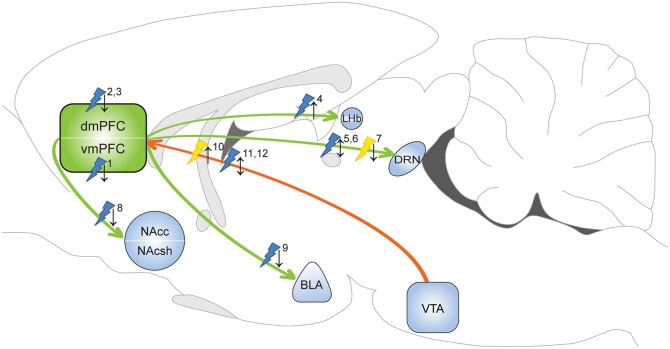
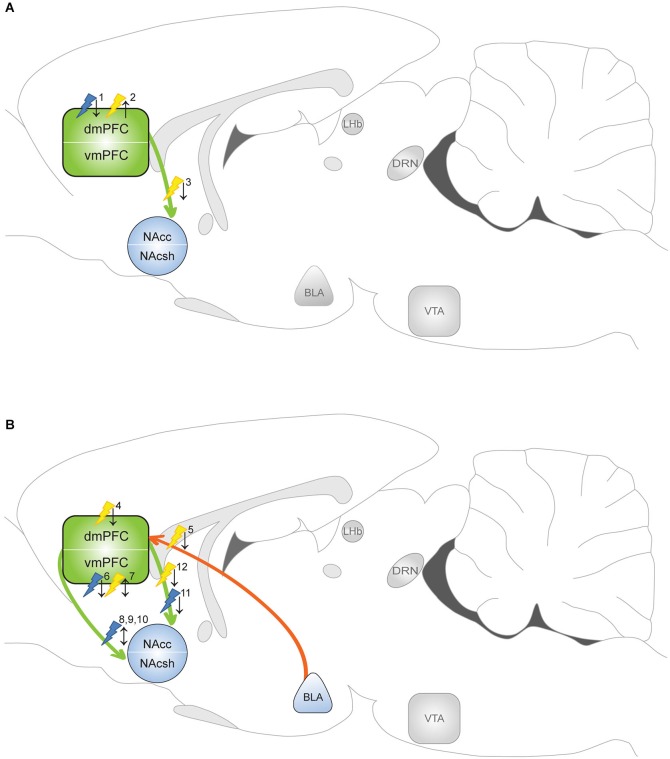
Verification
Claims the paper makes
The claims and statistics of this paper haven’t been checked yet.
Run the check — free, no account needed. It reads the open-access text and checks the sources it cites.
Claims other papers make about this one
Each is checked against this paper’s own text: does it say what the citing paper says it does?
The cited source says what the claim attributes to it.
In the citing paper
“The PFC is known to exert top-down control over a variety of subcortical regions, and recent research has identified a number of circuits originating in the PFC that control behaviors relevant to the treatment of depression, anxiety, and addiction (Figure 3) (56, 173).”
From Psychedelics and Other Psychoplastogens for Treating Mental Illness. (2021) · cites this paper as [56]
The cited source says what the claim attributes to it.
In the citing paper
“Our findings build upon prior studies showing that non-selective activation of the mPFC can reverse behavioral deficits in depression models [36–39]”
From A nucleus accumbens-projecting prefrontal cortex circuit underlies chronic social stress-induced depression-like behaviors (2026) · cites this paper as [39]
Self-check
Percentages, sums and reported differences re-computed from the paper’s own numbers.
The self-check needs the paper’s full text.
Citations
Cites
Diagnostic and Statistical Manual of Mental Disorders
American Psychiatric Association (2013) · doi:10.1176/appi.books.9780890425596 · Cited by 116,369
Diagnostic and Statistical Manual of Mental Disorders
Williams, J. B. W., & First, M. B. (2013) · Oxford University Press eBooks · doi:10.1093/acrefore/9780199975839.013.104 · Cited by 109,845
An Integrative Theory of Prefrontal Cortex Function
Miller, E. K., & Cohen, J. D. (2001) · Annual Review of Neuroscience · doi:10.1146/annurev.neuro.24.1.167 · Cited by 12,803
LeDoux, J. E. (2000) · Annual Review of Neuroscience · doi:10.1146/annurev.neuro.23.1.155 · Cited by 8,444
The neural basis of drug craving: An incentive-sensitization theory of addiction
Robinson, T. (1993) · Brain Research Reviews · doi:10.1016/0165-0173(93)90013-p · Cited by 7,346
Baddeley, A. (1992) · Science · doi:10.1126/science.1736359 · Cited by 5,258
Millisecond-timescale, genetically targeted optical control of neural activity
Boyden, E. S., Zhang, F., Bamberg, E., Nagel, G., & Deisseroth, K. A. (2005) · Nature Neuroscience · doi:10.1038/nn1525 · Cited by 5,015
Deep Brain Stimulation for Treatment-Resistant Depression
Mayberg, H. S., Lozano, A. M., Voon, V., McNeely, H. E., Seminowicz, D., Hamani, C., Schwalb, J. M., & Kennedy, S. H. (2005) · Neuron · doi:10.1016/j.neuron.2005.02.014 · Cited by 4,059
Stress signalling pathways that impair prefrontal cortex structure and function
Arnsten, A. F. T. (2009) · Nature Reviews Neuroscience · doi:10.1038/nrn2648 · Cited by 3,299
Neurodegenerative Disorders: Parkinson's Disease and Huntington's Disease
Hague, S., Klaffke, S., & Bandmann, O. (2006) · IMPERIAL COLLEGE PRESS eBooks · doi:10.1142/9781860948961_0007 · Cited by 2,767
The physiology, signaling, and pharmacology of dopamine receptors
Beaulieu, J.-M., & Gainetdinov, R. R. (2011) · Pharmacological Reviews · doi:10.1124/pr.110.002642 · Cited by 2,763
The Neural Basis of Addiction: A Pathology of Motivation and Choice
Kalivas, P. W., & Volkow, N. D. (2005) · American Journal of Psychiatry · doi:10.1176/appi.ajp.162.8.1403 · Cited by 2,757
Dysfunction of the prefrontal cortex in addiction: neuroimaging findings and clinical implications
Goldstein, R. Z., & Volkow, N. D. (2011) · Nature Reviews Neuroscience · doi:10.1038/nrn3119 · Cited by 2,749
NEURAL MECHANISMS OF ADDICTION: The Role of Reward-Related Learning and Memory
Hyman, S. E., Malenka, R. C., & Nestler, E. J. (2006) · Annual Review of Neuroscience · doi:10.1146/annurev.neuro.29.051605.113009 · Cited by 2,647
Parvalbumin neurons and gamma rhythms enhance cortical circuit performance
Sohal, V. S., Zhang, F., Yizhar, O., & Deisseroth, K. (2009) · Nature · doi:10.1038/nature07991 · Cited by 2,606
Driving fast-spiking cells induces gamma rhythm and controls sensory responses
Cardin, J. A., Carlén, M., Meletis, K., Knoblich, U., Zhang, F., Deisseroth, K., Tsai, L.-H., & Moore, C. I. (2009) · Nature · doi:10.1038/nature08002 · Cited by 2,603
Neocortical excitation/inhibition balance in information processing and social dysfunction
Yizhar, O., Fenno, L. E., Prigge, M., Schneider, F., Davidson, T. J., O’Shea, D. J., Sohal, V. S., Goshen, I., Finkelstein, J., Paz, J. T., et al. (2011) · Nature · doi:10.1038/nature10360 · Cited by 2,454
Cortical inhibitory neurons and schizophrenia
Lewis, D. A., Hashimoto, T., & Volk, D. W. (2005) · Nature Reviews Neuroscience · doi:10.1038/nrn1648 · Cited by 2,297
Neural synchrony in brain disorders: Relevance for cognitive dysfunctions and pathophysiology
Uhlhaas, P. J., & Singer, W. (2006) · Neuron · doi:10.1016/j.neuron.2006.09.020 · Cited by 2,194
Abnormal neural oscillations and synchrony in schizophrenia
Uhlhaas, P. J., & Singer, W. (2010) · Nature Reviews Neuroscience · doi:10.1038/nrn2774 · Cited by 2,120
Animal models of neuropsychiatric disorders
Nestler, E. J., & Hyman, S. E. (2010) · Nature Neuroscience · doi:10.1038/nn.2647 · Cited by 2,023
NEURONAL CIRCUITS OF THE NEOCORTEX
Douglas, R. J., & Martin, K. A. C. (2004) · Annual Review of Neuroscience · doi:10.1146/annurev.neuro.27.070203.144152 · Cited by 1,886
Optogenetics in neural systems
Yizhar, O., Fenno, L. E., Davidson, T. J., Mogri, M., & Deisseroth, K. (2011) · Neuron · doi:10.1016/j.neuron.2011.06.004 · Cited by 1,881
Neurons in medial prefrontal cortex signal memory for fear extinction
Milad, M. R., & Quirk, G. J. (2002) · Nature · doi:10.1038/nature01138 · Cited by 1,836 · cited 2×
“The fear-conditioning paradigm is a widely used animal model to study learning and memory function, as well as extinction of acquired fear memories (LeDoux, 2000; Milad and Quirk, 2012; Maren et al., 2013).”
BackgroundMethodNeural mechanisms of the cognitive model of depression.
Disner, S. G., Beevers, C. G., Haigh, E. A. P., & Beck, A. T. (2011) · Nature Reviews Neuroscience · doi:10.1038/nrn3027 · Cited by 1,718
Optogenetic stimulation of a hippocampal engram activates fear memory recall
Liu, X., Ramirez, S., Pang, P. T., Puryear, C. B., Govindarajan, A., Deisseroth, K. A., & Tonegawa, S. (2012) · Nature · doi:10.1038/nature11028 · Cited by 1,669
The principal features and mechanisms of dopamine modulation in the prefrontal cortex
Seamans, J. K., & Yang, C. R. (2004) · Progress in Neurobiology · doi:10.1016/j.pneurobio.2004.05.006 · Cited by 1,592
Reconsidering anhedonia in depression: Lessons from translational neuroscience
Treadway, M. T., & Zald, D. H. (2011) · Neuroscience & Biobehavioral Reviews · doi:10.1016/j.neubiorev.2010.06.006 · Cited by 1,579
Sesack, S. R., Deutch, A. Y., Roth, R. H., & Bunney, B. S. (1989) · Journal of Comparative Neurology · doi:10.1002/cne.902900205 · Cited by 1,568
Differential projections of the infralimbic and prelimbic cortex in the rat
Vertes, R. P. (2004) · Synapse · doi:10.1002/syn.10279 · Cited by 1,550
The contextual brain: implications for fear conditioning, extinction and psychopathology
Maren, S., Phan, K. L., & Liberzon, I. (2013) · Nature Reviews Neuroscience · doi:10.1038/nrn3492 · Cited by 1,547
The role of medial prefrontal cortex in memory and decision making
Euston, D. R., Gruber, A. J., & McNaughton, B. L. (2012) · Neuron · doi:10.1016/j.neuron.2012.12.002 · Cited by 1,541
Petilla terminology: nomenclature of features of GABAergic interneurons of the cerebral cortex
The Petilla Interneuron Nomenclature Group (PING) (2008) · Nature Reviews Neuroscience · doi:10.1038/nrn2402 · Cited by 1,491
Fear Extinction as a Model for Translational Neuroscience: Ten Years of Progress
Milad, M. R., & Quirk, G. J. (2012) · Annual Review of Psychology · doi:10.1146/annurev.psych.121208.131631 · Cited by 1,466
Natural neural projection dynamics underlying social behavior
Gunaydin, L. A., Grosenick, L., Finkelstein, J. C., Kauvar, I. V., Fenno, L. E., Adhikari, A., Lammel, S., Mirzabekov, J. J., Airan, R. D., Zalocusky, K. A., et al. (2014) · Cell · doi:10.1016/j.cell.2014.05.017 · Cited by 1,389
Anatomical analysis of afferent projections to the medial prefrontal cortex in the rat
Hoover, W. B., & Vertes, R. P. (2007) · Brain Structure and Function · doi:10.1007/s00429-007-0150-4 · Cited by 1,365
The glutamate homeostasis hypothesis of addiction
Kalivas, P. W. (2009) · Nature Reviews Neuroscience · doi:10.1038/nrn2515 · Cited by 1,350
Prefrontal cortex in the rat: Projections to subcortical autonomic, motor, and limbic centers
Gabbott, P. L. A., Warner, T. A., Jays, P. R. L., Salway, P., & Busby, S. J. (2005) · Journal of Comparative Neurology · doi:10.1002/cne.20738 · Cited by 1,227
Sheline, Y. I., Price, J. L., Yan, Z., & Mintun, M. A. (2010) · Proceedings of the National Academy of Sciences · doi:10.1073/pnas.1000446107 · Cited by 1,196
Sierra-Mercado, D., Padilla-Coreano, N., & Quirk, G. J. (2011) · Neuropsychopharmacology · doi:10.1038/npp.2010.184 · Cited by 1,190
Putting a spin on the dorsal-ventral divide of the striatum
Voorn, P., Vanderschuren, L. J. M. J., Groenewegen, H. J., Robbins, T. W., & Pennartz, C. M. A. (2004) · Trends in Neurosciences · doi:10.1016/j.tins.2004.06.006 · Cited by 1,188
The Psychobiology of Depression and Resilience to Stress: Implications for Prevention and Treatment
Southwick, S. M., Vythilingam, M., & Charney, D. S. (2005) · Annual Review of Clinical Psychology · doi:10.1146/annurev.clinpsy.1.102803.143948 · Cited by 1,160
Rapid regulation of depression-related behaviours by control of midbrain dopamine neurons
Chaudhury, D., Walsh, J. J., Friedman, A. K., Juarez, B., Ku, S. M., Koo, J. W., Ferguson, D., Tsai, H.-C., Pomeranz, L., Christoffel, D. J., et al. (2013) · Nature · doi:10.1038/nature11713 · Cited by 1,156
Dual streams of auditory afferents target multiple domains in the primate prefrontal cortex
Romanski, L. M., Tian, B., Fritz, J. B., Mishkin, M., Goldman, P. S., & Rauschecker, J. P. (1999) · Nature Neuroscience · doi:10.1038/16056 · Cited by 1,140
Do rats have a prefrontal cortex?
Uylings, H. B. M., Groenewegen, H. J., & Kolb, B. (2003) · Behavioural Brain Research · doi:10.1016/j.bbr.2003.09.028 · Cited by 1,013
Tuning arousal with optogenetic modulation of locus coeruleus neurons
Carter, M. E., Yizhar, O., Chikahisa, S., Nguyen, H., Adamantidis, A., Nishino, S., Deisseroth, K., & de Lecea, L. (2010) · Nature Neuroscience · doi:10.1038/nn.2682 · Cited by 993
Addiction: A Disease of Learning and Memory
Hyman, S. E. (2005) · American Journal of Psychiatry · doi:10.1176/appi.ajp.162.8.1414 · Cited by 980
Koenigs, M., & Grafman, J. (2009) · Behavioural Brain Research · doi:10.1016/j.bbr.2009.03.004 · Cited by 956 · cited 2×
“Taken together, over the years both clinical and preclinical research implicated the mPFC as a crucial mediator of depressive symptomatology (Koenigs and Grafman, 2009), which triggered a quest for causality and a clarification of the exact contributions of mPFC subregions and their distinct afferent and efferent proj…”
BackgroundAmat, J., Baratta, M. V., Paul, E., Bland, S. T., Watkins, L. R., & Maier, S. F. (2005) · Nature Neuroscience · doi:10.1038/nn1399 · Cited by 931
Channelrhodopsin-2-assisted circuit mapping of long-range callosal projections
Petreanu, L., Huber, D., Sobczyk, A., & Svoboda, K. (2007) · Nature Neuroscience · doi:10.1038/nn1891 · Cited by 930
McFarland, K., Lapish, C. C., & Kalivas, P. W. (2003) · Journal of Neuroscience · doi:10.1523/jneurosci.23-08-03531.2003 · Cited by 884
Heidbreder, C. A., & Groenewegen, H. J. (2003) · Neuroscience & Biobehavioral Reviews · doi:10.1016/j.neubiorev.2003.09.003 · Cited by 882
Cell type-specific loss of BDNF signaling mimics optogenetic control of cocaine reward
Lobo, M. K., Covington, H. E., Chaudhury, D., Friedman, A. K., Sun, H., Damez-Werno, D., Dietz, D. M., Zaman, S., Koo, J. W., Kennedy, P. J., et al. (2010) · Science · doi:10.1126/science.1188472 · Cited by 880
Excitatory transmission from the amygdala to nucleus accumbens facilitates reward seeking
Stuber, G. D., Sparta, D. R., Stamatakis, A. M., van Leeuwen, W. A., Hardjoprajitno, J. E., Cho, S., Tye, K. M., Kempadoo, K. A., Zhang, F., Deisseroth, K., et al. (2011) · Nature · doi:10.1038/nature10194 · Cited by 878
Chronic Stress Causes Frontostriatal Reorganization and Affects Decision-Making
Dias-Ferreira, E., Sousa, J. C., Melo, I., Morgado, P., Mesquita, A. R., Cerqueira, J. J., Costa, R. M., & Sousa, N. (2009) · Science · doi:10.1126/science.1171203 · Cited by 858
Vertes, R. P. (2006) · Neuroscience · doi:10.1016/j.neuroscience.2006.06.027 · Cited by 855
New insights into the classification and nomenclature of cortical GABAergic interneurons
DeFelipe, J., López-Cruz, P. L., Benavides-Piccione, R., Bielza, C., Larrañaga, P., Anderson, S., Burkhalter, A., Cauli, B., Fairén, A., Feldmeyer, D., et al. (2013) · Nature Reviews Neuroscience · doi:10.1038/nrn3444 · Cited by 833
The role of the GluR2 subunit in AMPA receptor function and synaptic plasticity
Isaac, J. T. R., Ashby, M. C., & McBain, C. J. (2007) · Neuron · doi:10.1016/j.neuron.2007.06.001 · Cited by 802
Mattis, J., Tye, K. M., Ferenczi, E. A., Ramakrishnan, C., O'Shea, D. J., Prakash, R., Gunaydin, L. A., Hyun, M., Fenno, L. E., Gradinaru, V., et al. (2012) · Nature Methods · doi:10.1038/nmeth.1808 · Cited by 780
Drug Addiction as a Pathology of Staged Neuroplasticity
Kalivas, P. W., & O’Brien, C. P. (2007) · Neuropsychopharmacology · doi:10.1038/sj.npp.1301564 · Cited by 761
Coordination of Actions and Habits in the Medial Prefrontal Cortex of Rats
Killcross, S. (2003) · Cerebral Cortex · doi:10.1093/cercor/13.4.400 · Cited by 748
Optogenetic investigation of neural circuits underlying brain disease in animal models
Tye, K. M., & Deisseroth, K. (2012) · Nature Reviews Neuroscience · doi:10.1038/nrn3171 · Cited by 745
Extinction circuits for fear and addiction overlap in prefrontal cortex
Peters, J., Kalivas, P. W., & Quirk, G. J. (2009) · Learning & Memory · doi:10.1101/lm.1041309 · Cited by 736
Ross, C. A., Margolis, R. L., Reading, S. A. J., Pletnikov, M. V., & Coyle, J. T. (2006) · Neuron · doi:10.1016/j.neuron.2006.09.015 · Cited by 719
Morgan, M. A., & LeDoux, J. E. (1995) · Behavioral Neuroscience · doi:10.1037/0735-7044.109.4.681 · Cited by 717
Synaptic and Behavioral Profile of Multiple Glutamatergic Inputs to the Nucleus Accumbens
Britt, J. P., Benaliouad, F., McDevitt, R. A., Stuber, G. D., Wise, R. A., & Bonci, A. (2012) · Neuron · doi:10.1016/j.neuron.2012.09.040 · Cited by 716
Temporally precise in vivo control of intracellular signalling
Airan, R. D., Thompson, K. R., Fenno, L. E., Bernstein, H. L., & Deisseroth, K. A. (2009) · Nature · doi:10.1038/nature07926 · Cited by 715
Stress, serotonin, and hippocampal neurogenesis in relation to depression and antidepressant effects
Mahar, I., Bambico, F. R., Mechawar, N., & Nobrega, J. N. (2014) · Neuroscience & Biobehavioral Reviews · doi:10.1016/j.neubiorev.2013.11.009 · Cited by 694
Optogenetic interrogation of neural circuits: technology for probing mammalian brain structures
Zhang, F., Gradinaru, V., Adamantidis, A. R., Durand, R., Airan, R. D., de Lecea, L., & Deisseroth, K. (2010) · Nature Protocols · doi:10.1038/nprot.2009.226 · Cited by 692
Carlén, M., Meletis, K., Siegle, J. H., Cardin, J. A., Futai, K., Vierling-Claassen, D., Rühlmann, C., Jones, S. R., Deisseroth, K., Sheng, M., et al. (2012) · Molecular Psychiatry · doi:10.1038/mp.2011.31 · Cited by 669
Unmanageable motivation in addiction: a pathology in prefrontal-accumbens glutamate transmission
Kalivas, P. W., Volkow, N., & Seamans, J. (2005) · Neuron · doi:10.1016/j.neuron.2005.02.005 · Cited by 657
A prefrontal cortex–brainstem neuronal projection that controls response to behavioural challenge
Warden, M. R., Selimbeyoglu, A., Mirzabekov, J. J., Lo, M., Thompson, K. R., Kim, S.-Y., Adhikari, A., Tye, K. M., Frank, L. M., & Deisseroth, K. (2012) · Nature · doi:10.1038/nature11617 · Cited by 645
Uhlhaas, P. J., Haenschel, C., Nikolic, D., & Singer, W. (2008) · Schizophrenia Bulletin · doi:10.1093/schbul/sbn062 · Cited by 629
Lüscher, C., & Huber, K. M. (2010) · Neuron · doi:10.1016/j.neuron.2010.01.016 · Cited by 627
Antidepressant effect of optogenetic stimulation of the medial prefrontal cortex
Covington, H. E., Lobo, M. K., Maze, I., Vialou, V., Hyman, J. M., Zaman, S., LaPlant, Q., Mouzon, E., Ghose, S., Tamminga, C. A., et al. (2010) · The Journal of Neuroscience · doi:10.1523/jneurosci.1731-10.2010 · Cited by 621
Sartorius, A., Kiening, K. L., Kirsch, P., von Gall, C. C., Haberkorn, U., Unterberg, A. W., Henn, F. A., & Meyer-Lindenberg, A. (2010) · Biological Psychiatry · doi:10.1016/j.biopsych.2009.08.027 · Cited by 611
Durstewitz, D., & Seamans, J. K. (2008) · Biological Psychiatry · doi:10.1016/j.biopsych.2008.05.015 · Cited by 586
Brisch, R., Saniotis, A., Wolf, R. J., Bielau, H., Bernstein, H., Steiner, J. H., Bogerts, B., Braun, A. K., Jankowski, Z., Kumaritlake, J., et al. (2014) · Frontiers in Psychiatry · doi:10.3389/fpsyt.2014.00047 · Cited by 575
HPA Axis Reactivity: A Mechanism Underlying the Associations Among 5-HTTLPR, Stress, and Depression
Gotlib, I. H., Joormann, J., Minor, K. L., & Hallmayer, J. (2008) · Biological Psychiatry · doi:10.1016/j.biopsych.2007.10.008 · Cited by 558
Arnsten, A. F. T., Wang, M. J., & Paspalas, C. D. (2012) · Neuron · doi:10.1016/j.neuron.2012.08.038 · Cited by 538
Infralimbic Prefrontal Cortex Is Responsible for Inhibiting Cocaine Seeking in Extinguished Rats
Peters, J., LaLumiere, R. T., & Kalivas, P. W. (2008) · Journal of Neuroscience · doi:10.1523/jneurosci.1045-08.2008 · Cited by 537
Chemogenetic Tools to Interrogate Brain Functions
Sternson, S. M., & Roth, B. L. (2014) · Annual Review of Neuroscience · doi:10.1146/annurev-neuro-071013-014048 · Cited by 531
Prefrontal parvalbumin interneurons shape neuronal activity to drive fear expression
Courtin, J., Chaudun, F., Rozeske, R. R., Karalis, N., Gonzalez-Campo, C., Wurtz, H., Abdi, A., Baufreton, J., Bienvenu, T. C. M., & Herry, C. (2014) · Nature · doi:10.1038/nature12755 · Cited by 524
The neurobiology of depression and antidepressant action
Willner, P., Scheel-Krüger, J., & Belzung, C. (2013) · Neuroscience & Biobehavioral Reviews · doi:10.1016/j.neubiorev.2012.12.007 · Cited by 519
Fales, C. L., Barch, D. M., Rundle, M. M., Mintun, M. A., Snyder, A. Z., Cohen, J. D., Mathews, J., & Sheline, Y. I. (2008) · Biological Psychiatry · doi:10.1016/j.biopsych.2007.06.012 · Cited by 517
Distinct behavioural and network correlates of two interneuron types in prefrontal cortex
Kvitsiani, D., Ranade, S., Hangya, B., Taniguchi, H., Huang, J. Z., & Kepecs, A. (2013) · Nature · doi:10.1038/nature12176 · Cited by 516
Rescuing cocaine-induced prefrontal cortex hypoactivity prevents compulsive cocaine seeking
Chen, B. T., Yau, H.-J., Hatch, C., Kusumoto-Yoshida, I., Cho, S. L., Hopf, F. W., & Bonci, A. (2013) · Nature · doi:10.1038/nature12024 · Cited by 498
Depression and Social Identity: An Integrative Review
Cruwys, T., Haslam, S. A., Dingle, G. A., Haslam, C., & Jetten, J. (2014) · Personality and Social Psychology Review · doi:10.1177/1088868314523839 · Cited by 498
Millisecond-Timescale Optical Control of Neural Dynamics in the Nonhuman Primate Brain
Han, X., Qian, X., Bernstein, J. G., Zhou, H., Franzesi, G. T., Stern, P., Bronson, R. T., Graybiel, A. M., Desimone, R., & Boyden, E. S. (2009) · Neuron · doi:10.1016/j.neuron.2009.03.011 · Cited by 497
Han, X., Chow, B. Y., Zhou, H., Klapoetke, N. C., Chuong, A. S., Rajimehr, R., Yang, A., Baratta, M. V., Winkle, J. A., Desimone, R., et al. (2011) · Frontiers in Systems Neuroscience · doi:10.3389/fnsys.2011.00018 · Cited by 490
Enhancing depression mechanisms in midbrain dopamine neurons achieves homeostatic resilience
Friedman, A. K., Walsh, J. J., Juarez, B., Ku, S. M., Chaudhury, D., Wang, J., Li, X., Dietz, D. M., Pan, N., Vialou, V. F., et al. (2014) · Science · doi:10.1126/science.1249240 · Cited by 484
Targeting and Readout Strategies for Fast Optical Neural ControlIn VitroandIn Vivo
Gradinaru, V., Thompson, K. R., Zhang, F., Mogri, M., Kay, K., Schneider, M. B., & Deisseroth, K. A. (2007) · Journal of Neuroscience · doi:10.1523/jneurosci.3578-07.2007 · Cited by 482
Pharmacology and behavioral pharmacology of the mesocortical dopamine system
Tzschentke, T. M. (2001) · Progress in Neurobiology · doi:10.1016/s0301-0082(00)00033-2 · Cited by 481
Neurocognitive Mechanisms in Depression: Implications for Treatment
Clark, L., Chamberlain, S. R., & Sahakian, B. J. (2009) · Annual Review of Neuroscience · doi:10.1146/annurev.neuro.31.060407.125618 · Cited by 446
A cognitive processing model of alcohol craving and compulsive alcohol use
Tiffany, S. T., & Conklin, C. A. (2000) · Addiction · doi:10.1046/j.1360-0443.95.8s2.3.x · Cited by 445
An optogenetic toolbox designed for primates
Diester, I., Kaufman, M. T., Mogri, M., Pashaie, R., Goo, W., Yizhar, O., Ramakrishnan, C., Deisseroth, K., & Shenoy, K. V. (2011) · Nature Neuroscience · doi:10.1038/nn.2749 · Cited by 443
Reversal of cocaine-evoked synaptic potentiation resets drug-induced adaptive behaviour
Pascoli, V., Turiault, M., & Lüscher, C. (2011) · Nature · doi:10.1038/nature10709 · Cited by 440
Parvalbumin-immunoreactive neurons are reduced in the prefrontal cortex of schizophrenics
BEASLEY, C., & REYNOLDS, G. (1997) · Schizophrenia Research · doi:10.1016/s0920-9964(96)00122-3 · Cited by 426
FACS-array profiling of striatal projection neuron subtypes in juvenile and adult mouse brains
Lobo, M. K., Karsten, S. L., Gray, M., Geschwind, D. H., & Yang, X. W. (2006) · Nature Neuroscience · doi:10.1038/nn1654 · Cited by 411
Czéh, B., Keuker, J. I. H., Ryguła, R., Abumaria, N., Hiemke, C., Domenici, E., & Fuchs, E. (2006) · Neuropsychopharmacology · doi:10.1038/sj.npp.1301275 · Cited by 409
Contrasting forms of cocaine-evoked plasticity control components of relapse
Pascoli, V., Terrier, J. E., Espallergues, J., Valjent, E., O’Connor, E. C., & Lüscher, C. (2014) · Nature · doi:10.1038/nature13257 · Cited by 402
McLaughlin, J., & See, R. E. (2002) · Psychopharmacology · doi:10.1007/s00213-002-1196-x · Cited by 402
Construction of implantable optical fibers for long-term optogenetic manipulation of neural circuits
Sparta, D. R., Stamatakis, A. M., Phillips, J. L., Hovelsø, N., van Zessen, R., & Stuber, G. D. (2012) · Nature Protocols · doi:10.1038/nprot.2011.413 · Cited by 394
Synaptic Encoding of Fear Extinction in mPFC-amygdala Circuits
Cho, J.-H., Deisseroth, K. A., & Bolshakov, V. Y. (2013) · Neuron · doi:10.1016/j.neuron.2013.09.025 · Cited by 380
Noradrenergic modulation of arousal
Berridge, C. W. (2008) · Brain Research Reviews · doi:10.1016/j.brainresrev.2007.10.013 · Cited by 368
Glutamate Release in the Nucleus Accumbens Core Is Necessary for Heroin Seeking
LaLumiere, R. T., & Kalivas, P. W. (2008) · Journal of Neuroscience · doi:10.1523/jneurosci.5129-07.2008 · Cited by 364
Ma, Y.-Y., Lee, B. R., Wang, X., Guo, C., Liu, L., Cui, R., Lan, Y., Balcita-Pedicino, J. J., Wolf, M. E., Sesack, S. R., et al. (2014) · Neuron · doi:10.1016/j.neuron.2014.08.023 · Cited by 344
Coutureau, E., & Killcross, S. (2003) · Behavioural Brain Research · doi:10.1016/j.bbr.2003.09.025 · Cited by 342
Seif, T., Chang, S., Simms, J. A., Gibb, S. L., Dadgar, J., Chen, B. T., Harvey, B. K., Dorit Ron, A., Messing, R. O., Bonci, A., et al. (2013) · Nature Neuroscience · doi:10.1038/nn.3445 · Cited by 325
From maps to mechanisms through neuroimaging of schizophrenia
Meyer‐Lindenberg, A. (2010) · Nature · doi:10.1038/nature09569 · Cited by 325
Antidepressant-Like Effects of Medial Prefrontal Cortex Deep Brain Stimulation in Rats
Hamani, C., Diwan, M., Macedo, C. E., Brandão, M. L., Shumake, J., Gonzalez-Lima, F., Raymond, R., Lozano, A. M., Fletcher, P. J., & Nobrega, J. N. (2010) · Biological Psychiatry · doi:10.1016/j.biopsych.2009.08.025 · Cited by 324 · cited 1×
“As transgenic mouse and rat Cre-driver lines become increasingly available, this opens new avenues to investigate the role of other mPFC subpopulations in cognitive performance and psychiatric disorders.”
BackgroundA dual operator view of habitual behavior reflecting cortical and striatal dynamics
Smith, K. S., & Graybiel, A. M. (2013) · Neuron · doi:10.1016/j.neuron.2013.05.038 · Cited by 324
Albert, P. R., Vahid-Ansari, F., & Luckhart, C. (2014) · Frontiers in Behavioral Neuroscience · doi:10.3389/fnbeh.2014.00199 · Cited by 321
Cognitive dysfunction in depression: Neurocircuitry and new therapeutic strategies
Murrough, J. W., Iacoviello, B., Neumeister, A., Charney, D. S., & Iosifescu, D. V. (2011) · Neurobiology of Learning and Memory · doi:10.1016/j.nlm.2011.06.006 · Cited by 307 · cited 3×
“Cognitive decline characterized by impairments in working memory and decision making, loss of concentration and attentional biases is also considered a key factor in perpetuation of the depressive state (Murrough et al., 2011).”
BackgroundVialou, V., Bagot, R. C., Cahill, M. E., Ferguson, D., Robison, A. J., Dietz, D. M., Fallon, B., Mazei-Robison, M., Ku, S. M., Harrigan, E., et al. (2014) · The Journal of Neuroscience · doi:10.1523/jneurosci.1787-13.2014 · Cited by 283 · cited 3×
“Vialou et al. (2014) showed that PLC-NAc and PLC-BLA projections are differentially involved in depression susceptibility and anxiety-related behavior.”
BackgroundMethodInfluentialSchizophrenia: More dopamine, more D 2 receptors
Seeman, P., & Kapur, S. (2000) · Proceedings of the National Academy of Sciences · doi:10.1073/pnas.97.14.7673 · Cited by 279
Lisman, J. E. (2011) · Current Opinion in Neurobiology · doi:10.1016/j.conb.2011.10.018 · Cited by 279
Differential regulation of fronto-executive function by the monoamines and acetylcholine
Robbins, T., & Roberts, A. (2007) · Cerebral Cortex · doi:10.1093/cercor/bhm066 · Cited by 279
The anatomical relationships of the prefrontal cortex with limbic structures and the basal ganglia
Groenewegen, H. J., Wright, C. I., & Uylings, H. B. M. (1997) · Journal of Psychopharmacology · doi:10.1177/026988119701100202 · Cited by 268
The neurophysics of consciousness
John, E. R. (2002) · Brain Research Reviews · doi:10.1016/s0165-0173(02)00142-x · Cited by 262
New technologies for examining the role of neuronal ensembles in drug addiction and fear
Cruz, F. C., Koya, E., Guez‐Barber, D., Bossert, J. M., Lupica, C. R., Shaham, Y., & Hope, B. T. (2013) · Nature reviews. Neuroscience · doi:10.1038/nrn3597 · Cited by 251
Lobo, M. K., Zaman, S., Damez-Werno, D. M., Koo, J. W., Bagot, R. C., DiNieri, J. A., Nugent, A., Finkel, E., Chaudhury, D., Chandra, R., et al. (2013) · The Journal of Neuroscience · doi:10.1523/jneurosci.1875-13.2013 · Cited by 245
Optogenetic inhibition of cocaine seeking in rats
Stefanik, M. T., Moussawi, K., Kupchik, Y. M., Smith, K. C., Miller, R. L., Huff, M. L., Deisseroth, K. A., Kalivas, P. W., & LaLumiere, R. T. (2012) · Addiction Biology · doi:10.1111/j.1369-1600.2012.00479.x · Cited by 241
Role of ventral medial prefrontal cortex in incubation of cocaine craving
Koya, E., Uejima, J. L., Wihbey, K. A., Bossert, J. M., Hope, B. T., & Shaham, Y. (2008) · Neuropharmacology · doi:10.1016/j.neuropharm.2008.04.022 · Cited by 239
Bossert, J. M., Stern, A. L., Theberge, F. R. M., Marchant, N. J., Wang, H.-L., Morales, M., & Shaham, Y. (2012) · The Journal of Neuroscience · doi:10.1523/jneurosci.0005-12.2012 · Cited by 223
Corticothalamic feedback and sensory processing
Alitto, H. J., & Usrey, W. M. (2003) · Current Opinion in Neurobiology · doi:10.1016/s0959-4388(03)00096-5 · Cited by 220
Optogenetically Induced Behavioral and Functional Network Changes in Primates
Gerits, A., Farivar, R., Rosen, B. R., Wald, L. L., Boyden, E. S., & Vanduffel, W. (2012) · Current Biology · doi:10.1016/j.cub.2012.07.023 · Cited by 220
Associative learning mechanisms underpinning the transition from recreational drug use to addiction
Hogarth, L., Balleine, B. W., Corbit, L. H., & Killcross, S. (2012) · Annals of the New York Academy of Sciences · doi:10.1111/j.1749-6632.2012.06768.x · Cited by 219
Gee, S., Ellwood, I., Patel, T., Luongo, F., Deisseroth, K., & Sohal, V. S. (2012) · The Journal of Neuroscience · doi:10.1523/jneurosci.5835-11.2012 · Cited by 214
Thalamic control of layer 1 circuits in prefrontal cortex
Cruikshank, S. J., Ahmed, O. J., Stevens, T. R., Patrick, S. L., Gonzalez, A. N., Elmaleh, M., & Connors, B. W. (2012) · The Journal of Neuroscience · doi:10.1523/jneurosci.3231-12.2012 · Cited by 212
Lee, A. T., Vogt, D. L., Rubenstein, J. L. R., & Sohal, V. S. (2014) · Journal of Neuroscience · doi:10.1523/jneurosci.1157-14.2014 · Cited by 211
Gilmartin, M. R., & Helmstetter, F. J. (2010) · Learning & Memory · doi:10.1101/lm.1597410 · Cited by 208
Rogers, J. L., Ghee, S. M., & See, R. E. (2007) · Neuroscience · doi:10.1016/j.neuroscience.2007.10.012 · Cited by 207
Pyramidal Neurons in Prefrontal Cortex Receive Subtype-Specific Forms of Excitation and Inhibition
Lee, A. T., Gee, S. M., Vogt, D., Patel, T., Rubenstein, J. L., & Sohal, V. S. (2014) · Neuron · doi:10.1016/j.neuron.2013.10.031 · Cited by 201
Little, J. P., & Carter, A. G. (2013) · Journal of Neuroscience · doi:10.1523/jneurosci.2385-13.2013 · Cited by 187
Gilmartin, M. R., & McEchron, M. D. (2005) · Behavioral Neuroscience · doi:10.1037/0735-7044.119.6.1496 · Cited by 183
The infralimbic cortex regulates the consolidation of extinction after cocaine self-administrationPreprint
LaLumiere, R. T., Niehoff, K. E., & Kalivas, P. W. (2010) · Learning & Memory · doi:10.1101/lm.1576810 · Cited by 182
Medial prefrontal D1 dopamine neurons control food intake
Land, B. B., Narayanan, N. S., Liu, R.-J., Gianessi, C. A., Brayton, C. E., Grimaldi, D. M., Sarhan, M., Guarnieri, D. J., Deisseroth, K. A., Aghajanian, G. K., et al. (2014) · Nature Neuroscience · doi:10.1038/nn.3625 · Cited by 180
Hamani, C., Machado, D. C., Hipólide, D. C., Dubiela, F. P., Suchecki, D., de Macedo, C. E. A., Tescarollo, F. C., Martins, U., Covolan, L., & Nóbrega, J. N. (2011) · Biological Psychiatry · doi:10.1016/j.biopsych.2011.08.025 · Cited by 178
Ralph, R. J., Varty, G. B., Kelly, M. A., Wang, Y.-M., Caron, M. G., Rubinstein, M., Grandy, D. K., Low, M. J., & Geyer, M. A. (1999) · The Journal of Neuroscience · doi:10.1523/jneurosci.19-11-04627.1999 · Cited by 174
Smith, K. S., Virkud, A., Deisseroth, K., & Graybiel, A. M. (2012) · Proceedings of the National Academy of Sciences · doi:10.1073/pnas.1216264109 · Cited by 173
Prefrontal cortex plasticity mechanisms in drug seeking and relapse
van den Oever, M. C., Spijker, S., Smit, A. B., & Vries, T. J. D. (2009) · Neuroscience & Biobehavioral Reviews · doi:10.1016/j.neubiorev.2009.11.016 · Cited by 172
Self-citationDeep brain stimulation for treatment-resistant depression
Holtzheimer, P. E., & Hamani, C. (2014) · doi:10.2217/ebo.13.577 · Cited by 172
Neural Correlates of Interval Timing in Rodent Prefrontal Cortex
Kim, J., Ghim, J.-W., Lee, J. H., & Jung, M. W. (2013) · Journal of Neuroscience · doi:10.1523/jneurosci.1443-13.2013 · Cited by 170
Optogenetics in primates: monkey see monkey look
Jazayeri, M., Lindbloom-Brown, Z., & Horwitz, G. D. (2011) · Nature Neuroscience · doi:10.1038/nn.3210 · Cited by 163
Anterior Prefrontal Cortex Inhibition Impairs Control over Social Emotional Actions
Volman, I., Roelofs, K., Koch, S. B. J., Verhagen, L., & Toni, I. (2011) · Current Biology · doi:10.1016/j.cub.2011.08.050 · Cited by 160
Optogenetic insights on the relationship between anxiety-related behaviors and social deficits
Allsop, S. A., Vander Weele, C. M., Wichmann, R., & Tye, K. M. (2014) · Frontiers in Behavioral Neuroscience · doi:10.3389/fnbeh.2014.00241 · Cited by 150
Dendritic Spine Heterogeneity Determines Afferent-Specific Hebbian Plasticity in the Amygdala
Humeau, Y., Herry, C., Kemp, N., Shaban, H., Fourcaudot, E., Bissière, S., & Lüthi, A. (2005) · Neuron · doi:10.1016/j.neuron.2004.12.019 · Cited by 148
Chudasama, Y., Dalley, J. W., Nathwani, F., Bouger, P., & Robbins, T. W. (2004) · Learning & Memory · doi:10.1101/lm.70904 · Cited by 146
Hamani, C., Diwan, M., Isabella, S., Lozano, A. M., & Nobrega, J. N. (2010) · Journal of Psychiatric Research · doi:10.1016/j.jpsychires.2009.12.010 · Cited by 145
Subcircuit-specific neuromodulation in the prefrontal cortex
Dembrow, N. C., & Johnston, D. (2014) · Frontiers in Neural Circuits · doi:10.3389/fncir.2014.00054 · Cited by 141
Challis, C., Beck, S. G., & Berton, O. (2014) · Frontiers in Behavioral Neuroscience · doi:10.3389/fnbeh.2014.00043 · Cited by 140
Modulation of medial prefrontal cortical activity using in vivo recordings and optogenetics
Ji, G., & Neugebauer, V. (2012) · Molecular Brain · doi:10.1186/1756-6606-5-36 · Cited by 138
Effects of dopamine antagonists on the timing of two intervals
Drew, M. R., Fairhurst, S., Malapani, C., Horvitz, J. C., & Balsam, P. D. (2003) · Pharmacology Biochemistry and Behavior · doi:10.1016/s0091-3057(03)00036-4 · Cited by 137
The role of medial prefrontal cortex in extinction and reinstatement of alcohol‐seeking in rats
Willcocks, A. L., & McNally, G. P. (2012) · European Journal of Neuroscience · doi:10.1111/ejn.12031 · Cited by 136
Two Types of Nicotinic Receptors Mediate an Excitation of Neocortical Layer I Interneurons
Christophe, E., Roebuck, A., Staiger, J. F., Lavery, D. J., Charpak, S., & Audinat, E. (2002) · Journal of Neurophysiology · doi:10.1152/jn.2002.88.3.1318 · Cited by 130
Sparta, D. R., Hovelsø, N., Mason, A. O., Kantak, P. A., Ung, R. L., Decot, H., & Stuber, G. D. (2014) · Journal of Neuroscience · doi:10.1523/jneurosci.0235-13.2014 · Cited by 128
Stefanik, M. T., & Kalivas, P. W. (2013) · Frontiers in Behavioral Neuroscience · doi:10.3389/fnbeh.2013.00213 · Cited by 128
Subcellular Synaptic Connectivity of Layer 2 Pyramidal Neurons in the Medial Prefrontal Cortex
Little, J. P., & Carter, A. G. (2012) · Journal of Neuroscience · doi:10.1523/jneurosci.1616-12.2012 · Cited by 128
Prefrontal D1 dopamine signaling is required for temporal control
Narayanan, N. S., Land, B. B., Solder, J. E., Deisseroth, K. A., & Dileone, R. (2012) · Proceedings of the National Academy of Sciences · doi:10.1073/pnas.1211258109 · Cited by 128
Optogenetic inactivation modifies monkey visuomotor behavior
Cavanaugh, J., Monosov, I. E., McAlonan, K., Berman, R., Smith, M. K., Cao, V., Wang, K. H., Boyden, E. S., & Wurtz, R. H. (2012) · Neuron · doi:10.1016/j.neuron.2012.10.016 · Cited by 124
Ramos, B. P., Stark, D., Verduzco, L., van Dyck, C. H., & Arnsten, A. F. T. (2006) · Learning & Memory · doi:10.1101/lm.298006 · Cited by 124
New insights into the therapeutic potential of Girk channels
Luján, R., de Velasco, E. M. F., Aguado, C., & Wickman, K. (2013) · Trends in Neurosciences · doi:10.1016/j.tins.2013.10.006 · Cited by 123
Insights into Cortical Oscillations Arising from Optogenetic Studies
Sohal, V. S. (2012) · Biological Psychiatry · doi:10.1016/j.biopsych.2012.01.024 · Cited by 118
Prefrontal Activity Links Nonoverlapping Events in Memory
Gilmartin, M. R., Miyawaki, H., Helmstetter, F. J., & Diba, K. (2013) · Journal of Neuroscience · doi:10.1523/jneurosci.0144-13.2013 · Cited by 116
Hübner, C., Bosch, D., Gall, A., Lüthi, A., & Ehrlich, I. (2014) · Frontiers in Behavioral Neuroscience · doi:10.3389/fnbeh.2014.00064 · Cited by 115
Controlling the Brain with Light
Deisseroth, K. A. (2010) · Scientific American · doi:10.1038/scientificamerican1110-48 · Cited by 112
Noradrenaline and Dopamine Elevations in the Rat Prefrontal Cortex in Spatial Working Memory
Rossetti, Z. L., & Carboni, S. (2005) · Journal of Neuroscience · doi:10.1523/jneurosci.3038-04.2005 · Cited by 110
Zhang, Z., Matos, S. C., Jego, S., Adamantidis, A., & Séguéla, P. (2013) · PLoS ONE · doi:10.1371/journal.pone.0066122 · Cited by 110
Cortical Control of Affective Networks
Kumar, S., Black, S. J., Hultman, R., Szabo, S. T., DeMaio, K. D., Du, J., Katz, B. M., Feng, G., Covington, H. E., & Dzirasa, K. (2013) · The Journal of Neuroscience · doi:10.1523/jneurosci.0092-12.2013 · Cited by 110
Medial prefrontal cortex neuronal circuits in fear behavior
Courtin, J., Bienvenu, T., Einarsson, E. Ö., & Herry, C. (2013) · Neuroscience · doi:10.1016/j.neuroscience.2013.03.001 · Cited by 108
Beevers, C. G., Clasen, P., Stice, E., & Schnyer, D. (2010) · Neuroscience · doi:10.1016/j.neuroscience.2010.01.047 · Cited by 108
Veerakumar, A., Challis, C., Gupta, P., Da, J., Upadhyay, A., Beck, S. G., & Berton, O. (2014) · Biological Psychiatry · doi:10.1016/j.biopsych.2013.12.009 · Cited by 106
Selective presynaptic enhancement of the prefrontal cortex to nucleus accumbens pathway by cocaine
Beroun, A., Lee, B. R., Huang, Y. H., Dong, Y., & Schlüter, O. M. (2012) · Proceedings of the National Academy of Sciences · doi:10.1073/pnas.1206287110 · Cited by 102
Neural correlates of social approach and withdrawal in patients with major depression
Derntl, B., Seidel, E., Eickhoff, S. B., Kellermann, T., Gur, R. C., Schneider, F. W., & Habel, U. (2011) · Social Neuroscience · doi:10.1080/17470919.2011.579800 · Cited by 102
Progress in understanding mood disorders: optogenetic dissection of neural circuits
Lammel, S., Tye, K. M., & Warden, M. R. (2014) · Genes, Brain and Behavior · doi:10.1111/gbb.12049 · Cited by 98
DREADDs: novel tools for drug discovery and development
Lee, H.-M., Giguère, P. M., & Roth, B. L. (2013) · Drug Discovery Today · doi:10.1016/j.drudis.2013.10.018 · Cited by 97
Illuminating circuitry relevant to psychiatric disorders with optogenetics
Steinberg, E. E., Christoffel, D. J., Deisseroth, K., & Malenka, R. C. (2015) · Current Opinion in Neurobiology · doi:10.1016/j.conb.2014.08.004 · Cited by 92
Dunnett, S. B. (1999) · Behavioural Brain Research · doi:10.1016/s0166-4328(99)00076-5 · Cited by 90
van den Oever, M. C., Rotaru, D. C., Heinsbroek, J. A., Gouwenberg, Y., Deisseroth, K. A., Stuber, G. D., Mansvelder, H. D., & Smit, A. B. (2013) · Journal of Neuroscience · doi:10.1523/jneurosci.2412-13.2013 · Cited by 85
Self-citationPrefrontal cortical mechanisms underlying delayed alternation in mice
Rossi, M. A., Hayrapetyan, V. Y., Maimon, B. E., Mak, K., Je, H. S., & Yin, H. H. (2012) · Journal of Neurophysiology · doi:10.1152/jn.01060.2011 · Cited by 81
Transient inactivation of the infralimbic cortex induces antidepressant-like effects in the rat
Slattery, D. A., Neumann, I. D., & Cryan, J. F. (2011) · Journal of Psychopharmacology · doi:10.1177/0269881110368873 · Cited by 77
Optogenetic Insights into Social Behavior Function
Yizhar, O. (2012) · Biological Psychiatry · doi:10.1016/j.biopsych.2011.12.029 · Cited by 74
Calu, D. J., Kawa, A. B., Marchant, N. J., Navarre, B. M., Henderson, M. J., Chen, B., Yau, H., Bossert, J. M., Schoenbaum, G. M., Deisseroth, K. A., et al. (2013) · Journal of Neuroscience · doi:10.1523/jneurosci.2016-12.2013 · Cited by 73
Perceived stress predicts altered reward and loss feedback processing in medial prefrontal cortex
Treadway, M. T., Buckholtz, J. W., & Zald, D. H. (2013) · Frontiers in Human Neuroscience · doi:10.3389/fnhum.2013.00180 · Cited by 72
Targeting cocaine versus heroin memories: divergent roles within ventromedial prefrontal cortex
Peters, J., Pattij, T., & Vries, T. J. D. (2013) · Trends in Pharmacological Sciences · doi:10.1016/j.tips.2013.10.004 · Cited by 71
Chang, C. H., Chen, M. C., Qiu, M. H., & Lu, J. (2014) · Neuropharmacology · doi:10.1016/j.neuropharm.2014.07.005 · Cited by 69
Optogenetics to study the circuits of fear- and depression-like behaviors: A critical analysis
Belzung, C., Turiault, M., & Griebel, G. (2014) · Pharmacology Biochemistry and Behavior · doi:10.1016/j.pbb.2014.04.002 · Cited by 65
Klein, J., Winter, C., Coquery, N., Heinz, A., Morgenstern, R., Kupsch, A. R., & Juckel, G. (2010) · Behavioural Brain Research · doi:10.1016/j.bbr.2010.04.036 · Cited by 57
Martín‐García, E., Courtin, J., Renault, P., Fiancette, J.-F., Wurtz, H., Simonnet, A., Levet, F., Herry, C., & Deroche‐Gamonet, V. (2014) · Neuropsychopharmacology · doi:10.1038/npp.2014.66 · Cited by 55
A Dual Operator View of Habitual Behavior Reflecting Cortical and Striatal Dynamics
Smith, K. S., & Graybiel, A. M. (2013) · Neuron · doi:10.1016/j.neuron.2013.07.032 · Cited by 53
Potential Utility of Optogenetics in the Study of Depression
Lobo, M. K., Nestler, E. J., & Covington, H. E. (2012) · Biological Psychiatry · doi:10.1016/j.biopsych.2011.12.026 · Cited by 51
Cocaine-induced adaptations in metabotropic inhibitory signaling in the mesocorticolimbic system
Hearing, M. C., Zink, A. N., & Wickman, K. (2012) · Reviews in the Neurosciences · doi:10.1515/revneuro-2012-0045 · Cited by 50
[Cortical inhibitory neurons].
Сухов, А. Г. (1968) · PubMed · Cited by 36
Optogenetics in psychiatric diseases
Touriño, C., Eban-Rothschild, A., & de Lecea, L. (2013) · Current Opinion in Neurobiology · doi:10.1016/j.conb.2013.03.007 · Cited by 30
Cho, K. K. A., & Sohal, V. S. (2014) · Human Molecular Genetics · doi:10.1093/hmg/ddu225 · Cited by 19
Light up your life: Optogenetics for depression?
Albert, P. R. (2014) · Journal of Psychiatry and Neuroscience · doi:10.1503/jpn.130267 · Cited by 18
Lubbers, B. R., van Mourik, Y., Schetters, D., Smit, A. B., Vries, T. J. D., & Spijker, S. (2014) · Biological Psychiatry · doi:10.1016/j.biopsych.2014.02.001 · Cited by 18
Self-citationAnimal models of neuropsychiatric
Hyman, S. E. (2010) · Cited by 18
Optogenetic neuronal control in schizophrenia
Peled, A. (2011) · Medical Hypotheses · doi:10.1016/j.mehy.2011.03.009 · Cited by 16
Research works printed but not linked: 1
- World Health Organization, 2012, Depression Fact Sheet No. 290.
Cited by
Sorted by citations
The Role of the Medial Prefrontal Cortex in the Conditioning and Extinction of Fear
Giustino, T. F., & Maren, S. (2015) · Frontiers in Behavioral Neuroscience · doi:10.3389/fnbeh.2015.00298 · Cited by 519
Medial prefrontal cortex in neurological diseases
Xu, P., Chen, A., Li, Y., Xing, X., & Lü, H. (2019) · Physiological Genomics · doi:10.1152/physiolgenomics.00006.2019 · Cited by 360
The human BNST: functional role in anxiety and addiction
Avery, S. N., Clauss, J. A., & Blackford, J. U. (2016) · Neuropsychopharmacology · doi:10.1038/npp.2015.185 · Cited by 331
Ko, J. (2017) · Frontiers in Neural Circuits · doi:10.3389/fncir.2017.00041 · Cited by 229
Psychedelic-inspired drug discovery using an engineered biosensor
Dong, C., Ly, C., Dunlap, L. E., Vargas, M. V., Sun, J., Hwang, I.-W., Azinfar, A., Oh, W. C., Wetsel, W. C., Olson, D. E., et al. (2021) · Cell · doi:10.1016/j.cell.2021.03.043 · Cited by 213
Metadata
- Authors
- Riga, D., Matos, M. R., Glas, A., Smit, A. B., Spijker, S., & Van den Oever, M. C.
- Affiliations
- Amsterdam Neuroscience (NL)
- Corresponding author
- Van den Oever, Michel C.
- Venue
- Frontiers in Systems Neuroscience
- Publisher
- Frontiers Media SA
- Published
- 2014-12-09
- Volume
- 8
- Pages
- 230-230
- ISSN
- 1662-5137 (ISSN-L)
- PMC
- PMC4260491
- OpenAlex
- W2035346633
- Cited by
- 208
- References
- 203
- Citations by year
- 2026: 5 · 2025: 10 · 2024: 15 · 2023: 16 · 2022: 22 · 2021: 29 · 2020: 22 · 2019: 20 · 2018: 15 · 2017: 19 · 2016: 25 · 2015: 10
- FWCI
- 2.06
- Type
- journal article
- Language
- en
- Open access
- gold
- doi.org
- Licence
- cc-by
- Locations
- Frontiers in Systems Neuroscience (publishedVersion, cc-by)
- Europe PMC (PubMed Central) (publishedVersion, cc-by)
- PubMed Central (publishedVersion, cc-by)
- PubMed (publishedVersion)
- VU Research Portal (publishedVersion, other-oa)
- DOAJ (DOAJ: Directory of Open Access Journals) (submittedVersion, cc-by-sa)
- Data Archiving and Networked Services (DANS) (submittedVersion, other-oa)
- Funders
- ZonMw
- Hersenstichting
- FP7 People: Marie-Curie Actions (607508, FP7-PEOPLE-2013-ITN, FP7-PEOPLE-2013)
- Topics
- Life Sciences › Neuroscience › Cellular and Molecular Neuroscience › Neurotransmitter Receptor Influence on Behavior
- Life Sciences › Neuroscience › Cellular and Molecular Neuroscience › Neuroscience and Neuropharmacology Research
- Life Sciences › Neuroscience › Cognitive Neuroscience › Neural and Behavioral Psychology Studies
- Keywords
- medial prefrontal cortex, optogenetics, neural circuits, neuronal subpopulations, mental illness, cognitive processes, animal models
About these checks
Registry, retraction, Cites and statistics results are computed, not judged, with one exception: a printed reference that no index lists is read once by a model before it counts as a citation error. Claims are extracted by a model and kept only when their quote appears verbatim in the text; each cited source is then checked, with a model’s help, for whether it says what the claim relies on. Those verdicts can be wrong — read the claim’s quote and the cited source before relying on one.
Statistics and arithmetic are recomputed, not judged.
Confidence bands are shown only for fields calibrated on our annotated test set. None is calibrated yet, so no band is shown.
What counts as a claim ›How we measure confidence ›How we check this ›
Are you an author, or do you see a problem with this page? Request a review
