

Meal timing and its role in obesity and associated diseases
Open accessThe DOI matches its Crossref record; 196 of the 199 references it cites were found in a registry or an index; 67 of the 103 sources its claims cite were checked for support.
Abstract
Meal timing emerges as a crucial factor influencing metabolic health that can be explained by the tight interaction between the endogenous circadian clock and metabolic homeostasis. Mistimed food intake, such as delayed or nighttime consumption, leads to desynchronization of the internal circadian clock and is associated with an increased risk for obesity and associated metabolic disturbances such as type 2 diabetes and cardiovascular diseases. Conversely, meal timing aligned with cellular rhythms can optimize the performance of tissues and organs. In this review, we provide an overview of the metabolic effects of meal timing and discuss the underlying mechanisms. Additionally, we explore factors influencing meal timing, including internal determinants such as chronotype and genetics, as well as external influences like social factors, cultural aspects, and work schedules. This review could contribute to defining meal-timing-based recommendations for public health initiatives and developing guidelines for effective lifestyle modifications targeting the prevention and treatment of obesity and associated metabolic diseases. Furthermore, it sheds light on crucial factors that must be considered in the design of future food timing intervention trials.
Overview
CoChat Summary
TL;DR
This narrative review synthesizes evidence that meal timing interacts tightly with the endogenous circadian clock, such that mistimed eating (delayed or nighttime intake) desynchronizes internal clocks and raises risk for obesity, type 2 diabetes, and cardiovascular disease. It surveys underlying mechanisms, determinants of meal timing, and time-restricted eating as a potential intervention.
Key findings
- Mistimed food intake is associated with weight gain, increased body fat, impaired glucose tolerance, insulin resistance, higher blood pressure, elevated cholesterol, and increased risk of cardiovascular disease, diabetes, and metabolic syndrome; in mice, feeding during the rest (light) phase produced greater weight gain than feeding during the active (dark) phase.
- Eating the same meal in the evening versus morning lowered resting metabolic rate and increased glycemic/insulinemic responses; later dinner times worsened next-day postprandial glucose after breakfast, while consuming most calories in the morning improved glucose tolerance, particularly relevant for T2D patients.
- In an Indian cohort of 93 healthy individuals documenting intake by phone camera for 21 days, half had daily eating windows longer than 15 h, a decile around 20 h, and >30% of total calories were consumed in the evening/night with <30% in the morning.
- Heritability of meal timing was highest for breakfast (24% by De Castro; 56% by Lopez-Minguez et al.), with lunch 18–38%, dinner 22% (De Castro) but none detected by Lopez-Minguez et al., and 64% for caloric midpoint; a systematic review and meta-analysis of 15 TRE studies concluded metabolic effects depend on the duration of the eating window, with stronger anthropometric and cardiometabolic changes for shorter windows.
Methods
- Narrative review (no primary data collection) covering rodent and human studies on circadian clock–metabolism interaction, mistimed food intake, mechanisms, determinants of meal timing, and time-restricted eating.
- Evidence cited includes clock mutant/knockout mouse models, human observational cohorts (e.g., NHANES, Swedish and other cohorts), randomized crossover and clinical trials, twin studies of heritability, and systematic reviews/meta-analyses.
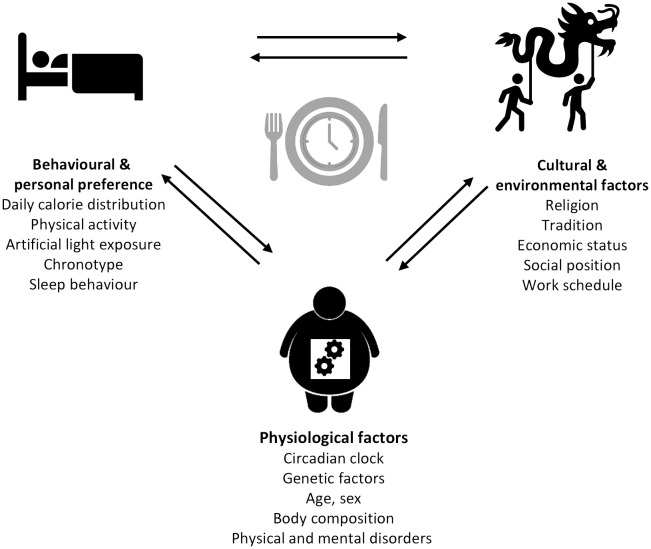
- Determinants of meal timing are organized into three categories: physiological (circadian clock, genetics, age, sex, body composition, disorders), behavioral/personal preferences (calorie distribution, physical activity, light exposure, chronotype, sleep), and cultural/environmental (religion, tradition, economic status, social position, work schedule).
Limitations
- Stated: the underlying mechanisms of meal-timing effects remain largely unknown; it is difficult to separate meal-timing-mediated from meal-timing-independent effects on metabolism in free-living individuals; results in TRE trials are highly variable due to heterogeneous study designs, eating windows, cohorts, and calorie intake; there is little evidence to recommend a specific TRE window (eTRE, mTRE, or lTRE); the genetic component needs further investigation.
- Evident from the text: as a narrative review it presents no new primary data and relies on cited studies of varying design and quality; several cited associations (e.g., breakfast-skipping, snacking, chronotype effects) are observational and cannot establish causality; the authors note that meal frequency and energy intake have not been carefully controlled in many studies.
Model-written summary. Check it against the paper before relying on it.
Integrity signals
Registry
Cites
Statistics
Figures
Verification
Claims the paper makes
46 Valid · 6 Not valid · 17 Not checked · 12 Own results and interpretations
At least one cited source doesn’t support this claim or points to a different paper, and none confirmed it — see the verdicts below.
In the paper
“light at night and the corresponding longer active compared to rest phase intervals have led to an increase in food intake and therefore excessive weight gain, as shown in rodent studies (56).”
§ Meal timing and its role in obesity and associated diseases > Factors influencing meal timing > Artificial light exposure and sleep–wake pattern
What the sources say
- Disputedcites [56] Fonken LK Workman JL Walton JC Weil ZM Morris JS Haim A. Light at night increases body mass by shifting the time of food intake. Proc Natl Acad Sci United States America. (2010) 107: 18664–9. doi: 10.1073/pnas.1008734107 PMC2972983 20937863 sourceExperimental — accuracy not yet measured
The paper reports weight gain in mice exposed to light at night, but its Energy intake results state that total 24-hour food consumption did not differ among groups. The Discussion attributes the gain to a shift in when mice ate, not to increased overall intake; it also reports similar total daily activity across groups, rather than establishing longer active intervals. (LLM, conf=0.90)
Checked by a reasoning model — may be wrong.
plainstates a cause- Asserted: passes — The authors put it forward as true.
- Checkable: passes — It can be checked against evidence.
- Load-bearing: unclear — It is unclear whether the paper’s conclusions depend on it.
- Based: passes — The paper gives a reason why it holds.
- Disputed
At least one cited source doesn’t support this claim or points to a different paper, and none confirmed it — see the verdicts below.
In the paper
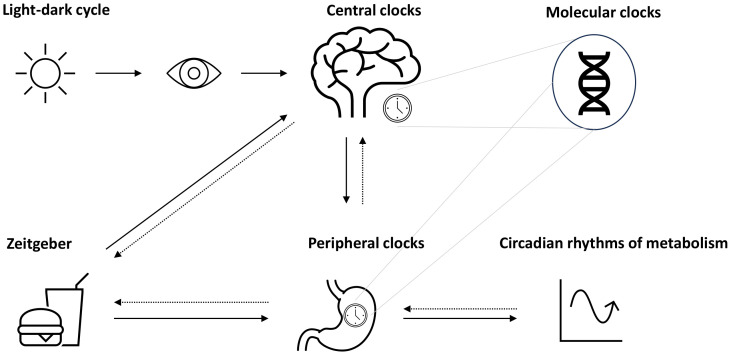
“However, food intake during the biological night can uncouple peripheral clocks from the SCN (31, 32), confirming that meal timing acts as a zeitgeber for circadian clocks.”
§ Meal timing and its role in obesity and associated diseases > Food intake and metabolic rhythms
What the sources say
- Not checked — no full text of the sourcecites [31] Stokkan KA Yamazaki S Tei H Sakaki Y Menaker M. Entrainment of the circadian clock in the liver by feeding. Science. (2001) 291: 490–3. doi: 10.1126/science.291.5503.490 11161204 source
- Disputedcites [32] Damiola F Le Minh N Preitner N Kornmann B Fleury-Olela F Schibler U. Restricted feeding uncouples circadian oscillators in peripheral tissues from the central pacemaker in the suprachiasmatic nucleus. Genes Dev. (2000) 14: 2950–61. doi: 10.1101/gad.183500 PMC317100 11114885 sourceExperimental — accuracy not yet measured
The paper’s “Daytime feeding uncouples peripheral circadian oscillators from the central SCN pacemaker” section says the opposite of the attributed timing: in nocturnal mice, daytime feeding uncoupled peripheral clocks from the SCN, whereas nighttime feeding had little effect on circadian gene-expression phase. The abstract likewise identifies feeding during the subjective day—not the biological night—as producing uncoupling. (LLM, conf=0.91)
Checked by a reasoning model — may be wrong.
plainstates a cause- Asserted: passes — The authors put it forward as true.
- Checkable: passes — It can be checked against evidence.
- Load-bearing: passes — The paper’s conclusions depend on it.
- Based: passes — The paper gives a reason why it holds.
The sources with a verdict support this claim; the rest weren’t checked yet, have no full text we could read, or their verdicts aren’t rated yet.
In the paper
“Food intake is one of the most important zeitgebers (3, 5), and therefore, meal timing, together with food composition and calorie intake, is a crucial factor affecting metabolic health (4, 6).”
§ Meal timing and its role in obesity and associated diseases > Introduction
What the sources say
- Not checked — no full text of the sourcecites [4] Chamorro R Jouffe C Oster H Uhlenhaut NH Meyhöfer SM. When should I eat: A circadian view on food intake and metabolic regulation. Acta Physiol (Oxf). (2023) 237: e13936. doi: 10.1111/apha.13936 36645134 source
- Supportedcites [6] Kessler K Pivovarova-Ramich O. Meal timing, aging, and metabolic health. Int J Mol Sci. (2019) 20: 1911. doi: 10.3390/ijms20081911 31003407 PMC6514931 source
The Introduction states that the timing of food intake is as critical as food quantity and quality, directly supporting the comparison in the claim. It also says a growing body of evidence links meal timing to metabolic state and body weight. (LLM, conf=0.94)
plainstates a cause- Asserted: passes — The authors put it forward as true.
- Checkable: passes — It can be checked against evidence.
- Load-bearing: passes — The paper’s conclusions depend on it.
- Based: passes — The paper gives a reason why it holds.
The cited sources support only part of this claim — read each source’s verdict below.
In the paper
“The desynchronization of the circadian clock associated with the modern 24/7 lifestyle increases the risk for several diseases, such as obesity, type 2 diabetes mellitus, and cardiovascular diseases (2, 4).”
§ Meal timing and its role in obesity and associated diseases > Introduction
What the sources say
- Partly supportedcites [2] Panda S. Circadian physiology of metabolism. Science. (2016) 354: 1008–15. doi: 10.1126/science.aah4967 PMC7261592 27885007 sourceExperimental — accuracy not yet measured
The Abstract (page not provided) says chronic circadian disruption increases the risk of metabolic diseases, and the Perspective and conclusion section reports that sleep deprivation and shift work correlate with higher incidence of metabolic diseases in humans. The paper discusses obesity and diabetes, but these passages do not establish increased risk specifically for type 2 diabetes or cardiovascular disease, or for the modern 24/7 lifestyle as a whole. (LLM, conf=0.84)
- Not checked — no full text of the sourcecites [4] Chamorro R Jouffe C Oster H Uhlenhaut NH Meyhöfer SM. When should I eat: A circadian view on food intake and metabolic regulation. Acta Physiol (Oxf). (2023) 237: e13936. doi: 10.1111/apha.13936 36645134 source
plainstates a cause- Asserted: passes — The authors put it forward as true.
- Checkable: passes — It can be checked against evidence.
- Load-bearing: passes — The paper’s conclusions depend on it.
- Based: passes — The paper gives a reason why it holds.
- Partly supported
The sources with a verdict support this claim; the rest weren’t checked yet, have no full text we could read, or their verdicts aren’t rated yet.
In the paper
“The circadian clock plays an essential role in metabolic processes.”
§ Meal timing and its role in obesity and associated diseases > Introduction
What the sources say
- Supportedcites [2] Panda S. Circadian physiology of metabolism. Science. (2016) 354: 1008–15. doi: 10.1126/science.aah4967 PMC7261592 27885007 source
The section ‘Metabolic pathways, metabolites, and their integration with the circadian clock’ says that interactions among circadian clocks, feeding cycles, and metabolism help maintain normal physiology. The ‘Central integration of peripheral metabolic status’ section describes extensive, reciprocal regulation between the clock and cellular metabolism. (LLM, conf=0.92)
- Not checked — no full text of the sourcecites [3] Asher G Sassone-Corsi P. Time for food: the intimate interplay between nutrition, metabolism, and the circadian clock. Cell. (2015) 161: 84– 92. doi: 10.1016/j.cell.2015.03.015 25815987 source
plainstates a cause- Asserted: passes — The authors put it forward as true.
- Checkable: passes — It can be checked against evidence.
- Load-bearing: passes — The paper’s conclusions depend on it.
- Based: passes — The paper gives a reason why it holds.
- Supported
40 more claims · 23 with their cited sources checked
Create a free account to see all 81 claims and to verify the 1 reference still open.
- It may state two separate claims as one. 33
- Probably not a substantial claim. 7
Self-check
Percentages, sums and reported differences re-computed from the paper’s own numbers.
Each contradiction between two passages listed here was confirmed by an independent check.
Rated minor: it would not touch a result — a value no result rests on, a p-value that stays on the same side of the significance level, or a conflict that is clerical, resolved elsewhere in the paper, or outside its own findings.
In the paper
§ Meal timing and its role in obesity and associated diseases > Factors influencing meal timing > Geography, religion, and social status
“in the Islamic month of Ramadan, meal timing is restricted to the hours between sunrise and sunset for 1 month (181).”
§ Meal timing and its role in obesity and associated diseases > Factors influencing meal timing > Geography, religion, and social status
“the change in meal timing towards eating before and after sunset”
Rated minor: it would not touch a result — a value no result rests on, a p-value that stays on the same side of the significance level, or a conflict that is clerical, resolved elsewhere in the paper, or outside its own findings.
In the paper
§ Meal timing and its role in obesity and associated diseases > Mistimed food intake and metabolic disorders
“Over the last 40 years in the United States (US) (1971–2010), a shift in meal timing has been observed through the National Health and Nutrition Examination Surveys (NHANES) (87).”
§ Meal timing and its role in obesity and associated diseases > References
“87. Kant AK Graubard BI. Association of self-reported sleep duration with eating behaviors of American adults: NHANES 2005-2010.”
Citations
Cites
A preprandial rise in plasma ghrelin levels suggests a role in meal initiation in humans
Cummings, D. E., Purnell, J. Q., Frayo, R. S., Schmidova, K., Wisse, B. E., & Weigle, D. S. (2001) · Diabetes · doi:10.2337/diabetes.50.8.1714 · Cited by 2,940
Social Jetlag: Misalignment of Biological and Social Time
Wittmann, M., Dinich, J., Merrow, M., & Roenneberg, T. (2006) · Chronobiology International · doi:10.1080/07420520500545979 · Cited by 2,625 · cited 1×
“Social jetlag is a result of sleep depth due to a discrepancy between social and biological times, or rather work and free days (176).”
BackgroundObesity and Metabolic Syndrome in Circadian Clock Mutant Mice
Turek, F. W., Joshu, C., Kohsaka, A., Lin, E., Ivanova, G., McDearmon, E., Laposky, A., Losee-Olson, S., Easton, A., Jensen, D. R., et al. (2005) · Science · doi:10.1126/science.1108750 · Cited by 2,485
Dibner, C., Schibler, U., & Albrecht, U. (2010) · Annual Review of Physiology · doi:10.1146/annurev-physiol-021909-135821 · Cited by 2,421 · cited 1×
“The function of the circadian clock in mammals has been previously described in several excellent reviews (10 – 12).”
BackgroundDamiola, F., Le Minh, N., Preitner, N., Kornmann, B., Fleury-Olela, F., & Schibler, U. (2000) · Genes & Development · doi:10.1101/gad.183500 · Cited by 2,394
Adverse metabolic and cardiovascular consequences of circadian misalignment
Scheer, F. A. J. L., Hilton, M. F., Mantzoros, C. S., & Shea, S. A. (2009) · Proceedings of the National Academy of Sciences · doi:10.1073/pnas.0808180106 · Cited by 2,351 · cited 1×
“Surprisingly, there was even a resemblance to the postprandial response of a (pre)diabetic patient, despite the subject being healthy (75).”
BackgroundCentral and Peripheral Circadian Clocks in Mammals
Mohawk, J. A., Green, C. B., & Takahashi, J. S. (2012) · Annual Review of Neuroscience · doi:10.1146/annurev-neuro-060909-153128 · Cited by 2,265
Hatori, M., Vollmers, C., Zarrinpar, A., DiTacchio, L., Bushong, E. A., Gill, S., Leblanc, M., Chaix, A., Joens, M., Fitzpatrick, J. A. J., et al. (2012) · Cell Metabolism · doi:10.1016/j.cmet.2012.04.019 · Cited by 1,986 · cited 2×
“When restricting food intake to an 8-h period, CREB, mTOR, and AMPK pathway function and their circadian rhythms increase, leading to a higher expression pattern of certain liver genes and improved nutrient utilization (57).”
BackgroundEntrainment of the circadian clock in the liver by feeding
Stokkan, K.-A., Yamazaki, S., Tei, H., Sakaki, Y., & Menaker, M. (2001) · Science · doi:10.1126/science.291.5503.490 · Cited by 1,800 · cited 3×
“More precisely, in humans and animals, food intake has been proven to entrain the peripheral clocks of liver, heart, and pancreatic tissue (31 – 33).”
BackgroundSutton, E. F., Beyl, R., Early, K. S., Cefalu, W. T., Ravussin, E., & Peterson, C. M. (2018) · Cell Metabolism · doi:10.1016/j.cmet.2018.04.010 · Cited by 1,531
Disruption of the clock components CLOCK and BMAL1 leads to hypoinsulinaemia and diabetes
Marcheva, B., Ramsey, K. M., Buhr, E. D., Kobayashi, Y., Su, H., Ko, C. H., Ivanova, G., Omura, C., Mo, S., Vitaterna, M. H., et al. (2010) · Nature · doi:10.1038/nature09253 · Cited by 1,525
Roenneberg, T., Allebrandt, K. V., Merrow, M., & Vetter, C. (2012) · Current Biology · doi:10.1016/j.cub.2012.03.038 · Cited by 1,407 · cited 2×
“Chronotypes can range from morning to evening preferences, which are divided into early, intermediate, and late chronotypes (90).”
BackgroundCircadian physiology of metabolism
Panda, S. (2016) · Science · doi:10.1126/science.aah4967 · Cited by 1,092
Generation of circadian rhythms in the suprachiasmatic nucleus
Hastings, M. H., Maywood, E. S., & Brancaccio, M. (2018) · Nature Reviews Neuroscience · doi:10.1038/s41583-018-0026-z · Cited by 1,065
Rudic, R. D., McNamara, P., Curtis, A.-M., Boston, R. C., Panda, S., Hogenesch, J. B., & FitzGerald, G. A. (2004) · PLoS Biology · doi:10.1371/journal.pbio.0020377 · Cited by 1,059 · cited 1×
“Additionally, Clock and Bmal1 transcription factors were recognized for their major role in the recovery regulation from insulin-induced, highlighting their importance in glucose homeostasis (21).”
BackgroundPhysiological significance of a peripheral tissue circadian clock
Lamia, K. A., Storch, K.-F., & Weitz, C. J. (2008) · Proceedings of the National Academy of Sciences · doi:10.1073/pnas.0806717105 · Cited by 1,048 · cited 1×
“Bmal1 showed speci fi c relevance in the peripheral liver clock maintaining fasting glucose homeostasis and glucose clearance (22).”
BackgroundCircadian timing of food intake contributes to weight gain
Arble, D. M., Bass, J., Laposky, A. D., Vitaterna, M. H., & Turek, F. W. (2009) · Obesity · doi:10.1038/oby.2009.264 · Cited by 953
Wilkinson, M. J., Manoogian, E. N. C., Zadourian, A., Lo, H., Fakhouri, S., Shoghi, A., Wang, X., Fleischer, J. G., Navlakha, S., Panda, S., et al. (2020) · Cell Metabolism · doi:10.1016/j.cmet.2019.11.004 · Cited by 927
Gill, S., & Panda, S. (2015) · Cell Metabolism · doi:10.1016/j.cmet.2015.09.005 · Cited by 894 · cited 3×
“Previously, the identi fi cation of long eating periods in the population of American adults has shown bene fi ts for people with overweight through a reduction in the length of the eating window, which manifested itself in weight loss, sleep improvement, and increased energy (7).”
BackgroundInfluentialTime for food: the intimate interplay between nutrition, metabolism, and the circadian clock
Asher, G., & Sassone-Corsi, P. (2015) · Cell · doi:10.1016/j.cell.2015.03.015 · Cited by 844
Impact of insufficient sleep on total daily energy expenditure, food intake, and weight gain
Markwald, R. R., Melanson, E. L., Smith, M. R., Higgins, J., Perreault, L., Eckel, R. H., & Wright, K. P. (2013) · Proceedings of the National Academy of Sciences · doi:10.1073/pnas.1216951110 · Cited by 810
Light at night increases body mass by shifting the time of food intake
Fonken, L. K., Workman, J. L., Walton, J. C., Weil, Z. M., Morris, J. S., Haim, A., & Nelson, R. J. (2010) · Proceedings of the National Academy of Sciences · doi:10.1073/pnas.1008734107 · Cited by 796
Moro, T., Tinsley, G., Bianco, A., Marcolin, G., Pacelli, Q. F., Battaglia, G., Palma, A., Gentil, P., Neri, M., & Paoli, A. (2016) · Journal of Translational Medicine · doi:10.1186/s12967-016-1044-0 · Cited by 732
St-Onge, M.-P., Ard, J., Baskin, M. L., Chiuve, S. E., Johnson, H. M., Kris-Etherton, P., & Varady, K. (2017) · Circulation · doi:10.1161/cir.0000000000000476 · Cited by 728
Circadian misalignment increases cardiovascular disease risk factors in humans
Morris, C. J., Purvis, T. E., Hu, K., & Scheer, F. A. J. L. (2016) · Proceedings of the National Academy of Sciences · doi:10.1073/pnas.1516953113 · Cited by 691 · cited 1×
“Furthermore, mistimed meal intake resulted in a phase shift in the peripheral clocks of the adipose tissue (30), changes in blood pressure (85), and an increase in in fl ammatory markers (86).”
BackgroundJones, S. E., Lane, J. M., Wood, A. R., van Hees, V. T., Tyrrell, J., Beaumont, R. N., Jeffries, A. R., Dashti, H. S., Hillsdon, M., Ruth, K. S., et al. (2019) · Nature Communications · doi:10.1038/s41467-018-08259-7 · Cited by 691
Jamshed, H., Beyl, R., Della Manna, D., Yang, E., Ravussin, E., & Peterson, C. (2019) · Nutrients · doi:10.3390/nu11061234 · Cited by 664
Timing of food intake predicts weight loss effectiveness
Garaulet, M., Gómez-Abellán, P., Alburquerque-Béjar, J. J., Lee, Y.-C., Ordovás, J. M., & Scheer, F. A. J. L. (2013) · International Journal of Obesity · doi:10.1038/ijo.2012.229 · Cited by 639 · cited 3×
“Furthermore, taking a closer look at the CLOCK gene rs4580704 variant, obese participants carrying the minor G allele had their lunch signi fi cantly later than participants carrying major alleles (62).”
BackgroundResultInfluentialInternational society of sports nutrition position stand: nutrient timing
Kerksick, C. M., Arent, S., Schoenfeld, B. J., Stout, J. R., Campbell, B., Wilborn, C. D., Taylor, L., Kalman, D., Smith-Ryan, A. E., Kreider, R. B., et al. (2017) · Journal of the International Society of Sports Nutrition · doi:10.1186/s12970-017-0189-4 · Cited by 622
Cienfuegos, S., Gabel, K., Kalam, F., Ezpeleta, M., Wiseman, E., Pavlou, V., Lin, S., Oliveira, M. L., & Varady, K. A. (2020) · Cell Metabolism · doi:10.1016/j.cmet.2020.06.018 · Cited by 597
Meal timing regulates the human circadian system
Wehrens, S. M. T., Christou, S., Isherwood, C., Middleton, B., Gibbs, M. A., Archer, S. N., Skene, D. J., & Johnston, J. D. (2017) · Current Biology · doi:10.1016/j.cub.2017.04.059 · Cited by 596
Jakubowicz, D., Barnea, M., Wainstein, J., & Froy, O. (2013) · Obesity · doi:10.1002/oby.20460 · Cited by 593 · cited 1×
“Overall, it is suggested that a low-energy fi rst meal and a high-energy last meal are linked to dif fi culties in losing weight and impaired glucose metabolism (77).”
BackgroundCryptochrome mediates circadian regulation of cAMP signaling and hepatic gluconeogenesis
Zhang, E. E., Liu, Y., Dentin, R., Pongsawakul, P. Y., Liu, A. C., Hirota, T., Nusinow, D. A., Sun, X., Landais, S., Kodama, Y., et al. (2010) · Nature Medicine · doi:10.1038/nm.2214 · Cited by 567 · cited 1×
“Clock protein Cry1 was identi fi ed as a regulator for gluconeogenesis in the liver (25).”
BackgroundRole of sleep timing in caloric intake and BMI
Baron, K. G., Reid, K. J., Kern, A. S., & Zee, P. C. (2011) · Obesity · doi:10.1038/oby.2011.100 · Cited by 549 · cited 1×
“Thus, late sleepers, i.e. late chronotypes, consume the more calories later in the day than normal sleepers (67).”
BackgroundMorris, C. J., Yang, J. N., Garcia, J. I., Myers, S., Bozzi, I., Wang, W., Buxton, O. M., Shea, S. A., & Scheer, F. A. J. L. (2015) · Proceedings of the National Academy of Sciences · doi:10.1073/pnas.1418955112 · Cited by 523
Association Between Rotating Night Shift Work and Risk of Coronary Heart Disease Among Women
Vetter, C., Devore, E. E., Wegrzyn, L. R., Massa, J., Speizer, F. E., Kawachi, I., Rosner, B., Stampfer, M. J., & Schernhammer, E. S. (2016) · JAMA · doi:10.1001/jama.2016.4454 · Cited by 517
Calorie restriction with or without time-restricted eating in weight loss
Liu, D., Huang, Y., Huang, C., Yang, S., Wei, X., Zhang, P., Guo, D., Lin, J., Xu, B., Li, C., et al. (2022) · New England Journal of Medicine · doi:10.1056/nejmoa2114833 · Cited by 516
Short sleep duration and dietary intake: epidemiologic evidence, mechanisms, and health implications
Dashti, H. S., Scheer, F. A., Jacques, P. F., Lamon-Fava, S., & Ordovás, J. M. (2015) · Advances in Nutrition · doi:10.3945/an.115.008623 · Cited by 503
Chronotypes in the US–influence of age and sex
Fischer, D., Lombardi, D. A., Marucci-Wellman, H., & Roenneberg, T. (2017) · PLOS ONE · doi:10.1371/journal.pone.0178782 · Cited by 502
Obesity and shift work: chronobiological aspects
Antunes, L. C., Levandovski, R., Dantas, G., Caumo, W., & Hidalgo, M. P. (2010) · Nutrition Research Reviews · doi:10.1017/s0954422410000016 · Cited by 493
PER2 controls lipid metabolism by direct regulation of PPARγ
Grimaldi, B., Bellet, M. M., Katada, S., Astarita, G., Hirayama, J., Amin, R. H., Granneman, J. G., Piomelli, D., Leff, T., & Sassone-Corsi, P. (2010) · Cell Metabolism · doi:10.1016/j.cmet.2010.10.005 · Cited by 489
Circadian clock genes and the transcriptional architecture of the clock mechanism
Cox, K. H., & Takahashi, J. S. (2019) · Journal of Molecular Endocrinology · doi:10.1530/jme-19-0153 · Cited by 475
Hutchison, A. T., Regmi, P., Manoogian, E. N. C., Fleischer, J. G., Wittert, G. A., Panda, S., & Heilbronn, L. K. (2019) · Obesity · doi:10.1002/oby.22449 · Cited by 466
Obesity in mice with adipocyte-specific deletion of clock component Arntl
Paschos, G. K., Ibrahim, S., Song, W.-L., Kunieda, T., Grant, G., Reyes, T. M., Bradfield, C. A., Vaughan, C. H., Eiden, M., Masoodi, M., et al. (2012) · Nature Medicine · doi:10.1038/nm.2979 · Cited by 465
International Society of Sports Nutrition position stand: Nutrient timing
Kerksick, C., Harvey, T., Stout, J., Campbell, B., Wilborn, C., Kreider, R., Kalman, D., Ziegenfuss, T., Lopez, H., Landis, J., et al. (2008) · Journal of the International Society of Sports Nutrition · doi:10.1186/1550-2783-5-17 · Cited by 456
The intestinal microbiota regulates body composition through NFIL3 and the circadian clock
Wang, Y., Kuang, Z., Yu, X., Ruhn, K. A., Kubo, M., & Hooper, L. V. (2017) · Science · doi:10.1126/science.aan0677 · Cited by 456
Circadian Disruption Leads to Insulin Resistance and Obesity
Shi, S.-Q., Ansari, T. S., McGuinness, O. P., Wasserman, D. H., & Johnson, C. H. (2013) · Current Biology · doi:10.1016/j.cub.2013.01.048 · Cited by 452
Doi, M., Takahashi, Y., Komatsu, R., Yamazaki, F., Yamada, H., Haraguchi, S., Emoto, N., Okuno, Y., Tsujimoto, G., Kanematsu, A., et al. (2010) · Nature Medicine · doi:10.1038/nm.2061 · Cited by 431
The circadian regulation of food intake
Challet, E. (2019) · Nature Reviews Endocrinology · doi:10.1038/s41574-019-0210-x · Cited by 428 · cited 1×
“Under normal conditions, feeding rhythms align with the external light – dark cycle, contributing to the entrainment of peripheral oscillators with the central clock (34).”
BackgroundLater circadian timing of food intake is associated with increased body fat
McHill, A. W., Phillips, A. J., Czeisler, C. A., Keating, L., Yee, K., Barger, L. K., Garaulet, M., Scheer, F. A., & Klerman, E. B. (2017) · The American Journal of Clinical Nutrition · doi:10.3945/ajcn.117.161588 · Cited by 414
Natural Sleep and Its Seasonal Variations in Three Pre-industrial Societies
Yetish, G., Kaplan, H., Gurven, M., Wood, B., Pontzer, H., Manger, P. R., Wilson, C., McGregor, R., & Siegel, J. M. (2015) · Current Biology · doi:10.1016/j.cub.2015.09.046 · Cited by 395 · cited 1×
“In pre-industrial societies, the sleeping routine of people was in harmony with natural light (169).”
BackgroundMeta-analysis on shift work and risks of specific obesity types
Sun, M., Feng, W., Wang, F., Li, P., Li, Z., Li, M., Tse, G., Vlaanderen, J., Vermeulen, R., & Tse, L. A. (2018) · Obesity Reviews · doi:10.1111/obr.12621 · Cited by 391 · cited 1×
“A systematic review and meta-analysis indicated that despite no differences in total energy intake on dayshift vs. nightshift days, typical adverse effects of mistimed food intake, such as increased risk for obesity, were detected (52).”
BackgroundHormonal regulation of food intake
Stanley, S., Wynne, K., McGowan, B., & Bloom, S. (2005) · Physiological Reviews · doi:10.1152/physrev.00015.2004 · Cited by 372
The effect of fiber on satiety and food intake: a systematic review
Clark, M. J., & Slavin, J. L. (2013) · Journal of the American College of Nutrition · doi:10.1080/07315724.2013.791194 · Cited by 368 · cited 1×
“However, a systematic review of 44 publications examined that approximately 61% of the acute fi ber treatments did not lead to an enhanced satiety, and beyond that, a relation between fi ber type and dose satiety and food intake was not found (154).”
BackgroundTiming of food intake and obesity: a novel association
Garaulet, M., & Gómez-Abellán, P. (2014) · Physiology & Behavior · doi:10.1016/j.physbeh.2014.01.001 · Cited by 362 · cited 2×
“Many of these hormones show marked postprandial changes, mirroring the pattern of the food intake (42, 43).”
BackgroundBiological Rhythm and Chronotype: New Perspectives in Health
Montaruli, A., Castelli, L., Mulè, A., Scurati, R., Esposito, F., Galasso, L., & Roveda, E. (2021) · Biomolecules · doi:10.3390/biom11040487 · Cited by 360 · cited 2×
“The chronotype can be described as a complex phenotype representing the individual preference of a person regarding his or her active and sleep time (155).”
BackgroundChow, L. S., Manoogian, E. N. C., Alvear, A., Fleischer, J. G., Thor, H., Dietsche, K., Wang, Q., Hodges, J. S., Esch, N., Malaeb, S., et al. (2020) · Obesity · doi:10.1002/oby.22756 · Cited by 359
Lin (2005) · Genome biology · doi:10.1186/gb-2005-6-5-220 · Cited by 351 · cited 1×
“Mice lacking cryptochrome (Cry), a photoreceptor that regulates the entrainment by light of the circadian clock, are more susceptible to high-fat diet-induced obesity (99).”
BackgroundDi Lorenzo, L., De Pergola, G., Zocchetti, C., L'Abbate, N., Basso, A., Pannacciulli, N., Cignarelli, M., Giorgino, R., & Soleo, L. (2003) · International Journal of Obesity · doi:10.1038/sj.ijo.0802419 · Cited by 346
Rynders, C. A., Thomas, E. A., Zaman, A., Pan, Z., Catenacci, V. A., & Melanson, E. L. (2019) · Nutrients · doi:10.3390/nu11102442 · Cited by 339
The intestinal microbiota programs diurnal rhythms in host metabolism through histone deacetylase 3
Kuang, Z., Wang, Y., Li, Y., Ye, C., Ruhn, K. A., Behrendt, C. L., Olson, E. N., & Hooper, L. V. (2019) · Science · doi:10.1126/science.aaw3134 · Cited by 330 · cited 1×
“Finally, changes due to mistimed food intake have been observed in the diurnal salivary and gastrointestinal microbiota rhythms in terms of diversity and abundance, all underlying the circadian control (101).”
BackgroundGenetic and environmental influences on eating behavior: the Swedish Young Male Twins Study
Tholin, S., Rasmussen, F., Tynelius, P., & Karlsson, J. (2005) · The American Journal of Clinical Nutrition · doi:10.1093/ajcn/81.3.564 · Cited by 315
Sadacca, L. A., Lamia, K. A., deLemos, A. S., Blum, B., & Weitz, C. J. (2011) · Diabetologia · doi:10.1007/s00125-010-1920-8 · Cited by 314
Scheer, F. A. J. L., Morris, C. J., & Shea, S. A. (2013) · Obesity · doi:10.1002/oby.20351 · Cited by 296 · cited 3×
“In particular, they control the temporality of hunger and appetite, independent of other behaviors (46).”
BackgroundInfluentialMeal timing and obesity: interactions with macronutrient intake and chronotype
Xiao, Q., Garaulet, M., & Scheer, F. A. J. L. (2019) · International Journal of Obesity · doi:10.1038/s41366-018-0284-x · Cited by 285
Jamshed, H., Steger, F. L., Bryan, D. R., Richman, J. S., Warriner, A. H., Hanick, C. J., Martin, C. K., Salvy, S.-J., & Peterson, C. M. (2022) · JAMA Internal Medicine · doi:10.1001/jamainternmed.2022.3050 · Cited by 280
Molecular clock is involved in predictive circadian adjustment of renal function
Zuber, A. M., Centeno, G., Pradervand, S., Nikolaeva, S., Maquelin, L., Cardinaux, L., Bonny, O., & Firsov, D. (2009) · Proceedings of the National Academy of Sciences · doi:10.1073/pnas.0904890106 · Cited by 274
40-year trends in meal and snack eating behaviors of American adults
Kant, A. K., & Graubard, B. I. (2015) · Journal of the Academy of Nutrition and Dietetics · doi:10.1016/j.jand.2014.06.354 · Cited by 271
Timing of energy intake during the day is associated with the risk of obesity in adults
Wang, J. B., Patterson, R. E., Ang, A., Emond, J. A., Shetty, N., & Arab, L. (2014) · Journal of Human Nutrition and Dietetics · doi:10.1111/jhn.12141 · Cited by 270
Chronotype, circadian rhythm, and psychiatric disorders: Recent evidence and potential mechanisms
Zou, H., Zhou, H., Yan, R., Yao, Z., & Lu, Q. (2022) · Frontiers in Neuroscience · doi:10.3389/fnins.2022.811771 · Cited by 269
Lucassen, E. A., Zhao, X., Rother, K. I., Mattingly, M. S., Courville, A. B., de Jonge, L., Csako, G., Cizza, G., & for the Sleep Extension Study Group (2013) · PLoS ONE · doi:10.1371/journal.pone.0056519 · Cited by 264
Daily eating patterns and their impact on health and disease
Zarrinpar, A., Chaix, A., & Panda, S. (2016) · Trends in Endocrinology & Metabolism · doi:10.1016/j.tem.2015.11.007 · Cited by 263
Bandín, C., Scheer, F. A. J. L., Luque, A. J., Ávila-Gandía, V, Zamora, S., Madrid, J. A., Gómez-Abellán, P., & Garaulet, M. (2015) · International Journal of Obesity · doi:10.1038/ijo.2014.182 · Cited by 262
Morris, C. J., Purvis, T. E., Mistretta, J., & Scheer, F. A. J. L. (2016) · The Journal of Clinical Endocrinology & Metabolism · doi:10.1210/jc.2015-3924 · Cited by 262
Genetics of eating behavior: established and emerging concepts: Nutrition Reviews©, Vol. 69, No. 1
Grimm, E. R., & Steinle, N. I. (2011) · Nutrition Reviews · doi:10.1111/j.1753-4887.2010.00361.x · Cited by 244 · cited 1×
“There are limited data regarding the heritability contributing to the food intake and associated parameters such as body weight, which in fl uence overall energy intake (135).”
BackgroundGenetic basis of chronotype in humans: insights from three landmark GWAS
Kalmbach, D. A., Schneider, L. D., Cheung, J., Bertrand, S. J., Kariharan, T., Pack, A. I., & Gehrman, P. R. (2017) · Sleep · doi:10.1093/sleep/zsw048 · Cited by 243 · cited 2×
“Indeed, it has been stated that being a night owl or a morning lark is dependent on the individual genetic makeup (157).”
BackgroundGut microbiome heritability is nearly universal but environmentally contingent
Grieneisen, L., Dasari, M., Gould, T. J., Björk, J. R., Grenier, J.-C., Yotova, V., Jansen, D., Gottel, N., Gordon, J. B., Learn, N. H., et al. (2021) · Science · doi:10.1126/science.aba5483 · Cited by 243 · cited 1×
“In addition, the microbiome and its composition, known as the microbiome phenotype, have been shown to account for 97% heritability and could therefore constitute a further important component for the heritability of meal timing (148).”
BackgroundMeléndez-Fernández, O. H., Liu, J. A., & Nelson, R. J. (2023) · International Journal of Molecular Sciences · doi:10.3390/ijms24043392 · Cited by 227 · cited 1×
“…modern era, light conditions changed with the development of arti fi cial lighting, enabling activities around the clock, e.g., socializing via light-emitting devices, or the possibility of commerce, production, and access to 24-h services, and therefore also leading to shifts in meal timing (170).”
BackgroundTanaka, T., Ngwa, J. S., van Rooij, F. J., Zillikens, M. C., Wojczynski, M. K., Frazier-Wood, A. C., Houston, D. K., Kanoni, S., Lemaitre, R. N., Luan, J., et al. (2013) · The American Journal of Clinical Nutrition · doi:10.3945/ajcn.112.052183 · Cited by 226
Keskitalo, K., Tuorila, H., Spector, T. D., Cherkas, L. F., Knaapila, A., Kaprio, J., Silventoinen, K., & Perola, M. (2008) · The American Journal of Clinical Nutrition · doi:10.1093/ajcn/88.2.263 · Cited by 223
Regulation of metabolism: the circadian clock dictates the time
Sahar, S., & Sassone-Corsi, P. (2012) · Trends in Endocrinology & Metabolism · doi:10.1016/j.tem.2011.10.005 · Cited by 222 · cited 1×
“A growing body of evidence leads to the assumption that the maintenance of metabolic homeostasis is based on the interaction of the circadian clocks and metabolism, meaning that the central clock and peripheral clocks are well-coordinated (4). dysfunctions of the metabolic homeostasis (17).”
BackgroundImpact of nutrients on circadian rhythmicity
Oosterman, J. E., Kalsbeek, A., la Fleur, S. E., & Belsham, D. D. (2015) · American Journal of Physiology-Regulatory, Integrative and Comparative Physiology · doi:10.1152/ajpregu.00322.2014 · Cited by 221
Selected eating behaviours and excess body weight: a systematic review
Mesas, A. E., Muñoz‐Pareja, M., López‐García, E., & Rodríguez‐Artalejo, F. (2012) · Obesity Reviews · doi:10.1111/j.1467-789x.2011.00936.x · Cited by 219 · cited 1×
“Further human studies have also focused on breakfast timing and meal regularity (63).”
BackgroundThe relationship between breakfast skipping, chronotype, and glycemic control in type 2 diabetes
Reutrakul, S., Hood, M. M., Crowley, S. J., Morgan, M. K., Teodori, M., & Knutson, K. L. (2014) · Chronobiology International · doi:10.3109/07420528.2013.821614 · Cited by 218 · cited 1×
“In addition, it has been reported that breakfast-skipping is associated with a poorer glycemic control in patients with T2D and is more present in late chronotypes (160).”
BackgroundBertéus Forslund, H., Lindroos, A., Sjöström, L., & Lissner, L. (2002) · European Journal of Clinical Nutrition · doi:10.1038/sj.ejcn.1601387 · Cited by 210 · cited 1×
“Investigations in a female Swedish cohort revealed more food events and a shift towards a later meal timing in women with obesity (64).”
BackgroundFood as a circadian time cue - evidence from human studies
Lewis, P., Oster, H., Korf, H. W., Foster, R. G., & Erren, T. C. (2020) · Nature Reviews Endocrinology · doi:10.1038/s41574-020-0318-z · Cited by 207
Cai, H., Qin, Y.-L., Shi, Z.-Y., Chen, J.-H., Zeng, M.-J., Zhou, W., Chen, R.-Q., & Chen, Z.-Y. (2019) · BMC Gastroenterology · doi:10.1186/s12876-019-1132-8 · Cited by 205
Zeb, F., Wu, X., Chen, L., Fatima, S., Haq, I.-U., Chen, A., Majeed, F., Feng, Q., & Li, M. (2020) · British Journal of Nutrition · doi:10.1017/s0007114519003428 · Cited by 202
Timing of breakfast, lunch, and dinner. Effects on Obesity and Metabolic Risk
Lopez-Minguez, J., Gómez-Abellán, P., & Garaulet, M. (2019) · Nutrients · doi:10.3390/nu11112624 · Cited by 201 · cited 2×
“A number of processes involved in digestion, absorption, utilization, and metabolization of food undergo daily rhythms (16).”
BackgroundOptimal Diet Strategies for Weight Loss and Weight Loss Maintenance
Kim, J. Y. (2021) · Journal of Obesity & Metabolic Syndrome · doi:10.7570/jomes20065 · Cited by 193 · cited 1×
“Body weight control depends on various factors, such as the quantity and quality of food, as well as on meal timing (39).”
BackgroundThe effects of nocturnal life on endocrine circadian patterns in healthy adults
Qin, L.-Q., Li, J., Wang, Y., Wang, J., Xu, J.-Y., & Kaneko, T. (2003) · Life Sciences · doi:10.1016/s0024-3205(03)00628-3 · Cited by 192
The Mammalian Circadian Timing System and the Suprachiasmatic Nucleus as Its Pacemaker
Hastings, M., Maywood, E., & Brancaccio, M. (2019) · Biology · doi:10.3390/biology8010013 · Cited by 192 · cited 1×
“The function of the circadian clock in mammals has been previously described in several excellent reviews (10 – 12).”
BackgroundIdentification of Rev-erbα as a physiological repressor of apoC-III gene transcription
Raspé, E., Duez, H., Mansén, A., Fontaine, C., Fiévet, C., Fruchart, J.-C., Vennström, B., & Staels, B. (2002) · Journal of Lipid Research · doi:10.1194/jlr.m200386-jlr200 · Cited by 183
Kant, A. K., & Graubard, B. I. (2014) · The American Journal of Clinical Nutrition · doi:10.3945/ajcn.114.085191 · Cited by 182 · cited 4×
“The NHANES study (2003 – 2012), based on data of 11,646 U.S. adults, showed that people consumed more calories and had a poorer diet quality during the weekend, especially on Saturdays, resulting in higher energy, fat, and protein intake; and con fi rmed previous data from NHANES (1999 – 2004) that already revealed ass…”
BackgroundInfluentialNatalucci, G., Riedl, S., Gleiss, A., Zidek, T., & Frisch, H. (2005) · European Journal of Endocrinology · doi:10.1530/eje.1.01919 · Cited by 182
High-fat diet-induced hyperinsulinemia and tissue-specific insulin resistance in Cry -deficient mice
Barclay, J. L., Shostak, A., Leliavski, A., Tsang, A. H., Jöhren, O., Müller-Fielitz, H., Landgraf, D., Naujokat, N., van der Horst, G. T. J., & Oster, H. (2013) · American Journal of Physiology-Endocrinology and Metabolism · doi:10.1152/ajpendo.00512.2012 · Cited by 173
Mamontova, A., Séguret-Macé, S., Esposito, B., Chaniale, C., Bouly, M., Delhaye-Bouchaud, N., Luc, G., Staels, B., Duverger, N., Mariani, J., et al. (1998) · Circulation · doi:10.1161/01.cir.98.24.2738 · Cited by 172
Bo, S., Fadda, M., Castiglione, A., Ciccone, G., De Francesco, A., Fedele, D., Guggino, A., Parasiliti Caprino, M., Ferrara, S., Vezio Boggio, M., et al. (2015) · International Journal of Obesity · doi:10.1038/ijo.2015.138 · Cited by 171
Qian, J., Dalla Man, C., Morris, C. J., Cobelli, C., & Scheer, F. A. J. L. (2018) · Diabetes, Obesity and Metabolism · doi:10.1111/dom.13391 · Cited by 170 · cited 2×
“…of obesity (42), (2) reduced diet-induced thermogenesis in the evening (81), (3) diminished glucose tolerance due to circadian misalignment resulting from lower insulin sensitivity (82, 83), (4) adverse effects of elevated melatonin on glucose metabolism (84), and (5) an increase in body fat (69).”
BackgroundCollado, M. C., Engen, P. A., Bandín, C., Cabrera‐Rubio, R., Voigt, R. M., Green, S. J., Naqib, A., Keshavarzian, A., Scheer, F. A. J. L., & Garaulet, M. (2018) · The FASEB Journal · doi:10.1096/fj.201700697rr · Cited by 168
Morris, C. J., Garcia, J. I., Myers, S., Yang, J. N., Trienekens, N., & Scheer, F. A. J. L. (2015) · Obesity · doi:10.1002/oby.21189 · Cited by 167
Human resting energy expenditure varies with circadian phase
Zitting, K.-M., Vujovic, N., Yuan, R. K., Isherwood, C. M., Medina, J. E., Wang, W., Buxton, O. M., Williams, J. S., Czeisler, C. A., & Duffy, J. F. (2018) · Current Biology · doi:10.1016/j.cub.2018.10.005 · Cited by 164 · cited 1×
“At night, energy expenditure is at its lowest (resting energy expenditure) in contrast to the morning and/or afternoons as shown using a forced desynchrony protocol (89).”
BackgroundGrimaldi, D., Carter, J. R., Van Cauter, E., & Leproult, R. (2016) · Hypertension · doi:10.1161/hypertensionaha.115.06847 · Cited by 153 · cited 1×
“Furthermore, mistimed meal intake resulted in a phase shift in the peripheral clocks of the adipose tissue (30), changes in blood pressure (85), and an increase in in fl ammatory markers (86).”
BackgroundGenetic influences on daily intake and meal patterns of humans
de Castro, J. M. (1993) · Physiology & Behavior · doi:10.1016/0031-9384(93)90188-l · Cited by 152 · cited 1×
“There are also emerging data on the heredity of more subtle variables known as the microstructure of food intake, e.g., the frequency, composition, and meal timing, independent of the overall intake (131, 136).”
Chrono-Nutrition: Circadian Rhythm and Personalized Nutrition
Franzago, M., Alessandrelli, E., Notarangelo, S., Stuppia, L., & Vitacolonna, E. (2023) · International Journal of Molecular Sciences · doi:10.3390/ijms24032571 · Cited by 149 · cited 1×
“Indeed, jetlag through traveling, shift-working, and the constant availability offood, especially with high energy density, and arti fi cial light have been previously described as environmental and lifestyle-associated factors that can lead to chronodisruption (122).”
BackgroundMorgan, L. M., Shi, J.-W., Hampton, S. M., & Frost, G. (2012) · British Journal of Nutrition · doi:10.1017/s0007114511006507 · Cited by 145
Maukonen, M., Kanerva, N., Partonen, T., Kronholm, E., Tapanainen, H., Kontto, J., & Männistö, S. (2017) · Obesity · doi:10.1002/oby.21747 · Cited by 145
Jakubowicz, D., Wainstein, J., Ahrén, B., Bar-Dayan, Y., Landau, Z., Rabinovitz, H. R., & Froy, O. (2015) · Diabetologia · doi:10.1007/s00125-015-3524-9 · Cited by 139
Tasali, E., Chapotot, F., Wroblewski, K., & Schoeller, D. (2014) · Appetite · doi:10.1016/j.appet.2014.05.021 · Cited by 135 · cited 1×
“Thus, sleep duration in fl uences meal timing and the pattern of food intake (173 – 175).”
BackgroundHomeostatic regulation of food intake
Cifuentes, L., & Acosta, A. J. (2021) · Clinics and Research in Hepatology and Gastroenterology · doi:10.1016/j.clinre.2021.101794 · Cited by 133 · cited 1×
“Indeed, the complexity of the system underlying food intake provides several new targets/strategies to control appetite, especially at a time when cardiovascular diseases, diabetes, and metabolic syndrome are showing increasing prevalence (38).”
BackgroundLeung, G. K. W., Huggins, C. E., & Bonham, M. P. (2019) · Clinical Nutrition · doi:10.1016/j.clnu.2017.11.010 · Cited by 132
Biological clocks and the digestive system
Scheving, L. A. (2000) · Gastroenterology · doi:10.1053/gast.2000.9305 · Cited by 130
Weekend-weekday differences in diet among U.S. adults, 2003-2012
An, R. (2016) · Annals of Epidemiology · doi:10.1016/j.annepidem.2015.10.010 · Cited by 130 · cited 1×
“…more calories and had a poorer diet quality during the weekend, especially on Saturdays, resulting in higher energy, fat, and protein intake; and con fi rmed previous data from NHANES (1999 – 2004) that already revealed associations between temporal dietary patters and diet quality (186, 187).”
BackgroundAl Khatib, H. K., Hall, W. L., Creedon, A., Ooi, E., Masri, T., McGowan, L., Harding, S. V., Darzi, J., & Pot, G. K. (2018) · The American Journal of Clinical Nutrition · doi:10.1093/ajcn/nqx030 · Cited by 126
Fonken, L. K., Lieberman, R. A., Weil, Z. M., & Nelson, R. J. (2013) · Endocrinology · doi:10.1210/en.2013-1121 · Cited by 125 · cited 2×
“Regarding adipose tissue, mistimed food intake can increase the expression of the in fl ammatory markers tumor necrosis factor alpha (TNF a ) and macrophage-1 antigen (MAC1) in white adipose tissue, similar to the upregulation seen with a high-fat diet (58).”
BackgroundEnergy intake of shift workers compared to fixed day workers: A systematic review and meta-analysis
Bonham, M. P., Bonnell, E. K., & Huggins, C. E. (2016) · Chronobiology International · doi:10.1080/07420528.2016.1192188 · Cited by 125
Late dinner impairs glucose tolerance in MTNR1B risk allele carriers: A randomized, cross-over study
Lopez-Minguez, J., Saxena, R., Bandín, C., Scheer, F. A., & Garaulet, M. (2018) · Clinical Nutrition · doi:10.1016/j.clnu.2017.04.003 · Cited by 124
Meal timing influences daily caloric intake in healthy adults
Reid, K. J., Baron, K. G., & Zee, P. C. (2014) · Nutrition Research · doi:10.1016/j.nutres.2014.09.010 · Cited by 123 · cited 1×
“The latter could explain why some studies have not found associations between meal timing and metabolic outcomes, as the de fi nition “ night ” is not always aligned with the biological night of an individual, which can vary depending on the chronotype (70).”
BackgroundGenetics of the human circadian clock and sleep homeostat
Ashbrook, L. H., Krystal, A. D., Fu, Y.-H., & Ptáček, L. J. (2020) · Neuropsychopharmacology · doi:10.1038/s41386-019-0476-7 · Cited by 123 · cited 1×
“For example, single-gene mutations in the clock gene CRY1 have been shown to confer extreme early or late chronotypes (145).”
BackgroundTiming of food intake: identifying contributing factors to design effective interventions
Dashti, H. S., Scheer, F. A. J. L., Saxena, R., & Garaulet, M. (2019) · Advances in Nutrition · doi:10.1093/advances/nmy131 · Cited by 121 · cited 6×
“Next to the circadian system and BMI, sex difference plays a crucial role in metabolic regulation (80).”
BackgroundInfluentialYeomans, M. R., Caton, S., & Hetherington, M. M. (2003) · Current Opinion in Clinical Nutrition and Metabolic Care · doi:10.1097/00075197-200311000-00006 · Cited by 120 · cited 1×
“Next to the lifestyle factor of caffeine intake, alcohol is a complex dietary component with the potential to affect food intake (166).”
BackgroundGhrelin is impacted by the endogenous circadian system and by circadian misalignment in humans
Qian, J., Morris, C. J., Caputo, R., Garaulet, M., & Scheer, F. A. J. L. (2019) · International Journal of Obesity · doi:10.1038/s41366-018-0208-9 · Cited by 119 · cited 1×
“Many of these hormones show marked postprandial changes, mirroring the pattern of the food intake (42, 43).”
BackgroundSex and race differences in caloric intake during sleep restriction in healthy adults
Spaeth, A. M., Dinges, D. F., & Goel, N. (2014) · The American Journal of Clinical Nutrition · doi:10.3945/ajcn.114.086579 · Cited by 118 · cited 1×
“Indeed, sleep deprivation of 4 h per night over 5 days leads to an increase in energy consumption of around 533 ± 296 kcal between 22:00 and 03:59 and a reduction of energy intake during 14:59 – 20:00 compared to baseline (177).”
BackgroundMammalian circadian systems: Organization and modern life challenges
Finger, A., & Kramer, A. (2021) · Acta Physiologica · doi:10.1111/apha.13548 · Cited by 117
Pre-Sleep Protein Ingestion to Improve the Skeletal Muscle Adaptive Response to Exercise Training
Trommelen, J., & Van Loon, L. (2016) · Nutrients · doi:10.3390/nu8120763 · Cited by 116 · cited 2×
“Thus, the optimal performance and recovery in sports may require an implementation of a special meal timing and composition based on recommendations (98, 162).”
BackgroundJones, R., Pabla, P., Mallinson, J., Nixon, A., Taylor, T., Bennett, A., & Tsintzas, K. (2020) · The American Journal of Clinical Nutrition · doi:10.1093/ajcn/nqaa192 · Cited by 115
Dose-dependent effects of alcohol on appetite and food intake
Caton, S. J., Ball, M., Ahern, A., & Hetherington, M. M. (2004) · Physiology & Behavior · doi:10.1016/j.physbeh.2003.12.017 · Cited by 103
Gifkins, J., Johnston, A., & Loudoun, R. (2018) · Chronobiology International · doi:10.1080/07420528.2018.1466790 · Cited by 102 · cited 1×
“Regarding this, Mohd Azmi et al. (190) discuss several abnormalities of eating behavior in shift workers, e.g., the NES (191), increased food cravings (192), and the dif fi culty to follow typical eating patterns within rotational shifts (193).”
BackgroundShariatpanahi, Z. V., Shariatpanahi, M. V., Shahbazi, S., Hossaini, A., & Abadi, A. (2008) · British Journal of Nutrition · doi:10.1017/s000711450787231x · Cited by 101 · cited 1×
“Tradition and religion have been shown to in fl uence meal timing throughout history as well as recently; for example, in the Islamic month of Ramadan, meal timing is restricted to the hours between sunrise and sunset for 1 month (181).”
BackgroundNight Eating Syndrome: Diagnosis, Epidemiology and Management
O???Reardon, J. P., Peshek, A., & Allison, K. C. (2005) · CNS Drugs · doi:10.2165/00023210-200519120-00003 · Cited by 100 · cited 1×
“One example is the night-eating syndrome where patients tend to suffer from morning anorexia as a result of excessive food consumption (hyperphagia) in the evening, leading to an increase of energy intake mainly in the second half of the day (127).”
BackgroundKant, A. K., & Graubard, B. I. (2013) · The Journal of Nutrition · doi:10.3945/jn.112.165258 · Cited by 100
Garaulet, M., Gómez-Abellán, P., Rubio-Sastre, P., Madrid, J. A., Saxena, R., & Scheer, F. A. J. L. (2015) · Metabolism · doi:10.1016/j.metabol.2015.08.003 · Cited by 100
Gupta, N. J., Kumar, V., & Panda, S. (2017) · PLOS ONE · doi:10.1371/journal.pone.0172852 · Cited by 100 · cited 3×
“An analysis of eating windows from an Indian cohort of 93 healthy individuals, who documented their food intake using phone cameras for 21 days, revealed that half of the cohort had daily eating windows longer than 15 h (105).”
BackgroundMethodInfluentialMohd Azmi, N. A. S., Juliana, N., Mohd Fahmi Teng, N. I., Azmani, S., Das, S., & Effendy, N. (2020) · International Journal of Environmental Research and Public Health · doi:10.3390/ijerph17062043 · Cited by 100 · cited 1×
“Regarding this, Mohd Azmi et al. (190) discuss several abnormalities of eating behavior in shift workers, e.g., the NES (191), increased food cravings (192), and the dif fi culty to follow typical eating patterns within rotational shifts (193).”
BackgroundHsieh, S. D., Muto, T., Murase, T., Tsuji, H., & Arase, Y. (2011) · Internal Medicine · doi:10.2169/internalmedicine.50.5844 · Cited by 99
Meal timing, aging, and metabolic health
Kessler, K., & Pivovarova-Ramich, O. (2019) · International Journal of Molecular Sciences · doi:10.3390/ijms20081911 · Cited by 95 · cited 3×
“This complex, interlinked hierarchical timing system is responsible for approximately 24-h rhythms in mammals, e.g., in humans, regulating corresponding day vs. night behavior, mainly through the central clock in the brain, but also via peripheral clocks in different tissues and organs (6).”
BackgroundSelf-citationGender and Body Mass Index as Related to the Night-Eating Syndrome in Obese Outpatients
ARONOFF, N. J., GELIEBTER, A., & ZAMMIT, G. (2001) · Journal of the American Dietetic Association · doi:10.1016/s0002-8223(01)00022-0 · Cited by 94 · cited 1×
“A possible explanation for these associations is that night eating, de fi ned as the intake of the majority of calories after 20:00, is linked to a higher body mass index (BMI), independently of sleep behavior (66 – 68).”
BackgroundTime restricted eating: A dietary strategy to prevent and treat metabolic disturbances
Schuppelius, B., Peters, B., Ottawa, A., & Pivovarova-Ramich, O. (2021) · Frontiers in Endocrinology · doi:10.3389/fendo.2021.683140 · Cited by 93 · cited 1×
“However, results in TRE trials are highly variable, probably because of heterogeneous study designs, eating windows, study cohorts, and differences in calorie intake (117, 118).”
BackgroundSelf-citationThe relationship between alcohol use, eating habits and weight change in college freshmen
Lloyd-Richardson, E. E., Lucero, M. L., DiBello, J. R., Jacobson, A. E., & Wing, R. R. (2008) · Eating Behaviors · doi:10.1016/j.eatbeh.2008.06.005 · Cited by 91
Huseinovic, E., Winkvist, A., Slimani, N., Park, M., Freisling, H., Boeing, H., Buckland, G., Schwingshackl, L., Weiderpass, E., Rostgaard-Hansen, A., et al. (2016) · Public Health Nutrition · doi:10.1017/s1368980016001142 · Cited by 89
The Big Breakfast Study: Chrono‐nutrition influence on energy expenditure and bodyweight
Ruddick‐Collins, L. C., Johnston, J. D., Morgan, P. J., & Johnstone, A. M. (2018) · Nutrition Bulletin · doi:10.1111/nbu.12323 · Cited by 84 · cited 1×
“To comprehend these effects, homeostatic and circadian mechanisms regulating food intake must be examined in more detail, e.g., how exactly the circadian rhythms in fl uence hunger and energy expenditure (88).”
BackgroundKant, A. K., & Graubard, B. I. (2015) · The American Journal of Clinical Nutrition · doi:10.3945/ajcn.115.110262 · Cited by 79 · cited 3×
“It has been believed that individuals who do not eat early in the day tend to consume more energy in the evening; for example, people who skip breakfast tend to consume more calories and meals over the day (41, 92, 93).”
BackgroundSerum cholesterol, fat intake, and breakfast consumption in the United States adult population.
Stanton, J. L., & Keast, D. R. (1989) · Journal of the American College of Nutrition · doi:10.1080/07315724.1989.10720328 · Cited by 72 · cited 1×
“It has been believed that individuals who do not eat early in the day tend to consume more energy in the evening; for example, people who skip breakfast tend to consume more calories and meals over the day (41, 92, 93).”
BackgroundThompson, F. E., Larkin, F. A., & Brown, M. B. (1986) · Nutrition Research · doi:10.1016/s0271-5317(86)80006-9 · Cited by 69 · cited 1×
“Indeed, it has been shown that weekday and weekend variabilities can in fl uence the number of meals and snacks, which are decreased on weekends in German (68) and US populations (185).”
BackgroundMartínez-Lozano, N., Tvarijonaviciute, A., Ríos, R., Barón, I., Scheer, F. A. J. L., & Garaulet, M. (2020) · Nutrients · doi:10.3390/nu12092881 · Cited by 66 · cited 1×
“For example, later eating times are associated with the development of overweight (61).”
BackgroundTiming of food intake: Sounding the alarm about metabolic impairments? A systematic review
Beccuti, G., Monagheddu, C., Evangelista, A., Ciccone, G., Broglio, F., Soldati, L., & Bo, S. (2017) · Pharmacological Research · doi:10.1016/j.phrs.2017.09.005 · Cited by 64
St-Onge, M.-P., Pizinger, T., Kovtun, K., & RoyChoudhury, A. (2019) · European Journal of Clinical Nutrition · doi:10.1038/s41430-018-0312-x · Cited by 64
Gavrieli, A., Karfopoulou, E., Kardatou, E., Spyreli, E., Fragopoulou, E., Mantzoros, C. S., & Yannakoulia, M. (2013) · Obesity · doi:10.1002/oby.20190 · Cited by 63
Effect of late evening snack with rice ball on energy metabolism in liver cirrhosis
Yamanaka-Okumura, H., Nakamura, T., Takeuchi, H., Miyake, H., Katayama, T., Arai, H., Taketani, Y., Fujii, M., Shimada, M., & Takeda, E. (2006) · European Journal of Clinical Nutrition · doi:10.1038/sj.ejcn.1602420 · Cited by 63 · cited 1×
“In this case, patients should change their diet pattern towards a more frequent and therefore smaller food intake to prevent long fasting periods (128).”
BackgroundHeritability of diurnal changes in food intake in free-living humans
de Castro, J. M. (2001) · Nutrition · doi:10.1016/s0899-9007(01)00611-6 · Cited by 61 · cited 3×
“One involved 265 identical and fraternal adult twin pairs who recorded 7-day food diaries (142).”
BackgroundMethodInfluentialBoraska, V., Davis, O. S. P., Cherkas, L. F., Helder, S. G., Harris, J., Krug, I., Pei‐Chi Liao, T., Treasure, J., Ntalla, I., Karhunen, L., et al. (2012) · American Journal of Medical Genetics Part B: Neuropsychiatric Genetics · doi:10.1002/ajmg.b.32087 · Cited by 61 · cited 1×
“Contrary to these fi ndings, the genome-wide association study (TwinUK) with 2006 participants did not reveal any genetic variant associated with breakfast-skipping possibly because of the modest sample size or incomplete genetic coverage (150).”
ResultEicher-Miller, H. A., Khanna, N., Boushey, C. J., Gelfand, S. B., & Delp, E. J. (2016) · Journal of the Academy of Nutrition and Dietetics · doi:10.1016/j.jand.2015.05.014 · Cited by 57
Garaulet, M., Vera, B., Bonnet-Rubio, G., Gómez-Abellán, P., Lee, Y.-C., & Ordovás, J. M. (2016) · The American Journal of Clinical Nutrition · doi:10.3945/ajcn.116.134528 · Cited by 53
Huseinovic, E., Winkvist, A., Freisling, H., Slimani, N., Boeing, H., Buckland, G., Schwingshackl, L., Olsen, A., Tjønneland, A., Stepien, M., et al. (2019) · Public Health Nutrition · doi:10.1017/s1368980018002288 · Cited by 52
Insights into the constellating drivers of satiety impacting dietary patterns and lifestyle
Rakha, A., Mehak, F., Shabbir, M. A., Arslan, M., Ranjha, M. M. A. N., Ahmed, W., Socol, C. T., Rusu, A. V., Hassoun, A., & Aadil, R. M. (2022) · Frontiers in Nutrition · doi:10.3389/fnut.2022.1002619 · Cited by 52 · cited 1×
“Signals can be categorized into short-term regulation, such as gastrointestinal fi lling, and long-term regulation, for example, feedback signals from adipose tissue (37).”
BackgroundA twin study approach towards understanding genetic contributions to body size and metabolic rate
Hewitt, J. K., Stunkard, A. J., Carroll, D., Sims, J., & Turner, J. R. (1991) · Acta geneticae medicae et gemellologiae: twin research · doi:10.1017/s0001566000002567 · Cited by 51 · cited 1×
“There are even speci fi c physiological variables, such as stomach fi lling before and after eating (138), or certain metabolic responses (139) that have been proven heritable.”
BackgroundRisk of obesity in male shift workers: A chronophysiological approach
Haus, E., Reinberg, A., Mauvieux, B., Le Floc’h, N., Sackett-Lundeen, L., & Touitou, Y. (2016) · Chronobiology International · doi:10.3109/07420528.2016.1167079 · Cited by 47 · cited 5×
“Over the last 40 years in the United States (US) (1971 – 2010), a shift in meal timing has been observed through the National Health and Nutrition Examination Surveys (NHANES) (87).”
BackgroundInfluentialHeritability and responses to high fat diet of plasma lipidomics in a twin study
Frahnow, T., Osterhoff, M. A., Hornemann, S., Kruse, M., Surma, M. A., Klose, C., Simons, K., & Pfeiffer, A. F. H. (2017) · Scientific Reports · doi:10.1038/s41598-017-03965-6 · Cited by 46 · cited 1×
“There are even speci fi c physiological variables, such as stomach fi lling before and after eating (138), or certain metabolic responses (139) that have been proven heritable.”
BackgroundHeritability of the timing of food intake
Lopez-Minguez, J., Dashti, H. S., Madrid-Valero, J. J., Madrid, J. A., Saxena, R., Scheer, F. A. J. L., Ordoñana, J. R., & Garaulet, M. (2019) · Clinical Nutrition · doi:10.1016/j.clnu.2018.03.002 · Cited by 45
Familial aggregation in the night eating syndrome
Lundgren, J. D., Allison, K. C., & Stunkard, A. J. (2006) · International Journal of Eating Disorders · doi:10.1002/eat.20269 · Cited by 42 · cited 1×
“Genetic in fl uences have been suggested for the night eating syndrome (NES) and sleep-related eating disorders (SRED), which are de fi ned as eating disorders with a preference towards late night eating (147).”
BackgroundManipulating the Circadian and Sleep Cycles to Protect Against Metabolic Disease
Nohara, K., Yoo, S.-H., & Chen, Z. (. (2015) · Frontiers in Endocrinology · doi:10.3389/fendo.2015.00035 · Cited by 40
Corbalán-Tutau, M. D., Madrid, J. A., & Garaulet, M. (2012) · Appetite · doi:10.1016/j.appet.2012.03.015 · Cited by 40
Mashaqi, S., & Gozal, D. (2020) · Sleep Medicine · doi:10.1016/j.sleep.2020.03.020 · Cited by 40
When should I eat: A circadian view on food intake and metabolic regulation
Chamorro, R., Jouffe, C., Oster, H., Uhlenhaut, N. H., & Meyhöfer, S. M. (2023) · Acta Physiologica · doi:10.1111/apha.13936 · Cited by 40
McHill, A. W., Hull, J. T., McMullan, C. J., & Klerman, E. B. (2018) · Frontiers in Endocrinology · doi:10.3389/fendo.2018.00319 · Cited by 38 · cited 2×
“These hunger rhythms appear to be robust, as they did not show any changes even when meal timing was manipulated (30) or when participants were sleep-deprived (45).”
BackgroundKamarul Zaman, M., Teng, N. I. M. F., Kasim, S. S., Juliana, N., & Alshawsh, M. A. (2023) · World Journal of Cardiology · doi:10.4330/wjc.v15.i7.354 · Cited by 38
Tsuchida, Y., Hata, S., & Sone, Y. (2013) · Journal of Physiological Anthropology · doi:10.1186/1880-6805-32-9 · Cited by 36 · cited 1×
“Furthermore, later dinner times showed a worsening of postprandial glucose pro fi les after breakfast on the next day (76).”
BackgroundOn behalf of the EFCOVAL study group, Park, M. K., Freisling, H., Huseinovic, E., Winkvist, A., Huybrechts, I., Crispim, S. P., de Vries, J. H. M., Geelen, A., Niekerk, M., et al. (2018) · European Journal of Nutrition · doi:10.1007/s00394-017-1388-0 · Cited by 36 · cited 1×
“Interestingly, overnight fasting has also been shown to vary across Europe, with the shortest period being 09:12 in the Netherlands and 10:54 in the Czech Republic (182).”
BackgroundVitaterna, M. H., Shimomura, K., & Jiang, P. (2019) · Neurologic Clinics · doi:10.1016/j.ncl.2019.05.002 · Cited by 36 · cited 1×
“Polymorphisms within core clock genes such as PER, CRY, BMAL1, and CLOCK may lead to individual differences in their expression (144).”
BackgroundDouma, L. G., Costello, H. M., Crislip, G. R., Cheng, K.-Y., Lynch, I. J., Juffre, A., Barral, D., Masten, S., Roig, E., Beguiristain, K., et al. (2022) · American Journal of Physiology-Renal Physiology · doi:10.1152/ajprenal.00385.2021 · Cited by 36
Dietary habits among persons hired on shift work.
Strzemecka, J., Bojar, I., Strzemecka, E., & Owoc, A. (2014) · PubMed · Cited by 33
Behavioral genetics of food intake regulation in free-living humans
de Castro, J. M. (1999) · Nutrition · doi:10.1016/s0899-9007(99)00114-8 · Cited by 31
Circadian clock-gastrointestinal peptide interaction in peripheral tissues and the brain
Landgraf, D., Neumann, A.-M., & Oster, H. (2017) · Best Practice & Research Clinical Endocrinology & Metabolism · doi:10.1016/j.beem.2017.10.007 · Cited by 26
The circadian clock control of adipose tissue physiology and metabolism
Lekkas, D., & Paschos, G. K. (2019) · Autonomic Neuroscience · doi:10.1016/j.autneu.2019.05.001 · Cited by 26 · cited 1×
“The master clock orchestrates the timing of physiological processes according to the 24-h light – dark cycles (14).”
BackgroundFour nights of sleep restriction suppress the postprandial lipemic response and decrease satiety
Ness, K. M., Strayer, S. M., Nahmod, N. G., Schade, M. M., Chang, A.-M., Shearer, G. C., & Buxton, O. M. (2019) · Journal of Lipid Research · doi:10.1194/jlr.p094375 · Cited by 25 · cited 1×
“Along with that, another study showed a decrease in the feeling of satiety and fullness in participants who underwent a four-night intervention with 5 h of sleeping (179).”
BackgroundBraden, M. L., Gwin, J. A., & Leidy, H. J. (2023) · The Journal of Nutrition · doi:10.1016/j.tjnut.2023.04.001 · Cited by 25 · cited 2×
“Moreover, a recent study by Braden et al. (153) showed a lower appetite and higher satiety through micellar casein and pea protein isolate consumption in healthy subjects with a corresponding increase of peptide YY levels when compared with soy protein, but did not show effects on subsequent food…”
BackgroundWINKLER, G., DÖRING, A., & KEIL, U. (1999) · Appetite · doi:10.1006/appe.1998.0193 · Cited by 23
Influence of Timed Nutrient Diet on Depression and Light Sensitivity in Seasonal Affective Disorder
Danilenko, K. V., Леонидович, П. И., Hébert, M., Kräuchi, K., & Wirz‐Justice, A. (2008) · Chronobiology International · doi:10.1080/07420520801903976 · Cited by 23
Bazzani, A., Marantonio, S., Andreozzi, G., Lorenzoni, V., Bruno, S., Cruz-Sanabria, F., d’Ascanio, P., Turchetti, G., & Faraguna, U. (2022) · Appetite · doi:10.1016/j.appet.2022.105951 · Cited by 22
Esposito, F., Sanmarchi, F., Marini, S., Masini, A., Scrimaglia, S., Adorno, E., Soldà, G., Arrichiello, F., Ferretti, F., Rangone, M., et al. (2022) · International Journal of Environmental Research and Public Health · doi:10.3390/ijerph19074215 · Cited by 22
Twin studies advance the understanding of gene-environment interplay in human nutrigenomics
Pallister, T., Spector, T. D., & Menni, C. (2014) · Nutrition Research Reviews · doi:10.1017/s095442241400016x · Cited by 20 · cited 1×
“Additionally, further twin studies have shown that genetics in fl uence different diet-related phenotypes such as energy and macronutrient intake, dietary patterns, and the intake of speci fi c food items (137).”
BackgroundPeters, B., Koppold-Liebscher, D. A., Schuppelius, B., Steckhan, N., Pfeiffer, A. F. H., Kramer, A., Michalsen, A., & Pivovarova-Ramich, O. (2021) · Frontiers in Nutrition · doi:10.3389/fnut.2021.765543 · Cited by 20
Self-citationDepression symptoms and night eating in young adulthood
Guentcheva, I., Dugas, E. N., Hanusaik, N., Drapeau, V., Sylvestre, M.-P., & O’Loughlin, J. (2020) · Eating and Weight Disorders - Studies on Anorexia, Bulimia and Obesity · doi:10.1007/s40519-019-00796-4 · Cited by 19
Metabolism as an integral cog in the mammalian circadian clockwork
Gamble, K. L., & Young, M. E. (2013) · Critical Reviews in Biochemistry and Molecular Biology · doi:10.3109/10409238.2013.786672 · Cited by 18 · cited 1×
“More precisely, in humans and animals, food intake has been proven to entrain the peripheral clocks of liver, heart, and pancreatic tissue (31 – 33).”
BackgroundChrononutrition in the context of Ramadan: Potential implications
Ali, T., & Lessan, N. (2024) · Diabetes/Metabolism Research and Reviews · doi:10.1002/dmrr.3728 · Cited by 18 · cited 1×
“Indeed, the change in meal timing towards eating before and after sunset is associated with changes in circadian rhythms and therefore affects cortisol, melatonin, leptin, or ghrelin levels (183).”
BackgroundCaffeine transiently affects food intake at breakfast
Panek-Shirley, L. M., DeNysschen, C., O’Brien, E., & Temple, J. L. (2018) · Journal of the Academy of Nutrition and Dietetics · doi:10.1016/j.jand.2018.05.015 · Cited by 17 · cited 1×
“However, another study showed that caffeine intake leads to less energy consumption at breakfast (10.0%), but also demonstrated a shift towards later intake in the day (164).”
BackgroundInfluentialPrevalence of the Skipping Breakfast among the Iranian Students: A Review Article.
(2017) · PubMed Central · Cited by 17
Assessing Time of Eating in Commensality Research
Scander, H., Wiklund, M. L., & Yngve, A. (2021) · International Journal of Environmental Research and Public Health · doi:10.3390/ijerph18062941 · Cited by 16
Sudo, N., Sekiyama, M., Ohtsuka, R., & Maharjan, M. (2009) · Asia Pacific Journal of Clinical Nutrition · doi:10.6133/apjcn.2009.18.3.17 · Cited by 14
(2009) · PubMed · Cited by 12
Shimada, H., Nilsson, C., Noda, Y., Kim, H., Lundström, T., & Yajima, T. (2017) · Journal of Atherosclerosis and Thrombosis · doi:10.5551/jat.38737 · Cited by 12
Grossman, M. I. (1958) · The American Journal of Digestive Diseases · doi:10.1007/bf02231238 · Cited by 11
Meal timing, sleep, and cardiometabolic outcomes
Rogers, M., Coates, A. M., & Banks, S. (2021) · Current Opinion in Endocrine and Metabolic Research · doi:10.1016/j.coemr.2021.03.006 · Cited by 6
Effect of walnut predinner snack on mealtime hunger and nutrient intake among university students
Wilson, T., DeVaan, L. S., LaCasse, M. E., Gile, E. M., Weis, M. J., Ahmann, M. D., Schnellman, G. I., Lenz, M. T., & Hooks, T. L. (2022) · Journal of Medicinal Food · doi:10.1089/jmf.2021.0092 · Cited by 3
Impact of the daily meal pattern on energy balance
Bellisle, F. (2004) · Scandinavian Journal of Nutrition · doi:10.3402/fnr.v48i3.1637 · Cited by 3
Genetics of eating behavior: established and emerging concepts
Grimm (2011) · Nutrition Reviews · doi:10.1111/nure.2011.69.issue-1 · Cited by 2
Research works printed but not linked: 1
- Hopkins M Beaulieu K Gibbons C Halford JCG Blundell J Stubbs J. The Control of Food Intake in Humans. In: Feingold KR Anawalt B Blackman MR Boyce A Chrousos G Corpas E de Herder WW Dhatariya K Dungan K Hofland J Kalra S Kaltsas G Kapoor N Koch C Kopp P Korbonits M Kovacs CS Kuohung W Laferrère B Levy M McGee EA McLachlan R New M Purnell J Sahay R Shah AS Singer F Sperling MA Stratakis CA Trence DL Wilson DP, editors. Endotext. MDText.com, Inc, South Dartmouth (MA (2000).
Cited by
Reytor-González, C., Simancas-Racines, D., Román-Galeano, N. M., Annunziata, G., Galasso, M., Zambrano-Villacres, R., Verde, L., Muscogiuri, G., Frias-Toral, E., & Barrea, L. (2025) · Nutrients · doi:10.3390/nu17132135 · Cited by 88
“Emerging research indicates that not only when we eat, but also which macronutrients are consumed at specific times of the day, significantly influences metabolic health [41].”
InfluentialBaşer, K. H. C., Haskologlu, I. C., & Erdağ, E. (2025) · Molecules · doi:10.3390/molecules30091888 · Cited by 69
“This misalignment leads to impaired metabolic regulation, elevated oxidative stress, and systemic inflammation, all of which are critical contributors to neurodegenerative disease progression [143,144].”
Update on Obesity and Cardiovascular Risk: From Pathophysiology to Clinical Management
Gallo, G., Desideri, G., & Savoia, C. (2024) · Nutrients · doi:10.3390/nu16162781 · Cited by 75
“…a food intake at unusual times may produce an internal desynchronization between central and peripheral clocks, resulting in impaired secretion of hormones such as insulin, glucagon, corticosterone, leptin, adiponectin, visfatin, chemerin, and lipocalin, which regulate satiation, and appetite [92].”
BackgroundCircadian nutrition and obesity: timing as a nutritional strategy
Alum, E. U. (2025) · Journal of Health Population and Nutrition · doi:10.1186/s41043-025-01102-y · Cited by 44
Ezzati, A., Tamargo, J. A., Golberg, L., Haub, M. D., & Anton, S. D. (2025) · Nutrients · doi:10.3390/nu17020322 · Cited by 20
“Some studies reported a reduction of 200–500 kcal daily with TRE without the need for calorie counting [18–20].”
Metadata
- Authors
- Peters, B., Vahlhaus, J., & Pivovarova-Ramich, O.
- Affiliations
- German Center for Diabetes Research (DE)
- German Institute of Human Nutrition (DE)
- ORCID
- Peters, Beeke
- Venue
- Frontiers in Endocrinology
- Publisher
- Frontiers Media SA
- Published
- 2024-03-22
- Volume
- 15
- Pages
- 1359772-1359772
- ISSN
- 1664-2392 (ISSN-L)
- PMC
- PMC10995378
- OpenAlex
- W4393091271
- Cited by
- 72
- References
- 199
- Citations by year
- 2026: 33 · 2025: 33 · 2024: 6
- FWCI
- 4.02
- Type
- journal article
- Language
- en
- Open access
- gold
- doi.org
- Licence
- Locations
- Frontiers in Endocrinology (publishedVersion, cc-by)
- PubMed Central (publishedVersion, cc-by)
- PubMed (publishedVersion)
- Informationszentrum Lebenswissenschaften (ZB MED) (submittedVersion, cc-by)
- DOAJ (DOAJ: Directory of Open Access Journals) (submittedVersion, cc-by-sa)
- Funders
- European Association for the Study of Diabetes
- Topics
- Life Sciences › Neuroscience › Endocrine and Autonomic Systems › Circadian rhythm and melatonin
- Health Sciences › Medicine › Physiology (medical) › Dietary Effects on Health
- Social Sciences › Psychology › Experimental and Cognitive Psychology › Sleep and Work-Related Fatigue
- Keywords
- meal timing, obesity, circadian clock, circadian misalignment, type 2 diabetes, cardiovascular disease, metabolic homeostasis, chronotype, sociocultural factors, work schedules, lifestyle modification
- MeSH terms
- Circadian Rhythm, Diabetes Mellitus, Type 2, Humans, Obesity, Circadian Clocks, Meals
About these checks
Registry, retraction, Cites and statistics results are computed, not judged, with one exception: a printed reference that no index lists is read once by a model before it counts as a citation error. Claims are extracted by a model and kept only when their quote appears verbatim in the text; each cited source is then checked, with a model’s help, for whether it says what the claim relies on. Those verdicts can be wrong — read the claim’s quote and the cited source before relying on one.
The claim verdicts this report counts are experimental: their accuracy is not yet measured.
A language model drew the claims from the paper on 2026-10-10, under version 3 of the claim definition (model deepseek-v4.1-flash, prompt extract-v3).
A second model labelled each claim on 2026-10-10 (model jev-1.13-20260917, definition revision gold-guideline-v0.2).
Cited sources are checked with a language model’s help (gpt-6-sol).
Statistics and arithmetic are recomputed, not judged.
Confidence bands are shown only for fields calibrated on our annotated test set. None is calibrated yet, so no band is shown.
What counts as a claim ›How we measure confidence ›How we check this ›
Are you an author, or do you see a problem with this page? Request a review
Data sources
Bibliographic data: Semantic Scholar, OpenAlex, Crossref.
Contains information from the Semantic Scholar Academic Graph Datasets, made available under the ODC Attribution License (ODC-BY 1.0).
Semantic Scholar’s data is described in: Kinney, R., et al. (2023). The Semantic Scholar Open Data Platform. arXiv:2301.10140.
