

Epigenetic regulation in major depression and other stress-related disorders: molecular mechanisms, clinical relevance and therapeutic potential
Open accessThe DOI matches its Crossref record; 507 of the 508 references it cites were found in a registry or an index; 253 of the 449 sources its claims cite were checked for support.
Abstract
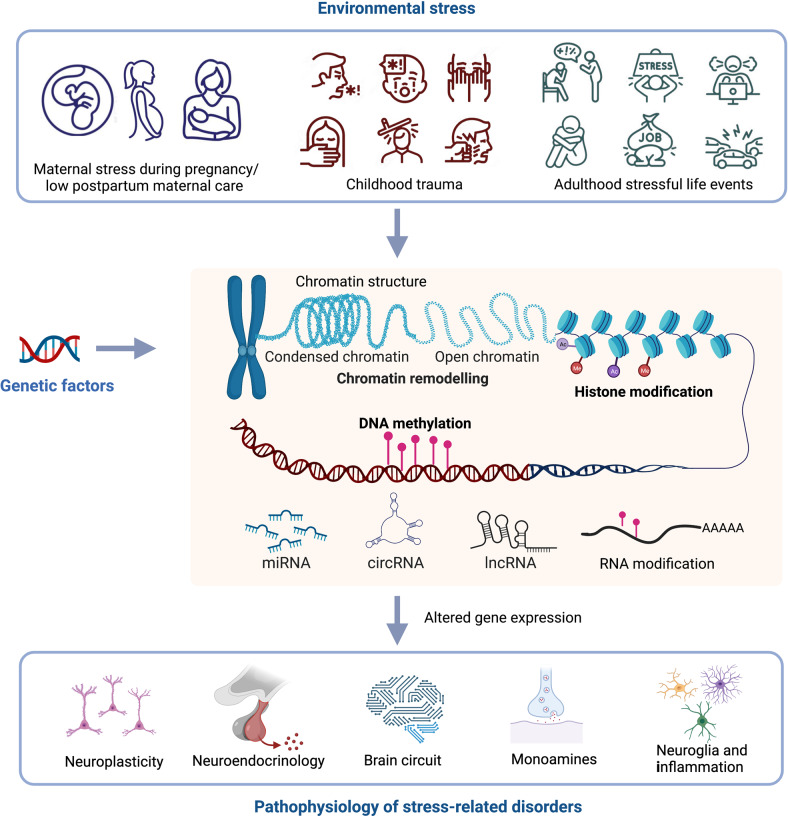
Major depressive disorder (MDD) is a chronic, generally episodic and debilitating disease that affects an estimated 300 million people worldwide, but its pathogenesis is poorly understood. The heritability estimate of MDD is 30-40%, suggesting that genetics alone do not account for most of the risk of major depression. Another factor known to associate with MDD involves environmental stressors such as childhood adversity and recent life stress. Recent studies have emerged to show that the biological impact of environmental factors in MDD and other stress-related disorders is mediated by a variety of epigenetic modifications. These epigenetic modification alterations contribute to abnormal neuroendocrine responses, neuroplasticity impairment, neurotransmission and neuroglia dysfunction, which are involved in the pathophysiology of MDD. Furthermore, epigenetic marks have been associated with the diagnosis and treatment of MDD. The evaluation of epigenetic modifications holds promise for further understanding of the heterogeneous etiology and complex phenotypes of MDD, and may identify new therapeutic targets. Here, we review preclinical and clinical epigenetic findings, including DNA methylation, histone modification, noncoding RNA, RNA modification, and chromatin remodeling factor in MDD. In addition, we elaborate on the contribution of these epigenetic mechanisms to the pathological trait variability in depression and discuss how such mechanisms can be exploited for therapeutic purposes.
Overview
CoChat Summary
TL;DR
This review synthesizes preclinical and clinical evidence that epigenetic mechanisms—DNA methylation, histone modifications, noncoding RNAs, RNA modifications, and chromatin remodeling—mediate the biological impact of environmental stressors in major depressive disorder (MDD) and other stress-related disorders. It argues these marks contribute to neuroendocrine, neuroplasticity, neurotransmission, and neuroglial dysfunction, and may serve as diagnostic, treatment-response, and therapeutic targets.
Key findings
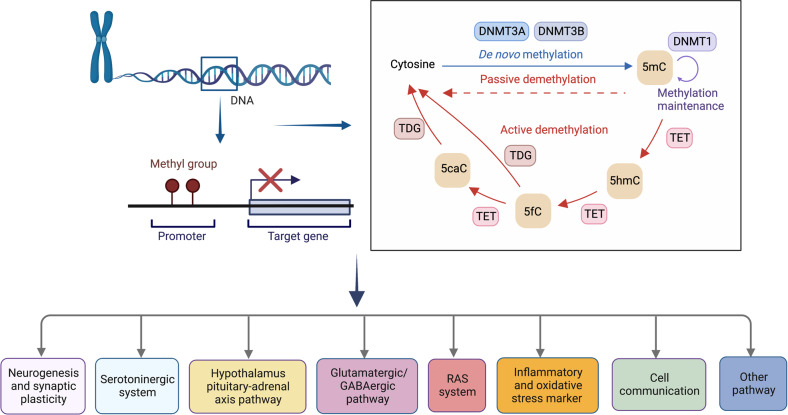
- MDD heritability is estimated at ~35%, lower than schizophrenia or bipolar disorder (65–70%); GWAS has identified over 80 reproducible loci each with small effect, and polygenic risk scores explain only a small fraction of heritable risk—supporting a substantial environmental/epigenetic contribution.
- DNA methylation findings are heterogeneous and location-dependent: promoter CpG island methylation generally suppresses expression (e.g., BDNF promoter methylation correlating with decreased BDNF), but gene-body and non-proximal promoter methylation can enhance expression; early-life adversity is linked to GR (NR3C1) promoter hypermethylation in hippocampus, and childhood adversity before age three explains more DNA methylation variability than accumulation or recency of exposure.
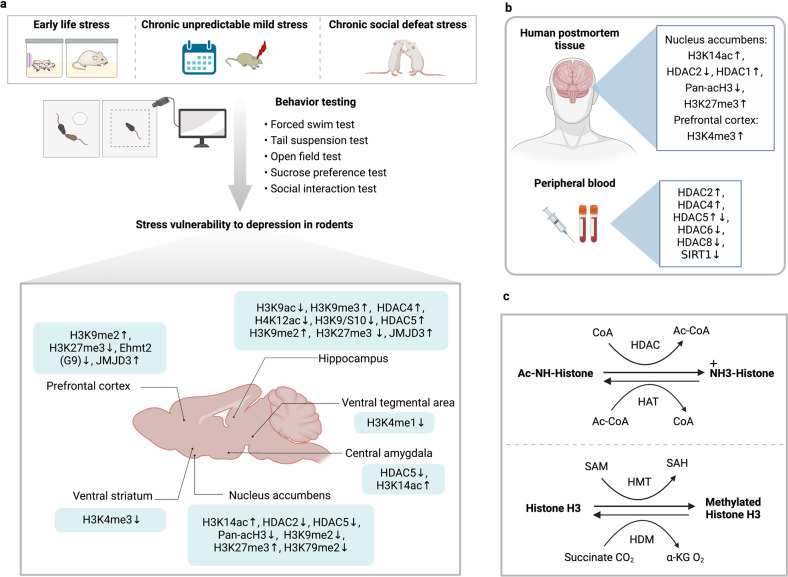
- Histone modification evidence is brain-region-specific and sometimes contradictory: HDAC2 and HDAC5 show pro-depressive effects in hippocampus but opposite (pro-resilient/homeostatic) roles in NAc and amygdala; stress-induced depression is generally associated with decreased histone acetylation, and HDAC inhibitors (e.g., MS-275, SAHA, sodium butyrate) exert antidepressant-like effects in rodents.
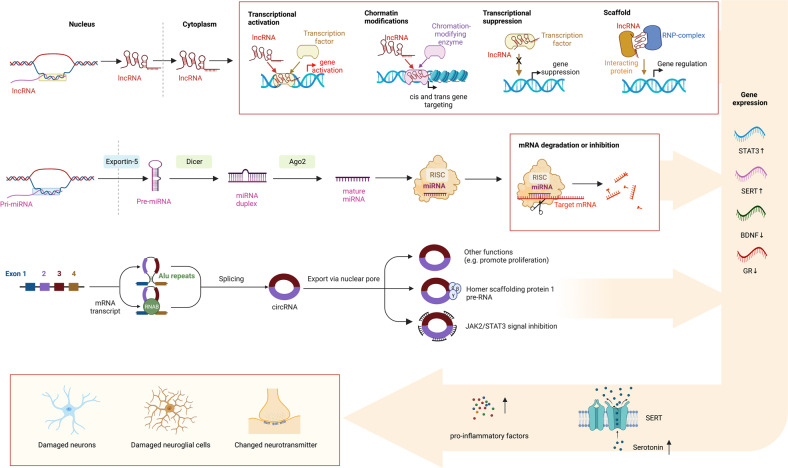
- ncRNAs and RNA modifications are altered in MDD and by antidepressants: e.g., miR-1202 rises after 8 weeks of citalopram; escitalopram altered 30 miRNAs; ketamine downregulated 18 and upregulated 22 miRNAs in rats; FTO rs9939609 was associated with lower MDD risk, and ALKBH5 rs12936694 showed allelic and genotypic association with MDD.
Methods
- Narrative review of preclinical (rodent stress models: early life stress, chronic social defeat, chronic unpredictable mild stress) and clinical (postmortem brain, peripheral blood, saliva, buccal cells) epigenetic findings in MDD and stress-related disorders.
- Covers five epigenetic categories: DNA methylation/hydroxymethylation, histone modification, noncoding RNAs (miRNA, circRNA, lncRNA), RNA modification (chiefly m6A, plus ac4C and m5C), and ATP-dependent chromatin remodeling.
- Includes three summary tables: DNA methylation alterations with clinical/biological outcomes (Table 1), candidate diagnostic epigenetic biomarkers (Table 2), biomarkers predicting antidepressant response (Table 3), and drugs targeting epigenetic processes (Table 4).
Limitations
- Stated by the paper: most literature does not distinguish DNA methylation from hydroxymethylation, and bisulfite-based assays measure both indiscriminately; most DNA methylation markers in peripheral tissue cannot accurately predict brain methylation status; clinical studies cannot separate whether fluctuating biology reflects homeostatic response, illness-severity stress, or pathophysiology; most histone modification studies examine heterogeneous cell populations; few clinical studies address histone modifications; and clinical adaptation of HDAC/DNMT inhibitors is constrained by off-target effects given their wide CNS and peripheral distribution.
- Evident from the text: the review is narrative rather than systematic, with no stated search strategy, inclusion criteria, or quantitative synthesis; many cited findings rest on small samples (the paper itself notes one replication study had a small sample size); and much of the mechanistic evidence derives from animal models, with the authors repeatedly noting that human relevance and causality remain to be established.
Model-written summary. Check it against the paper before relying on it.
Integrity signals
Registry
Cites
Statistics
Figures
Verification
Claims the paper makes
182 Valid · 15 Not valid · 108 Not checked · 26 Own results and interpretations
Some cited sources support this claim and some don’t — read each source’s verdict below.
In the paper
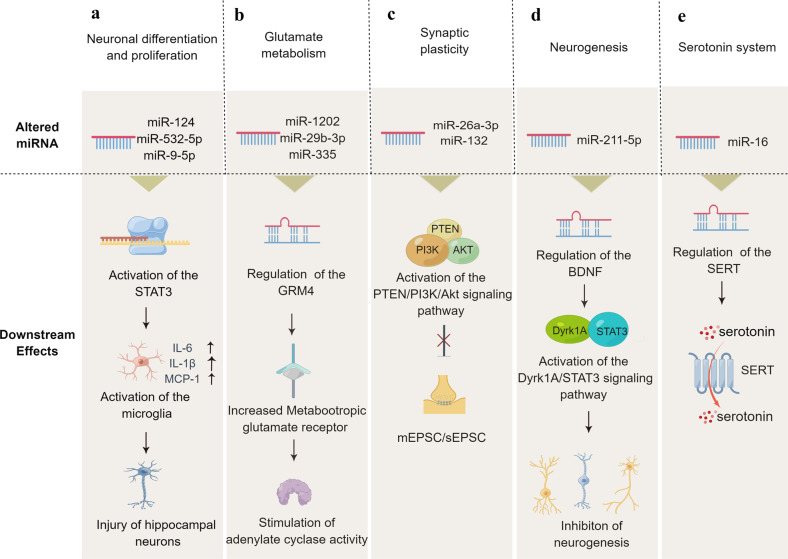
“miR-26a-3p263 and miR-132264 can induce depressive symptoms by activating the phosphatase and tensin homolog (PTEN)/phosphoinositide 3-kinase (PI3K)/Akt signaling pathway”
§ Epigenetic regulation in major depression and other stress-related disorders: molecular mechanisms, clinical relevance and therapeutic potential > Noncoding RNAs participate in the development and treatment of MDD > miRNAs and the development of depression
What the sources say
- Disputedcites [263] Li Y MicroRNA-26a-3p rescues depression-like behaviors in male rats via preventing hippocampal neuronal anomalies J. Clin. Invest 2021 131 e148853 10.1172/JCI148853 34228643 PMC8363293 sourceExperimental — accuracy not yet measured
This citation is attached to miR-26a-3p, not miR-132. The paper reports the opposite direction of effect: upregulating miR-26a-3p rescued depression-like behavior (p. 1), while knocking it down increased PTEN, reduced PI3K and phosphorylated Akt (Results, p. 5), and induced depression-like behavior. (LLM, conf=0.90)
Checked by a reasoning model — may be wrong.
- Partly supportedcites [264] Ronovsky M A role for miR-132 in learned safety Sci. Rep. 2019 9 528 10.1038/s41598-018-37054-z 30679653 PMC6346013 sourceExperimental — accuracy not yet measured
The Results (miR-132 target gene analysis; page unavailable) show that increasing miR-132 reduced PTEN expression in cultured cells. The Discussion (page unavailable) proposes a role for miR-132 and PTEN in learned safety, but the paper does not show that miR-132 induces depressive symptoms through activation of a PTEN/PI3K/Akt pathway. The adjacent miR-26a-3p citation is not attributed to this source. (LLM, conf=0.87)
plainstates a cause- Asserted: passes — The authors put it forward as true.
- Checkable: passes — It can be checked against evidence.
- Load-bearing: unclear — It is unclear whether the paper’s conclusions depend on it.
- Based: passes — The paper gives a reason why it holds.
- Rests on an assumption not shown here.
- Disputed
At least one cited source doesn’t support this claim or points to a different paper, and none confirmed it — see the verdicts below.
In the paper
“In depressed patients, fewer pyramidal neurons are found in the hippocampus and prefrontal cortex.255,256”
§ Epigenetic regulation in major depression and other stress-related disorders: molecular mechanisms, clinical relevance and therapeutic potential > Noncoding RNAs participate in the development and treatment of MDD > miRNAs and the development of depression
What the sources say
- Not checked — no full text of the sourcecites [255] Rajkowska G Morphometric evidence for neuronal and glial prefrontal cell pathology in major depression Biol. Psychiatry 1999 45 1085 1098 10.1016/S0006-3223(99)00041-4 10331101 source
- Disputedcites [256] Stockmeier CA Cellular changes in the postmortem hippocampus in major depression Biol. Psychiatry 2004 56 640 650 10.1016/j.biopsych.2004.08.022 15522247 PMC2929806 sourceExperimental — accuracy not yet measured
The Results report 35%–36% higher hippocampal pyramidal-neuron density in depressed subjects, contrary to the claimed decrease. The Discussion cautions that the study could not assess total neuron numbers, so it does not establish whether the total number was lower. The Conclusion reports lower neuronal density in parts of the prefrontal cortex, but does not identify those neurons as pyramidal. (LLM, conf=0.82)
Checked by a reasoning model — may be wrong.
plainstates an association- Asserted: passes — The authors put it forward as true.
- Checkable: passes — It can be checked against evidence.
- Load-bearing: unclear — It is unclear whether the paper’s conclusions depend on it.
- Based: passes — The paper gives a reason why it holds.
- Rests on an assumption not shown here.
At least one cited source doesn’t support this claim or points to a different paper, and none confirmed it — see the verdicts below.
In the paper
“Low miR-218 expression may influence synapse formation and synaptic plasticity of the mPFC by repressing the gene expression of Netrin-1 guidance cue receptor gene DCC in mouse models of social defeat stress.266”
§ Epigenetic regulation in major depression and other stress-related disorders: molecular mechanisms, clinical relevance and therapeutic potential > Noncoding RNAs participate in the development and treatment of MDD > miRNAs and the development of depression
What the sources say
- Disputedcites [266] Torres-Berrío A MiR-218: a molecular switch and potential biomarker of susceptibility to stress Mol. Psychiatry 2020 25 951 964 10.1038/s41380-019-0421-5 30980043 PMC6790160 sourceExperimental — accuracy not yet measured
The Discussion (page not provided) says miR-218 represses DCC, but reduced miR-218 is associated with increased DCC expression—not repression. The Results and Discussion also report that miR-218 overexpression increased thin dendritic-spine density in mice exposed to chronic social defeat stress. (LLM, conf=0.88)
Checked by a reasoning model — may be wrong.
hedgedstates a possible cause- Asserted: passes — The authors put it forward as true.
- Checkable: passes — It can be checked against evidence.
- Load-bearing: unclear — It is unclear whether the paper’s conclusions depend on it.
- Based: passes — The paper gives a reason why it holds.
- Rests on an assumption not shown here.
- Disputed
Some cited sources support this claim and some don’t — read each source’s verdict below.
In the paper
“For example, the true causality of epigenetic signatures at DNA sites that are known to be involved in stress-related disorders can only be examined with the advent of novel mutagenesis tools such as Clustered Regularly Interspaced Short Palindromic Repeats (CRISPR-Cas9) and Transcription Activator-Like Effector Nucleases (TALENs).425,426”
§ Epigenetic regulation in major depression and other stress-related disorders: molecular mechanisms, clinical relevance and therapeutic potential > Concluding remarks and future directions
What the sources say
- Disputedcites [425] Heller EA Locus-specific epigenetic remodeling controls addiction- and depression-related behaviors Nat. Neurosci. 2014 17 1720 1727 10.1038/nn.3871 25347353 PMC4241193 sourceExperimental — accuracy not yet measured
The Introduction describes testing the causal role of stress-evoked epigenetic regulation with engineered zinc-finger proteins (ZFPs) and transcription activator-like effectors (TALEs). The Discussion reports that ZFP-induced modification at FosB produced depression-related behaviors in mice. This contradicts the claim that causality can only be examined with CRISPR-Cas9 and TALENs; the paper describes TALE-based transcription factors, not TALEN mutagenesis. Our copy provides section labels but no page numbers. (LLM, conf=0.87)
Checked by a reasoning model — may be wrong.
- Partly supportedcites [426] Heller EA Targeted epigenetic remodeling of the Cdk5 gene in nucleus accumbens regulates cocaine- and stress-evoked behavior J. Neurosci. 2016 36 4690 4697 10.1523/JNEUROSCI.0013-16.2016 27122028 PMC4846670 sourceExperimental — accuracy not yet measured
The Introduction (page unavailable) says that examining the functional importance of epigenetic modifications at a single gene in vivo only recently became possible. But the paper uses engineered zinc finger proteins to test causality at the Cdk5 locus; it does not identify CRISPR-Cas9 or TALENs as the tools enabling that test. (LLM, conf=0.86)
plainstates a cause- Asserted: passes — The authors put it forward as true.
- Checkable: passes — It can be checked against evidence.
- Load-bearing: passes — The paper’s conclusions depend on it.
- Based: passes — The paper gives a reason why it holds.
- Disputed
At least one cited source doesn’t support this claim or points to a different paper, and none confirmed it — see the verdicts below.
In the paper
“HDAC4 in the cytoplasm may have neuroprotective effects.145–147”
§ Epigenetic regulation in major depression and other stress-related disorders: molecular mechanisms, clinical relevance and therapeutic potential > Histone modifications in the pathogenesis of MDD > Histone acetylation in stress response and neuroplasticity
What the sources say
- Not checked — no full text of the sourcecites [145] Fitzsimons HL The Class IIa histone deacetylase HDAC4 and neuronal function: Nuclear nuisance and cytoplasmic stalwart? Neurobiol. Learn Mem. 2015 123 149 158 10.1016/j.nlm.2015.06.006 26074448 source
- Not checked — no full text of the sourcecites [146] Zhang P HDAC4 protects cells from ER stress induced apoptosis through interaction with ATF4 Cell Signal 2014 26 556 563 10.1016/j.cellsig.2013.11.026 24308964 source
- Disputedcites [147] Mielcarek M HDAC4 reduction: a novel therapeutic strategy to target cytoplasmic huntingtin and ameliorate neurodegeneration PLoS Biol 2013 11 e1001717 10.1371/journal.pbio.1001717 24302884 PMC3841096 sourceExperimental — accuracy not yet measured
The Discussion reports the opposite effect in Huntington’s disease mouse models: reducing HDAC4 delayed cytoplasmic aggregation, restored synaptic function, and improved neurological outcomes. It describes the relevant cytoplasmic mechanism as contributing to neurodegeneration, not as neuroprotective. (LLM, conf=0.89)
Checked by a reasoning model — may be wrong.
hedgedstates a possible cause- Asserted: passes — The authors put it forward as true.
- Checkable: passes — It can be checked against evidence.
- Load-bearing: unclear — It is unclear whether the paper’s conclusions depend on it.
- Based: passes — The paper gives a reason why it holds.
180 more claims · 118 with their cited sources checked
Create a free account to see all 331 claims and to verify the 24 references still open.
- It may state two separate claims as one. 116
- Probably not a substantial claim. 44
Claims other papers make about this one
Each is checked against this paper’s own text: does it say what the citing paper says it does?
The source backs part of the claim, not all of it — or backs it for a different population, condition or comparison.
In the citing paper
“Changes in histone marks have been linked to neuroinflammation and neuronal injury, contributing to structural and functional alterations observed in depression (Yadav et al., 2024; Yuan et al., 2023; Zhu et al., 2021).”
From Histone modifications and depression: epigenetic mechanisms, therapeutic targets, and translational outlook (2026) · cites this paper as Yuan et al., 2023
Experimental — accuracy not yet measured
Self-check
Percentages, sums and reported differences re-computed from the paper’s own numbers.
Each contradiction between two passages listed here was confirmed by an independent check.
Rated major: it would touch a result — a value a result rests on, reported and recomputed p-values on opposite sides of the significance level, two passages that conflict with no sign which is right, or a cited work retracted before this paper was published.
In the paper
§ Epigenetic regulation in major depression and other stress-related disorders: molecular mechanisms, clinical relevance and therapeutic potential > Noncoding RNAs participate in the development and treatment of MDD > lncRNAs participate in the process of depression
“In MDD patients, four lncRNAs (PCAT1, MER11C, Y5, and PCAT29) levels were higher, and one lncRNA (RMRP) was lower in peripheral blood leukocytes.”
§ Epigenetic regulation in major depression and other stress-related disorders: molecular mechanisms, clinical relevance and therapeutic potential > A translational perspective on epigenetic modifications in MDD > Biomarkers for the diagnosis of depression
“| Y5↓ | Human | Peripheral blood leukocytes | Not reported | 312 | | MER11C↓ | Human | Peripheral blood leukocytes | Not reported | 312 | | PCAT1↓ | Human | Peripheral blood leukocytes | Not reported | 312 | | PCAT29↓ | Human | Peripheral blood leukocytes | Not reported | 312 |”
Rated minor: it would not touch a result — a value no result rests on, a p-value that stays on the same side of the significance level, or a conflict that is clerical, resolved elsewhere in the paper, or outside its own findings.
In the paper
§ Epigenetic regulation in major depression and other stress-related disorders: molecular mechanisms, clinical relevance and therapeutic potential > Noncoding RNAs participate in the development and treatment of MDD > circRNAs engage in the development of MDD
“overexpression of circPTK2 can induce neuronal apoptosis via miR-29b inhibition”
§ Epigenetic regulation in major depression and other stress-related disorders: molecular mechanisms, clinical relevance and therapeutic potential > Noncoding RNAs participate in the development and treatment of MDD > circRNAs engage in the development of MDD
“preventing inflammatory response and protecting against neuronal apoptosis.”
Rated minor: it would not touch a result — a value no result rests on, a p-value that stays on the same side of the significance level, or a conflict that is clerical, resolved elsewhere in the paper, or outside its own findings.
In the paper
§ Epigenetic regulation in major depression and other stress-related disorders: molecular mechanisms, clinical relevance and therapeutic potential > Noncoding RNAs participate in the development and treatment of MDD
“MicroRNAs (miRNAs), circular RNAs (lncRNAs), long noncoding RNAs (lncRNAs), and other as yet unidentified RNAs are referred as noncoding RNAs (ncRNAs), which do not code for peptides or proteins.”
§ Epigenetic regulation in major depression and other stress-related disorders: molecular mechanisms, clinical relevance and therapeutic potential > Noncoding RNAs participate in the development and treatment of MDD > circRNAs engage in the development of MDD
“In addition, it has been reported that some circRNAs can translate to peptides.”
Rated minor: it would not touch a result — a value no result rests on, a p-value that stays on the same side of the significance level, or a conflict that is clerical, resolved elsewhere in the paper, or outside its own findings.
In the paper
§ Epigenetic regulation in major depression and other stress-related disorders: molecular mechanisms, clinical relevance and therapeutic potential > RNA modifications participate in the molecular mechanisms underpinning MDD > RNA modifications other than m6A are also involved in depression
“RNA modifications other than m6A have been poorly studied in the field of depression with scant coverage of modifications such as N4-acetylcytidine (ac4C) and 5-methylcytosine (m5C).”
§ Epigenetic regulation in major depression and other stress-related disorders: molecular mechanisms, clinical relevance and therapeutic potential > RNA modifications participate in the molecular mechanisms underpinning MDD > RNA modifications other than m6A are also involved in depression
“It can regulate mRNA translation efficiency by catalyzing the addition of ac4C to the N4 position on thymidines.”
Rated minor: it would not touch a result — a value no result rests on, a p-value that stays on the same side of the significance level, or a conflict that is clerical, resolved elsewhere in the paper, or outside its own findings.
In the paper
§ Epigenetic regulation in major depression and other stress-related disorders: molecular mechanisms, clinical relevance and therapeutic potential > A translational perspective on epigenetic modifications in MDD > Biomarkers for the diagnosis of depression
“| miR-17-5p↓ | Human | Locus coeruleus | ↓miR-218 → target CREB1, CHRM2, NTRK3, and SLC17A7 genes | 247,476 |”
§ Epigenetic regulation in major depression and other stress-related disorders: molecular mechanisms, clinical relevance and therapeutic potential > A translational perspective on epigenetic modifications in MDD > Biomarkers for the diagnosis of depression
“| miR-17-5p↓ | Human | Plasma | ↓miR-218 → target CREB1, CHRM2, NTRK3, and SLC17A7 genes | 247,476 |”
Citations
Cites
Items 401–507 of 507
Kahl, K. G., Georgi, K., Bleich, S., Muschler, M., Hillemacher, T., Hilfiker-Kleinert, D., Schweiger, U., Ding, X., Kotsiari, A., & Frieling, H. (2016) · Journal of Psychiatric Research · doi:10.1016/j.jpsychires.2016.02.002 · Cited by 44
Calabrese, F., Luoni, A., Guidotti, G., Racagni, G., Fumagalli, F., & Riva, M. A. (2013) · Psychopharmacology · doi:10.1007/s00213-012-2900-0 · Cited by 43 · cited 1×
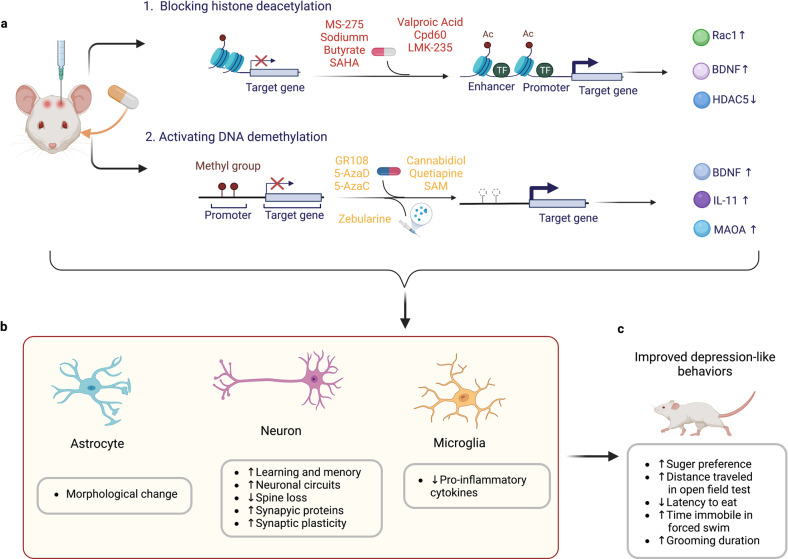
“403,404 Animal models and postmortem brain results show some HDACis exert antidepressant-like effects (Table 4, Fig.”
BackgroundJiang, Z., Zhu, Z., Zhao, M., Wang, W., Li, H., Liu, D., & Pan, F. (2021) · Psychopharmacology · doi:10.1007/s00213-021-05896-7 · Cited by 43 · cited 2×
“170 In addition, higher H3K9me2 levels at the calmodulin-dependent protein kinase II α (CaMKII α ) promoter and inhibition of CaMKII α were found in MDD and mice following antidepressant administration.”
BackgroundRole of some circulating MiRNAs on breast cancer diagnosis
Swellam, M. M., Zahran, R. F. K., Taha, H. A. E.-S., El-Khazragy, N. N., & Abdel‐Malak, C. (2018) · Archives of Physiology and Biochemistry · doi:10.1080/13813455.2018.1482355 · Cited by 42
MiR-155 is involved in major depression disorder and antidepressant treatment via targeting SIRT1
Wang, X., Wang, B., Zhao, J., Liu, C., Qu, X., & Li, Y. (2018) · Bioscience Reports · doi:10.1042/bsr20181139 · Cited by 42
Altered expression of long noncoding RNAs in patients with major depressive disorder
Seki, T., Yamagata, H., Uchida, S., Chen, C., Kobayashi, A., Kobayashi, M., Harada, K., Matsuo, K., Watanabe, Y., & Nakagawa, S. (2019) · Journal of Psychiatric Research · doi:10.1016/j.jpsychires.2019.07.004 · Cited by 42 · cited 1×
“In MDD patients, four lncRNAs (PCAT1, MER11C, Y5, and PCAT29) levels were higher, and one lncRNA (RMRP) was lower in peripheral blood leukocytes.(312)”
BackgroundSegaran, R. C., Chan, L. Y., Wang, H., Sethi, G., & Tang, F. R. (2020) · Current Medicinal Chemistry · doi:10.2174/0929867327666200121122910 · Cited by 42
Wang, R., Wang, W., Xu, J., Liu, D., Jiang, H., & Pan, F. (2018) · Frontiers in Psychiatry · doi:10.3389/fpsyt.2018.00471 · Cited by 42
Fitzsimons, H. L. (2015) · Neurobiology of Learning and Memory · doi:10.1016/j.nlm.2015.06.006 · Cited by 41 · cited 1×
“145 – 147 Inhibiting HDAC4 delayed the formation of huntingtin protein cytoplasmic aggregates, while the levels of BDNF transcripts were restored, resulting in the restoration of neuronal and cortico-striatal synaptic function in mouse models of neurological disorders.”
BackgroundCircular RNAs in depression: Biogenesis, function, expression, and therapeutic potential
Gan, H., Lei, Y., Yuan, N., Tang, K., Hao, W., Ma, Q., Wu, M., Zhou, X., Li, X., Huang, J., et al. (2021) · Biomedicine & Pharmacotherapy · doi:10.1016/j.biopha.2021.111244 · Cited by 41 · cited 2×
“220 ,287 These RNA molecules function as a class of post-transcriptional regulators.”
Background(2015) · PubMed Central · Cited by 40
Investigating the epigenetic profile of the inflammatory gene IL-6 in late-life depression
Ryan, J., Pilkington, L., Neuhaus, K., Ritchie, K., Ancelin, M.-L., & Saffery, R. (2017) · BMC Psychiatry · doi:10.1186/s12888-017-1515-8 · Cited by 40
Kim, J.-M., Stewart, R., Kang, H.-J., Bae, K.-Y., Kim, S.-W., Shin, I.-S., Hong, Y. J., Ahn, Y., Jeong, M. H., & Yoon, J.-S. (2015) · Psychoneuroendocrinology · doi:10.1016/j.psyneuen.2015.08.013 · Cited by 39
Structural Modeling of GR Interactions with the SWI/SNF Chromatin Remodeling Complex and C/EBP
Muratcioglu, S., Presman, D. M., Pooley, J. R., Grøntved, L., Hager, G. L., Nussinov, R., Keskin, O., & Gursoy, A. (2015) · Biophysical Journal · doi:10.1016/j.bpj.2015.06.044 · Cited by 39 · cited 1×
“124,125 Animal models for studying depression have been established based on exposure to different forms of stressors in rodents such as early life stress (ELS), chronic social defeat stress, and chronic unpredictable mild stress.”
BackgroundWei, Z., Sun, M., Liu, X., Zhang, J., & Jin, Y. (2014) · Journal of Neurochemistry · doi:10.1111/jnc.12740 · Cited by 39
Salemi, M., Mogavero, M. P., Lanza, G., Mongioì, L. M., Calogero, A. E., & Ferri, R. (2022) · Cells · doi:10.3390/cells11121930 · Cited by 39 · cited 1×
“…miRNA can contribute to cancers, cardiovascular diseases, metabolic diseases, immune-mediated disorders, and neurological disorders, etc. 230,231 For example, miR-106b-5p is an oncogenic miRNA that appears to be upregulated in different cancers, such as hepatic cancer, 232 cervical cancer,…”
BackgroundAutobiographical memory dysfunctions in depressive disorders
Talarowska, M., Berk, M., Maes, M., & Gałecki, P. (2016) · Psychiatry and Clinical Neurosciences · doi:10.1111/pcn.12370 · Cited by 38 · cited 1×
“131,132 Neuronal plasticity and cognitive function are associated with transcriptional changes regulated by HDAC-mediated epigenetic modi fi cation.”
BackgroundBschor, T., & Kilarski, L. L. (2016) · Expert Review of Neurotherapeutics · doi:10.1586/14737175.2016.1155985 · Cited by 38 · cited 1×
“323,324 Accordingly, a better understanding of how antidepressants work and why they do not work in some patients is needed.”
BackgroundXu, Y.-Y., Xia, Q., Xia, Q., Zhang, X., & Liang, J. (2019) · Neuropsychiatric Disease and Treatment · doi:10.2147/ndt.s237116 · Cited by 38 · cited 1×
“Since blood samples can be collected easily, they are attractive options for diagnostic biomarkers.(385,386) Because miRNA and lncRNA levels in blood distinguish depressed patients from healthy controls,(243,310,387) for a diagnostic tool, it is not essential if blood and brain exhibit significant similarities.”
BackgroundNi, X., Liao, Y., Li, L., Zhang, X., & Wu, Z. (2018) · Journal of Integrative Neuroscience · doi:10.31083/jin-170052 · Cited by 37 · cited 2×
“Furthermore, viral-mediated overexpression of lncRNA TCONS 00019174 aggravated depression status in depressed mice model, indicating that lncRNA TCONS 00019174 may be linked to the pathogenesis of depression.(313) Differentially expressed lncRNAs showed correlations with 18 synapse-related functions, which showed that…”
BackgroundmiRNAs in depression vulnerability and resilience: novel targets for preventive strategies
Lopizzo, N., Zonca, V., Cattane, N., Pariante, C. M., & Cattaneo, A. (2019) · Journal of Neural Transmission · doi:10.1007/s00702-019-02048-2 · Cited by 37 · cited 1×
“258 262 Similarly, miR-26a-3p 263 and miR-132 264 can induce depressive symptoms by activating the phosphatase and tensin homolog (PTEN)/phosphoinositide 3-kinase (PI3K)/ Akt signaling pathway, which is one of the main pathways for regulating synaptic plasticity.”
BackgroundSong, R., Bai, Y., Li, X., Zhu, J., Zhang, H., Shi, Y., Li, K., Wang, B., Zhang, H., Yang, Y., et al. (2020) · Journal of Affective Disorders · doi:10.1016/j.jad.2020.05.109 · Cited by 37
Emerging roles of long non-coding RNA in depression
Hao, W.-Z., Chen, Q., Wang, L., Tao, G., Gan, H., Deng, L.-J., Huang, J.-Q., & Chen, J.-X. (2022) · Progress in Neuro-Psychopharmacology and Biological Psychiatry · doi:10.1016/j.pnpbp.2022.110515 · Cited by 37
Wu, Z., Cai, Z., Shi, H., Huang, X., Cai, M., Yuan, K., Huang, P., Shi, G., Yan, T., & Li, Z. (2022) · Aging · doi:10.18632/aging.204030 · Cited by 37 · cited 1×
“…in BA10, 244 BA44, 245 anterior cingulate cortex (ACC), 246 and other brain regions in MDD. 247 The link between miRNAs and the pathophysiology of depression 248 – 252 may be implicated by the fact that miRNAs regulate neuronal regulation, neurotransmitter regulation, and microglia activation.”
BackgroundChao, B., Huang, S., Pan, J., Zhang, Y., & Wang, Y. (2020) · Brain Research Bulletin · doi:10.1016/j.brainresbull.2020.01.008 · Cited by 36
Cruceanu, C., Kutsarova, E., Chen, E. S., Checknita, D. R., Nagy, C., Lopez, J. P., Alda, M., Rouleau, G. A., & Turecki, G. (2016) · BMC Psychiatry · doi:10.1186/s12888-016-0989-0 · Cited by 35 · cited 1×
“56 In contrast, a study found that patients with MDD had increased methylation in the TESC gene, negatively correlated with the right parahippocampal cingulum integrity.”
BackgroundAn epigenetic basis for an omnigenic model of psychiatric disorders
Peedicayil, J., & Grayson, D. R. (2018) · Journal of Theoretical Biology · doi:10.1016/j.jtbi.2018.01.027 · Cited by 35 · cited 1×
“28,29 Epigenetics refers to short-and long-term gene expression variations that are caused by non-DNA-encoded mechanisms.”
BackgroundLi, X., Zhao, J., Li, Z., Zhang, L., & Huo, Z. (2020) · Neural Plasticity · doi:10.1155/2020/8850653 · Cited by 35 · cited 1×
“…aberrant miRNA can contribute to cancers, cardiovascular diseases, metabolic diseases, immune-mediated disorders, and neurological disorders, etc. 230,231 For example, miR-106b-5p is an oncogenic miRNA that appears to be upregulated in different cancers, such as hepatic cancer, 232 cervical…”
BackgroundXu, B., Li, Q., Wu, Y., Wang, H., Xu, J., Liu, H., & Xuan, A. (2022) · The FASEB Journal · doi:10.1096/fj.202200133rr · Cited by 35
Zhao, J., Tian, H., Song, H., Wang, X., Luo, T., Ai, L., Fang, Y., Zhao, J., Chao-ke-tu, S., & Li, Z. (2019) · Evidence-Based Complementary and Alternative Medicine · doi:10.1155/2019/7124318 · Cited by 34
Serum miR-221-3p as a new potential biomarker for depressed mood in perioperative patients
Feng, J., Wang, M., Li, M., Yang, J., Jia, J., Liu, L., Zhou, J., Zhang, C., & Wang, X. (2019) · Brain Research · doi:10.1016/j.brainres.2019.06.015 · Cited by 34
Wang, X.-L., Wei, X., Yuan, J.-J., Mao, Y.-Y., Wang, Z.-Y., Xing, N., Gu, H.-W., Lin, C.-H., Wang, W.-T., Zhang, W., et al. (2022) · Frontiers in Cellular Neuroscience · doi:10.3389/fncel.2022.884296 · Cited by 34 · cited 1×
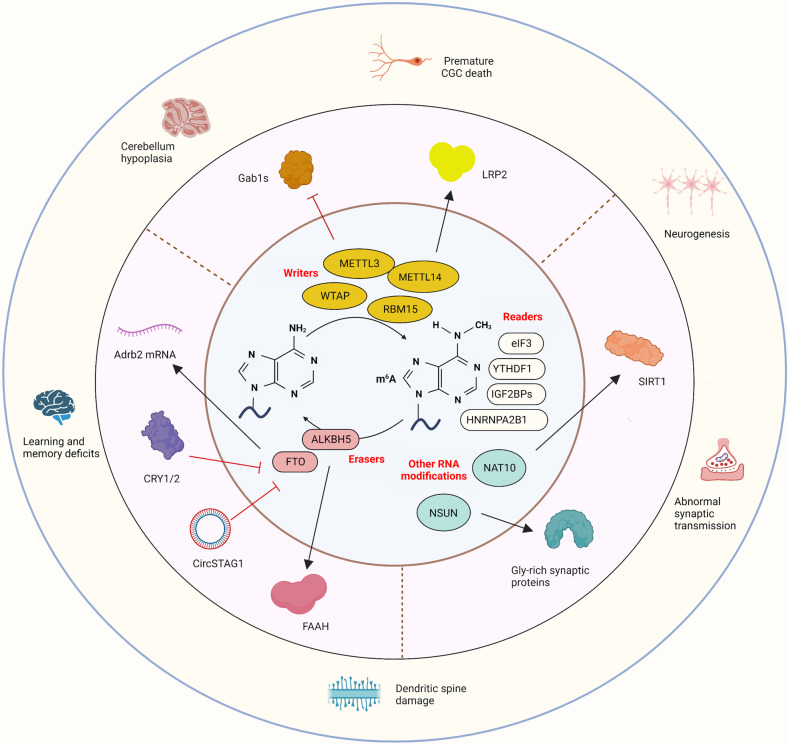
“Anxiety-like and depression-like behavior induced by peripheral nerve injury could be reversed in mice by blocking FTO downregulation in the anterior cingulate cortex.(362) The m(6)A demethylase gene ALKBH5 variant rs12936694 showed an allelic association and genotypic association with MDD.”
BackgroundSelf-citationFonzo, G. A., Huemer, J., & Etkin, A. (2016) · Journal of Psychiatric Research · doi:10.1016/j.jpsychires.2015.12.015 · Cited by 33 · cited 1×
“213,221,222 miRNAs and the development of depression MicroRNA molecules are highly conserved small (21 – 24 nucleotides) RNA molecules.”
BackgroundA MIR4646 associated methylation locus is hypomethylated in adolescent depression
Boström, A. E., Ciuculete, D.-M., Attwood, M., Krattinger, R., Nikontovic, L., Titova, O. E., Kullak-Ublick, G. A., Mwinyi, J., & Schiöth, H. B. (2017) · Journal of Affective Disorders · doi:10.1016/j.jad.2017.05.017 · Cited by 33 · cited 1×
“88 94 – 97 Another study comparing DNA methylation across the whole genome in live human brain tissue with that in peripheral (blood, saliva, and buccal) tissues concluded that the patterns unique to the target genomic region must be considered when selecting the best surrogate tissue to mimic…”
BackgroundJiang, T., Hu, S., Dai, S., Yi, Y., Wang, T., Li, X., Luo, M., Li, K., Chen, L., Wang, H., et al. (2022) · Cell Biology and Toxicology · doi:10.1007/s10565-021-09590-4 · Cited by 33 · cited 1×
“275,276 277 – 283 The monoamine oxidase A (MAO-A) enzyme modulates monoamine neurotransmitter levels. miR-142, miR-34a, and miR-34c indirectly regulate MAO-A, potentially impacting monoamine neurotrans-mitters.”
BackgroundZeng, Y., Navarro, P., Shirali, M., Howard, D. M., Adams, M. J., Hall, L. S., Clarke, T.-K., Thomson, P. A., Smith, B. H., Murray, A., et al. (2017) · Biological Psychiatry · doi:10.1016/j.biopsych.2016.12.012 · Cited by 32
How to choose an antidepressant medication
Bayes, A. J., & Parker, G. B. (2019) · Acta Psychiatrica Scandinavica · doi:10.1111/acps.13001 · Cited by 32 · cited 1×
“317,318 New-generation antipsychotics and drugs targeting the alpha2-adrenergic autoreceptor like mirtazapine are also used.”
MethodHo, T. C., Teresi, G. I., Segarra, J. R., Ojha, A., Walker, J. C., Gu, M., Spielman, D. M., Sacchet, M. D., Jiang, F., Rosenberg-Hasson, Y., et al. (2021) · Frontiers in Psychiatry · doi:10.3389/fpsyt.2021.642976 · Cited by 32 · cited 1×
“275,276 277 – 283 The monoamine oxidase A (MAO-A) enzyme modulates monoamine neurotransmitter levels. miR-142, miR-34a, and miR-34c indirectly regulate MAO-A, potentially impacting monoamine neurotrans-mitters.”
BackgroundWu, P.-F., Han, Q.-Q., Chen, F.-F., Shen, T.-T., Li, Y.-H., Cao, Y., Chen, J.-G., & Wang, F. (2021) · Neurobiology of Stress · doi:10.1016/j.ynstr.2021.100390 · Cited by 32 · cited 1×
“372 Moreover, activation of FTO in the hippocampus relieves depression-like behaviors and reduces the density of dendritic spines and the number of branches in mice induced by chronic restraint stress, improving the synaptic plasticity.”
BackgroundGuo, X.-F., Wang, X.-H., Fu, Y.-L., Meng, Q., Huang, B.-Y., Yang, R., Guo, Y., Du, Y.-R., Wang, X., Gao, Y., et al. (2022) · Brain Research Bulletin · doi:10.1016/j.brainresbull.2022.05.004 · Cited by 32 · cited 1×
“369 As one of the most abundant modi fi cations on tRNA and rRNA, m5C is enzymatically catalyzed by members of the NOL1/NOP2/SUN domain (NSUN) family and DNA methyltransferase homolog DNMT2.”
BackgroundFan, X., Song, Y., Ma, Y., Zhang, S., Xiao, G., Yang, L., Xu, H., Zhang, D., & Cai, X. (2016) · Sensors · doi:10.3390/s17010061 · Cited by 30 · cited 1×
“271 – 274 Glutamate and its receptors are associated with many neuropsychiatric illnesses, including depression.”
BackgroundHjelseng, I. V., Vaskinn, A., Ueland, T., Lunding, S. H., Reponen, E. J., Steen, N. E., Andreassen, O. A., & Aas, M. (2022) · Schizophrenia Research · doi:10.1016/j.schres.2020.03.015 · Cited by 29 · cited 1×
“200 Depressive patients reporting childhood trauma show earlier onset, chronic course, and poorer response to antidepressant treatment.”
BackgroundYan, X., Zeng, D., Zhu, H., Zhang, Y., Shi, Y., Wu, Y., Tang, H., & Li, D. (2020) · Neuropsychiatric Disease and Treatment · doi:10.2147/ndt.s251152 · Cited by 29
Sodium butyrate as a selective cognitive enhancer for weak or impaired memory
Vinarskaya, A. K., Balaban, P. M., Roshchin, M. V., & Zuzina, A. B. (2021) · Neurobiology of Learning and Memory · doi:10.1016/j.nlm.2021.107414 · Cited by 29
Hippocampal miR-211-5p regulates neurogenesis and depression-like behaviors in the rat
Li, Y., Fan, C., Gao, R., Lan, T., Wang, W., & Yu, S. Y. (2021) · Neuropharmacology · doi:10.1016/j.neuropharm.2021.108618 · Cited by 29 · cited 1×
“Low hippocampal miR-211-5p can inhibit neuronal neurogenesis and induce depression-like behaviors via the promotion of the Dyrk1A/STAT3 signaling pathway.(265) Low miR-218 expression may influence synapse formation and synaptic plasticity of the mPFC by repressing the gene expression of Netrin-1 guidance cue receptor…”
BackgroundEngelmann, J., Zillich, L., Frank, J., Wagner, S., Cetin, M., Herzog, D. P., Müller, M. B., Tadic, A., Foo, J. C., Sirignano, L., et al. (2022) · Translational Psychiatry · doi:10.1038/s41398-022-02032-7 · Cited by 29
Perez-Cornago, A., Mansego, M., Zulet, M., & Martinez, J. (2014) · Nutrients · doi:10.3390/nu6062387 · Cited by 28
Kurata, A., Morinobu, S., Fuchikami, M., Yamamoto, S., & Yamawaki, S. (2009) · Hormones and Behavior · doi:10.1016/j.yhbeh.2009.03.016 · Cited by 28 · cited 1×
“76 In the hippocampus of adult rats with low maternal care, the transcription factor nerve growth factor-inducible factor A (NGFI-A) binding region of the GR promoter 1 7 gene is hypermethylated, but in those with high maternal care, it is hypomethylated.”
BackgroundKöhler, J. C., Gröger, N., Lesse, A., Guara Ciurana, S., Rether, K., Fegert, J., Bock, J., & Braun, K. (2019) · Molecular Neurobiology · doi:10.1007/s12035-018-1199-1 · Cited by 28
Early Life Stress Increases Brain Glutamate and Induces Neurobehavioral Manifestations in Rats
Guan, J., Ding, Y., Rong, Y., Geng, Y., Lai, L., Qi, D., Tang, Y., Yang, L., Li, J., Zhou, T., et al. (2020) · ACS Chemical Neuroscience · doi:10.1021/acschemneuro.0c00454 · Cited by 28 · cited 1×
“275,276 277 – 283 The monoamine oxidase A (MAO-A) enzyme modulates monoamine neurotransmitter levels. miR-142, miR-34a, and miR-34c indirectly regulate MAO-A, potentially impacting monoamine neurotrans-mitters.”
BackgroundPotential biomarkers of major depression diagnosis and chronicity
Galvão, A. C. D. M., de Almeida, R. N., de Sousa, G. M., Leocádio-Miguel, M. A., Palhano-Fontes, F., de Araújo, D. B., Soares, B. L., Maia‐de‐Oliveira, J. P., Nunes, E. A., Hallak, J. E. C., et al. (2021) · PLoS ONE · doi:10.1371/journal.pone.0257251 · Cited by 28 · cited 1×
“Since blood samples can be collected easily, they are attractive options for diagnostic biomarkers.(385,386) Because miRNA and lncRNA levels in blood distinguish depressed patients from healthy controls,(243,310,387) for a diagnostic tool, it is not essential if blood and brain exhibit significant similarities.”
BackgroundDadkhah, T., Rahimi-Aliabadi, S., Jamshidi, J., Ghaedi, H., Taghavi, S., Shokraeian, P., Akhavan-Niaki, H., Tafakhori, A., Ohadi, M., & Darvish, H. (2017) · Journal of Affective Disorders · doi:10.1016/j.jad.2016.10.008 · Cited by 26
Cloutier, S. C., Wang, S., Ma, W. K., Al-Husini, N., Dhoondia, Z., Ansari, A., Pascuzzi, P. E., & Tran, E. J. (2016) · Molecular Cell · doi:10.1016/j.molcel.2016.03.012 · Cited by 26 · cited 1×
“301 However, some long noncoding RNAs are involved in regulating gene expression, including transcriptional regulation, RNA regulation, chromatin modi fi cation, and posttranscriptional regulation of protein activity and localization.”
BackgroundTherapeutic response to paroxetine in major depressive disorder predicted by DNA Methylation
Takeuchi, N., Nonen, S., Kato, M., Wakeno, M., Takekita, Y., Kinoshita, T., & Kugawa, F. (2017) · Neuropsychobiology · doi:10.1159/000480512 · Cited by 26
Ni, X., Liao, Y., Li, L., Zhang, X., & Wu, Z. (2018) · Journal of Integrative Neuroscience · doi:10.3233/jin-170052 · Cited by 26
Shimizu, S., Tanaka, T., Takeda, T., Tohyama, M., & Miyata, S. (2015) · BioMed Research International · doi:10.1155/2015/797280 · Cited by 25
Hippocampus-specific regulation of long non-coding RNA and mRNA expression in germ-free mice
Zhou, C., Rao, X., Wang, H., Zeng, B., Yu, Y., Chen, J., Zhong, J., Qi, X., Zeng, L., Zheng, P., et al. (2020) · Functional & Integrative Genomics · doi:10.1007/s10142-019-00716-w · Cited by 25
Ershadi, A. S. B., Amini-Khoei, H., Hosseini, M.-J., & Dehpour, A. R. (2021) · Neurochemical Research · doi:10.1007/s11064-021-03263-8 · Cited by 25
Early-life stress induces cognitive disorder in middle-aged mice
Yajima, H., Haijima, A., Khairinisa, M. A., Shimokawa, N., Amano, I., & Takatsuru, Y. (2018) · Neurobiology of Aging · doi:10.1016/j.neurobiolaging.2017.12.021 · Cited by 24 · cited 1×
“201 207 ELS increased the vulnerability to adult stress in rodents 208 .”
BackgroundmiR-124 antagonizes the antidepressant-like effects of standardized gypenosides in mice
Yi, L., Mu, R.-H., Dong, S., Wang, S., Li, C., Geng, D., & Liu, Q. (2018) · Journal of Psychopharmacology · doi:10.1177/0269881118758304 · Cited by 23
The role of miR-106p-5p in cervical cancer: from expression to molecular mechanism
Yi, Y., Liu, Y., Wu, W., Wu, K., & Zhang, W. (2018) · Cell Death Discovery · doi:10.1038/s41420-018-0096-8 · Cited by 23
Self-citationLiu, H., Jiang, J., & Zhao, L. (2019) · Biochemical and Biophysical Research Communications · doi:10.1016/j.bbrc.2019.08.032 · Cited by 23 · cited 1×
“174 The histone lysine demethylase jumonji domain-containing 3 was also upregulated in the prefrontal cortex and hippocampus of rats exposed to CUMS.”
BackgroundKato, M., Ogata, H., Tahara, H., Shimamoto, A., Takekita, Y., Koshikawa, Y., Nishida, K., Nonen, S., Higasa, K., & Kinoshita, T. (2022) · International Journal of Molecular Sciences · doi:10.3390/ijms23073873 · Cited by 23
Mechanism of METTL3 ‐mediated m6A modification in depression‐induced cognitive deficits
Niu, J., Wang, B., Wang, T., & Zhou, T. (2022) · American Journal of Medical Genetics Part B: Neuropsychiatric Genetics · doi:10.1002/ajmg.b.32892 · Cited by 23
Decoding Crucial LncRNAs Implicated in Neurogenesis and Neurological Disorders
Ayana, R., Singh, S., & Pati, S. (2017) · Stem Cells and Development · doi:10.1089/scd.2016.0290 · Cited by 22
Potential Roles of microRNAs in the Regulation of Monoamine Oxidase A in the Brain
Higuchi, Y., Soga, T., & Parhar, I. S. (2018) · Frontiers in Molecular Neuroscience · doi:10.3389/fnmol.2018.00339 · Cited by 22
A role for miR-132 in learned safety
Ronovsky, M., Zambon, A., Cicvaric, A., Boehm, V., Hoesel, B., Moser, B. A., Yang, J., Schmid, J. A., Haubensak, W. E., Monje, F. J., et al. (2019) · Scientific Reports · doi:10.1038/s41598-018-37054-z · Cited by 22
Liu, Z., Yang, J., Fang, Q., Shao, H., Yang, D., Sun, J., & Gao, L. (2021) · Brain and Behavior · doi:10.1002/brb3.2107 · Cited by 22 · cited 1×
“270 The downregulation of miR-124 in depression also promotes the activation of BV2 microglia by activating STAT3.”
BackgroundLi, C., Cao, F., Li, S., Huang, S., Li, W., & Abumaria, N. (2018) · Frontiers in Molecular Neuroscience · doi:10.3389/fnmol.2017.00454 · Cited by 21
Long noncoding RNAs expression in gastric cancer
Esfandi, F., Taheri, M., Kholghi Oskooei, V., & Ghafouri‐Fard, S. (2019) · Journal of Cellular Biochemistry · doi:10.1002/jcb.28653 · Cited by 21
Gu, X., Xu, L., Zheng, L., Yang, Y., Tang, Z., Wu, H., Chen, Z., & Wang, W. (2020) · IUBMB Life · doi:10.1002/iub.2353 · Cited by 21 · cited 2×
“80 can reduce depression-like behaviors in rats and hippocampal neuron apoptosis in vitro and in vivo.(315) Consequently, lncRNA uc.”
BackgroundDuloxetine in the Treatment of Depression: An Overview
Monteleone, F., Caputo, M., Tecce, M. F., & Capasso, A. (2011) · Central Nervous System Agents in Medicinal Chemistry · doi:10.2174/187152411798047807 · Cited by 20 · cited 1×
“One of the SNRIs widely used in clinical settings is duloxetine.(339) Downregulation of miR-3074-5p, miR-146a-5p, miR-24-3p, miR425-3p, and miR-146b-5p expression in the peripheral blood of depression patients after duloxetine treatment was found.”
Cui, X., Niu, W., Kong, L., He, M., Jiang, K., Chen, S., Zhong, A., Li, W., Lu, J., & Zhang, L. (2017) · American Journal of Medical Genetics Part B: Neuropsychiatric Genetics · doi:10.1002/ajmg.b.32521 · Cited by 20
MicroRNA-106b-5p promotes hepatocellular carcinoma development via modulating FOG2
Yu, L.-X., Zhang, B.-L., Yang, M.-Y., Liu, H., Xiao, C.-H., Zhang, S.-G., & Liu, R. (2019) · OncoTargets and Therapy · doi:10.2147/ott.s203382 · Cited by 20 · cited 1×
“…cardiovascular diseases, metabolic diseases, immune-mediated disorders, and neurological disorders, etc. 230,231 For example, miR-106b-5p is an oncogenic miRNA that appears to be upregulated in different cancers, such as hepatic cancer, 232 cervical cancer, 233 gliomas, 234 and gastric cancer.”
BackgroundValproic acid administration exerts protective effects against stress-related anhedonia in rats
Goudarzi, M., Nahavandi, A., Mehrabi, S., Eslami, M., Shahbazi, A., & Barati, M. (2020) · Journal of Chemical Neuroanatomy · doi:10.1016/j.jchemneu.2020.101768 · Cited by 20
Pastrana-Trejo, J. C., Duarte-Aké, F., Us-Camas, R., De-la-Peña, C., Parker, L., Pertwee, R. G., & Murillo-Rodríguez, E. (2021) · Central Nervous System Agents in Medicinal Chemistry · doi:10.2174/1871524920666200924114524 · Cited by 20 · cited 1×
“398 But the molecular mechanism of CBD action remains to be investigated.”
BackgroundFluoxetine ameliorates depressive symptoms by regulating lncRNA expression in the mouse hippocampus
Zhang, C.-L., 昆明650201,中国, 中., State Key Laboratory of Phytochemistry and Plant Resources in West China, Y. K. L. O. N. M. C., Li, Y.-J., Lu, S., Zhang, T., Xiao, R., Luo, H.-R., 呼和浩特010110,中国, 内., 中国科学院大学,北京100049,中国, et al. (2021) · Zoological Research · doi:10.24272/j.issn.2095-8137.2020.294 · Cited by 20 · cited 1×
“In addition, fluoxetine can regulate hippocampal lncRNA levels to improve CUMS-induced depression symptomatology.(333) Among them, lncRNA Gm26917 was significantly upregulated.”
BackgroundMorello, N., Plicato, O., Piludu, M. A., Poddighe, L., Serra, M. P., Quartu, M., Corda, M. G., Giorgi, O., & Giustetto, M. (2017) · PLOS ONE · doi:10.1371/journal.pone.0170093 · Cited by 19 · cited 1×
“187 In 2006, histone β -hydroxybutyrylation was reported as a newly-histone modi fi cation.”
BackgroundHippocampal MicroRNAs Respond to Administration of Antidepressant Fluoxetine in Adult Mice
Miao, N., Jin, J., Kim, S.-N., & Sun, T. (2018) · International Journal of Molecular Sciences · doi:10.3390/ijms19030671 · Cited by 19 · cited 1×
“331 In vitro, fl uoxetine upregulated miR-320a, miR-663a, miR-572, and miR-489 in both SK-N-SH and SHSY5Y cell lines.”
BackgroundFurther Evidence ofDepdc7Dna Hypomethylation in Depression: a Study in Adult Twins
Córdova‐Palomera, A., Fatjó‐Vilas, M., Palma‐Gudiel, H., Blasco-Fontecilla, H., Kébir, O., & Fañanás, L. (2015) · European Psychiatry · doi:10.1016/j.eurpsy.2015.04.001 · Cited by 18
Liu, S., Zhou, B., Wang, L., Hu, H., Yao, C., Cai, Z., & Cui, X. (2018) · Medical Science Monitor · doi:10.12659/msm.908543 · Cited by 18 · cited 2×
“NONHSAG045500 may modify the transport of monoamine neurotransmitters.(316)”
BackgroundMarfil-Marin, E., Santamaría-Olmedo, M., PerezGrovas-Saltijeral, A., Valdes-Flores, M., Ochoa-Morales, A., Jara-Prado, A., Sevilla-Montoya, R., Camacho-Molina, A., & Hidalgo-Bravo, A. (2021) · Molecular Neurobiology · doi:10.1007/s12035-021-02536-1 · Cited by 18 · cited 1×
“299 lncRNAs participate in the process of depression lncRNAs are more than 200 nucleotides in length and cannot encode proteins, but they share some characteristics with messenger RNAs.”
BackgroundDysregulation of select ATP-dependent chromatin remodeling factors in high trait anxiety
Wille, A., Amort, T., Singewald, N., Sartori, S. B., & Lusser, A. (2016) · Behavioural Brain Research · doi:10.1016/j.bbr.2016.05.036 · Cited by 17 · cited 1×
“380 However, the impact of ATP-dependent nucleosome remodeling complexes on depression is not well-understood, and more research is needed to explore this area.”
BackgroundFluoxetine Increases the Expression of miR-572 and miR-663a in Human Neuroblastoma Cell Lines
Mundalil Vasu, M., Anitha, A., Takahashi, T., Thanseem, I., Iwata, K., Asakawa, T., & Suzuki, K. (2016) · PLOS ONE · doi:10.1371/journal.pone.0164425 · Cited by 17 · cited 1×
“In vitro, fluoxetine upregulated miR-320a, miR-663a, miR-572, and miR-489 in both SK-N-SH and SHSY5Y cell lines.(332) In addition, fluoxetine can regulate hippocampal lncRNA levels to improve CUMS-induced depression symptomatology.”
BackgroundZayed, A., Baranowski, C., Compagnion, A.-C., Vernochet, C., Karaki, S., Cuttoli, R. D.-D., Saint-Jour, E., Bhattacharya, S., Marti, F., Vanhoutte, P., et al. (2022) · Nature Communications · doi:10.1038/s41467-022-29380-8 · Cited by 17 · cited 1×
“379 Other studies reported altered levels of selective ATP-dependent chromatin remodeling factors in mice with high anxiety-related behavior, including SNF2H in the amygdala and CHD3 and CHD5 in the ventral hippocampus.”
BackgroundFirst robust genetic links to depression emerge
Ledford, H. (2015) · Nature · doi:10.1038/523268a · Cited by 16 · cited 20×
“The FTO variant rs9939609 in human trials was associated with a lower risk of developing MDD. 358 A correlation is reported between FTO variants and the severity of MDD. 359 Lack of the FTO gene impacts anxiety-depression-like behavior in mice.”
BackgroundInfluentialDNA Methylation of Fluoxetine Response in Child and Adolescence: Preliminary Results
Martínez-Pinteño, A., Rodríguez, N., Blázquez, A., Plana, M. T., Varela, E., Gassó, P., Lafuente, A., Lázaro, L., & Mas, S. (2021) · Pharmacogenomics and Personalized Medicine · doi:10.2147/pgpm.s289480 · Cited by 16
K V, A., Madhana, R. M., Bais, A. K., Singh, V. B., Malik, A., Sinha, S., Lahkar, M., Kumar, P., & Samudrala, P. K. (2020) · ACS Chemical Neuroscience · doi:10.1021/acschemneuro.0c00315 · Cited by 15
Song, N., Du, J., Gao, Y., & Yang, S. (2020) · Translational Neuroscience · doi:10.1515/tnsci-2020-0146 · Cited by 15 · cited 1×
“Another study showed that NAc-deep brain stimulation (DBS) could reverse the impacts of CUMS on gene expression and m(6)A-mRNA modification for certain genes, but the m(6)A-regulating enzymes were not detected.(375) CHROMATIN REMODELING FACTOR ALTERATION IS ASSOCIATED WITH MDD Modifying chromatin structure by ATP-depe…”
BackgroundLiu, J., Ju, Y., Fan, Y., Liu, B., Zeng, L.-L., Wang, M., Dong, Q., Lu, X., Sun, J., Zhang, L., et al. (2021) · Journal of Affective Disorders · doi:10.1016/j.jad.2021.04.080 · Cited by 15 · cited 1×
“131,132 Neuronal plasticity and cognitive function are associated with transcriptional changes regulated by HDAC-mediated epigenetic modi fi cation.”
BackgroundDeng, Z., Cai, W., Liu, J., Deng, A., Yang, Y., Tu, J., Yuan, C., Xiao, H., & Gao, W. (2021) · Frontiers in Bioscience-Landmark · doi:10.52586/5006 · Cited by 15 · cited 1×
“HNRNPA2B1 may be one of eight genes associated with postpartum depression and may have diagnostic value.(366) By accelerating the translation of specific transcripts in the adult mouse hippocampus, YTHDF1 enhances learning and memory of neuronal stimuli, whereas its absence affects synaptic transmission and long-term…”
BackgroundCircular RNA: A novel and potential regulator in pathophysiology of schizophrenia
Singh, M., Dwibedy, S. L. L., Biswal, S. R., Muthuswamy, S., Kumar, A., & Kumar, S. (2022) · Metabolic Brain Disease · doi:10.1007/s11011-022-00978-7 · Cited by 15 · cited 1×
“And also, circRNAs are involved in the pathogenesis of neuropsychiatric disorders, impacting neuron development, cognitive function, and synaptic plasticity 290 – 292 .”
BackgroundSmall Non-Coding RNAs in Leukemia
Balatti, V., & Croce, C. M. (2022) · Cancers · doi:10.3390/cancers14030509 · Cited by 14
Drosophila as a Model to Gain Insight into the Role of lncRNAs in Neurological Disorders
Lo Piccolo, L. (2018) · Advances in Experimental Medicine and Biology · doi:10.1007/978-981-13-0529-0_8 · Cited by 13 · cited 1×
“306 – 309 However, further research is needed to determine their signal pathway targets and regulation.”
BackgroundRestraint Stress in Mice Alters Set of 25 miRNAs Which Regulate Stress- and Depression-Related mRNAs
Solich, J., Kuśmider, M., Faron-Górecka, A., Pabian, P., & Dziedzicka-Wasylewska, M. (2020) · International Journal of Molecular Sciences · doi:10.3390/ijms21249469 · Cited by 13
Martinetz, S. (2016) · Pflügers Archiv - European Journal of Physiology · doi:10.1007/s00424-016-1814-9 · Cited by 12
Evaluation of the antidepressive property of β-hydroxybutyrate in mice
Pan, S., Hu, P., You, Q., Chen, J., Wu, J., Zhang, Y., Cai, Z., Ye, T., Xu, X., Chen, Z., et al. (2020) · Behavioural Pharmacology · doi:10.1097/fbp.0000000000000535 · Cited by 12 · cited 1×
“177,188 It has been demonstrated that β -hydroxybutyrate exerts an antidepressant-like effect in a rodent model of chronic unpredictable stress 189,190 .”
BackgroundSelf-citationCousins, L., Whitaker, K. J., Widmer, B., Midgley, N., Byford, S., Dubicka, B., Kelvin, R., Reynolds, S., Roberts, C., Holland, F., et al. (2016) · European Child & Adolescent Psychiatry · doi:10.1007/s00787-016-0849-y · Cited by 10
Histone Crotonylation Makes Its Mark in Depression Research
Chan, J. C., & Maze, I. (2019) · Biological Psychiatry · doi:10.1016/j.biopsych.2019.01.025 · Cited by 10
Early-Life Environmental Factors Impacting the Development of Psychopathology
Kalin, N. H. (2020) · American Journal of Psychiatry · doi:10.1176/appi.ajp.2019.19111181 · Cited by 9
Pellicano, G. R., Daniela, S., Chiara, C., Arianna, G., Paola, A., & Carlo, L. (2022) · Journal of Affective Disorders Reports · doi:10.1016/j.jadr.2022.100310 · Cited by 6
[Effect of Dingzhi Xiaowan on miR-16 expression and 5-HT reuptake].
Zhu, W., Feng, X., Wang, J., Lu, Y.-P., Dong, X., & Liu, P. (2018) · PubMed · doi:10.19540/j.cnki.cjcmm.20180614.001 · Cited by 5
Blaze, J., Plaza-Jennings, A., Turecki, G., Haghighi, F., & Akbarian, S. (2022) · Biological Psychiatry · doi:10.1016/j.biopsych.2022.02.203 · Cited by 3 · cited 1×
“371 Antidepressant treatments are associated with RNA modi fi cation Altered epigenetic modi fi cation of m 6 A mRNA may contribute to therapeutic responses in psychiatric disorders.”
Background198. Skeletal Effects of Depression and SSRIs
Calarge, C., Mills, J., & Coryell, W. (2017) · Biological Psychiatry · doi:10.1016/j.biopsych.2017.02.211 · Cited by 2
News and Views on STAT3 Psychopathology
Sadok, S. H., Borges-Medeiros, R. L., Macêdo, P. V. B., de Oliveira, J. R. M., & High IgE Consortium (2021) · Frontiers in Genetics · doi:10.3389/fgene.2021.791201 · Cited by 2
Clinical evaluation of antidepressant drugs; Guidelines from authorities
Hesselink, J. M. K. (1992) · Acta Neuropsychiatrica · doi:10.1017/s0924270800034803 · Cited by 1 · cited 1×
“Classical antidepressants include the noradrenaline reuptake inhibitors (NRIs), selective serotonin reuptake inhibitors (SSRIs), combination serotonin and norepinephrine reuptake inhibitors (SNRIs), and older drugs like tricyclic antidepressants and monoamine oxidase inhibitors.(317,318) New-generation antipsychotics…”
BackgroundCarless, M. A., Puppala, S., Quillen, E. E., et al. (2019) · European Neuropsychopharmacology · doi:10.1016/j.euroneuro.2017.08.241 · Cited by 1
Research works printed but not linked: 7
- Monroe, S. M., Slavich, G. M. & Georgiades, K. in Handbook of Depression 3rd ed. 296–314 (The Guilford Press, 2014).
- Morello N Effects of forced swimming stress on ERK and histone H3 phosphorylation in limbic areas of Roman high-and low-avoidance rats PLoS ONE 2017 12 e0170093 10.1371/journal.pone.0170093 28107383 PMC5249133 · DOI · Paper page
- McKay MT Childhood trauma and adult mental disorder: a systematic review and metaoanalysis of longitudinal cohort studies Acta Psychiatr. Scand. 2021 143 189 205 10.1111/acps.13268 33315268 · DOI · Paper page
- Higuchi Y Soga T Parhar IS Potential roles of microRNAs in the regulation of monoamine oxidase A in the brain Front. Mol. Neurosci. 2018 11 339 10.3389/fnmol.2018.00339 30271325 PMC6149293 · DOI · Paper page
- Wan YQ Prefrontal cortex miR-29b-3p plays a key role in the antidepressant-like effect of ketamine in rats Exp. Mol. Med. 2018 50 1 14 10.1038/s12276-018-0164-4 30369596 PMC6204429 · DOI · Paper page
- Li J Meng H Cao W Qiu T MiR-335 is involved in major depression disorder and antidepressant treatment through targeting GRM4 Neurosci. Lett. 2015 606 167 172 10.1016/j.neulet.2015.08.038 26314506 · DOI · Paper page
- Domschke K Pharmacoepigenetics of depression: no major influence of MAO-A DNA methylation on treatment response J. Neural Transm. 2015 122 99 108 10.1007/s00702-014-1227-x 24809685 · DOI
Cited by
Wang, Y., Hu, J., Wu, S., Fleishman, J. S., Li, Y., Xu, Y., Zou, W., Wang, J., Feng, Y., Chen, J., et al. (2023) · Signal Transduction and Targeted Therapy · doi:10.1038/s41392-023-01720-0 · Cited by 209
Toader, C., Tătaru, C. P., Munteanu, O., Șerban, M., Covache-Busuioc, R.-A., Ciurea, A. V., & Enyedi, M. (2024) · International Journal of Molecular Sciences · doi:10.3390/ijms252312613 · Cited by 124
Alemu, R. G., Sharew, N. T., Arsano, Y. Y., Ahmed, M. B., Ayele, F. T., Baye, T. M., & Amare, A. T. (2025) · Human Genomics · doi:10.1186/s40246-025-00718-9 · Cited by 111
Kang, J., Yang, L., Jia, T., Zhang, W., Wang, L., Zhao, Y., You, J., Deng, Y., Ge, Y., Liu, W., et al. (2024) · Science Bulletin · doi:10.1016/j.scib.2024.09.041 · Cited by 73
Self-citationComplexity of combined abiotic stresses to crop plants
Khan, N. A., Owens, L., Nuñez, M. A., & Khan, A. L. (2025) · Plant Stress · doi:10.1016/j.stress.2025.100926 · Cited by 74
Metadata
- Authors
- Yuan, M., Yang, B., Rothschild, G., Mann, J. J., Sanford, L. D., Tang, X., Huang, C., Wang, C., & Zhang, W.
- Affiliations
- Sichuan University (CN)
- Columbia University (US)
- New York State Psychiatric Institute (US)
- Eastern Virginia Medical School (US)
- Ningbo University (CN)
- Corresponding author
- Wang, Chuang
- Zhang, Wei
- ORCID
- Venue
- Signal Transduction and Targeted Therapy
- Published
- 2023-08-30
- Volume
- 8
- Issue
- 1
- Pages
- 309-309
- ISSN
- 2059-3635 (ISSN-L)
- PMC
- PMC10465587
- OpenAlex
- W4386241957
- Semantic Scholar
- 9cd44216c6f1820c135a7e8e95f3ff70dee2dea7
- Cited by
- 246
- References
- 508
- Citations by year
- 2026: 102 · 2025: 85 · 2024: 57 · 2023: 2
- FWCI
- 6.72
- Type
- journal article
- Language
- en
- Open access
- gold
- doi.org
- Licence
- cc-by
- creativecommons.org/licenses/by/4.0 (tdm)
- creativecommons.org/licenses/by/4.0 (vor)
- Locations
- Signal Transduction and Targeted Therapy (publishedVersion, cc-by)
- PubMed Central (publishedVersion, cc-by)
- PubMed (publishedVersion)
- DOAJ (DOAJ: Directory of Open Access Journals) (submittedVersion, cc-by-sa)
- Funders
- National Natural Science Foundation of China (#81821002, 82200695, 82120108002, ZYJC21004, ZYGD22007, 2021ZD0201900, 82171527)
- Ministry of Science and Technology of the People's Republic of China (2021ZD0201900)
- Sichuan University (ZYGD22007, ZYJC21004)
- West China Hospital, Sichuan University (ZYJC21004, ZYGD22007)
- Topics
- Life Sciences › Biochemistry, Genetics and Molecular Biology › Molecular Biology › Epigenetics and DNA Methylation
- Health Sciences › Medicine › Pharmacology (medical) › Treatment of Major Depression
- Life Sciences › Neuroscience › Behavioral Neuroscience › Stress Responses and Cortisol
- Keywords
- major depressive disorder, epigenetic regulation, stress-related disorders, DNA methylation, histone modifications, non-coding RNA, RNA modification, chromatin remodeling, childhood adversity, life events, neuroendocrine response, neuroplasticity, depression heterogeneity, depression biomarkers
- MeSH terms
- Clinical Relevance, Depression, Major Depressive Disorder, Humans, DNA Methylation, Epigenesis, Genetic
About these checks
Registry, retraction, Cites and statistics results are computed, not judged, with one exception: a printed reference that no index lists is read once by a model before it counts as a citation error. Claims are extracted by a model and kept only when their quote appears verbatim in the text; each cited source is then checked, with a model’s help, for whether it says what the claim relies on. Those verdicts can be wrong — read the claim’s quote and the cited source before relying on one.
The claim verdicts this report counts are experimental: their accuracy is not yet measured.
A language model drew the claims from the paper on 2026-10-10, under version 3 of the claim definition (model deepseek-v4.1-flash, prompt extract-v3).
A second model labelled each claim on 2026-10-10 (model jev-1.13-20260917, definition revision gold-guideline-v0.2).
Cited sources are checked with a language model’s help (gpt-6-sol).
Statistics and arithmetic are recomputed, not judged.
Confidence bands are shown only for fields calibrated on our annotated test set. None is calibrated yet, so no band is shown.
What counts as a claim ›How we measure confidence ›How we check this ›
Are you an author, or do you see a problem with this page? Request a review
Data sources
Bibliographic data: Semantic Scholar, OpenAlex, Crossref.
Contains information from the Semantic Scholar Academic Graph Datasets, made available under the ODC Attribution License (ODC-BY 1.0).
Semantic Scholar’s data is described in: Kinney, R., et al. (2023). The Semantic Scholar Open Data Platform. arXiv:2301.10140.
