

The DOI matches its Crossref record; 350 of the 350 references it cites were found in a registry or an index; 9 of the 376 sources its claims cite were checked for support.
Combination strategies with PD-1/PD-L1 blockade: current advances and future directions
Open accessAbstract
Antibodies targeting programmed cell death protein-1 (PD-1) or its ligand PD-L1 rescue T cells from exhausted status and revive immune response against cancer cells. Based on the immense success in clinical trials, ten α-PD-1 (nivolumab, pembrolizumab, cemiplimab, sintilimab, camrelizumab, toripalimab, tislelizumab, zimberelimab, prolgolimab, and dostarlimab) and three α-PD-L1 antibodies (atezolizumab, durvalumab, and avelumab) have been approved for various types of cancers. Nevertheless, the low response rate of α-PD-1/PD-L1 therapy remains to be resolved. For most cancer patients, PD-1/PD-L1 pathway is not the sole speed-limiting factor of antitumor immunity, and it is insufficient to motivate effective antitumor immune response by blocking PD-1/PD-L1 axis. It has been validated that some combination therapies, including α-PD-1/PD-L1 plus chemotherapy, radiotherapy, angiogenesis inhibitors, targeted therapy, other immune checkpoint inhibitors, agonists of the co-stimulatory molecule, stimulator of interferon genes agonists, fecal microbiota transplantation, epigenetic modulators, or metabolic modulators, have superior antitumor efficacies and higher response rates. Moreover, bifunctional or bispecific antibodies containing α-PD-1/PD-L1 moiety also elicited more potent antitumor activity. These combination strategies simultaneously boost multiple processes in cancer-immunity cycle, remove immunosuppressive brakes, and orchestrate an immunosupportive tumor microenvironment. In this review, we summarized the synergistic antitumor efficacies and mechanisms of α-PD-1/PD-L1 in combination with other therapies. Moreover, we focused on the advances of α-PD-1/PD-L1-based immunomodulatory strategies in clinical studies. Given the heterogeneity across patients and cancer types, individualized combination selection could improve the effects of α-PD-1/PD-L1-based immunomodulatory strategies and relieve treatment resistance.
Overview
AI snapshot
Written from the paper’s full text.
TL;DR
This review summarizes mechanisms and clinical advances of combining PD-1/PD-L1 blockade with chemotherapy, radiotherapy, angiogenesis inhibitors, other immune checkpoints, targeted therapy, STING agonists, bispecific antibodies, FMT, epigenetic/metabolic modulators, cytokines, and CAR-T cells. It argues that combination strategies can boost multiple steps of the cancer-immunity cycle and improve response, but individualized selection and better predictive biomarkers are needed.
Key findings
- Ten α-PD-1 antibodies (nivolumab, pembrolizumab, cemiplimab, sintilimab, camrelizumab, toripalimab, tislelizumab, zimberelimab, prolgolimab, dostarlimab) and three α-PD-L1 antibodies (atezolizumab, durvalumab, avelumab) have been approved for various cancers, yet low response rates remain a major problem.
- Several combinations improve outcomes in trials: relatlimab plus nivolumab showed PFS 10.1 vs. 4.6 months (HR 0.75) in advanced melanoma; tiragolumab plus atezolizumab improved ORR (OR 2.57, 95% CI 1.07–6.14) and PFS (HR 0.57, 95% CI 0.37–0.90) in PD-L1-positive NSCLC; niraparib plus pembrolizumab had ORR 56.3% in PD-L1-high advanced NSCLC.
- Toxicity can limit combinations: TATTON reported 22% interstitial lung disease with osimertinib plus durvalumab, and CheckMate-370 reported 38% severe hepatic toxicities with nivolumab plus crizotinib.
- Only combinations of α-PD-1/PD-L1 with chemotherapy, angiogenesis inhibitors, or α-CTLA-4 are approved by the FDA or NMPA; most other combinations remain preclinical or in clinical trials.
Methods
- Narrative review of published preclinical and clinical literature on α-PD-1/PD-L1-based combination strategies.
- Synthesizes mechanisms, approved indications, and clinical trial results across many cancer types, with tables listing selected trials and bispecific/bifunctional antibodies.
- No primary patient data, systematic search strategy, or meta-analysis is reported.
Limitations
- The paper states that many positive preclinical findings have not been validated clinically, that optimal preclinical models are a challenge, and that only a few combinations are approved.
- It states that combination therapy increases irAE risk and healthcare cost, and that optimal dosage, timing, sequence, and predictive biomarkers remain unclear.
- Evident from the text: this is a narrative review without a described systematic search or quantitative synthesis, so selection and interpretation of cited trials may be subject to bias.
Model-written summary. Check it against the paper before relying on it.
Integrity signals
Registry
Cites
Statistics
Figures
Verification
Claims the paper makes
215 Not checked yet · 26 Own interpretation · 6 No basis given · 2 Partly supported · accuracy not yet measured
The cited sources support only part of this claim — read each source’s verdict below.
In the paper
“Until now, the FDA has approved the ipilimumab plus nivolumab for melanoma, RCC, MSI-H/dMMR colorectal cancer, HCC, PD-L1 positive NSCLC, and malignant pleural mesothelioma (Table 5) [132–138].”
§ Combination strategies with PD-1/PD-L1 blockade: current advances and future directions > Dual immune checkpoint blockade or co-stimulatory molecule agonist plus α-PD-1/PD-L1 > α-CTLA-4 plus α-PD-1/PD-L1
What the sources say
- Partly supportedcites [132] Hodi FS, Chesney J, Pavlick AC, Robert C, Grossmann KF, McDermott DF, et al. Combined nivolumab and ipilimumab versus ipilimumab alone in patients with advanced melanoma: 2-year overall survival outcomes in a multicentre, randomised, controlled, phase 2 trial. Lancet Oncol. 2016;17:1558–68. sourceExperimental — accuracy not yet measured
The Methods and Discussion describe a trial of nivolumab plus ipilimumab in patients with advanced melanoma and report encouraging survival outcomes. That supports the melanoma portion of the multi-citation sentence, but our copy does not state that the FDA approved the combination for melanoma. It also does not address the other listed cancers, which may be covered by the other citations. (LLM, conf=0.84)
- Partly supportedcites [133] Larkin J, Chiarion-Sileni V, Gonzalez R, Grob JJ, Rutkowski P, Lao CD, et al. Five-year survival with combined Nivolumab and Ipilimumab in advanced melanoma. N Engl J Med. 2019;381:1535–46. sourceExperimental — accuracy not yet measured
The introduction (p. 1536) identifies nivolumab plus ipilimumab as a treatment for advanced melanoma, and the Patients and Treatment section reports a trial arm receiving the combination. Our copy does not establish FDA approval for melanoma or address the other listed indications. (LLM, conf=0.84)
- Partly supportedcites [134] Overman MJ, Lonardi S, Wong KYM, Lenz HJ, Gelsomino F, Aglietta M, et al. Durable clinical benefit with Nivolumab plus Ipilimumab in DNA mismatch repair-deficient/microsatellite instability-high metastatic colorectal Cancer. J Clin Oncol. 2018;36:773–9. sourceExperimental — accuracy not yet measured
The Introduction (p. 1) says the nivolumab–ipilimumab combination is approved for metastatic melanoma. It says nivolumab alone is approved in the United States for dMMR/MSI-H metastatic colorectal cancer, while the Discussion (p. 6) calls the combination a promising new option for those patients. The paper does not establish the claimed combination approvals for RCC, HCC, PD-L1-positive NSCLC, or malignant pleural mesothelioma. (LLM, conf=0.90)
- Partly supportedcites [135] Motzer RJ, Rini BI, McDermott DF, Arén Frontera O, Hammers HJ, Carducci MA, et al. Nivolumab plus ipilimumab versus sunitinib in first-line treatment for advanced renal cell carcinoma: extended follow-up of efficacy and safety results from a randomised, controlled, phase 3 trial. Lancet Oncol. 2019;20:1370–85. sourceExperimental — accuracy not yet measured
The Introduction (page not provided) identifies nivolumab plus ipilimumab as a standard-of-care option for first-line treatment of intermediate/poor-risk advanced RCC, supporting the RCC portion of the multi-citation sentence. It does not state that the FDA approved the combination, and it does not address the other listed cancers (searched for FDA approval and approved RCC treatment). (LLM, conf=0.84)
- Partly supportedcites [136] Hellmann MD, Paz-Ares L, Bernabe Caro R, Zurawski B, Kim SW, Carcereny Costa E, et al. Nivolumab plus Ipilimumab in advanced non-small-cell lung Cancer. N Engl J Med. 2019;381:2020–31. sourceExperimental — accuracy not yet measured
The Abstract and Discussion report a trial of nivolumab plus ipilimumab in advanced NSCLC with PD-L1 expression of at least 1%, including a survival benefit over chemotherapy. This supports the NSCLC indication associated with this citation, but the paper does not state that the FDA approved the combination for it. (LLM, conf=0.84)
- Supportedcites [137] Baas P, Scherpereel A, Nowak AK, Fujimoto N, Peters S, Tsao AS, et al. First-line nivolumab plus ipilimumab in unresectable malignant pleural mesothelioma (CheckMate 743): a multicentre, randomised, open-label, phase 3 trial. Lancet. 2021;397:375–86. source
In the multi-citation sentence, CheckMate 743 supports the malignant pleural mesothelioma indication. The Discussion states that the US FDA approved nivolumab plus ipilimumab for first-line treatment of unresectable malignant pleural mesothelioma; this source need not establish the other indications in the list. (LLM, conf=0.93)
- Supportedcites [138] Yau T, Kang YK, Kim TY, El-Khoueiry AB, Santoro A, Sangro B, et al. Efficacy and safety of Nivolumab plus Ipilimumab in patients with advanced hepatocellular carcinoma previously treated with Sorafenib: the CheckMate 040 randomized clinical trial. JAMA Oncol. 2020;6:e204564. source
This is one of several citations attached to a list of indications; this paper supports the HCC item. The Introduction states that nivolumab plus ipilimumab was approved in the United States as second-line therapy for HCC, and the Conclusions specify that it received accelerated approval for that use. It does not need to substantiate the other indications in the list. (LLM, conf=0.94)
plain- Asserted: passes — The authors put it forward as true.
- Checkable: passes — It can be checked against evidence.
- Load-bearing: unclear — It is unclear whether the paper’s conclusions depend on it.
- Based: passes — The paper gives a reason why it holds.
- Partly supported
The cited sources support only part of this claim — read each source’s verdict below.
In the paper
“RAS-targeted therapy abrogated RAS-MAPK/PI3K-AKT-involved immune evasion, synergizing with α-PD-1/PD-L1 [213, 214].”
§ Combination strategies with PD-1/PD-L1 blockade: current advances and future directions > Targeted therapy (except for angiogenesis inhibitor) combined with α-PD-1/PD-L1 > RAS-targeted therapy plus α-PD-1/PD-L1
What the sources say
- Partly supportedcites [213] Peng DH, Rodriguez BL, Diao L, Gaudreau PO, Padhye A, Konen JM, et al. Th17 cells contribute to combination MEK inhibitor and anti-PD-L1 therapy resistance in KRAS/p53 mutant lung cancers. Nat Commun. 2021;12:2606. sourceExperimental — accuracy not yet measured
The Results section (‘Combination MEK inhibition and PD-L1 blockade’; page unavailable) reports a synergistic reduction in KRAS/p53-mutant lung tumor growth and metastasis with MEK inhibition plus anti-PD-L1. It does not establish that RAS-targeted therapy abrogated PI3K-AKT–involved immune evasion, and the benefit was temporary: the tumors ultimately developed resistance. (LLM, conf=0.88)
- Partly supportedcites [214] Loi S, Dushyanthen S, Beavis PA, Salgado R, Denkert C, Savas P, et al. RAS/MAPK activation is associated with reduced tumor-infiltrating lymphocytes in triple-negative breast Cancer: therapeutic cooperation between MEK and PD-1/PD-L1 immune checkpoint inhibitors. Clin Cancer Res. 2016;22:1499–509. sourceExperimental — accuracy not yet measured
The Abstract Results and the Results section on combined MEK and PD-1/PD-L1 inhibition report improved anti-tumor responses with the combination in mouse breast-cancer models. But the intervention was MEK inhibition, not RAS-targeted therapy, and the cited passages do not establish a role for PI3K-AKT in the immune evasion addressed. The Results also note that the interaction effect was not significant in one model, so an unqualified claim of synergy overstates the finding. Page numbers were not provided in our copy. (LLM, conf=0.88)
plaindirect- Asserted: passes — The authors put it forward as true.
- Checkable: passes — It can be checked against evidence.
- Load-bearing: passes — The paper’s conclusions depend on it.
- Based: passes — The paper gives a reason why it holds.
- Partly supported
In the paper
“As a result, PD-1 signaling suppresses T cell functions, including activation, proliferation, and cytokine production [6].”
§ Combination strategies with PD-1/PD-L1 blockade: current advances and future directions > Background
What the sources say
- Not checked yetcites [6] Bardhan K, Anagnostou T, Boussiotis VA. The PD1:PD-L1/2 pathway from discovery to clinical implementation. Front Immunol. 2016;7:550. source
plaindirect- Asserted: passes — The authors put it forward as true.
- Checkable: passes — It can be checked against evidence.
- Load-bearing: passes — The paper’s conclusions depend on it.
- Based: passes — The paper gives a reason why it holds.
In the paper
“Programmed cell death 1 (PD-1) signaling is commonly hijacked by cancer cells to escape immune surveillance [1].”
§ Combination strategies with PD-1/PD-L1 blockade: current advances and future directions > Background
What the sources say
- Not checked yetcites [1] Chen DS, Mellman I. Elements of cancer immunity and the cancer-immune set point. Nature. 2017;541:321–30. source
plaindirect- Asserted: passes — The authors put it forward as true.
- Checkable: passes — It can be checked against evidence.
- Load-bearing: passes — The paper’s conclusions depend on it.
- Based: passes — The paper gives a reason why it holds.
None of the sources cited for this claim have been checked yet.
In the paper
“although 5-fluorouracil, doxorubicin, gemcitabine, and docetaxel reduced circulating myeloid-derived suppressor cells (MDSCs) in mouse models [42–45]”
§ Combination strategies with PD-1/PD-L1 blockade: current advances and future directions > Conventional chemotherapy combined with α-PD-1/PD-L1 > Chemotherapy modifying the TME
What the sources say
- Not checked yetcites [42] Vincent J, Mignot G, Chalmin F, Ladoire S, Bruchard M, Chevriaux A, et al. 5-fluorouracil selectively kills tumor-associated myeloid-derived suppressor cells resulting in enhanced T cell-dependent antitumor immunity. Cancer Res. 2010;70:3052–61. source
- Not checked yetcites [43] Alizadeh D, Trad M, Hanke NT, Larmonier CB, Janikashvili N, Bonnotte B, et al. Doxorubicin eliminates myeloid-derived suppressor cells and enhances the efficacy of adoptive T-cell transfer in breast cancer. Cancer Res. 2014;74:104–18. source
- Not checked yetcites [44] Zhang Y, Bush X, Yan B, Chen JA. Gemcitabine nanoparticles promote antitumor immunity against melanoma. Biomaterials. 2019;189:48–59. source
- Not checked yetcites [45] Kodumudi KN, Woan K, Gilvary DL, Sahakian E, Wei S, Djeu JY. A novel chemoimmunomodulating property of docetaxel: suppression of myeloid-derived suppressor cells in tumor bearers. Clin Cancer Res. 2010;16:4583–94. source
plaindirect- Asserted: passes — The authors put it forward as true.
- Checkable: passes — It can be checked against evidence.
- Load-bearing: unclear — It is unclear whether the paper’s conclusions depend on it.
- Based: passes — The paper gives a reason why it holds.
None of the sources cited for this claim have been checked yet.
In the paper
“Accumulating evidence indicates that chemotherapy, radiotherapy, angiogenesis inhibitor, stimulator of interferon genes (STING) agonist, fecal microbiota transplantation (FMT), epigenetic modulators, or other immunomodulators could synergize α-PD-1/PD-L1, by enhancing cancer antigen release, APC function, or effector activity [22–31].”
§ Combination strategies with PD-1/PD-L1 blockade: current advances and future directions > Background
What the sources say
- Not checked yetcites [22] Xu J, Zhang Y, Jia R, Yue C, Chang L, Liu R, et al. Anti-PD-1 antibody SHR-1210 combined with Apatinib for advanced hepatocellular carcinoma, gastric, or Esophagogastric junction Cancer: an open-label, dose escalation and expansion study. Clin Cancer Res. 2019;25:515–23. source
- Not checked yetcites [23] Horn L, Mansfield AS, Szczęsna A, Havel L, Krzakowski M, Hochmair MJ, et al. First-line Atezolizumab plus chemotherapy in extensive-stage small-cell lung Cancer. N Engl J Med. 2018;379:2220–9. source
- Not checked yetcites [24] Luke JJ, Lemons JM, Karrison TG, Pitroda SP, Melotek JM, Zha Y, et al. Safety and clinical activity of Pembrolizumab and multisite stereotactic body radiotherapy in patients with advanced solid tumors. J Clin Oncol. 2018;36:1611–8. source
- Not checked yetcites [25] Lee SJ, Yang H, Kim WR, Lee YS, Lee WS, Kong SJ, et al. STING activation normalizes the intraperitoneal vascular-immune microenvironment and suppresses peritoneal carcinomatosis of colon cancer. J Immunother Cancer. 2021;9:e002195. source
- Not checked yetcites [26] Davar D, Dzutsev AK, McCulloch JA, Rodrigues RR, Chauvin JM, Morrison RM, et al. Fecal microbiota transplant overcomes resistance to anti-PD-1 therapy in melanoma patients. Science. 2021;371:595–602. source
- Not checked yetcites [27] Ruan H, Hu Q, Wen D, Chen Q, Chen G, Lu Y, et al. A dual-bioresponsive drug-delivery depot for combination of epigenetic modulation and immune checkpoint blockade. Adv Mater. 2019;31:e1806957. source
- Not checked yetcites [28] Ott PA, Hu-Lieskovan S, Chmielowski B, Govindan R, Naing A, Bhardwaj N, et al. A phase Ib trial of personalized Neoantigen therapy plus anti-PD-1 in patients with advanced melanoma, non-small cell lung Cancer, or bladder Cancer. Cell. 2020;183:347–62.e24. source
- Not checked yetcites [29] Yuan X, Yi M, Zhang W, Xu L, Chu Q, Luo S, et al. The biology of combination immunotherapy in recurrent metastatic head and neck cancer. Int J Biochem Cell Biol. 2021;136:106002. source
- Not checked yetcites [30] Li A, Yi M, Qin S, Song Y, Chu Q, Wu K. Activating cGAS-STING pathway for the optimal effect of cancer immunotherapy. J Hematol Oncol. 2019;12:35. source
- Not checked yetcites [31] Zhu S, Zhang T, Zheng L, Liu H, Song W, Liu D, et al. Combination strategies to maximize the benefits of cancer immunotherapy. J Hematol Oncol. 2021;14:156. source
hedgedconditional- Asserted: passes — The authors put it forward as true.
- Checkable: passes — It can be checked against evidence.
- Load-bearing: passes — The paper’s conclusions depend on it.
- Based: passes — The paper gives a reason why it holds.
In the paper
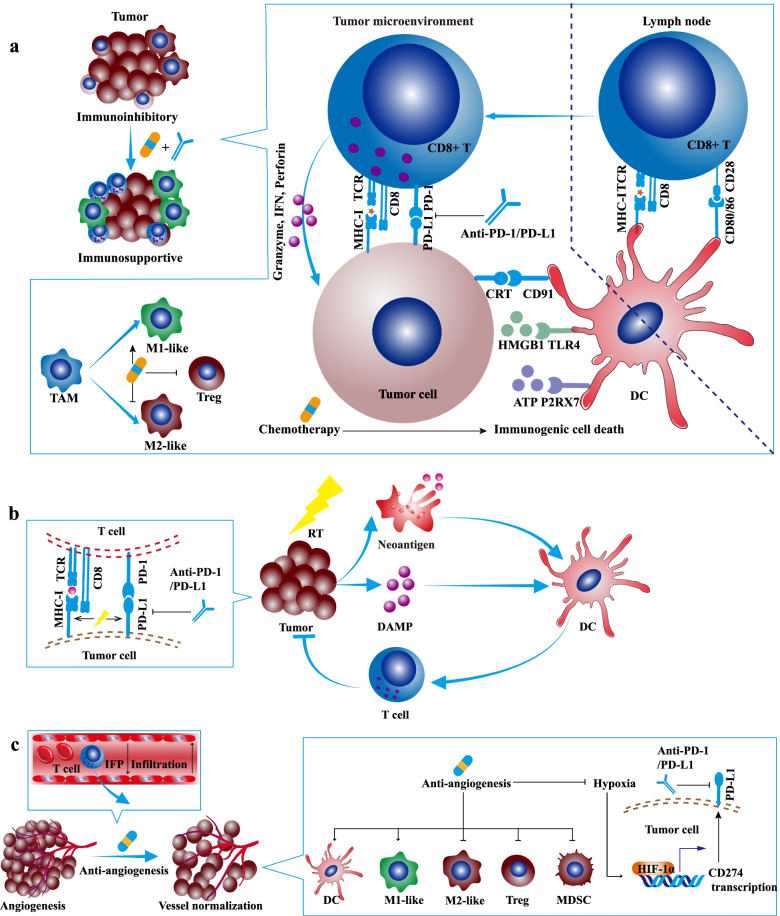
“Moreover, paclitaxel promoted tumor-associated macrophage (TAM) to repolarize from M2-like to M1-like phenotype [41].”
§ Combination strategies with PD-1/PD-L1 blockade: current advances and future directions > Conventional chemotherapy combined with α-PD-1/PD-L1 > Chemotherapy modifying the TME
What the sources say
- Not checked yetcites [41] Wanderley CW, Colón DF, Luiz JPM, Oliveira FF, Viacava PR, Leite CA, et al. Paclitaxel reduces tumor growth by reprogramming tumor-associated macrophages to an M1 profile in a TLR4-dependent manner. Cancer Res. 2018;78:5891–900. source
plaindirect- Asserted: passes — The authors put it forward as true.
- Checkable: passes — It can be checked against evidence.
- Load-bearing: unclear — It is unclear whether the paper’s conclusions depend on it.
- Based: passes — The paper gives a reason why it holds.
A conclusion the paper draws from its own results — it cites no other source for it, so there is none to check. The quote shows it is in the paper.
In the paper
“Collectively, the antigen capture and presentation of DC are enhanced, ultimately motivating adaptive antitumor immune response (Fig. 1a).”
§ Combination strategies with PD-1/PD-L1 blockade: current advances and future directions > Conventional chemotherapy combined with α-PD-1/PD-L1 > Chemotherapy modifying the TME
plaindirect- Asserted: passes — The authors put it forward as true.
- Checkable: passes — It can be checked against evidence.
- Load-bearing: passes — The paper’s conclusions depend on it.
- Based: passes — The paper gives a reason why it holds.
A conclusion the paper draws from its own results — it cites no other source for it, so there is none to check. The quote shows it is in the paper.
In the paper
“Moreover, bifunctional or bispecific antibodies containing α-PD-1/PD-L1 moiety also elicited more potent antitumor activity.”
§ Combination strategies with PD-1/PD-L1 blockade: current advances and future directions > Abstract
plaindirect- Asserted: passes — The authors put it forward as true.
- Checkable: passes — It can be checked against evidence.
- Load-bearing: passes — The paper’s conclusions depend on it.
- Based: unclear — It is unclear why the paper says it holds.
In the paper
“Although α-PD-1/PD-L1 therapies exhibit potent antitumor effects in some patients, most patients could not benefit from α-PD-1/PD-L1 treatments, owing to primary or acquired treatment resistance [13].”
§ Combination strategies with PD-1/PD-L1 blockade: current advances and future directions > Background
What the sources say
- Not checked yetcites [13] Kim JM, Chen DS. Immune escape to PD-L1/PD-1 blockade: seven steps to success (or failure). Ann Oncol. 2016;27:1492–504. source
plaindirect- Asserted: passes — The authors put it forward as true.
- Checkable: passes — It can be checked against evidence.
- Load-bearing: passes — The paper’s conclusions depend on it.
- Based: passes — The paper gives a reason why it holds.
In the paper
“On the other hand, some positive factors such as immunogenic cancer cell death, immunosupportive cytokines, and professional antigen presentation cells (pAPCs) contribute to immune clearance [21].”
§ Combination strategies with PD-1/PD-L1 blockade: current advances and future directions > Background
What the sources say
- Not checked yetcites [21] Smyth MJ, Ngiow SF, Ribas A, Teng MW. Combination cancer immunotherapies tailored to the tumour microenvironment. Nat Rev Clin Oncol. 2016;13:143–58. source
plaindirect- Asserted: passes — The authors put it forward as true.
- Checkable: passes — It can be checked against evidence.
- Load-bearing: passes — The paper’s conclusions depend on it.
- Based: passes — The paper gives a reason why it holds.
None of the sources cited for this claim have been checked yet.
In the paper
“Apart from PD-1 signaling, other immune checkpoints, abnormal angiogenesis, immunosuppressive immune cells or cytokines, cancer-associated adipocytes, and hyperactive cancer-associated fibroblasts also modulate cancer-immune set point and promote immune tolerance [15–20].”
§ Combination strategies with PD-1/PD-L1 blockade: current advances and future directions > Background
What the sources say
- Not checked yetcites [15] Qin S, Xu L, Yi M, Yu S, Wu K, Luo S. Novel immune checkpoint targets: moving beyond PD-1 and CTLA-4. Mol Cancer. 2019;18:155. source
- Not checked yetcites [16] Yi M, Jiao D, Qin S, Chu Q, Wu K, Li A. Synergistic effect of immune checkpoint blockade and anti-angiogenesis in cancer treatment. Mol Cancer. 2019;18:60. source
- Not checked yetcites [17] Bai X, Yi M, Jiao Y, Chu Q, Wu K. Blocking TGF-β signaling to enhance the efficacy of immune checkpoint inhibitor. Onco Targets Ther. 2019;12:9527–38. source
- Not checked yetcites [18] Liu T, Han C, Wang S, Fang P, Ma Z, Xu L, et al. Cancer-associated fibroblasts: an emerging target of anti-cancer immunotherapy. J Hematol Oncol. 2019;12:86. source
- Not checked yetcites [19] Yi M, Xu L, Jiao Y, Luo S, Li A, Wu K. The role of cancer-derived microRNAs in cancer immune escape. J Hematol Oncol. 2020;13:25. source
- Not checked yetcites [20] Wu Q, Li B, Li J, Sun S, Yuan J, Sun S. Cancer-associated adipocytes as immunomodulators in cancer. Biomark Res. 2021;9:2. source
plaindirect- Asserted: passes — The authors put it forward as true.
- Checkable: passes — It can be checked against evidence.
- Load-bearing: passes — The paper’s conclusions depend on it.
- Based: passes — The paper gives a reason why it holds.
None of the sources cited for this claim have been checked yet.
In the paper
“At present, antibodies blocking PD-1 or its ligand PD-L1 have been approved to treat various solid and hematologic malignancies (Table 1) [7–12].”
§ Combination strategies with PD-1/PD-L1 blockade: current advances and future directions > Background
What the sources say
- Not checked yetcites [7] Reck M, Rodríguez-Abreu D, Robinson AG, Hui R, Csőszi T, Fülöp A, et al. Pembrolizumab versus chemotherapy for PD-L1-positive non-small-cell lung Cancer. N Engl J Med. 2016;375:1823–33. source
- Not checked yetcites [8] Motzer RJ, Escudier B, McDermott DF, George S, Hammers HJ, Srinivas S, et al. Nivolumab versus Everolimus in advanced renal-cell carcinoma. N Engl J Med. 2015;373:1803–13. source
- Not checked yetcites [9] El-Khoueiry AB, Sangro B, Yau T, Crocenzi TS, Kudo M, Hsu C, et al. Nivolumab in patients with advanced hepatocellular carcinoma (CheckMate 040): an open-label, non-comparative, phase 1/2 dose escalation and expansion trial. Lancet. 2017;389:2492–502. source
- Not checked yetcites [10] Nanda R, Chow LQ, Dees EC, Berger R, Gupta S, Geva R, et al. Pembrolizumab in patients with advanced triple-negative breast Cancer: phase Ib KEYNOTE-012 study. J Clin Oncol. 2016;34:2460–7. source
- Not checked yetcites [11] Robert C, Schachter J, Long GV, Arance A, Grob JJ, Mortier L, et al. Pembrolizumab versus Ipilimumab in Advanced Melanoma. N Engl J Med. 2015;372:2521–32. source
- Not checked yetcites [12] Tang B, Yan X, Sheng X, Si L, Cui C, Kong Y, et al. Safety and clinical activity with an anti-PD-1 antibody JS001 in advanced melanoma or urologic cancer patients. J Hematol Oncol. 2019;12:7. source
plaindirect- Asserted: passes — The authors put it forward as true.
- Checkable: passes — It can be checked against evidence.
- Load-bearing: unclear — It is unclear whether the paper’s conclusions depend on it.
- Based: passes — The paper gives a reason why it holds.
In the paper
“Immunogenic cell death is featured with some upregulated damage-associated molecular patterns (DAMPs) such as the secretion of IFN-I, the exposure of endoplasmic reticulum proteins especially calreticulin (CRT, an eat-me signal) on cell membrane, the leak of ATP (a find-me signal), and the release of high-mobility group box 1 (HMGB1) [35].”
§ Combination strategies with PD-1/PD-L1 blockade: current advances and future directions > Conventional chemotherapy combined with α-PD-1/PD-L1 > Chemotherapy modifying the TME
What the sources say
- Not checked yetcites [35] Galluzzi L, Humeau J, Buqué A, Zitvogel L, Kroemer G. Immunostimulation with chemotherapy in the era of immune checkpoint inhibitors. Nat Rev Clin Oncol. 2020;17:725–41. source
plaincorrelational- Asserted: passes — The authors put it forward as true.
- Checkable: passes — It can be checked against evidence.
- Load-bearing: passes — The paper’s conclusions depend on it.
- Based: passes — The paper gives a reason why it holds.
A conclusion the paper draws from its own results — it cites no other source for it, so there is none to check. The quote shows it is in the paper.
In the paper
“It has been validated that some combination therapies, including α-PD-1/PD-L1 plus chemotherapy, radiotherapy, angiogenesis inhibitors, targeted therapy, other immune checkpoint inhibitors, agonists of the co-stimulatory molecule, stimulator of interferon genes agonists, fecal microbiota transplantation, epigenetic modulators, or metabolic modulators, have superior antitumor efficacies and higher”
§ Combination strategies with PD-1/PD-L1 blockade: current advances and future directions > Abstract
boosteddirect- Asserted: passes — The authors put it forward as true.
- Checkable: passes — It can be checked against evidence.
- Load-bearing: passes — The paper’s conclusions depend on it.
- Based: passes — The paper gives a reason why it holds.
None of the sources cited for this claim have been checked yet.
In the paper
“Low-dose cyclophosphamide depleted circulating and tumor-infiltrating regulatory T cells (Tregs) [38–40].”
§ Combination strategies with PD-1/PD-L1 blockade: current advances and future directions > Conventional chemotherapy combined with α-PD-1/PD-L1 > Chemotherapy modifying the TME
What the sources say
- Not checked yetcites [38] Barbon CM, Yang M, Wands GD, Ramesh R, Slusher BS, Hedley ML, et al. Consecutive low doses of cyclophosphamide preferentially target Tregs and potentiate T cell responses induced by DNA PLG microparticle immunization. Cell Immunol. 2010;262:150–61. source
- Not checked yetcites [39] Tongu M, Harashima N, Monma H, Inao T, Yamada T, Kawauchi H, et al. Metronomic chemotherapy with low-dose cyclophosphamide plus gemcitabine can induce anti-tumor T cell immunity in vivo. Cancer Immunol Immunother. 2013;62:383–91. source
- Not checked yetcites [40] Noordam L, Kaijen MEH, Bezemer K, Cornelissen R, Maat L, Hoogsteden HC, et al. Low-dose cyclophosphamide depletes circulating naïve and activated regulatory T cells in malignant pleural mesothelioma patients synergistically treated with dendritic cell-based immunotherapy. Oncoimmunology. 2018;7:e1474318. source
plaindirect- Asserted: passes — The authors put it forward as true.
- Checkable: passes — It can be checked against evidence.
- Load-bearing: passes — The paper’s conclusions depend on it.
- Based: passes — The paper gives a reason why it holds.
None of the sources cited for this claim have been checked yet.
In the paper
“Besides suppressor cells, some certain chemotherapies such as cyclophosphamide, gemcitabine, and vinblastine recruited and activated DC in the immunogenic cell death manner [47–49].”
§ Combination strategies with PD-1/PD-L1 blockade: current advances and future directions > Conventional chemotherapy combined with α-PD-1/PD-L1 > Chemotherapy modifying the TME
What the sources say
- Not checked yetcites [47] Schiavoni G, Sistigu A, Valentini M, Mattei F, Sestili P, Spadaro F, et al. Cyclophosphamide synergizes with type I interferons through systemic dendritic cell reactivation and induction of immunogenic tumor apoptosis. Cancer Res. 2011;71:768–78. source
- Not checked yetcites [48] Zhao T, Ren H, Jia L, Chen J, Xin W, Yan F, et al. Inhibition of HIF-1α by PX-478 enhances the anti-tumor effect of gemcitabine by inducing immunogenic cell death in pancreatic ductal adenocarcinoma. Oncotarget. 2015;6:2250–62. source
- Not checked yetcites [49] Tanaka H, Matsushima H, Nishibu A, Clausen BE, Takashima A. Dual therapeutic efficacy of vinblastine as a unique chemotherapeutic agent capable of inducing dendritic cell maturation. Cancer Res. 2009;69:6987–94. source
plaindirect- Asserted: passes — The authors put it forward as true.
- Checkable: passes — It can be checked against evidence.
- Load-bearing: unclear — It is unclear whether the paper’s conclusions depend on it.
- Based: passes — The paper gives a reason why it holds.
In the paper
“some chemotherapeutic agents increased circulating MDSCs in cancer patients [46]”
§ Combination strategies with PD-1/PD-L1 blockade: current advances and future directions > Conventional chemotherapy combined with α-PD-1/PD-L1 > Chemotherapy modifying the TME
What the sources say
- Not checked yetcites [46] Wesolowski R, Duggan MC, Stiff A, Markowitz J, Trikha P, Levine KM, et al. Circulating myeloid-derived suppressor cells increase in patients undergoing neo-adjuvant chemotherapy for breast cancer. Cancer Immunol Immunother. 2017;66:1437–47. source
plaindirect- Asserted: passes — The authors put it forward as true.
- Checkable: passes — It can be checked against evidence.
- Load-bearing: unclear — It is unclear whether the paper’s conclusions depend on it.
- Based: passes — The paper gives a reason why it holds.
None of the sources cited for this claim have been checked yet.
In the paper
“Later in 2021, the NMPA approved camrelizumab plus gemcitabine and cisplatin (for advanced nasopharyngeal carcinoma) and tislelizumab plus chemotherapy (for NSCLC) [62–64].”
§ Combination strategies with PD-1/PD-L1 blockade: current advances and future directions > Conventional chemotherapy combined with α-PD-1/PD-L1 > Chemotherapy combined with α-PD-1
What the sources say
- Not checked yetcites [62] Yang Y, Qu S, Li J, Hu C, Xu M, Li W, et al. Camrelizumab versus placebo in combination with gemcitabine and cisplatin as first-line treatment for recurrent or metastatic nasopharyngeal carcinoma (CAPTAIN-1st): a multicentre, randomised, double-blind, phase 3 trial. Lancet Oncol. 2021;22:1162–74. source
- Not checked yetcites [63] Wang J, Lu S, Yu X, Hu Y, Sun Y, Wang Z, et al. Tislelizumab plus chemotherapy vs chemotherapy alone as first-line treatment for advanced squamous non-small-cell lung Cancer: a phase 3 randomized clinical trial. JAMA Oncol. 2021;7:709–17. source
- Not checked yetcites [64] Lu S, Wang J, Yu Y, Yu X, Hu Y, Ai X, et al. Tislelizumab plus chemotherapy as first-line treatment for locally advanced or metastatic nonsquamous NSCLC (RATIONALE 304): a randomized phase 3 trial. J Thorac Oncol. 2021;16:1512–22. source
plain- Asserted: passes — The authors put it forward as true.
- Checkable: passes — It can be checked against evidence.
- Load-bearing: unclear — It is unclear whether the paper’s conclusions depend on it.
- Based: passes — The paper gives a reason why it holds.
In the paper
“In the clinical trial KEYNOTE-021 (phase 2), non-squamous non-small cell lung cancer (NSCLC) patients receiving pembrolizumab combined with standard chemotherapy (carboplatin and pemetrexed) had a higher response rate and longer progression-free survival (PFS) than did patients receiving standard chemotherapy [52].”
§ Combination strategies with PD-1/PD-L1 blockade: current advances and future directions > Conventional chemotherapy combined with α-PD-1/PD-L1 > Chemotherapy combined with α-PD-1
What the sources say
- Not checked yetcites [52] Langer CJ, Gadgeel SM, Borghaei H, Papadimitrakopoulou VA, Patnaik A, Powell SF, et al. Carboplatin and pemetrexed with or without pembrolizumab for advanced, non-squamous non-small-cell lung cancer: a randomised, phase 2 cohort of the open-label KEYNOTE-021 study. Lancet Oncol. 2016;17:1497–508. source
plaindirect- Asserted: passes — The authors put it forward as true.
- Checkable: passes — It can be checked against evidence.
- Load-bearing: passes — The paper’s conclusions depend on it.
- Based: passes — The paper gives a reason why it holds.
None of the sources cited for this claim have been checked yet.
In the paper
“Subsequently, the FDA approved atezolizumab plus chemotherapy for TNBC (atezolizumab plus nab-paclitaxel, based on IMpassion130), SCLC (atezolizumab plus carboplatin and etoposide, based on IMpower133), and non-squamous NSCLC (atezolizumab plus nab-paclitaxel and carboplatin, based on IMpower130) [66–68].”
§ Combination strategies with PD-1/PD-L1 blockade: current advances and future directions > Conventional chemotherapy combined with α-PD-1/PD-L1 > Chemotherapy combined with α-PD-L1
What the sources say
- Not checked yetcites [66] Schmid P, Rugo HS, Adams S, Schneeweiss A, Barrios CH, Iwata H, et al. Atezolizumab plus nab-paclitaxel as first-line treatment for unresectable, locally advanced or metastatic triple-negative breast cancer (IMpassion130): updated efficacy results from a randomised, double-blind, placebo-controlled, phase 3 trial. Lancet Oncol. 2020;21:44–59. source
- Not checked yetcites [67] Mansfield AS, Każarnowicz A, Karaseva N, Sánchez A, De Boer R, Andric Z, et al. Safety and patient-reported outcomes of atezolizumab, carboplatin, and etoposide in extensive-stage small-cell lung cancer (IMpower133): a randomized phase I/III trial. Ann Oncol. 2020;31:310–7. source
- Not checked yetcites [68] West H, McCleod M, Hussein M, Morabito A, Rittmeyer A, Conter HJ, et al. Atezolizumab in combination with carboplatin plus nab-paclitaxel chemotherapy compared with chemotherapy alone as first-line treatment for metastatic non-squamous non-small-cell lung cancer (IMpower130): a multicentre, randomised, open-label, phase 3 trial. Lancet Oncol. 2019;20:924–37. source
plaindirect- Asserted: passes — The authors put it forward as true.
- Checkable: passes — It can be checked against evidence.
- Load-bearing: passes — The paper’s conclusions depend on it.
- Based: passes — The paper gives a reason why it holds.
In the paper
“Based on the results of KEYNOTE-021, pembrolizumab plus chemotherapy has been approved by the FDA as the first-line treatment for advanced non-squamous NSCLC, regardless of PD-L1 level [52].”
§ Combination strategies with PD-1/PD-L1 blockade: current advances and future directions > Conventional chemotherapy combined with α-PD-1/PD-L1 > Chemotherapy combined with α-PD-1
What the sources say
- Not checked yetcites [52] Langer CJ, Gadgeel SM, Borghaei H, Papadimitrakopoulou VA, Patnaik A, Powell SF, et al. Carboplatin and pemetrexed with or without pembrolizumab for advanced, non-squamous non-small-cell lung cancer: a randomised, phase 2 cohort of the open-label KEYNOTE-021 study. Lancet Oncol. 2016;17:1497–508. source
plaindirect- Asserted: passes — The authors put it forward as true.
- Checkable: passes — It can be checked against evidence.
- Load-bearing: passes — The paper’s conclusions depend on it.
- Based: passes — The paper gives a reason why it holds.
None of the sources cited for this claim have been checked yet.
In the paper
“Subsequently, the FDA approved atezolizumab plus chemotherapy for TNBC (atezolizumab plus nab-paclitaxel, based on IMpassion130), SCLC (atezolizumab plus carboplatin and etoposide, based on IMpower133), and non-squamous NSCLC (atezolizumab plus nab-paclitaxel and carboplatin, based on IMpower130) [66–68].”
§ Combination strategies with PD-1/PD-L1 blockade: current advances and future directions > Conventional chemotherapy combined with α-PD-1/PD-L1 > Chemotherapy combined with α-PD-L1
What the sources say
- Not checked yetcites [66] Schmid P, Rugo HS, Adams S, Schneeweiss A, Barrios CH, Iwata H, et al. Atezolizumab plus nab-paclitaxel as first-line treatment for unresectable, locally advanced or metastatic triple-negative breast cancer (IMpassion130): updated efficacy results from a randomised, double-blind, placebo-controlled, phase 3 trial. Lancet Oncol. 2020;21:44–59. source
- Not checked yetcites [67] Mansfield AS, Każarnowicz A, Karaseva N, Sánchez A, De Boer R, Andric Z, et al. Safety and patient-reported outcomes of atezolizumab, carboplatin, and etoposide in extensive-stage small-cell lung cancer (IMpower133): a randomized phase I/III trial. Ann Oncol. 2020;31:310–7. source
- Not checked yetcites [68] West H, McCleod M, Hussein M, Morabito A, Rittmeyer A, Conter HJ, et al. Atezolizumab in combination with carboplatin plus nab-paclitaxel chemotherapy compared with chemotherapy alone as first-line treatment for metastatic non-squamous non-small-cell lung cancer (IMpower130): a multicentre, randomised, open-label, phase 3 trial. Lancet Oncol. 2019;20:924–37. source
plaindirect- Asserted: passes — The authors put it forward as true.
- Checkable: passes — It can be checked against evidence.
- Load-bearing: unclear — It is unclear whether the paper’s conclusions depend on it.
- Based: passes — The paper gives a reason why it holds.
None of the sources cited for this claim have been checked yet.
In the paper
“Also, chemotherapeutic drugs such as vinblastine, 5-fluorouracil, and oxaliplatin, could directly enhance the functions of DC and promote IL-12 secretion [49, 50].”
§ Combination strategies with PD-1/PD-L1 blockade: current advances and future directions > Conventional chemotherapy combined with α-PD-1/PD-L1 > Chemotherapy modifying the TME
What the sources say
- Not checked yetcites [49] Tanaka H, Matsushima H, Nishibu A, Clausen BE, Takashima A. Dual therapeutic efficacy of vinblastine as a unique chemotherapeutic agent capable of inducing dendritic cell maturation. Cancer Res. 2009;69:6987–94. source
- Not checked yetcites [50] Hong X, Dong T, Yi T, Hu J, Zhang Z, Lin S, et al. Impact of 5-Fu/oxaliplatin on mouse dendritic cells and synergetic effect with a colon cancer vaccine. Chin J Cancer Res. 2018;30:197–208. source
hedgeddirect- Asserted: passes — The authors put it forward as true.
- Checkable: passes — It can be checked against evidence.
- Load-bearing: unclear — It is unclear whether the paper’s conclusions depend on it.
- Based: passes — The paper gives a reason why it holds.
In the paper
“The FDA rarely approves chemoimmunotherapeutic strategies with other α-PD-1 drugs (except for nivolumab combined with chemotherapy for gastric cancer and GEJC) [58].”
§ Combination strategies with PD-1/PD-L1 blockade: current advances and future directions > Conventional chemotherapy combined with α-PD-1/PD-L1 > Chemotherapy combined with α-PD-1
What the sources say
- Not checked yetcites [58] Moehler M, Shitara K, Garrido M, Salman P, Shen L, Wyrwicz L, et al. LBA6_PR Nivolumab (nivo) plus chemotherapy (chemo) versus chemo as first-line (1L) treatment for advanced gastric cancer/gastroesophageal junction cancer (GC/GEJC)/esophageal adenocarcinoma (EAC): first results of the CheckMate 649 study. Ann Oncol. 2020. https://doi.org/10.1016/j.annonc.2020.08.2296. source
plain- Asserted: passes — The authors put it forward as true.
- Checkable: passes — It can be checked against evidence.
- Load-bearing: unclear — It is unclear whether the paper’s conclusions depend on it.
- Based: passes — The paper gives a reason why it holds.
In the paper
“In 2020, the NMPA also approved camrelizumab plus carboplatin and pemetrexed as the first-line treatment for non-squamous NSCLC, based on the results of CameL [61].”
§ Combination strategies with PD-1/PD-L1 blockade: current advances and future directions > Conventional chemotherapy combined with α-PD-1/PD-L1 > Chemotherapy combined with α-PD-1
What the sources say
- Not checked yetcites [61] Zhou C, Chen G, Huang Y, Zhou J, Lin L, Feng J, et al. Camrelizumab plus carboplatin and pemetrexed versus chemotherapy alone in chemotherapy-naive patients with advanced non-squamous non-small-cell lung cancer (CameL): a randomised, open-label, multicentre, phase 3 trial. Lancet Respir Med. 2021;9:305–14. source
plaindirect- Asserted: passes — The authors put it forward as true.
- Checkable: passes — It can be checked against evidence.
- Load-bearing: unclear — It is unclear whether the paper’s conclusions depend on it.
- Based: passes — The paper gives a reason why it holds.
The paper states this without a source or data behind it here, so there is nothing to check it against. The quote shows it is in the paper.
In the paper
“Nowadays, chemotherapy combined with α-PD-1/PD-L1 has become a standard-of-care option for some cancer patients, and there are hundreds of ongoing clinical trials exploring the efficacy and safety of chemotherapy plus α-PD-1/PD-L1 (Table 2).”
§ Combination strategies with PD-1/PD-L1 blockade: current advances and future directions > Conventional chemotherapy combined with α-PD-1/PD-L1 > Chemotherapy combined with α-PD-1
plain- Asserted: passes — The authors put it forward as true.
- Checkable: passes — It can be checked against evidence.
- Load-bearing: passes — The paper’s conclusions depend on it.
- Based: passes — The paper gives a reason why it holds.
A conclusion the paper draws from its own results — it cites no other source for it, so there is none to check. The quote shows it is in the paper.
In the paper
“Based on the immune-modulatory effect of chemotherapeutic agents, chemotherapy might be an appropriate partner with α-PD-1/PD-L1 to achieve both rapid and long-term cancer control.”
§ Combination strategies with PD-1/PD-L1 blockade: current advances and future directions > Conventional chemotherapy combined with α-PD-1/PD-L1 > Chemotherapy combined with α-PD-1
hedgedconditional- Asserted: passes — The authors put it forward as true.
- Checkable: passes — It can be checked against evidence.
- Load-bearing: passes — The paper’s conclusions depend on it.
- Based: passes — The paper gives a reason why it holds.
In the paper
“Moreover, based on the results of CASPIAN, durvalumab combined with platinum plus etoposide therapy was approved for SCLC in the US [69].”
§ Combination strategies with PD-1/PD-L1 blockade: current advances and future directions > Conventional chemotherapy combined with α-PD-1/PD-L1 > Chemotherapy combined with α-PD-L1
What the sources say
- Not checked yetcites [69] Paz-Ares L, Dvorkin M, Chen Y, Reinmuth N, Hotta K, Trukhin D, et al. Durvalumab plus platinum-etoposide versus platinum-etoposide in first-line treatment of extensive-stage small-cell lung cancer (CASPIAN): a randomised, controlled, open-label, phase 3 trial. Lancet. 2019;394:1929–39. source
plaindirect- Asserted: passes — The authors put it forward as true.
- Checkable: passes — It can be checked against evidence.
- Load-bearing: unclear — It is unclear whether the paper’s conclusions depend on it.
- Based: passes — The paper gives a reason why it holds.
In the paper
“In addition, the NMPA approved sintilimab plus gemcitabine and platinum as the first-line treatment for advanced squamous NSCLC, based on the results of ORIENT-12 [60].”
§ Combination strategies with PD-1/PD-L1 blockade: current advances and future directions > Conventional chemotherapy combined with α-PD-1/PD-L1 > Chemotherapy combined with α-PD-1
What the sources say
- Not checked yetcites [60] Zhou C, Wu L, Fan Y, Wang Z, Liu L, Chen G, et al. Sintilimab plus platinum and gemcitabine as first-line treatment for advanced or metastatic squamous NSCLC: results from a randomized, double-blind, phase 3 trial (ORIENT-12). J Thorac Oncol. 2021;16:1501–11. source
plaindirect- Asserted: passes — The authors put it forward as true.
- Checkable: passes — It can be checked against evidence.
- Load-bearing: unclear — It is unclear whether the paper’s conclusions depend on it.
- Based: passes — The paper gives a reason why it holds.
In the paper
“The results of the phase 1 study NCT02608385 demonstrated that α-PD-1/PD-L1 combined with SBRT was well-tolerable (Table 3) [24].”
§ Combination strategies with PD-1/PD-L1 blockade: current advances and future directions > Radiotherapy combined with α-PD-1/PD-L1 > Clinical studies exploring the efficacy and safety of radiotherapy combined with α-PD-1/PD-L1
What the sources say
- Not checked yetcites [24] Luke JJ, Lemons JM, Karrison TG, Pitroda SP, Melotek JM, Zha Y, et al. Safety and clinical activity of Pembrolizumab and multisite stereotactic body radiotherapy in patients with advanced solid tumors. J Clin Oncol. 2018;36:1611–8. source
boosted- Asserted: passes — The authors put it forward as true.
- Checkable: passes — It can be checked against evidence.
- Load-bearing: unclear — It is unclear whether the paper’s conclusions depend on it.
- Based: passes — The paper gives a reason why it holds.
None of the sources cited for this claim have been checked yet.
In the paper
“Later, in two phase 3 clinical studies (KEYNOTE-189 and KEYNOTE-407), pembrolizumab combined with standard chemotherapy led to a better overall survival (OS) and PFS in NSCLC patients, relative to chemotherapy monotherapy [53, 54].”
§ Combination strategies with PD-1/PD-L1 blockade: current advances and future directions > Conventional chemotherapy combined with α-PD-1/PD-L1 > Chemotherapy combined with α-PD-1
What the sources say
- Not checked yetcites [53] Gandhi L, Rodríguez-Abreu D, Gadgeel S, Esteban E, Felip E, De Angelis F, et al. Pembrolizumab plus chemotherapy in metastatic non-small-cell lung Cancer. N Engl J Med. 2018;378:2078–92. source
- Not checked yetcites [54] Paz-Ares L, Luft A, Vicente D, Tafreshi A, Gümüş M, Mazières J, et al. Pembrolizumab plus chemotherapy for squamous non-small-cell lung Cancer. N Engl J Med. 2018;379:2040–51. source
plaindirect- Asserted: passes — The authors put it forward as true.
- Checkable: passes — It can be checked against evidence.
- Load-bearing: passes — The paper’s conclusions depend on it.
- Based: passes — The paper gives a reason why it holds.
In the paper
“In the phase 2 study NCT02904954, SBRT combined with durvalumab acquired a superior antitumor effect to durvalumab in early-stage NSCLC [83].”
§ Combination strategies with PD-1/PD-L1 blockade: current advances and future directions > Radiotherapy combined with α-PD-1/PD-L1 > Clinical studies exploring the efficacy and safety of radiotherapy combined with α-PD-1/PD-L1
What the sources say
- Not checked yetcites [83] Altorki NK, McGraw TE, Borczuk AC, Saxena A, Port JL, Stiles BM, et al. Neoadjuvant durvalumab with or without stereotactic body radiotherapy in patients with early-stage non-small-cell lung cancer: a single-Centre, randomised phase 2 trial. Lancet Oncol. 2021;22:824–35. source
plaindirect- Asserted: passes — The authors put it forward as true.
- Checkable: passes — It can be checked against evidence.
- Load-bearing: passes — The paper’s conclusions depend on it.
- Based: passes — The paper gives a reason why it holds.
None of the sources cited for this claim have been checked yet.
In the paper
“Moreover, the results of some phase 1/2 studies (NCT02621398, NCT02434081, NCT02586207, NCT02383212, and NCT02402920) showed that α-PD-1/PD-L1 plus chemoradiotherapy was tolerable in advanced NSCLC, head and neck squamous cell carcinoma (HNSCC), and SCLC patients, with promising clinical outcomes [78–82].”
§ Combination strategies with PD-1/PD-L1 blockade: current advances and future directions > Radiotherapy combined with α-PD-1/PD-L1 > Clinical studies exploring the efficacy and safety of radiotherapy combined with α-PD-1/PD-L1
What the sources say
- Not checked yetcites [78] Jabbour SK, Berman AT, Decker RH, Lin Y, Feigenberg SJ, Gettinger SN, et al. Phase 1 trial of Pembrolizumab administered concurrently with Chemoradiotherapy for locally advanced non-small cell lung Cancer: a nonrandomized controlled trial. JAMA Oncol. 2020;6:848–55. source
- Not checked yetcites [79] Powell SF, Gold KA, Gitau MM, Sumey CJ, Lohr MM, McGraw SC, et al. Safety and efficacy of Pembrolizumab with Chemoradiotherapy in locally advanced head and neck squamous cell carcinoma: a phase IB study. J Clin Oncol. 2020;38:2427–37. source
- Not checked yetcites [80] Peters S, Felip E, Dafni U, Belka C, Guckenberger M, Irigoyen A, et al. Safety evaluation of nivolumab added concurrently to radiotherapy in a standard first line chemo-radiotherapy regimen in stage III non-small cell lung cancer-the ETOP NICOLAS trial. Lung Cancer. 2019;133:83–7. source
- Not checked yetcites [81] Papadopoulos KP, Johnson ML, Lockhart AC, Moore K, Falchook GS, Formenti SC, et al. First-in-human study of Cemiplimab alone or in combination with radiotherapy and/or low-dose cyclophosphamide in patients with advanced malignancies. Clin Cancer Res. 2020;26:1025–33. source
- Not checked yetcites [82] Welsh JW, Heymach JV, Guo C, Menon H, Klein K, Cushman TR, et al. Phase 1/2 trial of Pembrolizumab and concurrent Chemoradiation therapy for limited-stage SCLC. J Thorac Oncol. 2020;15:1919–27. source
plaincorrelational- Asserted: passes — The authors put it forward as true.
- Checkable: passes — It can be checked against evidence.
- Load-bearing: passes — The paper’s conclusions depend on it.
- Based: passes — The paper gives a reason why it holds.
In the paper
“The major pathological response rate was significantly higher in the SBRT combined with durvalumab arm than that in the durvalumab arm [83].”
§ Combination strategies with PD-1/PD-L1 blockade: current advances and future directions > Radiotherapy combined with α-PD-1/PD-L1 > Clinical studies exploring the efficacy and safety of radiotherapy combined with α-PD-1/PD-L1
What the sources say
- Not checked yetcites [83] Altorki NK, McGraw TE, Borczuk AC, Saxena A, Port JL, Stiles BM, et al. Neoadjuvant durvalumab with or without stereotactic body radiotherapy in patients with early-stage non-small-cell lung cancer: a single-Centre, randomised phase 2 trial. Lancet Oncol. 2021;22:824–35. source
plaindirect- Asserted: passes — The authors put it forward as true.
- Checkable: passes — It can be checked against evidence.
- Load-bearing: passes — The paper’s conclusions depend on it.
- Based: passes — The paper gives a reason why it holds.
In the paper
“Based on the results of IMpower150, the FDA approved atezolizumab plus bevacizumab, paclitaxel, and carboplatin as the first-line treatment for advanced non-squamous NSCLC [65].”
§ Combination strategies with PD-1/PD-L1 blockade: current advances and future directions > Conventional chemotherapy combined with α-PD-1/PD-L1 > Chemotherapy combined with α-PD-L1
What the sources say
- Not checked yetcites [65] Socinski MA, Jotte RM, Cappuzzo F, Orlandi F, Stroyakovskiy D, Nogami N, et al. Atezolizumab for first-line treatment of metastatic nonsquamous NSCLC. N Engl J Med. 2018;378:2288–301. source
plaindirect- Asserted: passes — The authors put it forward as true.
- Checkable: passes — It can be checked against evidence.
- Load-bearing: passes — The paper’s conclusions depend on it.
- Based: passes — The paper gives a reason why it holds.
None of the sources cited for this claim have been checked yet.
In the paper
“Subsequently, the FDA approved atezolizumab plus chemotherapy for TNBC (atezolizumab plus nab-paclitaxel, based on IMpassion130), SCLC (atezolizumab plus carboplatin and etoposide, based on IMpower133), and non-squamous NSCLC (atezolizumab plus nab-paclitaxel and carboplatin, based on IMpower130) [66–68].”
§ Combination strategies with PD-1/PD-L1 blockade: current advances and future directions > Conventional chemotherapy combined with α-PD-1/PD-L1 > Chemotherapy combined with α-PD-L1
What the sources say
- Not checked yetcites [66] Schmid P, Rugo HS, Adams S, Schneeweiss A, Barrios CH, Iwata H, et al. Atezolizumab plus nab-paclitaxel as first-line treatment for unresectable, locally advanced or metastatic triple-negative breast cancer (IMpassion130): updated efficacy results from a randomised, double-blind, placebo-controlled, phase 3 trial. Lancet Oncol. 2020;21:44–59. source
- Not checked yetcites [67] Mansfield AS, Każarnowicz A, Karaseva N, Sánchez A, De Boer R, Andric Z, et al. Safety and patient-reported outcomes of atezolizumab, carboplatin, and etoposide in extensive-stage small-cell lung cancer (IMpower133): a randomized phase I/III trial. Ann Oncol. 2020;31:310–7. source
- Not checked yetcites [68] West H, McCleod M, Hussein M, Morabito A, Rittmeyer A, Conter HJ, et al. Atezolizumab in combination with carboplatin plus nab-paclitaxel chemotherapy compared with chemotherapy alone as first-line treatment for metastatic non-squamous non-small-cell lung cancer (IMpower130): a multicentre, randomised, open-label, phase 3 trial. Lancet Oncol. 2019;20:924–37. source
plaindirect- Asserted: passes — The authors put it forward as true.
- Checkable: passes — It can be checked against evidence.
- Load-bearing: passes — The paper’s conclusions depend on it.
- Based: passes — The paper gives a reason why it holds.
None of the sources cited for this claim have been checked yet.
In the paper
“Later in 2021, the NMPA approved camrelizumab plus gemcitabine and cisplatin (for advanced nasopharyngeal carcinoma) and tislelizumab plus chemotherapy (for NSCLC) [62–64].”
§ Combination strategies with PD-1/PD-L1 blockade: current advances and future directions > Conventional chemotherapy combined with α-PD-1/PD-L1 > Chemotherapy combined with α-PD-1
What the sources say
- Not checked yetcites [62] Yang Y, Qu S, Li J, Hu C, Xu M, Li W, et al. Camrelizumab versus placebo in combination with gemcitabine and cisplatin as first-line treatment for recurrent or metastatic nasopharyngeal carcinoma (CAPTAIN-1st): a multicentre, randomised, double-blind, phase 3 trial. Lancet Oncol. 2021;22:1162–74. source
- Not checked yetcites [63] Wang J, Lu S, Yu X, Hu Y, Sun Y, Wang Z, et al. Tislelizumab plus chemotherapy vs chemotherapy alone as first-line treatment for advanced squamous non-small-cell lung Cancer: a phase 3 randomized clinical trial. JAMA Oncol. 2021;7:709–17. source
- Not checked yetcites [64] Lu S, Wang J, Yu Y, Yu X, Hu Y, Ai X, et al. Tislelizumab plus chemotherapy as first-line treatment for locally advanced or metastatic nonsquamous NSCLC (RATIONALE 304): a randomized phase 3 trial. J Thorac Oncol. 2021;16:1512–22. source
plain- Asserted: passes — The authors put it forward as true.
- Checkable: passes — It can be checked against evidence.
- Load-bearing: unclear — It is unclear whether the paper’s conclusions depend on it.
- Based: passes — The paper gives a reason why it holds.
In the paper
“In China, the NMPA approved sintilimab plus pemetrexed and platinum as the first-line treatment for advanced non-squamous NSCLC, based on the results of ORIENT-11 [59].”
§ Combination strategies with PD-1/PD-L1 blockade: current advances and future directions > Conventional chemotherapy combined with α-PD-1/PD-L1 > Chemotherapy combined with α-PD-1
What the sources say
- Not checked yetcites [59] Yang Y, Wang Z, Fang J, Yu Q, Han B, Cang S, et al. Efficacy and safety of Sintilimab plus Pemetrexed and platinum as first-line treatment for locally advanced or metastatic nonsquamous NSCLC: a randomized, double-blind, phase 3 study (oncology pRogram by InnovENT anti-PD-1-11). J Thorac Oncol. 2020;15:1636–46. source
plaindirect- Asserted: passes — The authors put it forward as true.
- Checkable: passes — It can be checked against evidence.
- Load-bearing: unclear — It is unclear whether the paper’s conclusions depend on it.
- Based: passes — The paper gives a reason why it holds.
In the paper
“Additionally, pemetrexed enhanced the activation of tumor-infiltrating lymphocytes (TILs) by improving mitochondrial biogenesis, independent of immunogenic cell death [51].”
§ Combination strategies with PD-1/PD-L1 blockade: current advances and future directions > Conventional chemotherapy combined with α-PD-1/PD-L1 > Chemotherapy modifying the TME
What the sources say
- Not checked yetcites [51] Schaer DA, Geeganage S, Amaladas N, Lu ZH, Rasmussen ER, Sonyi A, et al. The Folate pathway inhibitor Pemetrexed Pleiotropically enhances effects of Cancer immunotherapy. Clin Cancer Res. 2019;25:7175–88. source
plaindirect- Asserted: passes — The authors put it forward as true.
- Checkable: passes — It can be checked against evidence.
- Load-bearing: unclear — It is unclear whether the paper’s conclusions depend on it.
- Based: passes — The paper gives a reason why it holds.
In the paper
“The disorganized angiogenesis promotes the formation of the immunosuppressive TME [16].”
§ Combination strategies with PD-1/PD-L1 blockade: current advances and future directions > Angiogenesis inhibitor combined with α-PD-1/PD-L1 > Abnormal angiogenesis hampering the antitumor immune response
What the sources say
- Not checked yetcites [16] Yi M, Jiao D, Qin S, Chu Q, Wu K, Li A. Synergistic effect of immune checkpoint blockade and anti-angiogenesis in cancer treatment. Mol Cancer. 2019;18:60. source
plaindirect- Asserted: passes — The authors put it forward as true.
- Checkable: passes — It can be checked against evidence.
- Load-bearing: passes — The paper’s conclusions depend on it.
- Based: passes — The paper gives a reason why it holds.
In the paper
“Furthermore, in the phase 3 study NCT02952586 exploring the efficacy of avelumab plus standard-of-care chemoradiotherapy in HNSCC, it did not meet the primary endpoint (PFS) [86].”
§ Combination strategies with PD-1/PD-L1 blockade: current advances and future directions > Radiotherapy combined with α-PD-1/PD-L1 > Clinical studies exploring the efficacy and safety of radiotherapy combined with α-PD-1/PD-L1
What the sources say
- Not checked yetcites [86] Lee NY, Ferris RL, Psyrri A, Haddad RI, Tahara M, Bourhis J, et al. Avelumab plus standard-of-care chemoradiotherapy versus chemoradiotherapy alone in patients with locally advanced squamous cell carcinoma of the head and neck: a randomised, double-blind, placebo-controlled, multicentre, phase 3 trial. Lancet Oncol. 2021;22:450–62. source
plain- Asserted: passes — The authors put it forward as true.
- Checkable: passes — It can be checked against evidence.
- Load-bearing: unclear — It is unclear whether the paper’s conclusions depend on it.
- Based: passes — The paper gives a reason why it holds.
In the paper
“Additionally, the results of the phase 3 study NCT02125461 indicated that sequential durvalumab treatment markedly improved the PFS and OS of NSCLC patients undergoing chemoradiotherapy [84].”
§ Combination strategies with PD-1/PD-L1 blockade: current advances and future directions > Radiotherapy combined with α-PD-1/PD-L1 > Clinical studies exploring the efficacy and safety of radiotherapy combined with α-PD-1/PD-L1
What the sources say
- Not checked yetcites [84] Antonia SJ, Villegas A, Daniel D, Vicente D, Murakami S, Hui R, et al. Overall survival with Durvalumab after Chemoradiotherapy in stage III NSCLC. N Engl J Med. 2018;379:2342–50. source
hedgeddirect- Asserted: passes — The authors put it forward as true.
- Checkable: passes — It can be checked against evidence.
- Load-bearing: passes — The paper’s conclusions depend on it.
- Based: passes — The paper gives a reason why it holds.
In the paper
“At a median follow-up time of 30.6 months, the median OS and PFS were longer in the pembrolizumab combined with axitinib arm compared to those in the sunitinib arm [109].”
§ Combination strategies with PD-1/PD-L1 blockade: current advances and future directions > Angiogenesis inhibitor combined with α-PD-1/PD-L1 > Angiogenesis inhibitor synergizing with α-PD-1/PD-L1
What the sources say
- Not checked yetcites [109] Powles T, Plimack ER, Soulières D, Waddell T, Stus V, Gafanov R, et al. Pembrolizumab plus axitinib versus sunitinib monotherapy as first-line treatment of advanced renal cell carcinoma (KEYNOTE-426): extended follow-up from a randomised, open-label, phase 3 trial. Lancet Oncol. 2020;21:1563–73. source
plaincorrelational- Asserted: passes — The authors put it forward as true.
- Checkable: passes — It can be checked against evidence.
- Load-bearing: passes — The paper’s conclusions depend on it.
- Based: passes — The paper gives a reason why it holds.
None of the sources cited for this claim have been checked yet.
In the paper
“However, multiple studies have been confirmed that antibody-dependent cell-mediated cytotoxicity of Treg also substantially contributes to the antitumor activity of ipilimumab [128–130].”
§ Combination strategies with PD-1/PD-L1 blockade: current advances and future directions > Dual immune checkpoint blockade or co-stimulatory molecule agonist plus α-PD-1/PD-L1 > α-CTLA-4 plus α-PD-1/PD-L1
What the sources say
- Not checked yetcites [128] Romano E, Kusio-Kobialka M, Foukas PG, Baumgaertner P, Meyer C, Ballabeni P, et al. Ipilimumab-dependent cell-mediated cytotoxicity of regulatory T cells ex vivo by nonclassical monocytes in melanoma patients. Proc Natl Acad Sci U S A. 2015;112:6140–5. source
- Not checked yetcites [129] Simpson TR, Li F, Montalvo-Ortiz W, Sepulveda MA, Bergerhoff K, Arce F, et al. Fc-dependent depletion of tumor-infiltrating regulatory T cells co-defines the efficacy of anti-CTLA-4 therapy against melanoma. J Exp Med. 2013;210:1695–710. source
- Not checked yetcites [130] Arce Vargas F, Furness AJS, Litchfield K, Joshi K, Rosenthal R, Ghorani E, et al. Fc effector function contributes to the activity of human anti-CTLA-4 antibodies. Cancer Cell. 2018;33:649–63.e4. source
boosteddirect- Asserted: passes — The authors put it forward as true.
- Checkable: passes — It can be checked against evidence.
- Load-bearing: unclear — It is unclear whether the paper’s conclusions depend on it.
- Based: passes — The paper gives a reason why it holds.
None of the sources cited for this claim have been checked yet.
In the paper
“In the multiple preclinical studies, angiogenesis inhibitor enhanced the efficacy of α-PD-1/PD-L1 in murine tumor models [106–108].”
§ Combination strategies with PD-1/PD-L1 blockade: current advances and future directions > Angiogenesis inhibitor combined with α-PD-1/PD-L1 > Angiogenesis inhibitor synergizing with α-PD-1/PD-L1
What the sources say
- Not checked yetcites [106] Wu FTH, Xu P, Chow A, Man S, Krüger J, Khan KA, et al. Pre- and post-operative anti-PD-L1 plus anti-angiogenic therapies in mouse breast or renal cancer models of micro- or macro-metastatic disease. Br J Cancer. 2019;120:196–206. source
- Not checked yetcites [107] Schmittnaegel M, Rigamonti N, Kadioglu E, Cassará A, Wyser Rmili C, Kiialainen A, et al. Dual angiopoietin-2 and VEGFA inhibition elicits antitumor immunity that is enhanced by PD-1 checkpoint blockade. Sci Transl Med. 2017;9:eaak9670. source
- Not checked yetcites [108] Allen E, Jabouille A, Rivera LB, Lodewijckx I, Missiaen R, Steri V, et al. Combined antiangiogenic and anti-PD-L1 therapy stimulates tumor immunity through HEV formation. Sci Transl Med. 2017;9:eaak9679. source
plaindirect- Asserted: passes — The authors put it forward as true.
- Checkable: passes — It can be checked against evidence.
- Load-bearing: passes — The paper’s conclusions depend on it.
- Based: passes — The paper gives a reason why it holds.
In the paper
“However, in the phase 2 study NCT02684253, SBRT combined with nivolumab was not superior to nivolumab in response rate, PFS, and OS in advanced HNSCC [85].”
§ Combination strategies with PD-1/PD-L1 blockade: current advances and future directions > Radiotherapy combined with α-PD-1/PD-L1 > Clinical studies exploring the efficacy and safety of radiotherapy combined with α-PD-1/PD-L1
What the sources say
- Not checked yetcites [85] McBride S, Sherman E, Tsai CJ, Baxi S, Aghalar J, Eng J, et al. Randomized phase II trial of Nivolumab with stereotactic body radiotherapy versus Nivolumab alone in metastatic head and neck squamous cell carcinoma. J Clin Oncol. 2021;39:30–7. source
plain- Asserted: passes — The authors put it forward as true.
- Checkable: passes — It can be checked against evidence.
- Load-bearing: passes — The paper’s conclusions depend on it.
- Based: passes — The paper gives a reason why it holds.
In the paper
“In 2019, pembrolizumab combined with axitinib was approved by the FDA as the first-line treatment for advanced RCC, based on the results of KEYNOTE-426 (Table 4) [109].”
§ Combination strategies with PD-1/PD-L1 blockade: current advances and future directions > Angiogenesis inhibitor combined with α-PD-1/PD-L1 > Angiogenesis inhibitor synergizing with α-PD-1/PD-L1
What the sources say
- Not checked yetcites [109] Powles T, Plimack ER, Soulières D, Waddell T, Stus V, Gafanov R, et al. Pembrolizumab plus axitinib versus sunitinib monotherapy as first-line treatment of advanced renal cell carcinoma (KEYNOTE-426): extended follow-up from a randomised, open-label, phase 3 trial. Lancet Oncol. 2020;21:1563–73. source
plaindirect- Asserted: passes — The authors put it forward as true.
- Checkable: passes — It can be checked against evidence.
- Load-bearing: unclear — It is unclear whether the paper’s conclusions depend on it.
- Based: passes — The paper gives a reason why it holds.
In the paper
“Moreover, pembrolizumab plus lenvatinib was also approved for advanced endometrial carcinoma [110].”
§ Combination strategies with PD-1/PD-L1 blockade: current advances and future directions > Angiogenesis inhibitor combined with α-PD-1/PD-L1 > Angiogenesis inhibitor synergizing with α-PD-1/PD-L1
What the sources say
- Not checked yetcites [110] Makker V, Rasco D, Vogelzang NJ, Brose MS, Cohn AL, Mier J, et al. Lenvatinib plus pembrolizumab in patients with advanced endometrial cancer: an interim analysis of a multicentre, open-label, single-arm, phase 2 trial. Lancet Oncol. 2019;20:711–8. source
plain- Asserted: passes — The authors put it forward as true.
- Checkable: passes — It can be checked against evidence.
- Load-bearing: unclear — It is unclear whether the paper’s conclusions depend on it.
- Based: passes — The paper gives a reason why it holds.
The paper states this without a source or data behind it here, so there is nothing to check it against. The quote shows it is in the paper.
In the paper
“Although both CTLA-4 and PD-1 are immune checkpoints, they inhibit T cell activation in nonredundant manners.”
§ Combination strategies with PD-1/PD-L1 blockade: current advances and future directions > Dual immune checkpoint blockade or co-stimulatory molecule agonist plus α-PD-1/PD-L1 > α-CTLA-4 plus α-PD-1/PD-L1
plain- Asserted: passes — The authors put it forward as true.
- Checkable: passes — It can be checked against evidence.
- Load-bearing: passes — The paper’s conclusions depend on it.
- Based: passes — The paper gives a reason why it holds.
None of the sources cited for this claim have been checked yet.
In the paper
“On the other hand, CTLA-4 engagement with CD80/CD86 counteracts TCR-induced downstream signaling and suppresses PI3K-Akt pathway (vital signaling of T cell activation), via SHP-2 and protein phosphatase 2A (PP2A) [123, 124].”
§ Combination strategies with PD-1/PD-L1 blockade: current advances and future directions > Dual immune checkpoint blockade or co-stimulatory molecule agonist plus α-PD-1/PD-L1 > α-CTLA-4 plus α-PD-1/PD-L1
What the sources say
- Not checked yetcites [123] Parry RV, Chemnitz JM, Frauwirth KA, Lanfranco AR, Braunstein I, Kobayashi SV, et al. CTLA-4 and PD-1 receptors inhibit T-cell activation by distinct mechanisms. Mol Cell Biol. 2005;25:9543–53. source
- Not checked yetcites [124] Lee KM, Chuang E, Griffin M, Khattri R, Hong DK, Zhang W, et al. Molecular basis of T cell inactivation by CTLA-4. Science. 1998;282:2263–6. source
plaindirect- Asserted: passes — The authors put it forward as true.
- Checkable: passes — It can be checked against evidence.
- Load-bearing: unclear — It is unclear whether the paper’s conclusions depend on it.
- Based: passes — The paper gives a reason why it holds.
In the paper
“Besides pembrolizumab plus axitinib, nivolumab plus cabozantinib (based on CheckMate-9ER) [112] and avelumab plus axitinib (based on JAVELIN Renal 101) [113] were also approved by the FDA as the initial-line treatment for RCC.”
§ Combination strategies with PD-1/PD-L1 blockade: current advances and future directions > Angiogenesis inhibitor combined with α-PD-1/PD-L1 > Angiogenesis inhibitor synergizing with α-PD-1/PD-L1
What the sources say
- Not checked yetcites [112] Choueiri TK, Powles T, Burotto M, Escudier B, Bourlon MT, Zurawski B, et al. Nivolumab plus Cabozantinib versus Sunitinib for advanced renal-cell carcinoma. N Engl J Med. 2021;384:829–41. source
plaindirect- Asserted: passes — The authors put it forward as true.
- Checkable: passes — It can be checked against evidence.
- Load-bearing: unclear — It is unclear whether the paper’s conclusions depend on it.
- Based: passes — The paper gives a reason why it holds.
In the paper
“Besides pembrolizumab plus axitinib, nivolumab plus cabozantinib (based on CheckMate-9ER) [112] and avelumab plus axitinib (based on JAVELIN Renal 101) [113] were also approved by the FDA as the initial-line treatment for RCC.”
§ Combination strategies with PD-1/PD-L1 blockade: current advances and future directions > Angiogenesis inhibitor combined with α-PD-1/PD-L1 > Angiogenesis inhibitor synergizing with α-PD-1/PD-L1
What the sources say
- Not checked yetcites [113] Motzer RJ, Robbins PB, Powles T, Albiges L, Haanen JB, Larkin J, et al. Avelumab plus axitinib versus sunitinib in advanced renal cell carcinoma: biomarker analysis of the phase 3 JAVELIN renal 101 trial. Nat Med. 2020;26:1733–41. source
plaindirect- Asserted: passes — The authors put it forward as true.
- Checkable: passes — It can be checked against evidence.
- Load-bearing: unclear — It is unclear whether the paper’s conclusions depend on it.
- Based: passes — The paper gives a reason why it holds.
None of the sources cited for this claim have been checked yet.
In the paper
“Combination therapies such as sintilimab plus anlotinib, sintilimab plus IBI305 (bevacizumab biosimilar), camrelizumab plus apatinib, and toripalimab plus axitinib demonstrated potent antitumor effects in multiple types of cancers [22, 114–120].”
§ Combination strategies with PD-1/PD-L1 blockade: current advances and future directions > Angiogenesis inhibitor combined with α-PD-1/PD-L1 > Angiogenesis inhibitor synergizing with α-PD-1/PD-L1
What the sources say
- Not checked yetcites [22] Xu J, Zhang Y, Jia R, Yue C, Chang L, Liu R, et al. Anti-PD-1 antibody SHR-1210 combined with Apatinib for advanced hepatocellular carcinoma, gastric, or Esophagogastric junction Cancer: an open-label, dose escalation and expansion study. Clin Cancer Res. 2019;25:515–23. source
- Not checked yetcites [114] Xie L, Xu J, Sun X, Guo W, Gu J, Liu K, et al. Apatinib plus camrelizumab (anti-PD1 therapy, SHR-1210) for advanced osteosarcoma (APFAO) progressing after chemotherapy: a single-arm, open-label, phase 2 trial. J Immunother Cancer. 2020;8:e000798. source
- Not checked yetcites [115] Liu J, Liu Q, Li Y, Li Q, Su F, Yao H, et al. Efficacy and safety of camrelizumab combined with apatinib in advanced triple-negative breast cancer: an open-label phase II trial. J Immunother Cancer. 2020;8:e000696. source
- Not checked yetcites [116] Lan C, Shen J, Wang Y, Li J, Liu Z, He M, et al. Camrelizumab plus Apatinib in patients with advanced cervical Cancer (CLAP): a multicenter, open-label, single-arm, Phase II Trial. J Clin Oncol. 2020;38:4095–106. source
- Not checked yetcites [117] Fan Y, Zhao J, Wang Q, Huang D, Li X, Chen J, et al. Camrelizumab plus Apatinib in extensive-stage SCLC (PASSION): a multicenter, two-stage, phase 2 trial. J Thorac Oncol. 2021;16:299–309. source
- Not checked yetcites [118] Chu T, Zhong R, Zhong H, Zhang B, Zhang W, Shi C, et al. Phase 1b study of Sintilimab plus Anlotinib as first-line therapy in patients with advanced NSCLC. J Thorac Oncol. 2021;16:643–52. source
- Not checked yetcites [119] Ren Z, Xu J, Bai Y, Xu A, Cang S, Du C, et al. Sintilimab plus a bevacizumab biosimilar (IBI305) versus sorafenib in unresectable hepatocellular carcinoma (ORIENT-32): a randomised, open-label, phase 2-3 study. Lancet Oncol. 2021;22:977–90. source
- Not checked yetcites [120] Sheng X, Yan X, Chi Z, Si L, Cui C, Tang B, et al. Axitinib in combination with Toripalimab, a humanized immunoglobulin G(4) monoclonal antibody against programmed cell Death-1, in patients with metastatic mucosal melanoma: an open-label phase IB trial. J Clin Oncol. 2019;37:2987–99. source
boosteddirect- Asserted: passes — The authors put it forward as true.
- Checkable: passes — It can be checked against evidence.
- Load-bearing: passes — The paper’s conclusions depend on it.
- Based: passes — The paper gives a reason why it holds.
In the paper
“On the one hand, CTLA-4 could competitively suppress the binding of CD28 to CD80/CD86, halting the secondary signal of T cell activation [122].”
§ Combination strategies with PD-1/PD-L1 blockade: current advances and future directions > Dual immune checkpoint blockade or co-stimulatory molecule agonist plus α-PD-1/PD-L1 > α-CTLA-4 plus α-PD-1/PD-L1
What the sources say
- Not checked yetcites [122] Choi JM, Ahn MH, Chae WJ, Jung YG, Park JC, Song HM, et al. Intranasal delivery of the cytoplasmic domain of CTLA-4 using a novel protein transduction domain prevents allergic inflammation. Nat Med. 2006;12:574–9. source
hedgeddirect- Asserted: passes — The authors put it forward as true.
- Checkable: passes — It can be checked against evidence.
- Load-bearing: passes — The paper’s conclusions depend on it.
- Based: passes — The paper gives a reason why it holds.
The paper states this without a source or data behind it here, so there is nothing to check it against. The quote shows it is in the paper.
In the paper
“Up to now, most angiogenesis inhibitor plus α-PD-1/PD-L1 strategies are undergoing clinical trials, having not been approved by the FDA or NMPA.”
§ Combination strategies with PD-1/PD-L1 blockade: current advances and future directions > Angiogenesis inhibitor combined with α-PD-1/PD-L1 > Angiogenesis inhibitor synergizing with α-PD-1/PD-L1
plain- Asserted: passes — The authors put it forward as true.
- Checkable: passes — It can be checked against evidence.
- Load-bearing: passes — The paper’s conclusions depend on it.
- Based: passes — The paper gives a reason why it holds.
In the paper
“Then, in 2020, the FDA approved atezolizumab combined with bevacizumab for advanced HCC based on the data of IMbrave150 [111].”
§ Combination strategies with PD-1/PD-L1 blockade: current advances and future directions > Angiogenesis inhibitor combined with α-PD-1/PD-L1 > Angiogenesis inhibitor synergizing with α-PD-1/PD-L1
What the sources say
- Not checked yetcites [111] Finn RS, Qin S, Ikeda M, Galle PR, Ducreux M, Kim TY, et al. Atezolizumab plus Bevacizumab in Unresectable Hepatocellular Carcinoma. N Engl J Med. 2020;382:1894–905. source
plaindirect- Asserted: passes — The authors put it forward as true.
- Checkable: passes — It can be checked against evidence.
- Load-bearing: unclear — It is unclear whether the paper’s conclusions depend on it.
- Based: passes — The paper gives a reason why it holds.
In the paper
“Additionally, CTLA-4 could capture, remove, and degrade its ligands CD80/CD86 from nearby APCs by trans-endocytosis, further hampering the co-stimulatory signal [125].”
§ Combination strategies with PD-1/PD-L1 blockade: current advances and future directions > Dual immune checkpoint blockade or co-stimulatory molecule agonist plus α-PD-1/PD-L1 > α-CTLA-4 plus α-PD-1/PD-L1
What the sources say
- Not checked yetcites [125] Qureshi OS, Zheng Y, Nakamura K, Attridge K, Manzotti C, Schmidt EM, et al. Trans-endocytosis of CD80 and CD86: a molecular basis for the cell-extrinsic function of CTLA-4. Science. 2011;332:600–3. source
hedgeddirect- Asserted: passes — The authors put it forward as true.
- Checkable: passes — It can be checked against evidence.
- Load-bearing: unclear — It is unclear whether the paper’s conclusions depend on it.
- Based: passes — The paper gives a reason why it holds.
None of the sources cited for this claim have been checked yet.
In the paper
“The results of CheckMate-069, CheckMate-067, and CheckMate-142 showed that ipilimumab plus nivolumab significantly improved the outcomes of patients, relative to ipilimumab or nivolumab monotherapies [132–134].”
§ Combination strategies with PD-1/PD-L1 blockade: current advances and future directions > Dual immune checkpoint blockade or co-stimulatory molecule agonist plus α-PD-1/PD-L1 > α-CTLA-4 plus α-PD-1/PD-L1
What the sources say
- Not checked yetcites [132] Hodi FS, Chesney J, Pavlick AC, Robert C, Grossmann KF, McDermott DF, et al. Combined nivolumab and ipilimumab versus ipilimumab alone in patients with advanced melanoma: 2-year overall survival outcomes in a multicentre, randomised, controlled, phase 2 trial. Lancet Oncol. 2016;17:1558–68. source
- Not checked yetcites [133] Larkin J, Chiarion-Sileni V, Gonzalez R, Grob JJ, Rutkowski P, Lao CD, et al. Five-year survival with combined Nivolumab and Ipilimumab in advanced melanoma. N Engl J Med. 2019;381:1535–46. source
- Not checked yetcites [134] Overman MJ, Lonardi S, Wong KYM, Lenz HJ, Gelsomino F, Aglietta M, et al. Durable clinical benefit with Nivolumab plus Ipilimumab in DNA mismatch repair-deficient/microsatellite instability-high metastatic colorectal Cancer. J Clin Oncol. 2018;36:773–9. source
plaindirect- Asserted: passes — The authors put it forward as true.
- Checkable: passes — It can be checked against evidence.
- Load-bearing: passes — The paper’s conclusions depend on it.
- Based: passes — The paper gives a reason why it holds.
In the paper
“Apart from efficacy, it is concerned that dual PD-1/PD-L1 and CTLA-4 blockade might lead to serious immune-related adverse events (irAEs) such as colitis, hypophysitis, pneumonitis, and thyroiditis [153].”
§ Combination strategies with PD-1/PD-L1 blockade: current advances and future directions > Dual immune checkpoint blockade or co-stimulatory molecule agonist plus α-PD-1/PD-L1 > α-CTLA-4 plus α-PD-1/PD-L1
What the sources say
- Not checked yetcites [153] Postow MA, Sidlow R, Hellmann MD. Immune-related adverse events associated with immune checkpoint blockade. N Engl J Med. 2018;378:158–68. source
hedgedconditional- Asserted: passes — The authors put it forward as true.
- Checkable: passes — It can be checked against evidence.
- Load-bearing: passes — The paper’s conclusions depend on it.
- Based: passes — The paper gives a reason why it holds.
None of the sources cited for this claim have been checked yet.
In the paper
“A series of preclinical studies showed that co-stimulatory molecule agonists improved α-PD-1/PD-L1 efficacy [170–176].”
§ Combination strategies with PD-1/PD-L1 blockade: current advances and future directions > Dual immune checkpoint blockade or co-stimulatory molecule agonist plus α-PD-1/PD-L1 > Co-stimulatory molecule agonist plus α-PD-1/PD-L1
What the sources say
- Not checked yetcites [170] McGray AJR, Eppolito C, Miliotto A, Singel KL, Stephenson K, Lugade A, et al. A prime/boost vaccine platform efficiently identifies CD27 agonism and depletion of myeloid-derived suppressor cells as therapies that rationally combine with checkpoint blockade in ovarian cancer. Cancer Immunol Immunother. 2021;70:3451–60. source
- Not checked yetcites [171] Buchan SL, Fallatah M, Thirdborough SM, Taraban VY, Rogel A, Thomas LJ, et al. PD-1 blockade and CD27 stimulation activate distinct transcriptional programs that synergize for CD8(+) T-cell-driven antitumor immunity. Clin Cancer Res. 2018;24:2383–94. source
- Not checked yetcites [172] Diggs LP, Ruf B, Ma C, Heinrich B, Cui L, Zhang Q, et al. CD40-mediated immune cell activation enhances response to anti-PD-1 in murine intrahepatic cholangiocarcinoma. J Hepatol. 2021;74:1145–54. source
- Not checked yetcites [173] Qu QX, Zhu XY, Du WW, Wang HB, Shen Y, Zhu YB, et al. 4-1BB Agonism combined with PD-L1 blockade increases the number of tissue-resident CD8+ T cells and facilitates tumor abrogation. Front Immunol. 2020;11:577. source
- Not checked yetcites [174] Ma Y, Li J, Wang H, Chiu Y, Kingsley CV, Fry D, et al. Combination of PD-1 inhibitor and OX40 agonist induces tumor rejection and immune memory in mouse models of pancreatic Cancer. Gastroenterology. 2020;159:306–19.e12. source
- Not checked yetcites [175] Wang B, Zhang W, Jankovic V, Golubov J, Poon P, Oswald EM, et al. Combination cancer immunotherapy targeting PD-1 and GITR can rescue CD8(+) T cell dysfunction and maintain memory phenotype. Sci Immunol. 2018;3:eaat7061. source
- Not checked yetcites [176] Hanson A, Elpek K, Duong E, Shallberg L, Fan M, Johnson C, et al. ICOS agonism by JTX-2011 (vopratelimab) requires initial T cell priming and fc cross-linking for optimal T cell activation and anti-tumor immunity in preclinical models. PLoS One. 2020;15:e0239595. source
plaindirect- Asserted: passes — The authors put it forward as true.
- Checkable: passes — It can be checked against evidence.
- Load-bearing: passes — The paper’s conclusions depend on it.
- Based: passes — The paper gives a reason why it holds.
A conclusion the paper draws from its own results — it cites no other source for it, so there is none to check. The quote shows it is in the paper.
In the paper
“Therefore, ipilimumab is commonly administrated at a reduced dose [154], which might weaken the efficacy of combination therapy.”
§ Combination strategies with PD-1/PD-L1 blockade: current advances and future directions > Dual immune checkpoint blockade or co-stimulatory molecule agonist plus α-PD-1/PD-L1 > α-CTLA-4 plus α-PD-1/PD-L1
hedgedconditional- Asserted: passes — The authors put it forward as true.
- Checkable: passes — It can be checked against evidence.
- Load-bearing: passes — The paper’s conclusions depend on it.
- Based: passes — The paper gives a reason why it holds.
In the paper
“A preclinical study found that prophylactic TNF blockade could dissociate the efficacy and toxicity of α-CTLA-4 plus α-PD-1/PD-L1 therapy [155].”
§ Combination strategies with PD-1/PD-L1 blockade: current advances and future directions > Dual immune checkpoint blockade or co-stimulatory molecule agonist plus α-PD-1/PD-L1 > α-CTLA-4 plus α-PD-1/PD-L1
What the sources say
- Not checked yetcites [155] Perez-Ruiz E, Minute L, Otano I, Alvarez M, Ochoa MC, Belsue V, et al. Prophylactic TNF blockade uncouples efficacy and toxicity in dual CTLA-4 and PD-1 immunotherapy. Nature. 2019;569:428–32. source
hedgeddirect- Asserted: passes — The authors put it forward as true.
- Checkable: passes — It can be checked against evidence.
- Load-bearing: passes — The paper’s conclusions depend on it.
- Based: passes — The paper gives a reason why it holds.
None of the sources cited for this claim have been checked yet.
In the paper
“The results of clinical trials showed that α-TIM-3 plus α-PD-1/PD-L1 was tolerable without unexpected safety signals, but more efforts are needed for patient selection [158–160].”
§ Combination strategies with PD-1/PD-L1 blockade: current advances and future directions > Dual immune checkpoint blockade or co-stimulatory molecule agonist plus α-PD-1/PD-L1 > α-PD-1/PD-L1 plus other ICIs
What the sources say
- Not checked yetcites [158] Harding JJ, Moreno V, Bang YJ, Hong MH, Patnaik A, Trigo J, et al. Blocking TIM-3 in treatment-refractory advanced solid tumors: a phase Ia/b study of LY3321367 with or without an anti-PD-L1 antibody. Clin Cancer Res. 2021;27:2168–78. source
- Not checked yetcites [159] Hollebecque A, Chung HC, de Miguel MJ, Italiano A, Machiels JP, Lin CC, et al. Safety and antitumor activity of α-PD-L1 antibody as monotherapy or in combination with α-TIM-3 antibody in patients with microsatellite instability-high/mismatch repair-deficient tumors. Clin Cancer Res. 2021. https://doi.org/10.1158/1078-0432.CCR-21-0261. source
- Not checked yetcites [160] Curigliano G, Gelderblom H, Mach N, Doi T, Tai D, Forde PM, et al. Phase I/Ib clinical trial of Sabatolimab, an anti-TIM-3 antibody, alone and in combination with Spartalizumab, an anti-PD-1 antibody, in advanced solid tumors. Clin Cancer Res. 2021;27:3620–9. source
plain- Asserted: passes — The authors put it forward as true.
- Checkable: passes — It can be checked against evidence.
- Load-bearing: unclear — It is unclear whether the paper’s conclusions depend on it.
- Based: passes — The paper gives a reason why it holds.
In the paper
“Therefore, ipilimumab is commonly administrated at a reduced dose [154], which might weaken the efficacy of combination therapy.”
§ Combination strategies with PD-1/PD-L1 blockade: current advances and future directions > Dual immune checkpoint blockade or co-stimulatory molecule agonist plus α-PD-1/PD-L1 > α-CTLA-4 plus α-PD-1/PD-L1
What the sources say
- Not checked yetcites [154] Larkin J, Chiarion-Sileni V, Gonzalez R, Grob JJ, Cowey CL, Lao CD, et al. Combined Nivolumab and Ipilimumab or Monotherapy in untreated melanoma. N Engl J Med. 2015;373:23–34. source
plain- Asserted: passes — The authors put it forward as true.
- Checkable: passes — It can be checked against evidence.
- Load-bearing: passes — The paper’s conclusions depend on it.
- Based: passes — The paper gives a reason why it holds.
None of the sources cited for this claim have been checked yet.
In the paper
“Moreover, the data of CheckMate-214, CheckMate-227, and CheckMate-743 indicated the superior efficacy of ipilimumab plus nivolumab over the standard targeted therapy or chemotherapy [135–137].”
§ Combination strategies with PD-1/PD-L1 blockade: current advances and future directions > Dual immune checkpoint blockade or co-stimulatory molecule agonist plus α-PD-1/PD-L1 > α-CTLA-4 plus α-PD-1/PD-L1
What the sources say
- Not checked yetcites [135] Motzer RJ, Rini BI, McDermott DF, Arén Frontera O, Hammers HJ, Carducci MA, et al. Nivolumab plus ipilimumab versus sunitinib in first-line treatment for advanced renal cell carcinoma: extended follow-up of efficacy and safety results from a randomised, controlled, phase 3 trial. Lancet Oncol. 2019;20:1370–85. source
- Not checked yetcites [136] Hellmann MD, Paz-Ares L, Bernabe Caro R, Zurawski B, Kim SW, Carcereny Costa E, et al. Nivolumab plus Ipilimumab in advanced non-small-cell lung Cancer. N Engl J Med. 2019;381:2020–31. source
- Not checked yetcites [137] Baas P, Scherpereel A, Nowak AK, Fujimoto N, Peters S, Tsao AS, et al. First-line nivolumab plus ipilimumab in unresectable malignant pleural mesothelioma (CheckMate 743): a multicentre, randomised, open-label, phase 3 trial. Lancet. 2021;397:375–86. source
hedgeddirect- Asserted: passes — The authors put it forward as true.
- Checkable: passes — It can be checked against evidence.
- Load-bearing: passes — The paper’s conclusions depend on it.
- Based: passes — The paper gives a reason why it holds.
In the paper
“Agonists targeting co-stimulatory pathways could enhance T cell activity and revolve antitumor immune response [169].”
§ Combination strategies with PD-1/PD-L1 blockade: current advances and future directions > Dual immune checkpoint blockade or co-stimulatory molecule agonist plus α-PD-1/PD-L1 > Co-stimulatory molecule agonist plus α-PD-1/PD-L1
What the sources say
- Not checked yetcites [169] Pourakbari R, Hajizadeh F, Parhizkar F, Aghebati-Maleki A, Mansouri S, Aghebati-Maleki L. Co-stimulatory agonists: an insight into the immunotherapy of cancer. EXCLI J. 2021;20:1055–85.
hedgedconditional- Asserted: passes — The authors put it forward as true.
- Checkable: passes — It can be checked against evidence.
- Load-bearing: passes — The paper’s conclusions depend on it.
- Based: passes — The paper gives a reason why it holds.
In the paper
“Accumulating evidence has indicated that dual PD-1/PD-L1 and CTLA-4 blockade has superior antitumor activity in some types of cancers [131].”
§ Combination strategies with PD-1/PD-L1 blockade: current advances and future directions > Dual immune checkpoint blockade or co-stimulatory molecule agonist plus α-PD-1/PD-L1 > α-CTLA-4 plus α-PD-1/PD-L1
What the sources say
- Not checked yetcites [131] Wu K, Yi M, Qin S, Chu Q, Zheng X, Wu K. The efficacy and safety of combination of PD-1 and CTLA-4 inhibitors: a meta-analysis. Exp Hematol Oncol. 2019;8:26. source
hedgeddirect- Asserted: passes — The authors put it forward as true.
- Checkable: passes — It can be checked against evidence.
- Load-bearing: passes — The paper’s conclusions depend on it.
- Based: passes — The paper gives a reason why it holds.
In the paper
“The engagement of TIM-3 with its ligand galectin-9 led to Th1 cell death by triggering intracellular calcium flux [156].”
§ Combination strategies with PD-1/PD-L1 blockade: current advances and future directions > Dual immune checkpoint blockade or co-stimulatory molecule agonist plus α-PD-1/PD-L1 > α-PD-1/PD-L1 plus other ICIs
What the sources say
- Not checked yetcites [156] Zhu C, Anderson AC, Schubart A, Xiong H, Imitola J, Khoury SJ, et al. The Tim-3 ligand galectin-9 negatively regulates T helper type 1 immunity. Nat Immunol. 2005;6:1245–52. source
plaindirect- Asserted: passes — The authors put it forward as true.
- Checkable: passes — It can be checked against evidence.
- Load-bearing: unclear — It is unclear whether the paper’s conclusions depend on it.
- Based: passes — The paper gives a reason why it holds.
A conclusion the paper draws from its own results — it cites no other source for it, so there is none to check. The quote shows it is in the paper.
In the paper
“Therefore, α-CTLA-4 might cooperate with α-PD-1/PD-L1 to boost the antitumor immune response.”
§ Combination strategies with PD-1/PD-L1 blockade: current advances and future directions > Dual immune checkpoint blockade or co-stimulatory molecule agonist plus α-PD-1/PD-L1 > α-CTLA-4 plus α-PD-1/PD-L1
hedgedconditional- Asserted: passes — The authors put it forward as true.
- Checkable: passes — It can be checked against evidence.
- Load-bearing: passes — The paper’s conclusions depend on it.
- Based: passes — The paper gives a reason why it holds.
The paper states this without a source or data behind it here, so there is nothing to check it against. The quote shows it is in the paper.
In the paper
“Other dual immune checkpoint blockade strategies, including α-PD-1/PD-L1 combined with α-TIM-3, α-LAG-3, α-PVRIG, α-TIGIT, are still in clinical trials, having not been approved by the FDA or NMPA.”
§ Combination strategies with PD-1/PD-L1 blockade: current advances and future directions > Dual immune checkpoint blockade or co-stimulatory molecule agonist plus α-PD-1/PD-L1 > α-PD-1/PD-L1 plus other ICIs
plain- Asserted: passes — The authors put it forward as true.
- Checkable: passes — It can be checked against evidence.
- Load-bearing: unclear — It is unclear whether the paper’s conclusions depend on it.
- Based: passes — The paper gives a reason why it holds.
A conclusion the paper draws from its own results — it cites no other source for it, so there is none to check. The quote shows it is in the paper.
In the paper
“However, the subgroup analysis showed that tremelimumab plus durvalumab markedly improved the OS of NSCLC patients with a high tumor mutation burden [145], indicating the importance of appropriate patient selection for the optimal benefit of tremelimumab plus durvalumab.”
§ Combination strategies with PD-1/PD-L1 blockade: current advances and future directions > Dual immune checkpoint blockade or co-stimulatory molecule agonist plus α-PD-1/PD-L1 > α-CTLA-4 plus α-PD-1/PD-L1
hedgedconditional- Asserted: passes — The authors put it forward as true.
- Checkable: passes — It can be checked against evidence.
- Load-bearing: passes — The paper’s conclusions depend on it.
- Based: passes — The paper gives a reason why it holds.
In the paper
“Besides co-inhibitory pathways such as PD-1 and CTLA-4, co-stimulatory pathways including CD27/CD70, CD40/CD40L, 4-1BB/4-1BBL, OX40/OX40L, GITR/GITRL, and ICOS/ICOSL also regulate T cell function (Fig. 2a) [168].”
§ Combination strategies with PD-1/PD-L1 blockade: current advances and future directions > Dual immune checkpoint blockade or co-stimulatory molecule agonist plus α-PD-1/PD-L1 > Co-stimulatory molecule agonist plus α-PD-1/PD-L1
What the sources say
- Not checked yetcites [168] Marin-Acevedo JA, Kimbrough EO, Manochakian R, Zhao Y, Lou Y. Immunotherapies targeting stimulatory pathways and beyond. J Hematol Oncol. 2021;14:78. source
plaindirect- Asserted: passes — The authors put it forward as true.
- Checkable: passes — It can be checked against evidence.
- Load-bearing: passes — The paper’s conclusions depend on it.
- Based: passes — The paper gives a reason why it holds.
None of the sources cited for this claim have been checked yet.
In the paper
“Besides α-TIM-3, other ICIs such as α-LAG-3, α-PVRIG, α-TIGIT, α- Siglec-10 also synergized with α-PD-1/PD-L1 in enhancing TIL function and suppressing tumor growth [161–164].”
§ Combination strategies with PD-1/PD-L1 blockade: current advances and future directions > Dual immune checkpoint blockade or co-stimulatory molecule agonist plus α-PD-1/PD-L1 > α-PD-1/PD-L1 plus other ICIs
What the sources say
- Not checked yetcites [161] Gestermann N, Saugy D, Martignier C, Tillé L, Fuertes Marraco SA, Zettl M, et al. LAG-3 and PD-1+LAG-3 inhibition promote anti-tumor immune responses in human autologous melanoma/T cell co-cultures. Oncoimmunology. 2020;9:1736792. source
- Not checked yetcites [162] Li Y, Zhang Y, Cao G, Zheng X, Sun C, Wei H, et al. Blockade of checkpoint receptor PVRIG unleashes anti-tumor immunity of NK cells in murine and human solid tumors. J Hematol Oncol. 2021;14:100. source
- Not checked yetcites [163] Mao L, Xiao Y, Yang QC, Yang SC, Yang LL, Sun ZJ. TIGIT/CD155 blockade enhances anti-PD-L1 therapy in head and neck squamous cell carcinoma by targeting myeloid-derived suppressor cells. Oral Oncol. 2021;121:105472. source
- Not checked yetcites [164] Xiao N, Zhu X, Li K, Chen Y, Liu X, Xu B, et al. Blocking siglec-10(hi) tumor-associated macrophages improves anti-tumor immunity and enhances immunotherapy for hepatocellular carcinoma. Exp Hematol Oncol. 2021;10:36. source
plaindirect- Asserted: passes — The authors put it forward as true.
- Checkable: passes — It can be checked against evidence.
- Load-bearing: passes — The paper’s conclusions depend on it.
- Based: passes — The paper gives a reason why it holds.
In the paper
“In the phase 2/3 study RELATIVITY-047, relatlimab (α-LAG-3) plus nivolumab therapy demonstrated a significant PFS benefit (10.1 vs. 4.6 months, HR: 0.75) in advanced melanoma, relatively to nivolumab monotherapy [165].”
§ Combination strategies with PD-1/PD-L1 blockade: current advances and future directions > Dual immune checkpoint blockade or co-stimulatory molecule agonist plus α-PD-1/PD-L1 > α-PD-1/PD-L1 plus other ICIs
What the sources say
- Not checked yetcites [165] Lipson EJ, Tawbi HA-H, Schadendorf D, Ascierto PA, Matamala L, Gutiérrez EC, et al. Relatlimab (RELA) plus nivolumab (NIVO) versus NIVO in first-line advanced melanoma: primary phase III results from RELATIVITY-047 (CA224-047). J Clin Oncol. 2021. https://doi.org/10.1200/JCO.2021.39.15_suppl.9503. source
boosteddirect- Asserted: passes — The authors put it forward as true.
- Checkable: passes — It can be checked against evidence.
- Load-bearing: passes — The paper’s conclusions depend on it.
- Based: passes — The paper gives a reason why it holds.
In the paper
“Moreover, in the phase 1 study NCT03667716, COM701 (α-PVRIG) plus nivolumab exhibited encouraging antitumor activity even in some patients with prior ICI treatment [166].”
§ Combination strategies with PD-1/PD-L1 blockade: current advances and future directions > Dual immune checkpoint blockade or co-stimulatory molecule agonist plus α-PD-1/PD-L1 > α-PD-1/PD-L1 plus other ICIs
What the sources say
- Not checked yetcites [166] Vaena DA, Fleming GF, Chmielowski B, Sharma M, Hamilton EP, Sullivan RJ, et al. COM701 with or without nivolumab: results of an ongoing phase 1 study of safety, tolerability and preliminary antitumor activity in patients with advanced solid malignancies (NCT03667716). J Clin Oncol. 2021. https://doi.org/10.1200/JCO.2021.39.15_suppl.2504. source
plaindirect- Asserted: passes — The authors put it forward as true.
- Checkable: passes — It can be checked against evidence.
- Load-bearing: unclear — It is unclear whether the paper’s conclusions depend on it.
- Based: passes — The paper gives a reason why it holds.
In the paper
“However, the subgroup analysis showed that tremelimumab plus durvalumab markedly improved the OS of NSCLC patients with a high tumor mutation burden [145], indicating the importance of appropriate patient selection for the optimal benefit of tremelimumab plus durvalumab.”
§ Combination strategies with PD-1/PD-L1 blockade: current advances and future directions > Dual immune checkpoint blockade or co-stimulatory molecule agonist plus α-PD-1/PD-L1 > α-CTLA-4 plus α-PD-1/PD-L1
What the sources say
- Not checked yetcites [145] Rizvi NA, Cho BC, Reinmuth N, Lee KH, Luft A, Ahn MJ, et al. Durvalumab with or without Tremelimumab vs standard chemotherapy in first-line treatment of metastatic non-small cell lung Cancer: the MYSTIC phase 3 randomized clinical trial. JAMA Oncol. 2020;6:661–74. source
plaindirect- Asserted: passes — The authors put it forward as true.
- Checkable: passes — It can be checked against evidence.
- Load-bearing: passes — The paper’s conclusions depend on it.
- Based: passes — The paper gives a reason why it holds.
In the paper
“Similar to EGFR-mutation, ALK rearrangement is also related to the poor response to α-PD-1/PD-L1 [199].”
§ Combination strategies with PD-1/PD-L1 blockade: current advances and future directions > Targeted therapy (except for angiogenesis inhibitor) combined with α-PD-1/PD-L1 > Anaplastic lymphoma kinase (ALK)-TKI plus α-PD-1/PD-L1
What the sources say
- Not checked yetcites [199] Garassino MC, Cho BC, Kim JH, Mazières J, Vansteenkiste J, Lena H, et al. Durvalumab as third-line or later treatment for advanced non-small-cell lung cancer (ATLANTIC): an open-label, single-arm, phase 2 study. Lancet Oncol. 2018;19:521–36. source
plaincorrelational- Asserted: passes — The authors put it forward as true.
- Checkable: passes — It can be checked against evidence.
- Load-bearing: passes — The paper’s conclusions depend on it.
- Based: passes — The paper gives a reason why it holds.
In the paper
“However, a retrospective study found that patients receiving nivolumab plus erlotinib might have a higher risk of treatment-associated interstitial pneumonitis (Odds ratio: 4.31, P < 0.001), relative to patients undergoing EGFR-TKI monotherapy [191].”
§ Combination strategies with PD-1/PD-L1 blockade: current advances and future directions > Targeted therapy (except for angiogenesis inhibitor) combined with α-PD-1/PD-L1 > Epidermal growth factor receptor-tyrosine kinase inhibitor (EGFR-TKI) plus α-PD-1/PD-L1
What the sources say
- Not checked yetcites [191] Oshima Y, Tanimoto T, Yuji K, Tojo A. EGFR-TKI-associated interstitial pneumonitis in Nivolumab-treated patients with non-small cell lung Cancer. JAMA Oncol. 2018;4:1112–5. source
hedgedconditional- Asserted: passes — The authors put it forward as true.
- Checkable: passes — It can be checked against evidence.
- Load-bearing: passes — The paper’s conclusions depend on it.
- Based: passes — The paper gives a reason why it holds.
None of the sources cited for this claim have been checked yet.
In the paper
“Generally believed, the efficacy of α-PD-1/PD-L1 is modest in EGFR-mutated patients [184, 185]”
§ Combination strategies with PD-1/PD-L1 blockade: current advances and future directions > Targeted therapy (except for angiogenesis inhibitor) combined with α-PD-1/PD-L1 > Epidermal growth factor receptor-tyrosine kinase inhibitor (EGFR-TKI) plus α-PD-1/PD-L1
What the sources say
- Not checked yetcites [184] Qiao M, Jiang T, Liu X, Mao S, Zhou F, Li X, et al. Immune checkpoint inhibitors in EGFR-mutated NSCLC: dusk or Dawn? J Thorac Oncol. 2021;16:1267–88. source
- Not checked yetcites [185] Lisberg A, Cummings A, Goldman JW, Bornazyan K, Reese N, Wang T, et al. A phase II study of Pembrolizumab in EGFR-mutant, PD-L1+, tyrosine kinase inhibitor Naïve patients with advanced NSCLC. J Thorac Oncol. 2018;13:1138–45. source
hedged- Asserted: passes — The authors put it forward as true.
- Checkable: passes — It can be checked against evidence.
- Load-bearing: passes — The paper’s conclusions depend on it.
- Based: passes — The paper gives a reason why it holds.
In the paper
“Combination therapy of α-PD-1 and ceritinib had an enhanced antitumor efficacy in NPM1-ALK+ R80 model [202].”
§ Combination strategies with PD-1/PD-L1 blockade: current advances and future directions > Targeted therapy (except for angiogenesis inhibitor) combined with α-PD-1/PD-L1 > Anaplastic lymphoma kinase (ALK)-TKI plus α-PD-1/PD-L1
What the sources say
- Not checked yetcites [202] Petrazzuolo A, Perez-Lanzon M, Martins I, Liu P, Kepp O, Minard-Colin V, et al. Pharmacological inhibitors of anaplastic lymphoma kinase (ALK) induce immunogenic cell death through on-target effects. Cell Death Dis. 2021;12:713. source
plaindirect- Asserted: passes — The authors put it forward as true.
- Checkable: passes — It can be checked against evidence.
- Load-bearing: passes — The paper’s conclusions depend on it.
- Based: passes — The paper gives a reason why it holds.
In the paper
“In the phase 1/2 study CheckMate-370, 38% of patients receiving nivolumab plus crizotinib developed severe hepatic toxicities, leading to the termination of the enrollment [203].”
§ Combination strategies with PD-1/PD-L1 blockade: current advances and future directions > Targeted therapy (except for angiogenesis inhibitor) combined with α-PD-1/PD-L1 > Anaplastic lymphoma kinase (ALK)-TKI plus α-PD-1/PD-L1
What the sources say
- Not checked yetcites [203] Spigel DR, Reynolds C, Waterhouse D, Garon EB, Chandler J, Babu S, et al. Phase 1/2 study of the safety and tolerability of Nivolumab plus Crizotinib for the first-line treatment of anaplastic lymphoma kinase translocation - positive advanced non-small cell lung Cancer (CheckMate 370). J Thorac Oncol. 2018;13:682–8. source
plaindirect- Asserted: passes — The authors put it forward as true.
- Checkable: passes — It can be checked against evidence.
- Load-bearing: passes — The paper’s conclusions depend on it.
- Based: passes — The paper gives a reason why it holds.
In the paper
“Because of the increased risk of treatment-associated interstitial lung disease, a phase 3 clinical trial CAURAL was stopped early [193].”
§ Combination strategies with PD-1/PD-L1 blockade: current advances and future directions > Targeted therapy (except for angiogenesis inhibitor) combined with α-PD-1/PD-L1 > Epidermal growth factor receptor-tyrosine kinase inhibitor (EGFR-TKI) plus α-PD-1/PD-L1
What the sources say
- Not checked yetcites [193] Yang JC, Shepherd FA, Kim DW, Lee GW, Lee JS, Chang GC, et al. Osimertinib plus Durvalumab versus Osimertinib Monotherapy in EGFR T790M-positive NSCLC following previous EGFR TKI therapy: CAURAL brief report. J Thorac Oncol. 2019;14:933–9. source
plaindirect- Asserted: passes — The authors put it forward as true.
- Checkable: passes — It can be checked against evidence.
- Load-bearing: passes — The paper’s conclusions depend on it.
- Based: passes — The paper gives a reason why it holds.
In the paper
“which might be attributed to the lack of concurrent TIL and PD-L1 expression, low tumor mutation burden, or increased Tregs in the TME [186].”
§ Combination strategies with PD-1/PD-L1 blockade: current advances and future directions > Targeted therapy (except for angiogenesis inhibitor) combined with α-PD-1/PD-L1 > Epidermal growth factor receptor-tyrosine kinase inhibitor (EGFR-TKI) plus α-PD-1/PD-L1
What the sources say
- Not checked yetcites [186] Huang MY, Jiang XM, Wang BL, Sun Y, Lu JJ. Combination therapy with PD-1/PD-L1 blockade in non-small cell lung cancer: strategies and mechanisms. Pharmacol Ther. 2021;219:107694. source
hedgedconditional- Asserted: passes — The authors put it forward as true.
- Checkable: passes — It can be checked against evidence.
- Load-bearing: passes — The paper’s conclusions depend on it.
- Based: passes — The paper gives a reason why it holds.
None of the sources cited for this claim have been checked yet.
In the paper
“It should be noted that ALK-TKI combined with α-PD-1/PD-L1 might increase treatment-associated hepatotoxicity.”
§ Combination strategies with PD-1/PD-L1 blockade: current advances and future directions > Targeted therapy (except for angiogenesis inhibitor) combined with α-PD-1/PD-L1 > Anaplastic lymphoma kinase (ALK)-TKI plus α-PD-1/PD-L1
What the sources say
- Not checked yetcites [203] Spigel DR, Reynolds C, Waterhouse D, Garon EB, Chandler J, Babu S, et al. Phase 1/2 study of the safety and tolerability of Nivolumab plus Crizotinib for the first-line treatment of anaplastic lymphoma kinase translocation - positive advanced non-small cell lung Cancer (CheckMate 370). J Thorac Oncol. 2018;13:682–8. source
- Not checked yetcites [204] Patel SP, Pakkala S, Pennell NA, Reckamp KL, Lanzalone S, Polli A, et al. Phase Ib study of Crizotinib plus Pembrolizumab in patients with previously untreated advanced non-small cell lung Cancer with ALK translocation. Oncologist. 2020;25:562–e1012. source
hedgedconditional- Asserted: passes — The authors put it forward as true.
- Checkable: passes — It can be checked against evidence.
- Load-bearing: passes — The paper’s conclusions depend on it.
- Based: passes — The paper gives a reason why it holds.
In the paper
“Moreover, pembrolizumab plus crizotinib also showed intolerable hepatotoxicity in NSCLC [204].”
§ Combination strategies with PD-1/PD-L1 blockade: current advances and future directions > Targeted therapy (except for angiogenesis inhibitor) combined with α-PD-1/PD-L1 > Anaplastic lymphoma kinase (ALK)-TKI plus α-PD-1/PD-L1
What the sources say
- Not checked yetcites [204] Patel SP, Pakkala S, Pennell NA, Reckamp KL, Lanzalone S, Polli A, et al. Phase Ib study of Crizotinib plus Pembrolizumab in patients with previously untreated advanced non-small cell lung Cancer with ALK translocation. Oncologist. 2020;25:562–e1012. source
plaindirect- Asserted: passes — The authors put it forward as true.
- Checkable: passes — It can be checked against evidence.
- Load-bearing: passes — The paper’s conclusions depend on it.
- Based: passes — The paper gives a reason why it holds.
In the paper
“Some cancers especially NSCLC are addicted to the hyperactive EGFR pathway [183].”
§ Combination strategies with PD-1/PD-L1 blockade: current advances and future directions > Targeted therapy (except for angiogenesis inhibitor) combined with α-PD-1/PD-L1 > Epidermal growth factor receptor-tyrosine kinase inhibitor (EGFR-TKI) plus α-PD-1/PD-L1
What the sources say
- Not checked yetcites [183] Recondo G, Facchinetti F, Olaussen KA, Besse B, Friboulet L. Making the first move in EGFR-driven or ALK-driven NSCLC: first-generation or next-generation TKI? Nat Rev Clin Oncol. 2018;15:694–708. source
plaindirect- Asserted: passes — The authors put it forward as true.
- Checkable: passes — It can be checked against evidence.
- Load-bearing: passes — The paper’s conclusions depend on it.
- Based: passes — The paper gives a reason why it holds.
A conclusion the paper draws from its own results — it cites no other source for it, so there is none to check. The quote shows it is in the paper.
In the paper
“Collectively, EGFR-TKI plus α-PD-1/PD-L1 therapy would maximize the efficacy of immunotherapy in patients with EGFR-mutated cancers (Fig. 2b).”
§ Combination strategies with PD-1/PD-L1 blockade: current advances and future directions > Targeted therapy (except for angiogenesis inhibitor) combined with α-PD-1/PD-L1 > Epidermal growth factor receptor-tyrosine kinase inhibitor (EGFR-TKI) plus α-PD-1/PD-L1
hedgeddirect- Asserted: passes — The authors put it forward as true.
- Checkable: passes — It can be checked against evidence.
- Load-bearing: passes — The paper’s conclusions depend on it.
- Based: passes — The paper gives a reason why it holds.
In the paper
“Besides, activated EGFR signaling contributes to the upregulated PD-L1 on cancer cells, and EGFR-TKI might cooperate with α-PD-1/PD-L1 to attenuate immune evasion [188].”
§ Combination strategies with PD-1/PD-L1 blockade: current advances and future directions > Targeted therapy (except for angiogenesis inhibitor) combined with α-PD-1/PD-L1 > Epidermal growth factor receptor-tyrosine kinase inhibitor (EGFR-TKI) plus α-PD-1/PD-L1
What the sources say
- Not checked yetcites [188] Yi M, Niu M, Xu L, Luo S, Wu K. Regulation of PD-L1 expression in the tumor microenvironment. J Hematol Oncol. 2021;14:10. source
plaindirect- Asserted: passes — The authors put it forward as true.
- Checkable: passes — It can be checked against evidence.
- Load-bearing: passes — The paper’s conclusions depend on it.
- Based: passes — The paper gives a reason why it holds.
In the paper
“Additionally, in the phase 1 study TATTON, the incidence rate of interstitial lung disease in the osimertinib (a third-generation EGFR-TKI) plus durvalumab arm was unexpectedly high (22%), leading to the termination of patient enrollment [192].”
§ Combination strategies with PD-1/PD-L1 blockade: current advances and future directions > Targeted therapy (except for angiogenesis inhibitor) combined with α-PD-1/PD-L1 > Epidermal growth factor receptor-tyrosine kinase inhibitor (EGFR-TKI) plus α-PD-1/PD-L1
What the sources say
- Not checked yetcites [192] Oxnard GR, Yang JC, Yu H, Kim SW, Saka H, Horn L, et al. TATTON: a multi-arm, phase Ib trial of osimertinib combined with selumetinib, savolitinib, or durvalumab in EGFR-mutant lung cancer. Ann Oncol. 2020;31:507–16. source
plaindirect- Asserted: passes — The authors put it forward as true.
- Checkable: passes — It can be checked against evidence.
- Load-bearing: passes — The paper’s conclusions depend on it.
- Based: passes — The paper gives a reason why it holds.
In the paper
“The ORR of combination therapy was as high as 75% in the expansion-stage group”
§ Combination strategies with PD-1/PD-L1 blockade: current advances and future directions > Targeted therapy (except for angiogenesis inhibitor) combined with α-PD-1/PD-L1 > Epidermal growth factor receptor-tyrosine kinase inhibitor (EGFR-TKI) plus α-PD-1/PD-L1
What the sources say
- Not checked yetcites [190] Rudin C, Cervantes A, Dowlati A, Besse B, Ma B, Costa D, et al. P3.02c-046 safety, clinical activity and biomarker results from a phase Ib study of Erlotinib plus Atezolizumab in advanced NSCLC. J Thorac Oncol. 2017. https://doi.org/10.1016/j.jtho.2016.11.1841. source
plain- Asserted: passes — The authors put it forward as true.
- Checkable: passes — It can be checked against evidence.
- Load-bearing: unclear — It is unclear whether the paper’s conclusions depend on it.
- Based: passes — The paper gives a reason why it holds.
In the paper
“This phenomenon appears to be unique to osimertinib [194].”
§ Combination strategies with PD-1/PD-L1 blockade: current advances and future directions > Targeted therapy (except for angiogenesis inhibitor) combined with α-PD-1/PD-L1 > Epidermal growth factor receptor-tyrosine kinase inhibitor (EGFR-TKI) plus α-PD-1/PD-L1
What the sources say
- Not checked yetcites [194] Schoenfeld AJ, Arbour KC, Rizvi H, Iqbal AN, Gadgeel SM, Girshman J, et al. Severe immune-related adverse events are common with sequential PD-(L)1 blockade and osimertinib. Ann Oncol. 2019;30:839–44. source
hedged- Asserted: passes — The authors put it forward as true.
- Checkable: passes — It can be checked against evidence.
- Load-bearing: unclear — It is unclear whether the paper’s conclusions depend on it.
- Based: passes — The paper gives a reason why it holds.
In the paper
“it has been confirmed that treatment sequence and timing are closely associated with the incidence of irAE.”
§ Combination strategies with PD-1/PD-L1 blockade: current advances and future directions > Targeted therapy (except for angiogenesis inhibitor) combined with α-PD-1/PD-L1 > Epidermal growth factor receptor-tyrosine kinase inhibitor (EGFR-TKI) plus α-PD-1/PD-L1
What the sources say
- Not checked yetcites [194] Schoenfeld AJ, Arbour KC, Rizvi H, Iqbal AN, Gadgeel SM, Girshman J, et al. Severe immune-related adverse events are common with sequential PD-(L)1 blockade and osimertinib. Ann Oncol. 2019;30:839–44. source
boostedcorrelational- Asserted: passes — The authors put it forward as true.
- Checkable: passes — It can be checked against evidence.
- Load-bearing: passes — The paper’s conclusions depend on it.
- Based: passes — The paper gives a reason why it holds.
In the paper
“Besides, activated EGFR signaling contributes to the upregulated PD-L1 on cancer cells, and EGFR-TKI might cooperate with α-PD-1/PD-L1 to attenuate immune evasion [188].”
§ Combination strategies with PD-1/PD-L1 blockade: current advances and future directions > Targeted therapy (except for angiogenesis inhibitor) combined with α-PD-1/PD-L1 > Epidermal growth factor receptor-tyrosine kinase inhibitor (EGFR-TKI) plus α-PD-1/PD-L1
What the sources say
- Not checked yetcites [188] Yi M, Niu M, Xu L, Luo S, Wu K. Regulation of PD-L1 expression in the tumor microenvironment. J Hematol Oncol. 2021;14:10. source
hedgedconditional- Asserted: passes — The authors put it forward as true.
- Checkable: passes — It can be checked against evidence.
- Load-bearing: passes — The paper’s conclusions depend on it.
- Based: passes — The paper gives a reason why it holds.
None of the sources cited for this claim have been checked yet.
In the paper
“Additionally, the timing and sequence of combination therapy also influence treatment toxicity, which should be further validated in clinical studies [186, 207].”
§ Combination strategies with PD-1/PD-L1 blockade: current advances and future directions > Targeted therapy (except for angiogenesis inhibitor) combined with α-PD-1/PD-L1 > Anaplastic lymphoma kinase (ALK)-TKI plus α-PD-1/PD-L1
What the sources say
- Not checked yetcites [186] Huang MY, Jiang XM, Wang BL, Sun Y, Lu JJ. Combination therapy with PD-1/PD-L1 blockade in non-small cell lung cancer: strategies and mechanisms. Pharmacol Ther. 2021;219:107694. source
- Not checked yetcites [207] Lin JJ, Chin E, Yeap BY, Ferris LA, Kamesan V, Lennes IT, et al. Increased hepatotoxicity associated with sequential immune checkpoint inhibitor and Crizotinib therapy in patients with non-small cell lung Cancer. J Thorac Oncol. 2019;14:135–40. source
plaindirect- Asserted: passes — The authors put it forward as true.
- Checkable: passes — It can be checked against evidence.
- Load-bearing: unclear — It is unclear whether the paper’s conclusions depend on it.
- Based: passes — The paper gives a reason why it holds.
A conclusion the paper draws from its own results — it cites no other source for it, so there is none to check. The quote shows it is in the paper.
In the paper
“Therefore, agents targeting EGFR could effectively suppress the growth of these EGFR-addictive cancers.”
§ Combination strategies with PD-1/PD-L1 blockade: current advances and future directions > Targeted therapy (except for angiogenesis inhibitor) combined with α-PD-1/PD-L1 > Epidermal growth factor receptor-tyrosine kinase inhibitor (EGFR-TKI) plus α-PD-1/PD-L1
hedgeddirect- Asserted: passes — The authors put it forward as true.
- Checkable: passes — It can be checked against evidence.
- Load-bearing: passes — The paper’s conclusions depend on it.
- Based: passes — The paper gives a reason why it holds.
In the paper
“tumor-infiltrating CD8+ T cell was increased in 8/13 paired biopsies after 7-day erlotinib treatment [190].”
§ Combination strategies with PD-1/PD-L1 blockade: current advances and future directions > Targeted therapy (except for angiogenesis inhibitor) combined with α-PD-1/PD-L1 > Epidermal growth factor receptor-tyrosine kinase inhibitor (EGFR-TKI) plus α-PD-1/PD-L1
What the sources say
- Not checked yetcites [190] Rudin C, Cervantes A, Dowlati A, Besse B, Ma B, Costa D, et al. P3.02c-046 safety, clinical activity and biomarker results from a phase Ib study of Erlotinib plus Atezolizumab in advanced NSCLC. J Thorac Oncol. 2017. https://doi.org/10.1016/j.jtho.2016.11.1841. source
plaindirect- Asserted: passes — The authors put it forward as true.
- Checkable: passes — It can be checked against evidence.
- Load-bearing: unclear — It is unclear whether the paper’s conclusions depend on it.
- Based: passes — The paper gives a reason why it holds.
In the paper
“However, in the phase 2 study NCT02322814, atezolizumab plus cobimetinib and taxane had no improvement in ORR in TNBC, relative to cobimetinib plus taxane [216].”
§ Combination strategies with PD-1/PD-L1 blockade: current advances and future directions > Targeted therapy (except for angiogenesis inhibitor) combined with α-PD-1/PD-L1 > RAS-targeted therapy plus α-PD-1/PD-L1
What the sources say
- Not checked yetcites [216] Brufsky A, Kim SB, Zvirbule Ž, Eniu A, Mebis J, Sohn JH, et al. A phase II randomized trial of cobimetinib plus chemotherapy, with or without atezolizumab, as first-line treatment for patients with locally advanced or metastatic triple-negative breast cancer (COLET): primary analysis. Ann Oncol. 2021;32:652–60. source
plain- Asserted: passes — The authors put it forward as true.
- Checkable: passes — It can be checked against evidence.
- Load-bearing: passes — The paper’s conclusions depend on it.
- Based: passes — The paper gives a reason why it holds.
None of the sources cited for this claim have been checked yet.
In the paper
“Dysregulated fibroblast growth factor-fibroblast growth factor receptor (FGF-FGFR) signaling participates in cancer development by activating MAPK, PI3K, and PLC-γ pathways [232, 233].”
§ Combination strategies with PD-1/PD-L1 blockade: current advances and future directions > Targeted therapy (except for angiogenesis inhibitor) combined with α-PD-1/PD-L1 > α-PD-1/PD-L1 plus other novel targeted therapies
What the sources say
- Not checked yetcites [232] Yue S, Li Y, Chen X, Wang J, Li M, Chen Y, et al. FGFR-TKI resistance in cancer: current status and perspectives. J Hematol Oncol. 2021;14:23. source
- Not checked yetcites [233] Liang Q, Wang J, Zhao L, Hou J, Hu Y, Shi J. Recent advances of dual FGFR inhibitors as a novel therapy for cancer. Eur J Med Chem. 2021;214:113205. source
plaindirect- Asserted: passes — The authors put it forward as true.
- Checkable: passes — It can be checked against evidence.
- Load-bearing: passes — The paper’s conclusions depend on it.
- Based: passes — The paper gives a reason why it holds.
In the paper
“Besides, olaparib and durvalumab arm also had a higher ORR than that reported for PARPi treatment in germline BRCA-mutated platinum-sensitive relapsed ovarian cancer [229].”
§ Combination strategies with PD-1/PD-L1 blockade: current advances and future directions > Targeted therapy (except for angiogenesis inhibitor) combined with α-PD-1/PD-L1 > Poly (ADP-ribose) polymerase (PARP) inhibitor plus α-PD-1/PD-L1
What the sources say
- Not checked yetcites [229] Drew Y, de Jonge M, Hong SH, Park YH, Wolfer A, Brown J, et al. An open-label, phase II basket study of olaparib and durvalumab (MEDIOLA): results in germline BRCA-mutated (gBRCAm) platinum-sensitive relapsed (PSR) ovarian cancer (OC). Gynecol Oncol. 2018;149:246–7. source
plaincorrelational- Asserted: passes — The authors put it forward as true.
- Checkable: passes — It can be checked against evidence.
- Load-bearing: unclear — It is unclear whether the paper’s conclusions depend on it.
- Based: passes — The paper gives a reason why it holds.
In the paper
“c-MET signaling is hyperactivated in multiple cancers, due to MET mutations, amplification, or rearrangement [238].”
§ Combination strategies with PD-1/PD-L1 blockade: current advances and future directions > Targeted therapy (except for angiogenesis inhibitor) combined with α-PD-1/PD-L1 > α-PD-1/PD-L1 plus other novel targeted therapies
What the sources say
- Not checked yetcites [238] Fu J, Su X, Li Z, Deng L, Liu X, Feng X, et al. HGF/c-MET pathway in cancer: from molecular characterization to clinical evidence. Oncogene. 2021;40:4625–51. source
plaindirect- Asserted: passes — The authors put it forward as true.
- Checkable: passes — It can be checked against evidence.
- Load-bearing: passes — The paper’s conclusions depend on it.
- Based: passes — The paper gives a reason why it holds.
In the paper
“Besides, the preliminary results of phase 1/2 study NCT03123055 demonstrated that vofatamab (FGFR inhibitor) plus pembrolizumab had an encouraging effect in FGFRWT metastatic urothelial carcinoma [237].”
§ Combination strategies with PD-1/PD-L1 blockade: current advances and future directions > Targeted therapy (except for angiogenesis inhibitor) combined with α-PD-1/PD-L1 > α-PD-1/PD-L1 plus other novel targeted therapies
What the sources say
- Not checked yetcites [237] Siefker-Radtke AO, Currie G, Abella E, Vaena DA, Kalebasty AR, Curigliano G, et al. FIERCE-22: clinical activity of vofatamab (V) a FGFR3 selective inhibitor in combination with pembrolizumab (P) in WT metastatic urothelial carcinoma, preliminary analysis. J Clin Oncol. 2019. https://doi.org/10.1200/JCO.2019.37.15_suppl.4511. source
boosteddirect- Asserted: passes — The authors put it forward as true.
- Checkable: passes — It can be checked against evidence.
- Load-bearing: unclear — It is unclear whether the paper’s conclusions depend on it.
- Based: passes — The paper gives a reason why it holds.
In the paper
“As a result, chromosomal rearrangements are accumulated in cancer cells, eventually leading to cell death [220].”
§ Combination strategies with PD-1/PD-L1 blockade: current advances and future directions > Targeted therapy (except for angiogenesis inhibitor) combined with α-PD-1/PD-L1 > Poly (ADP-ribose) polymerase (PARP) inhibitor plus α-PD-1/PD-L1
What the sources say
- Not checked yetcites [220] Aparicio T, Baer R, Gautier J. DNA double-strand break repair pathway choice and cancer. DNA Repair (Amst). 2014;19:169–75. source
plaindirect- Asserted: passes — The authors put it forward as true.
- Checkable: passes — It can be checked against evidence.
- Load-bearing: passes — The paper’s conclusions depend on it.
- Based: passes — The paper gives a reason why it holds.
In the paper
“In the phase 2 study NCT02819596, savolitinib (c-MET inhibitor) plus durvalumab had clinical activity in MET-driven papillary renal cancer (Confirmed RR: 57%, median PFS: 10.5 months, median OS: 27.4 months) [242].”
§ Combination strategies with PD-1/PD-L1 blockade: current advances and future directions > Targeted therapy (except for angiogenesis inhibitor) combined with α-PD-1/PD-L1 > α-PD-1/PD-L1 plus other novel targeted therapies
What the sources say
- Not checked yetcites [242] Rodriguez CS, Larkin J, Patel PM, Valderrama BP, Rodriguez-Vida A, Glen H, et al. Clinical activity of durvalumab and savolitinib in MET-driven, metastatic papillary renal cancer. J Clin Oncol. 2021. https://doi.org/10.1200/JCO.2021.39.15_suppl.4511. source
plaindirect- Asserted: passes — The authors put it forward as true.
- Checkable: passes — It can be checked against evidence.
- Load-bearing: passes — The paper’s conclusions depend on it.
- Based: passes — The paper gives a reason why it holds.
A conclusion the paper draws from its own results — it cites no other source for it, so there is none to check. The quote shows it is in the paper.
In the paper
“Therefore, intact single-strand break (SSB) repair pathway is essential to these HR-deficient cancer cells.”
§ Combination strategies with PD-1/PD-L1 blockade: current advances and future directions > Targeted therapy (except for angiogenesis inhibitor) combined with α-PD-1/PD-L1 > Poly (ADP-ribose) polymerase (PARP) inhibitor plus α-PD-1/PD-L1
plaindirect- Asserted: passes — The authors put it forward as true.
- Checkable: passes — It can be checked against evidence.
- Load-bearing: passes — The paper’s conclusions depend on it.
- Based: passes — The paper gives a reason why it holds.
In the paper
“Moreover, PARPi upregulates PD-L1 expression by inactivating GSK3β signaling, which attenuates antitumor immunity [225].”
§ Combination strategies with PD-1/PD-L1 blockade: current advances and future directions > Targeted therapy (except for angiogenesis inhibitor) combined with α-PD-1/PD-L1 > Poly (ADP-ribose) polymerase (PARP) inhibitor plus α-PD-1/PD-L1
What the sources say
- Not checked yetcites [225] Jiao S, Xia W, Yamaguchi H, Wei Y, Chen MK, Hsu JM, et al. PARP inhibitor Upregulates PD-L1 expression and enhances Cancer-associated immunosuppression. Clin Cancer Res. 2017;23:3711–20. source
plaindirect- Asserted: passes — The authors put it forward as true.
- Checkable: passes — It can be checked against evidence.
- Load-bearing: passes — The paper’s conclusions depend on it.
- Based: passes — The paper gives a reason why it holds.
In the paper
“Besides interfering cell division, CDK4/6 inhibitors also had immunomodulatory activity.”
§ Combination strategies with PD-1/PD-L1 blockade: current advances and future directions > Targeted therapy (except for angiogenesis inhibitor) combined with α-PD-1/PD-L1 > α-PD-1/PD-L1 plus other novel targeted therapies
What the sources say
- Not checked yetcites [244] Lelliott EJ, McArthur GA, Oliaro J, Sheppard KE. Immunomodulatory effects of BRAF, MEK, and CDK4/6 inhibitors: implications for combining targeted therapy and immune checkpoint blockade for the treatment of melanoma. Front Immunol. 2021;12:661737. source
plaindirect- Asserted: passes — The authors put it forward as true.
- Checkable: passes — It can be checked against evidence.
- Load-bearing: passes — The paper’s conclusions depend on it.
- Based: passes — The paper gives a reason why it holds.
In the paper
“Based on this synthetic lethality theory, interfering SSB could destroy HR-deficient cancer cells [221].”
§ Combination strategies with PD-1/PD-L1 blockade: current advances and future directions > Targeted therapy (except for angiogenesis inhibitor) combined with α-PD-1/PD-L1 > Poly (ADP-ribose) polymerase (PARP) inhibitor plus α-PD-1/PD-L1
What the sources say
- Not checked yetcites [221] Chandrasekaran A, Elias KM. Synthetic lethality in ovarian Cancer. Mol Cancer Ther. 2021;20:2117–28. source
hedgeddirect- Asserted: passes — The authors put it forward as true.
- Checkable: passes — It can be checked against evidence.
- Load-bearing: passes — The paper’s conclusions depend on it.
- Based: passes — The paper gives a reason why it holds.
In the paper
“As the core of SSB repair, PARP is the ideal target for drug development [222].”
§ Combination strategies with PD-1/PD-L1 blockade: current advances and future directions > Targeted therapy (except for angiogenesis inhibitor) combined with α-PD-1/PD-L1 > Poly (ADP-ribose) polymerase (PARP) inhibitor plus α-PD-1/PD-L1
What the sources say
- Not checked yetcites [222] Yi M, Dong B, Qin S, Chu Q, Wu K, Luo S. Advances and perspectives of PARP inhibitors. Exp Hematol Oncol. 2019;8:29. source
plain- Asserted: passes — The authors put it forward as true.
- Checkable: passes — It can be checked against evidence.
- Load-bearing: passes — The paper’s conclusions depend on it.
- Based: passes — The paper gives a reason why it holds.
None of the sources cited for this claim have been checked yet.
In the paper
“CDK4/6 inhibitors improved the efficacy of α-PD-1 in murine models by enhancing lymphocyte infiltration and TIL activities [245–248].”
§ Combination strategies with PD-1/PD-L1 blockade: current advances and future directions > Targeted therapy (except for angiogenesis inhibitor) combined with α-PD-1/PD-L1 > α-PD-1/PD-L1 plus other novel targeted therapies
What the sources say
- Not checked yetcites [245] Zhang QF, Li J, Jiang K, Wang R, Ge JL, Yang H, et al. CDK4/6 inhibition promotes immune infiltration in ovarian cancer and synergizes with PD-1 blockade in a B cell-dependent manner. Theranostics. 2020;10:10619–33. source
- Not checked yetcites [246] Yu J, Yan J, Guo Q, Chi Z, Tang B, Zheng B, et al. Genetic aberrations in the CDK4 pathway are associated with innate resistance to PD-1 blockade in Chinese patients with non-cutaneous melanoma. Clin Cancer Res. 2019;25:6511–23. source
- Not checked yetcites [247] Schaer DA, Beckmann RP, Dempsey JA, Huber L, Forest A, Amaladas N, et al. The CDK4/6 inhibitor Abemaciclib induces a T cell inflamed tumor microenvironment and enhances the efficacy of PD-L1 checkpoint blockade. Cell Rep. 2018;22:2978–94. source
- Not checked yetcites [248] Deng J, Wang ES, Jenkins RW, Li S, Dries R, Yates K, et al. CDK4/6 inhibition augments antitumor immunity by enhancing T-cell activation. Cancer Discov. 2018;8:216–33. source
plaindirect- Asserted: passes — The authors put it forward as true.
- Checkable: passes — It can be checked against evidence.
- Load-bearing: passes — The paper’s conclusions depend on it.
- Based: passes — The paper gives a reason why it holds.
In the paper
“In the phase 1 study NCT01988896, atezolizumab plus cobimetinib (MEK inhibitor) had a manageable safety profile and clinical activity in advanced solid tumors, regardless of KRAS/BRAF status [215].”
§ Combination strategies with PD-1/PD-L1 blockade: current advances and future directions > Targeted therapy (except for angiogenesis inhibitor) combined with α-PD-1/PD-L1 > RAS-targeted therapy plus α-PD-1/PD-L1
What the sources say
- Not checked yetcites [215] Hellmann MD, Kim TW, Lee CB, Goh BC, Miller WH Jr, Oh DY, et al. Phase Ib study of atezolizumab combined with cobimetinib in patients with solid tumors. Ann Oncol. 2019;30:1134–42. source
plain- Asserted: passes — The authors put it forward as true.
- Checkable: passes — It can be checked against evidence.
- Load-bearing: unclear — It is unclear whether the paper’s conclusions depend on it.
- Based: passes — The paper gives a reason why it holds.
In the paper
“Additionally, in the phase 2 study JASPER, niraparib plus pembrolizumab exhibited a powerful antitumor activity especially in PD-L1high (tumor proportion scores TPS ≥ 50%) advanced NSCLC patients (ORR: 56.3%) [227].”
§ Combination strategies with PD-1/PD-L1 blockade: current advances and future directions > Targeted therapy (except for angiogenesis inhibitor) combined with α-PD-1/PD-L1 > Poly (ADP-ribose) polymerase (PARP) inhibitor plus α-PD-1/PD-L1
What the sources say
- Not checked yetcites [227] Ramalingam SS, Thara E, Awad MM, Dowlati A, Haque B, Stinchcombe TE, et al. JASPER: phase 2 trial of first-line niraparib plus pembrolizumab in patients with advanced non-small cell lung cancer. Cancer. 2021. https://doi.org/10.1002/cncr.33885. source
plaindirect- Asserted: passes — The authors put it forward as true.
- Checkable: passes — It can be checked against evidence.
- Load-bearing: passes — The paper’s conclusions depend on it.
- Based: passes — The paper gives a reason why it holds.
In the paper
“CDK4/6 inhibitors suppress tumor growth by cell cycle arrest [243].”
§ Combination strategies with PD-1/PD-L1 blockade: current advances and future directions > Targeted therapy (except for angiogenesis inhibitor) combined with α-PD-1/PD-L1 > α-PD-1/PD-L1 plus other novel targeted therapies
What the sources say
- Not checked yetcites [243] Xu H, Yu S, Liu Q, Yuan X, Mani S, Pestell RG, et al. Recent advances of highly selective CDK4/6 inhibitors in breast cancer. J Hematol Oncol. 2017;10:97. source
plaindirect- Asserted: passes — The authors put it forward as true.
- Checkable: passes — It can be checked against evidence.
- Load-bearing: unclear — It is unclear whether the paper’s conclusions depend on it.
- Based: passes — The paper gives a reason why it holds.
In the paper
“Moreover, in the phase 3 study NCT02788279 exploring the efficacy of atezolizumab plus cobimetinib in metastatic colorectal cancer, the primary endpoint of improved OS (atezolizumab plus cobimetinib vs. regorafenib) could not be reached [217].”
§ Combination strategies with PD-1/PD-L1 blockade: current advances and future directions > Targeted therapy (except for angiogenesis inhibitor) combined with α-PD-1/PD-L1 > RAS-targeted therapy plus α-PD-1/PD-L1
What the sources say
- Not checked yetcites [217] Eng C, Kim TW, Bendell J, Argilés G, Tebbutt NC, Di Bartolomeo M, et al. Atezolizumab with or without cobimetinib versus regorafenib in previously treated metastatic colorectal cancer (IMblaze370): a multicentre, open-label, phase 3, randomised, controlled trial. Lancet Oncol. 2019;20:849–61. source
hedged- Asserted: passes — The authors put it forward as true.
- Checkable: passes — It can be checked against evidence.
- Load-bearing: passes — The paper’s conclusions depend on it.
- Based: passes — The paper gives a reason why it holds.
None of the sources cited for this claim have been checked yet.
In the paper
“Accumulating evidence indicates that PARPi plus α-PD-1/PD-L1 is a promising combination strategy in multiple types of cancers, including metastatic castrate-resistant prostate cancer and metastatic TNBC [230, 231].”
§ Combination strategies with PD-1/PD-L1 blockade: current advances and future directions > Targeted therapy (except for angiogenesis inhibitor) combined with α-PD-1/PD-L1 > Poly (ADP-ribose) polymerase (PARP) inhibitor plus α-PD-1/PD-L1
What the sources say
- Not checked yetcites [230] Karzai F, Madan RA, Owens H, Couvillon A, Hankin A, Williams M, et al. A phase 2 study of olaparib and durvalumab in metastatic castrate-resistant prostate cancer (mCRPC) in an unselected population. J Clin Oncol. 2018. https://doi.org/10.1200/JCO.2018.36.6_suppl.163. source
- Not checked yetcites [231] Vinayak S, Tolaney SM, Schwartzberg LS, Mita MM, McCann GA-L, Tan AR, et al. TOPACIO/Keynote-162: Niraparib + pembrolizumab in patients (pts) with metastatic triple-negative breast cancer (TNBC), a phase 2 trial. J Clin Oncol. 2018. https://doi.org/10.1200/JCO.2018.36.15_suppl.1011. source
hedgedconditional- Asserted: passes — The authors put it forward as true.
- Checkable: passes — It can be checked against evidence.
- Load-bearing: passes — The paper’s conclusions depend on it.
- Based: passes — The paper gives a reason why it holds.
In the paper
“Normal cells preferentially repair double strand break (DSB) via homologous recombination (HR).”
§ Combination strategies with PD-1/PD-L1 blockade: current advances and future directions > Targeted therapy (except for angiogenesis inhibitor) combined with α-PD-1/PD-L1 > Poly (ADP-ribose) polymerase (PARP) inhibitor plus α-PD-1/PD-L1
What the sources say
- Not checked yetcites [219] Li A, Yi M, Qin S, Chu Q, Luo S, Wu K. Prospects for combining immune checkpoint blockade with PARP inhibition. J Hematol Oncol. 2019;12:98. source
plaindirect- Asserted: passes — The authors put it forward as true.
- Checkable: passes — It can be checked against evidence.
- Load-bearing: passes — The paper’s conclusions depend on it.
- Based: passes — The paper gives a reason why it holds.
In the paper
“Besides, lenvatinib (VEGFR/FGFR inhibitor) plus α-PD-1 also showed a synergistic antitumor effect in the murine HCC model [235].”
§ Combination strategies with PD-1/PD-L1 blockade: current advances and future directions > Targeted therapy (except for angiogenesis inhibitor) combined with α-PD-1/PD-L1 > α-PD-1/PD-L1 plus other novel targeted therapies
What the sources say
- Not checked yetcites [235] Deng H, Kan A, Lyu N, Mu L, Han Y, Liu L, et al. Dual vascular endothelial growth factor receptor and fibroblast growth factor receptor inhibition elicits antitumor immunity and enhances programmed cell Death-1 checkpoint blockade in hepatocellular carcinoma. Liver Cancer. 2020;9:338–57. source
plaindirect- Asserted: passes — The authors put it forward as true.
- Checkable: passes — It can be checked against evidence.
- Load-bearing: unclear — It is unclear whether the paper’s conclusions depend on it.
- Based: passes — The paper gives a reason why it holds.
In the paper
“However, some HR-deficient (e.g. BRCA1/2 mutant) cancer cells only repair DSB by nonhomologous end joining, which is a low fidelity repair pathway [219].”
§ Combination strategies with PD-1/PD-L1 blockade: current advances and future directions > Targeted therapy (except for angiogenesis inhibitor) combined with α-PD-1/PD-L1 > Poly (ADP-ribose) polymerase (PARP) inhibitor plus α-PD-1/PD-L1
What the sources say
- Not checked yetcites [219] Li A, Yi M, Qin S, Chu Q, Luo S, Wu K. Prospects for combining immune checkpoint blockade with PARP inhibition. J Hematol Oncol. 2019;12:98. source
plaindirect- Asserted: passes — The authors put it forward as true.
- Checkable: passes — It can be checked against evidence.
- Load-bearing: passes — The paper’s conclusions depend on it.
- Based: passes — The paper gives a reason why it holds.
None of the sources cited for this claim have been checked yet.
In the paper
“Recently, some novel STING agonists such as diABZI and MSA-2 have been developed which could be systemically administrated [268, 269].”
§ Combination strategies with PD-1/PD-L1 blockade: current advances and future directions > STING agonist plus α-PD-1/PD-L1 > STING pathway and STING agonist
What the sources say
- Not checked yetcites [268] Ramanjulu JM, Pesiridis GS, Yang J, Concha N, Singhaus R, Zhang SY, et al. Design of amidobenzimidazole STING receptor agonists with systemic activity. Nature. 2018;564:439–43. source
- Not checked yetcites [269] Pan BS, Perera SA, Piesvaux JA, Presland JP, Schroeder GK, Cumming JN, et al. An orally available non-nucleotide STING agonist with antitumor activity. Science. 2020;369:eaba6098. source
hedged- Asserted: passes — The authors put it forward as true.
- Checkable: passes — It can be checked against evidence.
- Load-bearing: unclear — It is unclear whether the paper’s conclusions depend on it.
- Based: passes — The paper gives a reason why it holds.
None of the sources cited for this claim have been checked yet.
In the paper
“Cytosolic dsDNA binds to cGAS, catalyzing the generation of cyclic GMP-AMP (cGAMP).”
§ Combination strategies with PD-1/PD-L1 blockade: current advances and future directions > STING agonist plus α-PD-1/PD-L1 > STING pathway and STING agonist
What the sources say
- Not checked yetcites [257] Gao P, Ascano M, Wu Y, Barchet W, Gaffney BL, Zillinger T, et al. Cyclic [G(2′,5′)pA(3′,5′)p] is the metazoan second messenger produced by DNA-activated cyclic GMP-AMP synthase. Cell. 2013;153:1094–107. source
- Not checked yetcites [258] Ablasser A, Goldeck M, Cavlar T, Deimling T, Witte G, Röhl I, et al. cGAS produces a 2′-5′-linked cyclic dinucleotide second messenger that activates STING. Nature. 2013;498:380–4. source
- Not checked yetcites [259] Jiang M, Chen P, Wang L, Li W, Chen B, Liu Y, et al. cGAS-STING, an important pathway in cancer immunotherapy. J Hematol Oncol. 2020;13:81. source
plaindirect- Asserted: passes — The authors put it forward as true.
- Checkable: passes — It can be checked against evidence.
- Load-bearing: passes — The paper’s conclusions depend on it.
- Based: passes — The paper gives a reason why it holds.
In the paper
“SHP2 inhibition increased PD-L1 and MHC-I expression by augmenting intrinsic IFN-γ in cancer cells [252].”
§ Combination strategies with PD-1/PD-L1 blockade: current advances and future directions > Targeted therapy (except for angiogenesis inhibitor) combined with α-PD-1/PD-L1 > α-PD-1/PD-L1 plus other novel targeted therapies
What the sources say
- Not checked yetcites [252] Wang Y, Mohseni M, Grauel A, Diez JE, Guan W, Liang S, et al. SHP2 blockade enhances anti-tumor immunity via tumor cell intrinsic and extrinsic mechanisms. Sci Rep. 2021;11:1399. source
plaindirect- Asserted: passes — The authors put it forward as true.
- Checkable: passes — It can be checked against evidence.
- Load-bearing: passes — The paper’s conclusions depend on it.
- Based: passes — The paper gives a reason why it holds.
None of the sources cited for this claim have been checked yet.
In the paper
“Sharing similar structures and biological characteristics with cGAMP, some natural and artificially synthetic cyclic dinucleotides (CDNs) are developed as STING agonists for cancer immunotherapy [265–267].”
§ Combination strategies with PD-1/PD-L1 blockade: current advances and future directions > STING agonist plus α-PD-1/PD-L1 > STING pathway and STING agonist
What the sources say
- Not checked yetcites [265] Burdette DL, Vance RE. STING and the innate immune response to nucleic acids in the cytosol. Nat Immunol. 2013;14:19–26. source
- Not checked yetcites [266] Burdette DL, Monroe KM, Sotelo-Troha K, Iwig JS, Eckert B, Hyodo M, et al. STING is a direct innate immune sensor of cyclic di-GMP. Nature. 2011;478:515–8. source
- Not checked yetcites [267] Corrales L, Glickman LH, McWhirter SM, Kanne DB, Sivick KE, Katibah GE, et al. Direct activation of STING in the tumor microenvironment leads to potent and systemic tumor regression and immunity. Cell Rep. 2015;11:1018–30. source
plain- Asserted: passes — The authors put it forward as true.
- Checkable: passes — It can be checked against evidence.
- Load-bearing: unclear — It is unclear whether the paper’s conclusions depend on it.
- Based: passes — The paper gives a reason why it holds.
In the paper
“The interim data of phase 1b study NCT02779751 showed that abemaciclib (CDK4/6 inhibitor) plus pembrolizumab had antitumor activity in KRASmut non-squamous NSCLC [249].”
§ Combination strategies with PD-1/PD-L1 blockade: current advances and future directions > Targeted therapy (except for angiogenesis inhibitor) combined with α-PD-1/PD-L1 > α-PD-1/PD-L1 plus other novel targeted therapies
What the sources say
- Not checked yetcites [249] Pujol J-L, Vansteenkiste JF, Paz-Ares LG, Gregorc V, Mazieres J, Awad MM, et al. A phase Ib study of abemaciclib in combination with pembrolizumab for patients (pts) with stage IV Kirsten rat sarcoma mutant (KRAS-Mut) or squamous non-small cell lung cancer (NSCLC) (NCT02779751): interim results. J Clin Oncol. 2020. https://doi.org/10.1200/JCO.2020.38.15_suppl.9562. source
plaindirect- Asserted: passes — The authors put it forward as true.
- Checkable: passes — It can be checked against evidence.
- Load-bearing: passes — The paper’s conclusions depend on it.
- Based: passes — The paper gives a reason why it holds.
In the paper
“As the convergent node of MAPK, PI3K-AKT, JAK-STAT, and PD-1 pathways, SHP2 widely regulates multiple cancer-associated processes such as cell survival and immune escape [251].”
§ Combination strategies with PD-1/PD-L1 blockade: current advances and future directions > Targeted therapy (except for angiogenesis inhibitor) combined with α-PD-1/PD-L1 > α-PD-1/PD-L1 plus other novel targeted therapies
What the sources say
- Not checked yetcites [251] Song Y, Zhao M, Zhang H, Yu B. Double-edged roles of protein tyrosine phosphatase SHP2 in cancer and its inhibitors in clinical trials. Pharmacol Ther. 2021. https://doi.org/10.1016/j.pharmthera.2021.107966. source
plaindirect- Asserted: passes — The authors put it forward as true.
- Checkable: passes — It can be checked against evidence.
- Load-bearing: passes — The paper’s conclusions depend on it.
- Based: passes — The paper gives a reason why it holds.
In the paper
“On the other hand, α-PD-1/PD-L1 antibodies take advantage of STING agonist-induced PD-L1 upregulation [273].”
§ Combination strategies with PD-1/PD-L1 blockade: current advances and future directions > STING agonist plus α-PD-1/PD-L1
What the sources say
- Not checked yetcites [273] Yi M, Niu M, Zhang J, Li S, Zhu S, Yan Y, et al. Combine and conquer: manganese synergizing anti-TGF-β/PD-L1 bispecific antibody YM101 to overcome immunotherapy resistance in non-inflamed cancers. J Hematol Oncol. 2021;14:146. source
plaindirect- Asserted: passes — The authors put it forward as true.
- Checkable: passes — It can be checked against evidence.
- Load-bearing: passes — The paper’s conclusions depend on it.
- Based: passes — The paper gives a reason why it holds.
A conclusion the paper draws from its own results — it cites no other source for it, so there is none to check. The quote shows it is in the paper.
In the paper
“Given the critical role of cGAS-STING pathway in bridging innate and adaptive immunity, STING is the potential target for cancer immunotherapy.”
§ Combination strategies with PD-1/PD-L1 blockade: current advances and future directions > STING agonist plus α-PD-1/PD-L1 > STING pathway and STING agonist
hedged- Asserted: passes — The authors put it forward as true.
- Checkable: passes — It can be checked against evidence.
- Load-bearing: passes — The paper’s conclusions depend on it.
- Based: passes — The paper gives a reason why it holds.
In the paper
“Cytosolic chromatin fragments and micronuclei are commonly accumulated during malignant transformation, increasing the probability of cytosolic DNA leakage in cancer cells or tumor-derived DNA uptake in DCs [256].”
§ Combination strategies with PD-1/PD-L1 blockade: current advances and future directions > STING agonist plus α-PD-1/PD-L1 > STING pathway and STING agonist
What the sources say
- Not checked yetcites [256] Khoo LT, Chen LY. Role of the cGAS-STING pathway in cancer development and oncotherapeutic approaches. EMBO Rep. 2018;19:e46935. source
plaindirect- Asserted: passes — The authors put it forward as true.
- Checkable: passes — It can be checked against evidence.
- Load-bearing: passes — The paper’s conclusions depend on it.
- Based: passes — The paper gives a reason why it holds.
None of the sources cited for this claim have been checked yet.
In the paper
“SHP2 inhibitor enhanced the efficacy of α-PD-1 in murine tumor models [252–254].”
§ Combination strategies with PD-1/PD-L1 blockade: current advances and future directions > Targeted therapy (except for angiogenesis inhibitor) combined with α-PD-1/PD-L1 > α-PD-1/PD-L1 plus other novel targeted therapies
What the sources say
- Not checked yetcites [252] Wang Y, Mohseni M, Grauel A, Diez JE, Guan W, Liang S, et al. SHP2 blockade enhances anti-tumor immunity via tumor cell intrinsic and extrinsic mechanisms. Sci Rep. 2021;11:1399. source
- Not checked yetcites [253] Chen D, Barsoumian HB, Yang L, Younes AI, Verma V, Hu Y, et al. SHP-2 and PD-L1 inhibition combined with radiotherapy enhances systemic antitumor effects in an anti-PD-1-resistant model of non-small cell lung Cancer. Cancer Immunol Res. 2020;8:883–94. source
- Not checked yetcites [254] Zhao M, Guo W, Wu Y, Yang C, Zhong L, Deng G, et al. SHP2 inhibition triggers anti-tumor immunity and synergizes with PD-1 blockade. Acta Pharm Sin B. 2019;9:304–15. source
plaindirect- Asserted: passes — The authors put it forward as true.
- Checkable: passes — It can be checked against evidence.
- Load-bearing: passes — The paper’s conclusions depend on it.
- Based: passes — The paper gives a reason why it holds.
In the paper
“Besides, STING also increases IFN-I by activating NF-κB pathway [260].”
§ Combination strategies with PD-1/PD-L1 blockade: current advances and future directions > STING agonist plus α-PD-1/PD-L1 > STING pathway and STING agonist
What the sources say
- Not checked yetcites [260] Abe T, Barber GN. Cytosolic-DNA-mediated, STING-dependent proinflammatory gene induction necessitates canonical NF-κB activation through TBK1. J Virol. 2014;88:5328–41. source
plaindirect- Asserted: passes — The authors put it forward as true.
- Checkable: passes — It can be checked against evidence.
- Load-bearing: unclear — It is unclear whether the paper’s conclusions depend on it.
- Based: passes — The paper gives a reason why it holds.
In the paper
“IFN-I is a versatile immune stimulator that could enhance the functions of DC, NK, and T cells [261].”
§ Combination strategies with PD-1/PD-L1 blockade: current advances and future directions > STING agonist plus α-PD-1/PD-L1 > STING pathway and STING agonist
What the sources say
- Not checked yetcites [261] Fuertes MB, Woo SR, Burnett B, Fu YX, Gajewski TF. Type I interferon response and innate immune sensing of cancer. Trends Immunol. 2013;34:67–73. source
hedgedconditional- Asserted: passes — The authors put it forward as true.
- Checkable: passes — It can be checked against evidence.
- Load-bearing: passes — The paper’s conclusions depend on it.
- Based: passes — The paper gives a reason why it holds.
None of the sources cited for this claim have been checked yet.
In the paper
“The preliminary data showed that some combination therapies (e.g. ADU-S100 plus spartalizumab, MK-1454 plus pembrolizumab, manganese plus α-PD-1) had encouraging antitumor activity with a tolerable safety profile [270, 275, 276].”
§ Combination strategies with PD-1/PD-L1 blockade: current advances and future directions > STING agonist plus α-PD-1/PD-L1
What the sources say
- Not checked yetcites [270] Lv M, Chen M, Zhang R, Zhang W, Wang C, Zhang Y, et al. Manganese is critical for antitumor immune responses via cGAS-STING and improves the efficacy of clinical immunotherapy. Cell Res. 2020;30:966–79. source
- Not checked yetcites [275] Meric-Bernstam F, Sandhu SK, Hamid O, Spreafico A, Kasper S, Dummer R, et al. Phase Ib study of MIW815 (ADU-S100) in combination with spartalizumab (PDR001) in patients (pts) with advanced/metastatic solid tumors or lymphomas. J Clin Oncol. 2019. https://doi.org/10.1200/JCO.2019.37.15_suppl.2507. source
- Not checked yetcites [276] Harrington KJ, Brody J, Ingham M, Strauss J, Cemerski S, Wang M, et al. Preliminary results of the first-in-human (FIH) study of MK-1454, an agonist of stimulator of interferon genes (STING), as monotherapy or in combination with pembrolizumab (pembro) in patients with advanced solid tumors or lymphomas. Ann Oncol. 2018. https://doi.org/10.1093/annonc/mdy424.015. source
plaincorrelational- Asserted: passes — The authors put it forward as true.
- Checkable: passes — It can be checked against evidence.
- Load-bearing: passes — The paper’s conclusions depend on it.
- Based: passes — The paper gives a reason why it holds.
None of the sources cited for this claim have been checked yet.
In the paper
“HDAC inhibitor combined with α-PD-1/PD-L1 has shown a synergistic antitumor effect in murine tumor models [329–331].”
§ Combination strategies with PD-1/PD-L1 blockade: current advances and future directions > Other novel combination strategies > Epigenetic modifiers plus α-PD-1/PD-L1
What the sources say
- Not checked yetcites [329] Woods DM, Sodré AL, Villagra A, Sarnaik A, Sotomayor EM, Weber J. HDAC inhibition Upregulates PD-1 ligands in melanoma and augments immunotherapy with PD-1 blockade. Cancer Immunol Res. 2015;3:1375–85. source
- Not checked yetcites [330] Truong AS, Zhou M, Krishnan B, Utsumi T, Manocha U, Stewart KG, et al. Entinostat induces antitumor immune responses through immune editing of tumor neoantigens. J Clin Invest. 2021;131:e138560. source
- Not checked yetcites [331] Bissonnette RP, Cesario RM, Goodenow B, Shojaei F, Gillings M. The epigenetic immunomodulator, HBI-8000, enhances the response and reverses resistance to checkpoint inhibitors. BMC Cancer. 2021;21:969. source
plaindirect- Asserted: passes — The authors put it forward as true.
- Checkable: passes — It can be checked against evidence.
- Load-bearing: passes — The paper’s conclusions depend on it.
- Based: passes — The paper gives a reason why it holds.
In the paper
“Some cytokines including GM-CSF, IFN-α, IL-2, IL-7, IL-12, IL-15, IL-18, and IL-21 have antitumor activity via stimulating immunity, inhibiting proliferation, or inducing apoptosis in cancer cells [318].”
§ Combination strategies with PD-1/PD-L1 blockade: current advances and future directions > Other novel combination strategies > Immunostimulatory cytokine treatment or immunoinhibitory cytokine blockade plus α-PD-1/PD-L1
What the sources say
- Not checked yetcites [318] Waldmann TA. Cytokines in Cancer immunotherapy. Cold Spring Harb Perspect Biol. 2018;10:a028472. source
plaindirect- Asserted: passes — The authors put it forward as true.
- Checkable: passes — It can be checked against evidence.
- Load-bearing: unclear — It is unclear whether the paper’s conclusions depend on it.
- Based: passes — The paper gives a reason why it holds.
In the paper
“Apart from bifunctional antibody, the TGF-β × PD-L1 bispecific antibody YM101 also exhibited robust antitumor activity in immune-excluded tumor models [279].”
§ Combination strategies with PD-1/PD-L1 blockade: current advances and future directions > Bispecific/bifunctional antibody targeting PD-1/PD-L1 > TGF-β × PD-L1 bispecific/bifunctional antibody
What the sources say
- Not checked yetcites [279] Yi M, Zhang J, Li A, Niu M, Yan Y, Jiao Y, et al. The construction, expression, and enhanced anti-tumor activity of YM101: a bispecific antibody simultaneously targeting TGF-β and PD-L1. J Hematol Oncol. 2021;14:27. source
plaindirect- Asserted: passes — The authors put it forward as true.
- Checkable: passes — It can be checked against evidence.
- Load-bearing: unclear — It is unclear whether the paper’s conclusions depend on it.
- Based: passes — The paper gives a reason why it holds.
In the paper
“Conversely, bacteria including Bacteroidales, Ruminococcus obeum, and Roseburia intestinalis increased the immunoinhibitory components such as MDSC and Treg, impairing the efficacy of immunotherapy [313].”
§ Combination strategies with PD-1/PD-L1 blockade: current advances and future directions > Other novel combination strategies > FMT plus α-PD-1/PD-L1
What the sources say
- Not checked yetcites [313] Yi M, Jiao D, Qin S, Chu Q, Li A, Wu K. Manipulating gut microbiota composition to enhance the therapeutic effect of Cancer immunotherapy. Integr Cancer Ther. 2019;18:1534735419876351. source
plaindirect- Asserted: passes — The authors put it forward as true.
- Checkable: passes — It can be checked against evidence.
- Load-bearing: unclear — It is unclear whether the paper’s conclusions depend on it.
- Based: passes — The paper gives a reason why it holds.
None of the sources cited for this claim have been checked yet.
In the paper
“The engagement of adenosine 2A receptor (A2AR) with adenosine elicits immunoinhibitory effects: suppressing the activities of tumor-infiltrating CD8+ T cells and hampering the function and differentiation of DCs [333, 334].”
§ Combination strategies with PD-1/PD-L1 blockade: current advances and future directions > Other novel combination strategies > Metabolic modulators plus α-PD-1/PD-L1
What the sources say
- Not checked yetcites [333] Novitskiy SV, Ryzhov S, Zaynagetdinov R, Goldstein AE, Huang Y, Tikhomirov OY, et al. Adenosine receptors in regulation of dendritic cell differentiation and function. Blood. 2008;112:1822–31. source
- Not checked yetcites [334] Kjaergaard J, Hatfield S, Jones G, Ohta A, Sitkovsky M. A(2A) adenosine receptor gene deletion or synthetic a(2A) antagonist liberate tumor-reactive CD8(+) T cells from tumor-induced immunosuppression. J Immunol. 2018;201:782–91. source
plaindirect- Asserted: passes — The authors put it forward as true.
- Checkable: passes — It can be checked against evidence.
- Load-bearing: passes — The paper’s conclusions depend on it.
- Based: passes — The paper gives a reason why it holds.
A conclusion the paper draws from its own results — it cites no other source for it, so there is none to check. The quote shows it is in the paper.
In the paper
“Therefore, bispecific antibodies targeting two inhibitory immune checkpoints might relieve α-PD-1/PD-L1 resistance.”
§ Combination strategies with PD-1/PD-L1 blockade: current advances and future directions > Bispecific/bifunctional antibody targeting PD-1/PD-L1 > Bispecific antibody targeting two inhibitory immune checkpoints
hedgedconditional- Asserted: passes — The authors put it forward as true.
- Checkable: passes — It can be checked against evidence.
- Load-bearing: passes — The paper’s conclusions depend on it.
- Based: passes — The paper gives a reason why it holds.
- Rests on an assumption: Resistance to α-PD-1/PD-L1 is related to the upregulation of other immune checkpoints.
In the paper
“The preliminary results (NCT02697630) showed that entinostat plus pembrolizumab induced durable responses in some patients with metastatic uveal melanoma, and more entinostat-involved combination regimes such as entinostat plus avelumab (NCT02915523), nivolumab (NCT03838042), or M7824 (NCT04708470) are still in clinical evaluation [332].”
§ Combination strategies with PD-1/PD-L1 blockade: current advances and future directions > Other novel combination strategies > Epigenetic modifiers plus α-PD-1/PD-L1
What the sources say
- Not checked yetcites [332] Ny L, Jespersen H, Karlsson J, Alsén S, Filges S, All-Eriksson C, et al. The PEMDAC phase 2 study of pembrolizumab and entinostat in patients with metastatic uveal melanoma. Nat Commun. 2021;12:5155. source
plaindirect- Asserted: passes — The authors put it forward as true.
- Checkable: passes — It can be checked against evidence.
- Load-bearing: passes — The paper’s conclusions depend on it.
- Based: passes — The paper gives a reason why it holds.
None of the sources cited for this claim have been checked yet.
In the paper
“Moreover, neutralizing cytokines including TGF-β and IL-6 potentiates antitumor immunity [319, 320].”
§ Combination strategies with PD-1/PD-L1 blockade: current advances and future directions > Other novel combination strategies > Immunostimulatory cytokine treatment or immunoinhibitory cytokine blockade plus α-PD-1/PD-L1
What the sources say
- Not checked yetcites [319] Robbins Y, Friedman J, Clavijo PE, Sievers C, Bai K, Donahue RN, et al. Dual PD-L1 and TGF-b blockade in patients with recurrent respiratory papillomatosis. J Immunother Cancer. 2021;9:e003113. source
- Not checked yetcites [320] Tsukamoto H, Fujieda K, Miyashita A, Fukushima S, Ikeda T, Kubo Y, et al. Combined blockade of IL6 and PD-1/PD-L1 signaling abrogates mutual regulation of their immunosuppressive effects in the tumor microenvironment. Cancer Res. 2018;78:5011–22. source
plaindirect- Asserted: passes — The authors put it forward as true.
- Checkable: passes — It can be checked against evidence.
- Load-bearing: passes — The paper’s conclusions depend on it.
- Based: passes — The paper gives a reason why it holds.
None of the sources cited for this claim have been checked yet.
In the paper
“Beyond direct cytotoxicity, histone deacetylases (HDAC) inhibitors changed immunogenicity and enhanced antitumor immunity, via decreasing MDSC ratio and upregulating MHC-I/II, CD40, CD80, and CD86 expression [326–328].”
§ Combination strategies with PD-1/PD-L1 blockade: current advances and future directions > Other novel combination strategies > Epigenetic modifiers plus α-PD-1/PD-L1
What the sources say
- Not checked yetcites [326] Kim K, Skora AD, Li Z, Liu Q, Tam AJ, Blosser RL, et al. Eradication of metastatic mouse cancers resistant to immune checkpoint blockade by suppression of myeloid-derived cells. Proc Natl Acad Sci U S A. 2014;111:11774–9. source
- Not checked yetcites [327] Magner WJ, Kazim AL, Stewart C, Romano MA, Catalano G, Grande C, et al. Activation of MHC class I, II, and CD40 gene expression by histone deacetylase inhibitors. J Immunol. 2000;165:7017–24. source
- Not checked yetcites [328] Khan AN, Magner WJ, Tomasi TB. An epigenetically altered tumor cell vaccine. Cancer Immunol Immunother. 2004;53:748–54. source
plaindirect- Asserted: passes — The authors put it forward as true.
- Checkable: passes — It can be checked against evidence.
- Load-bearing: passes — The paper’s conclusions depend on it.
- Based: passes — The paper gives a reason why it holds.
In the paper
“The synergistic effect between c-MET inhibitor and α-PD-1/PD-L1 has been verified [306].”
§ Combination strategies with PD-1/PD-L1 blockade: current advances and future directions > Bispecific/bifunctional antibody targeting PD-1/PD-L1 > Other bispecific antibodies targeting PD-1/PD-L1
What the sources say
- Not checked yetcites [306] Papaccio F, Della Corte CM, Viscardi G, Di Liello R, Esposito G, Sparano F, et al. HGF/MET and the immune system: relevance for Cancer immunotherapy. Int J Mol Sci. 2018;19:3595. source
plaindirect- Asserted: passes — The authors put it forward as true.
- Checkable: passes — It can be checked against evidence.
- Load-bearing: unclear — It is unclear whether the paper’s conclusions depend on it.
- Based: passes — The paper gives a reason why it holds.
In the paper
“Epigenetic alterations such as histone acetylation regulate PD-L1 expression [188].”
§ Combination strategies with PD-1/PD-L1 blockade: current advances and future directions > Other novel combination strategies > Epigenetic modifiers plus α-PD-1/PD-L1
What the sources say
- Not checked yetcites [188] Yi M, Niu M, Xu L, Luo S, Wu K. Regulation of PD-L1 expression in the tumor microenvironment. J Hematol Oncol. 2021;14:10. source
plaindirect- Asserted: passes — The authors put it forward as true.
- Checkable: passes — It can be checked against evidence.
- Load-bearing: passes — The paper’s conclusions depend on it.
- Based: passes — The paper gives a reason why it holds.
None of the sources cited for this claim have been checked yet.
In the paper
“The influence of gut microbiota on host immunity is multifaceted, simultaneously regulating the gut mucosal immune system and systemic immune system (Fig. 2d) [307–310].”
§ Combination strategies with PD-1/PD-L1 blockade: current advances and future directions > Other novel combination strategies > FMT plus α-PD-1/PD-L1
What the sources say
- Not checked yetcites [307] Pickard JM, Zeng MY, Caruso R, Núñez G. Gut microbiota: role in pathogen colonization, immune responses, and inflammatory disease. Immunol Rev. 2017;279:70–89. source
- Not checked yetcites [308] Yi M, Yu S, Qin S, Liu Q, Xu H, Zhao W, et al. Gut microbiome modulates efficacy of immune checkpoint inhibitors. J Hematol Oncol. 2018;11:47. source
- Not checked yetcites [309] Yu J, Sun H, Cao W, Han L, Song Y, Wan D, et al. Applications of gut microbiota in patients with hematopoietic stem-cell transplantation. Exp Hematol Oncol. 2020;9:35. source
- Not checked yetcites [310] Lin D, Hu B, Li P, Zhao Y, Xu Y, Wu D. Roles of the intestinal microbiota and microbial metabolites in acute GVHD. Exp Hematol Oncol. 2021;10:49. source
plaindirect- Asserted: passes — The authors put it forward as true.
- Checkable: passes — It can be checked against evidence.
- Load-bearing: passes — The paper’s conclusions depend on it.
- Based: passes — The paper gives a reason why it holds.
None of the sources cited for this claim have been checked yet.
In the paper
“Besides, manipulating gut microbiota composition could improve the response to α-PD-1/PD-L1 [311, 314–316].”
§ Combination strategies with PD-1/PD-L1 blockade: current advances and future directions > Other novel combination strategies > FMT plus α-PD-1/PD-L1
What the sources say
- Not checked yetcites [311] Routy B, Le Chatelier E, Derosa L, Duong CPM, Alou MT, Daillère R, et al. Gut microbiome influences efficacy of PD-1-based immunotherapy against epithelial tumors. Science. 2018;359:91–7. source
- Not checked yetcites [314] Sivan A, Corrales L, Hubert N, Williams JB, Aquino-Michaels K, Earley ZM, et al. Commensal Bifidobacterium promotes antitumor immunity and facilitates anti-PD-L1 efficacy. Science. 2015;350:1084–9. source
- Not checked yetcites [315] Gopalakrishnan V, Spencer CN, Nezi L, Reuben A, Andrews MC, Karpinets TV, et al. Gut microbiome modulates response to anti-PD-1 immunotherapy in melanoma patients. Science. 2018;359:97–103. source
- Not checked yetcites [316] Huang J, Liu D, Wang Y, Liu L, Li J, Yuan J, et al. Ginseng polysaccharides alter the gut microbiota and kynurenine/tryptophan ratio, potentiating the antitumour effect of antiprogrammed cell death 1/programmed cell death ligand 1 (anti-PD-1/PD-L1) immunotherapy. Gut. 2021. https://doi.org/10.1136/gutjnl-2020-321031. source
hedgedconditional- Asserted: passes — The authors put it forward as true.
- Checkable: passes — It can be checked against evidence.
- Load-bearing: passes — The paper’s conclusions depend on it.
- Based: passes — The paper gives a reason why it holds.
In the paper
“Some specific bacteria including Bifidobacterium, Faecalibacterium, Akkermansia muciniphila, and Bacteroides fragilis enhanced the functions of DC and T cells, contributing to the better response to immunotherapy [313].”
§ Combination strategies with PD-1/PD-L1 blockade: current advances and future directions > Other novel combination strategies > FMT plus α-PD-1/PD-L1
What the sources say
- Not checked yetcites [313] Yi M, Jiao D, Qin S, Chu Q, Li A, Wu K. Manipulating gut microbiota composition to enhance the therapeutic effect of Cancer immunotherapy. Integr Cancer Ther. 2019;18:1534735419876351. source
plaindirect- Asserted: passes — The authors put it forward as true.
- Checkable: passes — It can be checked against evidence.
- Load-bearing: passes — The paper’s conclusions depend on it.
- Based: passes — The paper gives a reason why it holds.
None of the sources cited for this claim have been checked yet.
In the paper
“Numerous bispecific antibodies have been developed, including CTLA-4 × PD-L1 (KN046) [281], CTLA-4 × PD-1 (MGD019 and MEDI5752) [282, 283], LAG-3 × PD-L1 (IBI323) [284], LAG-3 × PD-1 (Tebotelimab) [285], TIM-3 × PD-L1 (LY3415244) [286], TIM-3 × PD-1 [305], TIGIT×PD-L1 [287].”
§ Combination strategies with PD-1/PD-L1 blockade: current advances and future directions > Bispecific/bifunctional antibody targeting PD-1/PD-L1 > Bispecific antibody targeting two inhibitory immune checkpoints
What the sources say
- Not checked yetcites [281] Jiang C, Zhang L, Xu X, Qi M, Zhang J, He S, et al. Engineering a smart agent for enhanced immunotherapy effect by simultaneously blocking PD-L1 and CTLA-4. Adv Sci (Weinh). 2021;8:e2102500. source
- Not checked yetcites [282] Berezhnoy A, Sumrow BJ, Stahl K, Shah K, Liu D, Li J, et al. Development and preliminary clinical activity of PD-1-guided CTLA-4 blocking Bispecific DART molecule. Cell Rep Med. 2020;1:100163. source
- Not checked yetcites [283] Dovedi SJ, Elder MJ, Yang C, Sitnikova SI, Irving L, Hansen A, et al. Design and efficacy of a monovalent Bispecific PD-1/CTLA4 antibody that enhances CTLA4 blockade on PD-1(+) activated T cells. Cancer Discov. 2021;11:1100–17. source
plain- Asserted: passes — The authors put it forward as true.
- Checkable: passes — It can be checked against evidence.
- Load-bearing: unclear — It is unclear whether the paper’s conclusions depend on it.
- Based: passes — The paper gives a reason why it holds.
A conclusion the paper draws from its own results — it cites no other source for it, so there is none to check. The quote shows it is in the paper.
In the paper
“These tumor-associated antigen×PD-1/PD-L1 bispecific antibodies might have a great advantage in efficacy and safety.”
§ Combination strategies with PD-1/PD-L1 blockade: current advances and future directions > Bispecific/bifunctional antibody targeting PD-1/PD-L1 > Other bispecific antibodies targeting PD-1/PD-L1
hedgedconditional- Asserted: passes — The authors put it forward as true.
- Checkable: passes — It can be checked against evidence.
- Load-bearing: passes — The paper’s conclusions depend on it.
- Based: passes — The paper gives a reason why it holds.
In the paper
“Besides, in the phase 1 study NCT03710265, SHR-1701 (TGF-β × PD-L1 bifunctional antibody) showed encouraging antitumor activity [280].”
§ Combination strategies with PD-1/PD-L1 blockade: current advances and future directions > Bispecific/bifunctional antibody targeting PD-1/PD-L1 > TGF-β × PD-L1 bispecific/bifunctional antibody
What the sources say
- Not checked yetcites [280] Liu D, Gong J, Liu T, Li K, Yin X, Liu Y, et al. Phase 1 study of SHR-1701, a bifunctional fusion protein targeting PD-L1 and TGF-β, in patients with advanced solid tumors. J Clin Oncol. 2021. https://doi.org/10.1200/JCO.2021.39.15_suppl.2503. source
plaindirect- Asserted: passes — The authors put it forward as true.
- Checkable: passes — It can be checked against evidence.
- Load-bearing: unclear — It is unclear whether the paper’s conclusions depend on it.
- Based: passes — The paper gives a reason why it holds.
None of the sources cited for this claim have been checked yet.
In the paper
“It was reported that the gut microbiota of immunotherapy-sensitive patients was distinct from that of immunotherapy-resistant populations [311, 312].”
§ Combination strategies with PD-1/PD-L1 blockade: current advances and future directions > Other novel combination strategies > FMT plus α-PD-1/PD-L1
What the sources say
- Not checked yetcites [311] Routy B, Le Chatelier E, Derosa L, Duong CPM, Alou MT, Daillère R, et al. Gut microbiome influences efficacy of PD-1-based immunotherapy against epithelial tumors. Science. 2018;359:91–7. source
- Not checked yetcites [312] Matson V, Fessler J, Bao R, Chongsuwat T, Zha Y, Alegre ML, et al. The commensal microbiome is associated with anti-PD-1 efficacy in metastatic melanoma patients. Science. 2018;359:104–8. source
plaincorrelational- Asserted: passes — The authors put it forward as true.
- Checkable: passes — It can be checked against evidence.
- Load-bearing: passes — The paper’s conclusions depend on it.
- Based: passes — The paper gives a reason why it holds.
None of the sources cited for this claim have been checked yet.
In the paper
“The results of two phase 1 clinical studies NCT03341143 and NCT03353402 showed responder-derived FMT effectively relieved the resistance to α-PD-1/PD-L1 in some melanoma patients, having implications for modulating gut microbiota in cancer immunotherapy [26, 317].”
§ Combination strategies with PD-1/PD-L1 blockade: current advances and future directions > Other novel combination strategies > FMT plus α-PD-1/PD-L1
What the sources say
- Not checked yetcites [26] Davar D, Dzutsev AK, McCulloch JA, Rodrigues RR, Chauvin JM, Morrison RM, et al. Fecal microbiota transplant overcomes resistance to anti-PD-1 therapy in melanoma patients. Science. 2021;371:595–602. source
- Not checked yetcites [317] Baruch EN, Youngster I, Ben-Betzalel G, Ortenberg R, Lahat A, Katz L, et al. Fecal microbiota transplant promotes response in immunotherapy-refractory melanoma patients. Science. 2021;371:602–9. source
plaindirect- Asserted: passes — The authors put it forward as true.
- Checkable: passes — It can be checked against evidence.
- Load-bearing: passes — The paper’s conclusions depend on it.
- Based: passes — The paper gives a reason why it holds.
A conclusion the paper draws from its own results — it cites no other source for it, so there is none to check. The quote shows it is in the paper.
In the paper
“In the context of immune-desert, therapies such as radiotherapy, chemotherapy, and STING agonist could overcome low immunogenicity-mediated immune tolerance by inducing immunogenic cell death, increasing cancer antigen release, and promoting the function of APC.”
§ Combination strategies with PD-1/PD-L1 blockade: current advances and future directions > Perspective and conclusion
hedgeddirect- Asserted: passes — The authors put it forward as true.
- Checkable: passes — It can be checked against evidence.
- Load-bearing: passes — The paper’s conclusions depend on it.
- Based: unclear — It is unclear why the paper says it holds.
None of the sources cited for this claim have been checked yet.
In the paper
“α-PD-1/PD-L1 enhanced CAR-T cell therapy by rescuing CAR-T cell exhaustion [341–343].”
§ Combination strategies with PD-1/PD-L1 blockade: current advances and future directions > Other novel combination strategies > Chimeric antigen receptor-T (CAR-T) cell therapy plus α-PD-1/PD-L1
What the sources say
- Not checked yetcites [341] Grosser R, Cherkassky L, Chintala N, Adusumilli PS. Combination immunotherapy with CAR T cells and checkpoint blockade for the treatment of solid tumors. Cancer Cell. 2019;36:471–82. source
- Not checked yetcites [342] Song Y, Liu Q, Zuo T, Wei G, Jiao S. Combined antitumor effects of anti-EGFR variant III CAR-T cell therapy and PD-1 checkpoint blockade on glioblastoma in mouse model. Cell Immunol. 2020;352:104112. source
- Not checked yetcites [343] Zah E, Nam E, Bhuvan V, Tran U, Ji BY, Gosliner SB, et al. Systematically optimized BCMA/CS1 bispecific CAR-T cells robustly control heterogeneous multiple myeloma. Nat Commun. 2020;11:2283. source
plaindirect- Asserted: passes — The authors put it forward as true.
- Checkable: passes — It can be checked against evidence.
- Load-bearing: passes — The paper’s conclusions depend on it.
- Based: passes — The paper gives a reason why it holds.
A conclusion the paper draws from its own results — it cites no other source for it, so there is none to check. The quote shows it is in the paper.
In the paper
“In the background of immune-excluded, therapies such as TGF-β blocker could rescue the restrained T cell penetration by inhibiting CAF activities and reducing peritumoral collagen deposition.”
§ Combination strategies with PD-1/PD-L1 blockade: current advances and future directions > Perspective and conclusion
hedgeddirect- Asserted: passes — The authors put it forward as true.
- Checkable: passes — It can be checked against evidence.
- Load-bearing: passes — The paper’s conclusions depend on it.
- Based: passes — The paper gives a reason why it holds.
The paper states this without a source or data behind it here, so there is nothing to check it against. The quote shows it is in the paper.
In the paper
“For most combinations, the striking antitumor activities are limited in animal tumor models.”
§ Combination strategies with PD-1/PD-L1 blockade: current advances and future directions > Perspective and conclusion
plain- Asserted: passes — The authors put it forward as true.
- Checkable: passes — It can be checked against evidence.
- Load-bearing: passes — The paper’s conclusions depend on it.
- Based: passes — The paper gives a reason why it holds.
In the paper
“The results of a phase 1 study showed that ciforadenant (A2AR inhibitor) combined with atezolizumab effectively prolonged PFS and OS in RCC patients [337].”
§ Combination strategies with PD-1/PD-L1 blockade: current advances and future directions > Other novel combination strategies > Metabolic modulators plus α-PD-1/PD-L1
What the sources say
- Not checked yetcites [337] Fong L, Hotson A, Powderly JD, Sznol M, Heist RS, Choueiri TK, et al. Adenosine 2A receptor blockade as an immunotherapy for treatment-refractory renal cell Cancer. Cancer Discov. 2020;10:40–53. source
plaindirect- Asserted: passes — The authors put it forward as true.
- Checkable: passes — It can be checked against evidence.
- Load-bearing: passes — The paper’s conclusions depend on it.
- Based: passes — The paper gives a reason why it holds.
In the paper
“The results of phase 1 study demonstrated CAR-T cell therapy combined with α-PD-1/PD-L1 had confirmed antitumor activity in patients with malignant pleural diseases [344].”
§ Combination strategies with PD-1/PD-L1 blockade: current advances and future directions > Other novel combination strategies > Chimeric antigen receptor-T (CAR-T) cell therapy plus α-PD-1/PD-L1
What the sources say
- Not checked yetcites [344] Adusumilli PS, Zauderer MG, Rivière I, Solomon SB, Rusch VW, O'Cearbhaill RE, et al. A phase I trial of regional Mesothelin-targeted CAR T-cell therapy in patients with malignant pleural disease, in combination with the anti-PD-1 agent Pembrolizumab. Cancer Discov. 2021;11:2748–63. source
boosteddirect- Asserted: passes — The authors put it forward as true.
- Checkable: passes — It can be checked against evidence.
- Load-bearing: passes — The paper’s conclusions depend on it.
- Based: passes — The paper gives a reason why it holds.
In the paper
“Moreover, modified CAR-T cells, which secret PD-1-blocking single-chain variable fragments (scFv), had improved antitumor activity by an autocrine and paracrine manner [345].”
§ Combination strategies with PD-1/PD-L1 blockade: current advances and future directions > Other novel combination strategies > Chimeric antigen receptor-T (CAR-T) cell therapy plus α-PD-1/PD-L1
What the sources say
- Not checked yetcites [345] Rafiq S, Yeku OO, Jackson HJ, Purdon TJ, van Leeuwen DG, Drakes DJ, et al. Targeted delivery of a PD-1-blocking scFv by CAR-T cells enhances anti-tumor efficacy in vivo. Nat Biotechnol. 2018;36:847–56. source
plaindirect- Asserted: passes — The authors put it forward as true.
- Checkable: passes — It can be checked against evidence.
- Load-bearing: passes — The paper’s conclusions depend on it.
- Based: passes — The paper gives a reason why it holds.
In the paper
“Besides, other metabolic modulators such as glutaminase inhibitor also had a synergistic effect with α-PD-1/PD-L1 in murine tumor models [338].”
§ Combination strategies with PD-1/PD-L1 blockade: current advances and future directions > Other novel combination strategies > Metabolic modulators plus α-PD-1/PD-L1
What the sources say
- Not checked yetcites [338] Varghese S, Pramanik S, Williams LJ, Hodges HR, Hudgens CW, Fischer GM, et al. The Glutaminase inhibitor CB-839 (Telaglenastat) enhances the Antimelanoma activity of T-cell-mediated immunotherapies. Mol Cancer Ther. 2021;20:500–11. source
plaindirect- Asserted: passes — The authors put it forward as true.
- Checkable: passes — It can be checked against evidence.
- Load-bearing: unclear — It is unclear whether the paper’s conclusions depend on it.
- Based: passes — The paper gives a reason why it holds.
- It may state two separate claims as one. 72
- Probably not a substantial claim. 22
A conclusion the paper draws from its own results — it cites no other source for it, so there is none to check. The quote shows it is in the paper.
In the paper
“These combination strategies simultaneously boost multiple processes in cancer-immunity cycle, remove immunosuppressive brakes, and orchestrate an immunosupportive tumor microenvironment.”
§ Combination strategies with PD-1/PD-L1 blockade: current advances and future directions > Abstract
plaindirect- Asserted: passes — The authors put it forward as true.
- Checkable: passes — It can be checked against evidence.
- Load-bearing: passes — The paper’s conclusions depend on it.
- Based: passes — The paper gives a reason why it holds.
It may state two separate claims as one.
In the paper
“Correspondingly, strengthening these positive elements might boost the cancer-immune cycle, drive the transformation from cold to hot tumors, and improve the response to α-PD-1/PD-L1 therapies [21].”
§ Combination strategies with PD-1/PD-L1 blockade: current advances and future directions > Background
What the sources say
- Not checked yetcites [21] Smyth MJ, Ngiow SF, Ribas A, Teng MW. Combination cancer immunotherapies tailored to the tumour microenvironment. Nat Rev Clin Oncol. 2016;13:143–58. source
hedgedconditional- Asserted: passes — The authors put it forward as true.
- Checkable: passes — It can be checked against evidence.
- Load-bearing: passes — The paper’s conclusions depend on it.
- Based: passes — The paper gives a reason why it holds.
It may state two separate claims as one.
In the paper
“Apart from immunogenic cell death, chemotherapy could directly eliminate immune suppressor cells and enhance the functions of effector cells, especially administrated at the dose below maximum-tolerated dose [37].”
§ Combination strategies with PD-1/PD-L1 blockade: current advances and future directions > Conventional chemotherapy combined with α-PD-1/PD-L1 > Chemotherapy modifying the TME
What the sources say
- Not checked yetcites [37] Mathew M, Enzler T, Shu CA, Rizvi NA. Combining chemotherapy with PD-1 blockade in NSCLC. Pharmacol Ther. 2018;186:130–7. source
hedgeddirect- Asserted: passes — The authors put it forward as true.
- Checkable: passes — It can be checked against evidence.
- Load-bearing: passes — The paper’s conclusions depend on it.
- Based: passes — The paper gives a reason why it holds.
It may state two separate claims as one.
None of the sources cited for this claim have been checked yet.
In the paper
“Besides, some cytotoxic chemotherapeutic drugs such as anthracycline and oxaliplatin could induce immunogenic cell death and stimulate antitumor immune response [33, 34].”
§ Combination strategies with PD-1/PD-L1 blockade: current advances and future directions > Conventional chemotherapy combined with α-PD-1/PD-L1 > Chemotherapy modifying the TME
What the sources say
- Not checked yetcites [33] Obeid M, Tesniere A, Ghiringhelli F, Fimia GM, Apetoh L, Perfettini JL, et al. Calreticulin exposure dictates the immunogenicity of cancer cell death. Nat Med. 2007;13:54–61. source
- Not checked yetcites [34] Zhu H, Shan Y, Ge K, Lu J, Kong W, Jia C. Oxaliplatin induces immunogenic cell death in hepatocellular carcinoma cells and synergizes with immune checkpoint blockade therapy. Cell Oncol (Dordr). 2020;43:1203–14. source
hedgeddirect- Asserted: passes — The authors put it forward as true.
- Checkable: passes — It can be checked against evidence.
- Load-bearing: passes — The paper’s conclusions depend on it.
- Based: passes — The paper gives a reason why it holds.
It may state two separate claims as one.
In the paper
“The ATP-P2RX7 signaling recruits DCs into the tumor bed; the CRT-CD91 axis promotes DC to engulf cancer antigens; the HMGB1-TLR4 pathway facilitates the optimal cancer antigen presentation [36].”
§ Combination strategies with PD-1/PD-L1 blockade: current advances and future directions > Conventional chemotherapy combined with α-PD-1/PD-L1 > Chemotherapy modifying the TME
What the sources say
- Not checked yetcites [36] Kroemer G, Galluzzi L, Kepp O, Zitvogel L. Immunogenic cell death in cancer therapy. Annu Rev Immunol. 2013;31:51–72. source
plaindirect- Asserted: passes — The authors put it forward as true.
- Checkable: passes — It can be checked against evidence.
- Load-bearing: passes — The paper’s conclusions depend on it.
- Based: passes — The paper gives a reason why it holds.
It may state two separate claims as one.
In the paper
“Chemotherapy retards tumor growth mainly by arresting cell cycle, inhibiting DNA replication, disturbing cell metabolism, or suppressing microtubule assembly [32].”
§ Combination strategies with PD-1/PD-L1 blockade: current advances and future directions > Conventional chemotherapy combined with α-PD-1/PD-L1 > Chemotherapy modifying the TME
What the sources say
- Not checked yetcites [32] Gotwals P, Cameron S, Cipolletta D, Cremasco V, Crystal A, Hewes B, et al. Prospects for combining targeted and conventional cancer therapy with immunotherapy. Nat Rev Cancer. 2017;17:286–301. source
plaindirect- Asserted: passes — The authors put it forward as true.
- Checkable: passes — It can be checked against evidence.
- Load-bearing: fails — The paper’s conclusions may not depend on it.
- Based: passes — The paper gives a reason why it holds.
Probably not a substantial claim. The paper’s conclusions may not depend on it.
In the paper
“For the non-responders, PD-1 signaling is not the speed-limiting rheostat of cancer-immunity cycle, and it is insufficient to revive antitumor immunity by blocking PD-1 or PD-L1 [14].”
§ Combination strategies with PD-1/PD-L1 blockade: current advances and future directions > Background
What the sources say
- Not checked yetcites [14] Chen DS, Mellman I. Oncology meets immunology: the cancer-immunity cycle. Immunity. 2013;39:1–10. source
plain- Asserted: passes — The authors put it forward as true.
- Checkable: passes — It can be checked against evidence.
- Load-bearing: passes — The paper’s conclusions depend on it.
- Based: passes — The paper gives a reason why it holds.
It may state two separate claims as one.
A conclusion the paper draws from its own results — it cites no other source for it, so there is none to check. The quote shows it is in the paper.
In the paper
“Logically, removing these negative factors could enhance the therapeutic effect of α-PD-1/PD-L1 and relieve drug resistance.”
§ Combination strategies with PD-1/PD-L1 blockade: current advances and future directions > Background
hedgeddirect- Asserted: passes — The authors put it forward as true.
- Checkable: passes — It can be checked against evidence.
- Load-bearing: passes — The paper’s conclusions depend on it.
- Based: passes — The paper gives a reason why it holds.
It may state two separate claims as one.
A conclusion the paper draws from its own results — it cites no other source for it, so there is none to check. The quote shows it is in the paper.
In the paper
“Therefore, the chemotherapy-mediated MDSC depletion remains further verification in cancer patients.”
§ Combination strategies with PD-1/PD-L1 blockade: current advances and future directions > Conventional chemotherapy combined with α-PD-1/PD-L1 > Chemotherapy modifying the TME
plain- Asserted: passes — The authors put it forward as true.
- Checkable: passes — It can be checked against evidence.
- Load-bearing: fails — The paper’s conclusions may not depend on it.
- Based: passes — The paper gives a reason why it holds.
Probably not a substantial claim. The paper’s conclusions may not depend on it.
None of the sources cited for this claim have been checked yet.
In the paper
“Firstly, radiotherapy promoted T cell infiltration, increased the number of TILs, and expanded T-cell receptor (TCR) repertoire in the TME [72, 73].”
§ Combination strategies with PD-1/PD-L1 blockade: current advances and future directions > Radiotherapy combined with α-PD-1/PD-L1 > The mechanisms by which radiotherapy synergizing α-PD-1/PD-L1
What the sources say
- Not checked yetcites [72] Lim JY, Gerber SA, Murphy SP, Lord EM. Type I interferons induced by radiation therapy mediate recruitment and effector function of CD8(+) T cells. Cancer Immunol Immunother. 2014;63:259–71. source
- Not checked yetcites [73] Twyman-Saint Victor C, Rech AJ, Maity A, Rengan R, Pauken KE, Stelekati E, et al. Radiation and dual checkpoint blockade activate non-redundant immune mechanisms in cancer. Nature. 2015;520:373–7. source
plaindirect- Asserted: passes — The authors put it forward as true.
- Checkable: passes — It can be checked against evidence.
- Load-bearing: passes — The paper’s conclusions depend on it.
- Based: passes — The paper gives a reason why it holds.
It may state two separate claims as one.
A conclusion the paper draws from its own results — it cites no other source for it, so there is none to check. The quote shows it is in the paper.
In the paper
“Generally, pembrolizumab has a great advantage on chemoimmunotherapy, with a broad range of indications.”
§ Combination strategies with PD-1/PD-L1 blockade: current advances and future directions > Conventional chemotherapy combined with α-PD-1/PD-L1 > Chemotherapy combined with α-PD-1
plaindirect- Asserted: passes — The authors put it forward as true.
- Checkable: passes — It can be checked against evidence.
- Load-bearing: unclear — It is unclear whether the paper’s conclusions depend on it.
- Based: passes — The paper gives a reason why it holds.
It may state two separate claims as one.
In the paper
“Consequently, radiotherapy not only eliminates local lesions but also stimulates the systemic antitumor immune response (also known as abscopal effects) [71].”
§ Combination strategies with PD-1/PD-L1 blockade: current advances and future directions > Radiotherapy combined with α-PD-1/PD-L1 > The mechanisms by which radiotherapy synergizing α-PD-1/PD-L1
What the sources say
- Not checked yetcites [71] Liu Y, Dong Y, Kong L, Shi F, Zhu H, Yu J. Abscopal effect of radiotherapy combined with immune checkpoint inhibitors. J Hematol Oncol. 2018;11:104. source
plaindirect- Asserted: passes — The authors put it forward as true.
- Checkable: passes — It can be checked against evidence.
- Load-bearing: passes — The paper’s conclusions depend on it.
- Based: passes — The paper gives a reason why it holds.
It may state two separate claims as one.
In the paper
“Like some chemotherapeutic drugs, radiotherapy could induce immunogenic cell death and enhance antitumor immune response [70].”
§ Combination strategies with PD-1/PD-L1 blockade: current advances and future directions > Radiotherapy combined with α-PD-1/PD-L1 > The mechanisms by which radiotherapy synergizing α-PD-1/PD-L1
What the sources say
- Not checked yetcites [70] Hwang WL, Pike LRG, Royce TJ, Mahal BA, Loeffler JS. Safety of combining radiotherapy with immune-checkpoint inhibition. Nat Rev Clin Oncol. 2018;15:477–94. source
hedgedconditional- Asserted: passes — The authors put it forward as true.
- Checkable: passes — It can be checked against evidence.
- Load-bearing: passes — The paper’s conclusions depend on it.
- Based: passes — The paper gives a reason why it holds.
It may state two separate claims as one.
In the paper
“Thirdly, radiotherapy increased the MHC-I on tumor cells and relieved resistance to α-PD-1/PD-L1 (Fig. 1b) [75].”
§ Combination strategies with PD-1/PD-L1 blockade: current advances and future directions > Radiotherapy combined with α-PD-1/PD-L1 > The mechanisms by which radiotherapy synergizing α-PD-1/PD-L1
What the sources say
- Not checked yetcites [75] Wang X, Schoenhals JE, Li A, Valdecanas DR, Ye H, Zang F, et al. Suppression of type I IFN signaling in tumors mediates resistance to anti-PD-1 treatment that can be overcome by radiotherapy. Cancer Res. 2017;77:839–50. source
plaindirect- Asserted: passes — The authors put it forward as true.
- Checkable: passes — It can be checked against evidence.
- Load-bearing: passes — The paper’s conclusions depend on it.
- Based: passes — The paper gives a reason why it holds.
It may state two separate claims as one.
In the paper
“Secondly, radiotherapy upregulated the expression of PD-L1 on tumor cells, which can be utilized by additional α-PD-1/PD-L1 [74].”
§ Combination strategies with PD-1/PD-L1 blockade: current advances and future directions > Radiotherapy combined with α-PD-1/PD-L1 > The mechanisms by which radiotherapy synergizing α-PD-1/PD-L1
What the sources say
- Not checked yetcites [74] Deng L, Liang H, Burnette B, Beckett M, Darga T, Weichselbaum RR, et al. Irradiation and anti-PD-L1 treatment synergistically promote antitumor immunity in mice. J Clin Invest. 2014;124:687–95. source
plaindirect- Asserted: passes — The authors put it forward as true.
- Checkable: passes — It can be checked against evidence.
- Load-bearing: passes — The paper’s conclusions depend on it.
- Based: passes — The paper gives a reason why it holds.
It may state two separate claims as one.
None of the sources cited for this claim have been checked yet.
In the paper
“Secondly, VEGF could inhibit the maturation of DC, induce the exhaustion of T cells, promote the proliferation of Tregs, and increase the ratio of MDSCs [90–93].”
§ Combination strategies with PD-1/PD-L1 blockade: current advances and future directions > Angiogenesis inhibitor combined with α-PD-1/PD-L1 > Abnormal angiogenesis hampering the antitumor immune response
What the sources say
- Not checked yetcites [90] Lee WS, Yang H, Chon HJ, Kim C. Combination of anti-angiogenic therapy and immune checkpoint blockade normalizes vascular-immune crosstalk to potentiate cancer immunity. Exp Mol Med. 2020;52:1475–85. source
- Not checked yetcites [91] Voron T, Colussi O, Marcheteau E, Pernot S, Nizard M, Pointet AL, et al. VEGF-A modulates expression of inhibitory checkpoints on CD8+ T cells in tumors. J Exp Med. 2015;212:139–48. source
- Not checked yetcites [92] Terme M, Pernot S, Marcheteau E, Sandoval F, Benhamouda N, Colussi O, et al. VEGFA-VEGFR pathway blockade inhibits tumor-induced regulatory T-cell proliferation in colorectal cancer. Cancer Res. 2013;73:539–49. source
- Not checked yetcites [93] Bourhis M, Palle J, Galy-Fauroux I, Terme M. Direct and indirect modulation of T cells by VEGF-A counteracted by anti-Angiogenic treatment. Front Immunol. 2021;12:616837. source
hedgeddirect- Asserted: passes — The authors put it forward as true.
- Checkable: passes — It can be checked against evidence.
- Load-bearing: passes — The paper’s conclusions depend on it.
- Based: passes — The paper gives a reason why it holds.
It may state two separate claims as one.
None of the sources cited for this claim have been checked yet.
In the paper
“Angiogenesis inhibitor blocks these proangiogenic pathways, promotes vessel normalization, improves tumor perfusion and oxygenation, restores the hypoxic TME, and enhances drug delivery [100, 101].”
§ Combination strategies with PD-1/PD-L1 blockade: current advances and future directions > Angiogenesis inhibitor combined with α-PD-1/PD-L1 > Angiogenesis inhibitor synergizing with α-PD-1/PD-L1
What the sources say
- Not checked yetcites [100] Viallard C, Larrivée B. Tumor angiogenesis and vascular normalization: alternative therapeutic targets. Angiogenesis. 2017;20:409–26. source
- Not checked yetcites [101] Pan C, Liu H, Robins E, Song W, Liu D, Li Z, et al. Next-generation immuno-oncology agents: current momentum shifts in cancer immunotherapy. J Hematol Oncol. 2020;13:29. source
plaindirect- Asserted: passes — The authors put it forward as true.
- Checkable: passes — It can be checked against evidence.
- Load-bearing: passes — The paper’s conclusions depend on it.
- Based: passes — The paper gives a reason why it holds.
It may state two separate claims as one.
None of the sources cited for this claim have been checked yet.
In the paper
“Thirdly, despite without direct influence on T cells, ANGPT2 recruits Tie-2-expressing monocytes, enhances the differentiation towards M2-like macrophages, and upregulates the expression of IL-10 [94–97].”
§ Combination strategies with PD-1/PD-L1 blockade: current advances and future directions > Angiogenesis inhibitor combined with α-PD-1/PD-L1 > Abnormal angiogenesis hampering the antitumor immune response
What the sources say
- Not checked yetcites [94] De Palma M, Venneri MA, Galli R, Sergi Sergi L, Politi LS, Sampaolesi M, et al. Tie2 identifies a hematopoietic lineage of proangiogenic monocytes required for tumor vessel formation and a mesenchymal population of pericyte progenitors. Cancer Cell. 2005;8:211–26. source
- Not checked yetcites [95] Coffelt SB, Tal AO, Scholz A, De Palma M, Patel S, Urbich C, et al. Angiopoietin-2 regulates gene expression in TIE2-expressing monocytes and augments their inherent proangiogenic functions. Cancer Res. 2010;70:5270–80. source
- Not checked yetcites [96] Coffelt SB, Chen YY, Muthana M, Welford AF, Tal AO, Scholz A, et al. Angiopoietin 2 stimulates TIE2-expressing monocytes to suppress T cell activation and to promote regulatory T cell expansion. J Immunol. 2011;186:4183–90. source
- Not checked yetcites [97] Rahma OE, Hodi FS. The intersection between tumor angiogenesis and immune suppression. Clin Cancer Res. 2019;25:5449–57. source
plaindirect- Asserted: passes — The authors put it forward as true.
- Checkable: passes — It can be checked against evidence.
- Load-bearing: passes — The paper’s conclusions depend on it.
- Based: passes — The paper gives a reason why it holds.
It may state two separate claims as one.
In the paper
“Ipilimumab (developed by Bristol-Myers Squibb) is the first approved α-CTLA-4 drug, initially used for advanced melanoma [127].”
§ Combination strategies with PD-1/PD-L1 blockade: current advances and future directions > Dual immune checkpoint blockade or co-stimulatory molecule agonist plus α-PD-1/PD-L1 > α-CTLA-4 plus α-PD-1/PD-L1
What the sources say
- Not checked yetcites [127] Wolchok JD, Neyns B, Linette G, Negrier S, Lutzky J, Thomas L, et al. Ipilimumab monotherapy in patients with pretreated advanced melanoma: a randomised, double-blind, multicentre, phase 2, dose-ranging study. Lancet Oncol. 2010;11:155–64. source
plain- Asserted: passes — The authors put it forward as true.
- Checkable: passes — It can be checked against evidence.
- Load-bearing: fails — The paper’s conclusions may not depend on it.
- Based: passes — The paper gives a reason why it holds.
Probably not a substantial claim. The paper’s conclusions may not depend on it. It may state two separate claims as one.
None of the sources cited for this claim have been checked yet.
In the paper
“Also, angiogenesis inhibitor reshapes the TME: promoting T cell infiltration and DC maturation, enhancing the differentiation towards M1-like macrophage, decreasing the ratio of Treg and MDSC, and alleviating hypoxia-induced PD-L1 (Fig. 1c) [93, 102–105].”
§ Combination strategies with PD-1/PD-L1 blockade: current advances and future directions > Angiogenesis inhibitor combined with α-PD-1/PD-L1 > Angiogenesis inhibitor synergizing with α-PD-1/PD-L1
What the sources say
- Not checked yetcites [93] Bourhis M, Palle J, Galy-Fauroux I, Terme M. Direct and indirect modulation of T cells by VEGF-A counteracted by anti-Angiogenic treatment. Front Immunol. 2021;12:616837. source
- Not checked yetcites [102] Huang Y, Yuan J, Righi E, Kamoun WS, Ancukiewicz M, Nezivar J, et al. Vascular normalizing doses of antiangiogenic treatment reprogram the immunosuppressive tumor microenvironment and enhance immunotherapy. Proc Natl Acad Sci U S A. 2012;109:17561–6. source
- Not checked yetcites [103] Du Four S, Maenhout SK, Niclou SP, Thielemans K, Neyns B, Aerts JL. Combined VEGFR and CTLA-4 blockade increases the antigen-presenting function of intratumoral DCs and reduces the suppressive capacity of intratumoral MDSCs. Am J Cancer Res. 2016;6:2514–31.
- Not checked yetcites [104] Horikawa N, Abiko K, Matsumura N, Hamanishi J, Baba T, Yamaguchi K, et al. Expression of vascular endothelial growth factor in ovarian Cancer inhibits tumor immunity through the accumulation of myeloid-derived suppressor cells. Clin Cancer Res. 2017;23:587–99. source
- Not checked yetcites [105] Noman MZ, Desantis G, Janji B, Hasmim M, Karray S, Dessen P, et al. PD-L1 is a novel direct target of HIF-1α, and its blockade under hypoxia enhanced MDSC-mediated T cell activation. J Exp Med. 2014;211:781–90. source
plaindirect- Asserted: passes — The authors put it forward as true.
- Checkable: passes — It can be checked against evidence.
- Load-bearing: passes — The paper’s conclusions depend on it.
- Based: passes — The paper gives a reason why it holds.
It may state two separate claims as one.
In the paper
“CTLA-4 is primarily expressed on activated T cells and Tregs, as a negative regulator for T cell activation [121].”
§ Combination strategies with PD-1/PD-L1 blockade: current advances and future directions > Dual immune checkpoint blockade or co-stimulatory molecule agonist plus α-PD-1/PD-L1 > α-CTLA-4 plus α-PD-1/PD-L1
What the sources say
- Not checked yetcites [121] Egen JG, Kuhns MS, Allison JP. CTLA-4: new insights into its biological function and use in tumor immunotherapy. Nat Immunol. 2002;3:611–8. source
plaindirect- Asserted: passes — The authors put it forward as true.
- Checkable: passes — It can be checked against evidence.
- Load-bearing: unclear — It is unclear whether the paper’s conclusions depend on it.
- Based: passes — The paper gives a reason why it holds.
It may state two separate claims as one.
In the paper
“Tremelimumab is a human IgG2 monoclonal antibody (developed by AstraZeneca) targeting CTLA-4, which has entered phase 3 clinical trials [139].”
§ Combination strategies with PD-1/PD-L1 blockade: current advances and future directions > Dual immune checkpoint blockade or co-stimulatory molecule agonist plus α-PD-1/PD-L1 > α-CTLA-4 plus α-PD-1/PD-L1
What the sources say
- Not checked yetcites [139] Ribas A. Clinical development of the anti-CTLA-4 antibody tremelimumab. Semin Oncol. 2010;37:450–4. source
plain- Asserted: passes — The authors put it forward as true.
- Checkable: passes — It can be checked against evidence.
- Load-bearing: unclear — It is unclear whether the paper’s conclusions depend on it.
- Based: passes — The paper gives a reason why it holds.
It may state two separate claims as one.
In the paper
“EGFR is a member of ErbB family driving the initiation and development of multiple types of cancers [181].”
§ Combination strategies with PD-1/PD-L1 blockade: current advances and future directions > Targeted therapy (except for angiogenesis inhibitor) combined with α-PD-1/PD-L1 > Epidermal growth factor receptor-tyrosine kinase inhibitor (EGFR-TKI) plus α-PD-1/PD-L1
What the sources say
- Not checked yetcites [181] Yarden Y, Sliwkowski MX. Untangling the ErbB signalling network. Nat Rev Mol Cell Biol. 2001;2:127–37. source
plaindirect- Asserted: passes — The authors put it forward as true.
- Checkable: passes — It can be checked against evidence.
- Load-bearing: fails — The paper’s conclusions may not depend on it.
- Based: passes — The paper gives a reason why it holds.
Probably not a substantial claim. The paper’s conclusions may not depend on it.
None of the sources cited for this claim have been checked yet.
In the paper
“The results of some clinical trials were unsatisfactory, and no additional benefit was brought by tremelimumab plus durvalumab, compared to durvalumab monotherapy or standard chemotherapy [140, 142, 144].”
§ Combination strategies with PD-1/PD-L1 blockade: current advances and future directions > Dual immune checkpoint blockade or co-stimulatory molecule agonist plus α-PD-1/PD-L1 > α-CTLA-4 plus α-PD-1/PD-L1
What the sources say
- Not checked yetcites [140] Goldman JW, Dvorkin M, Chen Y, Reinmuth N, Hotta K, Trukhin D, et al. Durvalumab, with or without tremelimumab, plus platinum-etoposide versus platinum-etoposide alone in first-line treatment of extensive-stage small-cell lung cancer (CASPIAN): updated results from a randomised, controlled, open-label, phase 3 trial. Lancet Oncol. 2021;22:51–65. source
- Not checked yetcites [142] Powles T, van der Heijden MS, Castellano D, Galsky MD, Loriot Y, Petrylak DP, et al. Durvalumab alone and durvalumab plus tremelimumab versus chemotherapy in previously untreated patients with unresectable, locally advanced or metastatic urothelial carcinoma (DANUBE): a randomised, open-label, multicentre, phase 3 trial. Lancet Oncol. 2020;21:1574–88. source
- Not checked yetcites [144] Ferris RL, Haddad R, Even C, Tahara M, Dvorkin M, Ciuleanu TE, et al. Durvalumab with or without tremelimumab in patients with recurrent or metastatic head and neck squamous cell carcinoma: EAGLE, a randomized, open-label phase III study. Ann Oncol. 2020;31:942–50. source
plain- Asserted: passes — The authors put it forward as true.
- Checkable: passes — It can be checked against evidence.
- Load-bearing: passes — The paper’s conclusions depend on it.
- Based: passes — The paper gives a reason why it holds.
It may state two separate claims as one.
None of the sources cited for this claim have been checked yet.
In the paper
“The preliminary data showed that these combination strategies were well-tolerated, supporting further investigation in advanced solid tumors [177–180].”
§ Combination strategies with PD-1/PD-L1 blockade: current advances and future directions > Dual immune checkpoint blockade or co-stimulatory molecule agonist plus α-PD-1/PD-L1 > Co-stimulatory molecule agonist plus α-PD-1/PD-L1
What the sources say
- Not checked yetcites [177] Patel MR, Naing A III, HAB, Lin C-C, Curigliano G, Thistlethwaite F, et al. A phase 1/2 open-label study of KY1044, an anti-ICOS antibody with dual mechanism of action, as single agent and in combination with atezolizumab, in adult patients with advanced malignancies. J Clin Oncol. 2021. https://doi.org/10.1200/JCO.2021.39.15_suppl.2624. source
- Not checked yetcites [178] Weiss SA, Djureinovic D, Jessel S, Krykbaeva I, Zhang L, Jilaveanu L, et al. A phase I study of APX005M and Cabiralizumab with or without Nivolumab in patients with melanoma, kidney Cancer, or non-small cell lung Cancer resistant to anti-PD-1/PD-L1. Clin Cancer Res. 2021;27:4757–67. source
- Not checked yetcites [179] Tolcher AW, Sznol M, Hu-Lieskovan S, Papadopoulos KP, Patnaik A, Rasco DW, et al. Phase Ib study of Utomilumab (PF-05082566), a 4-1BB/CD137 agonist, in combination with Pembrolizumab (MK-3475) in patients with advanced solid tumors. Clin Cancer Res. 2017;23:5349–57. source
- Not checked yetcites [180] Piha-Paul SA, Geva R, Tan TJ, Lim DW, Hierro C, Doi T, et al. First-in-human phase I/Ib open-label dose-escalation study of GWN323 (anti-GITR) as a single agent and in combination with spartalizumab (anti-PD-1) in patients with advanced solid tumors and lymphomas. J Immunother Cancer. 2021;9:e002863. source
plain- Asserted: passes — The authors put it forward as true.
- Checkable: passes — It can be checked against evidence.
- Load-bearing: passes — The paper’s conclusions depend on it.
- Based: passes — The paper gives a reason why it holds.
It may state two separate claims as one.
In the paper
“In addition, in the phase 2 study NCT03563716, tiragolumab (α-TIGIT) plus atezolizumab showed an improvement in ORR (OR:2.57, 95%CI:1.07–6.14) and PFS (HR:0.57; 95%CI 0.37–0.90) in PD-L1 positive NSCLC, relative to placebo plus atezolizumab [167].”
§ Combination strategies with PD-1/PD-L1 blockade: current advances and future directions > Dual immune checkpoint blockade or co-stimulatory molecule agonist plus α-PD-1/PD-L1 > α-PD-1/PD-L1 plus other ICIs
What the sources say
- Not checked yetcites [167] Rodriguez-Abreu D, Johnson ML, Hussein MA, Cobo M, Patel AJ, Secen NM, et al. Primary analysis of a randomized, double-blind, phase II study of the anti-TIGIT antibody tiragolumab (tira) plus atezolizumab (atezo) versus placebo plus atezo as first-line (1L) treatment in patients with PD-L1-selected NSCLC (CITYSCAPE). J Clin Oncol. 2020. https://doi.org/10.1200/JCO.2020.38.15_suppl.9503. source
plaindirect- Asserted: passes — The authors put it forward as true.
- Checkable: passes — It can be checked against evidence.
- Load-bearing: passes — The paper’s conclusions depend on it.
- Based: passes — The paper gives a reason why it holds.
It may state two separate claims as one.
In the paper
“Dual blockade of TIM-3 and PD-1/PD-L1 dramatically enhanced antitumor immune response and retarded tumor growth in murine tumor models [157].”
§ Combination strategies with PD-1/PD-L1 blockade: current advances and future directions > Dual immune checkpoint blockade or co-stimulatory molecule agonist plus α-PD-1/PD-L1 > α-PD-1/PD-L1 plus other ICIs
What the sources say
- Not checked yetcites [157] Sakuishi K, Apetoh L, Sullivan JM, Blazar BR, Kuchroo VK, Anderson AC. Targeting Tim-3 and PD-1 pathways to reverse T cell exhaustion and restore anti-tumor immunity. J Exp Med. 2010;207:2187–94. source
boosteddirect- Asserted: passes — The authors put it forward as true.
- Checkable: passes — It can be checked against evidence.
- Load-bearing: unclear — It is unclear whether the paper’s conclusions depend on it.
- Based: passes — The paper gives a reason why it holds.
It may state two separate claims as one.
In the paper
“PD-1/PD-L1 blockade followed by osimertinib led to a higher incidence rate of irAE, while osimertinib followed by PD-1/PD-L1 blockade decreased the risk of irAE [194].”
§ Combination strategies with PD-1/PD-L1 blockade: current advances and future directions > Targeted therapy (except for angiogenesis inhibitor) combined with α-PD-1/PD-L1 > Epidermal growth factor receptor-tyrosine kinase inhibitor (EGFR-TKI) plus α-PD-1/PD-L1
What the sources say
- Not checked yetcites [194] Schoenfeld AJ, Arbour KC, Rizvi H, Iqbal AN, Gadgeel SM, Girshman J, et al. Severe immune-related adverse events are common with sequential PD-(L)1 blockade and osimertinib. Ann Oncol. 2019;30:839–44. source
plaindirect- Asserted: passes — The authors put it forward as true.
- Checkable: passes — It can be checked against evidence.
- Load-bearing: passes — The paper’s conclusions depend on it.
- Based: passes — The paper gives a reason why it holds.
It may state two separate claims as one.
In the paper
“Overexpressed ALK fusion protein increased PD-L1 level, promoting the apoptosis of tumor-infiltrating T cells [201].”
§ Combination strategies with PD-1/PD-L1 blockade: current advances and future directions > Targeted therapy (except for angiogenesis inhibitor) combined with α-PD-1/PD-L1 > Anaplastic lymphoma kinase (ALK)-TKI plus α-PD-1/PD-L1
What the sources say
- Not checked yetcites [201] Hong S, Chen N, Fang W, Zhan J, Liu Q, Kang S, et al. Upregulation of PD-L1 by EML4-ALK fusion protein mediates the immune escape in ALK positive NSCLC: implication for optional anti-PD-1/PD-L1 immune therapy for ALK-TKIs sensitive and resistant NSCLC patients. Oncoimmunology. 2016;5:e1094598. source
plaindirect- Asserted: passes — The authors put it forward as true.
- Checkable: passes — It can be checked against evidence.
- Load-bearing: passes — The paper’s conclusions depend on it.
- Based: passes — The paper gives a reason why it holds.
It may state two separate claims as one.
In the paper
“In the phase 1 trial CheckMate-012, nivolumab combined with erlotinib showed potent and durable antitumor activity in EGFR-mutated NSCLC patients, with tolerable adverse events (no grade 4/5 adverse event reported) (Table 6) [189].”
§ Combination strategies with PD-1/PD-L1 blockade: current advances and future directions > Targeted therapy (except for angiogenesis inhibitor) combined with α-PD-1/PD-L1 > Epidermal growth factor receptor-tyrosine kinase inhibitor (EGFR-TKI) plus α-PD-1/PD-L1
What the sources say
- Not checked yetcites [189] Gettinger S, Hellmann MD, Chow LQM, Borghaei H, Antonia S, Brahmer JR, et al. Nivolumab plus Erlotinib in patients with EGFR-mutant advanced NSCLC. J Thorac Oncol. 2018;13:1363–72. source
plaindirect- Asserted: passes — The authors put it forward as true.
- Checkable: passes — It can be checked against evidence.
- Load-bearing: unclear — It is unclear whether the paper’s conclusions depend on it.
- Based: passes — The paper gives a reason why it holds.
It may state two separate claims as one.
In the paper
“A retrospective analysis showed that the co-expression of PD-L1 and CD8 was rare in ALK-arranged tumors, which might contribute to the lower response rate to α-PD-1/PD-L1 [200].”
§ Combination strategies with PD-1/PD-L1 blockade: current advances and future directions > Targeted therapy (except for angiogenesis inhibitor) combined with α-PD-1/PD-L1 > Anaplastic lymphoma kinase (ALK)-TKI plus α-PD-1/PD-L1
What the sources say
- Not checked yetcites [200] Liu SY, Dong ZY, Wu SP, Xie Z, Yan LX, Li YF, et al. Clinical relevance of PD-L1 expression and CD8+ T cells infiltration in patients with EGFR-mutated and ALK-rearranged lung cancer. Lung Cancer. 2018;125:86–92. source
hedgedconditional- Asserted: passes — The authors put it forward as true.
- Checkable: passes — It can be checked against evidence.
- Load-bearing: passes — The paper’s conclusions depend on it.
- Based: passes — The paper gives a reason why it holds.
It may state two separate claims as one.
In the paper
“Upon the engagement with its ligands (such as epidermal growth factor, transforming growth factor-alpha, amphiregulin), EGFR would be homodimerized or heterodimerized [182].”
§ Combination strategies with PD-1/PD-L1 blockade: current advances and future directions > Targeted therapy (except for angiogenesis inhibitor) combined with α-PD-1/PD-L1 > Epidermal growth factor receptor-tyrosine kinase inhibitor (EGFR-TKI) plus α-PD-1/PD-L1
What the sources say
- Not checked yetcites [182] Liu Q, Yu S, Zhao W, Qin S, Chu Q, Wu K. EGFR-TKIs resistance via EGFR-independent signaling pathways. Mol Cancer. 2018;17:53. source
hedgeddirect- Asserted: passes — The authors put it forward as true.
- Checkable: passes — It can be checked against evidence.
- Load-bearing: fails — The paper’s conclusions may not depend on it.
- Based: passes — The paper gives a reason why it holds.
Probably not a substantial claim. The paper’s conclusions may not depend on it.
In the paper
“No pneumonitis and dose-limiting toxicity were reported in this study [190].”
§ Combination strategies with PD-1/PD-L1 blockade: current advances and future directions > Targeted therapy (except for angiogenesis inhibitor) combined with α-PD-1/PD-L1 > Epidermal growth factor receptor-tyrosine kinase inhibitor (EGFR-TKI) plus α-PD-1/PD-L1
What the sources say
- Not checked yetcites [190] Rudin C, Cervantes A, Dowlati A, Besse B, Ma B, Costa D, et al. P3.02c-046 safety, clinical activity and biomarker results from a phase Ib study of Erlotinib plus Atezolizumab in advanced NSCLC. J Thorac Oncol. 2017. https://doi.org/10.1016/j.jtho.2016.11.1841. source
plain- Asserted: passes — The authors put it forward as true.
- Checkable: passes — It can be checked against evidence.
- Load-bearing: unclear — It is unclear whether the paper’s conclusions depend on it.
- Based: passes — The paper gives a reason why it holds.
It may state two separate claims as one.
In the paper
“ALK-TKI has dramatically prolonged the survival of ALK-arranged patients [198].”
§ Combination strategies with PD-1/PD-L1 blockade: current advances and future directions > Targeted therapy (except for angiogenesis inhibitor) combined with α-PD-1/PD-L1 > Anaplastic lymphoma kinase (ALK)-TKI plus α-PD-1/PD-L1
What the sources say
- Not checked yetcites [198] Shaw AT, Bauer TM, de Marinis F, Felip E, Goto Y, Liu G, et al. First-line Lorlatinib or Crizotinib in advanced ALK-positive lung Cancer. N Engl J Med. 2020;383:2018–29. source
boosteddirect- Asserted: passes — The authors put it forward as true.
- Checkable: passes — It can be checked against evidence.
- Load-bearing: fails — The paper’s conclusions may not depend on it.
- Based: passes — The paper gives a reason why it holds.
Probably not a substantial claim. The paper’s conclusions may not depend on it.
In the paper
“The constitutively activated ALK fusion gene promotes cancer development by initiating some oncogenic pathways including MAPK, PI3K-Akt, JAK-STAT, and PLCγ [197].”
§ Combination strategies with PD-1/PD-L1 blockade: current advances and future directions > Targeted therapy (except for angiogenesis inhibitor) combined with α-PD-1/PD-L1 > Anaplastic lymphoma kinase (ALK)-TKI plus α-PD-1/PD-L1
What the sources say
- Not checked yetcites [197] Golding B, Luu A, Jones R, Viloria-Petit AM. The function and therapeutic targeting of anaplastic lymphoma kinase (ALK) in non-small cell lung cancer (NSCLC). Mol Cancer. 2018;17:52. source
plaindirect- Asserted: passes — The authors put it forward as true.
- Checkable: passes — It can be checked against evidence.
- Load-bearing: fails — The paper’s conclusions may not depend on it.
- Based: passes — The paper gives a reason why it holds.
Probably not a substantial claim. The paper’s conclusions may not depend on it.
In the paper
“Besides, ALK inhibition induced immunogenic cell death in ALK-arranged cancer cells and conferred the protection of tumor rechallenge in the mouse model [202].”
§ Combination strategies with PD-1/PD-L1 blockade: current advances and future directions > Targeted therapy (except for angiogenesis inhibitor) combined with α-PD-1/PD-L1 > Anaplastic lymphoma kinase (ALK)-TKI plus α-PD-1/PD-L1
What the sources say
- Not checked yetcites [202] Petrazzuolo A, Perez-Lanzon M, Martins I, Liu P, Kepp O, Minard-Colin V, et al. Pharmacological inhibitors of anaplastic lymphoma kinase (ALK) induce immunogenic cell death through on-target effects. Cell Death Dis. 2021;12:713. source
plaindirect- Asserted: passes — The authors put it forward as true.
- Checkable: passes — It can be checked against evidence.
- Load-bearing: passes — The paper’s conclusions depend on it.
- Based: passes — The paper gives a reason why it holds.
It may state two separate claims as one.
In the paper
“In active state, RAS triggers several downstream pathways including MAPK and PI3K-AKT [209].”
§ Combination strategies with PD-1/PD-L1 blockade: current advances and future directions > Targeted therapy (except for angiogenesis inhibitor) combined with α-PD-1/PD-L1 > RAS-targeted therapy plus α-PD-1/PD-L1
What the sources say
- Not checked yetcites [209] Roskoski R Jr. Blockade of mutant RAS oncogenic signaling with a special emphasis on KRAS. Pharmacol Res. 2021;172:105806. source
plaindirect- Asserted: passes — The authors put it forward as true.
- Checkable: passes — It can be checked against evidence.
- Load-bearing: passes — The paper’s conclusions depend on it.
- Based: passes — The paper gives a reason why it holds.
Probably not a substantial claim.
In the paper
“EML4-ALK fusion is the most common ALK arrangement variant in NSCLC patients [196].”
§ Combination strategies with PD-1/PD-L1 blockade: current advances and future directions > Targeted therapy (except for angiogenesis inhibitor) combined with α-PD-1/PD-L1 > Anaplastic lymphoma kinase (ALK)-TKI plus α-PD-1/PD-L1
What the sources say
- Not checked yetcites [196] Katayama R, Lovly CM, Shaw AT. Therapeutic targeting of anaplastic lymphoma kinase in lung cancer: a paradigm for precision cancer medicine. Clin Cancer Res. 2015;21:2227–35. source
plain- Asserted: passes — The authors put it forward as true.
- Checkable: passes — It can be checked against evidence.
- Load-bearing: fails — The paper’s conclusions may not depend on it.
- Based: passes — The paper gives a reason why it holds.
Probably not a substantial claim. The paper’s conclusions may not depend on it.
None of the sources cited for this claim have been checked yet.
In the paper
“Conversely, some other combination strategies such as atezolizumab plus alectinib and avelumab plus lorlatinib had a manageable safety profile, indicating the hepatotoxicity might be ALK-TKI specific [205, 206].”
§ Combination strategies with PD-1/PD-L1 blockade: current advances and future directions > Targeted therapy (except for angiogenesis inhibitor) combined with α-PD-1/PD-L1 > Anaplastic lymphoma kinase (ALK)-TKI plus α-PD-1/PD-L1
What the sources say
- Not checked yetcites [205] Kim D-W, Gadgeel SM, Gettinger SN, Riely GJ, Oxnard GR, Mekhail T, et al. Safety and clinical activity results from a phase Ib study of alectinib plus atezolizumab in ALK+ advanced NSCLC (aNSCLC). J Clin Oncol. 2018. https://doi.org/10.1200/JCO.2018.36.15_suppl.9009. source
- Not checked yetcites [206] Shaw AT, Lee S-H, Ramalingam SS, Bauer TM, Boyer MJ, Costa EC, et al. Avelumab (anti–PD-L1) in combination with crizotinib or lorlatinib in patients with previously treated advanced NSCLC: phase 1b results from JAVELIN lung 101. J Clin Oncol. 2018. https://doi.org/10.1200/JCO.2018.36.15_suppl.9008. source
hedgedconditional- Asserted: passes — The authors put it forward as true.
- Checkable: passes — It can be checked against evidence.
- Load-bearing: passes — The paper’s conclusions depend on it.
- Based: passes — The paper gives a reason why it holds.
It may state two separate claims as one.
None of the sources cited for this claim have been checked yet.
In the paper
“Recent studies demonstrated that EGFR-TKI could promote T cell infiltration, decrease the ratios of tumor-infiltrating Treg and M2-like macrophage, and improve the responsiveness to α-PD-1/PD-L1 in EGFR-mutated models [17, 187].”
§ Combination strategies with PD-1/PD-L1 blockade: current advances and future directions > Targeted therapy (except for angiogenesis inhibitor) combined with α-PD-1/PD-L1 > Epidermal growth factor receptor-tyrosine kinase inhibitor (EGFR-TKI) plus α-PD-1/PD-L1
What the sources say
- Not checked yetcites [17] Bai X, Yi M, Jiao Y, Chu Q, Wu K. Blocking TGF-β signaling to enhance the efficacy of immune checkpoint inhibitor. Onco Targets Ther. 2019;12:9527–38. source
- Not checked yetcites [187] Sugiyama E, Togashi Y, Takeuchi Y, Shinya S, Tada Y, Kataoka K, et al. Blockade of EGFR improves responsiveness to PD-1 blockade in EGFR-mutated non-small cell lung cancer. Sci Immunol. 2020;5:eaav3937. source
boosteddirect- Asserted: passes — The authors put it forward as true.
- Checkable: passes — It can be checked against evidence.
- Load-bearing: passes — The paper’s conclusions depend on it.
- Based: passes — The paper gives a reason why it holds.
It may state two separate claims as one.
In the paper
“ALK is a receptor tyrosine kinase belonging to insulin receptor superfamily [195].”
§ Combination strategies with PD-1/PD-L1 blockade: current advances and future directions > Targeted therapy (except for angiogenesis inhibitor) combined with α-PD-1/PD-L1 > Anaplastic lymphoma kinase (ALK)-TKI plus α-PD-1/PD-L1
What the sources say
- Not checked yetcites [195] Iwahara T, Fujimoto J, Wen D, Cupples R, Bucay N, Arakawa T, et al. Molecular characterization of ALK, a receptor tyrosine kinase expressed specifically in the nervous system. Oncogene. 1997;14:439–49. source
plain- Asserted: passes — The authors put it forward as true.
- Checkable: passes — It can be checked against evidence.
- Load-bearing: fails — The paper’s conclusions may not depend on it.
- Based: passes — The paper gives a reason why it holds.
Probably not a substantial claim. The paper’s conclusions may not depend on it.
In the paper
“Mutated KRAS is a well-established driver gene of NSCLC, colorectal cancer, and pancreatic cancer [208].”
§ Combination strategies with PD-1/PD-L1 blockade: current advances and future directions > Targeted therapy (except for angiogenesis inhibitor) combined with α-PD-1/PD-L1 > RAS-targeted therapy plus α-PD-1/PD-L1
What the sources say
- Not checked yetcites [208] Hamarsheh S, Groß O, Brummer T, Zeiser R. Immune modulatory effects of oncogenic KRAS in cancer. Nat Commun. 2020;11:5439. source
boosteddirect- Asserted: passes — The authors put it forward as true.
- Checkable: passes — It can be checked against evidence.
- Load-bearing: fails — The paper’s conclusions may not depend on it.
- Based: passes — The paper gives a reason why it holds.
Probably not a substantial claim. The paper’s conclusions may not depend on it.
None of the sources cited for this claim have been checked yet.
In the paper
“In tumor cells, mutations in RAS disturb this switch between GTP-bound state and GDP-bound state. As a result, RAS is locked in GTP-bound state, leading to the hyperactive downstream pathways and tumor growth [209, 210].”
§ Combination strategies with PD-1/PD-L1 blockade: current advances and future directions > Targeted therapy (except for angiogenesis inhibitor) combined with α-PD-1/PD-L1 > RAS-targeted therapy plus α-PD-1/PD-L1
What the sources say
- Not checked yetcites [209] Roskoski R Jr. Blockade of mutant RAS oncogenic signaling with a special emphasis on KRAS. Pharmacol Res. 2021;172:105806. source
- Not checked yetcites [210] Moore AR, Rosenberg SC, McCormick F, Malek S. RAS-targeted therapies: is the undruggable drugged? Nat Rev Drug Discov. 2020;19:533–52. source
plaindirect- Asserted: passes — The authors put it forward as true.
- Checkable: passes — It can be checked against evidence.
- Load-bearing: passes — The paper’s conclusions depend on it.
- Based: passes — The paper gives a reason why it holds.
It may state two separate claims as one.
In the paper
“RAS is a small G protein, toggling between GTP-bound state (active) and GDP-bound state (inactive).”
§ Combination strategies with PD-1/PD-L1 blockade: current advances and future directions > Targeted therapy (except for angiogenesis inhibitor) combined with α-PD-1/PD-L1 > RAS-targeted therapy plus α-PD-1/PD-L1
What the sources say
- Not checked yetcites [209] Roskoski R Jr. Blockade of mutant RAS oncogenic signaling with a special emphasis on KRAS. Pharmacol Res. 2021;172:105806. source
plain- Asserted: passes — The authors put it forward as true.
- Checkable: passes — It can be checked against evidence.
- Load-bearing: fails — The paper’s conclusions may not depend on it.
- Based: passes — The paper gives a reason why it holds.
Probably not a substantial claim. The paper’s conclusions may not depend on it.
In the paper
“Then, the cytoplasmic tyrosine kinases domain of EGFR is phosphorylated, triggering the activation of PI3K-AKT and MAPK pathways [182].”
§ Combination strategies with PD-1/PD-L1 blockade: current advances and future directions > Targeted therapy (except for angiogenesis inhibitor) combined with α-PD-1/PD-L1 > Epidermal growth factor receptor-tyrosine kinase inhibitor (EGFR-TKI) plus α-PD-1/PD-L1
What the sources say
- Not checked yetcites [182] Liu Q, Yu S, Zhao W, Qin S, Chu Q, Wu K. EGFR-TKIs resistance via EGFR-independent signaling pathways. Mol Cancer. 2018;17:53. source
plaindirect- Asserted: passes — The authors put it forward as true.
- Checkable: passes — It can be checked against evidence.
- Load-bearing: fails — The paper’s conclusions may not depend on it.
- Based: passes — The paper gives a reason why it holds.
Probably not a substantial claim. The paper’s conclusions may not depend on it.
In the paper
“CDK4/6 inhibitors promoted NF-κB activation, increased T cell chemoattractant and PD-L1 level, and prevented PD-L1 degradation in cancer cells [244].”
§ Combination strategies with PD-1/PD-L1 blockade: current advances and future directions > Targeted therapy (except for angiogenesis inhibitor) combined with α-PD-1/PD-L1 > α-PD-1/PD-L1 plus other novel targeted therapies
What the sources say
- Not checked yetcites [244] Lelliott EJ, McArthur GA, Oliaro J, Sheppard KE. Immunomodulatory effects of BRAF, MEK, and CDK4/6 inhibitors: implications for combining targeted therapy and immune checkpoint blockade for the treatment of melanoma. Front Immunol. 2021;12:661737. source
plaindirect- Asserted: passes — The authors put it forward as true.
- Checkable: passes — It can be checked against evidence.
- Load-bearing: passes — The paper’s conclusions depend on it.
- Based: passes — The paper gives a reason why it holds.
It may state two separate claims as one.
In the paper
“Besides synthetic lethal effect, PARP inhibitor (PARPi) modulates the TME and promotes the antitumor immune response [223].”
§ Combination strategies with PD-1/PD-L1 blockade: current advances and future directions > Targeted therapy (except for angiogenesis inhibitor) combined with α-PD-1/PD-L1 > Poly (ADP-ribose) polymerase (PARP) inhibitor plus α-PD-1/PD-L1
What the sources say
- Not checked yetcites [223] Stewart RA, Pilié PG, Yap TA. Development of PARP and immune-checkpoint inhibitor combinations. Cancer Res. 2018;78:6717–25. source
plaindirect- Asserted: passes — The authors put it forward as true.
- Checkable: passes — It can be checked against evidence.
- Load-bearing: passes — The paper’s conclusions depend on it.
- Based: passes — The paper gives a reason why it holds.
It may state two separate claims as one.
In the paper
“In the phase 1 study NCT02660034, pamiparib plus tislelizumab was well-tolerated, and 20% of patients with advanced solid tumors achieved an objective response at a median follow-up of 8.3 months [226].”
§ Combination strategies with PD-1/PD-L1 blockade: current advances and future directions > Targeted therapy (except for angiogenesis inhibitor) combined with α-PD-1/PD-L1 > Poly (ADP-ribose) polymerase (PARP) inhibitor plus α-PD-1/PD-L1
What the sources say
- Not checked yetcites [226] Friedlander M, Meniawy T, Markman B, Mileshkin L, Harnett P, Millward M, et al. Pamiparib in combination with tislelizumab in patients with advanced solid tumours: results from the dose-escalation stage of a multicentre, open-label, phase 1a/b trial. Lancet Oncol. 2019;20:1306–15. source
plain- Asserted: passes — The authors put it forward as true.
- Checkable: passes — It can be checked against evidence.
- Load-bearing: unclear — It is unclear whether the paper’s conclusions depend on it.
- Based: passes — The paper gives a reason why it holds.
It may state two separate claims as one.
In the paper
“Besides, CDK4/6 inhibitors upregulated NFAT activity and elevated effector gene expression in T cells [244].”
§ Combination strategies with PD-1/PD-L1 blockade: current advances and future directions > Targeted therapy (except for angiogenesis inhibitor) combined with α-PD-1/PD-L1 > α-PD-1/PD-L1 plus other novel targeted therapies
What the sources say
- Not checked yetcites [244] Lelliott EJ, McArthur GA, Oliaro J, Sheppard KE. Immunomodulatory effects of BRAF, MEK, and CDK4/6 inhibitors: implications for combining targeted therapy and immune checkpoint blockade for the treatment of melanoma. Front Immunol. 2021;12:661737. source
plaindirect- Asserted: passes — The authors put it forward as true.
- Checkable: passes — It can be checked against evidence.
- Load-bearing: passes — The paper’s conclusions depend on it.
- Based: passes — The paper gives a reason why it holds.
It may state two separate claims as one.
In the paper
“Firstly, PARPi activates cGAS-STING pathway in cancer cells and increases T cell recruitment [224].”
§ Combination strategies with PD-1/PD-L1 blockade: current advances and future directions > Targeted therapy (except for angiogenesis inhibitor) combined with α-PD-1/PD-L1 > Poly (ADP-ribose) polymerase (PARP) inhibitor plus α-PD-1/PD-L1
What the sources say
- Not checked yetcites [224] Pantelidou C, Sonzogni O, De Oliveria TM, Mehta AK, Kothari A, Wang D, et al. PARP inhibitor efficacy depends on CD8(+) T-cell recruitment via Intratumoral STING pathway activation in BRCA-deficient models of triple-negative breast Cancer. Cancer Discov. 2019;9:722–37. source
plaindirect- Asserted: passes — The authors put it forward as true.
- Checkable: passes — It can be checked against evidence.
- Load-bearing: passes — The paper’s conclusions depend on it.
- Based: passes — The paper gives a reason why it holds.
It may state two separate claims as one.
In the paper
“Mutant FGFR signaling might be related to the poor response to α-PD-1/PD-L1, and FGFR inhibitor synergized with α-PD-1/PD-L1 in FGFRmut models [234].”
§ Combination strategies with PD-1/PD-L1 blockade: current advances and future directions > Targeted therapy (except for angiogenesis inhibitor) combined with α-PD-1/PD-L1 > α-PD-1/PD-L1 plus other novel targeted therapies
What the sources say
- Not checked yetcites [234] Palakurthi S, Kuraguchi M, Zacharek SJ, Zudaire E, Huang W, Bonal DM, et al. The combined effect of FGFR inhibition and PD-1 blockade promotes tumor-intrinsic induction of antitumor immunity. Cancer Immunol Res. 2019;7:1457–71. source
hedgedconditional- Asserted: passes — The authors put it forward as true.
- Checkable: passes — It can be checked against evidence.
- Load-bearing: passes — The paper’s conclusions depend on it.
- Based: passes — The paper gives a reason why it holds.
It may state two separate claims as one.
In the paper
“Moreover, in the phase 1/2 study KEYNOTE-162, niraparib plus pembrolizumab was tolerable, with a considerable antitumor efficacy in recurrent ovarian carcinoma (ORR: 18%; DCR: 65%) [228].”
§ Combination strategies with PD-1/PD-L1 blockade: current advances and future directions > Targeted therapy (except for angiogenesis inhibitor) combined with α-PD-1/PD-L1 > Poly (ADP-ribose) polymerase (PARP) inhibitor plus α-PD-1/PD-L1
What the sources say
- Not checked yetcites [228] Konstantinopoulos PA, Waggoner S, Vidal GA, Mita M, Moroney JW, Holloway R, et al. Single-arm phases 1 and 2 trial of Niraparib in combination with Pembrolizumab in patients with recurrent platinum-resistant ovarian carcinoma. JAMA Oncol. 2019;5:1141–9. source
plaindirect- Asserted: passes — The authors put it forward as true.
- Checkable: passes — It can be checked against evidence.
- Load-bearing: passes — The paper’s conclusions depend on it.
- Based: passes — The paper gives a reason why it holds.
It may state two separate claims as one.
None of the sources cited for this claim have been checked yet.
In the paper
“c-MET signaling upregulated PD-L1 expression, and c-MET inhibitor impaired intrinsic and IFN-γ-induced PD-L1 expression [239–241].”
§ Combination strategies with PD-1/PD-L1 blockade: current advances and future directions > Targeted therapy (except for angiogenesis inhibitor) combined with α-PD-1/PD-L1 > α-PD-1/PD-L1 plus other novel targeted therapies
What the sources say
- Not checked yetcites [239] Saigi M, Alburquerque-Bejar JJ, Mc Leer-Florin A, Pereira C, Pros E, Romero OA, et al. MET-oncogenic and JAK2-inactivating alterations are independent factors that affect regulation of PD-L1 expression in lung Cancer. Clin Cancer Res. 2018;24:4579–87. source
- Not checked yetcites [240] Balan M, Mier y Teran E, Waaga-Gasser AM, Gasser M, Choueiri TK, Freeman G, et al. Novel roles of c-met in the survival of renal cancer cells through the regulation of HO-1 and PD-L1 expression. J Biol Chem. 2015;290:8110–20. source
- Not checked yetcites [241] Martin V, Chiriaco C, Modica C, Acquadro A, Cortese M, Galimi F, et al. Met inhibition revokes IFNγ-induction of PD-1 ligands in MET-amplified tumours. Br J Cancer. 2019;120:527–36. source
plaindirect- Asserted: passes — The authors put it forward as true.
- Checkable: passes — It can be checked against evidence.
- Load-bearing: passes — The paper’s conclusions depend on it.
- Based: passes — The paper gives a reason why it holds.
It may state two separate claims as one.
In the paper
“The combination of erdafitinib (FGFR inhibitor) and α-PD-1 broadened the TCR repertoire and increased T cell fraction, contributing to the superior antitumor efficacy [234].”
§ Combination strategies with PD-1/PD-L1 blockade: current advances and future directions > Targeted therapy (except for angiogenesis inhibitor) combined with α-PD-1/PD-L1 > α-PD-1/PD-L1 plus other novel targeted therapies
What the sources say
- Not checked yetcites [234] Palakurthi S, Kuraguchi M, Zacharek SJ, Zudaire E, Huang W, Bonal DM, et al. The combined effect of FGFR inhibition and PD-1 blockade promotes tumor-intrinsic induction of antitumor immunity. Cancer Immunol Res. 2019;7:1457–71. source
plaindirect- Asserted: passes — The authors put it forward as true.
- Checkable: passes — It can be checked against evidence.
- Load-bearing: passes — The paper’s conclusions depend on it.
- Based: passes — The paper gives a reason why it holds.
It may state two separate claims as one.
None of the sources cited for this claim have been checked yet.
In the paper
“Recent studies have shown that RAS and its downstream pathways participated in cancer immune escape: negatively regulating MHC-I expression on cancer cells, increasing the cell-intrinsic PD-L1 level, elevating immune suppression-associated cytokine production [211, 212].”
§ Combination strategies with PD-1/PD-L1 blockade: current advances and future directions > Targeted therapy (except for angiogenesis inhibitor) combined with α-PD-1/PD-L1 > RAS-targeted therapy plus α-PD-1/PD-L1
What the sources say
- Not checked yetcites [211] Dennison L, Mohan AA, Yarchoan M. Tumor and systemic Immunomodulatory effects of MEK inhibition. Curr Oncol Rep. 2021;23:23. source
- Not checked yetcites [212] Nishida N. Role of oncogenic pathways on the Cancer immunosuppressive microenvironment and its clinical implications in hepatocellular carcinoma. Cancers (Basel). 2021;13:3666. source
plaindirect- Asserted: passes — The authors put it forward as true.
- Checkable: passes — It can be checked against evidence.
- Load-bearing: passes — The paper’s conclusions depend on it.
- Based: passes — The paper gives a reason why it holds.
It may state two separate claims as one.
In the paper
“Activated c-MET signaling triggers downstream MAPK, PI3K-AKT, RAC1, and FAK pathways [238].”
§ Combination strategies with PD-1/PD-L1 blockade: current advances and future directions > Targeted therapy (except for angiogenesis inhibitor) combined with α-PD-1/PD-L1 > α-PD-1/PD-L1 plus other novel targeted therapies
What the sources say
- Not checked yetcites [238] Fu J, Su X, Li Z, Deng L, Liu X, Feng X, et al. HGF/c-MET pathway in cancer: from molecular characterization to clinical evidence. Oncogene. 2021;40:4625–51. source
plaindirect- Asserted: passes — The authors put it forward as true.
- Checkable: passes — It can be checked against evidence.
- Load-bearing: fails — The paper’s conclusions may not depend on it.
- Based: passes — The paper gives a reason why it holds.
Probably not a substantial claim. The paper’s conclusions may not depend on it.
In the paper
“Cyclin-dependent kinase 4/6 (CDK4/6) is an essential component of cell cycle, which cooperates with cyclin D to promote cell cycle G1/S transition [243].”
§ Combination strategies with PD-1/PD-L1 blockade: current advances and future directions > Targeted therapy (except for angiogenesis inhibitor) combined with α-PD-1/PD-L1 > α-PD-1/PD-L1 plus other novel targeted therapies
What the sources say
- Not checked yetcites [243] Xu H, Yu S, Liu Q, Yuan X, Mani S, Pestell RG, et al. Recent advances of highly selective CDK4/6 inhibitors in breast cancer. J Hematol Oncol. 2017;10:97. source
plaindirect- Asserted: passes — The authors put it forward as true.
- Checkable: passes — It can be checked against evidence.
- Load-bearing: fails — The paper’s conclusions may not depend on it.
- Based: passes — The paper gives a reason why it holds.
Probably not a substantial claim. The paper’s conclusions may not depend on it.
In the paper
“The interim results of phase 1/2 study NCT02393248 indicated pemigatinib (FGFR inhibitor) combined with pembrolizumab therapy was tolerable, with a potent antitumor effect in FGFRmut patients [236].”
§ Combination strategies with PD-1/PD-L1 blockade: current advances and future directions > Targeted therapy (except for angiogenesis inhibitor) combined with α-PD-1/PD-L1 > α-PD-1/PD-L1 plus other novel targeted therapies
What the sources say
- Not checked yetcites [236] Gutierrez M, Subbiah V, Nemunaitis JJ, Mettu NB, Papadopoulos KP, Barve MA, et al. Safety and efficacy of pemigatinib plus pembrolizumab combination therapy in patients (pts) with advanced malignancies: results from FIGHT-101, an open-label phase I/II study. J Clin Oncol. 2020. https://doi.org/10.1200/JCO.2020.38.15_suppl.3606. source
hedgeddirect- Asserted: passes — The authors put it forward as true.
- Checkable: passes — It can be checked against evidence.
- Load-bearing: passes — The paper’s conclusions depend on it.
- Based: passes — The paper gives a reason why it holds.
It may state two separate claims as one.
None of the sources cited for this claim have been checked yet.
In the paper
“Then, STING recruits and phosphorylates TBK1, which further activates downstream IRF3 and upregulates IFN-I [257–259].”
§ Combination strategies with PD-1/PD-L1 blockade: current advances and future directions > STING agonist plus α-PD-1/PD-L1 > STING pathway and STING agonist
What the sources say
- Not checked yetcites [257] Gao P, Ascano M, Wu Y, Barchet W, Gaffney BL, Zillinger T, et al. Cyclic [G(2′,5′)pA(3′,5′)p] is the metazoan second messenger produced by DNA-activated cyclic GMP-AMP synthase. Cell. 2013;153:1094–107. source
- Not checked yetcites [258] Ablasser A, Goldeck M, Cavlar T, Deimling T, Witte G, Röhl I, et al. cGAS produces a 2′-5′-linked cyclic dinucleotide second messenger that activates STING. Nature. 2013;498:380–4. source
- Not checked yetcites [259] Jiang M, Chen P, Wang L, Li W, Chen B, Liu Y, et al. cGAS-STING, an important pathway in cancer immunotherapy. J Hematol Oncol. 2020;13:81. source
plaindirect- Asserted: passes — The authors put it forward as true.
- Checkable: passes — It can be checked against evidence.
- Load-bearing: passes — The paper’s conclusions depend on it.
- Based: passes — The paper gives a reason why it holds.
It may state two separate claims as one.
In the paper
“M7824 is a TGF-β × PD-L1 bifunctional protein, which had potent antitumor activity in murine tumor models (Fig. 2c) [278].”
§ Combination strategies with PD-1/PD-L1 blockade: current advances and future directions > Bispecific/bifunctional antibody targeting PD-1/PD-L1 > TGF-β × PD-L1 bispecific/bifunctional antibody
What the sources say
- Not checked yetcites [278] Lan Y, Zhang D, Xu C, Hance KW, Marelli B, Qi J, et al. Enhanced preclinical antitumor activity of M7824, a bifunctional fusion protein simultaneously targeting PD-L1 and TGF-β. Sci Transl Med. 2018;10:eaan5488. source
plaindirect- Asserted: passes — The authors put it forward as true.
- Checkable: passes — It can be checked against evidence.
- Load-bearing: unclear — It is unclear whether the paper’s conclusions depend on it.
- Based: passes — The paper gives a reason why it holds.
It may state two separate claims as one.
None of the sources cited for this claim have been checked yet.
In the paper
“On the one hand, STING agonist promotes immune cell infiltration and enhances the function of APC, NK, and T cells [272–274].”
§ Combination strategies with PD-1/PD-L1 blockade: current advances and future directions > STING agonist plus α-PD-1/PD-L1
What the sources say
- Not checked yetcites [272] Nakamura T, Sato T, Endo R, Sasaki S, Takahashi N, Sato Y, et al. STING agonist loaded lipid nanoparticles overcome anti-PD-1 resistance in melanoma lung metastasis via NK cell activation. J Immunother Cancer. 2021;9:e002852. source
- Not checked yetcites [273] Yi M, Niu M, Zhang J, Li S, Zhu S, Yan Y, et al. Combine and conquer: manganese synergizing anti-TGF-β/PD-L1 bispecific antibody YM101 to overcome immunotherapy resistance in non-inflamed cancers. J Hematol Oncol. 2021;14:146. source
- Not checked yetcites [274] Song Y, Liu Y, Teo HY, Hanafi ZB, Mei Y, Zhu Y, et al. Manganese enhances the antitumor function of CD8(+) T cells by inducing type I interferon production. Cell Mol Immunol. 2021;18:1571–4. source
plaindirect- Asserted: passes — The authors put it forward as true.
- Checkable: passes — It can be checked against evidence.
- Load-bearing: passes — The paper’s conclusions depend on it.
- Based: passes — The paper gives a reason why it holds.
It may state two separate claims as one.
In the paper
“SHP2 is an oncogenic protein belonging to protein tyrosine phosphatases family [250].”
§ Combination strategies with PD-1/PD-L1 blockade: current advances and future directions > Targeted therapy (except for angiogenesis inhibitor) combined with α-PD-1/PD-L1 > α-PD-1/PD-L1 plus other novel targeted therapies
What the sources say
- Not checked yetcites [250] Song Z, Wang M, Ge Y, Chen XP, Xu Z, Sun Y, et al. Tyrosine phosphatase SHP2 inhibitors in tumor-targeted therapies. Acta Pharm Sin B. 2021;11:13–29. source
plain- Asserted: passes — The authors put it forward as true.
- Checkable: passes — It can be checked against evidence.
- Load-bearing: fails — The paper’s conclusions may not depend on it.
- Based: passes — The paper gives a reason why it holds.
Probably not a substantial claim. The paper’s conclusions may not depend on it.
None of the sources cited for this claim have been checked yet.
In the paper
“Stimulated by cGAMP, STING changes from monomer to dimer and translocates from ER to perinuclear microsome.”
§ Combination strategies with PD-1/PD-L1 blockade: current advances and future directions > STING agonist plus α-PD-1/PD-L1 > STING pathway and STING agonist
What the sources say
- Not checked yetcites [257] Gao P, Ascano M, Wu Y, Barchet W, Gaffney BL, Zillinger T, et al. Cyclic [G(2′,5′)pA(3′,5′)p] is the metazoan second messenger produced by DNA-activated cyclic GMP-AMP synthase. Cell. 2013;153:1094–107. source
- Not checked yetcites [258] Ablasser A, Goldeck M, Cavlar T, Deimling T, Witte G, Röhl I, et al. cGAS produces a 2′-5′-linked cyclic dinucleotide second messenger that activates STING. Nature. 2013;498:380–4. source
- Not checked yetcites [259] Jiang M, Chen P, Wang L, Li W, Chen B, Liu Y, et al. cGAS-STING, an important pathway in cancer immunotherapy. J Hematol Oncol. 2020;13:81. source
plaindirect- Asserted: passes — The authors put it forward as true.
- Checkable: passes — It can be checked against evidence.
- Load-bearing: unclear — It is unclear whether the paper’s conclusions depend on it.
- Based: passes — The paper gives a reason why it holds.
It may state two separate claims as one.
None of the sources cited for this claim have been checked yet.
In the paper
“The results of phase 1 studies were encouraging, and patients receiving M7824 had a higher ORR, compared to previous data [303, 304].”
§ Combination strategies with PD-1/PD-L1 blockade: current advances and future directions > Bispecific/bifunctional antibody targeting PD-1/PD-L1 > TGF-β × PD-L1 bispecific/bifunctional antibody
What the sources say
- Not checked yetcites [303] Strauss J, Heery CR, Schlom J, Madan RA, Cao L, Kang Z, et al. Phase I trial of M7824 (MSB0011359C), a Bifunctional fusion protein targeting PD-L1 and TGFβ, in advanced solid tumors. Clin Cancer Res. 2018;24:1287–95. source
- Not checked yetcites [304] Paz-Ares L, Kim TM, Vicente D, Felip E, Lee DH, Lee KH, et al. Bintrafusp Alfa, a Bifunctional fusion protein targeting TGF-β and PD-L1, in second-line treatment of patients with NSCLC: results from an expansion cohort of a phase 1 trial. J Thorac Oncol. 2020;15:1210–22. source
plaincorrelational- Asserted: passes — The authors put it forward as true.
- Checkable: passes — It can be checked against evidence.
- Load-bearing: unclear — It is unclear whether the paper’s conclusions depend on it.
- Based: passes — The paper gives a reason why it holds.
It may state two separate claims as one.
In the paper
“Bispecific/bifunctional antibody simultaneously blocks two molecules with one drug, having a strategic advantage over the combination therapy (Table 7) [277].”
§ Combination strategies with PD-1/PD-L1 blockade: current advances and future directions > Bispecific/bifunctional antibody targeting PD-1/PD-L1
What the sources say
- Not checked yetcites [277] Kontermann RE. Dual targeting strategies with bispecific antibodies. MAbs. 2012;4:182–97. source
plaindirect- Asserted: passes — The authors put it forward as true.
- Checkable: passes — It can be checked against evidence.
- Load-bearing: passes — The paper’s conclusions depend on it.
- Based: passes — The paper gives a reason why it holds.
It may state two separate claims as one.
A conclusion the paper draws from its own results — it cites no other source for it, so there is none to check. The quote shows it is in the paper.
In the paper
“The combination therapy of STING agonist and α-PD-1/PD-L1 simultaneously boosts innate immunity and adaptive immunity, effectively overcoming resistance to immunotherapy.”
§ Combination strategies with PD-1/PD-L1 blockade: current advances and future directions > STING agonist plus α-PD-1/PD-L1
plaindirect- Asserted: passes — The authors put it forward as true.
- Checkable: passes — It can be checked against evidence.
- Load-bearing: passes — The paper’s conclusions depend on it.
- Based: passes — The paper gives a reason why it holds.
It may state two separate claims as one.
None of the sources cited for this claim have been checked yet.
In the paper
“cGAS-STING pathway is a cytosolic DNA sensing signaling.”
§ Combination strategies with PD-1/PD-L1 blockade: current advances and future directions > STING agonist plus α-PD-1/PD-L1 > STING pathway and STING agonist
What the sources say
- Not checked yetcites [257] Gao P, Ascano M, Wu Y, Barchet W, Gaffney BL, Zillinger T, et al. Cyclic [G(2′,5′)pA(3′,5′)p] is the metazoan second messenger produced by DNA-activated cyclic GMP-AMP synthase. Cell. 2013;153:1094–107. source
- Not checked yetcites [258] Ablasser A, Goldeck M, Cavlar T, Deimling T, Witte G, Röhl I, et al. cGAS produces a 2′-5′-linked cyclic dinucleotide second messenger that activates STING. Nature. 2013;498:380–4. source
- Not checked yetcites [259] Jiang M, Chen P, Wang L, Li W, Chen B, Liu Y, et al. cGAS-STING, an important pathway in cancer immunotherapy. J Hematol Oncol. 2020;13:81. source
plain- Asserted: passes — The authors put it forward as true.
- Checkable: passes — It can be checked against evidence.
- Load-bearing: passes — The paper’s conclusions depend on it.
- Based: passes — The paper gives a reason why it holds.
Probably not a substantial claim.
In the paper
“Dimethyloxoxanthenyl acetic acid (DMXAA) is the first STING agonist which failed in the clinical trials [262].”
§ Combination strategies with PD-1/PD-L1 blockade: current advances and future directions > STING agonist plus α-PD-1/PD-L1 > STING pathway and STING agonist
What the sources say
- Not checked yetcites [262] Lara PN Jr, Douillard JY, Nakagawa K, von Pawel J, McKeage MJ, Albert I, et al. Randomized phase III placebo-controlled trial of carboplatin and paclitaxel with or without the vascular disrupting agent vadimezan (ASA404) in advanced non-small-cell lung cancer. J Clin Oncol. 2011;29:2965–71. source
plain- Asserted: passes — The authors put it forward as true.
- Checkable: passes — It can be checked against evidence.
- Load-bearing: fails — The paper’s conclusions may not depend on it.
- Based: passes — The paper gives a reason why it holds.
Probably not a substantial claim. The paper’s conclusions may not depend on it. It may state two separate claims as one.
None of the sources cited for this claim have been checked yet.
In the paper
“Besides, manganese is also identified as a natural STING agonist, playing an important role in antitumor immunity [270, 271].”
§ Combination strategies with PD-1/PD-L1 blockade: current advances and future directions > STING agonist plus α-PD-1/PD-L1 > STING pathway and STING agonist
What the sources say
- Not checked yetcites [270] Lv M, Chen M, Zhang R, Zhang W, Wang C, Zhang Y, et al. Manganese is critical for antitumor immune responses via cGAS-STING and improves the efficacy of clinical immunotherapy. Cell Res. 2020;30:966–79. source
- Not checked yetcites [271] Wang C, Guan Y, Lv M, Zhang R, Guo Z, Wei X, et al. Manganese increases the sensitivity of the cGAS-STING pathway for double-stranded DNA and is required for the host defense against DNA viruses. Immunity. 2018;48:675–87.e7. source
plaindirect- Asserted: passes — The authors put it forward as true.
- Checkable: passes — It can be checked against evidence.
- Load-bearing: unclear — It is unclear whether the paper’s conclusions depend on it.
- Based: passes — The paper gives a reason why it holds.
It may state two separate claims as one.
None of the sources cited for this claim have been checked yet.
In the paper
“Further investigation has identified that DMXAA is a mouse-specific STING agonist, with a subtle influence on human STING pathway [263, 264].”
§ Combination strategies with PD-1/PD-L1 blockade: current advances and future directions > STING agonist plus α-PD-1/PD-L1 > STING pathway and STING agonist
What the sources say
- Not checked yetcites [263] Shih AY, Damm-Ganamet KL, Mirzadegan T. Dynamic structural differences between human and mouse STING Lead to differing sensitivity to DMXAA. Biophys J. 2018;114:32–9. source
- Not checked yetcites [264] Conlon J, Burdette DL, Sharma S, Bhat N, Thompson M, Jiang Z, et al. Mouse, but not human STING, binds and signals in response to the vascular disrupting agent 5,6-dimethylxanthenone-4-acetic acid. J Immunol. 2013;190:5216–25. source
plain- Asserted: passes — The authors put it forward as true.
- Checkable: passes — It can be checked against evidence.
- Load-bearing: unclear — It is unclear whether the paper’s conclusions depend on it.
- Based: passes — The paper gives a reason why it holds.
It may state two separate claims as one.
In the paper
“TGF-β is a well-studied immunoinhibitory cytokine: restraining immune cell infiltration, inducing Treg differentiation, and hampering the functions of T cell, APC, and NK [17].”
§ Combination strategies with PD-1/PD-L1 blockade: current advances and future directions > Bispecific/bifunctional antibody targeting PD-1/PD-L1 > TGF-β × PD-L1 bispecific/bifunctional antibody
What the sources say
- Not checked yetcites [17] Bai X, Yi M, Jiao Y, Chu Q, Wu K. Blocking TGF-β signaling to enhance the efficacy of immune checkpoint inhibitor. Onco Targets Ther. 2019;12:9527–38. source
boosteddirect- Asserted: passes — The authors put it forward as true.
- Checkable: passes — It can be checked against evidence.
- Load-bearing: passes — The paper’s conclusions depend on it.
- Based: passes — The paper gives a reason why it holds.
It may state two separate claims as one.
None of the sources cited for this claim have been checked yet.
In the paper
“Hyperactivated TGF-β signaling was associated with the poor response to α-PD-1/PD-L1, and blocking TGF-β significantly improved the efficacy of α-PD-1/PD-L1 [299–302].”
§ Combination strategies with PD-1/PD-L1 blockade: current advances and future directions > Bispecific/bifunctional antibody targeting PD-1/PD-L1 > TGF-β × PD-L1 bispecific/bifunctional antibody
What the sources say
- Not checked yetcites [299] Tauriello DVF, Palomo-Ponce S, Stork D, Berenguer-Llergo A, Badia-Ramentol J, Iglesias M, et al. TGFβ drives immune evasion in genetically reconstituted colon cancer metastasis. Nature. 2018;554:538–43. source
- Not checked yetcites [300] Mariathasan S, Turley SJ, Nickles D, Castiglioni A, Yuen K, Wang Y, et al. TGFβ attenuates tumour response to PD-L1 blockade by contributing to exclusion of T cells. Nature. 2018;554:544–8. source
- Not checked yetcites [301] Chen X, Wang L, Li P, Song M, Qin G, Gao Q, et al. Dual TGF-β and PD-1 blockade synergistically enhances MAGE-A3-specific CD8(+) T cell response in esophageal squamous cell carcinoma. Int J Cancer. 2018;143:2561–74. source
- Not checked yetcites [302] Kim BG, Malek E, Choi SH, Ignatz-Hoover JJ, Driscoll JJ. Novel therapies emerging in oncology to target the TGF-β pathway. J Hematol Oncol. 2021;14:55. source
plaindirect- Asserted: passes — The authors put it forward as true.
- Checkable: passes — It can be checked against evidence.
- Load-bearing: passes — The paper’s conclusions depend on it.
- Based: passes — The paper gives a reason why it holds.
It may state two separate claims as one.
None of the sources cited for this claim have been checked yet.
In the paper
“The safety and efficacy of α-PD-1/PD-L1 combined with IL-2 pathway agonist (NKTR-214/BEMPEG) [321], PEGylated IL-10 (Pegilodecakin) [322], IL-12 plasmid (Tavo) [323], IL-15 agonist (ALT-803) [324], or PEGylated IFN-α [325] had been validated in cancer patients.”
§ Combination strategies with PD-1/PD-L1 blockade: current advances and future directions > Other novel combination strategies > Immunostimulatory cytokine treatment or immunoinhibitory cytokine blockade plus α-PD-1/PD-L1
What the sources say
- Not checked yetcites [321] Diab A, Tannir NM, Bentebibel SE, Hwu P, Papadimitrakopoulou V, Haymaker C, et al. Bempegaldesleukin (NKTR-214) plus Nivolumab in patients with advanced solid tumors: phase I dose-escalation study of safety, efficacy, and immune activation (PIVOT-02). Cancer Discov. 2020;10:1158–73. source
- Not checked yetcites [322] Naing A, Infante JR, Papadopoulos KP, Chan IH, Shen C, Ratti NP, et al. PEGylated IL-10 (Pegilodecakin) induces systemic immune activation, CD8(+) T cell invigoration and polyclonal T cell expansion in Cancer patients. Cancer Cell. 2018;34:775–91.e3. source
- Not checked yetcites [323] Algazi AP, Twitty CG, Tsai KK, Le M, Pierce R, Browning E, et al. Phase II trial of IL-12 plasmid transfection and PD-1 blockade in immunologically quiescent melanoma. Clin Cancer Res. 2020;26:2827–37. source
plaindirect- Asserted: passes — The authors put it forward as true.
- Checkable: passes — It can be checked against evidence.
- Load-bearing: passes — The paper’s conclusions depend on it.
- Based: passes — The paper gives a reason why it holds.
It may state two separate claims as one.
None of the sources cited for this claim have been checked yet.
In the paper
“Besides, PD-1 × PD-L1 (LY3434172) and CD47 × PD-L1 (IBI322) bispecific antibodies had enhanced immunomodulatory properties and improved antitumor activity, relative to monospecific PD-1 and PD-L1 antibodies [297, 298].”
§ Combination strategies with PD-1/PD-L1 blockade: current advances and future directions > Bispecific/bifunctional antibody targeting PD-1/PD-L1 > Other bispecific antibodies targeting PD-1/PD-L1
What the sources say
- Not checked yetcites [297] Kotanides H, Li Y, Malabunga M, Carpenito C, Eastman SW, Shen Y, et al. Bispecific targeting of PD-1 and PD-L1 enhances T-cell activation and antitumor immunity. Cancer Immunol Res. 2020;8:1300–10. source
- Not checked yetcites [298] Wang Y, Ni H, Zhou S, He K, Gao Y, Wu W, et al. Tumor-selective blockade of CD47 signaling with a CD47/PD-L1 bispecific antibody for enhanced anti-tumor activity and limited toxicity. Cancer Immunol Immunother. 2021;70:365–76. source
plaindirect- Asserted: passes — The authors put it forward as true.
- Checkable: passes — It can be checked against evidence.
- Load-bearing: passes — The paper’s conclusions depend on it.
- Based: passes — The paper gives a reason why it holds.
It may state two separate claims as one.
In the paper
“This antibody had an enhanced tumor specificity, reducing the risks of the indiscriminate reactivation of antitumor T cells and severe treatment-related adverse events [296].”
§ Combination strategies with PD-1/PD-L1 blockade: current advances and future directions > Bispecific/bifunctional antibody targeting PD-1/PD-L1 > Other bispecific antibodies targeting PD-1/PD-L1
What the sources say
- Not checked yetcites [296] Koopmans I, Hendriks D, Samplonius DF, van Ginkel RJ, Heskamp S, Wierstra PJ, et al. A novel bispecific antibody for EGFR-directed blockade of the PD-1/PD-L1 immune checkpoint. Oncoimmunology. 2018;7:e1466016. source
plaindirect- Asserted: passes — The authors put it forward as true.
- Checkable: passes — It can be checked against evidence.
- Load-bearing: passes — The paper’s conclusions depend on it.
- Based: passes — The paper gives a reason why it holds.
It may state two separate claims as one.
In the paper
“Further investigation showed that YM101 promoted T cell infiltration, enhanced T cell function, impaired cancer-associated fibroblasts (CAF) activity, and induced macrophage polarization toward M2-like phenotype [279].”
§ Combination strategies with PD-1/PD-L1 blockade: current advances and future directions > Bispecific/bifunctional antibody targeting PD-1/PD-L1 > TGF-β × PD-L1 bispecific/bifunctional antibody
What the sources say
- Not checked yetcites [279] Yi M, Zhang J, Li A, Niu M, Yan Y, Jiao Y, et al. The construction, expression, and enhanced anti-tumor activity of YM101: a bispecific antibody simultaneously targeting TGF-β and PD-L1. J Hematol Oncol. 2021;14:27. source
plaindirect- Asserted: passes — The authors put it forward as true.
- Checkable: passes — It can be checked against evidence.
- Load-bearing: passes — The paper’s conclusions depend on it.
- Based: passes — The paper gives a reason why it holds.
It may state two separate claims as one.
None of the sources cited for this claim have been checked yet.
In the paper
“c-MET×PD-1 bispecific antibodies simultaneously reversed c-Met-mediated cell proliferation and migration and enhanced T cell functions [292–295].”
§ Combination strategies with PD-1/PD-L1 blockade: current advances and future directions > Bispecific/bifunctional antibody targeting PD-1/PD-L1 > Other bispecific antibodies targeting PD-1/PD-L1
What the sources say
- Not checked yetcites [292] Yuan Q, Liang Q, Sun Z, Yuan X, Hou W, Wang Y, et al. Development of bispecific anti-c-met/PD-1 diabodies for the treatment of solid tumors and the effect of c-met binding affinity on efficacy. Oncoimmunology. 2021;10:1914954. source
- Not checked yetcites [293] Hou W, Yuan Q, Yuan X, Wang Y, Mo W, Wang H, et al. A novel tetravalent bispecific antibody targeting programmed death 1 and tyrosine-protein kinase met for treatment of gastric cancer. Investig New Drugs. 2019;37:876–89. source
- Not checked yetcites [294] Wu Y, Yu M, Sun Z, Hou W, Wang Y, Yuan Q, et al. Generation and characterization of a Bispecific antibody targeting both PD-1 and c-MET. Protein Pept Lett. 2018;24:1105–12. source
- Not checked yetcites [295] Sun ZJ, Wu Y, Hou WH, Wang YX, Yuan QY, Wang HJ, et al. A novel bispecific c-MET/PD-1 antibody with therapeutic potential in solid cancer. Oncotarget. 2017;8:29067–79. source
plaindirect- Asserted: passes — The authors put it forward as true.
- Checkable: passes — It can be checked against evidence.
- Load-bearing: passes — The paper’s conclusions depend on it.
- Based: passes — The paper gives a reason why it holds.
It may state two separate claims as one.
None of the sources cited for this claim have been checked yet.
In the paper
“These bispecific antibodies augmented the functions of TILs and exerted a powerful antitumor efficacy [288–291].”
§ Combination strategies with PD-1/PD-L1 blockade: current advances and future directions > Bispecific/bifunctional antibody targeting PD-1/PD-L1 > Bispecific antibody targeting PD-1/PD-L1 and co-stimulatory molecules
What the sources say
- Not checked yetcites [288] Geuijen C, Tacken P, Wang LC, Klooster R, van Loo PF, Zhou J, et al. A human CD137×PD-L1 bispecific antibody promotes anti-tumor immunity via context-dependent T cell costimulation and checkpoint blockade. Nat Commun. 2021;12:4445. source
- Not checked yetcites [289] Jeong S, Park E, Kim HD, Sung E, Kim H, Jeon J, et al. Novel anti-4-1BB×PD-L1 bispecific antibody augments anti-tumor immunity through tumor-directed T-cell activation and checkpoint blockade. J Immunother Cancer. 2021;9:e002428. source
- Not checked yetcites [290] Zhai T, Wang C, Xu Y, Huang W, Yuan Z, Wang T, et al. Generation of a safe and efficacious llama single-domain antibody fragment (vHH) targeting the membrane-proximal region of 4-1BB for engineering therapeutic bispecific antibodies for cancer. J Immunother Cancer. 2021;9:e002131. source
- Not checked yetcites [291] Vitale LA, He LZ, Thomas LJ, Wasiuk A, O'Neill T, Widger J, et al. Development of CDX-527: a bispecific antibody combining PD-1 blockade and CD27 costimulation for cancer immunotherapy. Cancer Immunol Immunother. 2020;69:2125–37. source
plaindirect- Asserted: passes — The authors put it forward as true.
- Checkable: passes — It can be checked against evidence.
- Load-bearing: passes — The paper’s conclusions depend on it.
- Based: passes — The paper gives a reason why it holds.
It may state two separate claims as one.
In the paper
“Moreover, avoiding ‘on-target/off-tumor’ binding to PD-L1 on nonmalignant cells, EGFR×PD-L1 bispecific antibody was developed for EGFR+ tumors [296].”
§ Combination strategies with PD-1/PD-L1 blockade: current advances and future directions > Bispecific/bifunctional antibody targeting PD-1/PD-L1 > Other bispecific antibodies targeting PD-1/PD-L1
What the sources say
- Not checked yetcites [296] Koopmans I, Hendriks D, Samplonius DF, van Ginkel RJ, Heskamp S, Wierstra PJ, et al. A novel bispecific antibody for EGFR-directed blockade of the PD-1/PD-L1 immune checkpoint. Oncoimmunology. 2018;7:e1466016. source
plaindirect- Asserted: passes — The authors put it forward as true.
- Checkable: passes — It can be checked against evidence.
- Load-bearing: passes — The paper’s conclusions depend on it.
- Based: passes — The paper gives a reason why it holds.
It may state two separate claims as one.
A conclusion the paper draws from its own results — it cites no other source for it, so there is none to check. The quote shows it is in the paper.
In the paper
“Relative to widely used syngeneic murine models, humanized patient-derived models could provide a more precious efficacy evaluation.”
§ Combination strategies with PD-1/PD-L1 blockade: current advances and future directions > Perspective and conclusion
hedgedconditional- Asserted: passes — The authors put it forward as true.
- Checkable: fails — It may be too vague to check against evidence.
- Load-bearing: passes — The paper’s conclusions depend on it.
- Based: fails — The paper may give no reason why it holds.
Probably not a substantial claim. It may be too vague to check against evidence. The paper may give no reason why it holds.
The paper states this without a source or data behind it here, so there is nothing to check it against. The quote shows it is in the paper.
In the paper
“Although dozens of combination regimens exhibit potent antitumor activities in preclinical studies, some positive preclinical findings could not be validated in the clinic.”
§ Combination strategies with PD-1/PD-L1 blockade: current advances and future directions > Perspective and conclusion
hedged- Asserted: passes — The authors put it forward as true.
- Checkable: passes — It can be checked against evidence.
- Load-bearing: passes — The paper’s conclusions depend on it.
- Based: passes — The paper gives a reason why it holds.
It may state two separate claims as one.
In the paper
“However, the efficacy of CAR-T cell therapy is modest in most solid tumors, which is partly attributed to the immunosuppressive TME [340].”
§ Combination strategies with PD-1/PD-L1 blockade: current advances and future directions > Other novel combination strategies > Chimeric antigen receptor-T (CAR-T) cell therapy plus α-PD-1/PD-L1
What the sources say
- Not checked yetcites [340] Tian Y, Li Y, Shao Y, Zhang Y. Gene modification strategies for next-generation CAR T cells against solid cancers. J Hematol Oncol. 2020;13:54. source
plainconditional- Asserted: passes — The authors put it forward as true.
- Checkable: passes — It can be checked against evidence.
- Load-bearing: passes — The paper’s conclusions depend on it.
- Based: passes — The paper gives a reason why it holds.
It may state two separate claims as one.
A conclusion the paper draws from its own results — it cites no other source for it, so there is none to check. The quote shows it is in the paper.
In the paper
“Inappropriate combination treatments will expose patients to significantly higher toxicities.”
§ Combination strategies with PD-1/PD-L1 blockade: current advances and future directions > Perspective and conclusion
plaindirect- Asserted: passes — The authors put it forward as true.
- Checkable: passes — It can be checked against evidence.
- Load-bearing: passes — The paper’s conclusions depend on it.
- Based: fails — The paper may give no reason why it holds.
Probably not a substantial claim. The paper may give no reason why it holds.
- Rests on an assumption: Combination therapy increases the risk of irAEs and the cost of health care.
In the paper
“Considering the heterogeneity and evolution of tumors, liquid biopsy could dynamically monitor the immune landscape of the TME and provide a real-time biomarker for guiding precision immunotherapy [346].”
§ Combination strategies with PD-1/PD-L1 blockade: current advances and future directions > Perspective and conclusion
What the sources say
- Not checked yetcites [346] Zhang T, Agarwal A, Almquist RG, Runyambo D, Park S, Bronson E, et al. Expression of immune checkpoints on circulating tumor cells in men with metastatic prostate cancer. Biomark Res. 2021;9:14. source
hedgeddirect- Asserted: passes — The authors put it forward as true.
- Checkable: passes — It can be checked against evidence.
- Load-bearing: passes — The paper’s conclusions depend on it.
- Based: passes — The paper gives a reason why it holds.
It may state two separate claims as one.
A conclusion the paper draws from its own results — it cites no other source for it, so there is none to check. The quote shows it is in the paper.
In the paper
“Combining these therapies with α-PD-1/PD-L1 simultaneously boosts multiple processes in the cancer-immunity cycle, reshapes the TME, and substantially promotes the transformation from non-inflamed to inflamed tumors (Fig. 3).”
§ Combination strategies with PD-1/PD-L1 blockade: current advances and future directions > Perspective and conclusion
plaindirect- Asserted: passes — The authors put it forward as true.
- Checkable: passes — It can be checked against evidence.
- Load-bearing: passes — The paper’s conclusions depend on it.
- Based: passes — The paper gives a reason why it holds.
It may state two separate claims as one.
A conclusion the paper draws from its own results — it cites no other source for it, so there is none to check. The quote shows it is in the paper.
In the paper
“For patients with non-inflamed tumors, α-PD-1/PD-L1 monotherapy scarcely provides clinical benefits, and a personalized combination is needed to overcome drug resistance.”
§ Combination strategies with PD-1/PD-L1 blockade: current advances and future directions > Perspective and conclusion
plaindirect- Asserted: passes — The authors put it forward as true.
- Checkable: passes — It can be checked against evidence.
- Load-bearing: passes — The paper’s conclusions depend on it.
- Based: passes — The paper gives a reason why it holds.
It may state two separate claims as one.
In the paper
“CAR-T cell therapy provides numerous cancer-reactive T cells and overcomes MHC downregulation-mediated cancer immune evasion [339].”
§ Combination strategies with PD-1/PD-L1 blockade: current advances and future directions > Other novel combination strategies > Chimeric antigen receptor-T (CAR-T) cell therapy plus α-PD-1/PD-L1
What the sources say
- Not checked yetcites [339] Yu S, Li A, Liu Q, Li T, Yuan X, Han X, et al. Chimeric antigen receptor T cells: a novel therapy for solid tumors. J Hematol Oncol. 2017;10:78. source
plaindirect- Asserted: passes — The authors put it forward as true.
- Checkable: passes — It can be checked against evidence.
- Load-bearing: passes — The paper’s conclusions depend on it.
- Based: passes — The paper gives a reason why it holds.
It may state two separate claims as one.
None of the sources cited for this claim have been checked yet.
In the paper
“The accumulated adenosine in the TME promotes cancer immune evasion, and A2AR blockade rescues immune cell function [335, 336].”
§ Combination strategies with PD-1/PD-L1 blockade: current advances and future directions > Other novel combination strategies > Metabolic modulators plus α-PD-1/PD-L1
What the sources say
- Not checked yetcites [335] Borodovsky A, Barbon CM, Wang Y, Ye M, Prickett L, Chandra D, et al. Small molecule AZD4635 inhibitor of a(2A)R signaling rescues immune cell function including CD103(+) dendritic cells enhancing anti-tumor immunity. J Immunother Cancer. 2020;8:e000417. source
- Not checked yetcites [336] Leone RD, Emens LA. Targeting adenosine for cancer immunotherapy. J Immunother Cancer. 2018;6:57. source
plaindirect- Asserted: passes — The authors put it forward as true.
- Checkable: passes — It can be checked against evidence.
- Load-bearing: passes — The paper’s conclusions depend on it.
- Based: passes — The paper gives a reason why it holds.
It may state two separate claims as one.
In the paper
“CAR-T cells are genetically engineered T cells, which could recognize and bind cancer antigen in an MHC-independent manner [339].”
§ Combination strategies with PD-1/PD-L1 blockade: current advances and future directions > Other novel combination strategies > Chimeric antigen receptor-T (CAR-T) cell therapy plus α-PD-1/PD-L1
What the sources say
- Not checked yetcites [339] Yu S, Li A, Liu Q, Li T, Yuan X, Han X, et al. Chimeric antigen receptor T cells: a novel therapy for solid tumors. J Hematol Oncol. 2017;10:78. source
hedged- Asserted: passes — The authors put it forward as true.
- Checkable: passes — It can be checked against evidence.
- Load-bearing: fails — The paper’s conclusions may not depend on it.
- Based: passes — The paper gives a reason why it holds.
Probably not a substantial claim. The paper’s conclusions may not depend on it.
A conclusion the paper draws from its own results — it cites no other source for it, so there is none to check. The quote shows it is in the paper.
In the paper
“Besides, with the development of next-generation α-PD-1/PD-L1 drugs such as bifunctional or bispecific antibodies, the indication of α-PD-1/PD-L1 therapies would be greatly extended, and more patients could benefit from the updated α-PD-1/PD-L1 treatments.”
§ Combination strategies with PD-1/PD-L1 blockade: current advances and future directions > Perspective and conclusion
hedgeddirect- Asserted: passes — The authors put it forward as true.
- Checkable: fails — It may be too vague to check against evidence.
- Load-bearing: passes — The paper’s conclusions depend on it.
- Based: fails — The paper may give no reason why it holds.
Probably not a substantial claim. It may be too vague to check against evidence. The paper may give no reason why it holds. It may state two separate claims as one.
A conclusion the paper draws from its own results — it cites no other source for it, so there is none to check. The quote shows it is in the paper.
In the paper
“This combination strategy protects CAR-T cells from immune exhaustion and optimizes CAR-T cell efficacy.”
§ Combination strategies with PD-1/PD-L1 blockade: current advances and future directions > Other novel combination strategies > Chimeric antigen receptor-T (CAR-T) cell therapy plus α-PD-1/PD-L1
plaindirect- Asserted: passes — The authors put it forward as true.
- Checkable: passes — It can be checked against evidence.
- Load-bearing: passes — The paper’s conclusions depend on it.
- Based: passes — The paper gives a reason why it holds.
It may state two separate claims as one.
The paper relies on this without support.
Resistance to α-PD-1/PD-L1 is related to the upregulation of other immune checkpoints.
“The resistance to α-PD-1/PD-L1 is related to the upregulation of other immune checkpoints.”
The paper relies on this without support.
At present, only combinations of α-PD-1/PD-L1 with chemotherapy, angiogenesis inhibitor, or α-CTLA-4 are approved by the FDA or NMPA.
“At present, only combinations of α-PD-1/PD-L1 with chemotherapy, angiogenesis inhibitor, or α-CTLA-4 are approved by the FDA or NMPA.”
The paper relies on this without support.
Combination therapy increases the risk of irAEs and the cost of health care.
“Besides, combination therapy increases the risk of irAEs and the cost of health care.”
The paper relies on this without support.
Cyclic dinucleotides have two main flaws: poor transmembrane capability and dependence on intratumor injection.
“Generally, CDNs have two main flaws: poor transmembrane capability and depending on intratumor injection.”
Claims other papers make about this one
Each is checked against this paper’s own text: does it say what the citing paper says it does?
In the citing paper
“Combination therapies based on PD-1/PD-L1 blockade for a wide range of cancer types have been introduced and can improve patient survival (20).”
From Cross-talk between HIF and PD-1/PD-L1 pathways in carcinogenesis and therapy (2022) · cites this paper as [20]
Citations
Cites
PD-1 and PD-L1 Immune Checkpoint Blockade to Treat Breast Cancer
Hartkopf, A. D., Taran, F., Wallwiener, M., Walter, C. B., Krämer, B., Grischke, E., & Brucker, S. Y. (2016) · Breast Care · doi:10.1159/000453569 · Cited by 30,989
Adverse Renal Effects of Immune Checkpoint Inhibitors: A Narrative Review
Wanchoo, R., Karam, S., Uppal, N. N., Barta, V. S., Deray, G., Devoe, C., Launay‐Vacher, V., Jhaveri, K. D., & on behalf of Cancer and Kidney International Network Workgroup on Immune Checkpoint Inhibitors (2017) · American Journal of Nephrology · doi:10.1159/000455014 · Cited by 15,320
Pembrolizumab versus Chemotherapy for PD-L1-Positive Non-Small-Cell Lung Cancer
Reck, M., Rodríguez-Abreu, D., Robinson, A. G., Hui, R., Csőszi, T., Fülöp, A., Gottfried, M., Peled, N., Tafreshi, A., Cuffe, S., et al. (2016) · New England Journal of Medicine · doi:10.1056/nejmoa1606774 · Cited by 10,089
Combined Nivolumab and Ipilimumab or Monotherapy in Untreated Melanoma
Larkin, J., Chiarion-Sileni, V., Gonzalez, R., Grob, J. J., Cowey, C. L., Lao, C. D., Schadendorf, D., Dummer, R., Smylie, M., Rutkowski, P., et al. (2015) · New England Journal of Medicine · doi:10.1056/nejmoa1504030 · Cited by 8,157
Atezolizumab plus bevacizumab in unresectable hepatocellular carcinoma
Finn, R. S., Qin, S., Ikeda, M., Galle, P. R., Ducreux, M., Kim, T.-Y., Kudo, M., Breder, V., Merle, P., Kaseb, A. O., et al. (2020) · New England Journal of Medicine · doi:10.1056/nejmoa1915745 · Cited by 7,470
Untangling the ErbB signalling network
Yarden, Y., & Sliwkowski, M. X. (2001) · Nature Reviews Molecular Cell Biology · doi:10.1038/35052073 · Cited by 6,974
Oncology meets immunology: the cancer-immunity cycle.
Chen, D. S., & Mellman, I. (2013) · Immunity · doi:10.1016/j.immuni.2013.07.012 · Cited by 6,929
Pembrolizumab plus chemotherapy in metastatic non–small-cell lung cancer
Gandhi, L., Rodríguez-Abreu, D., Gadgeel, S., Esteban, E., Felip, E., De Angelis, F., Domine, M., Clingan, P., Hochmair, M. J., Powell, S. F., et al. (2018) · New England Journal of Medicine · doi:10.1056/nejmoa1801005 · Cited by 6,607 · cited 1×
“Later, in two phase 3 clinical studies (KEYNOTE-189 and KEYNOTE-407), pembrolizumab combined with standard chemotherapy led to a better overall survival (OS) and PFS in NSCLC patients, relative to chemotherapy monotherapy [53, 54].”
BackgroundPembrolizumab versus Ipilimumab in Advanced Melanoma
Robert, C., Schachter, J., Long, G. V., Arance, A., Grob, J. J., Mortier, L., Daud, A., Carlino, M. S., McNeil, C., Lotem, M., et al. (2015) · New England Journal of Medicine · doi:10.1056/nejmoa1503093 · Cited by 5,887
Nivolumab versus Everolimus in Advanced Renal-Cell Carcinoma
Motzer, R. J., Escudier, B., McDermott, D. F., George, S., Hammers, H. J., Srinivas, S., Tykodi, S. S., Sosman, J. A., Procopio, G., Plimack, E. R., et al. (2015) · New England Journal of Medicine · doi:10.1056/nejmoa1510665 · Cited by 5,807
Cited by
Sorted by citations
PD-1 and PD-L1: architects of immune symphony and immunotherapy breakthroughs in cancer treatment
Parvez, A., Choudhary, F., Mudgal, P., Khan, R., Qureshi, K. A., Farooqi, H., & Aspatwar, A. (2023) · Frontiers in Immunology · doi:10.3389/fimmu.2023.1296341 · Cited by 216
Huo, J.-L., Wang, Y.-T., Fu, W.-J., Lu, N., & Liu, Z.-S. (2022) · Frontiers in Immunology · doi:10.3389/fimmu.2022.956090 · Cited by 176
Hypoxia signaling in cancer: Implications for therapeutic interventions
Zhuang, Y., Liu, K., He, Q., Gu, X., Jiang, C., & Wu, J. (2023) · MedComm · doi:10.1002/mco2.203 · Cited by 119
Cross-talk between HIF and PD-1/PD-L1 pathways in carcinogenesis and therapy
Shurin, M. R., & Umansky, V. (2022) · Journal of Clinical Investigation · doi:10.1172/jci159473 · Cited by 113
“Combination therapies based on PD-1/PD-L1 blockade for a wide range of cancer types have been introduced and can improve patient survival (20).”
BackgroundCombinatorial blockade for cancer immunotherapy: targeting emerging immune checkpoint receptors
Roy, D., Gilmour, C., Patnaik, S., & Wang, L. L. (2023) · Frontiers in Immunology · doi:10.3389/fimmu.2023.1264327 · Cited by 53
Metadata
- Authors
- Yi, M., Zheng, X., Niu, M., Zhu, S., Ge, H., & Wu, K.
- Affiliations
- Tongji Hospital (CN)
- Zhengzhou University (CN)
- Corresponding author
- Ge, Hong
- Wu, Kongming
- Venue
- Molecular Cancer
- Published
- 2022-01-21
- Volume
- 21
- Issue
- 1
- Pages
- 28-28
- ISSN
- 1476-4598 (ISSN-L)
- PMC
- PMC8780712
- OpenAlex
- W4205454439
- Semantic Scholar
- f4e684bbde5e40b309cd839f9099a1ad8c26cf49
- Cited by
- 1,445
- References
- 350
- Citations by year
- 2026: 224 · 2025: 417 · 2024: 430 · 2023: 266 · 2022: 107
- FWCI
- 37.54
- Type
- journal article
- Language
- en
- Open access
- gold
- doi.org
- Locations
- Molecular Cancer (publishedVersion, cc-by)
- PubMed Central (publishedVersion, cc-by)
- PubMed (publishedVersion)
- DOAJ (DOAJ: Directory of Open Access Journals) (submittedVersion, cc-by-sa)
- Funders
- National Natural Science Foundation of China (81874120, 82073370)
- Topics
- Health Sciences › Medicine › Oncology › Cancer Immunotherapy and Biomarkers
- Life Sciences › Immunology and Microbiology › Immunology › Immunotherapy and Immune Responses
- Life Sciences › Immunology and Microbiology › Immunology › T-cell and B-cell Immunology
- Keywords
- PD-1/PD-L1 blockade, immune checkpoint inhibitors, combination cancer therapy, nivolumab, pembrolizumab, durvalumab, avelumab, bispecific antibodies, cancer immunotherapy, tumor microenvironment, cancer-immunity cycle, treatment resistance
- MeSH terms
- Clinical Studies as Topic, Immune Checkpoint Inhibitors, Antineoplastic Combined Chemotherapy Protocols, Combined Modality Therapy, Disease Susceptibility, Humans, Neoplasms, Prognosis, Biomarkers, Tumor, Treatment Outcome, Disease Management, Molecular Targeted Therapy, B7-H1 Antigen, Programmed Cell Death 1 Receptor
About these checks
Registry, retraction, Cites and statistics results are computed, not judged, with one exception: a printed reference that no index lists is read once by a model before it counts as a citation error. Claims are extracted by a model and kept only when their quote appears verbatim in the text; each cited source is then checked, with a model’s help, for whether it says what the claim relies on. Those verdicts can be wrong — read the claim’s quote and the cited source before relying on one.
A language model drew the claims from the paper on 2026-10-10, under version 3 of the claim definition (model deepseek-v4.1-flash, prompt extract-v3).
A second model labelled each claim on 2026-10-10 (model jev-1.13-20260917, definition revision gold-guideline-v0.2).
Cited sources are checked with a language model’s help (gpt-6-sol).
Statistics and arithmetic are recomputed, not judged.
Confidence bands are shown only for fields calibrated on our annotated test set. None is calibrated yet, so no band is shown.
What counts as a claim ›How we measure confidence ›How we check this ›
Are you an author, or do you see a problem with this page? Request a review
