

Place and behavioral modulation of hippocampal neurons during immobility
Open accessThe DOI matches its Crossref record; 143 of the 143 references it cites were found in a registry or an index; 60 of the 97 sources its claims cite were checked for support.
Abstract
Behavioral state fluctuations profoundly impact episodic memory processing. To explore the underlying mechanisms, we recorded CA1 place cells in head-fixed male mice and focused on awake immobility to capture spontaneous behavioral state fluctuations by facial motion, pupillometry, and local field potential (LFP) analysis. We found that during awake immobility, the duration of spontaneous whisker-pad motion events correlated with ongoing levels of arousal and modulated both the frequency and the power of theta oscillations. CA1 place cells continued to encode location during immobility, with the spatial code being primarily driven by a subset of behaviorally-modulated place cells which increased their firing upon behavioral state transitions. Single-cell stimulation during immobility was sufficient for the induction of place fields, indicating that plasticity mechanisms can be engaged even in the absence of locomotion. Altogether, these data indicate that behavioral state fluctuations might contribute to episodic memory processing by modulating theta oscillatory dynamics and hippocampal gain via the engagement of a discrete place-cell ensemble.
Overview
CoChat Summary
## TL;DR
Head-fixed CA1 recordings in mice show that awake immobility is not a homogeneous state: whisker-pad motion tracks arousal, theta oscillations, and hippocampal firing. During active immobility, a behaviorally modulated subset of place cells more strongly represents location, and single-cell stimulation during immobility can induce new place fields.
## Key findings
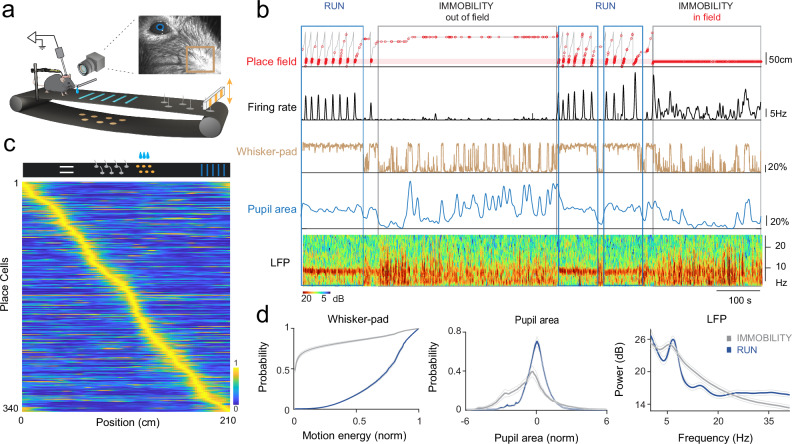
- In 8 male C57BL/6J mice, the study recorded 520 CA1 neurons across 34 sessions from 5 mice; 340/520 putative pyramidal neurons were classified as place cells.
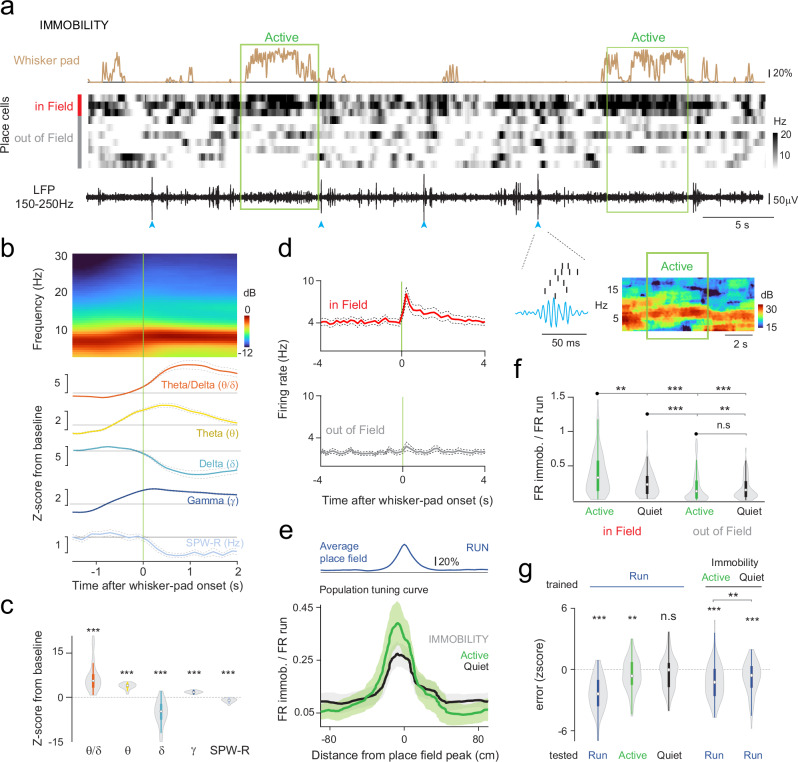
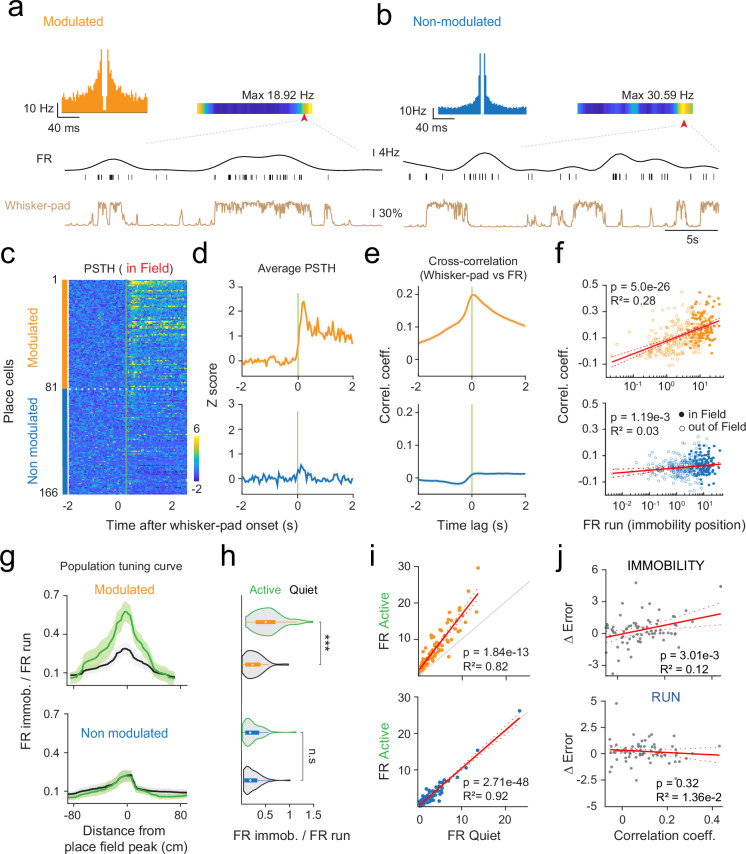
- During awake immobility, transitions to the active state were associated with a ~1.7-fold increase in in-field place-cell firing (4.04 ± 4.12 Hz pre vs 6.50 ± 6.90 Hz post whisker-pad motion; p = 2.00 × 10⁻3), but not outside the place field.
- Place coding persisted during immobility: normalized in-field firing was higher than out-of-field firing during both active immobility (0.38 ± 0.29 vs 0.18 ± 0.21, p = 1.02 × 10⁻16) and quiet immobility (0.24 ± 0.17 vs 0.18 ± 0.16, p = 8.67 × 10⁻4).
- Bayesian decoding found spatial location could be decoded during active immobility with the running-trained model, but not quiet immobility; and decoding errors were lower with an active-immobility model than a quiet-immobility model.
- Among 166 in-field place cells, 81 were classified as behaviorally modulated and 85 as non-modulated; modulated cells fired more during immobility (4.96 ± 3.88 Hz vs 2.73 ± 3.34 Hz, p = 1.04 × 10⁻6) but not during running (5.92 ± 3.68 Hz vs 4.76 ± 2.89 Hz, p = 0.07).
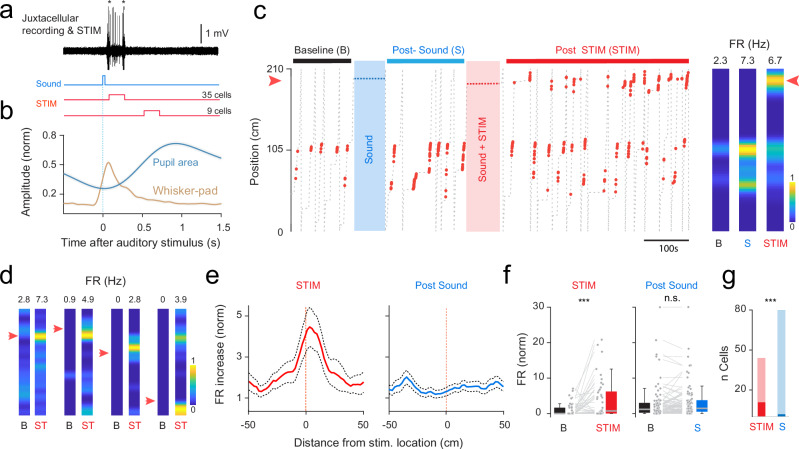
- Single-cell juxtacellular stimulation during active immobility induced de novo place fields in 11/44 cells (~25%), whereas sound-only controls produced 2/80 (~2.5%) effects (p = 1.89 × 10⁻4).
## Methods
- Head-fixed male mice ran on a 2.1 m linear track with visuo-tactile cues; experimenter-imposed immobility (“space clamping”) was introduced at random locations, and CA1 was recorded with silicon probes.
- Behavioral state was monitored with whisker-pad motion, pupillometry, and LFP; active vs quiet immobility was segmented using a whisker-motion threshold of 0.1.
- Main analyses included spike sorting and cell classification, place-field identification from running periods, cross-correlation-based behavioral modulation analysis, theta/LFP segmentation, Bayesian decoding, ripple analysis, and juxtacellular stimulation assays.
## Limitations
- The paper states that the place-field induction result is based on a “relatively small number of observations” and that future studies are needed.
- The authors note that their immobility state analysis used whisker-pad motion as a single variable to segment behavior, so other aspects of arousal were not directly measured here.
- The text also states that, even with stability criteria, they cannot formally exclude transient flickering between maps at the theta-cycle timescale; this is an evident limitation of the analysis as described.
Model-written summary. Check it against the paper before relying on it.
Integrity signals
Registry
Cites
Statistics
Figures
Verification
Claims the paper makes
29 Valid · 2 Not valid · 4 Not checked · 86 Own results and interpretations
At least one cited source doesn’t support this claim or points to a different paper, and none confirmed it — see the verdicts below.
In the paper
“Most notably, during rearing—a novelty-driven behavior where the animal stands on the hind limbs and engages in sensory sampling of the environment—theta oscillations are even faster than during locomotion11,29.”
§ Place and behavioral modulation of hippocampal neurons during immobility > Discussion
What the sources say
- Disputedcites [11] Barth, A. M., Domonkos, A., Fernandez-Ruiz, A., Freund, T. F. & Varga, V. Hippocampal network dynamics during rearing episodes. Cell Rep. 23, 1706–1715 (2018). 29742427 PMC5978794 sourceExperimental — accuracy not yet measured
In Results, under “Rearing Is Accompanied by Increased Hippocampal Theta Frequency” (page not provided), theta frequency rises during rearing, but its peak is reported as similar to the highest value during running: 8.2 ± 0.1 Hz in both conditions (p = 0.72). The source therefore does not support the claim that theta oscillations are even faster during rearing than during locomotion. (LLM, conf=0.88)
Checked by a reasoning model — may be wrong.
- Not checked — no full text of the sourcecites [29] Vanderwolf, C. H. Hippocampal electrical activity and voluntary movement in the rat. Electroencephalogr. Clin. Neurophysiol. 26, 407–418 (1969). 4183562 source
plainstates an association- Asserted: passes — The authors put it forward as true.
- Checkable: passes — It can be checked against evidence.
- Load-bearing: unclear — It is unclear whether the paper’s conclusions depend on it.
- Based: passes — The paper gives a reason why it holds.
- Disputed
The cited sources support only part of this claim — read each source’s verdict below.
In the paper
“Consistent with previous work37–39, running along the treadmill reliably engaged the hippocampal place representation, with the large majority of putative principal neurons (340 out of 520) being classified as place cells (see Methods).”
§ Place and behavioral modulation of hippocampal neurons during immobility > Results > CA1 place cell recordings and behavioral analysis during running and immobility
What the sources say
- Supportedcites [37] Royer, S. et al. Control of timing, rate and bursts of hippocampal place cells by dendritic and somatic inhibition. Nat. Neurosci. 15, 769–775 (2012). 22446878 PMC4919905 source
The Results section, “Place cell sequences during stationary treadmill running,” reports that pyramidal neurons fired at specific belt locations and that this activity repeated reliably across trials. This supports the cited previous-work point that treadmill running engaged a place-cell-like representation. The 340-out-of-520 count is presented as the citing study’s own classification, not a result attributed to this source. (LLM, conf=0.90)
- Supportedcites [38] Geiller, T., Fattahi, M., Choi, J.-S. & Royer, S. Place cells are more strongly tied to landmarks in deep than in superficial CA1. Nat. Commun. 8, 14531 (2017). 28218283 PMC5321734 source
The Results section (‘Context-modulated cells and landmark-vector cells’; page unavailable) reports that some neurons active during treadmill running had stable firing fields at specific belt positions. This supports the cited prior-work point that treadmill running engaged a hippocampal place representation. The 340-of-520 count is presented as the citing study’s own result, not as a result attributed to this source. (LLM, conf=0.88)
- Partly supportedcites [39] Danielson, N. B. et al. Sublayer-specific coding dynamics during spatial navigation and learning in hippocampal area CA1. Neuron 91, 652–665 (2016). 27397517 PMC4975984 sourceExperimental — accuracy not yet measured
In Results, under “Deep CA1 PCs are a highly active place coding population” (page unavailable), the paper reports identifying place cells among CA1 principal cells; another Results section describes mice running on a treadmill. Our copy does not report 340 of 520 neurons as place cells, so it supports the general treadmill place-coding point but not the attributed count. (LLM, conf=0.88)
hedgedstates a causen = 5- Asserted: passes — The authors put it forward as true.
- Checkable: passes — It can be checked against evidence.
- Load-bearing: passes — The paper’s conclusions depend on it.
- Based: passes — The paper gives a reason why it holds.
- Supported
The cited sources support only part of this claim — read each source’s verdict below.
In the paper
“Numerous exploratory behaviors linked to episodic learning occur in stationary animals (i.e., at a fixed spatial location), such as interactions with objects or conspecifics, rearing, and head-scanning behavior10–12.”
§ Place and behavioral modulation of hippocampal neurons during immobility > Introduction
What the sources say
- Partly supportedcites [10] Monaco, J. D., Rao, G., Roth, E. D. & Knierim, J. J. Attentive scanning behavior drives one-trial potentiation of hippocampal place fields. Nat. Neurosci. 17, 725–731 (2014). 24686786 PMC4036486 sourceExperimental — accuracy not yet measured
The Discussion (page unavailable) describes head scanning during pauses as an investigatory behavior and links scan-related place-field changes to episodic memory. It also calls rearing an investigatory behavior, but says rearing was not analyzed. Our copy does not establish the claimed link for interactions with objects or conspecifics. (LLM, conf=0.86)
- Partly supportedcites [11] Barth, A. M., Domonkos, A., Fernandez-Ruiz, A., Freund, T. F. & Varga, V. Hippocampal network dynamics during rearing episodes. Cell Rep. 23, 1706–1715 (2018). 29742427 PMC5978794 sourceExperimental — accuracy not yet measured
The Introduction describes rearing as an exploratory behavior in which an animal stands on its hindlimbs and scans its surroundings; the Discussion links it to learning spatial information. The paper does not address interactions with objects or conspecifics as examples of stationary exploration, or establish a link between the listed behaviors and episodic learning. Page numbers are not available in our copy. (LLM, conf=0.87)
- Not checked yetcites [12] Rao, R. P., von Heimendahl, M., Bahr, V. & Brecht, M. Neuronal responses to conspecifics in the ventral CA1. Cell Rep. 27, 3460–3472.e3 (2019). 31216468 source
Checked before — its earlier verdict is held back until a new check runs.
plainstates an association- Asserted: passes — The authors put it forward as true.
- Checkable: passes — It can be checked against evidence.
- Load-bearing: passes — The paper’s conclusions depend on it.
- Based: passes — The paper gives a reason why it holds.
- Partly supported
The sources with a verdict support this claim; the rest weren’t checked yet, have no full text we could read, or their verdicts aren’t rated yet.
In the paper
“Unlike during locomotion, where theta oscillations are a prominent and steady rhythm, theta oscillations during immobility occurred in short bouts (Fig. 2a and Supplementary Fig. 4), thus resembling the oscillatory dynamics described in other species (e.g., in the human98 and bat hippocampus99).”
§ Place and behavioral modulation of hippocampal neurons during immobility > Discussion
What the sources say
- Supportedcites [98] Aghajan, Z. M. et al. Theta oscillations in the human medial temporal lobe during real-world ambulatory movement. Curr. Biol. 27, 3743–3751.e3 (2017). 29199073 PMC5937848 source
The Introduction reports theta in short oscillatory bouts in humans and bats, supporting the comparison attributed to this source. The Discussion also describes short, intermittent movement-related theta bouts in humans. The immobility finding belongs to the citing study, not to this source. (LLM, conf=0.90)
- Not checked — no full text of the sourcecites [99] Eliav, T. et al. Nonoscillatory phase coding and synchronization in the bat hippocampal formation. Cell 175, 1119–1130.e15 (2018). 30318145 source
plainstates an association- Asserted: passes — The authors put it forward as true.
- Checkable: passes — It can be checked against evidence.
- Load-bearing: unclear — It is unclear whether the paper’s conclusions depend on it.
- Based: passes — The paper gives a reason why it holds.
- Supported
The cited sources support only part of this claim — read each source’s verdict below.
In the paper
“Thus, our data establish a causal relationship between spike-burst activity observed during awake immobility-related behaviors10,16 and place field plasticity mechanisms.”
§ Place and behavioral modulation of hippocampal neurons during immobility > Discussion
What the sources say
- Supportedcites [10] Monaco, J. D., Rao, G., Roth, E. D. & Knierim, J. J. Attentive scanning behavior drives one-trial potentiation of hippocampal place fields. Nat. Neurosci. 17, 725–731 (2014). 24686786 PMC4036486 source
The Results (‘Examples of the scan–potentiation effect’; page unavailable) describe strong and brief spike bursts during head scans, and ‘Head-scanning events’ identifies those scans as occurring during pauses in running. The sentence presents the causal relationship as the citing authors’ conclusion from their own data, not as a finding attributed to Monaco et al. (LLM, conf=0.88)
- Partly supportedcites [16] Bittner, K. C. et al. Conjunctive input processing drives feature selectivity in hippocampal CA1 neurons. Nat. Neurosci. 18, 1133–1142 (2015). 26167906 PMC4888374 sourceExperimental — accuracy not yet measured
The Results section, “Impact on sharp wave/ripple related activity” (page unavailable), reports neuronal activity during non-exploratory periods and increased action-potential firing during ripples after place fields were induced. It does not establish that spike bursts during awake immobility cause place-field plasticity; the reported sequence runs from place-field induction during active running to later ripple-related activity. (LLM, conf=0.84)
boostedstates a cause- Asserted: passes — The authors put it forward as true.
- Checkable: passes — It can be checked against evidence.
- Load-bearing: passes — The paper’s conclusions depend on it.
- Based: passes — The paper gives a reason why it holds.
- Supported
37 more claims · 4 with their cited sources checked
Create a free account to see all 121 claims and to verify the 5 references still open.
- It may state two separate claims as one. 47
- Probably not a substantial claim. 51
- The quote only partly states this claim. 3
Statistics that don’t add up
Each reported p-value recomputed from its test statistic and degrees of freedom, each partial η² from its F, and each ratio, mean difference or B printed with a p checked against its own confidence interval.
Rated minor: it would not touch a result — a value no result rests on, a p-value that stays on the same side of the significance level, or a conflict that is clerical, resolved elsewhere in the paper, or outside its own findings.
In the paper
“F(73,71) = 0.98, p = 0.33”
§ Place and behavioral modulation of hippocampal neurons during immobility > Results > Heterogeneous behavioral modulation of place cells during immobility
Reported p = .33 · recomputed p = .534
Statistics recomputed
Every reported test result, recomputed from its test statistic and degrees of freedom. A result shows as not adding up only once an independent check has confirmed it.
- Doesn’t add upF(73, 71) = 0.98reported p = .33 · recomputed p = .534
“F(73,71) = 0.98, p = .33”
- Not confirmedF(73, 71) = 0.81reported p = .37 · recomputed p = .814
“F(73,71) = 0.81, p = .37”
- Consistentt(83) = 1.41reported p = .16 · recomputed p = .162
“t(83) = 1.41, p = .16”
Self-check
Percentages, sums and reported differences re-computed from the paper’s own numbers.
Self-check results appear here once an independent check has confirmed them.
Citations
Cites
The hippocampus as a spatial map. Preliminary evidence from unit activity in the freely-moving rat
O'Keefe, J., & Dostrovsky, J. (1971) · Brain Research · doi:10.1016/0006-8993(71)90358-1 · Cited by 6,151 · cited 1×
“These neurons encode the animal ’ s position in an environment 1 and, more generally, events of episodic experience 2 – 4 and have been causally linked to memory functions 5 – 7 .”
Aston-Jones, G., & Cohen, J. D. (2005) · Annual Review of Neuroscience · doi:10.1146/annurev.neuro.28.061604.135709 · Cited by 4,472 · cited 1×
“61 – 63).”
Brain stem reticular formation and activation of the EEG
Moruzzi, G., & Magoun, H. W. (1949) · Electroencephalography and Clinical Neurophysiology · doi:10.1016/0013-4694(49)90219-9 · Cited by 4,307
Theta oscillations in the hippocampus
Buzsáki, G. (2002) · Neuron · doi:10.1016/s0896-6273(02)00586-x · Cited by 3,332 · cited 2×
“In line with previous work in head-fi xed and freely-moving animals, running was accompanied by sustained LFP theta oscillations 42 (Fig.”
Hippocampal electrical activity and voluntary movement in the rat
Vanderwolf, C. H. (1969) · Electroencephalography and Clinical Neurophysiology · doi:10.1016/0013-4694(69)90092-3 · Cited by 1,928 · cited 2×
“Although earlier work indicated that LFP theta bouts can be evoked by emotionally salient stimuli 26 – 28 and being associated with speci fi c body movements 29 ,thebehavioralcorrelatesofthesethetaoscillationshave remained largely unresolved.”
InfluentialMemory, navigation and theta rhythm in the hippocampal-entorhinal system
Buzsáki, G., & Moser, E. I. (2013) · Nature Neuroscience · doi:10.1038/nn.3304 · Cited by 1,847 · cited 2×
“Theta oscillations — although not necessary for the emergence of the place code 21,22 — play a major role in organizing place cellactivityintotemporalsequencesthatmaptheavailablespace(and, similarly, episodic events 4,23,24 ).”
Hippocampal sharp wave-ripple: A cognitive biomarker for episodic memory and planning
Buzsáki, G. (2015) · Hippocampus · doi:10.1002/hipo.22488 · Cited by 1,759 · cited 1×
“Neuronal reactivations during awake sharp-wave ripples, which occur during quiet immobility 79 , were also biased by the animal ’ s location (Supplementary Fig.”
Softky, W., & Koch, C. (1993) · The Journal of Neuroscience · doi:10.1523/jneurosci.13-01-00334.1993 · Cited by 1,689 · cited 2×
“The burst index was computed as the sum of spikes with an ISI ≤ 6 ms, divided by the total number ofspikes 129,130 .”
Rethinking the Emotional Brain
LeDoux, J. (2012) · Neuron · doi:10.1016/j.neuron.2012.02.004 · Cited by 1,594 · cited 2×
“61 – 63).”
InfluentialCellpose 2.0: how to train your own model
Pachitariu, M., & Stringer, C. (2022) · Nature Methods · doi:10.1038/s41592-022-01663-4 · Cited by 1,581 · cited 1×
“Pupil area and whisker-pad motion energy(ROIcenteredonthewhiskerpad)wereextractedandanalyzed with the open-source software Facemap (https://github.com/ MouseLand/facemap 19) in Python 121,122 .”
Mechanisms of emotional arousal and lasting declarative memory.
Cahill, L., & McGaugh, J. L. (1998) · Trends in Neurosciences · doi:10.1016/s0166-2236(97)01214-9 · Cited by 1,575 · cited 1×
“30,31).”
Spontaneous behaviors drive multidimensional, brainwide activity
Stringer, C., Pachitariu, M., Steinmetz, N., Reddy, C. B., Carandini, M., & Harris, K. D. (2019) · Science · doi:10.1126/science.aav7893 · Cited by 1,510 · cited 2×
“Indeed, in line with previous work 43,44 , the onset of whisker-pad motion was a reliable correlate of brain state transitions.”
Fast-spiking, parvalbumin + GABAergic interneurons: From cellular design to microcircuit function
Hu, H., Gan, J., & Jonas, P. (2014) · Science · doi:10.1126/science.1255263 · Cited by 1,197
Neuropixels 2.0: A miniaturized high-density probe for stable, long-term brain recordings.
Steinmetz, N. A., Aydin, C., Lebedeva, A., Okun, M., Pachitariu, M., Bauza, M., Beau, M., Bhagat, J., Böhm, C., Broux, M., et al. (2021) · Science · doi:10.1126/science.abf4588 · Cited by 1,173 · cited 1×
“Spike sorting was performed of fl ine with Kilosort 2.5 software 125 (https://github.com/MouseLand/ Kilosort) and the visualization for manual curation was performed in Phy2 (https://github.com/cortex-lab/phy) with the aid of extra plugin tools (https://zenodo.org/records/3367782).”
InfluentialCortical interneurons that specialize in disinhibitory control
Pi, H.-J., Hangya, B., Kvitsiani, D., Sanders, J. I., Huang, Z. J., & Kepecs, A. (2013) · Nature · doi:10.1038/nature12676 · Cited by 1,136 · cited 1×
“Local microcircuits are also likely to be involved in shaping behavioralmodulationofCA1 place cells,sincedifferent types of interneurons have been shown to be differentially modulated during immobility in the hippocampus and in cortical circuits 66,87 – 89 (see also Supplementary Fig.”
Memory engrams: Recalling the past and imagining the future
Josselyn, S. A., & Tonegawa, S. (2020) · Science · doi:10.1126/science.aaw4325 · Cited by 1,087 · cited 1×
“These neurons encode the animal ’ s position in an environment 1 and, more generally, events of episodic experience 2 – 4 and have been causally linked to memory functions 5 – 7 .”
What Is a Cognitive Map? Organizing Knowledge for Flexible Behavior
Behrens, T. E. J., Muller, T. H., Whittington, J. C. R., Mark, S., Baram, A. B., Stachenfeld, K. L., & Kurth-Nelson, Z. (2018) · Neuron · doi:10.1016/j.neuron.2018.10.002 · Cited by 1,055
Wood, E. R., Dudchenko, P. A., Robitsek, R. J., & Eichenbaum, H. (2000) · Neuron · doi:10.1016/s0896-6273(00)00071-4 · Cited by 992
A Cortical Circuit for Gain Control by Behavioral State
Fu, Y., Tucciarone, J. M., Espinosa, J. S., Sheng, N., Darcy, D. P., Nicoll, R. A., Huang, Z. J., & Stryker, M. P. (2014) · Cell · doi:10.1016/j.cell.2014.01.050 · Cited by 937
Arousal-Biased Competition in Perception and Memory
Mather, M., & Sutherland, M. R. (2011) · Perspectives on Psychological Science · doi:10.1177/1745691611400234 · Cited by 926
Buzsáki, G. (2005) · Hippocampus · doi:10.1002/hipo.20113 · Cited by 872 · cited 2×
“Theta oscillations — although not necessary for the emergence of the place code 21,22 — play a major role in organizing place cellactivityintotemporalsequencesthatmaptheavailablespace(and, similarly, episodic events 4,23,24 ).”
Arousal and Locomotion Make Distinct Contributions to Cortical Activity Patterns and Visual Encoding
Vinck, M., Batista-Brito, R., Knoblich, U., & Cardin, J. A. (2015) · Neuron · doi:10.1016/j.neuron.2015.03.028 · Cited by 819
Waking state: rapid variations modulate neural and behavioral responses
McGinley, M. J., Vinck, M., Reimer, J., Batista-Brito, R., Zagha, E., Cadwell, C. R., Tolias, A. S., Cardin, J. A., & McCormick, D. A. (2015) · Neuron · doi:10.1016/j.neuron.2015.09.012 · Cited by 801
Internal brain state regulates membrane potential synchrony in barrel cortex of behaving mice
Poulet, J. F. A., & Petersen, C. C. H. (2008) · Nature · doi:10.1038/nature07150 · Cited by 796 · cited 2×
“Indeed, in line with previous work 43,44 , the onset of whisker-pad motion was a reliable correlate of brain state transitions.”
Kramis, R., Vanderwolf, C. H., & Bland, B. H. (1975) · Experimental Neurology · doi:10.1016/0014-4886(75)90195-8 · Cited by 791
Mapping of a non-spatial dimension by the hippocampal-entorhinal circuit
Aronov, D., Nevers, R., & Tank, D. W. (2017) · Nature · doi:10.1038/nature21692 · Cited by 773
Zhang, K., Ginzburg, I., McNaughton, B. L., & Sejnowski, T. J. (1998) · Journal of Neurophysiology · doi:10.1152/jn.1998.79.2.1017 · Cited by 741
Cortical membrane potential signature of optimal states for sensory signal detection
McGinley, M. J., David, S. V., & McCormick, D. A. (2015) · Neuron · doi:10.1016/j.neuron.2015.05.038 · Cited by 728
Control of timing, rate and bursts of hippocampal place cells by dendritic and somatic inhibition
Royer, S., Zemelman, B. V., Losonczy, A., Kim, J., Chance, F., Magee, J. C., & Buzsáki, G. (2012) · Nature Neuroscience · doi:10.1038/nn.3077 · Cited by 728 · cited 5×
“Consistent with previous work 37 – 39 , running along the treadmill reliably engaged the hippocampal place representation, with the large majority of putativeprincipal neurons (340 out of 520) beingclassi fi ed as place cells (see Methods).”
Influential(1997) · Neuroscience · doi:10.1016/s0306-4522(97)00239-x · Cited by 707
Behavioral time scale synaptic plasticity underlies CA1 place fields
Bittner, K. C., Milstein, A. D., Grienberger, C., Romani, S., & Magee, J. C. (2017) · Science · doi:10.1126/science.aan3846 · Cited by 707 · cited 2×
“Recent work has demonstrated that during active locomotion, evoking spiking activity in single hippocampal neurons can be suf fi - cientforinducingdenovoplace fi elds 16,17,20 .”
Rhythms of the hippocampal network
Colgin, L. L. (2016) · Nature reviews. Neuroscience · doi:10.1038/nrn.2016.21 · Cited by 654
Cellular mechanisms of brain state-dependent gain modulation in visual cortex
Polack, P.-O., Friedman, J., & Golshani, P. (2013) · Nature Neuroscience · doi:10.1038/nn.3464 · Cited by 628
Spatial representation in the hippocampal formation: a history
Moser, E. I., Moser, M.-B., & McNaughton, B. L. (2017) · Nature Neuroscience · doi:10.1038/nn.4653 · Cited by 560 · cited 2×
“Given their importance for episodic memory, the phenomenology of the place representation, as wellasitsdynamicsandplasticityduringmemoryprocessing,hasbeen extensively investigated 8,9 .”
InfluentialConjunctive input processing drives feature selectivity in hippocampal CA1 neurons
Bittner, K. C., Grienberger, C., Vaidya, S. P., Milstein, A. D., Macklin, J. J., Suh, J., Tonegawa, S., & Magee, J. C. (2015) · Nature Neuroscience · doi:10.1038/nn.4062 · Cited by 540 · cited 2×
“Place cell plasticity mechanisms have also been almost exclusively studied in locomoting animals 16 – 20 .”
Cell type–specific genetic and optogenetic tools reveal hippocampal CA2 circuits
Kohara, K., Pignatelli, M., Rivest, A. J., Jung, H.-Y., Kitamura, T., Suh, J., Frank, D., Kajikawa, K., Mise, N., Obata, Y., et al. (2014) · Nature Neuroscience · doi:10.1038/nn.3614 · Cited by 528
Grid cells in pre- and parasubiculum
Boccara, C. N., Sargolini, F., Thoresen, V. H., Solstad, T., Witter, M. P., Moser, E. I., & Moser, M.-B. (2010) · Nature Neuroscience · doi:10.1038/nn.2602 · Cited by 524 · cited 2×
“57,58.”
On the Integration of Space, Time, and Memory
Eichenbaum, H. (2017) · Neuron · doi:10.1016/j.neuron.2017.06.036 · Cited by 515 · cited 1×
“This “ multi-plexed code ” is consistent with the general role of place cells in episodic memory, and the ability of these neurons to co-encode spatial andnon-spatialepisodicvariables 3,114 – 117 .”
A 4 Hz oscillation adaptively synchronizes prefrontal, VTA, and hippocampal activities
Fujisawa, S., & Buzsáki, G. (2011) · Neuron · doi:10.1016/j.neuron.2011.08.018 · Cited by 501 · cited 1×
“The meanRayleigh vectorlength and Rayleigh test p -value were computed to quantify the strength and statistical signi fi cance of spike entrainment in both conditions and across frequencies 137,138 (Fig.”
Hippocampal CA1 pyramidal cells form functionally distinct sublayers
Mizuseki, K., Diba, K., Pastalkova, E., & Buzsáki, G. (2011) · Nature Neuroscience · doi:10.1038/nn.2894 · Cited by 461
Space and Time: The Hippocampus as a Sequence Generator
Buzsáki, G., & Tingley, D. (2018) · Trends in Cognitive Sciences · doi:10.1016/j.tics.2018.07.006 · Cited by 461
Neunuebel, J. P., & Knierim, J. J. (2014) · Neuron · doi:10.1016/j.neuron.2013.11.017 · Cited by 456 · cited 1×
“The meanRayleigh vectorlength and Rayleigh test p -value were computed to quantify the strength and statistical signi fi cance of spike entrainment in both conditions and across frequencies 137,138 (Fig.”
The role of the hippocampus in navigation is memory
Eichenbaum, H. (2017) · Journal of Neurophysiology · doi:10.1152/jn.00005.2017 · Cited by 430 · cited 1×
“Theta oscillations — although not necessary for the emergence of the place code 21,22 — play a major role in organizing place cellactivityintotemporalsequencesthatmaptheavailablespace(and, similarly, episodic events 4,23,24 ).”
Reduction of Theta Rhythm Dissociates Grid Cell Spatial Periodicity from Directional Tuning
Brandon, M. P., Bogaard, A. R., Libby, C. P., Connerney, M. A., Gupta, K., & Hasselmo, M. E. (2011) · Science · doi:10.1126/science.1201652 · Cited by 407 · cited 1×
“Theta oscillations — although not necessary for the emergence of the place code 21,22 — play a major role in organizing place cellactivityintotemporalsequencesthatmaptheavailablespace(and, similarly, episodic events 4,23,24 ).”
Salinas, E., & Thier, P. (2000) · Neuron · doi:10.1016/s0896-6273(00)00004-0 · Cited by 400 · cited 1×
“By employing head-restrained preparations, a growing body of work has demonstrated that behavioral state fl uc-tuations have a strong impact on neuronal gain and coding properties in primary sensory areas 36,43,66 – 70 and modulate neuronal fi ring within brain-wide neuronalnetworks 44,71 – 74 .”
Spatial information content and reliability of hippocampal CA1 neurons: Effects of visual input
Markus, E. J., Barnes, C. A., McNaughton, B. L., Gladden, V. L., & Skaggs, W. E. (1994) · Hippocampus · doi:10.1002/hipo.450040404 · Cited by 399 · cited 1×
“Spatialinformation inplace cell units was computed as follows 131 : The sparsity index of a given place cell 131,132 was calculated as: In both cases, p n istheprobability of theanimalbeing in n th space bin, λ n is the mean fi ring rate in the n th space bin, and λ is the overall mean fi ring rate…”
Grid cells without theta oscillations in the entorhinal cortex of bats
Yartsev, M. M., Witter, M. P., & Ulanovsky, N. (2011) · Nature · doi:10.1038/nature10583 · Cited by 394 · cited 4×
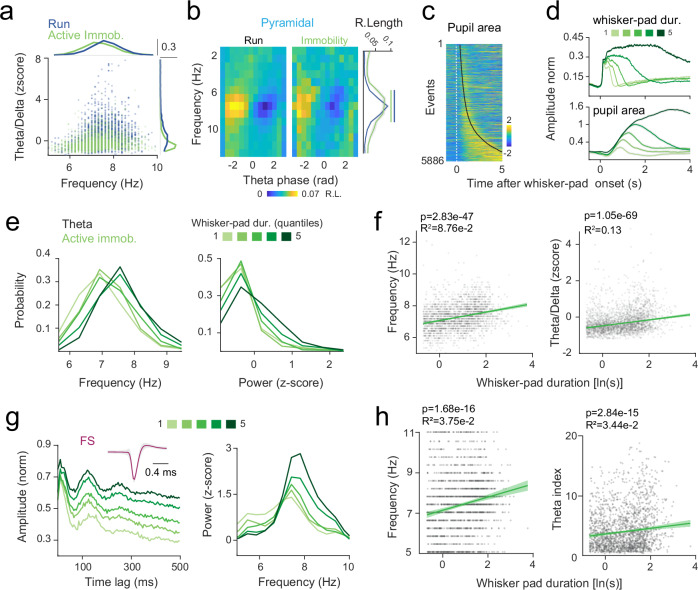
“4h) of FS interneuron spike-trains progressively increased as a function of whisker-pad motion duration (theta frequency, R 2 = 3.75 × 10 − 2 , F (1779,1777) = 69.3, p = 1.68 × 10 − 16 ; Theta Index, R 2 = 3.45 × 10 − 2 , F (1779,1777) = 63.5, p = 2.85 × 10 − 15 ; Fig.”
InfluentialA Dedicated Population for Reward Coding in the Hippocampus
Gauthier, J. L., & Tank, D. W. (2018) · Neuron · doi:10.1016/j.neuron.2018.06.008 · Cited by 394
The Behavioral Ecology of Intermittent Locomotion
Kramer, D. L., & McLaughlin, R. L. (2001) · American Zoologist · doi:10.1093/icb/41.2.137 · Cited by 394
Rewarded Outcomes Enhance Reactivation of Experience in the Hippocampus
Singer, A. C., & Frank, L. M. (2009) · Neuron · doi:10.1016/j.neuron.2009.11.016 · Cited by 385 · cited 1×
“47,48), indicating preferential reactivation of this behaviorally salient area.”
The Spatial Periodicity of Grid Cells Is Not Sustained During Reduced Theta Oscillations
Koenig, J., Linder, A. N., Leutgeb, J. K., & Leutgeb, S. (2011) · Science · doi:10.1126/science.1201685 · Cited by 378 · cited 1×
“Theta oscillations — although not necessary for the emergence of the place code 21,22 — play a major role in organizing place cellactivityintotemporalsequencesthatmaptheavailablespace(and, similarly, episodic events 4,23,24 ).”
Robust Conjunctive Item–Place Coding by Hippocampal Neurons Parallels Learning What Happens Where
Komorowski, R. W., Manns, J. R., & Eichenbaum, H. (2009) · The Journal of Neuroscience · doi:10.1523/jneurosci.1378-09.2009 · Cited by 372 · cited 1×
“This “ multi-plexed code ” is consistent with the general role of place cells in episodic memory, and the ability of these neurons to co-encode spatial andnon-spatialepisodicvariables 3,114 – 117 .”
Rearing on Hind Legs, Environmental Novelty, and the Hippocampal Formation
Lever, C., Burton, S., & Ο'Keefe, J. (2006) · Reviews in the Neurosciences · doi:10.1515/revneuro.2006.17.1-2.111 · Cited by 366
Theta-paced flickering between place-cell maps in the hippocampus
Jezek, K., Henriksen, E. J., Treves, A., Moser, E. I., & Moser, M.-B. (2011) · Nature · doi:10.1038/nature10439 · Cited by 359 · cited 1×
“…a single environment (belt) was used in the present study and spatial representations were generally stable, we acknowledge that — even with our stability criteria during immobility — we cannot formally exclude the possibility of transient fl ickering between maps at the theta-cycle timescale 127 .”
CA1 pyramidal cell diversity enabling parallel information processing in the hippocampus
Soltesz, I., & Losonczy, A. (2018) · Nature Neuroscience · doi:10.1038/s41593-018-0118-0 · Cited by 333 · cited 1×
“CA1 pyramidal neurons show a high level of heterogeneity at the molecular, cellular, connectivity, and in-vivo properties 90 – 92 .”
Mechanisms underlying gain modulation in the cortex
Ferguson, K. A., & Cardin, J. A. (2020) · Nature Reviews Neuroscience · doi:10.1038/s41583-019-0253-y · Cited by 327 · cited 2×
“Local microcircuits are also likely to be involved in shaping behavioralmodulationofCA1 place cells,sincedifferent types of interneurons have been shown to be differentially modulated during immobility in the hippocampus and in cortical circuits 66,87 – 89 (see also Supplementary Fig.”
Inhibition-induced theta resonance in cortical circuits
Stark, E., Eichler, R., Roux, L., Fujisawa, S., Rotstein, H. G., & Buzsáki, G. (2013) · Neuron · doi:10.1016/j.neuron.2013.09.033 · Cited by 326
Strong CA2 Pyramidal Neuron Synapses Define a Powerful Disynaptic Cortico-Hippocampal Loop
Chevaleyre, V., & Siegelbaum, S. A. (2010) · Neuron · doi:10.1016/j.neuron.2010.04.013 · Cited by 324 · cited 3×
“13 – 15) with a recent study 13 showing that unique hippocampal processes are indeed engaged in speci fi c hippocampal sub-fi elds (e.g., the CA2 region).”
Spatial Selectivity of Rat Hippocampal Neurons: Dependence on Preparedness for Movement
Foster, T. C., Castro, C. A., & McNaughton, B. L. (1989) · Science · doi:10.1126/science.2740902 · Cited by 323 · cited 2×
“In contrast to the large body of knowledge on theta oscillations during locomotion, comparatively little is known about immobility-related theta 25 – 28 .”
Moita, M. A. P., Rosis, S., Zhou, Y., LeDoux, J. E., & Blair, H. T. (2003) · Neuron · doi:10.1016/s0896-6273(03)00033-3 · Cited by 295 · cited 1×
“Our fi ndings are in line with previous work, which showed that changes in arousal modulate the membrane potential of hippocampal pyramidal neurons 75 and hippocampal dynamics 75 – 78 , and are gated by spatial location 77 .”
Reverse replay of hippocampal place cells is uniquely modulated by changing reward
Ambrose, R. E., Pfeiffer, B. E., & Foster, D. J. (2016) · Neuron · doi:10.1016/j.neuron.2016.07.047 · Cited by 292 · cited 1×
“47,48), indicating preferential reactivation of this behaviorally salient area.”
Sublayer-Specific Coding Dynamics during Spatial Navigation and Learning in Hippocampal Area CA1
Danielson, N. B., Zaremba, J. D., Kaifosh, P., Bowler, J., Ladow, M., & Losonczy, A. (2016) · Neuron · doi:10.1016/j.neuron.2016.06.020 · Cited by 288 · cited 2×
“Consistent with previous work 37 – 39 , running along the treadmill reliably engaged the hippocampal place representation, with the large majority of putativeprincipal neurons (340 out of 520) beingclassi fi ed as place cells (see Methods).”
Identification of a brainstem circuit regulating visual cortical state in parallel with locomotion
Lee, A. M., Hoy, J. L., Bonci, A., Wilbrecht, L., Stryker, M. P., & Niell, C. M. (2014) · Neuron · doi:10.1016/j.neuron.2014.06.031 · Cited by 282 · cited 1×
“This is because locomotion — where place cell activity has been classically characterized — is a homogeneous behavioral state, tightly coupled to arousal 32 – 35 .”
O'Neill, J., Senior, T., & Csicsvari, J. (2006) · Neuron · doi:10.1016/j.neuron.2005.10.037 · Cited by 281 · cited 2×
“45,46).”
Targeted Activation of Hippocampal Place Cells Drives Memory-Guided Spatial Behavior
Robinson, N. T. M., Descamps, L. A. L., Russell, L. E., Buchholz, M. O., Bicknell, B. A., Antonov, G. K., Lau, J. Y. N., Nutbrown, R., Schmidt-Hieber, C., & Häusser, M. (2020) · Cell · doi:10.1016/j.cell.2020.09.061 · Cited by 281 · cited 1×
“These neurons encode the animal ’ s position in an environment 1 and, more generally, events of episodic experience 2 – 4 and have been causally linked to memory functions 5 – 7 .”
Explicit memory creation during sleep demonstrates a causal role of place cells in navigation
de Lavilléon, G., Lacroix, M. M., Rondi-Reig, L., & Benchenane, K. (2015) · Nature Neuroscience · doi:10.1038/nn.3970 · Cited by 279 · cited 2×
“During active locomotion, the rodent hippocampus displays prominent local fi eld potential(LFP)oscillations in the theta frequency range (6 – 10Hz).”
InfluentialHippocampal CA2 sharp-wave ripples reactivate and promote social memory
Oliva, A., Fernández-Ruiz, A., Leroy, F., & Siegelbaum, S. A. (2020) · Nature · doi:10.1038/s41586-020-2758-y · Cited by 268 · cited 1×
“Another potential route for behavioral modulation of CA1 activity is CA2 83 , which projects to deep-located pyramidal neurons in CA1 84,85 and has been shown to contain a subset of neurons that fi re robustly during immobility 13,86 .”
Determinants of different deep and superficial CA1 pyramidal cell dynamics during sharp-wave ripples
Valero, M., Cid, E., Averkin, R. G., Aguilar, J., Sanchez-Aguilera, A., Viney, T. J., Gomez-Dominguez, D., Bellistri, E., & de la Prida, L. M. (2015) · Nature Neuroscience · doi:10.1038/nn.4074 · Cited by 261
Heterogeneity within classical cell types is the rule: lessons from hippocampal pyramidal neurons
Cembrowski, M. S., & Spruston, N. (2019) · Nature Reviews Neuroscience · doi:10.1038/s41583-019-0125-5 · Cited by 258
Effects of locomotion extend throughout the mouse early visual system
Erisken, S., Vaiceliunaite, A., Jurjut, O., Fiorini, M., Katzner, S., & Busse, L. (2014) · Current Biology · doi:10.1016/j.cub.2014.10.045 · Cited by 256 · cited 4×
“These data indicate that during running, the behavioral state is more homogeneous (and likely corresponding to a high-arousal state 34 – 36 ) compared to immobility, where the internal state is more variable and spontaneously fl uctuating.”
InfluentialVarga, C., Golshani, P., & Soltesz, I. (2012) · Proceedings of the National Academy of Sciences · doi:10.1073/pnas.1210929109 · Cited by 253
Parvalbumin interneurons of hippocampus tune population activity at theta frequency
Amilhon, B., Huh, C. Y. L., Manseau, F., Ducharme, G., Nichol, H., Adamantidis, A., & Williams, S. (2015) · Neuron · doi:10.1016/j.neuron.2015.05.027 · Cited by 241
A hippocampal network for spatial coding during immobility and sleep
Kay, K., Sosa, M., Chung, J. E., Karlsson, M. P., Larkin, M. C., & Frank, L. M. (2016) · Nature · doi:10.1038/nature17144 · Cited by 219 · cited 3×
“13 – 15) with a recent study 13 showing that unique hippocampal processes are indeed engaged in speci fi c hippocampal sub-fi elds (e.g., the CA2 region).”
Turi, G. F., Li, W.-K., Chavlis, S., Pandi, I., O’Hare, J., Priestley, J. B., Grosmark, A. D., Liao, Z., Ladow, M., Zhang, J. F., et al. (2019) · Neuron · doi:10.1016/j.neuron.2019.01.009 · Cited by 218 · cited 1×
“39 – 41).”
Hippocampal Replay Captures the Unique Topological Structure of a Novel Environment
Wu, X., & Foster, D. J. (2014) · The Journal of Neuroscience · doi:10.1523/jneurosci.3414-13.2014 · Cited by 201
Bezaire, M. J., Raikov, I., Burk, K., Vyas, D., & Soltesz, I. (2016) · eLife · doi:10.7554/elife.18566 · Cited by 198 · cited 1×
“Fast-spiking (FS) CA1 interneurons (classically referred to as “ theta cells ” 53 ) have been mechanistically linked to the emergence of the LFP theta rhythm and the entrainment of pyramidal neurons in the hippocampus 42,54 – 56 .”
Stopping behavior: constraints on exploration in rats (Rattus norvegicus)
Golani, I., Benjamini, Y., & Eilam, D. (1993) · Behavioural Brain Research · doi:10.1016/s0166-4328(05)80263-3 · Cited by 191
Theta Oscillations in the Human Medial Temporal Lobe during Real-World Ambulatory Movement
M. Aghajan, Z., Schuette, P., Fields, T. A., Tran, M. E., Siddiqui, S. M., Hasulak, N. R., Tcheng, T. K., Eliashiv, D., Mankin, E. A., Stern, J., et al. (2017) · Current Biology · doi:10.1016/j.cub.2017.10.062 · Cited by 186
English, D. F., Peyrache, A., Stark, E., Roux, L., Vallentin, D., Long, M. A., & Buzsáki, G. (2014) · The Journal of Neuroscience · doi:10.1523/jneurosci.2600-14.2014 · Cited by 177 · cited 1×
“3), pointing to a possible increase in excitation-inhibition ratios 81,82 .”
Behavioral correlates of hippocampal type 2 theta in the rat
Sainsbury, R. S., Heynen, A., & Montoya, C. P. (1987) · Physiology & Behavior · doi:10.1016/0031-9384(87)90382-9 · Cited by 168 · cited 1×
“Although earlier work indicated that LFP theta bouts can be evoked by emotionally salient stimuli 26 – 28 and being associated with speci fi c body movements 29 ,thebehavioralcorrelatesofthesethetaoscillationshave remained largely unresolved.”
Spatial firing properties of hippocampal theta cells
Kubie, J., Muller, R., & Bostock, E. (1990) · The Journal of Neuroscience · doi:10.1523/jneurosci.10-04-01110.1990 · Cited by 163 · cited 1×
“Fast-spiking (FS) CA1 interneurons (classically referred to as “ theta cells ” 53 ) have been mechanistically linked to the emergence of the LFP theta rhythm and the entrainment of pyramidal neurons in the hippocampus 42,54 – 56 .”
Attentive scanning behavior drives one-trial potentiation of hippocampal place fields
Monaco, J. D., Rao, G., Roth, E. D., & Knierim, J. J. (2014) · Nature Neuroscience · doi:10.1038/nn.3687 · Cited by 163
Spatial Firing Correlates of Physiologically Distinct Cell Types of the Rat Dentate Gyrus
Neunuebel, J. P., & Knierim, J. J. (2012) · The Journal of Neuroscience · doi:10.1523/jneurosci.6038-11.2012 · Cited by 163
Place cells are more strongly tied to landmarks in deep than in superficial CA1
Geiller, T., Fattahi, M., Choi, J.-S., & Royer, S. (2017) · Nature Communications · doi:10.1038/ncomms14531 · Cited by 163 · cited 4×
“37,38).”
InfluentialBuetfering, C., Allen, K., & Monyer, H. (2014) · Nature Neuroscience · doi:10.1038/nn.3696 · Cited by 160 · cited 1×
“6b and 3g) 135,136 .”
What do grid cells contribute to place cell firing?
Bush, D., Barry, C., & Burgess, N. (2014) · Trends in Neurosciences · doi:10.1016/j.tins.2013.12.003 · Cited by 154 · cited 1×
“Given their importance for episodic memory, the phenomenology of the place representation, as wellasitsdynamicsandplasticityduringmemoryprocessing,hasbeen extensively investigated 8,9 .”
Pupil-linked arousal signals track the temporal organization of events in memory
Clewett, D., Gasser, C., & Davachi, L. (2020) · Nature Communications · doi:10.1038/s41467-020-17851-9 · Cited by 154 · cited 1×
“30,31).”
Rats and mice share common ethologically relevant parameters of exploratory behavior
Drai, D., Kafkafi, N., Benjamini, Y., Elmer, G. I., & Golani, I. (2001) · Behavioural Brain Research · doi:10.1016/s0166-4328(01)00290-x · Cited by 144
Meyer, A. F., Poort, J., O’Keefe, J., Sahani, M., & Linden, J. F. (2018) · Neuron · doi:10.1016/j.neuron.2018.09.020 · Cited by 143
Redundancy and Synergy of Neuronal Ensembles in Motor Cortex
Narayanan, N. S., Kimchi, E. Y., & Laubach, M. (2005) · The Journal of Neuroscience · doi:10.1523/jneurosci.4697-04.2005 · Cited by 140
Valero, M., Averkin, R. G., Fernández‐Lamo, I., Aguilar, J., Lopez‐Pigozzi, D., Brotons‐Mas, J. R., Cid, E., Tamás, G., & de la Prida, L. M. (2017) · Neuron · doi:10.1016/j.neuron.2017.05.032 · Cited by 137 · cited 1×
“3), pointing to a possible increase in excitation-inhibition ratios 81,82 .”
Facemap: a framework for modeling neural activity based on orofacial tracking
Syeda, A., Zhong, L., Tung, R., Long, W., Pachitariu, M., & Stringer, C. (2024) · Nature Neuroscience · doi:10.1038/s41593-023-01490-6 · Cited by 129 · cited 1×
“Pupil area and whisker-pad motion energy(ROIcenteredonthewhiskerpad)wereextractedandanalyzed with the open-source software Facemap (https://github.com/ MouseLand/facemap 19) in Python 121,122 .”
Methods for Neural Ensemble Recordings
(2007) · CRC Press eBooks · doi:10.1201/9781420006414 · Cited by 124
Behavioral origin of sound-evoked activity in mouse visual cortex
Bimbard, C., Sit, T. P. H., Lebedeva, A., Reddy, C. B., Harris, K. D., & Carandini, M. (2023) · Nature Neuroscience · doi:10.1038/s41593-022-01227-x · Cited by 115 · cited 1×
“By employing head-restrained preparations, a growing body of work has demonstrated that behavioral state fl uc-tuations have a strong impact on neuronal gain and coding properties in primary sensory areas 36,43,66 – 70 and modulate neuronal fi ring within brain-wide neuronalnetworks 44,71 – 74 .”
Recruitment and inhibitory action of hippocampal axo-axonic cells during behavior
Dudok, B., Szoboszlay, M., Paul, A., Klein, P., Liao, Z., Hwaun, E., Szabo, G. G., Geiller, T., Vancura, B., Wang, B., et al. (2021) · Neuron · doi:10.1016/j.neuron.2021.09.033 · Cited by 115 · cited 1×
“Local microcircuits are also likely to be involved in shaping behavioralmodulationofCA1 place cells,sincedifferent types of interneurons have been shown to be differentially modulated during immobility in the hippocampus and in cortical circuits 66,87 – 89 (see also Supplementary Fig.”
Ventral hippocampal OLM cells control type 2 theta oscillations and response to predator odor
Mikulovic, S., Restrepo, C. E., Siwani, S., Bauer, P., Pupe, S., Tort, A. B. L., Kullander, K., & Leão, R. N. (2018) · Nature Communications · doi:10.1038/s41467-018-05907-w · Cited by 114 · cited 2×
“In contrast to the large body of knowledge on theta oscillations during locomotion, comparatively little is known about immobility-related theta 25 – 28 .”
Hippocampal Place Cells Couple to Three Different Gamma Oscillations during Place Field Traversal
Lasztóczi, B., & Klausberger, T. (2016) · Neuron · doi:10.1016/j.neuron.2016.05.036 · Cited by 113
Arousal as a universal embedding for spatiotemporal brain dynamics
Raut, R. V., Rosenthal, Z. P., Wang, X., Miao, H., Zhang, Z., Lee, J., Raichle, M. E., Bauer, A. Q., Brunton, S. L., Brunton, B. W., et al. (2025) · Nature · doi:10.1038/s41586-025-09544-4 · Cited by 110
Nonoscillatory Phase Coding and Synchronization in the Bat Hippocampal Formation
Eliav, T., Geva-Sagiv, M., Yartsev, M. M., Finkelstein, A., Rubin, A., Las, L., & Ulanovsky, N. (2018) · Cell · doi:10.1016/j.cell.2018.09.017 · Cited by 106
A novel pyramidal cell type promotes sharp-wave synchronization in the hippocampus
Hunt, D. L., Linaro, D., Si, B., Romani, S., & Spruston, N. (2018) · Nature Neuroscience · doi:10.1038/s41593-018-0172-7 · Cited by 104 · cited 1×
“The burst index was computed as the sum of spikes with an ISI ≤ 6 ms, divided by the total number ofspikes 129,130 .”
Visual thalamocortical mechanisms of waking state-dependent activity and alpha oscillations
Nestvogel, D., & McCormick, D. A. (2021) · Neuron · doi:10.1016/j.neuron.2021.10.005 · Cited by 103
Zutshi, I., Brandon, M. P., Fu, M. L., Donegan, M. L., Leutgeb, J. K., & Leutgeb, S. (2018) · Current Biology · doi:10.1016/j.cub.2018.02.061 · Cited by 103
Hippocampal CA3 and CA2 have distinct bilateral innervation patterns to CA1 in rodents
Shinohara, Y., Hosoya, A., Yahagi, K., Ferecskó, A. S., Yaguchi, K., Sík, A., Itakura, M., Takahashi, M., & Hirase, H. (2012) · European Journal of Neuroscience · doi:10.1111/j.1460-9568.2012.07993.x · Cited by 96 · cited 1×
“Another potential route for behavioral modulation of CA1 activity is CA2 83 , which projects to deep-located pyramidal neurons in CA1 84,85 and has been shown to contain a subset of neurons that fi re robustly during immobility 13,86 .”
Do hippocampal pyramidal cells respond to nonspatial stimuli?
O’Keefe, J., & Krupic, J. (2021) · Physiological Reviews · doi:10.1152/physrev.00014.2020 · Cited by 93
Collins, L. N., Francis, J., Emanuel, B., & McCormick, D. A. (2023) · eLife · doi:10.7554/elife.81826 · Cited by 93
Manipulating Hippocampal Place Cell Activity by Single-Cell Stimulation in Freely Moving Mice
Diamantaki, M., Coletta, S., Nasr, K., Zeraati, R., Laturnus, S., Berens, P., Preston-Ferrer, P., & Burgalossi, A. (2018) · Cell Reports · doi:10.1016/j.celrep.2018.03.031 · Cited by 85 · cited 6×
“Place cell plasticity mechanisms have also been almost exclusively studied in locomoting animals 16 – 20 .”
InfluentialSelf-citationNeuronal Responses to Conspecifics in the Ventral CA1
Rao, R. P., von Heimendahl, M., Bahr, V., & Brecht, M. (2019) · Cell Reports · doi:10.1016/j.celrep.2019.05.081 · Cited by 85
State-dependent pupil dilation rapidly shifts visual feature selectivity
Franke, K., Willeke, K. F., Ponder, K., Galdamez, M., Zhou, N., Muhammad, T., Patel, S., Froudarakis, E., Reimer, J., Sinz, F. H., et al. (2022) · Nature · doi:10.1038/s41586-022-05270-3 · Cited by 85 · cited 1×
“By employing head-restrained preparations, a growing body of work has demonstrated that behavioral state fl uc-tuations have a strong impact on neuronal gain and coding properties in primary sensory areas 36,43,66 – 70 and modulate neuronal fi ring within brain-wide neuronalnetworks 44,71 – 74 .”
The hippocampus converts dynamic entorhinal inputs into stable spatial maps
Cholvin, T., Hainmueller, T., & Bartos, M. (2021) · Neuron · doi:10.1016/j.neuron.2021.09.019 · Cited by 85
Zhao, X., Hsu, C.-L., & Spruston, N. (2022) · Neuron · doi:10.1016/j.neuron.2021.10.003 · Cited by 84
Control of locomotor speed, arousal, and hippocampal theta rhythms by the nucleus incertus
Lu, L., Ren, Y., Yu, T., Liu, Z., Wang, S., Tan, L., Zeng, J., Feng, Q., Lin, R., Liu, Y., et al. (2020) · Nature Communications · doi:10.1038/s41467-019-14116-y · Cited by 84 · cited 3×
“This is because locomotion — where place cell activity has been classically characterized — is a homogeneous behavioral state, tightly coupled to arousal 32 – 35 .”
Glutamatergic synaptic integration of locomotion speed via septoentorhinal projections
Justus, D., Dalügge, D., Bothe, S., Fuhrmann, F., Hannes, C., Kaneko, H., Friedrichs, D., Sosulina, L., Schwarz, I., Elliott, D. A., et al. (2017) · Nature Neuroscience · doi:10.1038/nn.4447 · Cited by 82
Not so spontaneous: Multi-dimensional representations of behaviors and context in sensory areas
Avitan, L., & Stringer, C. (2022) · Neuron · doi:10.1016/j.neuron.2022.06.019 · Cited by 71
Interneuron control of hippocampal oscillations
Allen, K., & Monyer, H. (2015) · Current Opinion in Neurobiology · doi:10.1016/j.conb.2014.08.016 · Cited by 64 · cited 1×
“Fast-spiking (FS) CA1 interneurons (classically referred to as “ theta cells ” 53 ) have been mechanistically linked to the emergence of the LFP theta rhythm and the entrainment of pyramidal neurons in the hippocampus 42,54 – 56 .”
Hippocampal Population Activity during the Small-Amplitude Irregular Activity State in the Rat
Jarosiewicz, B., McNaughton, B. L., & Skaggs, W. E. (2002) · The Journal of Neuroscience · doi:10.1523/jneurosci.22-04-01373.2002 · Cited by 60
Recurrent circuits within medial entorhinal cortex superficial layers support grid cell firing
Zutshi, I., Fu, M. L., Lilascharoen, V., Leutgeb, J. K., Lim, B. K., & Leutgeb, S. (2018) · Nature Communications · doi:10.1038/s41467-018-06104-5 · Cited by 57 · cited 1×
“6b and 3g) 135,136 .”
Bagur, S., Lacroix, M. M., de Lavilléon, G., Lefort, J. M., Geoffroy, H., & Benchenane, K. (2018) · PLoS Biology · doi:10.1371/journal.pbio.2005458 · Cited by 55 · cited 1×
“5c, d), as done in previous work 75,123,124 .”
Arousal regulates frequency tuning in primary auditory cortex
Lin, P.-A., Asinof, S. K., Edwards, N. J., & Isaacson, J. S. (2019) · Proceedings of the National Academy of Sciences · doi:10.1073/pnas.1911383116 · Cited by 51
Nanostimulation: Manipulation of Single Neuron Activity by Juxtacellular Current Injection
Houweling, A. R., Doron, G., Voigt, B. C., Herfst, L. J., & Brecht, M. (2010) · Journal of Neurophysiology · doi:10.1152/jn.00421.2009 · Cited by 49 · cited 1×
“Juxtacellularstimulationrecordings,signalacquisition,andprocessing in awake, head-fi xed animals were performed as previously described 20,111,112,120 .”
Neural and behavioural state switching during hippocampal dentate spikes
Farrell, J. S., Hwaun, E., Dudok, B., & Soltesz, I. (2024) · Nature · doi:10.1038/s41586-024-07192-8 · Cited by 47
Hippocampal Network Dynamics during Rearing Episodes
Barth, A. M., Domonkos, A., Fernandez-Ruiz, A., Freund, T. F., & Varga, V. (2018) · Cell Reports · doi:10.1016/j.celrep.2018.04.021 · Cited by 46 · cited 1×
“Recent behavioral and electrophysiological studies have shown that new place fi elds can also emerge in correspondence with awake immobility-related behaviors (e.g., head scanning 10 , rearing 11 ); however, the underlying plasticity mechanisms have remained unresolved.”
Rearing is critical for forming spatial representations in pre-weanling rats
Xia, S., Contreras, M. P., Sawangjit, A., Dimitrov, S., Born, J., & Inostroza, M. (2023) · Behavioural Brain Research · doi:10.1016/j.bbr.2023.114545 · Cited by 45
Brain State Dependence of Hippocampal Subthreshold Activity in Awake Mice
Hulse, B. K., Lubenov, E. V., & Siapas, A. G. (2017) · Cell Reports · doi:10.1016/j.celrep.2016.11.084 · Cited by 40 · cited 2×
“Our fi ndings are in line with previous work, which showed that changes in arousal modulate the membrane potential of hippocampal pyramidal neurons 75 and hippocampal dynamics 75 – 78 , and are gated by spatial location 77 .”
Dendritic axon origin enables information gating by perisomatic inhibition in pyramidal neurons
Hodapp, A., Kaiser, M. E., Thome, C., Ding, L., Rozov, A. V., Klumpp, M., Stevens, N. A., Stingl, M., Sackmann, T., Lehmann, N., et al. (2022) · Science · doi:10.1126/science.abj1861 · Cited by 40 · cited 2×
“Juxtacellularlabeling 93,94 will be required for exploring possible structure-function relationships at the single cell level.”
InfluentialSelf-citationHippocampal inactivation during rearing on hind legs impairs spatial memory
Layfield, D. M., Sidell, N., Blankenberger, K., & Newman, E. L. (2023) · Scientific Reports · doi:10.1038/s41598-023-33209-9 · Cited by 39 · cited 1×
“Cellswith a normalized increase >1SD were considered responsive, provided the increase was localized: fi ring within the stimulus location ([ − 10.5,10.5] cm) had to exceed that outside the stimulus ([ − 110, − 63] ∪ [63,110] cm).”
InfluentialCognitive strategies shift information from single neurons to populations in prefrontal cortex
Chiang, F.-K., Wallis, J. D., & Rich, E. L. (2021) · Neuron · doi:10.1016/j.neuron.2021.11.021 · Cited by 38
Priming Spatial Activity by Single-Cell Stimulation in the Dentate Gyrus of Freely Moving Rats
Diamantaki, M., Frey, M., Preston‐Ferrer, P., & Burgalossi, A. (2016) · Current Biology · doi:10.1016/j.cub.2015.12.053 · Cited by 35
Self-citationMalézieux, M., Kees, A. L., & Mulle, C. (2020) · Cell Reports · doi:10.1016/j.celrep.2020.107868 · Cited by 32
Structural Correlates of CA2 and CA3 Pyramidal Cell Activity in Freely-Moving Mice
Ding, L., Chen, H., Diamantaki, M., Coletta, S., Preston‐Ferrer, P., & Burgalossi, A. (2020) · Journal of Neuroscience · doi:10.1523/jneurosci.0099-20.2020 · Cited by 31 · cited 2×
“Spatial bins with a p -value 0.01 were considered to be signi fi cant 38,119 .”
InfluentialSelf-citationJarosiewicz, B., & Skaggs, W. E. (2004) · The Journal of Neuroscience · doi:10.1523/jneurosci.5650-03.2004 · Cited by 30
Shan, K. Q., Lubenov, E. V., Papadopoulou, M., & Siapas, A. G. (2016) · eLife · doi:10.7554/elife.14321 · Cited by 27
Modality specific Type 2 theta production in the immobile rat.
Montoya, C. P., Heynen, A. J., Faris, P. D., & Sainsbury, R. S. (1989) · Behavioral Neuroscience · doi:10.1037/0735-7044.103.1.106 · Cited by 24
Modular microcircuit organization of the presubicular head-direction map
Balsamo, G., Blanco-Hernández, E., Liang, F., Naumann, R. K., Coletta, S., Burgalossi, A., & Preston‐Ferrer, P. (2022) · Cell Reports · doi:10.1016/j.celrep.2022.110684 · Cited by 20 · cited 2×
“Surgery and implantation were performed as previously described 20,93,118 .”
Self-citationSensory and behavioral modulation of thalamic head-direction cells
Blanco-Hernández, E., Balsamo, G., Preston-Ferrer, P., & Burgalossi, A. (2024) · Nature Neuroscience · doi:10.1038/s41593-023-01506-1 · Cited by 19 · cited 2×
“To time juxtacellular stimulation during active immobility, a click-like sound (~ 65 – 80dB, 30ms 49 ) was used to reliably evoke an active immobility state prior to single-cell stimulation (Fig.”
Self-citationInterspike interval analysis and spikelets in presubicular head-direction cells
Coletta, S., Zeraati, R., Nasr, K., Preston‐Ferrer, P., & Burgalossi, A. (2018) · Journal of Neurophysiology · doi:10.1152/jn.00019.2018 · Cited by 19 · cited 1×
“Juxtacellularstimulationrecordings,signalacquisition,andprocessing in awake, head-fi xed animals were performed as previously described 20,111,112,120 .”
Self-citationCo-coding of head and whisker movements by both VPM and POm thalamic neurons
Oram, T. B., Tenzer, A., Saraf‐Sinik, I., Yizhar, O., & Ahissar, E. (2024) · Nature Communications · doi:10.1038/s41467-024-50039-z · Cited by 18
Dunn, S. L. S., Town, S. M., Bizley, J. K., & Bendor, D. (2022) · Nature Communications · doi:10.1038/s41467-022-33507-2 · Cited by 17
Linking neuronal structure to function in rodent hippocampus: a methodological prospective
Preston-Ferrer, P., & Burgalossi, A. (2018) · Cell and Tissue Research · doi:10.1007/s00441-017-2732-7 · Cited by 11 · cited 1×
“CA1 pyramidal neurons show a high level of heterogeneity at the molecular, cellular, connectivity, and in-vivo properties 90 – 92 .”
Self-citationA hippocampal population code for rapid generalizationPreprint
Tang, W., Chang, H., Liu, C., Perez-Hernandez, S., Zheng, W. Y., Park, J., Oliva, A., & Fernández‐Ruiz, A. (2025) · bioRxiv (Cold Spring Harbor Laboratory) · doi:10.1101/2025.03.15.643456 · Cited by 11 · cited 1×
“This “ multi-plexed code ” is consistent with the general role of place cells in episodic memory, and the ability of these neurons to co-encode spatial andnon-spatialepisodicvariables 3,114 – 117 .”
Testing the Efficacy of Single-Cell Stimulation in Biasing Presubicular Head Direction Activity
Coletta, S., Frey, M., Nasr, K., Preston‐Ferrer, P., & Burgalossi, A. (2018) · Journal of Neuroscience · doi:10.1523/jneurosci.1814-17.2018 · Cited by 10
Self-citationThermoMaze behavioral paradigm for assessing immobility-related brain events in rodentsPreprint
Vöröslakos, M., Zhang, Y., McClain, K., Huszár, R., Rothstein, A., & Buzsáki, G. (2023) · eLife · doi:10.7554/elife.90347 · Cited by 5
Opto-juxtacellular interrogation of neural circuits in freely moving mice
Ding, L., Balsamo, G., Diamantaki, M., Preston‐Ferrer, P., & Burgalossi, A. (2023) · Nature Protocols · doi:10.1038/s41596-023-00842-7 · Cited by 2 · cited 2×
“Juxtacellularlabeling 93,94 will be required for exploring possible structure-function relationships at the single cell level.”
Self-citation(1996) · doi:10.1002/(sici)1098-1063(1996)6:2<149::aid-hipo6>3.0.co;2-k
Metadata
- Authors
- Sartorato, N., Zouridis, I. S., Narantsatsralt, U.-U., Blanco-Hernández, E., & Burgalossi, A.
- Affiliations
- Max Planck Society (DE)
- University of Tübingen (DE)
- Corresponding author
- Blanco-Hernández, Eduardo
- Burgalossi, Andrea
- Venue
- Nature Communications
- Published
- 2026-07-24
- Volume
- 17
- Issue
- 1
- ISSN
- 2041-1723 (ISSN-L)
- PMC
- PMC13400744
- OpenAlex
- W7170394472
- Semantic Scholar
- 210bfc7f313744bd050e151b660c7c3c4fe33a49
- Cited by
- 1
- References
- 142
- Citations by year
- 2026: 1
- FWCI
- 4.11
- Type
- journal article
- Language
- en
- Open access
- gold
- doi.org
- Licence
- cc-by
- creativecommons.org/licenses/by/4.0 (tdm)
- creativecommons.org/licenses/by/4.0 (vor)
- Locations
- Nature Communications (publishedVersion, cc-by)
- PubMed Central (publishedVersion, cc-by)
- PubMed (publishedVersion)
- DOAJ (DOAJ: Directory of Open Access Journals) (submittedVersion)
- MPG.PuRe (Max Planck Society) (submittedVersion)
- Funders
- Deutsche Forschungsgemeinschaft (BU 3126/2-1, BU 3126/3-1)
- Division of Intramural Research, National Institute of Allergy and Infectious Diseases
- University of Tübingen
- Topics
- Life Sciences › Neuroscience › Cognitive Neuroscience › Memory and Neural Mechanisms
- Life Sciences › Neuroscience › Cognitive Neuroscience › Neural dynamics and brain function
- Life Sciences › Neuroscience › Cellular and Molecular Neuroscience › Neuroscience and Neuropharmacology Research
- Keywords
- place cells, CA1, immobility, arousal, theta oscillations, episodic memory, spatial coding, pupillometry, local field potentials, single-cell stimulation, mice
- MeSH terms
- Place Cells, Local Field Potential Measurement, Animals, Behavior, Animal, Hippocampus, Male, Mice, Inbred C57BL, Neurons, Theta Rhythm, Wakefulness, Mice, CA1 Region, Hippocampal, Memory, Episodic
About these checks
Registry, retraction, Cites and statistics results are computed, not judged, with one exception: a printed reference that no index lists is read once by a model before it counts as a citation error. Claims are extracted by a model and kept only when their quote appears verbatim in the text; each cited source is then checked, with a model’s help, for whether it says what the claim relies on. Those verdicts can be wrong — read the claim’s quote and the cited source before relying on one.
The claim verdicts this report counts are experimental: their accuracy is not yet measured.
A language model drew the claims from the paper on 2026-10-09, under version 3 of the claim definition (model deepseek-v4.1-flash, prompt extract-v3).
A second model labelled each claim on 2026-10-09 (model jev-1.13-20260917, definition revision gold-guideline-v0.2).
Cited sources are checked with a language model’s help (gpt-6-sol).
Statistics and arithmetic are recomputed, not judged.
Confidence bands are shown only for fields calibrated on our annotated test set. None is calibrated yet, so no band is shown.
What counts as a claim ›How we measure confidence ›How we check this ›
Are you an author, or do you see a problem with this page? Request a review
Data sources
Bibliographic data: Semantic Scholar, OpenAlex, Crossref.
Contains information from the Semantic Scholar Academic Graph Datasets, made available under the ODC Attribution License (ODC-BY 1.0).
Semantic Scholar’s data is described in: Kinney, R., et al. (2023). The Semantic Scholar Open Data Platform. arXiv:2301.10140.
