

Eco-Friendly Deep Eutectic Solvent-Based Extraction Technologies: A Comprehensive Review of Principles, Applications, and Comparative Insights
Open accessThe DOI matches its Crossref record; 162 of the 162 references it cites were found in a registry or an index; 10 of the 98 sources its claims cite were checked for support.
Abstract
Sample preparation is frequently a time-consuming process and can be a major bottleneck in many analytical techniques that involve some form of modification to a sample so that it can be analyzed without interference or to increase its sensitivity. As part of the movement towards “green analytical chemistry”, the reduction in organic solvent usage and toxicity via alternative solvents compared to those traditionally used in analytical chemistry has gained increasing interest. Although ionic liquids were thought to have limitations, deep eutectic solvents (DESs) are being looked at as alternatives to traditional organic solvents in analytical chemistry because of their ability to produce a “tunable” set of physico-chemical properties that enable the selective and efficient extraction of a wide variety of analytes from a very diverse array of matrices. Although deep eutectic solvents have attracted increasing attention in analytical extraction applications, a systematic comparison of their performance across various extraction techniques is still lacking. This review fills this gap by offering a comprehensive and integrated evaluation of DES-based extraction approaches, emphasizing the interdependence between solvent characteristics, extraction efficiency, selectivity, and sustainability. The insights presented herein are intended to support the rational selection of appropriate DES-based extraction strategies for diverse analytical purposes. Moreover, these findings are expected to contribute to the advancement of greener, more efficient sample preparation methodologies within the field of green analytical chemistry. In this review article, we describe several analytical chemistry techniques that utilize DESs, such as dispersive liquid–liquid microextraction, solid-phase extraction, ultrasound-assisted extraction, etc., and explain the basic principles and mechanisms behind each technique. Additionally, comparative evaluations are provided to identify the relative advantages and disadvantages of the techniques mentioned above in terms of extraction efficiency and selectivity, and speculation regarding future trends and challenges in DES-based extraction systems will also be included. By integrating recent advances and comparative performance assessments, this review serves as a reference for researchers and industry practitioners, fostering innovation and promoting the wider adoption of sustainable extraction technologies.
Overview
CoChat Summary
TL;DR
This review integrates deep eutectic solvent (DES) principles, classifications, and applications across analytical extraction techniques, emphasizing tunable properties and green analytical chemistry. It concludes that no single DES-based extraction method is universally optimal; performance depends on DES composition, extraction mechanism, sample matrix, and operational conditions.
Key findings
- DESs are formed by mixing hydrogen bond acceptors and donors; strong hydrogen bonding lowers the melting point. DESs were introduced in 2001, and Abbott’s 2004 classification divides them into four types (I–IV), with Type III (e.g., choline chloride + glycerol, 1:2) described as the most common category.
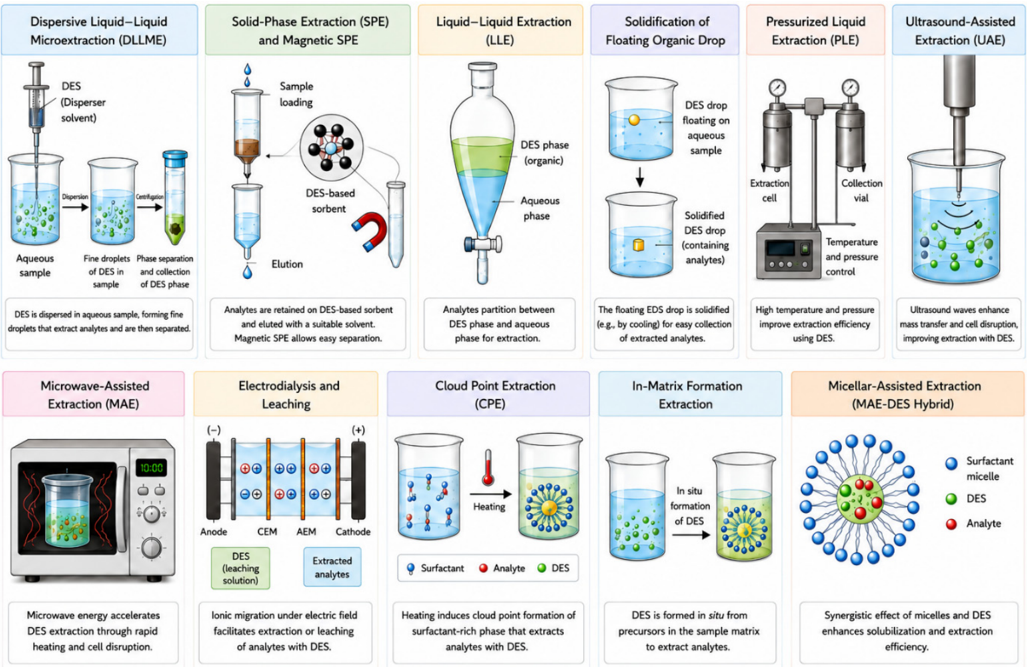
- DESs are applied in DLLME, SPE/MSPE, LLE, SFOD, pressurized liquid extraction, UAE, microwave-assisted extraction, electrodialysis/leaching, cloud point extraction, in-matrix formation, and micellar-assisted extraction, targeting pesticides, phthalates, PAHs, phenols, heavy metals, dyes, and bioactives.
- The comparative assessment is qualitative: DLLME-based methods are favored for fast kinetics, reduced solvent use, and high preconcentration; SPE/membrane methods for selectivity and matrix purification; magnetic systems for phase separation; SFOD for solvent recovery; and UAE/MAE/PLE/NADES for solid matrices. No single technique consistently outperforms all others.
- DES sustainability and toxicity cannot be universally assumed; profiles depend on the hydrogen bond donor/acceptor, molar ratio, impurities, and application, with cited studies showing composition-dependent toxicity and biodegradability.
Methods
- Design: comprehensive narrative review of DES-based extraction technologies, covering principles, classifications, applications, and comparative insights.
- Data/sample: peer-reviewed literature summarized in Tables 1–4, spanning environmental, industrial, biological, and food-related matrices; no new data were created or analyzed.
- Main analysis: qualitative comparative synthesis linking DES composition, extraction mechanism, sample matrix, analyte class, and analytical performance; no standardized quantitative meta-analysis was performed.
Limitations
- The paper states that its comparison is primarily qualitative because analytical performance metrics are not fully standardized across studies, and that no single DES-based extraction method is universally optimal.
- The paper states that DES sustainability and toxicity are formulation-dependent and must be assessed individually; limited comprehensive thermodynamic/thermophysical data, high viscosity, and inconsistent toxicity data constrain scale-up and industrial application.
- Evident from the text: as a narrative review, it does not report a systematic search strategy, inclusion/exclusion criteria, or quantitative effect sizes, and it provides no new experimental validation.
Model-written summary. Check it against the paper before relying on it.
Integrity signals
Registry
Cites
Statistics
Figures
Verification
Claims the paper makes
7 Valid · 0 Not valid · 45 Not checked · 75 Own results and interpretations
The cited sources support only part of this claim — read each source’s verdict below.
In the paper
“DESs have attracted considerable attention because many formulations exhibit favorable physicochemical characteristics, such as negligible volatility, non-flammability, and tunable solvent properties [16].”
§ Eco-Friendly Deep Eutectic Solvent-Based Extraction Technologies: A Comprehensive Review of Principles, Applications, and Comparative Insights > 2. Deep Eutectic Solvents
What the sources say
- Partly supportedcites [16] 16. Nejrotti, S.; Antenucci, A.; Pontremoli, C.; Gontrani, L.; Barbero, N.; Carbone, M.; Bonomo, M. Critical Assessment of the Sustainability of Deep Eutectic Solvents: A Case Study on Six Choline Chloride-Based Mixtures. ACS Omega 2022, 7, 47449-47461. [CrossRef] [PubMed] sourceExperimental — accuracy not yet measured
Two of the three attributed characteristics are in our copy: the Toxicity section states that "their negligible vapor pressure" excludes atmospheric contamination and inhalation hazards, and the Introduction credits DESs' "peculiar and tunable properties" for their wide range of applications. Non-flammability, however, is not asserted of DESs anywhere in our copy — flammability appears only as a drawback of conventional VOCs in the Introduction ("the hazards posed by their flammability"), with DESs framed as alternatives but never described as non-flammable. Searches for flammability/flash point/fire hazard of DESs returned no such statement, so that element of the claim is unsupported by this source. (LLM, conf=0.78)
plain- Asserted: passes — The authors put it forward as true.
- Checkable: passes — It can be checked against evidence.
- Load-bearing: passes — The paper’s conclusions depend on it.
- Based: passes — The paper gives a reason why it holds.
- Partly supported
The cited sources support only part of this claim — read each source’s verdict below.
In the paper
“Among these, DLLME-based methods are still widely adopted due to their fast extraction kinetics, reduced solvent usage, simple sample handling, and high preconcentration capability [46,47,57,63,66,67,71,81,83,85,87,89,90].”
§ Eco-Friendly Deep Eutectic Solvent-Based Extraction Technologies: A Comprehensive Review of Principles, Applications, and Comparative Insights > 4. Comparative Overview of DES-Based Extraction Techniques
What the sources say
- Not checked yetcites [46] 46. Deng, W.; Yu, L.; Li, X.; Chen, J.; Wang, X.; Deng, Z.; Xiao, Y. Hexafluoroisopropanol-Based Hydrophobic Deep Eutectic Solvents for Dispersive Liquid-Liquid Microextraction of Pyrethroids in Tea Beverages and Fruit Juices. Food Chem. 2019, 274, 891-899. [CrossRef] [PubMed] source
- Not checked yetcites [47] 47. Torbati, M.; Farajzadeh, M.A.; Mogaddam, M.R.A.; Torbati, M. Deep Eutectic Solvent Based Homogeneous Liquid-Liquid Extraction Coupled with in-Syringe Dispersive Liquid-Liquid Microextraction Performed in Narrow Tube; Application in Extraction and Preconcentration of Some Herbicides from Tea. J. Sep. Sci. 2019, 42, 1768-1776. [CrossRef] [PubMed] source
- Not checked yetcites [57] 57. Wu, B.; Guo, Z.; Li, X.; Huang, X.; Teng, C.; Chen, Z.; Jing, X.; Zhao, W. Analysis of Pyrethroids in Cereals by HPLC with a Deep Eutectic Solvent-Based Dispersive Liquid-Liquid Microextraction with Solidification of Floating Organic Droplets. Anal. Methods 2021, 13, 636-641. [CrossRef] [PubMed] source
- Not checked yetcites [63] 63. Santana-Mayor, Á.; Herrera-Herrera, A.V.; Rodríguez-Ramos, R.; Socas-Rodríguez, B.; Rodríguez-Delgado, M.Á. Development of a Green Alternative Vortex-Assisted Dispersive Liquid-Liquid Microextraction Based on Natural Hydrophobic Deep Eutectic Solvents for the Analysis of Phthalate Esters in Soft Drinks. ACS Sustain. Chem. Eng. 2021, 9, 2161-2170. [CrossRef] source
- Supportedcites [66] 66. Bosco, D.; Mariani, C.; Gentili, F.; Eutectic, A.H.; Dal Bosco, C.; Mariani, F.; Gentili, A. Hydrophobic Eutectic Solvent-Based Dispersive Liquid-Liquid Microextraction Applied to the Analysis of Pesticides in Wine. Molecules 2022, 27, 908. [CrossRef] [PubMed] source
The Introduction describes DLLME as simple, widely applied to compounds in wine, and capable of high enrichment; it also explains that dispersion speeds analyte transfer. The Results and Discussion (§2.1) describe reducing solvent consumption in the paper’s DLLME method by using ethanol already present in wine. Together, these passages support the broad statement, though the solvent-saving example is specific to this method. (LLM, conf=0.86)
- Not checked yetcites [67] 67. Elencovan, V.; Joseph, J.; Yahaya, N.; Abdul Samad, N.; Raoov, M.; Lim, V.; Zain, N.N.M. Exploring a Novel Deep Eutectic Solvents Combined with Vortex Assisted Dispersive Liquid-Liquid Microextraction and Its Toxicity for Organophosphorus Pesticides Analysis from Honey and Fruit Samples. Food Chem. 2022, 368, 130835. [CrossRef] [PubMed] source
- Partly supportedcites [71] 71. Yang, H.; Li, J.; Mao, J.; Xu, C.; Song, J.; Xie, F. Deep Eutectic Solvent-Based Dispersive Liquid-Liquid Microextraction Coupled with LC-MS/MS for the Analysis of Two Ochratoxins in Capsicum. Molecules 2023, 28, 7634. [CrossRef] [PubMed] sourceExperimental — accuracy not yet measured
The Experimental section (§3.4; page unavailable) describes a DLLME step using 100 μL of solvent, 30 seconds of hand-shaking, and direct transfer of the separated phase for analysis. The Results (§2.2.2; page unavailable) also discusses minimizing solvent use. These passages support aspects of speed, low solvent use, and straightforward handling for this method, but do not establish that DLLME methods are widely adopted because of those advantages or that they have high preconcentration capability. (LLM, conf=0.83)
- Not checked yetcites [81] 81. Subrahanyam Seetha, B.; Mohan Bhandi, M.; Shaikh, A.; Matta, S.; Krishna Reddy Mudiam, M. Natural Hydrophobic Deep Eutectic Solvent Based Dispersive Liquid-Liquid Microextraction Followed by Liquid Chromatography with Tandem Mass Spectrometry Analysis of Multi-Class Metabolites of Pesticides, Phthalates, and Polycyclic Aromatic Hydrocarbons in Animal- Originated Foods. Microchem. J. 2024, 199, 110196. [CrossRef] source
- Not checked yetcites [83] 83. Muradymov, R.; Paul, N.; Kumar Das, N.; Banerjee, T.; Shishov, A. Quasi-Hydrophobic Deep Eutectic Solvents for Simultaneous Automated Determination of Polar and Non-Polar Dyes in Food Products. Microchem. J. 2024, 206, 111510. [CrossRef] source
- Supportedcites [85] 85. Peng, C.; Zhang, S.; Li, X. A Novel DLLME Method Involving a Solidifying Hydrophobic Deep Eutectic Solvent Using Hydrophilic Deep Eutectic Solvent as the Dispersant for the Determination of Polychlorinated Biphenyls in Water Samples. Molecules 2024, 29, 3480. [CrossRef] [PubMed] source
The Introduction says DLLME quickly disperses extractant into small droplets, enhancing extraction efficiency. It also describes easy operation, reduced organic-solvent consumption, popularity as a sample-preparation method, and use in concentrating analytes. Together these support the citing sentence's broad characterization. (LLM, conf=0.91)
plainstates a cause- Asserted: passes — The authors put it forward as true.
- Checkable: passes — It can be checked against evidence.
- Load-bearing: unclear — It is unclear whether the paper’s conclusions depend on it.
- Based: passes — The paper gives a reason why it holds.
Every source the paper cites for this claim was checked and supports it.
In the paper
“In addition, the combined effect of ultrasonic energy and the unique solvent properties of DESs enables faster and more efficient extraction compared with conventional extraction methods [32,33].”
§ Eco-Friendly Deep Eutectic Solvent-Based Extraction Technologies: A Comprehensive Review of Principles, Applications, and Comparative Insights > 3.6. Ultrasound-Assisted Extraction (UAE)
What the sources say
- Supportedcites [32] 32. Garofuli'c, G.; Repaji'c, M.R.; Lee, E.J.; Yoon, K.Y.; Lee, E.J.; Yoon, K.Y. Optimization of Deep Eutectic Solvent-Based Ultrasound- Assisted Extraction of Bioactive Compounds from Maca Leaves Using the Taguchi Method. Molecules 2025, 30, 1635. [CrossRef] [PubMed] source
The Introduction states that ultrasound-driven cavitation improves mass transfer and 'improves the extraction yield and saves time, energy, and solvents compared to conventional extraction methods,' while DES isolates target components through hydrogen bonding and electrostatic interactions and can be tuned by altering its components. Section 2.5 combines the two: 'a combination of DES and UAE enhances the extraction yield of bioactive compounds ... because DES-based UAE operates under milder conditions, requires less solvent, and improves mass transfer due to cell wall destruction via ultrasound,' and is therefore 'environmentally friendly and energy-efficient ... compared to conventional HWE.' The study's own comparison (30 min DES-UAE at 300 W versus 2 h HWE at 90 °C, Sections 3.4 and Abstract/Conclusions) backs the 'faster and more efficient' framing; only the mechanistic explanation is hedged ('is thought to be'), which does not undercut the attributed point. (LLM, conf=0.85)
- Supportedcites [33] 33. Duarte, H.; Gomes, V.; Aliaño-González, M.J.; Faleiro, L.; Romano, A.; Medronho, B. Ultrasound-Assisted Extraction of Polyphenols from Maritime Pine Residues with Deep Eutectic Solvents. Foods 2022, 11, 3754. [CrossRef] [PubMed] source
The Introduction (p. 1) states that modern techniques such as ultrasound-assisted extraction are more efficient than conventional ones, mainly by reducing solvent volume, extraction time and costs, and describes the cavitation mechanism plus the DES properties (low volatility, tunable viscosity/polarity, mass-transfer gain) that require solvent-selection optimisation. Section 3.2 (BBD-RSM Optimization) adds the combined-effect statement: 'The innovative combination of DES and USE considerably boosts the total concentration of polyphenols recovered from pine biomass', with yields above the literature USE studies using alcoholic/alkaline solvents. Section 3.1 and the Conclusions reinforce that DES mixtures outperform traditional chemical solvents (NaOH, KOH, H2O) and that the DES+USE approach is a novel, attractive green extraction process. Together these passages carry the claim's content — ultrasonic energy plus DES solvent properties giving faster, more efficient extraction than conventional methods. (LLM, conf=0.85)
plainstates a cause- Asserted: passes — The authors put it forward as true.
- Checkable: passes — It can be checked against evidence.
- Load-bearing: passes — The paper’s conclusions depend on it.
- Based: passes — The paper gives a reason why it holds.
- Supported
The cited sources support only part of this claim — read each source’s verdict below.
In the paper
“By applying predictive modeling, researchers can avoid time-consuming empirical screening and accelerate the rational design of DESs tailored for specific analytical purposes [138].”
§ Eco-Friendly Deep Eutectic Solvent-Based Extraction Technologies: A Comprehensive Review of Principles, Applications, and Comparative Insights > 5.4. Machine Learning and AI-Driven Solvent Design
What the sources say
- Partly supportedcites [138] 108. Mohan, M.; Gugulothu, N.; Guggilam, S.; Rajitha Rajeshwar, T.; Kidder, M.K.; Smith, J.C. Physics-Informed Machine Learning to Predict Solvatochromic Parameters of Designer Solvents with Case Studies in CO2 and Lignin Dissolution. Green Chem. Eng. 2025, 6, 275-287. [CrossRef] 138. Al-Akayleh, F.; Ali Agha, A.S.A.; Olaimat, A.R.; Qinna, N.A. Rationalizing Polysaccharide Extraction with Deep Eutectic Solvents: From Supramolecular Architecture to Emerging AI-Guided Solvent Design. Polysaccharides 2025, 6, 82. [CrossRef] 139. sourceExperimental — accuracy not yet measured
The AI, ML, and Biotechnological Innovations section says predictive modeling can address time-consuming trial-and-error screening, and the Conclusions describe rational DES design that reduces labor-intensive solubility testing. The paper discusses DESs for solubilization and extraction, but does not establish their design for specific analytical purposes. (LLM, conf=0.83)
plainstates a cause- Asserted: passes — The authors put it forward as true.
- Checkable: passes — It can be checked against evidence.
- Load-bearing: unclear — It is unclear whether the paper’s conclusions depend on it.
- Based: passes — The paper gives a reason why it holds.
- Partly supported
The cited sources support only part of this claim — read each source’s verdict below.
In the paper
“The combined properties of DESs and nanomaterials contribute to improved material stability and reusability, making them promising candidates for advanced extraction technologies [113].”
§ Eco-Friendly Deep Eutectic Solvent-Based Extraction Technologies: A Comprehensive Review of Principles, Applications, and Comparative Insights > 6. Conclusions
What the sources say
- Partly supportedcites [113] 113. Deng, W.; Fan, C.; Zhang, R.; Jin, M. Deep-Eutectic-Solvent-Decorated Metal-Organic Framework for Food and Environmental Sample Preparation. Foods 2024, 13, 3614. [CrossRef] [PubMed] sourceExperimental — accuracy not yet measured
The Conclusions and Future Perspectives section says DES modification improves MOF stability and describes DES-decorated MOFs as promising for sample preparation. Section 4.2 reports reuse of particular DES–MOF sorbents, but the paper does not establish improved reusability for DES–nanomaterial combinations generally; its focus is MOFs. (LLM, conf=0.82)
plainstates a cause- Asserted: passes — The authors put it forward as true.
- Checkable: passes — It can be checked against evidence.
- Load-bearing: passes — The paper’s conclusions depend on it.
- Based: passes — The paper gives a reason why it holds.
- Partly supported
64 more claims
Create a free account to see all 127 claims and to verify the 88 references still open.
- It may state two separate claims as one. 51
- Probably not a substantial claim. 11
Self-check
Percentages, sums and reported differences re-computed from the paper’s own numbers.
Each contradiction between two passages listed here was confirmed by an independent check.
Rated minor: it would not touch a result — a value no result rests on, a p-value that stays on the same side of the significance level, or a conflict that is clerical, resolved elsewhere in the paper, or outside its own findings.
In the paper
§ Eco-Friendly Deep Eutectic Solvent-Based Extraction Technologies: A Comprehensive Review of Principles, Applications, and Comparative Insights > 6. Conclusions
“Metal chloride + metal chloride hydrate”
§ Eco-Friendly Deep Eutectic Solvent-Based Extraction Technologies: A Comprehensive Review of Principles, Applications, and Comparative Insights > 6. Conclusions
“ZnCl 2 + SnCl 2”
Rated minor: it would not touch a result — a value no result rests on, a p-value that stays on the same side of the significance level, or a conflict that is clerical, resolved elsewhere in the paper, or outside its own findings.
In the paper
§ Eco-Friendly Deep Eutectic Solvent-Based Extraction Technologies: A Comprehensive Review of Principles, Applications, and Comparative Insights > 6. Conclusions
“| Wine | Heavy metals (Pb, Cd, Cu) | Hydrophobic DES (UA-DLLME) | UA-DES-DLLME + FAAS | [61] | |”
§ Eco-Friendly Deep Eutectic Solvent-Based Extraction Technologies: A Comprehensive Review of Principles, Applications, and Comparative Insights > References
“61. Ji, Y.; Zhao, M.; Li, A.; Zhao, L. Hydrophobic Deep Eutectic Solvent-Based Ultrasonic-Assisted Dispersive Liquid-Liquid Microextraction for Preconcentration and Determination of Trace Cadmium and Arsenic in Wine Samples.”
Citations
Cites
Abbott, A. P., Capper, G., Davies, D. L., Rasheed, R. K., & Tambyrajah, V. (2003) · Chemical Communications · doi:10.1039/b210714g · Cited by 5,738 · cited 1×
“This behavior is associated with the inherently non-ideal nature of DESs, where strong hydrogen bond interactions between hydrogen bond donors and acceptors result in melting-point depression and intricate phase equilibria [139–141].”
Deep eutectic solvents: syntheses, properties and applications
Zhang, Q., De Oliveira Vigier, K., Royer, S., & Jérôme, F. (2012) · Chemical Society Reviews · doi:10.1039/c2cs35178a · Cited by 4,899 · cited 1×
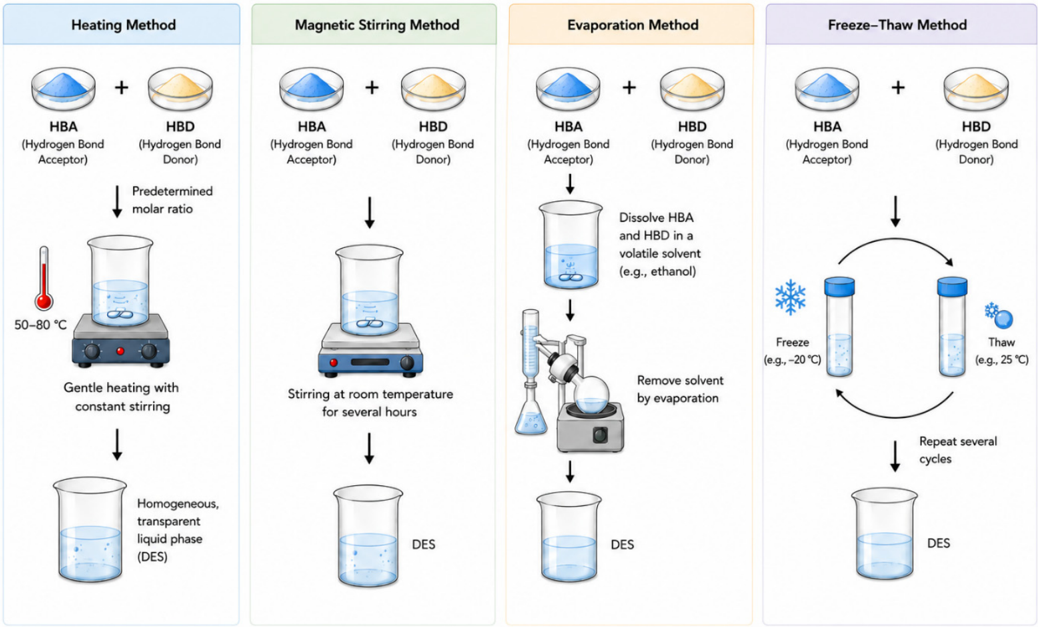
“The most commonly used approach is the heating method [18], in which the hydrogen bond acceptor (HBA) and hydrogen bond donor (HBD) are mixed in a specific molar ratio and heated gently, usually between 50 and 80 ◦ C, under continuous stirring until a clear and uniform liquid is formed.”
Abbott, A. P., Boothby, D., Capper, G., Davies, D. L., & Rasheed, R. K. (2004) · Journal of the American Chemical Society · doi:10.1021/ja048266j · Cited by 4,340 · cited 1×
“The classification system proposed by Andrew Abbott and co-workers in 2004 remains one of the most widely used approaches for categorizing deep eutectic solvents (DESs) [22].”
Insights into the Nature of Eutectic and Deep Eutectic Mixtures
Martins, M. A. R., Pinho, S. P., & Coutinho, J. A. P. (2019) · Journal of Solution Chemistry · doi:10.1007/s10953-018-0793-1 · Cited by 1,161
Basics and properties of deep eutectic solvents: a review
El Achkar, T., Greige-Gerges, H., & Fourmentin, S. (2021) · Environmental Chemistry Letters · doi:10.1007/s10311-021-01225-8 · Cited by 1,106 · cited 1×
“DESs are generally easier and less expensive to prepare while exhibiting physicochemical properties similar to those of ionic liquids [11].”
Evaluation of toxicity and biodegradability of choline chloride based deep eutectic solvents
Radošević, K., Cvjetko Bubalo, M., Gaurina Srček, V., Grgas, D., Landeka Dragičević, T., & Radojčić Redovniković, I. (2015) · Ecotoxicology and Environmental Safety · doi:10.1016/j.ecoenv.2014.09.034 · Cited by 770 · cited 1×
“For instance, Radoševi´c et al. [159] examined the toxicity and biodegradability of choline chloride-based DESs and demonstrated that their biological effects are strongly influenced by the nature of the hydrogen bond donor and the overall DES composition, rather than the properties of the…”
Menthol-based Eutectic Mixtures: Hydrophobic Low Viscosity Solvents
Ribeiro, B. D., Florindo, C., Iff, L. C., Coelho, M. A. Z., & Marrucho, I. M. (2015) · ACS Sustainable Chemistry & Engineering · doi:10.1021/acssuschemeng.5b00532 · Cited by 672 · cited 1×
“To address these limitations, several strategies have been proposed, including controlled addition of water, dilution with compatible co-solvents, temperature optimization, and the design of low-viscosity hydrophobic DES systems [141,151,152].”
A Search for Natural Hydrophobic Deep Eutectic Solvents Based on Natural Components
van Osch, D. J. G. P., Dietz, C. H. J. T., van Spronsen, J., Kroon, M. C., Gallucci, F., van Sint Annaland, M., & Tuinier, R. (2019) · ACS Sustainable Chemistry & Engineering · doi:10.1021/acssuschemeng.8b03520 · Cited by 580 · cited 1×
“To address these limitations, several strategies have been proposed, including controlled addition of water, dilution with compatible co-solvents, temperature optimization, and the design of low-viscosity hydrophobic DES systems [141,151,152].”
Green and Sustainable Solvents of the Future: Deep Eutectic Solvents
Prabhune, A., & Dey, R. (2023) · Journal of Molecular Liquids · doi:10.1016/j.molliq.2023.121676 · Cited by 500 · cited 1×
“This tunability provides DESs with excellent solubilizing ability for a broad range of organic, inorganic, and biological compounds [17].”
Badawy, M. E. I., El-Nouby, M. A. M., Kimani, P. K., Lim, L. W., & Rabea, E. I. (2022) · Analytical Sciences · doi:10.1007/s44211-022-00190-8 · Cited by 484 · cited 1×
“These procedures are essential for preparing samples for chromatographic analysis and for improving important analytical characteristics such as accuracy and precision [1].”
Assessing the toxicity and biodegradability of deep eutectic solvents
Wen, Q., Chen, J.-X., Tang, Y.-L., Wang, J., & Yang, Z. (2015) · Chemosphere · doi:10.1016/j.chemosphere.2015.02.061 · Cited by 480 · cited 1×
“Likewise, Wen et al. [160] investigated a range of DES formulations and reported that their environmental safety cannot be generalized, as certain systems may exhibit higher-than-expected toxicity depending on their specific composition.”
Leron, R. B., Soriano, A. N., & Li, M.-H. (2012) · Journal of the Taiwan Institute of Chemical Engineers · doi:10.1016/j.jtice.2012.01.007 · Cited by 311 · cited 1×
“Experimental findings have shown that the physicochemical and rheological behavior of DESs is strongly influenced by temperature, water content, and the molecular structure of their constituents [142,149,150].”
Natural deep eutectic solvents: cytotoxic profile
Hayyan, M., Mbous, Y. P., Looi, C. Y., Wong, W. F., Hayyan, A., Salleh, Z., & Mohd-Ali, O. (2016) · SpringerPlus · doi:10.1186/s40064-016-2575-9 · Cited by 301 · cited 1×
“At the cellular level, Hayyan et al. [161] examined the cytotoxic effects of natural deep eutectic solvents using mammalian cell-based models and showed that even NADESs composed of naturally derived components can exhibit concentration-dependent toxicity.”
Antimicrobial, cytotoxic and antioxidative evaluation of natural deep eutectic solvents
Radošević, K., Čanak, I., Panić, M., Markov, K., Bubalo, M. C., Frece, J., Srček, V. G., & Redovniković, I. R. (2018) · Environmental Science and Pollution Research · doi:10.1007/s11356-018-1669-z · Cited by 265 · cited 1×
“Radoševi´c et al. [163] investigated the antimicrobial, cytotoxic, and antioxidant activities of NADES formulations and reported that the biological responses vary significantly depending on both the solvent composition and the type of organism tested.”
Pena-Pereira, F., Kloskowski, A., & Namieśnik, J. (2015) · Green Chemistry · doi:10.1039/c5gc00611b · Cited by 257
Ionic Liquids—A Review of Their Toxicity to Living Organisms
Gonçalves, A. R. P., Paredes, X., Cristino, A. F., Santos, F. J. V., & Queirós, C. S. G. P. (2021) · International Journal of Molecular Sciences · doi:10.3390/ijms22115612 · Cited by 251 · cited 1×
“Nevertheless, their practical application has been limited by issues related to toxicity, biodegradability, stability, and the relatively high cost of preparation [10].”
Cannavacciuolo, C., Pagliari, S., Frigerio, J., Giustra, C. M., Labra, M., & Campone, L. (2022) · Foods · doi:10.3390/foods12010056 · Cited by 248 · cited 1×
“This technique has been applied for the extraction of compounds such as phenolic substances and pesticide residues from complex food samples such as milk and honey [40].”
Recovery and recycling of deep eutectic solvents in biomass conversions: a review
Isci, A., & Kaltschmitt, M. (2022) · Biomass Conversion and Biorefinery · doi:10.1007/s13399-021-01860-9 · Cited by 240 · cited 2×
“…gaps by developing standardized assessment protocols and conducting systematic studies of key physicochemical and environmental parameters, including vapor pressure, surface tension, and long-term ecological effects, to enable safer and more reliable industrial application of DESs [156,157,167].”
Harifi-Mood, A. R., & Buchner, R. (2017) · Journal of Molecular Liquids · doi:10.1016/j.molliq.2016.10.115 · Cited by 224 · cited 1×
“Experimental findings have shown that the physicochemical and rheological behavior of DESs is strongly influenced by temperature, water content, and the molecular structure of their constituents [142,149,150].”
Raposo, F., & Barceló, D. (2021) · TrAC Trends in Analytical Chemistry · doi:10.1016/j.trac.2020.116068 · Cited by 217 · cited 1×
“In many untargeted analytical studies, particularly those involving trace-level compounds in complex matrices, sample preparation represents the most time-consuming and challenging stage and strongly influences both the accuracy and overall duration of the analytical workflow [2,3].”
del Mar Contreras-Gámez, M., Galán-Martín, Á., Seixas, N., da Costa Lopes, A. M., Silvestre, A., & Castro, E. (2023) · Bioresource Technology · doi:10.1016/j.biortech.2022.128396 · Cited by 216 · cited 1×
“To improve large-scale sustainability, innovative recovery approaches, including anti-solvent precipitation and macroporous resin adsorption, are being explored [157,158].”
Devi, M., Moral, R., Thakuria, S., Mitra, A., & Paul, S. (2023) · ACS Omega · doi:10.1021/acsomega.2c07684 · Cited by 194 · cited 2×
“Deep eutectic solvents are increasingly used as alternative extraction media because of their high thermal stability and adjustable hydrophobic properties, which allow for selective extraction without relying on volatile organic solvents [28].”
Deep Eutectic Solvents: Are They Safe?
Lomba, L., Ribate, M. P., Sangüesa, E., Concha, J., Garralaga, M. ª. P., Errazquin, D., García, C. B., & Giner, B. (2021) · Applied Sciences · doi:10.3390/app112110061 · Cited by 179 · cited 1×
“Lomba et al. [165] analyzed both human and environmental toxicity studies and concluded that the toxicological behavior of DESs is governed by multiple parameters, including the structure of the hydrogen bond acceptor/donor, molar ratio, pH, organic acid content, and interactions between components.”
Deng, W., Yu, L., Li, X., Chen, J., Wang, X., Deng, Z., & Xiao, Y. (2019) · Food Chemistry · doi:10.1016/j.foodchem.2018.09.048 · Cited by 168 · cited 1×
“Among these, DLLME-based methods are still widely adopted due to their fast extraction kinetics, reduced solvent usage, simple sample handling, and high preconcentration capability [46,47,57,63,66,67,71,81,83,85,87,89,90].”
Cytotoxicity profiling of deep eutectic solvents to human skin cells
Macário, I. P. E., Oliveira, H., Menezes, A. C., Ventura, S. P. M., Pereira, J. L., Gonçalves, A. M. M., Coutinho, J. A. P., & Gonçalves, F. J. M. (2019) · Scientific Reports · doi:10.1038/s41598-019-39910-y · Cited by 168 · cited 1×
“Macário et al. [162] further assessed the cytotoxicity of DESs on human skin-associated cell lines, including keratinocytes, which is particularly relevant for applications in cosmetics, pharmaceuticals, and dermal exposure scenarios.”
Faraji, M. (2019) · Journal of Chromatography A · doi:10.1016/j.chroma.2019.01.022 · Cited by 167
Rente, D., Bubalo, M. C., Panić, M., Paiva, A., Caprin, B., Redovniković, I. R., & Duarte, A. R. C. (2022) · Journal of Cleaner Production · doi:10.1016/j.jclepro.2022.135147 · Cited by 164 · cited 1×
“Strong hydrogen bond interactions between these components cause a significant decrease in the melting point, allowing the mixture to remain liquid at or close to room temperature [15].”
Sorouraddin, S. M., Farajzadeh, M. A., & Dastoori, H. (2020) · Talanta · doi:10.1016/j.talanta.2019.120485 · Cited by 157
Natural Deep Eutectic Solvents (NaDES): Green Solvents for Pharmaceutical Applications and Beyond
Chevé-Kools, E., Choi, Y. H., Roullier, C., Ruprich-Robert, G., Grougnet, R., Chapeland-Leclerc, F., & Hollmann, F. (2025) · Green Chemistry · doi:10.1039/d4gc06386d · Cited by 156 · cited 1×
“In this regard, deep eutectic solvents (DESs) have gained substantial attention as promising alternatives with the potential to reduce the environmental impact of extraction processes, depending on their chemical composition and intended application [13,14].”
Fanali, C., Gallo, V., Posta, S. D., Dugo, L., Mazzeo, L., Cocchi, M., Piemonte, V., & Gara, L. D. (2021) · Molecules · doi:10.3390/molecules26092652 · Cited by 142
Yiin, C. L., Yap, K. L., Ku, A. Z. E., Chin, B. L. F., Lock, S. S. M., Cheah, K. W., Loy, A. C. M., & Chan, Y. H. (2021) · Bioresource Technology · doi:10.1016/j.biortech.2021.125195 · Cited by 136 · cited 1×
“In parallel, the development of DESs is increasingly shifting from conventional trial-and-error experimentation toward reverse design strategies that combine computational modeling with advanced computing tools to tailor solvents for specific extraction purposes [154].”
Wang, R., Li, W., & Chen, Z. (2018) · Analytica Chimica Acta · doi:10.1016/j.aca.2018.02.024 · Cited by 132 · cited 1×
“…poly(deep eutectic solvent) monolithic column has been employed in an online in-tube solid-phase microextraction system coupled with HPLC for the analysis of non-steroidal anti-inflammatory drugs, demonstrating the effectiveness of DES-derived sorbents in integrated chromatographic workflows [123].”
Torregrosa-Crespo, J., Marset, X., Guillena, G., Ramón, D. J., & María Martínez-Espinosa, R. (2020) · Science of The Total Environment · doi:10.1016/j.scitotenv.2019.135382 · Cited by 126 · cited 1×
“Torregrosa-Crespo et al. [164] suggested that conventional toxicity evaluation methods may not be fully suitable for DES systems, as their high viscos-https ity, acidity or basicity, and extensive hydrogen-bonding interactions can potentially affect the reliability of standard bioassays.”
Shirani, M., Habibollahi, S., & Akbari, A. (2019) · Food Chemistry · doi:10.1016/j.foodchem.2018.12.110 · Cited by 125 · cited 2×
“Magnetic DES-based extraction systems constitute another significant development in phase separation techniques [50,68,70,75,94,101].”
Jouyban, A., Farajzadeh, M. A., & Afshar Mogaddam, M. R. (2020) · Talanta · doi:10.1016/j.talanta.2019.120169 · Cited by 122 · cited 1×
“In situ DES generation streamlines the extraction procedure by forming the solvent directly within the sample matrix, which reduces reagent usage, minimizes solvent preparation requirements, and enhances the overall sustainability of the process [54,100].”
Martínez, G. M., Townley, G. G., & Martínez-Espinosa, R. M. (2022) · Heliyon · doi:10.1016/j.heliyon.2022.e12567 · Cited by 119 · cited 1×
“Martínez et al. [166] similarly argued that DESs should not be automatically regarded as non-toxic or inherently green, since the observed toxicity is highly dependent on the biological system employed and the experimental methodology applied.”
Haghbakhsh, R., Parvaneh, K., Raeissi, S., & Shariati, A. (2017) · Fluid Phase Equilibria · doi:10.1016/j.fluid.2017.08.024 · Cited by 118
Savi, L. K., Carpiné, D., Waszczynskyj, N., Ribani, R. H., & Haminiuk, C. W. I. (2019) · Fluid Phase Equilibria · doi:10.1016/j.fluid.2019.01.025 · Cited by 114 · cited 2×
“Even minor changes in composition, precursor selection, or moisture level can noticeably affect viscosity, density, thermal and melting characteristics, and solvation behavior, thereby reducing reproducibility and complicating scale-up processes [141,142].”
Nejrotti, S., Antenucci, A., Pontremoli, C., Gontrani, L., Barbero, N., Carbone, M., & Bonomo, M. (2022) · ACS Omega · doi:10.1021/acsomega.2c06140 · Cited by 111 · cited 3×
“Furthermore, Nejrotti et al. [16] conducted a detailed assessment of six choline chloride-based DES formulations and demonstrated that evaluating sustainability requires an integrated approach that accounts not only for toxicity, but also for biodegradability, physicochemical properties, and…”
InfluentialShishov, A., Terno, P., Moskvin, L., & Bulatov, A. (2020) · Talanta · doi:10.1016/j.talanta.2019.120209 · Cited by 107
Magnetic deep eutectic solvents in microextraction techniques
Aguirre, M. Á., & Canals, A. (2022) · TrAC Trends in Analytical Chemistry · doi:10.1016/j.trac.2021.116500 · Cited by 102 · cited 1×
“In MSPE, combining DESs with magnetic nanoparticles allows for easy separation of the extraction phase using an external magnetic field and also improves the reusability of the sorbent material [27].”
Wang, J., Jing, W., Tian, H., Liu, M., Yan, H., Bi, W., & Chen, D. D. Y. (2020) · ACS Sustainable Chemistry & Engineering · doi:10.1021/acssuschemeng.0c03393 · Cited by 97 · cited 1×
“Due to their ionic and polar nature, deep eutectic solvents can efficiently absorb microwave radiation, resulting in rapid heat generation and enhanced release of analytes from the sample matrix [34,35].”
Li, T., Song, Y., Li, J., Zhang, M., Shi, Y., & Fan, J. (2020) · Food Chemistry · doi:10.1016/j.foodchem.2019.125752 · Cited by 96 · cited 1×
“In vortex-assisted DLLME, mechanical agitation is applied, offering a simple, economical, and instrumentally minimal approach [56,59,63,82,99].”
Accurate Machine Learning for Predicting the Viscosities of Deep Eutectic Solvents
Mohan, M., Jetti, K. D., Smith, M. D., Demerdash, O., Kidder, M. K., & Smith, J. C. (2024) · Journal of Chemical Theory and Computation · doi:10.1021/acs.jctc.3c01163 · Cited by 92 · cited 1×
“In addition, various machine learning models have been developed to predict eutectic temperature [131], viscosity [132], carbon dioxide solubility [133], and heat capacity [134].”
Structural analysis of natural deep eutectic solvents. Theoretical and experimental study
Pisano, P. L., Espino, M., Fernández, M. D. L. Á., Silva, M. F., & Olivieri, A. C. (2018) · Microchemical Journal · doi:10.1016/j.microc.2018.08.016 · Cited by 89 · cited 1×
“In addition, the freeze–thaw method has been reported as an effective preparation technique, where repeated freezing and thawing cycles improve component mixing and enhance hydrogen bond formation [21].”
Microextraction Techniques with Deep Eutectic Solvents
Plastiras, O.-E., Andreasidou, E., & Samanidou, V. (2020) · Molecules · doi:10.3390/molecules25246026 · Cited by 84 · cited 1×
“The use of DESs in SFOD improves extraction efficiency and selectivity while also reducing environmental and health concerns associated with hazardous organic solvents [30].”
Yıldırım, S., Cocovi-Solberg, D. J., Uslu, B., Solich, P., & Horstkotte, B. (2022) · Talanta · doi:10.1016/j.talanta.2022.123476 · Cited by 81 · cited 1×
“For example, a Lab-in-Syringe automated DES-based direct immersion single-drop microextraction system coupled online with HPLC was developed for the determination of fluoroquinolones in environmental waters, showing reduced solvent consumption and improved reproducibility [122].”
Simple and global correlation for the densities of deep eutectic solvents
Haghbakhsh, R., Bardool, R., Bakhtyari, A., Duarte, A. R. C., & Raeissi, S. (2019) · Journal of Molecular Liquids · doi:10.1016/j.molliq.2019.111830 · Cited by 80 · cited 1×
“In addition, several other studies have reported predictive frameworks targeting individual properties, including viscosity, density, surface tension, heat capacity, and acoustic velocity [144–148].”
Liu, X., Liu, C., Qian, H., Qu, Y., Zhang, S., Lu, R., Gao, H., & Zhou, W. (2019) · Microchemical Journal · doi:10.1016/j.microc.2019.01.048 · Cited by 79
Ji, Y., Zhao, M., Li, A., & Zhao, L. (2021) · Microchemical Journal · doi:10.1016/j.microc.2021.105974 · Cited by 75 · cited 1×
“Ultrasound-assisted DLLME is based on acoustic cavitation, which promotes mass transfer and reduces diffusion constraints, thereby typically achieving more rapid extraction and improved recovery efficiencies compared with conventional DLLME [48,58,61,74,79].”
Estimation of the heat capacities of deep eutectic solvents
Taherzadeh, M., Haghbakhsh, R., Duarte, A. R. C., & Raeissi, S. (2020) · Journal of Molecular Liquids · doi:10.1016/j.molliq.2020.112940 · Cited by 72
Naeemullah, & Tuzen, M. (2019) · Talanta · doi:10.1016/j.talanta.2018.12.027 · Cited by 70 · cited 1×
“Solidification-based approaches, such as DLLME-SFOD and floating organic drop microextraction, overcome a key limitation of liquid-phase microextraction techniques, particularly the difficulty associated with post-extraction solvent recovery [49,57,60,62,69,80,85,97].”
Haghbakhsh, R., Raeissi, S., & Duarte, A. R. C. (2021) · Scientific Reports · doi:10.1038/s41598-021-85824-z · Cited by 68 · cited 2×
“Haghbakhsh et al. [143] introduced group-contribution and atomic-contribution models capable of estimating key DES properties such as density, refractive index, heat capacity, speed of sound, and surface tension based solely on structural descriptors.”
Torbati, M., Farajzadeh, M. A., Mogaddam, M. R. A., & Torbati, M. (2019) · Journal of Separation Science · doi:10.1002/jssc.201801016 · Cited by 67 · cited 1×
“Among these, DLLME-based methods are still widely adopted due to their fast extraction kinetics, reduced solvent usage, simple sample handling, and high preconcentration capability [46,47,57,63,66,67,71,81,83,85,87,89,90].”
Lavrinenko, A. K., Chernyshov, I. Y., & Pidko, E. A. (2023) · ACS Sustainable Chemistry & Engineering · doi:10.1021/acssuschemeng.3c05207 · Cited by 67 · cited 1×
“In addition, various machine learning models have been developed to predict eutectic temperature [131], viscosity [132], carbon dioxide solubility [133], and heat capacity [134].”
Zhang, K., Wang, Y., Li, S., & Zhu, G. (2021) · Food Chemistry · doi:10.1016/j.foodchem.2021.129106 · Cited by 66
Almeida, J., Craveiro, R., Faria, P., Silva, A. S., Mateus, E. P., Barreiros, S., Paiva, A., & Ribeiro, A. B. (2020) · Science of The Total Environment · doi:10.1016/j.scitotenv.2019.136364 · Cited by 65 · cited 1×
“In particular, acidic DESs have shown strong capability in the leaching of heavy metals and rare earth elements from solid waste materials [37].”
Odegova, V., Lavrinenko, A. K., Rakhmanov, T., Sysuev, G., Dmitrenko, A., & Vinogradov, V. V. (2024) · Green Chemistry · doi:10.1039/d3gc04533a · Cited by 65 · cited 1×
“For instance, open-access predictive frameworks have been proposed to estimate key physicochemical parameters of DESs, enabling faster and more efficient solvent screening [130].”
Shishov, A., Volodina, N., Nechaeva, D., Gagarinova, S., & Bulatov, A. (2018) · RSC Advances · doi:10.1039/c8ra07300g · Cited by 63 · cited 1×
“As a result, the analytes are efficiently transferred and concentrated into the deep eutectic solvent phase, which can later be separated by centrifugation [26].”
Altunay, N., Elik, A., & Gürkan, R. (2019) · Food Chemistry · doi:10.1016/j.foodchem.2019.05.019 · Cited by 63
Santana-Mayor, Á., Herrera-Herrera, A. V., Rodríguez-Ramos, R., Socas-Rodríguez, B., & Rodríguez-Delgado, M. Á. (2021) · ACS Sustainable Chemistry & Engineering · doi:10.1021/acssuschemeng.0c07686 · Cited by 59 · cited 2×
“Among these, DLLME-based methods are still widely adopted due to their fast extraction kinetics, reduced solvent usage, simple sample handling, and high preconcentration capability [46,47,57,63,66,67,71,81,83,85,87,89,90].”
El-Deen, A. K., & Shimizu, K. (2021) · Molecules · doi:10.3390/molecules26237406 · Cited by 58 · cited 1×
“The solidification of floating organic drop (SFOD) extraction technique is considered an efficient and potentially more sustainable alternative to traditional organic solvent-based methods [29].”
A general model for the surface tensions of deep eutectic solvents
Haghbakhsh, R., Taherzadeh, M., Duarte, A. R. C., & Raeissi, S. (2020) · Journal of Molecular Liquids · doi:10.1016/j.molliq.2020.112972 · Cited by 58
Elik, A., Fesliyan, S., Gürsoy, N., Haq, H. U., Castro-Muñoz, R., & Altunay, N. (2023) · Food Chemistry · doi:10.1016/j.foodchem.2023.136573 · Cited by 56 · cited 2×
“Magnetic DES-based extraction systems constitute another significant development in phase separation techniques [50,68,70,75,94,101].”
Kyriakoudi, A., Redovniković, I. R., Vidović, S. S., Radošević, K., Andreou, T., Mourtzinos, I., & Bubalo, M. C. (2024) · RSC Sustainability · doi:10.1039/d4su00111g · Cited by 54 · cited 1×
“The applied pressure helps maintain the solvent in the liquid phase and minimizes solvent loss, while DESs generally remain stable under elevated temperatures [31].”
Elencovan, V., Joseph, J., Yahaya, N., Abdul Samad, N., Raoov, M., Lim, V., & Zain, N. N. M. (2022) · Food Chemistry · doi:10.1016/j.foodchem.2021.130835 · Cited by 53 · cited 1×
“Among these, DLLME-based methods are still widely adopted due to their fast extraction kinetics, reduced solvent usage, simple sample handling, and high preconcentration capability [46,47,57,63,66,67,71,81,83,85,87,89,90].”
Farooq, M. Q., Odugbesi, G. A., Abbasi, N. M., & Anderson, J. L. (2020) · ACS Sustainable Chemistry & Engineering · doi:10.1021/acssuschemeng.0c06926 · Cited by 52 · cited 1×
“…general chemical nature of their constituents—such as metal salts, quaternary ammonium salts, or organic hydrogen bond donors—another classification approach based on hydrogen bond donors and hydrogen bond acceptors provides a more detailed understanding of their composition and functionality [23].”
Chen, J., Li, X., Huang, A., Deng, W., & Xiao, Y. (2021) · Food Chemistry · doi:10.1016/j.foodchem.2021.130373 · Cited by 51 · cited 1×
“In vortex-assisted DLLME, mechanical agitation is applied, offering a simple, economical, and instrumentally minimal approach [56,59,63,82,99].”
Atypical Deep Eutectic Solvents: New Opportunities for Chemical Analysis
Shishov, A., El-Deen, A. K., Godunov, P., & Bulatov, A. (2024) · TrAC Trends in Analytical Chemistry · doi:10.1016/j.trac.2024.117752 · Cited by 51 · cited 1×
“The direct connection between DES extraction and analytical instruments enables real-time sample processing, which helps shorten the time required for analyzing complex samples [127].”
Are Deep Eutectic Solvents Useful in Chromatography? A Short Review
Płotka-Wasylka, J., Rutkowska, M., & de la Guardia, M. (2021) · Journal of Chromatography A · doi:10.1016/j.chroma.2021.461918 · Cited by 51 · cited 1×
“The integration of deep eutectic solvent (DES) extraction with chromatographic and spectrometric techniques through automated and online systems has significantly improved analytical performance [121].”
Jano, A., Fuente-Ballesteros, A., Ares, A. M., & Bernal, J. (2025) · Microchemical Journal · doi:10.1016/j.microc.2025.113794 · Cited by 48 · cited 1×
“These miniaturized platforms significantly reduce solvent consumption and support continuous-flow extraction, making them highly useful for real-time environmental and clinical monitoring [106].”
Lin, Z., Zhang, Y., Zhao, Q., Chen, A., & Jiao, B. (2021) · Journal of Separation Science · doi:10.1002/jssc.202100590 · Cited by 47 · cited 1×
“Ultrasound-assisted DLLME is based on acoustic cavitation, which promotes mass transfer and reduces diffusion constraints, thereby typically achieving more rapid extraction and improved recovery efficiencies compared with conventional DLLME [48,58,61,74,79].”
Mafakheri, N., Shamsipur, M., & Babajani, N. (2024) · Microchemical Journal · doi:10.1016/j.microc.2024.110010 · Cited by 47 · cited 1×
“Unlike liquid-phase microextraction techniques, solid-phase extraction (SPE), magnetic solid-phase extraction (MSPE), membrane-assisted extraction, and DES-modified sorbents are primarily designed to enhance selectivity and improve matrix purification [51,72,73,76,96].”
Applications of Deep Eutectic Solvents in Sample Preparation and Extraction of Organic Molecules
Plastiras, O.-E., & Samanidou, V. (2022) · Molecules · doi:10.3390/molecules27227699 · Cited by 45
Ridha, R. K., Alasady, D. H., Azooz, E. A., & Mortada, W. I. (2024) · Journal of Food Composition and Analysis · doi:10.1016/j.jfca.2024.106286 · Cited by 45 · cited 1×
“In this process, DESs help adjust the cloud point temperature and enhance the selectivity of the extraction procedure [38].”
Mohan, M., Demerdash, O., Simmons, B. A., Singh, S., Kidder, M. K., & Smith, J. C. (2024) · ACS Omega · doi:10.1021/acsomega.4c01175 · Cited by 45 · cited 1×
“In addition, various machine learning models have been developed to predict eutectic temperature [131], viscosity [132], carbon dioxide solubility [133], and heat capacity [134].”
Cysewski, P., Jeliński, T., Przybyłek, M., Mai, A., & Kulak, J. (2024) · Molecules · doi:10.3390/molecules29102296 · Cited by 45
Al‐Akayleh, F., Agha, A. S. A. A., Olaimat, A. R., & Qinna, N. A. (2025) · Polysaccharides · doi:10.3390/polysaccharides6030082 · Cited by 45
Panda, S., & Gorantla, S. (2025) · Oriental Journal Of Chemistry · doi:10.13005/ojc/410231 · Cited by 41 · cited 1×
“As a result, the search for sustainable solvent systems has become an important research topic in many scientific and technological fields [5–9].”
Alanazi, T. Y. A., Pashameah, R. A., Binsaleh, A. Y., Mohamed, M. A., Ahmed, H. A., & Nassar, H. F. (2023) · Scientific Reports · doi:10.1038/s41598-023-40010-1 · Cited by 41
Al-Akayleh, F., Ali Agha, A. S. A., Olaimat, A. R., & Qinna, N. A. (2025) · doi:10.20944/preprints202507.0571.v1 · Cited by 41
Deep eutectic solvents for the removal of lead contaminants in mangrove soil
Rashid, S. N., Hizaddin, H. F., Hayyan, A., Hasikin, K. B., Razak, S. A., Mokhtar, M. I., & Azizan, M. M. (2022) · Journal of environmental chemical engineering · doi:10.1016/j.jece.2022.107264 · Cited by 39
Habila, M. A., AlMasoud, N., Alomar, T. S., AlOthman, Z. A., Yilmaz, E., & Soylak, M. (2020) · Molecules · doi:10.3390/molecules25204794 · Cited by 38 · cited 1×
“Electromembrane extraction integrates DES-based systems with electrically driven analyte transport, providing improved selectivity and more effective pre-concentration of ionic species compared with many traditional liquid-phase extraction techniques [52,78].”
Rageh, A. H., Abdel-aal, F. A. M., Farrag, S. A., & Ali, A.-M. B. H. (2024) · Talanta · doi:10.1016/j.talanta.2023.124950 · Cited by 38 · cited 1×
“The combined interaction between DESs and surfactants also promotes the formation of stable and selective micellar assemblies, which enhances the partitioning and extraction efficiency of target analytes [43].”
Brito, T. A., Costa, F. S., Oliveira, R. C., Amaral, C. D. B., Labuto, G., & Gonzalez, M. H. (2025) · Food Chemistry · doi:10.1016/j.foodchem.2024.141922 · Cited by 37 · cited 2×
“…solid–liquid extraction has emerged as a promising approach for the recovery of natural products because NADESs typically exhibit lower toxicity, improved biocompatibility, and greater suitability for food and pharmaceutical applications than many traditional extraction solvents [91,93,95,98,103].”
Wang, M., Zhao, L., Niu, Y., Qin, S., Zhang, L., Jia, L., & Jing, X. (2023) · Food Chemistry X · doi:10.1016/j.fochx.2023.100711 · Cited by 37 · cited 1×
“Magnetic DES-based extraction systems constitute another significant development in phase separation techniques [50,68,70,75,94,101].”
Machine-Learning-Assisted Design of Deep Eutectic Solvents Based on Uncovered Hydrogen Bond Patterns
Abbas, U. L., Zhang, Y., Tapia, J., Selim, M., Chen, J., Shi, J., & Shao, Q. (2024) · Engineering · doi:10.1016/j.eng.2023.10.020 · Cited by 36 · cited 1×
“Beyond property prediction, data-driven and hybrid approaches have been applied to elucidate hydrogen-bonding interactions within DES systems [135].”
Wu, B., Guo, Z., Li, X., Huang, X., Teng, C., Chen, Z., Jing, X., & Zhao, W. (2021) · Analytical Methods · doi:10.1039/d0ay02121k · Cited by 35 · cited 2×
“Among these, DLLME-based methods are still widely adopted due to their fast extraction kinetics, reduced solvent usage, simple sample handling, and high preconcentration capability [46,47,57,63,66,67,71,81,83,85,87,89,90].”
Qian, H., Yang, Q., Qu, Y., Ju, Z., Zhou, W., & Gao, H. (2020) · Journal of Chromatography A · doi:10.1016/j.chroma.2020.461204 · Cited by 34 · cited 2×
“Unlike liquid-phase microextraction techniques, solid-phase extraction (SPE), magnetic solid-phase extraction (MSPE), membrane-assisted extraction, and DES-modified sorbents are primarily designed to enhance selectivity and improve matrix purification [51,72,73,76,96].”
Chaikhan, P., Udnan, Y., Ampiah-Bonney, R. J., & Chaiyasith, W. C. (2023) · Journal of Food Composition and Analysis · doi:10.1016/j.jfca.2023.105214 · Cited by 33 · cited 2×
“Unlike liquid-phase microextraction techniques, solid-phase extraction (SPE), magnetic solid-phase extraction (MSPE), membrane-assisted extraction, and DES-modified sorbents are primarily designed to enhance selectivity and improve matrix purification [51,72,73,76,96].”
Dowlatshah, S., Saraji, M., Pedersen‐Bjergaard, S., & Ramos‐Payán, M. (2021) · Journal of Chromatography A · doi:10.1016/j.chroma.2021.462580 · Cited by 33 · cited 1×
“Dowlatshah et al. [107] designed a microfluidic liquid-phase microextraction platform that employed natural deep eutectic solvents as supported liquid membranes, representing one of the earliest demonstrations of a fully green, biodegradable, and membrane-assisted microfluidic extraction system.”
Duarte, H., Gomes, V., Aliaño-González, M. J., Faleiro, L., Romano, A., & Medronho, B. (2022) · Foods · doi:10.3390/foods11233754 · Cited by 31 · cited 1×
“In addition, the combined effect of ultrasonic energy and the unique solvent properties of DESs enables faster and more efficient extraction compared with conventional extraction methods [32,33].”
Deng, W., Fan, C., Zhang, R., & Jin, M. (2024) · Foods · doi:10.3390/foods13223614 · Cited by 31 · cited 2×
“The combined properties of DESs and nanomaterials contribute to improved material stability and reusability, making them promising candidates for advanced extraction technologies [113].”
Cysewski, P., Jeliński, T., & Przybyłek, M. (2024) · Molecules · doi:10.3390/molecules29204894 · Cited by 31
Natural deep eutectic solvent-based microextraction for mercury speciation in water samples
Ripoll, L., Rayos, J., Aguirre, M. Á., Vidal, L., & Canals, A. (2023) · Analytical and Bioanalytical Chemistry · doi:10.1007/s00216-023-04610-0 · Cited by 30 · cited 1×
“Unlike liquid-phase microextraction techniques, solid-phase extraction (SPE), magnetic solid-phase extraction (MSPE), membrane-assisted extraction, and DES-modified sorbents are primarily designed to enhance selectivity and improve matrix purification [51,72,73,76,96].”
Kaul, M. J., Qadah, D., Mandella, V., & Dietz, M. L. (2019) · RSC Advances · doi:10.1039/c9ra01596e · Cited by 29
Niu, R., Qin, H., Tao, Y., Li, L., & Qiao, L. (2023) · Microchemical Journal · doi:10.1016/j.microc.2023.108537 · Cited by 29
Ahmadi-Jouibari, T., Noori, N., & Fattahi, N. (2021) · Toxin Reviews · doi:10.1080/15569543.2019.1633543 · Cited by 28 · cited 1×
“Solidification-based approaches, such as DLLME-SFOD and floating organic drop microextraction, overcome a key limitation of liquid-phase microextraction techniques, particularly the difficulty associated with post-extraction solvent recovery [49,57,60,62,69,80,85,97].”
Dal Bosco, C., Mariani, F., & Gentili, A. (2022) · Molecules · doi:10.3390/molecules27030908 · Cited by 28 · cited 1×
“Among these, DLLME-based methods are still widely adopted due to their fast extraction kinetics, reduced solvent usage, simple sample handling, and high preconcentration capability [46,47,57,63,66,67,71,81,83,85,87,89,90].”
Altunay, N., Lanjwani, M. F., Haq, H. U., Tuzen, M., & Elik, A. (2024) · Sustainable Chemistry and Pharmacy · doi:10.1016/j.scp.2024.101464 · Cited by 27 · cited 2×
“In vortex-assisted DLLME, mechanical agitation is applied, offering a simple, economical, and instrumentally minimal approach [56,59,63,82,99].”
Sengane, M. V., Sihlahla, M., Nomngongo, P. N., & Mketo, N. (2024) · Microchemical Journal · doi:10.1016/j.microc.2024.111984 · Cited by 27 · cited 1×
“Among these, DLLME-based methods are still widely adopted due to their fast extraction kinetics, reduced solvent usage, simple sample handling, and high preconcentration capability [46,47,57,63,66,67,71,81,83,85,87,89,90].”
Jeliński, T., Przybyłek, M., Różalski, R., Romanek, K., Wielewski, D., & Cysewski, P. (2024) · Molecules · doi:10.3390/molecules29163841 · Cited by 27 · cited 1×
“This transition improves control over the physicochemical properties of DESs while supporting green chemistry goals through the replacement of conventional volatile organic solvents with safer and more biodegradable alternatives [155].”
Osiecka, D., Vakh, C. S., Makoś‐Chełstowska, P., & Kubica, P. (2023) · Analytical and Bioanalytical Chemistry · doi:10.1007/s00216-023-05107-6 · Cited by 25 · cited 1×
“The growing emphasis on green chemistry has encouraged researchers to investigate new solvent systems that comply with environmental sustainability requirements [12].”
Saini, S., Sharma, A. K., Saini, N., Kaur, N., & Singh, N. (2025) · Sustainable materials and technologies · doi:10.1016/j.susmat.2025.e01536 · Cited by 25
Elık, A., Haq, H. U., Boczkaj, G., Fesliyan, S., Ablak, Ö., & Altunay, N. (2023) · Journal of Food Composition and Analysis · doi:10.1016/j.jfca.2023.105843 · Cited by 24 · cited 1×
“Magnetic DES-based extraction systems constitute another significant development in phase separation techniques [50,68,70,75,94,101].”
Plaza, M., & Marina, M. L. (2025) · Microchemical Journal · doi:10.1016/j.microc.2025.113366 · Cited by 23 · cited 2×
“…solid–liquid extraction has emerged as a promising approach for the recovery of natural products because NADESs typically exhibit lower toxicity, improved biocompatibility, and greater suitability for food and pharmaceutical applications than many traditional extraction solvents [91,93,95,98,103].”
Abdelwahed, F. T., Mortada, W. I., & Eltabey, R. M. (2025) · Microchemical Journal · doi:10.1016/j.microc.2025.114273 · Cited by 23 · cited 1×
“Micellar-assisted extraction is a hybrid extraction approach in which deep eutectic solvents are combined with surfactants to form micellar structures that enhance the solubility of nonpolar analytes [42].”
Muradymov, R., Paul, N., Kumar Das, N., Banerjee, T., & Shishov, A. (2024) · Microchemical Journal · doi:10.1016/j.microc.2024.111510 · Cited by 22 · cited 1×
“Among these, DLLME-based methods are still widely adopted due to their fast extraction kinetics, reduced solvent usage, simple sample handling, and high preconcentration capability [46,47,57,63,66,67,71,81,83,85,87,89,90].”
Computer-Aided Molecular Design of Optimal Sustainable Solvent for Liquid-Liquid Extraction
Ten, J. Y., Liew, Z. H., Oh, X. Y., et al. (2021) · Process Integration and Optimization for Sustainability · doi:10.1007/s41660-021-00166-7 · Cited by 21 · cited 1×
“In addition, multi-objective computational algorithms are being used to identify suitable combinations of hydrogen bond acceptors and hydrogen bond donors based on the structural characteristics of the analytes of interest [129].”
Ruesgas Ramon, M., Durand, E., Garcia-Sosa, K., & Peña-Rodríguez, L. M. (2023) · PeerJ Analytical Chemistry · doi:10.7717/peerj-achem.28 · Cited by 21 · cited 1×
“In addition, their low vapor pressure, non-flammability, and biodegradability make them particularly attractive for environmentally sustainable extraction processes [25].”
Rethinking the Applications of Ionic Liquids and Deep Eutectic Solvents in Innovative Nano-Sorbents
Nie, L., Toufouki, S., Yao, S., & Guo, D. (2021) · Frontiers in Chemistry · doi:10.3389/fchem.2021.653238 · Cited by 20 · cited 1×
“Functional modification of nanomaterials can further promote selective interactions between DESs and specific target compounds, enabling more efficient and selective enrichment strategies [120].”
Shishov, A. Y., Israelyan, D., & Bulatov, A. V. (2024) · Separation and Purification Technology · doi:10.1016/j.seppur.2024.126480 · Cited by 19 · cited 1×
“More recently, an automated DES-based chromatomembrane microextraction system was introduced for the preconcentration and separation of bisphenols from aqueous matrices, further illustrating the compatibility of DESs with environmentally friendly automated analytical platforms [125].”
Mohan, M., Gugulothu, N., Guggilam, S., Tatikonda, R. R., Kidder, M. K., & Smith, J. C. (2024) · Green Chemical Engineering · doi:10.1016/j.gce.2024.11.003 · Cited by 19 · cited 1×
“Furthermore, physics-informed machine learning models have been utilized to estimate sol-vatochromic parameters of designer solvents, offering enhanced understanding of solvent polarity and solute–solvent interactions [137].”
Zhang, K., Guo, R. W., Wang, Y., Wang, J., Nie, Q., & Zhu, G. (2024) · Chemosphere · doi:10.1016/j.chemosphere.2024.141706 · Cited by 18
A Global Model for the Estimation of Speeds of Sound in Deep Eutectic Solvents
Peyrovedin, H., Haghbakhsh, R., Duarte, A. R. C., & Raeissi, S. (2020) · Molecules · doi:10.3390/molecules25071626 · Cited by 18 · cited 1×
“In addition, several other studies have reported predictive frameworks targeting individual properties, including viscosity, density, surface tension, heat capacity, and acoustic velocity [144–148].”
Halder, A. K., Haghbakhsh, R., Ferreira, E. S. C., Duarte, A. R. C., & Cordeiro, M. N. D. S. (2024) · Journal of Molecular Liquids · doi:10.1016/j.molliq.2024.126707 · Cited by 17 · cited 1×
“In addition, various machine learning models have been developed to predict eutectic temperature [131], viscosity [132], carbon dioxide solubility [133], and heat capacity [134].”
Díaz-Álvarez, M., Turiel, E., & Martín-Esteban, A. (2025) · Analytica Chimica Acta · doi:10.1016/j.aca.2025.343617 · Cited by 16 · cited 1×
“The integration of deep eutectic solvents into microfluidic systems has enabled extraction processes that require very small sample volumes, shorter analysis times, and high reproducibility [105].”
Gómez-Nieto, B., Serna-Martín, E., Gismera, M. J., Sevilla, M. T., & Procopio, J. R. (2024) · Green Analytical Chemistry · doi:10.1016/j.greeac.2024.100124 · Cited by 16
Jiménez Amezcua, I., Martínez, M. I. L., Ruiz-Matute, A. I., & Sanz, M. L. (2023) · doi:10.20944/preprints202311.0591.v1 · Cited by 16
Jiménez-Amezcua, I., López-Martínez, M. I., Ruiz‐Matute, A. I., & Sanz, M. L. (2023) · Foods · doi:10.3390/foods12234355 · Cited by 16
Samanpong, N., Wongsaipun, S., Udnan, Y., Sirikulkajorn, A., Masawat, P., & Chaiyasith, W. C. (2024) · Journal of Food Composition and Analysis · doi:10.1016/j.jfca.2024.106753 · Cited by 15 · cited 1×
“Solidification-based approaches, such as DLLME-SFOD and floating organic drop microextraction, overcome a key limitation of liquid-phase microextraction techniques, particularly the difficulty associated with post-extraction solvent recovery [49,57,60,62,69,80,85,97].”
Zameran, N. I., Saleh, N. M., & Kamarudin, N. H. N. (2025) · Royal Society Open Science · doi:10.1098/rsos.251102 · Cited by 15 · cited 1×
“For instance, DES–graphene composites have shown effectiveness in recovering trace organic compounds from aqueous media [111], while DES-coated magnetite materials simplify phase separation during magnetic solid-phase extraction [112].”
Subrahanyam Seetha, B., Mohan Bhandi, M., Shaikh, A., Matta, S., & Krishna Reddy Mudiam, M. (2024) · Microchemical Journal · doi:10.1016/j.microc.2024.110196 · Cited by 15 · cited 1×
“Among these, DLLME-based methods are still widely adopted due to their fast extraction kinetics, reduced solvent usage, simple sample handling, and high preconcentration capability [46,47,57,63,66,67,71,81,83,85,87,89,90].”
Siekierka, A., Callahan, D. L., Kujawski, W. M., & Dumée, L. F. (2024) · Desalination · doi:10.1016/j.desal.2024.117559 · Cited by 15 · cited 1×
“Electrodialysis and leaching techniques utilize an applied electric field to promote ion movement across membranes or to selectively dissolve metals in deep eutectic solvents [36].”
Liu, Y., Su, X., Cui, Y., & Zhou, X. (2023) · Scientific Reports · doi:10.1038/s41598-023-28041-0 · Cited by 14 · cited 1×
“Liu et al. synthesized DES/reduced graphene oxide composites and demonstrated their high efficiency in the adsorptive removal of diben-zothiophene from fuel oil, highlighting the potential of DES–graphene hybrid materials to improve adsorption capacity and overall separation performance [114].”
Guo, K., Wu, X., Zhang, F., Cao, Y., Tan, Z., Xiao, S., & Wu, L. (2024) · Molecules · doi:10.3390/molecules29143423 · Cited by 13 · cited 1×
“Ultrasound-assisted DLLME is based on acoustic cavitation, which promotes mass transfer and reduces diffusion constraints, thereby typically achieving more rapid extraction and improved recovery efficiencies compared with conventional DLLME [48,58,61,74,79].”
Recent Advances in the Development and Application of Green Extraction Techniques
Švarc‐Gajić, J., & Morais, S. (2022) · Applied Sciences · doi:10.3390/app122010510 · Cited by 13
Yang, H., Li, J., Mao, J., Xu, C., Song, J., & Xie, F. (2023) · Molecules · doi:10.3390/molecules28227634 · Cited by 13 · cited 1×
“Among these, DLLME-based methods are still widely adopted due to their fast extraction kinetics, reduced solvent usage, simple sample handling, and high preconcentration capability [46,47,57,63,66,67,71,81,83,85,87,89,90].”
Zhou, Y., Xu, W., Pan, Y., Wang, F. Y., Hu, X., Lu, Y., & Jiang, M. (2022) · BioResources · doi:10.15376/biores.17.3.zhou2 · Cited by 13
Hang, Q., Lou, Y., Yin, H., Yuan, Y., & Xiong, Z. (2024) · Microchimica Acta · doi:10.1007/s00604-024-06546-3 · Cited by 12 · cited 1×
“In a recent study, Hang et al. fabricated DES-functionalized magnetic graphene oxide/metal–organic framework composites for magnetic dispersive solid-phase extraction, demonstrating enhanced extraction efficiency together with more convenient magnetic separation [115].”
Shishov, A. Y., Markova, U., Davydova, E. G., & Bulatov, A. V. (2024) · Journal of Food Science and Technology · doi:10.1007/s13197-024-05999-x · Cited by 12 · cited 1×
“Automated liquid–liquid extraction using DESs has also been reported for acrylamide determination, emphasizing their applicability in streamlined sample preparation [124].”
Volpatto, F., & Vitali, L. (2025) · Analytical Methods · doi:10.1039/d4ay02012j · Cited by 12 · cited 1×
“Among these, DLLME-based methods are still widely adopted due to their fast extraction kinetics, reduced solvent usage, simple sample handling, and high preconcentration capability [46,47,57,63,66,67,71,81,83,85,87,89,90].”
Shrivastava, K. C., Kumar, K. S. A., Sengupta, A., Ali, S. M., & Ramkumar, J. (2024) · Analytical Chemistry · doi:10.1021/acs.analchem.4c01357 · Cited by 9 · cited 1×
“Electromembrane extraction integrates DES-based systems with electrically driven analyte transport, providing improved selectivity and more effective pre-concentration of ionic species compared with many traditional liquid-phase extraction techniques [52,78].”
Ataee, M., Jouybari, T. A., Jouybari, H. A., Hosseini, F., & Fattahi, N. (2024) · Separation Science Plus · doi:10.1002/sscp.202400123 · Cited by 9
Peng, C., Hu, J., & Li, X. (2023) · Water · doi:10.3390/w15142579 · Cited by 8 · cited 1×
“Solidification-based approaches, such as DLLME-SFOD and floating organic drop microextraction, overcome a key limitation of liquid-phase microextraction techniques, particularly the difficulty associated with post-extraction solvent recovery [49,57,60,62,69,80,85,97].”
Chen, J., Xu, F., & Wang, Y. (2023) · The Analyst · doi:10.1039/d3an00273j · Cited by 8 · cited 1×
“The resulting material exhibited high extraction efficiency and excellent reusability, demonstrating the suitability of NADES-modified magnetic biopolymer nanocomposites for selective biomolecular separations [117].”
Ravi, T., Reyes-Ávila, A., Carbonell‐Rozas, L., Masri, A. N., Frenich, A. G., & Romero‐González, R. (2025) · Foods · doi:10.3390/foods14193438 · Cited by 8
Ouyang, L., Liang, W., Bian, C., Shan, Y., & Wang, S. (2025) · Foods · doi:10.3390/foods14193325 · Cited by 7
Mateo, S., Fabbrizi, G., Chapeta, M. R., & Moya, A. J. (2024) · Applied Sciences · doi:10.3390/app142210670 · Cited by 7 · cited 1×
“Due to their ionic and polar nature, deep eutectic solvents can efficiently absorb microwave radiation, resulting in rapid heat generation and enhanced release of analytes from the sample matrix [34,35].”
Valipour, Z., Hosseinzadeh, R., Sarrafi, Y., & Maleki, B. (2025) · Scientific Reports · doi:10.1038/s41598-025-23849-4 · Cited by 7 · cited 1×
“Their findings showed that anchoring DESs onto magnetic nanostructures can enhance material stability, facilitate recovery, and improve functional performance, thereby broadening their potential applications in sustainable catalytic systems [118].”
Mansourfar, M., Pezeshki, A., Ghanbarzadeh, B., & Mogaddam, M. R. A. (2025) · Journal of Food Composition and Analysis · doi:10.1016/j.jfca.2025.107663 · Cited by 6 · cited 1×
“Among these, DLLME-based methods are still widely adopted due to their fast extraction kinetics, reduced solvent usage, simple sample handling, and high preconcentration capability [46,47,57,63,66,67,71,81,83,85,87,89,90].”
Carbonell-Rozas, L., Aloisi, I., Garrido Frenich, A., Mol, H., & Righetti, L. (2026) · npj Science of Food · doi:10.1038/s41538-026-00717-7 · Cited by 6 · cited 2×
“…solid–liquid extraction has emerged as a promising approach for the recovery of natural products because NADESs typically exhibit lower toxicity, improved biocompatibility, and greater suitability for food and pharmaceutical applications than many traditional extraction solvents [91,93,95,98,103].”
Greening Sample Preparation: New Solvents, New Sorbents
Ramos, L. (2020) · Challenges in Green Analytical Chemistry · doi:10.1039/9781788016148-00114 · Cited by 6 · cited 1×
“In addition, incorporating DESs into solid nanostructured supports helps overcome viscosity-related limitations commonly associated with certain DES systems, leading to enhanced mass transfer during extraction processes [119].”
Peng, C., Zhang, S., & Li, X. (2024) · Molecules · doi:10.3390/molecules29153480 · Cited by 5 · cited 2×
“Among these, DLLME-based methods are still widely adopted due to their fast extraction kinetics, reduced solvent usage, simple sample handling, and high preconcentration capability [46,47,57,63,66,67,71,81,83,85,87,89,90].”
Gómez-Nieto, B., Konomi, A., Gkotsis, G., Nika, M.-C., & Thomaidis, N. S. (2025) · Molecules · doi:10.3390/molecules30142988 · Cited by 5
Capilla-Flores, R., Carbonell-Rozas, L., López-Ruíz, R., Garrido Frenich, A., & Romero-González, R. (2025) · Sustainable Chemistry and Pharmacy · doi:10.1016/j.scp.2025.102138 · Cited by 5 · cited 2×
“…solid–liquid extraction has emerged as a promising approach for the recovery of natural products because NADESs typically exhibit lower toxicity, improved biocompatibility, and greater suitability for food and pharmaceutical applications than many traditional extraction solvents [91,93,95,98,103].”
Terlizzi, F., Fernandes, J. O., Gonzalez, T., Petrarca, M. H., Silva, L. D. S., Lamarca, R. S., Gonzalez, M. H., Lapa, R., & Cunha, S. C. (2025) · Chemosensors · doi:10.3390/chemosensors13030088 · Cited by 5 · cited 2×
“Unlike liquid-phase microextraction techniques, solid-phase extraction (SPE), magnetic solid-phase extraction (MSPE), membrane-assisted extraction, and DES-modified sorbents are primarily designed to enhance selectivity and improve matrix purification [51,72,73,76,96].”
Chen, J., He, X., & Wang, Y. (2025) · Analytical Methods · doi:10.1039/d5ay00252d · Cited by 5 · cited 2×
“More recently, Chen et al. [112] developed poly-DES-functionalized magnetic graphene oxide nanomaterials and demonstrated their excellent performance in the solid-phase extraction of trypsin, highlighting the potential of polymeric DES coatings for efficient biomolecule enrichment.”
Sadek, M., Sarkis, N., & Jangi, G. (2026) · Results in Chemistry · doi:10.1016/j.rechem.2026.103057 · Cited by 5 · cited 1×
“In situ DES generation streamlines the extraction procedure by forming the solvent directly within the sample matrix, which reduces reagent usage, minimizes solvent preparation requirements, and enhances the overall sustainability of the process [54,100].”
Shaaban, H., Mostafa, A., Alqarni, A. M., Alsalman, M., Alkhalaf, M. A., Alrofaidi, M. A., Khzem, A. H. A., & Alturki, M. S. (2026) · Foods · doi:10.3390/foods15020258 · Cited by 5
Lee, E. J., & Yoon, K. Y. (2025) · Molecules · doi:10.3390/molecules30071635 · Cited by 4 · cited 1×
“In addition, the combined effect of ultrasonic energy and the unique solvent properties of DESs enables faster and more efficient extraction compared with conventional extraction methods [32,33].”
Kakalejčíková, S., Bazeľ, Y., Drábiková, M., & Fizer, M. (2025) · Molecules · doi:10.3390/molecules30163334 · Cited by 4 · cited 1×
“In vortex-assisted DLLME, mechanical agitation is applied, offering a simple, economical, and instrumentally minimal approach [56,59,63,82,99].”
Darabi, S., Zamani, R., & Yamini, Y. (2025) · Analytical Methods · doi:10.1039/d5ay01427a · Cited by 3 · cited 1×
“Furthermore, recently developed on-chip electromembrane extraction devices combined with thin-film solid-phase microextraction have illustrated the feasibility of miniaturized analytical platforms for detecting synthetic dyes in beverage and environmental samples [110].”
Rubio, I., Rayos, J., Ortega, I., Aguirre, M. Á., Vidal, L., & Canals, A. (2026) · Talanta · doi:10.1016/j.talanta.2026.129430 · Cited by 3
Yu, J., Liu, Y., Wang, C., Chen, M., Nie, C., & Liu, W. (2026) · Food Chemistry: X · doi:10.1016/j.fochx.2026.103576 · Cited by 3 · cited 1×
“Likewise, DES-based ferrofluids constructed from Fe 3 O 4 magnetic cores have been identified as effective magnetic extractants [116], further illustrating the advantages of integrating DESs with magnetic nanostructures to achieve rapid and environmentally friendly separation processes.”
Piryaei, M., Abolghasemi, M. M., & Nikbakhtan, M. (2025) · Microchimica Acta · doi:10.1007/s00604-025-07229-3 · Cited by 2 · cited 1×
“More recently, Piryaei et al. [108] introduced a DES–hydrogel thin-film electromembrane microfluidic device for the extraction of bisphenol A from thermal paper, mineral water, and tap water samples, demonstrating the potential of DES-based membranes in the development of miniaturized,…”
Zehi, Z. B., Mogaddam, M. R. A., Torbati, M., & Farajzadeh, M. A. (2025) · Food Chemistry X · doi:10.1016/j.fochx.2025.103352 · Cited by 2 · cited 1×
“Magnetic DES-based extraction systems constitute another significant development in phase separation techniques [50,68,70,75,94,101].”
Al‐Saidi, H. M., & Alharthi, S. S. (2025) · Journal of King Saud University - Science · doi:10.25259/jksus_561_2025 · Cited by 2
Extraction Techniques in Green Analytical Chemistry
Pighín, A. F., Rigacci, L. N., Camilli, E., Chirillano, A. C., Cufré, J. Á., & Villanueva, M. E. (2023) · BENTHAM SCIENCE PUBLISHERS eBooks · doi:10.2174/9789815049428123010015 · Cited by 1
Yıldız, B., Durukan, I., & Saraç, C. (2025) · Applied Sciences · doi:10.3390/app152111629 · Cited by 1 · cited 1×
“Solidification-based approaches, such as DLLME-SFOD and floating organic drop microextraction, overcome a key limitation of liquid-phase microextraction techniques, particularly the difficulty associated with post-extraction solvent recovery [49,57,60,62,69,80,85,97].”
Bi, X., Wu, W., Xue, X., Jing, X., & Zhang, Q. (2026) · Agronomy · doi:10.3390/agronomy16010107 · Cited by 1 · cited 1×
“Magnetic DES-based extraction systems constitute another significant development in phase separation techniques [50,68,70,75,94,101].”
Qian, X., Idota, N., & Tsukahara, T. (2026) · ACS Sustainable Chemistry & Engineering · doi:10.1021/acssuschemeng.5c11538 · Cited by 1 · cited 1×
“In a subsequent study [109], a microfluidic extraction platform incorporating a hydrophobic DES was designed for the effective separation of cesium ions from acidic aqueous media, demonstrating the potential of DES-integrated microfluidic systems for metal ion recovery and environmental remediation…”
Research works printed but not linked: 8
- 3. Wang, T. Food Monitoring by Untargeted Screening with Semi Quantification-Feasibility Study on Analysis of Ce- reals and Honey. Ph.D. Thesis, Technical University of Denmark, Lundtofte, Denmark, 2020. Available online: https://orbit.dtu.dk/en/publications/food-monitoring-by-untargeted-screening-with-semi-quantification-/ (accessed on 20 January 2026).
- 8. Cheriyan, B.V.; Karunakar, K.K.; Anandakumar, R.; Murugathirumal, A.; Kumar, A.S. Eco-Friendly Extraction Technologies: A Comprehensive Review of Modern Green Analytical Methods. Sustain. Chem. Clim. Action 2025, 6, 100054. [CrossRef]
- 13. Suthar, P.; Kaushal, M.; Vaidya, D.; Thakur, M.; Chauhan, P.; Angmo, D.; Kashyap, S.; Negi, N. Deep Eutectic Solvents (DES): An Update on the Applications in Food Sectors. J. Agric. Food Res. 2023, 14, 100678. [CrossRef]
- 19. Meneses, L.; Santos, F.; Gameiro, A.R.; Paiva, A.; Duarte, A.R.C. Preparation of Binary and Ternary Deep Eutectic Systems. J. Vis. Exp. 2019, 2019, e60326. [CrossRef] [PubMed]
- 79. Hadad, A.J.; Affat, S.S. Deep Eutectic Solvents-Based Ultrasonic Assisted Dispersive Liquid-Liquid Micro-Extraction Using Nanoparticles for Determination of Dyes Pre-Concentration in Water Samples. Asian J. Green Chem. 2024, 8, 742-761. [CrossRef]
- Rafique, 2025, Deep Eutectic Solvents: Physicochemical Properties and Challenges in Applications as Phase Change Materials in Thermal Energy Storage, ACS Appl. Energy Mater., 2026, 1287
- Bittner, 2019, Thermodynamic and Transport Properties Modeling of Deep Eutectic Solvents: A Review on GE-Models, Equations of State, and Molecular Dynamics, J. Chem. Eng. Data, 65, 943
- Fourmentin, 2024, Supramolecular Deep Eutectic Solvents in Extraction Processes: A Review, Environ. Chem. Lett., 23, 41
Cited by
Monton, C., Wunnakup, T., & Suksaeree, J. (2026) · Sustainable Chemistry · doi:10.3390/suschem7030038
Metadata
- Authors
- Alahmadi, S. M., & Abu-Dief, A. M.
- Affiliations
- Taibah University (SA)
- Department of Chemistry, College of Science, Taibah University, Al-Madinah Al-Munawarah 42353, Saudi Arabia
- Corresponding author
- Alahmadi, Sana M.
- Venue
- Sustainable Chemistry
- Publisher
- MDPI AG
- Published
- 2026-07-07
- Volume
- 7
- Issue
- 3
- Pages
- 33
- ISSN
- 2673-4079 (ISSN-L)
- OpenAlex
- W7167628713
- Cited by
- 1
- References
- 157
- Citations by year
- 2026: 1
- FWCI
- 2.61
- Type
- journal article
- Language
- en
- Open access
- gold
- doi.org
- Licence
- Locations
- Sustainable Chemistry (publishedVersion, cc-by)
- DOAJ (DOAJ: Directory of Open Access Journals) (submittedVersion)
- Topics
- Physical Sciences › Chemistry › Analytical Chemistry › Analytical chemistry methods development
- Physical Sciences › Chemistry › Physical and Theoretical Chemistry › Ionic liquids properties and applications
- Physical Sciences › Chemistry › Inorganic Chemistry › Radioactive element chemistry and processing
- Keywords
- deep eutectic solvents, green analytical chemistry, sample preparation, dispersive liquid-liquid microextraction, solid-phase extraction, ultrasound-assisted extraction, extraction efficiency, extraction selectivity, ionic liquids
About these checks
Registry, retraction, Cites and statistics results are computed, not judged, with one exception: a printed reference that no index lists is read once by a model before it counts as a citation error. Claims are extracted by a model and kept only when their quote appears verbatim in the text; each cited source is then checked, with a model’s help, for whether it says what the claim relies on. Those verdicts can be wrong — read the claim’s quote and the cited source before relying on one.
The claim verdicts this report counts are experimental: their accuracy is not yet measured.
A language model drew the claims from the paper on 2026-09-30, under version 3 of the claim definition (model deepseek-v4.1-flash, prompt extract-v3).
A second model labelled each claim on 2026-09-30 (model jev-1.13-20260917, definition revision gold-guideline-v0.2).
Cited sources are checked with a language model’s help (qwen3.8-omni-flash and gpt-6-sol).
Statistics and arithmetic are recomputed, not judged.
Confidence bands are shown only for fields calibrated on our annotated test set. None is calibrated yet, so no band is shown.
What counts as a claim ›How we measure confidence ›How we check this ›
Are you an author, or do you see a problem with this page? Request a review
Data sources
Bibliographic data: Semantic Scholar, OpenAlex, Crossref.
Contains information from the Semantic Scholar Academic Graph Datasets, made available under the ODC Attribution License (ODC-BY 1.0).
Semantic Scholar’s data is described in: Kinney, R., et al. (2023). The Semantic Scholar Open Data Platform. arXiv:2301.10140.
