

The action of enhancing weak light capture via phototropic growth and chloroplast movement in plants
Open accessThe DOI matches its Crossref record; 164 of the 164 references it cites were found in a registry or an index; 77 of the 206 sources its claims cite were checked for support.
Abstract
Review of phototropin-mediated chloroplast movement and signaling networks that optimize light capture.
Overview
CoChat Summary
TL;DR
This review summarizes how blue-light phototropins coordinate phototropism and chloroplast movement to enhance weak-light capture and avoid photodamage. It highlights shared signaling components such as NPH3, RPT2, NCH1, PKS proteins, and CP-actin regulators, while noting that key molecular links and crop applications remain unresolved.
Key findings
- PHOT1 mediates hypocotyl phototropic bending across low-fluence blue light (0.01–1 μmol m−2 s−1) and high-fluence blue light (>1 μmol m−2 s−1), including first and second positive phototropism, whereas PHOT2 only mediates second positive phototropism under high-fluence blue light.
- NPH3 is required for phototropism, leaf expansion, and positioning; RPT2 regulates chloroplast accumulation and NPH3-mediated responses; NCH1 acts redundantly with RPT2 in chloroplast accumulation; PKS1, PKS2, and PKS4 interact with PHOT1 and NPH3 and mediate hypocotyl phototropic bending, with double mutants showing significantly reduced curvature and triple mutants lacking phototropism.
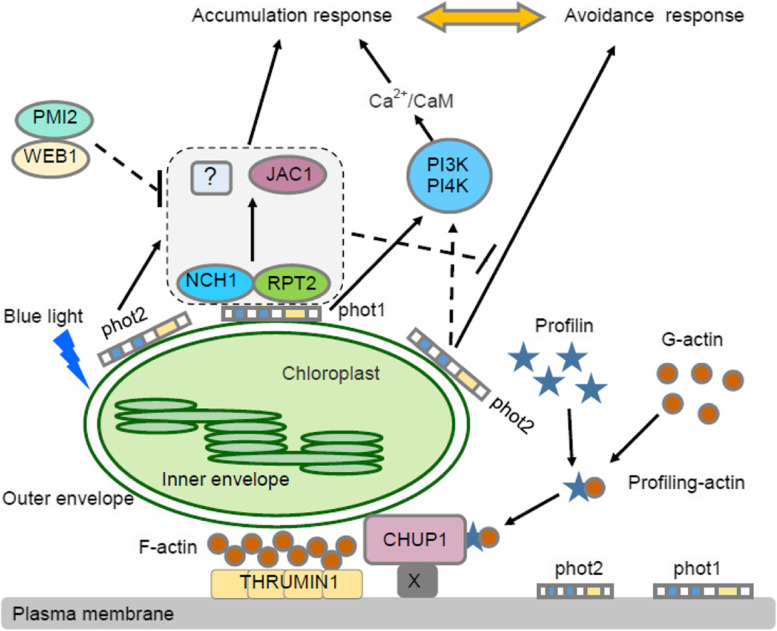
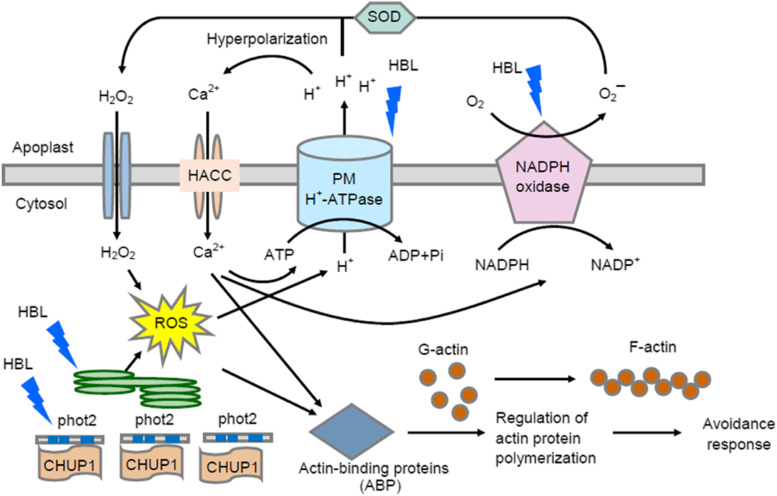
- Chloroplast movement uses low-light accumulation and high-light avoidance responses: PHOT1/PHOT2, RPT2/NCH1, JAC1, WEB1/PMI2, CP-actin filaments, CHUP1, KAC, and THRUMIN1 are implicated, and a ROS/Ca2+-dependent model is proposed for high-blue-light avoidance.
- Phototropin-mediated responses support photosynthesis and growth under weak light; phot1 mutants show reduced photosynthetic performance and growth via reduced chloroplast accumulation, weakened stomatal opening, and leaf curling, and nph3 mutants are impaired in photosynthesis, growth, and leaf extension under weak blue light.
Methods
- Narrative review of published literature on phototropin-mediated phototropism and chloroplast movement, with emphasis on Arabidopsis and selected crop or non-model plants.
- Synthesizes molecular, genetic, and physiological studies and presents schematic models for PHOT1 activation, phototropic signaling, chloroplast accumulation/avoidance, and ROS-dependent avoidance.
- No primary experimental data, sample size, or statistical analysis are reported.
Limitations
- The paper states that the molecular relationship between photoreceptor activation and auxin transport or signaling requires further analysis, and that the molecular activities of protein components, communication from photoreceptors to chloroplasts, and force production remain unclear.
- The paper states that the role of phototropins in crops has not been widely examined and that future work should focus on crops under strong, weak, or fluctuating light.
- Evident from the text: as a review, it presents no new experimental data, and the ROS-dependent chloroplast avoidance model is described as plausible and requiring additional experiments for verification.
Model-written summary. Check it against the paper before relying on it.
Integrity signals
Registry
Cites
Statistics
Figures
Verification
Claims the paper makes
52 Valid · 12 Not valid · 67 Not checked · 20 Own results and interpretations
At least one cited source doesn’t support this claim or points to a different paper, and none confirmed it — see the verdicts below.
In the paper
“These results suggest that, at low-fluence blue light, gravitropism is inhibited by the action of phytochromes and to a lesser extent by cryptochromes”
§ The action of enhancing weak light capture via phototropic growth and chloroplast movement in plants > Plants grow toward the light improve the ability of light capture > Modulation of phototropism by other photoreceptors
What the sources say
- Not checked — no full text of the sourcecites Hangarter, 1997 matched to “Gravity, light and plant form” (1997) source
- Not checked — no full text of the sourcecites Sakai et al., 2001 matched to “Arabidopsis nph1 and npl1: Blue light receptors that mediate both phototropism and chloroplast relocation” (2001) source
- Disputedcites Ohgishi et al., 2004 matched to “Functional analysis of each blue light receptor, cry1, cry2, phot1, and phot2, by using combinatorial multiple mutants in Arabidopsis” (2004) sourceExperimental — accuracy not yet measured
The Results and Discussion say that phytochrome activation by blue light was minimal, contrary to the claim that phytochromes inhibit gravitropism under blue light. The paper considers cryptochrome suppression of gravitropism as a possibility, but says the observed blue-light bending appears to be actively induced by cryptochromes rather than caused by inhibition of gravitropism. It does not establish the claimed relative contributions at low fluence. (LLM, conf=0.86)
Checked by a reasoning model — may be wrong.
hedgedstates a cause- Asserted: passes — The authors put it forward as true.
- Checkable: passes — It can be checked against evidence.
- Load-bearing: unclear — It is unclear whether the paper’s conclusions depend on it.
- Based: passes — The paper gives a reason why it holds.
Some cited sources support this claim and some don’t — read each source’s verdict below.
In the paper
“PHOT1 and PHOT2 can mediate the influx of Ca2+ under high- and low-fluence blue light, respectively (Babourina et al., 2002; Zhao et al., 2013).”
§ The action of enhancing weak light capture via phototropic growth and chloroplast movement in plants > Plants grow toward the light improve the ability of light capture > Formation of auxin gradient and downstream auxin response
What the sources say
- Partly supportedcites Babourina et al., 2002 matched to “Blue light-induced kinetics of H + and Ca 2+ fluxes in etiolated wild-type and phototropin-mutant Arabidopsis seedlings” (2002) sourceExperimental — accuracy not yet measured
Babourina et al. (2002) do support both phototropins mediating BL-induced Ca2+ influx, but their distinction is by cellular compartment, not by fluence: the Discussion proposes that 'PHOT1 and PHOT2 regulate Ca2+ entry into the cytoplasm through different membranes: PHOT1 through the plasma membrane and PHOT2 through endomembranes,' with influx from the apoplast absent in phot1 and phot1/phot2 mutants (Abstract; Results). The paper tested a single BL regime (Materials and Methods: 15 mol m-2 as a 10-min pulse of 25 micromol m-2 s-1) and reports no high- versus low-fluence partitioning of PHOT1 and PHOT2 for Ca2+ influx; the only fluence statement it makes — that phot1 mutants 'need much higher fluence rate and dose' to bend — is credited to another work (ref. 22) and concerns phototropic bending, not Ca2+ influx. The source also frames the whole idea as a suggestion ('It is suggested that PHOT1 regulates Ca2+ uptake'), weaker than the claim's assertion. (LLM, conf=0.80)
- Disputedcites Zhao et al., 2013 matched to “Phototropins Function in High-Intensity Blue Light-Induced Hypocotyl Phototropism in Arabidopsis by Altering Cytosolic Calcium” (2013) sourceExperimental — accuracy not yet measured
The paper states that under low-fluence blue light, phot1 alone mediates Ca2+ influx—not phot2 (passage [2], page not provided). In its high-intensity experiments, phot1 activates plasma-membrane Ca2+ channels, while phot2 acts mainly through release from internal stores (passages [1] and [3], page not provided). The claimed assignment of receptors to light intensities and influx mechanisms is therefore contrary to the source. (LLM, conf=0.89)
Checked by a reasoning model — may be wrong.
plainstates a cause- Asserted: passes — The authors put it forward as true.
- Checkable: passes — It can be checked against evidence.
- Load-bearing: passes — The paper’s conclusions depend on it.
- Based: passes — The paper gives a reason why it holds.
- Partly supported
At least one cited source doesn’t support this claim or points to a different paper, and none confirmed it — see the verdicts below.
In the paper
“Analysis of the chup1 mutant in Arabidopsis revealed the key role of the CHUP1 protein in removing chloroplasts from the plasma membrane and depositing them at the bottom of the cell without moving under any light conditions”
§ The action of enhancing weak light capture via phototropic growth and chloroplast movement in plants > Blue light regulates chloroplast movement to mediate utilization of light signals > Chloroplast movement system based on CP-actin production
What the sources say
- Disputedcites Oikawa et al., 2003 matched to “CHLOROPLAST UNUSUAL POSITIONING1 Is Essential for Proper Chloroplast Positioning” (2003) sourceExperimental — accuracy not yet measured
The Discussion (page unavailable) says CHUP1 is likely required to spread chloroplasts around cells close to the plasma membrane; chloroplasts gather at the bottom when CHUP1 is defective. The Results (page unavailable) report that mutant chloroplasts showed little, if any, movement under the low- and high-light conditions tested. The claim reverses CHUP1's proposed role by attributing the mutant phenotype to the protein itself. (LLM, conf=0.90)
Checked by a reasoning model — may be wrong.
- Not checked — no full text of the sourcecites Wada and Suetsugu, 2004 matched to “Plant organelle positioning” (2004) source
- Disputedcites Higa et al., 2014 matched to “Actin-dependent plastid movement is required for motive force generation in directional nuclear movement in plants” (2014) sourceExperimental — accuracy not yet measured
In “Mutant Plants Deficient in Chloroplast Photorelocation Movement” (page unavailable), the paper says chloroplasts in chup1 cells were dissociated from the plasma membrane and moved rapidly—not that CHUP1 removes them or leaves them motionless. The cell-bottom observation concerns nuclei in darkness; the cited passages do not describe CHUP1 depositing chloroplasts there under all light conditions. (LLM, conf=0.89)
Checked by a reasoning model — may be wrong.
plainstates a cause- Asserted: passes — The authors put it forward as true.
- Checkable: passes — It can be checked against evidence.
- Load-bearing: unclear — It is unclear whether the paper’s conclusions depend on it.
- Based: passes — The paper gives a reason why it holds.
- Disputed
The sources with a verdict support this claim; the rest weren’t checked yet, have no full text we could read, or their verdicts aren’t rated yet.
In the paper
“In contrast, red light induces chloroplast movement in several cryptogam plants, including the alga Mougeotia scalaris, the fern Adiantum capillus-veneris, and the moss Physcomitrella patens (Schönbohm, 1980; Suetsugu and Wada, 2007b; Wada, 2008).”
§ The action of enhancing weak light capture via phototropic growth and chloroplast movement in plants > Introduction
What the sources say
- Not checked — no full text of the sourcecites Schönbohm, 1980 matched to “Phytochrome and Non-Phytochrome Dependent Blue Light Effects on Intracellular Movements in Fresh-Water Algae” (1980) source
- Supportedcites Suetsugu and Wada, 2007b matched to “Phytochrome‐dependent Photomovement Responses Mediated by Phototropin Family Proteins in Cryptogam Plants†” (2007) source
The Introduction states that red light induces chloroplast movement in cryptogams and identifies Adiantum capillus-veneris, Physcomitrella patens, and Mougeotia scalaris as the three plants reviewed. The figure descriptions in the Concluding Remarks also describe red-light-induced chloroplast movement in each species. Page numbers are not supplied in our copy. (LLM, conf=0.94)
- Not checked — no full text of the sourcecites Wada, 2008 matched to “Photoresponses in fern gametophytes” (2008) source
plainstates a cause- Asserted: passes — The authors put it forward as true.
- Checkable: passes — It can be checked against evidence.
- Load-bearing: unclear — It is unclear whether the paper’s conclusions depend on it.
- Based: passes — The paper gives a reason why it holds.
The cited sources support only part of this claim — read each source’s verdict below.
In the paper
“In most plants, blue light is the most effective wavelength for inducing two reactions of chloroplast motility, including in angiosperms (e.g., Arabidopsis, spinach, tobacco) (Davis and Hangarter, 2012) and cryptogamic plants (e.g., ferns, mosses, lichens, algae) (Suetsugu and Wada, 2007b).”
§ The action of enhancing weak light capture via phototropic growth and chloroplast movement in plants > Introduction
What the sources say
- Not checked — no full text of the sourcecites Davis and Hangarter, 2012 matched to “Chloroplast movement provides photoprotection to plants by redistributing PSII damage within leaves” (2012) source
- Partly supportedcites Suetsugu and Wada, 2007b matched to “Phytochrome‐dependent Photomovement Responses Mediated by Phototropin Family Proteins in Cryptogam Plants†” (2007) sourceExperimental — accuracy not yet measured
The Introduction says blue light mediates photomovement responses in most plant species, and the Concluding Remarks identify blue-light-induced chloroplast accumulation and avoidance in mosses. The paper does not establish that blue is the most effective wavelength for both reactions; it also reports that red light induces chloroplast movement in some cryptogams. No page numbers are available in our copy. (LLM, conf=0.85)
plainstates a cause- Asserted: passes — The authors put it forward as true.
- Checkable: passes — It can be checked against evidence.
- Load-bearing: unclear — It is unclear whether the paper’s conclusions depend on it.
- Based: passes — The paper gives a reason why it holds.
52 more claims · 21 with their cited sources checked
Create a free account to see all 151 claims and to verify the 26 references still open.
- Probably not a substantial claim. 20
- It may state two separate claims as one. 82
Self-check
Percentages, sums and reported differences re-computed from the paper’s own numbers.
Each contradiction between two passages listed here was confirmed by an independent check.
Rated minor: it would not touch a result — a value no result rests on, a p-value that stays on the same side of the significance level, or a conflict that is clerical, resolved elsewhere in the paper, or outside its own findings.
In the paper
§ The action of enhancing weak light capture via phototropic growth and chloroplast movement in plants > Plants grow toward the light improve the ability of light capture
“Currently, only two substrates have been identified for phototropin kinases: ATP-binding cassette B19 (ABCB19) and PHYTOCHROME KINASE SUBSTRATE 4 (PKS4) involved in regulating hypocotyl phototropism”
§ The action of enhancing weak light capture via phototropic growth and chloroplast movement in plants > Plants grow toward the light improve the ability of light capture > Early signaling events in phototropism
“A conserved C-terminal consensus sequence (RxS) of NPH3 is directly phosphorylated by phot1, which promotes phototropism and petiole localization in Arabidopsis.”
Rated minor: it would not touch a result — a value no result rests on, a p-value that stays on the same side of the significance level, or a conflict that is clerical, resolved elsewhere in the paper, or outside its own findings.
In the paper
§ The action of enhancing weak light capture via phototropic growth and chloroplast movement in plants > Plants grow toward the light improve the ability of light capture
“Blue light-activated phototropin can phosphorylate ABCB19 and PKS4 to inhibit their activity and enhance phototropism”
§ The action of enhancing weak light capture via phototropic growth and chloroplast movement in plants > Plants grow toward the light improve the ability of light capture > Early signaling events in phototropism
“blue light induces PHOT1-dependent phosphorylation of PKS4D and negatively regulates phototropism”
Citations
Cites
Mittler, R. (2017) · Trends in Plant Science · doi:10.1016/j.tplants.2016.08.002 · Cited by 3,499
Cosgrove, D. J. (2005) · Nature Reviews Molecular Cell Biology · doi:10.1038/nrm1746 · Cited by 3,308
Calcium channels activated by hydrogen peroxide mediate abscisic acid signalling in guard cells
Pei, Z.-M., Murata, Y., Benning, G., Thomine, S., Klüsener, B., Allen, G. J., Grill, E., & Schroeder, J. I. (2000) · Nature · doi:10.1038/35021067 · Cited by 2,109 · cited 1×
“The accumulating ROS also activates Ca2+-channels, allowing Ca2+ to enter the cytosol, and increase in cytosolic free Ca2+ concentration ([Ca]cyt) (Pei et al., 2000).”
BackgroundLateral relocation of auxin efflux regulator PIN3 mediates tropism in Arabidopsis
Friml, J., Wiśniewska, J., Benková, E., Mendgen, K., & Palme, K. (2002) · Nature · doi:10.1038/415806a · Cited by 1,426
Plant Development Is Regulated by a Family of Auxin Receptor F Box Proteins
Dharmasiri, N., Dharmasiri, S., Weijers, D., Lechner, E., Yamada, M., Hobbie, L., Ehrismann, J. S., Jürgens, G., & Estelle, M. (2005) · Developmental Cell · doi:10.1016/j.devcel.2005.05.014 · Cited by 997
Phototropin Blue-Light Receptors
Christie, J. M. (2007) · Annual Review of Plant Biology · doi:10.1146/annurev.arplant.58.032806.103951 · Cited by 937 · cited 11×
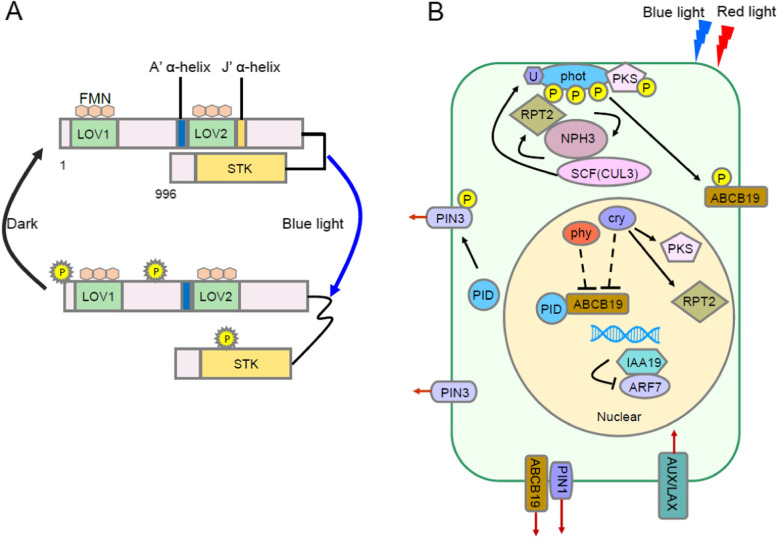
“Phototropins are composed of approximately 1000 amino acids and two flavin mononucleotides (FMN) domain, and their N-terminus contains two repeating conserved sequences, LOV1 and LOV2.”
BackgroundInfluentialLight-Regulated Plant Growth and Development
Kami, C., Lorrain, S., Hornitschek, P., & Fankhauser, C. (2010) · Current Topics in Developmental Biology · doi:10.1016/s0070-2153(10)91002-8 · Cited by 927 · cited 1×
“The transport and asymmetric distribution of auxin depends on auxin transporters (Kami et al., 2010).”
Backgroundphot1 and phot2 mediate blue light regulation of stomatal opening
Kinoshita, T., Doi, M., Suetsugu, N., Kagawa, T., Wada, M., & Shimazaki, K.-I. (2001) · Nature · doi:10.1038/414656a · Cited by 899
Phototropins 1 and 2: versatile plant blue-light receptors
Briggs, W. R., & Christie, J. M. (2002) · Trends in Plant Science · doi:10.1016/s1360-1385(02)02245-8 · Cited by 785 · cited 1×
“01 μmol m−2 s−1 ~ 1 μmol m−2 s−1) and high-fluence blue light (> 1 μmol m−2 s−1), including the first and second positive phototropisms, whereas PHOT2 only mediates second positive phototropism induced by high-fluence blue light (Sakai et al., 2001; Briggs and Christie, 2002).”
BackgroundSakai, T., Kagawa, T., Kasahara, M., Swartz, T. E., Christie, J. M., Briggs, W. R., Wada, M., & Okada, K. (2001) · Proceedings of the National Academy of Sciences · doi:10.1073/pnas.101137598 · Cited by 715 · cited 1×
“Modulation of phototropism by other photoreceptors The blue light receptor phototropin mainly mediates the phototropism of angiosperms, and phot1 phot2 double mutants exhibit slight phototropism after intense blue light irradiation (Sakai et al., 2001; Zhao et al., 2013, 2018, 2020).”
BackgroundLeyser, O. (2018) · Plant Physiology · doi:10.1104/pp.17.00765 · Cited by 715 · cited 1×
“Polyubiquitination of Aux/IAAs results in their degradation, which releases the transcription of auxin-related genes (Leyser, 2018).”
BackgroundArabidopsis NPL1: A Phototropin Homolog Controlling the Chloroplast High-Light Avoidance Response
Kagawa, T., Sakai, T., Suetsugu, N., Oikawa, K., Ishiguro, S., Kato, T., Tabata, S., Okada, K., & Wada, M. (2001) · Science · doi:10.1126/science.291.5511.2138 · Cited by 651
Auxin Receptors and Plant Development: A New Signaling Paradigm
Mockaitis, K., & Estelle, M. (2008) · Annual Review of Cell and Developmental Biology · doi:10.1146/annurev.cellbio.23.090506.123214 · Cited by 651
Chloroplast avoidance movement reduces photodamage in plants
Kasahara, M., Kagawa, T., Oikawa, K., Suetsugu, N., Miyao, M., & Wada, M. (2002) · Nature · doi:10.1038/nature01213 · Cited by 581
Apoplastic ROS signaling in plant immunity
Qi, J., Wang, J., Gong, Z., & Zhou, J.-M. (2017) · Current Opinion in Plant Biology · doi:10.1016/j.pbi.2017.04.022 · Cited by 537
Structure and Signaling Mechanism of Per-ARNT-Sim Domains
Möglich, A., Ayers, R. A., & Moffat, K. (2009) · Structure · doi:10.1016/j.str.2009.08.011 · Cited by 531
Noh, B., Murphy, A. S., & Spalding, E. P. (2001) · The Plant Cell · doi:10.1105/tpc.010350 · Cited by 527
Phototropin-related NPL1 controls chloroplast relocation induced by blue light
Jarillo, J. A., Gabrys, H., Capel, J., Alonso, J. M., Ecker, J. R., & Cashmore, A. R. (2001) · Nature · doi:10.1038/35073622 · Cited by 476
Crosson, S., & Moffat, K. (2001) · Proceedings of the National Academy of Sciences · doi:10.1073/pnas.051520298 · Cited by 471 · cited 1×
“The LOV domain is a three-dimensional structure composed of multiple β-strands and α-helices (Crosson and Moffat, 2001; Moglich et al., 2009).”
BackgroundInteractions among PIN-FORMED and P-Glycoprotein Auxin Transporters in Arabidopsis
Blakeslee, J. J., Bandyopadhyay, A., Lee, O. R., Mravec, J., Titapiwatanakun, B., Sauer, M., Makam, S. N., Cheng, Y., Bouchard, R., Adamec, J., et al. (2007) · The Plant Cell · doi:10.1105/tpc.106.040782 · Cited by 434 · cited 5×
“(2014) demonstrated that PINOID kinase (PID) can regulate the phosphorylation state of PINs and affect their localization.”
BackgroundInfluentialTatematsu, K., Kumagai, S., Muto, H., Sato, A., Watahiki, M. K., Harper, R. M., Liscum, E., & Yamamoto, K. T. (2004) · The Plant Cell · doi:10.1105/tpc.018630 · Cited by 431 · cited 1×
“AUX/IAA19 binds to ARF and inhibits its activity (Tatematsu et al., 2004) (Fig.”
BackgroundROS and Brain Diseases: The Good, the Bad, and the Ugly
Popa-Wagner, A., Mitran, S., Sivanesan, S., Chang, E., & Buga, A.-M. (2013) · Oxidative Medicine and Cellular Longevity · doi:10.1155/2013/963520 · Cited by 427
PKS1, a Substrate Phosphorylated by Phytochrome That Modulates Light Signaling in Arabidopsis
Fankhauser, C., Yeh, K.-C., Clark, J., Lagarias, Zhang, H., Elich, T. D., & Chory, J. (1999) · Science · doi:10.1126/science.284.5419.1539 · Cited by 408
Harper, R. M., Stowe-Evans, E. L., Luesse, D. R., Muto, H., Tatematsu, K., Watahiki, M. K., Yamamoto, K., & Liscum, E. (2000) · The Plant Cell · doi:10.1105/tpc.12.5.757 · Cited by 407
Cellular and Subcellular Localization of Phototropin 1
Sakamoto, K., & Briggs, W. R. (2002) · The Plant Cell · doi:10.1105/tpc.003293 · Cited by 405
Auxin Transporters--Why So Many?
Zazimalova, E., Murphy, A. S., Yang, H., Hoyerova, K., & Hosek, P. (2010) · Cold Spring Harbor Perspectives in Biology · doi:10.1101/cshperspect.a001552 · Cited by 400
Physiological and biochemical responses to high light and temperature stress in plants
Szymańska, R., Ślesak, I., Orzechowska, A., & Kruk, J. (2017) · Environmental and Experimental Botany · doi:10.1016/j.envexpbot.2017.05.002 · Cited by 390
Ding, Z., Galván-Ampudia, C. S., Demarsy, E., Łangowski, Ł., Kleine-Vehn, J., Fan, Y., Morita, M. T., Tasaka, M., Fankhauser, C., Offringa, R., et al. (2011) · Nature Cell Biology · doi:10.1038/ncb2208 · Cited by 330
Arabidopsis NPH3: A NPH1 Photoreceptor-Interacting Protein Essential for Phototropism
Motchoulski, A., & Liscum, E. (1999) · Science · doi:10.1126/science.286.5441.961 · Cited by 320 · cited 6×
“In the dark, NPH3 protein localizes to the cytoplasmic membrane and interacts with the N-terminus of the phot1 protein through its C-terminus (Motchoulski and Liscum, 1999).”
BackgroundInfluentialHalavaty, A. S., & Moffat, K. (2007) · Biochemistry · doi:10.1021/bi701543e · Cited by 317
Plant Flavoprotein Photoreceptors
Christie, J. M., Blackwood, L., Petersen, J., & Sullivan, S. (2015) · Plant and Cell Physiology · doi:10.1093/pcp/pcu196 · Cited by 294
Blakeslee, J. J., Peer, W. A., & Murphy, A. S. (2005) · Current Opinion in Plant Biology · doi:10.1016/j.pbi.2005.07.014 · Cited by 292 · cited 1×
“Three auxin transporter protein families have been identified in plants, including the auxin efflux carrier PINs family, influx carrier (AUX1) and similar families (LAX), and ABCB auxin transporter (Blakeslee et al., 2005; Whippo and Hangarter, 2006; Robert and Friml, 2009).”
BackgroundMorita, M. T., & Tasaka, M. (2004) · Current Opinion in Plant Biology · doi:10.1016/j.pbi.2004.09.001 · Cited by 286
Phototropins Promote Plant Growth in Response to Blue Light in Low Light Environments
Takemiya, A., Inoue, S.-I., Doi, M., Kinoshita, T., & Shimazaki, K.-I. (2005) · The Plant Cell · doi:10.1105/tpc.104.030049 · Cited by 279
A Genomic Analysis of the Shade Avoidance Response in Arabidopsis
Devlin, P. F., Yanovsky, M. J., & Kay, S. A. (2003) · Plant Physiology · doi:10.1104/pp.103.034397 · Cited by 275 · cited 5×
“(2014) demonstrated that PINOID kinase (PID) can regulate the phosphorylation state of PINs and affect their localization.”
BackgroundInfluentialBlue light-induced autophosphorylation of phototropin is a primary step for signaling
Inoue, S.-I., Kinoshita, T., Matsumoto, M., Nakayama, K. I., Doi, M., & Shimazaki, K.-I. (2008) · Proceedings of the National Academy of Sciences · doi:10.1073/pnas.0709189105 · Cited by 269
ABCB19/PGP19 stabilises PIN1 in membrane microdomains in Arabidopsis
Titapiwatanakun, B., Blakeslee, J. J., Bandyopadhyay, A., Yang, H., Mravec, J., Sauer, M., Cheng, Y., Adamec, J., Nagashima, A., Geisler, M., et al. (2009) · The Plant Journal · doi:10.1111/j.1365-313x.2008.03668.x · Cited by 268 · cited 12×
“Currently, only two substrates have been identified for phototropin kinases: ATP-binding cassette B19 (ABCB19) and PHYTOCHROME KINASE SUBSTRATE 4 (PKS4) involved in regulating hypocotyl phototropism (Christie et al., 2011; Demarsy et al., 2012).”
BackgroundInfluentialCHLOROPLAST UNUSUAL POSITIONING1 Is Essential for Proper Chloroplast Positioning
Oikawa, K., Kasahara, M., Kiyosue, T., Kagawa, T., Suetsugu, N., Takahashi, F., Kanegae, T., Niwa, Y., Kadota, A., & Wada, M. (2003) · The Plant Cell · doi:10.1105/tpc.016428 · Cited by 258 · cited 1×
“Analysis of the chup1 mutant in Arabidopsis revealed the key role of the CHUP1 protein in removing chloroplasts from the plasma membrane and depositing them at the bottom of the cell without moving under any light conditions (Oikawa et al., 2003; Wada and Suetsugu, 2004; Higa et al., 2014).”
BackgroundRPT2: A Signal Transducer of the Phototropic Response in Arabidopsis
Sakai, T., Wada, T., Ishiguro, S., & Okada, K. (2000) · The Plant Cell · doi:10.1105/tpc.12.2.225 · Cited by 253 · cited 1×
“PHOT1 mediates hypocotyl phototropism under high-intensity blue light depending on RPT2 protein (Sakai et al., 2000; Inada et al., 2004), but RPT2 facilitates the adaptation of PHOT1 to high-intensity”
BackgroundAuxin and other signals on the move in plants
Robert, H. S., & Friml, J. (2009) · Nature Chemical Biology · doi:10.1038/nchembio.170 · Cited by 252 · cited 1×
“Three auxin transporter protein families have been identified in plants, including the auxin efflux carrier PINs family, influx carrier (AUX1) and similar families (LAX), and ABCB auxin transporter (Blakeslee et al., 2005; Whippo and Hangarter, 2006; Robert and Friml, 2009).”
Backgroundphot1 Inhibition of ABCB19 Primes Lateral Auxin Fluxes in the Shoot Apex Required For Phototropism
Christie, J. M., Yang, H., Richter, G. L., Sullivan, S., Thomson, C. E., Lin, J., Titapiwatanakun, B., Ennis, M., Kaiserli, E., Lee, O. R., et al. (2011) · PLoS Biology · doi:10.1371/journal.pbio.1001076 · Cited by 245
Wilson, C., & González-Billault, C. (2015) · Frontiers in Cellular Neuroscience · doi:10.3389/fncel.2015.00381 · Cited by 238 · cited 4×
“ROS function in actin filament polymerization/stabilization in plant systems in neural growth cones, where ROS reduce the content, kinetics, and contractility of F-actin (Munnamalai et al., 2014; Wilson and González-Billault, 2015).”
BackgroundInfluentialPhosphorylation of BLUS1 kinase by phototropins is a primary step in stomatal opening
Takemiya, A., Sugiyama, N., Fujimoto, H., Tsutsumi, T., Yamauchi, S., Hiyama, A., Tada, Y., Christie, J. M., & Shimazaki, K.-I. (2013) · Nature Communications · doi:10.1038/ncomms3094 · Cited by 219 · cited 9×
“Under low fluence blue light circumstances, photoreceptors PHOT1 and PHOT2 mediate accumulation responses via RPT2, NCH1/ PI3K activation.”
BackgroundInfluentialFunction and regulation of phospholipid signalling in plants
Xue, H.-W., Chen, X., & Mei, Y. (2009) · Biochemical Journal · doi:10.1042/bj20090300 · Cited by 219 · cited 1×
“Phosphoinositide (Pi) signaling in plants regulates developmental processes and stress responses by influencing the actin structure and vesicle trafficking (Xue et al., 2009).”
BackgroundOhgishi, M., Saji, K., Okada, K., & Sakai, T. (2004) · Proceedings of the National Academy of Sciences · doi:10.1073/pnas.0305984101 · Cited by 215 · cited 1×
“The leaf of the phot1 and phot2 mutants expanded more than those of the double mutants at a high fluence light (Ohgishi et al., 2004).”
BackgroundInada, S., Ohgishi, M., Mayama, T., Okada, K., & Sakai, T. (2004) · The Plant Cell · doi:10.1105/tpc.019901 · Cited by 215
Phototropism: Growing towards an Understanding of Plant Movement
Liscum, E., Askinosie, S. K., Leuchtman, D. L., Morrow, J., Willenburg, K. T., & Coats, D. R. (2014) · The Plant Cell · doi:10.1105/tpc.113.119727 · Cited by 215
HANGARTER, R. P. (1997) · Plant, Cell & Environment · doi:10.1046/j.1365-3040.1997.d01-124.x · Cited by 209 · cited 2×
“Plants determine their growth direction by integrating phototropism and gravitropism; therefore, factors regulating gravitropism may indirectly influence phototropism (Hangarter, 1997).”
BackgroundShort actin-based mechanism for light-directed chloroplast movement in Arabidopsis
Kadota, A., Yamada, N., Suetsugu, N., Hirose, M., Saito, C., Shoda, K., Ichikawa, S., Kagawa, T., Nakano, A., & Wada, M. (2009) · Proceedings of the National Academy of Sciences · doi:10.1073/pnas.0906250106 · Cited by 208 · cited 1×
“Although the mechanism by which chloroplast movement generates force is unclear, studies have suggested that CP-actin polymerization generates force (Kadota et al., 2009) (Fig.”
BackgroundPHYTOCHROME KINASE SUBSTRATE 1 is a phototropin 1 binding protein required for phototropism
Lariguet, P., Schepens, I., Hodgson, D., Pedmale, U. V., Trevisan, M., Kami, C., de Carbonnel, M., Alonso, J. M., Ecker, J. R., Liscum, E., et al. (2006) · Proceedings of the National Academy of Sciences · doi:10.1073/pnas.0603799103 · Cited by 190 · cited 2×
“Single gene mutations in PKS1, PKS2 or PKS4 have no phenotype, but the hypocotyl curvature is significantly reduced in double mutants, and phototropism is entirely absent in triple mutants, suggesting that these genes have functional redundancy in phototropism (Lariguet et al., 2006).”
BackgroundGrowth signalling pathways in Arabidopsis and the AGC protein kinases
Bögre, L. (2003) · Trends in Plant Science · doi:10.1016/s1360-1385(03)00188-2 · Cited by 190 · cited 1×
“Phototropins as light receptors activated by blue light Phototropins are serine or threonine protein kinases activated by light and belong to the cAMP-dependent protein kinase, cGMP-dependent protein kinase G, and phospholipid-dependent protein kinase C (AGC) kinase families (Bogre et al., 2003).”
BackgroundOikawa, K., Yamasato, A., Kong, S.-G., Kasahara, M., Nakai, M., Takahashi, F., Ogura, Y., Kagawa, T., & Wada, M. (2008) · Plant Physiology · doi:10.1104/pp.108.123075 · Cited by 181 · cited 1×
“The hydrophobic section of CHUP1 protein binds to the chloroplast outer membrane, which can connect the chloroplast to the coiled-coil region of the plasma membrane, F-actin binding site, and C-terminal conserved region (Oikawa et al., 2008; Higa et al., 2014).”
BackgroundPedmale, U. V., & Liscum, E. (2007) · Journal of Biological Chemistry · doi:10.1074/jbc.m702551200 · Cited by 169 · cited 1×
“Under blue light, NPH3 undergoes PHOT1-dependent dephosphorylation, detaches from the plasma membrane, and enters the cytoplasm to form aggregates (Pedmale and Liscum, 2007; Sullivan et al., 2019).”
BackgroundWada, M. (2013) · Plant Science · doi:10.1016/j.plantsci.2013.05.016 · Cited by 169
Fankhauser, C., & Christie, J. M. (2015) · Current Biology · doi:10.1016/j.cub.2015.03.020 · Cited by 167
Two kinesin-like proteins mediate actin-based chloroplast movement in Arabidopsis thaliana
Suetsugu, N., Yamada, N., Kagawa, T., Yonekura, H., Uyeda, T. Q. P., Kadota, A., & Wada, M. (2010) · Proceedings of the National Academy of Sciences · doi:10.1073/pnas.0912773107 · Cited by 167
de Carbonnel, M., Davis, P., Roelfsema, M. R. G., Inoue, S.-I., Schepens, I., Lariguet, P., Geisler, M., Shimazaki, K.-I., Hangarter, R., & Fankhauser, C. (2010) · Plant Physiology · doi:10.1104/pp.109.150441 · Cited by 161
Cazzaniga, S., Dall’Osto, L., Kong, S., Wada, M., & Bassi, R. (2013) · The Plant Journal · doi:10.1111/tpj.12314 · Cited by 160 · cited 1×
“In addition, chloroplasts build up along the anticlinal wall, decreasing the incidence of high-fluence blue light damage (avoidance response) (Kasahara et al., 2002; Sztatelman et al., 2010; Davis and Hangarter, 2012; Cazzaniga et al., 2013; Kong and Wada, 2016).”
BackgroundLeaf Positioning of Arabidopsis in Response to Blue Light
Inoue, S.-I., Kinoshita, T., Takemiya, A., Doi, M., & Shimazaki, K.-I. (2008) · Molecular Plant · doi:10.1093/mp/ssm001 · Cited by 156
Titapiwatanakun, B., & Murphy, A. S. (2009) · Journal of Experimental Botany · doi:10.1093/jxb/ern240 · Cited by 156 · cited 2×
“In Arabidopsis, four auxin influx carriers have been identified: AUXIN1(AUX1), LIKE-AUX1(LAX1), LAX2 and LAX3 (Titapiwatanakun and Murphy, 2009; Zazímalová et al., 2010).”
BackgroundPhototropism: Bending towards Enlightenment
Whippo, C. W., & Hangarter, R. P. (2006) · The Plant Cell · doi:10.1105/tpc.105.039669 · Cited by 154
Suetsugu, N., Kagawa, T., & Wada, M. (2005) · Plant Physiology · doi:10.1104/pp.105.067371 · Cited by 153
Blue light‐induced association of phototropin 2 with the Golgi apparatus
Kong, S., Suzuki, T., Tamura, K., Mochizuki, N., Hara‐Nishimura, I., & Nagatani, A. (2006) · The Plant Journal · doi:10.1111/j.1365-313x.2006.02667.x · Cited by 152 · cited 1×
“Although phot1 and phot2 do not possess a transmembrane domain, they localize to the inner side of the cytoplasmic membrane in the dark (Sakamoto and Briggs, 2002; Kong et al., 2006).”
BackgroundShoot phototropism in higher plants: New light through old concepts
Christie, J. M., & Murphy, A. S. (2013) · American Journal of Botany · doi:10.3732/ajb.1200340 · Cited by 152 · cited 1×
“However, no phosphorylation sites associated with the first positive phototropism have been identified under low-fluence blue light (Sakai and Haga, 2012; Christie and Murphy, 2013).”
BackgroundRoberts, D., Pedmale, U. V., Morrow, J., Sachdev, S., Lechner, E., Tang, X., Zheng, N., Hannink, M., Genschik, P., & Liscum, E. (2011) · The Plant Cell · doi:10.1105/tpc.111.087999 · Cited by 150 · cited 1×
“CUL3 is required for blue light-induced ubiquitination of PHOT1, and PHOT1 ubiquitination is thought to be involved in phototropism (Salomon et al., 1997; Thomann et al., 2005; Roberts et al., 2011).”
BackgroundWillige, B. C., Ahlers, S., Zourelidou, M., Barbosa, I. C. R., Demarsy, E., Trevisan, M., Davis, P. A., Roelfsema, M. R. G., Hangarter, R., Fankhauser, C., et al. (2013) · The Plant Cell · doi:10.1105/tpc.113.111484 · Cited by 149 · cited 1×
“The protein homologous to phototropin, D6 kinase protein (D6PK), can phosphorylate PINs under well-lit conditions, and auxin transport and tropic responses are partially impaired in phototropic and negative gravitational responses in D6PKOE and d6pk single and double mutants, suggesting that D6PK is involved in regula…”
BackgroundSato, Y., Wada, M., & Kadota, A. (2001) · Journal of Cell Science · doi:10.1242/jcs.114.2.269 · Cited by 148
Liscum, E., & Briggs, W. R. (1996) · Plant Physiology · doi:10.1104/pp.112.1.291 · Cited by 140 · cited 1×
“Mutations in NPH3 causes Arabidopsis lose all-intensity blue light-induced phototropism, indicating that NPH3 regulates both PHOT1mediated phototropism under low-fluence blue light and the PHOT1- and PHOT2-mediated high-fluence blue light response (Liscum and Briggs, 1996; Motchoulski and Liscum, 1999).”
BackgroundThe Cytoskeleton and Its Regulation by Calcium and Protons
Hepler, P. K. (2016) · Plant Physiology · doi:10.1104/pp.15.01506 · Cited by 133
Velasquez, S. M., Barbez, E., Kleine-Vehn, J., & Estevez, J. M. (2016) · Plant Physiology · doi:10.1104/pp.15.01863 · Cited by 132
Kaiserli, E., Sullivan, S., Jones, M. A., Feeney, K. A., & Christie, J. M. (2009) · The Plant Cell · doi:10.1105/tpc.109.067876 · Cited by 129
Chloroplast Accumulation Response Enhances Leaf Photosynthesis and Plant Biomass Production
Gotoh, E., Suetsugu, N., Yamori, W., Ishishita, K., Kiyabu, R., Fukuda, M., Higa, T., Shirouchi, B., & Wada, M. (2018) · Plant Physiology · doi:10.1104/pp.18.00484 · Cited by 128 · cited 1×
“Blue light is the primary light that induces chloroplast movement to optimize light uptake; chloroplasts travel toward low-fluence blue light and aggregate along the oblique perimeter wall (accumulation response), ensuring efficient photosynthesis and biomass production under a wide range of light intensities (Christi…”
BackgroundChloroplast photorelocation movement mediated by phototropin family proteins in green plants
Suetsugu, N., & Wada, M. (2007) · bchm · doi:10.1515/bc.2007.118 · Cited by 123
Kagawa, T., & Wada, M. (2000) · Plant and Cell Physiology · doi:10.1093/pcp/41.1.84 · Cited by 123 · cited 1×
“Photosynthetic states are regulated by phototropins‐mediated plant movement Phototropins are commonly observed in higher and lower plants, in addition to mediate phototropism and chloroplast movement, phototropins mediate stomatal opening, leaf extension, and leaf positioning in Arabidopsis (Kagawa and Wada, 2000; Ell…”
BackgroundSuetsugu, N., & Wada, M. (2013) · Plant and Cell Physiology · doi:10.1093/pcp/pcs165 · Cited by 122
Auxin activates KAT1 and KAT2, two K+‐channel genes expressed in seedlings of Arabidopsis thaliana
Philippar, K., Ivashikina, N., Ache, P., Christian, M., Lüthen, H., Palme, K., & Hedrich, R. (2004) · The Plant Journal · doi:10.1111/j.1365-313x.2003.02006.x · Cited by 118 · cited 1×
“KAT1 potassium channels mediate K+ reflux to balance acidification of the apoplast in Arabidopsis (Philippar et al., 2004).”
BackgroundDimerization of the plant photoreceptor phototropin is probably mediated by the LOV1 domain
Salomon, M., Lempert, U., & Rüdiger, W. (2004) · FEBS Letters · doi:10.1016/j.febslet.2004.06.081 · Cited by 116
Wada, M., & Suetsugu, N. (2004) · Current Opinion in Plant Biology · doi:10.1016/j.pbi.2004.09.005 · Cited by 115
Arabidopsis fhl / fhy1 double mutant reveals a distinct cytoplasmic action of phytochrome A
Rösler, J., Klein, I., & Zeidler, M. (2007) · Proceedings of the National Academy of Sciences · doi:10.1073/pnas.0703855104 · Cited by 114
Heyneke, E., Luschin‐Ebengreuth, N., Krajcer, I., Wolkinger, V., Müller, M., & Zechmann, B. (2013) · BMC Plant Biology · doi:10.1186/1471-2229-13-104 · Cited by 110 · cited 1×
“ROS can drive changes in redox reactions, such by increasing the levels of antioxidants and ascorbic acid (Asc) or reducing glutathione (GSH) in chloroplasts (Heyneke et al., 2013), which may be key factors to protecting the body from high-intensity light.”
BackgroundPhototropism: Some History, Some Puzzles, and a Look Ahead
Briggs, W. R. (2014) · PLANT PHYSIOLOGY · doi:10.1104/pp.113.230573 · Cited by 110
Phototropism: at the crossroads of light-signaling pathways
Goyal, A., Szarzynska, B., & Fankhauser, C. (2013) · Trends in Plant Science · doi:10.1016/j.tplants.2013.03.002 · Cited by 109
Babourina, O., Newman, I., & Shabala, S. (2002) · Proceedings of the National Academy of Sciences · doi:10.1073/pnas.042294599 · Cited by 108
In Vivo Phosphorylation Site Mapping and Functional Characterization of Arabidopsis Phototropin 1
Sullivan, S., Thomson, C. E., Lamont, D. J., Jones, M. A., & Christie, J. M. (2008) · Molecular Plant · doi:10.1093/mp/ssm017 · Cited by 107 · cited 1×
“Furthermore, phosphorylation site Ser581 of PHOT1 and PHOT2 is ubiquitous in seed plants, ferns, mosses, and green algae (Sullivan et al., 2008).”
BackgroundThe chloroplast outer membrane protein CHUP1 interacts with actin and profilin
Schmidt von Braun, S., & Schleiff, E. (2008) · Planta · doi:10.1007/s00425-007-0688-7 · Cited by 107
Wan, Y.-L., Eisinger, W., Ehrhardt, D., Kubitscheck, U., Baluska, F., & Briggs, W. (2008) · Molecular Plant · doi:10.1093/mp/ssm011 · Cited by 105
Blue light signalling in chloroplast movements
Banas, A. K., Aggarwal, C., Labuz, J., Sztatelman, O., & Gabrys, H. (2012) · Journal of Experimental Botany · doi:10.1093/jxb/err429 · Cited by 105
Lariguet, P., & Fankhauser, C. (2004) · The Plant Journal · doi:10.1111/j.1365-313x.2004.02256.x · Cited by 103 · cited 1×
“Analysis of the phot1 cry1 cry2 triple mutant indicated that cryptochrome plays a minor role in this response (Lariguet and Fankhauser, 2004).”
BackgroundConformational Dynamics of Phototropin 2 LOV2 Domain with the Linker upon Photoexcitation
Eitoku, T., Nakasone, Y., Matsuoka, D., Tokutomi, S., & Terazima, M. (2005) · Journal of the American Chemical Society · doi:10.1021/ja052523i · Cited by 102 · cited 1×
“Exposure of blue light alters the helical structures (A′αhelix and Jα-helix) on both sides of LOV2, relieves STK inhibition, eventually leads to phosphorylation of phototropin (Eitoku et al., 2005; Nakasone et al., 2007; Kaiserli et al., 2009) (Fig.”
BackgroundA Plant-Specific Protein Essential for Blue-Light-Induced Chloroplast Movements
DeBlasio, S. L., Luesse, D. L., & Hangarter, R. P. (2005) · Plant Physiology · doi:10.1104/pp.105.061887 · Cited by 102
Phytochrome Kinase Substrate 4 is phosphorylated by the phototropin 1 photoreceptor
Demarsy, E., Schepens, I., Okajima, K., Hersch, M., Bergmann, S., Christie, J., Shimazaki, K., Tokutomi, S., & Fankhauser, C. (2012) · The EMBO Journal · doi:10.1038/emboj.2012.186 · Cited by 94
Chloroplast movements in the field
WILLIAMS, W. E., GORTON, H. L., & WITIAK, S. M. (2003) · Plant, Cell & Environment · doi:10.1046/j.0016-8025.2003.01117.x · Cited by 94
Actin-based photo-orientation movement of chloroplasts in plant cells
Takagi, S. (2003) · Journal of Experimental Biology · doi:10.1242/jeb.00215 · Cited by 92 · cited 2×
“In Arabidopsis, actin filaments are primarily used for chloroplast transport (Takagi, 2003).”
BackgroundPhototropism: Translating light into directional growth
Hohm, T., Preuten, T., & Fankhauser, C. (2013) · American Journal of Botany · doi:10.3732/ajb.1200299 · Cited by 91
Iwata, T., Nozaki, D., Tokutomi, S., Kagawa, T., Wada, M., & Kandori, H. (2003) · Biochemistry · doi:10.1021/bi0345135 · Cited by 87
Dynamics of Conformational Changes of Arabidopsis Phototropin 1 LOV2 with the Linker Domain
Nakasone, Y., Eitoku, T., Matsuoka, D., Tokutomi, S., & Terazima, M. (2007) · Journal of Molecular Biology · doi:10.1016/j.jmb.2006.12.074 · Cited by 87
Kim, K., Shin, J., Lee, S.-H., Kweon, H.-S., Maloof, J. N., & Choi, G. (2011) · Proceedings of the National Academy of Sciences · doi:10.1073/pnas.1011066108 · Cited by 86
Kodama, Y., Suetsugu, N., Kong, S.-G., & Wada, M. (2010) · Proceedings of the National Academy of Sciences · doi:10.1073/pnas.1007836107 · Cited by 84
Zhao, X., Wang, Y.-L., Qiao, X.-R., Wang, J., Wang, L.-D., Xu, C.-S., & Zhang, X. (2013) · Plant Physiology · doi:10.1104/pp.113.216556 · Cited by 84
Self-citationTHRUMIN1 Is a Light-Regulated Actin-Bundling Protein Involved in Chloroplast Motility
Whippo, C. W., Khurana, P., Davis, P. A., DeBlasio, S. L., DeSloover, D., Staiger, C. J., & Hangarter, R. P. (2011) · Current Biology · doi:10.1016/j.cub.2010.11.059 · Cited by 83
Photoreceptor-Mediated Bending towards UV-B in Arabidopsis
Vandenbussche, F., Tilbrook, K., Fierro, A. C., Marchal, K., Poelman, D., Van Der Straeten, D., & Ulm, R. (2014) · Molecular Plant · doi:10.1093/mp/ssu039 · Cited by 82 · cited 1×
“Recent studies showed that single mutant of IAA7 and IAA17 also exhibit a phototropism-deficient phenotype, suggesting that auxin signaling is necessary for blue lightinduced phototropism (Vandenbussche et al., 2014).”
BackgroundNagashima, A., Suzuki, G., Uehara, Y., Saji, K., Furukawa, T., Koshiba, T., Sekimoto, M., Fujioka, S., Kuroha, T., Kojima, M., et al. (2008) · The Plant Journal · doi:10.1111/j.1365-313x.2007.03358.x · Cited by 82
Nagashima, A., Uehara, Y., & Sakai, T. (2008) · Plant and Cell Physiology · doi:10.1093/pcp/pcn092 · Cited by 81
Shining Light on the Function of NPH3/RPT2-Like Proteins in Phototropin Signaling
Christie, J. M., Suetsugu, N., Sullivan, S., & Wada, M. (2018) · Plant Physiology · doi:10.1104/pp.17.00835 · Cited by 81
A novel phototropic response to red light is revealed in microgravity
Millar, K. D. L., Kumar, P., Correll, M. J., Mullen, J. L., Hangarter, R. P., Edelmann, R. E., & Kiss, J. Z. (2010) · New Phytologist · doi:10.1111/j.1469-8137.2010.03211.x · Cited by 79
Tsuchida-Mayama, T., Sakai, T., Hanada, A., Uehara, Y., Asami, T., & Yamaguchi, S. (2010) · The Plant Journal · doi:10.1111/j.1365-313x.2010.04180.x · Cited by 79 · cited 1×
“In etiolated Arabidopsis seedlings, phytochromes and cryptochromes mediate red- and blue light-induced RPT2 expression, respectively, and affect phototropism by regulating RPT2 expression (Sakai et al., 2000; Tsuchida-Mayama et al., 2010).”
BackgroundHan, I.-S., Tseng, T.-S., Eisinger, W., & Briggs, W. R. (2008) · The Plant Cell · doi:10.1105/tpc.108.059915 · Cited by 77
Iino, M. (2005) · Current Opinion in Plant Biology · doi:10.1016/j.pbi.2005.11.012 · Cited by 76 · cited 1×
“These results suggest that, at low-fluence blue light, gravitropism is inhibited by the action of phytochromes and to a lesser extent by cryptochromes (Hangarter, 1997; Sakai et al., 2001; Ohgishi et al., 2004; Iino, 2006).”
BackgroundRecent advances in understanding the molecular mechanism of chloroplast photorelocation movement
Kong, S., & Wada, M. (2013) · Biochimica et Biophysica Acta (BBA) - Bioenergetics · doi:10.1016/j.bbabio.2013.12.004 · Cited by 76
Tseng, T.-S., & Briggs, W. R. (2010) · The Plant Cell · doi:10.1105/tpc.109.066423 · Cited by 75 · cited 2×
“Therefore, PP2A may participate in phototropism by regulating the activity of PHOT2 (Tseng and Briggs, 2010).”
BackgroundLuesse, D. R., DeBlasio, S. L., & Hangarter, R. P. (2006) · Plant Physiology · doi:10.1104/pp.106.080333 · Cited by 74 · cited 1×
“web1 and pmi2 mutants exhibited attenuated chloroplast avoidance responses under blue light (Luesse et al., 2006; Kodama et al., 2010).”
BackgroundSullivan, S., Waksman, T., Paliogianni, D., Henderson, L., Lütkemeyer, M., Suetsugu, N., & Christie, J. M. (2021) · Nature Communications · doi:10.1038/s41467-021-26333-5 · Cited by 74
Blue Light-Induced Chloroplast Relocation
Kagawa, T., & Wada, M. (2002) · Plant and Cell Physiology · doi:10.1093/pcp/pcf049 · Cited by 72 · cited 1×
“Phototropins, as blue light receptors, can also mediate chloroplast movement (Kagawa et al., 2001; Kagawa and Wada, 2002).”
BackgroundKong, S.-G., Arai, Y., Suetsugu, N., Yanagida, T., & Wada, M. (2013) · The Plant Cell · doi:10.1105/tpc.113.109694 · Cited by 71
Munnamalai, V., Weaver, C. J., Weisheit, C. E., Venkatraman, P., Agim, Z. S., Quinn, M. T., & Suter, D. M. (2014) · Journal of Neurochemistry · doi:10.1111/jnc.12734 · Cited by 70 · cited 3×
“ROS function in actin filament polymerization/stabilization in plant systems in neural growth cones, where ROS reduce the content, kinetics, and contractility of F-actin (Munnamalai et al., 2014; Wilson and González-Billault, 2015).”
BackgroundHiga, T., Suetsugu, N., Kong, S.-G., & Wada, M. (2014) · Proceedings of the National Academy of Sciences · doi:10.1073/pnas.1317902111 · Cited by 70 · cited 2×
“The hydrophobic section of CHUP1 protein binds to the chloroplast outer membrane, which can connect the chloroplast to the coiled-coil region of the plasma membrane, F-actin binding site, and C-terminal conserved region (Oikawa et al., 2008; Higa et al., 2014).”
BackgroundChloroplast movement provides photoprotection to plants by redistributing PSII damage within leaves
Davis, P. A., & Hangarter, R. P. (2012) · Photosynthesis Research · doi:10.1007/s11120-012-9755-4 · Cited by 68 · cited 2×
“In addition, chloroplasts build up along the anticlinal wall, decreasing the incidence of high-fluence blue light damage (avoidance response) (Kasahara et al., 2002; Sztatelman et al., 2010; Davis and Hangarter, 2012; Cazzaniga et al., 2013; Kong and Wada, 2016).”
BackgroundHaga, K., Tsuchida-Mayama, T., Yamada, M., & Sakai, T. (2015) · The Plant Cell · doi:10.1105/tpc.15.00178 · Cited by 66 · cited 2×
“Although phosphorylation of NPH3 is related to phototropism, for plants to achieve maximum response to light, continuous phosphorylation of NPH3 is required, mainly involving RPT2 (Liscum et al., 2014; Haga et al., 2015).”
BackgroundMolecular Genetic Analysis of Phototropism in Arabidopsis
Sakai, T., & Haga, K. (2012) · Plant and Cell Physiology · doi:10.1093/pcp/pcs111 · Cited by 66
Arabidopsis CUL3A and CUL3B genes are essential for normal embryogenesis
Thomann, A., Brukhin, V., Dieterle, M., Gheyeselinck, J., Vantard, M., Grossniklaus, U., & Genschik, P. (2005) · The Plant Journal · doi:10.1111/j.1365-313x.2005.02467.x · Cited by 65 · cited 1×
“CUL3 is required for blue light-induced ubiquitination of PHOT1, and PHOT1 ubiquitination is thought to be involved in phototropism (Salomon et al., 1997; Thomann et al., 2005; Roberts et al., 2011).”
BackgroundSuetsugu, N., Takemiya, A., Kong, S.-G., Higa, T., Komatsu, A., Shimazaki, K.-I., Kohchi, T., & Wada, M. (2016) · Proceedings of the National Academy of Sciences · doi:10.1073/pnas.1602151113 · Cited by 64
Blue light regulates an auxin-induced K + -channel gene in the maize coleoptile
Fuchs, I., Philippar, K., Ljung, K., Sandberg, G., & Hedrich, R. (2003) · Proceedings of the National Academy of Sciences · doi:10.1073/pnas.2032704100 · Cited by 62
Photoprotective function of chloroplast avoidance movement: In vivo chlorophyll fluorescence study
Sztatelman, O., Waloszek, A., Katarzyna Banaś, A., & Gabryś, H. (2010) · Journal of Plant Physiology · doi:10.1016/j.jplph.2009.12.015 · Cited by 59
Kang, B., Grancher, N., Koyffmann, V., Lardemer, D., Burney, S., & Ahmad, M. (2008) · Planta · doi:10.1007/s00425-007-0683-z · Cited by 57
New Insights into Dynamic Actin-Based Chloroplast Photorelocation Movement
Kong, S.-G., & Wada, M. (2011) · Molecular Plant · doi:10.1093/mp/ssr061 · Cited by 57 · cited 1×
“production Chloroplasts use two separate cytoskeletal actin filaments and microtubules for dynamic movement and placement, similar to other key subcellular organelles such as the nucleus, mitochondria, endoplasmic reticulum and Golgi apparatus (Sato et al., 2001; Takagi, 2003; Kong and Wada, 2011).”
BackgroundReuter, L., Schmidt, T., Manishankar, P., Throm, C., Keicher, J., Bock, A., Droste-Borel, I., & Oecking, C. (2021) · Nature Communications · doi:10.1038/s41467-021-26332-6 · Cited by 56
Nuclear Phytochrome A Signaling Promotes Phototropism in Arabidopsis
Kami, C., Hersch, M., Trevisan, M., Genoud, T., Hiltbrunner, A., Bergmann, S., & Fankhauser, C. (2012) · The Plant Cell · doi:10.1105/tpc.111.095083 · Cited by 55
Disruptions in AUX1-Dependent Auxin Influx Alter Hypocotyl Phototropism in Arabidopsis
Stone, B. B., Stowe-Evans, E. L., Harper, R. M., Celaya, R. B., Ljung, K., Sandberg, G., & Liscum, E. (2008) · Molecular Plant · doi:10.1093/mp/ssm013 · Cited by 53 · cited 1×
“aux1 lax2 lax3 triple mutant seedlings exhibited reduced phototropism in the hypocotyl axis (Stone et al., 2008).”
BackgroundPossible Involvement of Phototropins in Leaf Movement of Kidney Bean in Response to Blue Light
Inoue, S.-I., Kinoshita, T., & Shimazaki, K.-I. (2005) · Plant Physiology · doi:10.1104/pp.105.062026 · Cited by 52 · cited 1×
“In addition, phototropins can adjust Arabidopsis leaf positioning in response to light signals, such that plants can maintain a stable state to obtain light (Inoue et al., 2005).”
BackgroundSuetsugu, N., Higa, T., Kong, S.-G., & Wada, M. (2015) · Plant Physiology · doi:10.1104/pp.15.00214 · Cited by 51 · cited 1×
“PMI1, a C2 domain protein, is essential for chloroplast movement, and the pmi1 mutant exhibits substantially impaired chloroplast movement (DeBlasio et al., 2005; Suetsugu et al., 2015).”
BackgroundMolecular basis of chloroplast photorelocation movement
Kong, S.-G., & Wada, M. (2016) · Journal of Plant Research · doi:10.1007/s10265-016-0788-1 · Cited by 50 · cited 2×
“In addition, chloroplasts build up along the anticlinal wall, decreasing the incidence of high-fluence blue light damage (avoidance response) (Kasahara et al., 2002; Sztatelman et al., 2010; Davis and Hangarter, 2012; Cazzaniga et al., 2013; Kong and Wada, 2016).”
BackgroundSuetsugu, N., & Wada, M. (2007) · Photochemistry and Photobiology · doi:10.1562/2006-02-27-ir-817 · Cited by 48
Mapping of the phosphorylation sites on the phototropic signal transducer, NPH3
Tsuchida-Mayama, T., Nakano, M., Uehara, Y., Sano, M., Fujisawa, N., Okada, K., & Sakai, T. (2008) · Plant Science · doi:10.1016/j.plantsci.2008.03.018 · Cited by 47
Photomorphogenesis: Light receptor kinases in plants!
Fankhauser, C., & Chory, J. (1999) · Current Biology · doi:10.1016/s0960-9822(99)80078-5 · Cited by 46
Kami, C., Allenbach, L., Zourelidou, M., Ljung, K., Schütz, F., Isono, E., Watahiki, M. K., Yamamoto, K. T., Schwechheimer, C., & Fankhauser, C. (2014) · The Plant Journal · doi:10.1111/tpj.12395 · Cited by 44 · cited 1×
“Although the biochemical function of PKS proteins is unclear, these proteins may affect phototropism by regulating auxin signaling (de Carbonnel et al., 2010; Kami et al., 2014).”
BackgroundHaga, K., Hayashi, K.-I., & Sakai, T. (2014) · Plant Physiology · doi:10.1104/pp.114.244434 · Cited by 44 · cited 1×
“The protein homologous to phototropin, D6 kinase protein (D6PK), can phosphorylate PINs under well-lit conditions, and auxin transport and tropic responses are partially impaired in phototropic and negative gravitational responses in D6PKOE and d6pk single and double mutants, suggesting that D6PK is involved in regula…”
BackgroundSuetsugu, N., Higa, T., Gotoh, E., & Wada, M. (2016) · PLOS ONE · doi:10.1371/journal.pone.0157429 · Cited by 44
The WAVY GROWTH 3 E3 ligase family controls the gravitropic response in Arabidopsis roots
Sakai, T., Mochizuki, S., Haga, K., Uehara, Y., Suzuki, A., Harada, A., Wada, T., Ishiguro, S., & Okada, K. (2011) · The Plant Journal · doi:10.1111/j.1365-313x.2011.04870.x · Cited by 41
Schönbohm, E. (1980) · Proceedings in Life Sciences · doi:10.1007/978-3-642-67648-2_7 · Cited by 40 · cited 1×
“In contrast, red light induces chloroplast movement in several cryptogam plants, including the alga Mougeotia scalaris, the fern Adiantum capillus-veneris, and the moss Physcomitrella patens (Schönbohm, 1980; Suetsugu and Wada, 2007b; Wada, 2008).”
BackgroundAggarwal, C., Łabuz, J., & Gabryś, H. (2013) · PLoS ONE · doi:10.1371/journal.pone.0055393 · Cited by 40
Matsuda, S., Kajizuka, T., Kadota, A., Nishimura, T., & Koshiba, T. (2011) · Journal of Experimental Botany · doi:10.1093/jxb/err019 · Cited by 37 · cited 1×
“Additionally, in maize, the NPH3 and PGP genes are specifically expressed at the tip of the maize coleoptile, similar to the expression pattern observed in Arabidopsis (Matsuda et al., 2011).”
BackgroundEvolution of the Cp-Actin-based Motility System of Chloroplasts in Green Plants
Suetsugu, N., & Wada, M. (2016) · Frontiers in Plant Science · doi:10.3389/fpls.2016.00561 · Cited by 37 · cited 1×
“These investigations have considerably expanded the understanding of the regulatory roles of various protein components in the polymerization and/or maintenance of CP-actin and its force-generating mechanisms (Kong and Wada, 2011, 2014; Suetsugu and Wada, 2016).”
BackgroundCongruence between PM H+-ATPase and NADPH oxidase during root growth: a necessary probability
Majumdar, A., & Kar, R. K. (2018) · Protoplasma · doi:10.1007/s00709-018-1217-1 · Cited by 37
Shen, Z., Liu, Y., Bibeau, J. P., Lemoi, K. P., Tüzel, E., & Vidali, L. (2015) · Journal of Integrative Plant Biology · doi:10.1111/jipb.12303 · Cited by 36
Suetsugu, N., & W, M. (2012) · Advances in Photosynthesis - Fundamental Aspects · doi:10.5772/26838 · Cited by 34 · cited 1×
“Light-induced chloroplast movement is among the most important responses for utilizing photosynthetic light (Suetsugu and Wada, 2012).”
BackgroundMolecular mechanism of phototropin light signaling
Okajima, K. (2016) · Journal of Plant Research · doi:10.1007/s10265-016-0783-6 · Cited by 34 · cited 10×
“Phototropins are composed of approximately 1000 amino acids and two flavin mononucleotides (FMN) domain, and their N-terminus contains two repeating conserved sequences, LOV1 and LOV2.”
BackgroundInfluentialDeetiolation Enhances Phototropism by Modulating NON-PHOTOTROPIC HYPOCOTYL3 Phosphorylation Status
Sullivan, S., Kharshiing, E., Laird, J., Sakai, T., & Christie, J. M. (2019) · Plant Physiology · doi:10.1104/pp.19.00206 · Cited by 33
Watahiki, M. K., Tatematsu, K., Fujihira, K., Yamamoto, M., & Yamamoto, K. T. (1999) · Planta · doi:10.1007/s004250050493 · Cited by 32 · cited 1×
“Mutations in AUX1 resulted in enhanced phototropism in the roots without affecting phototropism in the hypocotyls (Watahiki et al., 1999).”
BackgroundZhao, X., Zhao, Q., Xu, C., Wang, J., Zhu, J., Shang, B., & Zhang, X. (2018) · Journal of Integrative Plant Biology · doi:10.1111/jipb.12639 · Cited by 32
Self-citationUsami, H., Maeda, T., Fujii, Y., Oikawa, K., Takahashi, F., Kagawa, T., Wada, M., & Kasahara, M. (2012) · Planta · doi:10.1007/s00425-012-1735-6 · Cited by 31 · cited 1×
“Furthermore, CHUP1 is solely involved in actin-mediated motility but not in microtubule-mediated motility (Usami et al., 2012).”
BackgroundZhao, Q., Zhu, J., Li, N., Wang, X., Zhao, X., & Zhang, X. (2020) · Journal of Integrative Plant Biology · doi:10.1111/jipb.12813 · Cited by 28 · cited 1×
“Mutating both phytochromes and cryptochromes in Arabidopsis resulted in severe phototropism loss (Ohgishi et al., 2004; Tsuchida-Mayama et al., 2010; Zhao et al., 2020), suggesting that, in addition to phototropin, phytochromes and cryptochromes are involved in regulating phototropism in plants.”
BackgroundSelf-citationSalomon, M., Zacherl, M., Luff, L., & Rudiger, W. (1997) · Plant Physiology · doi:10.1104/pp.115.2.493 · Cited by 27 · cited 3×
“An early study revealed that unilateral blue light induced autophosphorylation of PHOT1 in oat (Avena sativa) coleoptiles and exhibited a gradient distribution (Salomon et al., 1997).”
BackgroundArabidopsis ROOT PHOTOTROPISM2 Is a Light-Dependent Dynamic Modulator of Phototropin1
Kimura, T., Tsuchida-Mayama, T., Imai, H., Okajima, K., Ito, K., & Sakai, T. (2020) · The Plant Cell · doi:10.1105/tpc.19.00926 · Cited by 22
Chloroplast avoidance movement: a novel paradigm of ROS signalling
Majumdar, A., & Kar, R. K. (2020) · Photosynthesis Research · doi:10.1007/s11120-020-00736-9 · Cited by 21
Photoresponses in fern gametophytes
Wada, M. (2008) · Biology and Evolution of Ferns and Lycophytes · doi:10.1017/cbo9780511541827.002 · Cited by 15
Phytochrome regulation of pea phototropin
Elliott, R. C., Platten, J. D., Watson, J. C., & Reid, J. B. (2004) · Journal of Plant Physiology · doi:10.1078/0176-1617-01228 · Cited by 15
Wang, J., Liang, Y.-P., Zhu, J.-D., Wang, Y.-X., Yang, M.-Y., Yan, H.-R., Lv, Q.-Y., Cheng, K., Zhao, X., & Zhang, X. (2021) · Frontiers in Plant Science · doi:10.3389/fpls.2021.704618 · Cited by 15 · cited 2×
“Arabidopsis contains two blue light photoreceptors, phot1 and phot2, mediate chloroplast accumulation responses and regulate by two phototropin-interacting proteins, NCH1 and RPT2 (Suetsugu et al., 2016b; Wang et al., 2021; Suetsugu et al., 2016b).”
BackgroundSelf-citationStone, B. B., Esmon, C. A., & Liscum, E. (2005) · Current Topics in Developmental Biology · doi:10.1016/s0070-2153(05)66007-3 · Cited by 13 · cited 1×
“Blue light can induce the phosphorylation of PHOT1 and promote the detachment of NPH3 from cell membrane, and RPT2 is induced by blue light to interact with NPH3 and PHOT1 to promote phototropism (Sakai et al., 2001; Morita and Tasaka, 2004; Stone et al., 2005).”
BackgroundPhototropin2-mediated hypocotyl phototropism is negatively regulated by JAC1 and RPT2 in Arabidopsis
Zhu, J., Wang, J., Sheng, Y., Tian, Y., Zhang, Y., Zhou, C., Zhao, X., & Zhang, X. (2021) · Plant Physiology and Biochemistry · doi:10.1016/j.plaphy.2021.05.007 · Cited by 13
Self-citationSuzuki, H., Okamoto, A., Kojima, A., Nishimura, T., Takano, M., Kagawa, T., Kadota, A., Kanegae, T., & Koshiba, T. (2014) · Planta · doi:10.1007/s00425-014-2082-6 · Cited by 12
Gustav Senn (1875–1945): The pioneer of chloroplast movement research
Kataoka, H. (2015) · Journal of Integrative Plant Biology · doi:10.1111/jipb.12311 · Cited by 12 · cited 1×
“Chloroplast migration occurs in all plant species ranging from algae to terrestrial plants (Kataoka, 2015).”
BackgroundDecoding the role of phosphoinositides in phototropin signaling involved in chloroplast movements
Aggarwal, C., Łabuz, J., & Gabryś, H. (2013) · Plant Signaling & Behavior · doi:10.4161/psb.25105 · Cited by 7
Suetsugu, N., & Wada, M. (2017) · International Journal of Molecular Sciences · doi:10.3390/ijms18071469 · Cited by 7 · cited 1×
“Furthermore, WEB1/PMI2 inhibited accumulation responses by inhibiting JAC1 activity under high light (Suetsugu and Wada, 2017).”
BackgroundZhu, J., Wang, J., Guo, X., Shang, B., Yan, H.-R., Zhang, X., & Zhao, X. (2021) · Journal of Experimental Botany · doi:10.1093/jxb/erab298 · Cited by 7
Self-citation
Cited by
Chibani, K., Gherli, H., & Fan, M. (2025) · Frontiers in Plant Science · doi:10.3389/fpls.2025.1554281 · Cited by 48
“Each receptors contain two fl avin mononucleotides (FMN) binding domains located within two conserved N-terminal sequences knows as LOV1 and LOV2 domains, as well as a C-terminal serine/threonine kinase (STK) domain responsible for initiating downstream signaling (Figure 1) (Xin et al., 2022).”
Defining context-dependent m6A RNA methylomes in Arabidopsis
Zhang, B., Zhang, S., Wu, Y., Li, Y., Kong, L., Wu, R., Zhao, M., Liu, W., & Yu, H. Q. (2024) · Developmental Cell · doi:10.1016/j.devcel.2024.06.012 · Cited by 30
Magarelli, A., Mazzeo, A., Ali, S. A., & Ferrara, G. (2025) · Scientia Horticulturae · doi:10.1016/j.scienta.2025.114311 · Cited by 28
Feng, L. S., Shi, K., Liu, X., Yang, H., Tian, P., Wu, Y., Yong, T., Yang, F., Wang, X., van Groenigen, K. J., et al. (2024) · The Crop Journal · doi:10.1016/j.cj.2024.10.010 · Cited by 22
Starch metabolism in guard cells: At the intersection of environmental stimuli and stomatal movement
Dang, T., Piro, L., Pasini, C., & Santelia, D. (2024) · PLANT PHYSIOLOGY · doi:10.1093/plphys/kiae414 · Cited by 22
Metadata
- Authors
- Xin, G.-Y., Li, L.-P., Wang, P.-T., Li, X.-Y., Han, Y.-J., & Zhao, X.
- Affiliations
- Henan University (CN)
- Corresponding author
- Zhao, Xiang
- ORCID
- Zhao, Xiang
- Venue
- Stress Biology
- Published
- 2022-12-01
- Volume
- 2
- Issue
- 1
- Pages
- 50-50
- ISSN
- 2731-0450 (ISSN-L)
- PMC
- PMC10441985
- OpenAlex
- W4310534954
- Cited by
- 17
- References
- 164
- Citations by year
- 2026: 4 · 2025: 9 · 2024: 4
- FWCI
- 0.30
- Type
- journal article
- Language
- en
- Open access
- diamond
- doi.org
- Licence
- cc-by
- creativecommons.org/licenses/by/4.0 (tdm)
- creativecommons.org/licenses/by/4.0 (vor)
- Locations
- Stress Biology (publishedVersion, cc-by)
- PubMed Central (publishedVersion, cc-by)
- PubMed (publishedVersion)
- DOAJ (DOAJ: Directory of Open Access Journals) (submittedVersion, cc-by-sa)
- Funders
- National Natural Science Foundation of China (31871419, 31570294)
- Topics
- Life Sciences › Agricultural and Biological Sciences › Plant Science › Light effects on plants
- Life Sciences › Biochemistry, Genetics and Molecular Biology › Molecular Biology › Photosynthetic Processes and Mechanisms
- Life Sciences › Agricultural and Biological Sciences › Plant Science › Plant Molecular Biology Research
- Keywords
- phototropism, chloroplast movement, phototropin, phot1, phot2, NPH3, Rpt2, light capture, low-light conditions, light use efficiency, photomorphogenesis, blue light
About these checks
Registry, retraction, Cites and statistics results are computed, not judged, with one exception: a printed reference that no index lists is read once by a model before it counts as a citation error. Claims are extracted by a model and kept only when their quote appears verbatim in the text; each cited source is then checked, with a model’s help, for whether it says what the claim relies on. Those verdicts can be wrong — read the claim’s quote and the cited source before relying on one.
The claim verdicts this report counts are experimental: their accuracy is not yet measured.
A language model drew the claims from the paper on 2026-10-10, under version 3 of the claim definition (model deepseek-v4.1-flash, prompt extract-v3).
A second model labelled each claim on 2026-10-10 (model jev-1.13-20260917, definition revision gold-guideline-v0.2).
Cited sources are checked with a language model’s help (gpt-6-sol and qwen3.8-omni-flash).
Statistics and arithmetic are recomputed, not judged.
Confidence bands are shown only for fields calibrated on our annotated test set. None is calibrated yet, so no band is shown.
What counts as a claim ›How we measure confidence ›How we check this ›
Are you an author, or do you see a problem with this page? Request a review
Data sources
Bibliographic data: Semantic Scholar, OpenAlex, Crossref.
Contains information from the Semantic Scholar Academic Graph Datasets, made available under the ODC Attribution License (ODC-BY 1.0).
Semantic Scholar’s data is described in: Kinney, R., et al. (2023). The Semantic Scholar Open Data Platform. arXiv:2301.10140.
